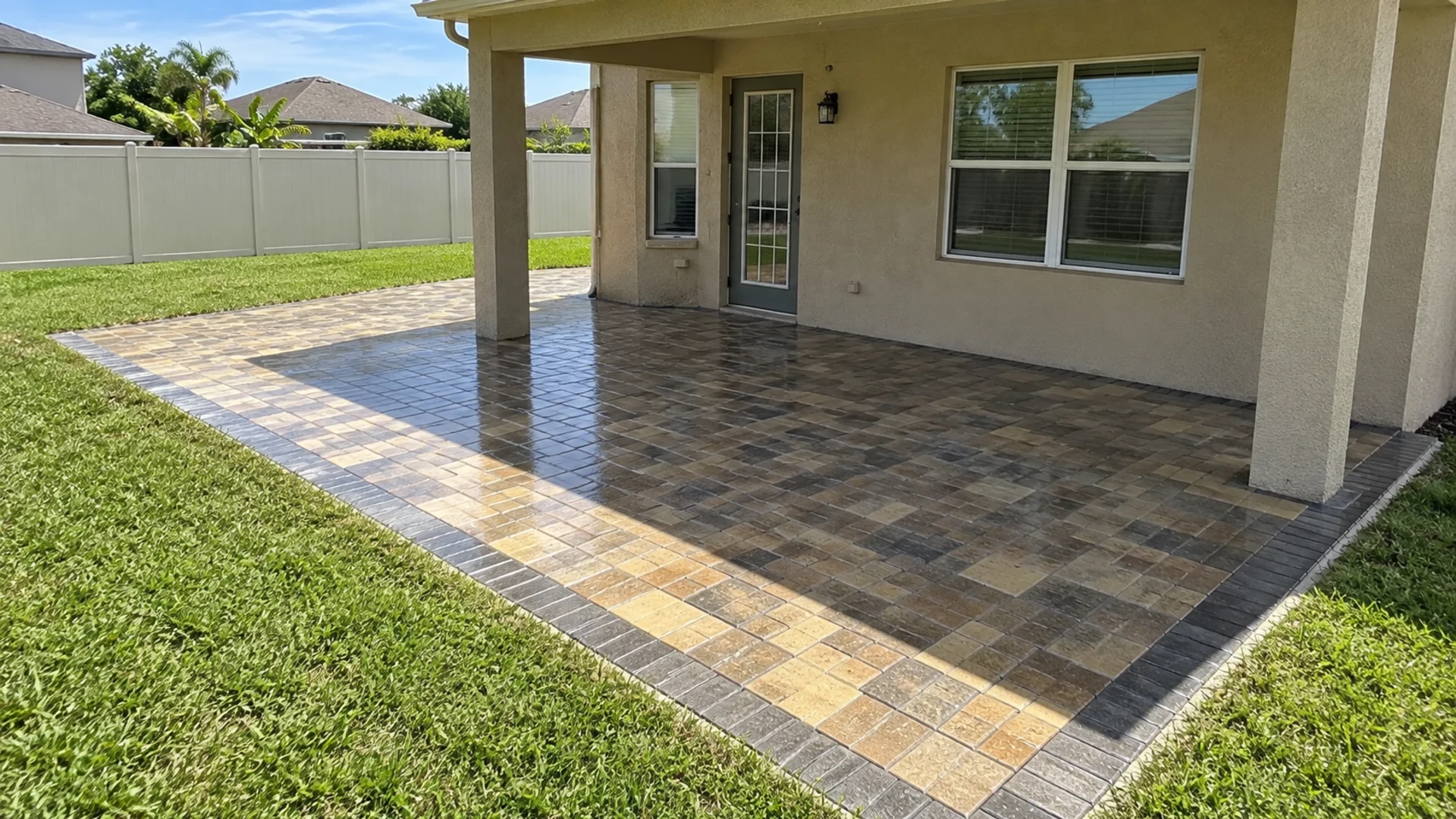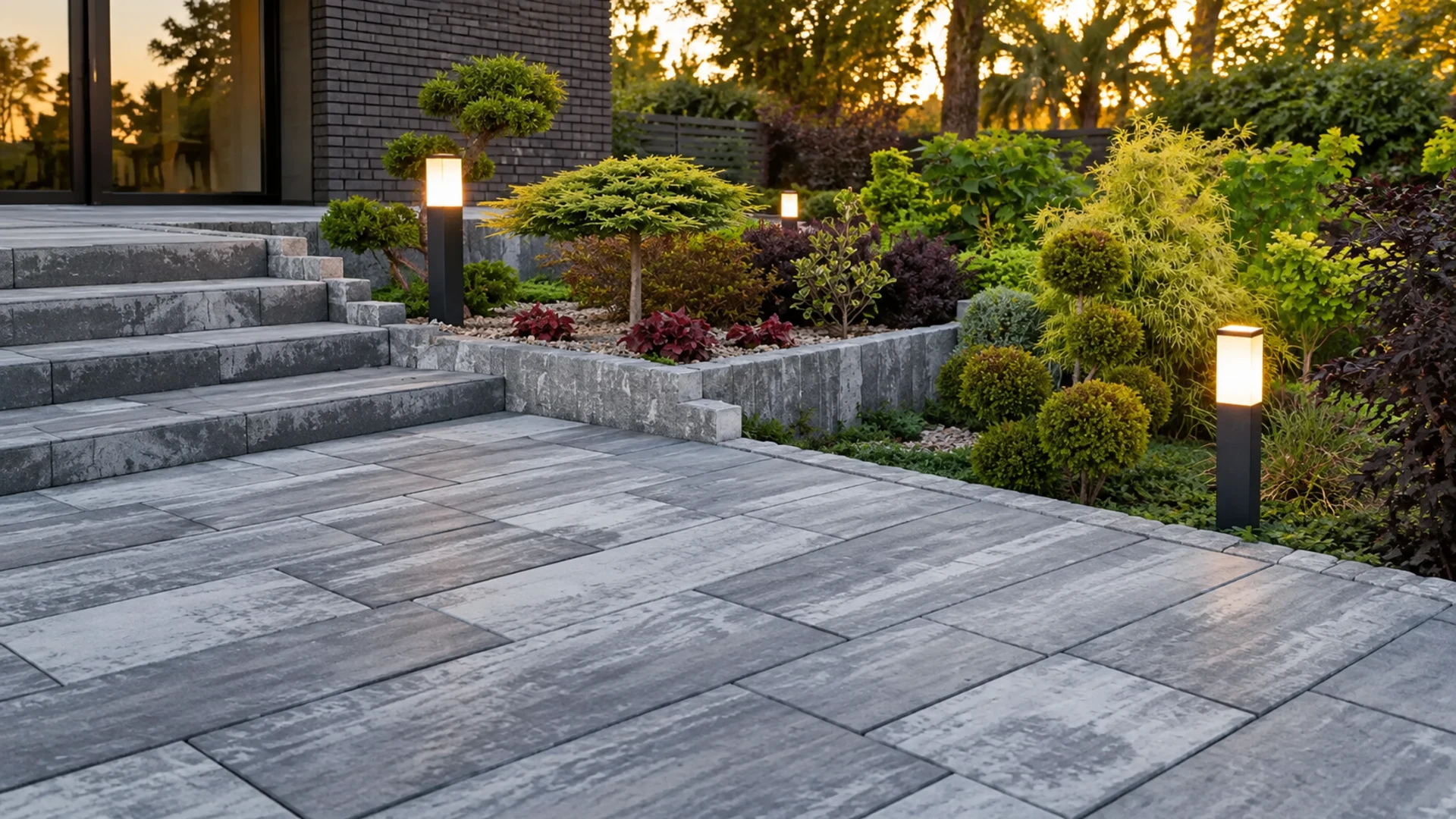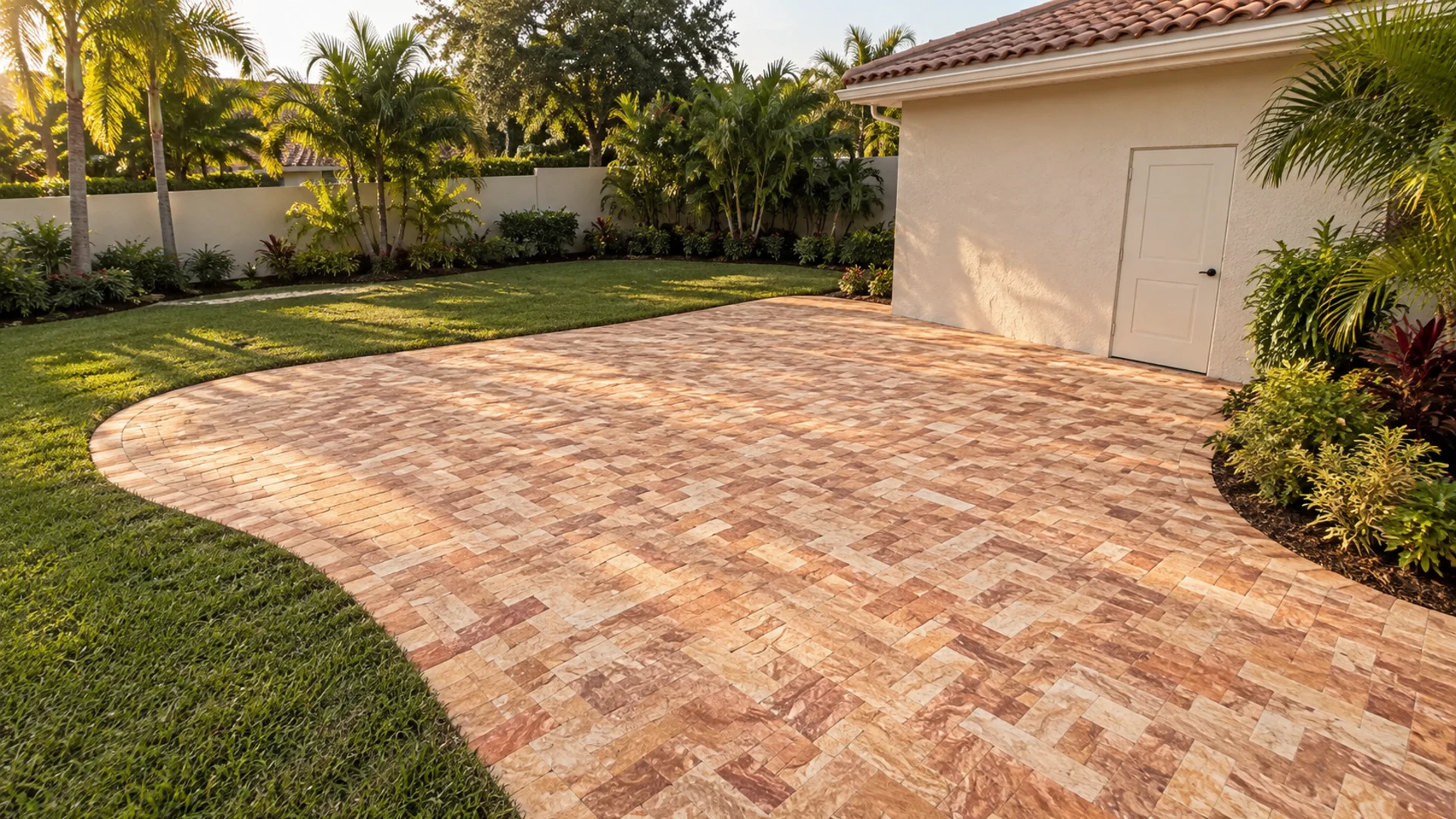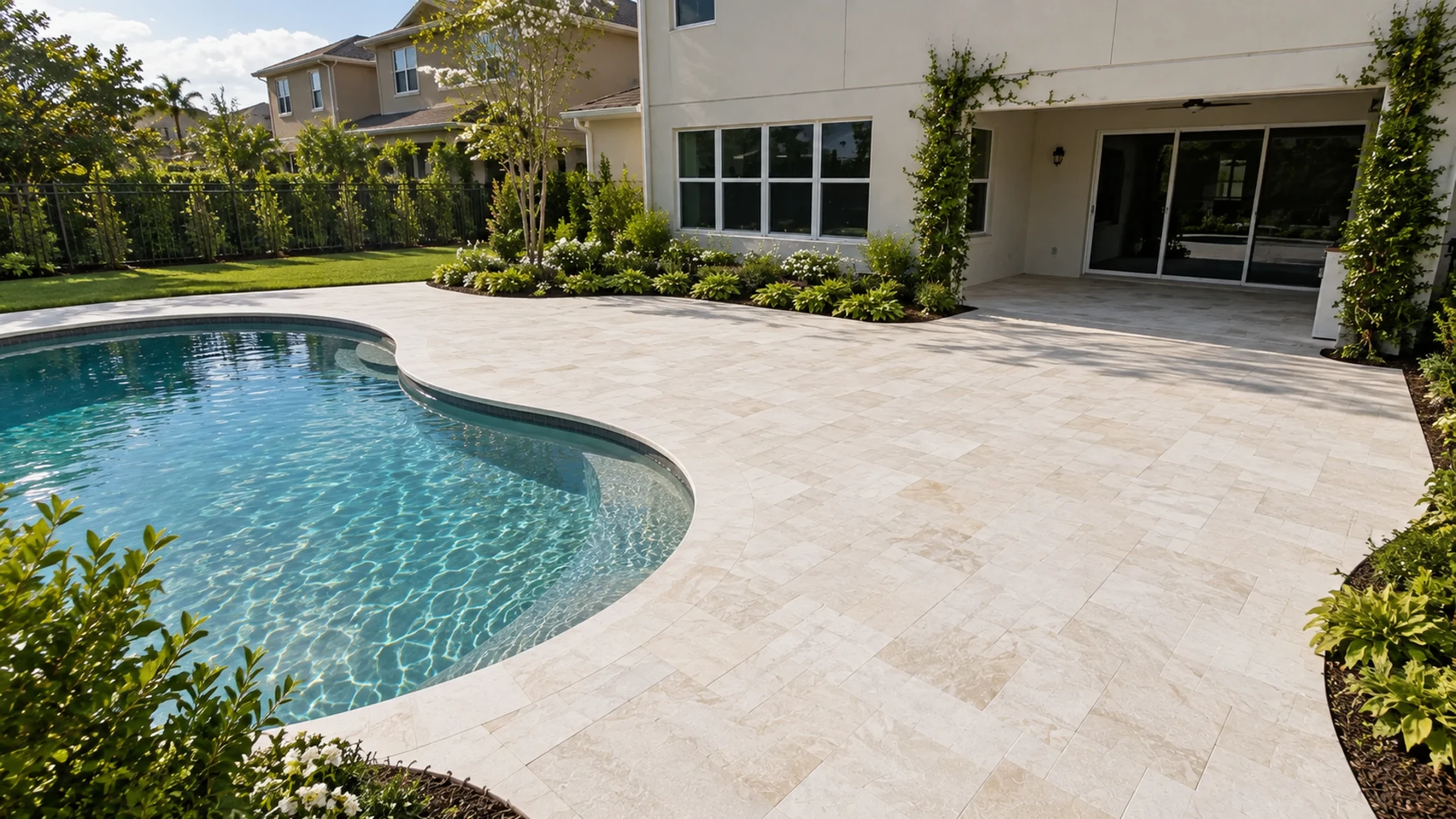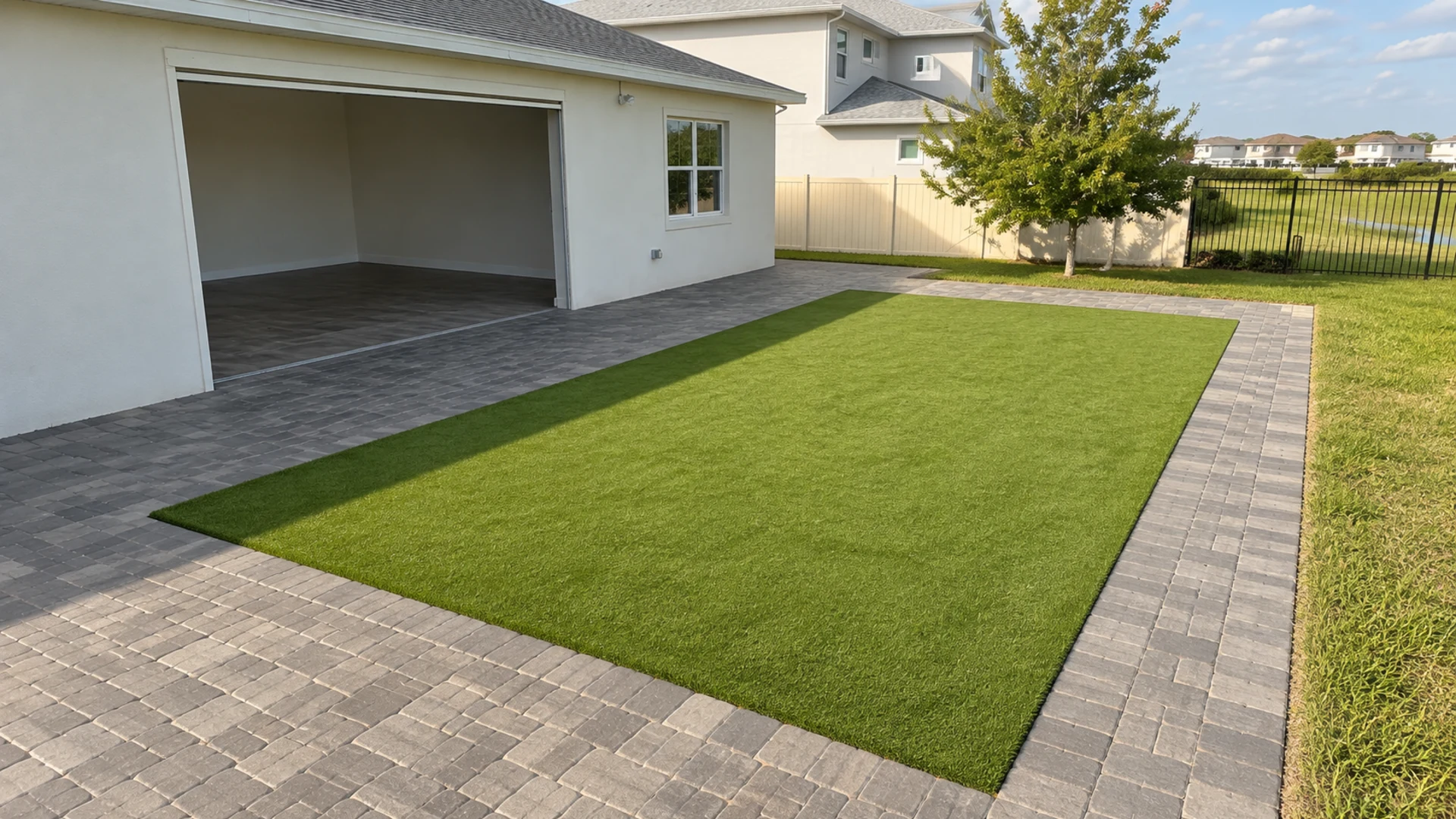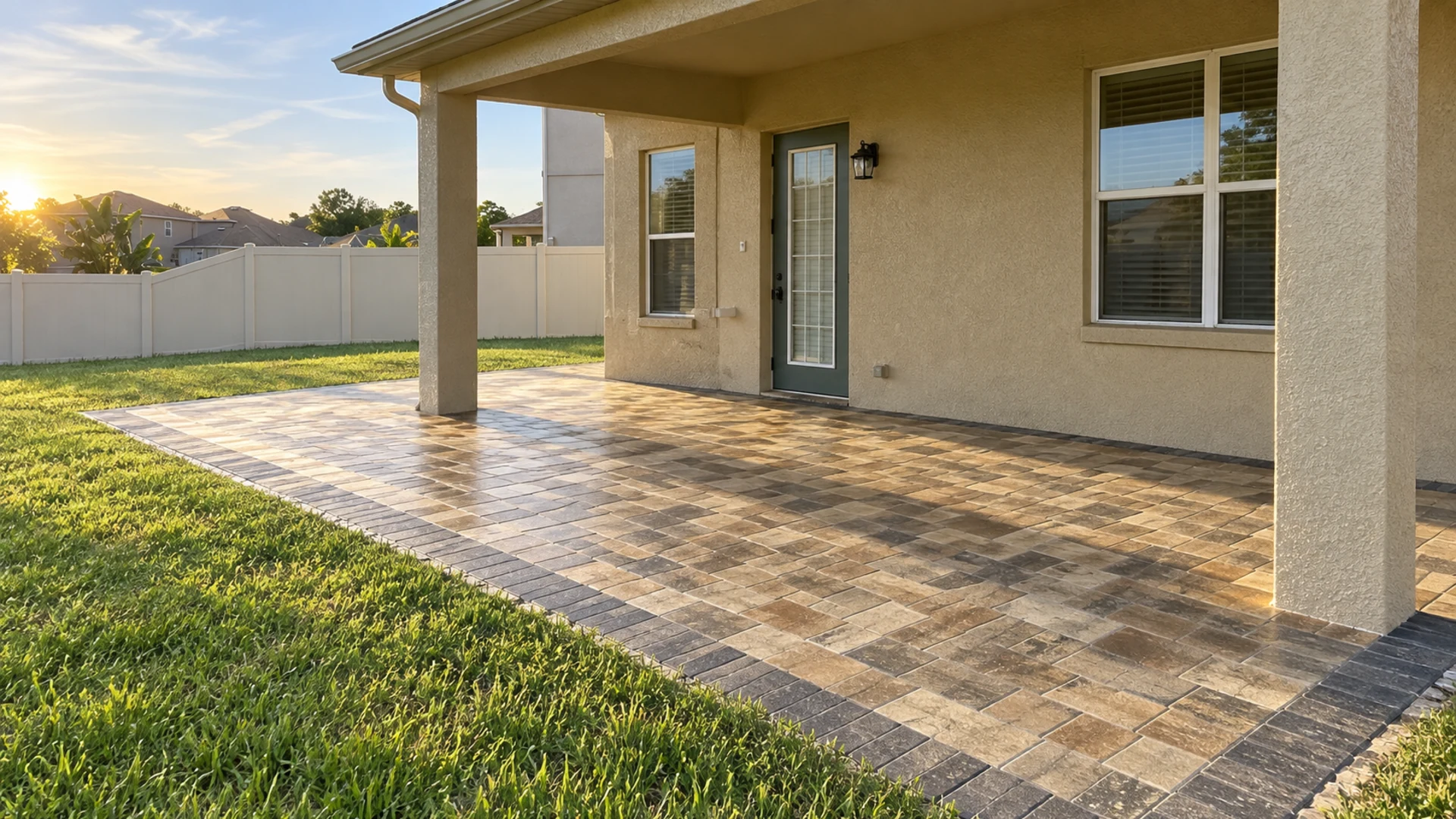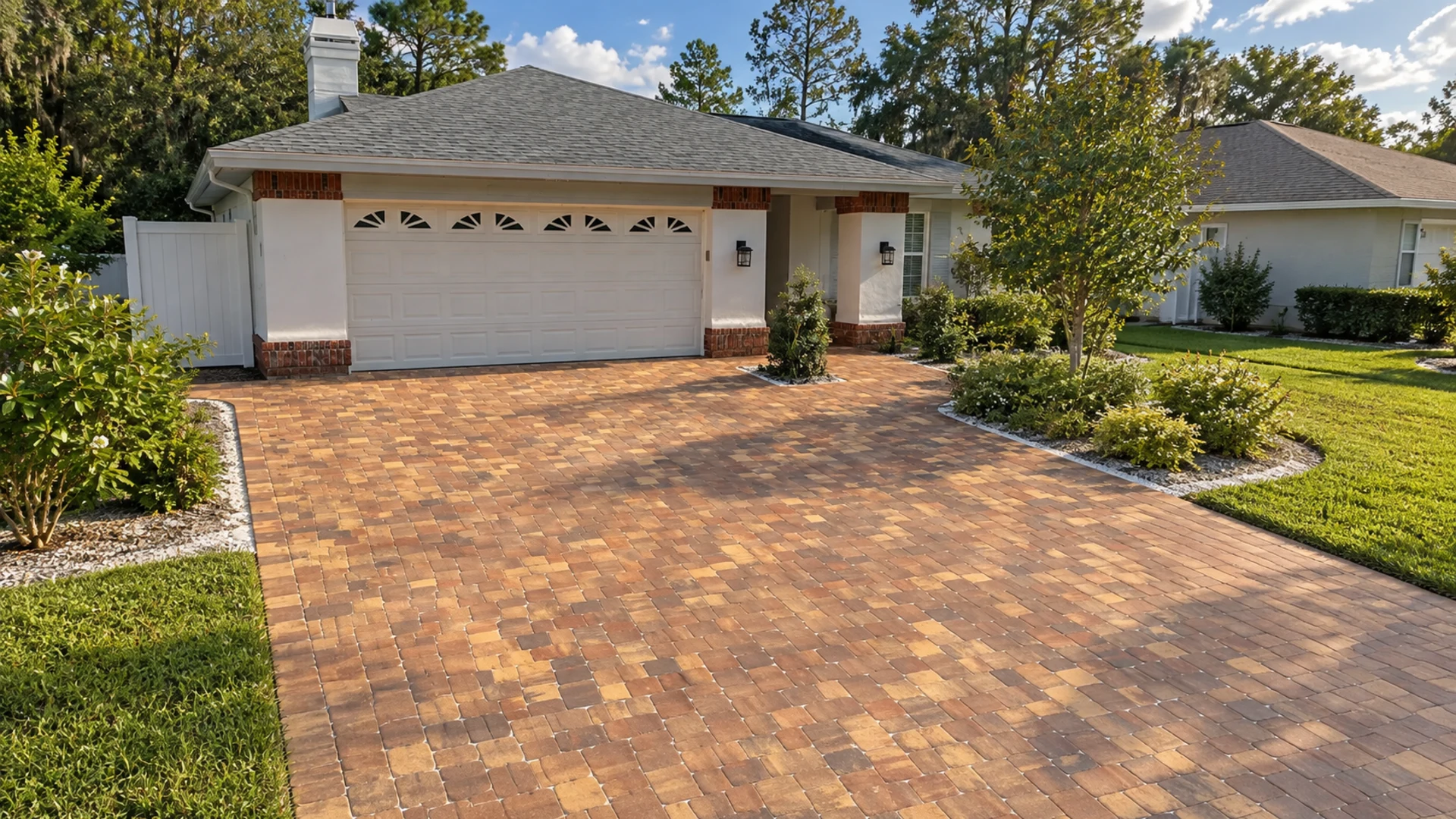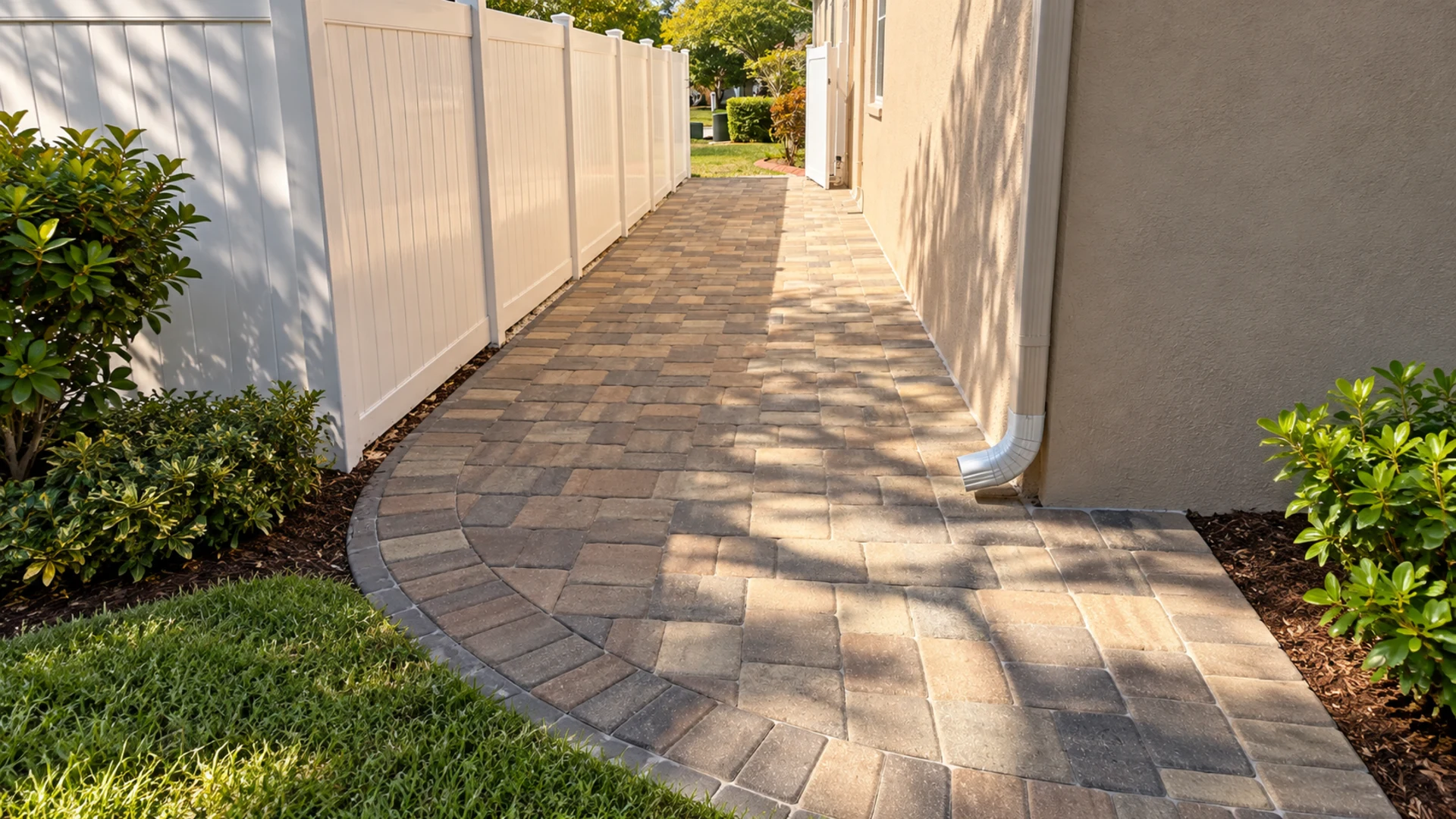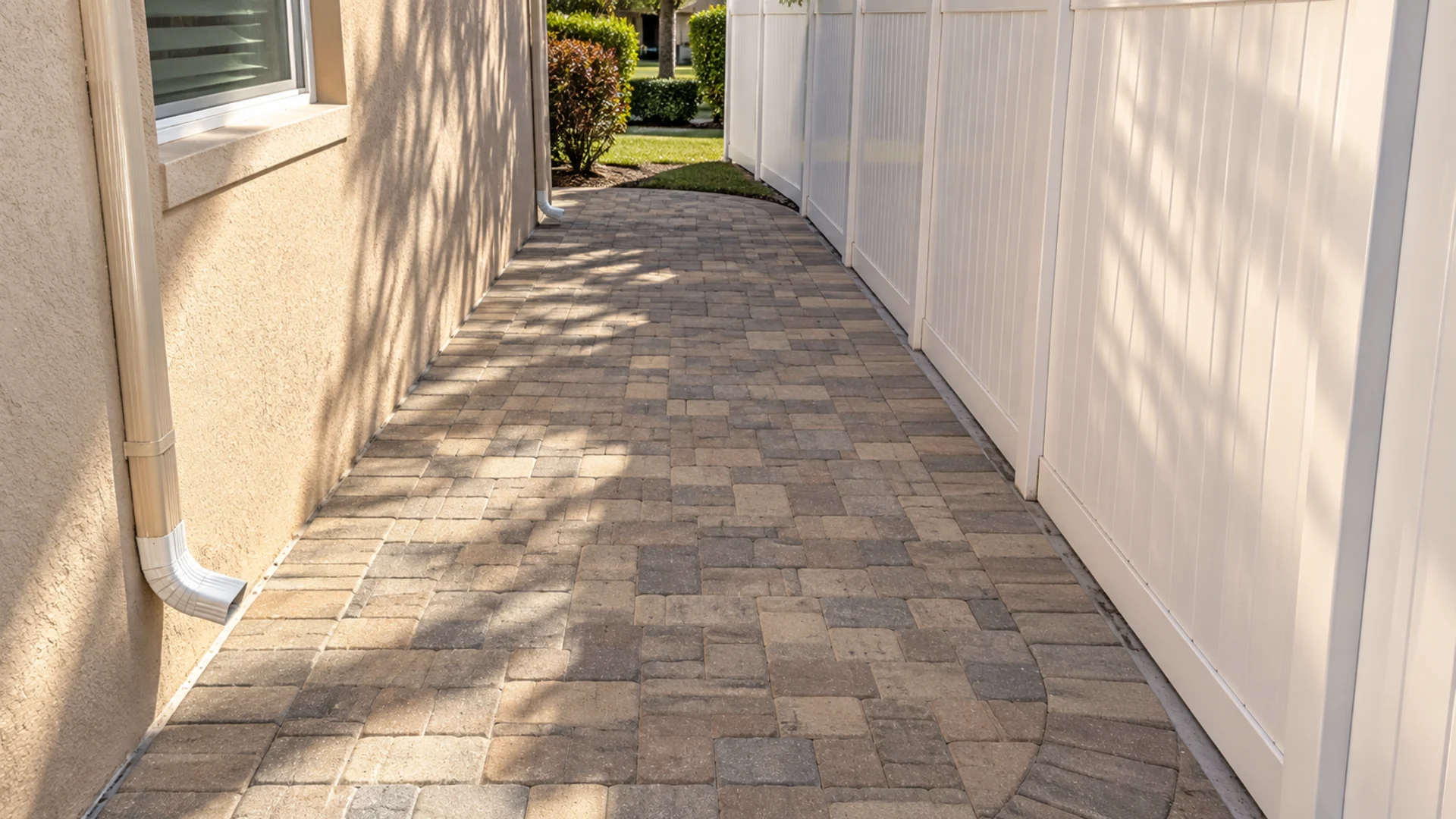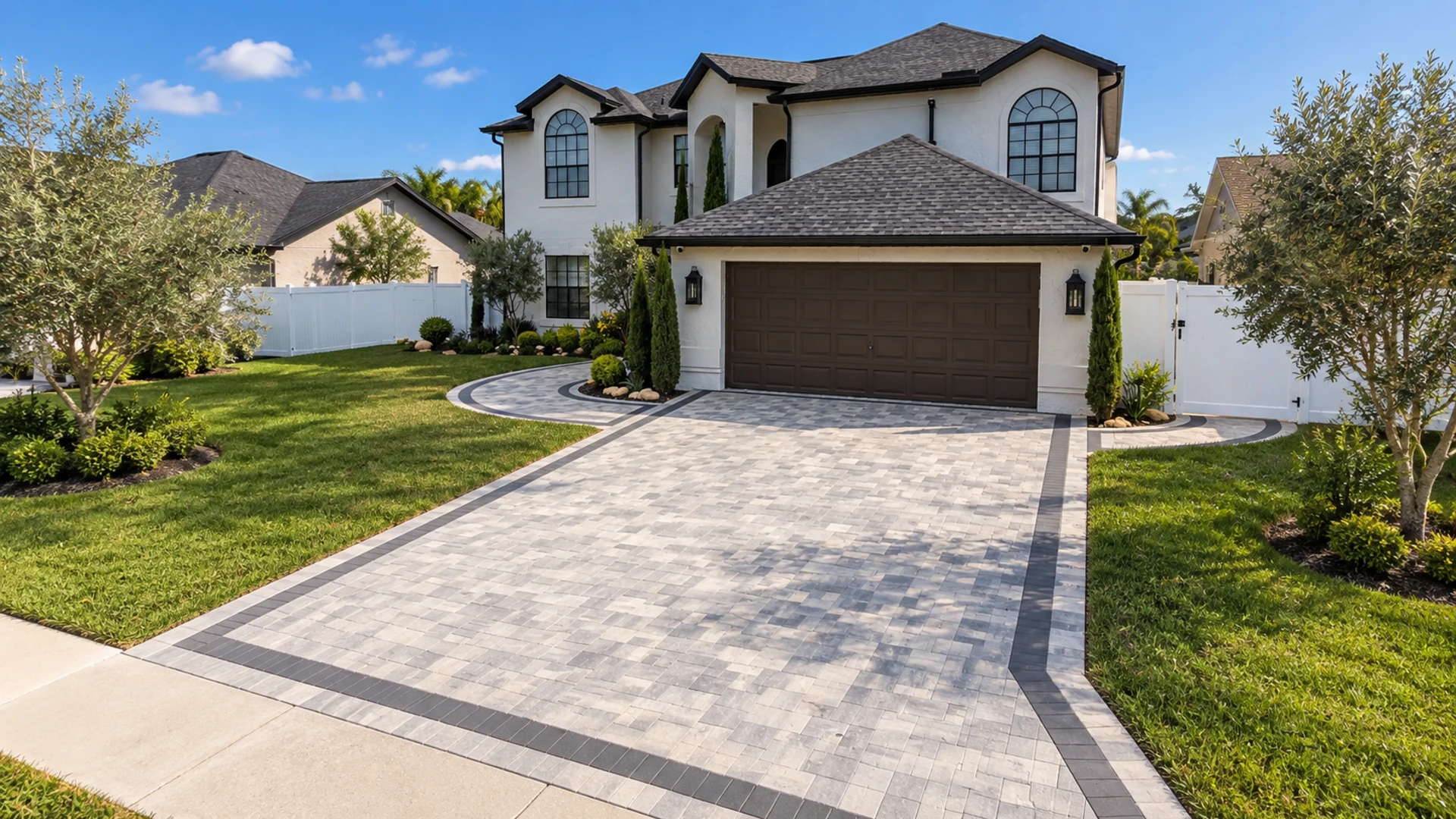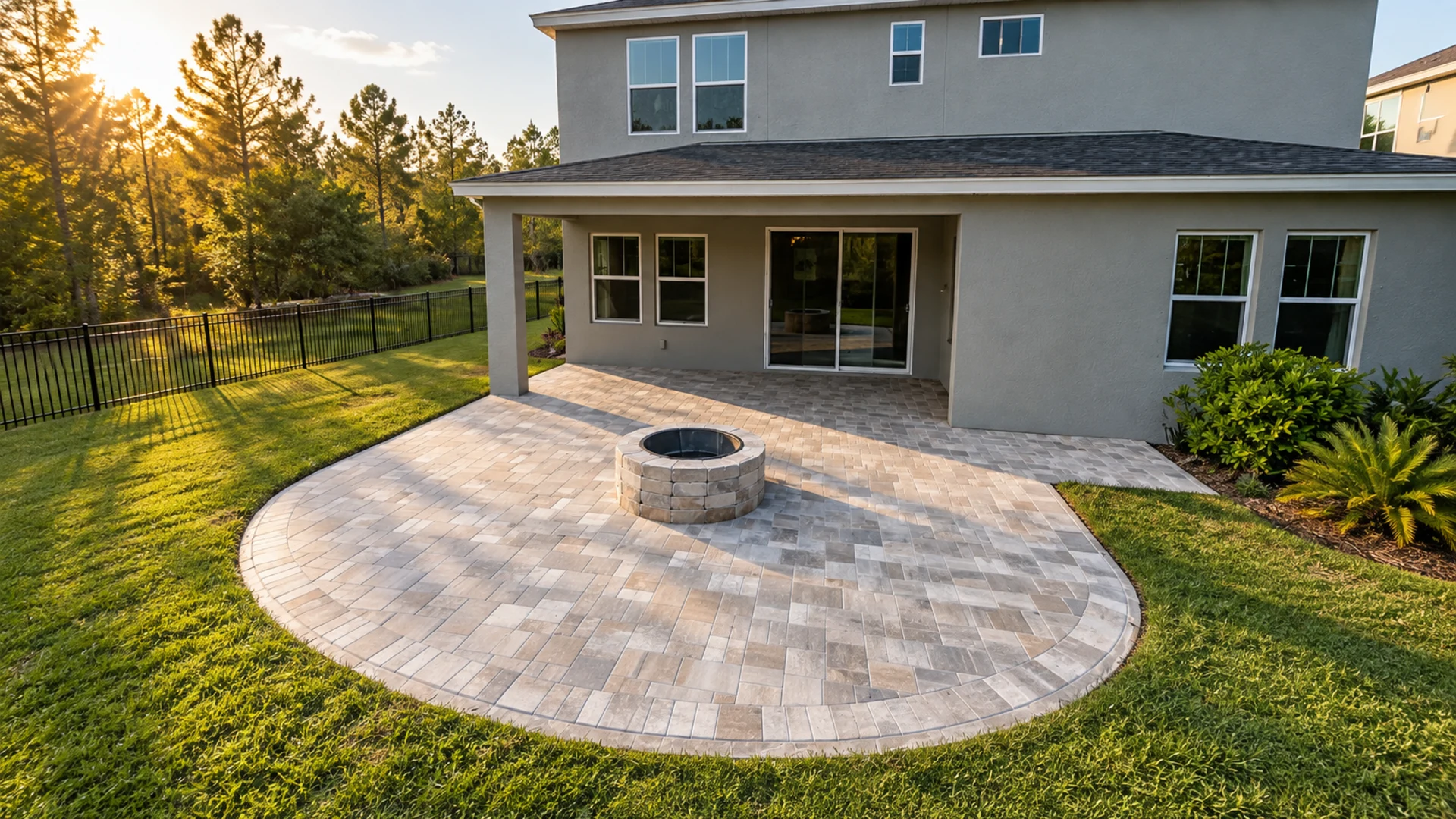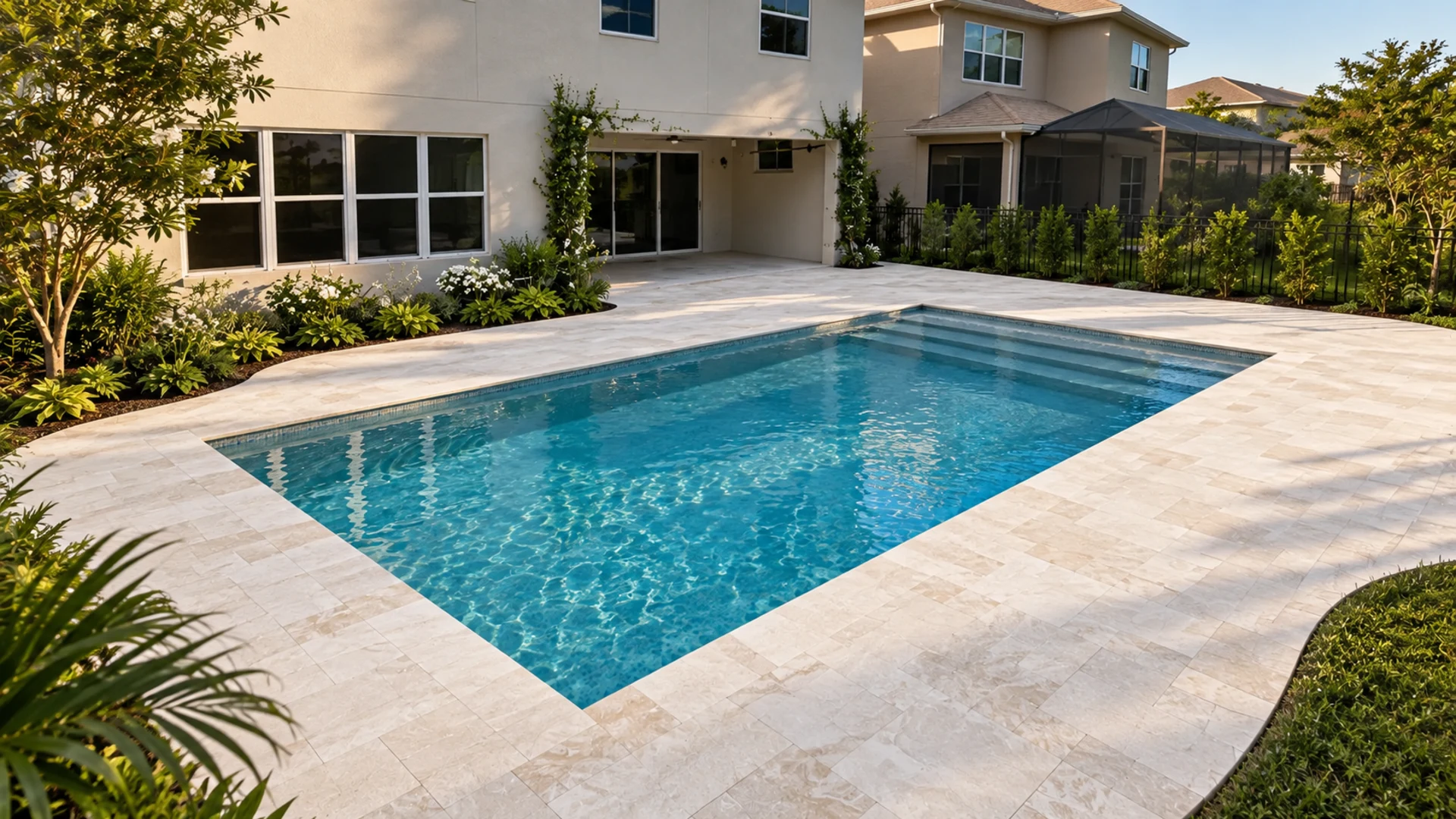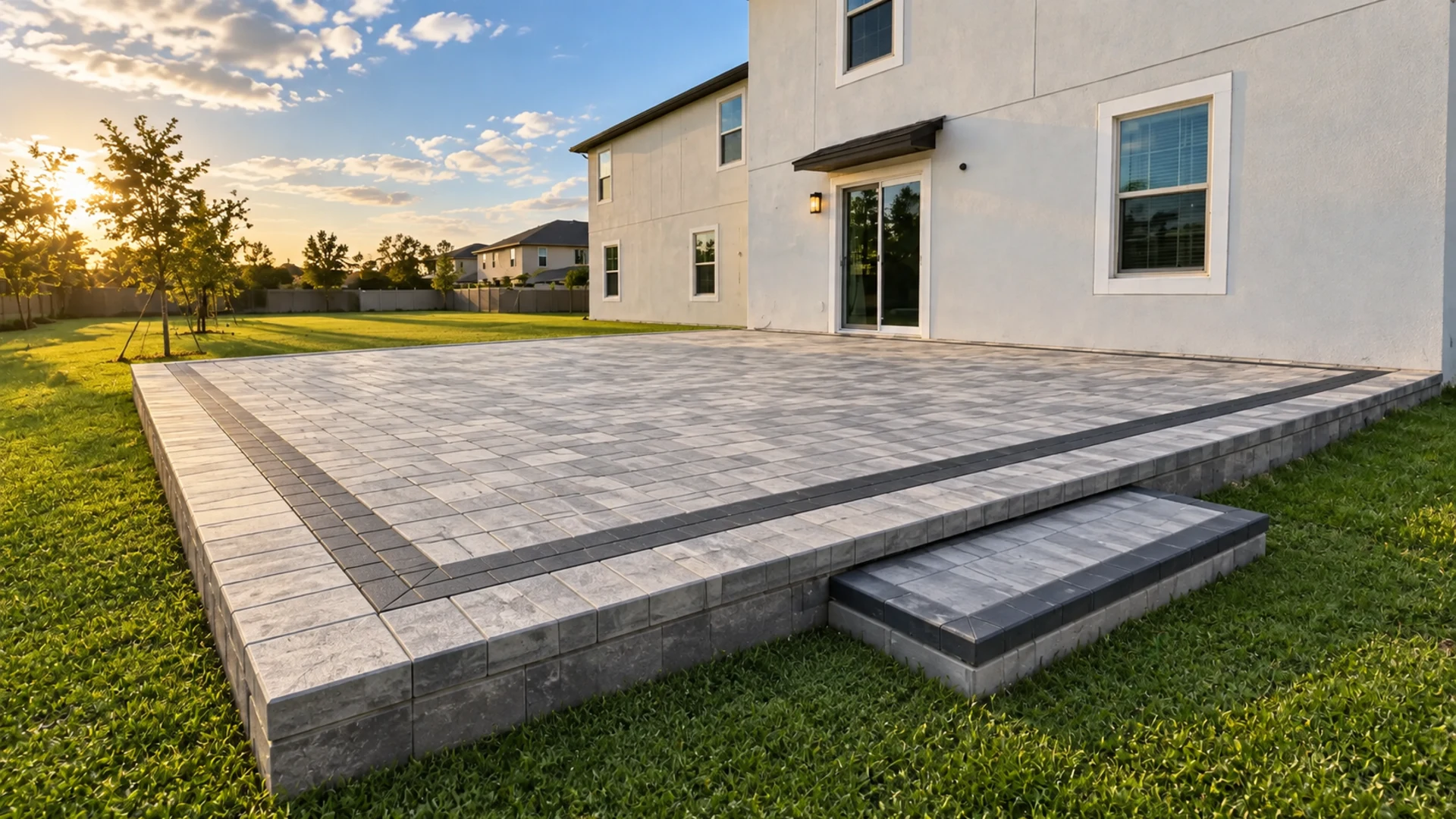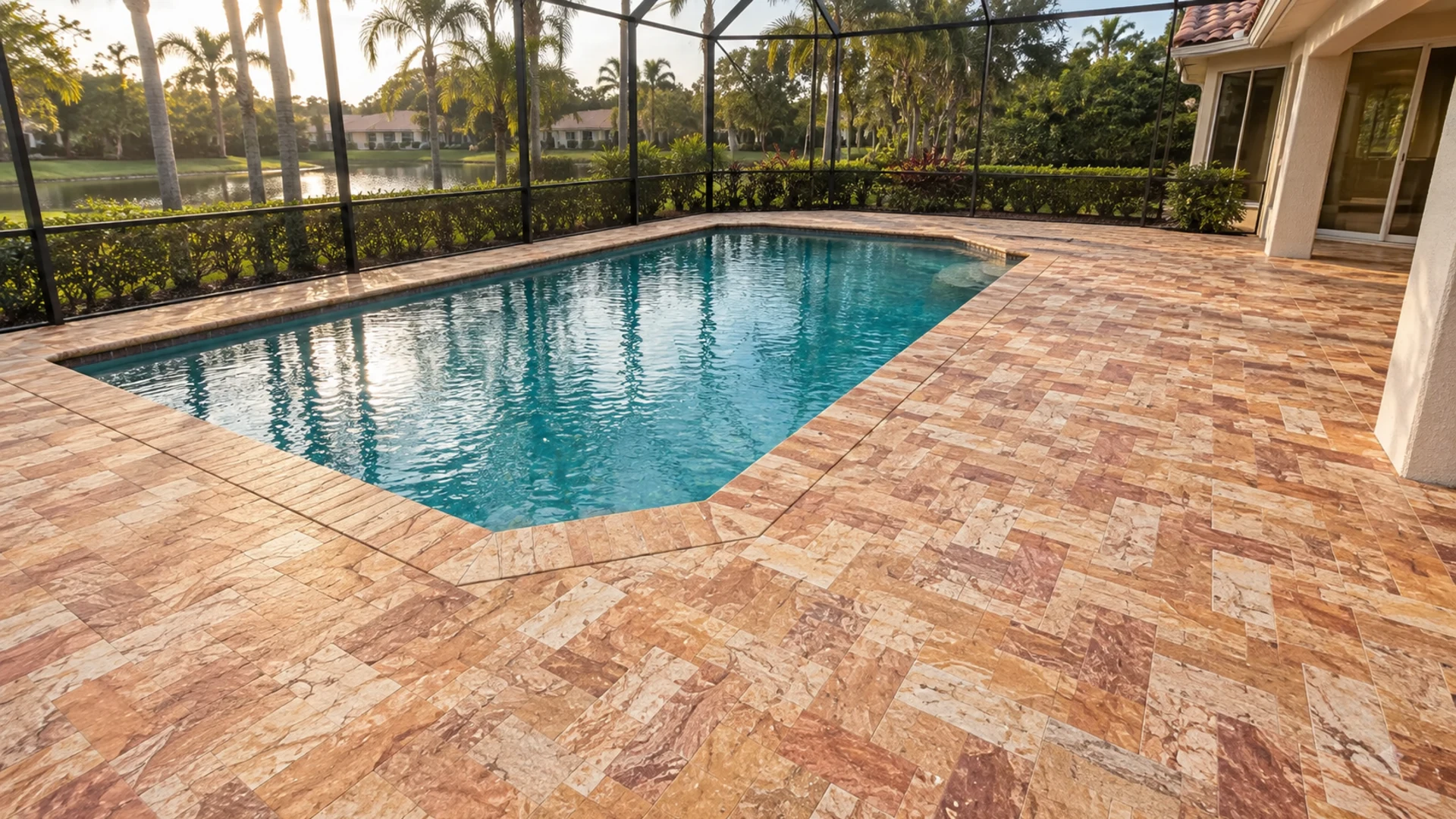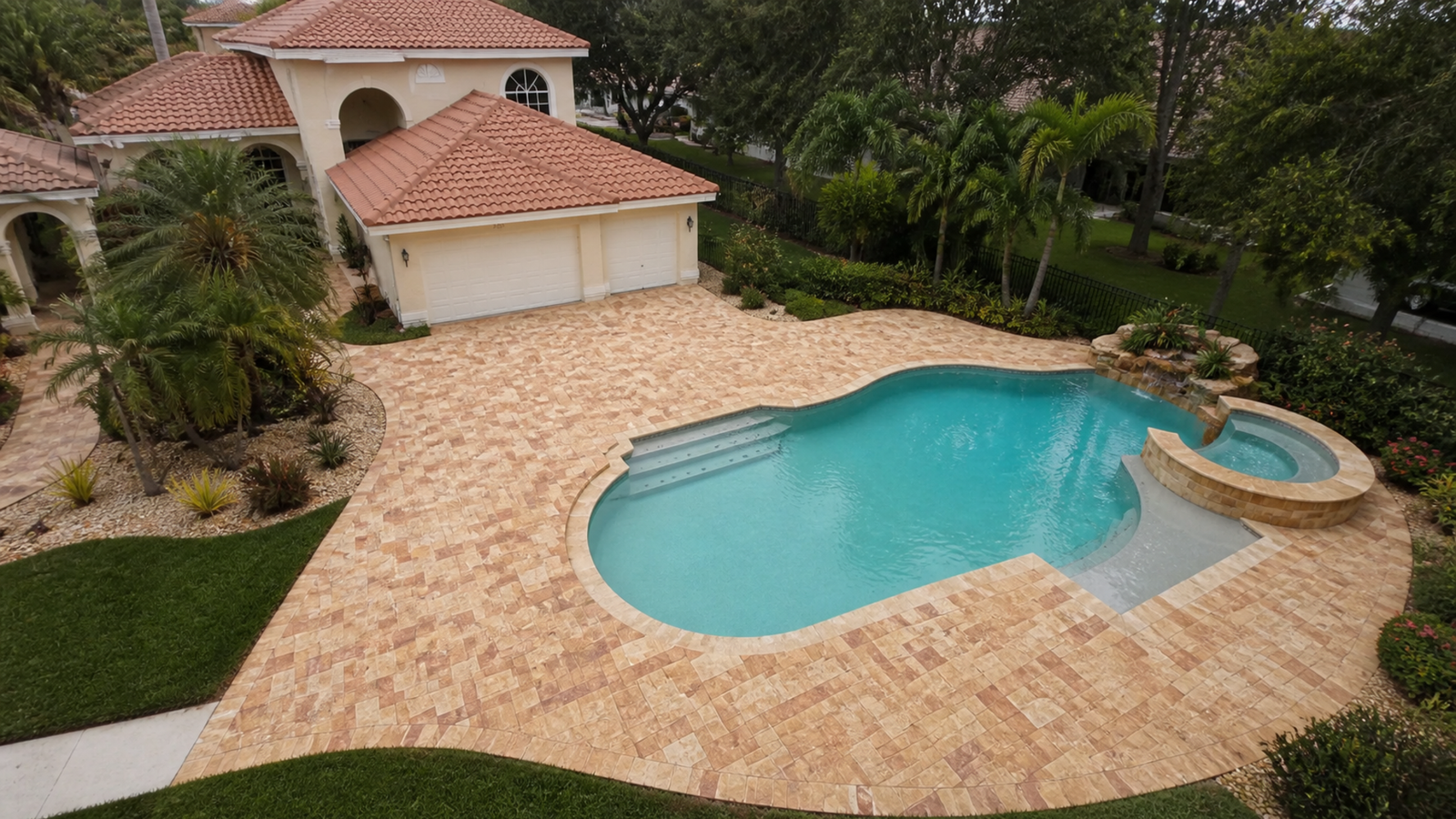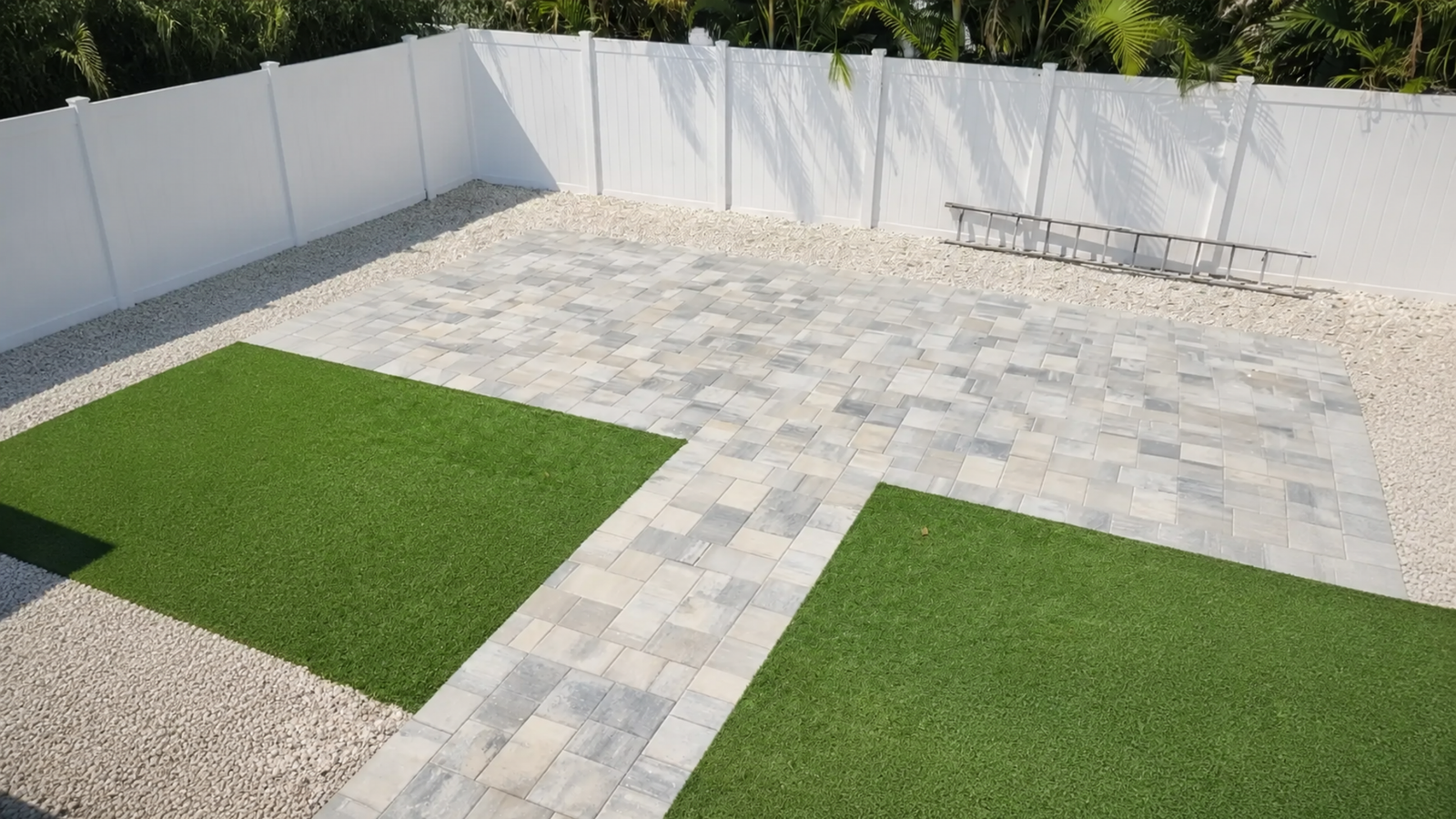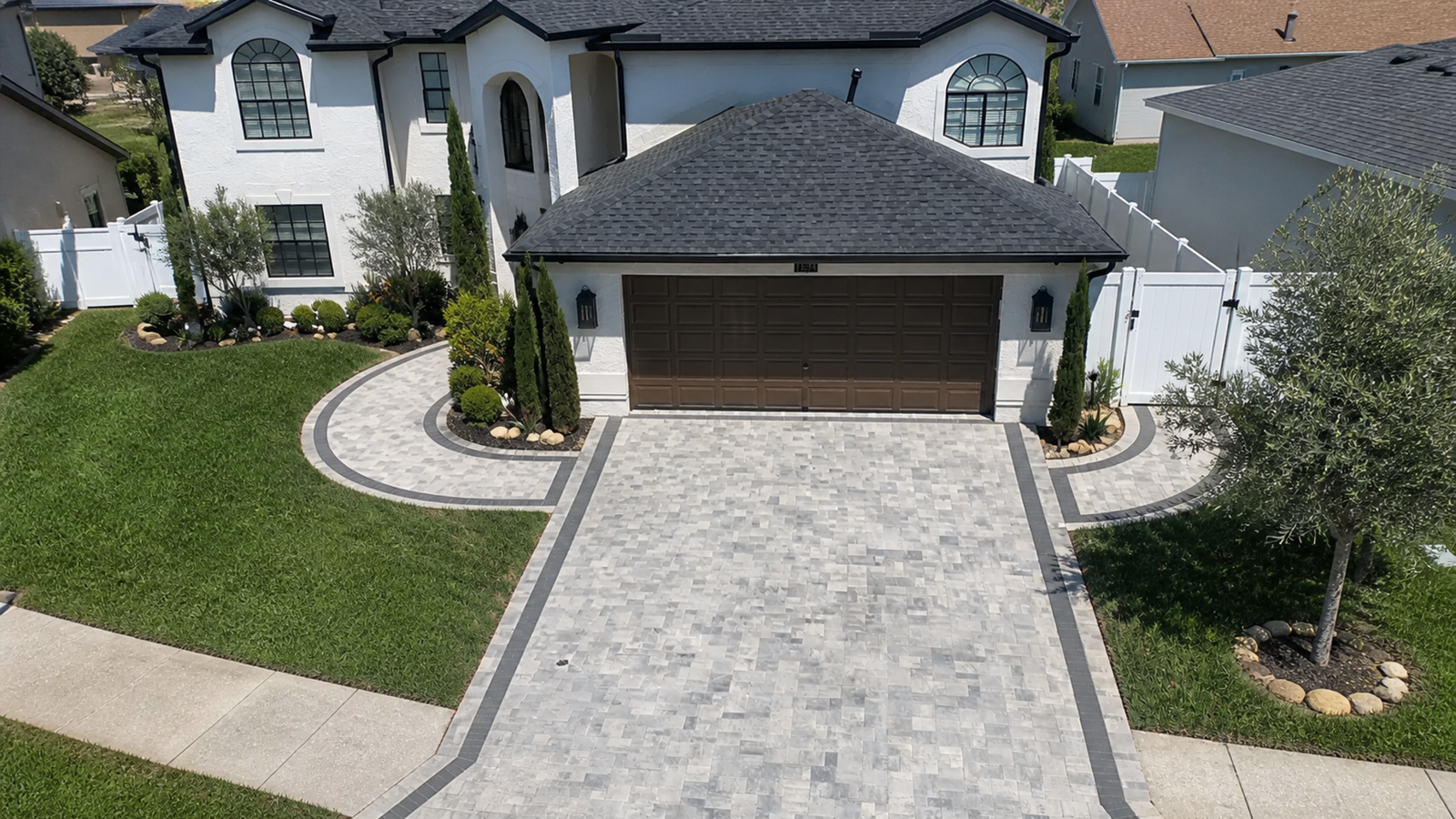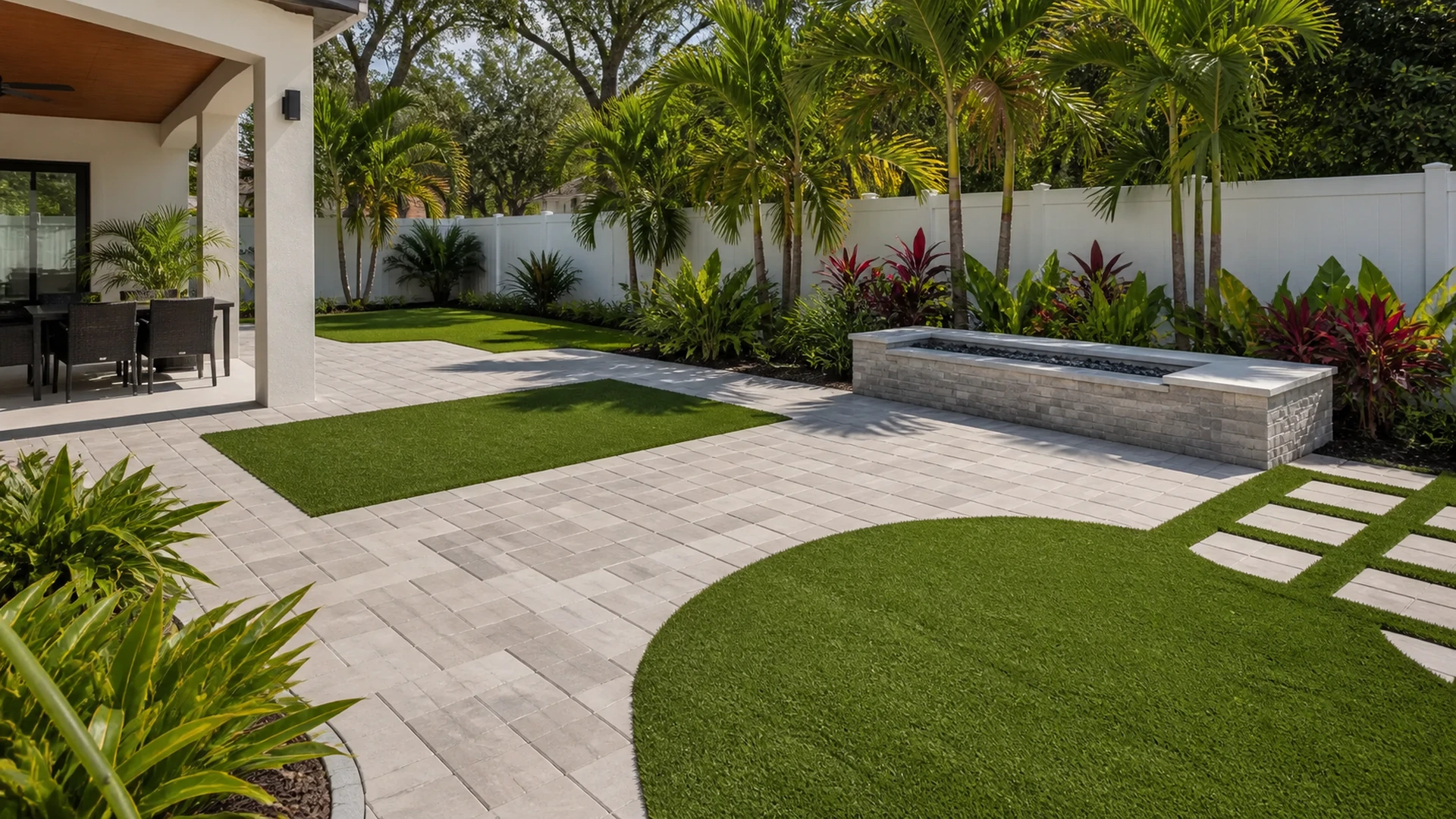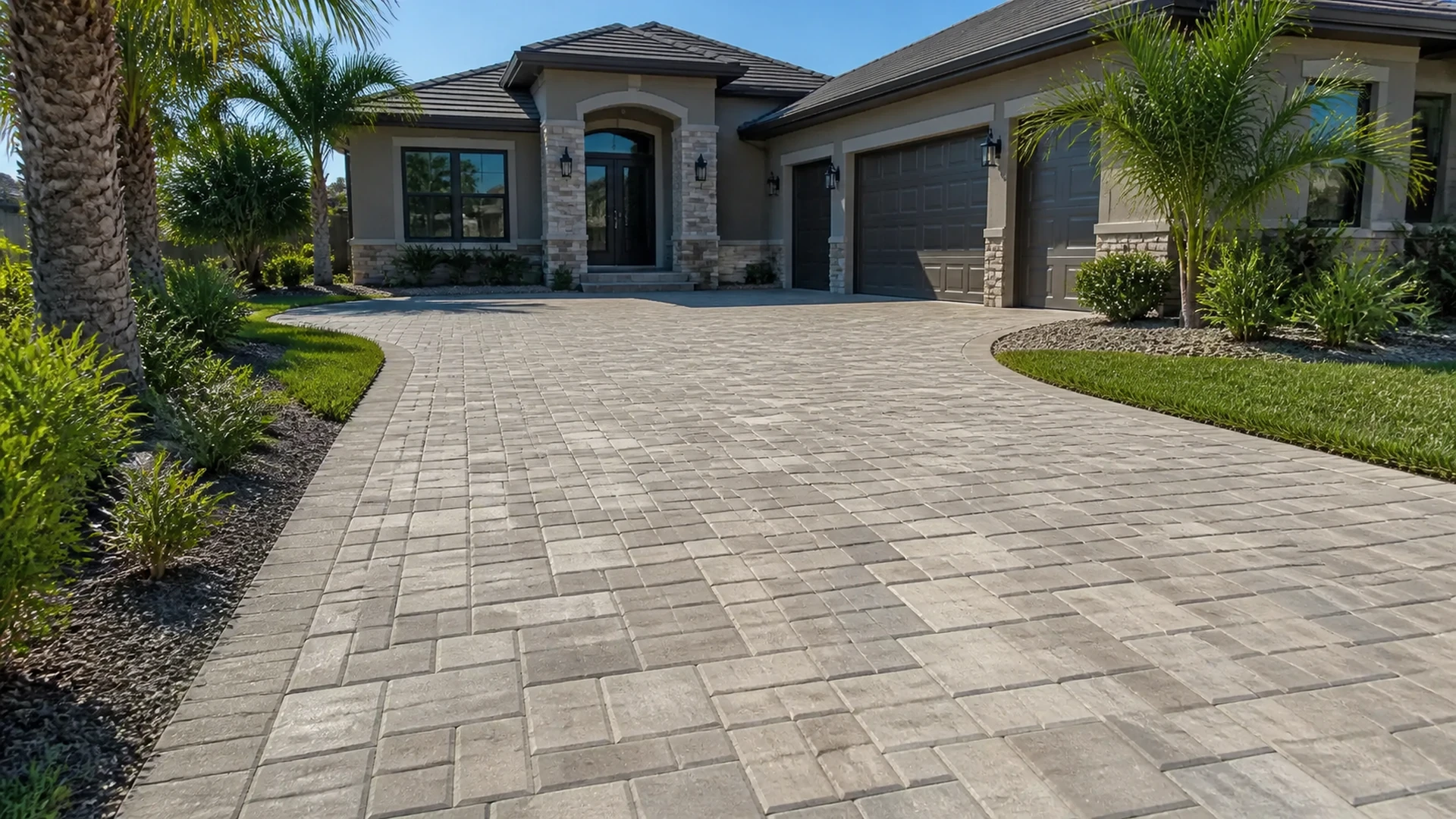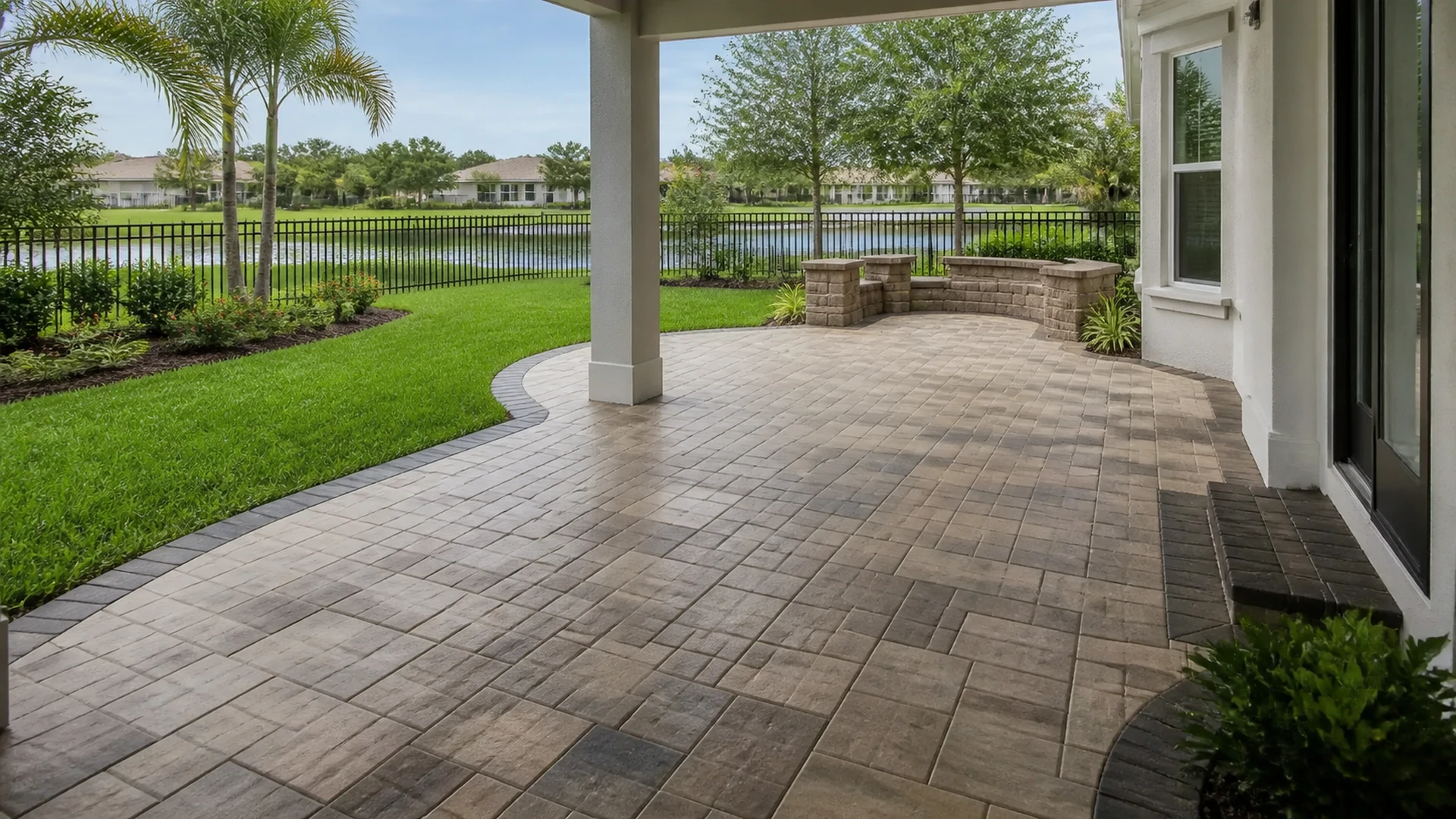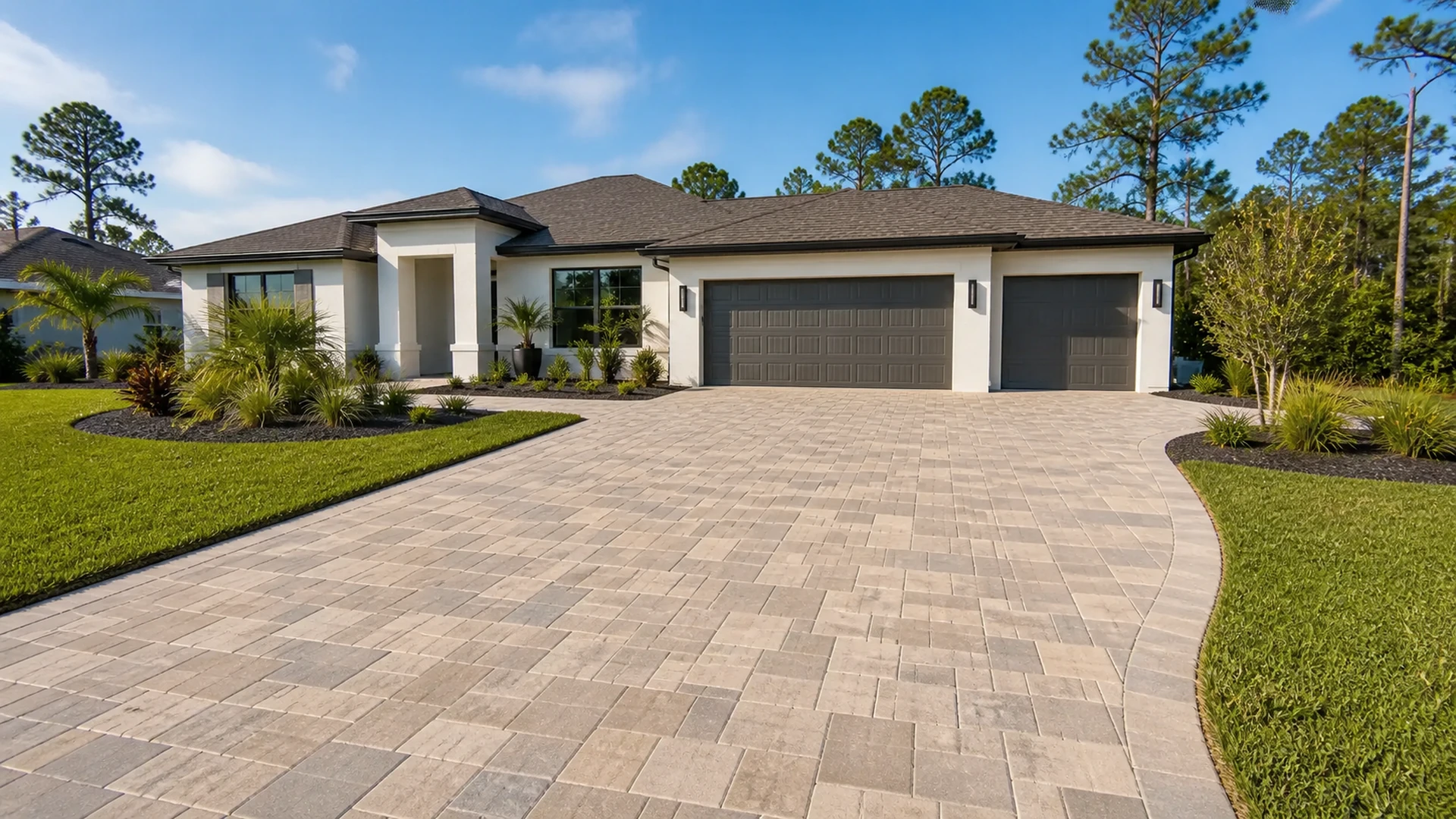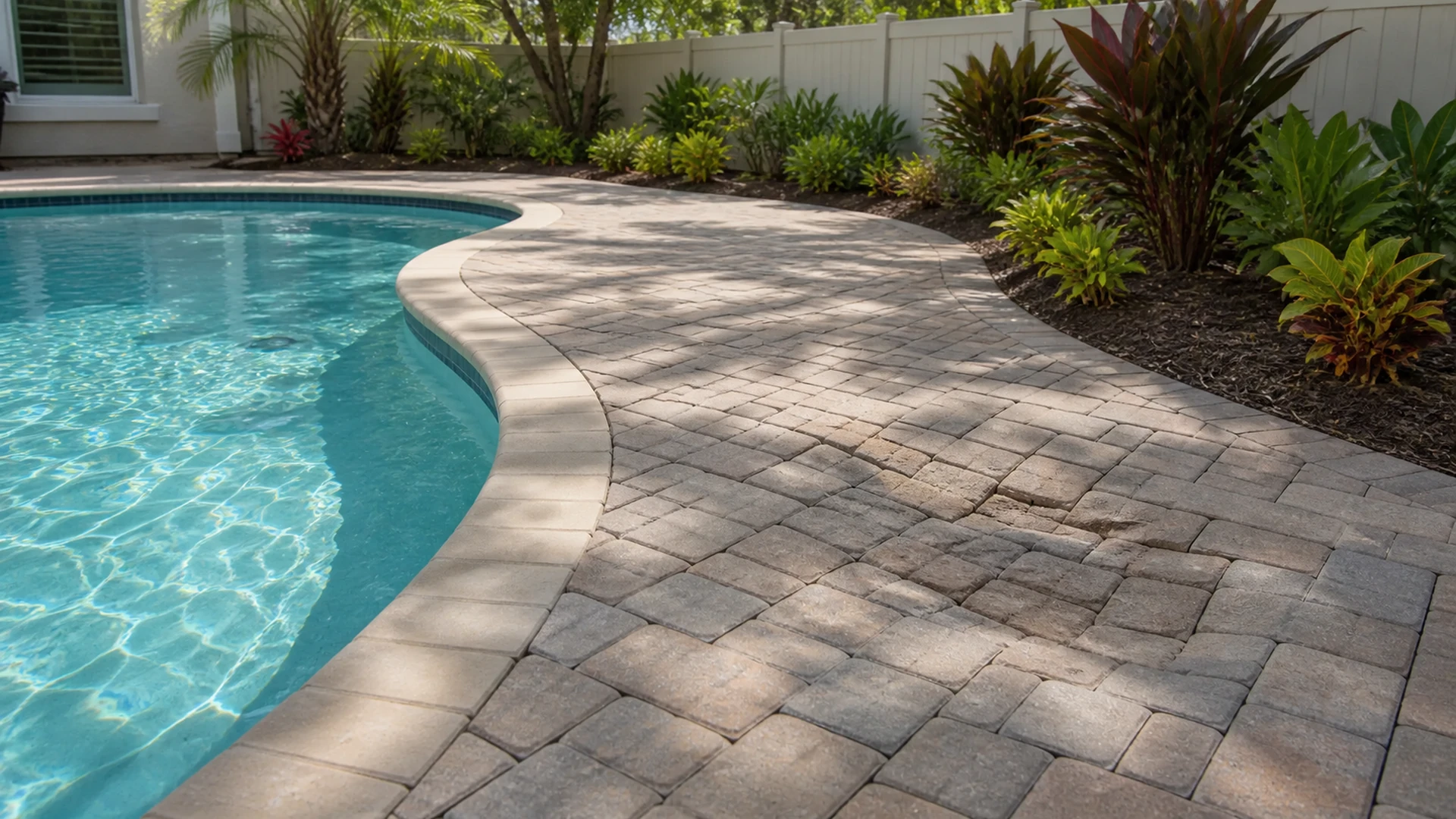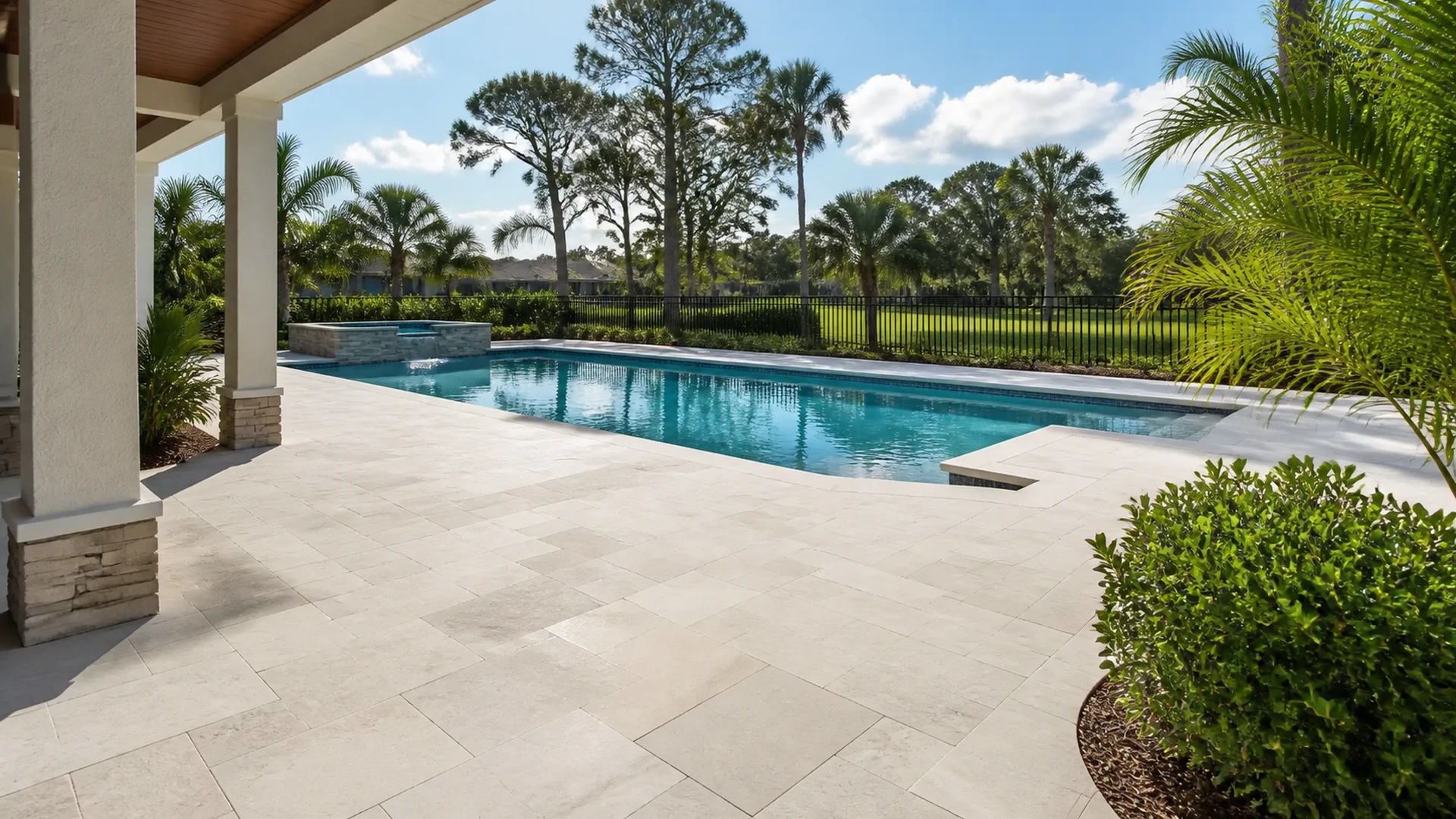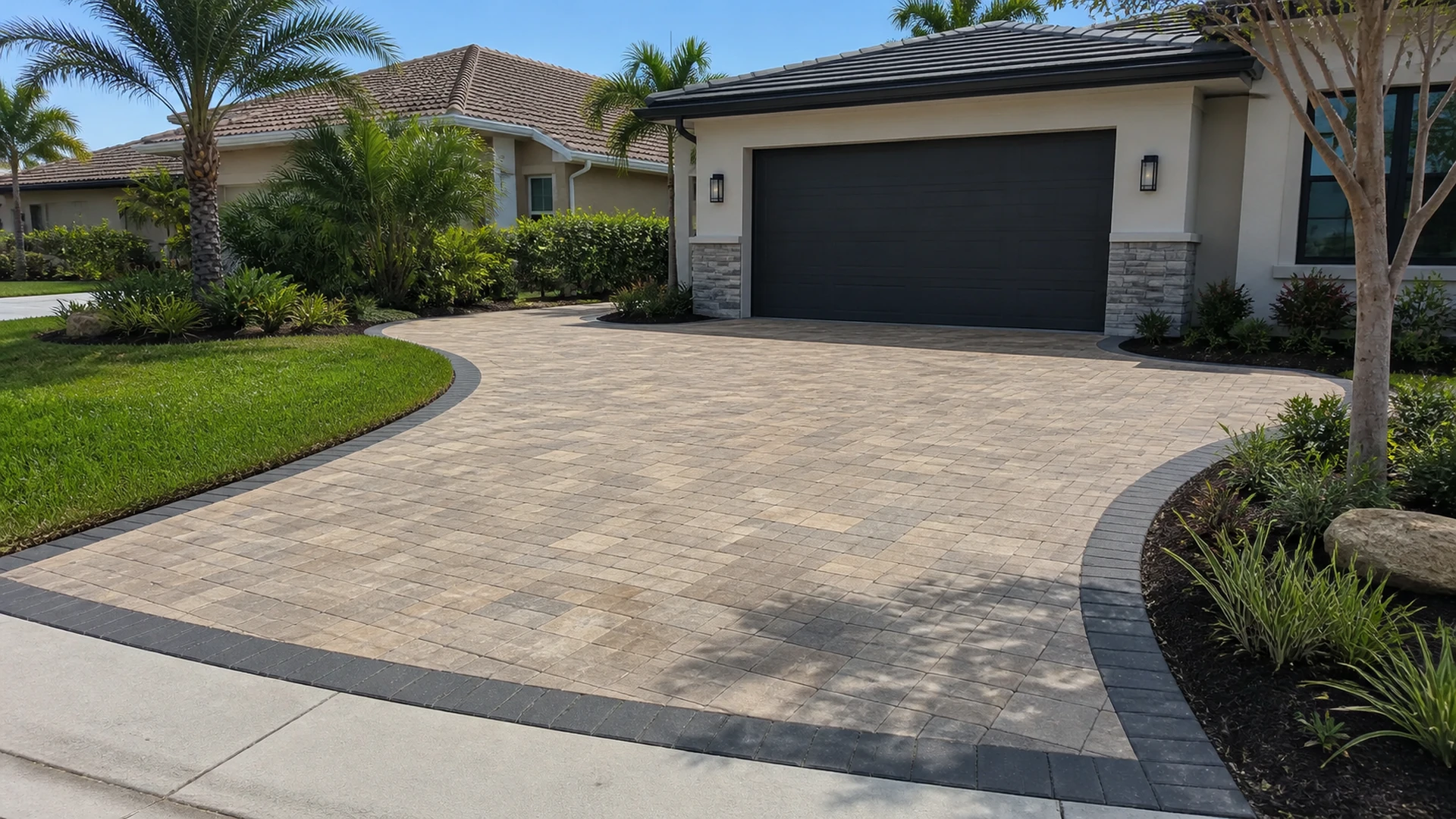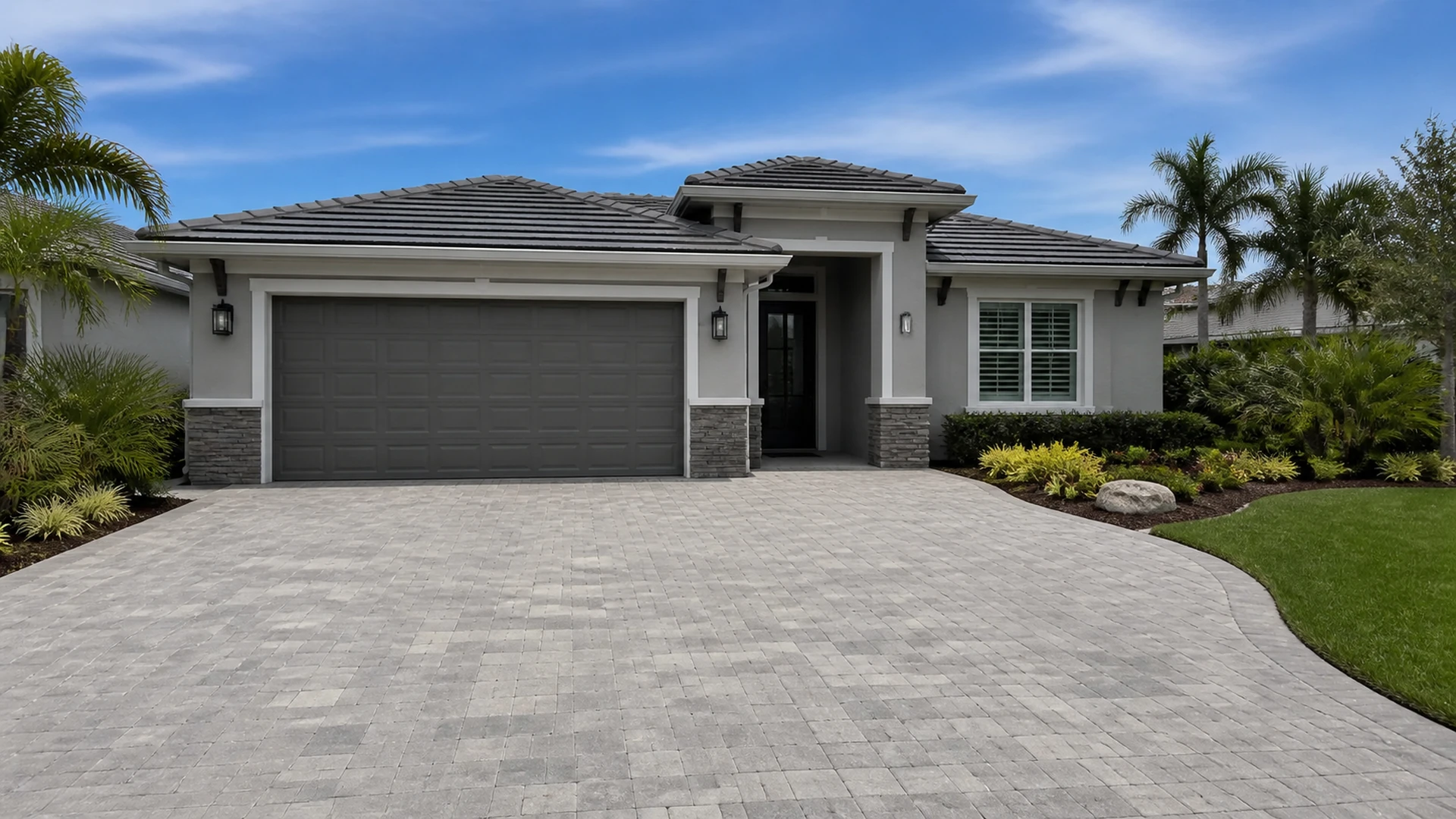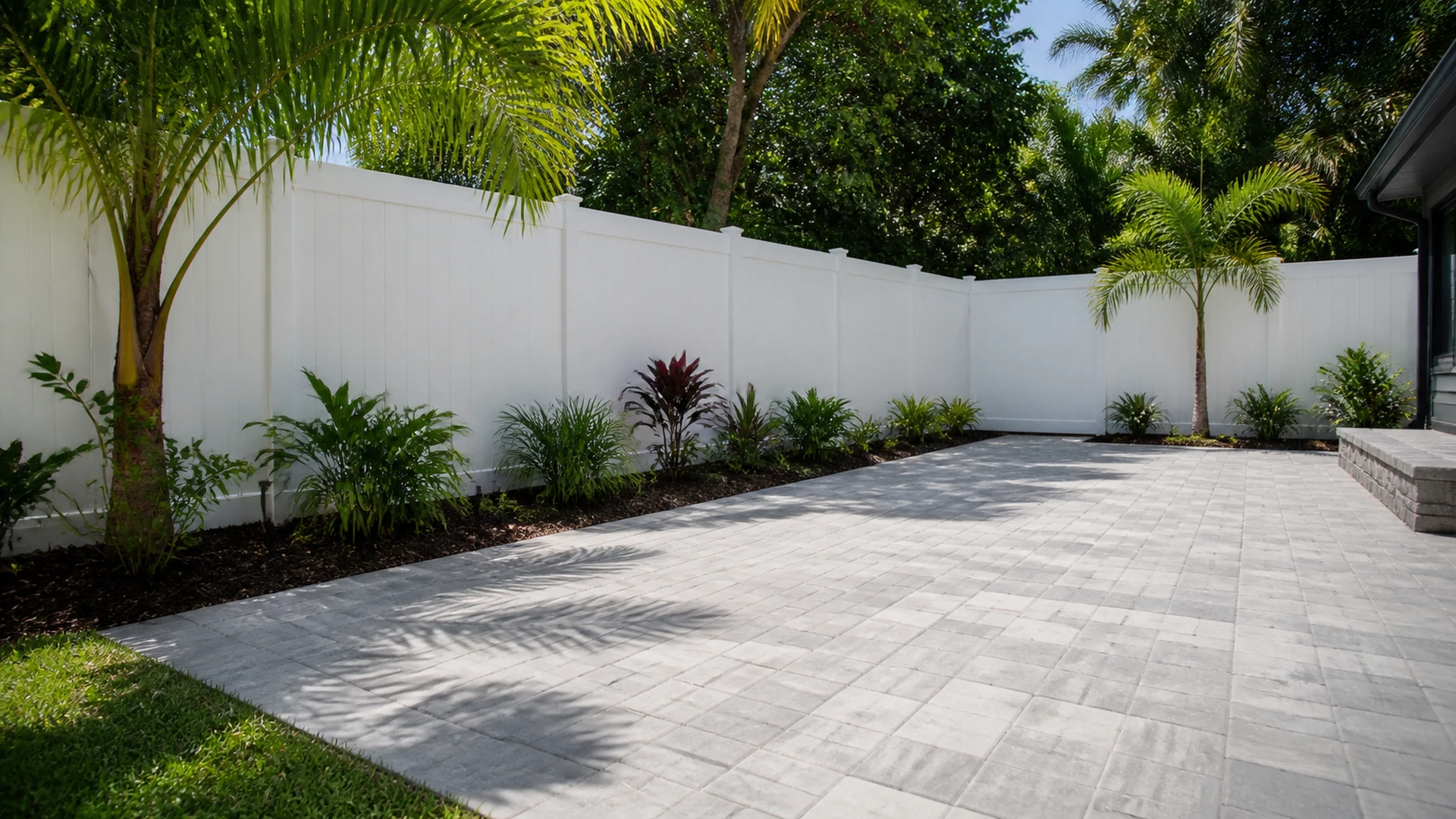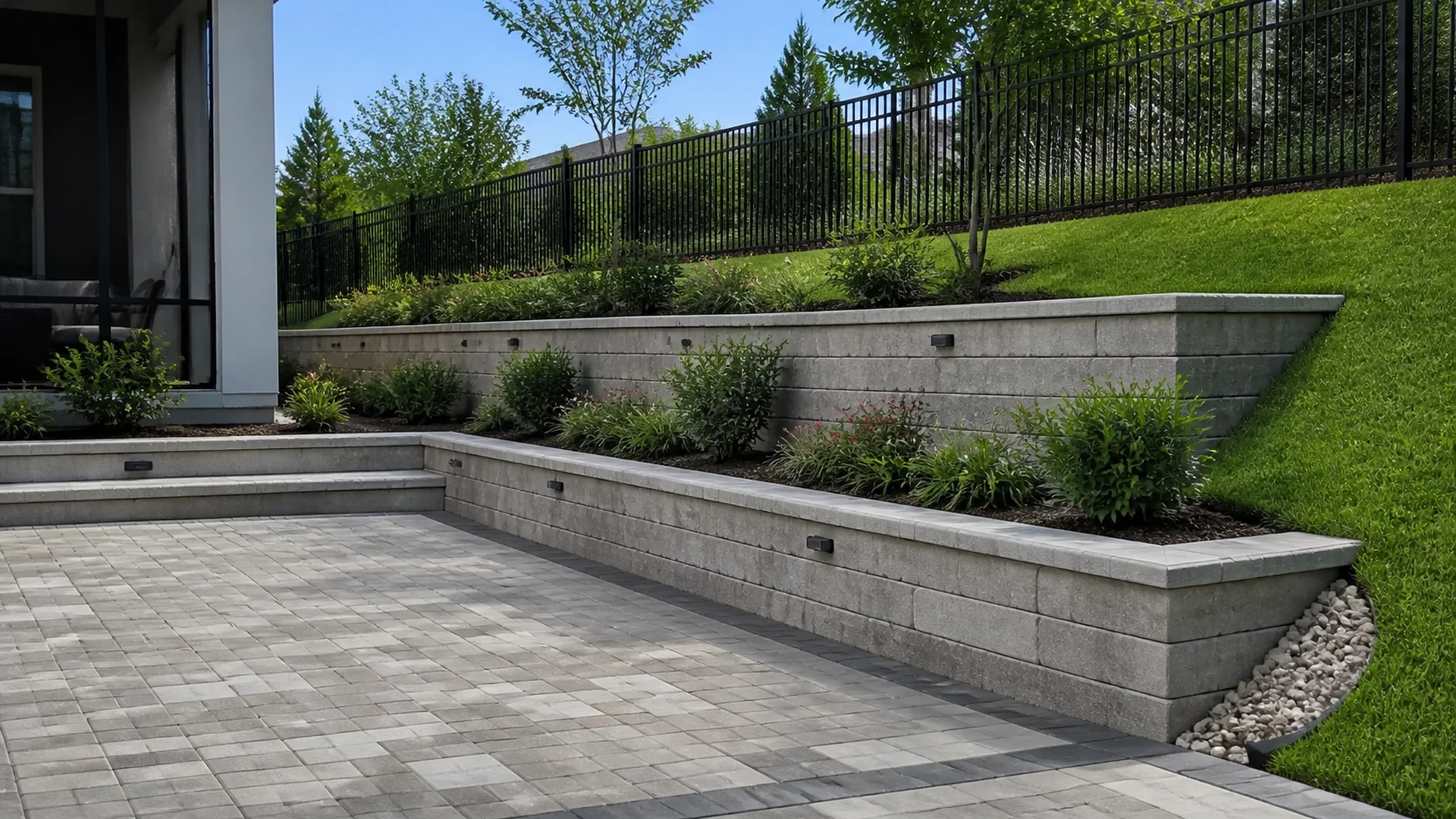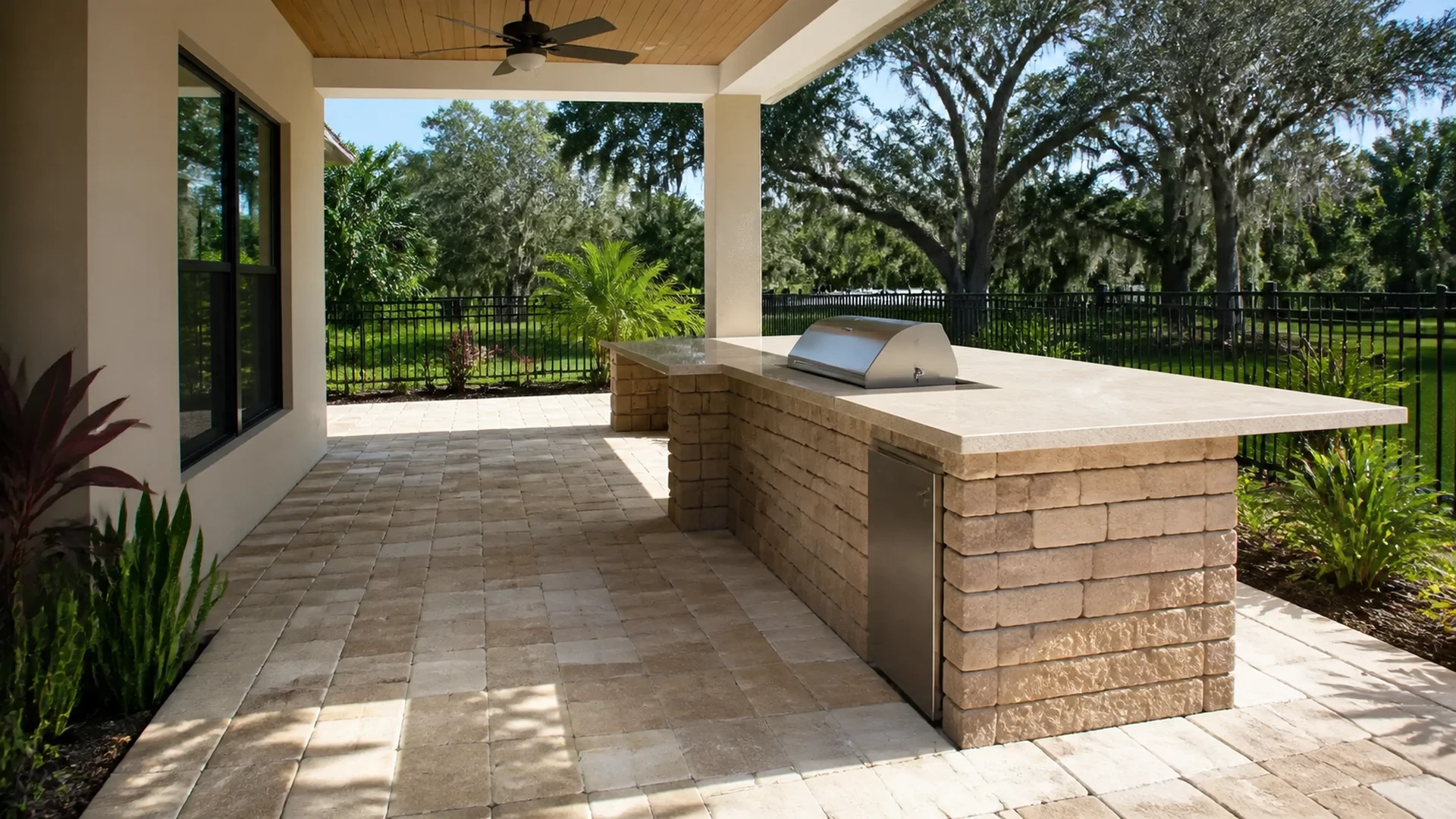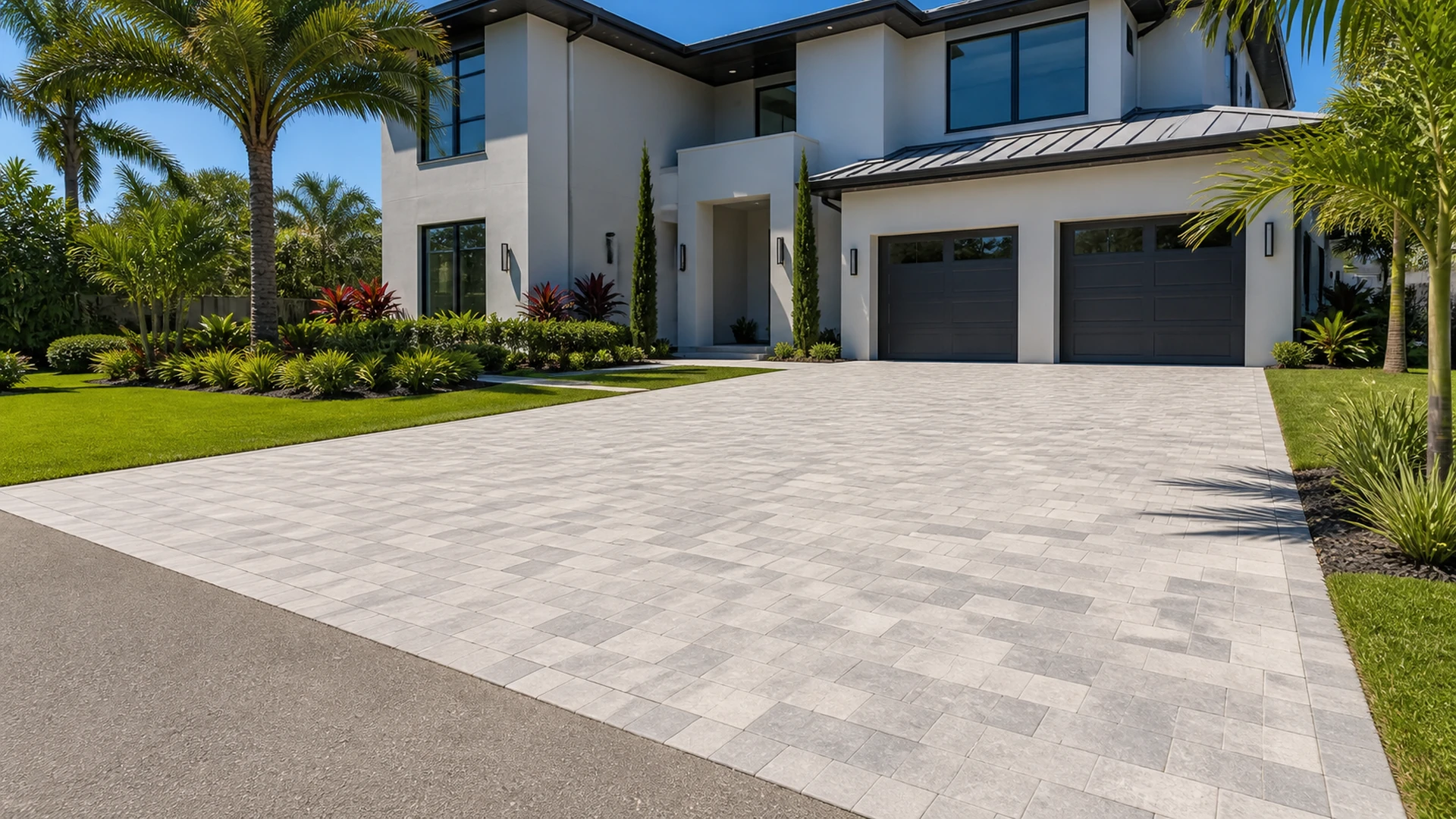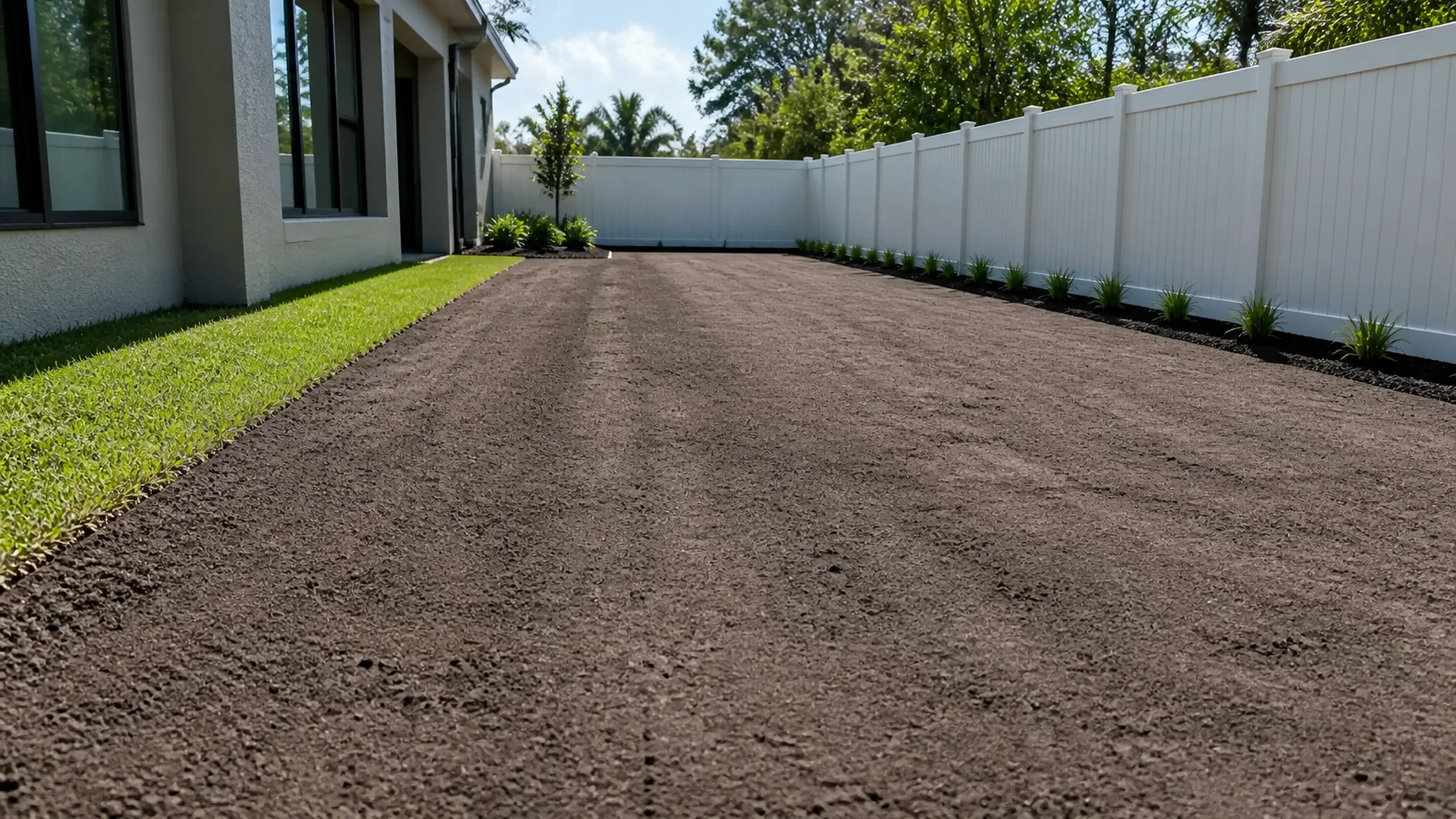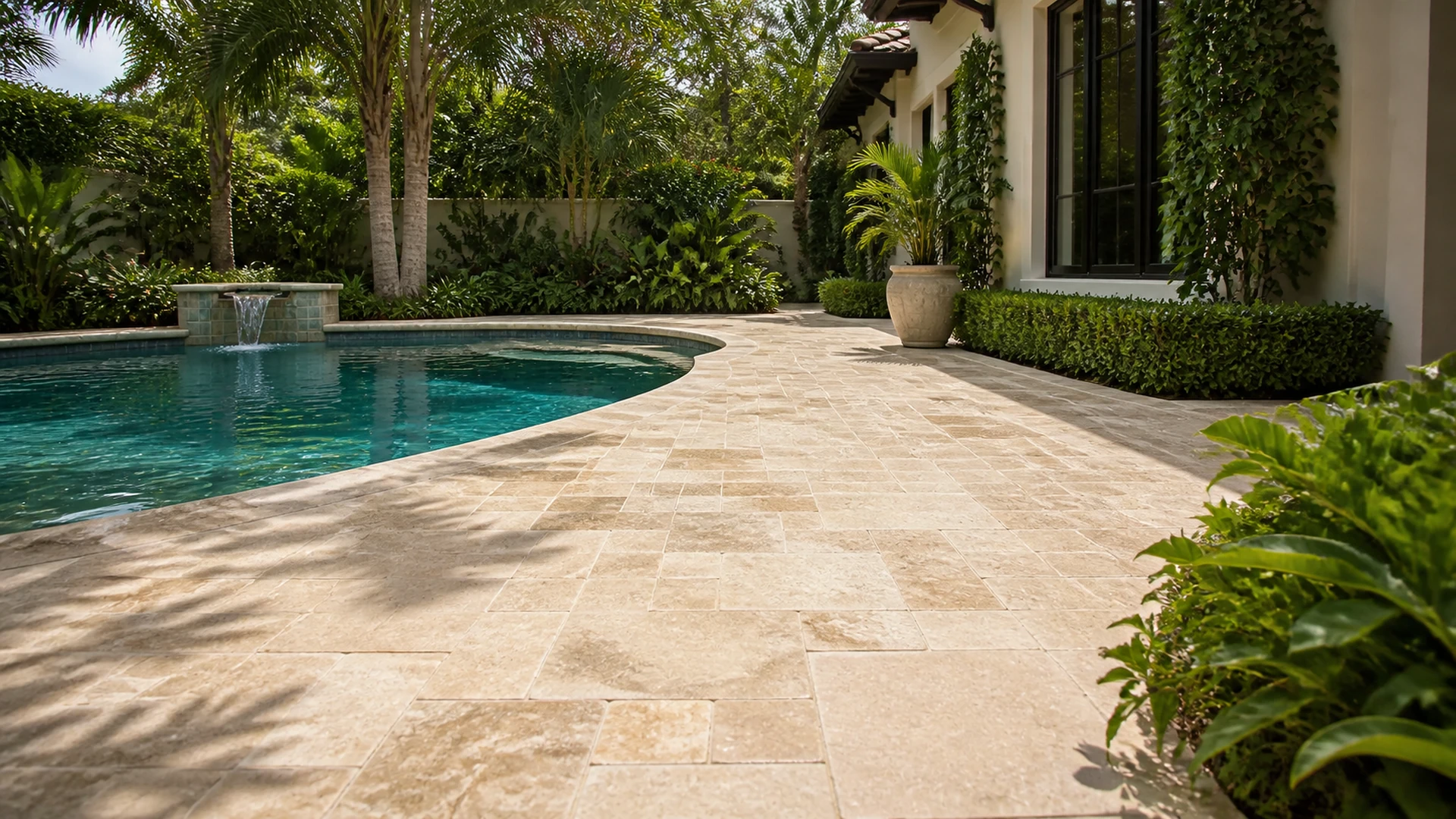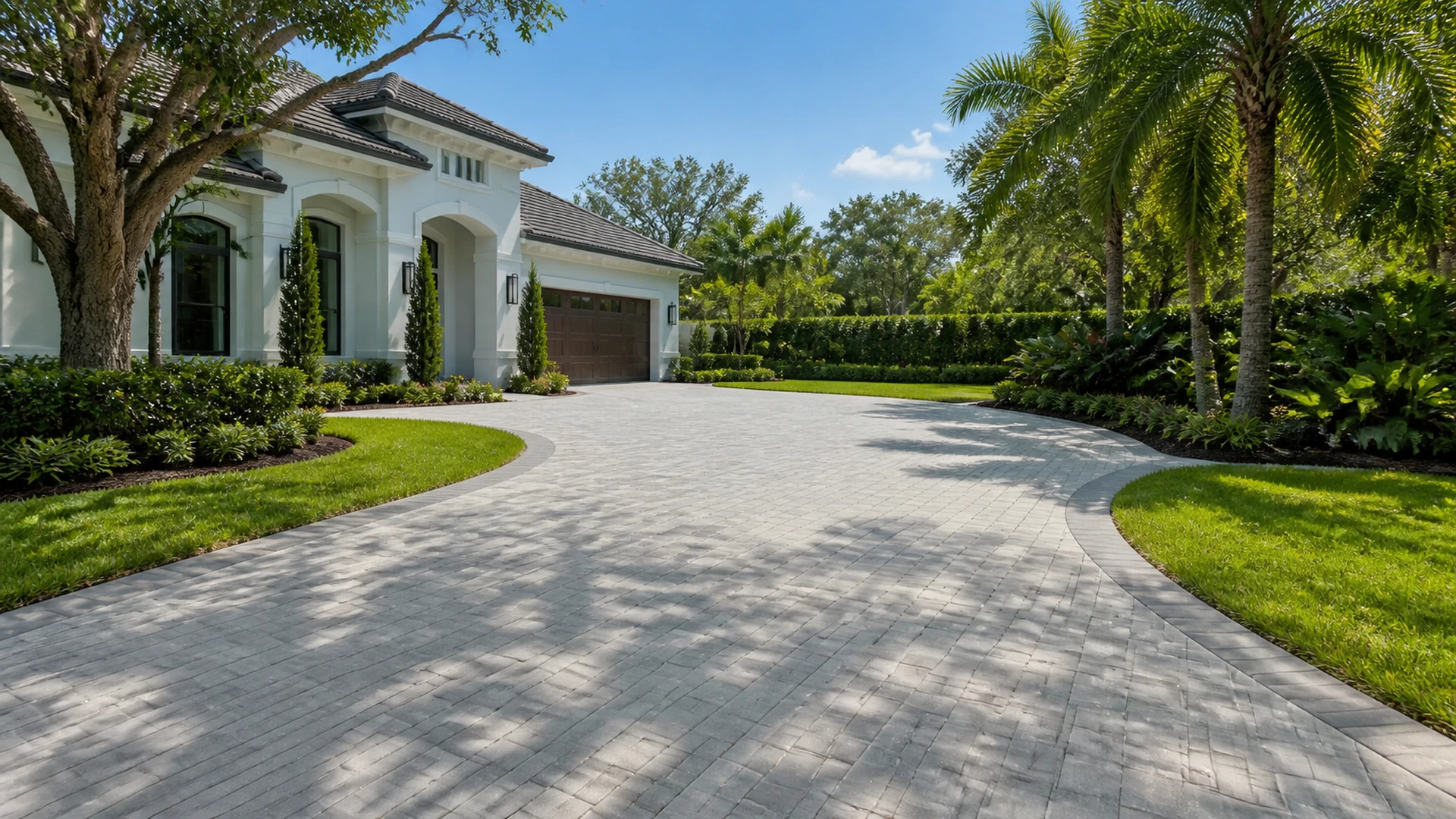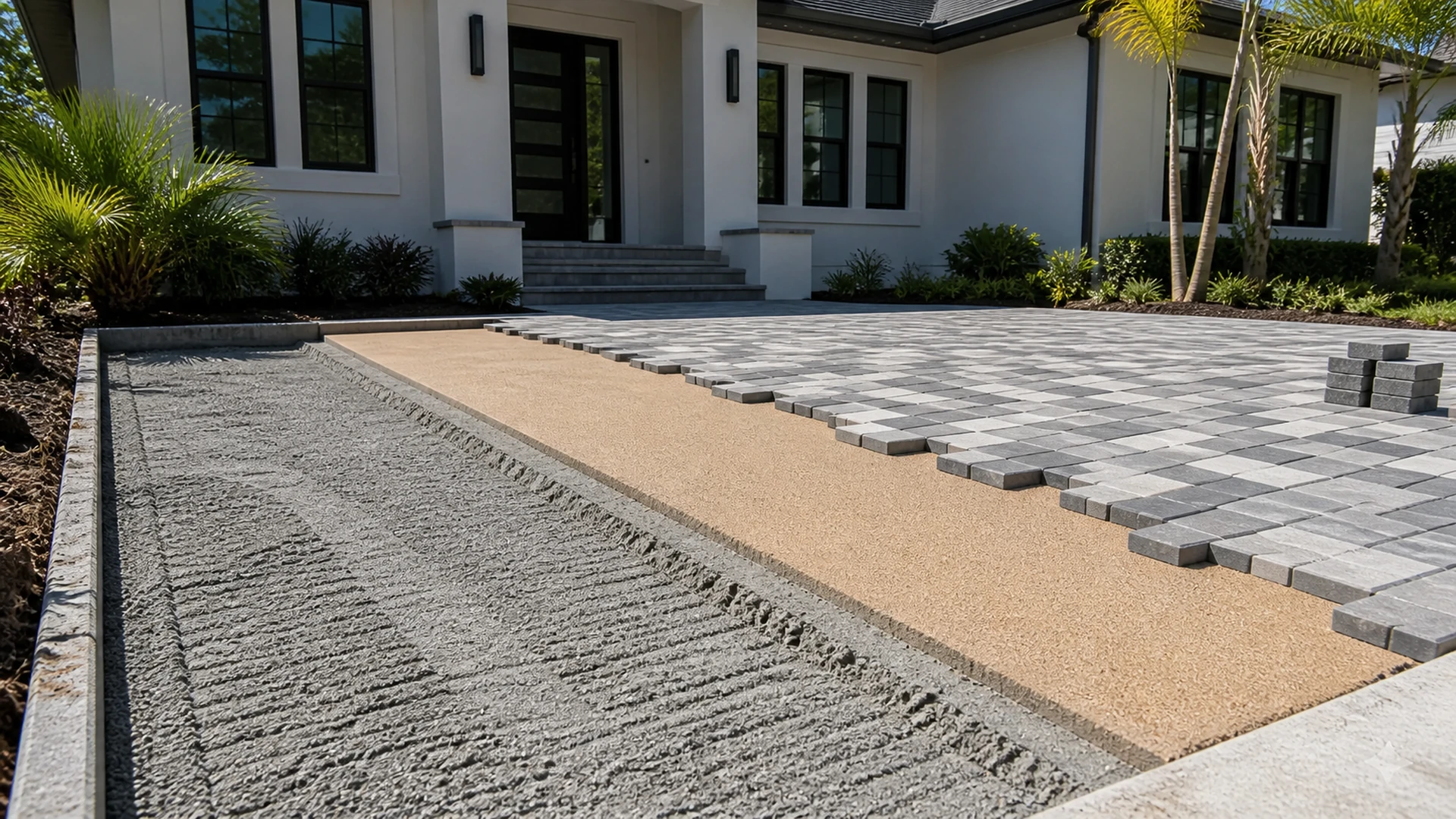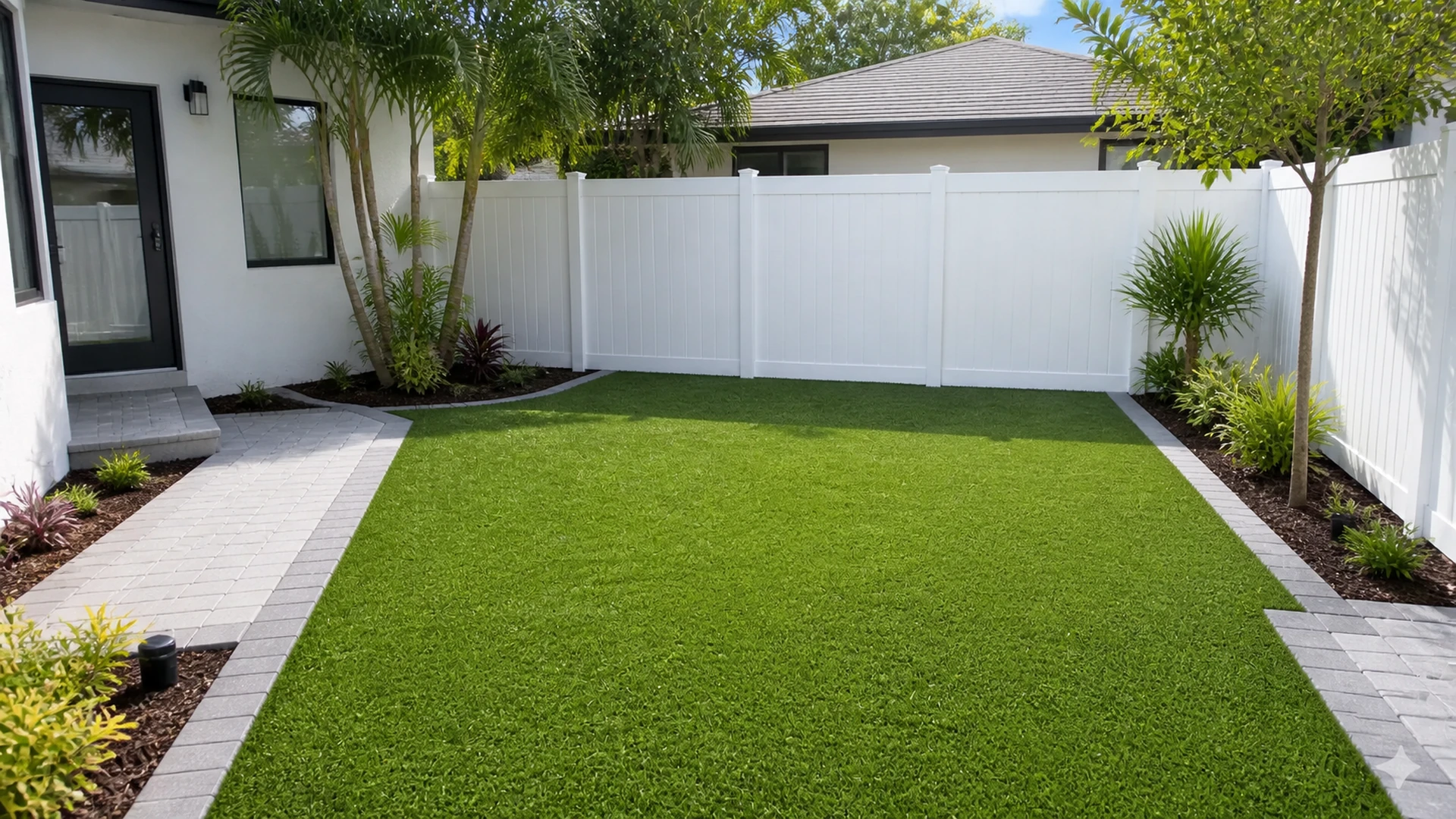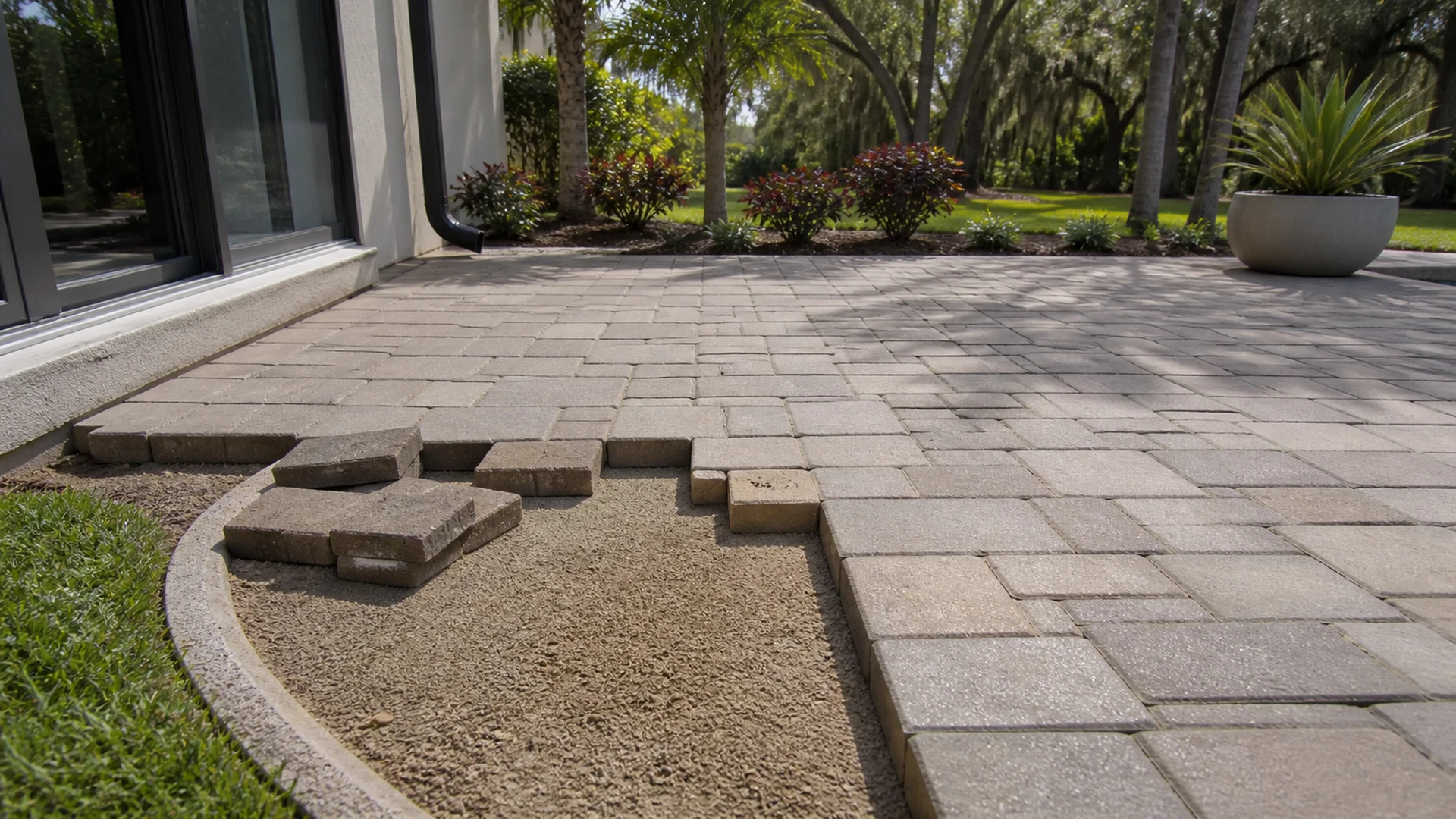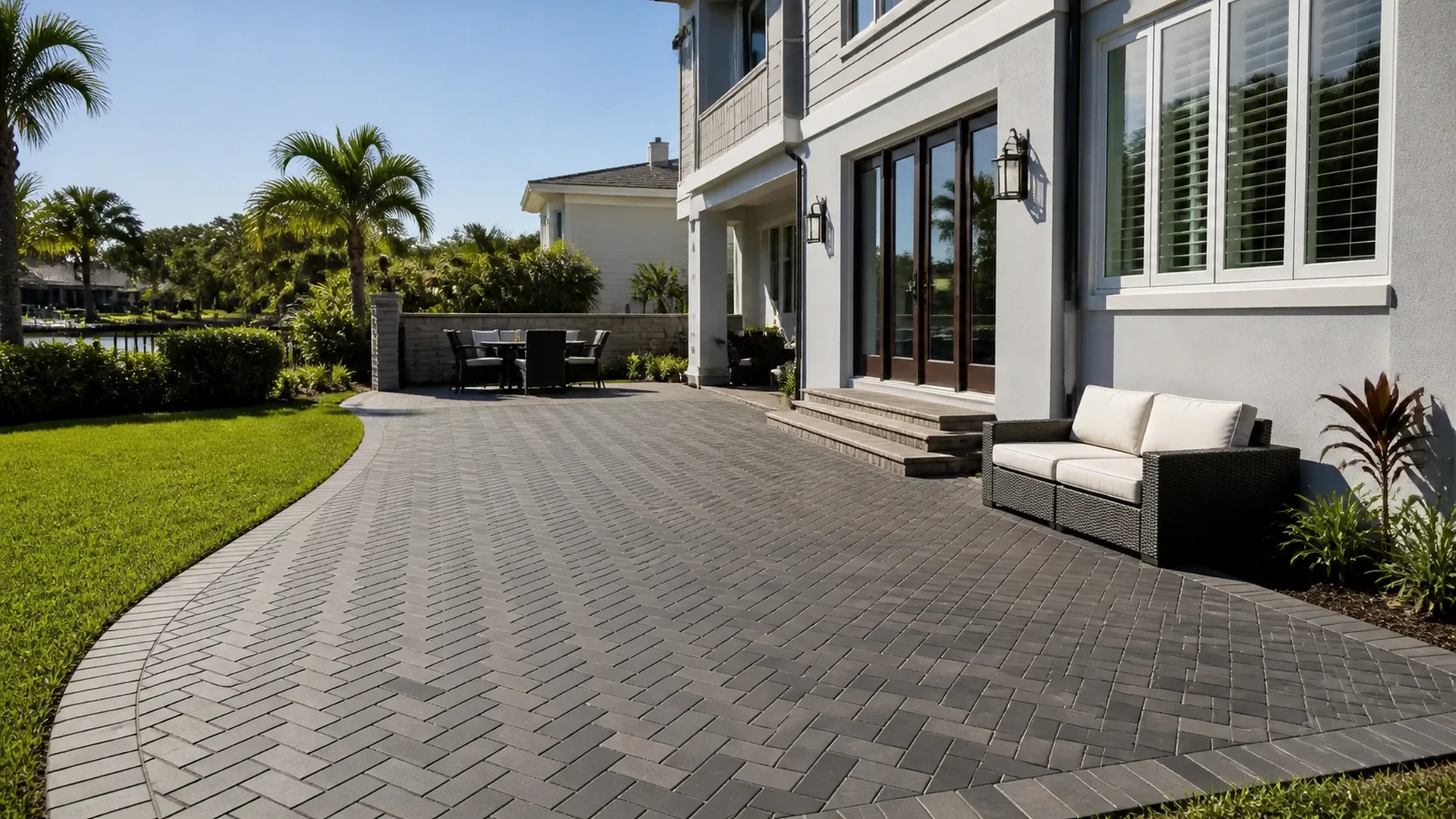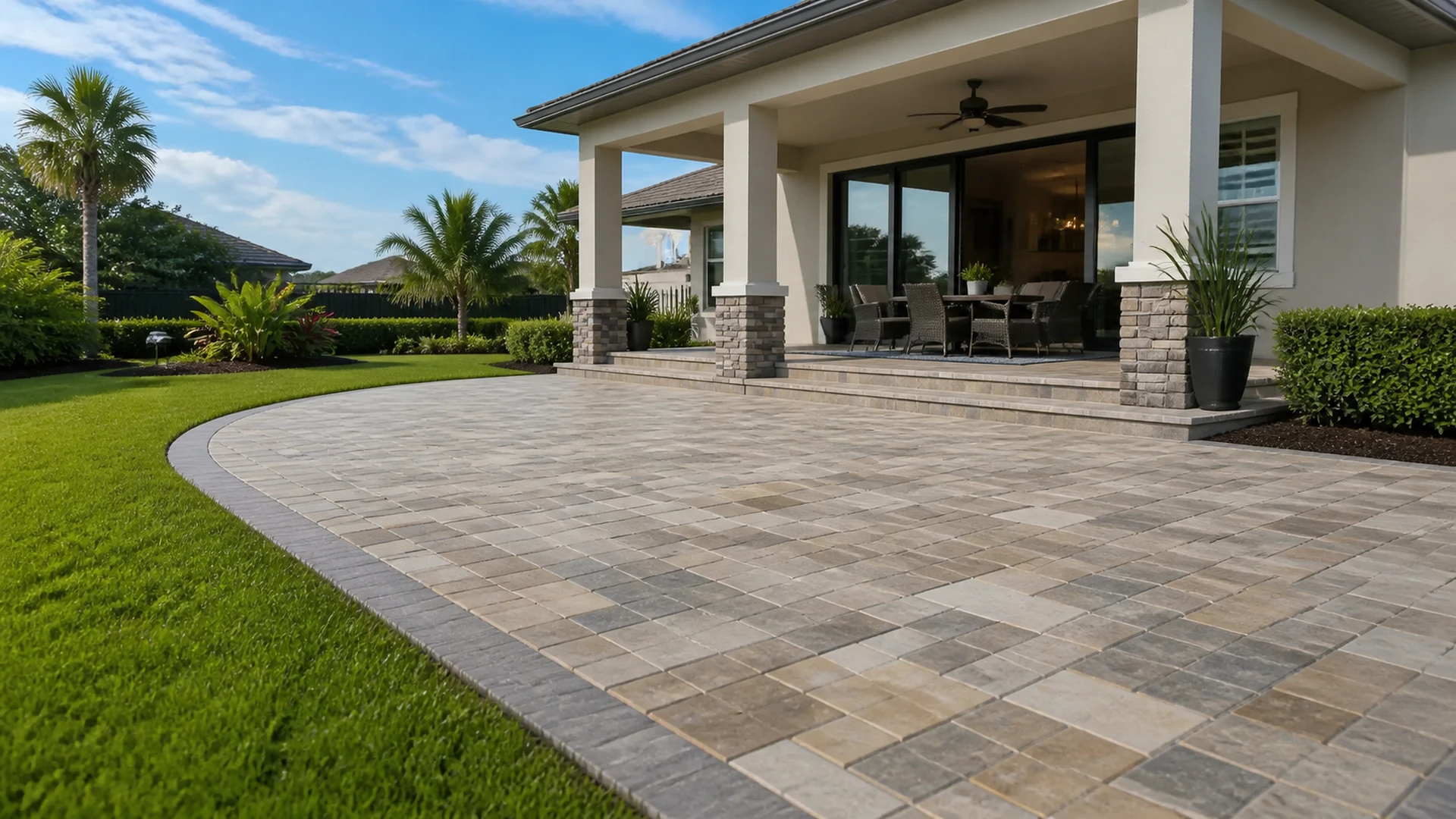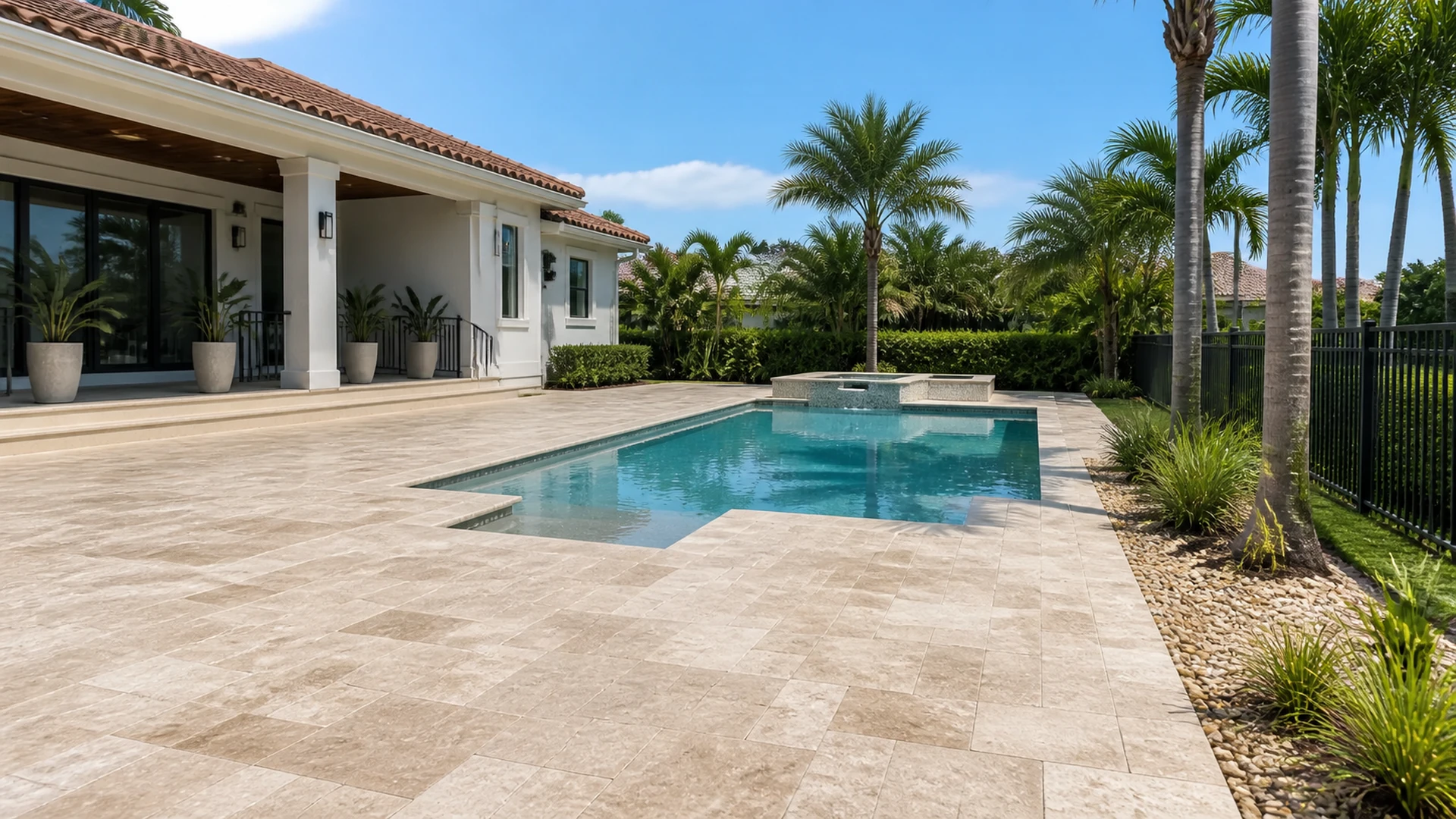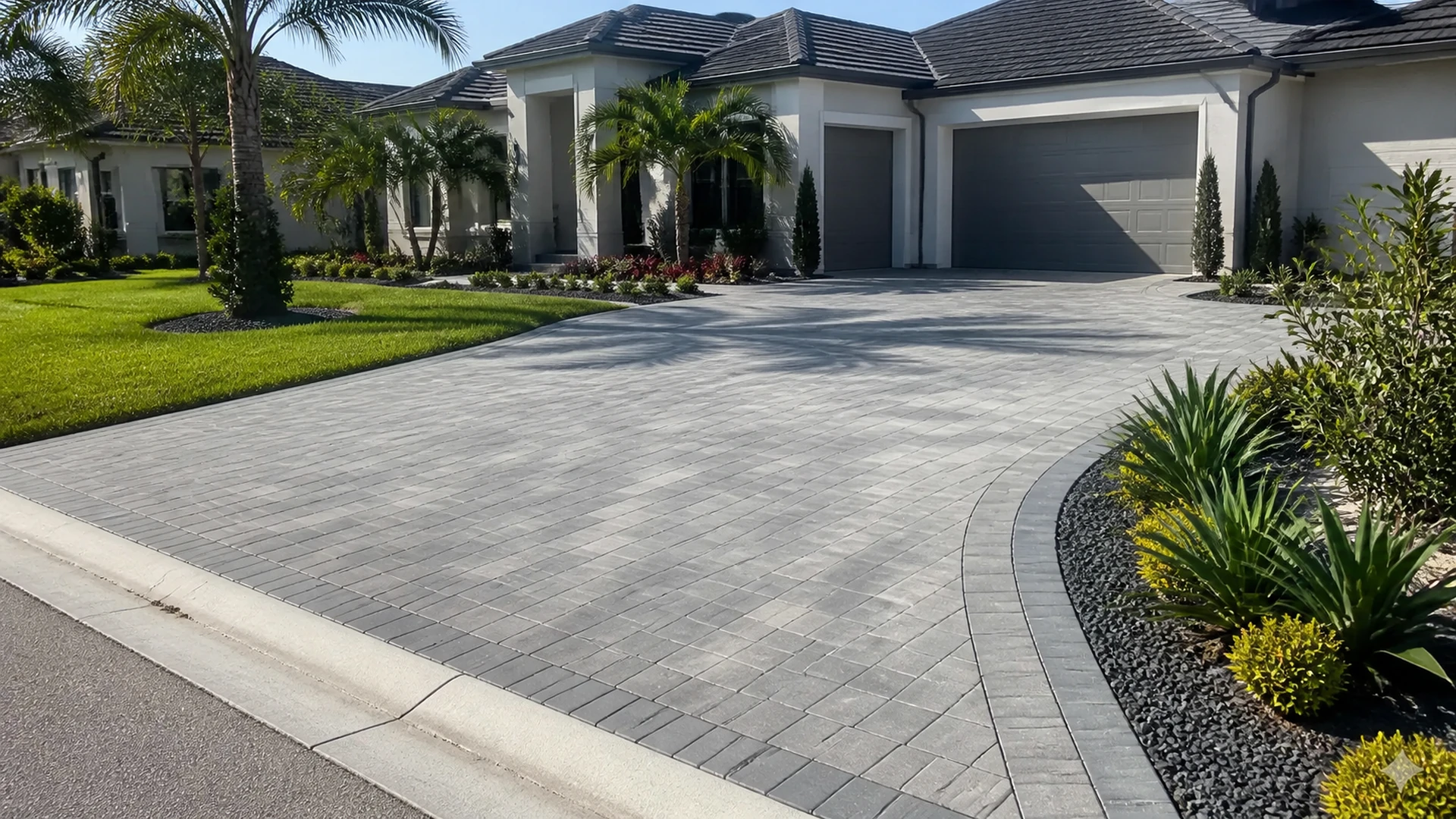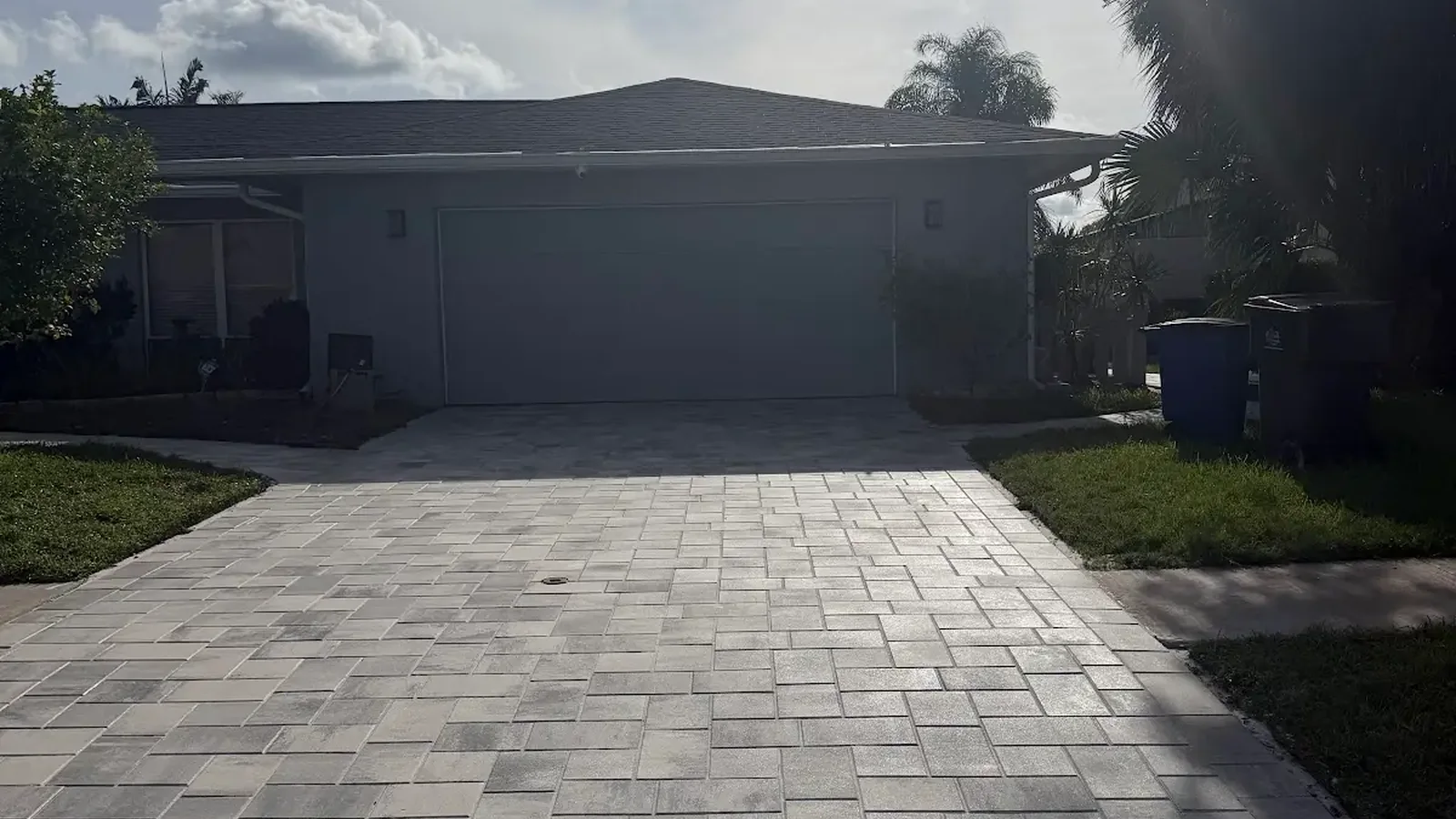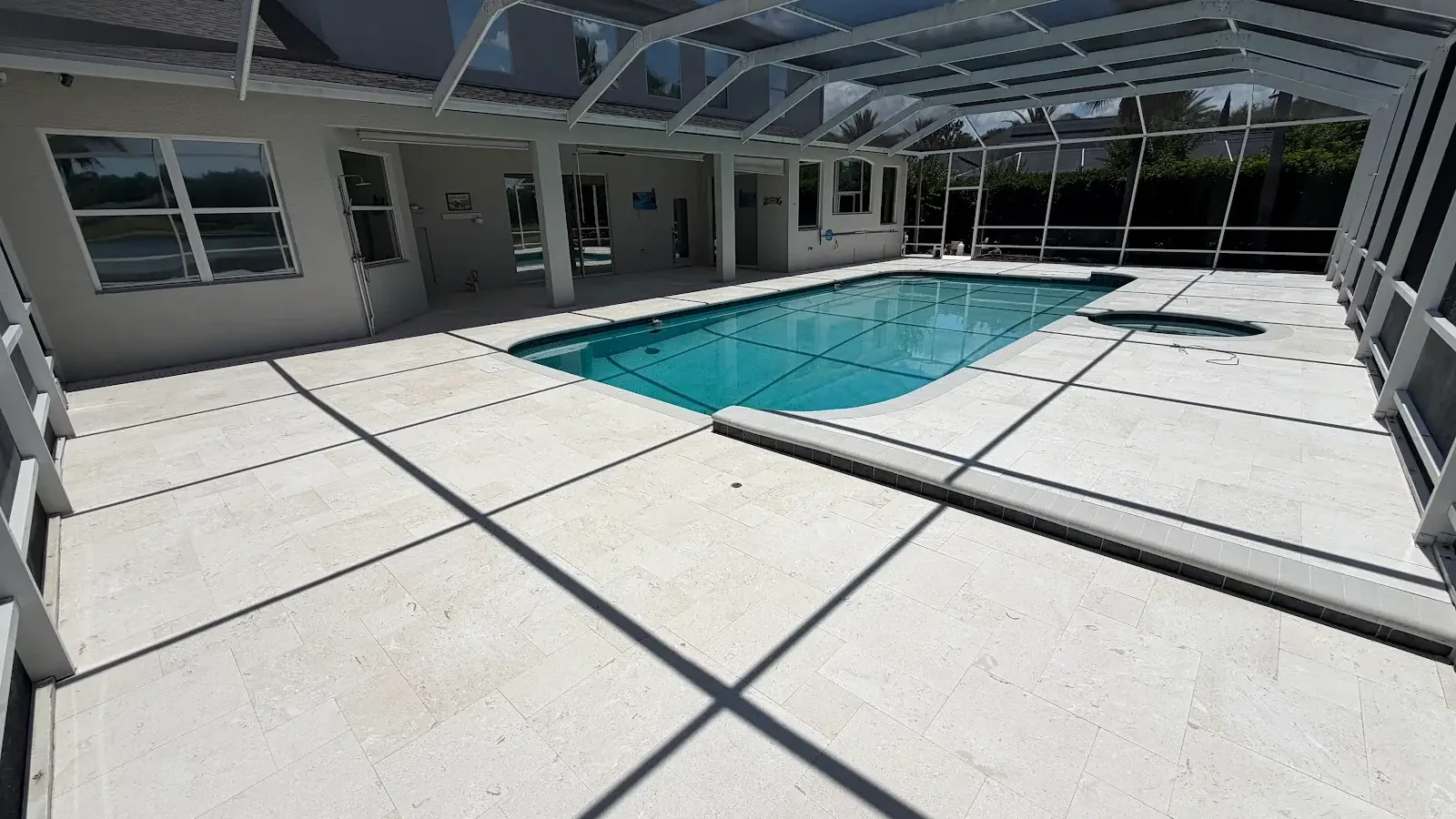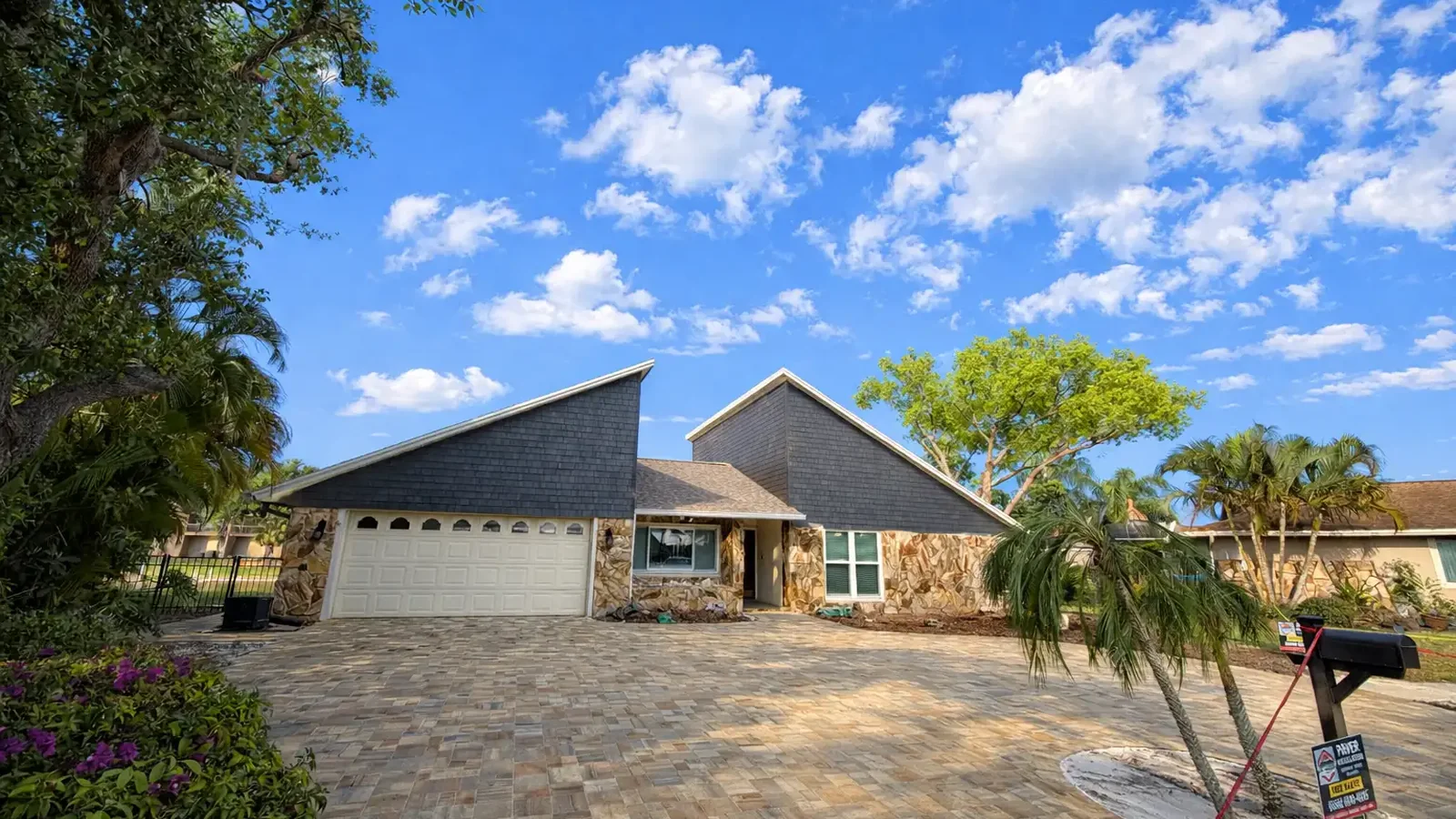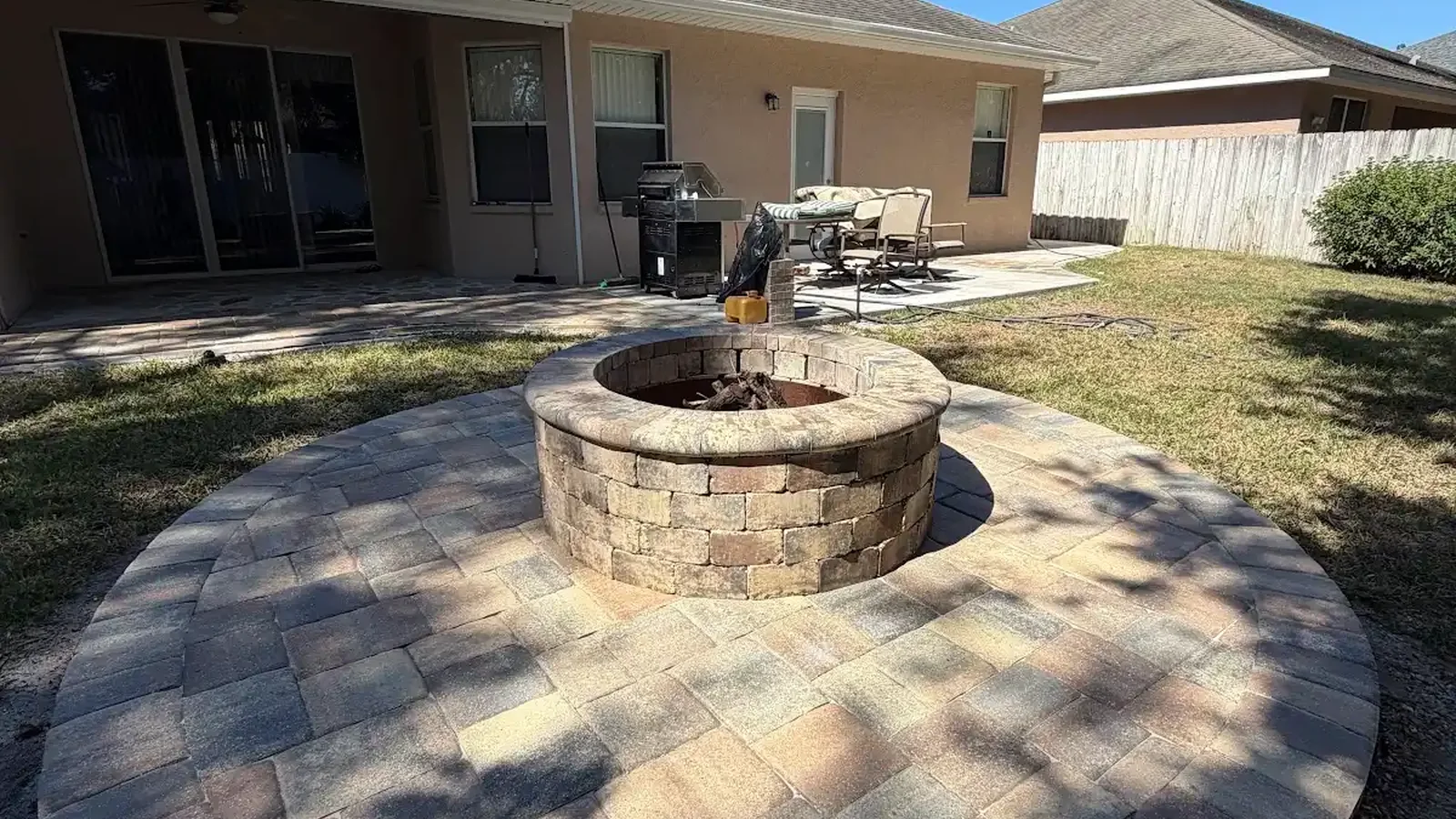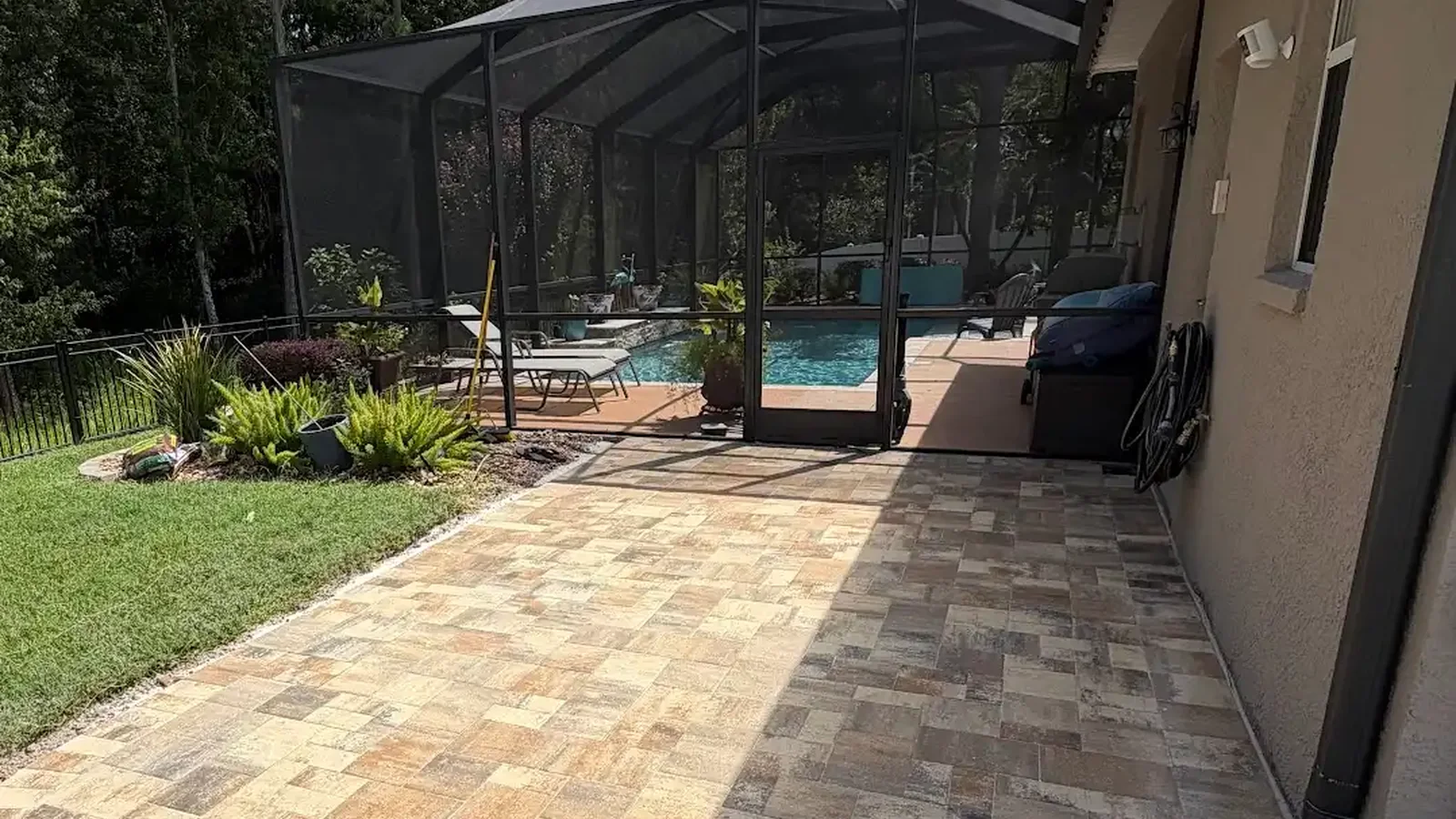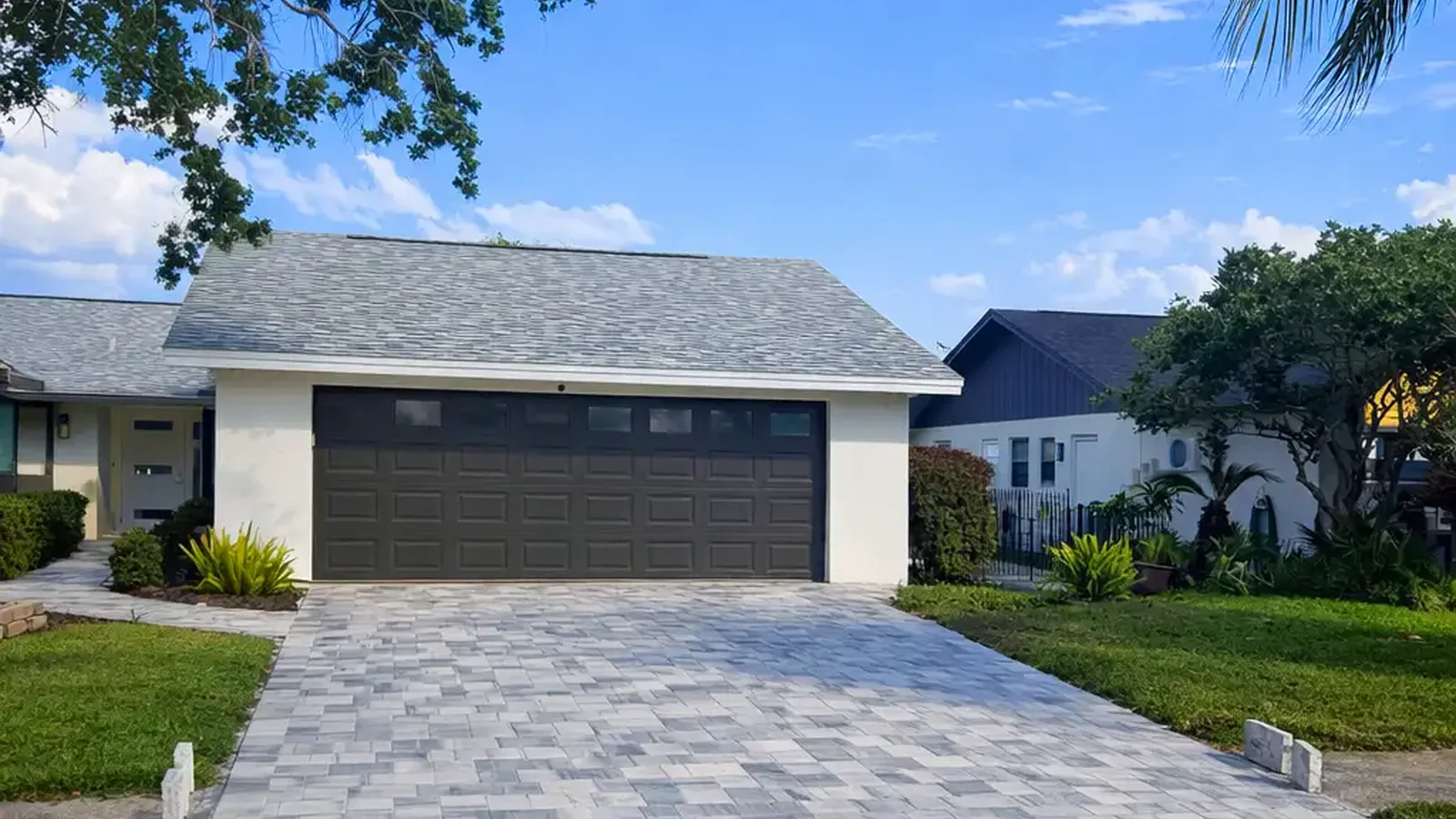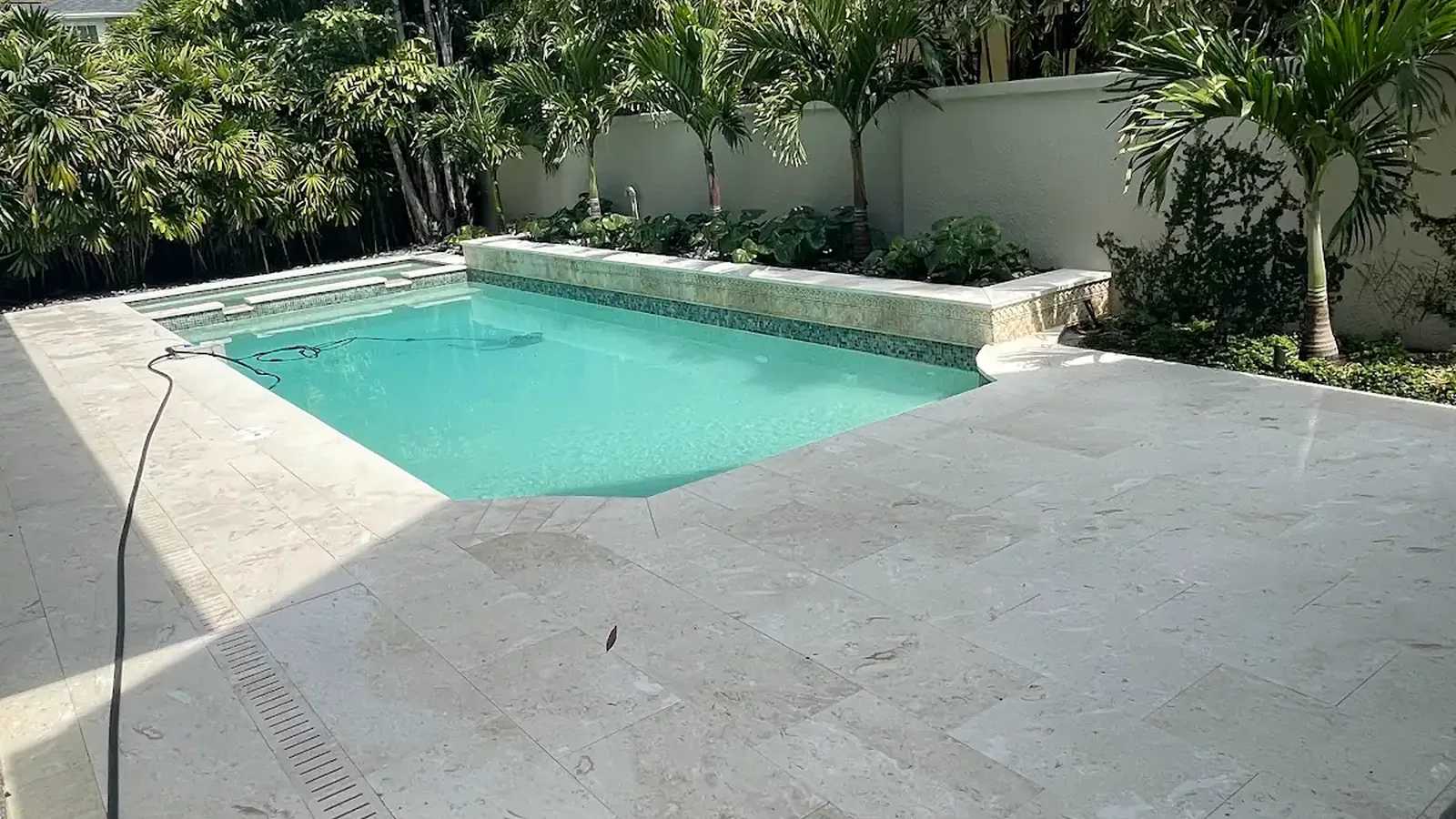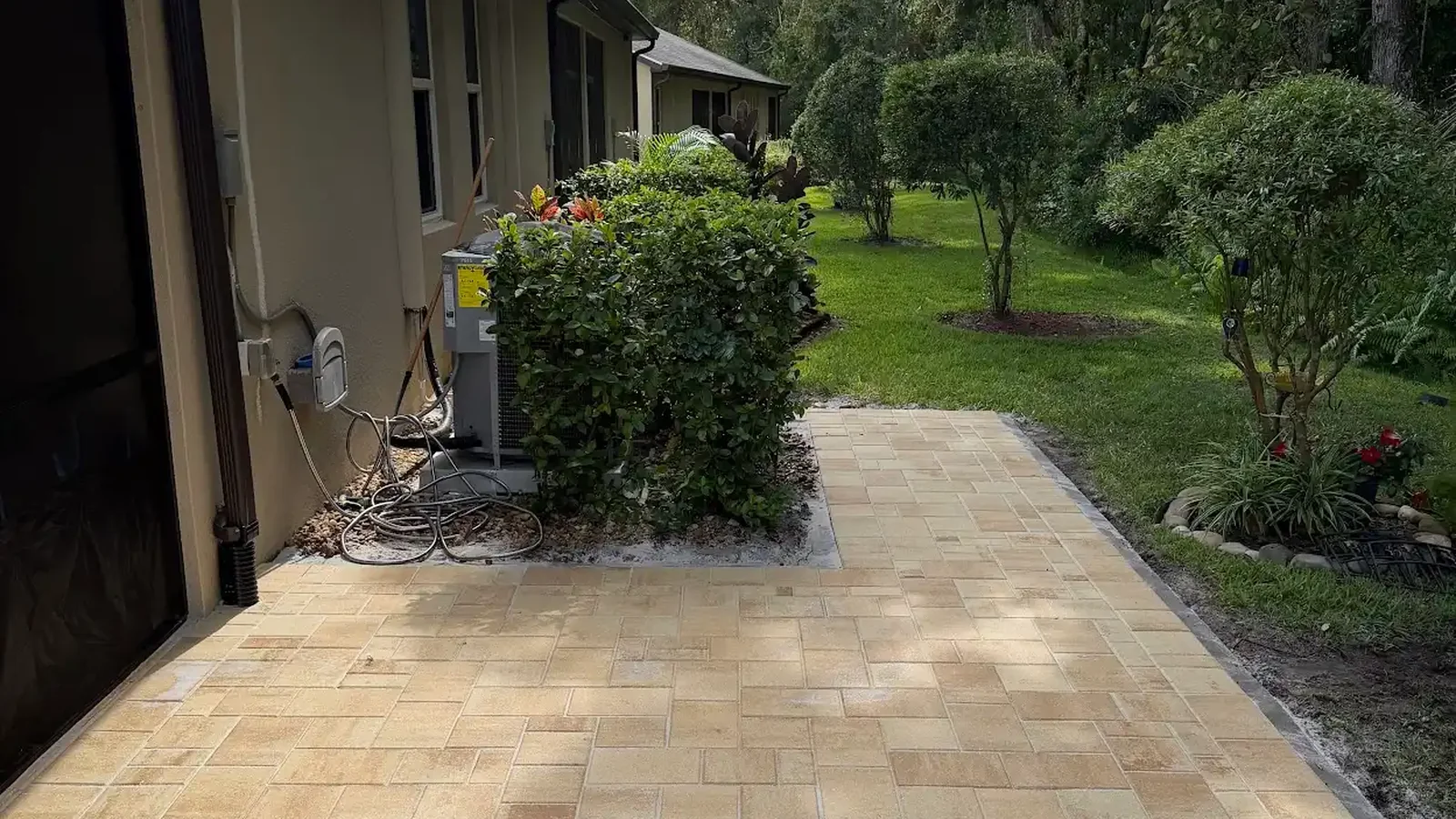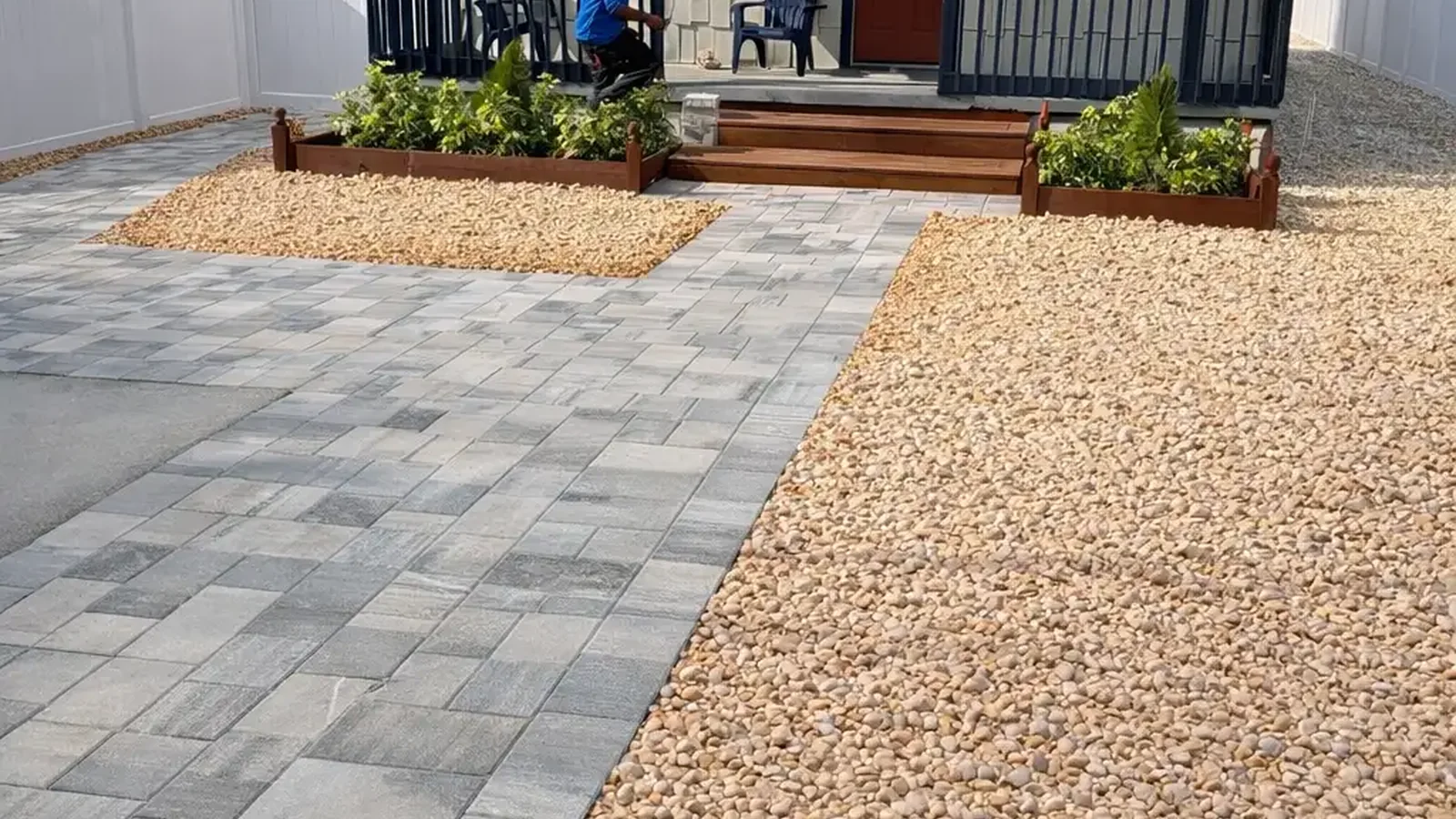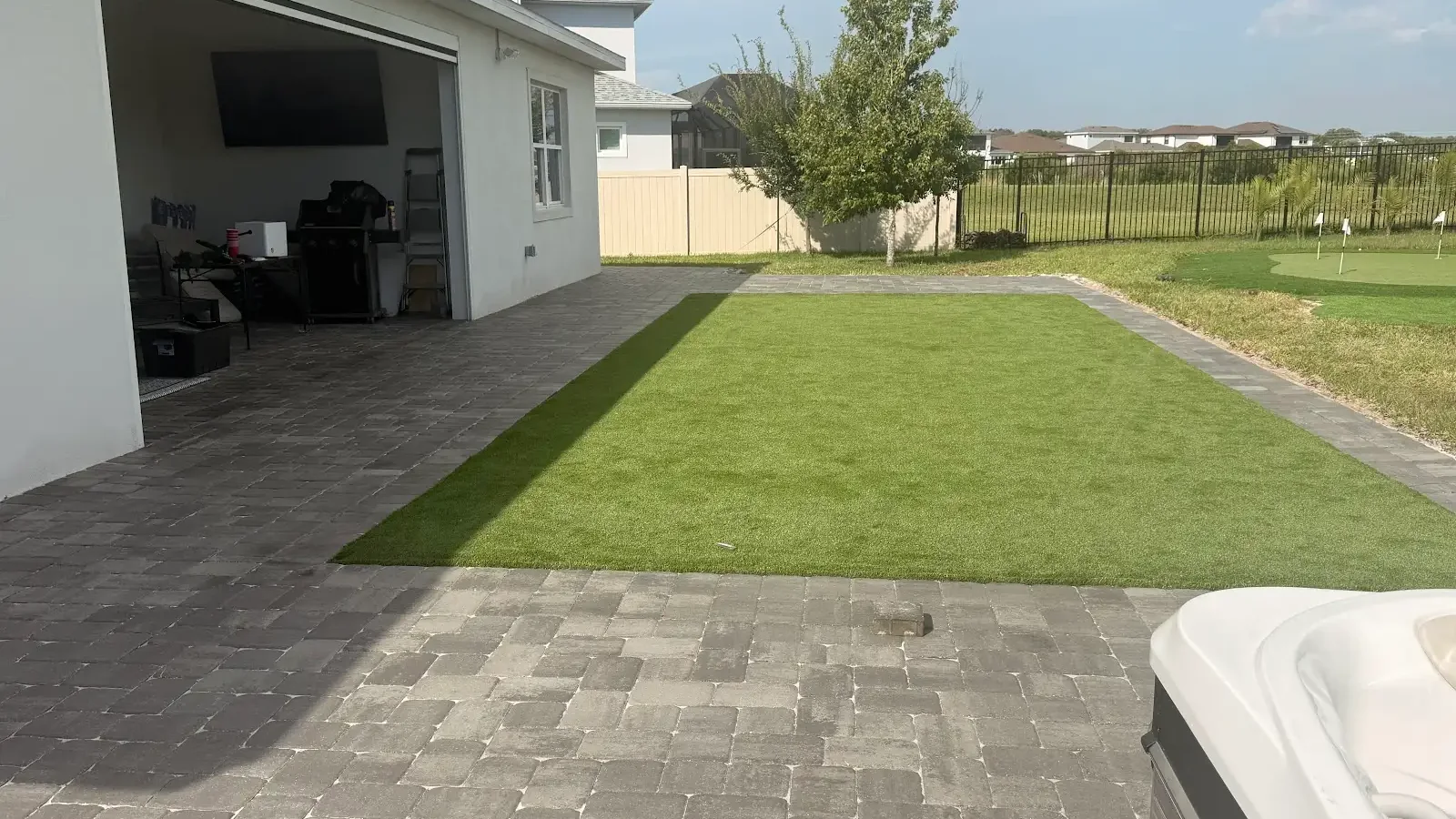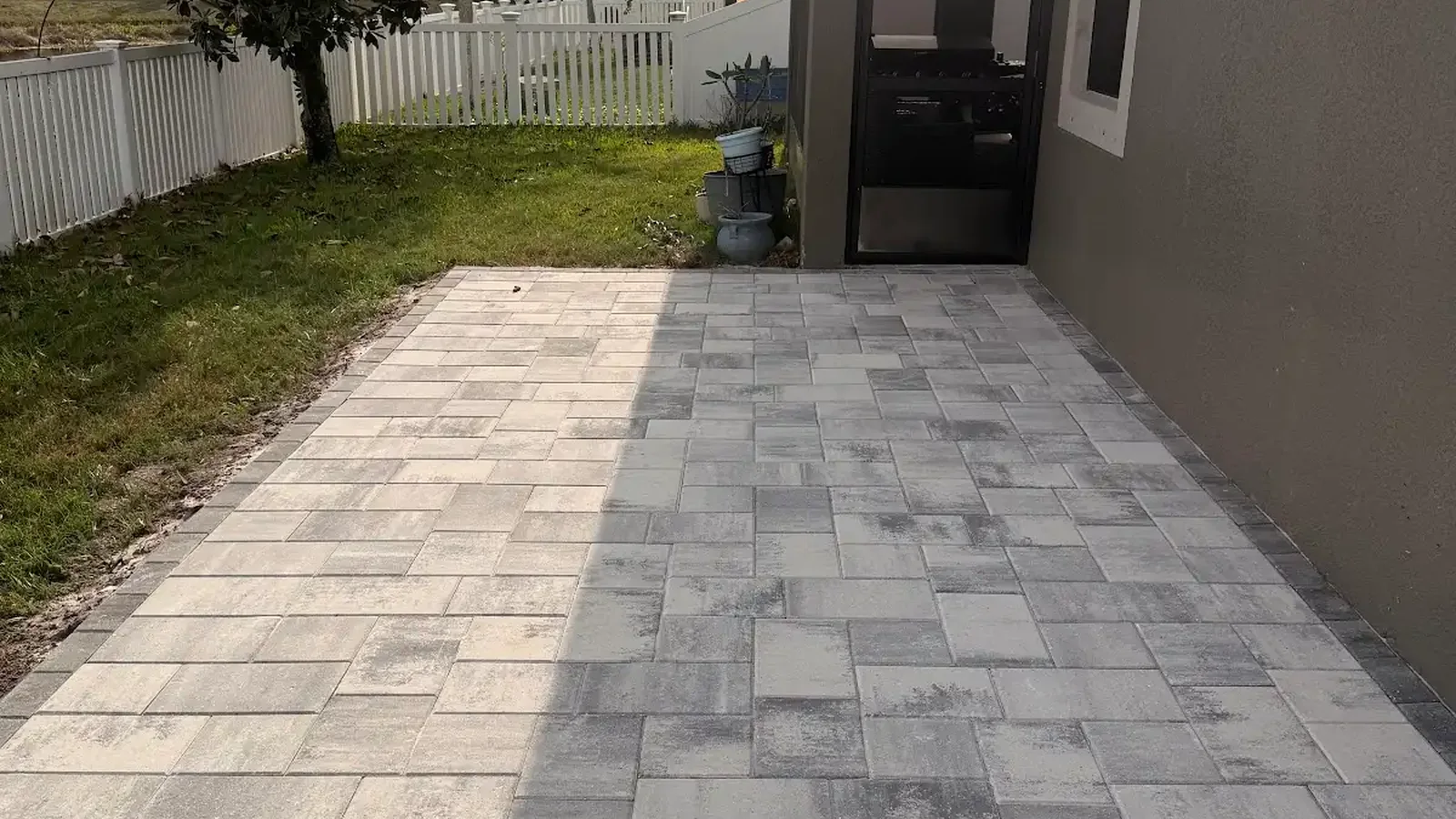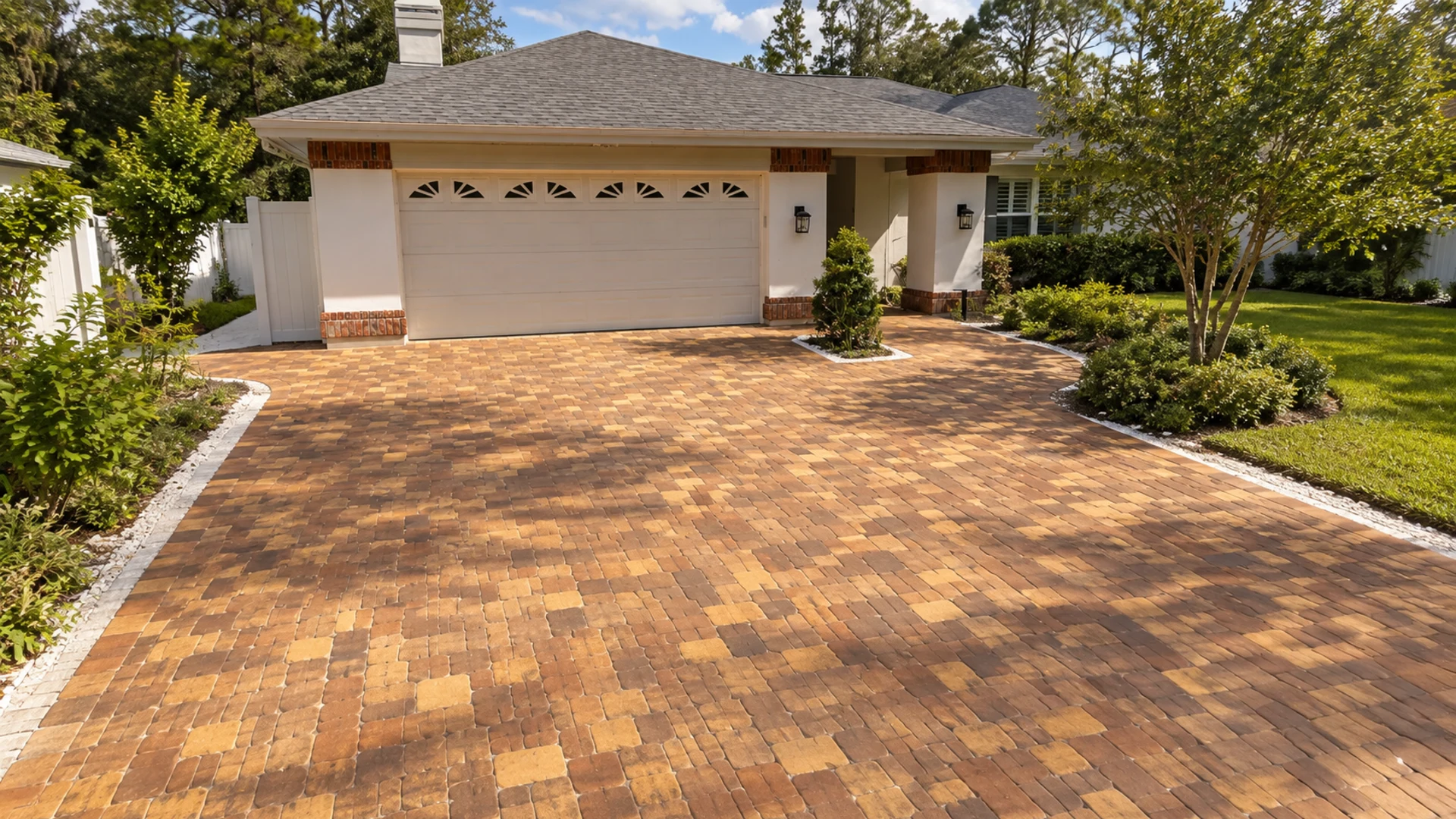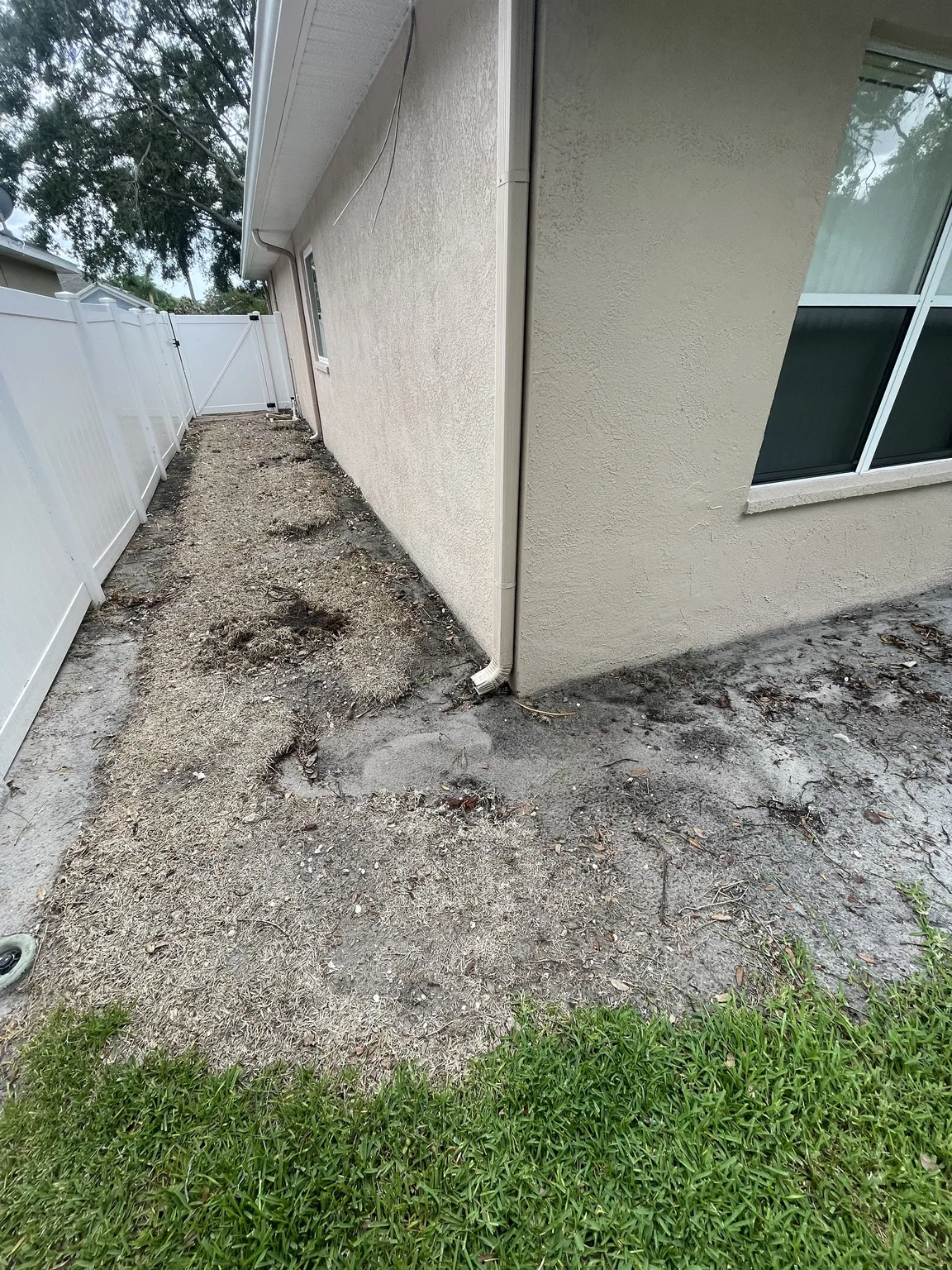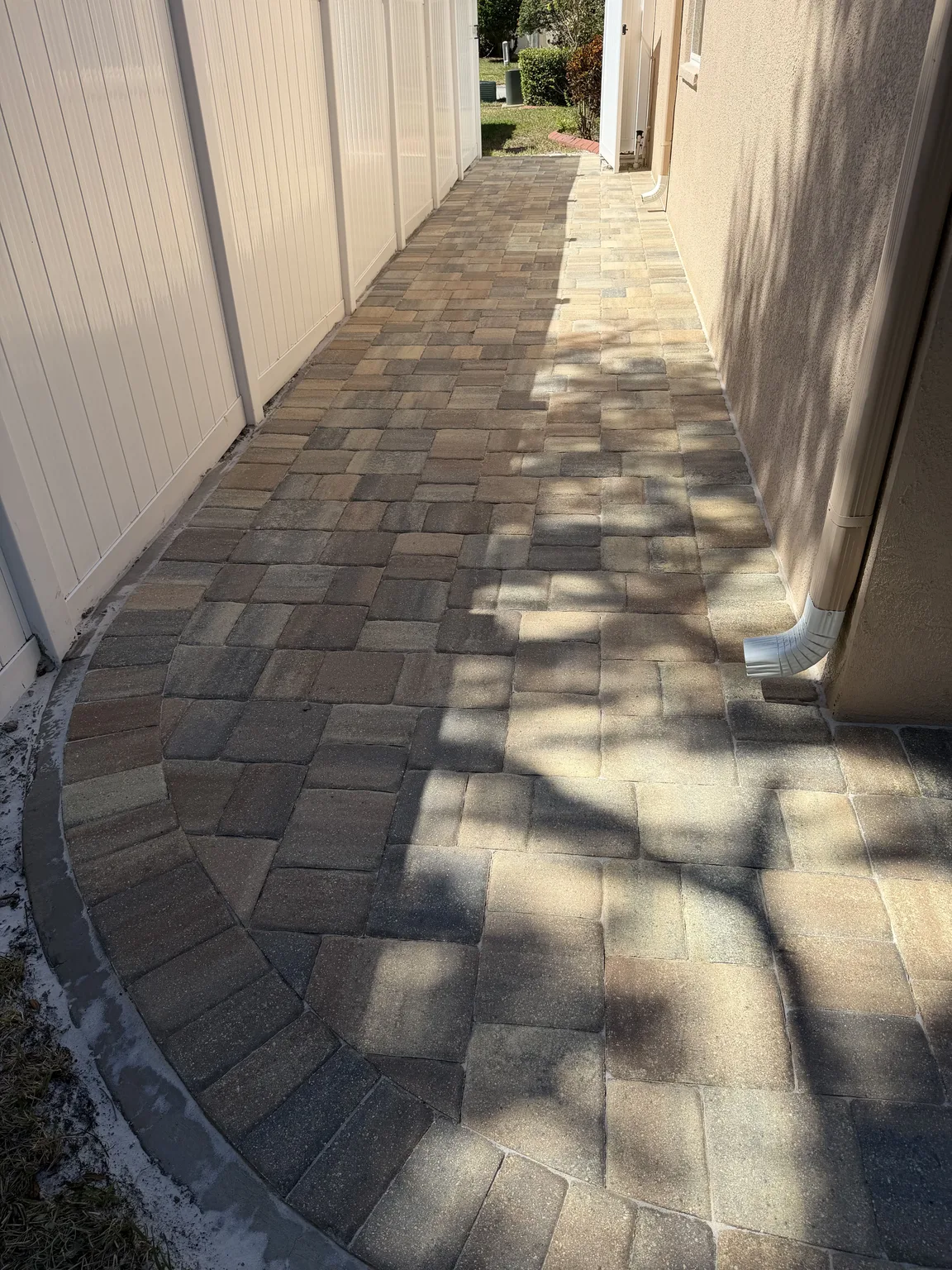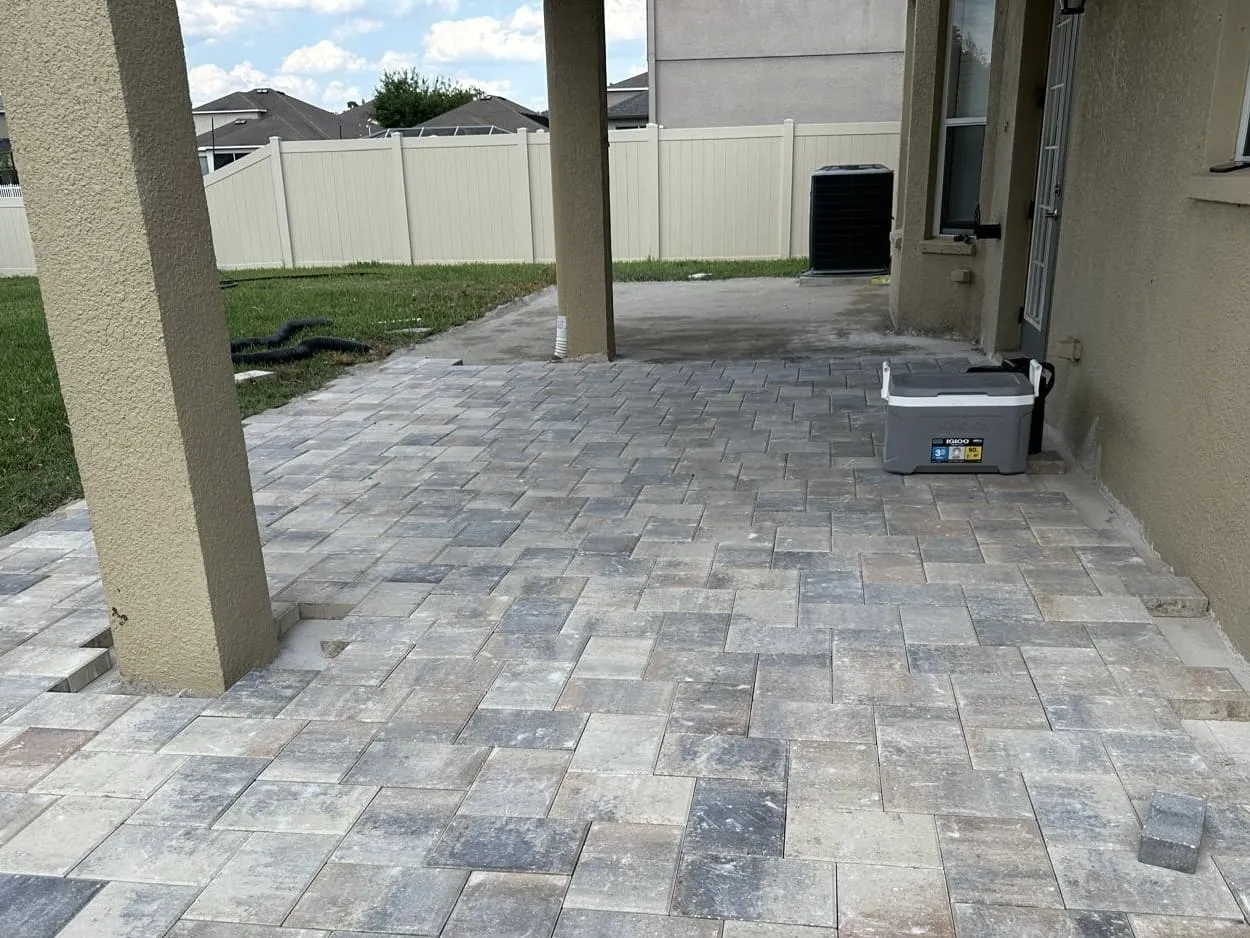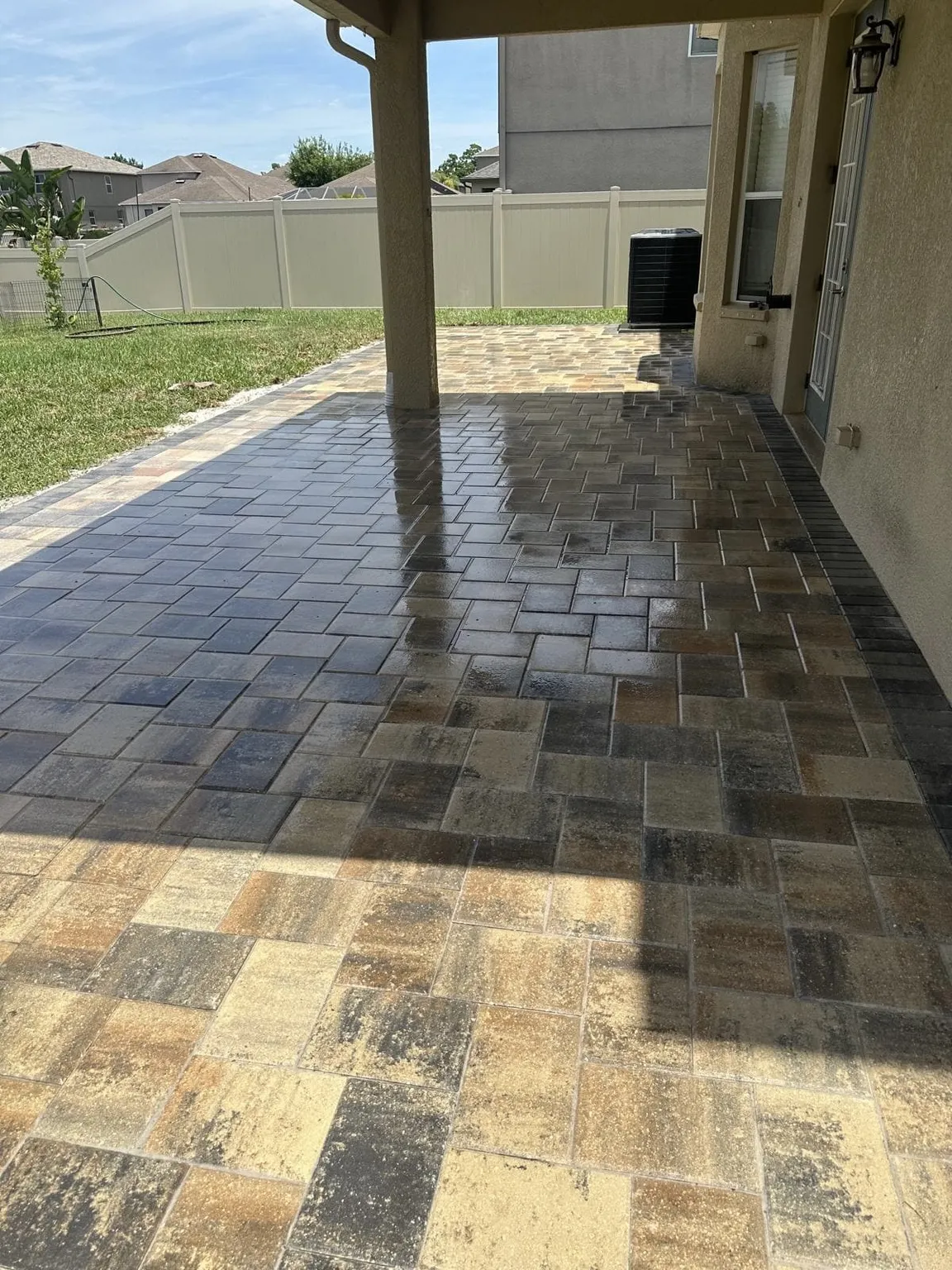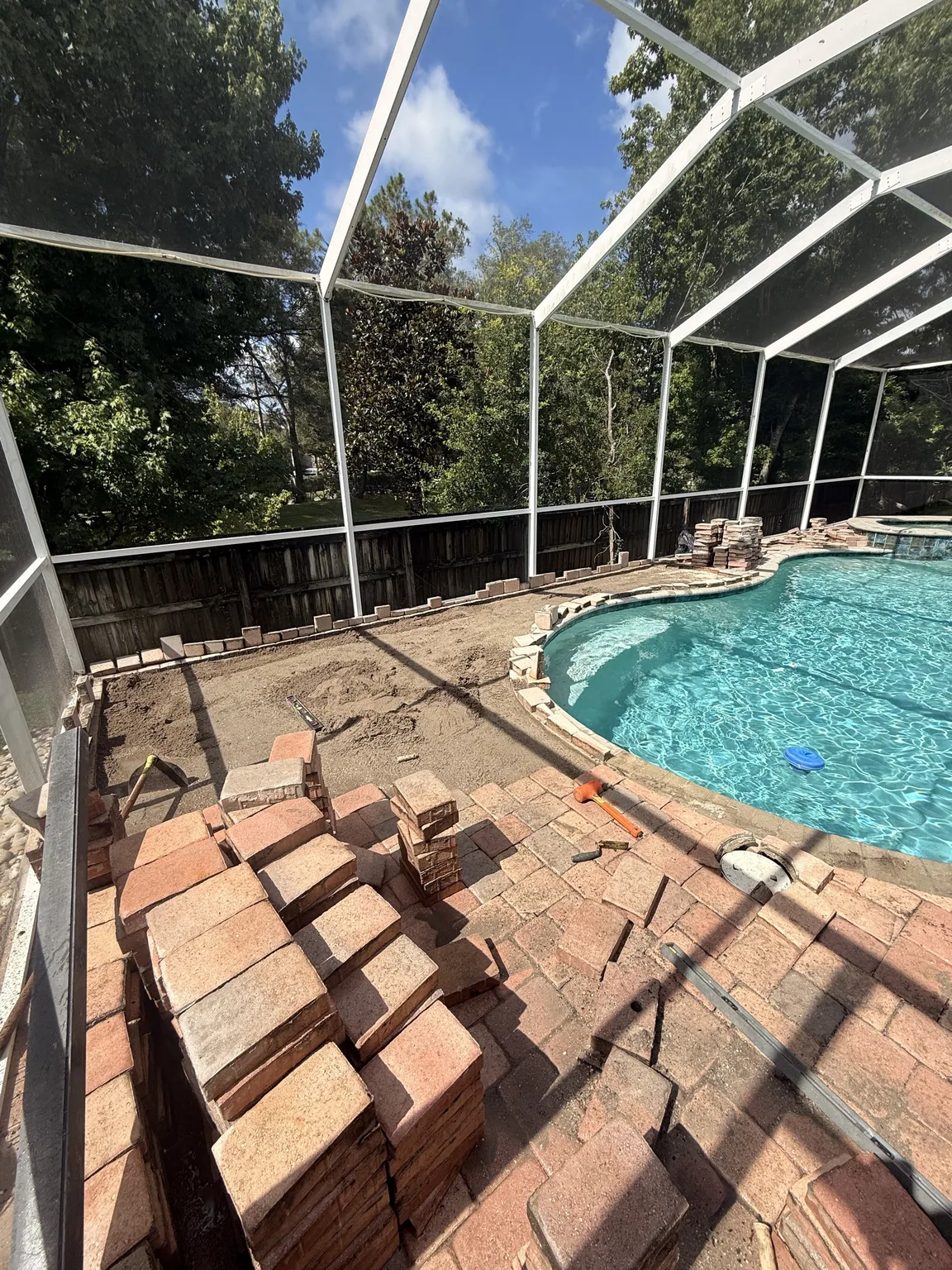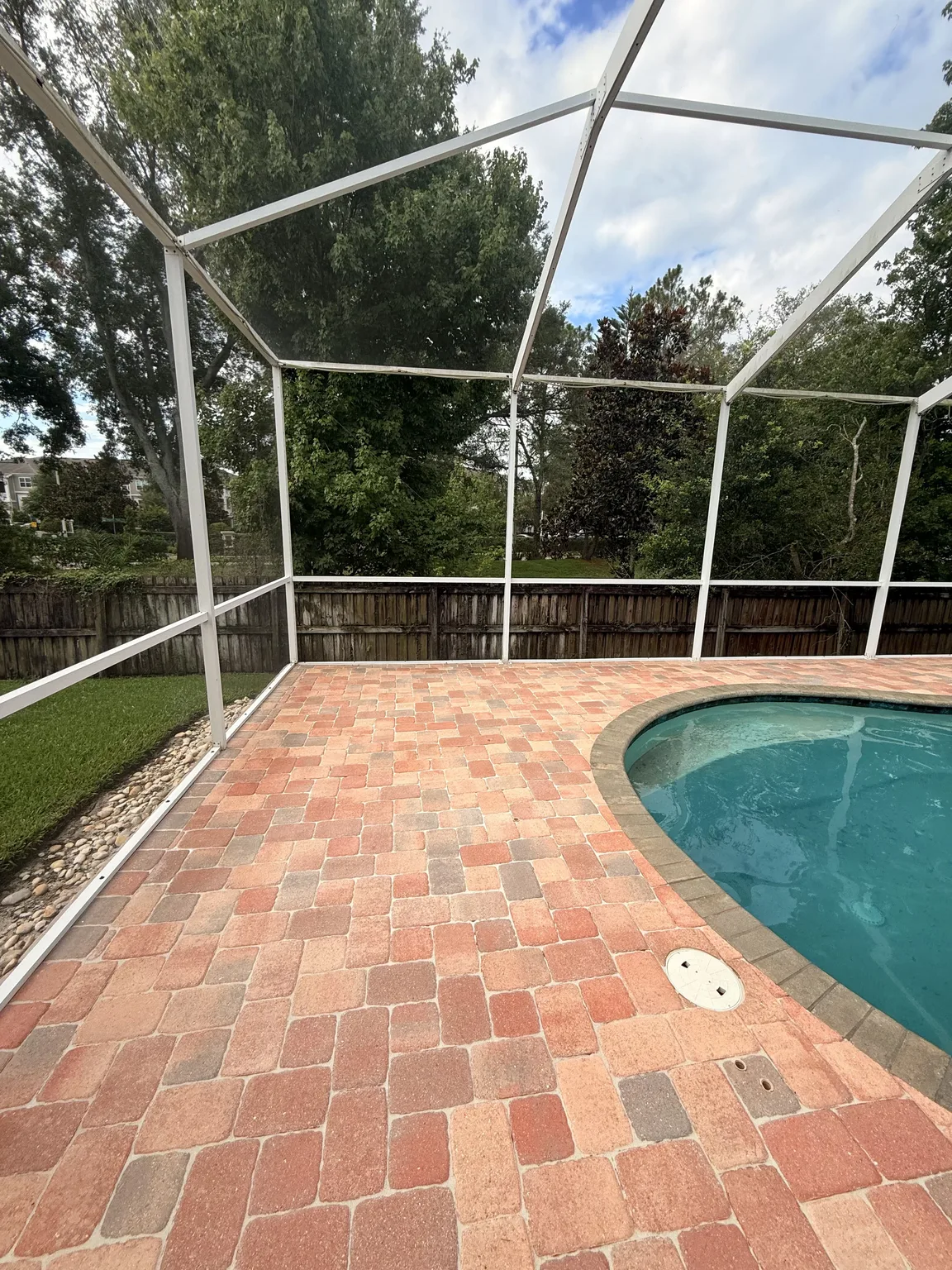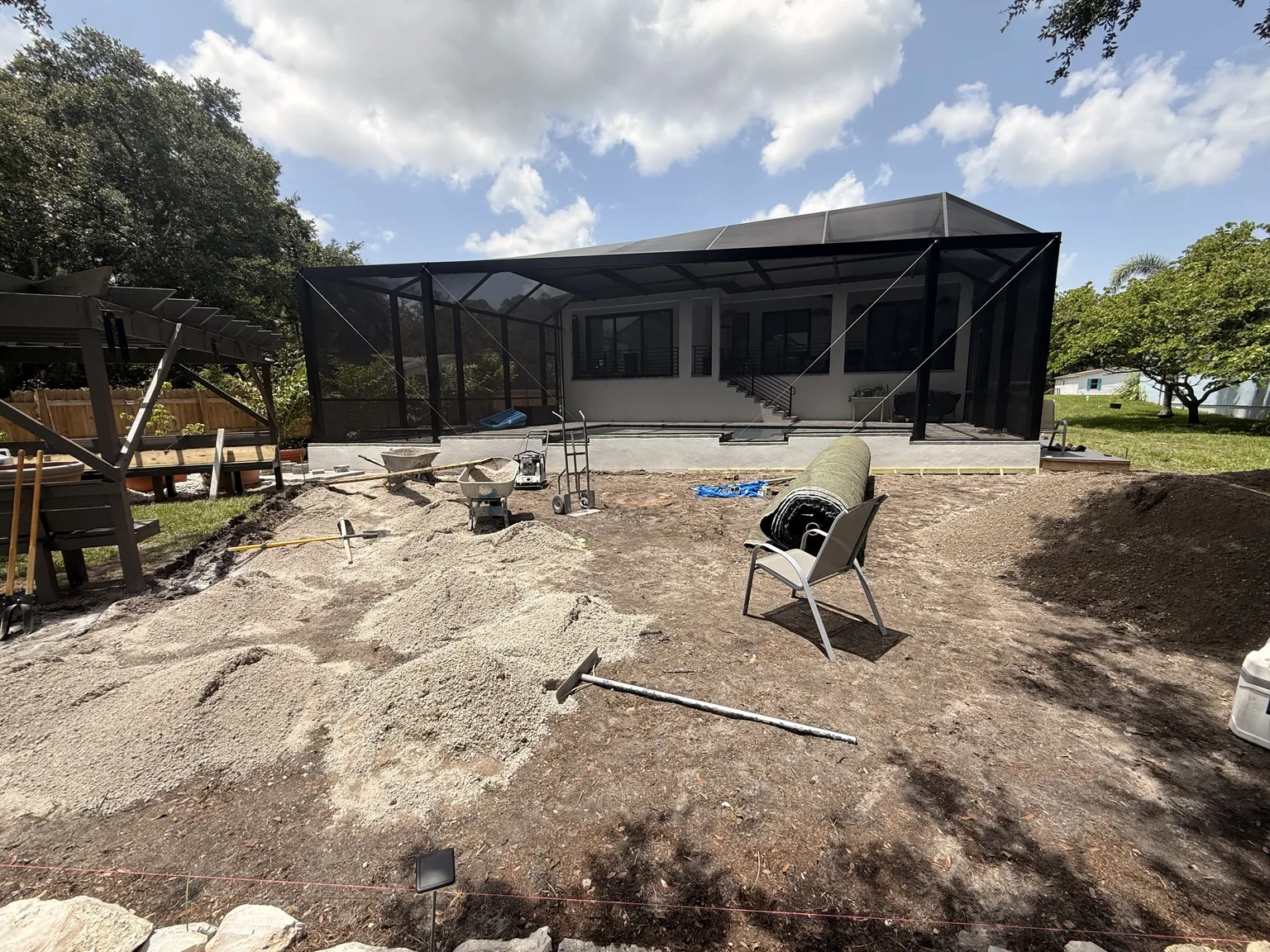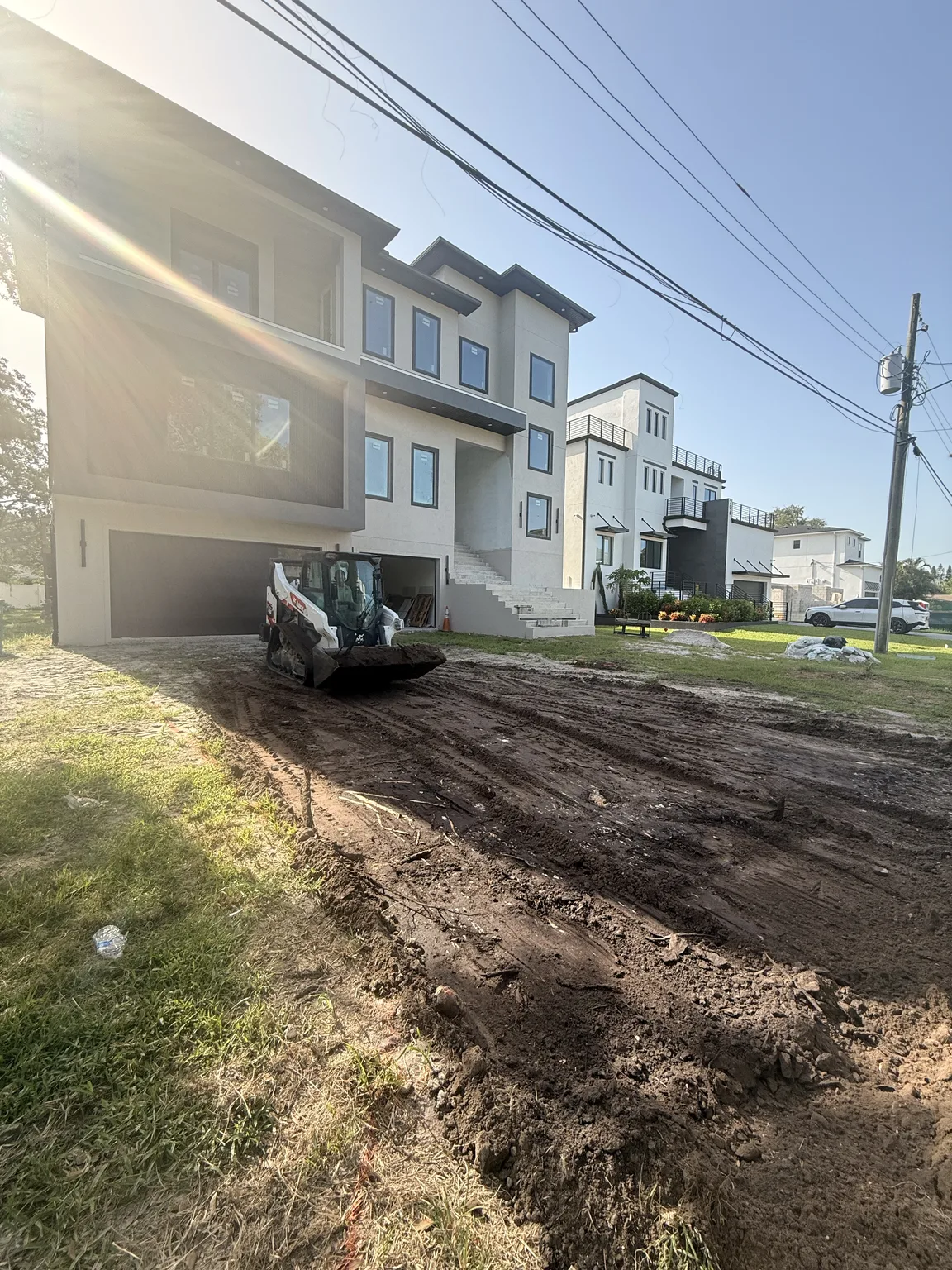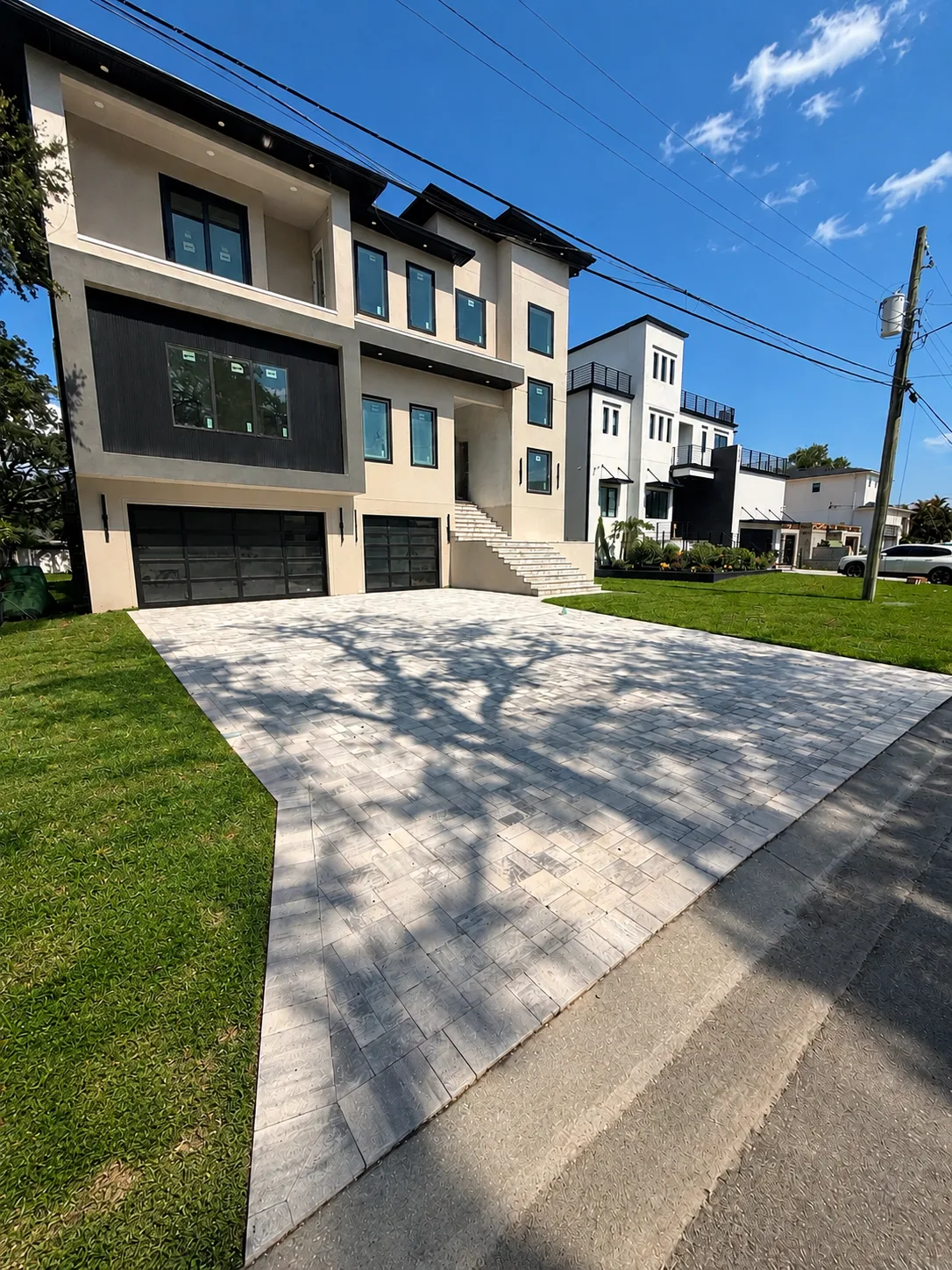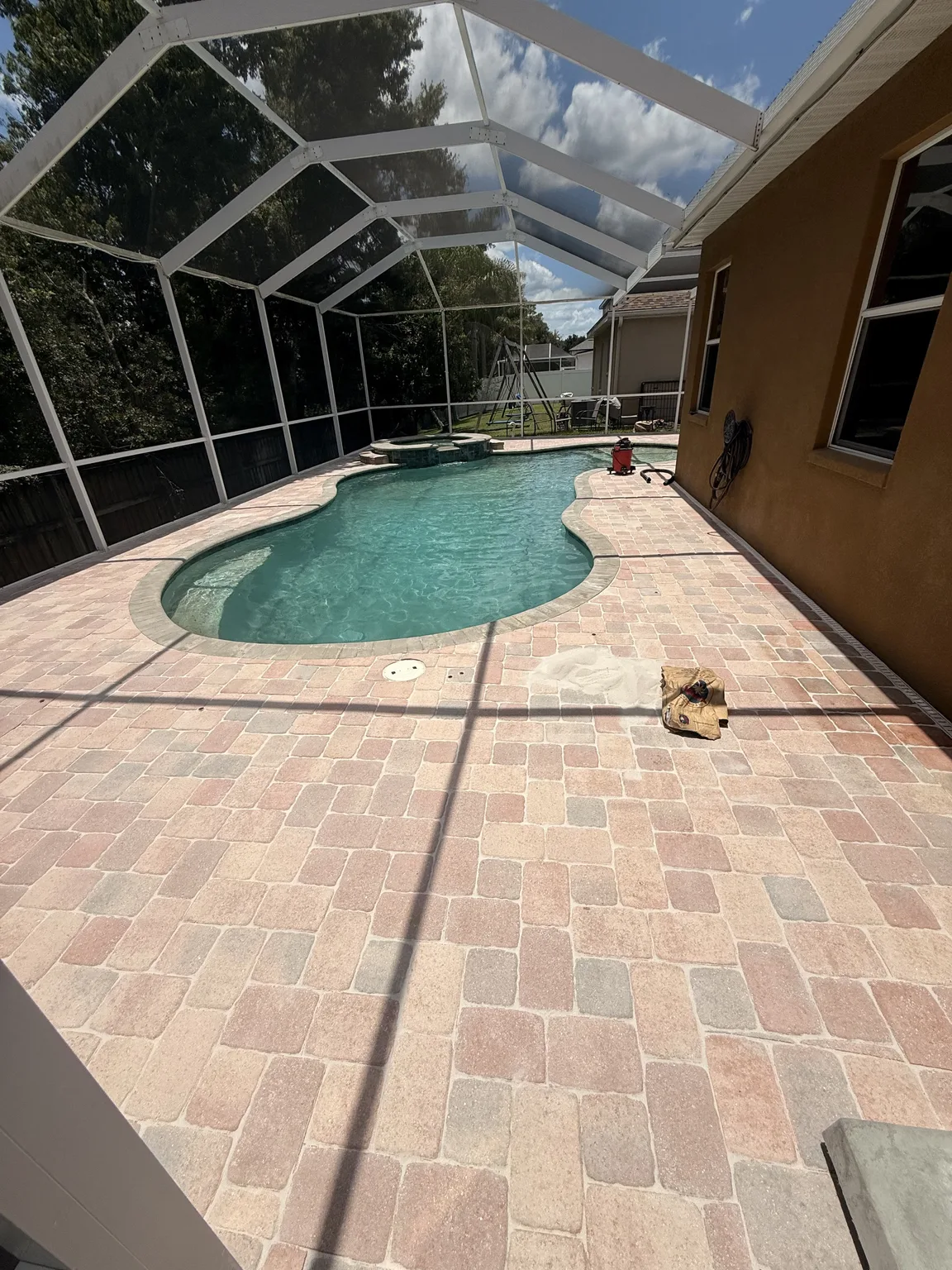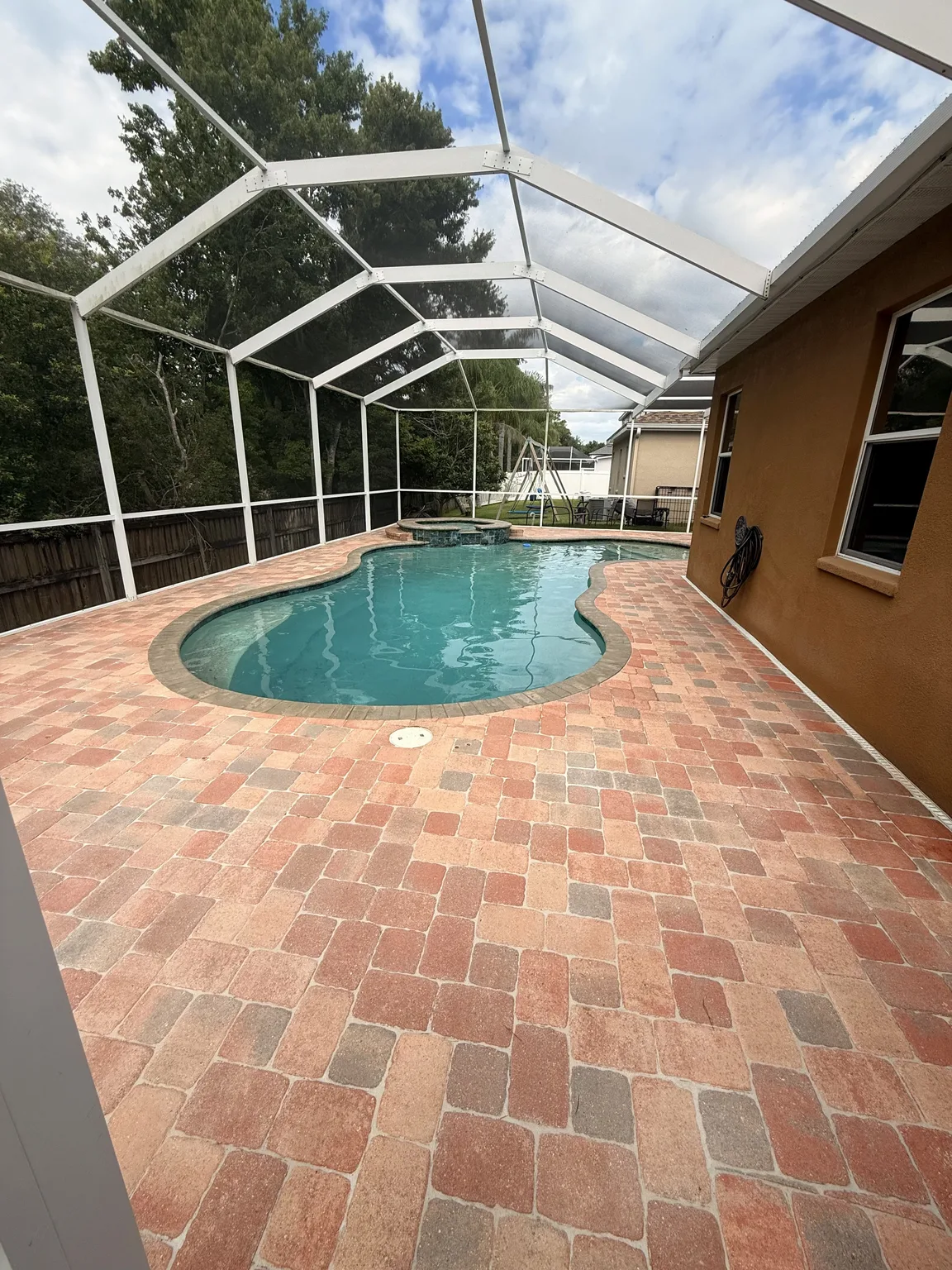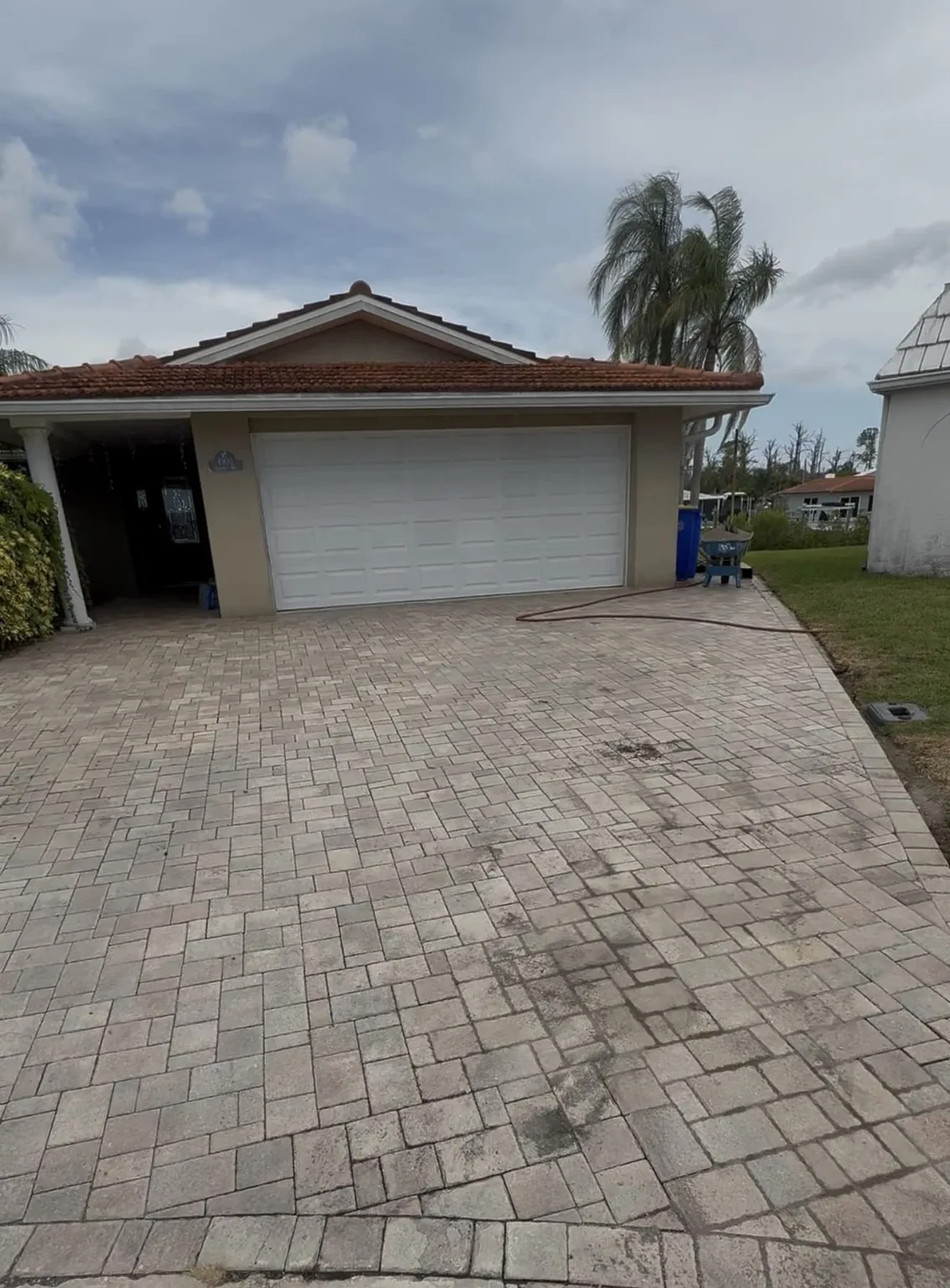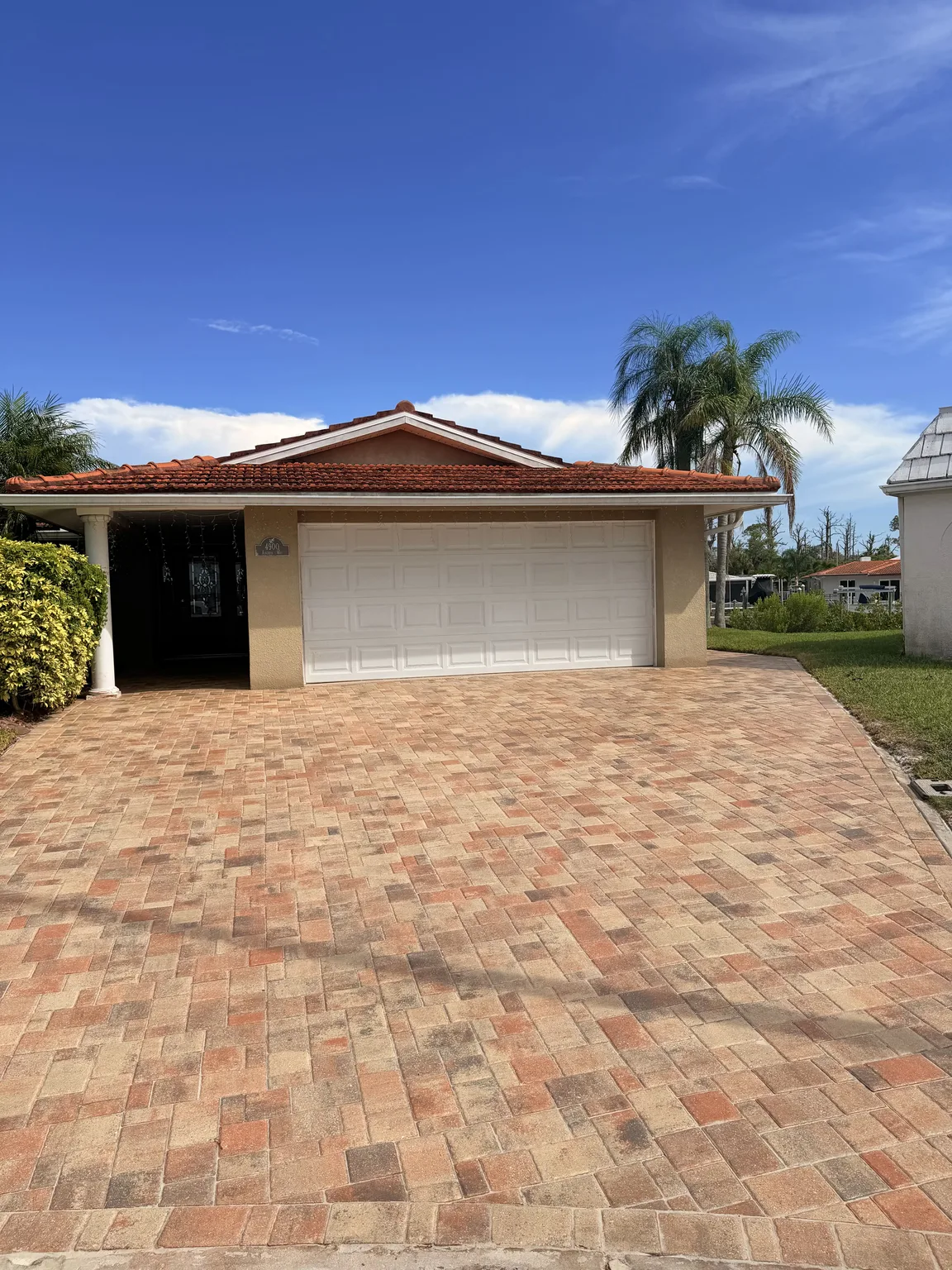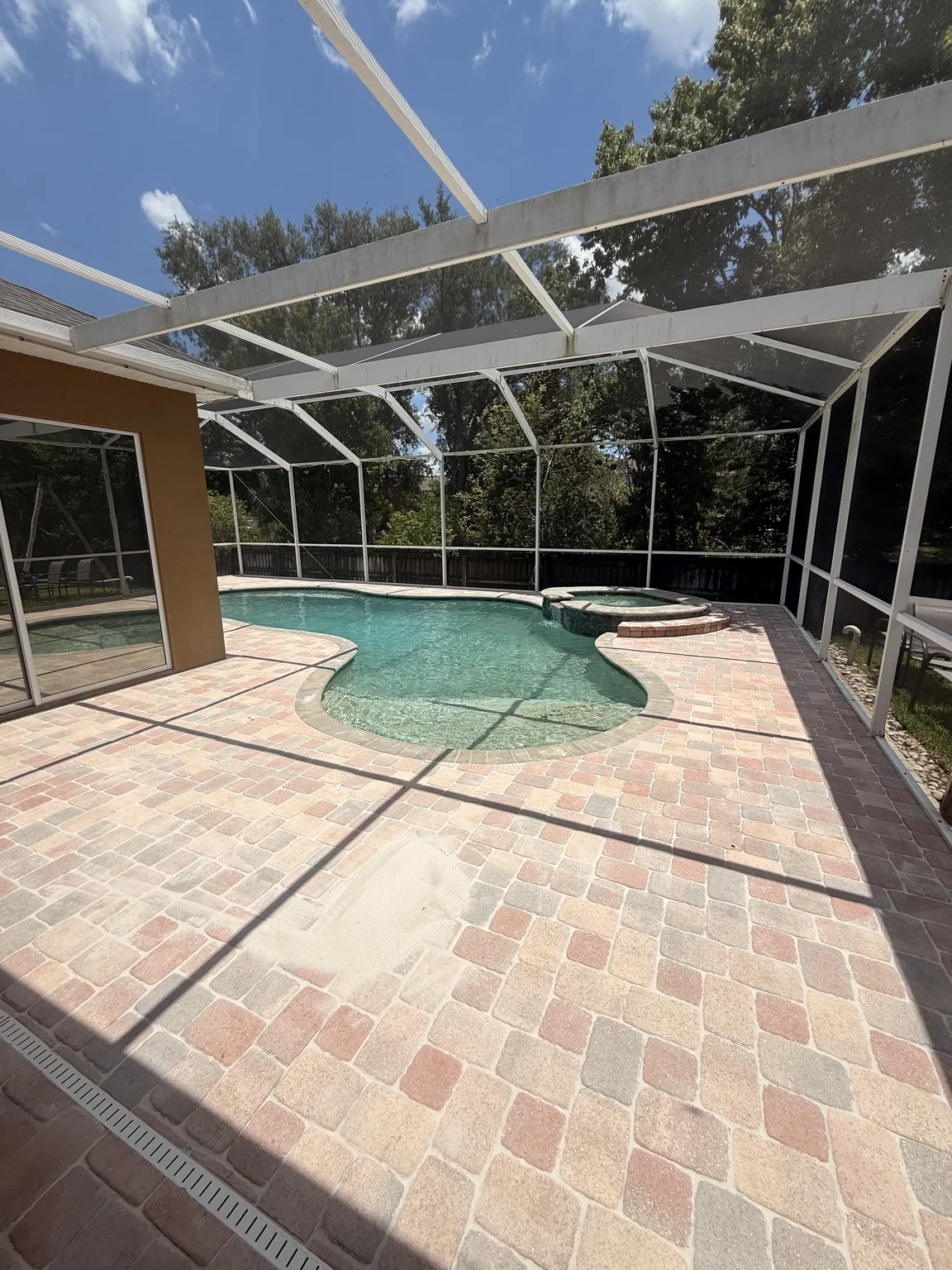
Polymeric sand vs silica sand is a decision that affects how long your paver patio, driveway, or pool deck stays stable and attractive. In Tampa Bay and nearby communities like Riverview, Wesley Chapel, and Palm Harbor, rain bursts, sun, and pool water all stress paver joints. Because of that, the sand you choose for the joints between pavers matters as much as the pavers themselves. Both polymeric and plain silica joint sands can work well when they match the paver system and site conditions. However, they behave very differently during installation, cleaning, and long-term maintenance. This guide walks through the tradeoffs so you can make a confident, project-specific choice.
Polymeric sand vs silica sand: the short answer for paver joints
At a basic level, polymeric sand includes fine sand plus binding additives, while silica joint sand is just clean, graded sand. Polymeric sand is designed to firm up when you activate it with water, which can help lock pavers in place and resist washout. Plain silica sand stays loose, relies on compaction, and drains freely through open joints.
For many paver systems, either option can work when the bedding layer, edge restraint, and slope are correct. However, polymeric sand often performs better in narrow, uniform joints that stay mostly dry between storms. Silica joint sand usually handles wider joints, highly permeable systems, and areas that see frequent cleaning or future repairs.
There is no single best choice for every patio, driveway, or walkway in Tampa Bay. Manufacturer joint-sand recommendations, the paver style, drainage path, pool or irrigation overspray, and your maintenance expectations all matter. Therefore, the decision should focus on the whole paver system, not just the sand bag label.
Understanding joint sand basics before you pick a product
Before comparing polymeric sand vs silica sand in detail, it helps to understand how joint sand works. Joint sand transfers loads between pavers, supports edge restraint, and helps limit movement from traffic and seasonal moisture changes. It also influences how water passes through or across your hardscape surface.
Silica joint sand is usually a hard, angular, washed sand with consistent grain sizes. When you sweep and compact it into the joints, it wedges between pavers to provide friction and interlock. It does not chemically bind, so it remains reworkable if you need to pull up pavers for repairs later.
Polymeric sand starts with similar fine aggregates but adds proprietary polymers or binders. When you apply water per the manufacturer instructions, those additives activate and help the sand set up. The result is a semi-stabilized joint that can resist light erosion and limit loose grit drifting across the surface.
The CMHA notes that joint-stabilizing products and sealing choices should be made on a project-specific basis, not by habit. Their guidance on cleaning, sealing, and joint sand also stresses using products made for concrete pavers. That aligns with choosing joint sands and additives that match your specific paver manufacturer and layout.
How to decide between joint sands: a practical inspection checklist
Instead of starting with a favorite brand, start by looking closely at your existing or planned paver area. Walk the space after heavy rain in Ruskin, Land O’ Lakes, or Town ‘N’ Country and notice how water behaves. Also study the joint widths, edge conditions, and any signs of movement or settling.
For existing pavers, check whether joints have washed out, sunk, or become rounded at the top. Notice any white hazing, crusty residue, or hard clumps that could signal failed polymeric joints. Look for stubborn weeds and ant trails, which often show up first in wide or poorly compacted joints.
For new projects, review the paver manufacturer literature and joint-size recommendations. Some textured, tumbled, or irregular pavers have variable joint widths that can challenge polymeric sands. Permeable or open-graded systems may specify particular aggregate sizes, and some discourage binding additives that could reduce infiltration.
Finally, think about your cleaning habits and expectations. If you plan to pressure wash often, or you know pool water and lawn irrigation will hit the surface regularly, mention that during design. These details help define whether a stabilized joint or a more flexible, easily topped-up silica joint makes more sense.
Installation differences: joint width, compaction, and water activation
Both sand types start with sweeping material into dry, clean joints, but the details differ. Polymeric sand products are sensitive to joint width, paver surface texture, compaction levels, and watering technique. Silica joint sands are more forgiving but still require thorough compaction and correct bedding conditions.
Most polymeric sands perform best in relatively narrow joints with consistent depth. Excess product left on the surface can cause staining or haze, especially on darker concrete pavers. Because of that, installers must blow or sweep off all residue before activation, then follow manufacturer instructions for light, even watering.
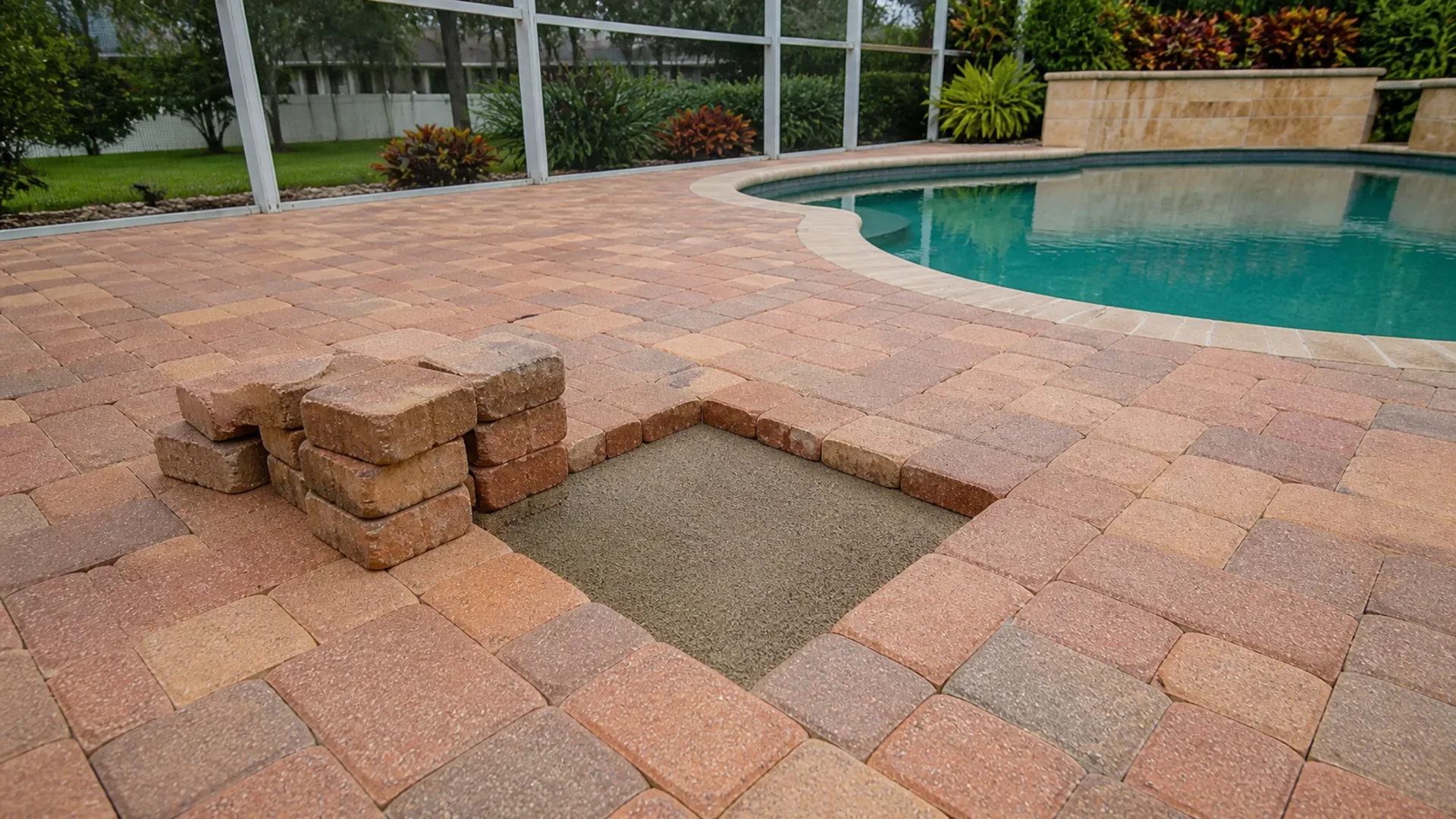
Silica joint sand installation focuses on packing as much material into the joints as practical. Installers usually vibrate the pavers with a plate compactor, sweep in more sand, and repeat until joints stop accepting material. This process helps develop strong interlock between pavers and maximizes load distribution across the field.
In every Tampa Bay neighborhood, site slope and base preparation still matter more than the sand label. Even the best polymeric joint can fail if water regularly pools on the surface or undercuts the base. Therefore, joint sand choice should sit alongside base, edge restraint, and surface drainage planning as part of one design conversation.
Key steps for installing polymeric sand vs silica sand correctly
- Start with a properly compacted base, bedding layer, and tight paver laying pattern.
- Clean the surface so dust, old sealer, or debris will not interfere with joint packing or bonding.
- Fill joints slowly from multiple directions to avoid bridging voids below the paver edges.
- Compact and re-sweep multiple times for silica sand; follow exact watering instructions for polymeric sand.
- Protect the surface from premature traffic, downspouts, or sprinklers until the joints stabilize.
Performance tradeoffs: washout, weeds, insects, and permeability
When storms roll through Greater Carrollwood or Thonotosassa, joint sand faces high volumes of fast-moving water. Properly installed polymeric joints can resist light surface erosion better than plain silica joints in many layouts. However, no joint sand completely overcomes poor slope, inadequate edge restraint, or undersized base thickness.
Weeds typically grow from seeds that blow in and root in surface dust, not from the sand itself. A stabilized joint may make it harder for roots to penetrate, but regular sweeping and spot treatment remain important. Ants may find loose, un-compacted joints attractive, yet they also tunnel through some lightly bound polymeric products.
Permeability also differs. Open, silica-filled joints generally allow more water to pass through the surface and into the bedding layer. Polymeric joints can reduce infiltration at the surface, depending on product and installation, which may or may not suit your paver system design.
Maintenance and repairs are another key difference. Loose silica sand makes it simpler to pull and reset settled or damaged pavers without chiseling out hardened joints. Stabilized joints can be more resistant to casual disturbance but often require more care if you ever need to rework a section.
| Factor | Polymeric sand | Silica joint sand |
| Washout resistance | Often better when installed correctly | Relies on compaction and joint depth |
| Weeds and insects | May slow growth or tunneling, not eliminate | Good housekeeping still controls most issues |
| Permeability | Can reduce surface infiltration | Typically allows more water through joints |
| Ease of repair | Harder to remove and rework | Easier to lift, reset, and top up |
| Cleaning sensitivity | More sensitive to aggressive washing | Generally more forgiving to maintenance |
Weather, pools, and Florida-specific considerations for joint sand
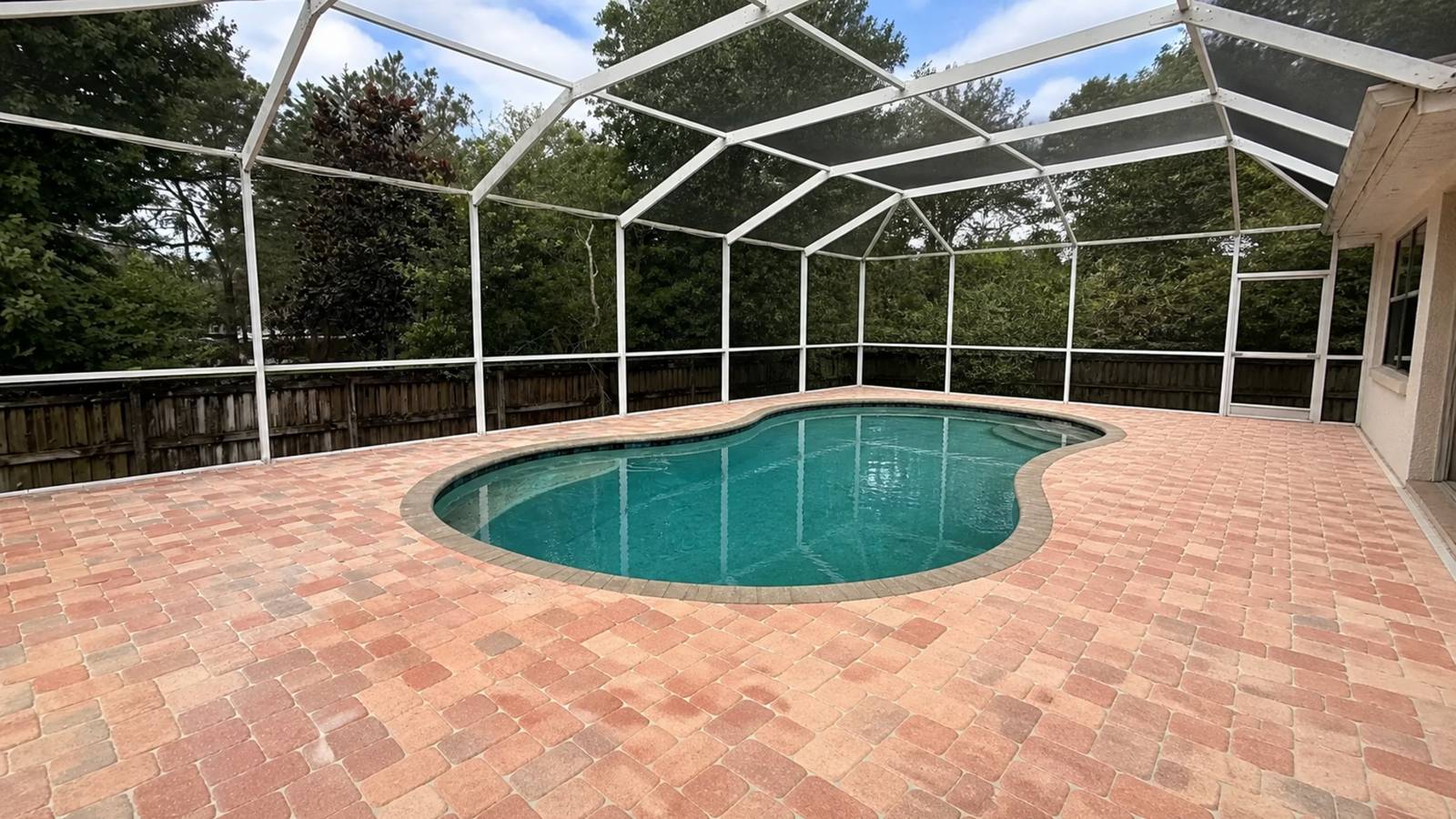
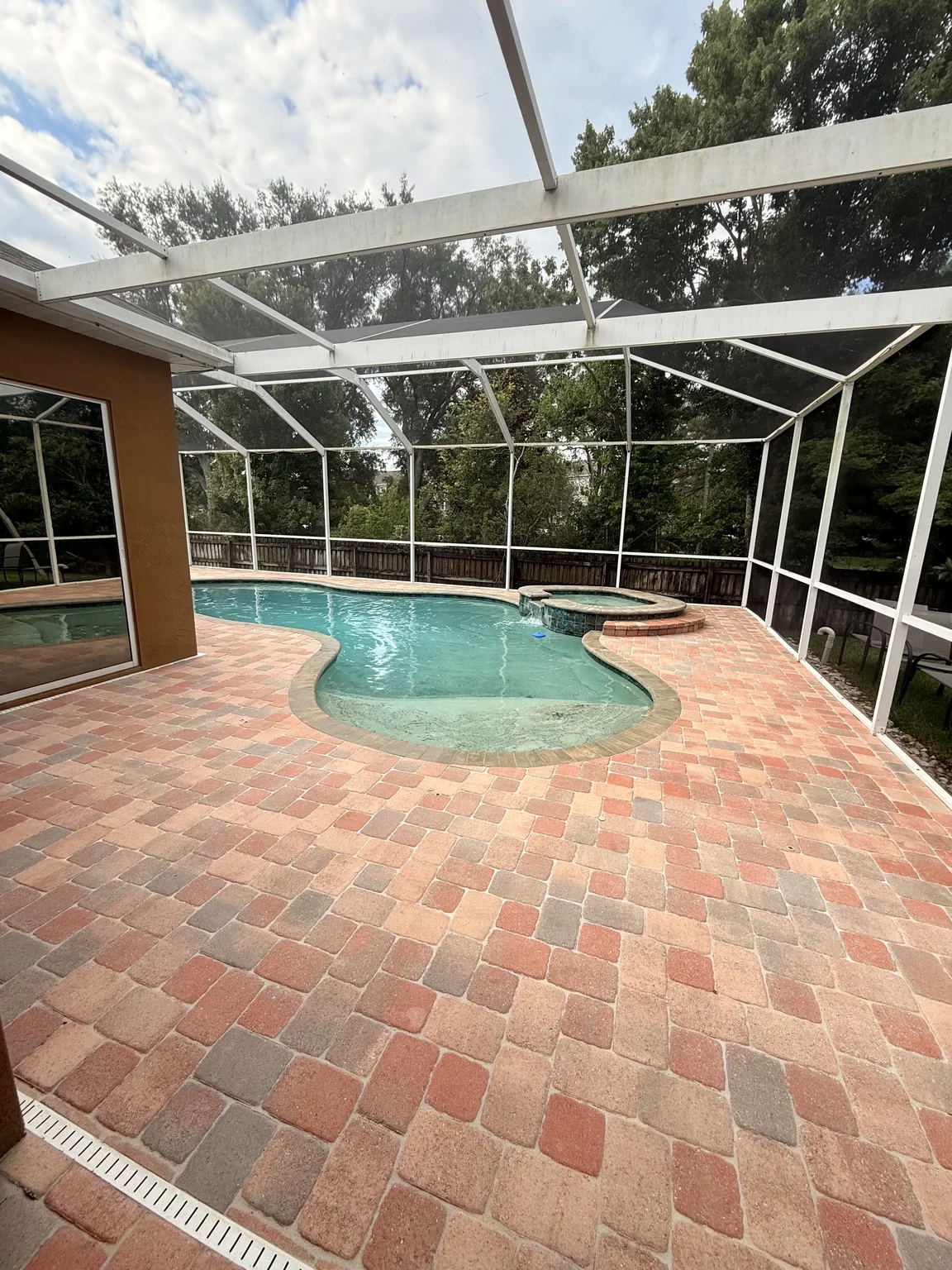
In Tampa Bay, intense summer storms, high humidity, and frequent wetting around pools all affect joint performance. Areas near screened pools in Palm Harbor or open lanais in Seven Springs often see chlorinated or salt-treated water. This extra moisture can stress some polymeric sands, especially if joints were not allowed to cure fully.
Rapid, heavy rain can also challenge newly placed joints. If a storm hits before polymeric sand sets, it may wash out or leave a blotchy surface crust. Silica joint sand will usually simply displace, which still needs repair, but it does not depend on curing chemistry.
Heat and sun exposure play a role as well. Dark pavers on south-facing driveways in Ruskin or Town ‘N’ Country can get very hot, which may impact surface sealers and some joint-stabilizing products over time. Following product temperature and shade guidelines for installation reduces the risk of early breakdown.
Because Florida sites vary so much, from shaded courtyards to open pool decks, no single joint material fits every situation. Some homeowners may prefer polymeric sand in a covered entry where joints stay mostly dry and clean. Others may benefit from the flexibility of silica sand in open areas that are pressure washed often or may need future paver adjustments.
Repairs, topping up joints, and changing joint materials
Over time, even well-built paver systems can need joint touch-ups or more involved repairs. Tire traffic on driveways, shifting subsoils, and minor base settlement can all cause localized issues. When that happens, the type of joint sand already in place shapes your repair options.
With silica joint sand, topping up is usually straightforward. After addressing any base or bedding problem, installers sweep new sand into the joints and compact. This approach works well when you need to lift and reset pavers to correct dips, bulges, or utility work.
Polymeric joint repairs require more surface preparation and careful removal of hardened material from affected joints. Any new polymeric sand must be compatible with remaining material and installed per manufacturer directions to avoid patchy results. In some cases, extensive repairs may justify switching the joint material type, but that decision is project-specific.
If you see widening joints, rocking pavers, or repeated washout on your patio or driveway, an on-site assessment helps. A paver-focused contractor can evaluate whether you need only joint re-sanding or deeper work like base correction. When joint failure ties into structural concerns, you may want to review design details with a qualified professional before authorizing major changes.
For homeowners who suspect more than simple sanding issues, the paver repair services page provides more context on typical problems and restoration approaches in the Tampa area.
Common mistakes with polymeric and silica joint sands
Many joint problems start with rushing the job or skipping manufacturer instructions. Overfilling polymeric sand, failing to remove surface residue, or soaking the surface too hard can all cause haze or weak bonds. Likewise, under-compacted silica sand joints leave pavers vulnerable to movement and erosion.
Another frequent mistake is treating joint sand as a cure-all for underlying design problems. No joint product will compensate for a base that holds water against the pavers or lacks edge restraint. In these cases, joints may keep failing until the structural issues are addressed by a qualified installer.
Cleaning methods also matter. Very aggressive pressure washing can strip out both polymeric and silica sand, especially on older or previously saturated joints. Therefore, following CMHA-style best practices, including testing stain treatments and cleaners in small areas first, helps protect the surface.
Finally, mixing incompatible sealers, joint stabilizers, or sand types without checking product data can create adhesion or appearance problems. Before combining sealed surfaces with new polymeric or treated sands, review the paver and product documentation. When in doubt, a site visit and small test section often prevent bigger, costlier mistakes later.
When to involve a professional in joint sand decisions
Some homeowners in Tampa Bay comfortably handle basic re-sanding on small patios or garden walkways. However, larger driveways, pool decks, and areas with visible settling usually deserve a professional look. Joint sand alone may not solve problems caused by base movement, poor slopes, or nearby tree roots.
Professional installers can help interpret manufacturer guidelines for both pavers and joint materials. They can also recommend joint sands that align with your specific paver style, expected traffic, and maintenance plans. This is especially helpful when mixing new work with older sections that already have a particular type of sand.
In some cases, you may need to coordinate with other qualified professionals. For example, if your project touches a pool shell or involves structural retaining walls, a licensed pool contractor or engineer should guide those elements. A paver specialist can then align joint choices, patterns, and finishes with that broader plan.
When you compare polymeric sand vs silica sand for your own patio, driveway, or walkway, on-site evaluation is important. A contractor who regularly works in Wesley Chapel, Riverview, or nearby neighborhoods understands local soils, rainfall patterns, and common paver products. That local experience supports a joint recommendation that fits your exact installation instead of a one-size-fits-all answer.
If you enjoy comparing different paver materials and joint options, you may also find the guides under the Paver Materials & Comparisons category helpful as you plan.
FAQs about polymeric sand vs silica sand for Tampa Bay pavers
Which lasts longer in Florida weather: polymeric sand or silica sand?
Service life depends more on design, base quality, and maintenance than on joint sand alone. In some tightly jointed patios with good slopes and light traffic, polymeric sand can stay intact for many years. In heavily washed or frequently cleaned pool decks, silica sand that can be topped up easily may prove more practical over time.
Regardless of the product, expect to inspect joints regularly and address small issues before they spread. Periodic re-sanding, gentle cleaning, and keeping debris off the surface all help extend joint performance.
Is polymeric sand vs silica sand better for a pool deck?
Pool decks around Tampa Bay face constant moisture, foot traffic, and regular cleaning. Some homeowners like polymeric sand for its ability to resist minor washout and limit grit on bare feet. Others prefer silica sand because it tolerates frequent rinsing and pressure washing and stays easier to adjust if pavers settle.
The better choice depends on your deck layout, joint width, paver type, and how you use and clean the area. A site-specific recommendation is usually best, especially when your deck ties into a pool shell or screen enclosure.
Can I switch from polymeric sand to regular silica sand on an existing patio?
Switching is sometimes possible, but it involves labor. Hardened polymeric sand typically must be removed from the joints to a workable depth, which can be time consuming. After that, installers can re-compact the pavers and sweep in silica joint sand as they would on a new surface.
Before you change products, consider why the original joints failed. If base or slope problems caused the issues, those need correction first; otherwise, a new joint material may not perform any better.
Will polymeric sand stop all weeds and ants in my paver joints?
No joint product can guarantee a weed- or ant-free surface. Polymeric sand can make it harder for seeds to root deeply and sometimes discourages shallow tunneling. However, airborne seeds can still sprout in surface dust, and determined insects can bypass joints entirely.
Regular sweeping, spot treatments, and prompt attention to small colonies usually work better than relying on any sand alone. Good edge restraint and solid base construction also help limit pathways that pests might exploit.
How do manufacturer specifications affect my joint sand choice?
Paver manufacturers often publish recommended joint sand gradations, additives, and compatible sealers for their products. Following those specifications helps protect your investment and reduces the risk of staining, hazing, or early joint failure. Ignoring them can lead to performance or appearance issues that are hard to correct later.
Before you commit to any polymeric or silica joint sand, review the technical sheets for both the pavers and the sand. When the documents conflict or leave questions, a qualified installer can help you interpret the details for your particular project.
If you want help choosing and maintaining the right joint sand for your outdoor space, Dr Pavers Design offers consultations on patios, driveways, walkways, and pool decks throughout Tampa Bay. You can browse recent paver projects, read homeowner experiences on the testimonials page, and review common questions in the FAQ section before we talk. To discuss your own space, explore our full list of services, then call +1 (656) 600-4015, text our team, email drpavers@outlook.com, or message us on WhatsApp.
For a closer look at our work and local presence around Riverview, Ruskin, Wesley Chapel, and nearby communities, connect with us on Instagram and Facebook, or see our Google listing and map location here in Tampa Bay. We are glad to evaluate your existing joints, explain the pros and cons of polymeric and silica sands on-site, and help you plan a paver surface that fits your home, budget, and maintenance style.