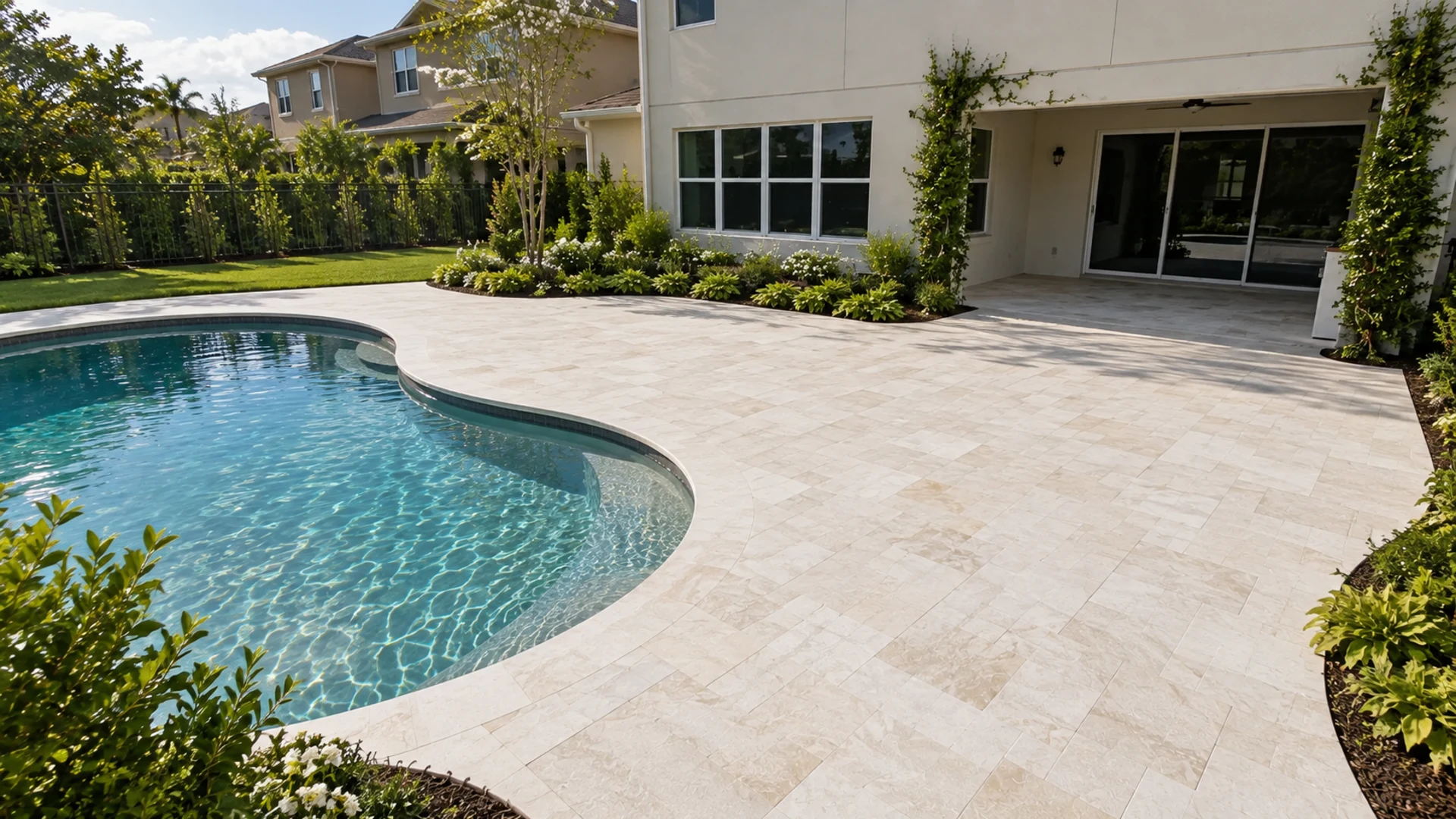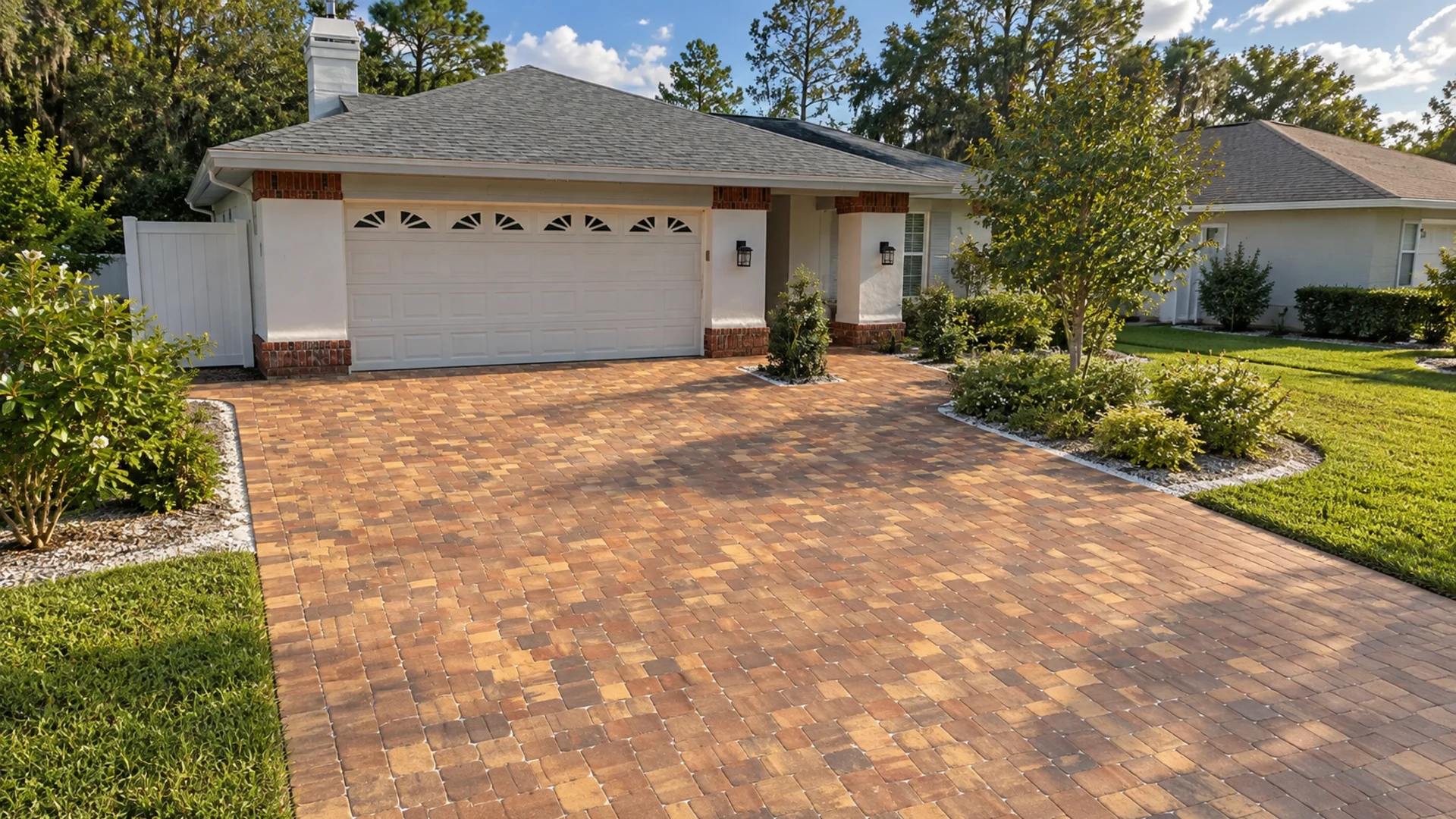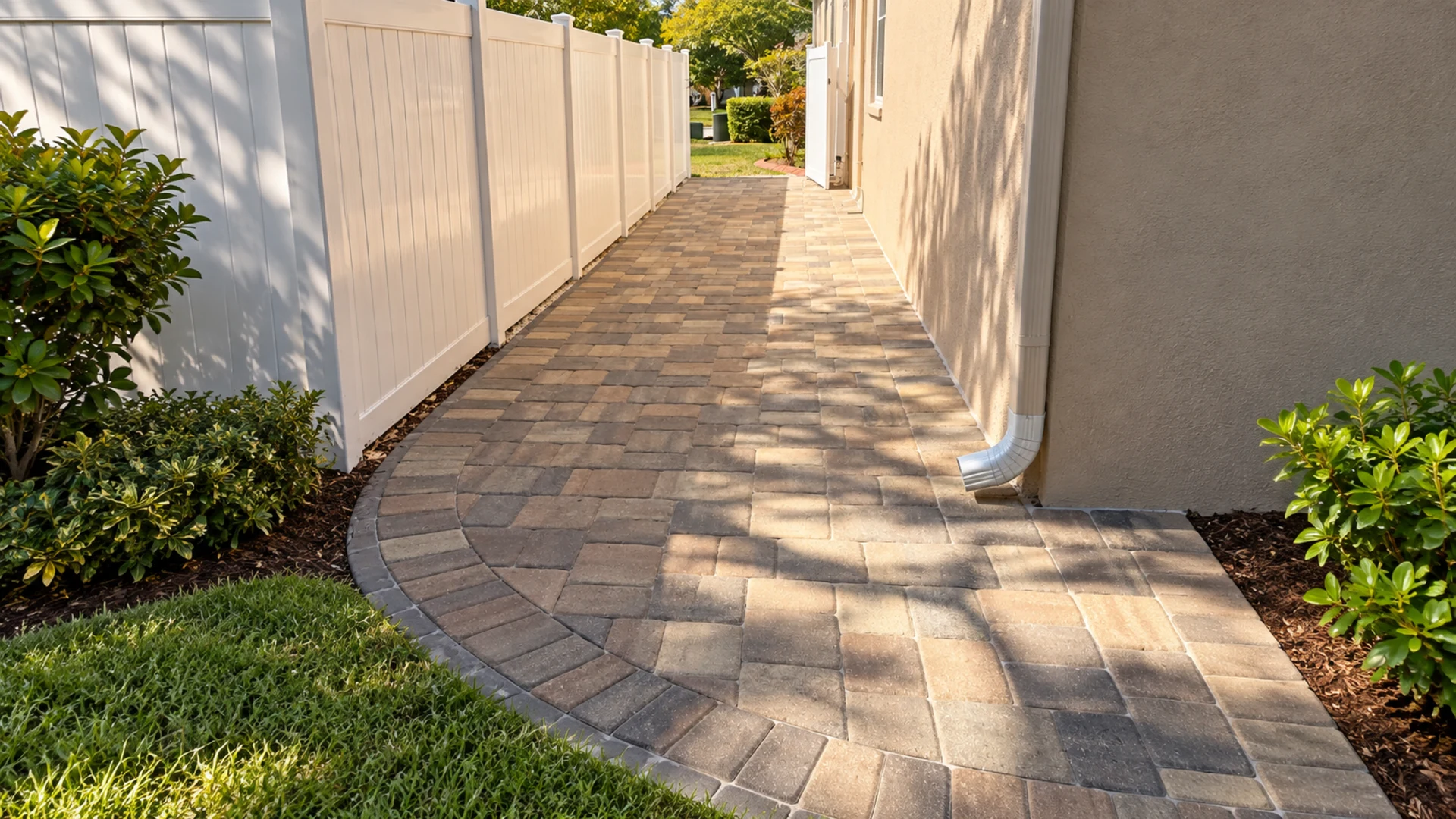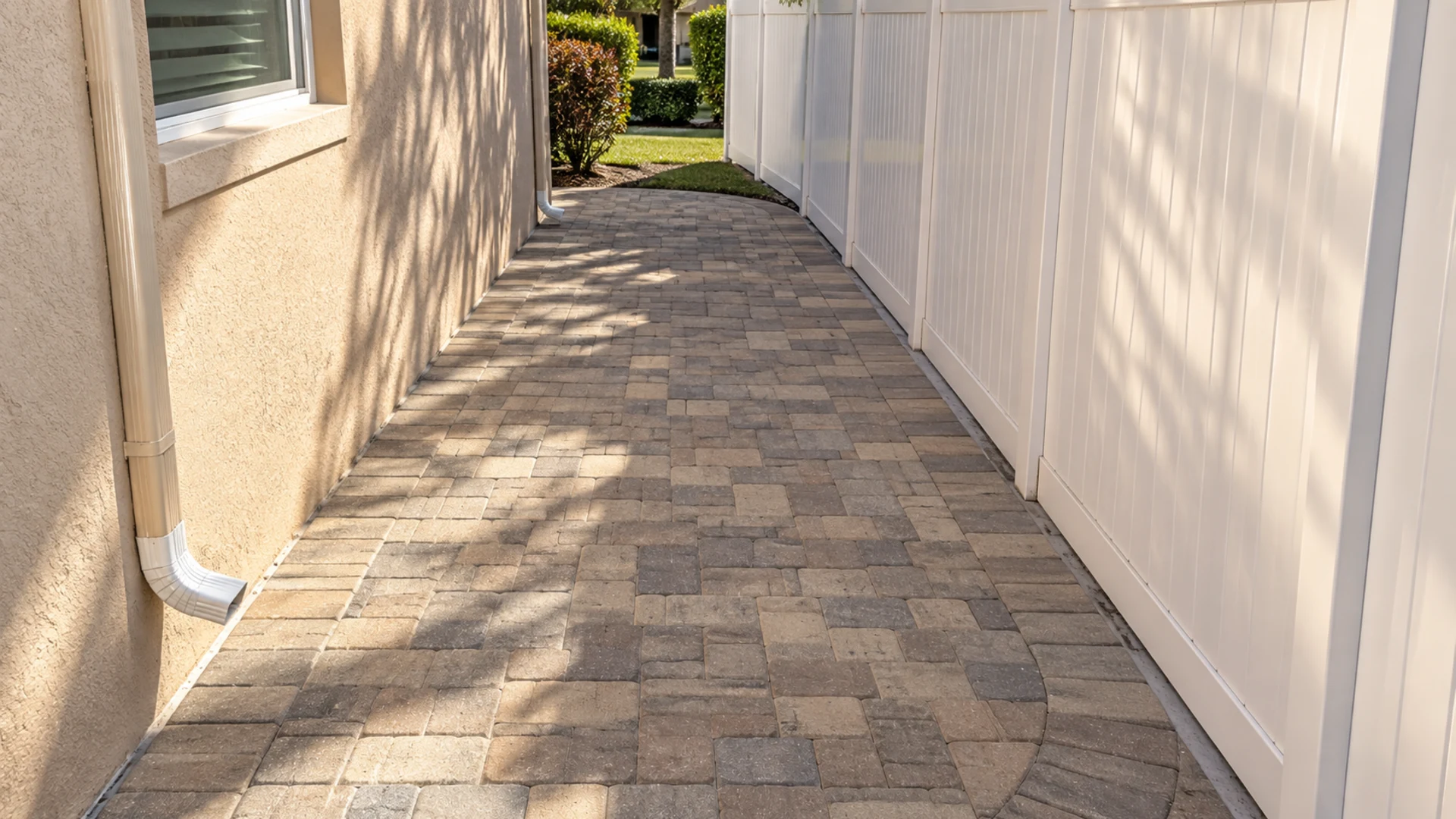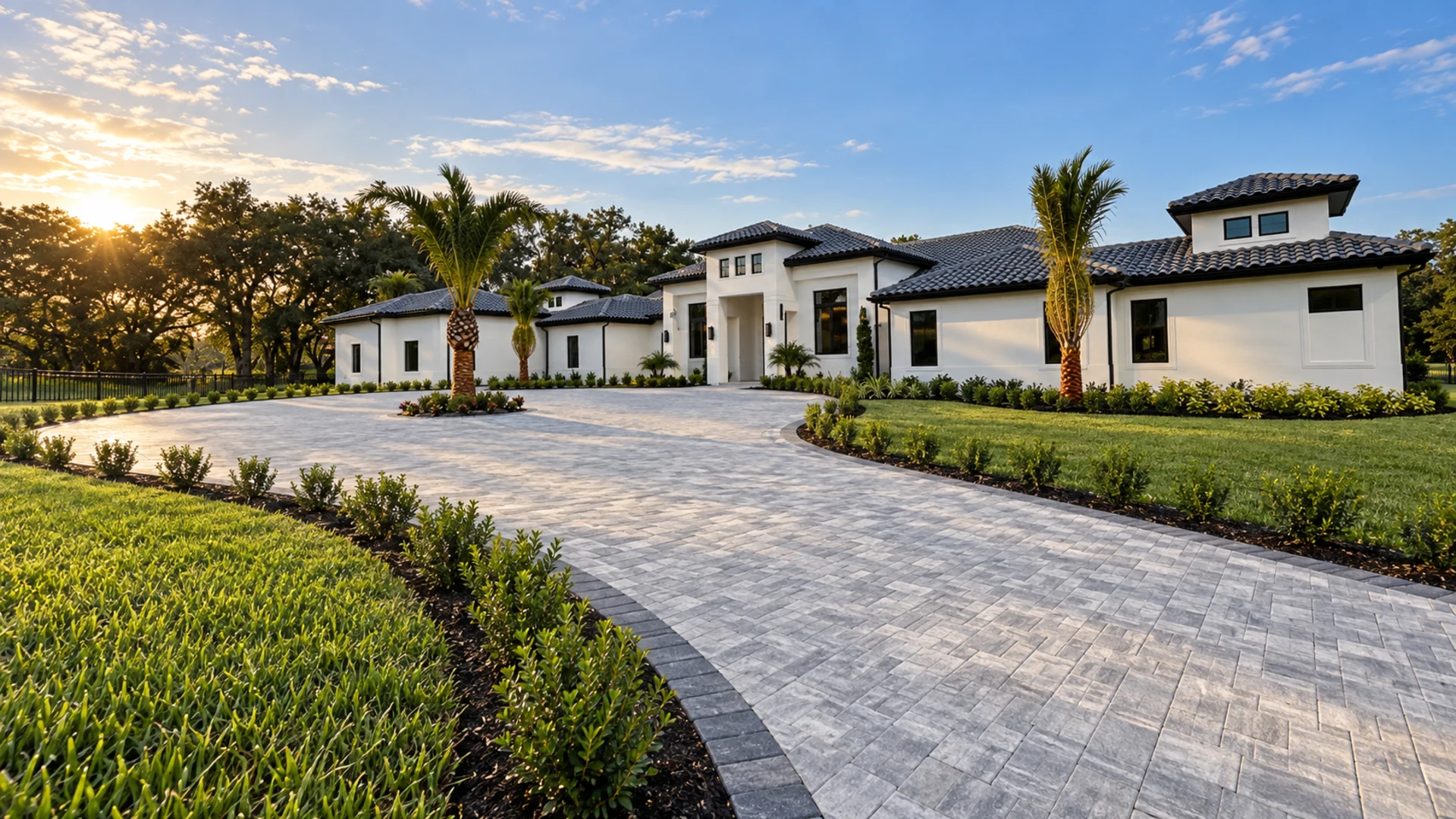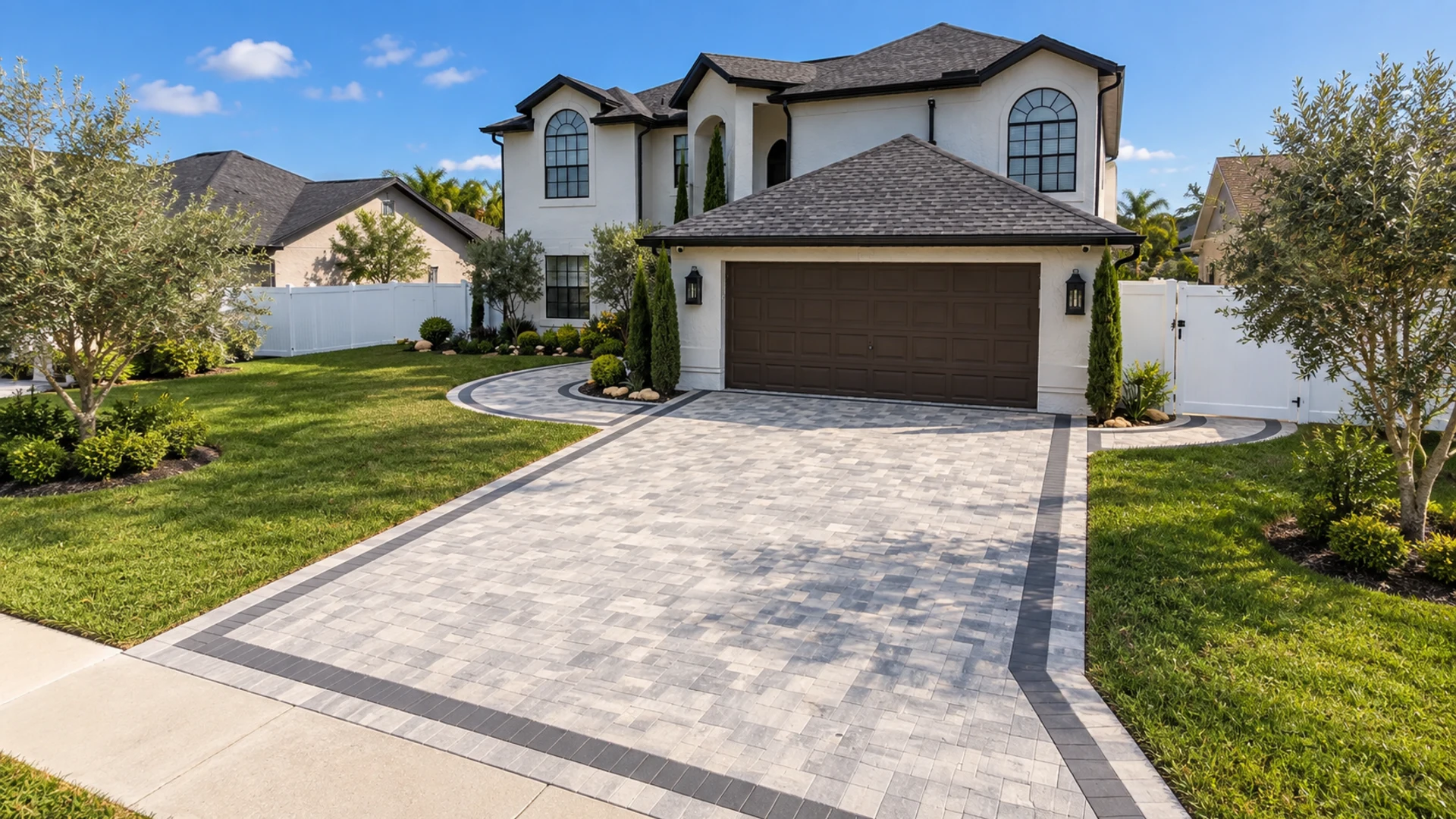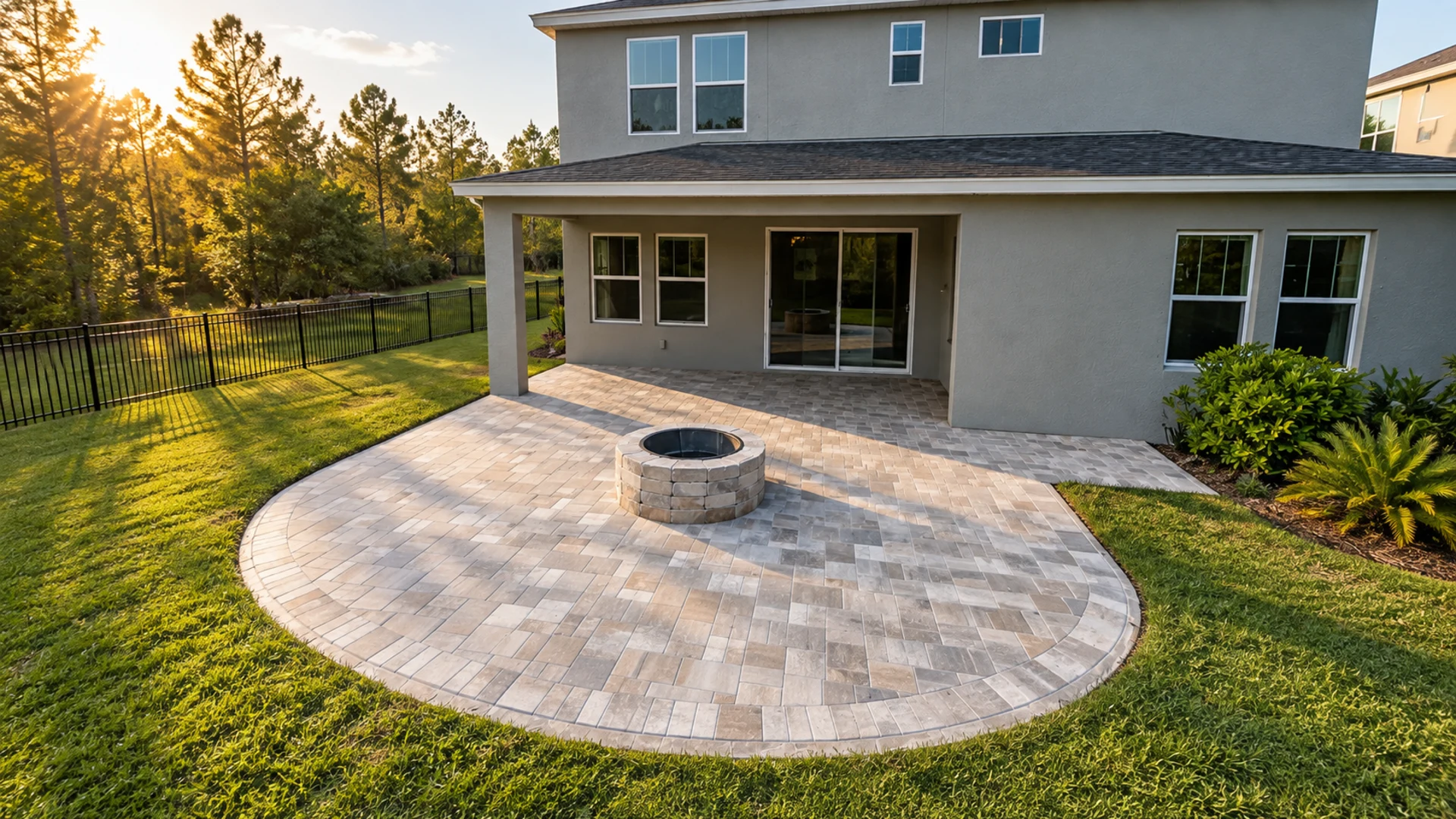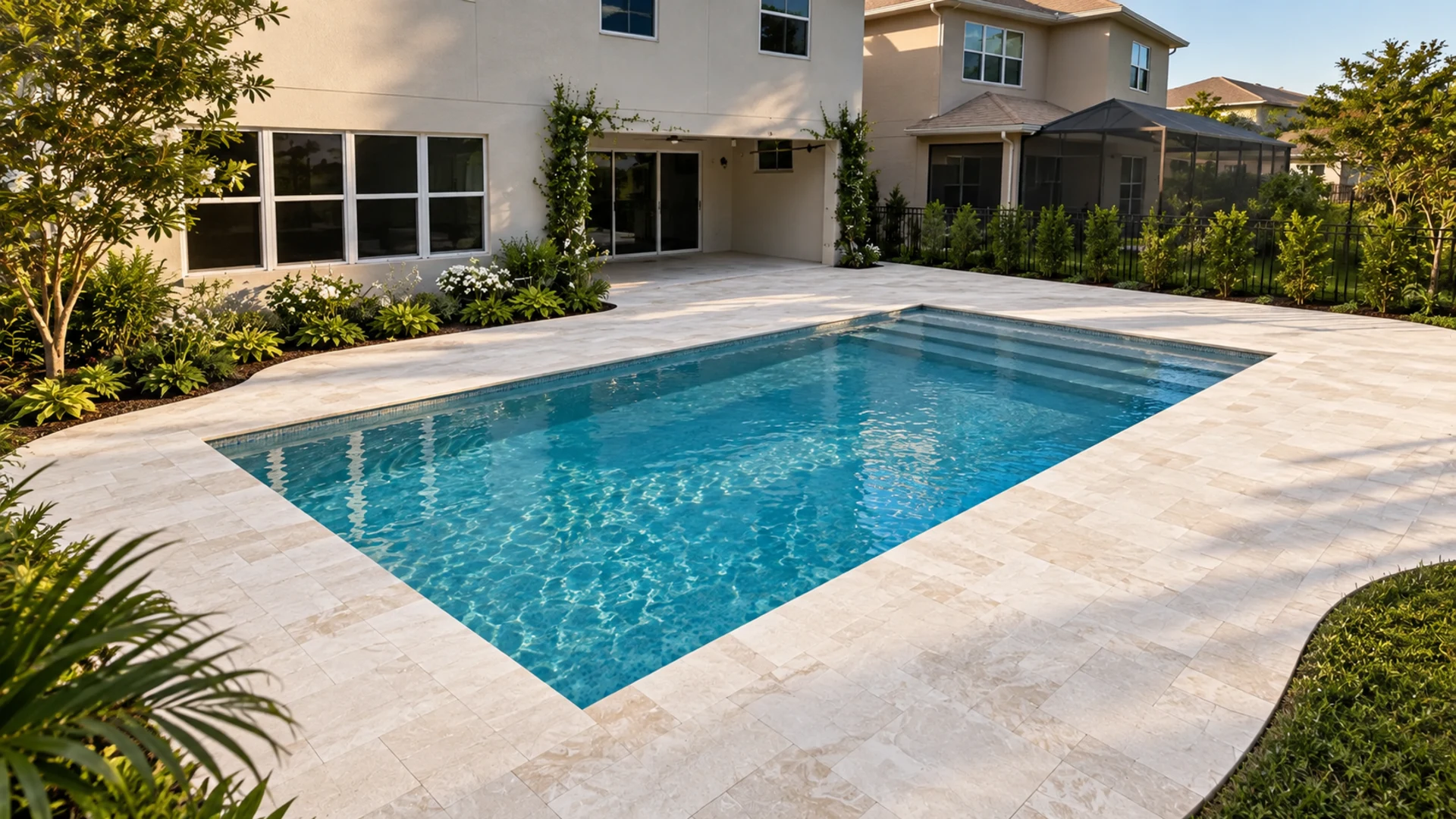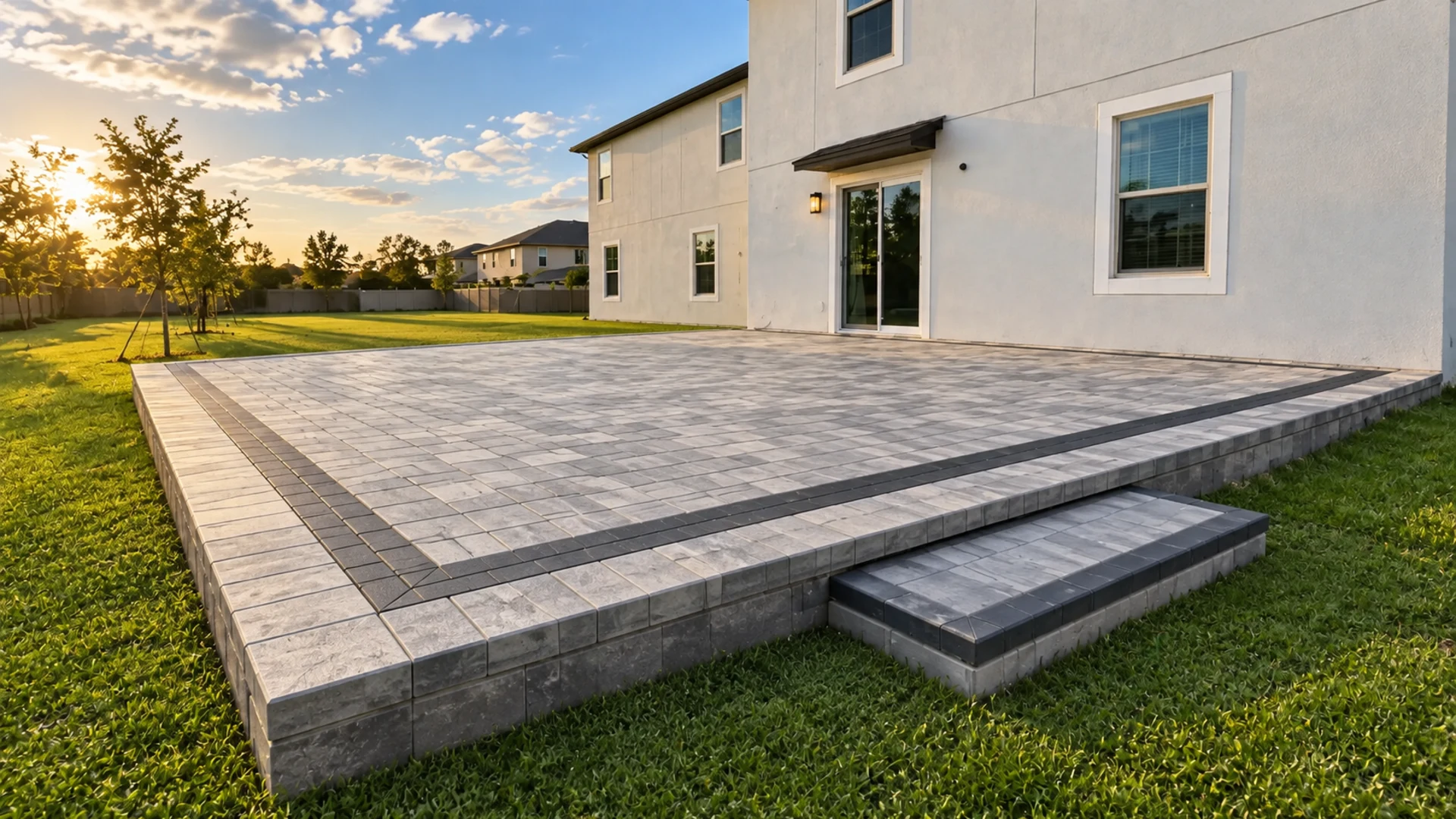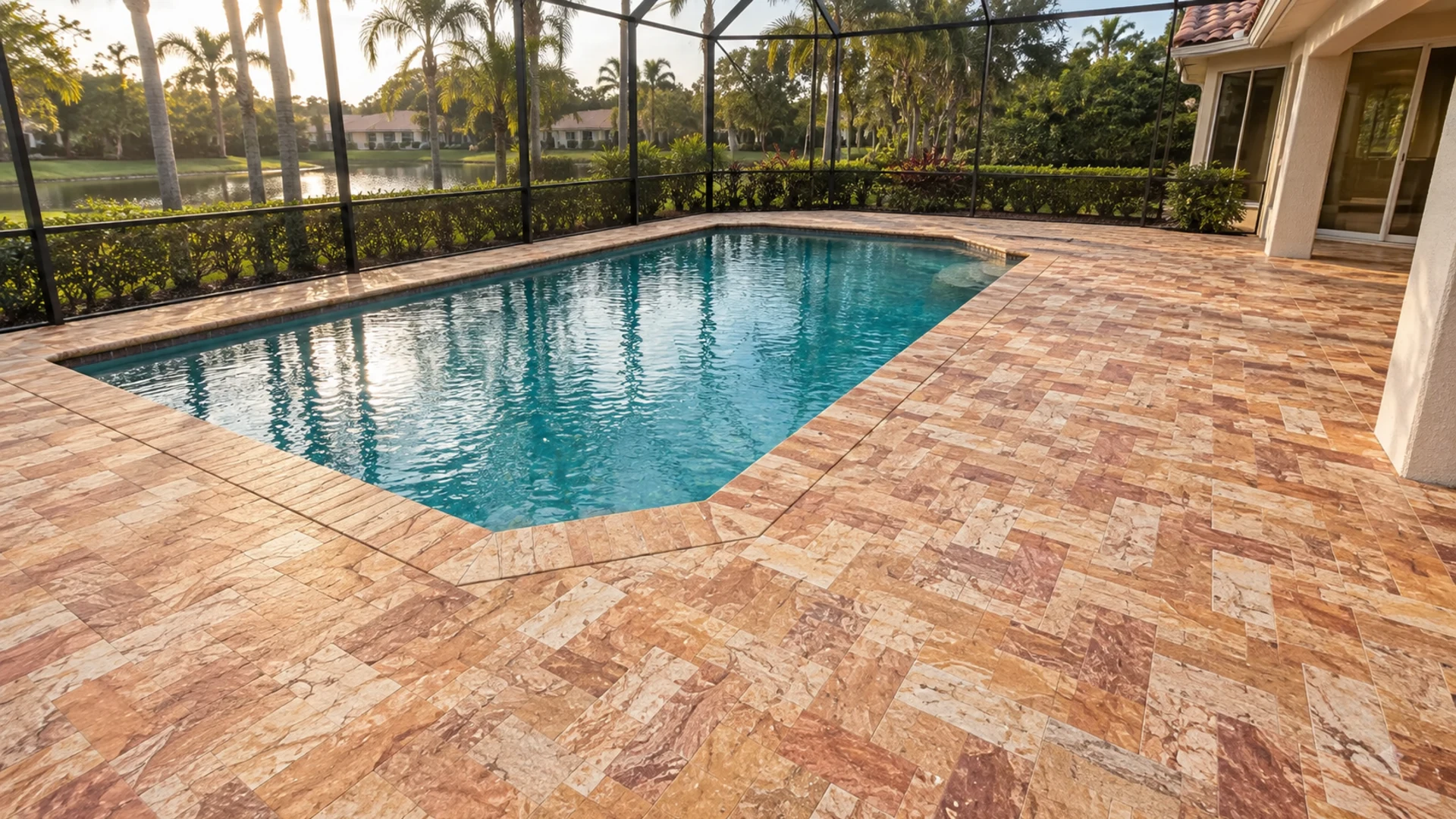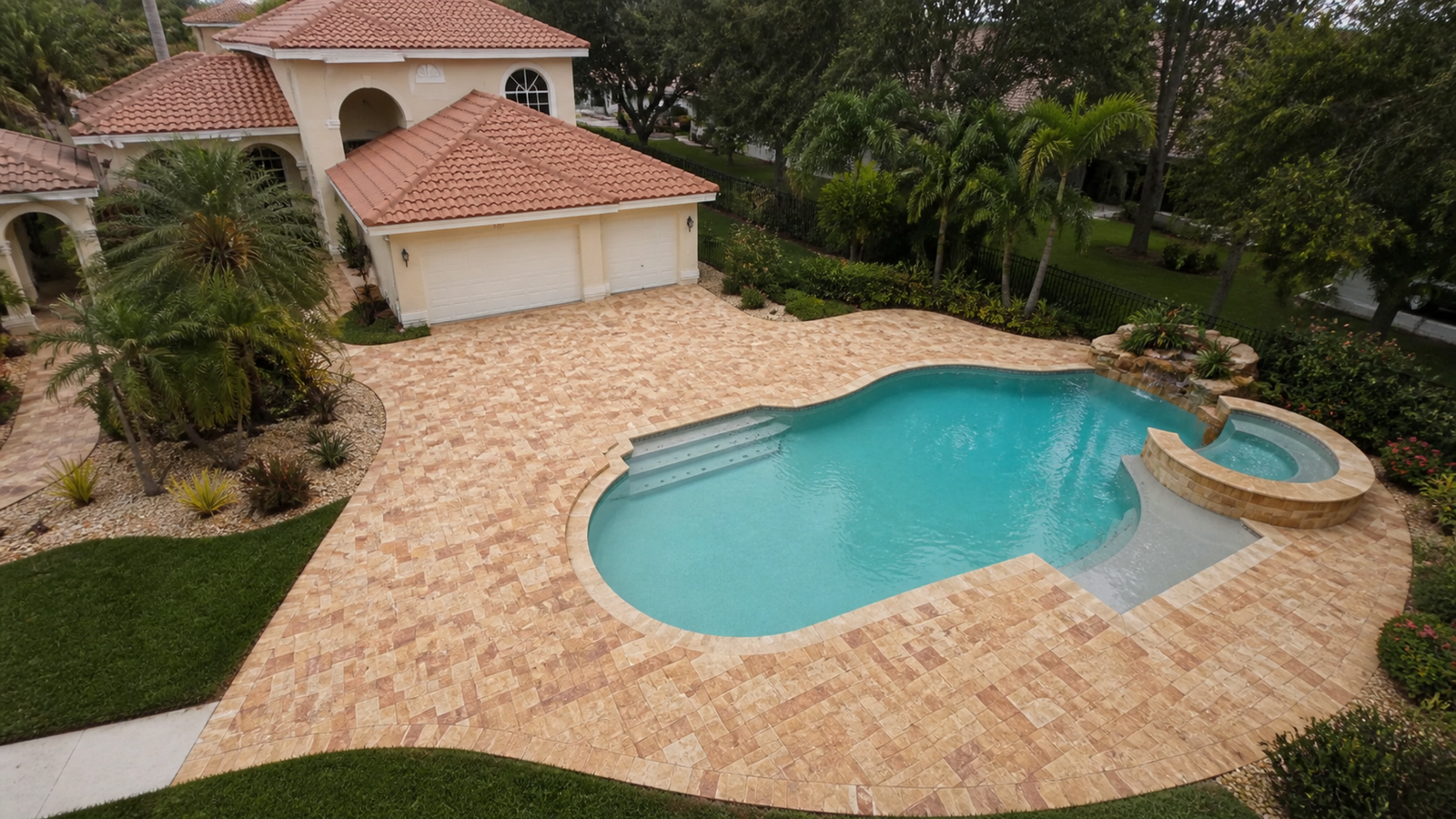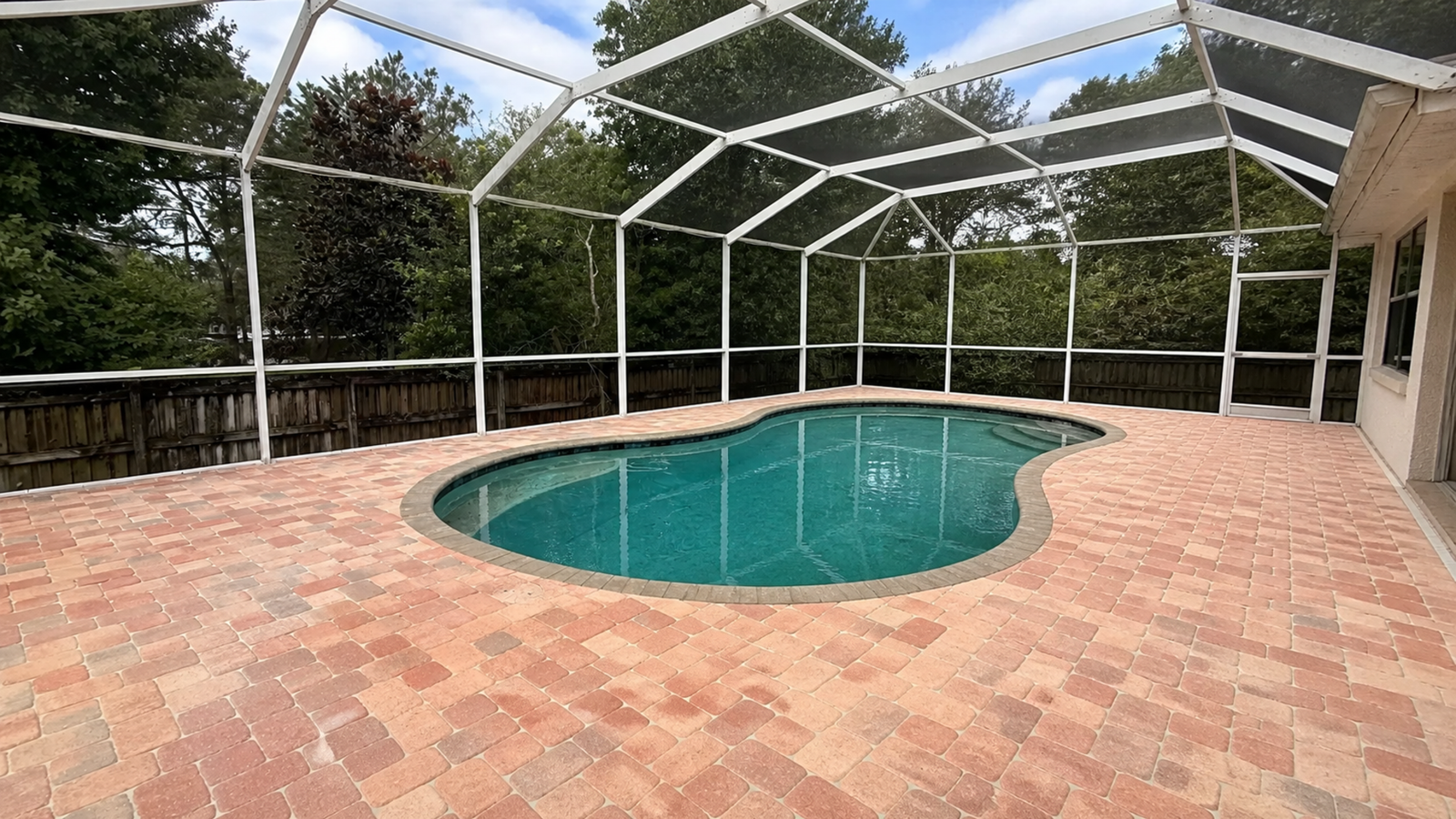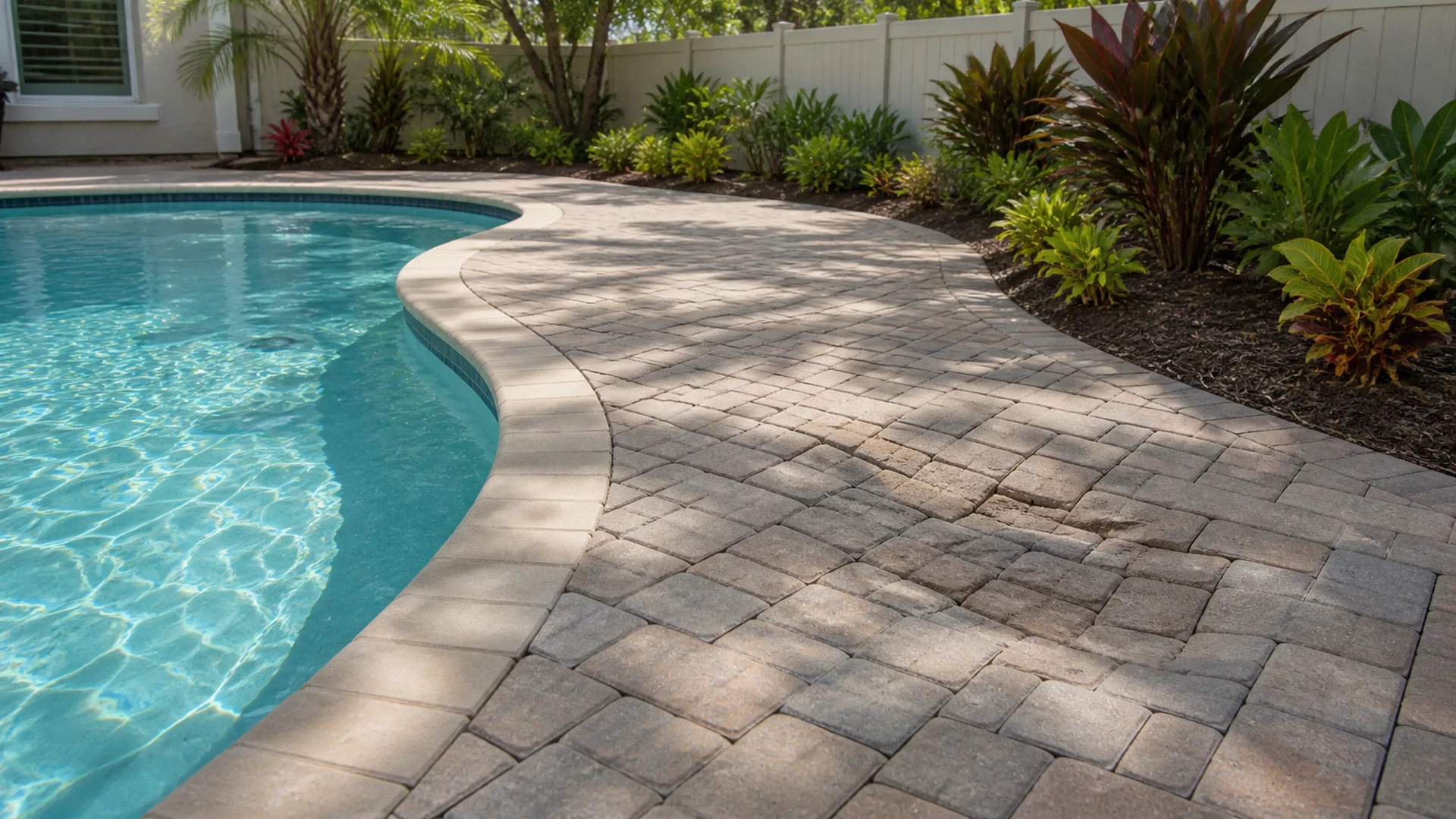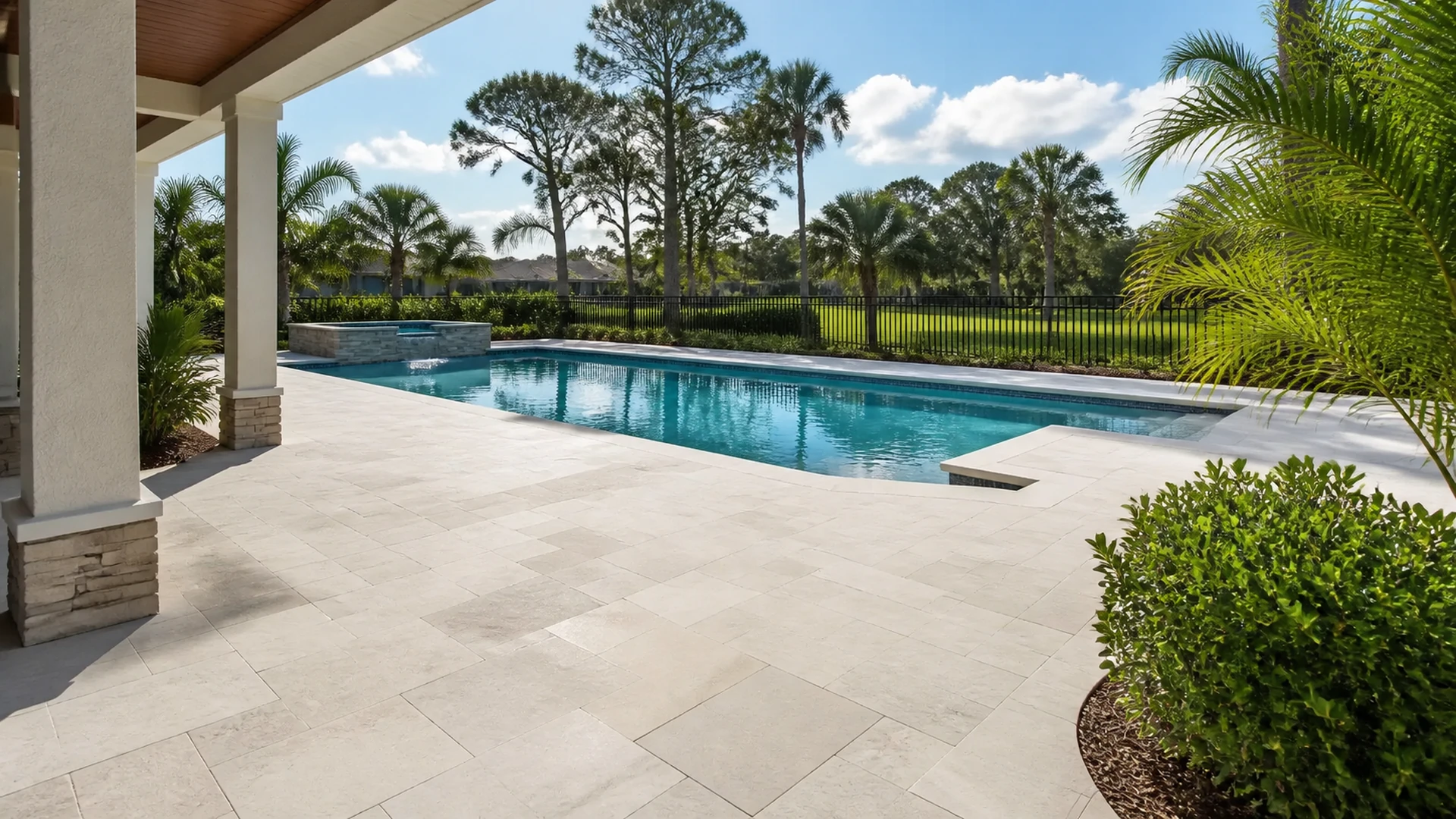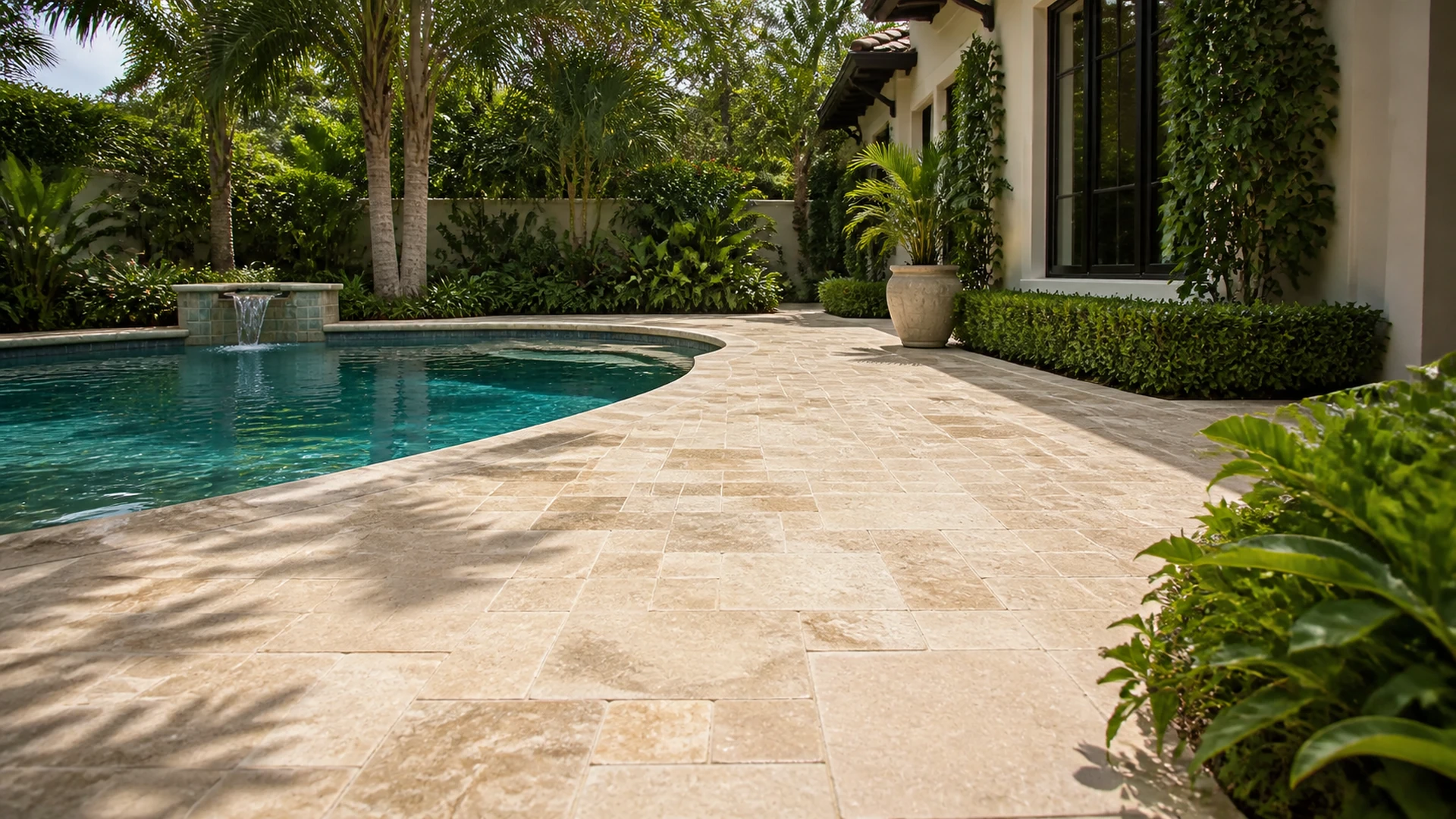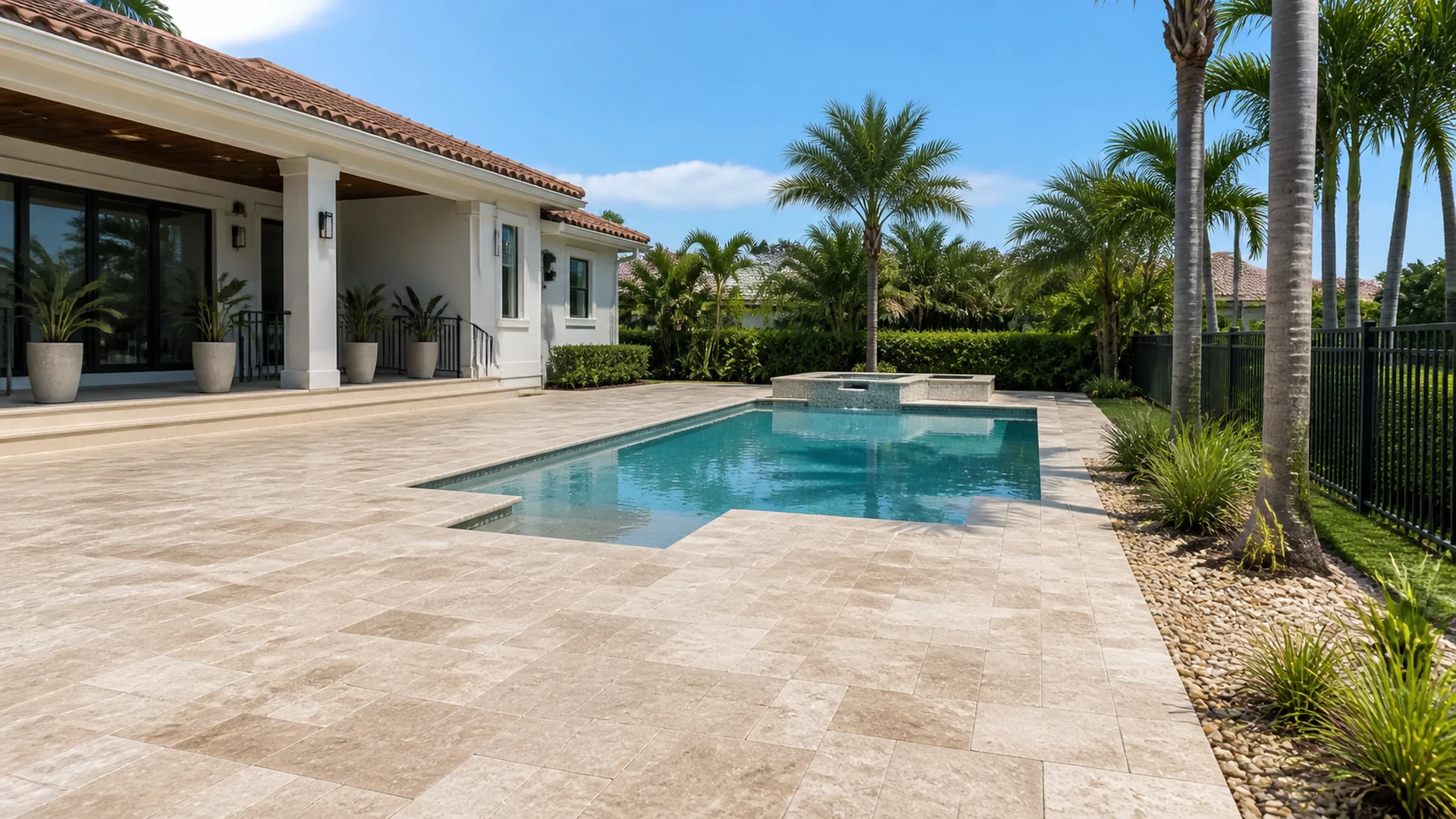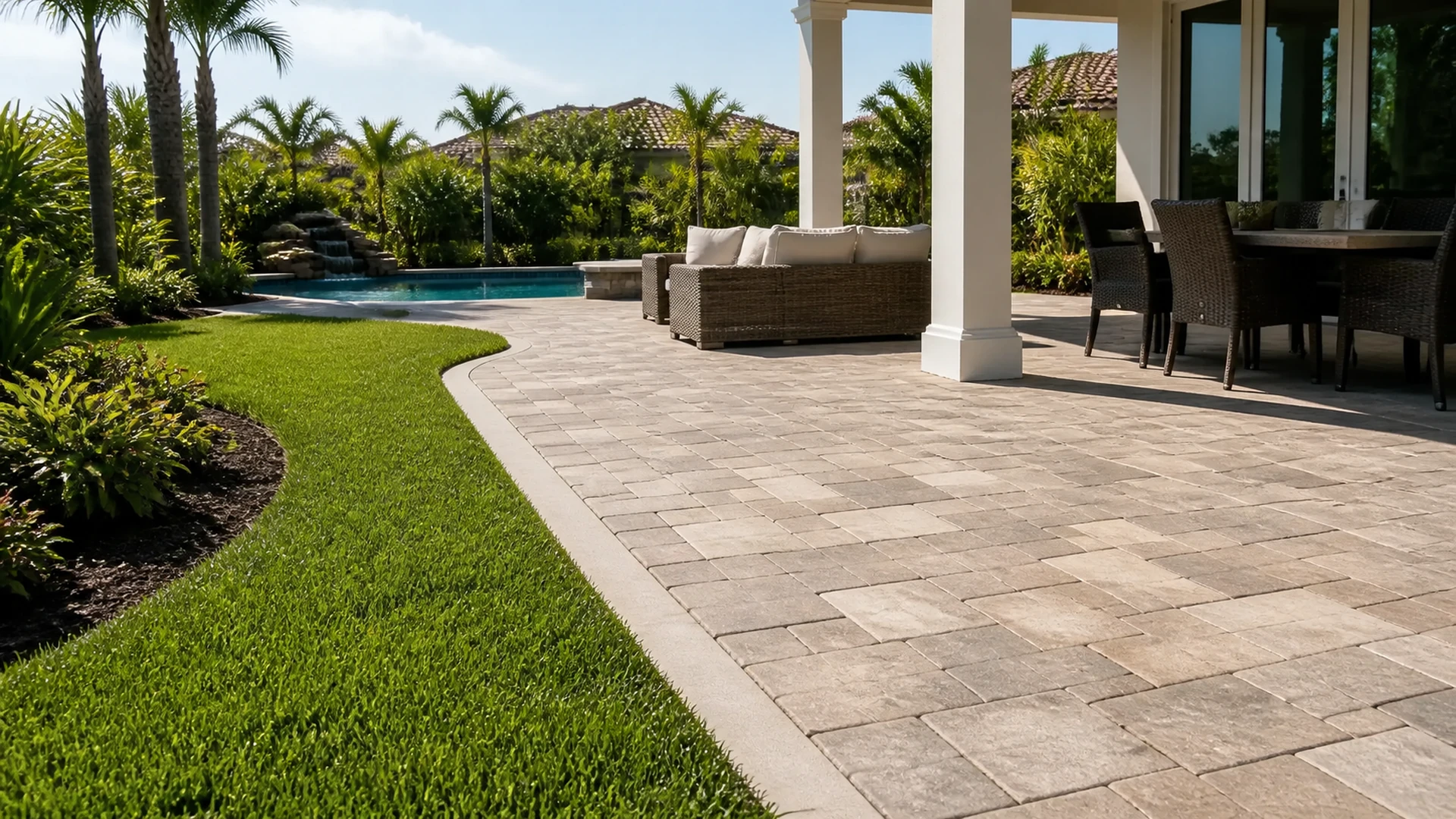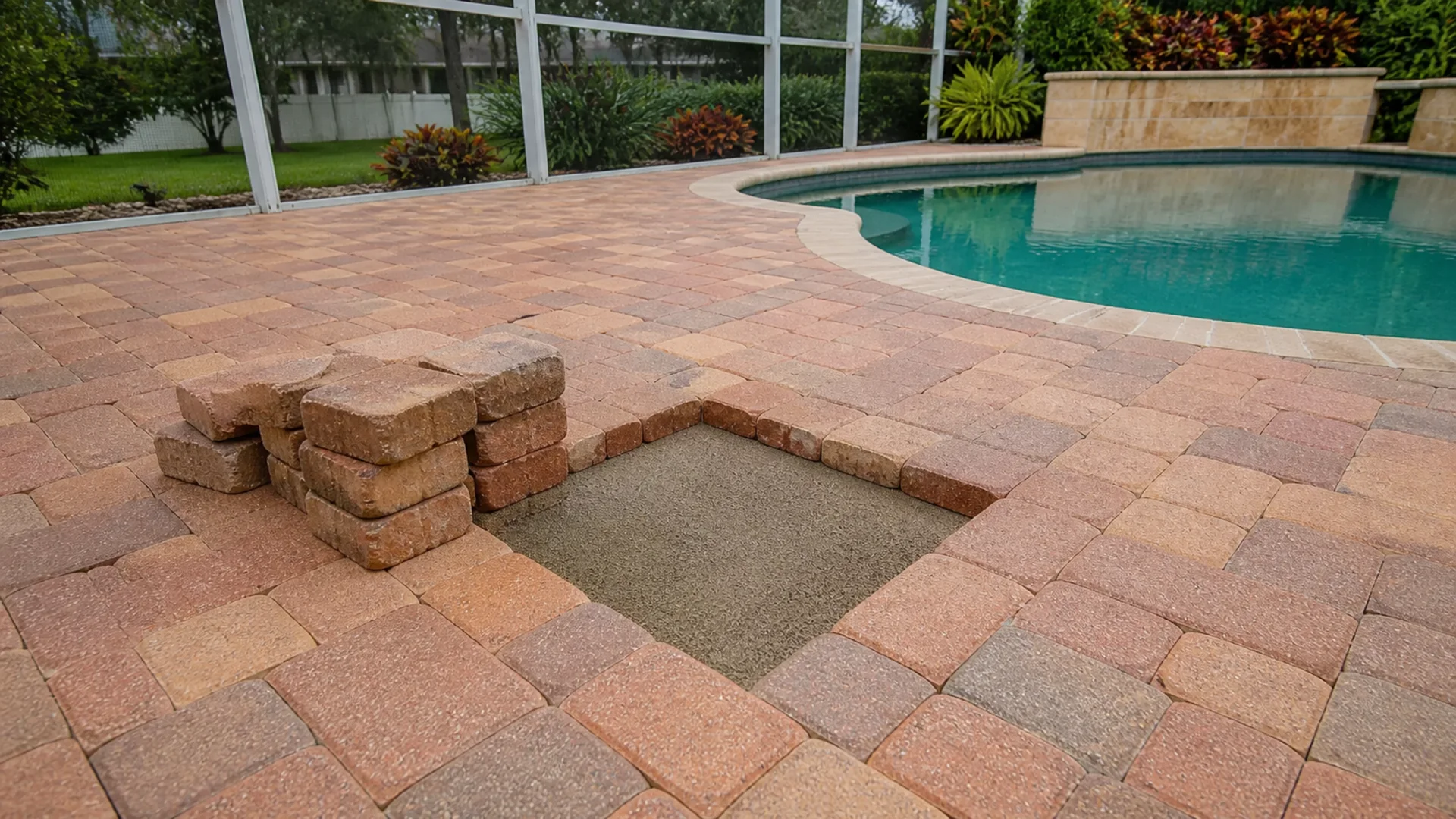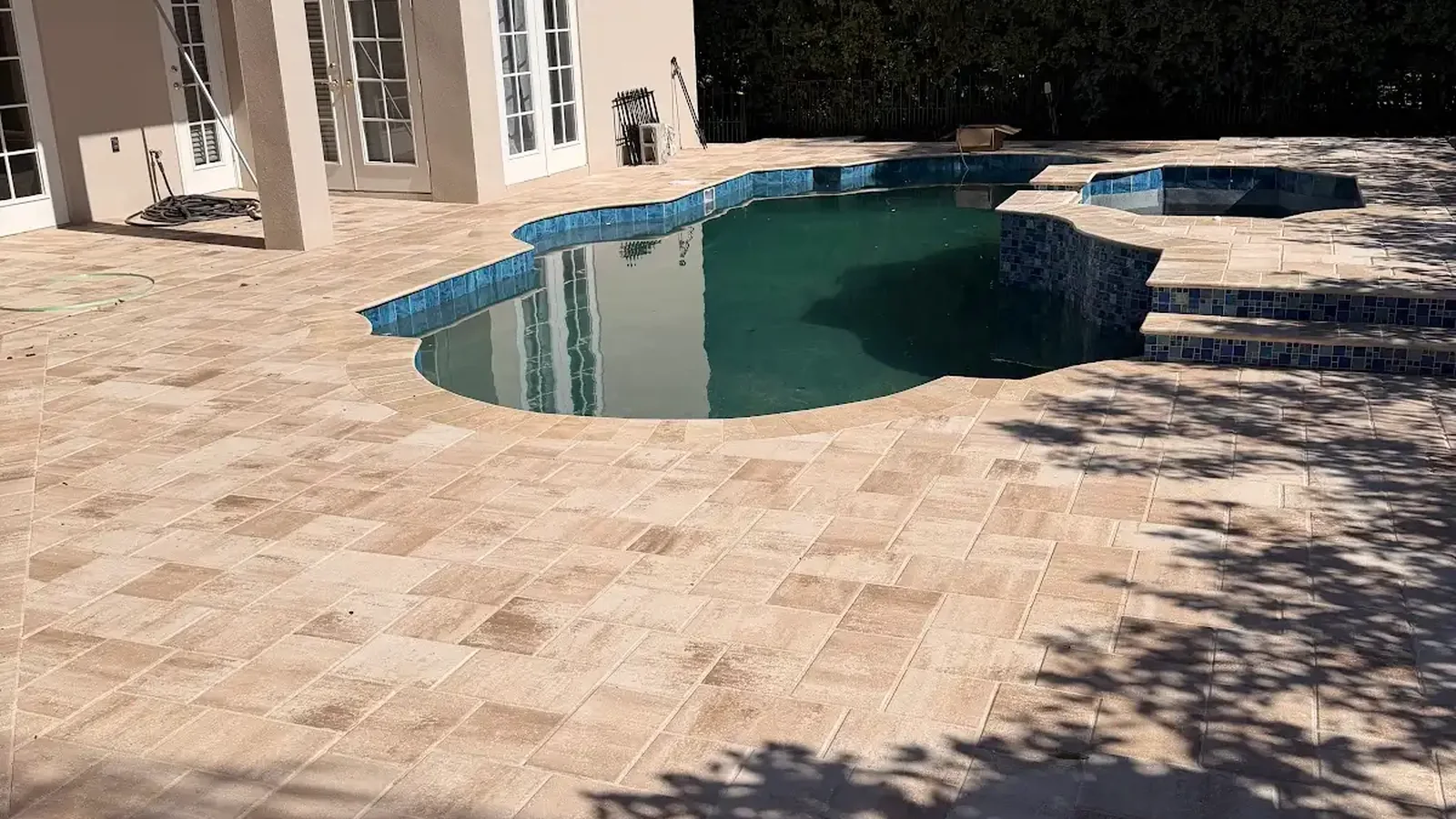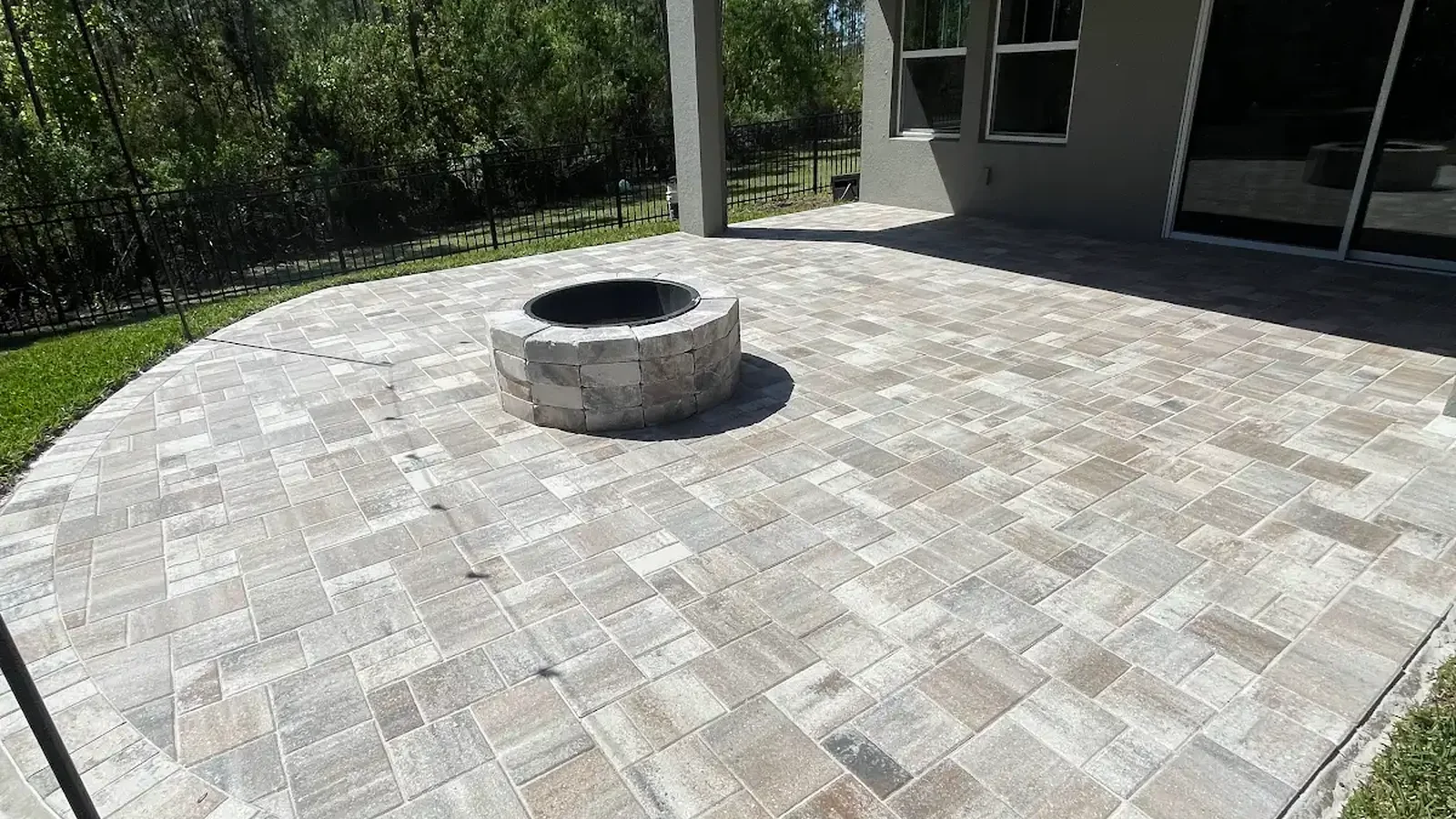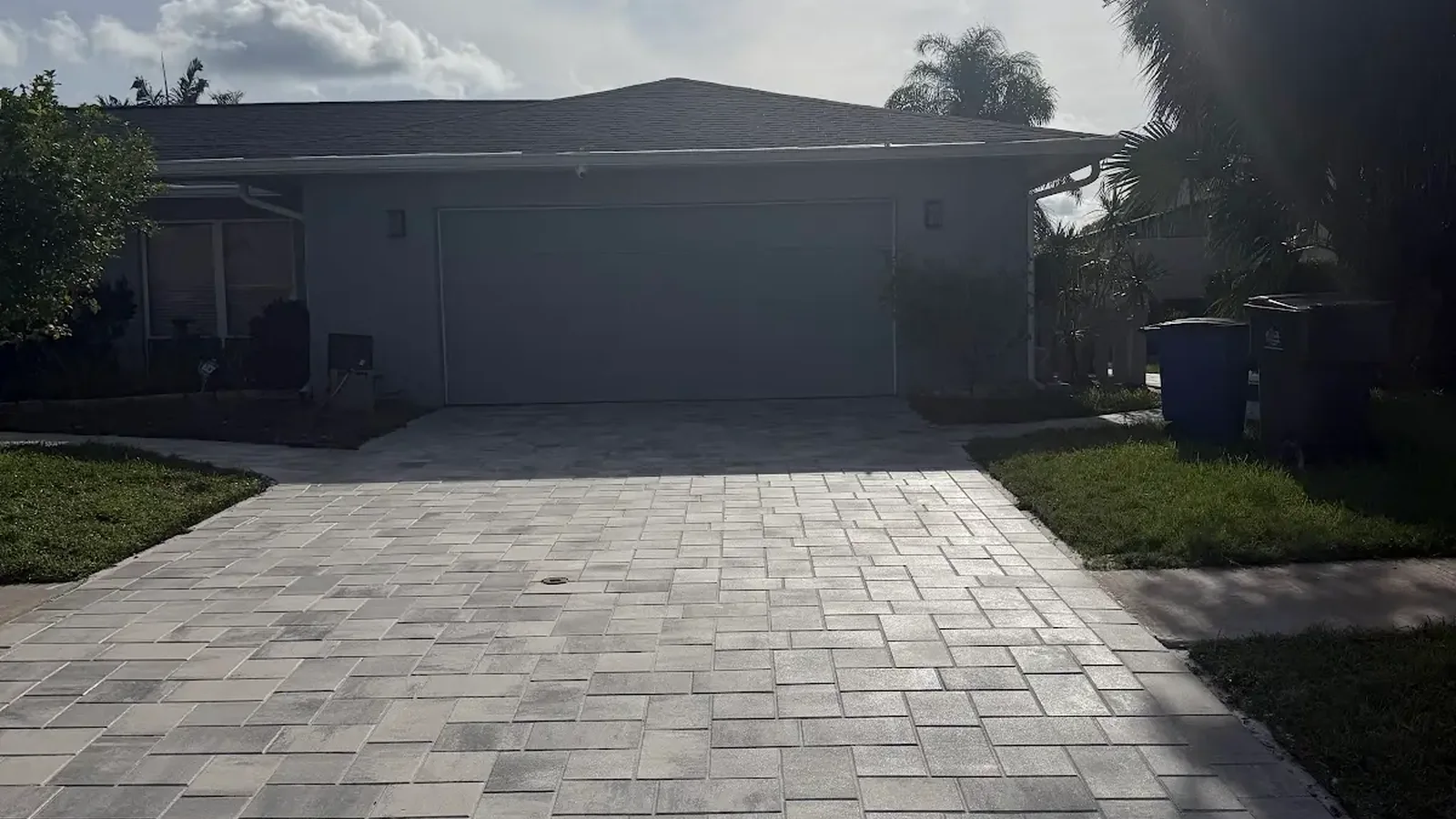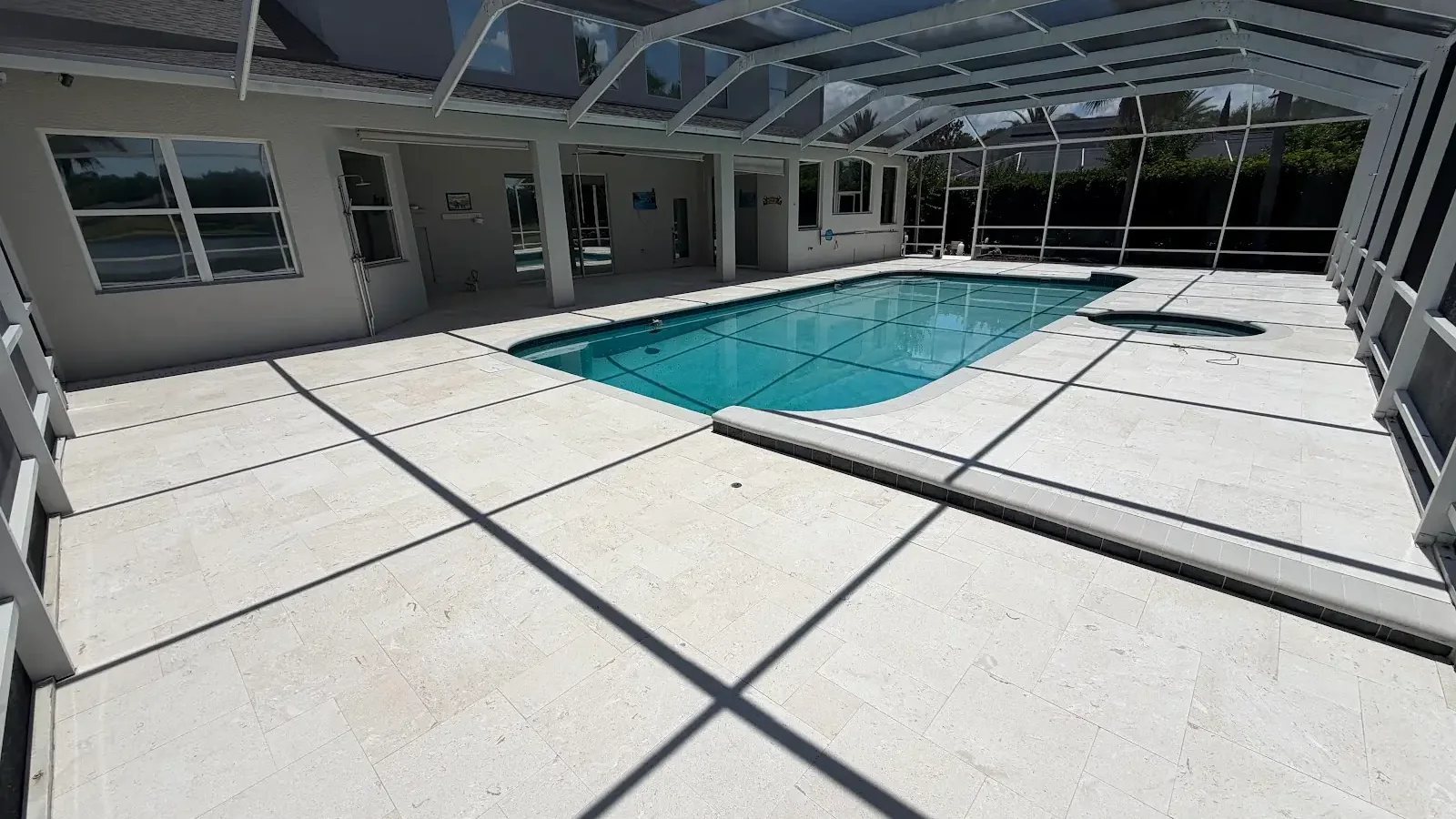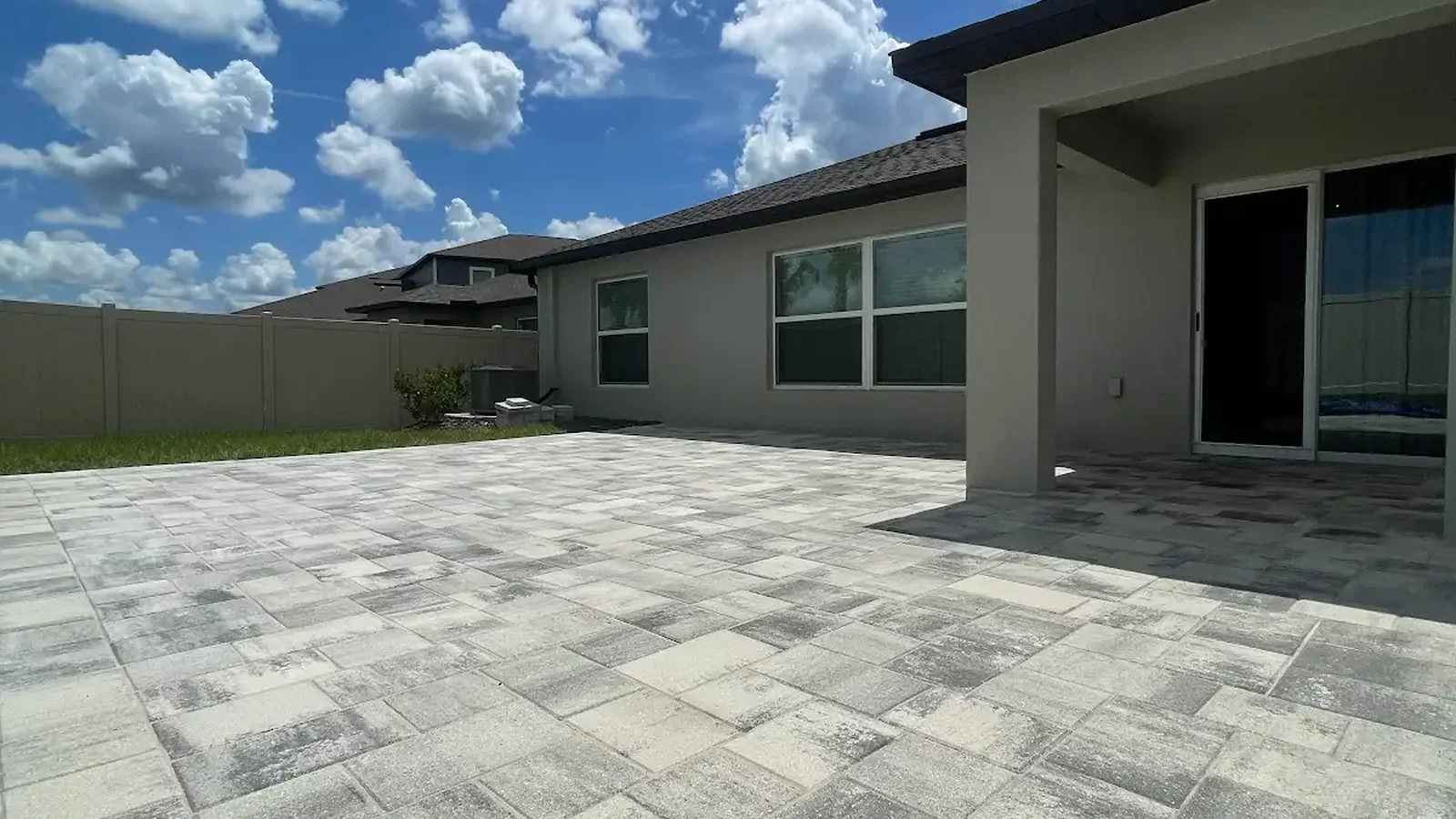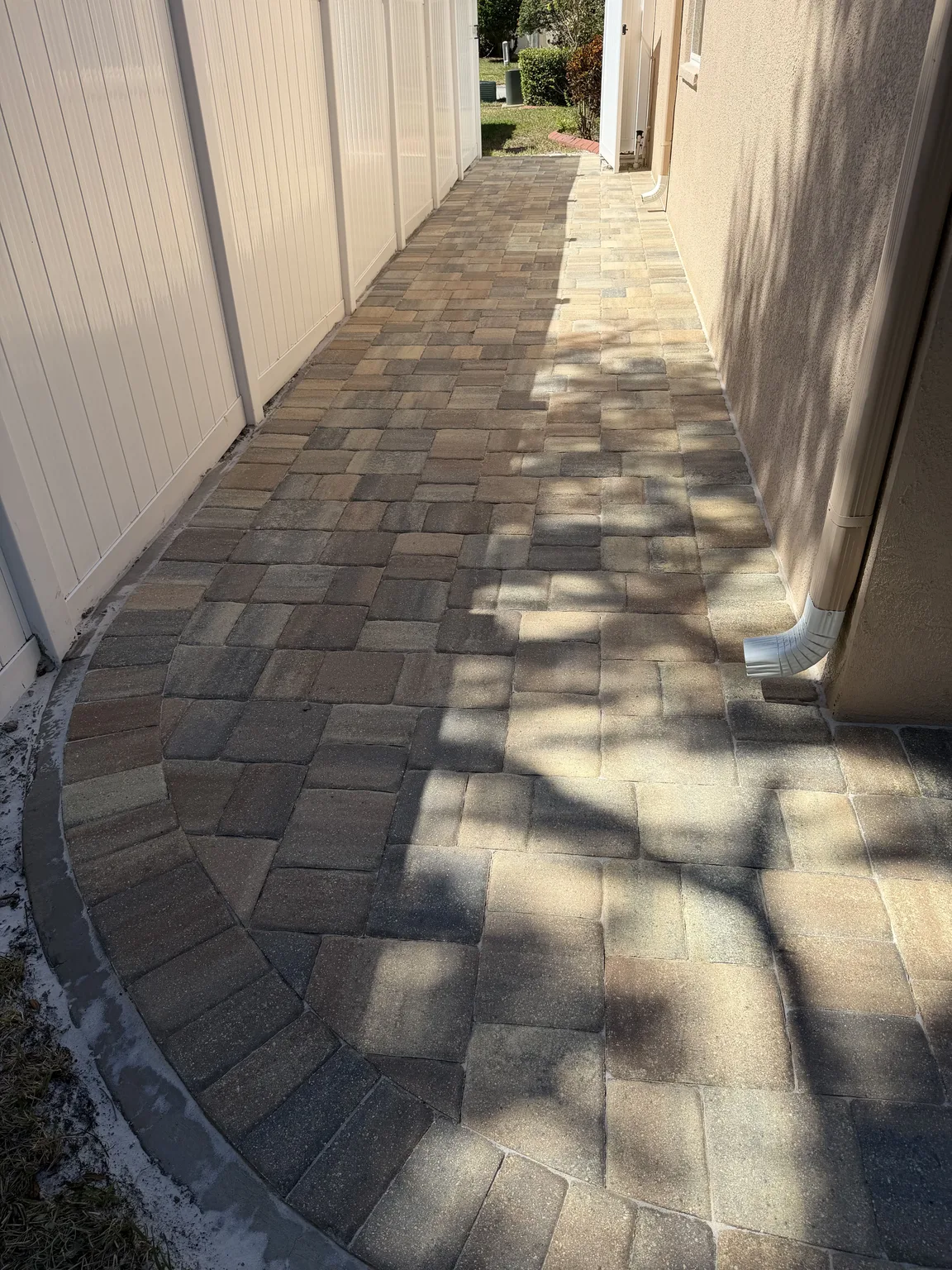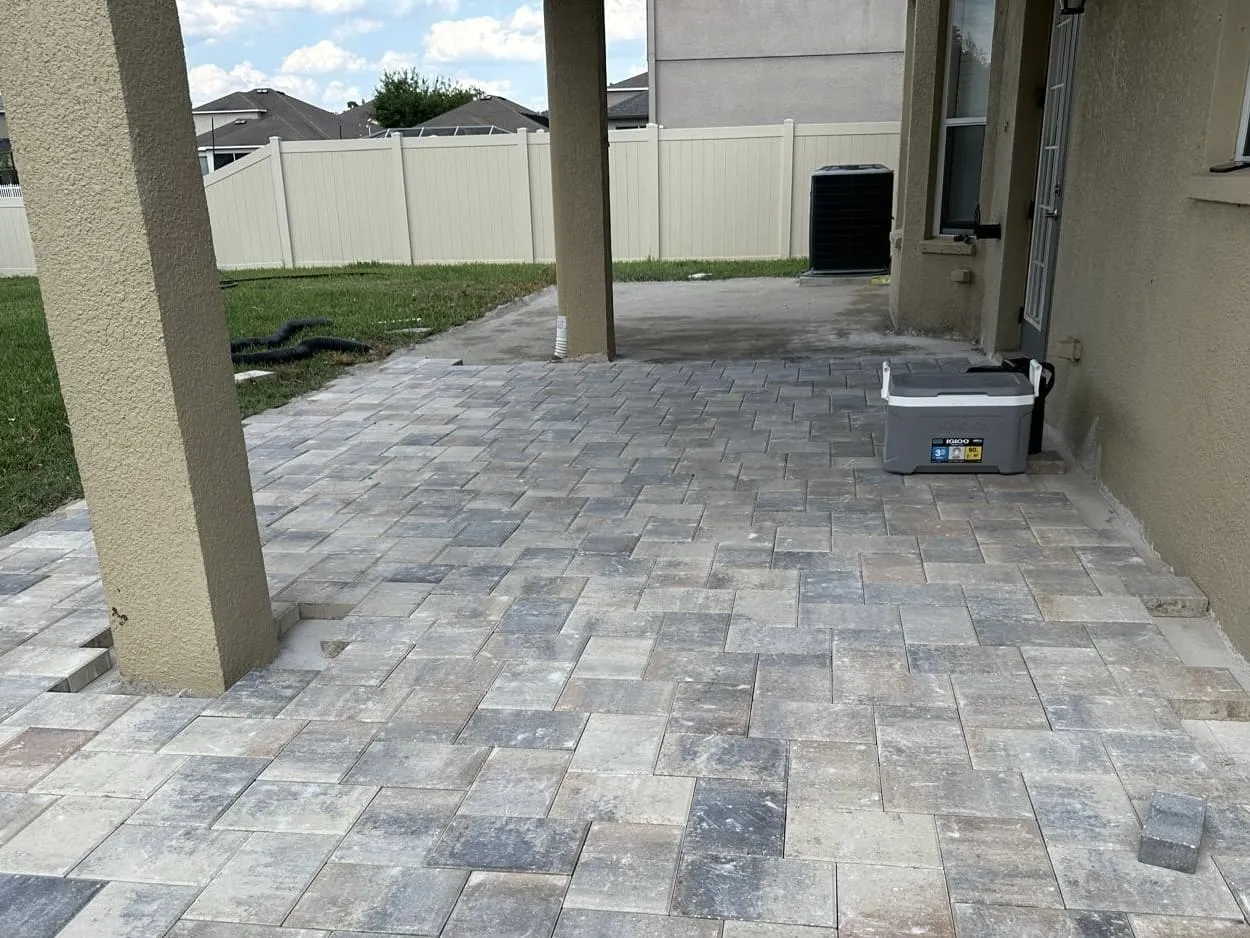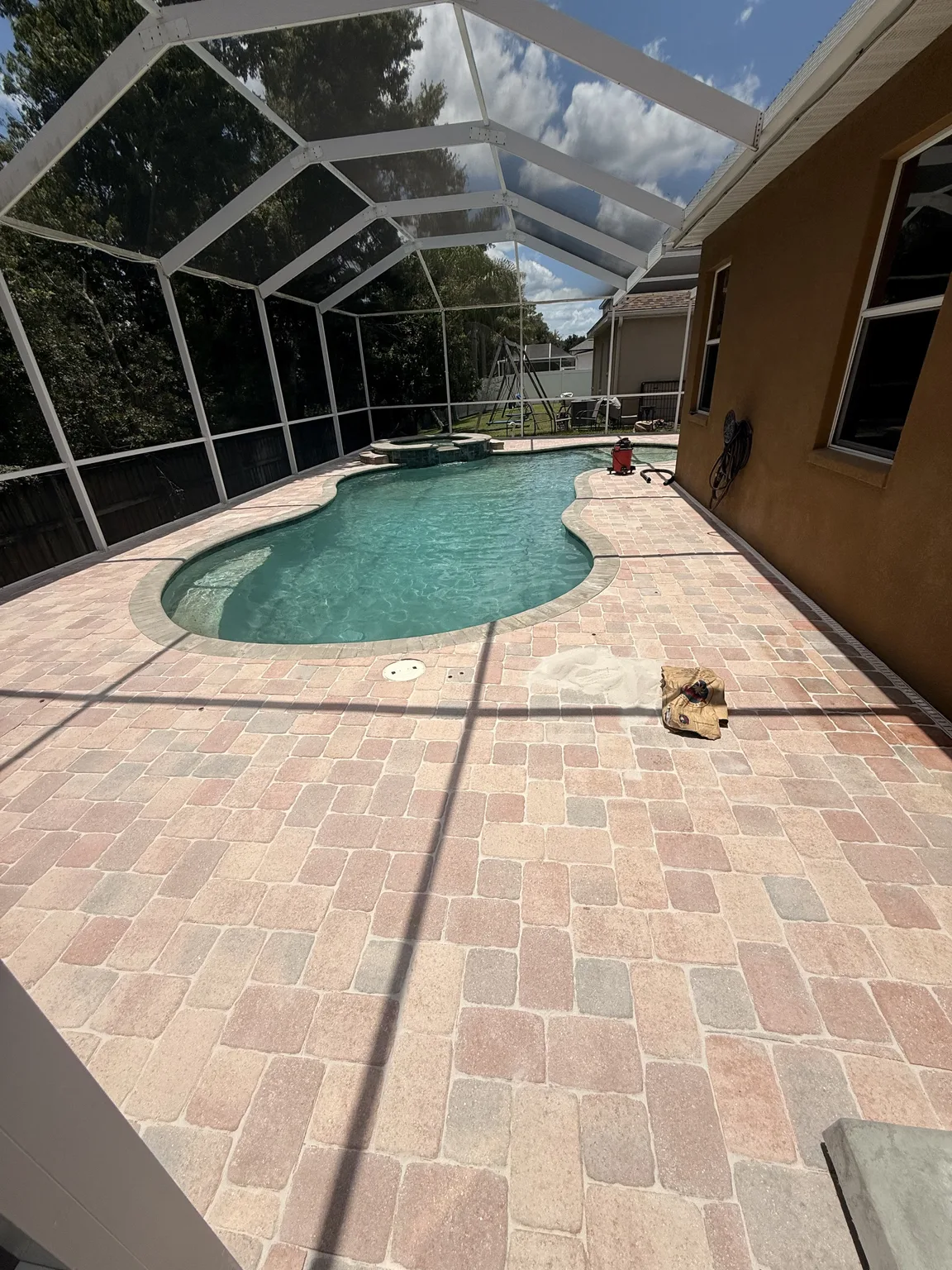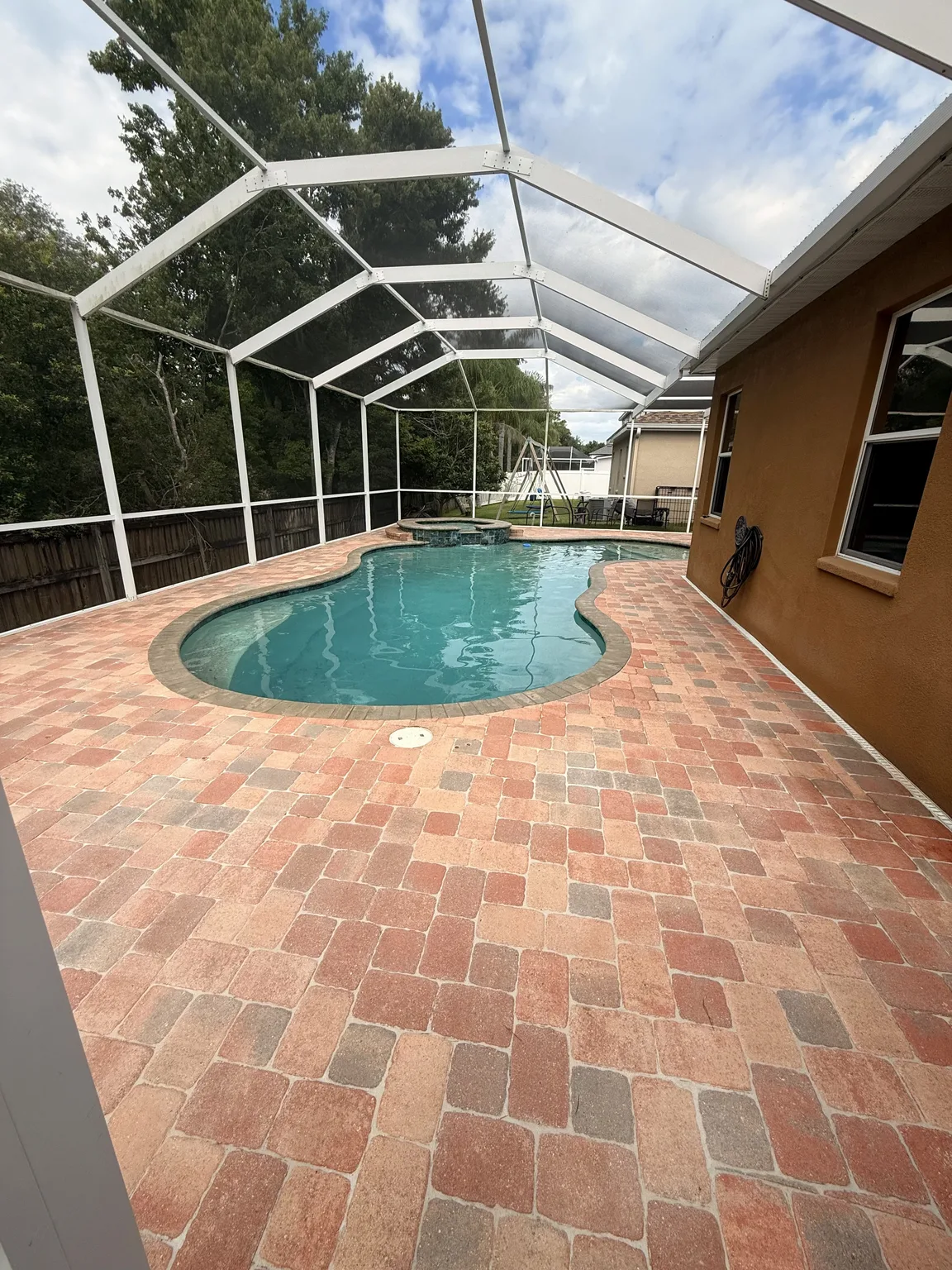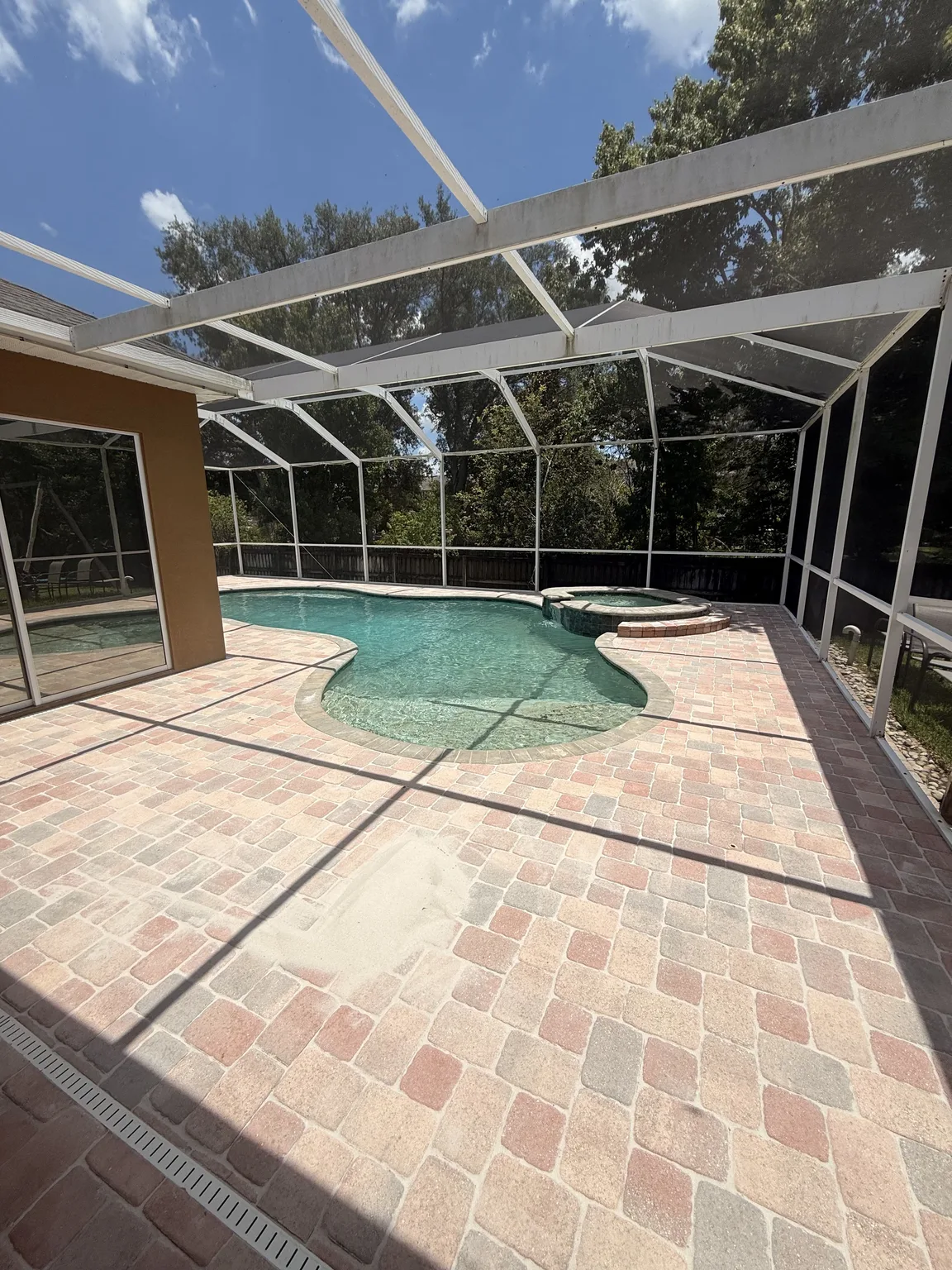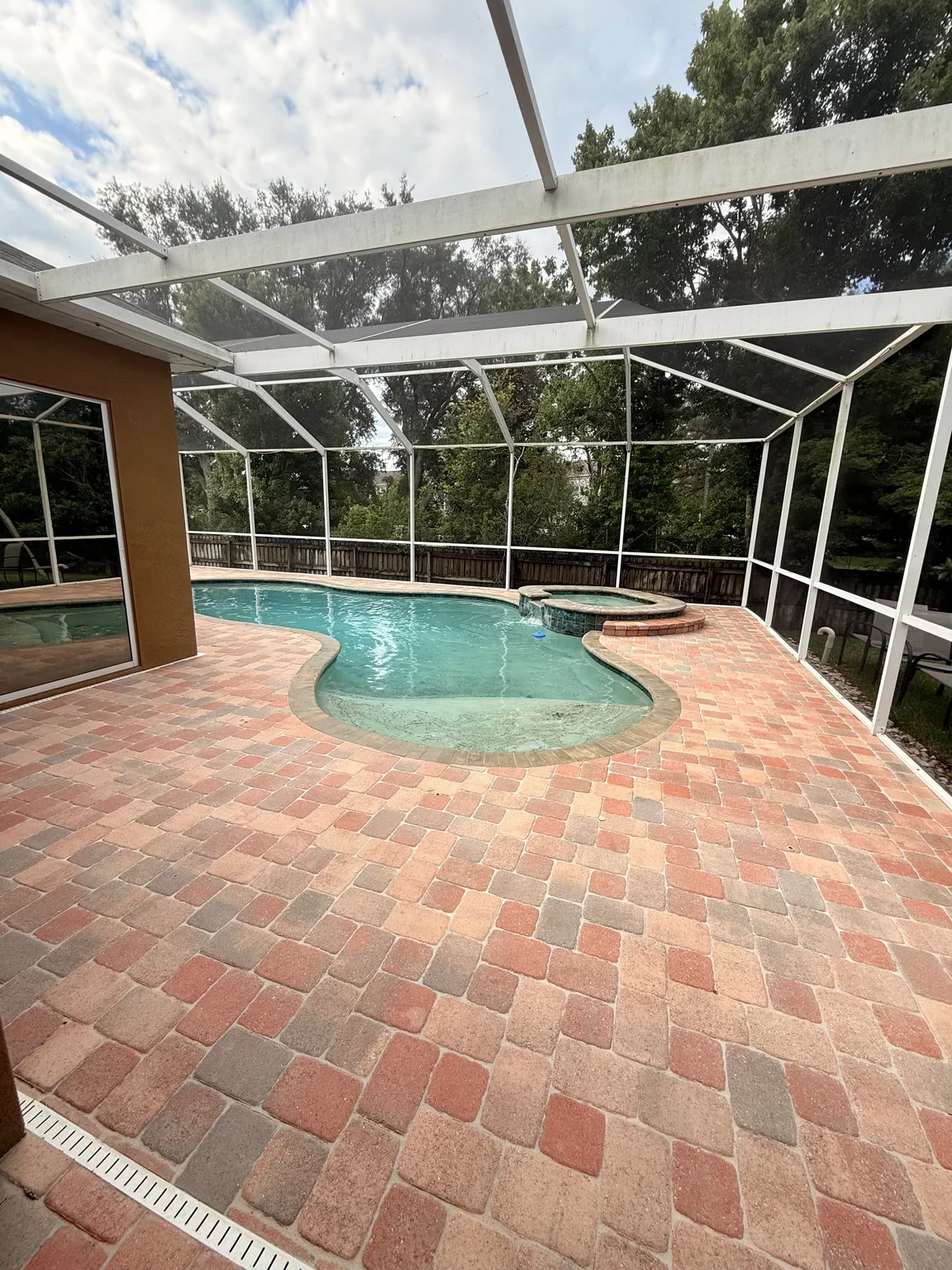

Pool deck coping movement is easiest to misunderstand where the pool changes direction. A small gap beside a radius, a tile-like edge that seems higher at a corner, or a unit that rocks underfoot can look alarming without telling the whole story. Coping follows the pool’s perimeter while the surrounding deck follows its own field of pavers, joints, drainage paths, and edges. Reading those relationships carefully is more useful than judging one joint in isolation.
Why curves and corners need a different look
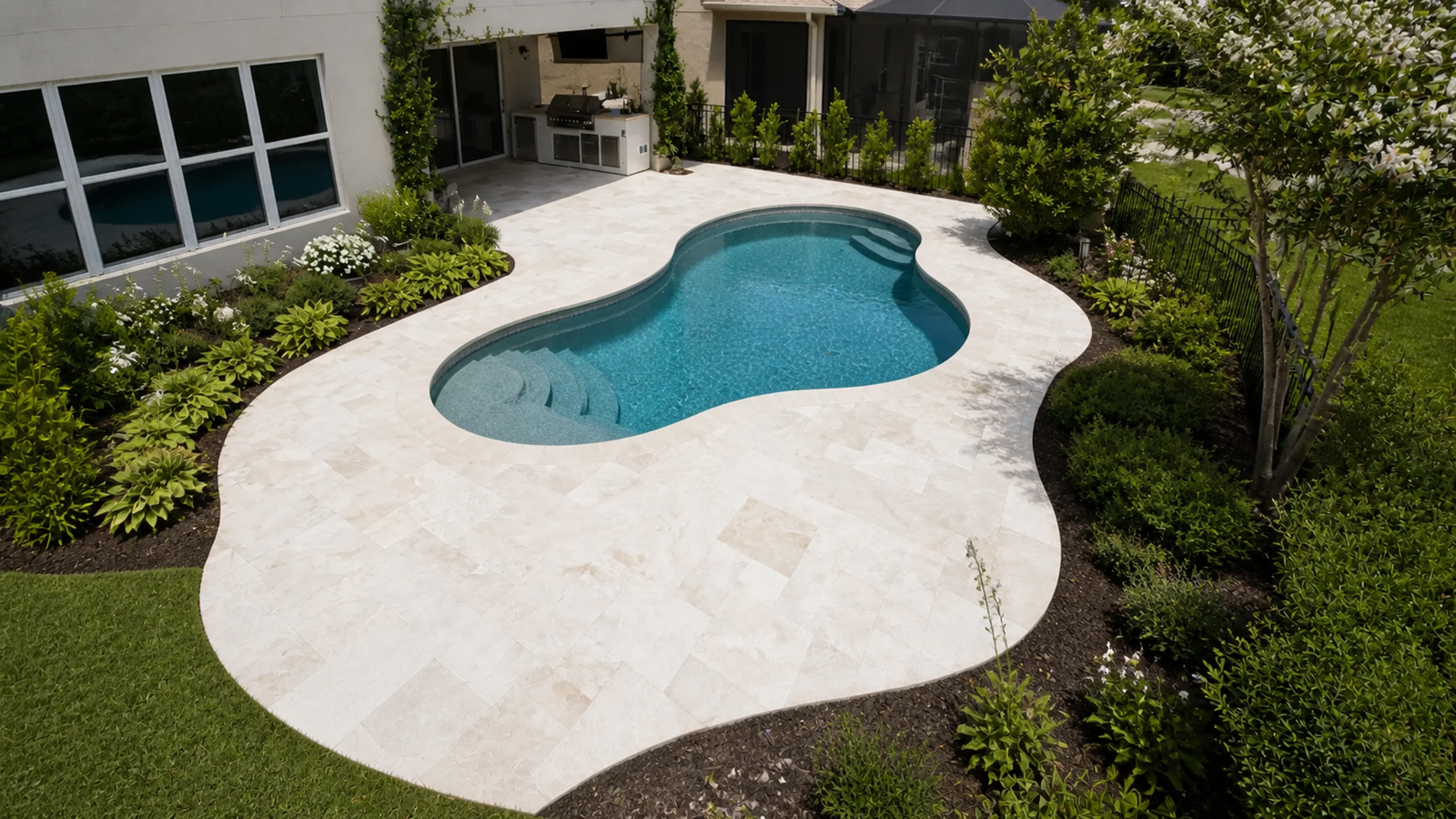
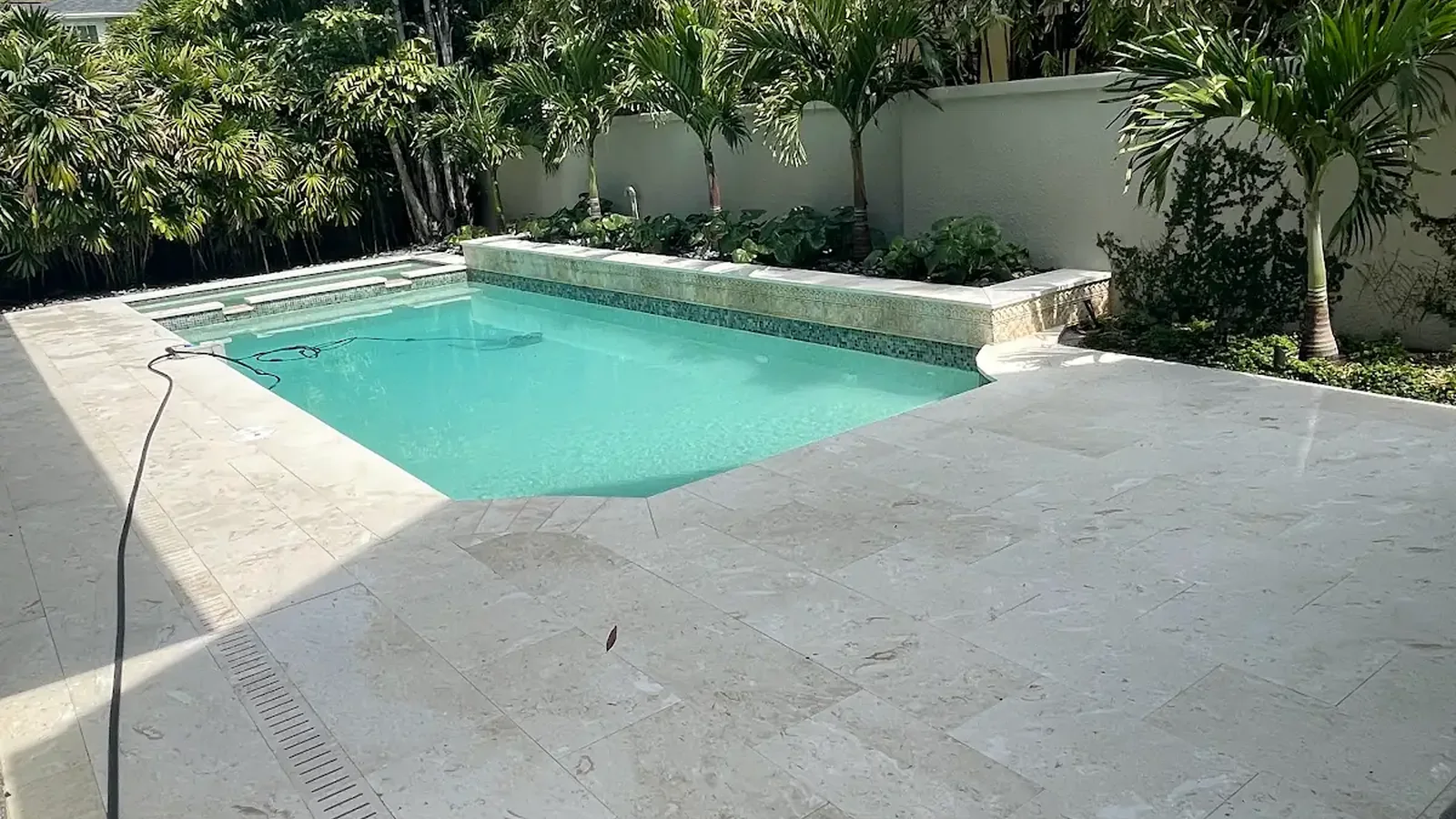
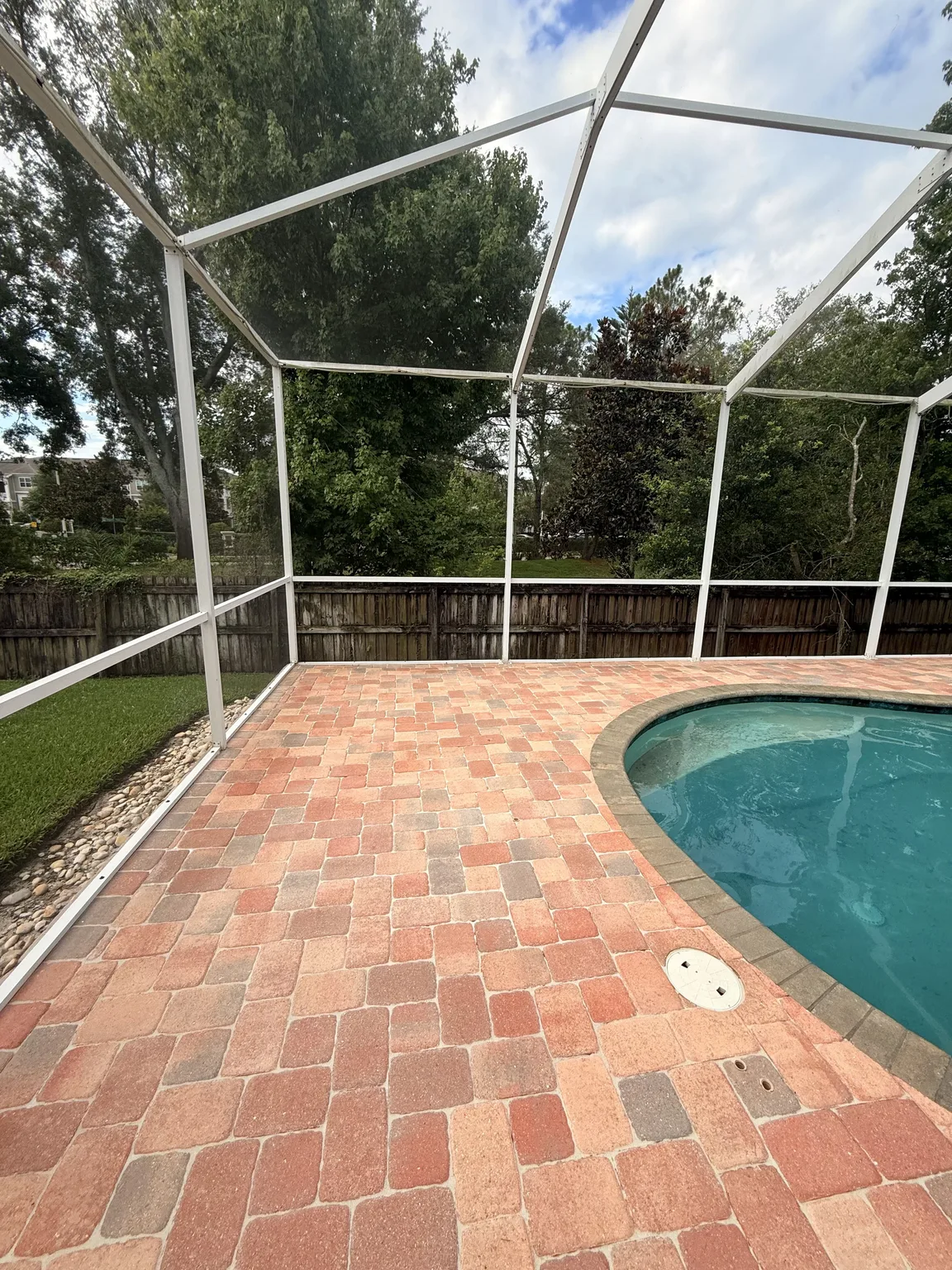
Straight coping creates a simple visual reference: parallel lines, similar joint widths, and repeated unit spacing. A curve changes that reference with every piece. The outside edge travels farther than the inside edge, so joints may open slightly, close slightly, or change direction as the radius develops. At a corner, several decisions meet at once: the coping turn, the deck pattern, the border if there is one, and the way water is directed away from the pool area.
That geometry means a variation that is visually noticeable is not automatically evidence of a single failure. It may be a cut-related difference, a deliberate joint transition, or a local condition that deserves attention. The useful question is whether the change continues through nearby pieces, across a transition, or over time. A homeowner who observes the entire line has a much better starting point for an on-site review than someone who focuses only on the most visible corner.
Map the coping line before deciding what moved
Begin with a slow walk around the pool in good daylight. Look along the coping rather than down at one piece at a time. Follow each radius from its straight approach through the curve and out to the next transition. Notice whether the top edges remain visually even, whether the joints repeat their change gradually, and whether the deck field beside the coping maintains a consistent relationship to it.
- Trace the coping at steps, skimmers, returns, and changes from straight runs to curves.
- Compare the width and appearance of joints on both sides of a corner, not just at its point.
- Look for a pattern of height change across several units.
- Note nearby drains, deck transitions, furniture legs, and places where runoff regularly crosses the surface.
- Take dated photos from the same standing position if you plan to monitor a condition.
This is not a substitute for inspection. It is a way to separate a stable visual detail from a change that may be developing. Photos that include a wider section of deck, not only a close-up joint, help preserve the relationship among coping, waterline, and surrounding pavers.
What an open joint, rocking unit, height change, and chip each mean
These observations are often grouped together as movement, yet they are different conditions. An open joint is a space that appears wider than nearby joints. Its significance depends on its location, whether the gap is changing, and whether adjacent units remain supported and aligned. In a curved layout, a joint may not match the joint several feet away because the pieces are working through a different angle.
A rocking unit responds to pressure. If a coping or nearby paver moves under normal foot traffic, avoid treating it as a cosmetic concern around a pool. The cause can only be evaluated after looking at the surrounding assembly and access conditions, but the immediate practical issue is the walking surface. Do not wedge loose material into a joint or add a hard filler simply to stop motion; that can obscure what should be examined.
A height change is a difference at the top edges of neighboring pieces. A gentle, consistent change through a curve can read differently from an abrupt lip at one location. A chip is more localized still. It may follow an impact or edge damage without proving that the broader coping line has shifted. The location, the sharpness of the edge, and whether other nearby pieces have changed are more informative than the label alone.
Pool deck coping movement: the adjacent deck matters
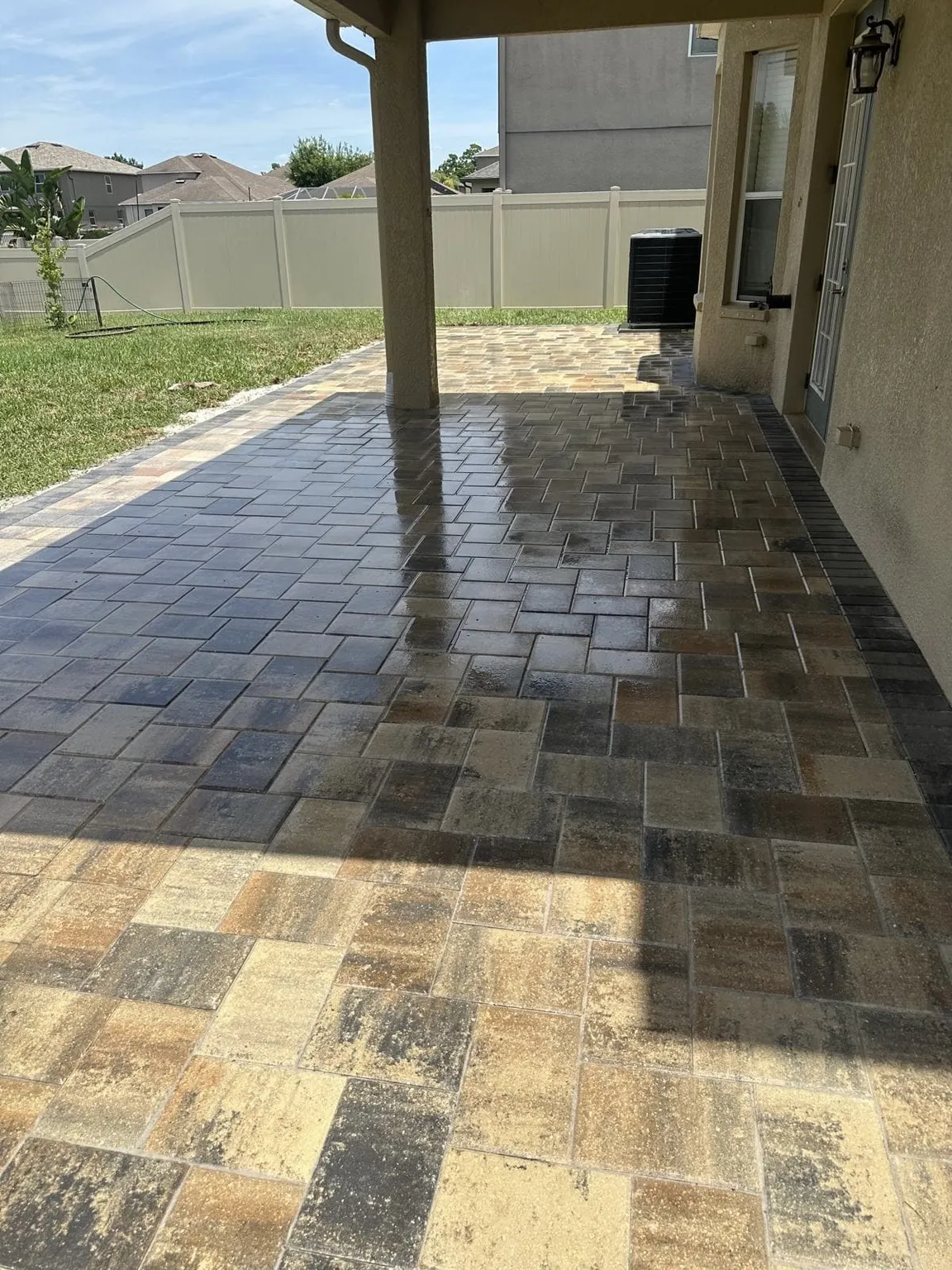
The coping cannot be interpreted apart from the deck. Watch the first rows of pavers beside it, especially where a running field meets a curved cut line. If joints in that deck field have changed direction, if a border no longer presents a consistent reveal, or if a drain sits near the apparent change, those details belong in the same conversation. A local visual break can originate in the deck relationship, the coping relationship, water handling, or more than one condition. The site has to show which questions are relevant.
Rain and drainage can make a small condition more important
Tampa Bay’s rain cycles make it worth observing where water goes after a storm or a thorough rinse. A deck should not be assessed only when it is dry and clear. Look for water that lingers along the coping, repeatedly feeds one curved transition, or carries debris toward a drain. Irrigation overspray can create its own recurring wet zone. None of those observations identifies a cause by itself, but they help an evaluator understand the environment around the concern.
Deck pitch is especially easy to misread at curves because the coping line draws the eye. Water may be moving appropriately across the deck even while the curved joints look irregular, or a subtle low area may be present where the geometry seems visually normal. During an on-site review, the pattern of runoff, drain condition, deck transitions, and accessible edges can be considered together rather than inferred from a single photograph.
Questions that make a site visit more productive
History helps establish whether a condition is new, seasonal in appearance, or unchanged. Before asking for an evaluation, gather what you know without guessing at construction details. When was the area first noticed? Has the joint opened, the unit begun to rock, or the edge become more pronounced? Did a storm, repair, landscape change, or pool-service visit occur near that time? Are there prior photos of the same curve?
It is also useful to identify any work around the pool shell, waterline, deck, drainage, or equipment area. A prior repair may be relevant, but it should not be assumed to explain the current observation. Explain whether the concern is near an attached deck field, a drain, a step, or a transition to another surface. These are practical review questions, not a request for a homeowner to diagnose the assembly.
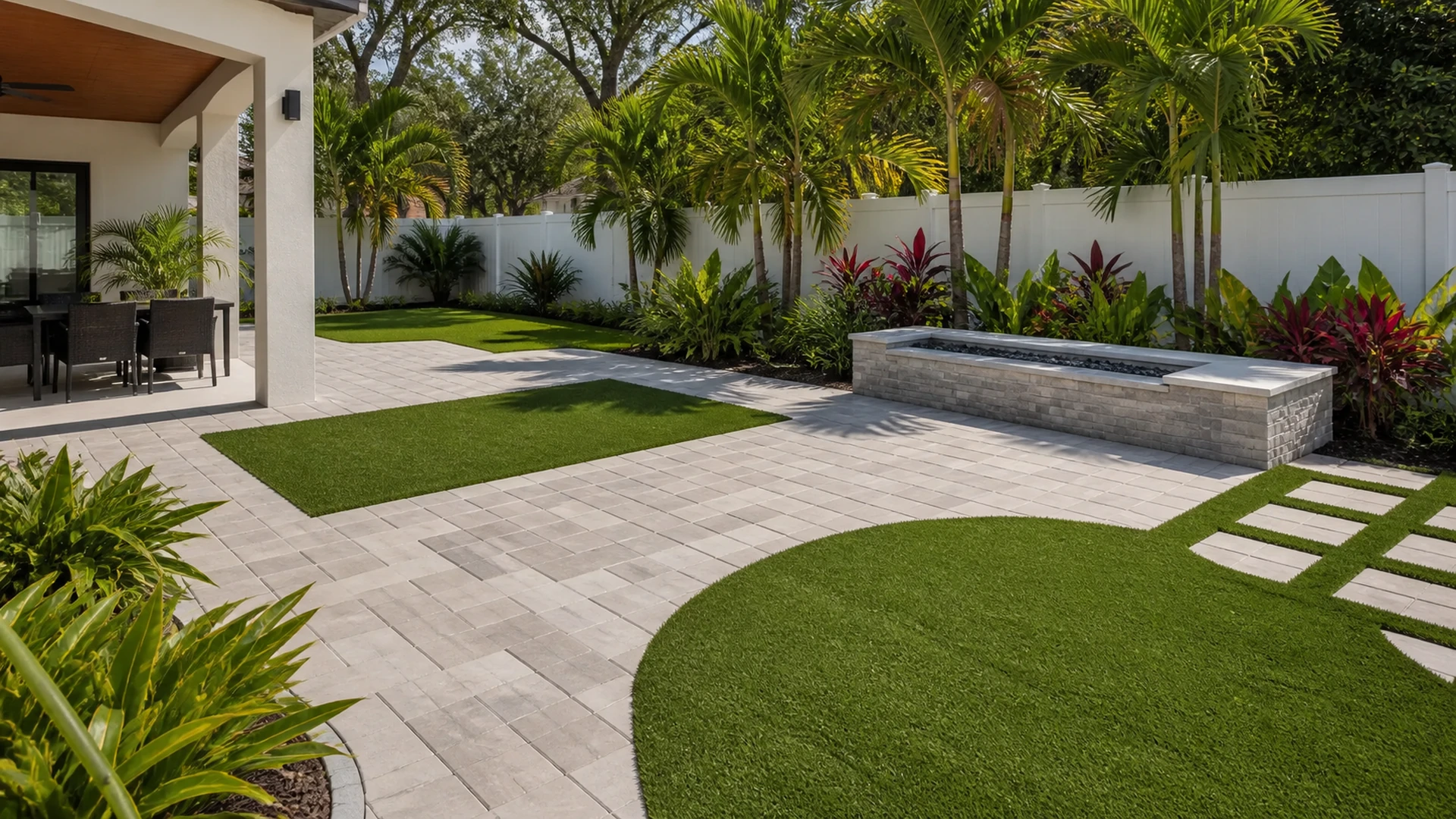
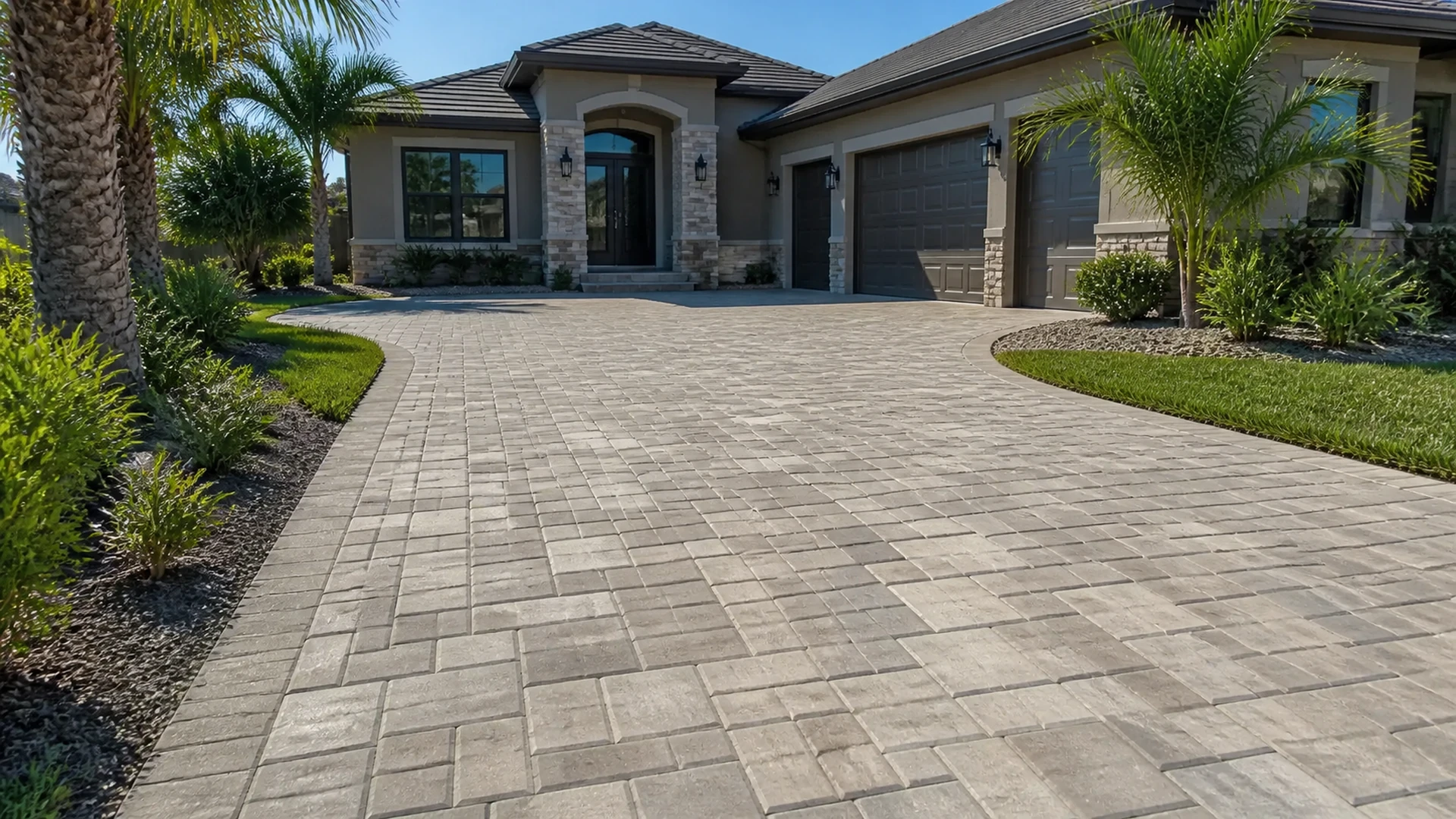
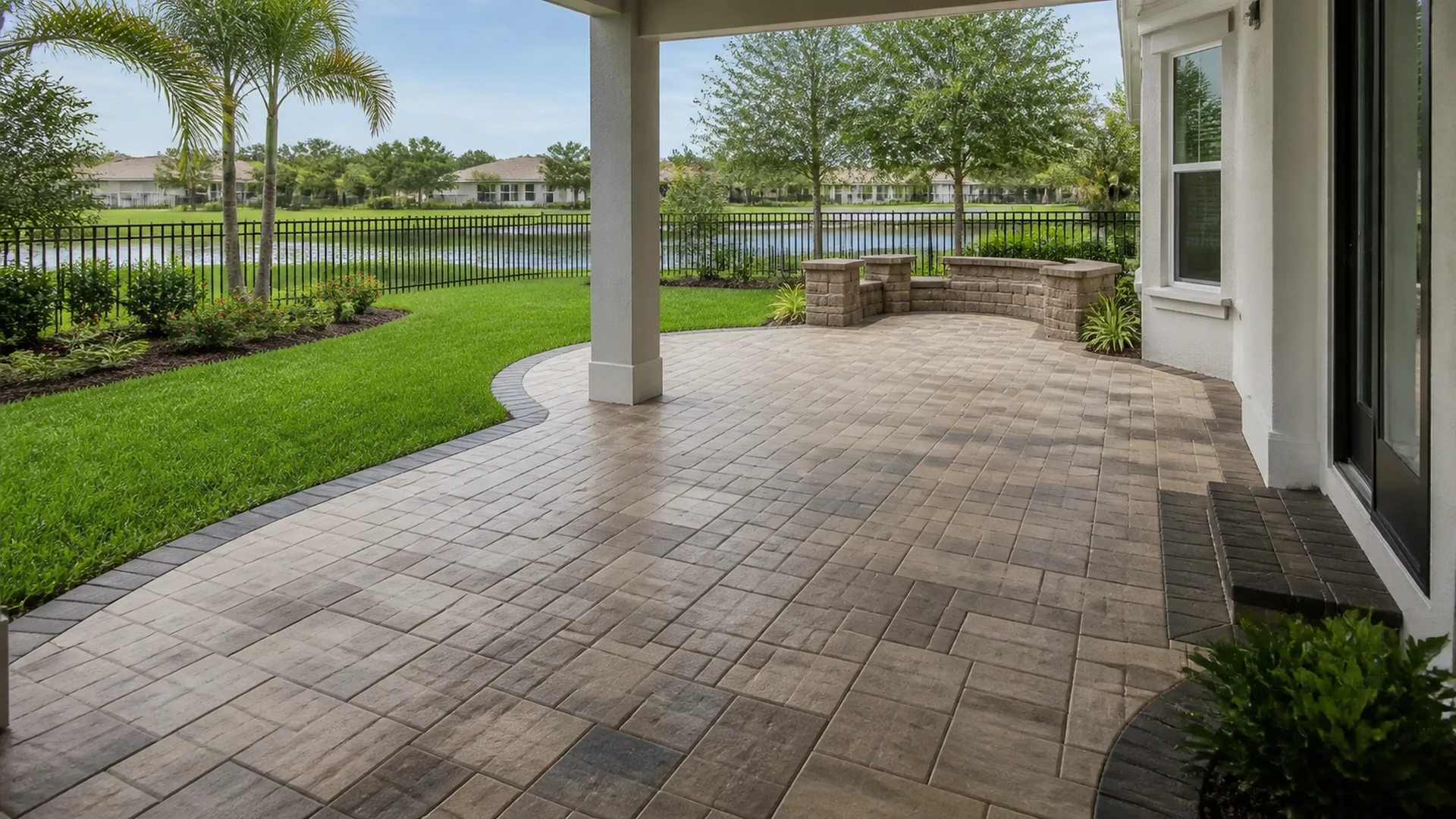
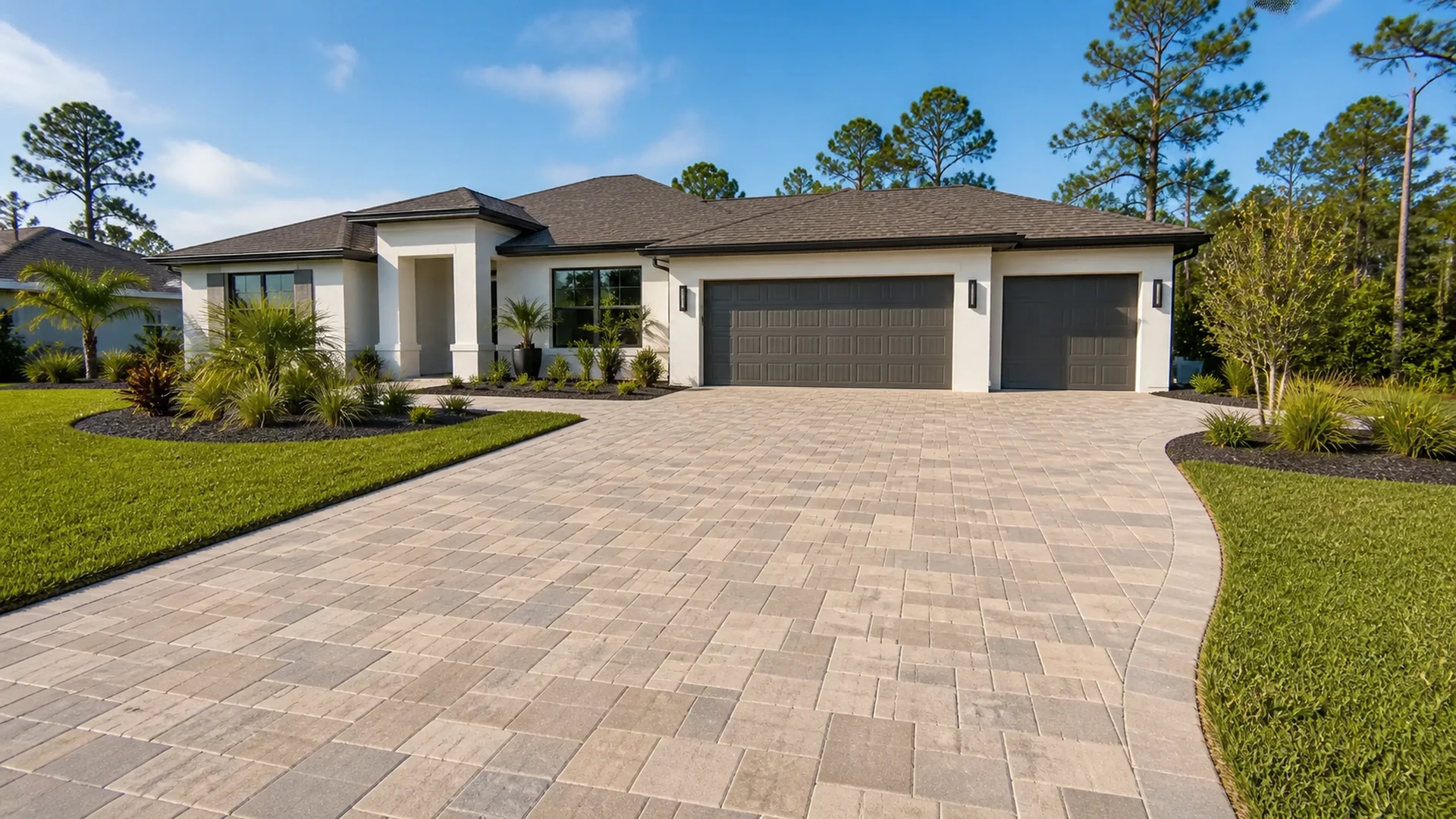
For examples of the types of outdoor spaces and project discussions a homeowner may want to explore, see Dr Pavers Design project and service information. Pool safety deserves its own attention as well; the CDC Healthy Swimming resource offers general safety guidance for time in and around residential pools.
When to monitor and when to limit use
A stable, narrow visual difference with firm pieces and no sharp edge may be appropriate to document and watch. Use consistent photos after rain and during dry weather, and avoid changing the joint just to make it look uniform. Monitoring is meaningful only when the same locations and wider context are recorded.
Prompt attention is more appropriate when a unit rocks, an edge creates a trip point, a joint changes quickly, a coping piece is cracked or loose, or a surface near the pool feels unsafe under bare feet. Keep people away from the affected spot until it can be assessed, particularly children and guests who may not expect an uneven edge. Pool use should follow normal household safety practices; do not rely on a temporary visual fix at the water’s edge.
Compare like conditions, not distant parts of the pool
It is tempting to compare the most conspicuous curved joint with a straight run on the opposite side of the pool. That comparison can be misleading. Instead, compare one curved transition with the next similar transition, or compare the joints immediately before and after the same corner. Look at equivalent locations: the inside and outside portions of a radius, the approach to matching steps, or deck rows that meet the coping at the same angle. This gives the visual review a fairer baseline.
Light and surface moisture also affect what is visible. Low sun can emphasize a tiny edge difference, while water can darken joints and hide their depth. Take notes rather than relying on memory: which location was observed, whether it was wet or dry, whether it was viewed from the deck or from inside the pool enclosure, and whether the piece felt firm. A concise record is preferable to repeatedly probing a suspicious edge or taking it apart without understanding the larger arrangement.
What an in-person review can examine
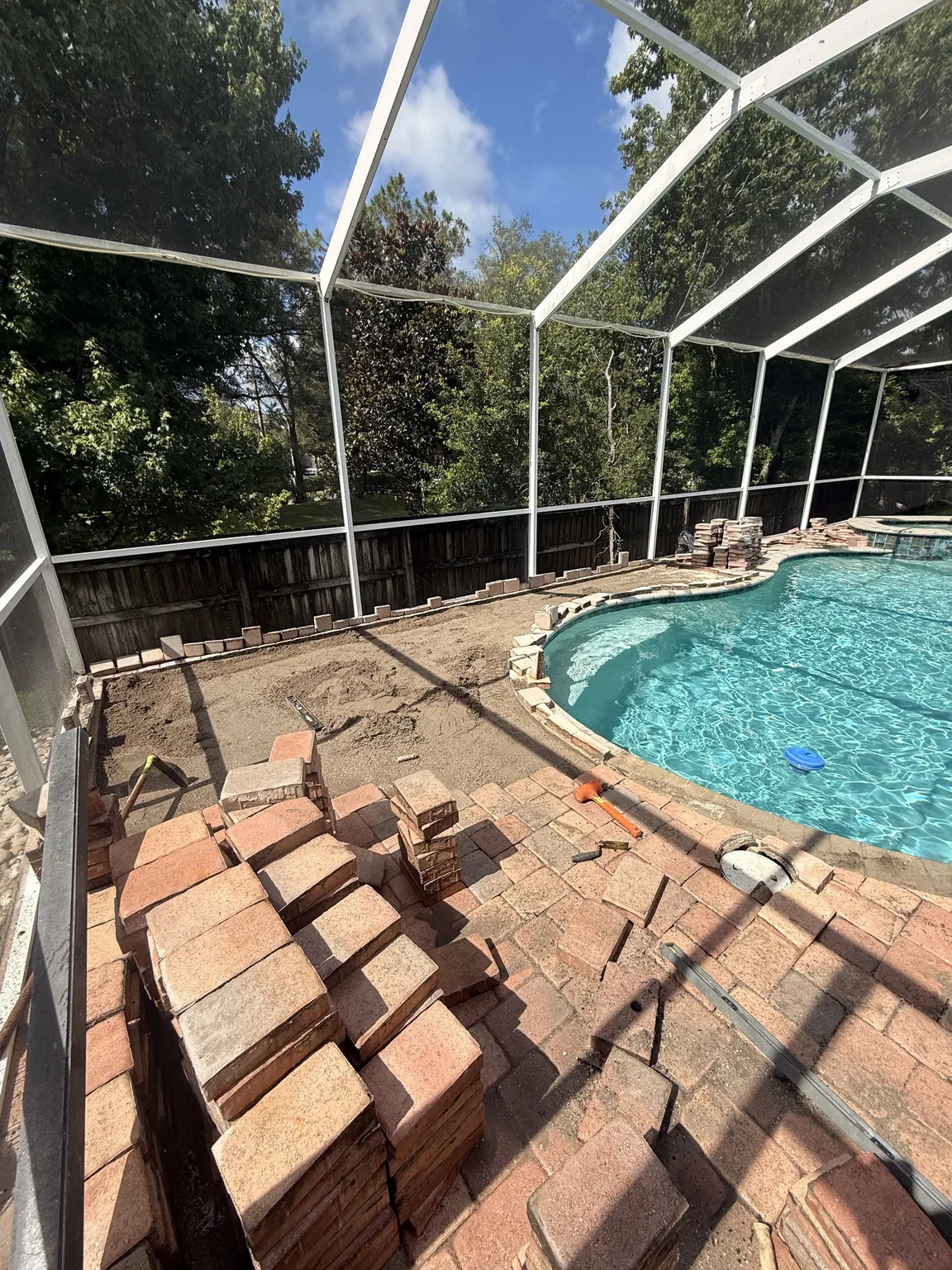
An in-person review can follow the coping continuously and evaluate accessible conditions at the adjacent deck. It can compare joint geometry across the radius, look at transitions to steps and drains, and consider whether the surface presents a walking hazard. The reviewer can also ask about waterline work, pool-shell observations, prior deck changes, and repairs that may affect the history. Those details cannot be confirmed responsibly from a close-up image or a description over the phone.
The review should distinguish between the pool shell, the waterline area, the coping, and the deck instead of collapsing them into one assumed problem. They are adjoining elements with different visual references and access limitations. If a concern is near a raised feature, a drain, or an attached patio, that context should be included. The outcome may be a clearer monitoring plan, a focused repair conversation, or further investigation, depending on what the accessible conditions show.
Protect the evidence while you wait
Do not pressure-wash directly into an open-looking joint, chip at loose material, or apply sealers and patch products to make a photo look better before an evaluation. Those actions can change the appearance of the area and complicate a later assessment. Keep ordinary debris cleared so the joint line and drains remain visible, and use reasonable poolside caution around any sharp or unstable surface. If a temporary barrier is needed to keep guests away from a trip point, make it obvious and avoid creating another obstacle in the walking path.
Use a simple observation log
A short observation log can prevent a concern from becoming a collection of conflicting impressions. Record the date, weather, exact location, what changed visually, and whether the surface felt stable. Note whether the pool was recently cleaned, whether irrigation was running, or whether storm water was present. Include a wide photo that shows the curve in context and a closer image that shows the joint or edge. Repeating those views after a reasonable interval makes gradual changes easier to recognize.
Keep the description factual. “The third coping piece clockwise from the steps rocks when stepped on” is more useful than “the whole pool is sinking.” “A gap at the outside of the curve appears wider than it did last month” is more useful than assigning a cause. This discipline respects the difference between an observation and a conclusion, and it gives everyone involved a clearer foundation for discussing next steps.
Also consider the normal use of that portion of the deck. A rarely used decorative corner and the route between the house and pool steps do not carry the same practical risk. A condition at a frequent barefoot path should be communicated clearly to family members and visitors. That does not establish why the condition exists, but it helps prioritize safety while the area is being monitored or scheduled for review.
If the pool area has gates, covers, or other household safety routines, keep those routines in place while a surface concern is considered. The condition of one edge should never distract from normal supervision and access practices around water.
A careful conclusion for curved pool edges
Curves and corners deserve patience because their joints and cuts do not behave visually like a long straight run. The strongest record connects the coping line to adjacent deck units, drainage, transitions, and a clear timeline. That makes it possible to discuss a real condition without turning a single irregular joint into a remote verdict. If the surface is unstable or sharp, treat safety as the first priority and arrange an in-person evaluation of the affected area.
Finally, when you are ready to restore your pool deck, review the services, see completed projects, read testimonials, and check the FAQ before requesting a free consultation through the contact page. Follow Dr Pavers Design on Instagram and Facebook, or review the company on Google. Open Google Maps, send a WhatsApp message, call +1 (656) 600-4015, send a text message, or email drpavers@outlook.com for a free consultation anywhere in Tampa Bay.