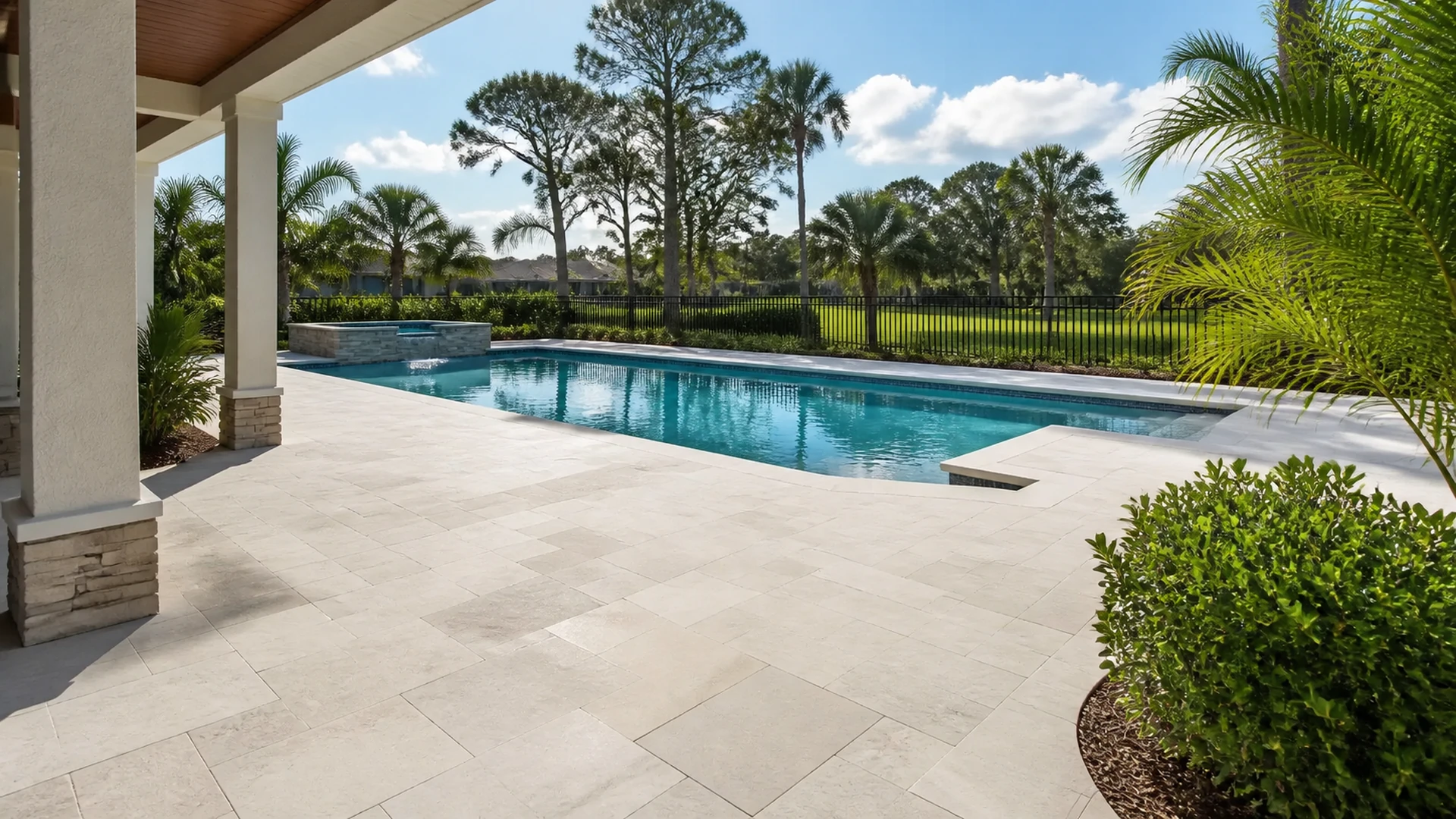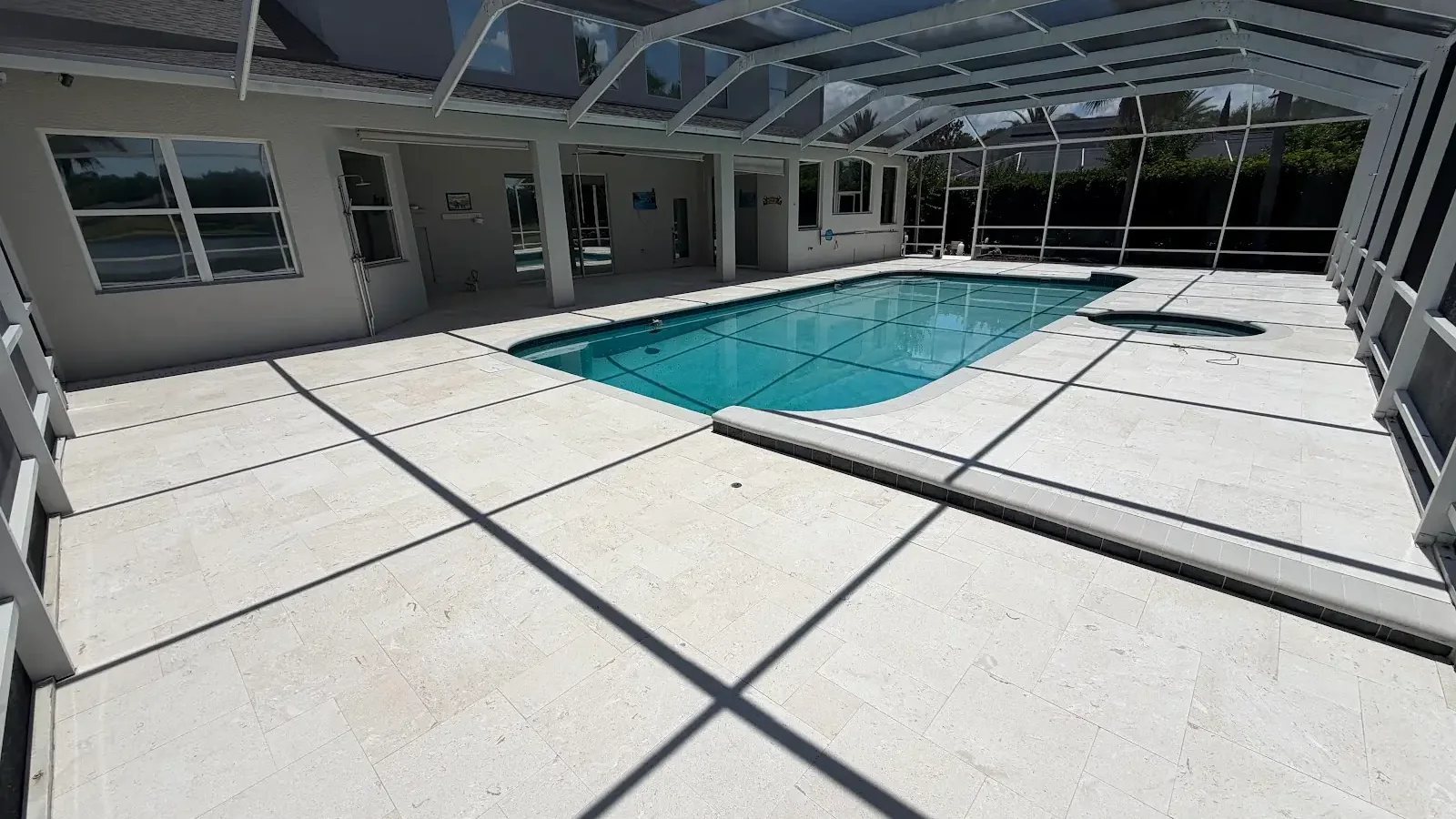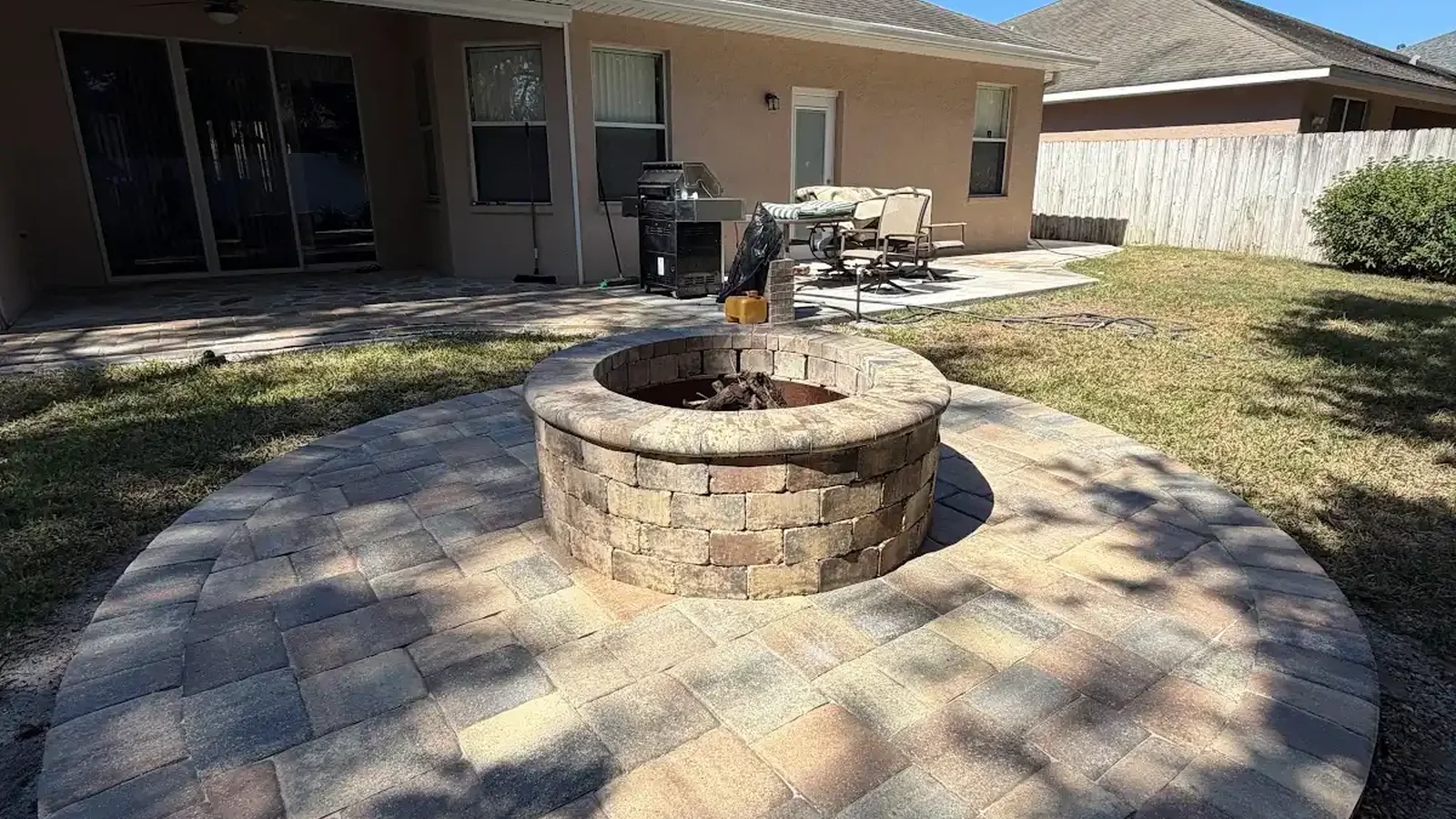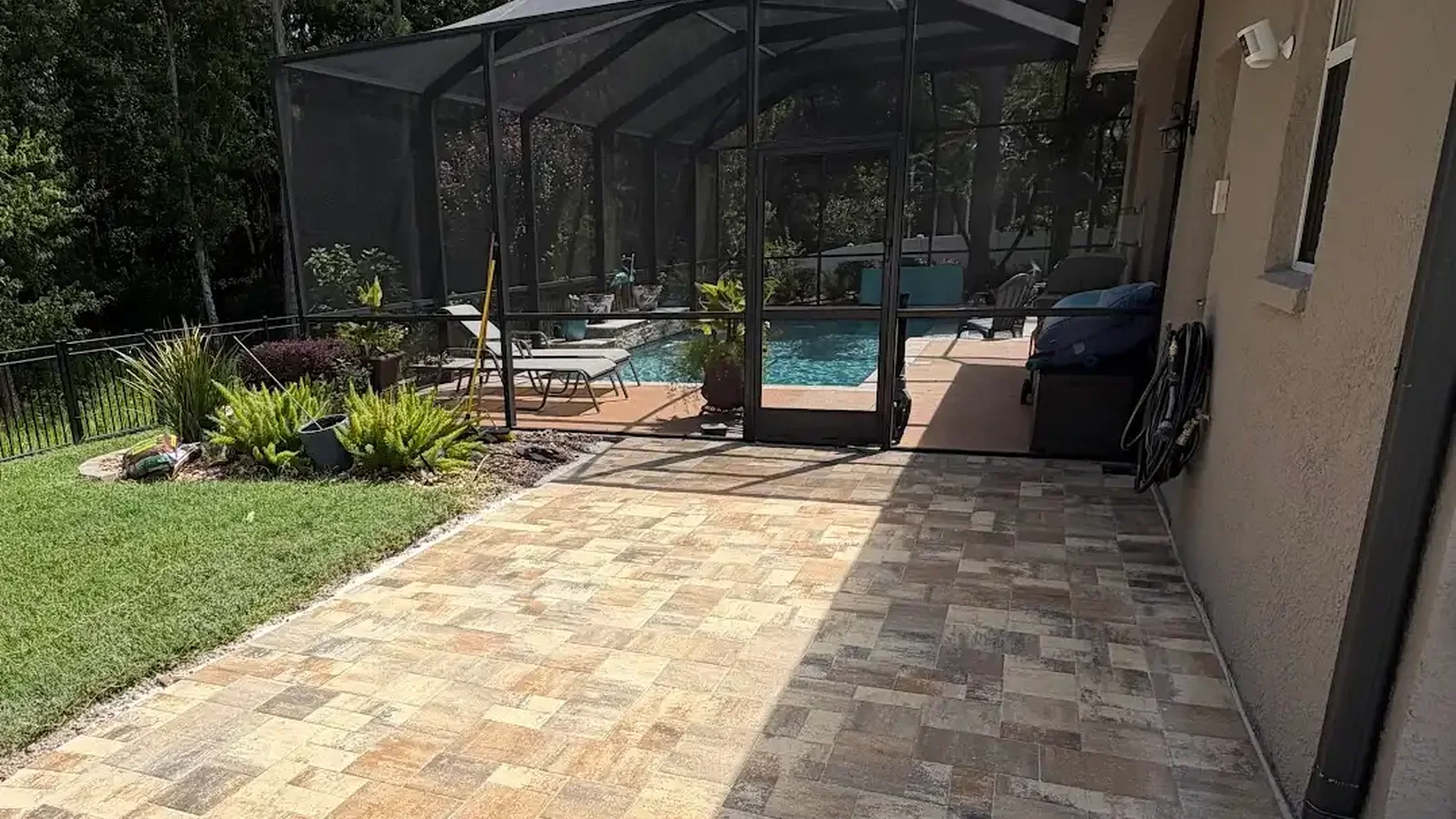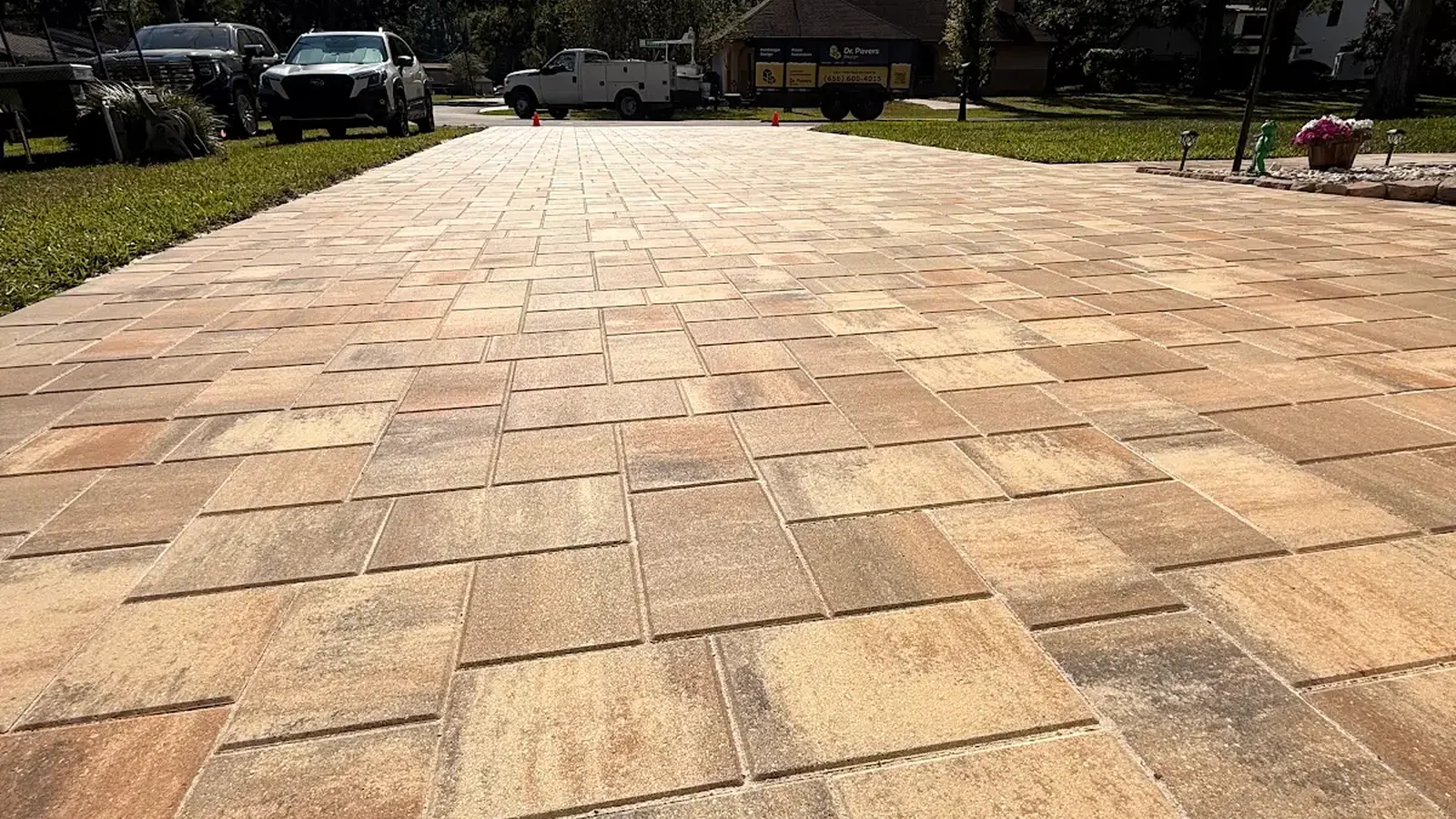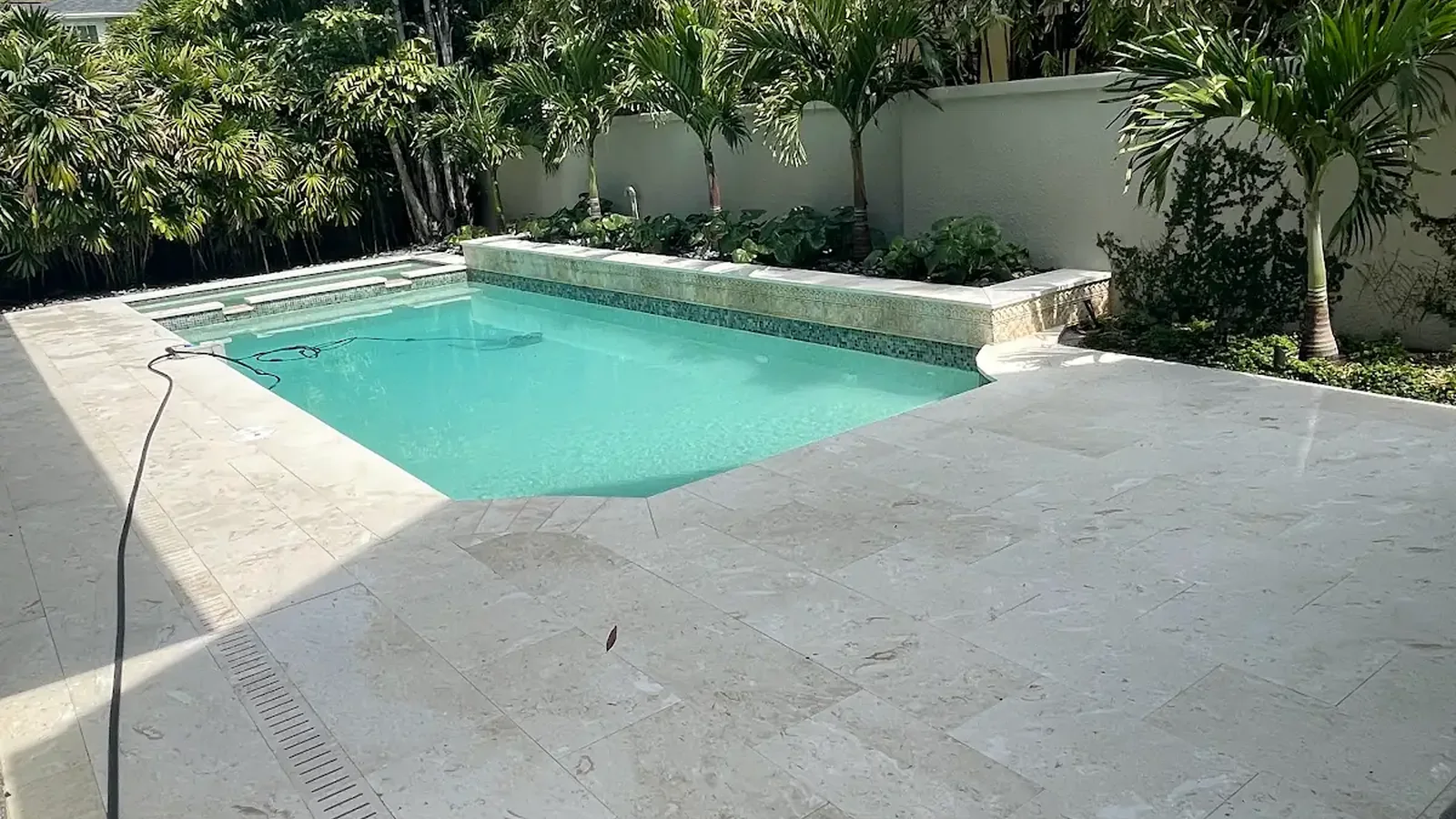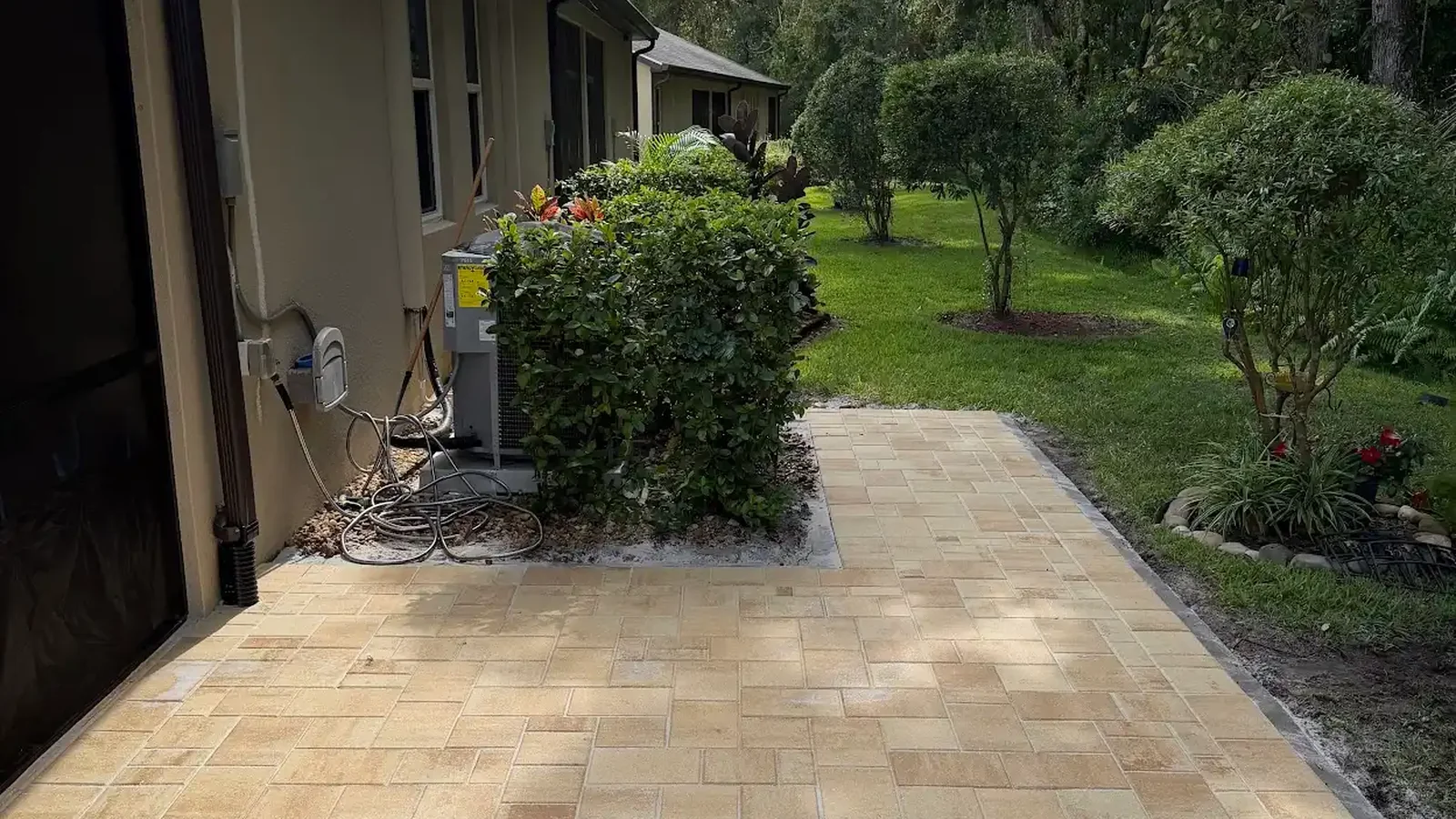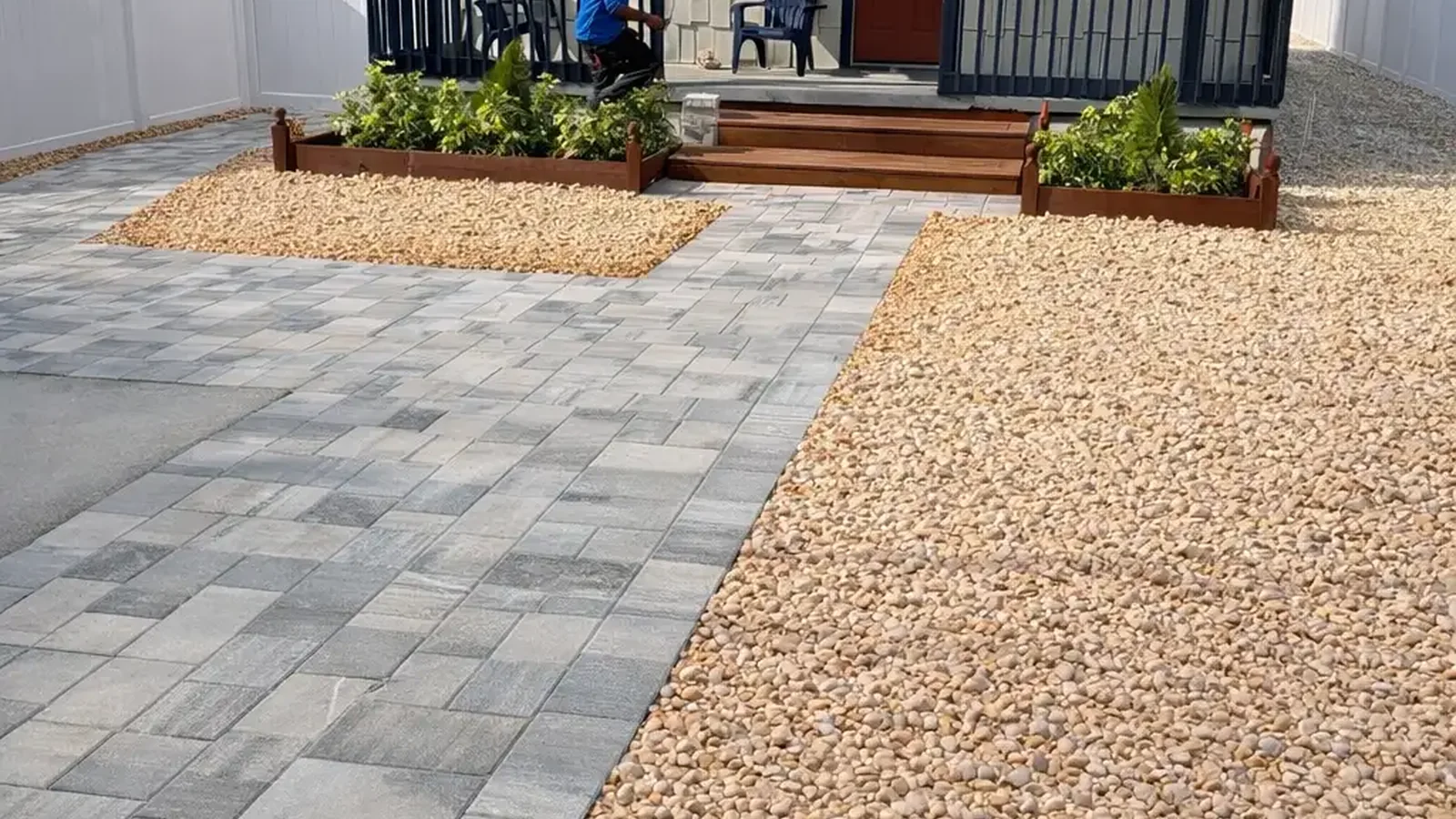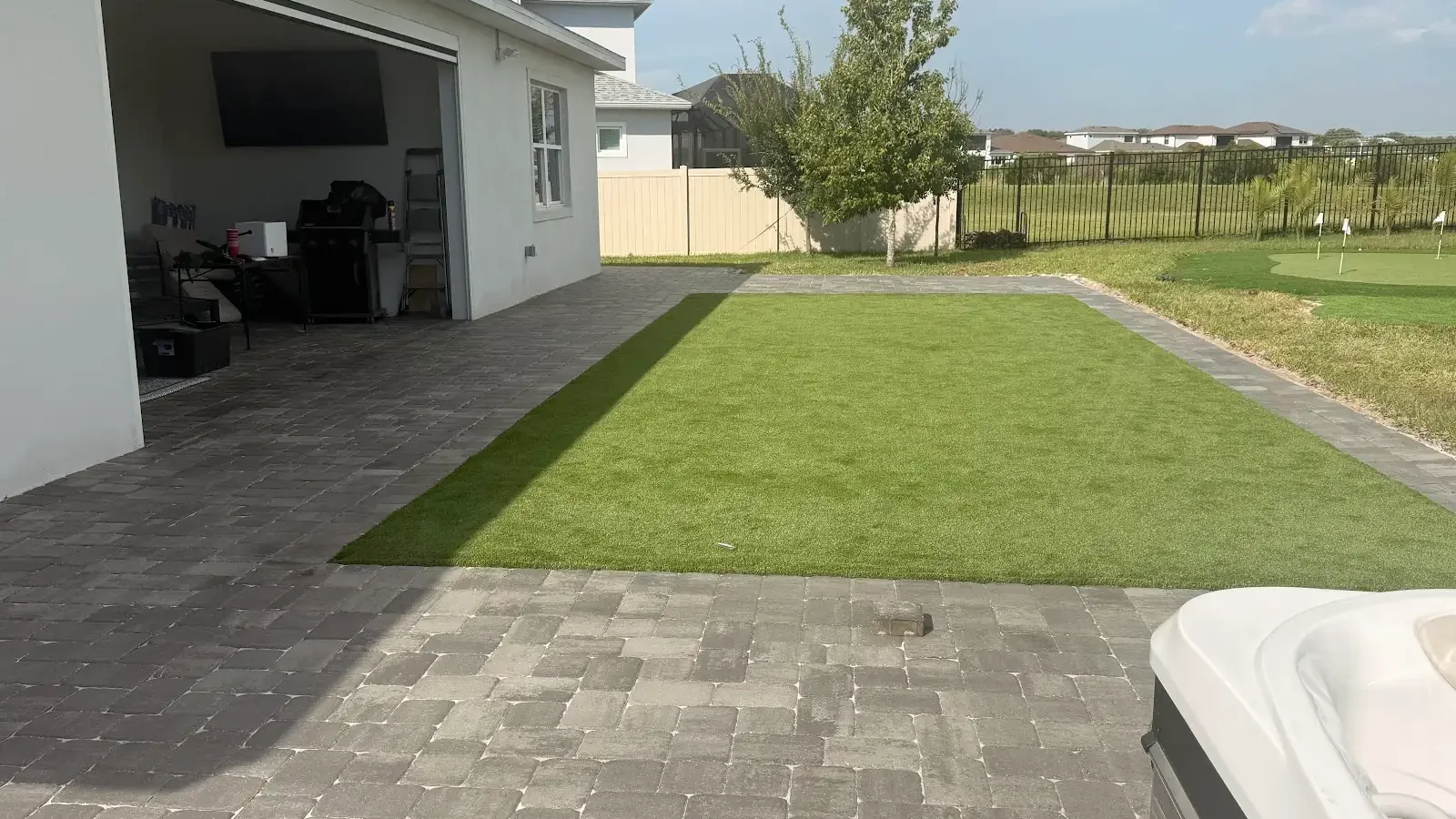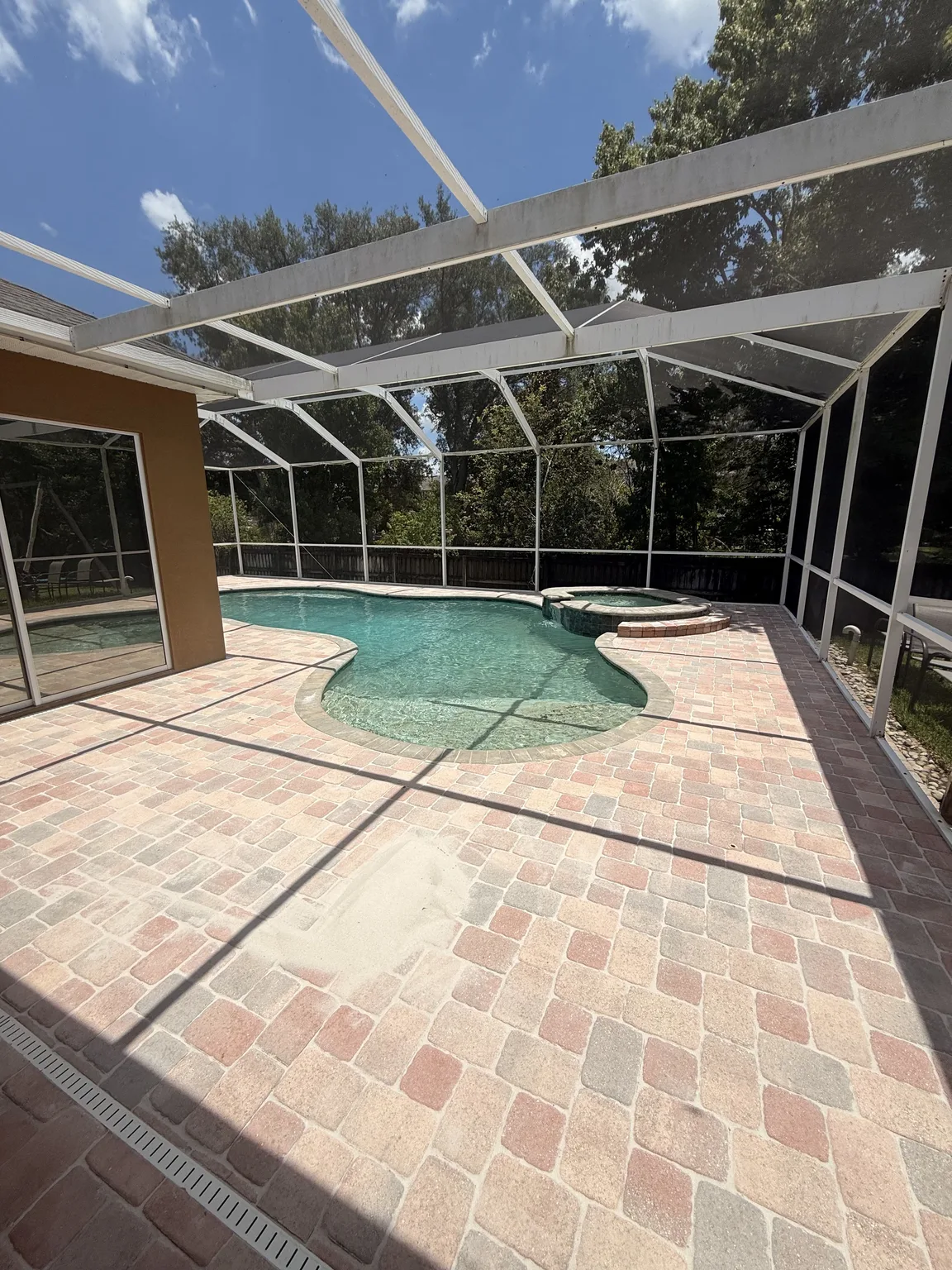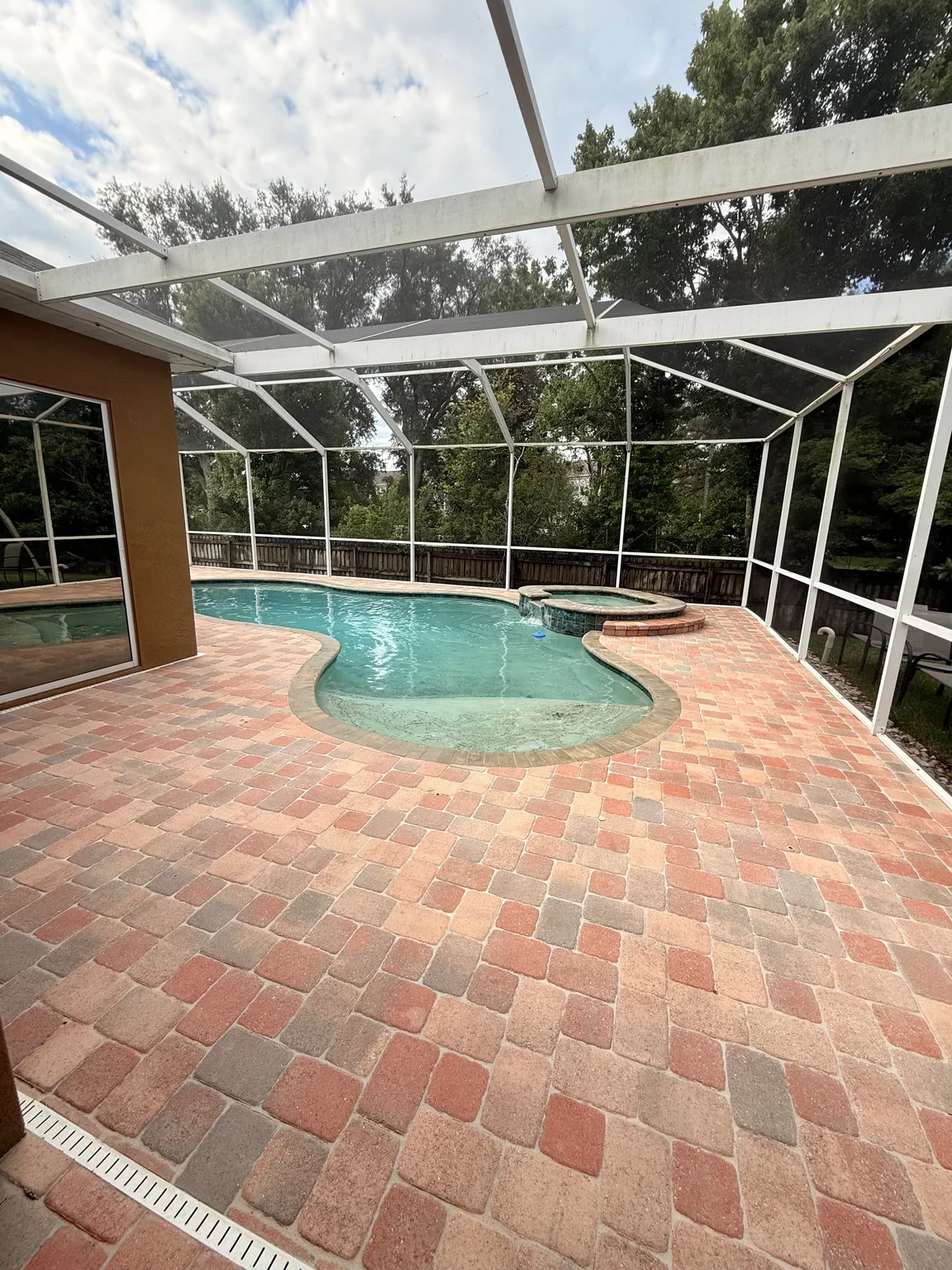
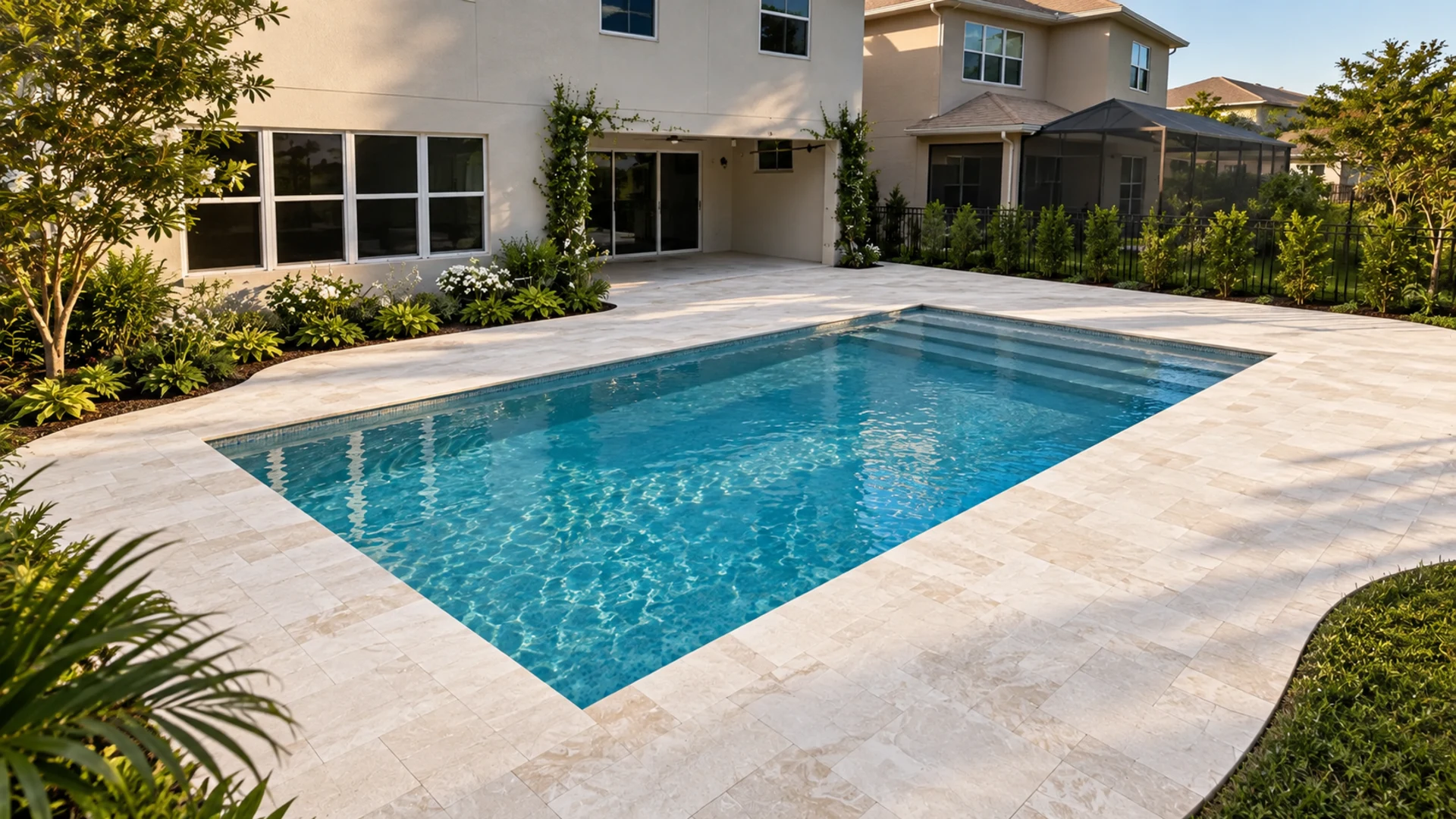
Stone pool deck stains are worth slowing down for because the same brown, green, white, or dark mark can come from very different sources. A mark beside a planter does not call for the same response as a chalky line at the water’s edge, and a stain that appeared after a storm is not automatically a cleaning problem. Before anyone selects a product, the useful first step is to identify what changed, where the discoloration sits, and how the stone surface behaves when it is wet and dry.
That careful start matters around Tampa Bay pools. Natural stone can have open pores, textured faces, filled areas, varied colors, and joints that hold moisture differently from the field of the deck. A cleaner that seems harmless on one inconspicuous spot may alter the appearance of another. The goal is not to guess from a photograph. It is to build enough context to decide whether a gentle cleaning test, a stone-care evaluation, or a broader water and drainage review makes sense.
Read the location before naming the stain
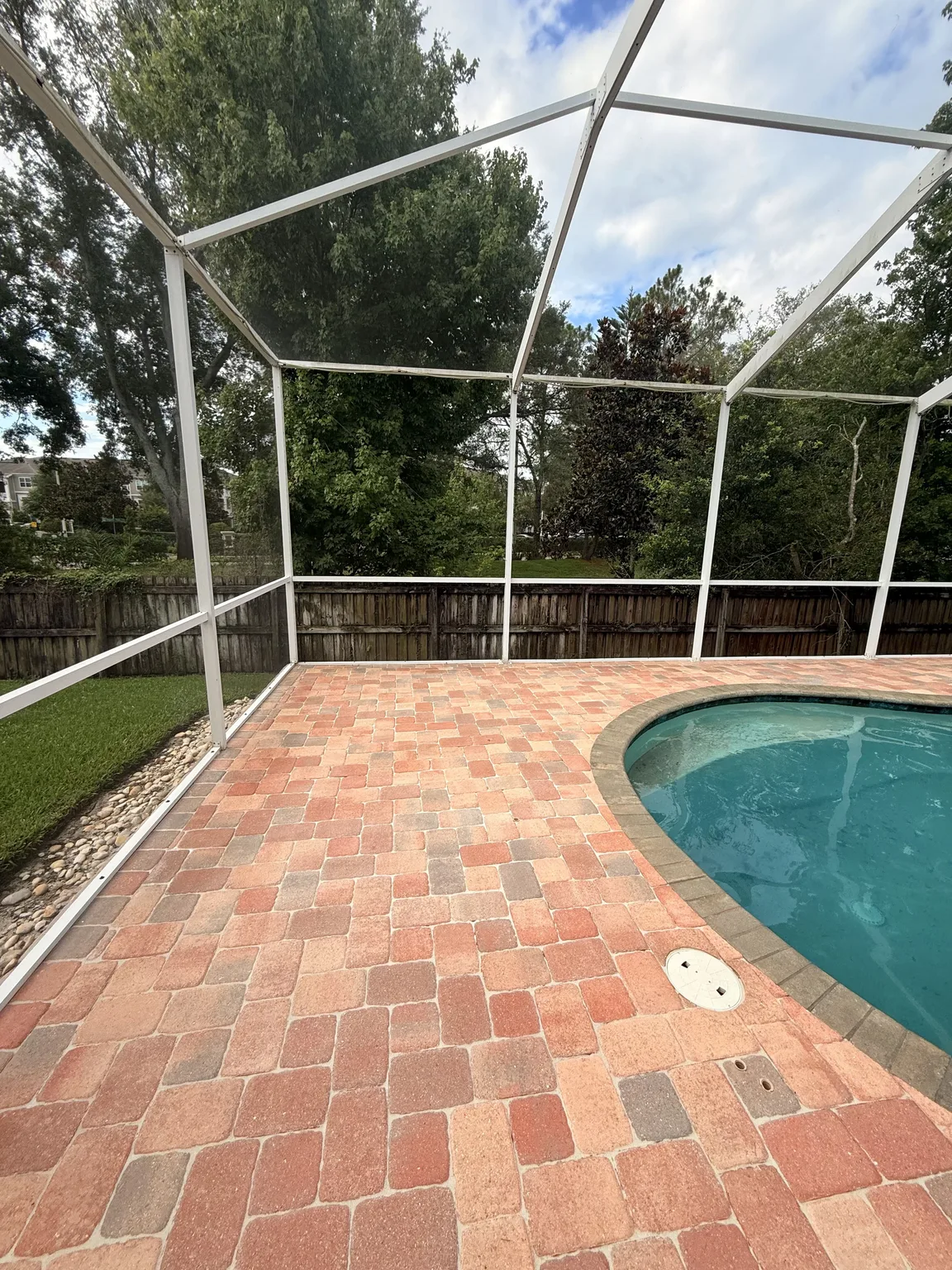
Start by mapping the mark instead of focusing only on its color. Is it concentrated on a horizontal walking surface, along the coping, inside a joint, or at the base of a wall? Does it follow a planter edge, a furniture leg, an irrigation arc, or the usual path from a door to the pool? A stain that respects a physical boundary often gives more useful information than a stain that is simply described as “brown.”
Take photos in even daylight from a few distances. Include one wider view that shows the pool, planting, drains, downspouts, and nearby metal items, then close views with a coin or tape measure for scale. Photograph the same area dry and after it has been wetted with plain water if that can be done safely. Note the date, recent rain, pool service, irrigation schedule, and anything newly placed on the deck. These notes are more valuable than repeatedly scrubbing the surface while the evidence disappears.
Common appearances, with important limits
Appearance can suggest questions, but it should not be treated as a diagnosis. Several conditions can overlap in one area, especially where shade, splash-out, and landscaping meet. The categories below are a practical way to organize observations before choosing a remedy.
- Organic marks: Leaves, berries, mulch, pollen, and decaying plant material can leave tan, brown, purple, or nearly black discoloration. Look for a relationship to trees, planters, roof runoff, or places where debris rests after rain.
- Mineral deposits: White or pale, crusty-looking material may be associated with evaporating water or movement through joints. Its location, texture, and return after cleaning are more informative than color alone.
- Rust-colored marks: Orange-brown spots near furniture feet, fasteners, tools, grills, or metal planters deserve special attention. Iron-bearing material elsewhere in the setting may also be relevant, but that cannot be confirmed visually.
- Algae or biological growth: Green, dark, or slippery areas often appear where shade and recurring moisture combine. Surface texture and slip risk matter as much as the color.
- Unknown discoloration: A dull patch, darkened band, or color shift may involve retained moisture, a prior treatment, wear, residue, or a combination of factors. Unknown is an honest and useful category until the surface is evaluated.
Why the stone itself changes the conversation
Natural stone is a family of materials, not one uniform surface. Density, porosity, mineral content, finish, fill, edge treatment, and prior repairs can vary across a single deck. Some stones show moisture quickly; some finishes hold soil in texture; some areas may have been sealed at a different time than others. It is risky to select a cleaner by looking at a generic online image or by assuming the deck is a particular named product.
Sealer history is especially important. A homeowner may know that the deck was “sealed,” but the useful details are when it was applied, whether the surface was stripped or cleaned first, what changed afterward, and whether the appearance became glossier, darker, or more uneven. A topical residue, an aging sealer, or inconsistent absorption can complicate stain removal. The right question is not whether sealer is good or bad; it is what is actually present and how the stone is responding now.
Use a test patch as an observation, not a promise
When a stone-care professional recommends a cleaning approach, a small, discreet test patch helps reveal how that exact surface reacts. The patch should be documented before and after it is rinsed and fully dry, because a wet surface can temporarily hide a change in color or texture. A favorable test does not prove that the full deck will look identical, but it can expose an unsuitable method before it reaches a prominent area.
Do not turn a test into a contest of stronger products. Combining cleaners, using an unverified acid, or applying pressure aggressively can make the original stain harder to interpret and may create etching, roughness, haze, or uneven absorption. Pool decks also need to remain safe for people, pets, landscaping, and pool water. Product directions, stone compatibility, containment, and rinsing routes all deserve consideration before a chemical is introduced.
Trace water without assuming water is the cause
Water is often relevant to stone pool deck stains, but its presence does not explain every mark. Look at the pattern of wetting. Pool splash-out may affect the zone closest to the coping. Irrigation can repeatedly wet a curved section of deck or a planter perimeter. A downspout can load one corner during a storm. Poorly directed runoff can leave soil and organic material behind as it crosses the stone. Those are contexts to investigate, not conclusions to announce from a distance.
Pool water chemistry also belongs in the record when discoloration appears close to the waterline or where water is frequently carried onto the deck. A service log, recent treatment change, or recurring splash pattern can help the right professional ask better questions. It does not establish a cause on its own. Likewise, a damp-looking area after rain may point toward drainage, a slow irrigation issue, shade, or simply a portion of stone that dries more slowly.
Inspect the nearby objects and edges
Metal furniture, umbrellas, grills, rolling carts, and planters can leave clues when a stain has a sharply defined footprint. Lift items carefully rather than dragging them, then photograph the underside and the deck beneath. Rusting feet, trapped leaf litter, fertilizer spillover, or a constantly damp saucer can matter. A planter that is heavy or integrated into the deck should not be moved casually; its drainage and contact points can be examined in place.
Coping, joints, and changes in elevation deserve the same attention. Discoloration that follows a joint may be collecting in a lower channel or moving with water through that route. A mark that repeats at several coping sections may have a common exposure pattern, while one isolated area may call for a closer look at a local object or repair. Check whether joints are open, washed out, or holding debris, but avoid digging them out merely to see what is below.
A practical record to bring to an evaluation
A short record keeps the conversation focused on the deck rather than on vague memories. It also helps distinguish a stable cosmetic issue from an active condition that is still changing.
- When the mark was first noticed and whether it has spread, darkened, or returned.
- Photos showing the full pool-deck layout, close details, and the area when wet and dry.
- Recent rain, irrigation, pool-maintenance, landscaping, or furniture changes.
- Any cleaning products, sealers, pressure washing, or spot treatments already used.
- Where water leaves the deck after a normal rain and where debris tends to collect.
- Whether the surface feels slick, rough, powdery, etched, or different from adjacent stone.
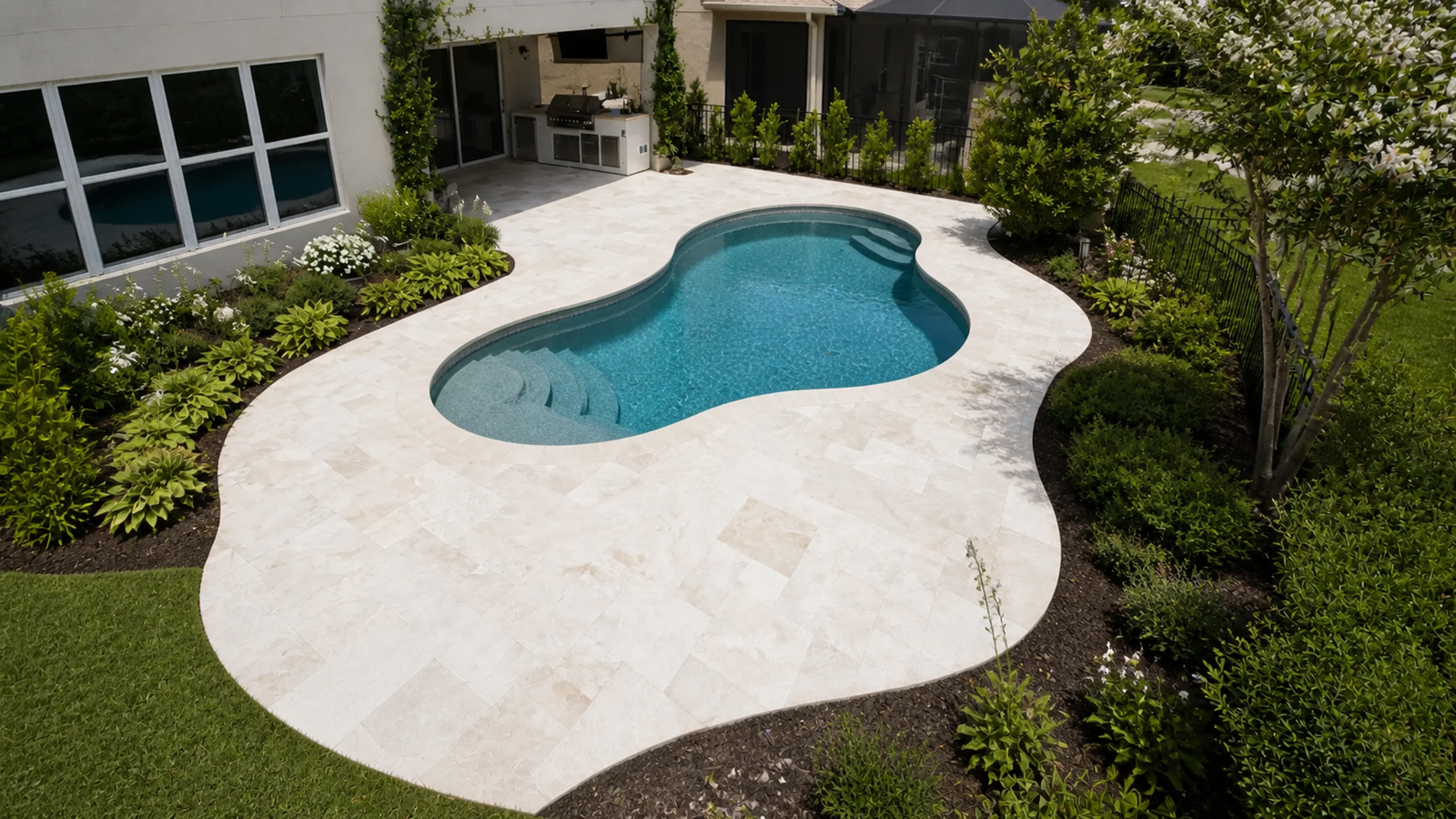
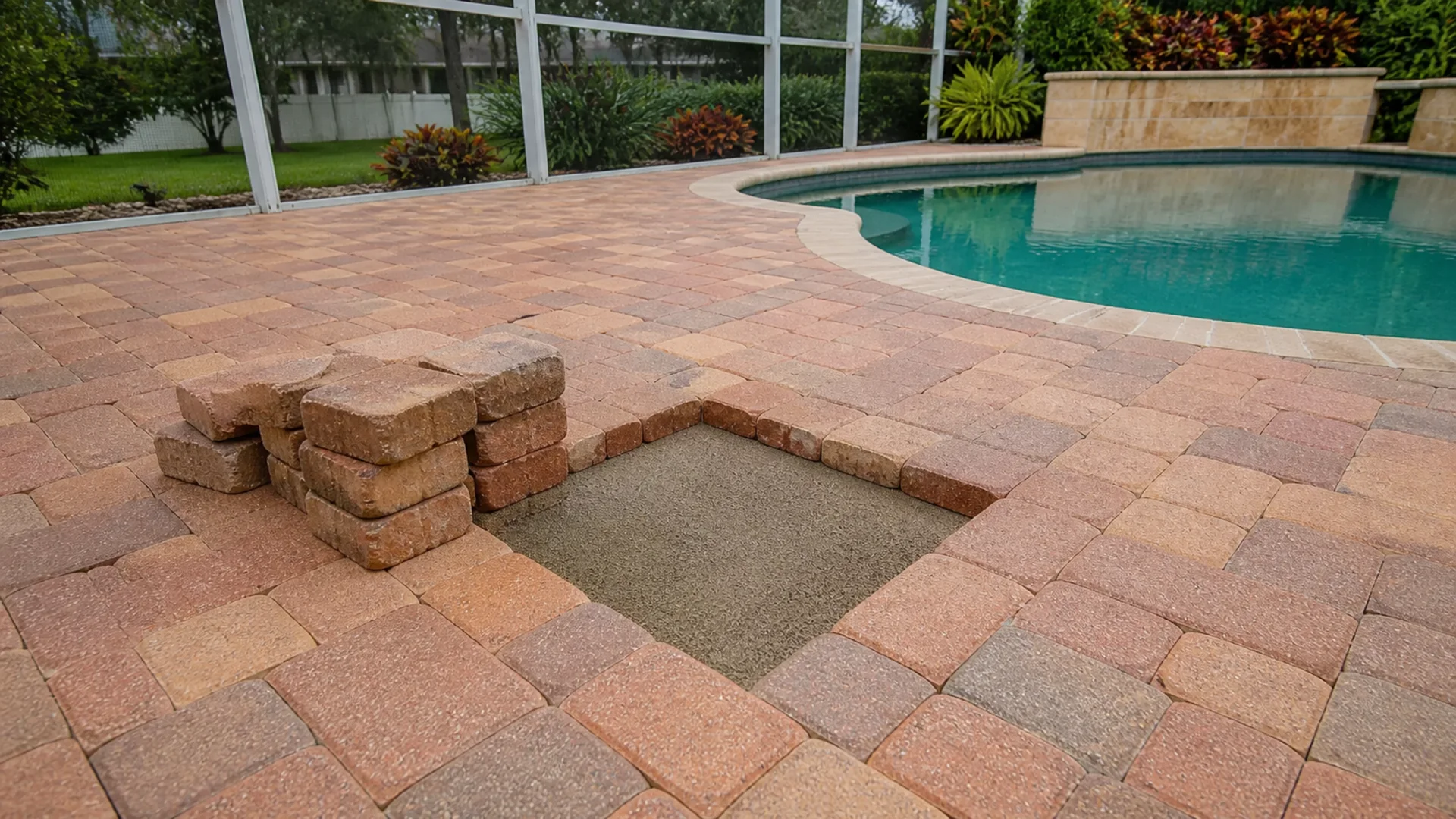
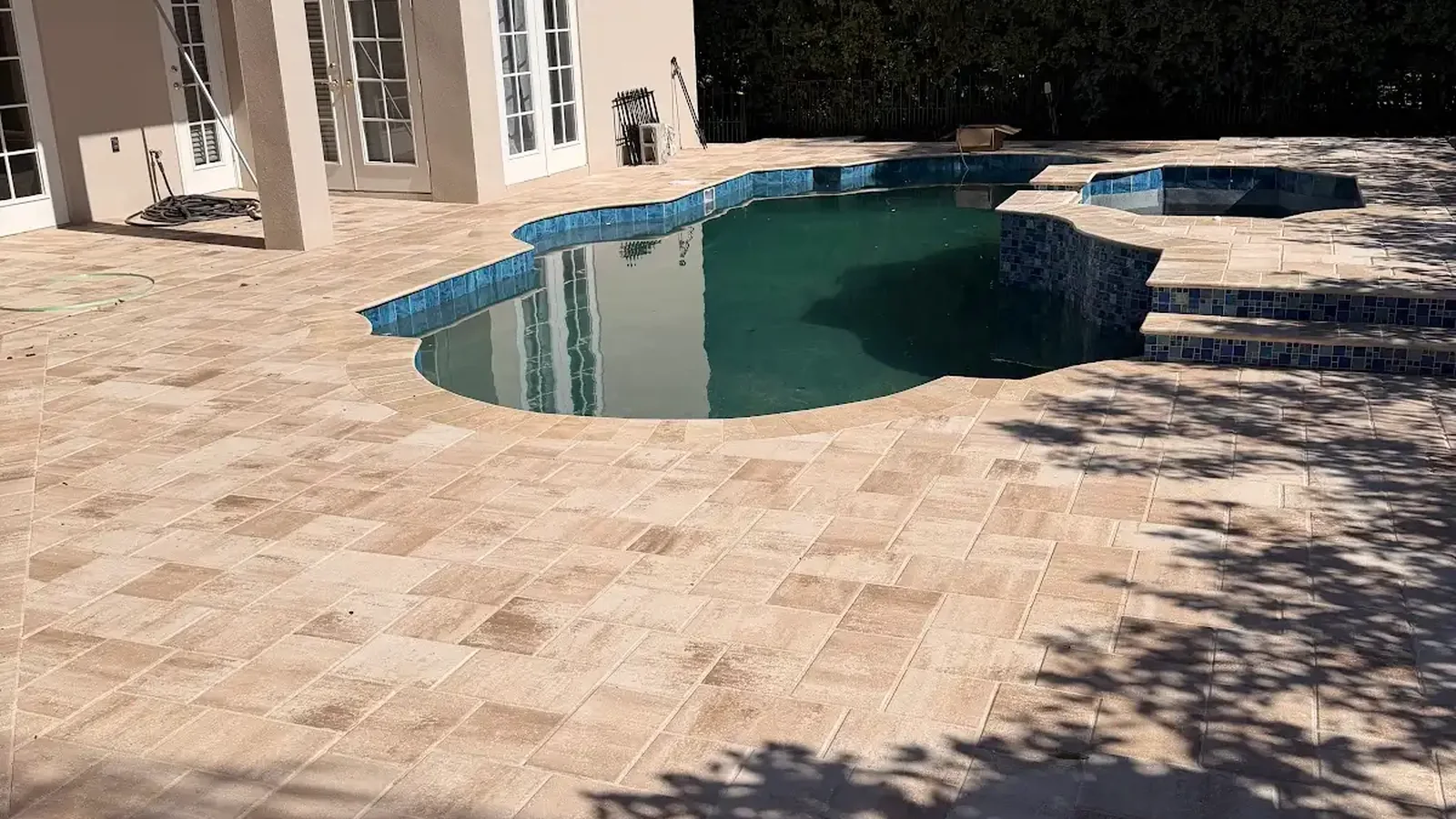
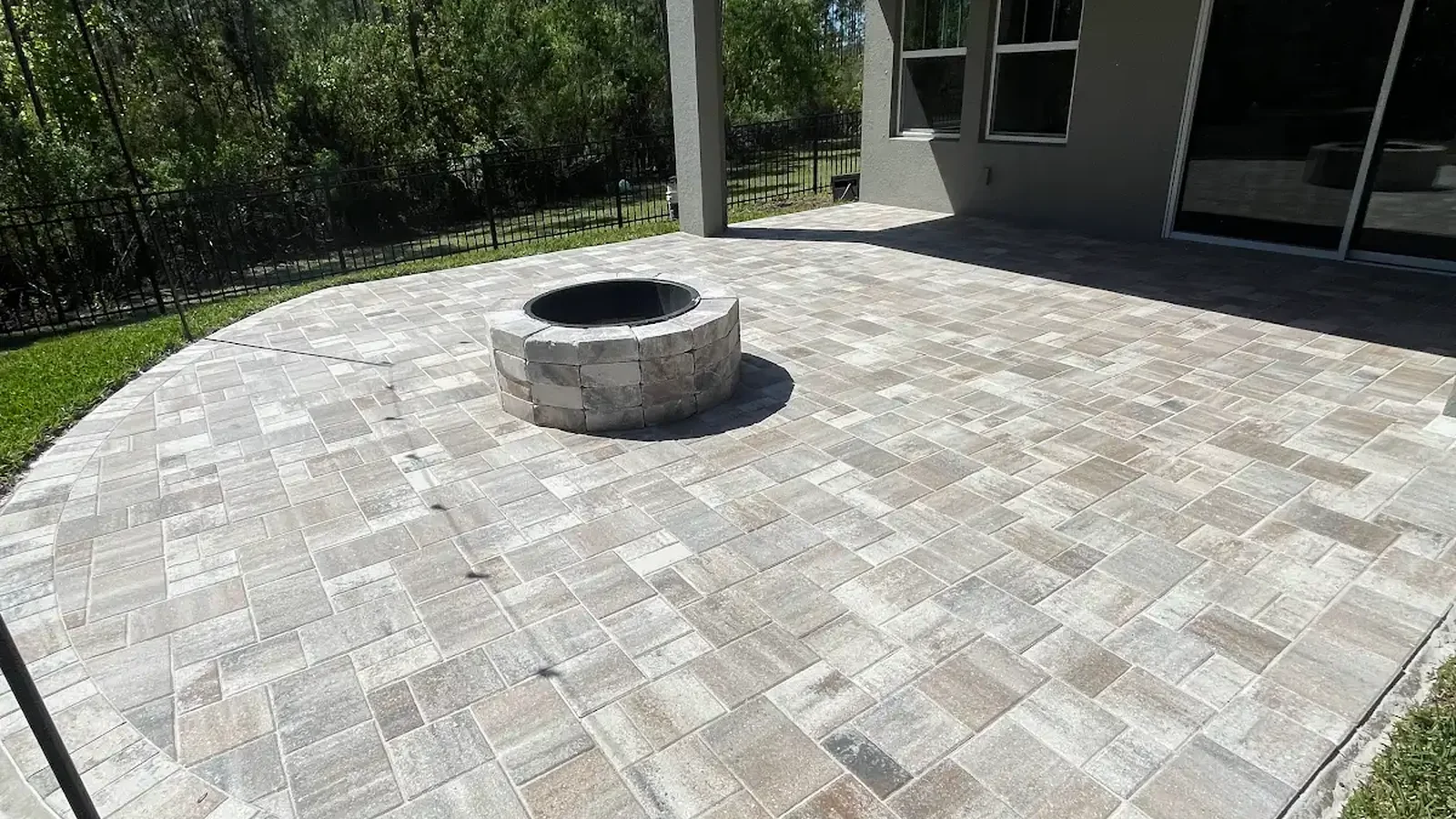
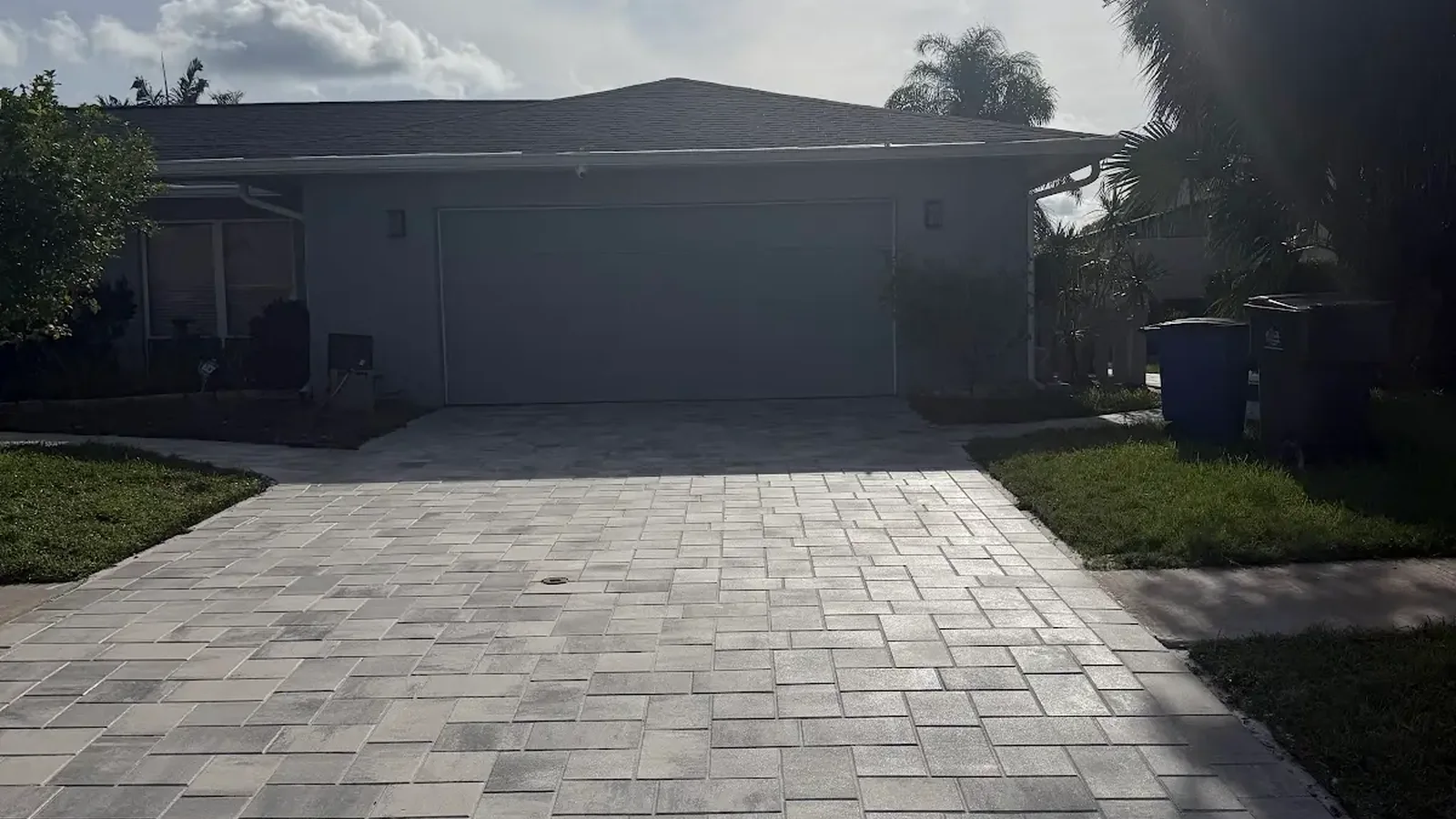
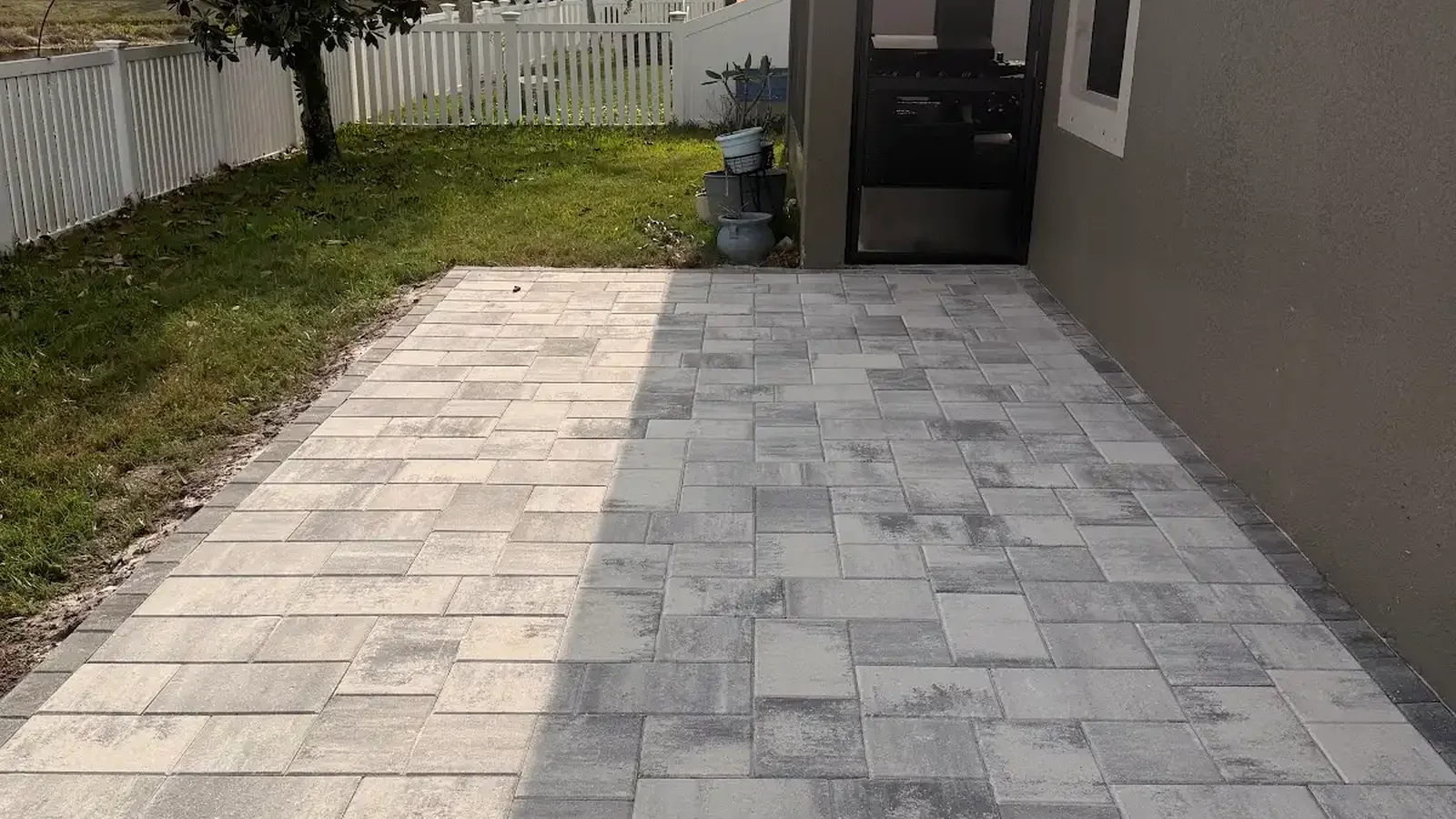
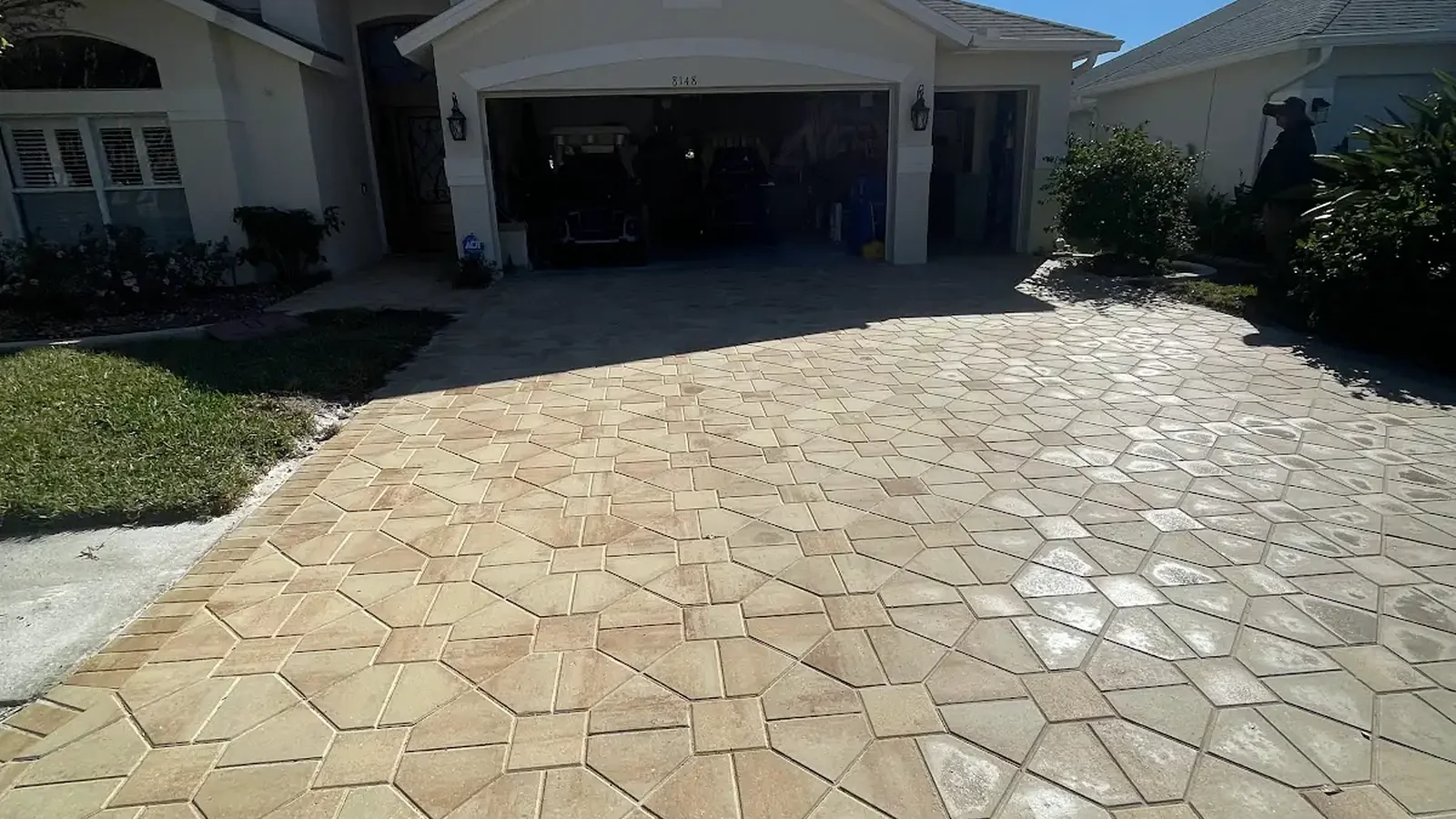
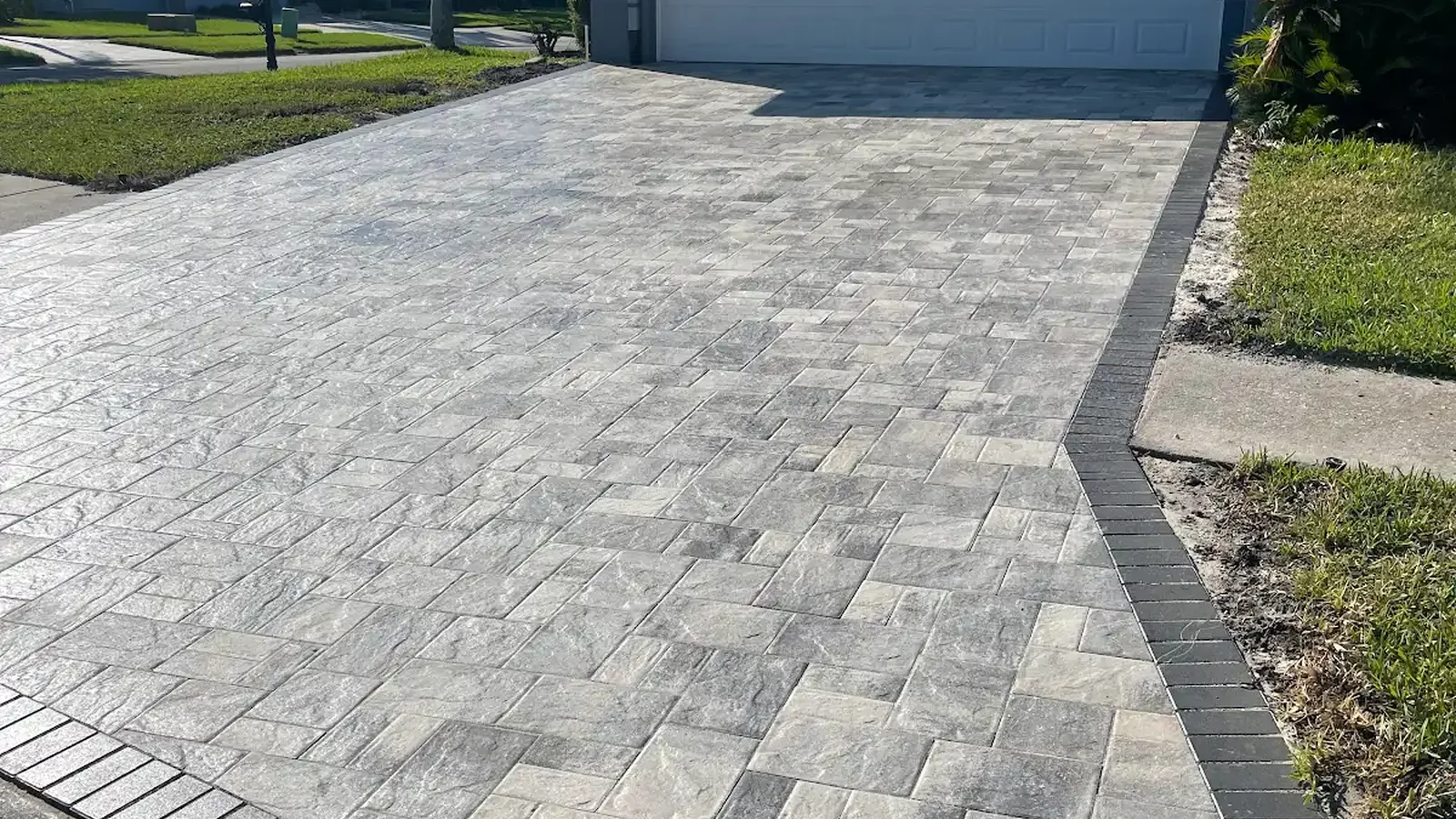
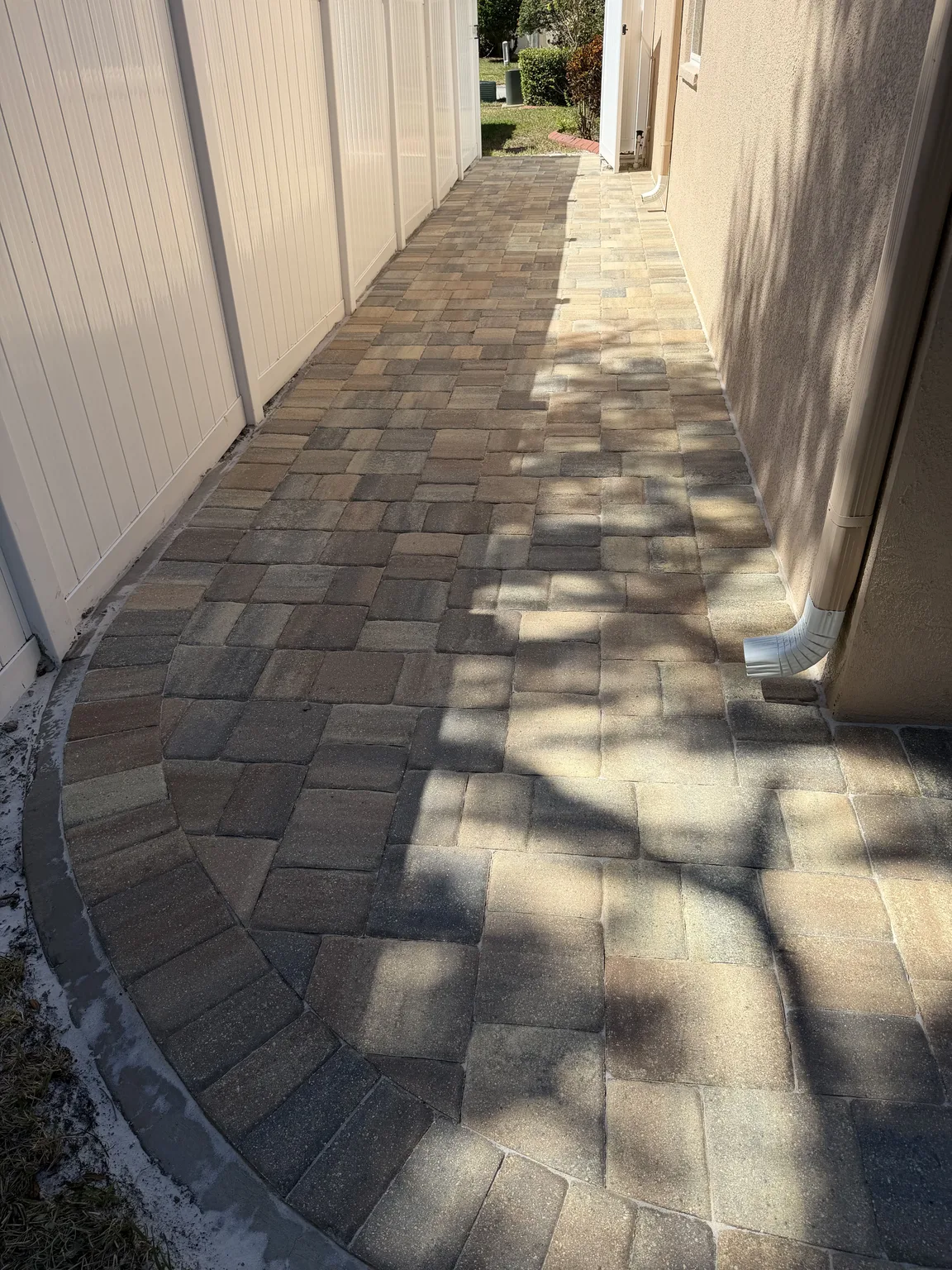
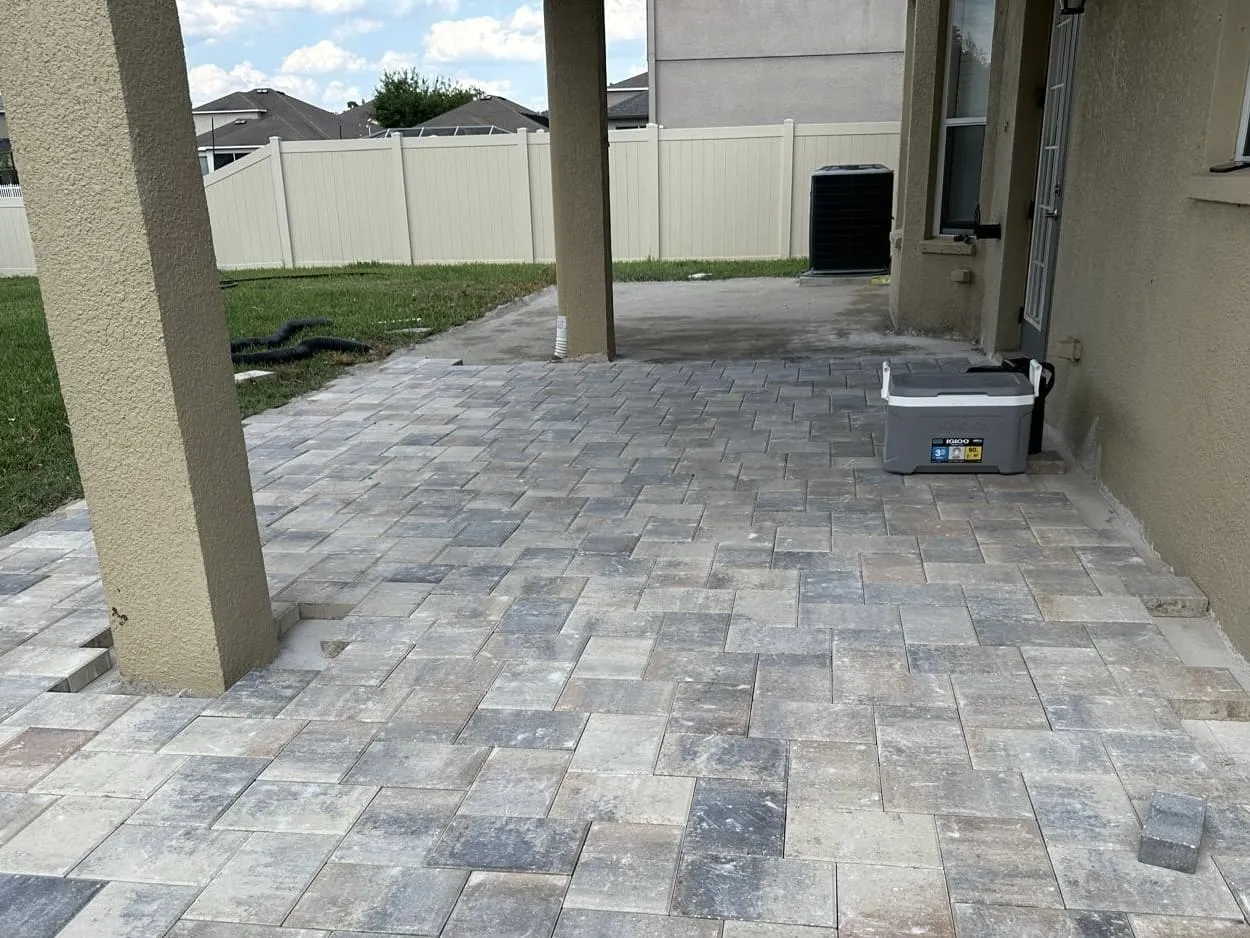
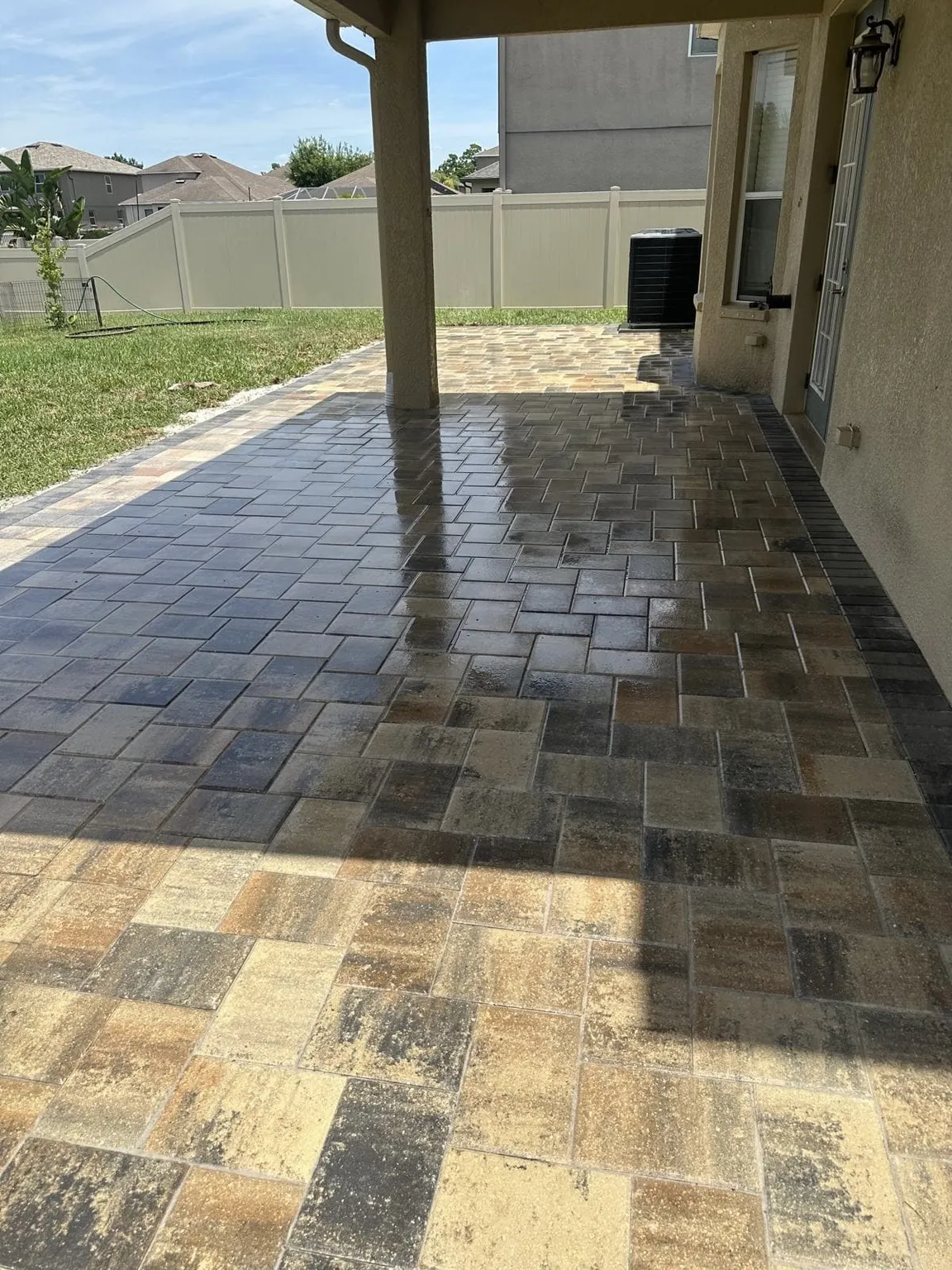
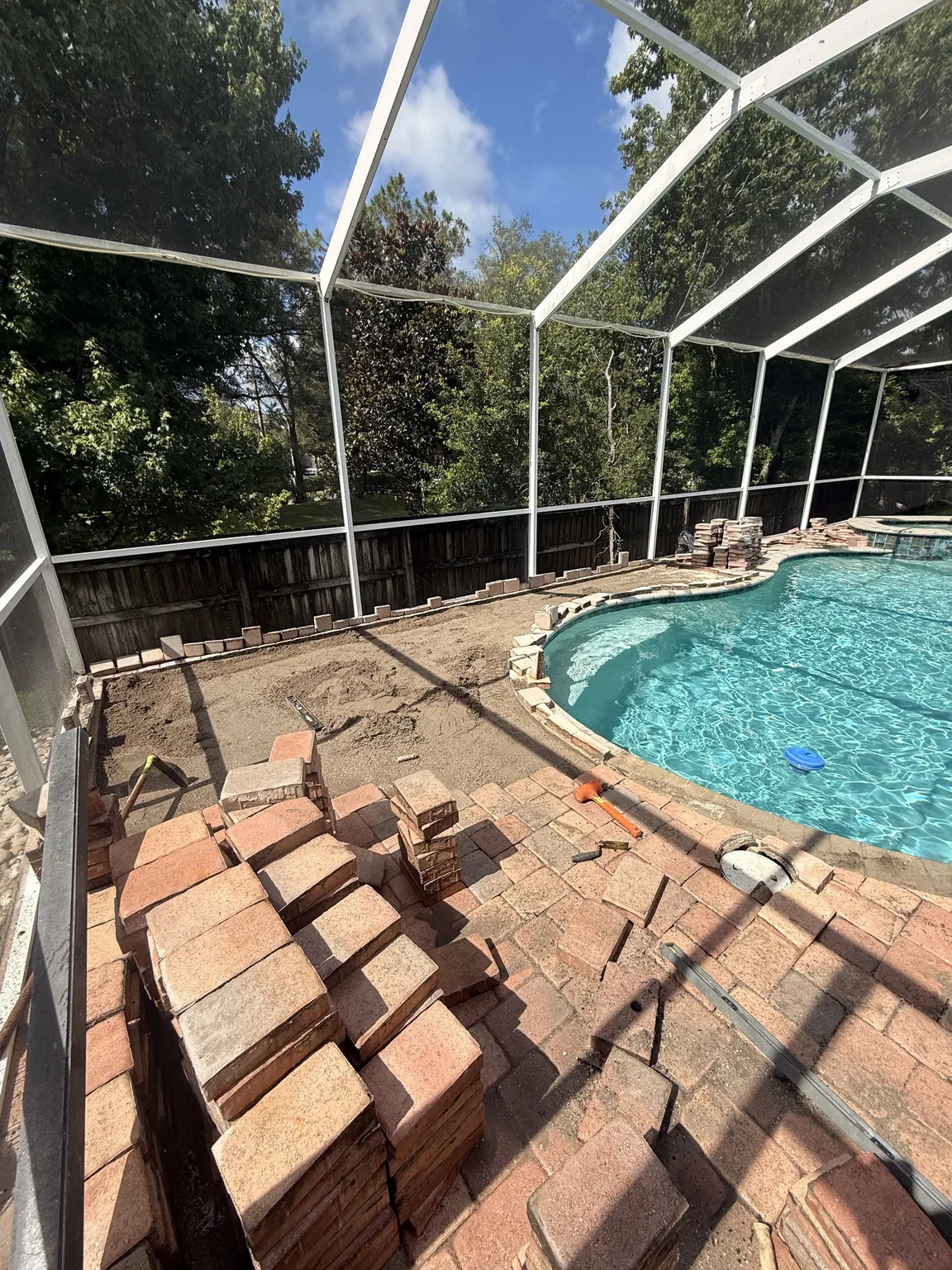
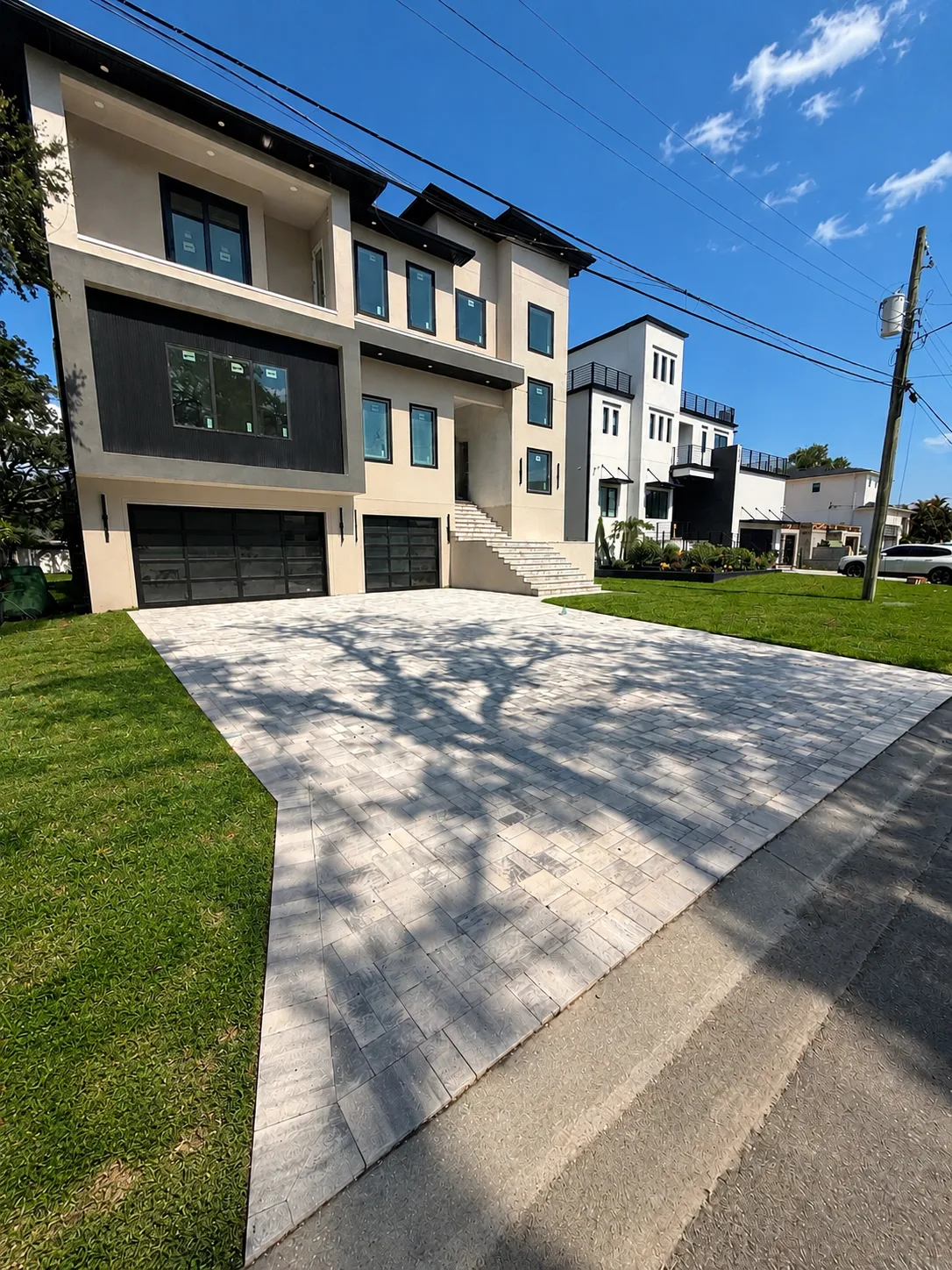
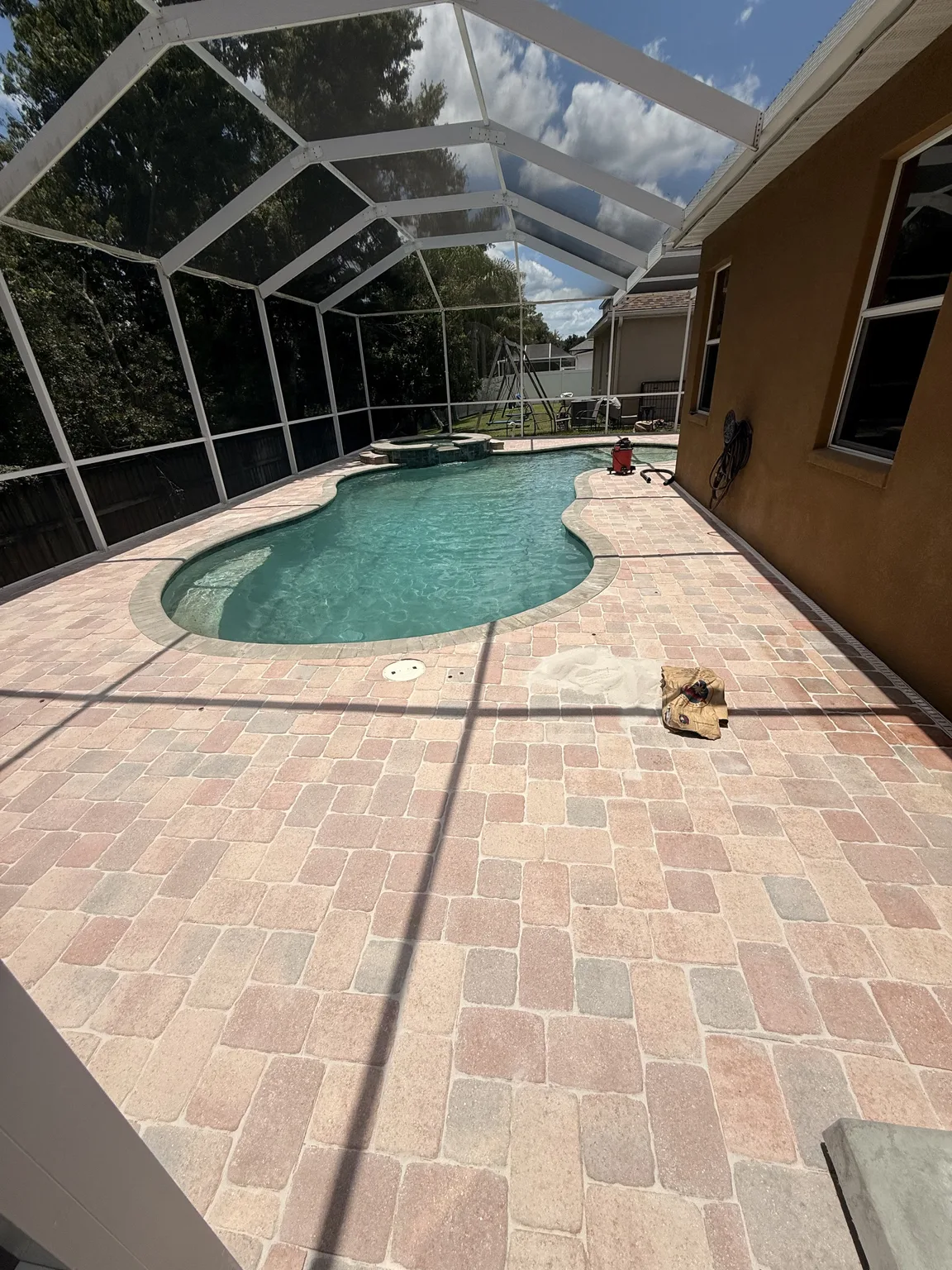
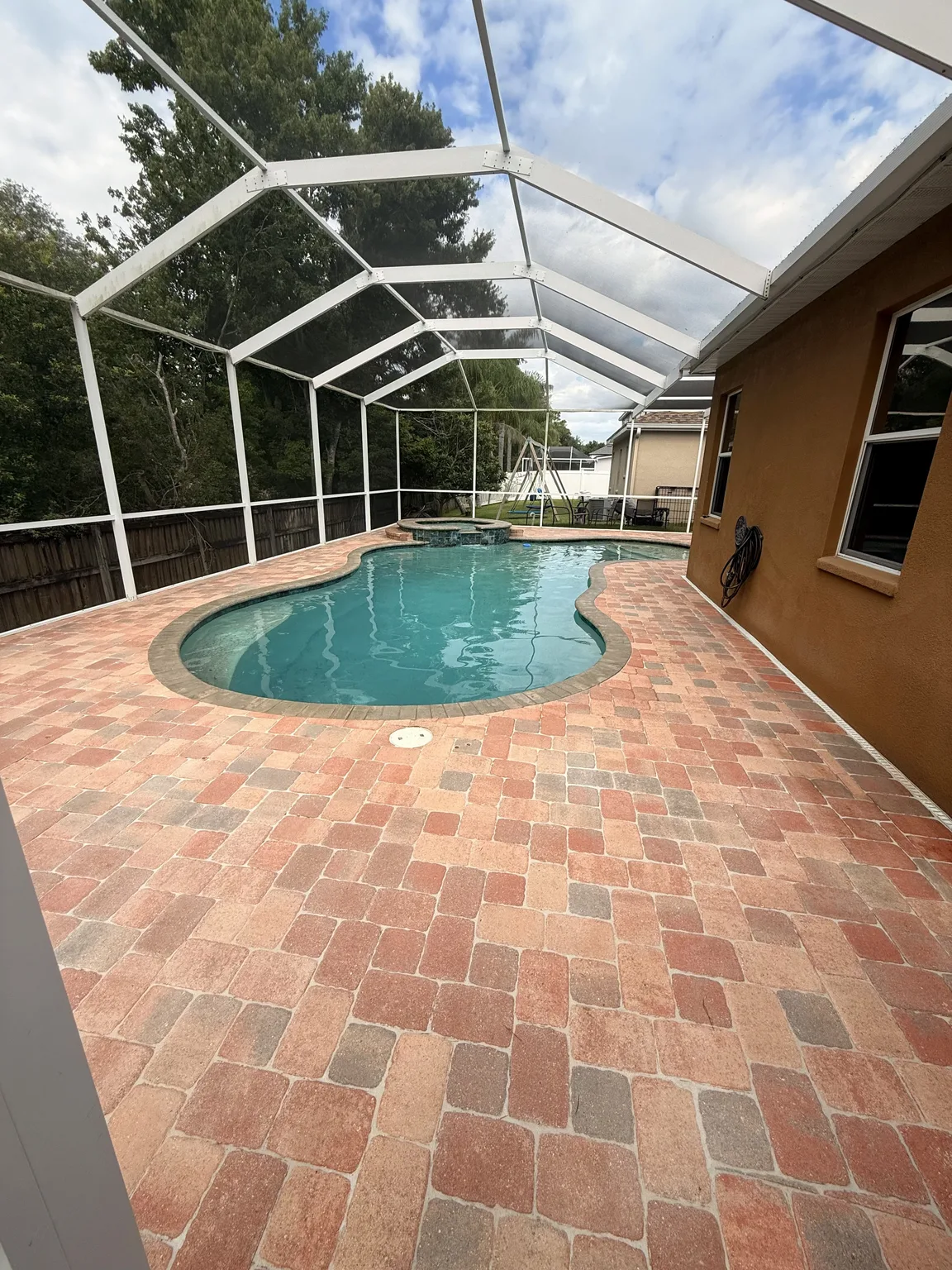
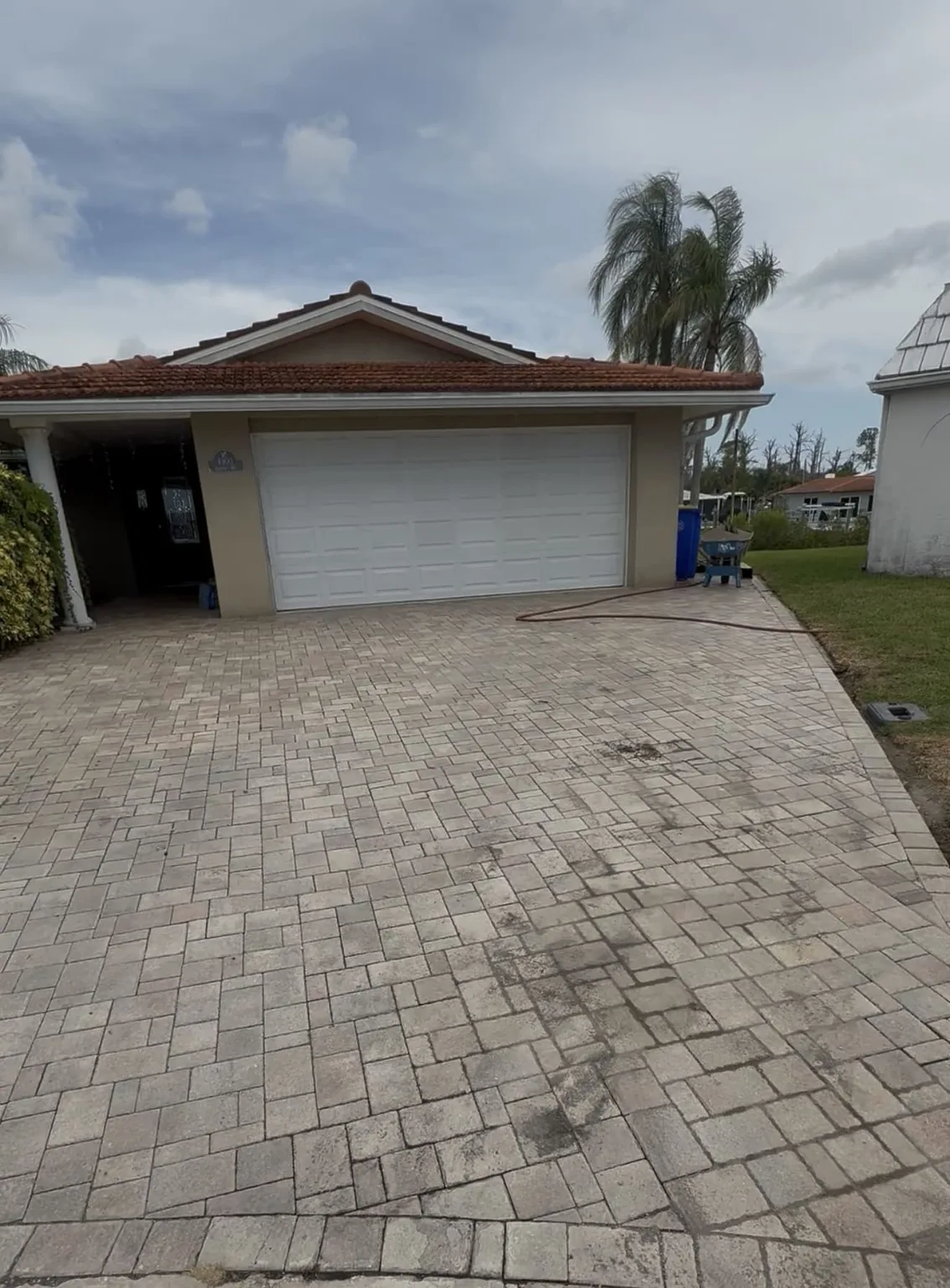
This is also a good time to compare the issue with Dr Pavers Design project and service information. Seeing how different outdoor surfaces are planned can help a homeowner frame questions about stone, borders, pool coping, and the surrounding hardscape without treating a gallery as proof of what a particular deck requires.
Questions that make a stone-care visit more useful
Ask the professional to explain what they can observe, what remains uncertain, and why a proposed test fits the visible stone and finish. A clear process should separate cleaning the visible mark from correcting a condition that may keep feeding it. If water management, a metal source, or a failing treatment is suspected, ask what evidence supports that concern and who should evaluate the related system.
- What stone characteristics and surface finish are visible, and what cannot be verified without additional information?
- What is the smallest safe test area, how will it be protected, and when will it be judged dry?
- Could the approach change color, sheen, texture, joint material, or nearby coping?
- What source conditions should be checked if the discoloration returns?
- What maintenance routine is appropriate after treatment, including rinsing and debris removal?
For independent stone education, the Natural Stone Institute is a useful starting point for learning why care methods should match the material. General guidance does not replace an inspection of a specific deck, particularly when the surface has a mixed history of repairs, cleaners, or sealers.
When to stop and get a closer assessment
Pause DIY cleaning when a mark is growing rapidly, appears with persistent dampness, recurs after gentle cleaning, or is paired with loose stone, crumbling joints, surface loss, or a slippery condition. Stop if a product causes fizzing, a visible color shift, roughness, or an unexpected residue. Those changes are signals to preserve the area, rinse according to the product instructions if appropriate, and seek guidance rather than escalating the treatment.
Extra care is wise near the pool edge, where runoff can reach water, and around electrical or metal components. A stain may be cosmetic, but the deck still has to perform as a walking surface. If drainage, irrigation, or pool operation seems connected, the best solution may involve more than a stain-removal step.
Maintain the deck without erasing useful clues
Routine care can reduce the conditions that make discoloration harder to manage. Sweep leaves before they stay wet against the stone, empty standing water from movable planters, and rinse away ordinary surface debris with water when the surface and surrounding pool area can be managed safely. Keep furniture feet clean and inspect protective pads before they trap grit or begin to corrode. These small habits do not identify the source of a current stain, but they can prevent fresh debris from masking its original pattern.
After any approved cleaning or repair, photograph the area again once it has dried and revisit it after typical rain or irrigation cycles. A simple before-and-after record shows whether the appearance is stable, returning in the same route, or developing at new edges. That information is more actionable than a broad conclusion that the stone has “stained again.” It helps separate a one-time surface event from a condition that needs attention beyond the stone itself.
FAQ about stone pool deck stains
Can I identify a stain just by its color?
No. Color is one clue among location, texture, timing, nearby materials, moisture patterns, and the stone’s condition. Brown marks can have several origins, and dark areas can be biological growth, retained moisture, residue, or something else.
Should I seal the deck to hide a stain?
Sealing over an unexplained mark can make future evaluation more difficult or change the appearance unevenly. First establish what is present, whether the stone is clean and dry, and whether a compatible treatment is appropriate.
What is the safest first action?
Document the area, remove loose debris with a soft dry method, and avoid unverified chemical mixes or abrasive tools. Then use the record to discuss a targeted test with a qualified professional.
Protect the evidence, then choose the next step
A good response to a stained natural-stone deck begins with restraint. The mark, its moisture pattern, the surrounding objects, and the treatment history together tell a more reliable story than a single color chart. By documenting first and testing deliberately, Tampa Bay homeowners can protect both the pool environment and the character of the stone while they decide what work is actually warranted.
Finally, when you are ready to review your natural-stone pool deck, review the services, see completed projects, read testimonials, and check the FAQ before requesting a free consultation through the contact page. Follow Dr Pavers Design on Instagram and Facebook, or review the company on Google. Open Google Maps, send a WhatsApp message, call +1 (656) 600-4015, send a text message, or email drpavers@outlook.com for a free consultation anywhere in Tampa Bay.