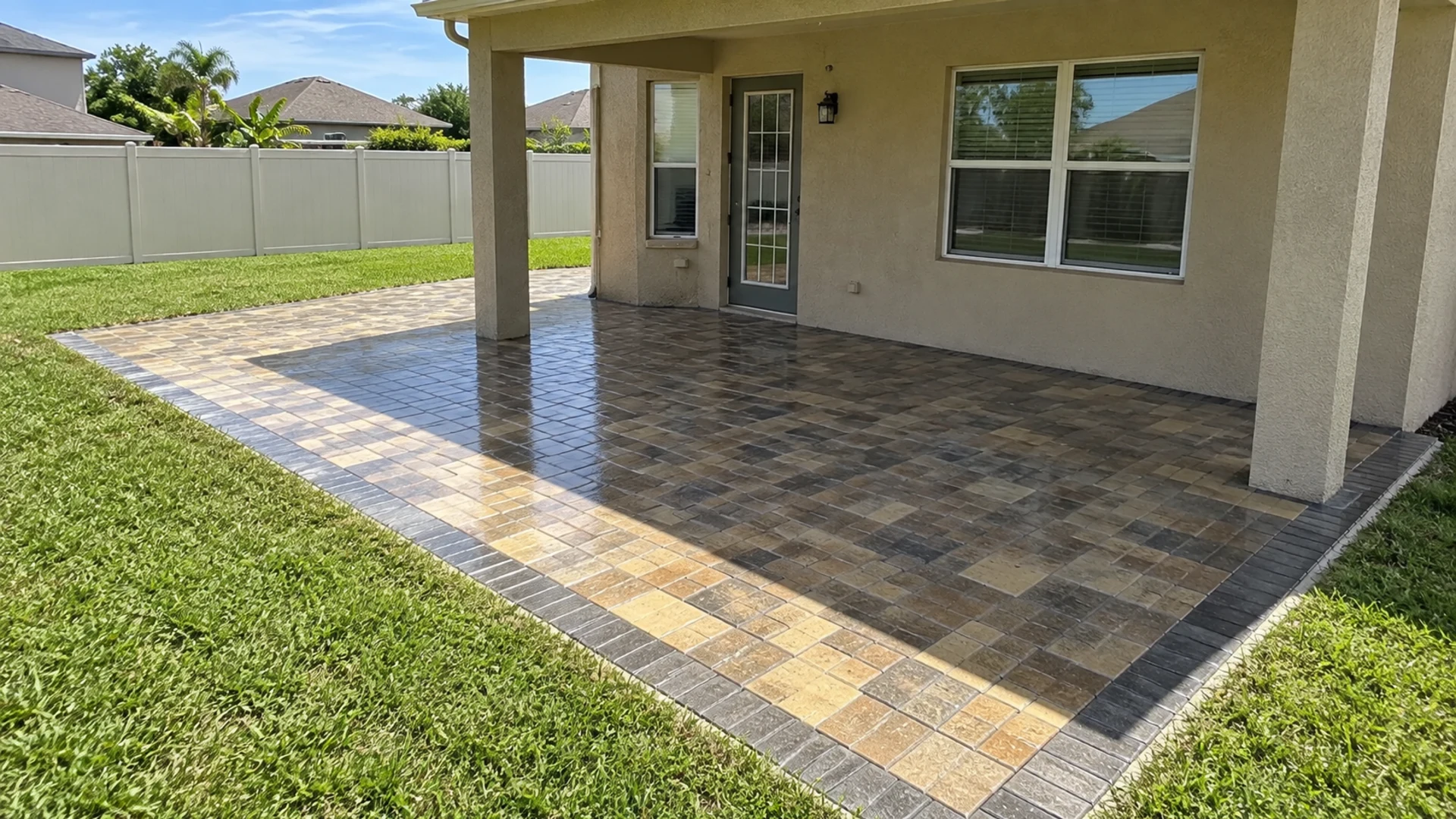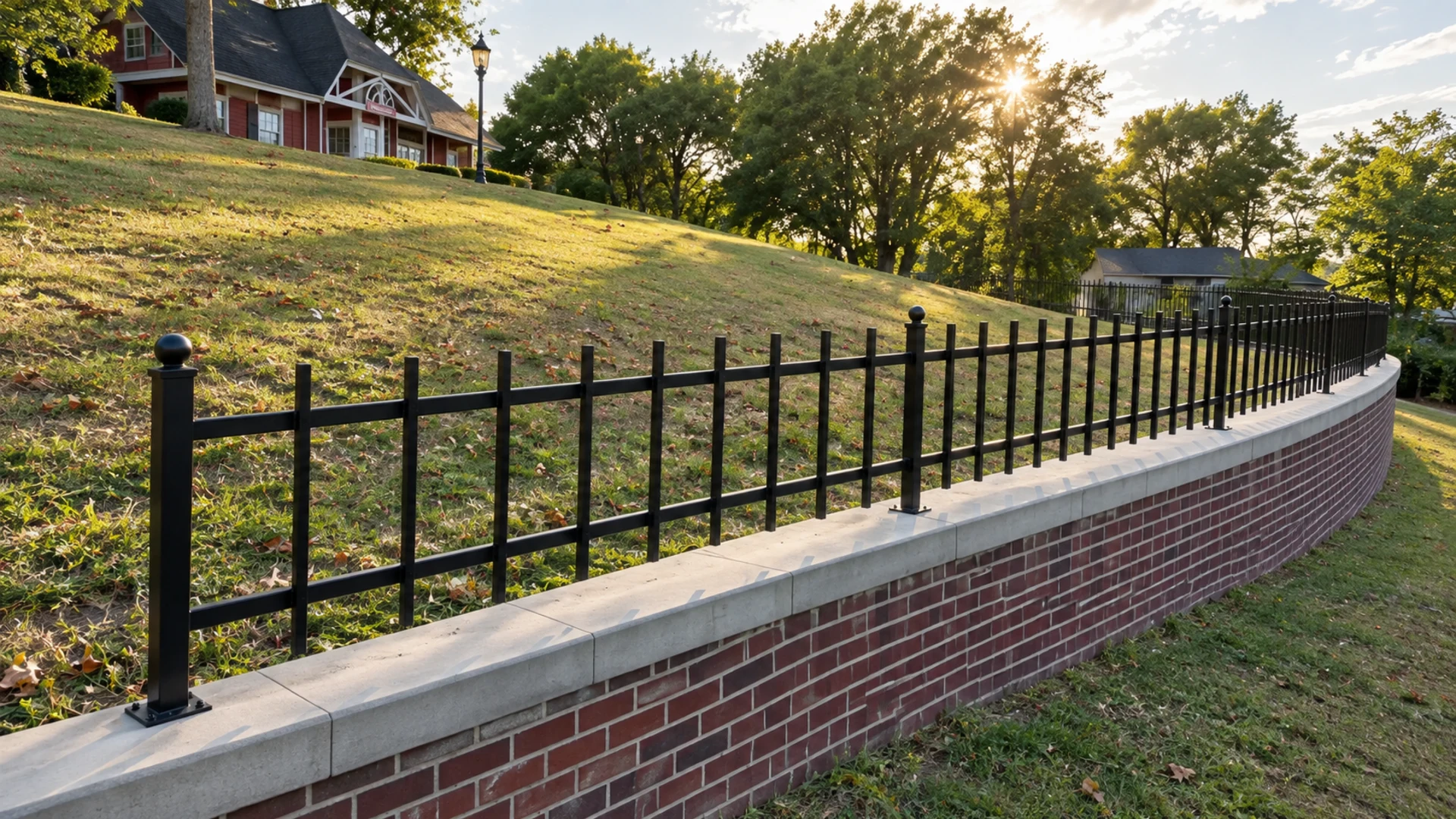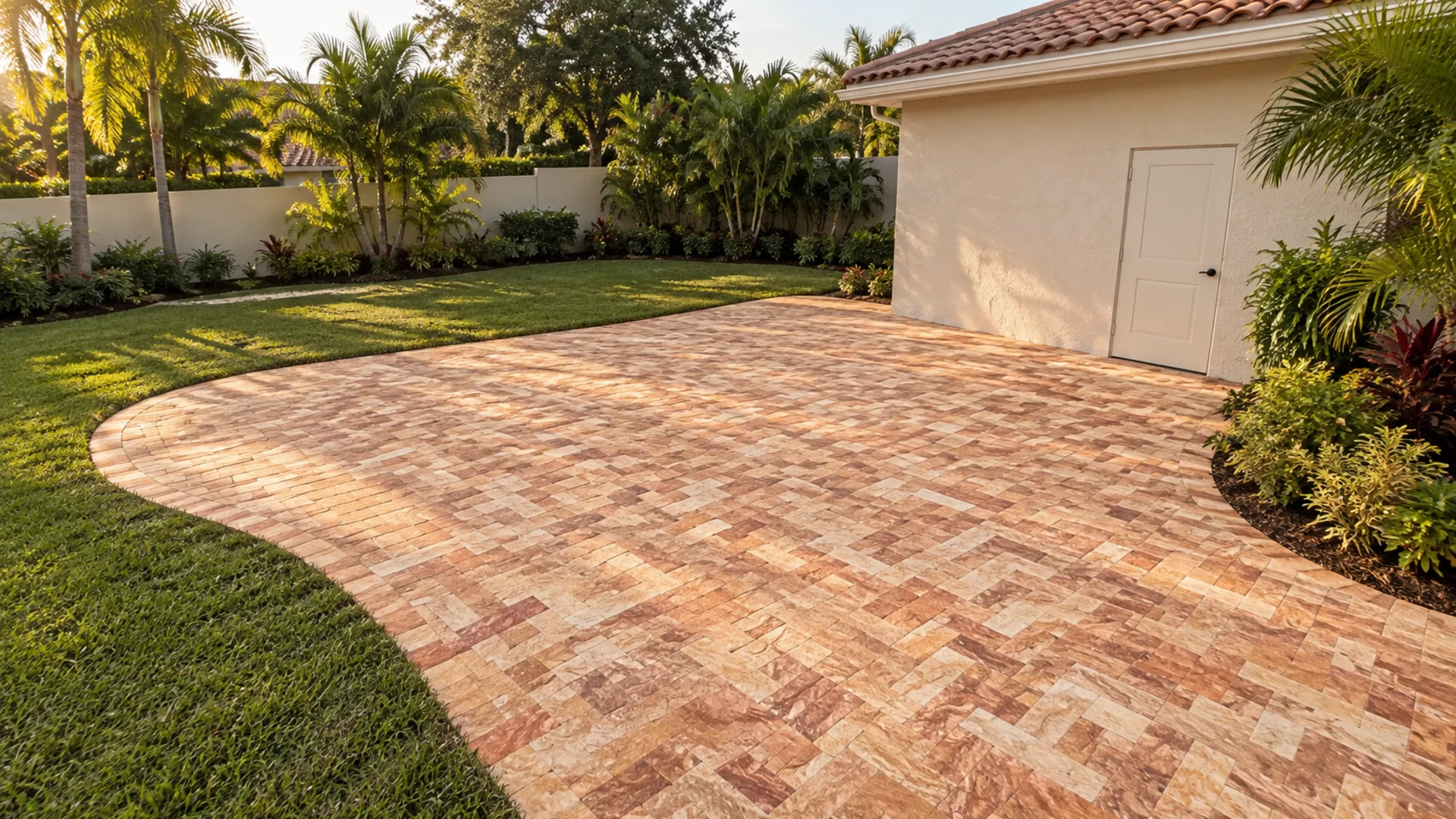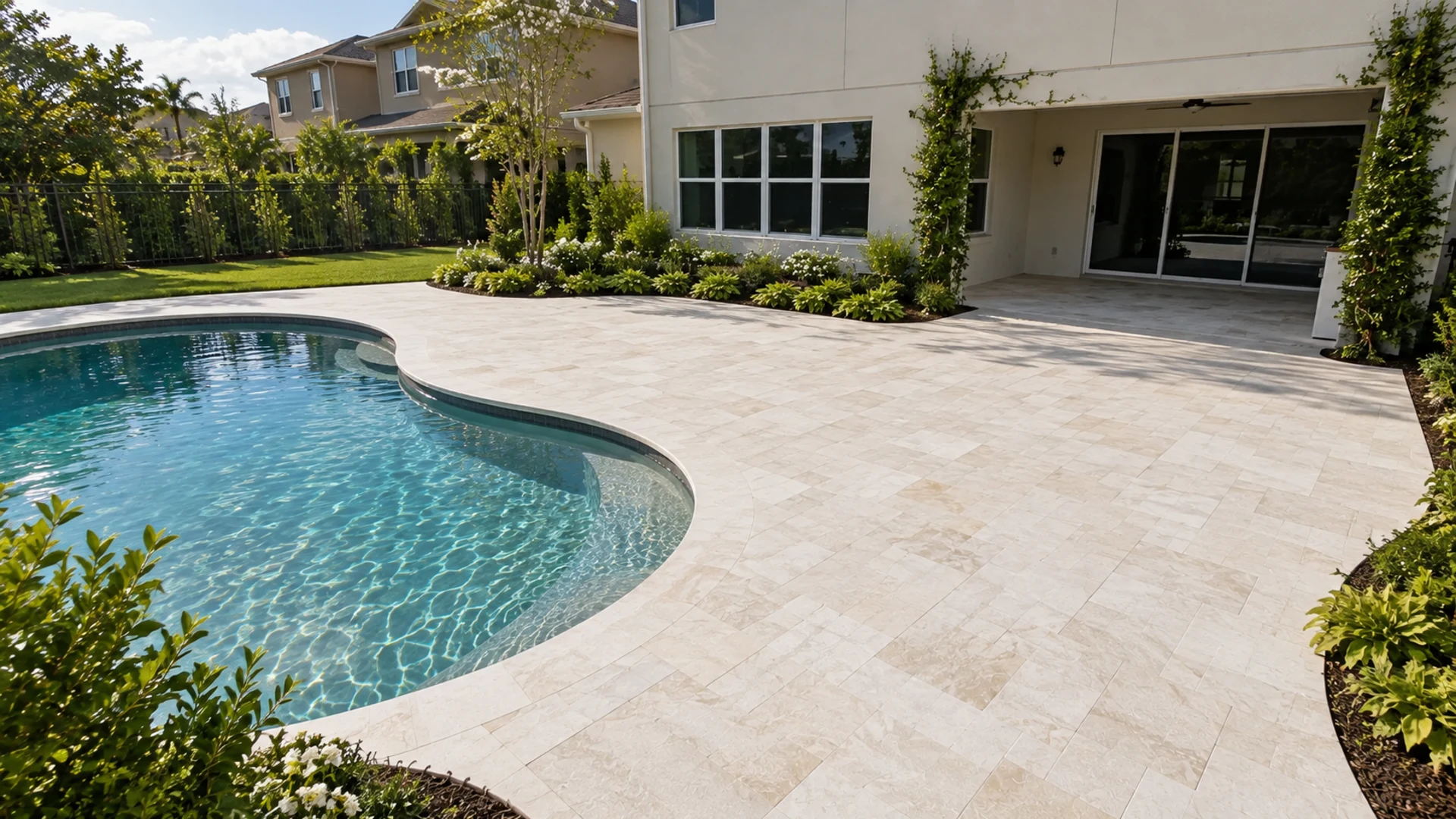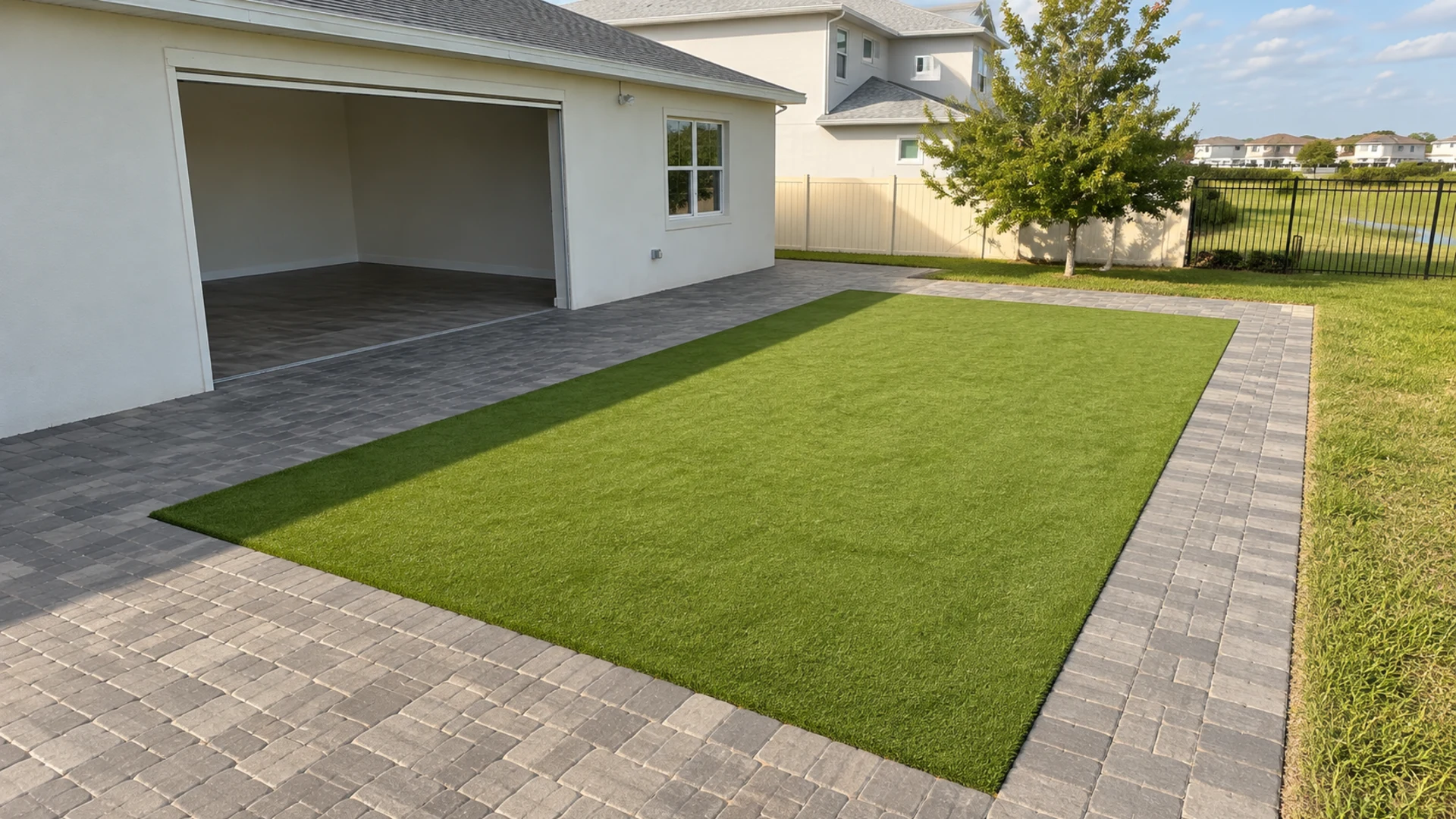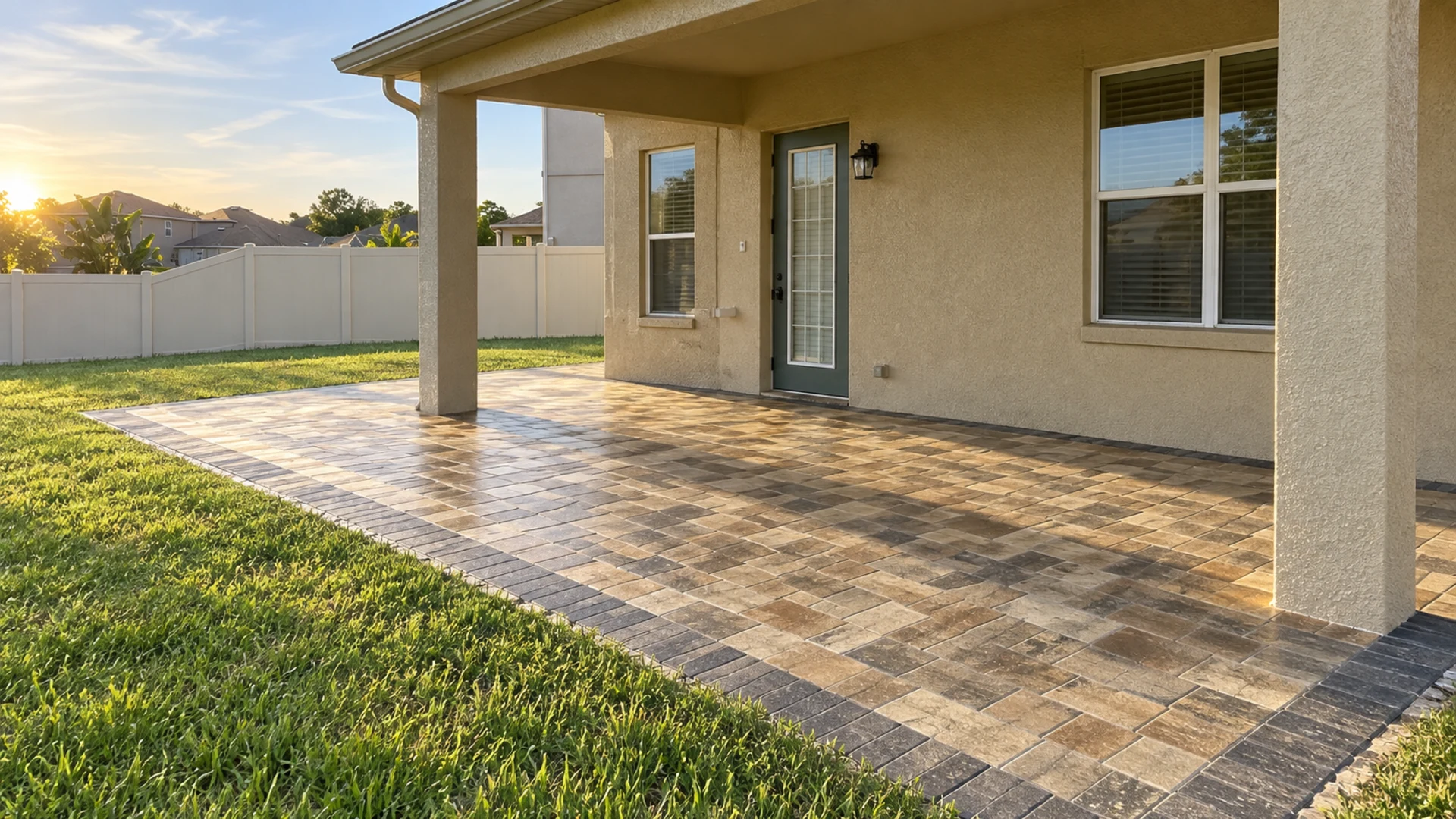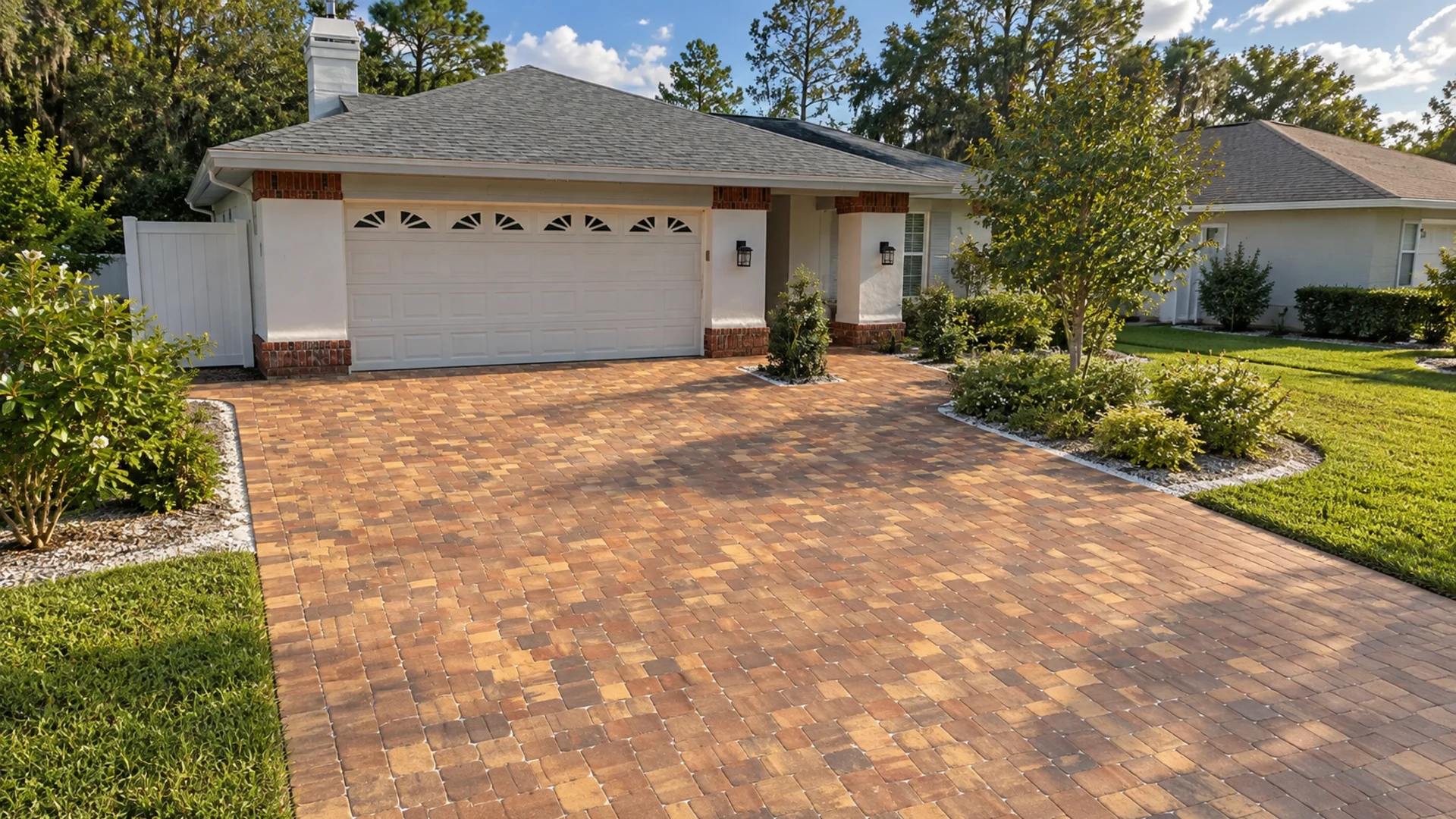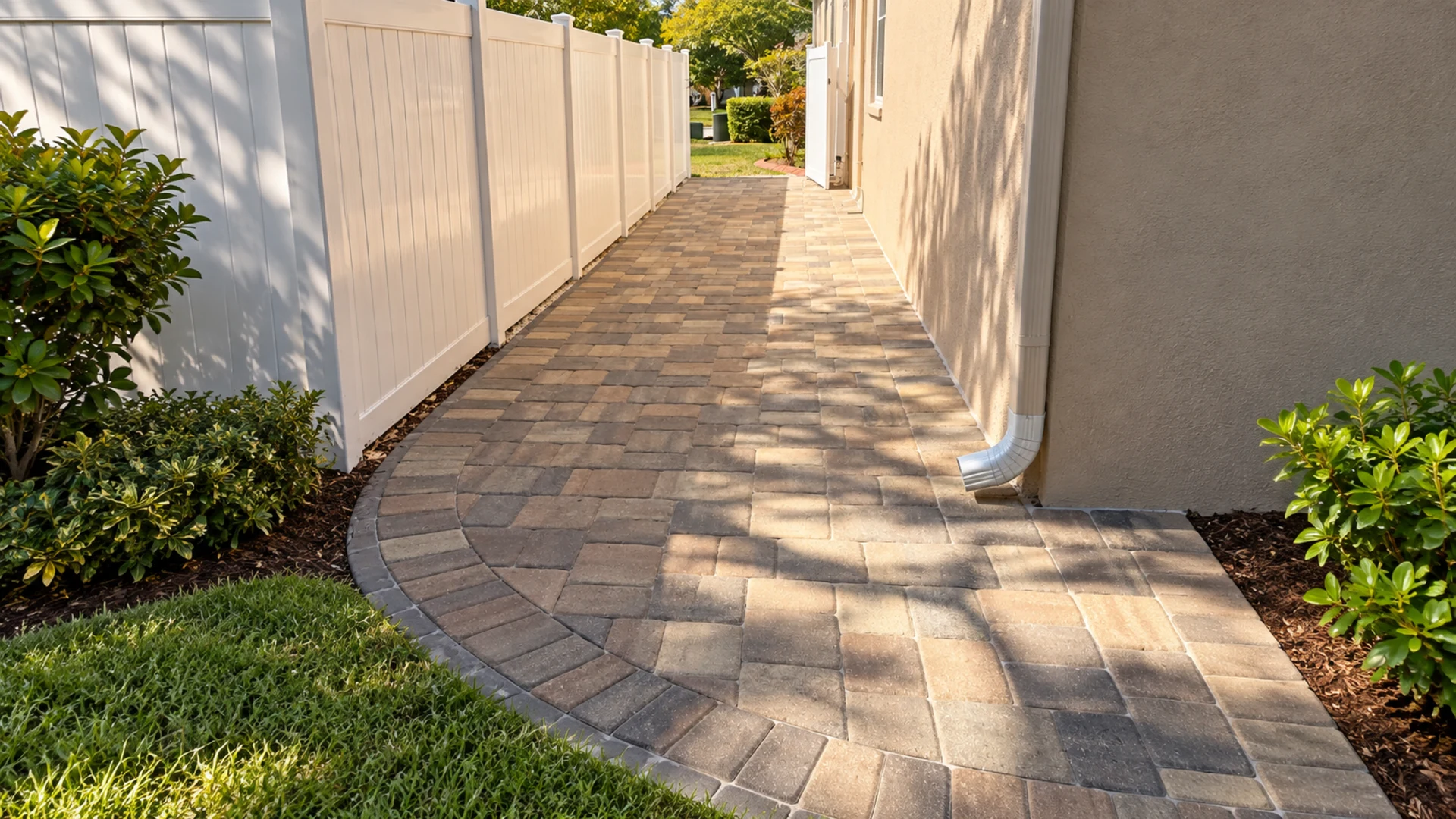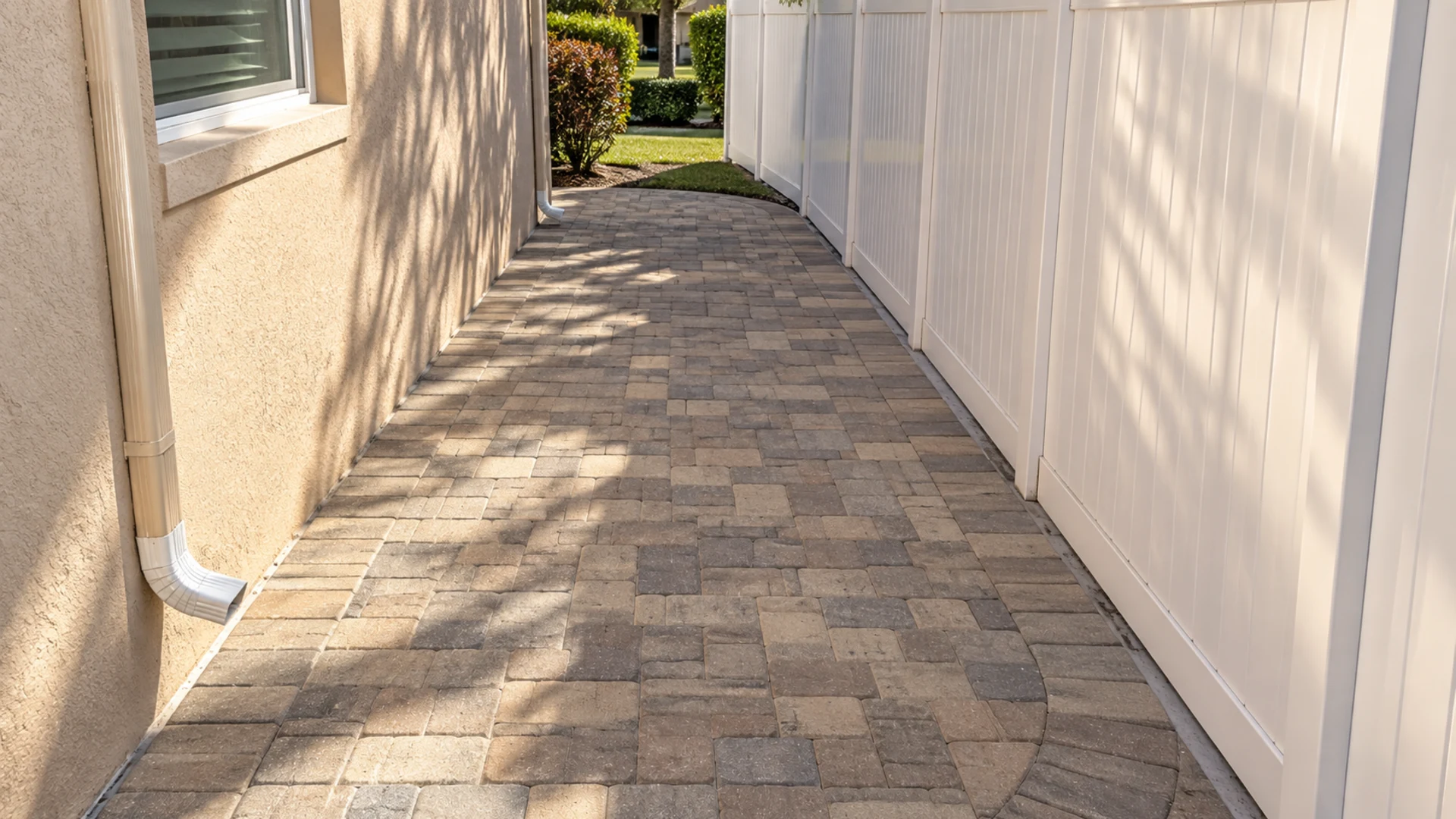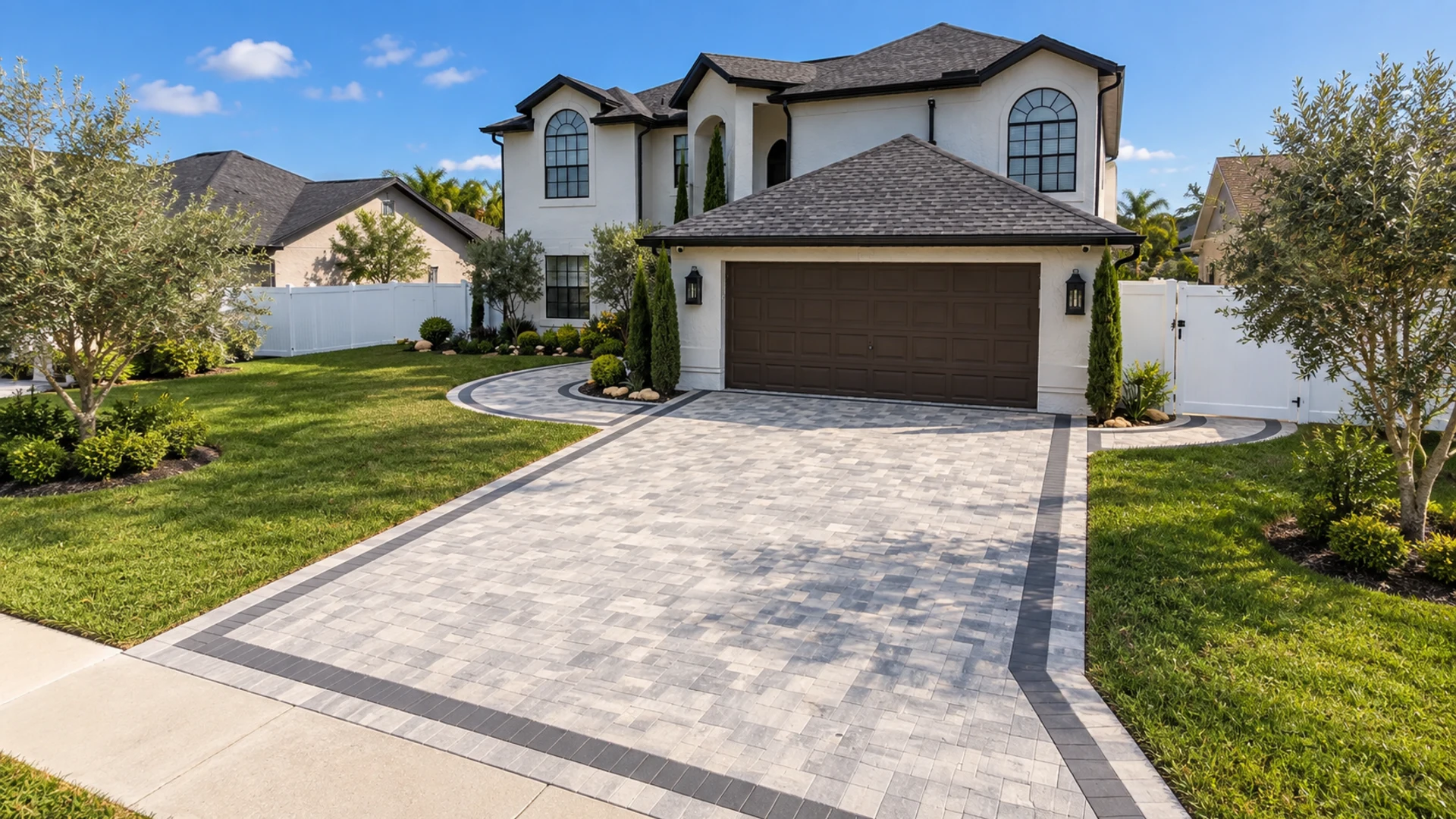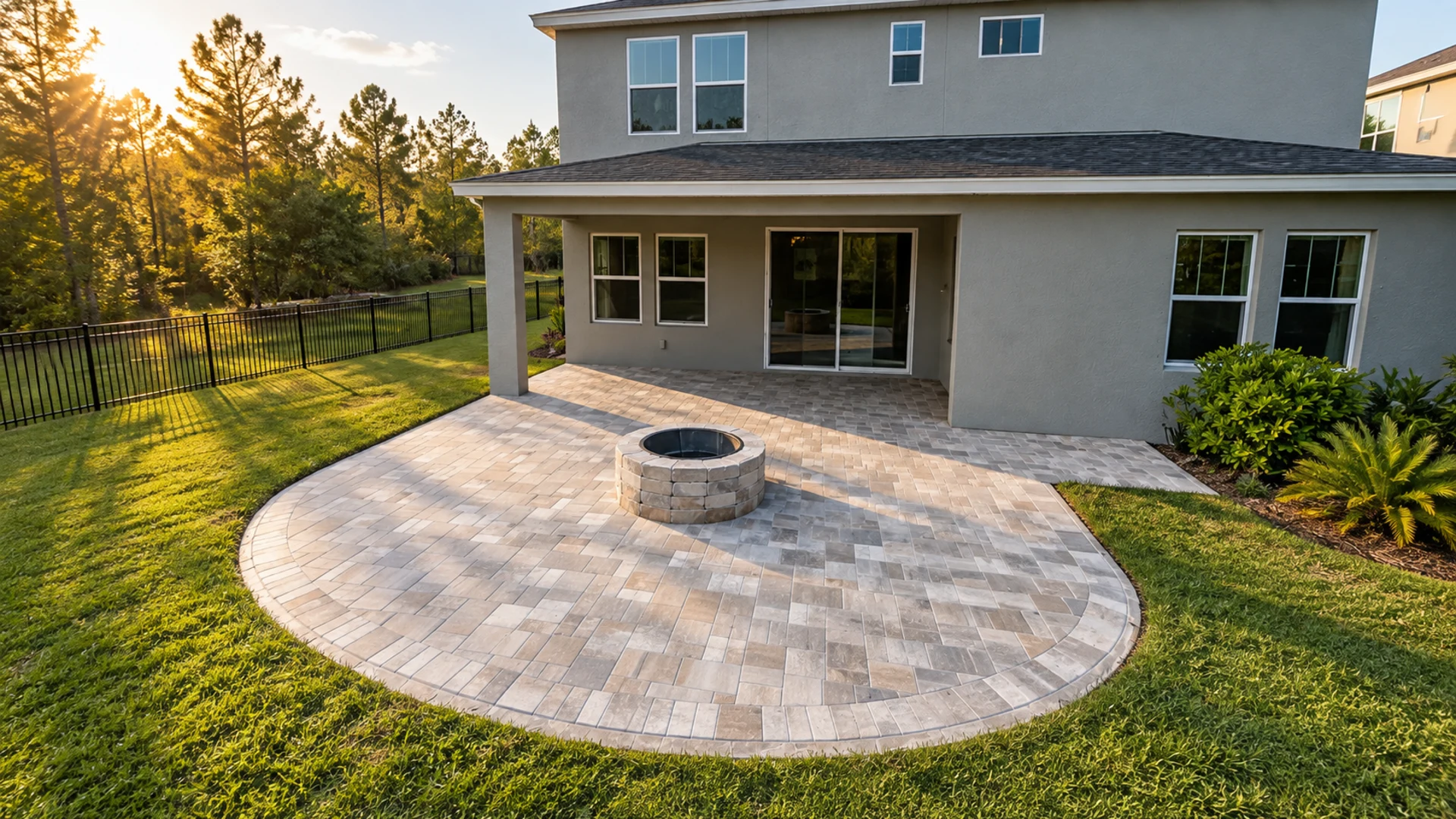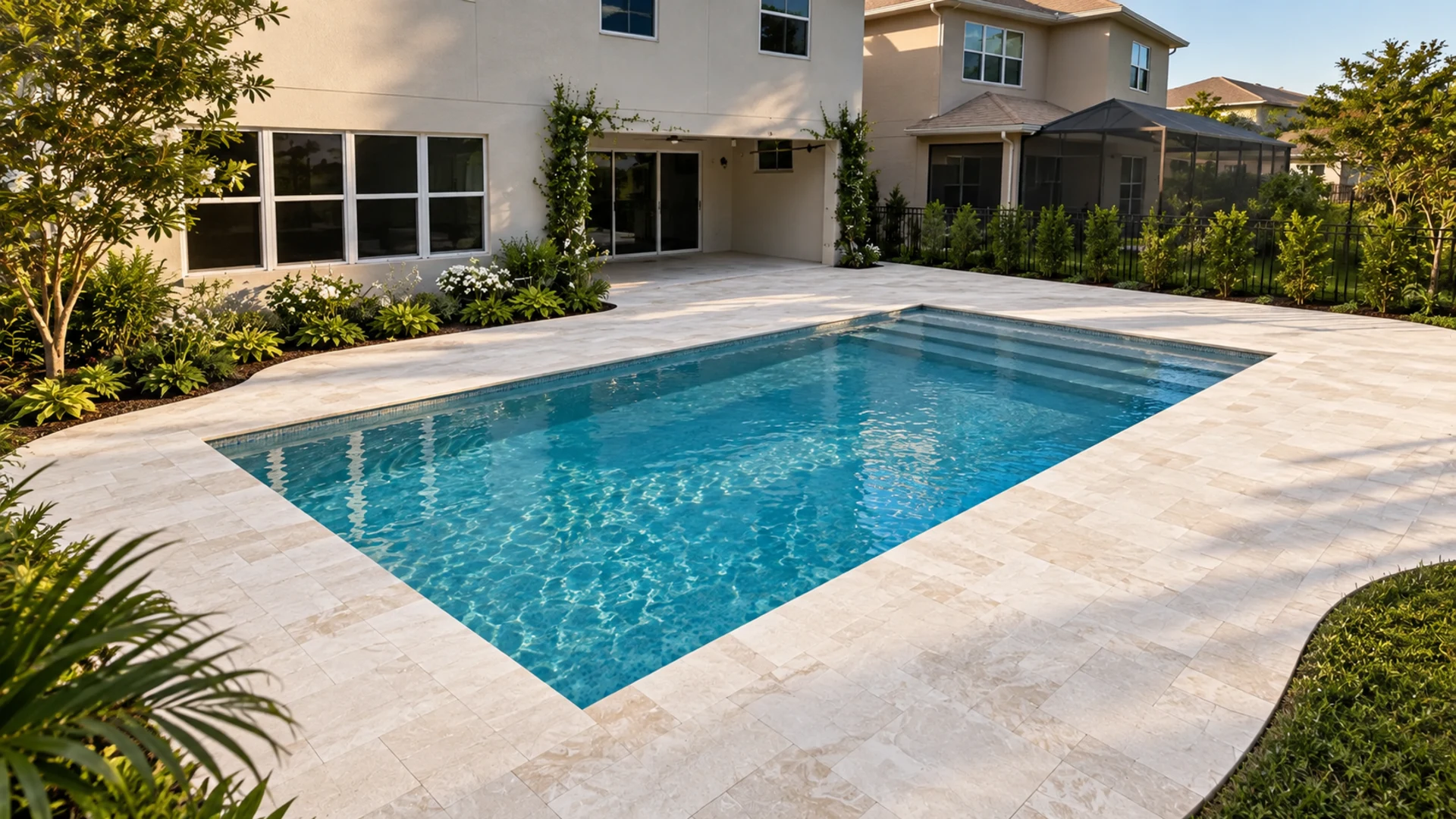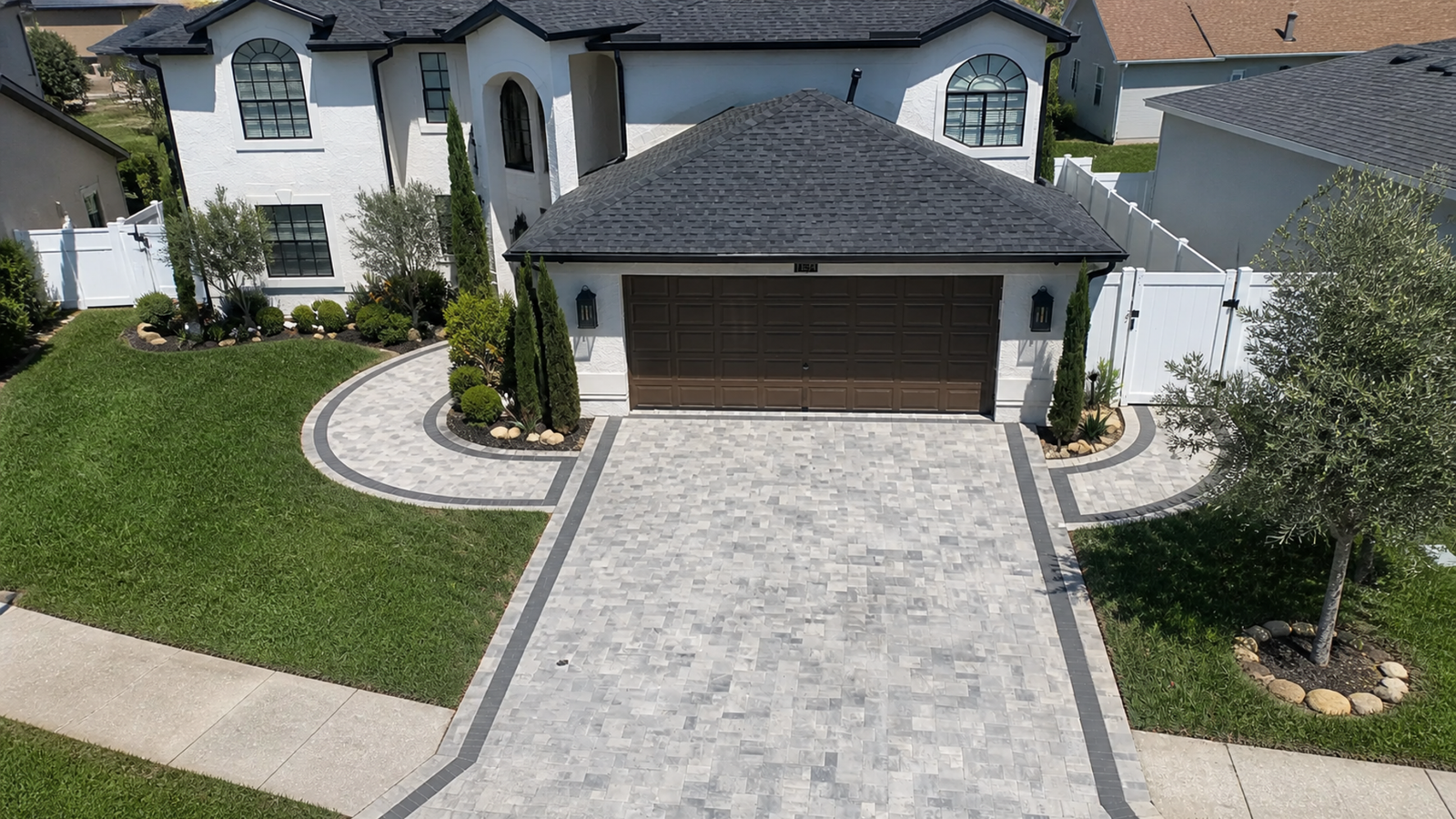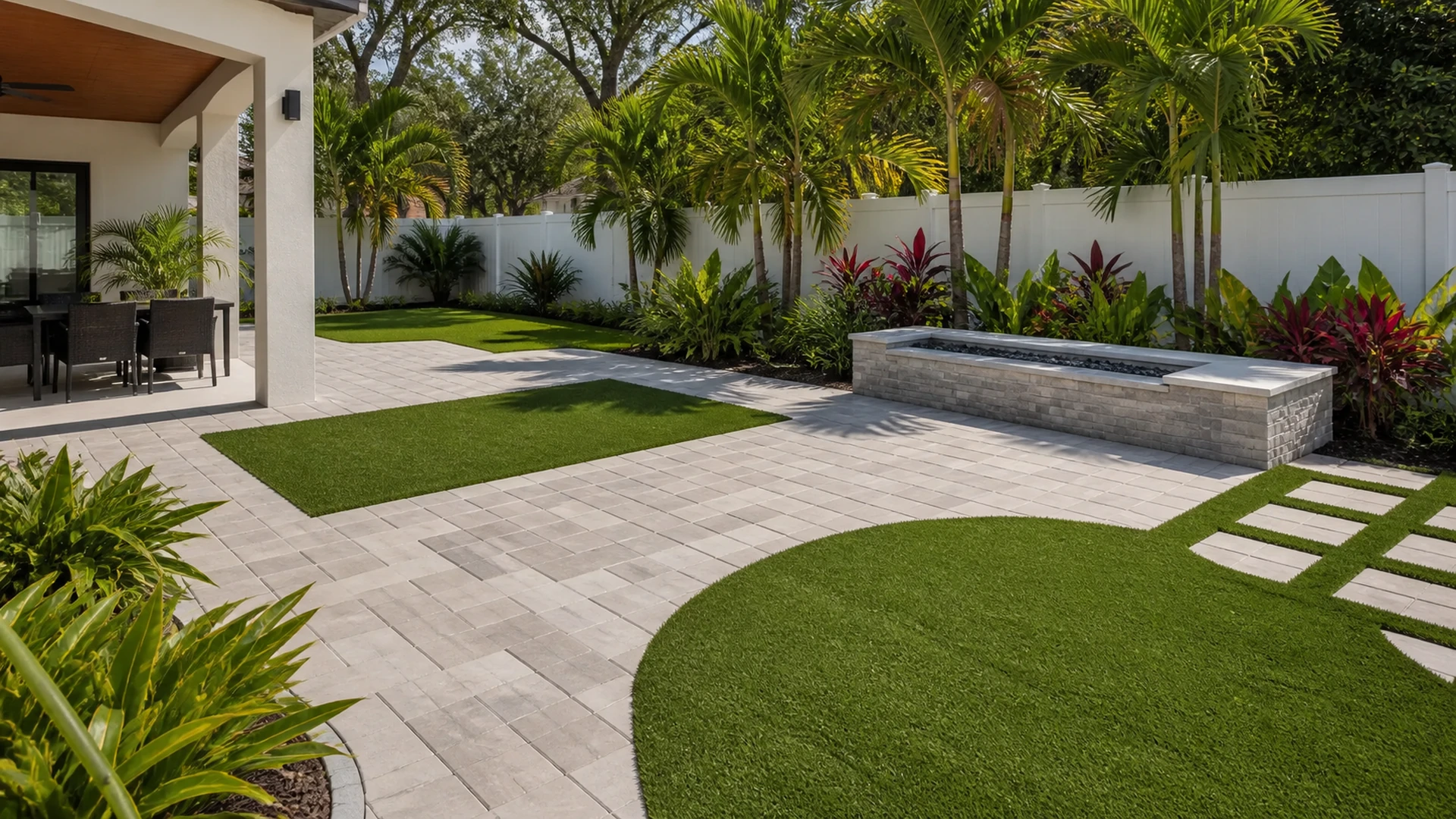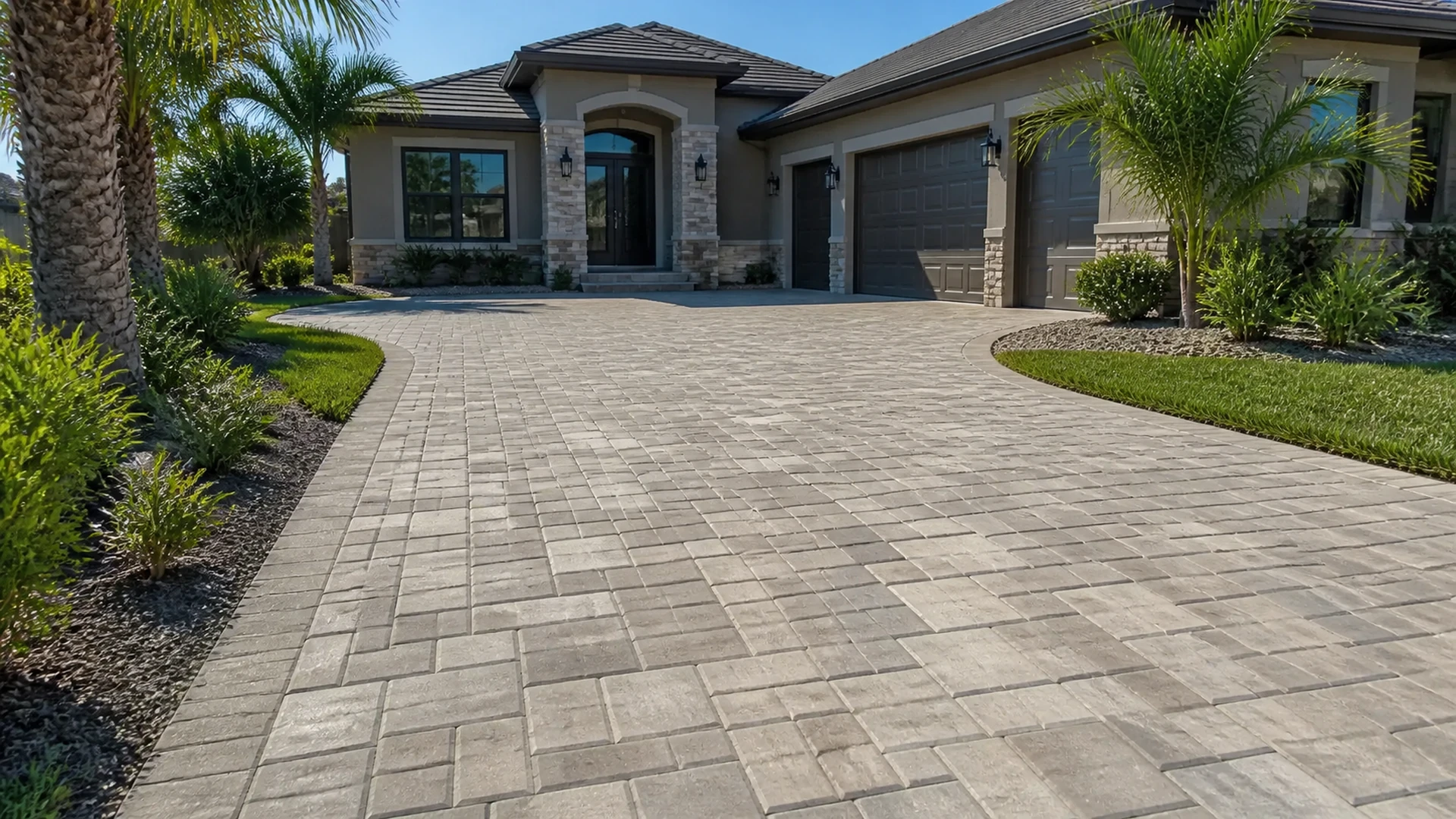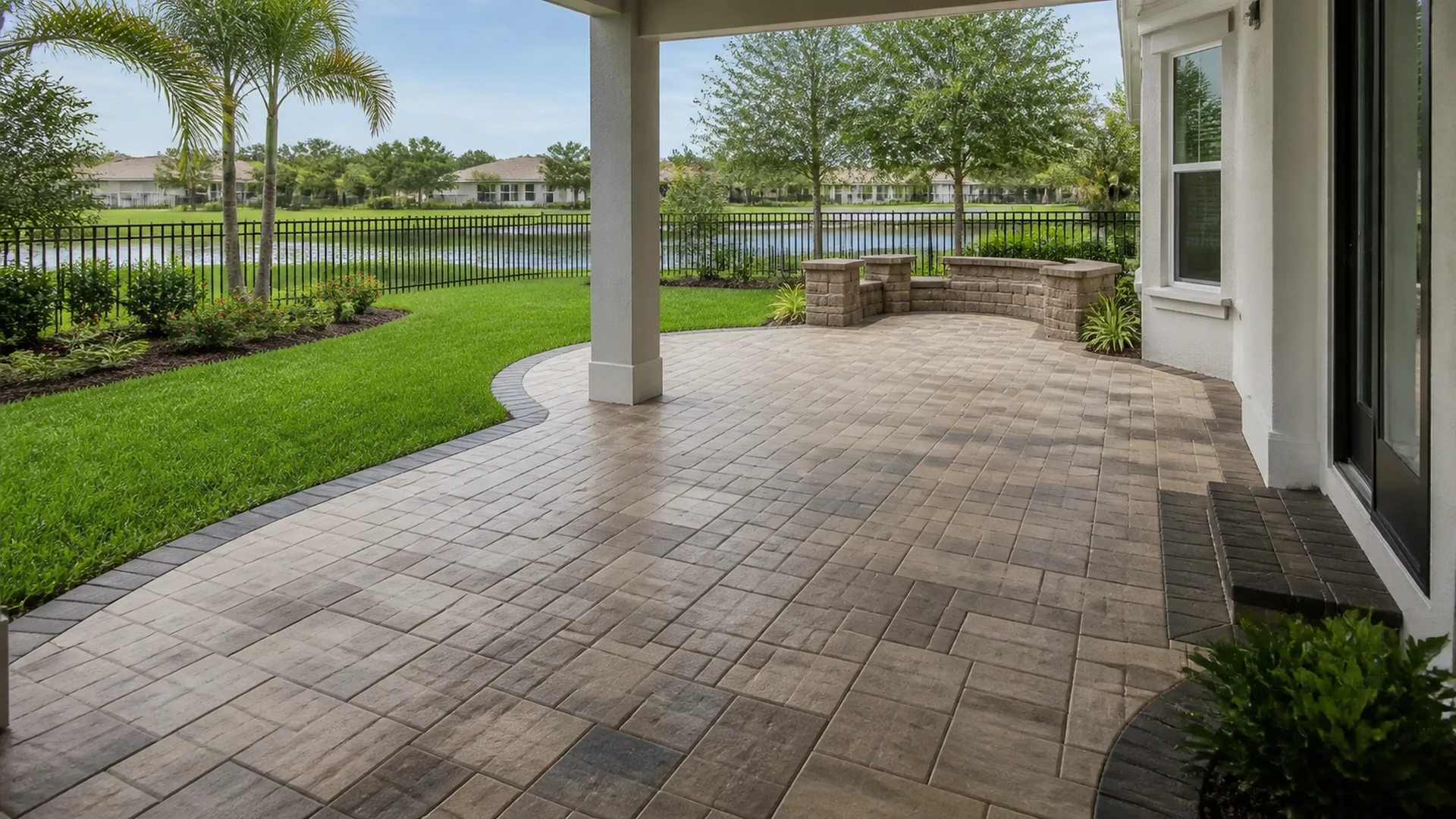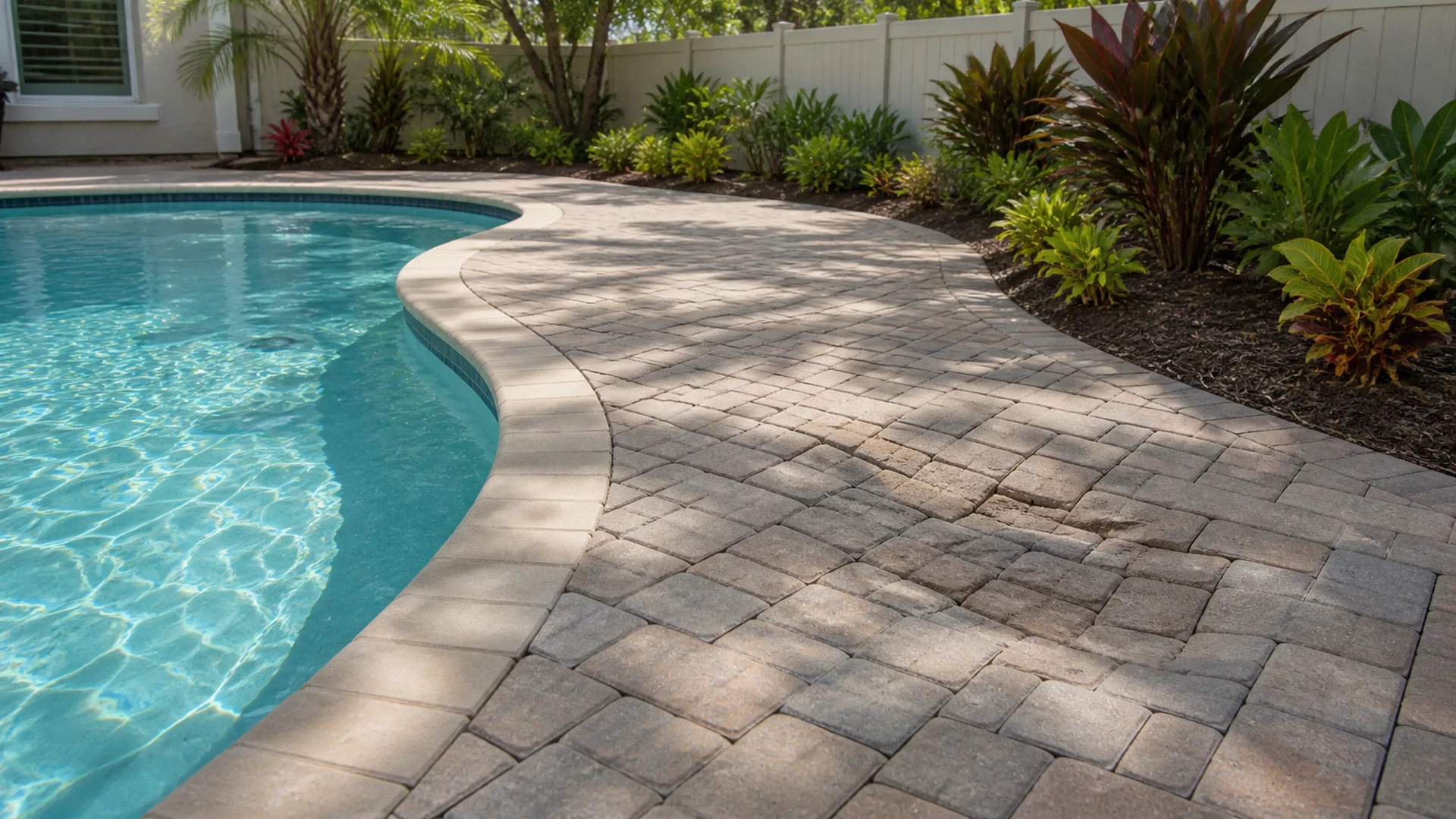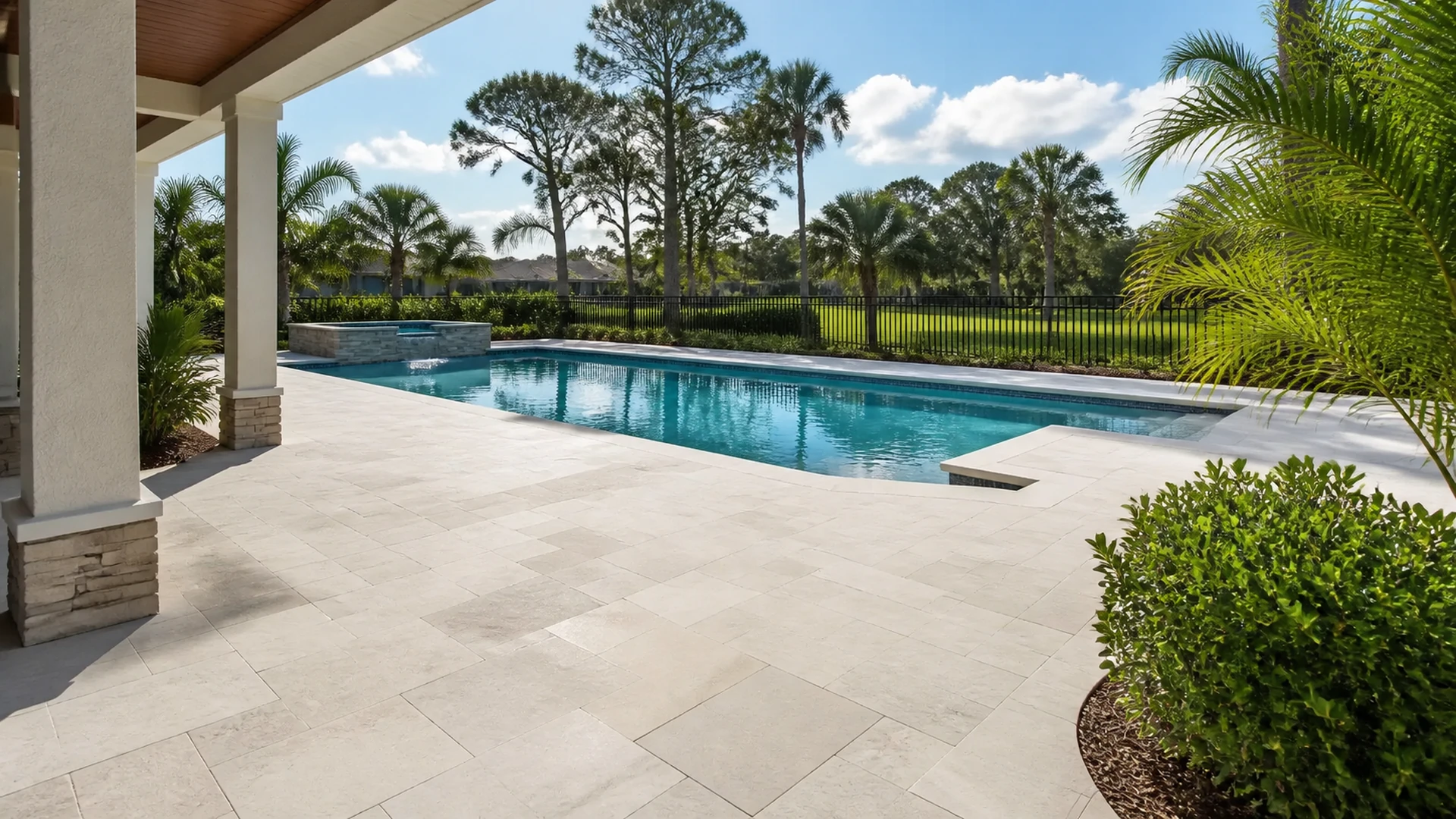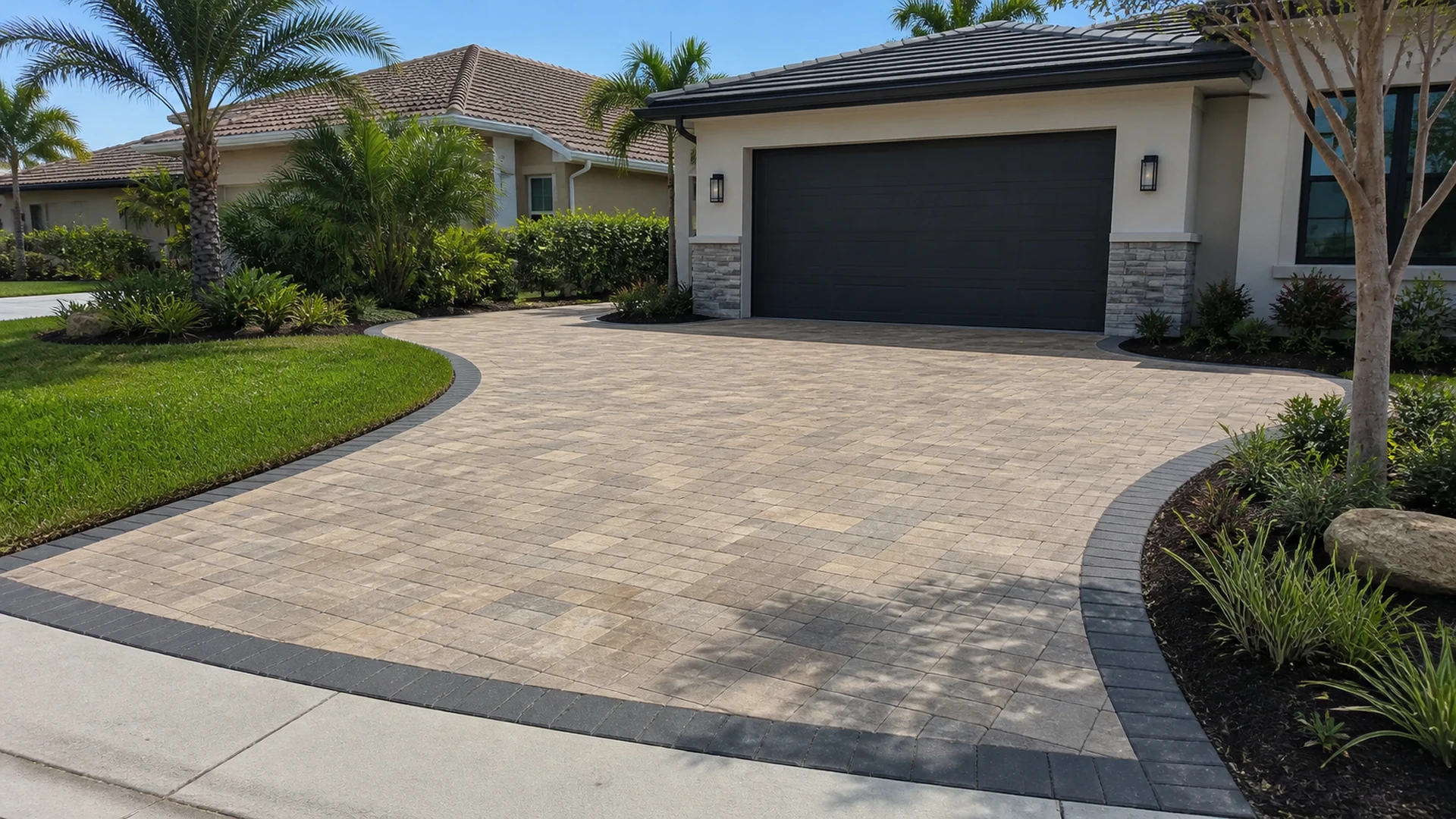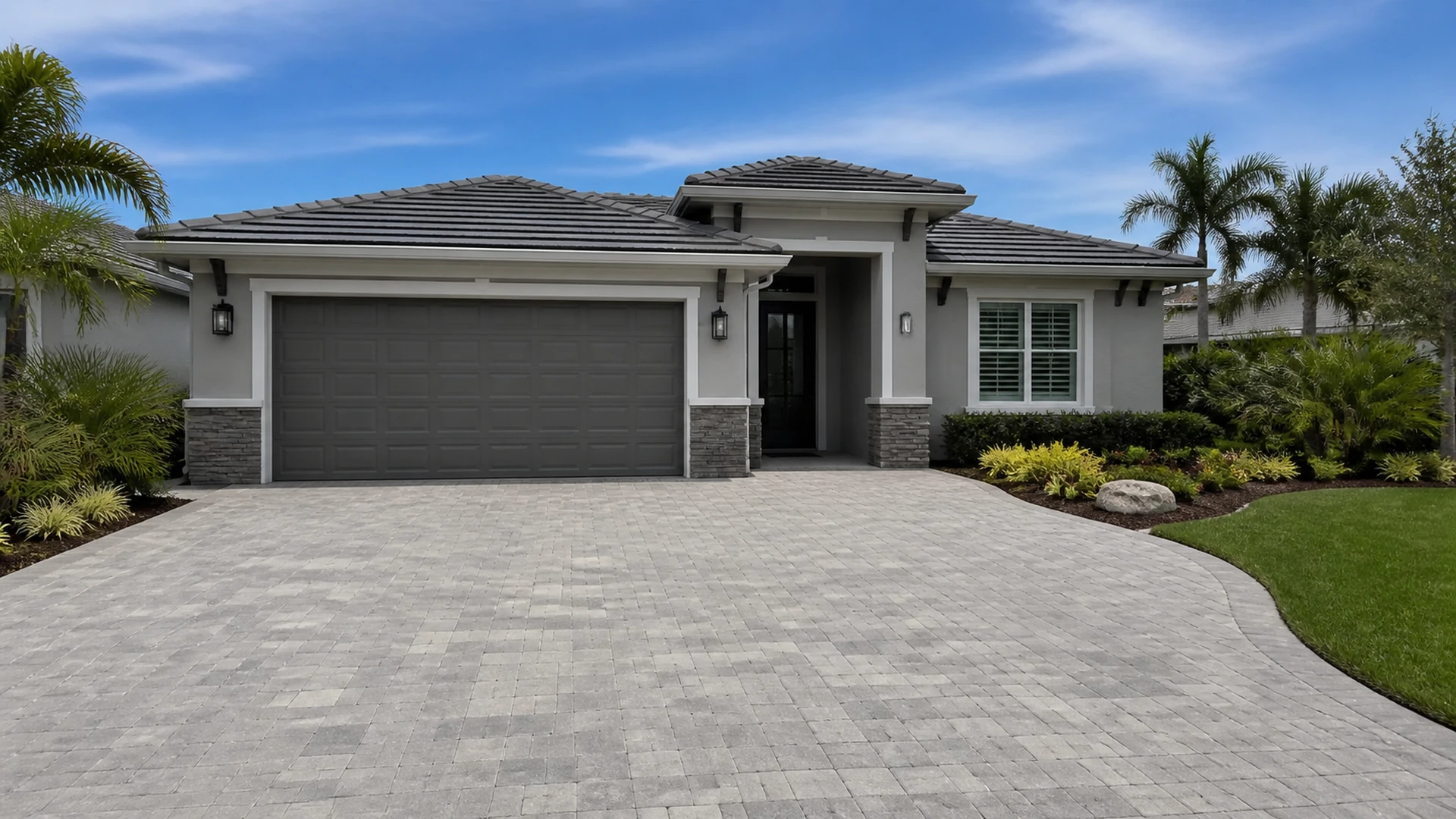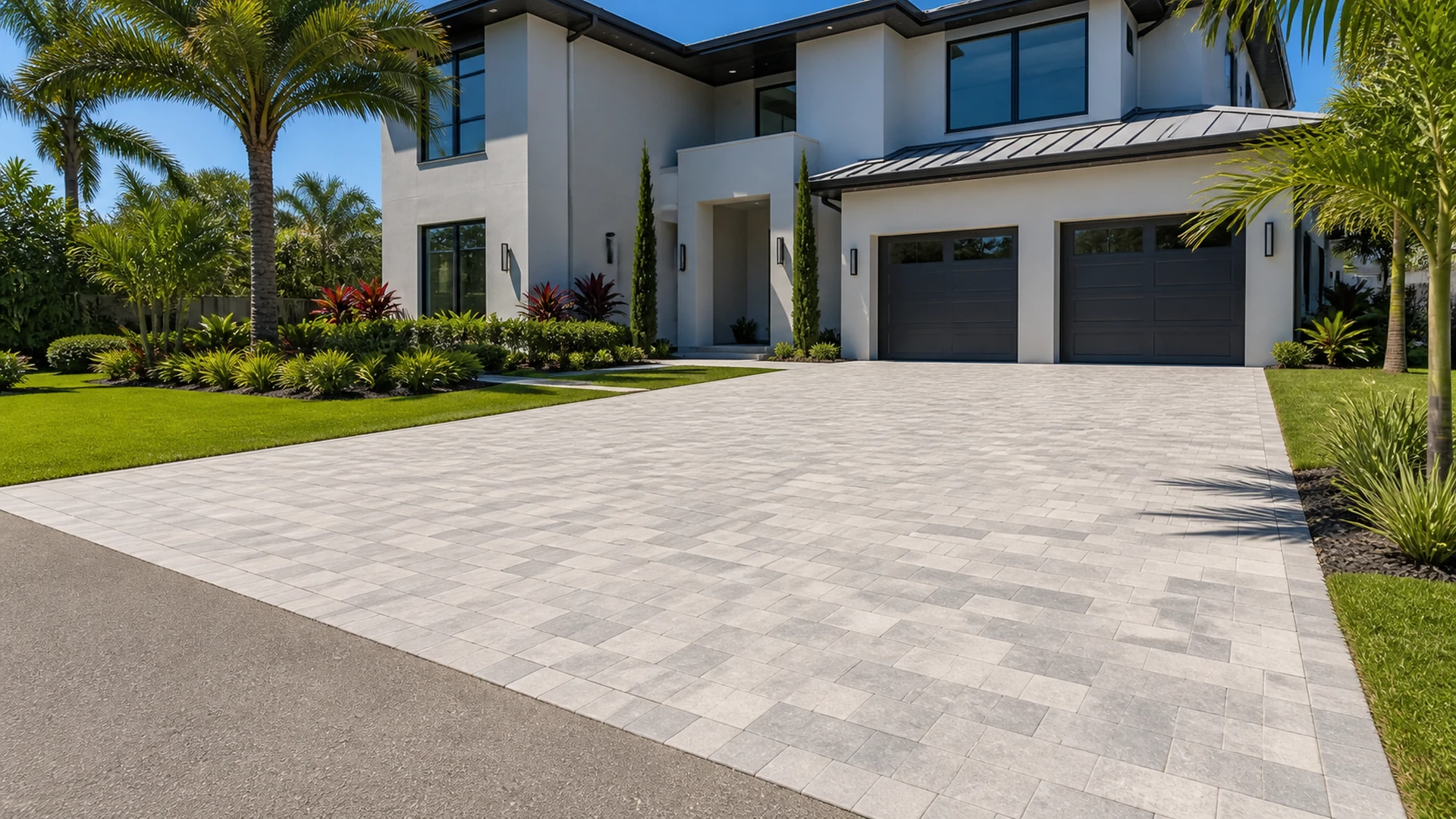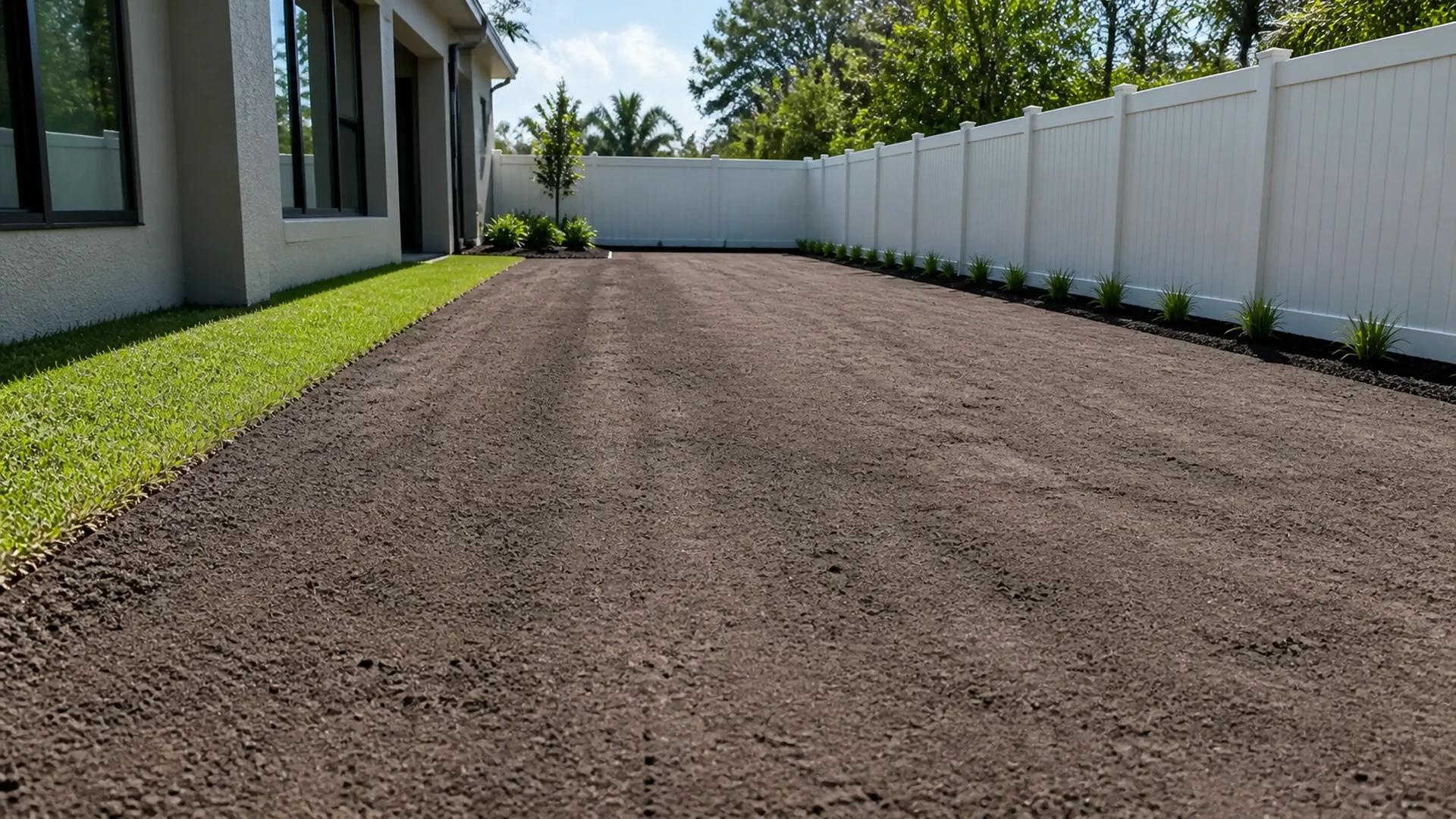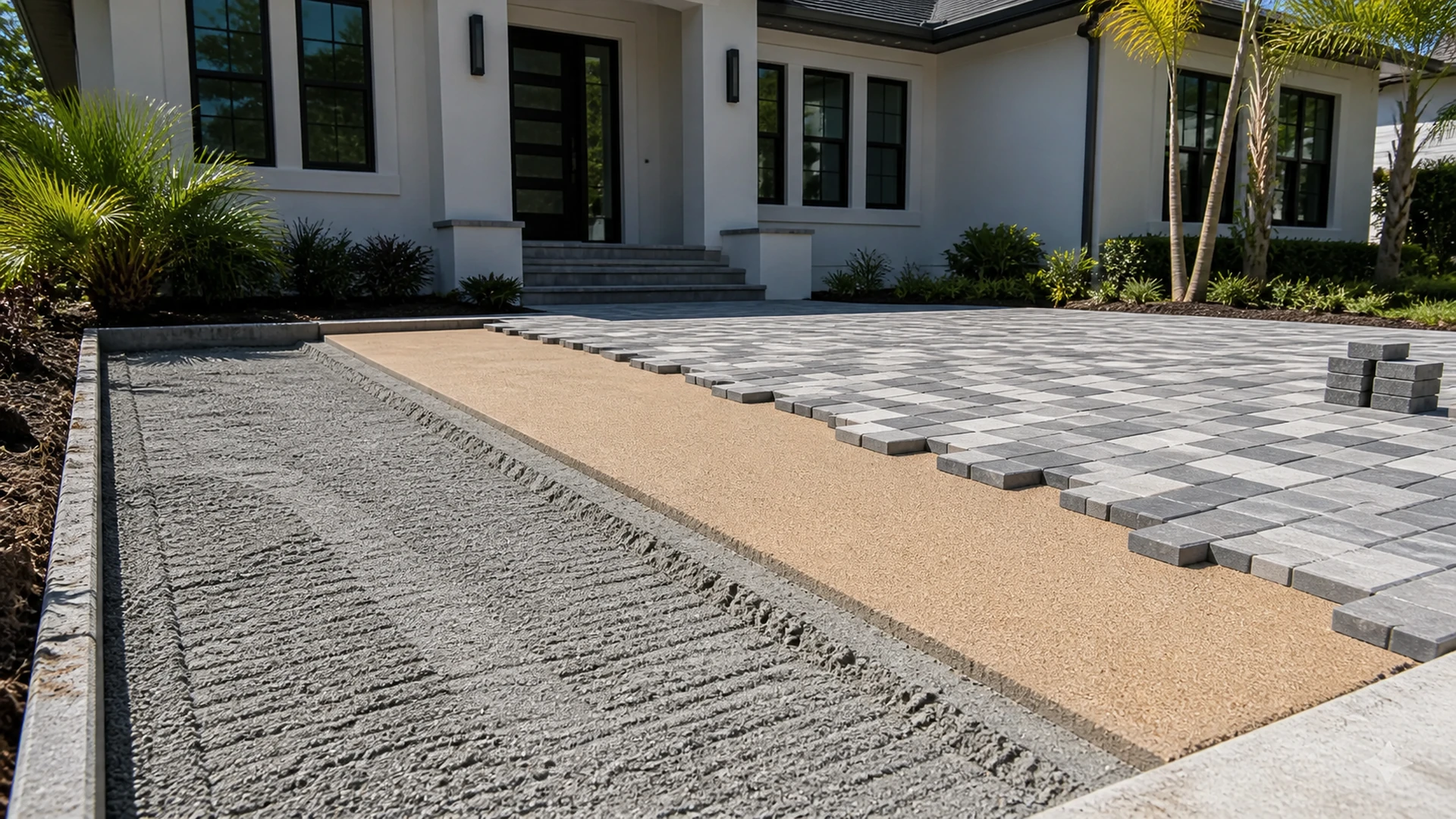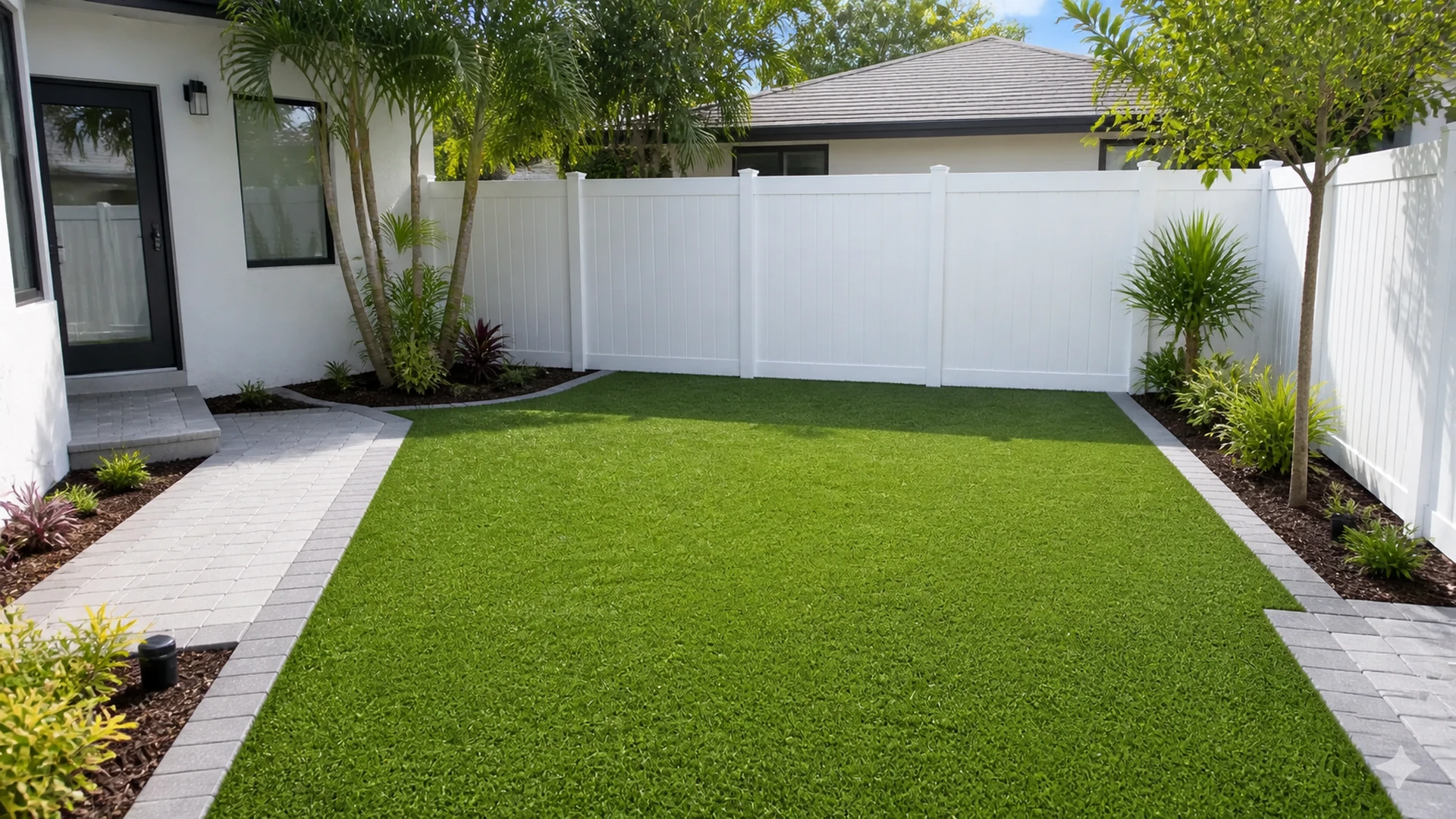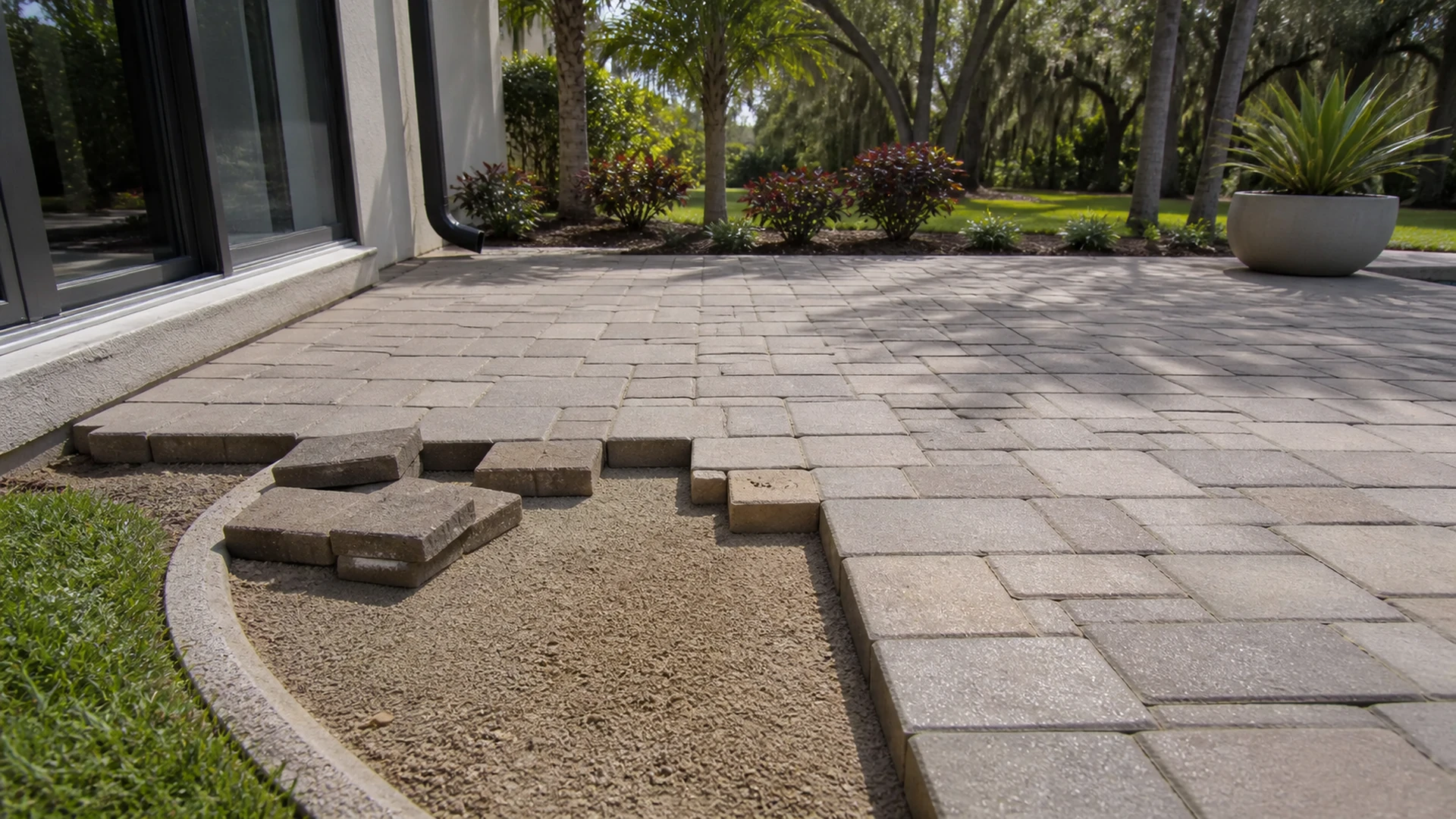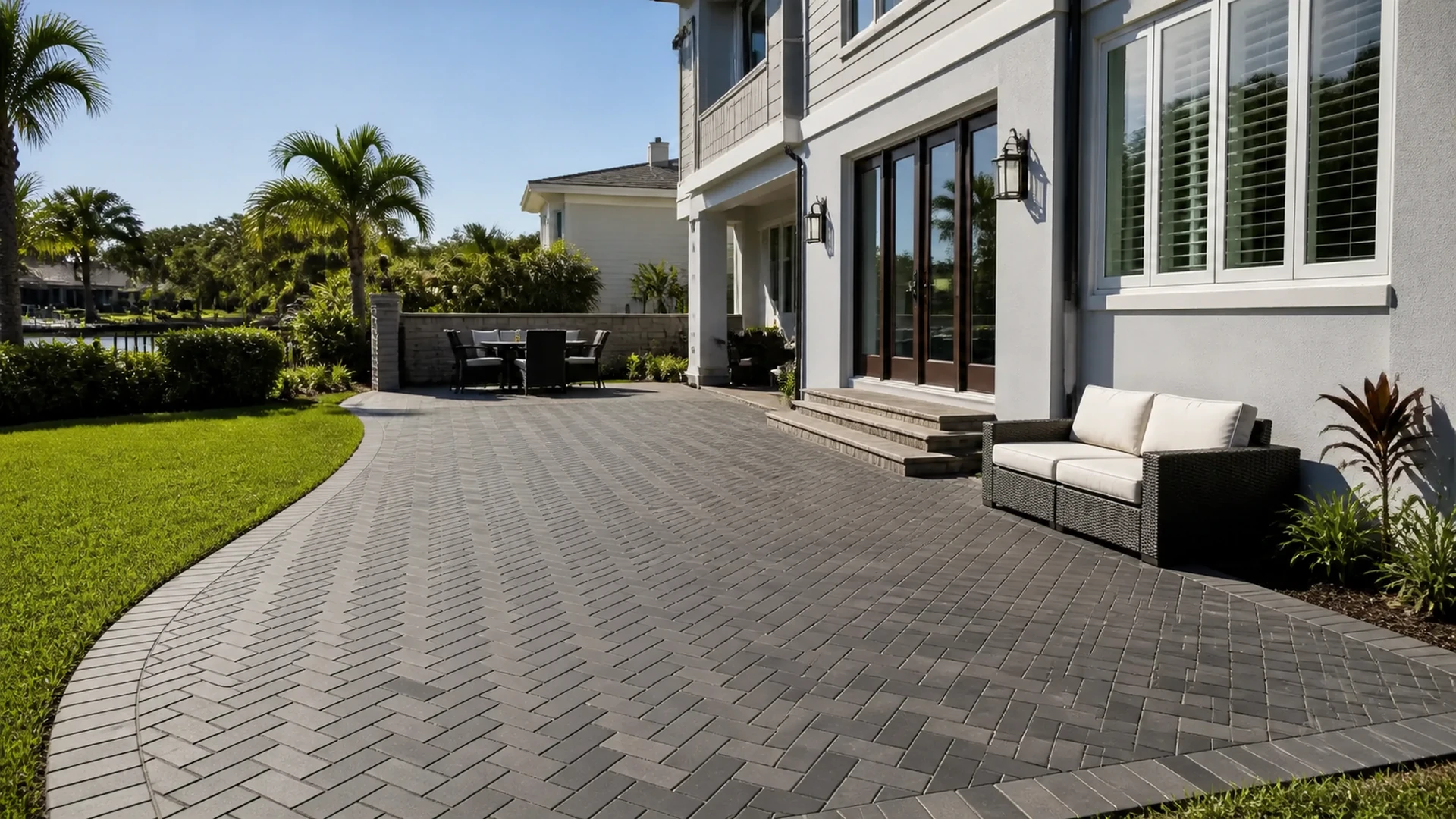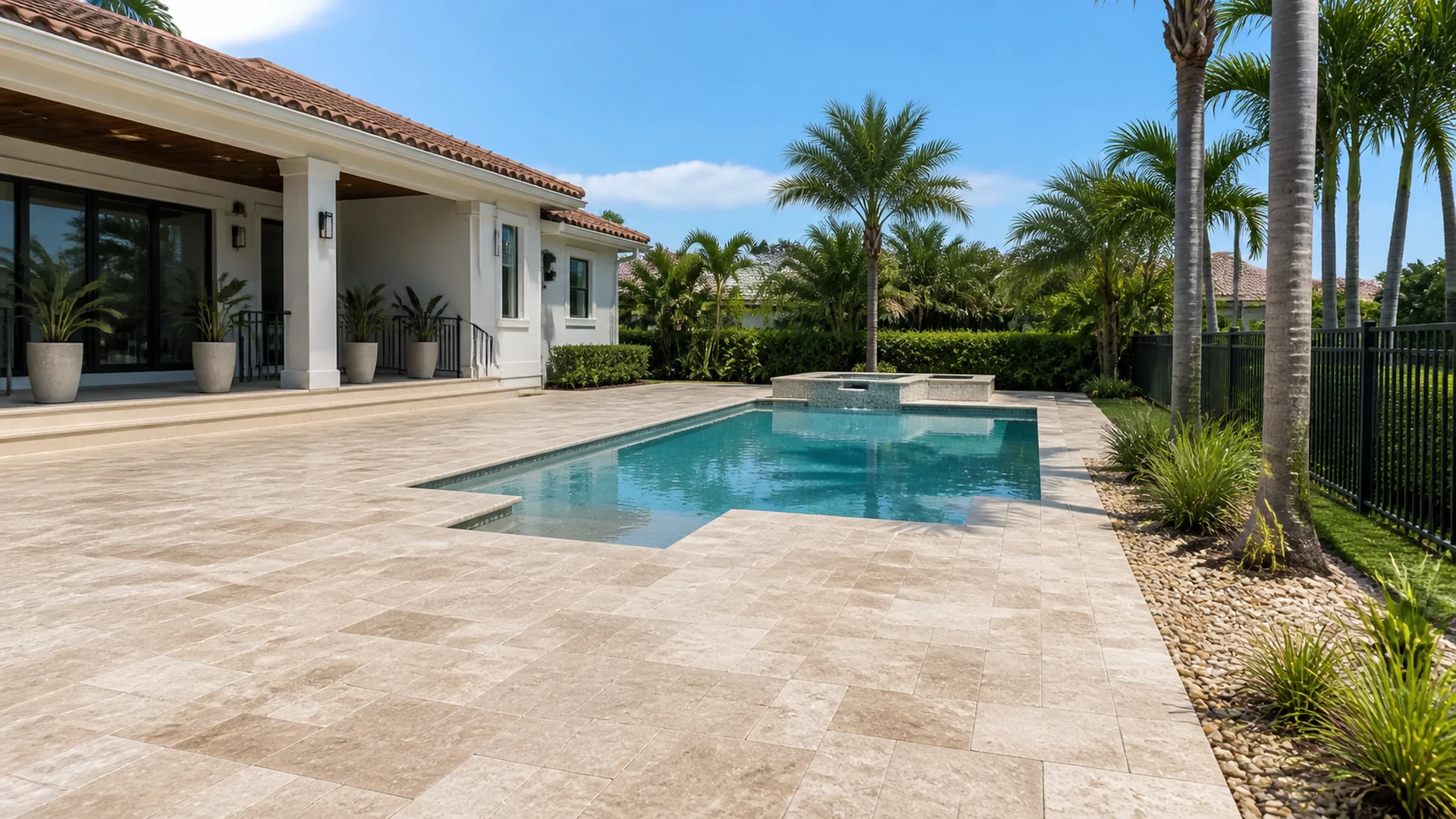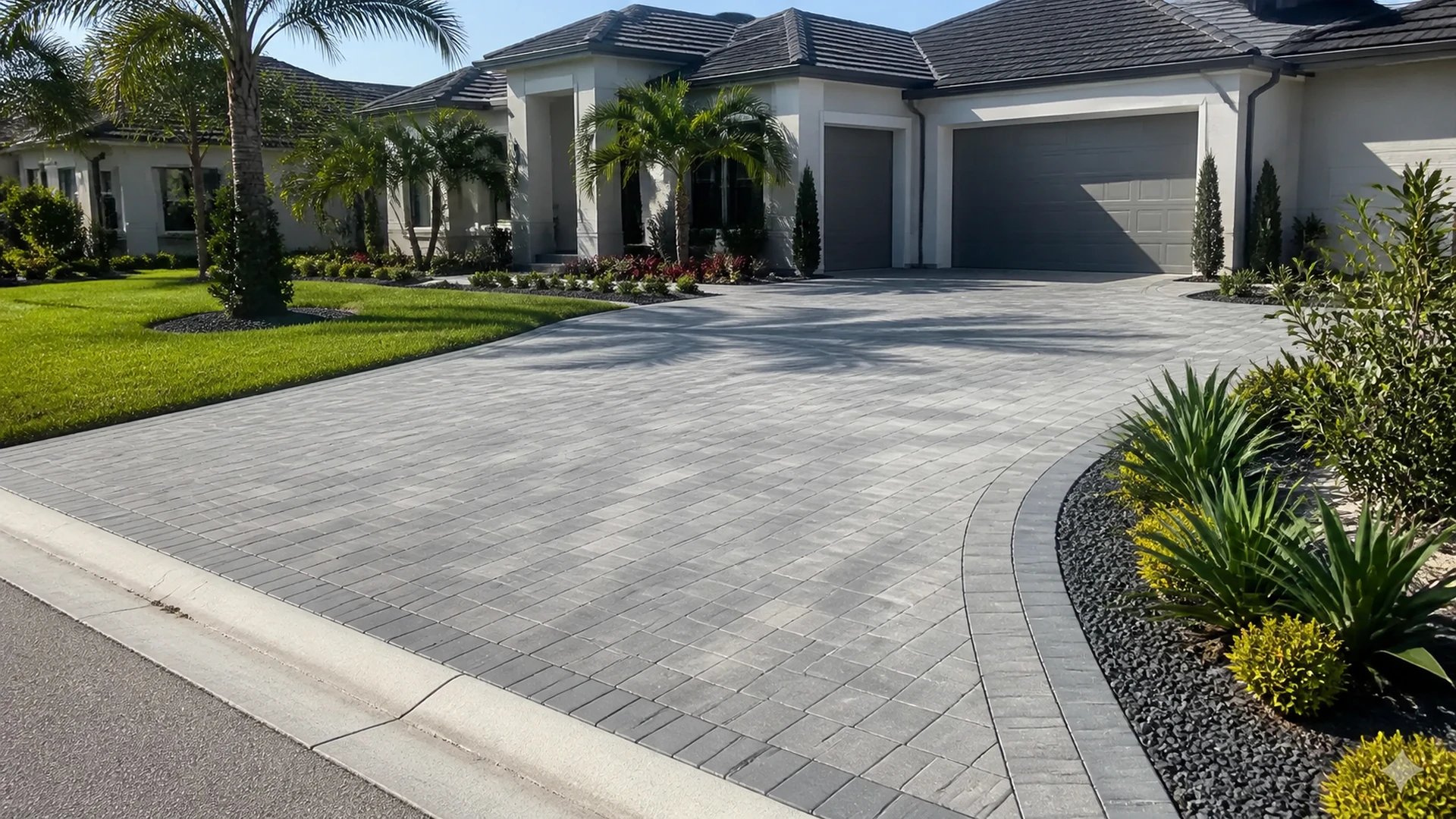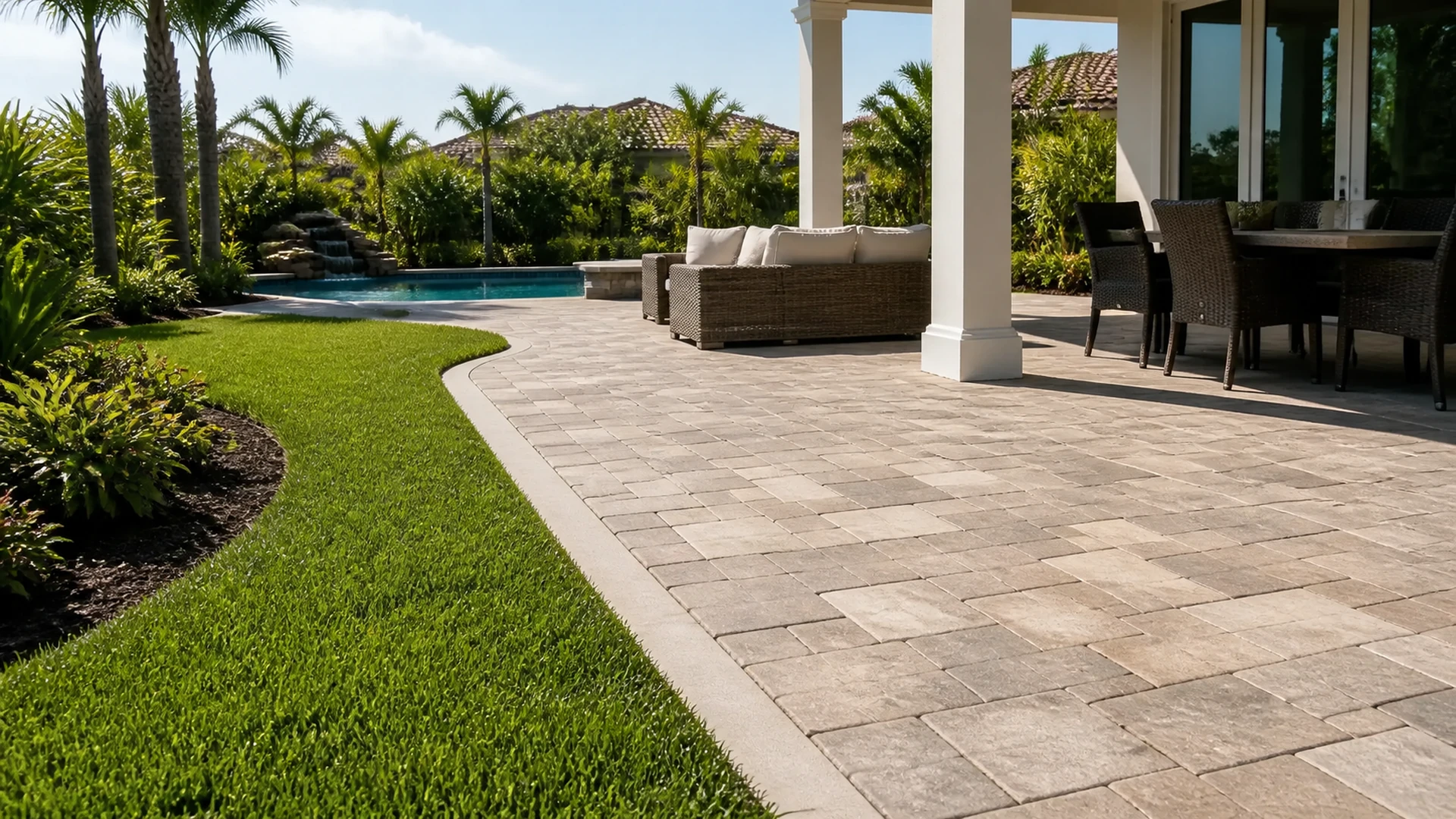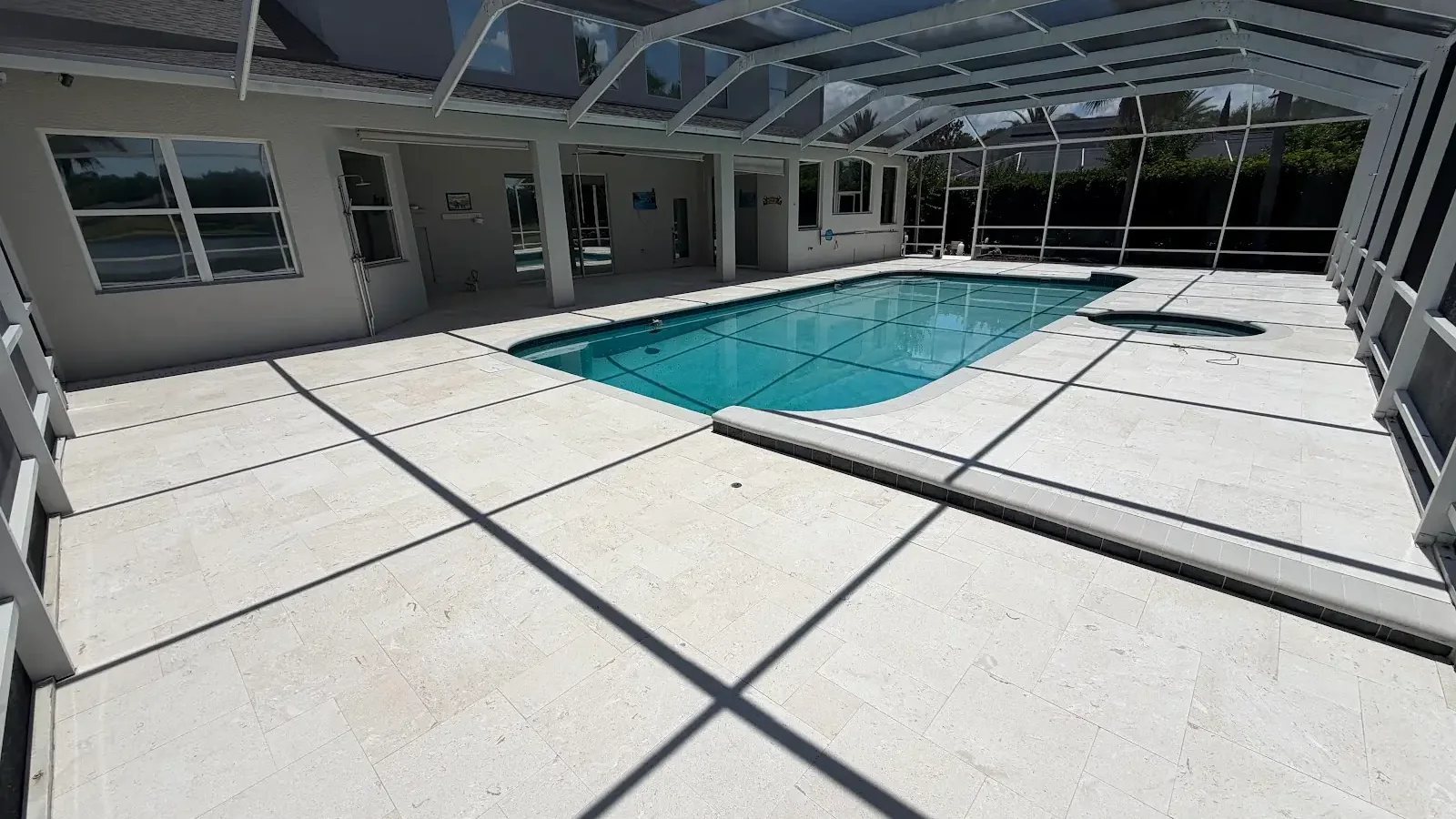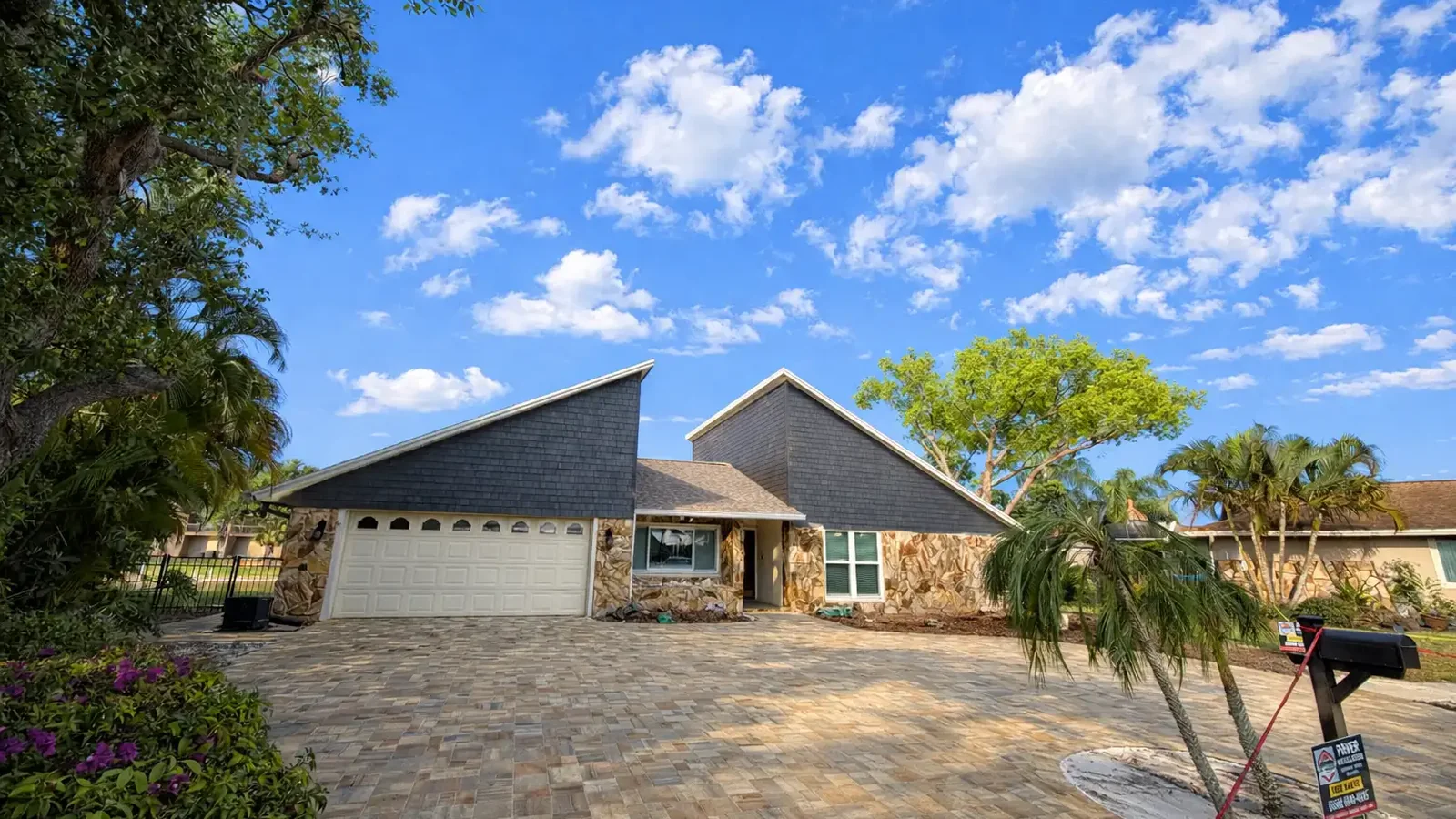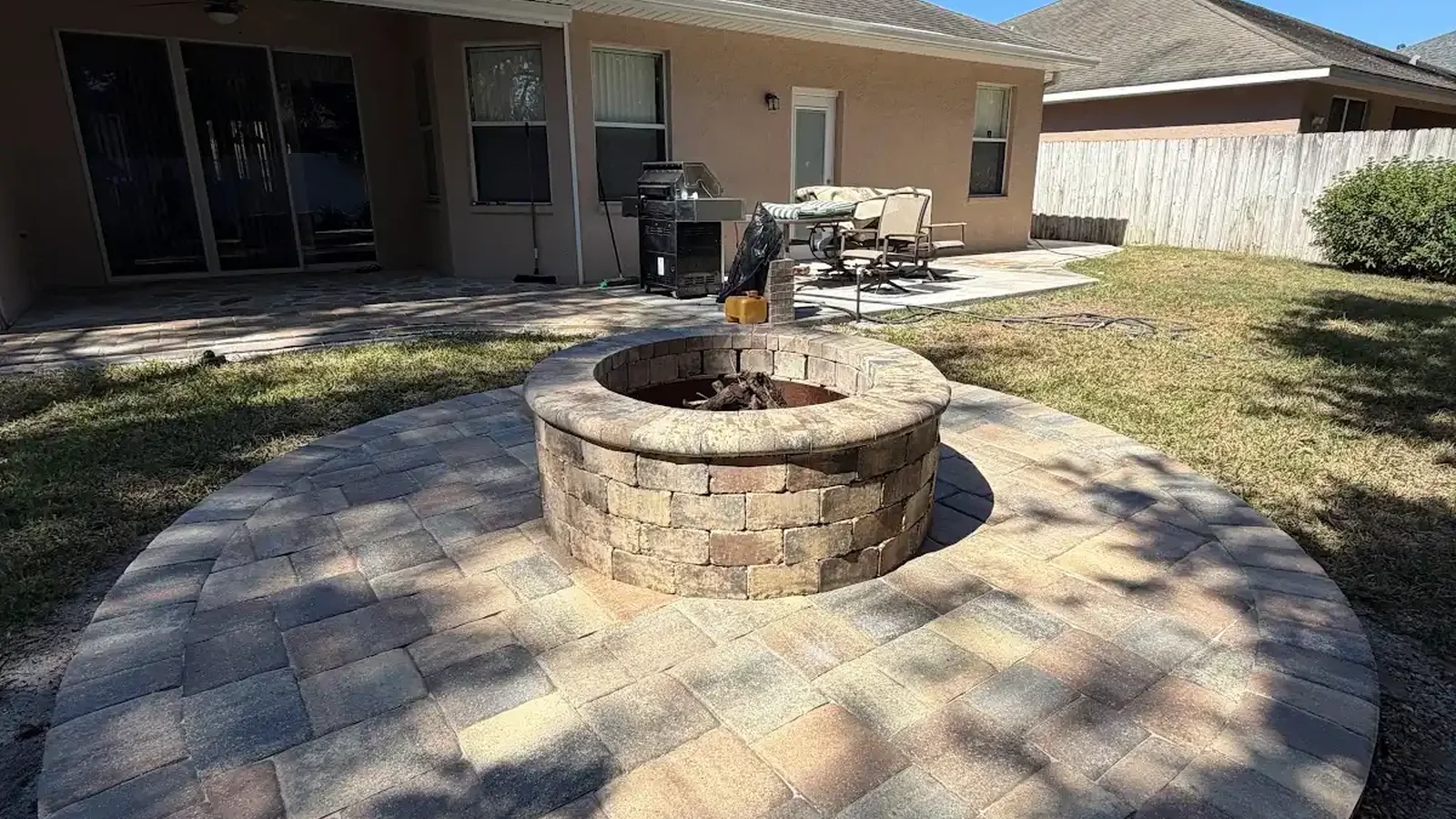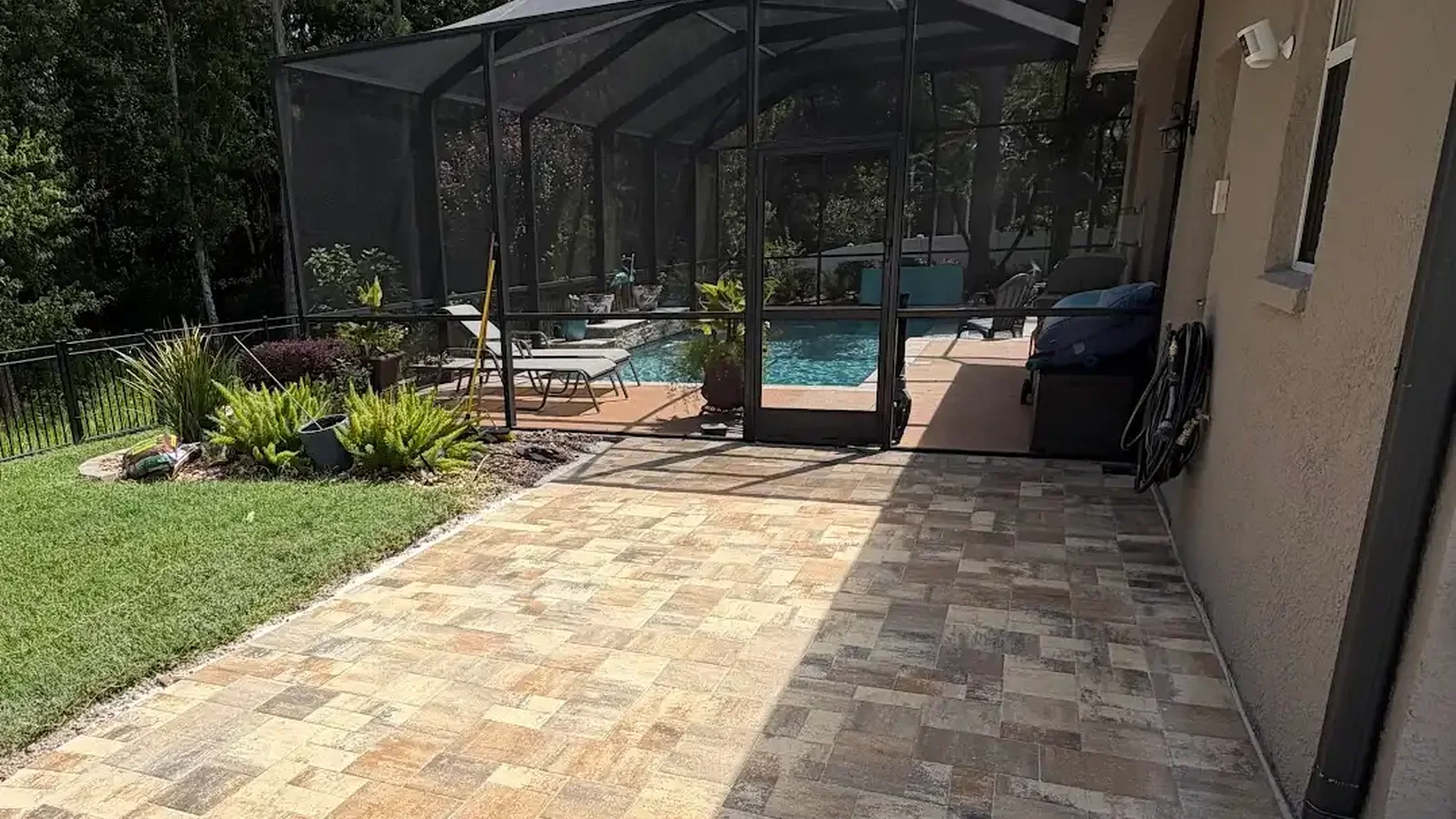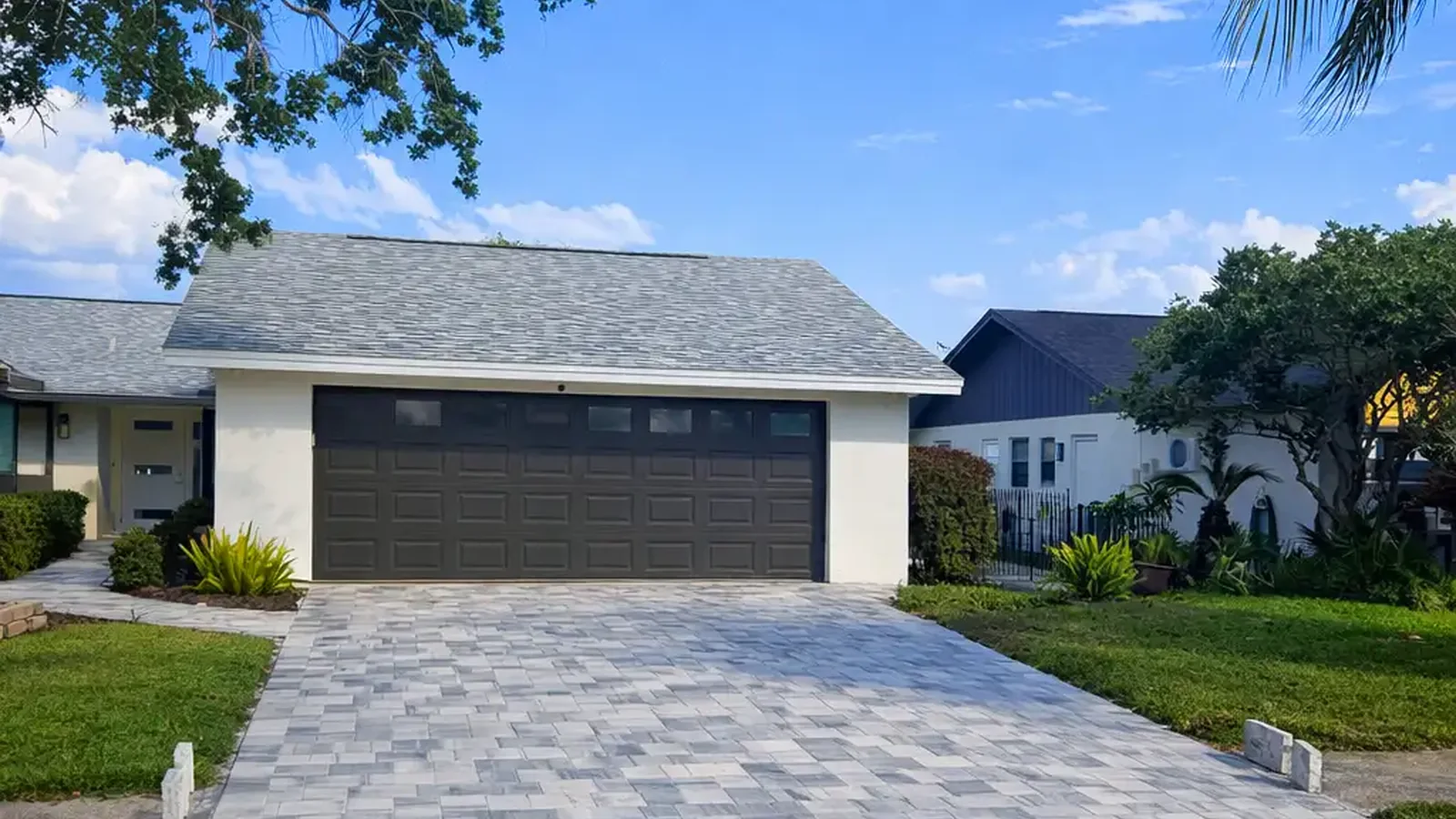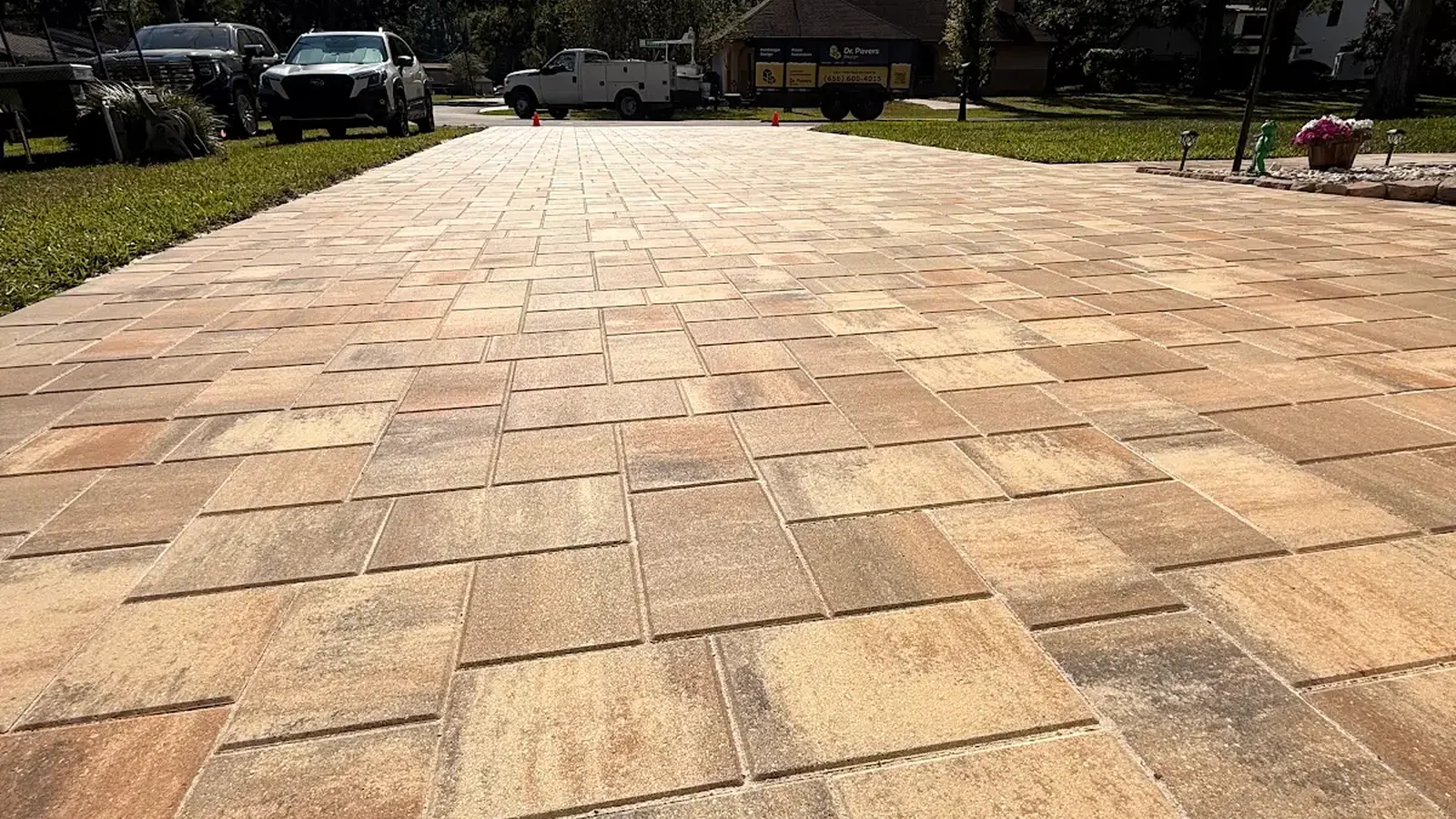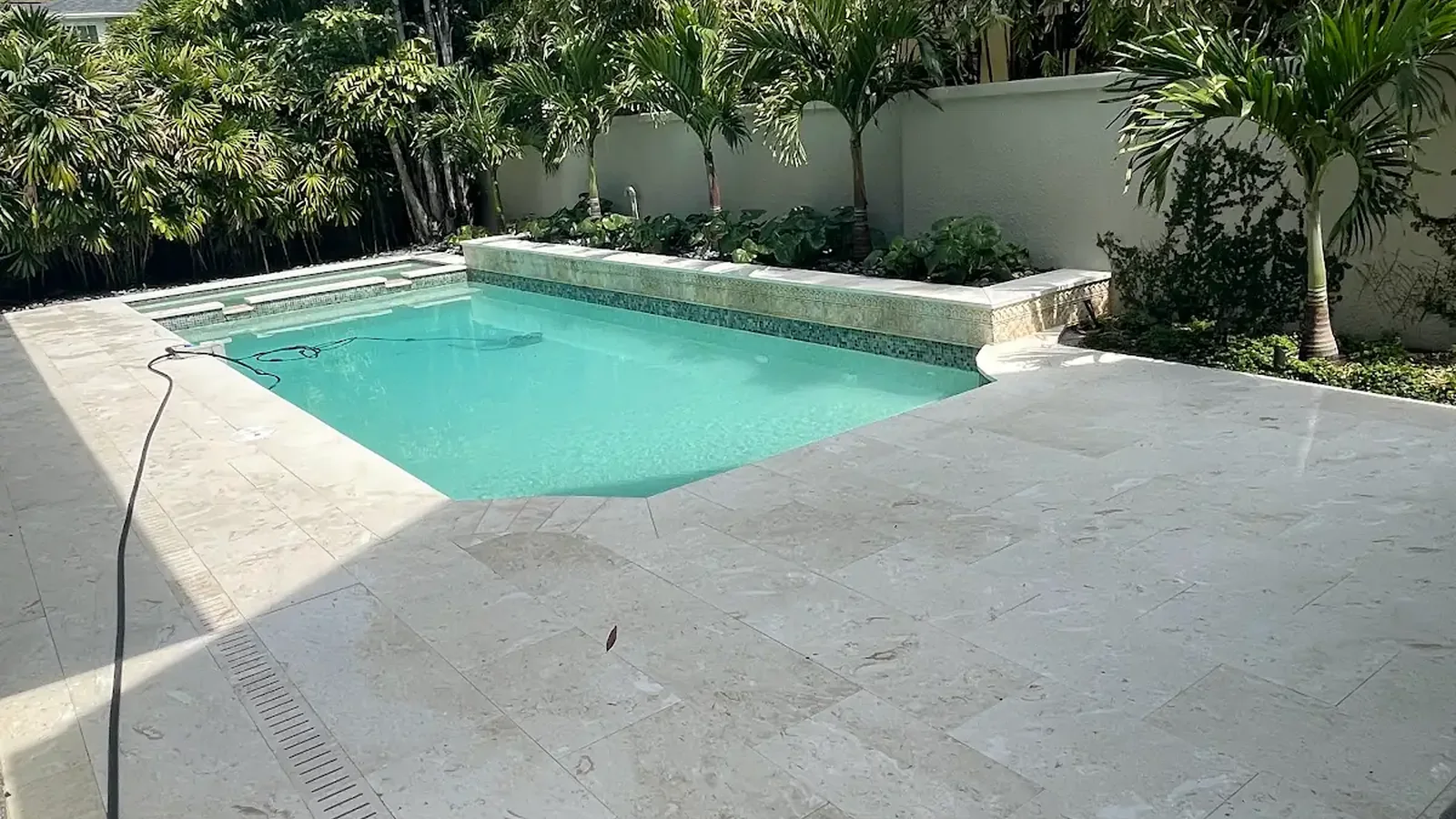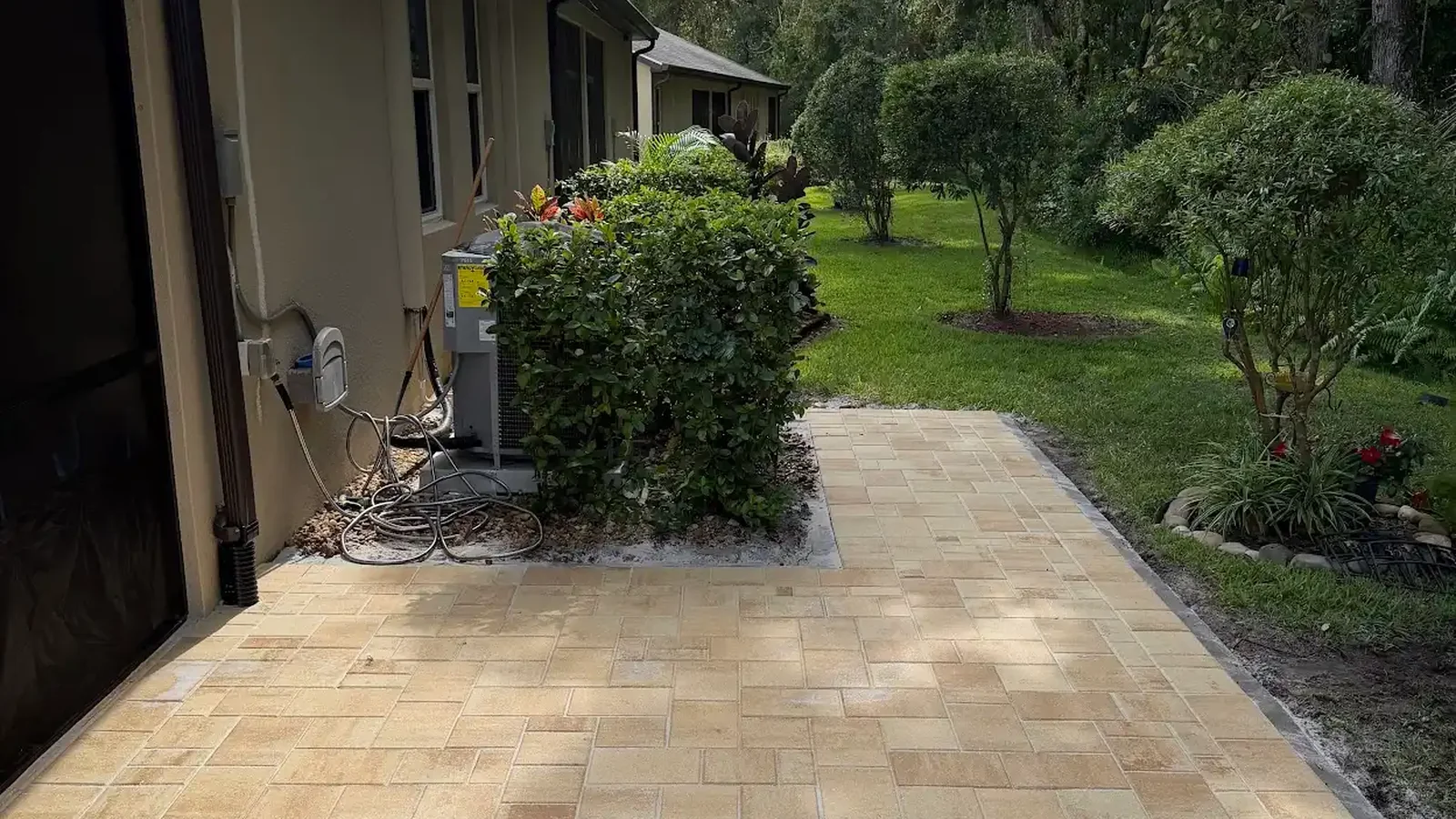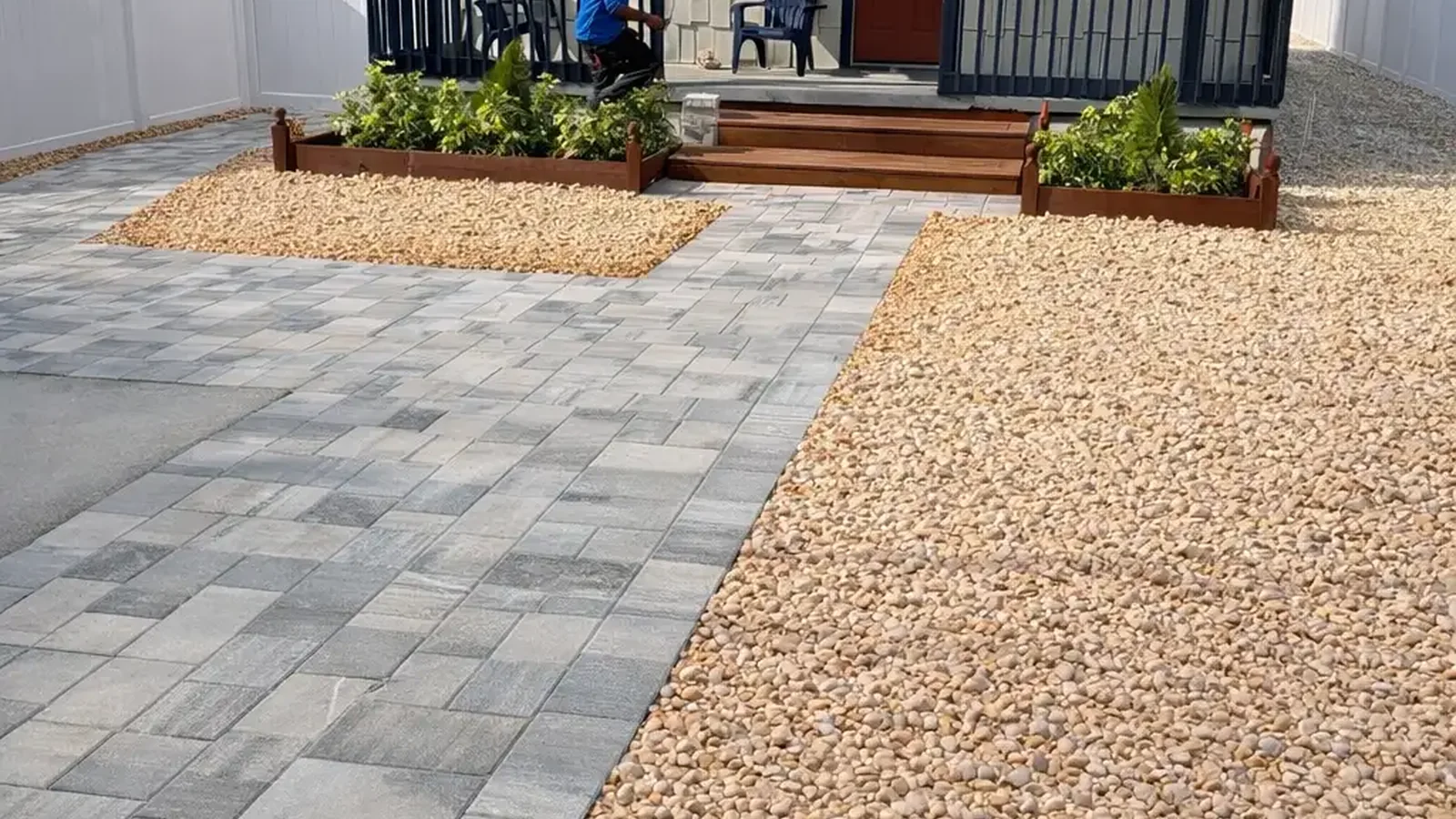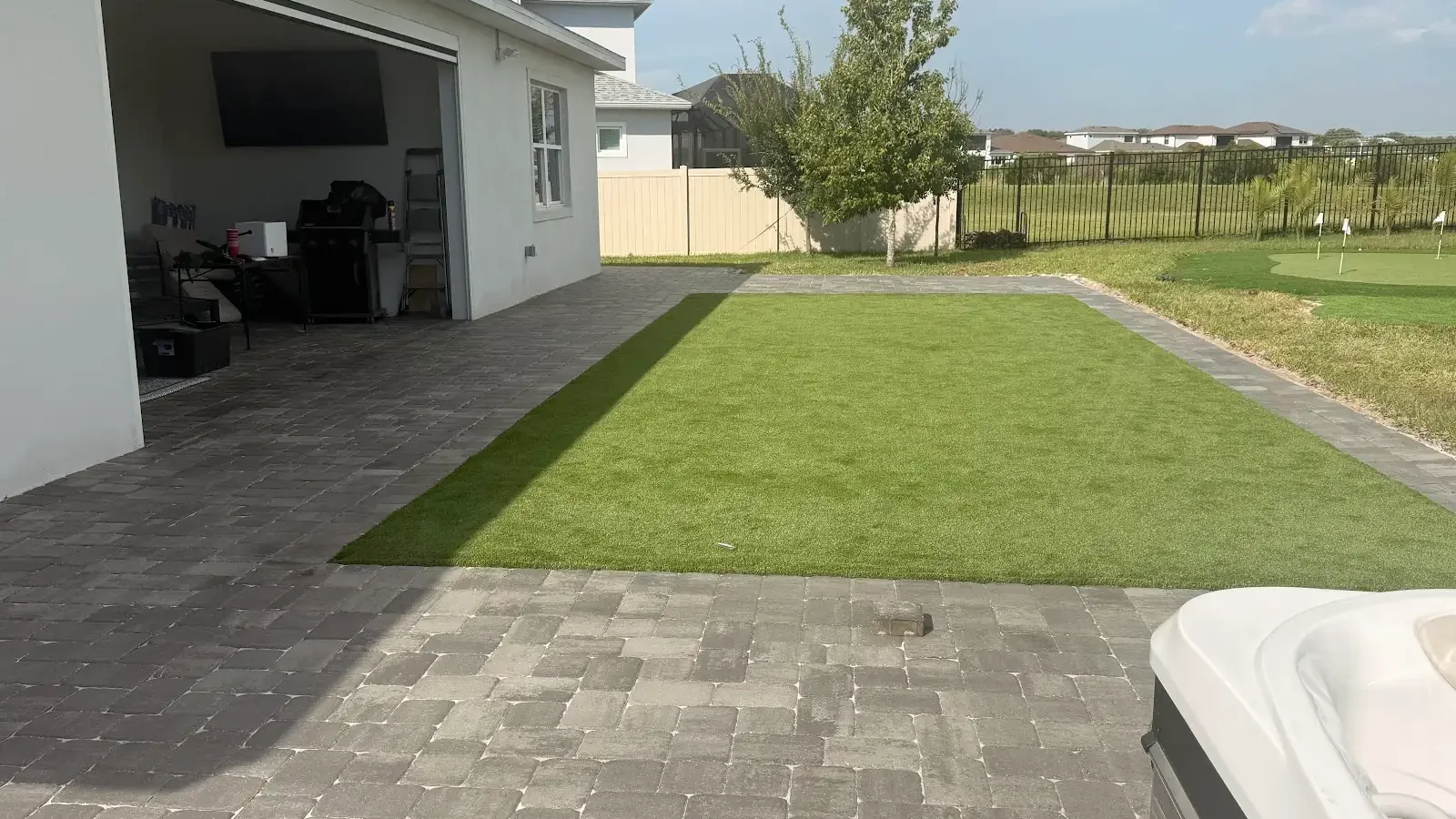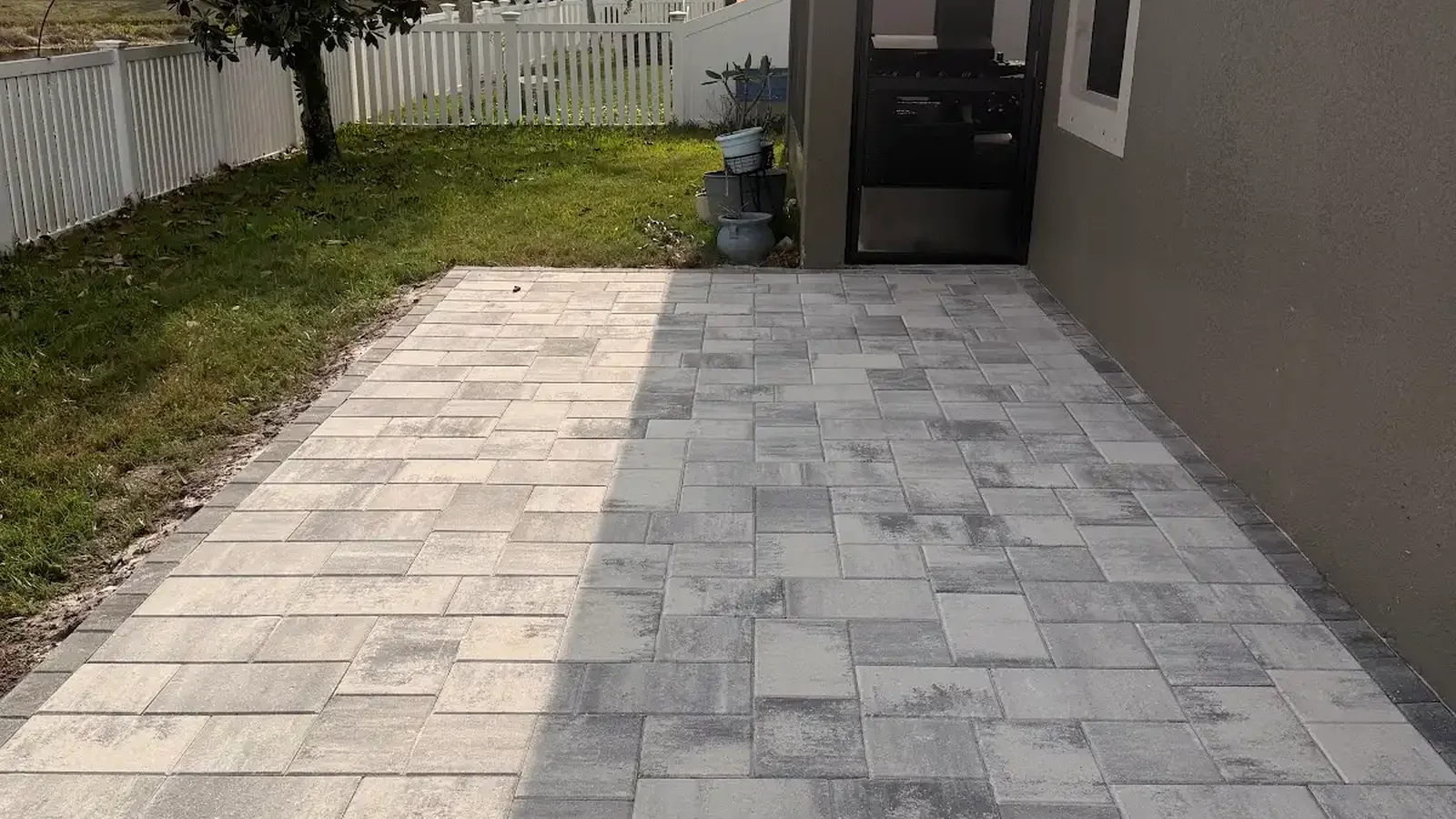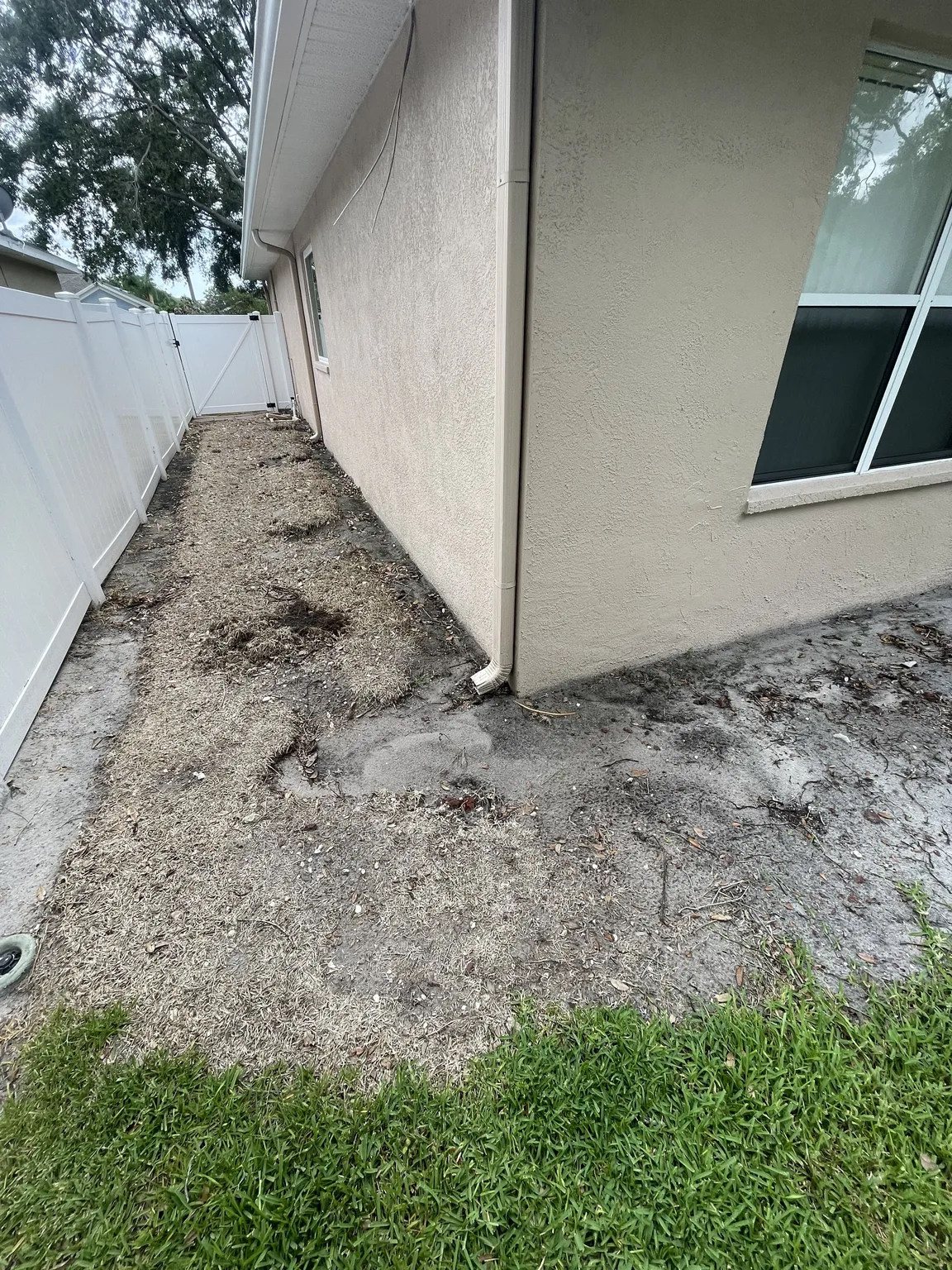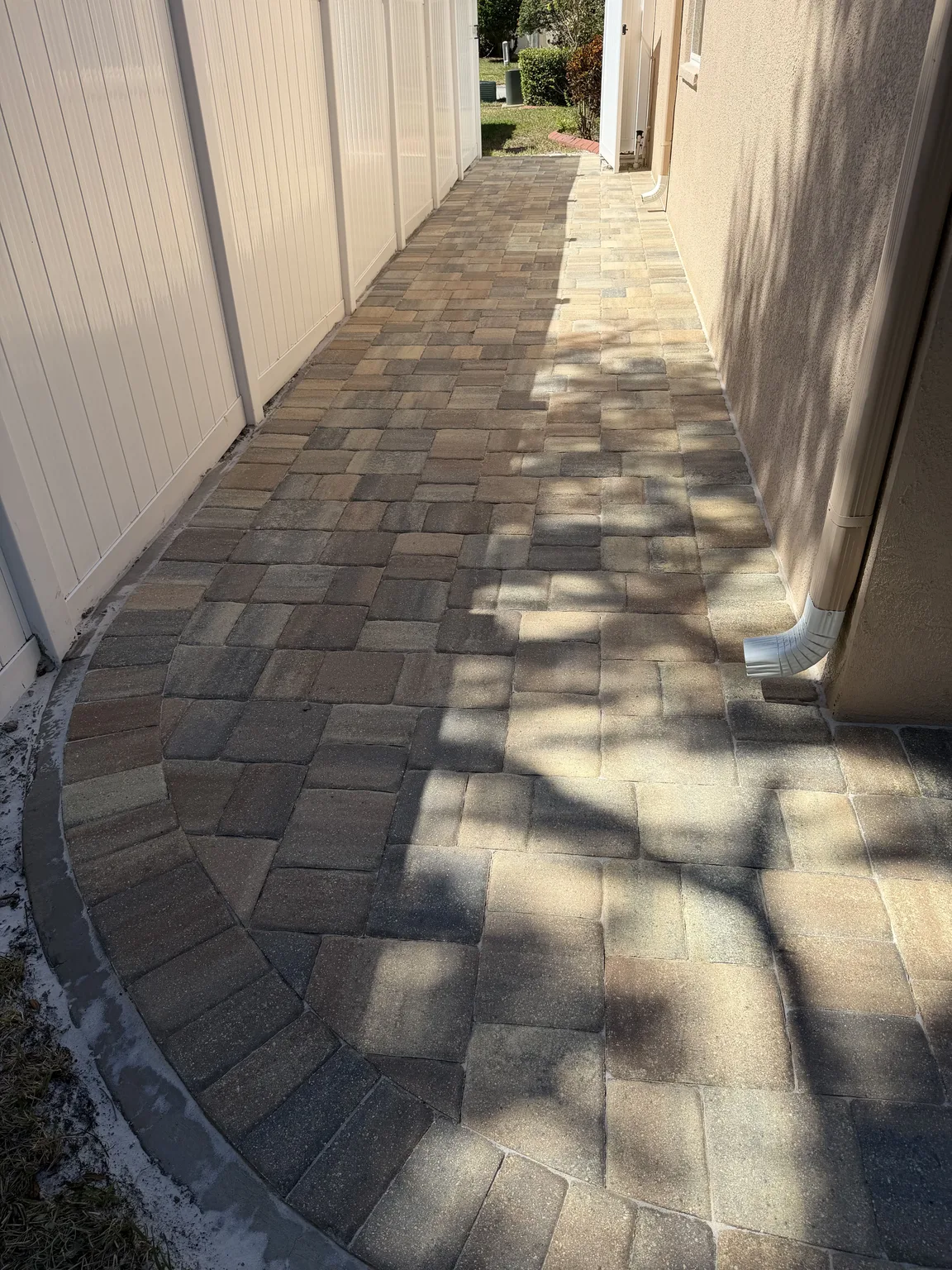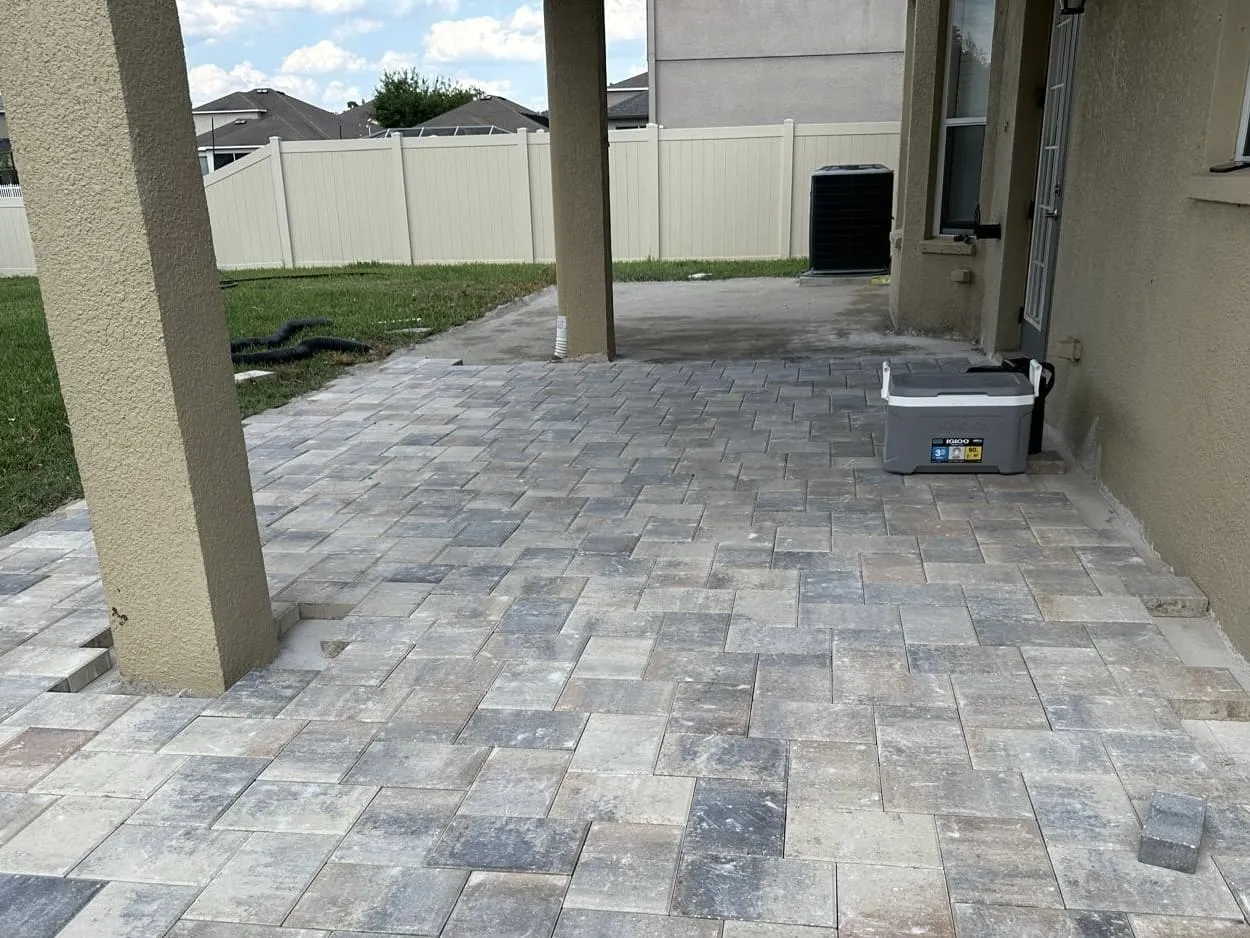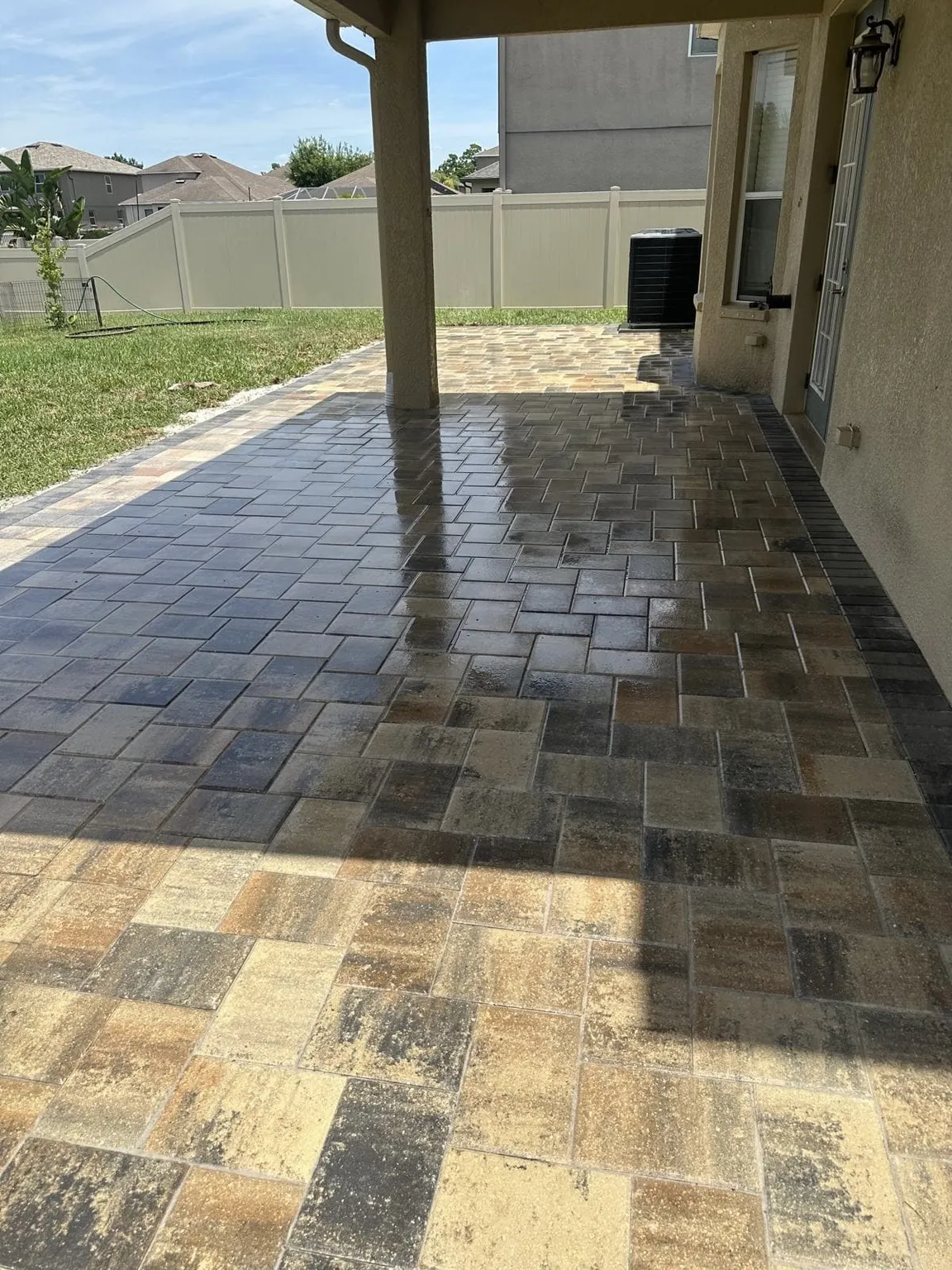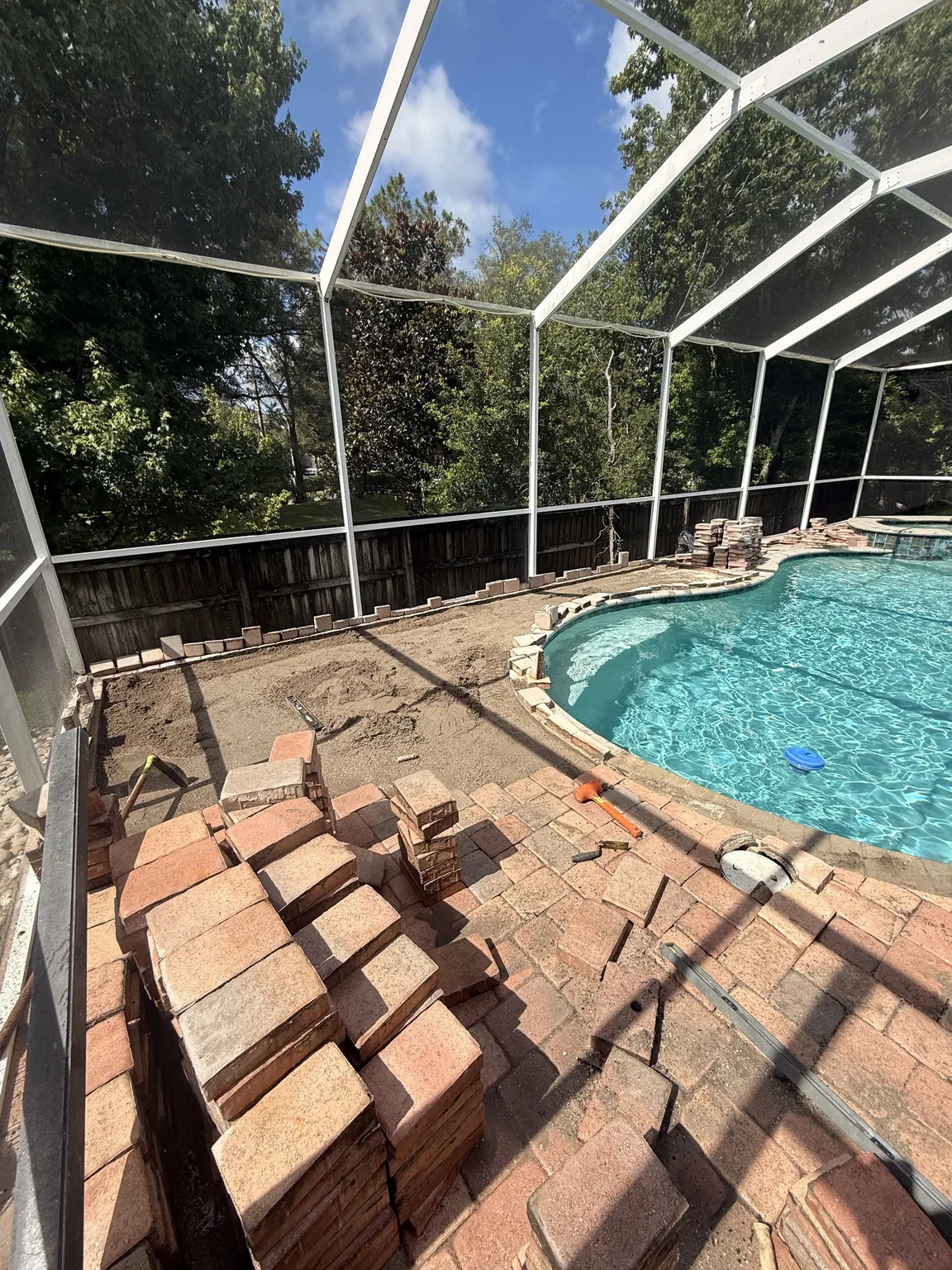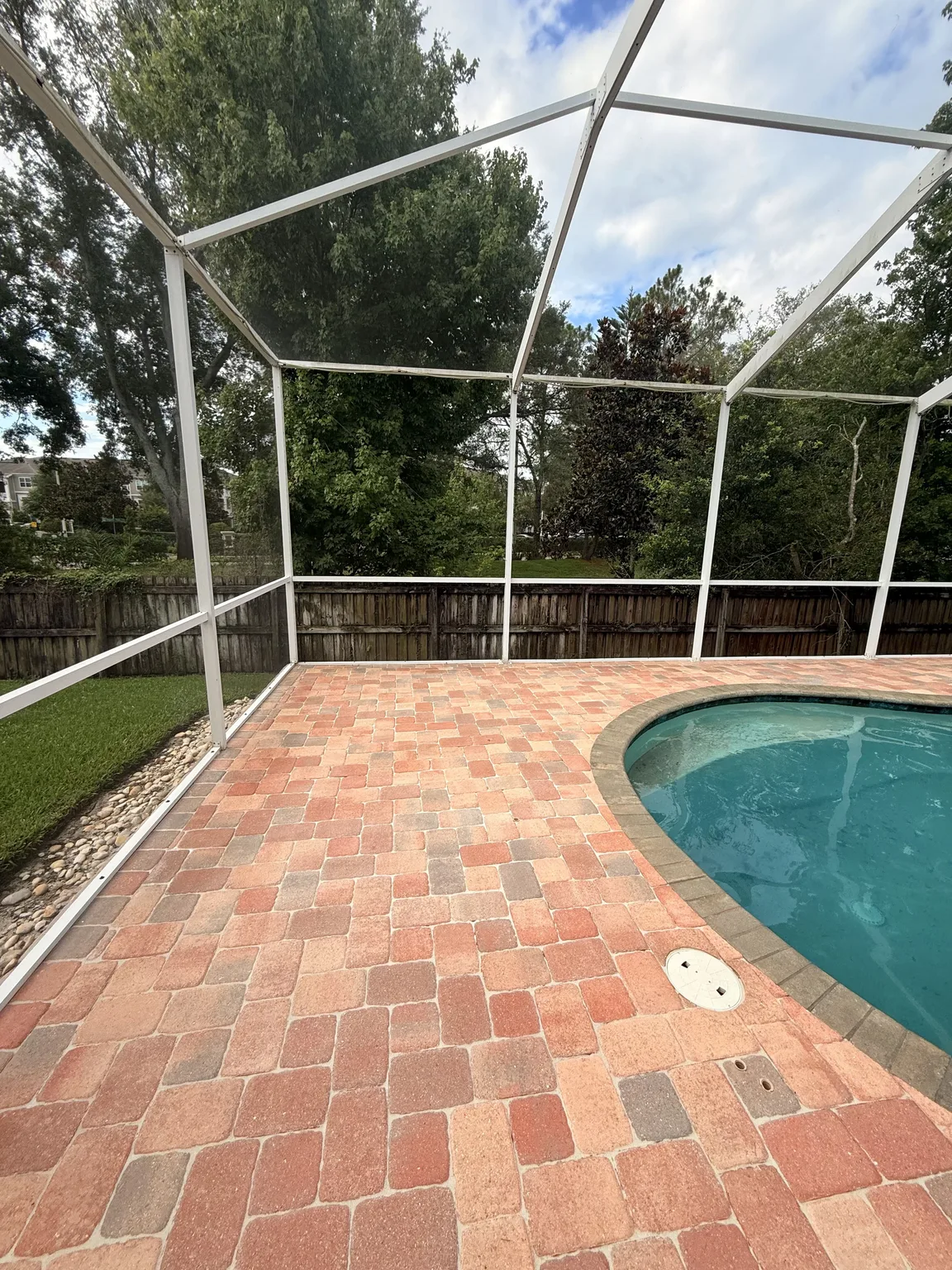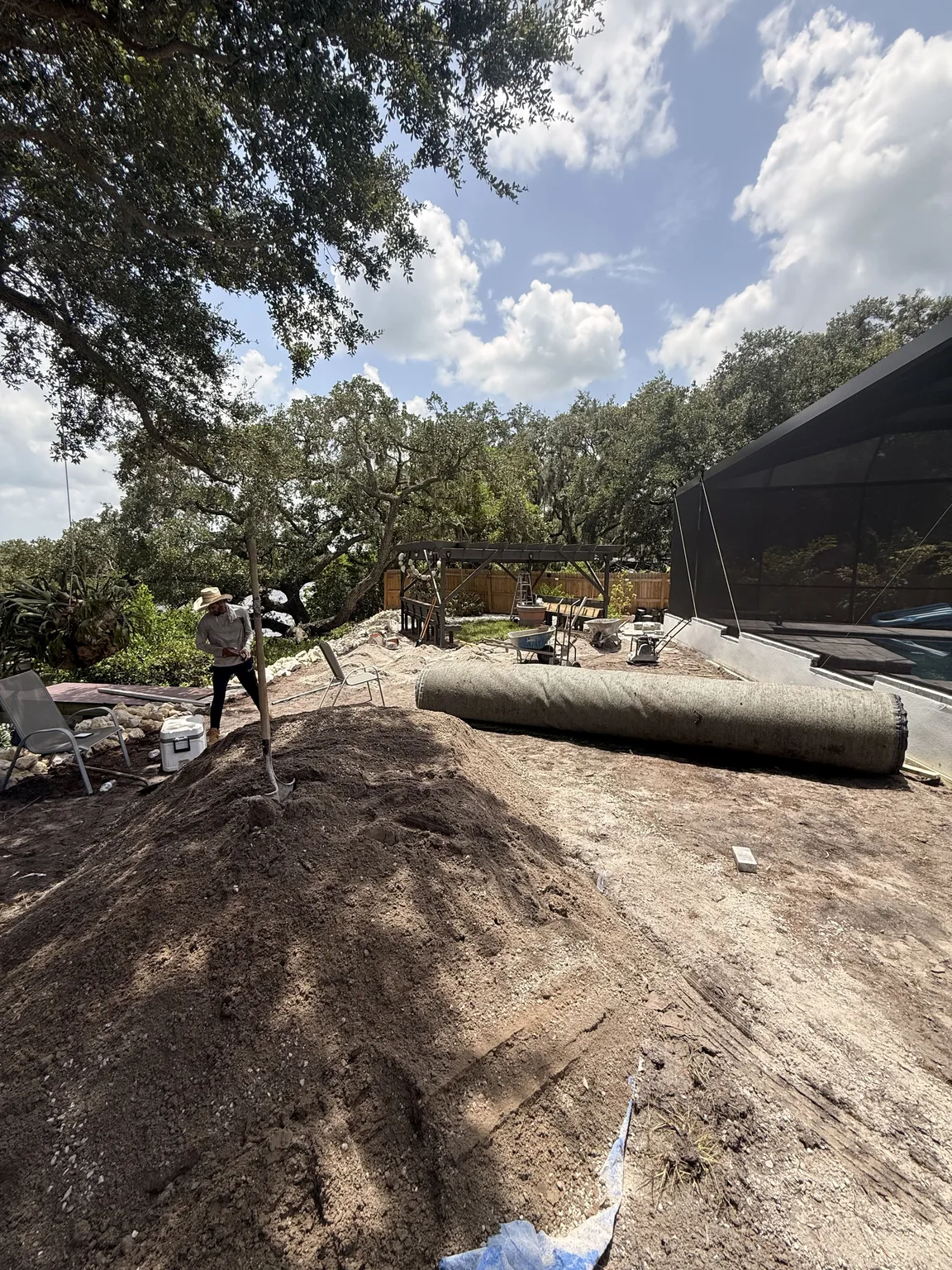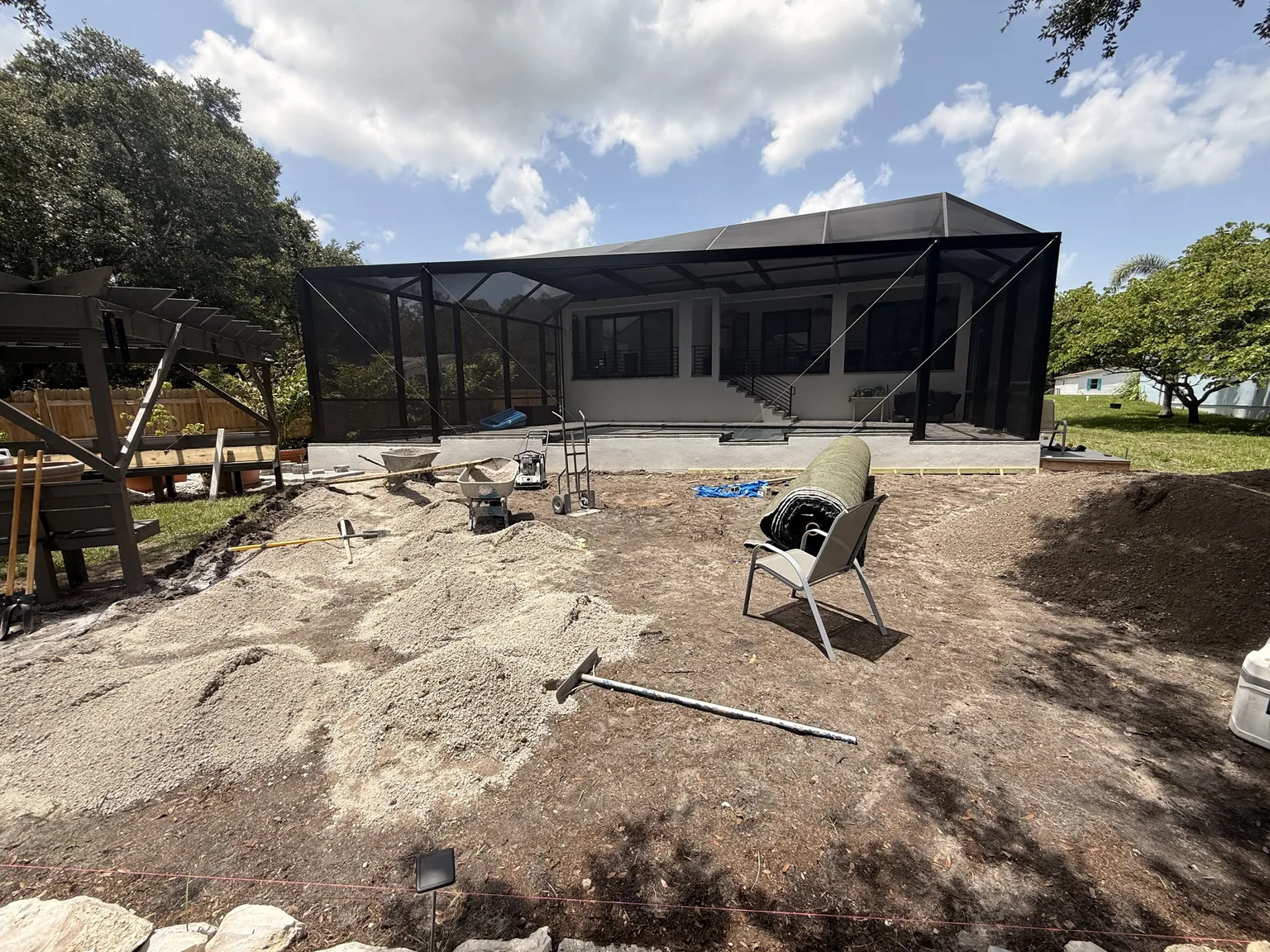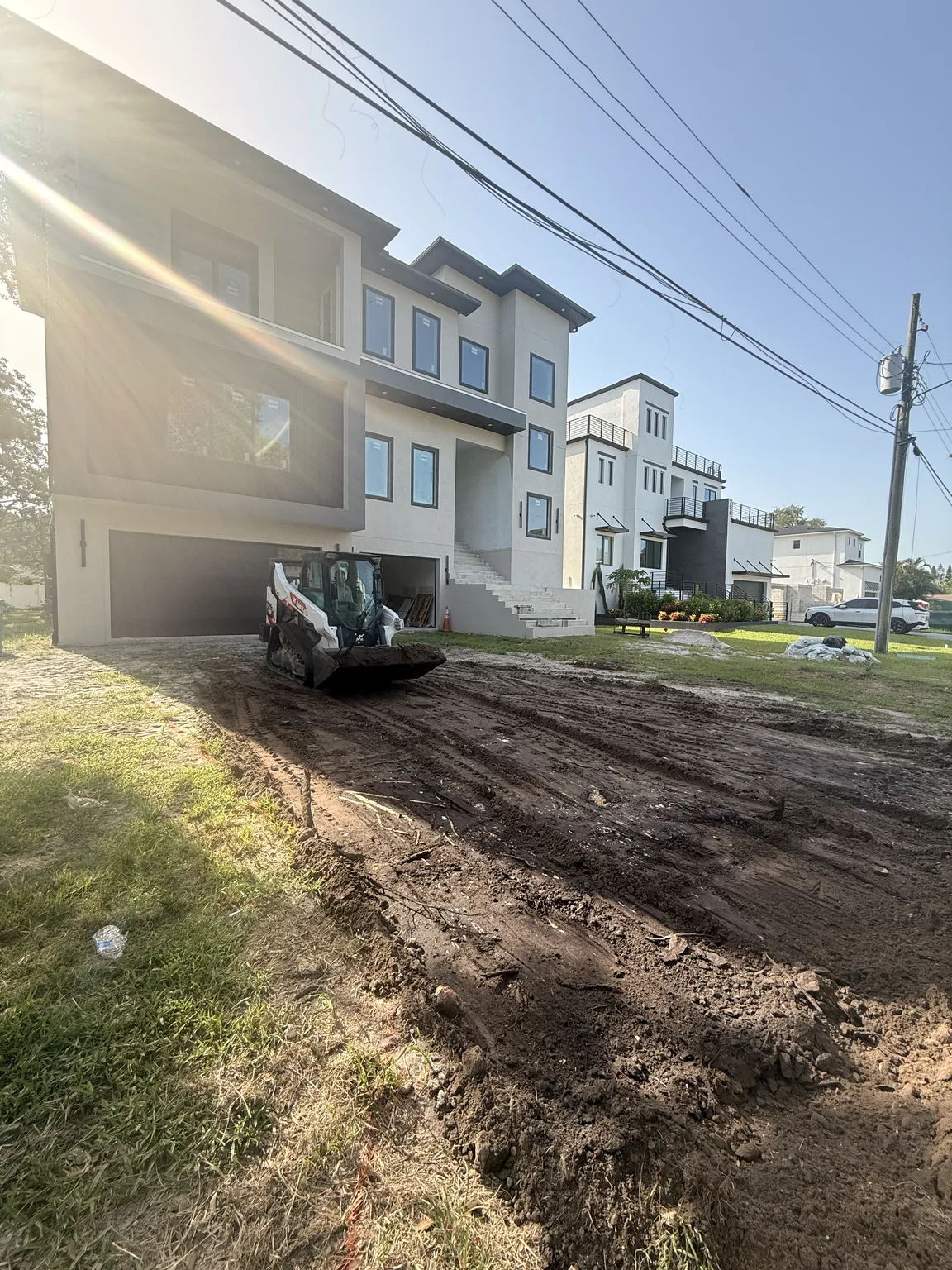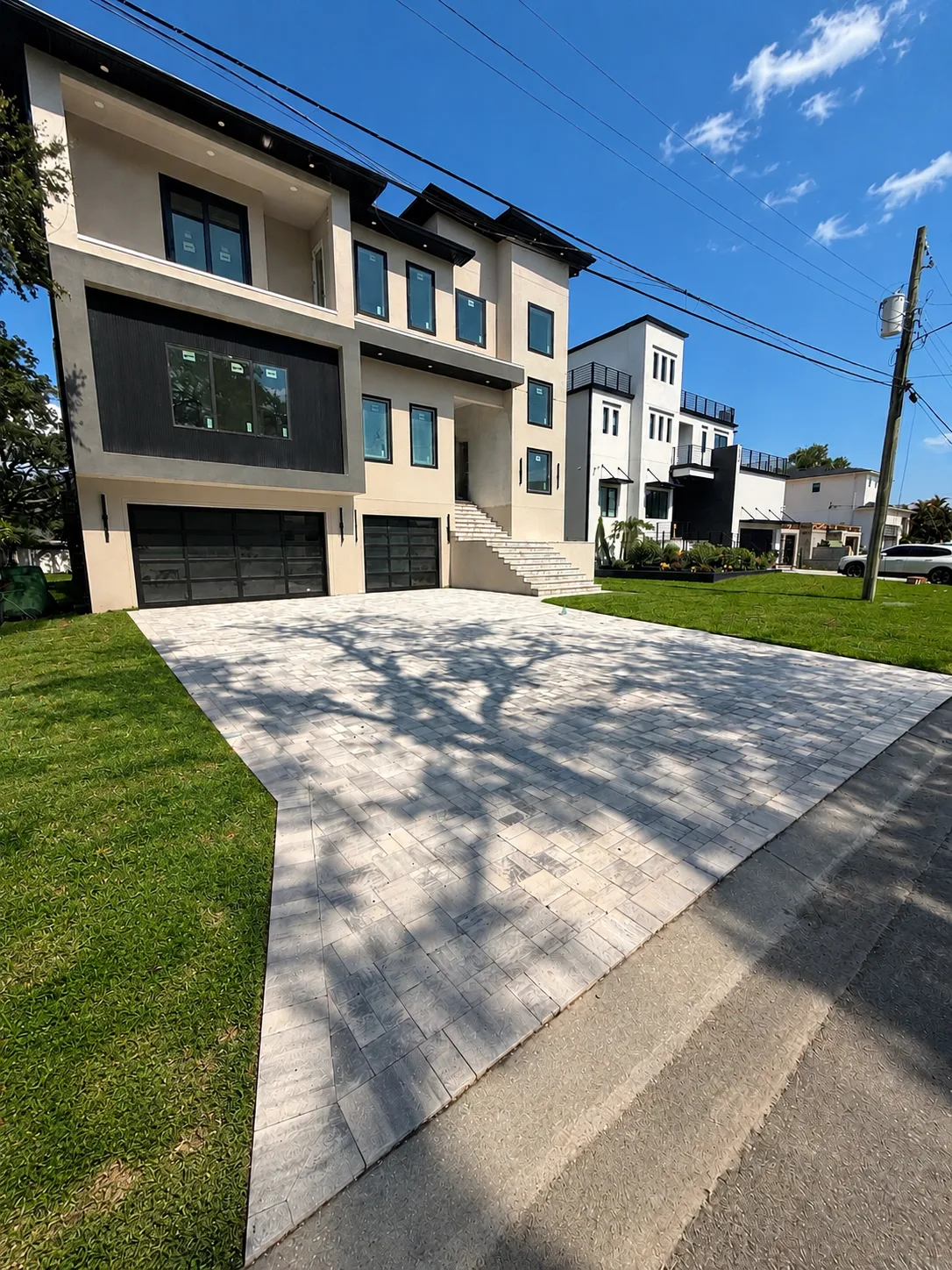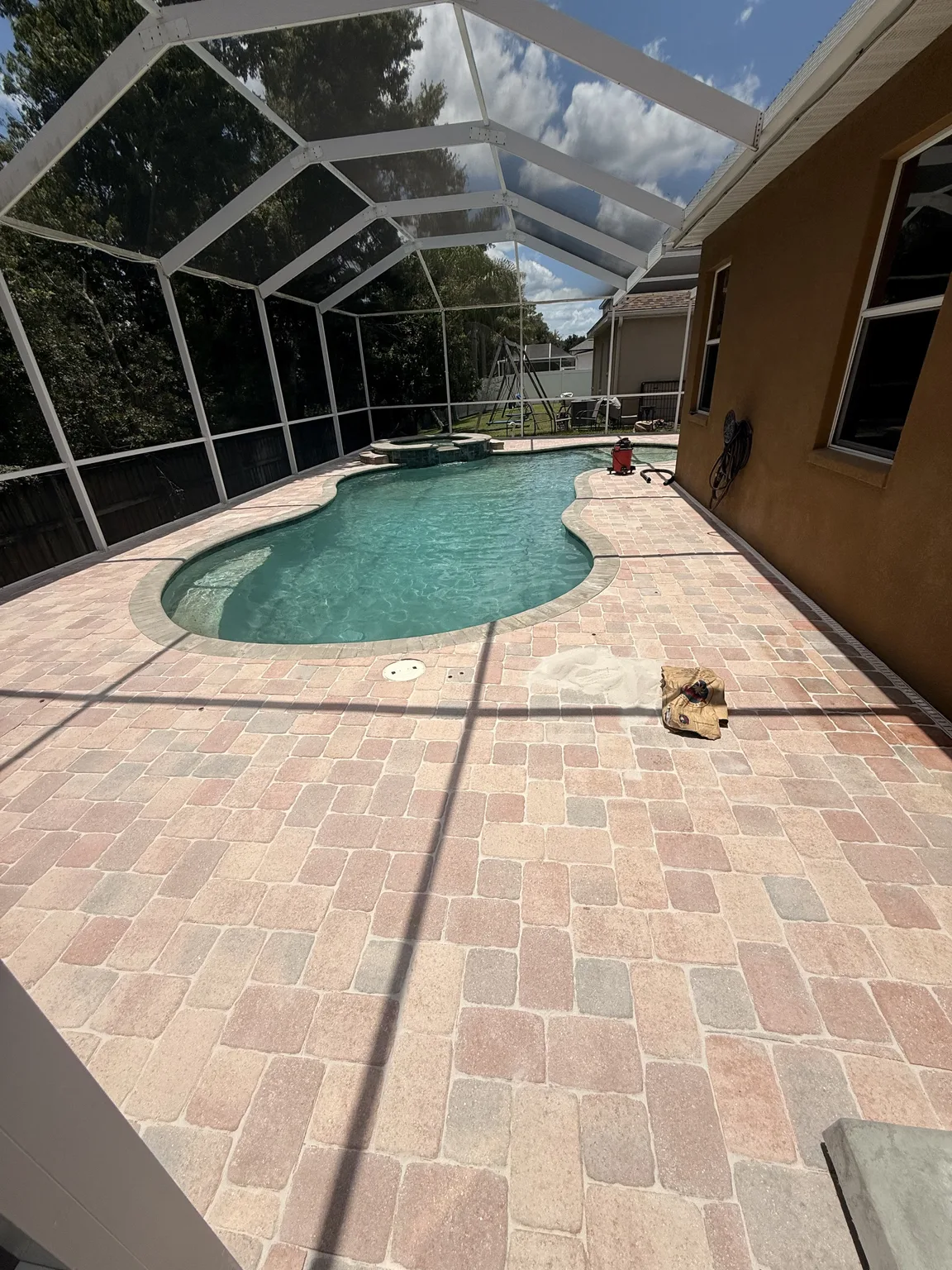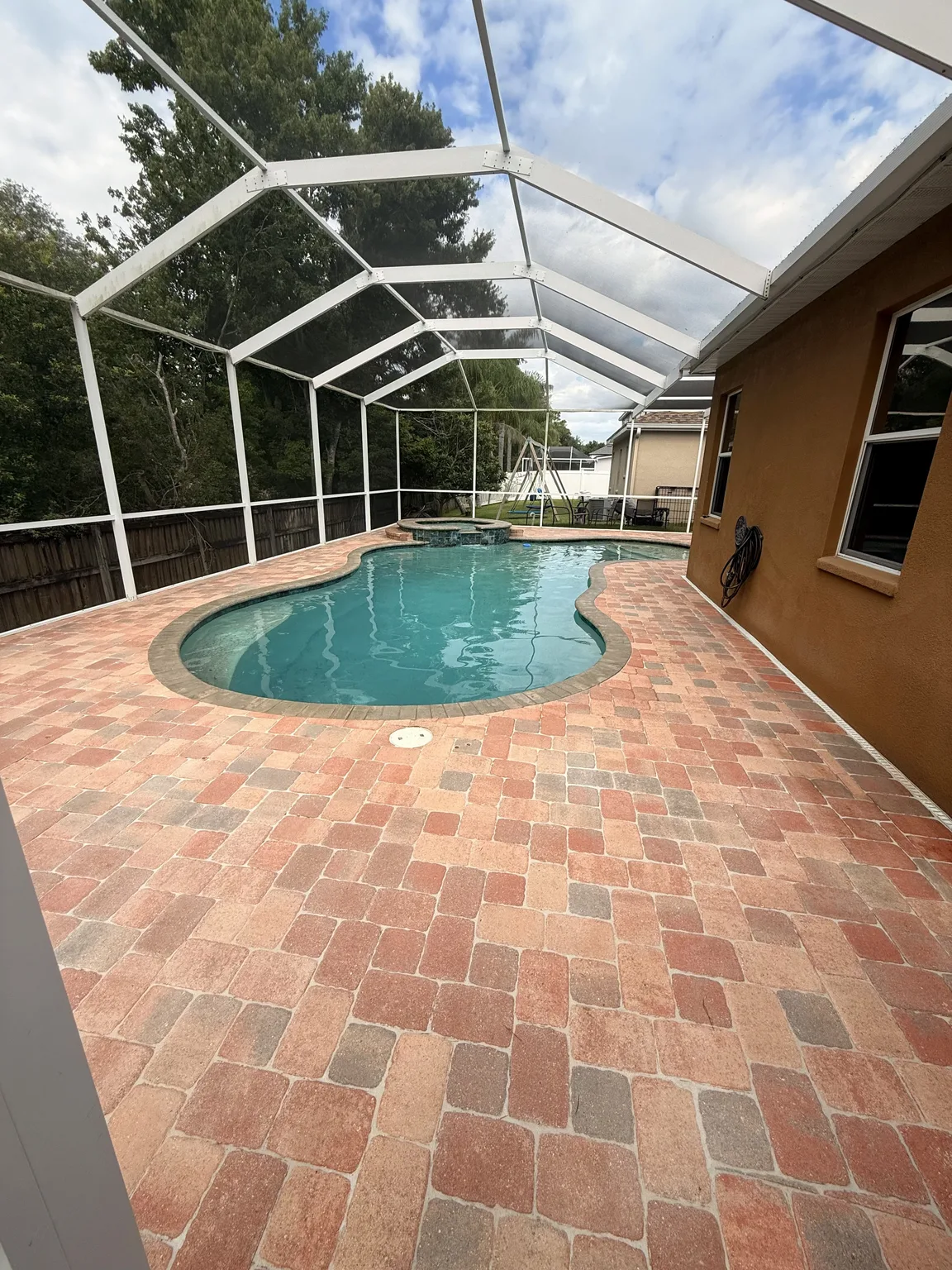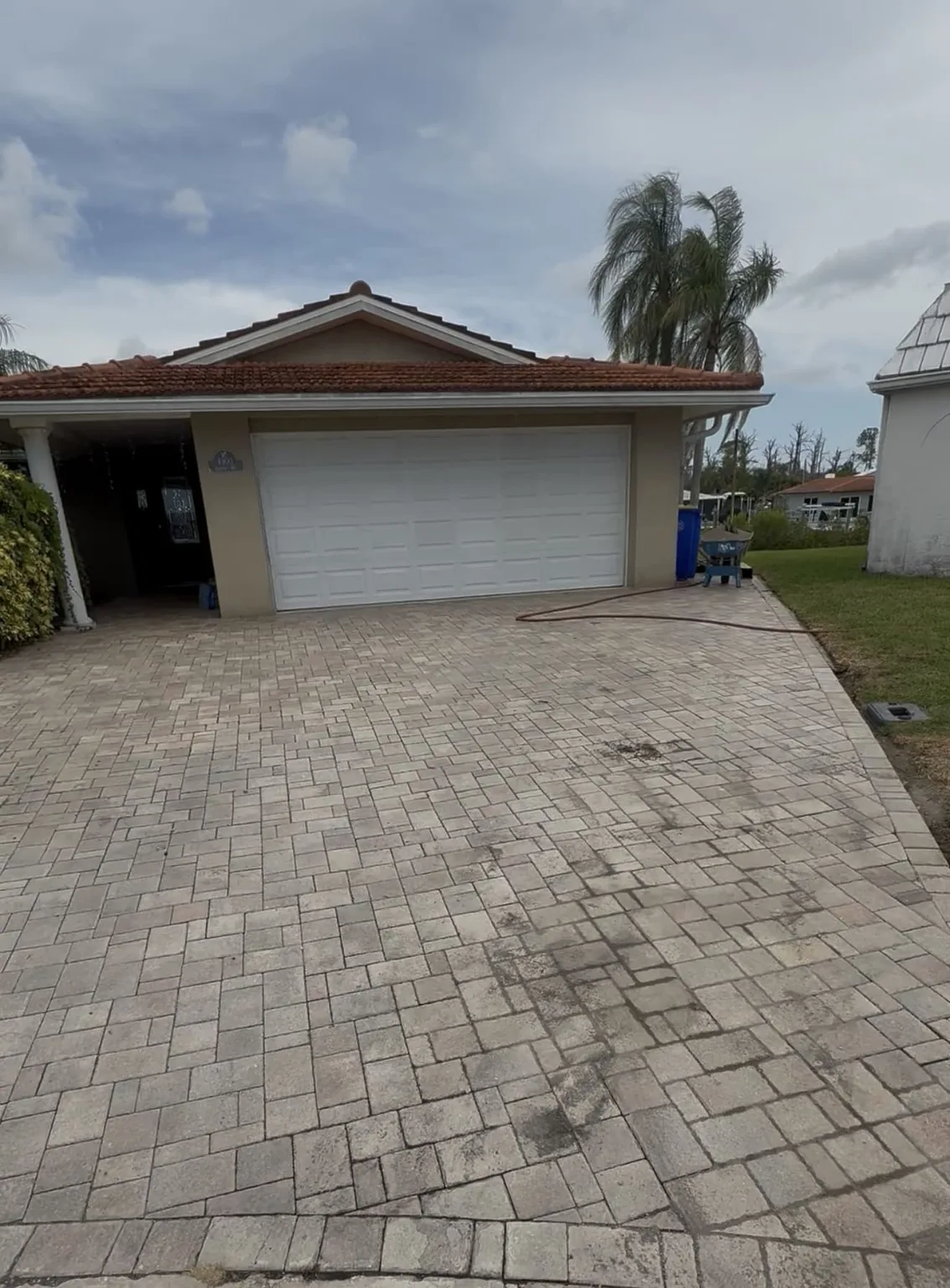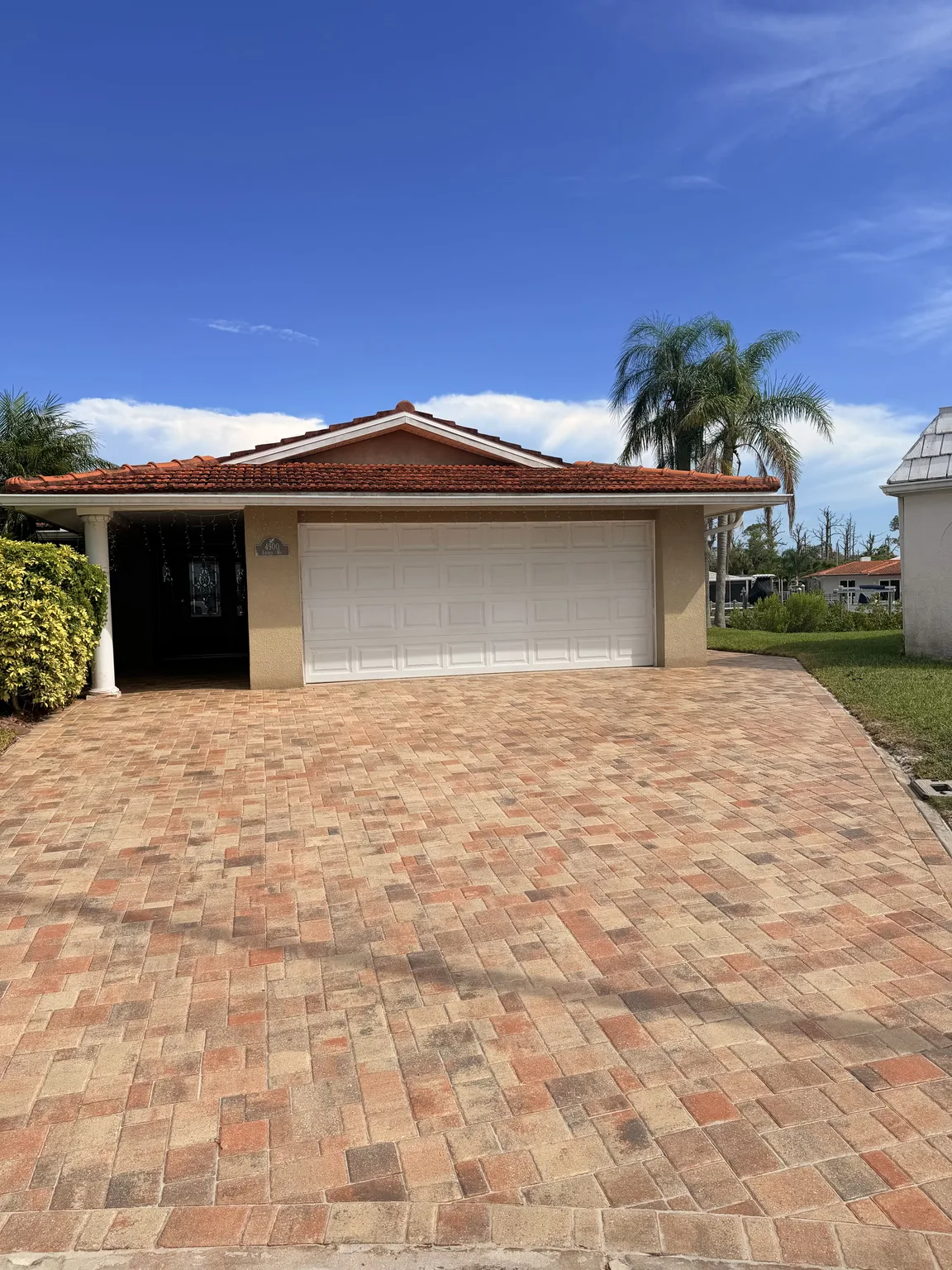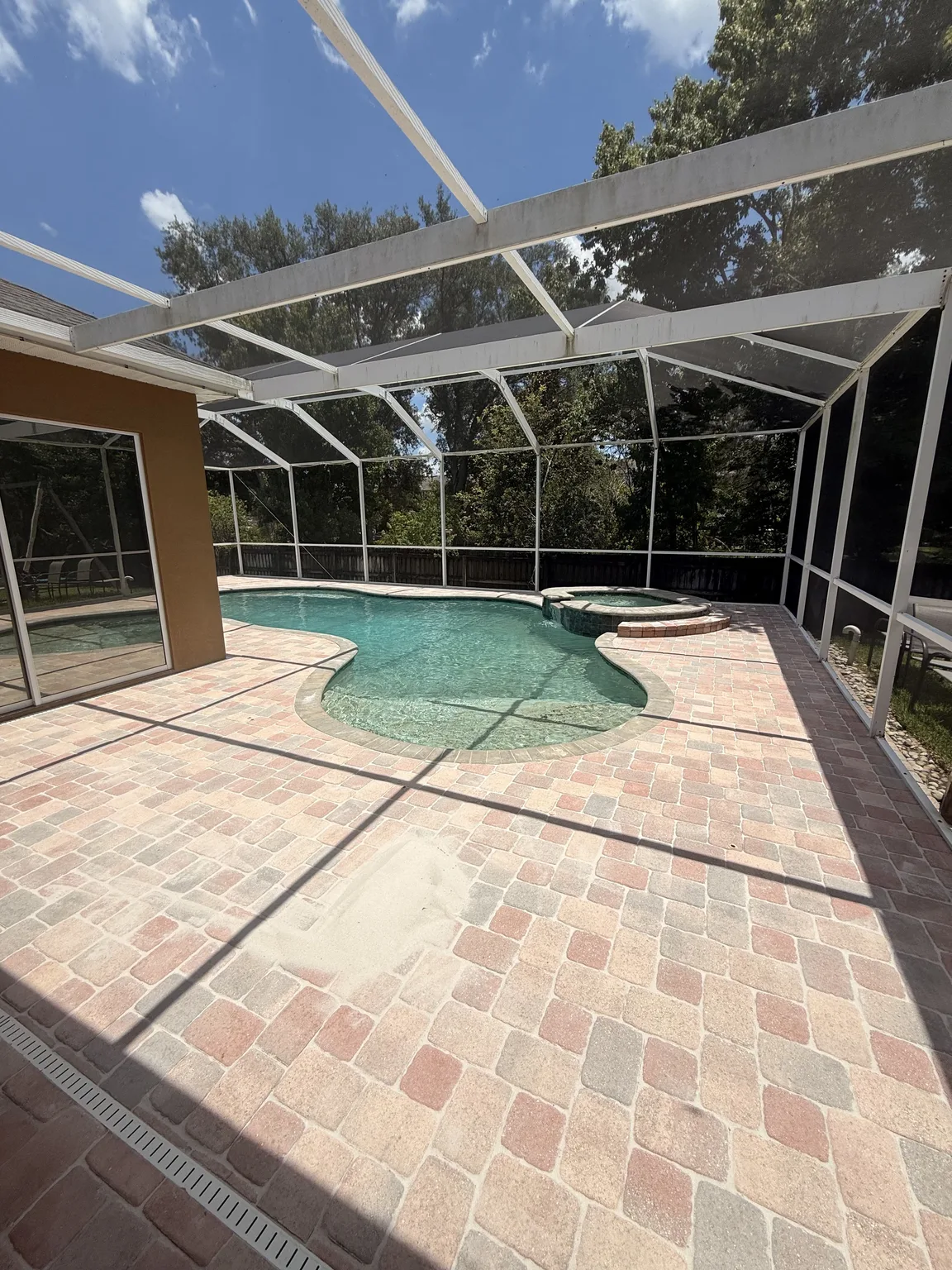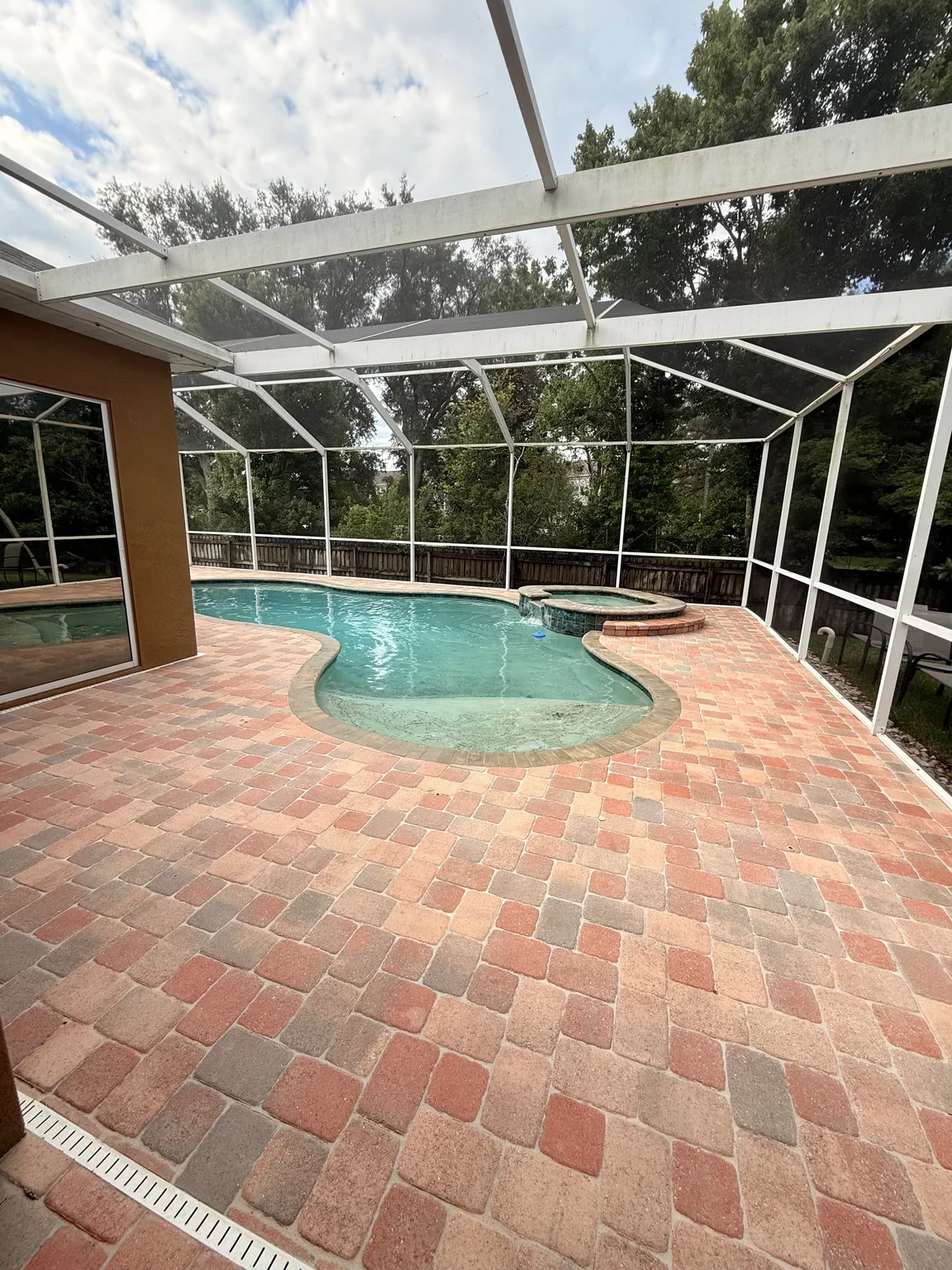
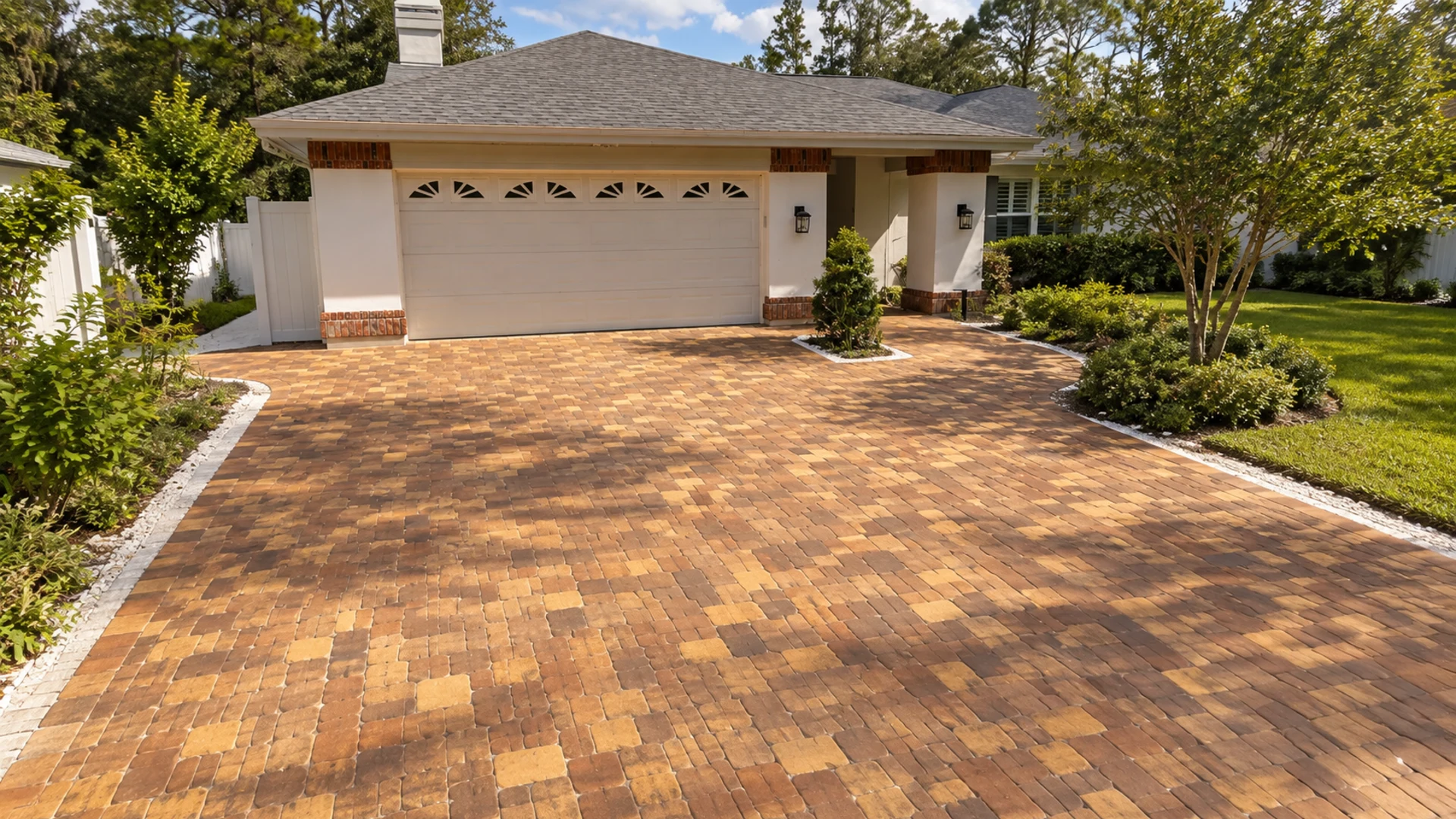
Driveway garage drainage is really about one question: where does water go during the part of a Florida rainstorm that matters most? A driveway can look level, clean, and well finished on a dry afternoon yet still guide runoff toward the garage door when rainfall overwhelms the surface for a few minutes. The threshold is the place to study first, but it is not an isolated detail. Its behavior is tied to the driveway pitch, the apron, wheel paths, side returns, roof runoff, and any low areas that collect water before it can continue away.
The useful goal is not to guess at a fix from a photograph or a single wet spot. It is to understand the route water actually takes, then decide whether the surface, a drainage component, surrounding grades, or several conditions together deserve attention. That approach protects the building without pretending every garage puddle has the same cause.
Start at the garage door, then work outward
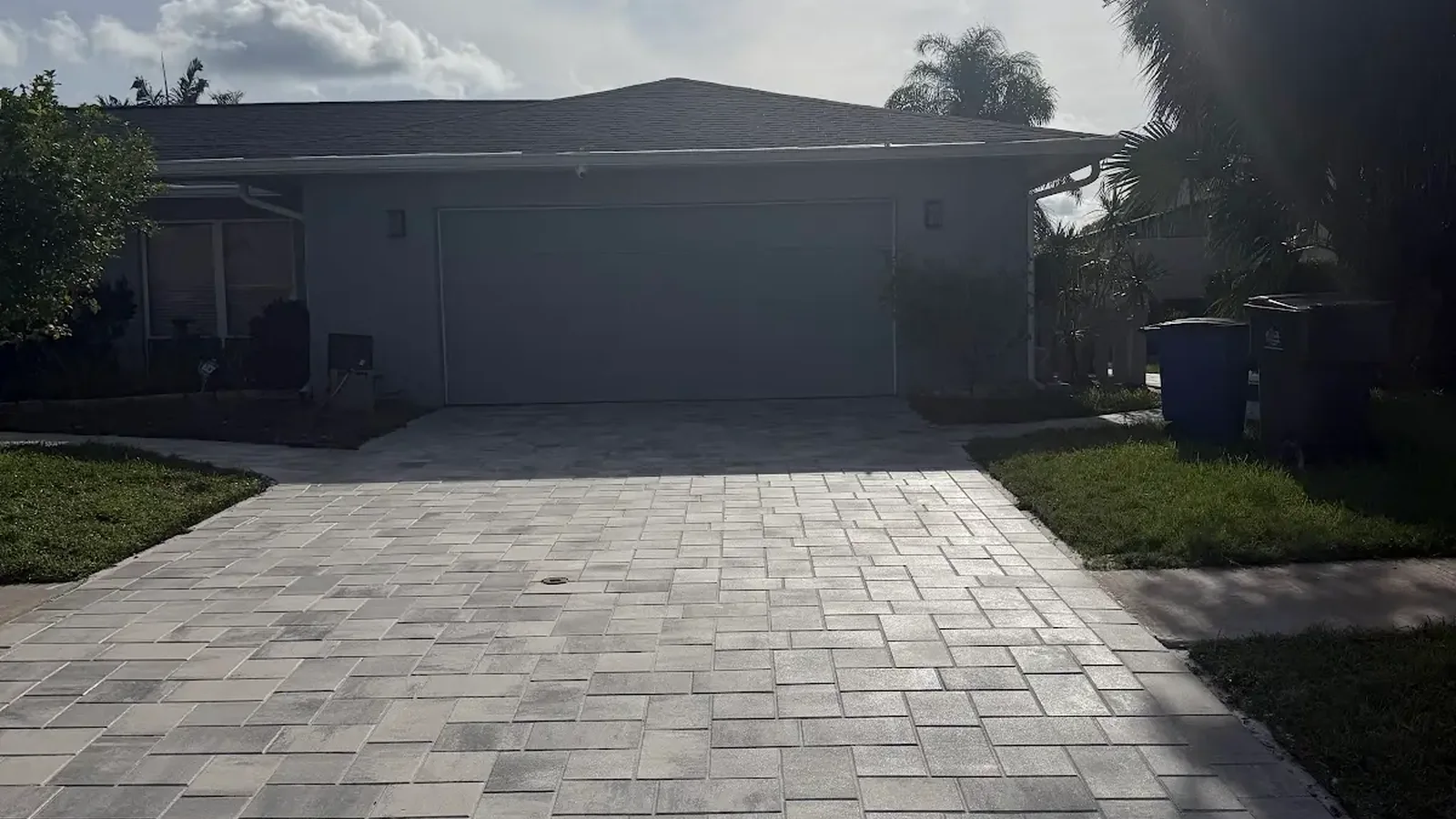
When a homeowner reports water near a garage, begin by separating water that reaches the door from water that merely passes across the driveway. Look along the full width of the door and at both bottom corners. Is the water arriving in a thin sheet, following a tire track, spilling from a side return, or pooling at one point? A damp line that dries quickly can tell a different story from standing water that remains after the rest of the driveway has cleared.
The garage threshold establishes a critical reference elevation, but its visible edge does not reveal every condition beneath or beyond it. Door seals, the slab edge, the transition from pavers to concrete, and prior settling can all affect what is seen there. A coordinated evaluation should note the gap and condition at the threshold while also checking whether the driveway surface is delivering water to that line.
Observe the five locations that often explain the pattern
- The area immediately in front of the garage door, including both corners and the center.
- The driveway apron where it meets the street or curb, since runoff can enter from that end as well as leave it.
- Wheel paths, where repeated loading may make a shallow channel more noticeable over time.
- Side returns beside the driveway, especially where landscape grades or hardscape edges direct water inward.
- Low corners near walls, gates, or planting beds, where water may pause before moving across the paved surface.
This is a practical observation list, not a remote diagnosis. Water can arrive from more than one direction during the same storm. A low point near a side return may fill first, then overflow across the driveway toward the threshold. In another layout, a downspout discharge can cross the pavers and find a slightly depressed joint line. Seeing the sequence matters more than naming one suspected component too early.
How surface pitch and threshold elevation work together
Surface pitch is the intended fall that moves water across a driveway. At a garage, that fall must work with the relative height of the threshold and with the places runoff can exit. A driveway may appear to slope away overall while still containing a small reversal near the door, a broad flat zone, or a change in plane at the apron. Small differences can become important when rainfall is heavy enough to form a moving sheet.
It is also important not to assume that raising, lowering, or adding a component will solve the issue by itself. Altering one plane may change the route at a gate, a sidewalk connection, or a neighbor-facing edge. The building needs protection, but water also needs a sensible destination that does not create a new problem elsewhere. That is why a site review looks beyond the garage door before recommending a drainage strategy.
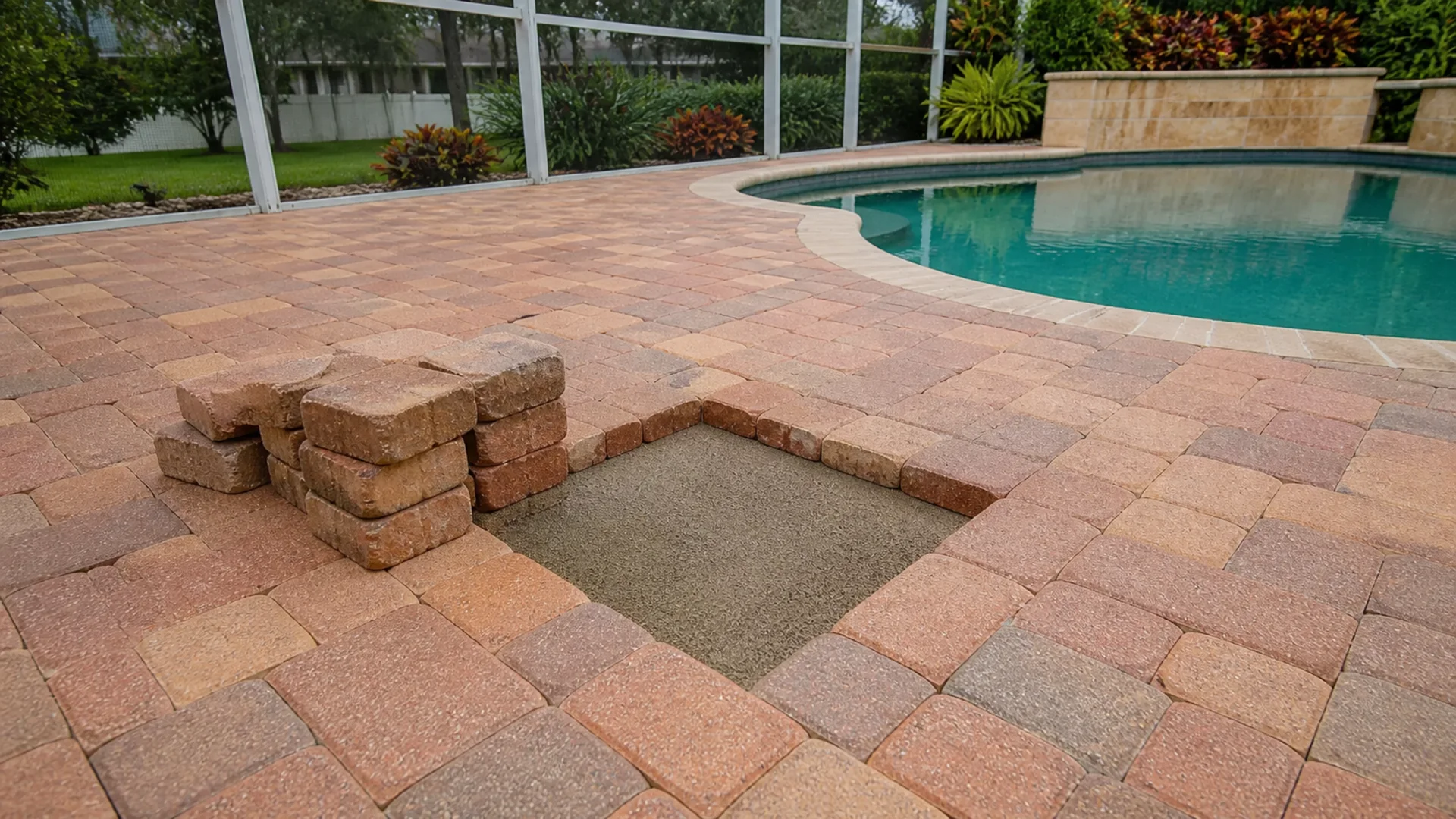
Settled pavers deserve attention in this conversation because settlement changes the surface route without necessarily being obvious from a distance. A narrow dip can catch water at a joint; a broader area can make runoff slow down and spread. The question is not whether every uneven paver proves a major failure. It is whether the observed elevation change corresponds with the water path, affected bedding, edge restraint, or a transition to another surface.
Drainage components are part of a system, not automatic answers
Trench drains and area drains can be useful in the right layout, but their presence does not eliminate the need to understand grade. A channel placed near a threshold still needs surface water to reach it, a clear collection path, and an outlet arrangement appropriate to the property. An area drain in a low corner may catch local runoff, yet it cannot correct water that never gets to that corner. Debris, landscaping, and maintenance also influence how any drain performs.
Downspouts deserve the same systems view. A roof discharge that empties near the driveway can add a concentrated flow exactly when stormwater is already moving across the surface. Observe where it releases, whether it crosses a walking or driving route, and whether it sends water toward the garage-side portion of the drive. The right next step depends on the complete route, not on a generic rule about extending every downspout.
Tampa Bay storm cycles make timing especially useful. A driveway can drain acceptably in a brief shower and behave differently during a slow, sustained rain or a sharp downpour after the ground is saturated. Irrigation can also reveal a local pattern, although it is not a substitute for observing real storm flow. The goal is to collect enough information to distinguish rain-driven runoff, roof discharge, surface low points, and water arriving from adjacent grades.
A safe way to document driveway garage drainage
Good notes make an on-site conversation far more productive. From a safe covered location, take short videos or photos that show the direction of flow rather than only the final puddle. Include a wide view from the garage toward the street, close views of the threshold corners, and the side areas where water joins the driveway. If possible, note whether the garage door was closed, how long the rain had been falling, and when the water had substantially dried after rainfall stopped.
Do not step into moving water, lift electrical covers, remove drain grates during a storm, or work near traffic to collect evidence. A simple sketch is often more useful than an elaborate measurement: mark the garage, street, downspouts, low spots, and arrows showing observed flow. Label what was seen versus what is uncertain. That distinction helps a contractor examine the right areas without turning a homeowner’s observation into a conclusion.
What to bring to a hardscape and drainage discussion
- When water appears at the threshold: only in intense rain, after long storms, or during irrigation.
- Whether the issue is new, seasonal, or connected to a visible surface change.
- Photos of the apron, side returns, downspout outlets, and garage-door corners.
- Any history of ponding in planting beds, at gates, or along the sidewalk connection.
- Prior work that changed paving, roof drainage, landscaping, or the driveway edge.
These details support a coordinated review of hardscape and drainage instead of a one-part answer. They also help identify questions that may need other qualified professionals, such as building-envelope concerns, underground drainage routing, or property-wide grade conditions. A responsible evaluation can identify what is visible and explain what requires verification before work is selected.
Joint patterns, edges, and the route water sees
Paver joints and patterns are not drains, but they influence how a surface reads and how minor changes in elevation become visible. A line of joints can reveal a shallow swale; a border can define an edge where runoff meets landscaping; a transition strip can show where two surfaces are no longer moving together. During review, look for displaced joint material, open edges, or localized movement along with the water pattern. None of those observations should be treated as proof of an unseen condition without closer assessment.
Edges deserve equal attention. If water is leaving the driveway where it should, the receiving landscape or adjacent surface must be able to handle that discharge without sending it back. Mulch buildup, soil washout, overgrown plant material, and a raised landscape edge can change a route that once worked. The most durable answer is often the one that considers pavement, edge detail, and surrounding grade as one connected field.
Read the transitions instead of focusing on one wet mark
Where driveway pavers meet a concrete garage slab, sidewalk, apron, or curb, the transition can either continue water movement or interrupt it. Examine whether the surfaces meet evenly, whether a joint is collecting debris, and whether the visible line corresponds to the direction of flow. A change in material does not automatically mean a drainage defect. It is simply a location where differences in elevation, movement, and maintenance are easier to see.
The garage-door corners merit a separate look because they combine several edges in a small space. A side wall, landscape return, door track area, and paved field may all converge there. Water that appears to enter at a corner may have traveled along the side return before turning toward the door. During a review, tracing backward from that point is often more revealing than concentrating only on the last few feet in front of the slab.
Driveway aprons add another transition to the picture. They can receive water from the driveway, the street, or both, depending on the storm and the surrounding geometry. Record whether water seems to be leaving toward the street, arriving from the street, or pausing at the change between surfaces. This avoids an overly simple assumption that every driveway should behave the same way at its public-facing end.
Know the difference between maintenance and a site condition
Some observations call for ordinary upkeep before they justify larger work. Leaves or mulch over a drain opening, a downspout outlet blocked by landscape material, and joints that need attention can interfere with visible drainage performance. Other patterns, such as recurring ponding at the threshold, a continuing change in surface elevation, or runoff that consistently heads toward the building, deserve a broader evaluation. The distinction should be made from observation, not assumed from the age or appearance of the driveway.
Keeping a brief weather log can make this distinction clearer. Note the storm type, the affected area, whether roof runoff was active, and the approximate drying sequence. Do not try to manufacture a test with a hose near the garage if it could send water into an unsafe location or misrepresent normal rainfall. Natural observations gathered over more than one event are often the most useful starting point for deciding what needs on-site review.
Questions that lead to a better next step
Ask where water is expected to leave the driveway, not merely where it is first noticed. Ask whether the garage-side surface is one continuous plane or whether there are changes at the apron and returns. Ask how roof runoff is handled and whether observed ponding corresponds with a settled area or an outside source. Finally, ask what can be confirmed on site before any paving or drainage work begins. Those questions keep the conversation focused on evidence.
For background on unit-paving practices and industry education, the Concrete Masonry and Hardscapes Association is a useful general resource. Homeowners considering a site visit can also review Dr Pavers Design project and service information to frame the driveway and hardscape portion of the discussion. Neither resource replaces examination of the specific grades, connections, and drainage conditions at a property.
Protect the threshold by following the whole water path
A garage threshold is the end point of a drainage story, not the entire story. The clearest decisions come from observing water at the door, apron, wheel paths, side returns, and low corners; checking the relationship between surface pitch and threshold elevation; and accounting for downspouts or drains already in the landscape. With that map in hand, driveway work can be evaluated as a coordinated response to actual flow rather than a quick visual guess.
If water is approaching the garage, document the pattern safely and arrange an evaluation that looks at the driveway in context. A careful review can separate visible surface concerns from conditions that require further confirmation, while keeping the focus where it belongs: moving water away from the building through a practical, site-appropriate path.
Finally, when you are ready to upgrade your driveway, review the services, see completed projects, read testimonials, and check the FAQ before requesting a free consultation through the contact page. Follow Dr Pavers Design on Instagram and Facebook, or review the company on Google. Open Google Maps, send a WhatsApp message, call +1 (656) 600-4015, send a text message, or email drpavers@outlook.com for a free consultation anywhere in Tampa Bay.