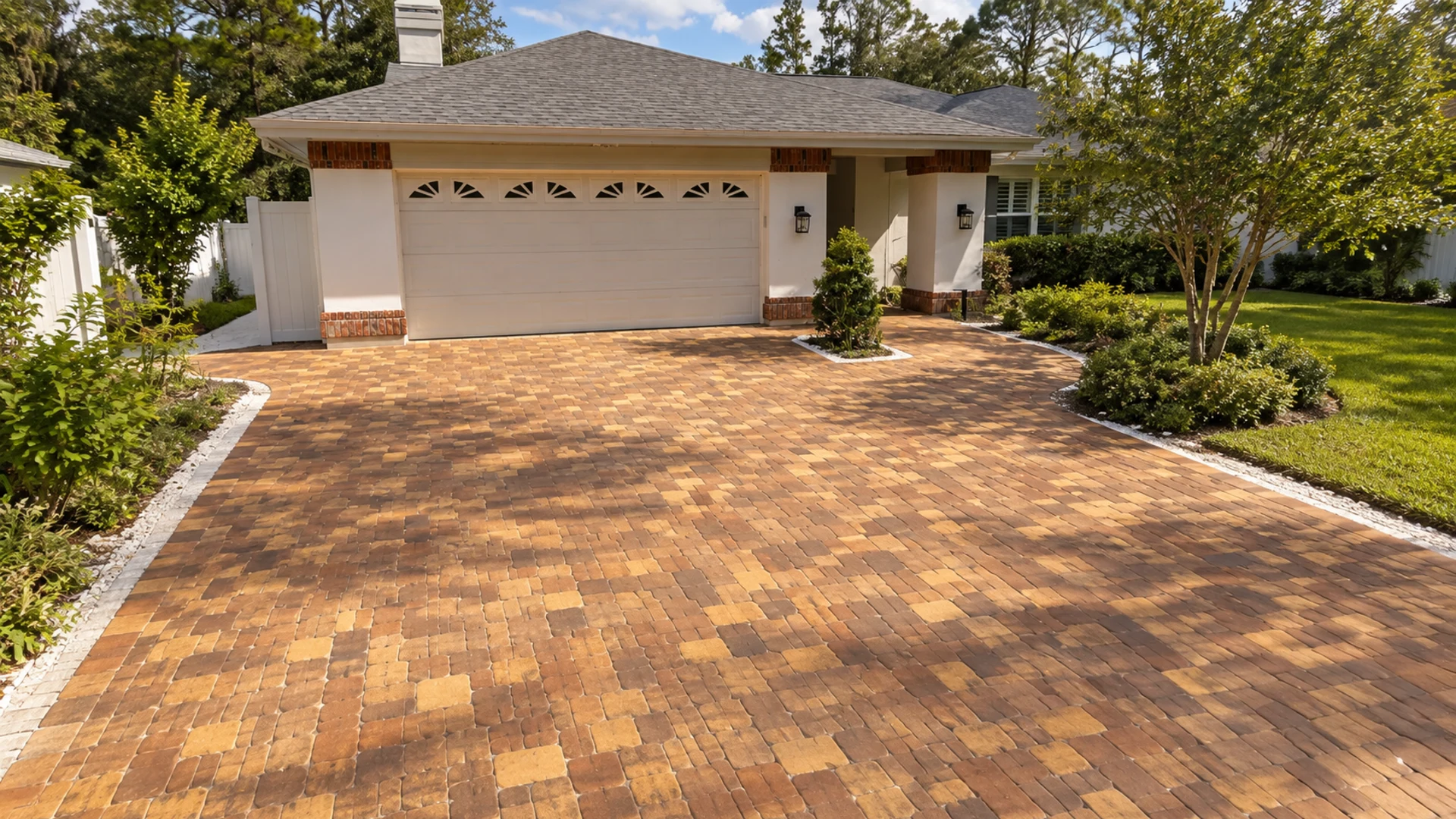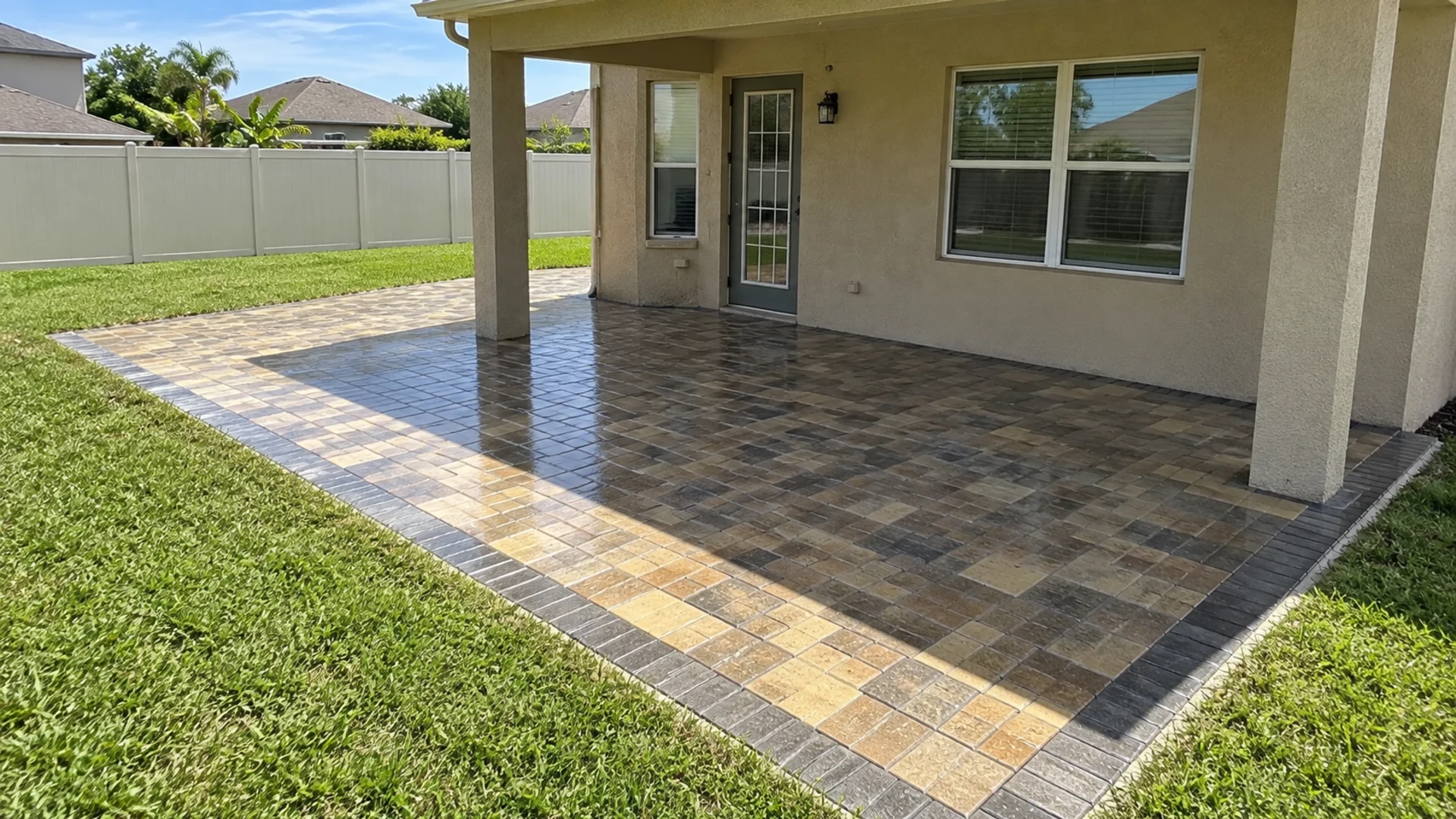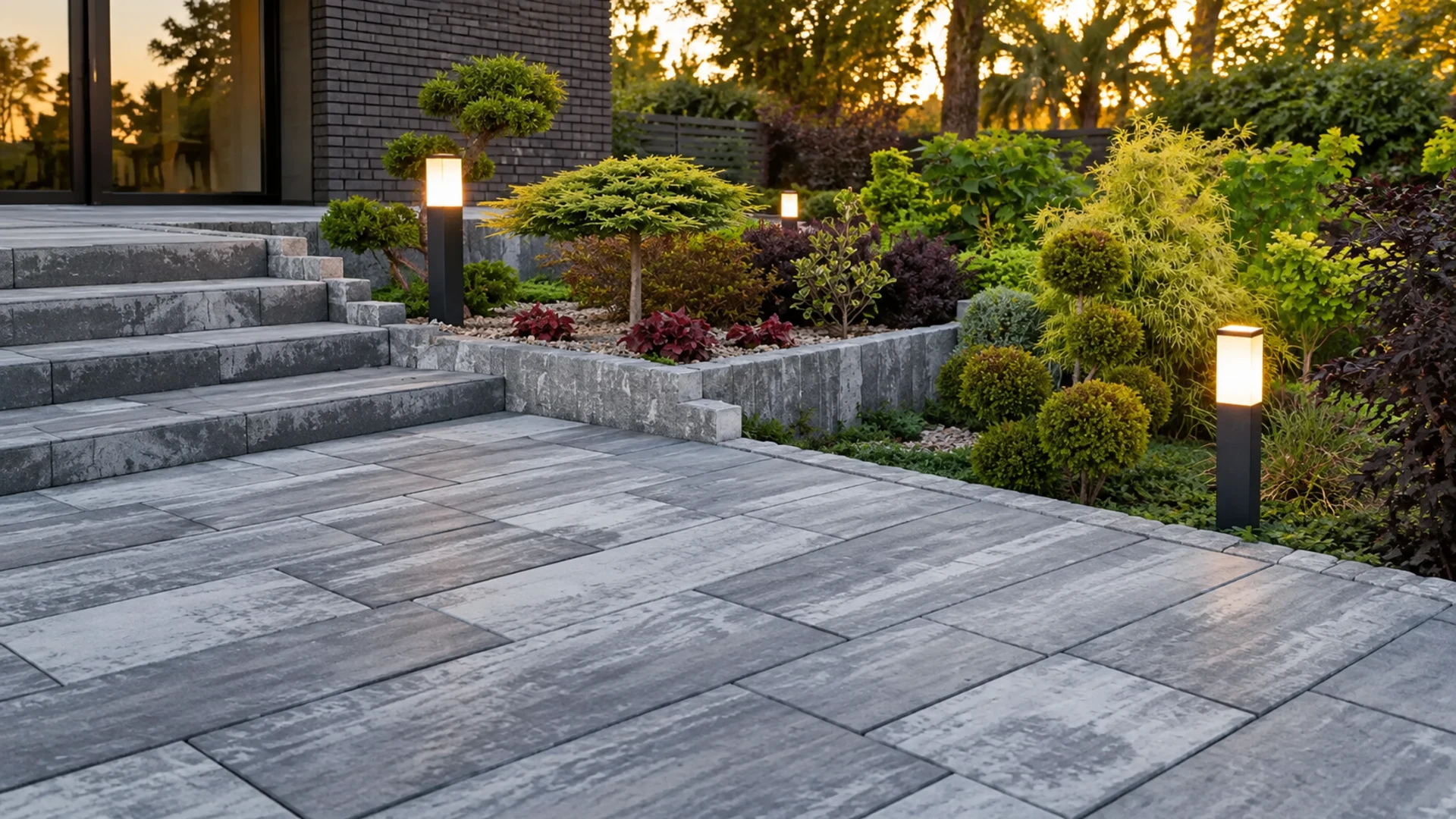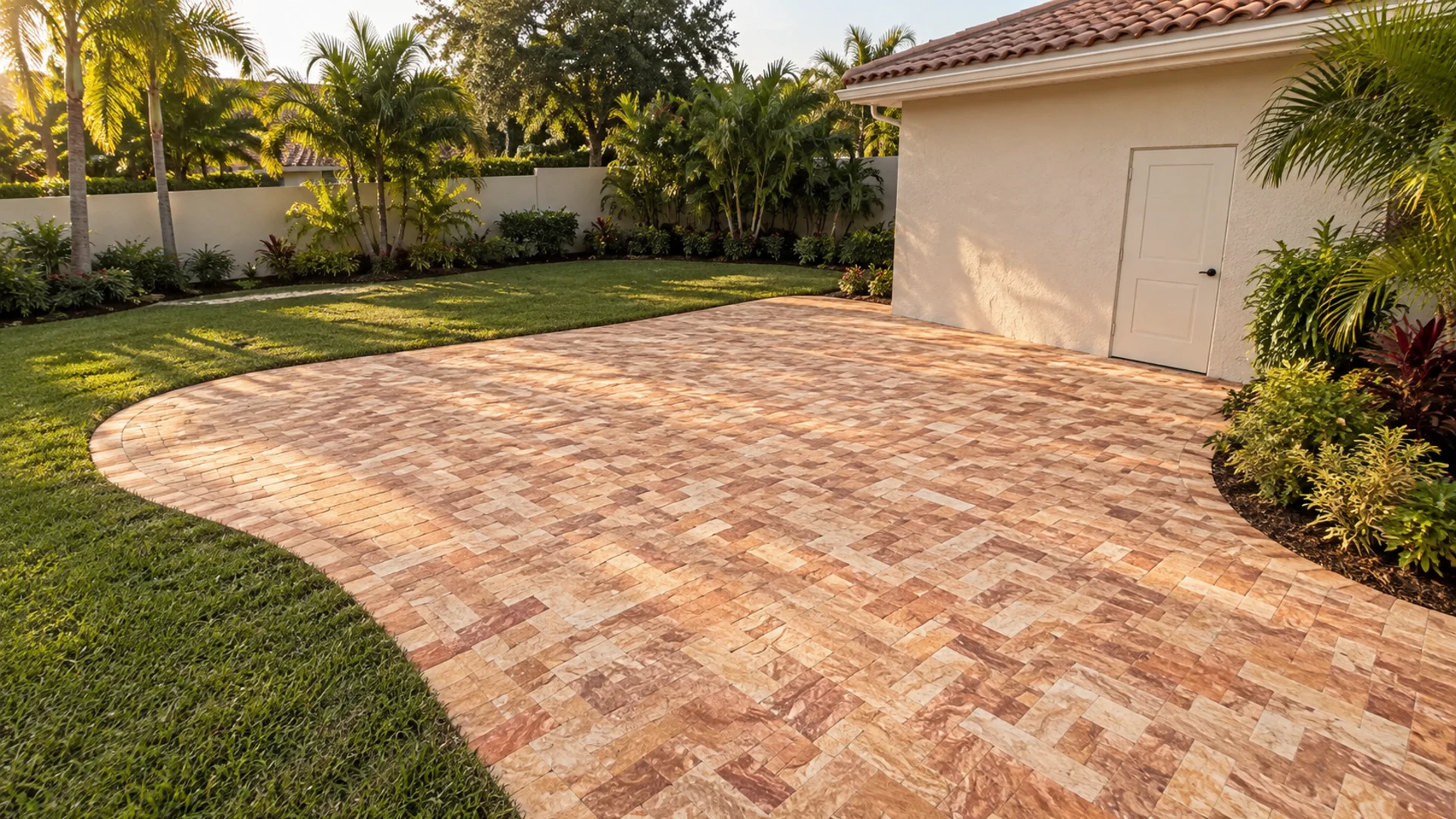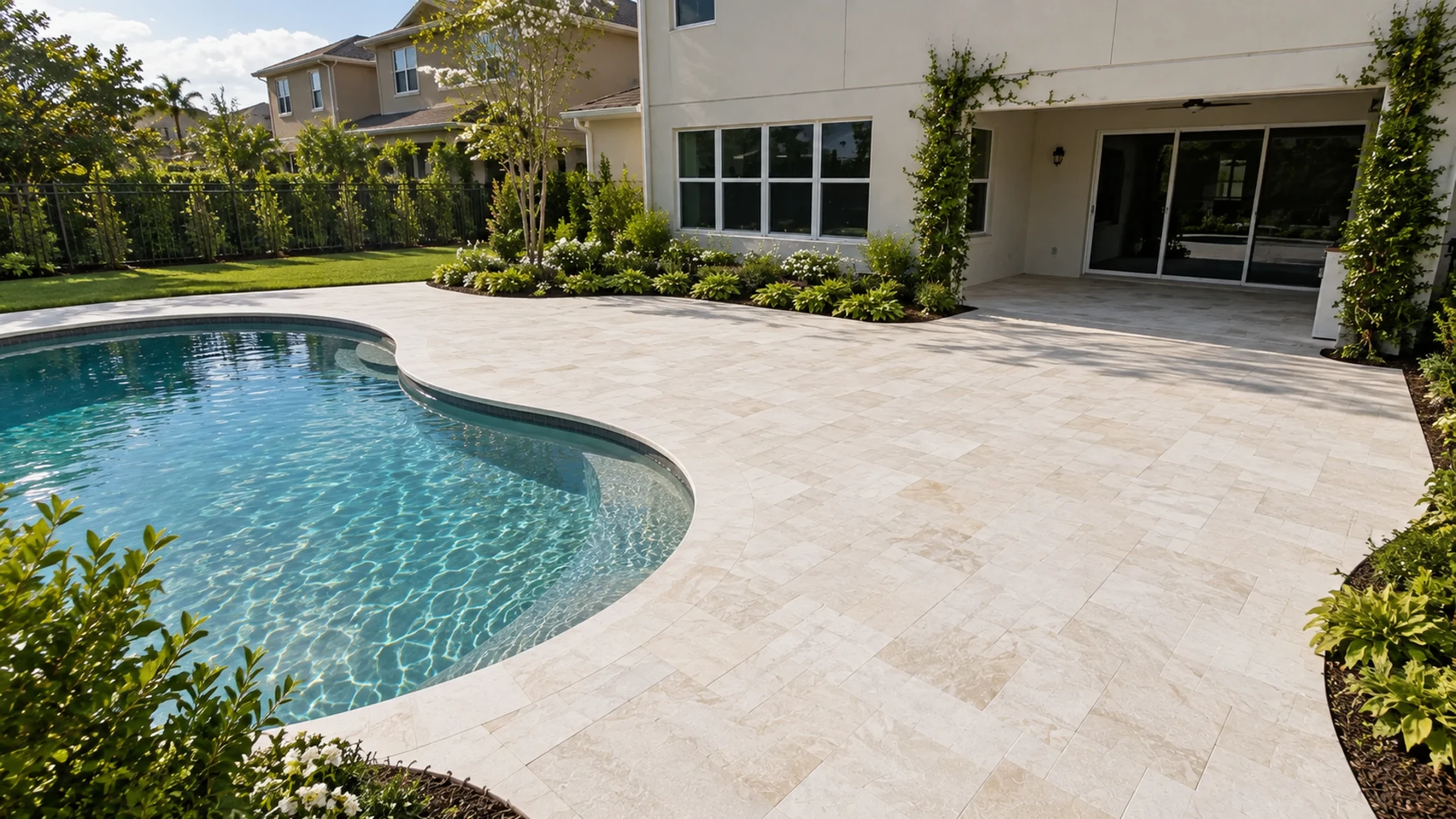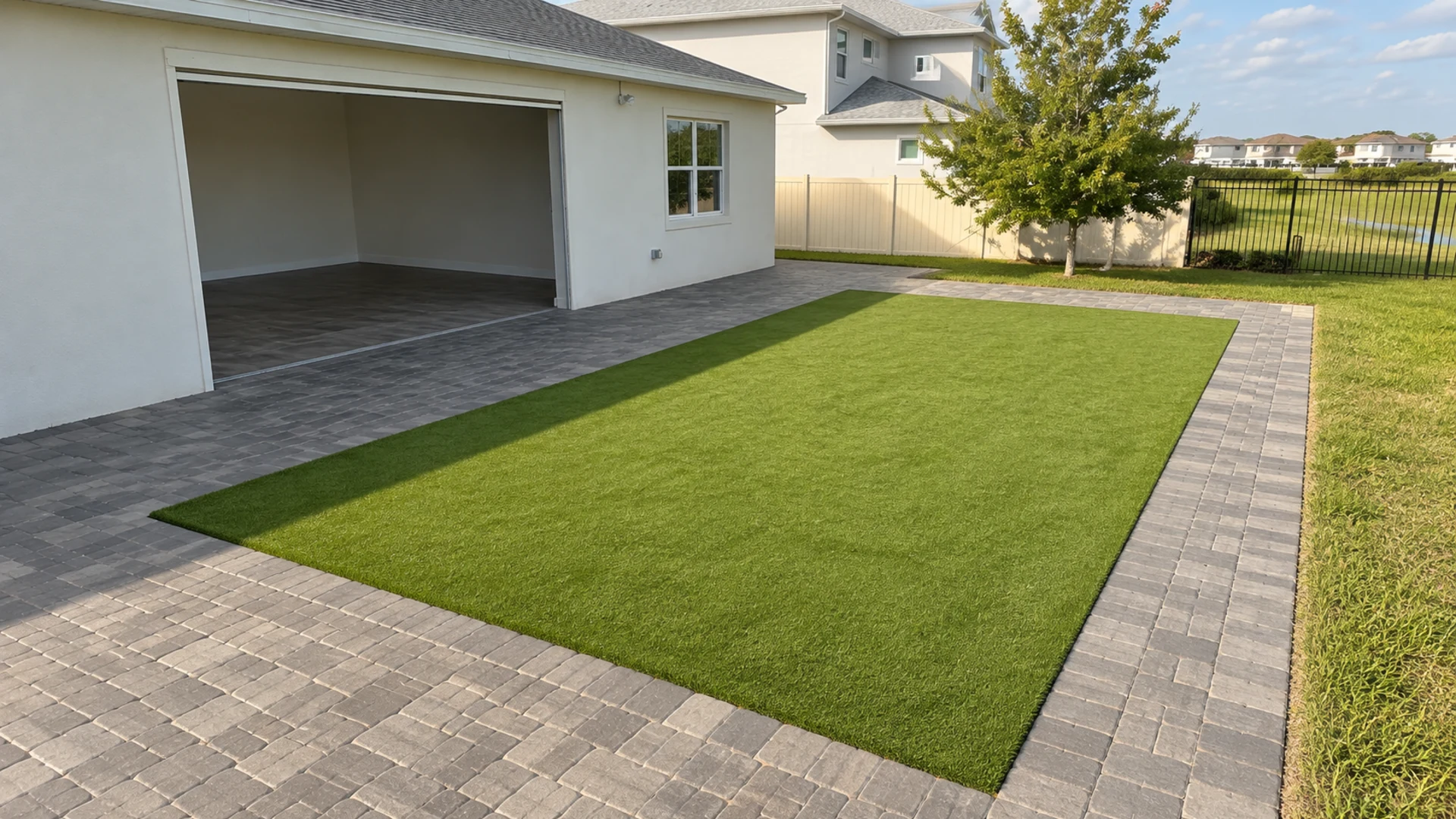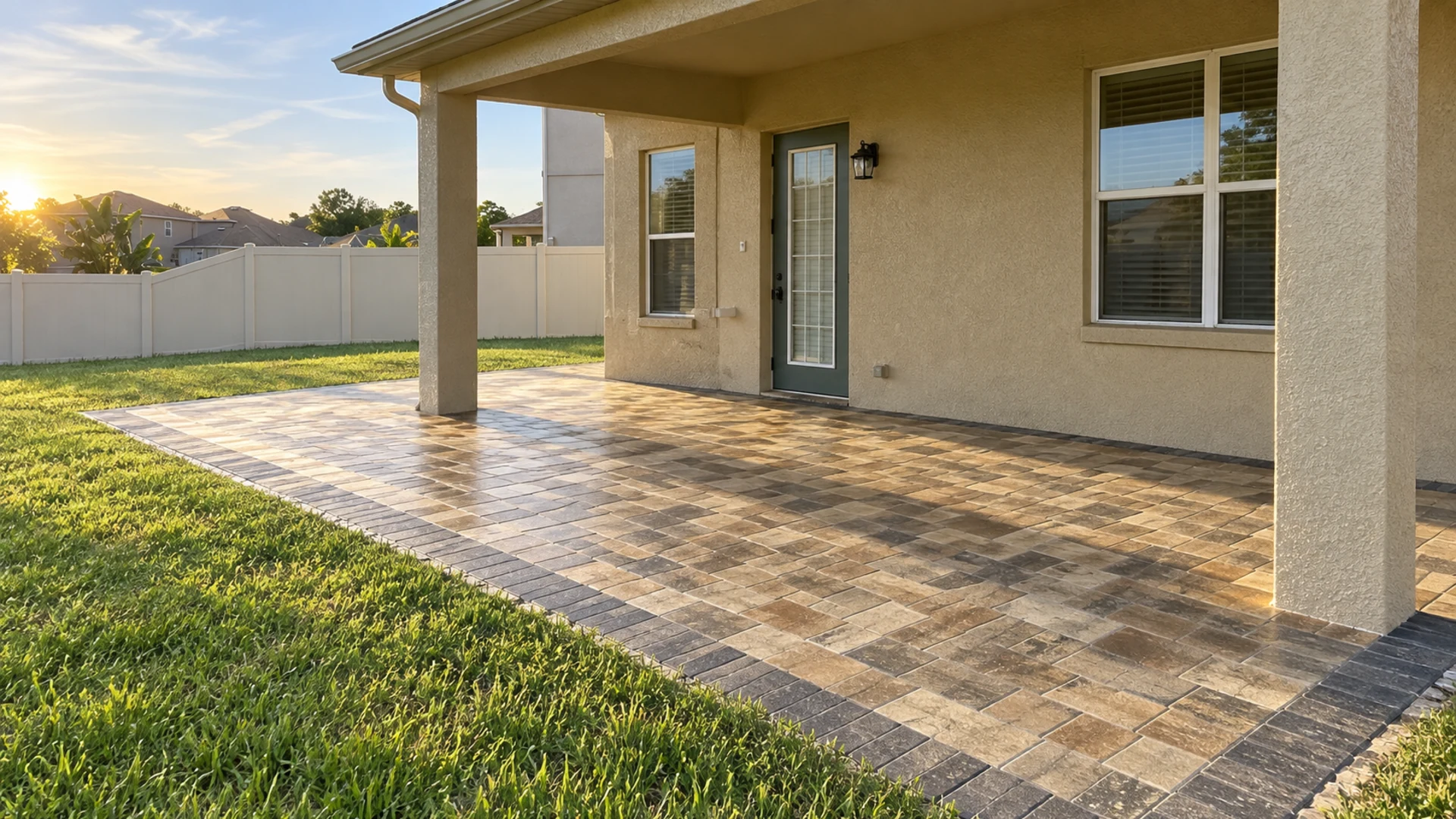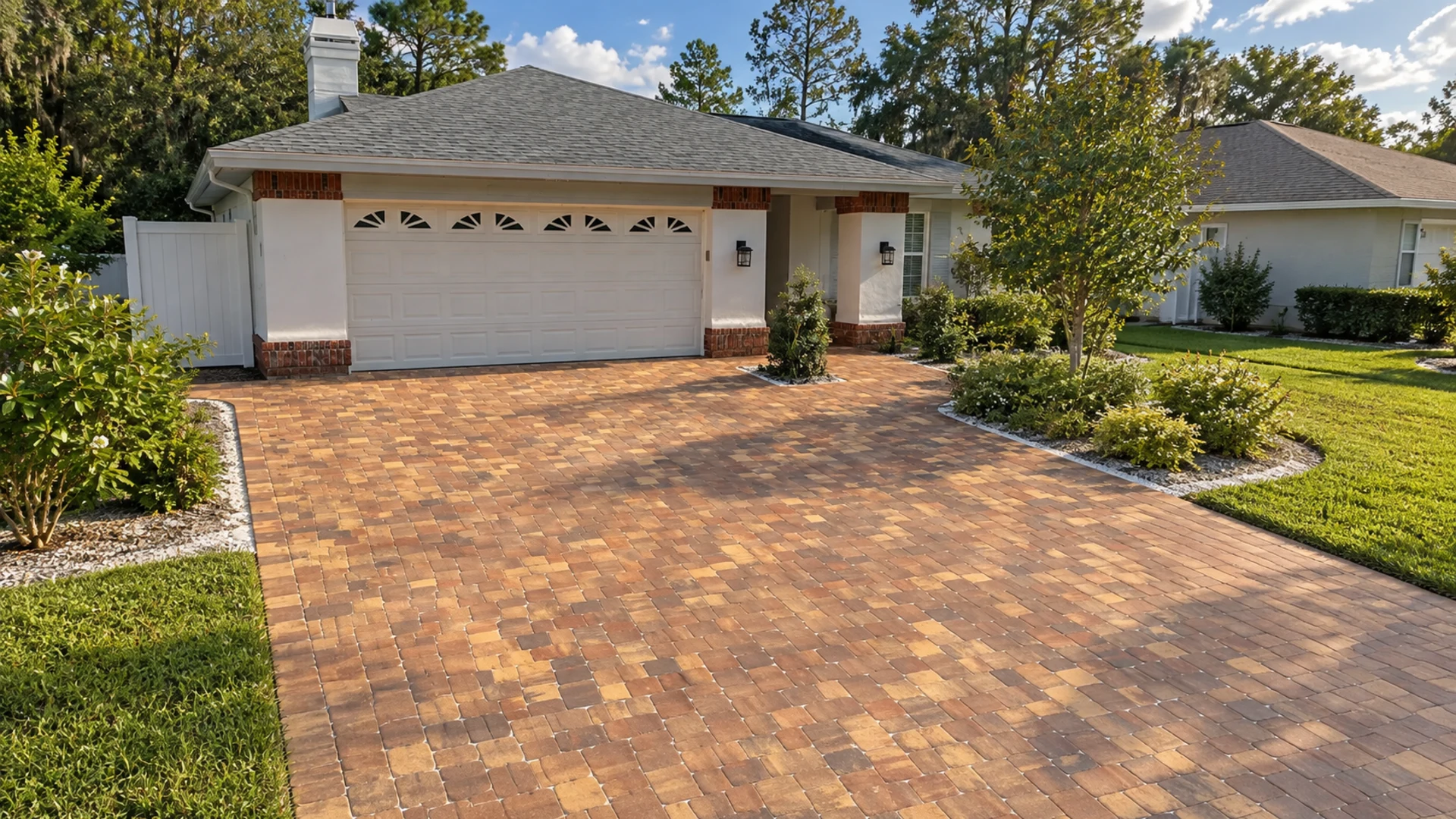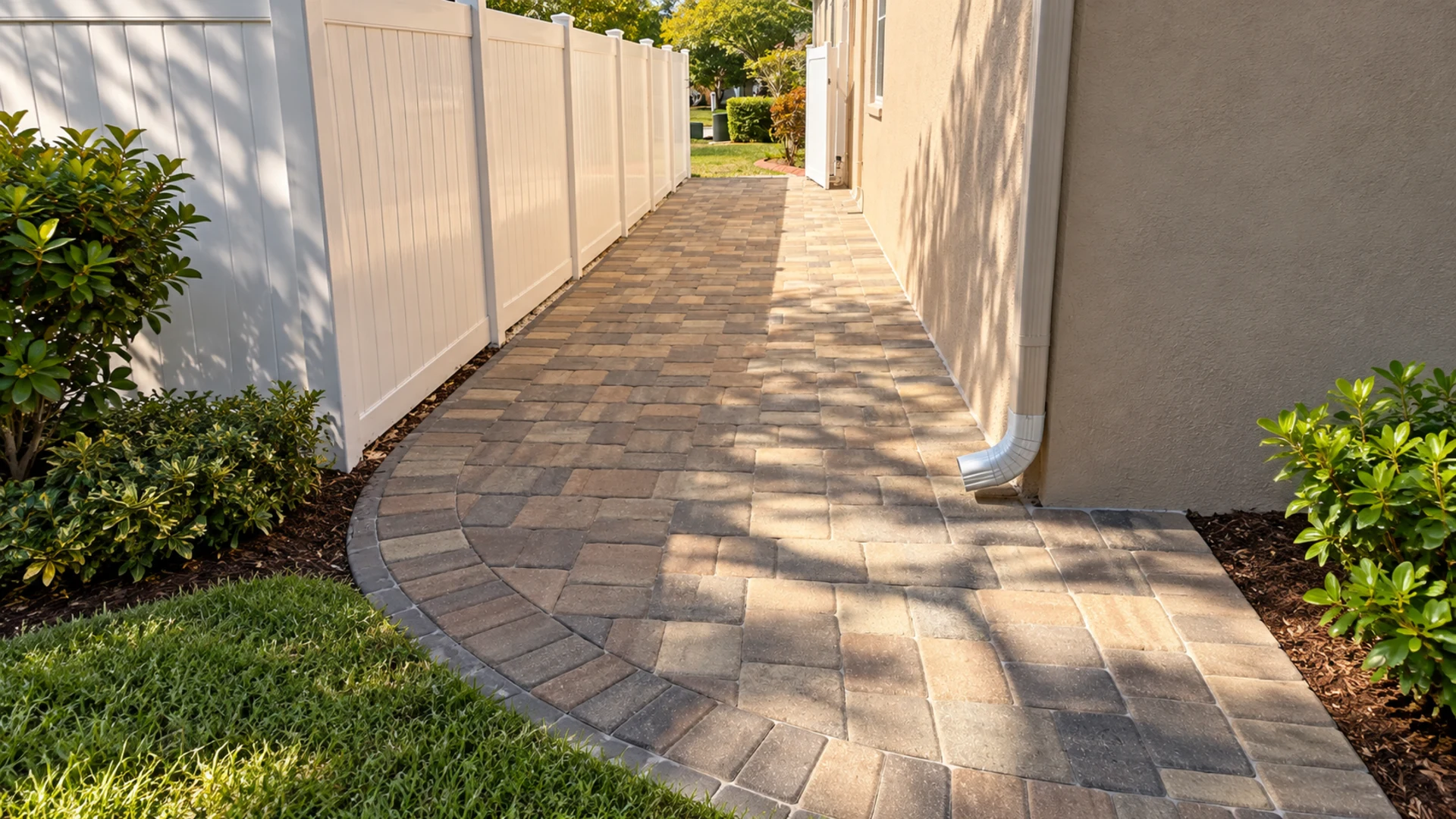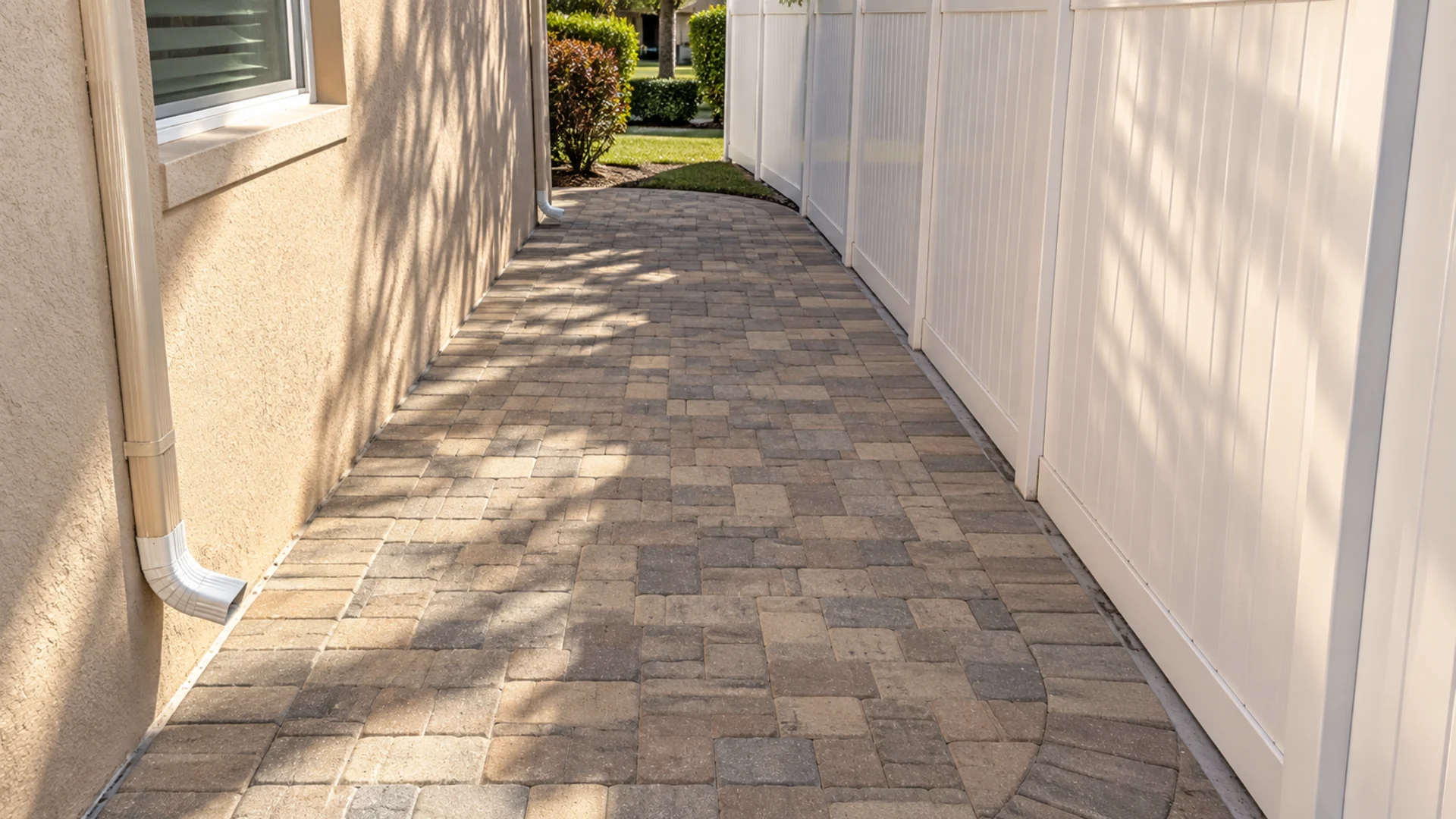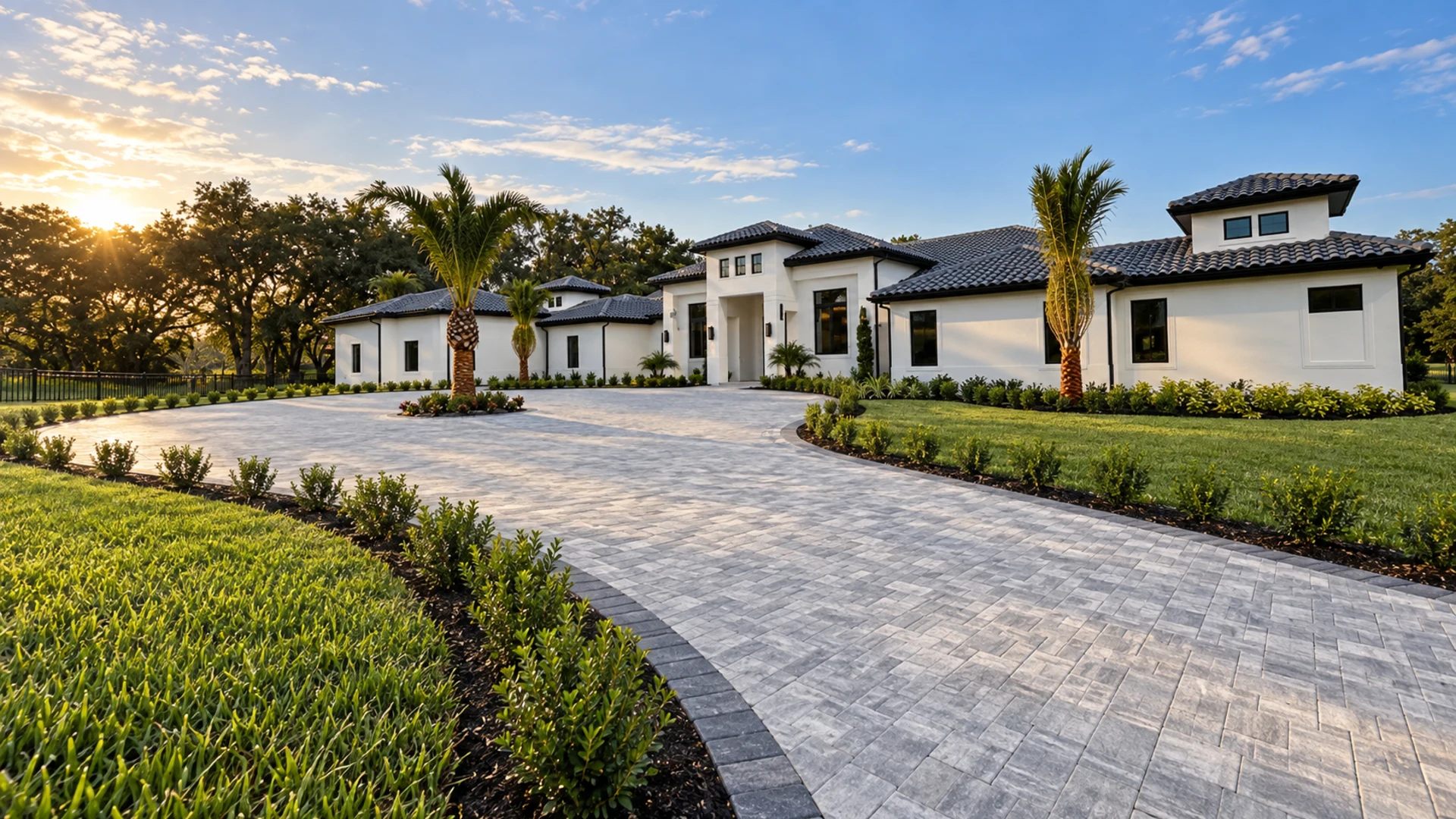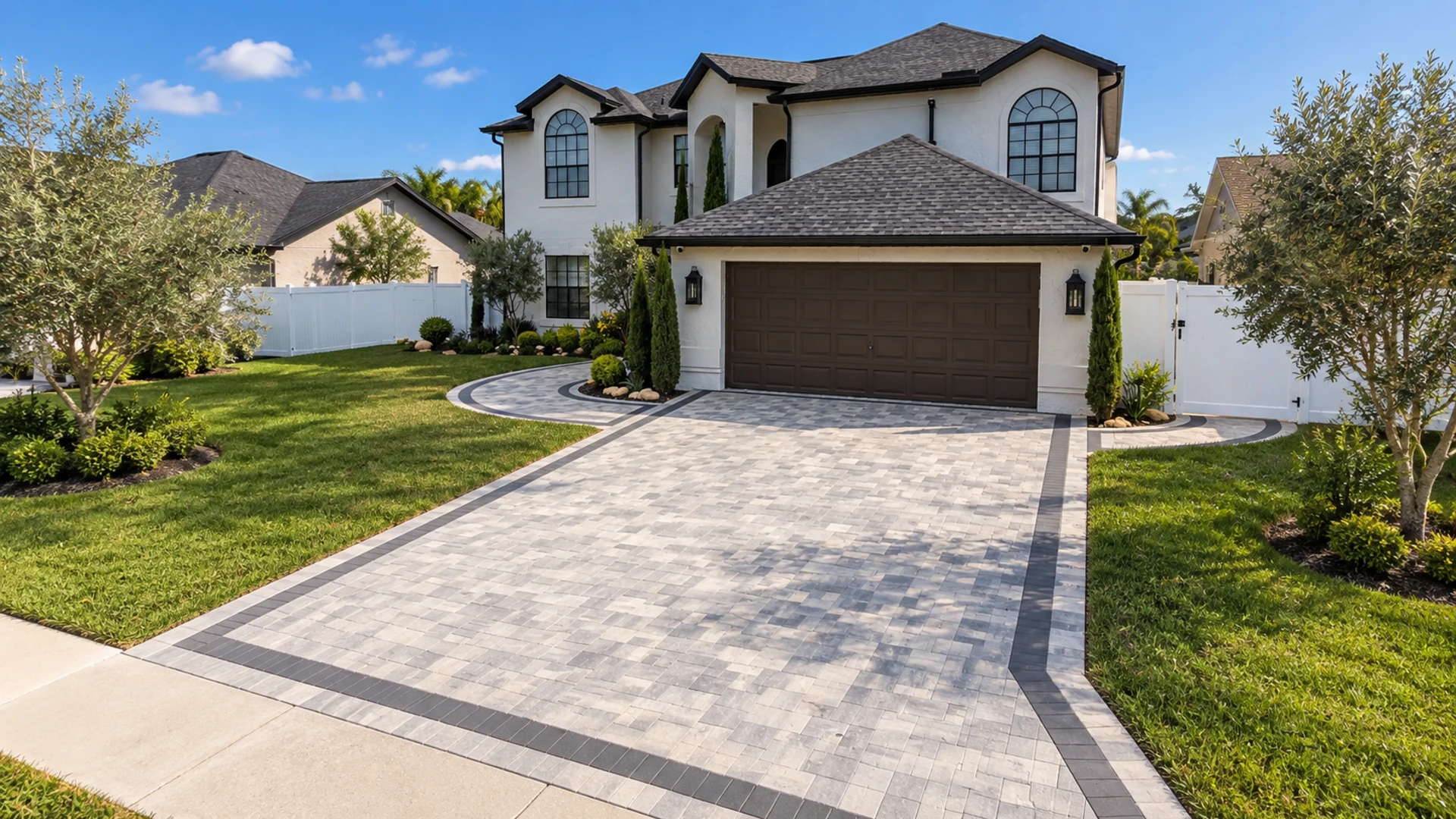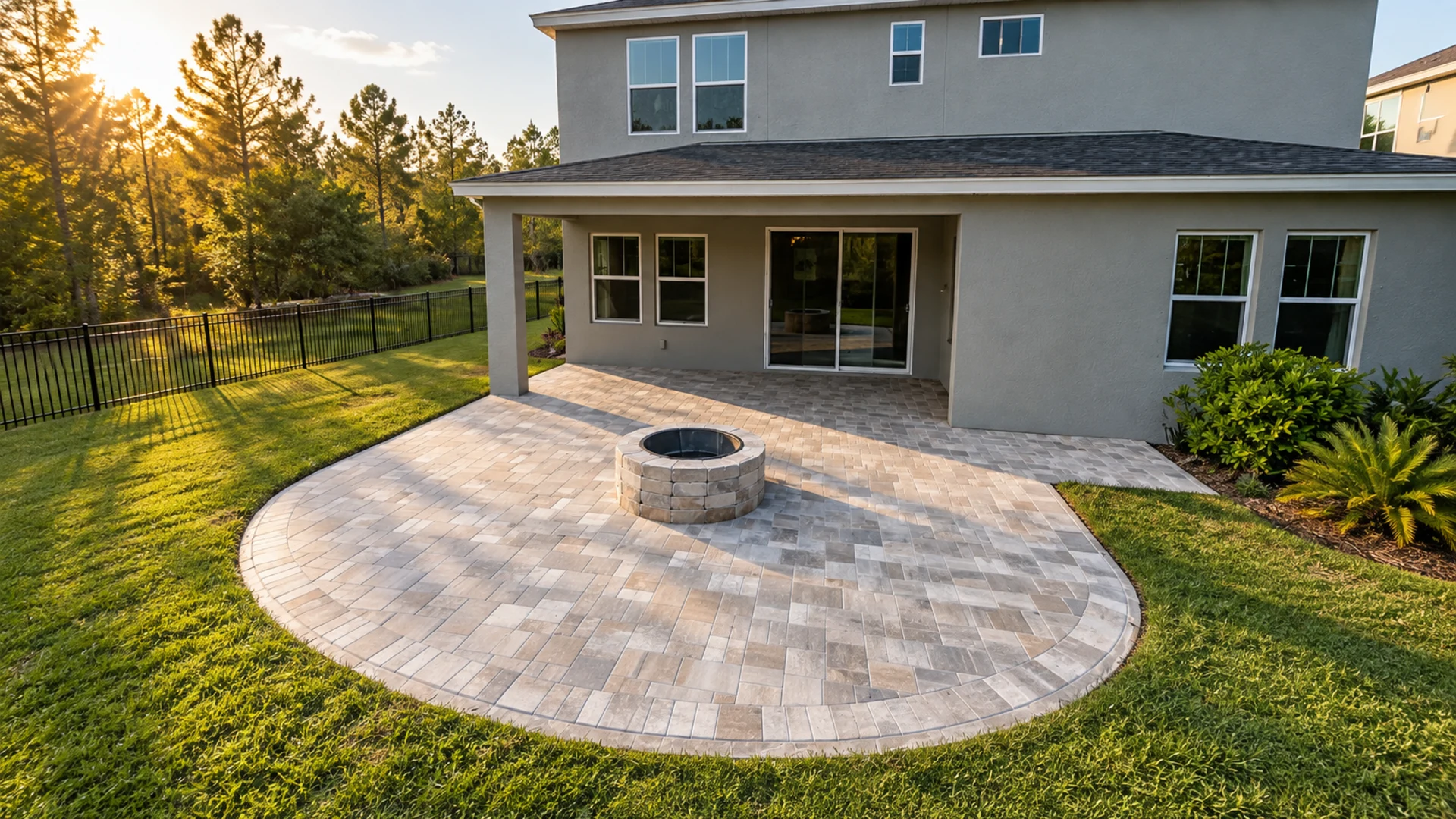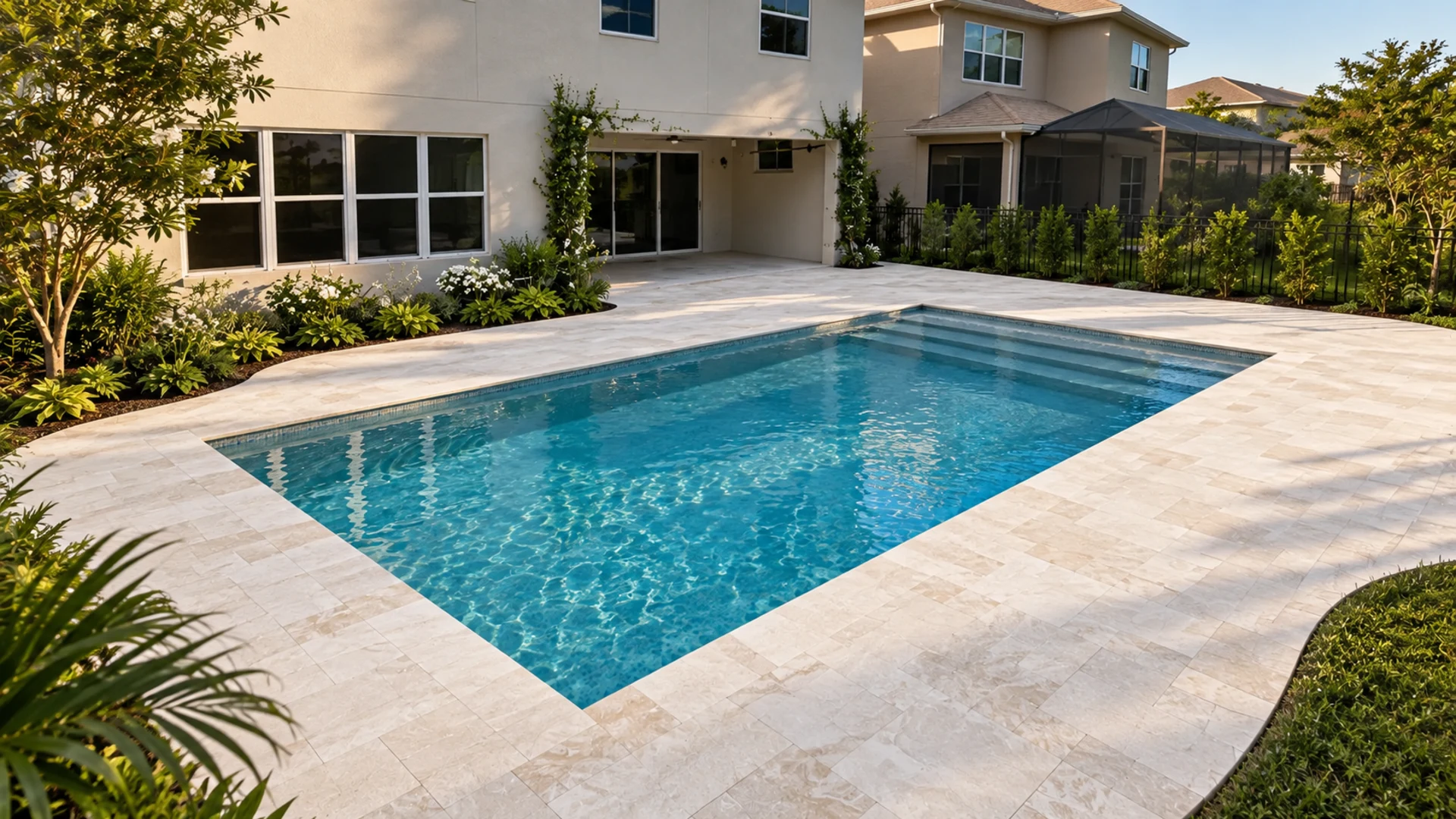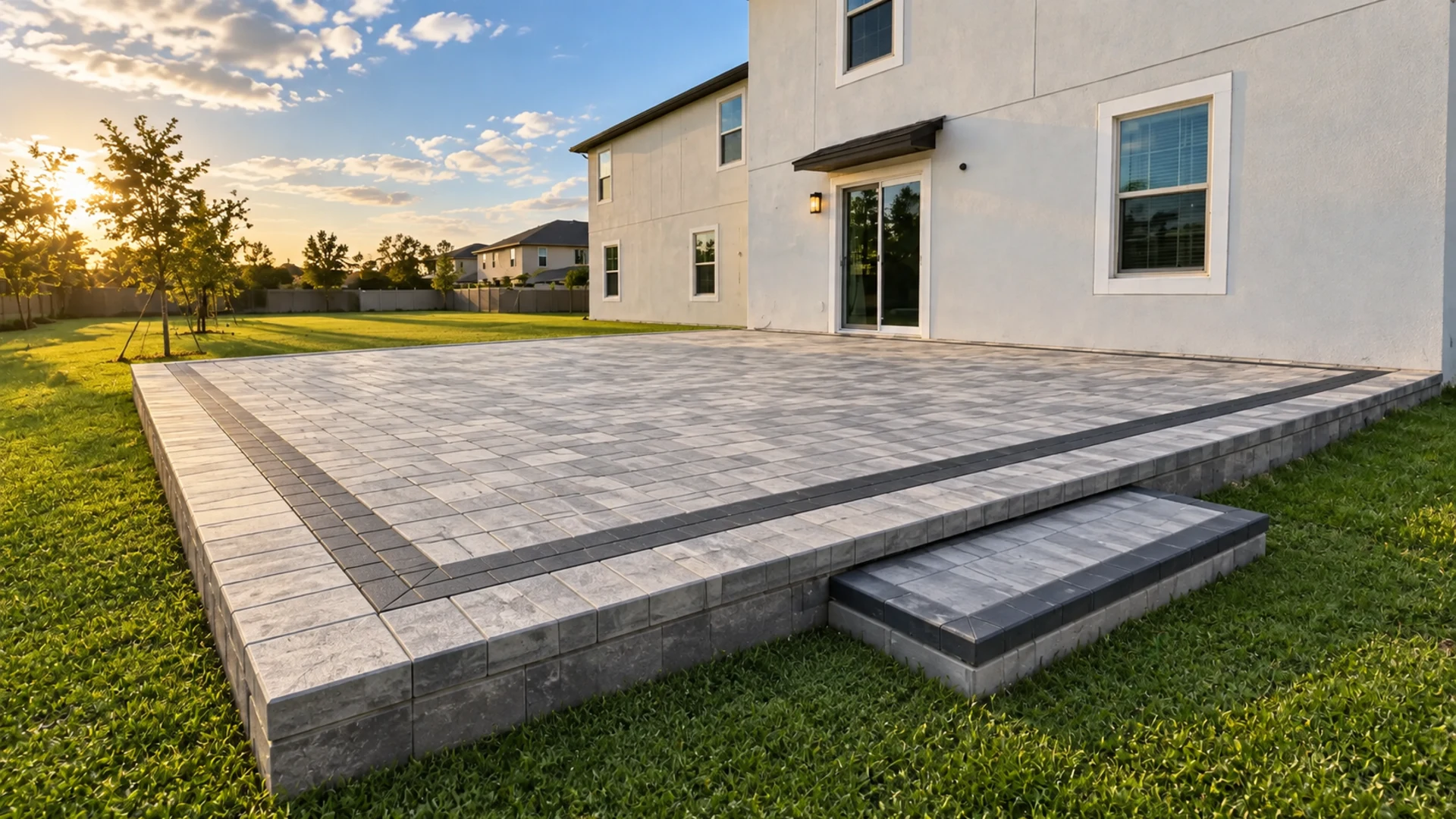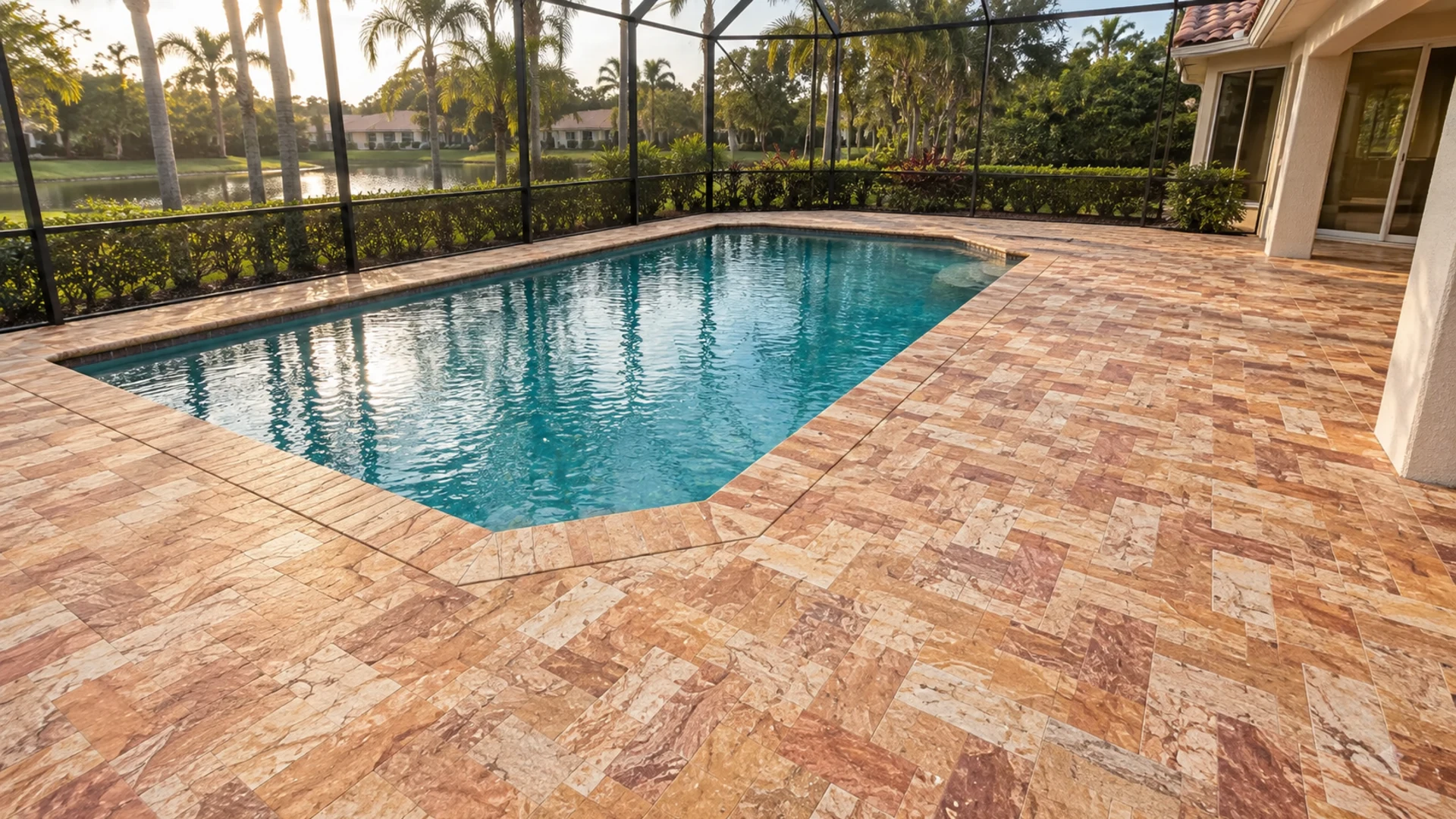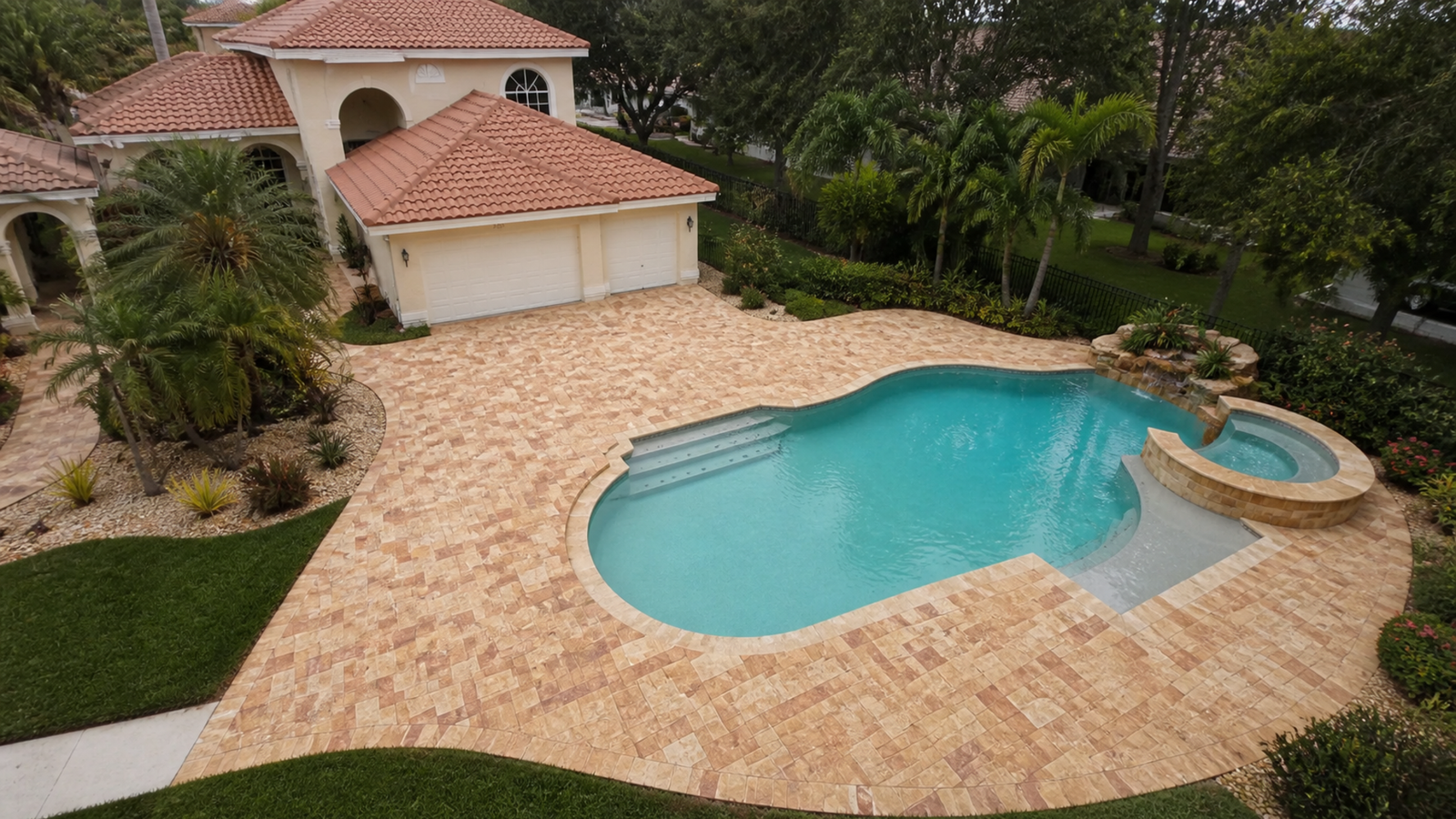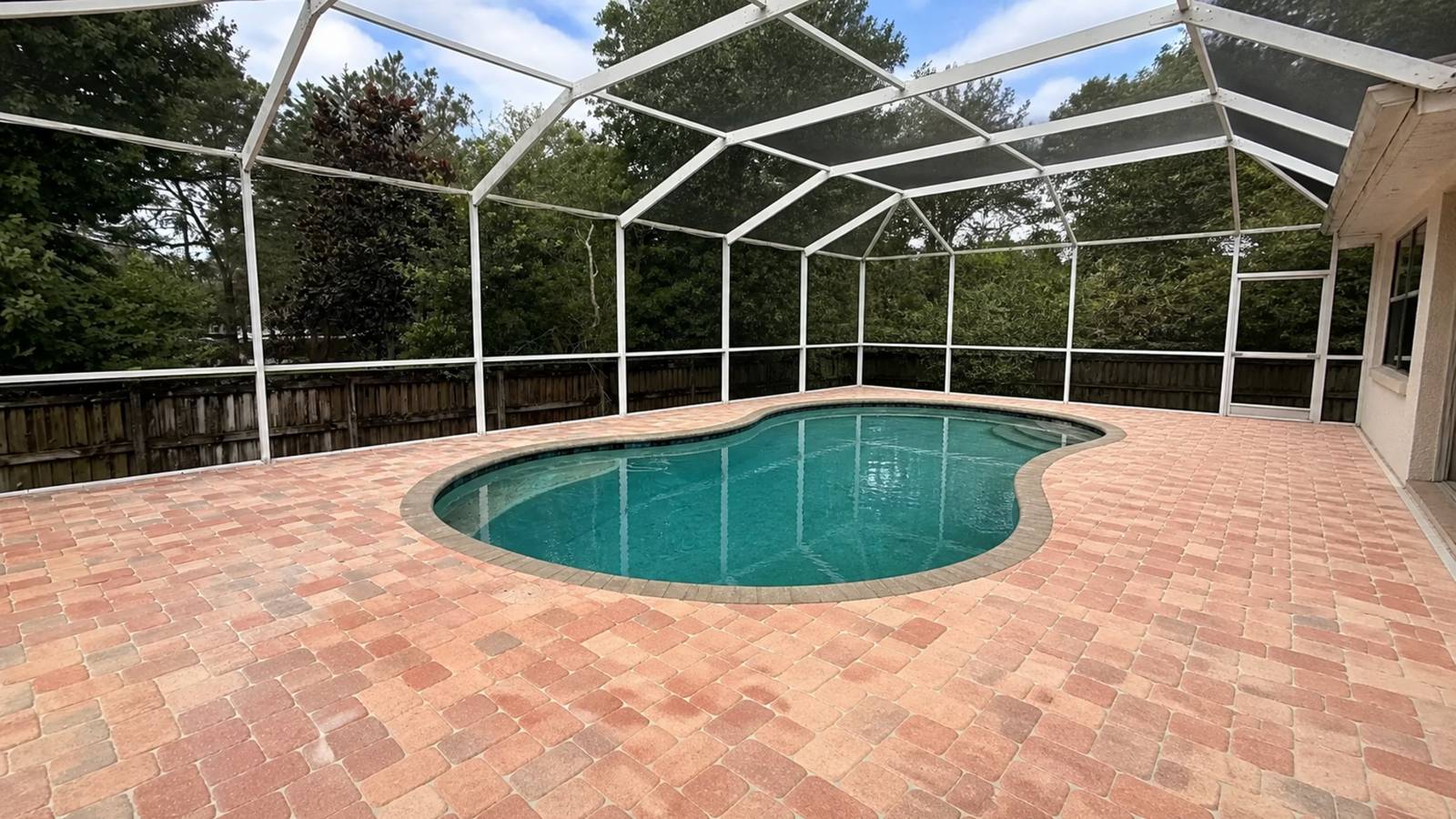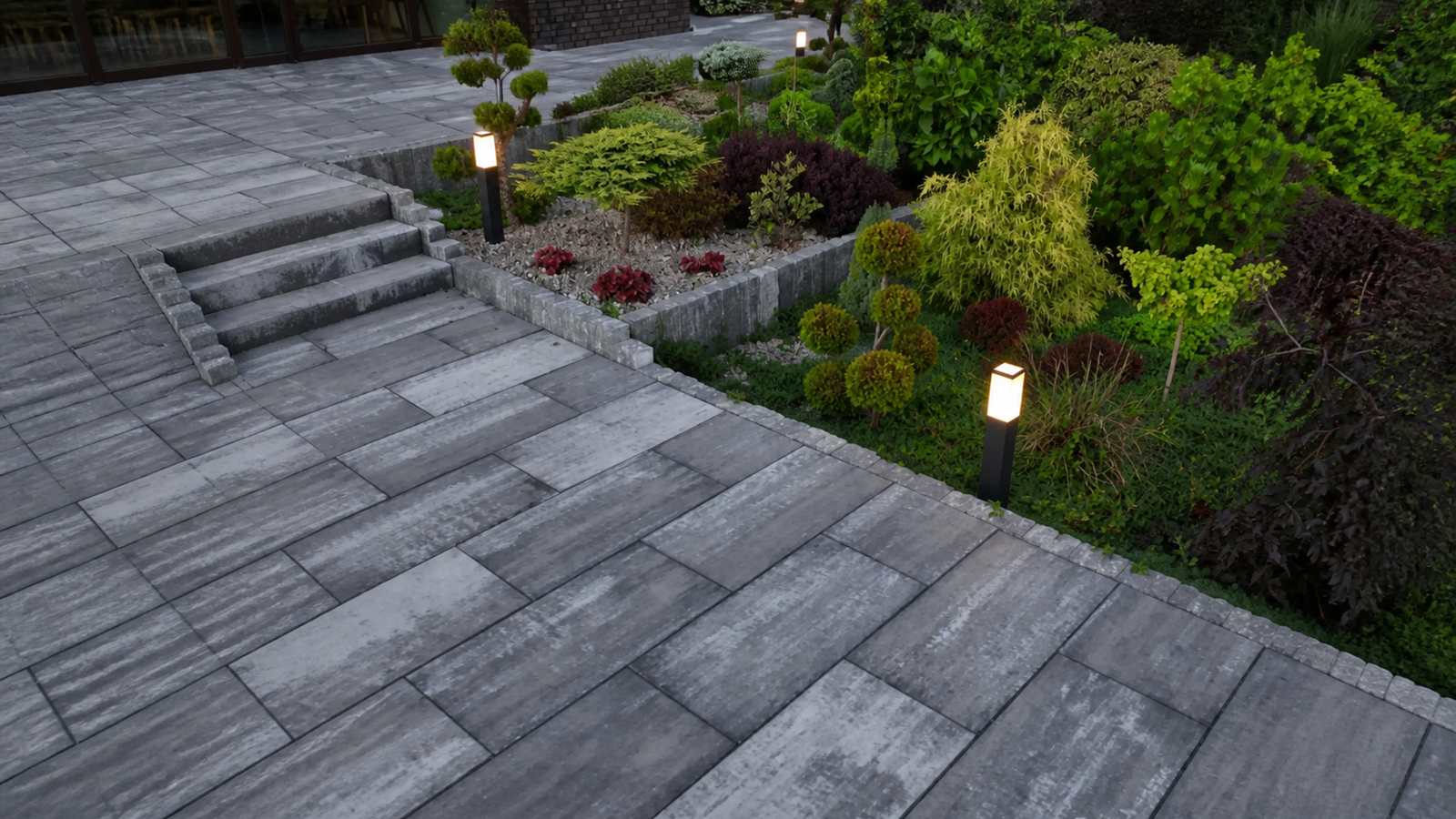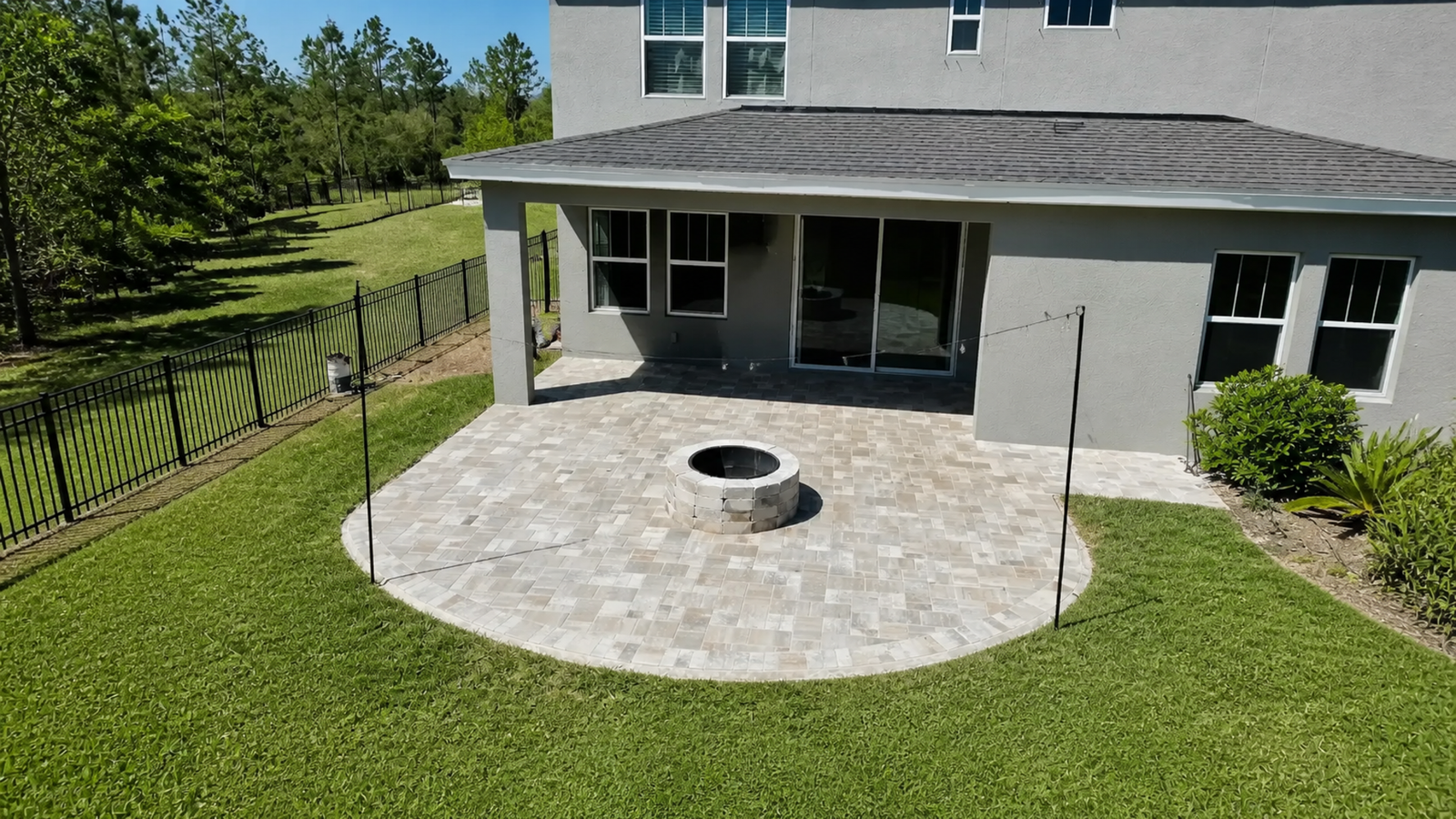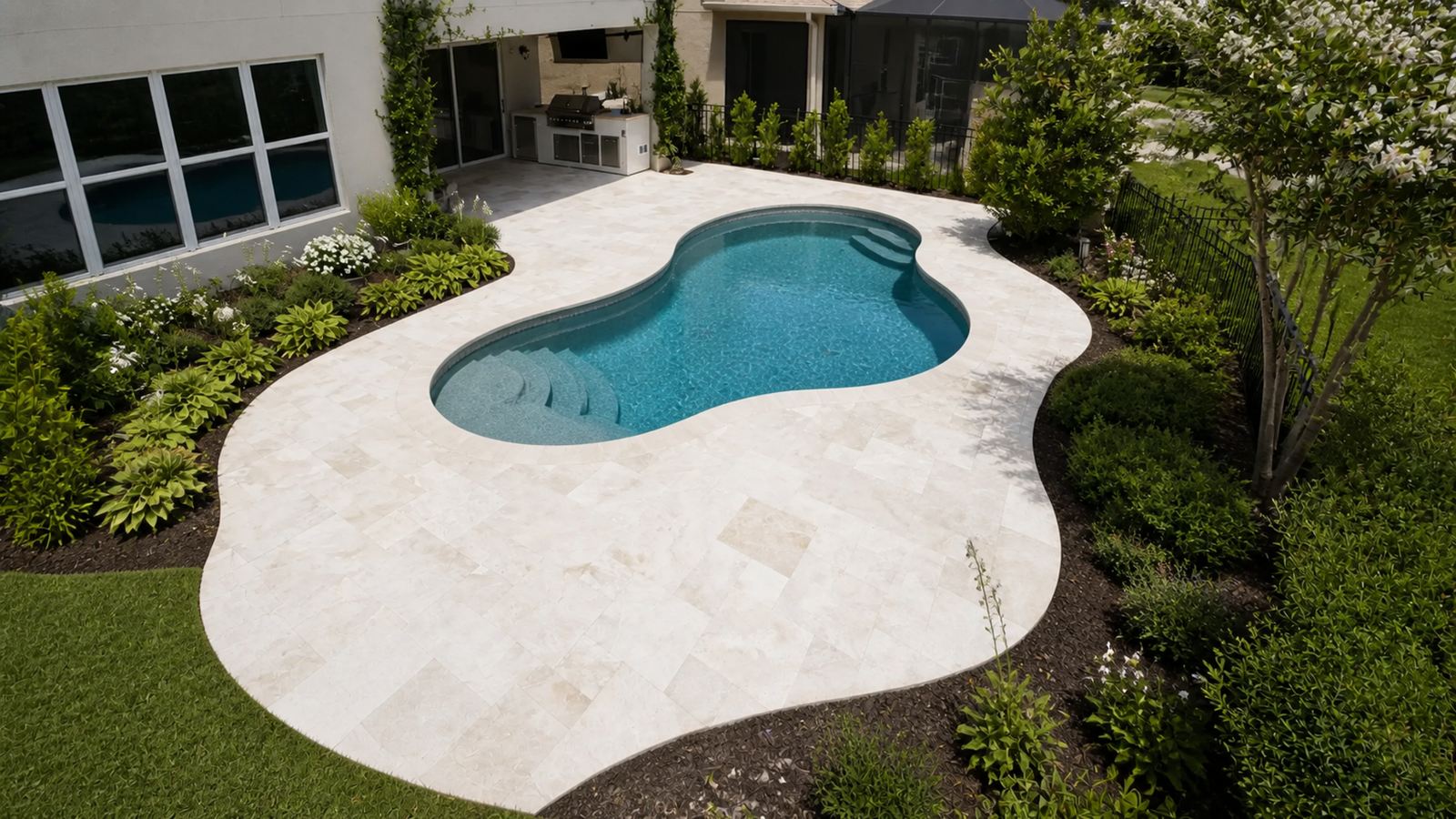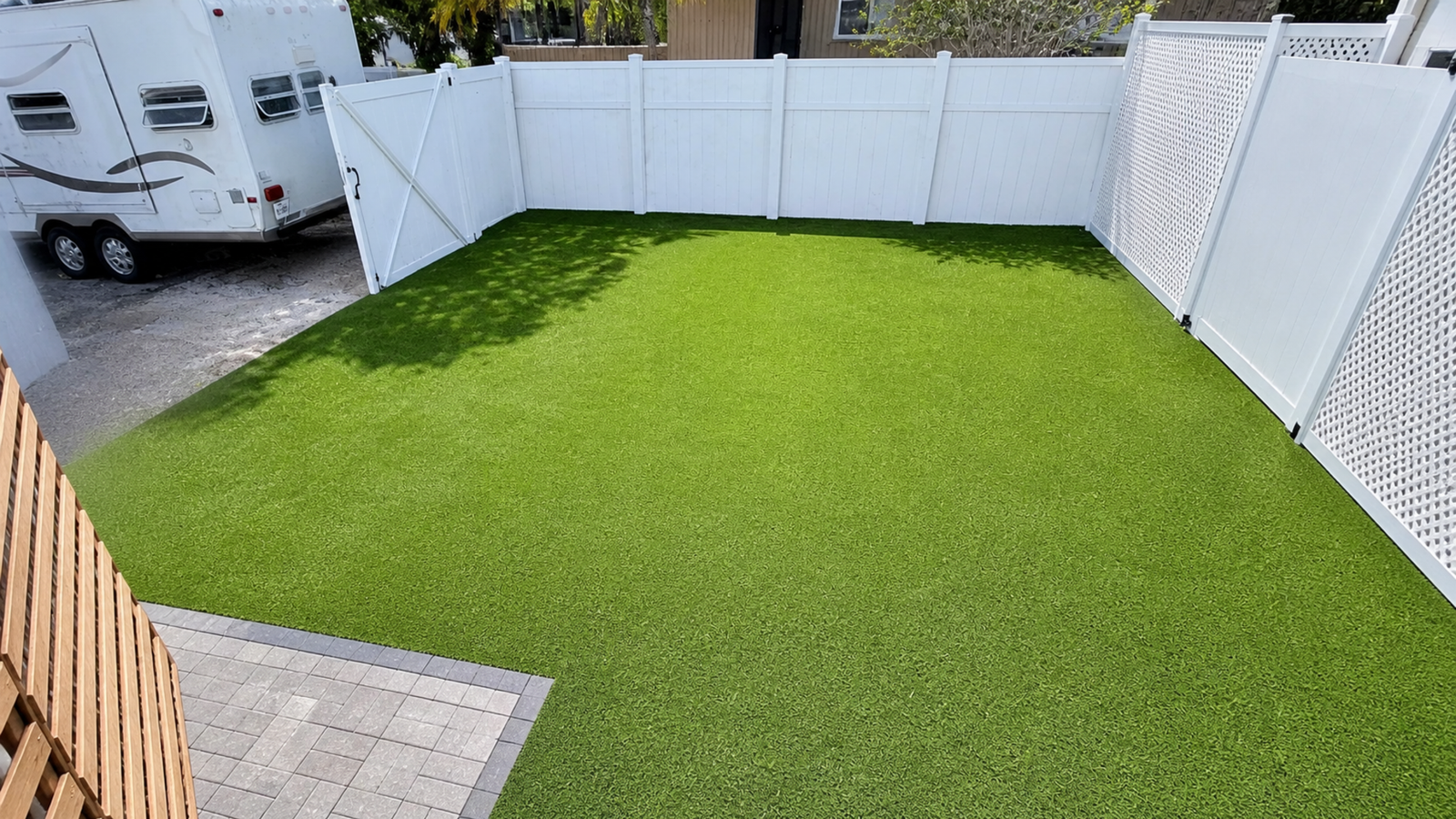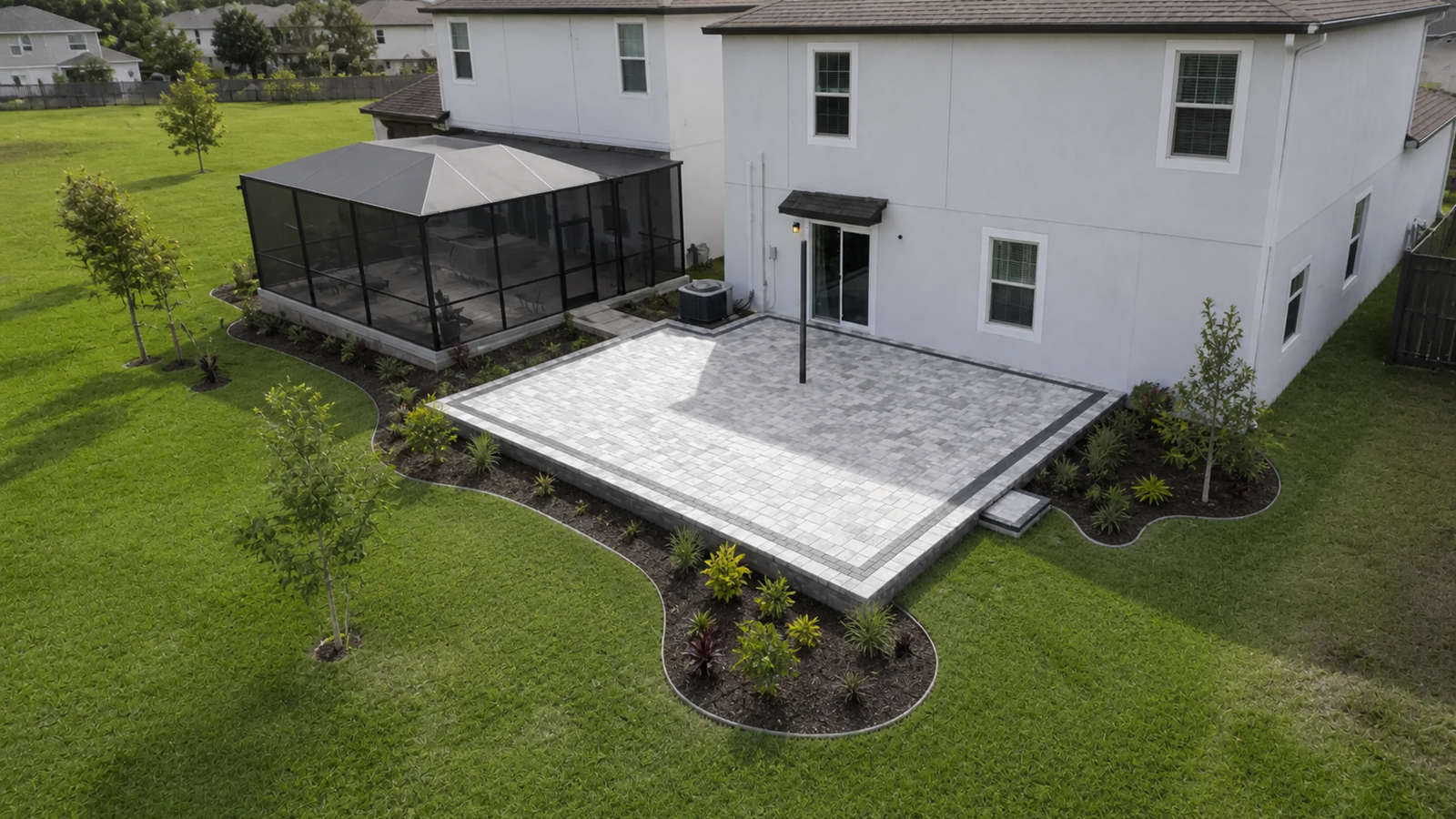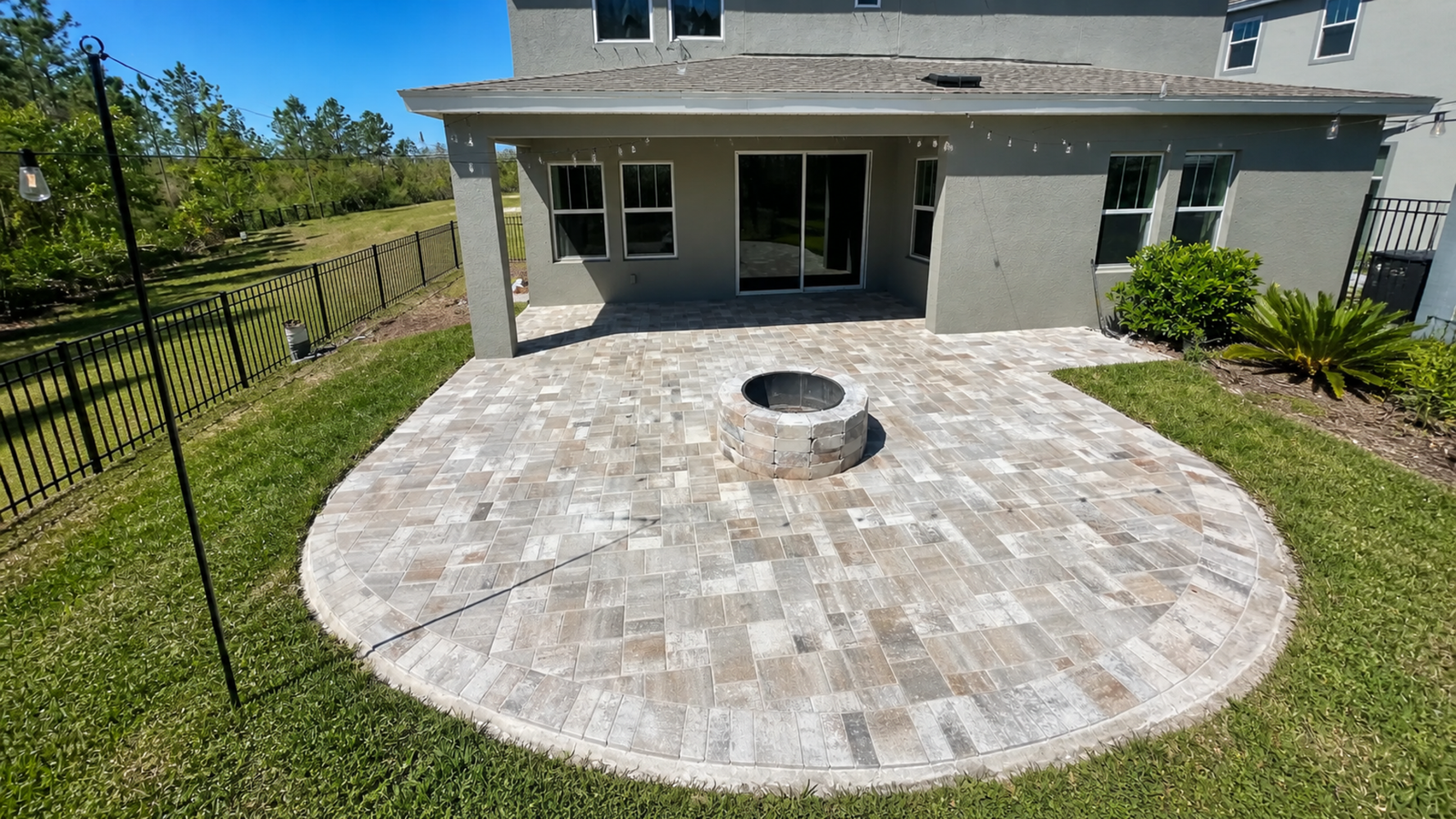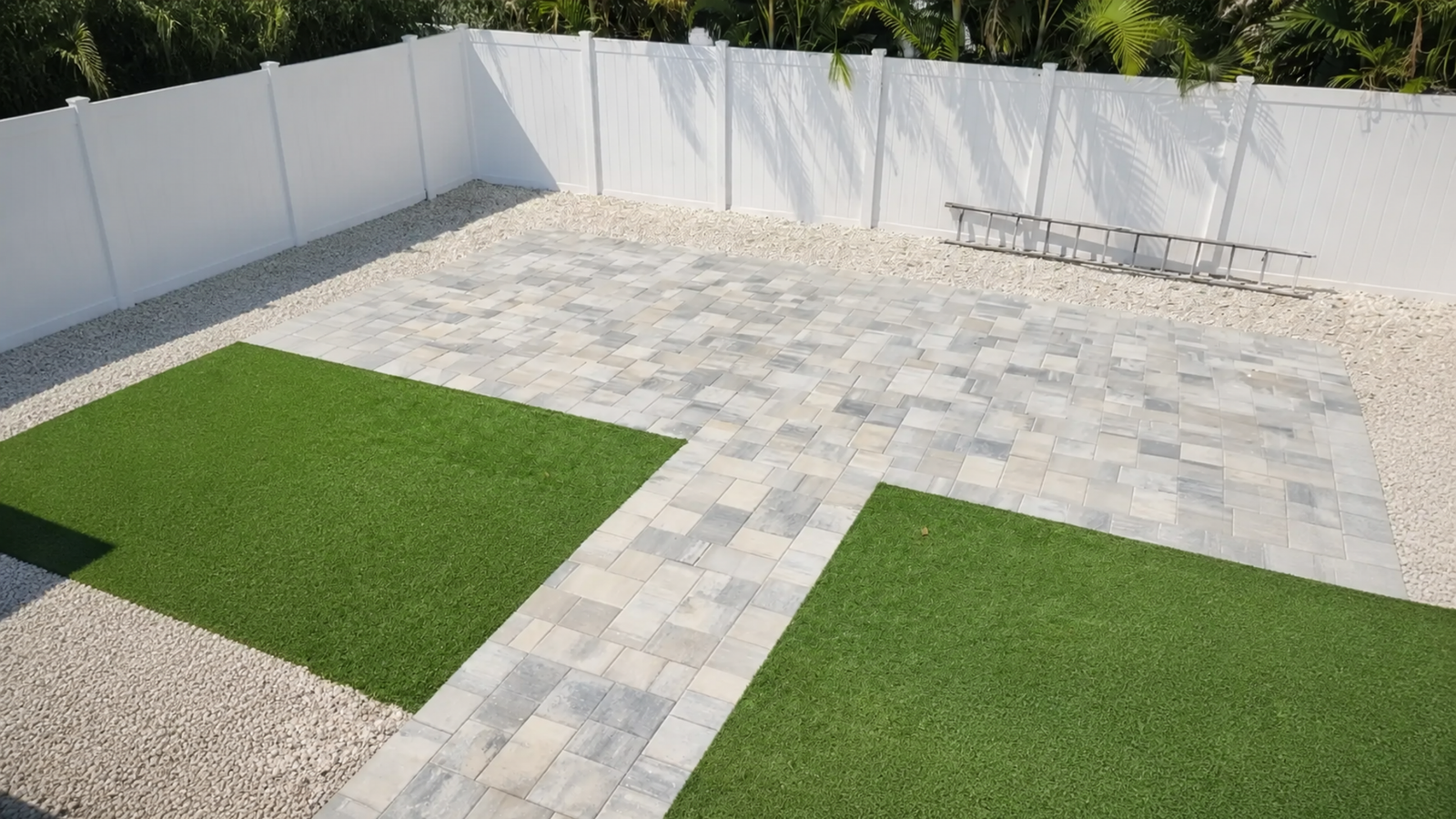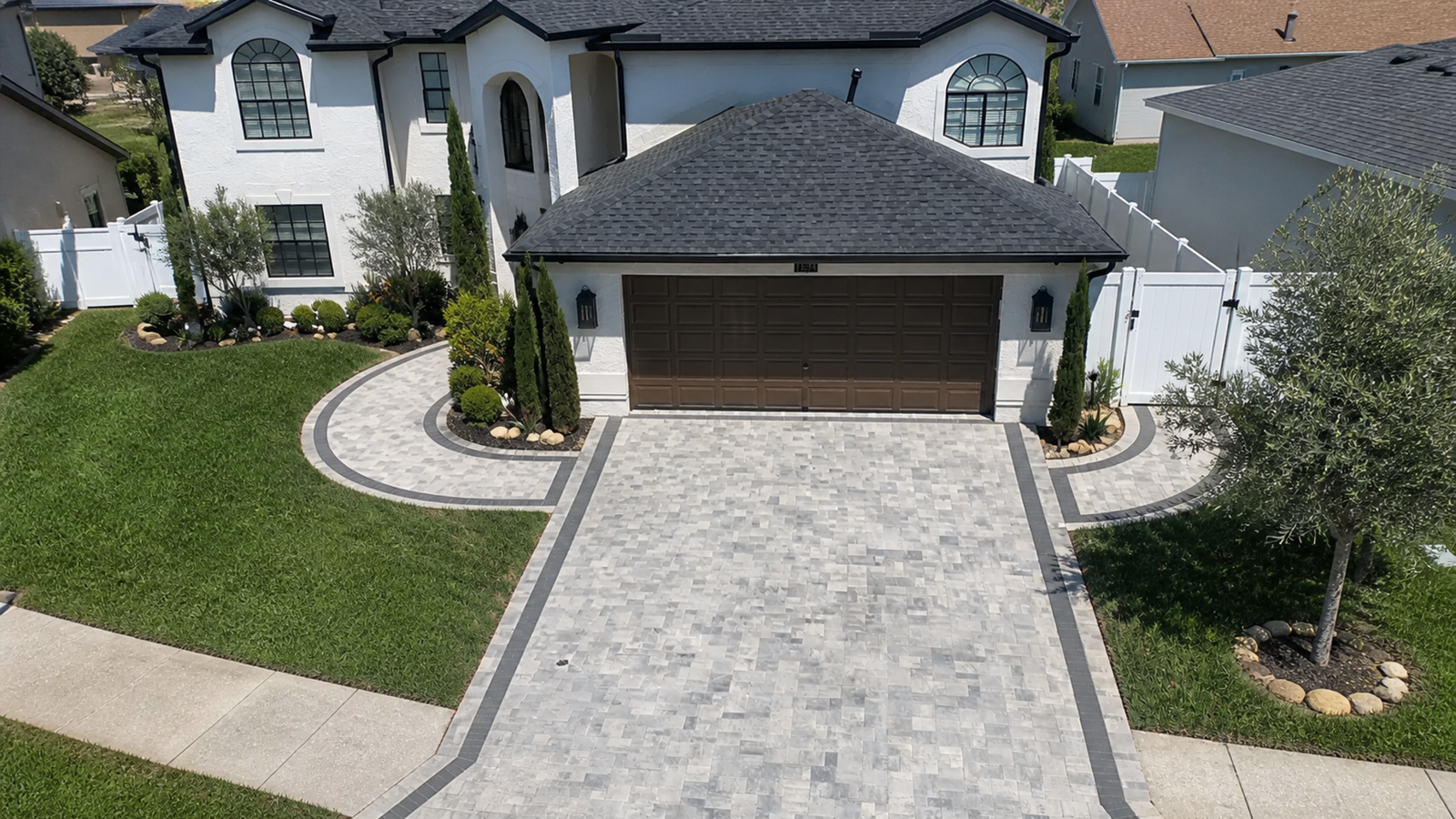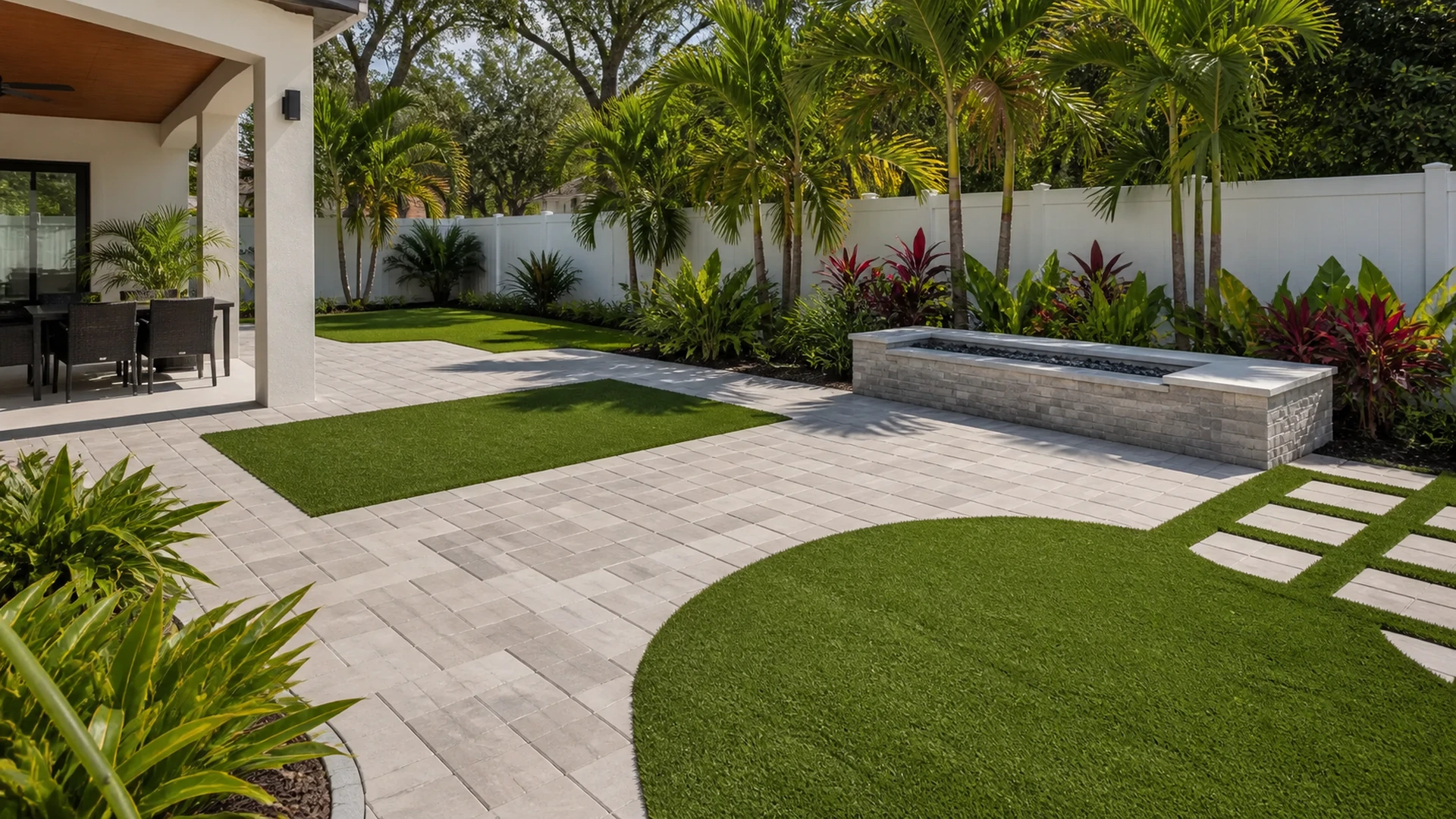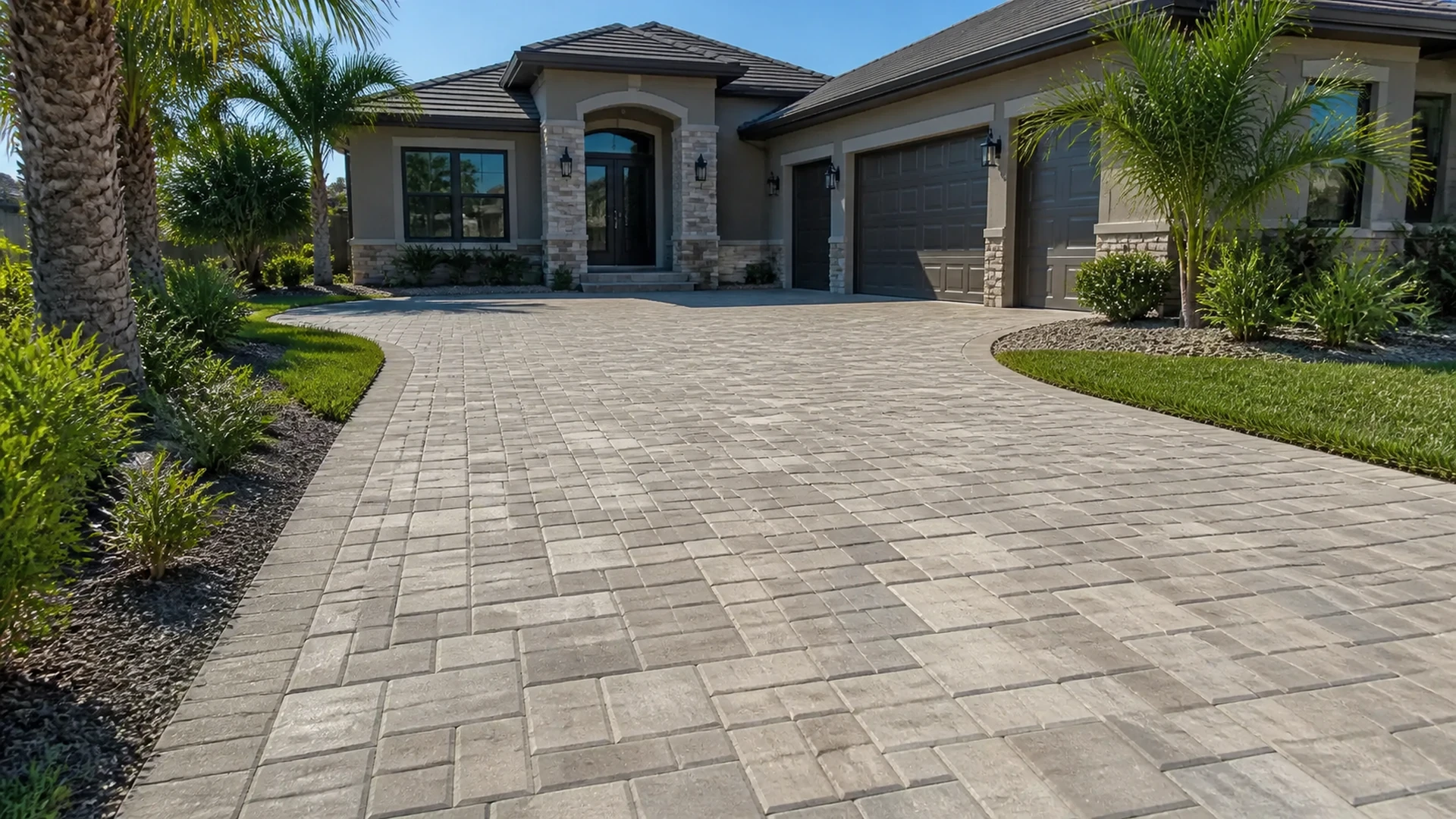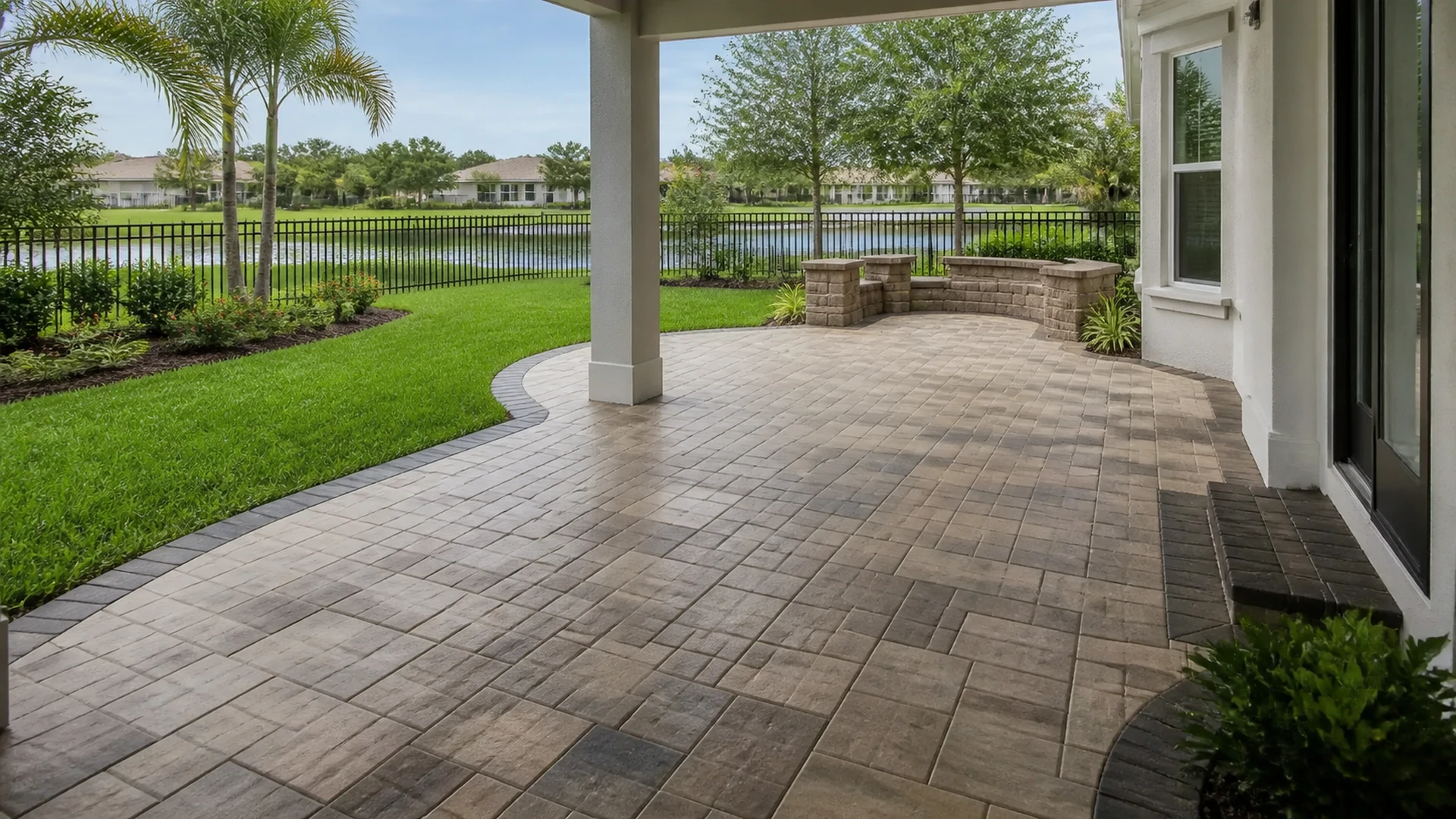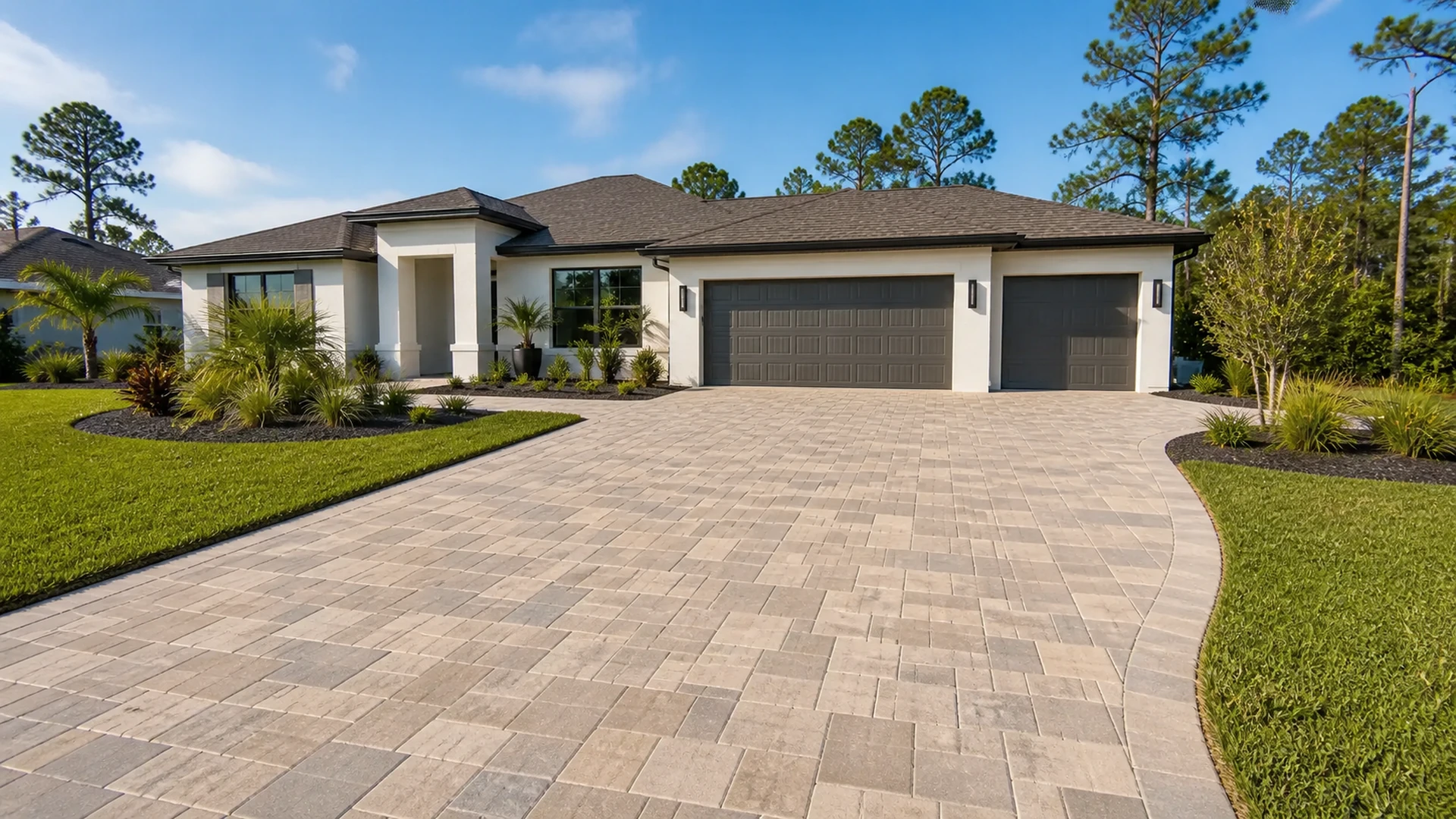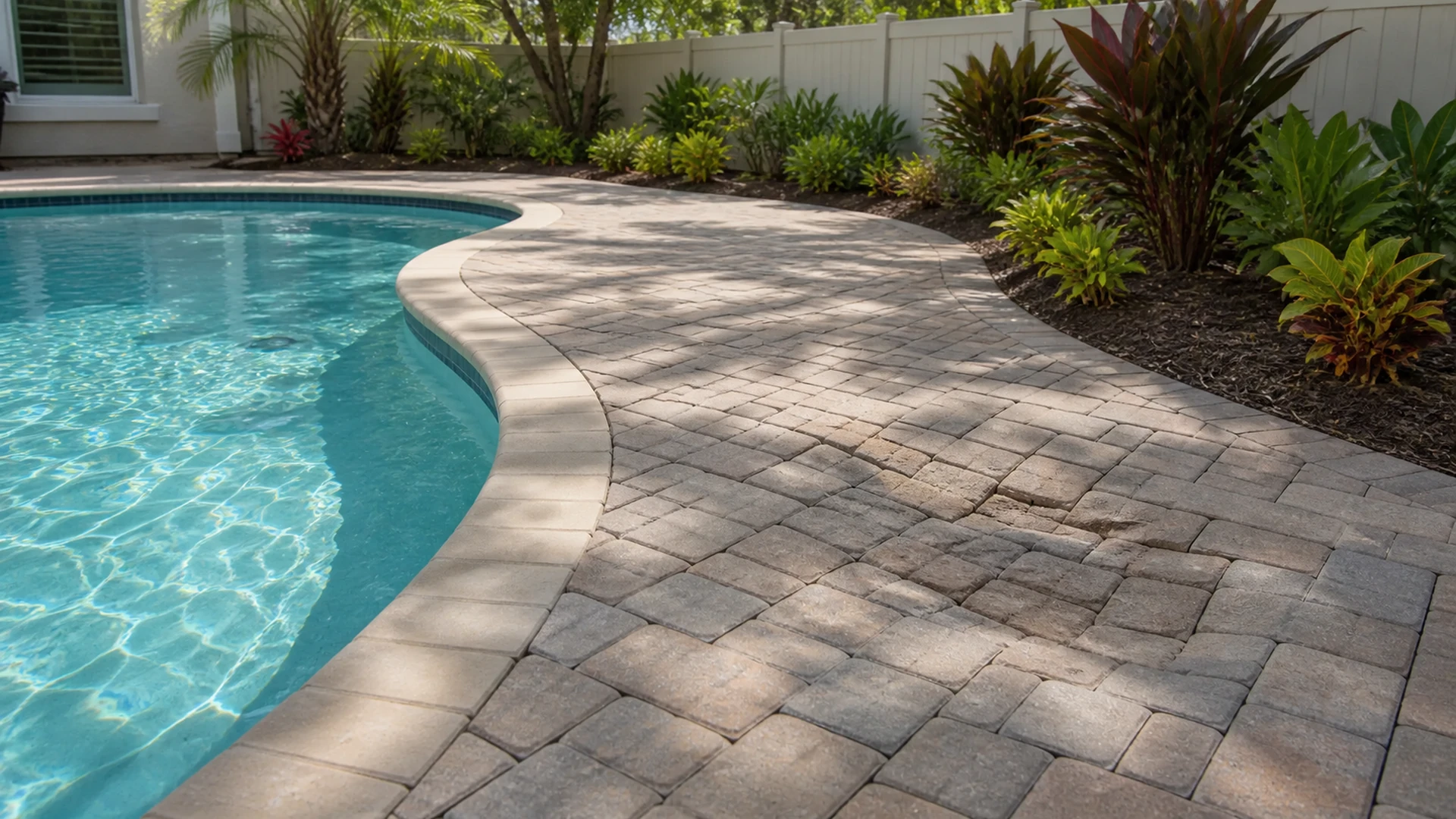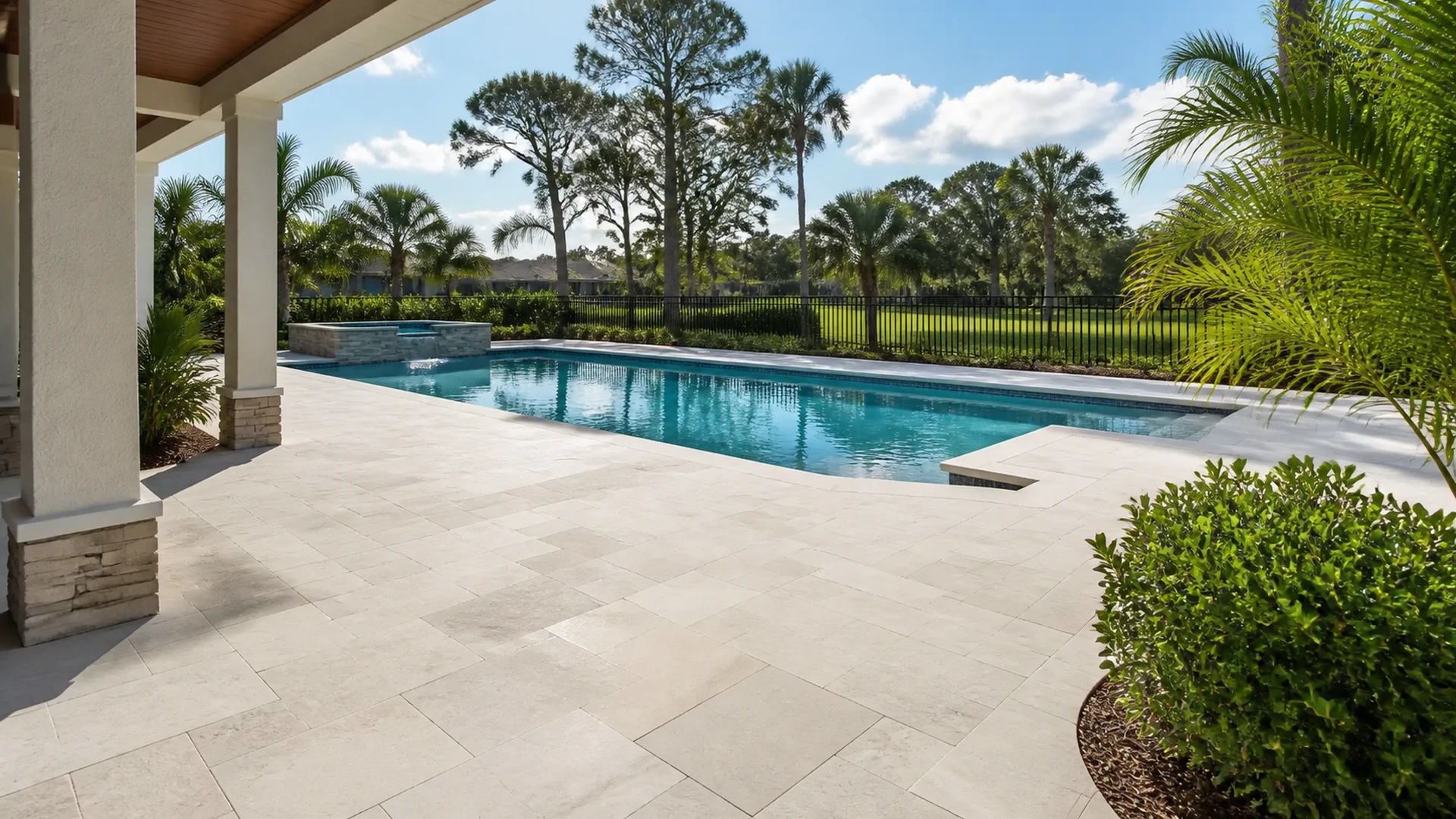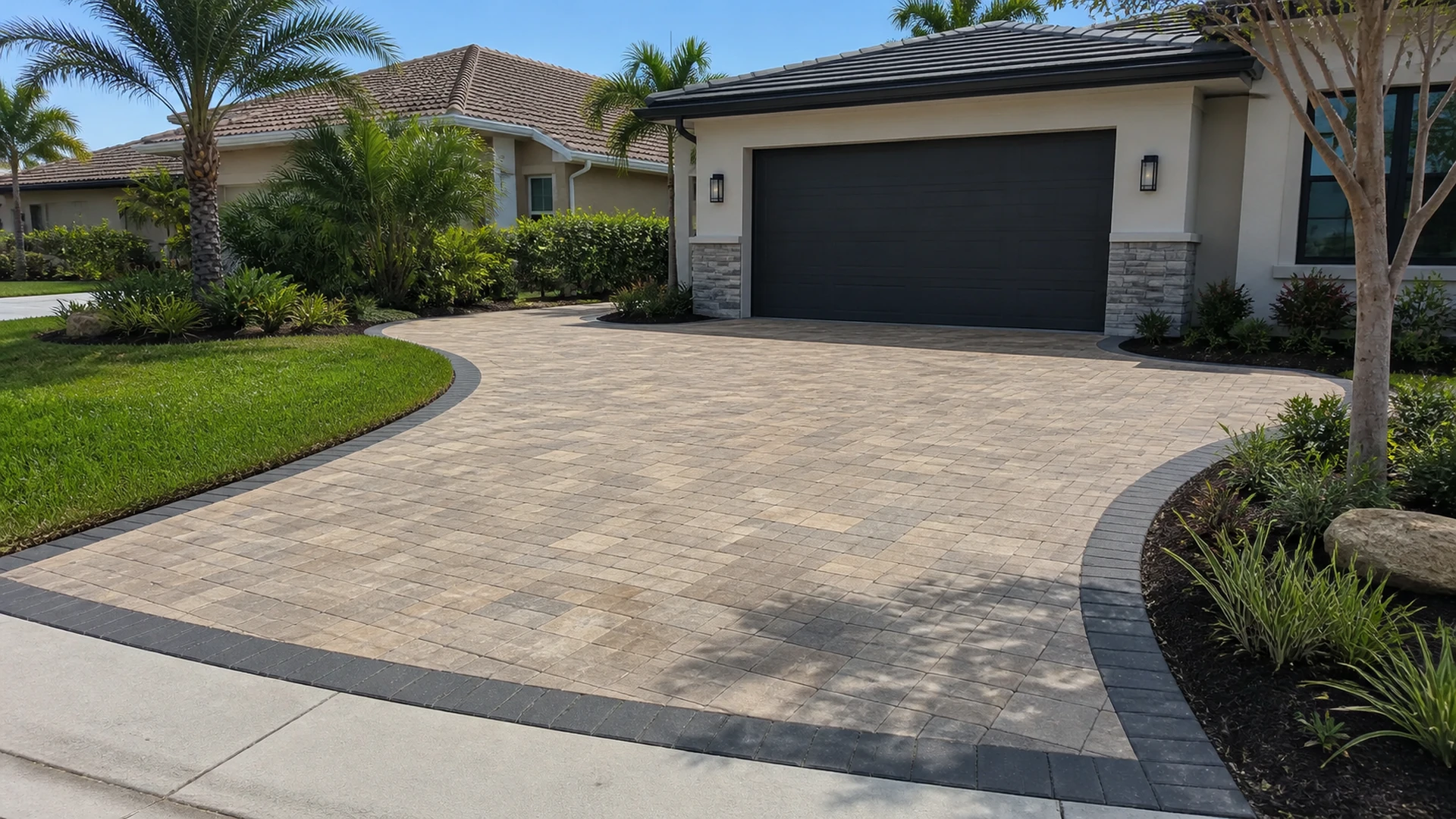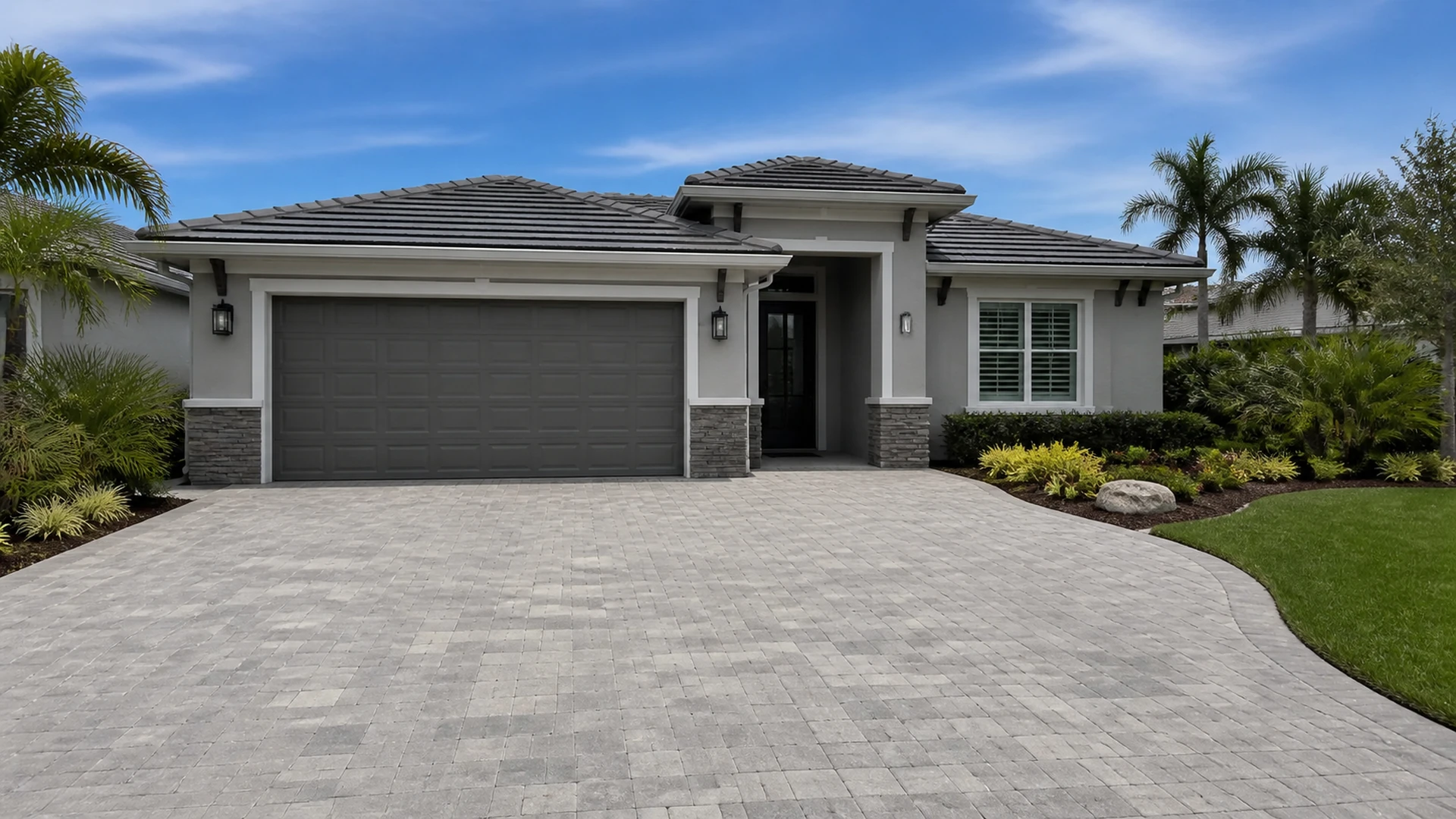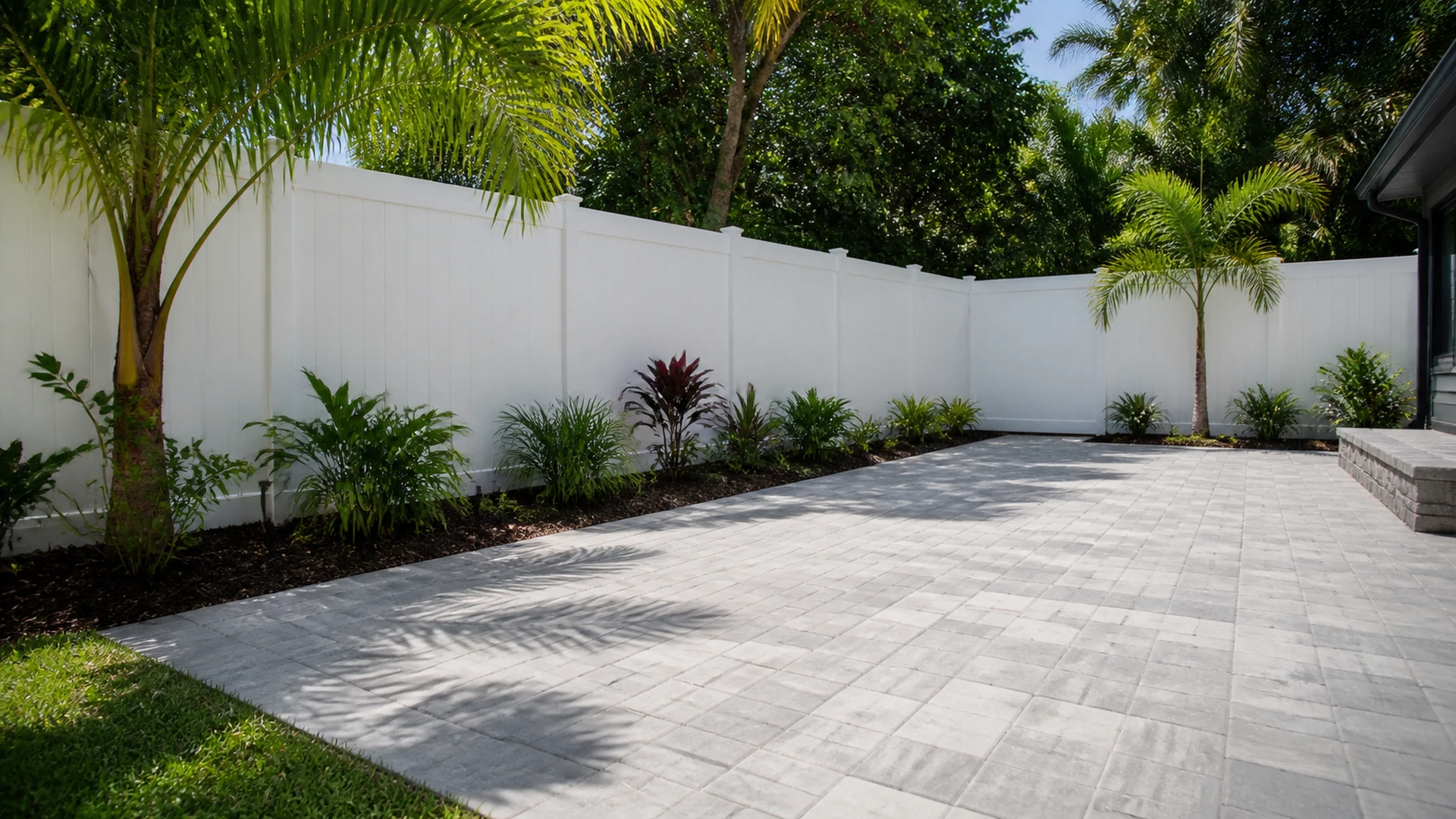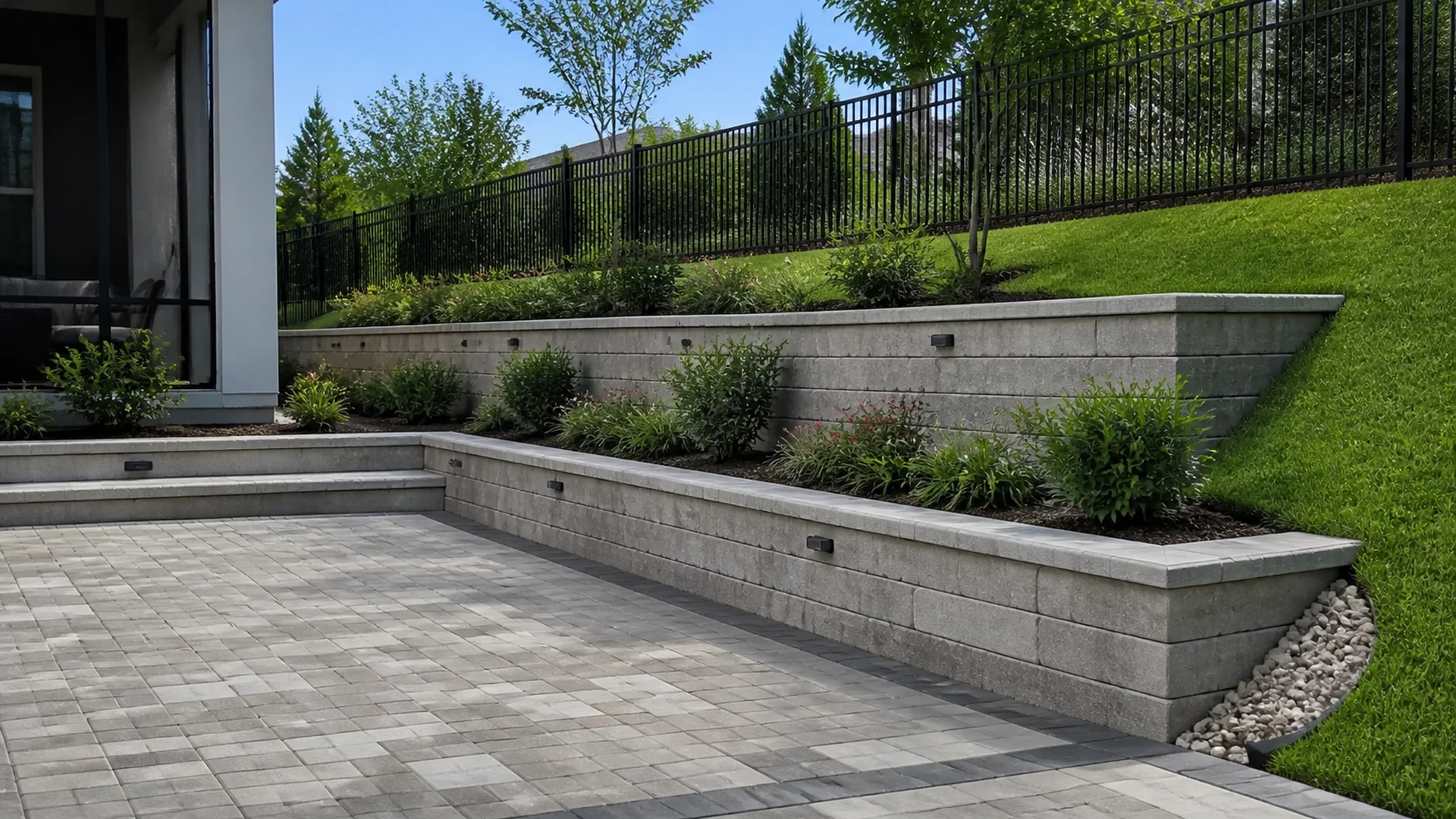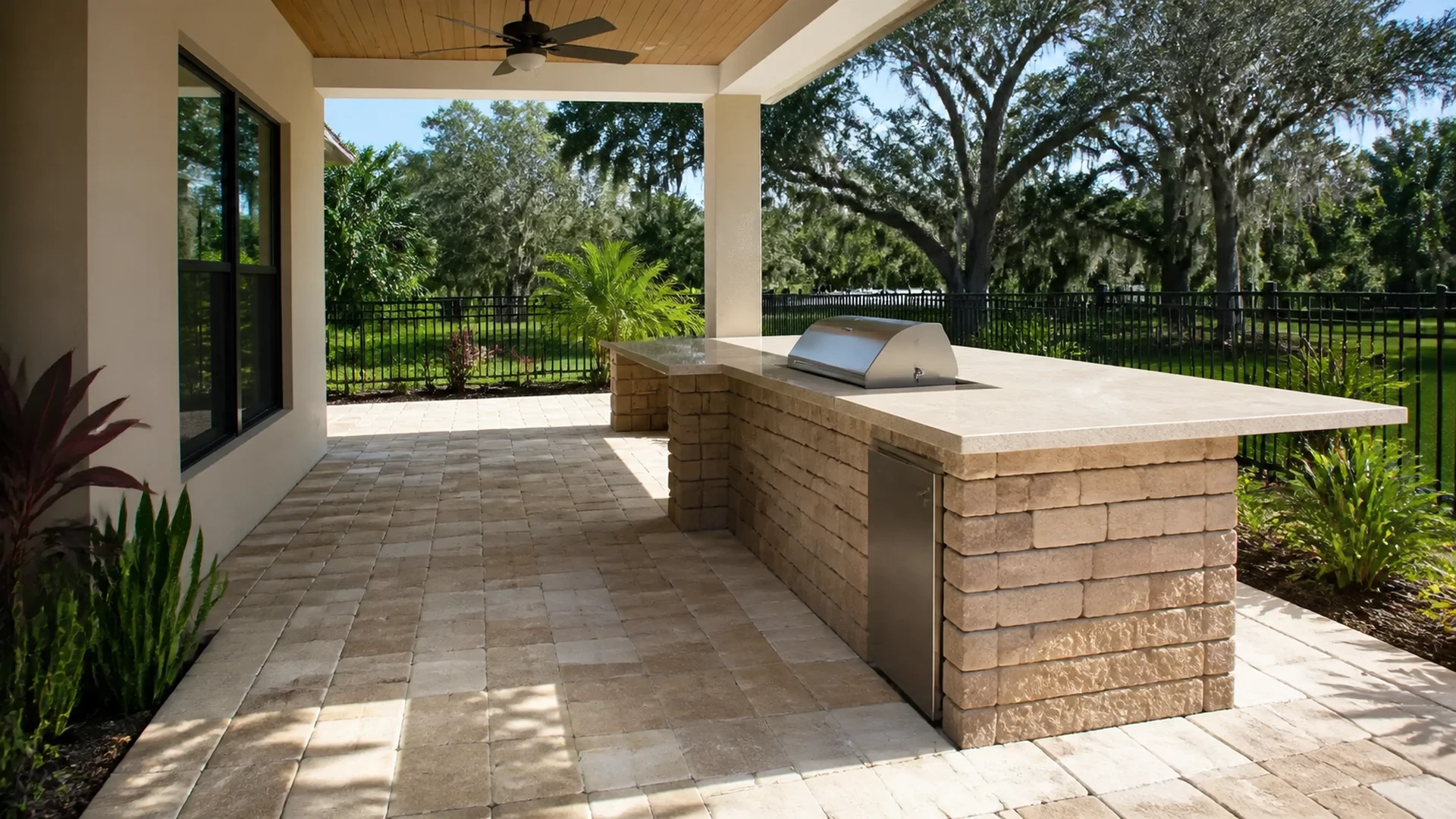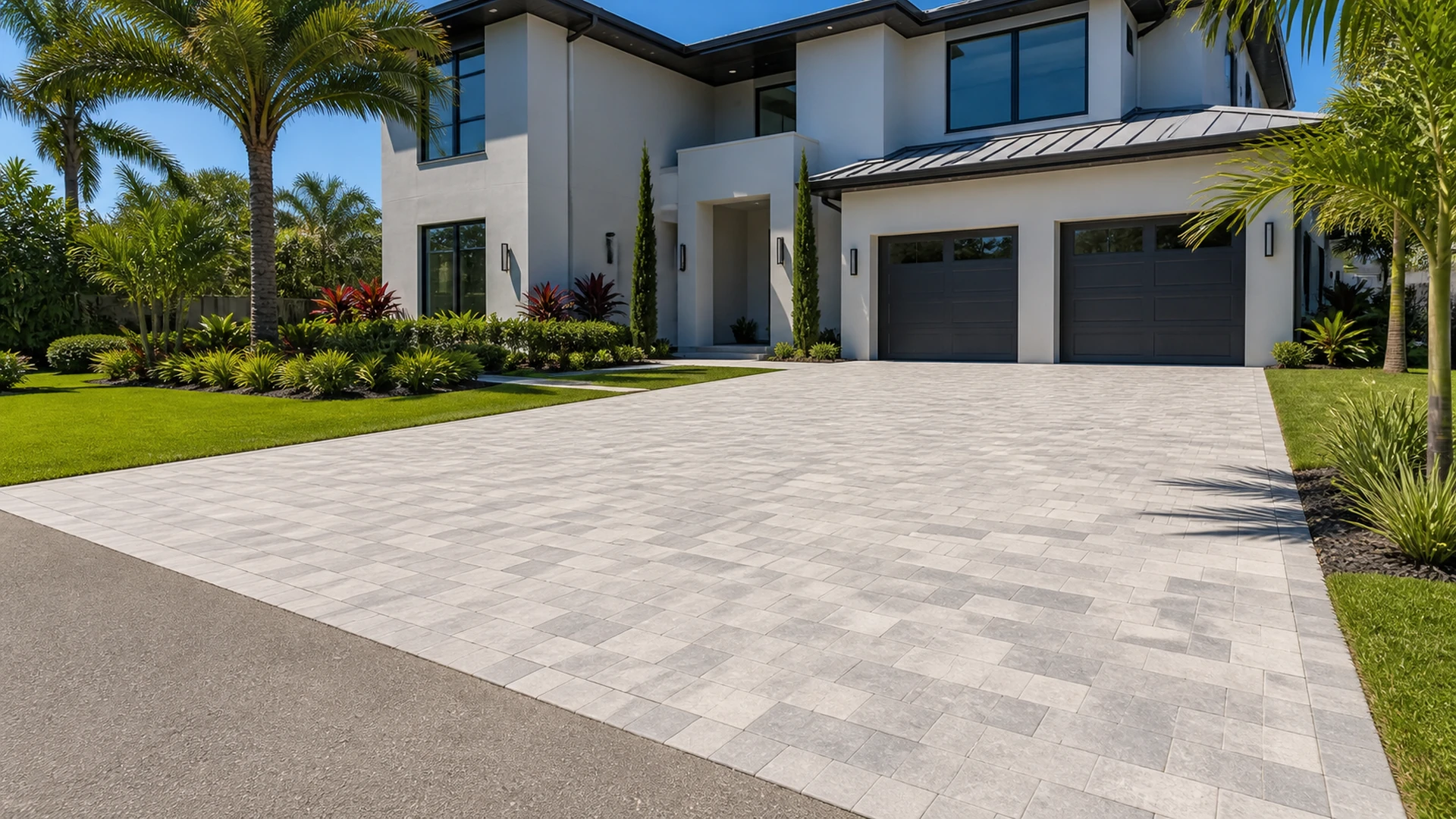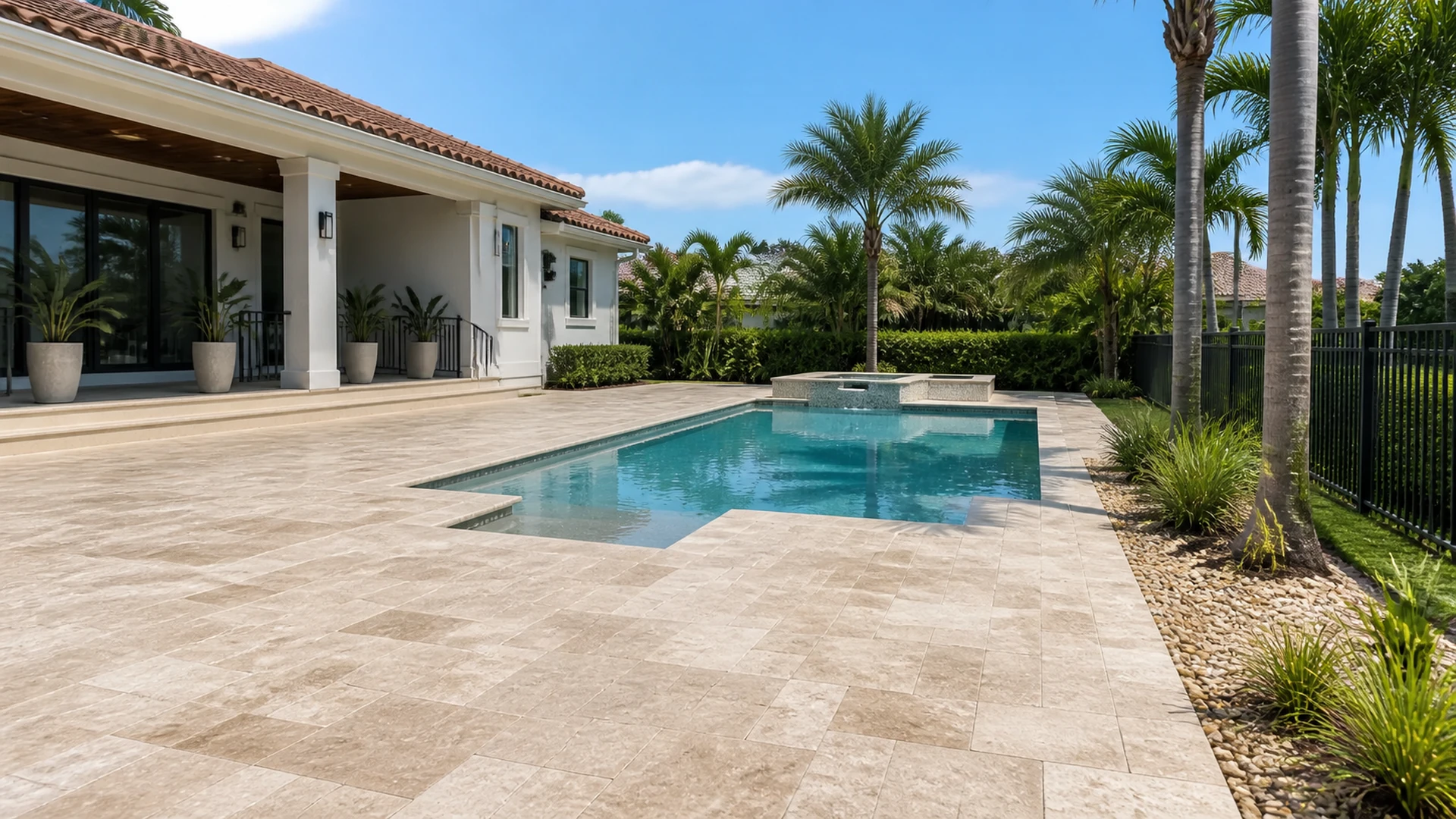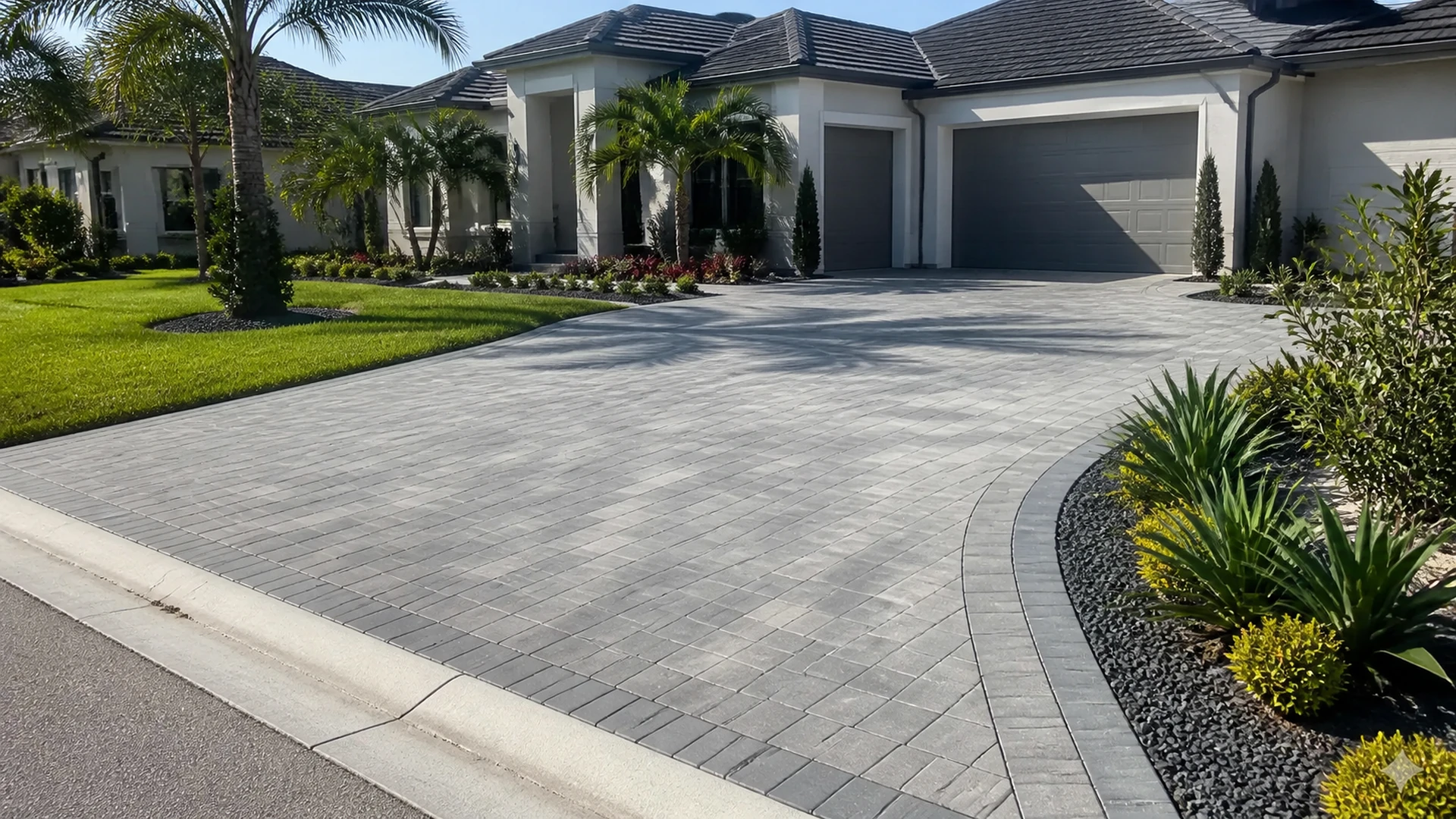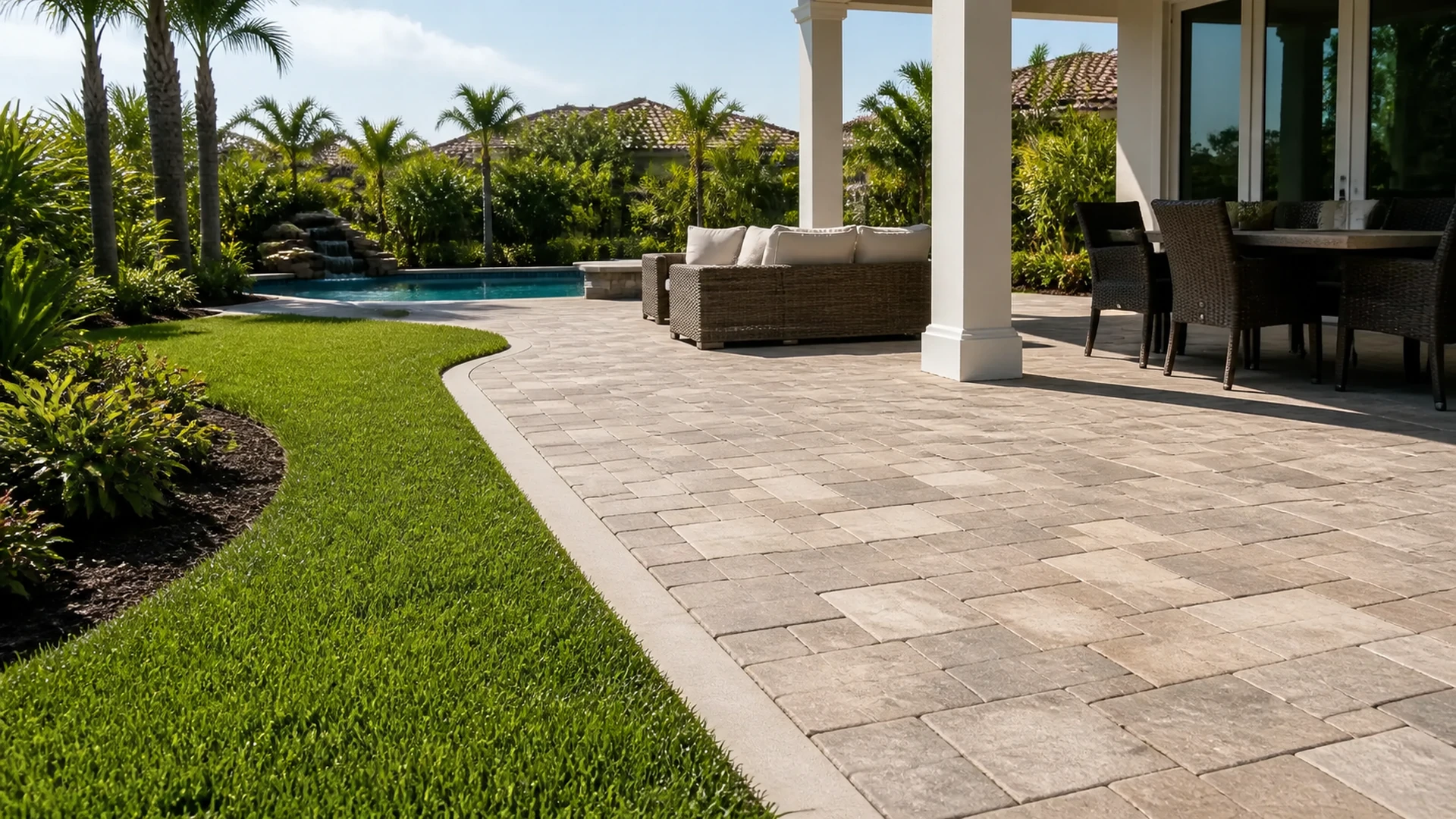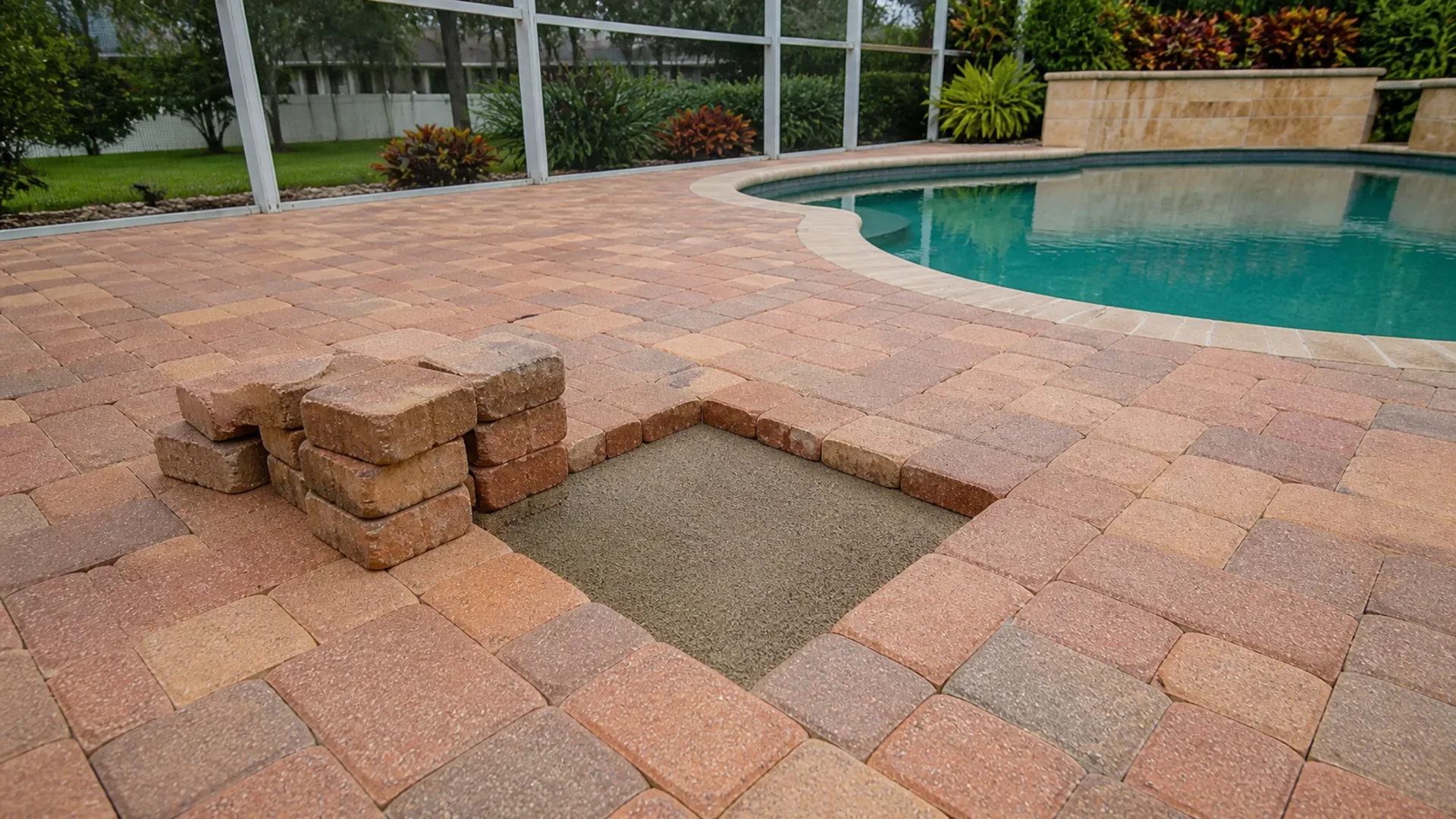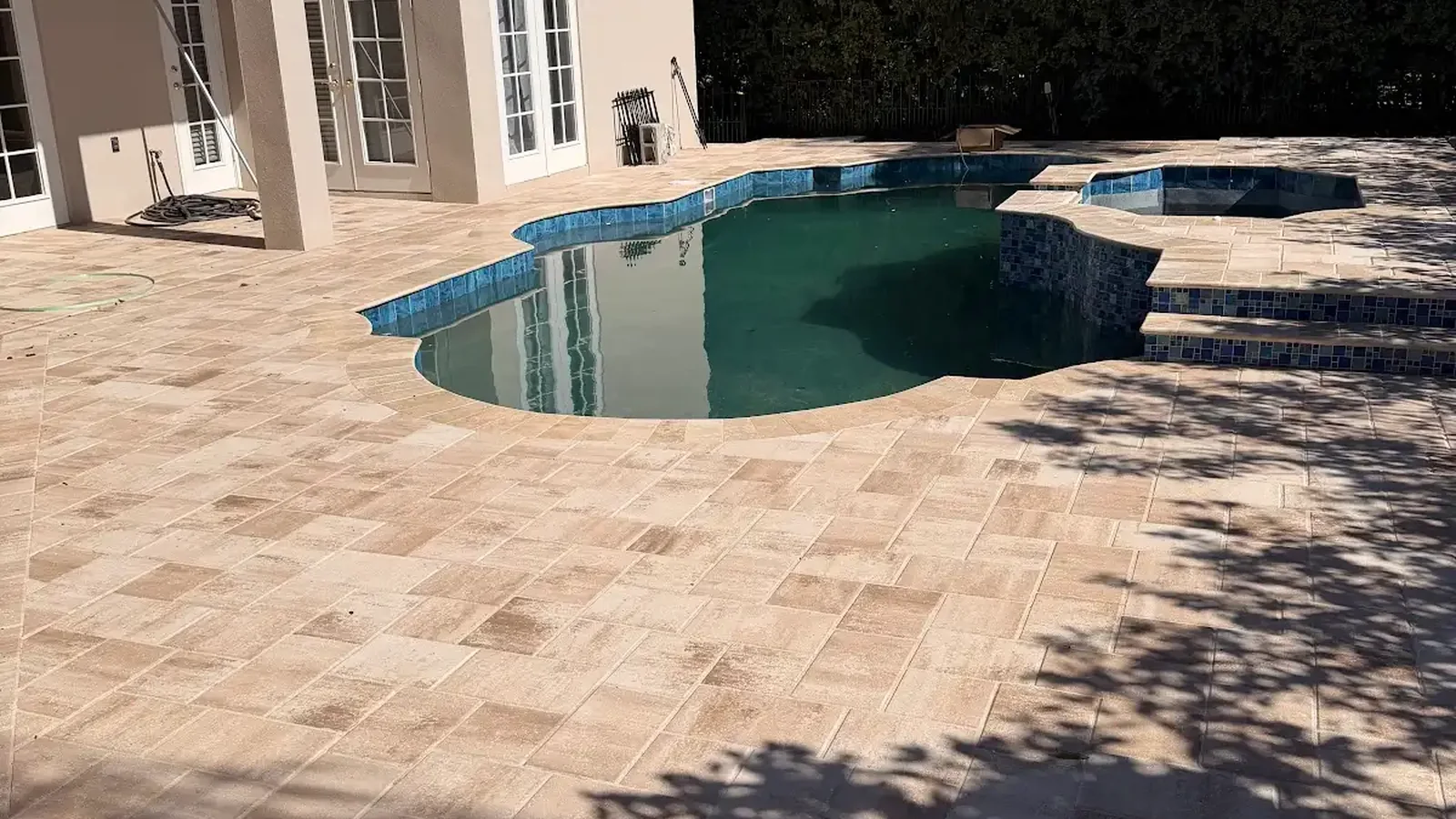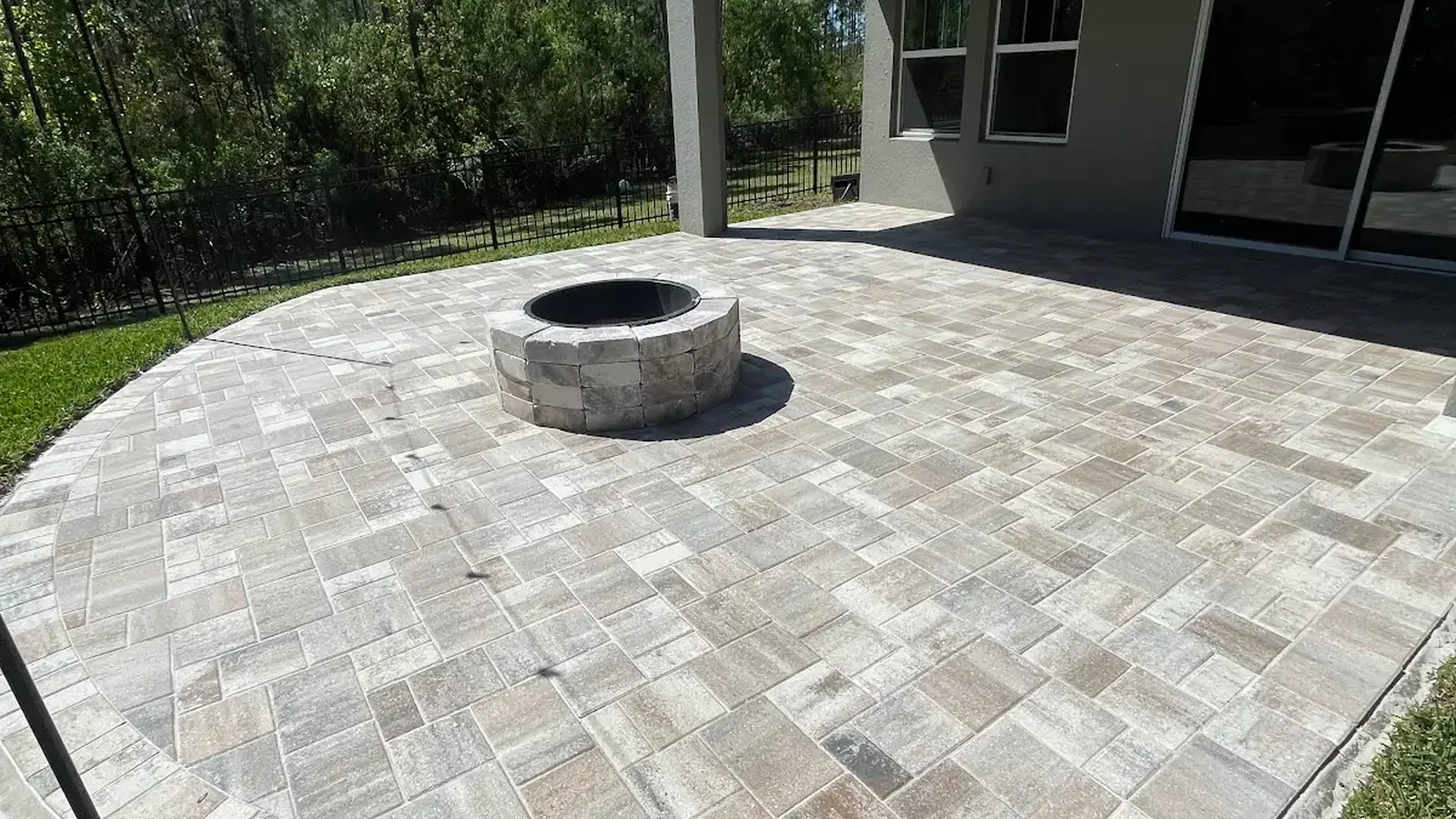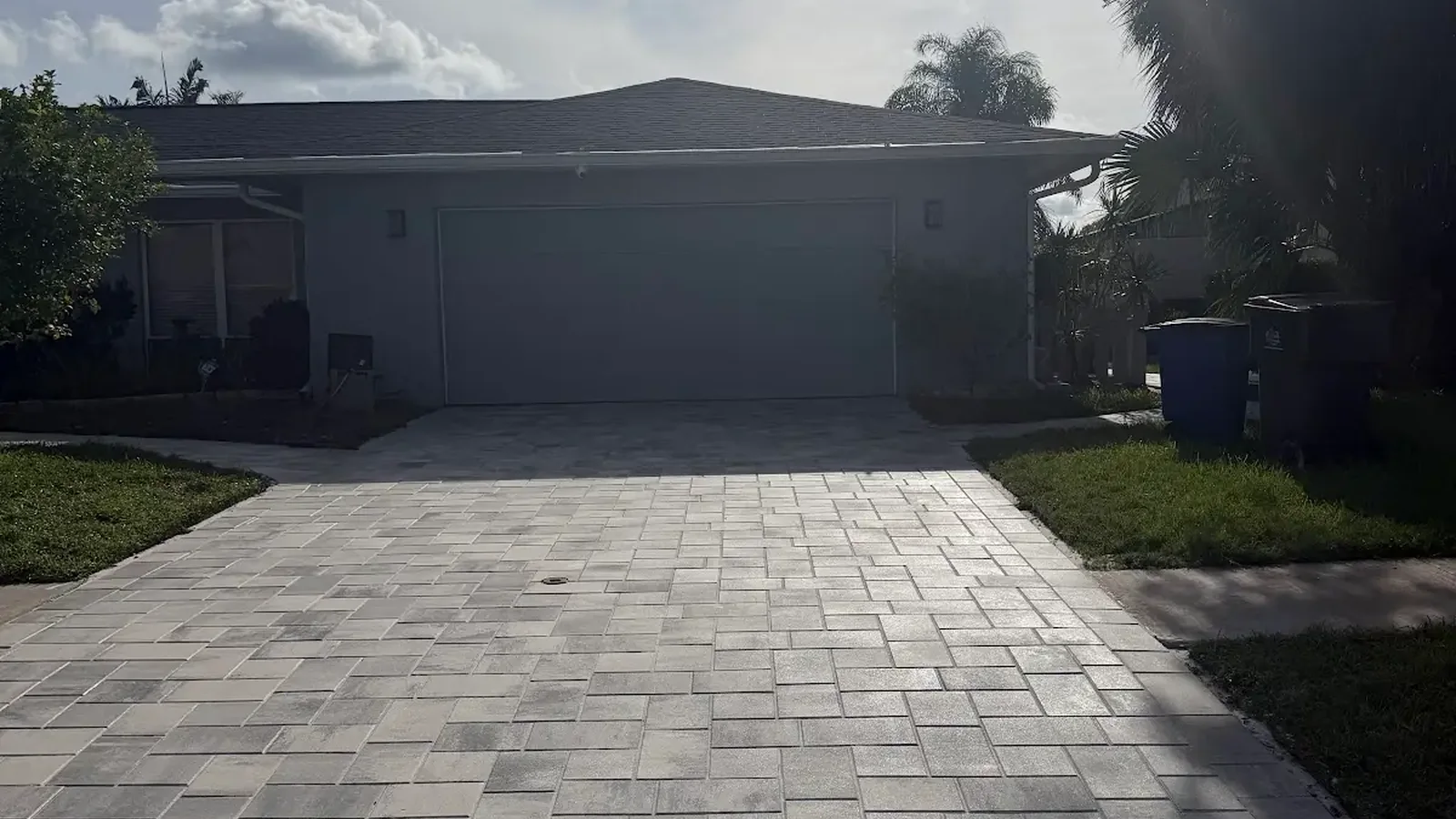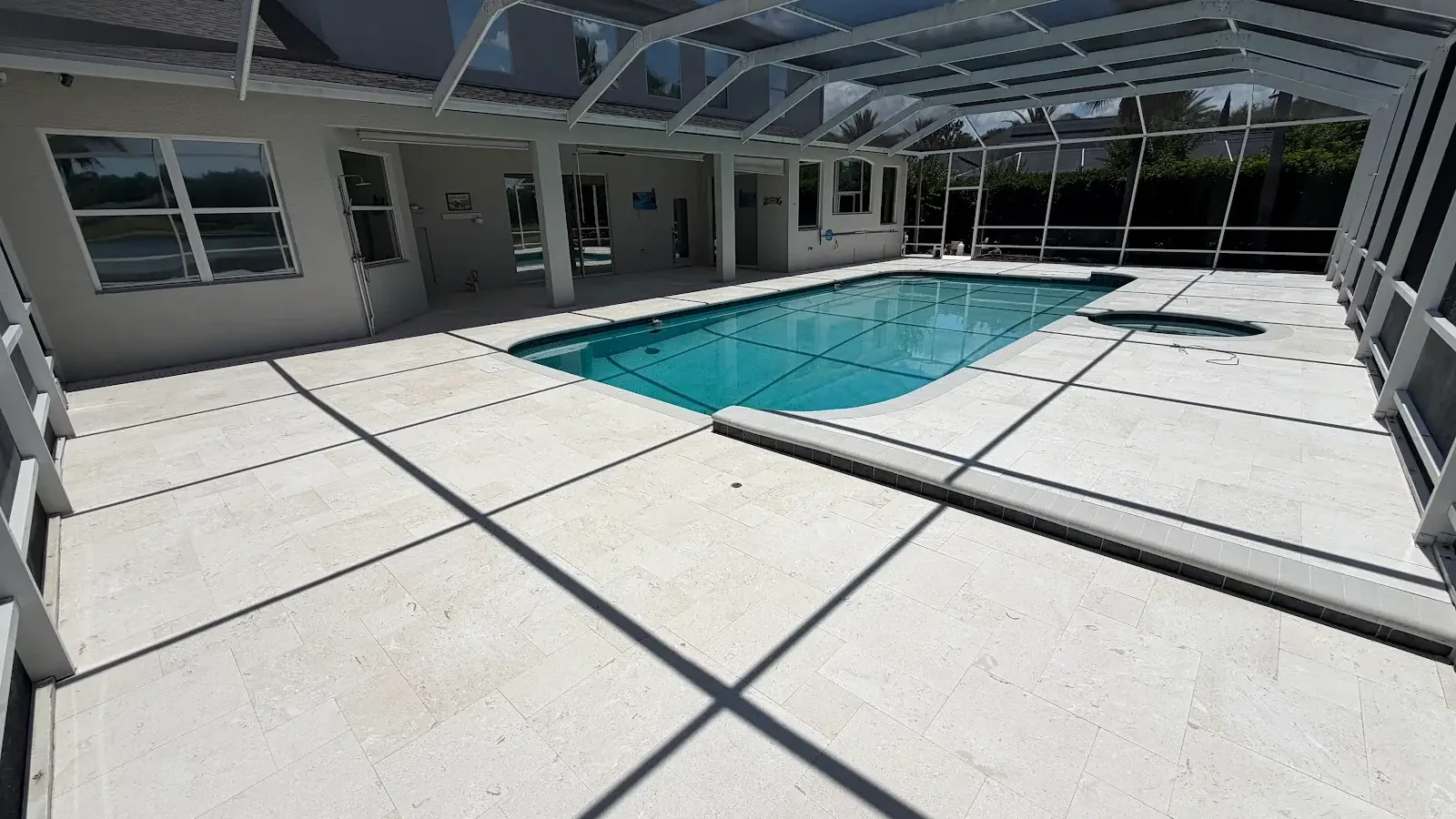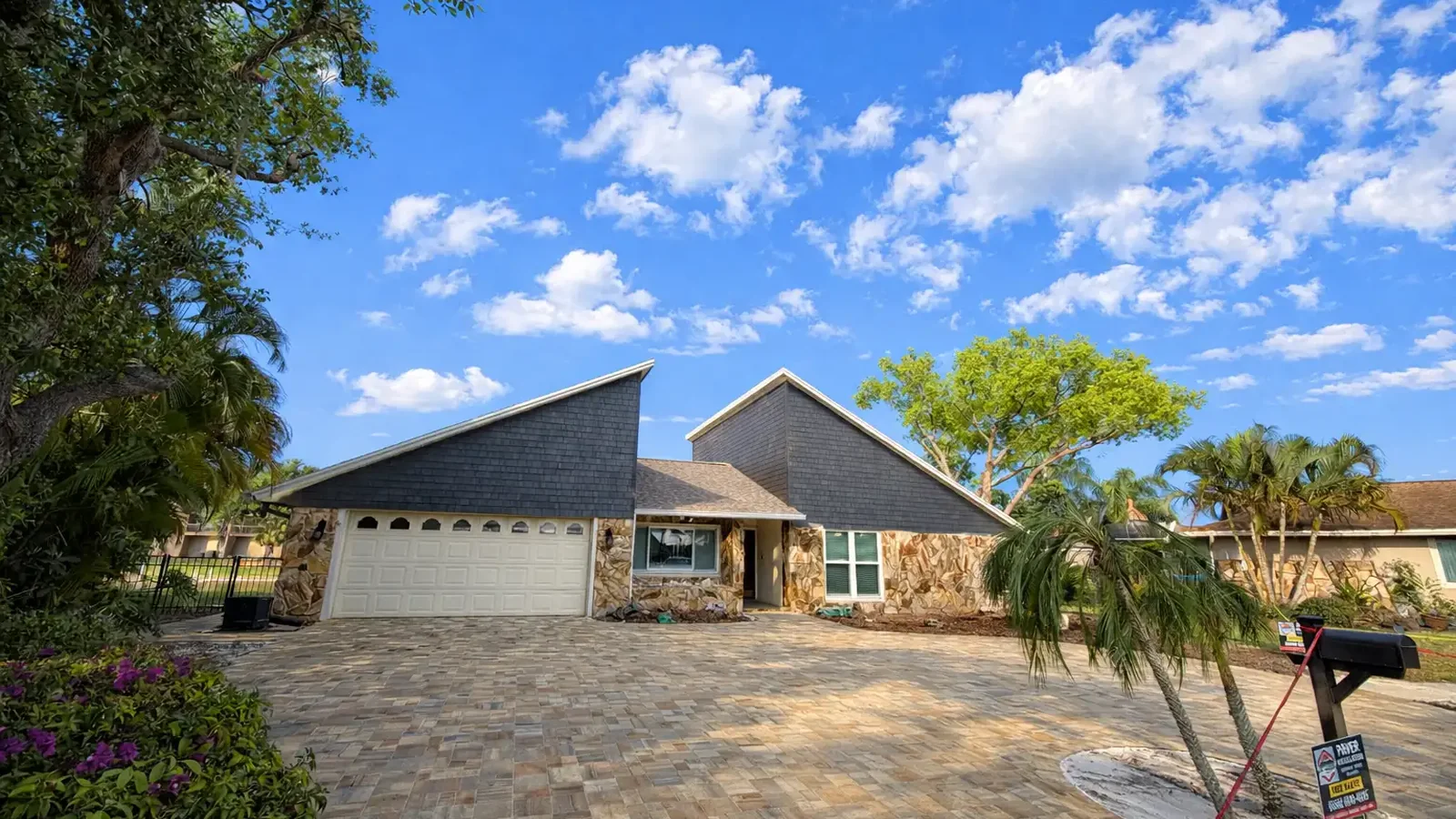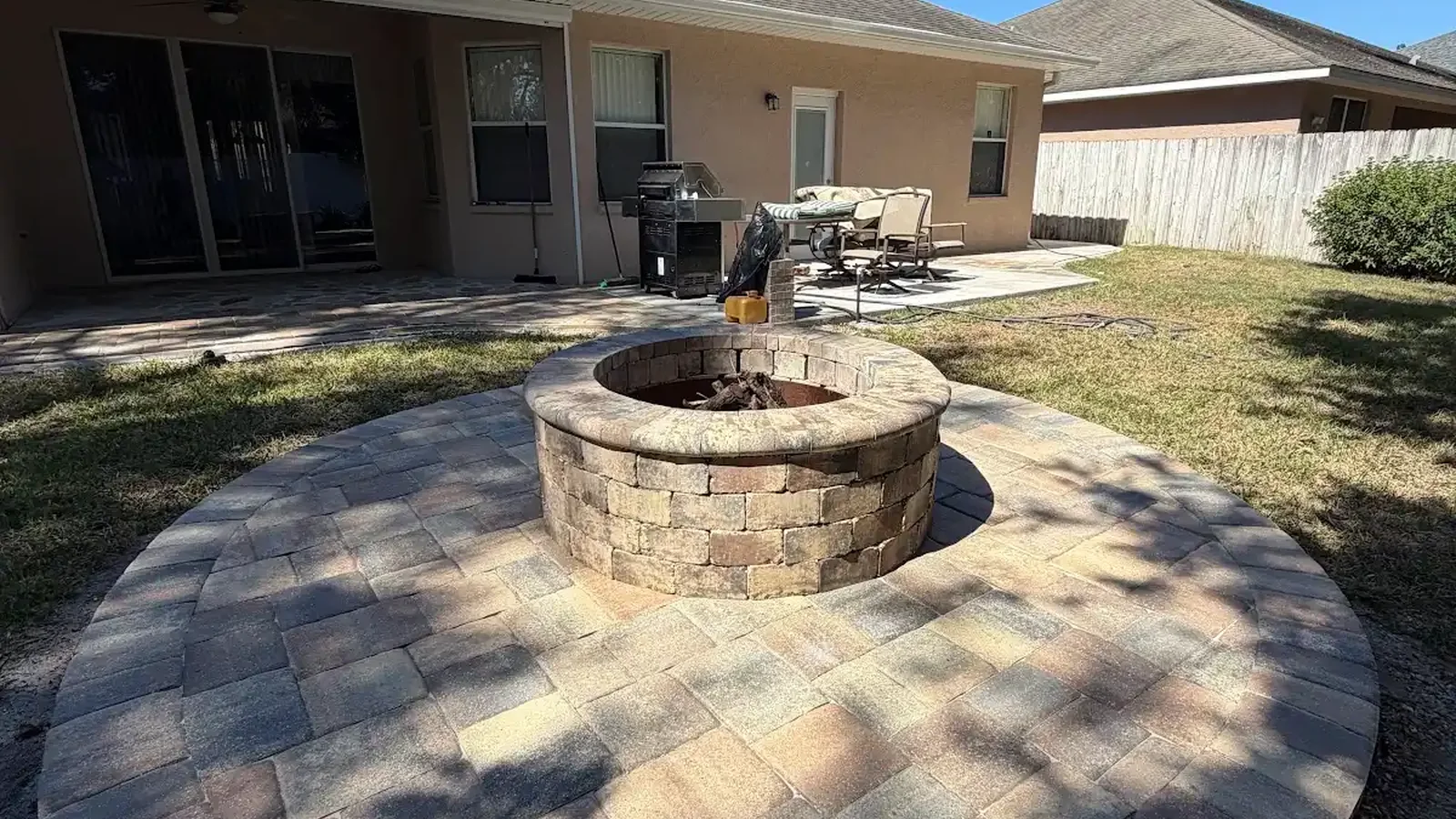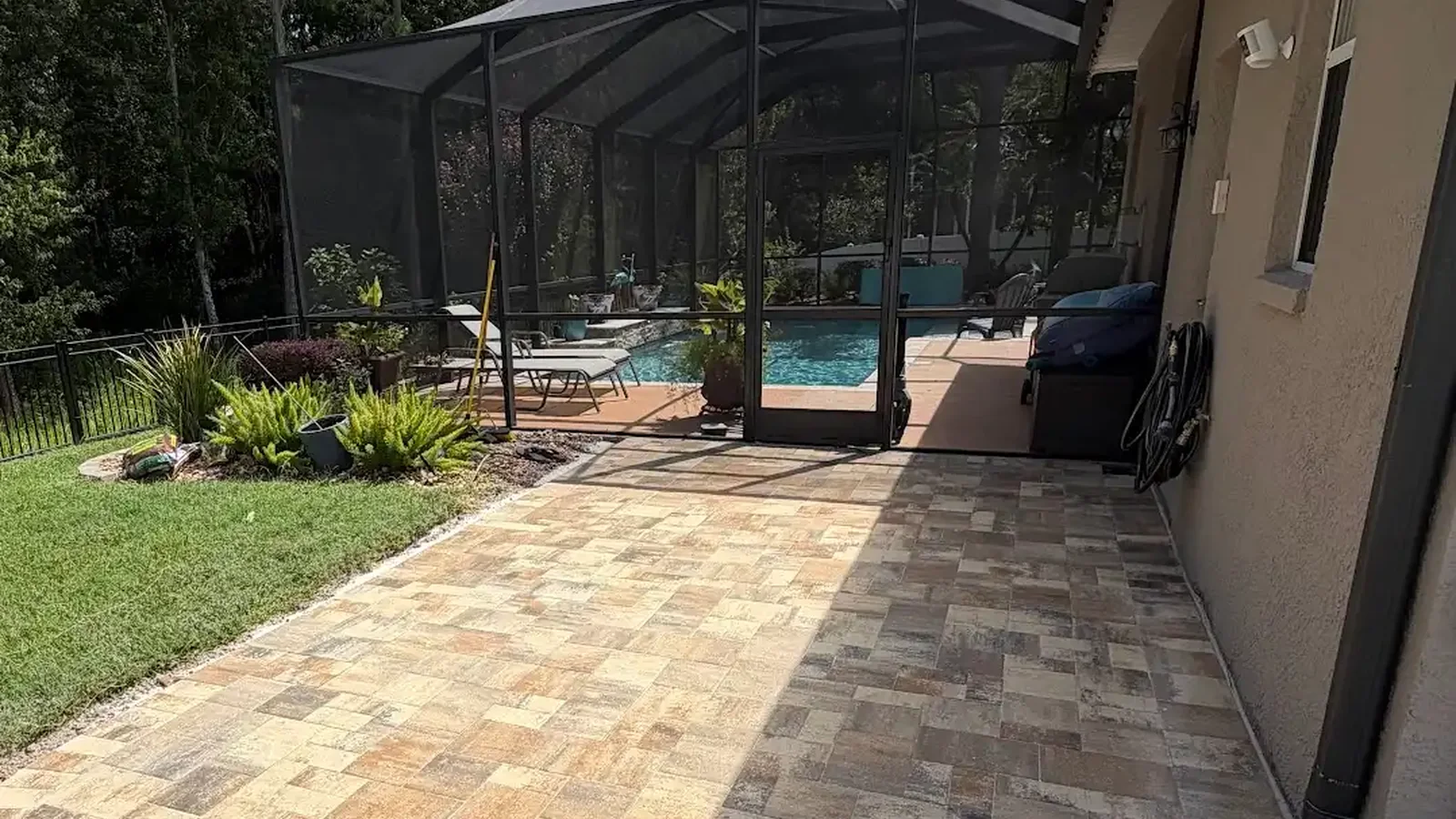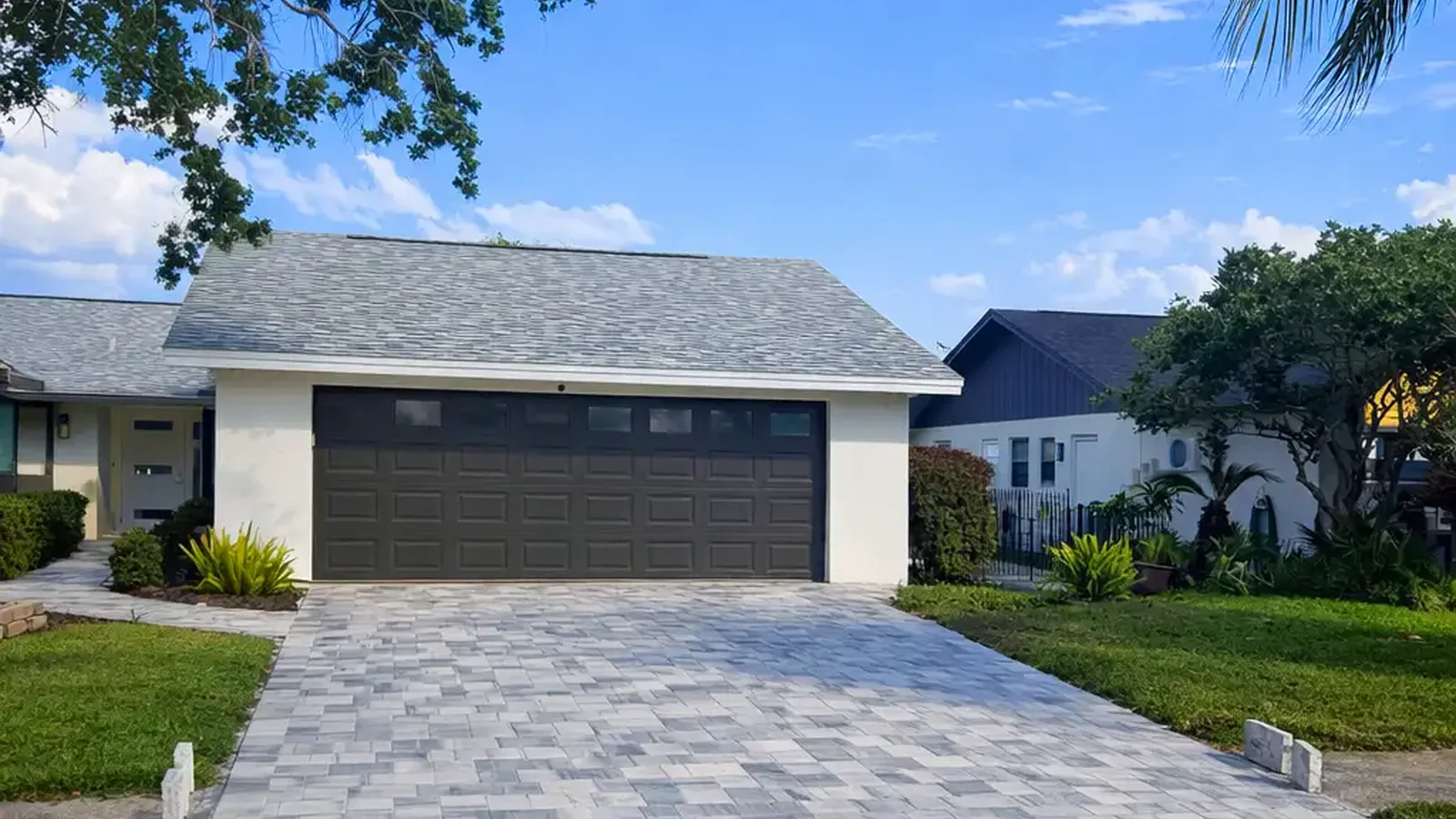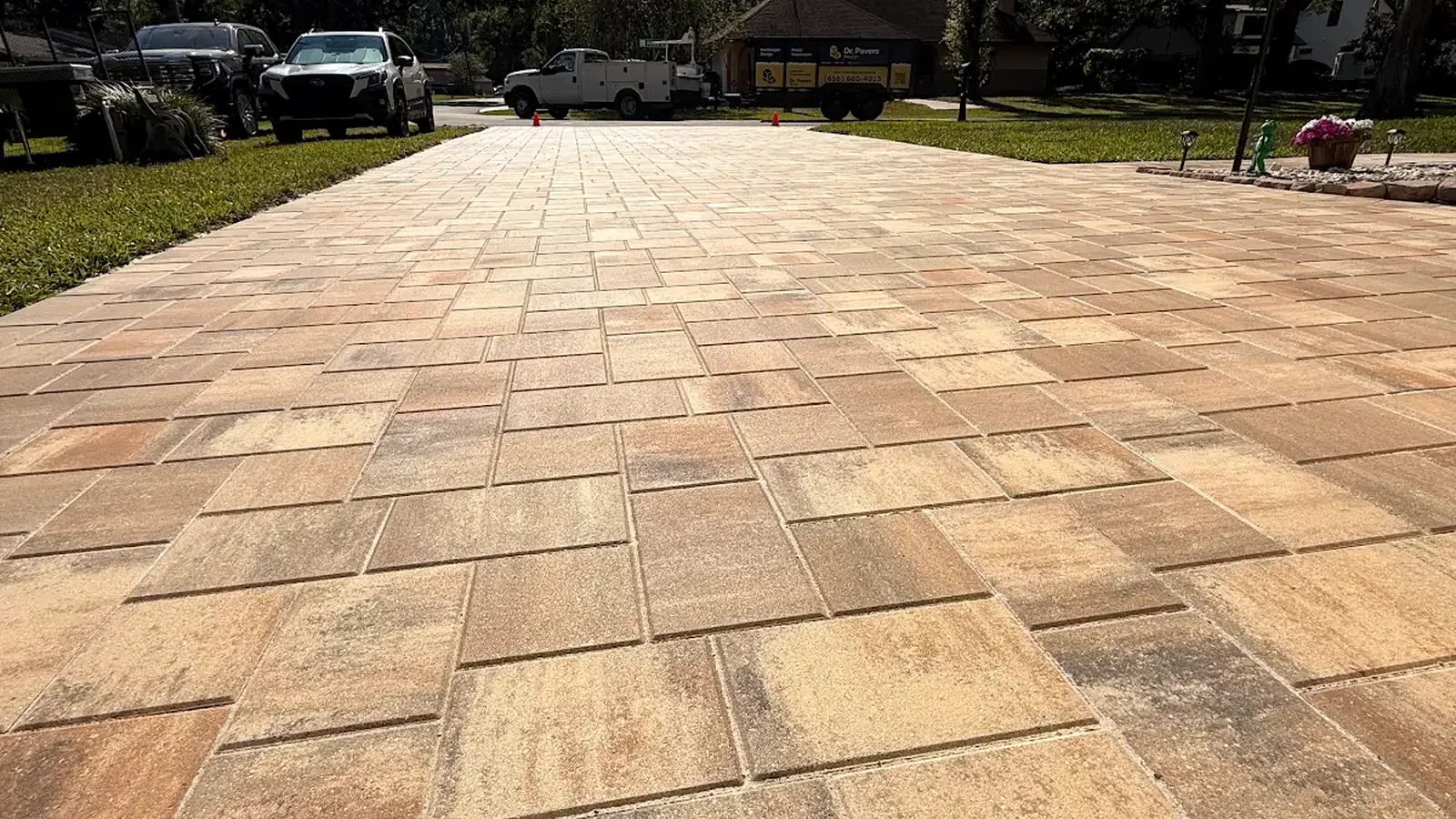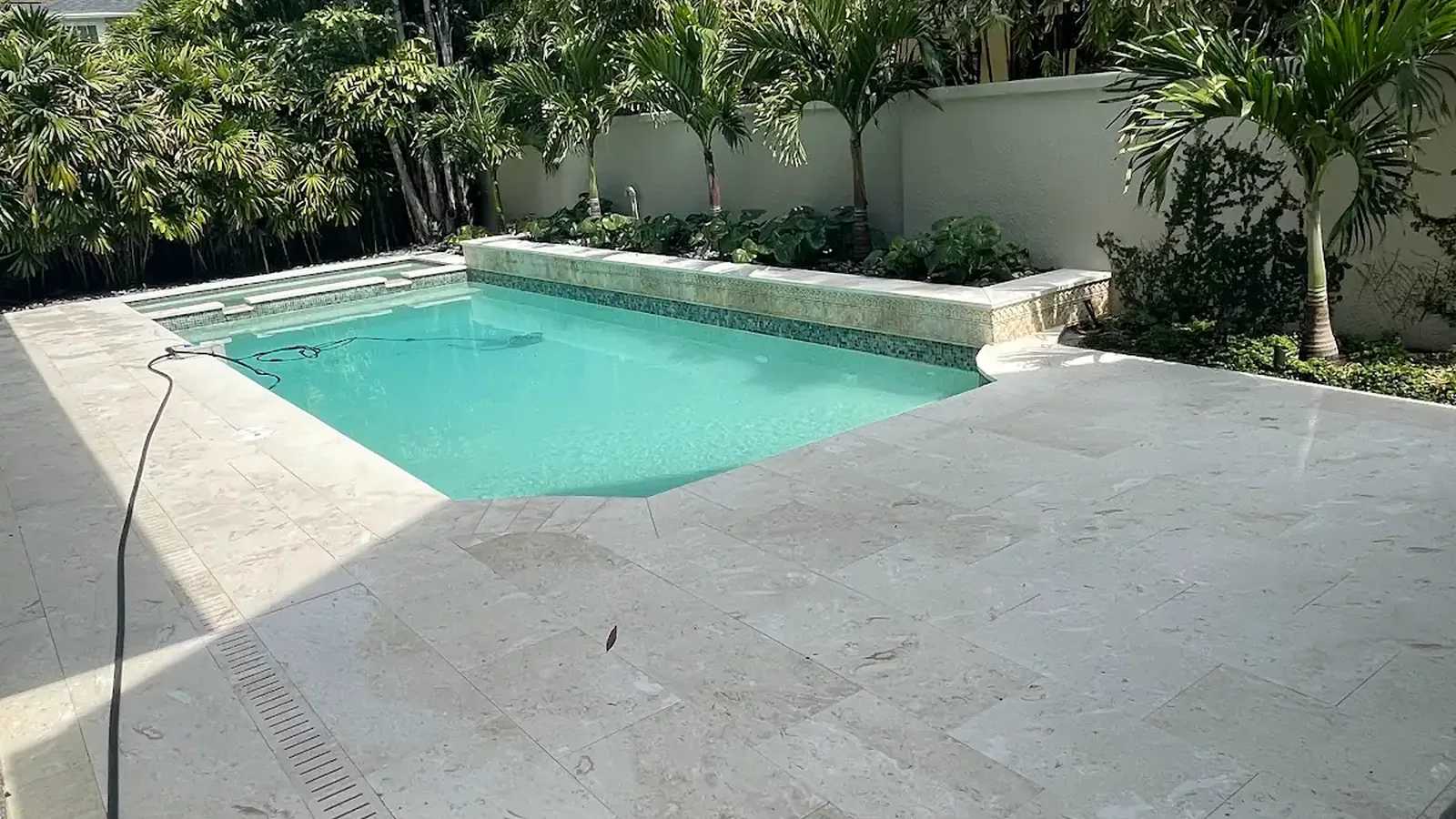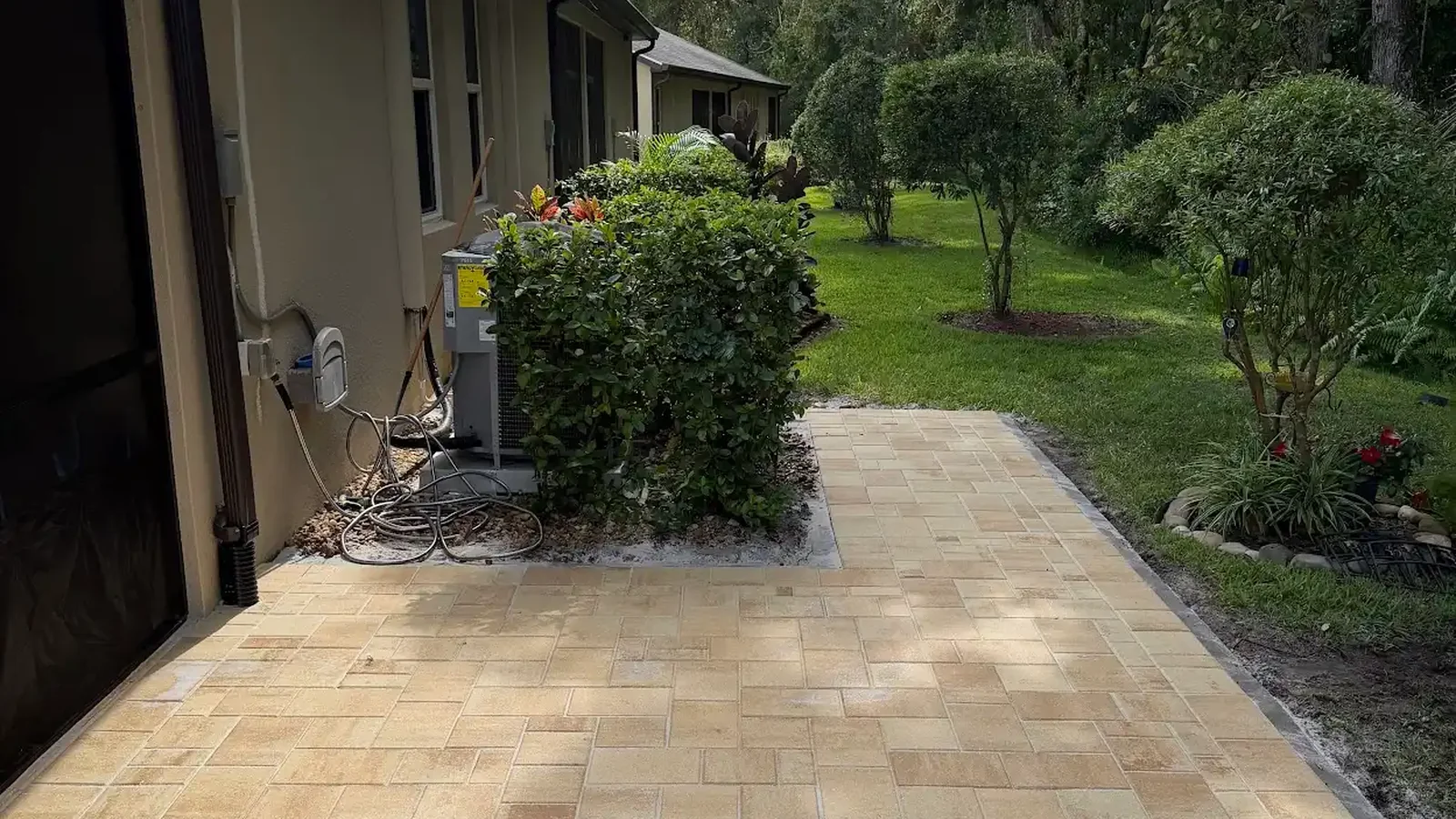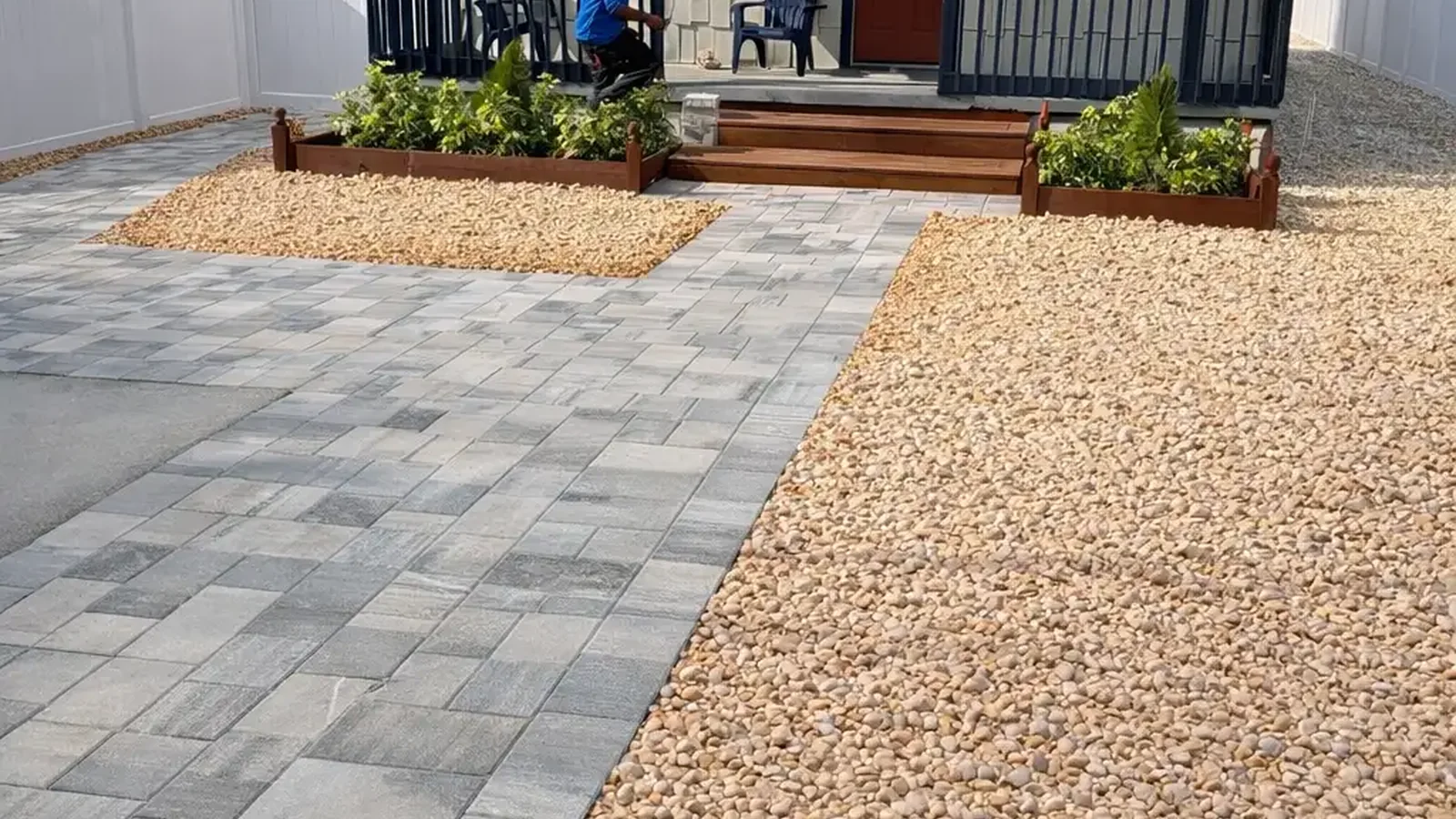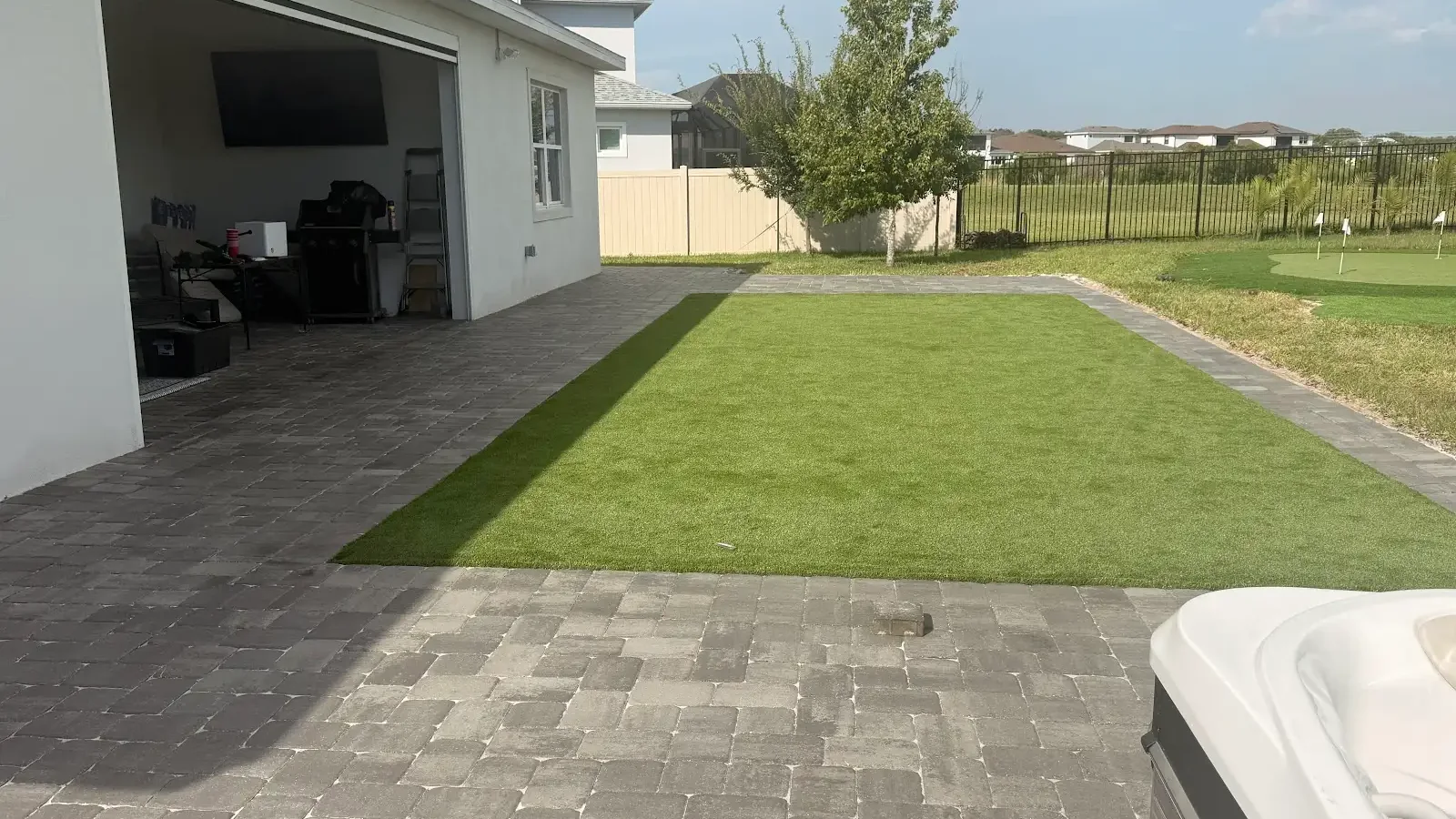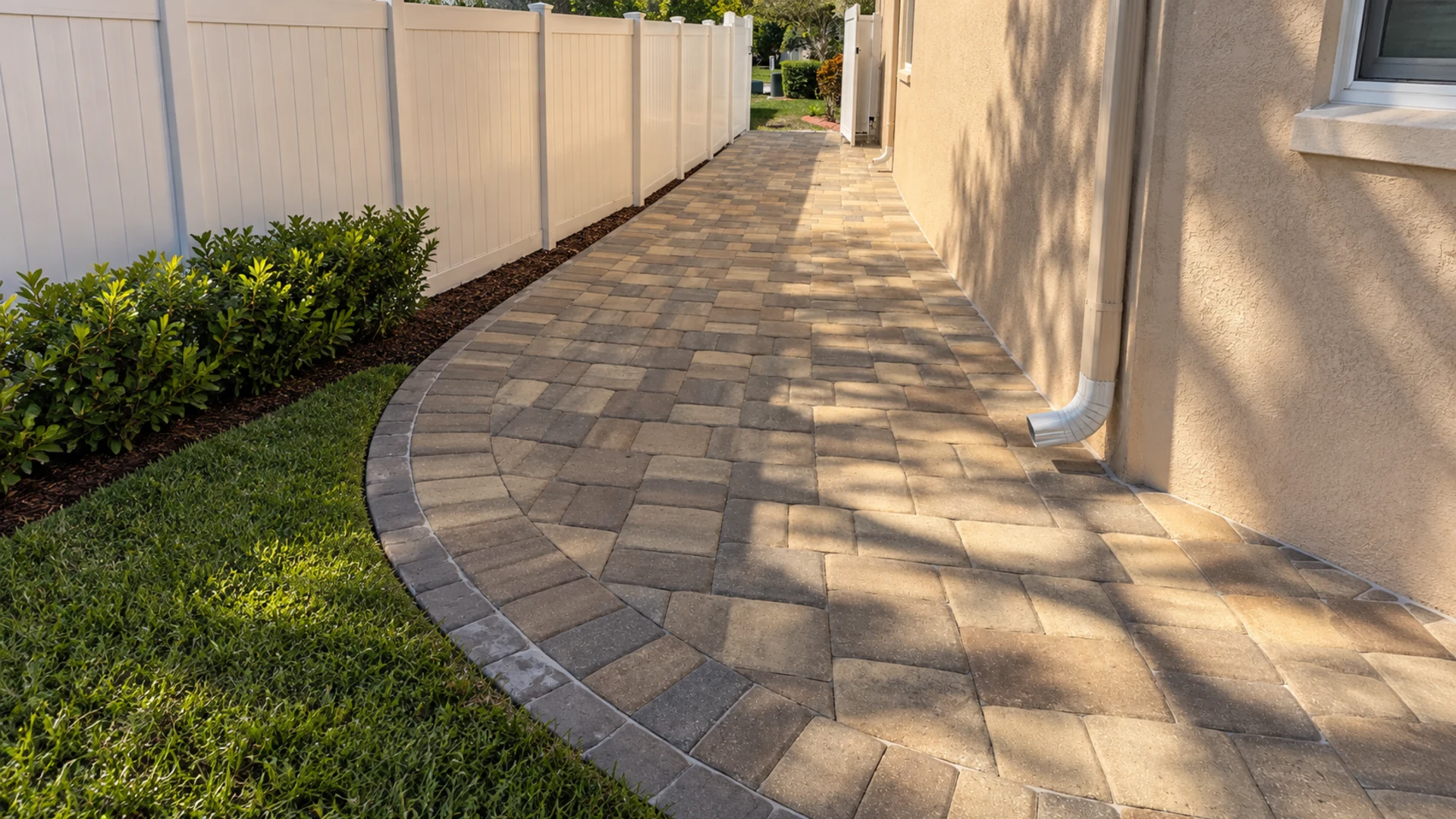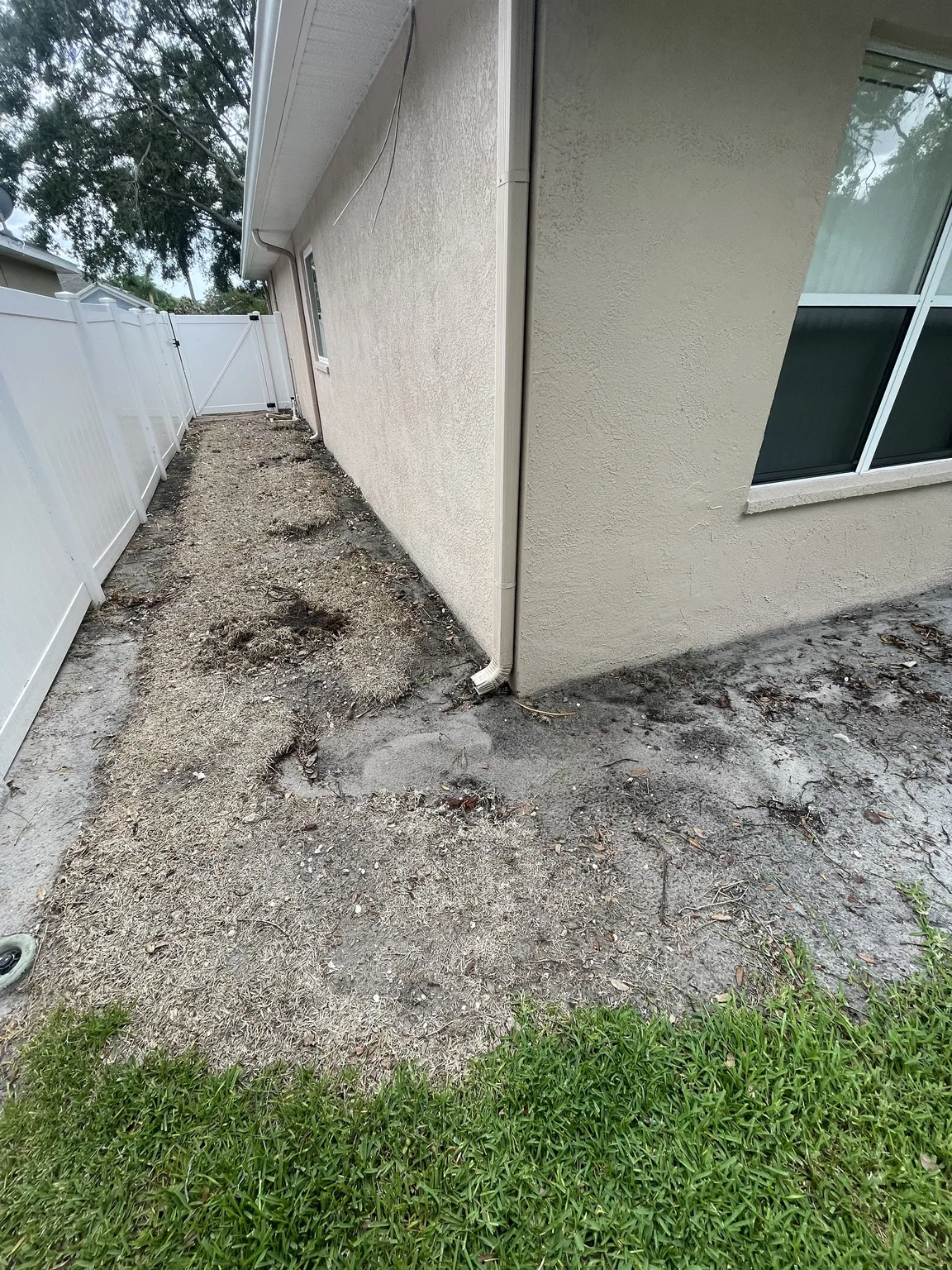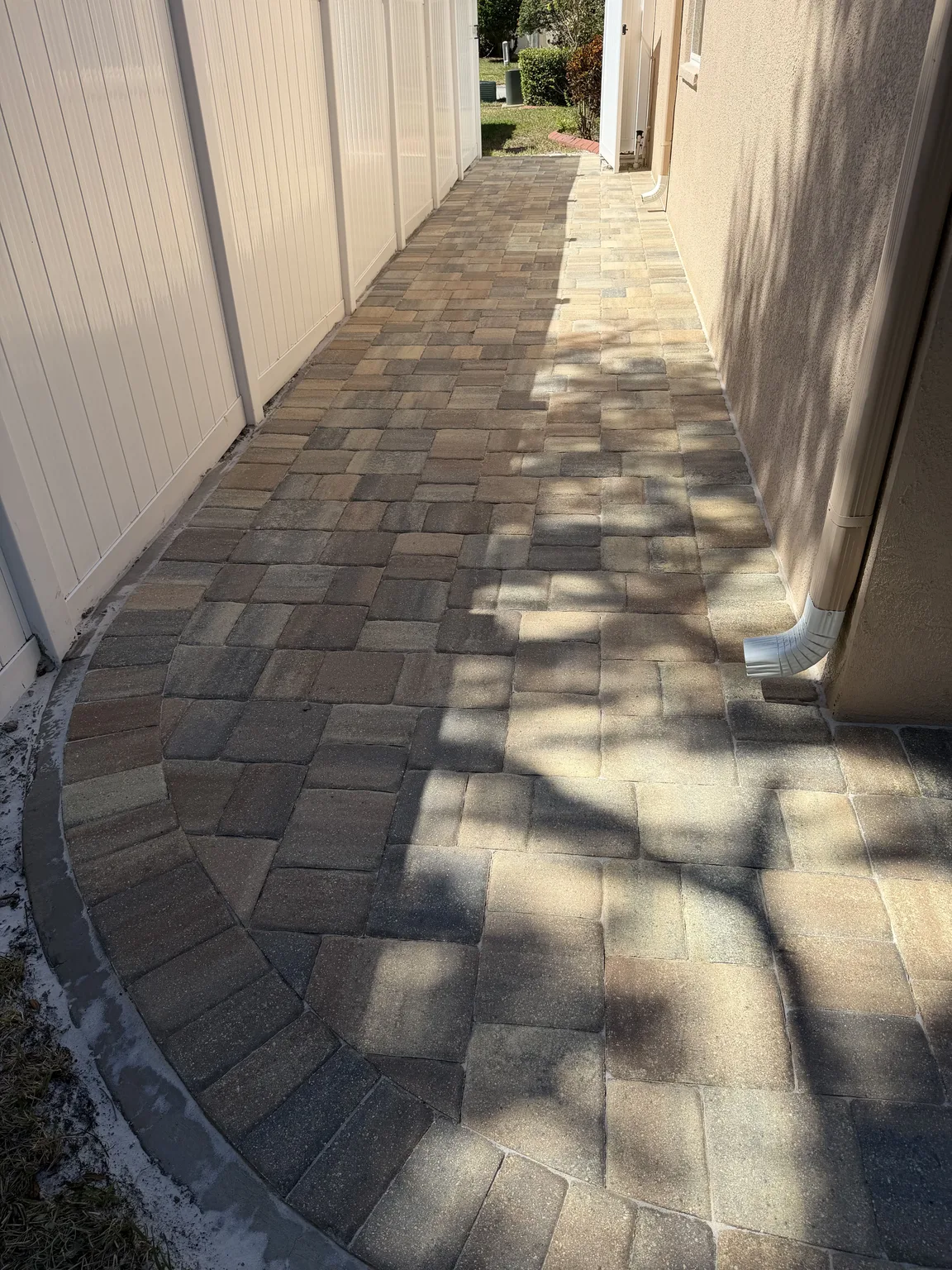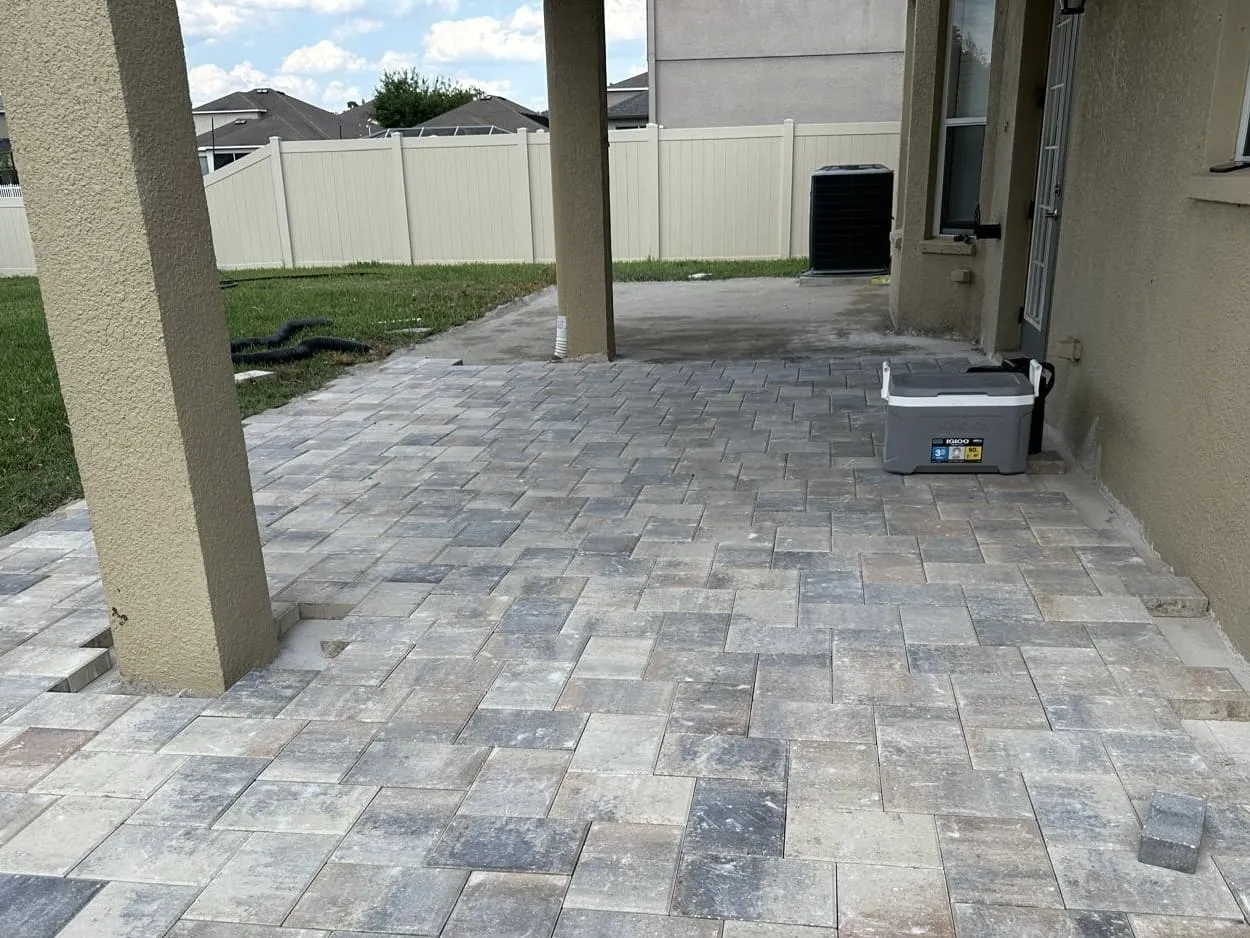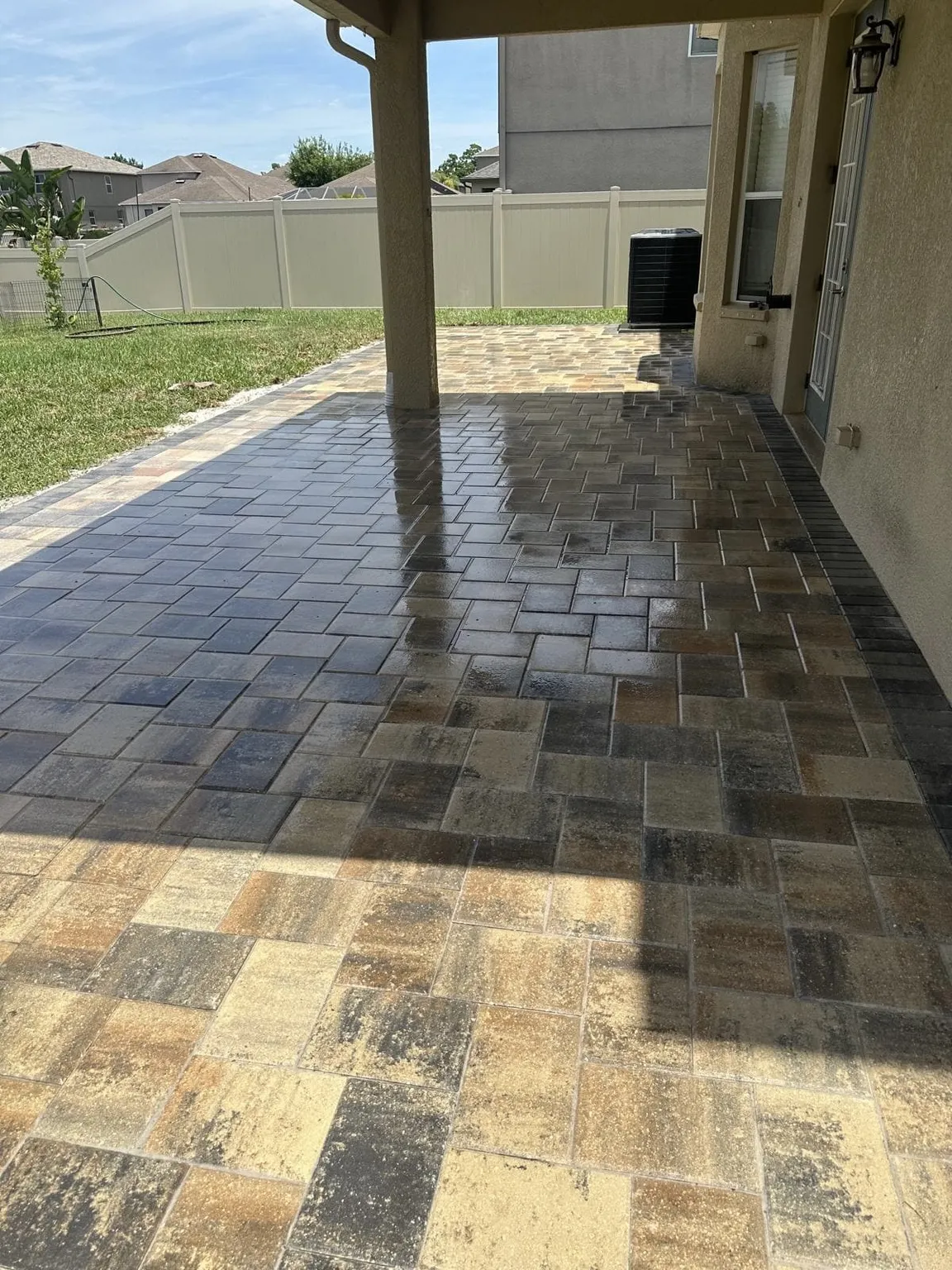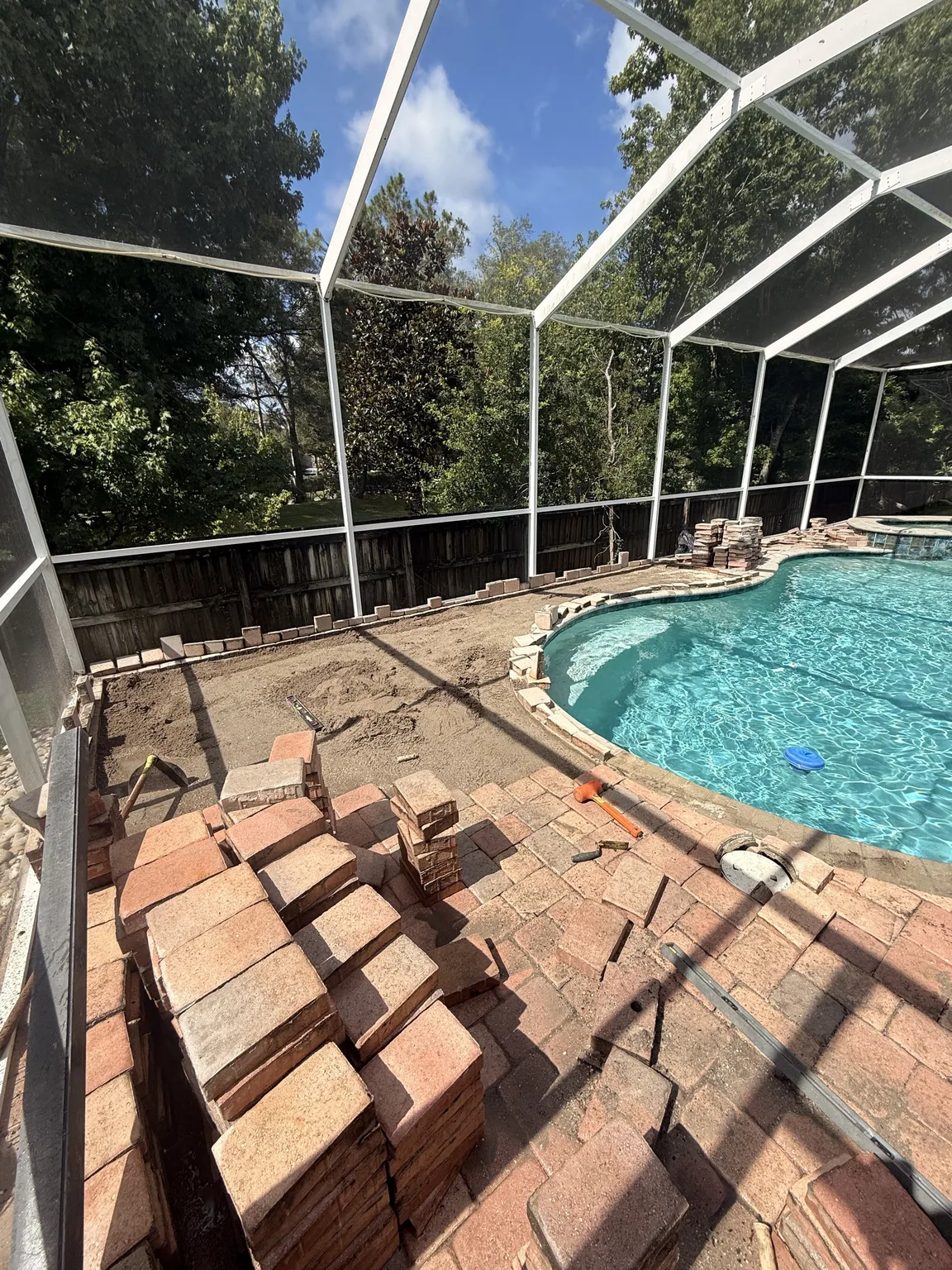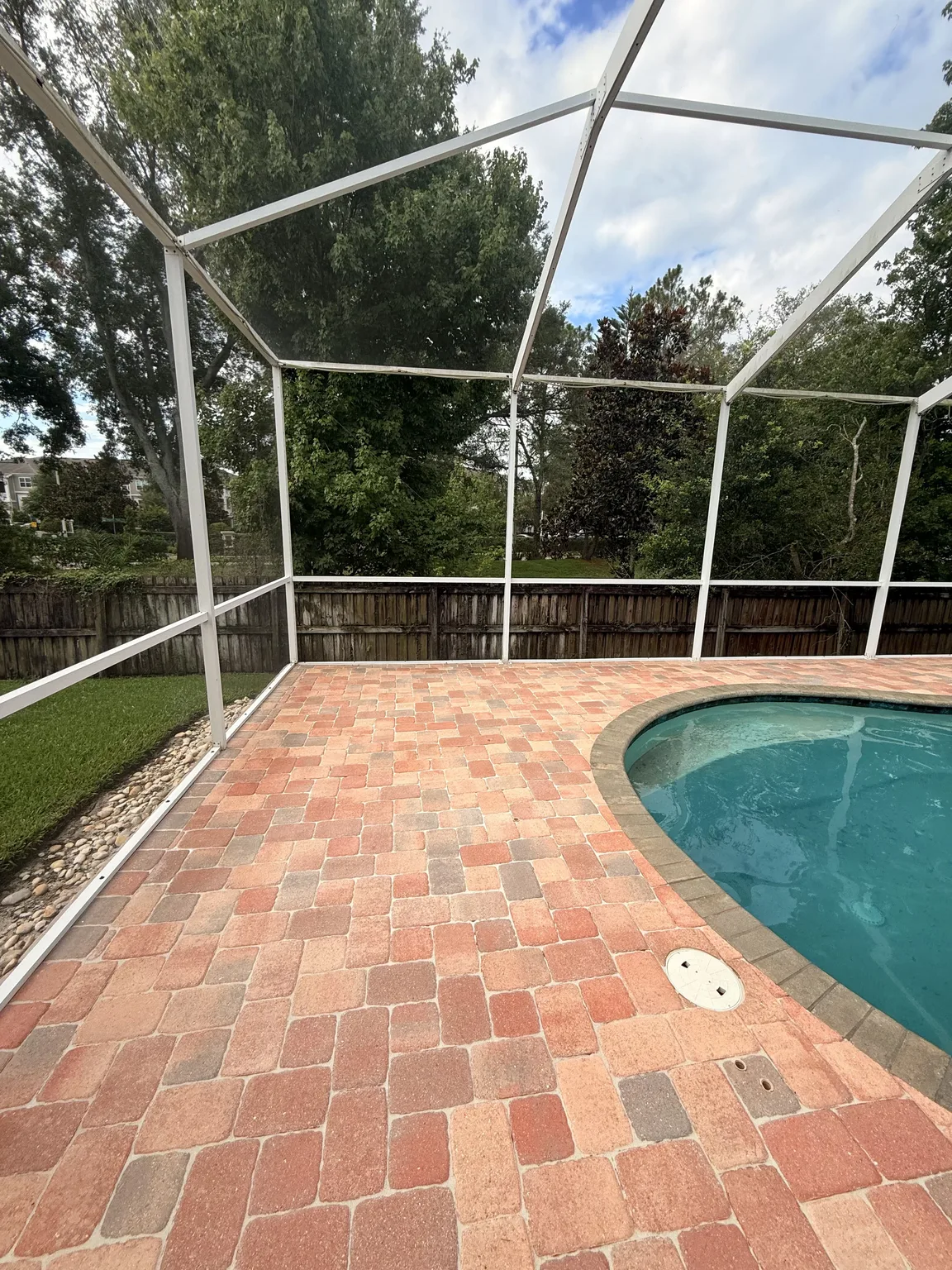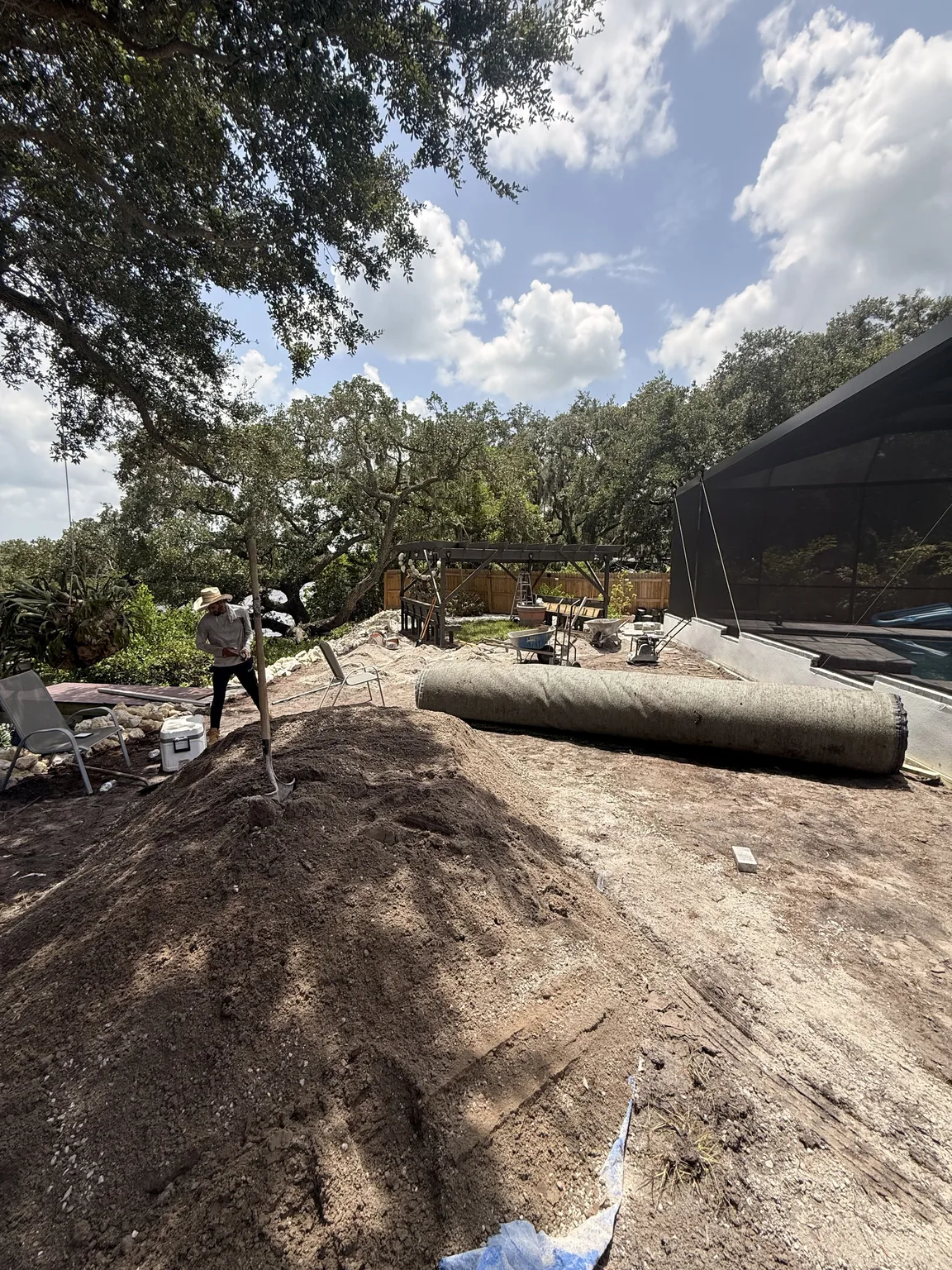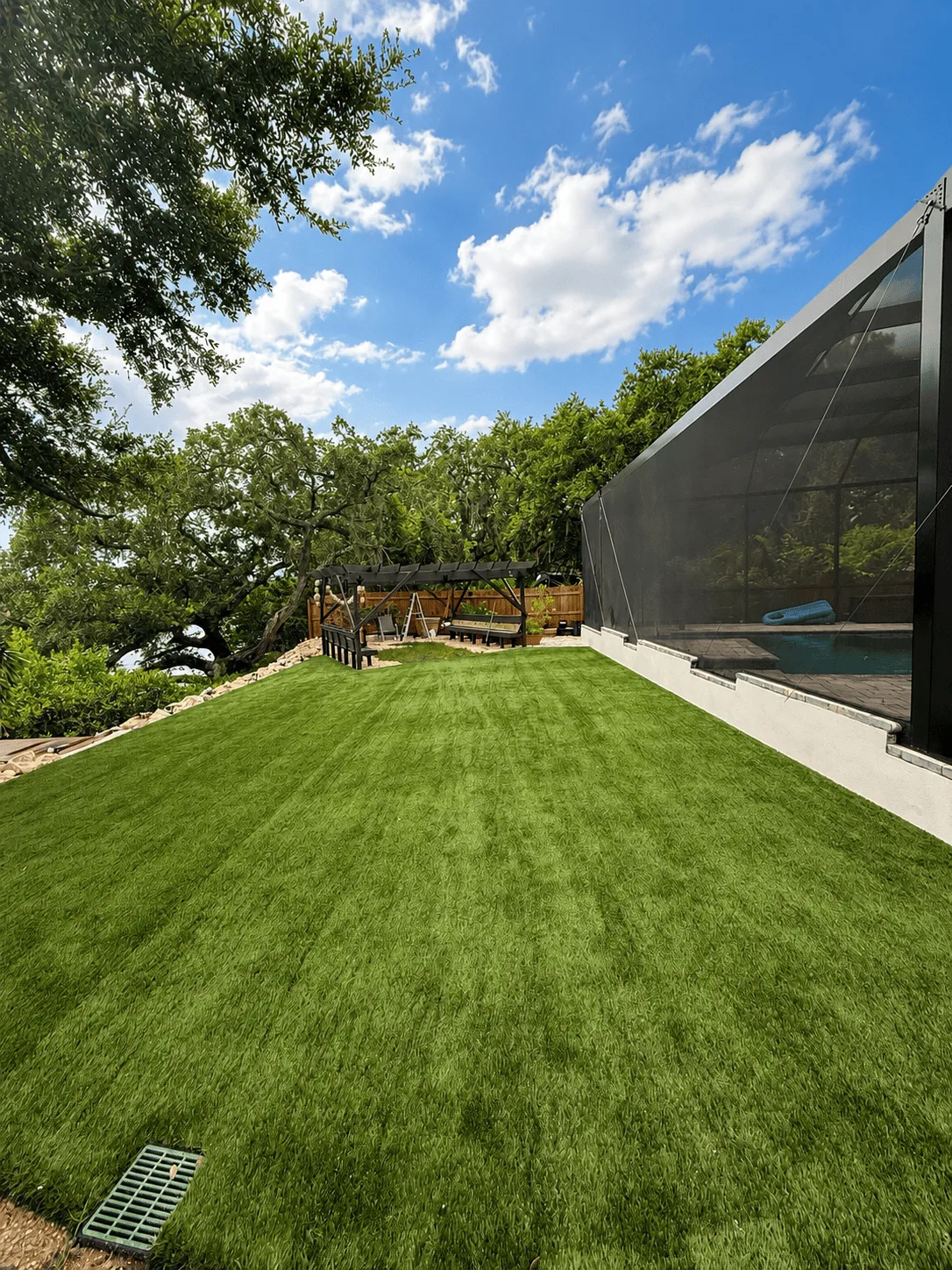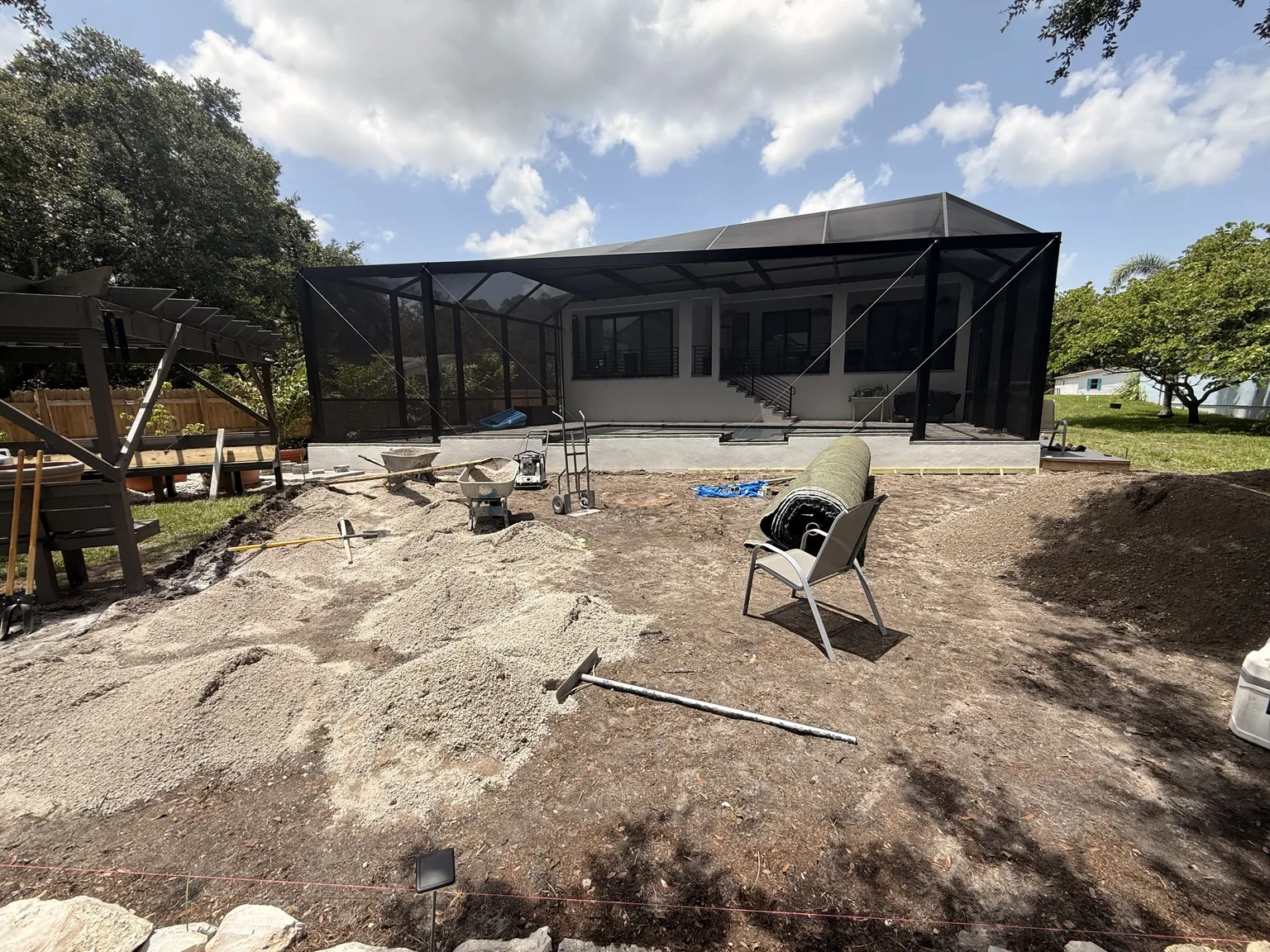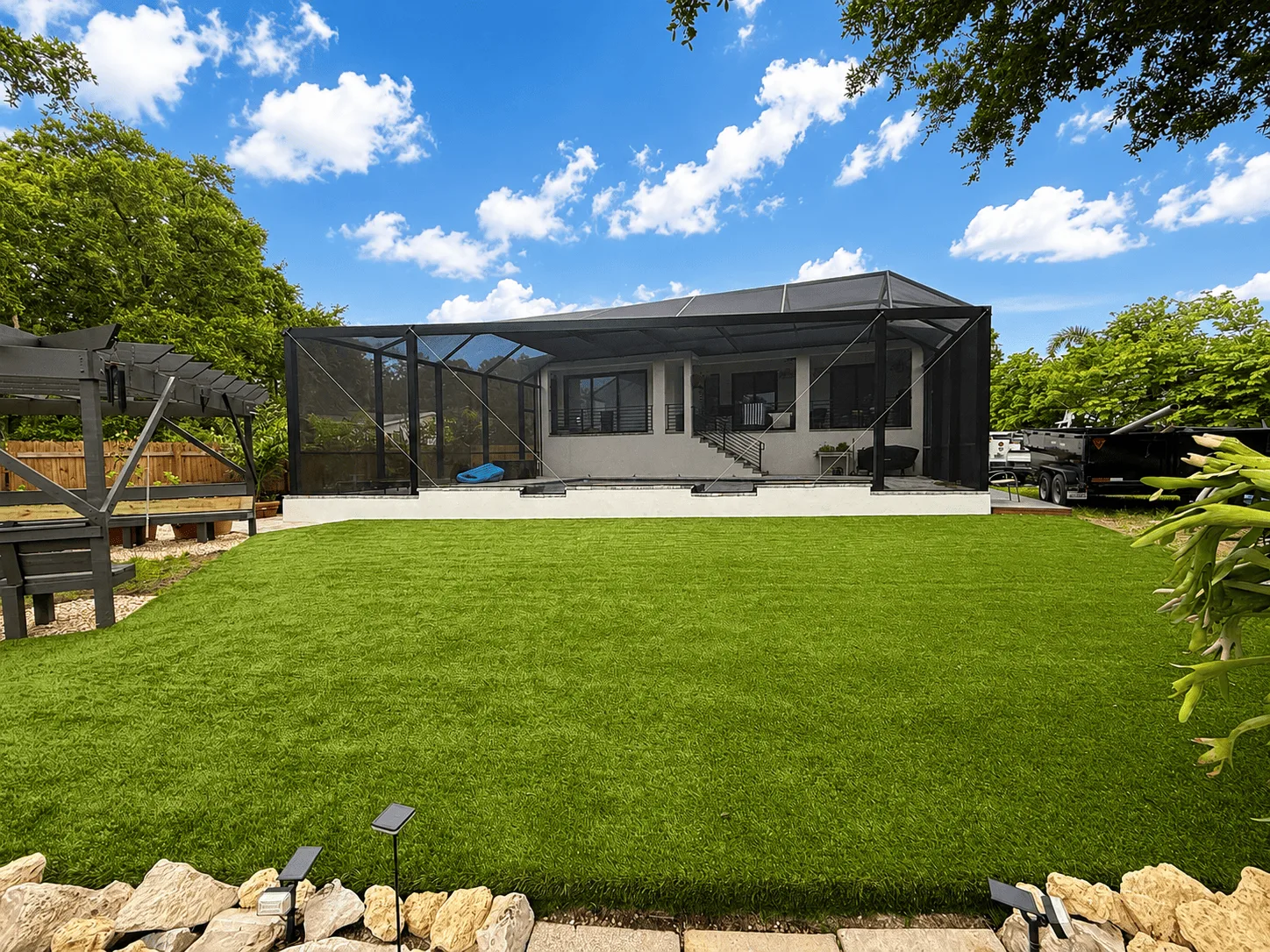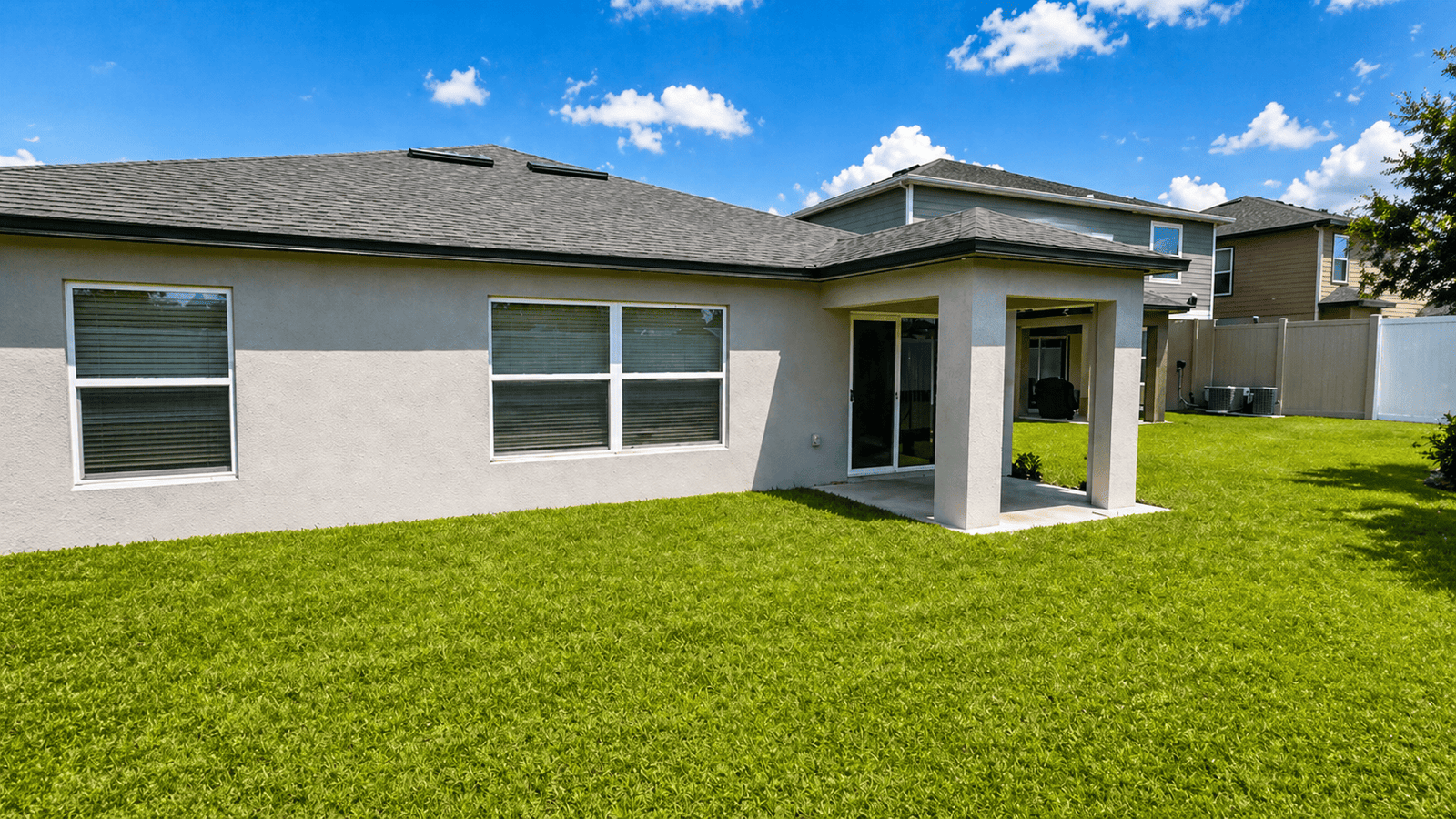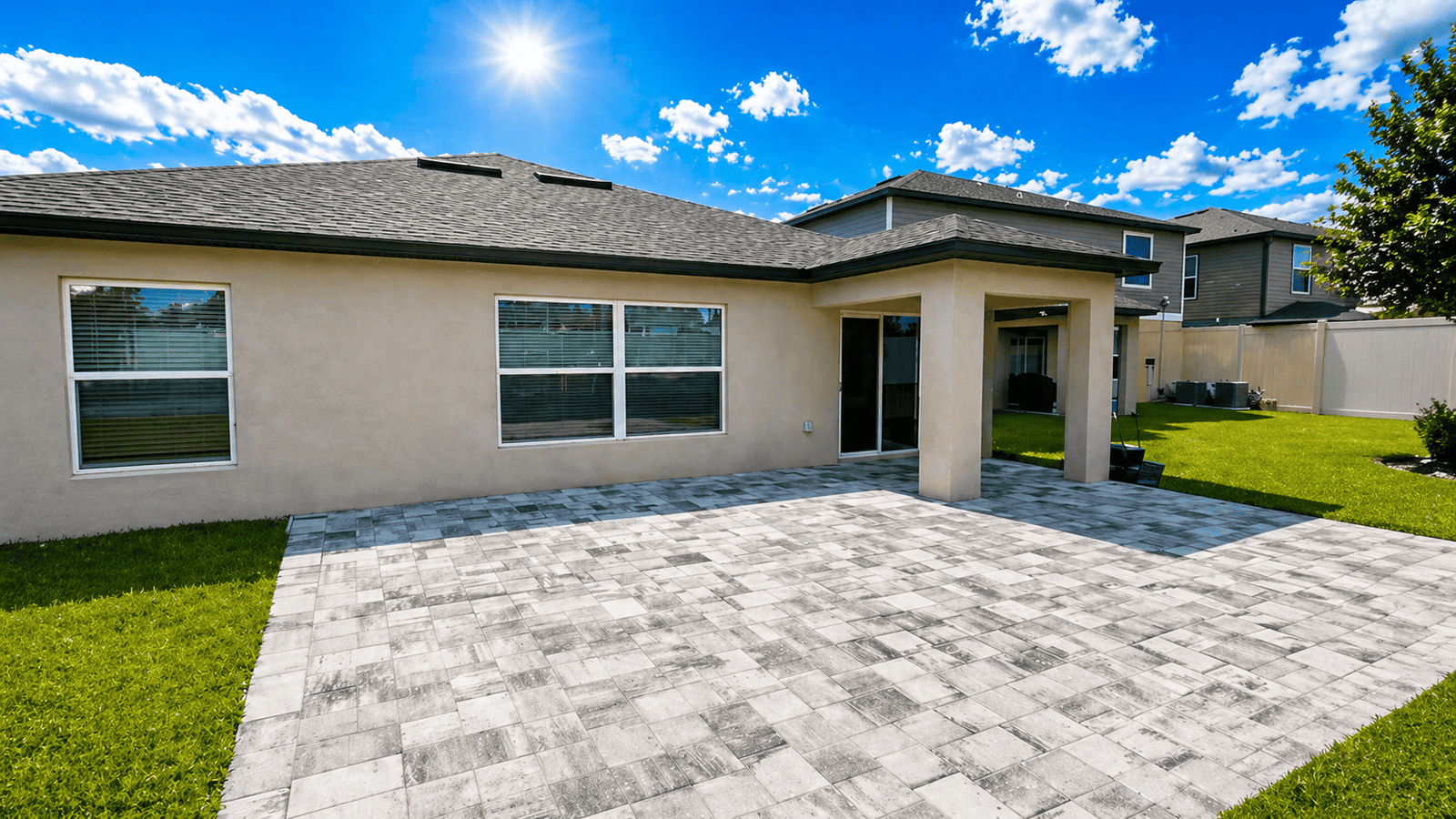
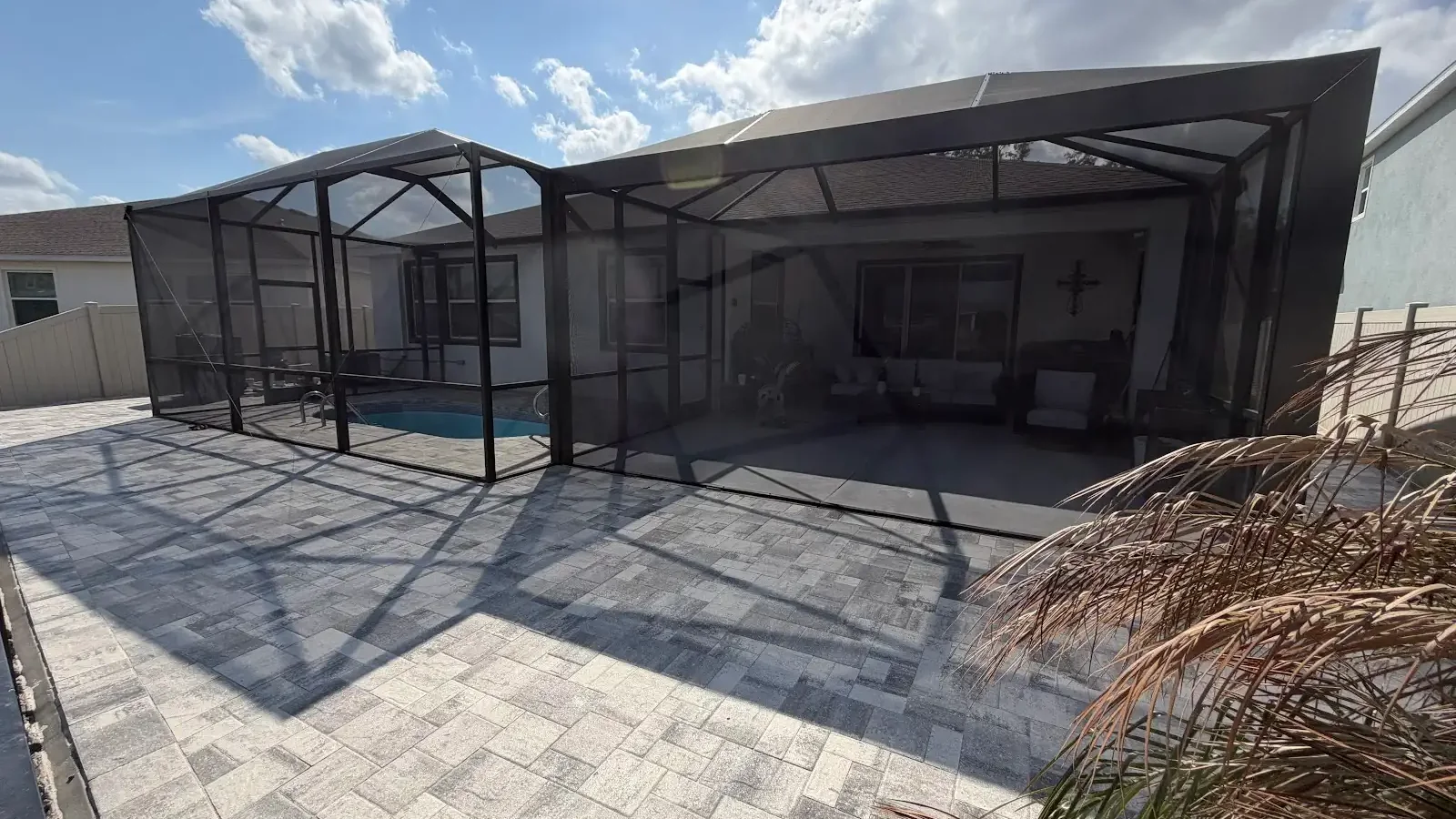
Pool deck pavers vs concrete is one of the first choices you face when you update your pool area. Around Tampa Bay, that decision affects how hot your deck feels, how slippery it gets when kids splash, how repairs work, and how the space looks with your home. Both options can perform well when designed and installed correctly, but they trade comfort, maintenance, and cost in different ways. This guide walks through the details so you can ask better questions and choose what fits your pool, budget, and long-term plans.
Pool Deck Pavers vs Concrete: Quick Comparison
When you compare pool deck pavers vs concrete, neither surface wins in every backyard. Pavers usually offer more design flexibility, easier spot repairs, and joints that can help break up surface heat and water. By contrast, a well-finished concrete deck can be simpler to install in a basic shape and can work for owners who prefer a single, continuous surface. The right choice depends on your site, budget, and how you plan to use the pool.
Overview of Your Two Main Pool Deck Options
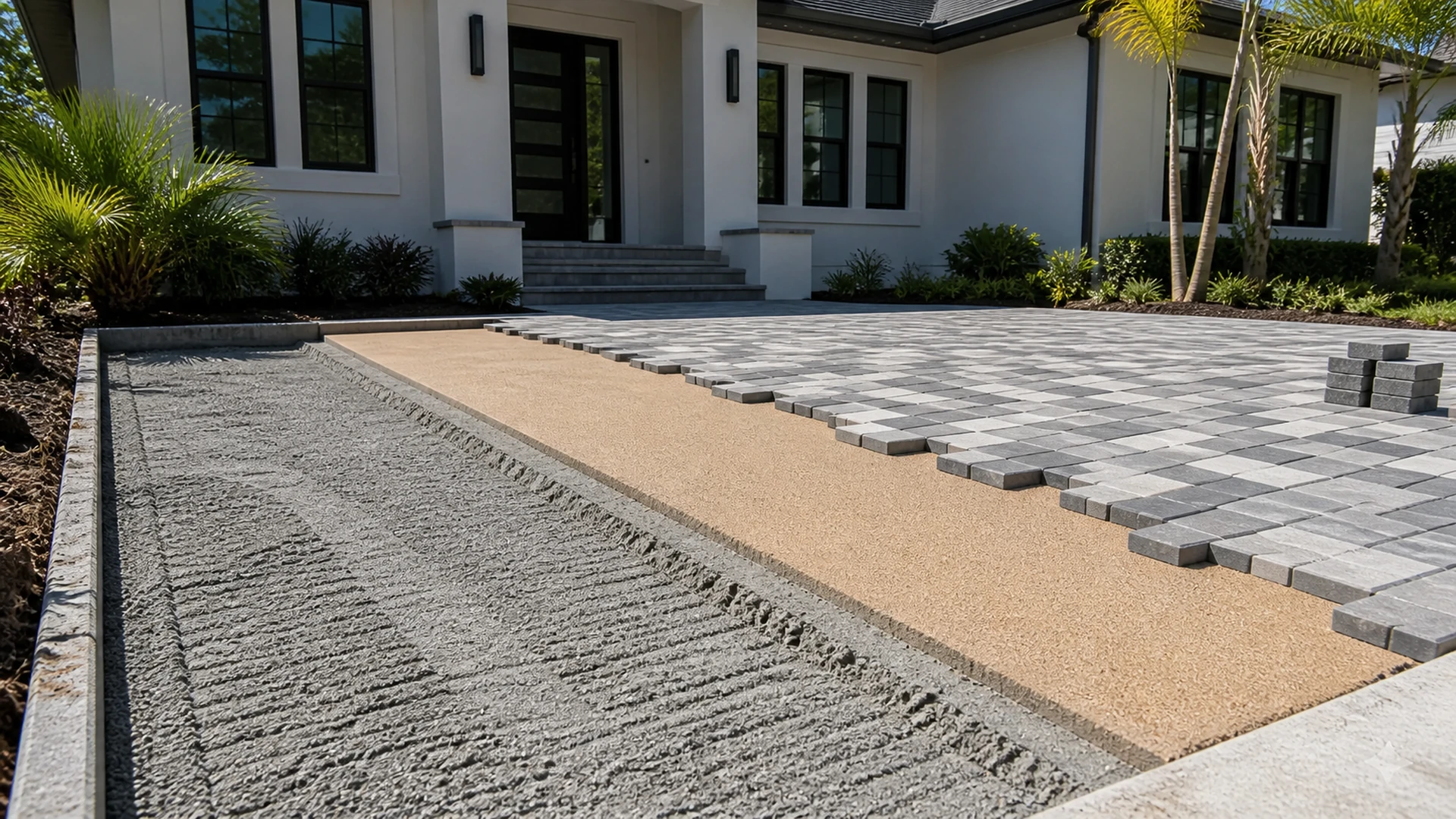
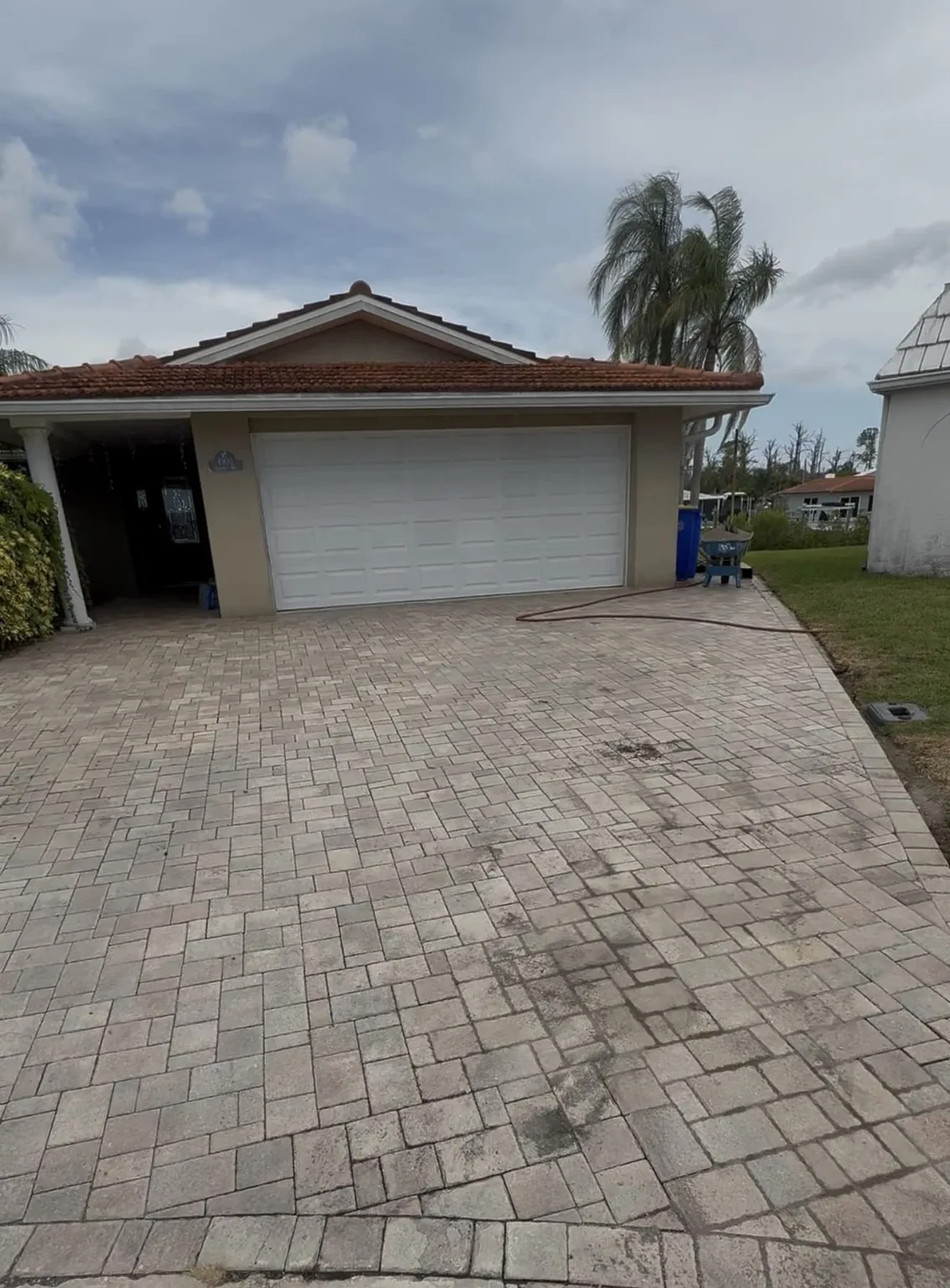
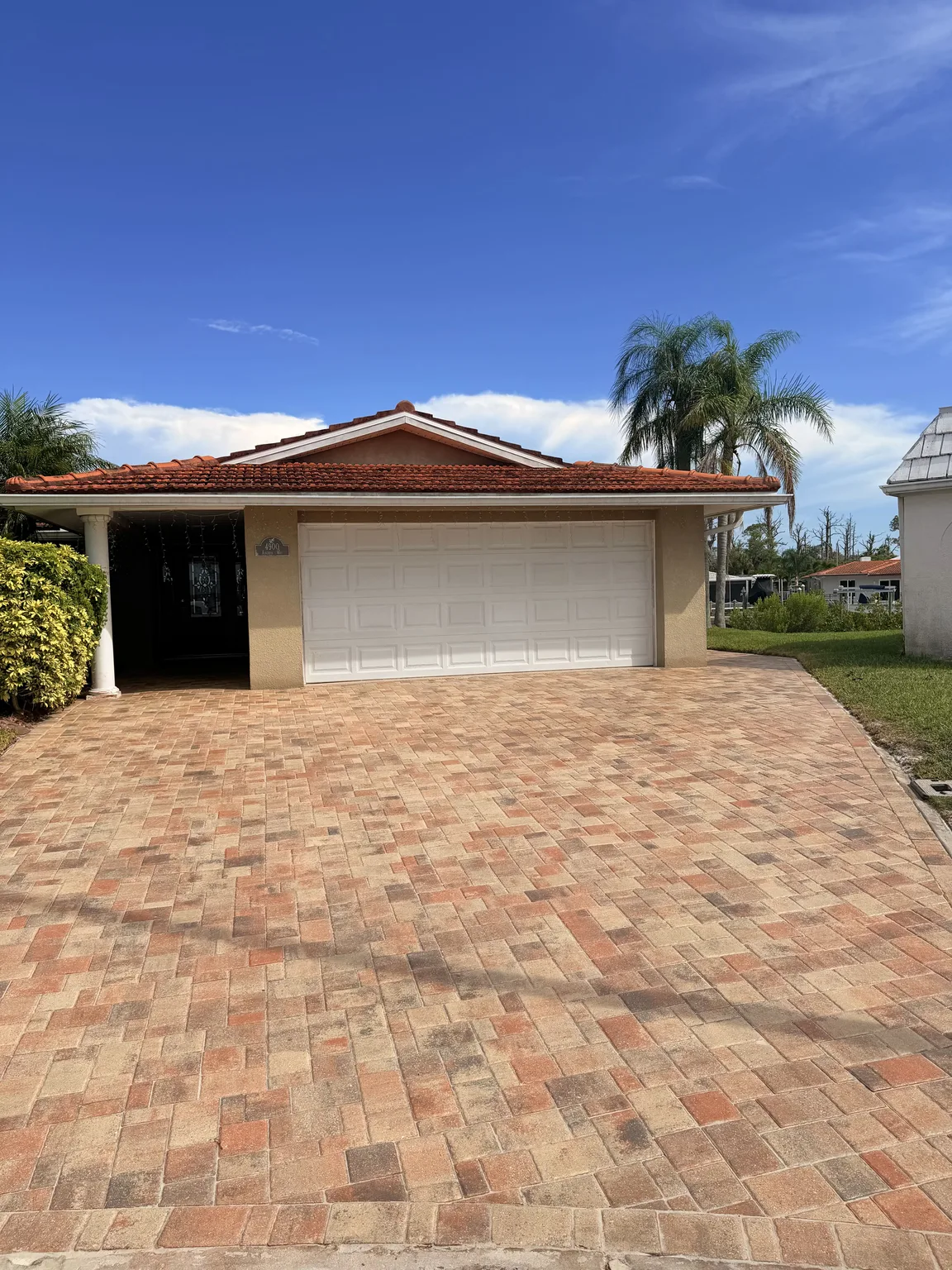
Concrete pavers sit on a prepared base and lock together with sand in the joints. They create a strong surface made of many individual units, which helps with future access and repairs. Cast-in-place concrete is poured as one slab and can be broom-finished, stamped, or colored. In Riverview, Wesley Chapel, and other growing neighborhoods, you will see both approaches around older and newer pools.
When Pavers Tend To Make More Sense
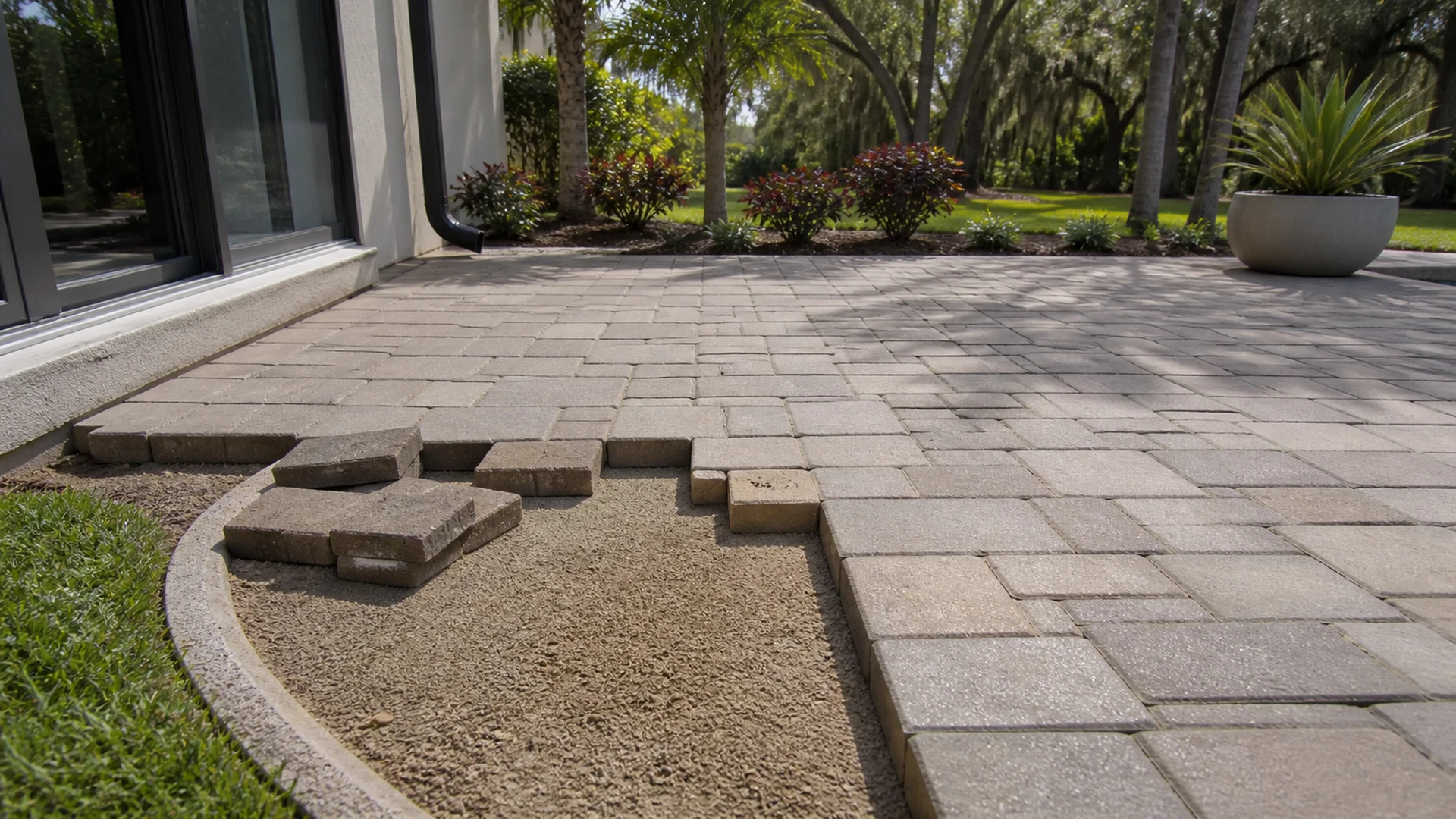
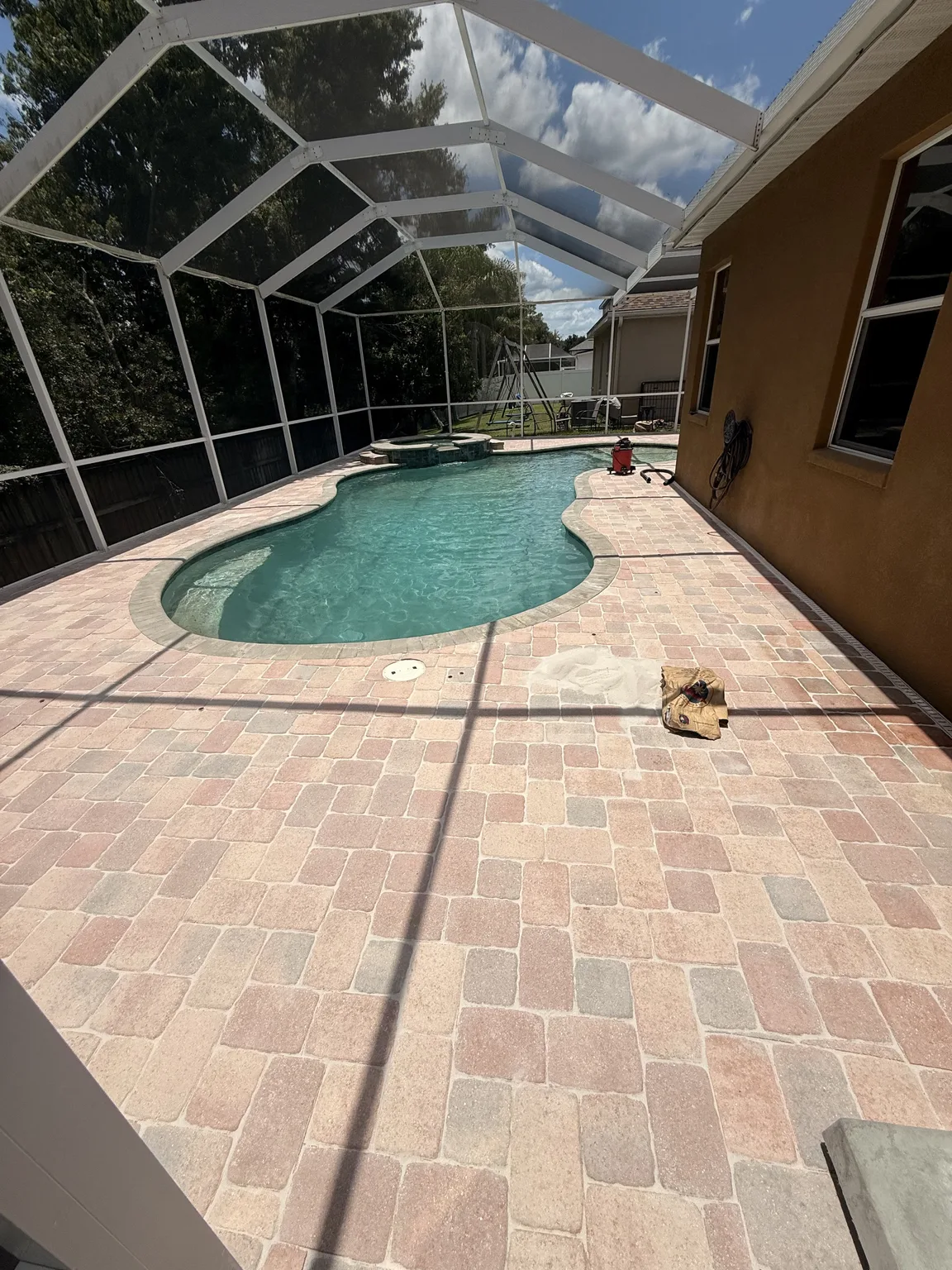
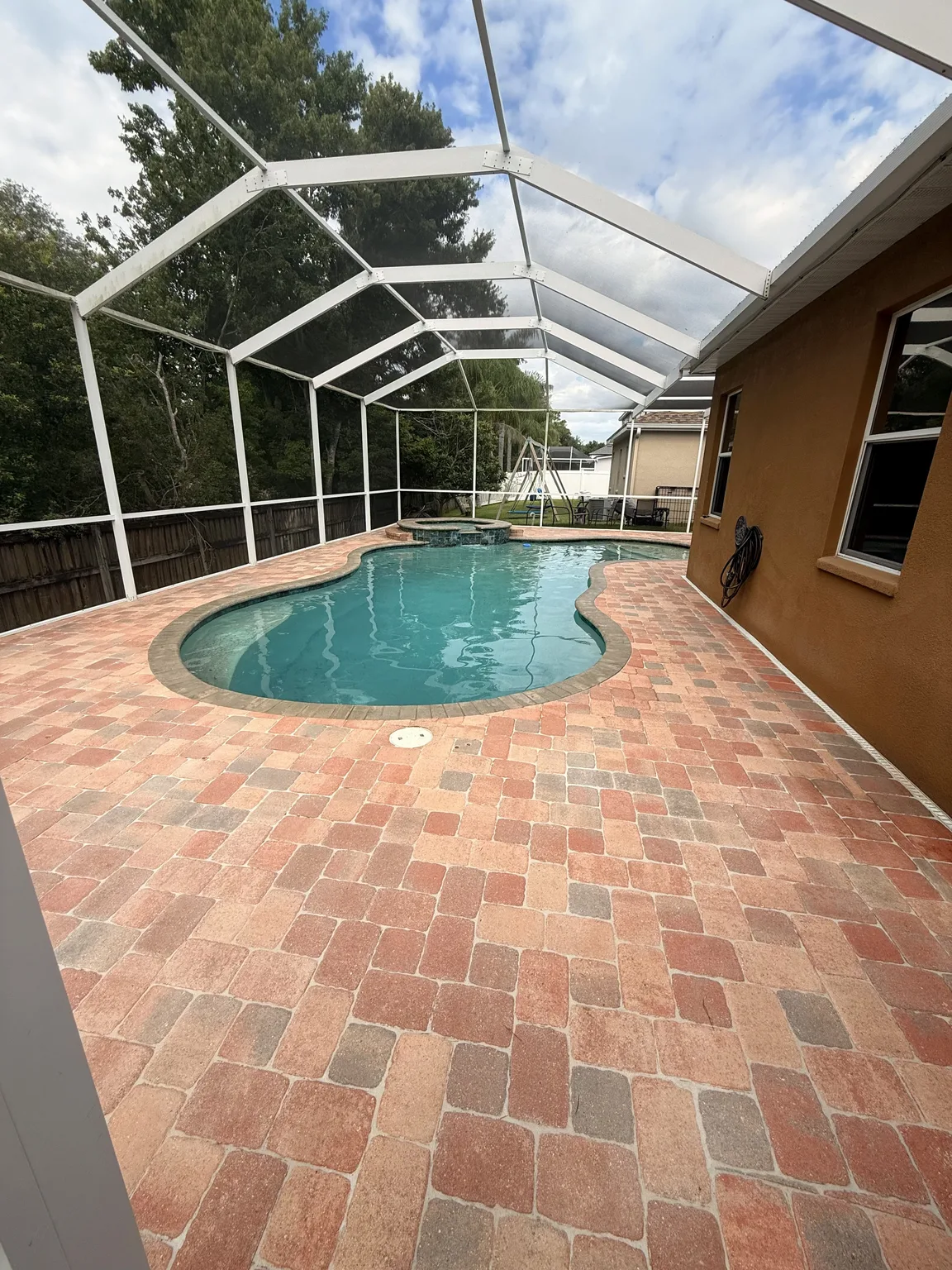
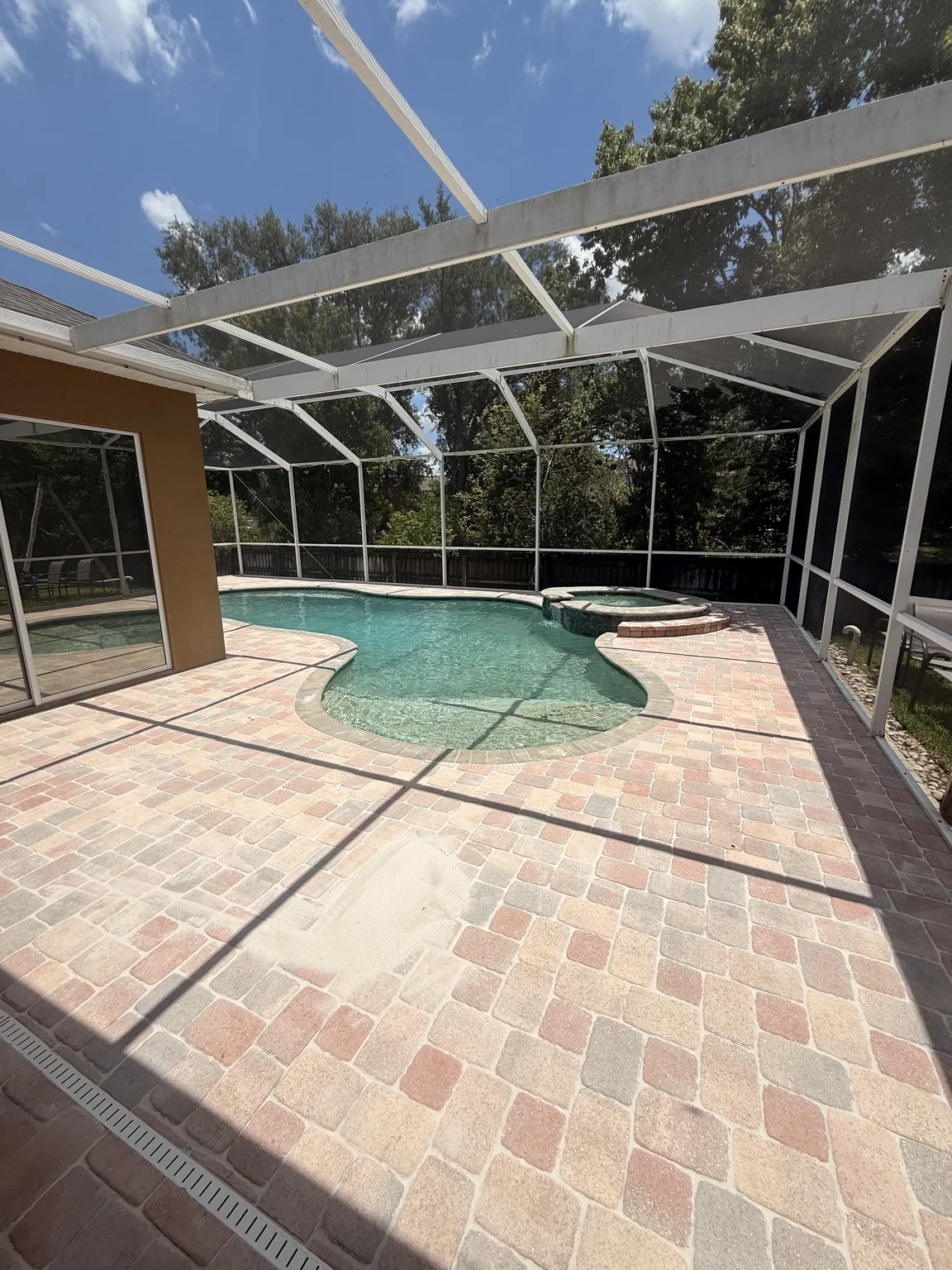
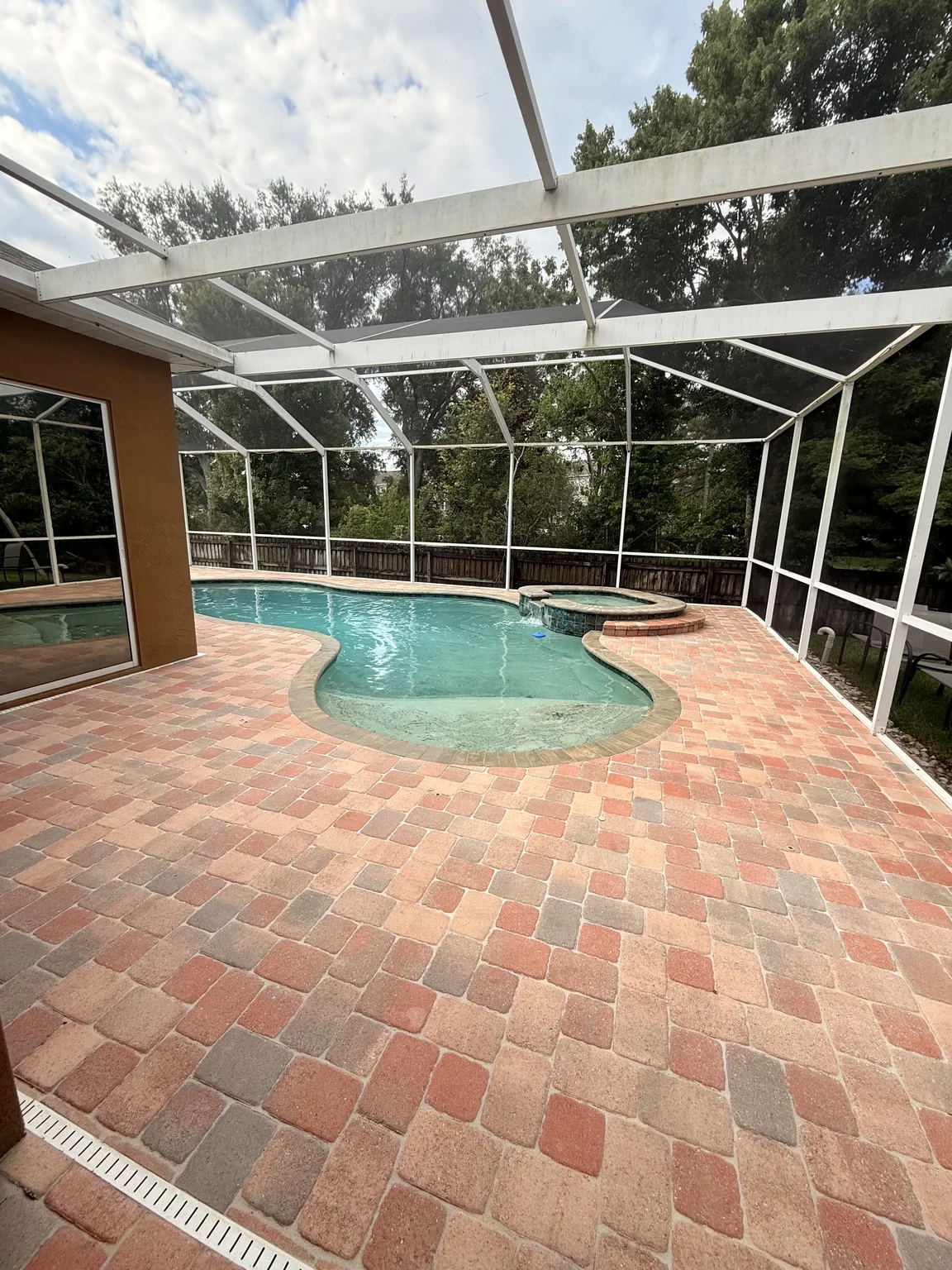
Pavers often shine when you want patterns, borders, or curves that match a custom pool shape. They can make it easier to access pool plumbing or add features later, because the installer can remove and relay units without demolishing the whole deck. Many homeowners in Palm Harbor and Land O Lakes also like how pavers visually connect the pool deck with walkways, fire pits, and driveways. However, pavers require careful base prep and edge restraint to perform well over time.
When Concrete Can Still Be a Good Fit
Concrete can work well when you need a simple, clean deck and want to prioritize an upfront budget. A basic, rectangular deck in Ruskin or Town N Country may suit a broom-finished concrete surface. Owners who prefer fewer joints or a very minimalist look often lean this way. Nevertheless, you must account for expansion joints, potential cracking, and surface texture for wet traction and comfort.
Comfort and Texture Under Bare Feet
Comfort matters because most people use a pool deck barefoot. In Tampa Bay sun, both pavers and concrete can feel hot at times, but color, texture, and joint patterns affect how feet experience that heat. You also want a surface that does not feel abrasive while still offering some grip when it is wet. Thinking through these tradeoffs now helps avoid regrets after your first summer.
How Surface Temperature Really Works
Surface temperature depends on sun exposure, color, material density, and airflow, not just the material name. Lighter colors, whether pavers or concrete, generally feel less hot than very dark tones in midafternoon sun. Joints between pavers can break up the surface and may give your feet slightly cooler contact points in some conditions. Shade structures, landscaping, and timing of use also matter, especially in places like Thonotosassa where open yards can bake all day.
How pool deck pavers vs concrete feel under bare feet
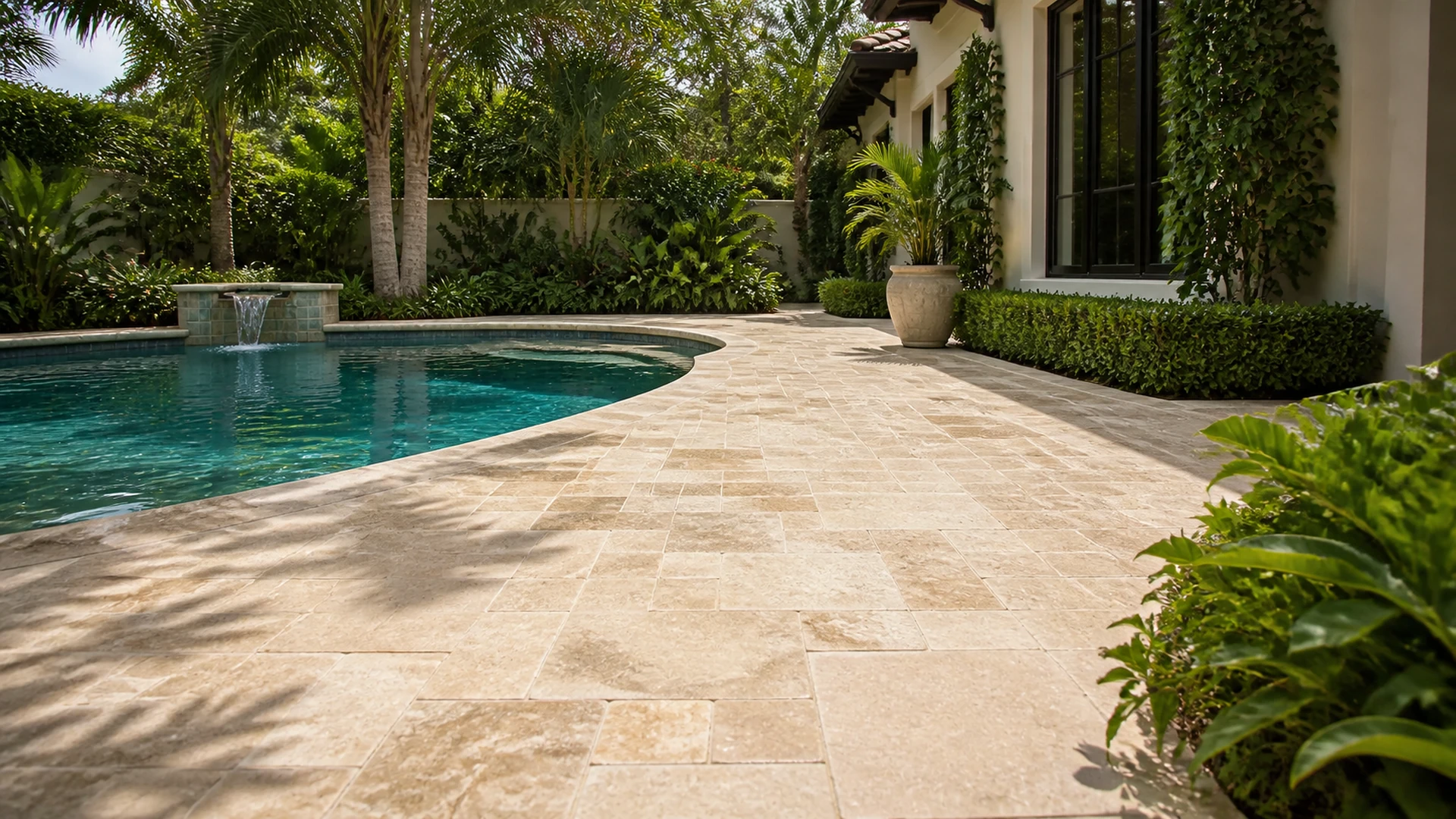
Paver surfaces have small joints and slight chamfers that create a gently varied feel underfoot. Many people find this comfortable, but extremely sensitive feet may notice more transitions than on a slab. Broom-finished concrete feels more uniform, yet the texture can be rough if the finish is too aggressive. Stamped concrete adds pattern and relief, though deep patterns can make some areas feel uneven near the waterline.
Texture, Edges, and Joint Comfort
Joint width, paver edge design, and finishing methods all influence how the surface feels. Tight paver joints and well-cut borders around the pool can reduce toe stubbing and make lounge areas more comfortable. On concrete, finishing and any non-slip additives must balance grip with smoothness, especially for kids who like to sit at the edge. Talking through these details with your installer helps tailor the deck to your household.
Safety, Wet Traction, and Slip Awareness
Any pool deck can be slippery under the wrong conditions, whether it is pavers or concrete. Safety comes from smart design, texture, drainage, and user behavior, not from a promise that a surface will never be slick. Around Tampa Bay, sudden downpours and heavy splashing demand extra attention to traction. You want to understand what you can control during design and what you must manage with cleaning and habits.
What Affects Wet Traction Around Pools
CMHA notes that texture, wetness, contaminants, footwear, joint width, and vertical alignment all influence pedestrian slip resistance. That means algae film, sunscreen drips, and puddled water can matter as much as the material itself. You can review CMHA guidance directly at this technical slip and skid resistance resource. However, it does not replace advice from a qualified local contractor familiar with your specific pool and household use.
How Pavers and Concrete Compare When Wet
Quality concrete pavers for pool decks typically have molded surface texture designed for pedestrian use. Their joints can help channel water off the surface when the deck is sloped properly. Broomed or lightly textured concrete can also provide reasonable traction but may lose profile over time with wear or improper resurfacing. Very smooth or heavily sealed surfaces, whether paver or concrete, can become more slippery when wet and dirty.
Practical Ways to Improve Footing
Good design starts with slopes that move water away from the pool edge and house without leaving standing puddles. Strategic placement of hose bibs and outdoor showers can help you rinse off sand or grass before swimmers reach the deck. Regular cleaning to remove mildew and body oils is critical in humid areas like Greater Carrollwood and Seven Springs. For any resurfacing, talk with a qualified installer about textures and products that balance traction with ease of cleaning.
Cracking, Movement, and Access to Pool Plumbing
Florida soils, tree roots, and pool construction details all affect how a deck moves over time. You want a surface that handles small shifts without turning every minor issue into a major repair. The way pavers and concrete respond to movement and plumbing access is one of their biggest practical differences. Thinking through these issues before you build can save time and disruption later.
How Florida Conditions Stress a Pool Deck
In Tampa Bay, cycles of heavy rain and sun can expand and contract underlying soils. Buried pool lines, screen enclosure footings, and nearby oaks or palms can all create localized pressure. Concrete slabs typically handle this with control joints and reinforcement, yet cracks can still appear. Paver systems rely on a compacted base and interlocking units, so the whole surface can adjust slightly if conditions change.
Repairing Cracks and Sags
When a concrete deck cracks or settles, repairs often involve cutting, patching, or replacing a larger section. Color matching and texture blending can be difficult, especially on stained or stamped concrete. With pavers, installers can usually lift and relay affected areas after addressing the cause of the movement. This spot-focused approach may reduce disruption if only one corner near a screen door or step needs work.
Accessing Pool Lines and Equipment Areas
Pavers can offer easier access to pool plumbing, electrical conduits, or future features like water bowls. Contractors can remove select units to reach a line and then reinstall matching pavers, assuming replacements are available. Concrete often requires saw-cutting and patching to expose the same areas, which can leave visible seams. For complex pools in places like Ruskin or Wesley Chapel, discuss how your chosen deck type interacts with existing and future utilities.
Repairs, Spot Fixes, Stains, and Cleaning
No pool deck stays perfect forever, especially in a humid climate. Sunscreen, leaves, rust from patio furniture, and hard well water can all leave marks. Your choice between pavers and concrete affects how you tackle spot repairs and routine care. Planning for upkeep from day one helps keep your Land O Lakes or Palm Harbor pool inviting over time.
Handling Isolated Damage or Settling
With pavers, individual cracked or chipped units can often be swapped out if matching material is available. Localized settling near a screen enclosure post or step can sometimes be corrected by reworking the base under a small area. Concrete usually demands a broader approach; patching small spots can look obvious, particularly with decorative finishes. In some cases, a contractor may suggest overlays or partial replacement after assessing the slab condition.
Dealing With Stains, Mildew, and Rust Marks
Pavers and concrete both benefit from gentle, regular cleaning rather than infrequent, harsh pressure washing. Many stains respond to targeted cleaners designed for rust, tannins, or organic growth, but always test a small area first. Deep stains on pavers can sometimes be remedied by replacing a few units if cleaning does not work. On concrete, stubborn marks may require professional cleaning or resurfacing options, depending on severity.
Cleaning, Sealers, and Ongoing Care
Some homeowners choose to seal pavers or concrete to help manage staining and color, while others prefer an unsealed, more natural look. Sealers vary widely, from penetrating types that alter appearance very little to film-forming products that change sheen and feel. Any sealer can influence traction, so discuss options with a qualified installer who understands pool use. A sensible schedule of sweeping, rinsing, and periodic professional cleaning often does more for safety and appearance than overusing sealers.
Coping Integration, Layout, and Design Flexibility
The way your deck meets the pool coping, screen enclosure, and yard makes a big difference in how the space feels. Pavers usually offer more options for patterns, curves, and borders, while concrete often relies on saw cuts or form boards. In Tampa Bay, where many homes have freeform pools and tight yards, layout choices can maximize usable space. Good planning early helps avoid awkward transitions and trip hazards later.
Matching the Pool Coping and Deck
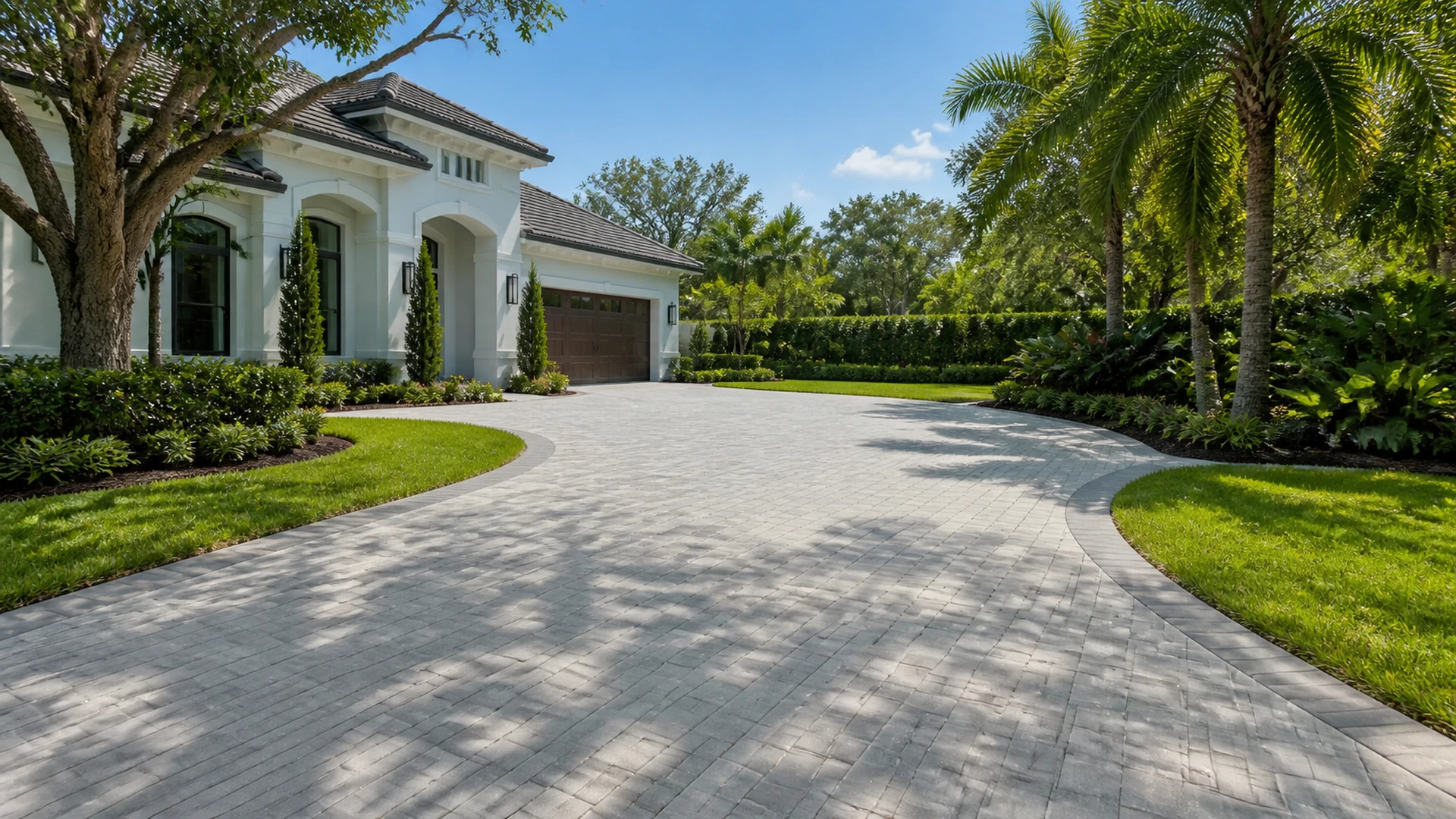
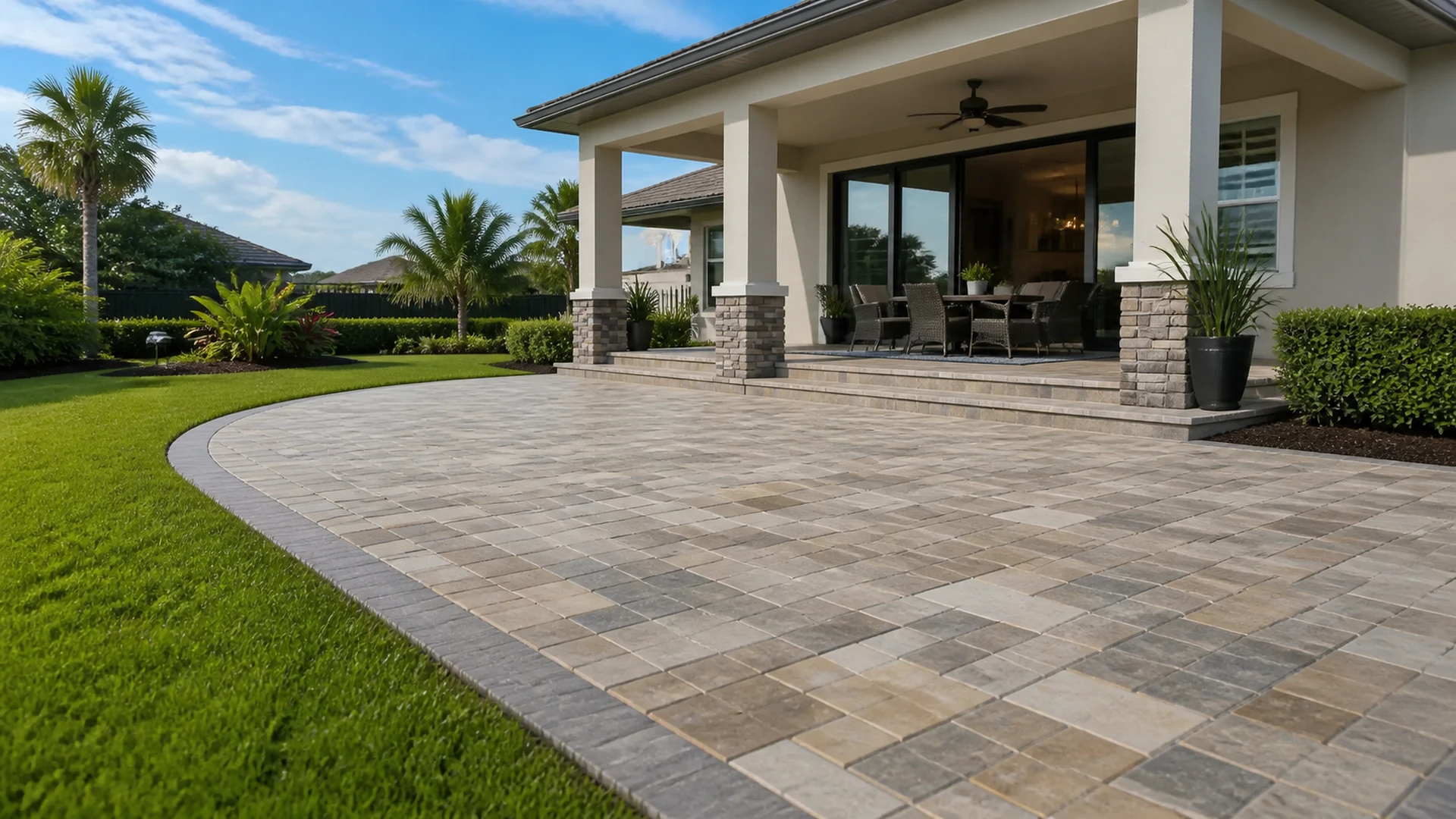
Many modern pools use matching or coordinating paver coping and deck surfaces. This can create a clean, continuous look while still allowing for accent borders or pattern changes at seating areas. Concrete decks can pair with precast coping or poured-in-place edges, but color and texture transitions need careful thought. Whatever you choose, verify that coping pieces and deck materials work together in thickness and profile so water flows correctly.
Layout Patterns, Borders, and Transitions
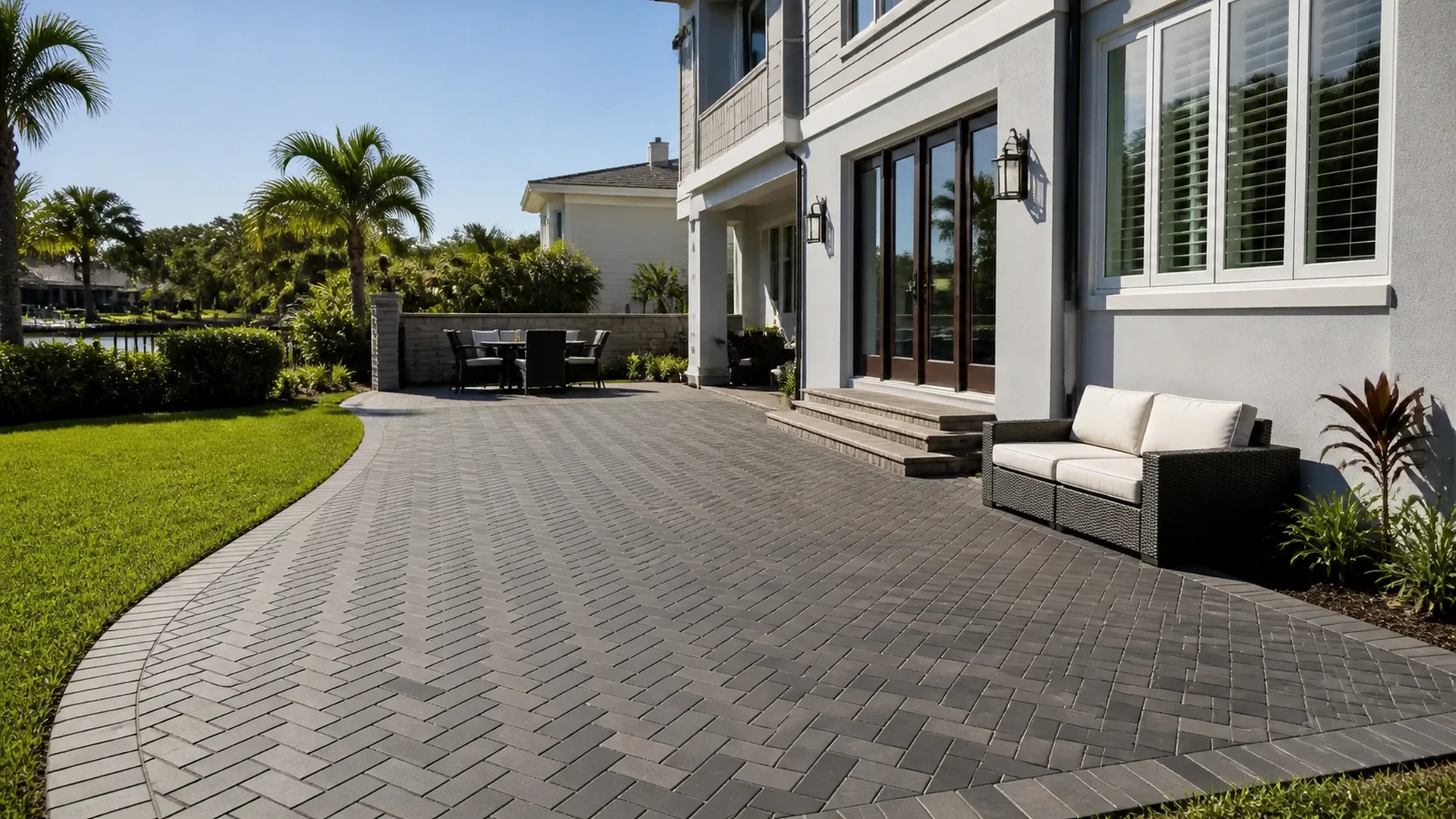
Pavers can run in different patterns to define lounging areas, walkways, and outdoor kitchens without changing materials. Borders can highlight steps, spa edges, or the waterline for both safety and style. Concrete can still create zones using saw cuts, color changes, or bands of decorative finish. In tight yards in Town N Country or Greater Carrollwood, good layout keeps furniture, gates, and grills from feeling crowded.
- Use contrasting borders around steps and raised features to improve visibility.
- Align patterns with main sightlines from the house, not just the pool edge.
- Plan furniture placement before finalizing deck size and shape.
- Consider how screen doors, grill lids, and storage doors swing over the deck.
Avoiding Common Layout Mistakes
One frequent mistake is running patterns or control joints directly into the pool edge, which can draw the eye in an awkward way. Another is skipping clear walkways between the house, pool, and side yards, especially in narrow lots. On both pavers and concrete, ignore small level changes; plan transitions and step locations carefully to reduce trips. When in doubt, ask your installer for a scaled plan or layout mockup before work begins.
Cost Drivers and Decision Checklist for Tampa Bay Homes
Upfront cost is often where the pool deck pavers vs concrete conversation starts, but it should not be where it ends. Total investment depends on deck size, access, existing conditions, materials, and design complexity. Long-term costs include repairs, cleaning, and any future changes to the backyard. A site visit is always needed for accurate pricing because each pool, yard, and soil condition is different.
What Really Drives Cost for Each Surface
Paver projects typically involve more labor for base preparation, cutting, and layout, especially around curves. Material choice, border complexity, and any matching walkways or driveways also affect the quote. Concrete decks can be more straightforward for simple shapes but add-ons like stamping, integral color, or decorative saw cuts increase cost. In older areas like Palm Harbor, removal and disposal of an existing deck can be a major budget item regardless of new surface choice.
Comparing Long-Term Ownership Factors
Over time, pavers may offer savings when small repairs or changes are needed, since you can often work in sections. Concrete can perform well for years too, but larger repairs or resurfacing might be necessary if cracks or settlement spread. Cleaning and possible sealing are ongoing considerations for both surfaces in Tampa Bay humidity. When you weigh costs, include your plans to add kitchens, fire features, or screen rooms that may interact with the deck later.
Simple Decision Framework for Your Backyard
A structured look at your priorities can make the choice clearer. Consider how strongly you value design flexibility, future changes, and spot-repair options compared with initial budget. The table below summarizes common homeowner priorities at a high level. Use it as a conversation starter with a qualified local installer.
| Priority | Pavers | Concrete |
| Design flexibility & curves | High | Moderate |
| Upfront cost sensitivity | Depends on design | Often favorable for simple layouts |
| Spot repair and access | Typically easier | Often more involved |
| Visual continuity (no joints) | Segmented surface | Continuous slab |
| Future expansion or rework | Generally flexible | May require cutting and patching |
If you lean strongly toward the benefits of pavers, you can explore more detail on pool deck pavers in Tampa Bay here. For broader research, the Pool Deck Paver Guides category can also help frame questions before you meet with a contractor.
FAQ: Pool Deck Pavers vs Concrete in Tampa Bay
Homeowners across Tampa Bay, from Riverview to Seven Springs, often ask similar questions when deciding between pavers and concrete. The answers below focus on comfort, maintenance, and planning rather than one-size-fits-all claims. Your specific pool, soil, and budget still matter, so use these as a starting point. A qualified professional should always evaluate structural, safety, or code-related issues on site.
Are pavers or concrete better for a new pool deck in Tampa Bay?
Neither surface is universally better; each suits different goals. Pavers often work well if you want design options, potential future changes, and easier access to buried lines. Concrete can fit when you prefer a simpler look and want to focus on initial budget and a continuous surface. For new pools, involve your pool builder and hardscape installer early so coping, elevations, and deck material align.
Will pavers or concrete be cooler around my pool?
Both pavers and concrete can feel hot in strong Tampa Bay sun, especially in dark colors and full exposure. Lighter tones and thoughtful layout, including shade and landscaping, usually have more impact on comfort than the label paver or concrete alone. Paver joints may give your feet slightly more variation in contact points, which some people find more comfortable. Ask your installer to show you sample colors outdoors at midday so you can compare them in real conditions.
Which surface is easier to repair if something goes wrong?
In many cases, pavers are easier to repair because individual units can be lifted and replaced if matching pieces are available. This helps when one area settles or when you need to reach plumbing or add a feature. Concrete repairs often involve cutting and patching, which can leave visible seams or color differences. However, severe base or soil problems will require careful evaluation and correction regardless of surface type.
Do I need to seal my pool deck, and how often?
Sealing is usually optional but can help manage staining and appearance for both pavers and concrete. The right approach depends on your material, texture, and how you use the space. Over-sealing or using the wrong product can affect traction or cause peeling, so follow manufacturer guidance and ask a qualified contractor for recommendations. Any schedule for resealing should consider sun exposure, use level, and how clean you keep the deck between treatments.
How do I choose a contractor for a pool deck project?
Look for a contractor with specific experience in pool decks, not just general flatwork or paver patios. Ask to see recent projects and speak with past clients in areas like Land O Lakes, Wesley Chapel, or Palm Harbor. Confirm they coordinate with pool builders, screen installers, and any other trades touching the deck. For structural questions, permits, or pool safety requirements, work with the appropriate licensed professionals so your project meets local expectations.
If you are ready to explore designs, you can browse recent projects and read homeowner testimonials to see how different pool decks look in real Tampa Bay backyards. For an overview of available services and common questions answered in advance, visit the Dr Pavers Design FAQ page before you plan your own upgrade.
When you want to talk through your own pool, patio, or hardscape ideas, you can call +1 (656) 600-4015, text the same number by SMS, email drpavers@outlook.com, or message via WhatsApp. You can also connect on Instagram, follow along on Facebook, or check the Tampa Bay location on Google Maps to request a free, no-pressure consultation for your backyard.