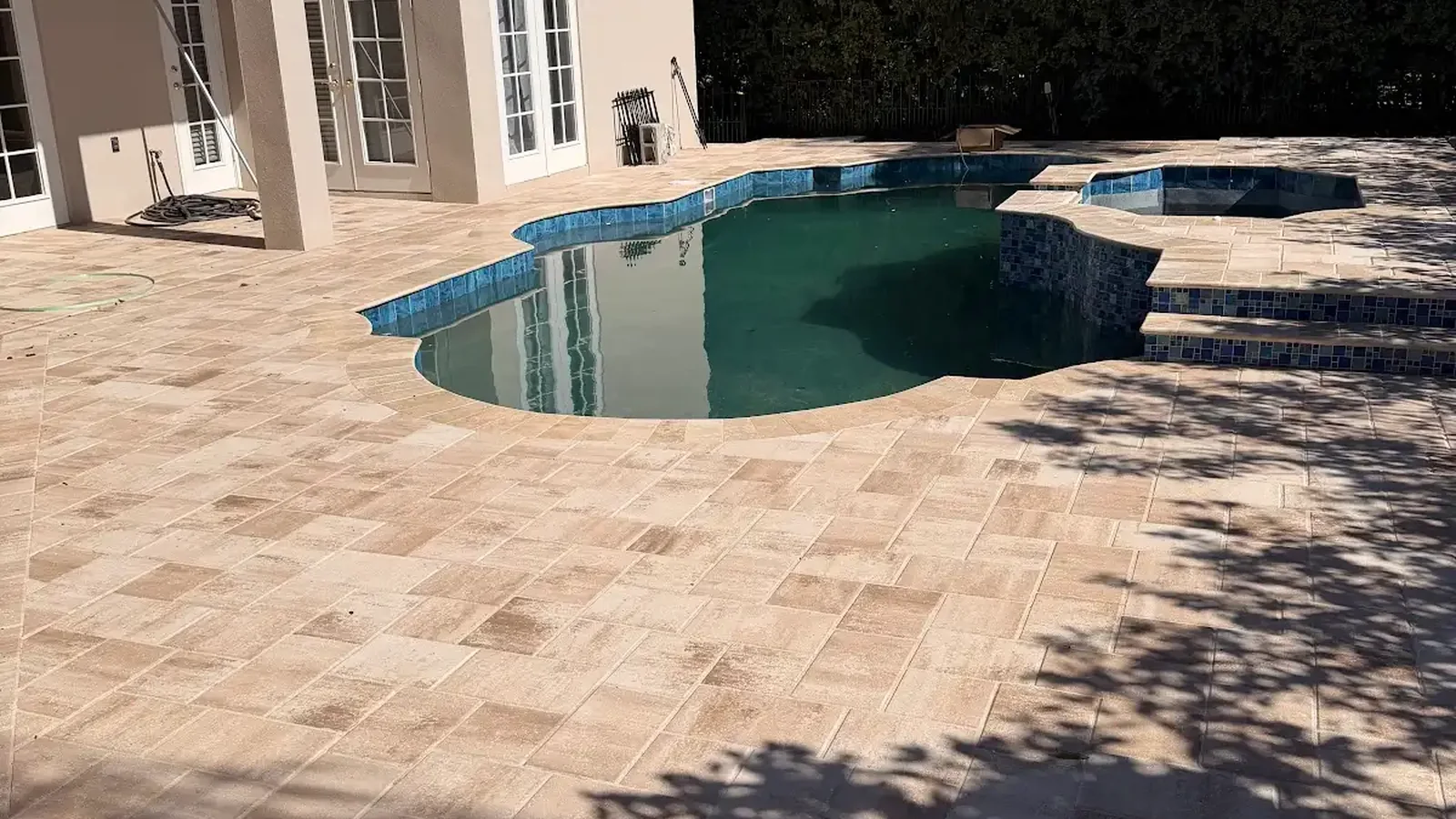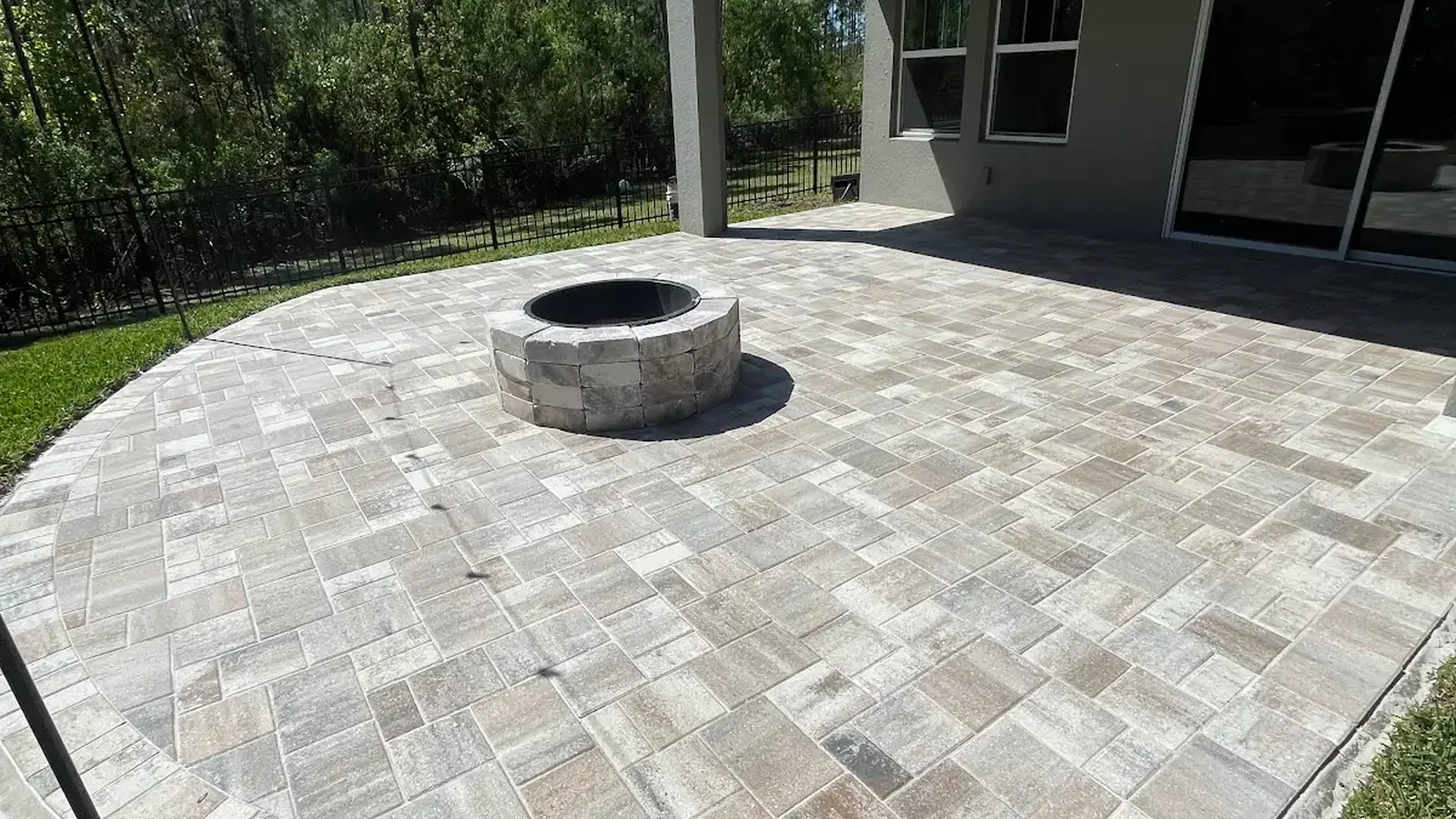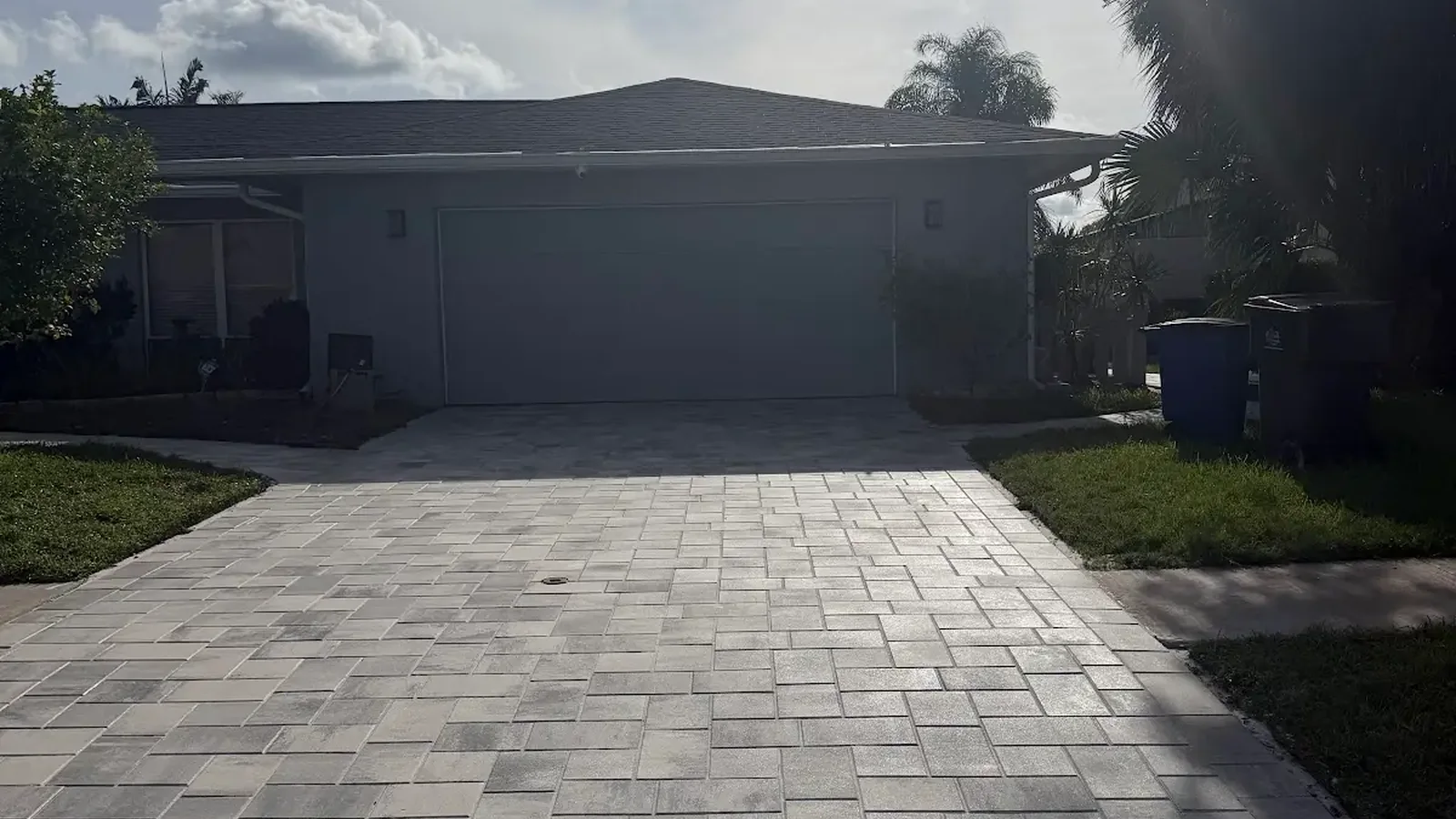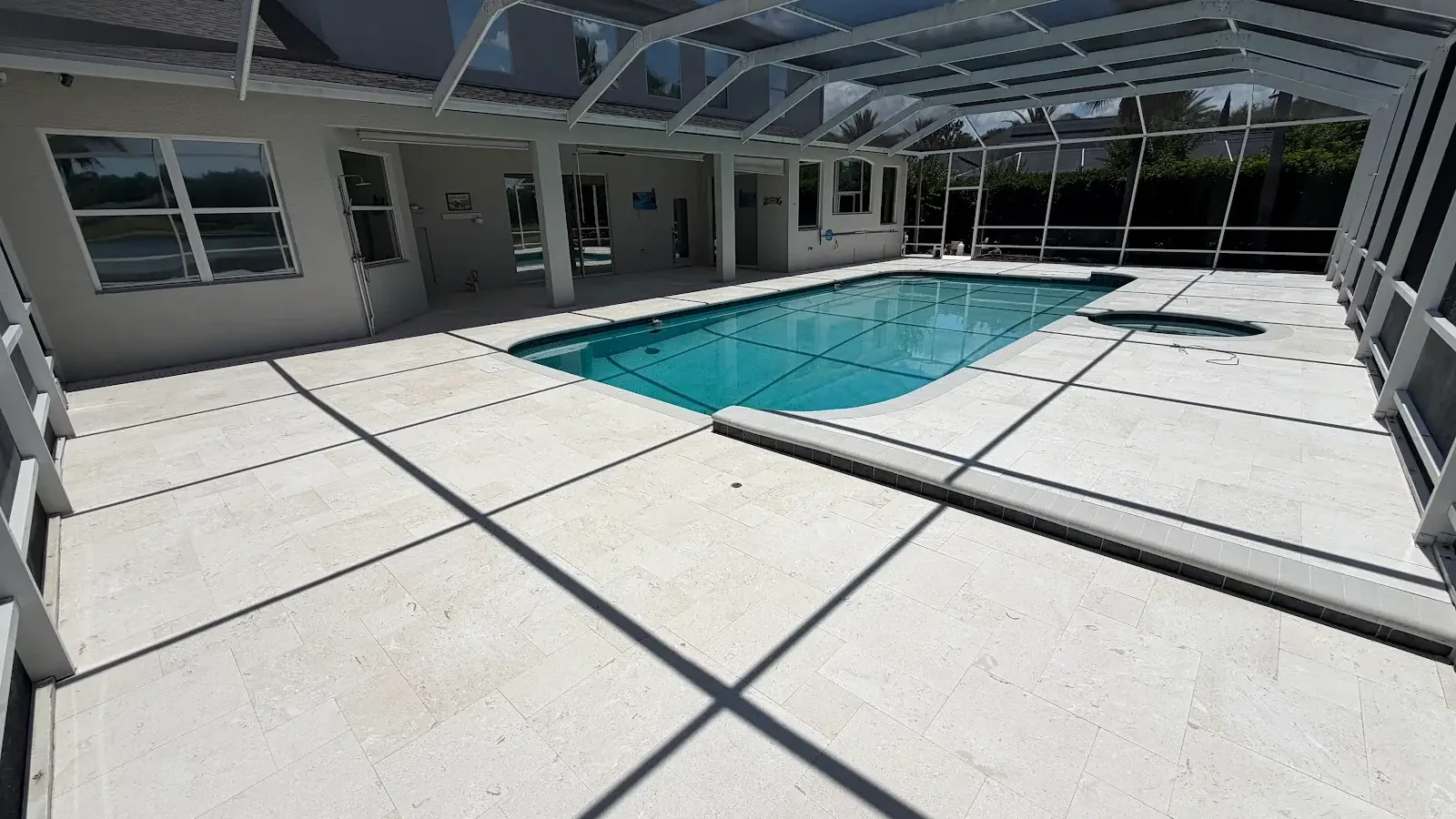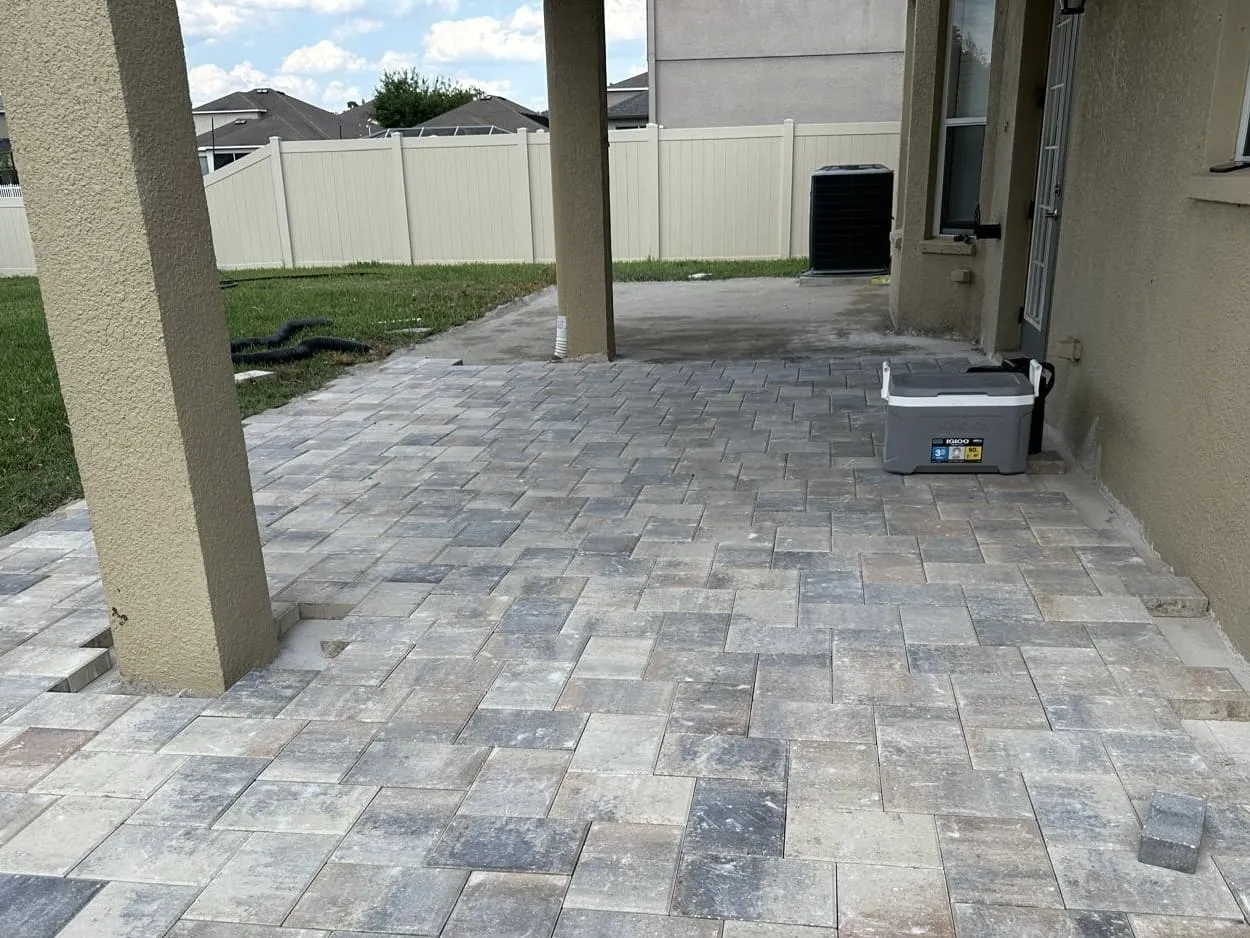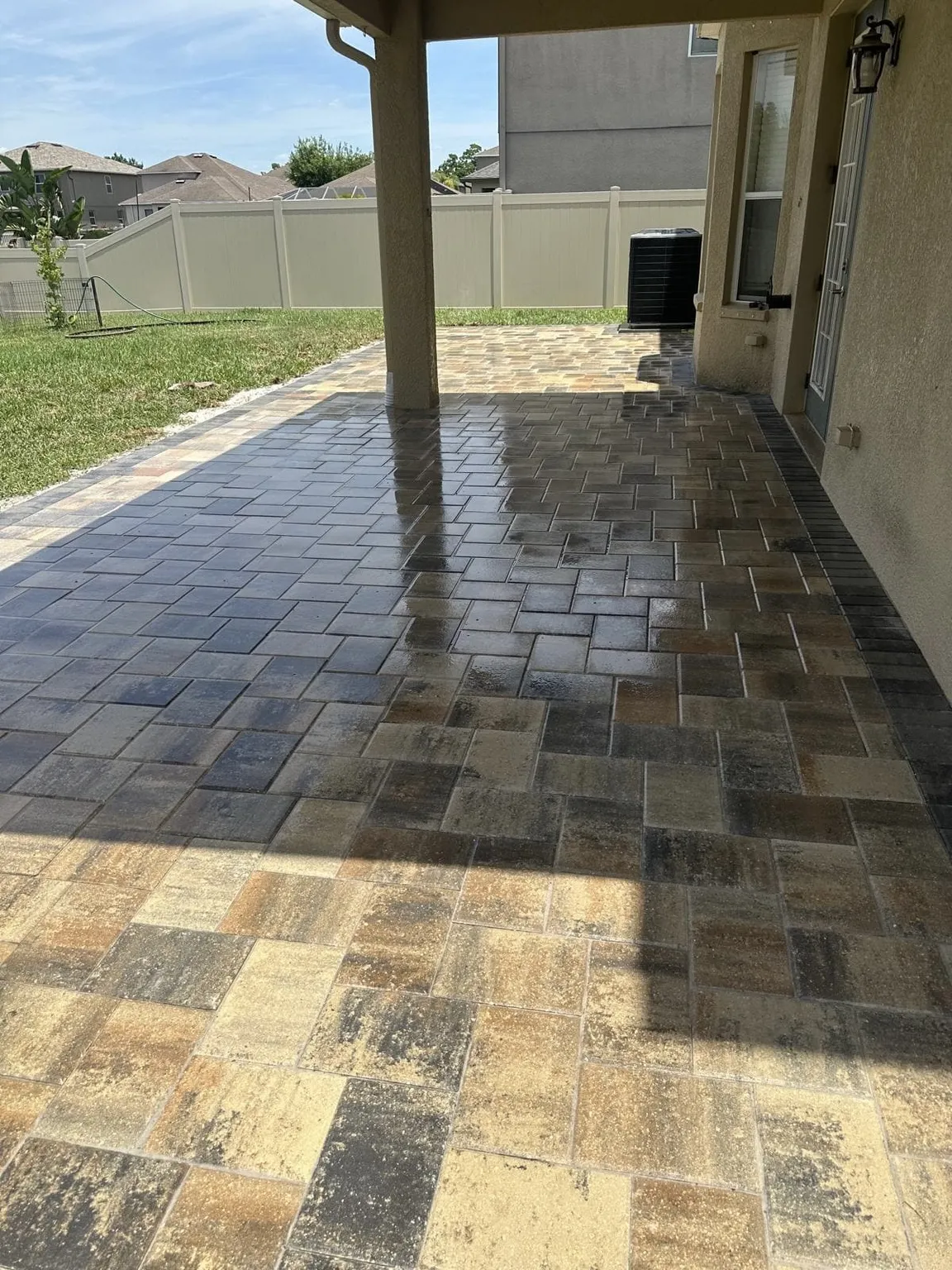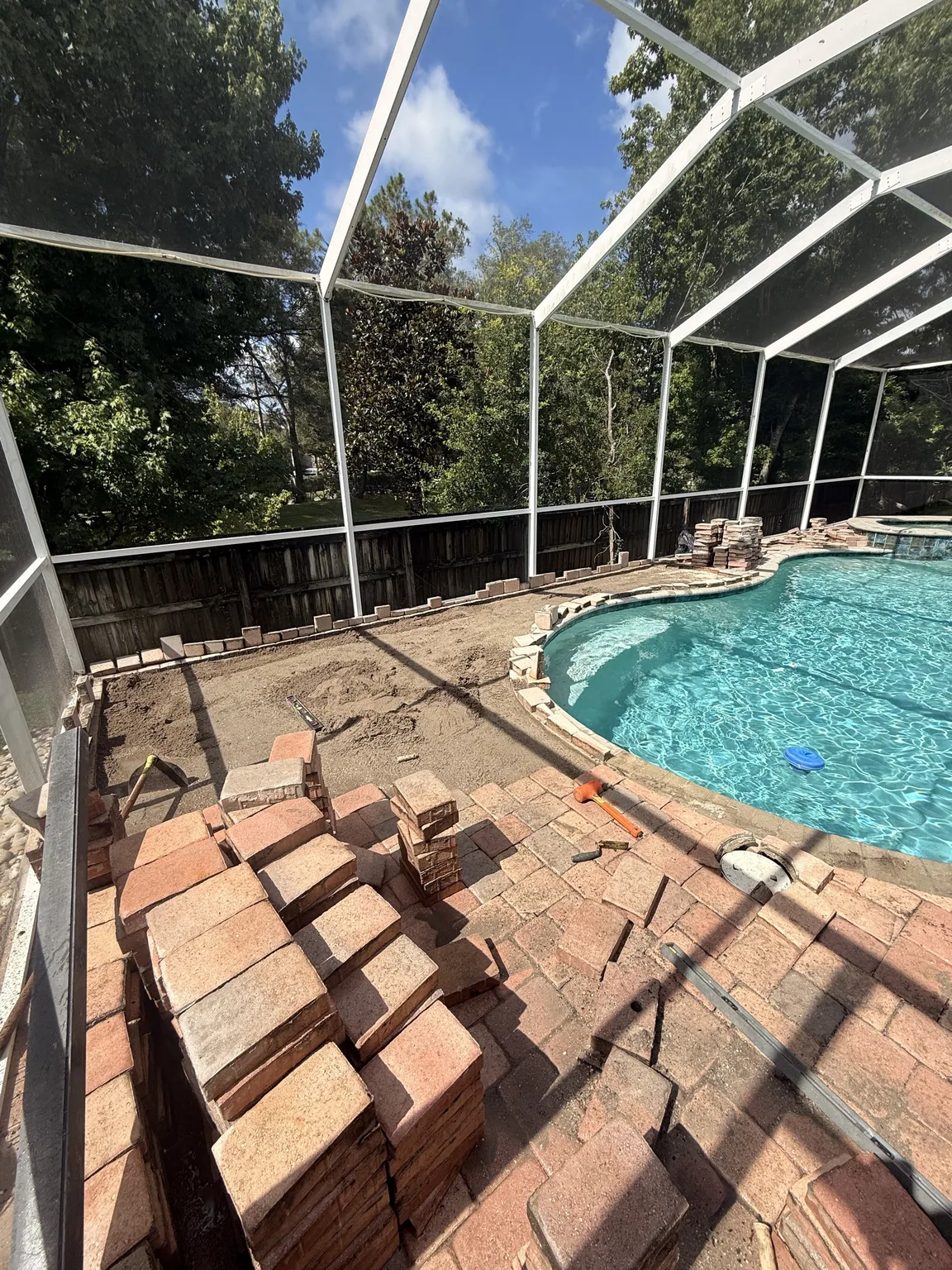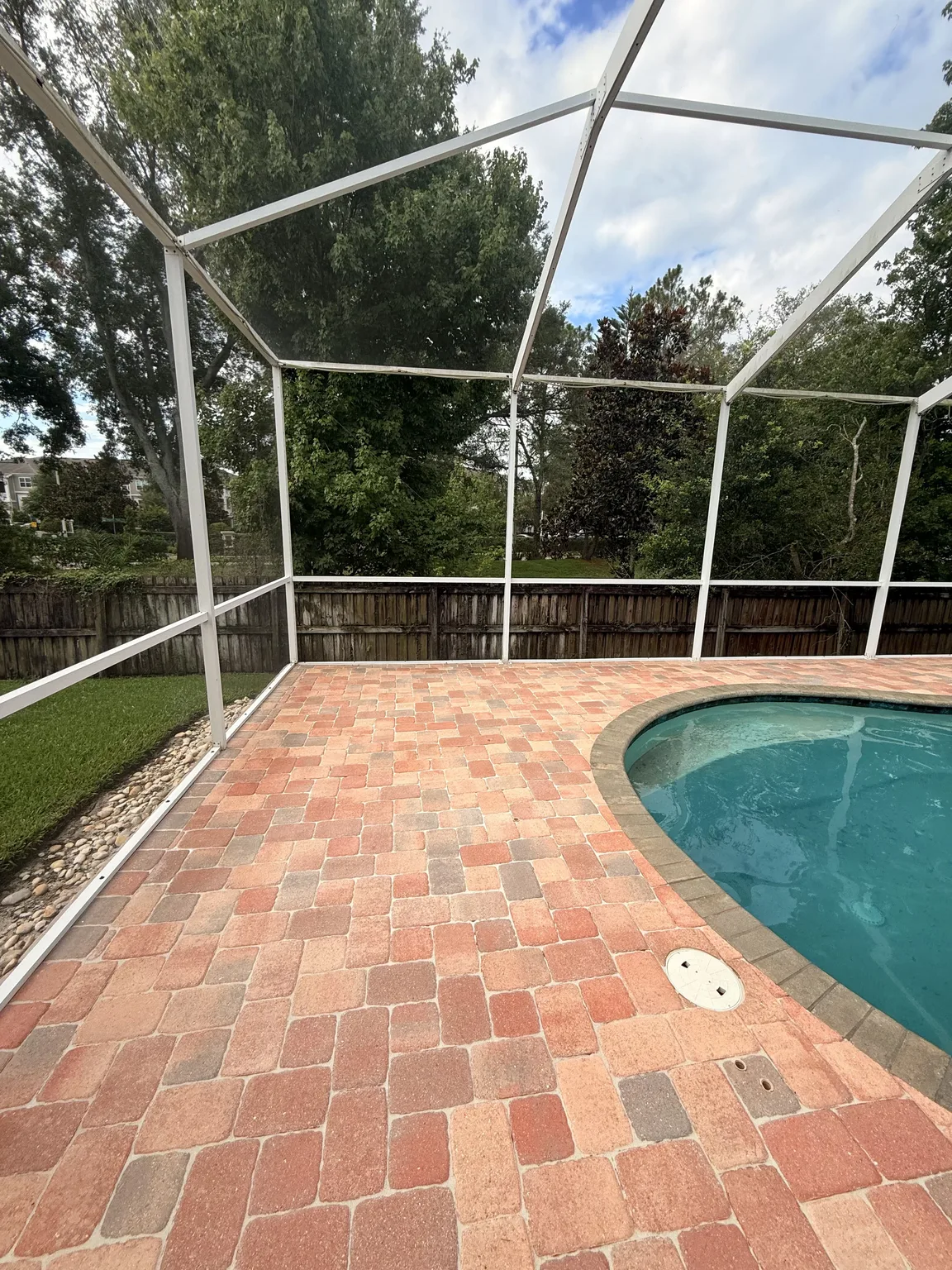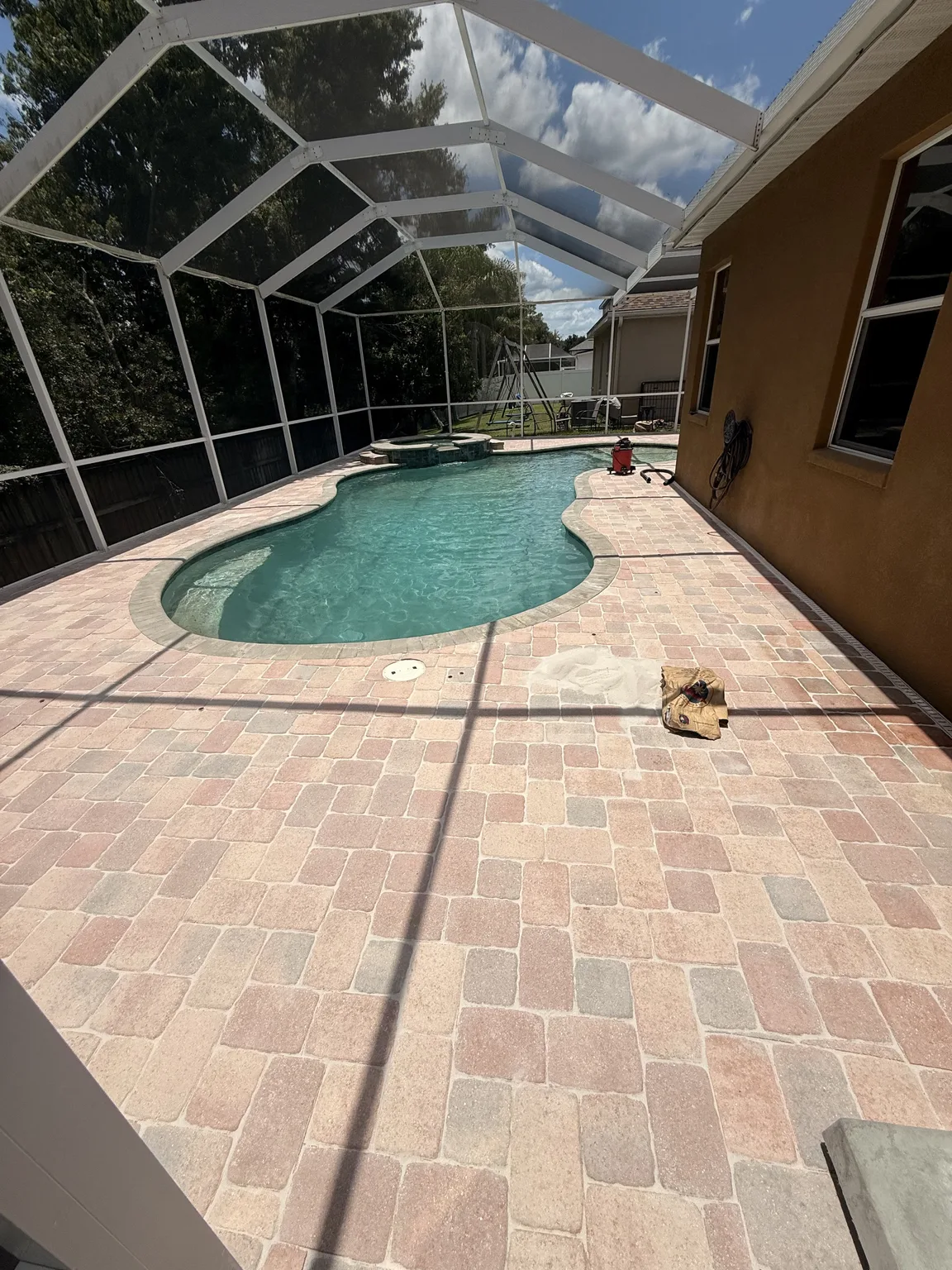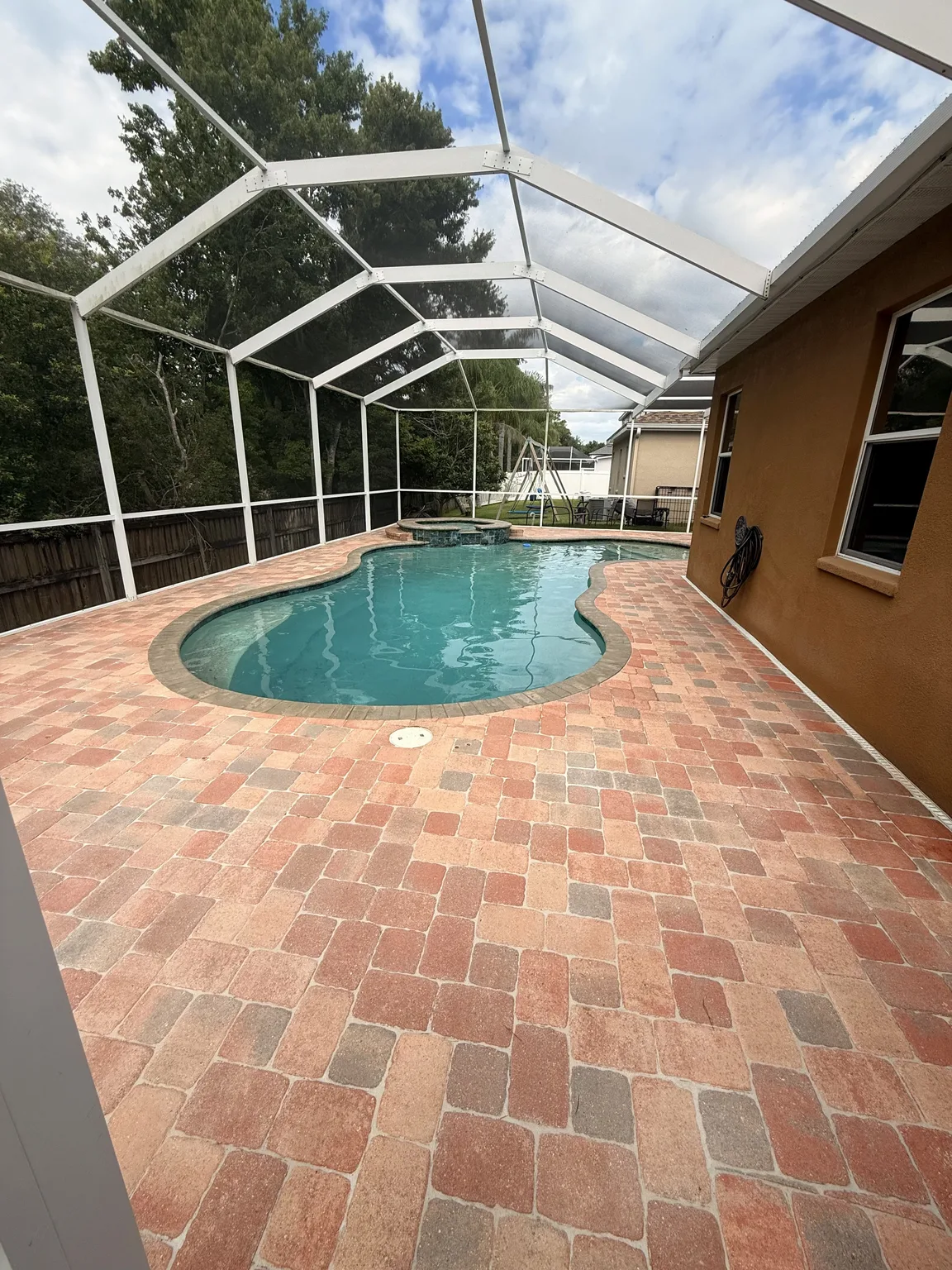
Why are my pavers turning white is usually the first thing homeowners ask after a new patio, driveway, or pool deck starts looking chalky. In Tampa Bay, that hazy film can come from several different issues, and each one needs a different fix. Sometimes the white is harmless and temporary, but sometimes it signals a problem with sealer, joint sand, or hard water. Before you reach for acid or another coat of sealer, it pays to slow down and diagnose what you are really seeing.
This guide explains the most common causes of white pavers, from efflorescence to trapped moisture and mineral deposits. You will learn simple tests you can try at home, mistakes to avoid, and when to bring in a paver specialist in Riverview, Wesley Chapel, Palm Harbor, or nearby Tampa Bay communities.
Why Are My Pavers Turning White? Quick Answer
Most white film on concrete or brick pavers is either natural mineral salts or an issue with sealer or sand. Efflorescence, which is salt migrating to the surface, is the most common cause and often fades over time. However, Tampa Bay homeowners also see whitening from moisture trapped under sealer, sprinkler overspray, leftover cleaning products, or joint-sand haze.
Because these all look similar from a distance, you need to look closer before you act. Aggressive scrubbing, strong acids, or an extra coat of sealer can permanently damage the surface or lock in moisture. A careful inspection helps you match the problem to the right repair, whether you live in Ruskin, Land O’ Lakes, or Town ‘N’ Country.
What White On Pavers Usually Means
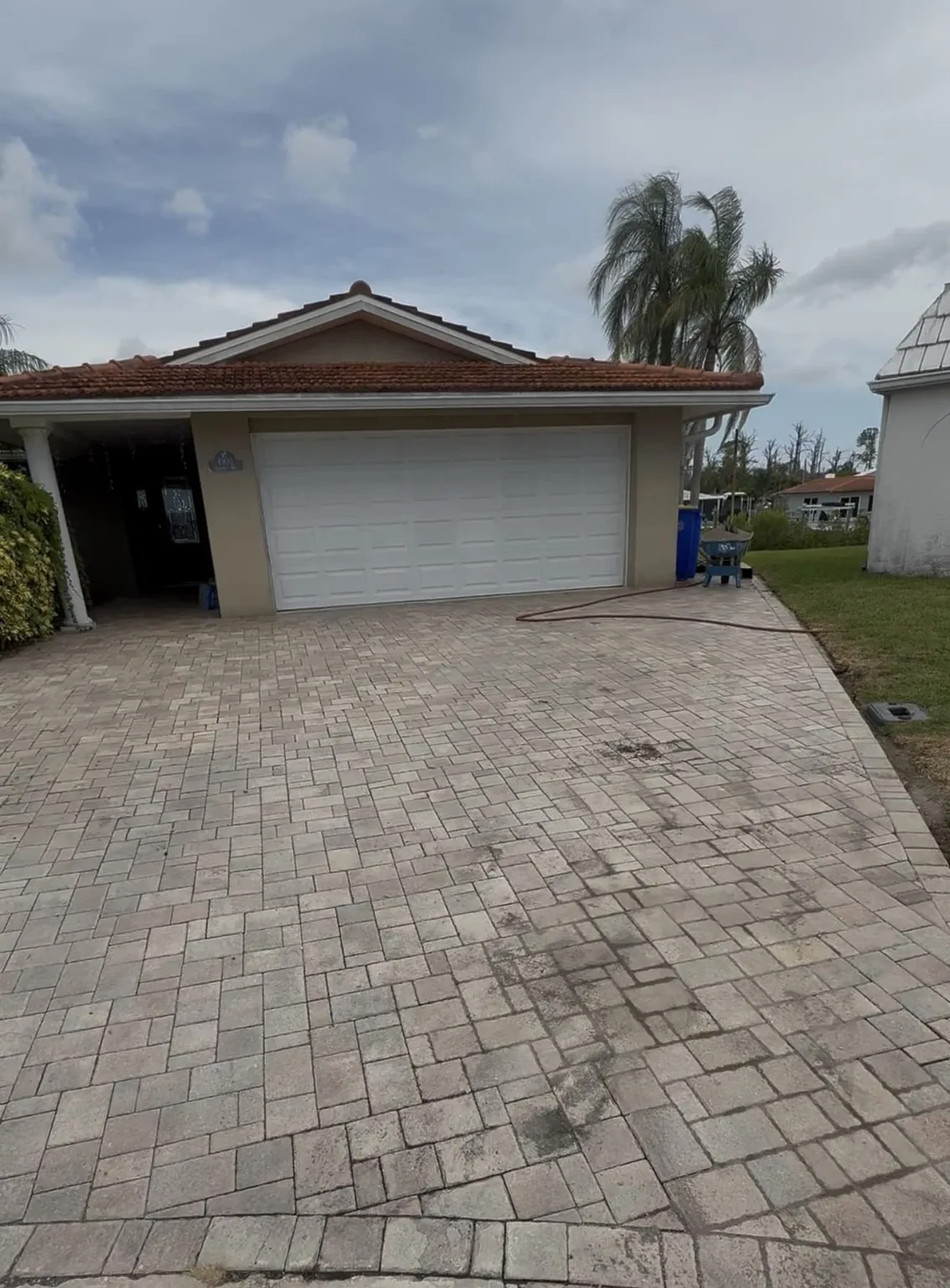
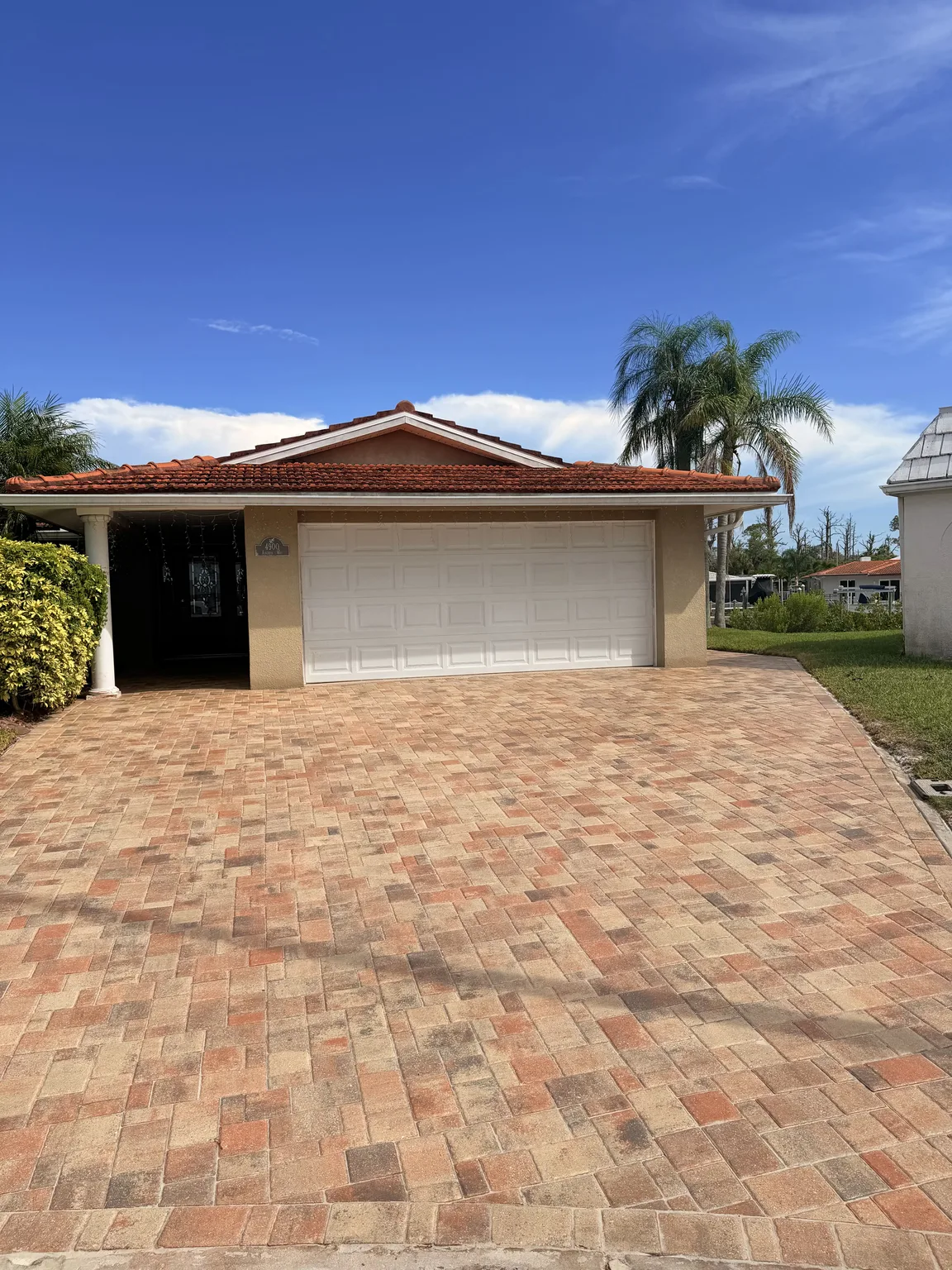
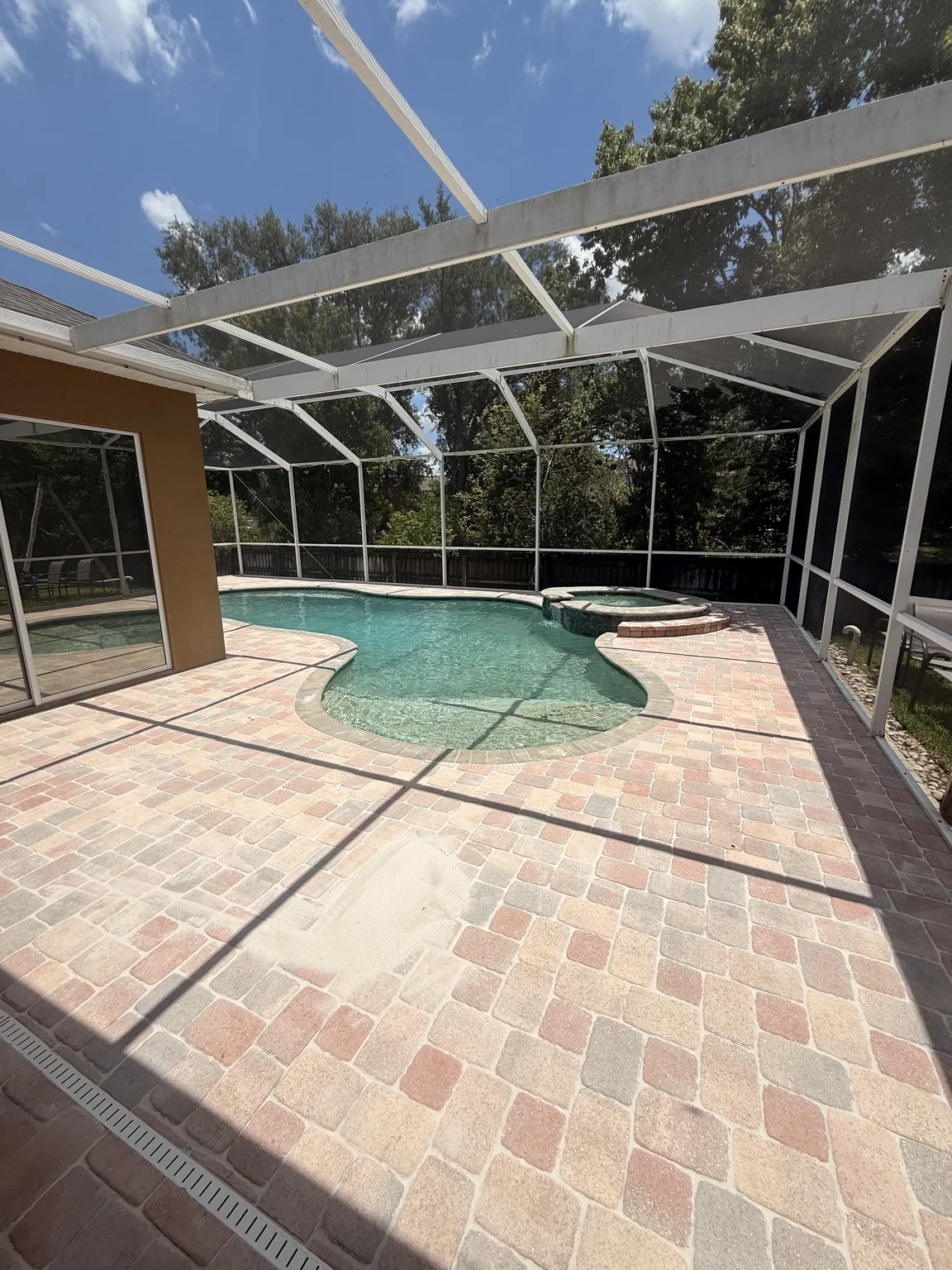
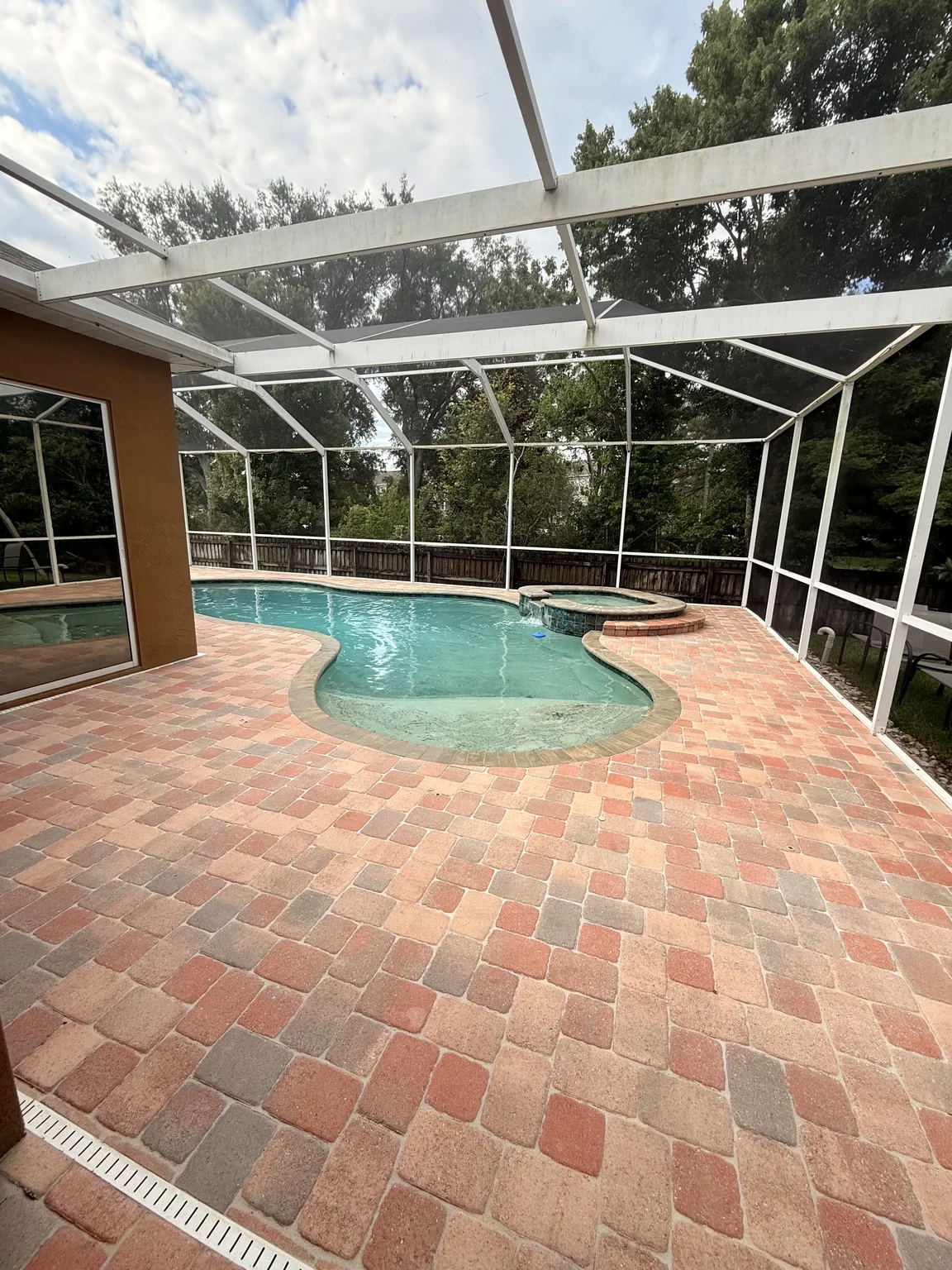
Efflorescence usually shows as a light, powdery film that brushes off with a stiff broom. Moisture under sealer often looks like milky, cloudy patches that come and go with weather. Mineral deposits from irrigation look crusty and build up near sprinkler spray patterns or along edges.
Cleaner residue and joint-sand haze tend to appear right after a cleaning or re-sanding project. Fading and oxidation, on the other hand, are slow changes to the paver color itself, not a surface layer you can scrape or wipe away. Noting when the change appeared and where it shows up is your first diagnostic tool.
Why Are My Pavers Turning White In Certain Spots Only?
Localized whitening usually points to a specific trigger, not a factory defect. Cloudy areas near planters or low spots often involve trapped moisture or standing water. White bands along a driveway edge can come from overspray, fertilizer, or runoff from a roof or sidewalk.
If the white tracks along where a contractor recently cut or patched pavers, it can be fresh efflorescence from disturbed material. Whenever you notice a pattern, follow it back to nearby sprinklers, gutters, or recent work. That connection often tells you more than the color alone.
When You Should Worry About It
A light, dusty film on new pavers that slowly lessens is usually normal efflorescence. You should be more concerned when the surface feels slick, the sealer looks cloudy or peeling, or the pavers stay blotchy even after dry weather. Those can be signs of sealer issues or heavy mineral buildup.
If you see flaking, crumbling, or rust-colored stains along with white areas, stop experimenting and contact a qualified paver professional for an inspection. In Greater Carrollwood, Thonotosassa, and nearby areas, on-site evaluation is the safest way to protect your investment.
Understanding Efflorescence On Tampa Bay Pavers
Efflorescence is the technical name for the white, chalky film caused by natural salts moving through masonry. As moisture travels up through a concrete or brick paver and evaporates, it can leave those salts behind on the surface. This is common with both new installations and older patios that have seen recent moisture changes.
The process can look alarming, but it does not mean your pavers are failing. In many cases, efflorescence lessens over months as the available salts are used up. However, because Tampa Bay’s environment is warm, humid, and often wet, the cycle can start and stop many times.
What Efflorescence Is
Concrete and some natural stones contain small amounts of soluble salts. When water enters from rain, irrigation, or the ground, it dissolves those salts and carries them to the surface. Once exposed to air, the water evaporates and leaves the white residue behind.
Efflorescence typically feels dry and dusty, not slimy or slick. If you brush it with a broom or rag, some of it will usually come off easily. That behavior is one of the easiest ways to separate it from sealer blushing or mineral scale.
How Florida Conditions Trigger Efflorescence
Frequent showers, high humidity, and irrigation cycles around Tampa, Palm Harbor, and Seven Springs mean your pavers see a lot of moisture movement. Each wet-dry cycle is a chance for salts to travel and collect near the surface. New installations often show more efflorescence as they first adjust to the site.
Shady areas and spots near planters or pools may stay damp longer, making the effect more noticeable. Changes in grading, nearby landscaping, or downspout discharge can also increase moisture under an existing patio, which can restart efflorescence long after the pavers were installed.
Simple Checks For Efflorescence
To see if you are dealing with efflorescence, pick a dry day and test several pavers. Rub a white spot with a dry rag or nylon brush and see if the powder loosens. Then dampen that area lightly and watch whether it darkens and blends with the surrounding color.
True efflorescence often fades somewhat when wet and then reappears as the paver dries. If the white area does not change with moisture, or if it feels like a hard crust, you may be looking at mineral deposits or sealer issues instead. When in doubt, a paver specialist can confirm what you are seeing on-site.
Trapped Moisture Under Paver Sealer
When pavers are sealed before they are fully dry, or when moisture comes up from beneath, water can get trapped under the coating. That trapped moisture can turn a clear sealer into a milky, white haze called blushing. It often shows up in patches rather than an even film across the entire surface.
This type of whitening is more common in Florida because humidity stays high and afternoon storms can hit without warning. Pool decks and shaded patios in places like Wesley Chapel or Town ‘N’ Country may take longer to dry than they appear, which increases the risk when sealing.
Why Moisture Blushing Happens
Most sealers are designed to keep water out, not let it easily escape from underneath. If water vapor is present in the paver or sand joints when the sealer cures, it can become trapped. As sunlight heats the surface, that moisture tries to move and clouds the sealer film.
Overapplication can make the problem worse. Thick, puddled sealer leaves fewer paths for moisture to escape and can create slick, unsafe surfaces around pools and driveways.
Spotting Moisture Versus Efflorescence
Moisture-related whitening usually has softer edges and can look almost like fog trapped under glass. It often appears darker or more visible when the pavers are wet and can change with temperature and sun exposure. You may also see small bubbles or peeling in severe cases.
Efflorescence, by contrast, sits on top of the paver and feels dry and powdery. If you scratch the surface gently with a coin and the white seems inside the coating, not on the surface, moisture or sealer failure is more likely. What you feel under your fingertips is as important as what you see.
Safer Ways To Let Pavers Breathe
When you suspect trapped moisture, adding another coat of sealer almost always makes things worse. Instead, the goal is to help existing sealer release vapor and, in some cases, be reduced or stripped in a controlled way. Mild, manufacturer-approved cleaners and careful agitation are safer than harsh acids or random solvents.
Because products and site conditions vary, it is usually best to have a paver contractor assess the surface in person before any stripping work. They can test a small, hidden area first and adjust their methods for your specific driveway, patio, or pool deck.
Other Common White Films: Minerals, Cleaners, And Joint-Sand Haze
Not every white stain is efflorescence or sealer. In Tampa Bay neighborhoods with reclaimed or hard water irrigation, mineral scale can build up on pavers, especially near edges and sprinkler lines. Cleaners and polymeric sand can also leave residue if the surface is not rinsed or compacted correctly.
These issues behave differently from natural salts and usually need targeted treatment. Treating mineral scale like efflorescence, or vice versa, can waste effort and increase the risk of damage to your pavers or nearby landscaping.
Hard-Water And Irrigation Mineral Deposits
Mineral deposits from sprinklers or pool water look more like a chalky crust than a dusting of powder. They may appear thicker near the water source and can have a slightly rough feel. Unlike efflorescence, these spots usually do not fade much when the pavers get wet.
Redirecting or adjusting irrigation around driveways and walkways in Riverview, Ruskin, or Land O’ Lakes often helps prevent new buildup. However, removing existing scale safely usually calls for a cleaner made for mineral deposits and compatible with your paver surface.
Leftover Cleaner Or Sealer Residue
Strong cleaners that are not formulated for concrete pavers can leave a hazy film, especially if they dry on the surface. Heavy-duty degreasers or concrete washes might strip color from the surface or create blotchy pale areas. Rinsing too lightly or working in direct sun can make this more likely.
Sealer residue often shows where product pooled in low spots or along joints. These areas can stay sticky or glossy even while looking cloudy. Following manufacturer guidance and CMHA recommendations to use products designed for pavers reduces these risks.
Joint-Sand Haze After Re-Sanding
When polymeric sand is not swept or compacted correctly, a thin layer can harden on the paver surface. This joint-sand haze can look whitish or slightly gray and tends to follow the tops of the pavers more than the sides. It often becomes very noticeable after the first rains activate the polymers.
Removing this type of haze can be challenging, because aggressive scrubbing or pressure can scar the paver face or pull out too much joint sand. Many professionals start with specialized polymeric haze removers and test in a small, inconspicuous area before treating a whole patio or pool deck.
Color Fading, Oxidation, And Normal Aging
Some homeowners ask why their pavers look whiter or lighter over several years, even without a visible film. In these cases, you may be seeing gradual color fading or oxidation instead of a removable residue. Sunlight, traffic, and normal wear all play a role, especially on darker or richly colored pavers.
It is important to separate realistic aging from fixable problems so you do not chase a result the material cannot deliver. An honest evaluation helps you decide between cleaning, re-sealing, or planning a future upgrade.
What True Fading Looks Like
Faded pavers usually look evenly lighter across large areas, rather than patchy or cloudy. The surface feels normal to the touch, without a powdery or slick layer. When you wet the pavers, the color may deepen a bit but still appear lighter than when they were new.
Because fading changes the pigment within the paver, there is no simple cleaner that will restore it to the original shade. Some penetrating sealers and color-enhancing products can deepen appearance, but expectations need to stay realistic.
How Oxidation Differs From Surface Film
Oxidation is a slow reaction between the surface and oxygen, often accelerated by UV rays and moisture. It can slightly chalk or dull the finish, particularly on some cast or coated products. However, it still behaves more like a change in the material than like dust sitting on top.
Light mechanical cleaning and a carefully chosen sealer can sometimes improve the look of oxidized areas. Still, you should not expect them to match brand-new pavers one-to-one, especially on high-traffic driveways in busy parts of Tampa Bay.
Design Choices That Age Gracefully
Earth tones and blended color mixes often show aging more gracefully than very dark, solid colors. Varied patterns and textures can also help mask small areas of efflorescence or lightening over time. When planning new hardscapes in places like Palm Harbor or Seven Springs, discuss long-term appearance, not just day-one color.
A qualified paver contractor can suggest products that balance your style with maintenance realities in our sunny, coastal climate. That way, normal aging feels like character, not a disappointment.
Safe Tests Before You Scrub, Acid-Wash, Or Reseal
Before you reach for harsh cleaners, acids, or more sealer, it makes sense to run a few safe tests. These small checks can point you toward efflorescence, moisture, minerals, or residue without risking permanent damage. They also help you communicate clearly if you call in a professional for paver repair in Tampa Bay.
Always test in a low-visibility corner first and avoid mixing products. When in doubt, pause and get expert advice rather than stacking different chemicals and hoping for the best.
Why Are My Pavers Turning White After Sealing?
Whitening that appears days to weeks after sealing often points to moisture trapped under the sealer or overapplication. If the pavers or sand joints were still damp, or if rain arrived too soon, the coating may have locked in water vapor. That moisture then clouds the sealer film, creating white or milky patches.
Sometimes, incompatible products layered over older sealer can also haze or turn chalky. This is one reason CMHA guidance emphasizes choosing products made for concrete pavers and following manufacturer directions for preparation and dry times.
Gentle At-Home Checks
On a dry day, start with non-destructive observations and light cleaning. You can learn a lot without putting your pavers at risk.
- Brush a small white area with a dry nylon brush and see if powder lifts.
- Lightly mist the same spot and note whether the white fades while wet.
- Compare shaded and sunny zones to see where the issue is strongest.
- Check near sprinklers, downspouts, and planters for patterns or crusts.
- Review any recent cleaning, sanding, or sealing work and timing.
If light brushing and water change the look, the problem is often efflorescence or surface residue. If nothing budges, the issue may be in the sealer film or from minerals that need more specialized treatment.
Why Strong Acids Can Make Things Worse
Acid washes can remove some mineral and efflorescence deposits, but they also attack the cement paste that gives pavers their strength and color. Overuse can etch the surface, roughen textures, and expose aggregate, which makes future staining more likely. Using the wrong dilution or letting acid sit too long compounds the damage.
CMHA recommends addressing specific stains first, then cleaning the overall area with products designed for pavers. They also emphasize project-specific decisions about sealing and joint stabilization rather than a one-size-fits-all approach. If you are unsure what white film you are facing, strong acids are rarely the right first move.
Choosing Your Next Step
Once you have done basic checks, you can match your observations to likely causes and cautious next steps.
| What You See | Most Likely Cause | Typical First Step |
|---|---|---|
| Dusty white that brushes off | Efflorescence | Dry brushing and time; consider paver-safe cleaner if persistent |
| Milky patches under glossy film | Moisture in sealer | Do not reseal; consult pro about ventilation or stripping |
| Hard crust near sprinklers | Mineral deposits | Adjust irrigation; test mineral-scale cleaner on small area |
| Even lightening across large area | Fading or oxidation | Discuss cleaning and sealing options with a paver specialist |
If your observations do not fit neatly into any row, or if you see sealer peeling or paver flaking, it is wise to pause DIY efforts and get a professional opinion.
Fixing White Pavers And Preventing New Problems
Once you understand what is whitening your pavers, you can choose targeted repairs instead of guesswork. In many Tampa Bay homes, a combination of spot treatments, careful cleaning, and selective re-sealing restores a cleaner, more even appearance. However, each project should be evaluated on-site so the fix matches the material, age, and prior products.
Preventive habits, like adjusting irrigation and using paver-appropriate products, also reduce future issues. That way your patio, walkway, or pool deck spends more time looking inviting and less time under tarps and caution tape.
Cleaning And Spot-Treatment Options
A professional may start with dry methods, such as brooming or low-pressure rinsing, to remove loose efflorescence or debris. From there, they might apply specialty cleaners designed for efflorescence, polymeric haze, or mineral scale, depending on what your inspection suggests. Each product has specific dwell times, dilution rates, and rinse needs.
Because overuse of any cleaner can damage pavers, an experienced contractor usually tests a small area first. They can then adjust techniques across your entire driveway, pool deck, or patio in Riverview, Greater Carrollwood, or nearby neighborhoods.
When Re-Sanding Or Re-Sealing Makes Sense
After cleaning, some joints may need new sand for stability and appearance. CMHA notes that decisions about joint stabilization and sealing should be made project by project. Not every paver area needs sealer, and not every sealer works well on every surface.
If a previous sealer has failed or trapped moisture, stripping and switching products can sometimes help. However, this work is sensitive and depends on the existing coating, weather, and surface condition. A thorough site visit is essential before anyone can recommend or price re-sanding or re-sealing.
Smart Maintenance In Tampa, Riverview, And Beyond
Simple habits go a long way in preventing white buildup. Keeping sprinklers aimed away from pavers, sweeping regularly, and rinsing off fertilizer or pool chemicals quickly helps. Scheduling any major cleaning or sealing in dryer weather windows is also smart in our coastal climate.
When you plan a new project or a significant refresh, ask your contractor how the design, materials, and products will behave over time in Tampa Bay conditions. Clear answers now reduce surprises later, whether you are in Thonotosassa, Land O’ Lakes, or closer to downtown.
When To Call A Paver Professional In Tampa Bay
Some light efflorescence and dust can be handled by homeowners with basic tools and paver-safe cleaners. However, once sealer, polymeric sand, or heavy mineral deposits are involved, the risk of DIY damage increases. That is especially true on high-visibility areas like front walkways, driveways, and pool decks.
Calling a professional does not commit you to a full restoration. It gives you a clearer picture of what is realistic for your specific pavers, climate, and budget.
Situations That Deserve A Professional Look
If your pavers have multiple layers of old sealer, cloudy patches, or peeling, it is safer to have them evaluated on-site. The same applies if you see flaking, cracking, or loss of surface texture along with white discoloration. These can signal underlying issues that cleaning alone will not solve.
Homeowners in Town ‘N’ Country, Palm Harbor, Wesley Chapel, and nearby areas often call in a paver specialist when white staining appears right after a contractor finishes work. A neutral third-party opinion can help sort out what happened and what to do next.
What A Site Visit Can Tell You
During a site visit, a paver professional can examine patterns, test how the surface reacts to moisture, and check for hidden issues like low spots or compromised joints. They can also identify what types of products were likely used before and how that limits or guides repair options.
This in-person assessment is also the only reliable way to develop accurate pricing, because square footage, access, product choices, and existing conditions all matter. Phone estimates without seeing the project are usually rough at best.
Finding Reliable Guidance And Services
When you speak with potential contractors, ask what cleaners and sealers they use and whether those products are designed for concrete pavers. You can also ask how they follow industry guidance, such as CMHA recommendations to treat stains before whole-surface cleaning and to tailor sealing decisions to each project.
If you want an overview of repair options, you can review local services and paver repair information, including paver repair in Tampa Bay, before you schedule a consultation. For more homeowner-focused articles, guides, and maintenance tips, the paver repair and maintenance guides section at Dr Pavers Design can also be helpful.
FAQ: White Paver Problems In Tampa Bay
These common questions come up often when homeowners discover a white haze on their pavers. While every property in Tampa Bay is unique, these answers give you a starting point for conversations with a qualified paver professional.
Can I pressure-wash white film off my pavers?
Light pressure-washing can help remove loose efflorescence and surface dirt, but it is not a cure-all. Excessive pressure or a tip held too close can scar the paver surface and blow sand out of the joints. That can lead to uneven settling or more maintenance later.
If you choose to pressure-wash, use moderate settings, keep the wand moving, and avoid trying to “carve” off stubborn white areas. Persistent film is better handled with appropriate cleaners or professional treatment than with higher pressure.
Will sealing stop efflorescence from coming back?
Sealing can sometimes reduce the appearance of efflorescence, but it does not eliminate the underlying salts inside the paver. In some cases, sealing too early can even trap moisture and make whitening look worse. Most professionals prefer to let new installations go through an initial efflorescence cycle before considering sealer.
Because CMHA recommends project-specific decisions about sealing, it is wise to discuss timing, product type, and expectations with a contractor who understands Tampa Bay’s climate. That way, sealing supports your goals instead of fighting the material’s natural behavior.
Why did my pavers turn white right after using a cleaner?
When pavers turn white soon after cleaning, it often means the product was too strong, not compatible, or allowed to dry on the surface. Some cleaners can etch or lighten the top layer, while others leave residue that looks hazy. Skipping a thorough rinse can make any product behave worse than intended.
This is why CMHA and many manufacturers advise using cleaners specifically made for concrete pavers and following label directions closely. If you are unsure what was used or how it was applied, a professional inspection is usually safer than additional DIY chemicals.
Is the white on my pavers a sign of structural failure?
Most white films by themselves are cosmetic rather than structural. Efflorescence, mineral deposits, and mild sealer haze usually affect appearance more than strength. However, if whitening appears along with cracking, crumbling edges, or heaving, you may have deeper issues.
Structural concerns can involve the base, bedding sand, or other factors that go beyond simple cleaning. In those cases, have a qualified hardscape professional evaluate the installation and, when needed, coordinate with other licensed experts for drainage or structural questions.
How do I choose the right products to clean white stains?
The best product depends on what is causing the white appearance. Efflorescence, polymeric haze, mineral scale, and sealer residue each respond to different chemistries. Using the wrong type can waste time or even lock in stains.
A good starting point is to look for cleaners labeled for concrete pavers and the specific issue you suspect, then test in a small, hidden area. CMHA’s published guidance, available at this CMHA resource, highlights the importance of matching products and methods to the material and conditions on each project.
If you would like experienced eyes on why your pavers are turning white, you can explore completed projects, homeowner testimonials, and detailed FAQs to see how Dr Pavers Design approaches repair and maintenance. When you are ready, you can review available services and reach out by phone at +1 (656) 600-4015, text at SMS, email at drpavers@outlook.com, or WhatsApp at this link to request a free consultation for your Tampa Bay home.
You can also connect with Dr Pavers Design on Instagram and Facebook or see the Tampa-area service location on Google Maps. However you choose to reach out, an on-site visit will help you understand what is really causing the white on your pavers and what practical options you have to improve their look.