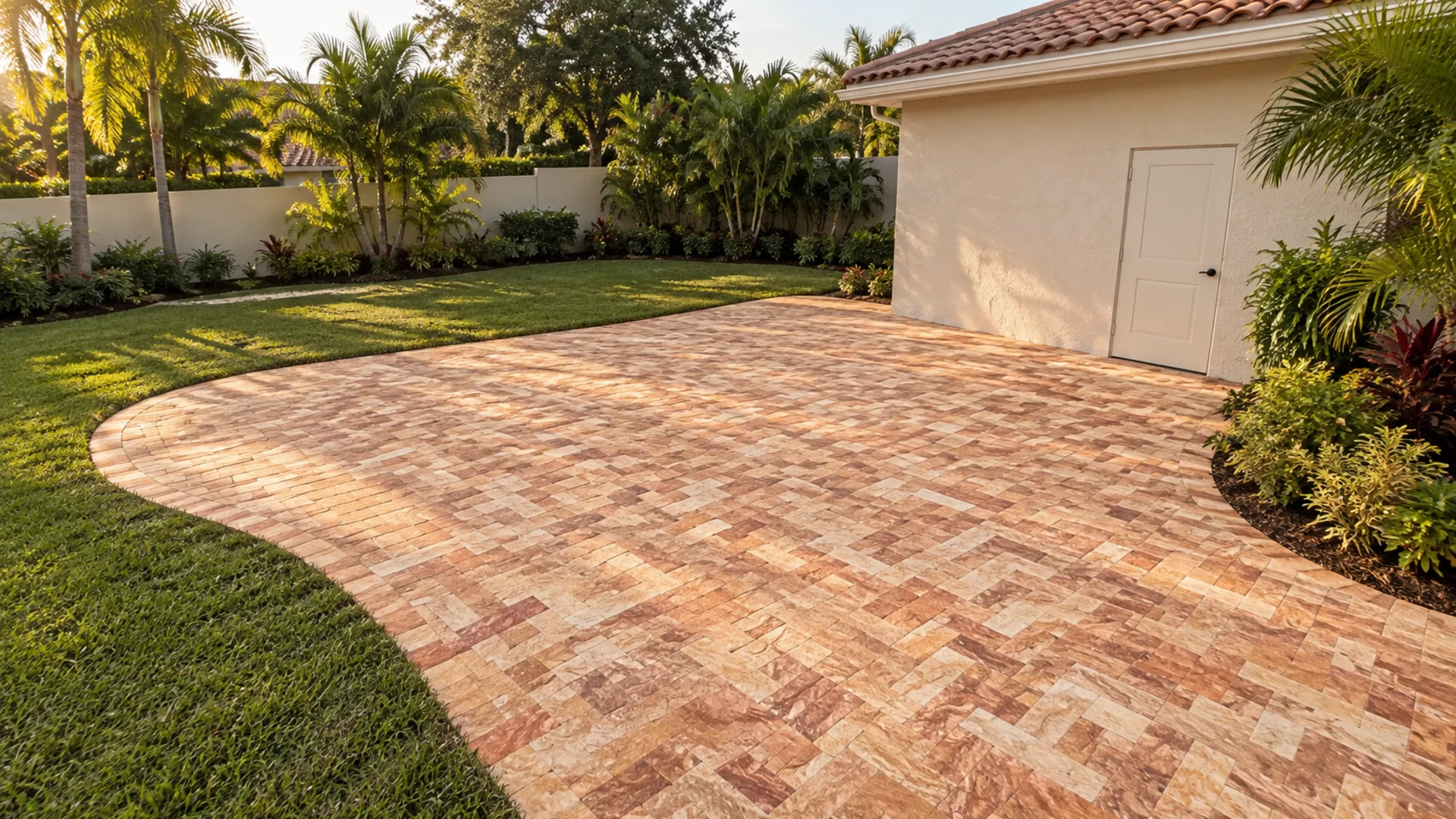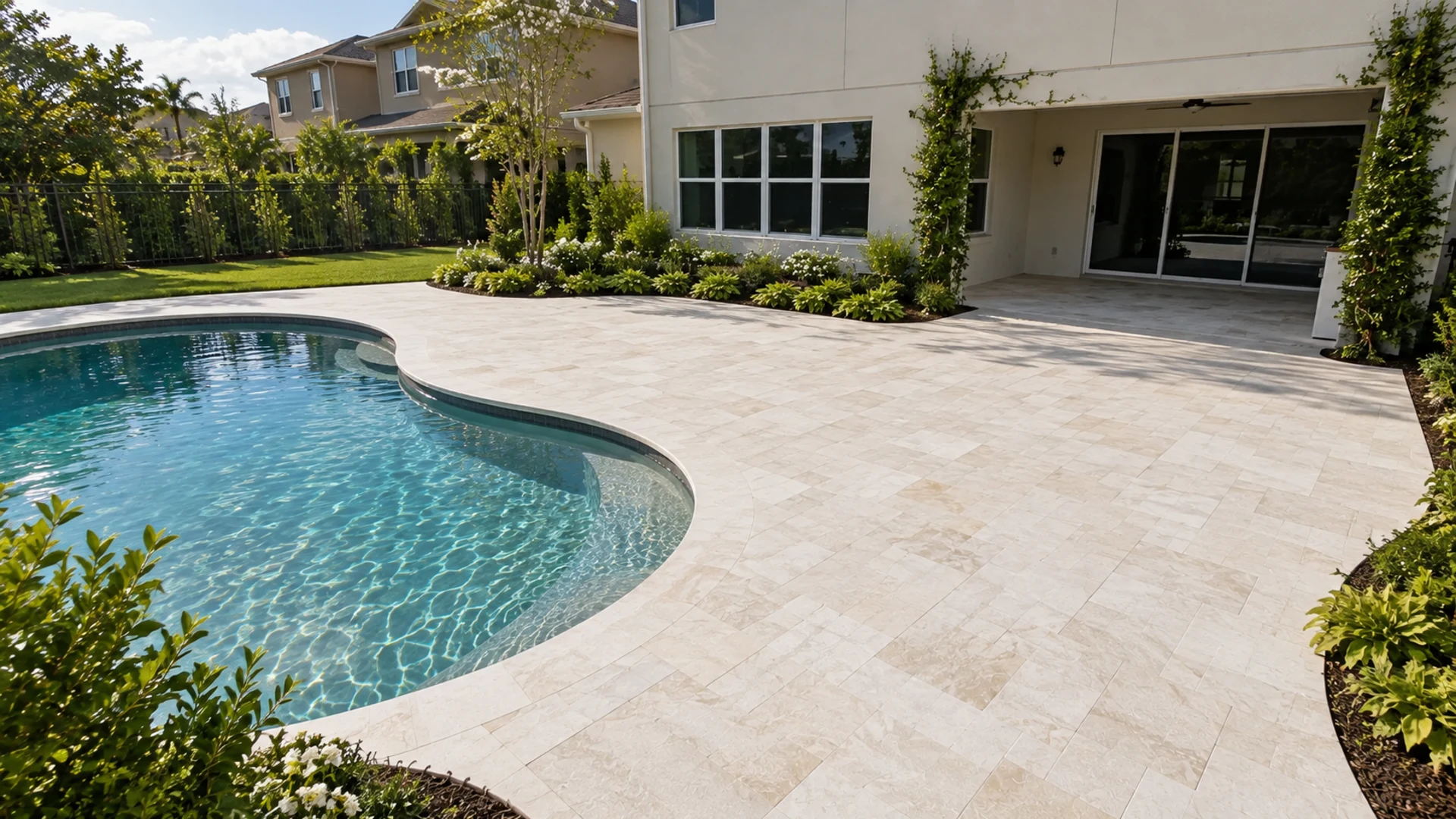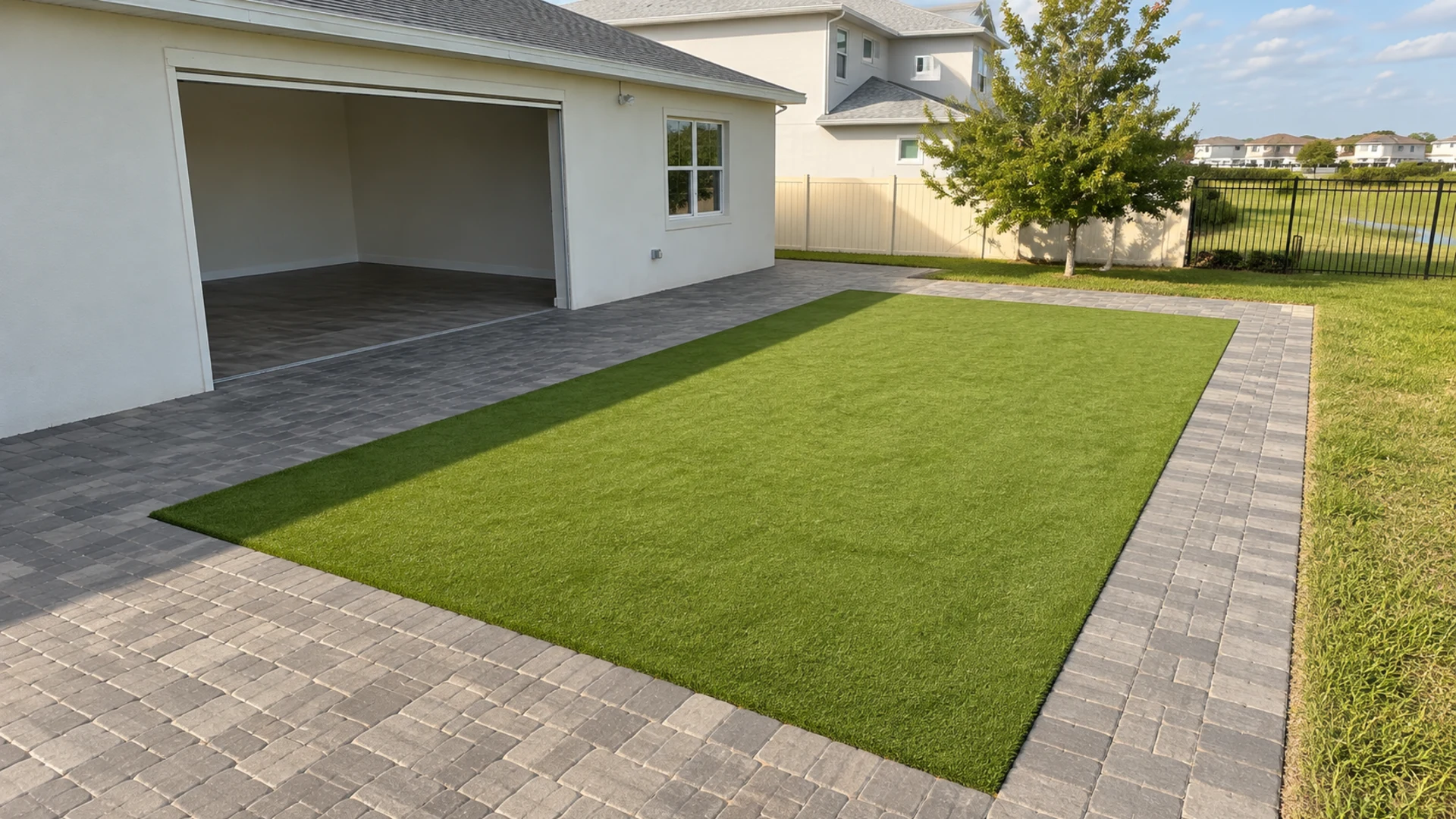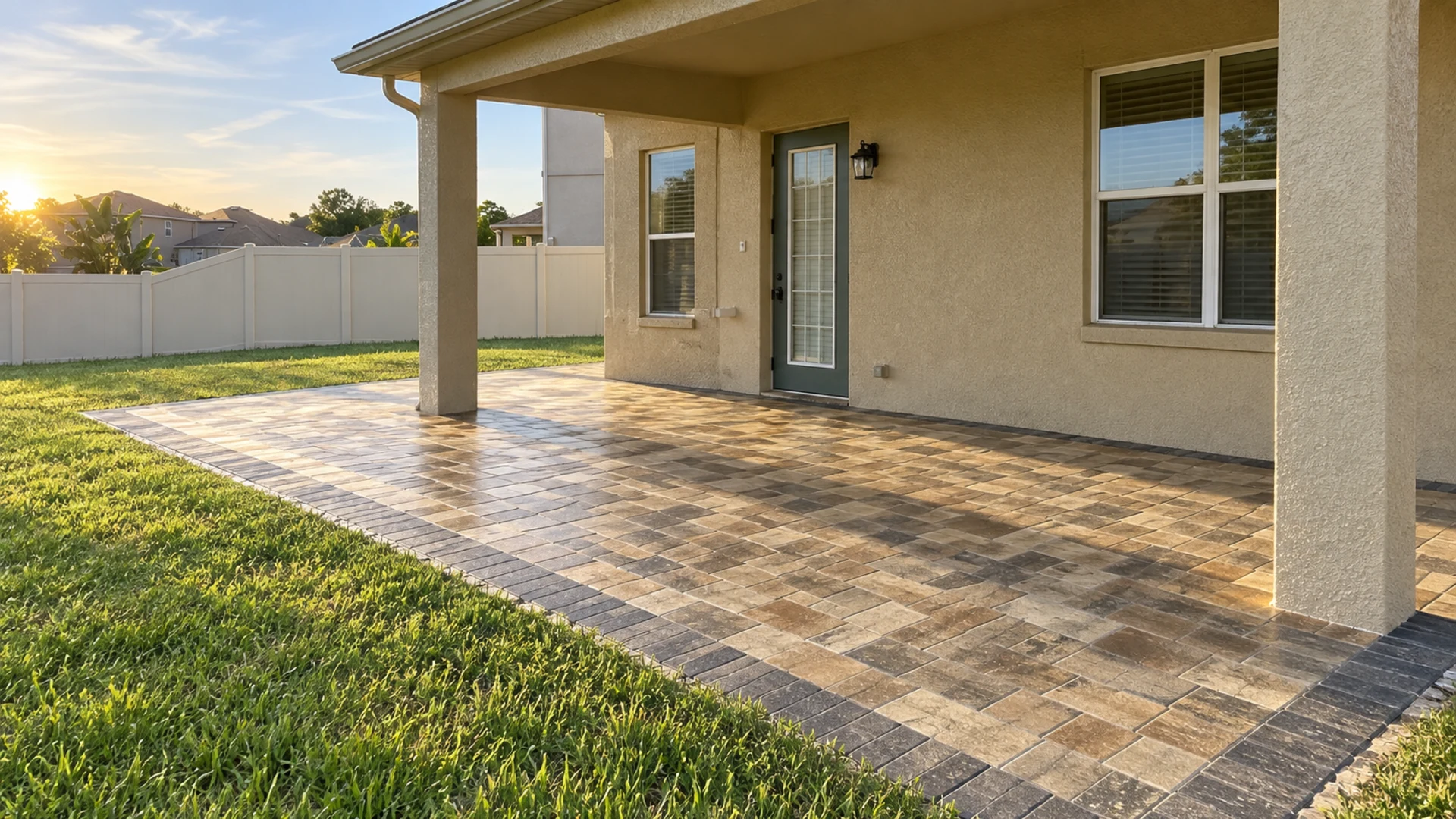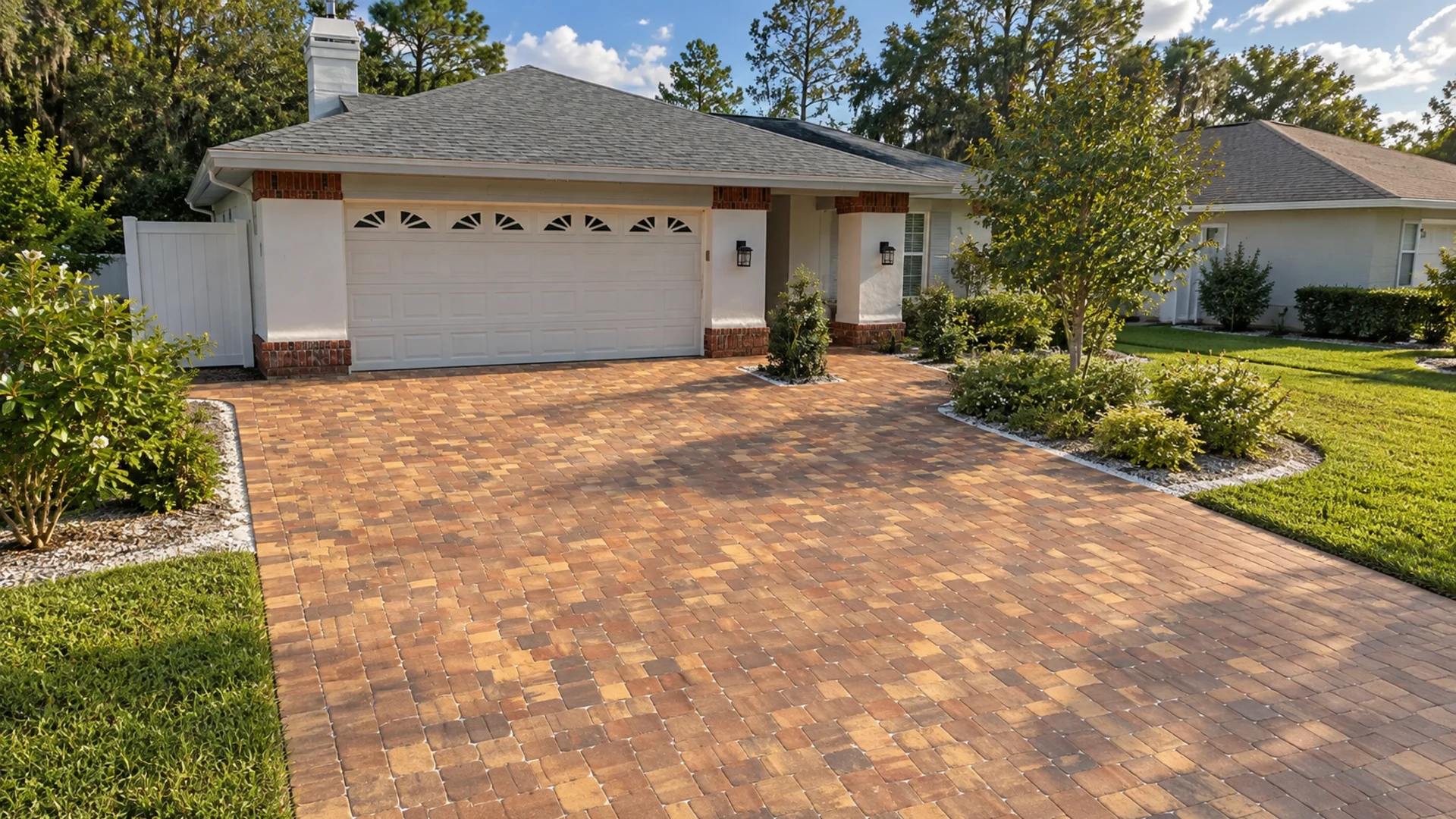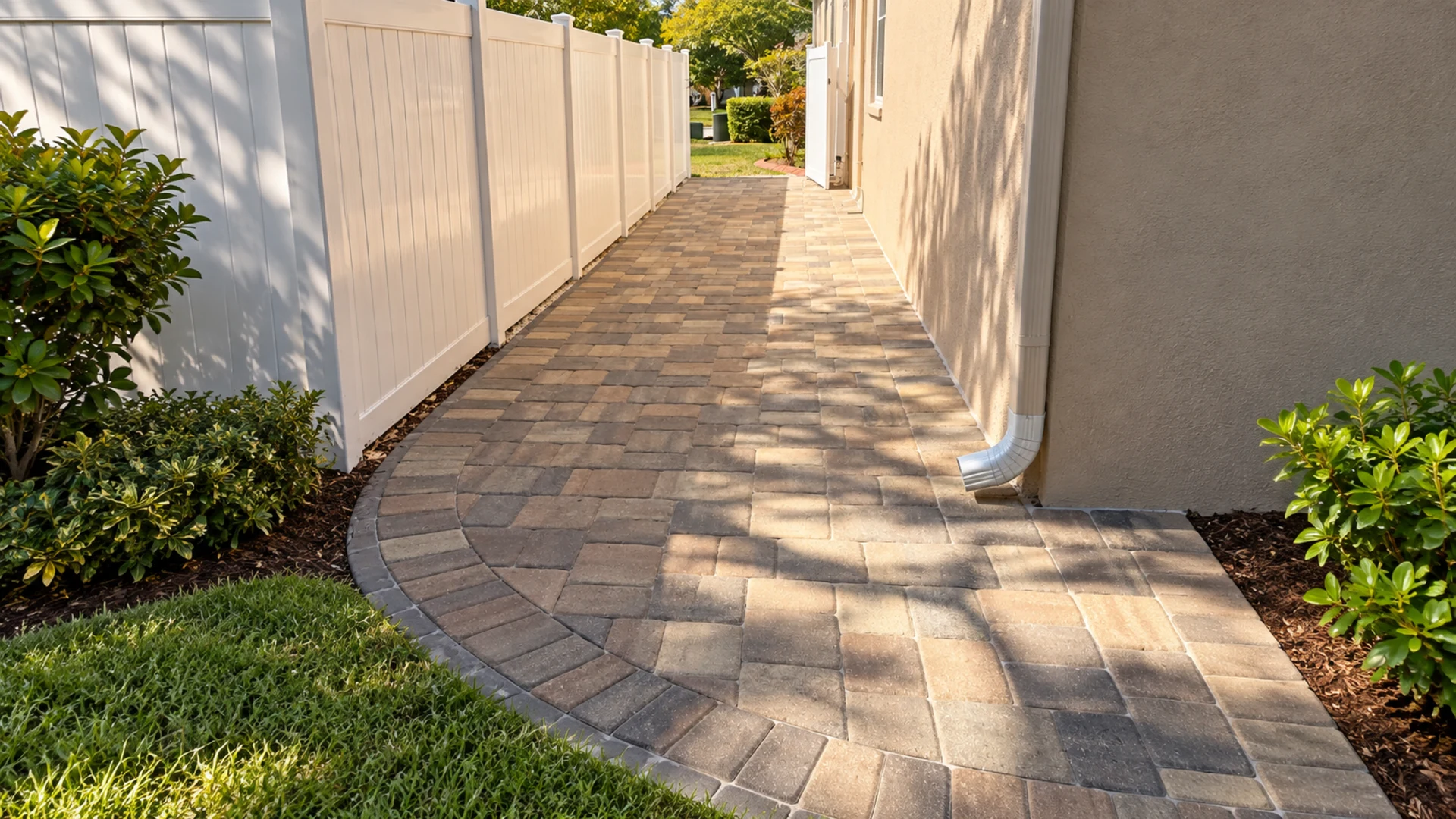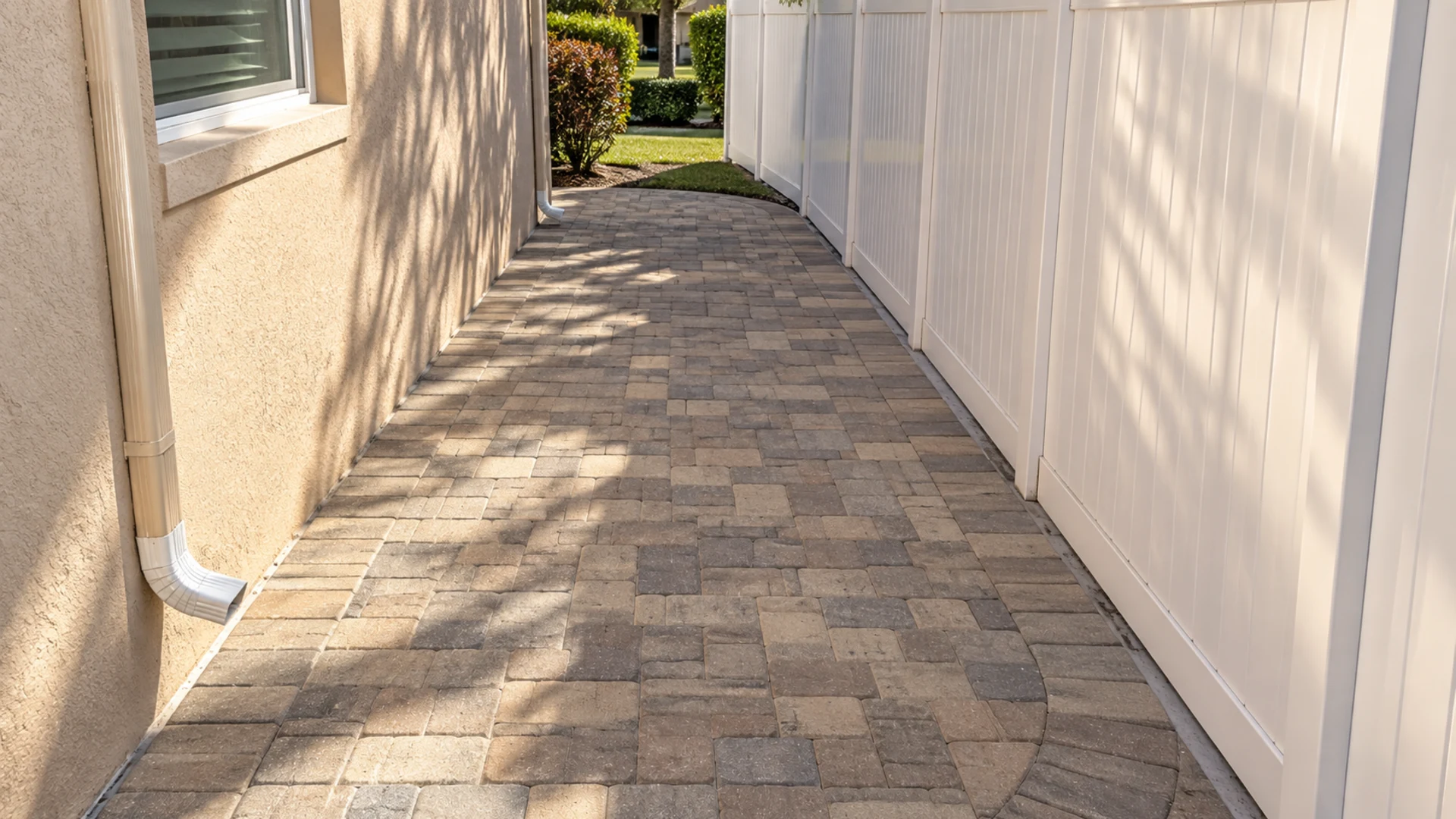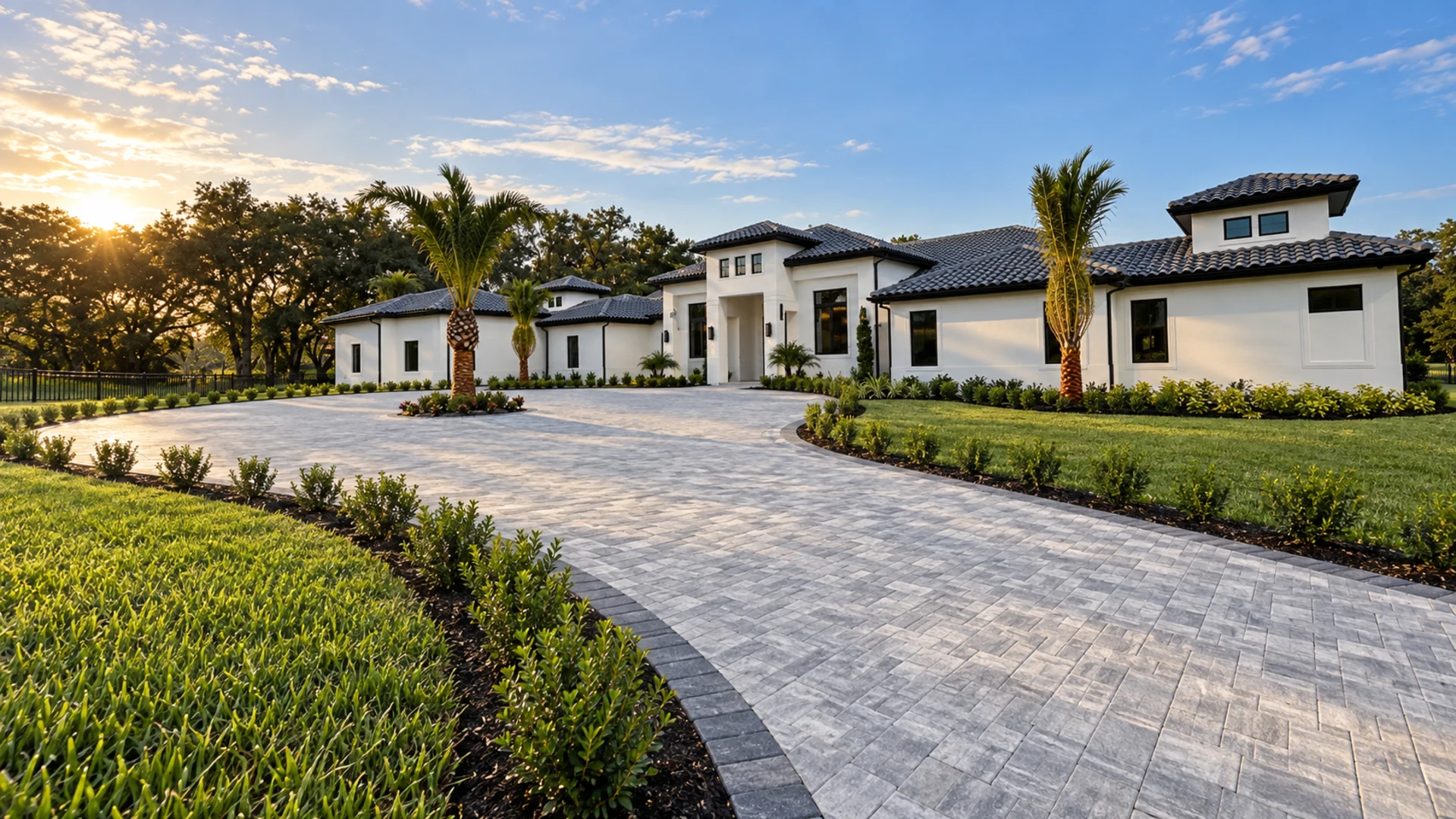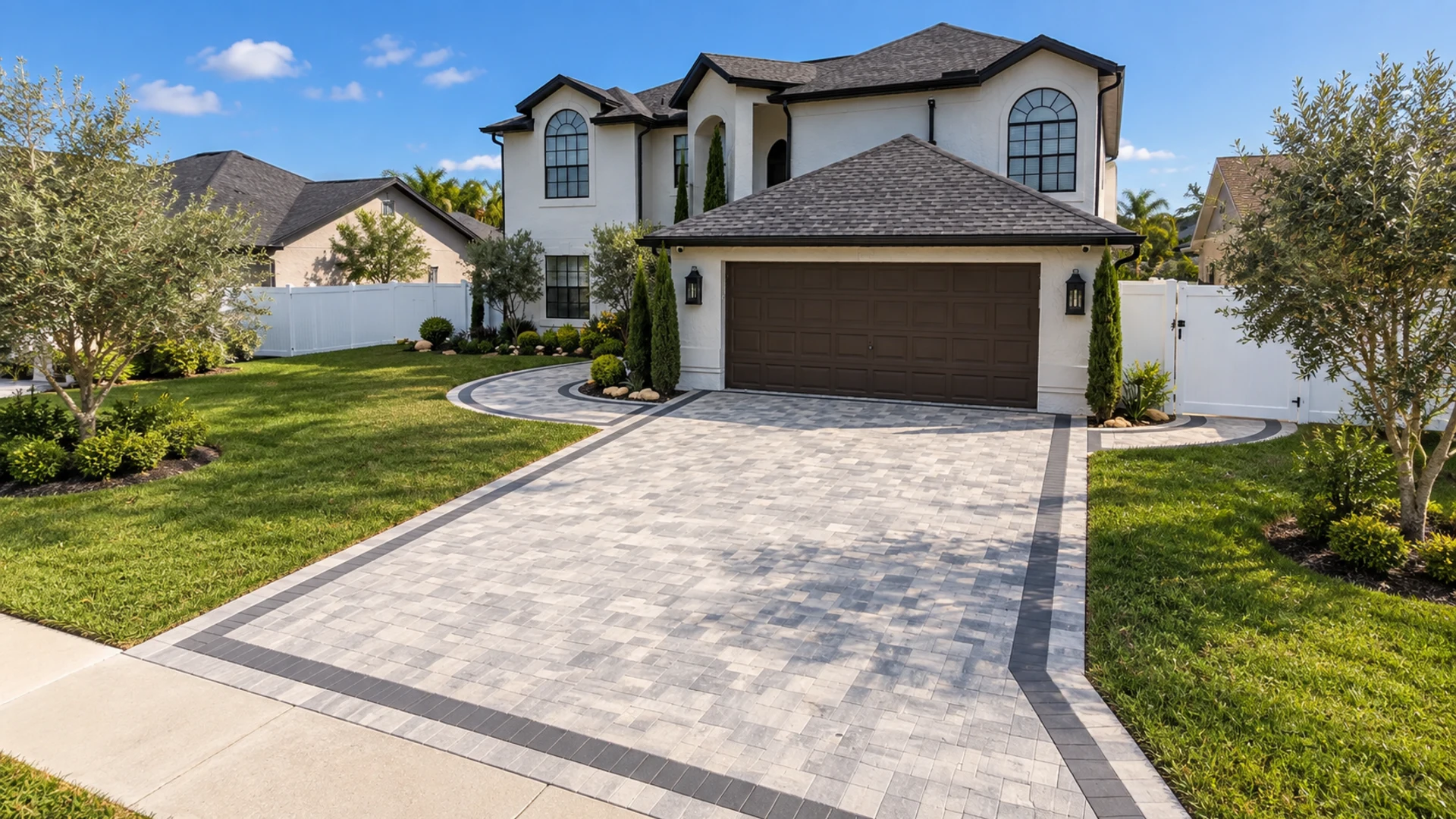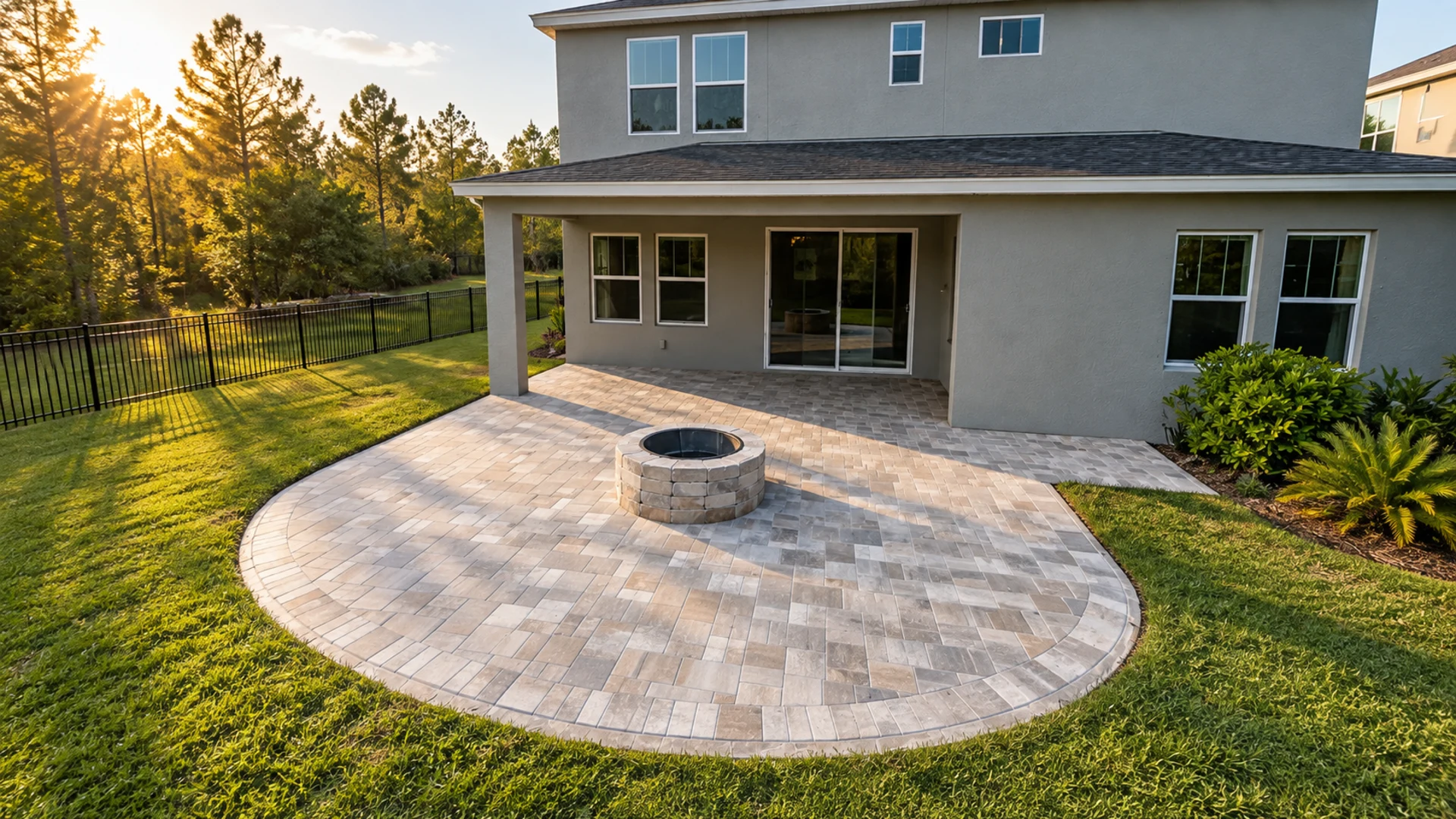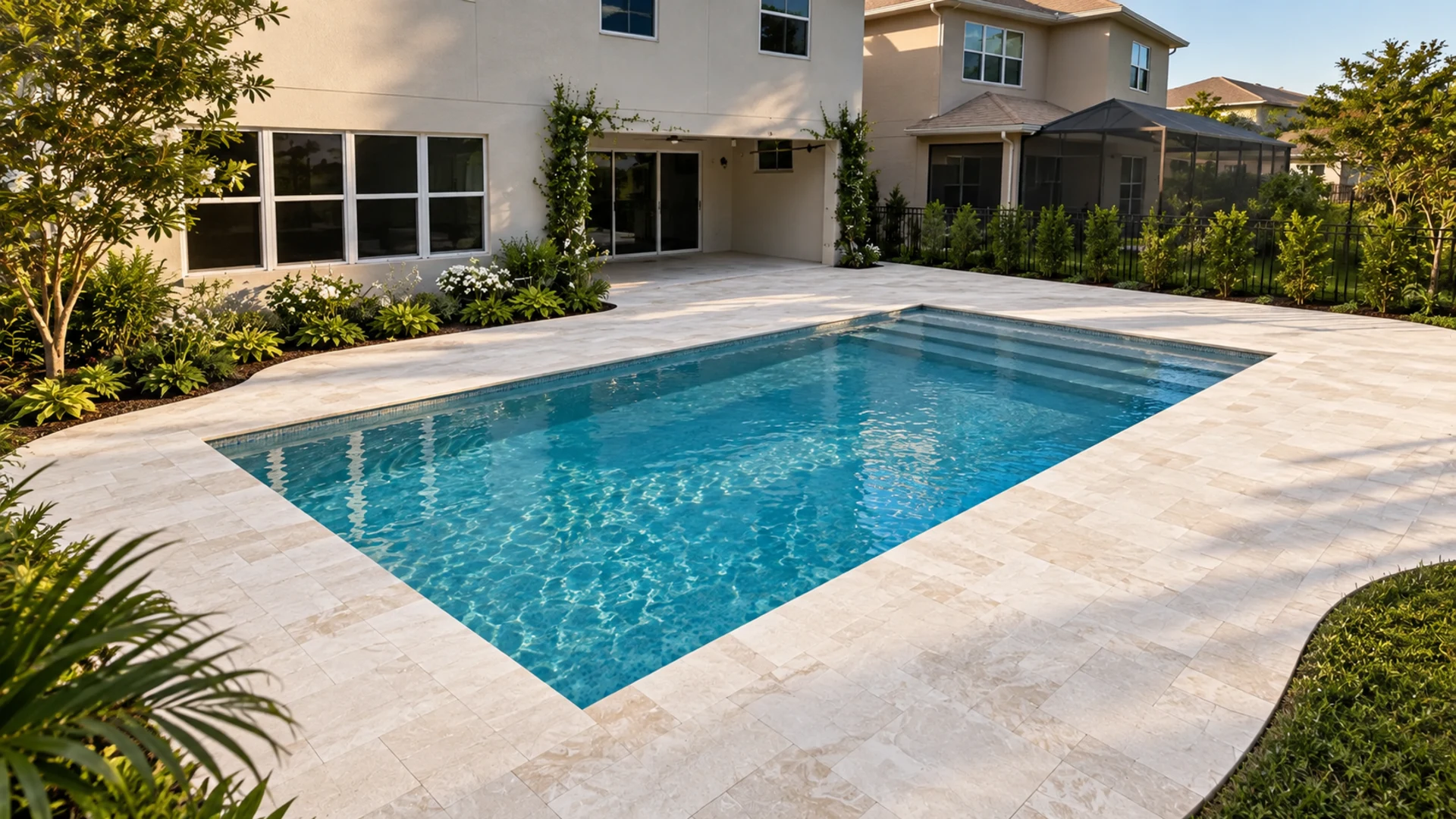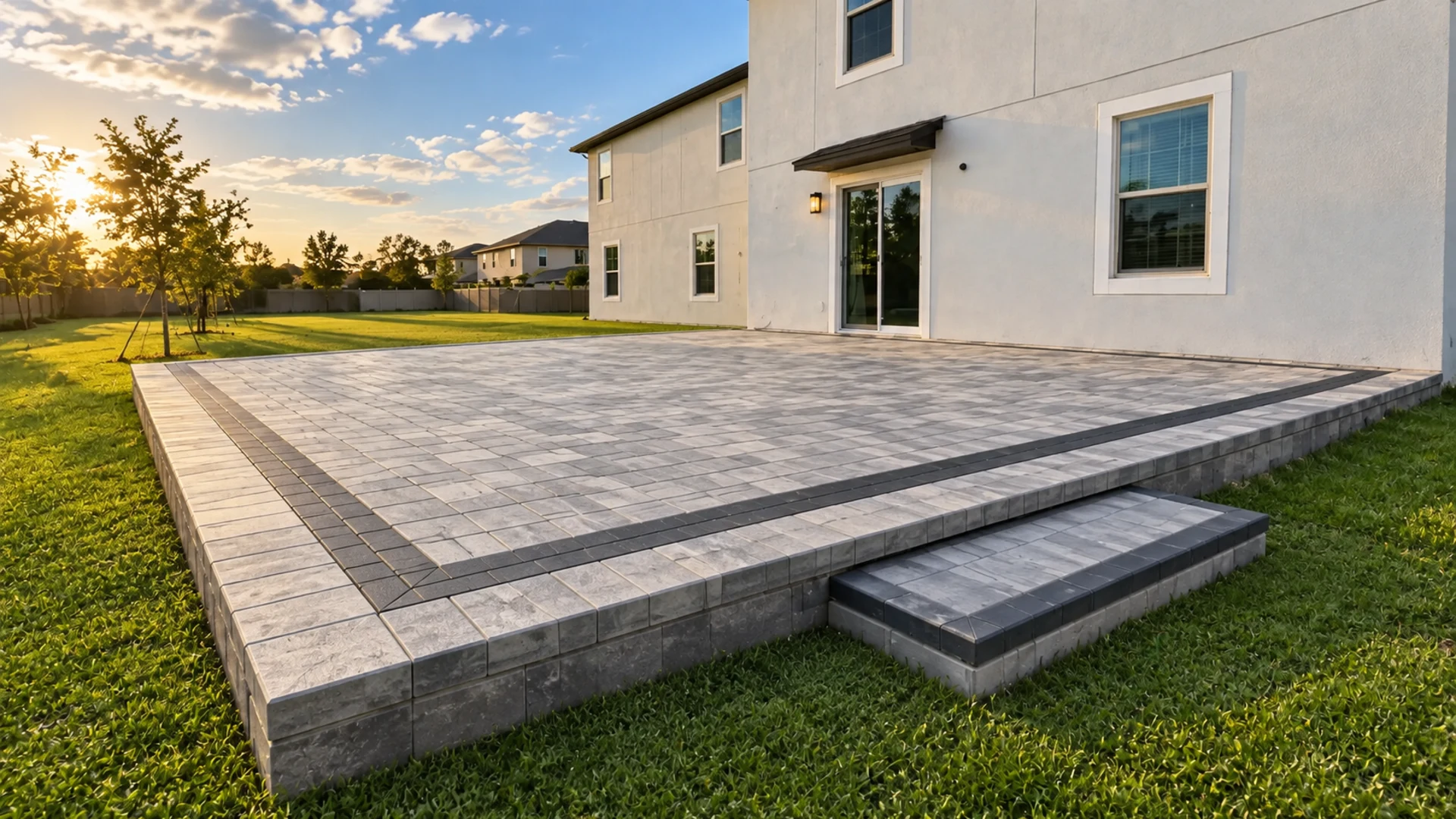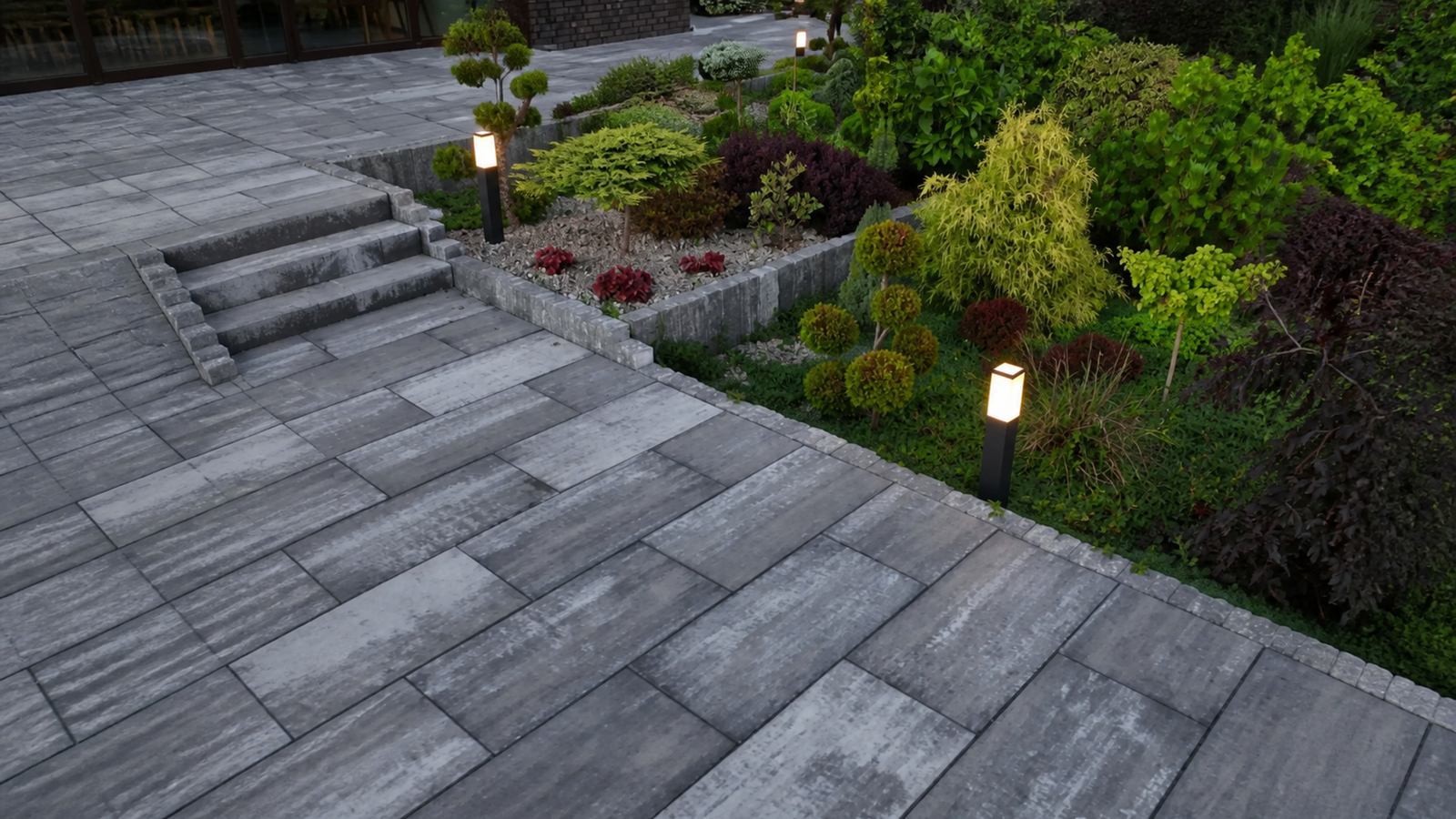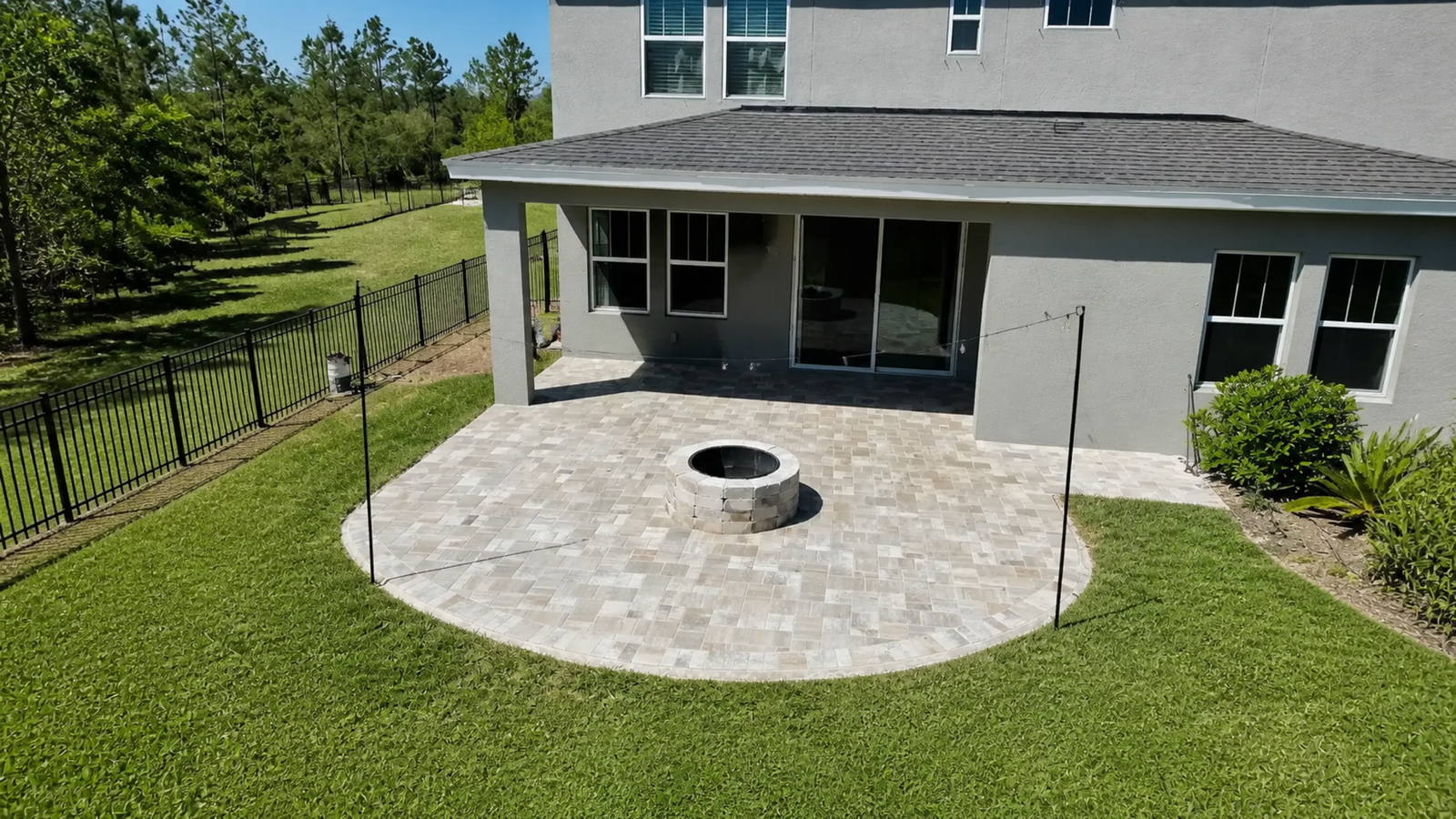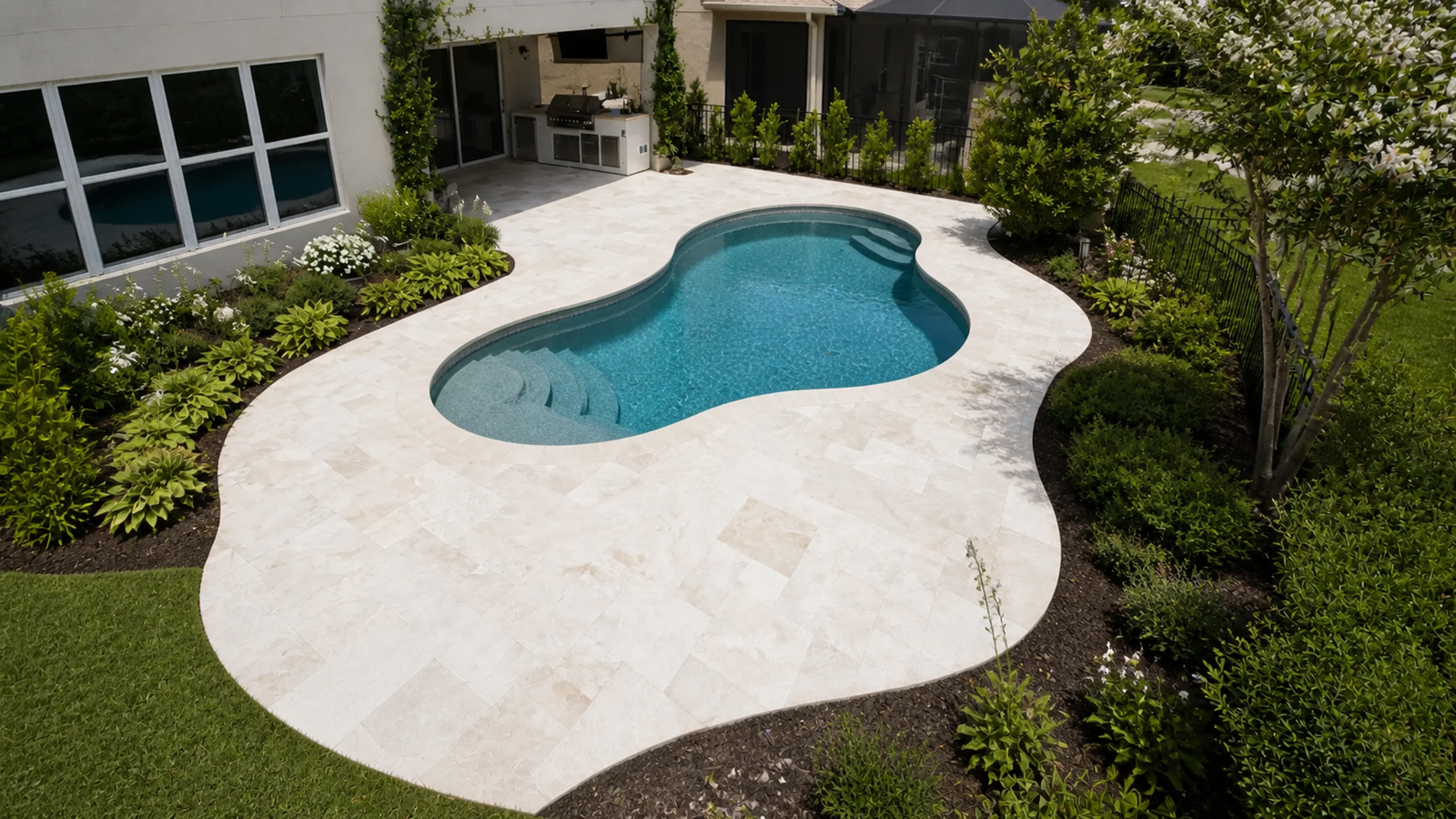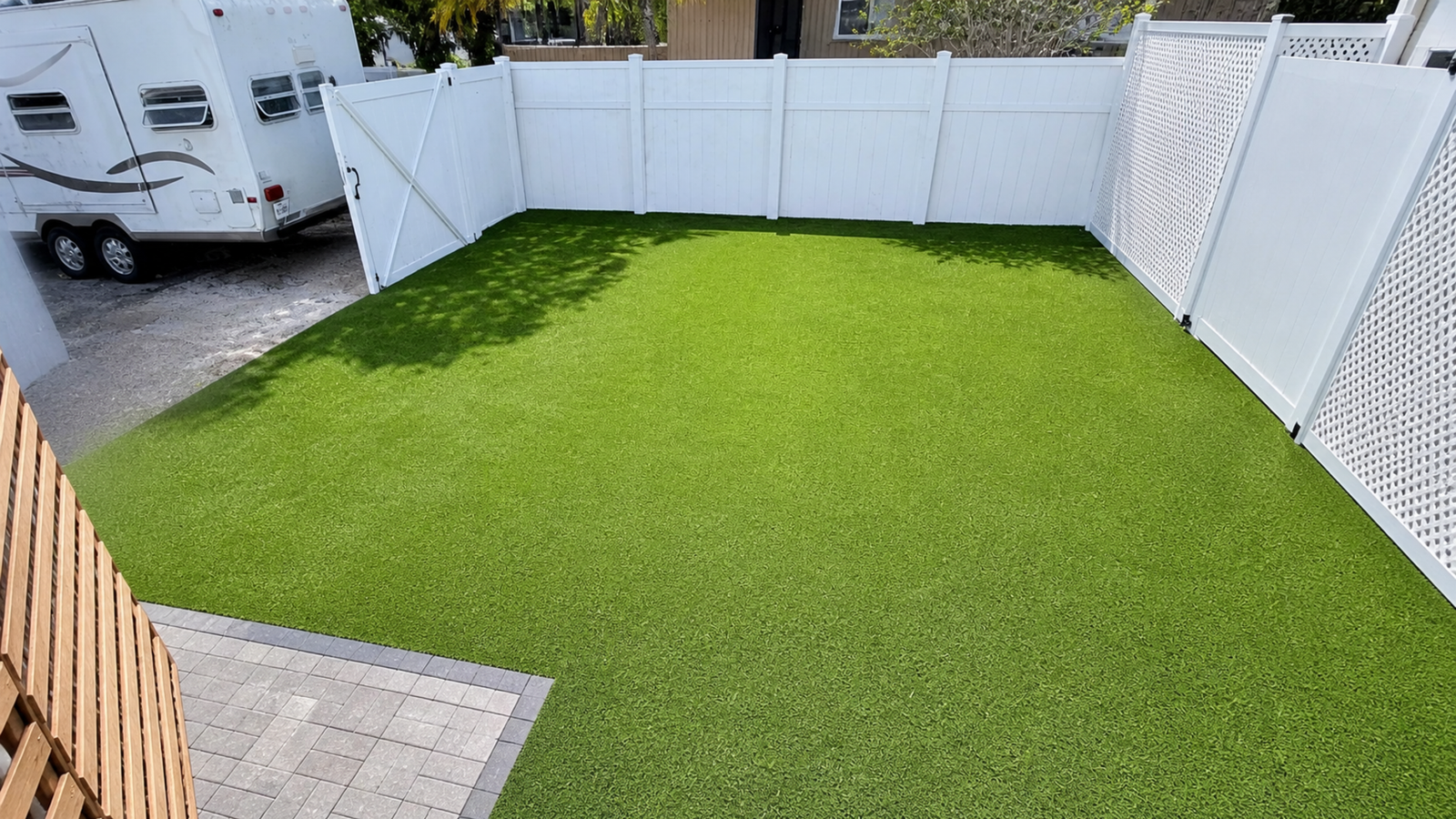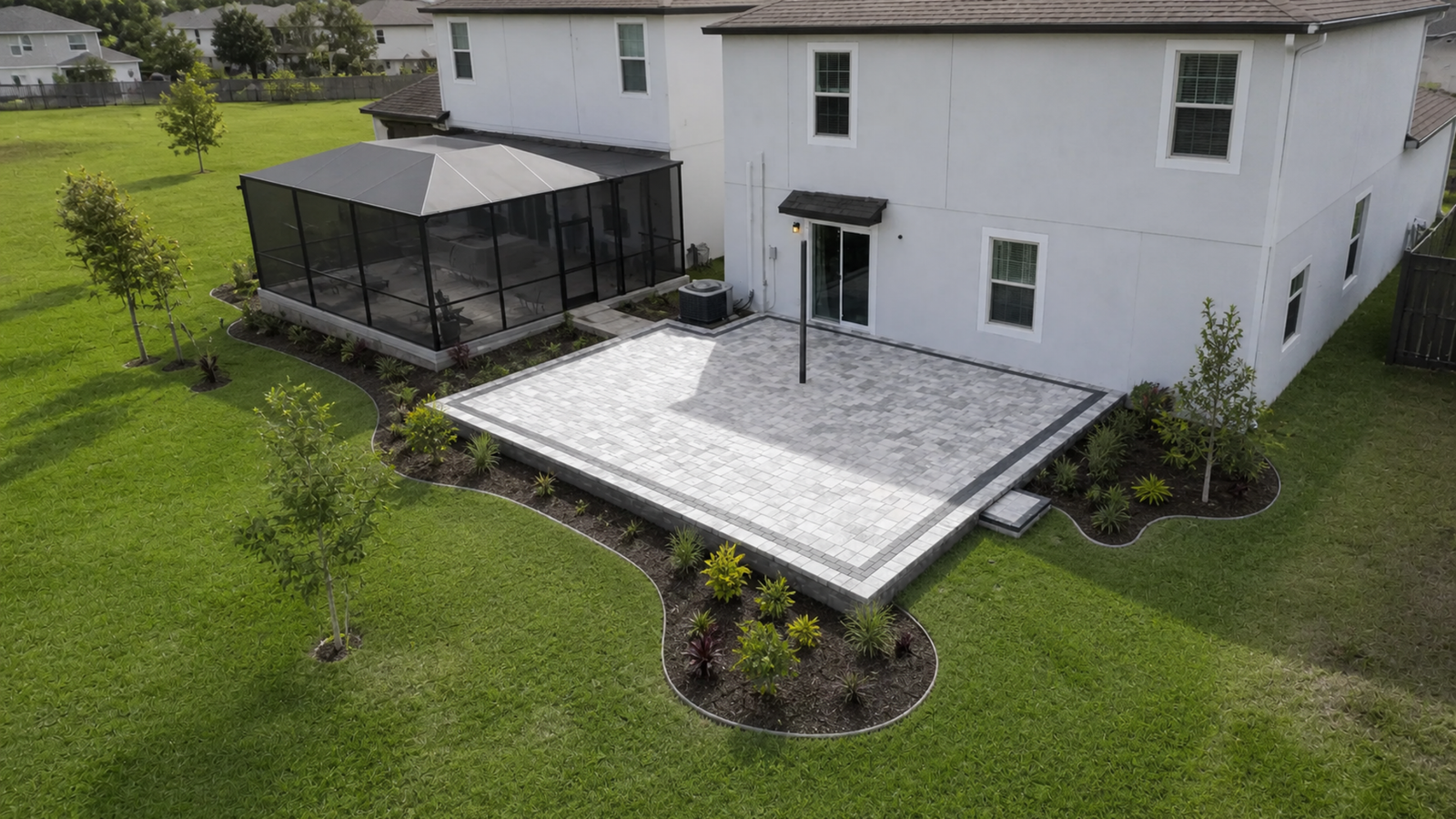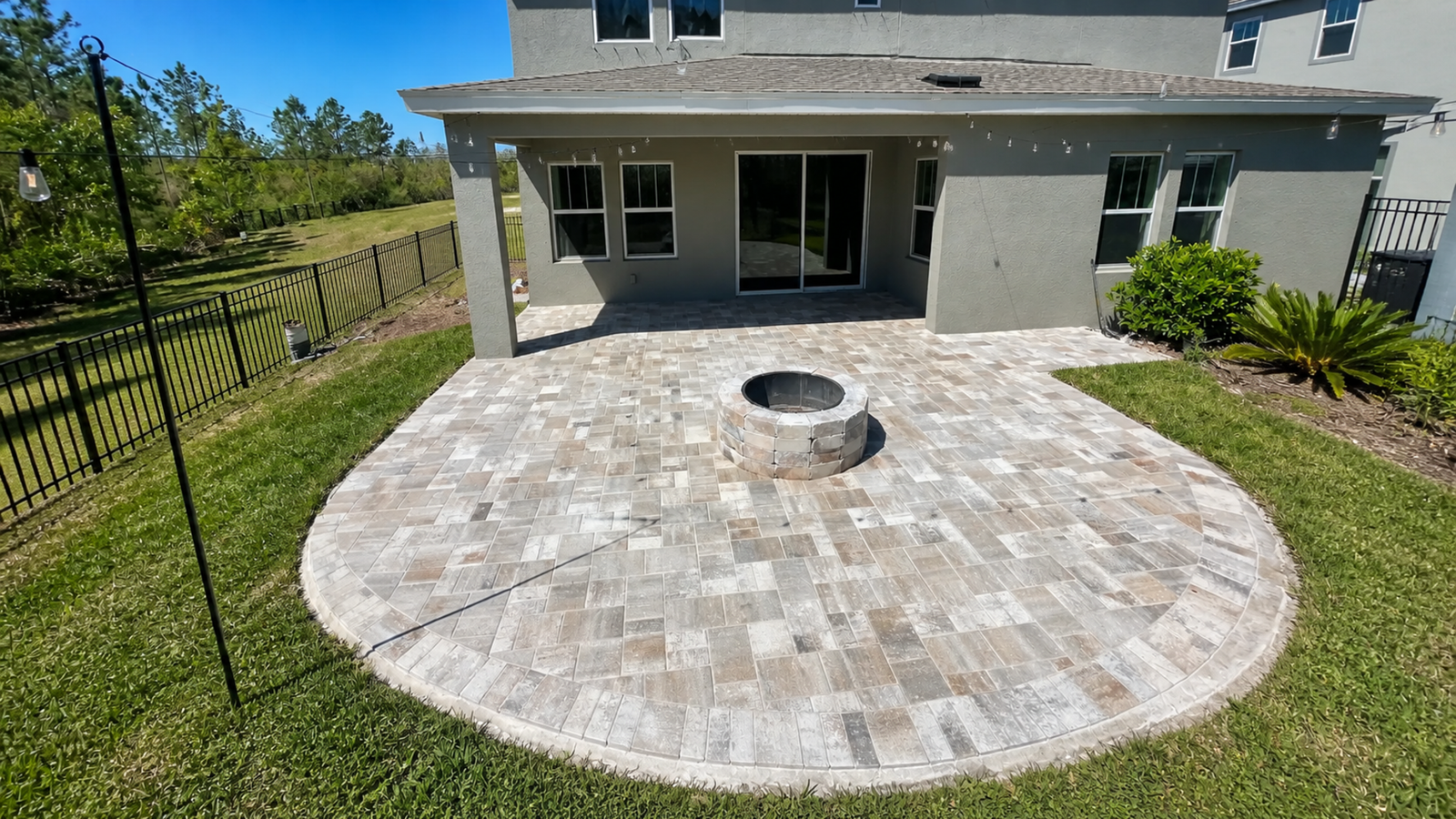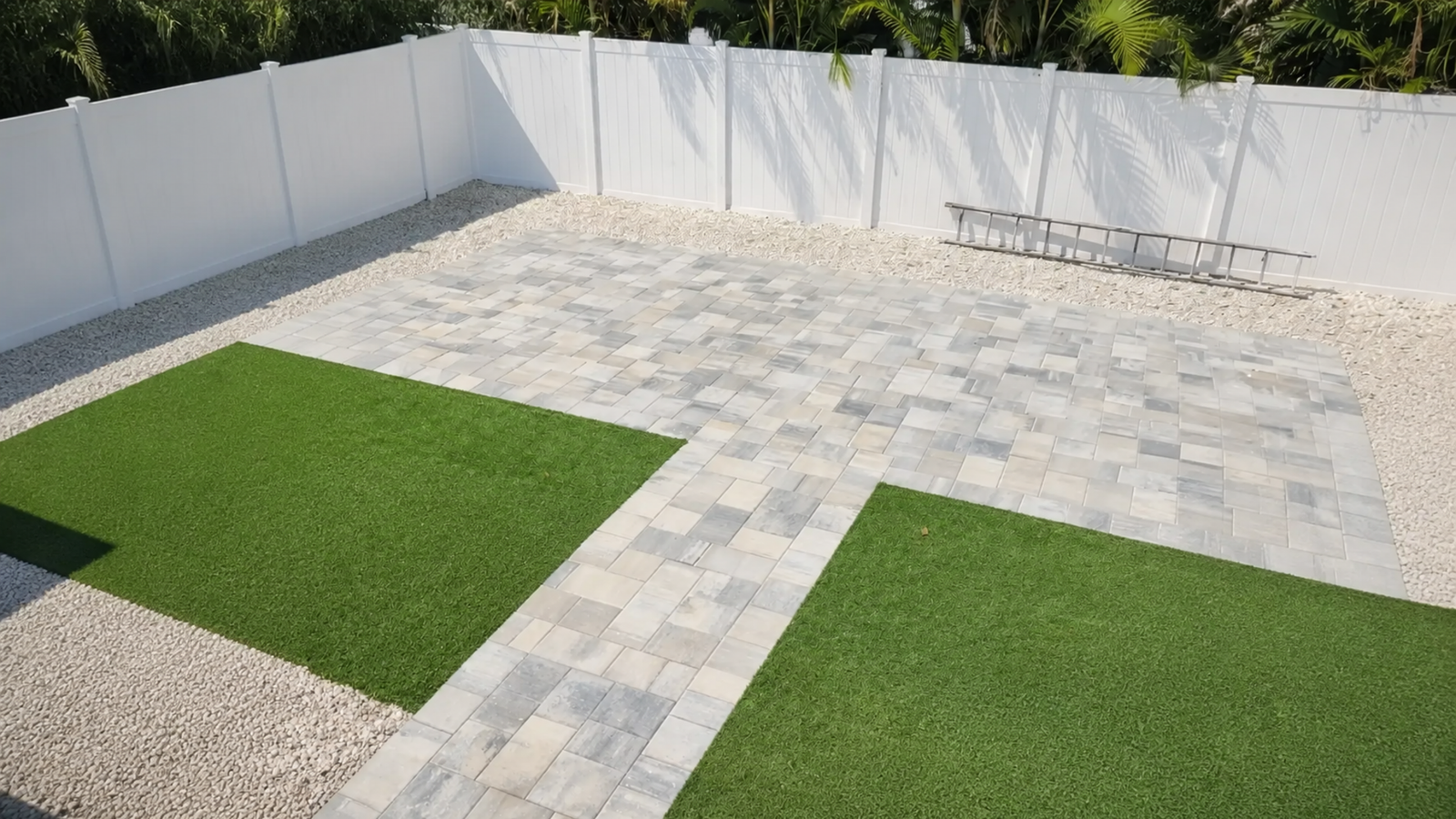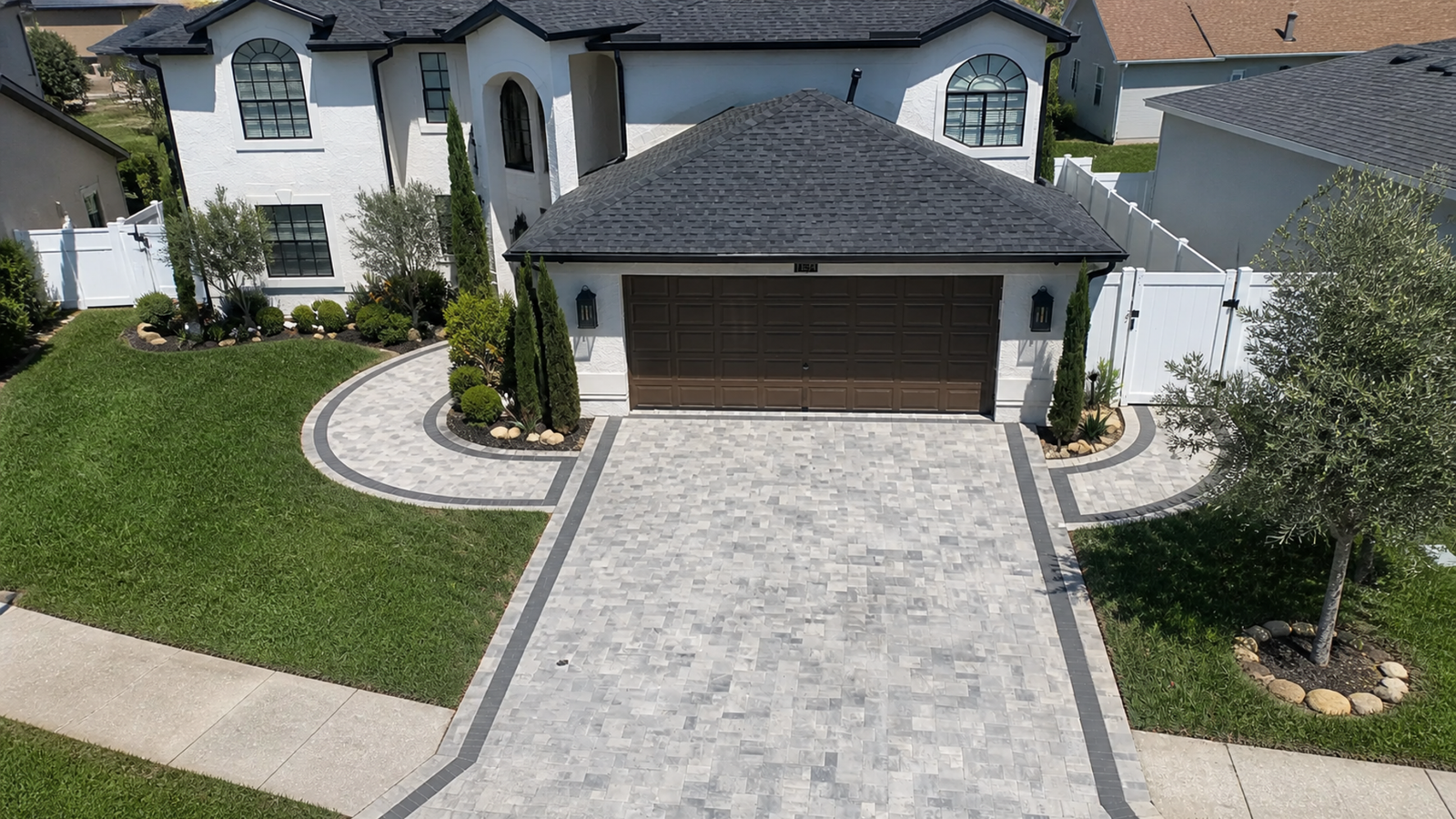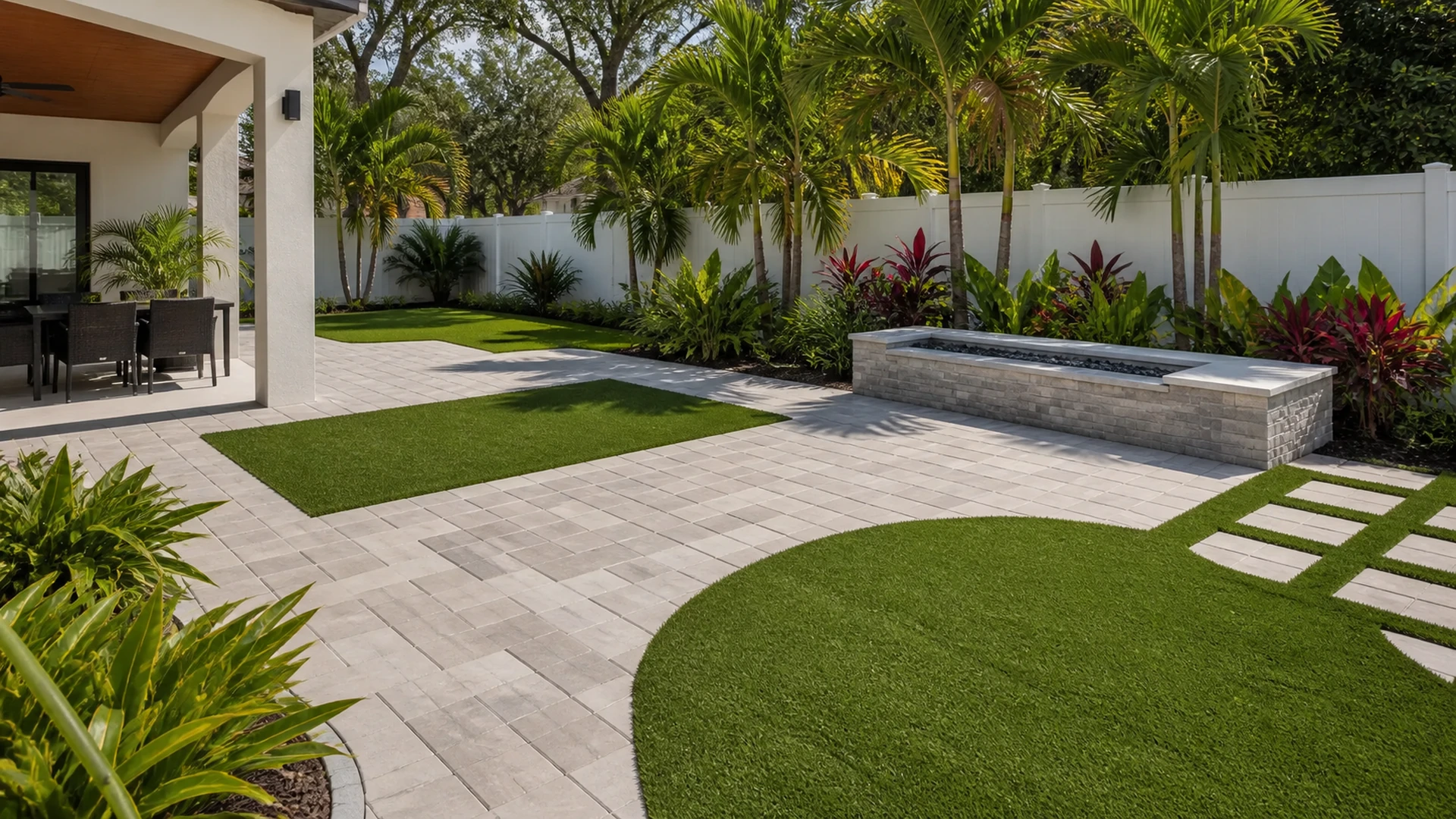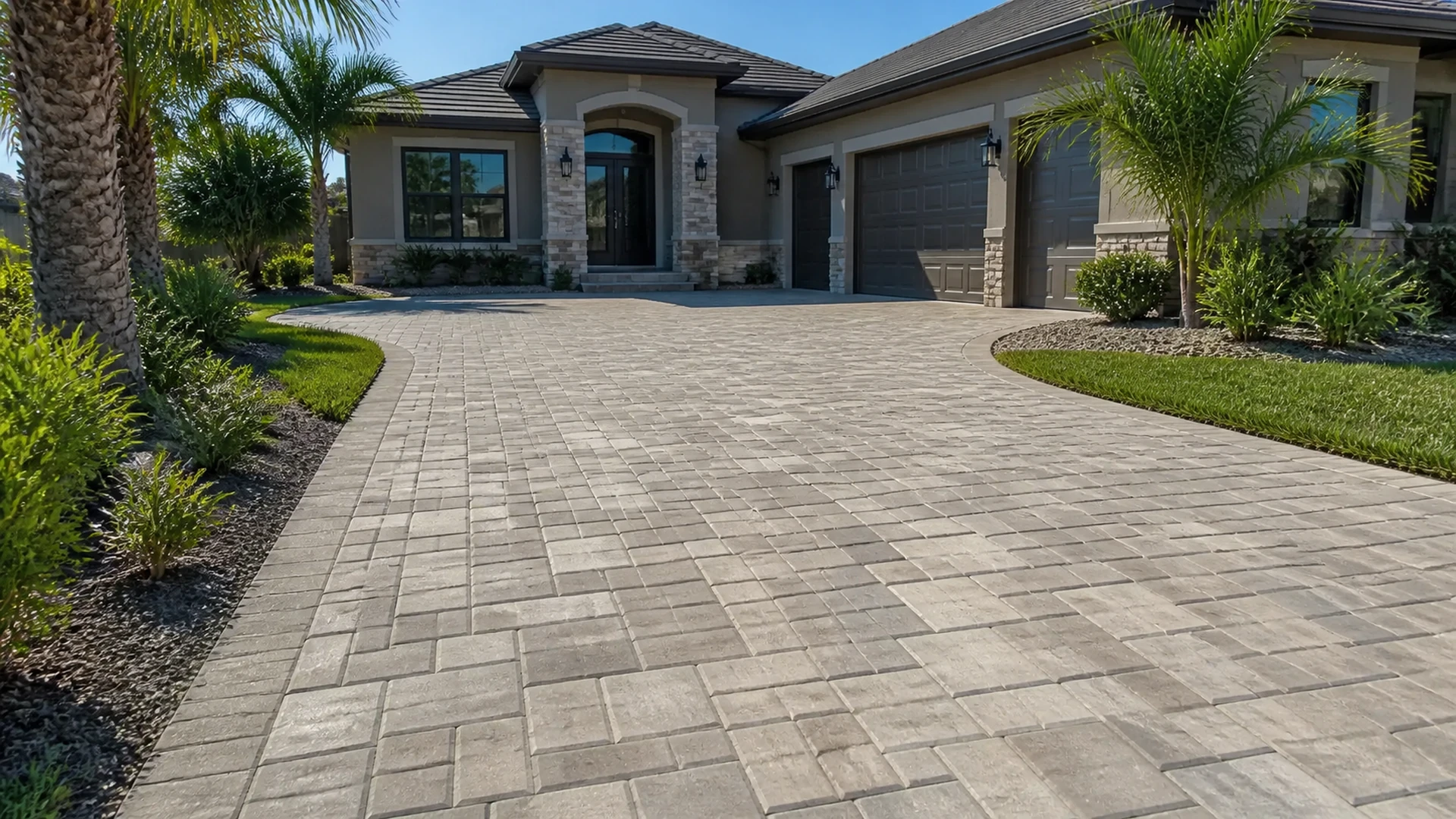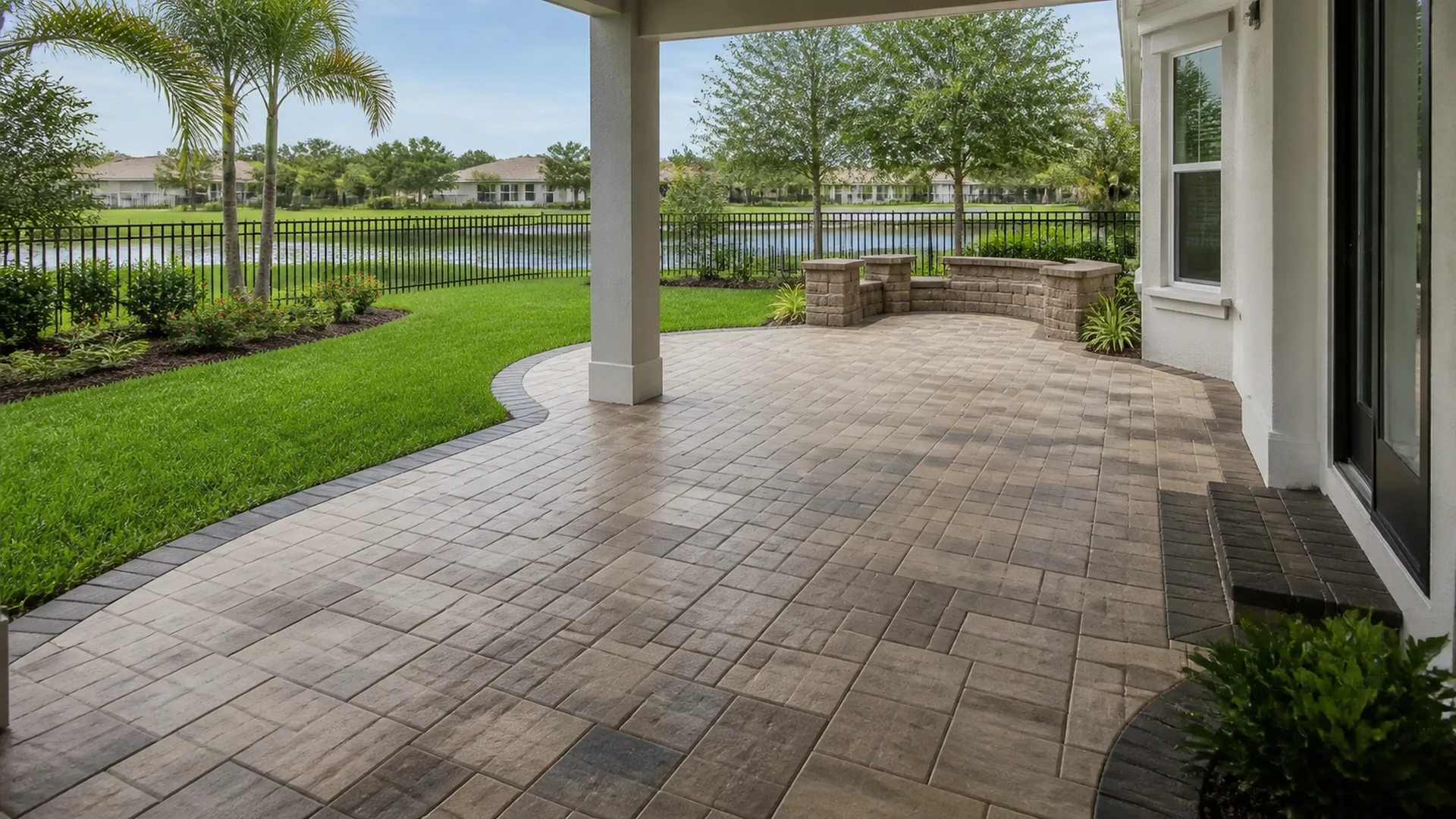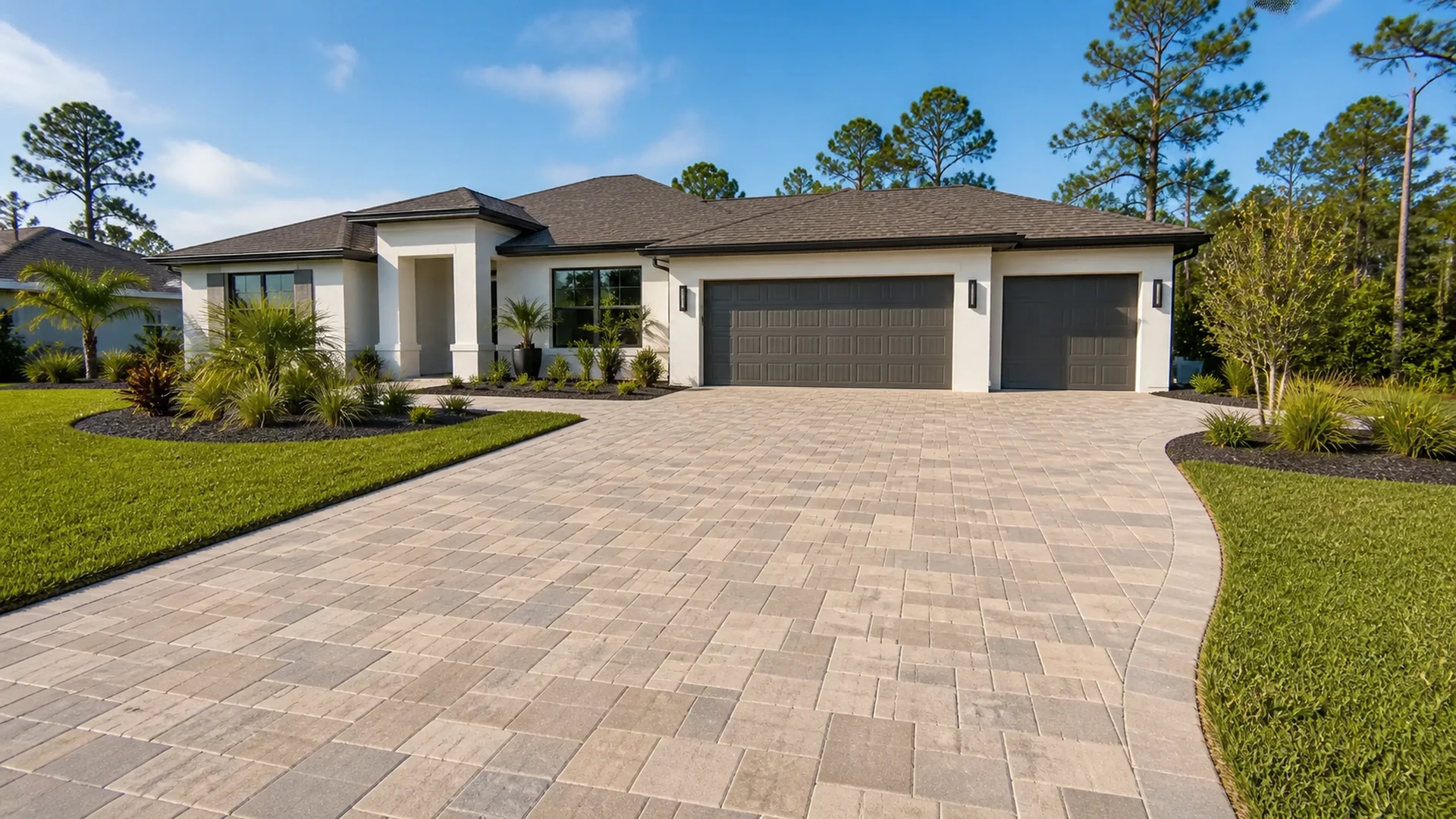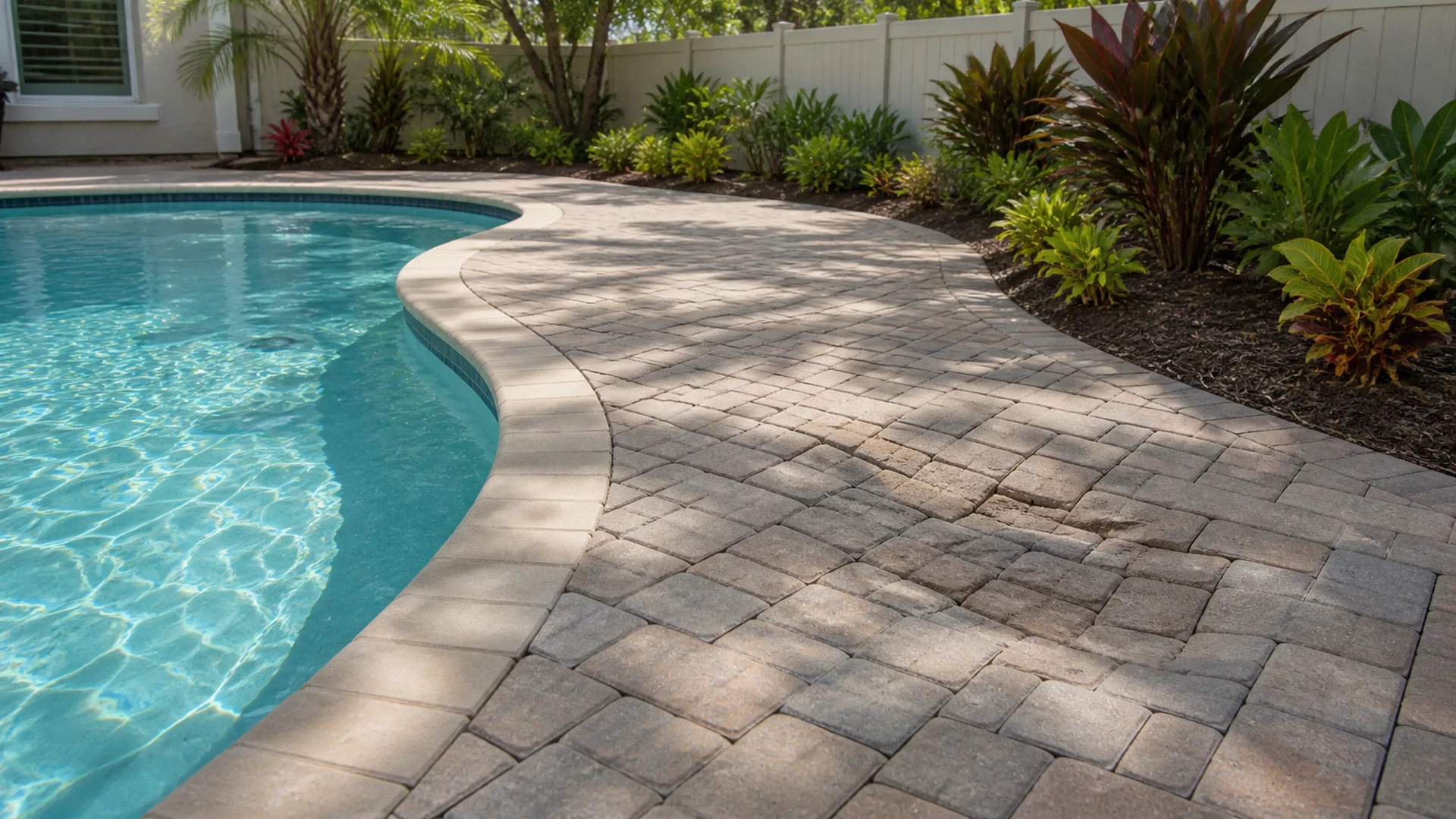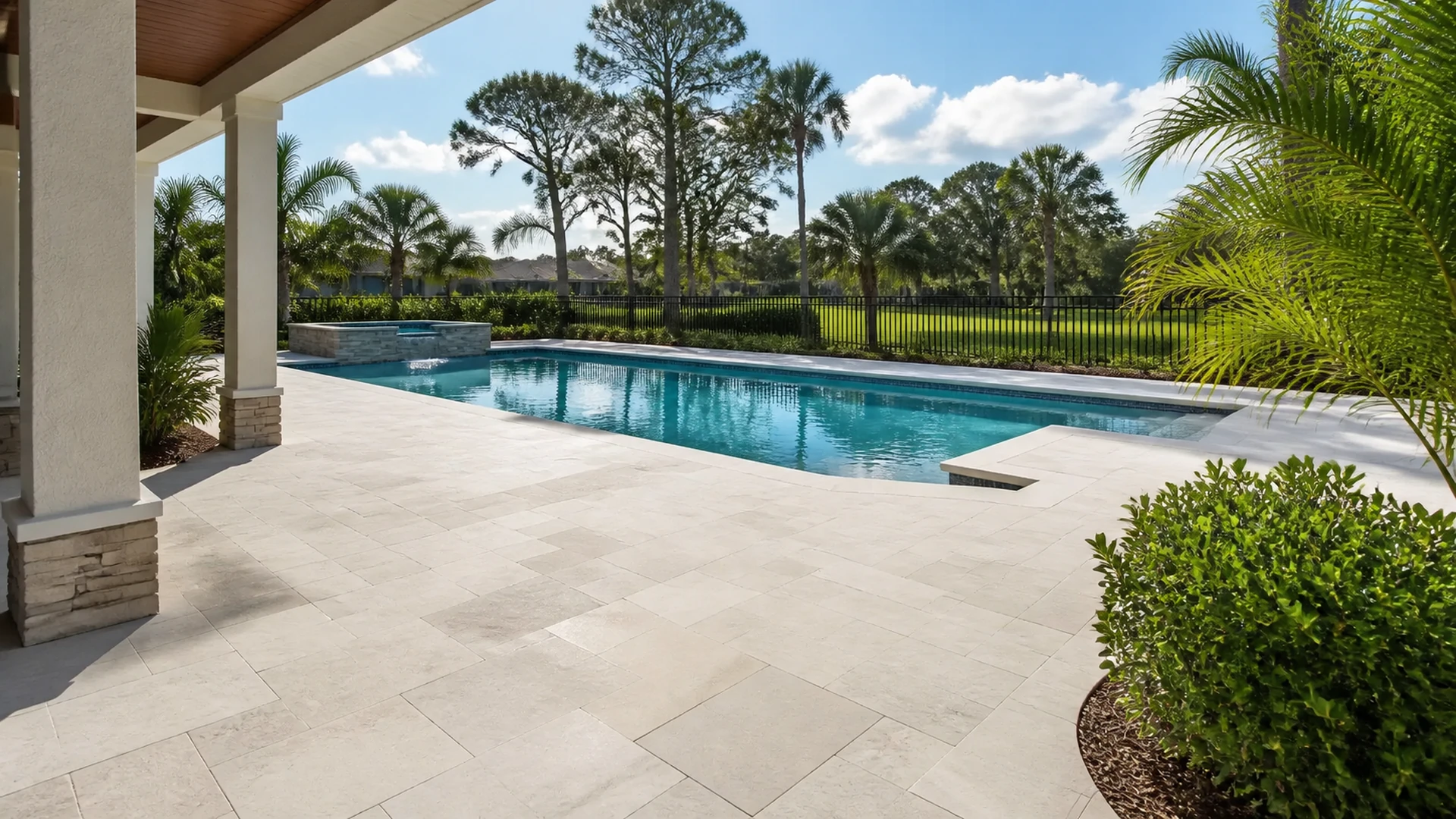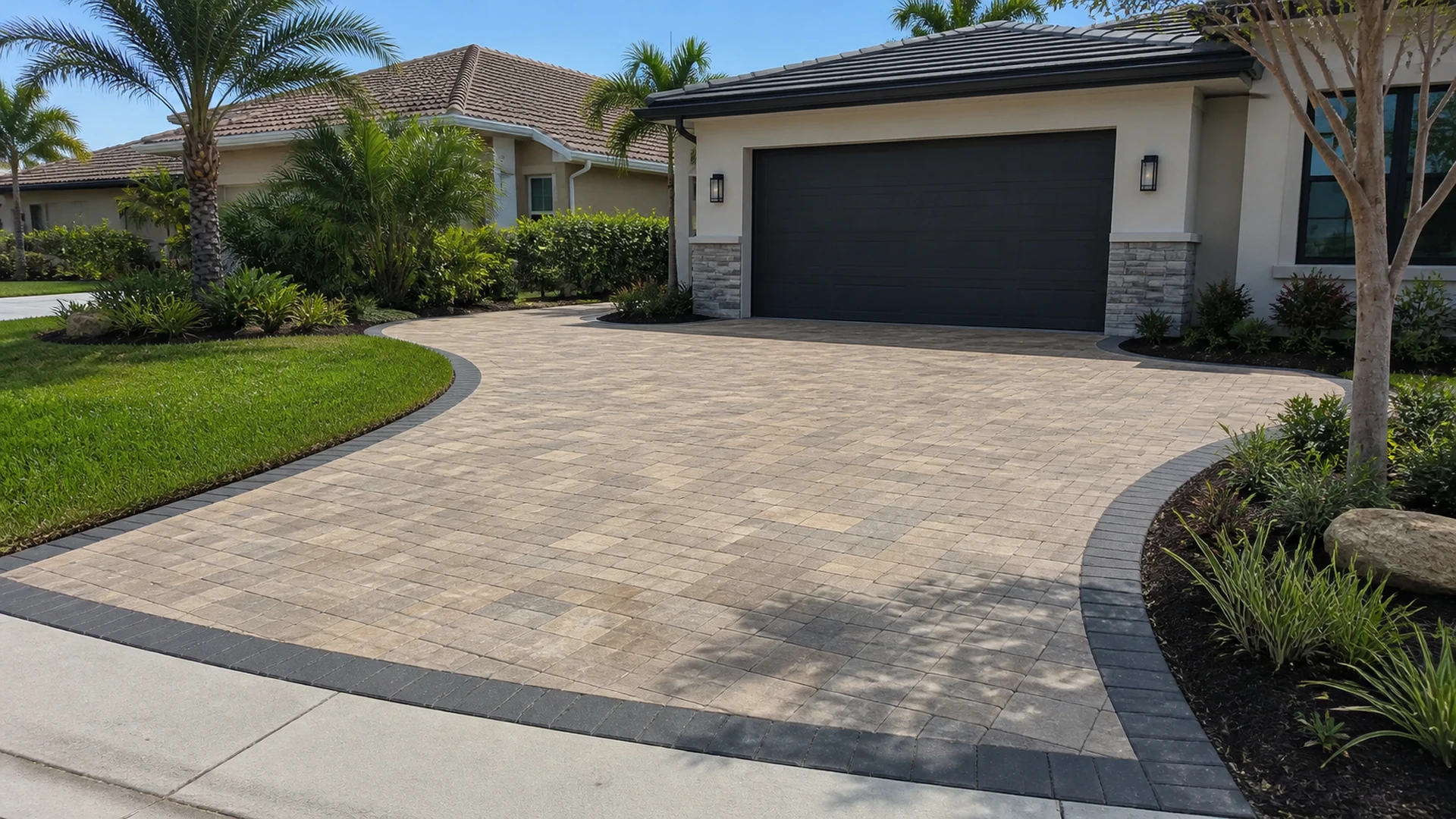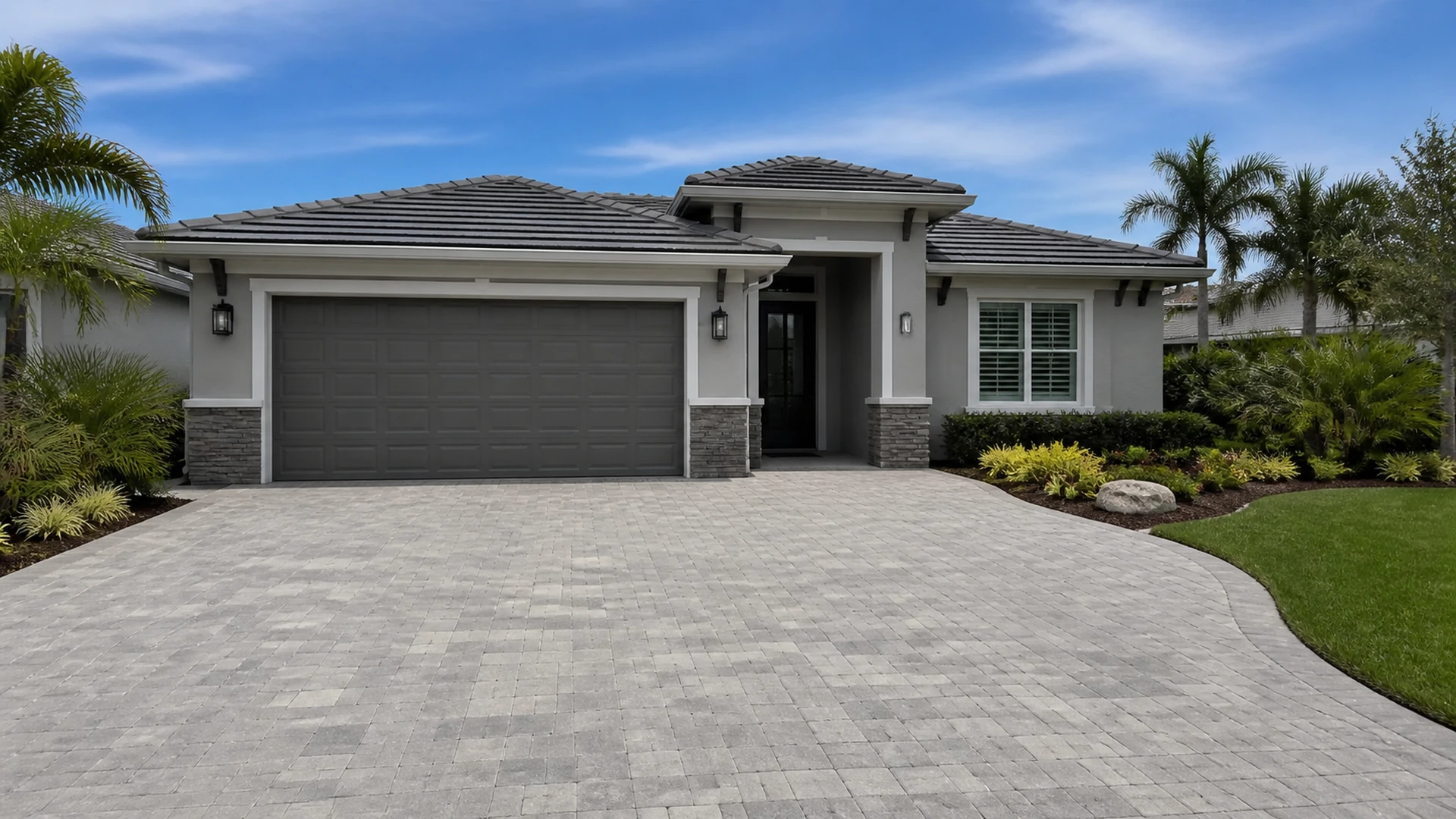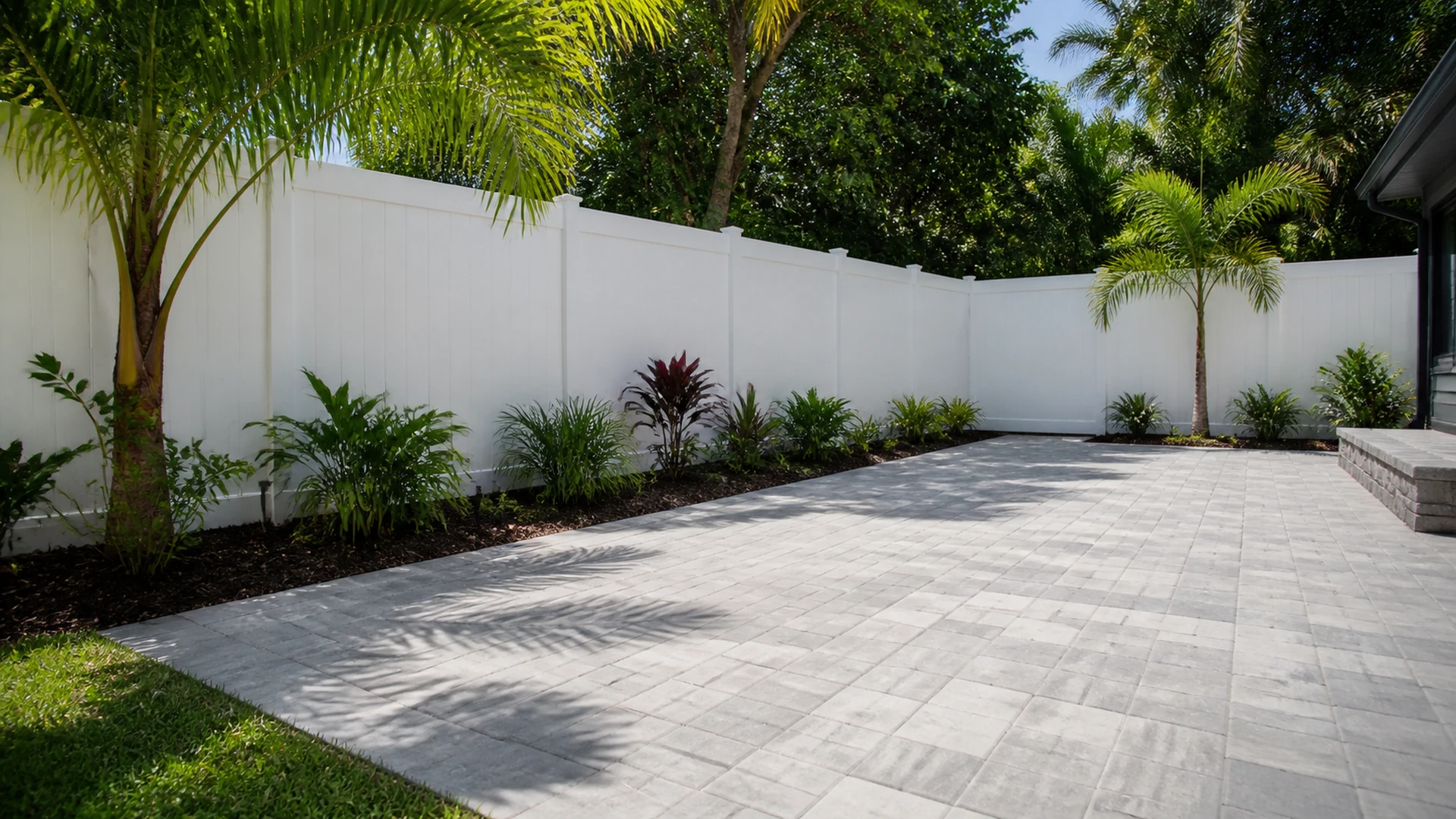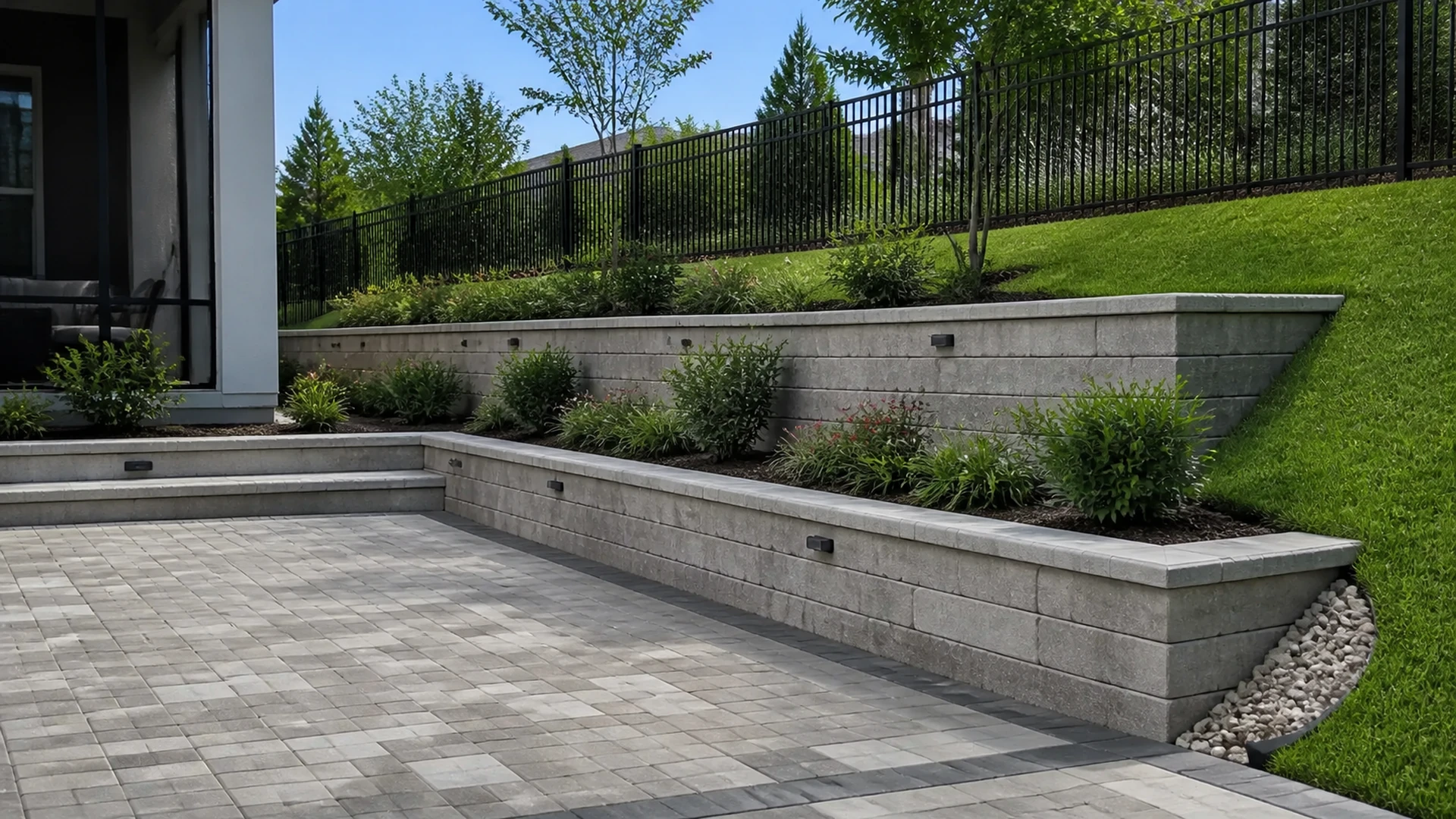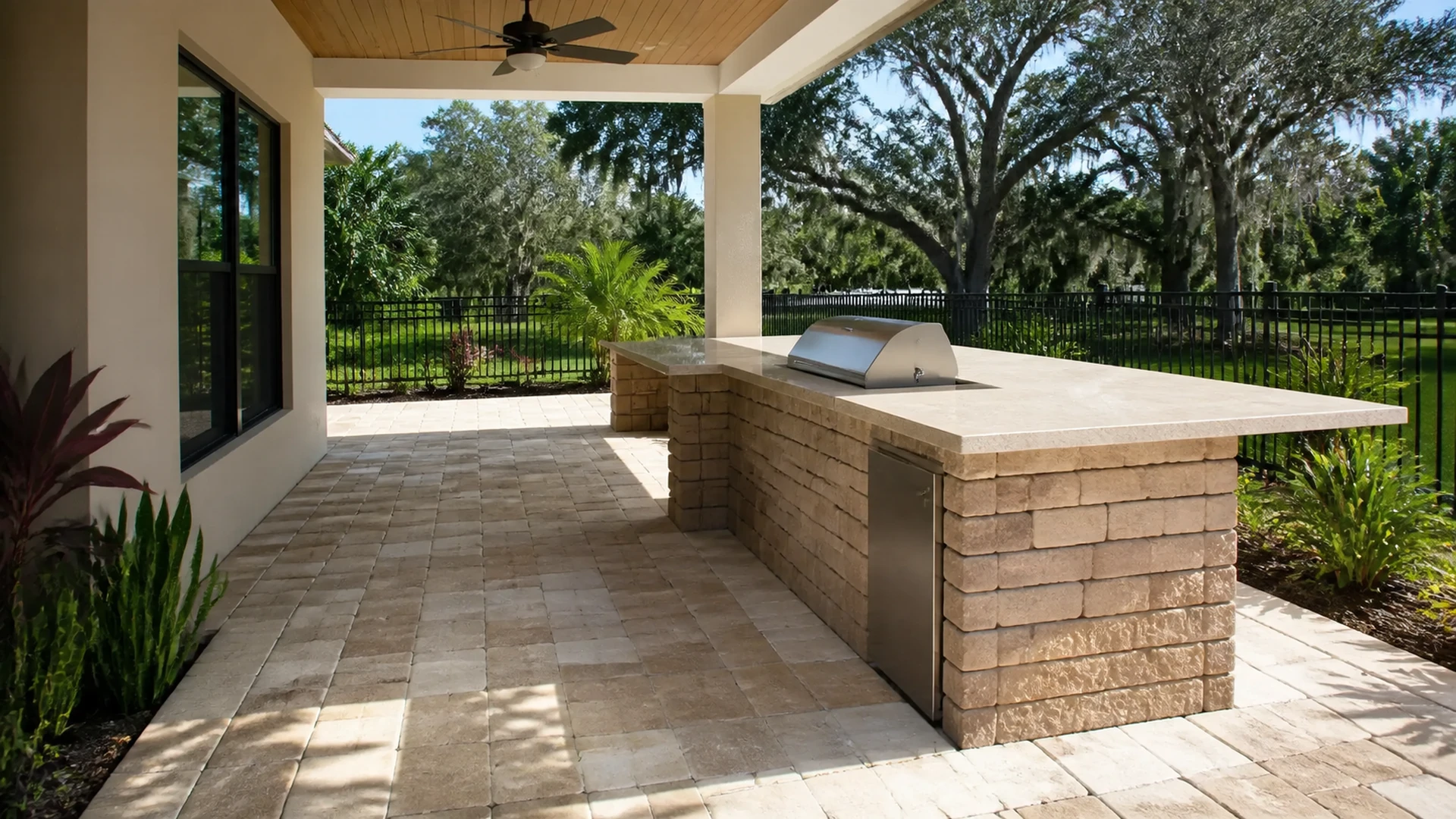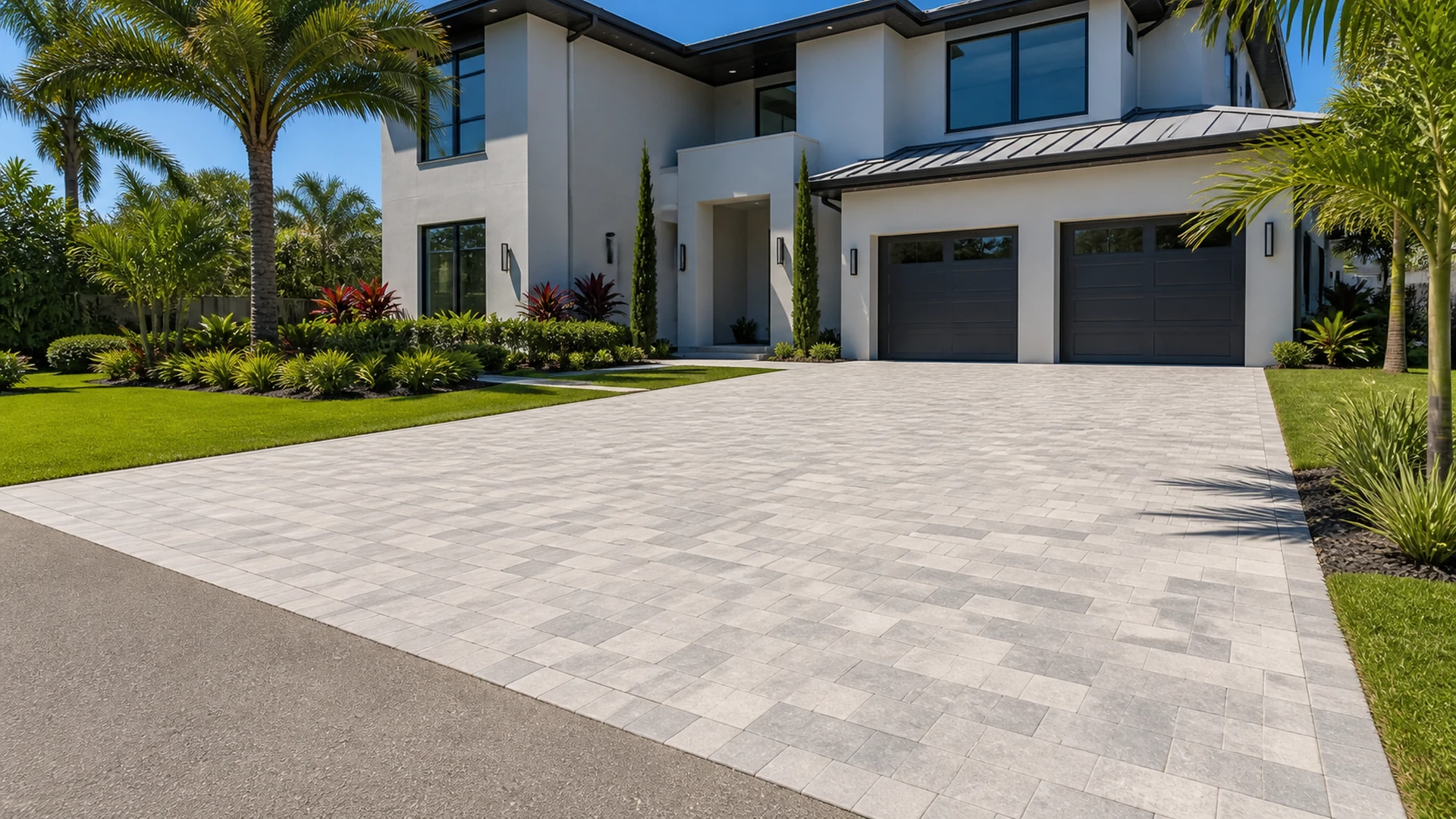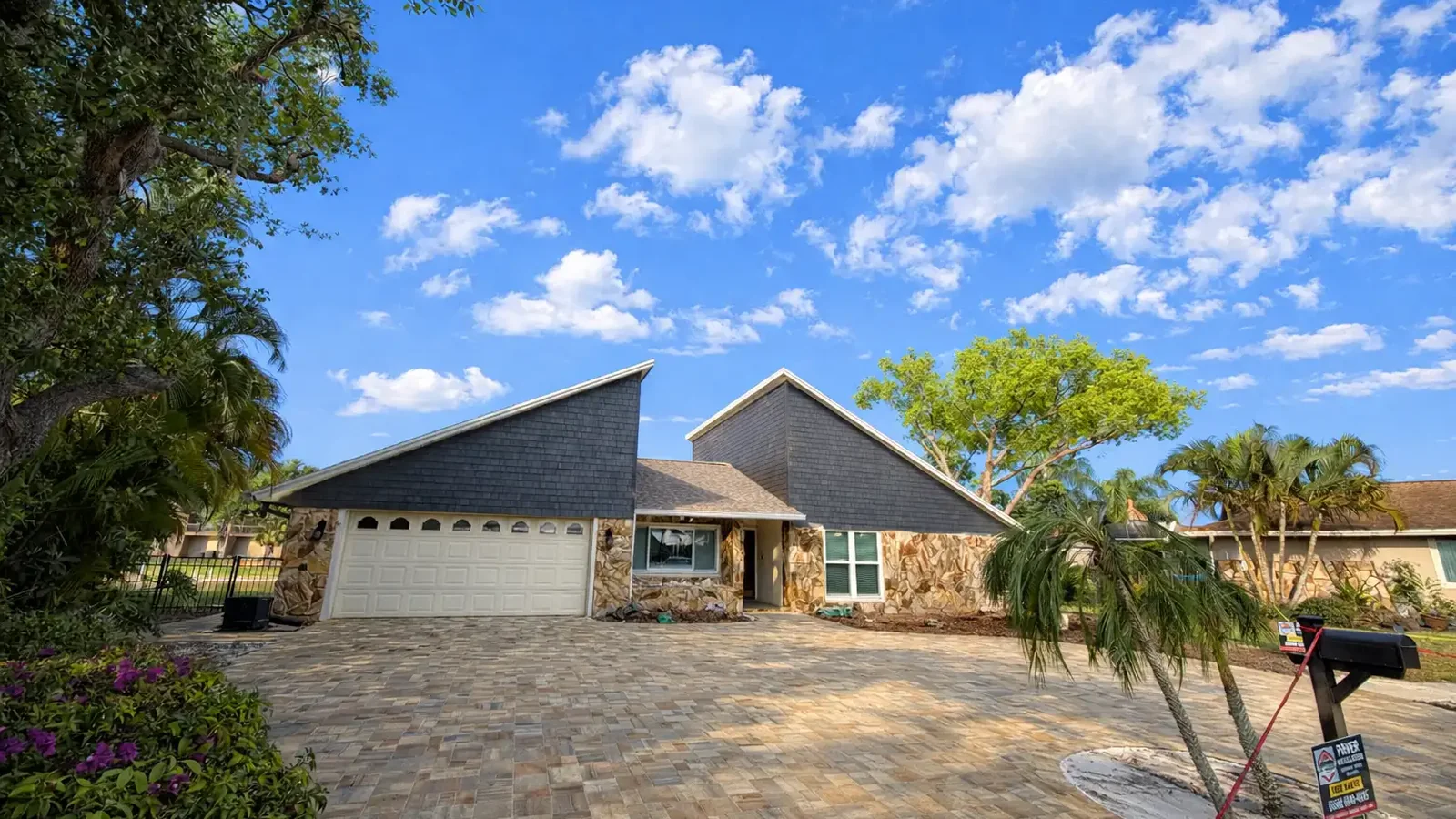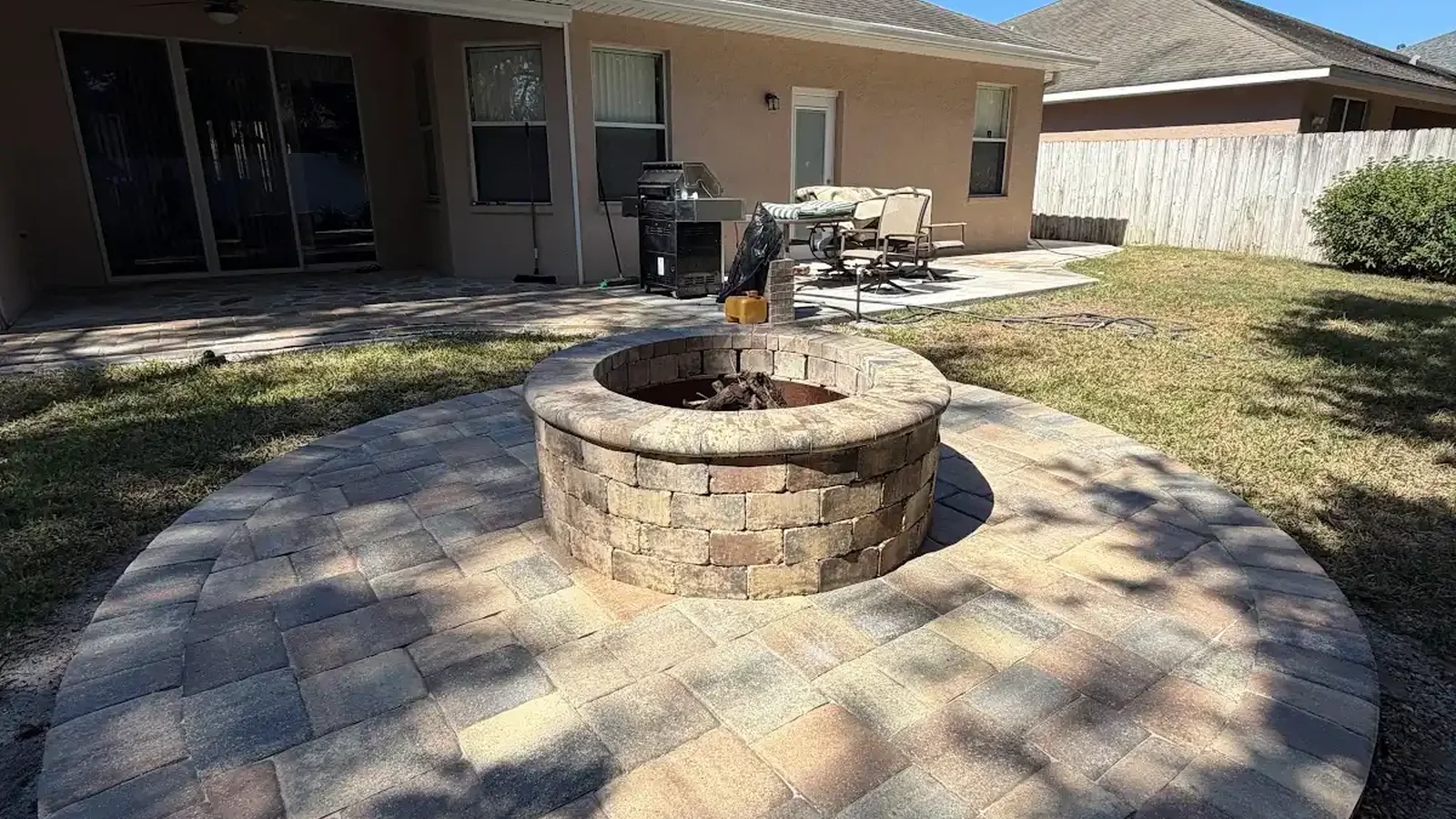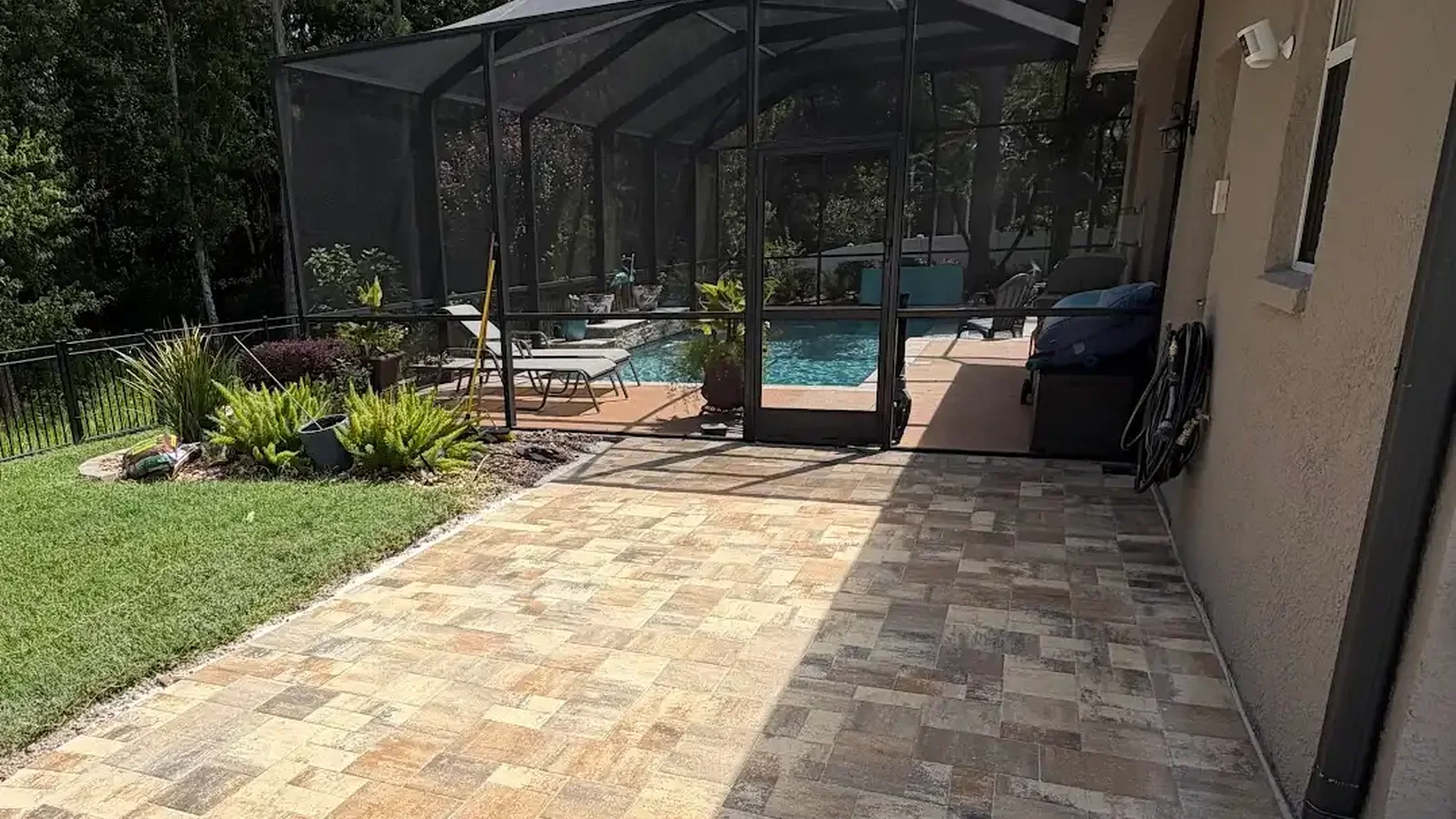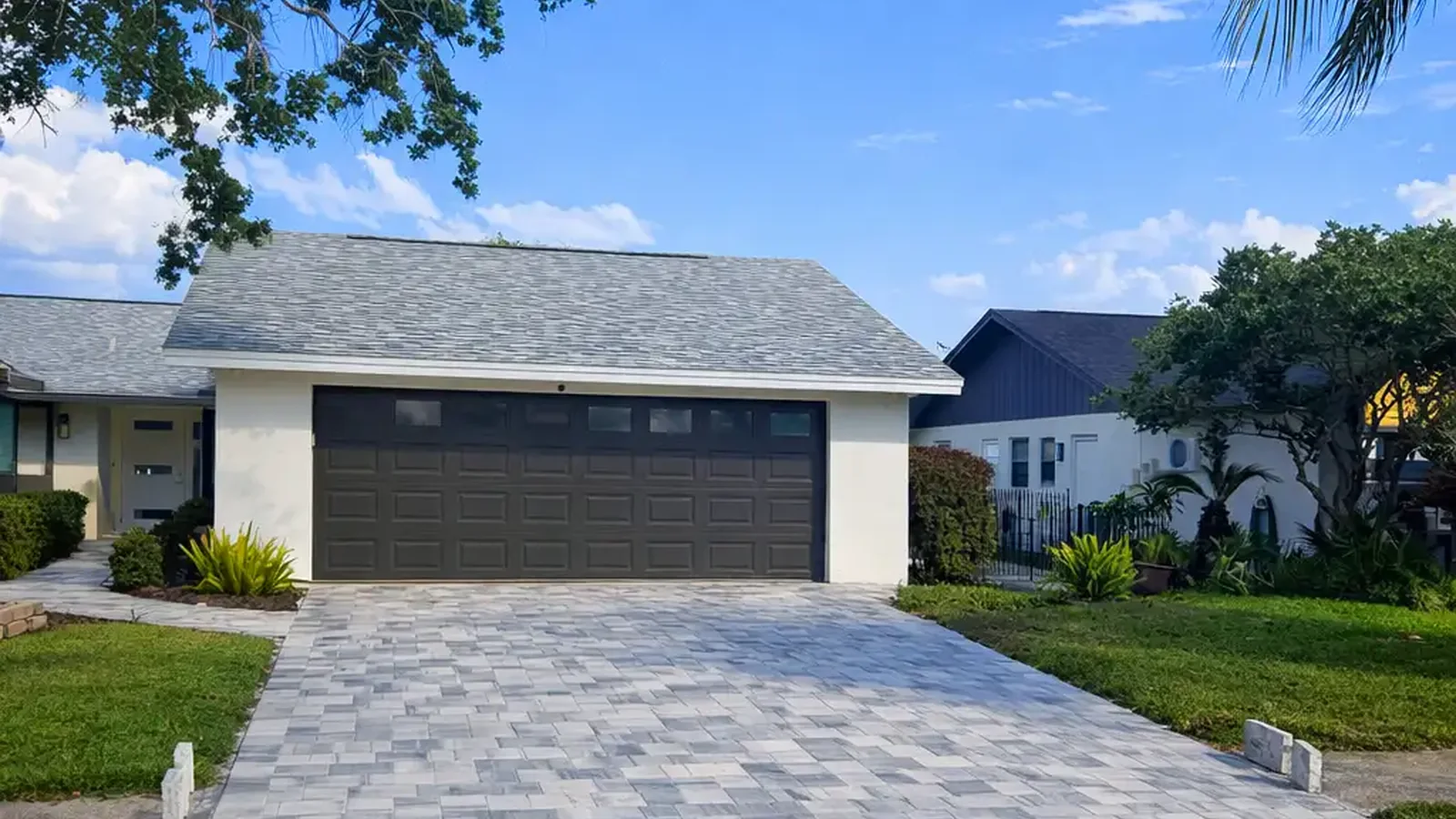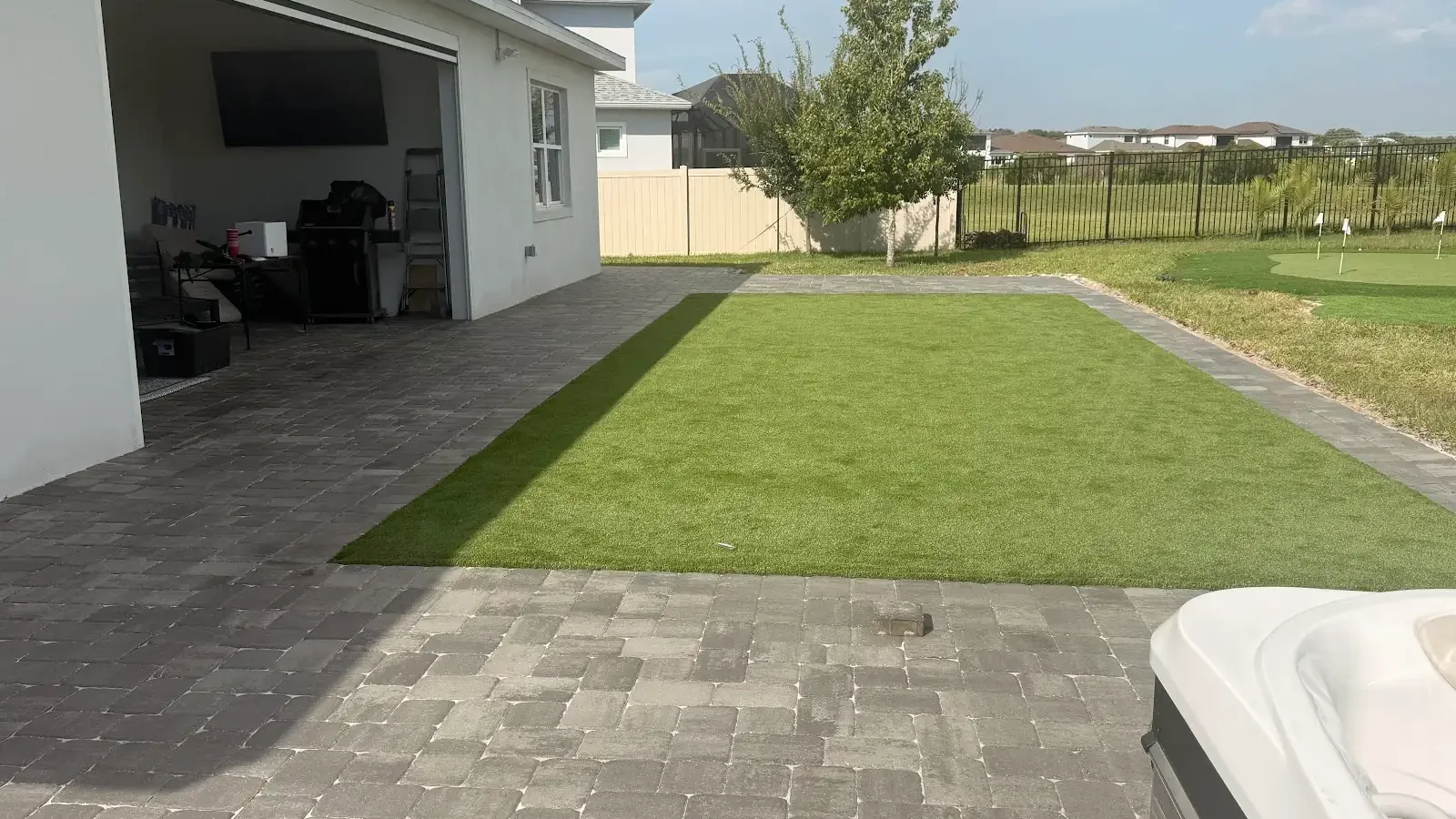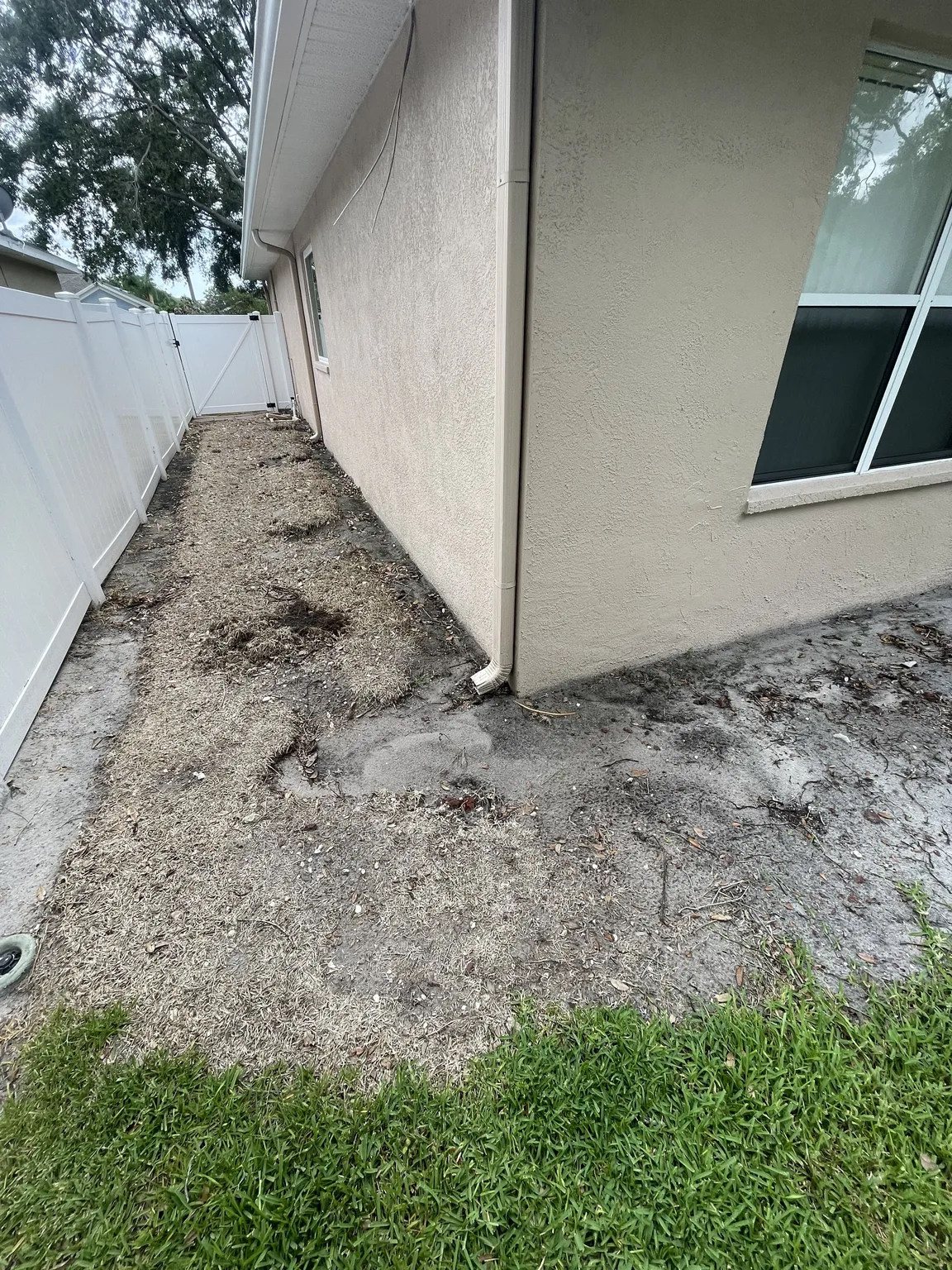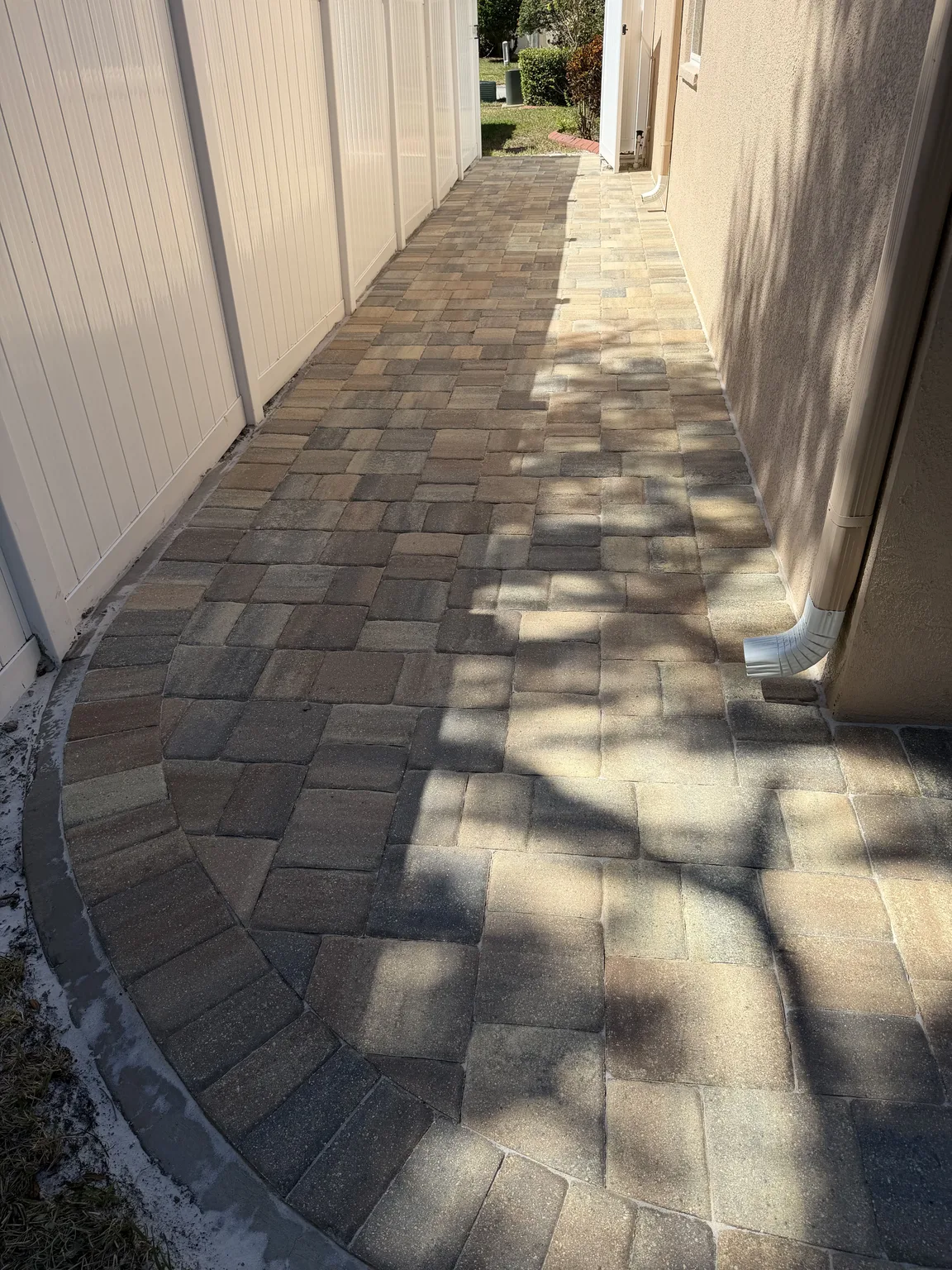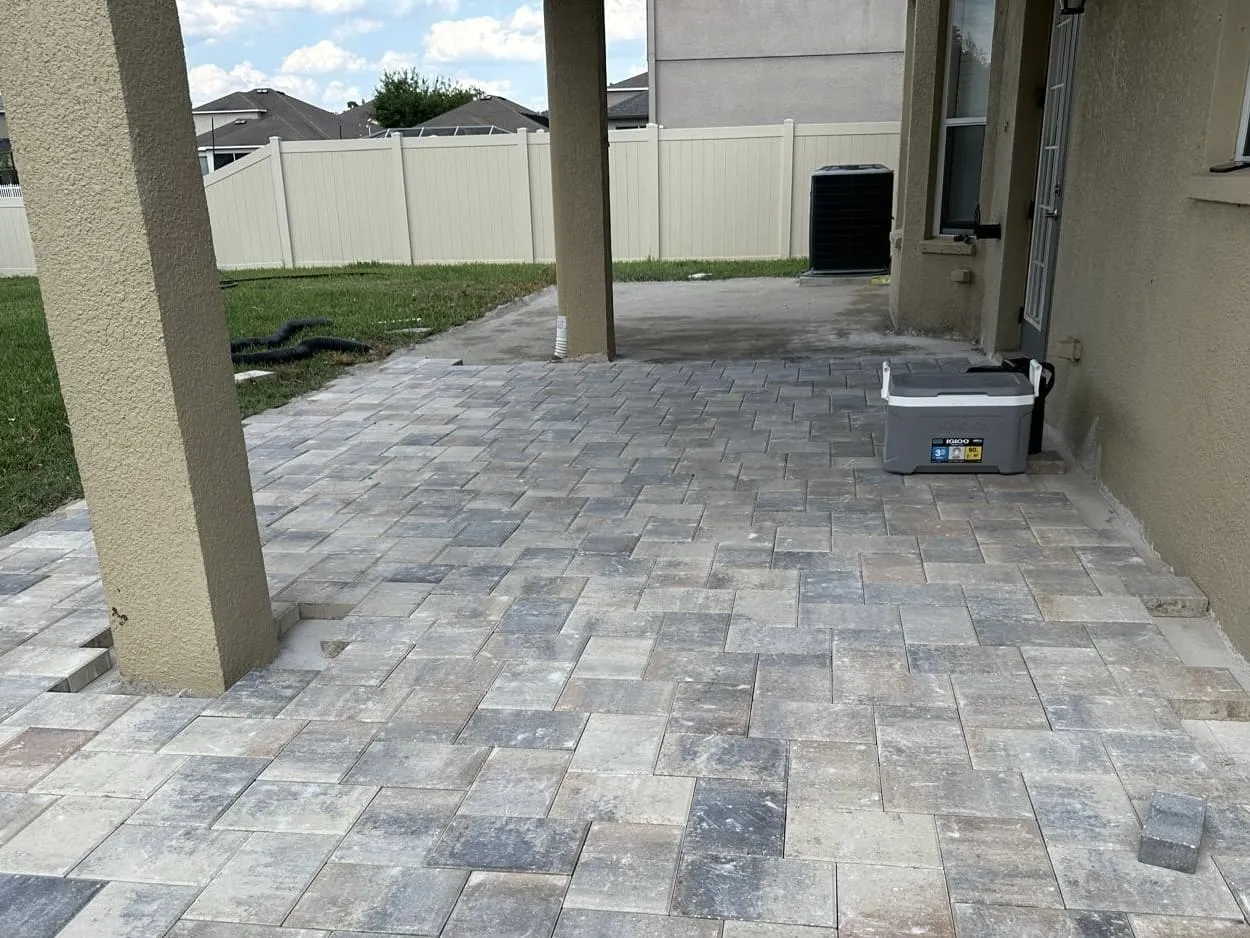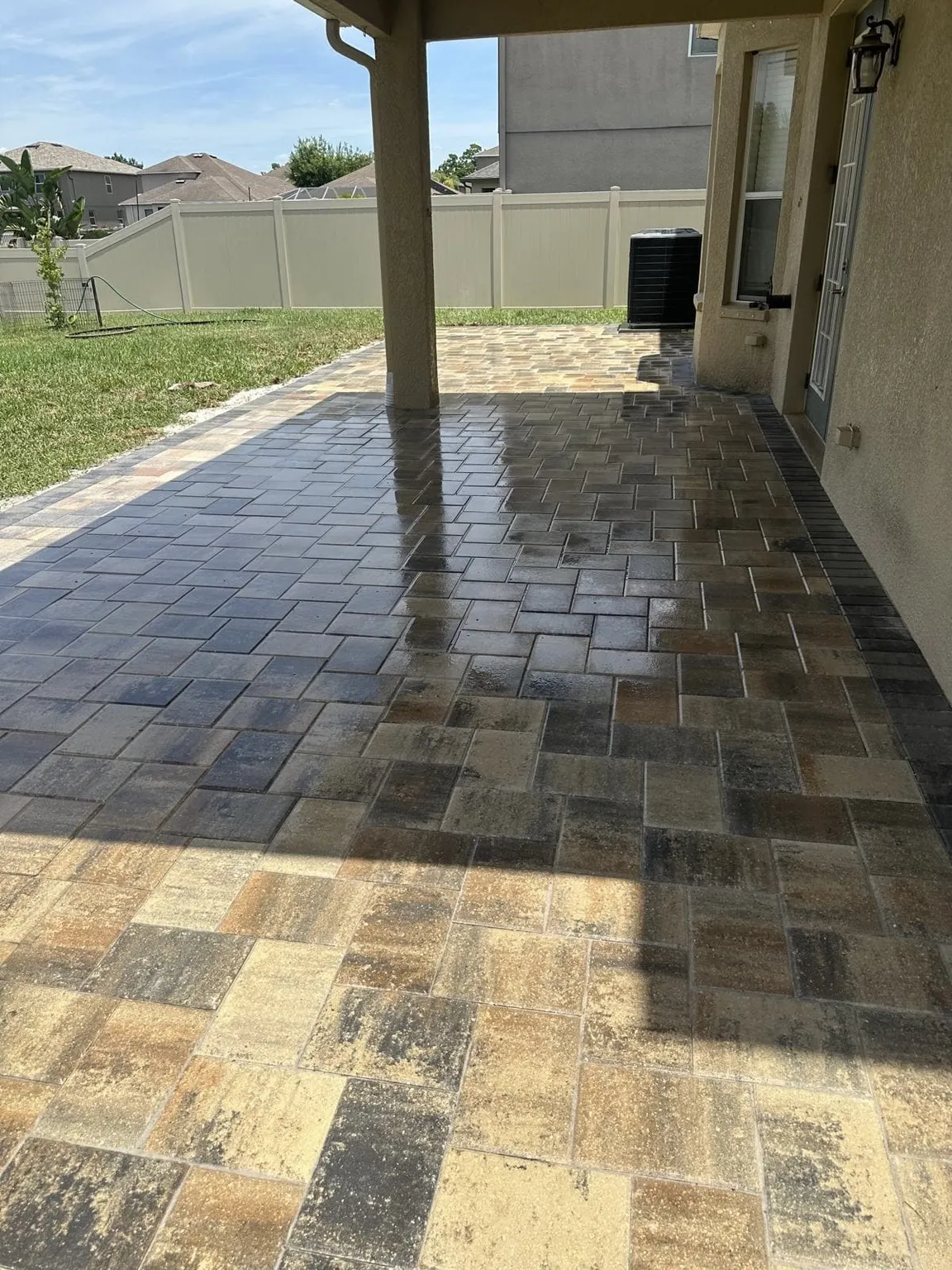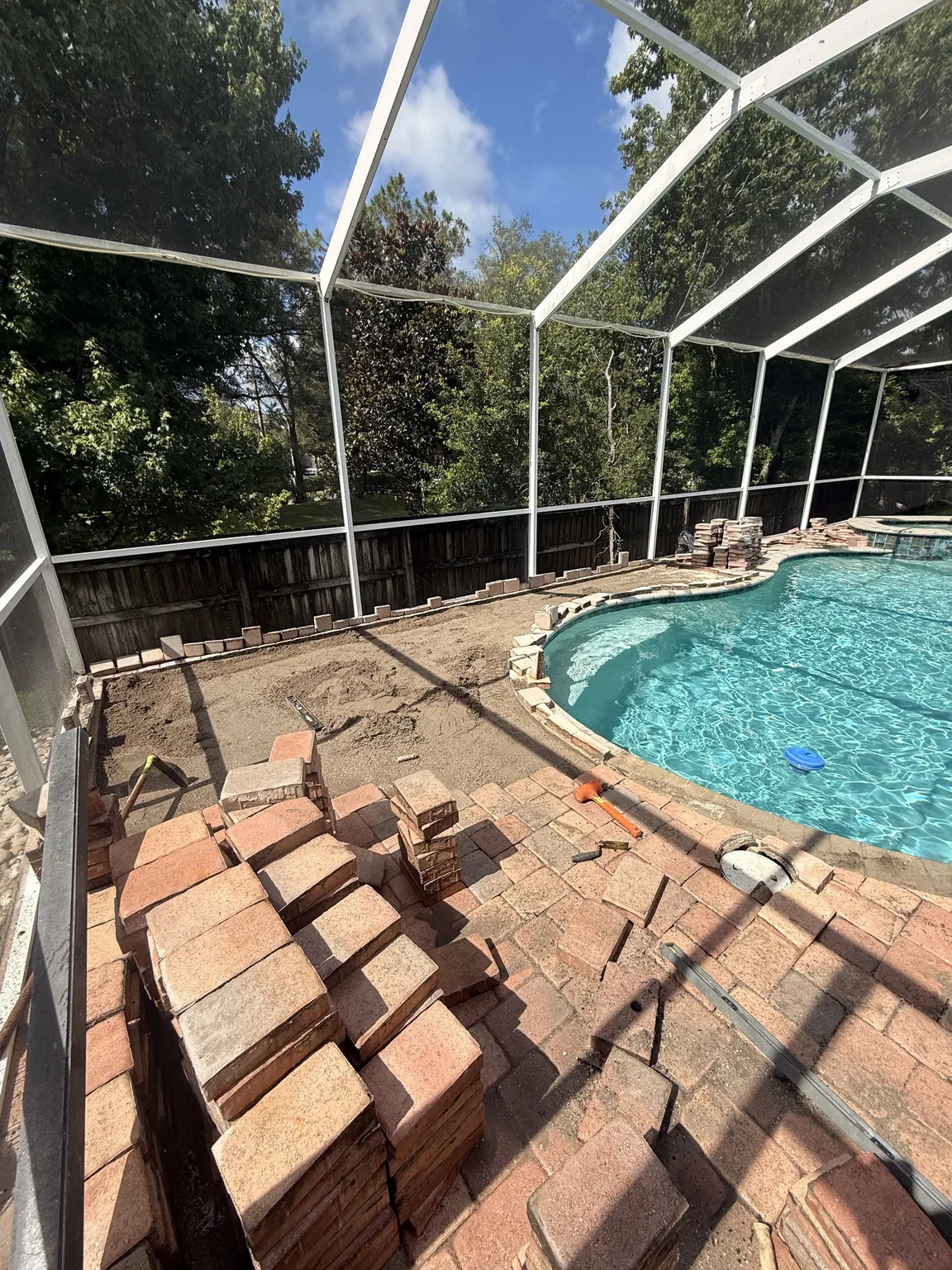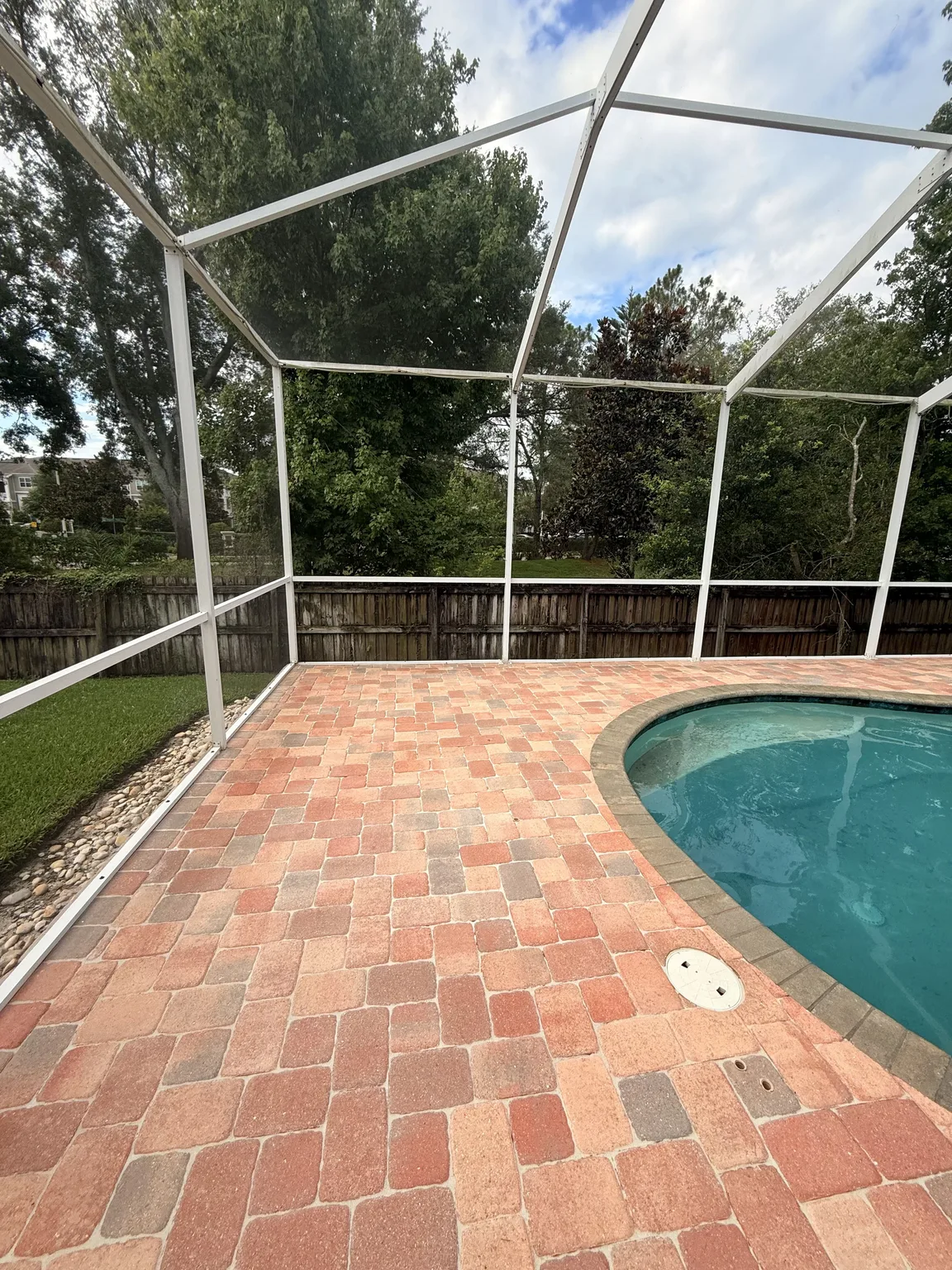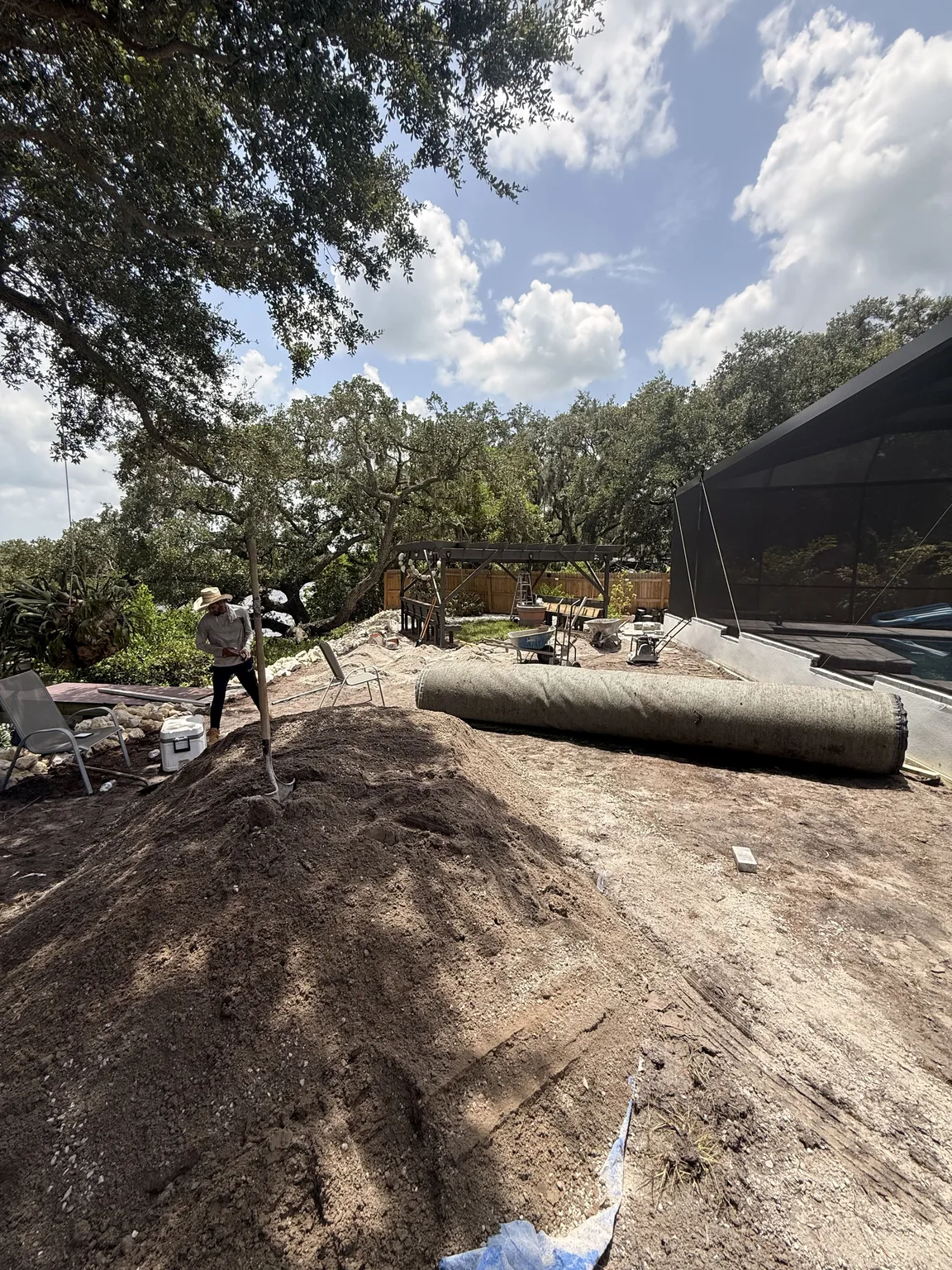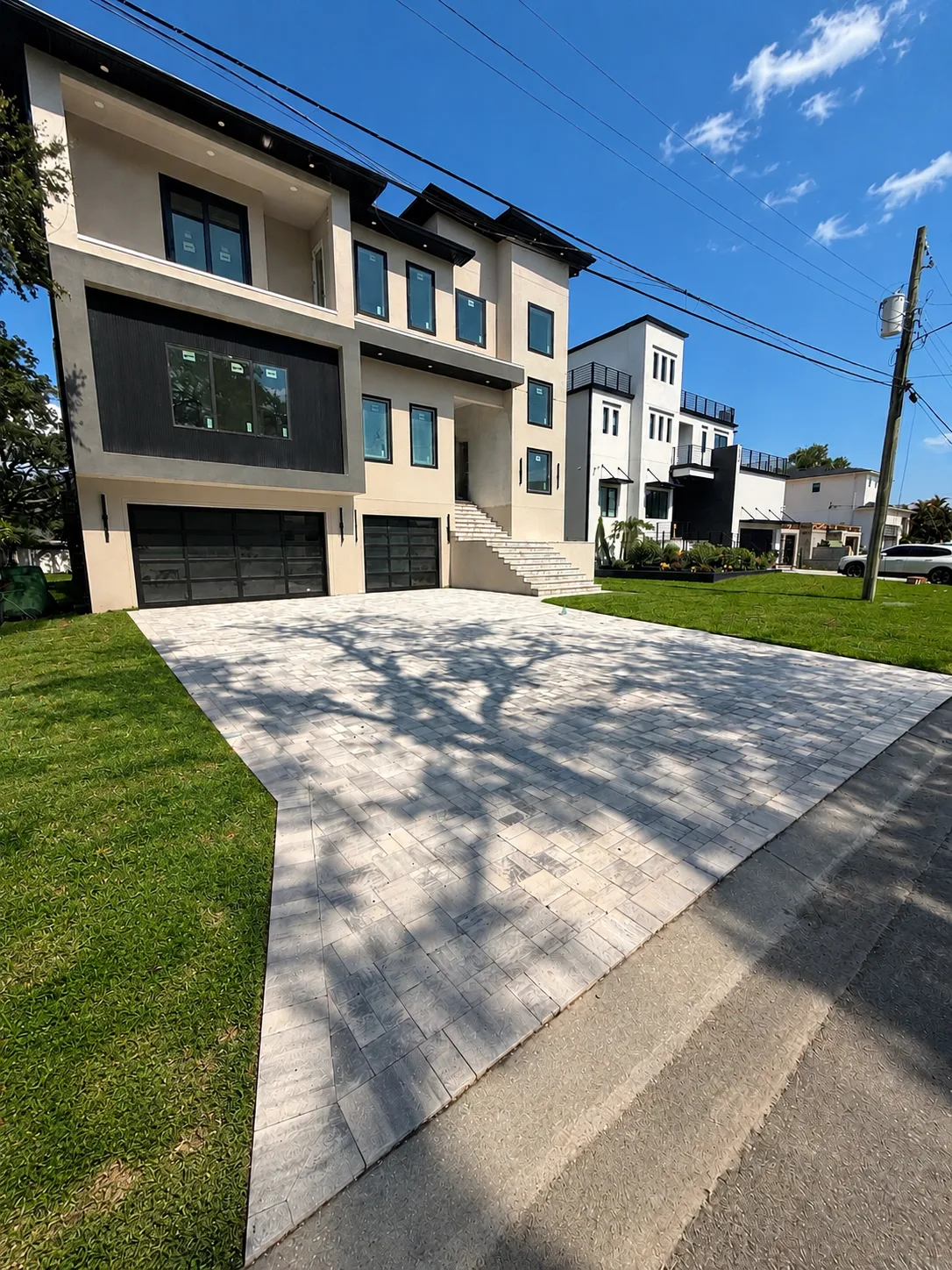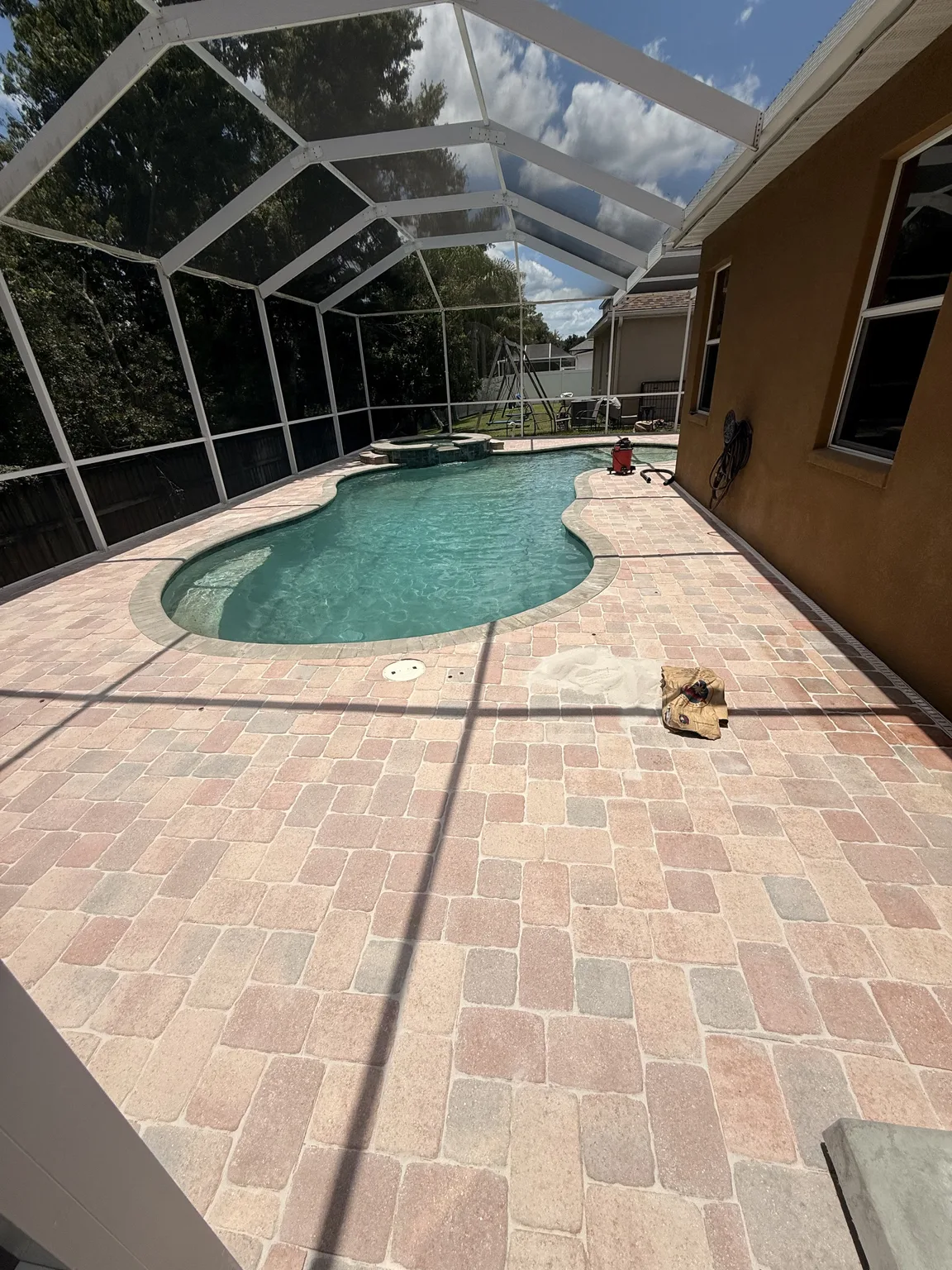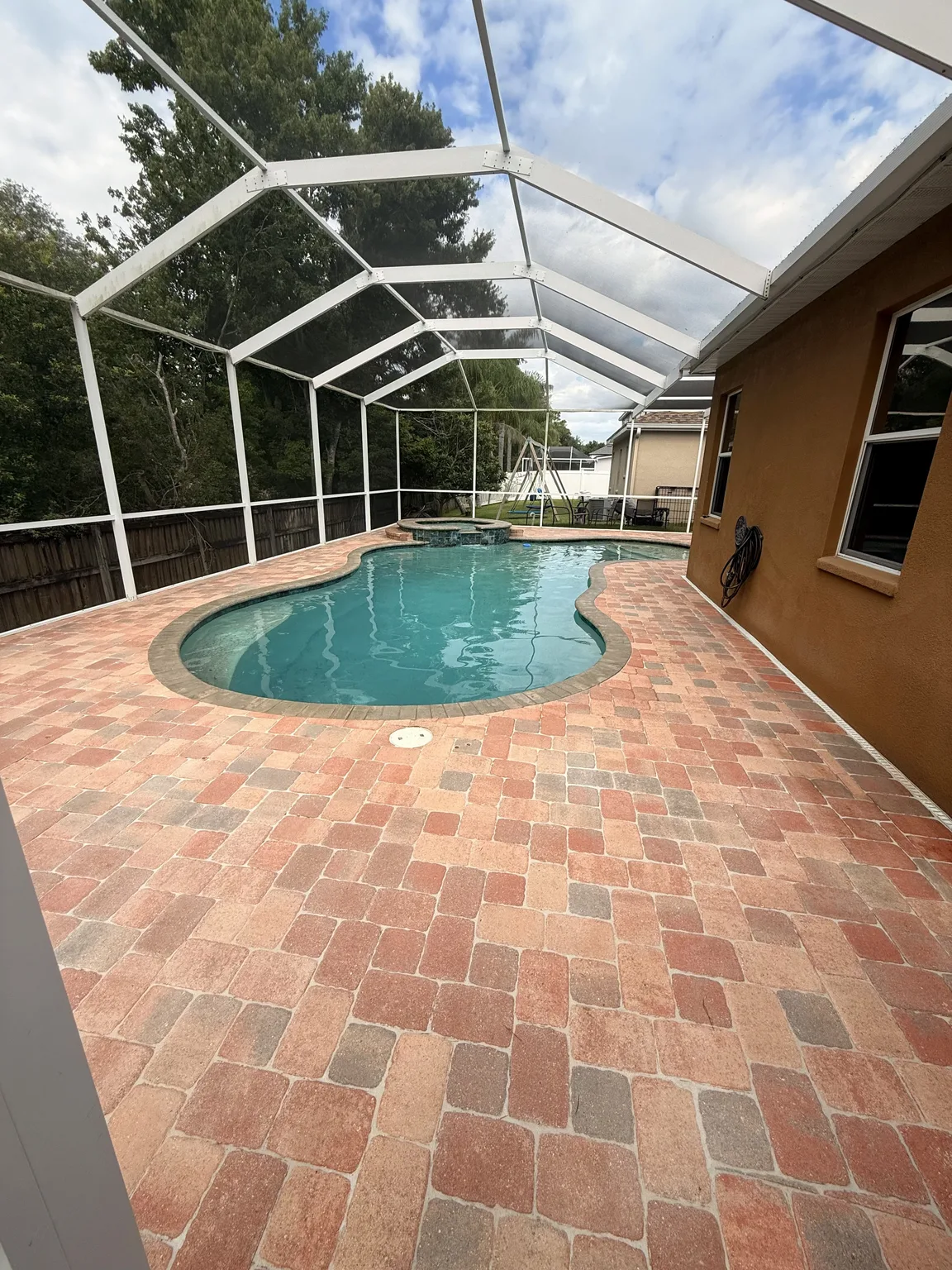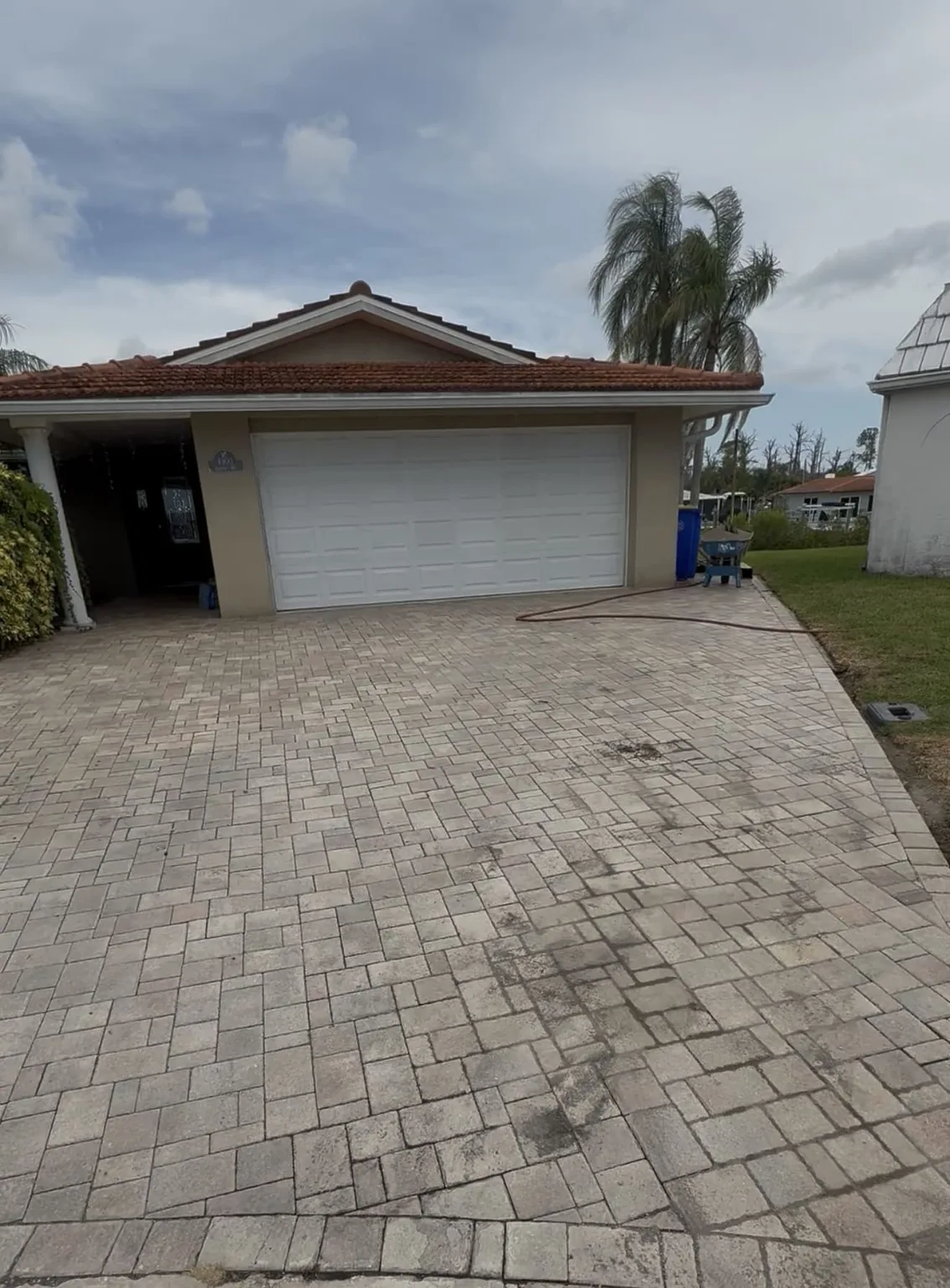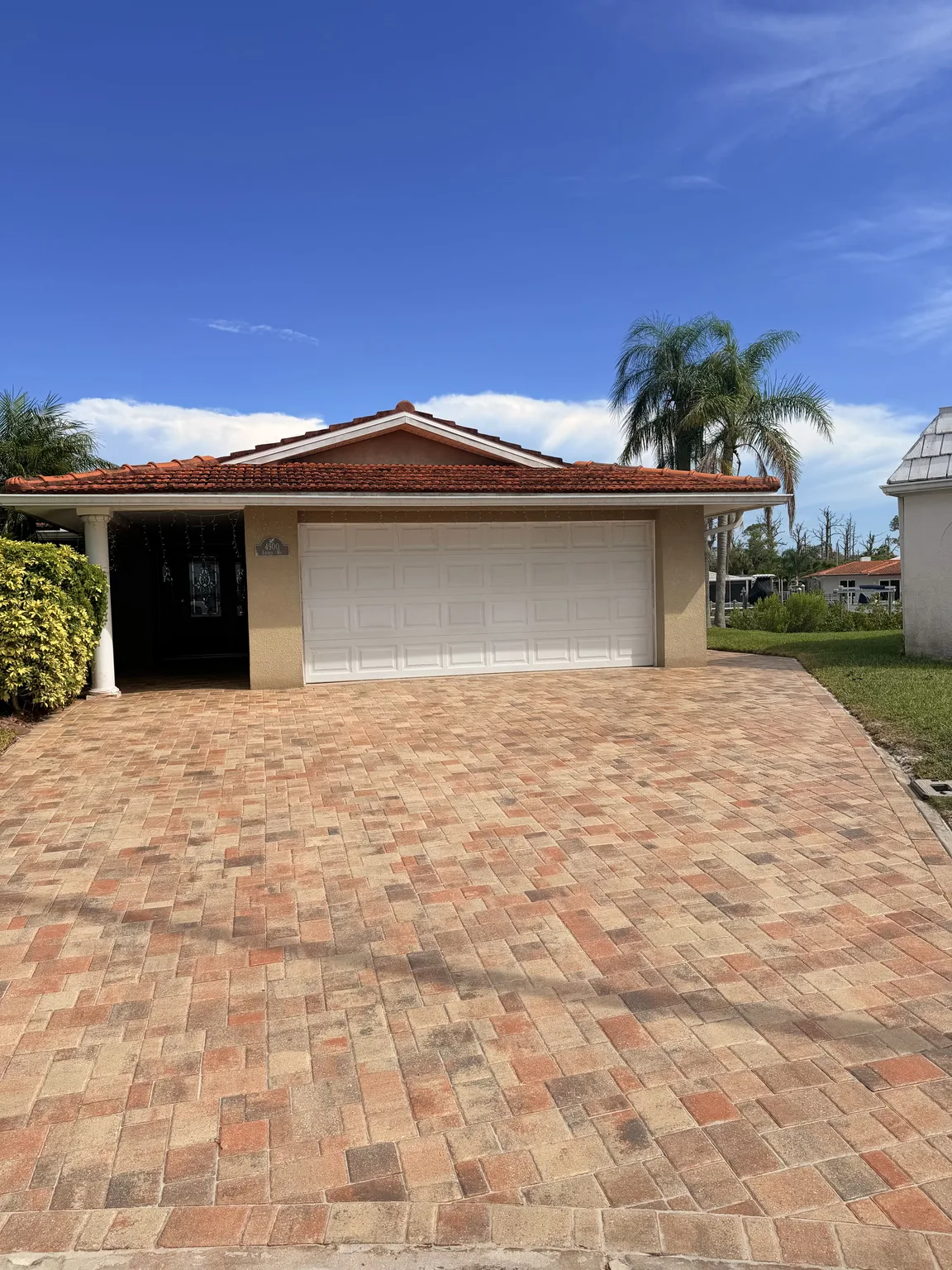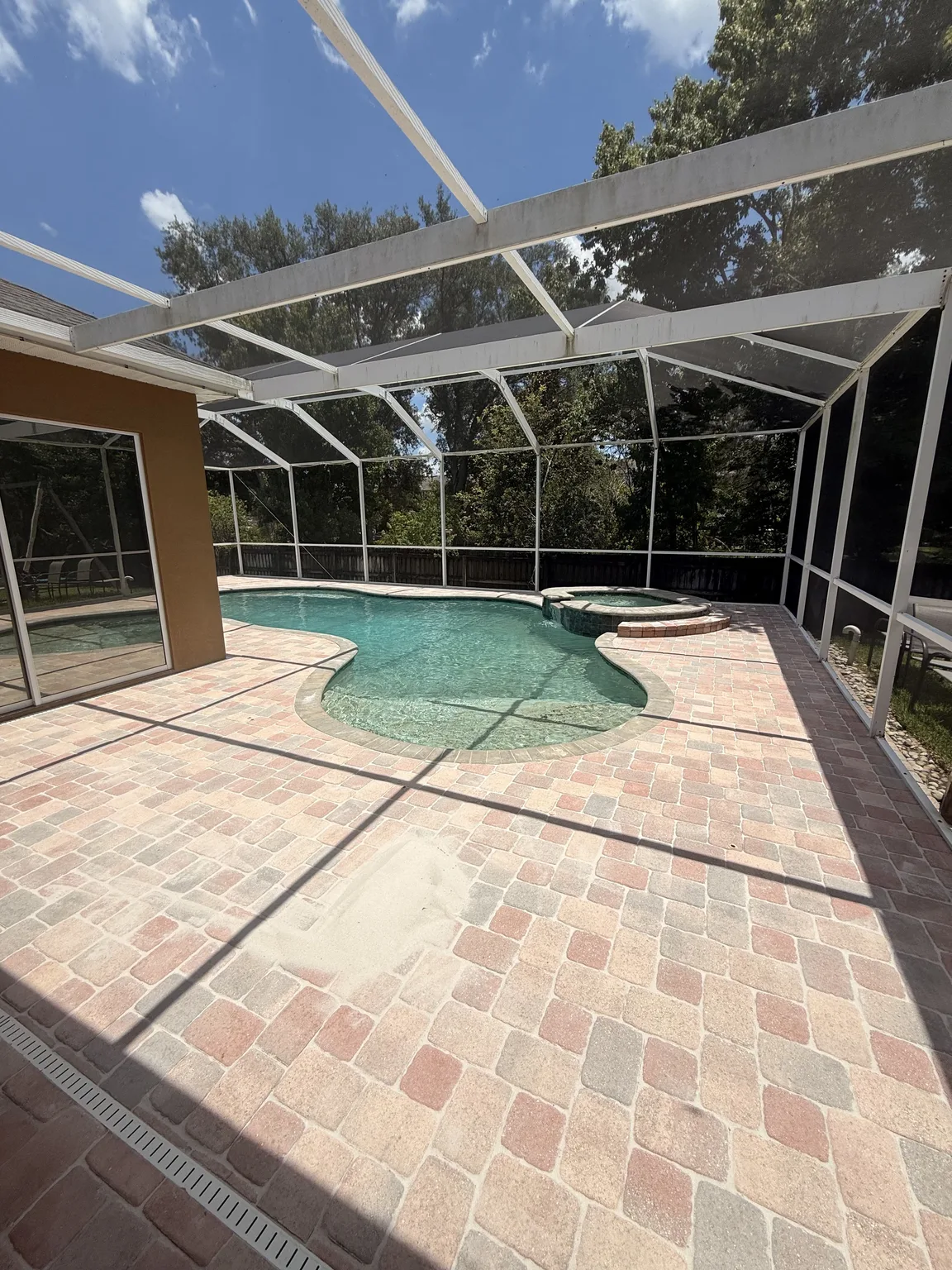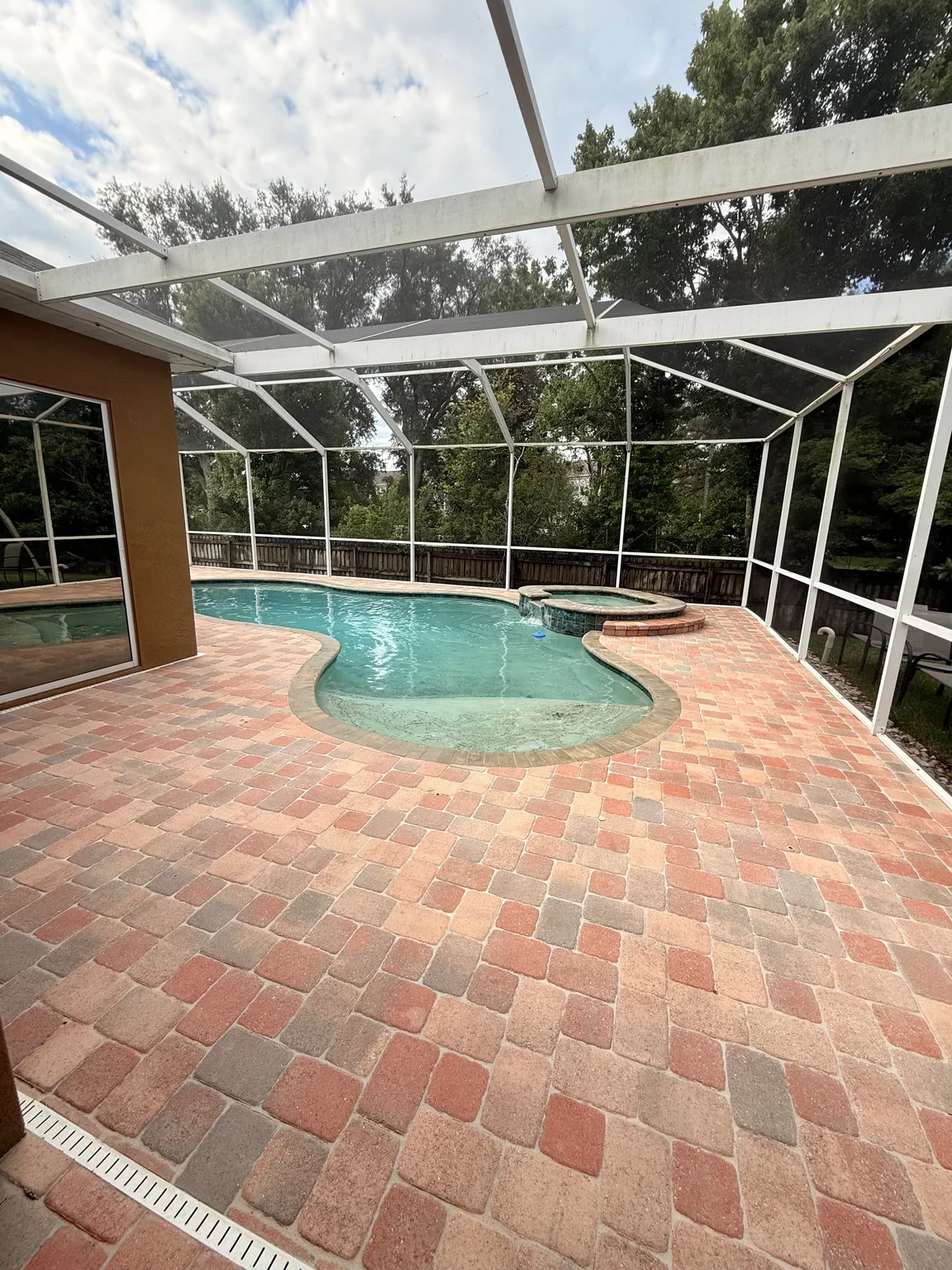
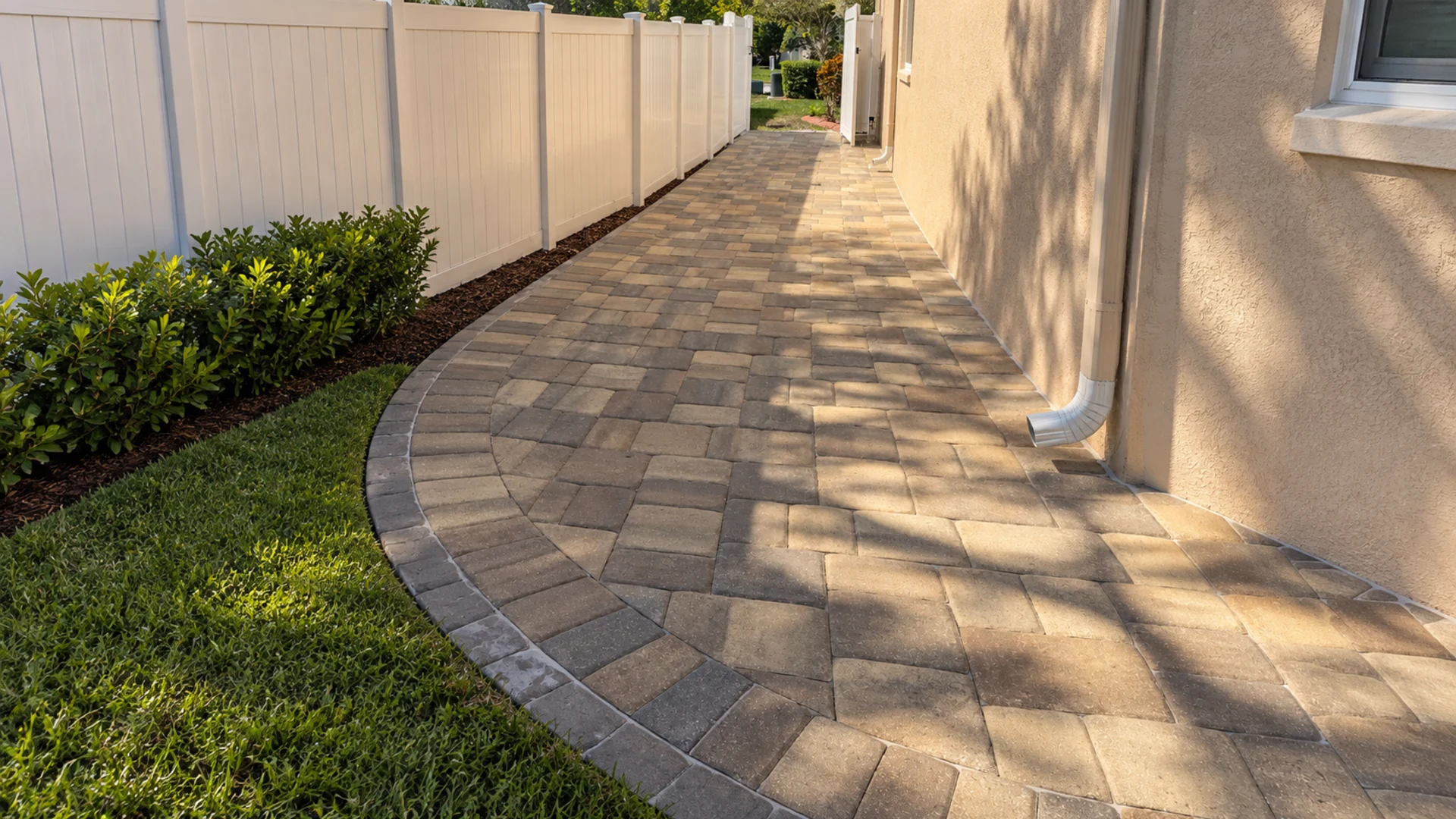
A curved paver walkway should make the walk feel easier, not merely make the plan look more decorative. In a Florida landscape, a curve can guide someone around a planting bed, preserve a tree’s visual importance, soften the approach to an entry, or reveal the home in stages. The successful route still has to serve everyday movement: people carrying groceries, guests finding the front door after dark, and owners reaching a side gate or outdoor living area without stepping through wet turf.
The best design begins with the path people already want to take. That is often more informative than a straight line drawn between two points on a plan. Notice where feet naturally turn after leaving the driveway, where a gate or door changes the direction of travel, and which views deserve to be framed rather than blocked. A curve earns its place when it responds to those conditions with a comfortable, clear route.
Trace the desire line before choosing the curve
A desire line is the route people take because it feels direct and sensible. It may run from a driveway parking spot to the entry, from a patio to a pool-side gate, or from a side door to a utility area. If a proposed path swings far away from that line just to create a dramatic shape, people may cut across the lawn or landscape bed. That is a design warning, not a reason to abandon curves entirely.
Start by marking the origin and destination, then walk between them at normal pace. Repeat the walk while carrying a bag or imagining two people passing. Look for door swings, parked vehicles, hose bibs, gates, utility equipment, and garden edges that affect where the pavement can go. The route should solve these practical constraints before decorative choices such as color blend, pattern, or a contrasting border are finalized.
Mock up a curved paver walkway at full scale
A garden hose or marking line is one of the simplest tools for testing a curved paver walkway. Lay it on the ground, stand back from the street and the entry, then walk its inside and outside edges. Move it a few inches at a time until the path feels natural from both viewpoints. This reveals problems a scaled sketch can hide: a turn that tightens too abruptly, a curve that crowds a planting bed, or a route that misses the preferred approach to a door.
- Mark the actual start and finish points, including the usable landing area at each end.
- Check the route from the direction most visitors will arrive, not only from inside the yard.
- Walk beside the line to see whether it preserves room for plants, mowing, and access.
- View it at dusk if lighting placement or nighttime navigation is a concern.
- Photograph the mockup from several angles so choices can be discussed before material is installed.
The mockup is also the right moment to question a curve that appears elegant from one viewpoint but awkward when walked. Adjusting a hose is easy; rebuilding a completed path is not. A site review can then verify grades, existing roots or utilities, and the relationship to nearby structures before a construction approach is selected.
Three curve languages, explained plainly
A constant-radius curve turns at a consistent rate, like a clean section of a circle. It often suits a path that wraps a rounded bed or makes one calm move from driveway to entry. Its visual steadiness can be especially effective in a formal front yard, but it must still land cleanly at both ends. Forcing a constant radius between mismatched endpoints can create an odd final kink.
A compound curve changes radius as it moves. One portion may be broad near the driveway, then tighten gently as it approaches a gate or a focal planting area. This can feel more natural in a landscape with several features, yet it needs careful layout so the change is intentional rather than accidental. The eye should read a graceful adjustment, not a series of unrelated bends.
A gentle offset is less of a sweeping arc and more of a measured shift around an obstacle or bed. It can be a good choice when the most efficient route is nearly straight but a tree, specimen planting, or entry view needs room. Because it is restrained, an offset often works well in compact yards where a large curve would consume valuable planting or walking space.
Comfort matters more than curve complexity
Wide, gentle movement usually feels more welcoming than a sequence of tight turns. The outside edge of a curve carries more visual length, while the inside edge can become constricted if the path is too narrow or the bend is too sharp. Test it with the way the path will actually be used. A route to a front door should not make visitors thread around plantings, and a connection to a gate should leave enough room to manage it comfortably.
Path width is a site-specific design decision rather than a number to apply blindly. Consider whether one person, two people, mobility needs, garden equipment, or bins will use the route. Also consider the surrounding plants at mature size, not just the open space visible on installation day. A walkway that is technically clear at first can feel much smaller after shrubs lean into the edge.
Border continuity makes the curve believable
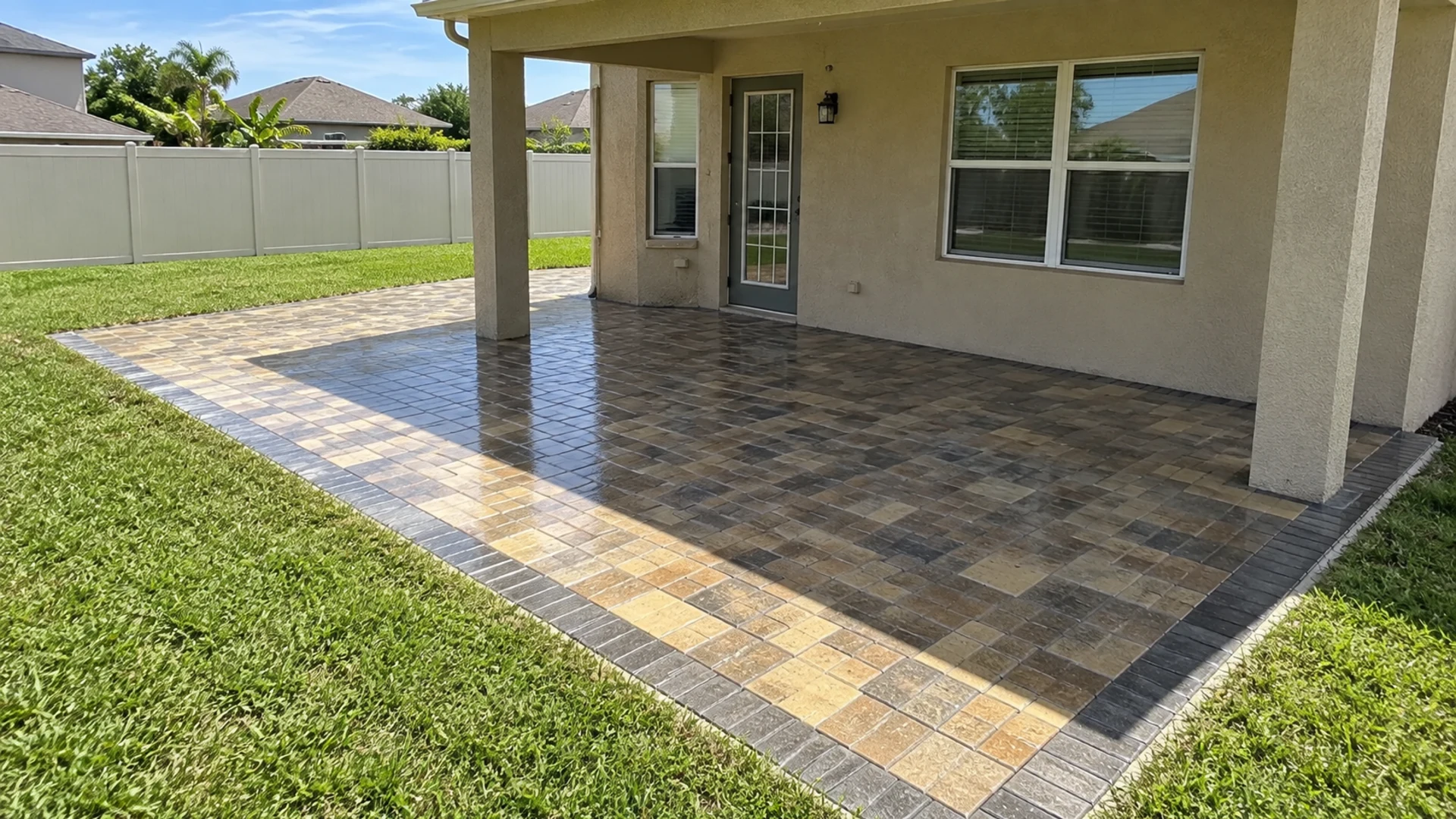
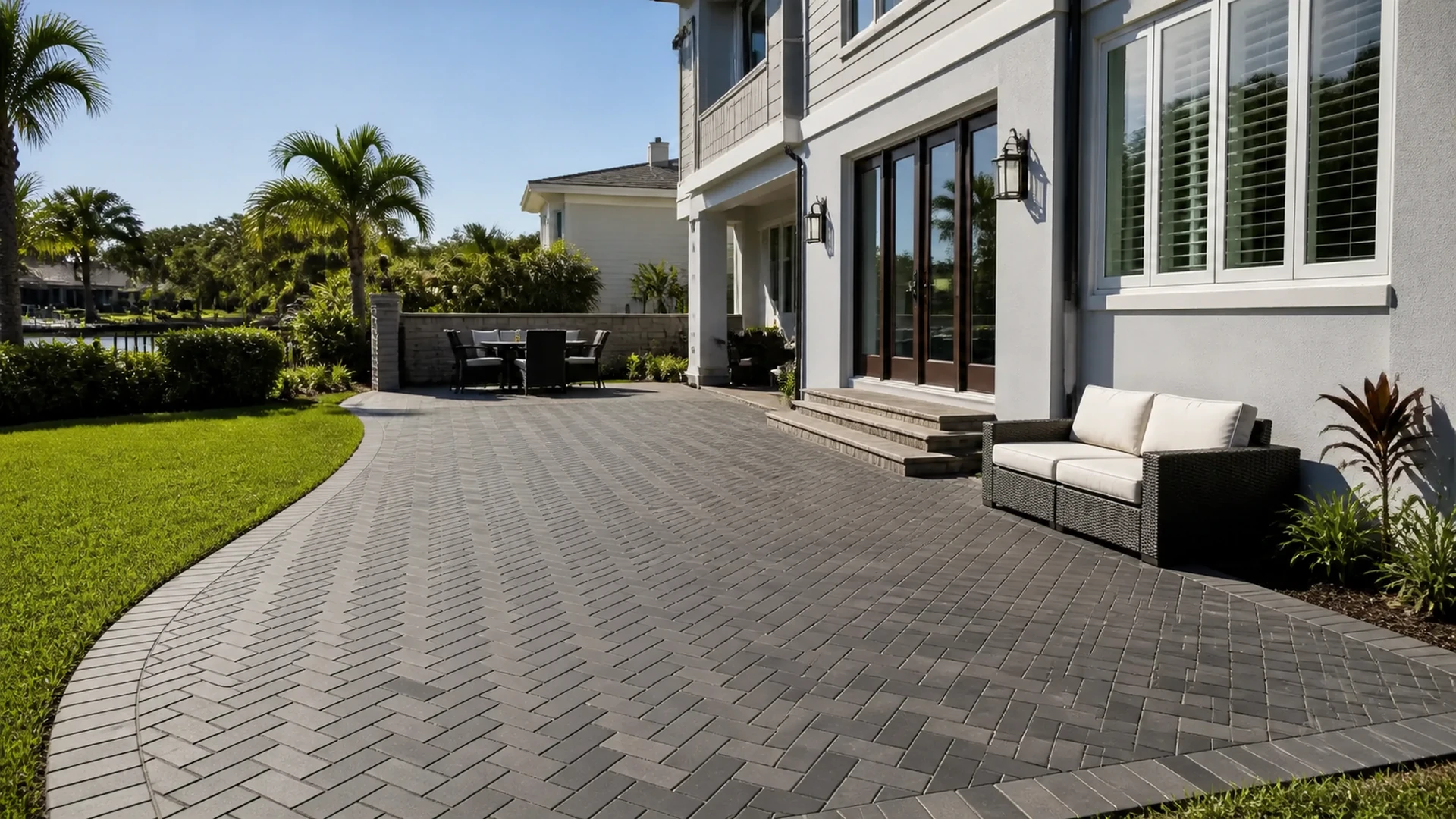
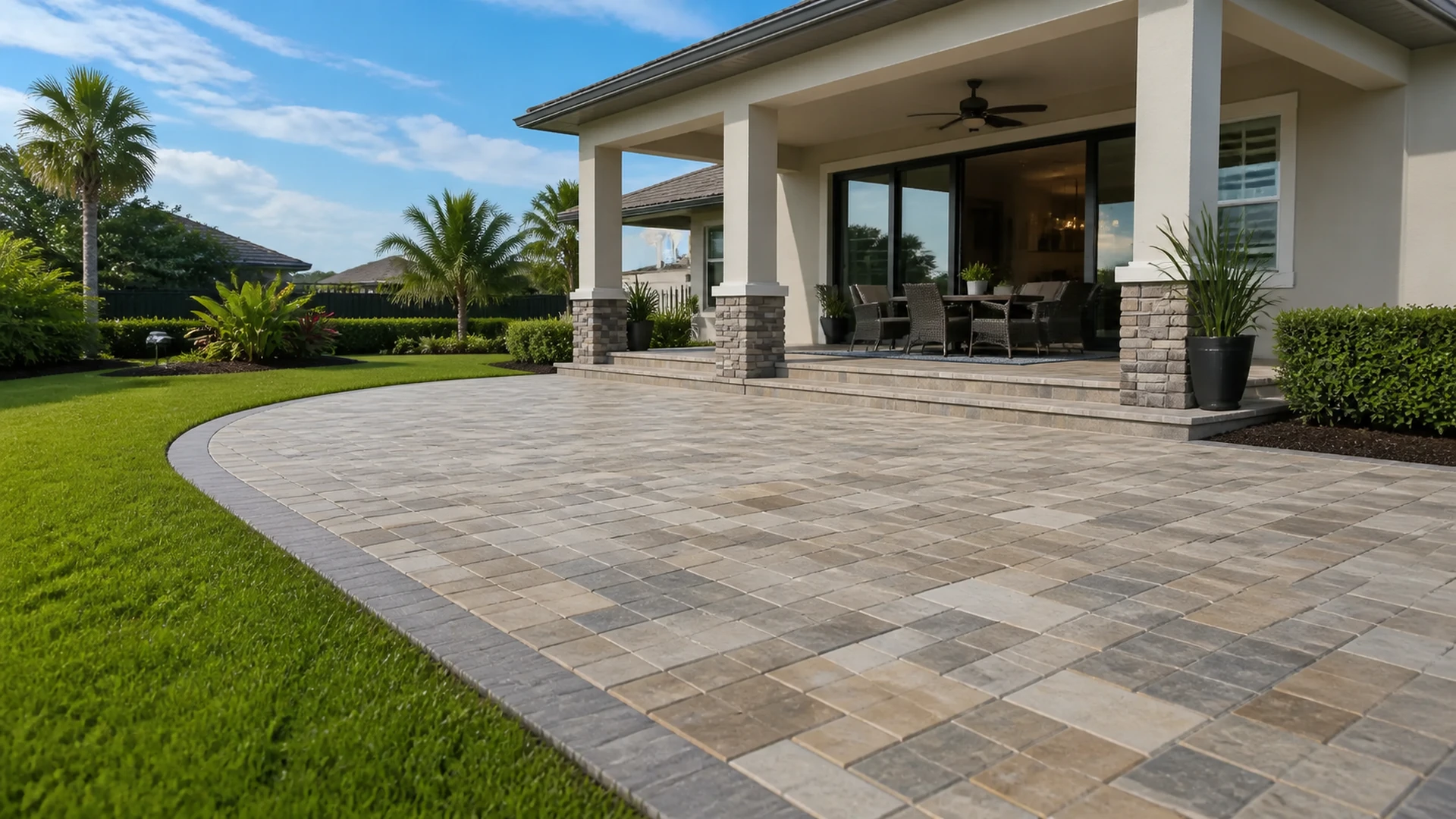
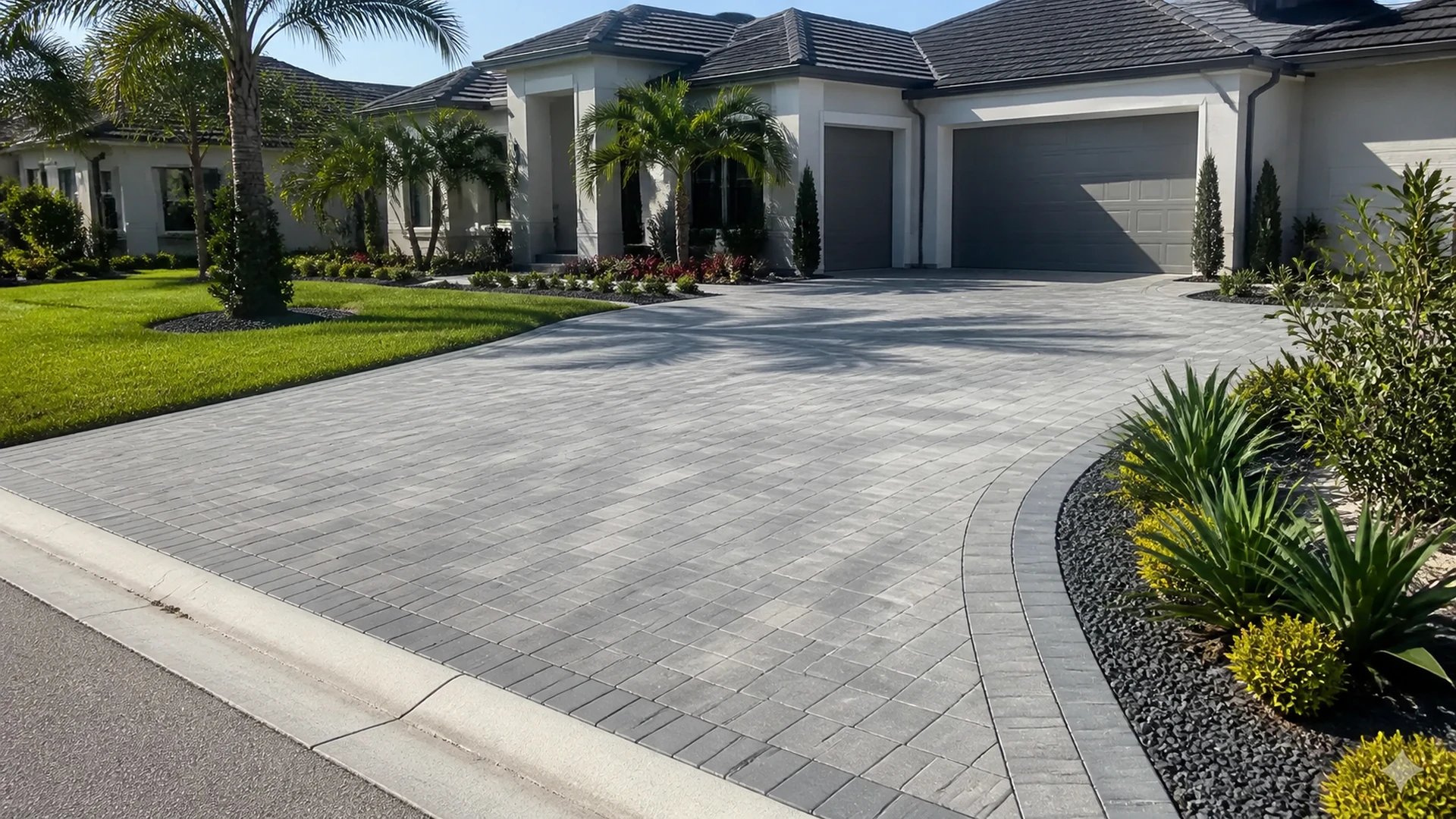
On a curved paver walkway, the border is more than a decorative outline. It gives the route a readable edge and helps the curve look deliberate. A border should follow the path continuously through turns and transitions rather than disappearing at the difficult part of the layout. The paver units, geometry, and cut planning all influence whether that edge reads smoothly from standing height and while walking.
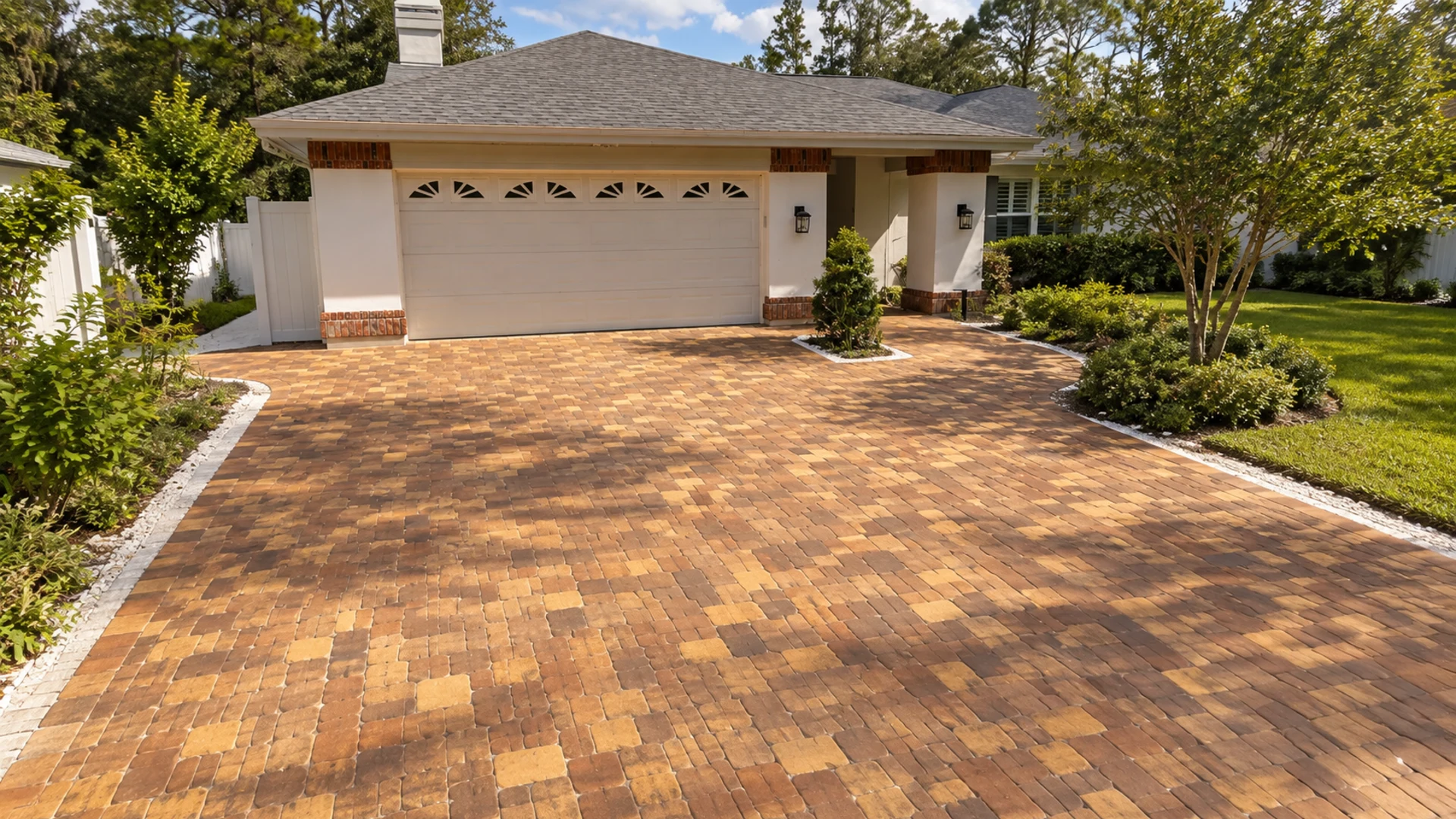
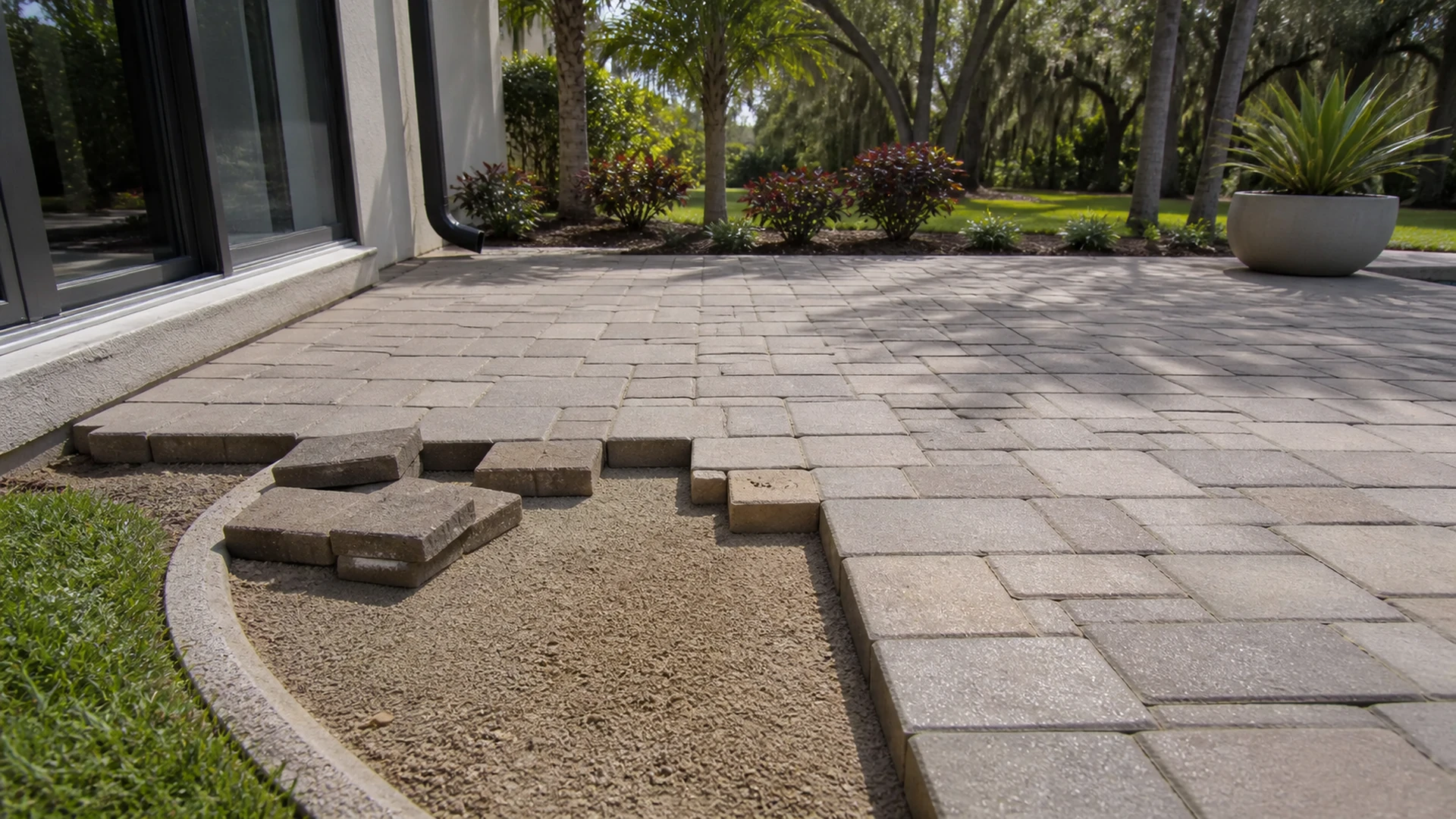
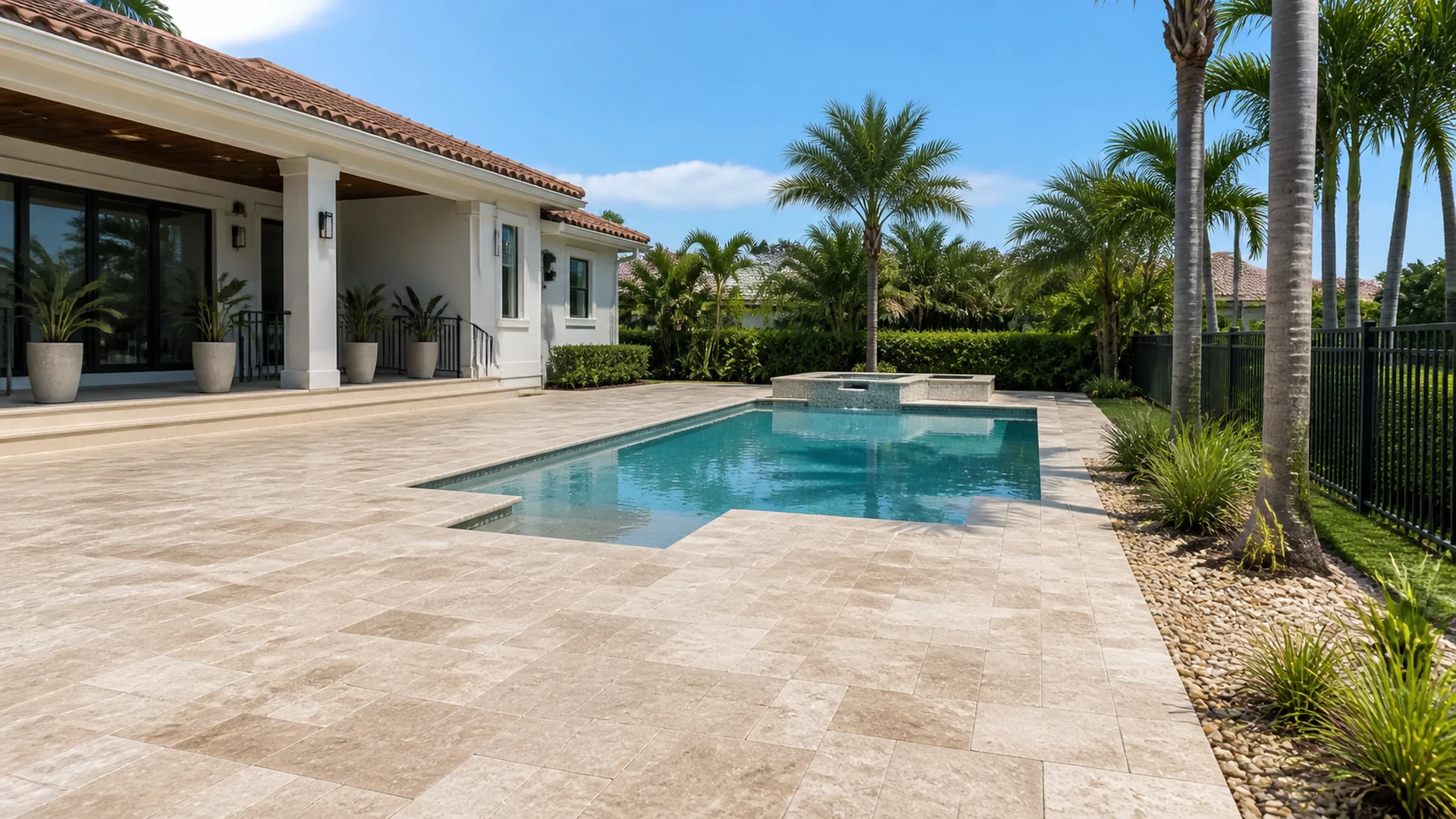
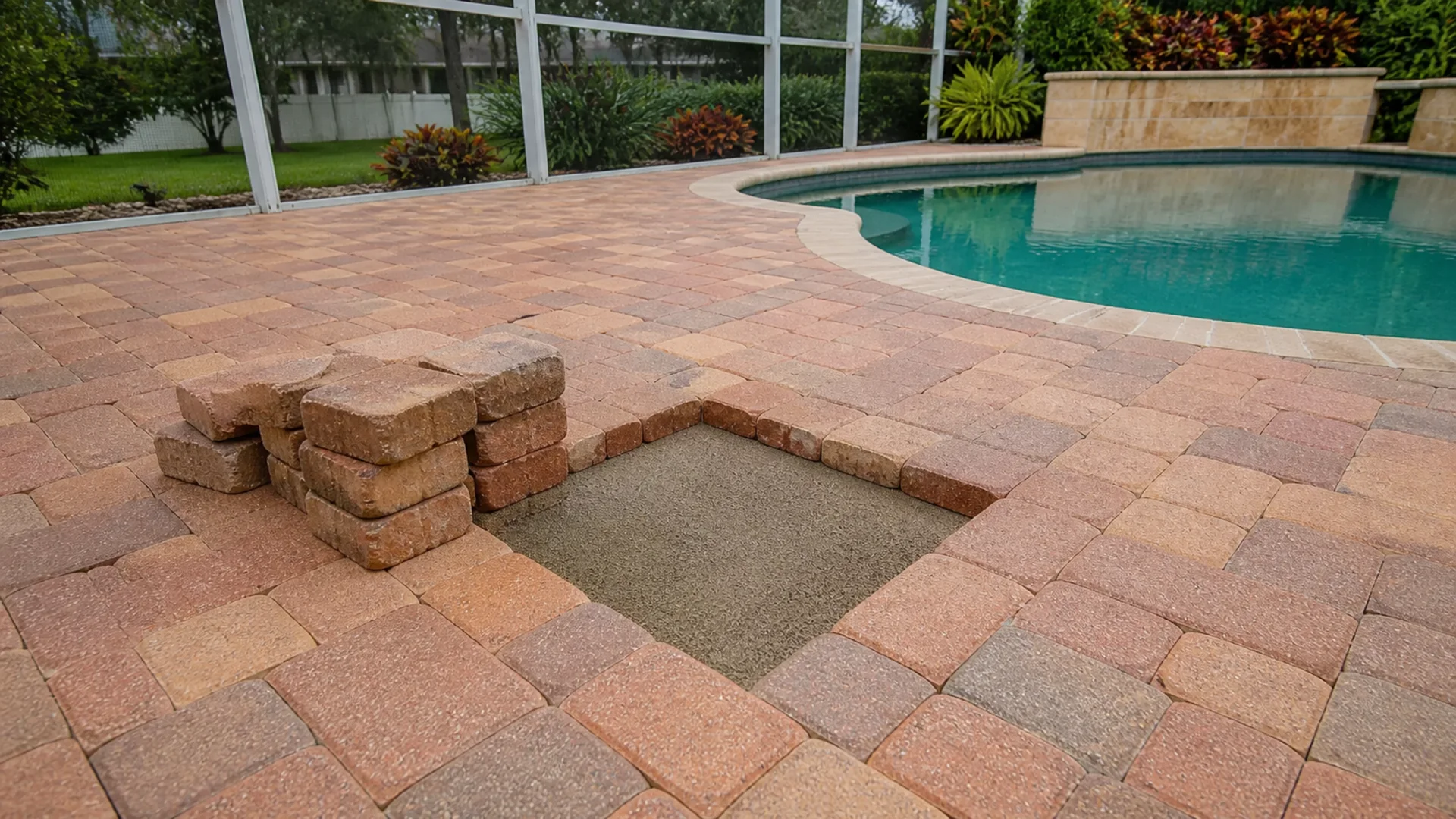
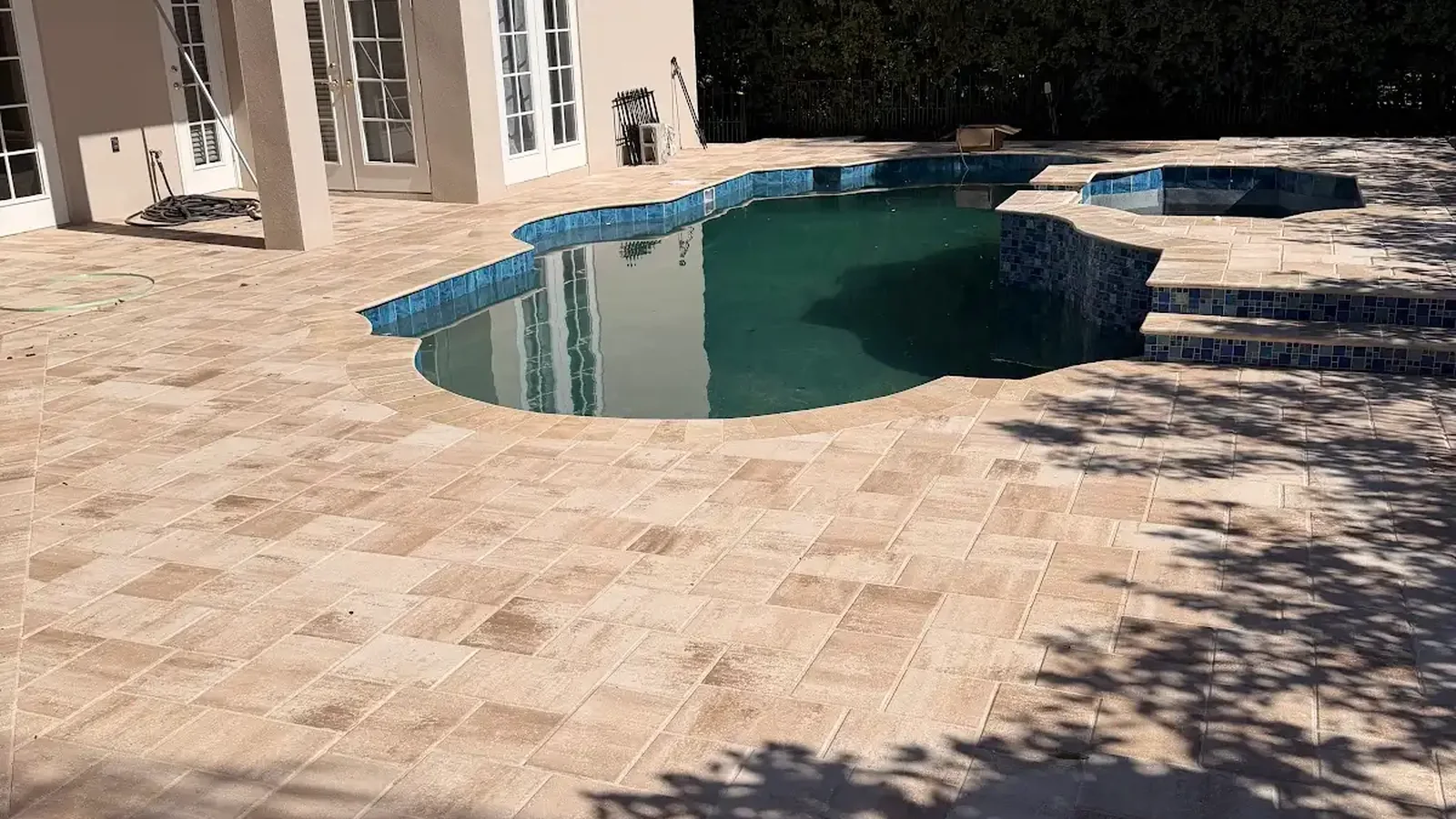
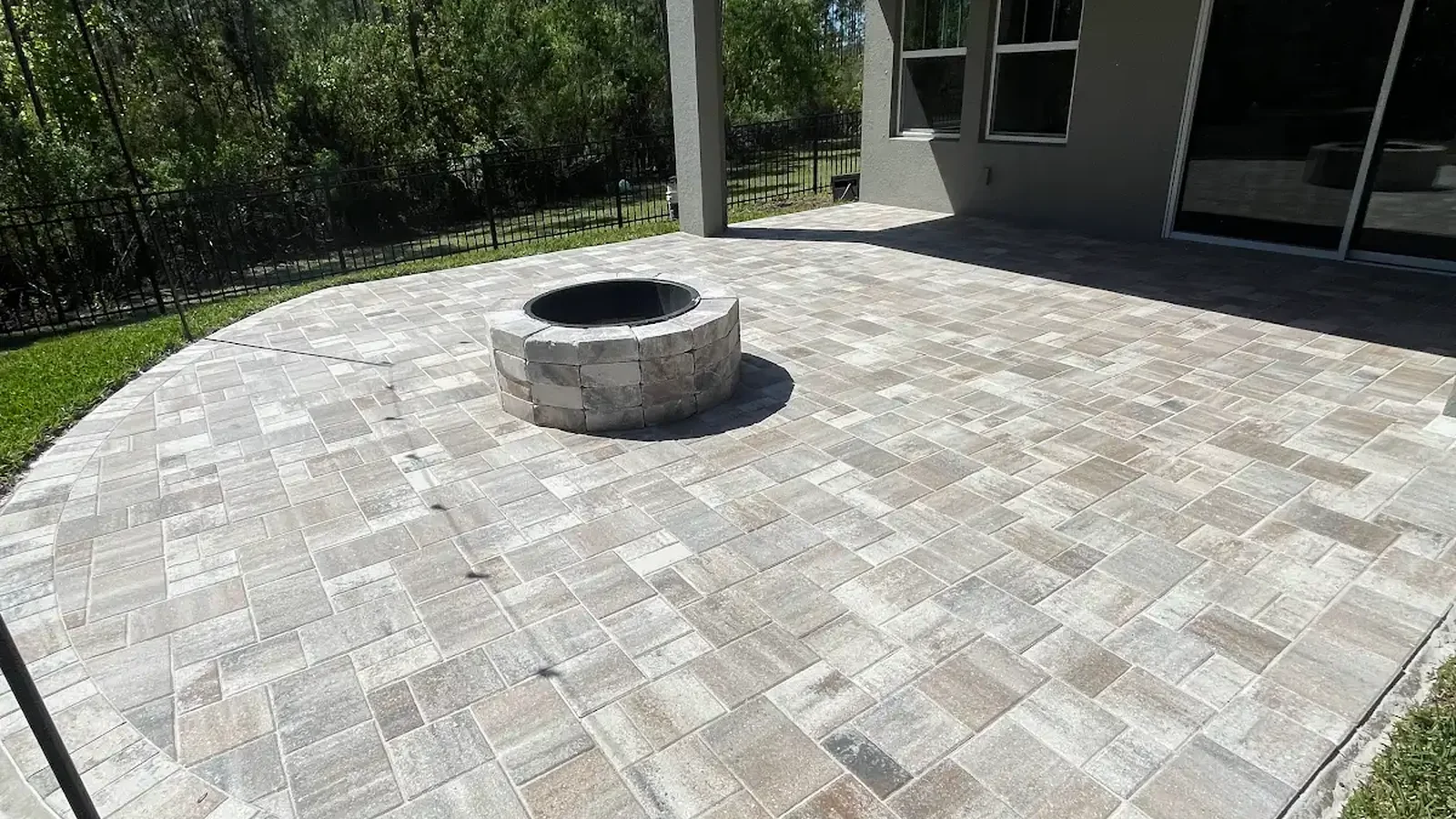
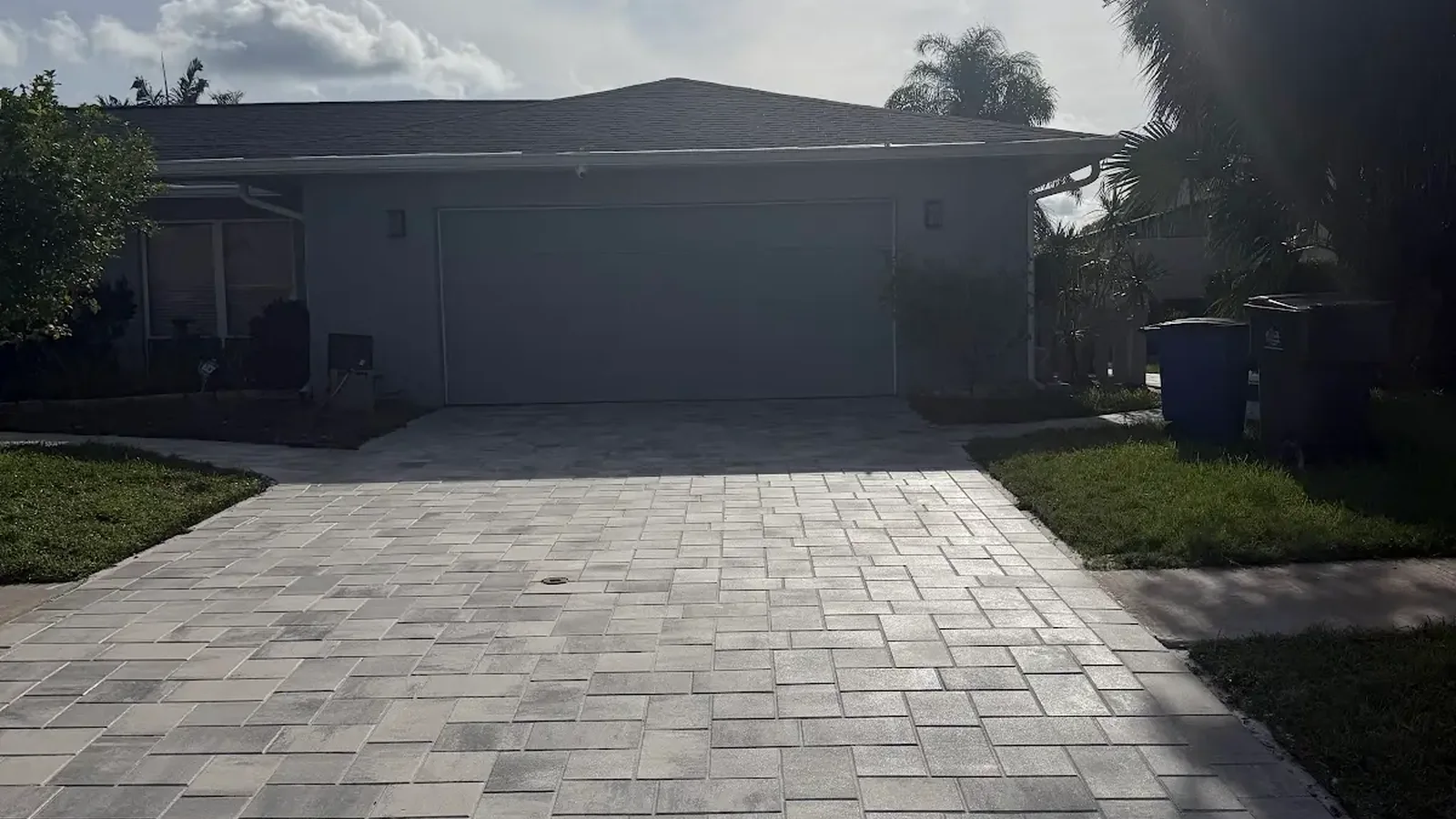
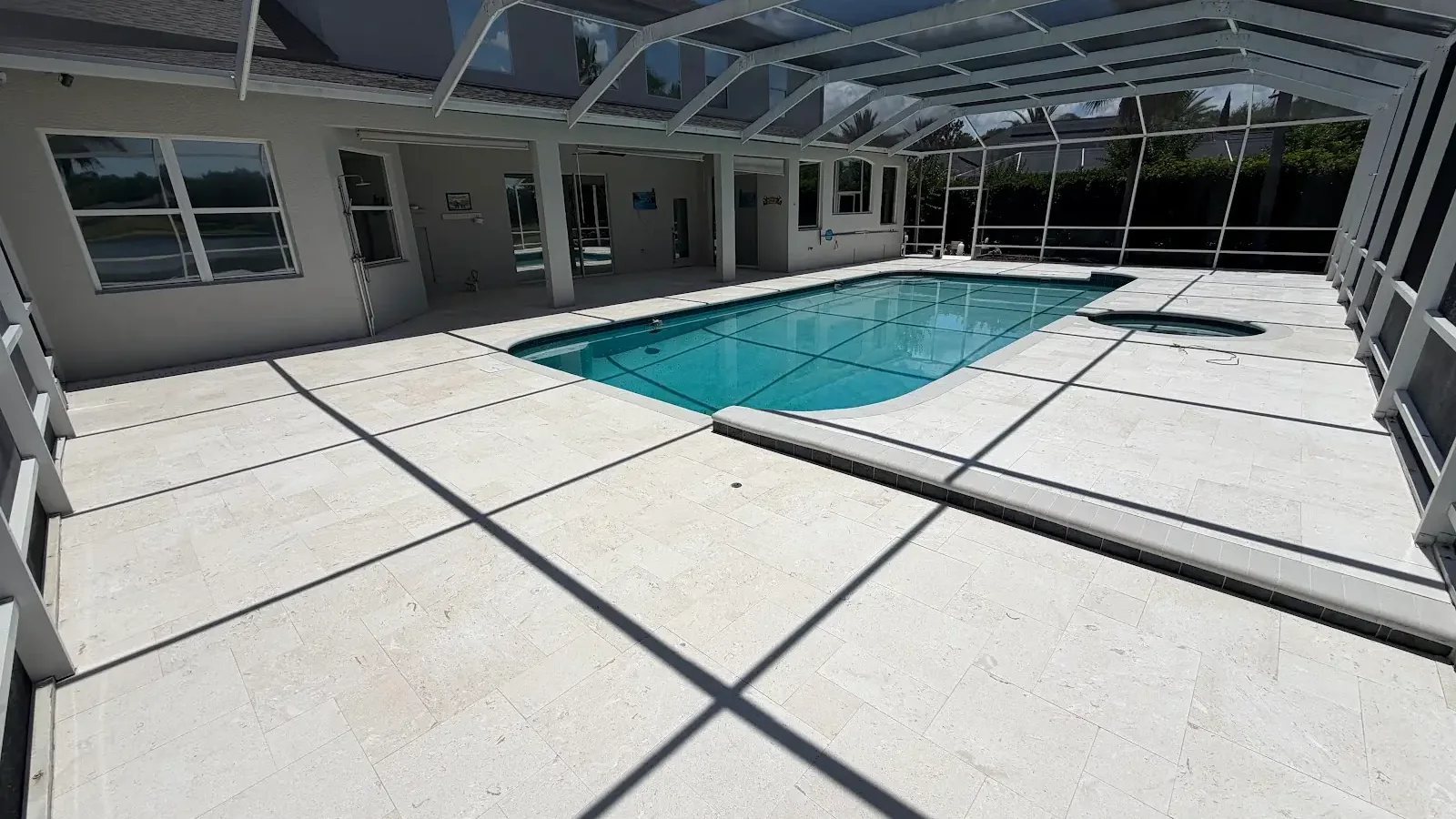
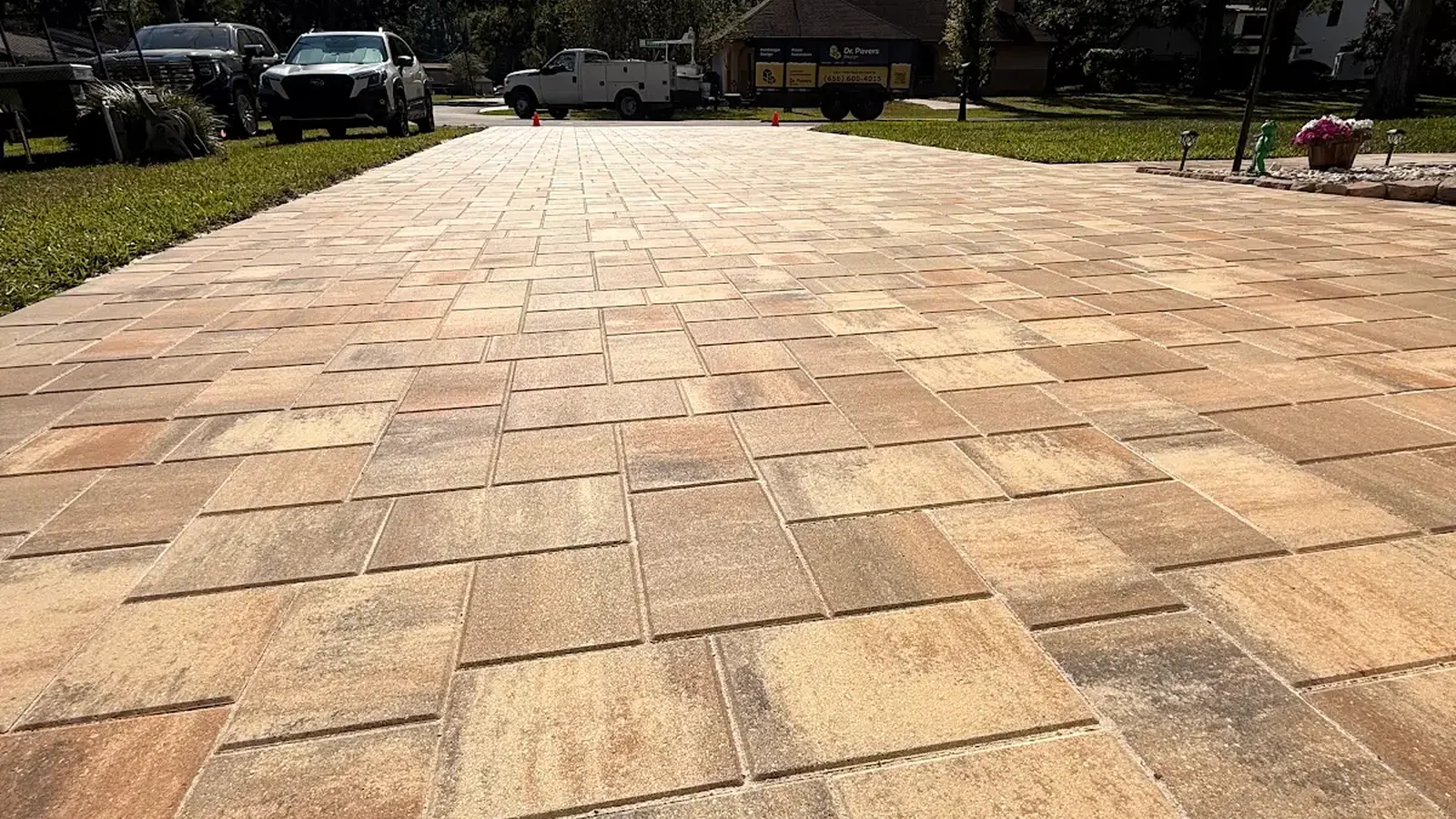
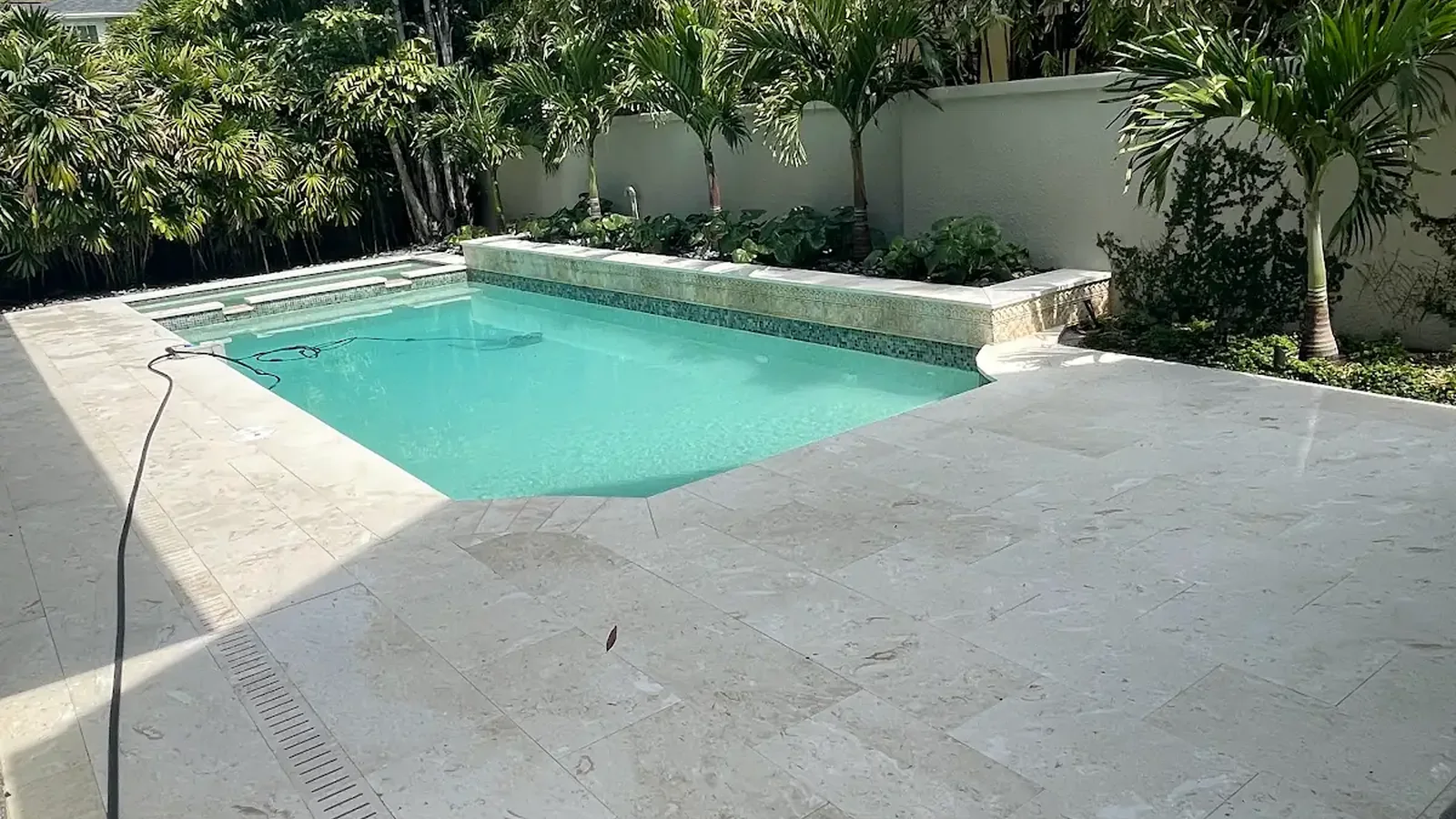
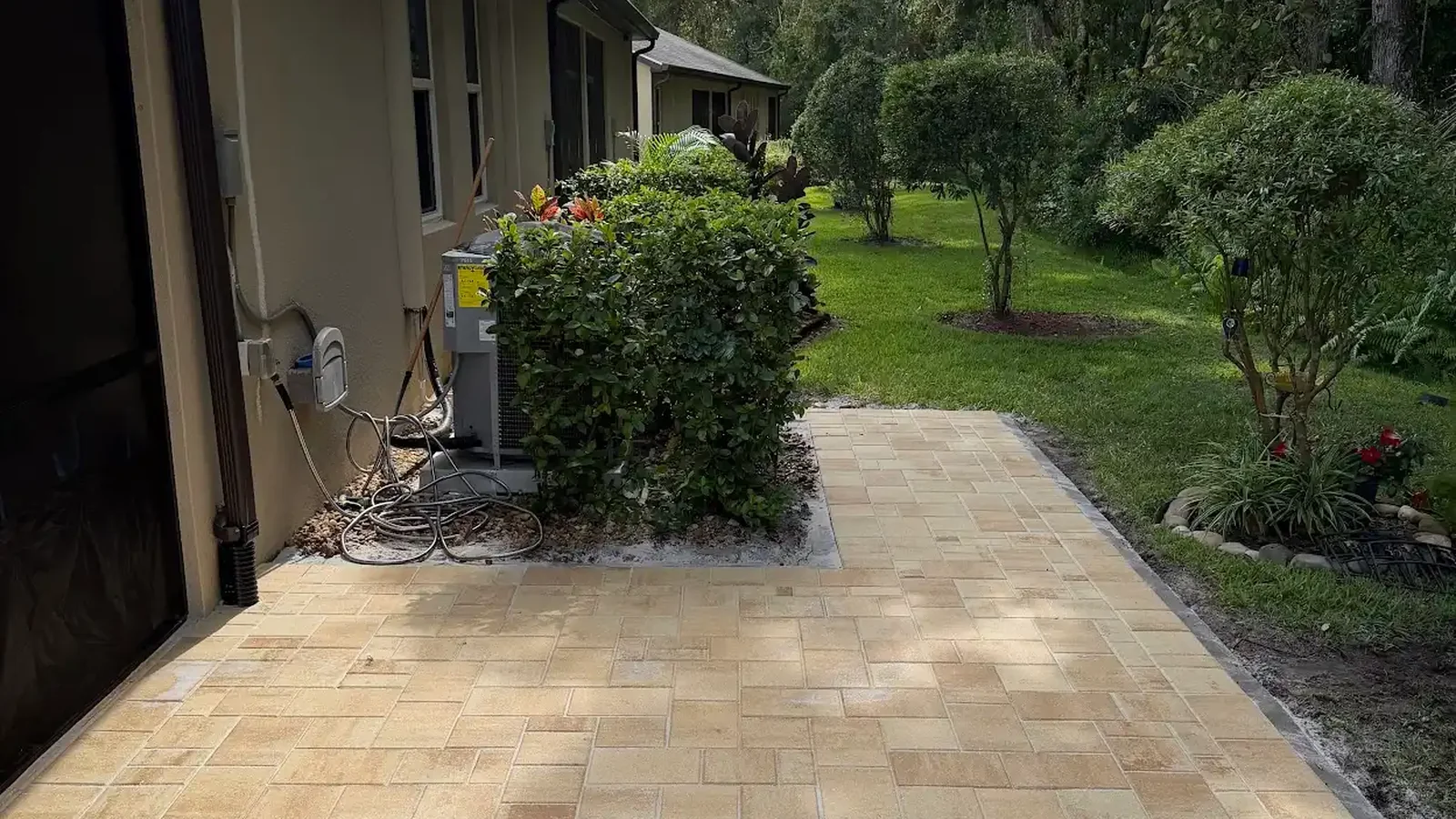
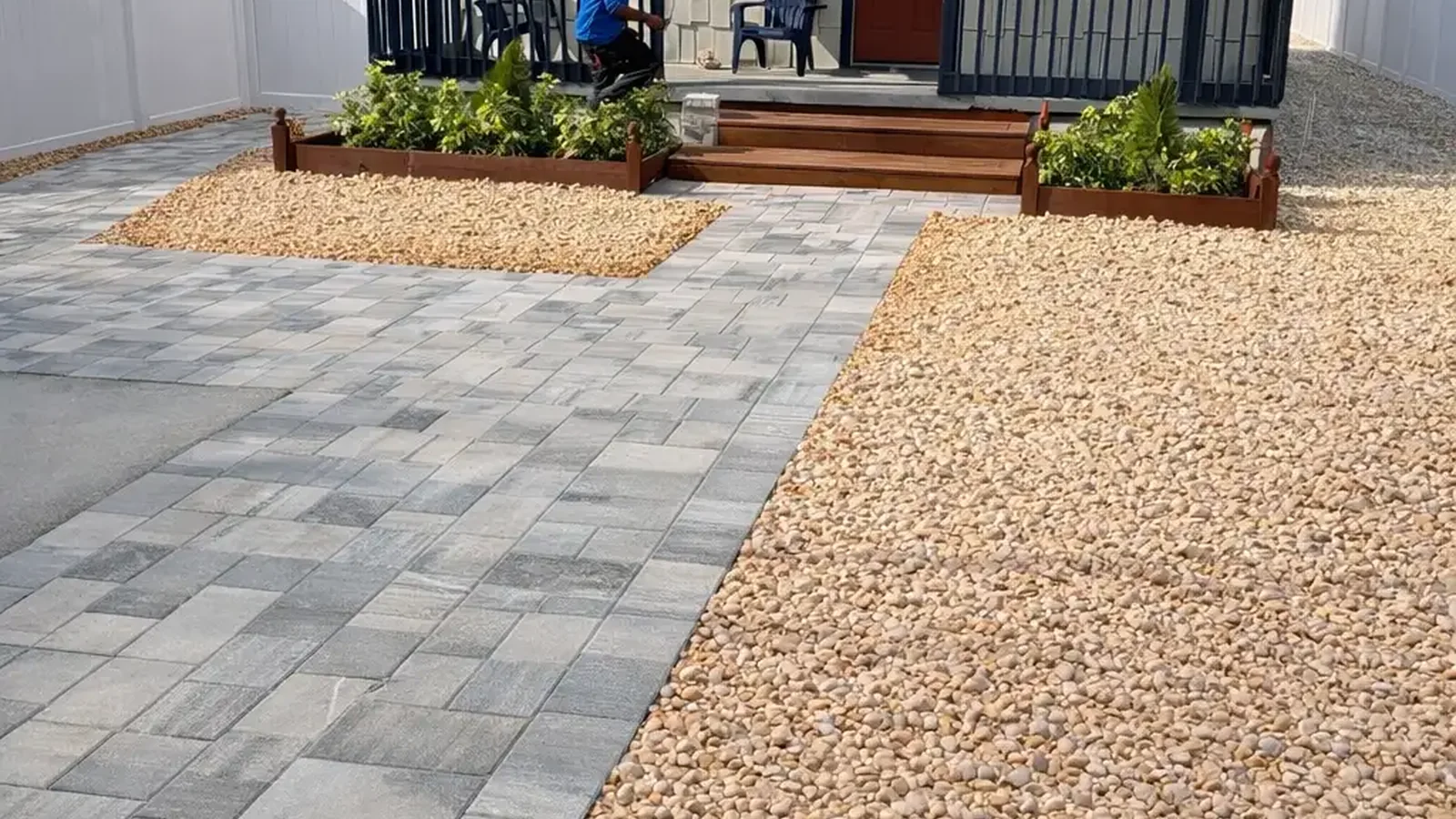
Curves often require cuts, especially at the inside and outside edges. Thoughtful planning distributes those cuts so they do not create tiny, fragile-looking pieces or a random pattern of interruptions. The exact approach depends on the chosen unit geometry, pattern, and the curve itself. No manufacturer, finish, or material family should be assumed from a photo; visible materials and intended use should be confirmed before design details are promised.
Transitions deserve the same care. A curved path may meet a rectangular landing, a driveway, a patio, or an existing sidewalk. The meeting point should look purposeful and provide a stable, comfortable step from one surface to the next. A good plan resolves the transition on paper and in layout, instead of treating it as leftover space after the curve has been decided.
Fit the walkway to landscape and water
Florida planting beds can make a curved route feel integrated with the property, but vegetation also changes the practical edges of the path. Keep maintenance access in mind for pruning, mulch, irrigation adjustments, and cleaning. Avoid creating narrow wedges of bed that are difficult to maintain or places where runoff will erode loose soil onto the pavers. The walkway and landscape border should support each other rather than compete for the same narrow strip.
Drainage belongs in the route discussion because water follows the finished surface and the surrounding grade. A curve should not unintentionally form a low pocket beside an entry, gate, or bed edge. Tampa Bay rain can expose flat areas and poor connections quickly, especially when a landscape edge redirects runoff onto the walking surface. An on-site evaluation can assess existing grades, downspout discharge, soils, and adjacent hardscape before any specific drainage measure is proposed.
Tree placement requires a similarly measured approach. A path can acknowledge a tree as a focal point without assuming what lies below ground or how close construction can safely occur. Preserve room for the tree, its visible root flare, and future landscape care, then have site conditions reviewed before deciding on exact alignment or excavation. The design should respect living landscape features without turning assumptions into promises.
Plan for gates, lighting, and the way the route ends
Gates create a moment of decision: where does a person stand, how does the gate swing, and what happens when someone approaches carrying something? A curved approach can make that moment feel more gracious, provided the final section does not crowd the latch side or force an awkward turn. Check the gate’s operating space and leave a clear landing rather than sending the path directly into a narrow pinch point.
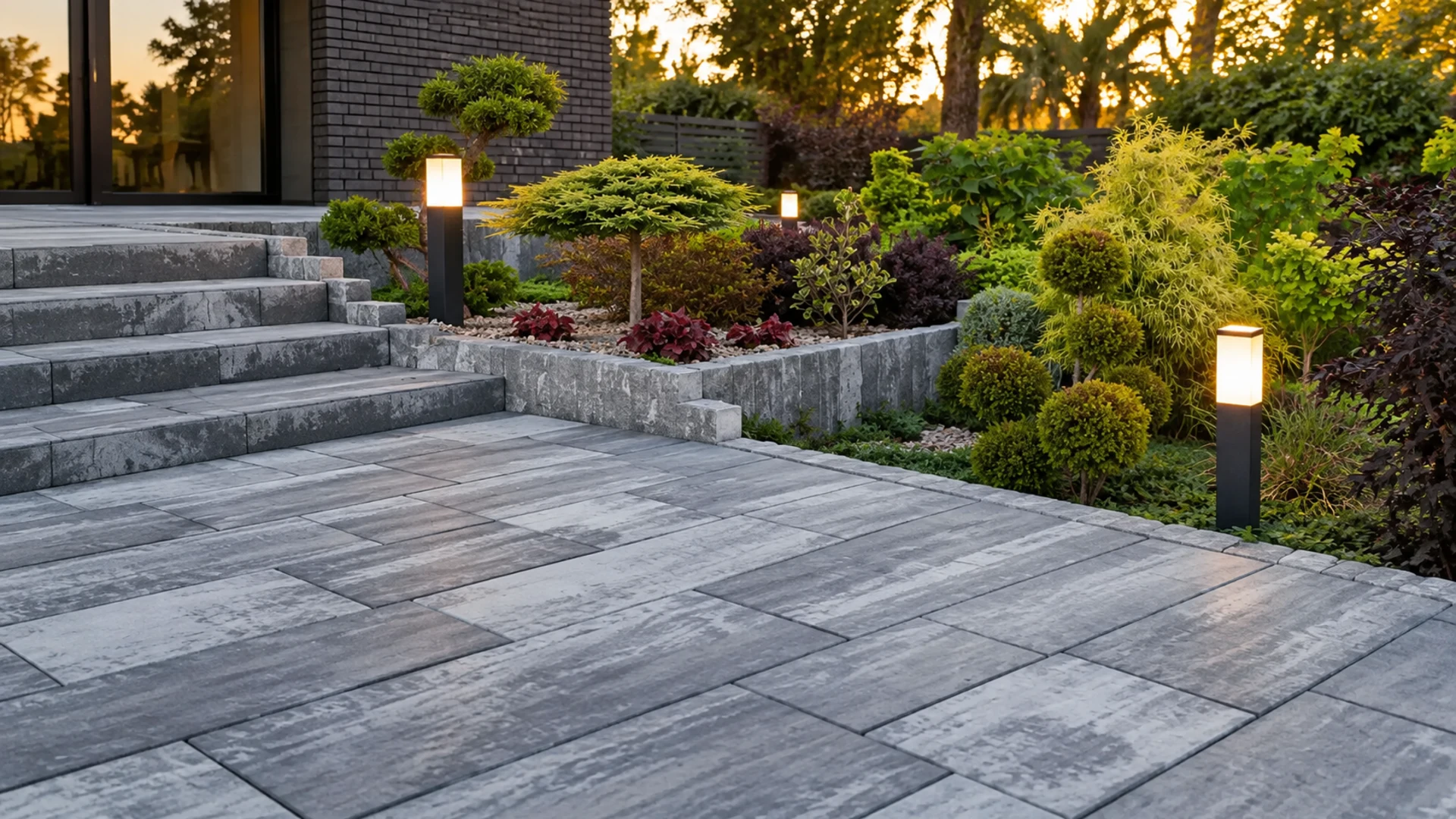
Lighting should support navigation, not compete with the line of the walkway. Before placing fixtures, identify changes in direction, transitions, and the entry destination. Consider routine landscape maintenance and how foliage may screen or overtake a fixture over time. The appropriate electrical and installation details need confirmation for the specific property, but the design principle is simple: light the route people actually take.
Let the entry sequence set the mood
A walkway has a beginning, a middle, and an arrival. The beginning should make the route obvious from a driveway, curb, or patio. The middle can introduce a view of a bed, tree, or facade without making someone wonder where to go next. At the arrival, a landing or transition should feel generous enough for a person to pause, turn, open a door, or greet another person. Curves are strongest when these three moments read as one sequence.
Changing views are useful when they reveal something worth seeing. A slight curve can gradually bring an entry door, fountain, or well-kept planting composition into view. It should not hide a destination that needs to be found quickly, especially at a front entry. Stand at the approach and ask what a first-time visitor sees at each point. If the answer is a blank wall, an overly dense shrub, or several competing directions, simplify the route before adding decorative detail.
Make room for the outside edge
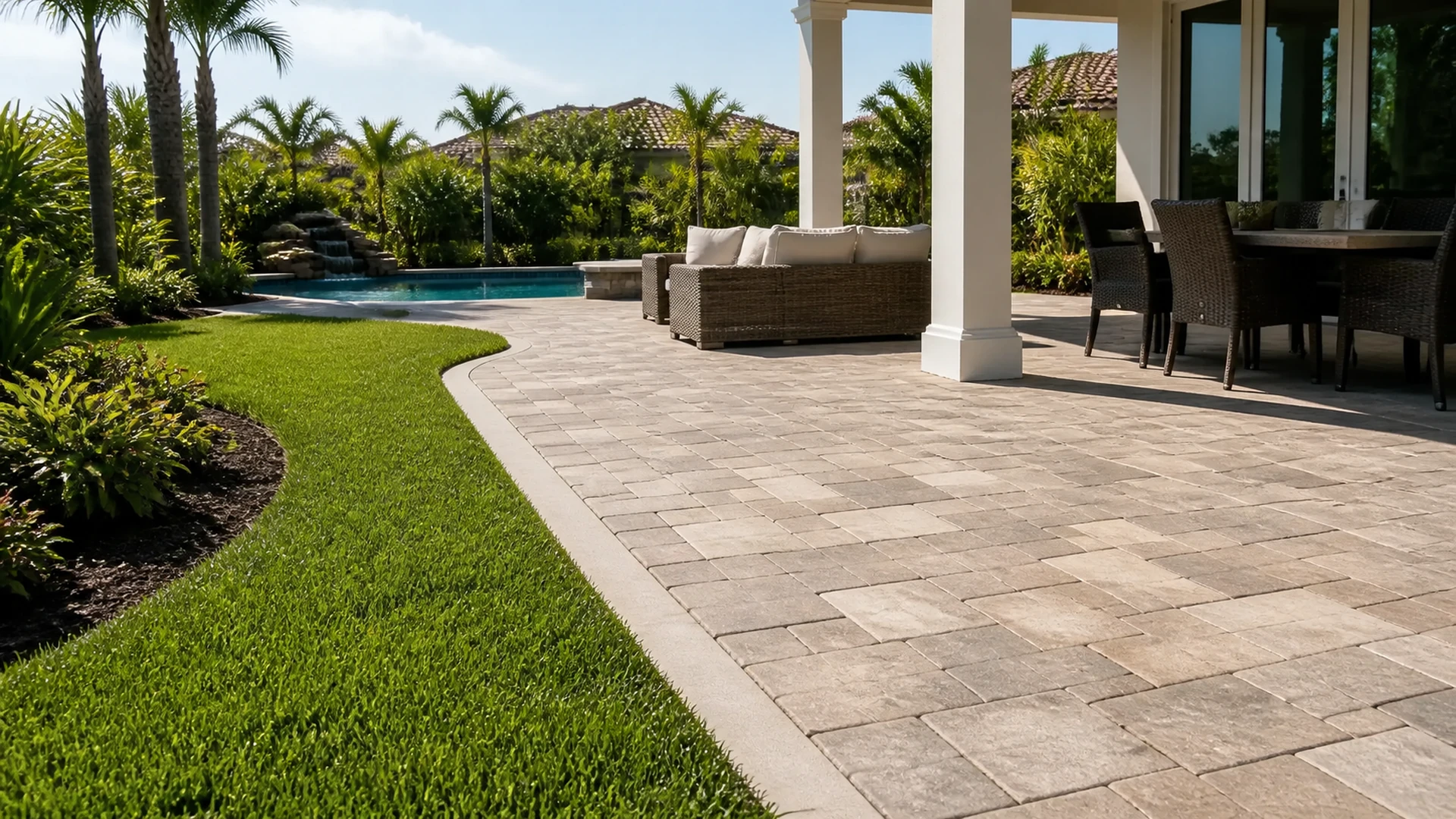
The outside of a curve is where the walkway asks the landscape to give it space. A border may need a clean strip beside turf, a planting bed may need a stable edge, and a mower may need enough room to navigate without damaging pavers. Planning this zone early prevents a common compromise: squeezing the path to preserve a bed shape that will be hard to maintain anyway. The surrounding edge is part of the walkway design, not an afterthought.
Material choices should reinforce that edge rather than overwhelm it. A subtle border can clarify a gentle curve, while a more pronounced contrast may suit a larger route with an intentional formal character. Confirm the visible unit geometry, color blend, finish, and pattern against the material actually selected for the project. Design discussion can establish the desired relationship, but exact appearance should not be inferred from a reference image alone.
Before construction, review how existing surfaces will be protected and how the planned walkway connects to them. A careful layout considers driveway and patio joints, irrigation heads, landscape edging, and the space needed to work around established areas. That conversation is less glamorous than choosing a curve, yet it is where a design becomes buildable without making broad claims about hidden conditions or final site performance.
Choose a design that remains useful after the first season
A finished walkway should leave practical access to beds, walls, sprinklers, and nearby outdoor spaces. Think about where a mower turns, where leaves gather, and how someone will reach the house during heavy rain. These ordinary tasks often reveal whether a curve is truly working with the yard. They also help determine whether a border, landscape edge, or adjacent planting plan needs adjustment before construction begins.
For general information about concrete masonry and hardscape education, consult the Concrete Masonry and Hardscapes Association. To see how hardscape ideas can be discussed in relation to an outdoor project, visit Dr Pavers Design project and service information. Examples and general guidance can inform planning, while the final layout still depends on verified site conditions and the homeowner’s everyday use.
A curve should lead somewhere with purpose
The strongest curved walkway is not defined by how dramatic its arc looks from above. It follows a sensible desire line, gives plantings and features appropriate space, handles transitions cleanly, and remains comfortable to use in ordinary weather and daily routines. Testing it with a hose or marking line brings those decisions into the real yard before the details become permanent.
When the route, curve type, border continuity, maintenance access, and drainage context all work together, the path can feel like it has always belonged there. That is the value of a site-specific design conversation: it turns a decorative idea into a dependable connection between the places people use most.
Finally, when you are looking for design ideas for your outdoor project, review the services, see completed projects, read testimonials, and check the FAQ before requesting a free consultation through the contact page. Follow Dr Pavers Design on Instagram and Facebook, or review the company on Google. Open Google Maps, send a WhatsApp message, call +1 (656) 600-4015, send a text message, or email drpavers@outlook.com for a free consultation anywhere in Tampa Bay.