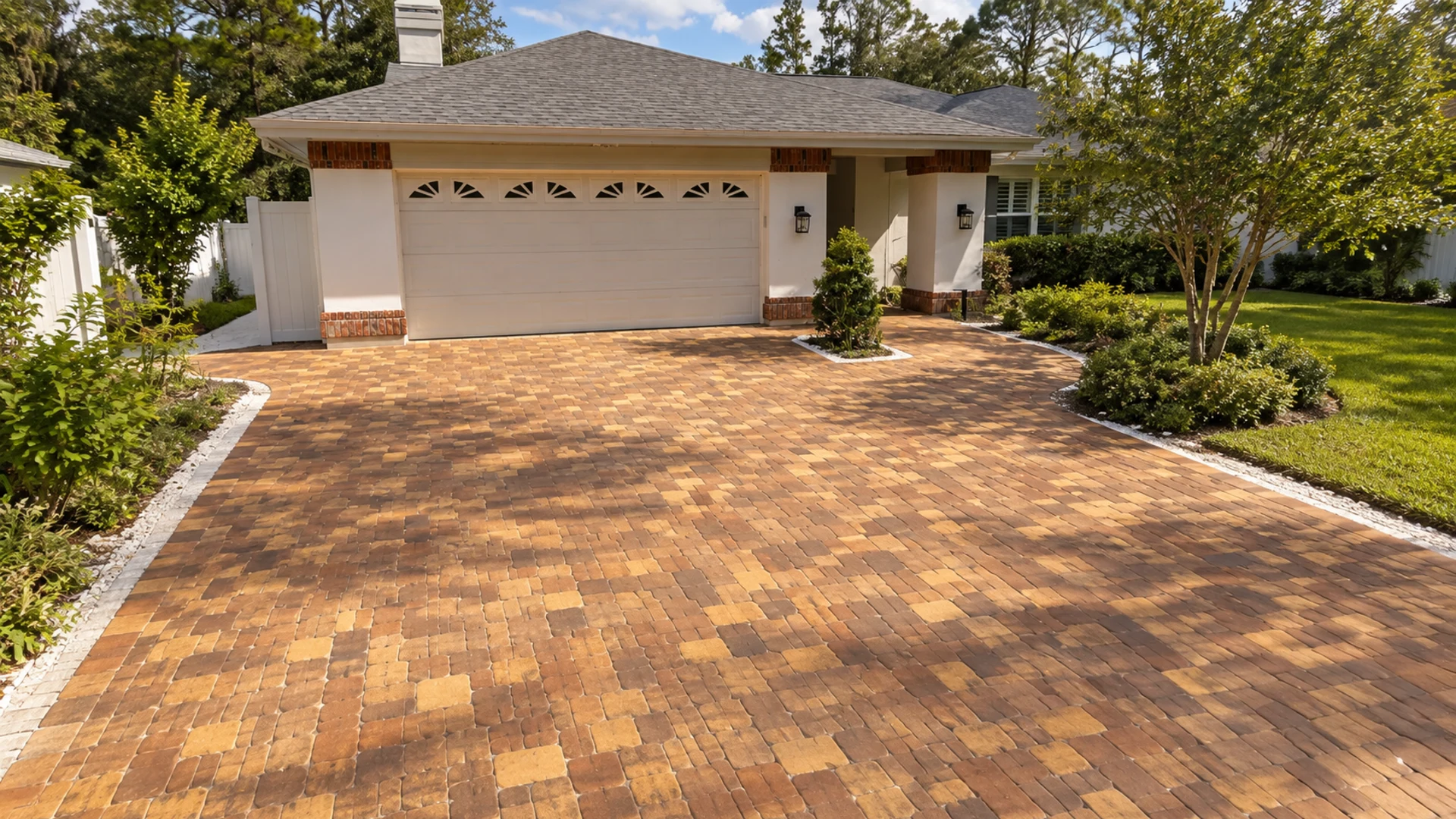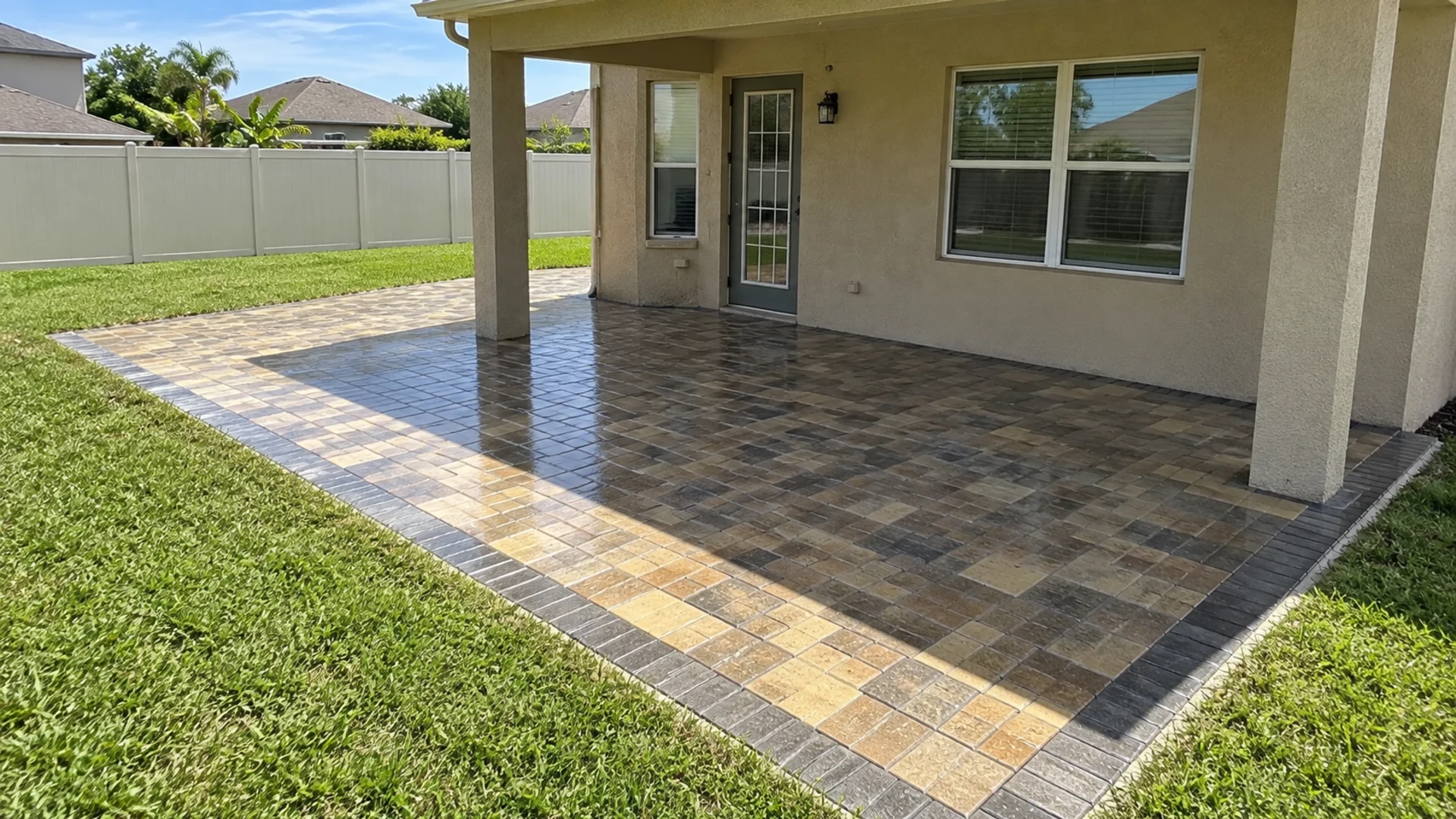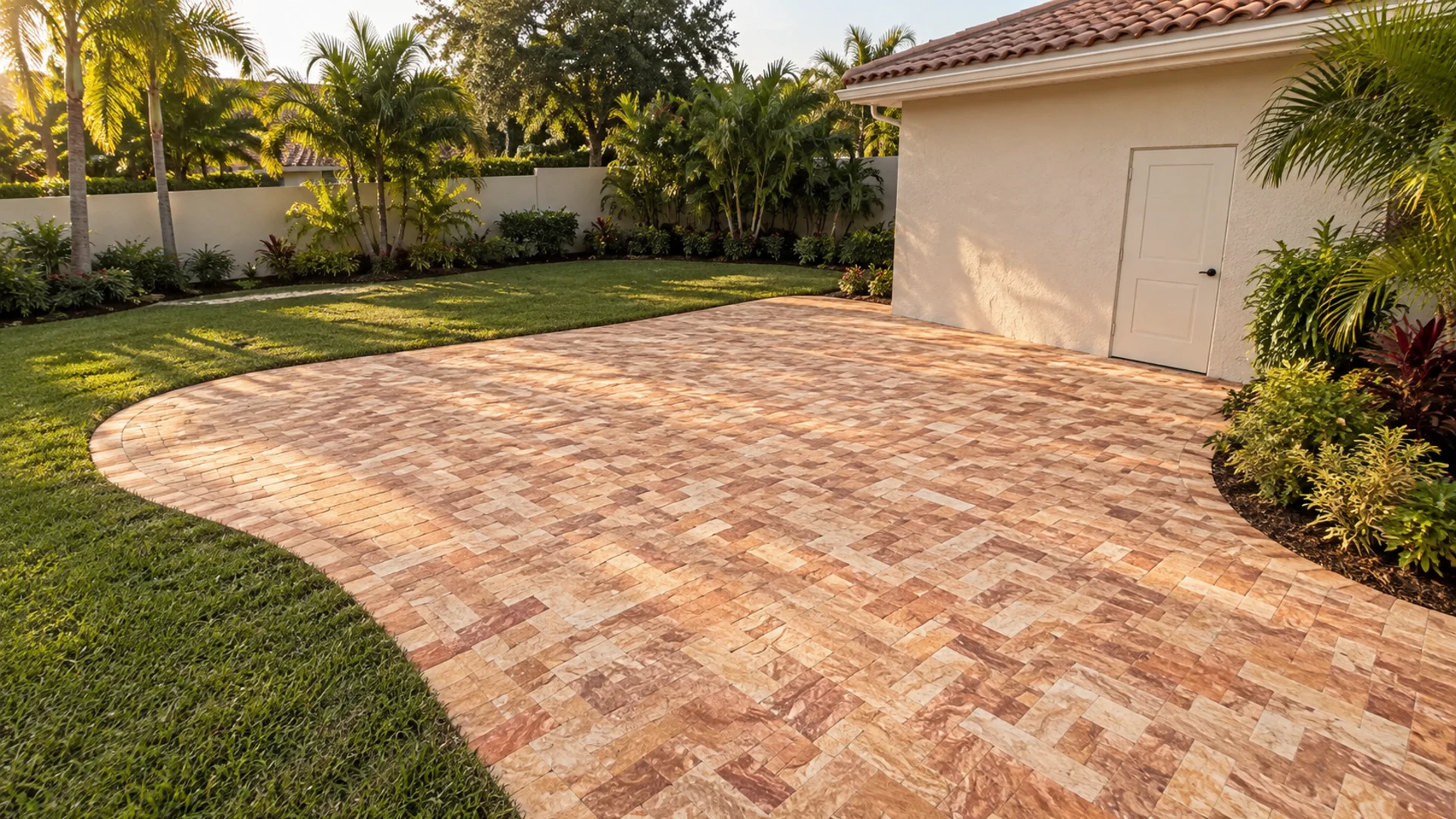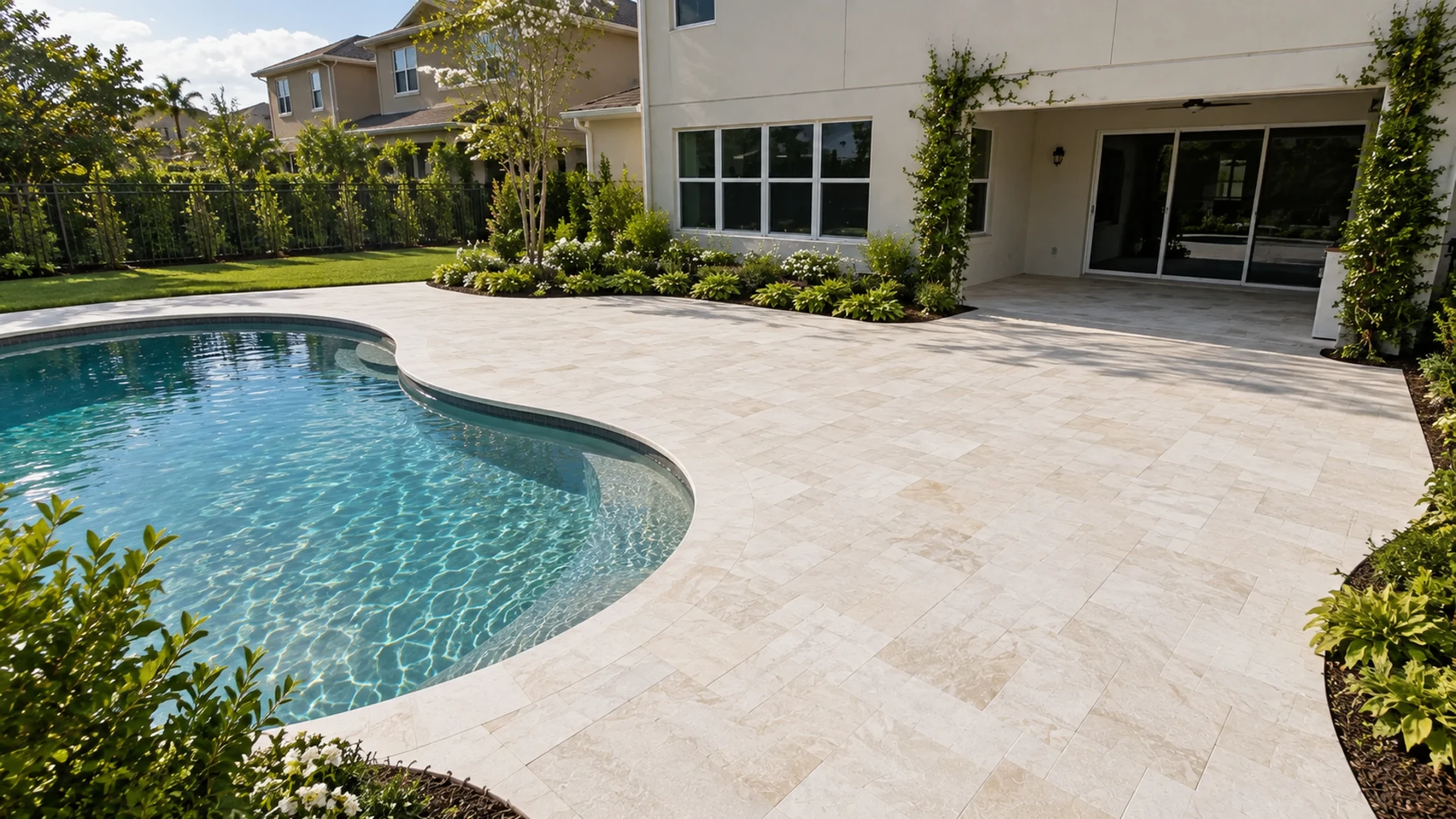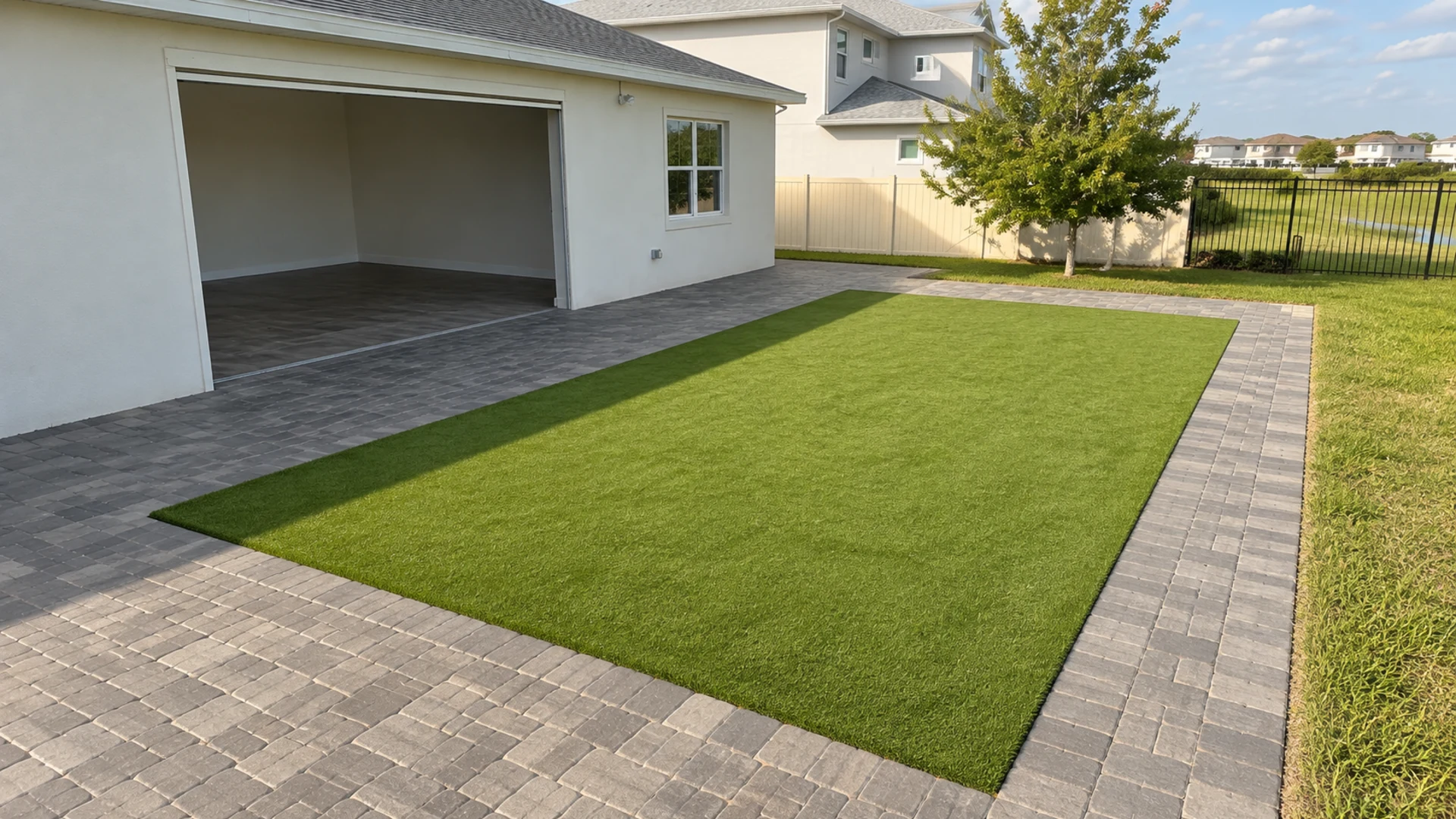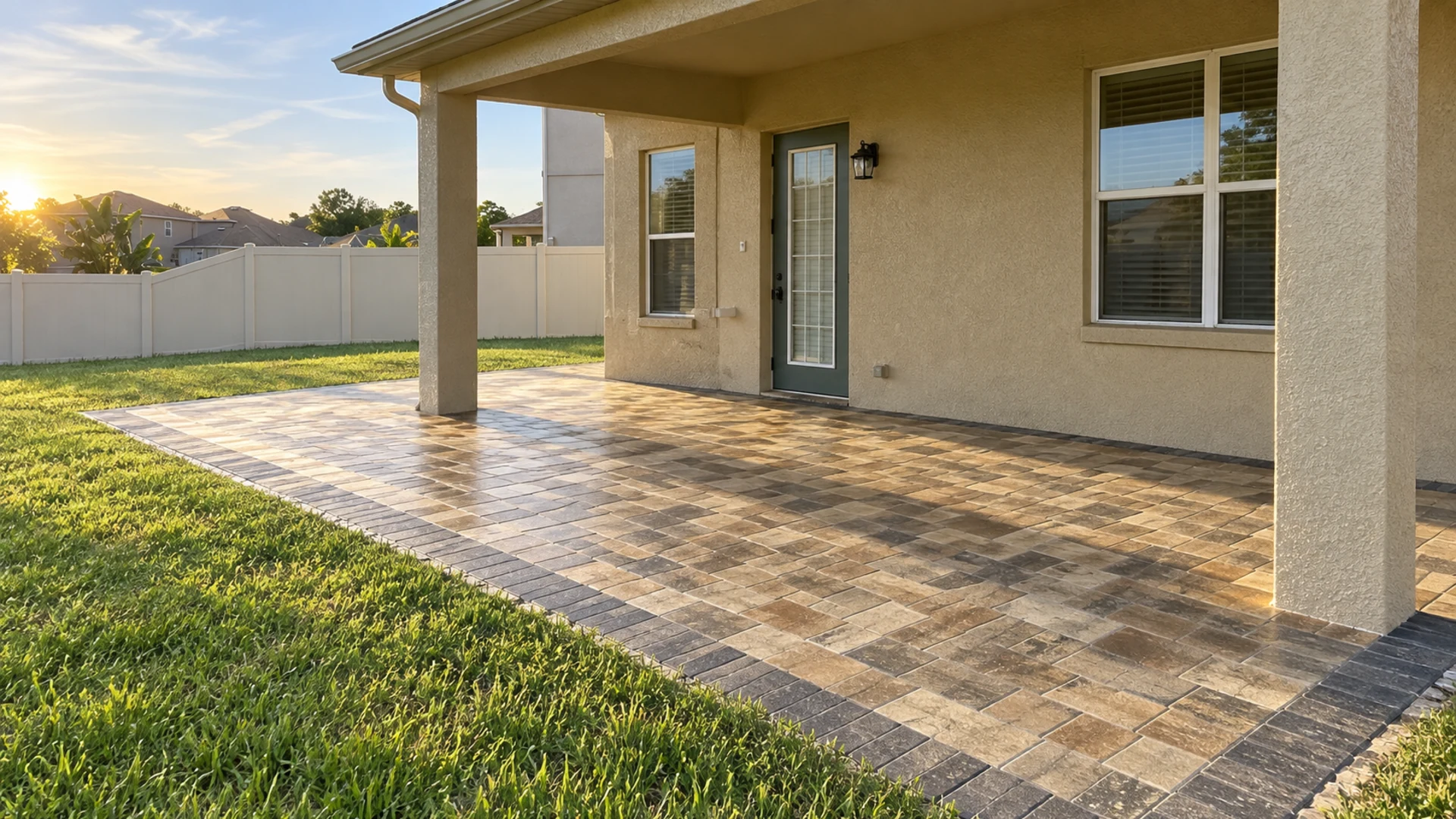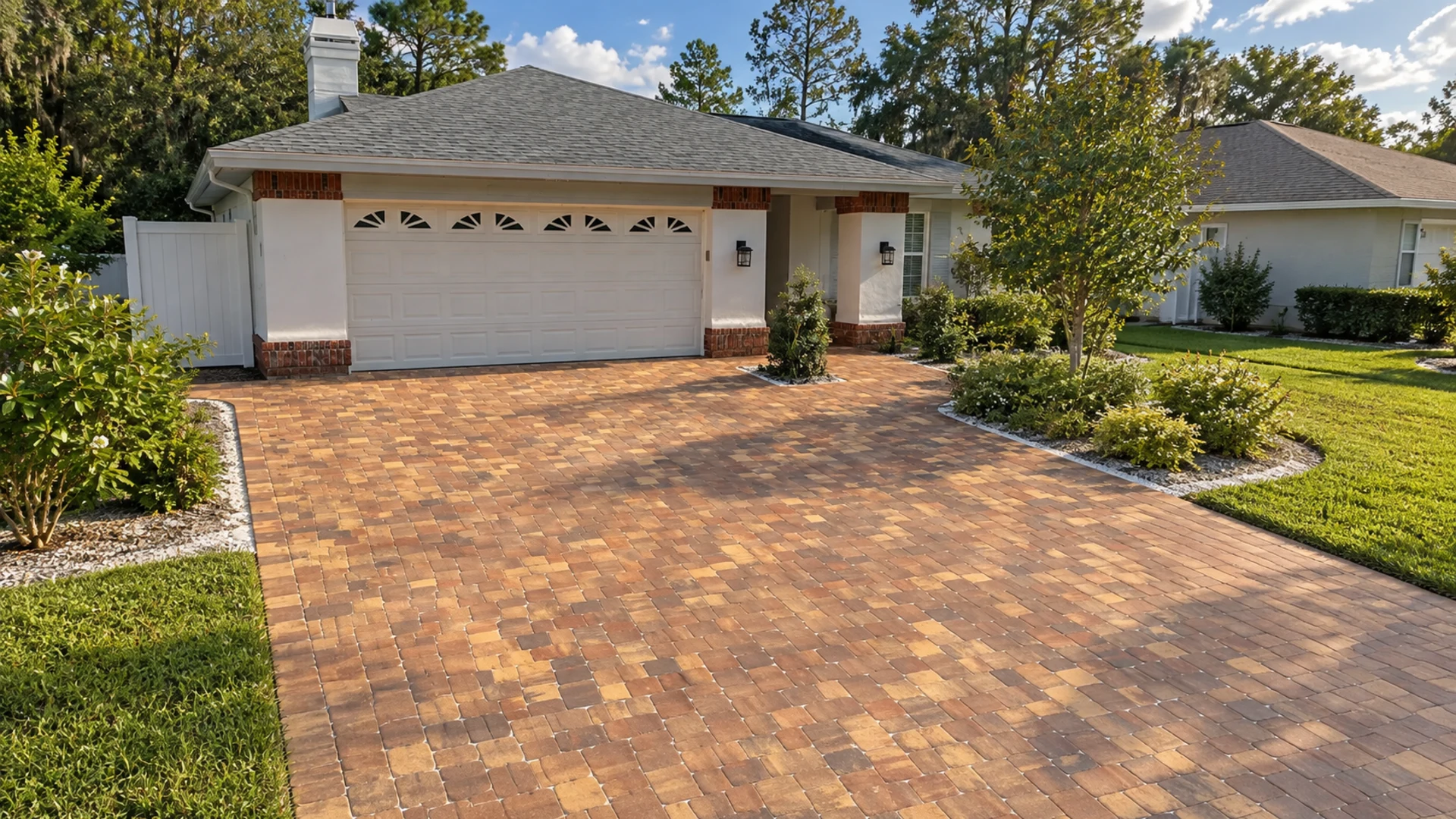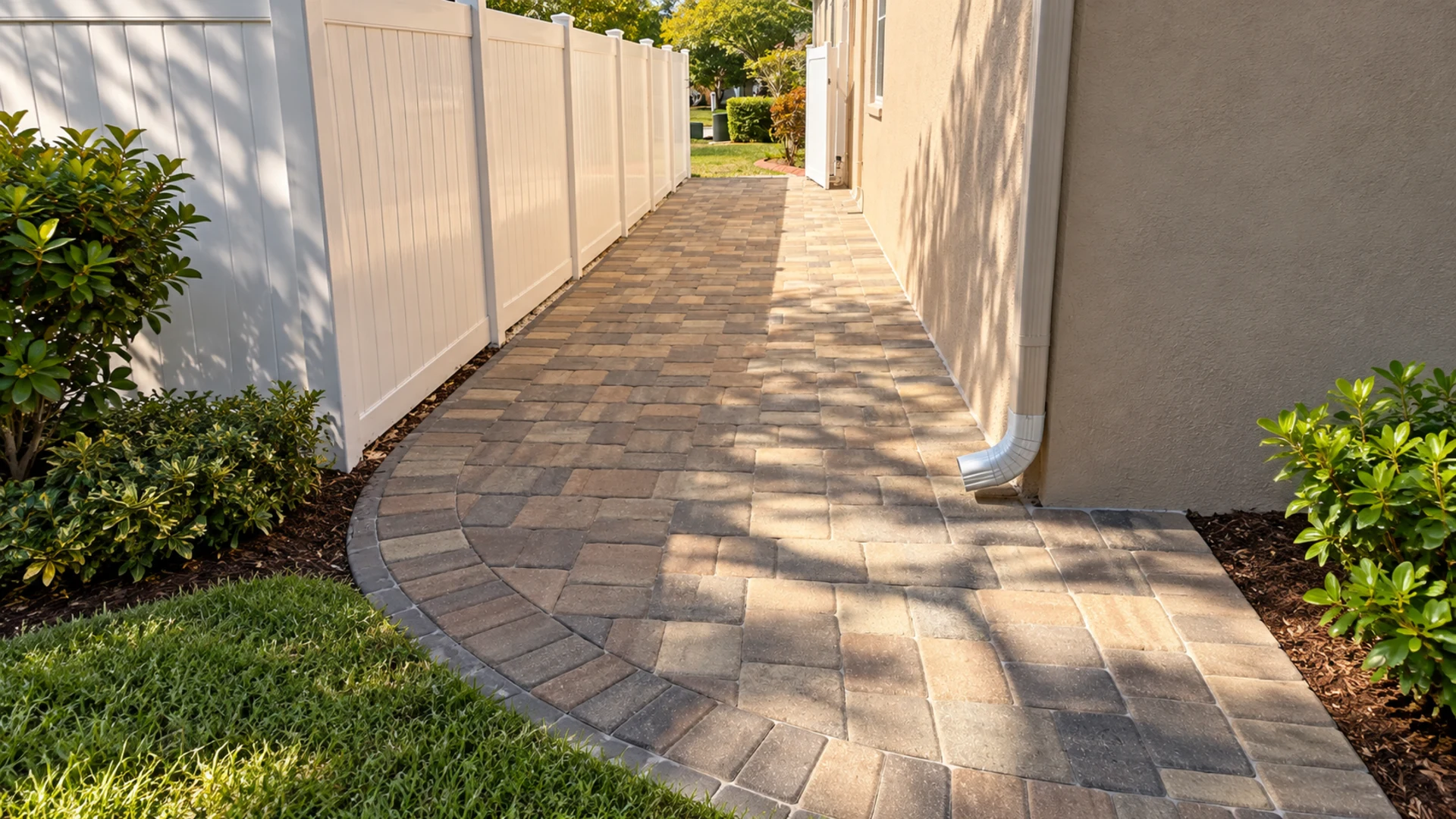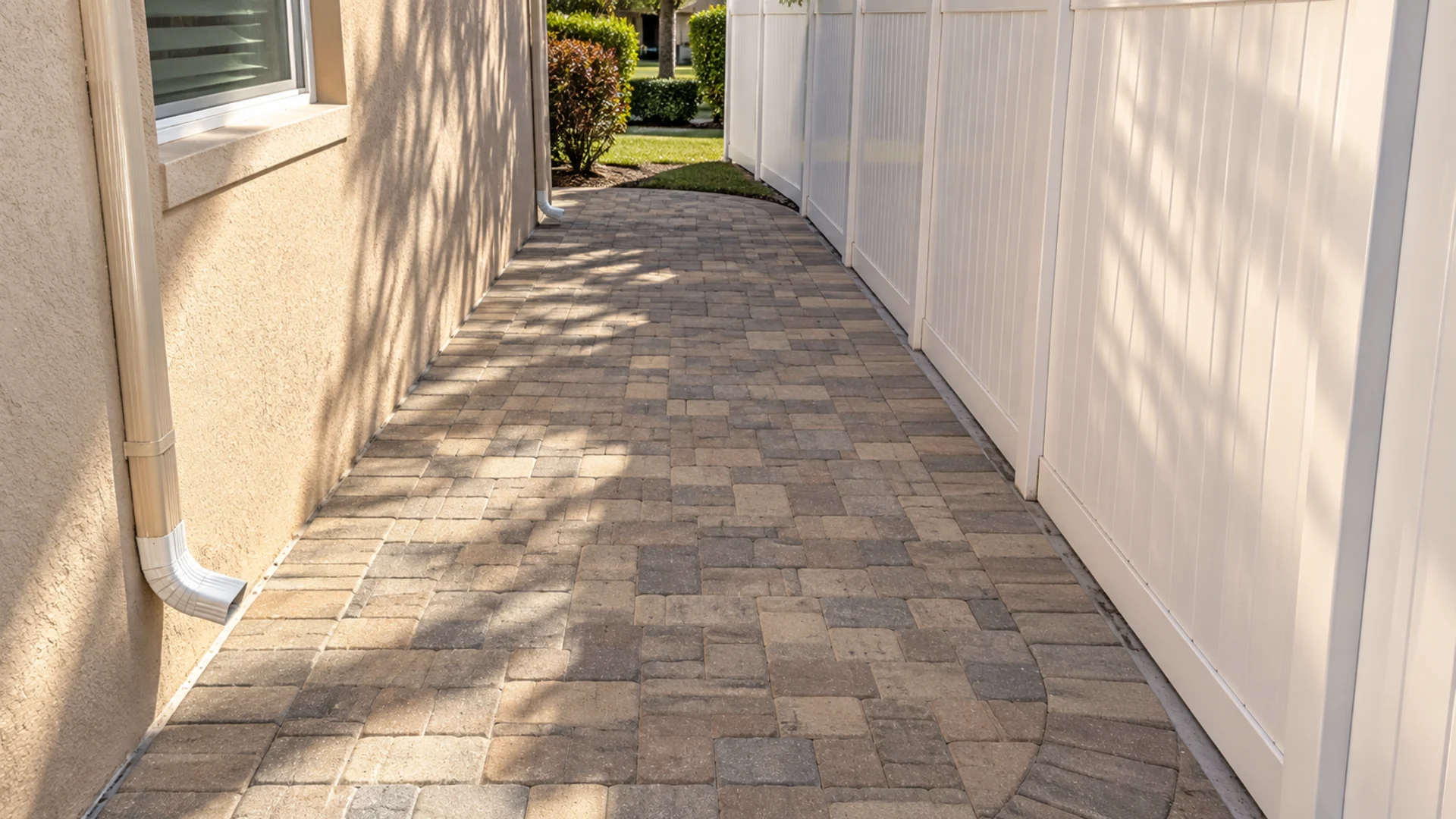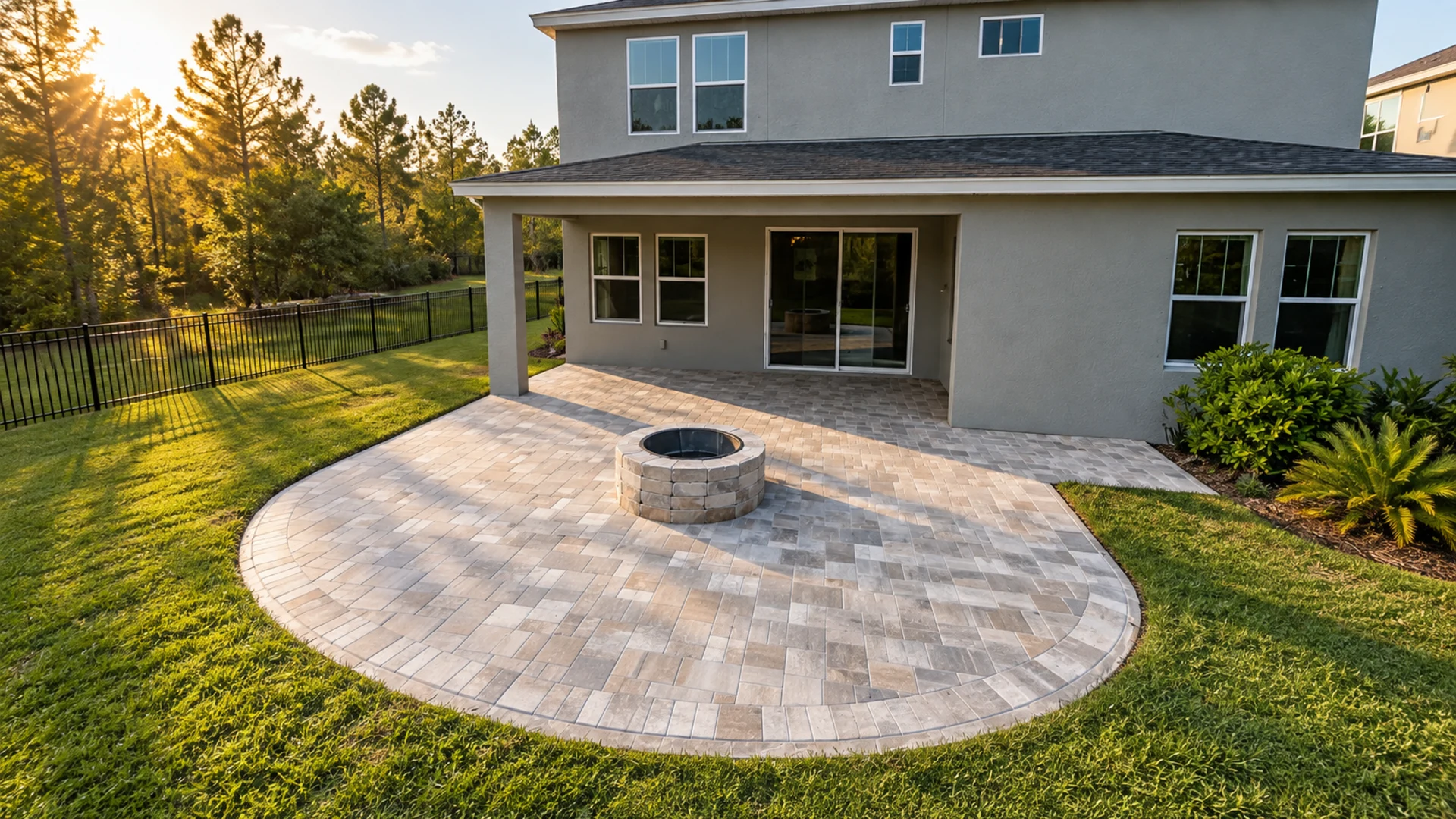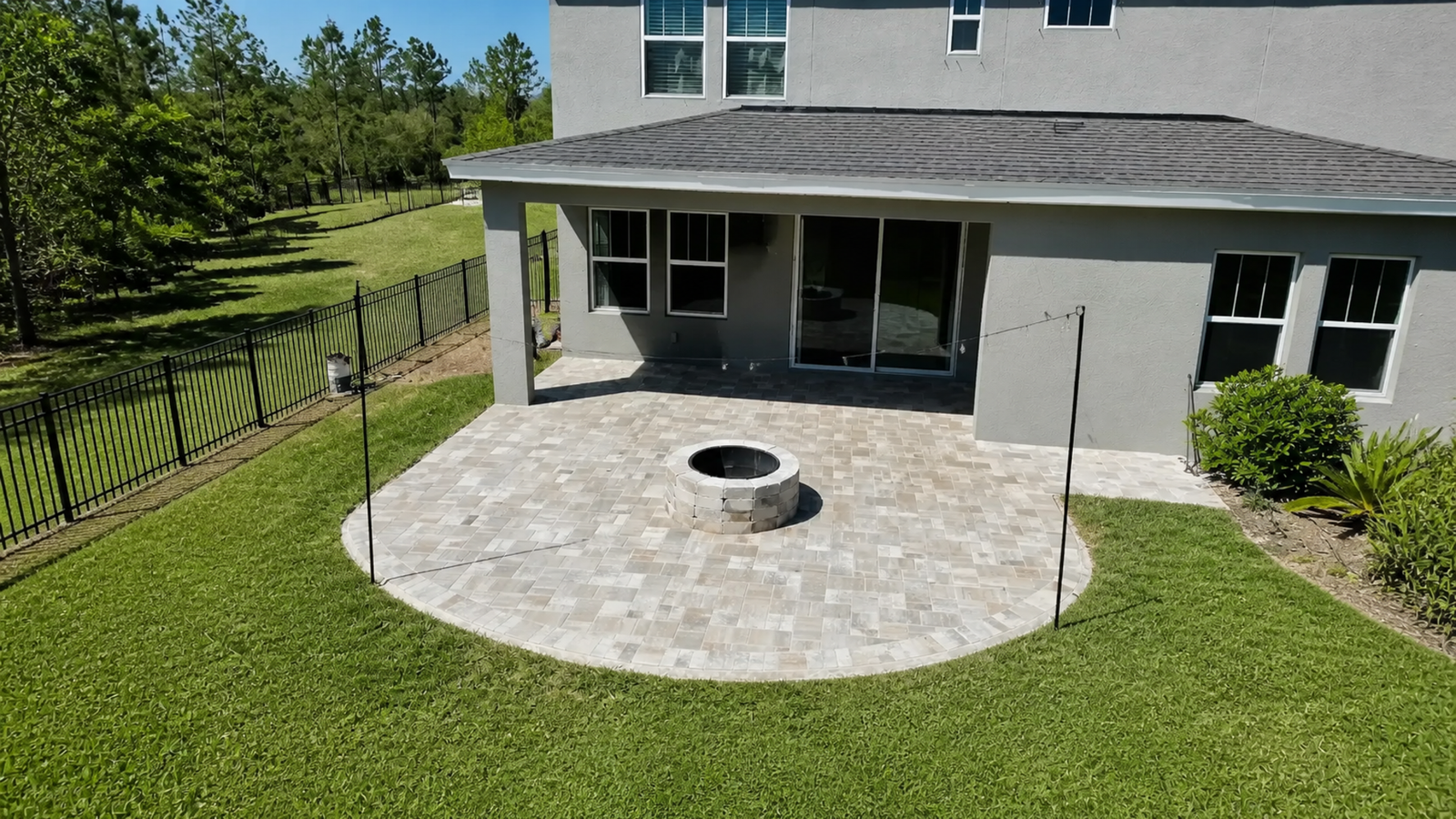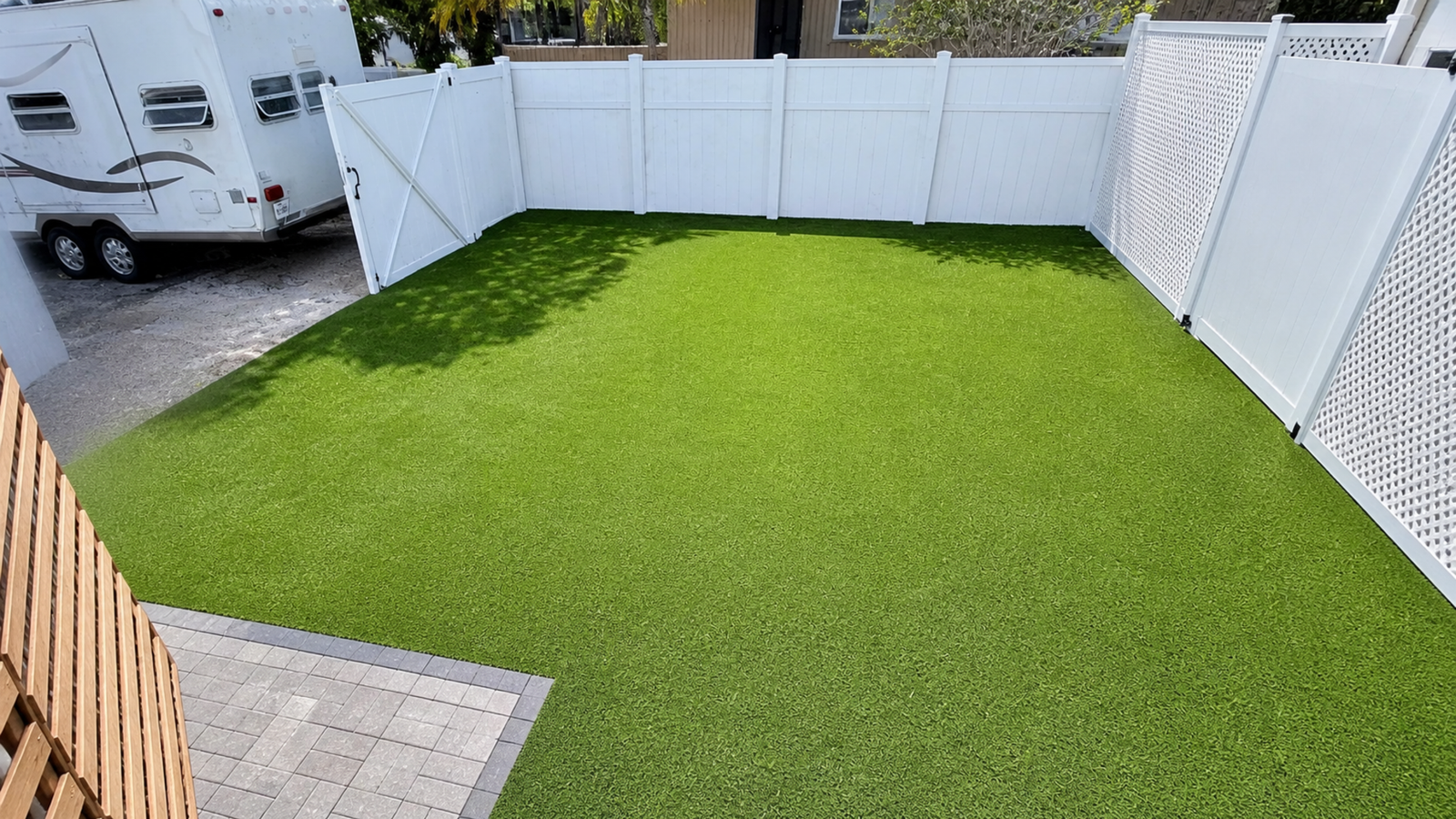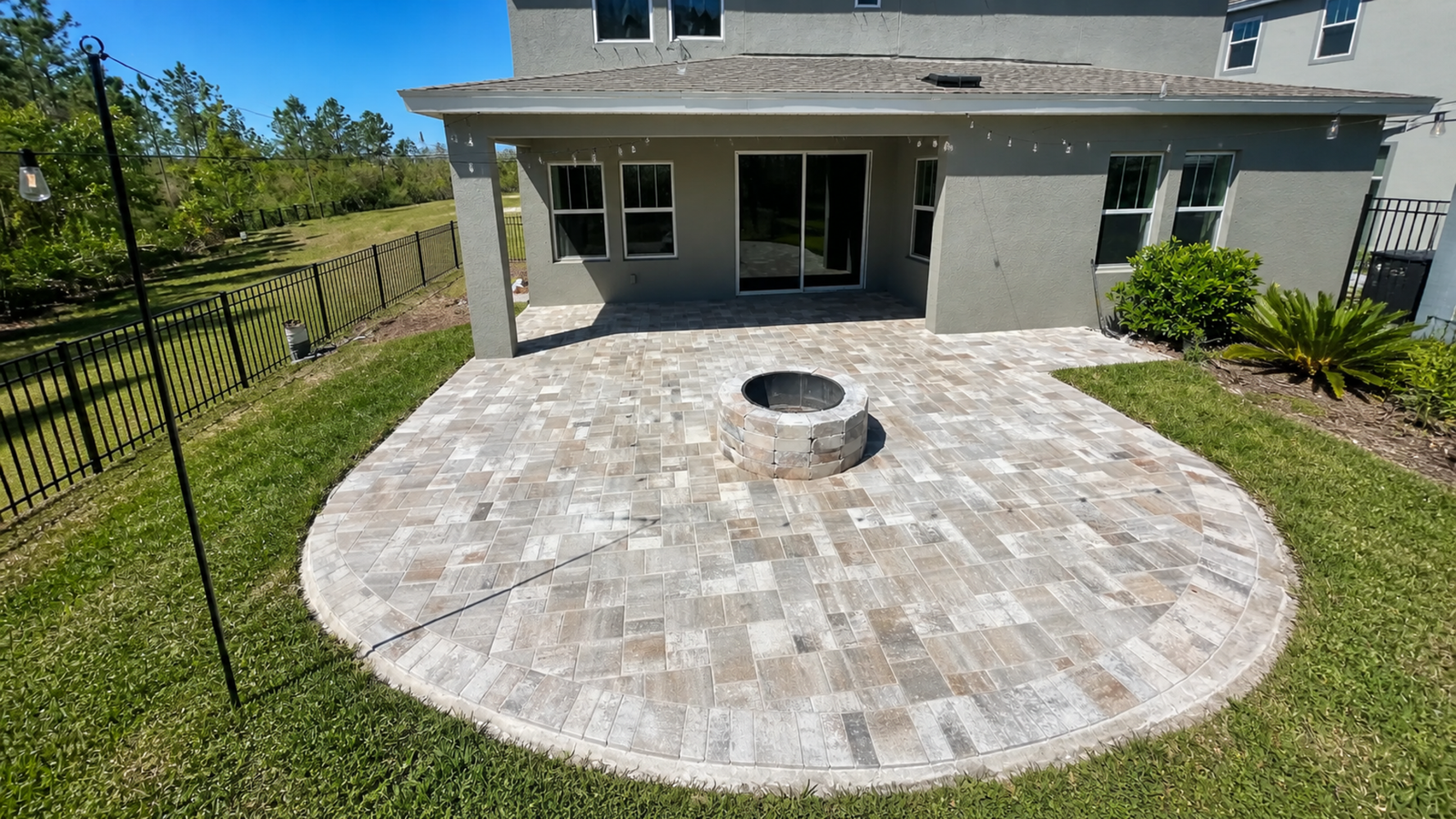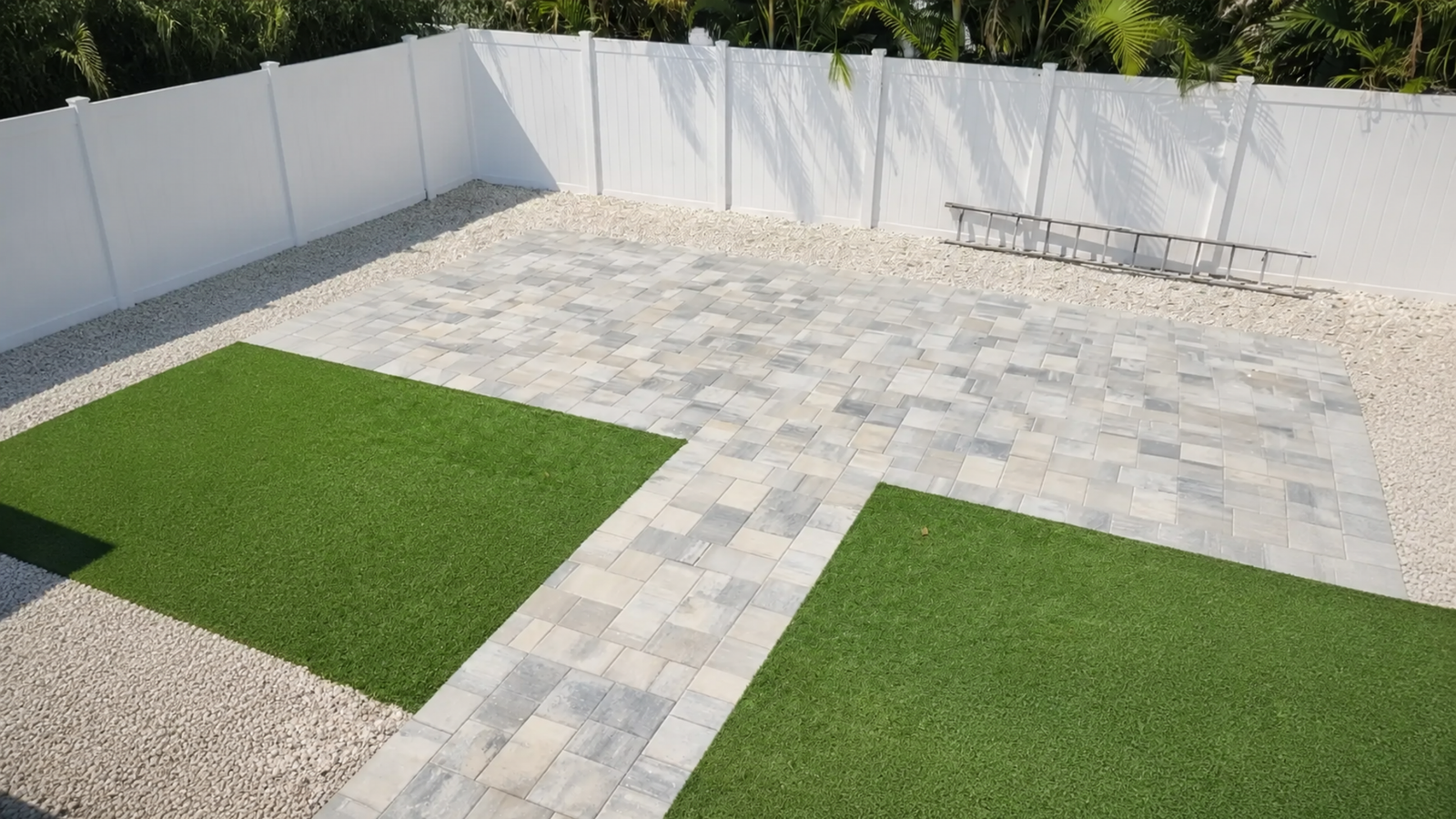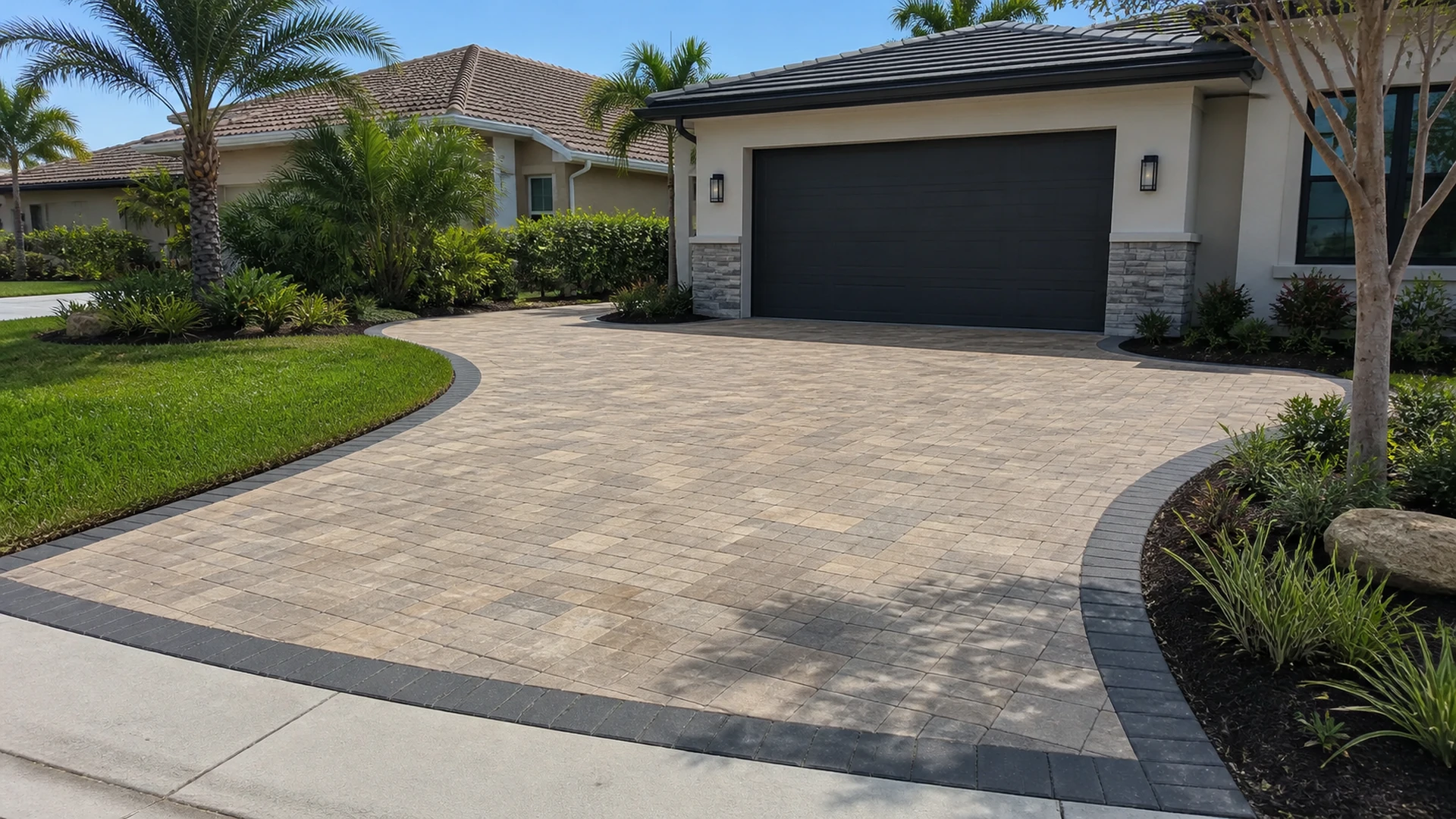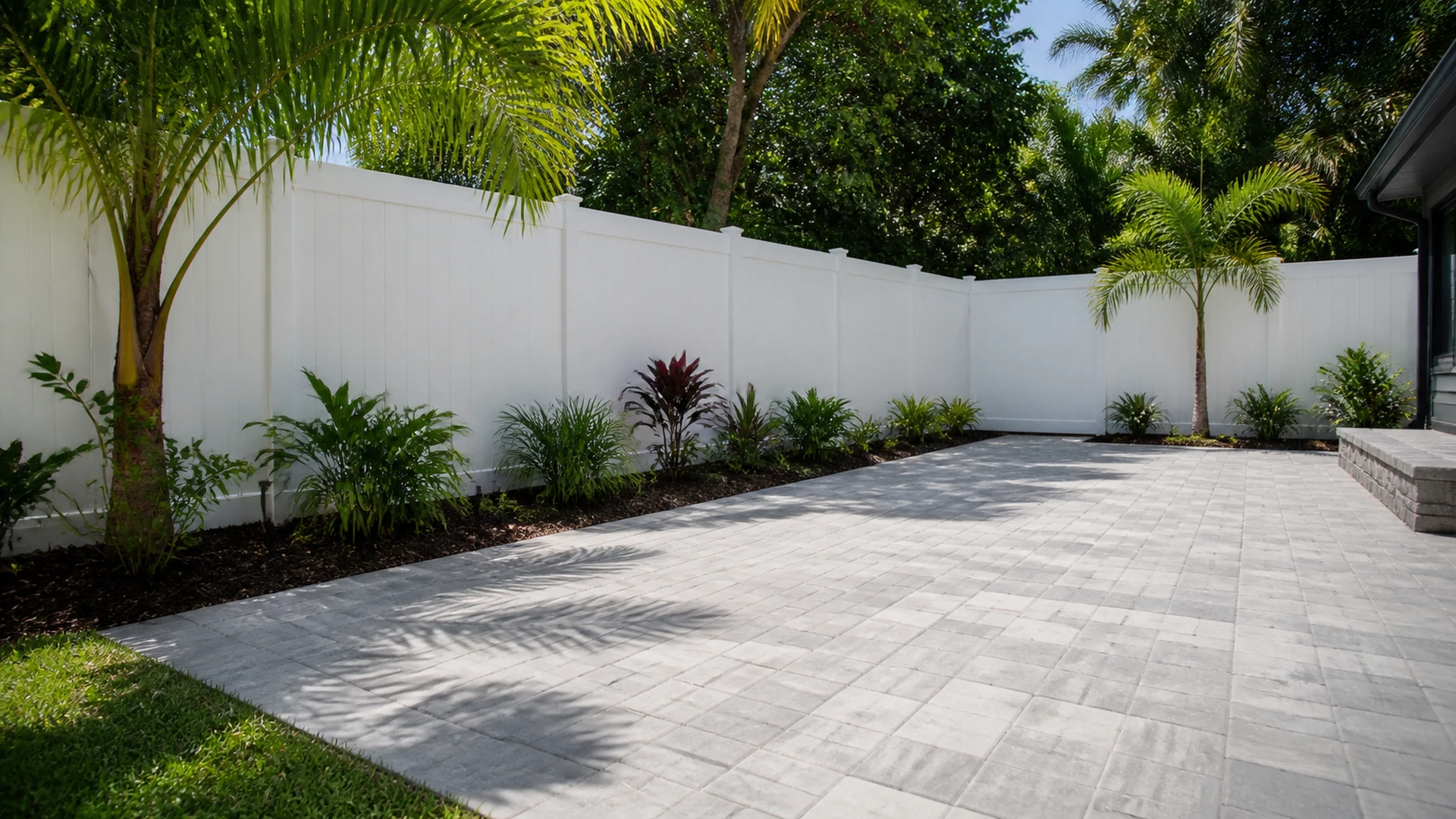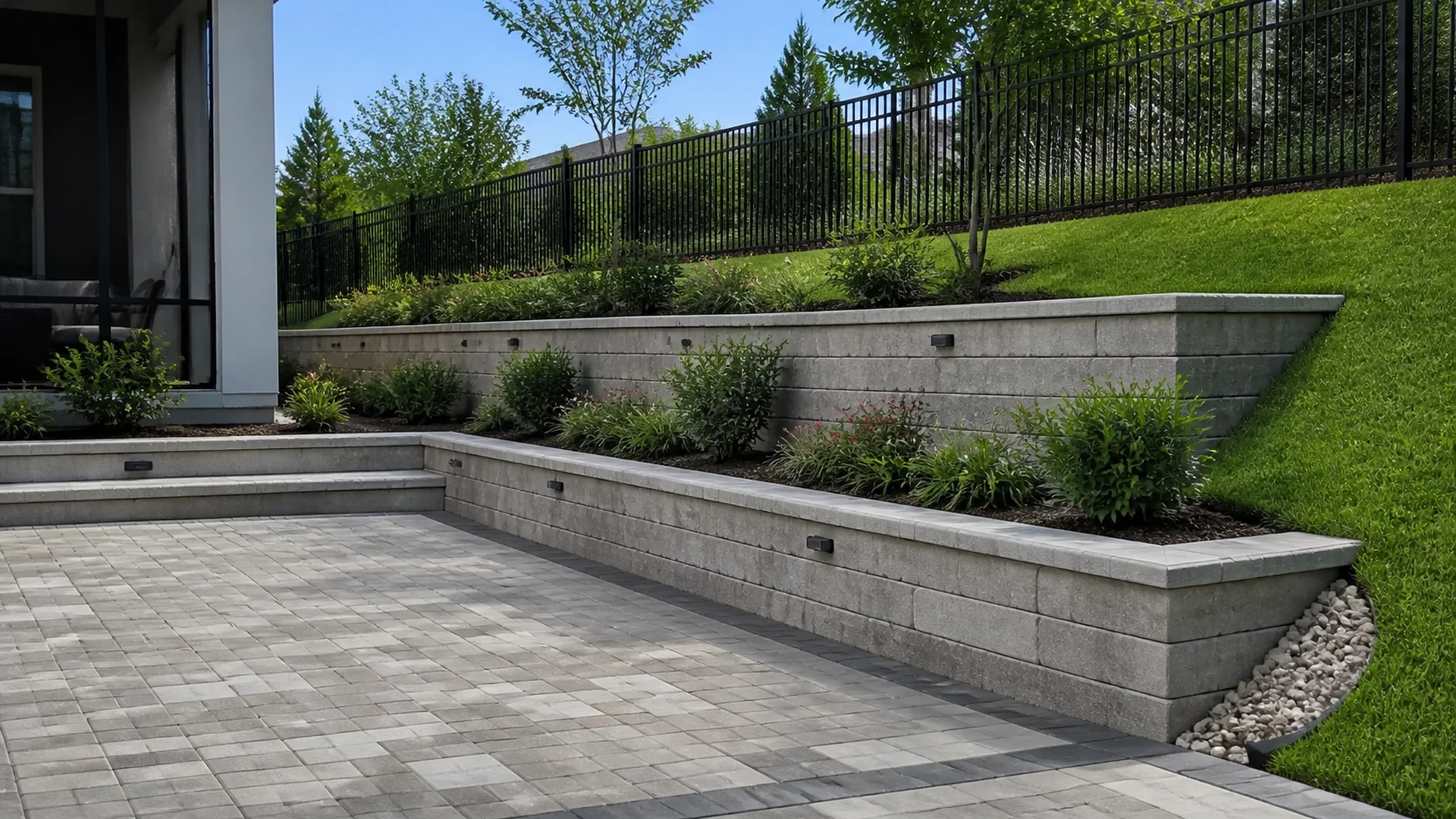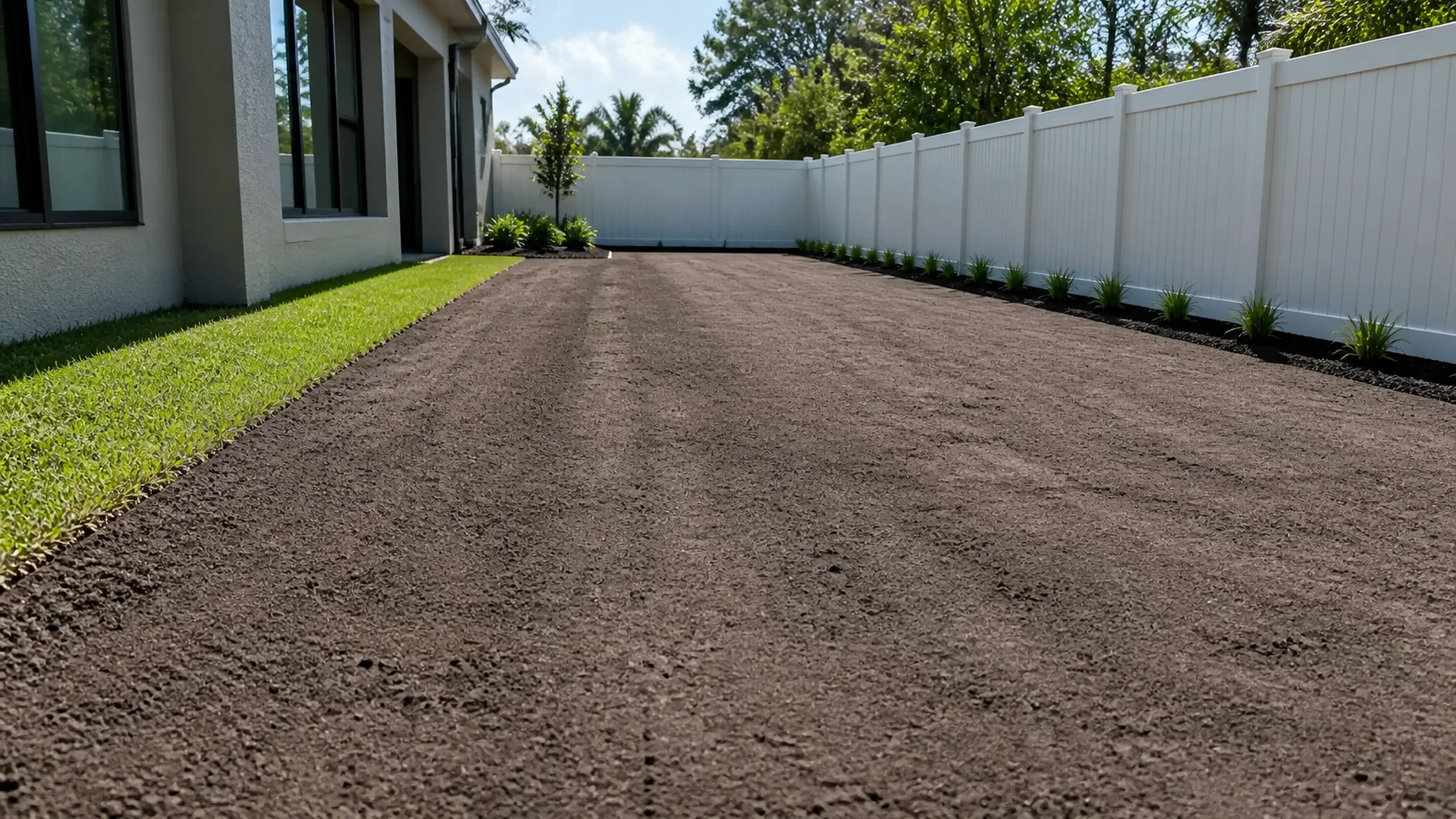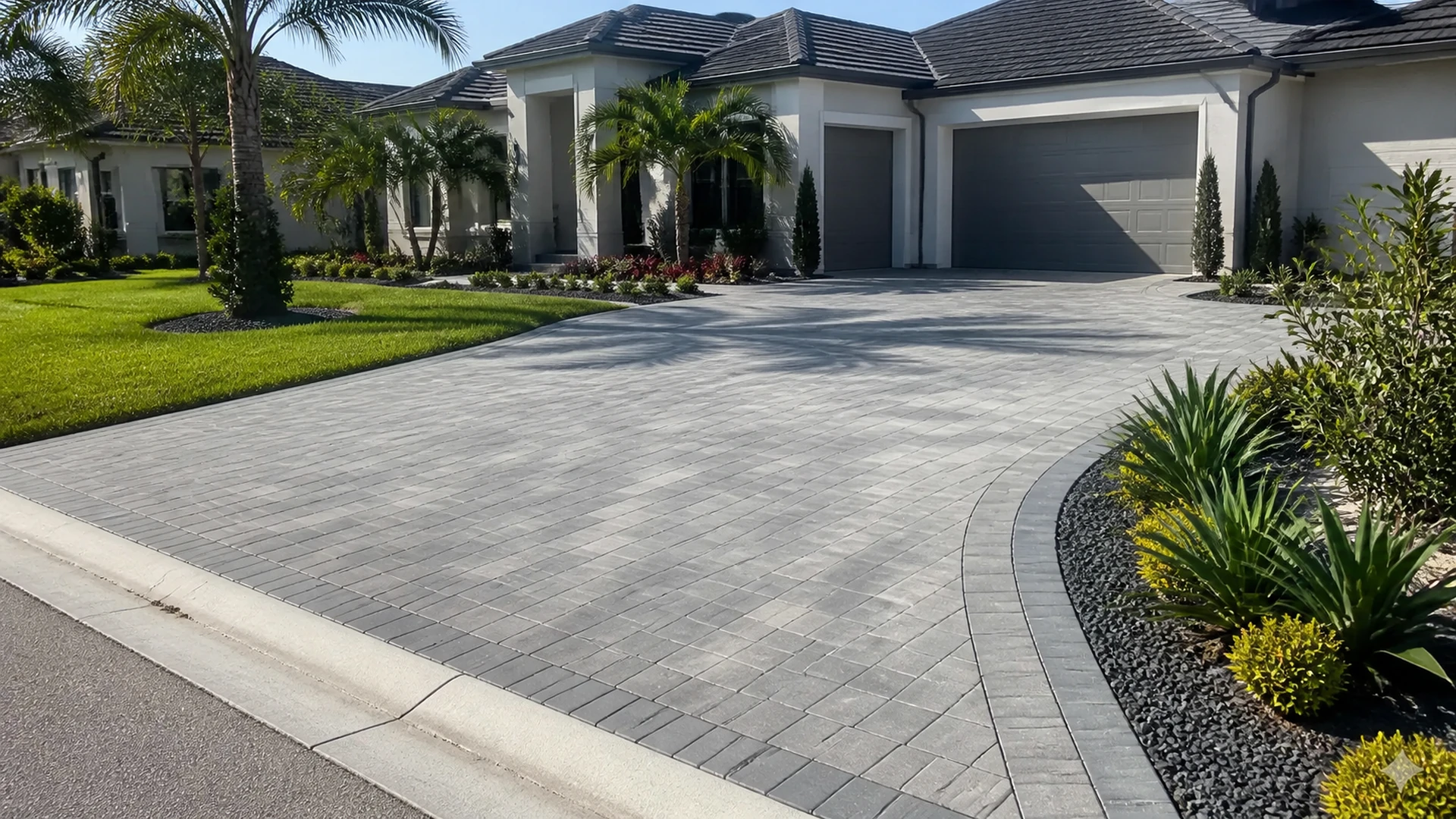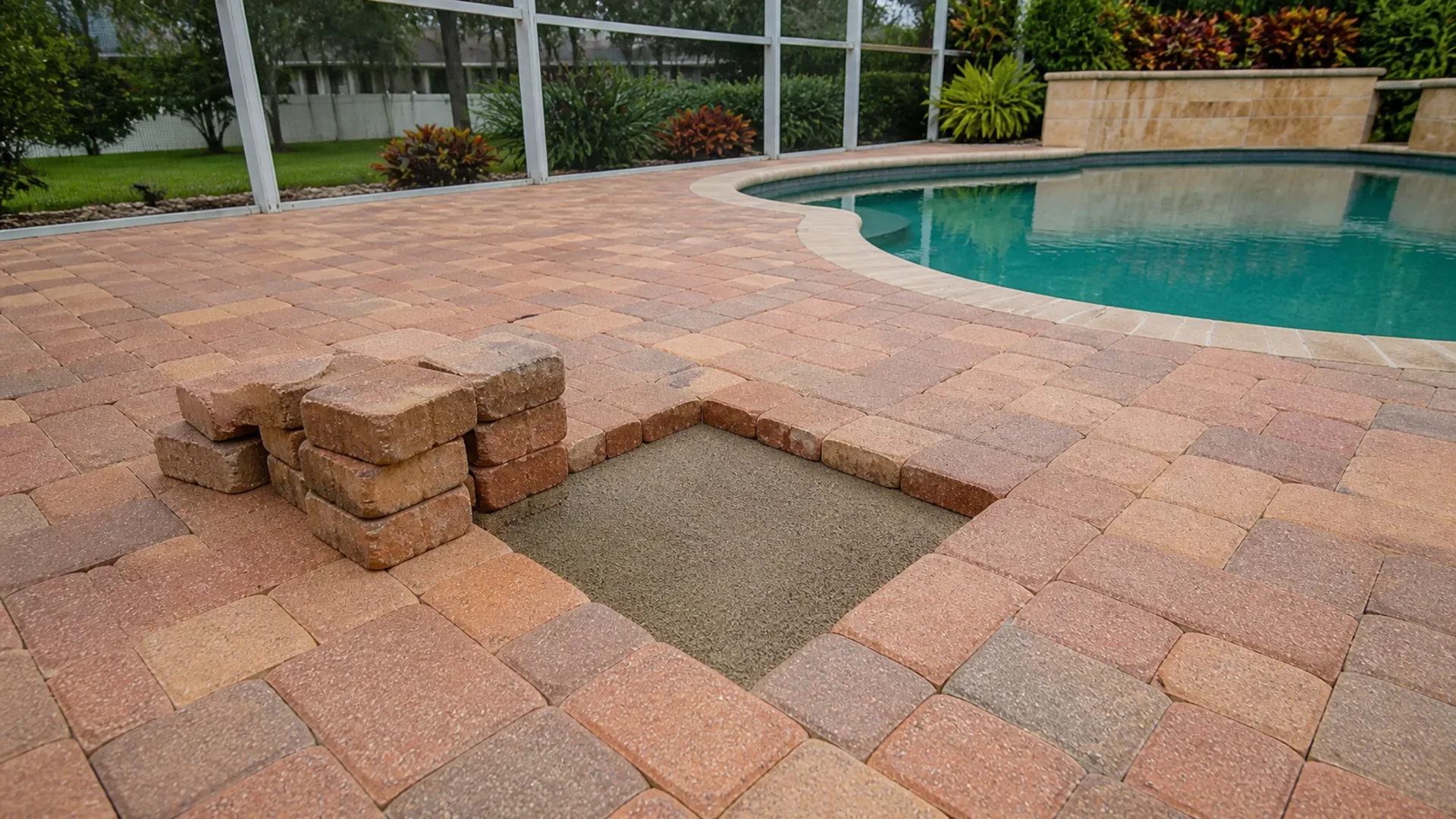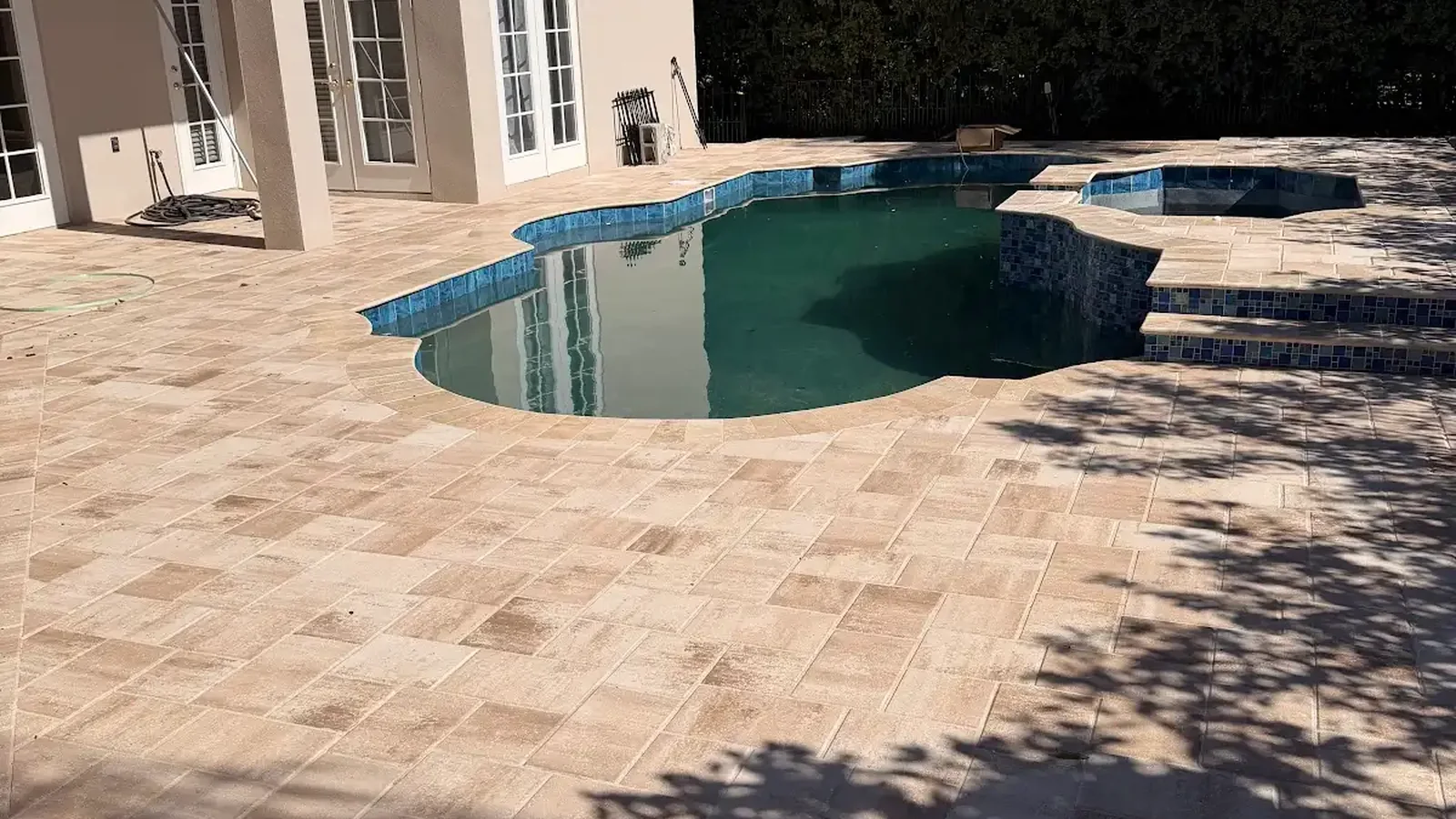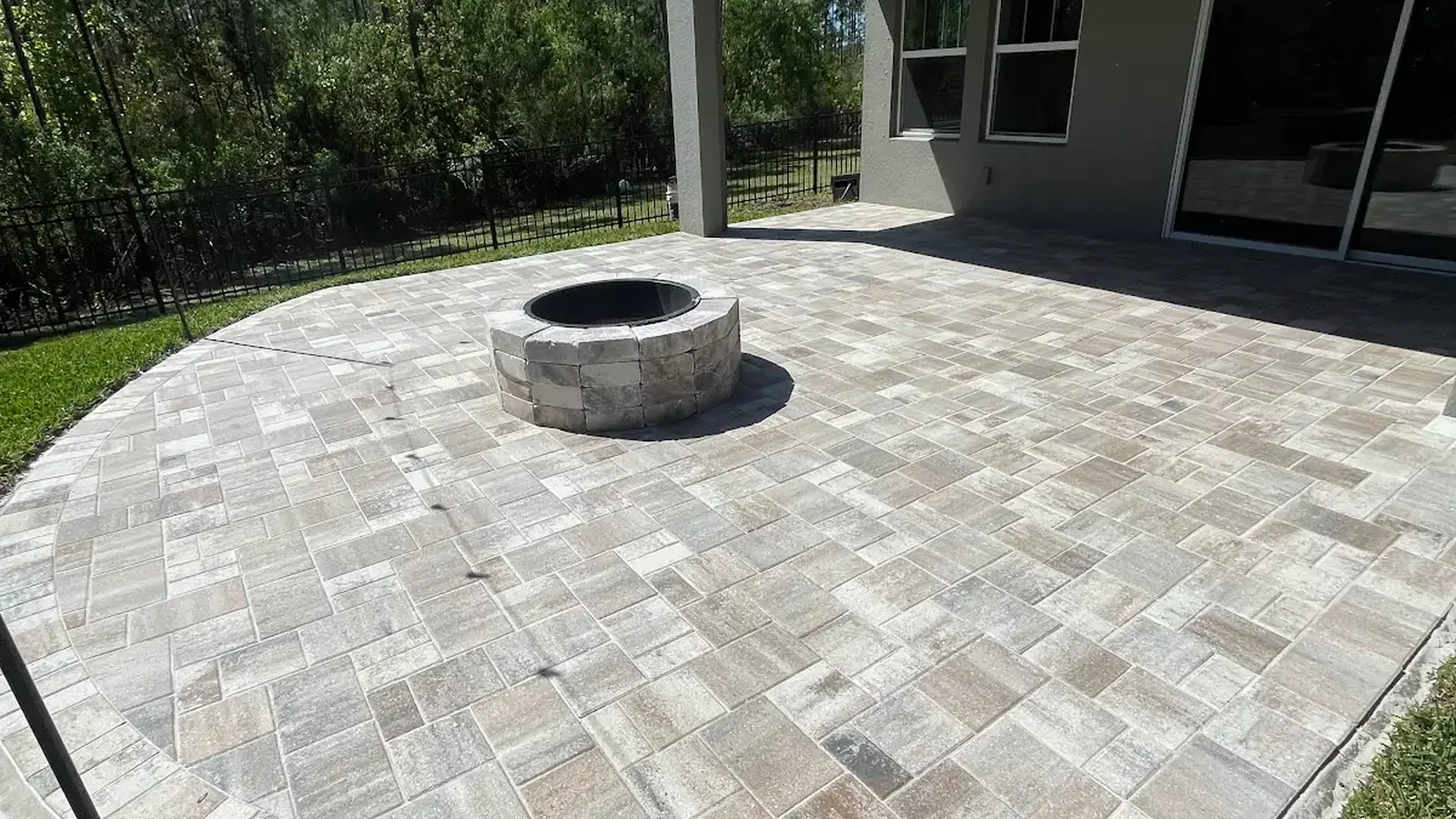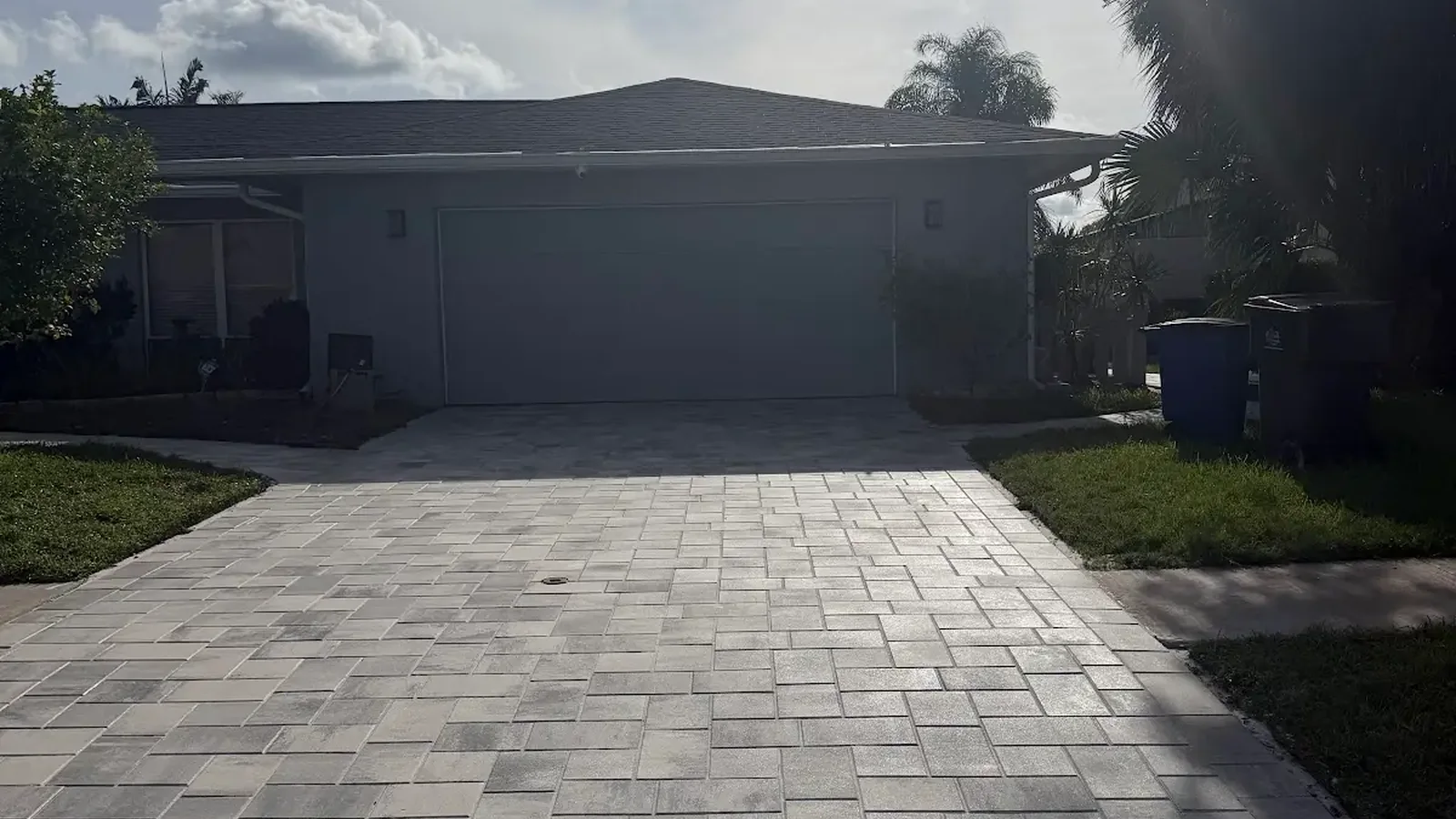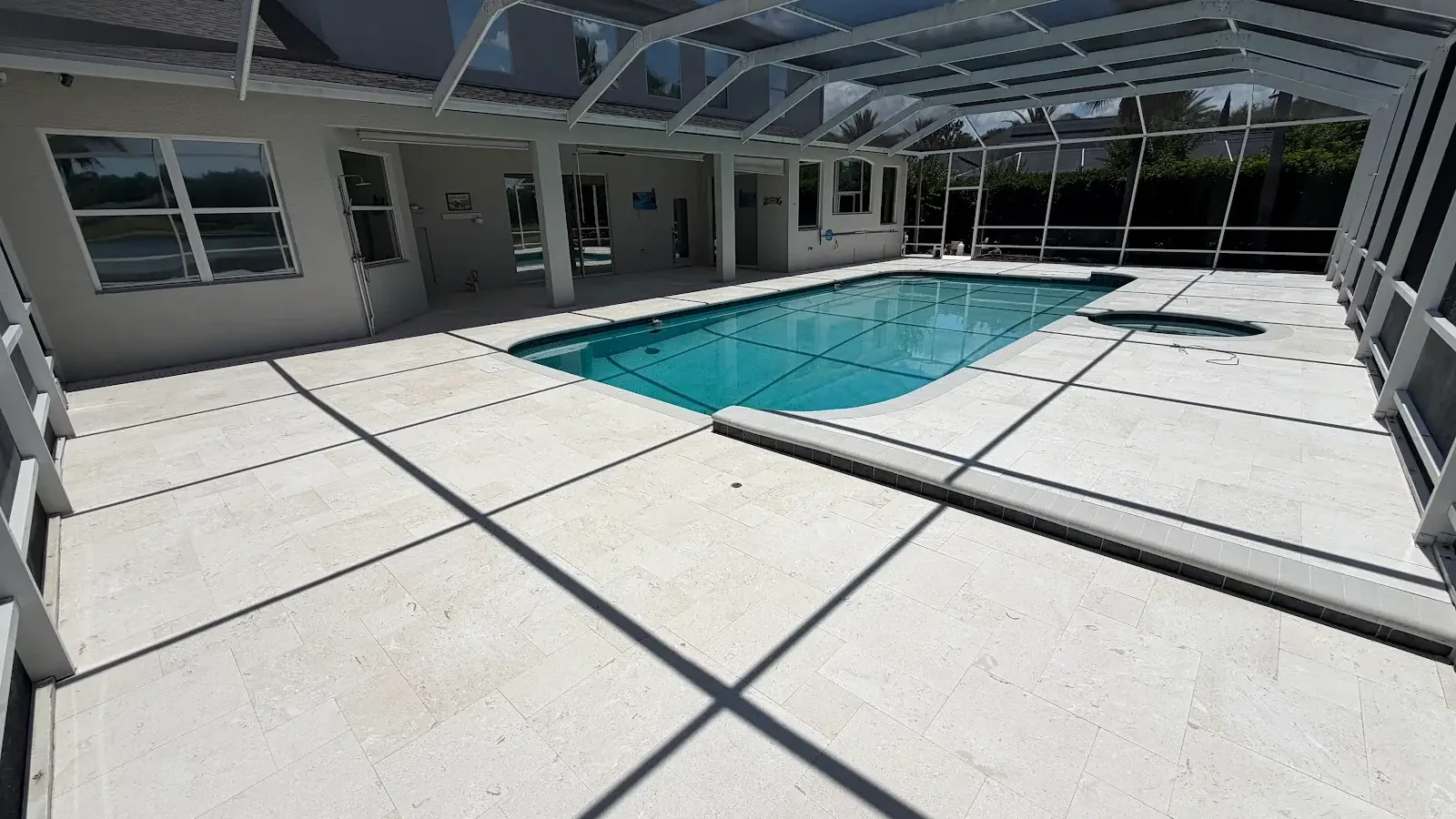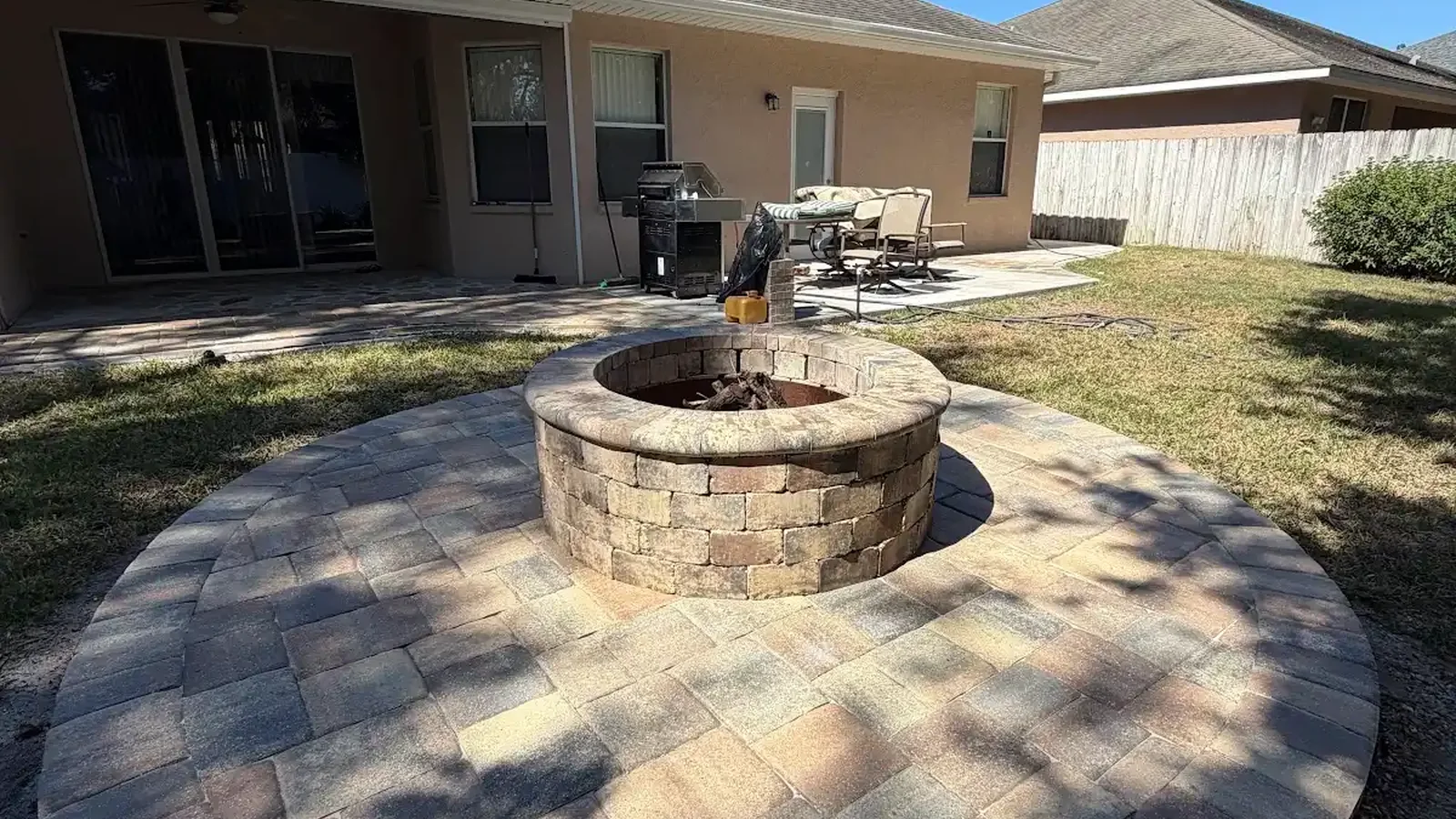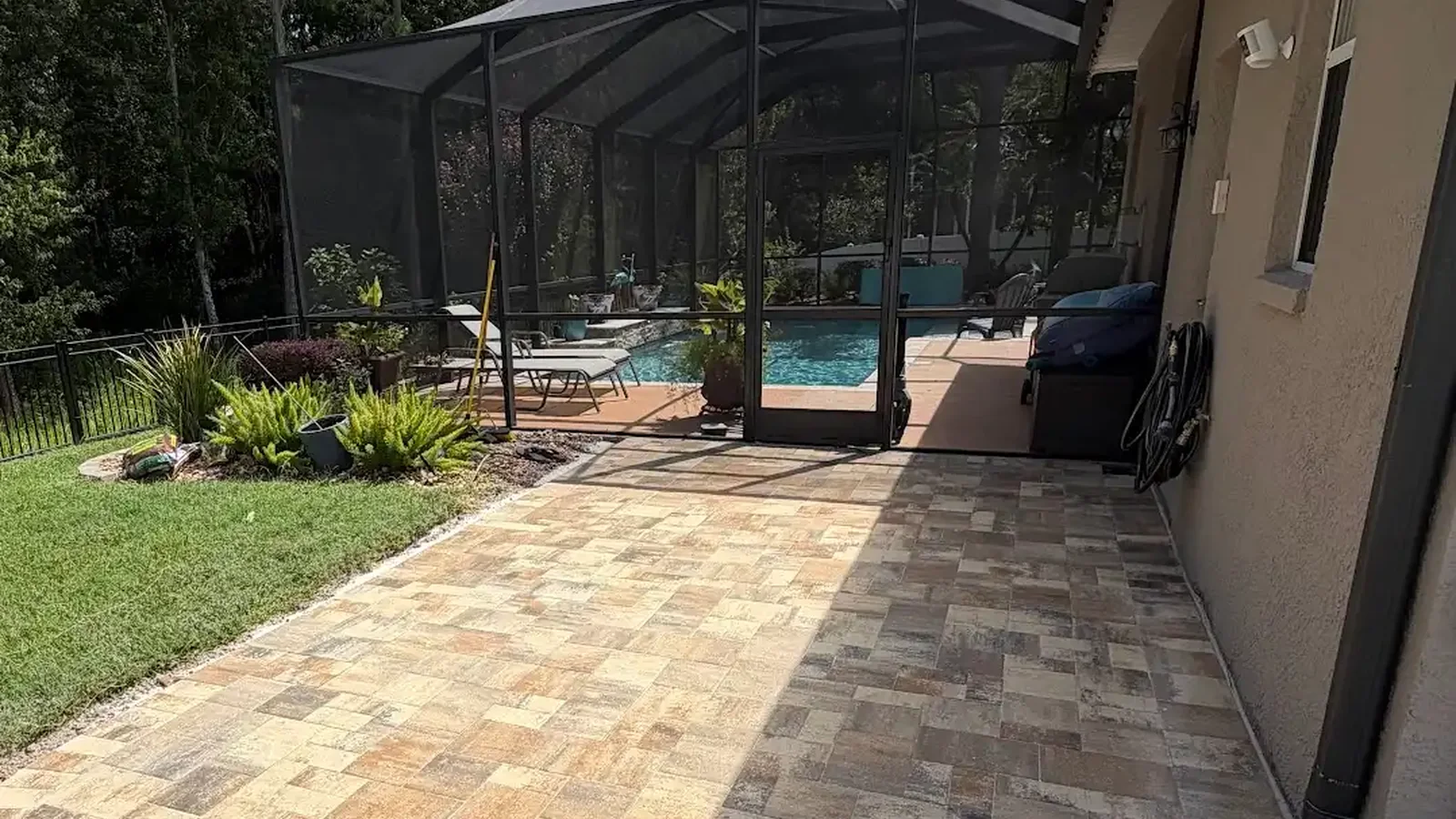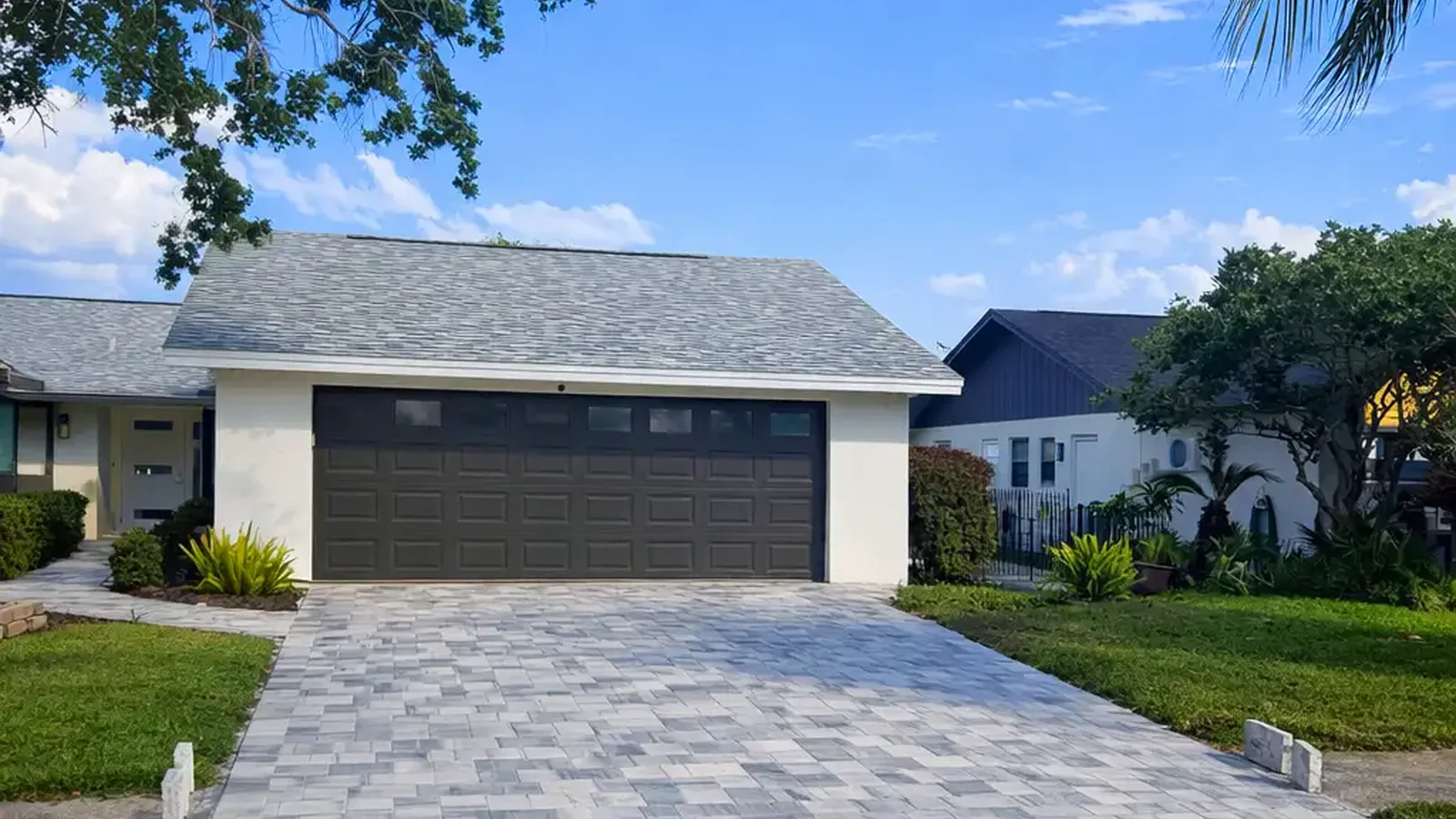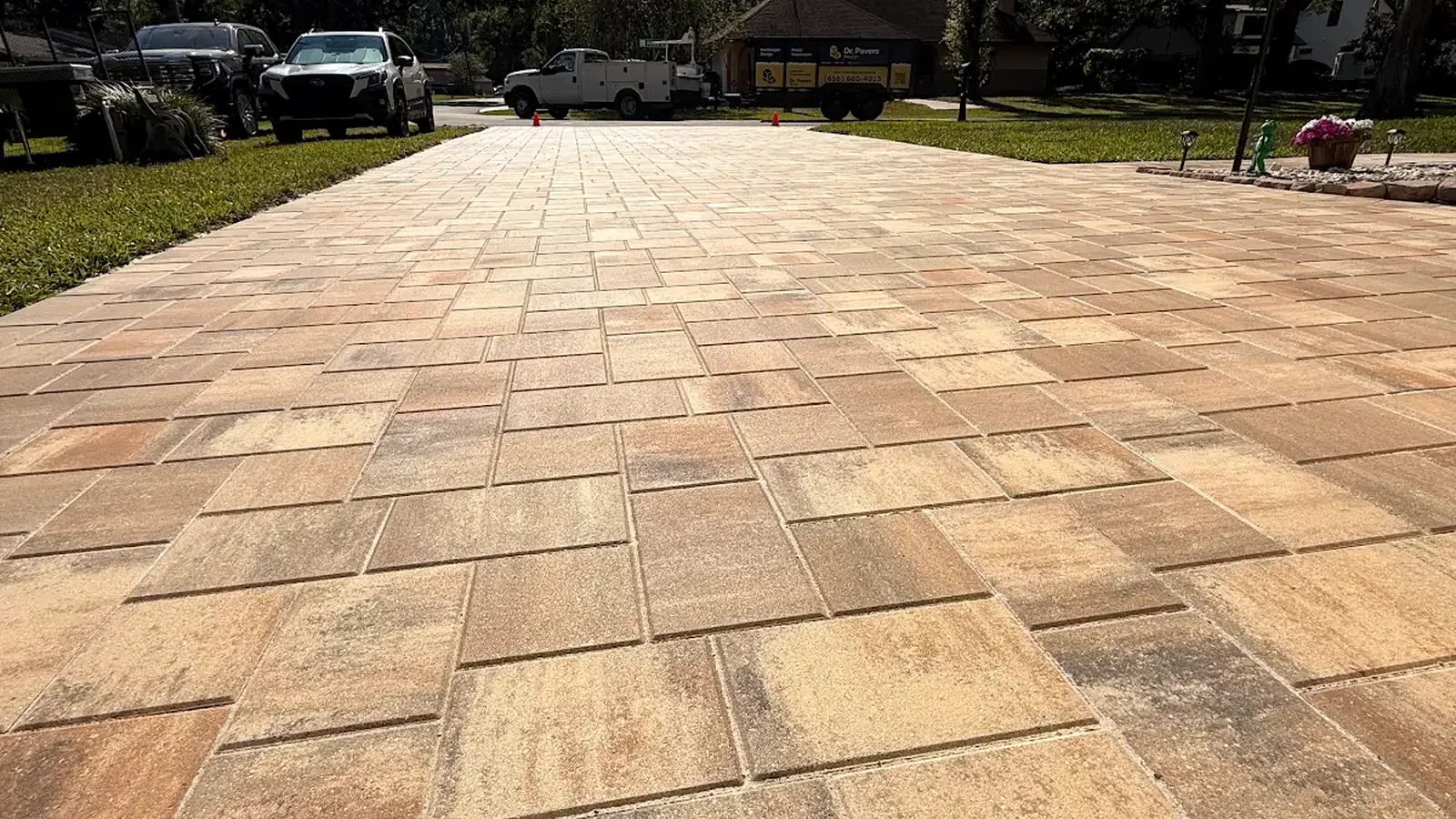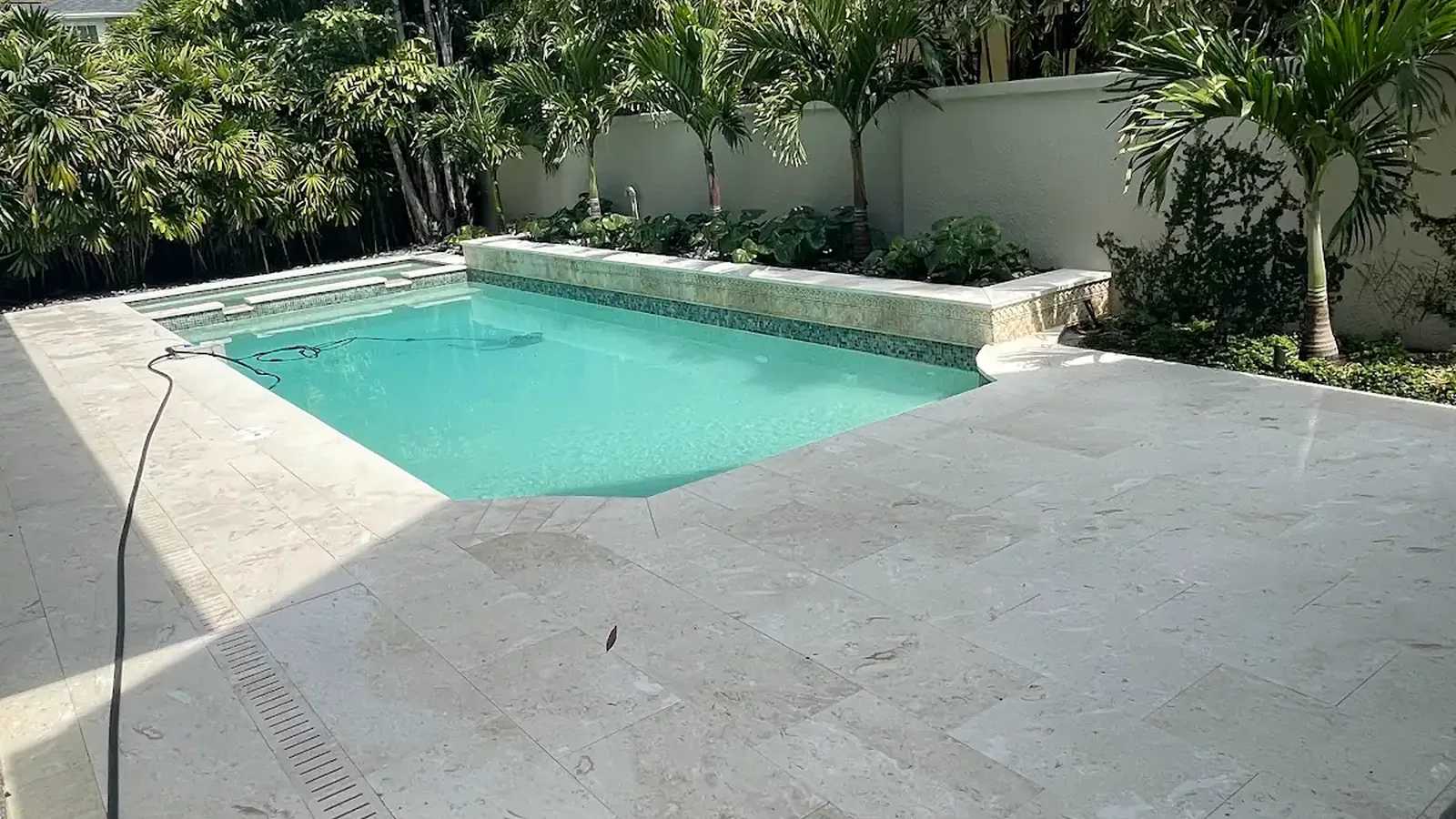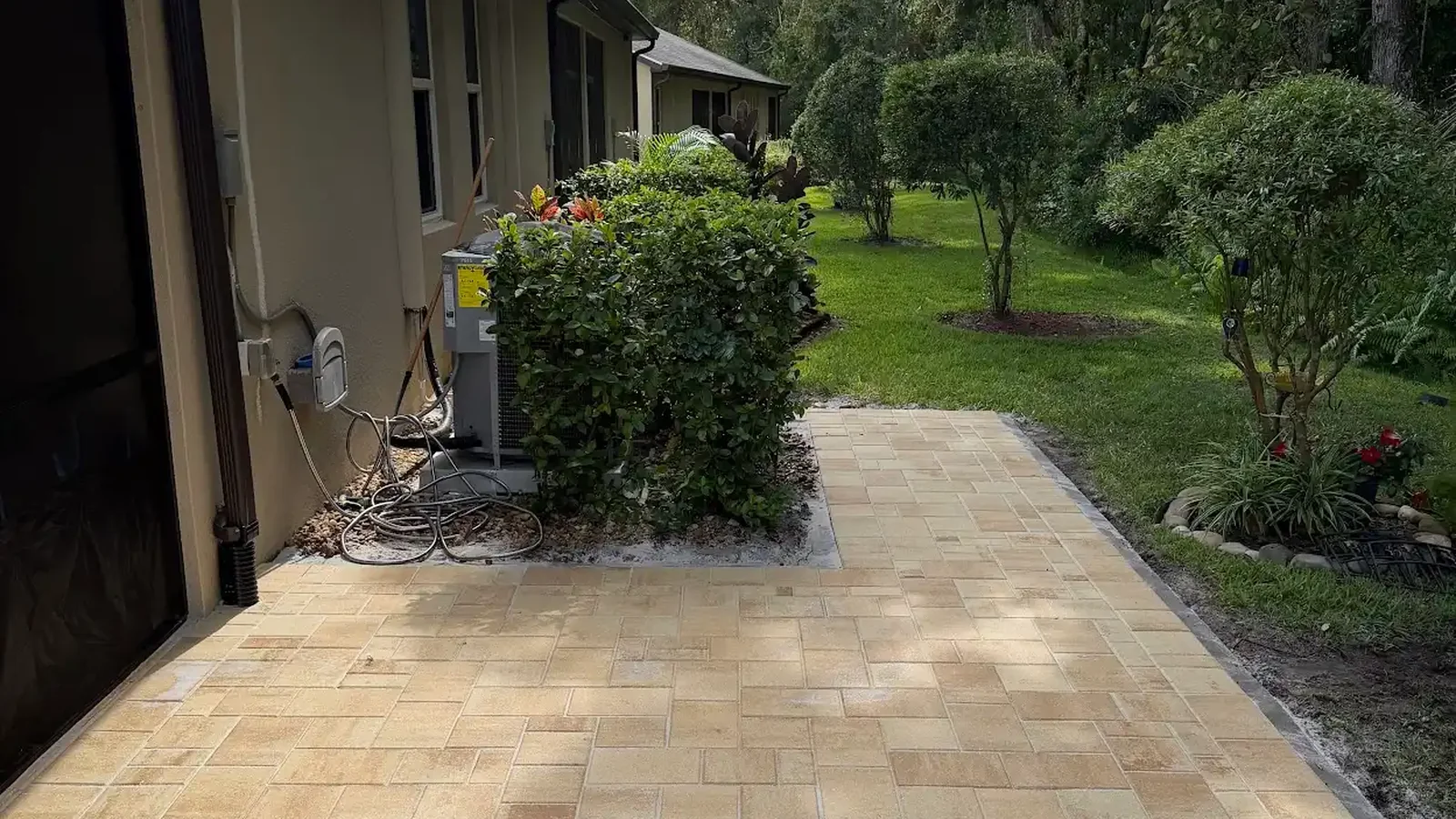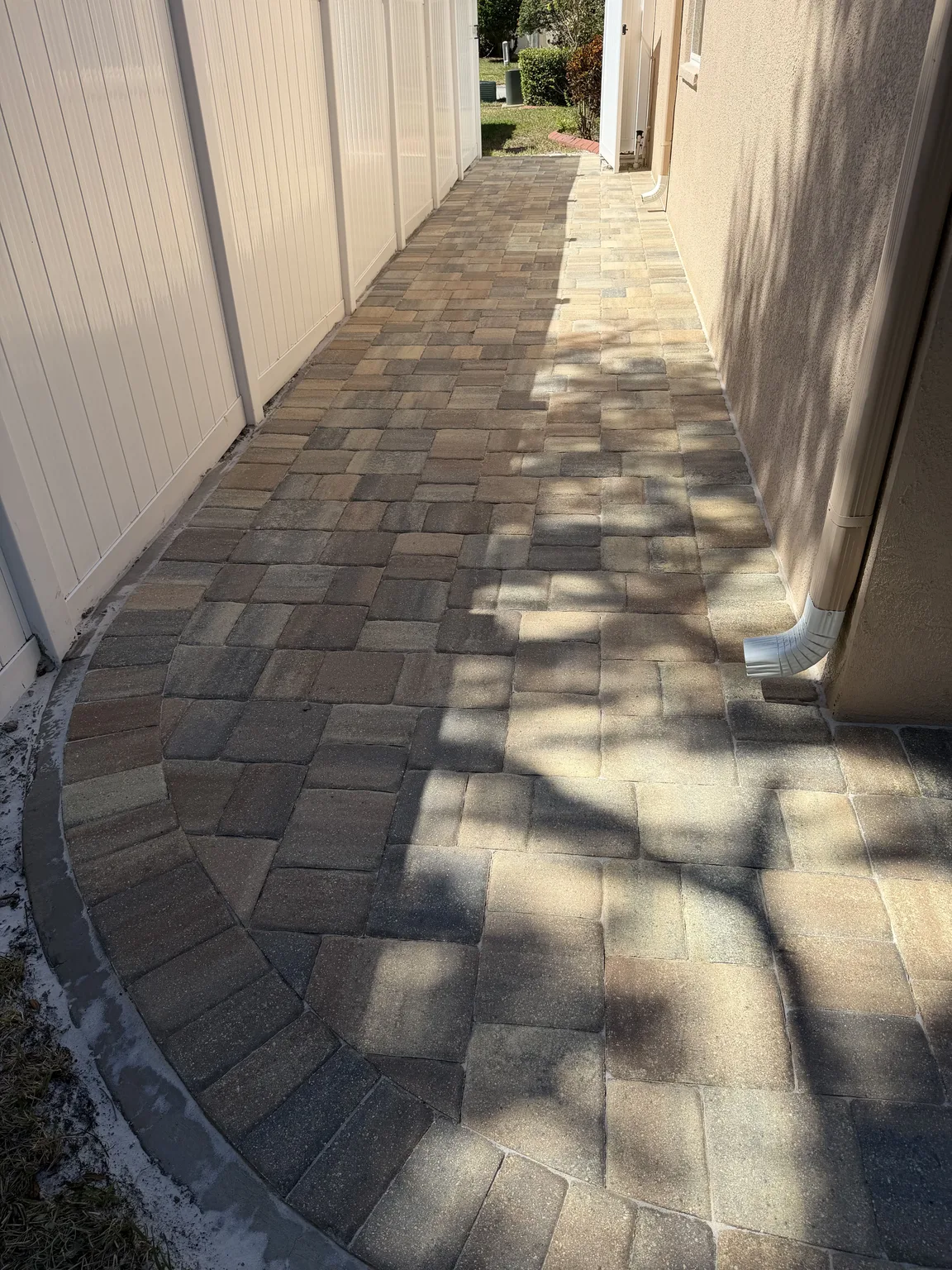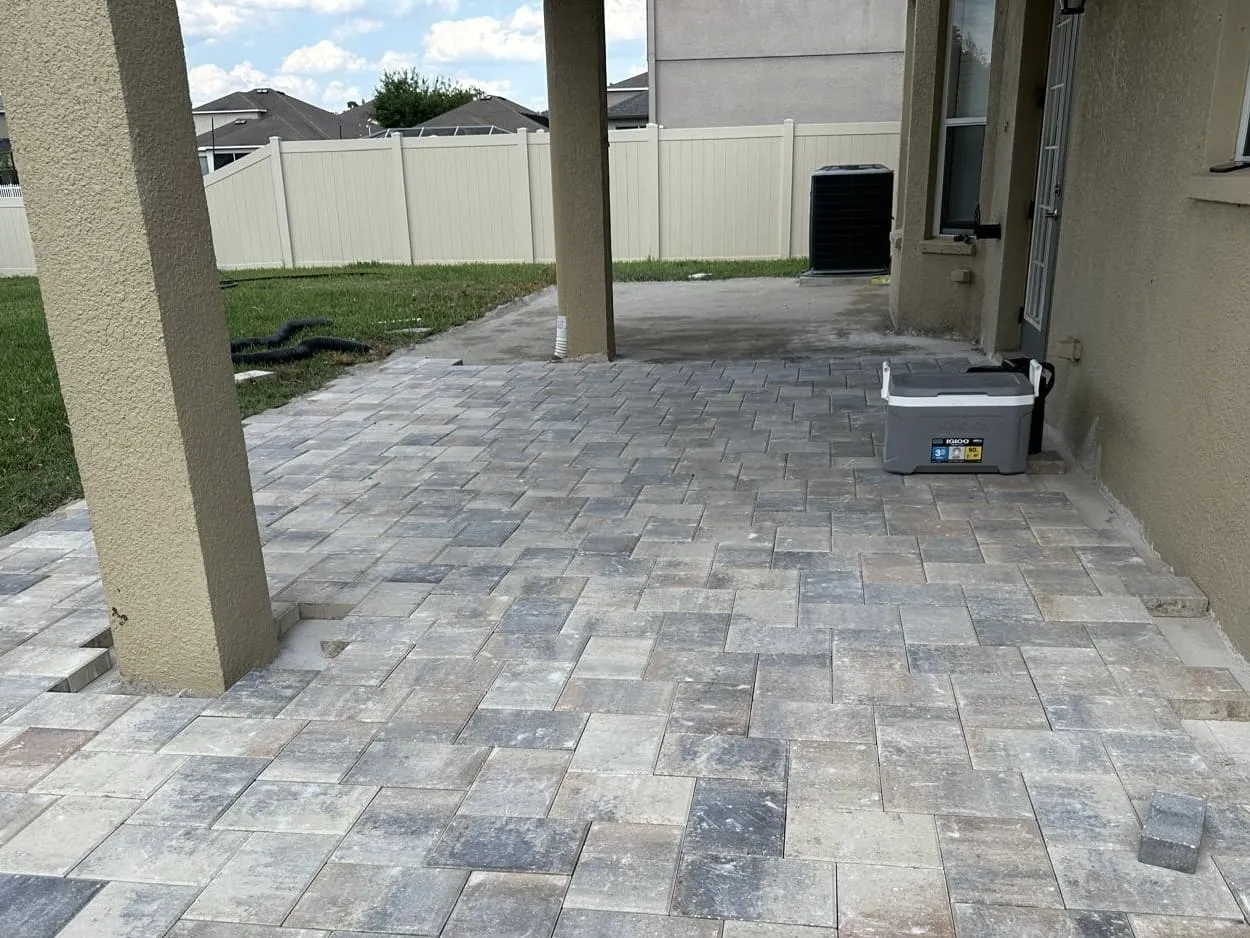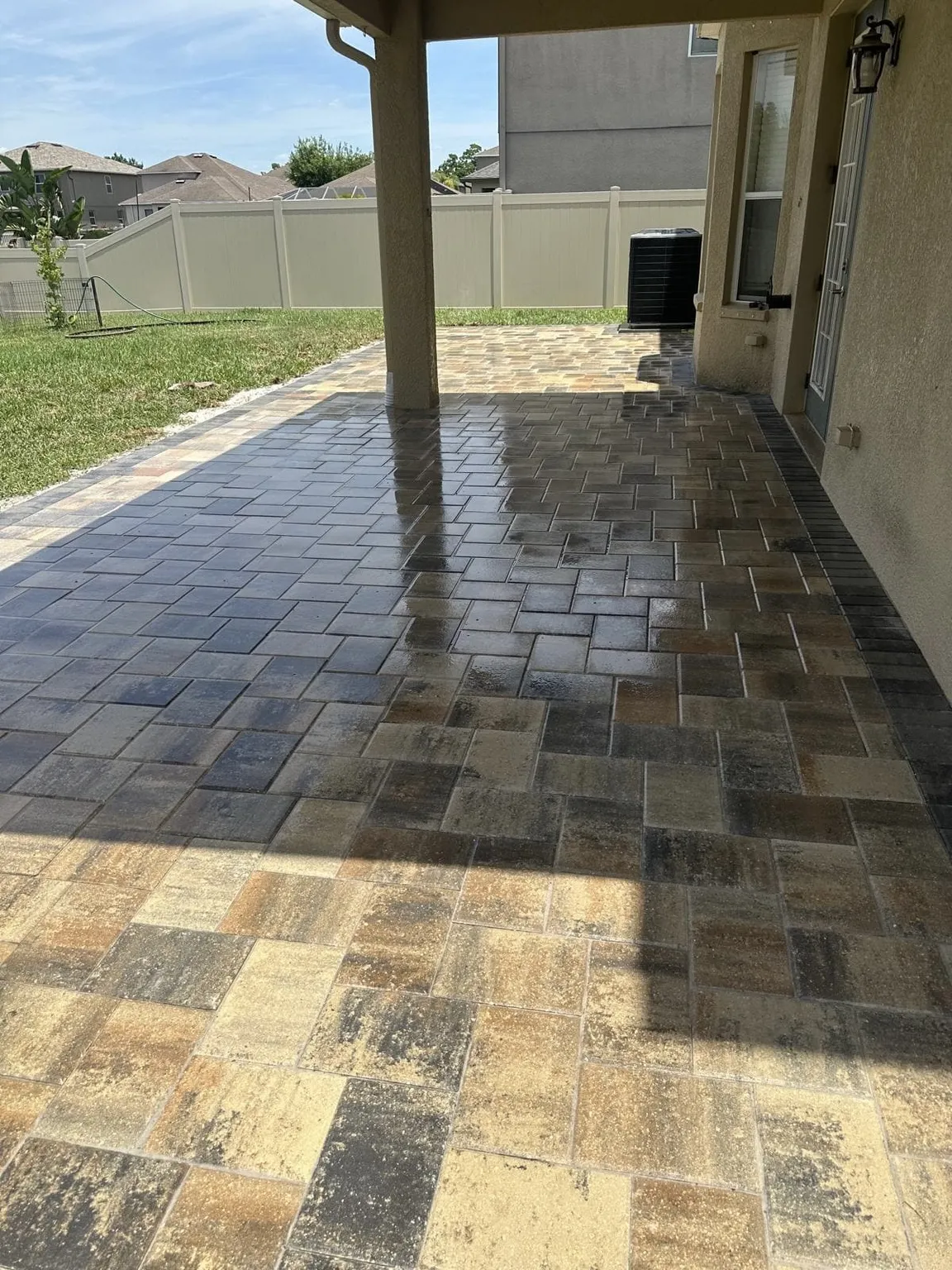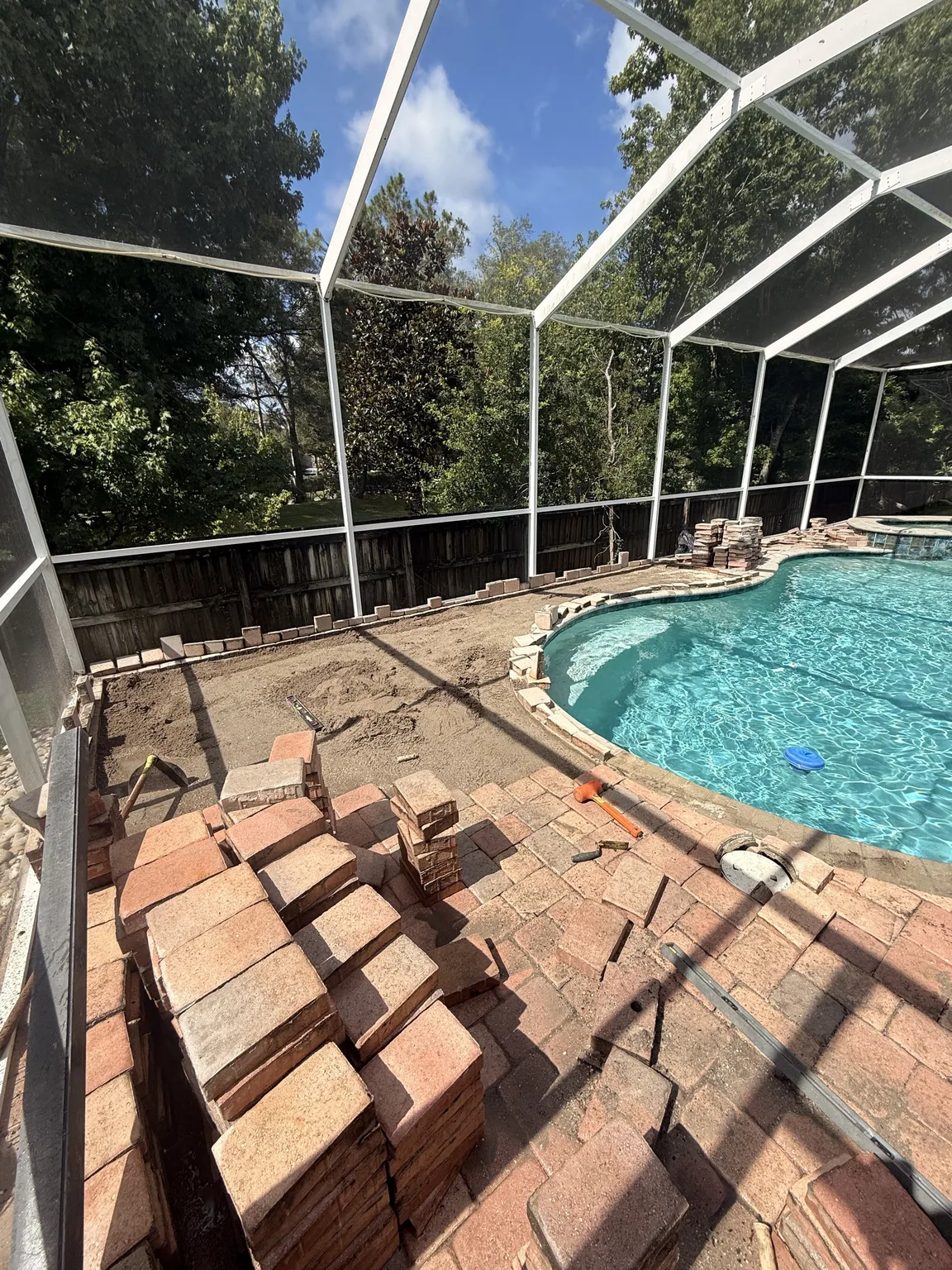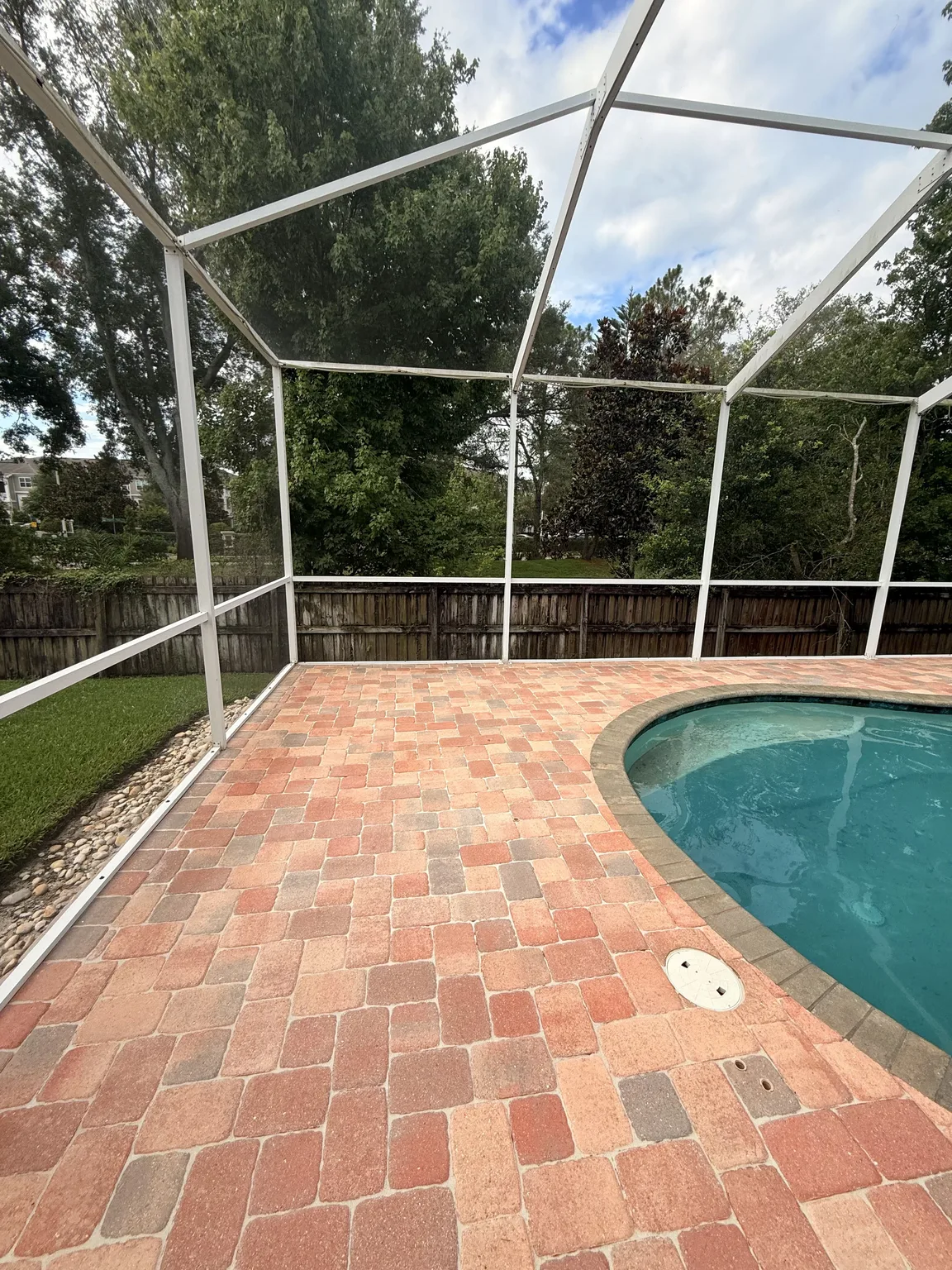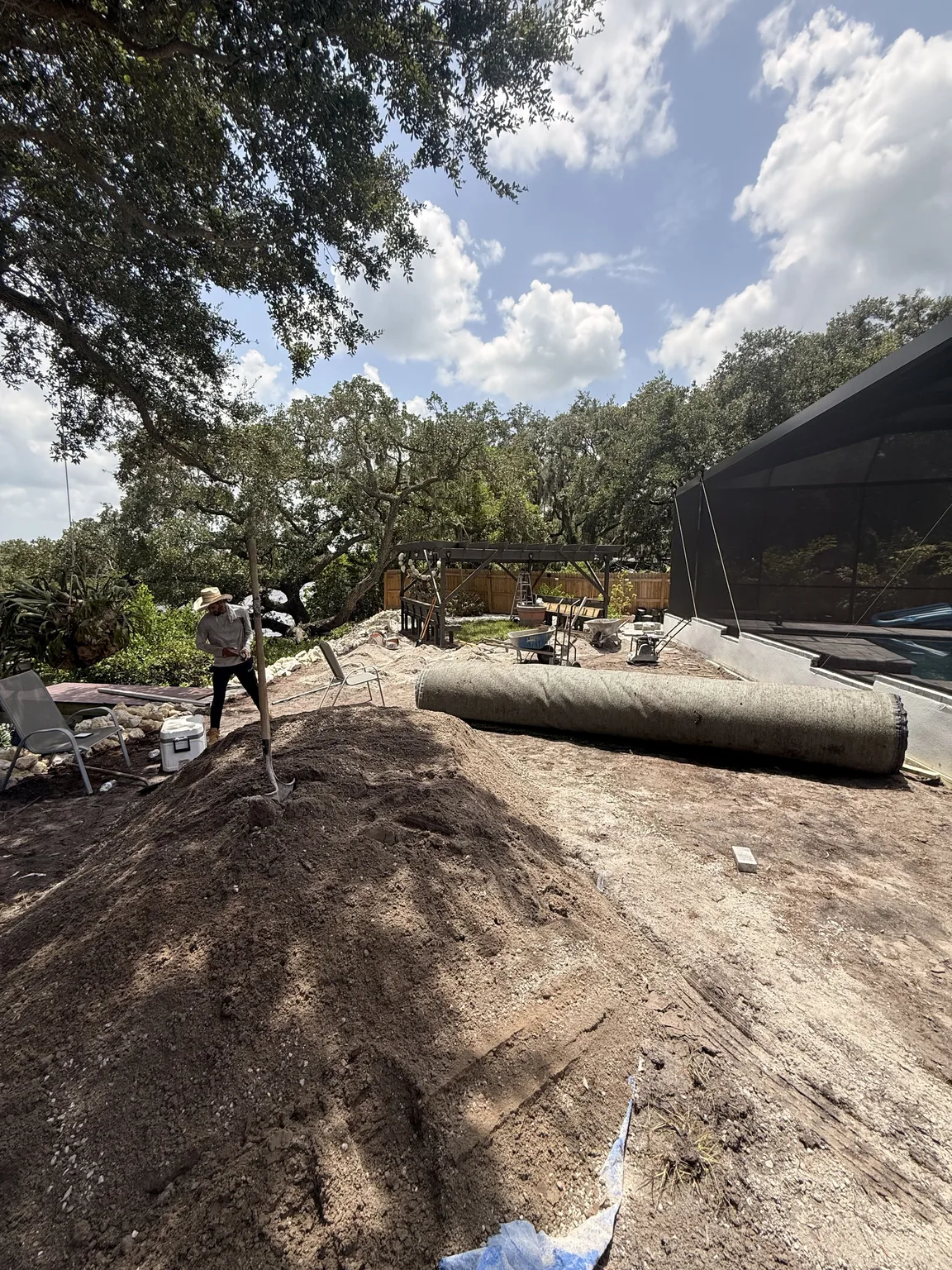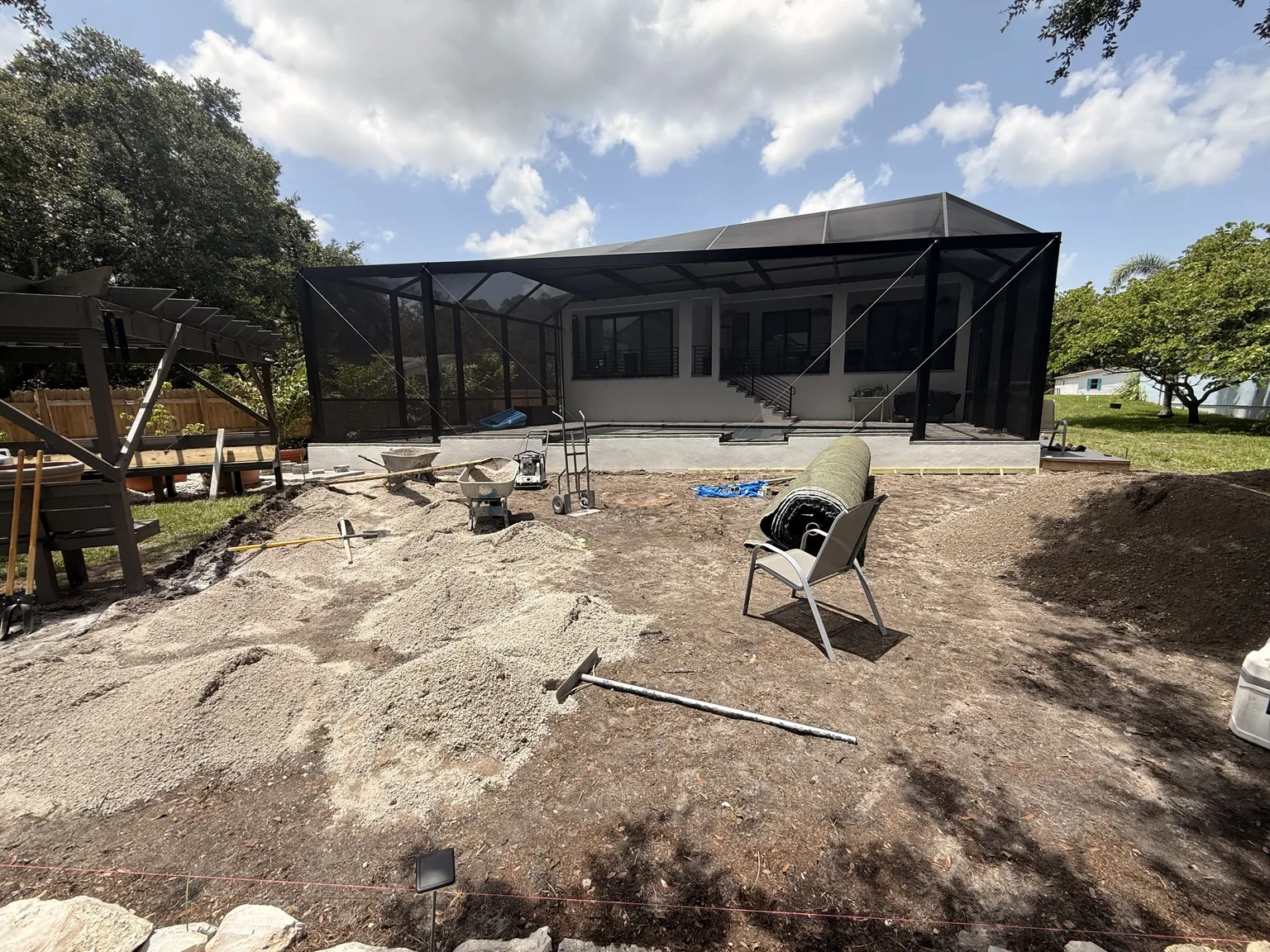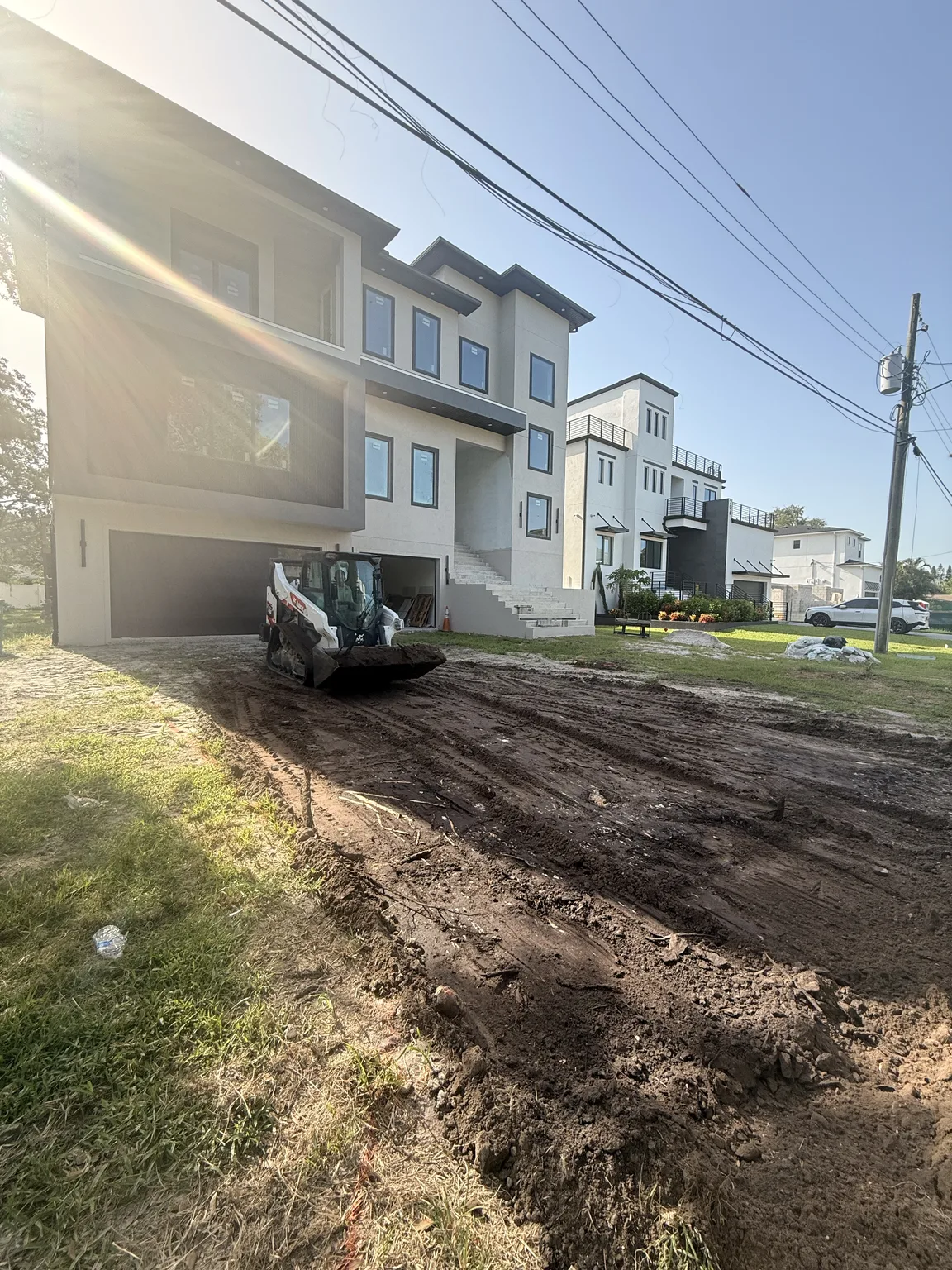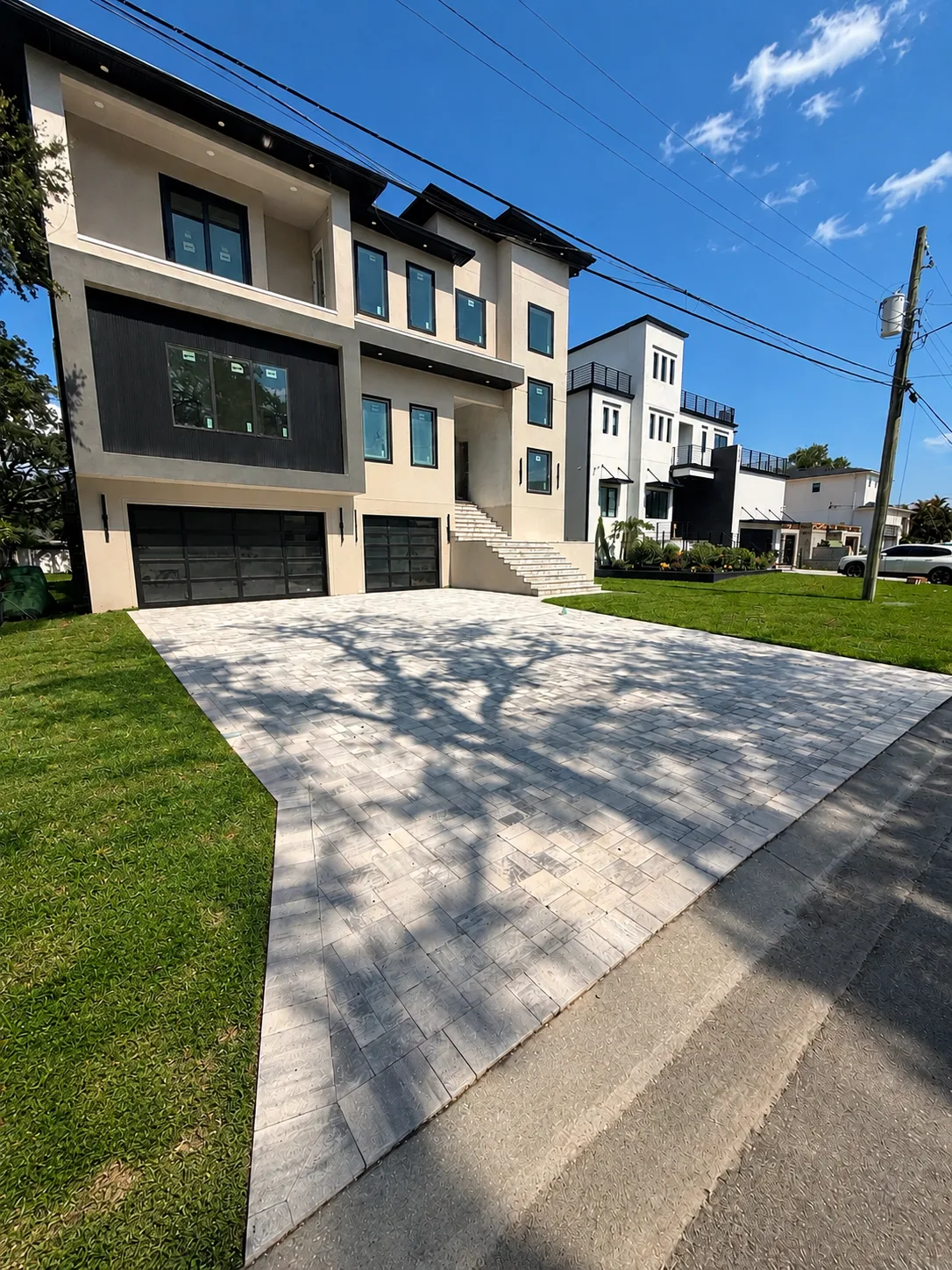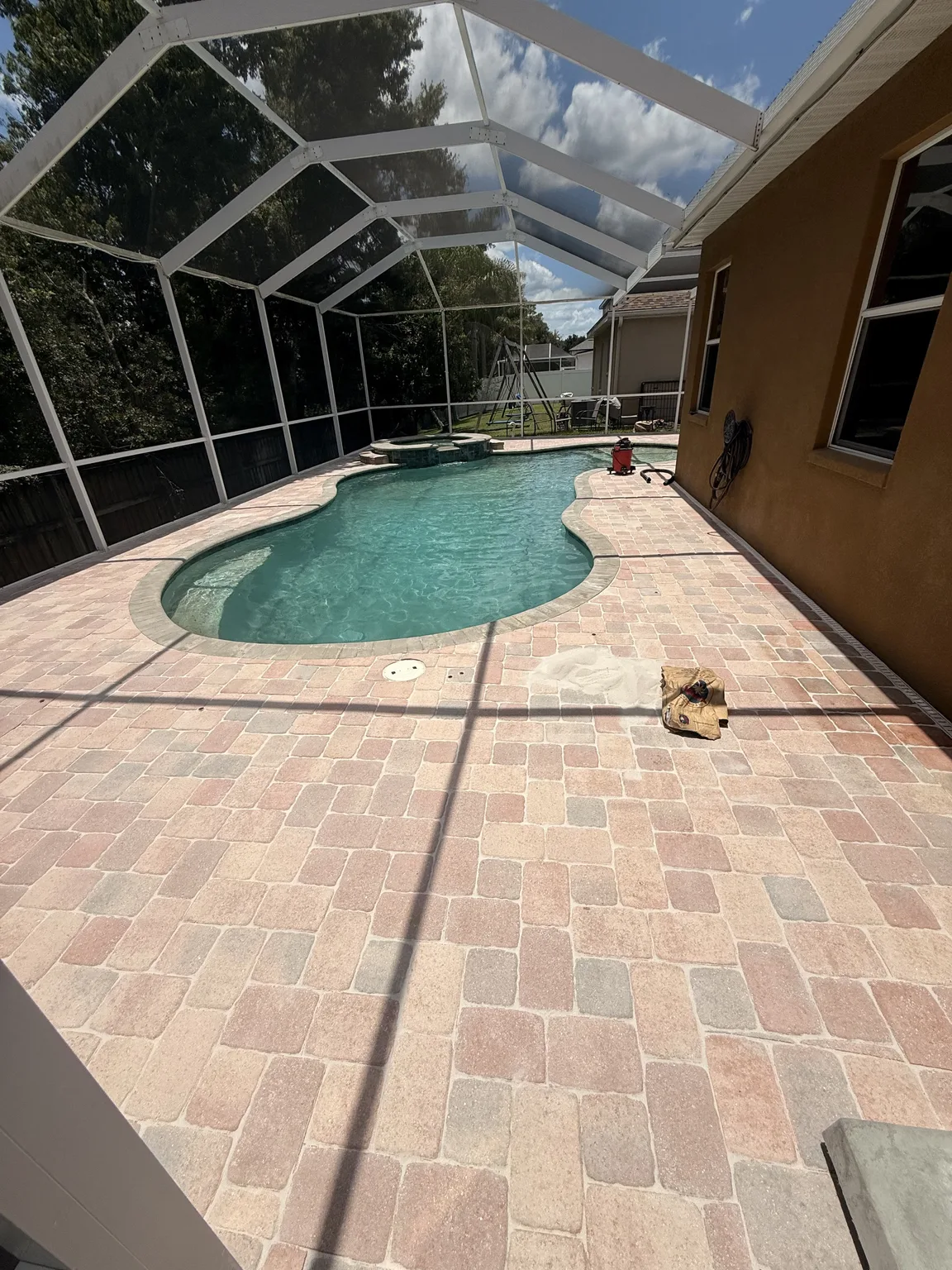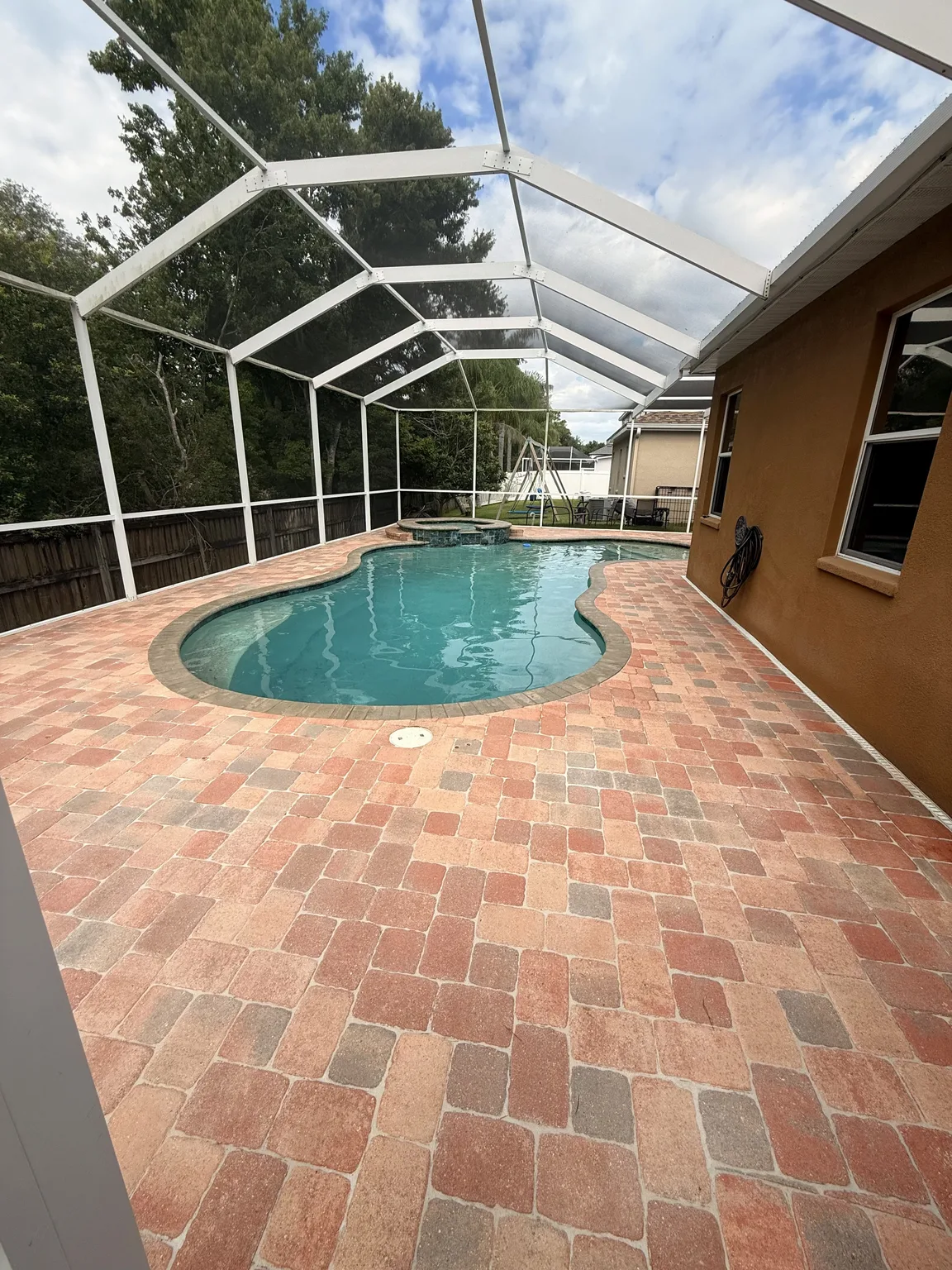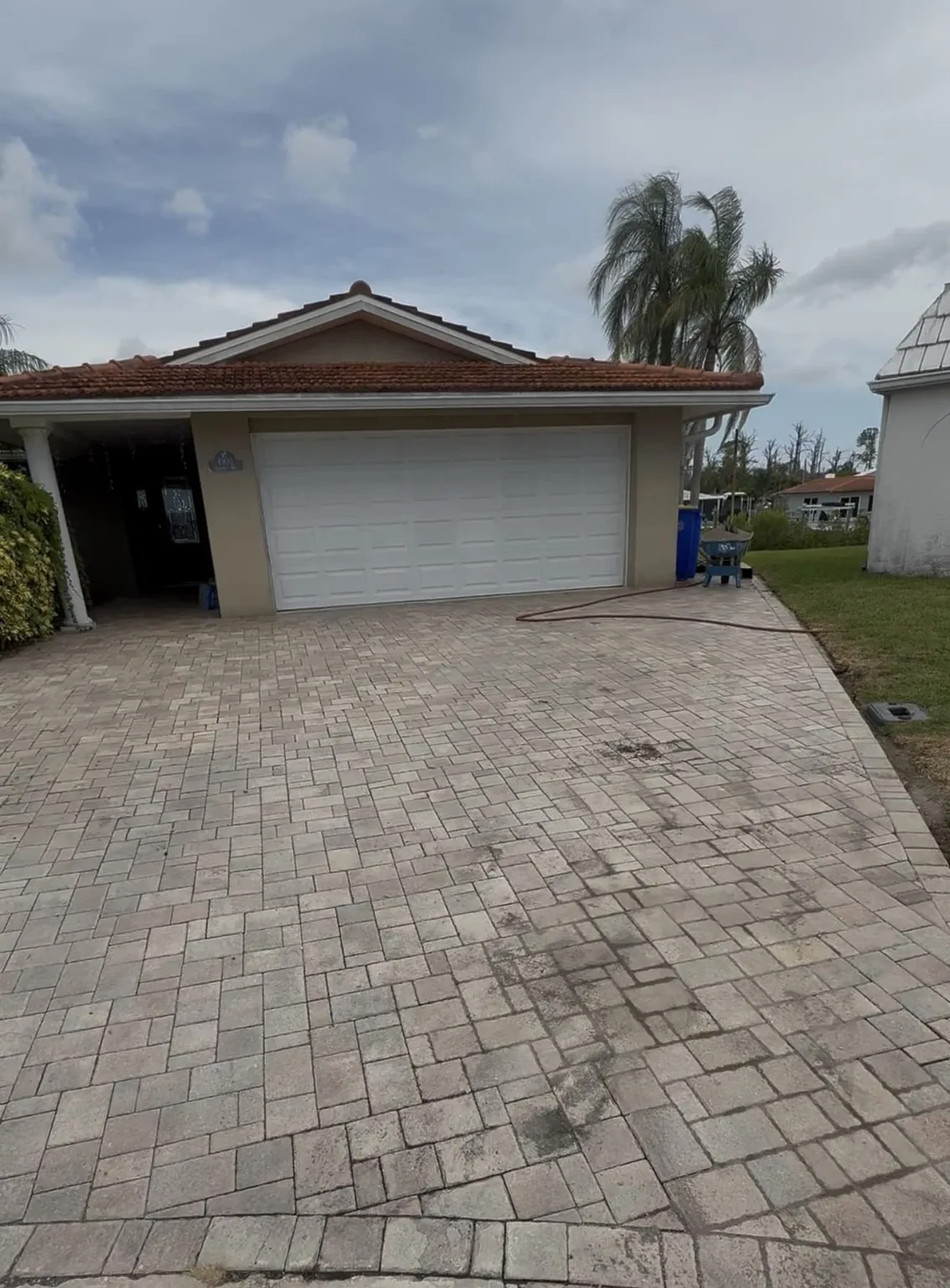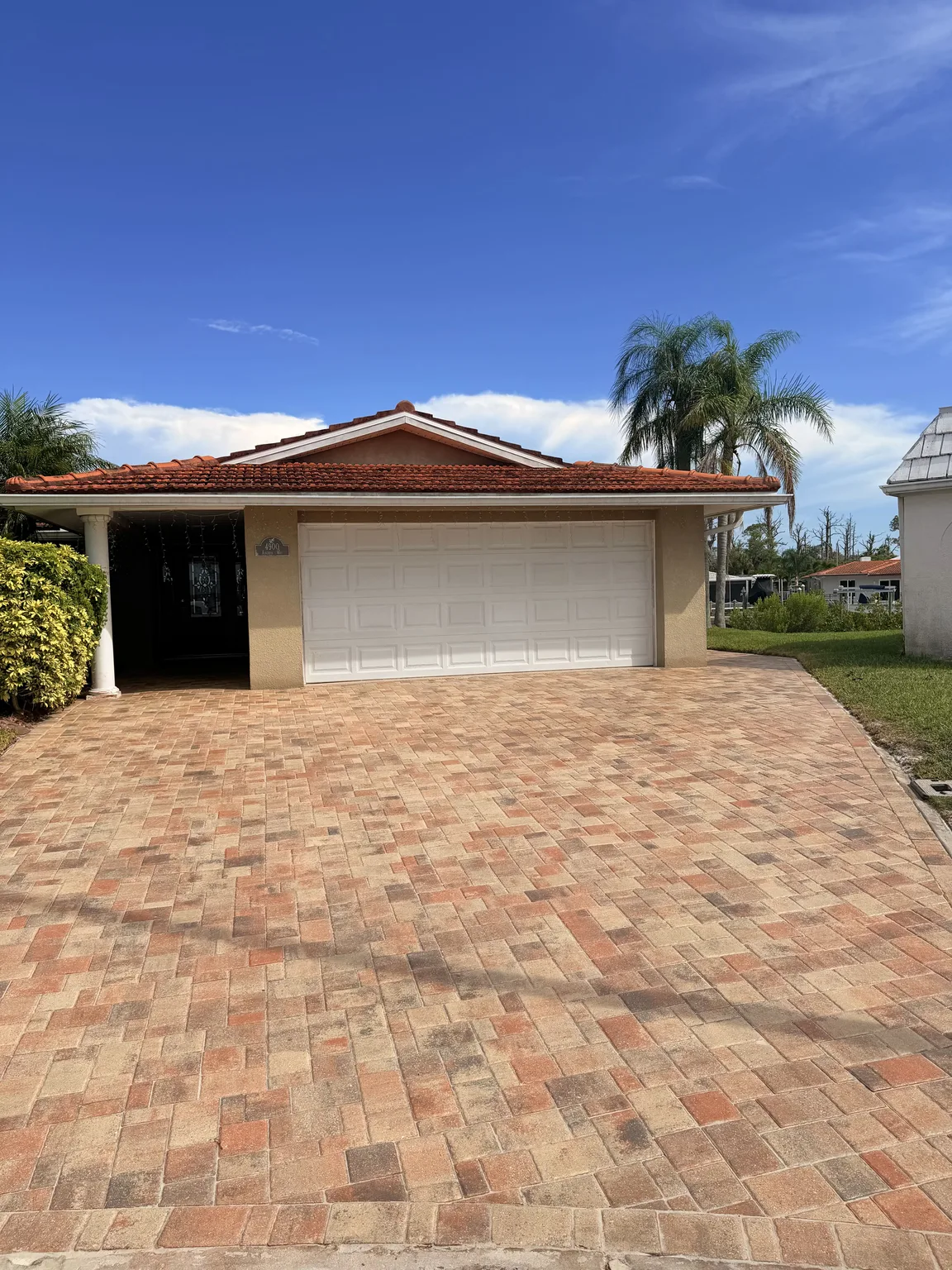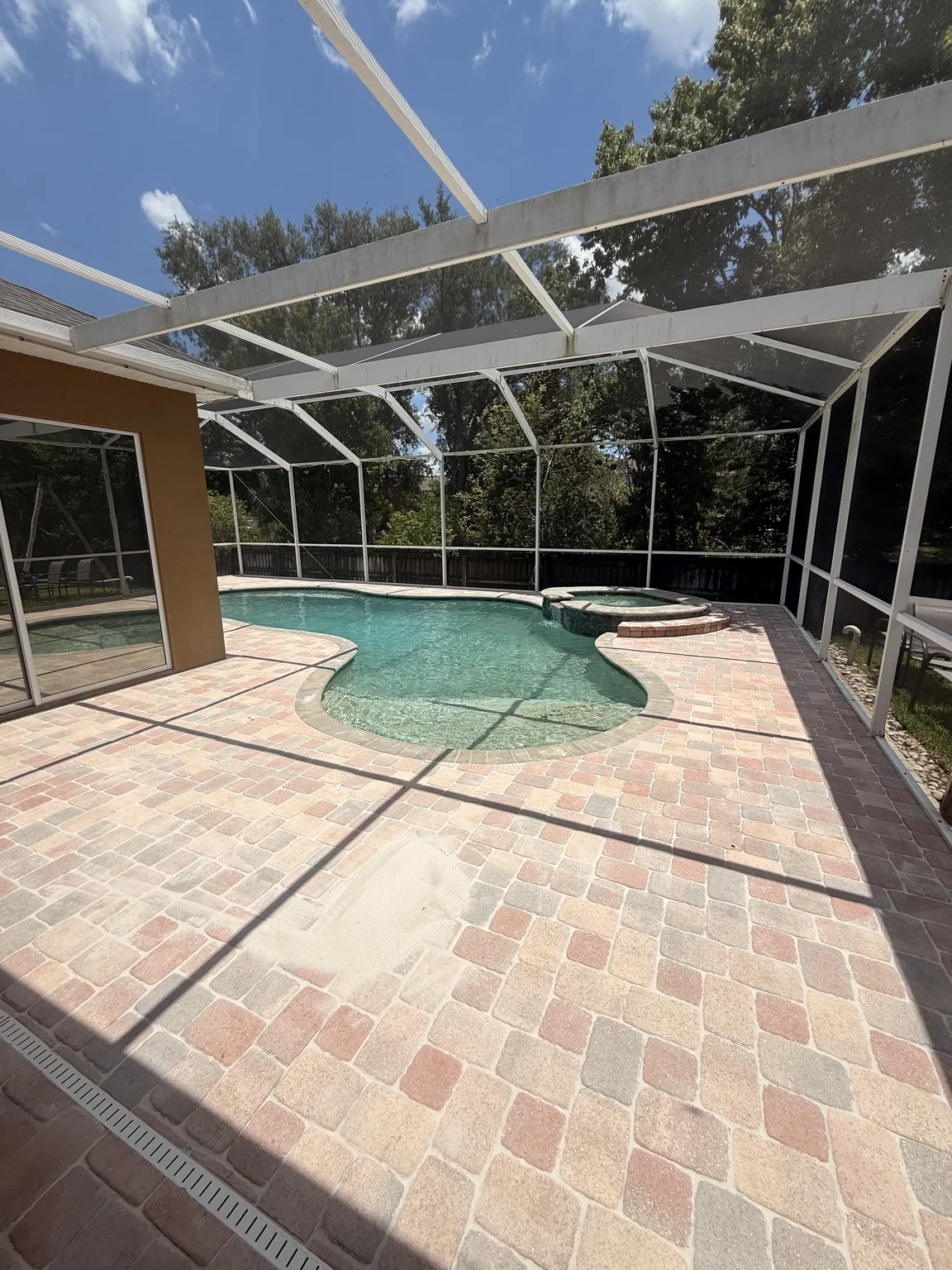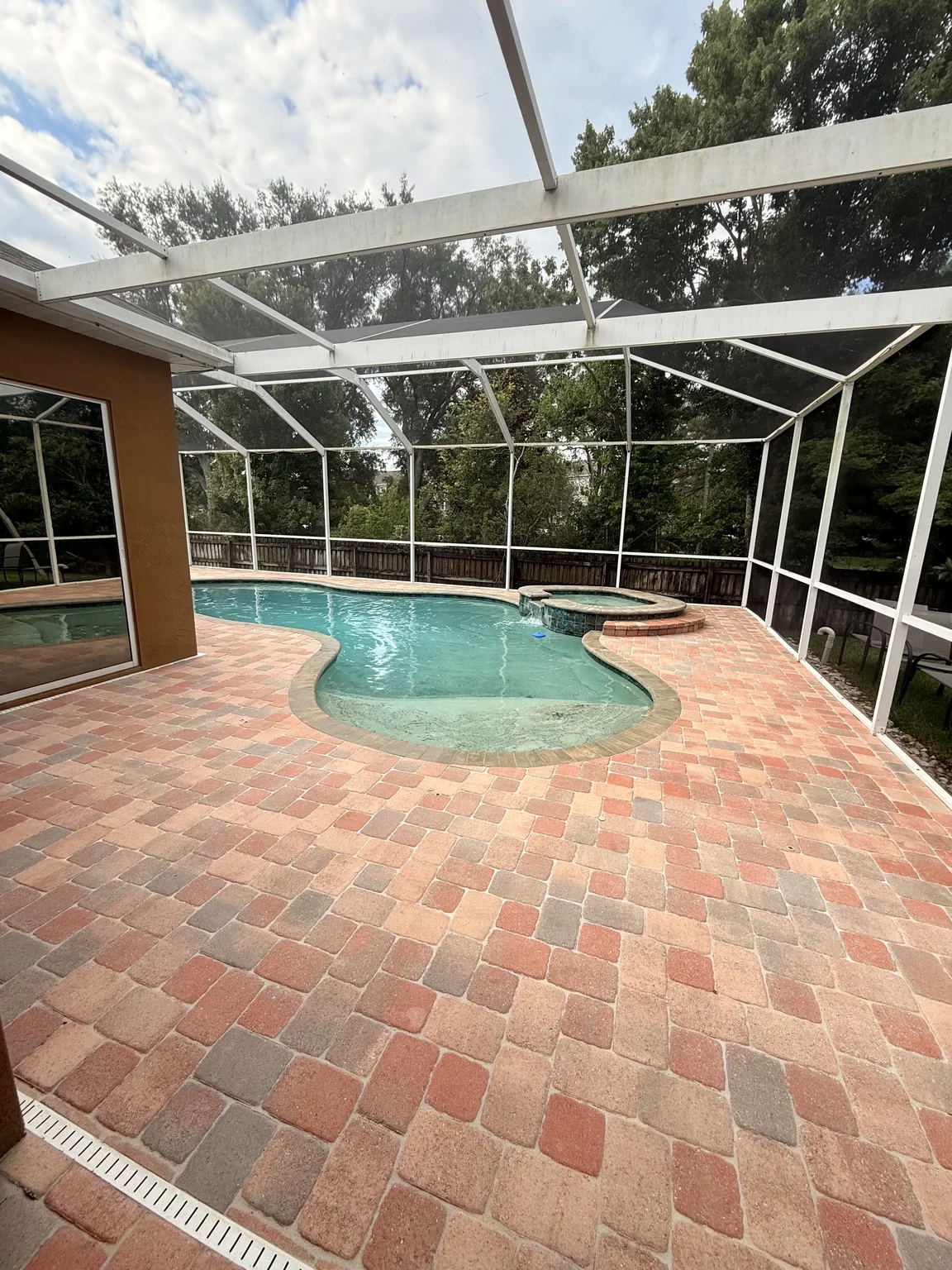

Can pavers be reused during a patio or driveway repair without weakening the finished surface? In many Tampa Bay projects, sound units can return after careful lifting, inspection, and cleaning. However, reuse succeeds only when the repair corrects the reason the surface moved. A stable result depends on the base, bedding, restraints, elevations, joints, and pavers working together.
For homeowners, existing pavers may preserve an established color blend and reduce the quantity of replacements. Nevertheless, Florida rain, vehicle loads, roots, previous coatings, and years of exposure can leave hidden damage. Therefore, the final decision belongs to each unit and each proposed location. A practical plan separates reusable field pieces, special cuts, borders, and rejects before resetting begins.
Can pavers be reused after a condition review?
Ultimately, First, can pavers be reused depends more on condition than age. A unit may remain serviceable when its faces, full depth, and load-bearing edges are intact, even if the supporting material failed. Conversely, deep cracks, crumbling surfaces, or major corner losses can disrupt performance and joint consistency. Brushing away loose sand allows both faces and every edge to receive a meaningful inspection.
Nevertheless, Next, the destination changes the acceptance threshold. Driveway wheel paths demand strong, uniform pieces, while a lightly used garden edge has different loading. In addition, thickness, shape, spacer details, and pattern modules must stay compatible with neighboring units. A contractor can hold questionable pieces aside until the available quantity and final placement plan become clear.
How can pavers be reused after sorting?
During sorting, crews look for cracks, broken corners, worn faces, stains, scaling, and remnants of older treatments. Consequently, a paver that appears acceptable from above may reveal damage underneath. Minor edge wear might fit a concealed cut location, but it may create an obvious gap at a front entrance. The strongest and most consistent pieces should serve the primary traffic areas.
Meanwhile, the surface must be evaluated as evidence. A dip can point to loose base, disturbed soil, thick bedding, spreading edges, or concentrated water. Although reusable pavers can cover the area again, they cannot stabilize weak support. For that reason, a professional paver repair should address the cause before the original field returns.
The foundation controls the repaired result
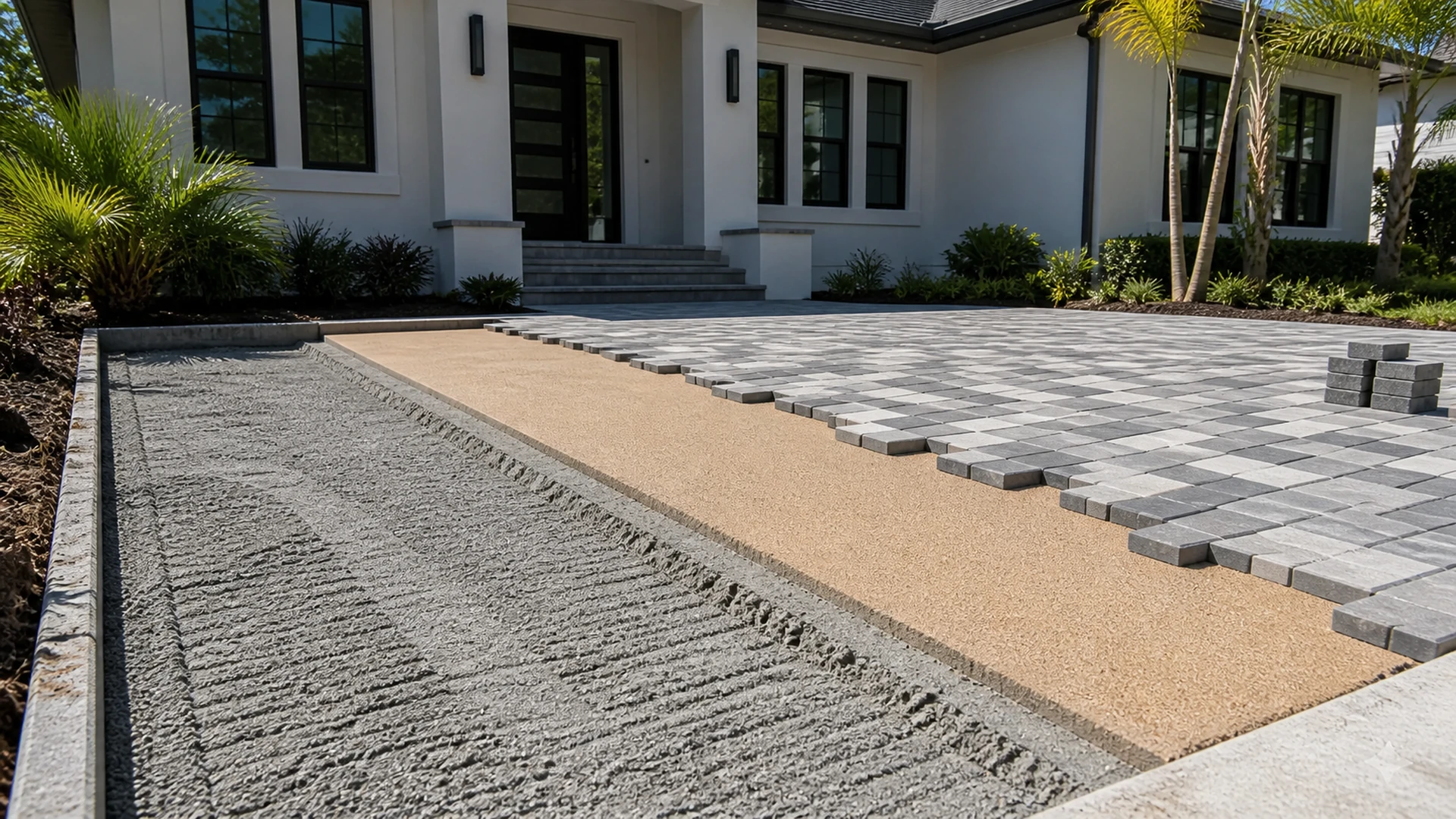
Additionally, Once lifting exposes the work zone, low pockets and loose material become easier to identify. For example, the crew may find organic soil, inconsistent compaction, or bedding used to compensate for a deeper depression. The affected material can then be removed and rebuilt in controlled layers. As a result, the reused surface receives uniform support rather than returning to the original defect.
Can pavers be reused while preserving nearby elevations? Usually, careful grade control makes that possible, although transitions deserve close attention. The finished work needs to meet garage slabs, steps, pool structures, drains, and untouched paving without abrupt lips. Therefore, string lines, straightedges, and frequent checks help the repaired section blend with the surrounding field.
Bedding, edges, and joints have separate roles
After base correction, a consistent bedding layer establishes final alignment. However, bedding should not become a thick filler for major variations because it can settle unevenly. Edge restraints also need review where pavers rotated or spread beside lawns and planting beds. When these components perform their intended roles, reclaimed units can interlock across a stable plane.
Finally, joint material supports relationships between neighboring pavers instead of correcting base movement. Joints require appropriate preparation before fresh material is applied for the selected system and site. In addition, the surface must remain clean during installation, especially on textured faces. The Concrete Masonry and Hardscapes Association provides broader information about segmental paving principles.
Cleaning and staging protect reusable material
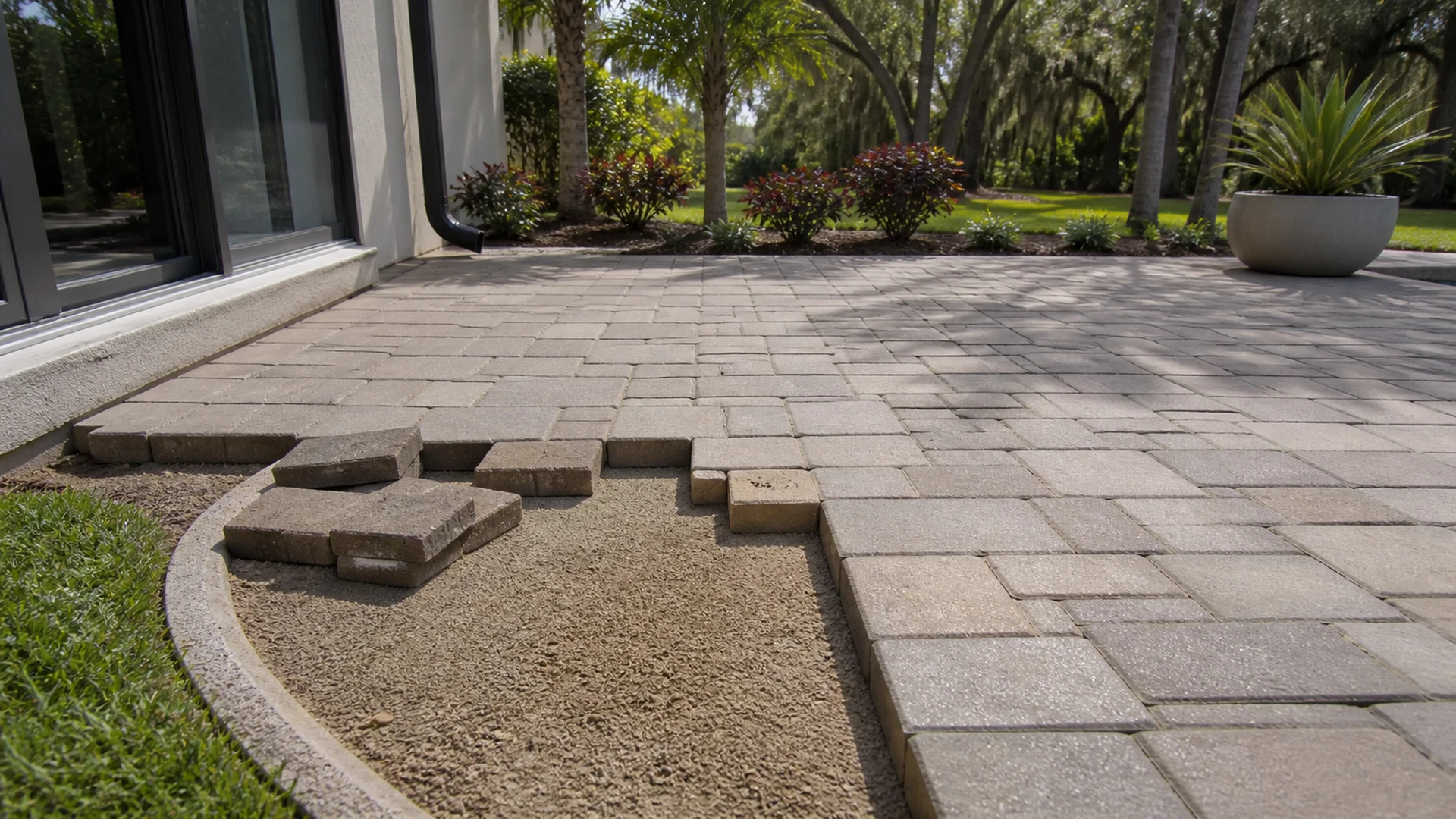
Before resetting, soil, roots, bedding sand, and joint residue often need removal from the sides and underside. Nevertheless, aggressive impacts can crack a usable unit or damage its edges. Controlled hand work exposes the true condition without creating avoidable defects. Can pavers be reused efficiently often depends on placing the cleaning and sorting area close to the repair.
If an older sealer remains, appearance decisions become more complex. For instance, worn coating may produce uneven gloss after pieces change orientation. Chemical treatment requires compatibility checks, so a small test is more informative than an improvised full-area application. Instead, allow cleaned samples to dry before comparing them with untouched pavers and possible replacements.
Organize shapes, cuts, and borders separately
As lifting proceeds, orderly stacks reduce repeated handling and confusion. For example, border units, full field pieces, and cuts around columns or curves are not interchangeable. Marking special locations can preserve the original geometry and save unnecessary recutting. Consequently, the reset moves logically while damaged material remains visibly separated from accepted pieces.
Can pavers be reused when a pattern contains several sizes? Yes, although the crew must track every module and identify shortages early. Random stacking slows the work and may leave an incomplete pattern at the far edge. Therefore, counting sound pieces by size supports an accurate replacement order and prevents a damaged unit from returning merely because a certain format runs short.
Replacement pieces need a blending strategy
Even a careful repair may require new pavers. However, colors and textures can vary by production run, while the existing field has weathered under Florida sun and rain. A current product with the same name may not look identical beside older units. Accordingly, homeowners should expect deliberate blending rather than an unsupported promise that every repair will disappear visually.
One approach distributes the closest replacements through the lifted field instead of forming a separate rectangle. Alternatively, existing pavers from a less prominent zone may move into the repair while new units take their place there. Can pavers be reused this way to improve continuity? Often they can, provided thickness, pattern, condition, and performance remain compatible.
Review color after every piece is dry
Because wet pavers look darker, immediate post-cleaning comparisons can be misleading. Moreover, sun and shade reveal different parts of a blended color. Allowing samples to dry produces a fairer evaluation from normal walking and driving viewpoints. Subtle variation may feel natural across a wide field, while a concentrated block of one tone draws attention to the work.
Surface orientation matters as well because one face may show more weathering or texture. For instance, rotating a directional piece can create contrast even when its basic color matches. Therefore, the crew should review lines, faces, and transitions before final joint filling. Reasonable adjustments remain easier while individual units are still accessible.
Reuse rules change with location and load
Additionally, Can pavers be reused across patios, walkways, pool surrounds, and driveways under one standard? The inspection principles remain similar, but exposure and loading affect placement. Driveway wheel paths need reliable pieces and precise support, while patios still require comfortable, stable transitions. Near pools, edge details, surface condition, water movement, and barefoot use deserve added attention.
Limited underground access also creates a useful reuse opportunity. When plumbing or electrical work requires lifting a small area, intact pieces can be numbered, stored, and returned afterward. However, excavated soil and other construction activity should not contaminate or chip the stacks. A coordinated staging plan protects the material while allowing other trades adequate working space.
Choose the repair boundary from site evidence
Sometimes one visible low spot is the clearest sign of a wider weakness. Therefore, neighboring areas should be checked for rocking units, open joints, changing slopes, and spreading edges. An excessively tight patch can leave compromised support just outside the work. Expanding the lift slightly may create a smoother transition and address the full extent of movement.
Meanwhile, Conversely, a contained issue does not automatically require dismantling the entire driveway or patio. Can pavers be reused within a focused area when the surrounding field remains stable? Yes, and limiting disturbance can preserve more of the established surface. The right scope follows access, base evidence, matching constraints, loading, and the conditions revealed during lifting.
Plan quantities and expectations before lifting
Consequently, Before work starts, homeowners should locate any labeled spare pavers on the property. In addition, the contractor can estimate breakage and replacement needs from visible conditions. Hidden damage means the exact reusable count may remain uncertain until sorting begins. A sensible scope includes secure staging, disposal of rejects, and a contingency for compatible replacement pieces.
Access also affects efficiency because pavers are heavy and orderly stacks require space. Consequently, gates, vehicles, irrigation parts, plants, and pool equipment should be considered before staging. A clear route reduces unnecessary handling and protects nearby finishes. It also maintains distinct groups for field units, borders, cuts, replacements, and rejected material.
Ask questions that define the complete repair
When reviewing a proposal, ask how the underlying problem will be identified and corrected. Also, discuss sorting standards, blending methods, joint work, and the response if hidden damage changes the quantity. Can pavers be reused should become a site-based decision instead of a blanket assumption. Clear answers connect appearance goals with the structural preparation below the surface.
Homeowners can also identify which minor imperfections are acceptable in secondary locations. For example, a chipped unit may fit a concealed edge yet remain unsuitable at an entrance. Agreeing on that threshold supports consistent sorting. Meanwhile, a walkthrough before completion provides a practical time to examine transitions, pattern continuity, and the overall blend.
Compare reuse with replacement realistically
In some repairs, reusing most of the field offers clear visual and practical value. However, keeping every lifted piece is not automatically the best objective. Labor for cleaning badly coated units, searching for discontinued sizes, or working around extensive breakage can change the scope. Therefore, the contractor should compare usable quantity, placement demands, matching options, and foundation work before recommending a balanced approach.
Can pavers be reused when replacement material is readily available? Yes, because established pieces may still provide the closest weathered blend and reduce disruption to adjoining areas. Nevertheless, new material can be preferable where old units have widespread deterioration or unsuitable dimensions. A mixed strategy may retain sound pavers in the visible field while reserving compatible replacements for damaged locations and necessary cuts.
Avoid judging value by material quantity alone
Afterward, Because pavers are only one part of the assembly, the reusable count does not describe the entire repair. Base correction, lifting, sorting, cleaning, grading, edge work, resetting, cutting, and joint preparation still require deliberate labor. Accordingly, homeowners should review the full scope rather than assume reclaimed material makes every project simple. A clear proposal explains which tasks remain necessary even when many original units return.
Likewise, replacing all pavers does not eliminate the need to investigate settlement or poor transitions. New units installed over unresolved support can reproduce the same visible problem. Can pavers be reused successfully therefore belongs to a larger question about building a stable surface. In the end, the most sensible material choice supports correct construction, compatible appearance, and the intended use of that specific Tampa Bay area.
Additionally, Before installation resumes, nearby irrigation heads and landscape edges should also receive attention. Otherwise, repeated overspray, disturbed soil, or unsupported boundaries may affect the finished perimeter. In addition, documenting the initial condition with clear photographs helps homeowners understand which sections were lifted and which remained untouched. That record can support later maintenance conversations without relying on memory alone.
Care for the completed reset as one system
However, After installation, follow contractor guidance before returning vehicles, furniture, or concentrated loads. Initially, observing the area during rainfall can confirm whether water follows the intended route. Can pavers be reused and maintained like the surrounding field? Generally, sound reclaimed units belong to the same system, although coating and weathering differences may influence cleaning choices.
Over time, replacement colors may soften as the full area weathers. Nevertheless, performance remains the primary measure: stable pieces, consistent joints, usable transitions, and suitable surface flow matter more than immediate uniformity. Therefore, routine sweeping and timely attention to changing edges help preserve the reset. A final care discussion should also identify any location that deserves observation.
A useful next chapter for sound pavers
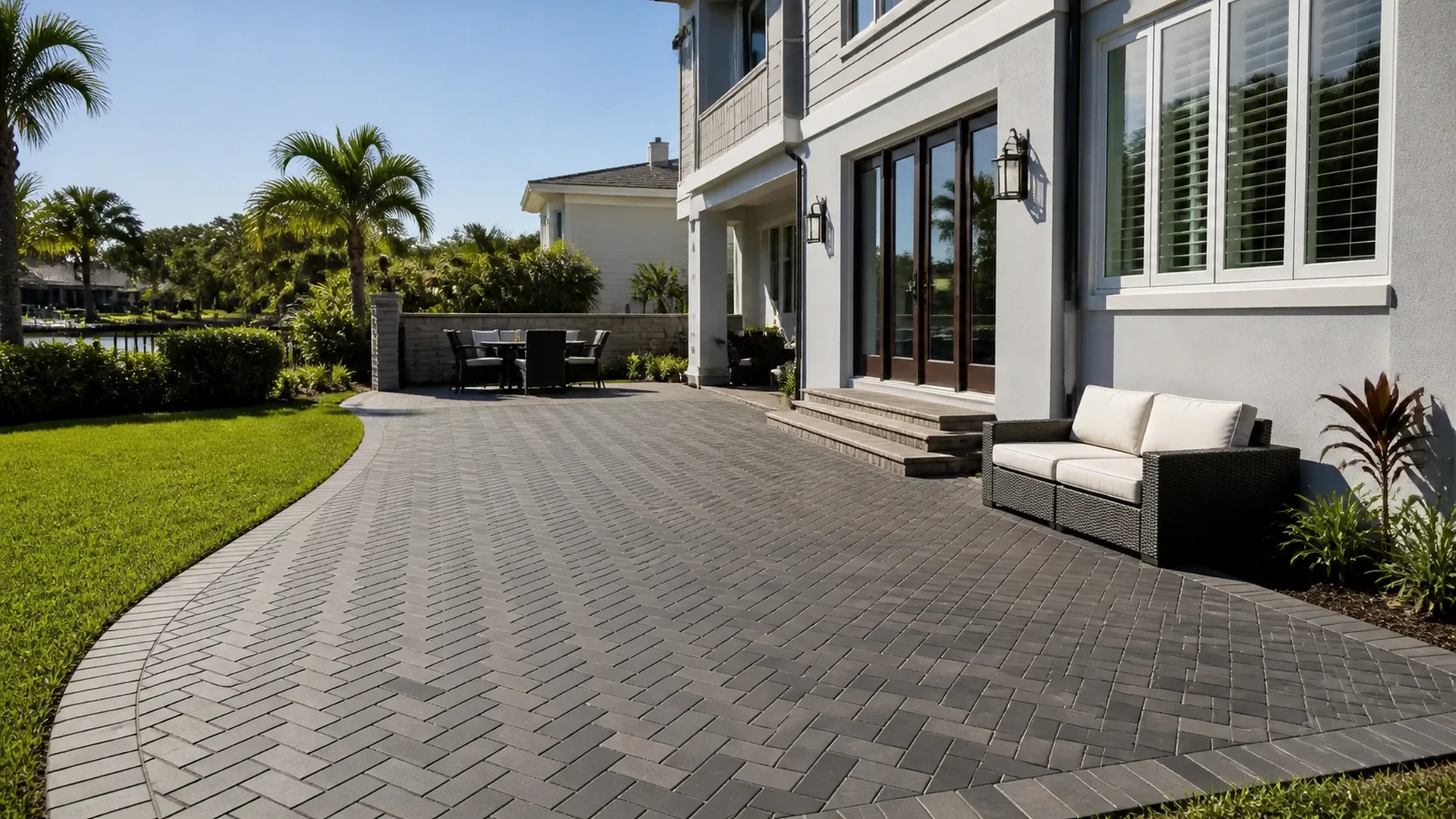
Ultimately, can pavers be reused is answered through inspection, preparation, and appropriate placement. Reclaimed pavers remain valuable modular materials, but they cannot compensate for unstable support or careless alignment. Tampa Bay conditions make surface flow and dependable edges especially important. Accordingly, a successful project treats the repaired field from the corrected base upward and documents realistic visual expectations.
Consequently, When you are ready to evaluate whether can pavers be reused at your home, contact DR Pavers Design, review the FAQ, browse completed projects and client testimonials, or explore available services. In addition, follow Instagram and Facebook, view the map listing and Google reviews, or connect through WhatsApp, phone, text message, or email to discuss the surface and matching goals.