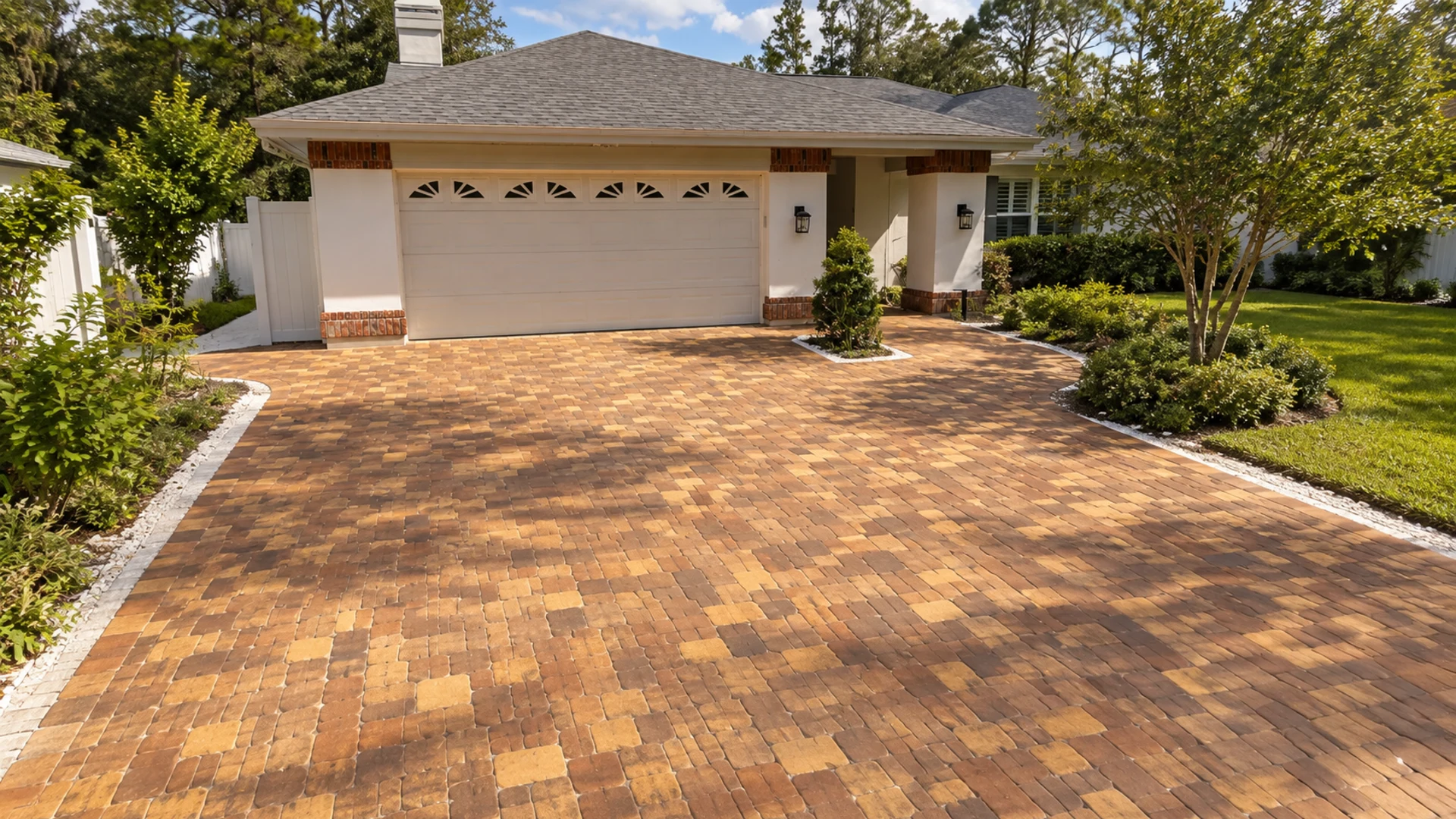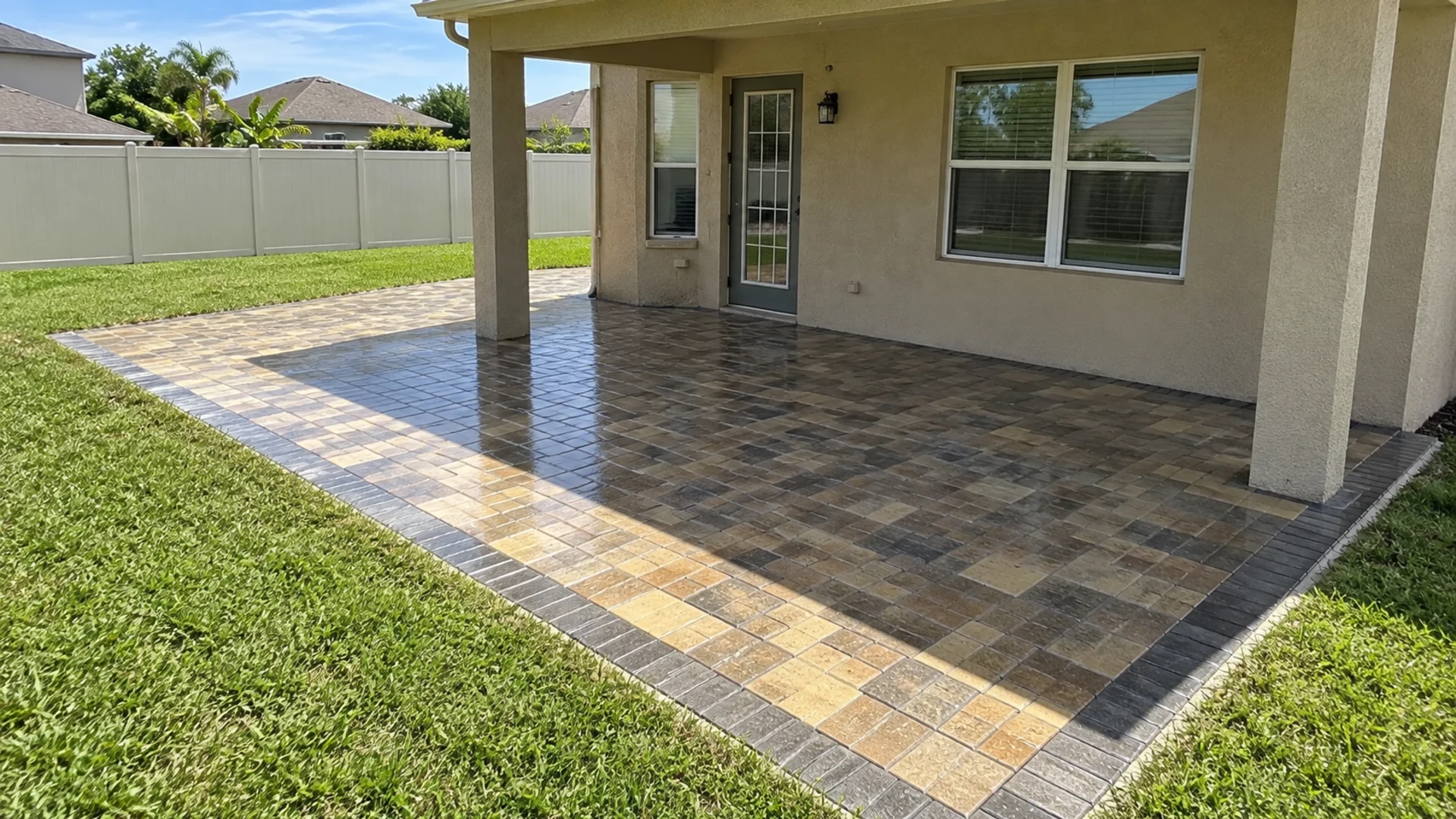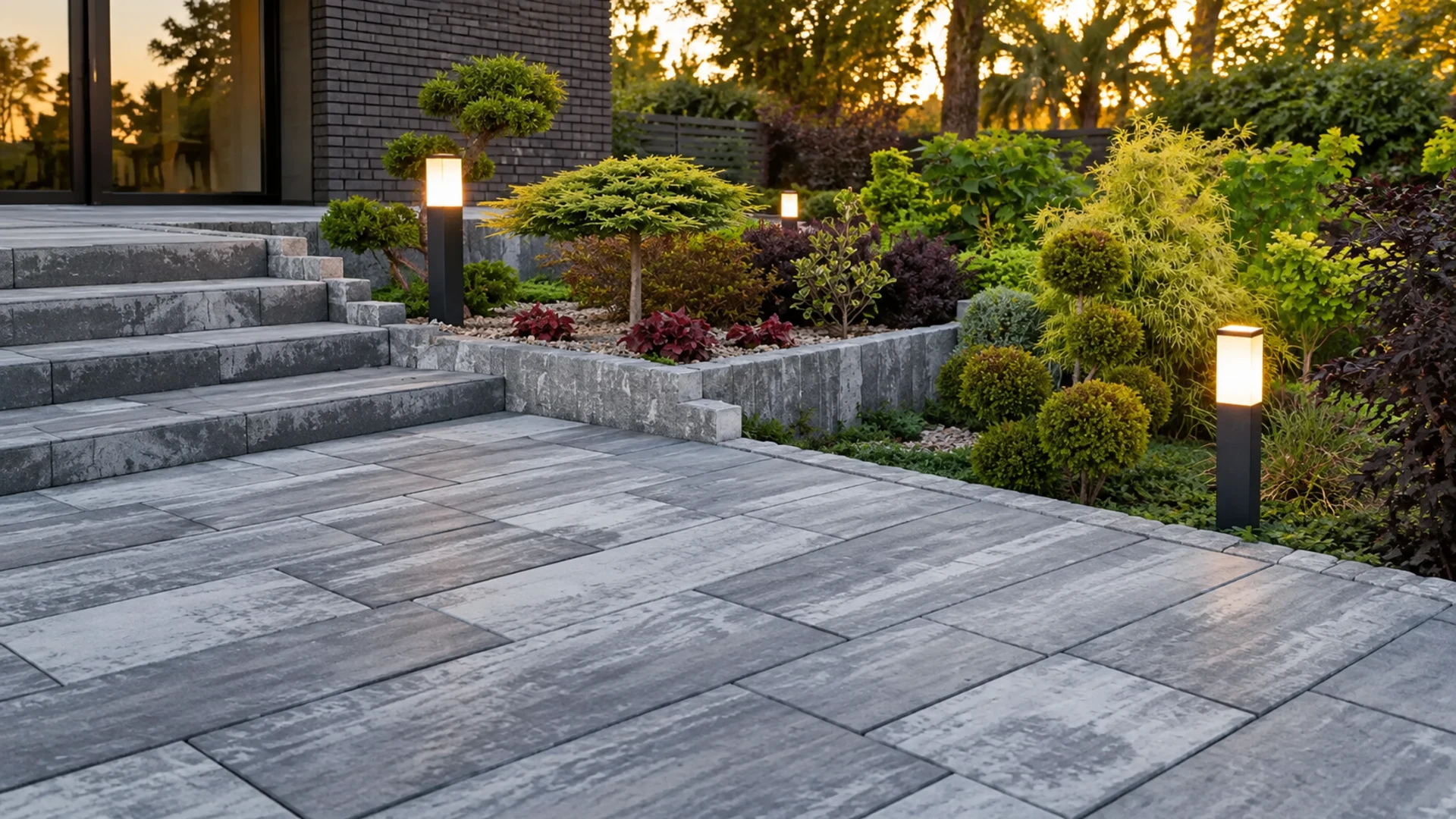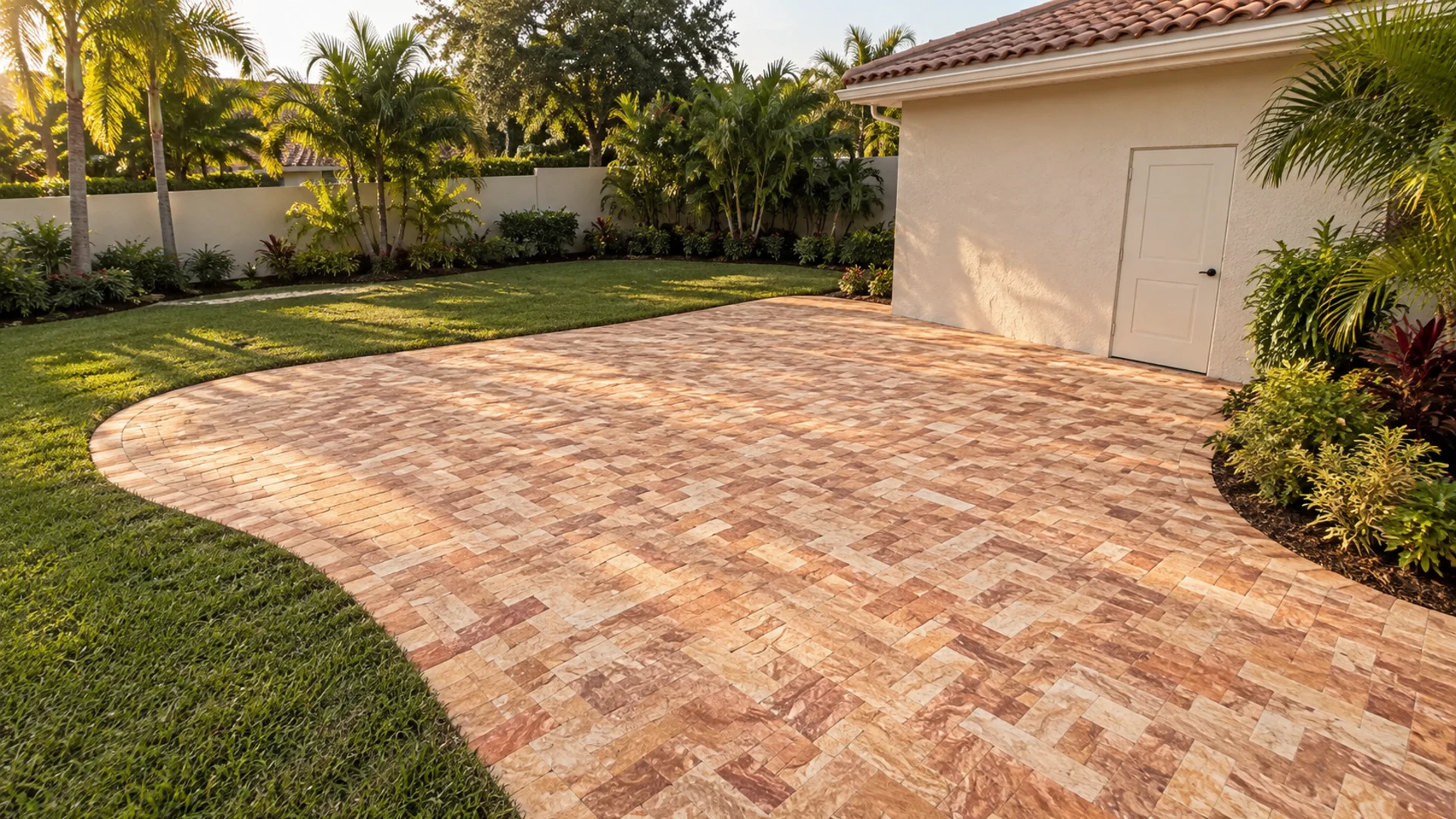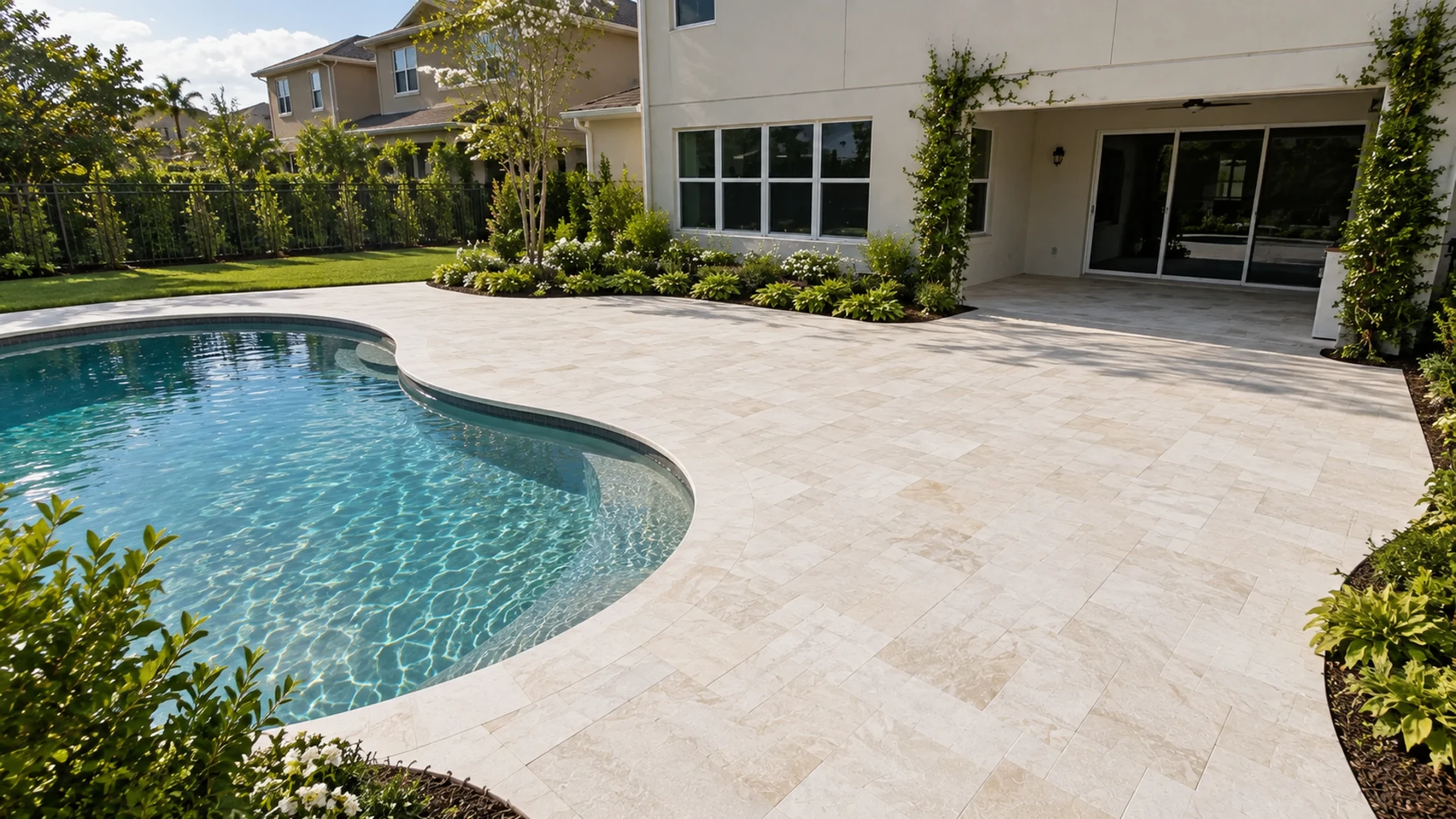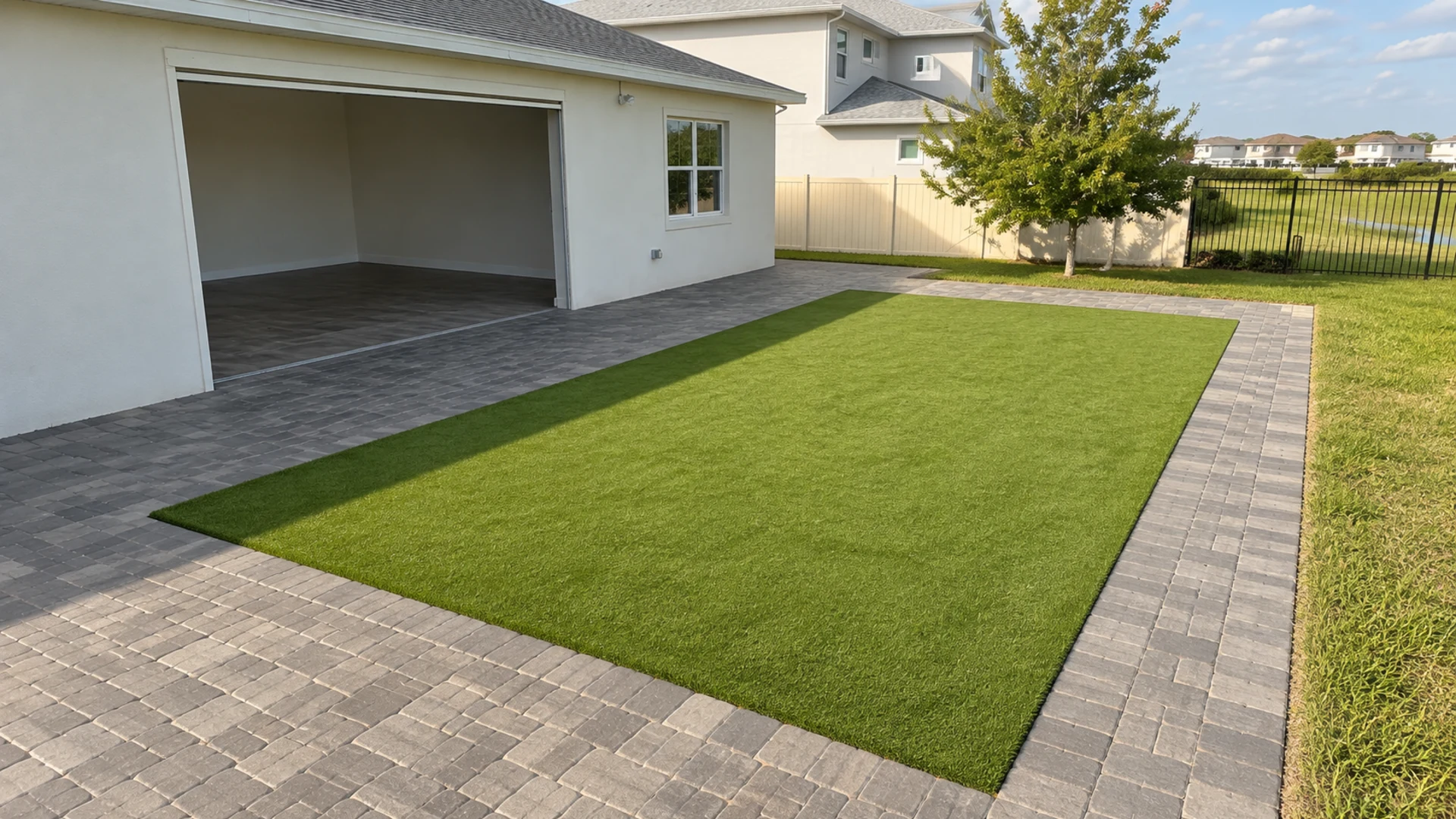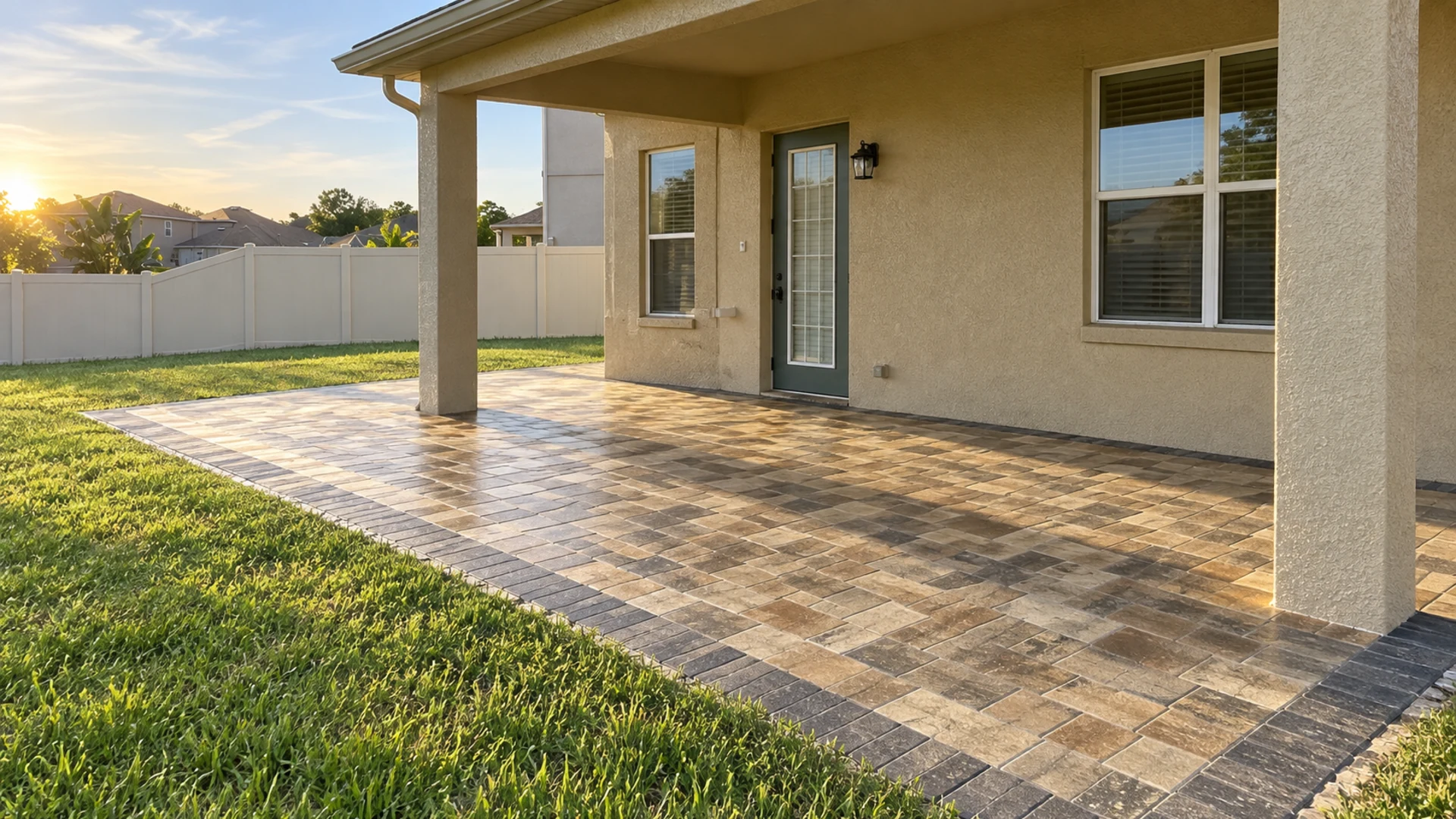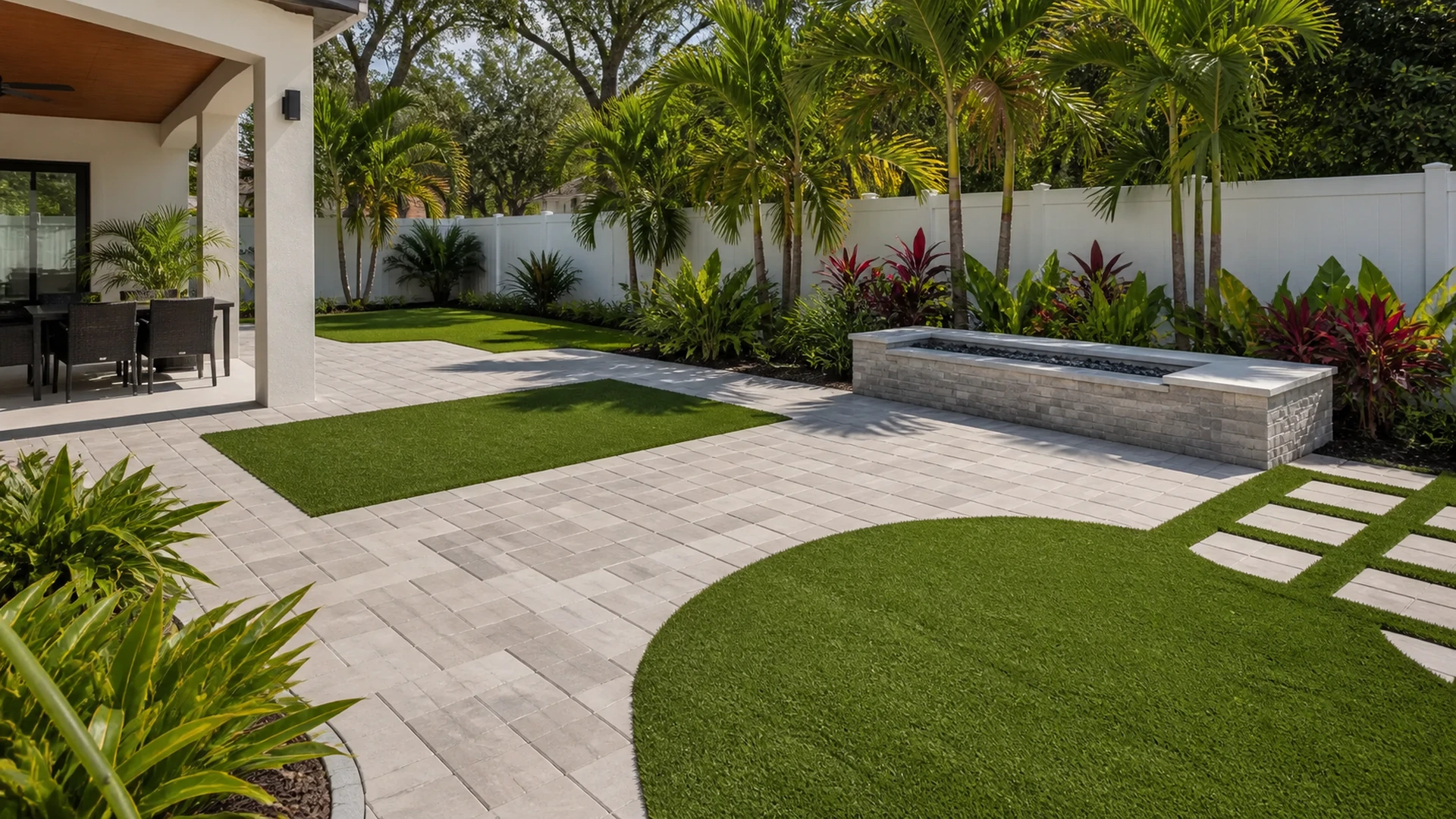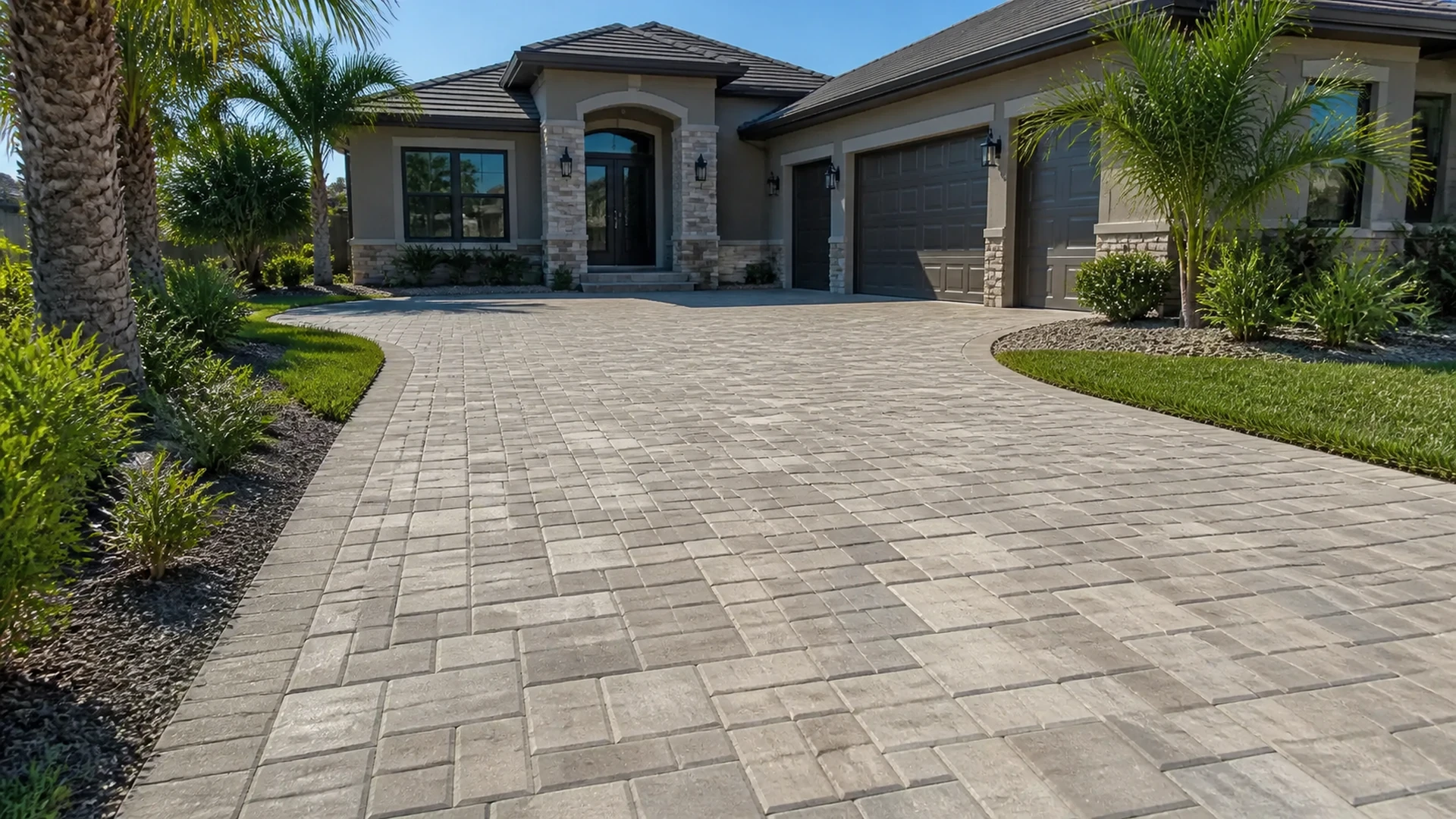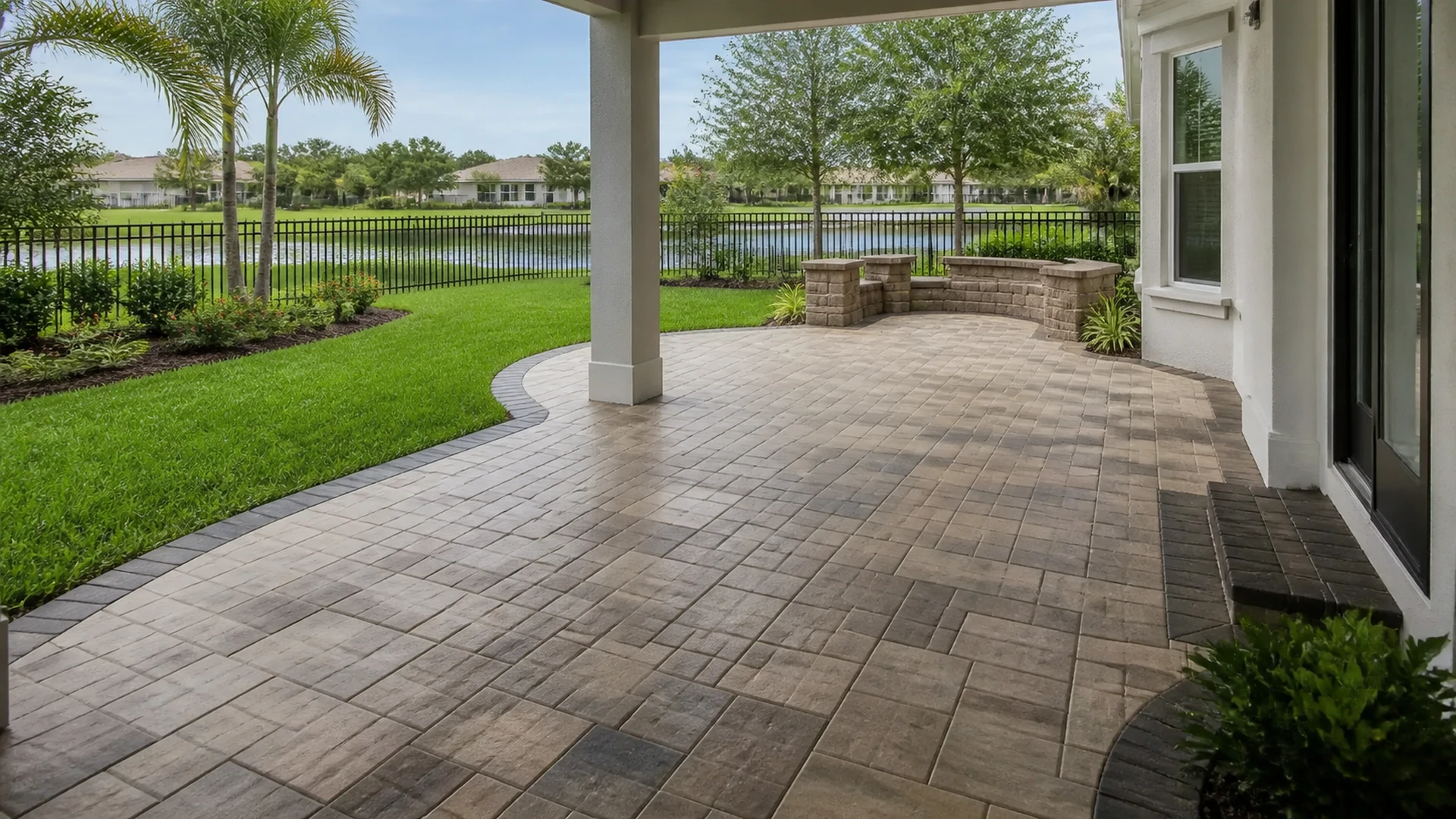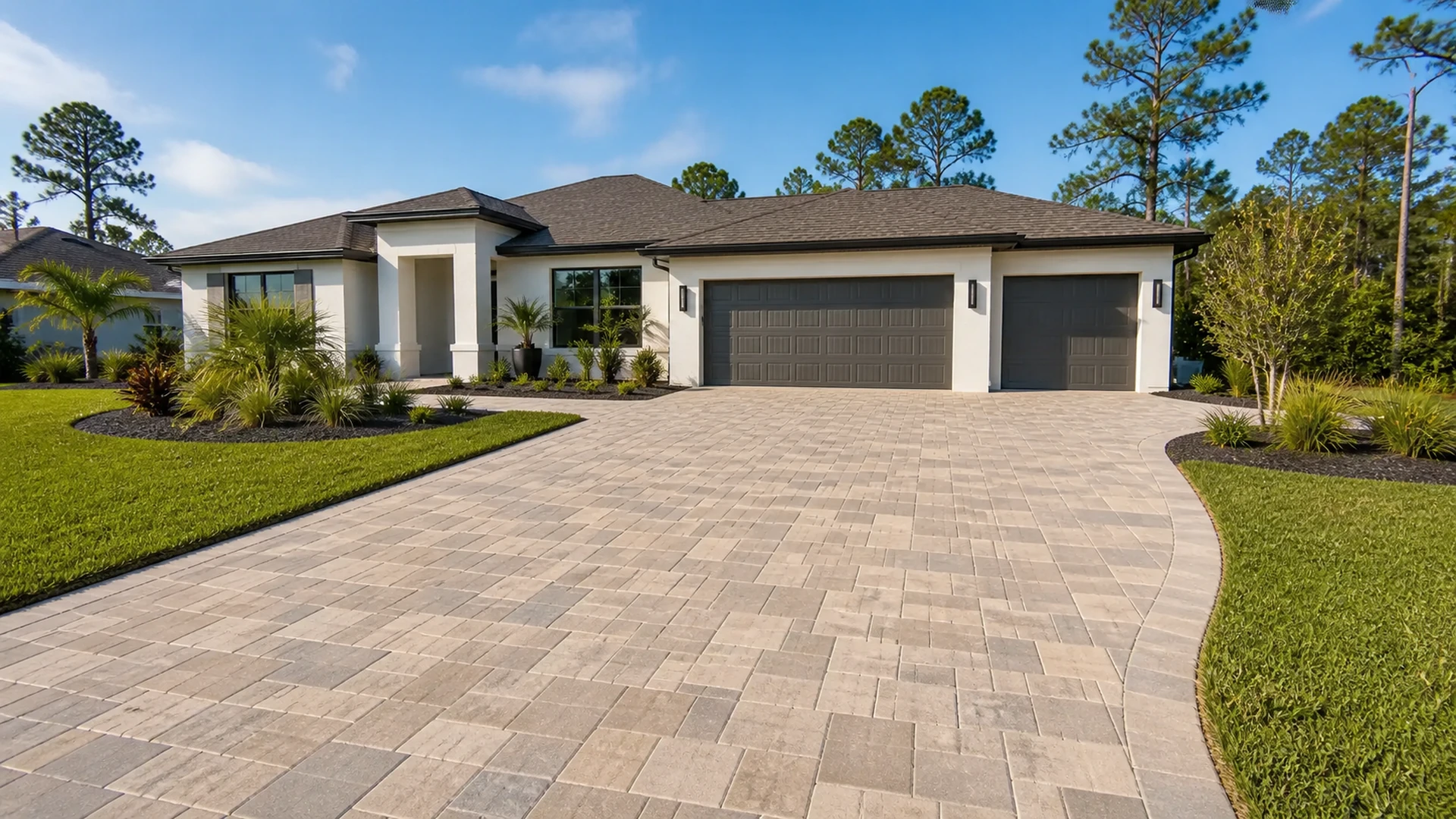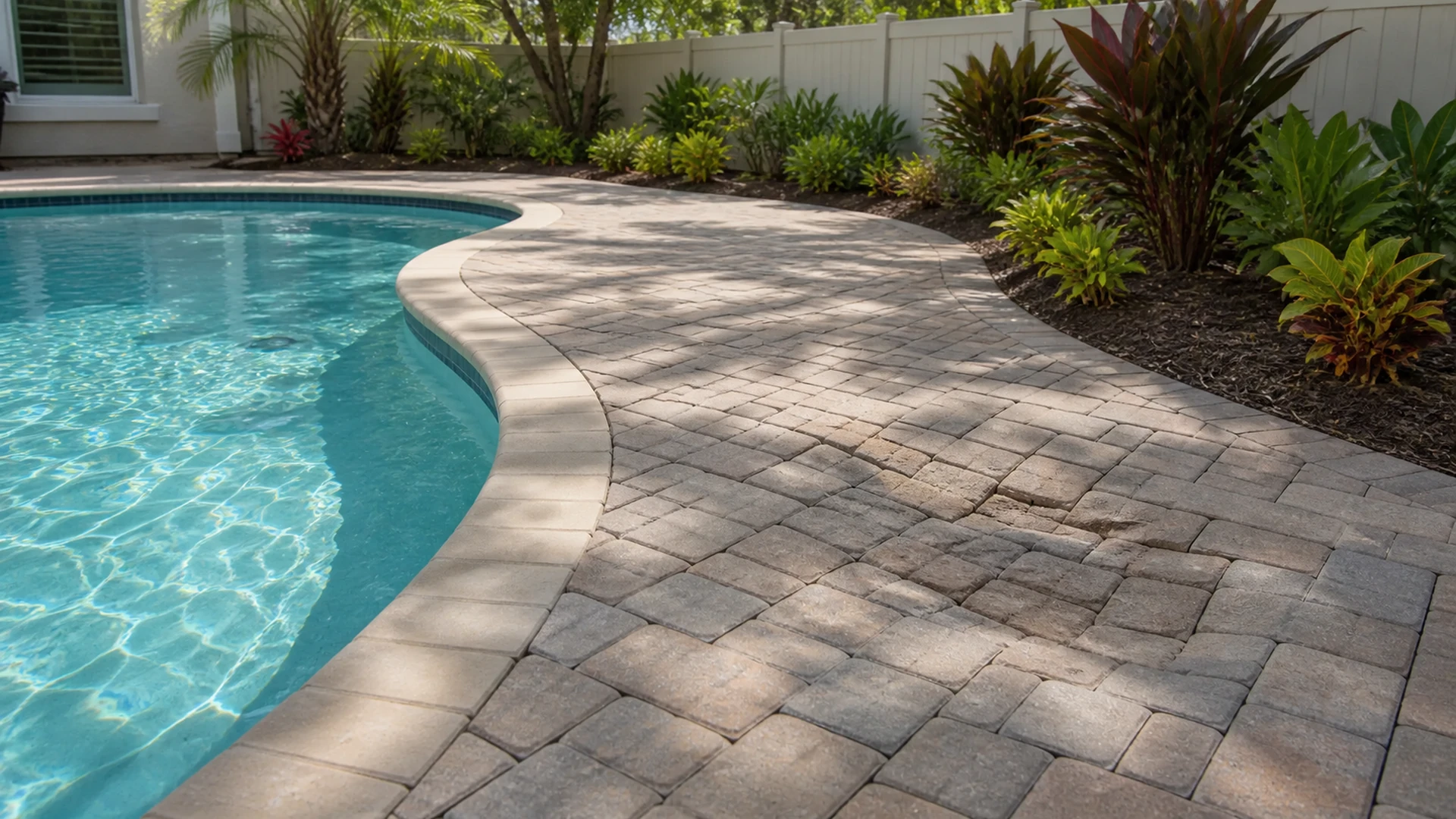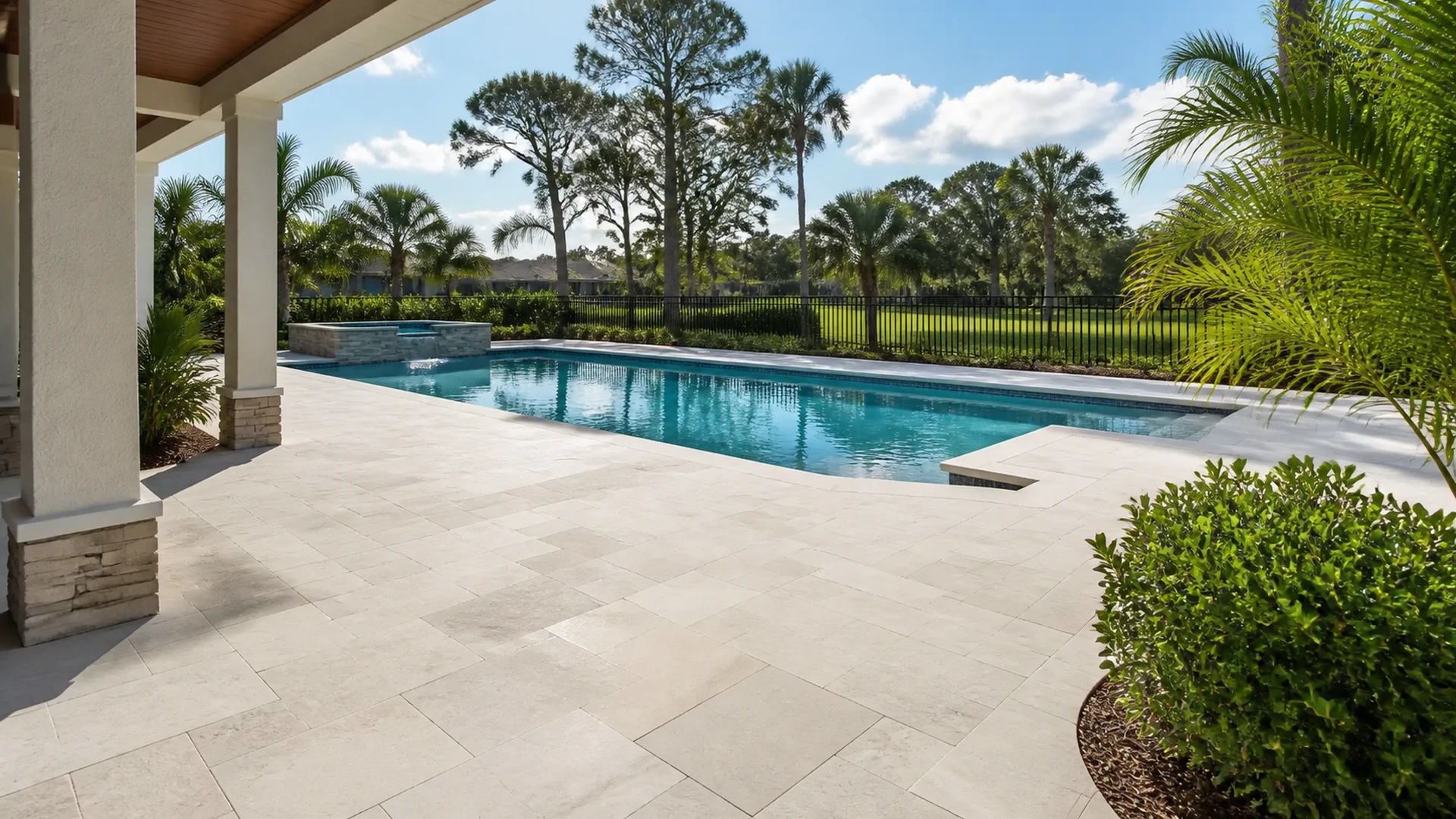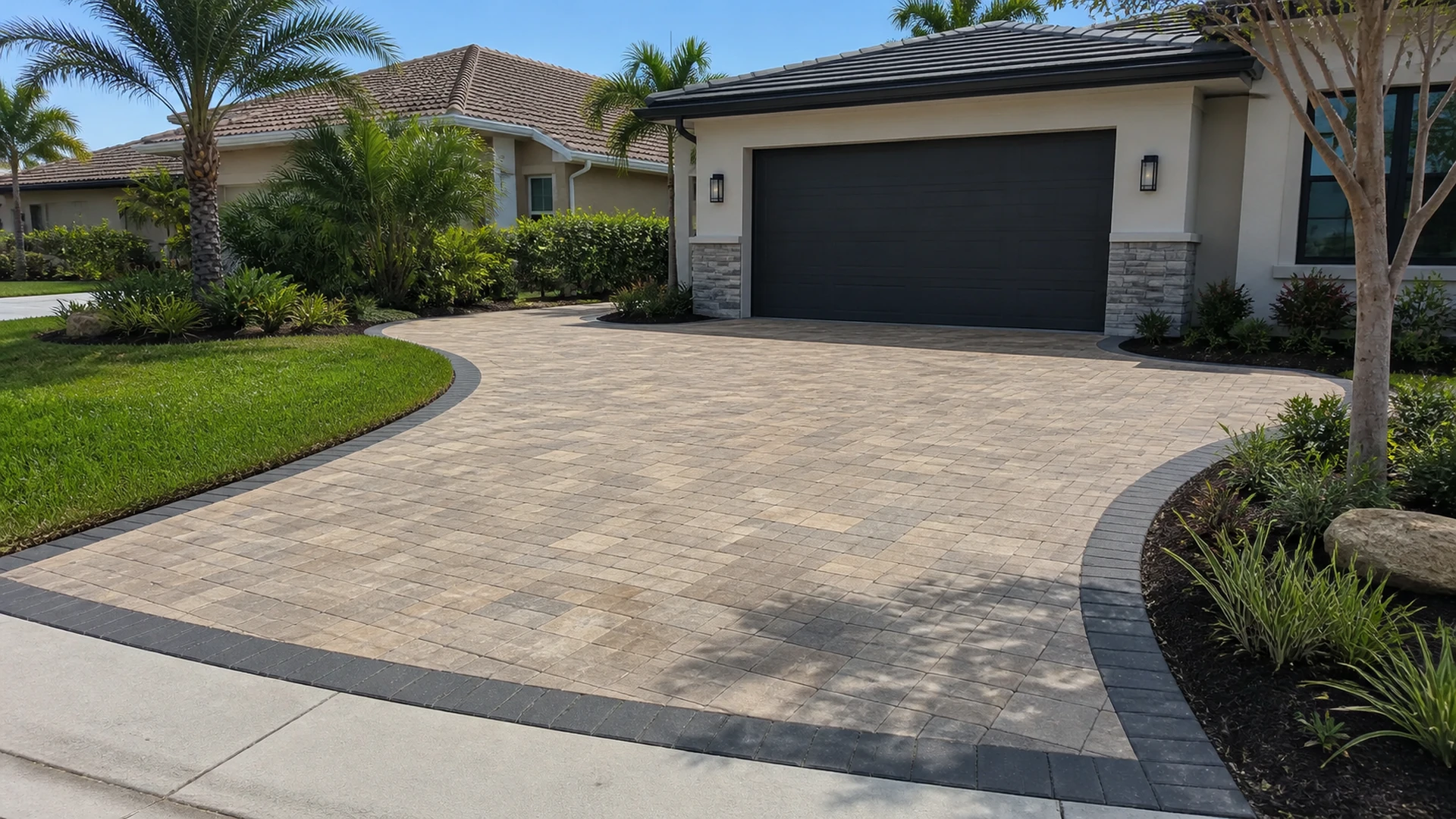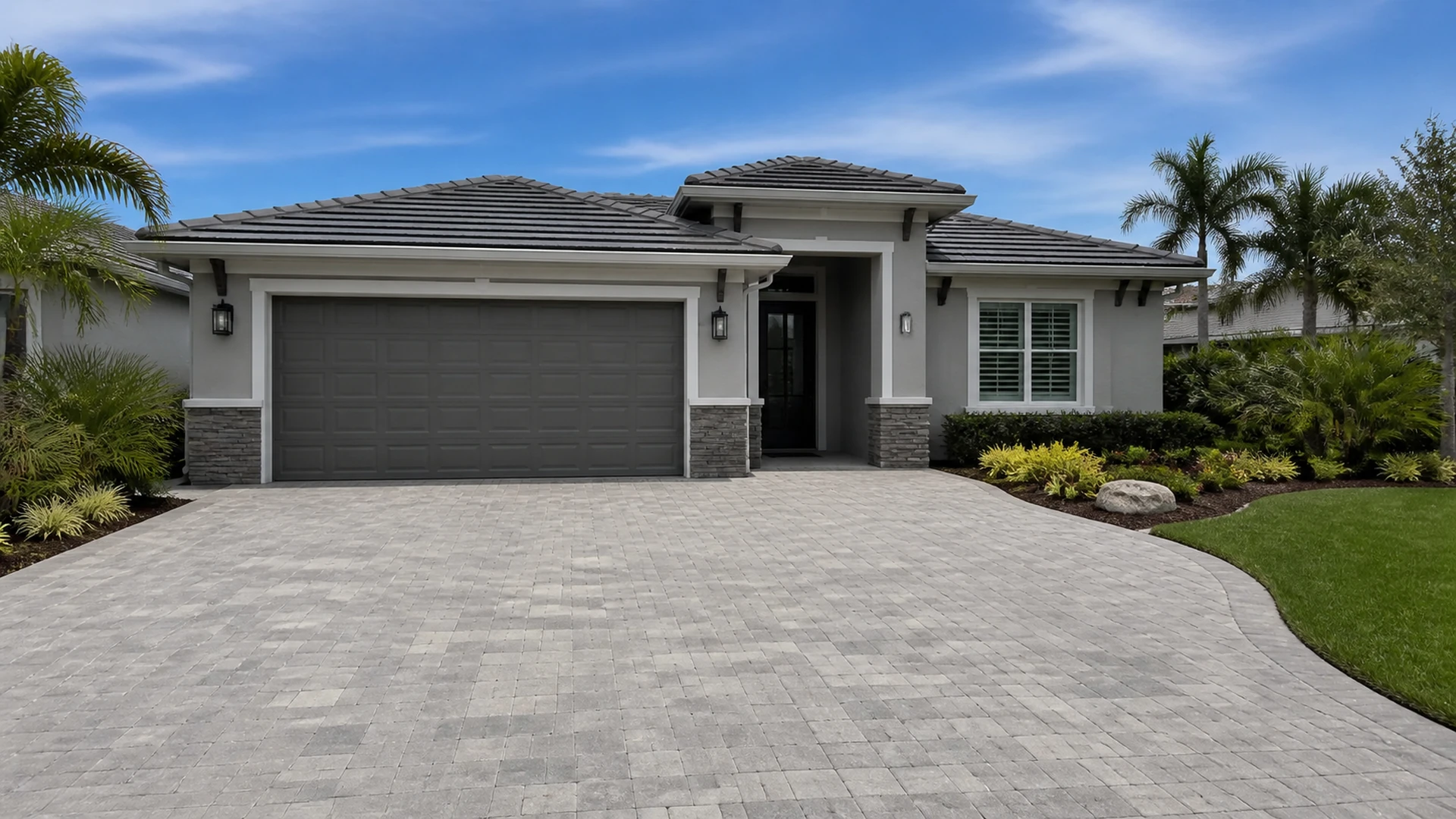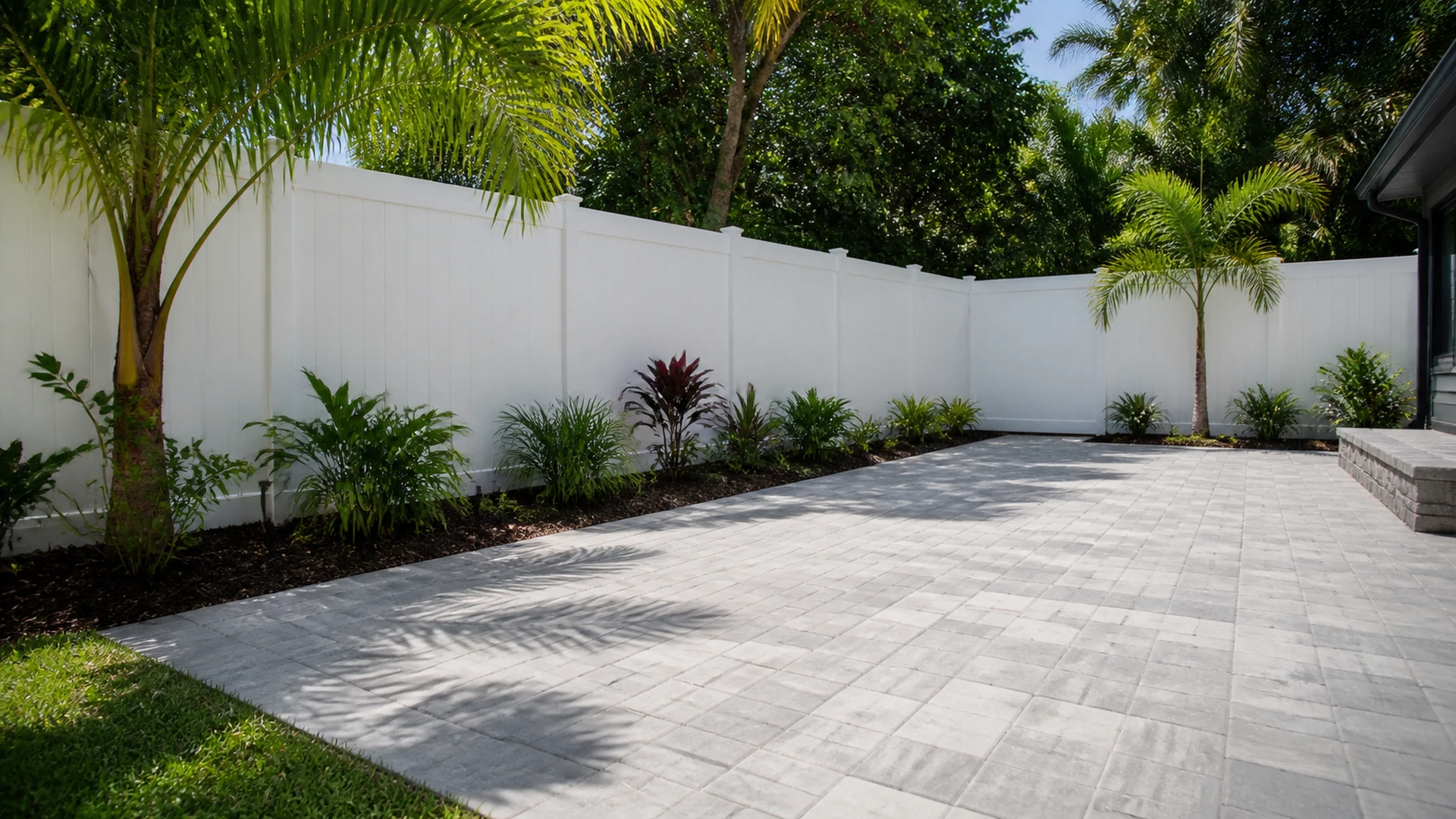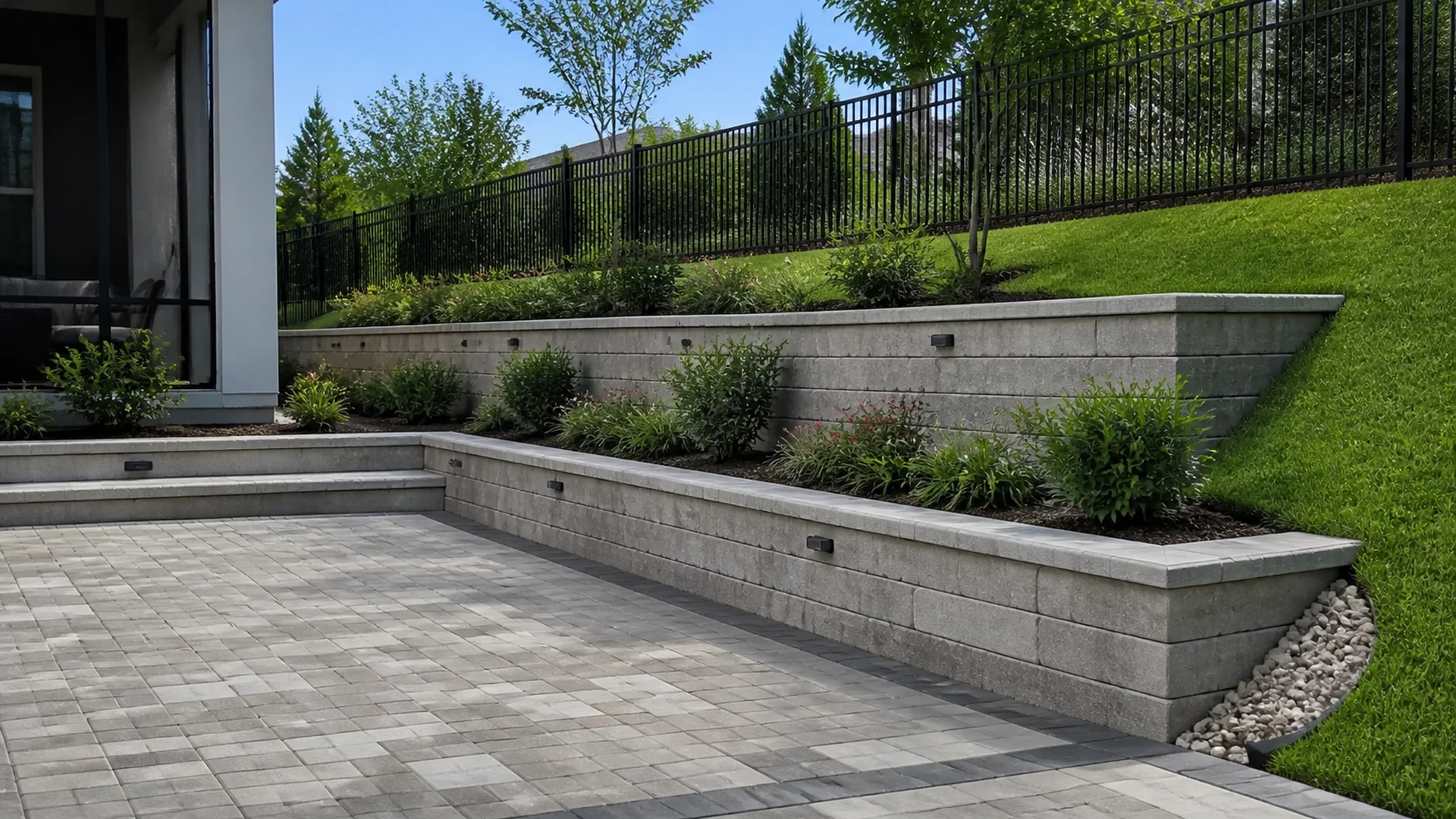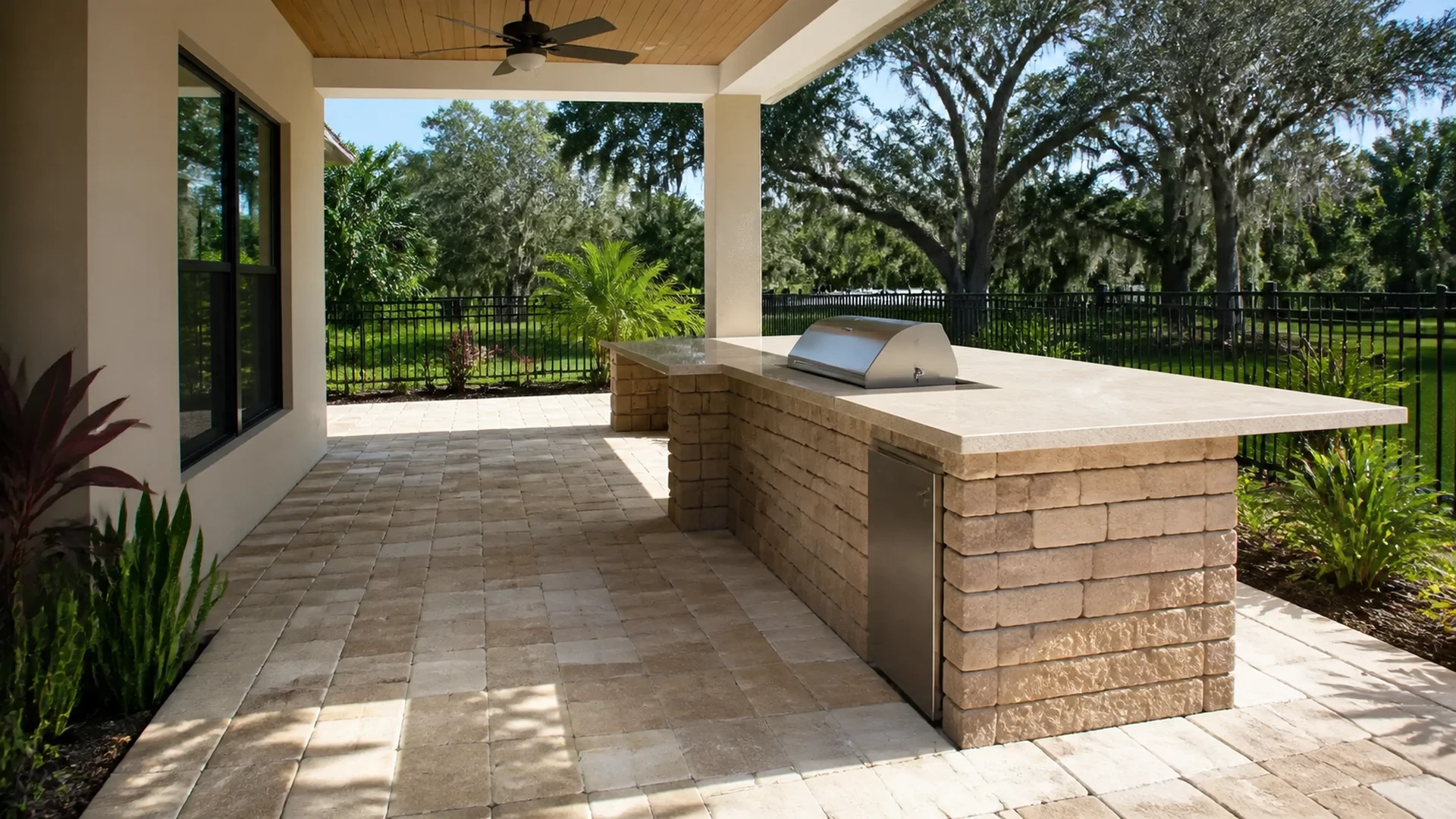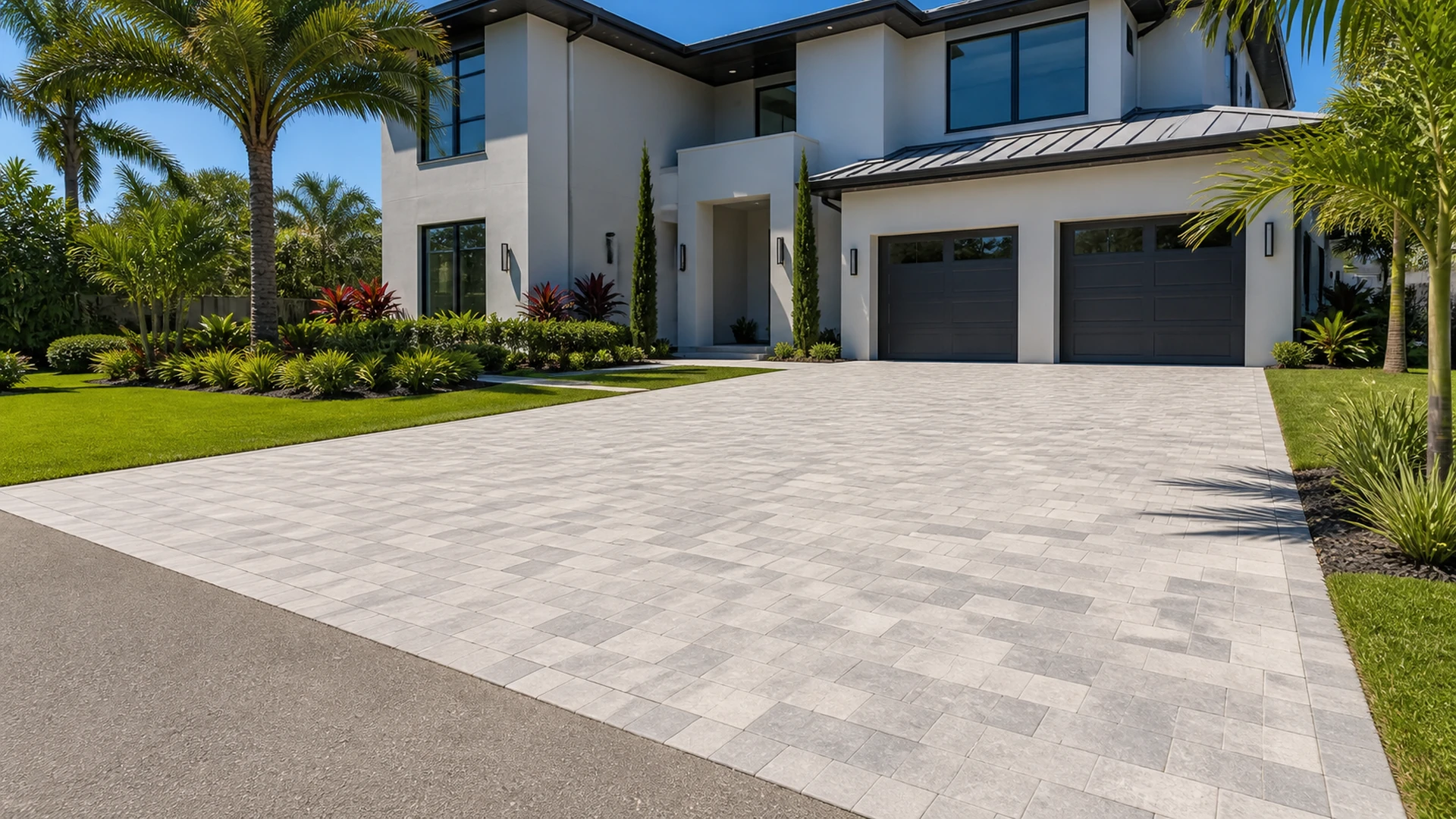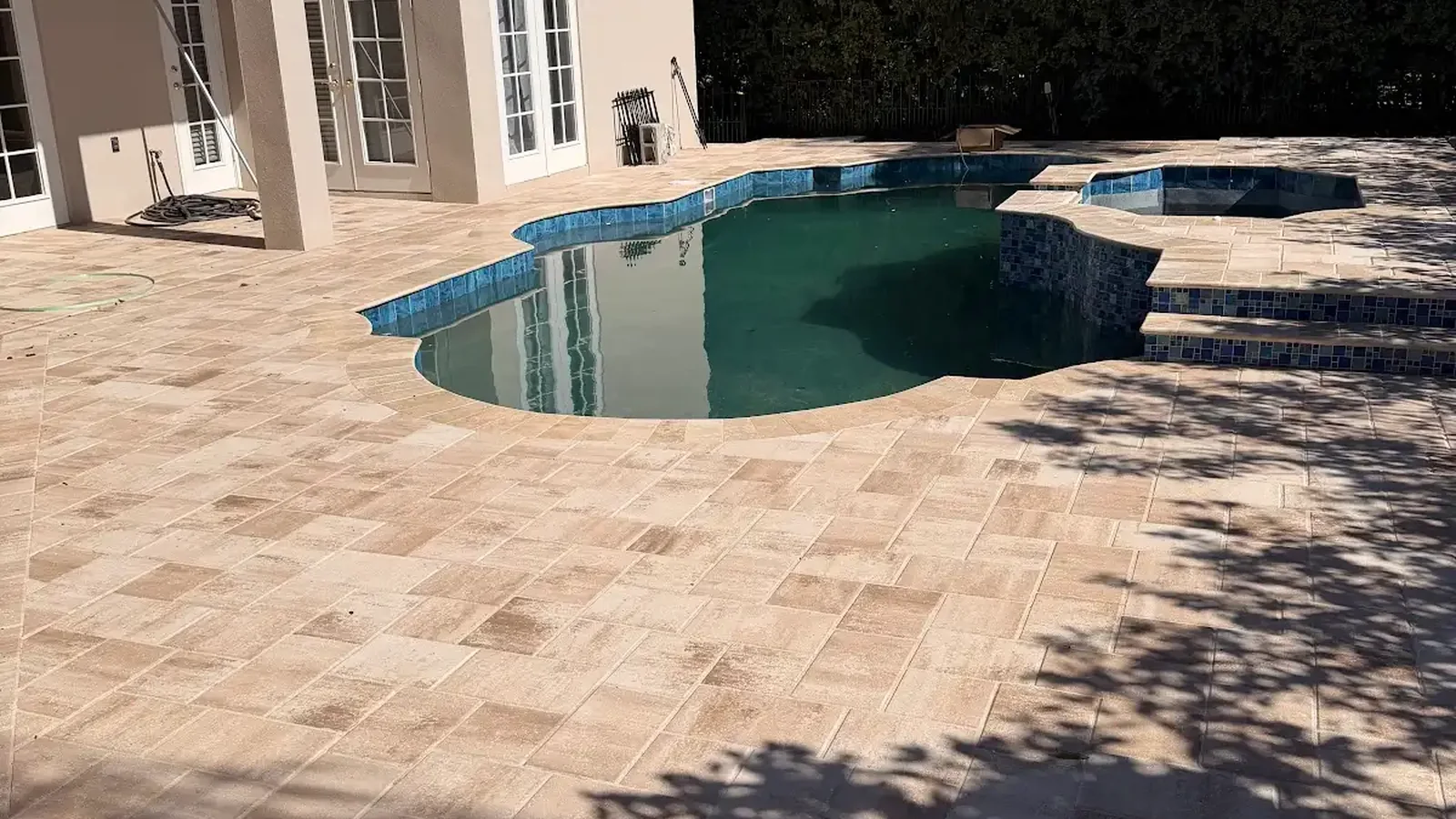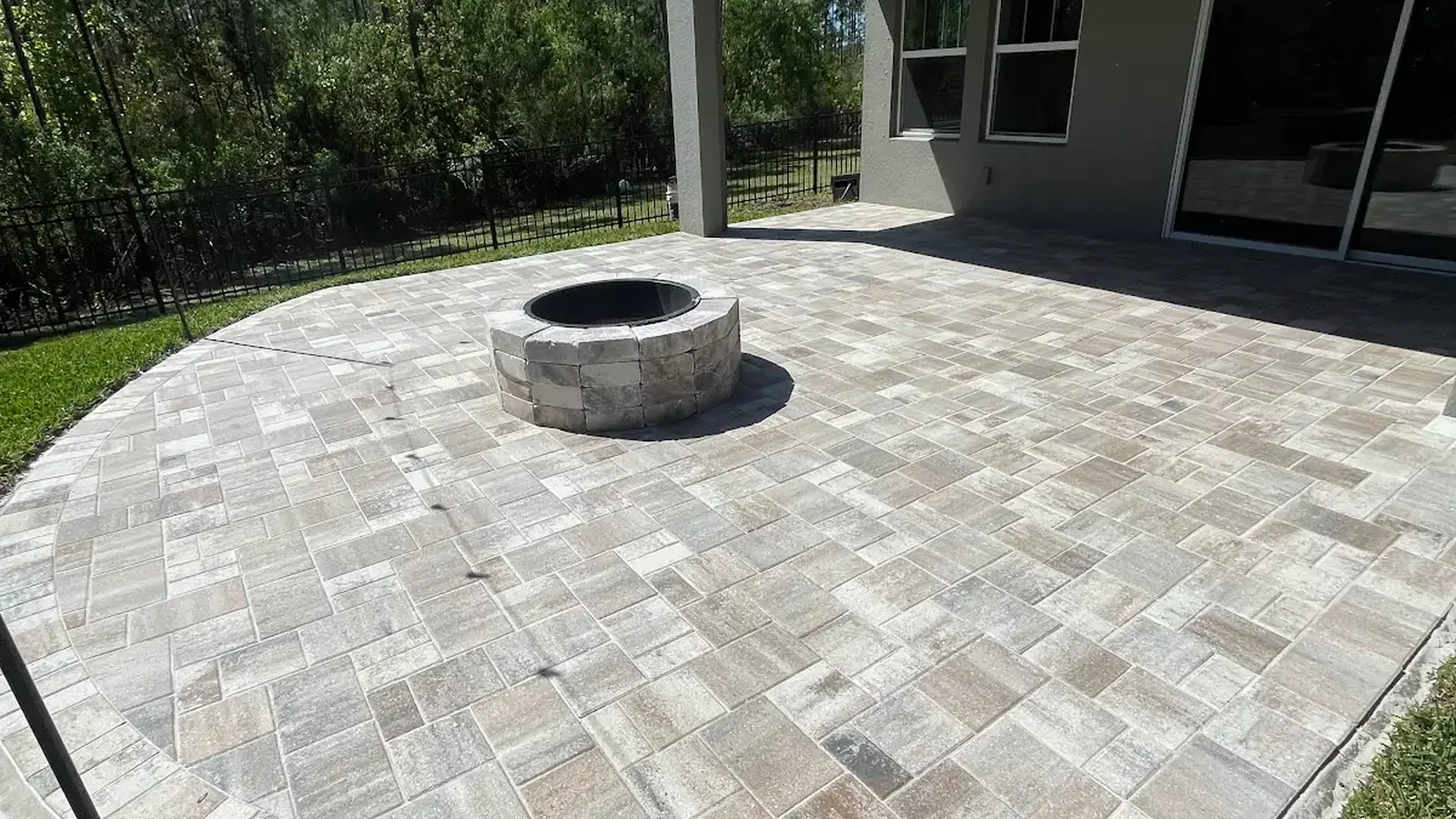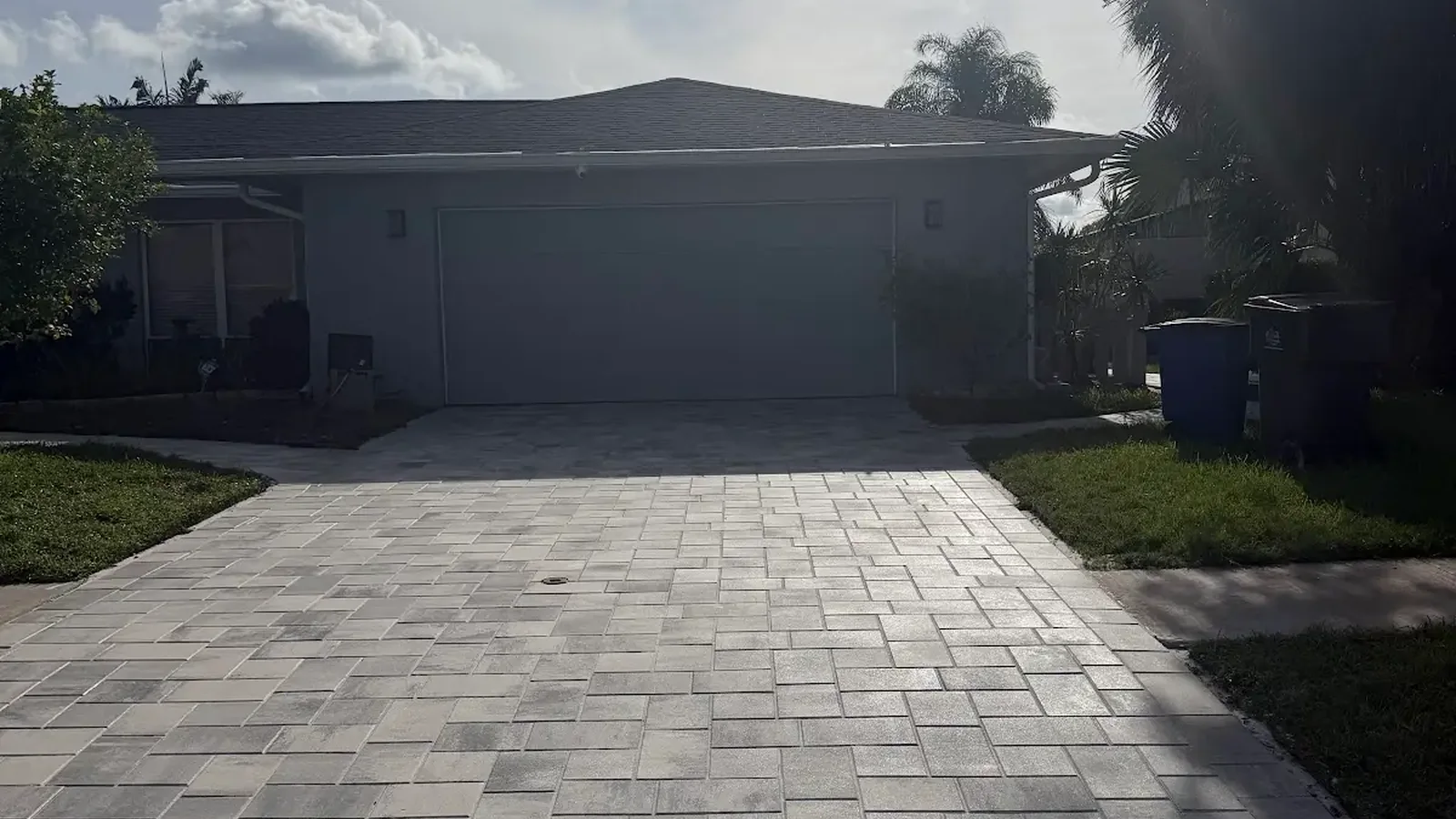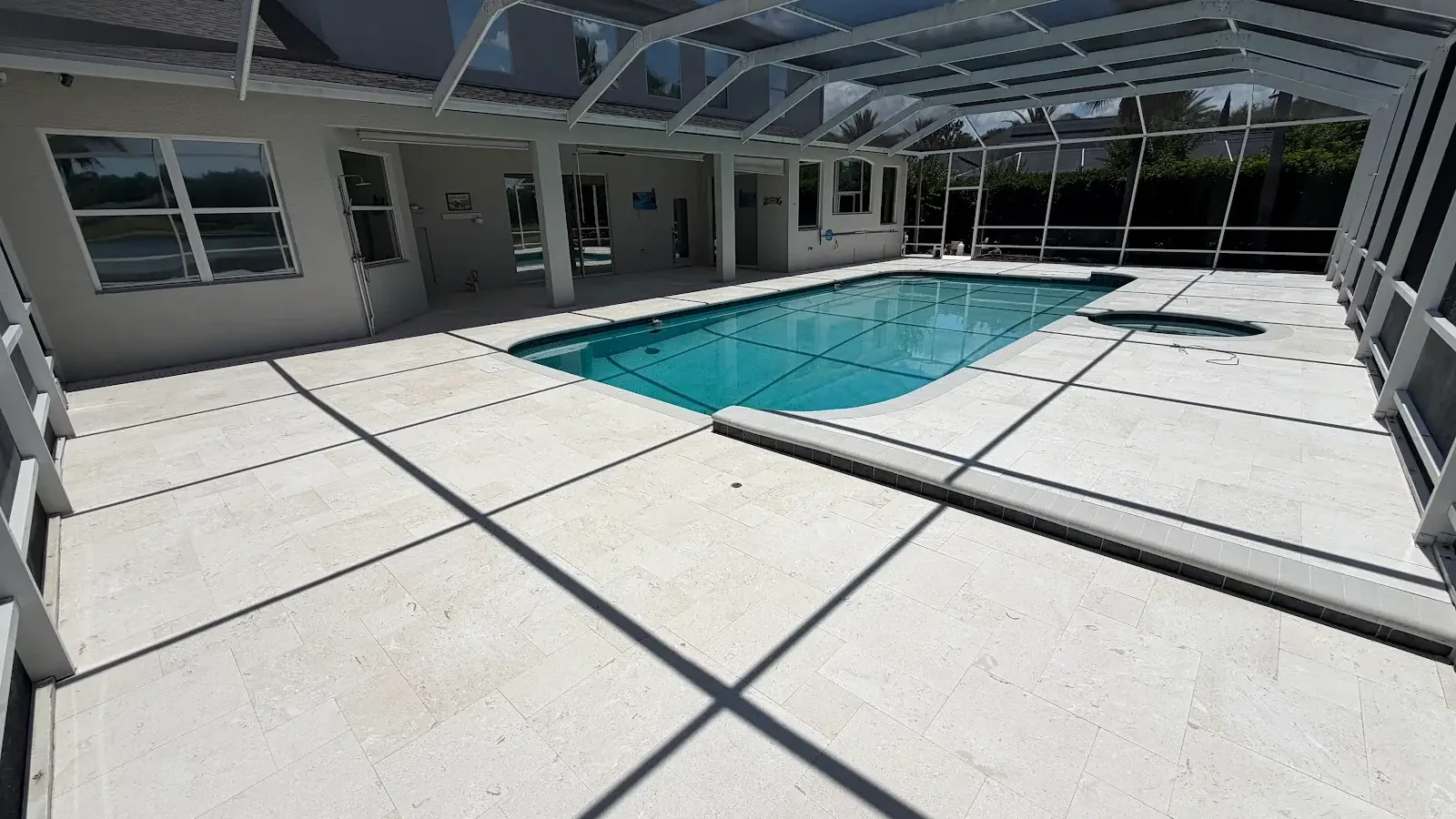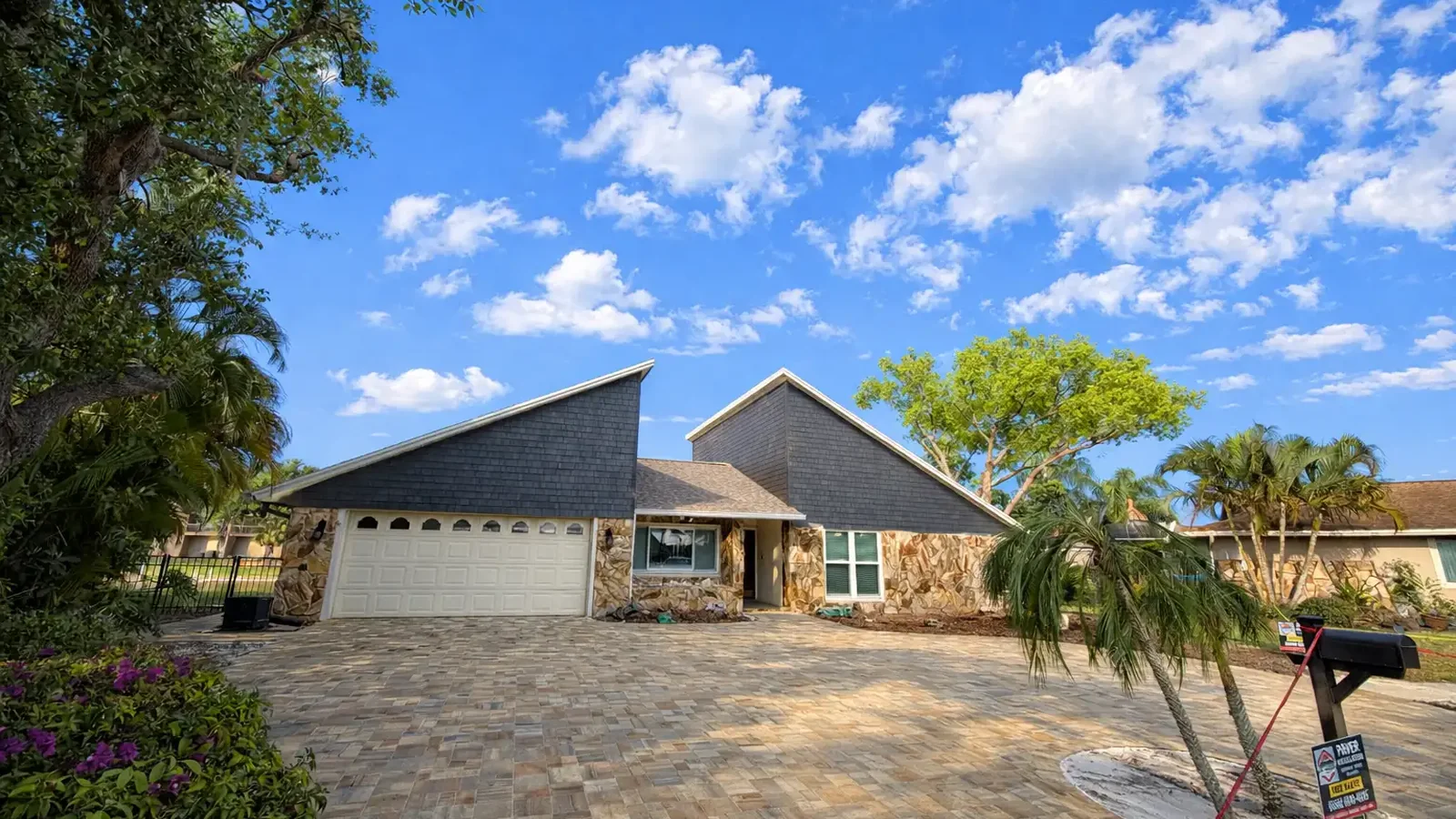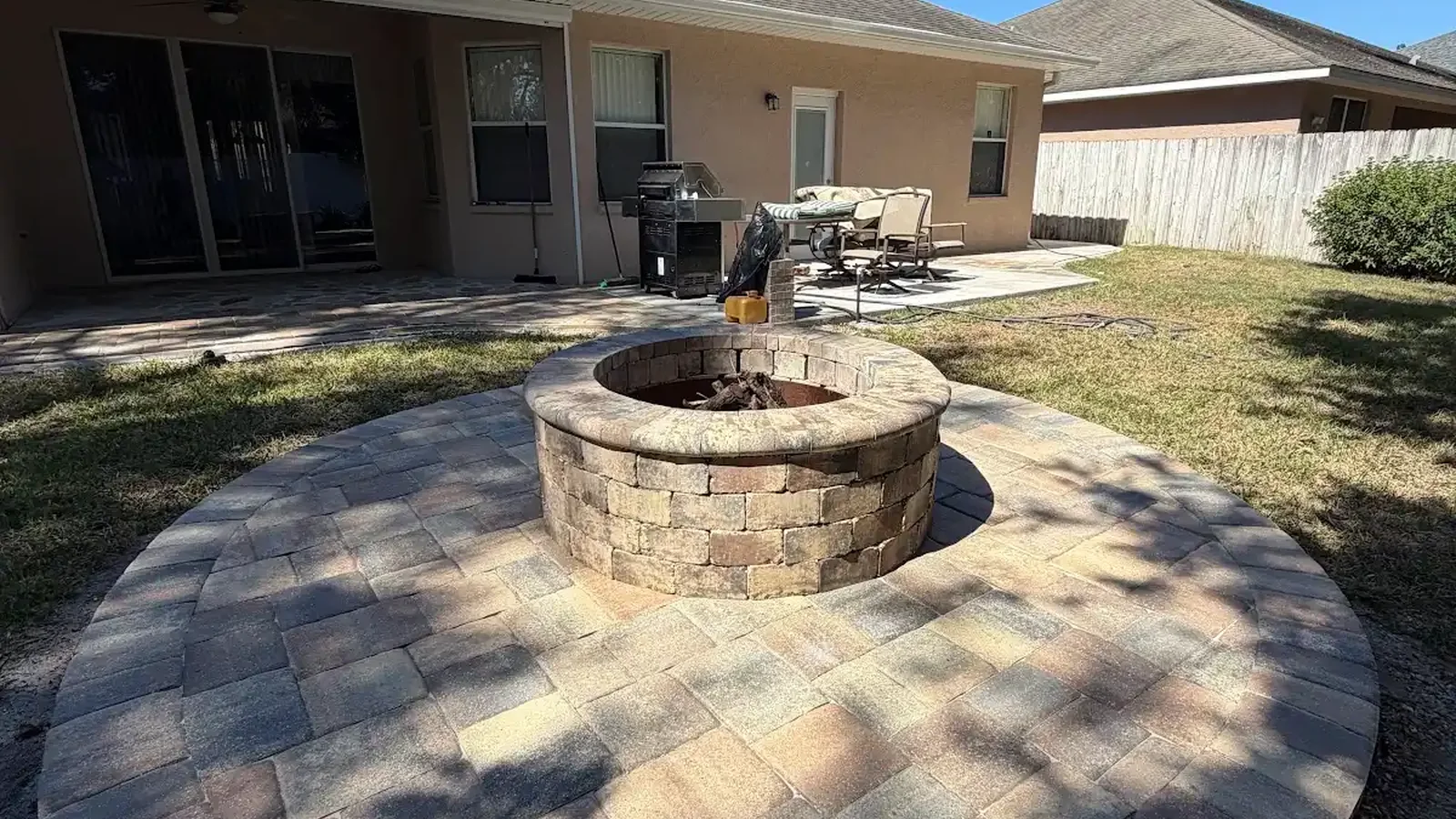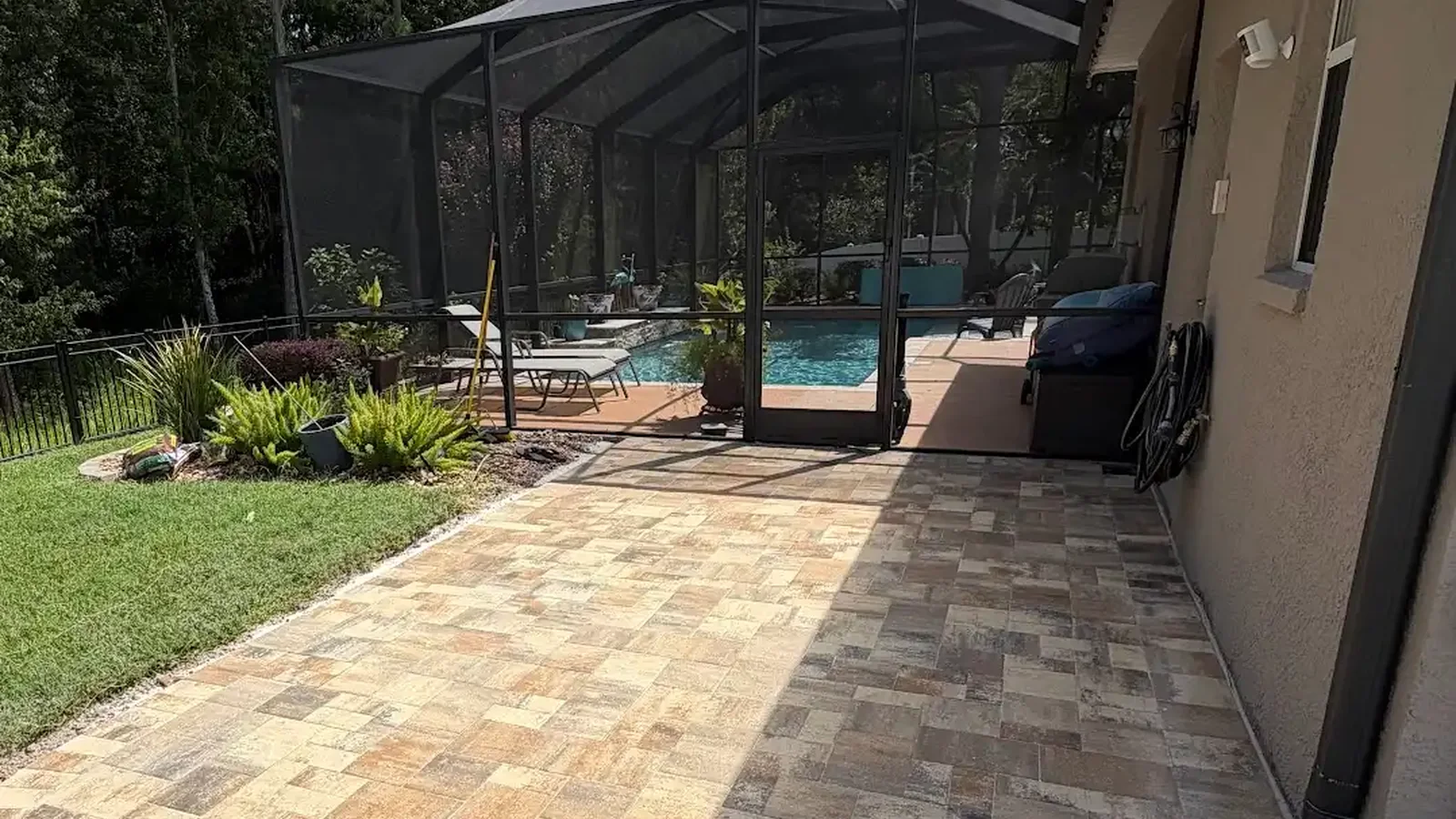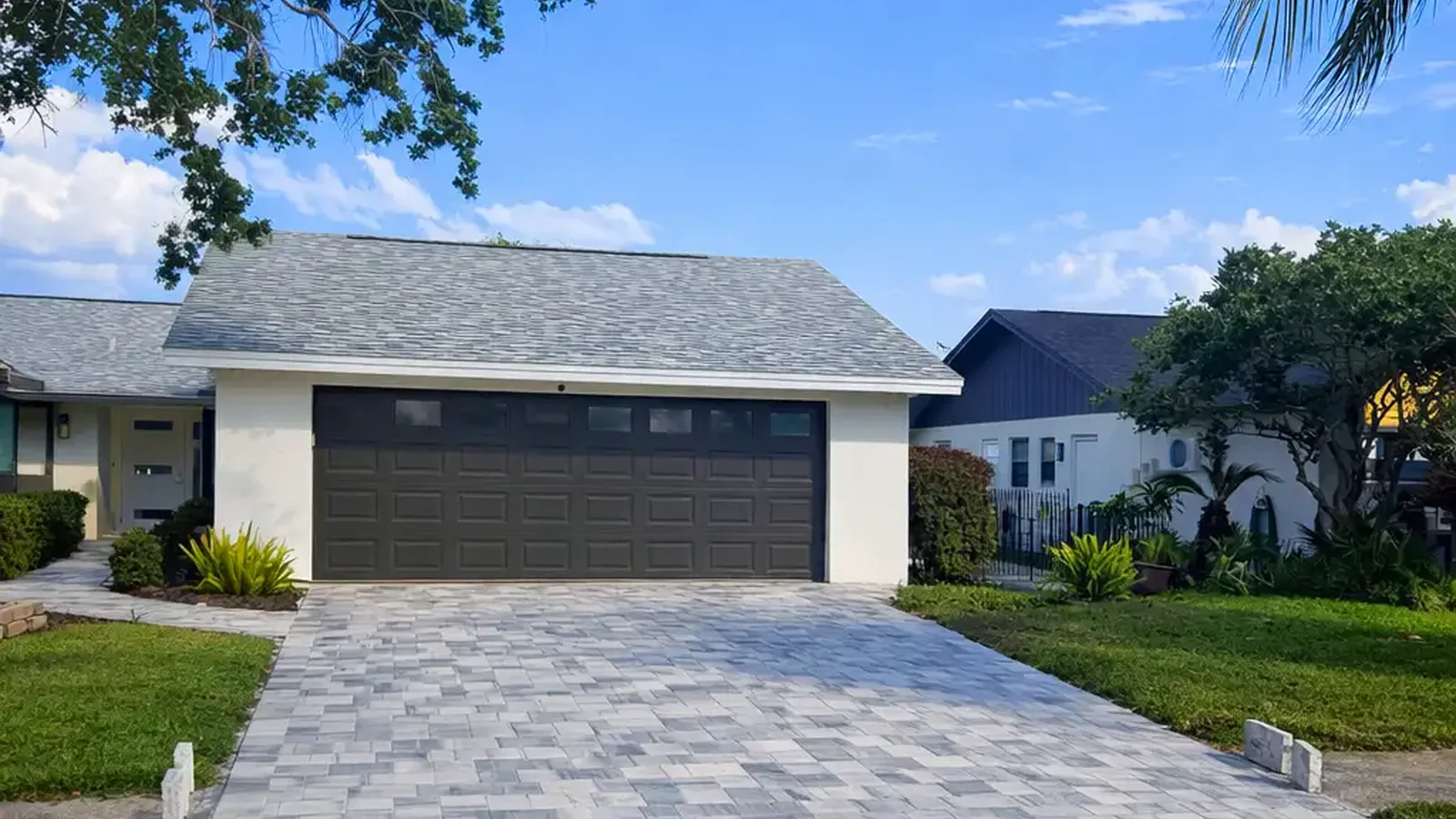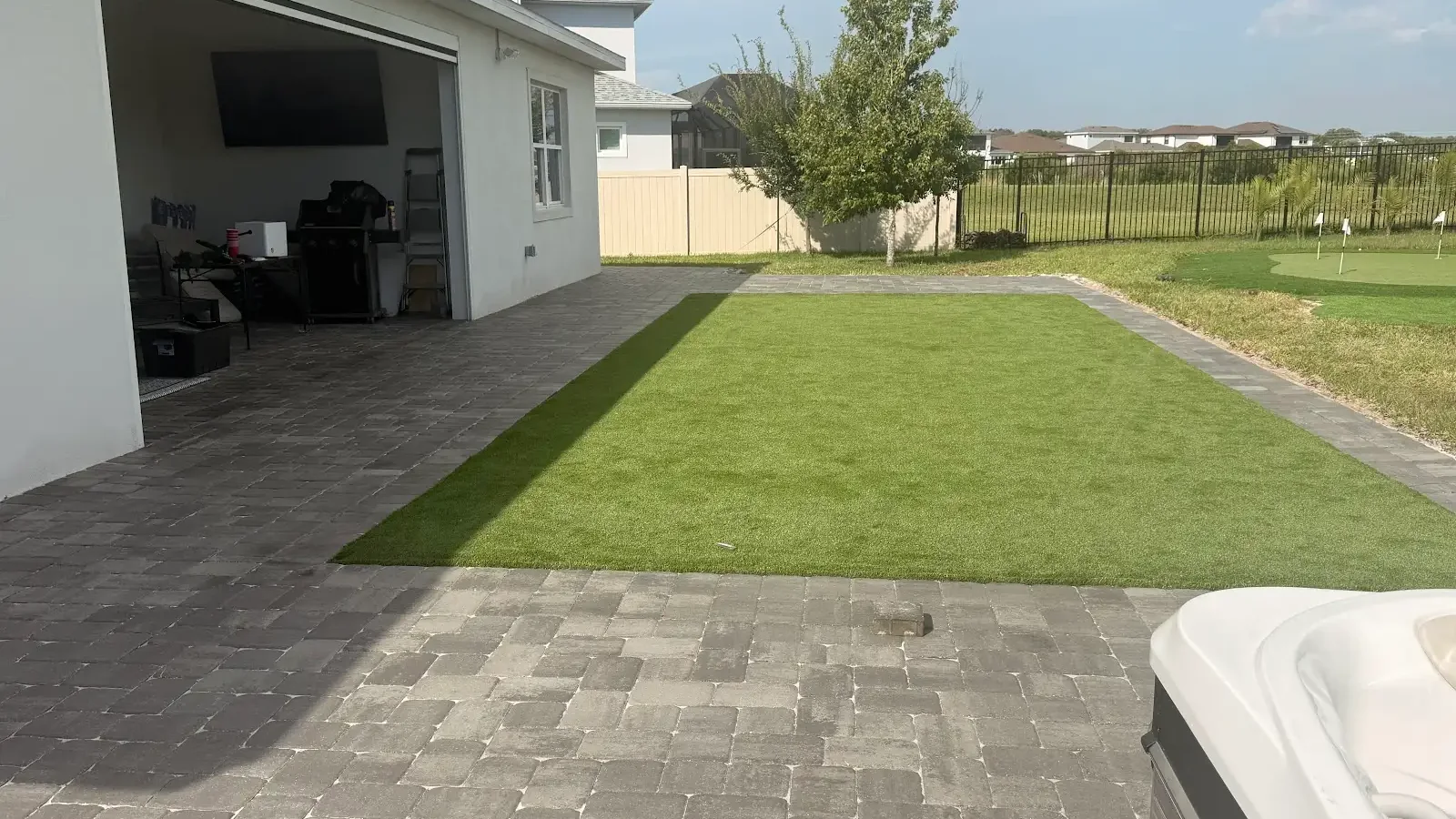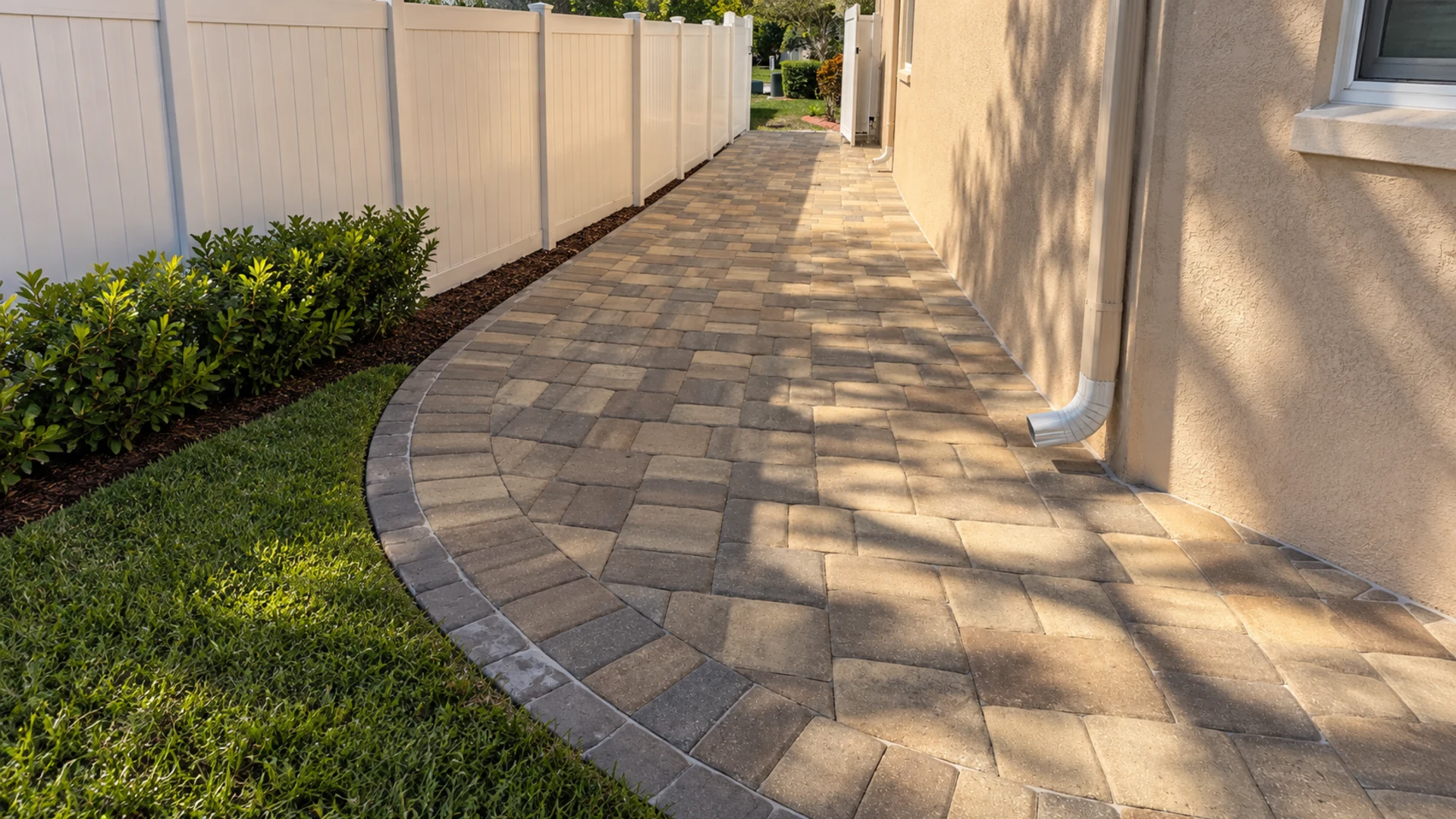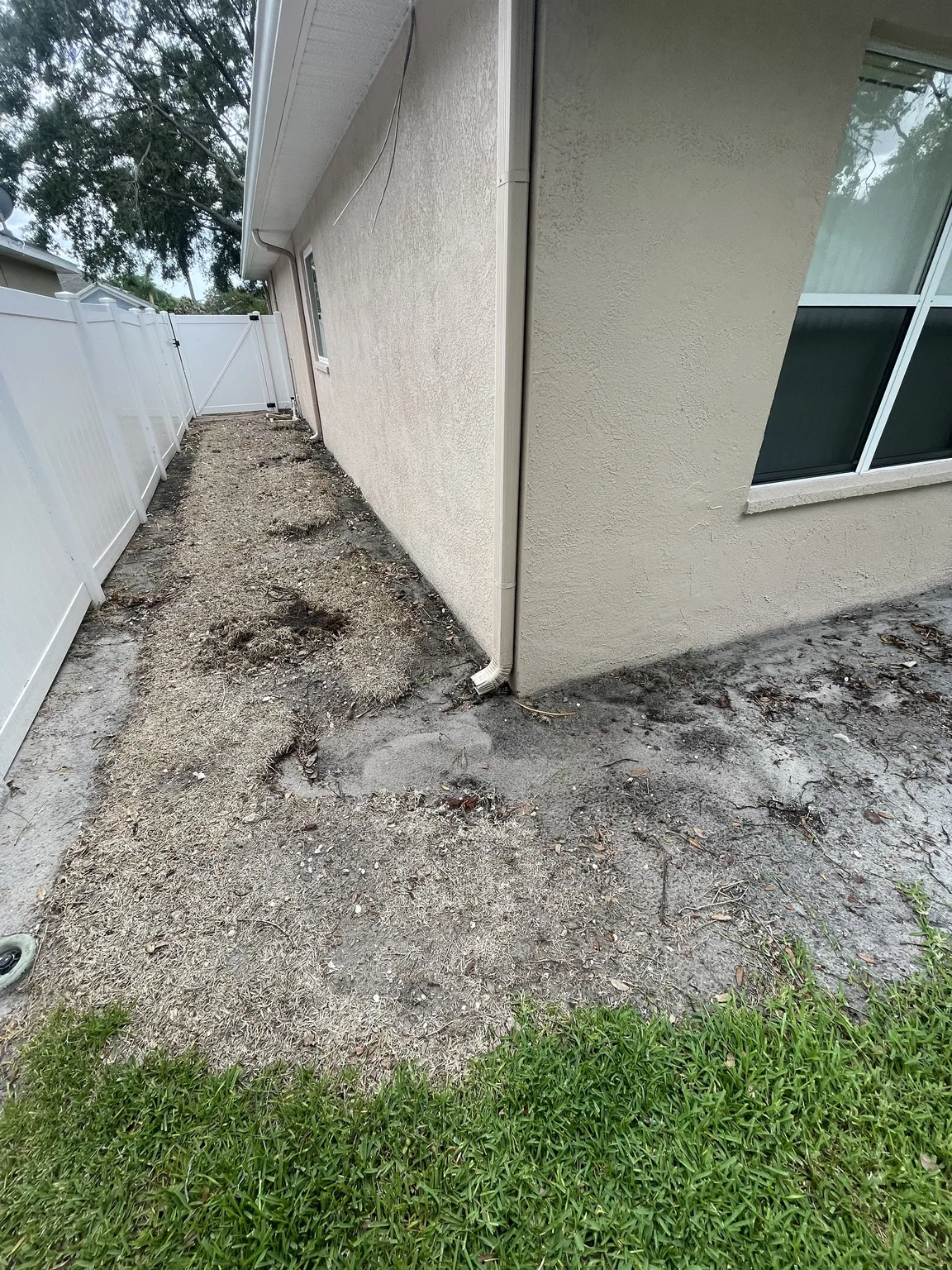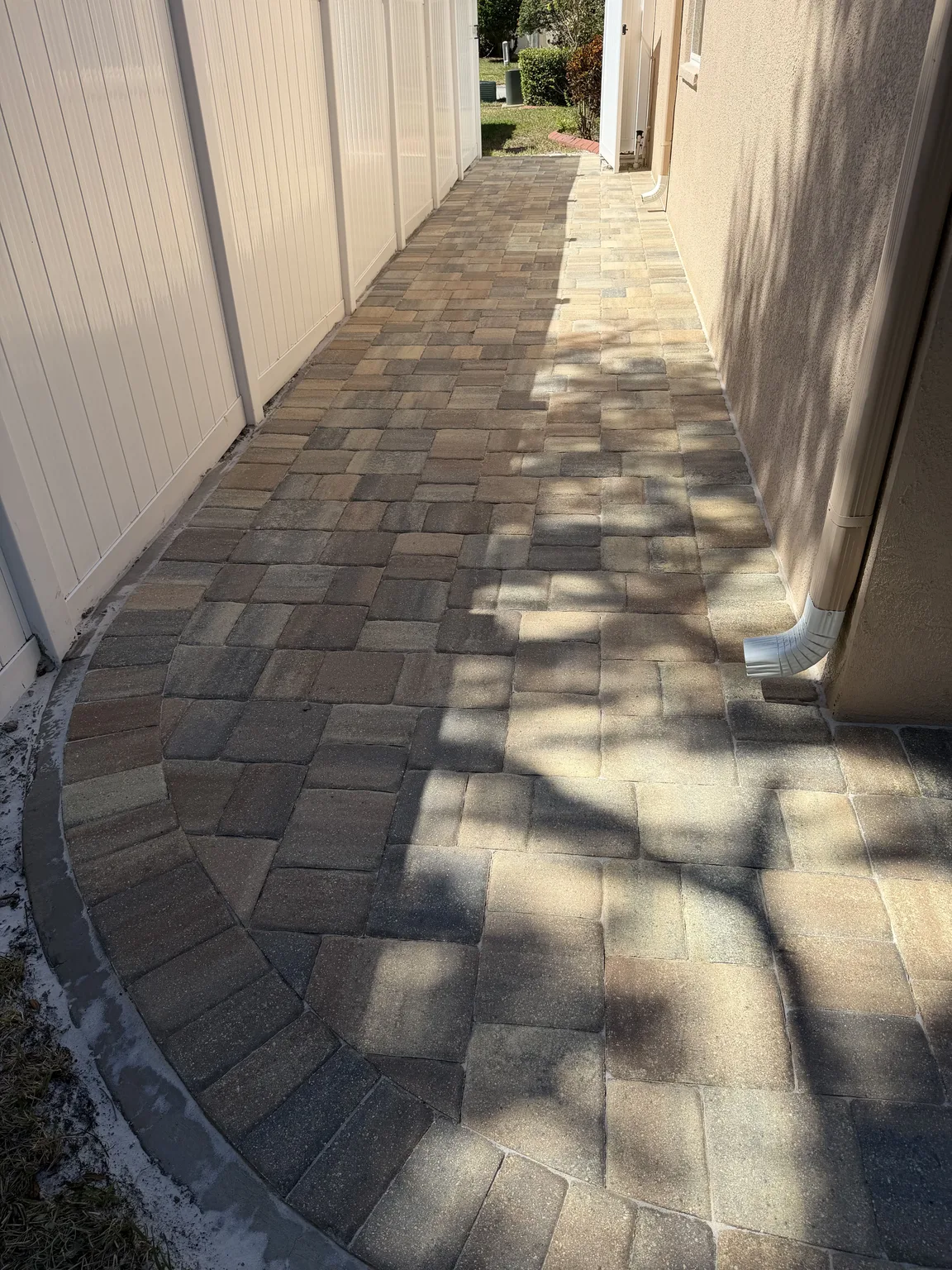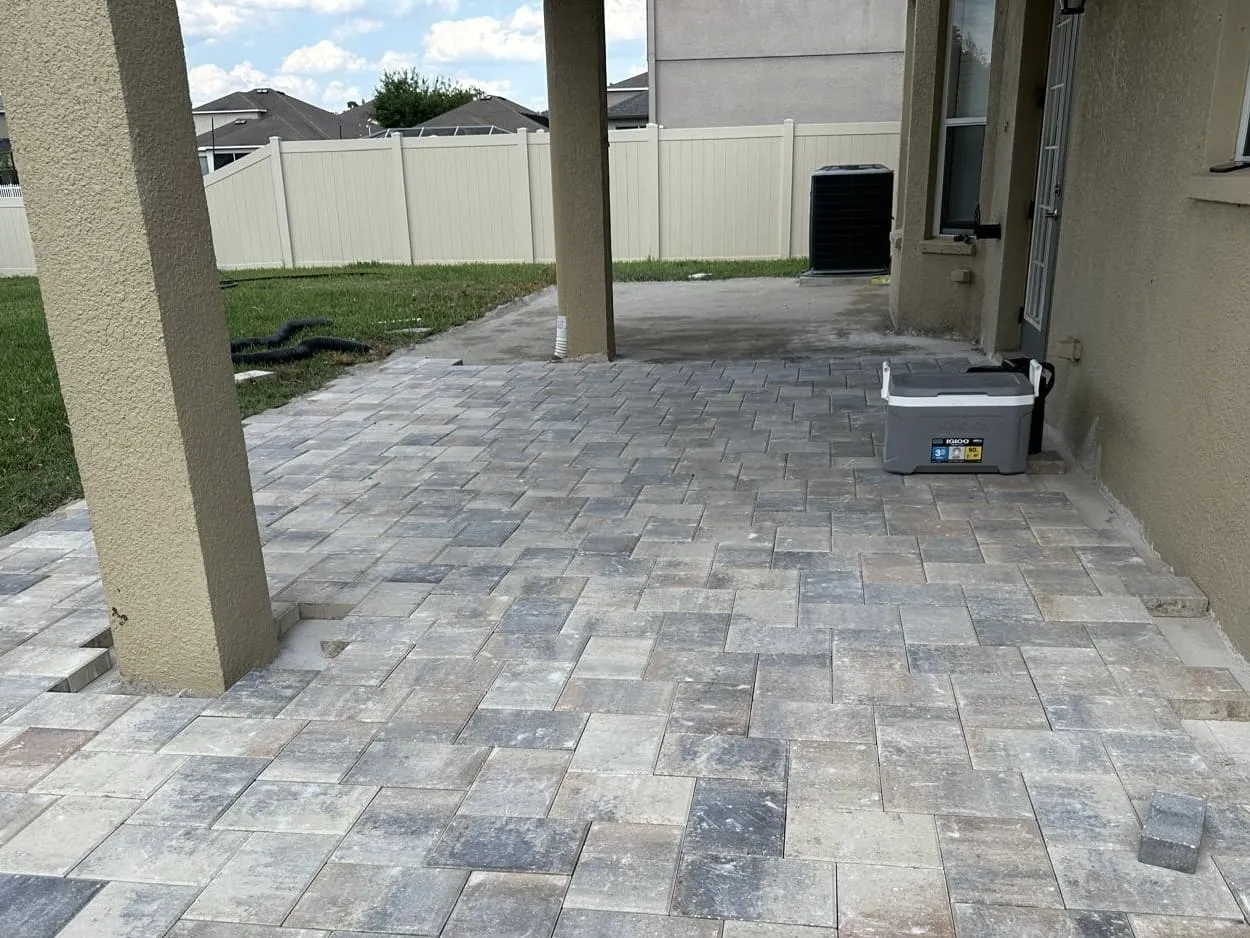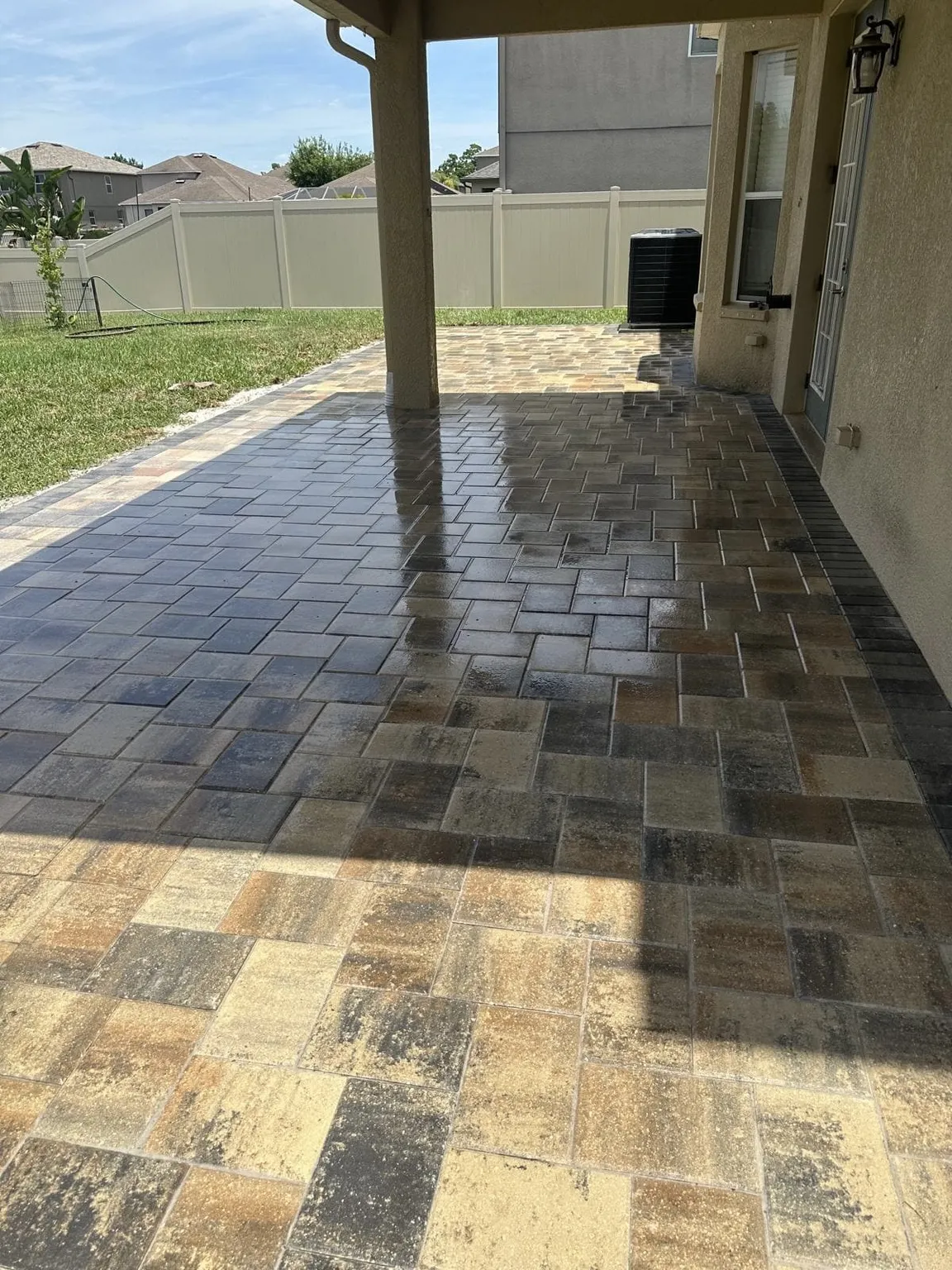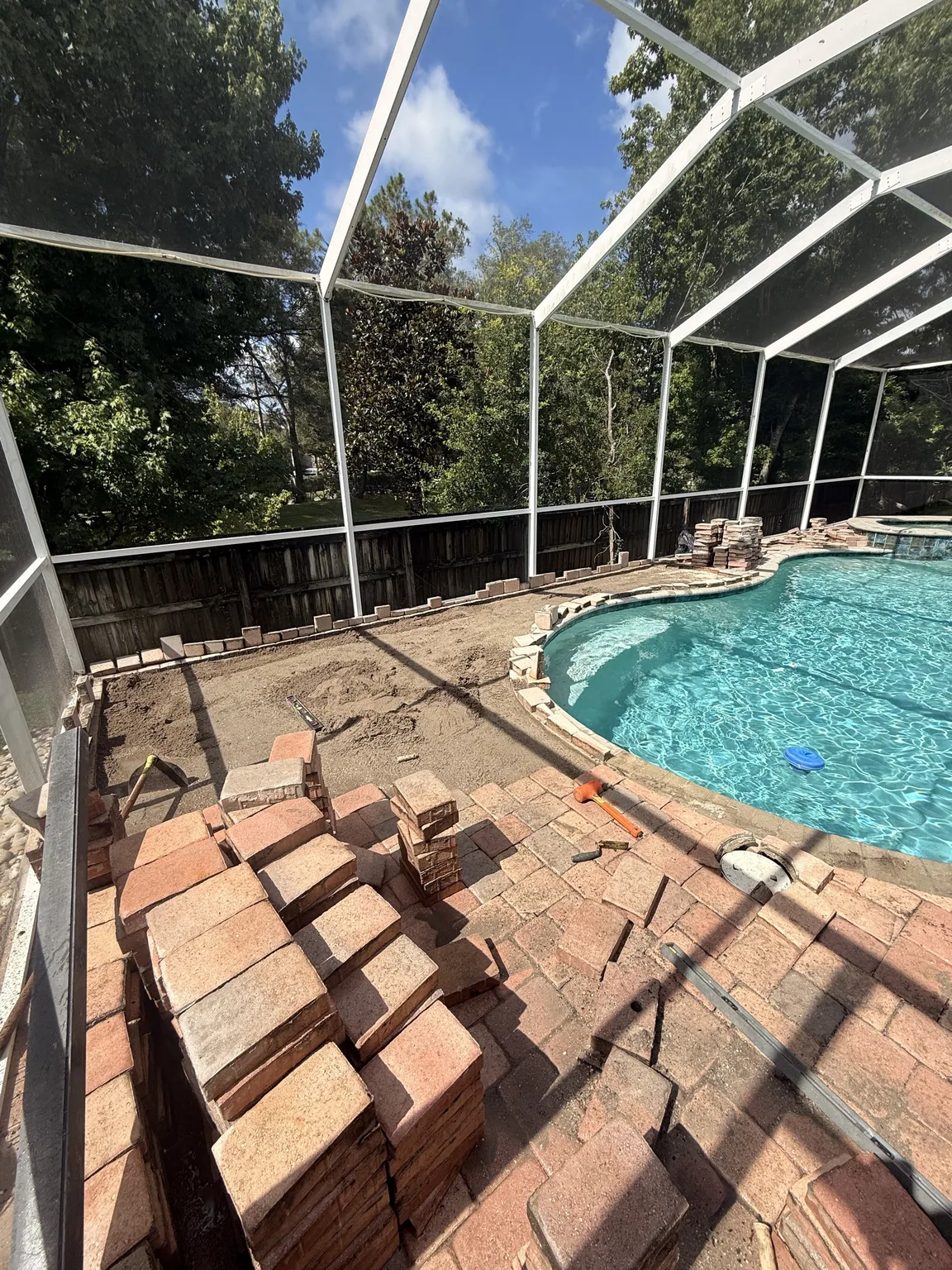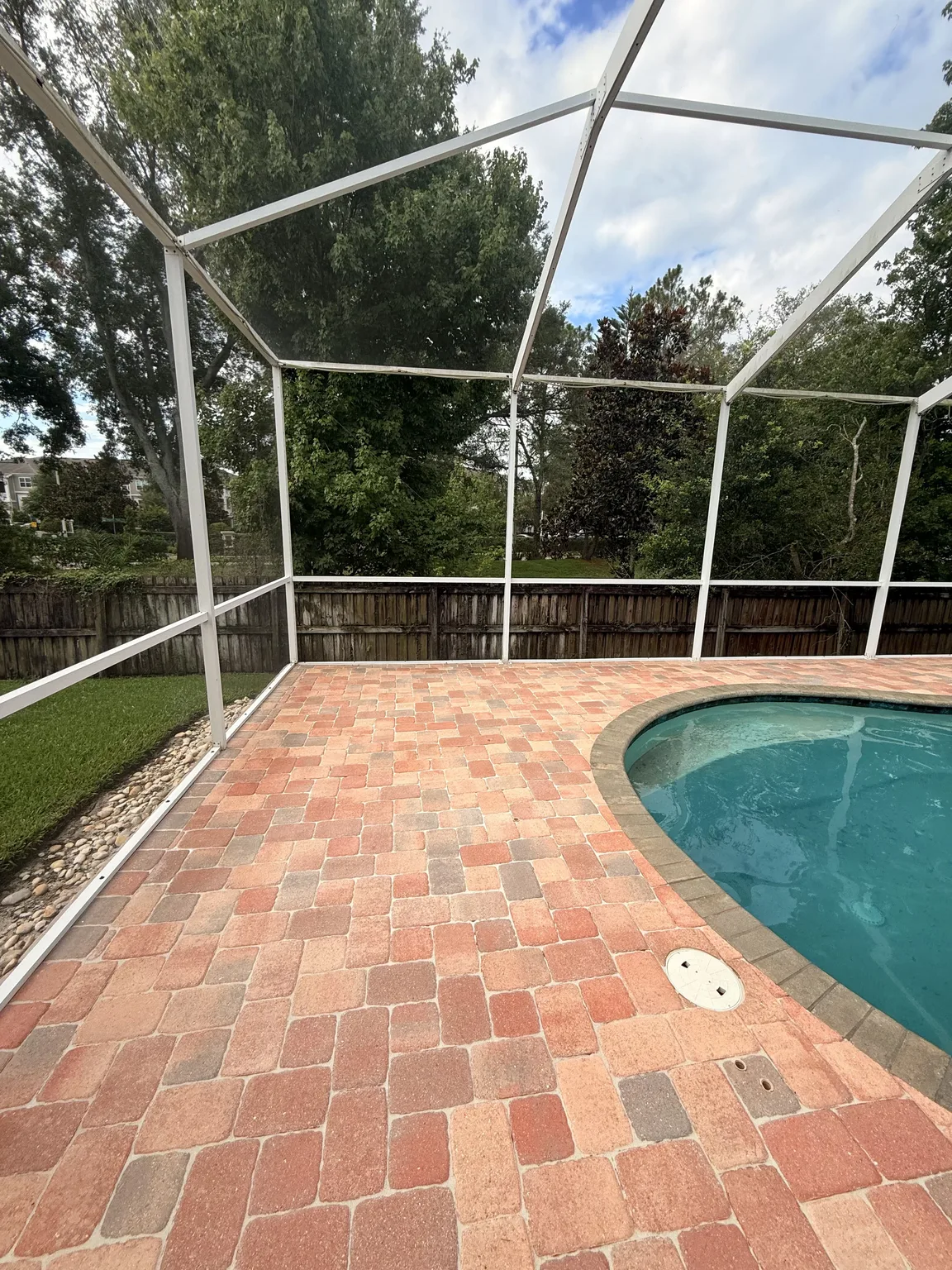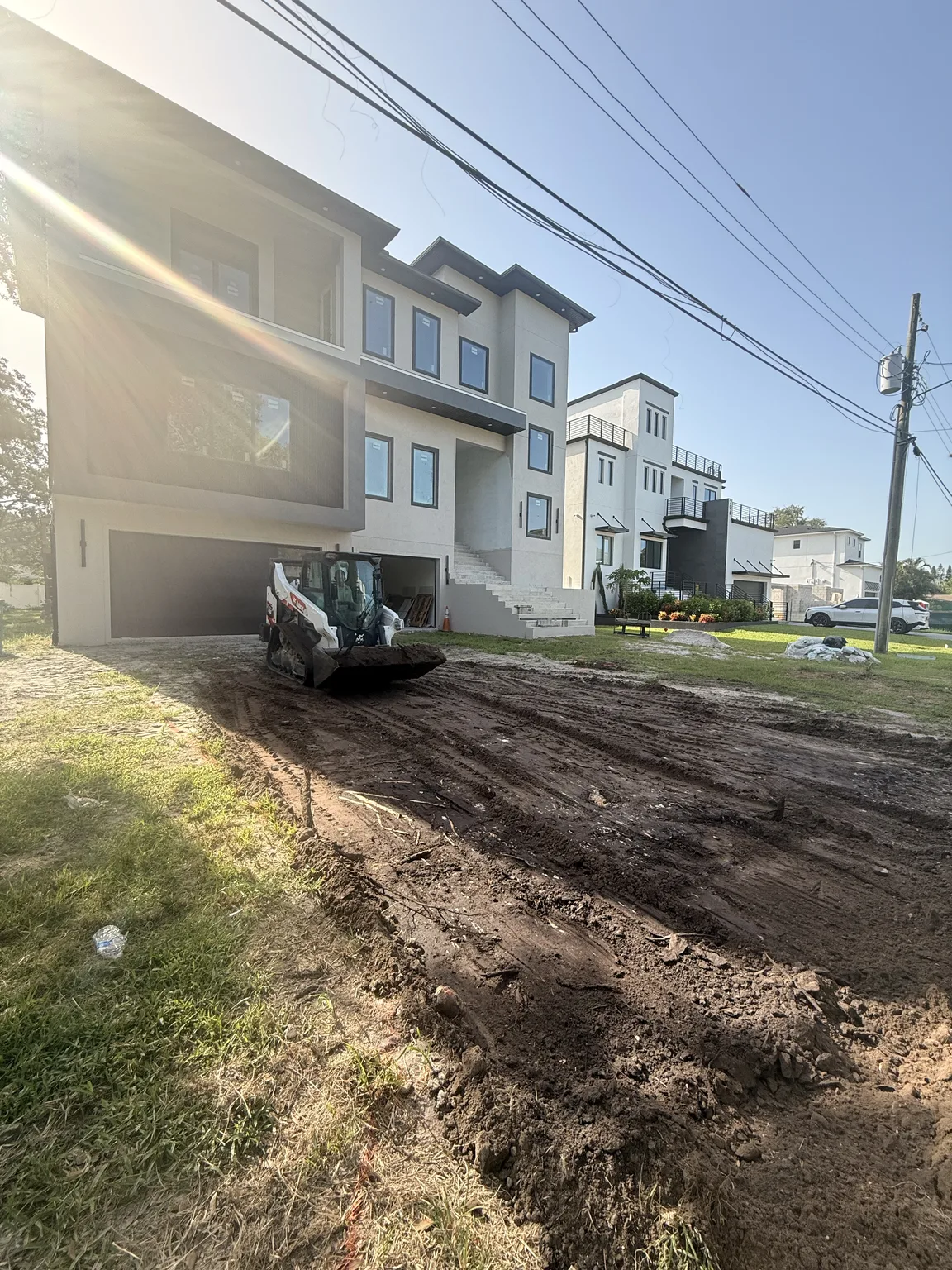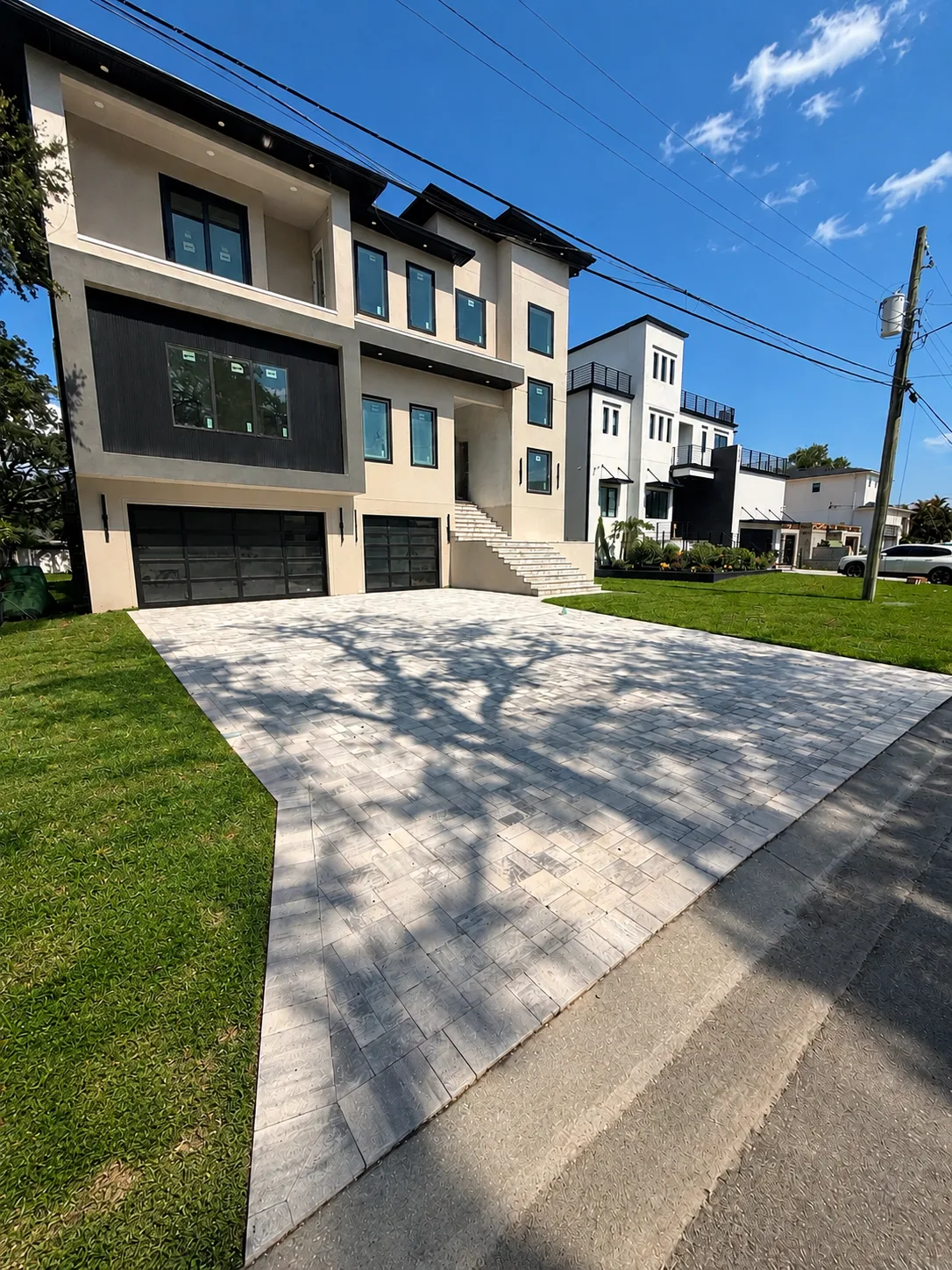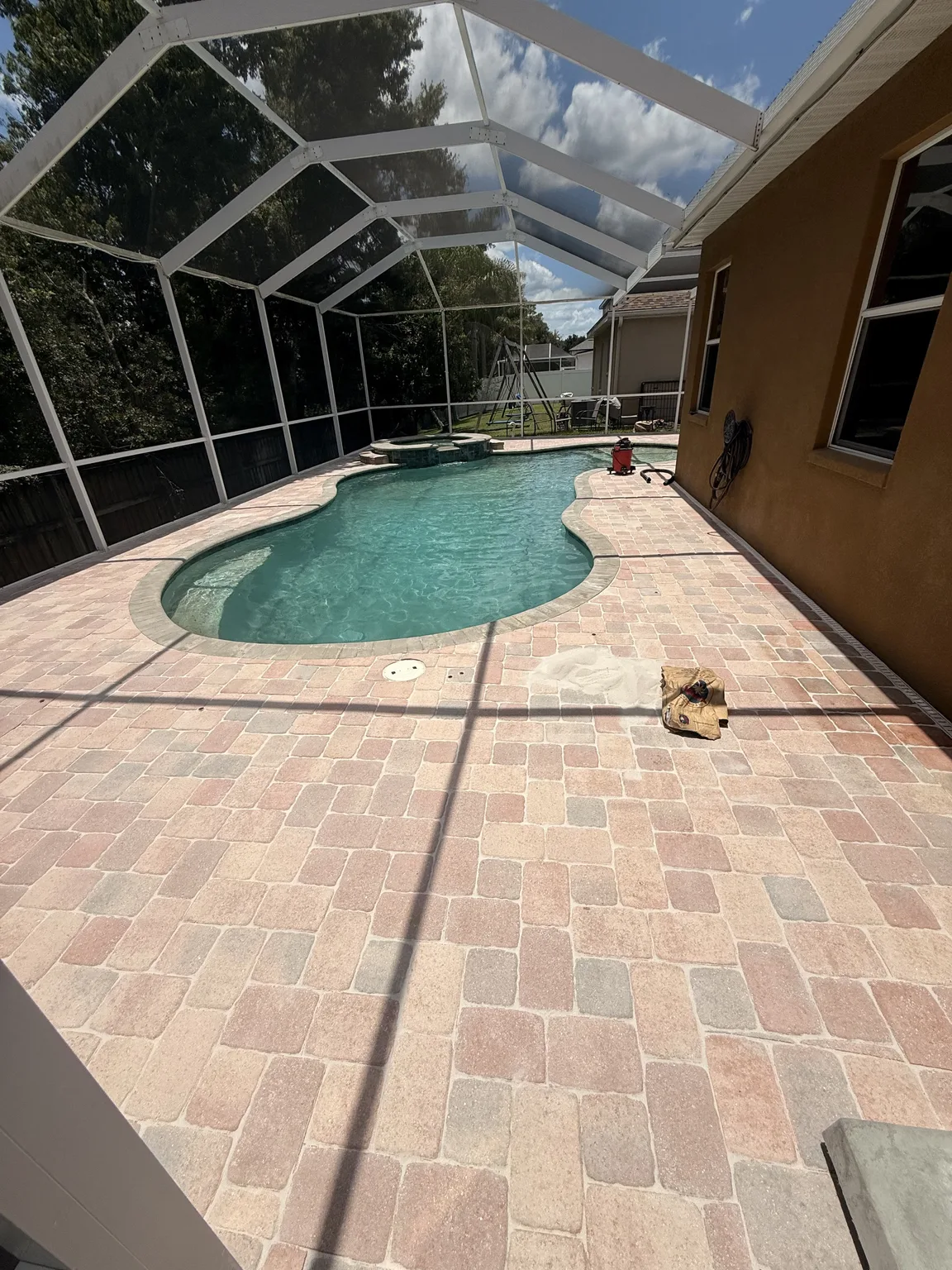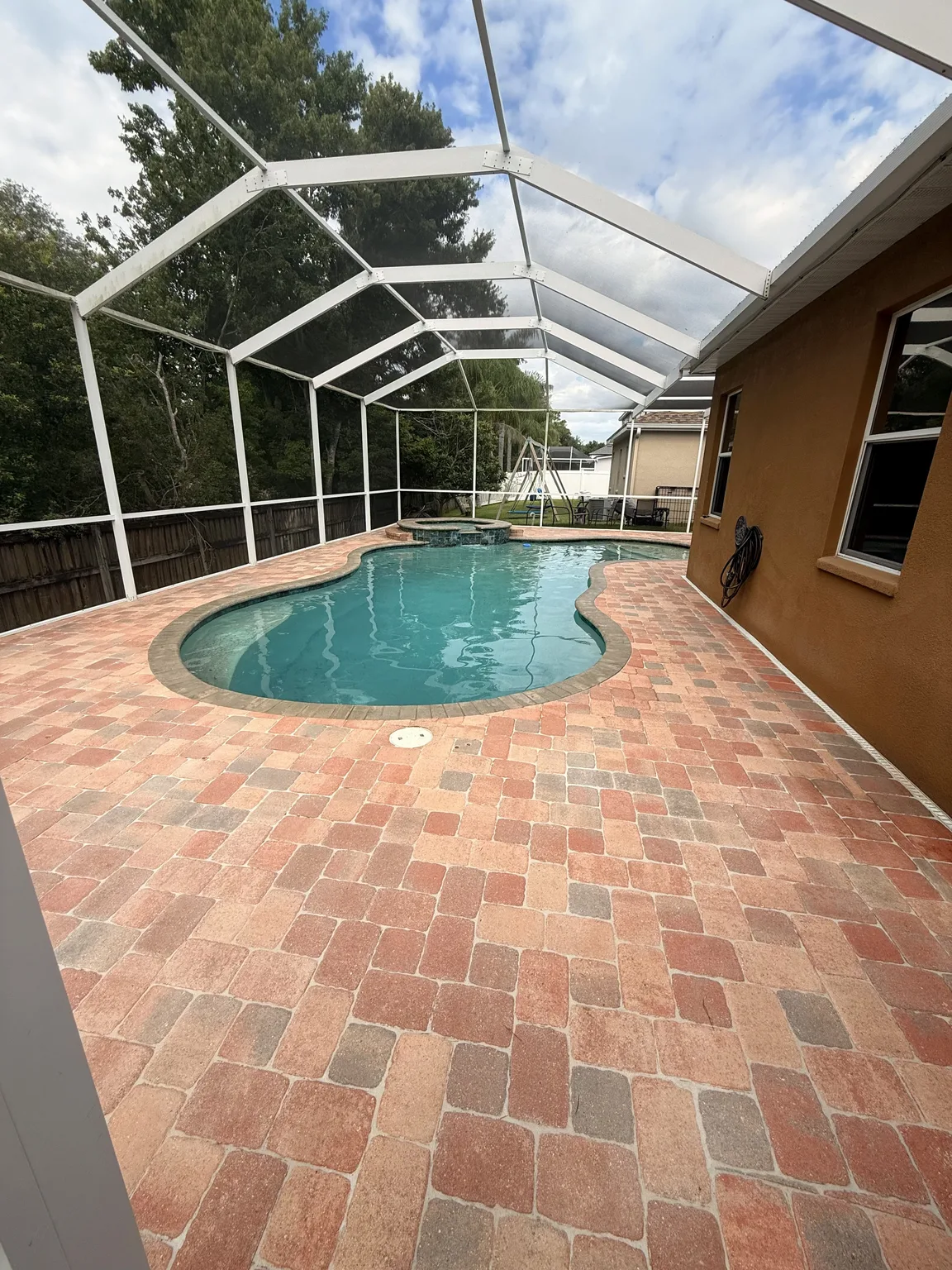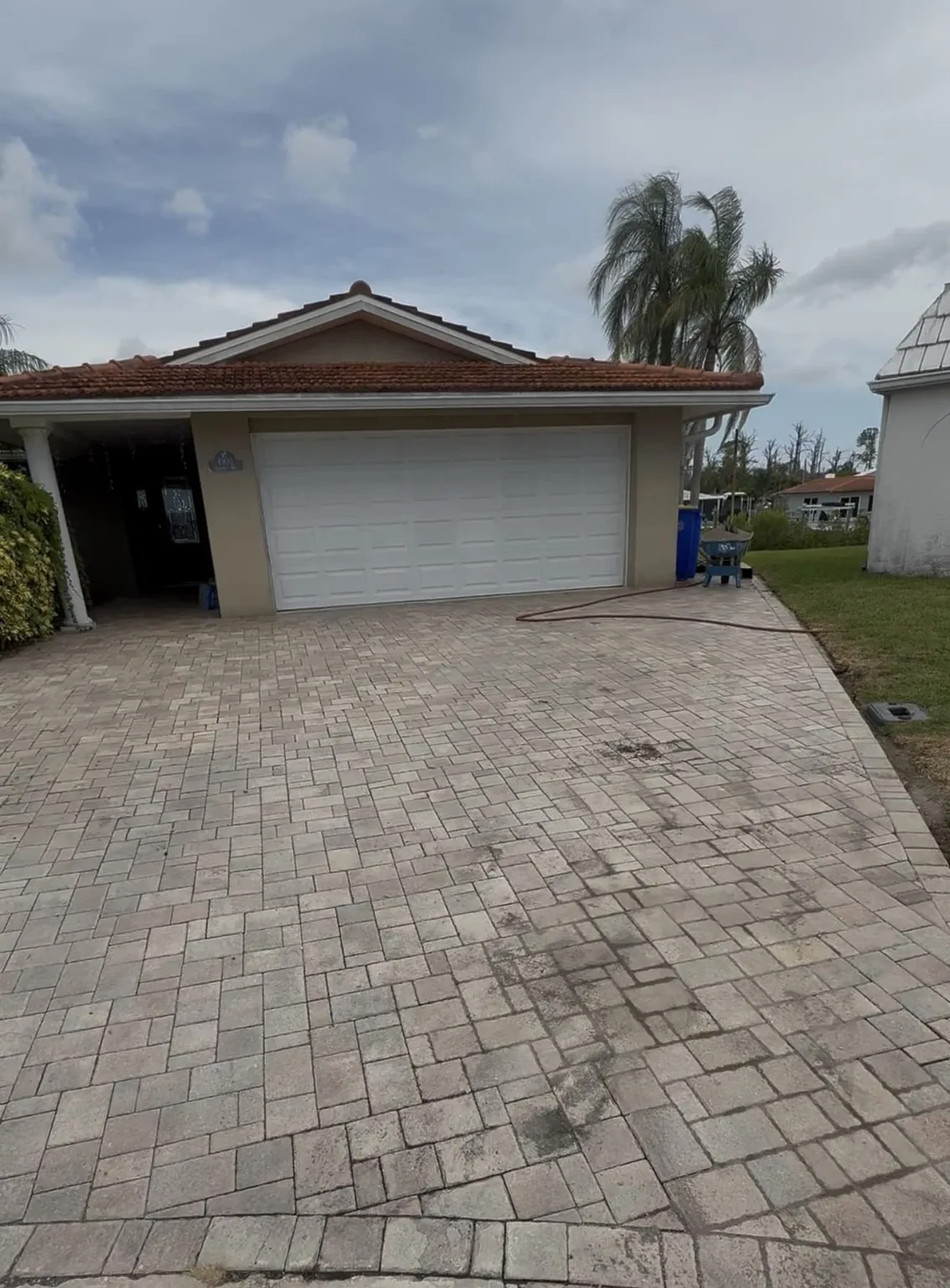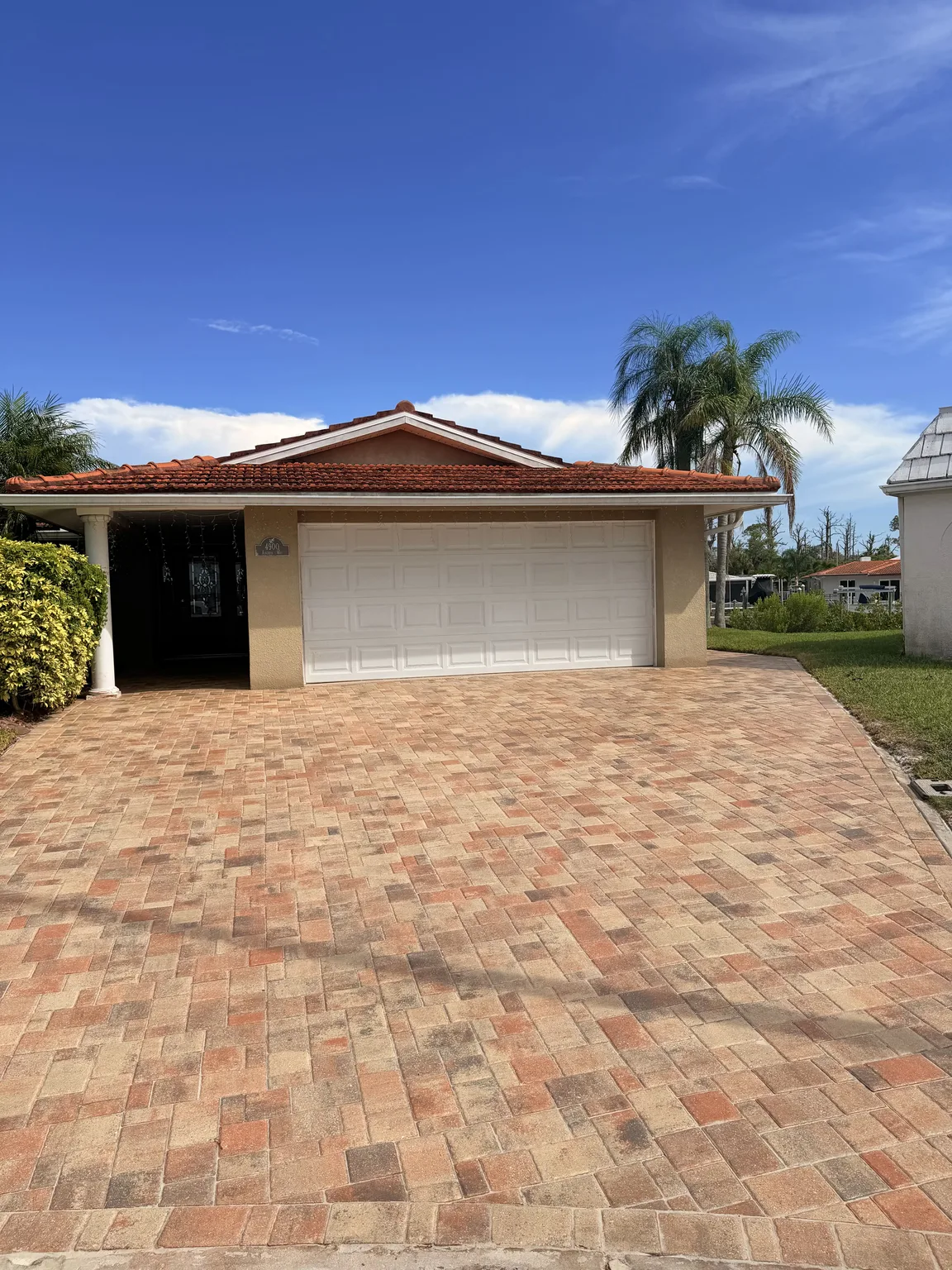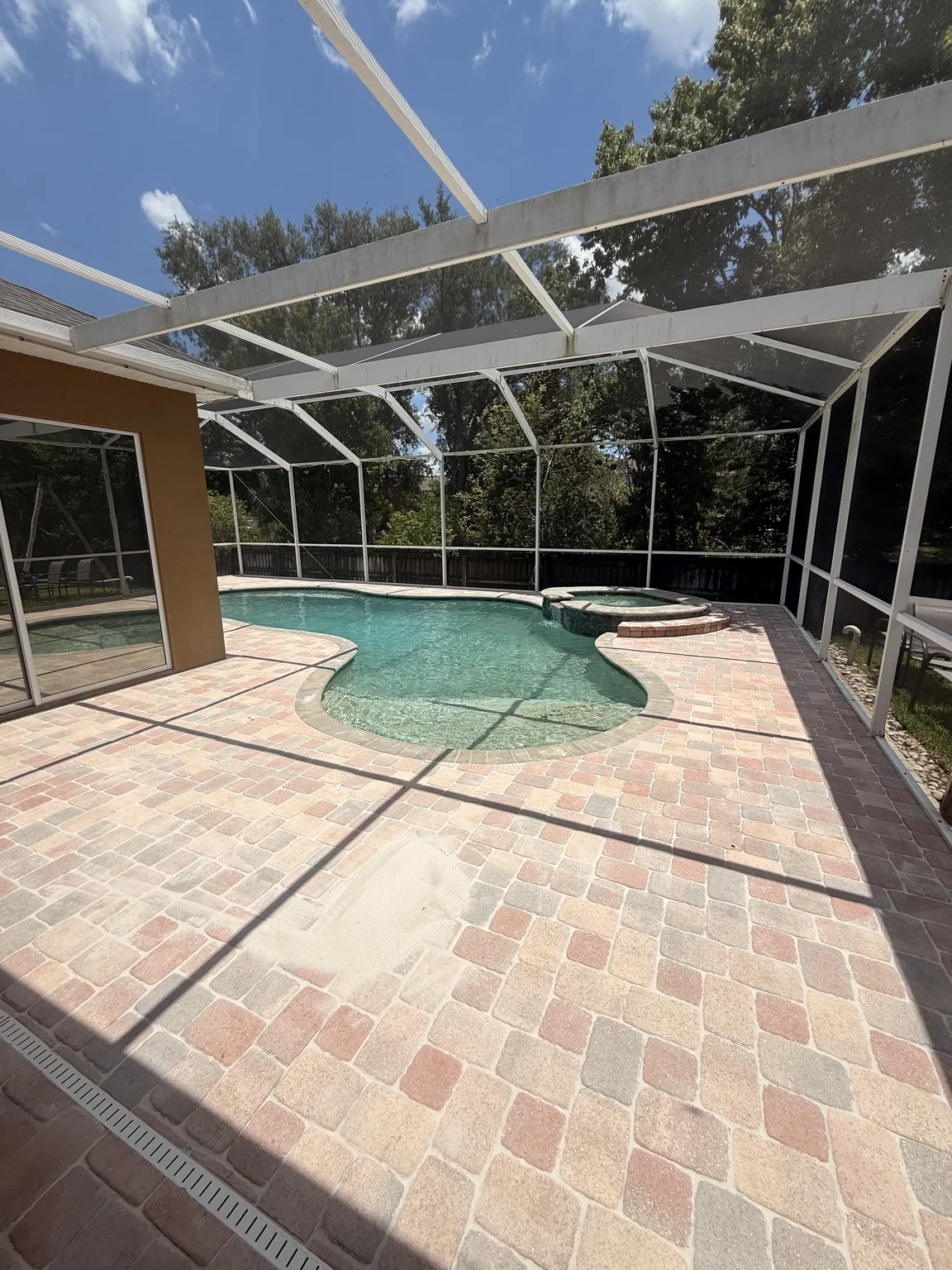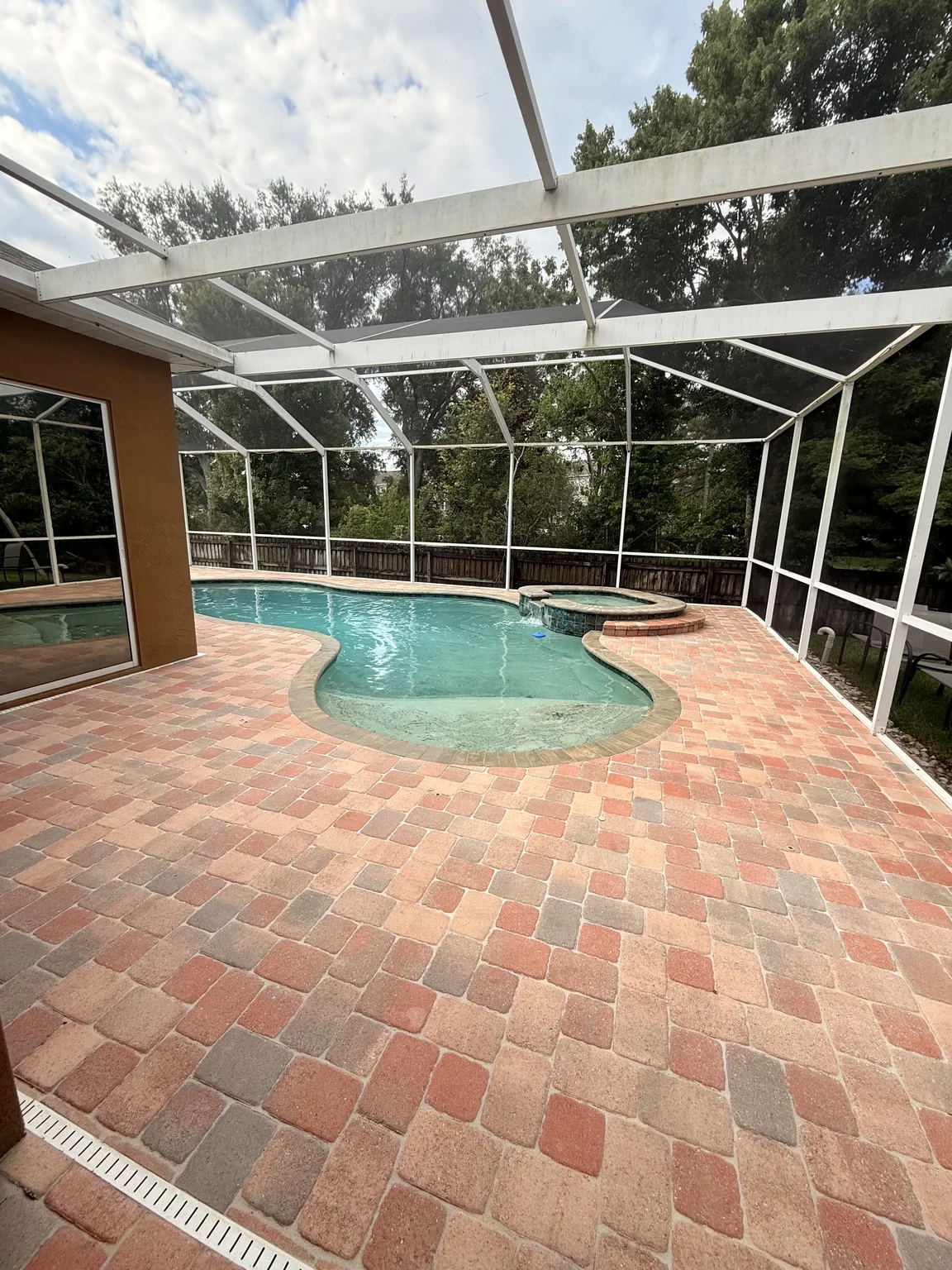
Travertine vs concrete pavers is a decision most Florida homeowners face when updating a pool deck, patio, or driveway. Both materials can look beautiful in Tampa Bay, but they behave differently in our heat, humidity, and heavy rains. When you understand variation, heat comfort, maintenance, thickness, and load ratings, you can match the material to each space instead of guessing. This guide walks through the real tradeoffs so you can plan a project that fits your home, lifestyle, and budget.
Travertine vs Concrete Pavers: Quick Comparison for Florida Homes
Direct answer: which is better in Florida?
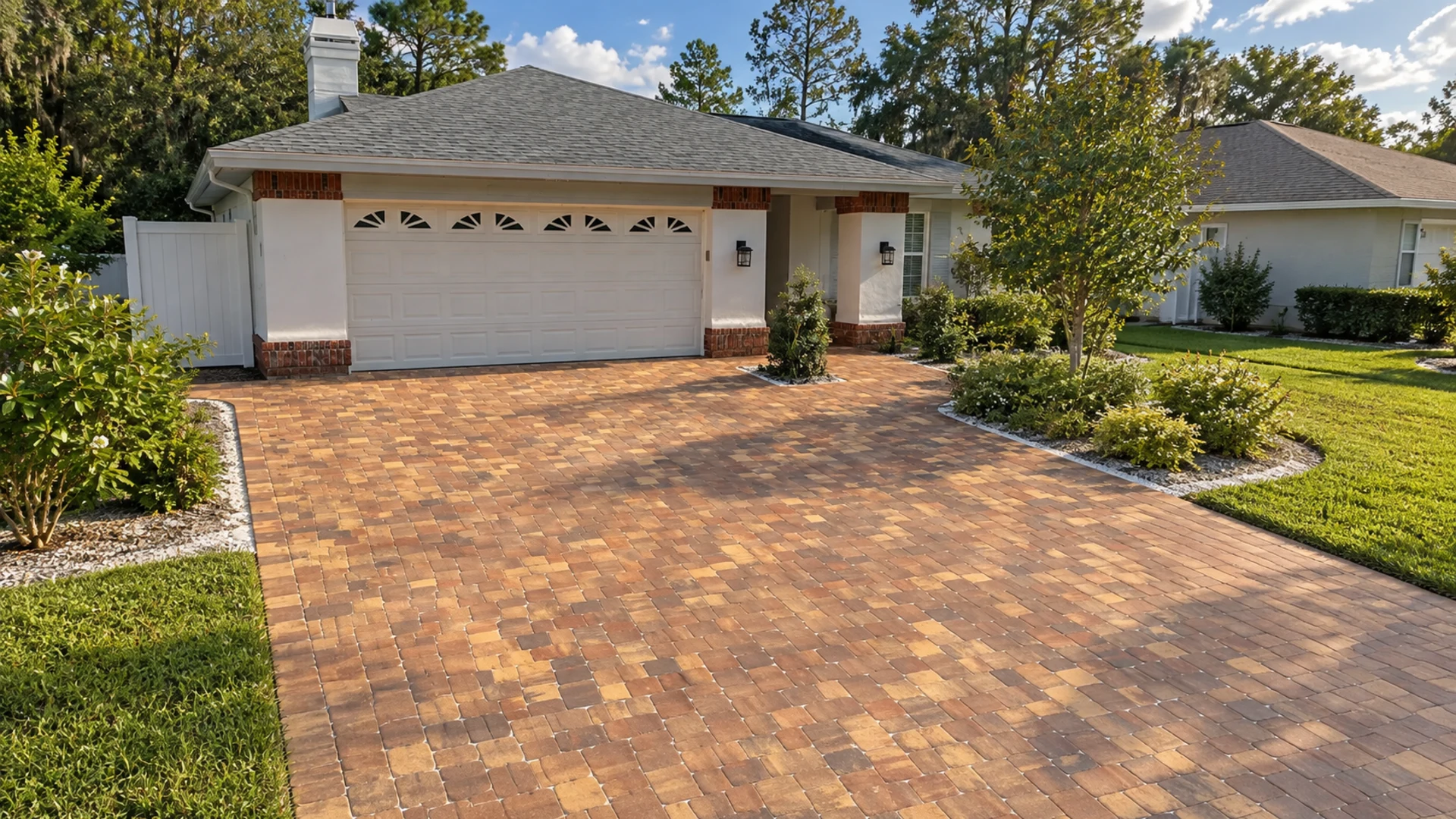
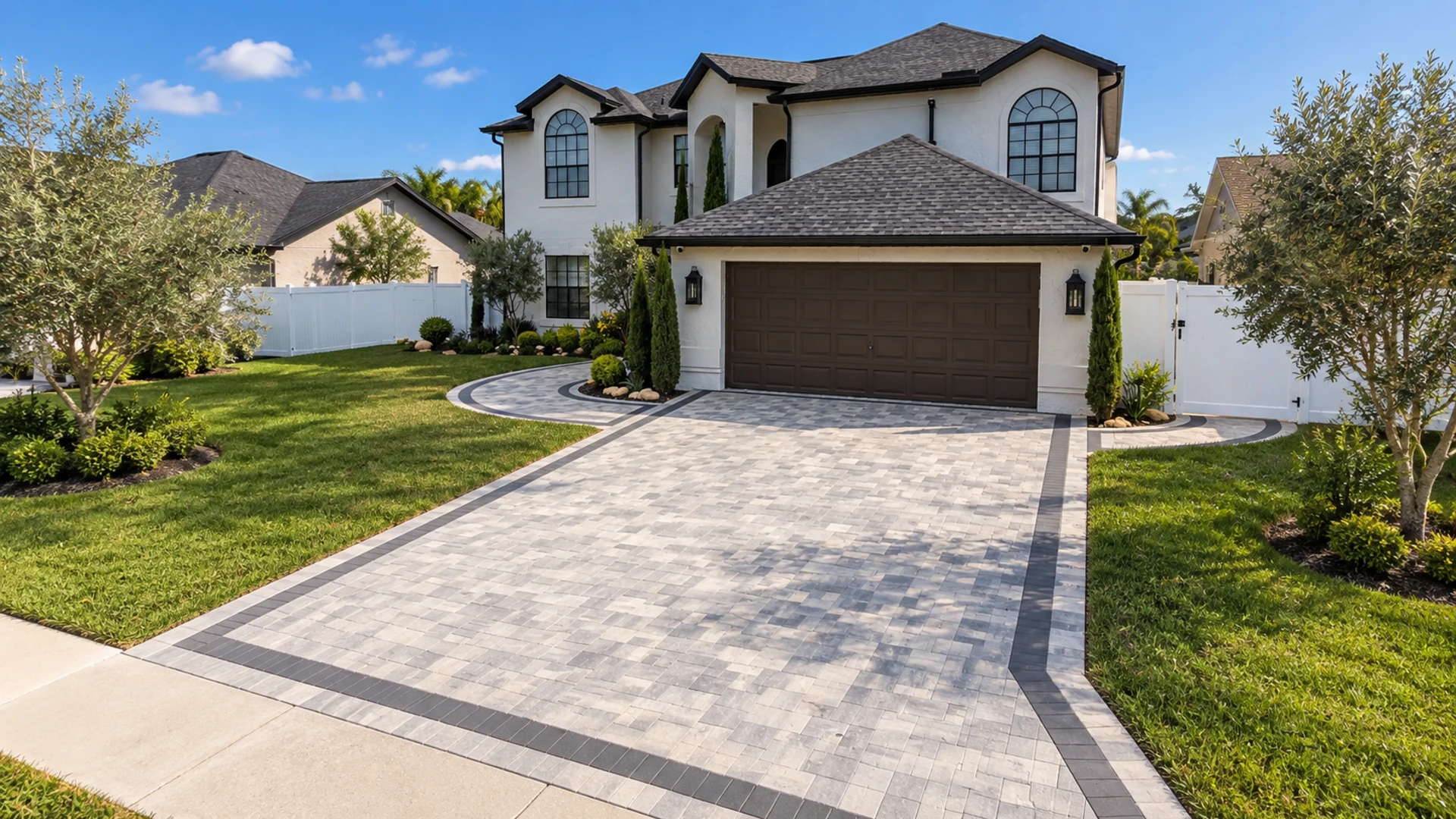
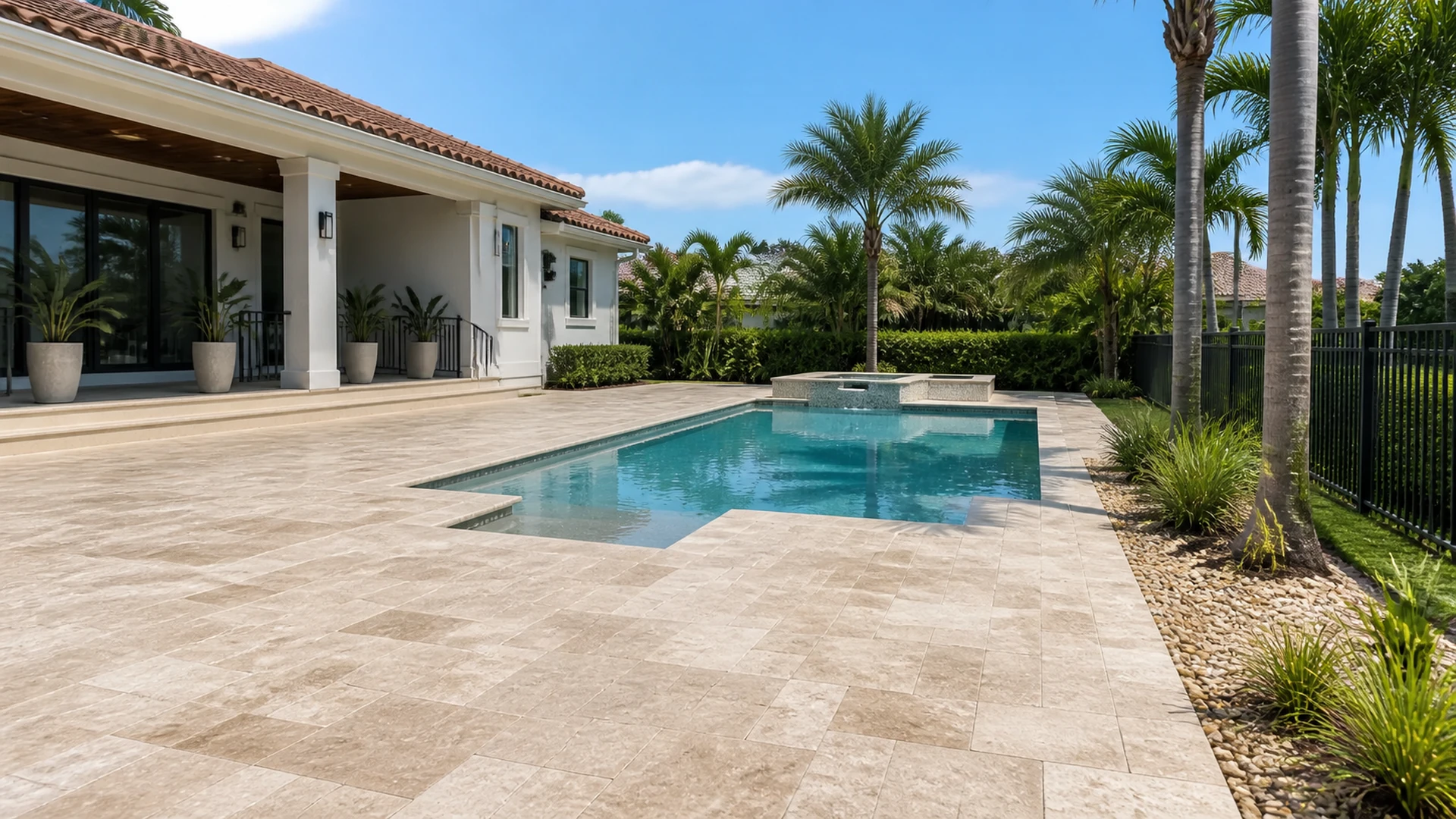
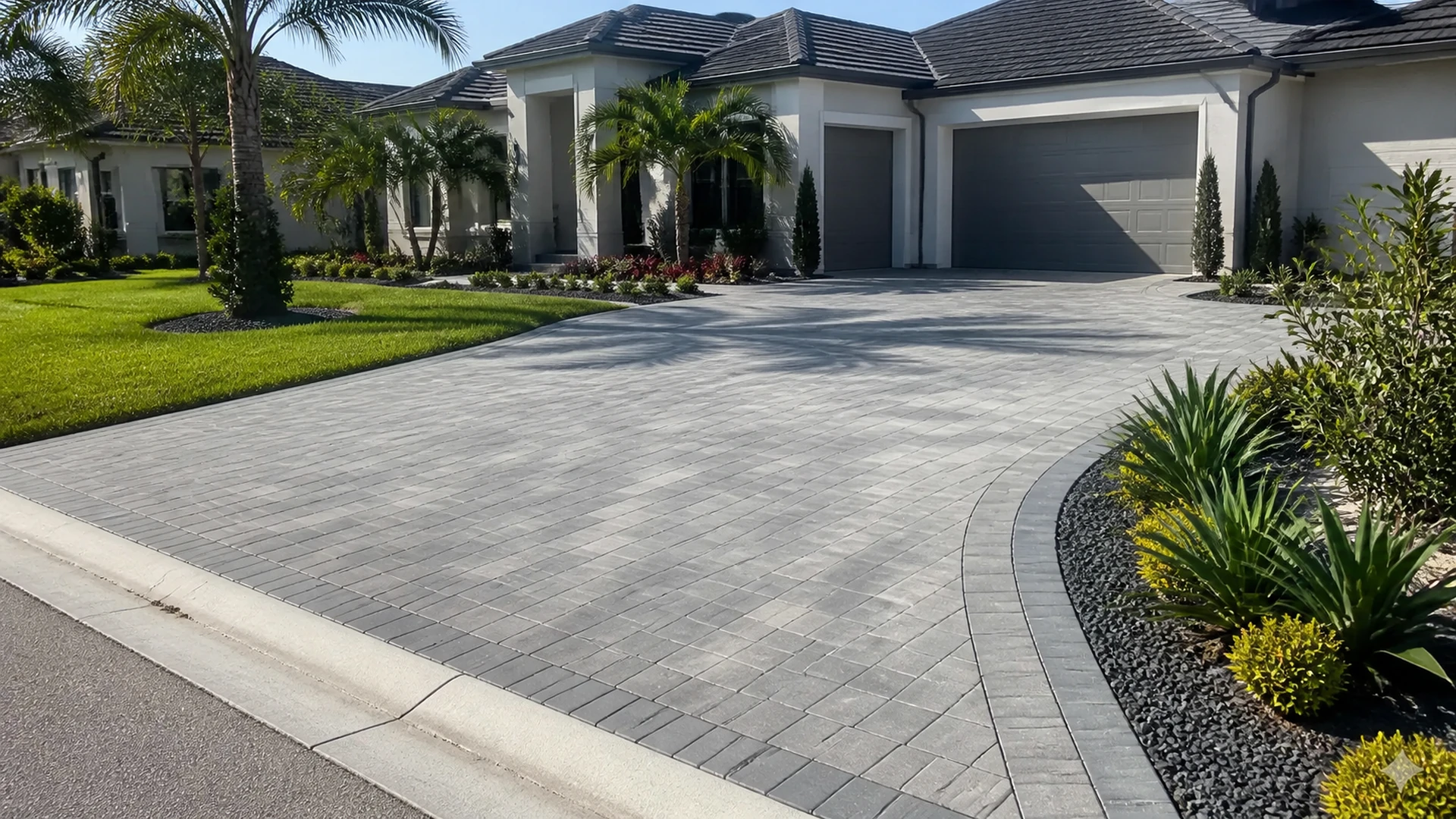
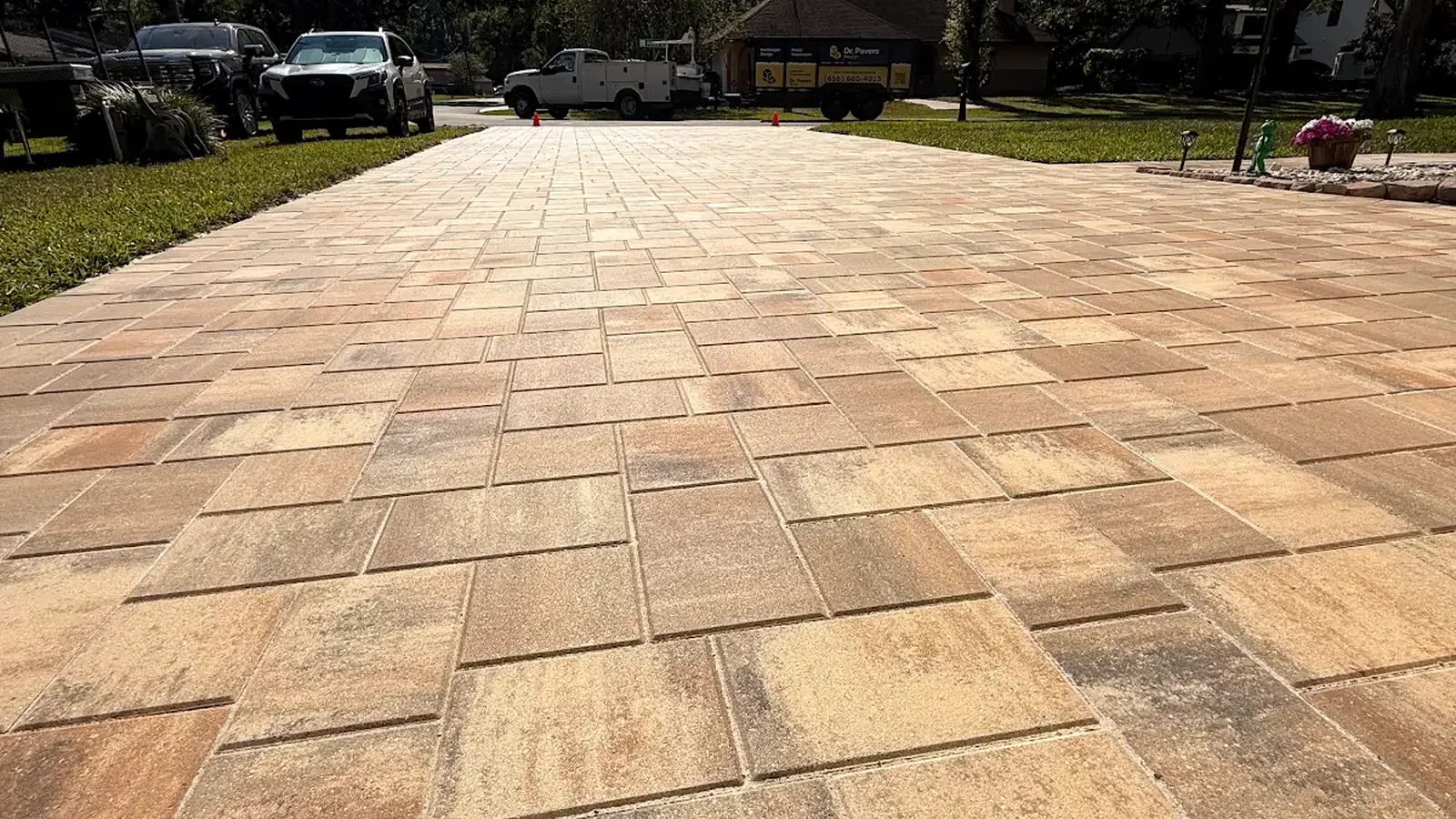
In Tampa Bay, neither travertine nor concrete pavers win in every situation. Around pools and barefoot patios, many homeowners prefer travertine because it tends to stay more comfortable underfoot and offers natural variation. For driveways or high-traffic areas that see vehicles, concrete pavers often make more sense because they are produced in consistent thicknesses and patterns aimed at heavier loads.
Your sun exposure, shade trees, pool type, and how you use the space all matter. Travertine usually costs more per square foot than basic concrete pavers, but it can deliver a high-end, timeless look in areas where you spend more time. Concrete pavers can stretch a budget further, especially for large driveways in places like Riverview, Wesley Chapel, or Palm Harbor. A site visit is the only way to match the material to your exact conditions and get accurate pricing.
Side-by-side overview for quick decisions
| Feature | Travertine Pavers | Concrete Pavers |
| Look | Natural stone, unique variation | Uniform color, many styles |
| Heat comfort | Often feels cooler in sun | Can get warmer, especially darker colors |
| Texture | Subtle, honed, or tumbled grip | From smooth to aggressively textured |
| Salt & pool chemistry | Needs appropriate selection and care | Engineered mixes can handle pool use |
| Load & thickness | Great for patios and pool decks; driveway use is site-specific | Excellent for driveways when installed correctly |
| Replacement matching | Harder to match exactly later | Easier to match color and shape from many lines |
How travertine vs concrete pavers fit typical Florida layouts
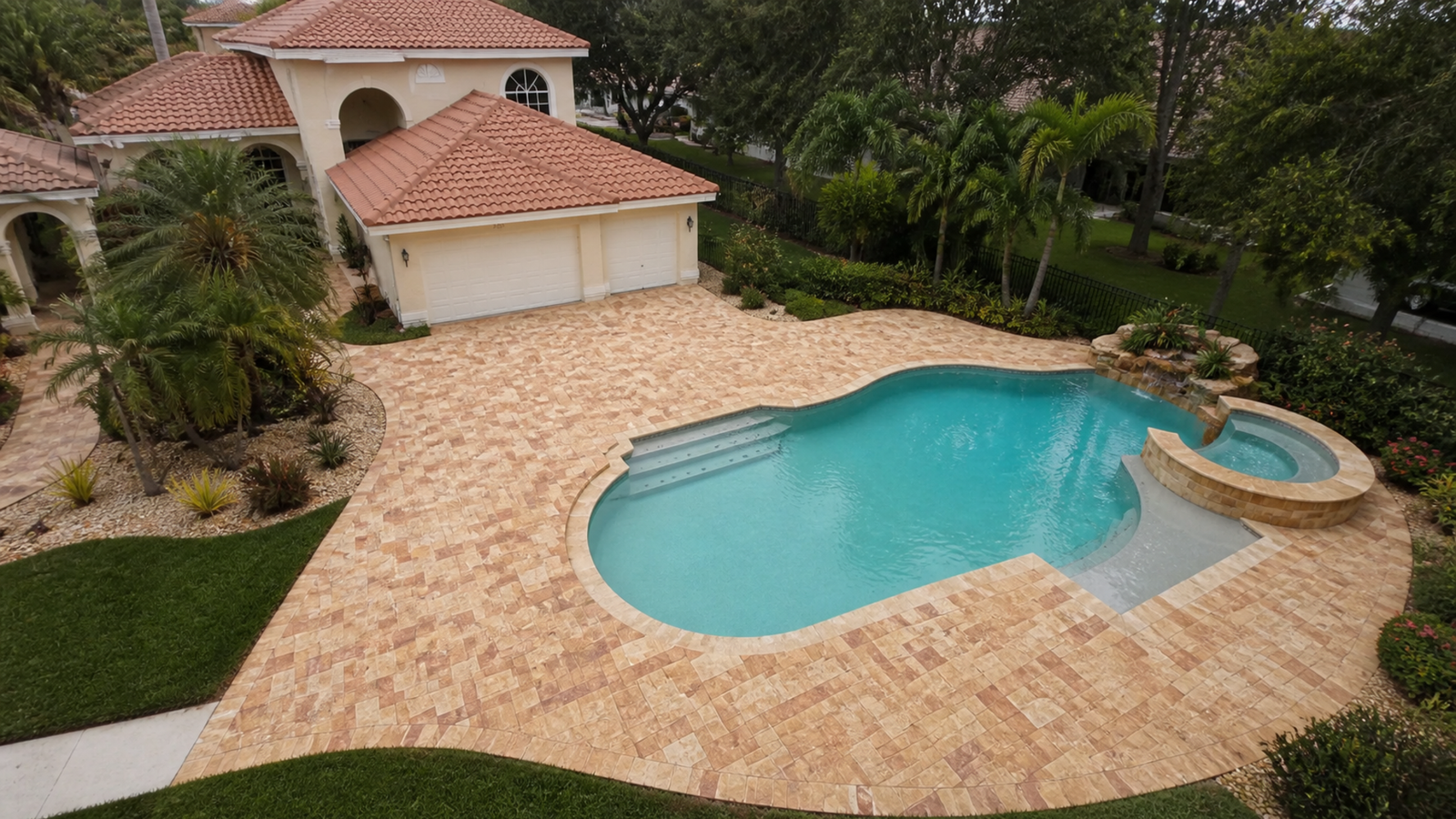
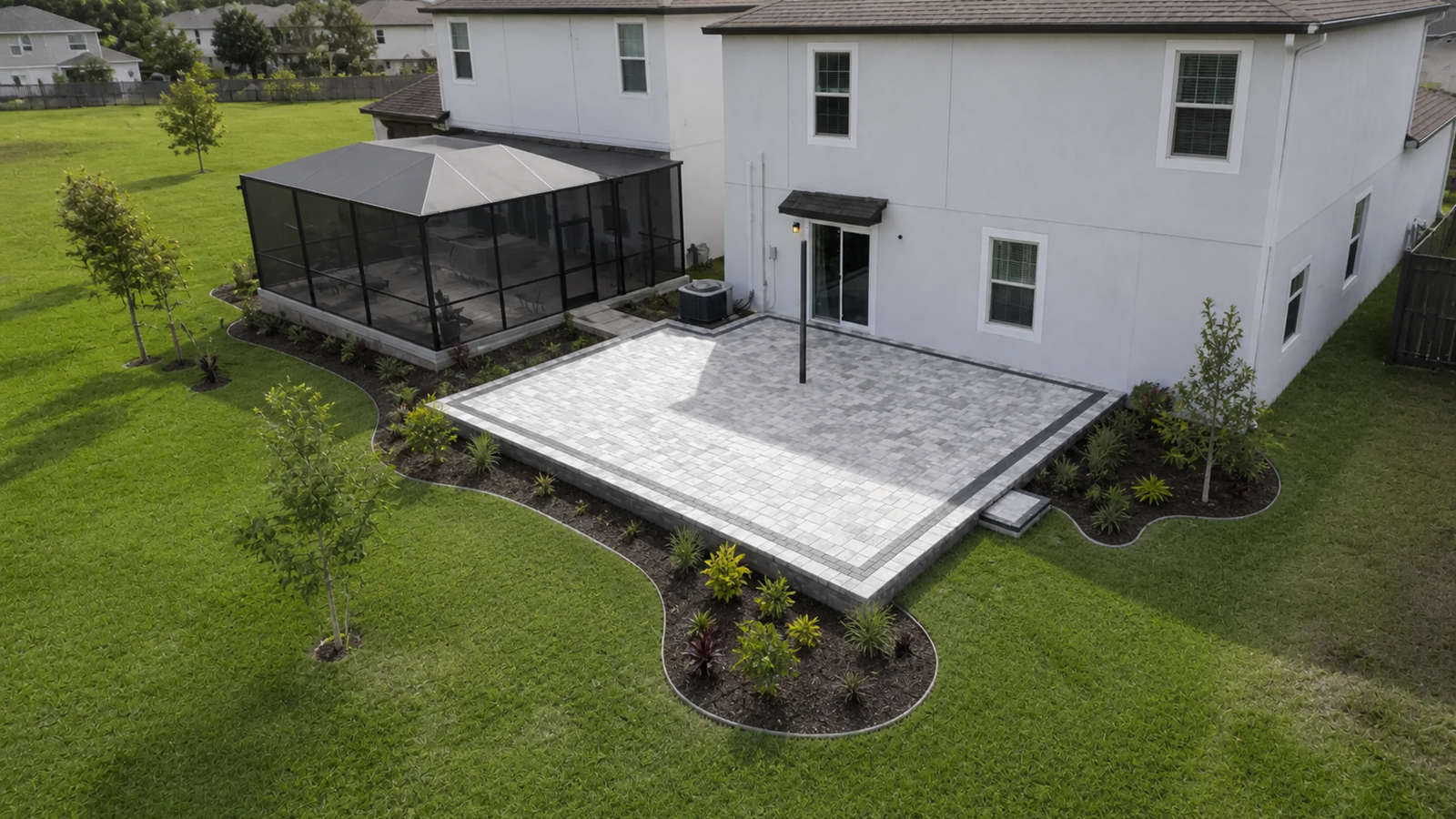
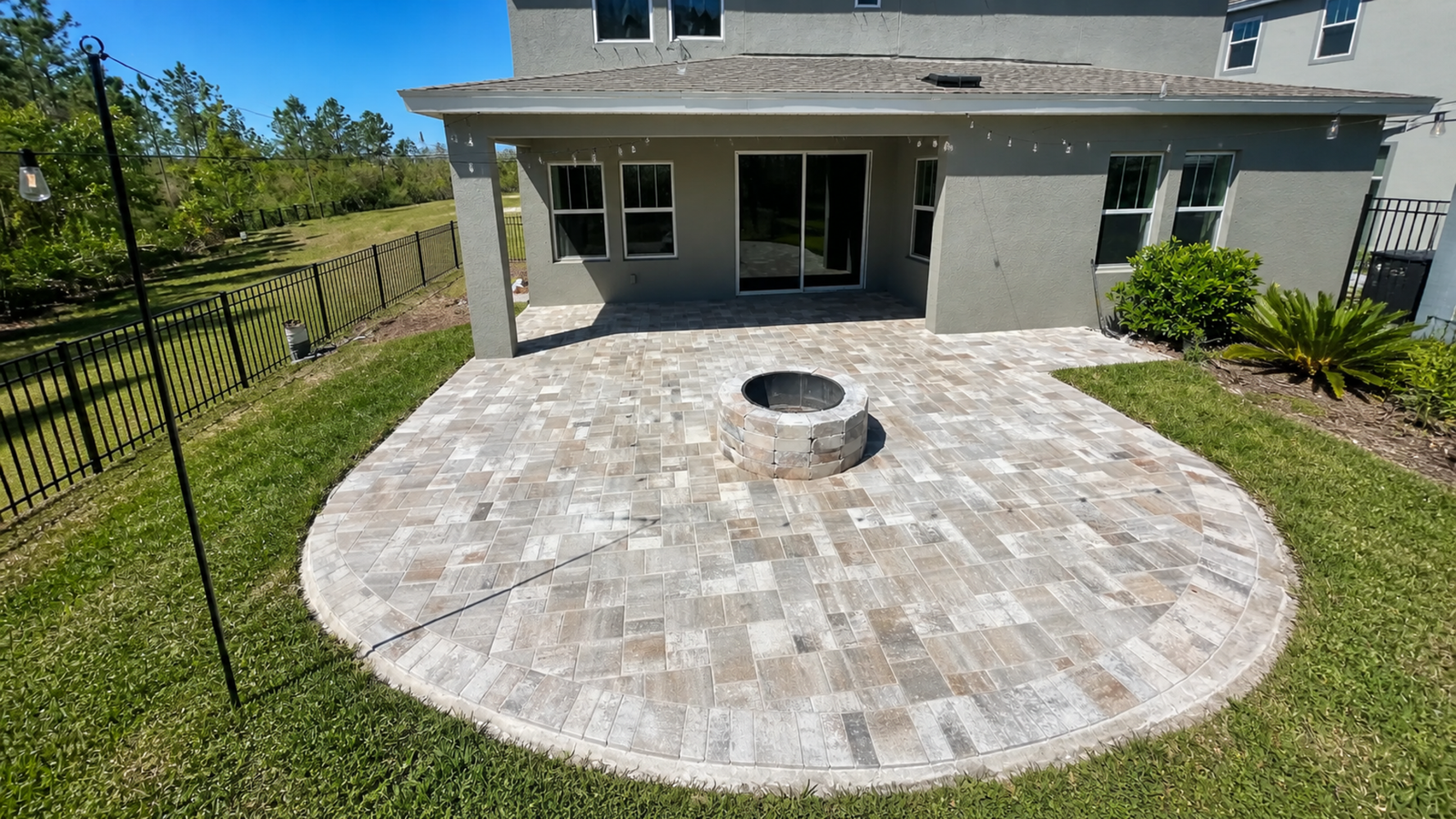
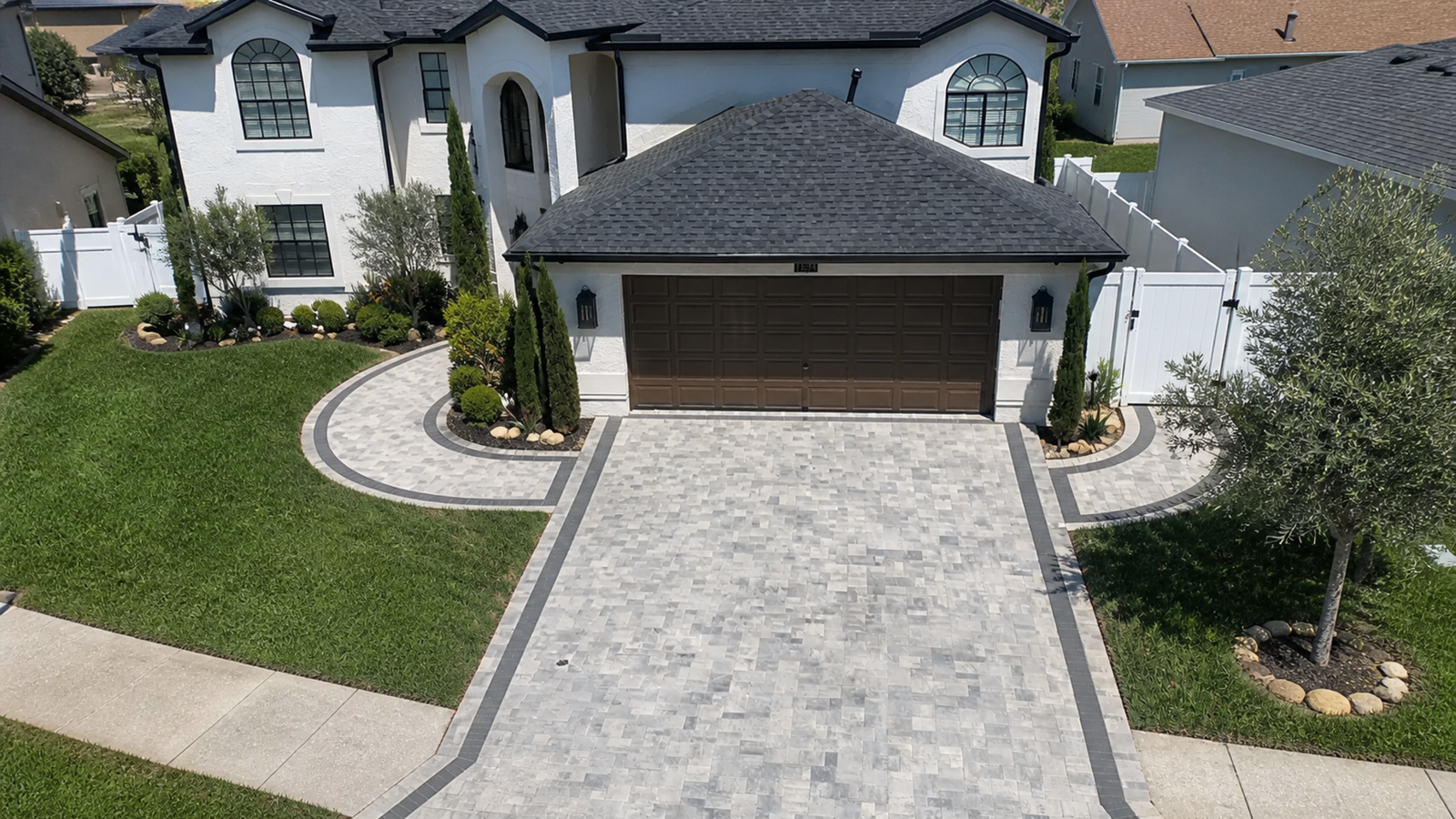
Most Tampa Bay projects mix materials instead of choosing only one. For example, you might use travertine on a sunny pool deck in Land O’ Lakes, then transition to concrete pavers for the driveway where vehicles park and turn. This approach keeps the areas you touch and see the most feeling luxurious, while keeping total project costs more manageable.
However, matching transitions, steps, and coping takes planning. You want thicknesses that work together, safe nosings on steps, and smooth connections at door thresholds. A hardscape contractor familiar with Florida soils and pool layouts can recommend where each material makes the most sense on your property.
Understanding How Travertine and Concrete Pavers Are Made
What travertine pavers are and how they form
Travertine is a natural limestone that forms around mineral springs over thousands of years. It has small holes and veins that give it a soft, organic look that works well with Florida landscaping. Travertine pavers are cut from quarried blocks and then finished, often tumbled or honed, to create a slip-resistant surface suitable for patios and pool decks.
The Natural Stone Institute stresses choosing travertine that is appropriate for its intended use, especially in exterior applications with heat, moisture, and salt exposure. Their guidance also highlights realistic expectations for natural stone, including variation, maintenance, and surface changes over time. You can learn more about industry best practices on the Natural Stone Institute’s travertine page.
How concrete pavers are engineered
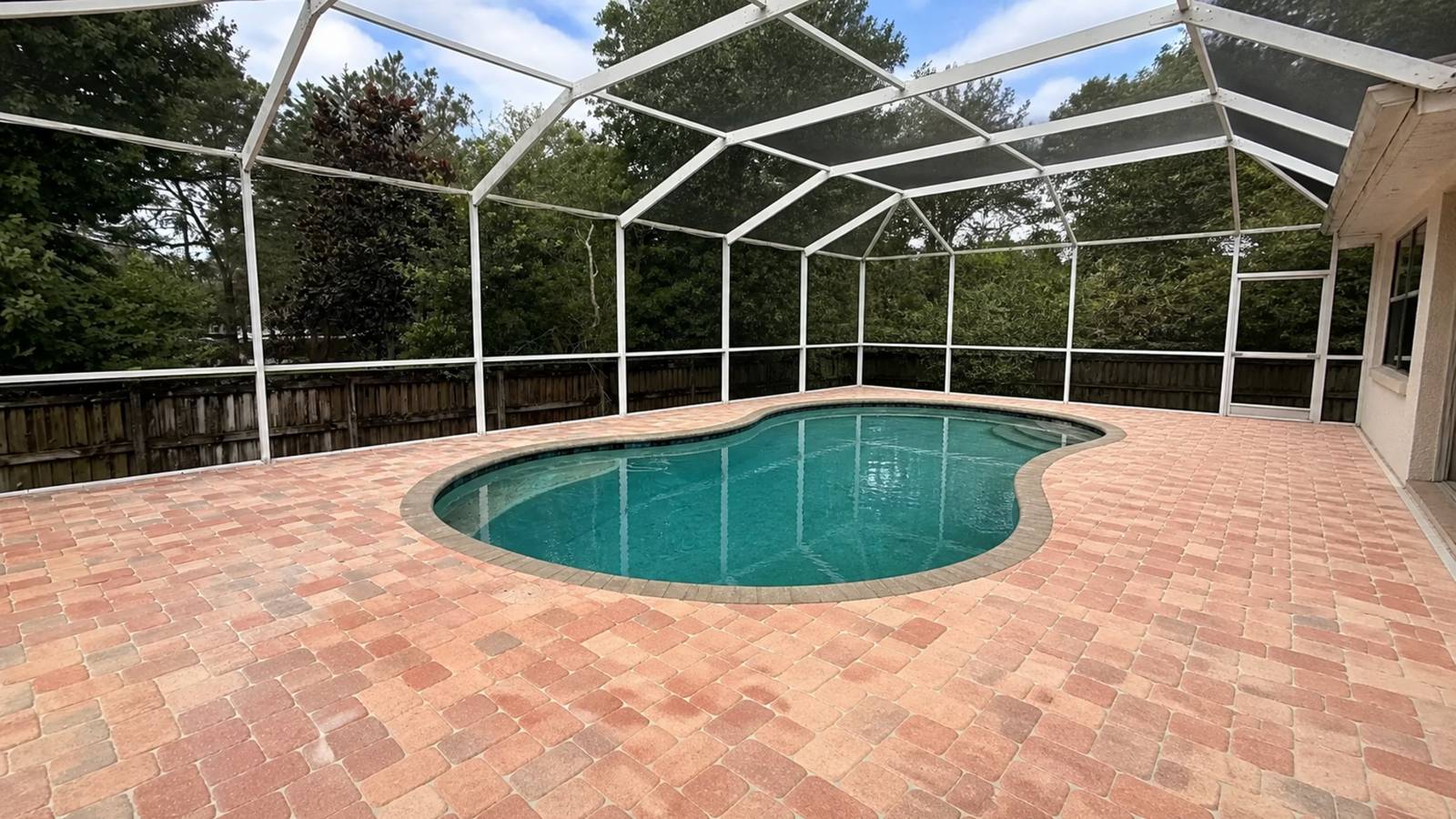
Concrete pavers are manufactured products, molded from a mix of cement, sand, aggregates, pigments, and water. Because they are made in controlled conditions, they come out in consistent sizes and thicknesses, which is helpful for pattern layouts and driveways. Manufacturers can adjust the mix design, compaction, and curing to reach specific strength targets recommended by groups such as CMHA.
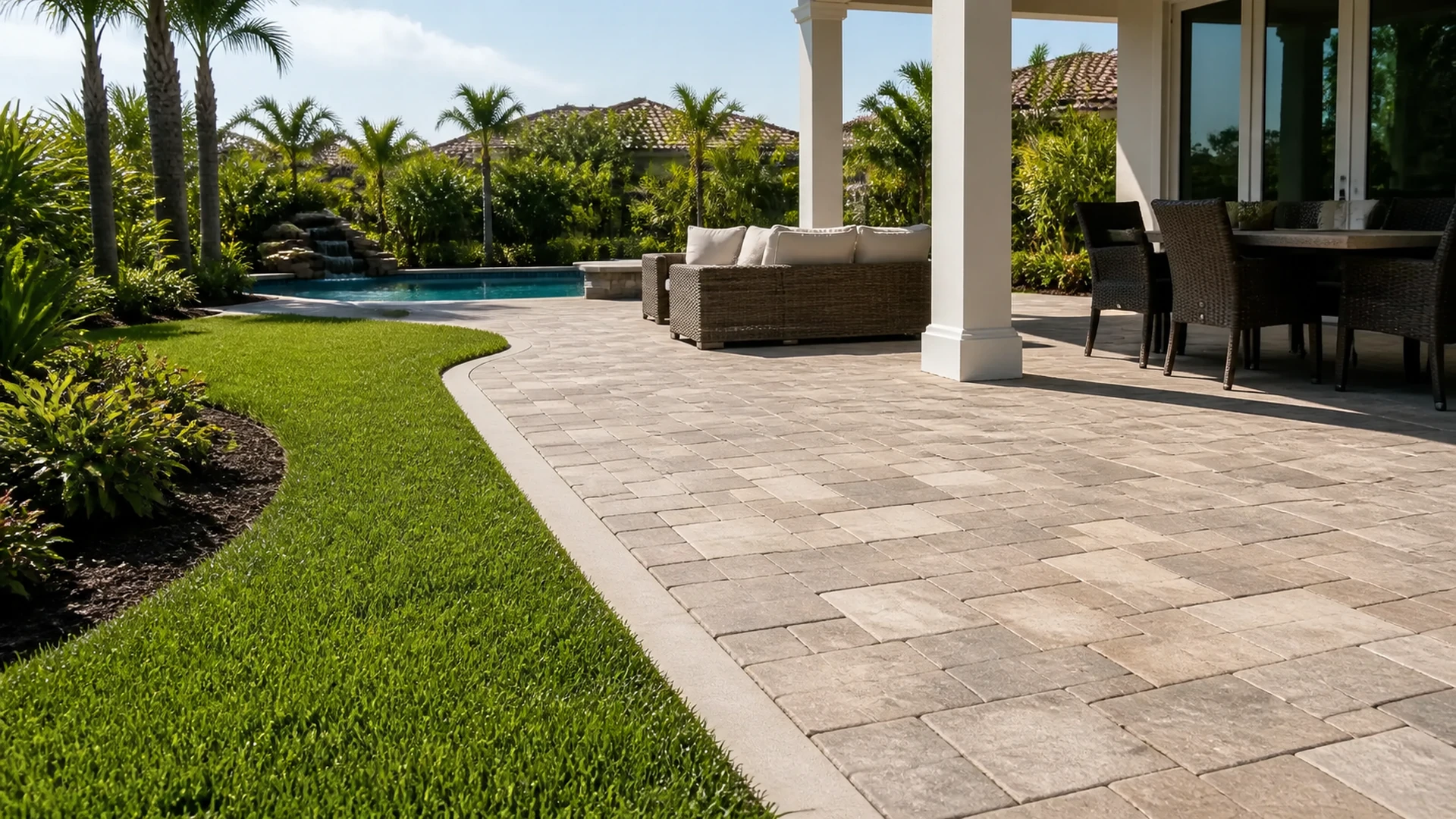
The result is a product with predictable performance when installed over a properly prepared base. Concrete pavers can be made to look like stone, brick, or modern slabs, so they adapt to many home styles around Town ‘N’ Country, Greater Carrollwood, and Seven Springs. However, pigments, finishes, and surface sealers still affect how they weather and how hot they feel in the sun.
What manufacturing means for your expectations
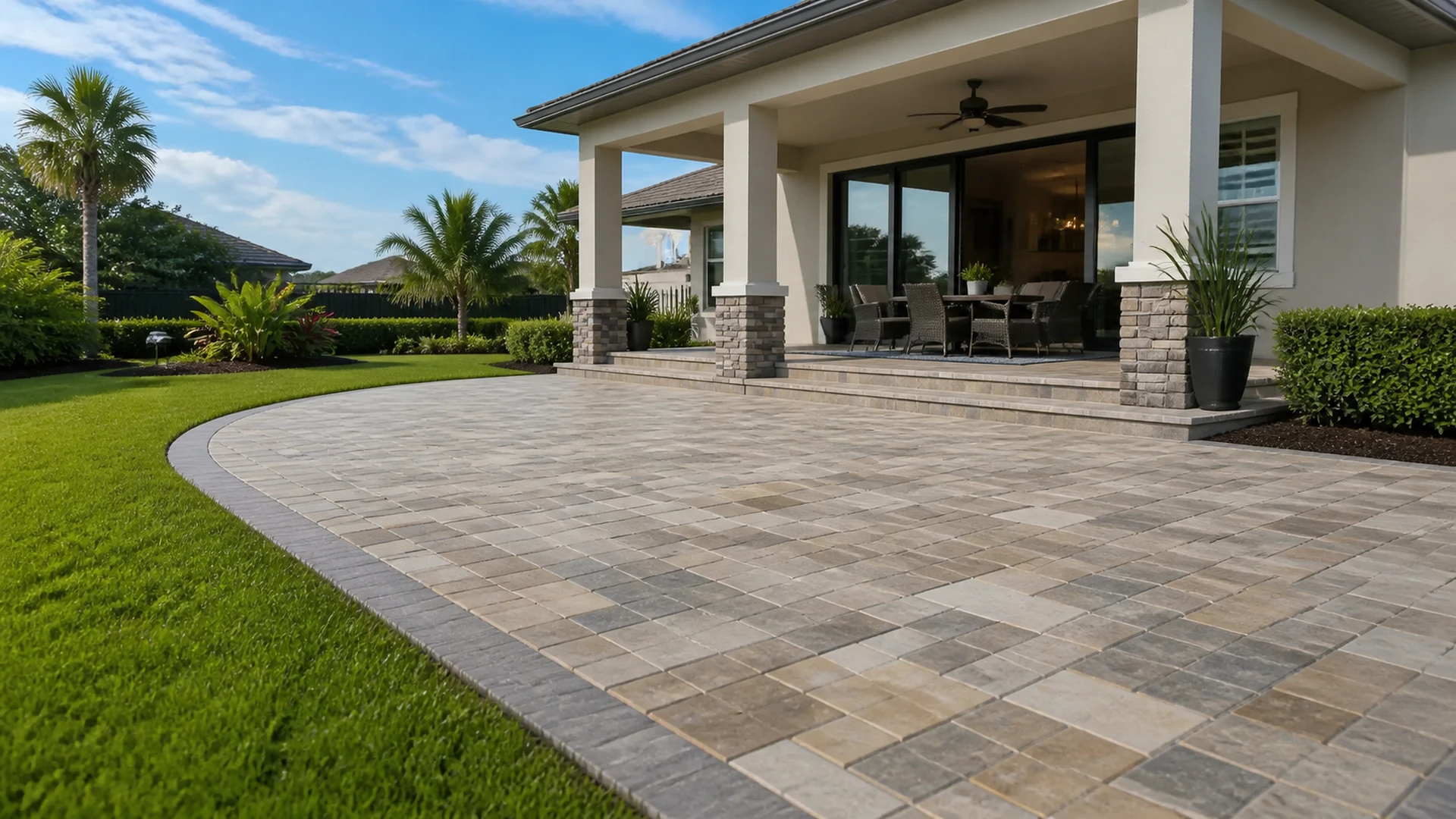
Because travertine is natural, each pallet looks a little different, even within the same color family. You should expect shifts in tone, movement in the veining, and occasional filled or unfilled holes. These characteristics are part of travertine’s appeal, but they also mean your deck will never look entirely uniform.
Concrete pavers, by contrast, can look very consistent from one piece to the next. This uniformity can make future repairs or expansions easier to blend, as long as the manufacturer still offers that line. When planning a project in places like Ruskin or Thonotosassa, think about how comfortable you are with variation versus uniform color and pattern.
Heat, Texture, and Natural Variation Under Florida Sun
Heat comfort on bare feet and paws
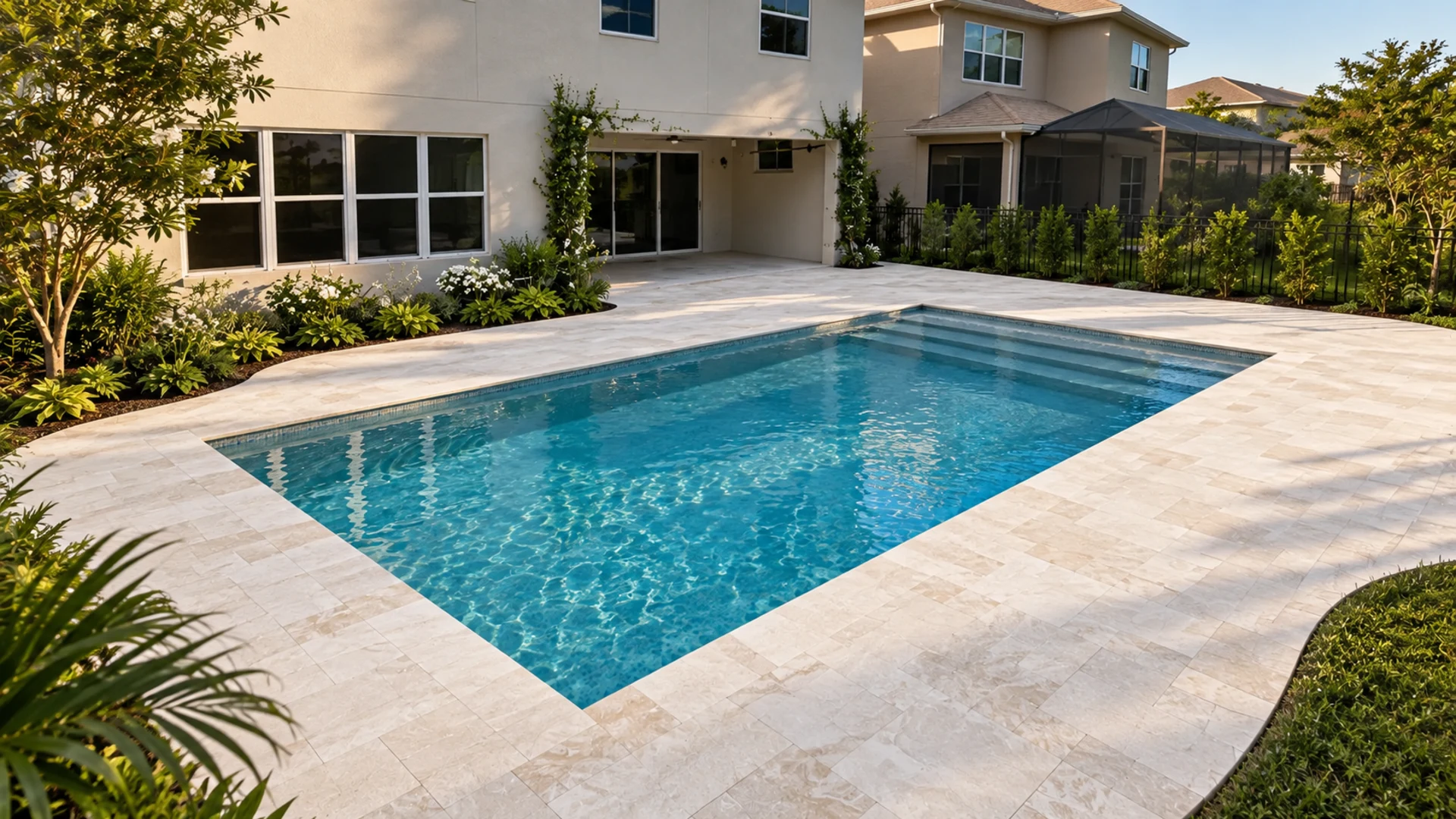
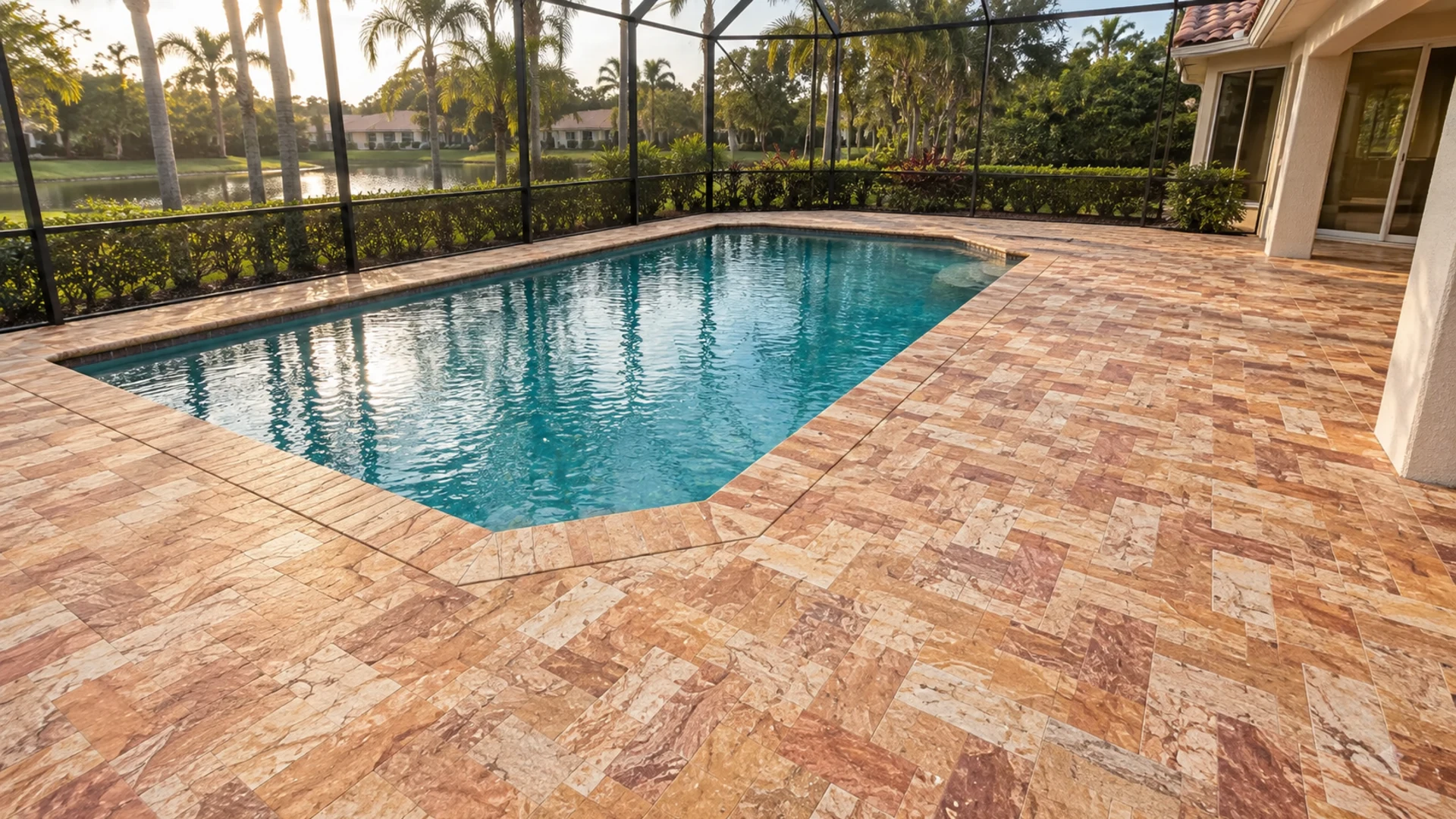
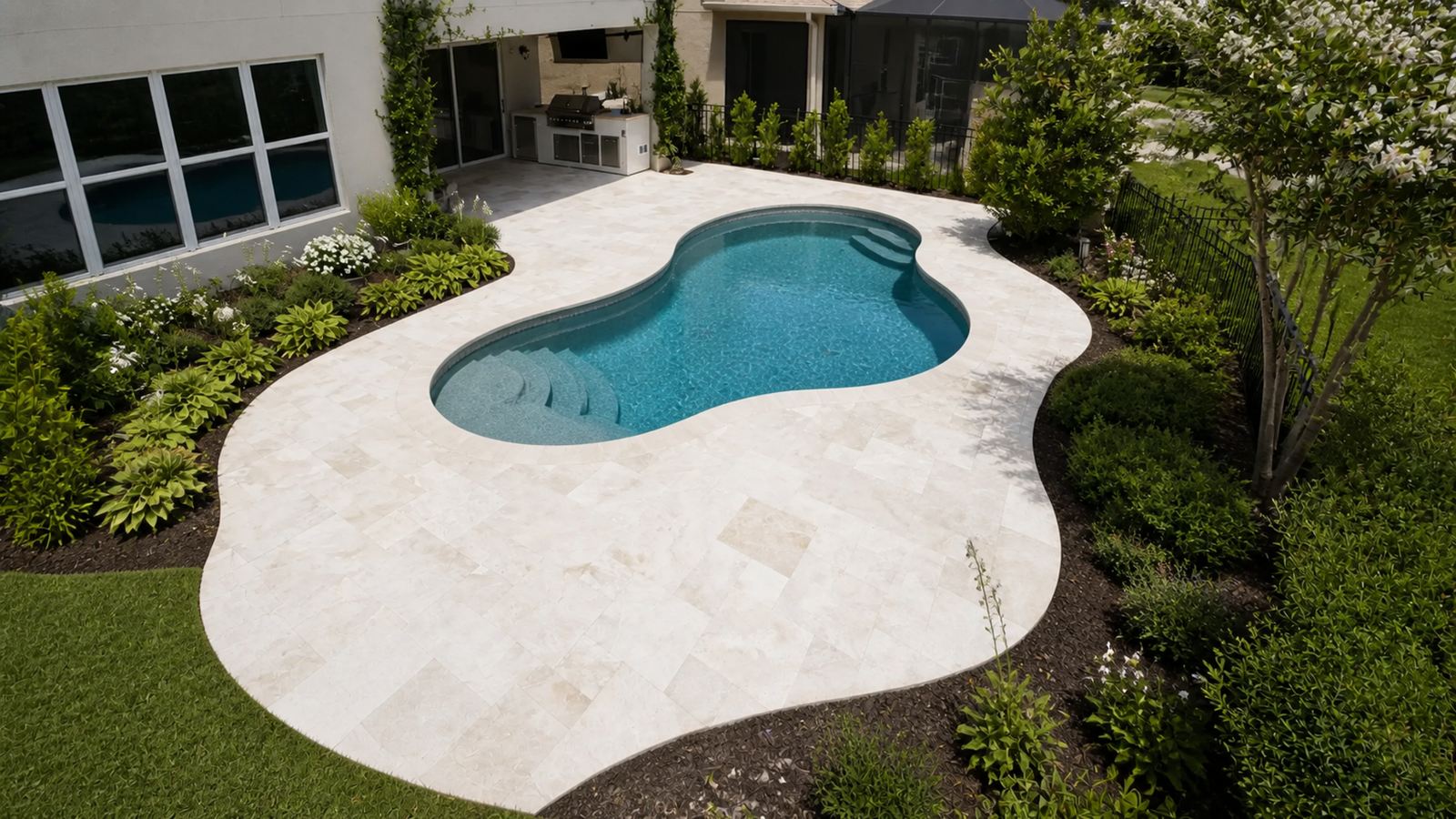
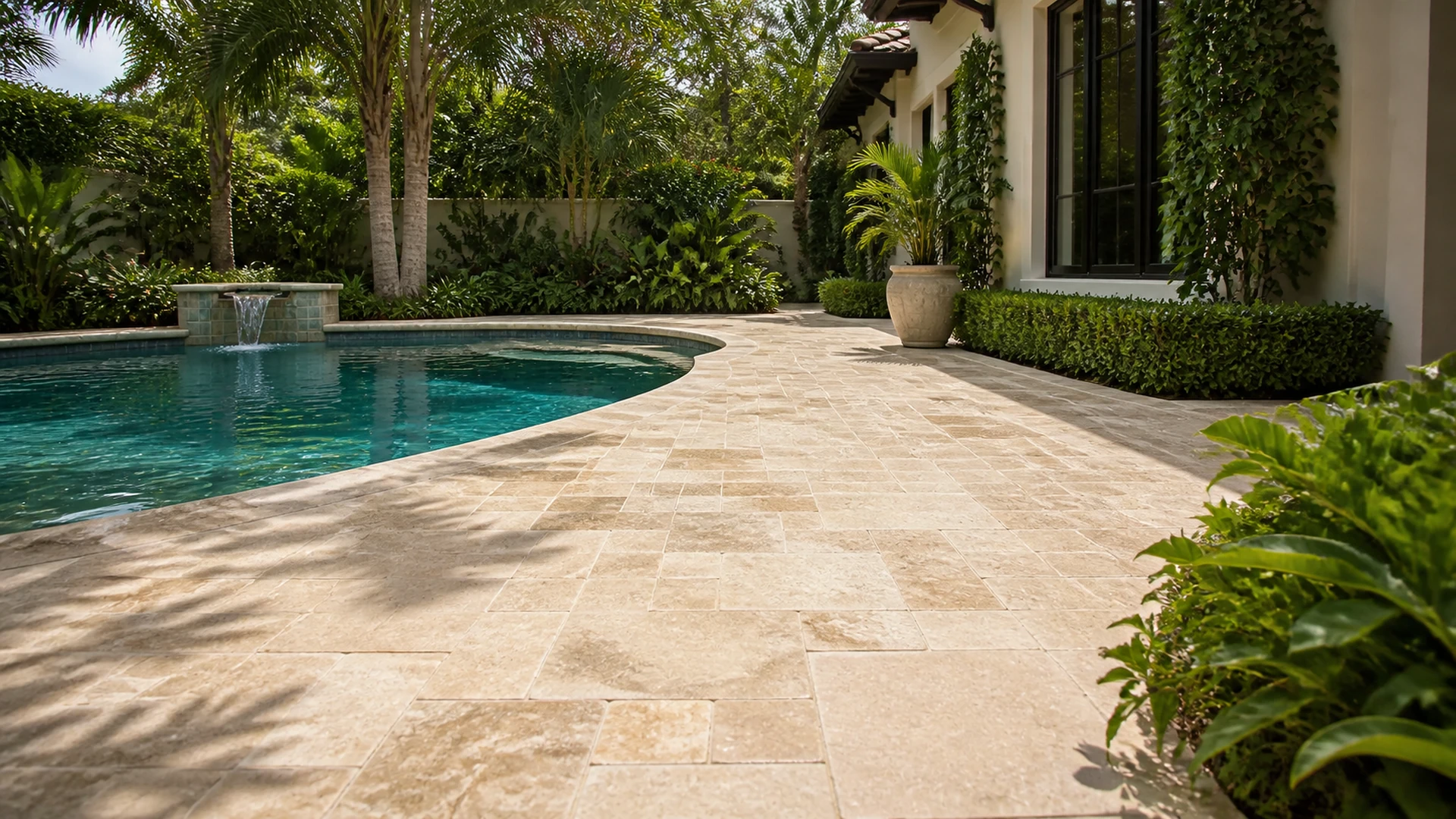
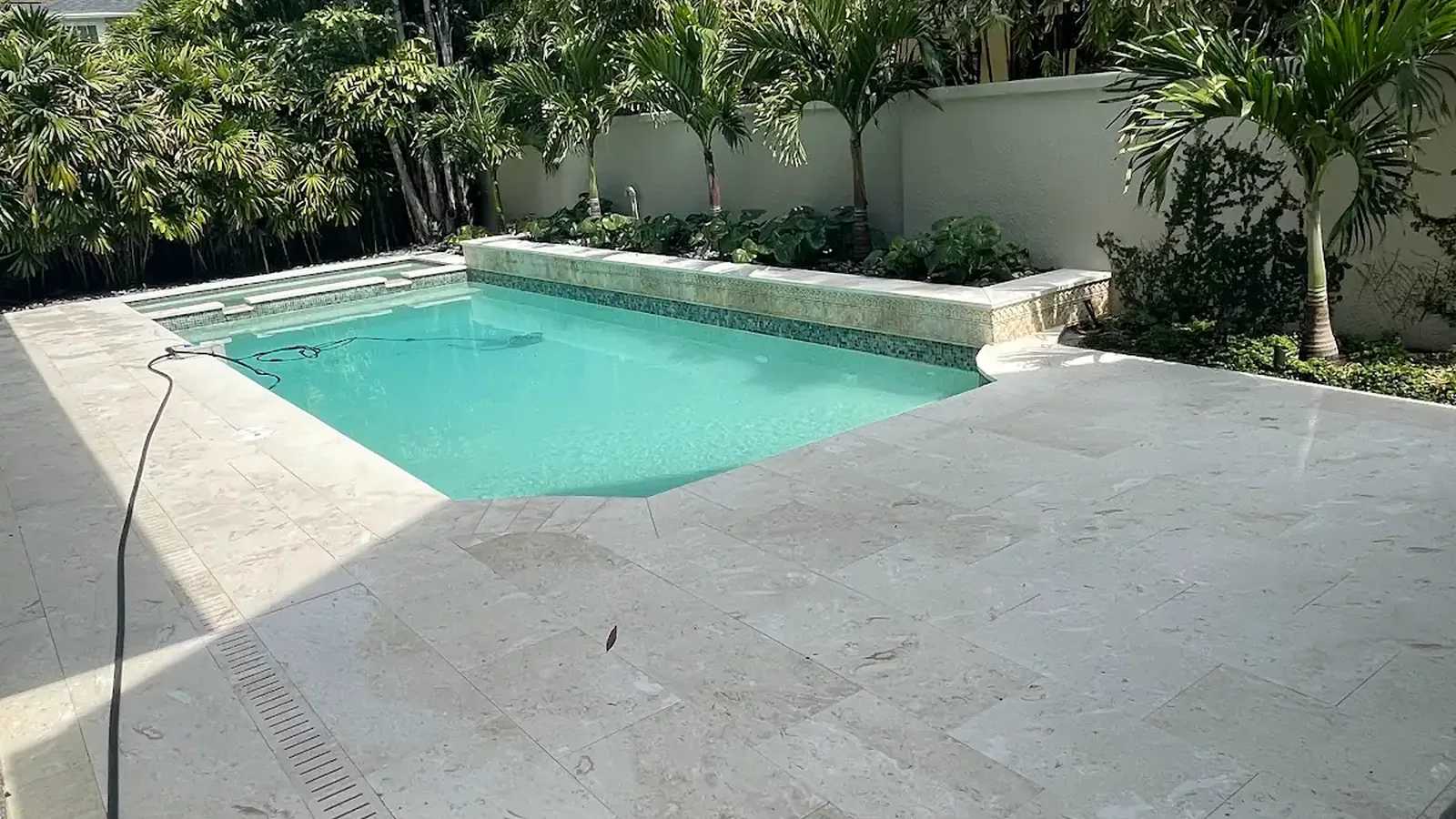
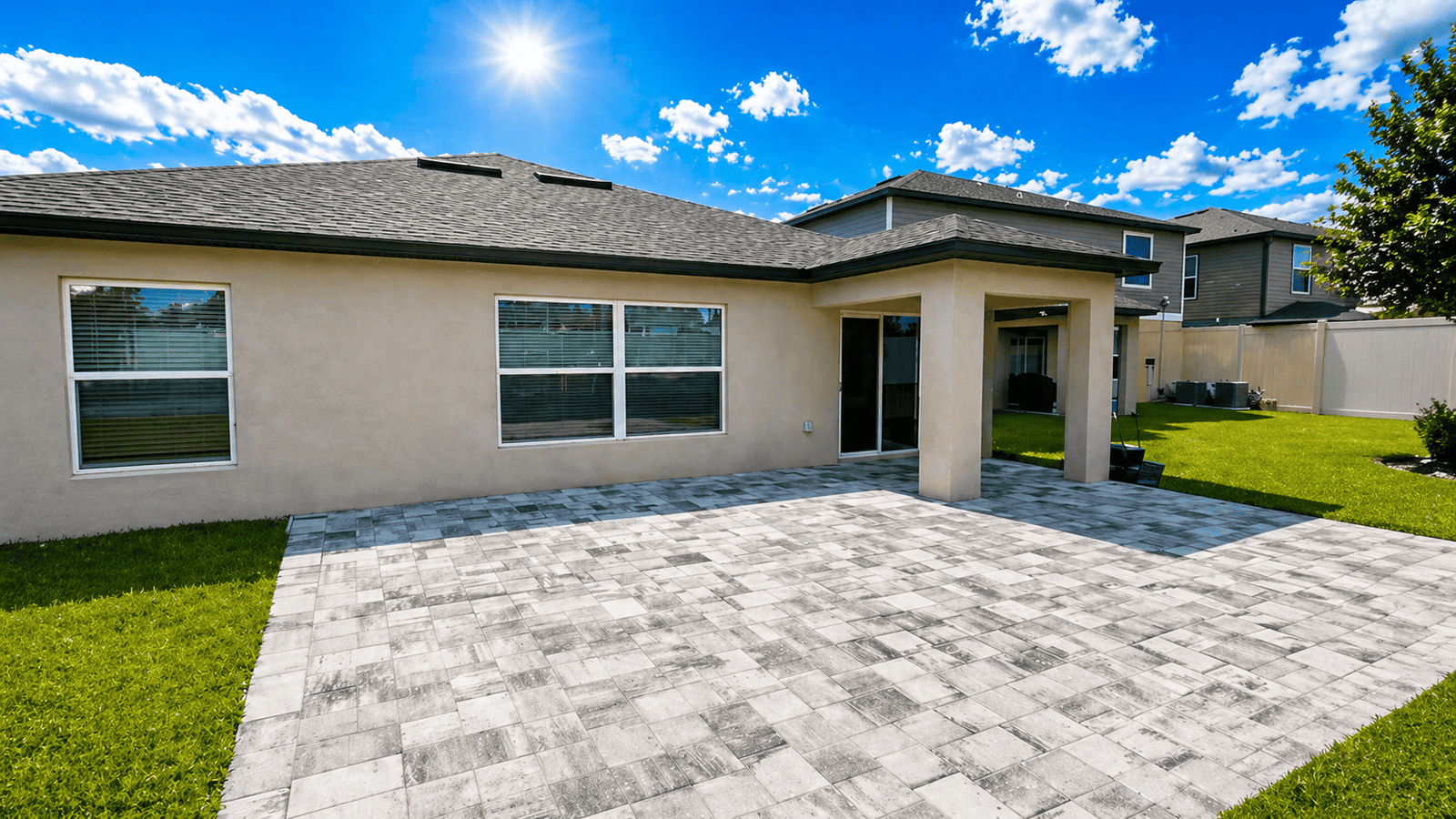
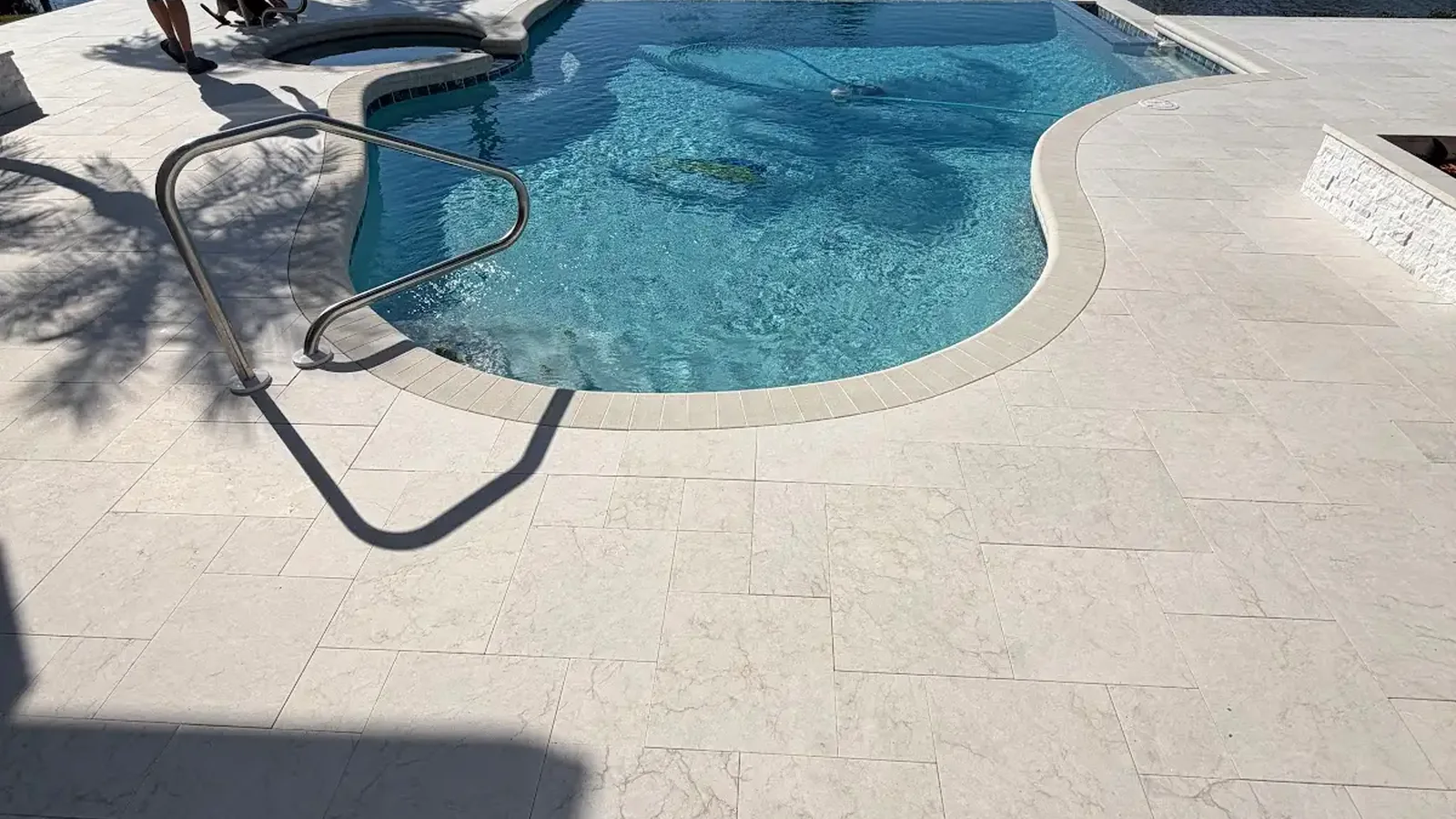
Under strong Florida sun, surface temperature becomes a daily concern, especially around pools and back patios. Travertine often feels more comfortable to walk on because lighter colors reflect more sunlight and the stone’s structure does not hold as much surface heat. Many Tampa Bay homeowners notice that they can walk to the pool without hopping from hot spot to hot spot when they choose light travertine.
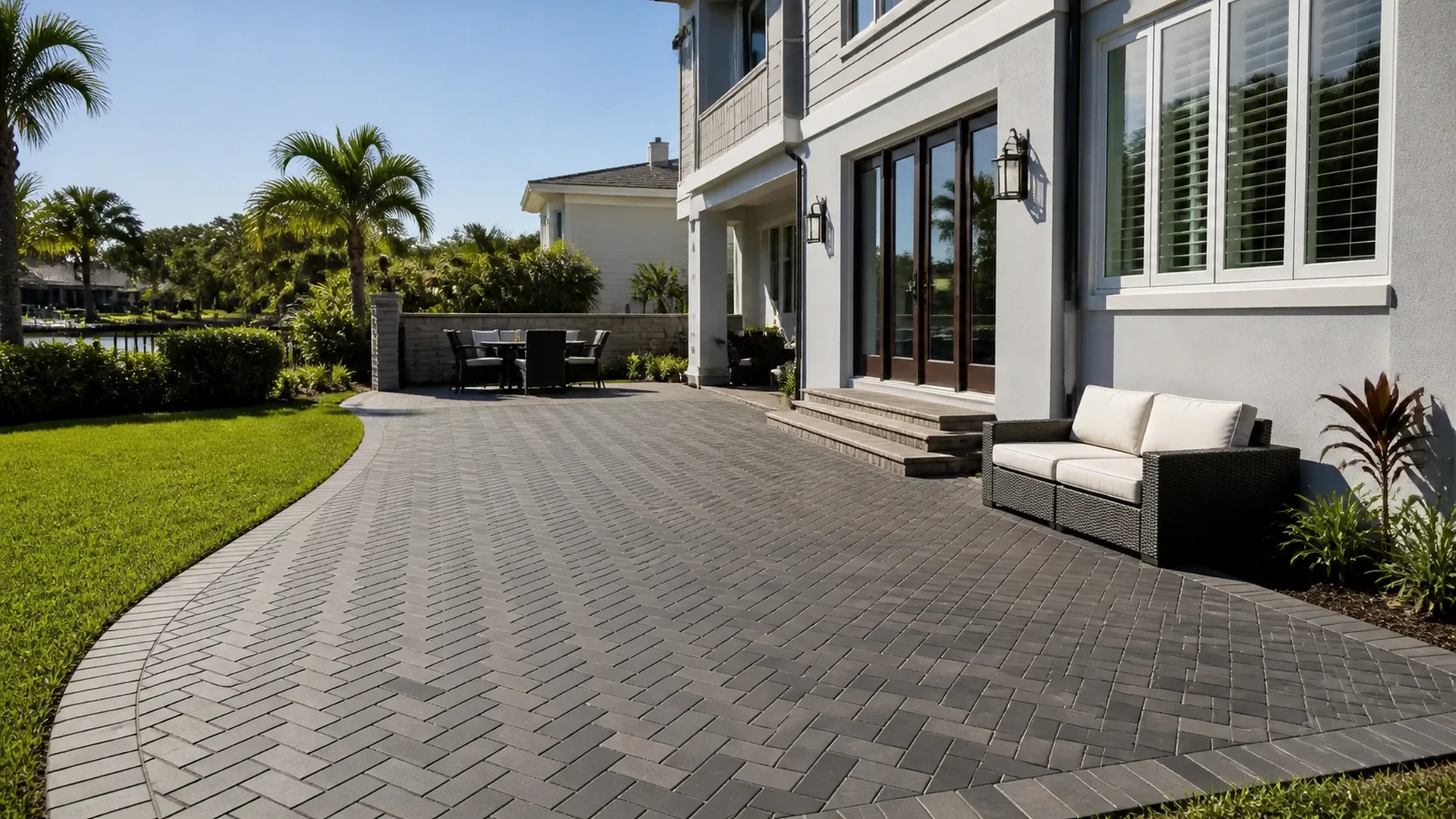
Concrete pavers can also perform well, but color and finish matter more. Dark gray, charcoal, or very dense, smooth finishes can feel hotter by midafternoon, particularly on west-facing decks in Riverview or Palm Harbor. If you prefer concrete, look at lighter colors and textured, non-glossy finishes to help moderate temperature and improve grip.
Texture and slip resistance in wet areas
Travertine pavers for exterior use are typically tumbled or lightly honed to create a textured surface. When installed correctly, this can offer good traction in wet conditions, which is a key reason they are popular around saltwater and chlorine pools. However, finish choice, slope, and cleaning routines all influence actual slip resistance, so each site should be evaluated on its own.
Concrete pavers can range from subtly brushed to strongly embossed. Strong textures can add grip but may feel rougher on bare feet or catch chair legs. Around spas and shallow tanning shelves, many homeowners prefer a balance: enough texture for confidence when wet, but not so aggressive that it feels uncomfortable or hard to clean.
Natural variation vs uniform color and pattern
If you love organic, one-of-a-kind spaces, travertine usually delivers that feeling more easily. Each stone shows slight changes in color, veining, and filling, which can help hide dirt and everyday wear. This variation works well with tropical landscape plantings and water features popular around Land O’ Lakes and Wesley Chapel homes.
Concrete pavers often appeal to homeowners who want a clean, modern, or geometric look. Uniform, plank-style or large-format concrete pavers can frame a contemporary pool or outdoor kitchen nicely. Yet, uniform surfaces can also show stains or patch repairs more clearly, so you will want to factor cleaning habits and potential future work into your decision.
Pools, Salt, and Sealing: Protecting Your Outdoor Investment
Travertine around chlorine and saltwater pools
Travertine can be an excellent choice around pools in Tampa Bay, but it needs appropriate selection and care. The Natural Stone Institute highlights that exterior stone must be chosen and installed to match the specific environment, including water exposure and de-icing or pool chemicals. In Florida, that usually means considering salt systems, chlorine, and constant moisture on splash zones and coping pieces.
Travel paths where water regularly sits or runs off, like behind waterfalls or at the bottom of stairs, deserve extra attention. A qualified installer can help evaluate stone density, surface finish, and layout to reduce the risk of premature surface wear. Regular inspections for chips, spalling, or loose pieces help you address issues early rather than waiting for bigger repairs.
Concrete pavers with pool chemistry and salt exposure
Many concrete paver lines are designed to perform around pool decks when installed and maintained correctly. Mix designs can be tailored to resist exposure to chlorinated water and salt spray, but performance still depends on the base, joint sand, and slope that move water away from the surface. Rinsing areas that collect splash-out and managing deck runoff help support long-term durability.
Because concrete pavers are manufactured, they often come with technical data on absorption and strength. Reviewing those details with a contractor can help you match the paver line to your specific pool configuration, whether it is a saltwater system in Ruskin or a traditional chlorine pool in Town ‘N’ Country. It also helps you set realistic expectations about color changes and surface wear over time.
Sealing, stains, and ongoing care
Both travertine and concrete pavers can benefit from appropriate sealing, but sealing is not one-size-fits-all. Some sealers enhance color and give a richer appearance, while others aim to stay nearly invisible and focus on stain resistance. In Florida humidity, vapor permeability matters, so you do not want to trap moisture beneath the surface.
Common stains include rust from metal furniture, leaf tannins, sunscreen, and food or drink spills. Prompt cleanup and gentle cleaners usually go a long way. Before sealing any deck around your Tampa Bay home, consult the paver or stone manufacturer and a hardscape pro to choose products and maintenance routines that respect both the material and our climate.
Thickness, Load, and Installation Around Patios and Driveways
Typical thickness and where each material works best
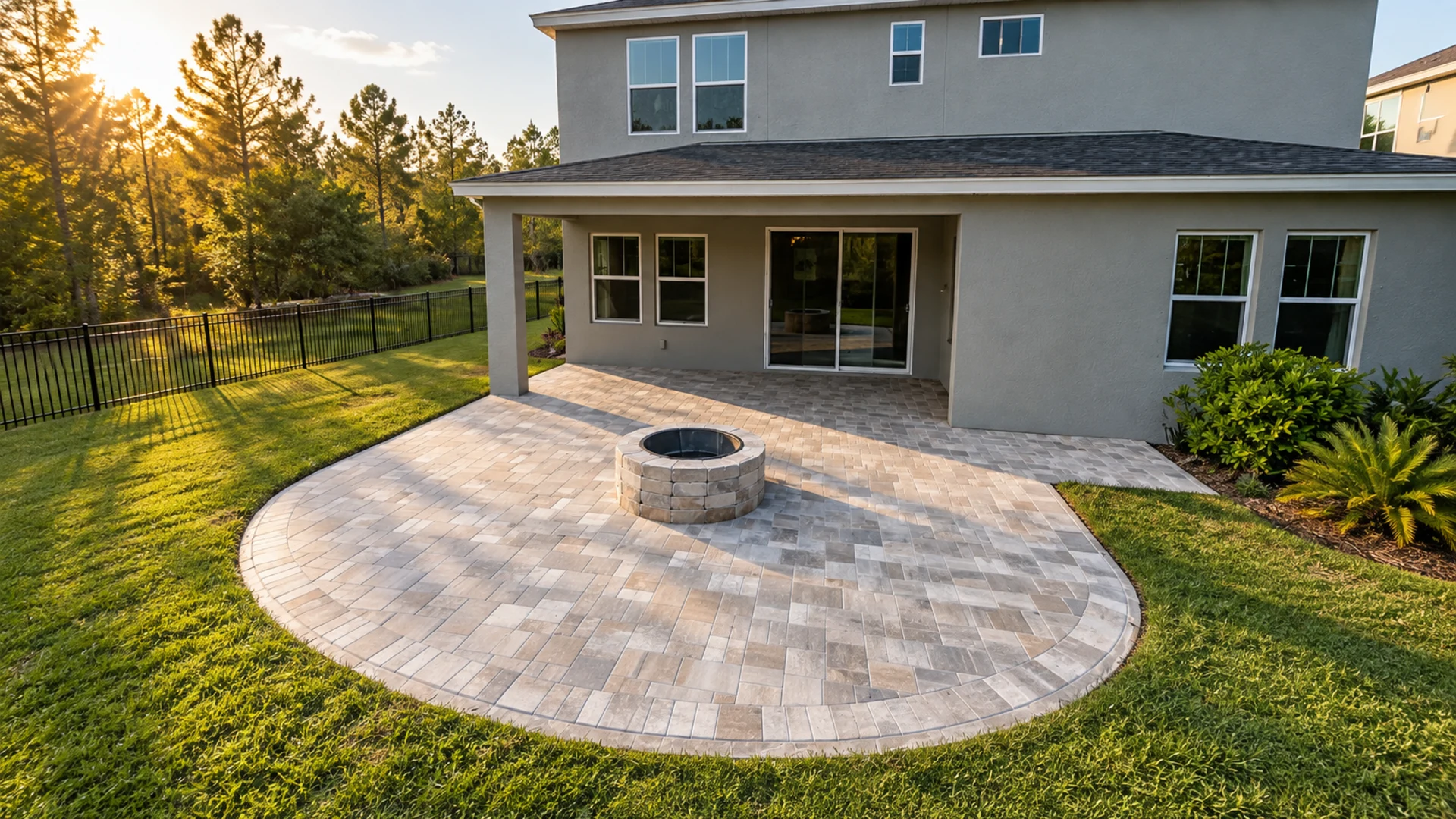
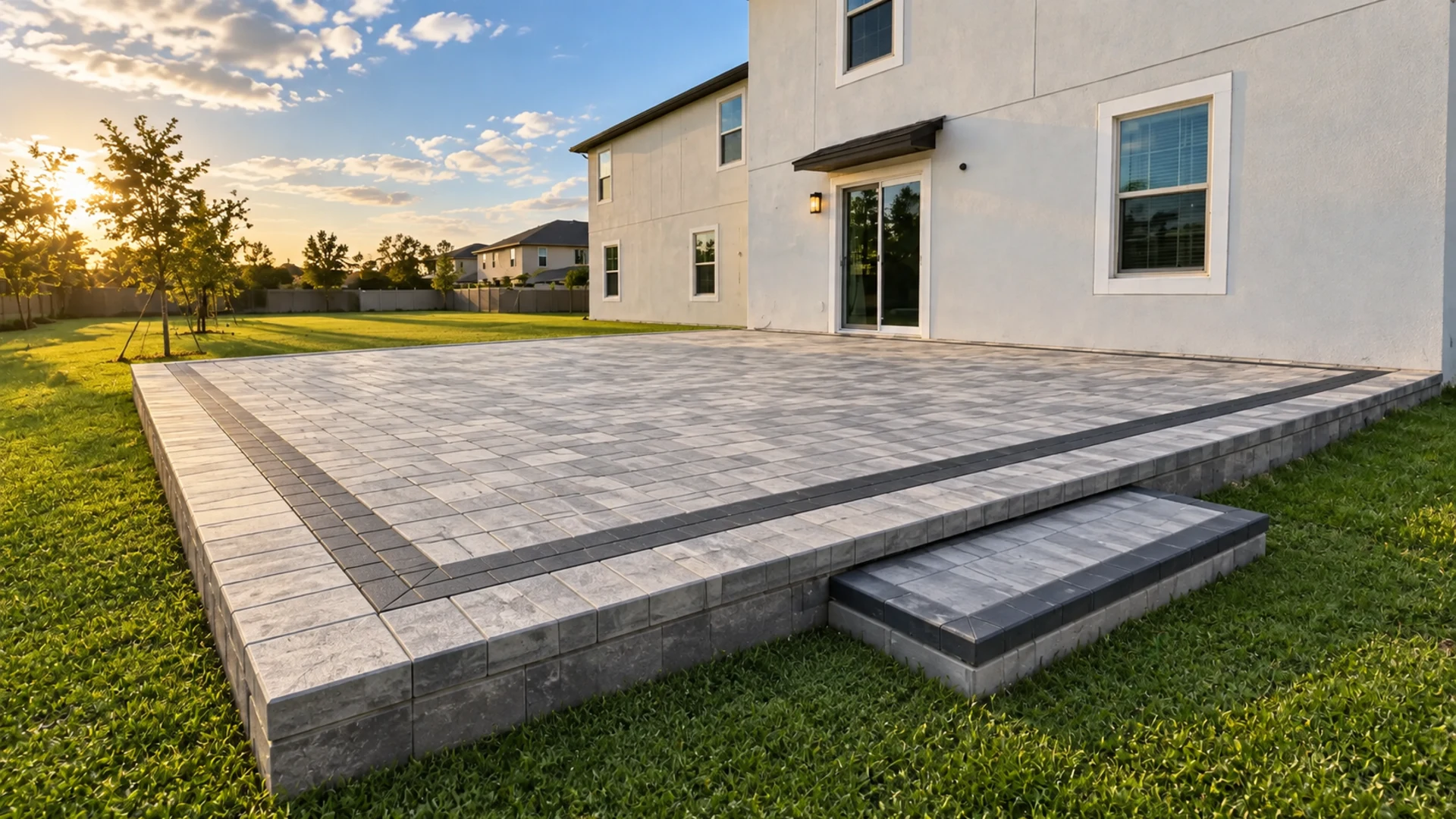
Travertine pavers commonly used in Florida outdoor spaces are thicker than interior tiles, but they still require a base and layout suited to their thickness. They are popular for patios, lanai extensions, and pool decks in places like Greater Carrollwood and Palm Harbor. Driveway use is more site-specific and depends on stone thickness, base preparation, vehicle loads, and local soil conditions.
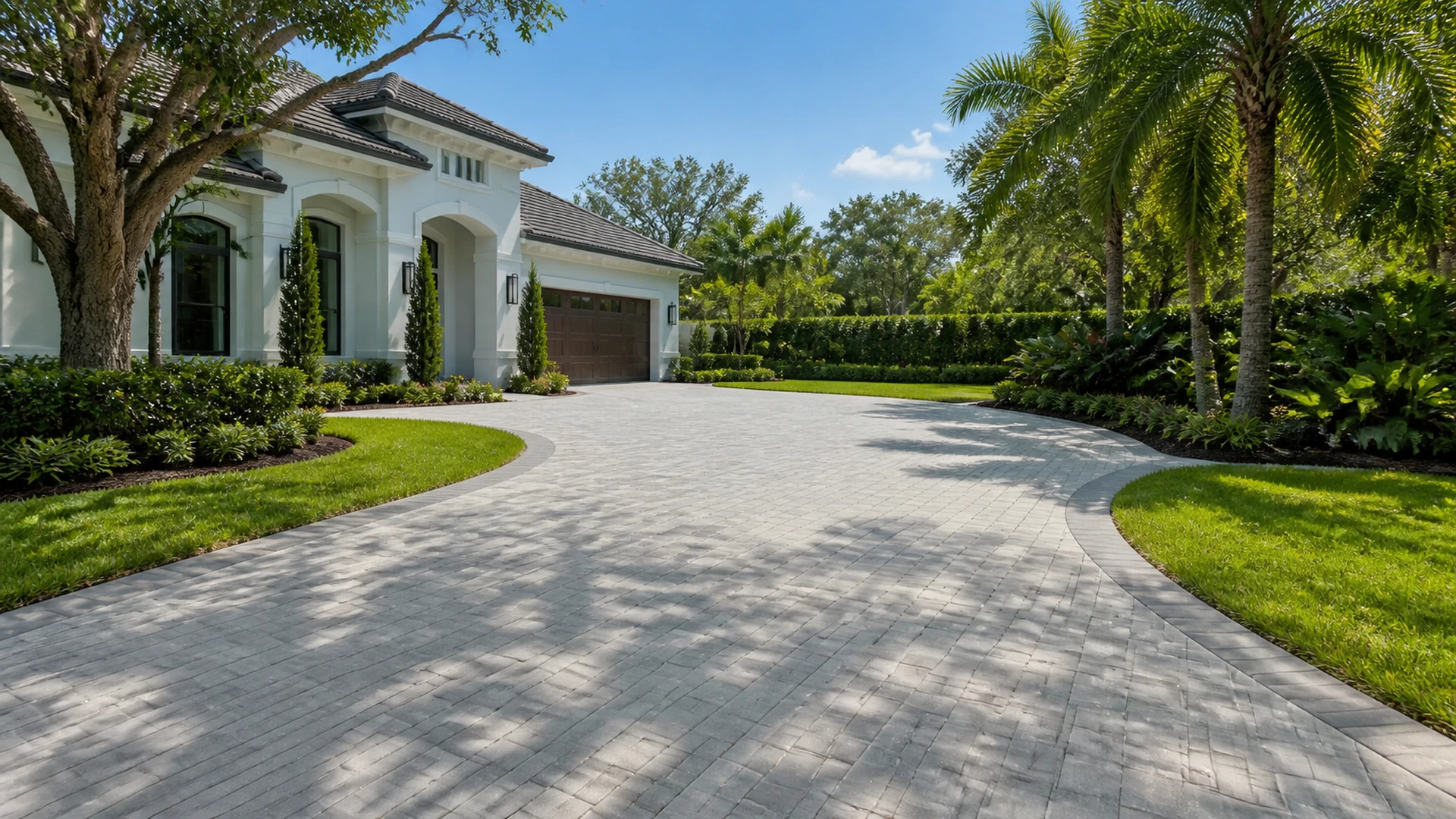
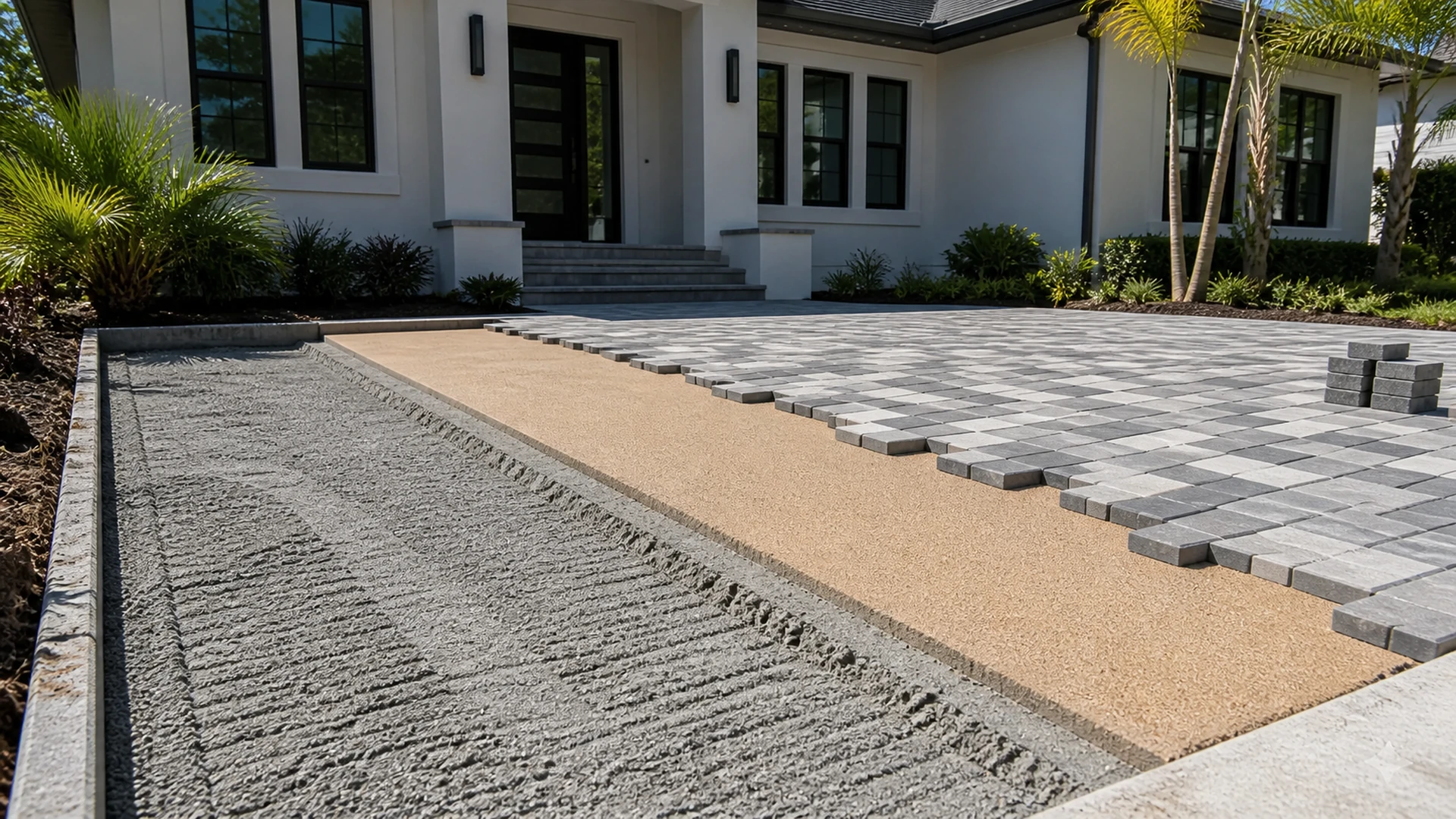
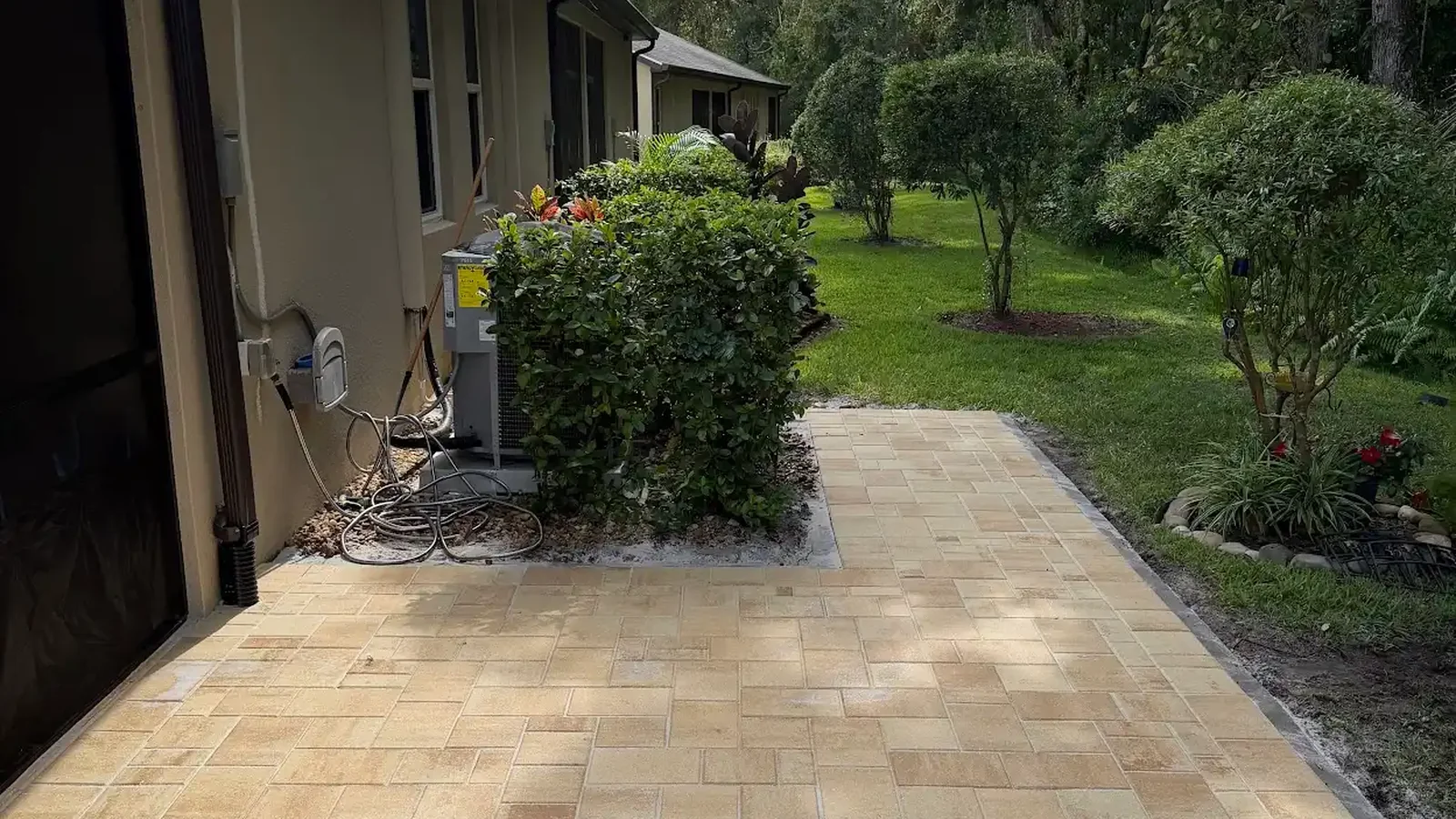
Concrete pavers for driveways are produced with thicknesses and shapes intended to support vehicle traffic when properly installed. They sit on a compacted base and sand setting bed that spreads loads. For walkways and patios, thinner or lighter styles may be appropriate, but you still want a base designed for Florida’s sandy soils and seasonal rains.
Why base preparation matters in Tampa Bay
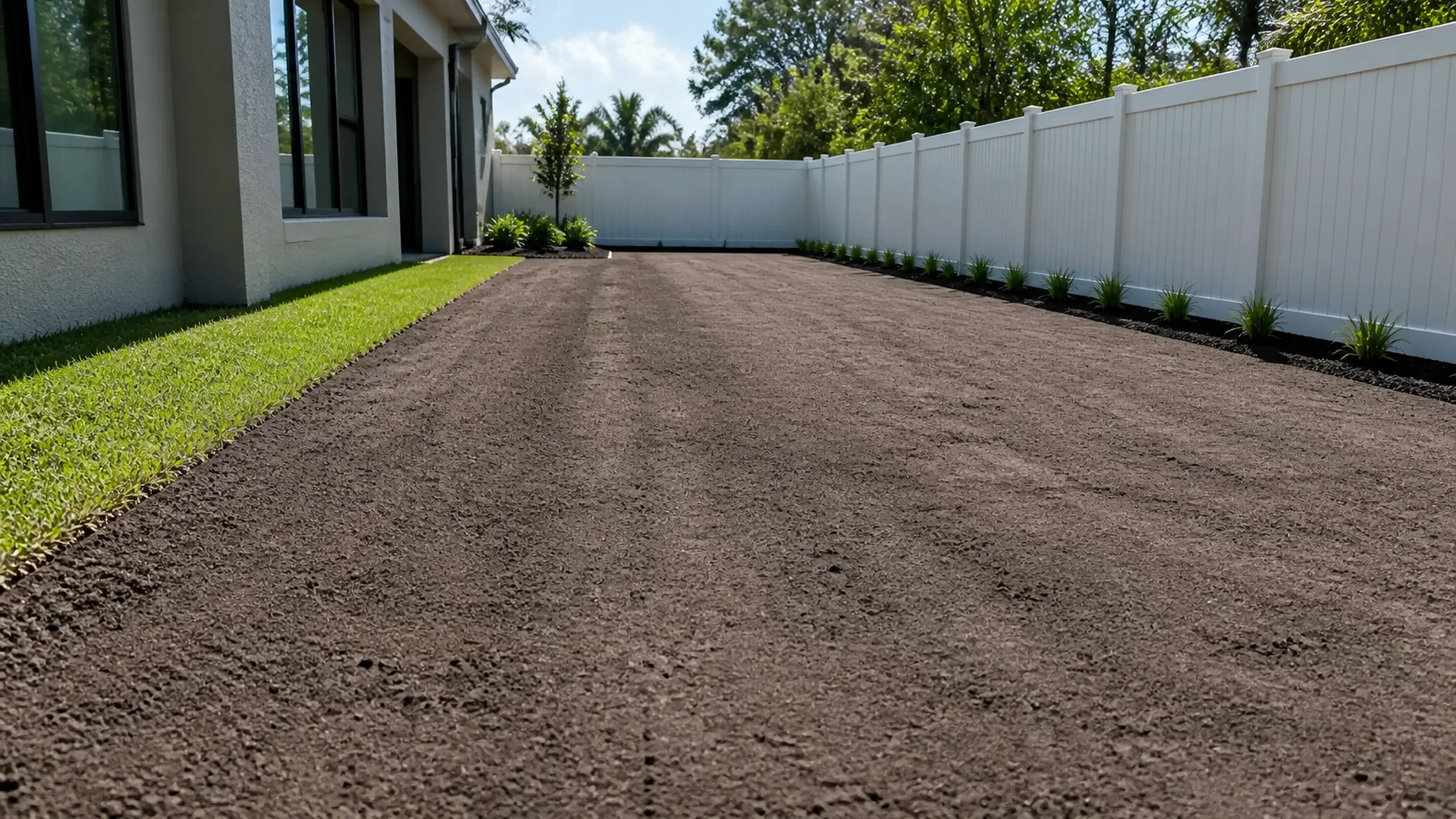
Our region’s mix of sand, clay pockets, and high water tables means base prep can make or break any paver project. Both travertine and concrete pavers need a stable, well-compacted foundation that allows water to move away from the surface. Proper slope helps reduce puddling on pool decks and patios while encouraging water to run toward landscaped areas or designated drains designed by qualified professionals.
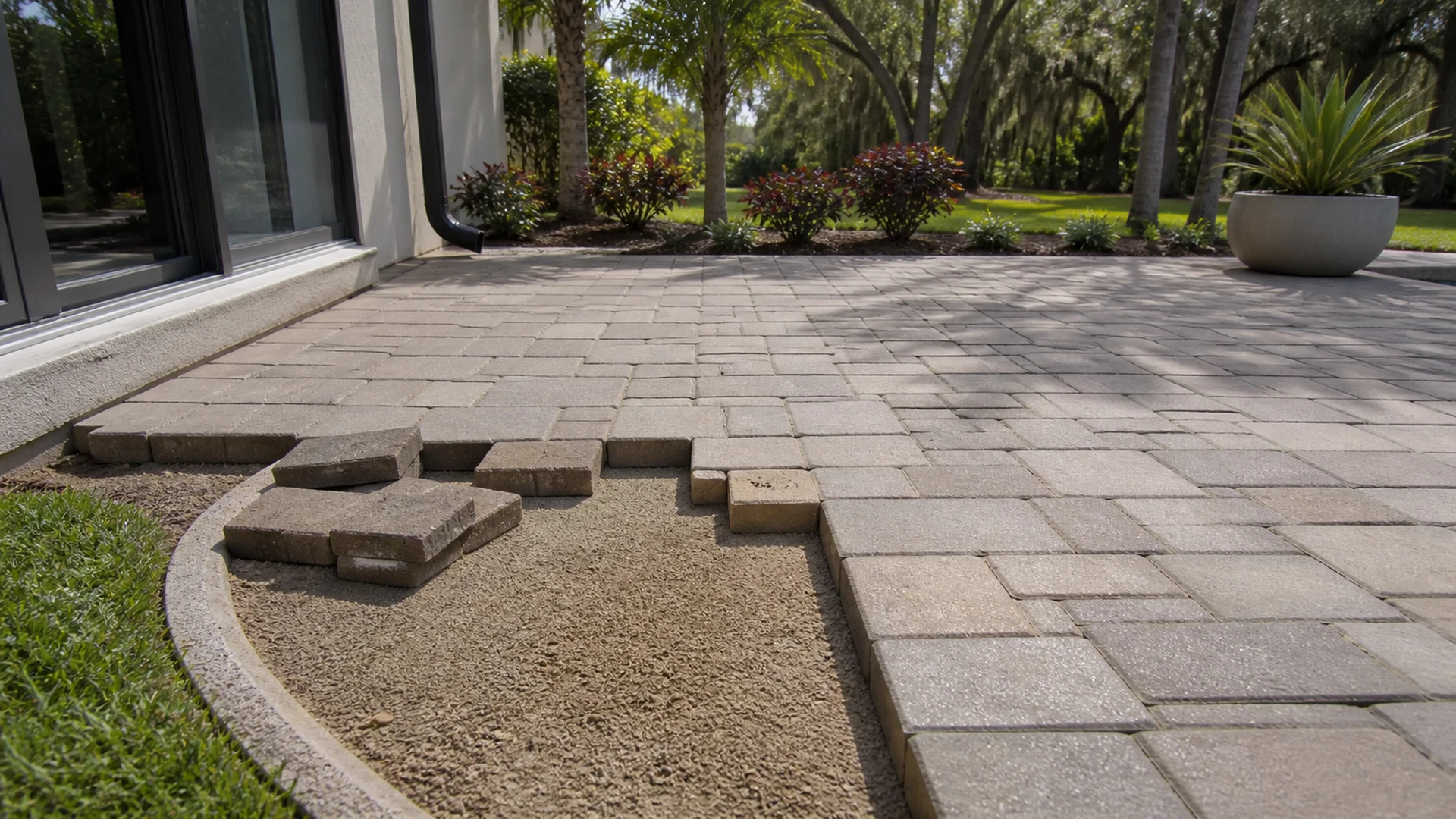
Skipping compaction steps, using the wrong base thickness, or rushing installations just before a rainy stretch can lead to settling or shifting. Once pavers move, joints can open, edges can chip, and doors or screens may stick. A professional installer familiar with Tampa Bay neighborhoods can read your soil and suggest the right base build-up for your home.
Replacement, repairs, and matching later
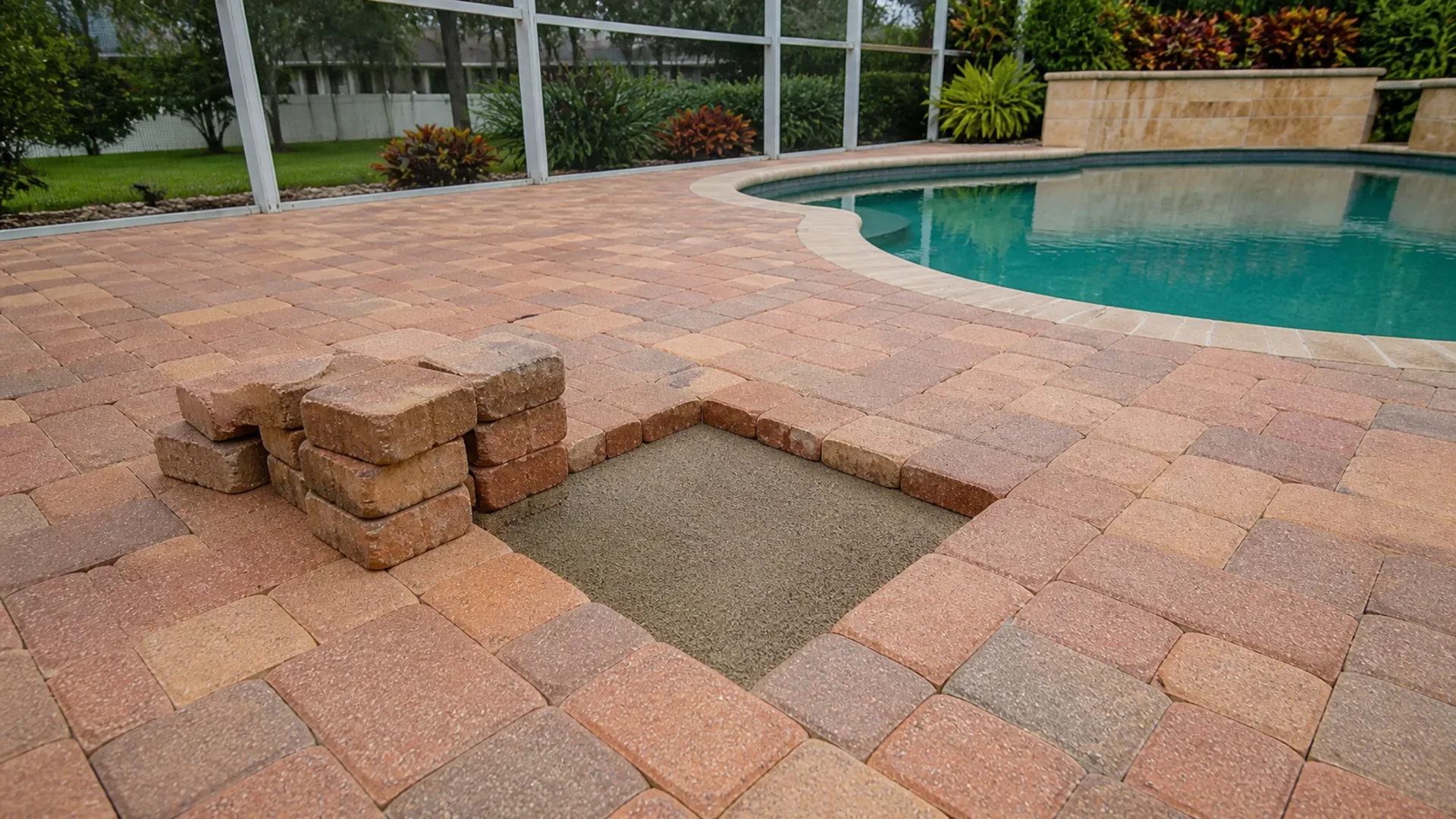
One advantage of both travertine and concrete pavers is that they are segmental systems. In many cases, individual pieces can be lifted and replaced if something below needs attention. However, matching appearance years later can be challenging with natural stone, because new batches may not have the same veining or tone as your original deck.
Concrete pavers can be easier to match, especially if you or your contractor keep records of the manufacturer, line, and color. Even then, sun exposure and weathering can change the color of installed pavers versus fresh ones. When planning a new project, consider buying some extra material to store for small future repairs, especially for prominent front entries or custom patterns.
Budget, Maintenance, and Long-Term Value
How travertine vs concrete pavers affect your budget
Material cost is only one part of your overall budget, but it is an important starting point. Travertine generally costs more per square foot than basic concrete pavers, though premium concrete lines can narrow that gap. Installation complexity, site access, demolition of old surfaces, and design details like inlays or borders also influence the final price.
A curved, multilevel pool deck in Land O’ Lakes with custom coping and lighting will naturally cost more than a simple rectangular patio in Thonotosassa, regardless of the material. Because there are many moving parts, the only reliable way to get pricing is to request an on-site consultation and detailed proposal. Any quote should spell out base preparation, edge restraints, and expected square footage so you can compare options fairly.
Maintenance expectations over the years
Neither travertine nor concrete pavers are “no-maintenance” materials, but both can stay attractive with simple routines. Regular sweeping or blowing, occasional rinsing, and prompt stain cleanup go a long way. Joints may need periodic attention to keep sand in place and discourage weeds or ant trails, especially in humid areas around Tampa Bay.
Travertine may show minor changes in its surface character over time, which many homeowners see as part of its charm. Concrete pavers can show fading or wear in high-traffic spots. Periodic professional cleaning and, where appropriate, resealing can help manage these changes and extend the life of your investment.
Key questions to ask before you choose
Instead of focusing only on initial cost, it helps to ask a few bigger-picture questions. These guide you toward a solution that fits how you actually live and use your outdoor space. The answers are different for busy family homes in Ruskin than for lower-use vacation properties in Palm Harbor.
- How much direct afternoon sun hits your deck or driveway?
- Will you walk barefoot on the surface most days, or mostly drive on it?
- Is your pool saltwater, chlorine, or another system?
- Do you prefer organic variation or crisp, uniform lines?
- How often are you comfortable scheduling basic cleaning and inspections?
- Are you open to mixing travertine and concrete in different zones?
Discussing these points with a hardscape professional helps them tailor recommendations. It also makes it easier to compare design options, whether you lean toward a full travertine pool deck, a concrete paver driveway, or a thoughtful mix of both around your Tampa Bay home.
Common Mistakes, Inspections, and When to Call a Pro
Frequent planning mistakes homeowners can avoid
Many problems with travertine and concrete pavers start on paper, not on site. One common mistake is choosing color only from a small sample without seeing a broader range, especially for natural travertine. Another is underestimating how hot a dark paver can feel on a west-facing deck in summer.
Homeowners also sometimes overlook how door thresholds, lanais, and existing concrete slabs limit thickness and layout choices. Assuming that any paver can go anywhere, including under heavy vehicles, is another risk. Taking time to review layout drawings, edge details, and transitions can prevent headaches after installation.
Simple inspections you can do yourself
Once your deck, patio, or driveway is complete, short, regular checkups help catch issues early. Walk the surface after heavy rains and look for standing water, shifting, or areas where sand joints have washed out. Check around pool edges, steps, and high-traffic routes from the house to the pool or driveway.
Look for cracked, loose, or rocking pavers, and note any areas where stains keep returning. Light growth of mildew or algae on shaded areas is common in Florida and can usually be cleaned, but rapid or severe regrowth may point to poor sun exposure or other site factors. Keeping notes or photos makes it easier to show a contractor exactly what is happening over time.
When professional assessment makes sense
Some issues call for a professional hardscape assessment rather than DIY fixes. These include large areas of settlement, repeated joint washout, or pavers that shift under vehicle loads. Complex pool coping or raised beam work around spas and water features also deserves expert attention, especially when stone pieces start to move.
If you plan a major remodel, such as replacing an old concrete pool deck with travertine or redoing a driveway with concrete pavers, bringing in a contractor early helps coordinate with pool builders, electricians, or other trades. They can also advise when you should consult licensed engineers, builders, or pool professionals for structural, safety, or permit-related decisions that go beyond surface work.
Travertine vs Concrete Pavers FAQ for Tampa Bay Homeowners
How do I decide between travertine vs concrete pavers for my pool deck?
Start with sun exposure, how often you use the pool, and whether you prefer a natural or uniform look. Travertine often excels for barefoot comfort, natural variation, and a resort-like feel, especially in sunny pool areas across Tampa Bay. Concrete pavers can be a strong choice if you want specific modern patterns, need to coordinate with a matching driveway, or need to stay closer to a defined budget.
Ask your contractor to show you full pallets or larger mockups, not just individual samples, so you can see real-world variation and color. Also discuss sealing options, slip resistance, and how each material behaves with your particular pool type, whether chlorine or saltwater.
Are travertine pavers strong enough for driveways in Florida?
Travertine can sometimes be used in light-duty vehicle areas, but driveway suitability is not automatic. It depends on paver thickness, stone quality, base preparation, and the types of vehicles using the driveway. Repeated heavy loads, turning movements, and concentrated tire paths all add stress.
A qualified hardscape installer should evaluate your soil, layout, and traffic before recommending travertine for any driveway. In many cases, homeowners choose concrete pavers for the driveway and reserve travertine for entries, walkways, and pool decks to balance performance and aesthetics.
Do travertine and concrete pavers need different sealing schedules?
Sealing schedules are not one-size-fits-all and depend on the specific product, sealer type, and site conditions. Some travertine installations may benefit from breathable, penetrating sealers focused on stain resistance while allowing moisture to escape. Certain concrete pavers may pair better with sealers designed for color stabilization and surface protection.
Because Tampa Bay experiences intense sun, frequent rain, and high humidity, sealers may weather faster than in milder climates. Work with your installer and product manufacturers to choose compatible products and to set realistic expectations about how often you may want to clean and, if appropriate, reseal.
Can I mix travertine and concrete pavers in one project?
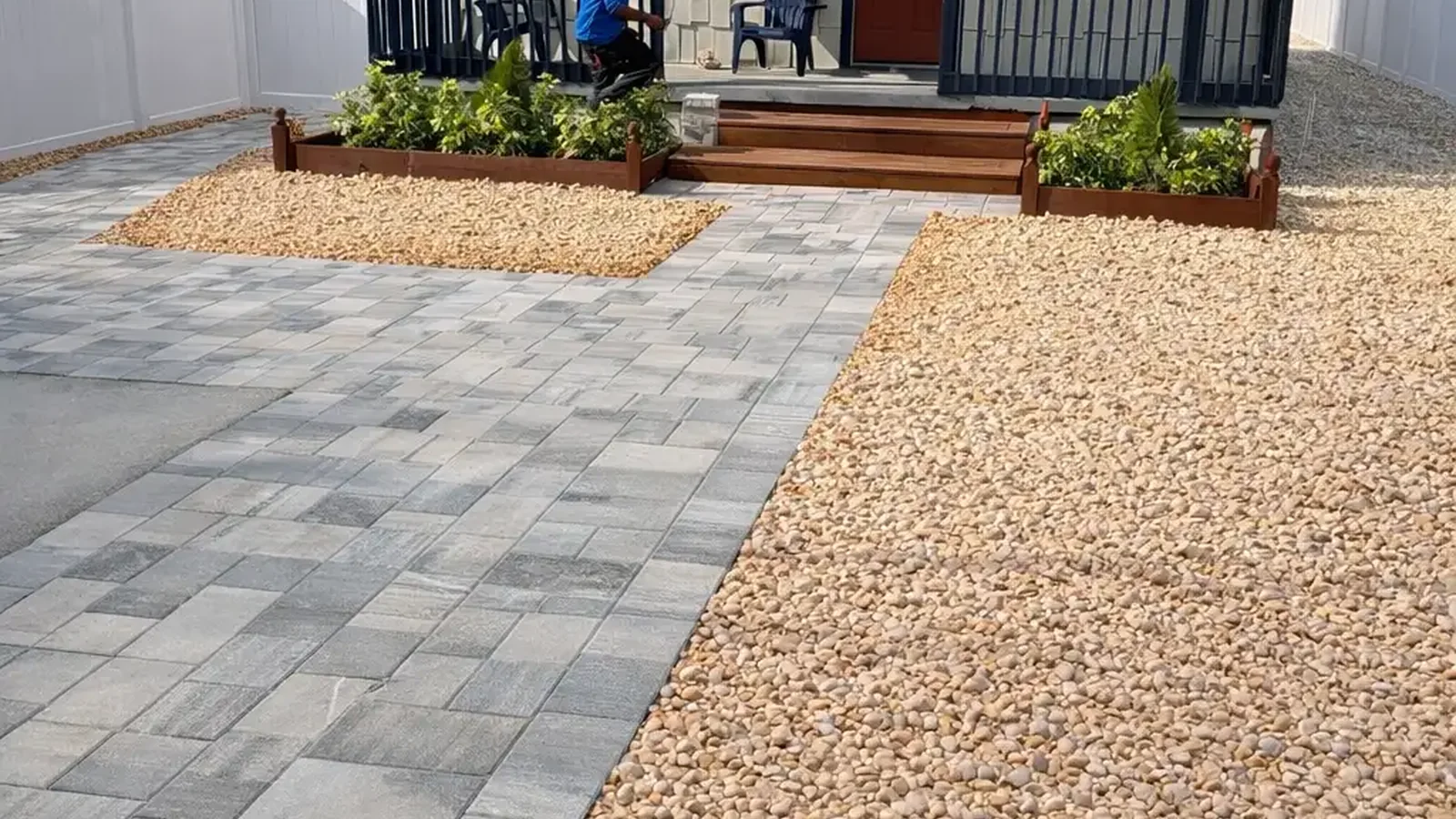
Many homeowners successfully mix travertine and concrete pavers in the same outdoor project. A common approach is to use travertine for high-visibility, barefoot areas like pool decks and covered patios, then switch to concrete pavers for driveways or side-yard walkways. This strategy can highlight premium spaces while keeping the overall project more affordable.
The key is planning transitions, thicknesses, and colors so the spaces feel connected rather than chopped up. An experienced designer or installer can recommend borders, banding, or step details that tie everything together visually and maintain comfortable walking surfaces from one material to the next.
How does Florida weather affect the lifespan of travertine and concrete pavers?
Florida’s combination of strong UV exposure, heavy rains, and humidity will affect both travertine and concrete pavers over time. You may see gradual color changes, minor surface wear, or shifting in areas where the base was not prepared correctly. Regular maintenance and occasional professional cleaning help manage these effects.
Long-term performance depends more on design, base construction, and ongoing care than on material alone. Choosing products appropriate for exterior use, following industry-recognized installation practices, and scheduling periodic inspections are the best ways to support a long service life in Tampa Bay, whether you select travertine, concrete pavers, or a thoughtful combination of both.
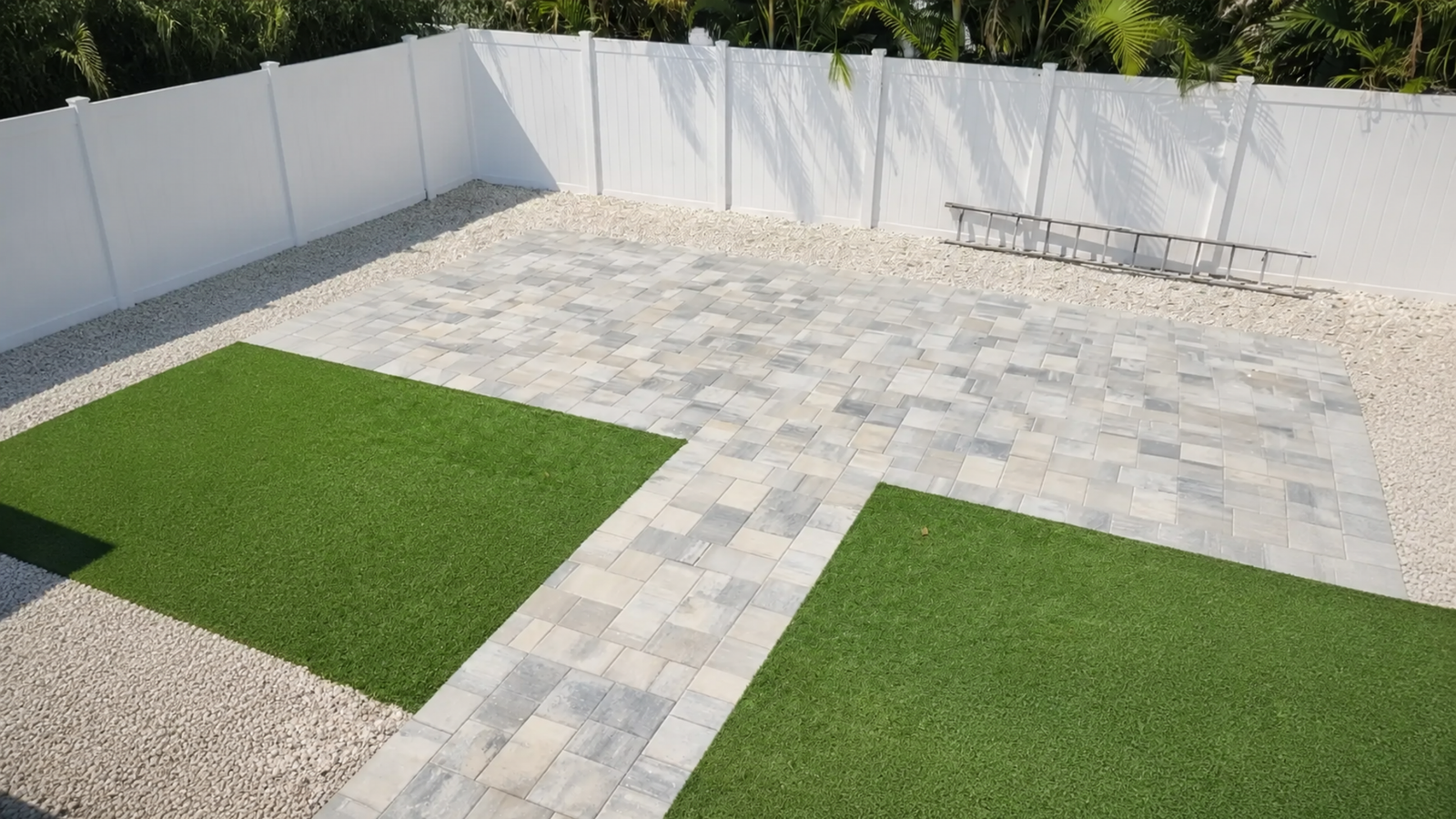
If you want to see how travertine and concrete pavers look in real Tampa Bay backyards and driveways, explore the project gallery and browse homeowner feedback on the testimonials page. When you are ready to talk through ideas, you can review common questions on the FAQ page, then request a free on-site consultation by calling +1 (656) 600-4015, texting +1 (656) 600-4015, emailing drpavers@outlook.com, or messaging via WhatsApp.
To plan a travertine pool deck, a concrete paver driveway, or a mixed-material design, take a look at the full list of hardscape services and the guide to travertine pavers in Tampa Bay, along with other articles in the Travertine & Natural Stone Guides category. You can also follow recent work and design ideas on Instagram and Facebook, and see the company’s location on Google Maps before scheduling your free consultation.