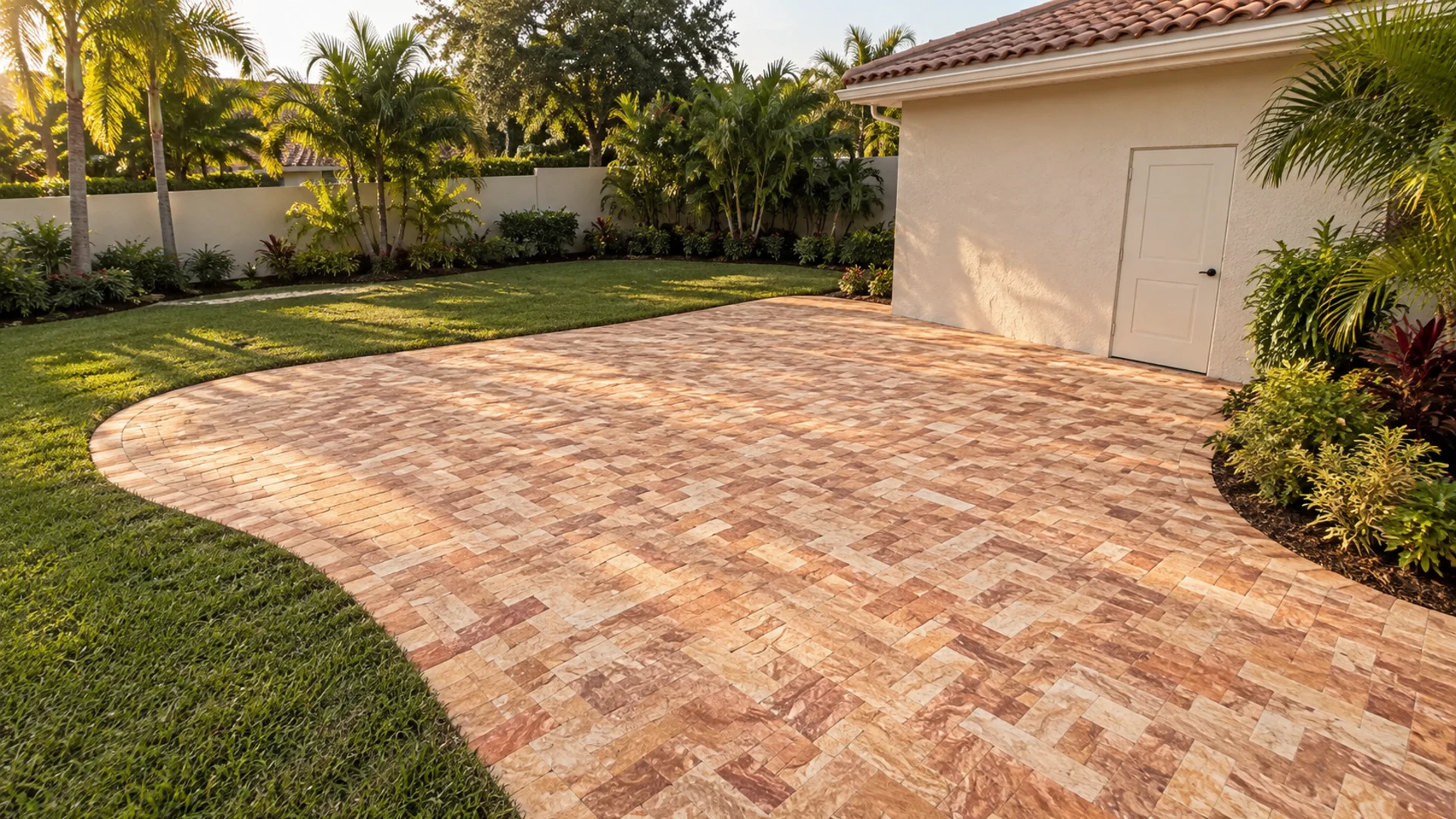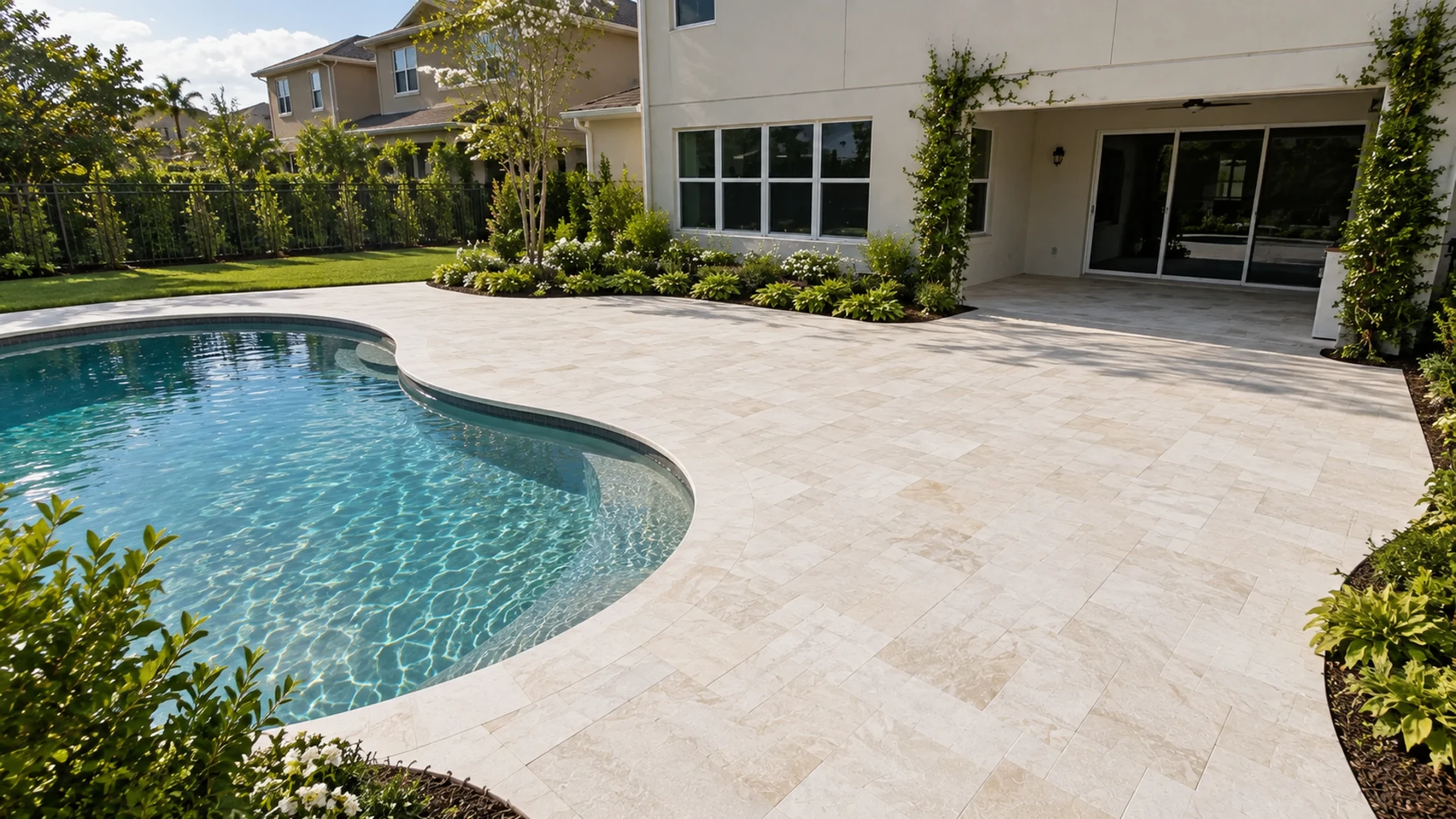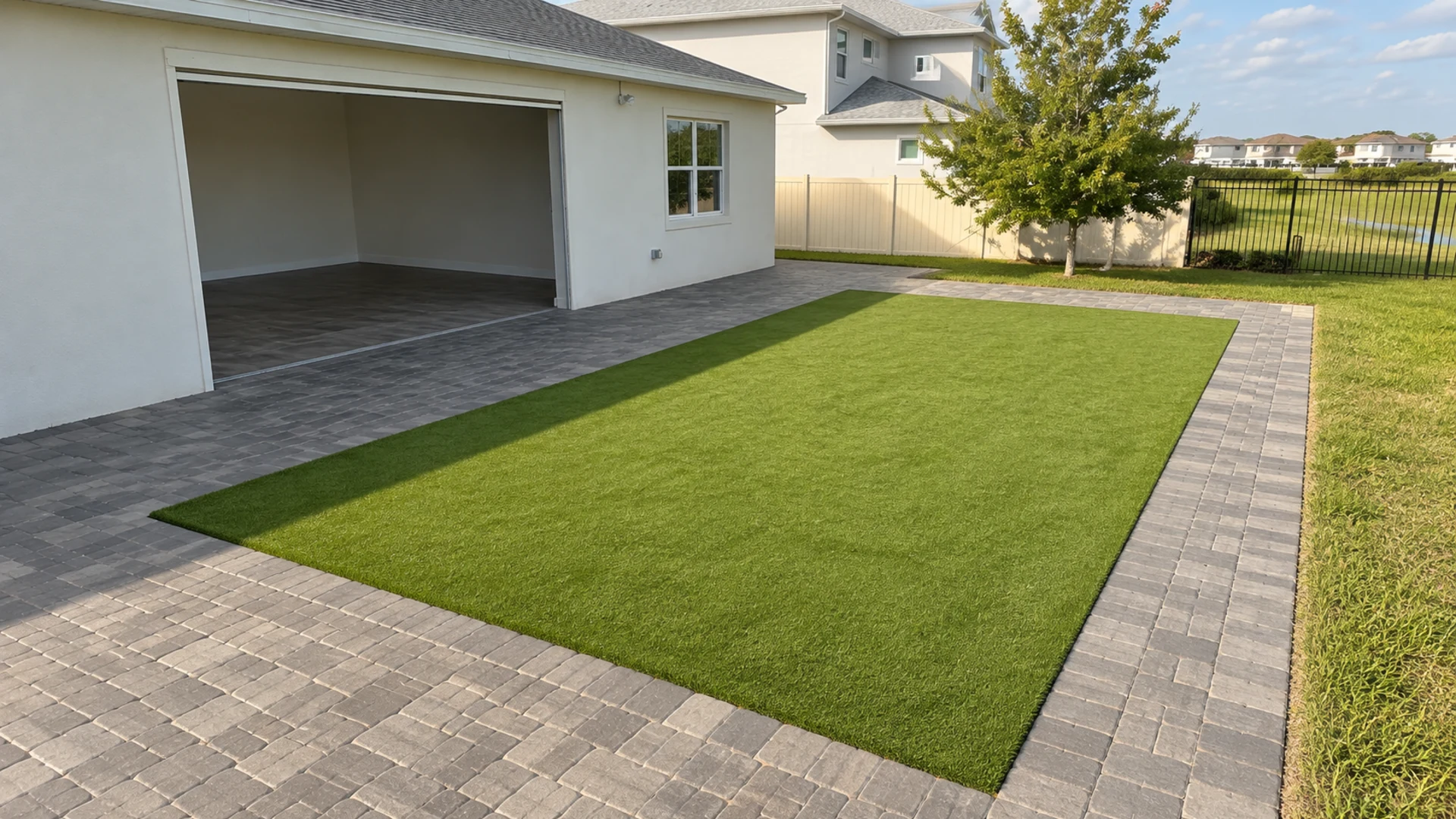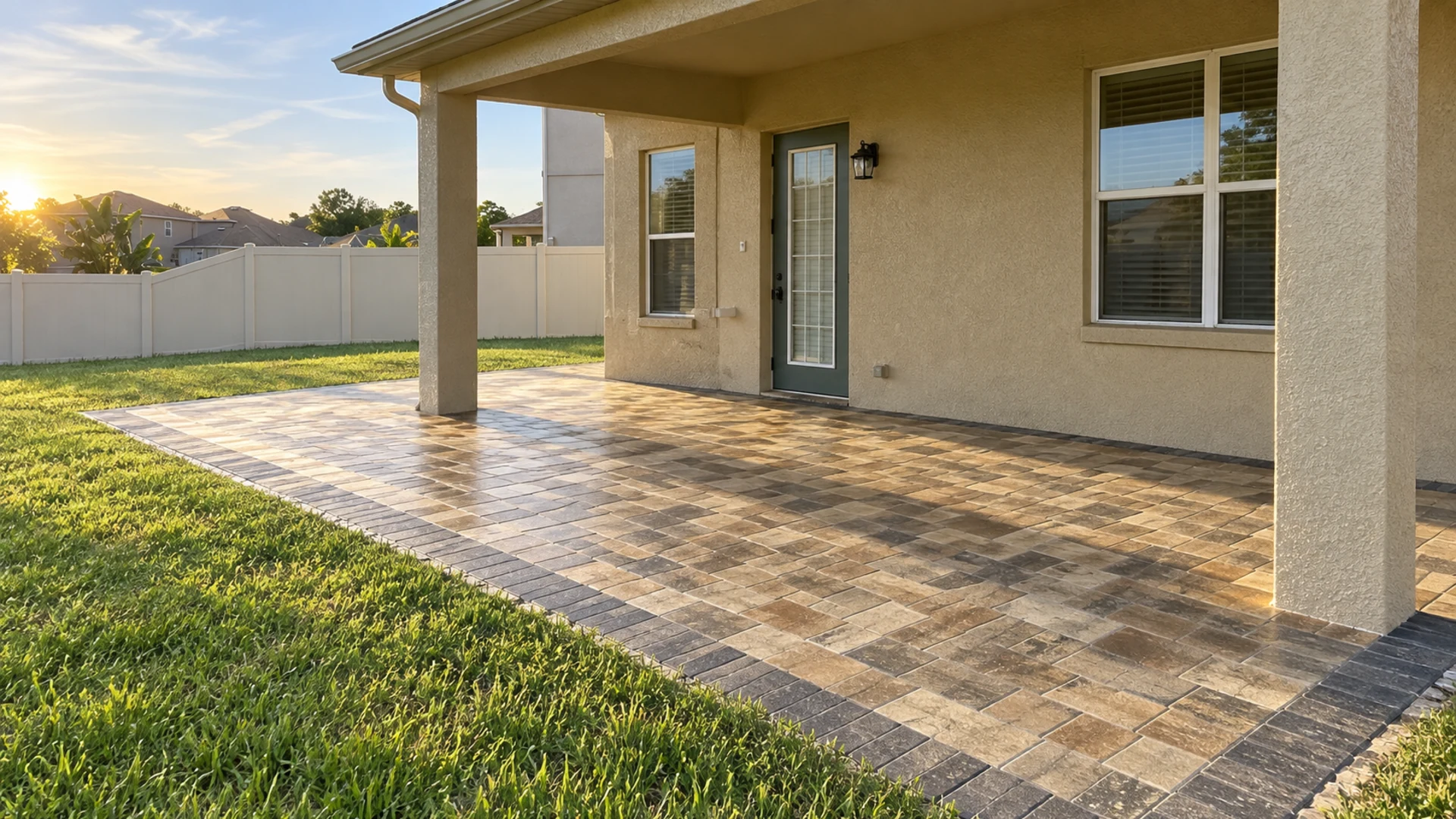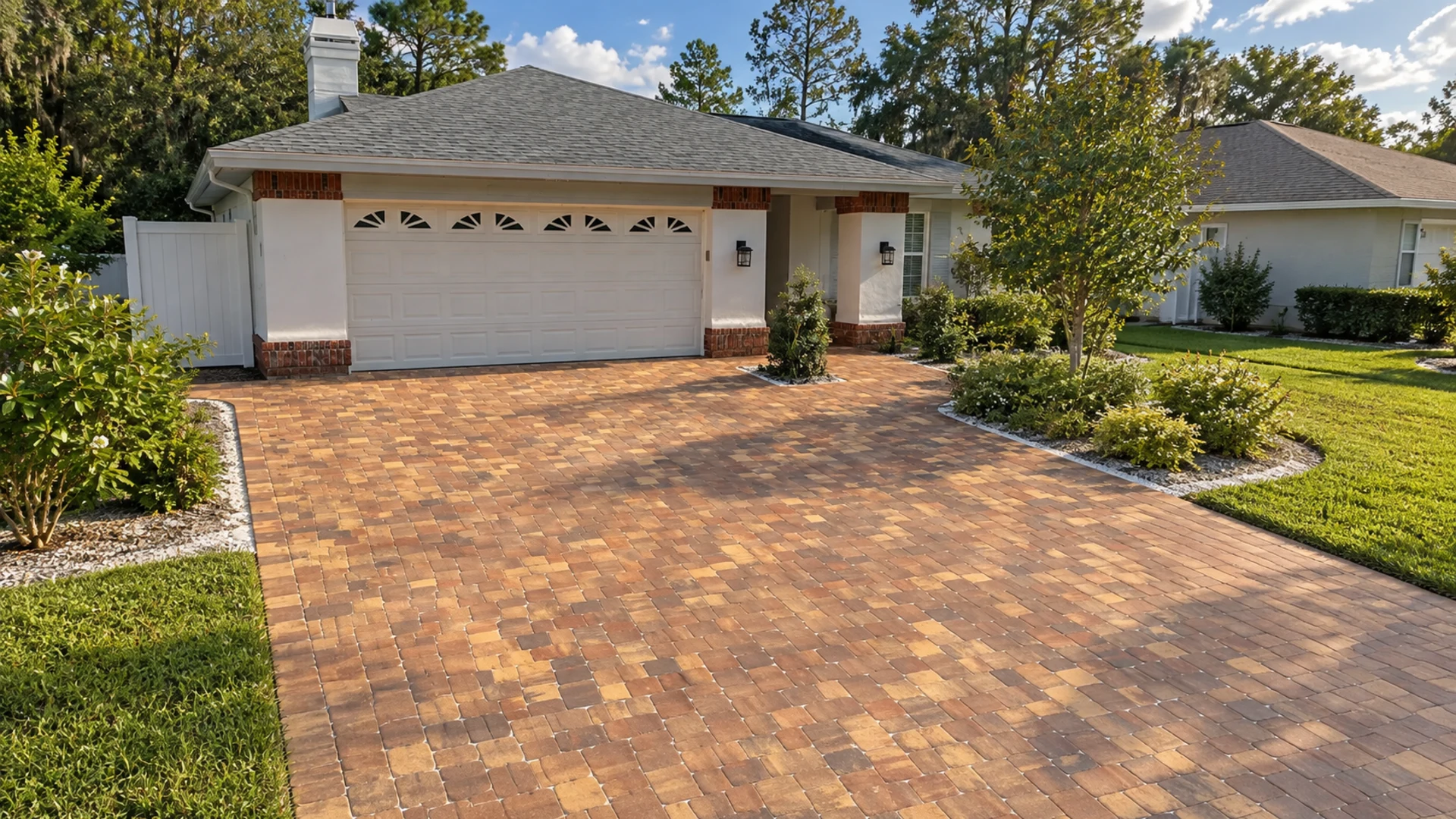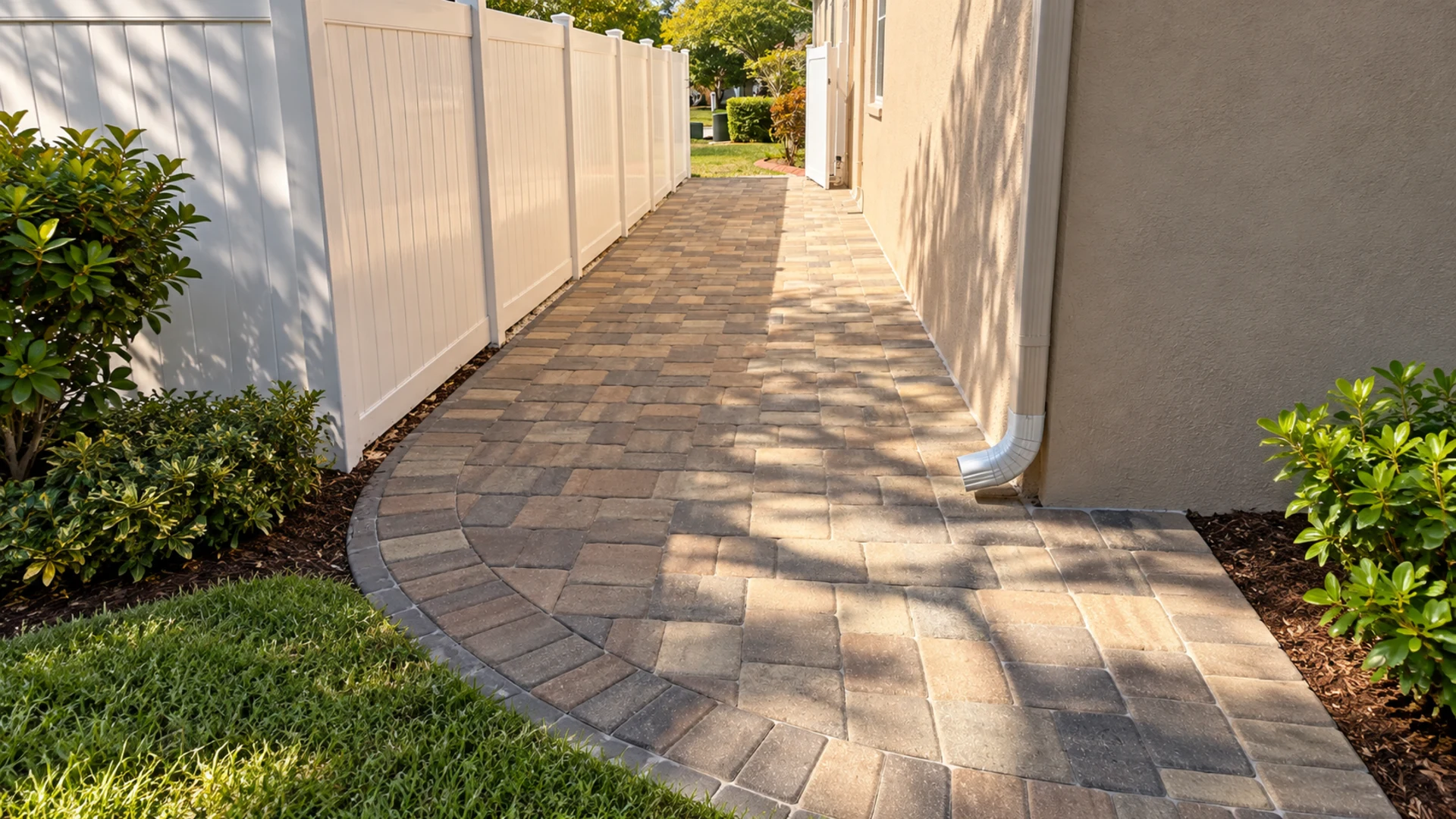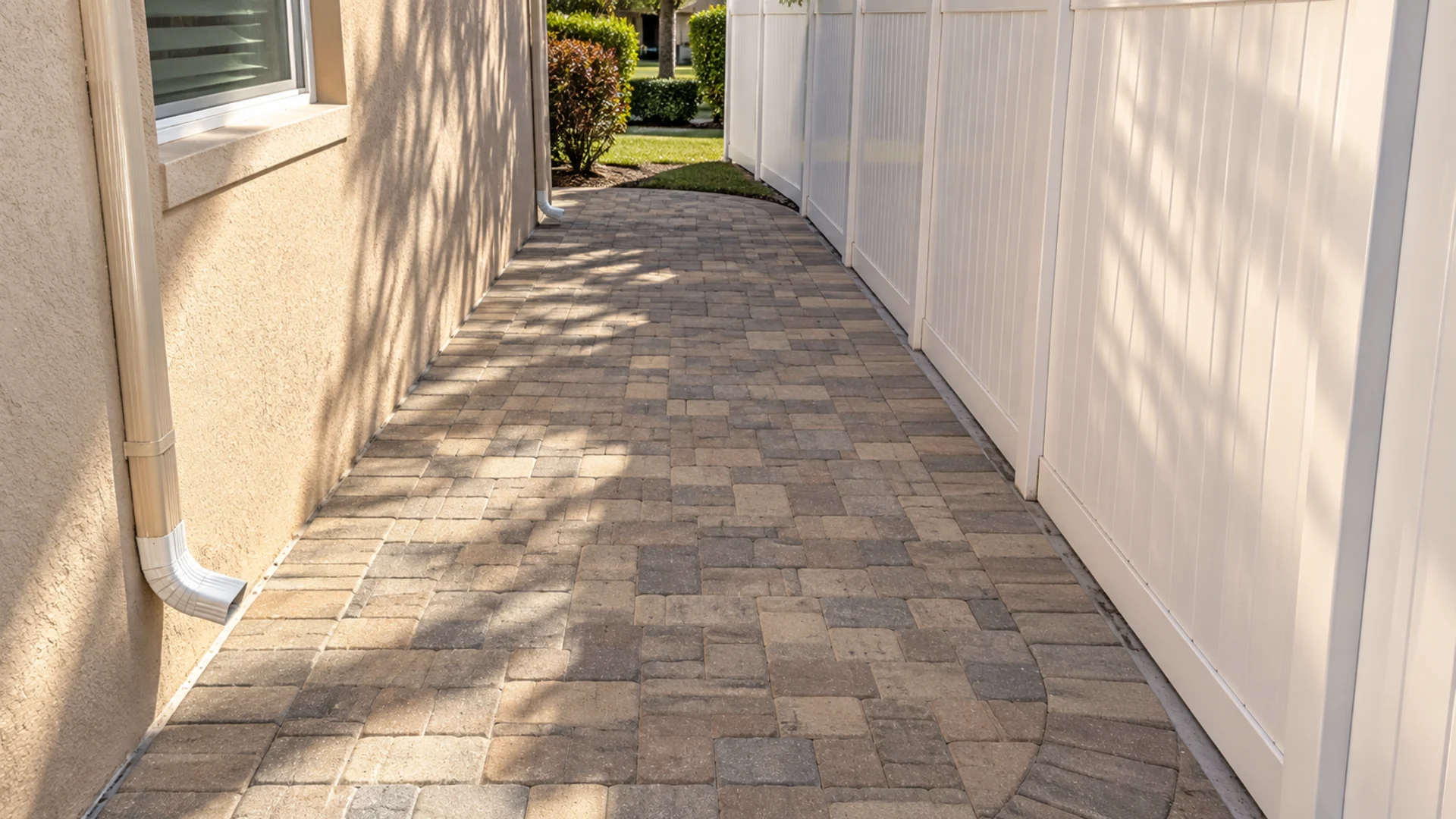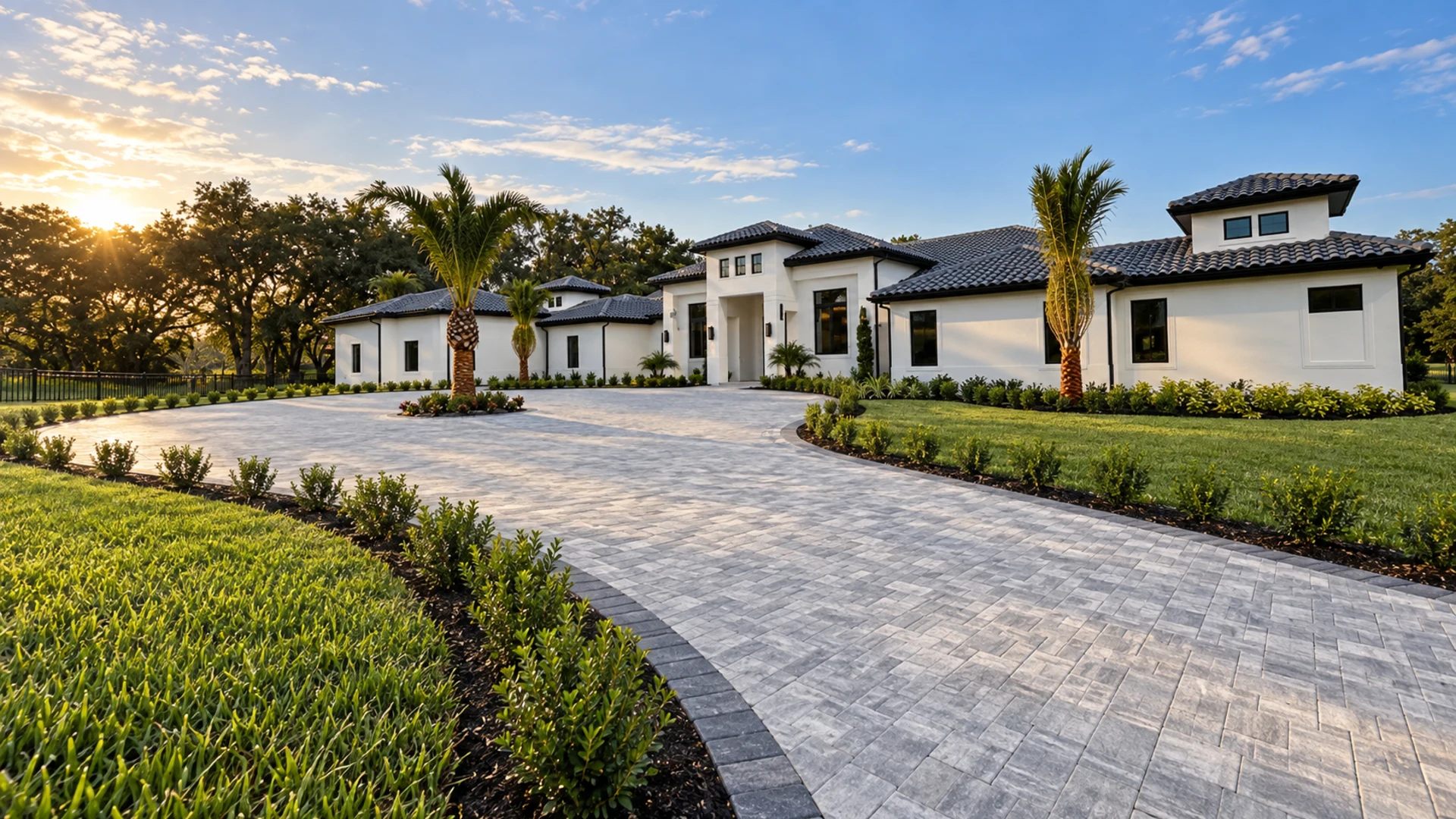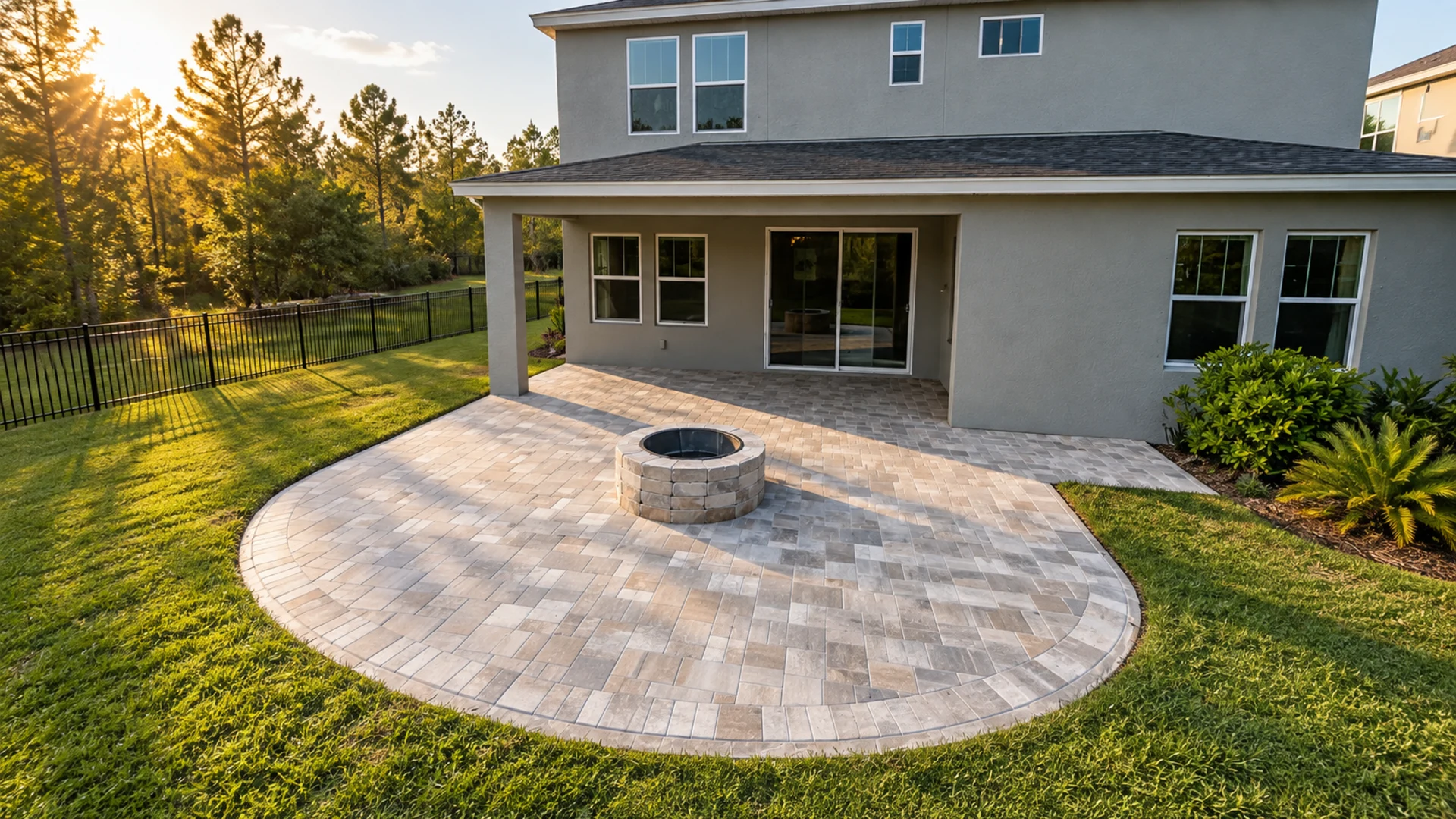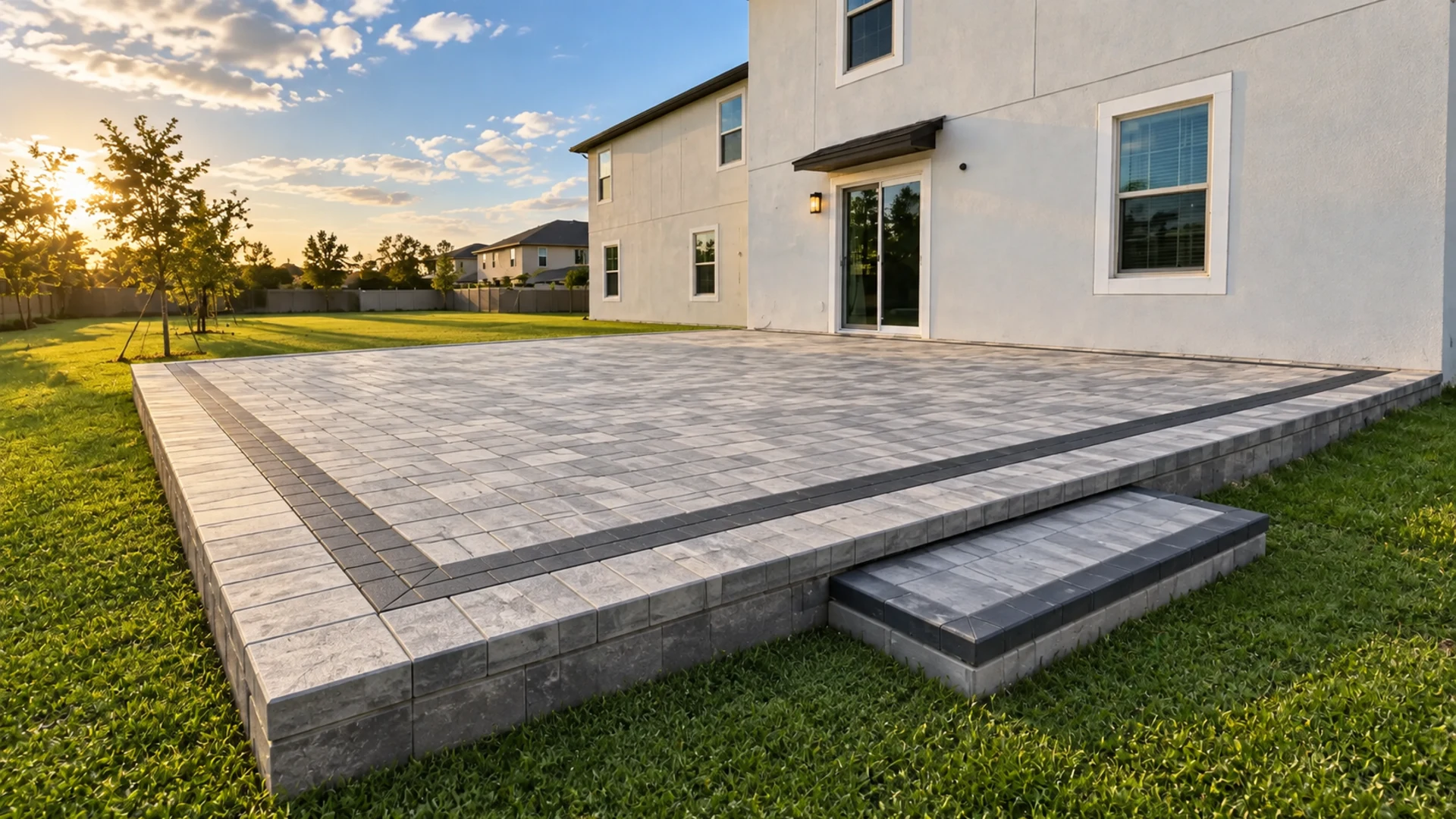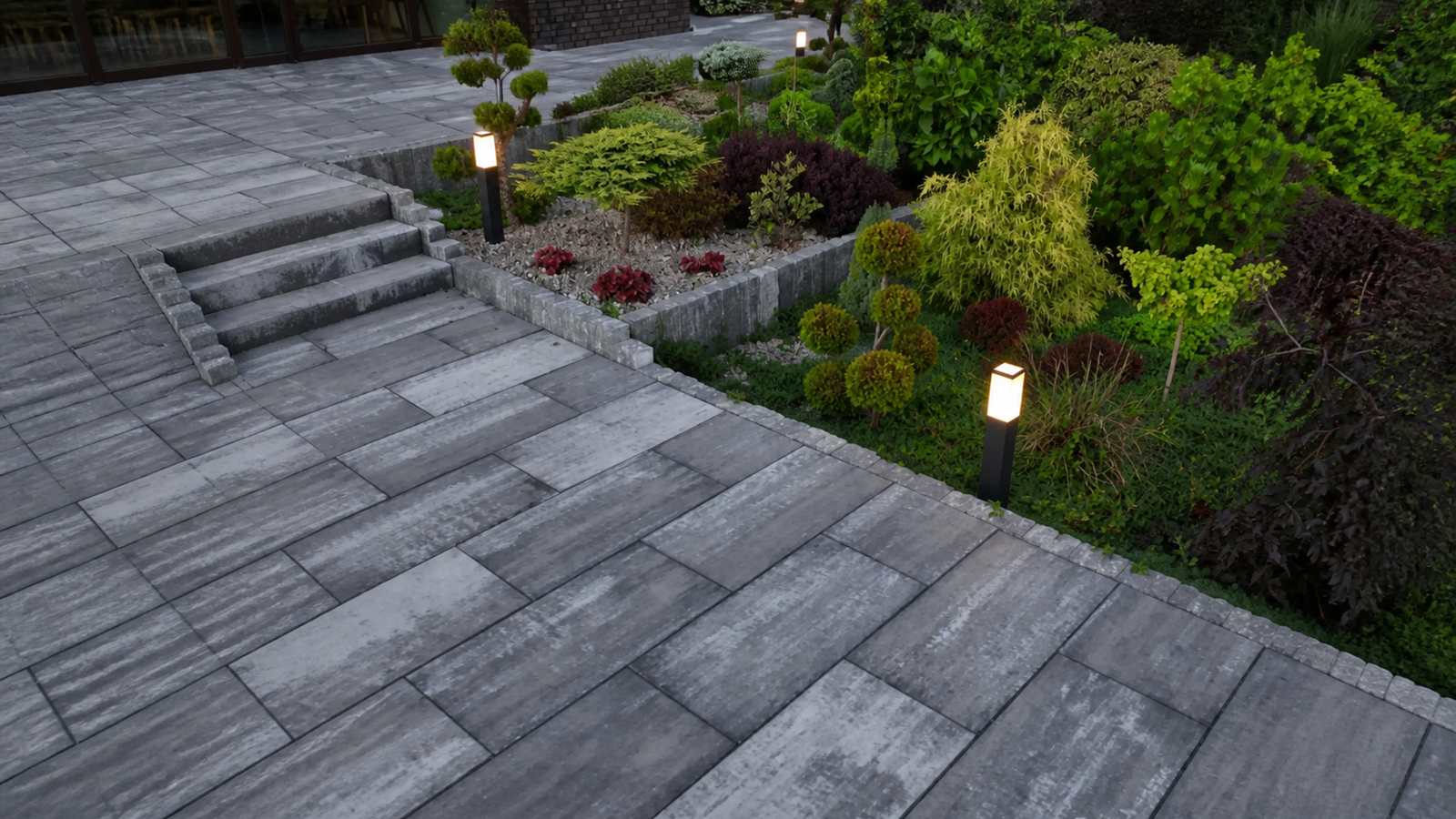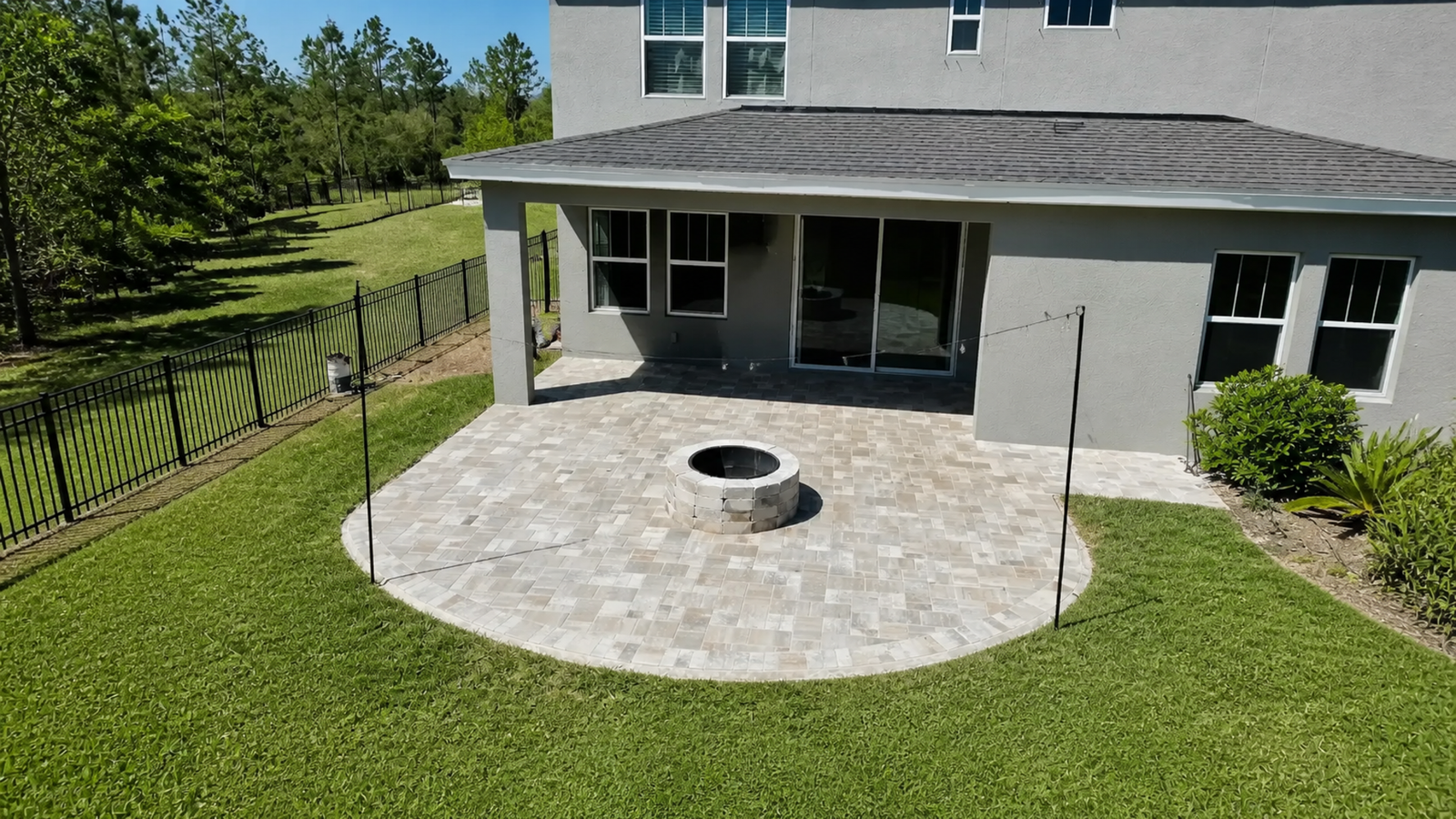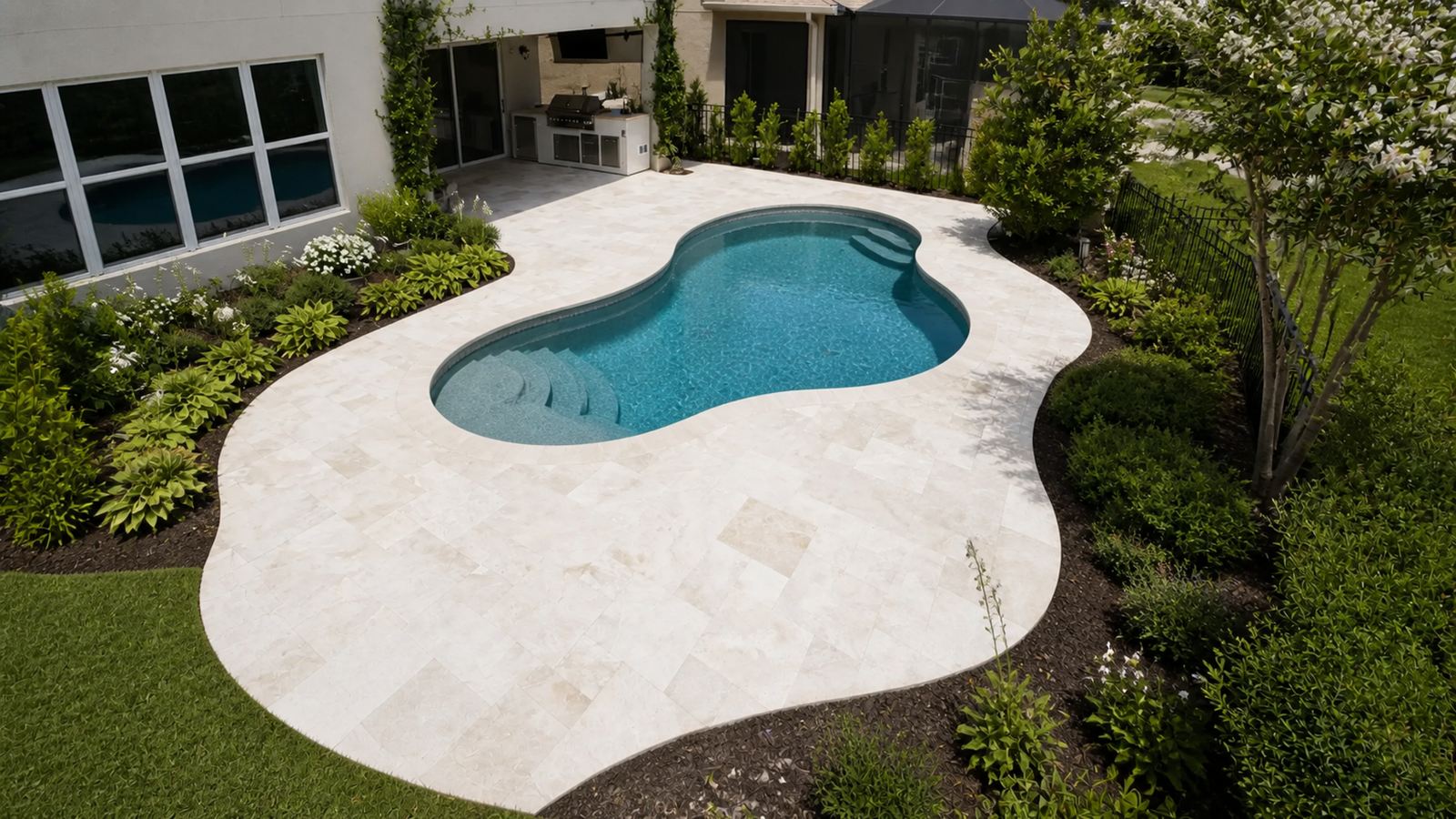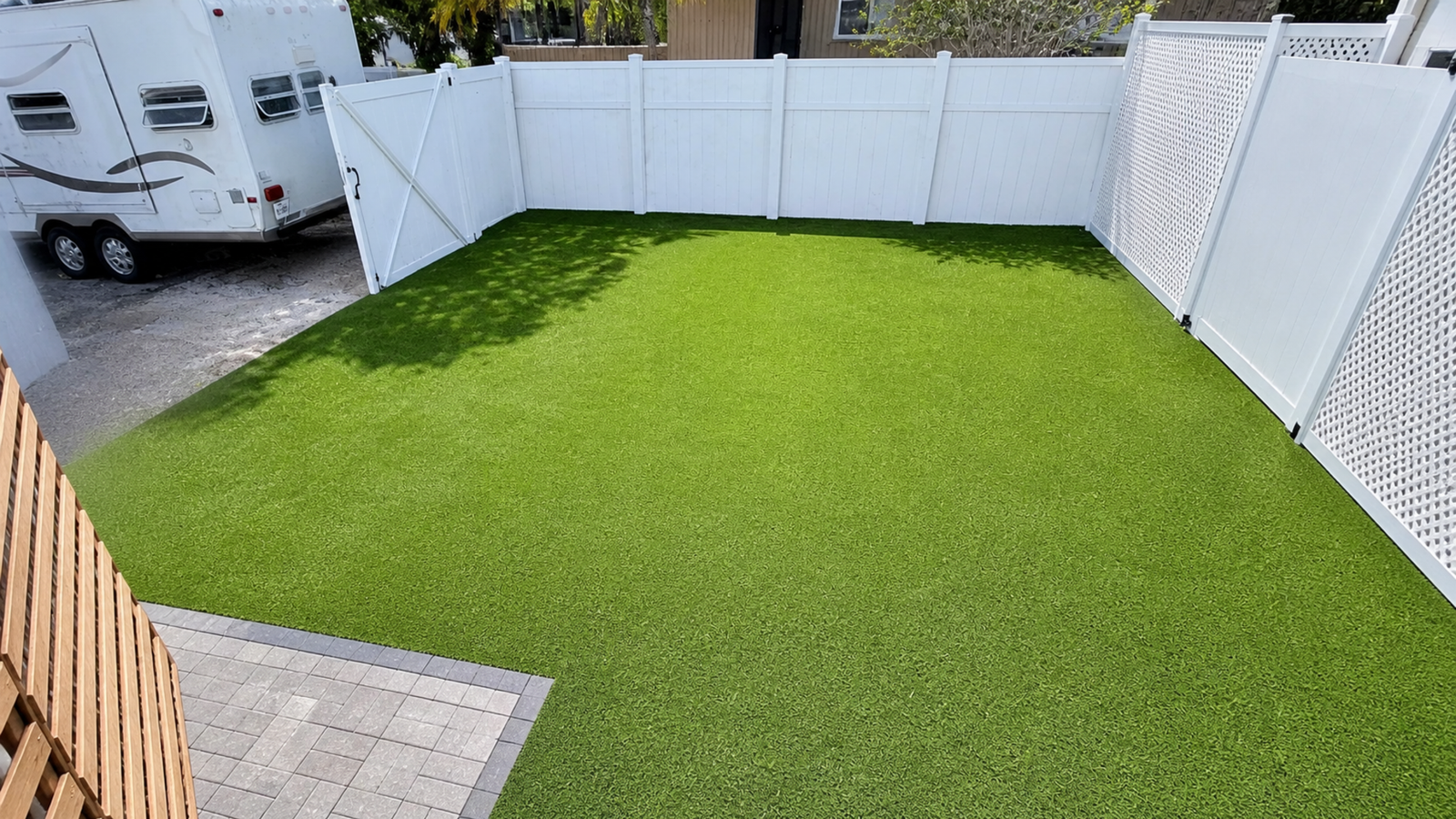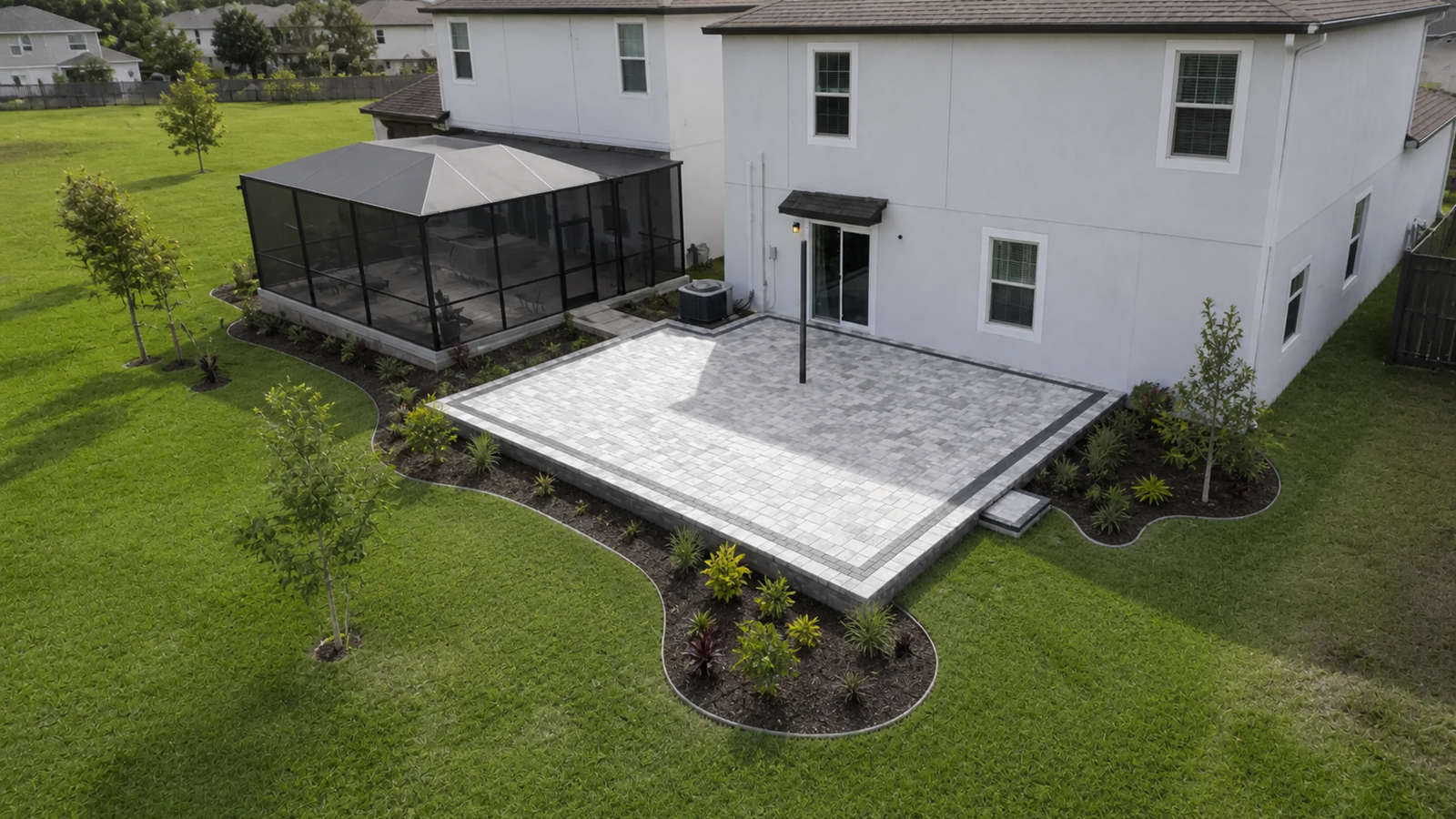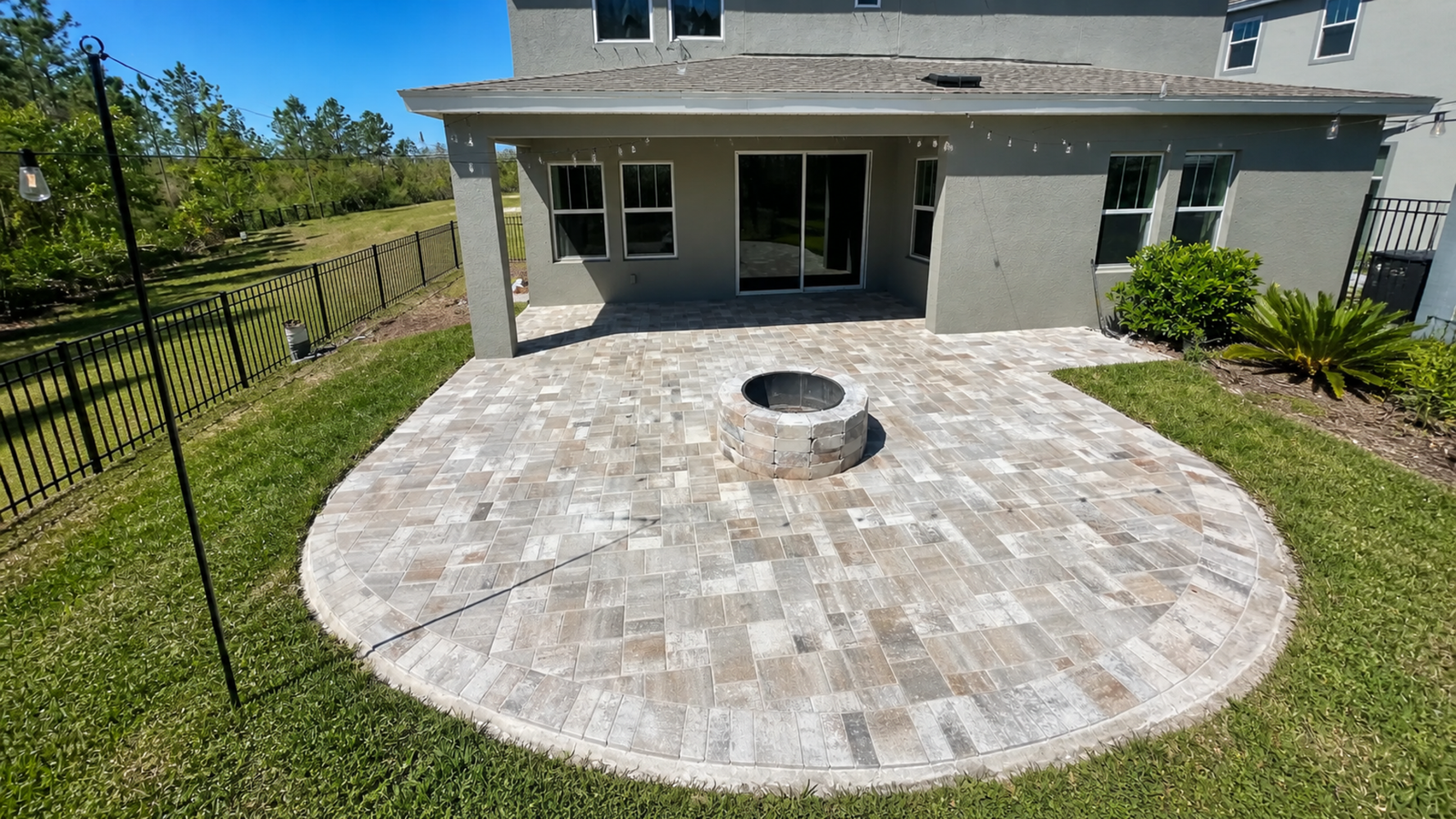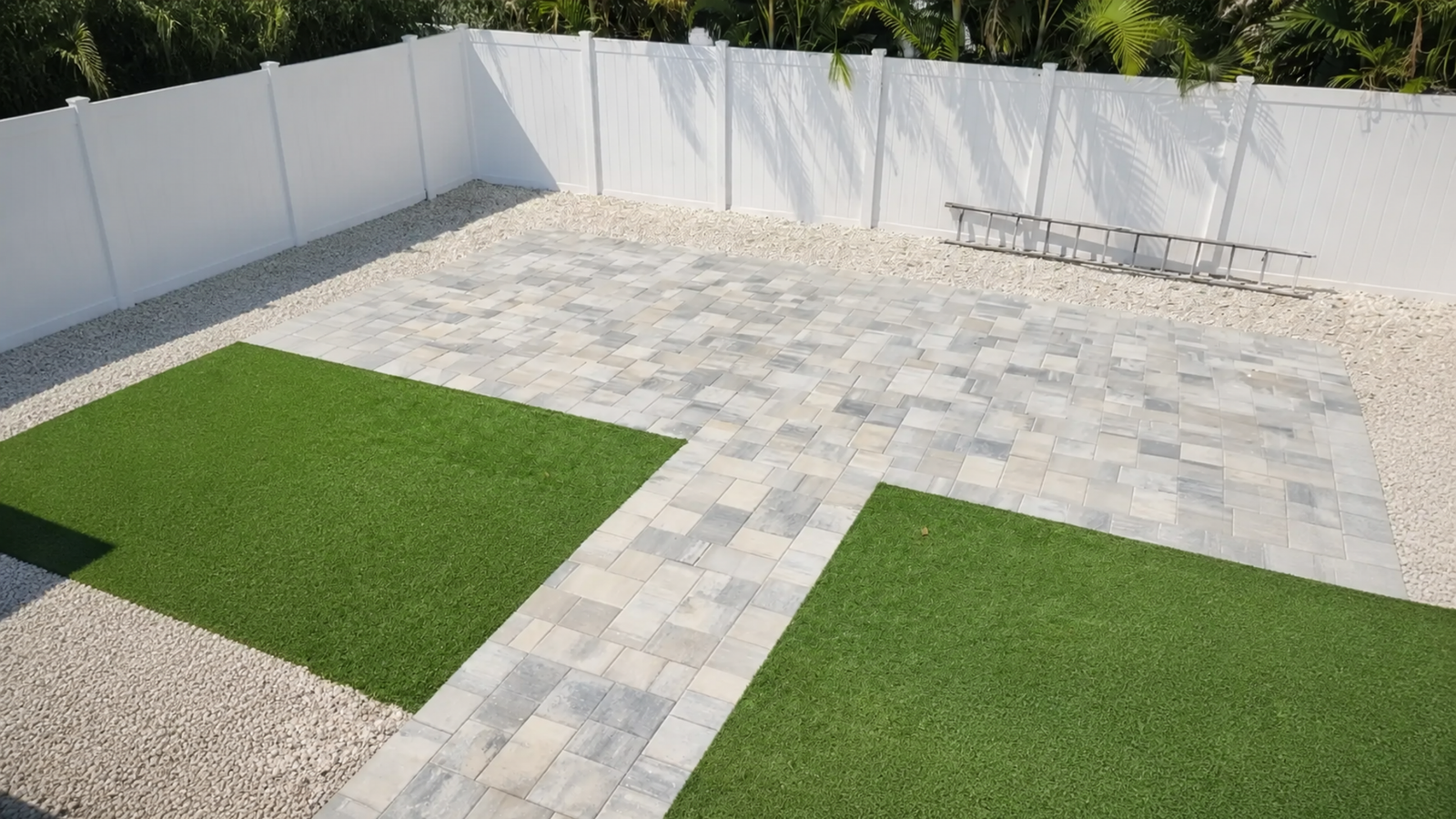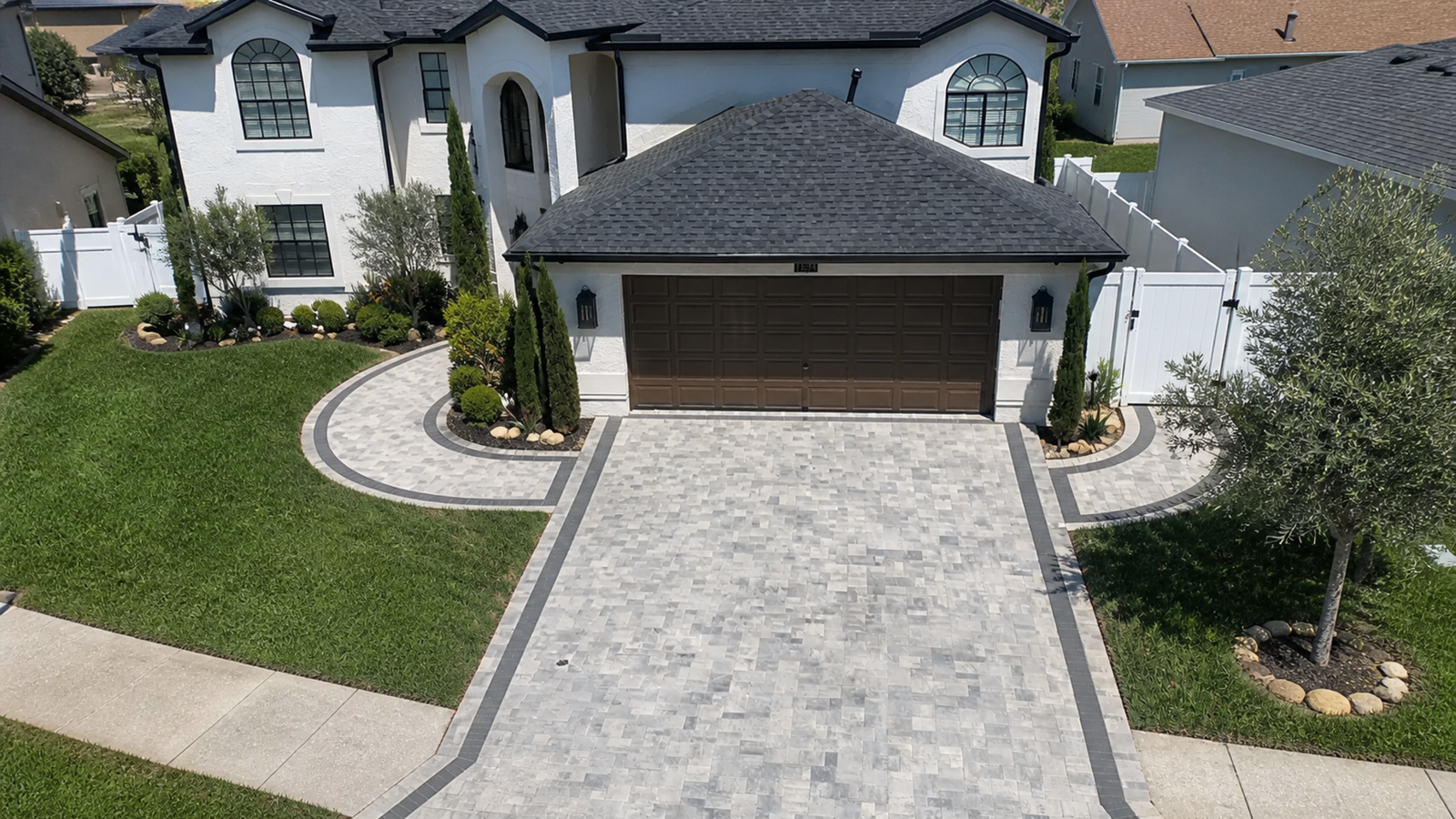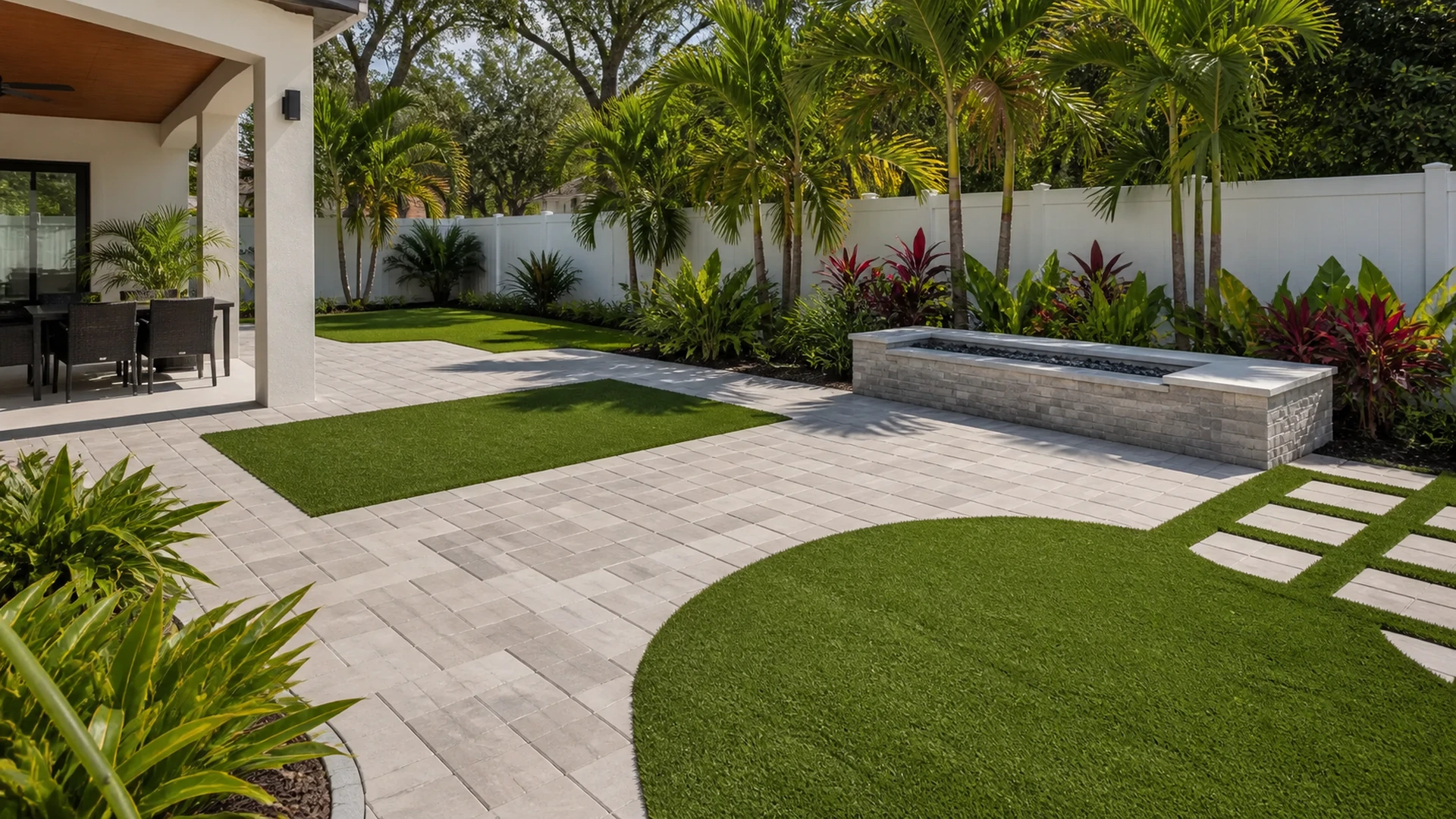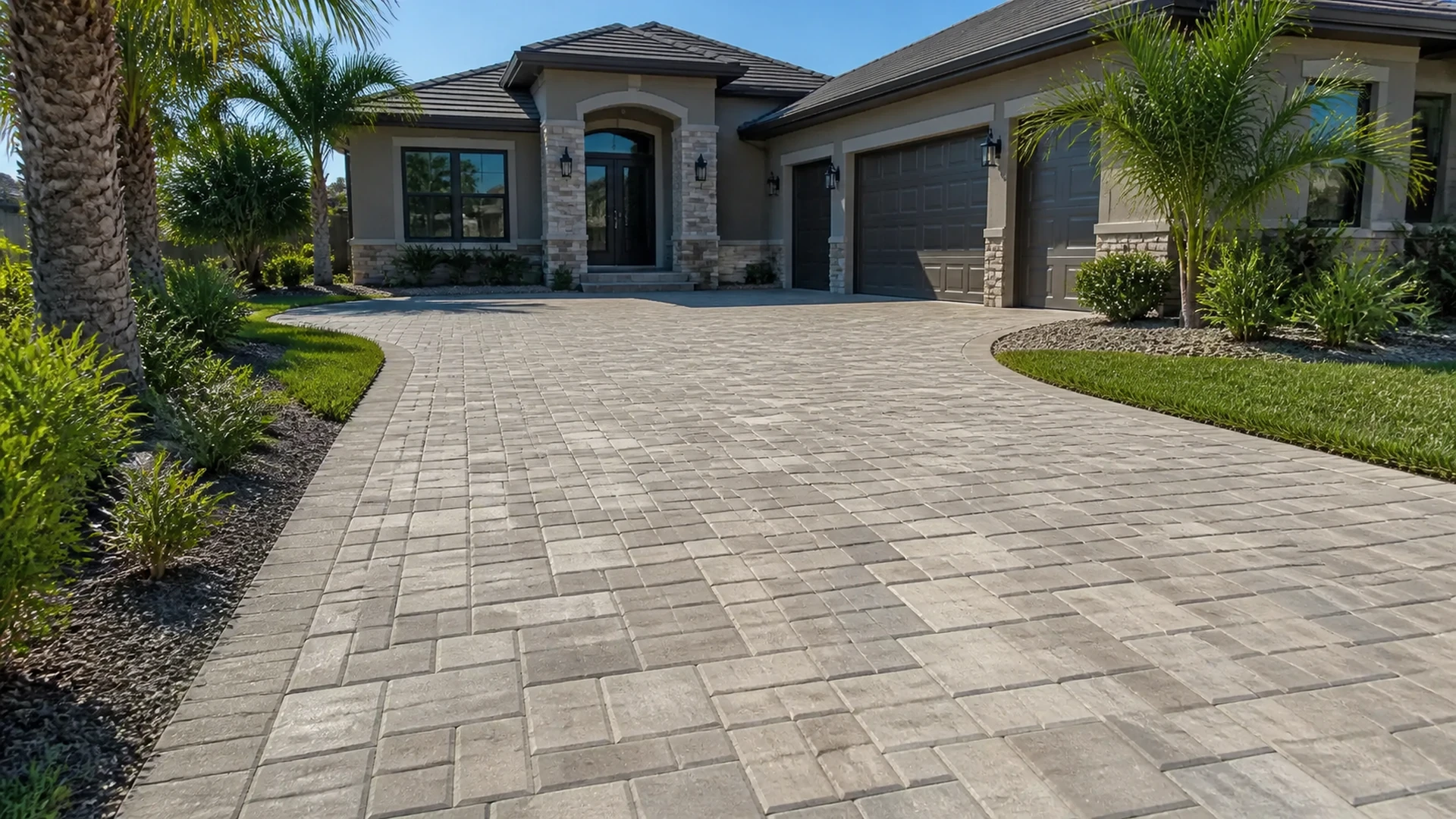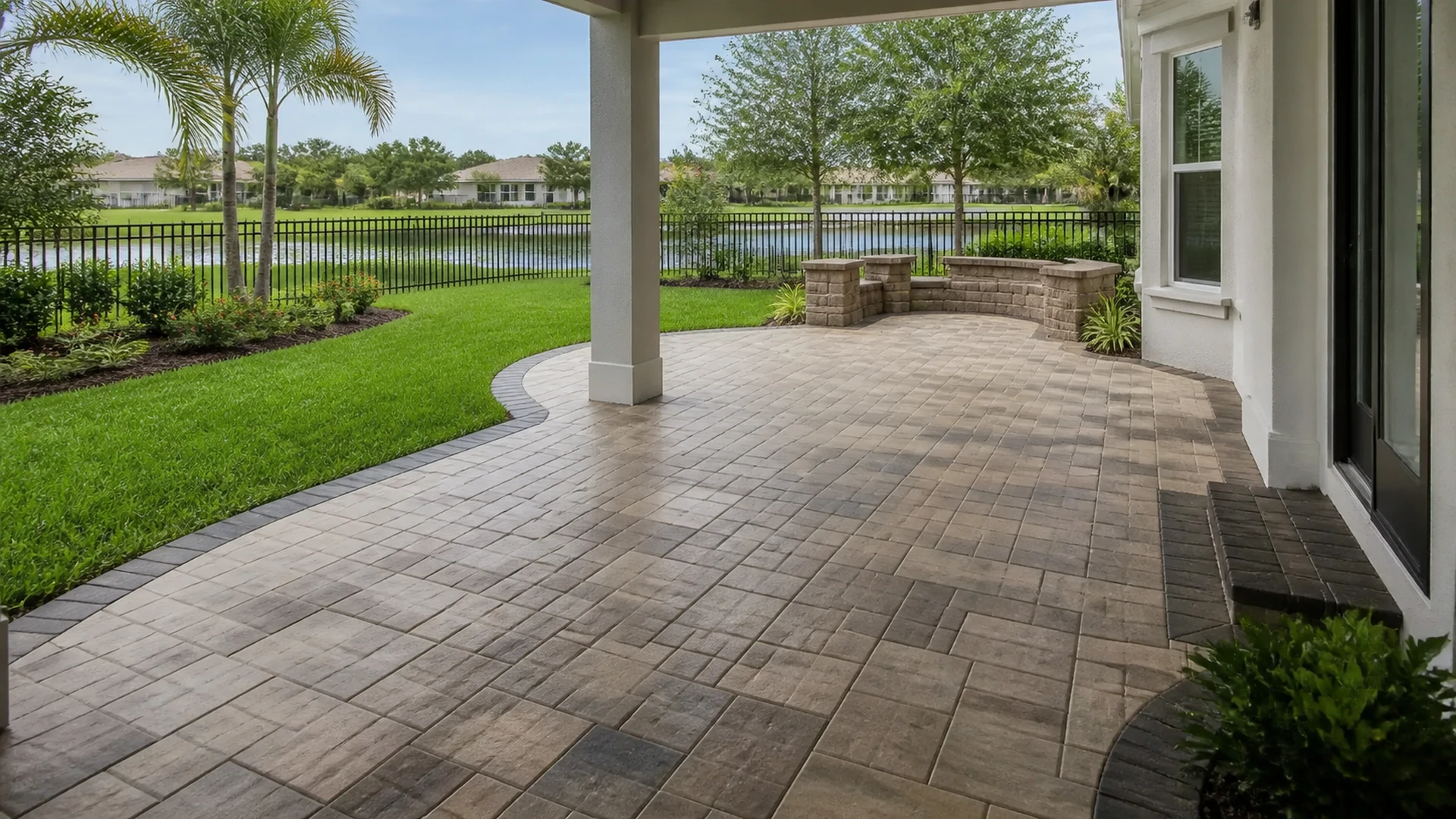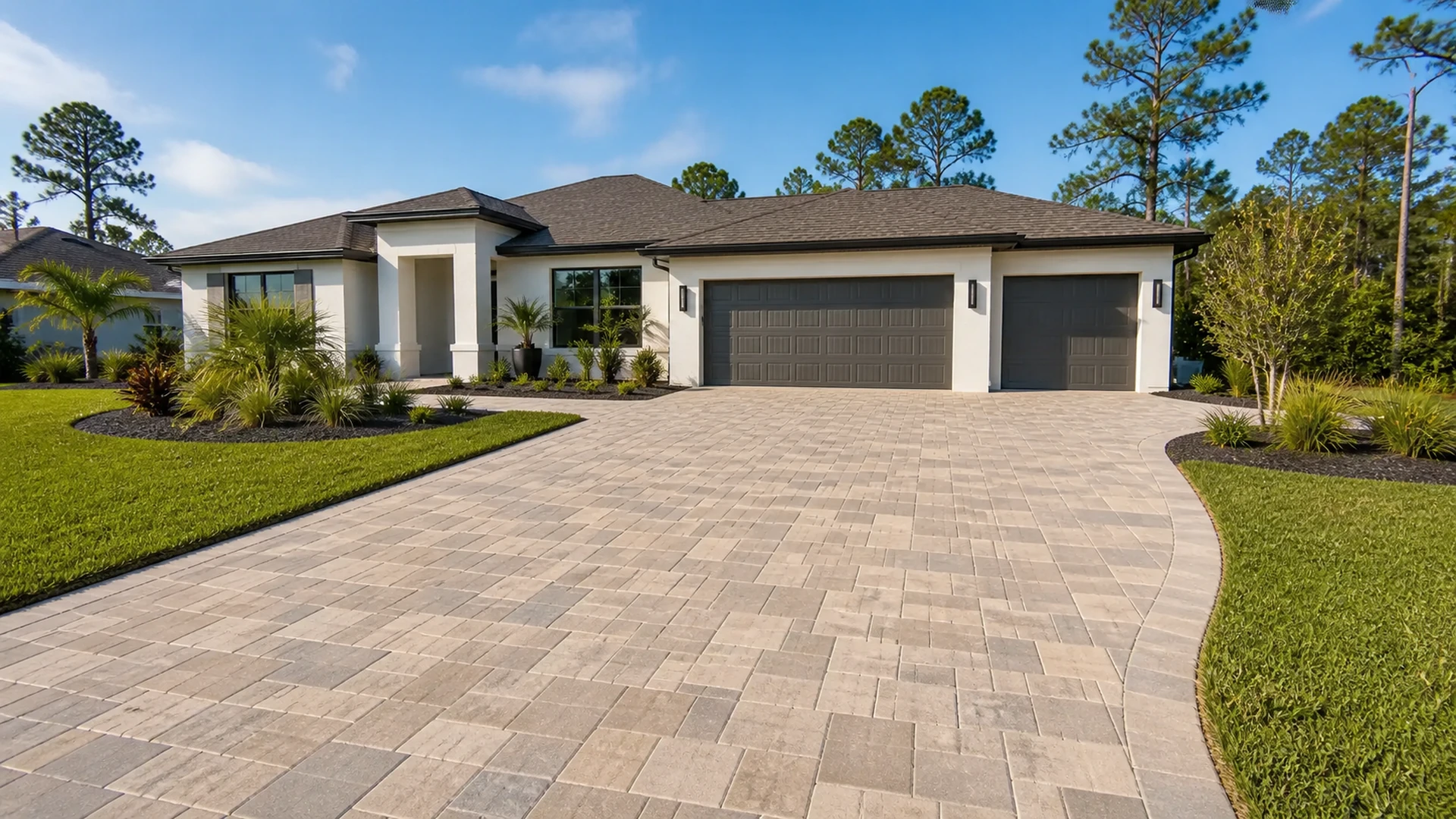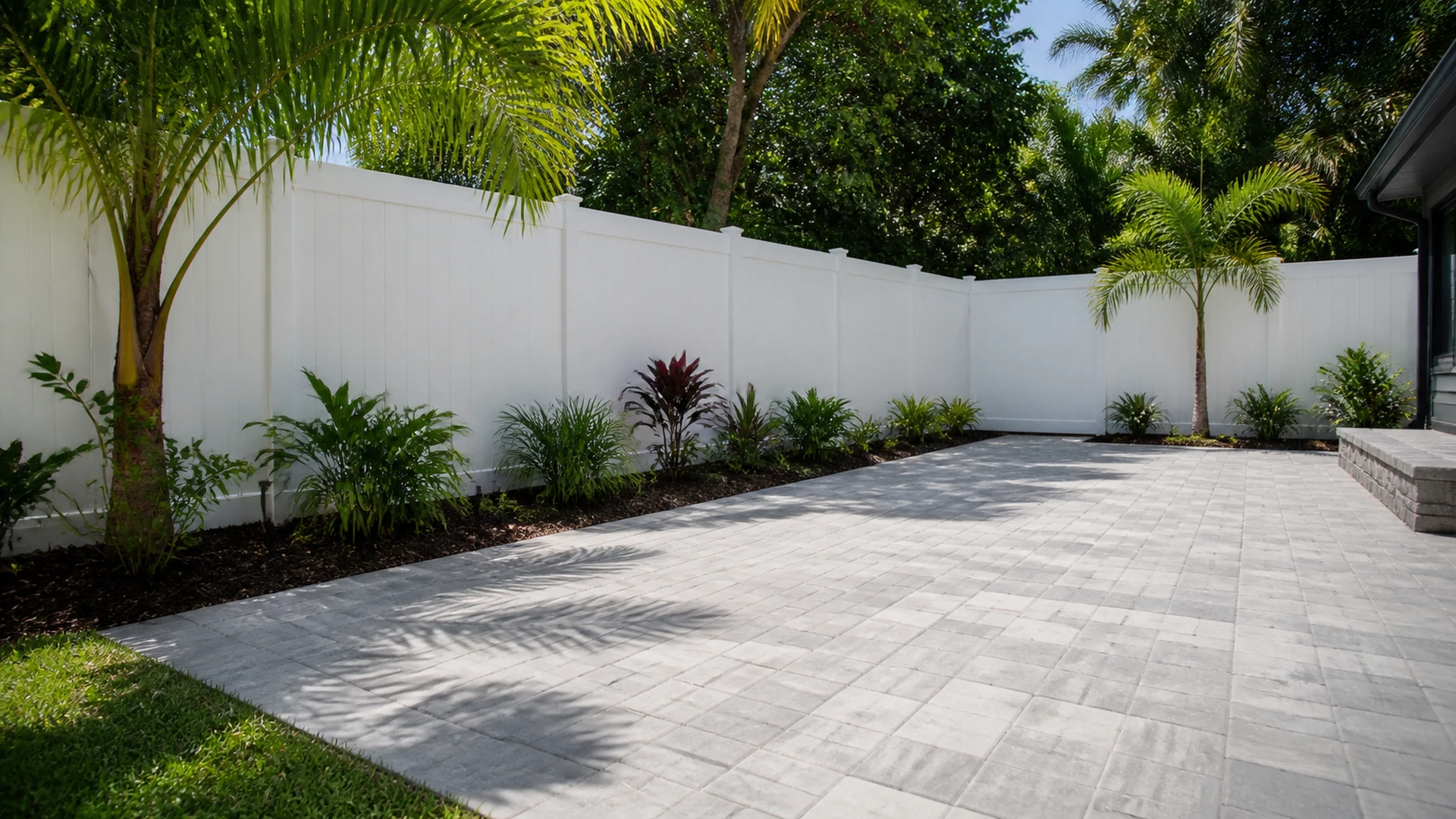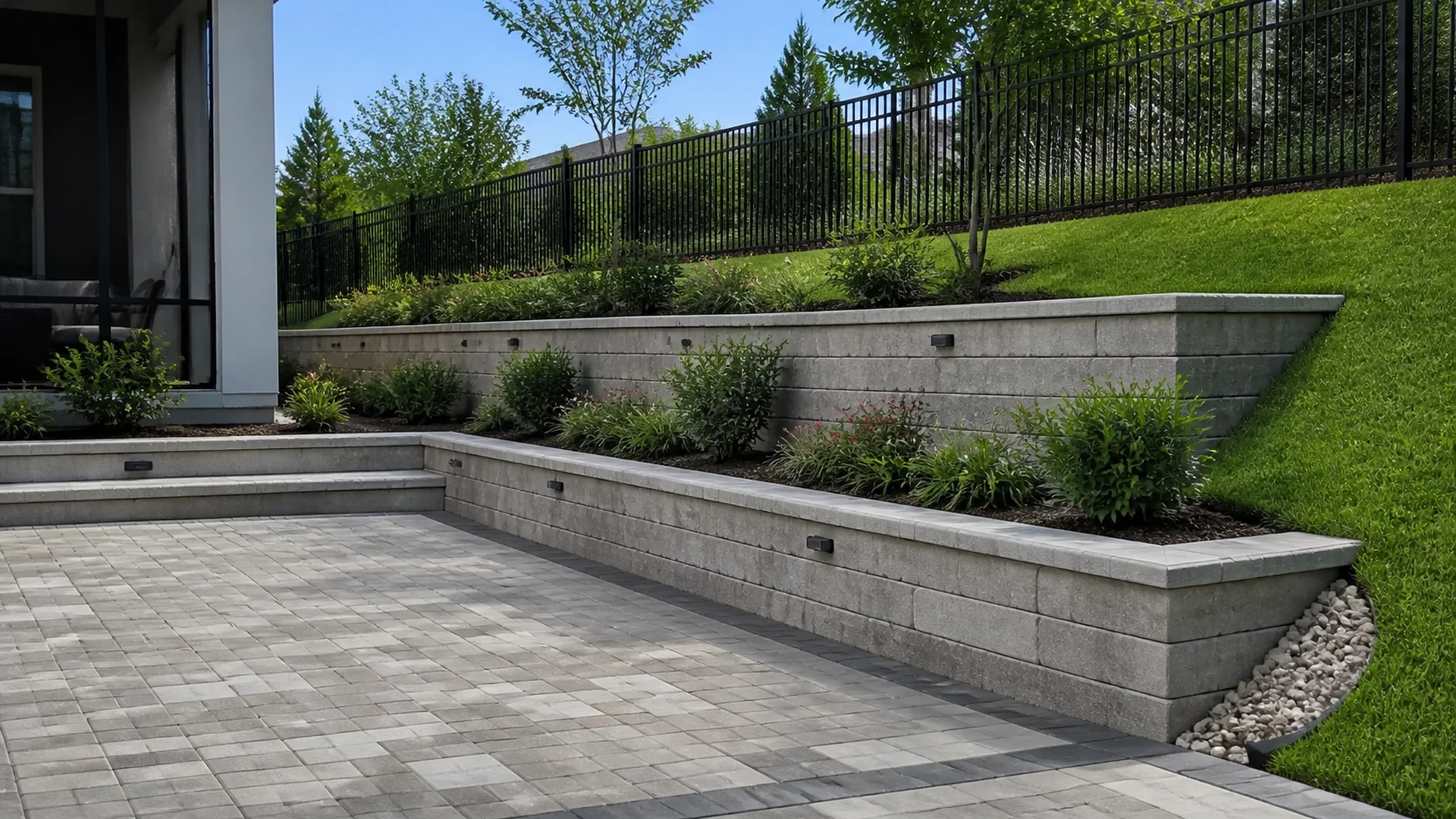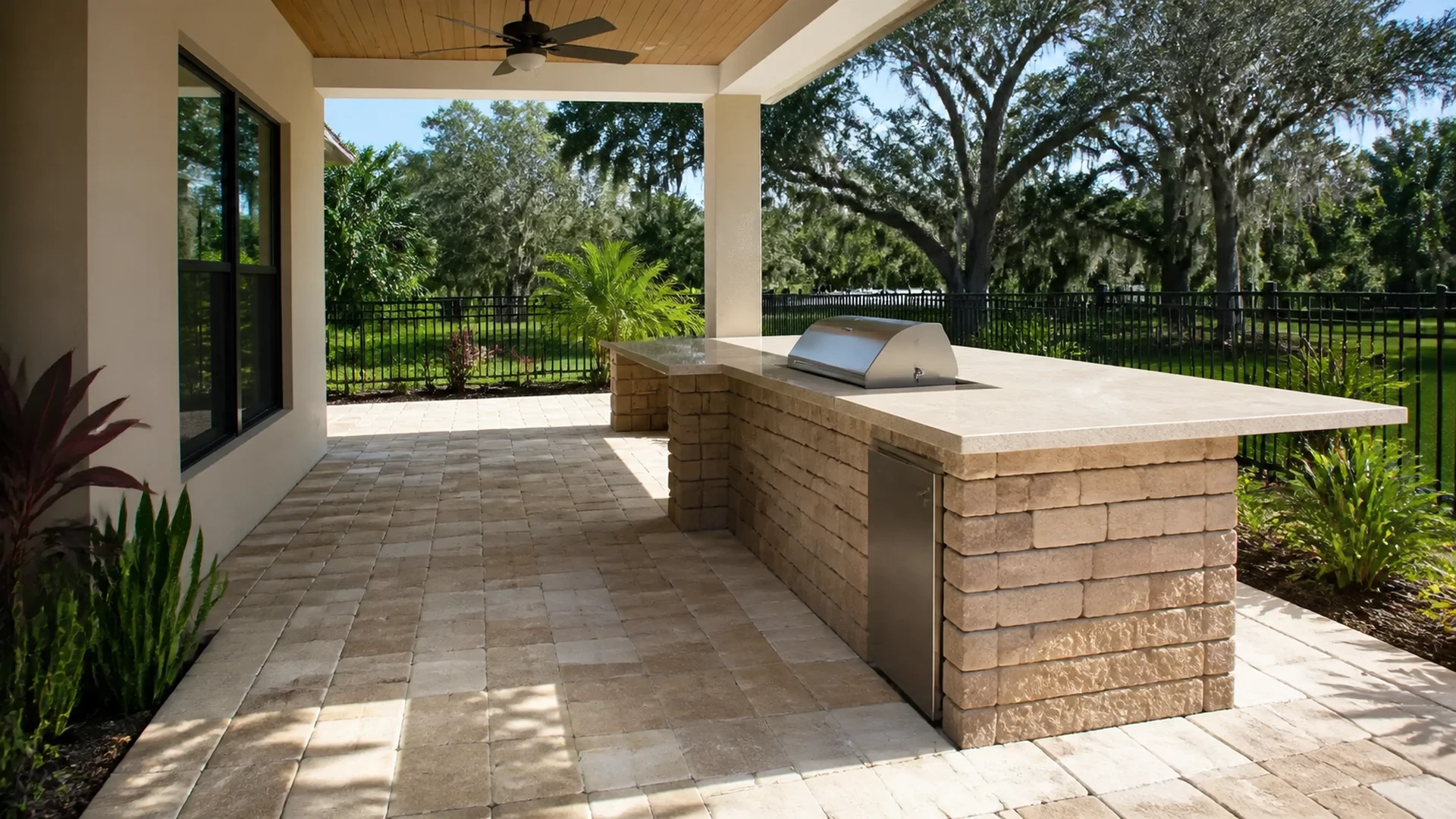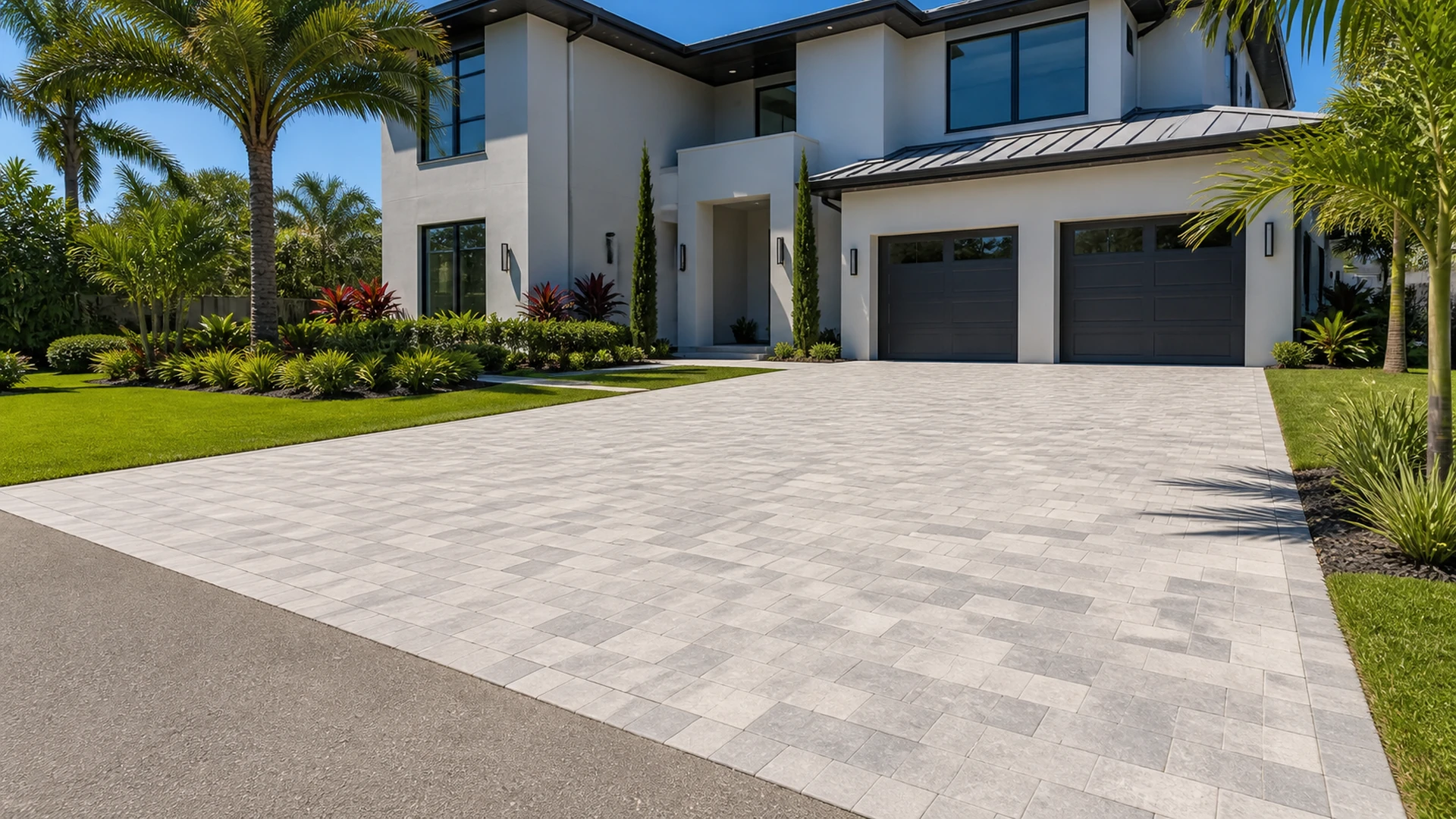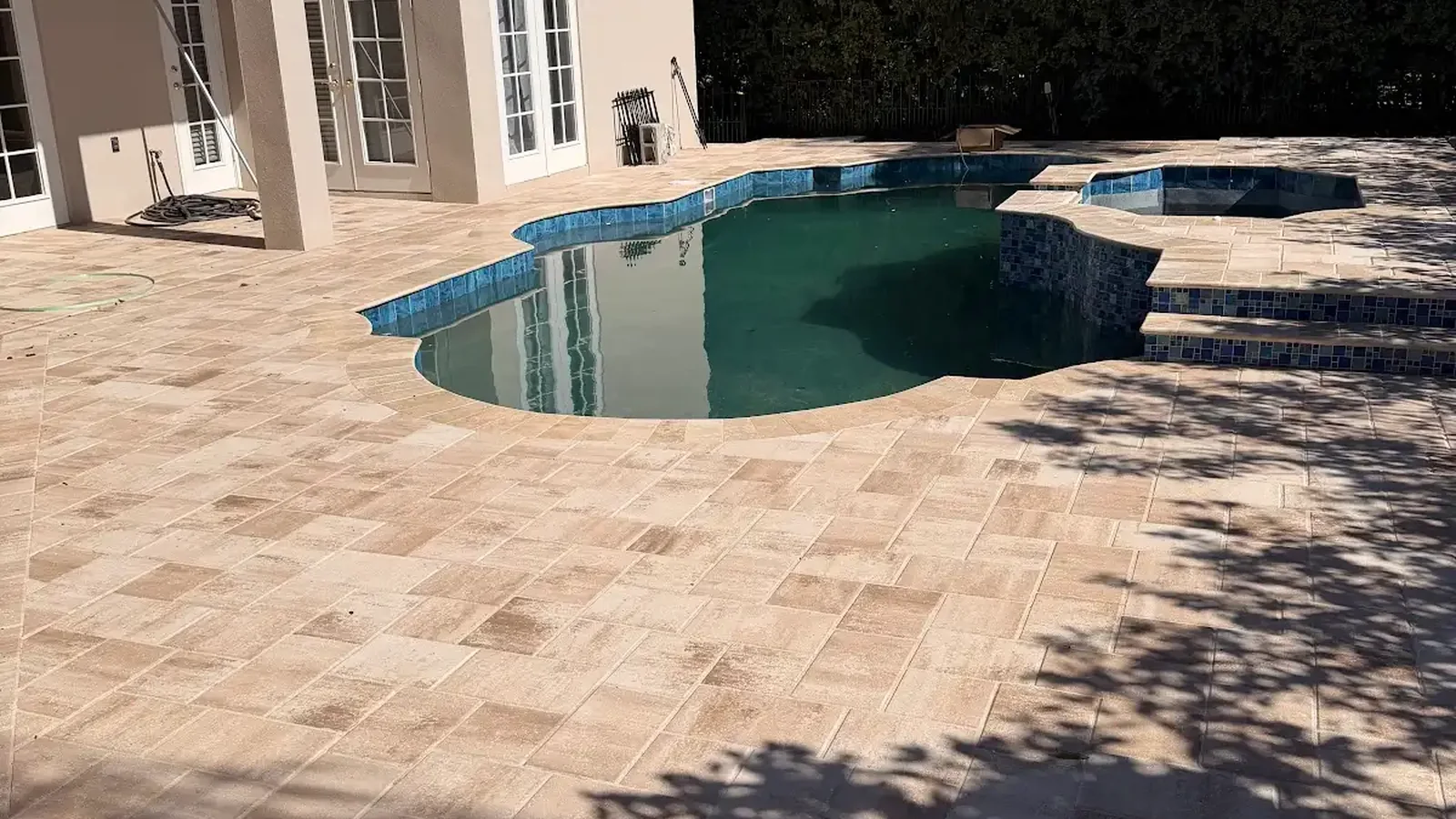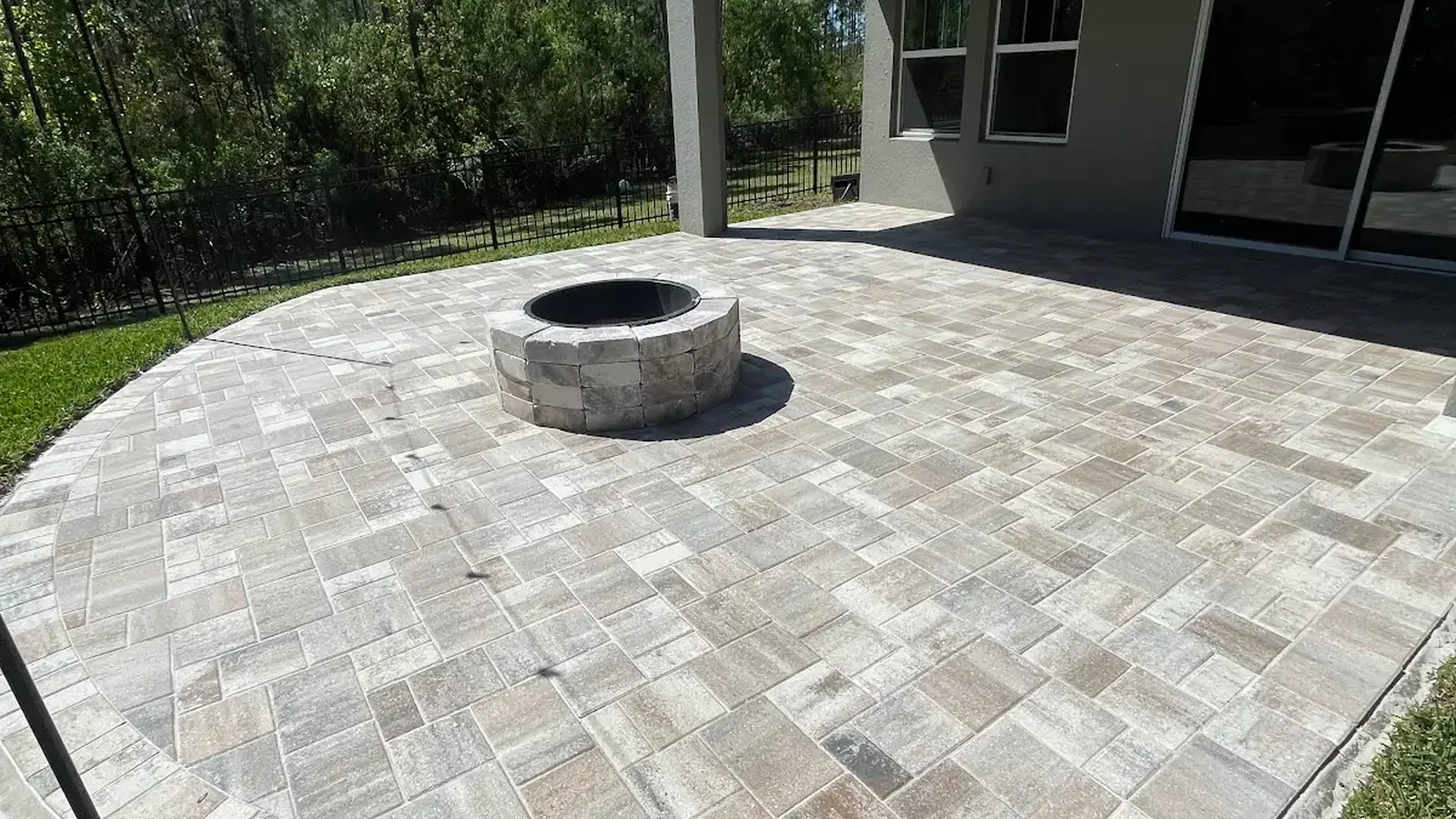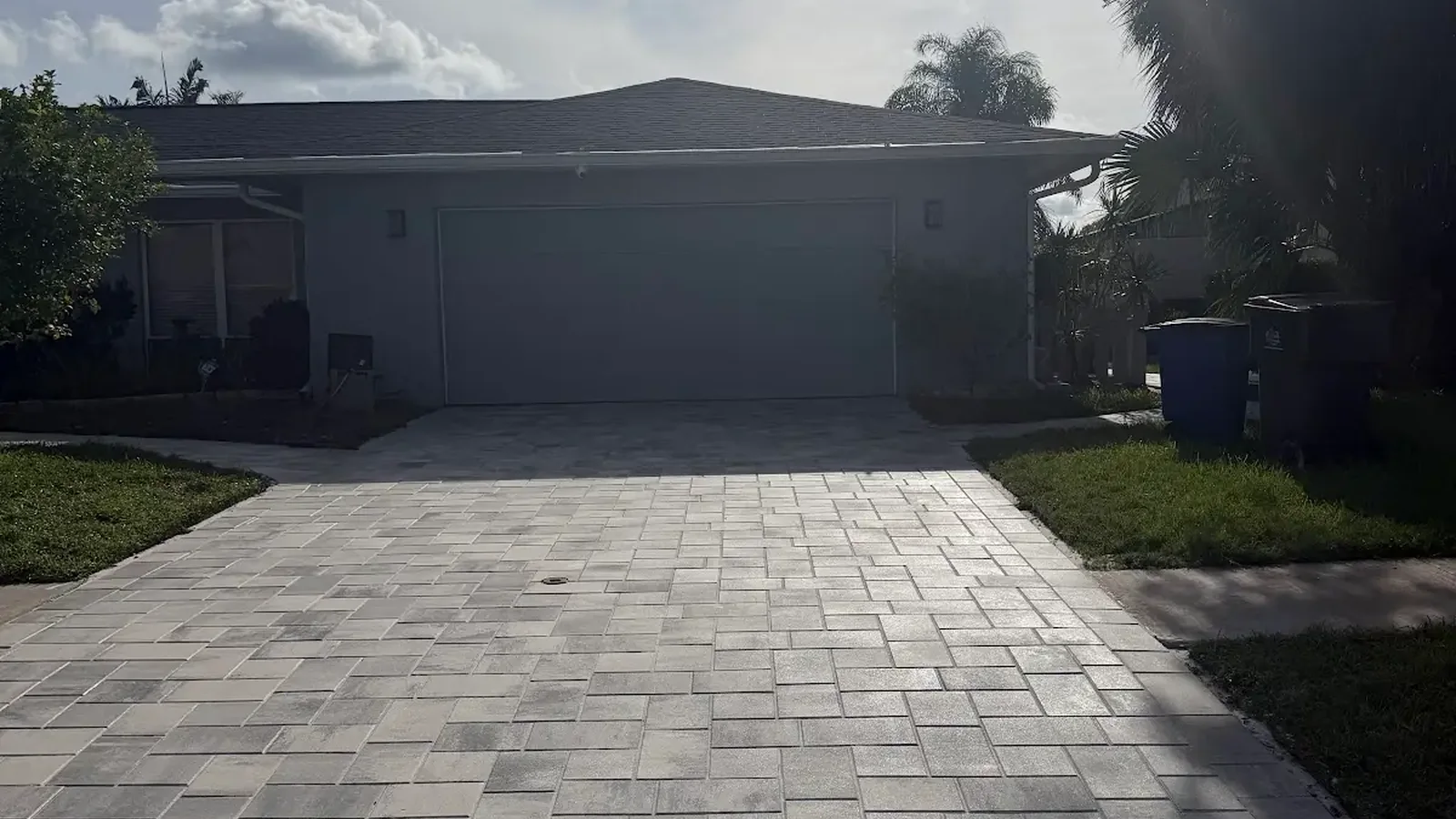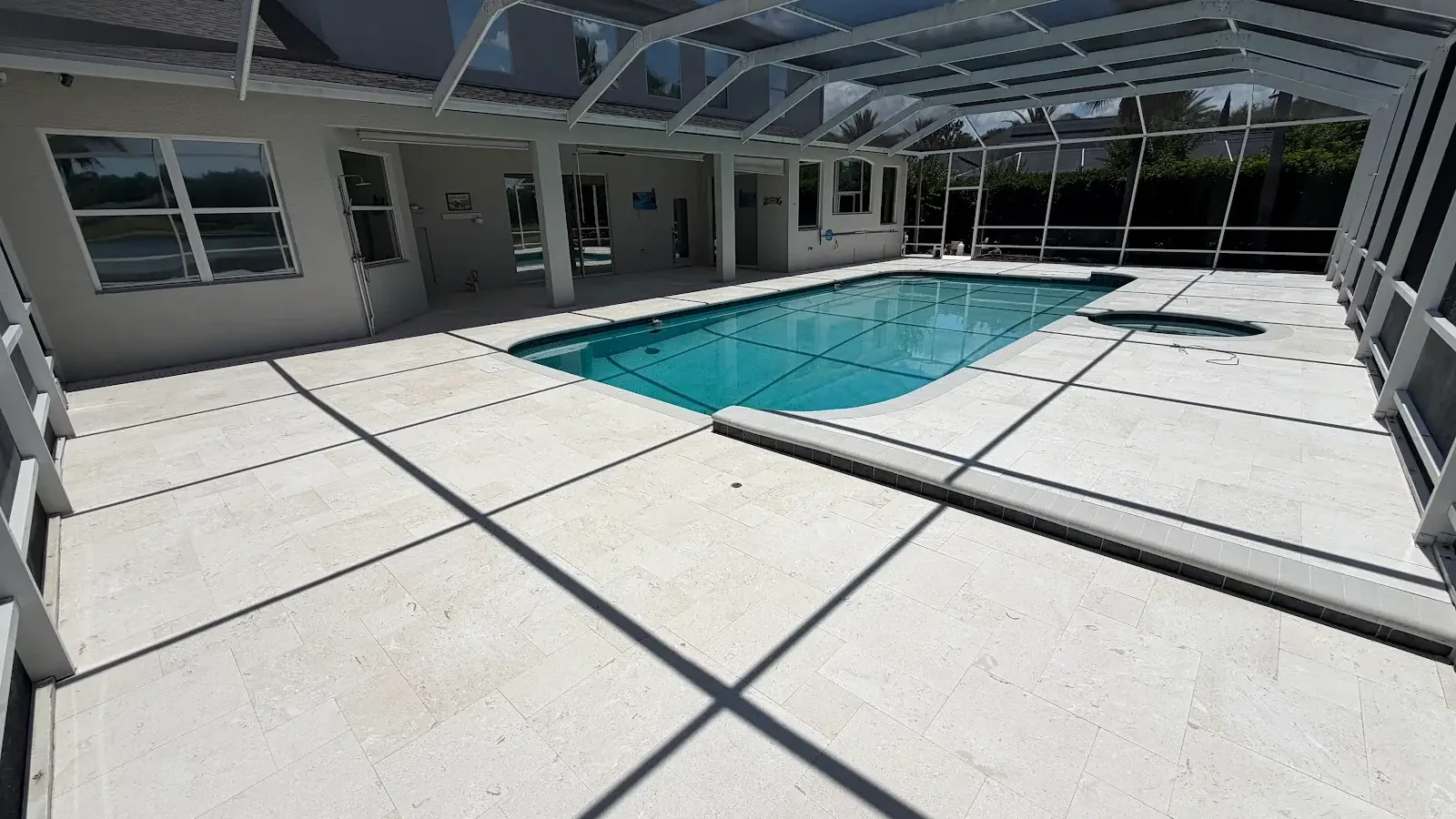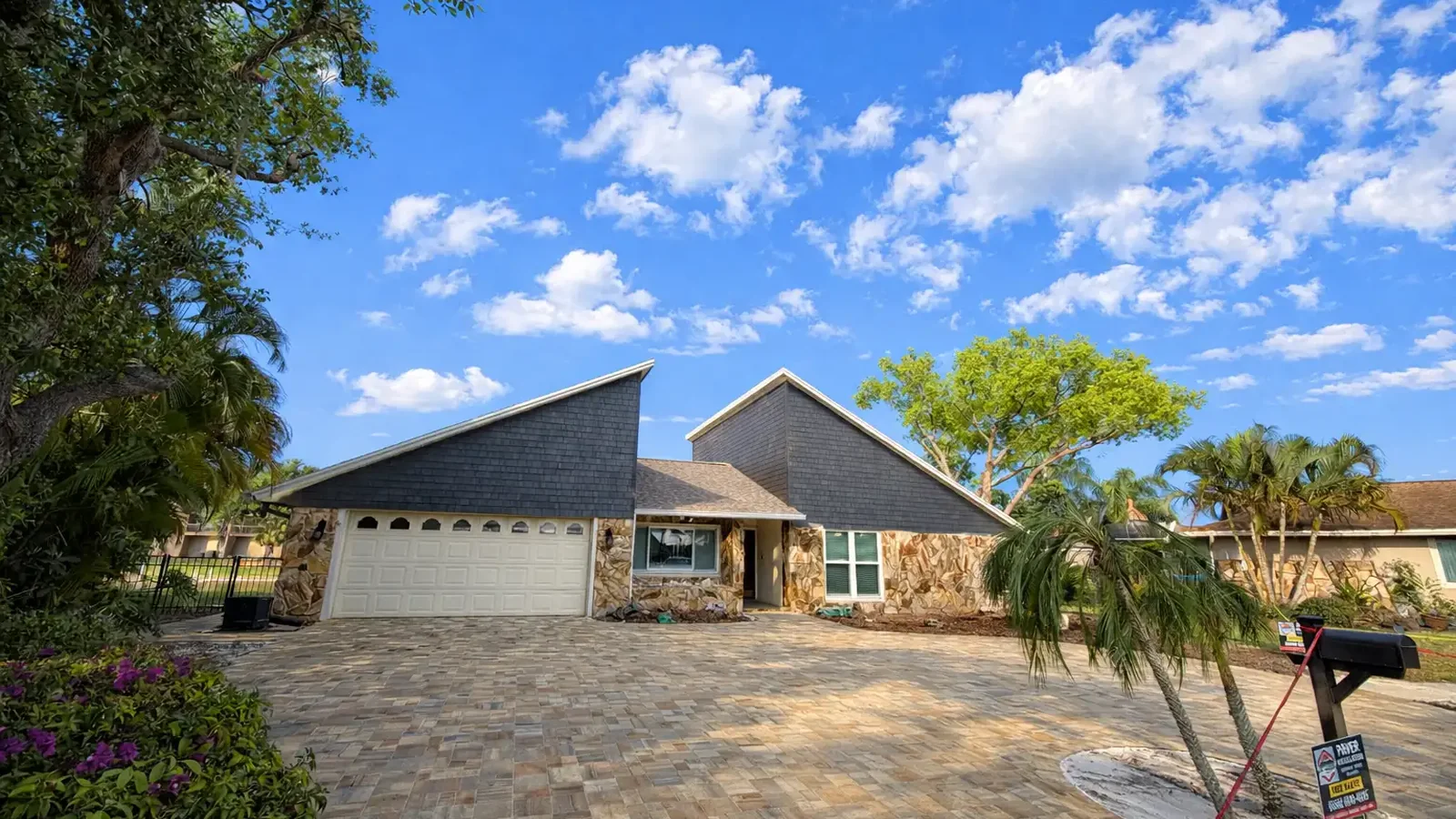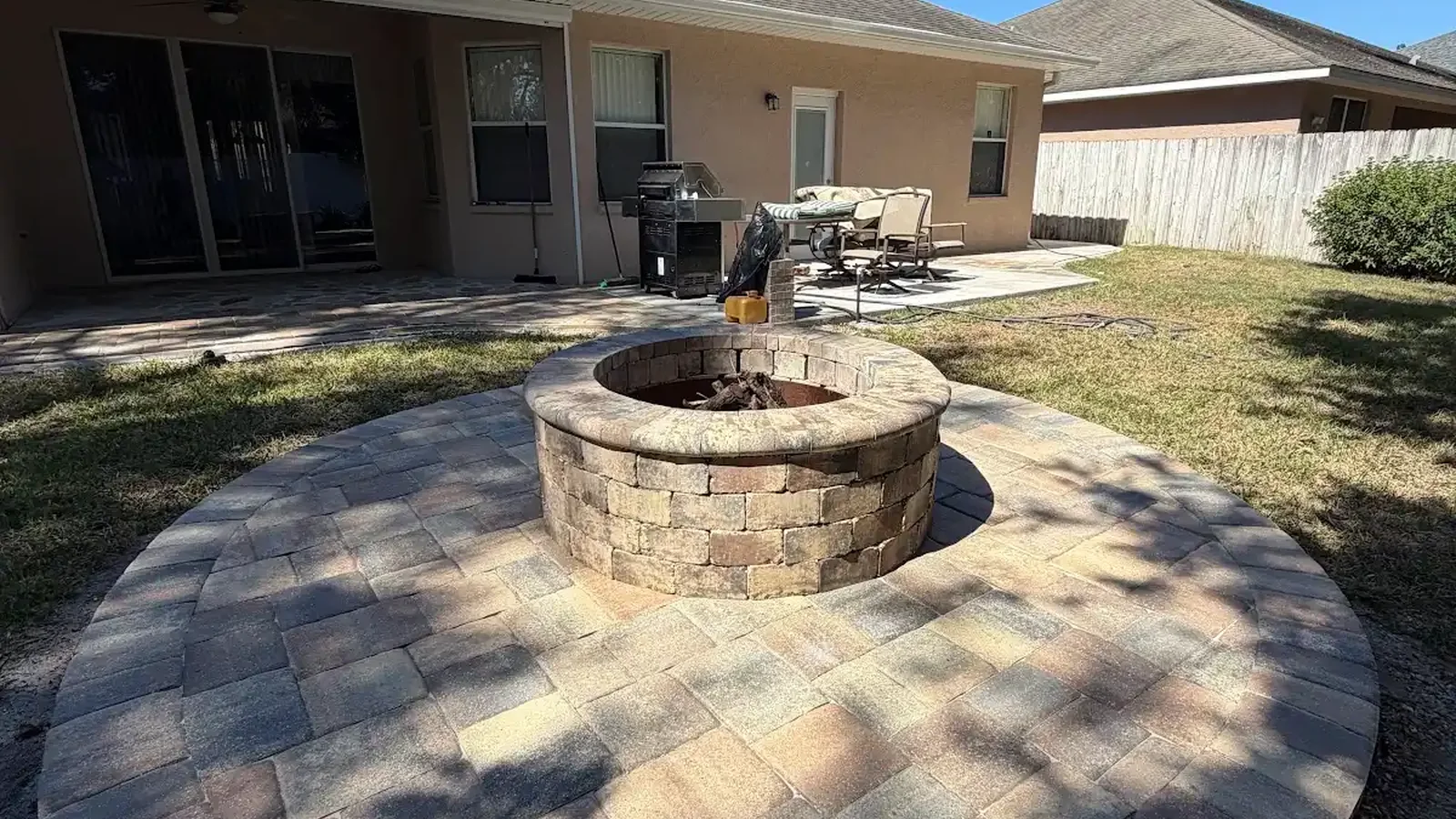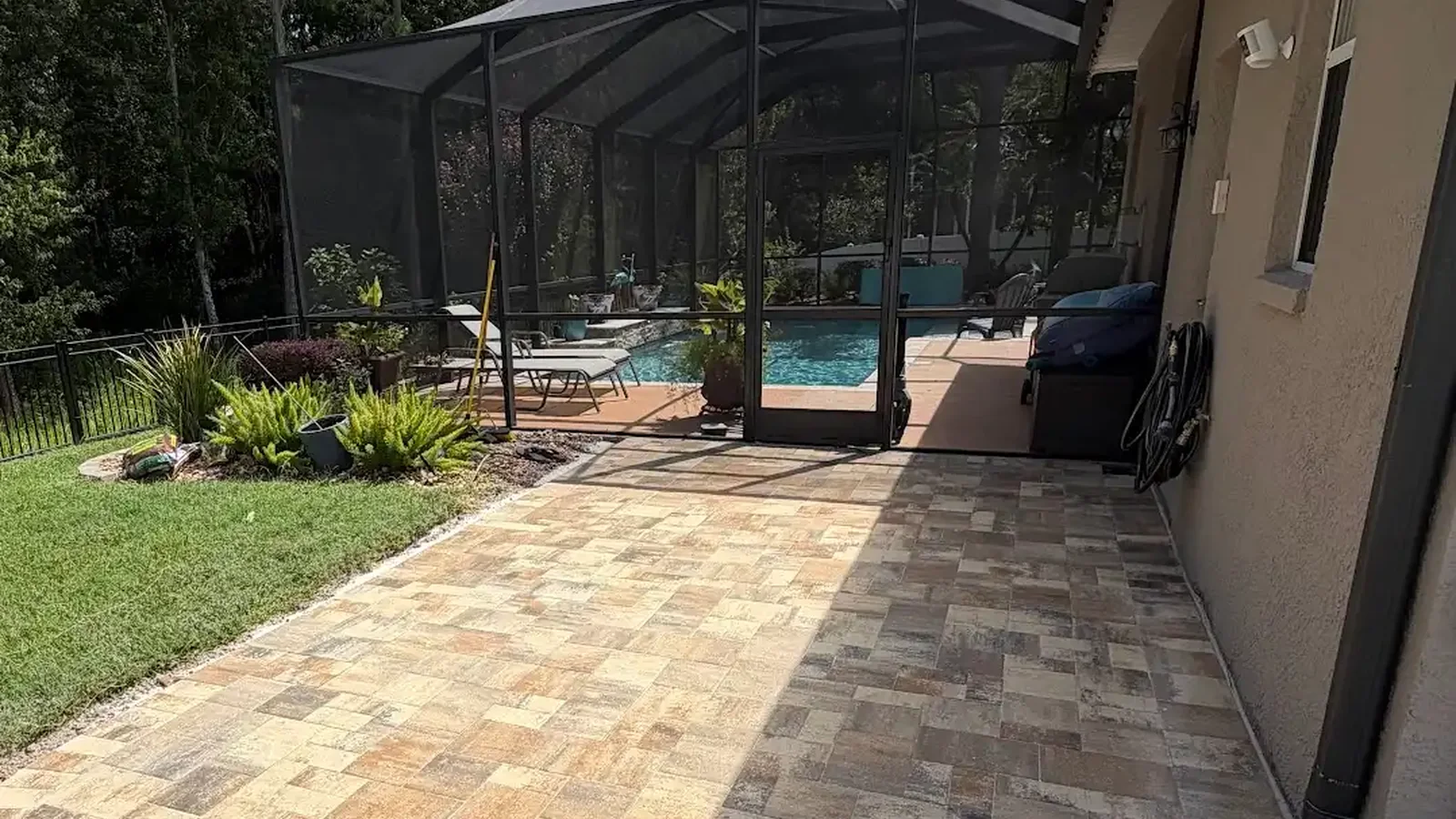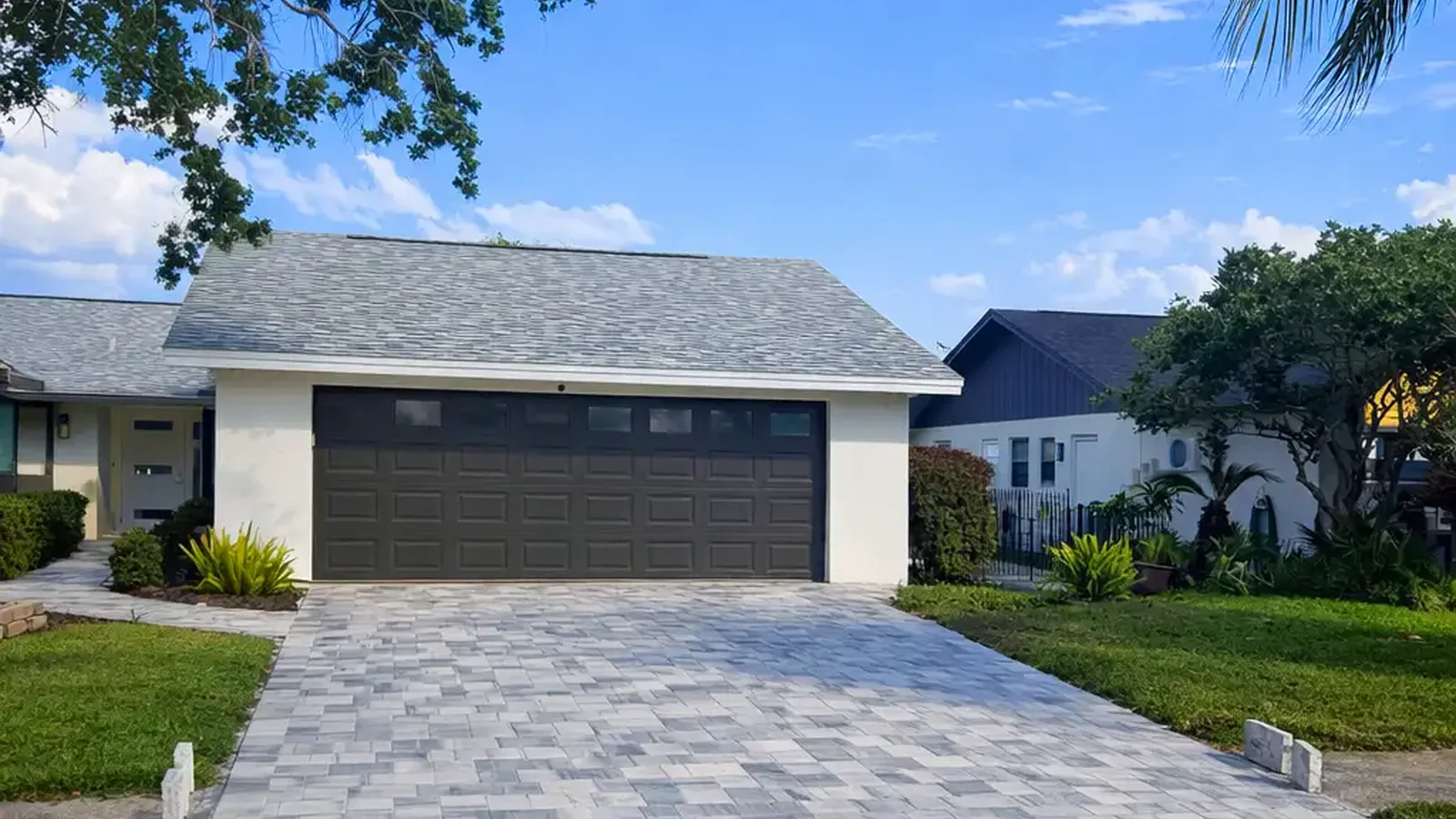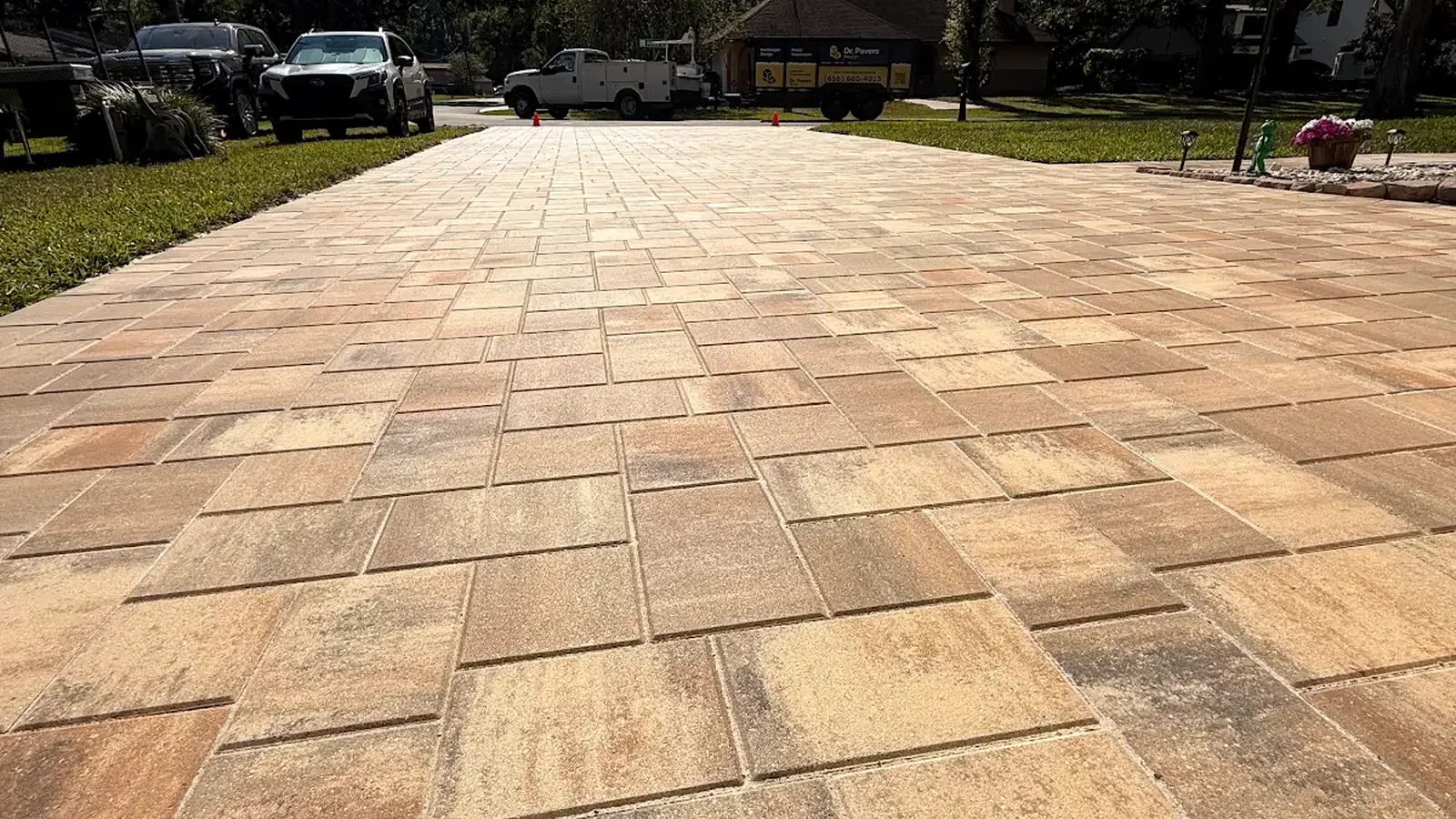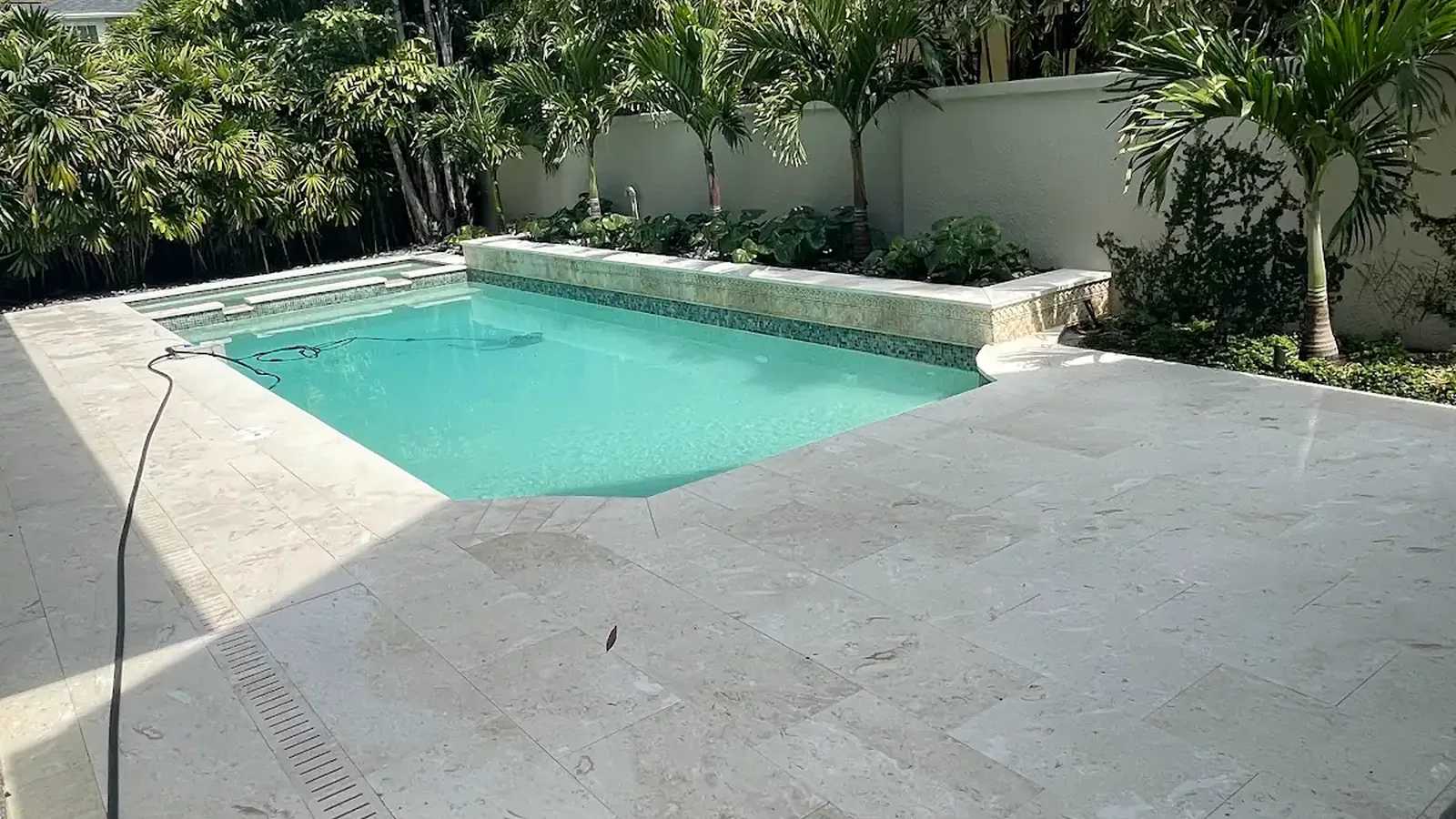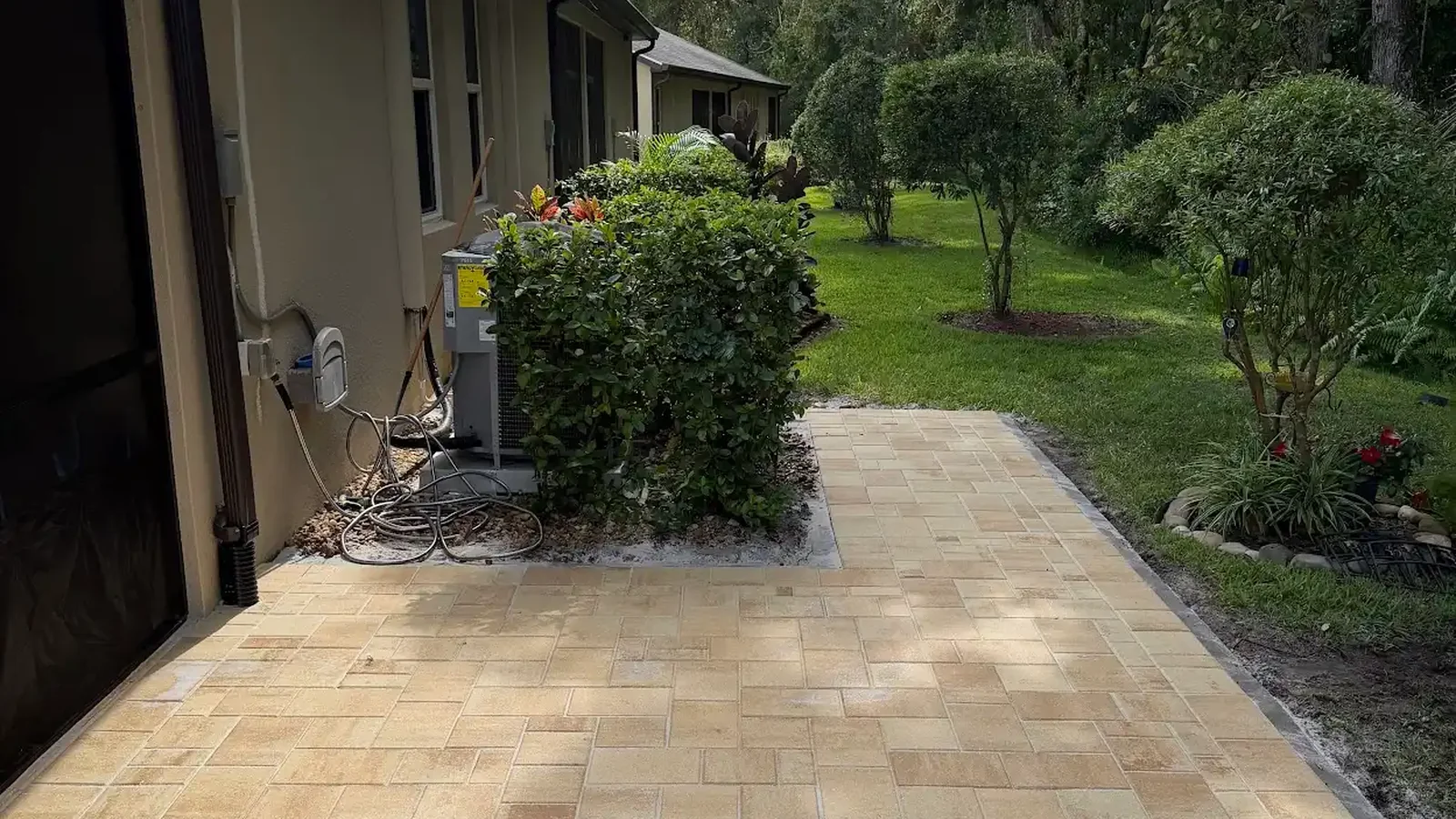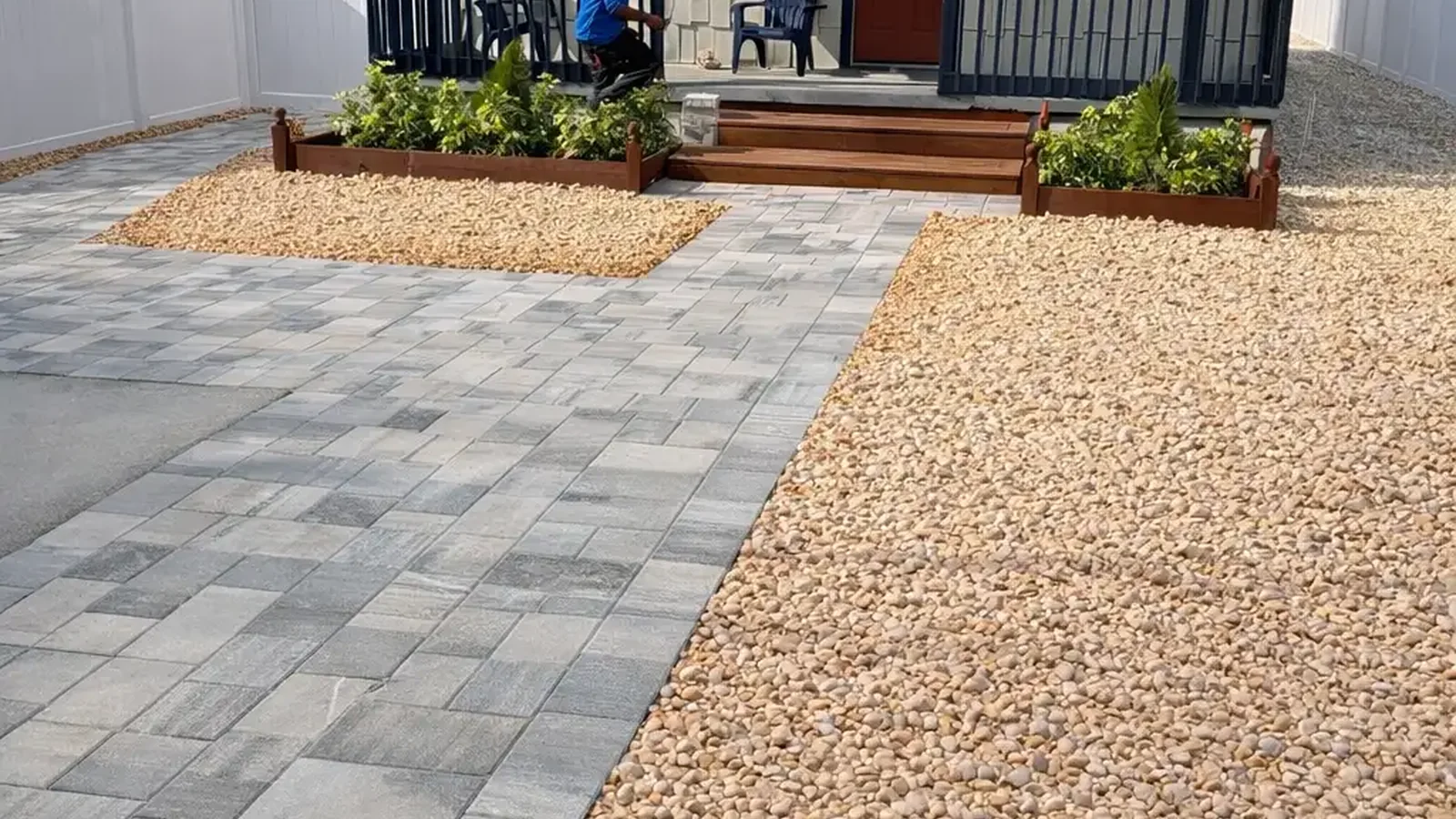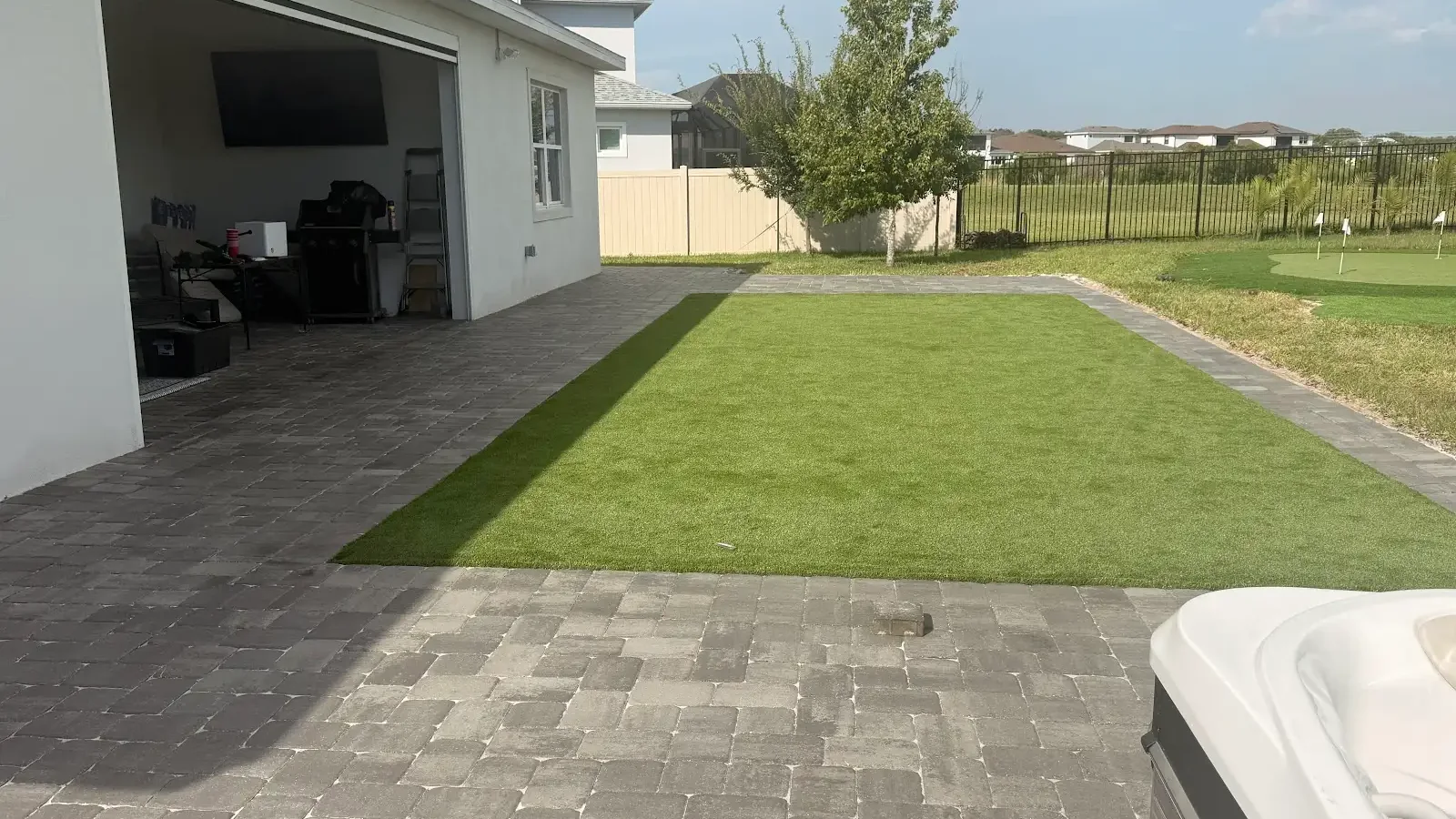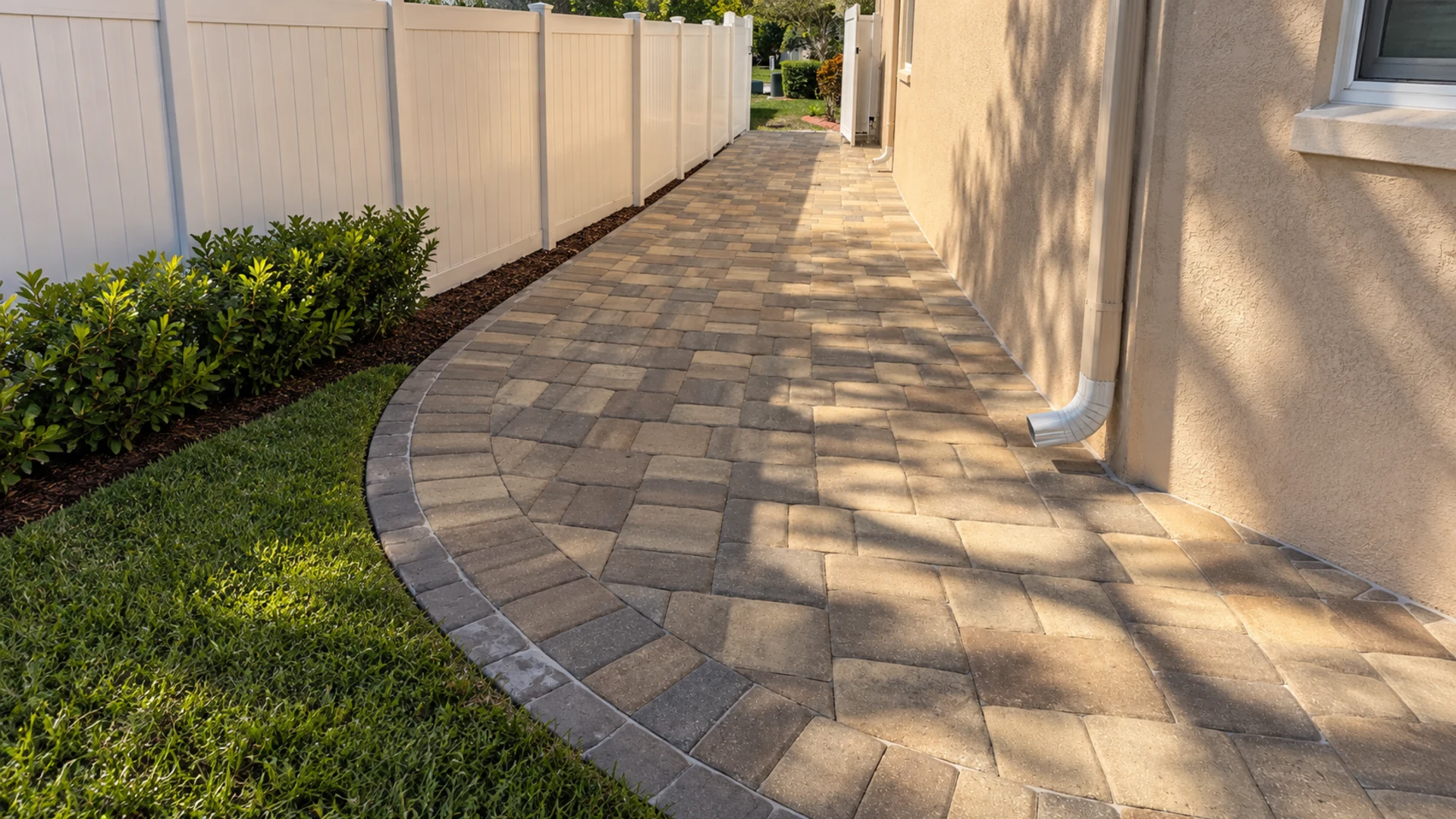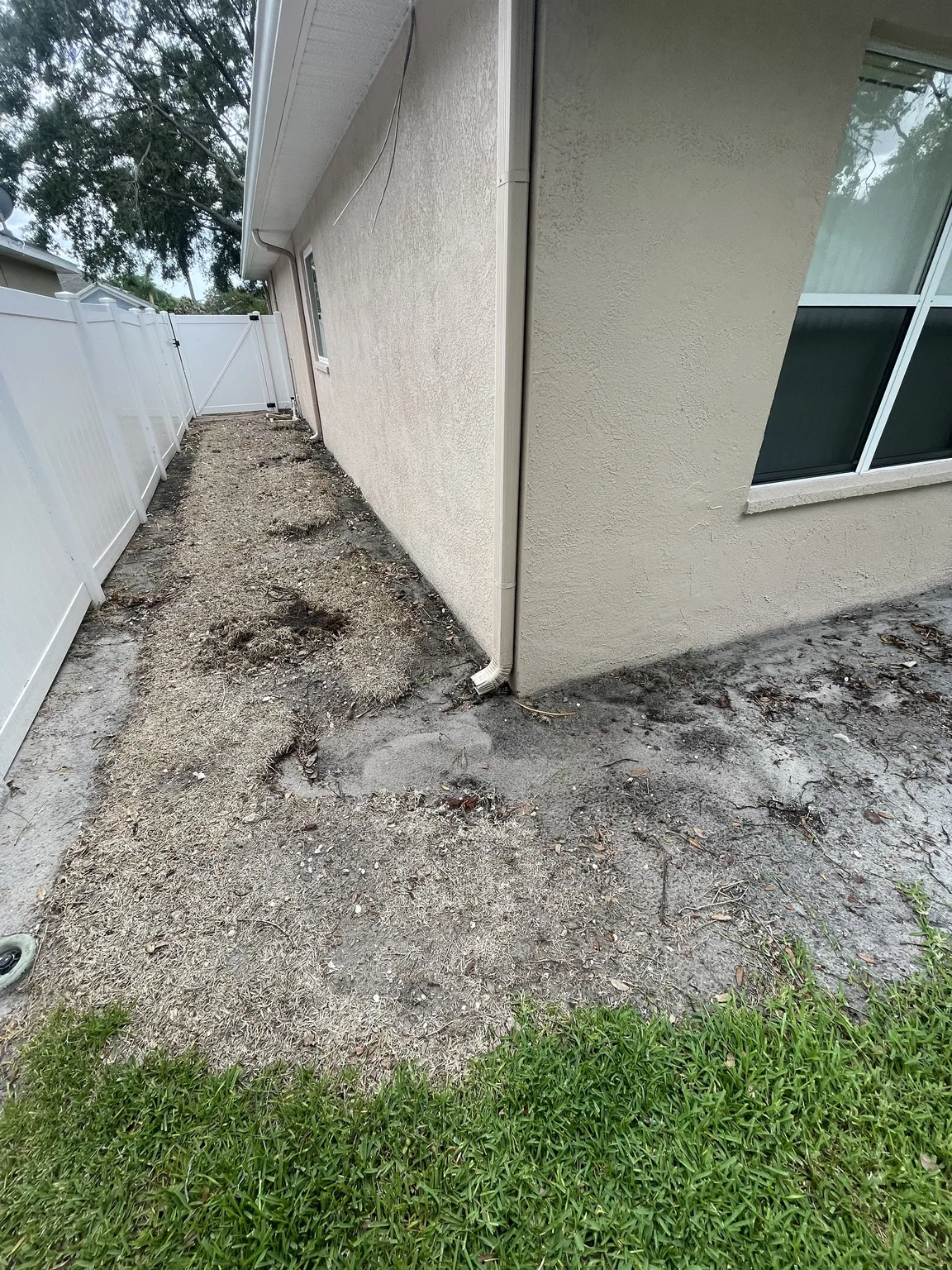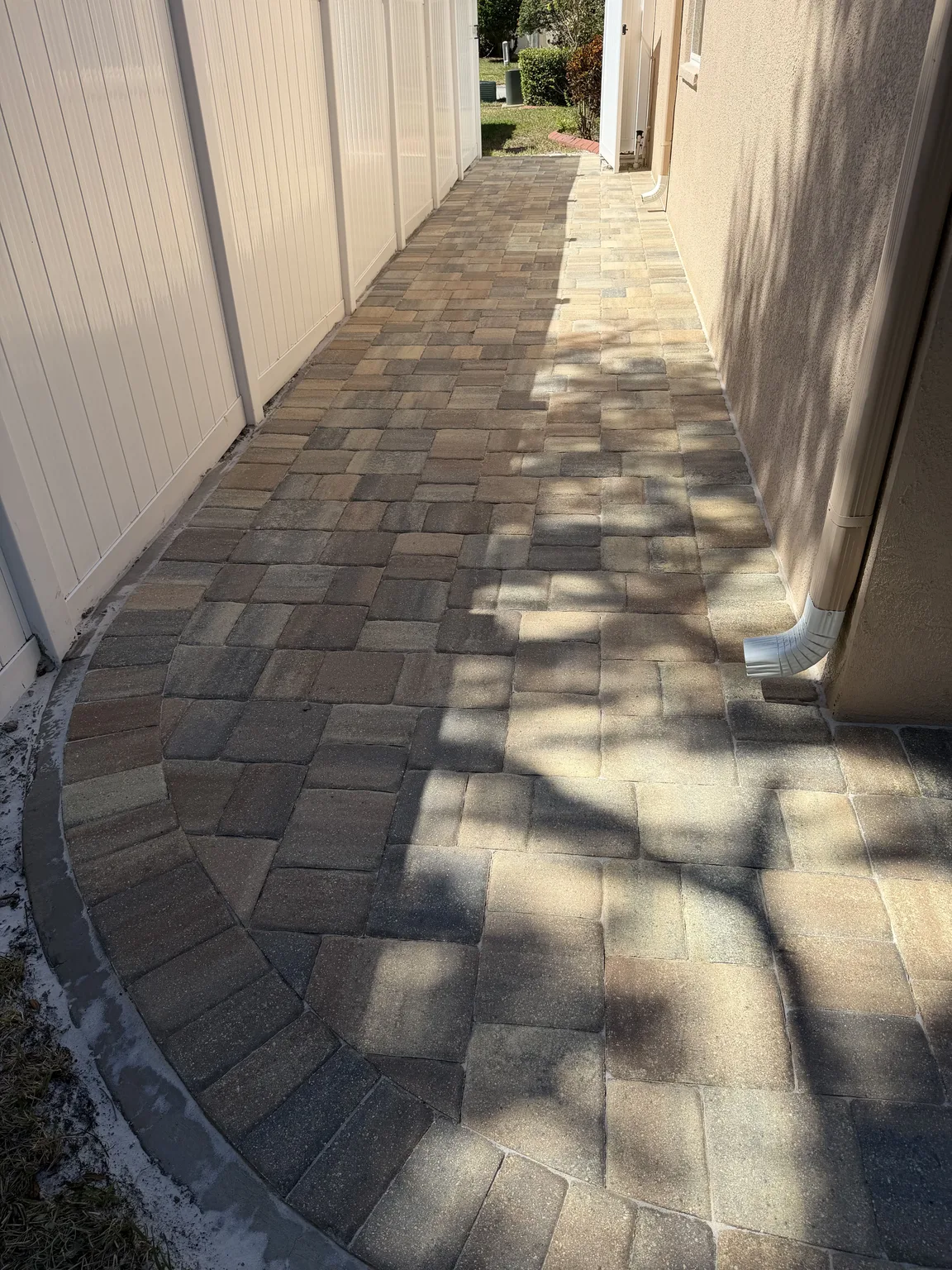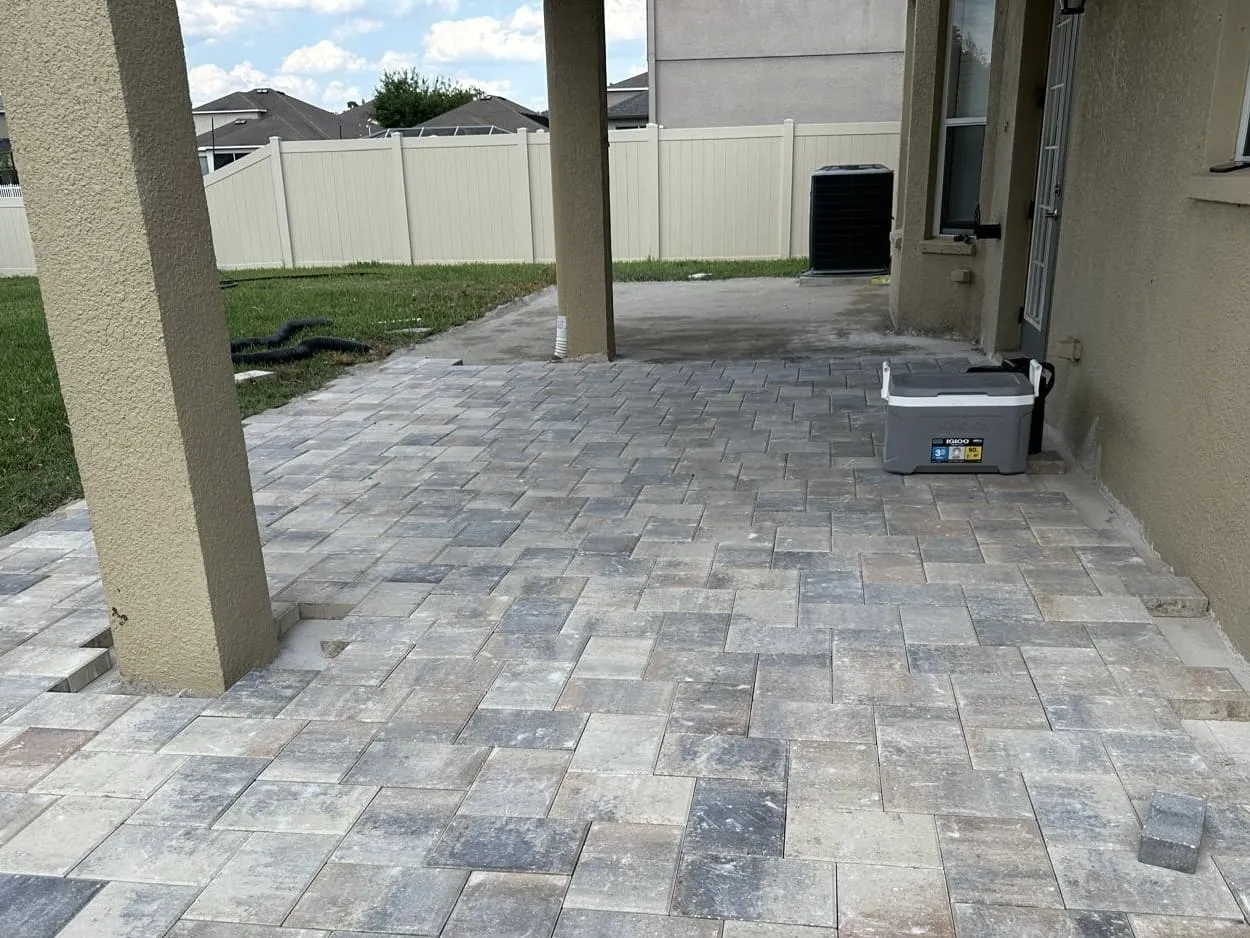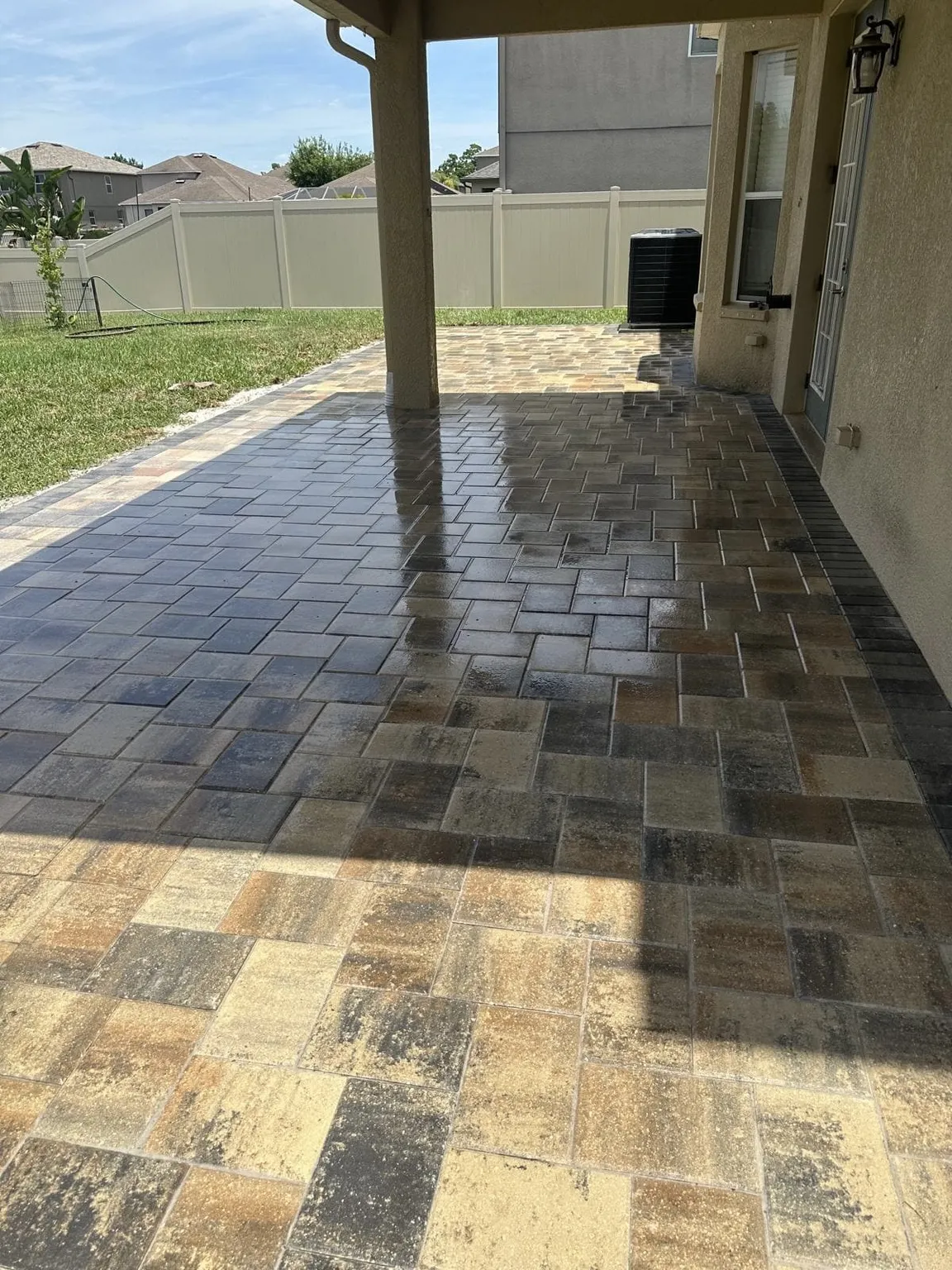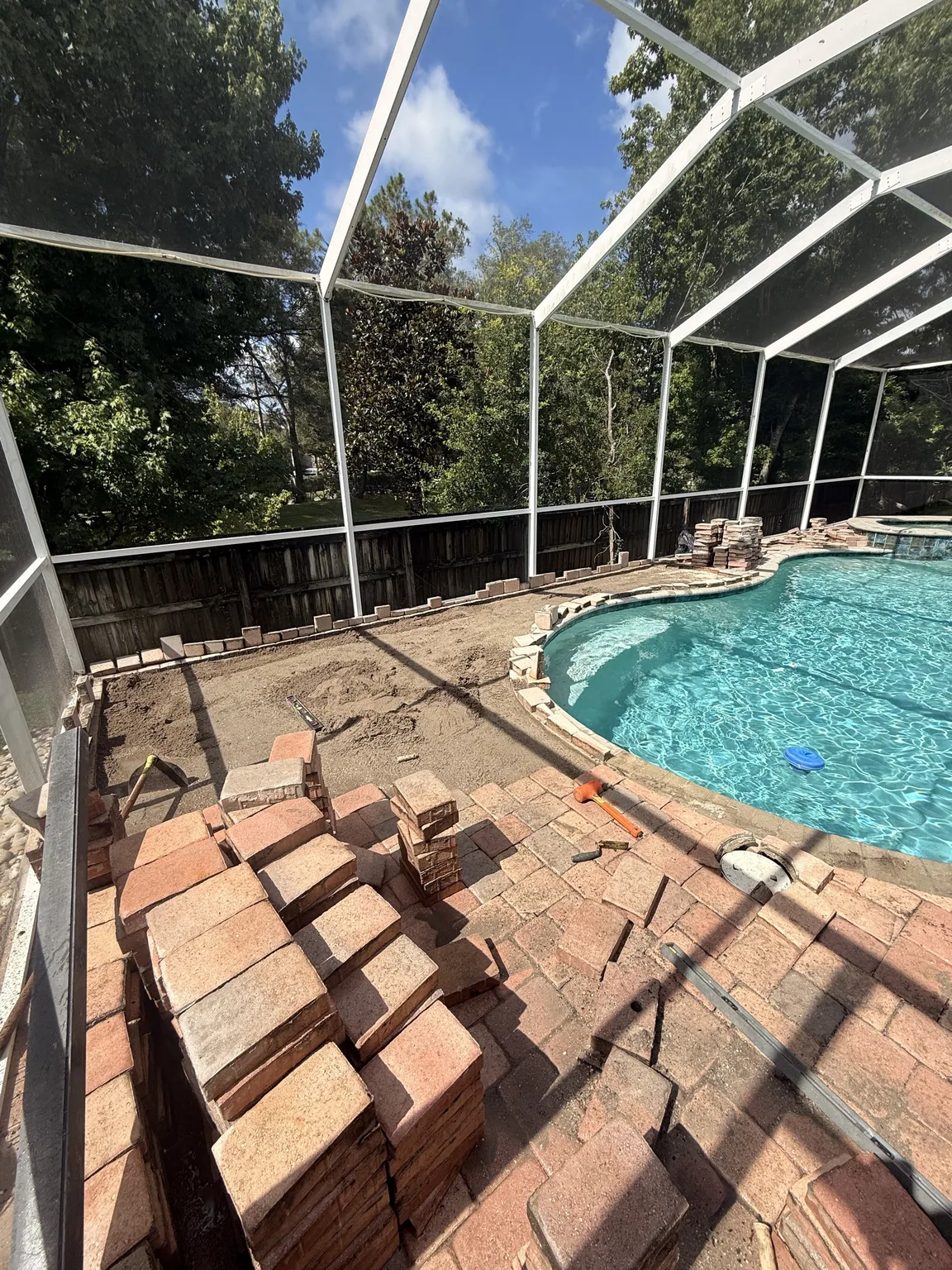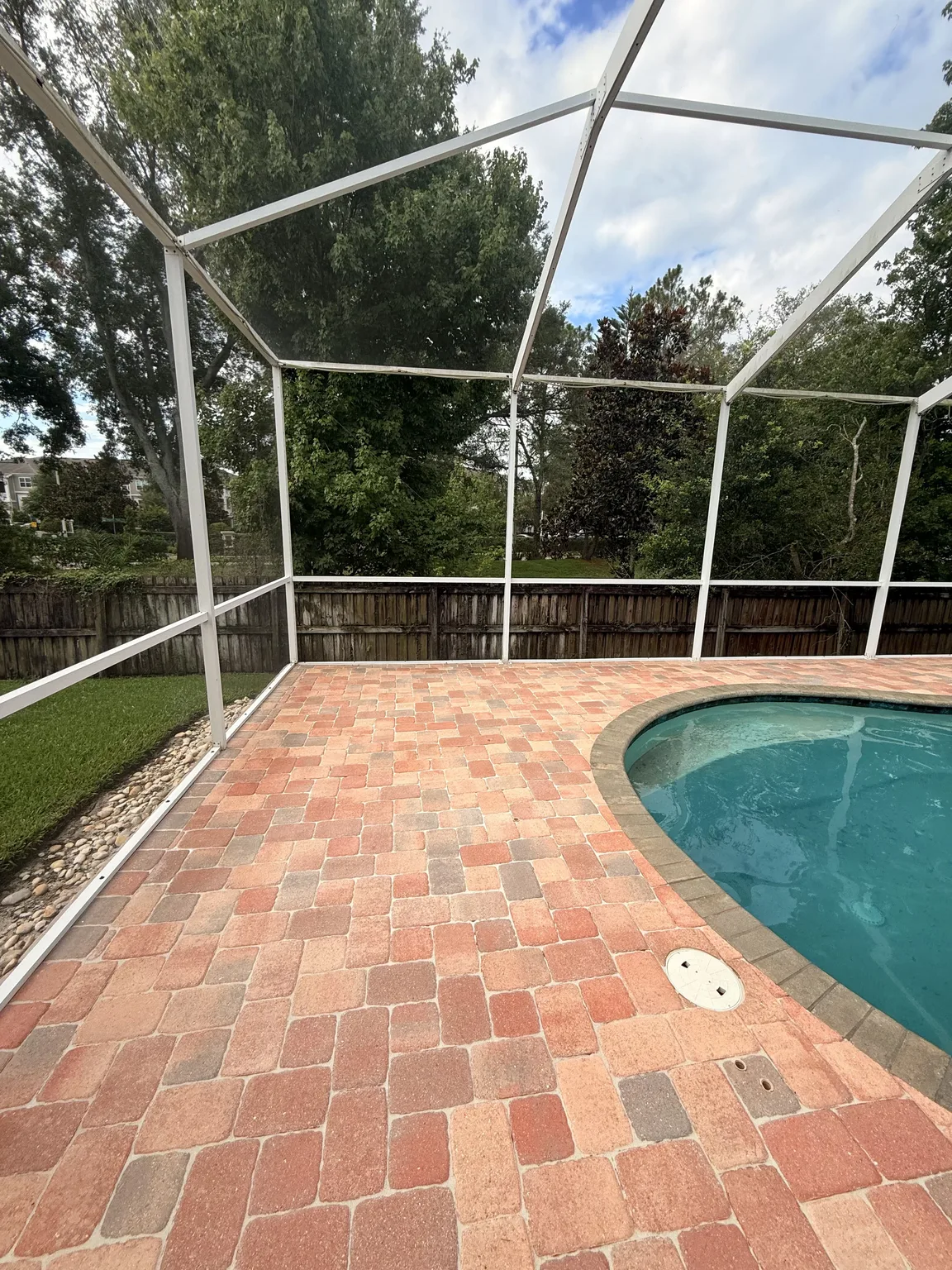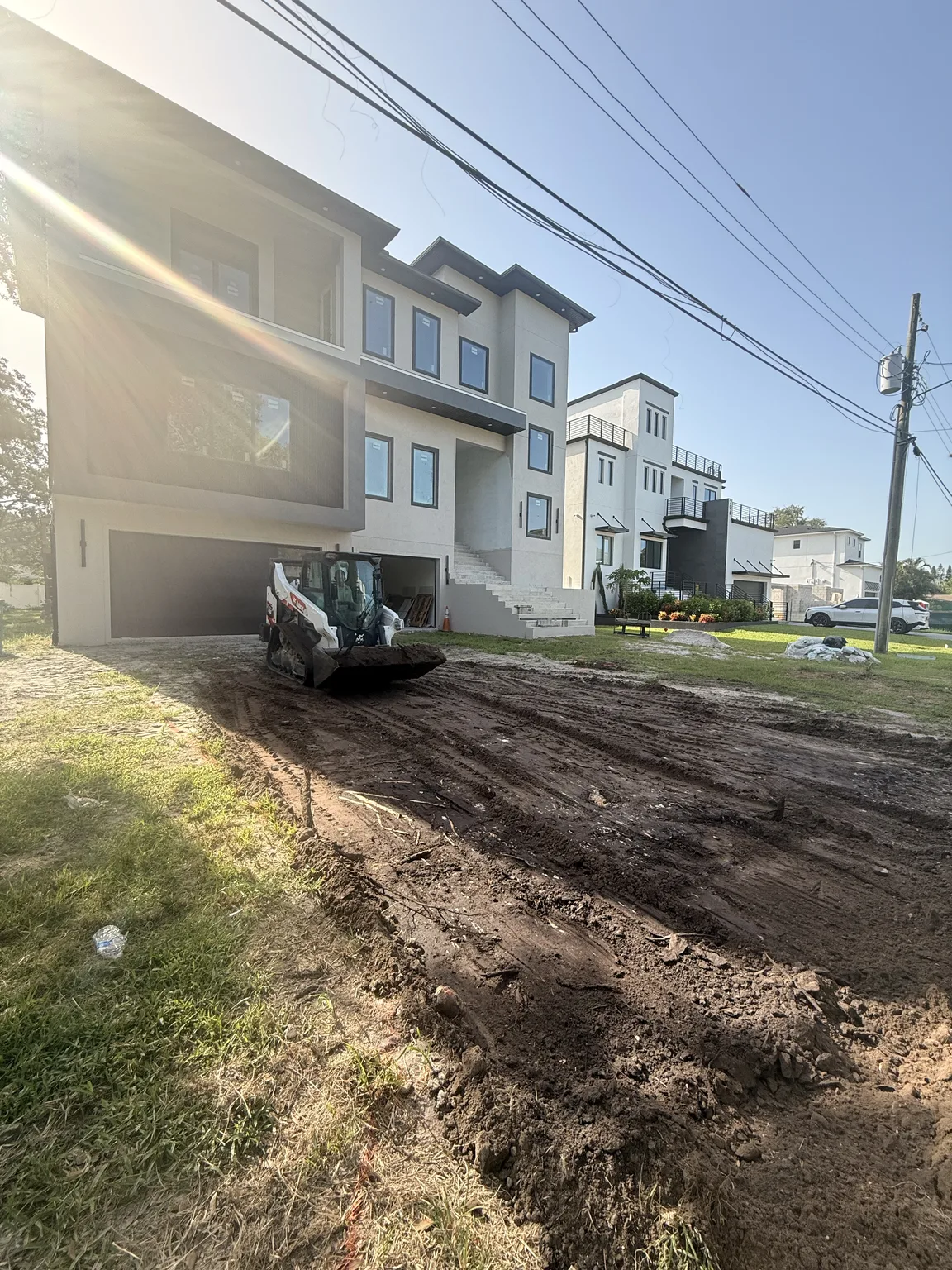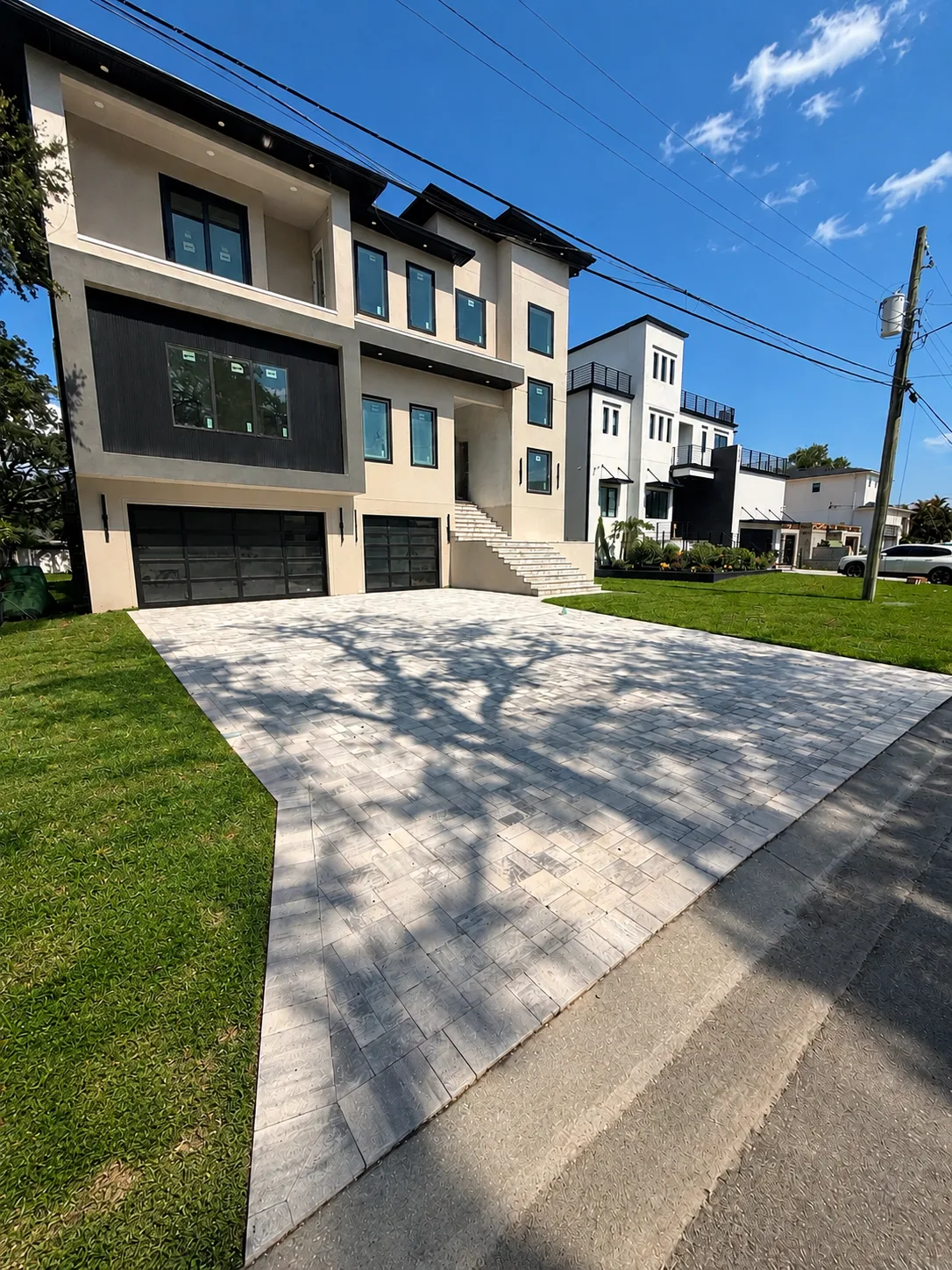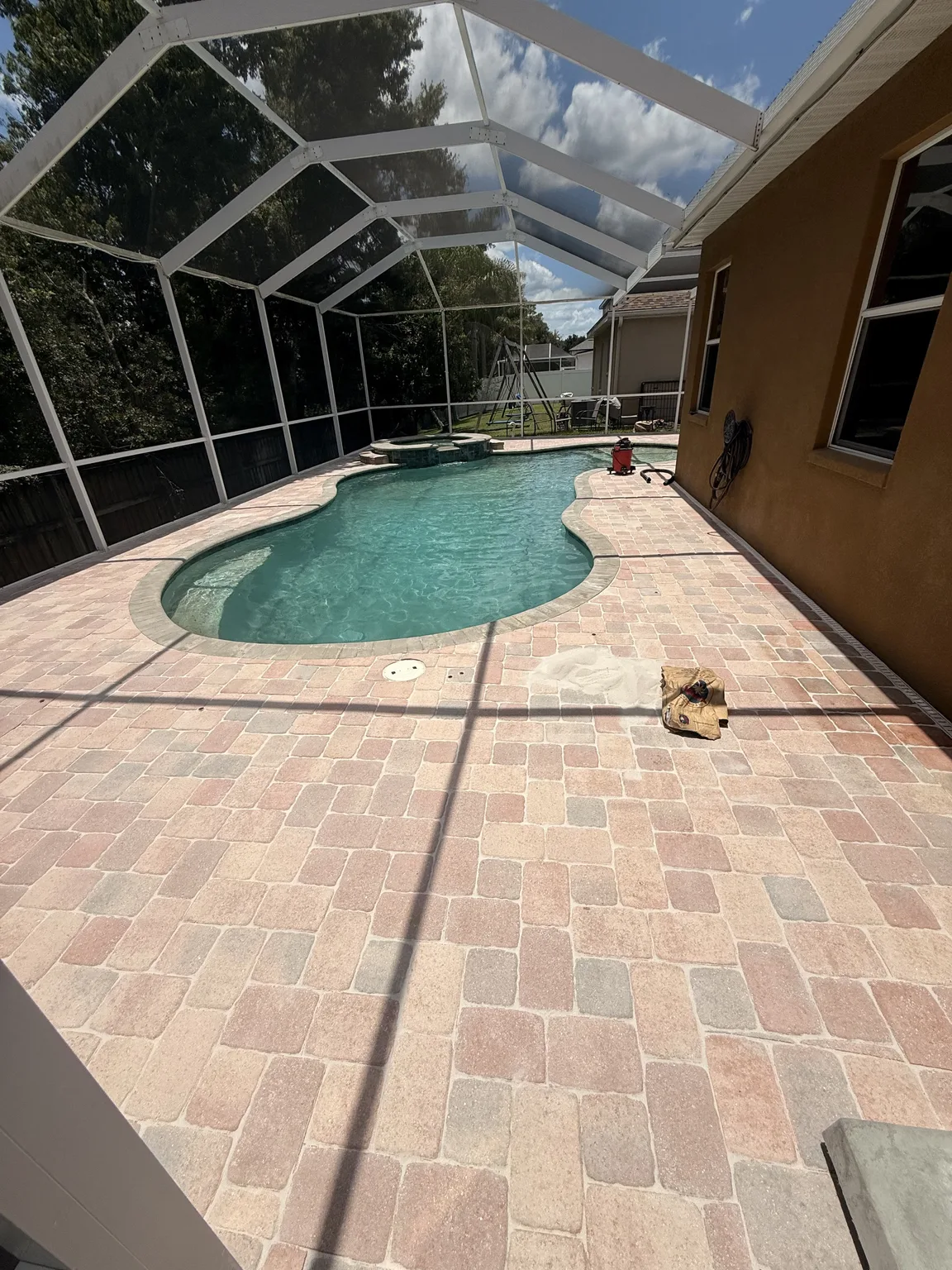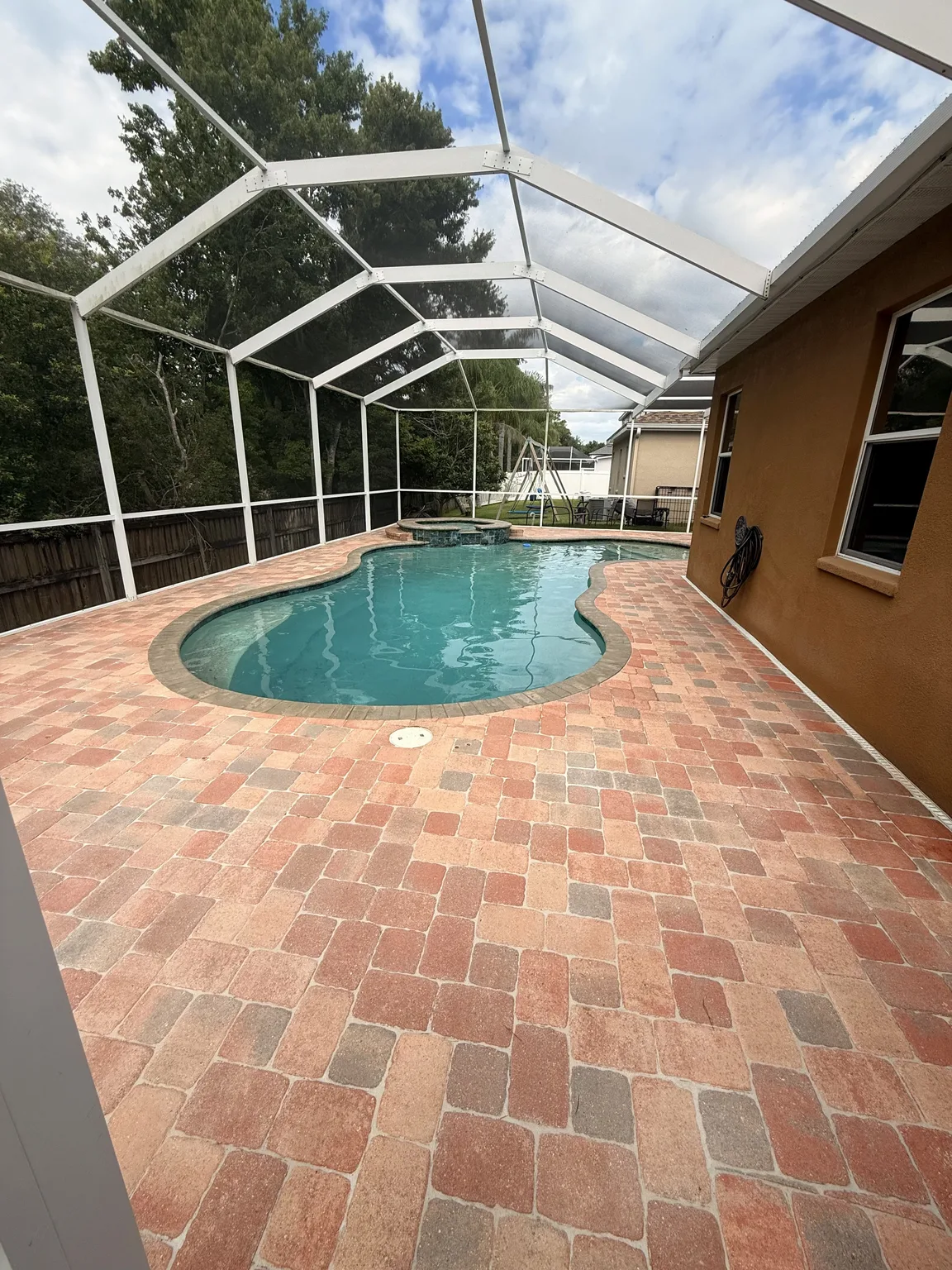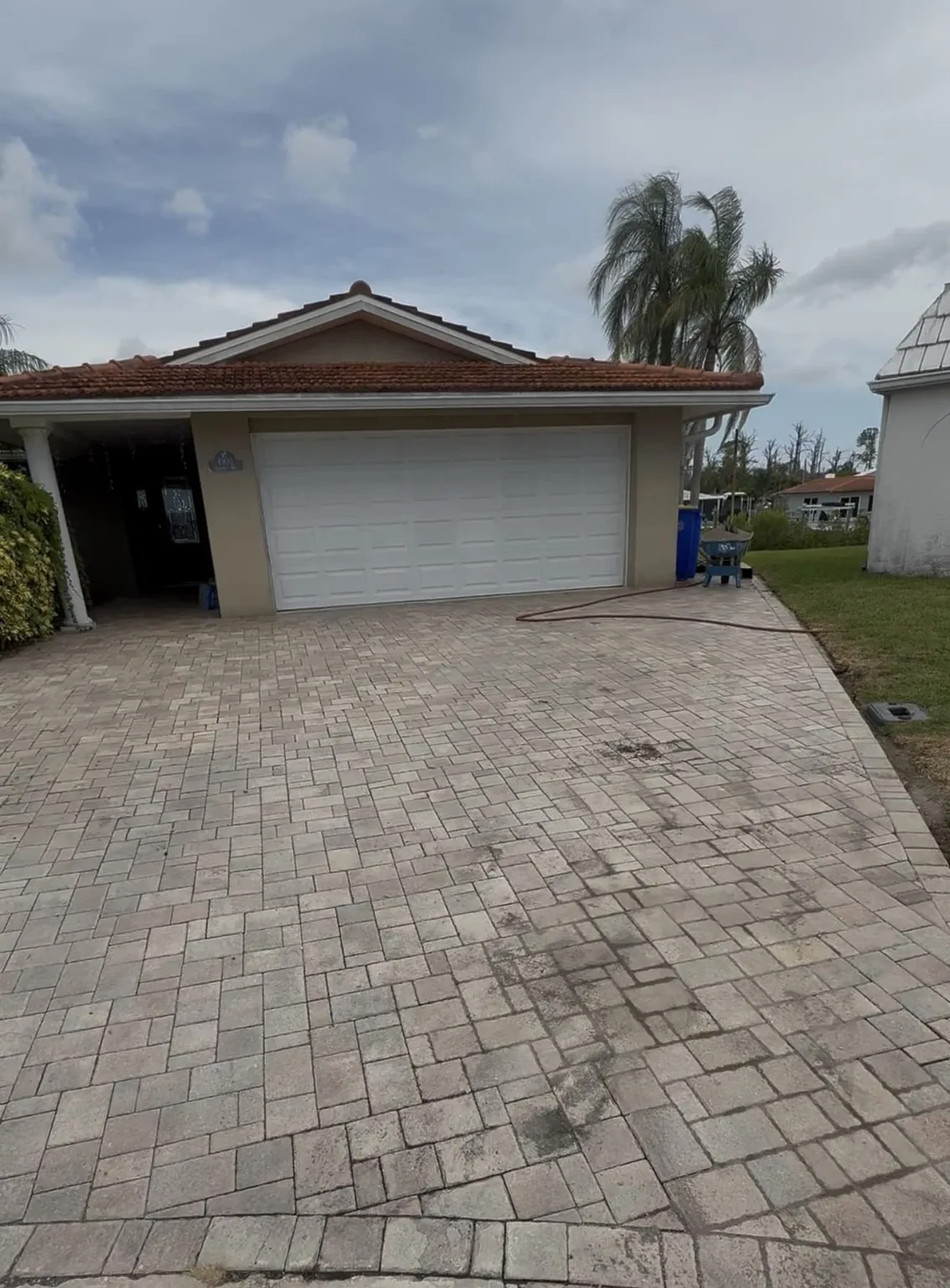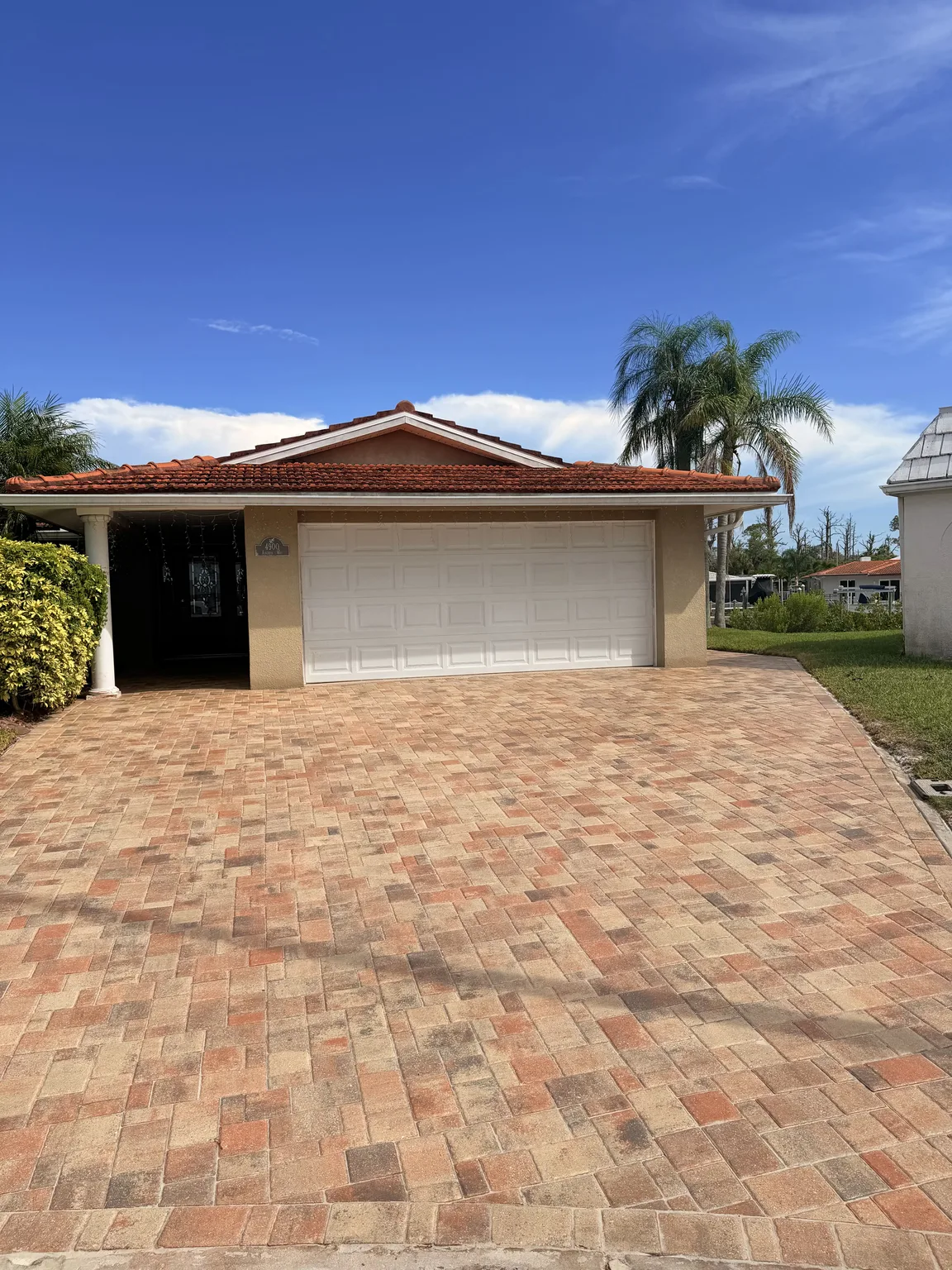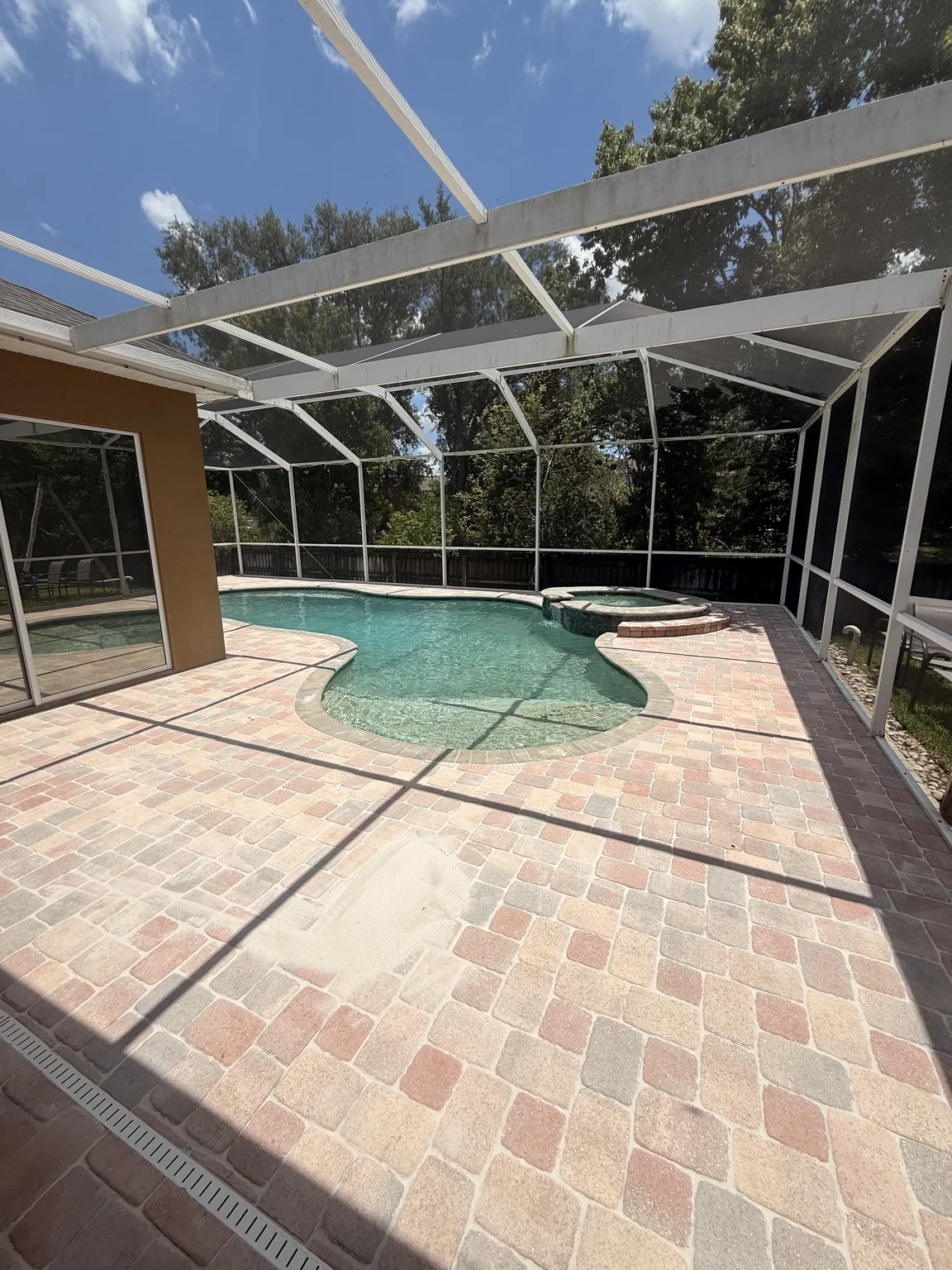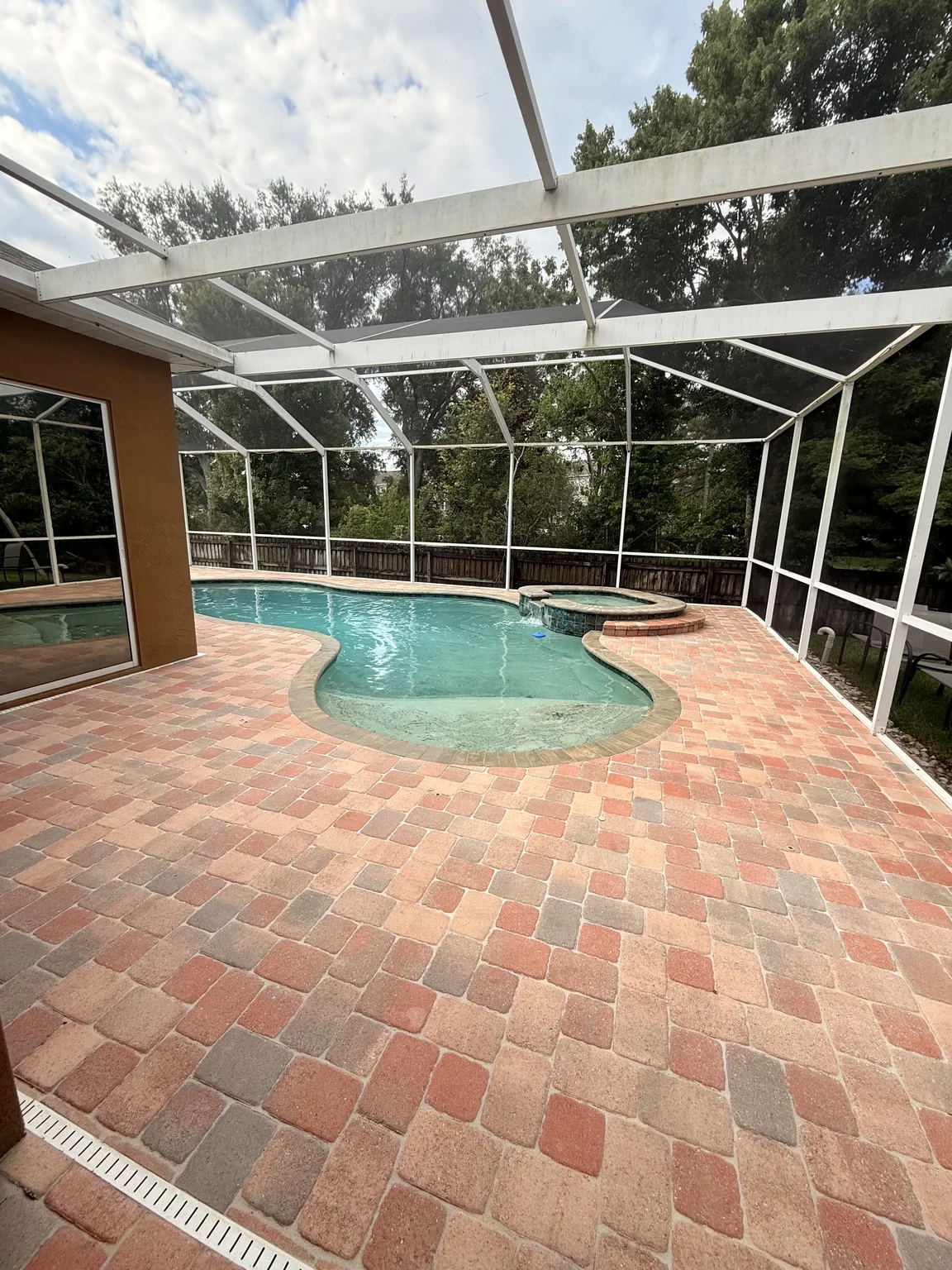
Best pavers for Tampa weather means materials and designs that stay cooler underfoot, resist heavy rain, and handle shifting Florida soils. In Tampa Bay, Riverview, Ruskin, Wesley Chapel, Land O’ Lakes, and nearby communities, pavers also need to stand up to intense sun, salty air, and year-round outdoor use. You balance appearance with performance, so the right choice depends on shade, traffic, and how wet your space gets. This guide walks you through how color, texture, density, joints, base, and edging all work together. With that context, you can compare concrete, travertine, porcelain, and clay for your patio, pool deck, or driveway.
What Are the Best Pavers for Tampa Weather?
When homeowners ask about the best pavers for Tampa weather, they usually want surfaces that stay comfortable, drain well, and last. There is no single material that wins for every yard, but concrete, travertine, porcelain, and clay all perform well when designed and installed correctly. Your sun exposure, traffic level, and budget will guide which one makes the most sense. The “best” choice often combines a suitable material with smart color, joint, and base decisions.
Balancing comfort, safety, and durability
In Tampa, strong sun and heavy rain mean you need pavers that do more than look good. Light colors help manage surface temperature, while a slip-resistant texture helps when summer storms roll in. A dense paver with thoughtful joint spacing can handle wet-dry cycles and resist shifting. However, even excellent materials perform poorly if the base, edge restraint, or slope are wrong.
Why there is no universal “best” paver
Pool decks in Palm Harbor often need a cooler, more barefoot-friendly material than a driveway in Town ‘N’ Country that handles parked cars. Covered patios in Greater Carrollwood may stay relatively shaded, while open decks in Thonotosassa receive full sun all day. Each surface has different needs for color, density, and texture. That is why most projects start with a site visit to see how your yard behaves.
How to start your selection
To narrow choices, first decide how you will use the space: lounging, dining, driving, or all three. Then consider how much sun and rain the area sees through the year. Finally, look at maintenance preferences, including cleaning and sealing, because those affect long-term appearance. With those basics defined, comparing paver types becomes much easier.
How Tampa Bay Weather Stresses Pavers
Heat, UV exposure, and color fading
Tampa Bay heat pushes paver surfaces to high temperatures, especially in dark colors and dense materials. UV exposure can also fade some pigments over time. Lighter tones generally absorb less heat, so they often feel better under bare feet. However, they may show dirt more quickly, so cleaning becomes part of your planning.
Intense rain, runoff, and saturation
Heavy downpours in Land O’ Lakes, Ruskin, and Seven Springs can overwhelm flat or poorly sloped patios. If the base traps water, pavers may settle or grow algae in damp joints. Permeable joint designs and modest slopes help move water away from your house and low spots. However, the layout must still coordinate with existing grading, downspouts, and neighboring properties.
Coastal air, salt, and temperature swings
Near the coast, salt in the air can affect some materials and metal edging, especially when combined with frequent wetting. While Tampa does not see hard freezes every winter, occasional cold snaps add another stress. Materials with very high absorption may suffer more from repeated wetting and drying, rather than from frost itself. For coastal or waterfront projects, material choice and sealing strategy matter even more.
Color, Texture, and Comfort Under Tampa Sun
Why color matters for heat and glare
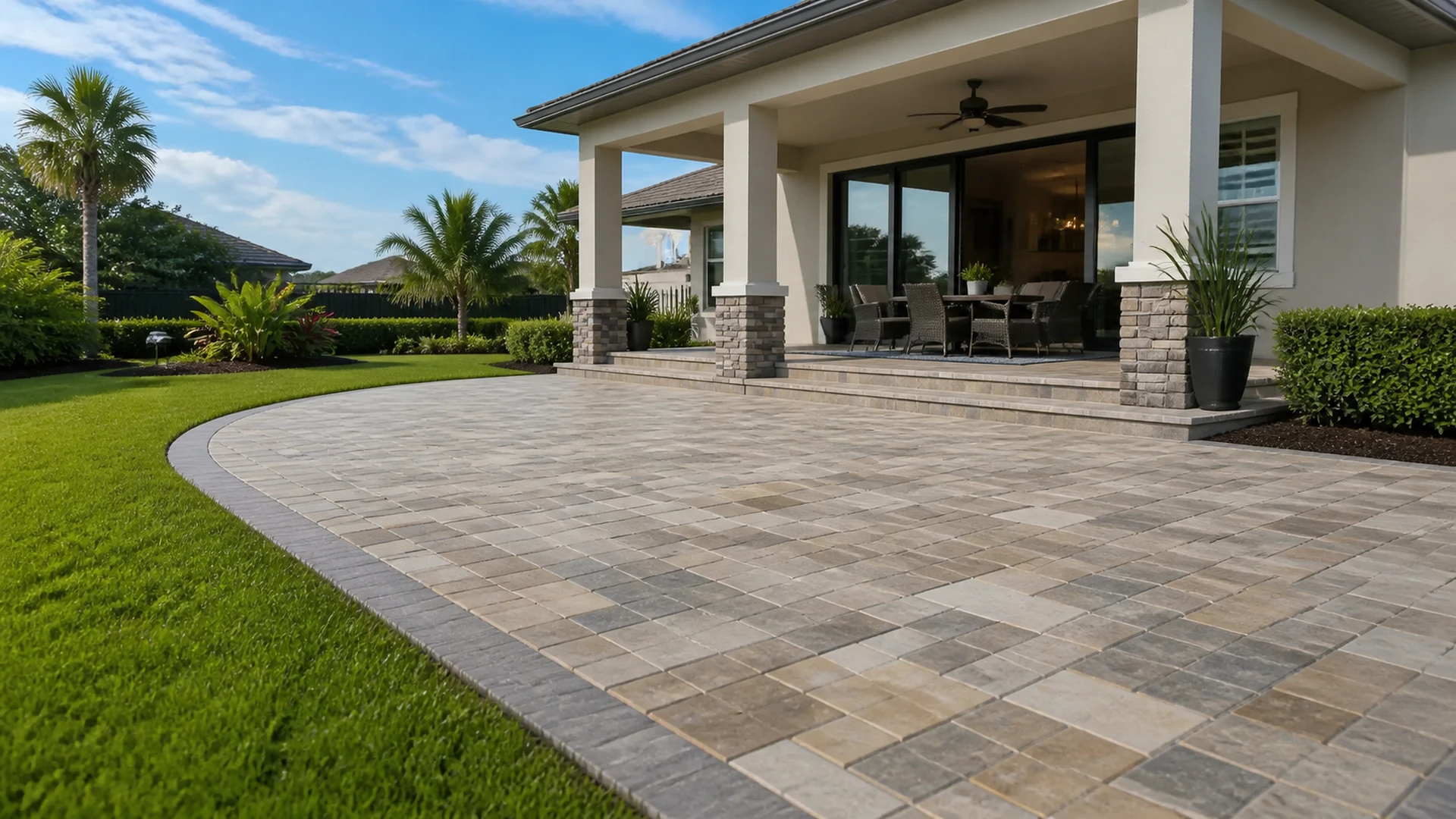
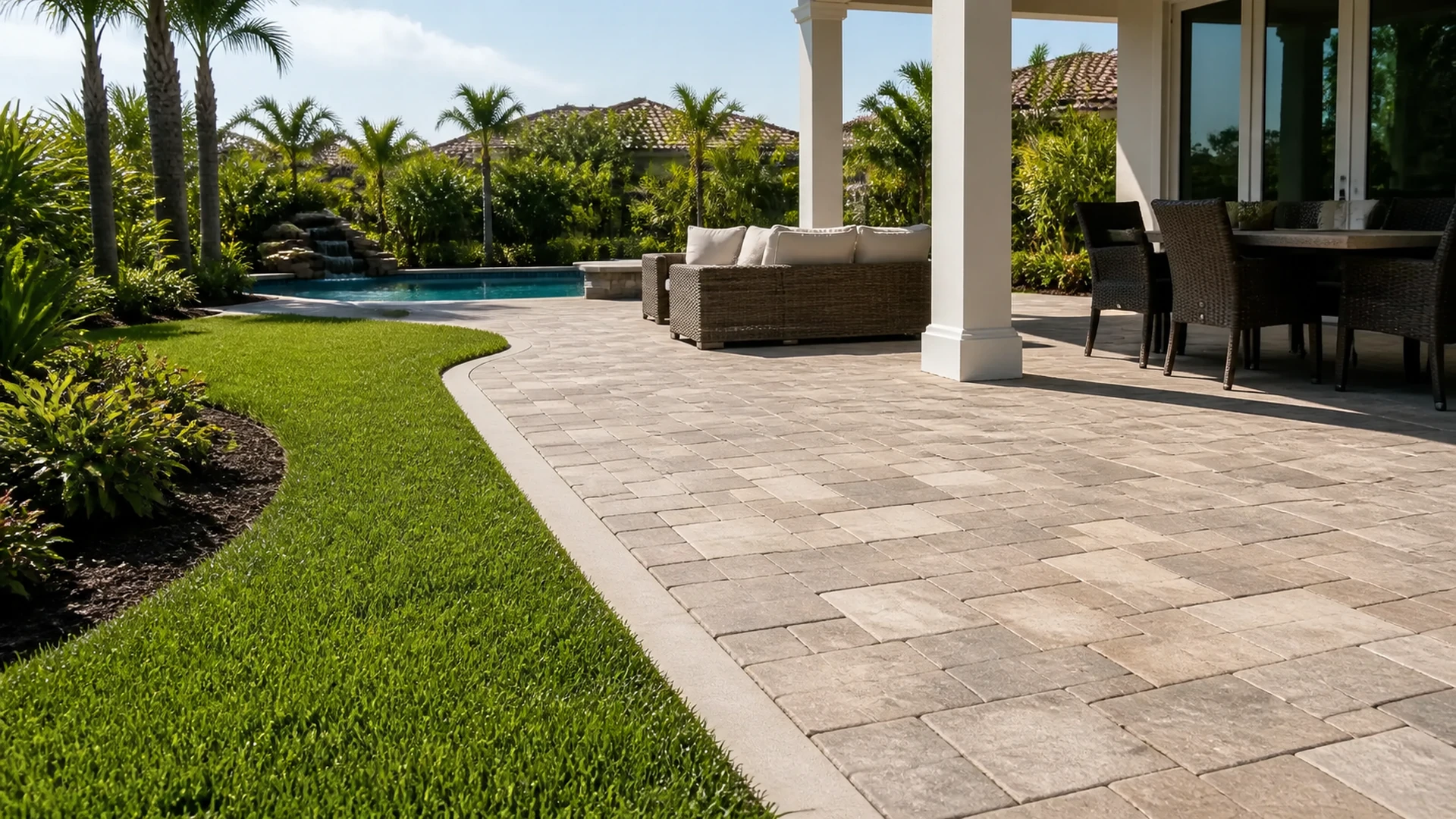
Color strongly influences how hot your pavers feel in Wesley Chapel and other sunny areas. Light beige, cream, and soft gray tones usually stay noticeably cooler than charcoal or deep red. However, very pale colors can create glare around pools and wide patios. A mid-light blend often balances heat comfort with visual softness.
Surface texture, slip resistance, and barefoot feel
Texture affects both safety and comfort. A slightly textured surface helps with traction during sudden showers, yet still feels comfortable under bare feet. Highly polished or very smooth tiles can become slick when wet, especially around pools. On the other hand, aggressively rough textures may be harder to clean and tougher on skin.
Shade, trees, and microclimates
Trees and roof overhangs create pockets of shade that change how pavers behave through the day. Shaded areas may stay cooler but can stay damp longer, which encourages algae or mildew in joints. In Town ‘N’ Country or Greater Carrollwood backyards with mature trees, leaf litter and roots also factor into maintenance. Matching texture and color to each microclimate keeps the area more consistent and less slippery.
Density, Absorption, and Joint Design in Heavy Rain
How density and absorption affect durability
Denser pavers usually absorb less water, which can help them resist staining and weathering in wet areas. Low-absorption concrete, porcelain, and many clay pavers tend to shed water rather than soak it up. Natural stones, like some travertine, can have more open pores, which may need sealing depending on your location and use. However, the right sealer and joint sand can help manage moisture effectively.
Joints, sand, and managing runoff
Joint width and fill material play a major role in how your patio or driveway handles Tampa storms. Tighter joints with polymeric sand help keep weeds down and support the paver edges. In some designs, wider joints with clean aggregate allow more water to pass through into the base. The right approach depends on your existing grading and soil, which a qualified contractor should evaluate.
Interlock, movement, and pattern choice
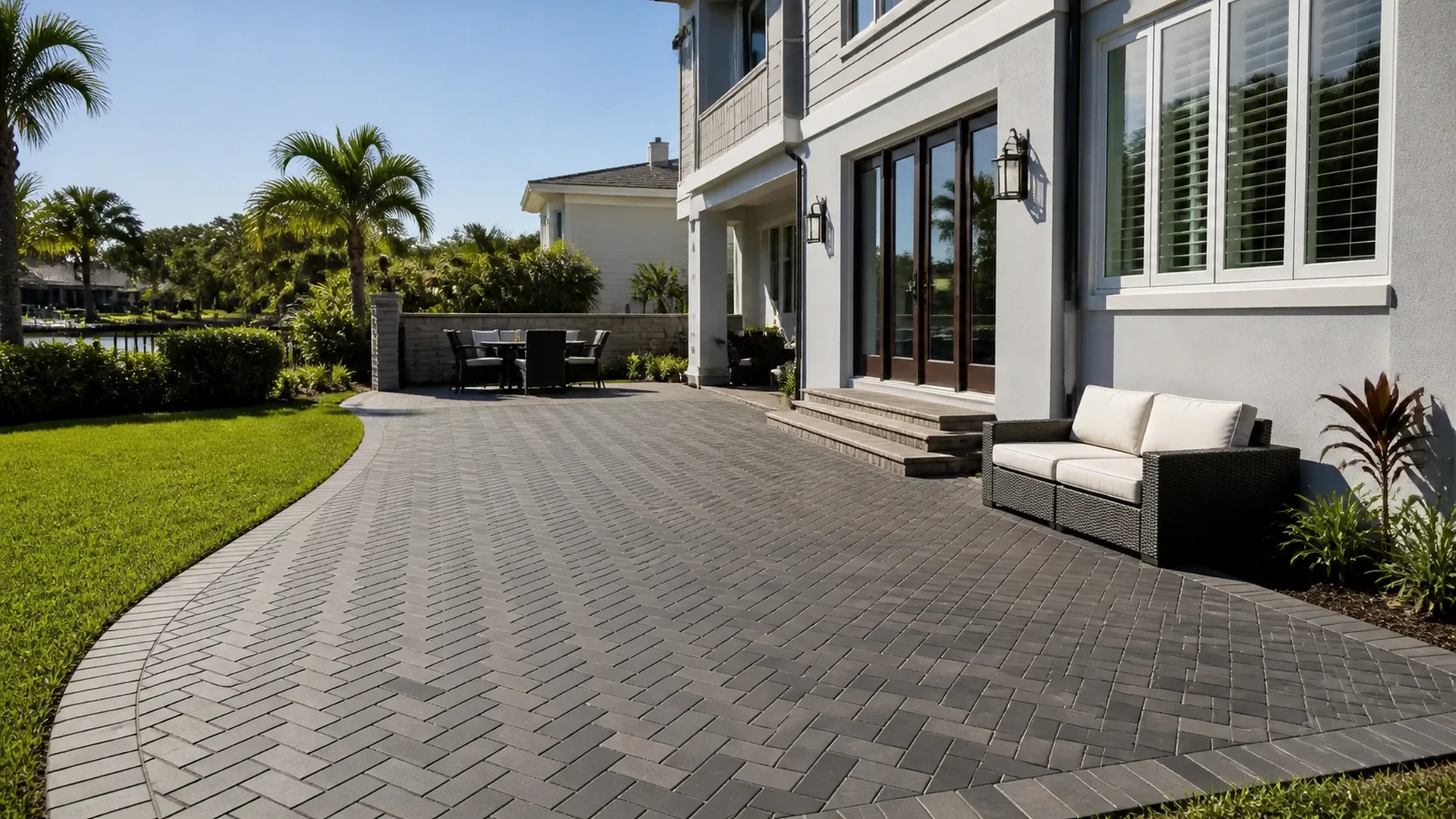
Interlocking pavers rely on vertical, horizontal, and rotational interlock to help share loads across the surface. According to CMHA guidance on interlocking pavers, herringbone patterns are especially effective under turning and braking loads on driveways. Even for patios and walkways, pattern choice affects how the surface responds to traffic and soil movement. The pattern must work with your paver size, edge restraint, and base thickness.
Comparing Concrete, Travertine, Porcelain, and Clay Pavers
Overview of major paver types
Each paver material offers a different mix of appearance, comfort, and maintenance. Concrete pavers are versatile and widely used for driveways, patios, and pool decks throughout Tampa Bay. Travertine appeals around pools and outdoor living areas for its natural look and comfortable feel. Porcelain and clay pavers provide their own advantages, especially in specific design styles or performance priorities.
Side-by-side comparison for Tampa weather
| Material | Typical Uses | Heat & Comfort | Wet-Weather Performance |
| Concrete pavers | Driveways, patios, pool decks | Varies by color; lighter blends stay cooler | Good traction with textured finishes; joints help manage water |
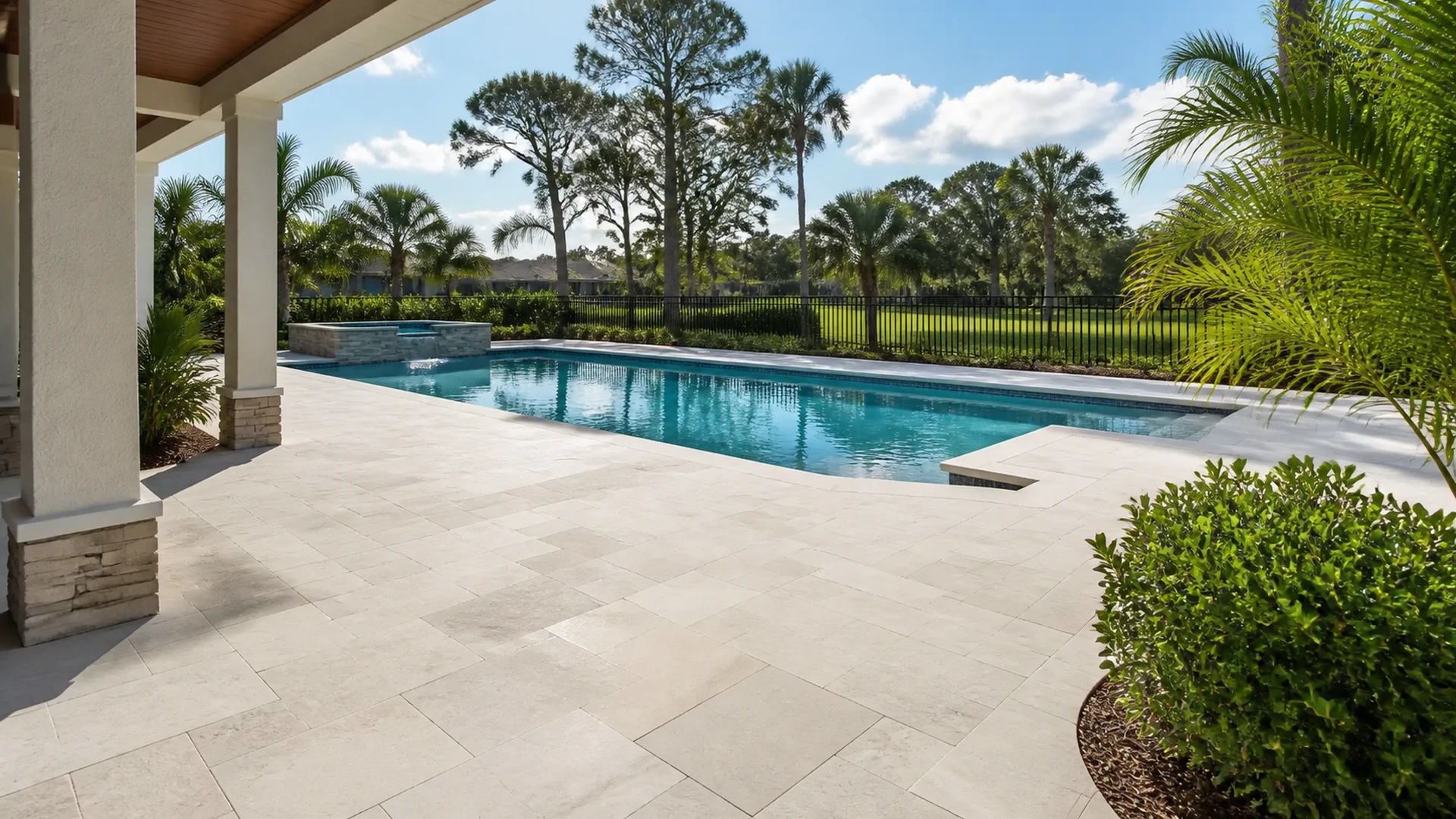
| Travertine pavers | Pool decks, patios | Often comfortable underfoot in light colors | Can perform well with proper base, joints, and sealing where needed |
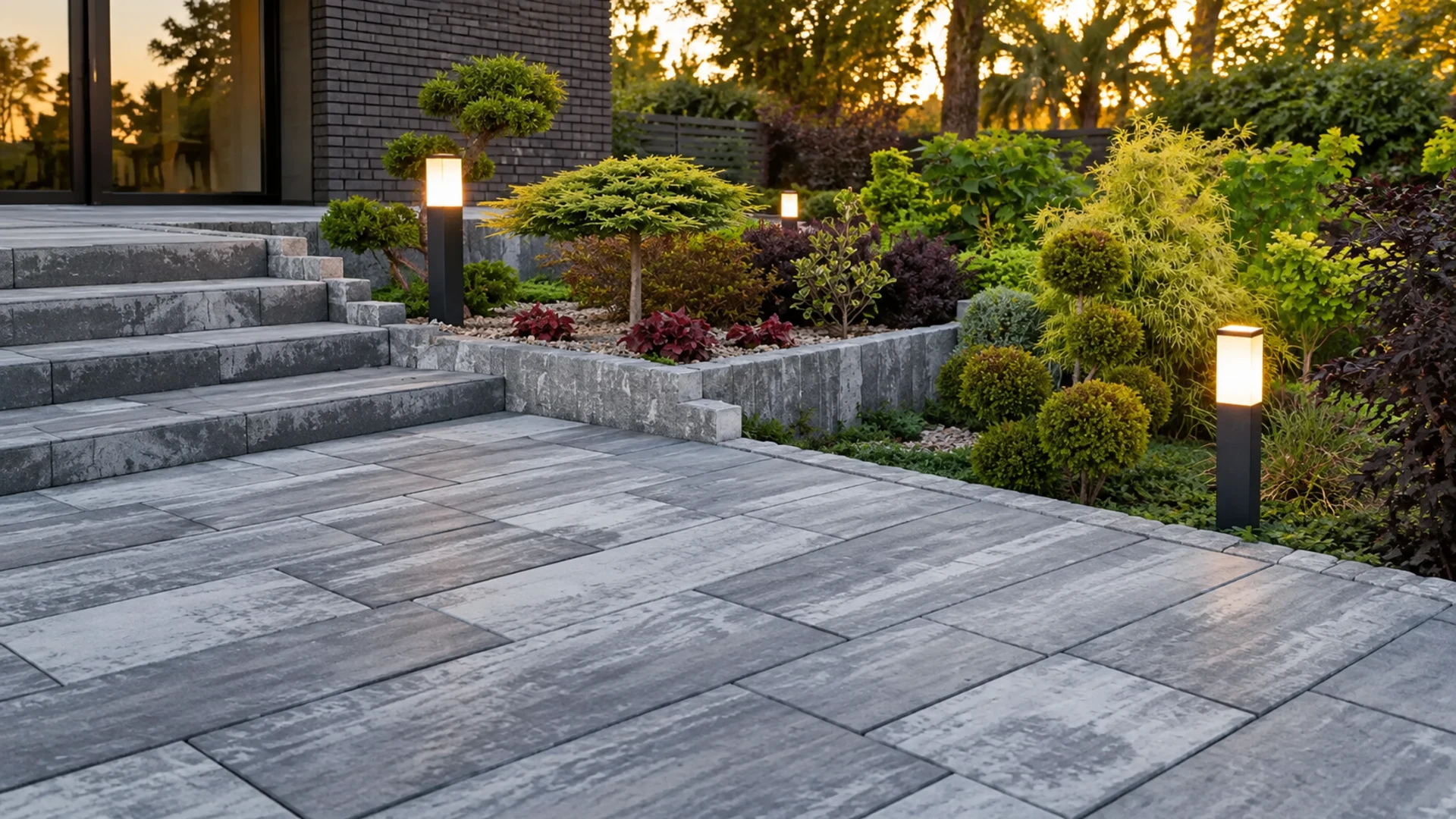
| Porcelain pavers | Modern patios, rooftop-style decks | Dense surface; color choice affects heat buildup | Low absorption; texture selection is key for slip resistance |
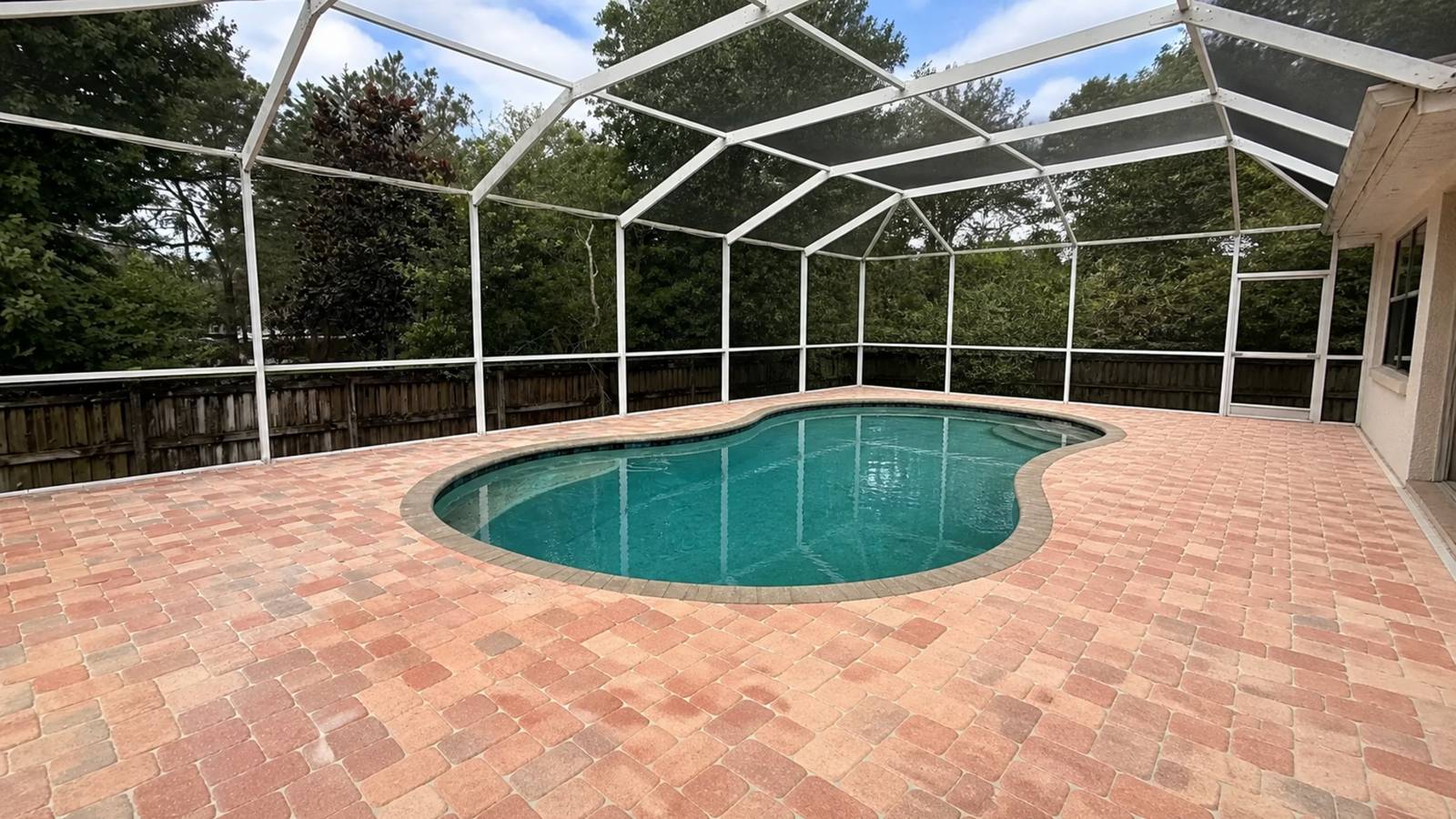
| Clay pavers | Walkways, patios, some driveways | Can get warmer in darker tones | Durable with appropriate base and edging; texture helps with traction |
Matching materials to Tampa Bay spaces
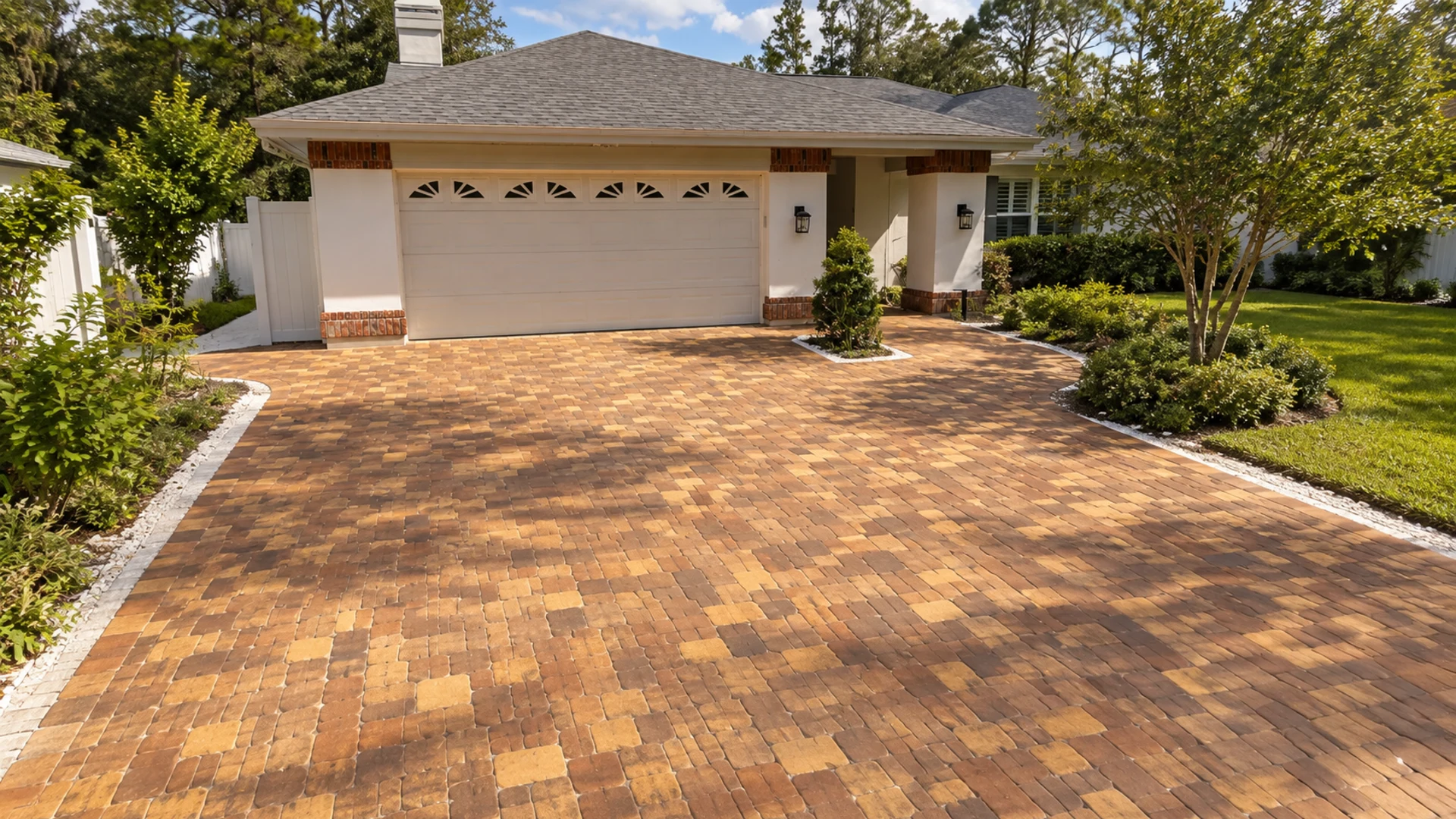
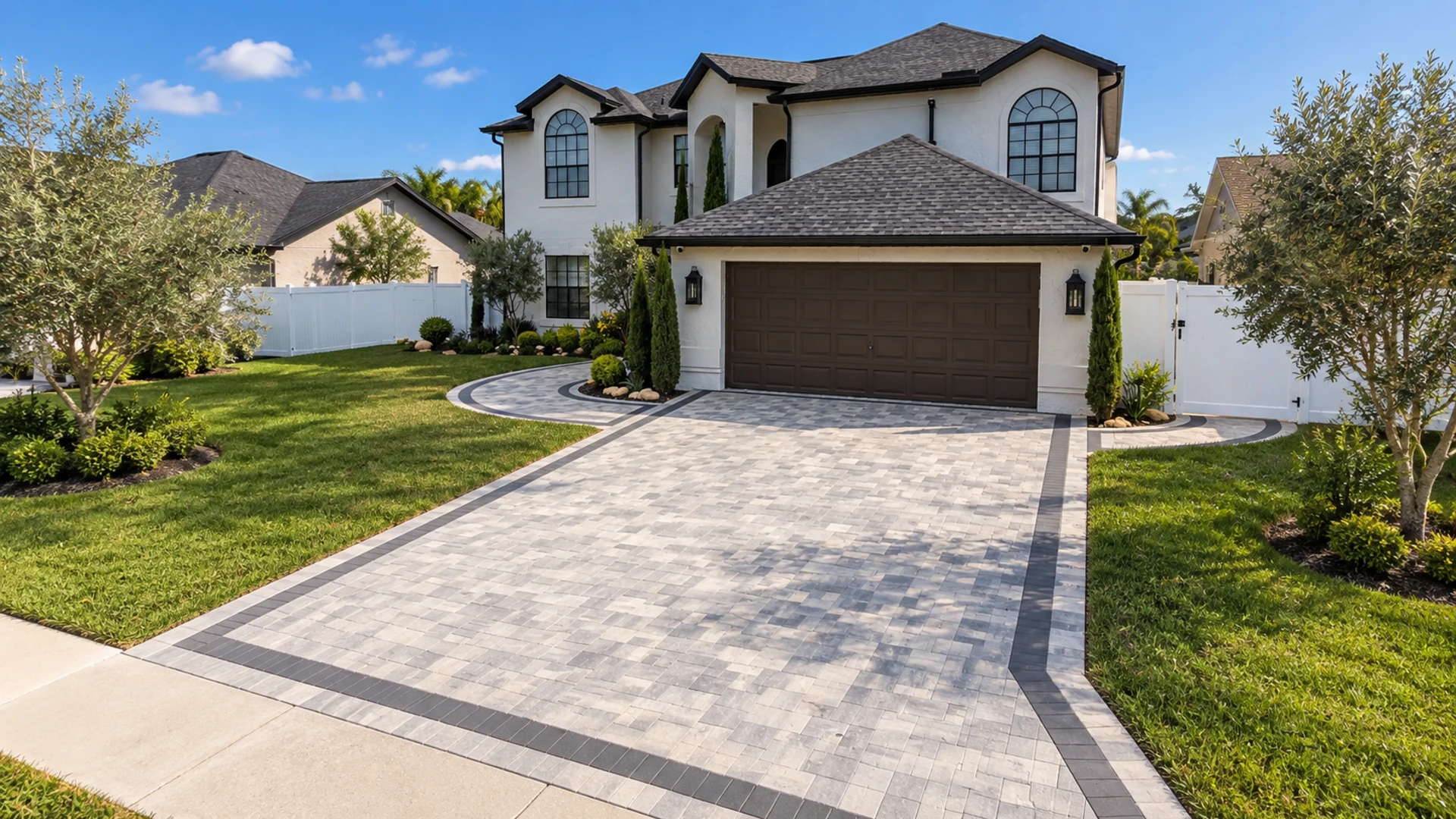
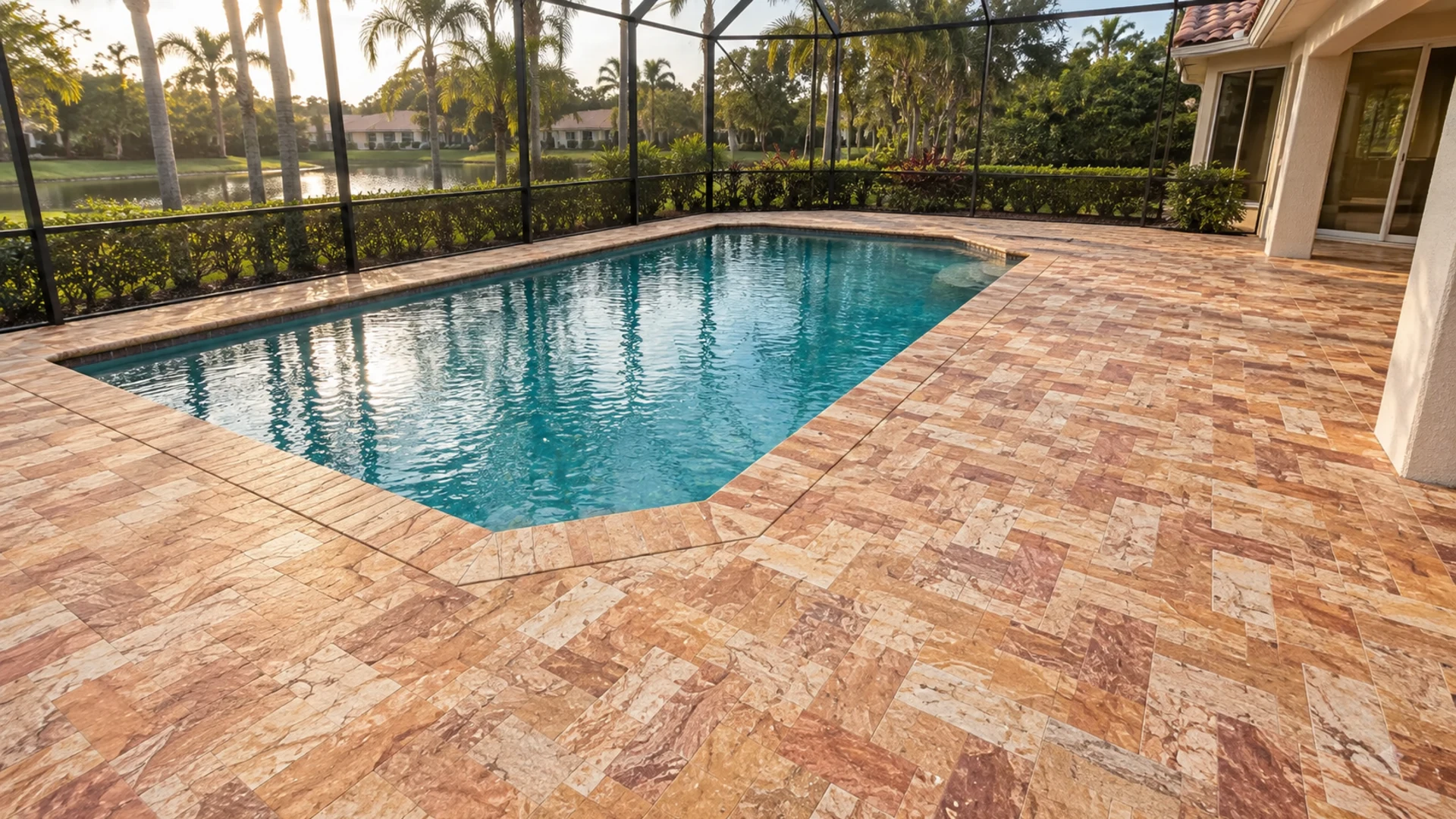
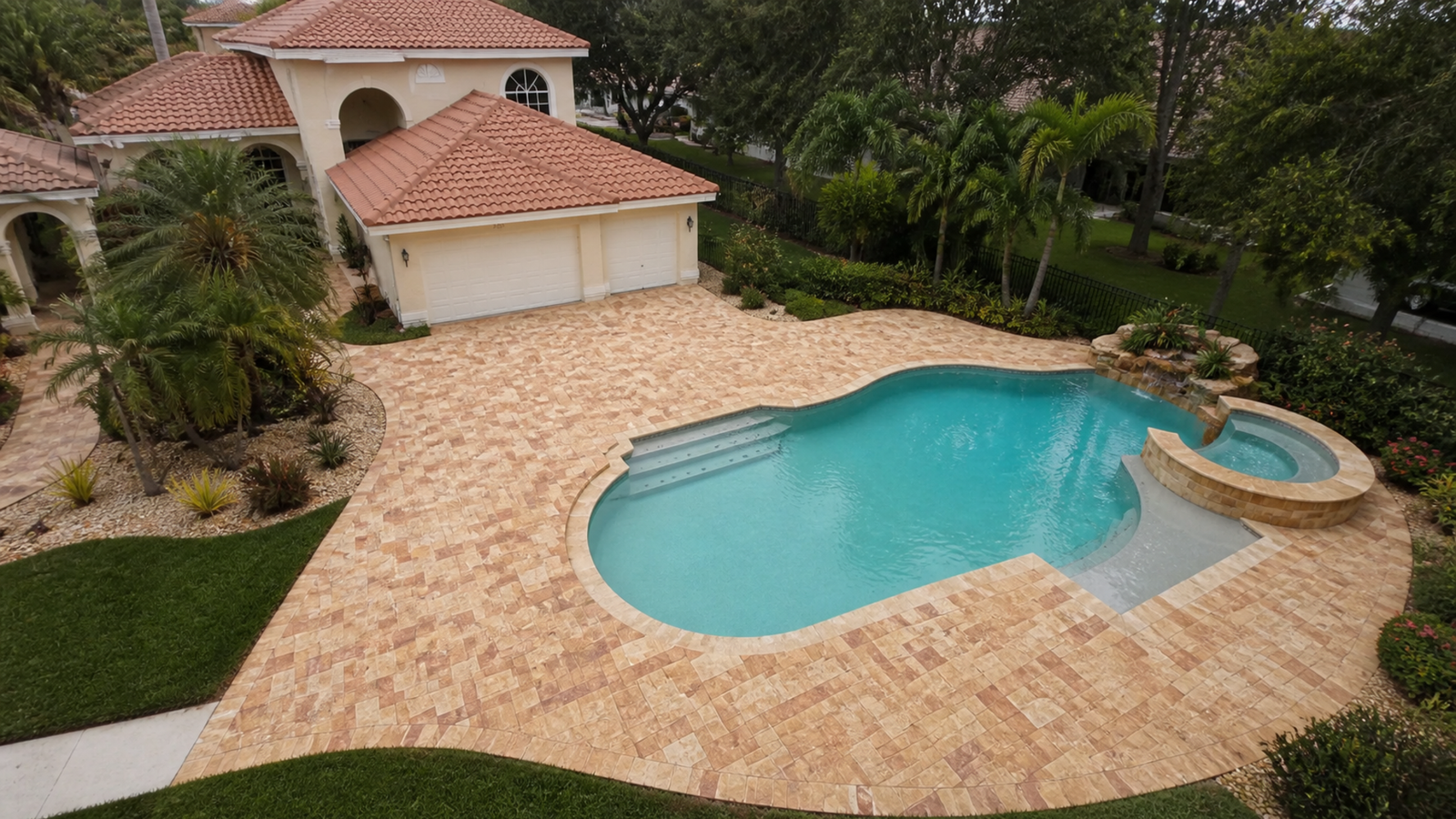
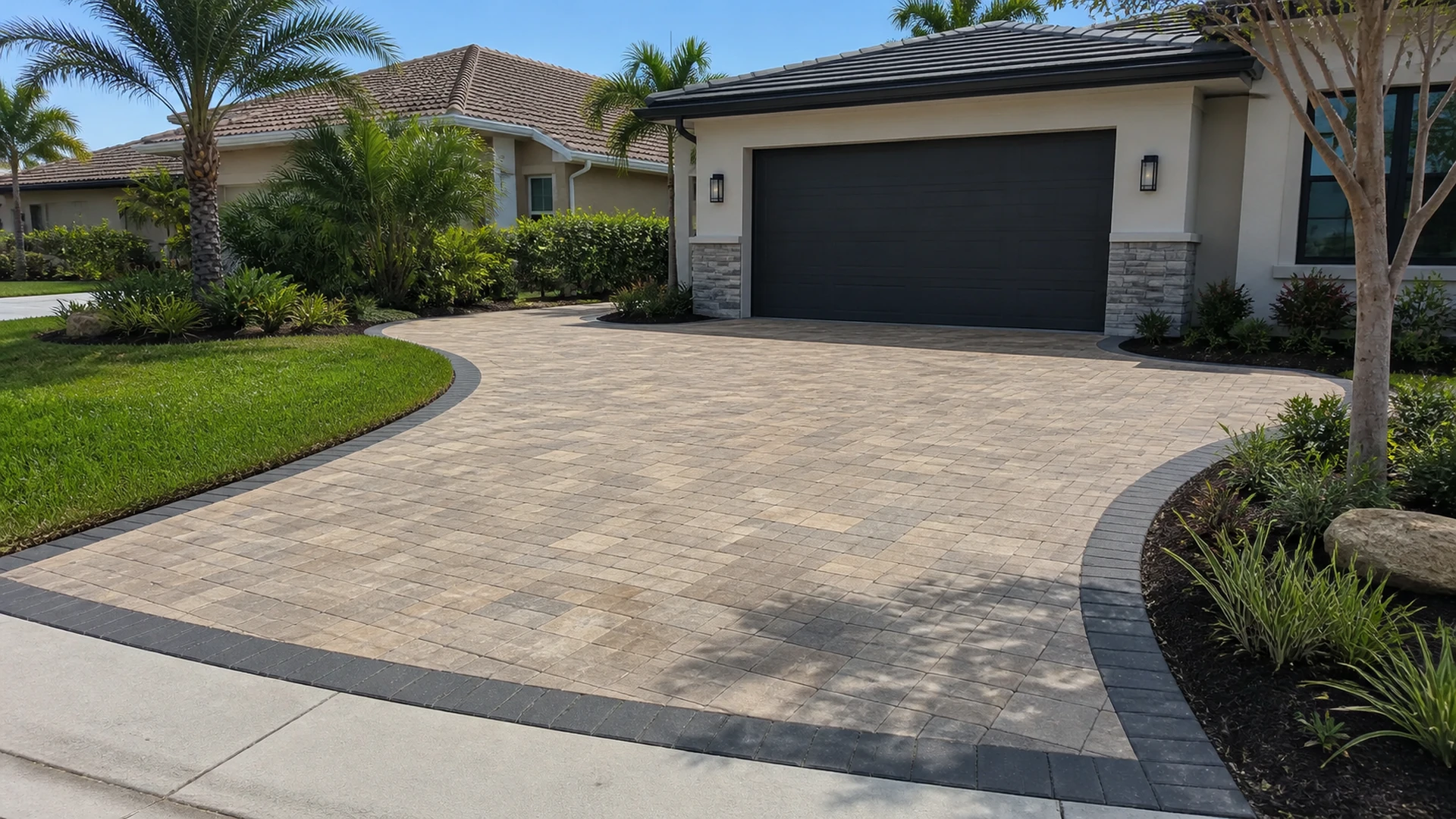
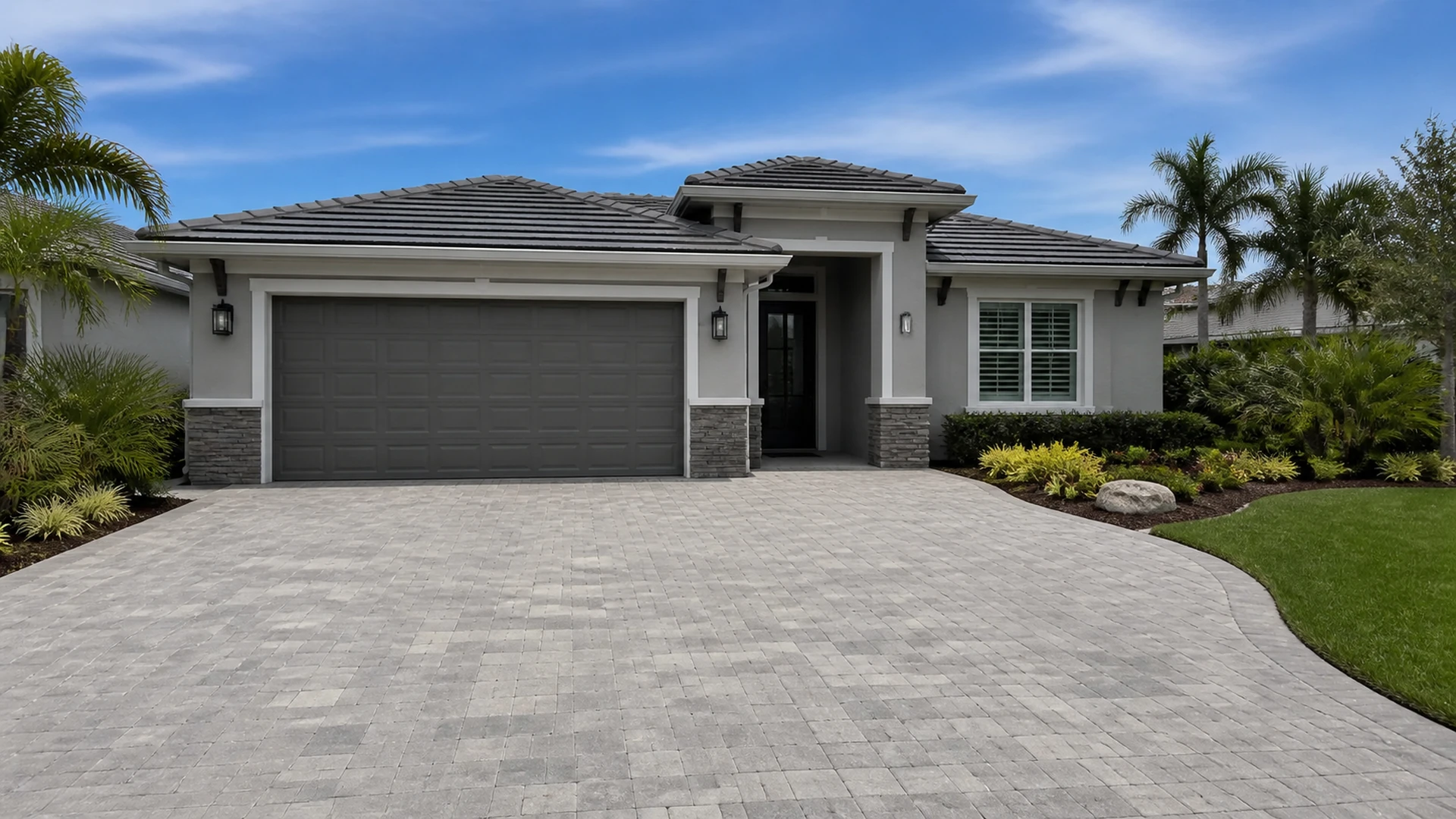
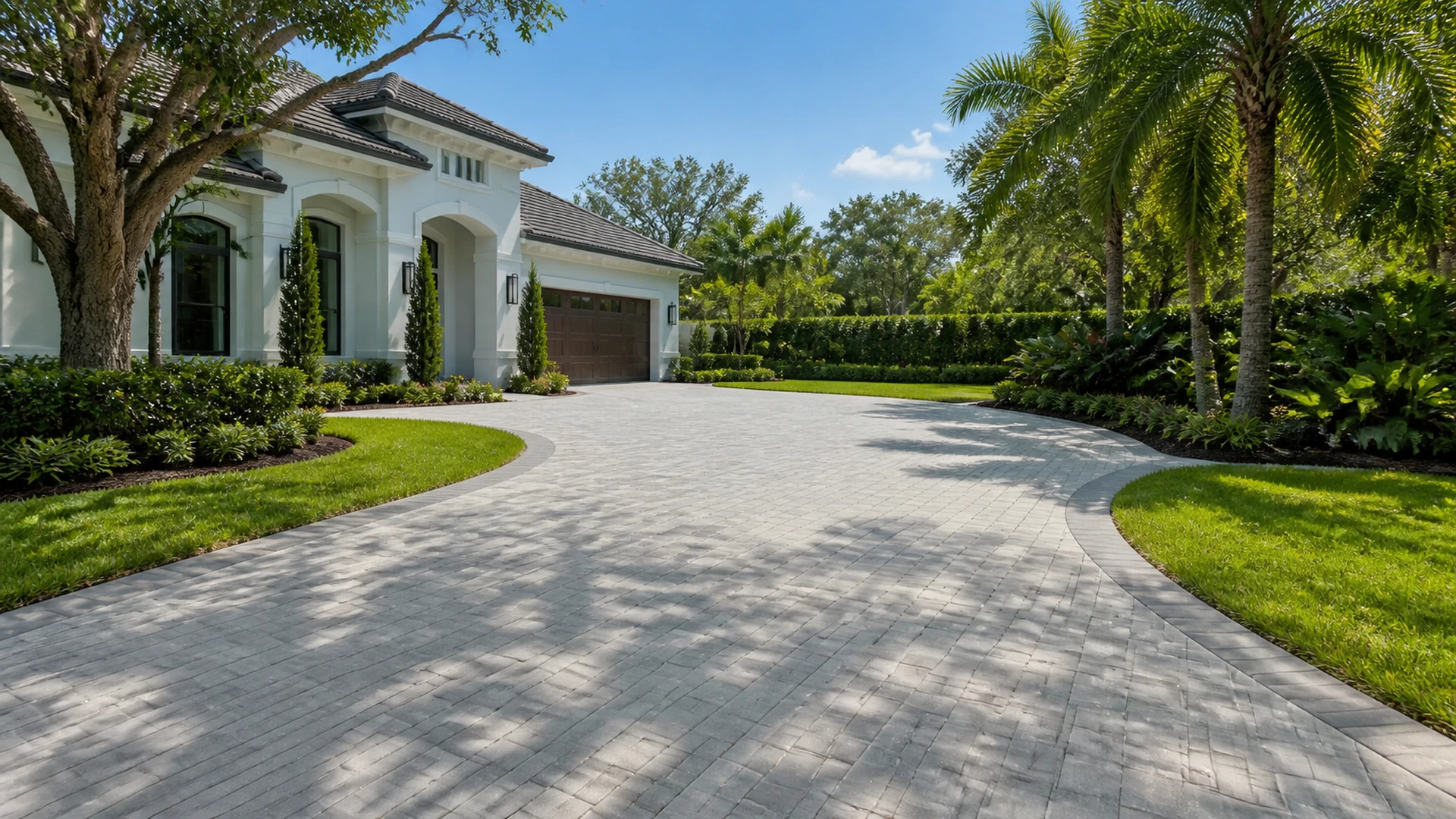
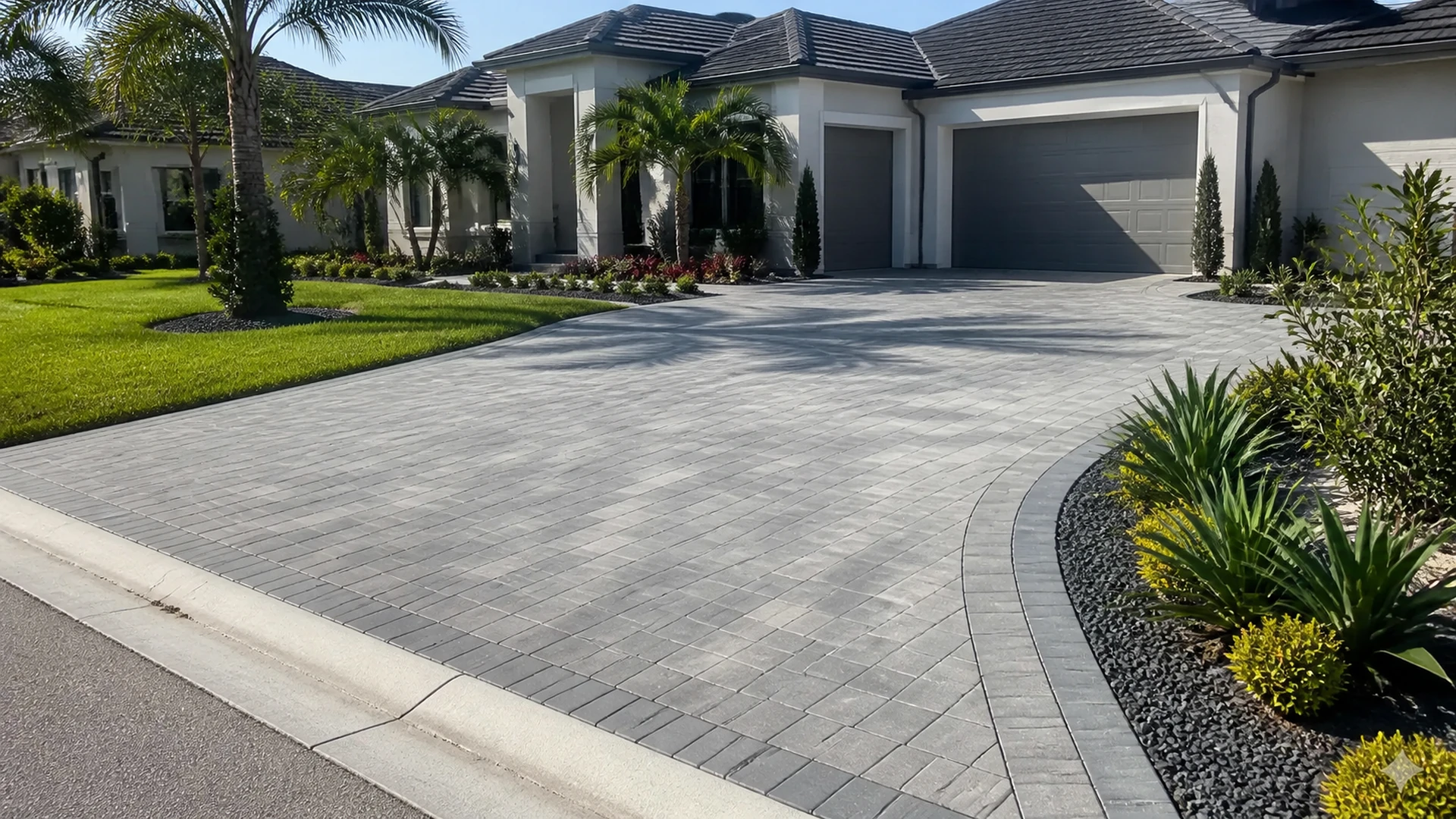
For driveways in Riverview or Ruskin, many homeowners lean toward concrete or clay pavers designed for vehicle loads. Around pools in Palm Harbor or Land O’ Lakes, light-tone travertine or textured concrete often focuses on barefoot comfort. Porcelain shines when you want a sleek, contemporary look with precise edges and consistent color. A site visit helps determine which combination of paver type, thickness, and pattern fits your specific setting.
Design, Base, and Edge Restraints for Long-Term Durability
Why the base matters in Tampa soils
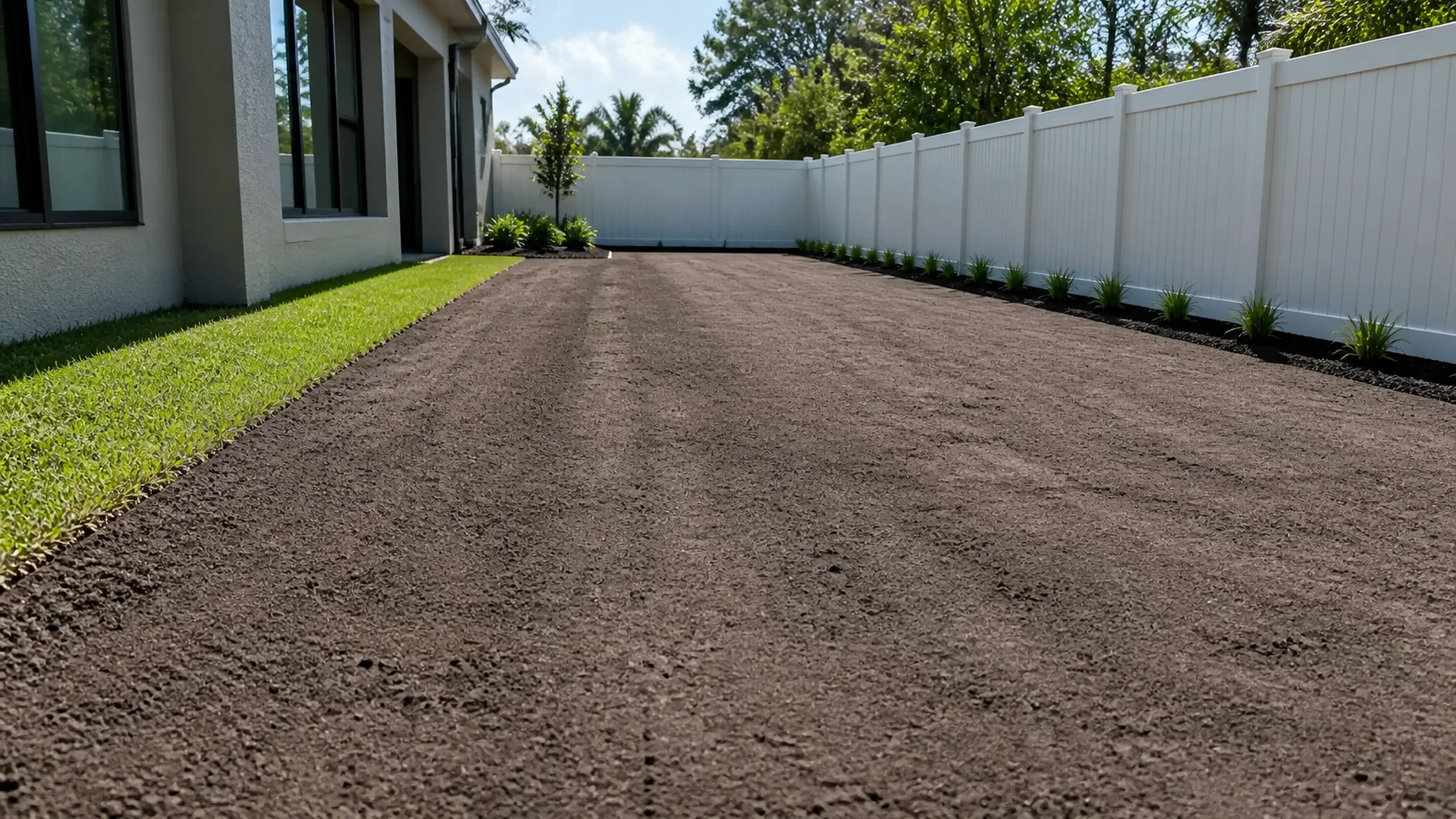
Under every stable paver surface is a base designed for the soil and use. In parts of Tampa, Wesley Chapel, and Thonotosassa, sandy soils drain quickly but can shift if not compacted properly. Other areas may include pockets of clay or fill that hold water. Because of this variation, a qualified installer should assess soil conditions before recommending base depth and materials.
Edge restraints, interlock, and pattern
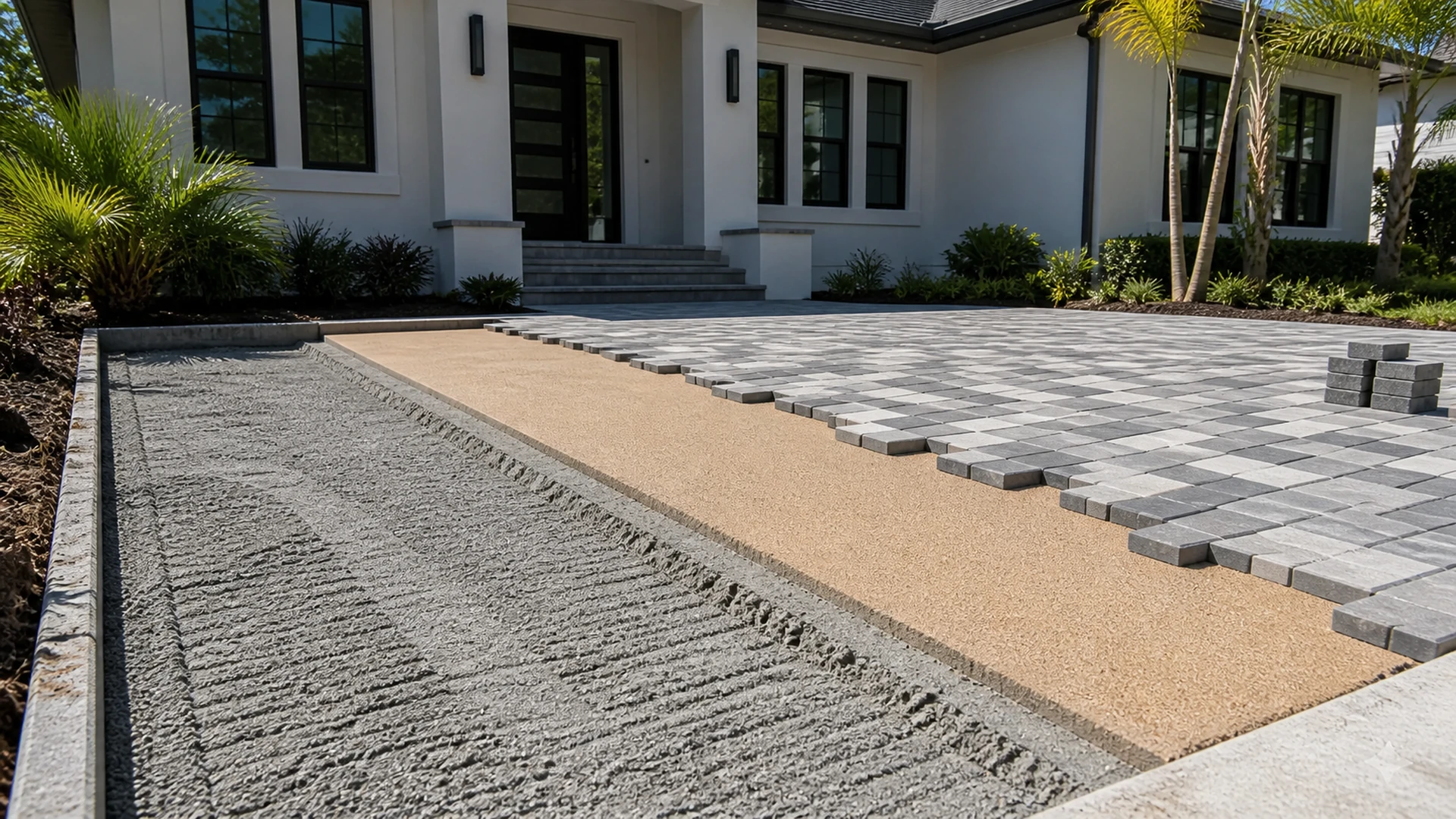
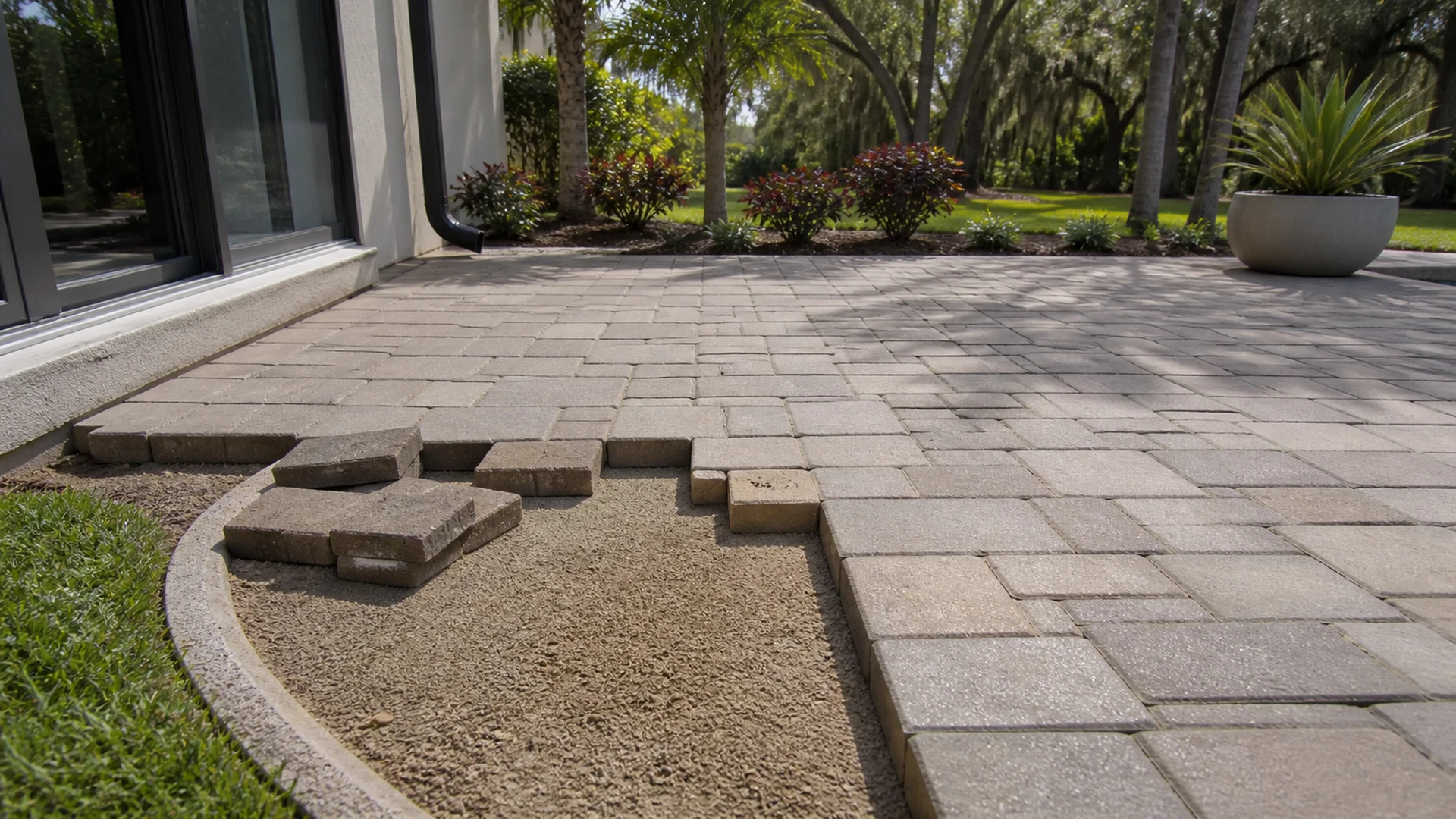
Edge restraints help keep pavers locked in place as loads and seasonal changes act on the surface. Combined with compacted bedding sand and the right pattern, they support long-term vertical and horizontal interlock. In areas where cars turn or brake frequently, like driveway aprons, patterns such as herringbone can be especially helpful. However, the overall design still must coordinate with your yard layout and existing concrete or structures.
Good design practices homeowners can look for
Even without doing the work yourself, you can look for key design details in a proposal. These indicate whether a contractor is planning for Tampa weather, not just installing pavers anywhere.
- Clear description of base preparation and compaction steps
- Edge restraint type and where it will be used
- Paver thickness and pattern suitable for intended traffic
- Joint sand type and how it will be installed
- Slope direction and how water will leave the paved area
If any of those items are missing, it is reasonable to ask for more detail before work begins. This helps prevent surprises after the first heavy storm.
Inspection, Maintenance, and Common Mistakes
Simple inspections you can do each season
Once your pavers are installed, quick seasonal checks help catch issues early. After a major storm, walk the area and look for standing water, soft spots, or shifting edges. Check joints for loss of sand, especially near driveways or downspouts. In shaded areas, look for algae growth and note spots that stay damp long after the rest has dried.
Common homeowner mistakes in Tampa Bay
Several avoidable mistakes shorten the life of paver surfaces in Tampa Bay and surrounding communities. Pressure washing too aggressively can strip joint sand and roughen surfaces, which may invite more staining. Blocking natural runoff paths with planters or additions can concentrate water and lead to settlement. Using harsh cleaners without checking compatibility may discolor or etch some materials and sealers.
Maintenance habits that support durability
Regular sweeping and gentle rinsing keep grit and organic debris from collecting in joints and corners. Spot cleaning spills soon after they happen reduces the chance of long-term staining, especially on lighter tones. Periodic checks of joint sand and sealer condition, where used, help you time maintenance before issues grow. Your installer can outline a care schedule based on your material, shade, and traffic patterns.
When to Involve a Professional on Tampa Paver Projects
New installations and major redesigns
New patios, pool decks, and driveways in Tampa, Riverview, or Palm Harbor usually benefit from professional planning. A qualified contractor can evaluate soil, slopes, and existing structures before recommending paver type and layout. They can also coordinate with other licensed professionals if a project interacts with structures, utilities, or pool systems. This helps align the paver work with any engineering, permitting, or code-related decisions, which they should not make alone.
Repairs, sinking areas, and repeating problems
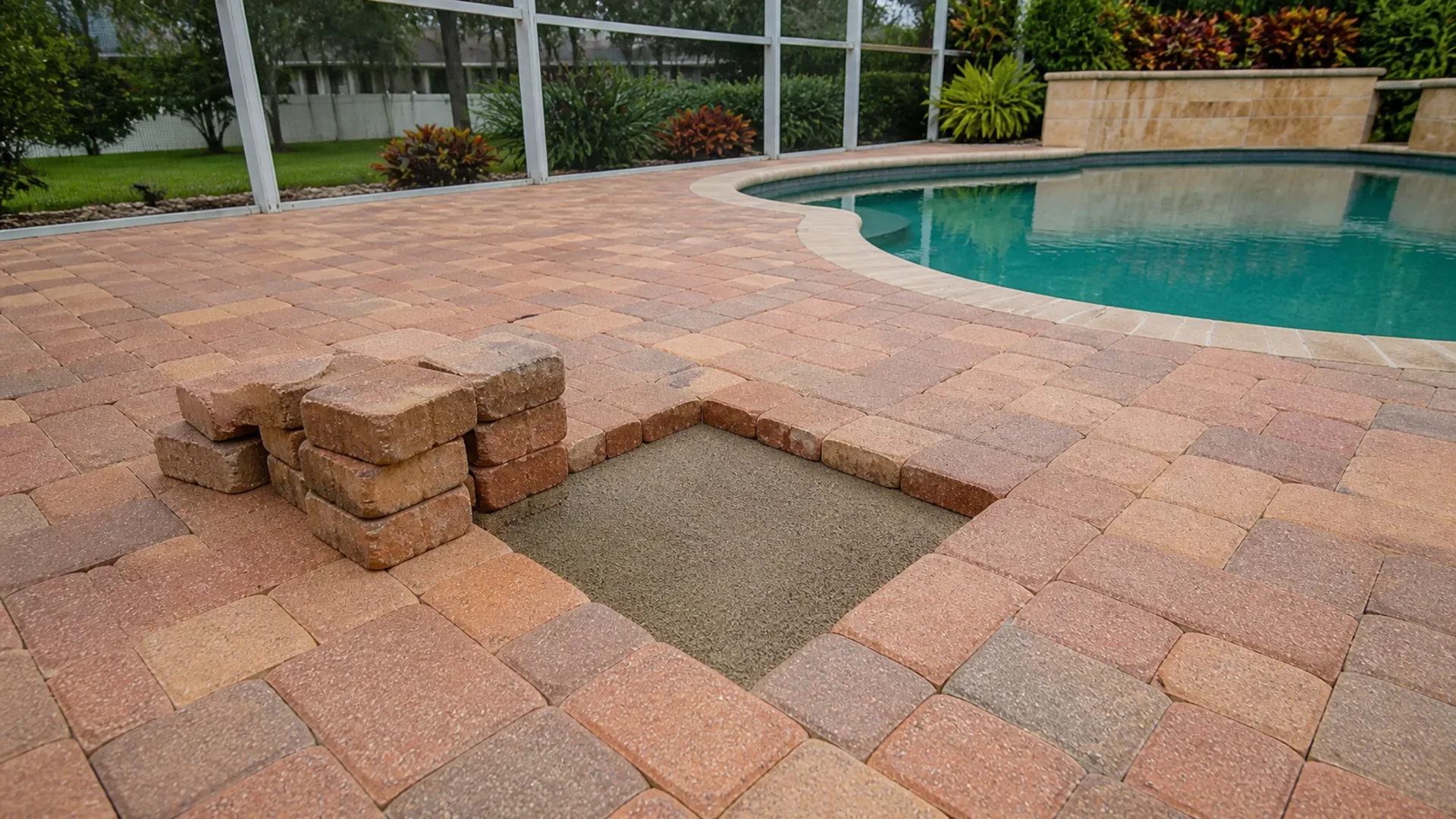
Isolated stains or a few loose pavers may be manageable as a homeowner task. However, repeating settlement, spreading low spots, or joint erosion across a broad area usually points to base or water issues. In those cases, a professional assessment can determine whether spot repairs make sense or if deeper work is needed. The same applies if roots or nearby structures are affecting the paved surface.
Getting accurate pricing for the best pavers for Tampa weather
Paver costs depend on material choice, pattern complexity, access to the site, and how much base work is required. Coastal exposure, curves, steps, and retaining elements can also affect labor and material needs. Because so many local factors come into play, a site visit is necessary for accurate pricing. During that visit, you can ask how each option will behave in your specific sun, shade, and rain conditions.
If you want to learn more about how a professional handles layout, compaction, and finishing in our area, you can review the paver installation process in Tampa Bay. Understanding the steps makes it easier to compare proposals and ask the right questions.
FAQ: best pavers for Tampa weather and Local Projects
What are the best pavers for Tampa weather around a pool?
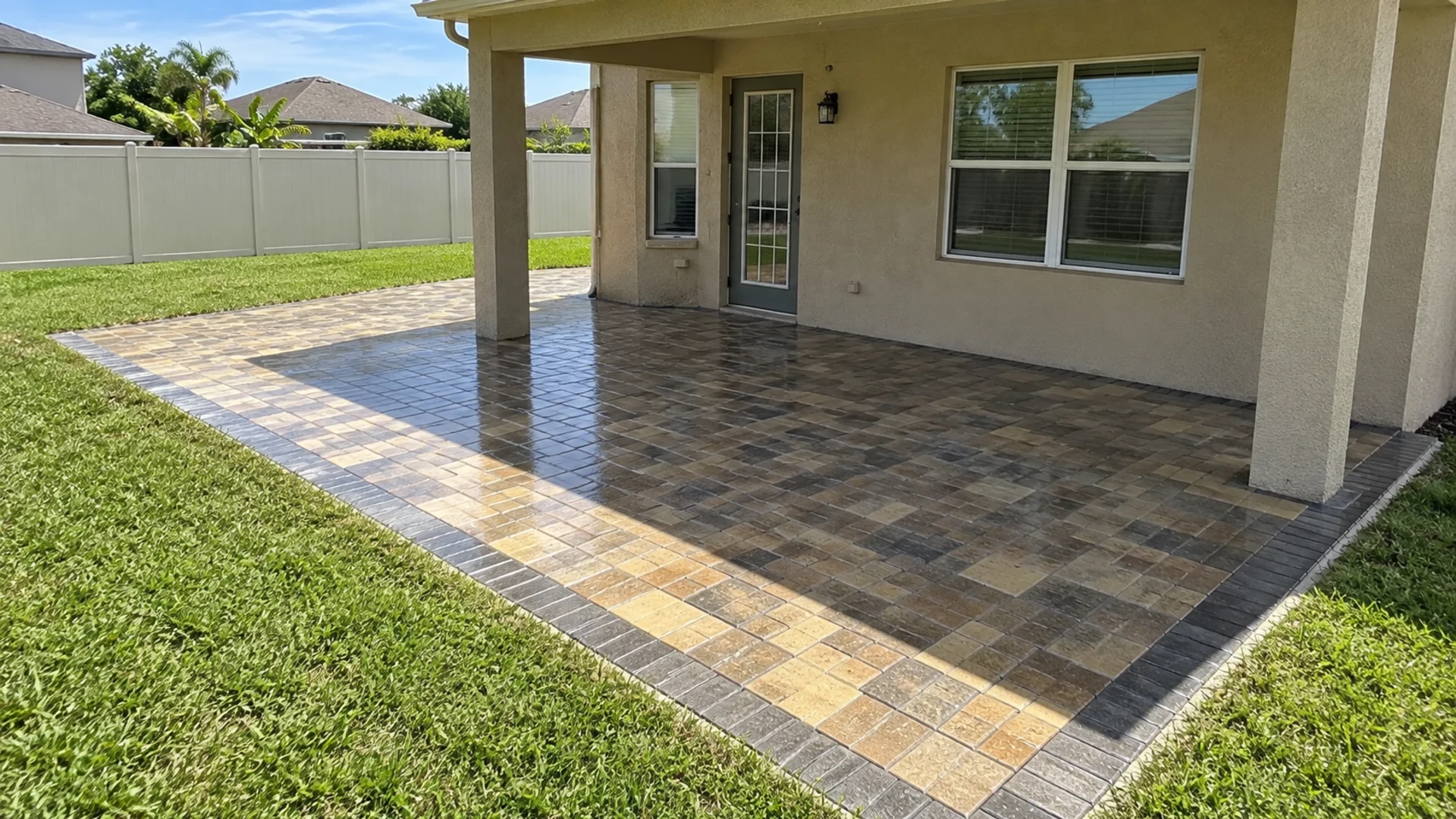
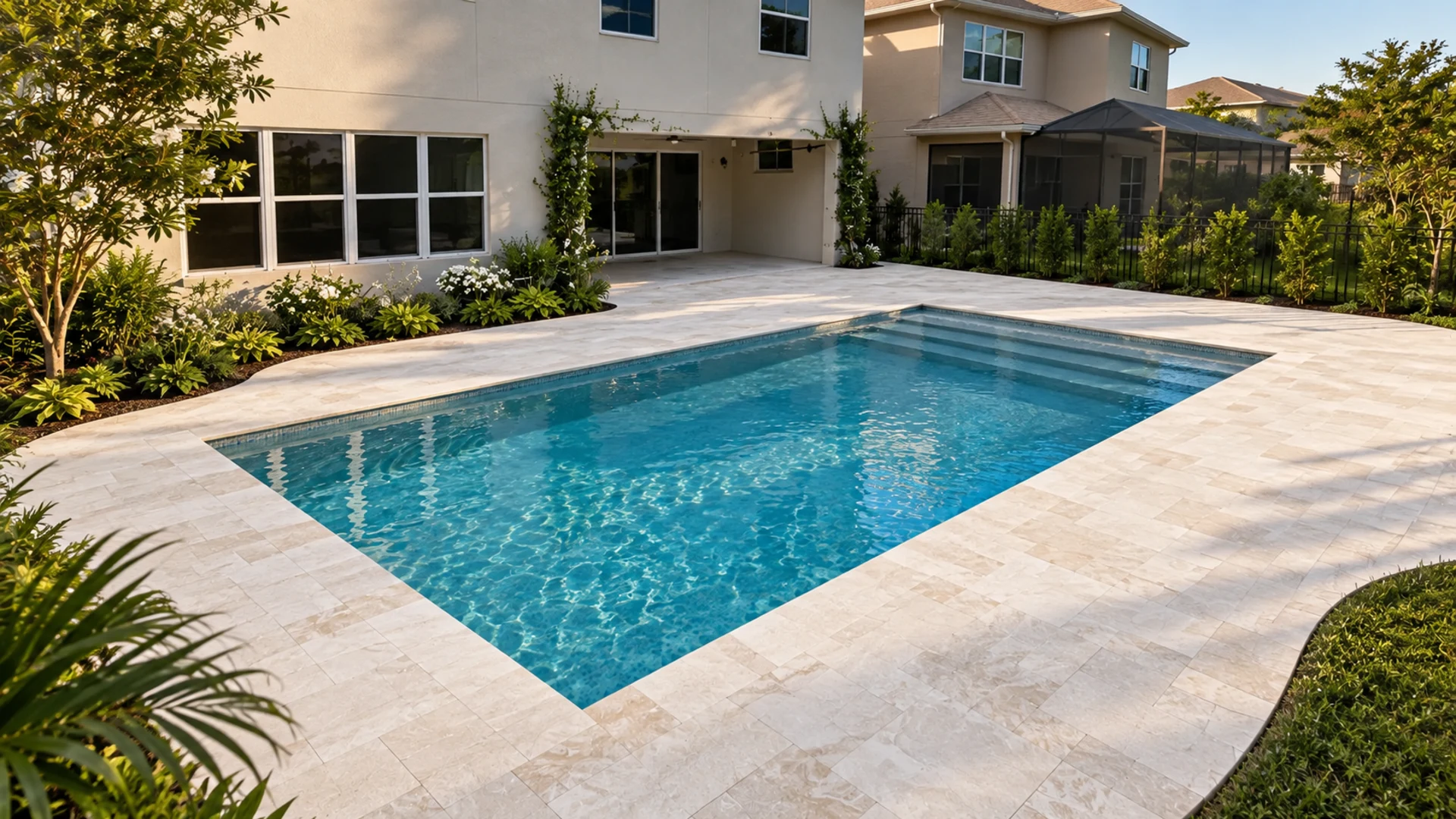
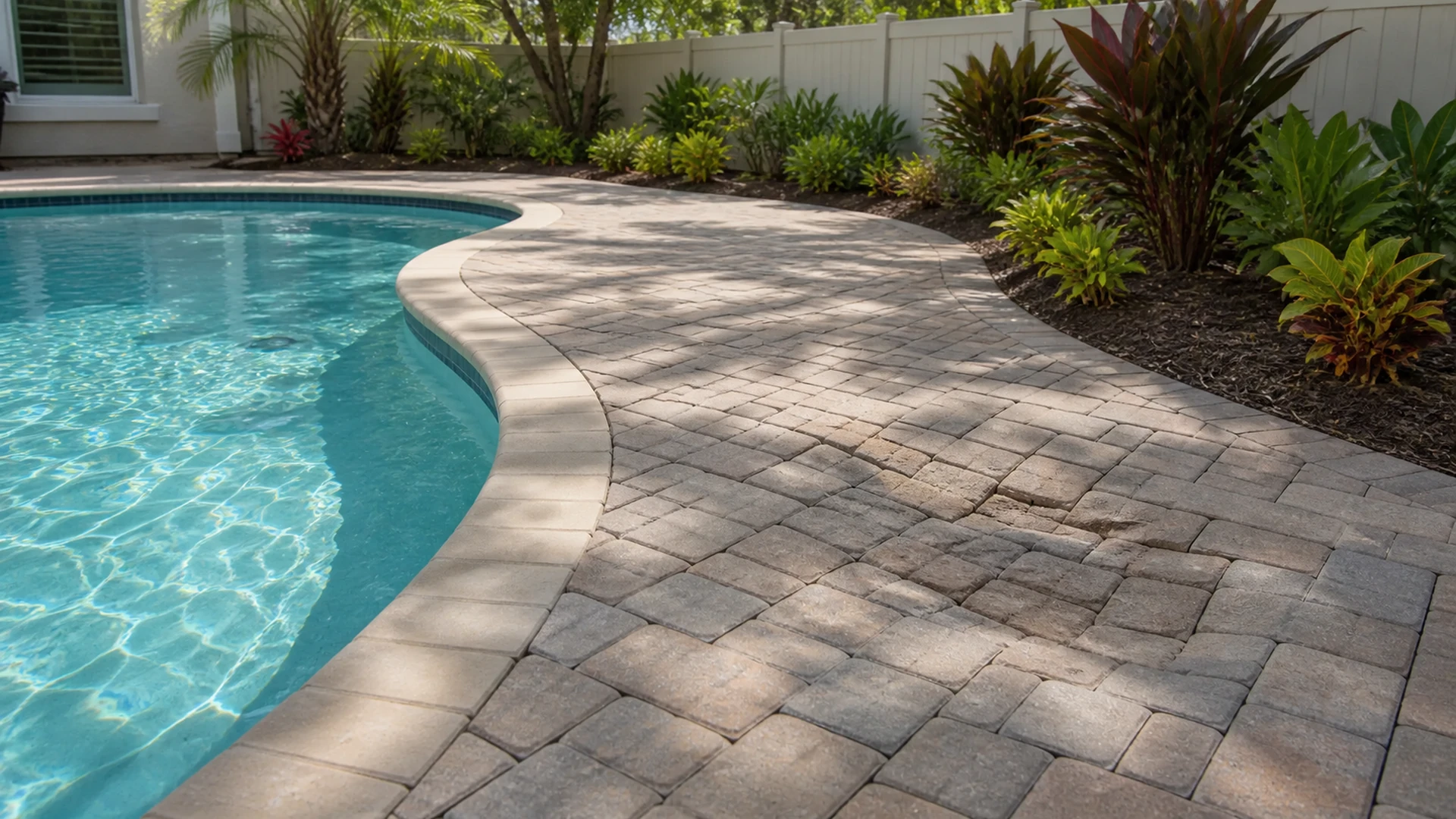
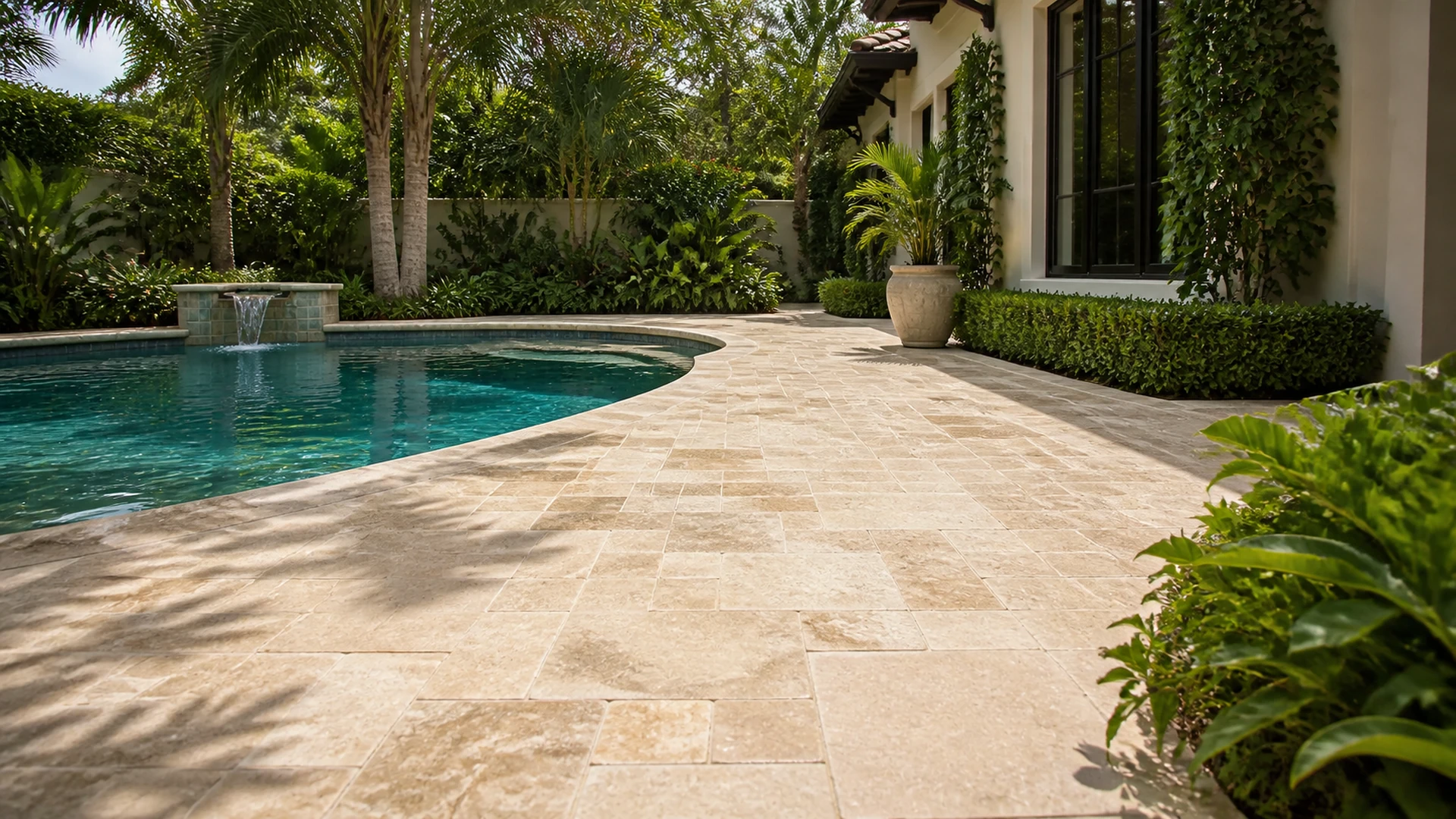
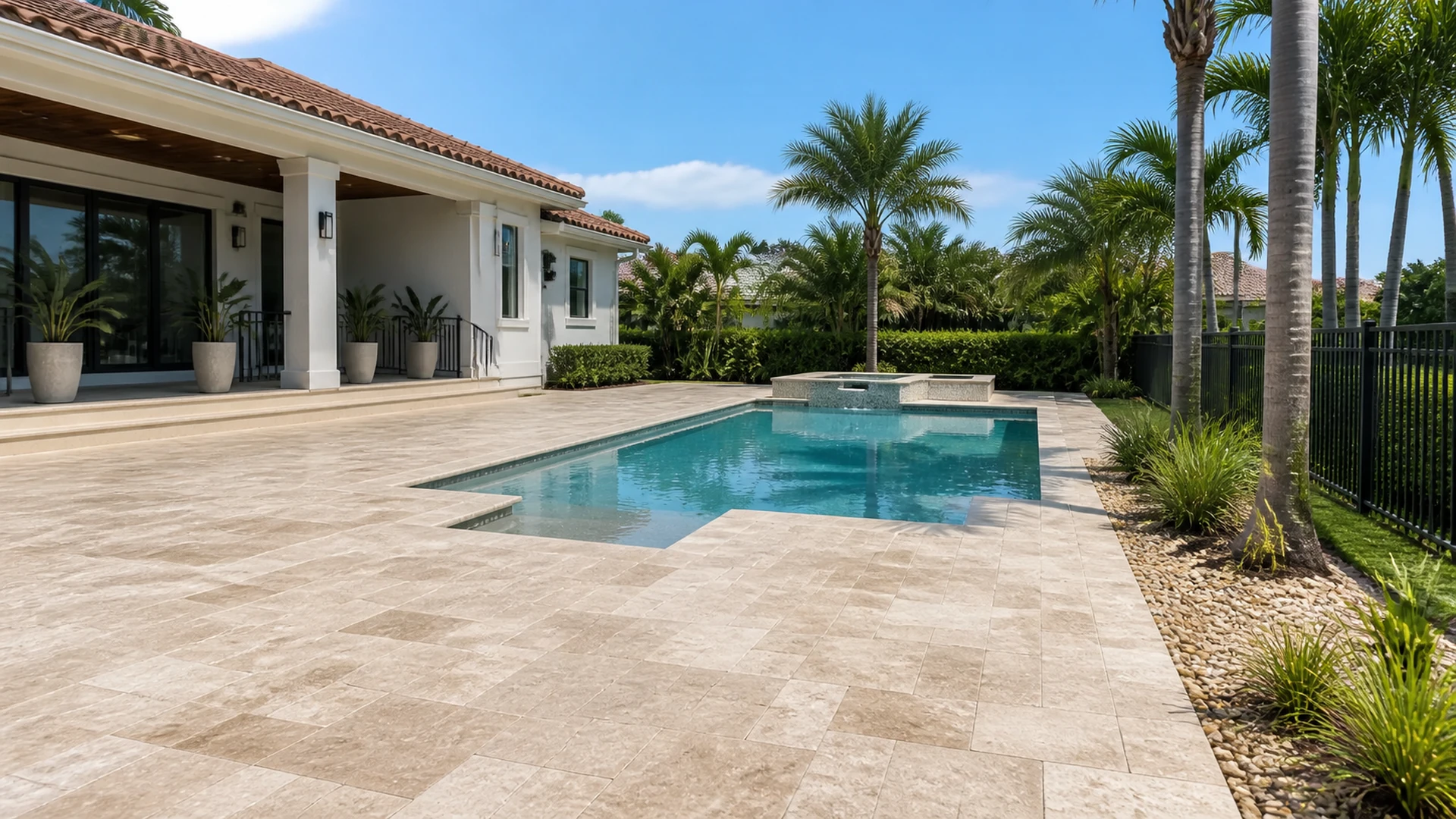
Around pools, many Tampa Bay homeowners prioritize cooler, slip-resistant surfaces that look good even with splashes and sunscreen. Light-color travertine and textured concrete pavers are common choices because they usually feel comfortable and offer good traction. Some porcelain pavers also work well if they have a suitable slip-resistant texture and thoughtful color selection. Your pool layout, shade, and water features will influence which material performs best in your specific yard.
Do I need to seal my pavers in Tampa Bay?
Sealing is often helpful in Tampa, but it is not always mandatory for every material. Sealers can enhance color, reduce staining, and help manage water absorption, especially on concrete and some natural stones. However, they also change maintenance needs and may affect surface friction, depending on the product. A qualified installer can recommend whether sealing suits your paver type, location, and how you plan to use the space.
How thick should the base be for a Tampa driveway or patio?
Base thickness depends on soil conditions, traffic type, and the overall design, so it is not the same for every site. Driveways carrying vehicles generally require a deeper, more heavily compacted base than a small backyard patio. Areas with weaker or poorly compacted native soils may also need additional preparation. Because of these variables, base recommendations should follow an on-site evaluation rather than a one-size-fits-all number.
Will pavers grow weeds or sink in Tampa's heavy rains?
Weeds usually come from seeds that land in joints, not from underneath the pavers themselves. Proper joint sand and occasional cleaning help limit growth. Sinking or uneven areas often trace back to base issues, water concentration, or roots rather than rain alone. A well-compacted base, effective edge restraints, and thoughtful slopes make it much less likely for pavers to move noticeably during storms.
Can I mix different paver types in one Tampa Bay project?
Mixing materials can work in some designs, for example using one paver type for a driveway and another for a nearby patio. However, each material has its own thickness, joint style, and movement characteristics, so transitions must be handled carefully. You also want colors and textures that complement each other under the same sun and rain exposure. A professional designer or installer can help decide where mixing adds value and where it might complicate long-term maintenance.
If you are exploring new hardscape ideas for your Tampa Bay property, you can browse recent project photos and read homeowner feedback in the testimonials section. For more details on how we approach materials, patterns, and care, the FAQ page and overall services overview can help you prepare questions before a visit.
When you are ready to talk about pavers that fit your specific sun, shade, and rain conditions, you can call +1 (656) 600-4015, text the same number, email drpavers@outlook.com, or reach out via WhatsApp. You can also connect on Instagram, follow along on Facebook, or see the Tampa location on Google Maps and request a free on-site consultation tailored to your yard.