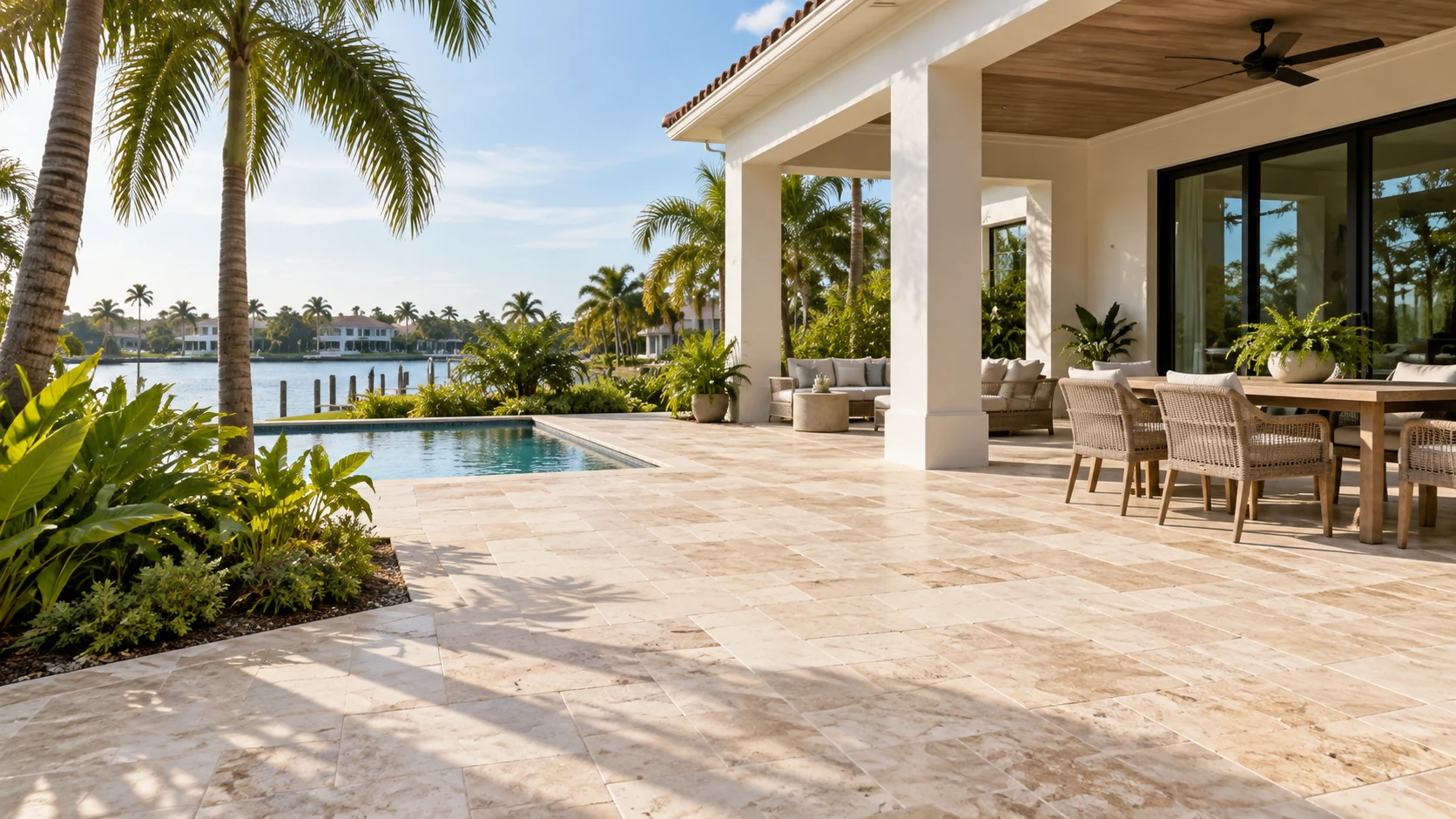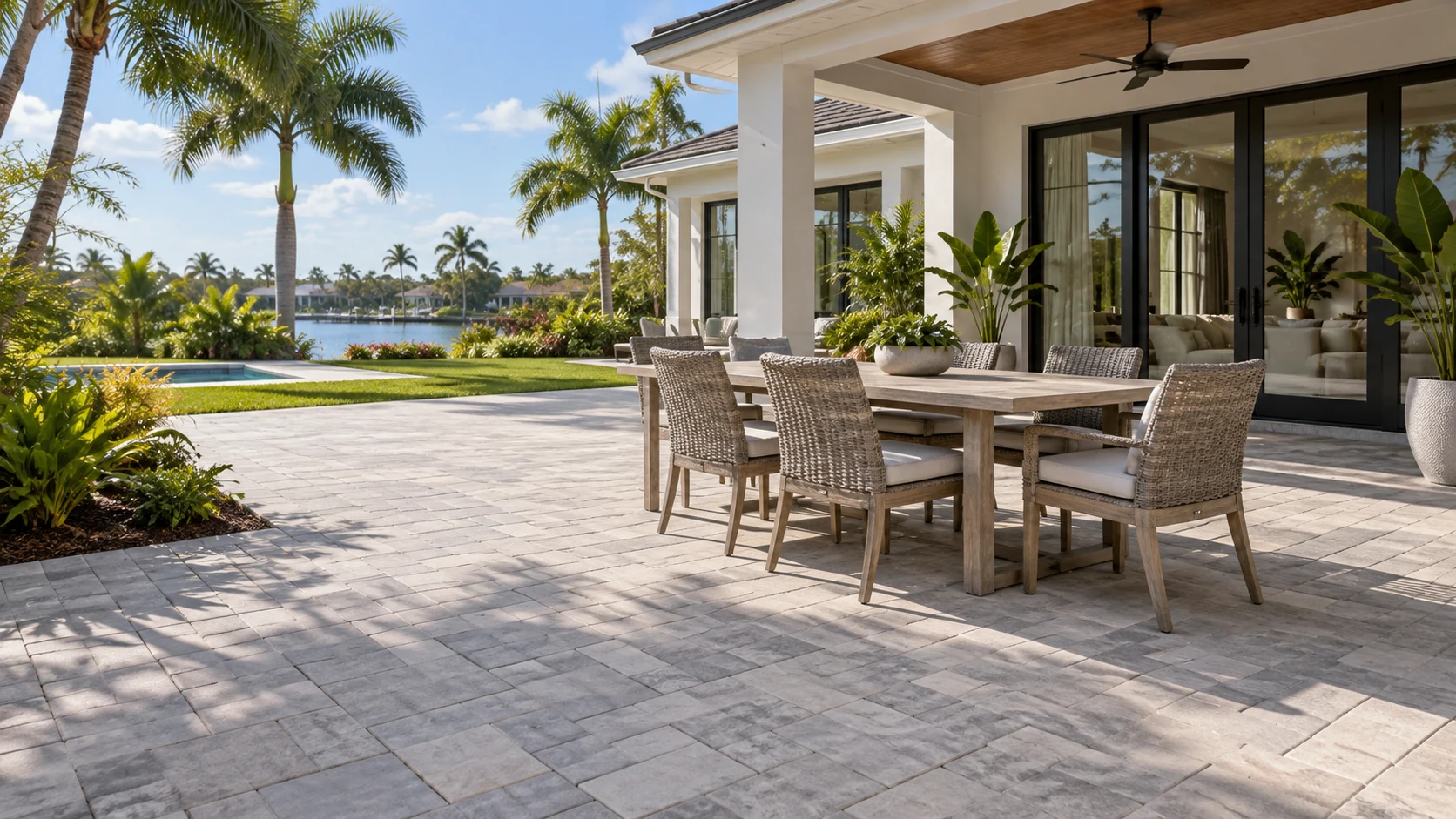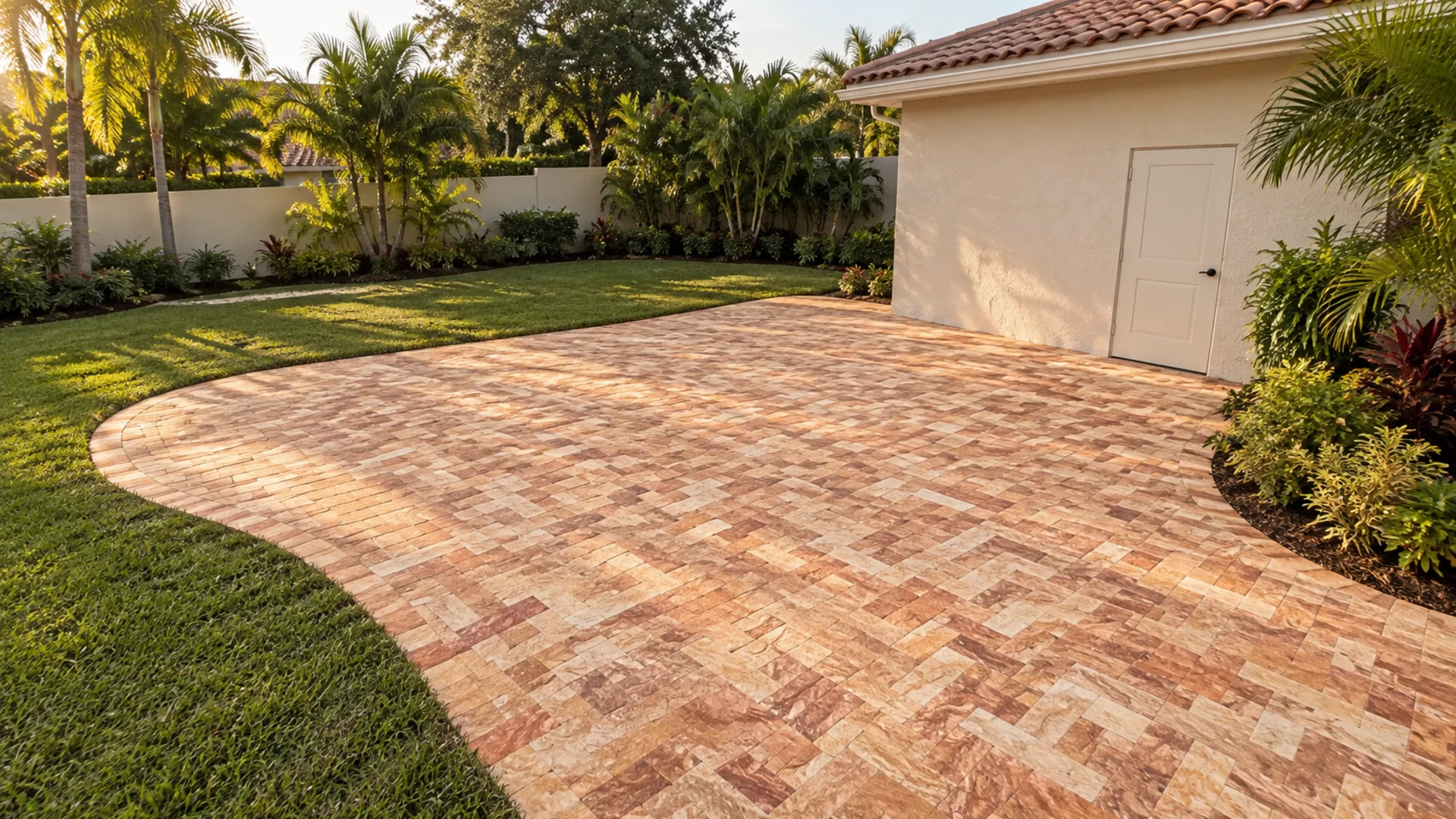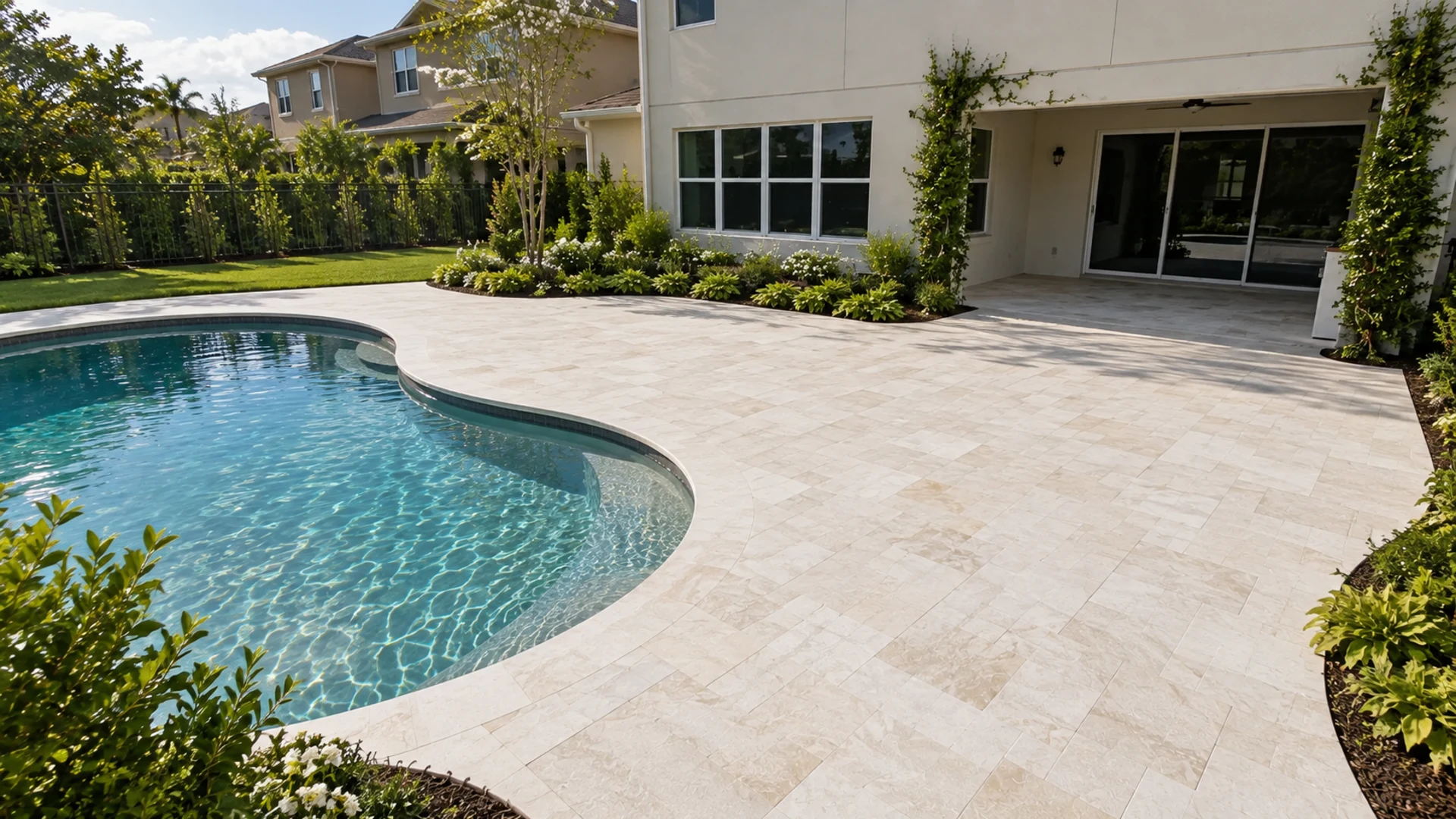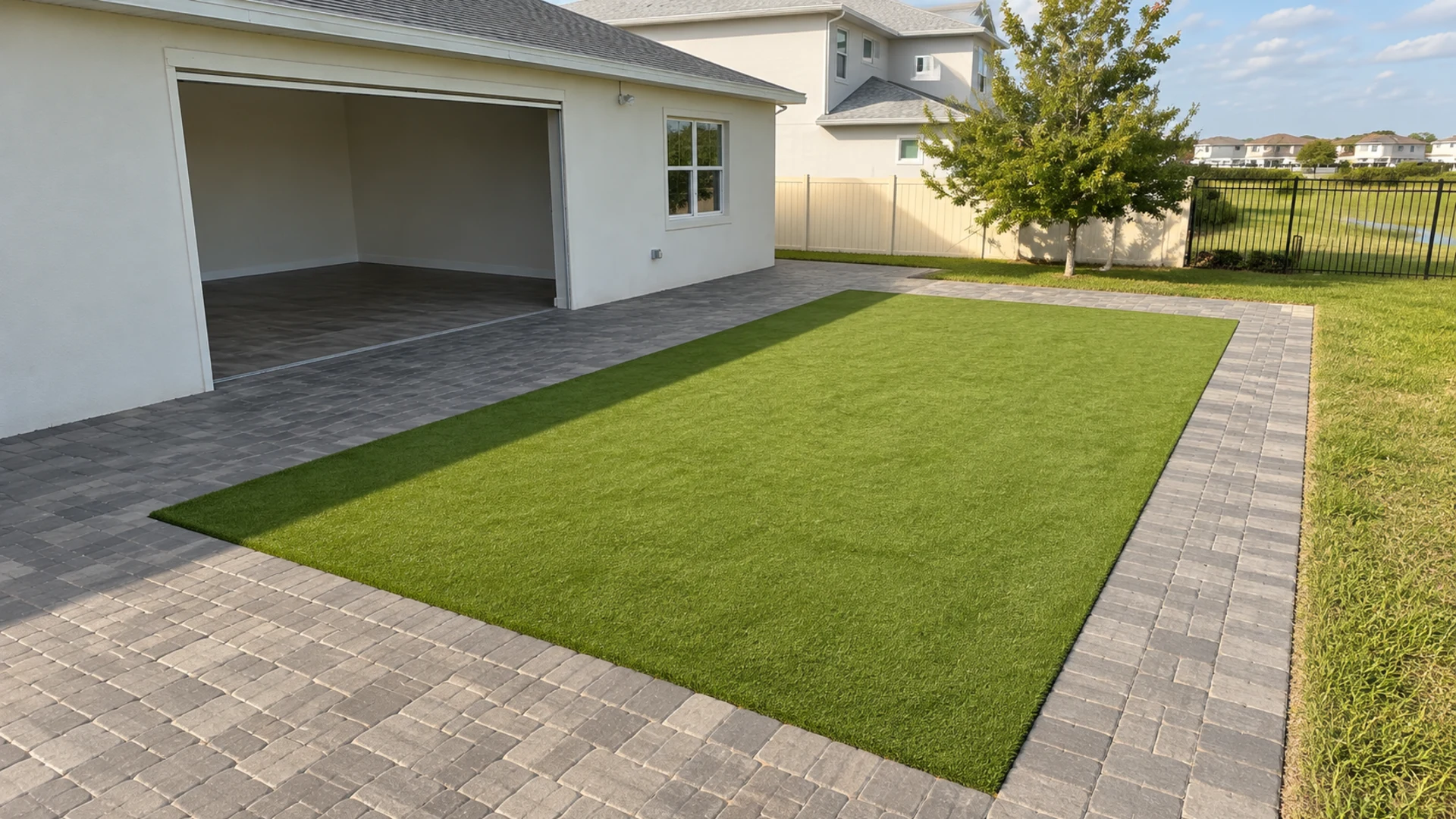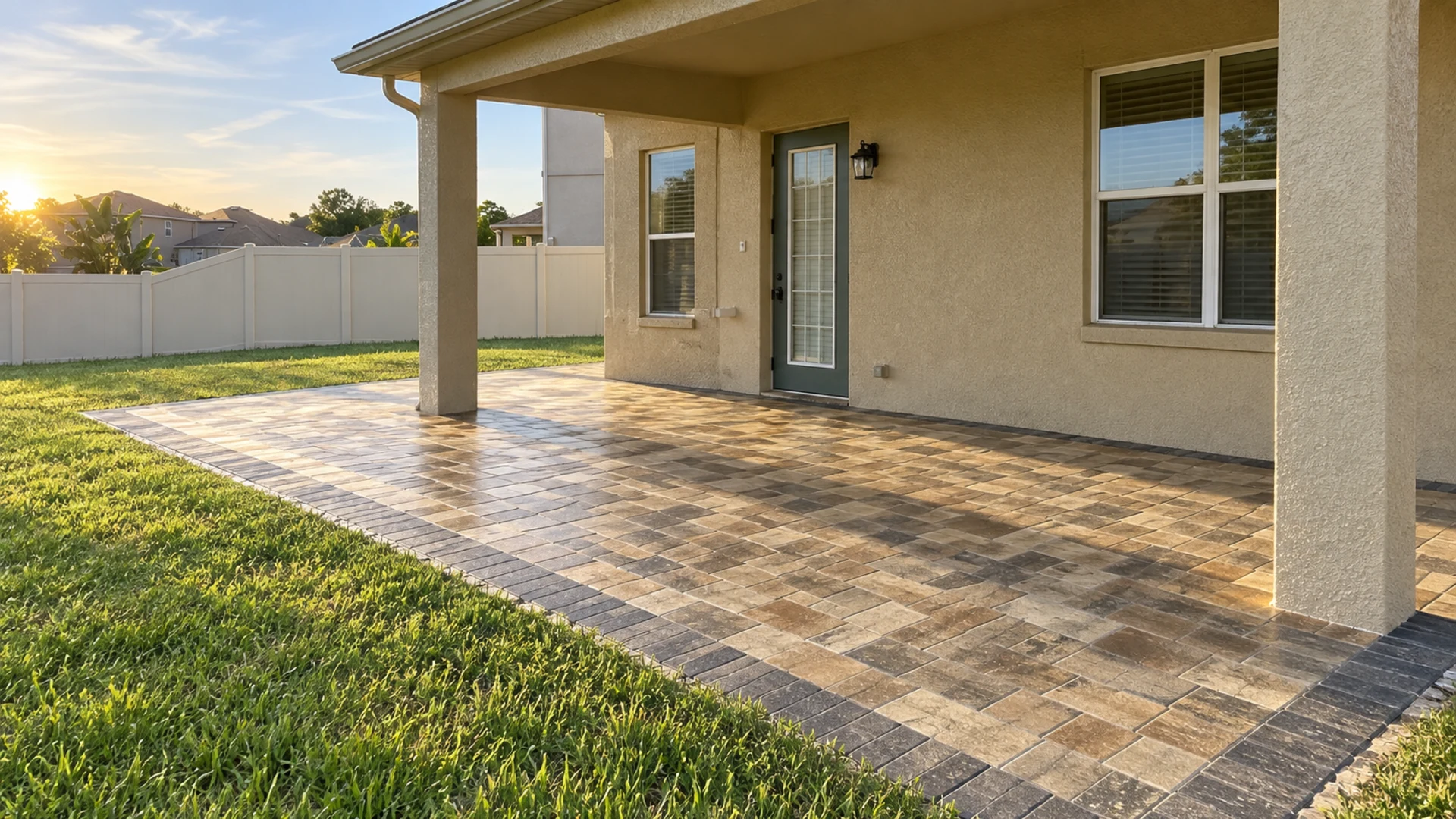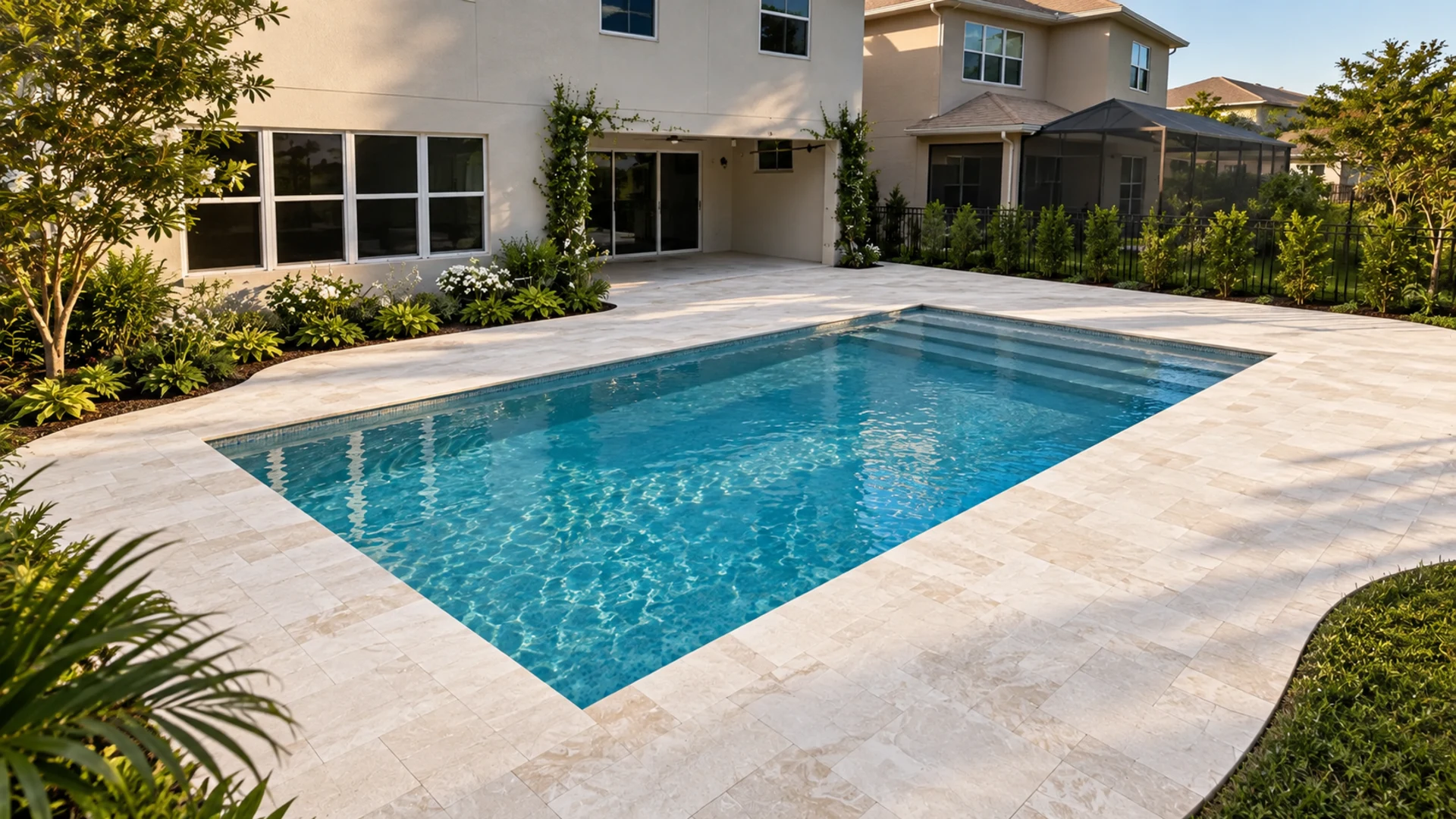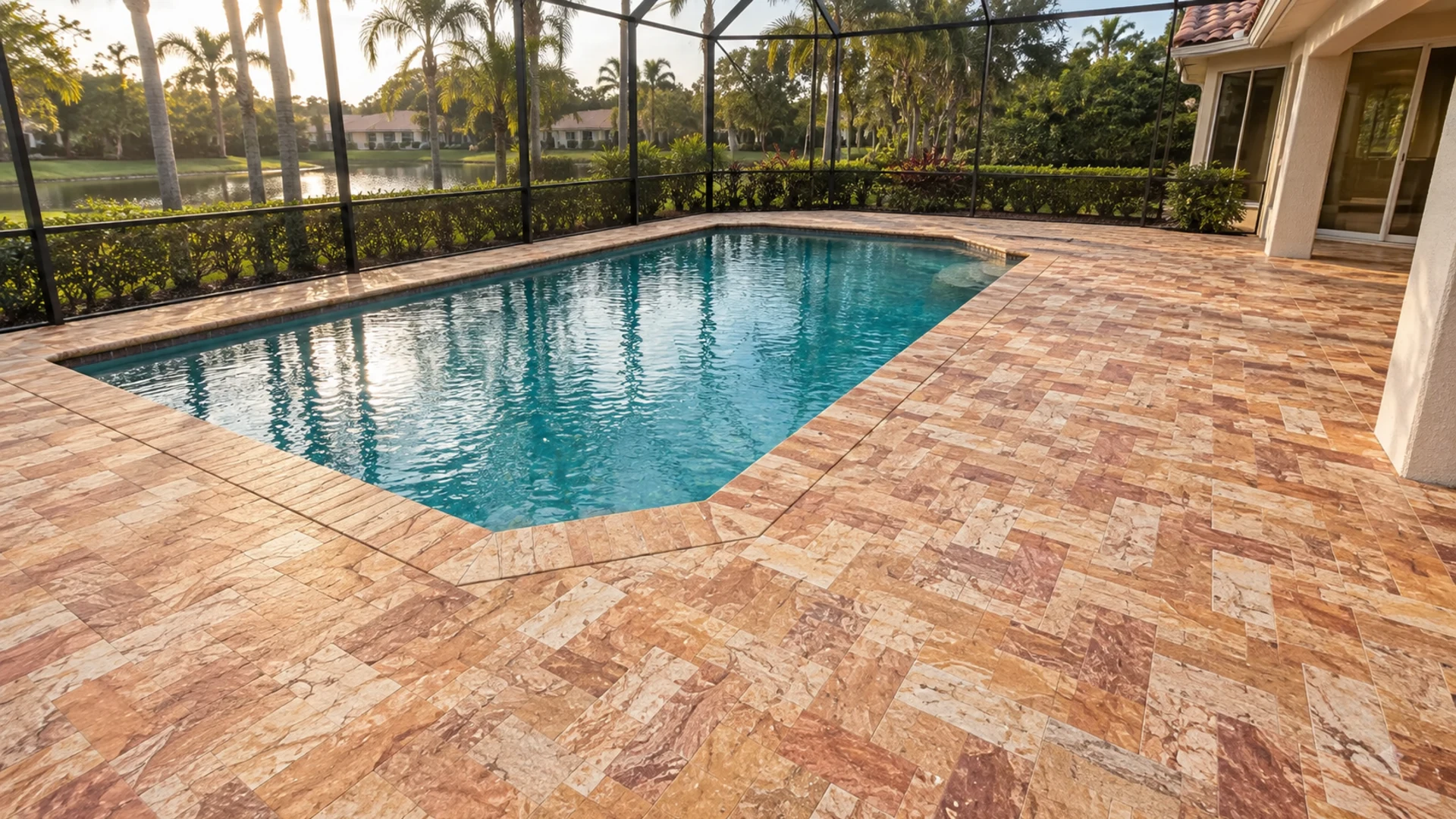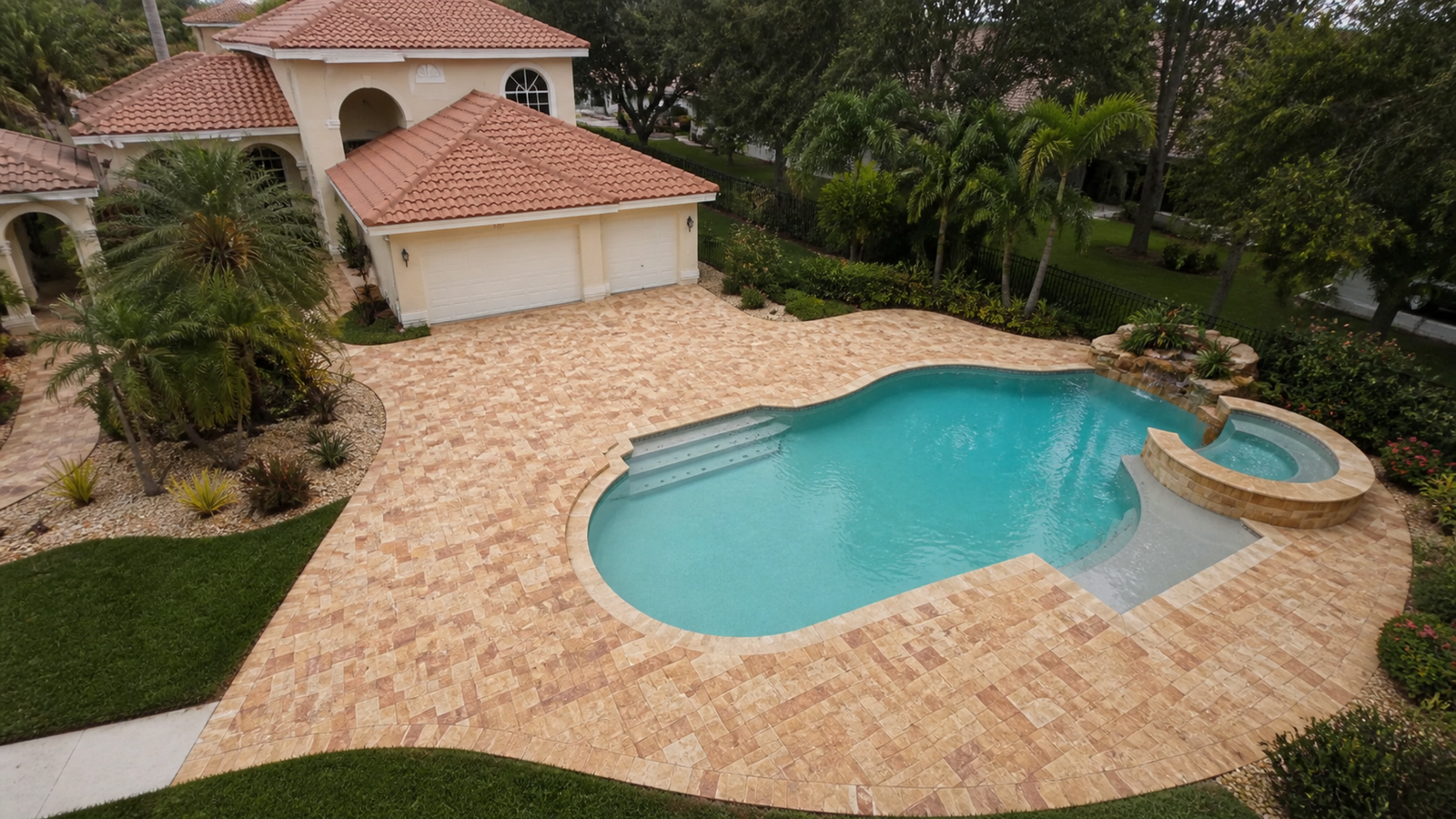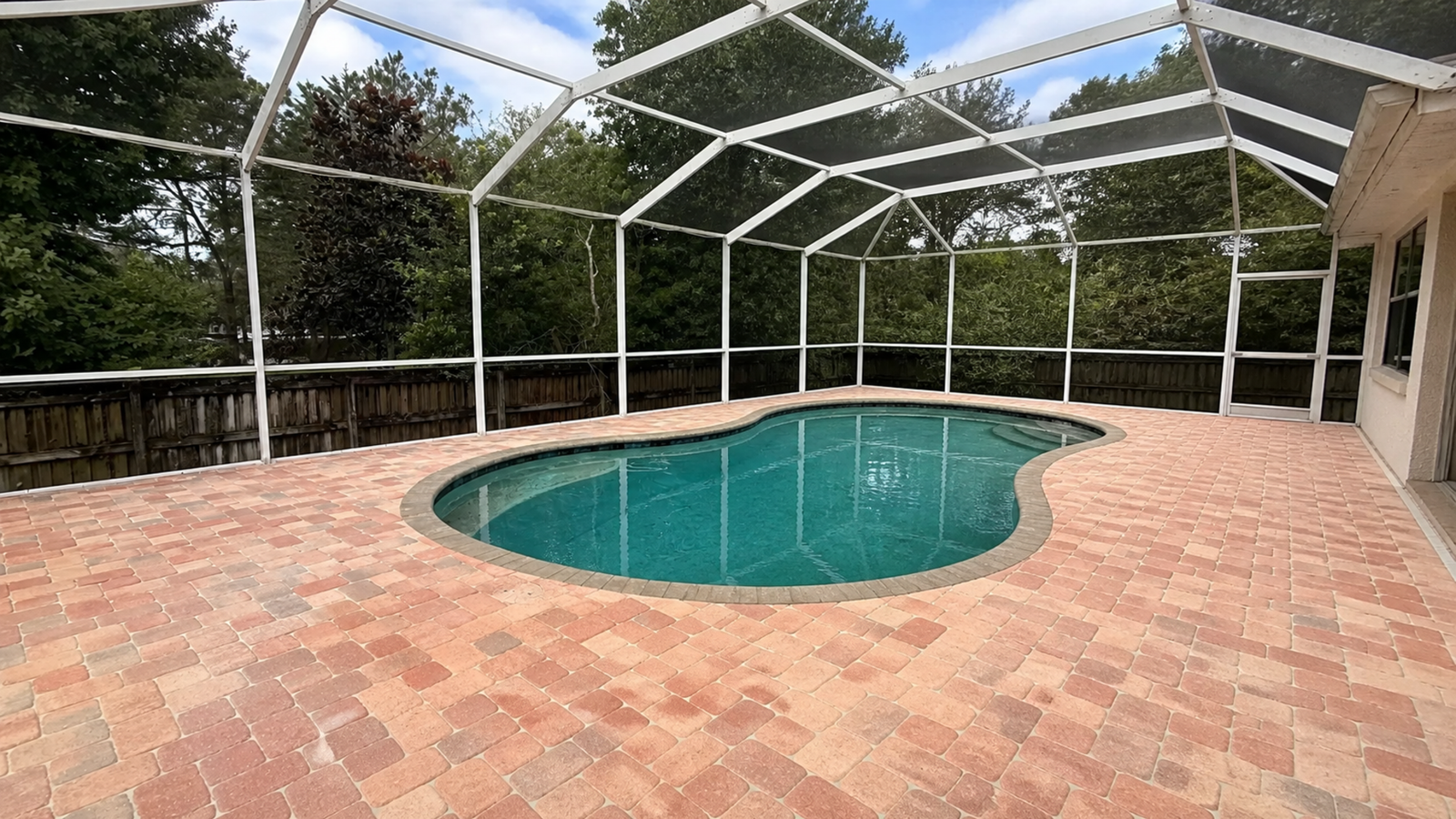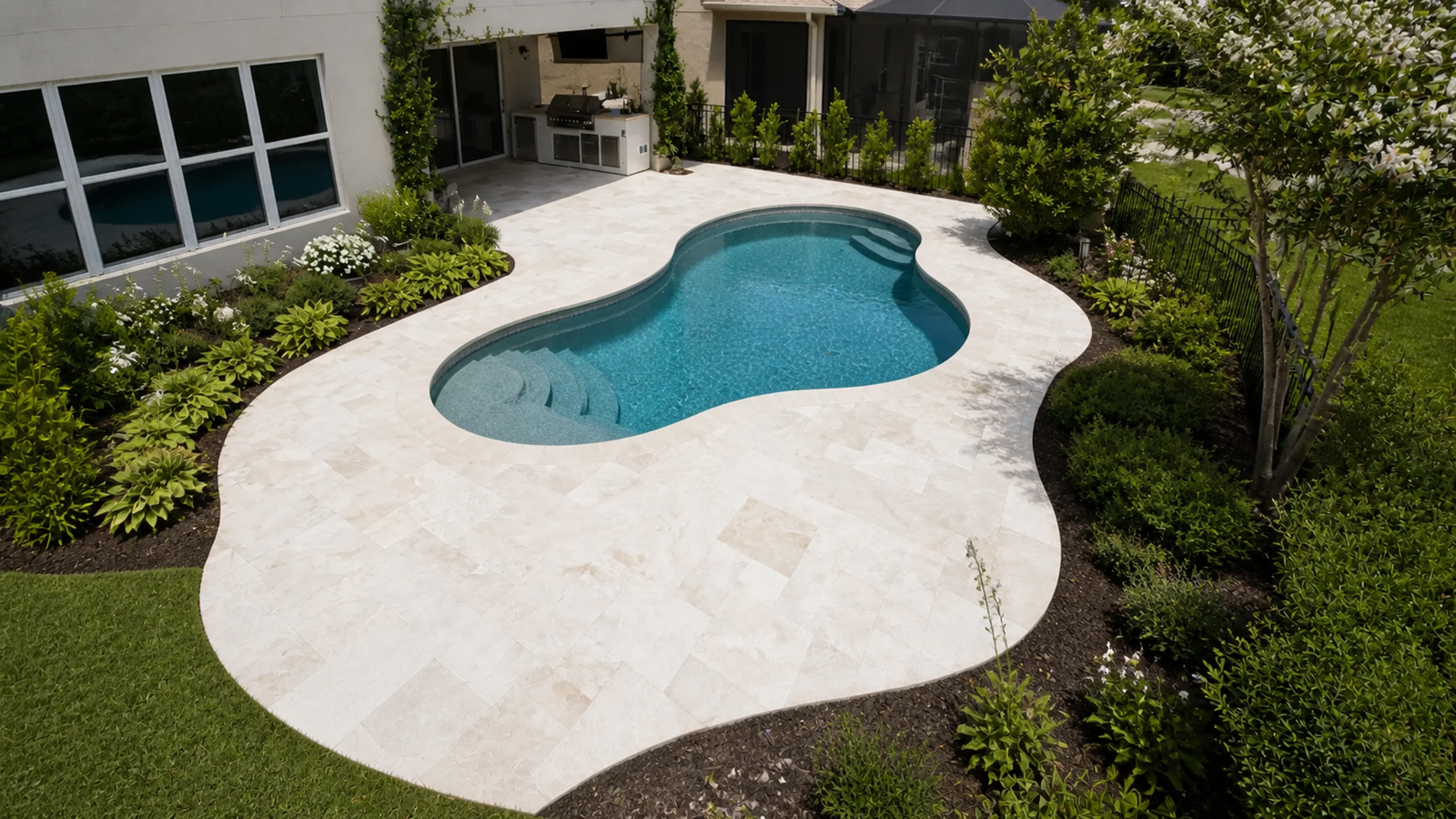
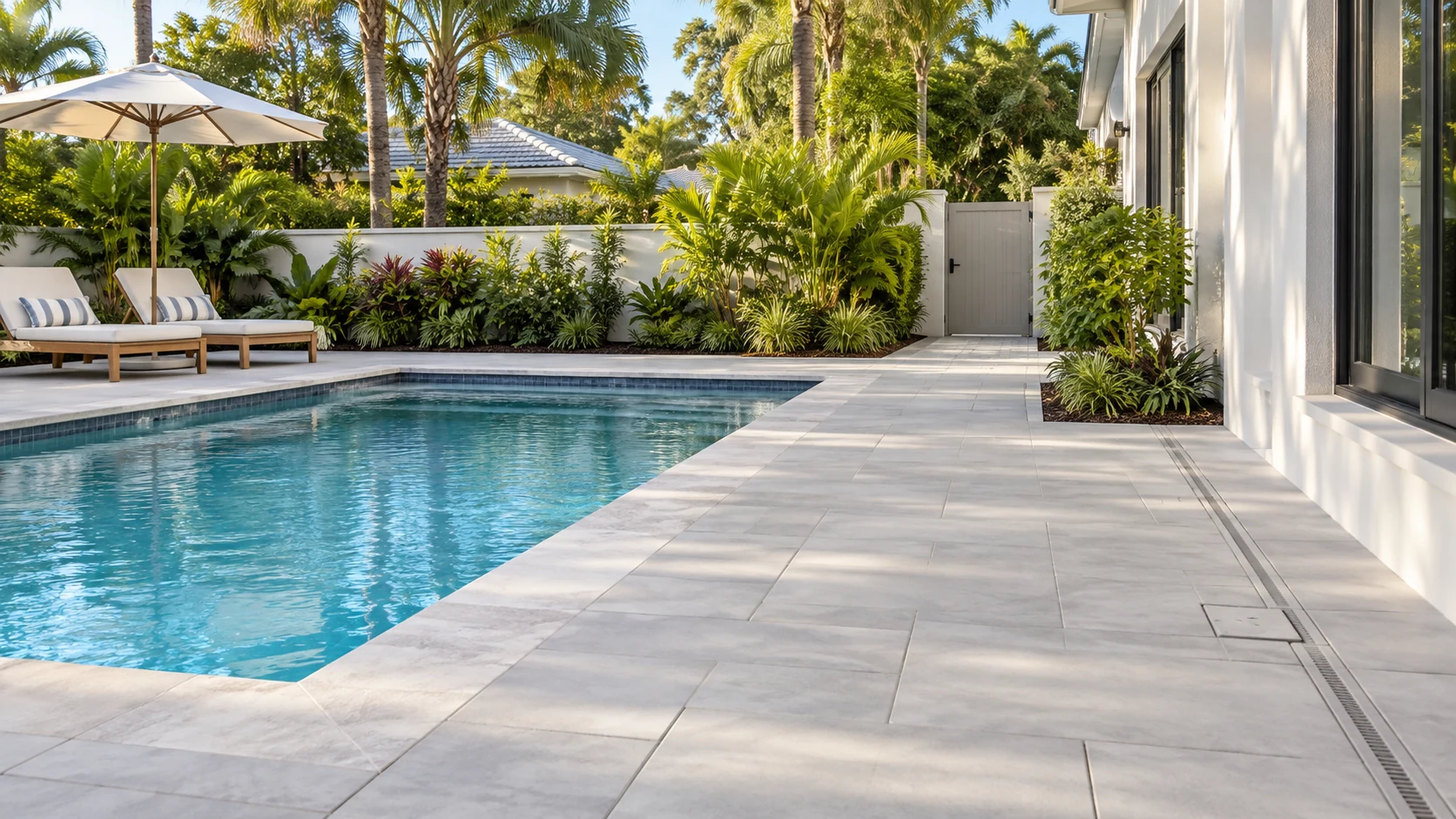
Deck drain covers deserve attention when a poolside paving project changes the surrounding surface. The visible cover may need to remain accessible for the system's intended maintenance. However, a neat border alone does not establish that the drain and new paving work together correctly. The actual component and site need review.
This article concerns surface deck drainage beside a pool. It does not describe pool suction outlets, in-pool drain covers, or pool circulation equipment. Do not remove or modify an unfamiliar pool component. If identification is uncertain, ask the appropriate pool professional before including it in the paving discussion.
For Tampa Bay homeowners, the useful task is coordination between the paving contractor and any relevant drainage or pool specialist. This guide explains what to record, how to ask about finished levels and access, and which details belong in the proposal. It does not provide installation dimensions or a drain-replacement tutorial.
Identify the actual deck drain covers
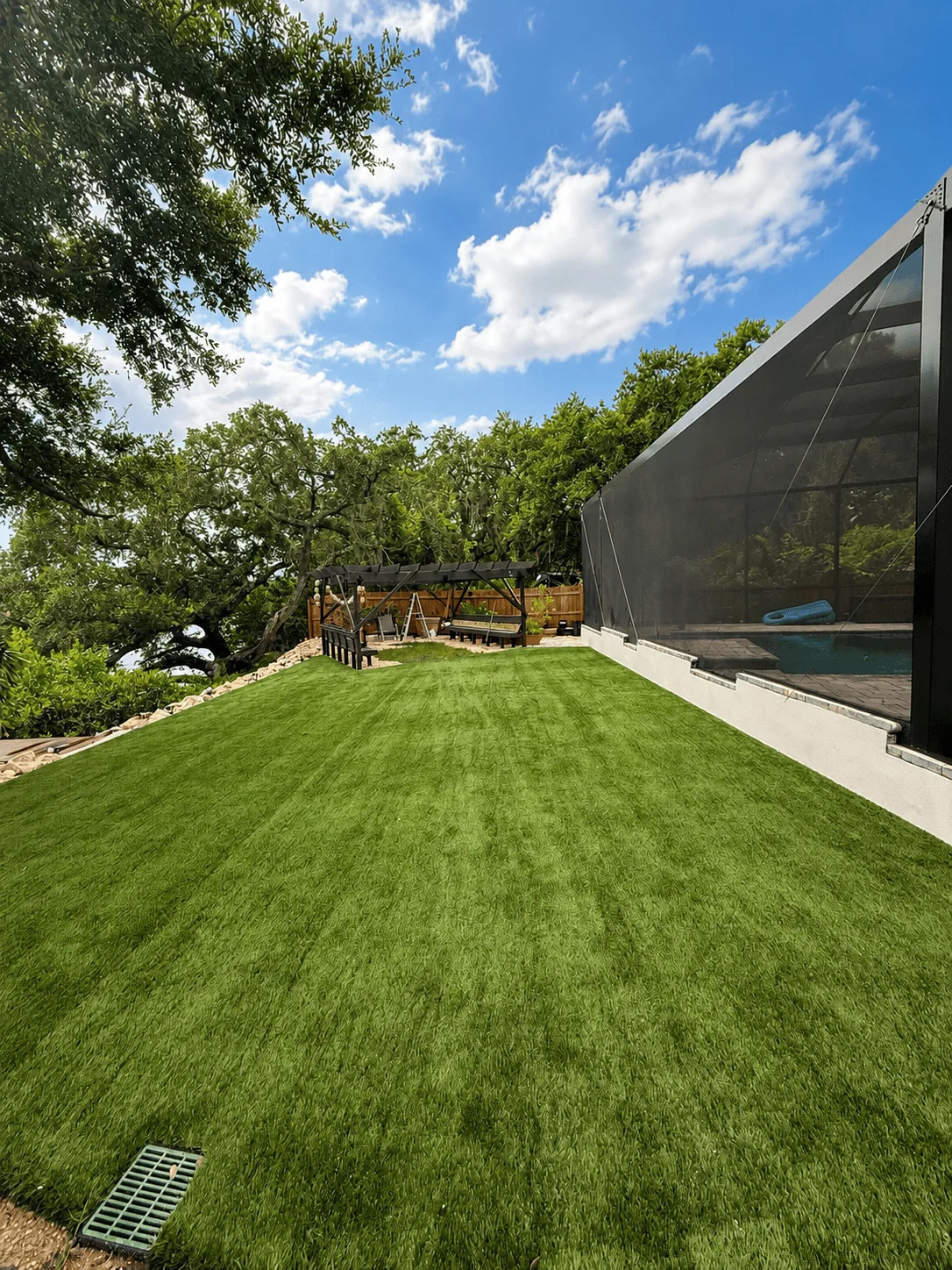
First, photograph the whole deck area and the visible surface drainage features. Then locate each cover on a rough sketch. Note whether it appears as a channel, grate, access cover, or another component. Use a description until the professional confirms the actual product and purpose.
Do not assume that every narrow opening around a pool serves the same function. Different systems can look similar from above. Therefore, avoid removing a cover to investigate or ordering a replacement based only on its shape. Identification should precede any proposed alteration.
If you have product records or earlier service information, gather them. A manufacturer name or model can help the professional locate the relevant instructions. However, old records still need comparison with the installed component. The present site remains the basis for the recommendation.
Show how the paving project meets the drain
Mark which parts of the deck will receive new paving or repair. Then show where those areas meet the existing drainage feature. A selective project may affect only one portion, while a broader renovation may involve several interfaces. The estimate should describe the actual relationship.
Also identify doors, coping, gates, and nearby surfaces that influence the layout. A cover does not exist in isolation. The contractor needs to review the surrounding transitions and water observations before recommending how the paving should meet it.
Avoid choosing a final height from a photograph or sample arrangement. Finished levels require site-specific assessment. Instead, ask how the contractor will coordinate the proposed surface with the drain and who will verify the relevant details before installation proceeds.
Keep deck drain covers accessible by design
Ask how routine access will work after the paving is complete. The answer should reflect the actual product. Some systems have removable components, while others require different service methods. Do not assume a cover can simply lift out because a similar-looking product online does.
For example, Stegmeier's Frontier Deck Drain Pro information describes its own removable top arrangement. That illustrates why product identification matters. It does not establish that your deck uses that product or that its installation details apply to every drain.
If the proposed border, joint treatment, or adjacent feature could affect access, raise the question before approval. A finished surface should not hide the maintenance requirement. The relevant professionals need to explain how their work preserves the intended service method.
Record existing water observations
From a safe location, note where water collects during ordinary rain and how the area appears afterward. Include dates and wide photos when possible. These records can help focus the site visit. They do not establish the cause of a drainage issue or prove that one cover needs replacement.
Keep observations about the deck separate from the pool's water systems. If you notice a concern involving an in-pool component, refer it to the appropriate pool professional. A paving estimate should not become an informal assessment of unfamiliar circulation equipment.
Do not pour water into an unknown opening or remove material to create a test. The professional should determine the appropriate assessment. Your preparation should preserve the current condition and make its location clear, rather than changing the system before review.
Ask who evaluates the existing drainage system
Clarify whether the paving contractor's scope includes only the surface interface or a broader drainage review. Those are different responsibilities. If another specialist needs to assess the component or discharge arrangement, identify that dependency before the paving sequence becomes fixed.
Ask what the initial visit can confirm and what remains uncertain. A visible cover may not reveal the condition of the full system. Therefore, a careful proposal may need to state assumptions or recommend further assessment. That limitation is useful information rather than a reason to demand a premature guarantee.
Also identify the person who coordinates the trades. The homeowner should not have to translate technical instructions between a paving crew and a pool or drainage specialist. Direct professional communication helps ensure that each scope addresses the same interface.
Review replacement questions before selecting a cover
If the existing cover is damaged or unsuitable for the proposed work, ask the relevant professional to identify the replacement requirements. Appearance is only one part of the decision. A cover with a similar color or width may not be compatible with the installed system.
Keep the product specification and recommendation with the proposal. Then ask who supplies the component and who installs it. This prevents a contractor from arriving with paving material while everyone assumes another party has ordered the required drainage item.
If the exact component is unavailable, review the alternative before installation. A substitution may affect more than the visible top. The appropriate specialist should explain any changed requirements or scope so the homeowner can make an informed decision.
Discuss the surrounding pattern and border
The paving layout can make a drainage feature look deliberate without disguising its purpose. Ask the contractor how the pattern, cuts, and border relate to the component. The visual plan should respect the assessed installation and service requirements rather than treating the cover as an obstacle to hide.
Review the interface from ordinary standing viewpoints. A tightly cropped design image may overlook how the line reads across the deck. The contractor can explain the proposed arrangement while confirming that the chosen material and geometry suit the actual project.
Do not request that a component be covered or sealed simply to create a continuous appearance. If the preferred design conflicts with access, discuss a reviewed alternative. A coherent layout should support both the visual result and the system's intended use.
Coordinate furniture and daily use
Show where tables, loungers, storage boxes, and movable equipment normally sit. A drain cover may remain physically visible while becoming difficult to service behind furniture. Therefore, consider maintenance access alongside the everyday seating plan.
Also identify the route between the house, pool gate, and equipment area. A new paving arrangement should not quietly create a conflict with those movements. Explain household accessibility needs so the appropriate design requirements receive professional review rather than assumptions based on a rendering.
If heavy or fixed items are planned, disclose them before the surface scope is final. The relevant professionals need to assess their relationship to the paving and drainage. Do not infer support or suitability merely because a spot appears flat and convenient.
Plan protection during construction
Ask how the team will protect existing drainage components while nearby work occurs. Preparation, cutting, material handling, and cleanup can all involve the same area. A clear sequence helps prevent the component from becoming an unnoticed boundary between two trades.
Also discuss who checks the interface before the work area closes. The relevant contractor should identify the appropriate review point. Homeowners can ask for a defined process without prescribing an installation detail or conducting a test themselves.
If work reveals an unexpected condition, agree on the communication and approval step. The team should not bury the question beneath a finished surface simply to maintain the schedule. A short documented pause may be necessary to obtain the right assessment.
Keep maintenance guidance tied to the product
At handover, ask how the installed deck drain covers should receive routine care. The instructions should refer to the actual system and any replacement component. A general video showing another product's removable top may not provide a suitable method for yours.
Also ask which observations should lead to a service inquiry. A changing cover, recurring water concern, or uncertain component may need professional review. Do not improvise repairs by fastening, trimming, or sealing an unfamiliar part. Keep the contact details and product information available.
If another provider cleans the deck later, share the material and drainage records. Adjacent surfaces may have different care requirements. Clear identification helps the provider plan the work without assuming that every part of the deck can receive the same treatment.
Compare proposals by their complete interface scope
Read each estimate for component identification, supply, installation, paving connections, protection, and restoration. Then identify exclusions and specialist dependencies. Two proposals may describe the same visible area while assigning different responsibilities. The final total alone does not reveal that difference.
Ask how a hidden condition or unavailable component would affect the recommendation. A clear approval process helps the homeowner understand a change in scope. It also distinguishes a legitimate unresolved question from a vague allowance that nobody can explain.
Keep the final drawing and component information together. If the proposal changes, update the record rather than retaining several conflicting versions as though they are equally current. The crew and homeowner should be able to identify the same approved arrangement.
Review the completed area with the contractor
At completion, compare the interface with the agreed scope and ask the contractor to explain access and care. Do not infer correct operation from appearance alone. The relevant professional's completion process and instructions matter alongside the visual review.
Photograph the cover locations and surrounding paving from a useful wide viewpoint. Then retain product details, service contacts, and any follow-up item. These records make later maintenance questions easier to route to the right person.
Explore Dr Pavers Design's pool deck guides and services before a consultation. Bring the current photos, available component records, and project outline so the team can discuss deck drain covers within a coordinated paving plan.
Separate a drain-cover concern from a wider water problem
A homeowner may notice standing water beside a cover and assume the cover itself needs replacement. However, the observation may require a broader assessment of the surface and drainage arrangement. Describe the location and timing first. Then ask the qualified professional what the initial review can establish.
If the proposed paving changes the surrounding level or route, include that information in the same discussion. The contractor needs to understand both the existing condition and the intended work. A new cover should not become an automatic substitute for evaluating the actual interface.
Also keep unrelated pool equipment concerns separate. This article addresses deck surface drainage, not the pool's suction or circulation components. If a part sits inside the pool or its purpose is uncertain, involve the relevant pool professional. Do not remove it as a homeowner inspection step.
Prepare a component record for later maintenance
After the project, keep the manufacturer, model, and supplied care instructions for any new component. Add a wide photo showing its location on the deck. This simple record can help a later service provider identify the system without guessing from a close-up.
If the contractor retains an existing component, ask what information is available about it. The record can state that the exact model remains unknown. Honest uncertainty is more useful than assigning the name of a similar-looking product found online.
Also record which professional handles questions about the drainage system and which handles the paving interface. A later concern may involve one or both. Clear contacts help the homeowner request the appropriate review instead of assuming every poolside issue belongs to the same trade.
Keep the record with the final layout and material details. Deck drain covers can be easy to overlook once the surface looks complete. Making them part of the handover supports ordinary care and future renovation planning without turning the homeowner into a drainage installer.
For help with pool deck drain covers in Tampa Bay, contact Dr Pavers Design with your location, photographs, and project priorities. Explore projects, testimonials, and the FAQ before the consultation. You can also review the company's services to describe the work you want evaluated.
Follow Instagram and Facebook for company updates, or consult Google Maps and Google reviews. Send a WhatsApp inquiry or text the team to begin the discussion. Contact Dr Pavers Design at +1 (656) 600-4015 or email drpavers@outlook.com for a free consultation anywhere in Tampa Bay.