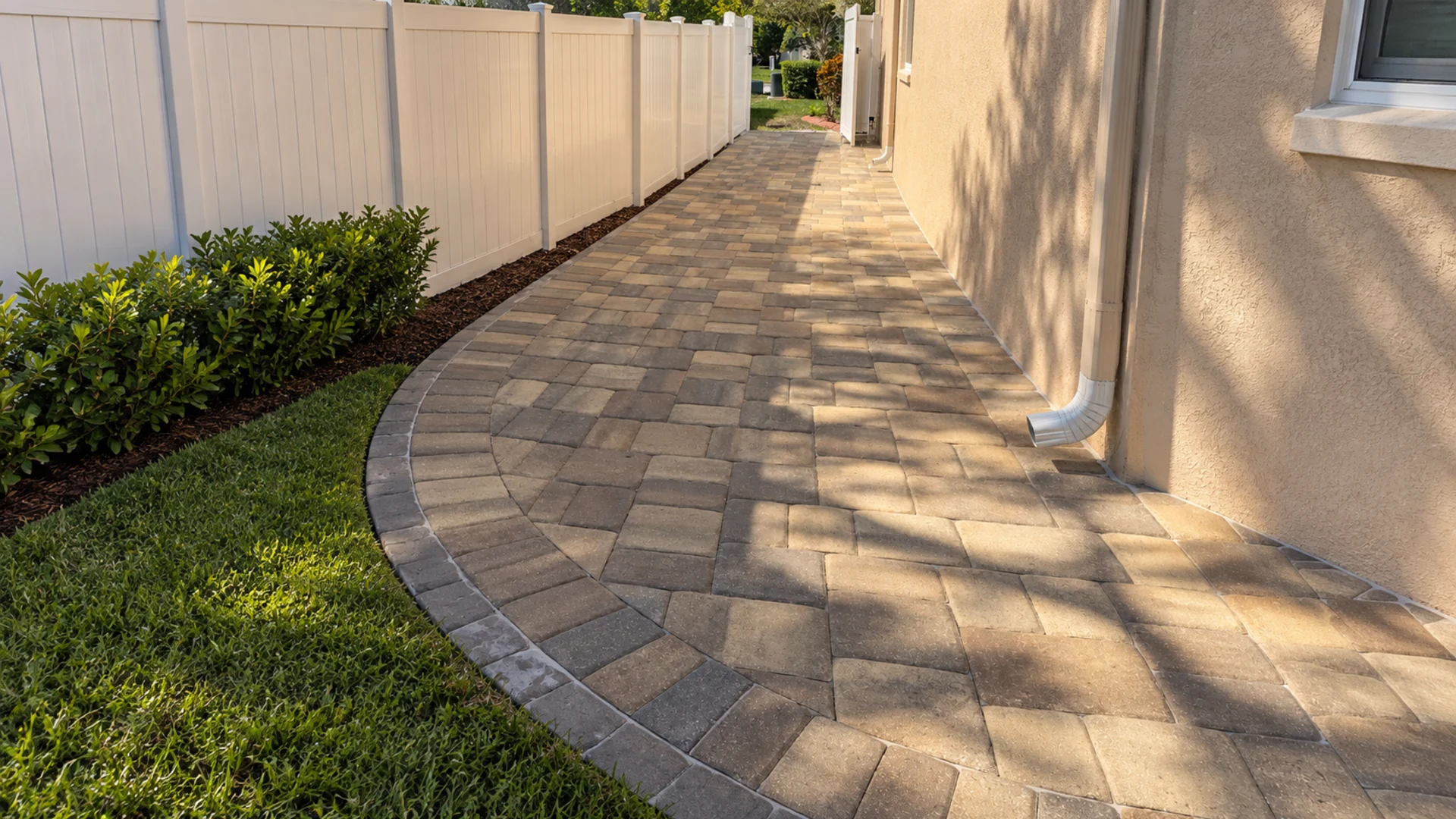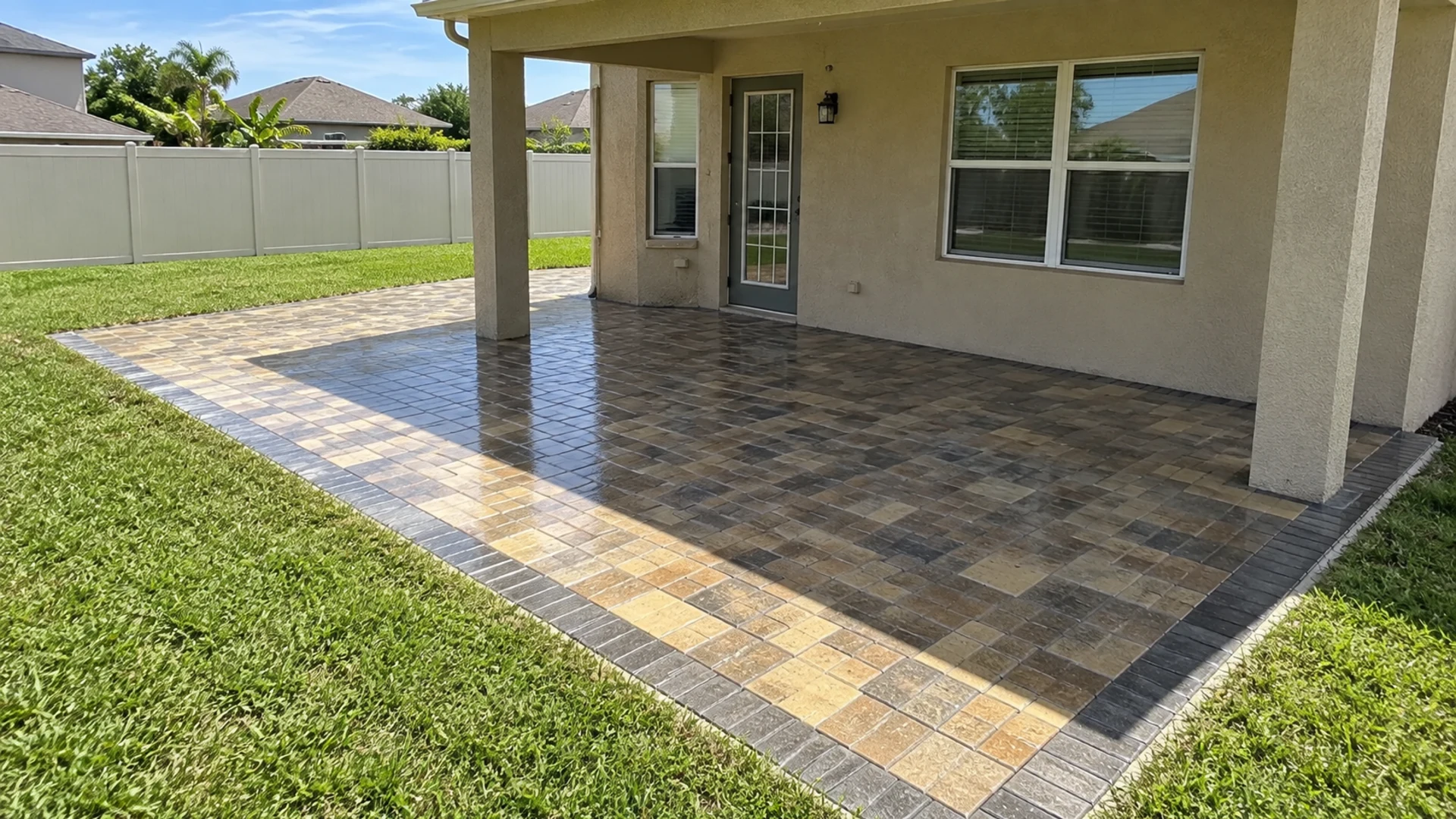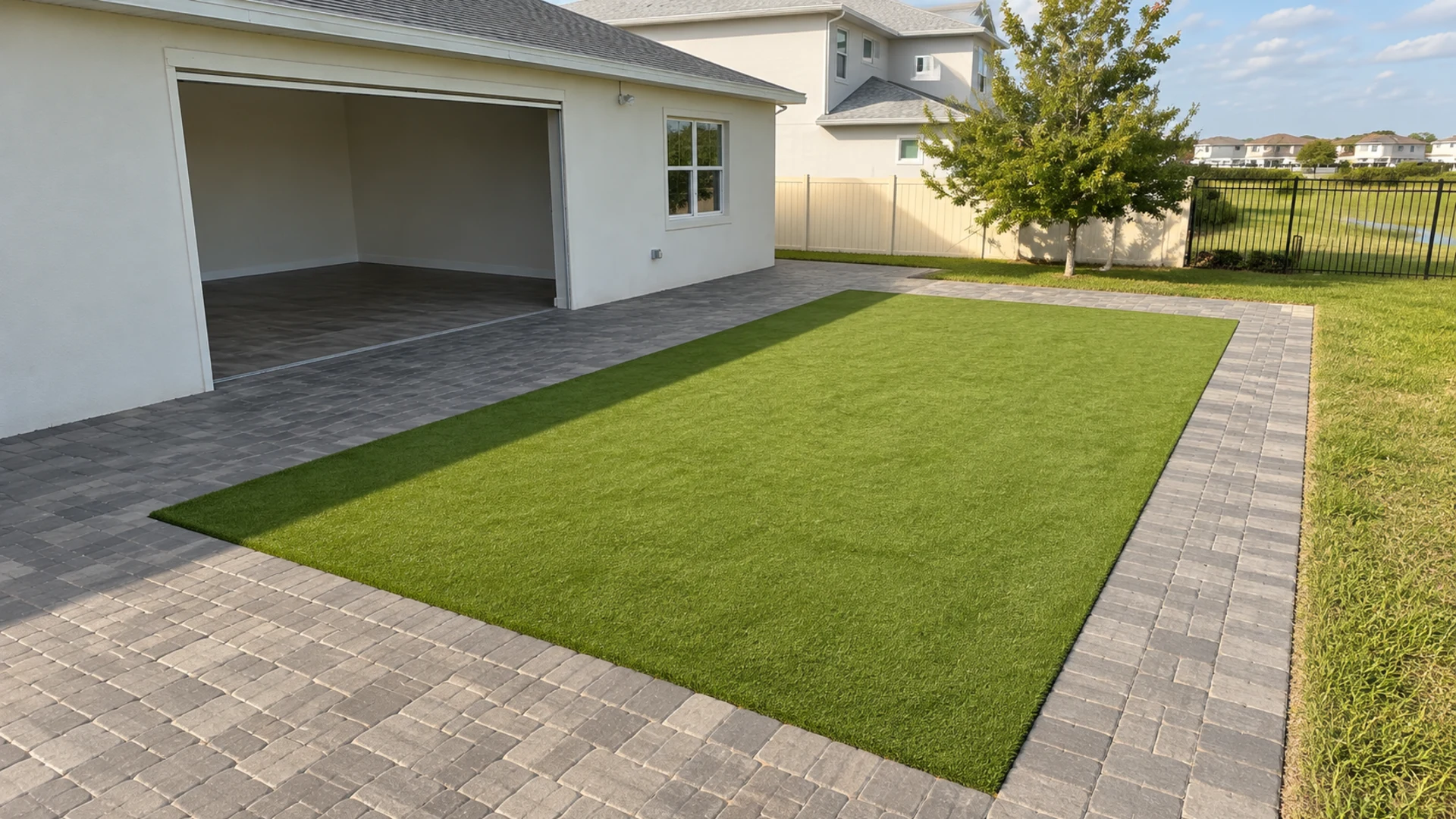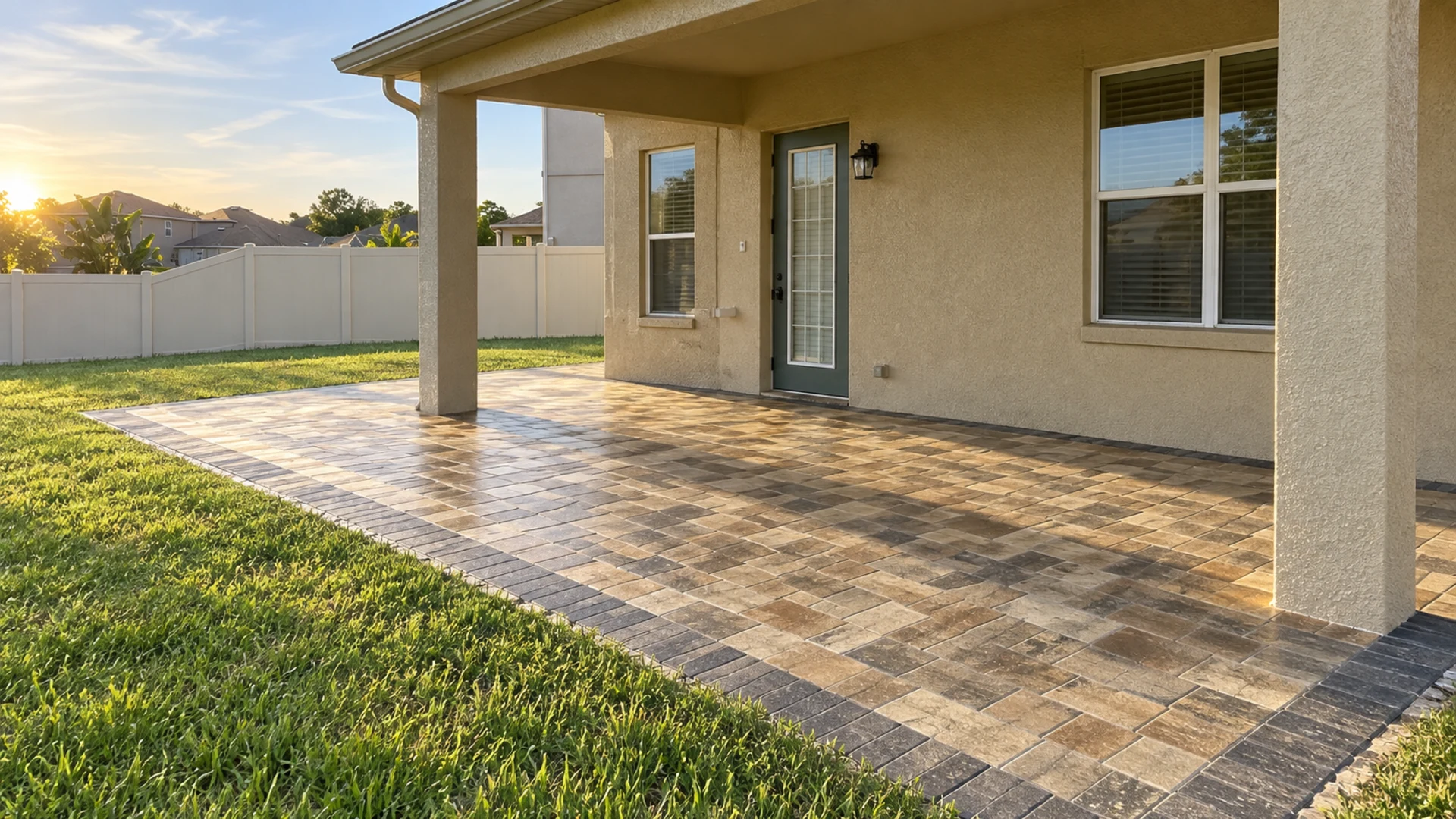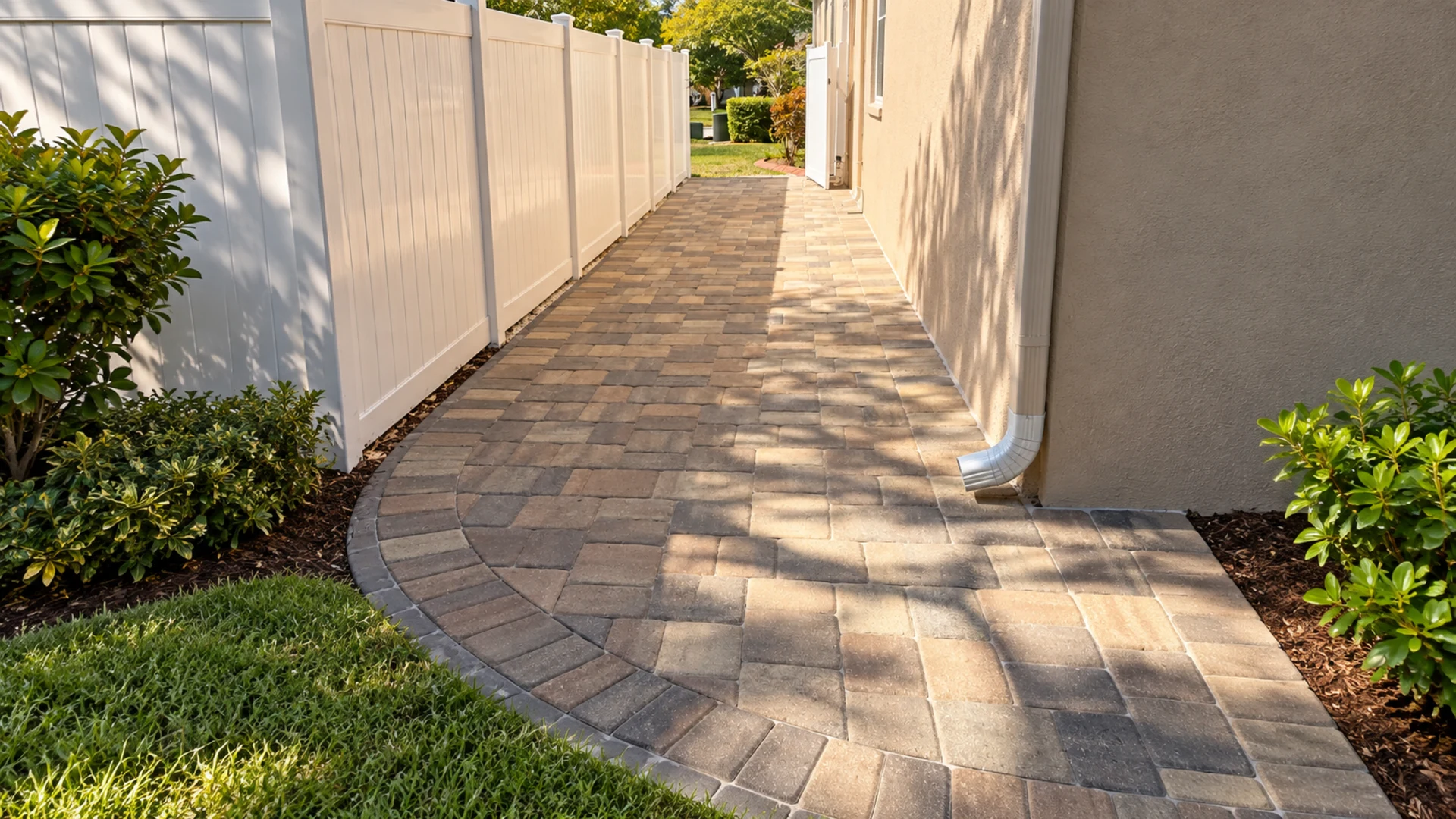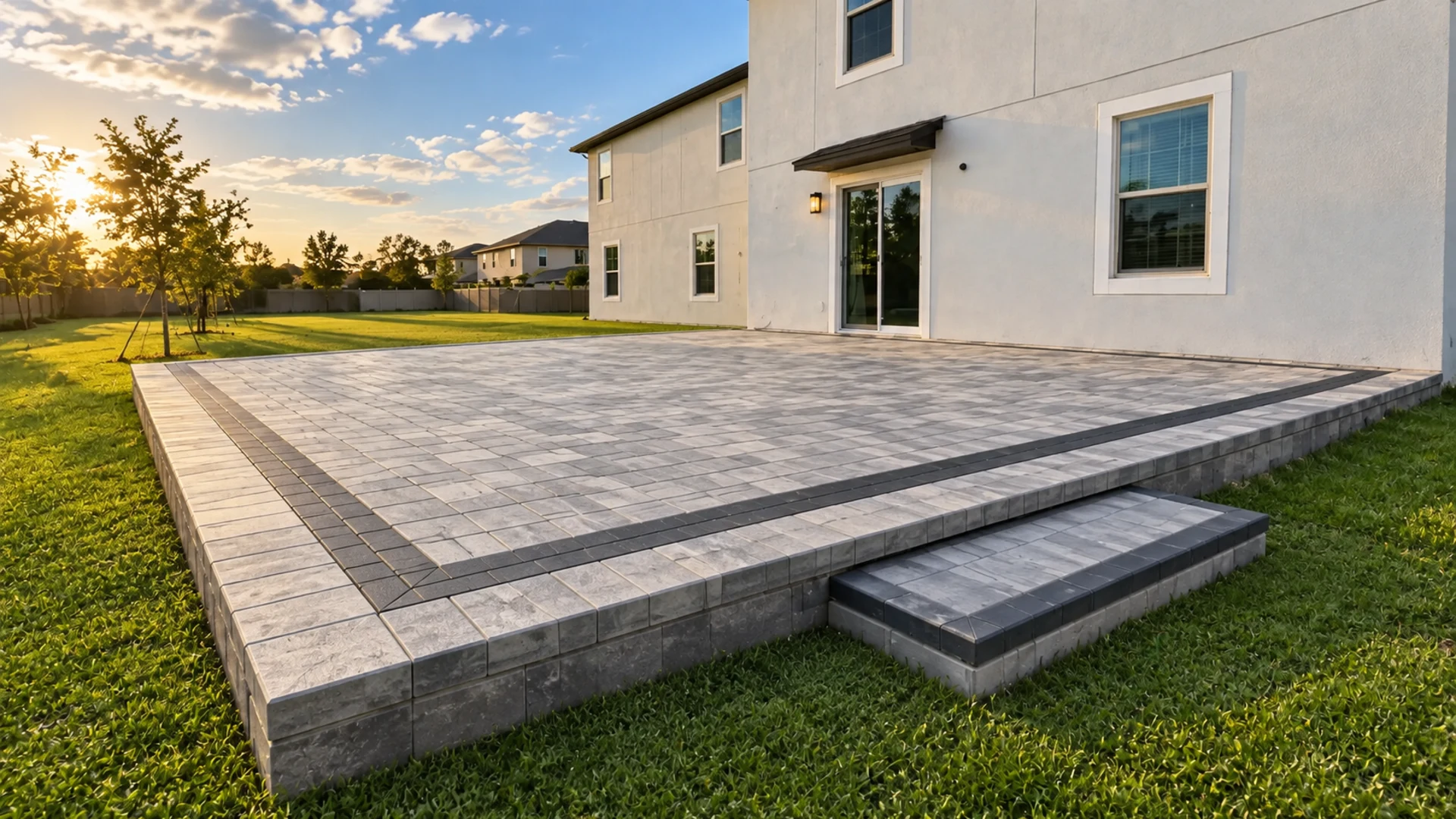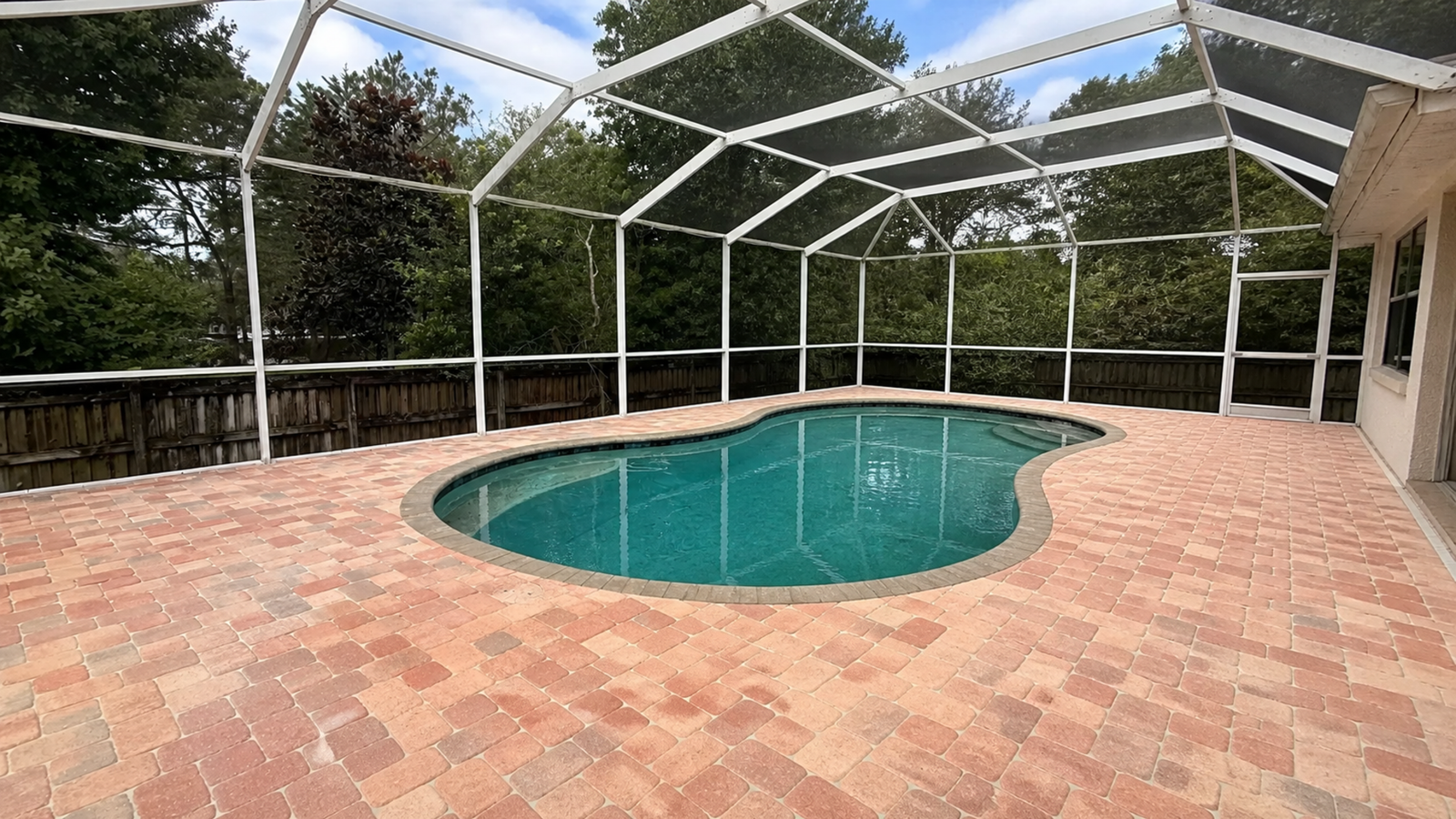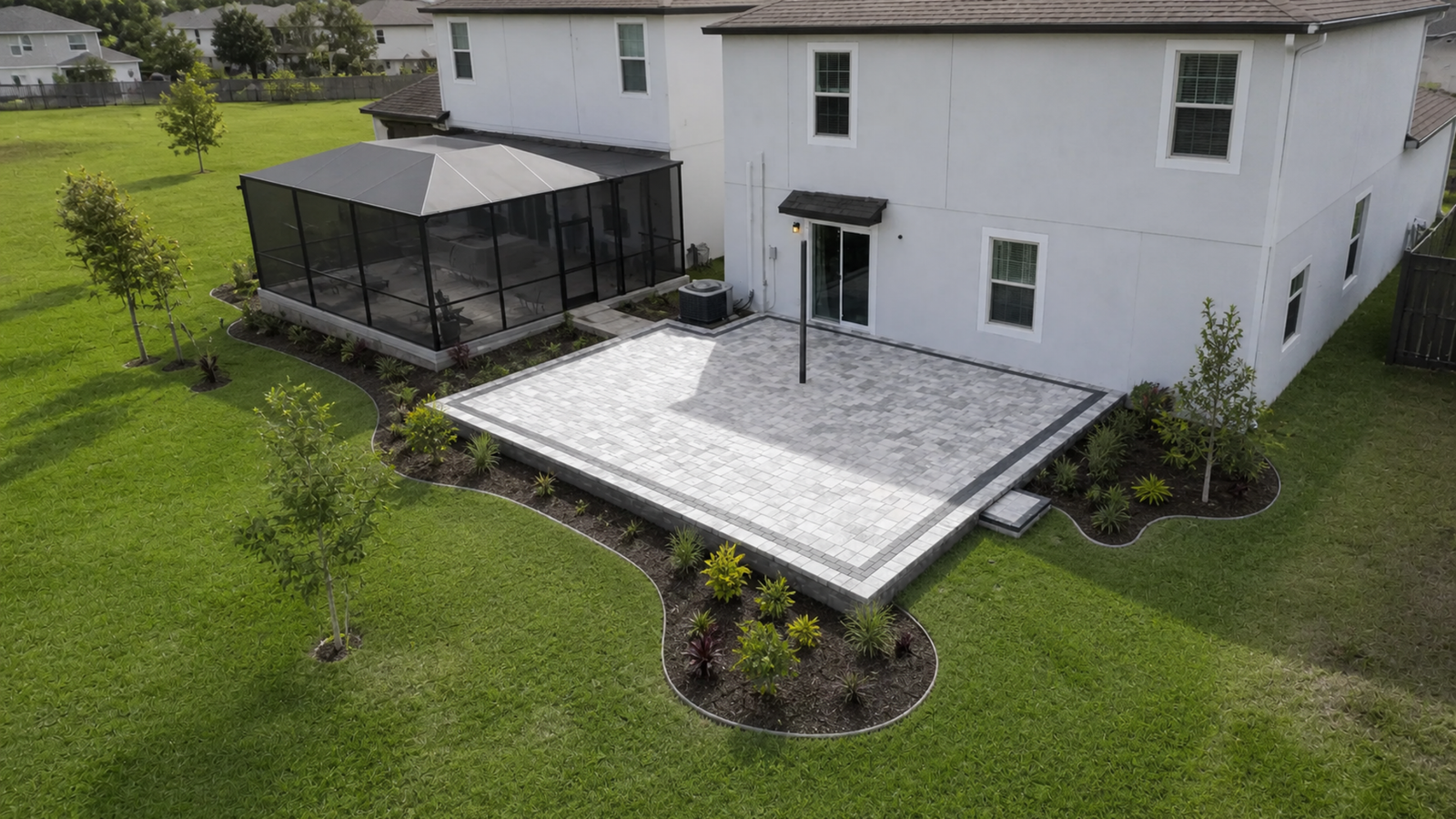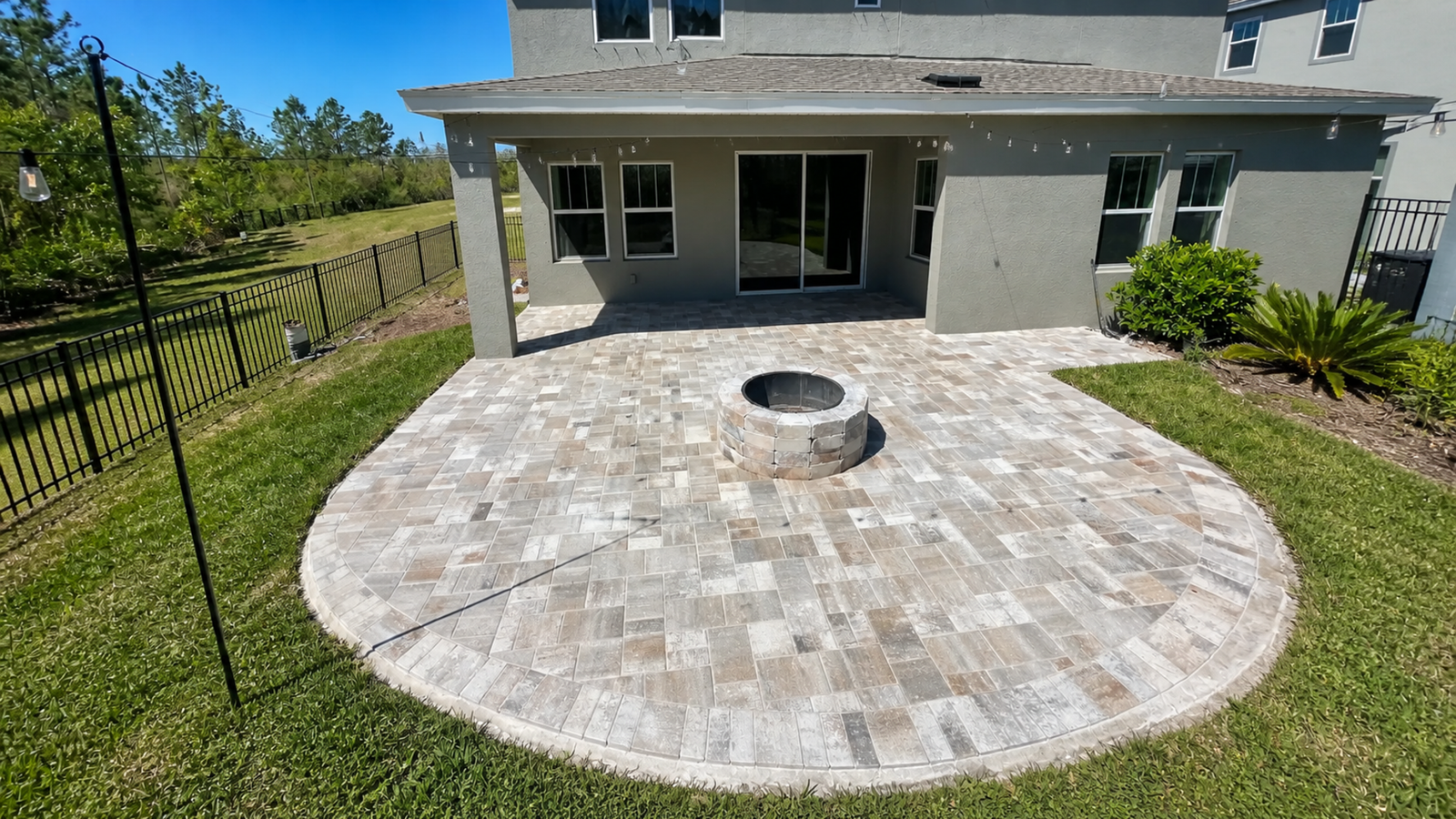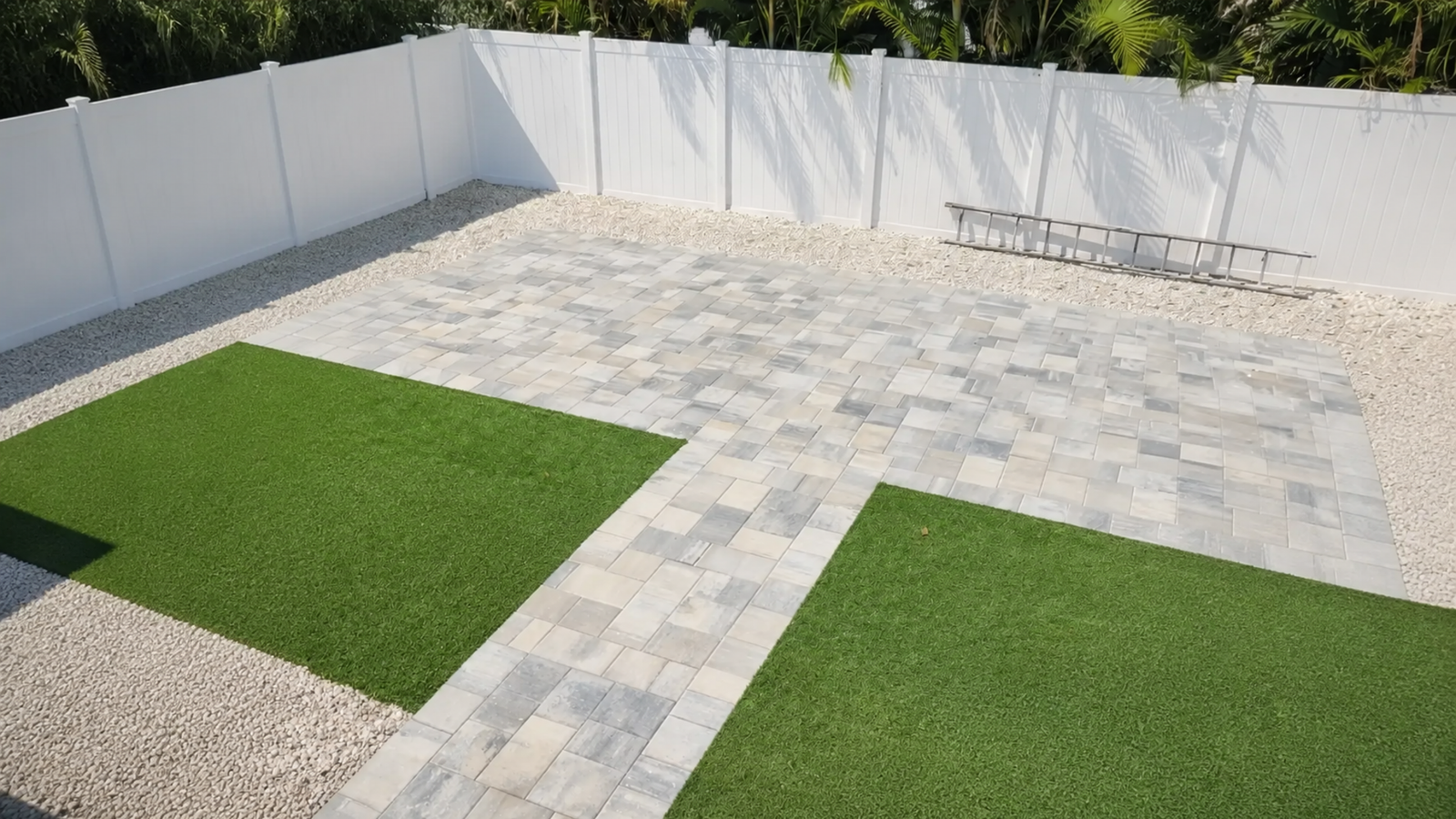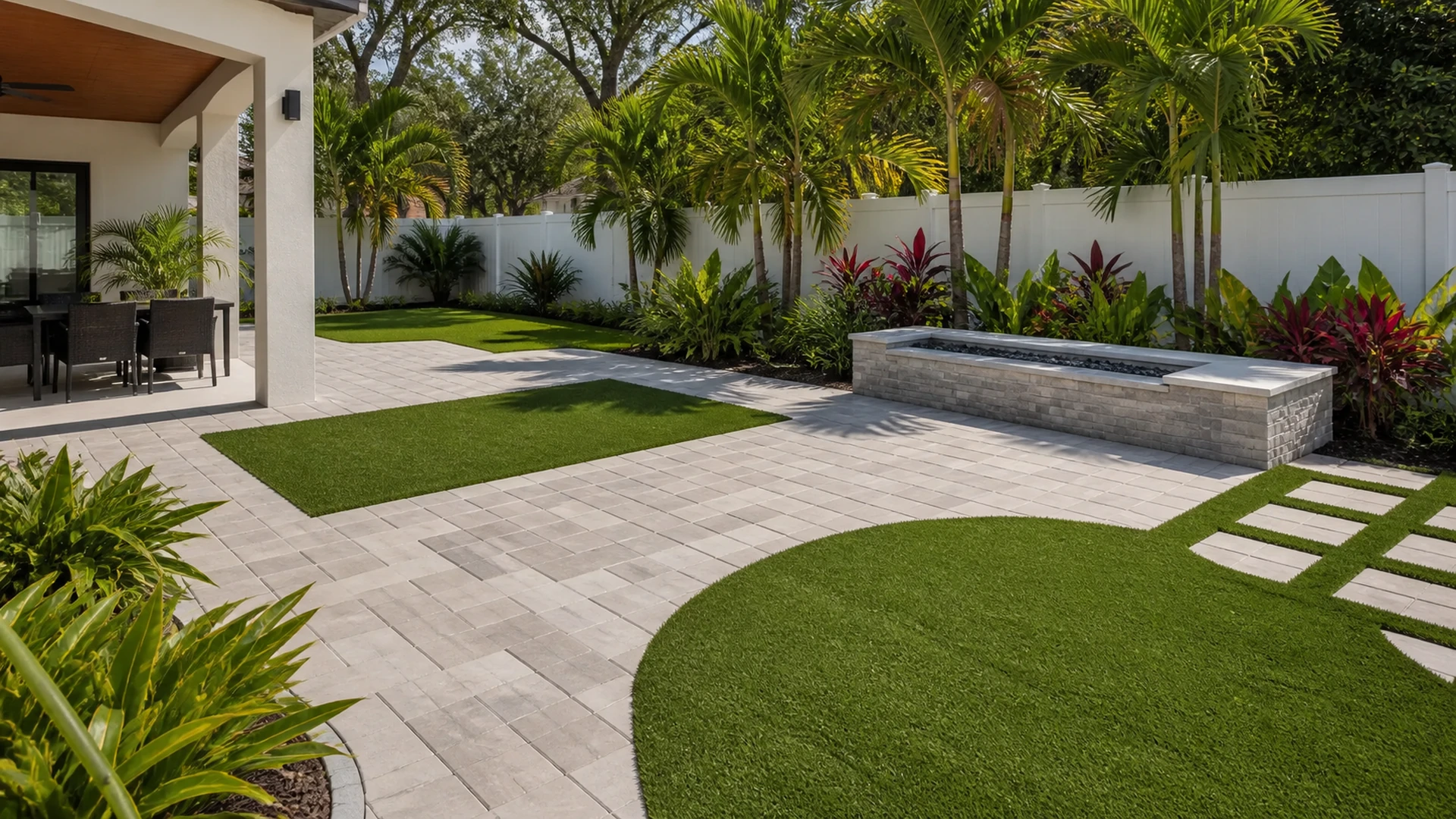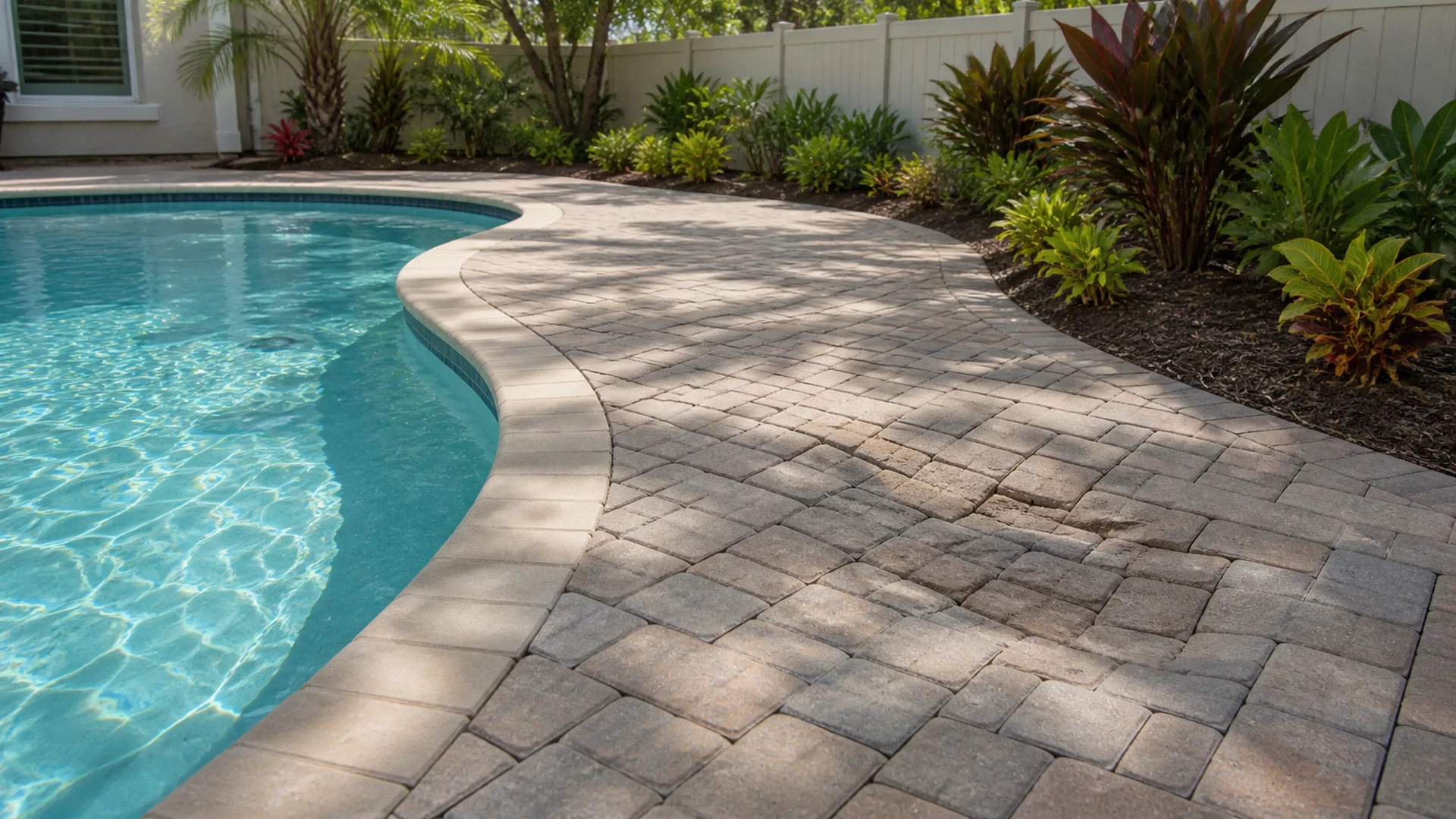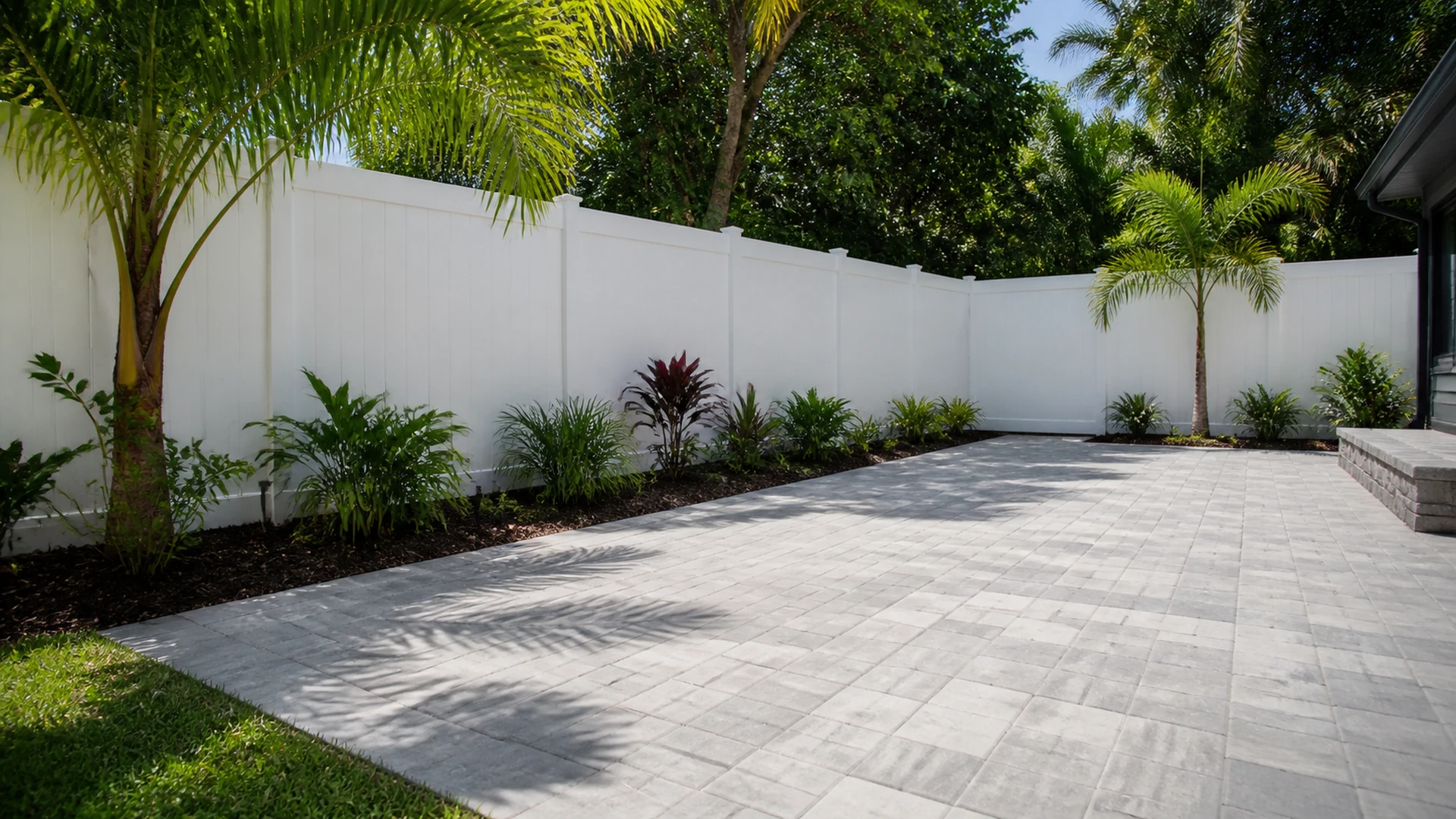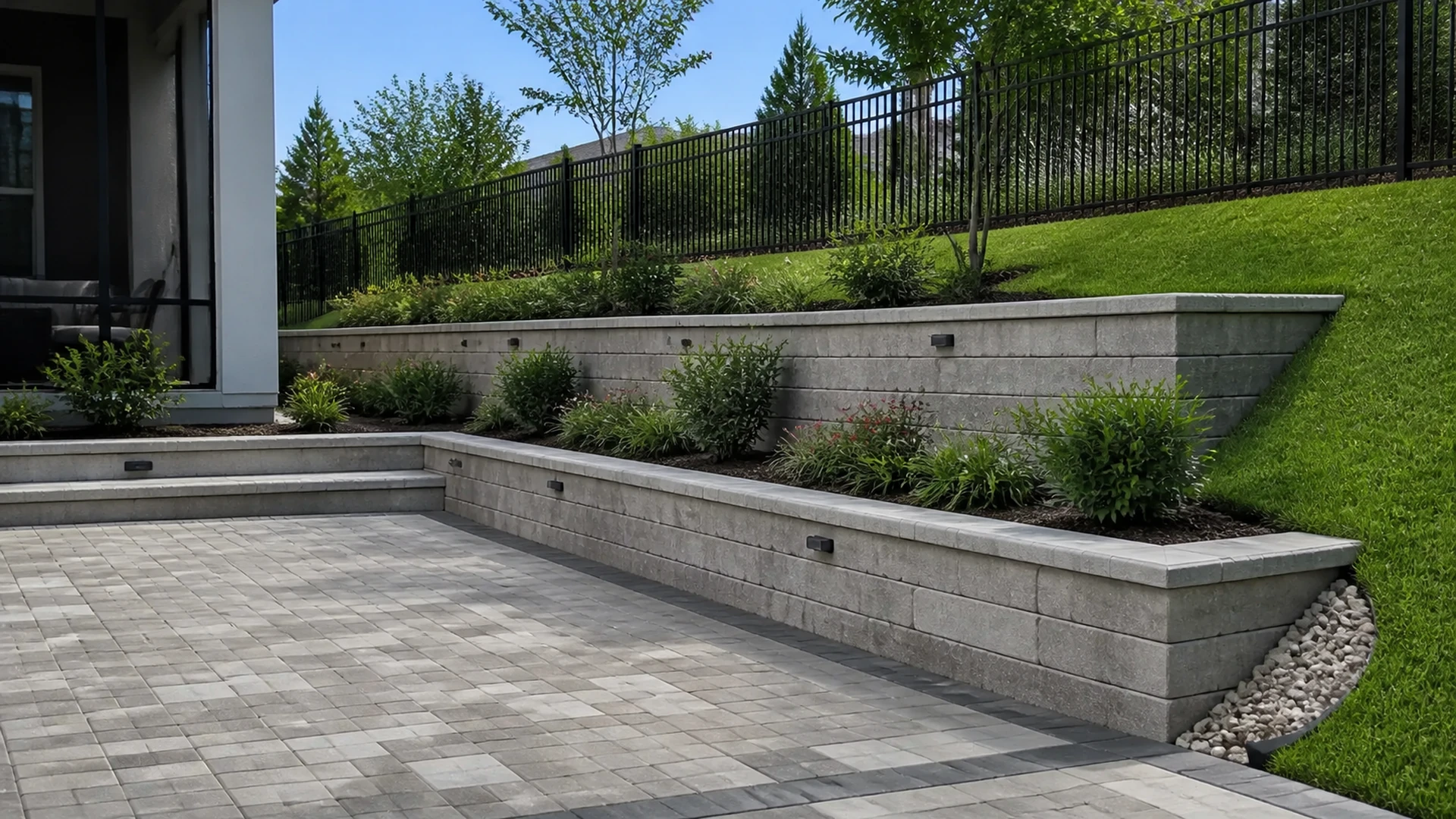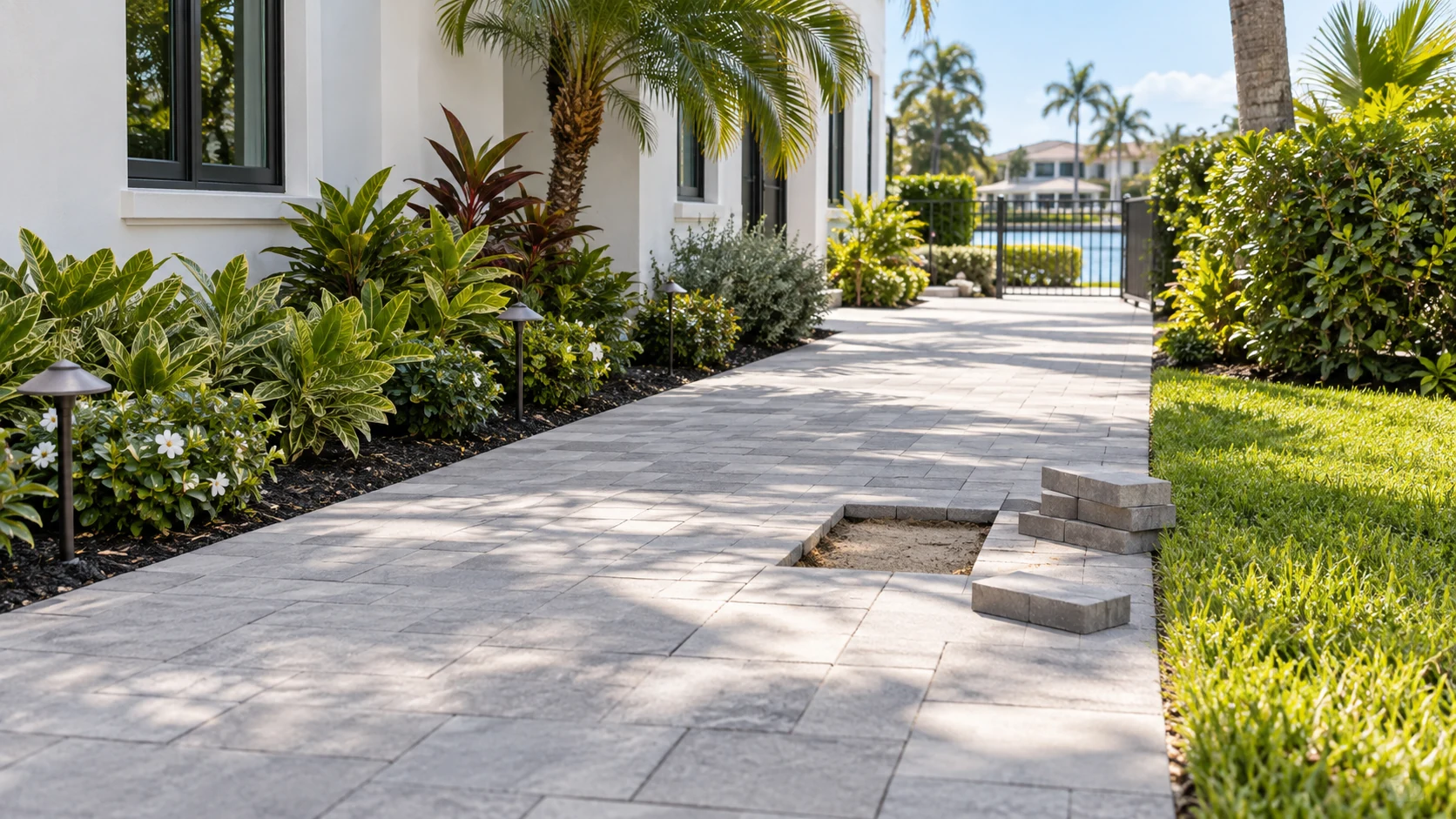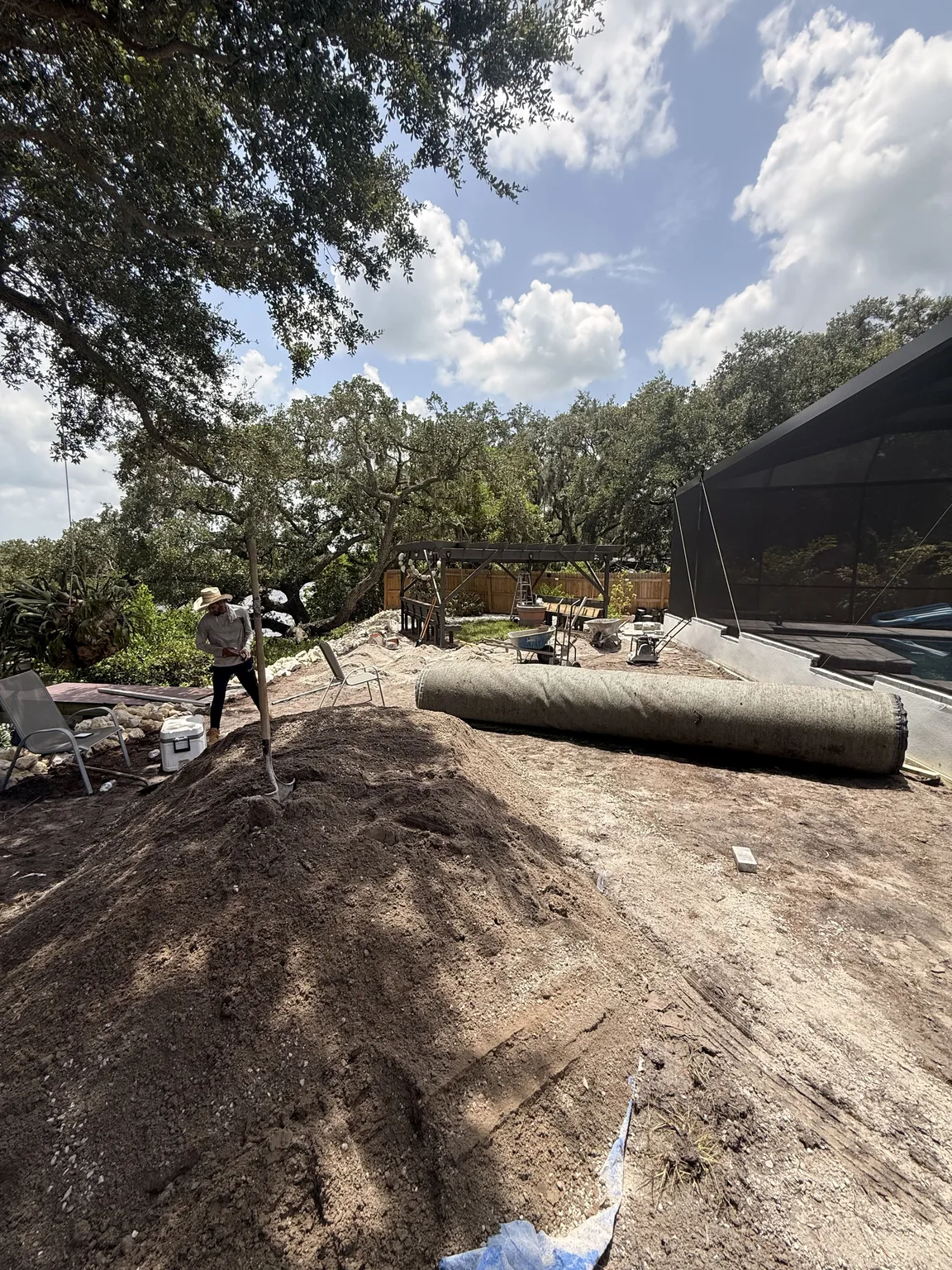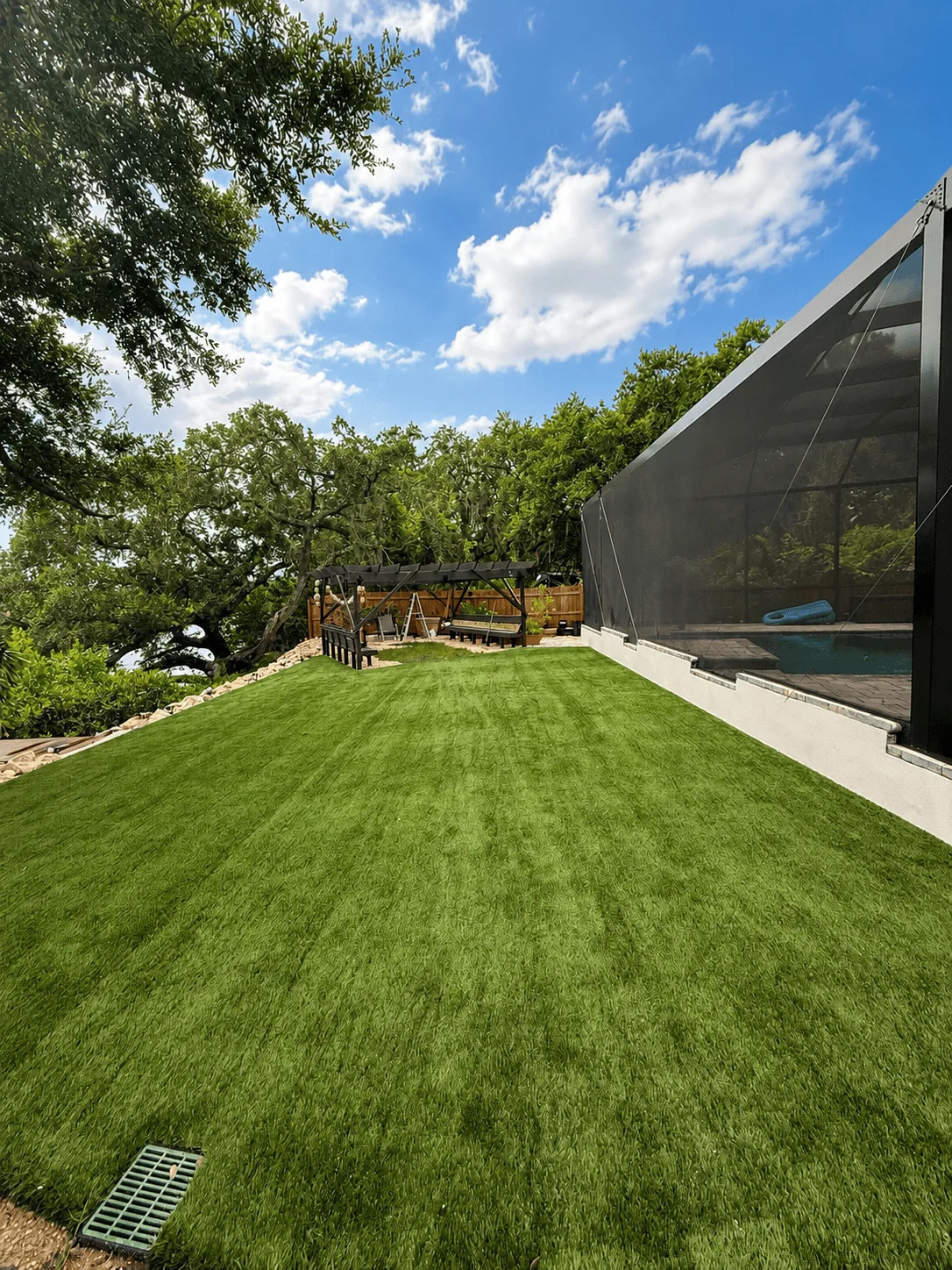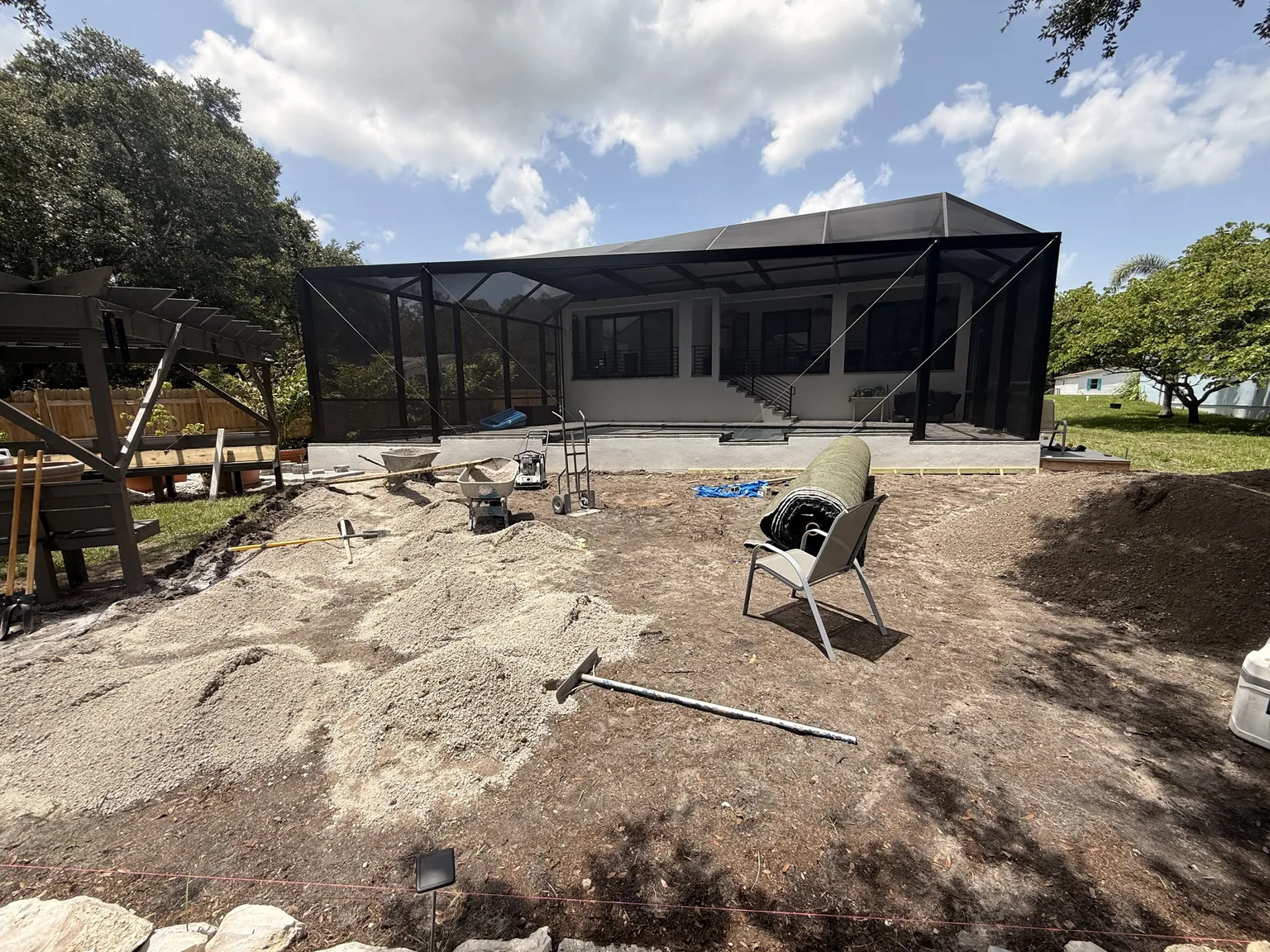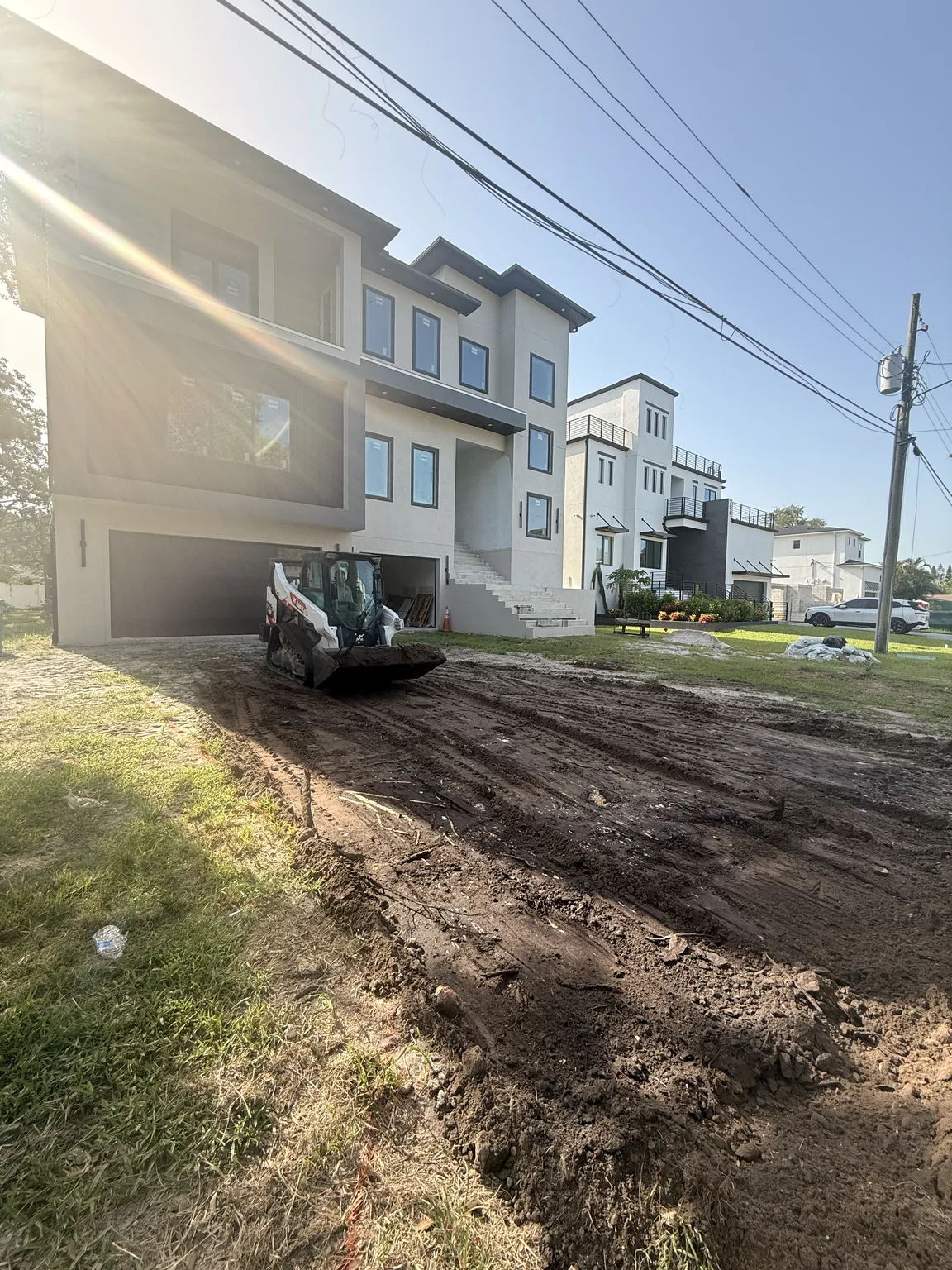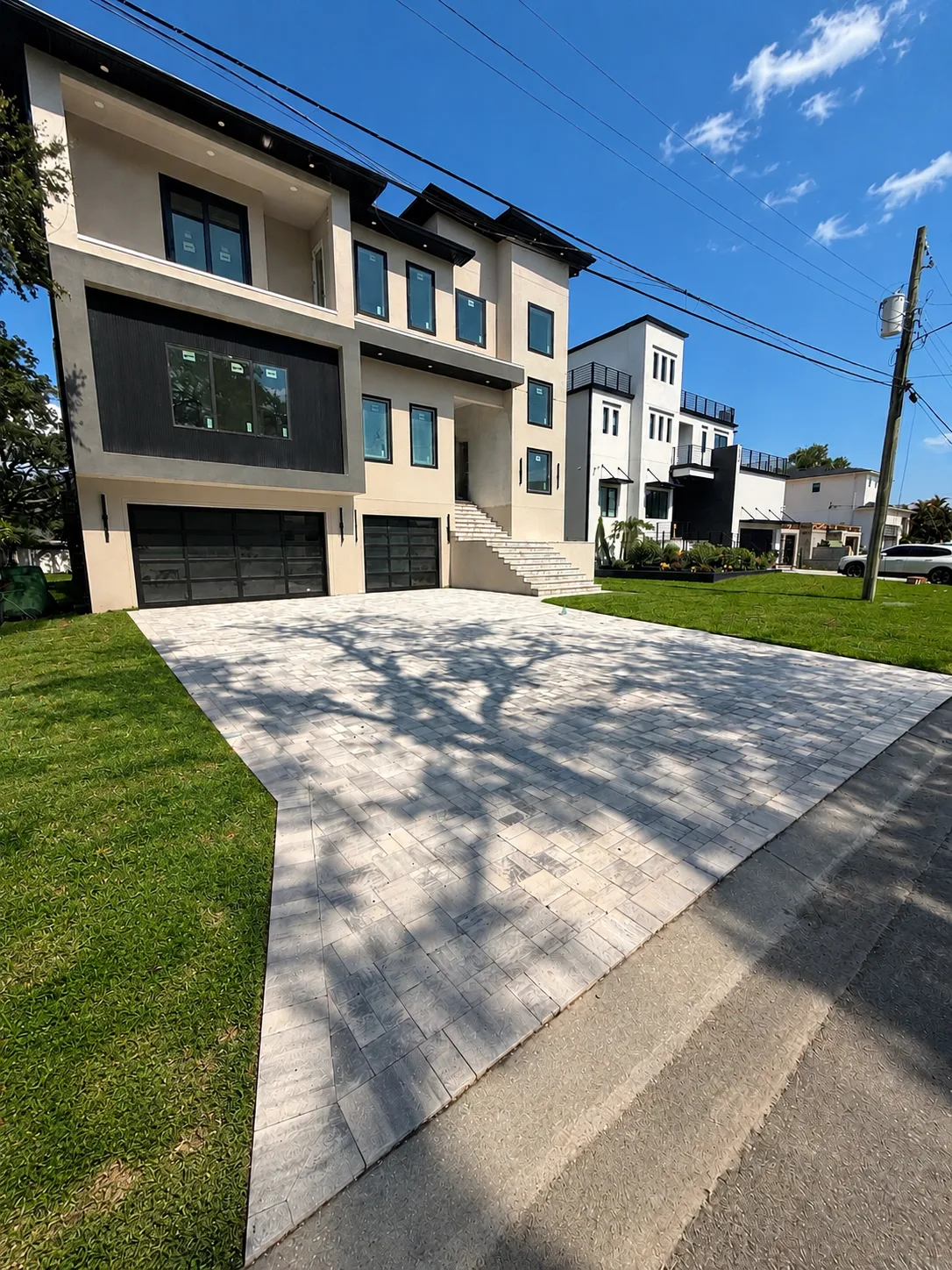

Sprinklers before pavers deserve attention while the layout can still change. A head standing inside the proposed patio is an obvious conflict. However, buried irrigation routes, valve boxes, and watering patterns may also affect the work. Moving only the visible head can leave important questions unresolved.
For a Tampa Bay homeowner, the practical task is coordination. The paving contractor needs to understand the proposed surface. The irrigation professional needs to understand which planted areas remain. Therefore, bring both conversations together before excavation and material placement begin.
This guide explains what to document, which responsibilities to clarify, and how to sequence the discussions. It does not provide instructions for cutting irrigation pipes or changing a system. Instead, it helps homeowners prepare a useful brief so the appropriate professionals can evaluate the property and describe the work clearly.
Identify conflicts involving sprinklers before pavers
First, walk the proposed paving outline and note visible irrigation features. Record heads, valve boxes, controls, and any known connections. Then mark them on a rough sketch. A photograph showing the feature in relation to the house is more useful than an isolated close-up.
Next, distinguish features inside the proposed surface from those beside it. An adjacent head may still need review if its current spray crosses the new patio. Likewise, a valve box outside the outline may need an accessible route. The concern is the functioning landscape, not just a line drawn around the paving.
Do not assume that every visible component belongs to the same zone. If you know the system's organization, share that information. Otherwise, label it unknown. Accurate uncertainty is preferable to a confident but incorrect map that directs the wrong work.
Describe what planting will remain
The irrigation discussion should begin with the landscape plan. For example, a new walkway may leave planting beds on both sides. A patio expansion may remove one lawn section but preserve another. Therefore, identify the areas that still need water after the paving work.
Also mention any planned sod, turf, or bed changes. These decisions can alter the irrigation scope even when the hardscape outline stays the same. The relevant professional can then assess the revised arrangement. Avoid prescribing a new watering schedule from a generic online example.
Keep existing plant concerns visible. If an area already receives uneven watering, record the symptom without guessing its cause. A new paved surface should not hide that question. Coordinating the project offers an opportunity to clarify it before access becomes more difficult.
Map sprinklers before pavers without digging
Use existing records, visible features, and ordinary system knowledge to prepare your notes. However, do not dig exploratory holes or insert probes to find buried pipes. The excavation team needs a proper locating and assessment process. A homeowner sketch is a communication aid, not clearance to excavate.
Sunshine 811's homeowner information distinguishes utility-owned facilities from private facilities. Irrigation may require separate attention. Therefore, ask the contractor how the project will address both the public locate process and private lines. Do not interpret a few paint marks as proof that every buried feature has been identified.
If someone previously repaired a pipe, share the location and available paperwork. That history can help the irrigation professional ask focused questions. Nevertheless, old information needs confirmation against the present site. Keep the record factual rather than drawing a precise underground route that nobody has verified.
Clarify who owns the irrigation portion
Before accepting the paving proposal, ask whether irrigation work forms part of it. Some projects involve a separate irrigation contractor. Others include a defined coordination allowance. Either arrangement can be workable, but the responsibilities need to appear clearly in writing.
Ask who will identify conflicts, approve changes, perform the irrigation work, and confirm the result. These are separate tasks. Therefore, a vague statement that someone will handle the sprinklers may not answer the important questions. Request enough detail to understand the sequence and contact person.
Also confirm who coordinates access if the trades attend on different days. A named point of contact reduces the chance that one team covers an area before another finishes. Homeowners should not have to translate technical instructions between contractors. The professionals should communicate directly about the interfaces their work shares.
Discuss spray patterns alongside the paving outline
Show the irrigation professional where the proposed surface begins and ends. Then explain which adjacent plants will remain. This helps the professional review the current coverage rather than moving a component without considering its purpose. The revised layout should address the landscape as a connected system.
If water currently reaches a wall, walkway, or seating area, document when that happens. In addition, note whether the observation occurred during normal operation or after a known problem. Precise descriptions help distinguish an ongoing concern from a one-time event.
Avoid treating a wet patio as proof of a single irrigation defect. Other water sources may exist. Instead, ask for an assessment of the observed condition. This keeps the discussion practical and prevents a paving change from becoming a substitute for investigating an unresolved water issue.
Keep valves and controls reachable
Valve boxes and controls need attention even when they do not sit directly within the new surface. For example, a design may leave a box behind furniture or narrow the route beside it. Therefore, show the contractor how the system receives ordinary service.
Ask how the finished layout will preserve access to the components that remain. That may involve coordination between the paving and irrigation professionals. It does not mean a homeowner should raise, bury, or modify a box independently. The correct treatment depends on the actual component and installation.
If a component's purpose is uncertain, label it for review rather than removing it. A forgotten control or abandoned-looking pipe can still require investigation. Keeping these questions visible early makes the project easier to plan and reduces assumptions during excavation.
Review the work sequence before surfaces close
Ask when the irrigation assessment and any agreed changes will occur. Then confirm how that work fits into site preparation and paving. A clear sequence helps avoid disturbing a finished area to complete a task that should have happened earlier.
Identify the point at which the relevant professionals will review the changed system. For example, the project may require confirmation before the final paving stage. Do not invent a universal sequence for every yard. Instead, ask the contractors to describe the sequence appropriate to this project.
Weather or site discoveries can change the plan. Therefore, agree on how the team will communicate a delay or unexpected conflict. A short written update is often enough. The important point is that one trade does not proceed on an assumption that another has already completed its work.
Protect planting during the transition
Discuss what happens to the remaining landscape while the irrigation work is underway. A project may temporarily affect normal watering or access. Therefore, ask the irrigation professional to explain any temporary arrangements and who will manage them. Avoid improvising a schedule that ignores the plants or site conditions.
UF/IFAS provides Florida landscape irrigation guidance that emphasizes plant and site needs. Use that information as context for professional questions. It does not establish a watering prescription for your yard, particularly when construction changes access or disturbs an existing arrangement.
Also keep storage and traffic away from features the team has identified for protection. For instance, a convenient staging corner may contain an irrigation control or sensitive planting. Mark the agreed boundaries clearly. This connects irrigation coordination with the broader site plan instead of treating it as an isolated repair.
Compare irrigation allowances honestly
When reviewing estimates, separate known work from unresolved allowances. A clearly identified head relocation differs from an open-ended allowance for unknown pipe conflicts. Therefore, ask what information supports the amount and how the contractor will handle a change.
Check whether testing, adjustments, and adjacent landscape restoration appear in the same scope. If they do not, ask who performs them. The lowest paving total may omit irrigation tasks that another proposal includes. Comparing the same responsibilities gives you a more useful cost discussion.
Do not request a fixed solution before the relevant professional has evaluated the system. Instead, request a defined decision process. That can include a site review, written recommendations, approval, and documented completion. This approach handles uncertainty without pretending that hidden conditions are already known.
Document the revised arrangement
After the agreed irrigation work, keep a record of the components that changed. Ask for whatever practical notes or documentation the contractor provides. Then update your homeowner sketch. A simple record can make future maintenance discussions easier, especially where paving limits access.
Photograph visible components and the completed relationship between planting and hardscape. However, do not label a photograph as proof that every buried connection works correctly. The relevant professional's completion process matters. Your photos provide useful location context alongside that record.
Retain the contact details of the irrigation professional as well as the paving contractor. Future questions may concern one system or the interface between them. Therefore, knowing who performed each part is more valuable than keeping only the final paving invoice.
A coordination example for a patio expansion
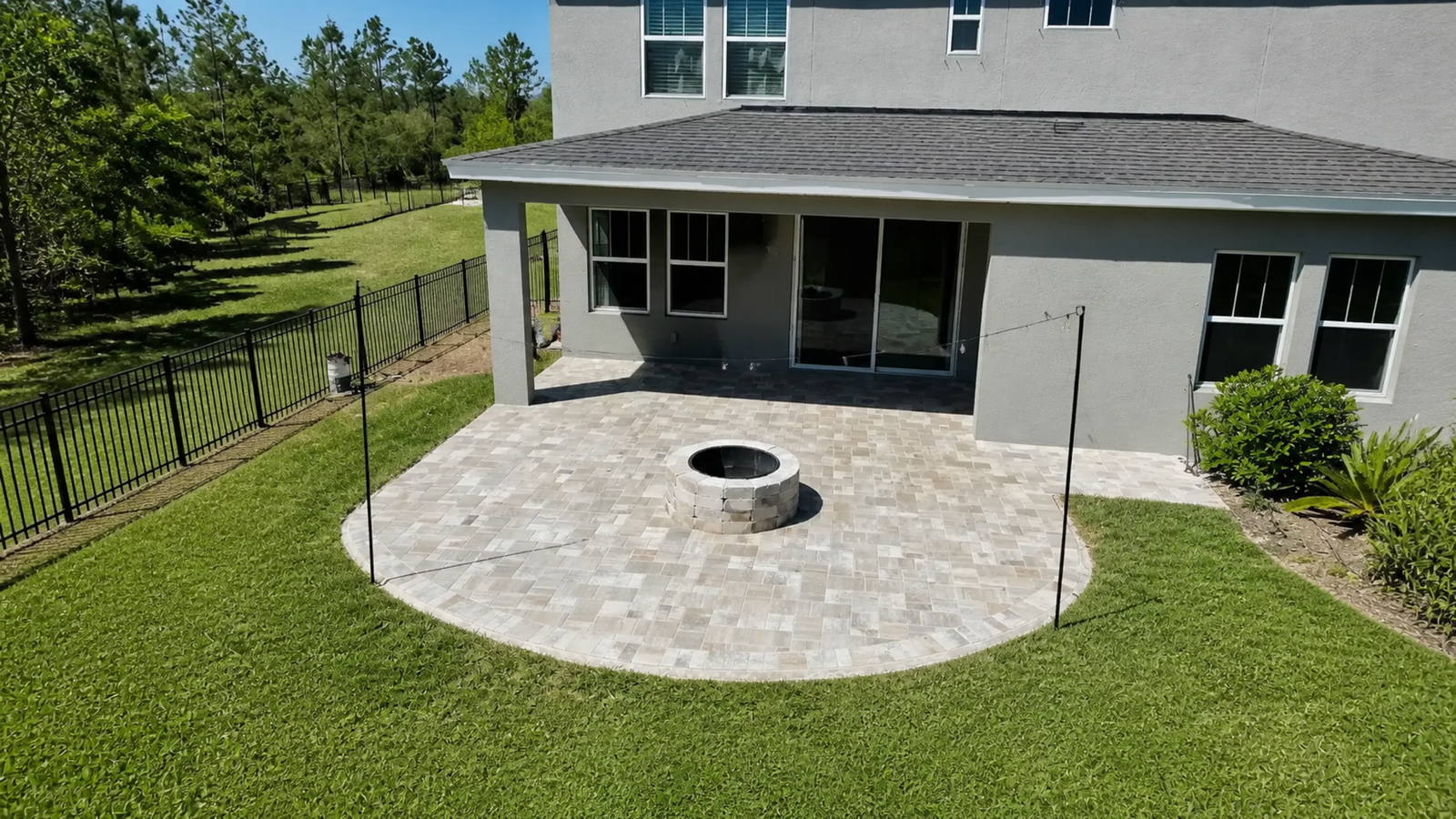
Imagine a homeowner extending a patio across part of a lawn. Two heads sit inside the proposed outline, while a planted bed remains beyond it. Moving those heads outward appears straightforward. However, the new arrangement also changes which areas need coverage and where service access will remain.
The homeowner shares a sketch with both contractors before excavation. The irrigation professional evaluates the revised landscape, while the paving contractor confirms the surface boundary and work sequence. Each proposal identifies its responsibility. This hypothetical example demonstrates coordination rather than a technical solution for a specific system.
As a result, the homeowner can review the whole project without guessing who will return after the pavers arrive. Sprinklers before pavers become a planned interface, not a late surprise. That is the real value of raising the issue early.
Prepare the right questions for the estimate
Before the consultation, collect a rough layout, photos of visible components, and any existing irrigation records. Then list the planted areas you intend to keep. Include uncertainties and previous repairs. This information helps the professionals focus the site visit without asking you to perform investigative work.
Read Dr Pavers Design's lawn, sod, and grading guides and review the company's services to place the irrigation discussion within the larger yard project. For related paving preparation, the installation guides offer additional planning topics.
Establish a clear pause point for an unexpected conflict
Ask what happens if preparation reveals an irrigation component that the initial review did not identify. The team should know who receives the information and who approves a revised scope. Therefore, discuss this process before the site becomes busy, rather than expecting a worker to make an informal decision.
A useful update describes the location, the observed conflict, and the effect on the planned sequence. It should also distinguish confirmed facts from questions for the irrigation professional. Homeowners can then understand why work pauses without receiving a premature diagnosis or an unexplained request for extra work.
Keep any approved change with the current layout and estimate. In addition, confirm whether the change affects another zone or planted area. A component that appears local may form part of a wider system. Coordinated review helps the team consider that relationship before closing the surface.
Check the handover from both trades
Before considering the coordination complete, ask each contractor to explain what they finished and what remains outside their scope. A paving walkthrough and an irrigation review address different parts of the project. Neither should automatically stand in for the other.
Record the outcome in plain language. For example, identify which component moved, which area it serves, and which contact handles a later question. You do not need a technical manual for every small job. However, a clear handover prevents the final responsibility from disappearing between two invoices.
If a follow-up remains necessary, agree on the next step and contact person. Do not treat an unresolved adjustment as a vague future promise. A defined handover makes sprinklers before pavers a coordinated part of the project from initial planning through completion.
To discuss sprinklers before pavers in Tampa Bay, contact Dr Pavers Design. Browse projects, testimonials, and the FAQ, then explain which trades need coordination. Follow Instagram and Facebook, or consult Google Maps and Google reviews. Send a WhatsApp inquiry or text the team. Contact Dr Pavers Design at +1 (656) 600-4015 or drpavers@outlook.com for a free consultation anywhere in Tampa Bay.