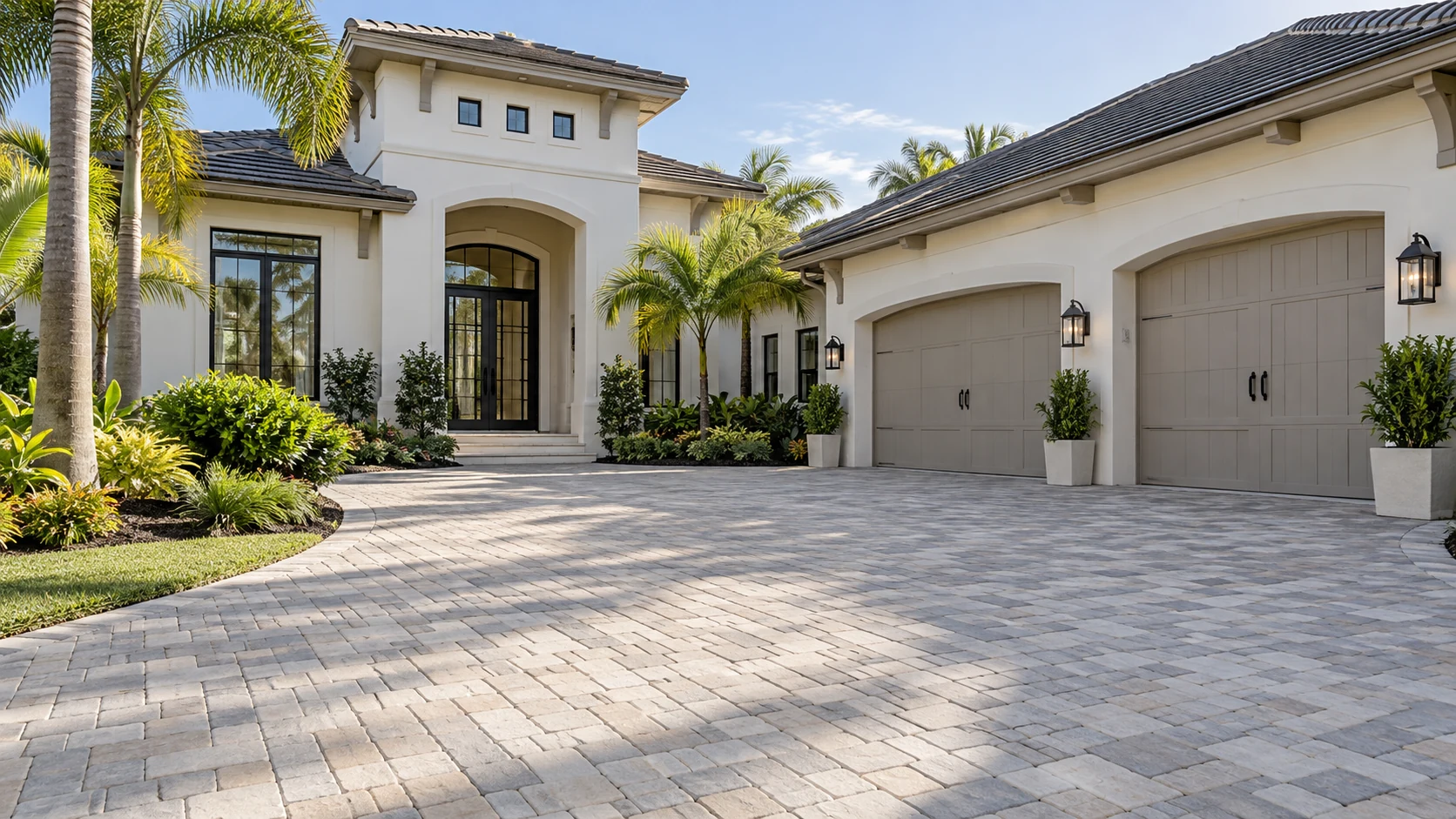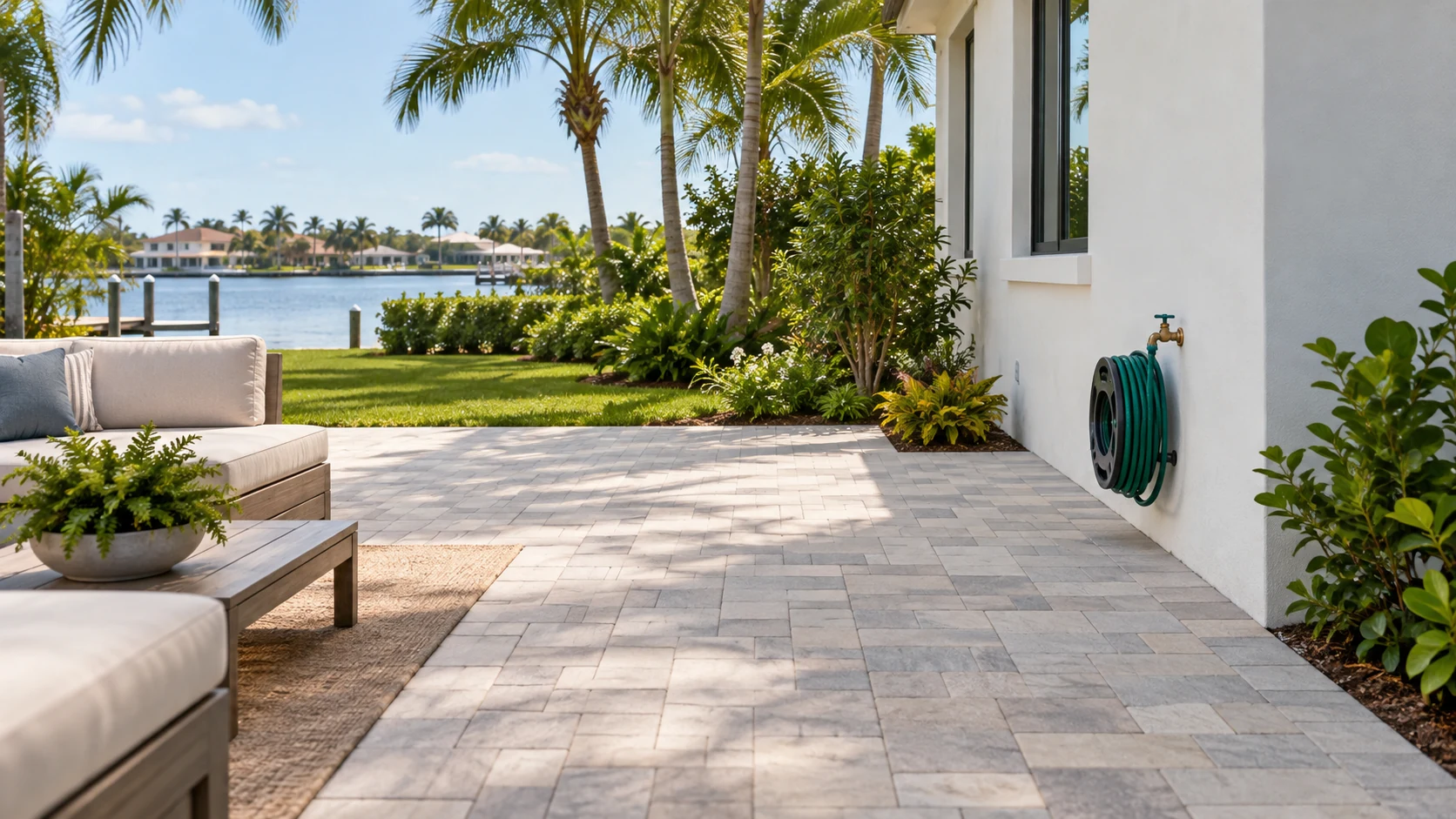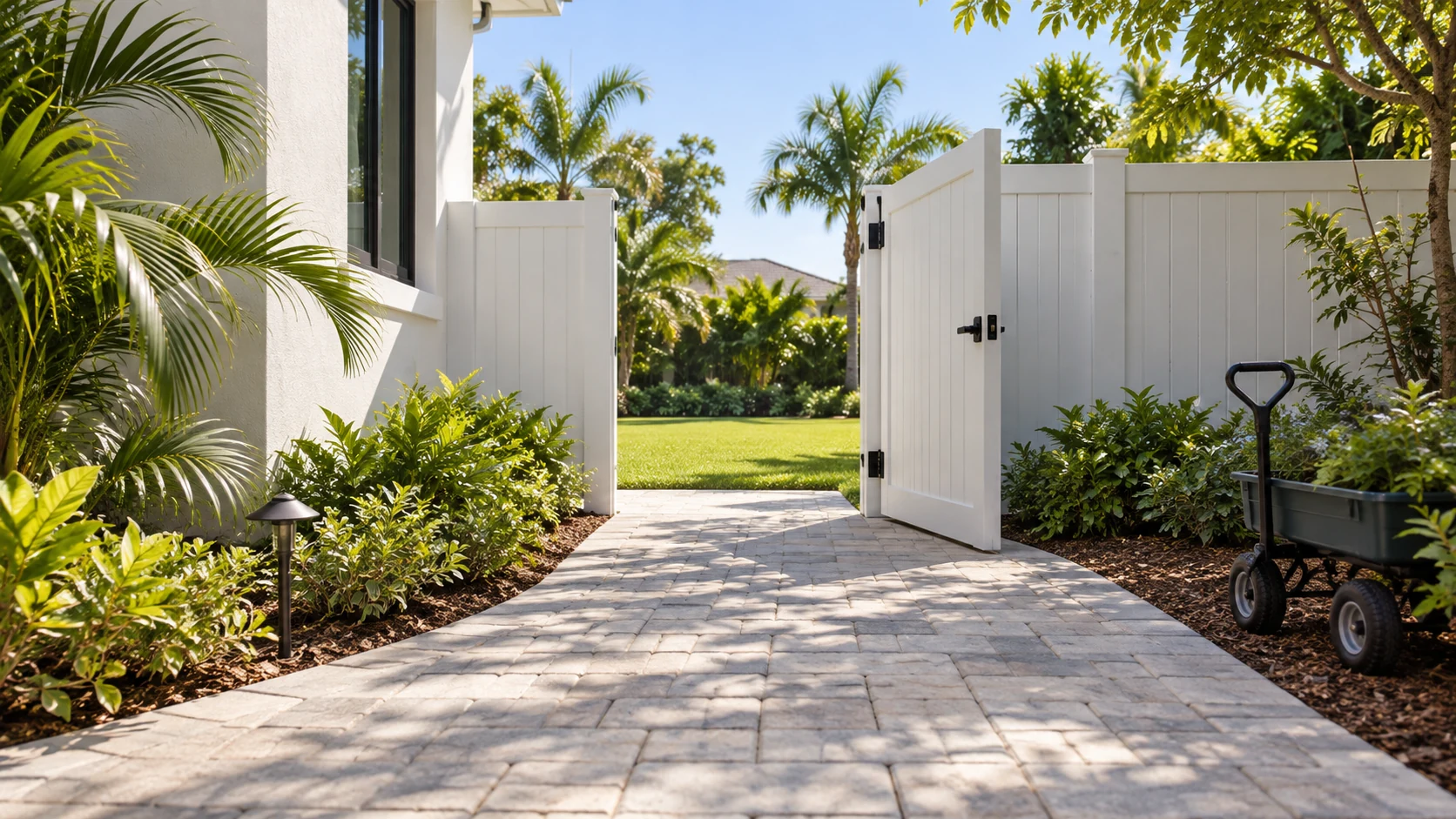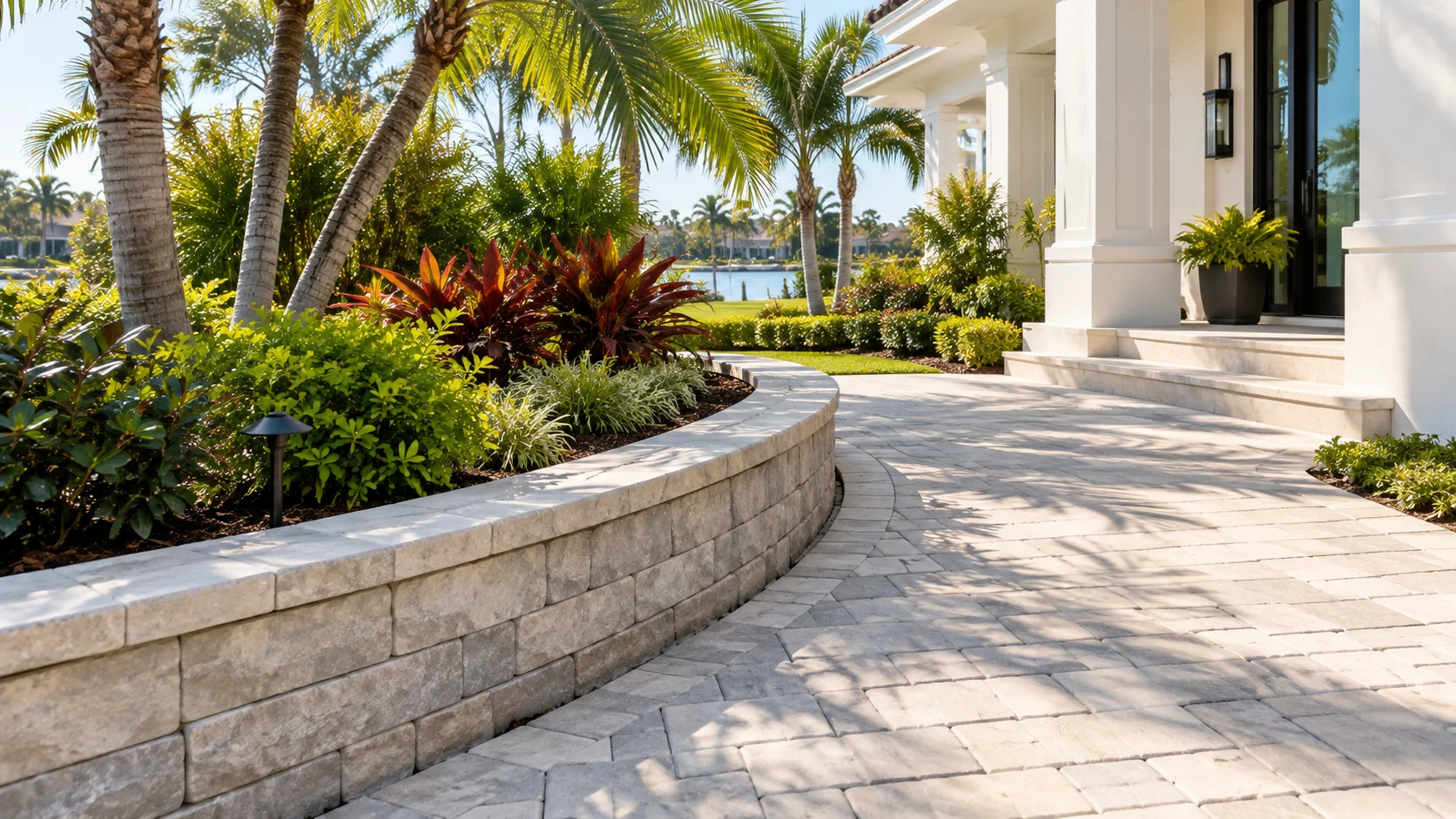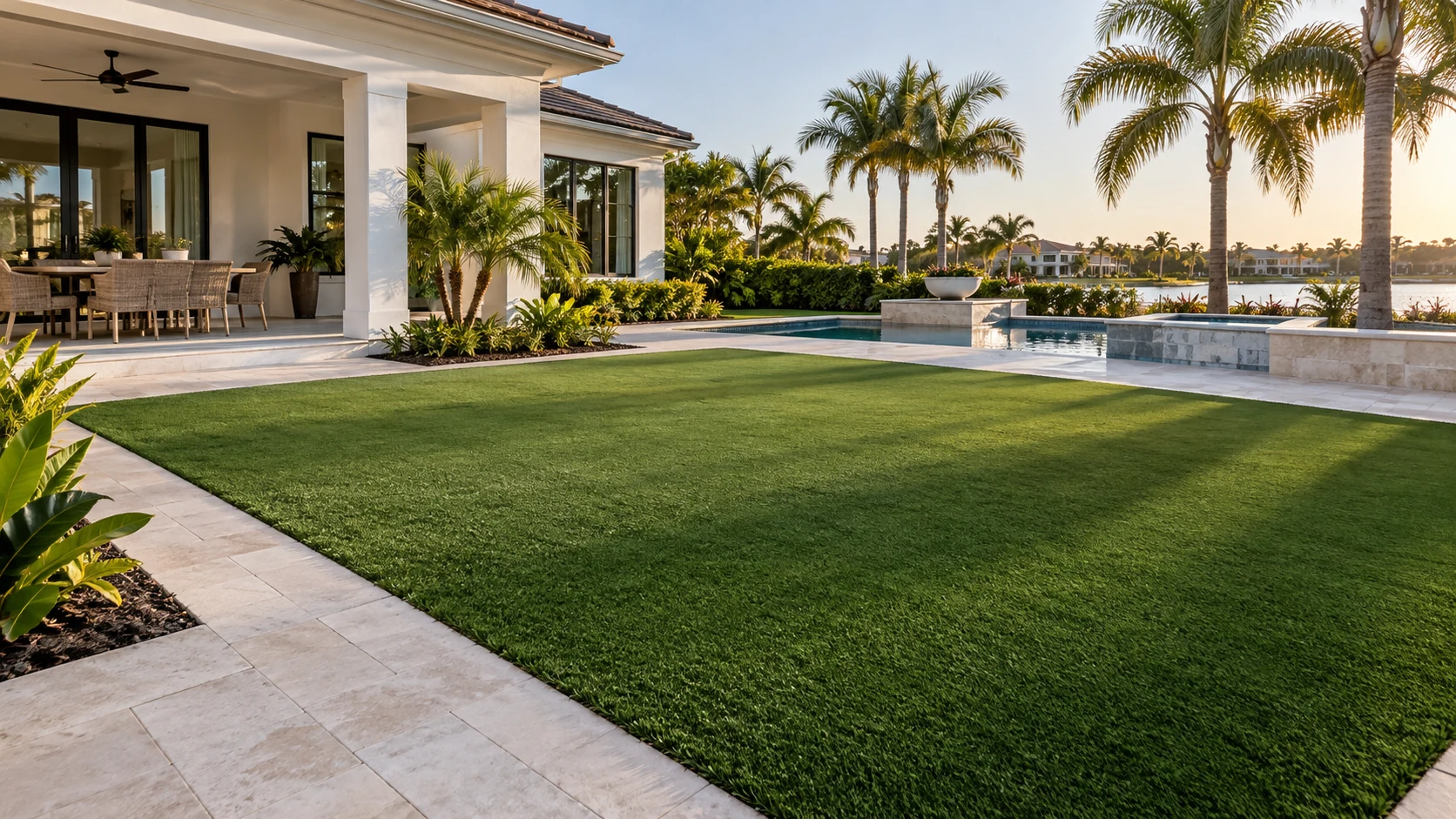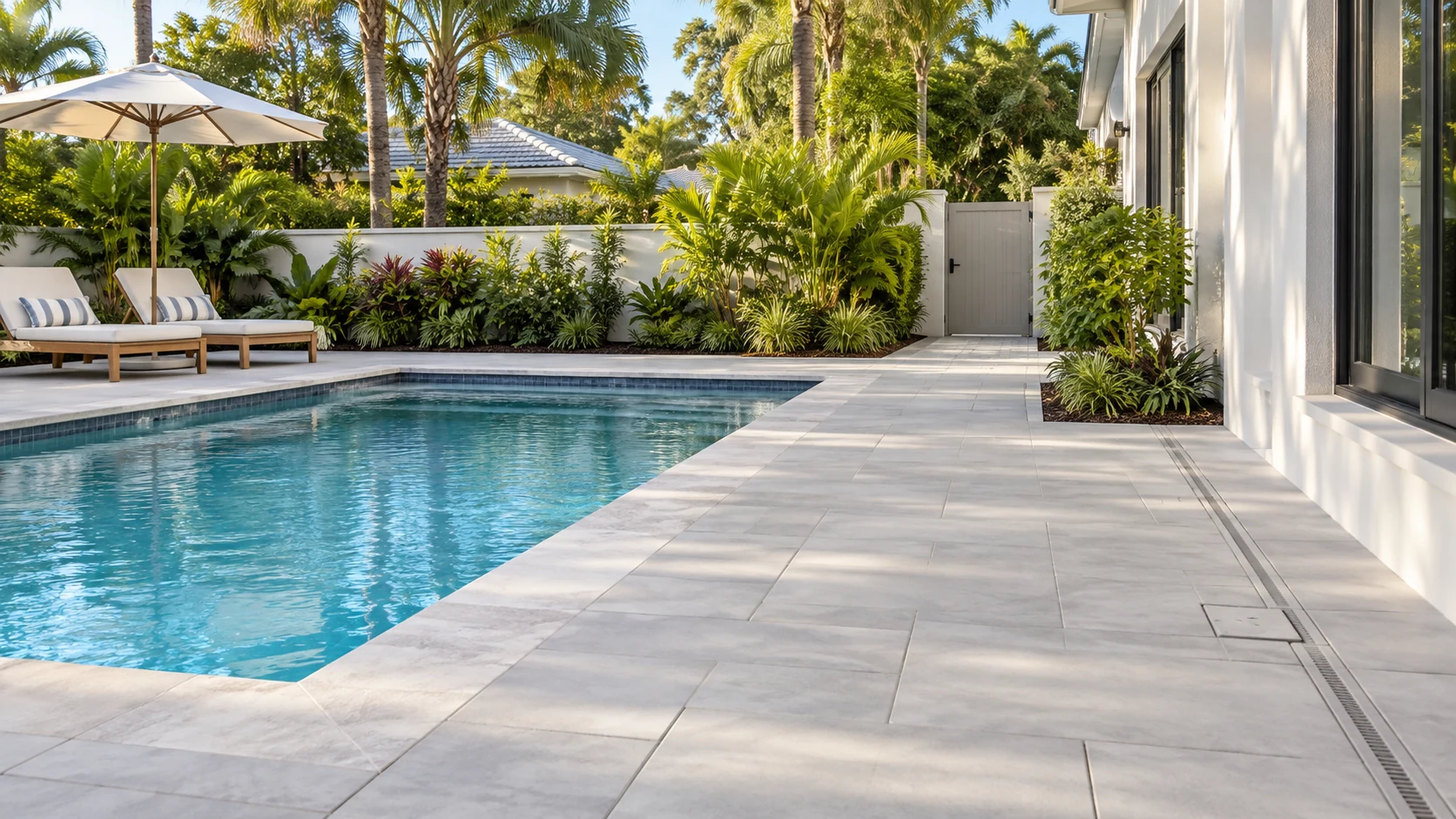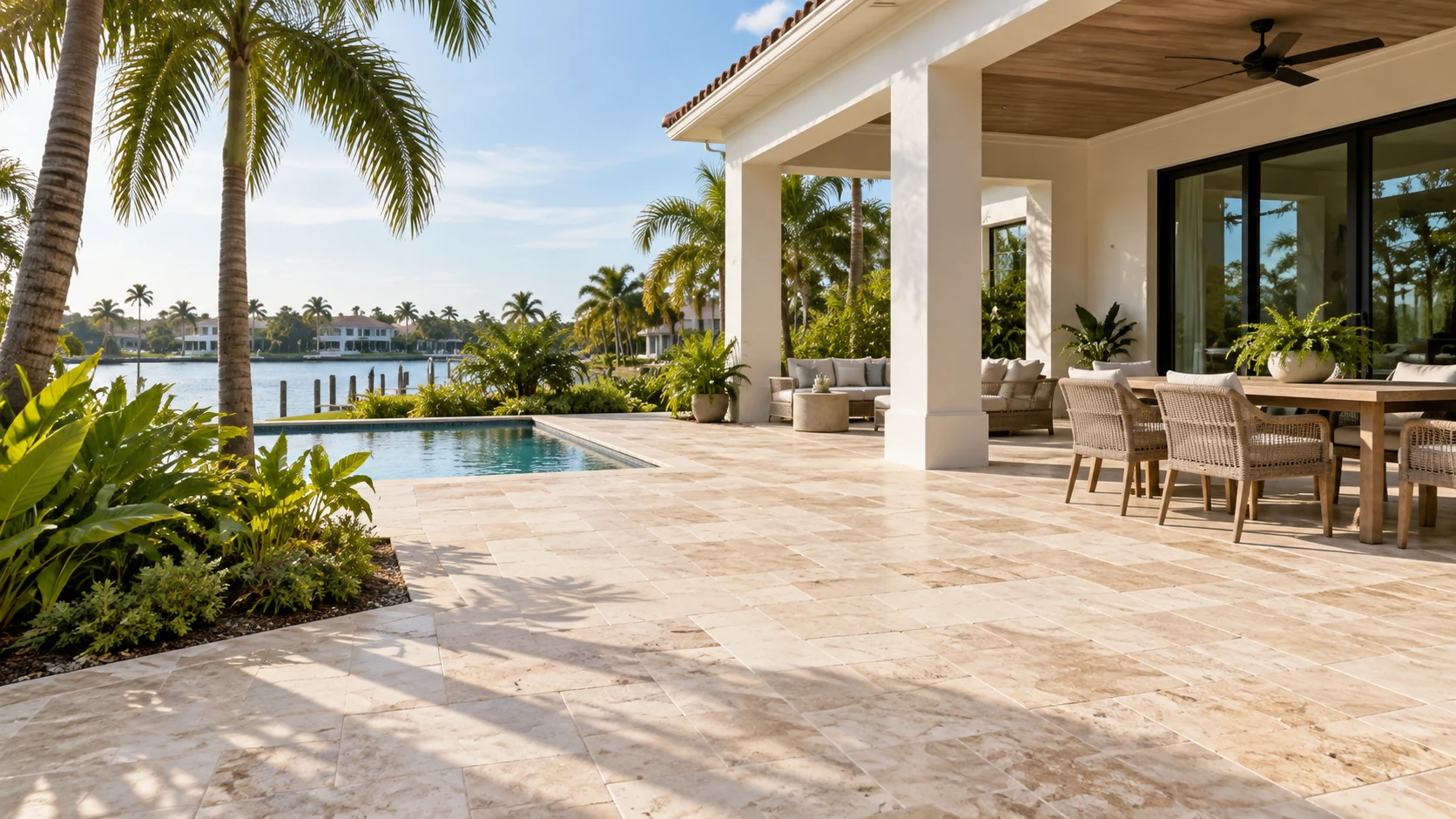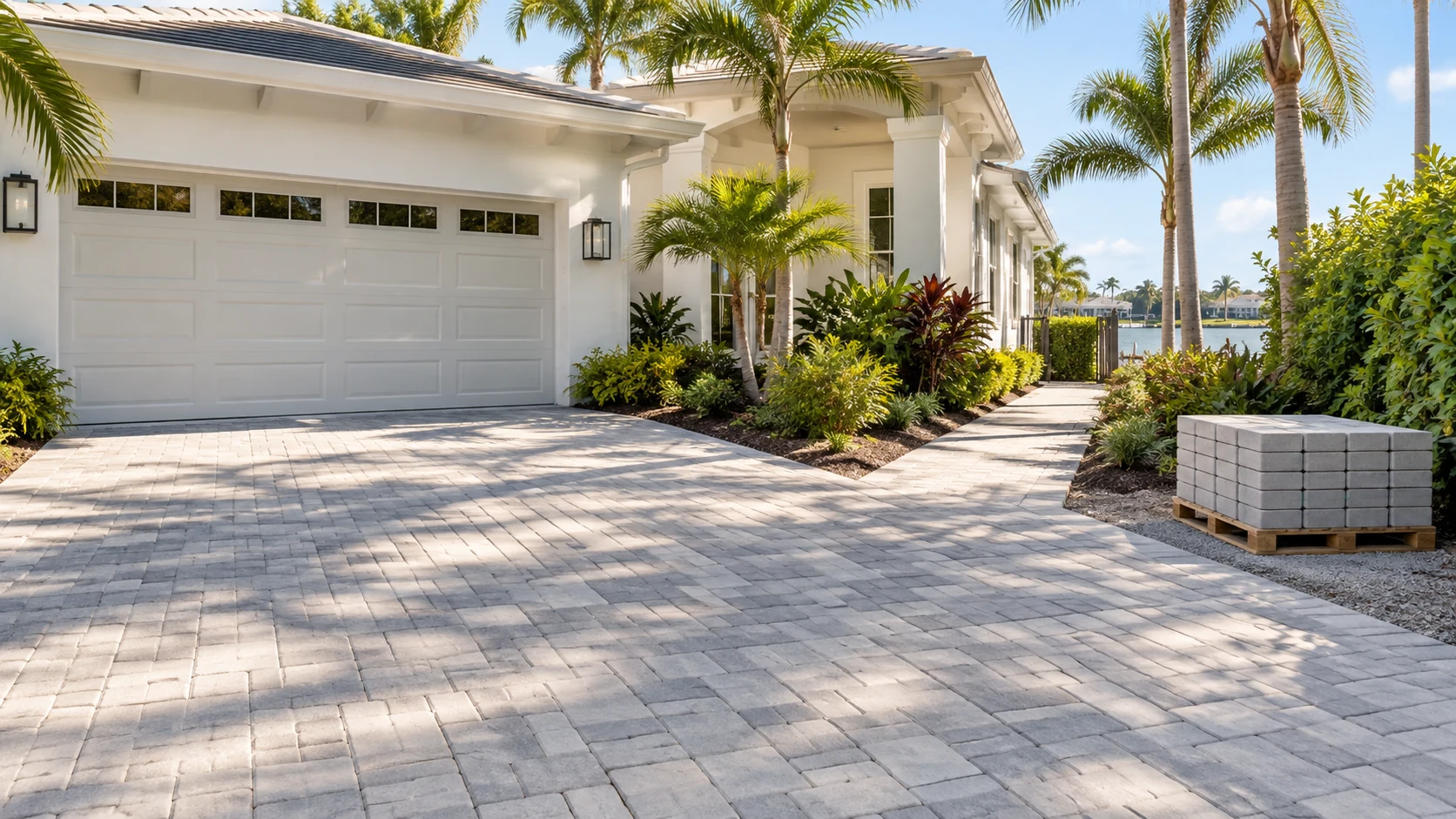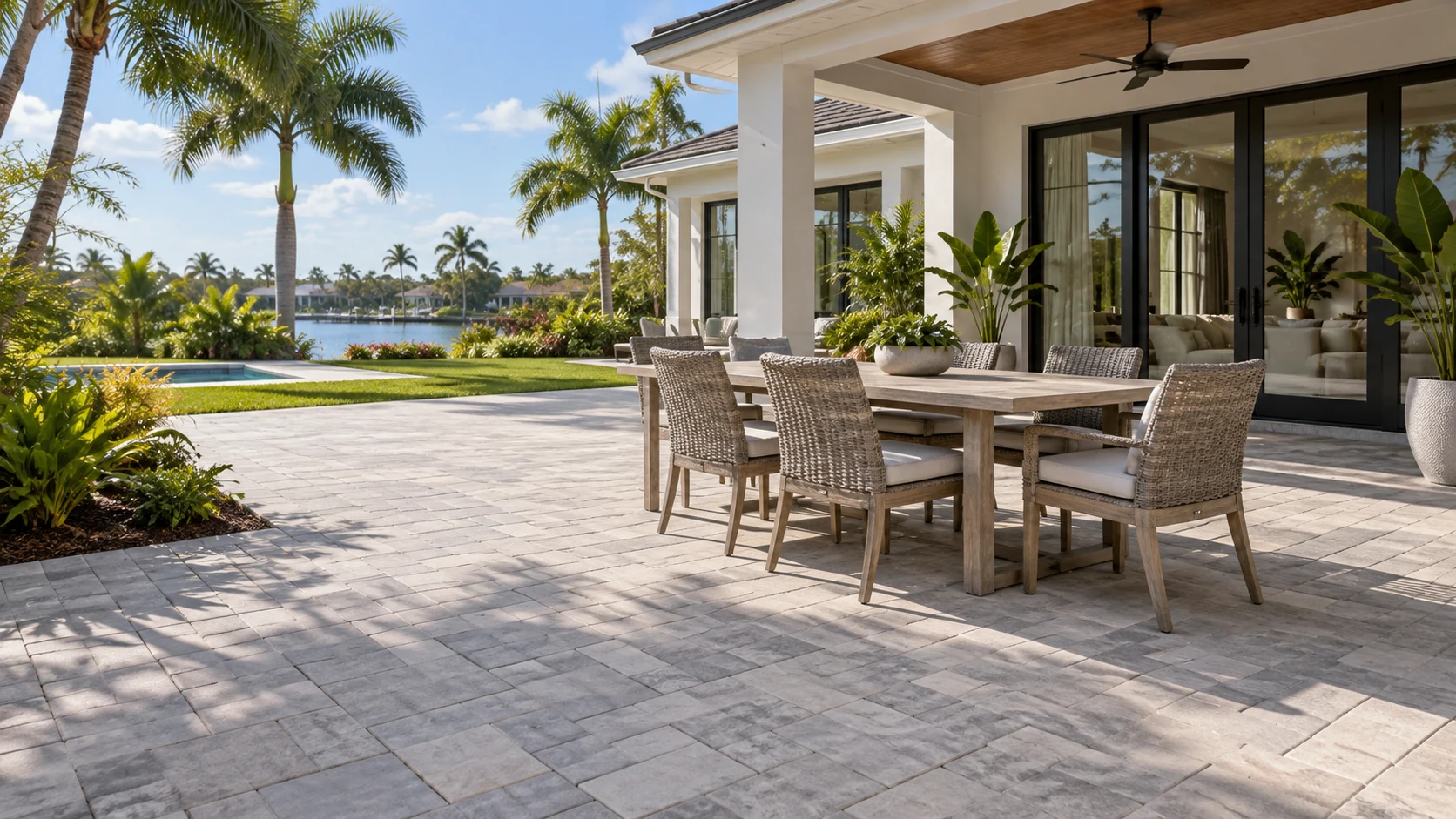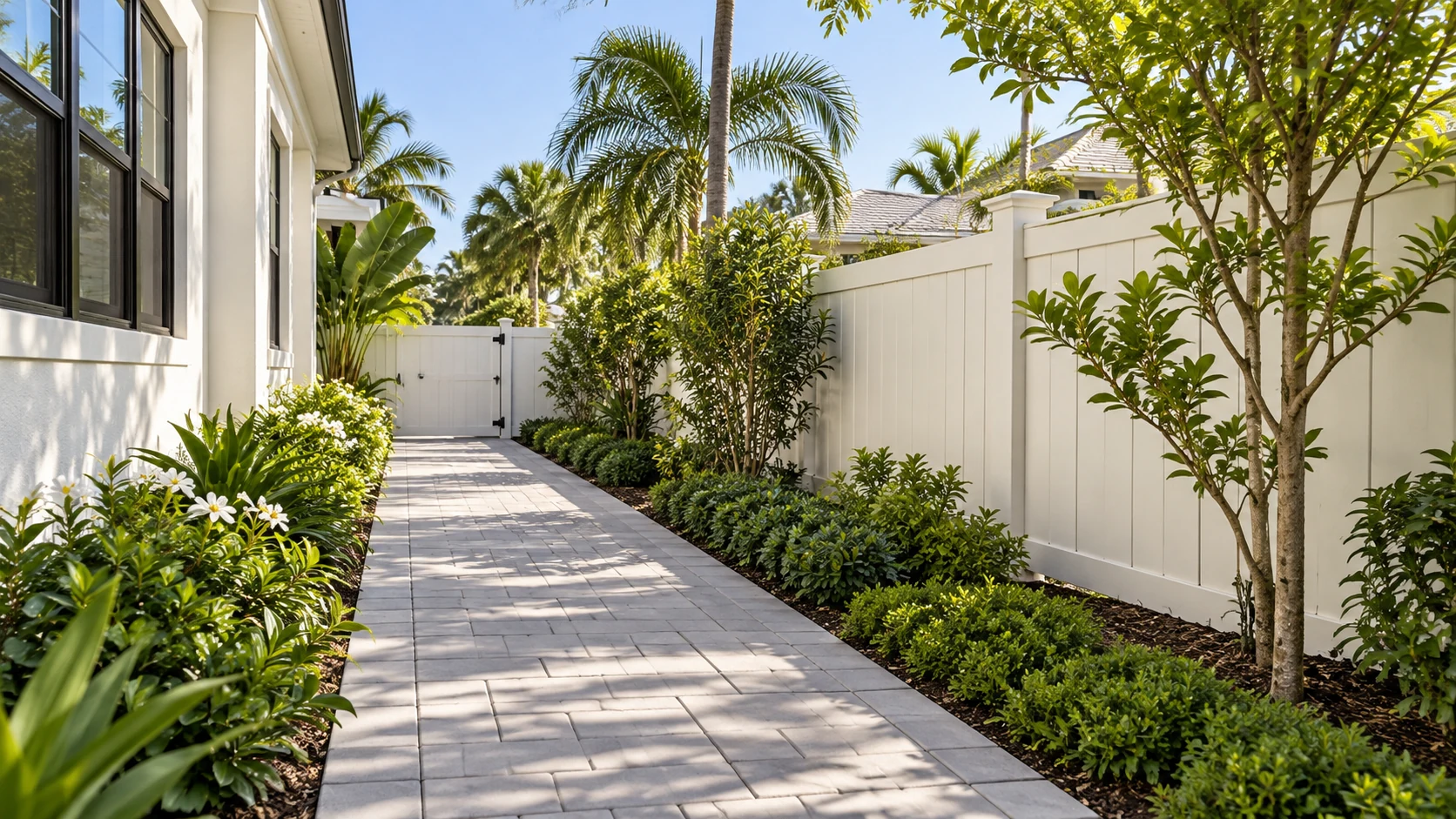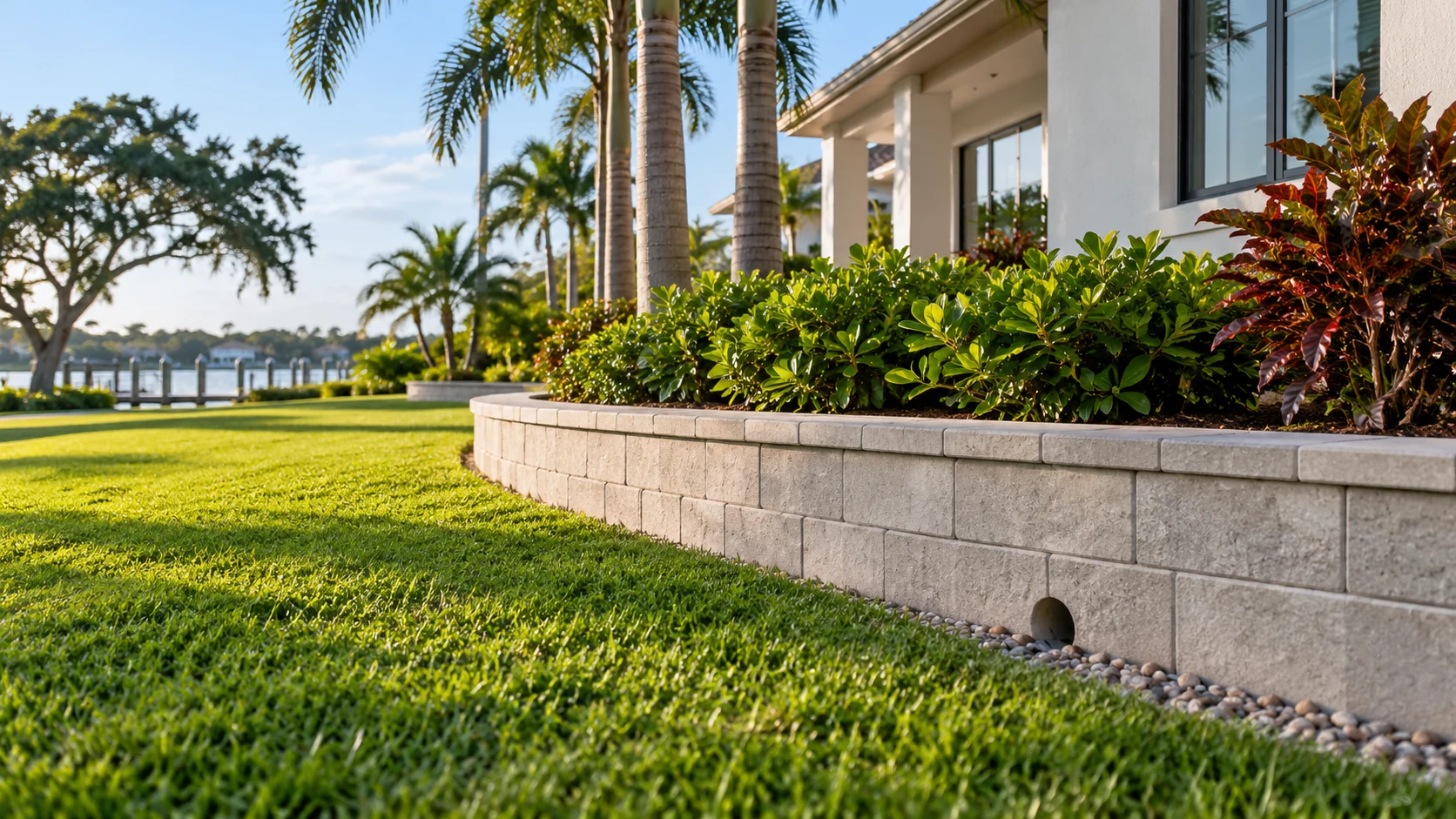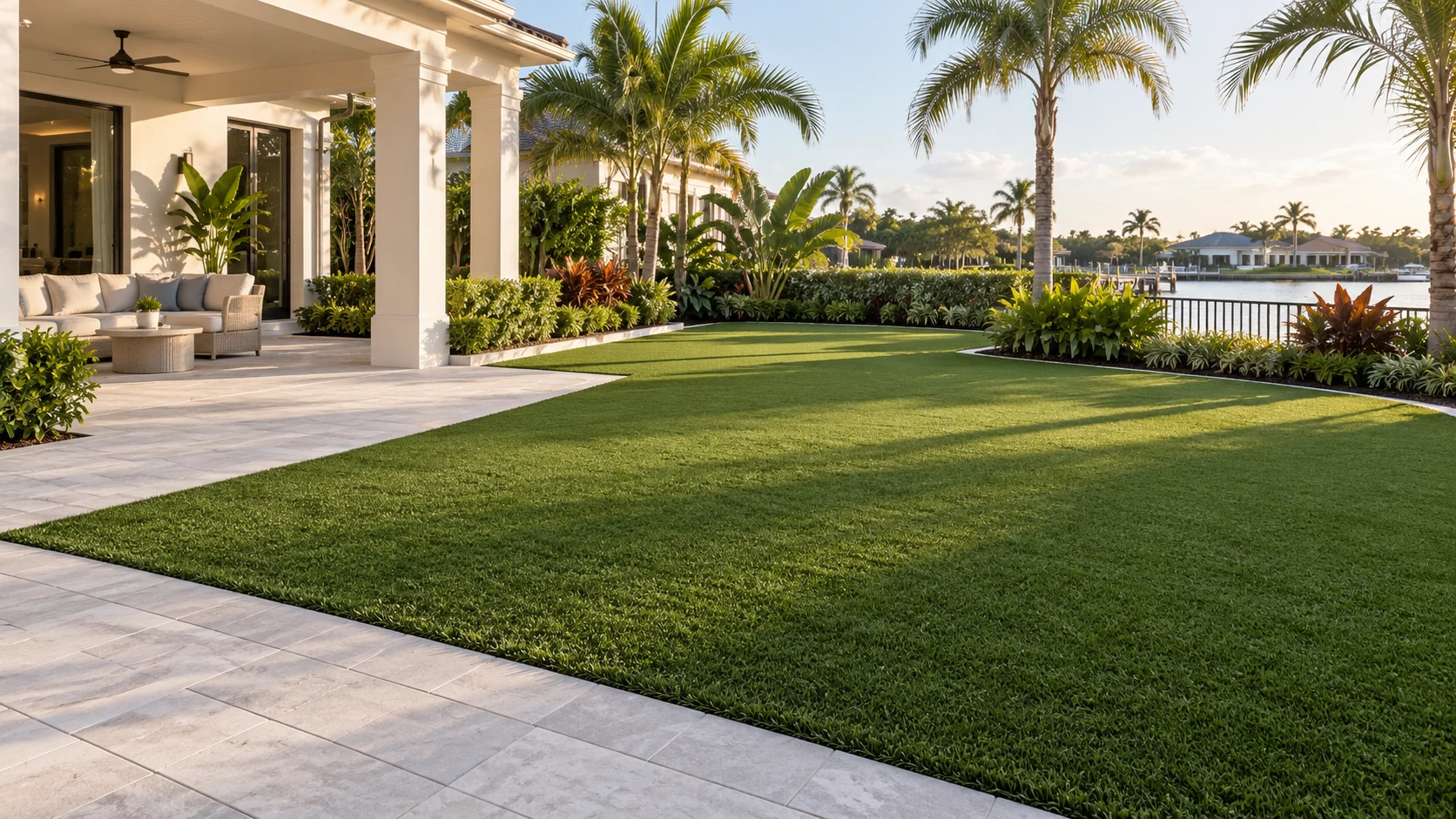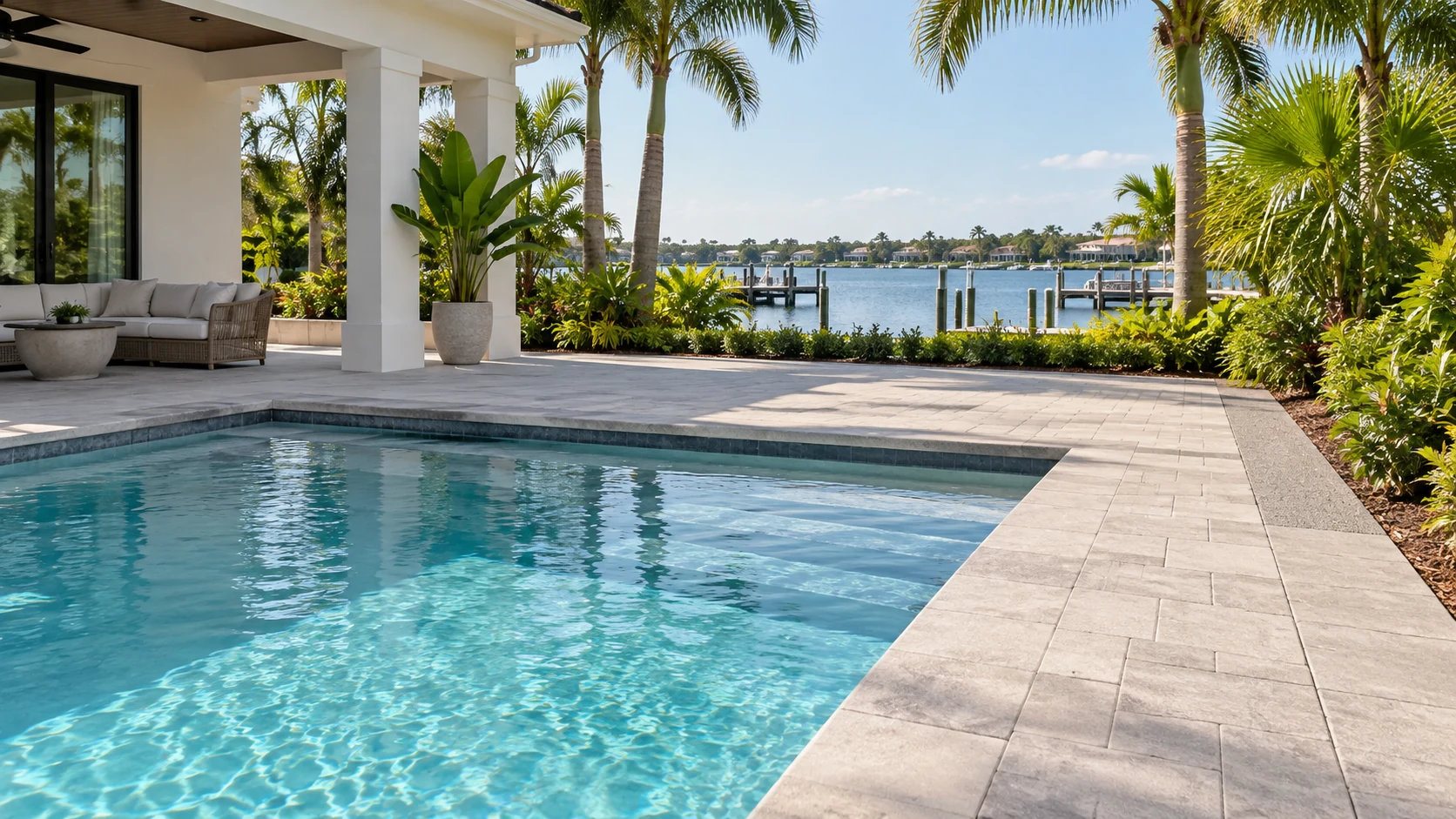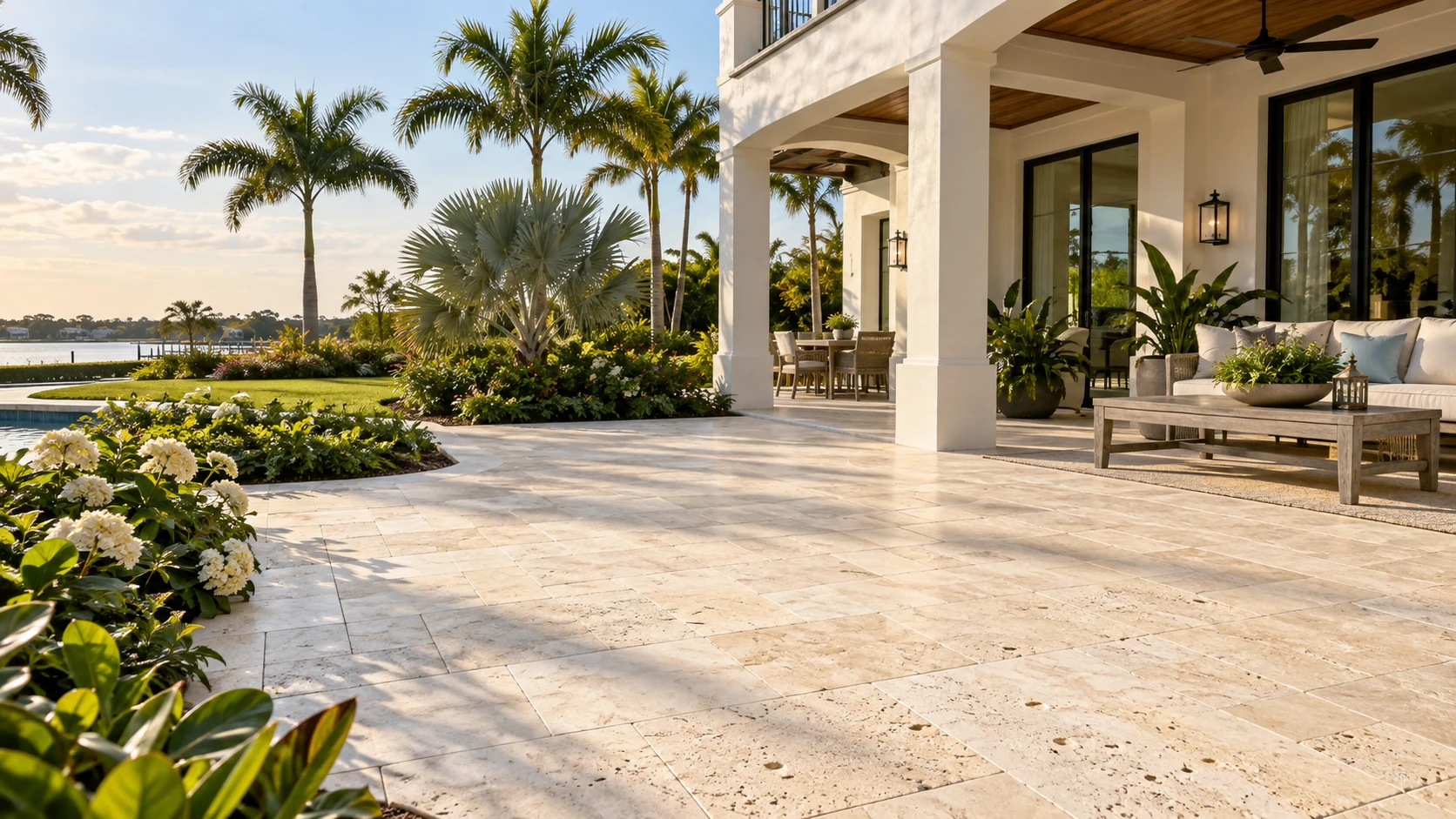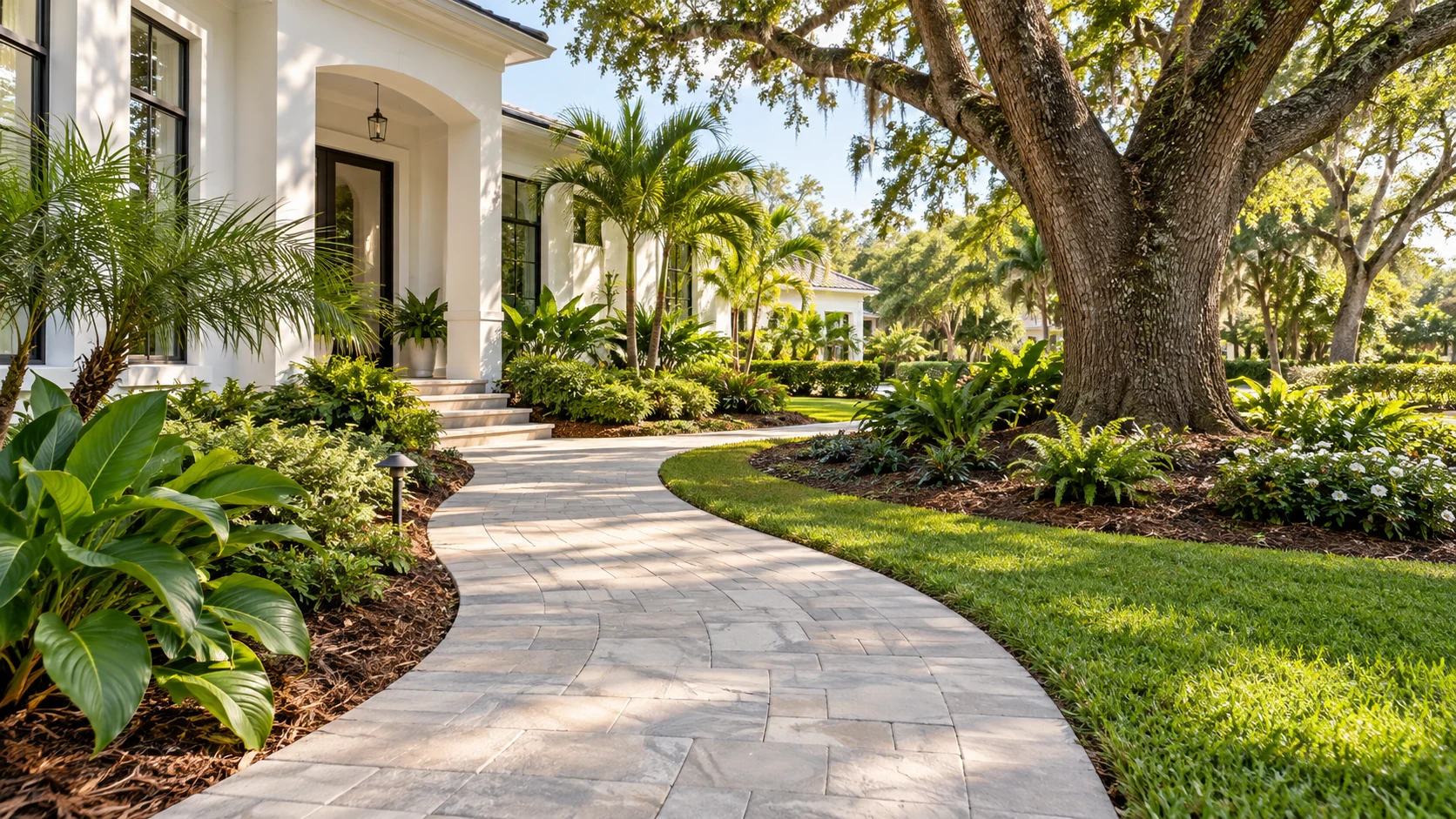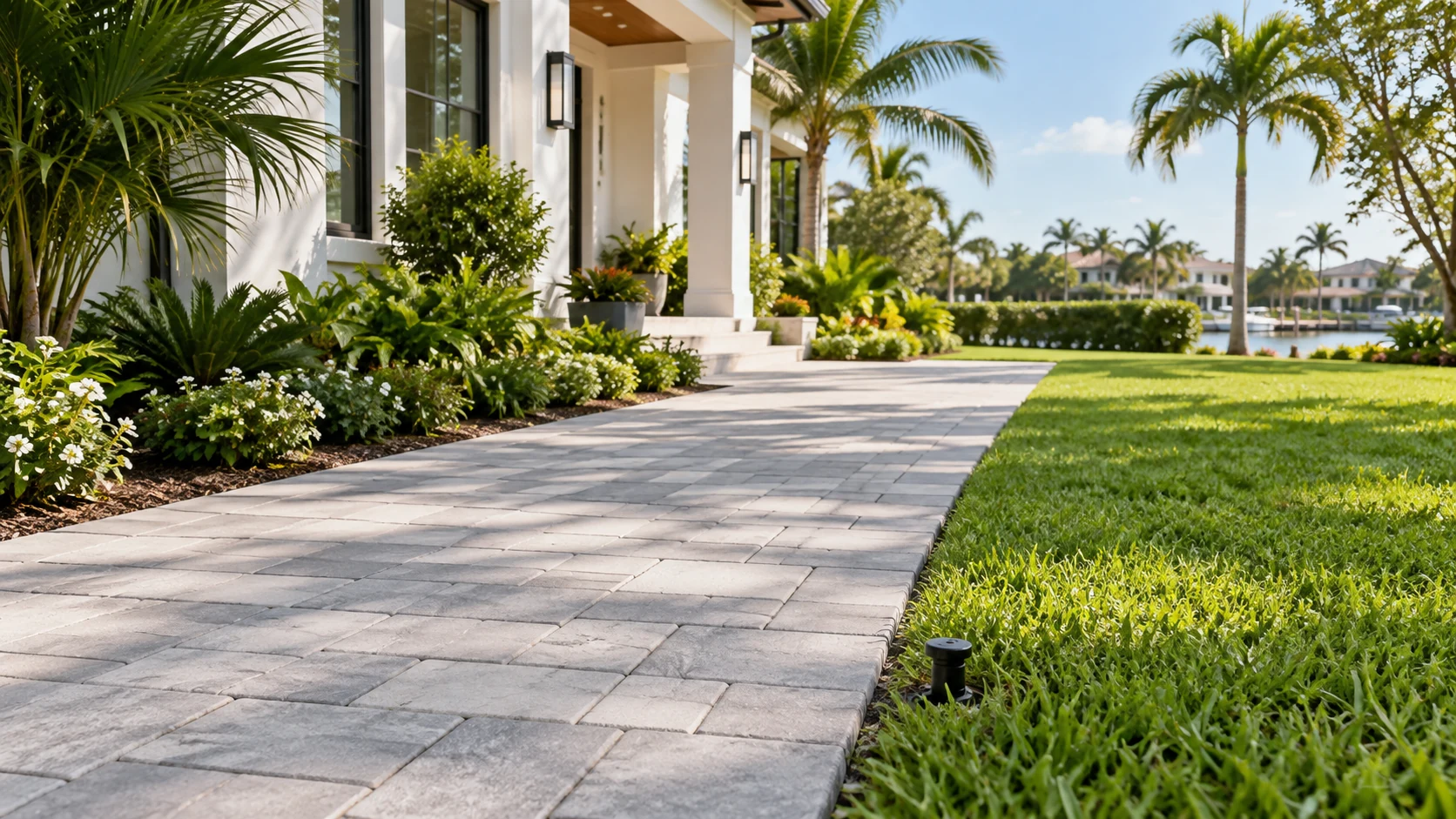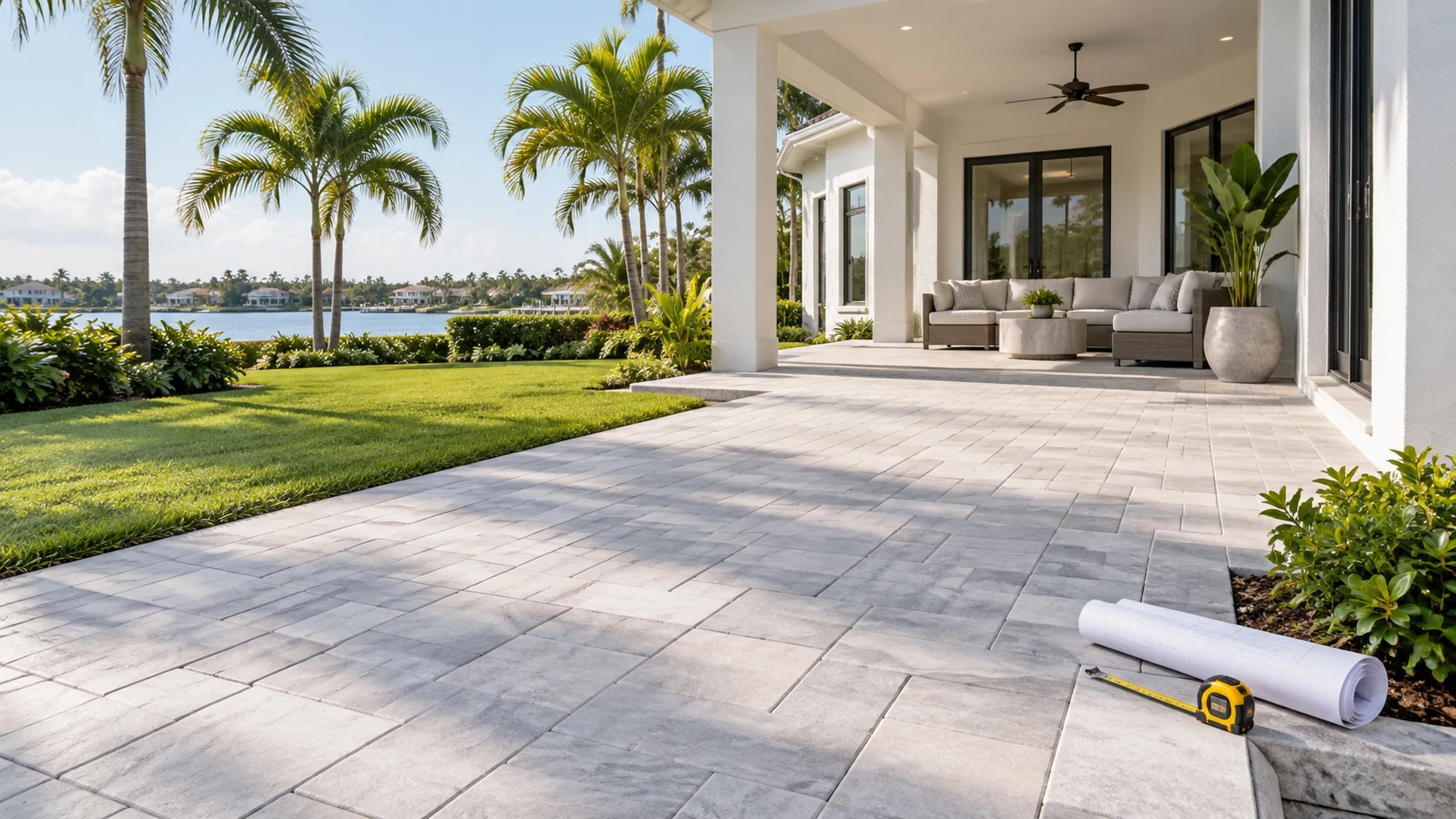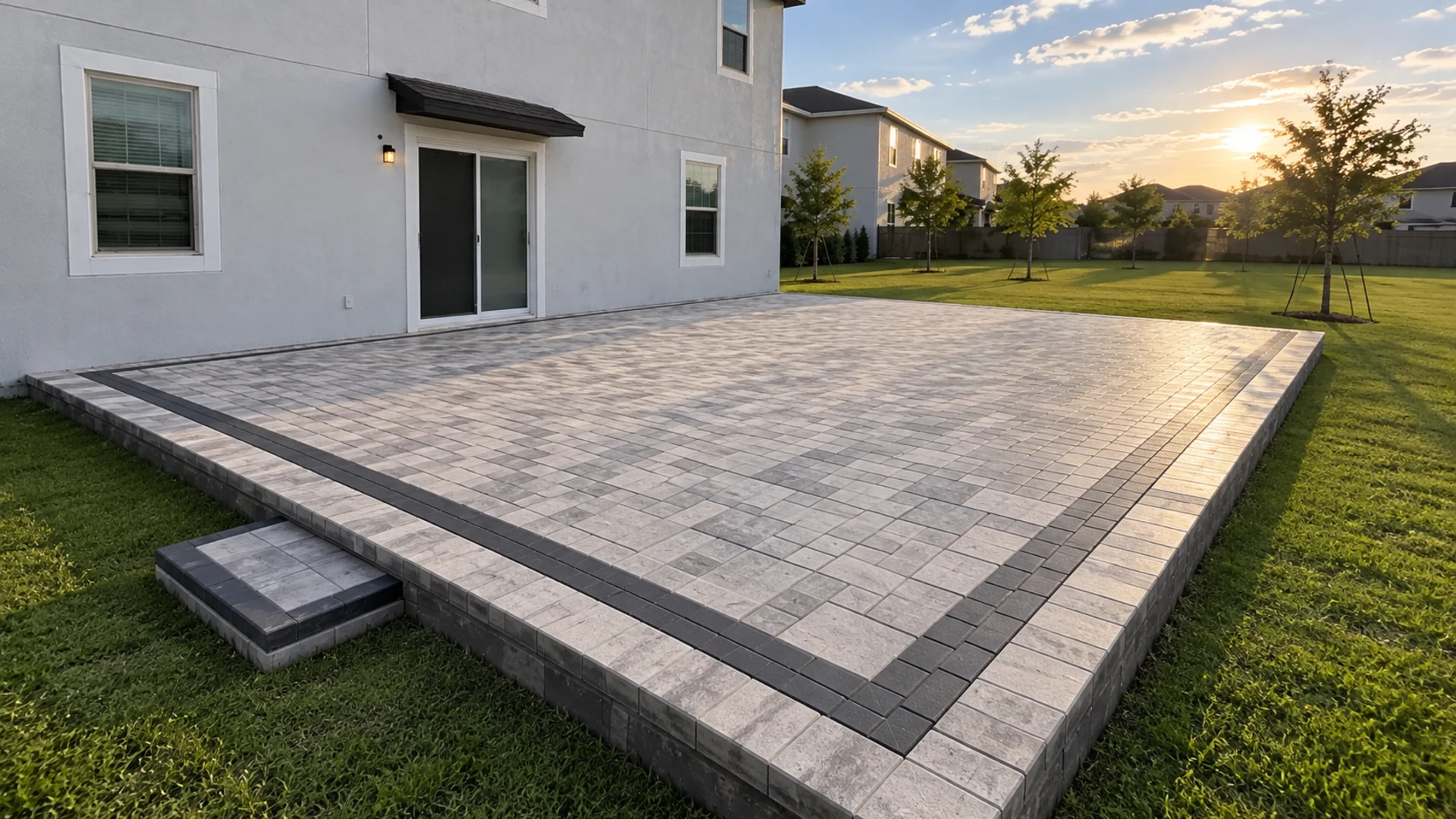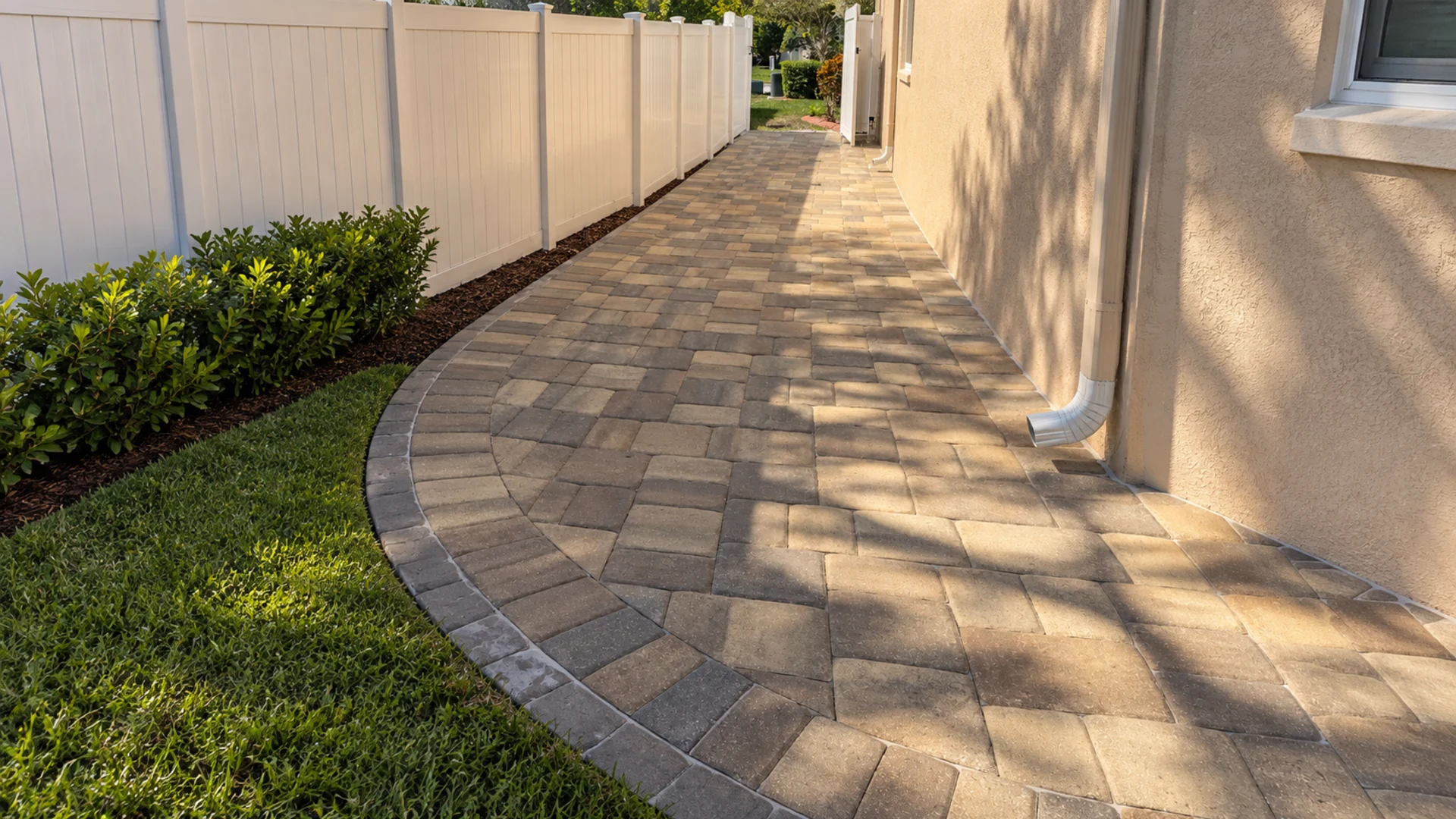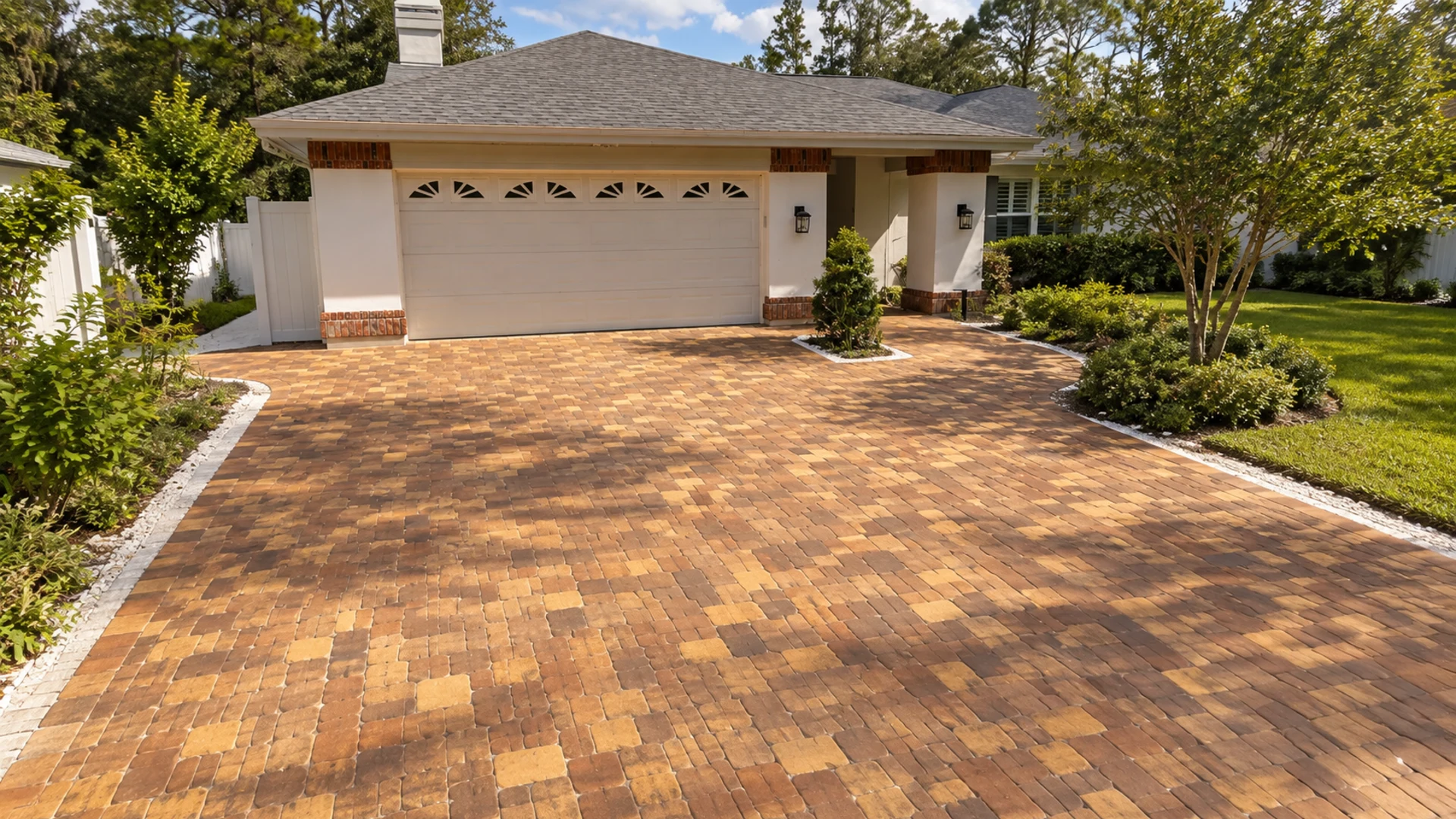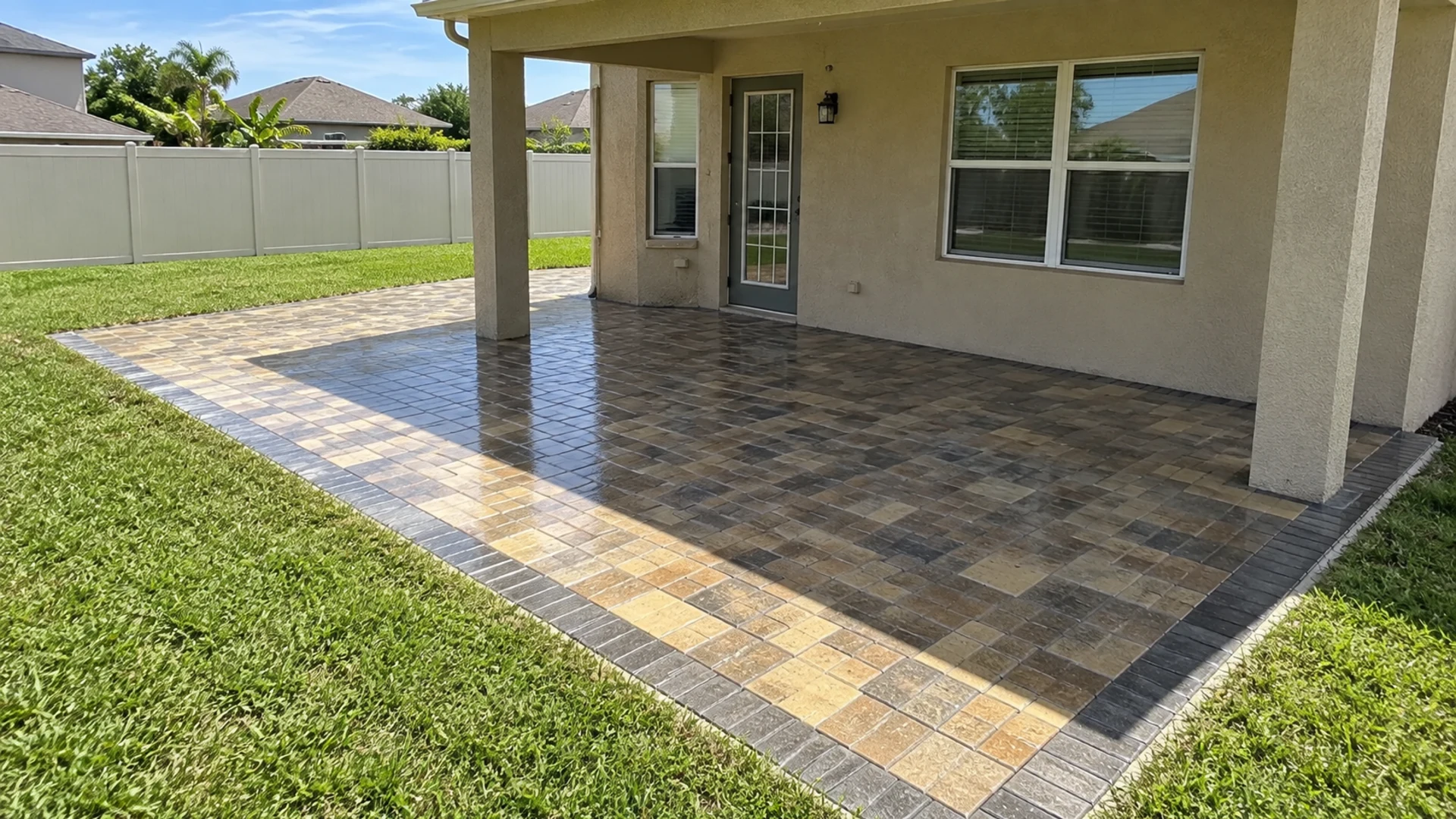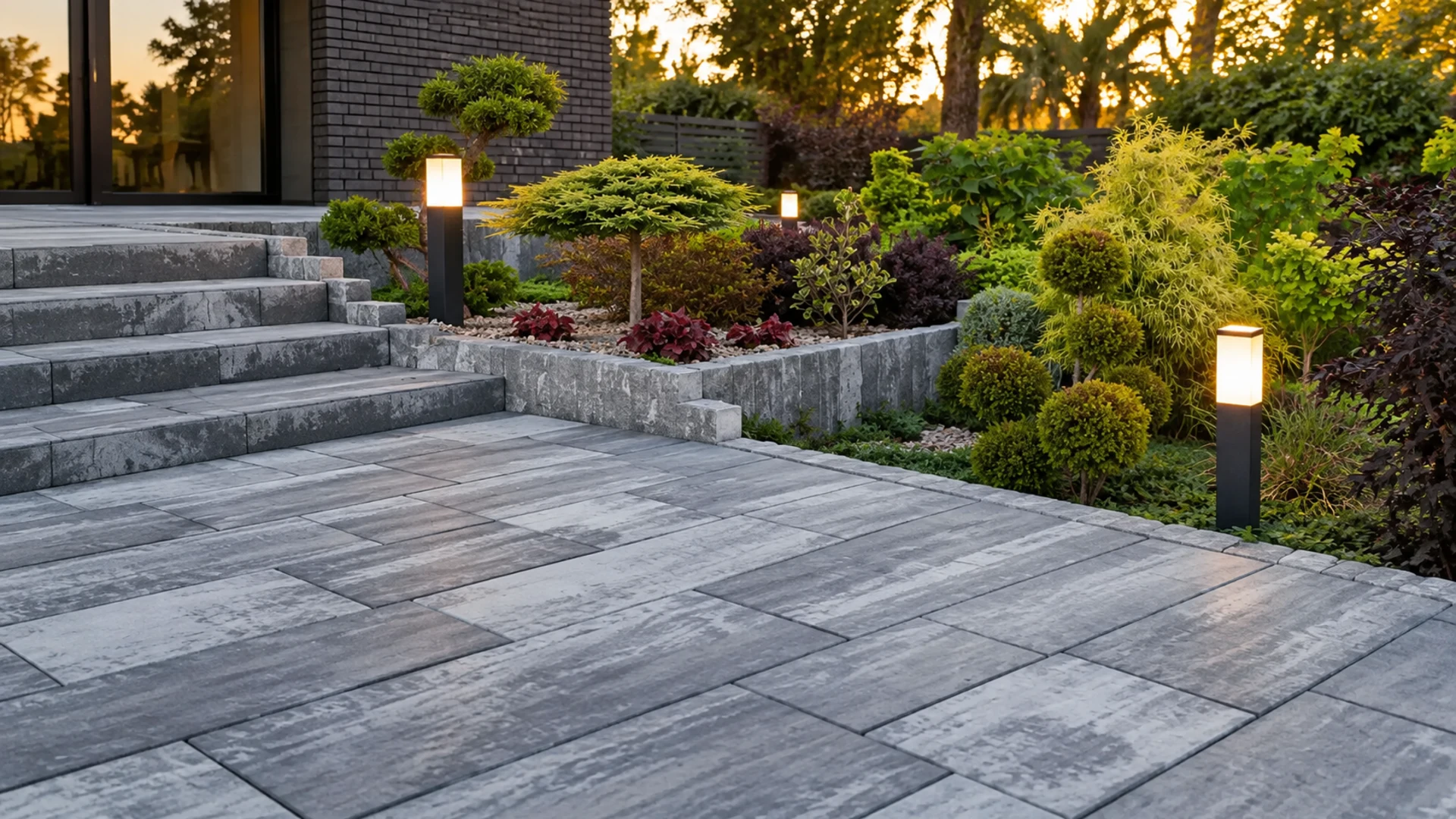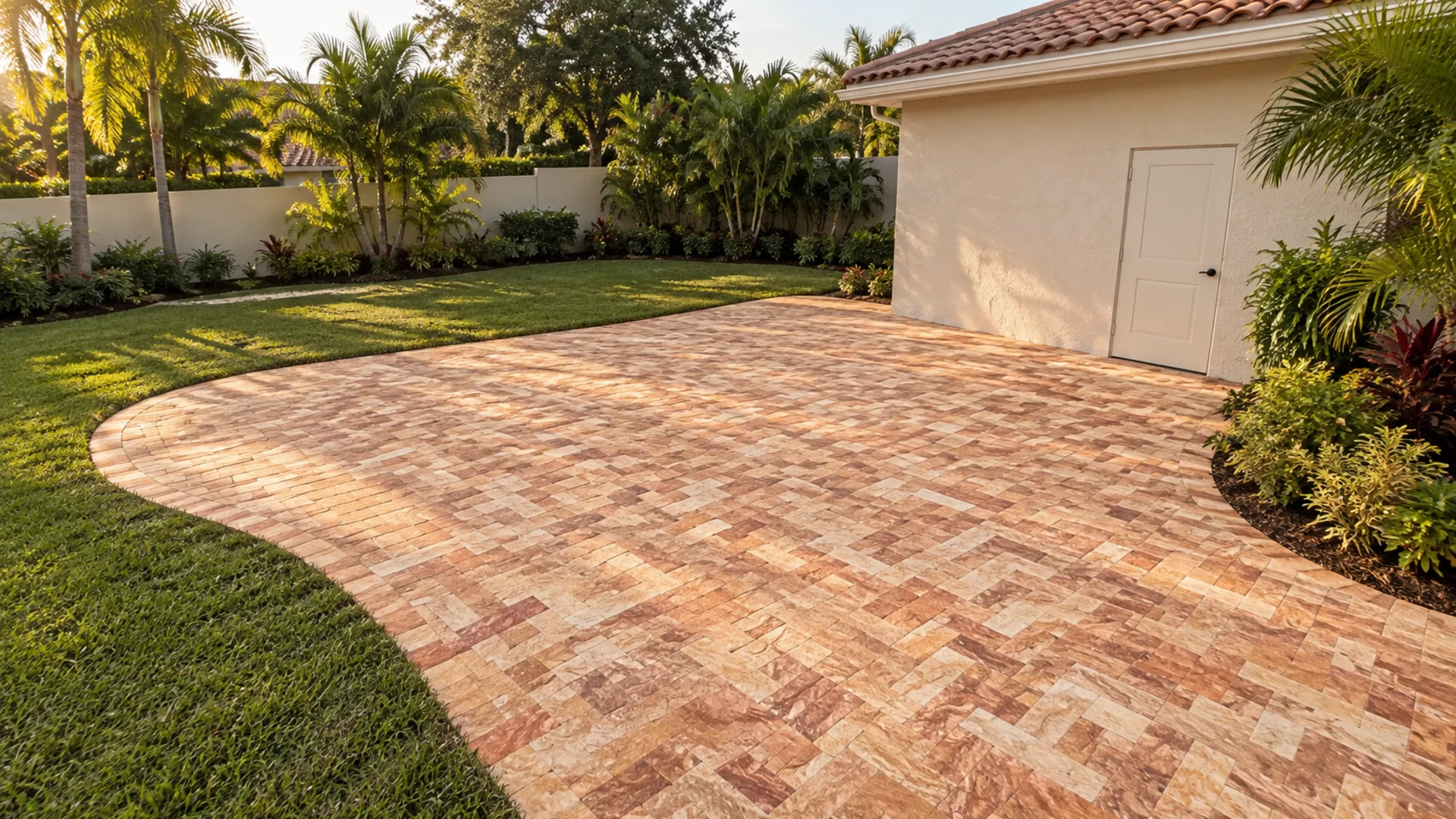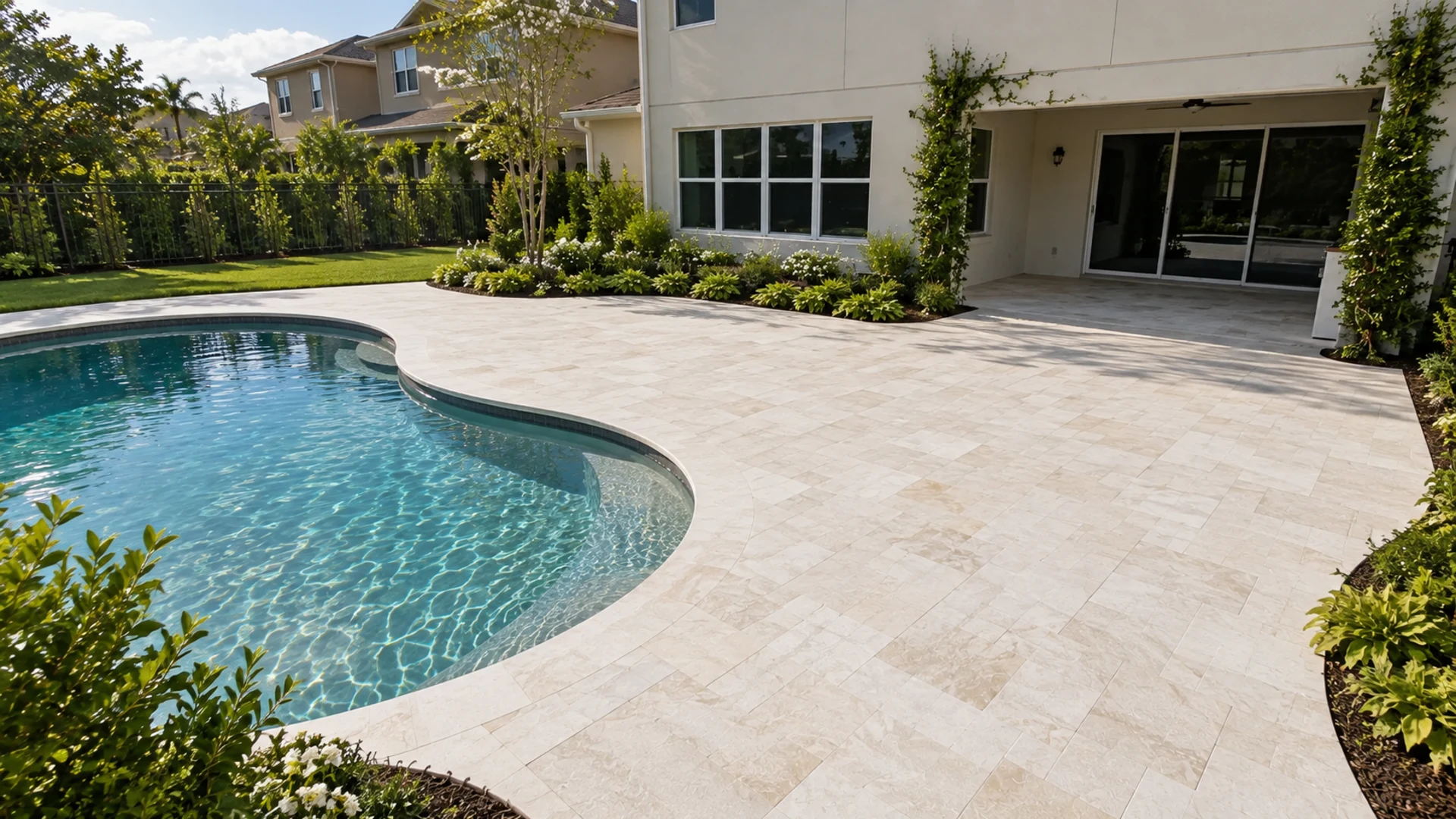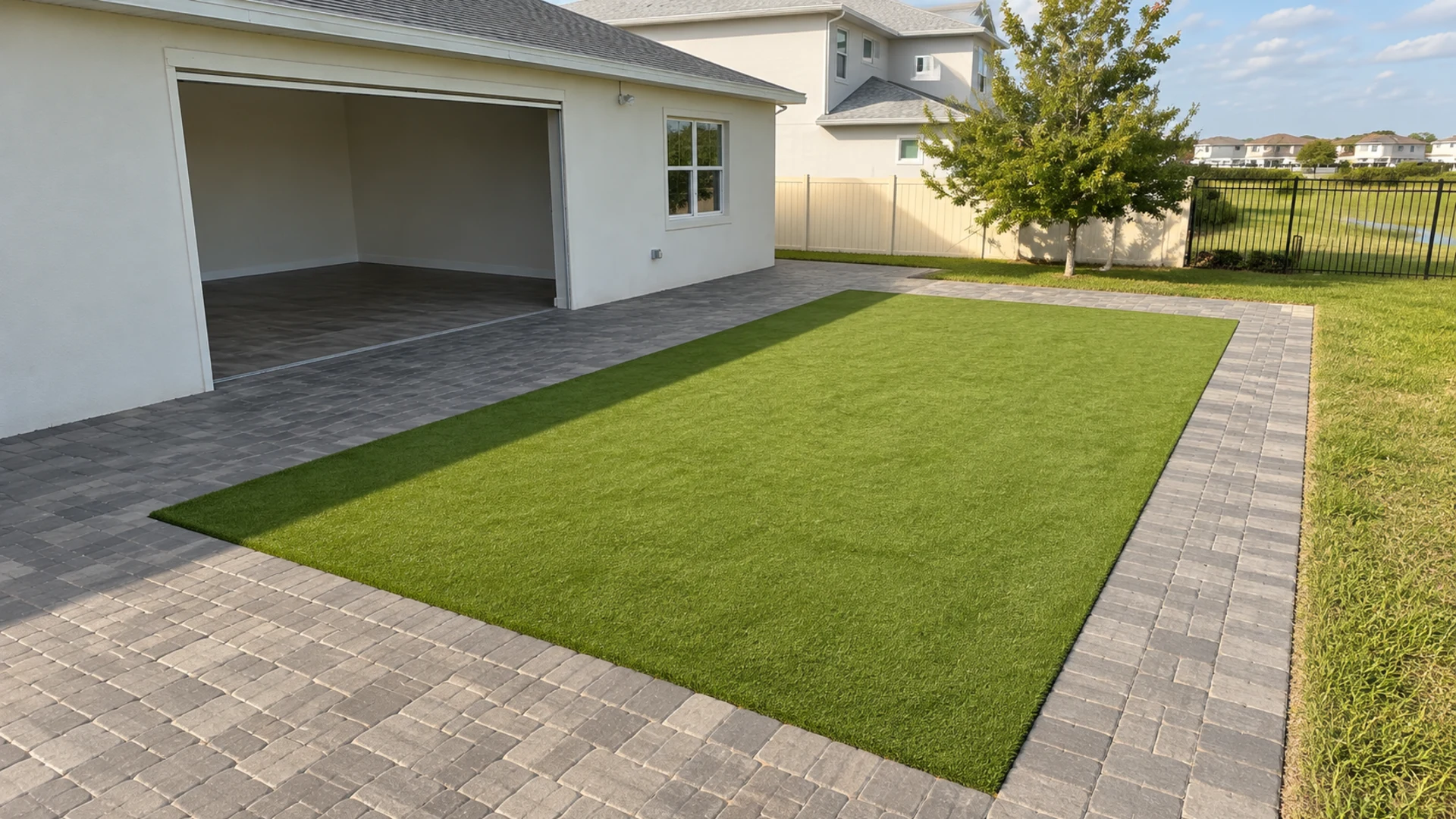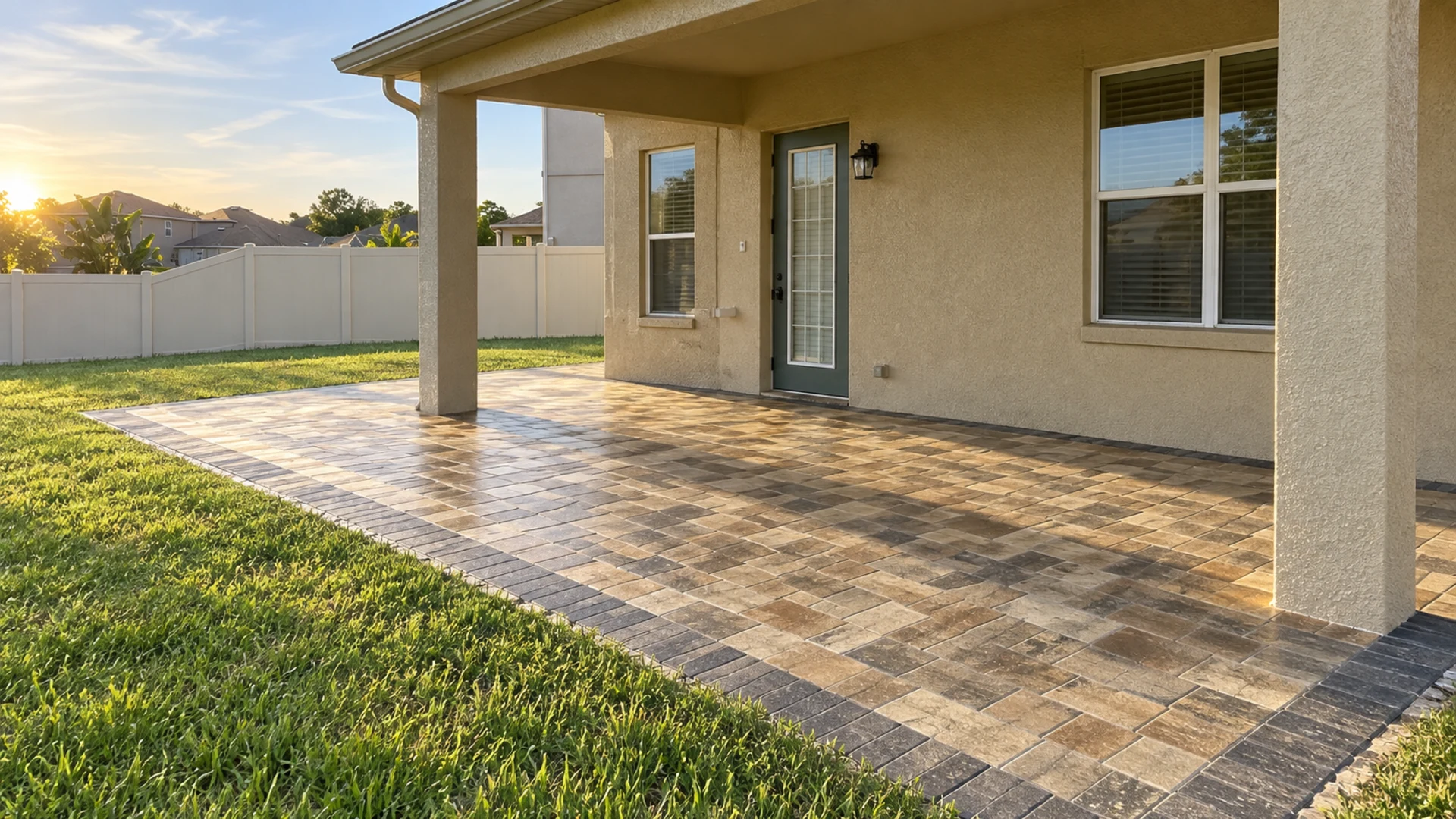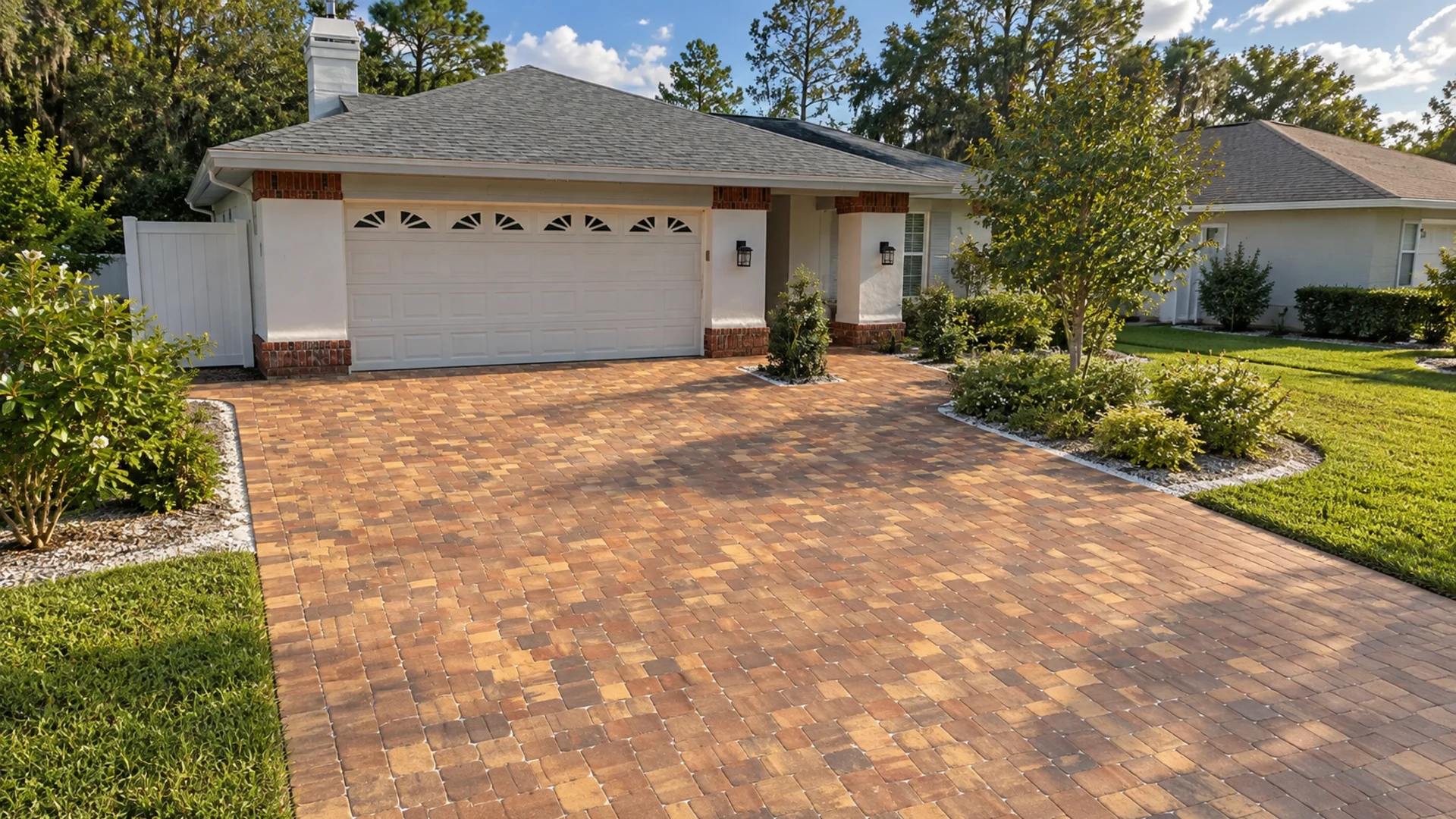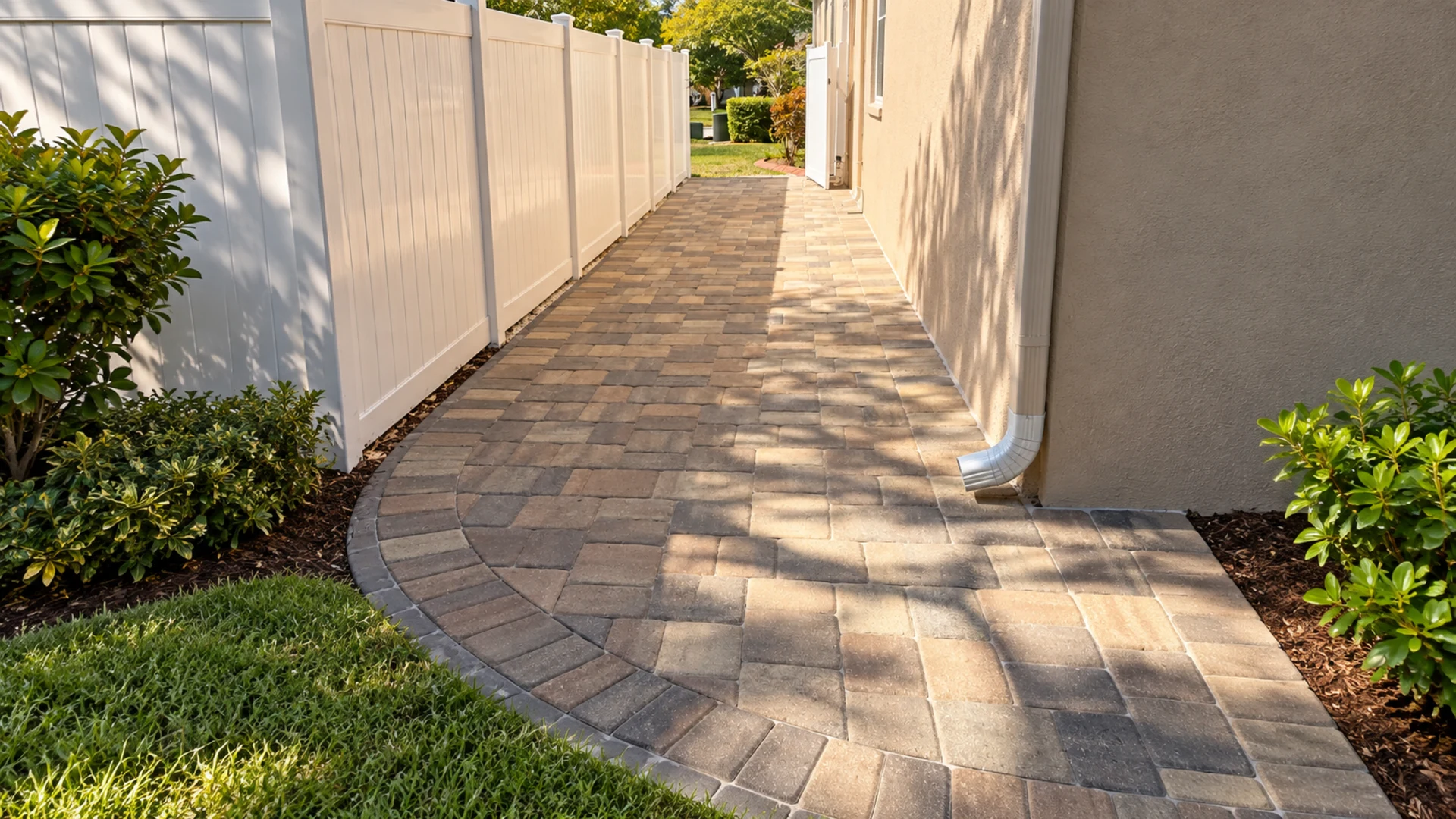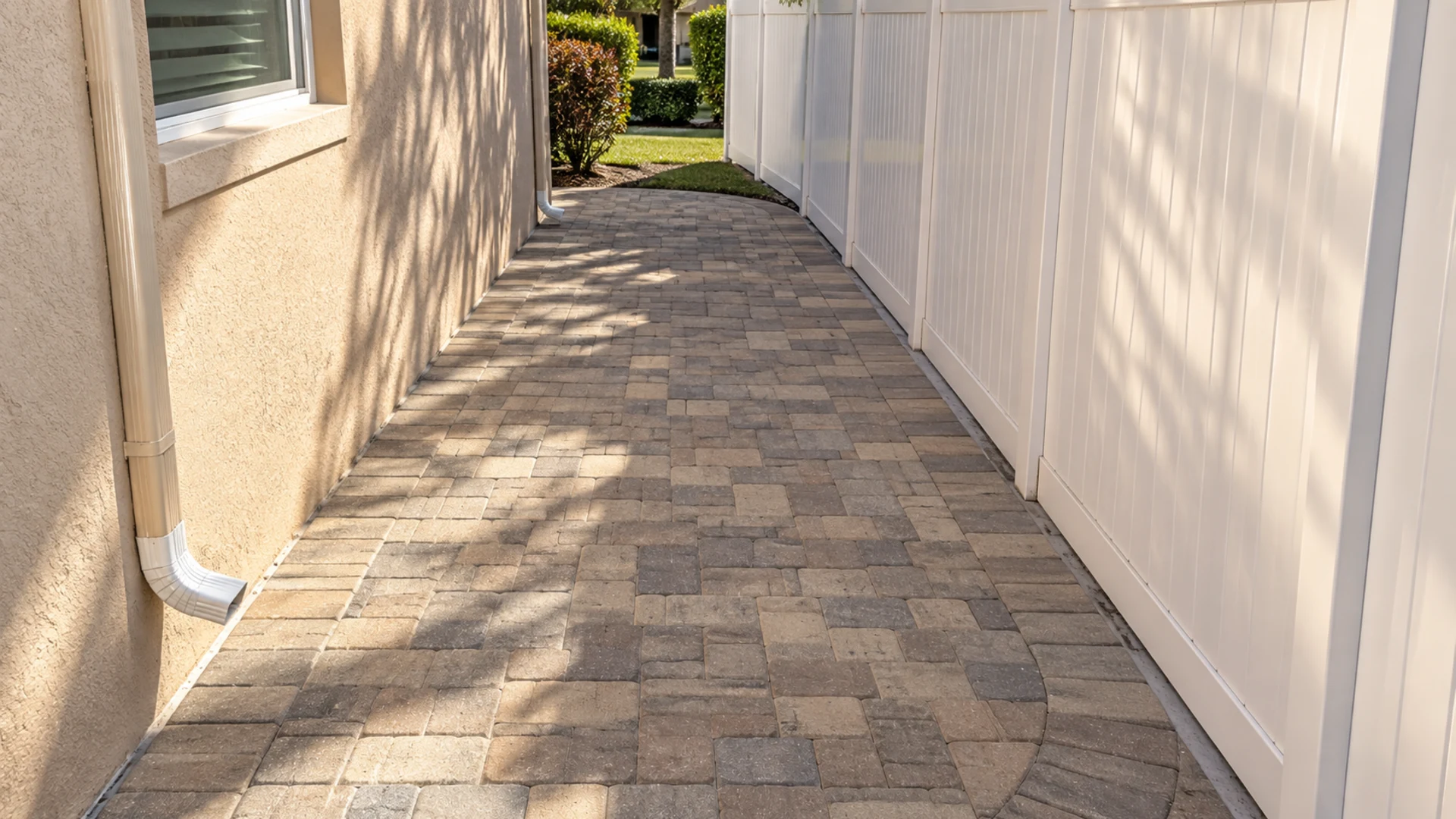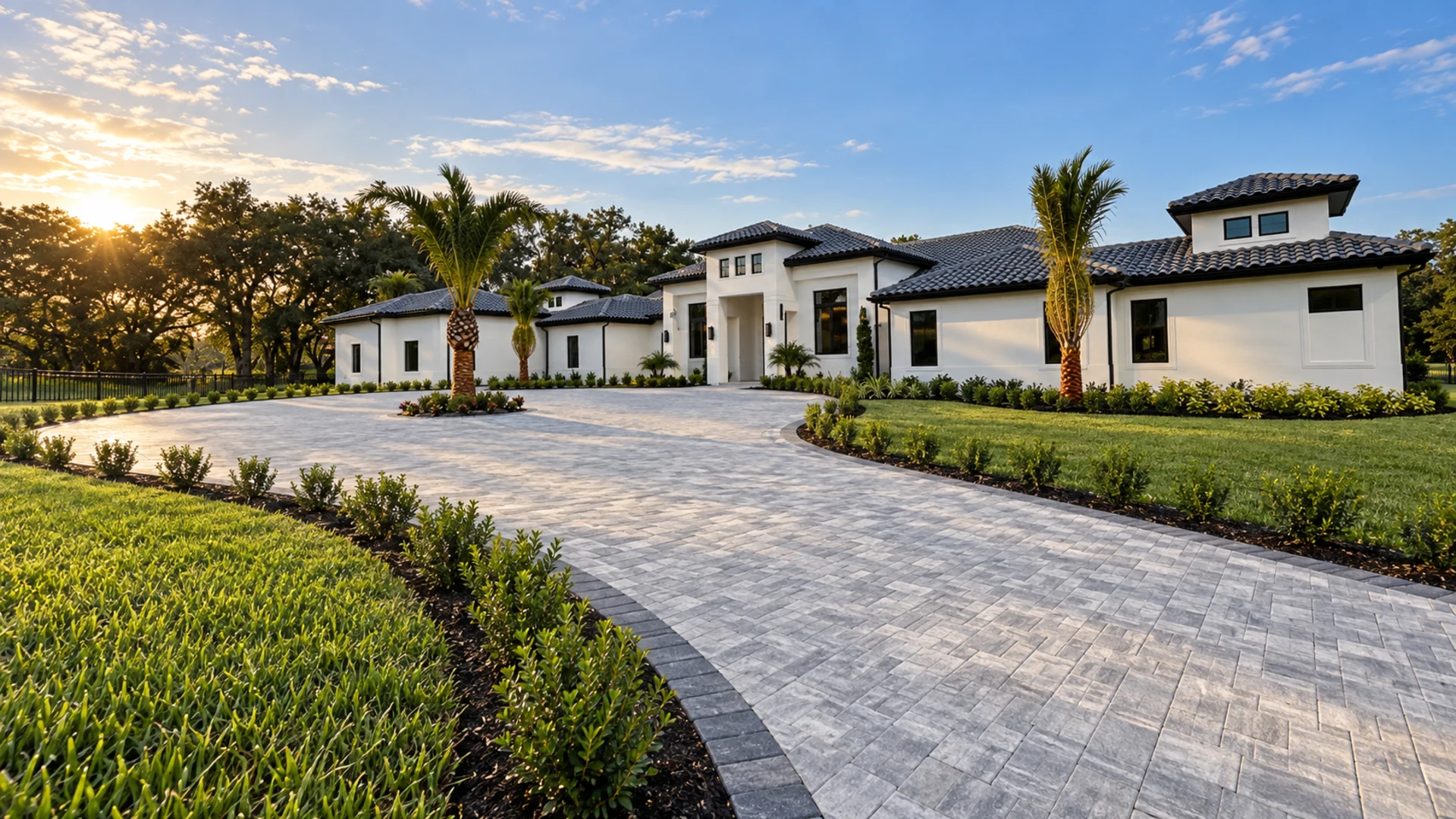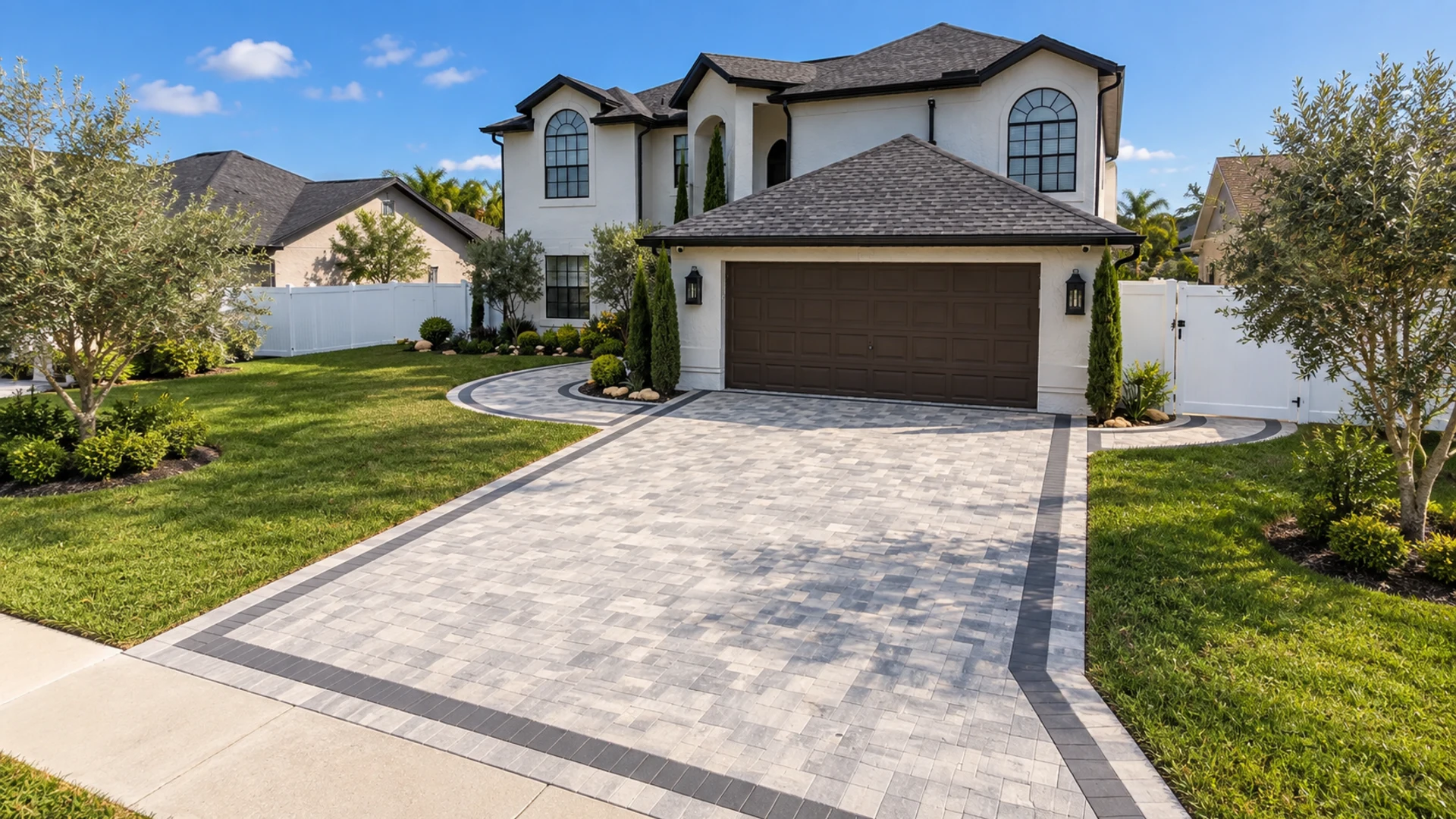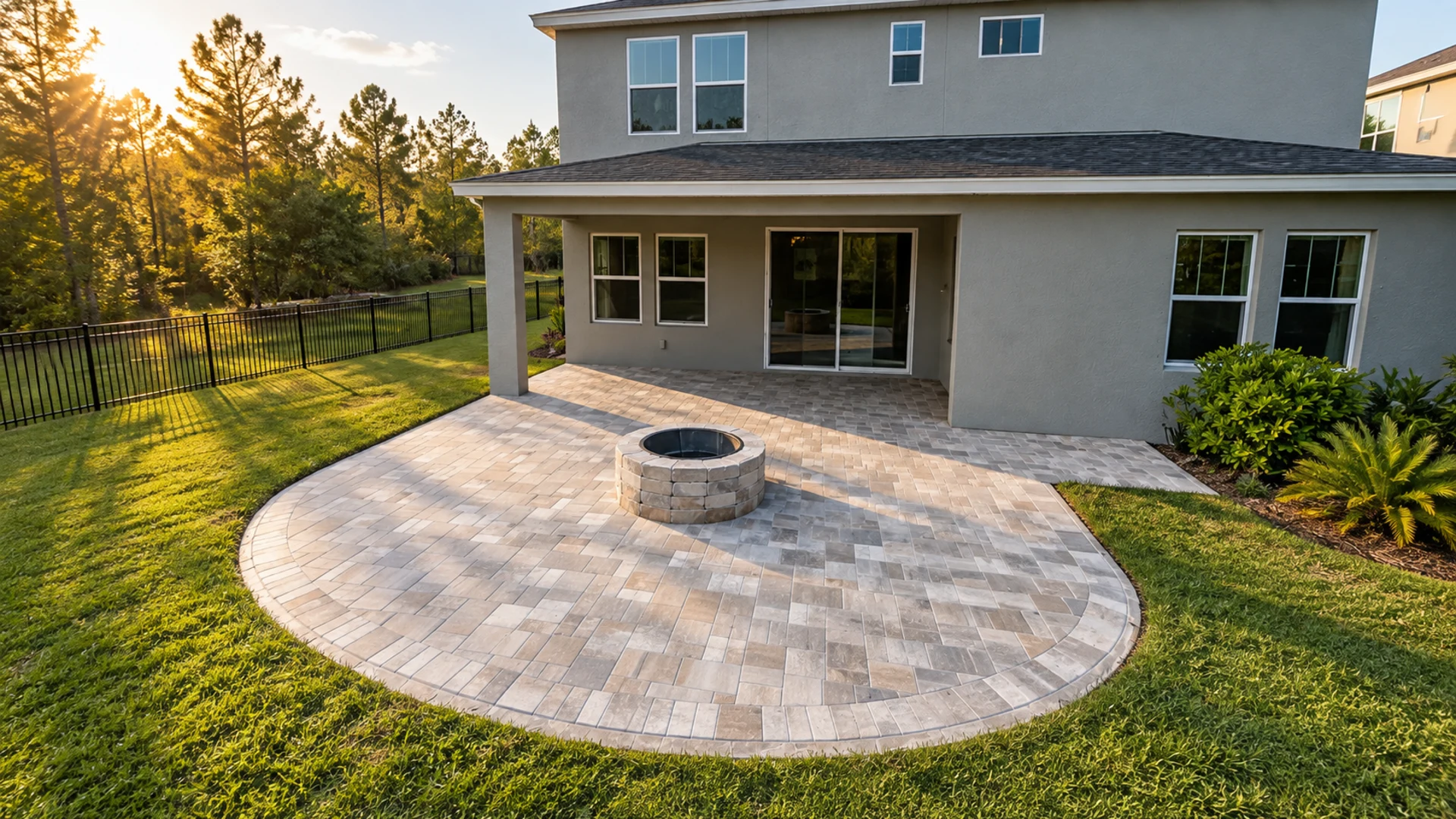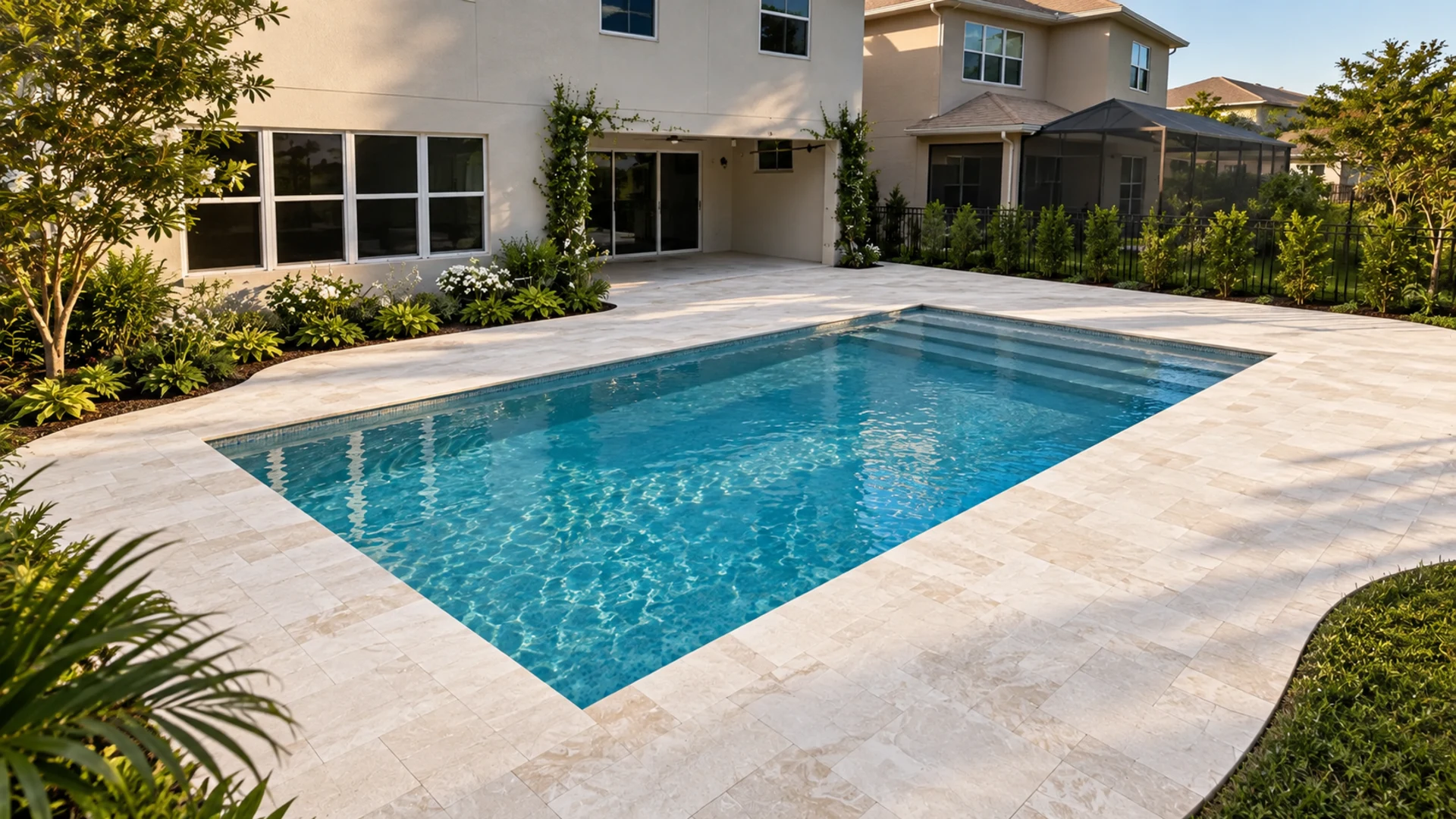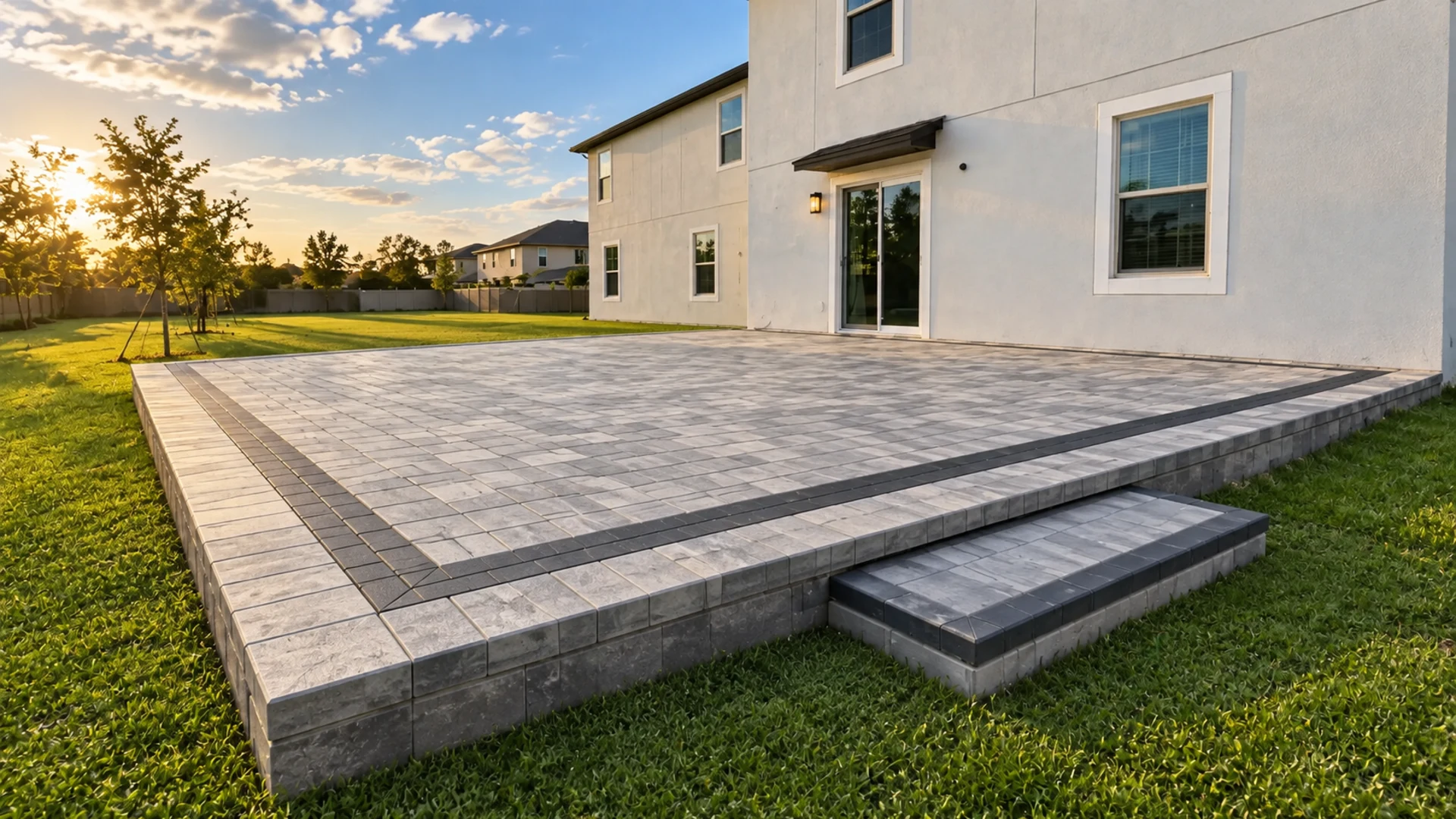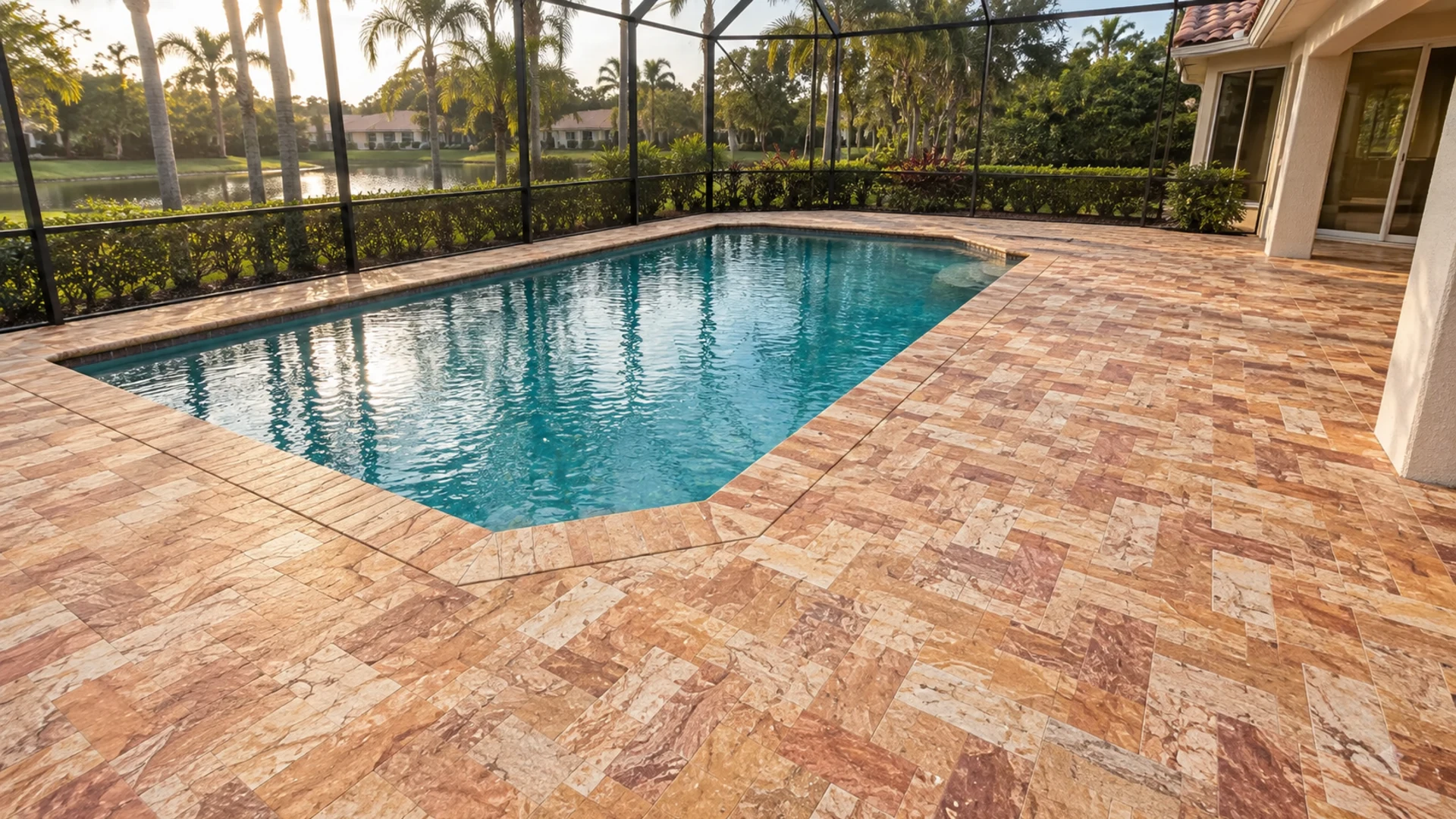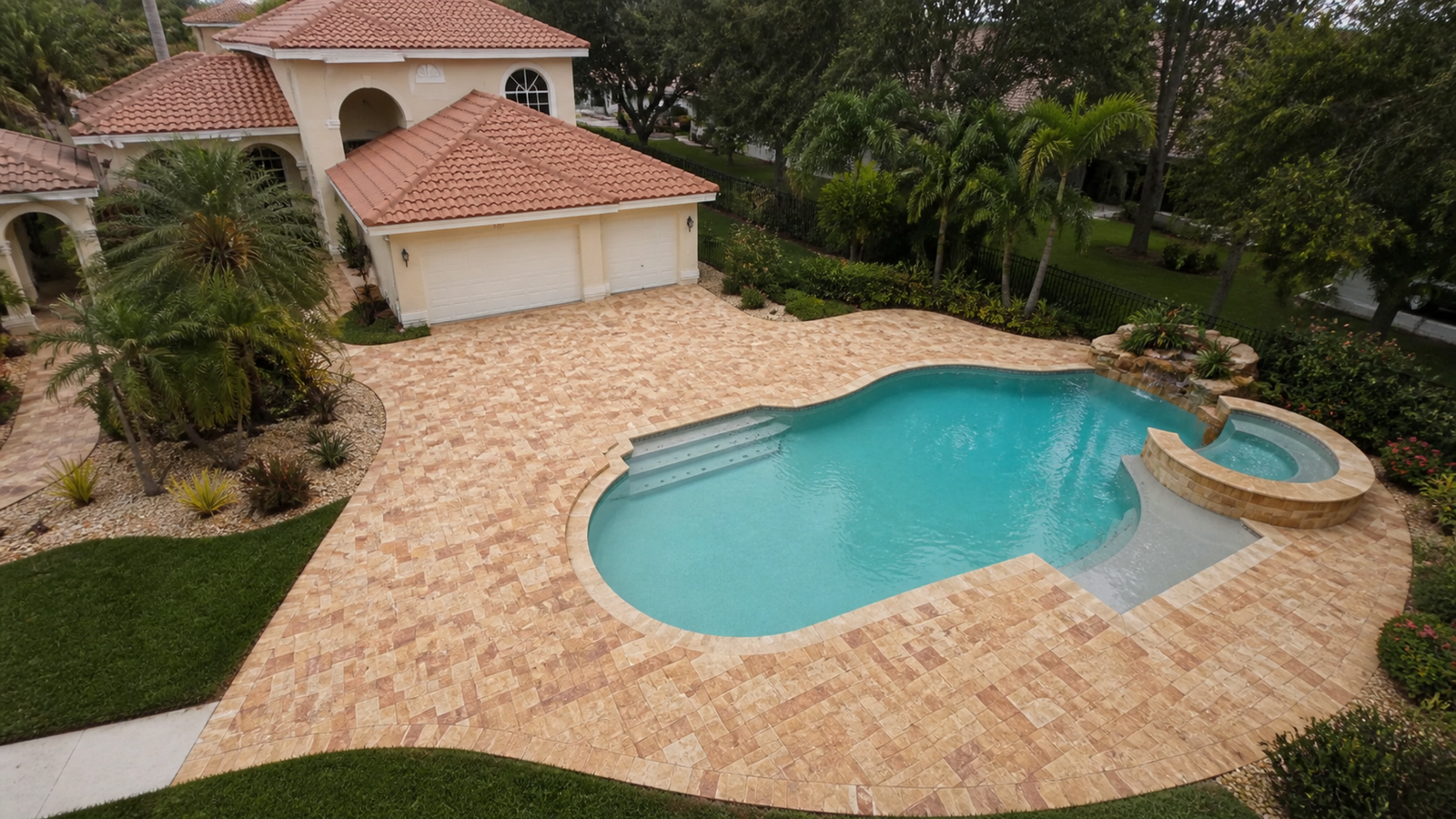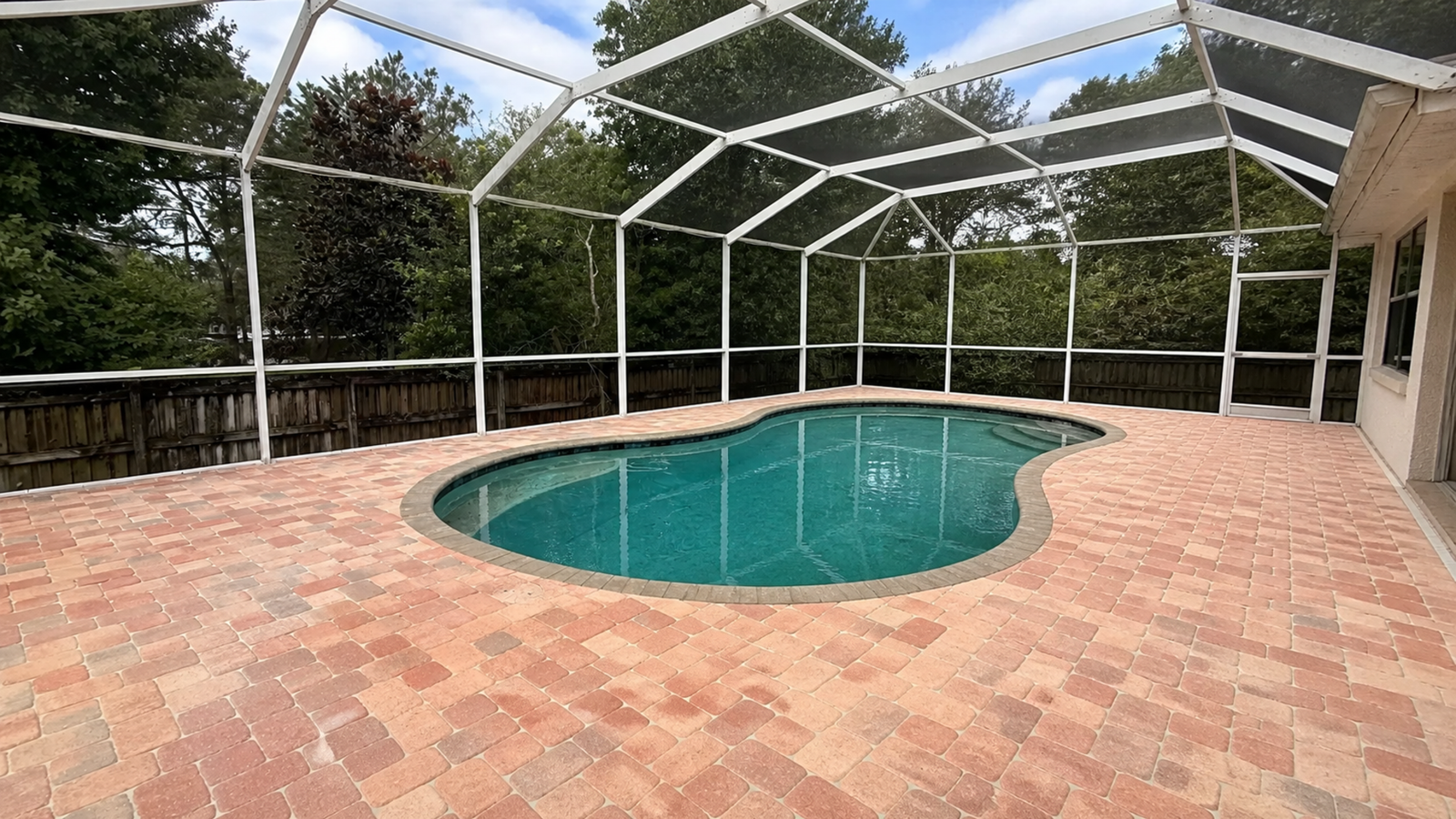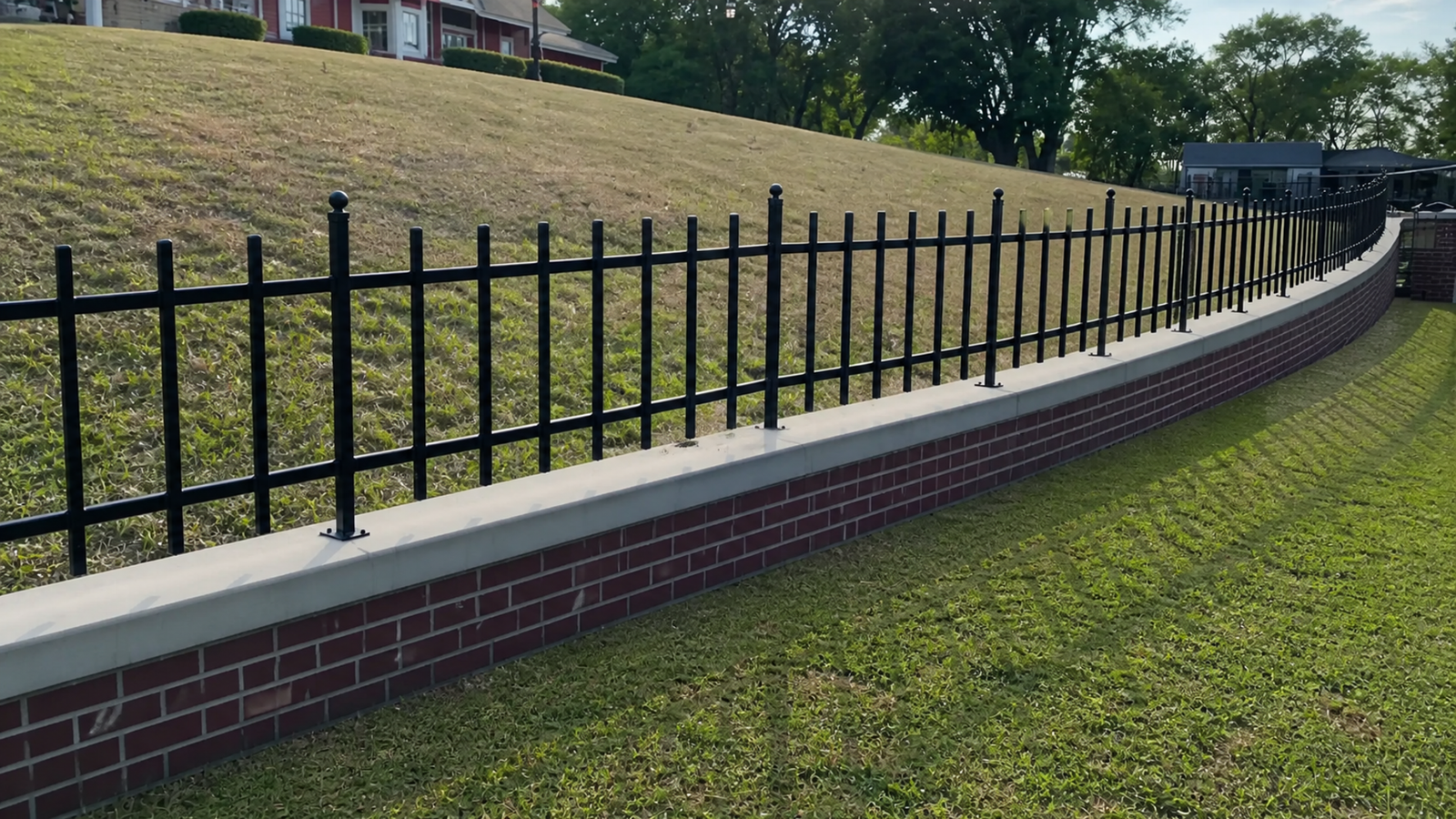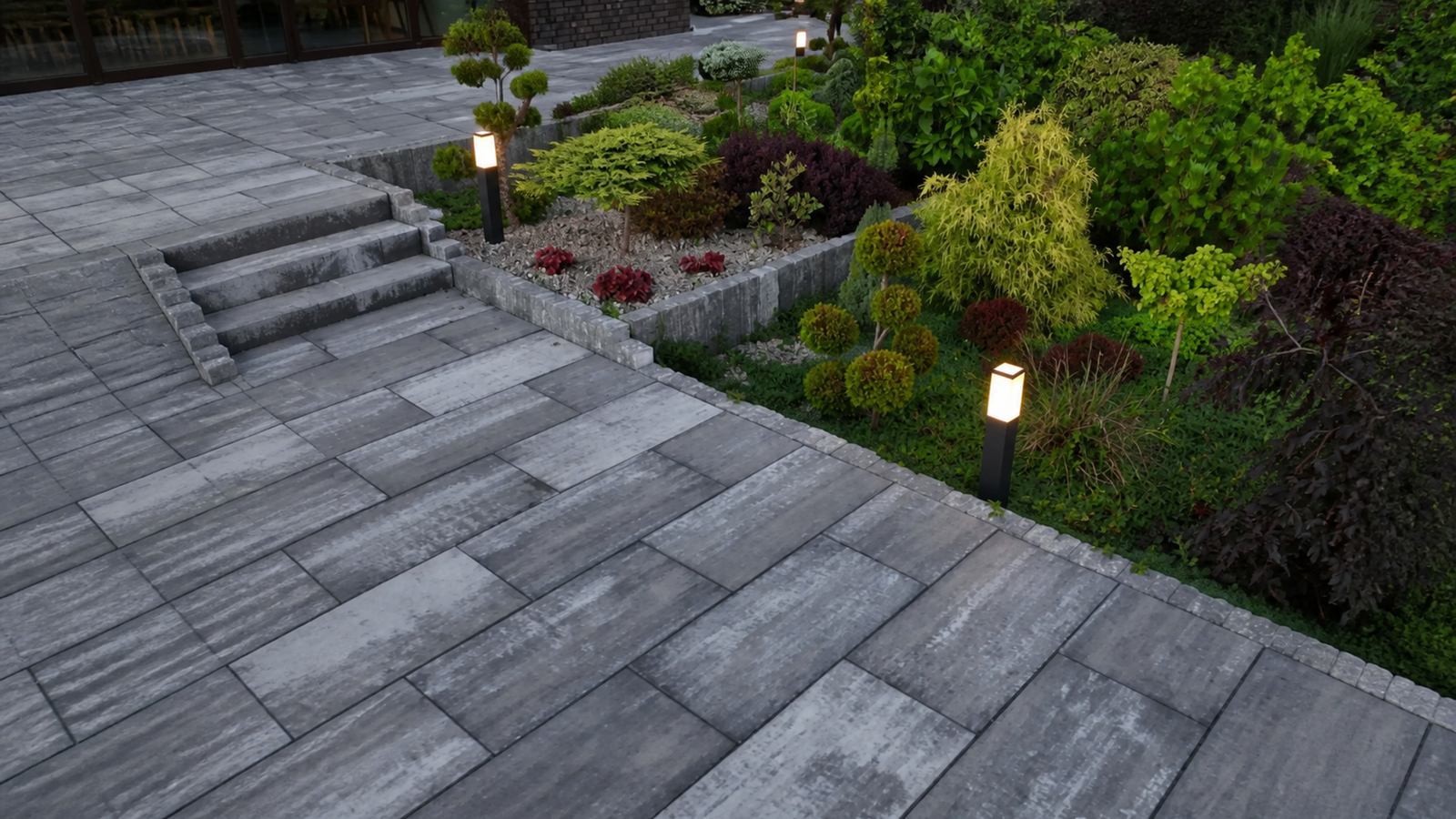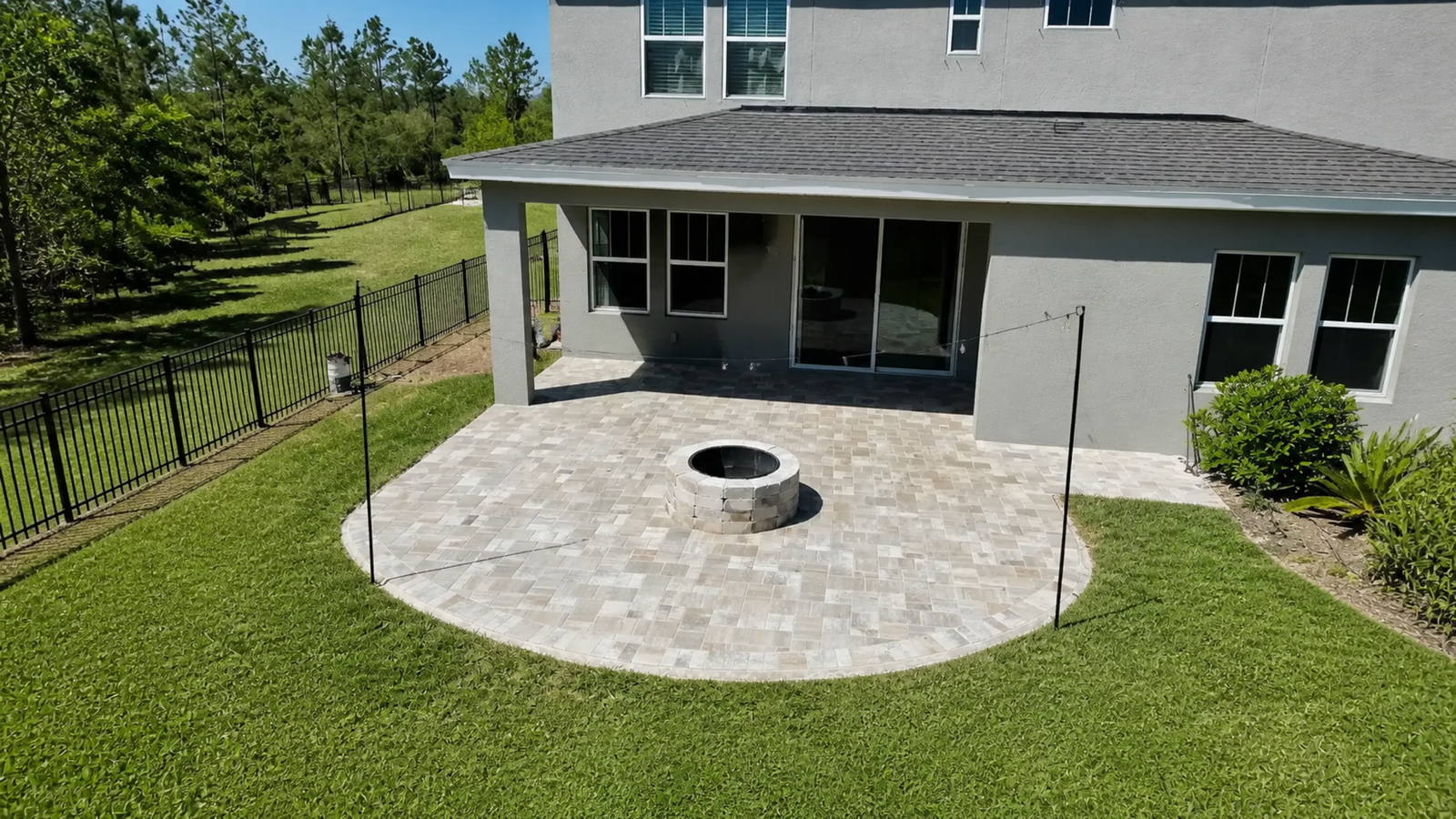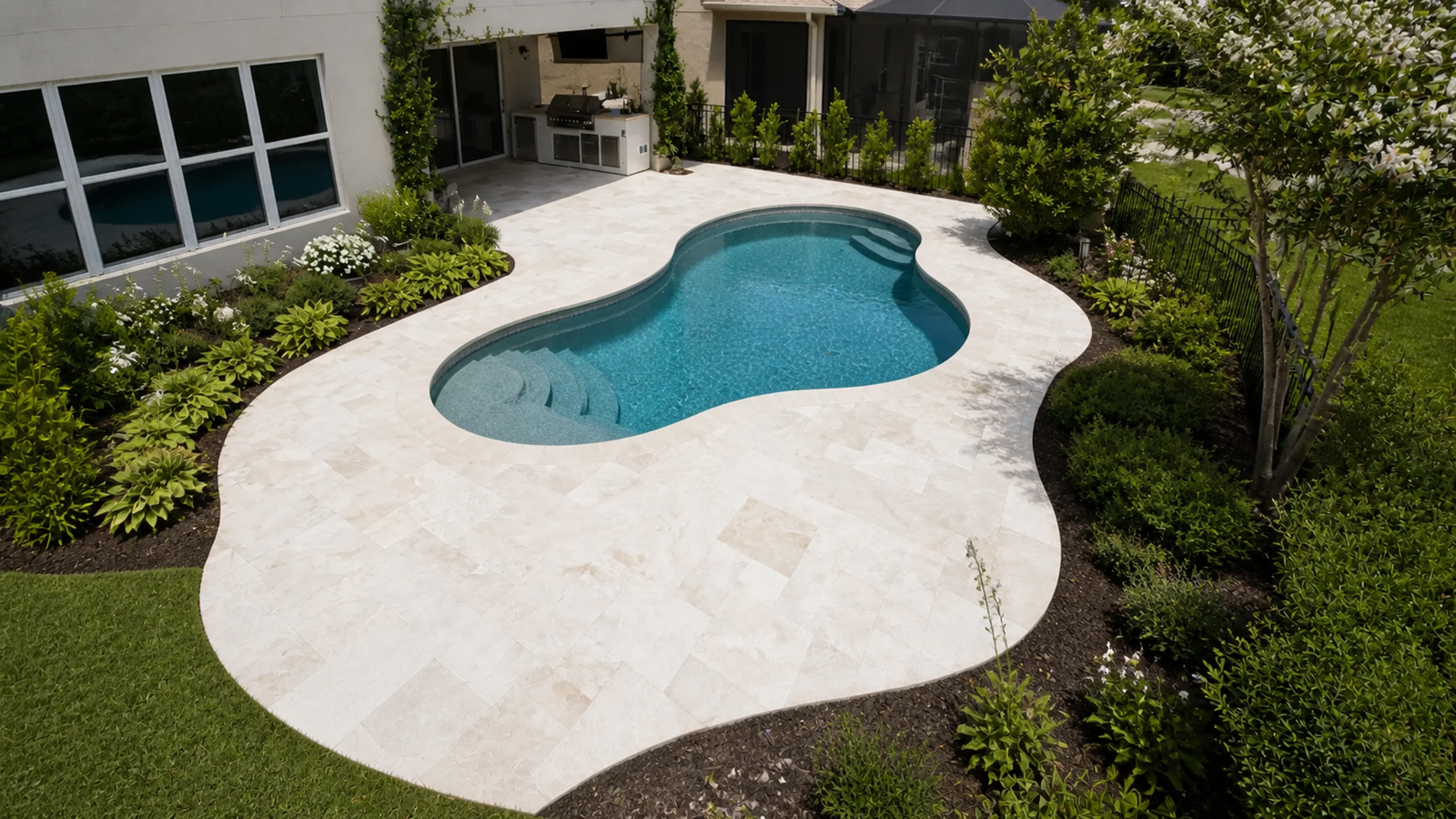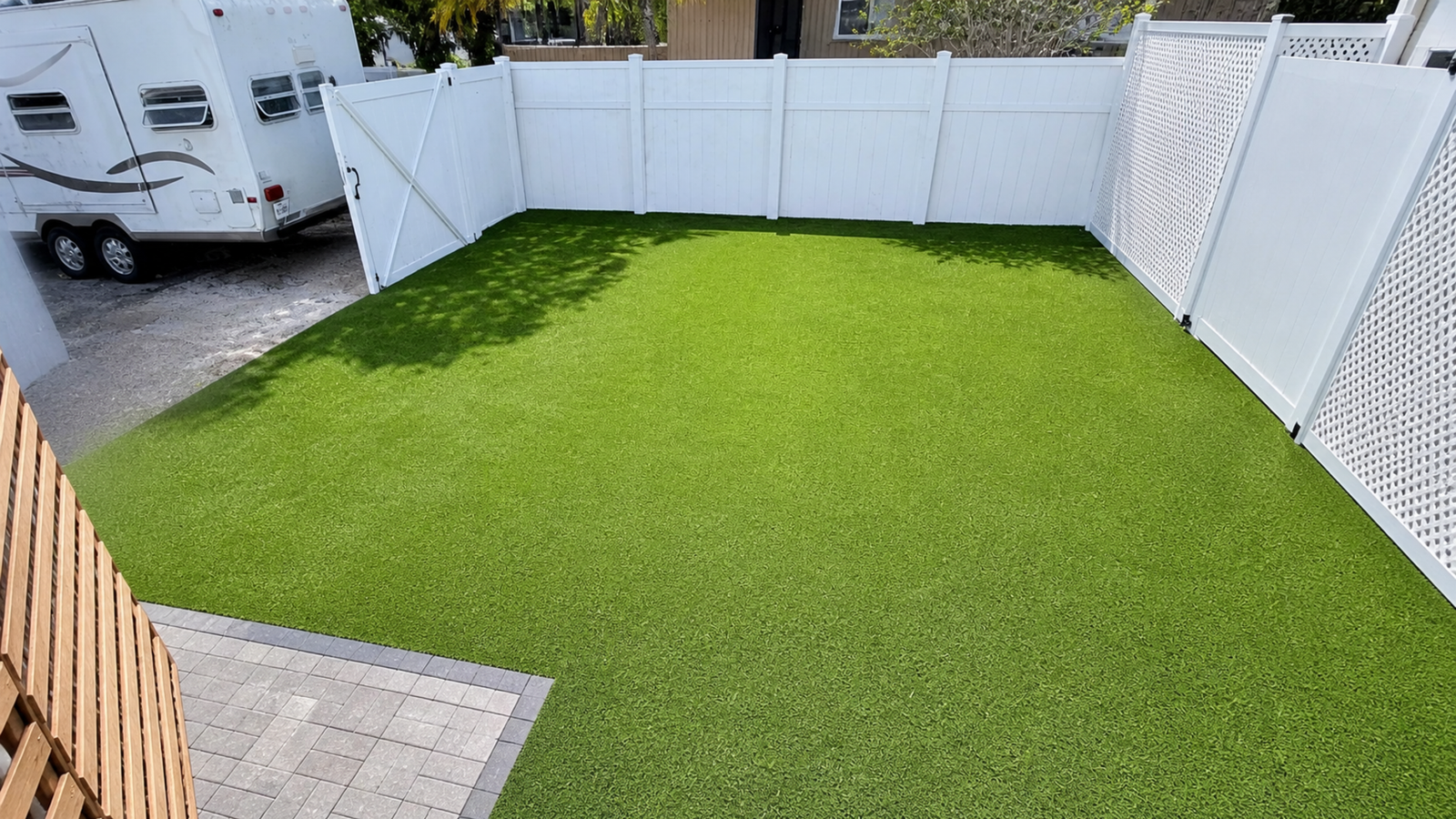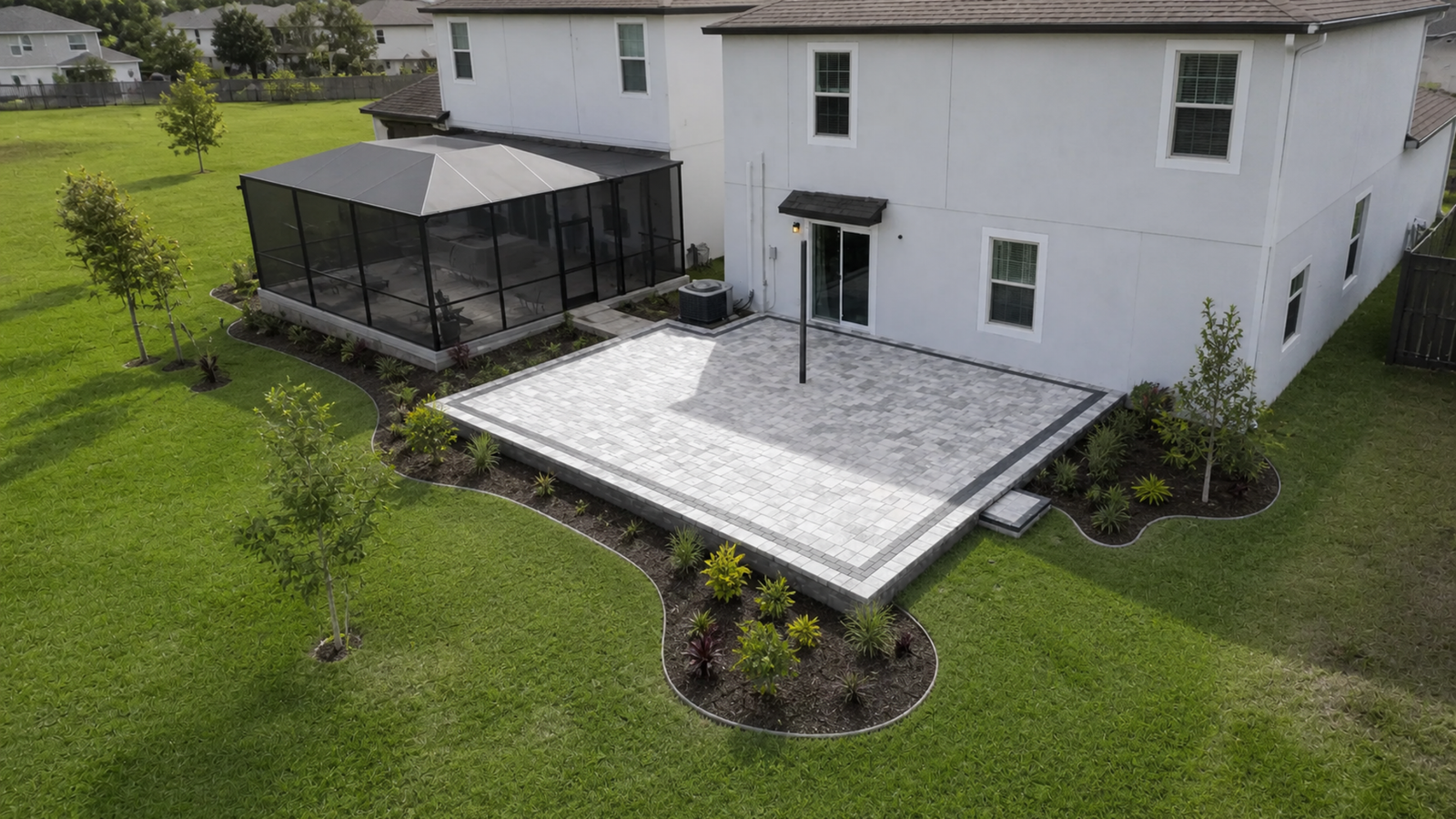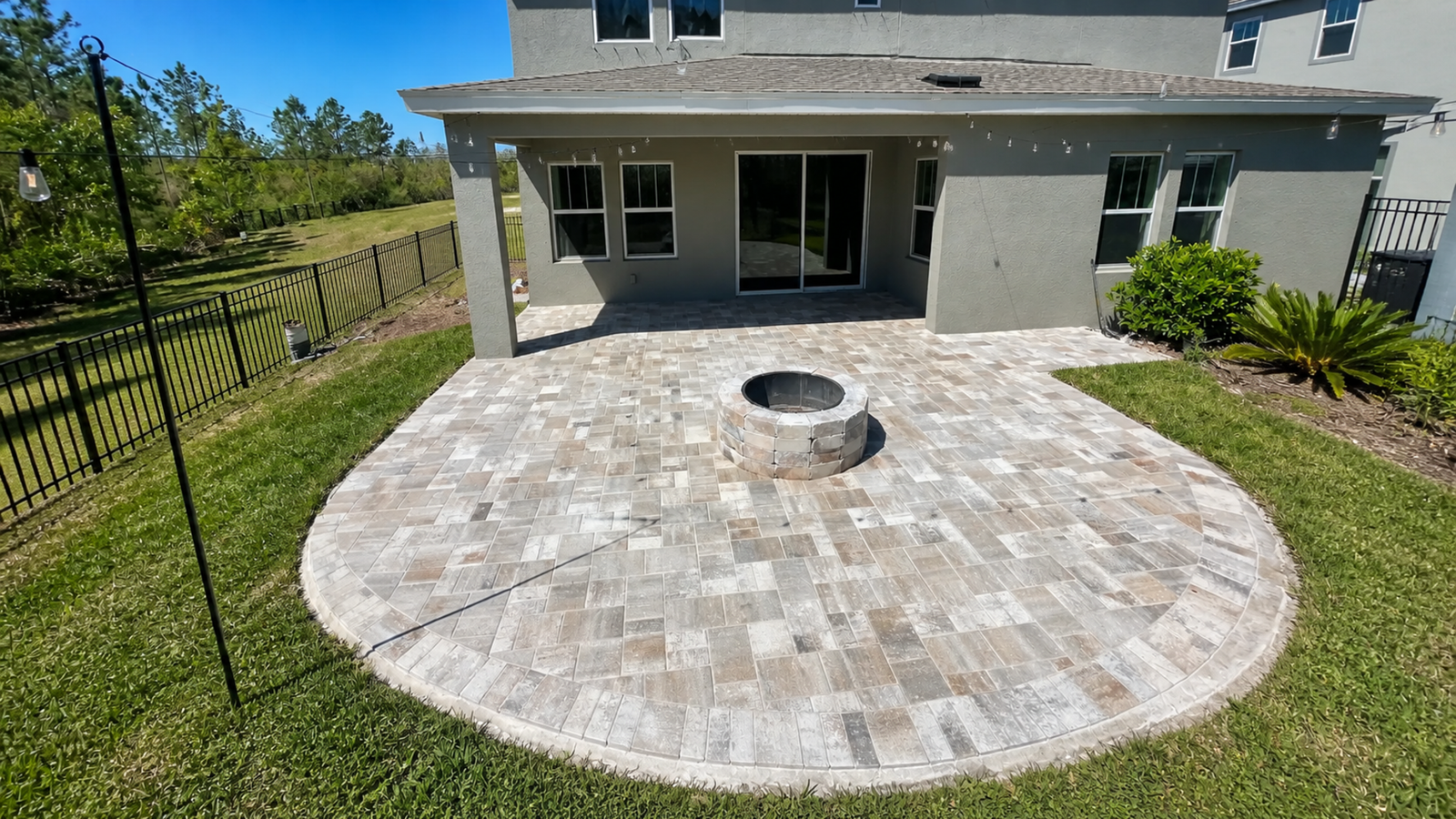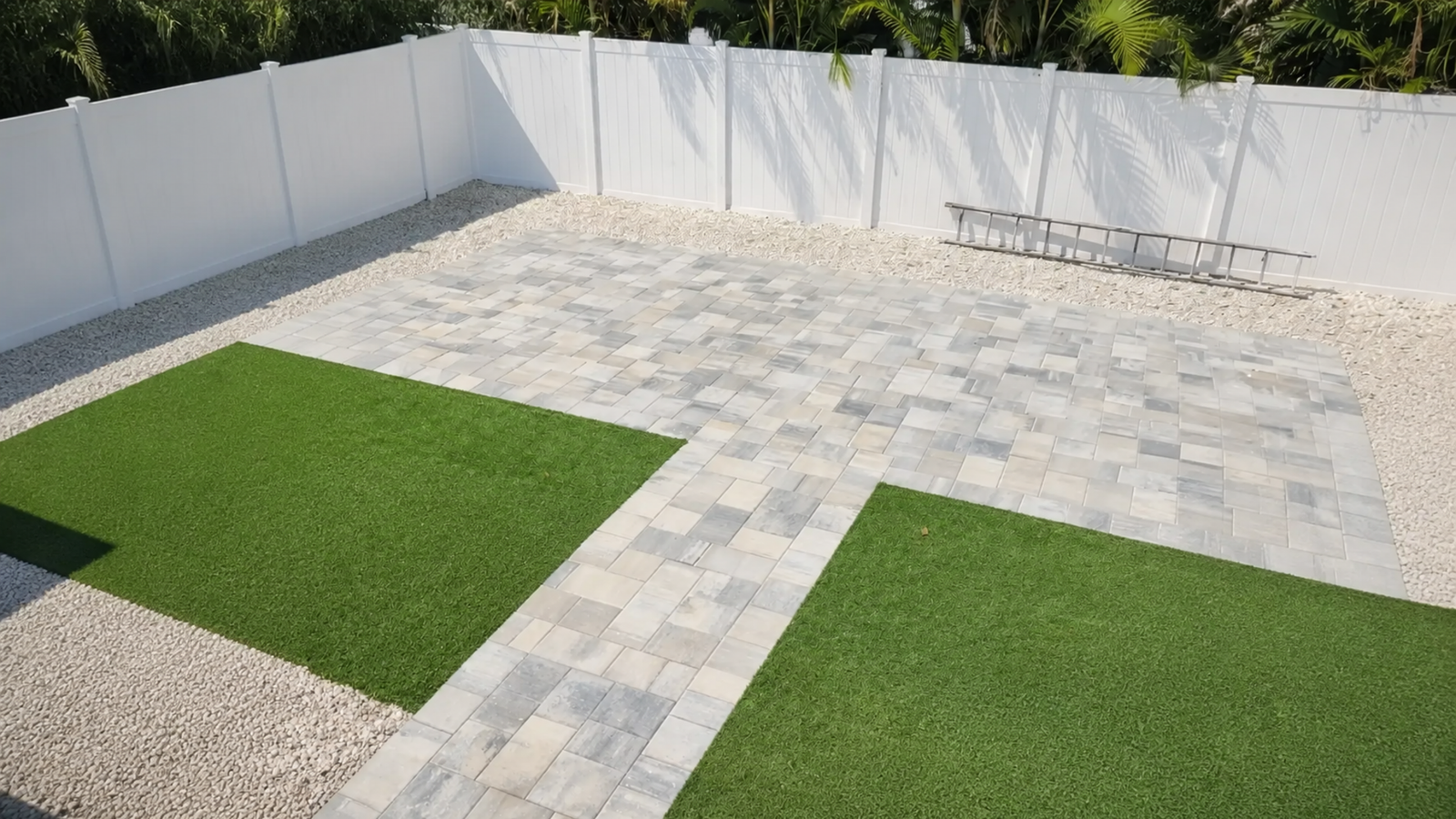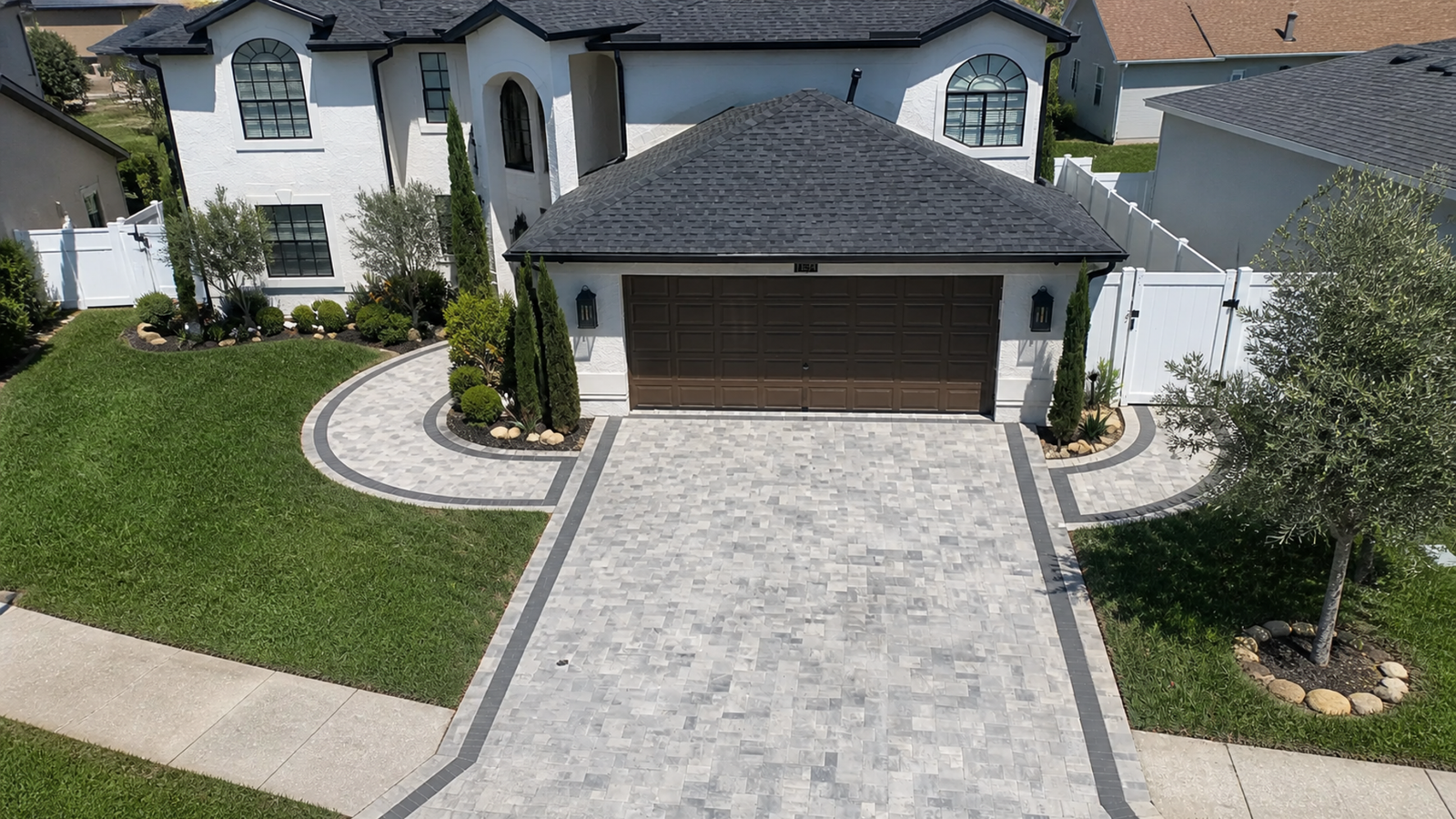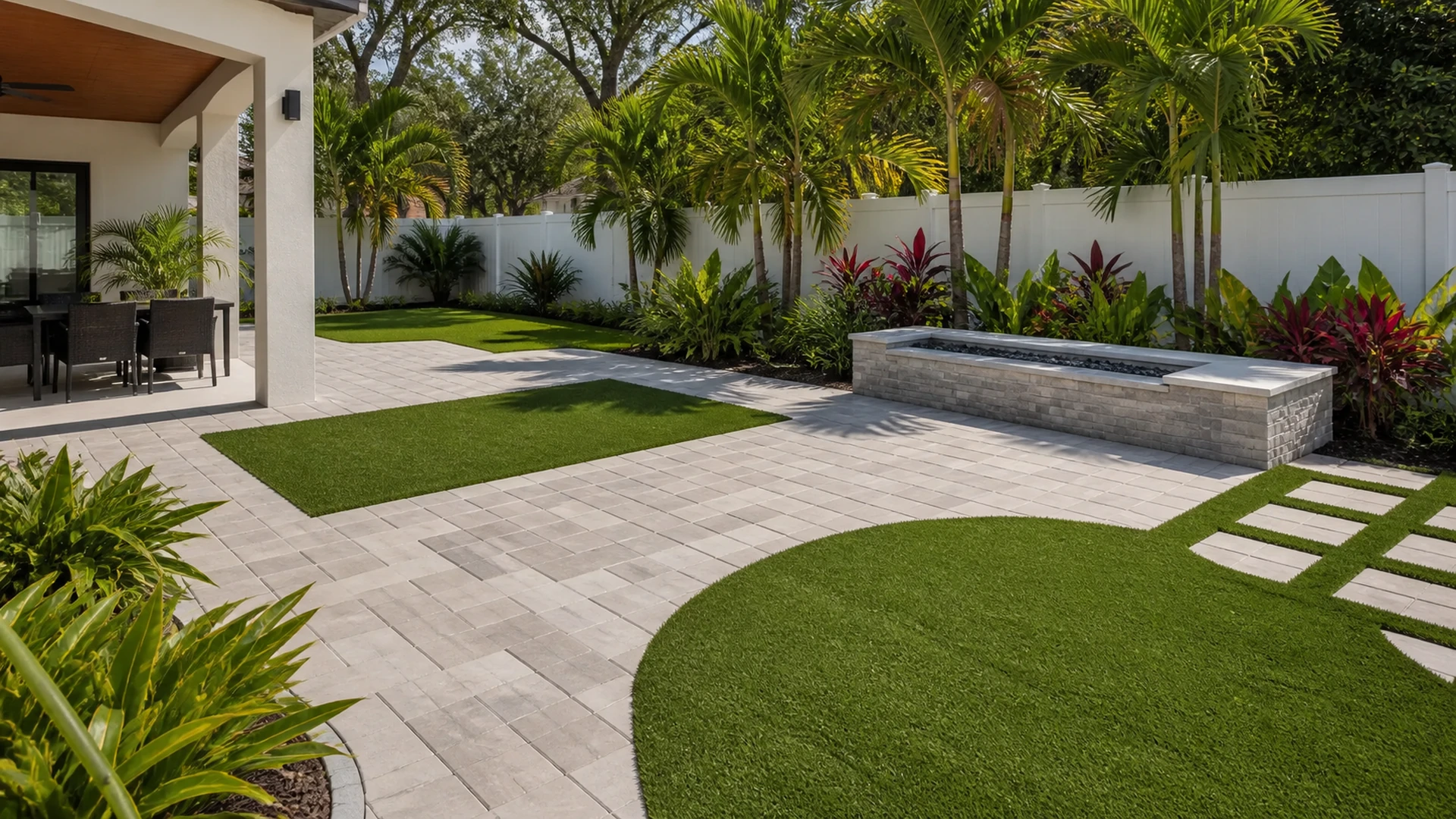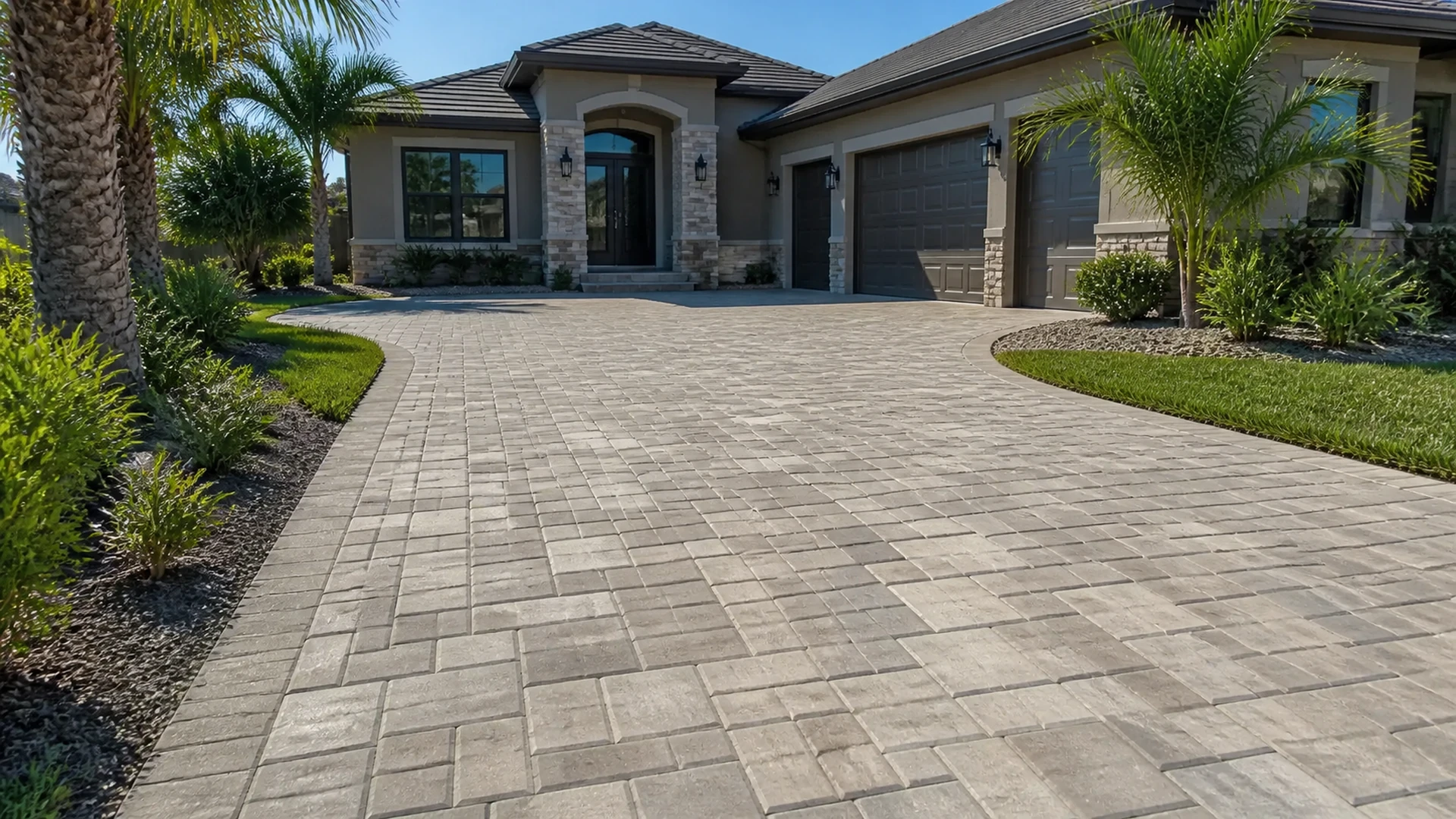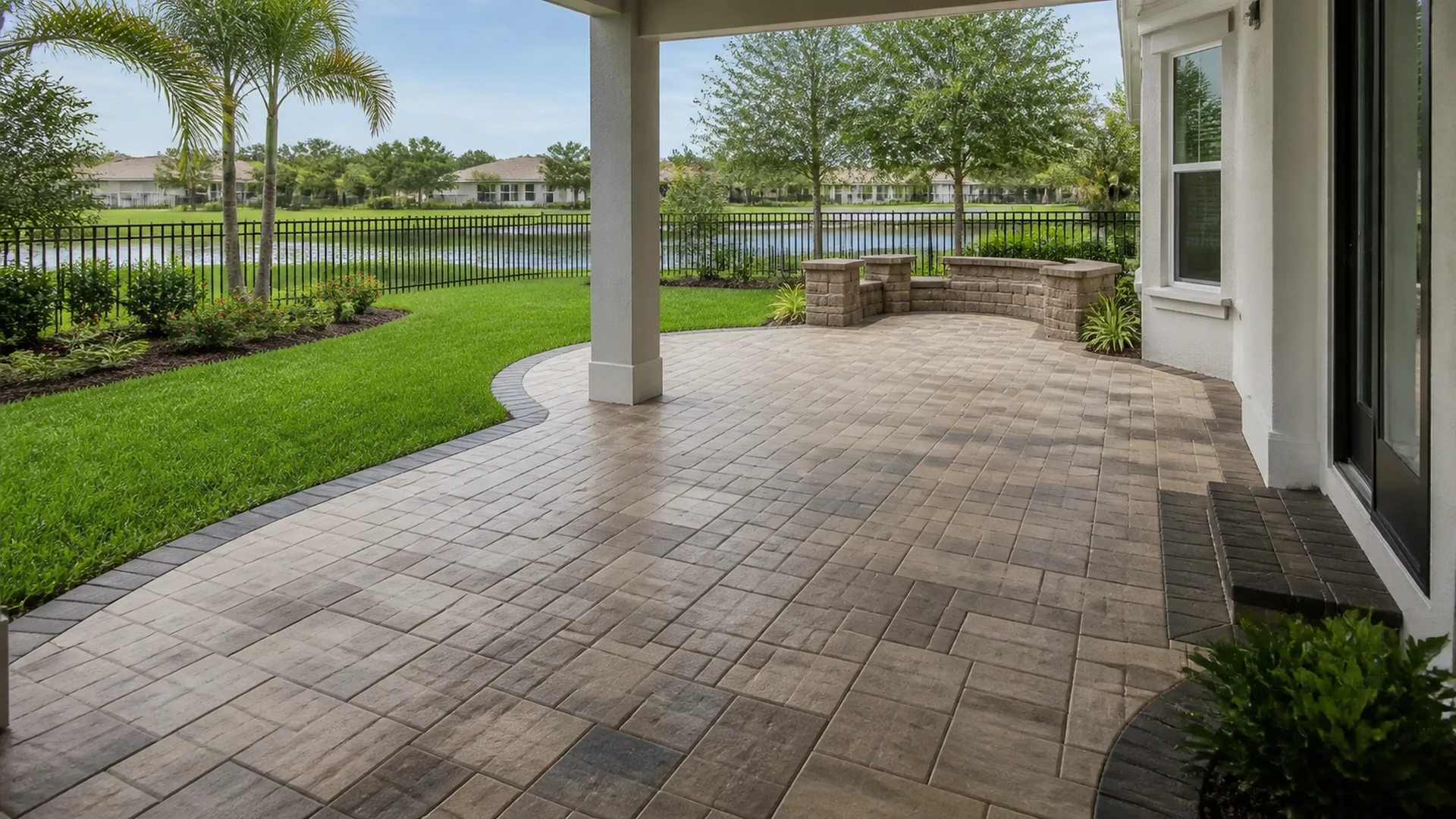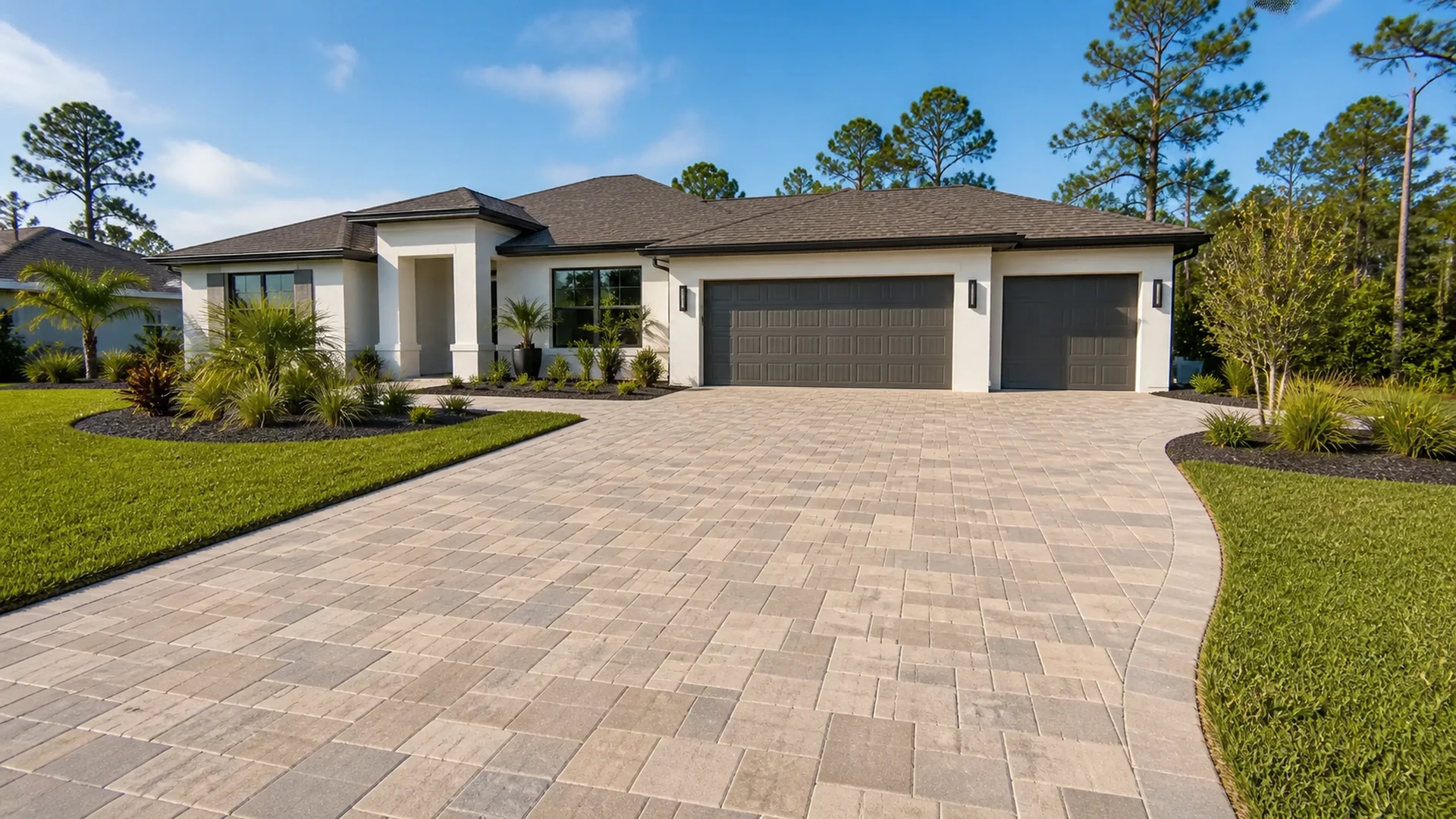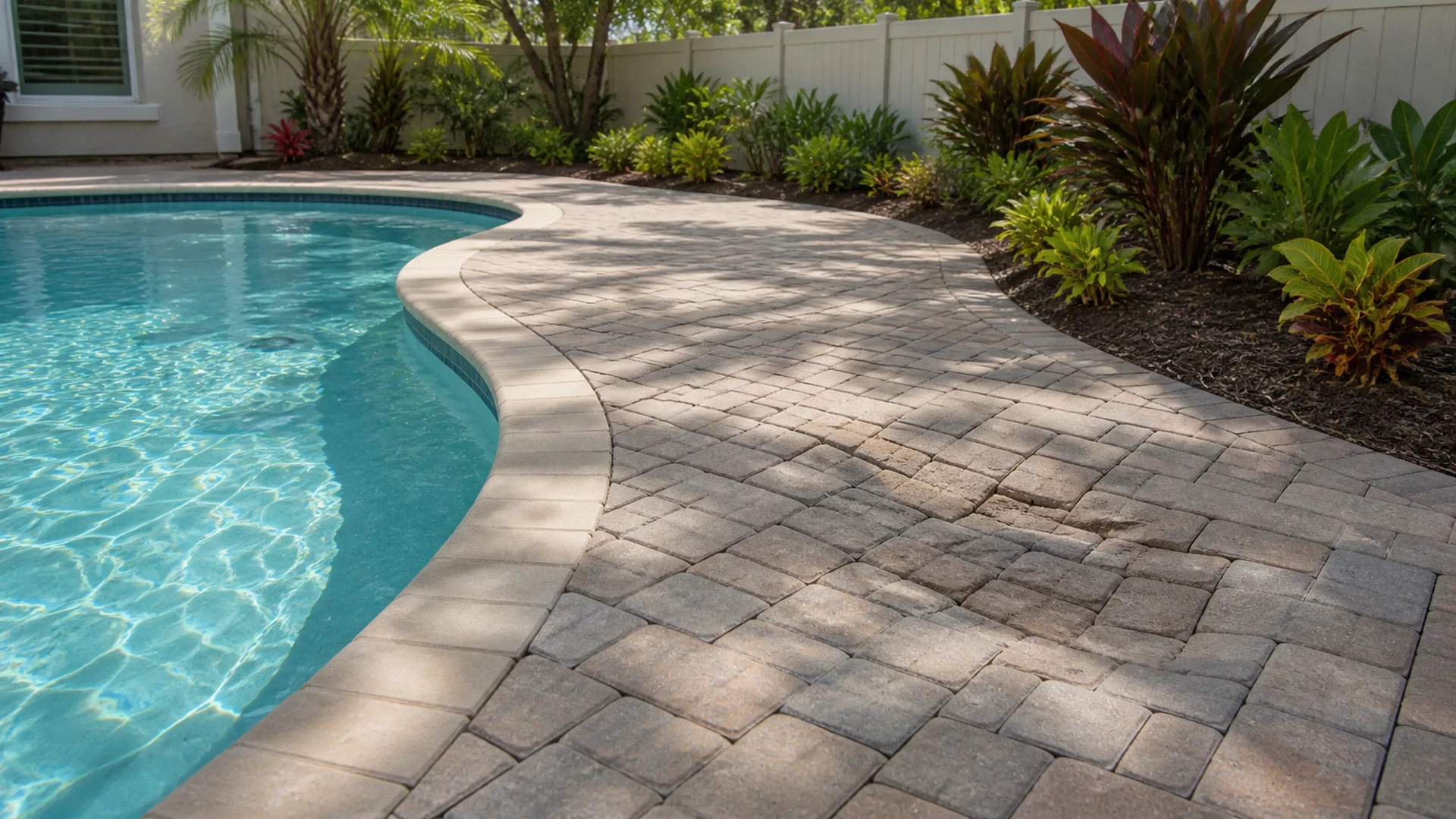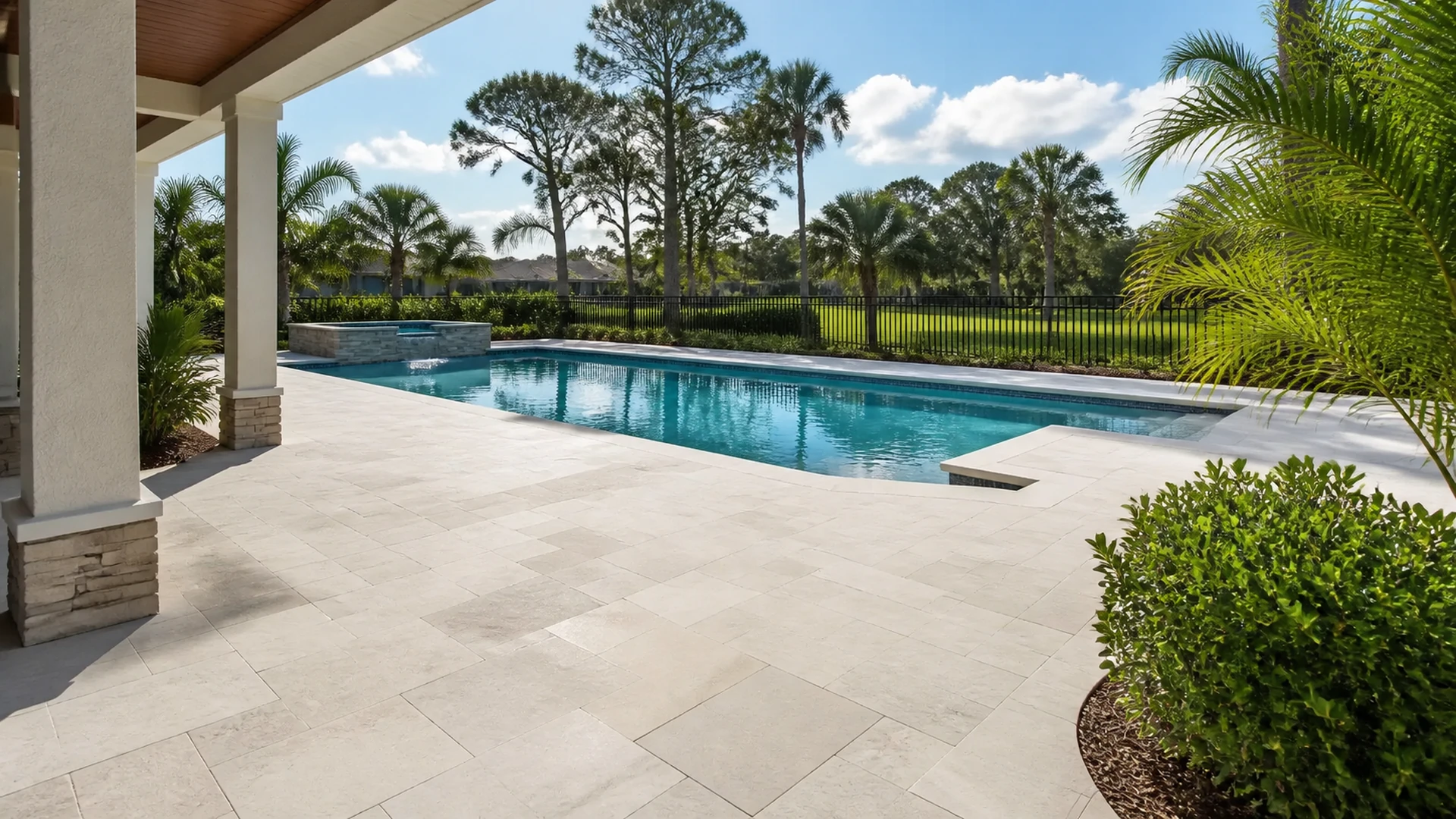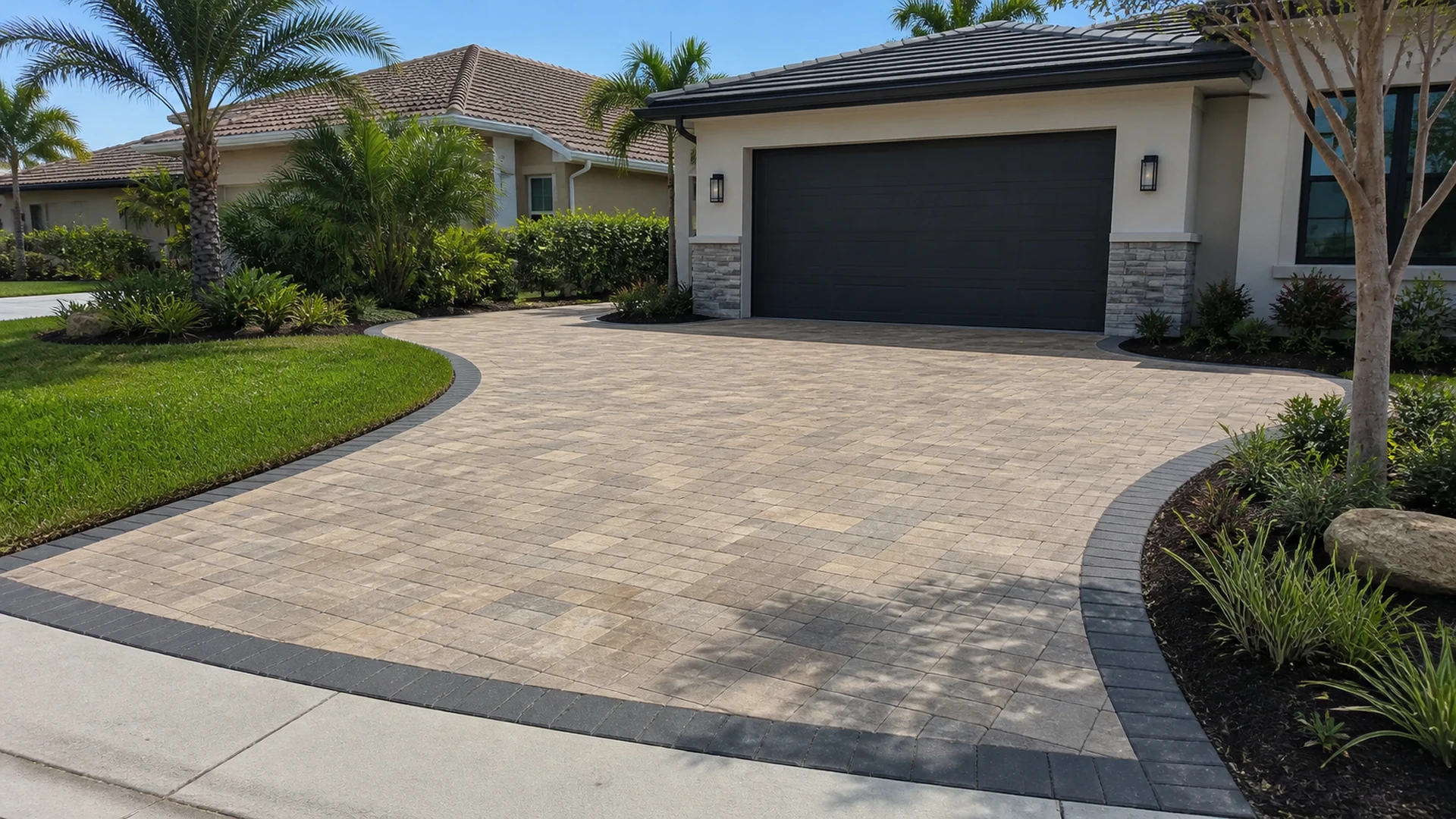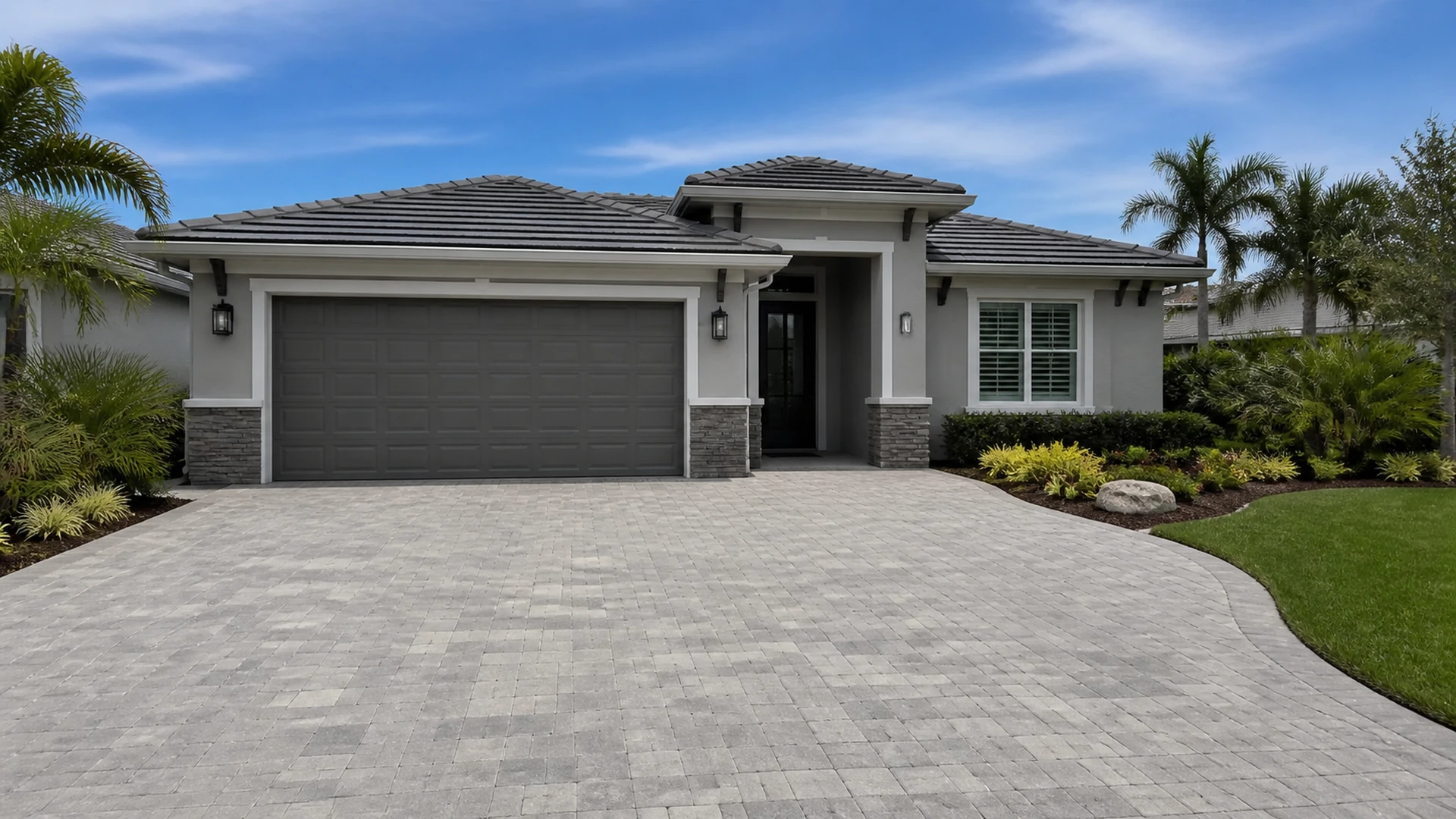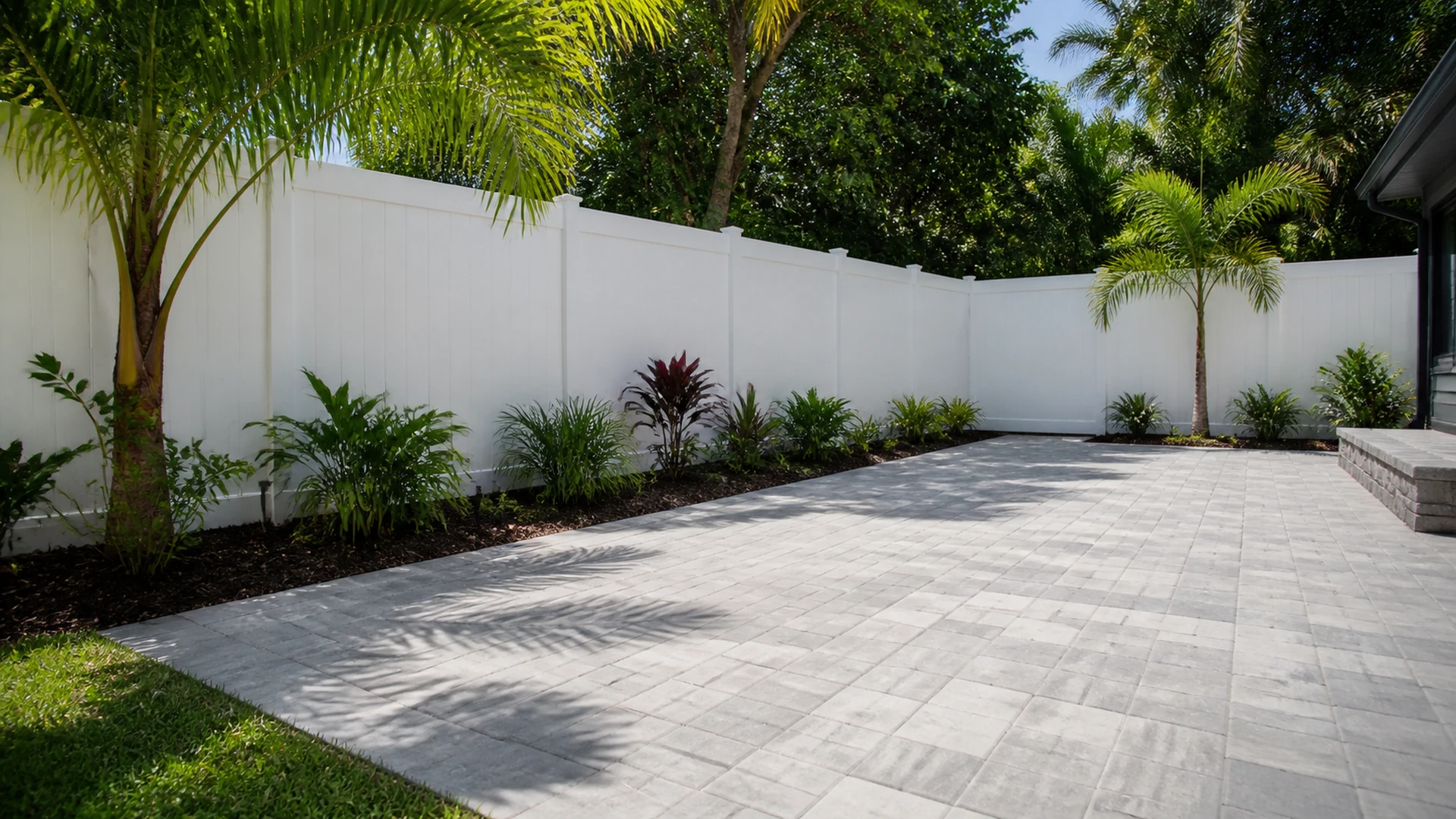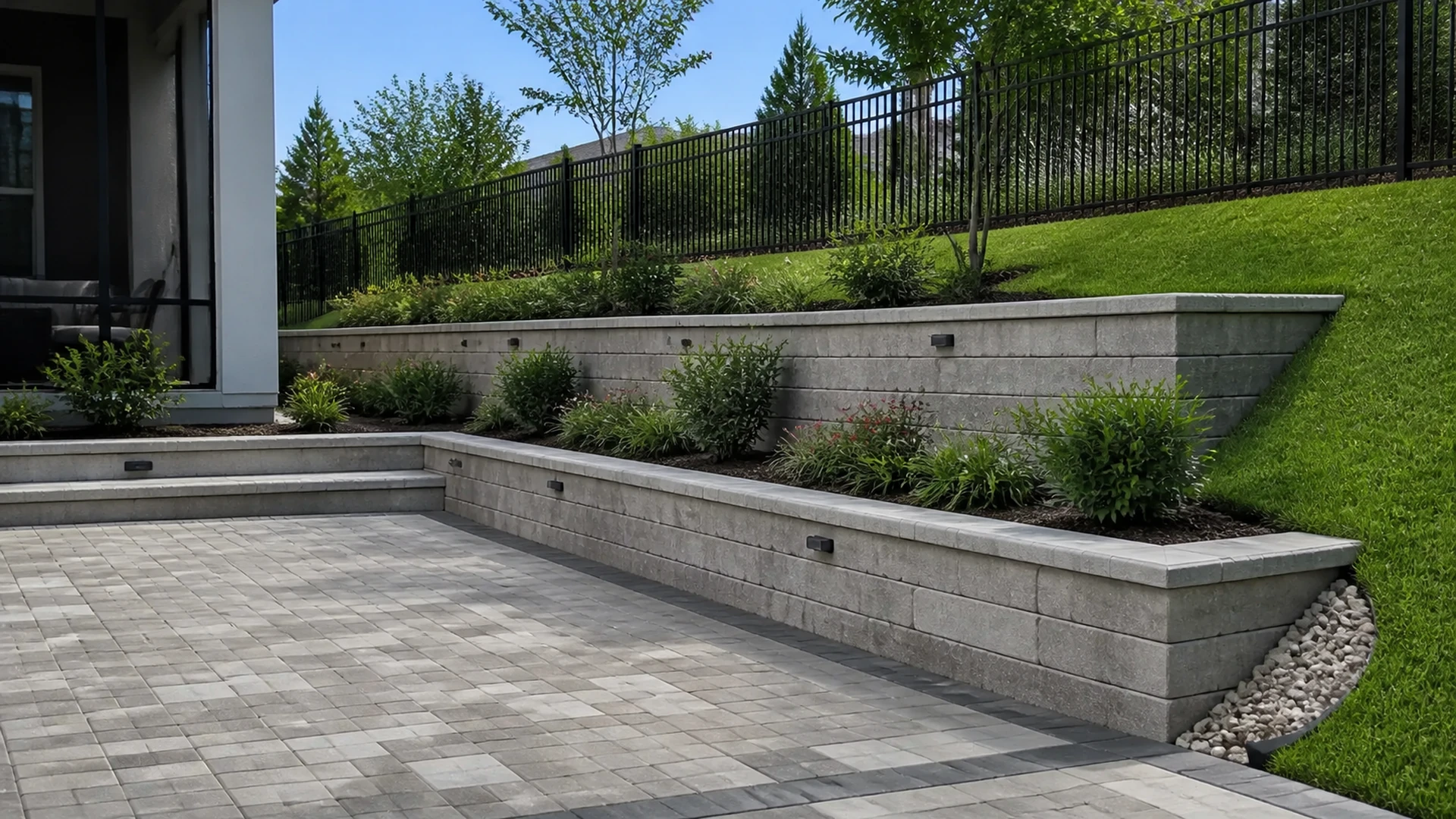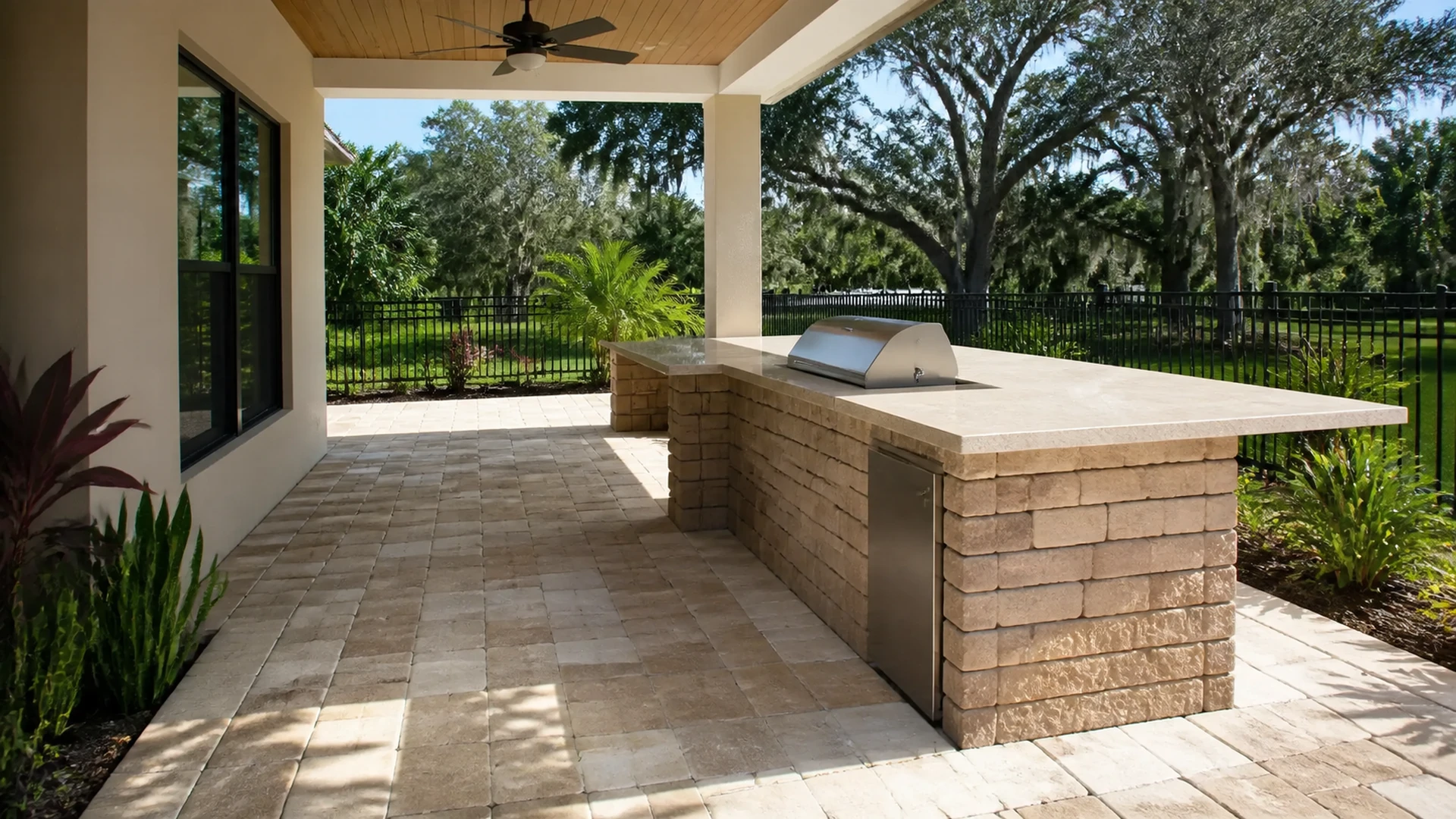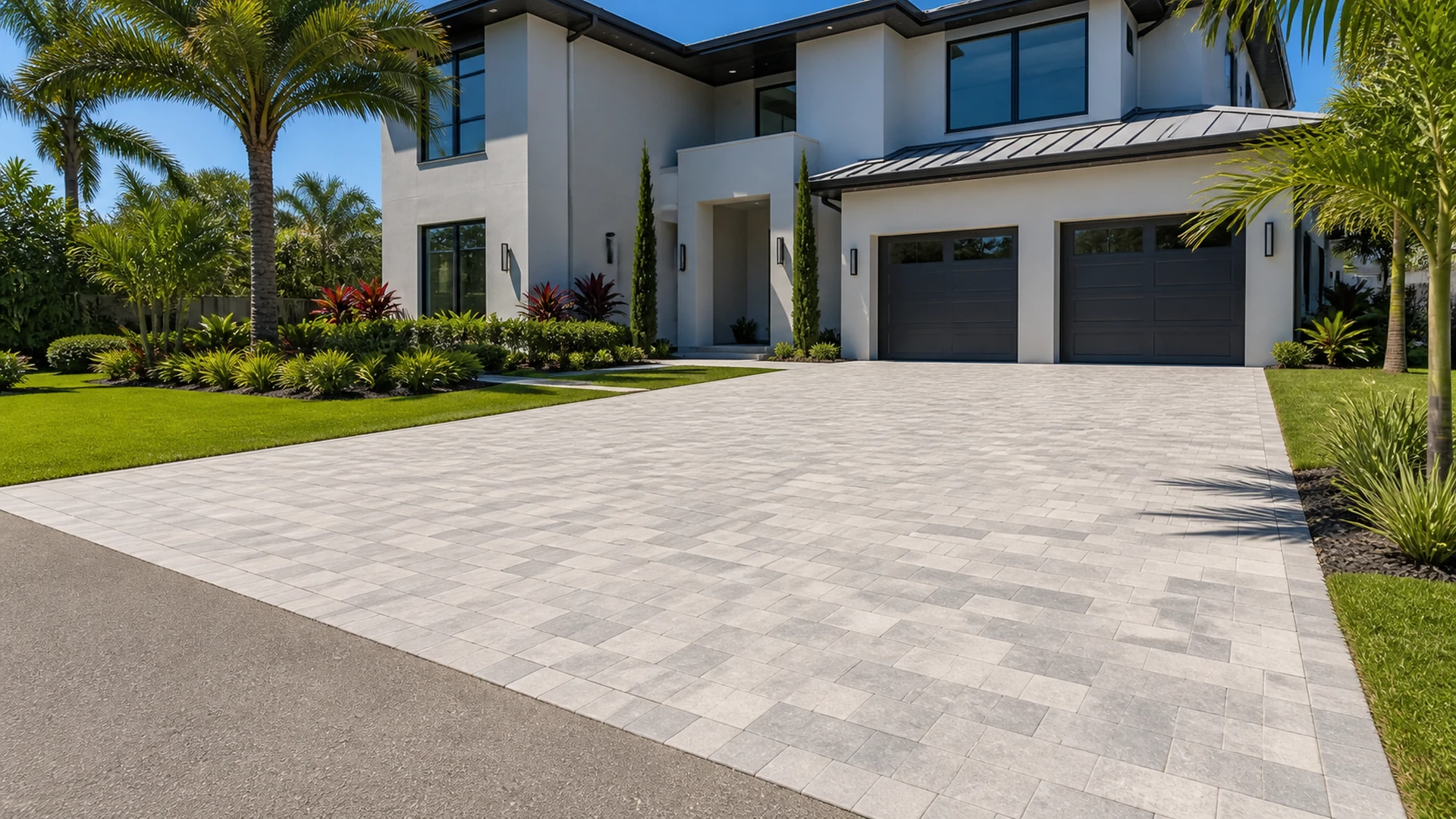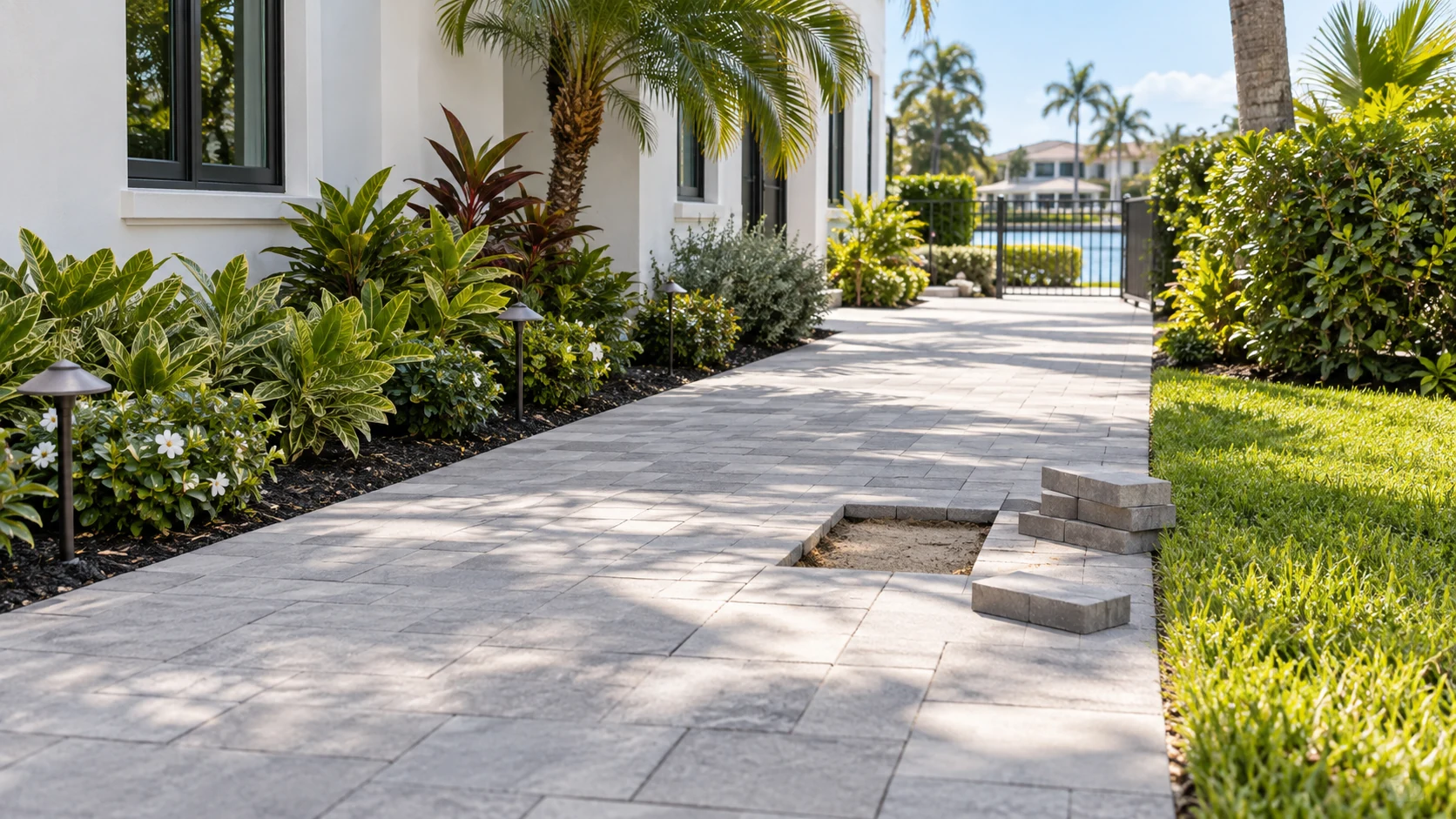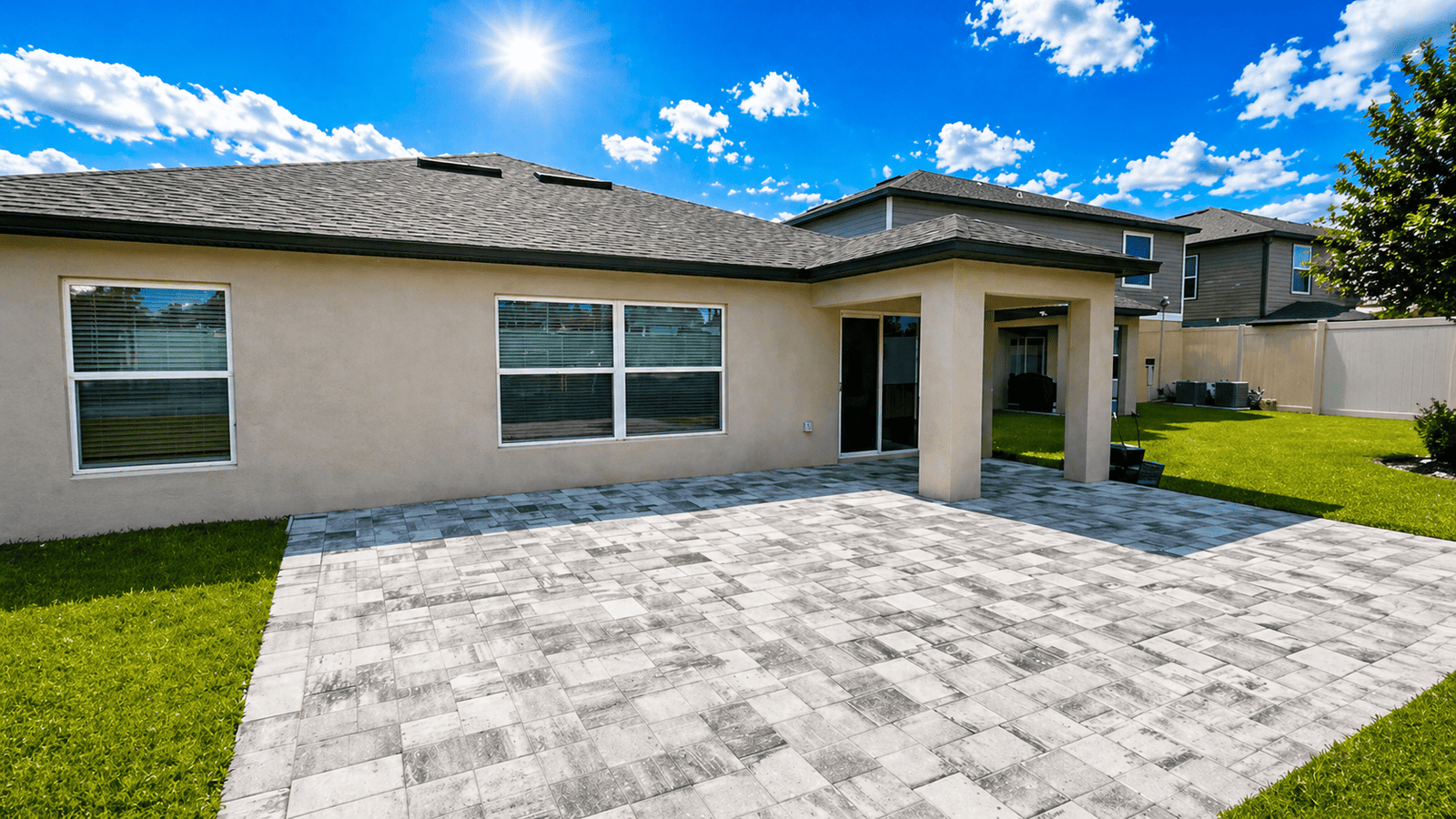
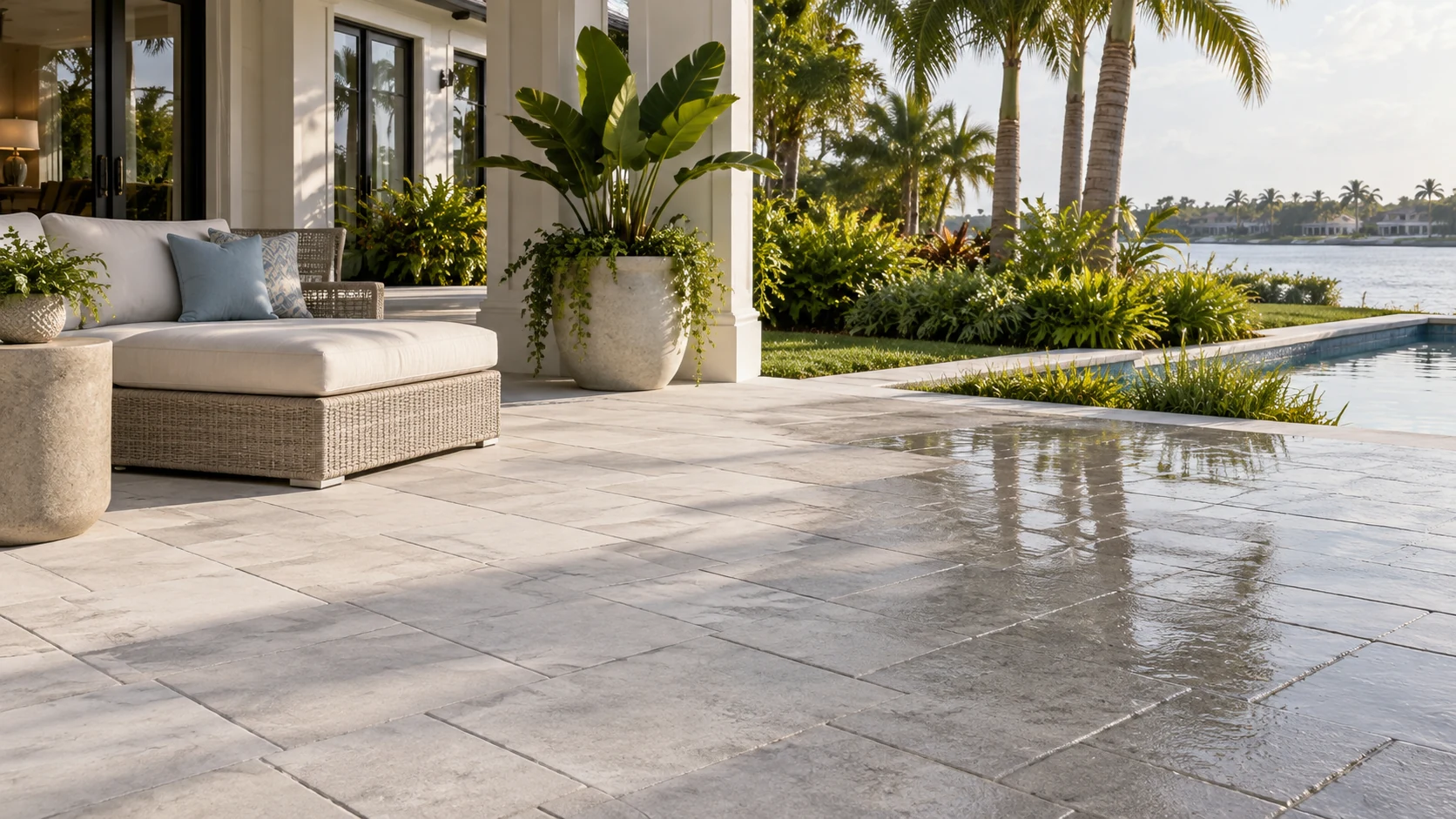
Paver finish samples help homeowners compare more than a color name. Texture, edges, surface detail, and changing light all influence the finished impression. However, one small sample cannot promise how an entire patio or driveway will perform. Use samples to improve the selection conversation, then confirm the exact product information before ordering.
In Tampa Bay, homeowners may see the same proposed surface in bright sun, shade, and after rain. Therefore, review the material in the setting where it will actually appear. A showroom visit remains useful, but the property's walls, planting, and orientation add context that an indoor display cannot provide.
The most useful comparison separates appearance, comfort, maintenance, and documented product characteristics. This guide explains how to organize that review without treating a casual wet sample as a safety test. It also shows how to record a selection clearly enough that the estimate and delivery refer to the same material.
Compare paver finish samples with a clear purpose
First, identify the surface's intended use. A walkway, driveway, and pool deck may need different product discussions. Tell the contractor where people will walk, where vehicles will travel, and how the area connects to the house. Otherwise, an attractive finish can dominate the conversation before suitability receives attention.
Write down the concerns you want the sample review to resolve. For example, you may dislike a very textured appearance or want a quieter contrast against the exterior wall. These are useful preferences. In contrast, a claim about slip resistance or load suitability needs product documentation and professional assessment.
Limit the initial comparison to a manageable number of options. Too many similar pieces can make subtle differences harder to interpret. Instead, compare a short list that meets the project's basic requirements. Then use the sample review to identify the most promising direction, rather than selecting solely from photographs.
Record the exact identity of each option
Keep the manufacturer, product family, color designation, size, and finish together. In addition, note where each sample came from and when you received it. These details matter because similar names can describe different products. A photograph of an unlabeled piece is a weak purchasing record.
Ask whether the sample represents the material currently available for your project. Regional availability and production variation can affect the final selection. Therefore, confirm the proposed product with the supplier or contractor before treating the sample as a reservation. A sample review does not establish stock or delivery timing.
If the product has a treatment or coating, record that distinction. A sealed display can look different from the unsealed material being quoted. Likewise, a weathered installation is not identical to a new unit. Matching the comparison conditions helps explain differences without assuming the product description is wrong.
Review paver finish samples in ordinary daylight
Place the options where you can see them safely in the property's normal light. Then look from the distance at which the finished area will usually appear. A dramatic close-up may exaggerate texture that becomes subtle across a full patio. Both perspectives have value, but they answer different questions.
Observe the sample beside the house exterior and any surfaces that will remain. For instance, an existing coping or driveway border may introduce a strong undertone. The goal is coordination rather than a perfect photographic match. Record which combination you prefer and why, using simple descriptions instead of ambiguous words such as nicer.
Avoid using a phone screen as the final color judge. Screens and lighting can change the impression. Belgard's paver color guidance recommends actual samples because displayed colors can vary. That supports a physical review, without implying that Dr Pavers Design supplies every product shown in a manufacturer's catalog.
Observe dry and wet appearance separately
First, establish how the sample looks when dry. Photograph it in consistent light, and note the viewing conditions. If a wet comparison is appropriate for that sample, ask the supplier how to conduct it without affecting the material. Do not apply cleaners, sealers, or homemade treatments to create a preferred appearance.
A wet surface may display a different visual impression from a dry surface. However, that observation does not predict a permanent sealed finish. It also does not certify traction. Keep the note specific: describe the appearance you observed under those conditions, rather than assigning an unsupported performance rating.
Allow the sample to return to its ordinary condition before making another comparison. Otherwise, you may compare a damp piece with a dry one and attribute the difference to the finish. A consistent process makes paver finish samples more useful and reduces decisions based on temporary conditions.
Ask for documented traction information
For a pool deck or frequently wet route, discuss the relevant product data with the contractor. In particular, ask what the manufacturer states about the intended application and finish. A hand or foot impression cannot replace a documented assessment. Avoid turning a casual sample review into an improvised slip test.
Explain who uses the area and how they move through it. For example, a household may regularly carry pool items through a gate. That describes a real use pattern. The contractor can then discuss material selection and the wider layout without promising that any surface eliminates falls.
Also consider how maintenance and surrounding conditions affect use. Furniture placement, debris, water sources, and transitions deserve attention alongside the selected finish. Therefore, a sensible review connects the material to the whole project. It does not rely on a single marketing adjective such as safe or nonslip.
Evaluate texture without confusing it with quality
A strongly textured surface can be an aesthetic choice rather than a universal sign of better construction. Similarly, a smoother appearance does not establish suitability for every application. Ask how the specific finish relates to the product's intended use and care. Keep personal preference separate from technical approval.
Look at edge treatment, surface detail, and the pattern created by several units. These features influence the overall visual rhythm. However, do not assume a single piece shows the full range. Request a broader representation when variation forms part of the product's appearance.
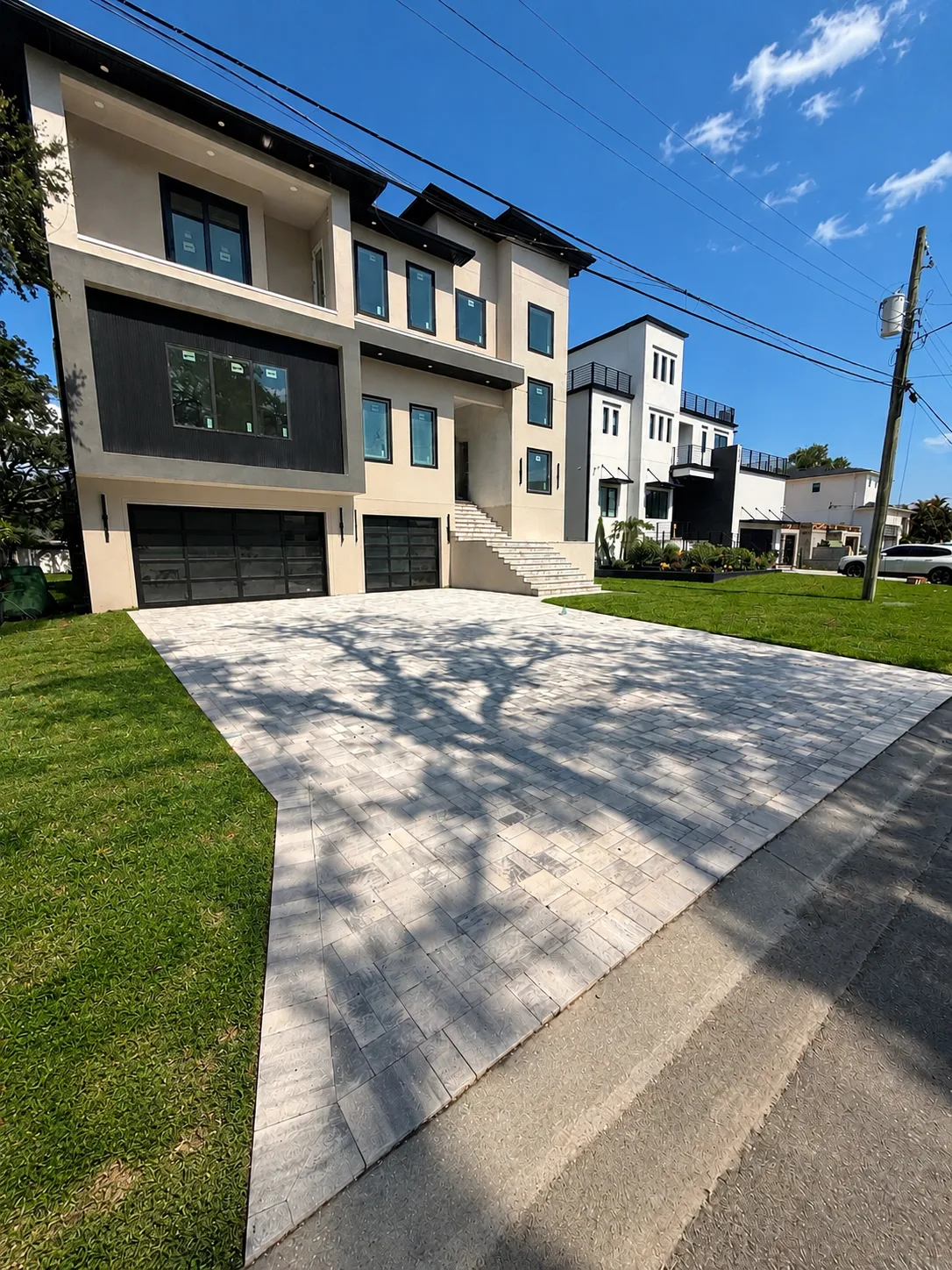
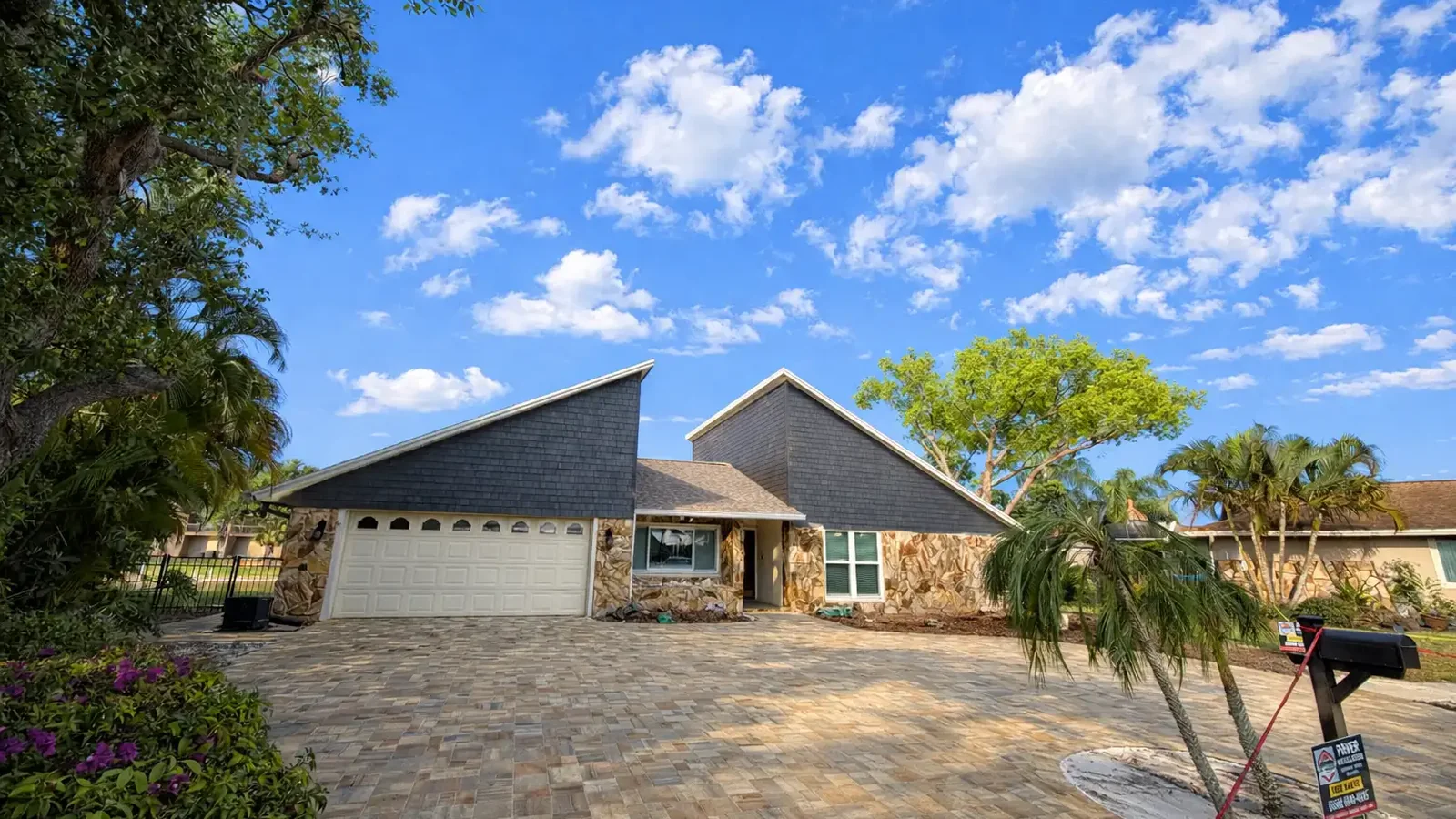
If possible, compare a documented installed example of the same product family. Treat that example as context, since age, lighting, and maintenance may differ. It should help you ask better questions. It should not become a guarantee that your property will look identical.
Consider furniture and daily contact
Think about how the planned furniture will meet the finished surface. Chair feet, table bases, and rolling items introduce practical questions. Therefore, show the contractor the furniture type or dimensions when it affects the layout. You do not need to stage every item during the sample review.
Ask how the material's care guidance addresses ordinary contact and cleaning. A finish that looks appealing may have maintenance needs you want to understand before selection. Compare those needs with the way you actually use the space. Avoid assuming that a coating will solve every concern.
For a dining patio, also consider the visual effect of crumbs, leaves, and ordinary outdoor debris. This is a housekeeping question rather than a reason to reject every textured finish. A realistic discussion helps you choose a surface you are willing to maintain, not just one that photographs well on delivery day.
Separate surface heat questions from color preference
Bright outdoor conditions can make comfort an important topic. However, touching a sample briefly does not establish a reliable comparison for an entire installed area. Ask whether the manufacturer provides relevant product information. Then discuss shade, layout, and household use as separate parts of the decision.
Avoid accepting broad claims that a particular color always stays cool. Actual conditions vary, and a small comparison may not reflect the completed installation. Instead, record what information supports the recommendation. This gives the estimate conversation a factual basis without requiring you to perform technical testing.
If shade is a major priority, include that in the design brief. A finish choice and a shade plan can address different concerns. Consequently, the contractor may need to coordinate with other planned features. Samples alone cannot resolve every comfort question surrounding a patio or pool deck.
Understand cleaning and coating expectations
Before choosing a finish, request the care information for the exact product. Note which cleaning products or methods require approval. Then keep that information with the selection record. Generic advice for all pavers can overlook differences between concrete, natural stone, and other outdoor materials.
Ask whether the proposal includes a coating and how that affects the sample comparison. If a treatment changes appearance, request a representative approved test or manufacturer-supported example. Do not assume that a wet sample shows the final result. These are different conditions and should appear separately in the decision.
Also discuss what the quote excludes. Future cleaning, resealing, or stain treatment may not form part of the installation scope. A clear conversation about care helps prevent a visual preference from becoming an unspoken maintenance promise. It also supports a realistic ownership budget.
Keep a selection record before approving materials
Once you choose an option, photograph the labeled sample and write the full specification beside it. Then compare that record with the written proposal. Confirm the product family, finish, color, and sizes rather than relying on a general description. This is especially helpful when the project includes a contrasting border.
Include any acceptable variation discussed with the supplier. For example, the chosen blend may intentionally contain several tones. Record that understanding without trying to control every unit's appearance. The objective is informed agreement about the material, not an impossible promise of uniformity.
If availability changes, review the replacement explicitly. A product described as similar should not automatically replace the approved selection. Ask for the revised information and sample comparison. This keeps paver finish samples connected to the material that will actually arrive.
A useful comparison sequence for homeowners
Imagine two candidate finishes for the same patio. The homeowner first compares them indoors and prefers the more dramatic texture. However, an outdoor review beside the house reveals that the other option coordinates better with an existing wall. The decision now rests on the actual setting.
Next, the homeowner asks about application, care, and documented product characteristics. That may confirm the initial preference or identify a question for the supplier. Either result is useful. This hypothetical example shows how a sample review can improve judgment without pretending to certify performance.
Finally, the homeowner records the chosen specification and any unresolved item. The estimate can then reference that decision clearly. A thoughtful comparison does not require a complicated scoring system. It requires consistent conditions, accurate labels, and willingness to separate appearance from claims that need evidence.
Turn the sample review into a clear next step
Bring your short list and notes to a discussion about the complete project. Dr Pavers Design's material comparison guides provide related reading, while the services page explains the company's scope. Together, they help connect finish preferences with the area you want evaluated.
Review a larger arrangement before choosing a border
A contrasting border can change the way the field finish appears. Therefore, compare the proposed combination together instead of approving each component in isolation. Look at the relationship from the house and from the main approach. A small color difference may become more noticeable when it forms a continuous line.
Ask how the border material relates to the main field in size, finish, and intended use. Similar colors do not establish that two products work together in every arrangement. The contractor should confirm the relevant details before the visual choice becomes a purchasing instruction.
If the project includes several areas, review where the material changes. A patio and walkway may share a palette while using different layouts. Record which specification applies to each area. That avoids a later assumption that every sample on the table belongs in every part of the yard.
Keep the final comparison reproducible
Photograph the selected combination with its labels, then note whether the pieces were dry or damp. Keep the image as a selection record rather than a color guarantee. A future supplier conversation becomes easier when everyone can identify the same product combination and viewing conditions.
Before approval, ask one final question: does the written proposal describe the material you actually reviewed? Checking that connection prevents a successful sample session from ending with an ambiguous order. Paver finish samples should resolve uncertainty, not create a separate undocumented version of the design.
For help reviewing paver finish samples in Tampa Bay, contact Dr Pavers Design with the proposed use and location. Explore projects, testimonials, and the FAQ before the consultation. Follow Instagram and Facebook, or visit Google Maps and Google reviews for company information. Send a WhatsApp inquiry or text the team. Contact Dr Pavers Design at +1 (656) 600-4015 or drpavers@outlook.com for a free consultation anywhere in Tampa Bay.