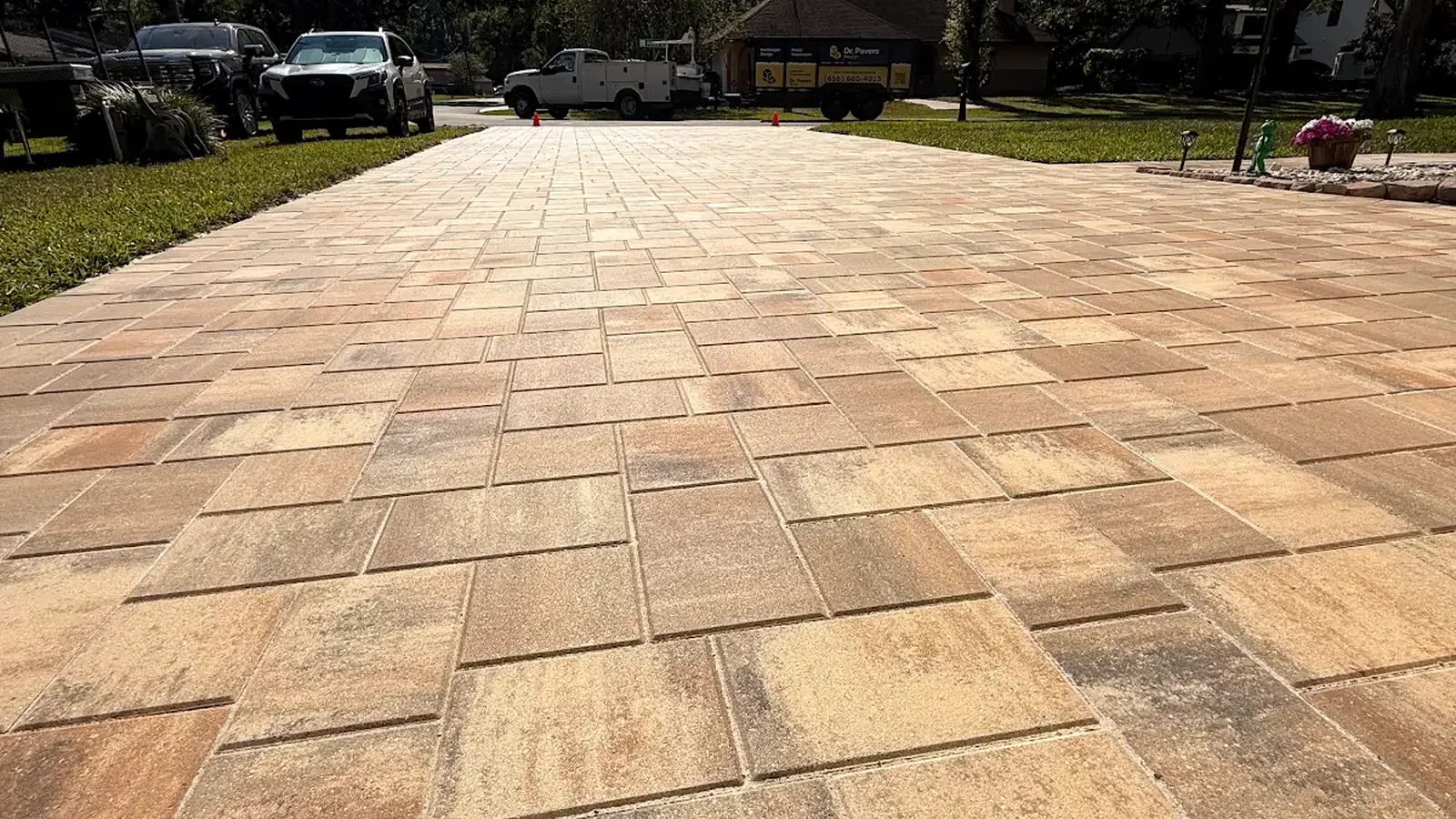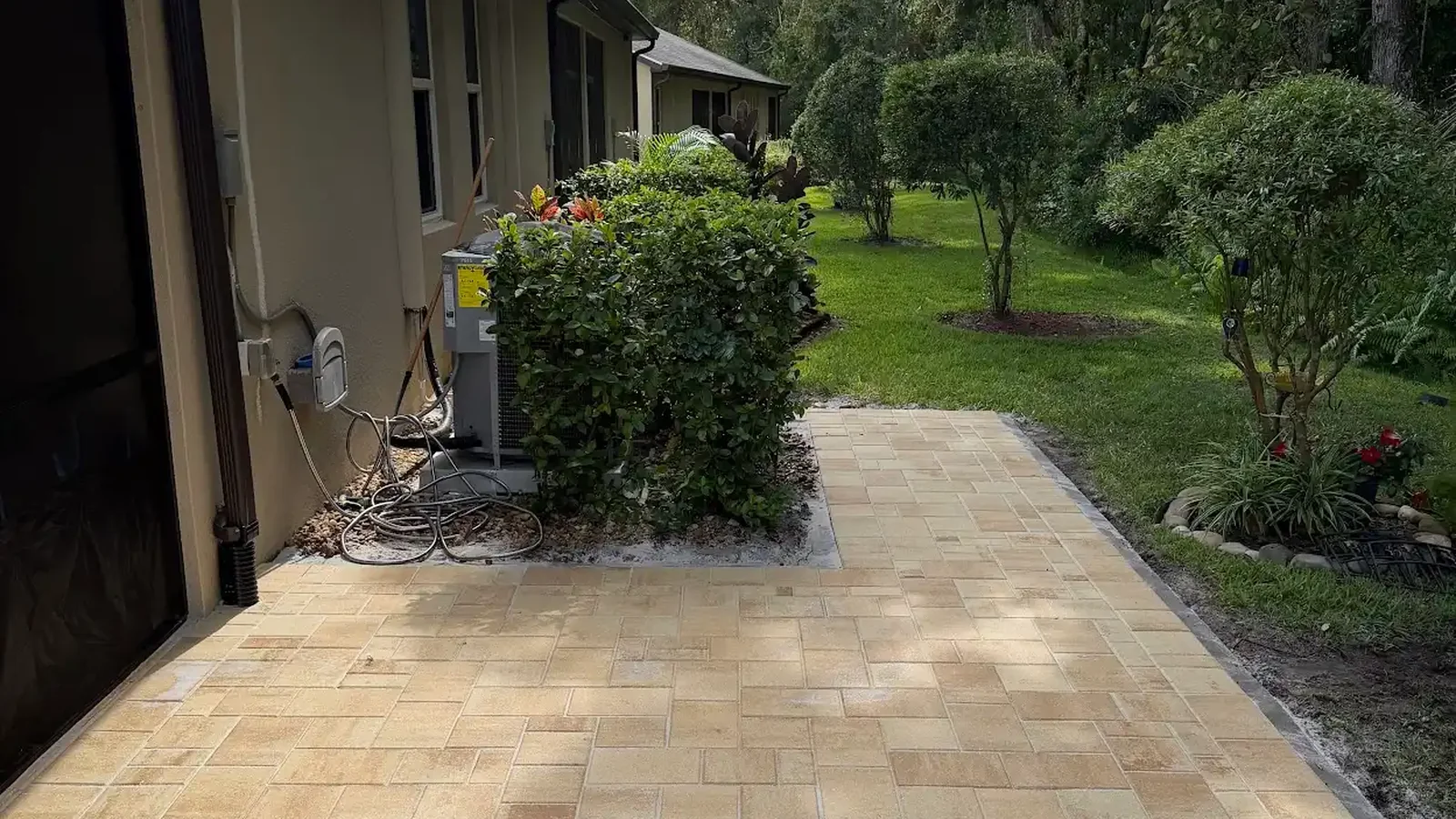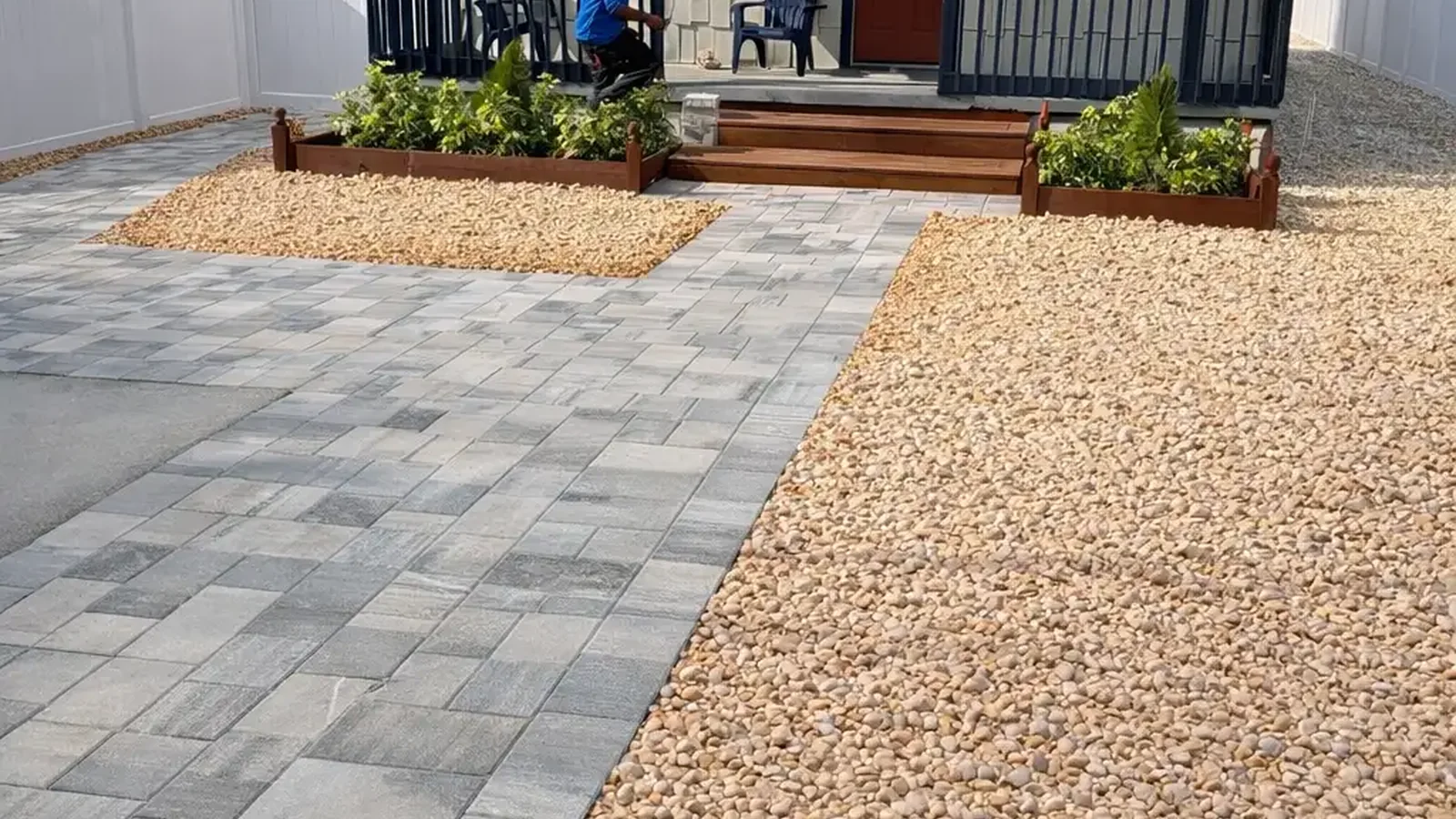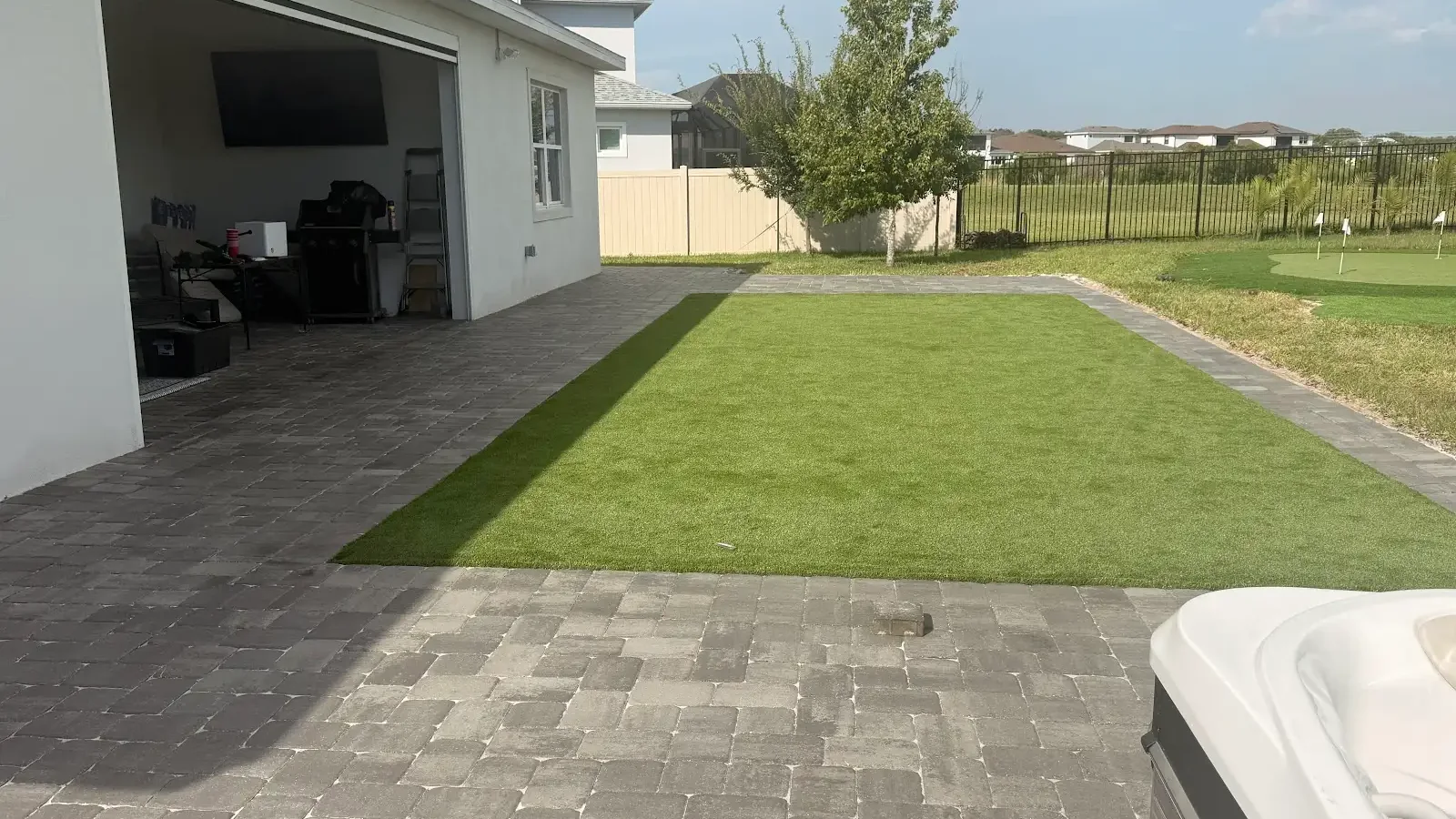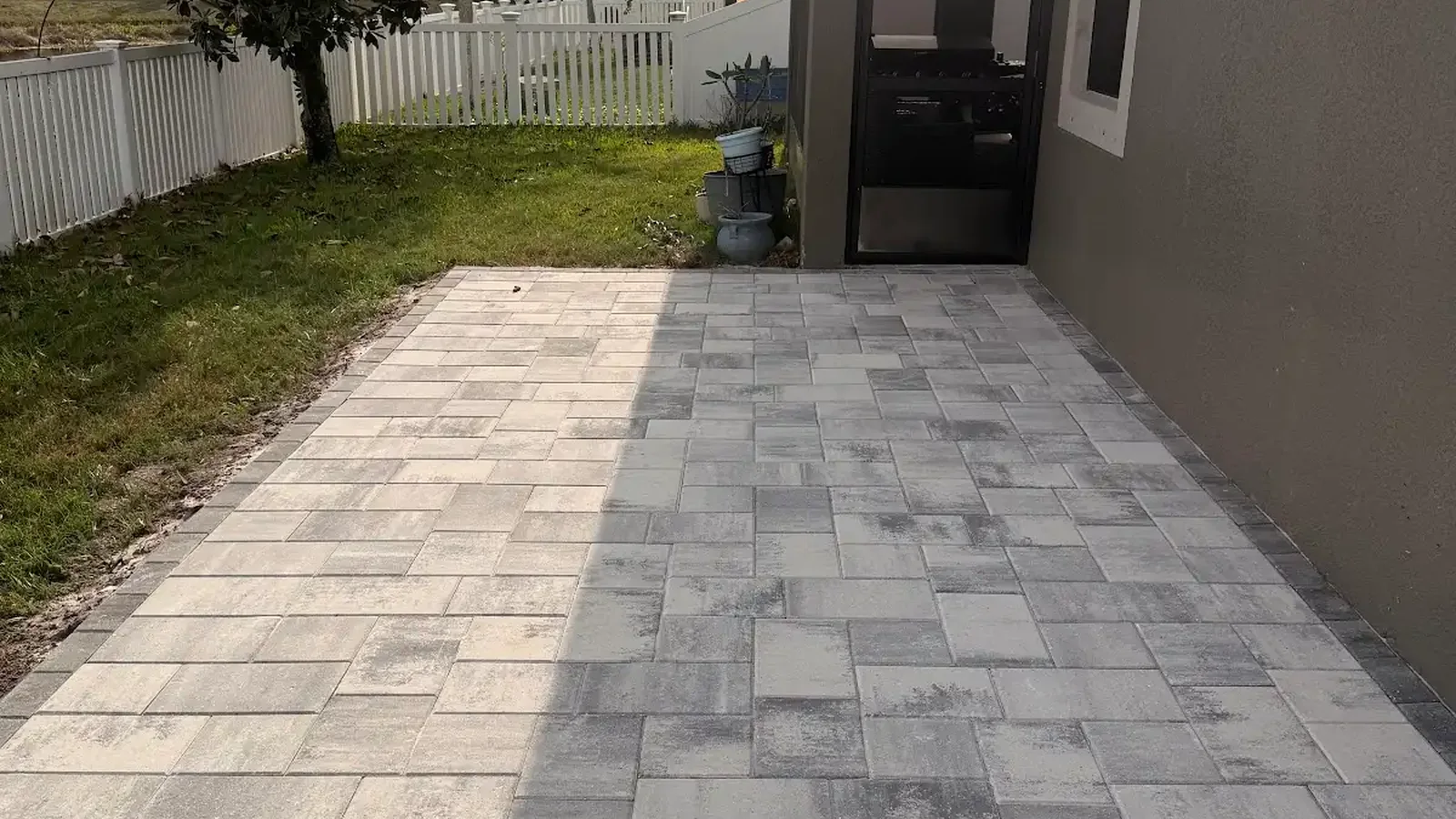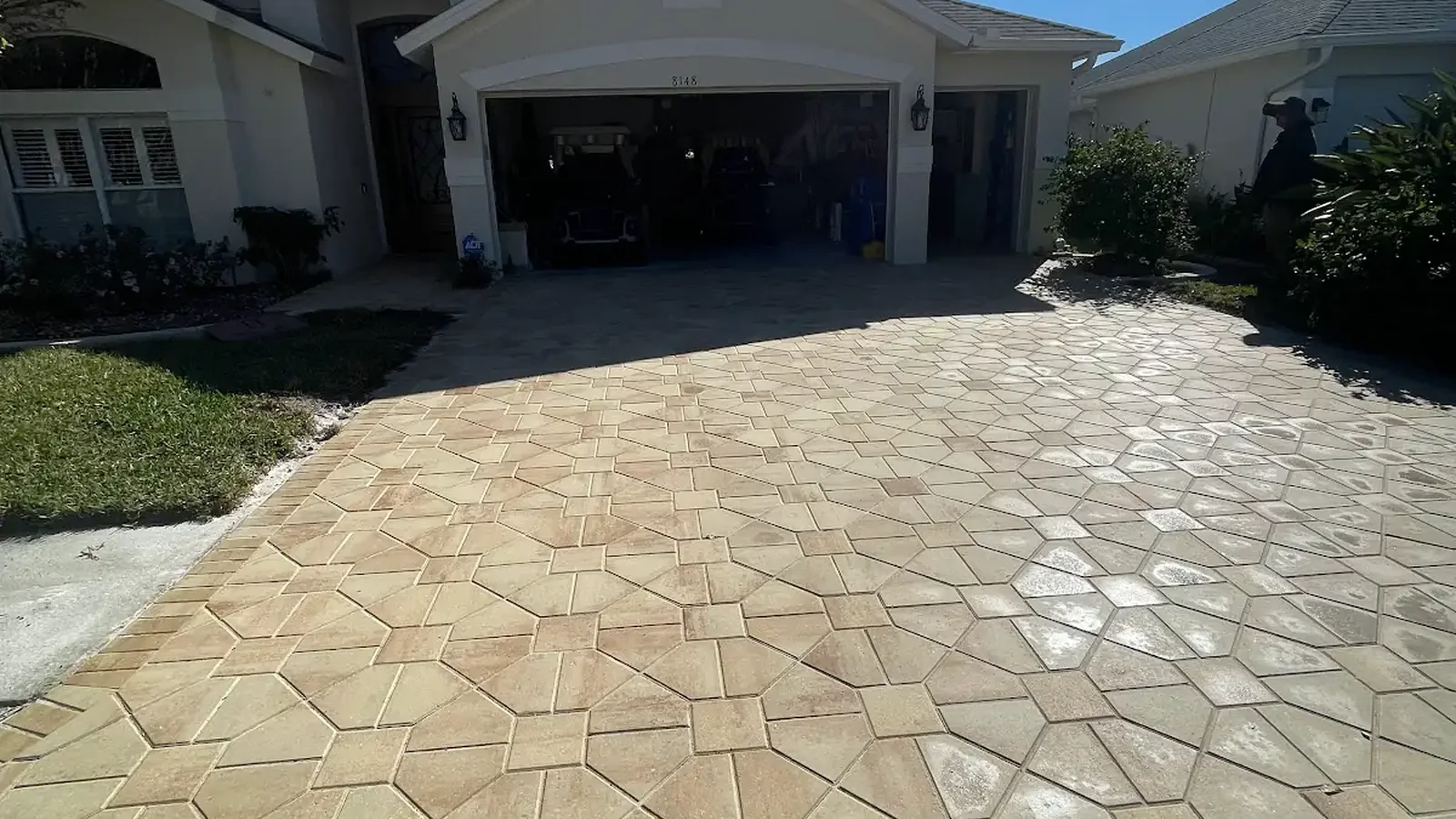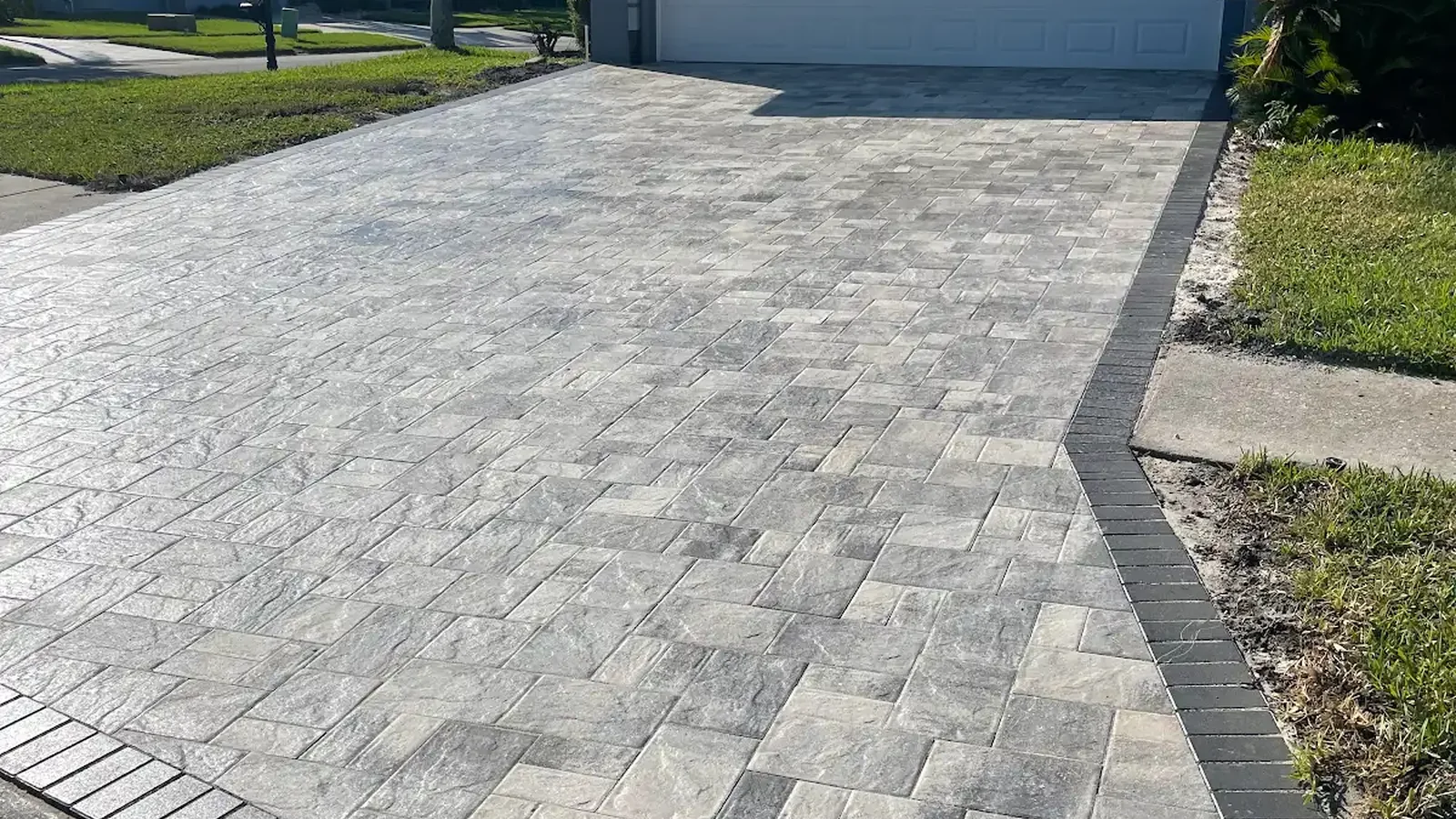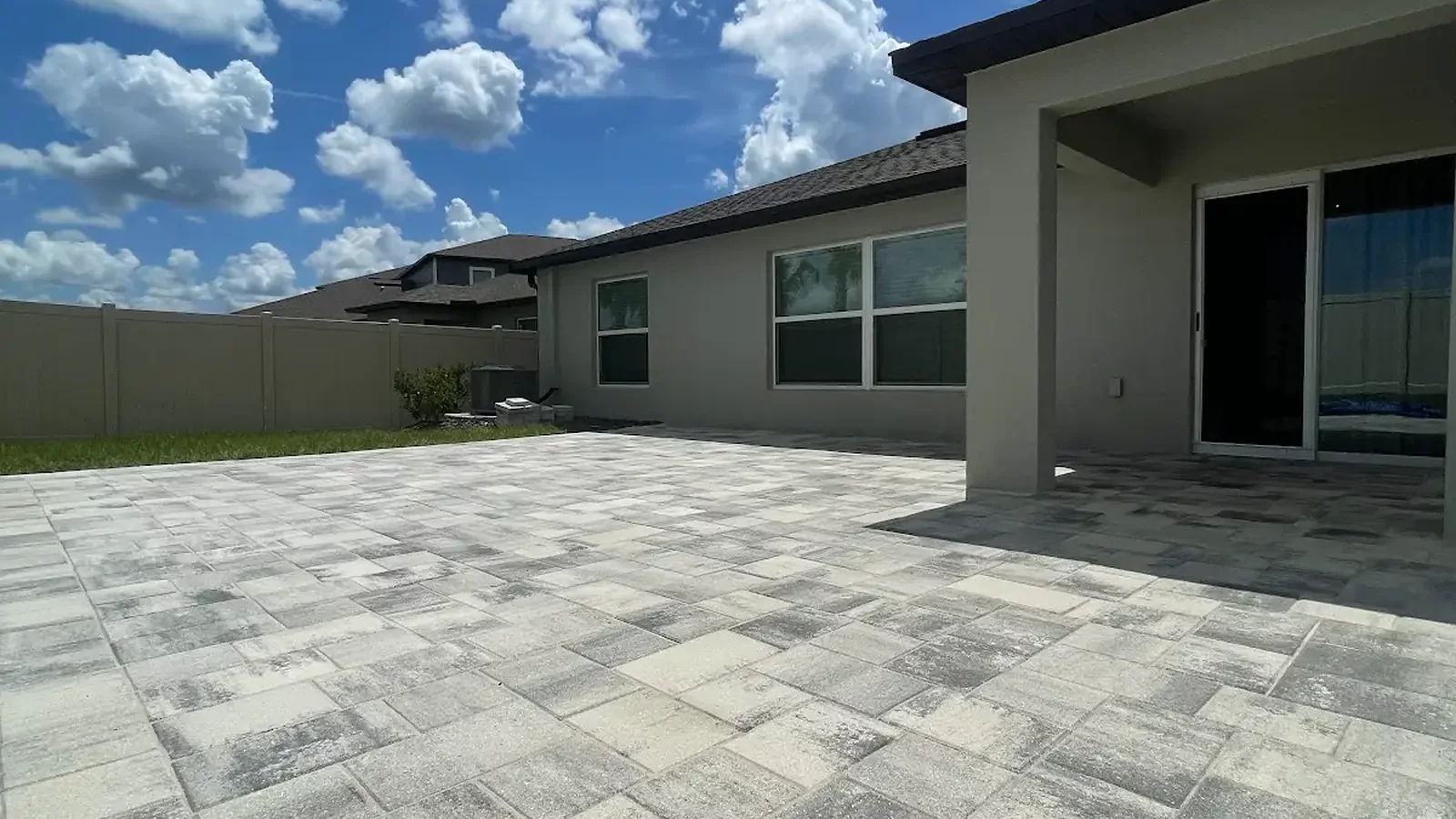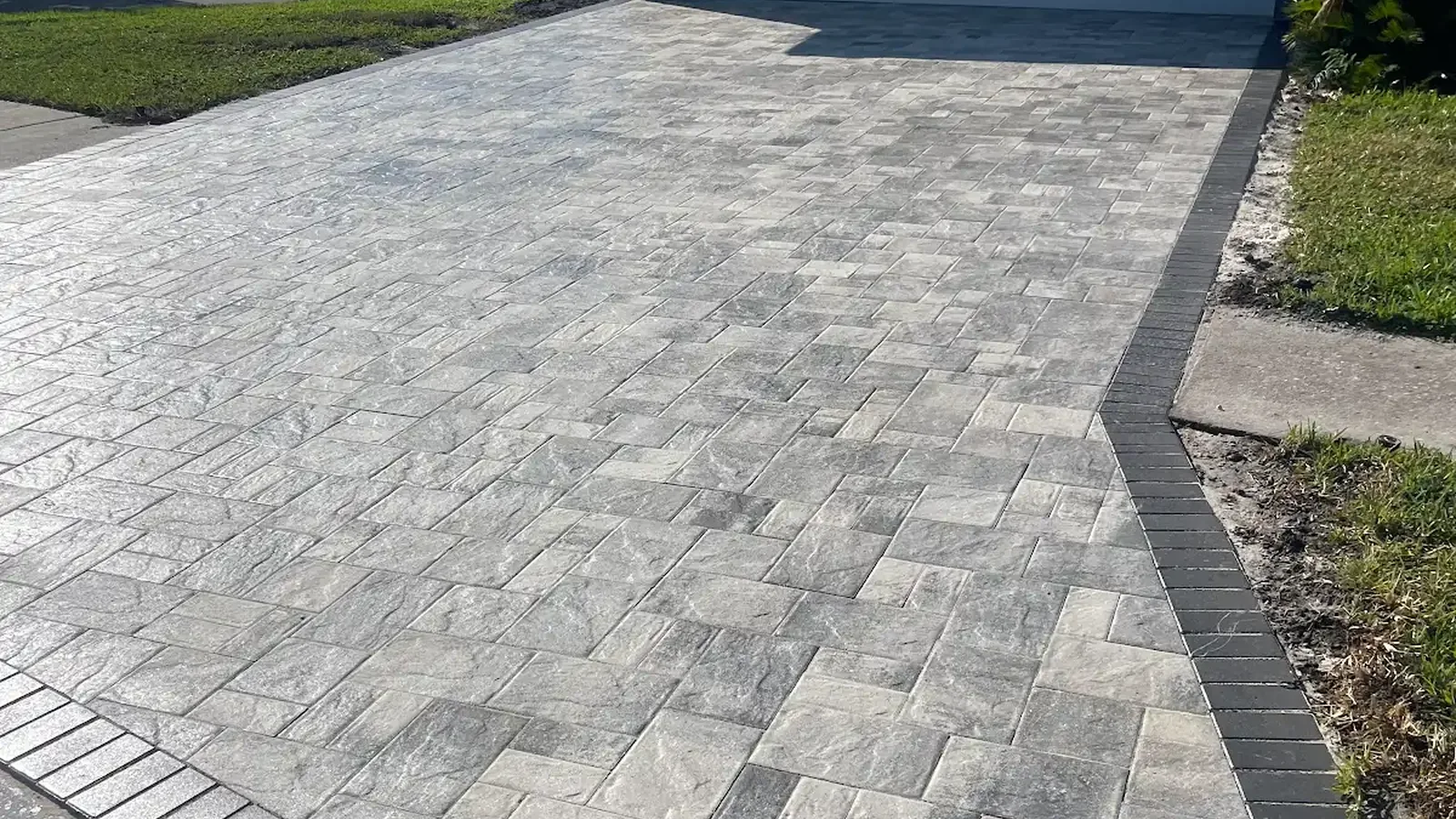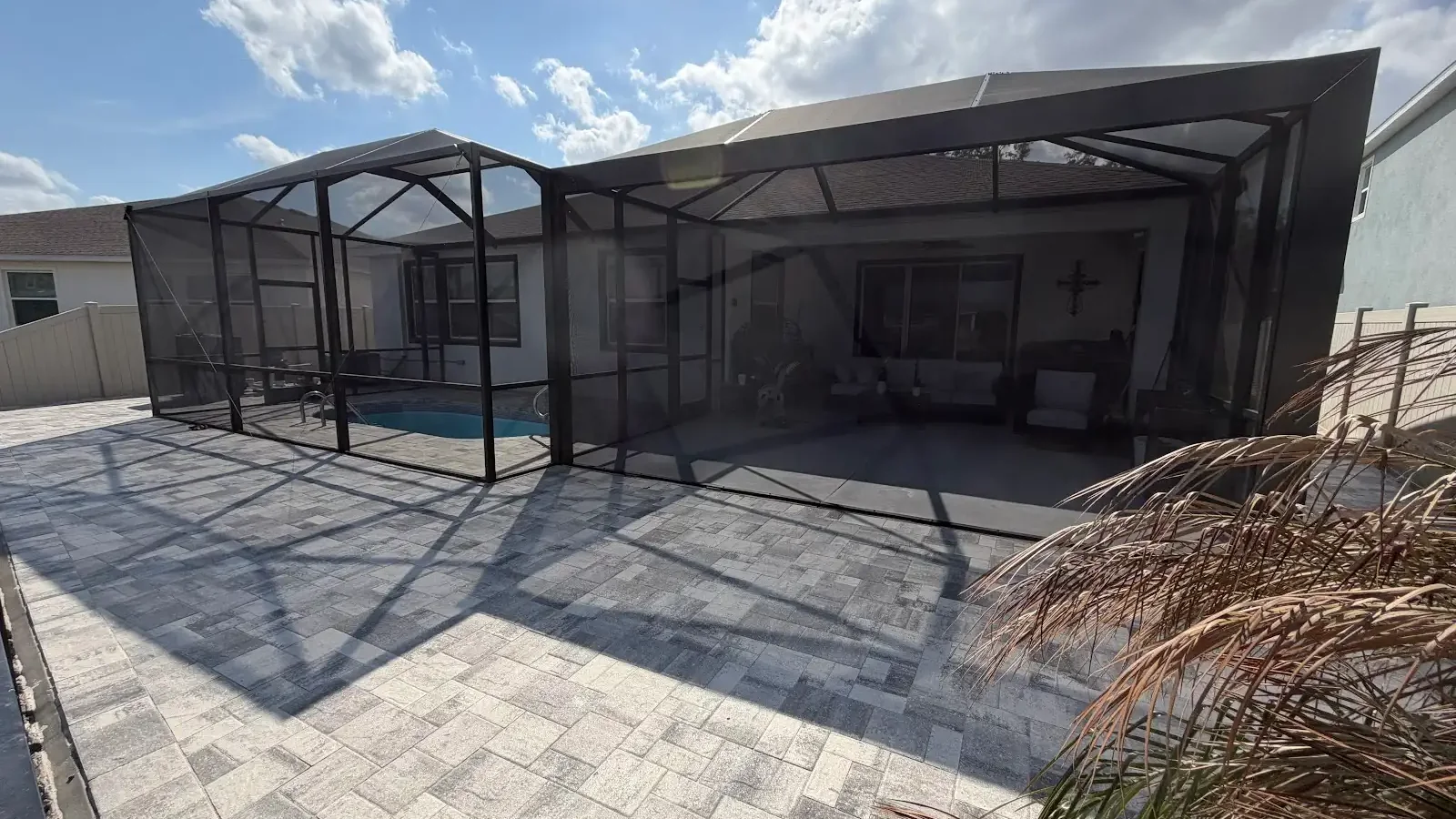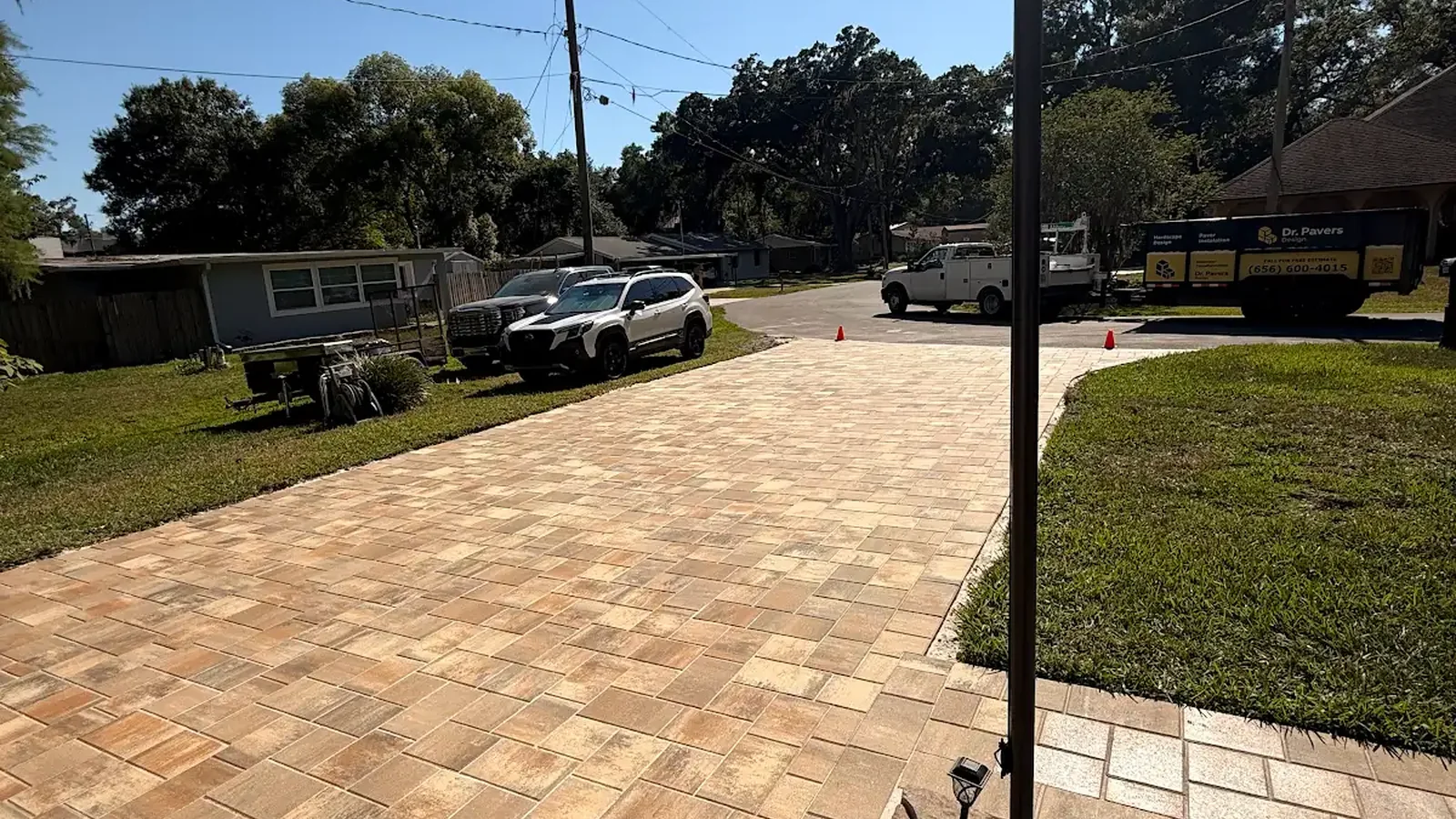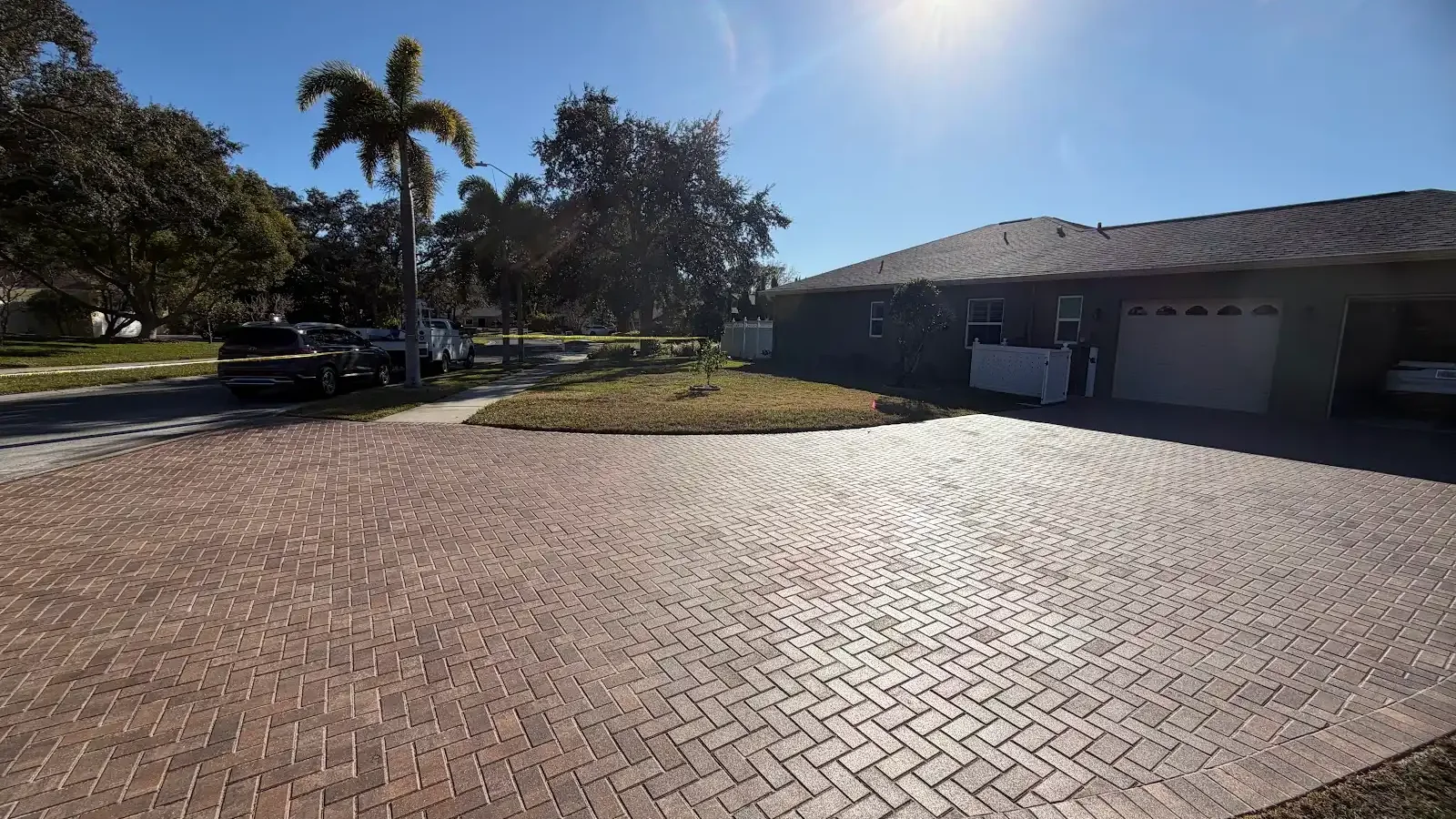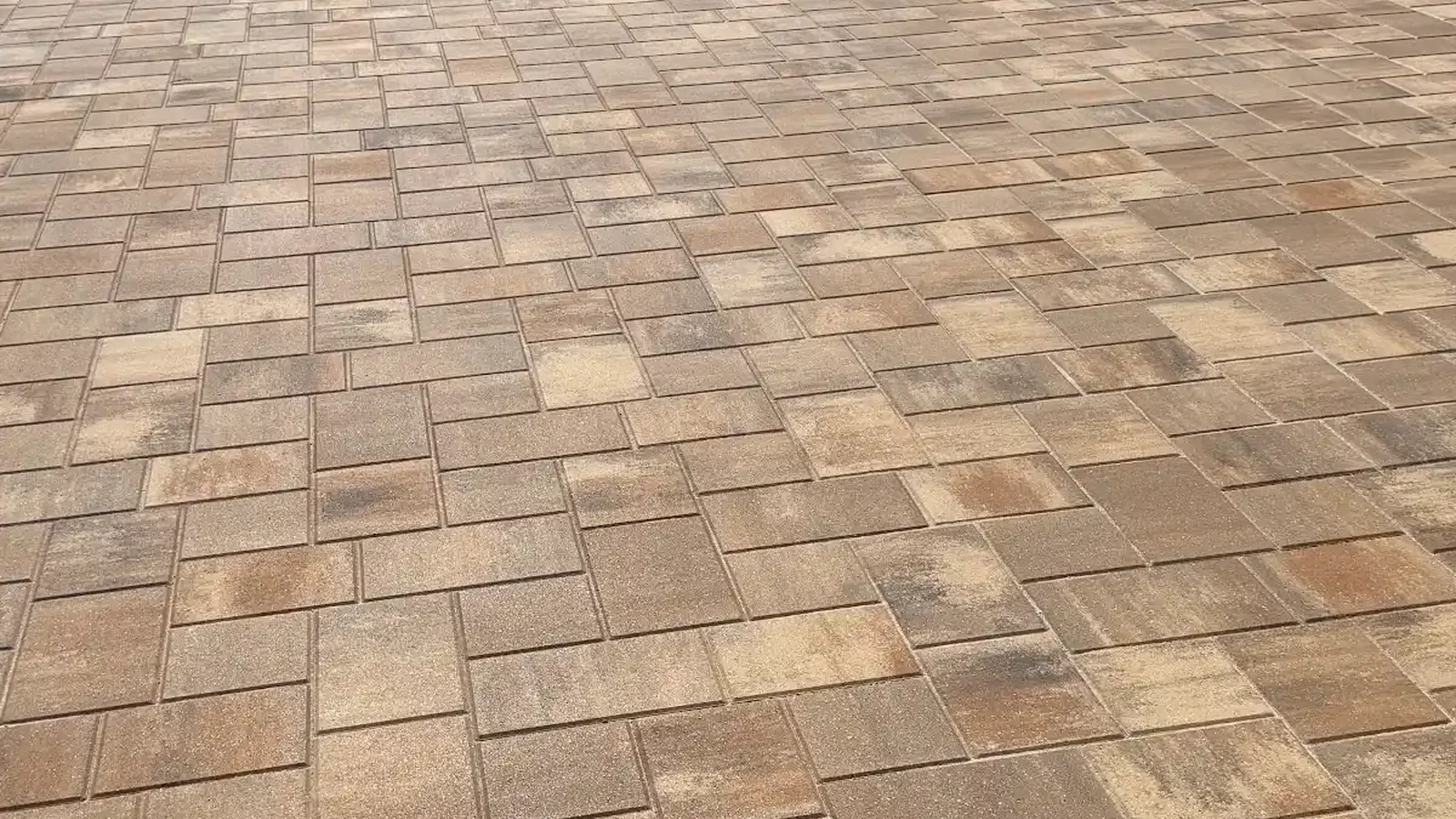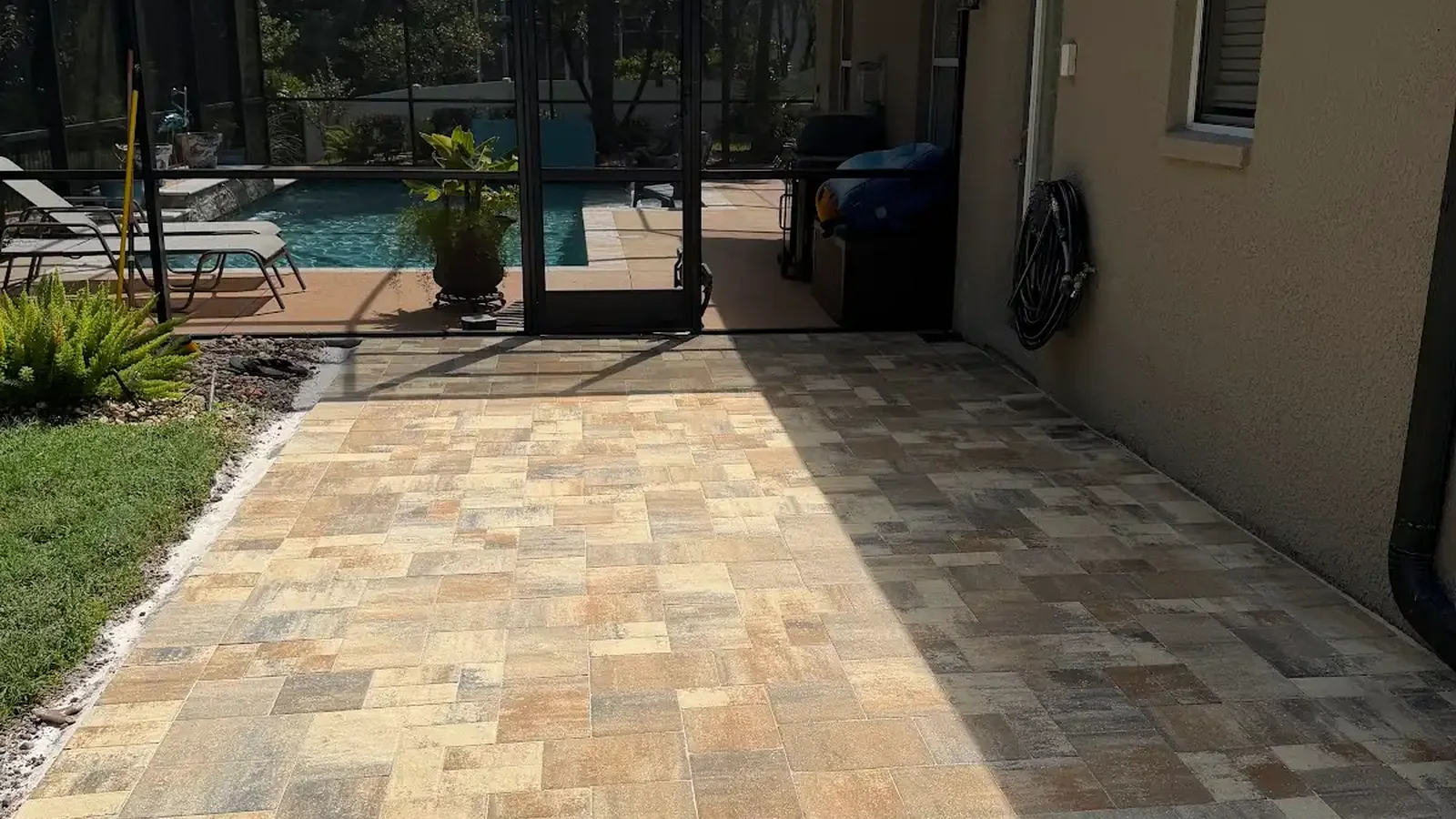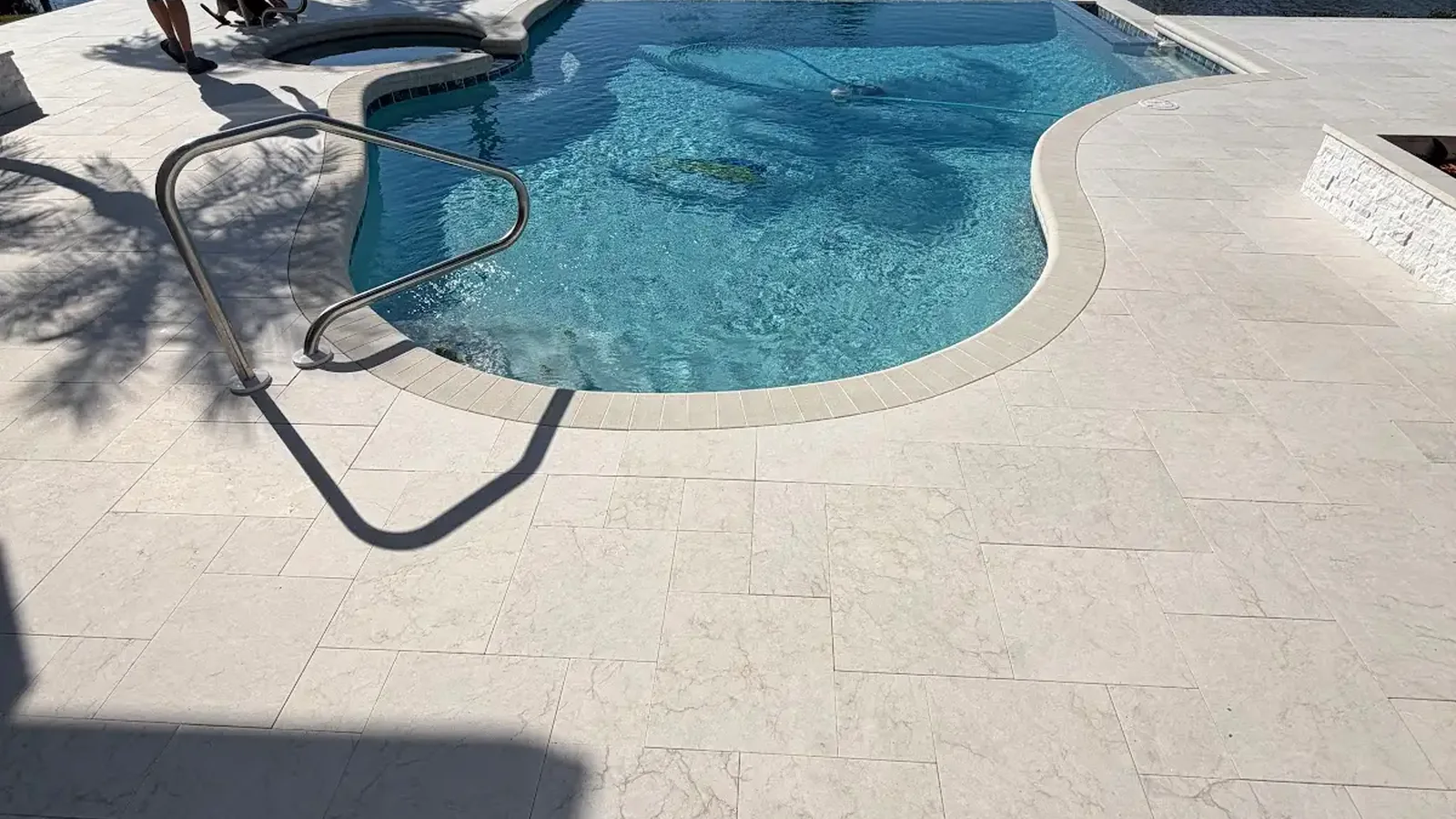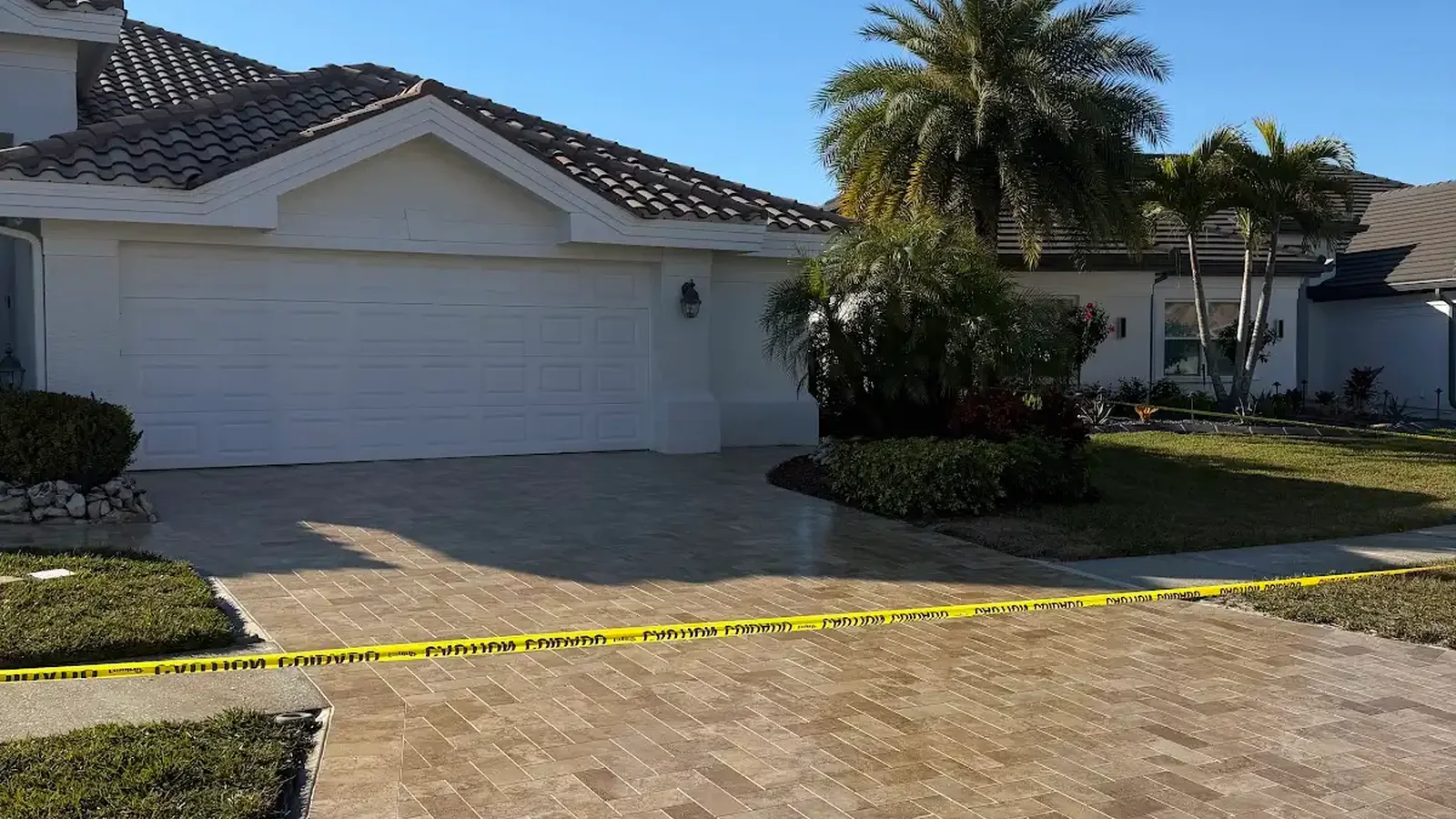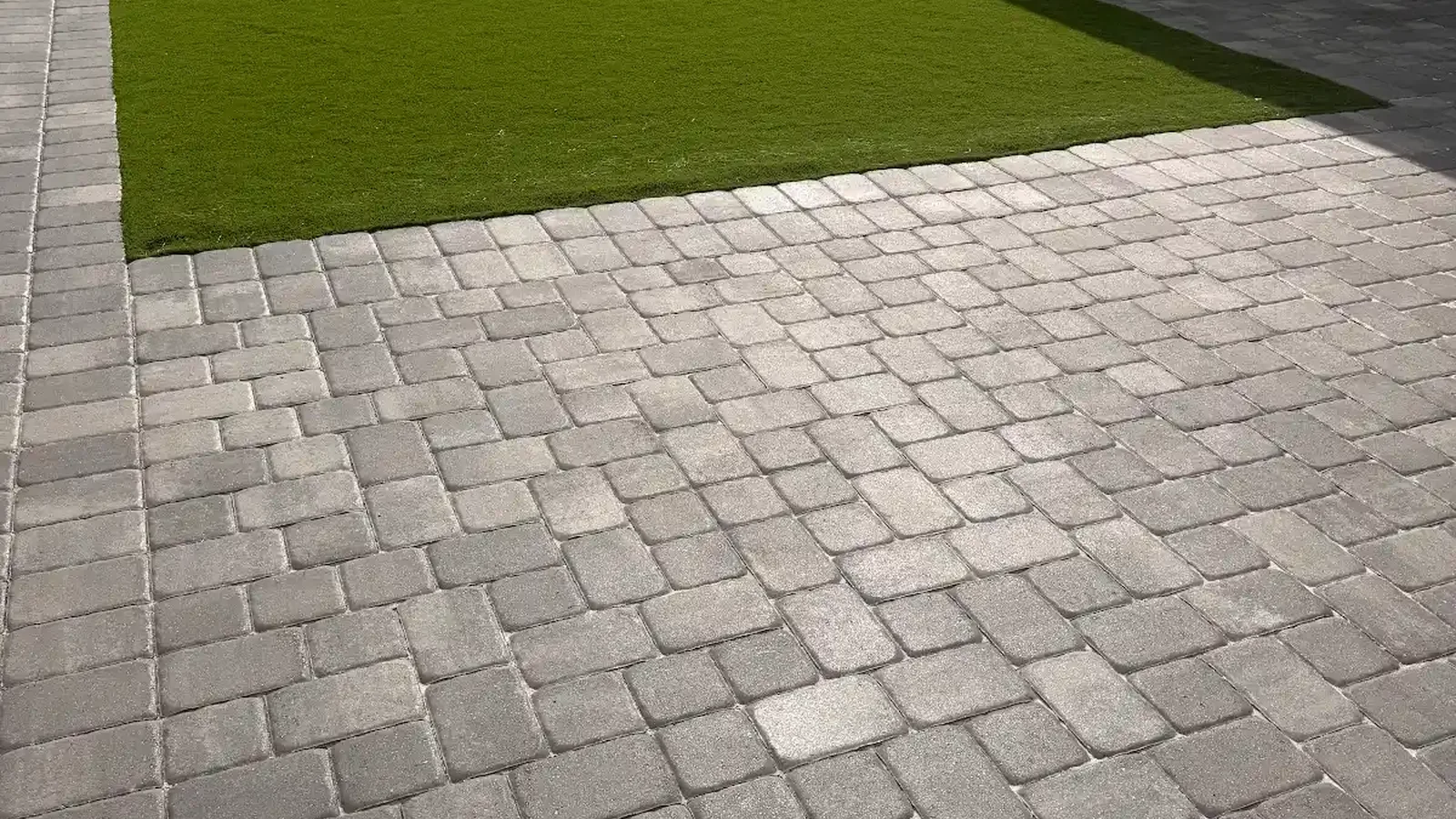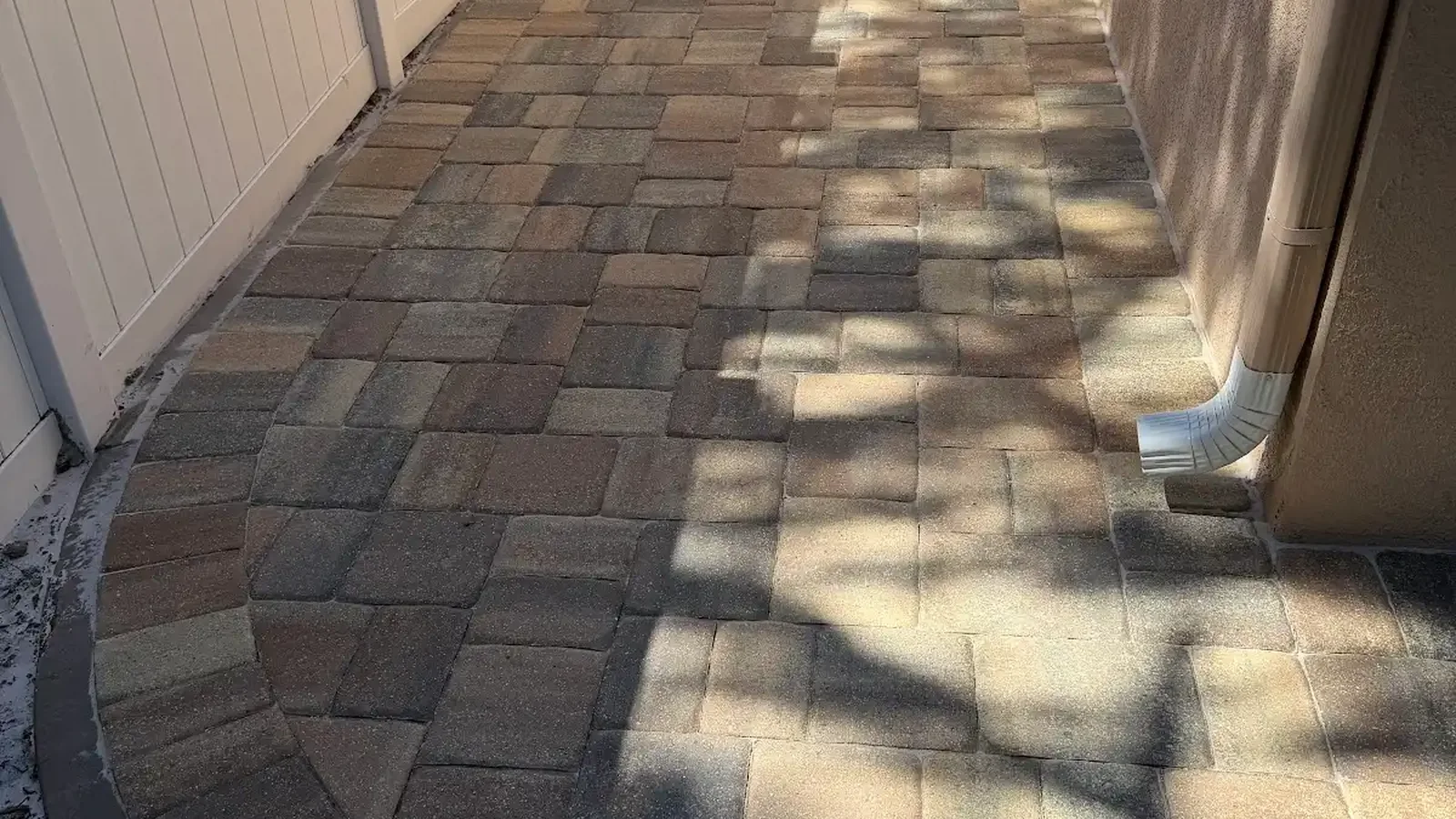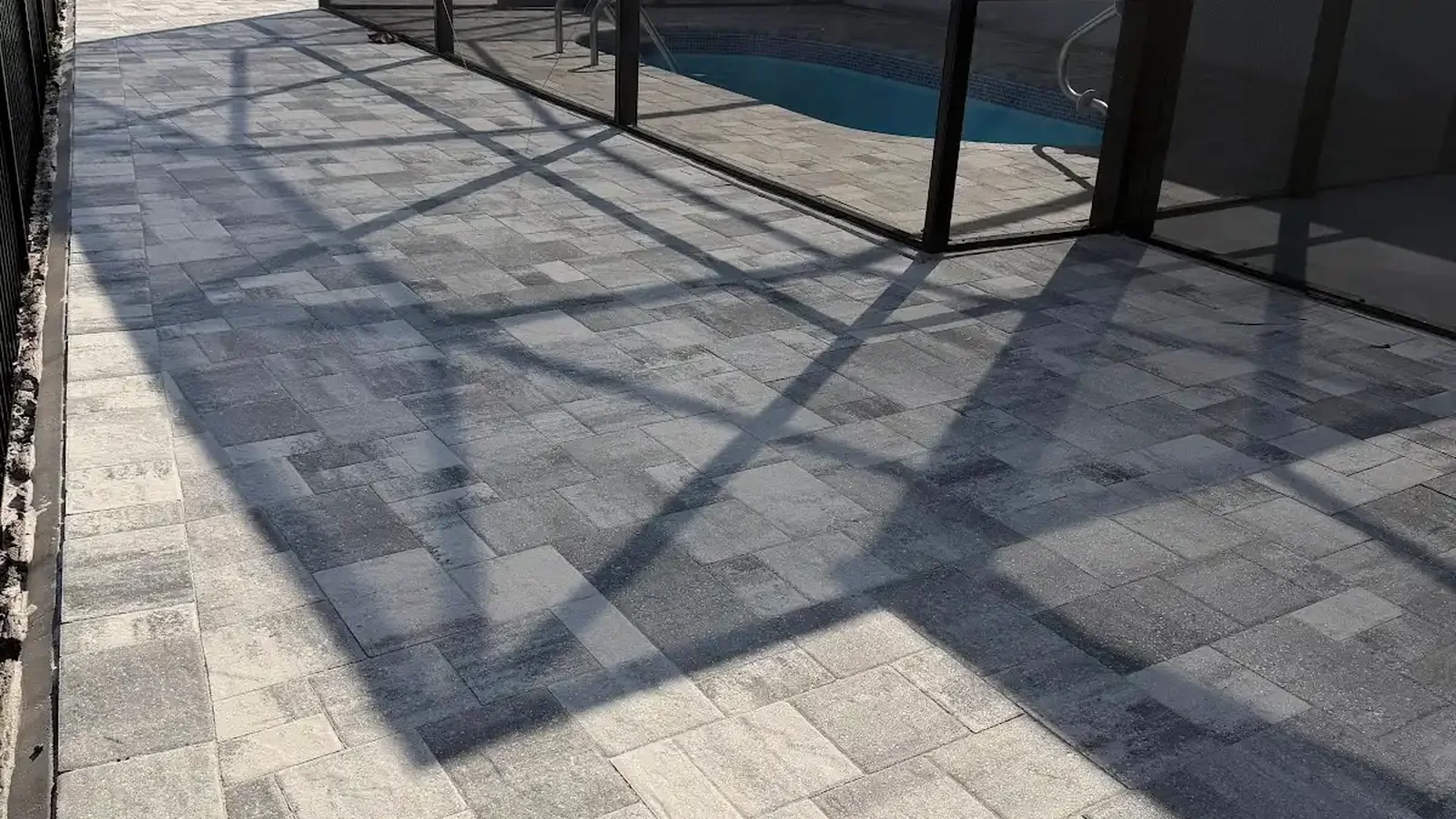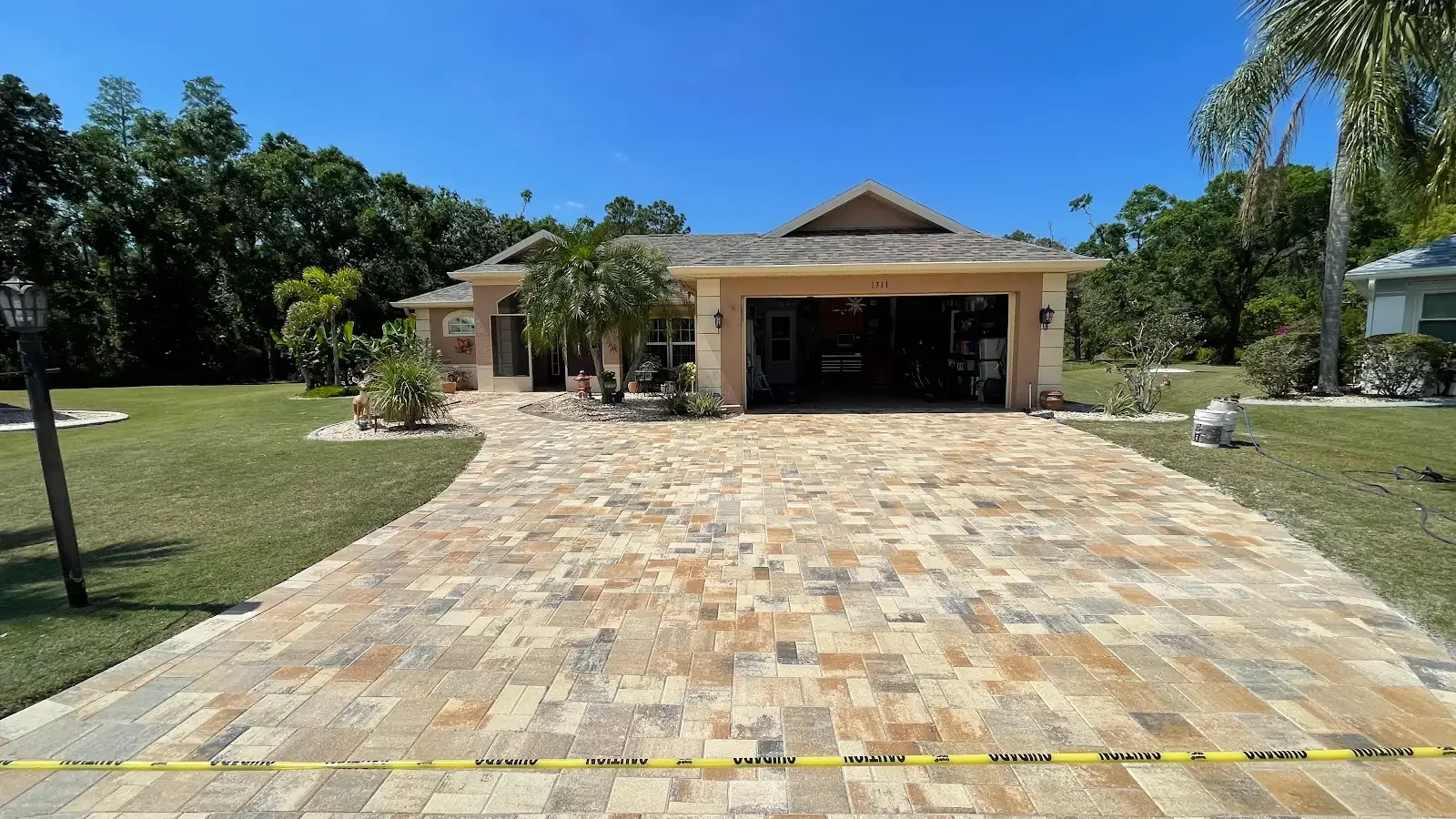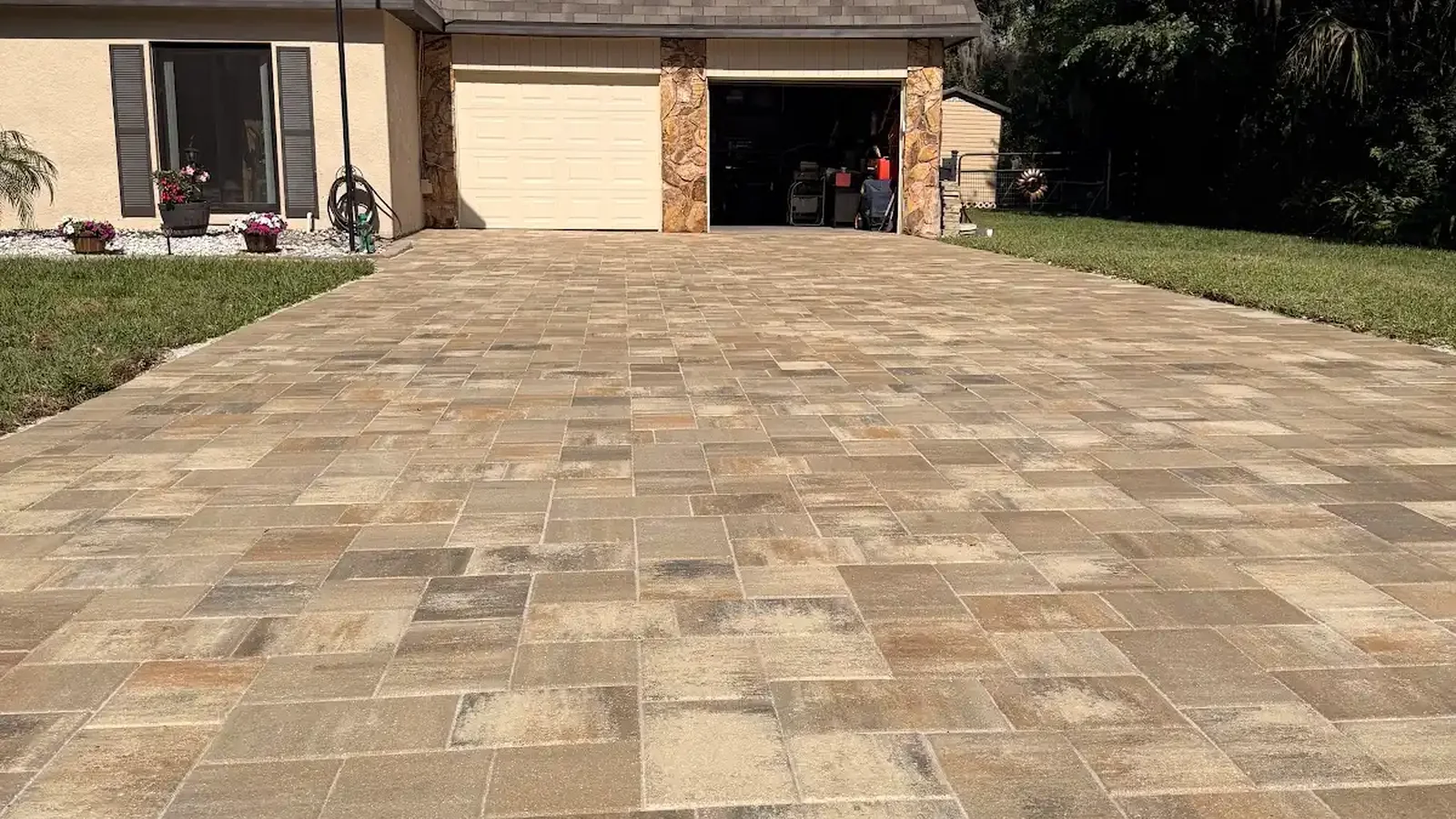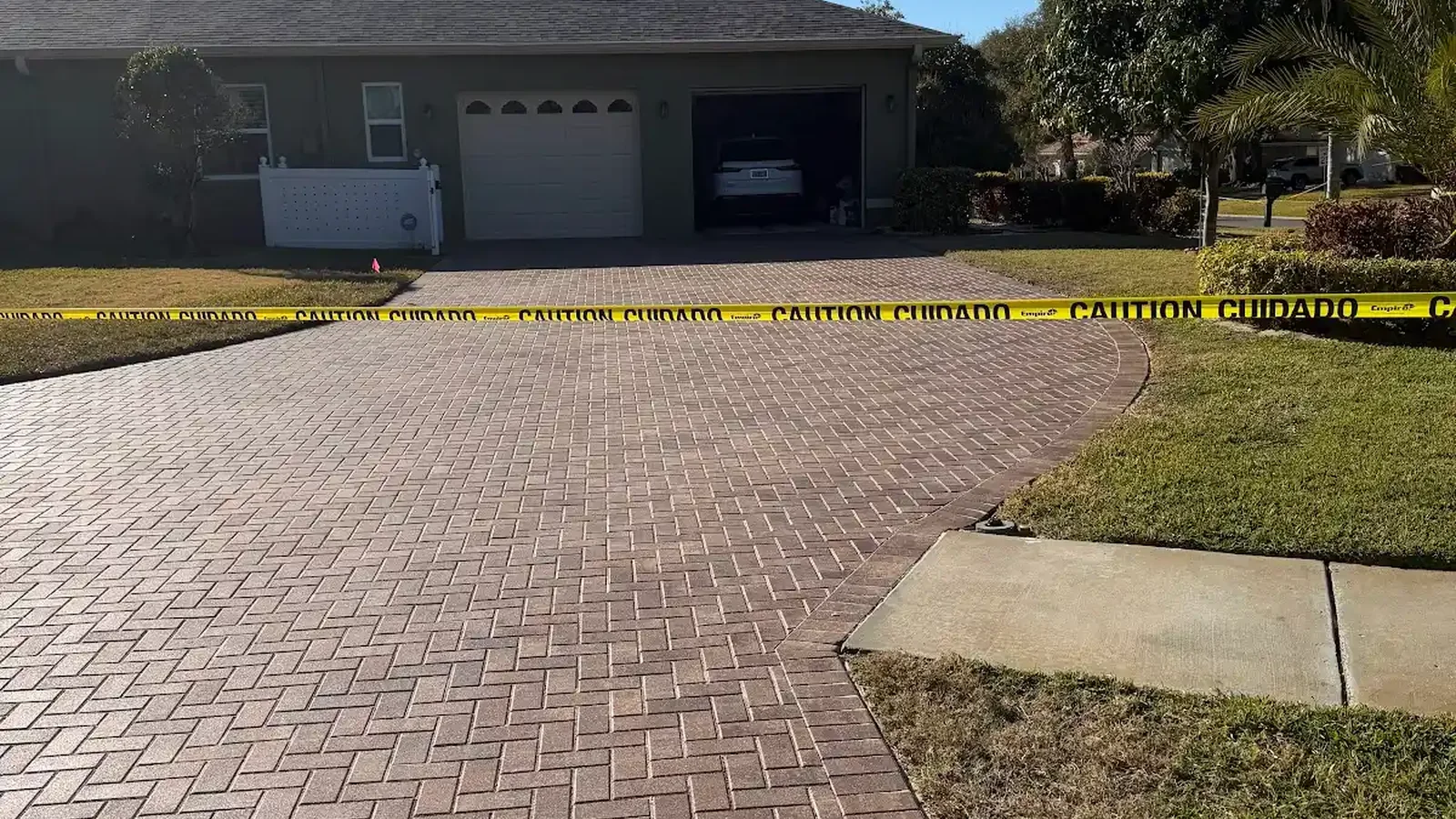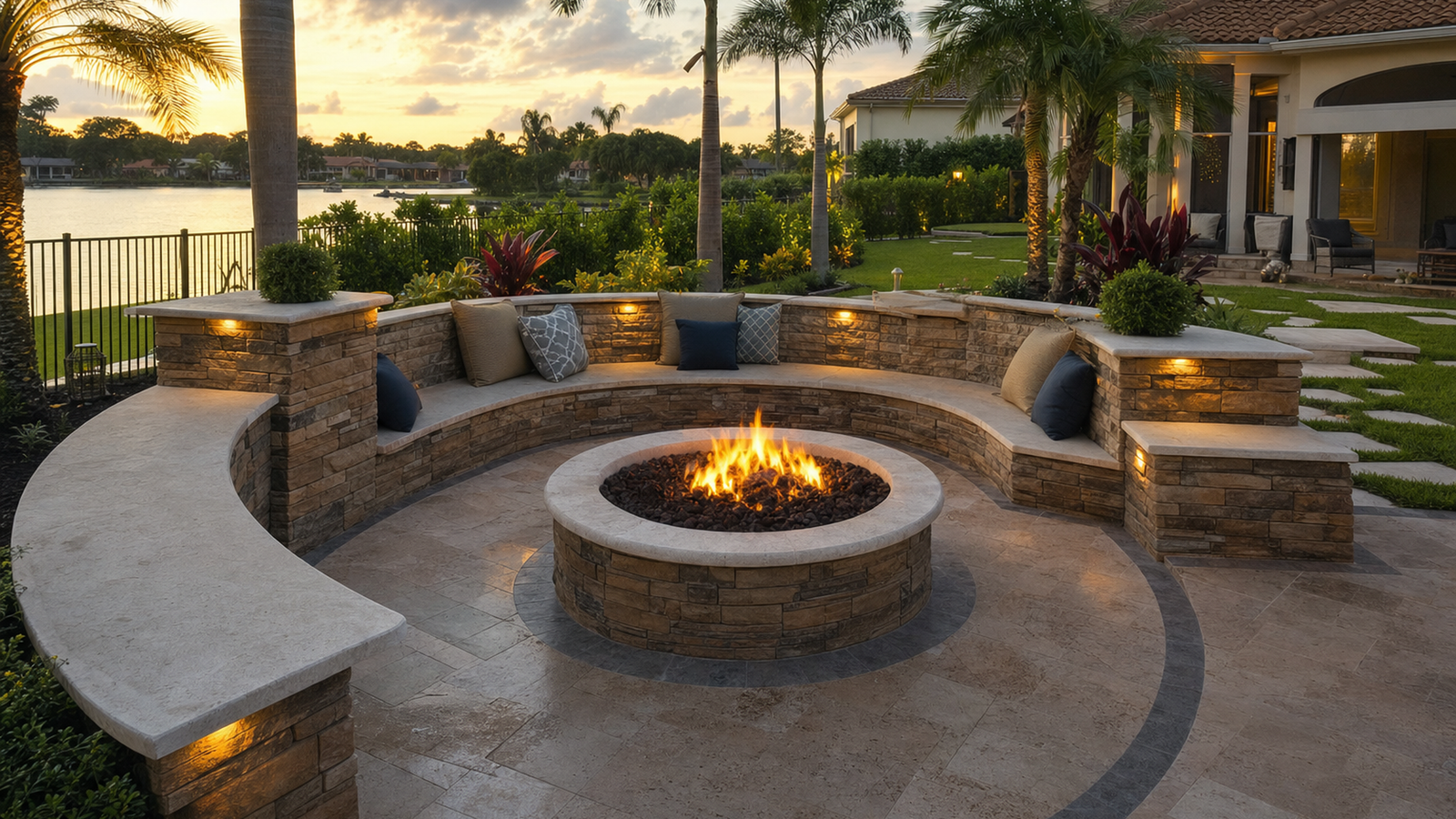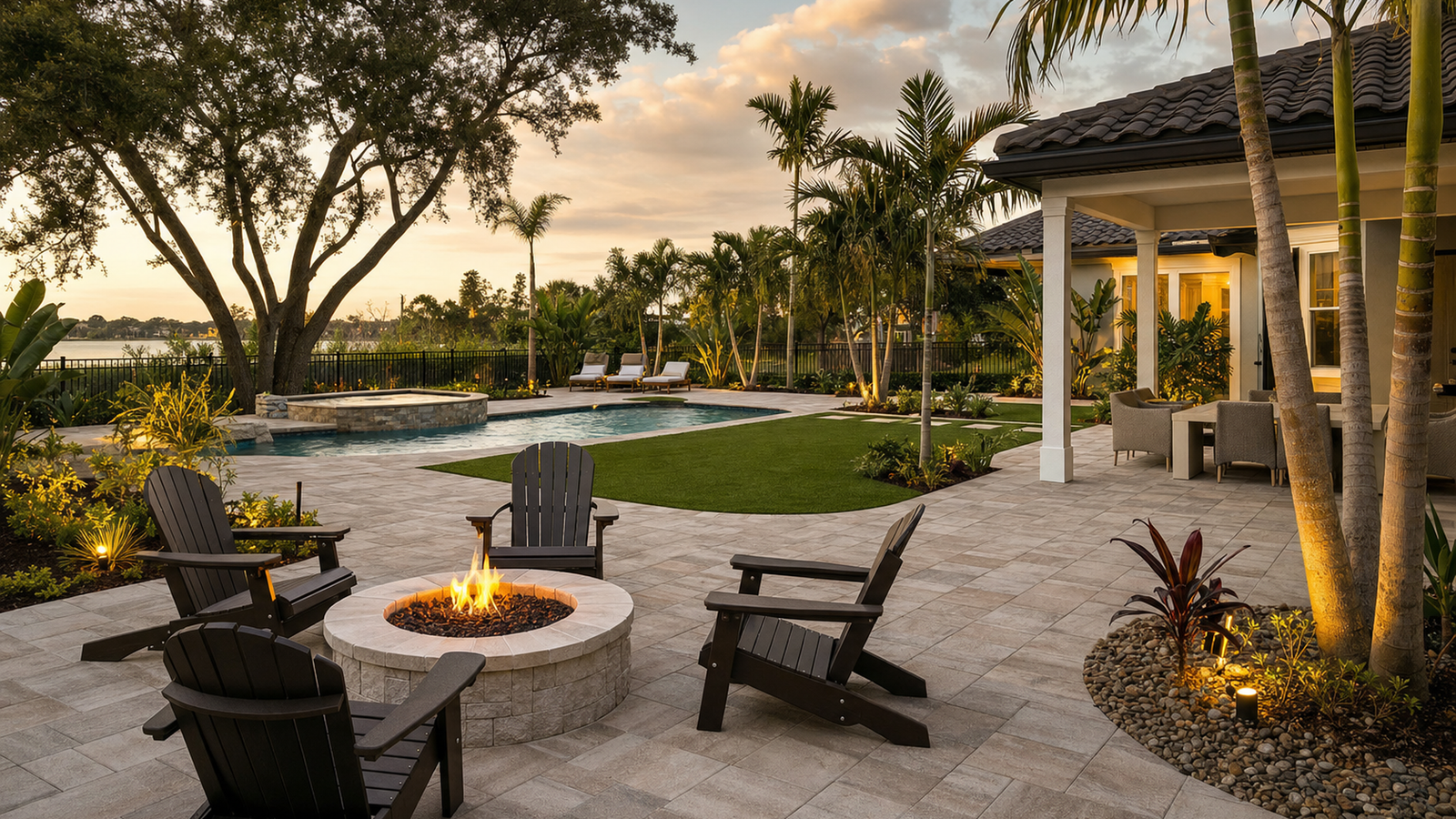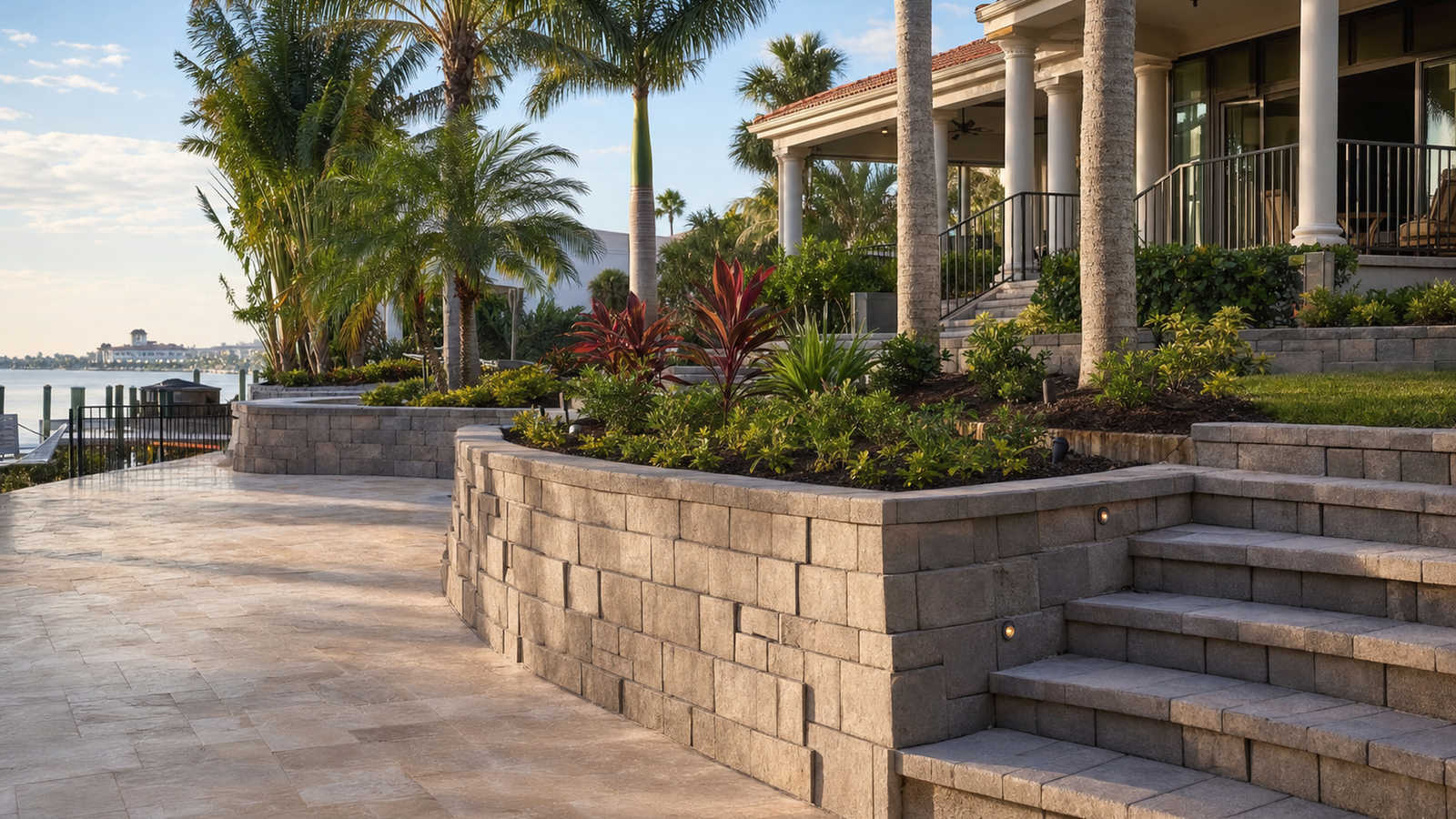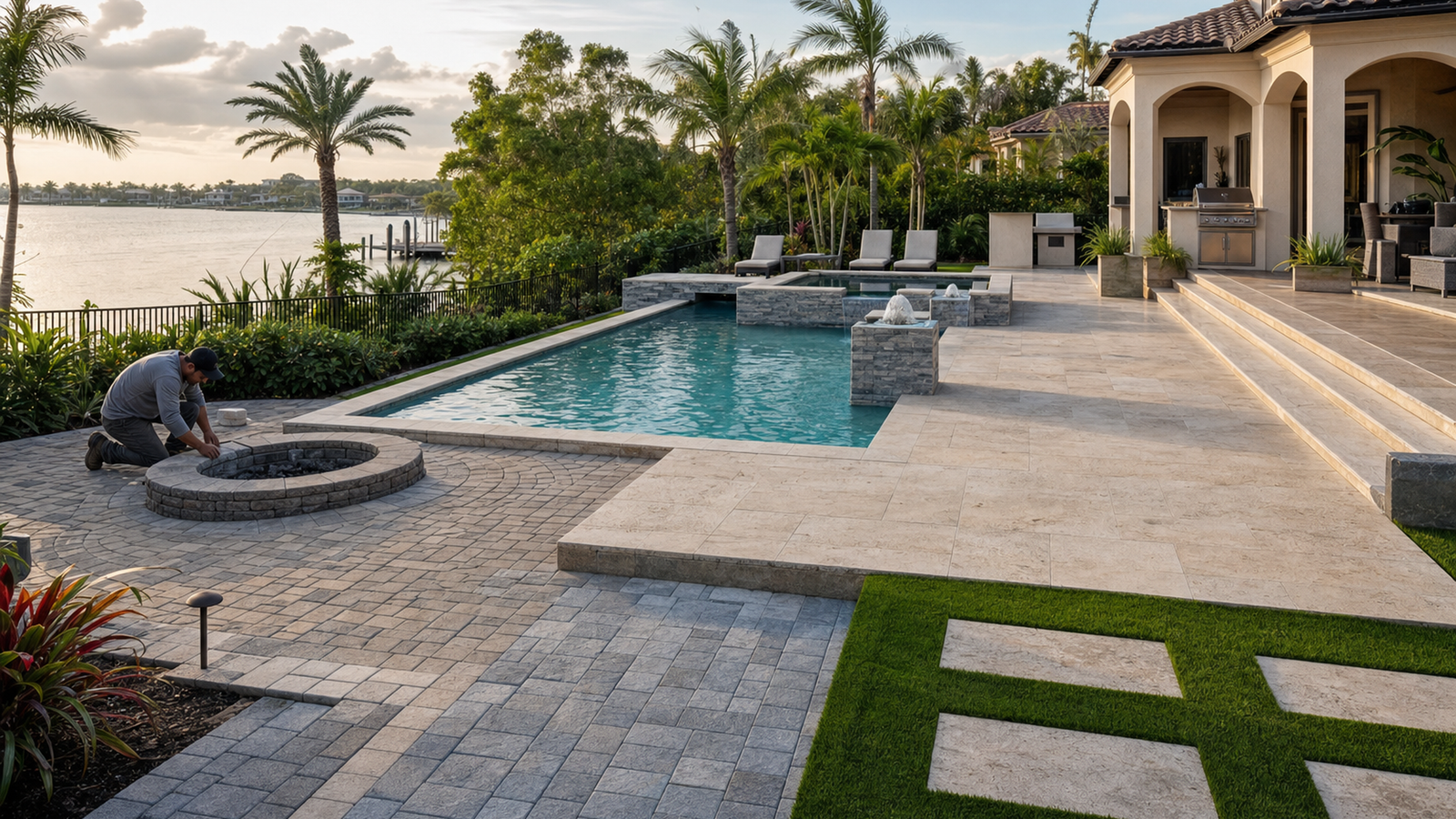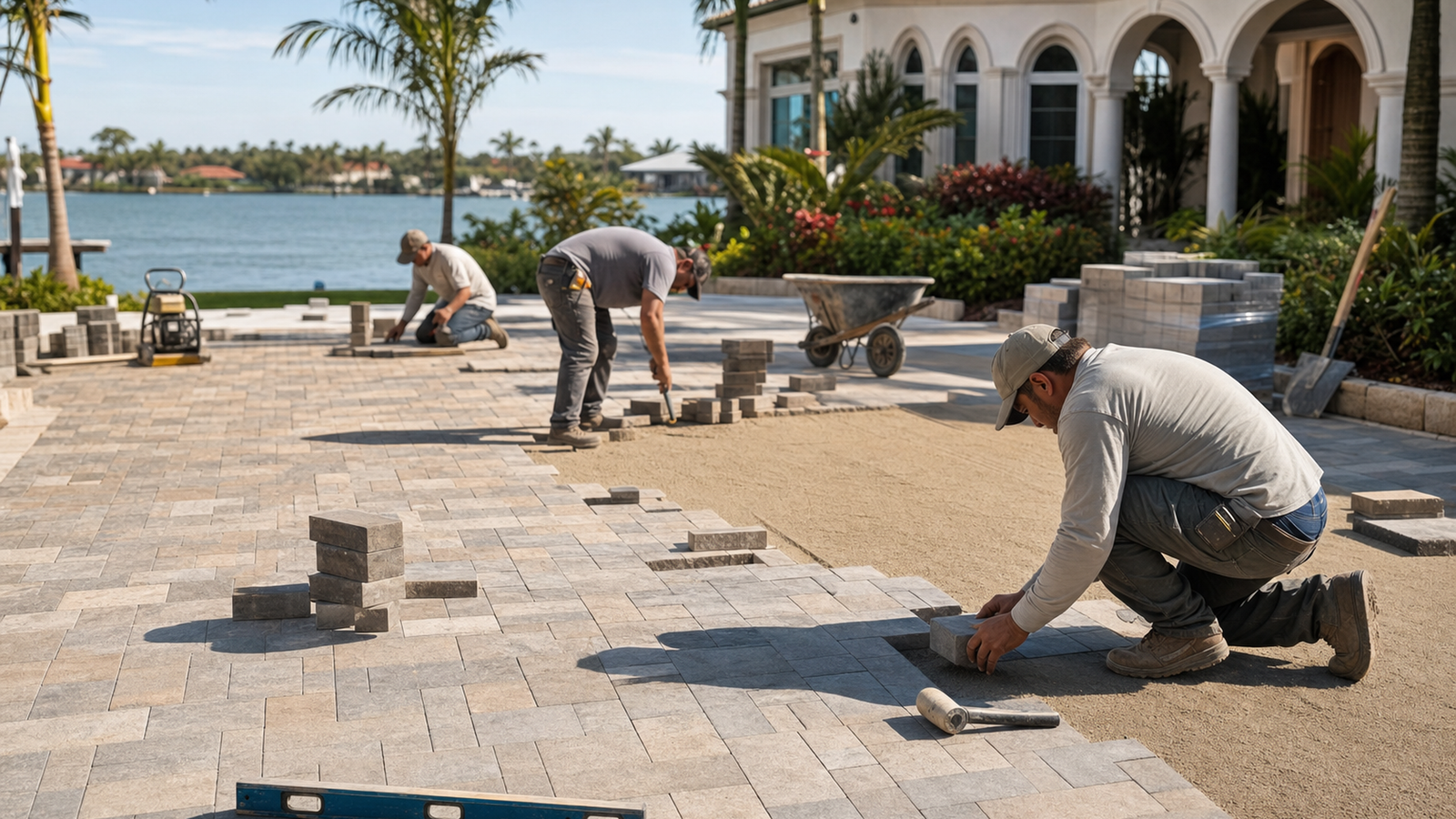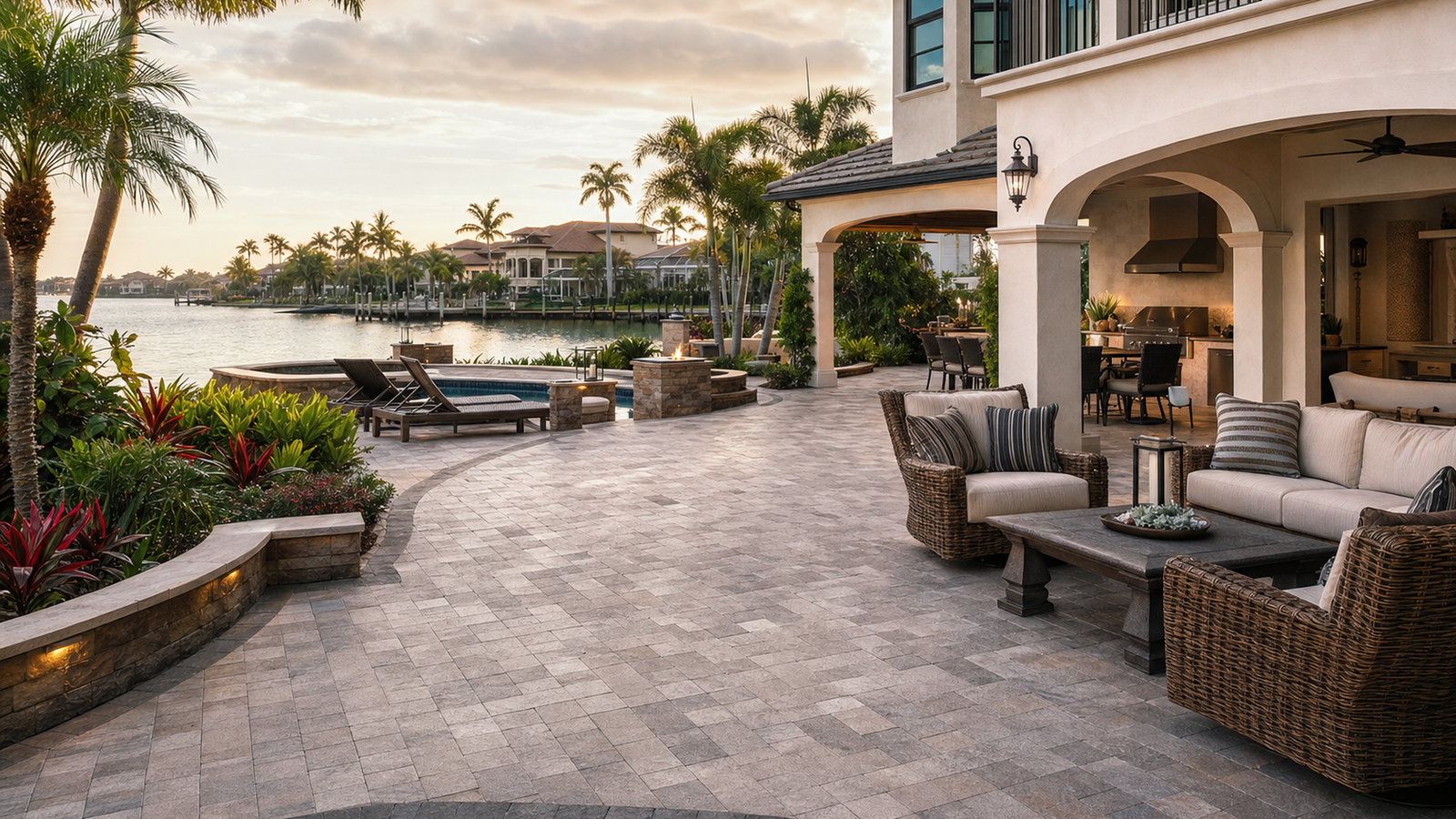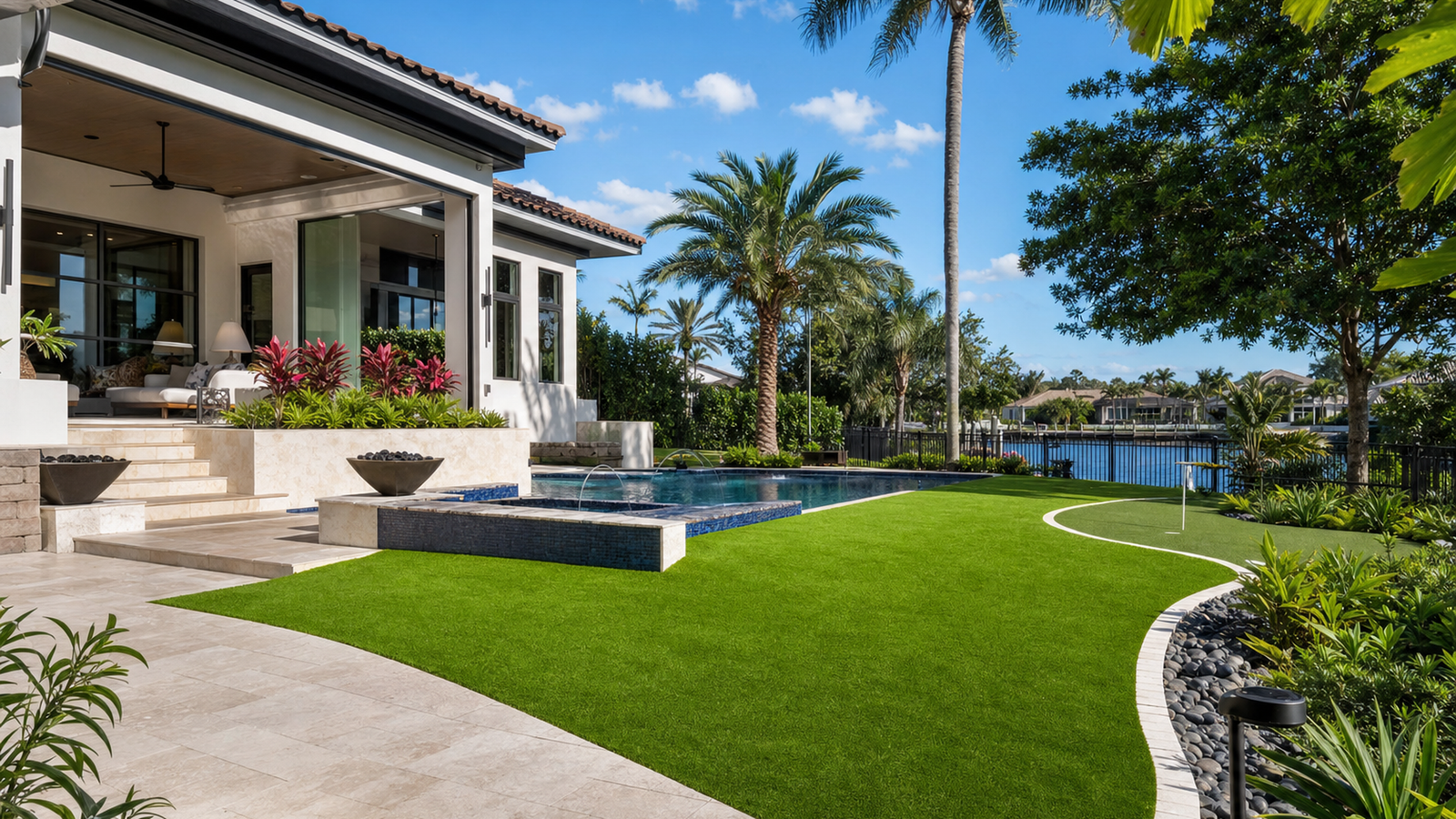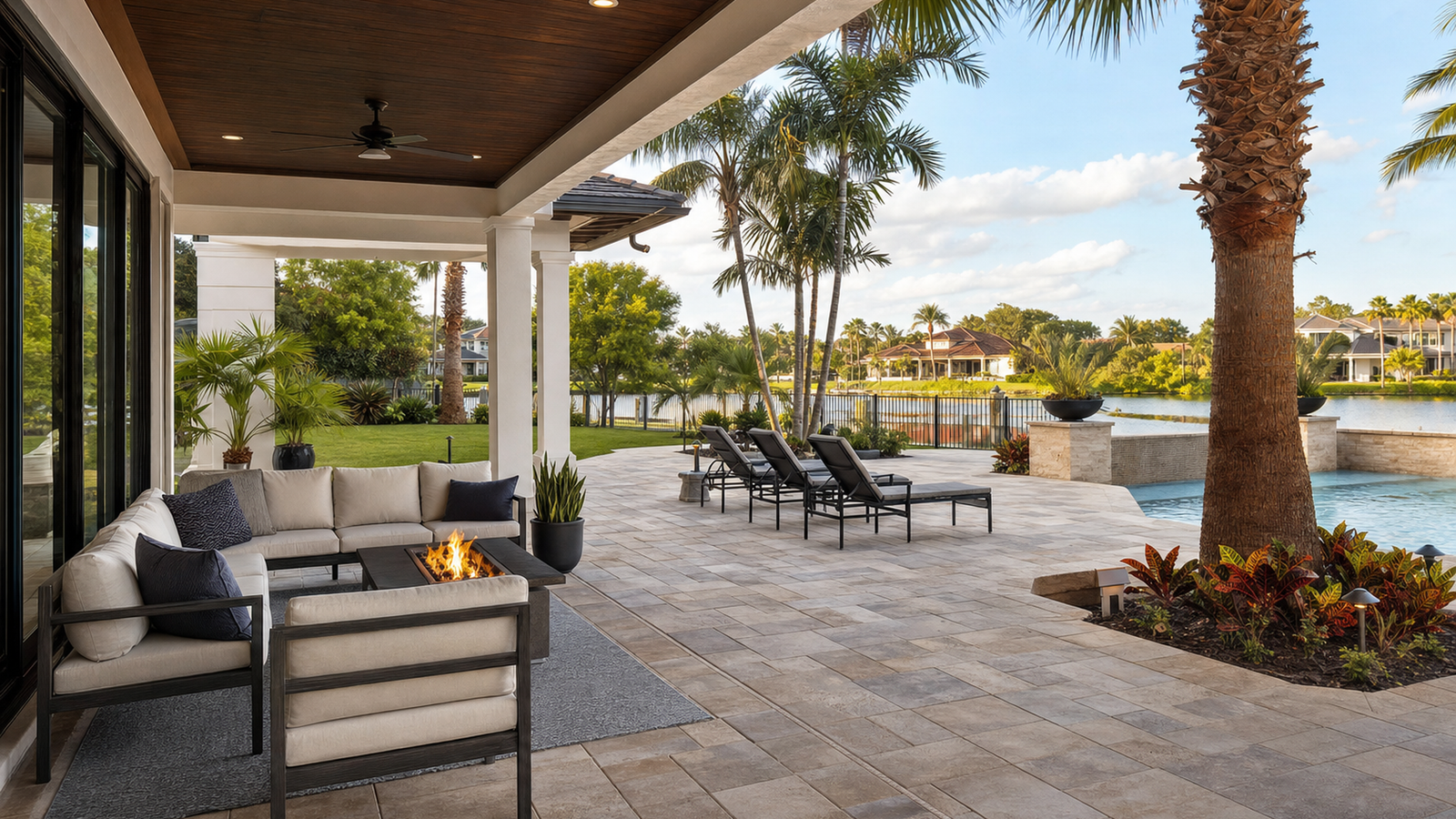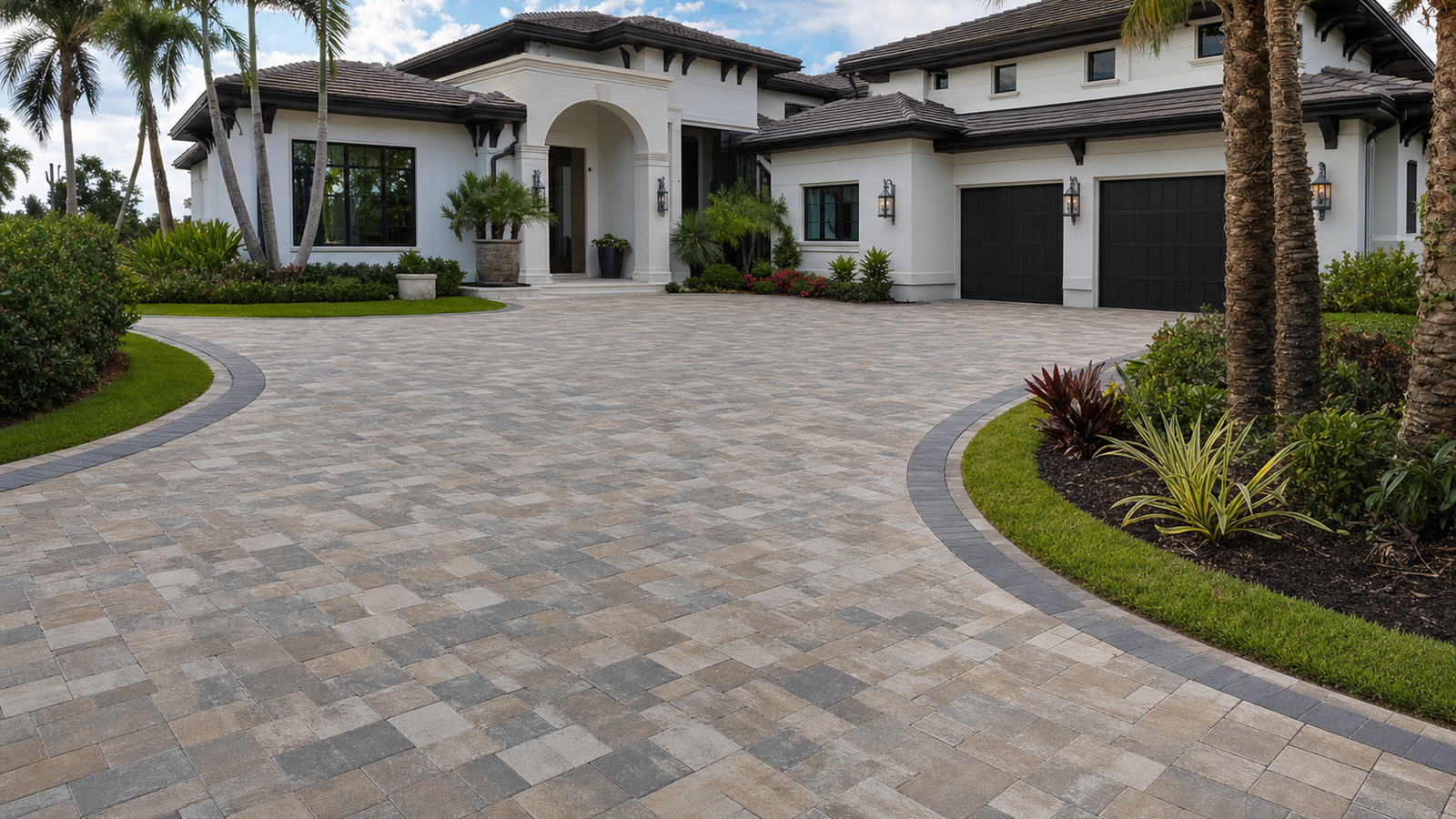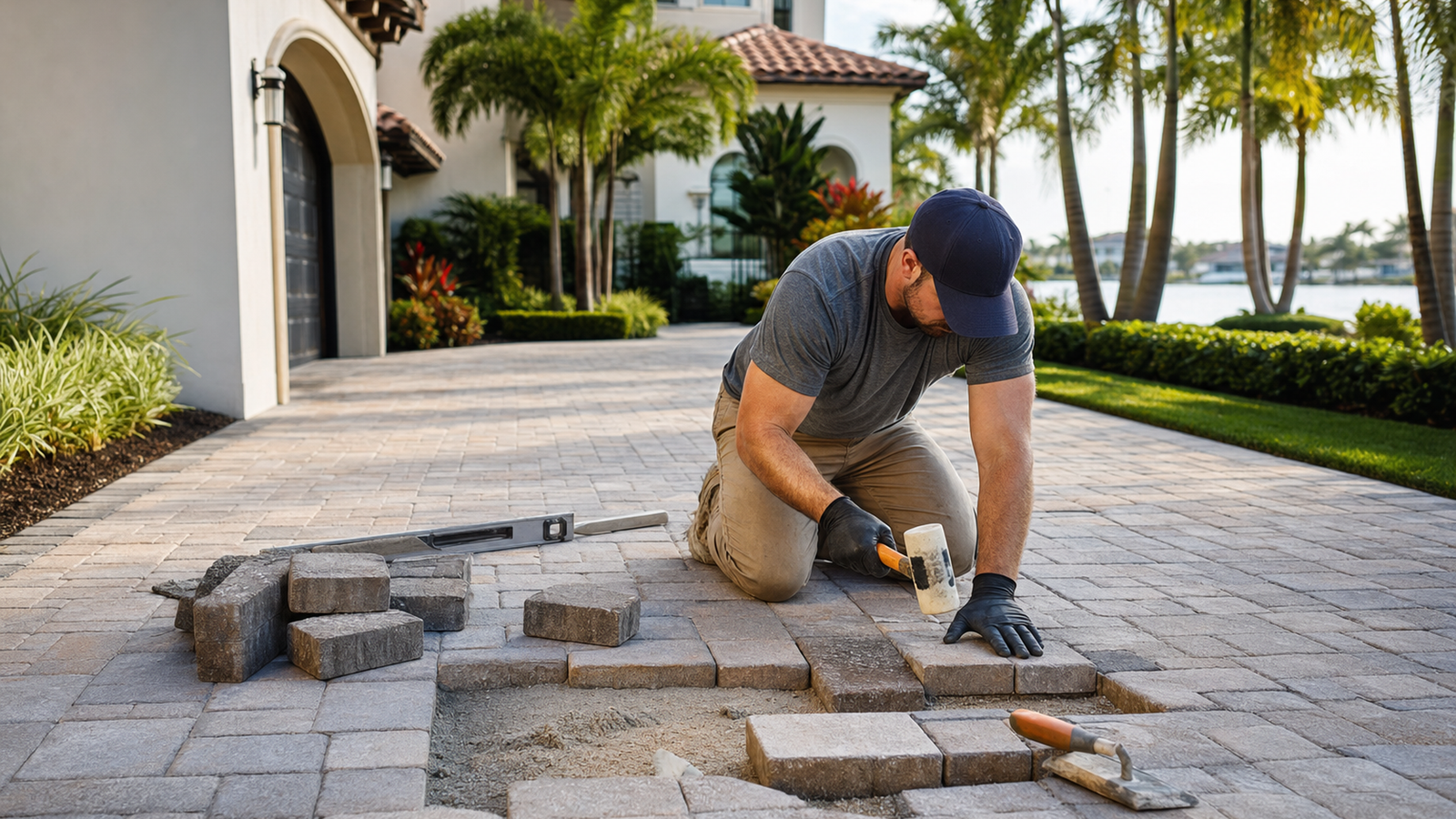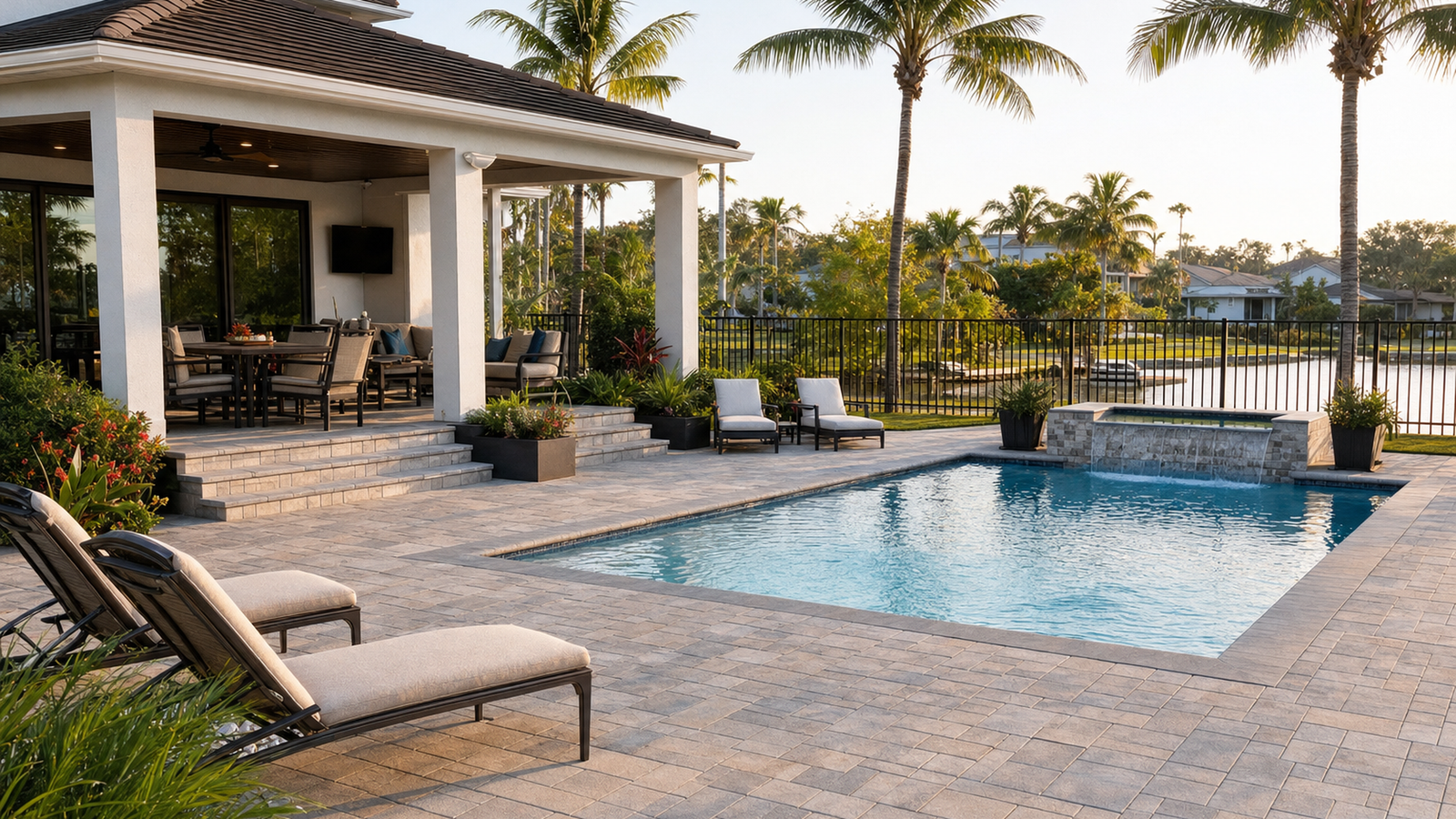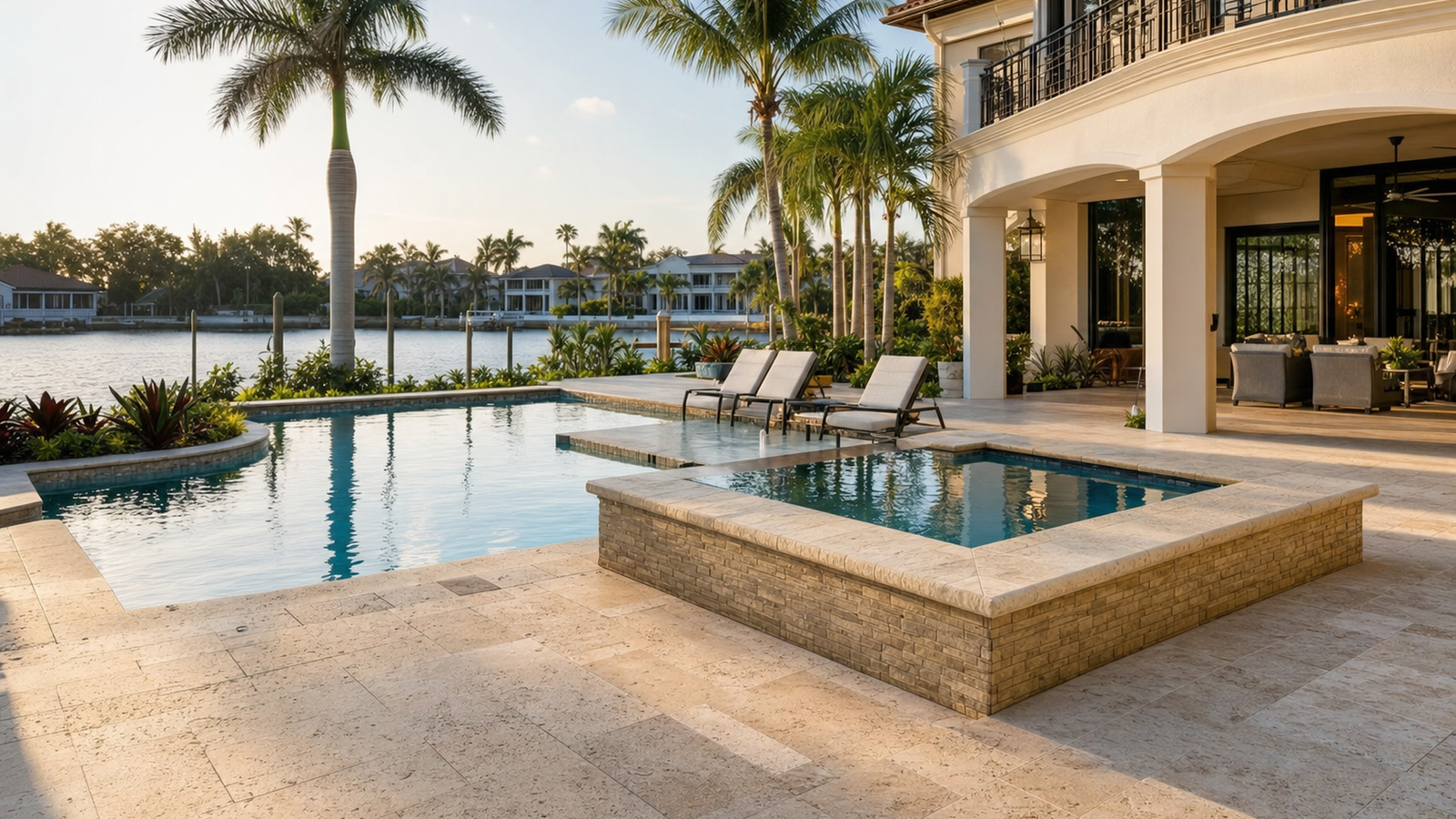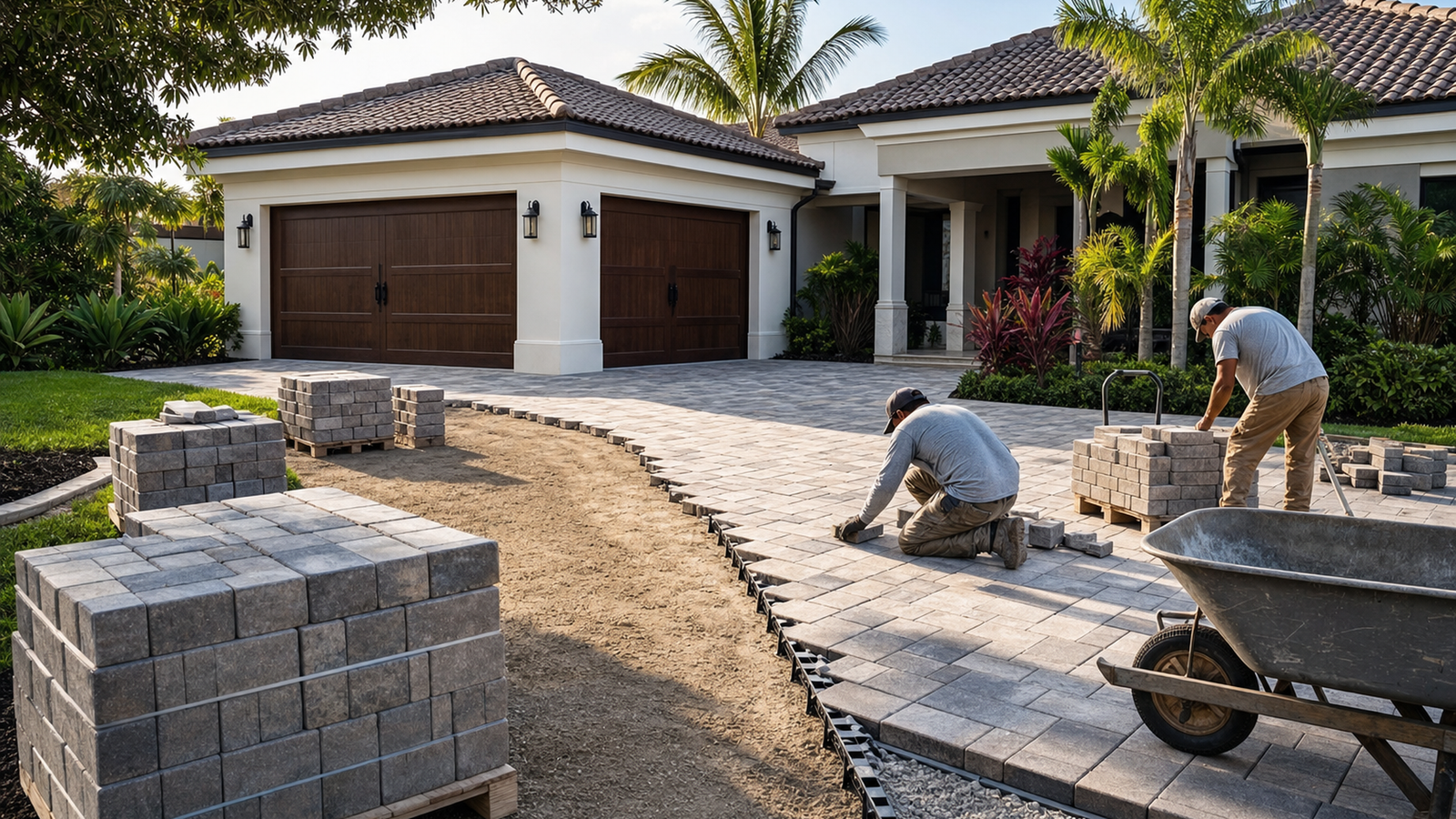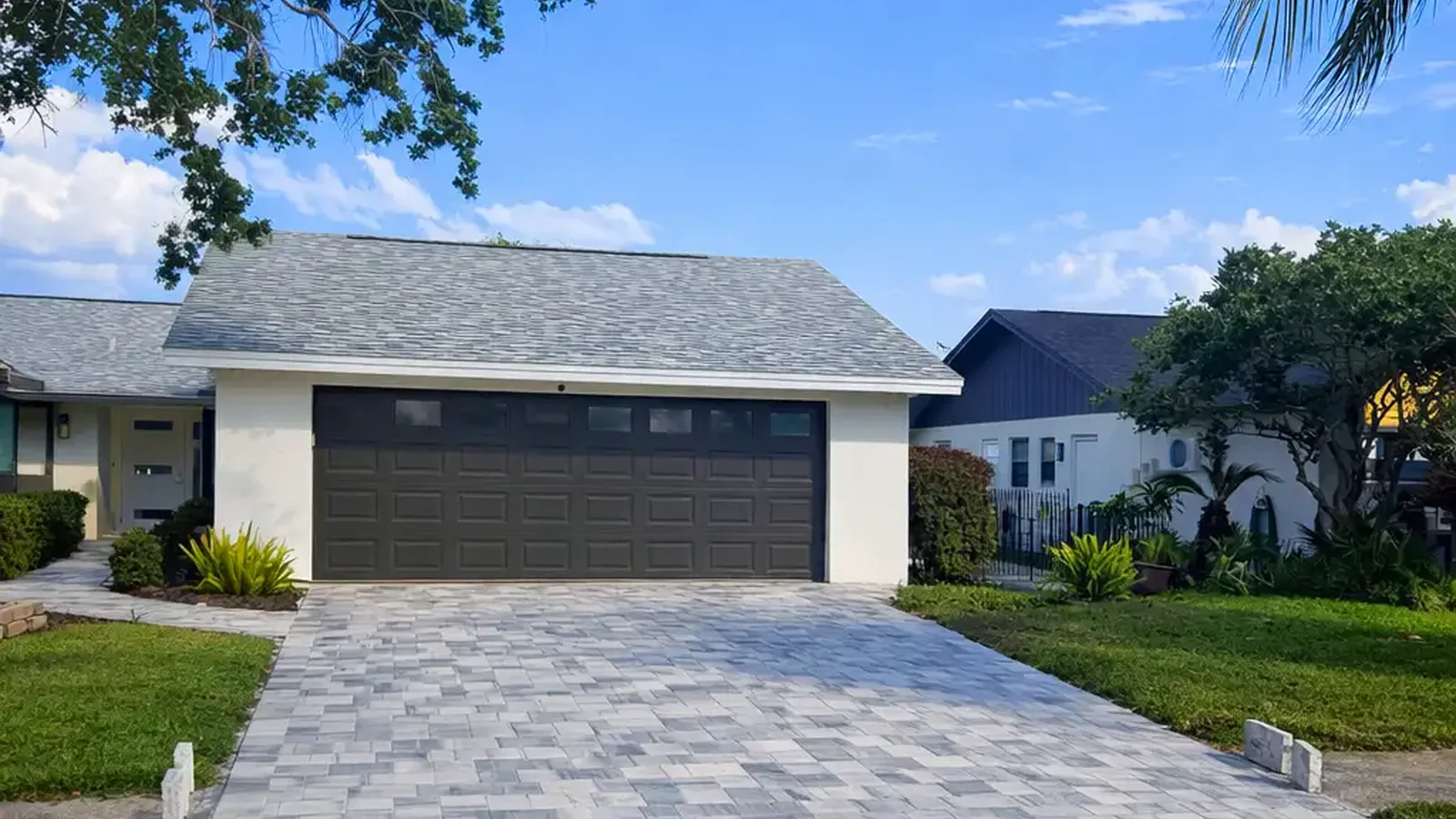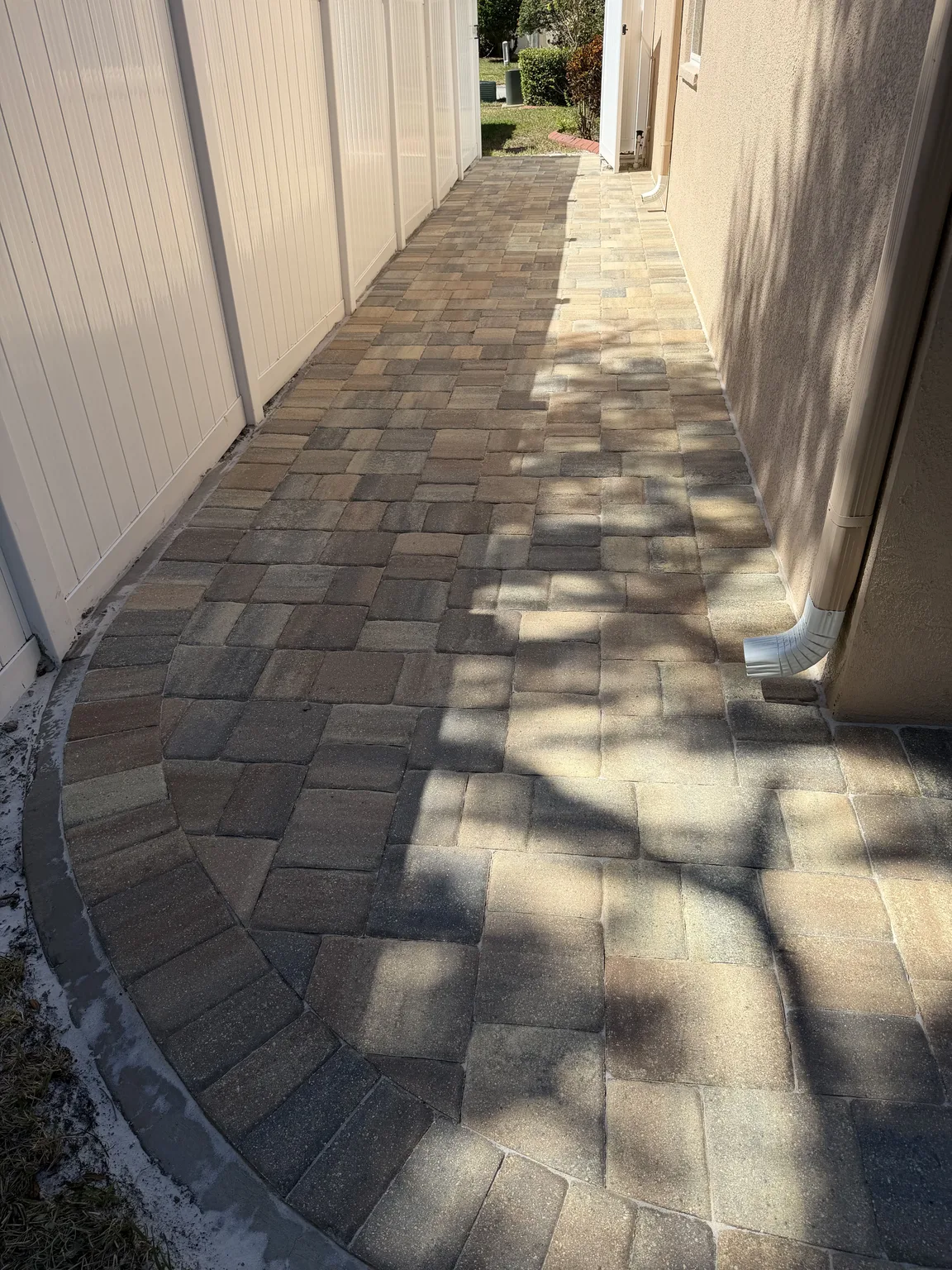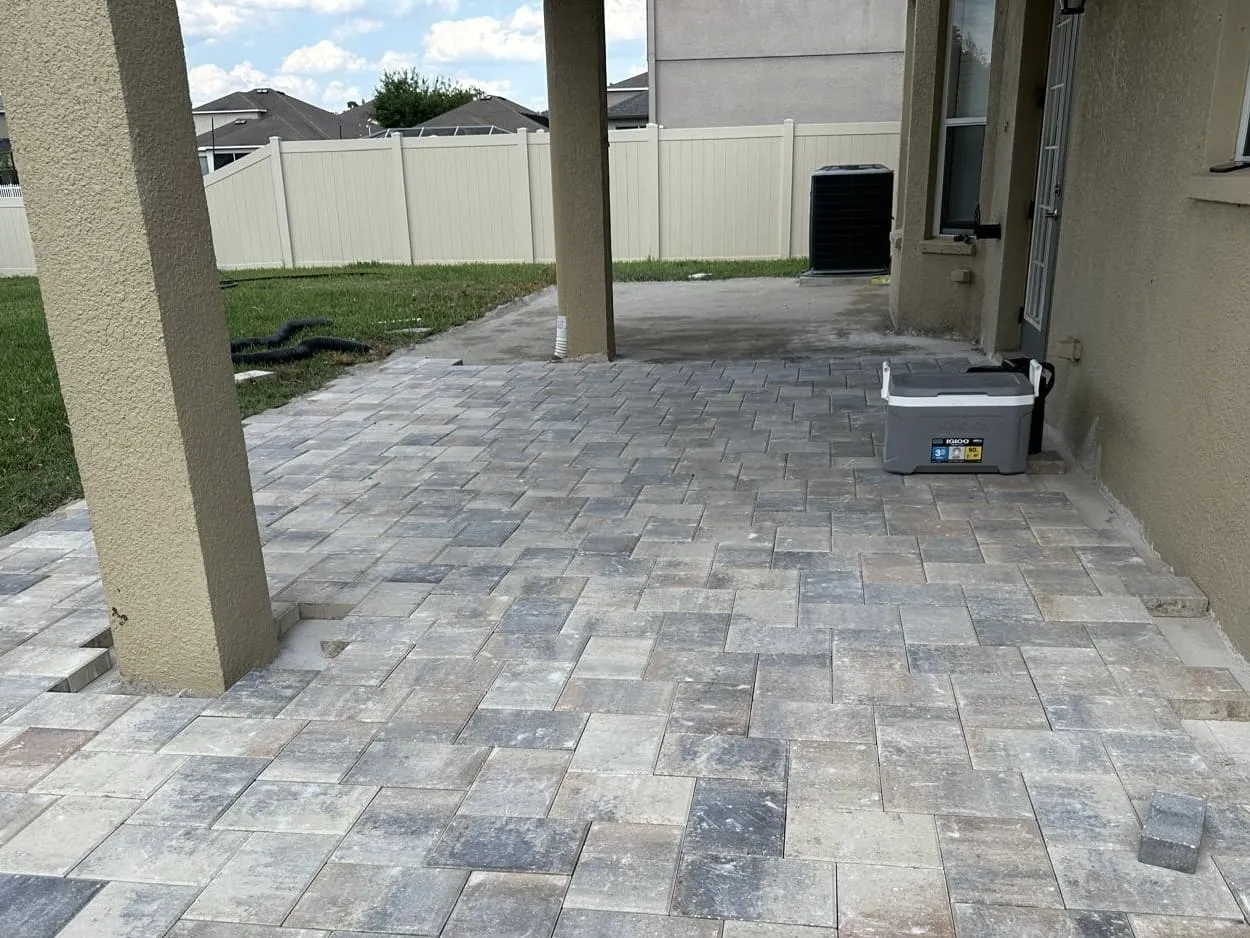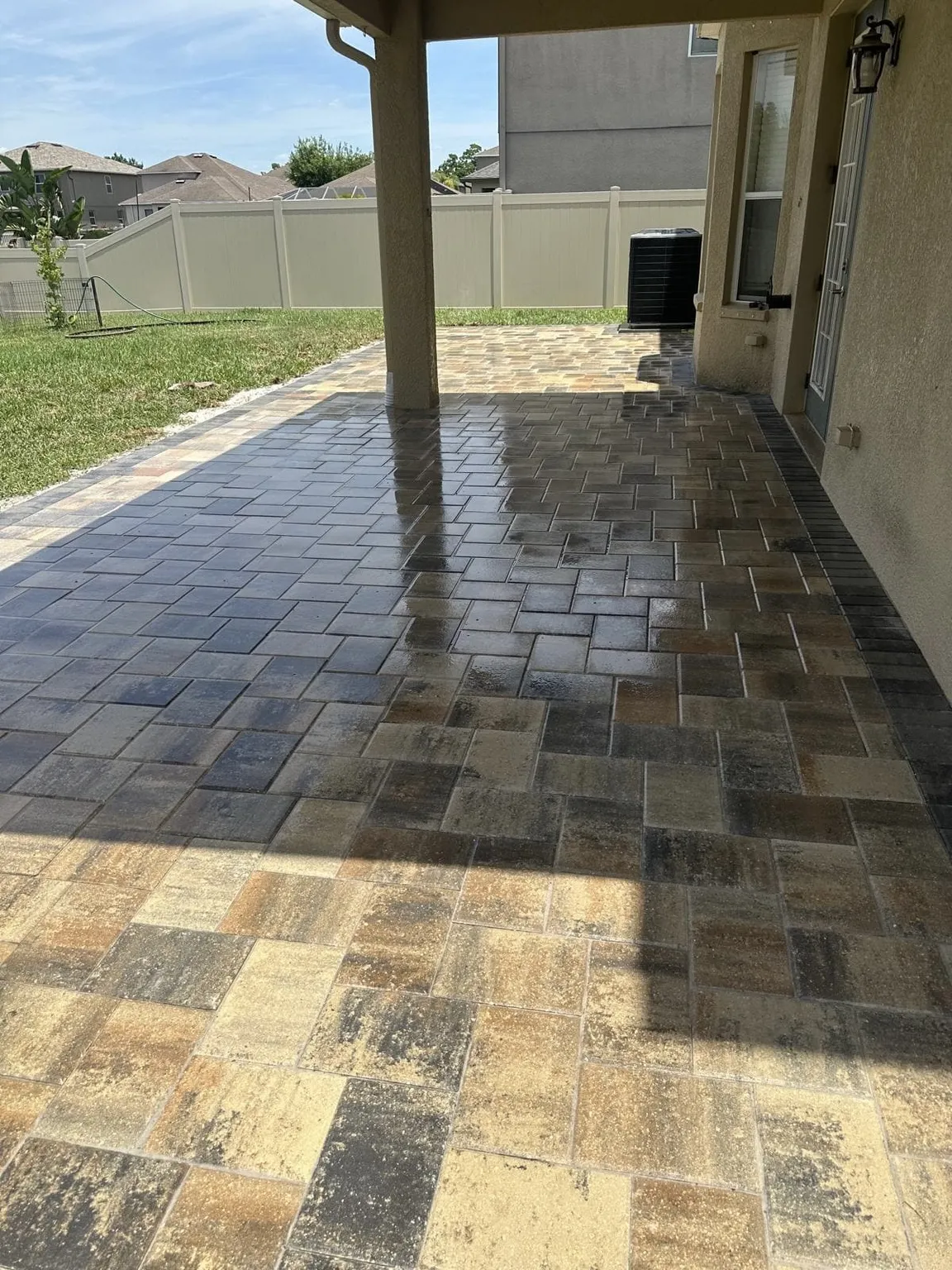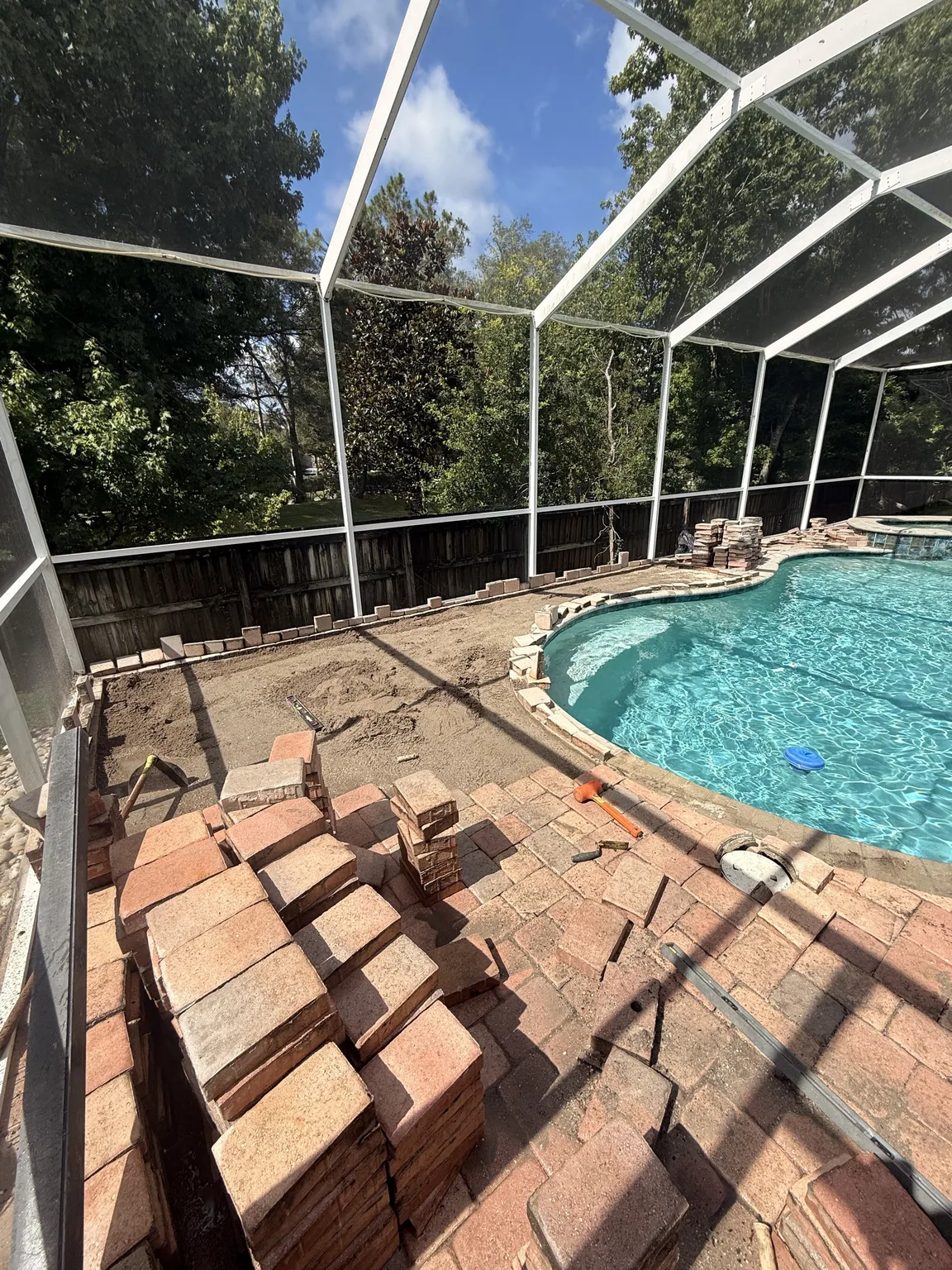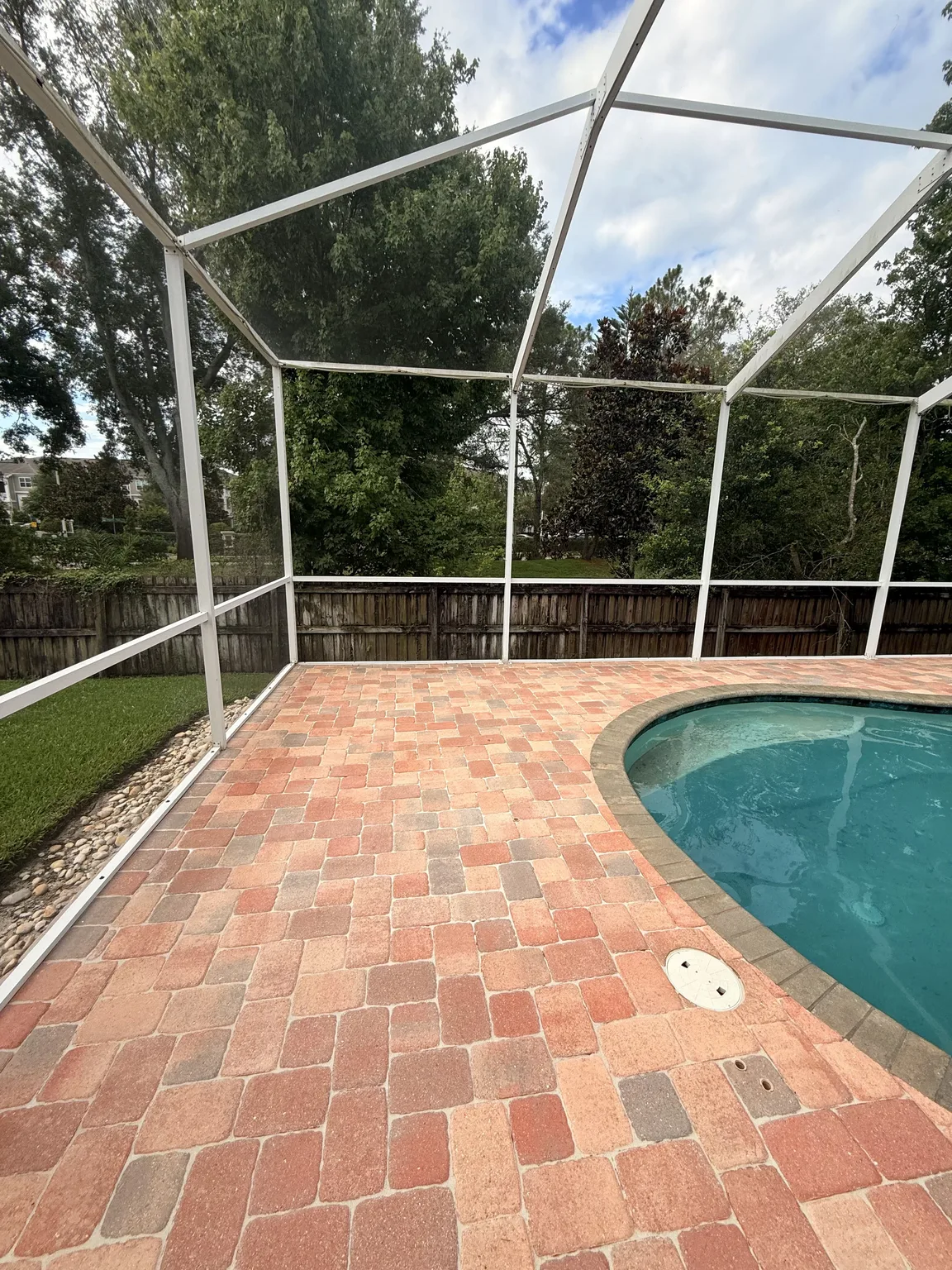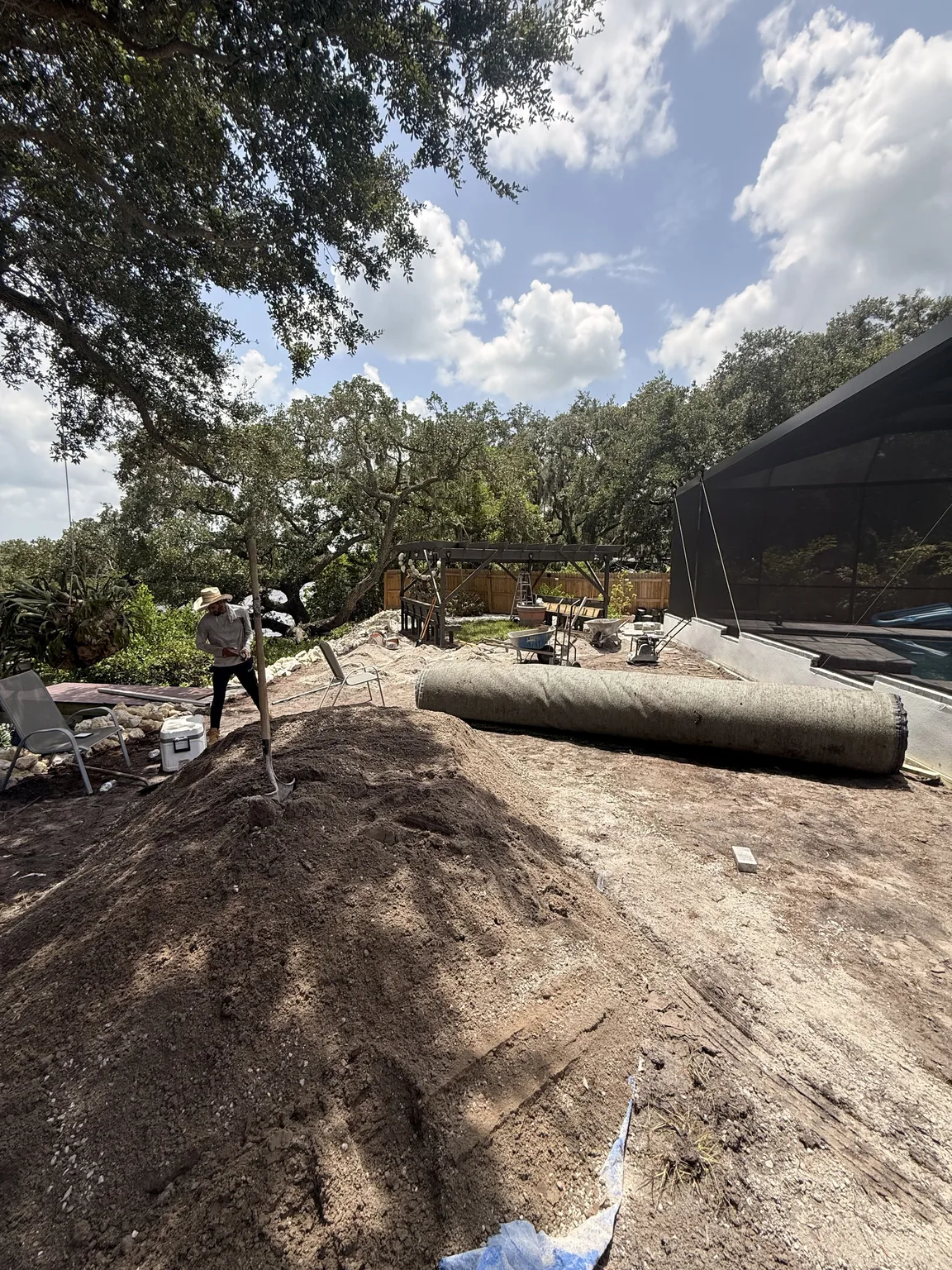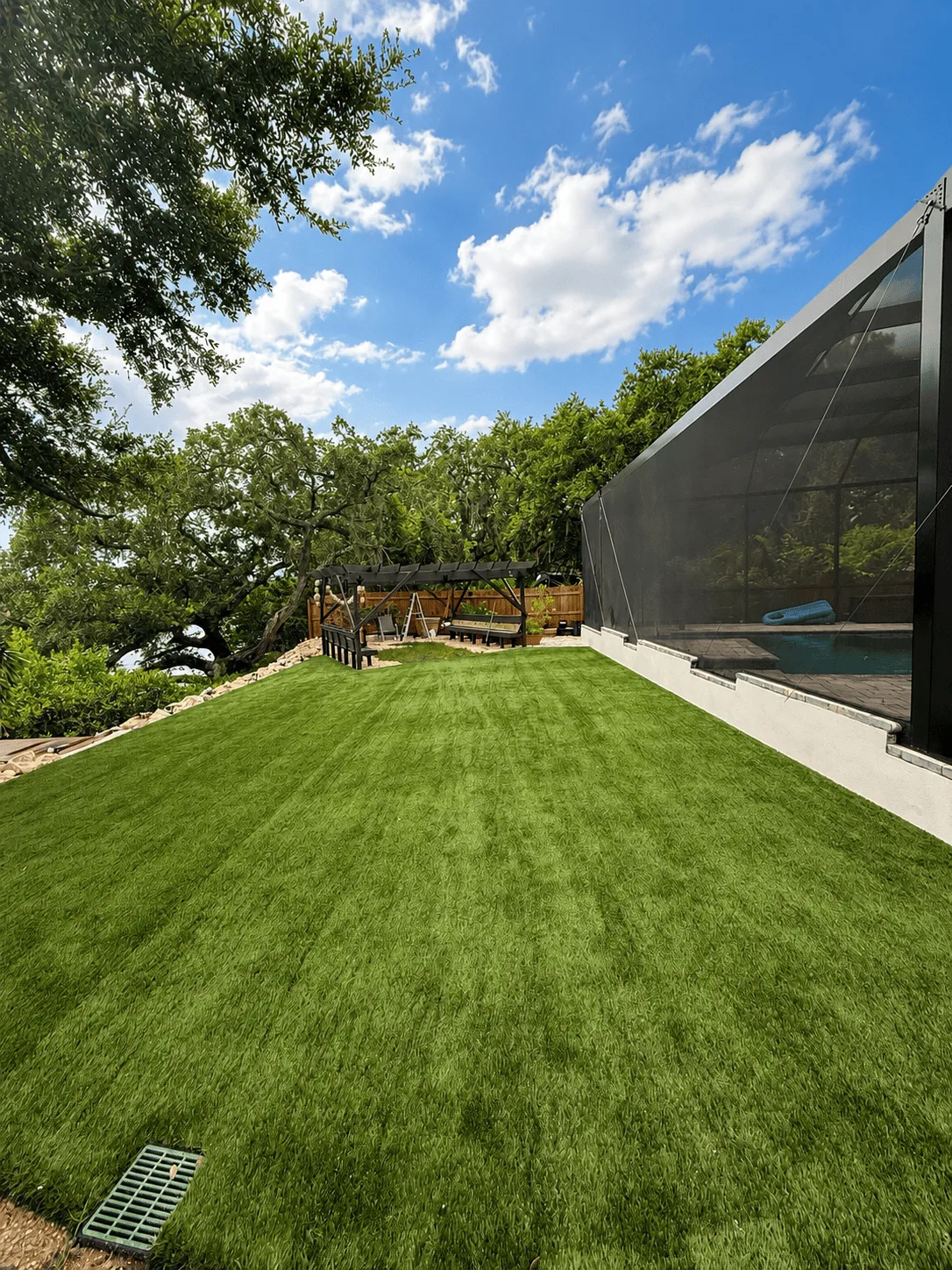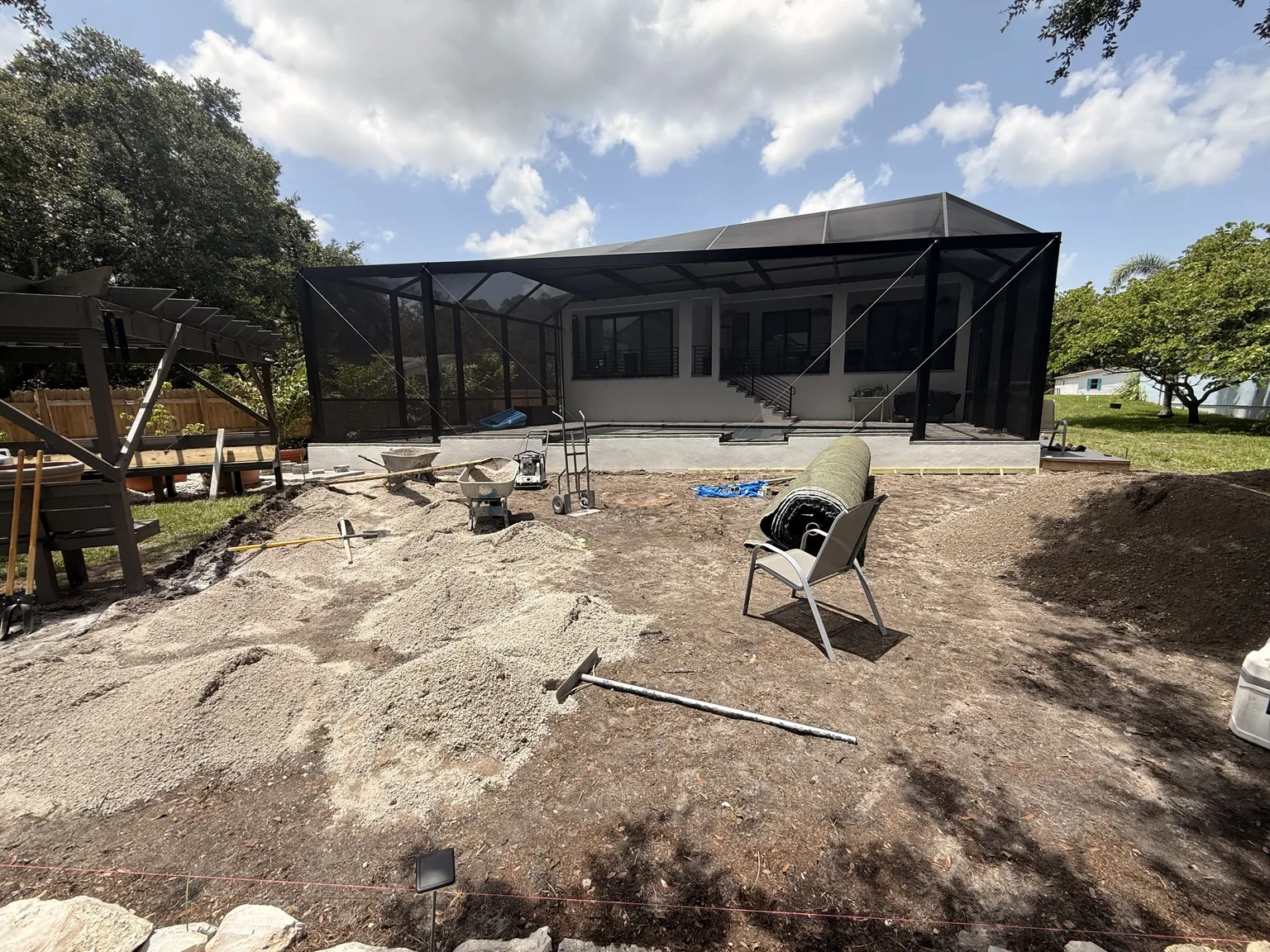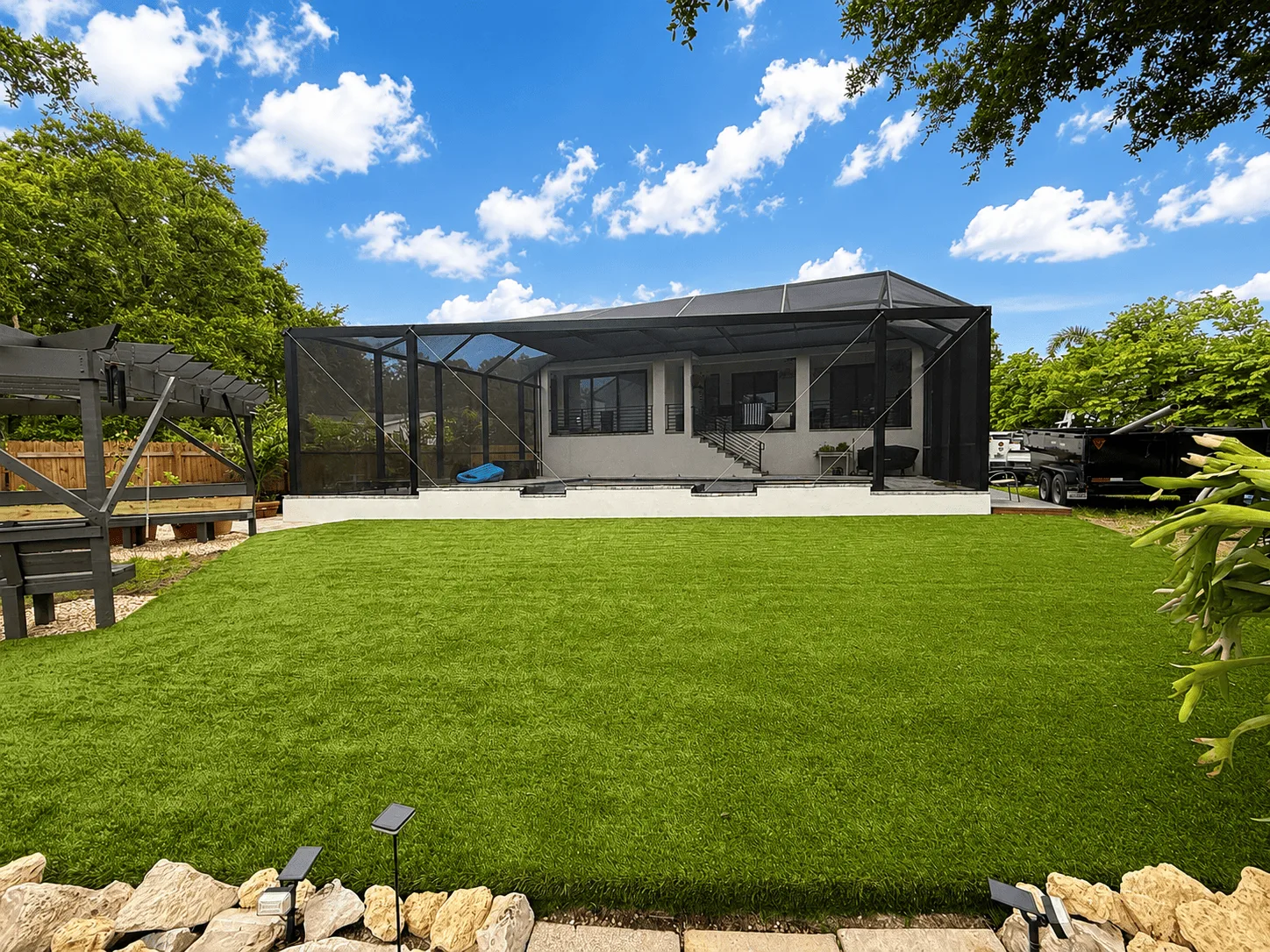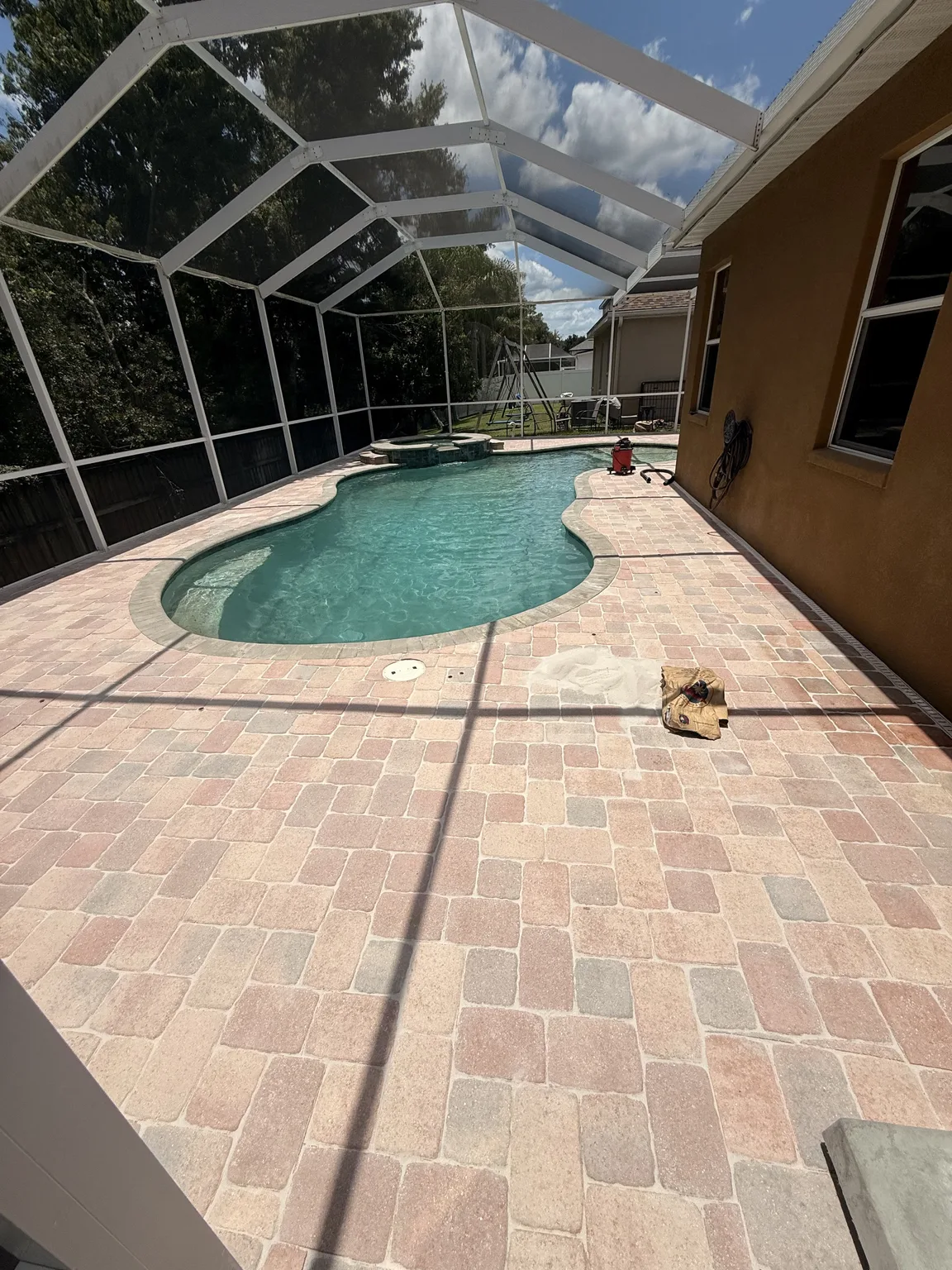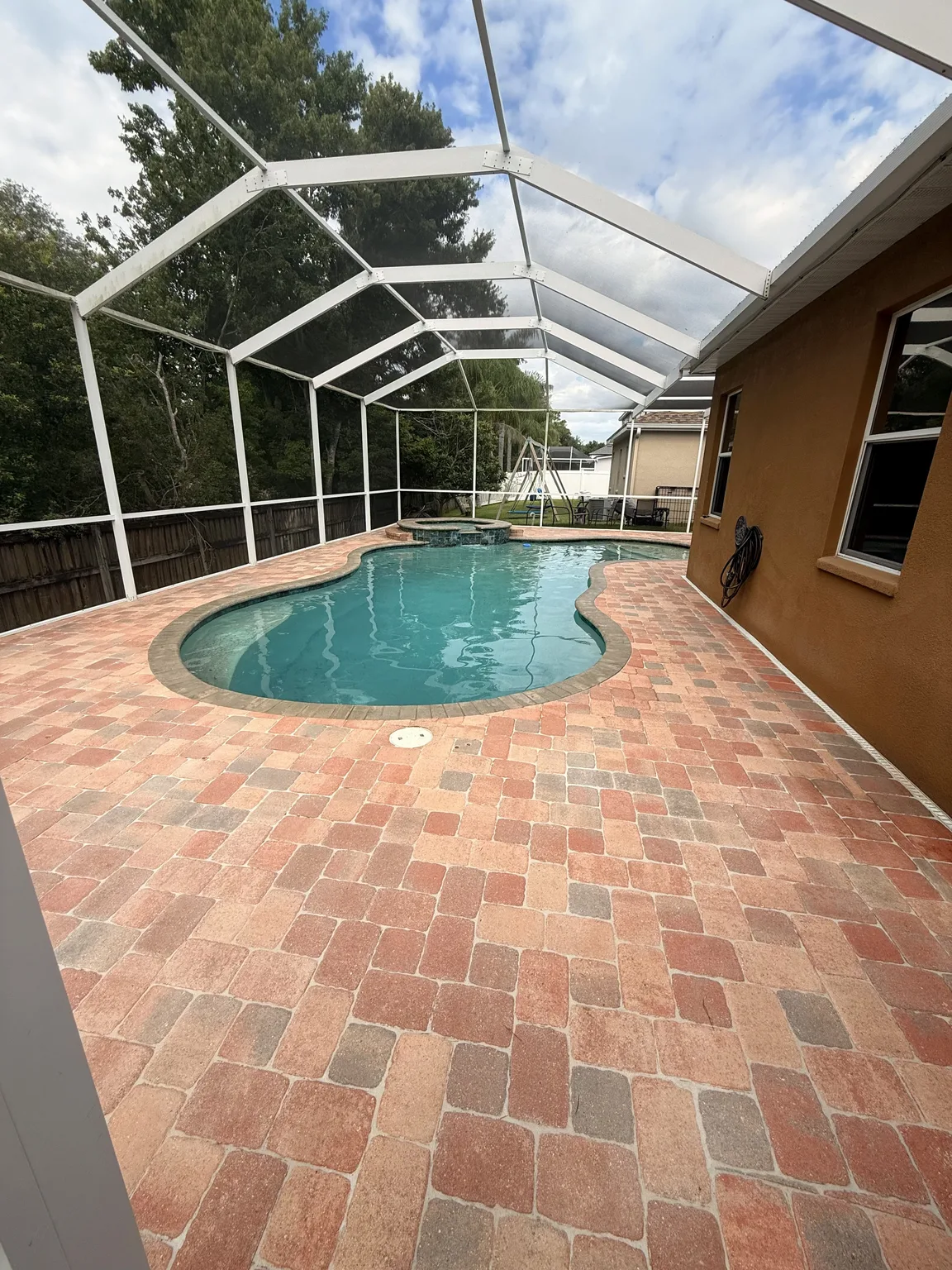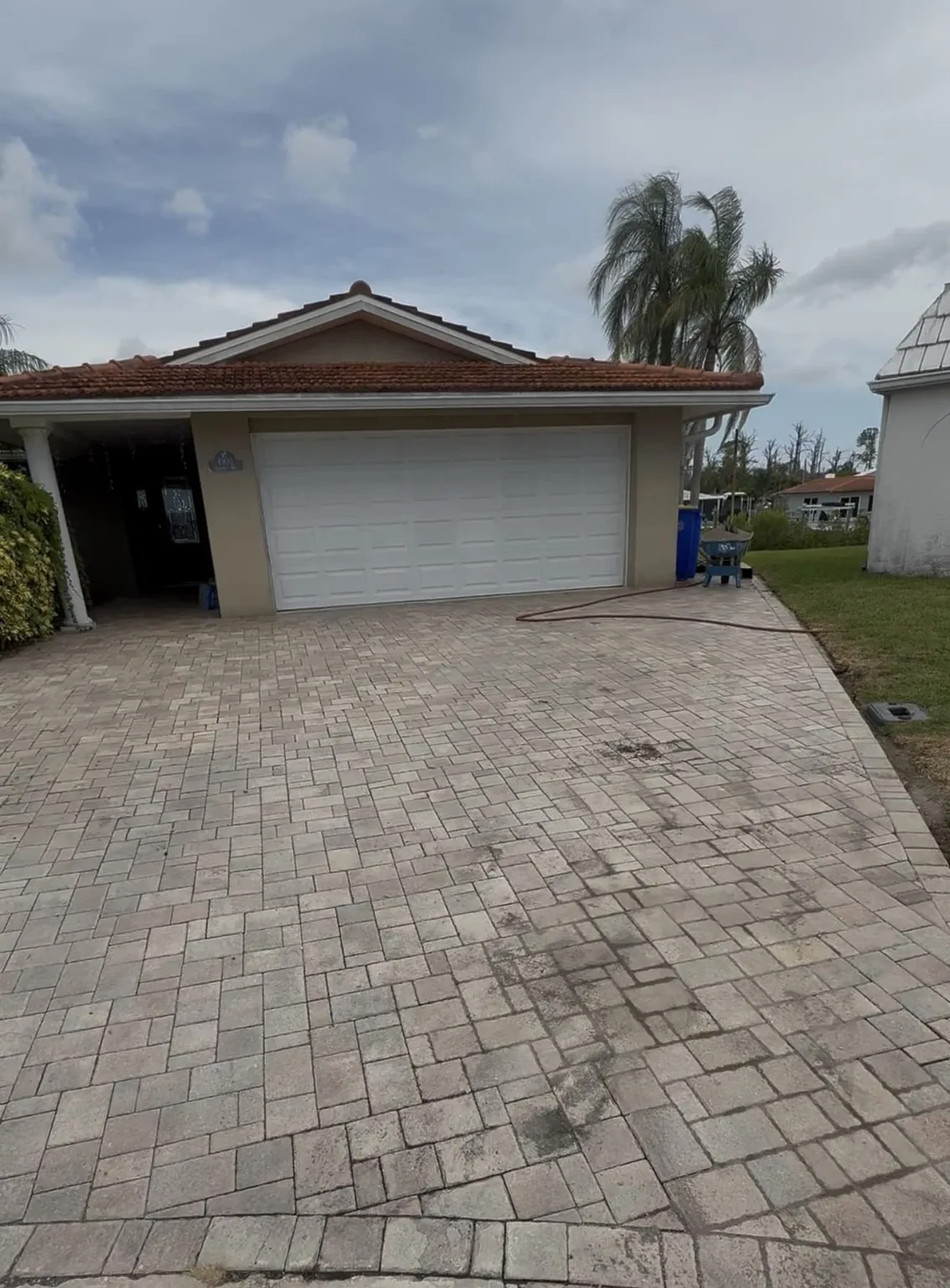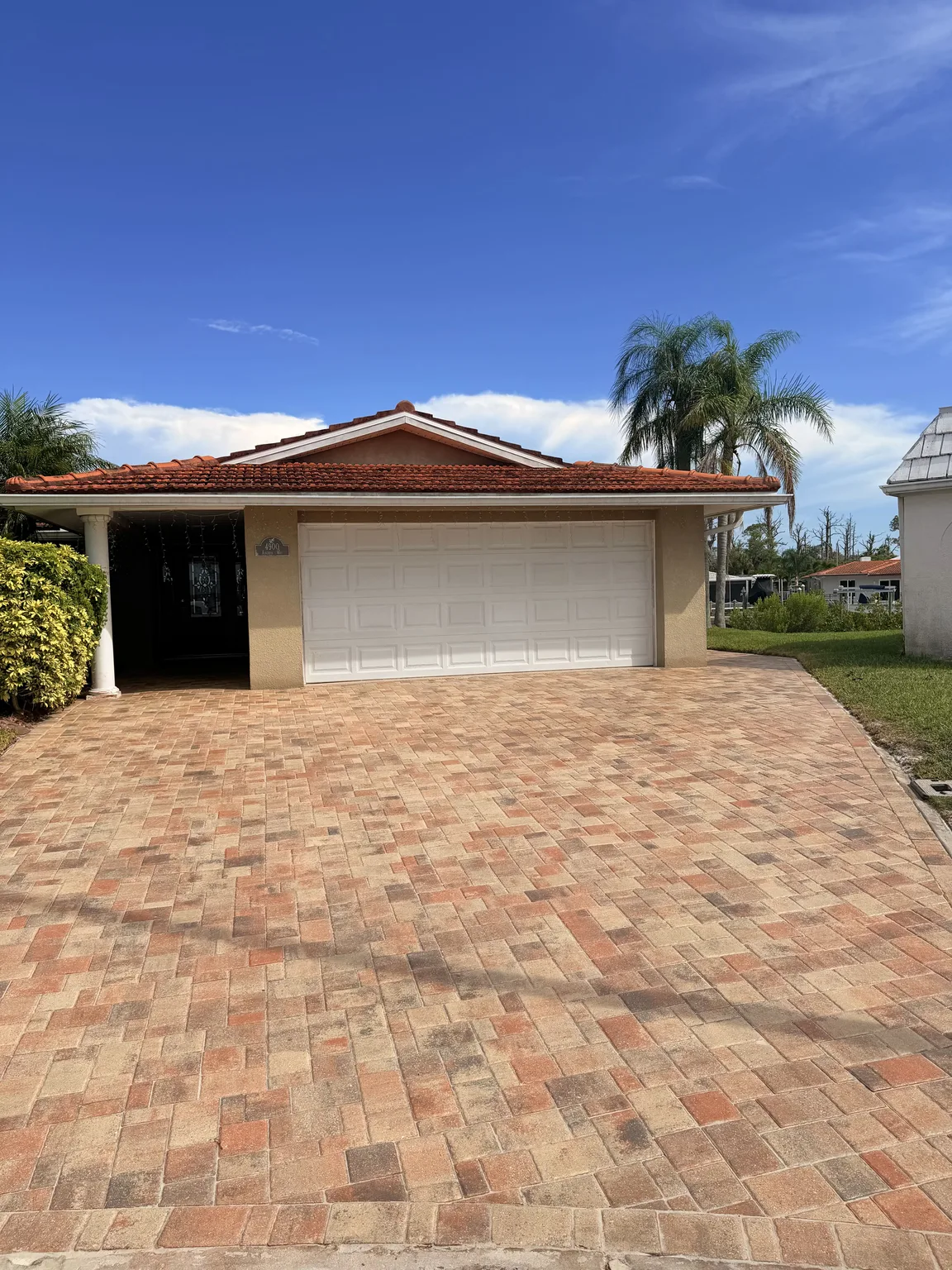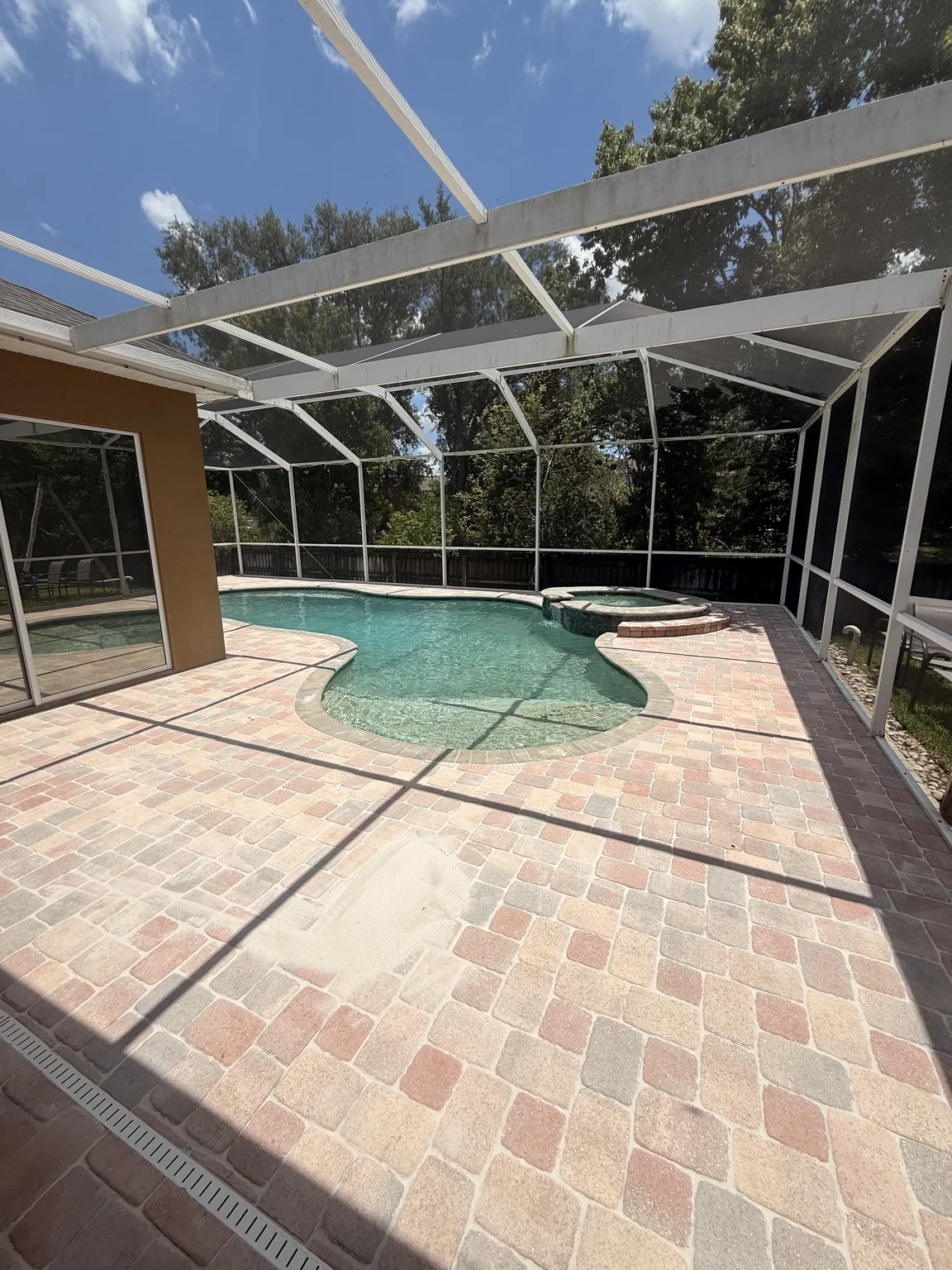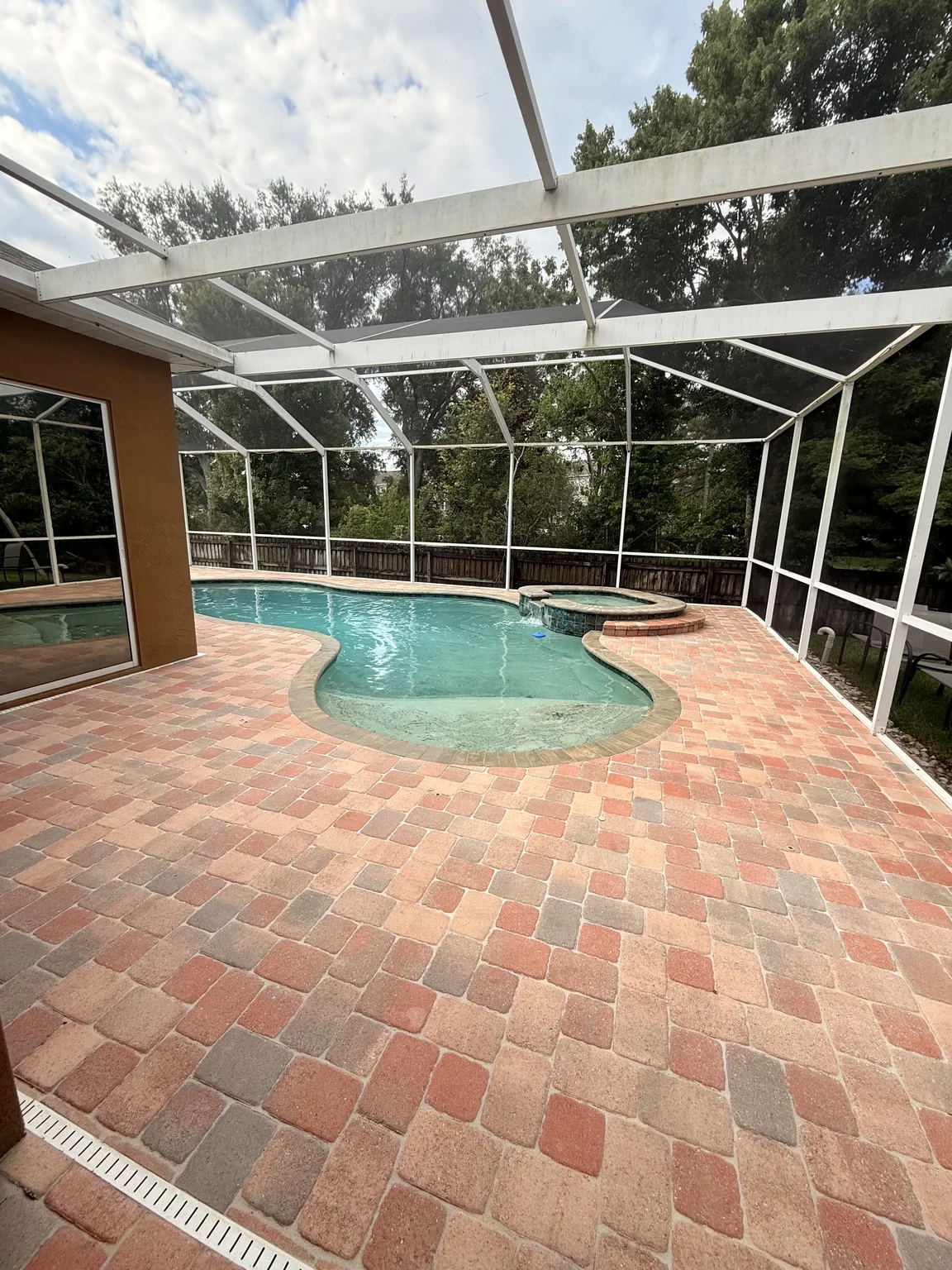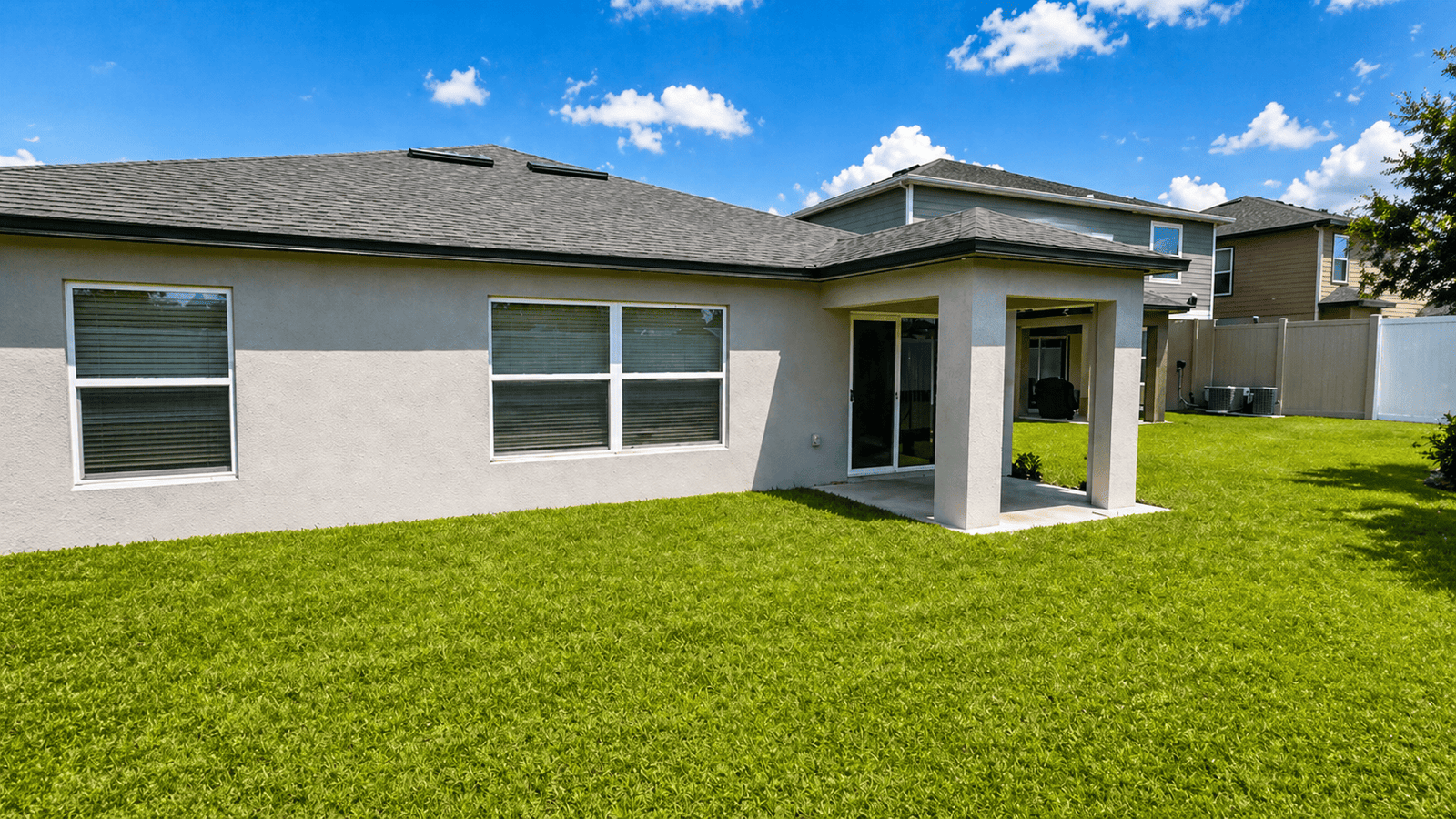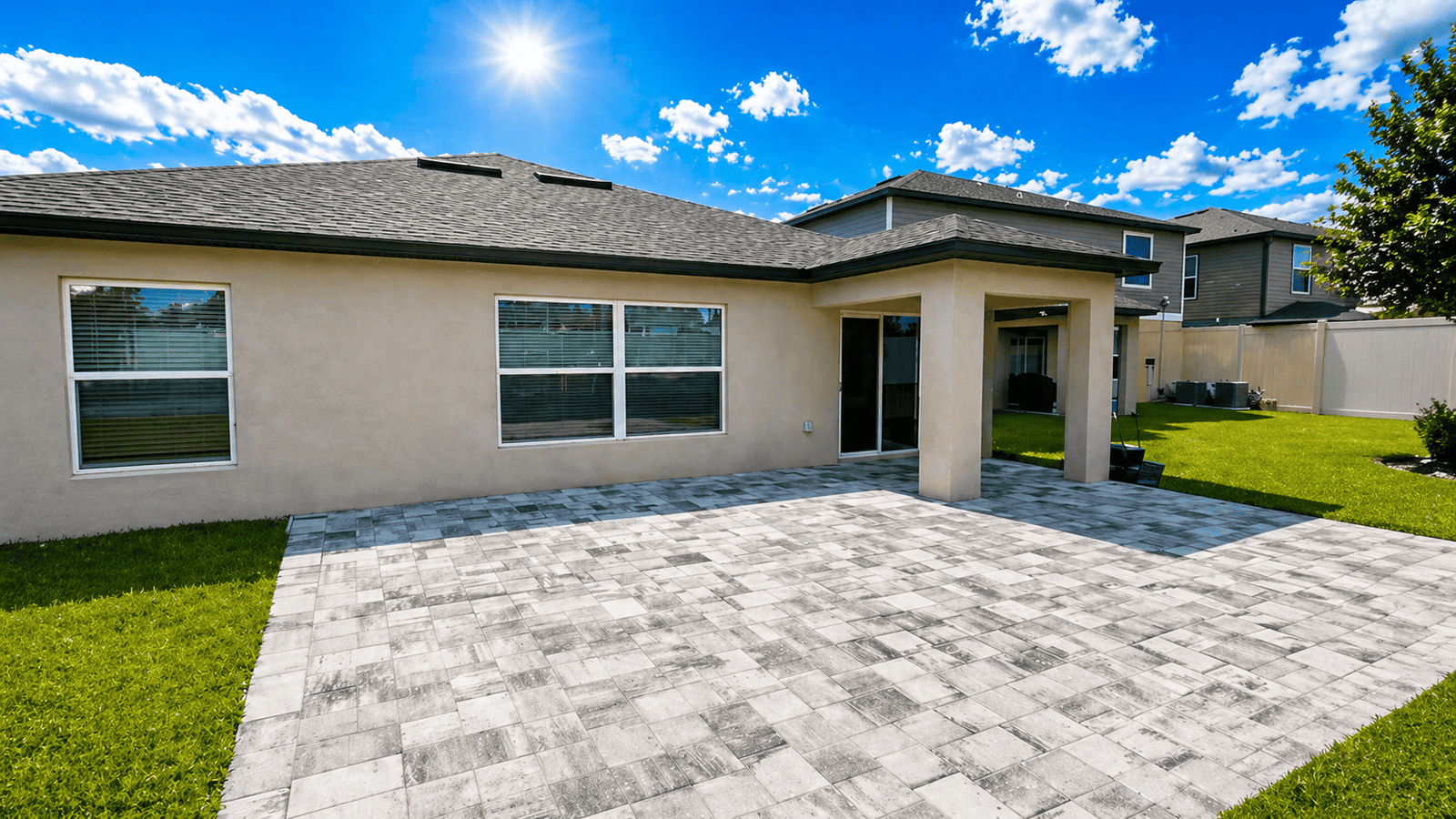
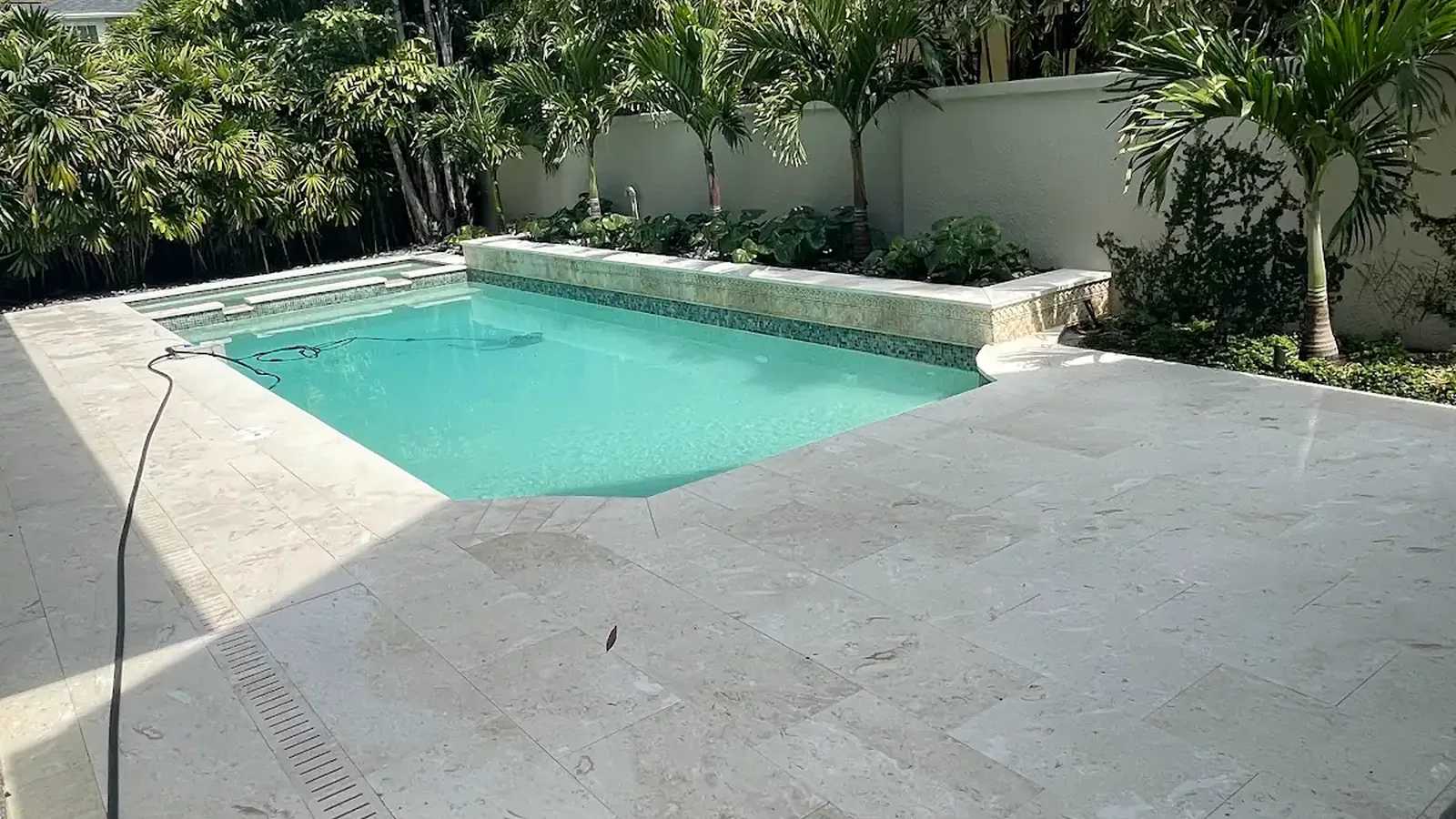
Best pool deck materials for Florida heat depend on how your backyard handles sun, shade, splashing water, and heavy use. In Tampa Bay, pool decks sit through brutal afternoon rays, sudden storms, and long swimming seasons. Because of that, you need materials that manage heat, stay grippy when wet, and hold up to pool chemicals. This guide compares travertine, light concrete pavers, textured porcelain, resurfaced concrete, and other natural stone so you can talk confidently with a qualified contractor and choose what fits your home, budget, and comfort level.
Best pool deck materials for Florida heat: quick comparison
Fast answer: what works best in Tampa Bay sun
In hot Florida backyards, many homeowners lean toward light-colored travertine, light concrete pavers, or textured porcelain around the pool. These options typically reflect more sun than dark concrete or stone, and they offer good design flexibility. Travertine and quality concrete pavers perform well when installed correctly with proper base prep, slope, and joint sand.
Textured porcelain can handle aggressive pool chemistry, but it demands precise installation and appropriate slip resistance. Resurfaced concrete can refresh an older deck, yet it depends heavily on the condition of the slab under it. Other natural stones can look beautiful, but they require very careful selection for color, finish, and suitability for exterior wet areas.
Quick pros and tradeoffs by material
Travertine offers a classic look and, in many finishes, a pleasantly textured surface. However, the Natural Stone Institute stresses that you must choose appropriate travertine for exterior pool decks and maintain realistic expectations about performance. Light concrete pavers are versatile and repairable, but quality varies by manufacturer and installer.
Textured porcelain stands out for stain resistance and consistent color, though it can feel harder underfoot and may need careful edge details. Resurfaced concrete can change color and texture without a full tear-out, yet cracks in the slab can reflect through. Other natural stones, like shellstone or certain limestones, can work in the right finish, but they often need more sealing and maintenance planning.
How Florida sun, shade, and water affect pool deck materials
Understanding heat, color, and solar exposure
Florida pool decks in places like Riverview, Wesley Chapel, and Palm Harbor often face all-day sun. Light colors usually reflect more sunlight than dark tones, which can help surfaces feel more comfortable in bare feet. Material density and surface texture also matter, since dense, dark finishes tend to stay warmer.
However, no material stays cool under every condition. Shade patterns from trees, cages, roof lines, and screens can change comfort throughout the day. Because of that, combining a reflective surface with planned shade structures, landscaping, or umbrellas usually works better than depending on material choice alone.
Moisture, runoff, and Tampa Bay weather
Pool decks around Thonotosassa, Land O’ Lakes, and Town ‘N’ Country see sudden storms, heavy humidity, and frequent splashing. That constant moisture can raise the risk of slick spots, efflorescence, or mildew on some finishes. Proper slope away from the pool and house helps water move off the surface instead of ponding in low areas.
Permeable joints in pavers can let some water drain through the surface, while porcelain and concrete overlays rely more on surface runoff. Because site conditions differ, a detailed layout plan is important to keep water from sitting on steps, in lounge zones, or against the coping. Good joint design and edge restraints also help keep the deck stable over time.
Pool chemistry and splash zones
Chlorine, salt systems, and pH adjustments all affect pool deck surfaces. Textured porcelain and quality concrete pavers generally tolerate normal pool chemistry when installed and maintained correctly. Travertine and other natural stones can perform well, but they often need careful product selection and periodic sealing.
Resurfaced concrete coatings vary widely in chemical resistance, so manufacturer data and installer experience matter. Splash zones near the waterline, skimmer, and steps take the most abuse from both water and bare feet. Because of this, many Tampa Bay homeowners choose more durable, textured finishes in these areas and reserve smoother or decorative treatments for drier seating zones.
Comparing heat comfort: travertine, concrete pavers, porcelain, overlays, and stone
Travertine and other natural stones
Travertine remains a popular option around pools in Ruskin, Greater Carrollwood, and across Tampa Bay. Many homeowners appreciate its natural pores, subtle color variation, and traction in honed-and-filled or tumbled finishes. Lighter tones often reflect more sun, which many people find more comfortable in hot months.
However, travertine is not a one-size-fits-all material. The Natural Stone Institute emphasizes choosing travertine that is rated for exterior, wet applications and following sound installation and maintenance practices. Other natural stones, like some limestones or marbles, can be more sensitive to heat, etching, or pool chemicals, so they require even tighter product selection.
Light concrete pavers and textured porcelain tiles
Light concrete pavers offer a strong combination of comfort, style, and practicality. When you choose pale grays, buffs, or creams with a textured surface, the deck typically reflects more sunlight than dark poured concrete. Joints between pavers also break up the mass, which can influence how heat feels underfoot.
Textured porcelain pavers or tiles provide a very uniform look and consistent slip-resistance ratings. They tend to resist stains from sunscreen and drinks and handle saltwater systems well when properly specified. However, porcelain is dense and rigid, so it usually requires a prepared base or mortar system tailored to the product.
Resurfaced concrete overlays
Resurfaced concrete, such as spray textures, acrylic coatings, or stamped overlays, can improve the look of an aging deck without full removal. Light colors and knockdown textures can make the surface feel more comfortable than older, dark broom-finished concrete. This approach can also cover minor blemishes and create patterns that mimic stone or tile.
Nevertheless, overlays depend on the integrity of the existing slab. If the concrete moves or cracks, that movement can often show through the new finish. Because of that, a thorough inspection of the existing deck is important before choosing an overlay in Tampa Bay climates.
Wet traction, safety, and pool chemistry
Slip resistance in splash and lounge areas
For families in Land O’ Lakes or Seven Springs, wet traction often matters more than looks. Surfaces with subtle texture, open pores, or pattern relief usually provide better grip when wet than perfectly smooth tiles. Tumbled travertine, textured concrete pavers, and slip-rated porcelain products are often good candidates in active pool zones.
In contrast, polished stone or very smooth overlays can become slick when sunscreen and water mix on the surface. Steps, tanning ledges, and areas right outside the pool entry deserve special attention. Because each material line differs, it helps to review manufacturer data and feel sample pieces under bare feet before you commit.
How pool chemicals interact with each material
Chlorine and saltwater can leave deposits or cause surface changes over time. Many high-quality concrete pavers are engineered to tolerate normal pool chemistry when installed and maintained properly. Porcelain surfaces usually resist chemical staining well, but grout joints may still need maintenance.
Travertine and other natural stones may etch or dull when exposed to acidic products or harsh cleaners. The CMHA and stone industry resources encourage realistic expectations, regular rinsing, and tailored cleaning practices. Resurfaced concrete coatings range from very chemical-resistant to more delicate, so you should ask the installer how each option stands up to your pool system.
Sealing, cleaning, and realistic expectations
Most natural stone and many concrete decks benefit from periodic sealing, especially in high-use pool areas. Sealers can help resist stains and make routine cleaning easier, but they do not make a surface maintenance-free. You still need to rinse off sunscreen spills, sweep debris, and address any standing water.
Textured porcelain may not need sealing on the tile itself, though grout joints or surrounding materials might. Resurfaced concrete often requires re-sealing on a schedule recommended by the product manufacturer. In every case, matching cleaners and sealers to the specific material and finish works better than using a one-size-fits-all chemical.
Color, coping, and shade design for Tampa Bay pool decks
Choosing color and pattern for heat and style
Color selection has a big impact on comfort and appearance. Lighter creams, sands, and soft grays in concrete pavers, porcelain, and stone usually reflect more light than charcoal or espresso tones. Variegated blends can also help hide small stains and everyday dust common in Town ‘N’ Country and Palm Harbor backyards.
Pattern and joint layout affect how the deck feels and drains. Running bond, herringbone, or modular paver patterns can direct water and visual lines away from the house. In contrast, large-format porcelain tiles may need movement joints and careful layout to reduce lippage and help manage expansion in the Florida heat.
Coping options and transitions
Coping pieces finish the pool edge and connect the deck with the waterline tile. You can choose matching stone coping, bullnose concrete pavers, or porcelain coping units designed for pool edges. The safest choices usually combine rounded edges, good traction, and consistent overhang.
Transitions to screens, lanais, and door thresholds also matter. Step treads, risers, and thresholds should have visible edges and stable surfaces. When materials change, such as from travertine to interior tile, a clean, level transition reduces trip risks and creates a more finished look.
Planning shade and microclimates
Even the best pool deck materials for Florida heat feel more comfortable with some shade. Pergolas, umbrellas, screen enclosures, and landscaping can all create cooler pockets throughout the day. You can place lounge chairs and dining sets in these microclimates to extend usable hours.
Tree placement should also consider roots, leaves, and organic debris on the deck. A qualified landscape professional can help position plantings to provide shade without crowding the pool structure. By combining shade planning with reflective materials, you can fine-tune comfort more effectively than relying on color alone.
Durability, repairs, and long-term care
How each material ages in Florida conditions
Sun, rain, and foot traffic all shape how a pool deck ages. Concrete pavers typically handle small movements in the base without cracking the surface, since joints can flex slightly. Travertine pavers can perform well when properly supported and drained, but they may show wear on edges over time.
Porcelain often keeps its color and pattern for many years, though chipped pieces can be more noticeable due to the dense body. Resurfaced concrete depends heavily on adhesion and the condition of the original slab. In high-use pools around Tampa and Ruskin, regular cleaning and timely spot repairs go a long way toward preserving appearances.
Repairability and access to utilities
One common advantage of pavers and modular stone is ease of access for future repairs. A skilled crew can often lift and reset pavers to reach plumbing, lighting conduits, or skimmer lines below. Matching replacement pieces are usually easier to source with standard paver lines than with unique stones.
With poured or resurfaced concrete, accessing utilities typically means cutting and patching the deck. While this can be done, color and texture matches may be more visible. Porcelain tile repairs also require careful removal to avoid damaging nearby pieces, especially on bonded installations.
Routine maintenance and inspection checklist
Regular maintenance reduces surprise repairs and helps your deck age more gracefully. Simple habits such as rinsing after heavy use, sweeping sand and leaves, and checking for shifting or loose units make a difference. After major storms, walk the deck to look for standing water, raised edges, or new cracks.
- Inspect coping and steps for movement, chips, or loose pieces.
- Check joints for missing sand, eroded grout, or vegetation.
- Note any areas that stay damp longer than others.
- Watch for flaking, scaling, or coating wear on overlays.
- Track changes near drains, skimmers, and expansion joints.
If you see repeated movement, expanding cracks, or drainage issues, consider contacting a qualified pool contractor, structural engineer, or hardscape specialist. They can evaluate whether the problem is cosmetic, surface-level, or related to the pool shell or soil conditions.
Budget planning and choosing the right material mix
What drives the cost of a Florida pool deck
Total project cost depends on more than the square footage or the price of the paver. Site access, demolition of an old deck, grading, base preparation, and coping choices all affect the final number. Complex patterns, inlays, or multiple materials can add labor time, as can curved pool outlines and raised features.
Travertine and other natural stones often cost more per square foot than many concrete pavers, but that can vary by product and source. Textured porcelain and high-performance overlays can also sit at the higher end of the spectrum, especially when they require specialized installation methods. Because every backyard is different, a site visit is necessary for accurate pricing.
Mixing materials to balance budget and performance
You do not have to use the same material everywhere around your pool. Some homeowners in Wesley Chapel or Greater Carrollwood choose premium stone or porcelain for the most visible lounges and use concrete pavers in secondary areas. Others combine a decorative overlay close to the house with pavers or stone at the waterline.
Combining materials lets you place higher-investment products where they matter most. However, transitions require careful planning for elevation, drainage, and expansion. A contractor experienced in pool deck pavers in Tampa Bay can walk you through how each mix will look and perform on your site.
Comparison table: key tradeoffs by material
| Material | Heat & comfort | Wet traction | Maintenance | Repairability |
| Light concrete pavers | Often comfortable in light colors; joints break up mass | Good with textured surfaces | Periodic joint care; possible sealing | Individual units can be lifted and reset |
| Travertine pavers | Light tones can feel pleasant; varies by finish | Generally good in tumbled/honed textures | Needs tailored cleaning and usually sealing | Damaged pieces can be replaced if matches exist |
| Textured porcelain | Light colors help; dense feel underfoot | Slip-rated textures perform well when specified correctly | Low on tile face; grout may need care | Repairs more involved; matching is important |
| Resurfaced concrete | Light, textured finishes can improve comfort | Depends on coating and texture | Re-sealing and coating upkeep | Cracks may require patching or rework |
| Other natural stone | Varies widely; selection is critical | Finish choice strongly affects traction | Often needs careful maintenance and sealing | Replacement may be harder if stone is unique |
When to get a professional pool deck assessment
Signs your existing deck needs more than cosmetic work
Some issues point to deeper problems than faded color or surface wear. Wide or changing cracks, recurring trip edges, settled sections, or water consistently running toward the house deserve professional attention. You might also notice coping separating from the pool shell or hollow-sounding areas under tiles.
In these cases, a licensed pool contractor or structural engineer can help determine whether the pool shell, soil conditions, or deck structure is involved. That insight guides whether a new overlay, a full deck replacement, or structural work makes the most sense. It also helps you avoid putting a premium finish over unstable conditions.
Design help for comfort, layout, and code-related questions
Pool decks around Tampa Bay must coordinate with screen enclosures, fences, and local requirements. A qualified designer or contractor can help align step heights, clearances, and barrier layouts with the applicable codes and standards, while still giving you the style you want. They can also recommend when you may need input from a licensed professional for specific code or safety questions.
Beyond compliance, design help can refine how you use the space day to day. That might mean adjusting deck widths, adding seating nooks, or planning where shade and sun will fall in different seasons. If you like to see many options before deciding, browsing project galleries or guide articles, such as the Pool Deck Paver Guides, can clarify your preferences ahead of a consultation.
Getting accurate quotes for your Florida pool deck
Phone estimates can give rough guidance, but precise quotes require a site visit. During a visit, a contractor can measure, study slopes, note access challenges, and inspect your existing deck or shell. They can also discuss coping choices, drainage paths, material options, and how construction will affect your daily routine.
When you compare proposals, look beyond the material name. Ask about base preparation, edge restraints, coping attachment, joints, and any allowances for repairs to the current slab or shell. Clear, itemized proposals make it easier to weigh cost against long-term comfort, performance, and appearance.
FAQ: best pool deck materials for Florida heat
What are the best pool deck materials for Florida heat if I have kids and pets?
For active families, light-colored concrete pavers, tumbled travertine, and textured porcelain often rise to the top. They combine good traction, durable surfaces, and patterns that hide everyday scuffs. However, you still need to consider scheduling use during peak sun and adding shade in key play areas.
Resurfaced concrete with a knockdown or spray texture can also work when the existing slab is sound. In every case, test sample pieces in sun and shade, and walk them barefoot if possible. That hands-on check helps you see how paws and bare feet might experience each surface.
Is travertine too delicate for a saltwater pool in Tampa Bay?
Travertine can work with saltwater systems when you select appropriate exterior-grade products and follow sound installation and maintenance practices. The Natural Stone Institute advises realistic expectations and thoughtful product selection for any travertine used outside, especially in wet environments. That guidance applies in Tampa Bay just as much as anywhere else.
In practice, you should discuss salt exposure, sealing schedules, and cleaning methods with your contractor and stone supplier. They may recommend specific finishes, thicknesses, or coping details for saltwater applications. Regular rinsing of heavy splash areas can also help manage surface deposits over time.
Are porcelain pavers too slippery for a pool deck?
Porcelain can be a safe choice when you specify products with appropriate slip-resistance ratings for wet, barefoot areas. Many manufacturers offer lines designed specifically for pools and patios with textured faces. These textures create grip while still feeling comfortable to walk on.
On the other hand, glossy or polished porcelain is usually not suited for outdoor pool decks. When you review samples, ask for technical data and test them with water on the surface. An experienced installer can also share which porcelain lines have performed well in local pool projects.
Can I just resurface my existing concrete instead of installing pavers or stone?
Resurfacing can be a practical option when your existing slab is structurally sound, relatively level, and free of major movement. Overlays can lighten the color, add texture, and disguise cosmetic wear. They may also cost less upfront than a full tear-out and replacement, depending on the situation.
However, overlays usually do not fix underlying structural issues. Cracks from movement or soil settlement can often reflect through the new coating. Before you commit, have a qualified contractor inspect the slab, discuss crack-bridging limitations, and explain how they handle joints and transitions.
How do I start choosing materials for my specific Tampa Bay backyard?
Begin by looking at how your yard gets sun and shade during a typical day. Note which areas feel hottest, where you relax most, and how close you are to neighbors. Then list your priorities: barefoot comfort, low maintenance, upscale look, easy repairs, or a blend of all four.
Next, gather examples from photos, showrooms, and local projects you like. Bring those ideas to a consultation so you can compare travertine, concrete pavers, porcelain, and overlays against your specific site. A site visit lets the contractor tailor recommendations to your soil, pool type, and layout, instead of guessing from generic pictures.
If you want to see how different materials and layouts come together in real backyards, browse recent projects and homeowner testimonials before you decide. To compare services and common questions in one place, you can also explore the main services page and detailed FAQ. When you are ready to talk through options for your pool in Tampa, Riverview, Ruskin, or nearby communities, reach out by calling +1 (656) 600-4015, texting the same number, emailing drpavers@outlook.com, or messaging via WhatsApp.
For a closer look at ongoing work and design ideas, you can follow along on Instagram or connect on Facebook. If you prefer to see the service area on a map before scheduling a free consultation at your home, check the location on Google Maps and then reach out in whichever way is most convenient for you.