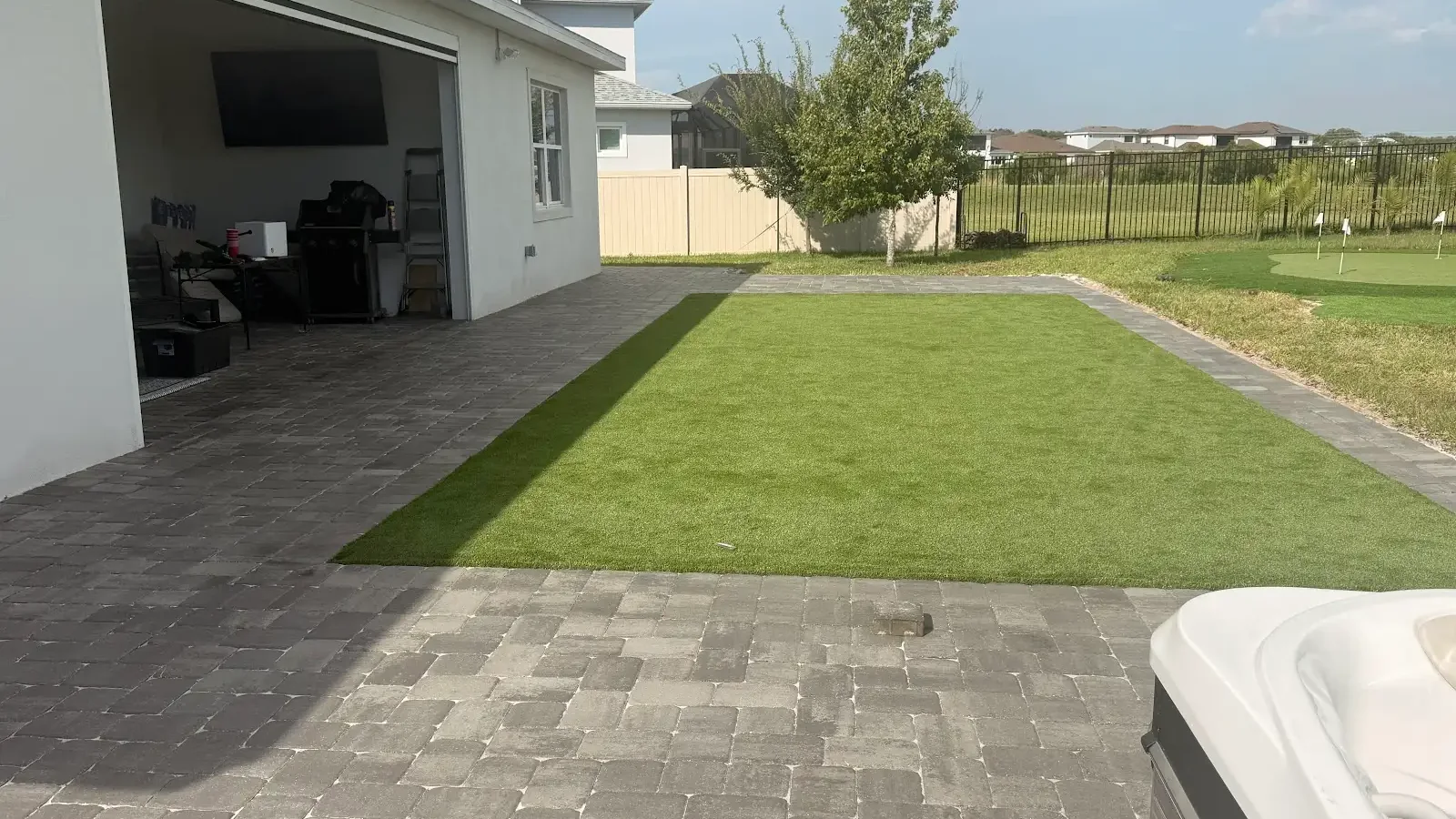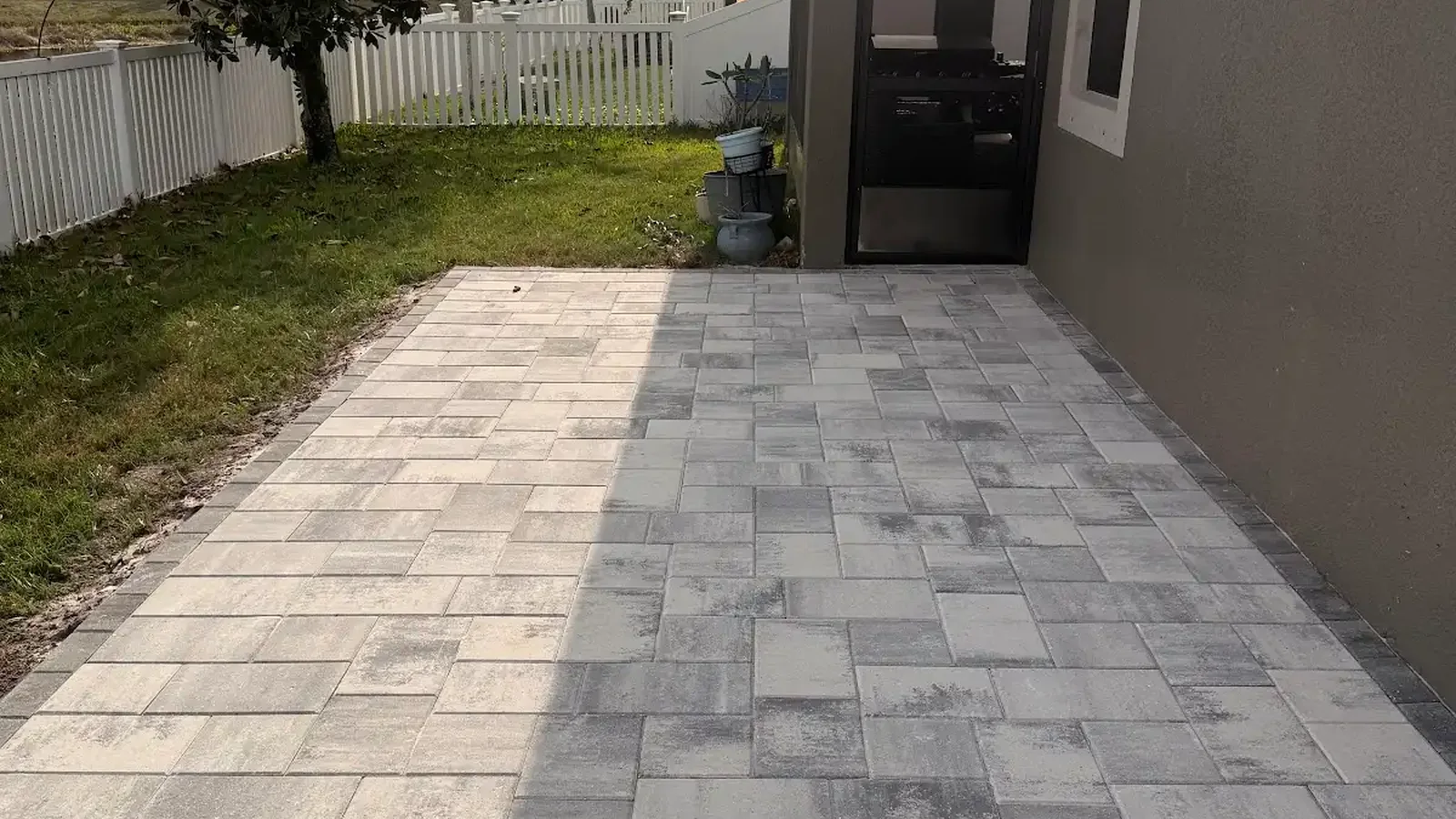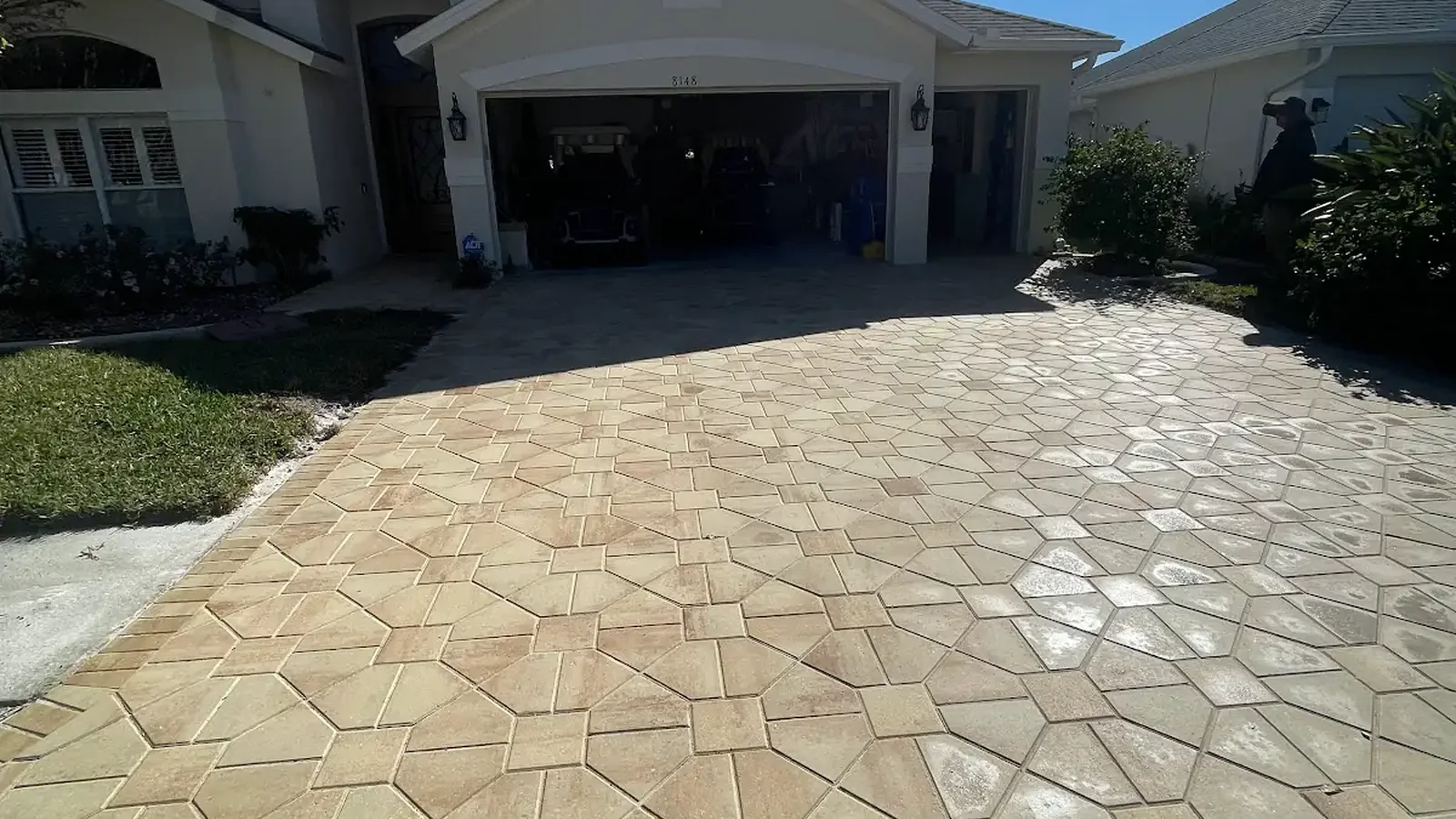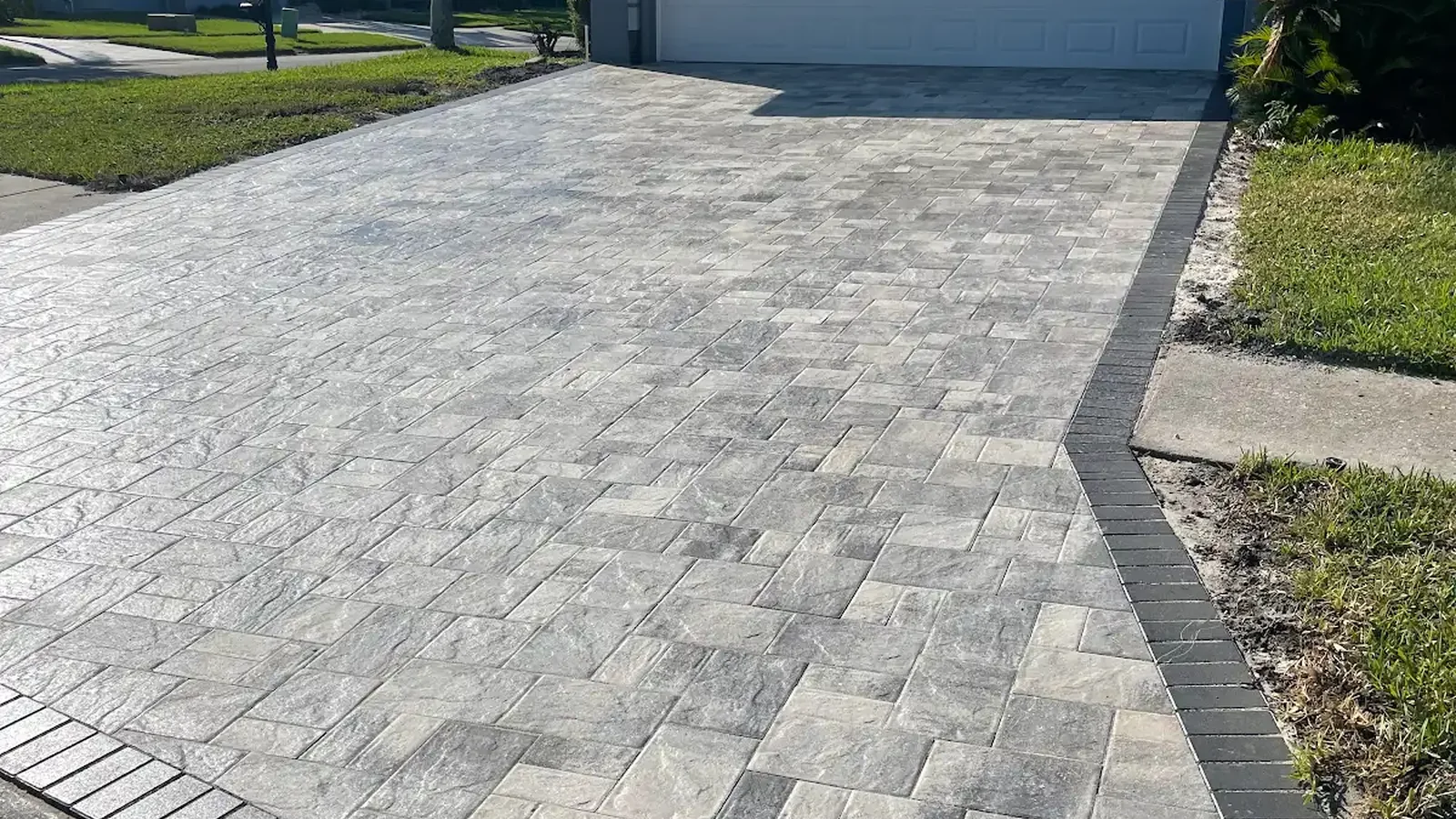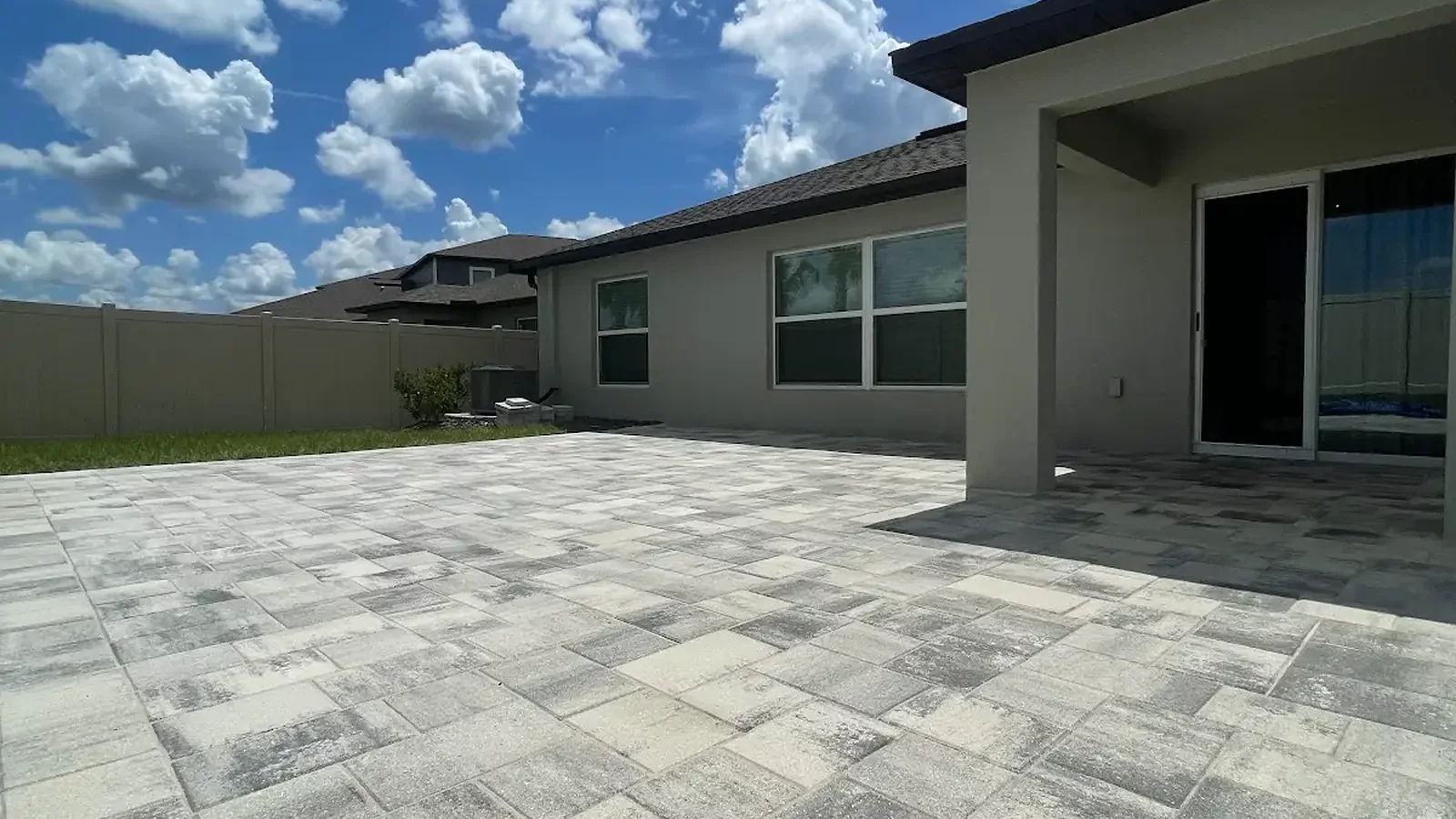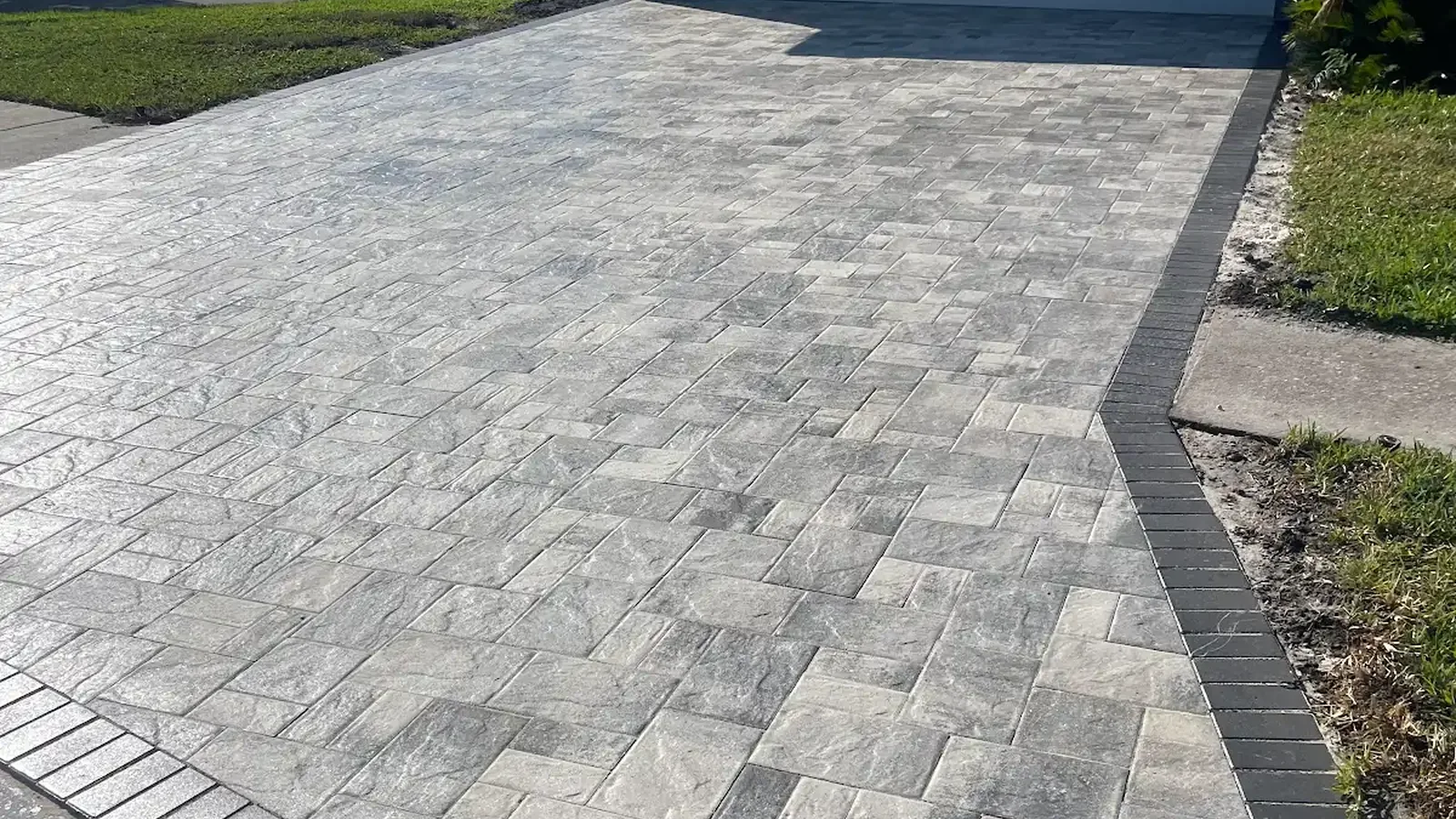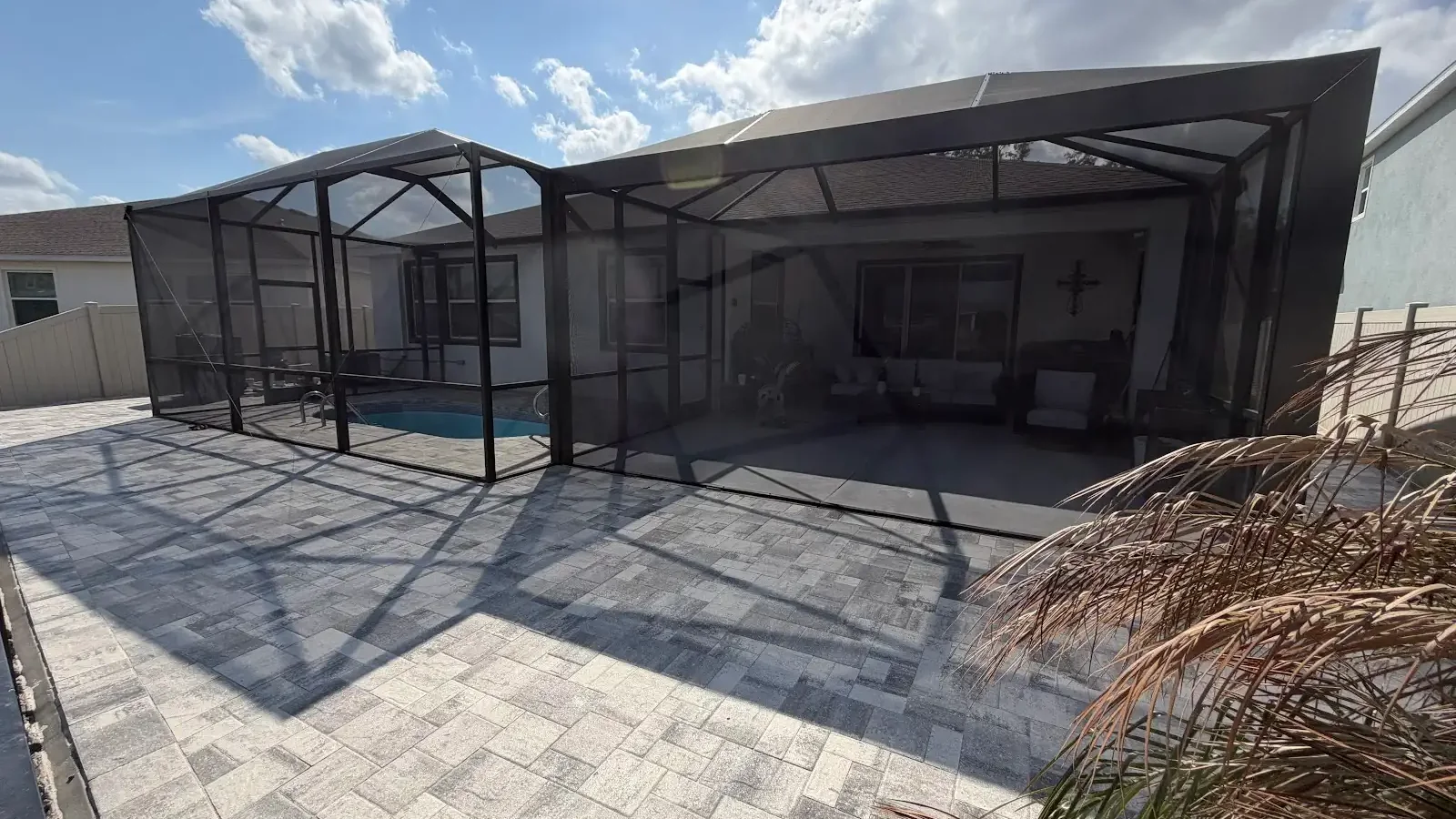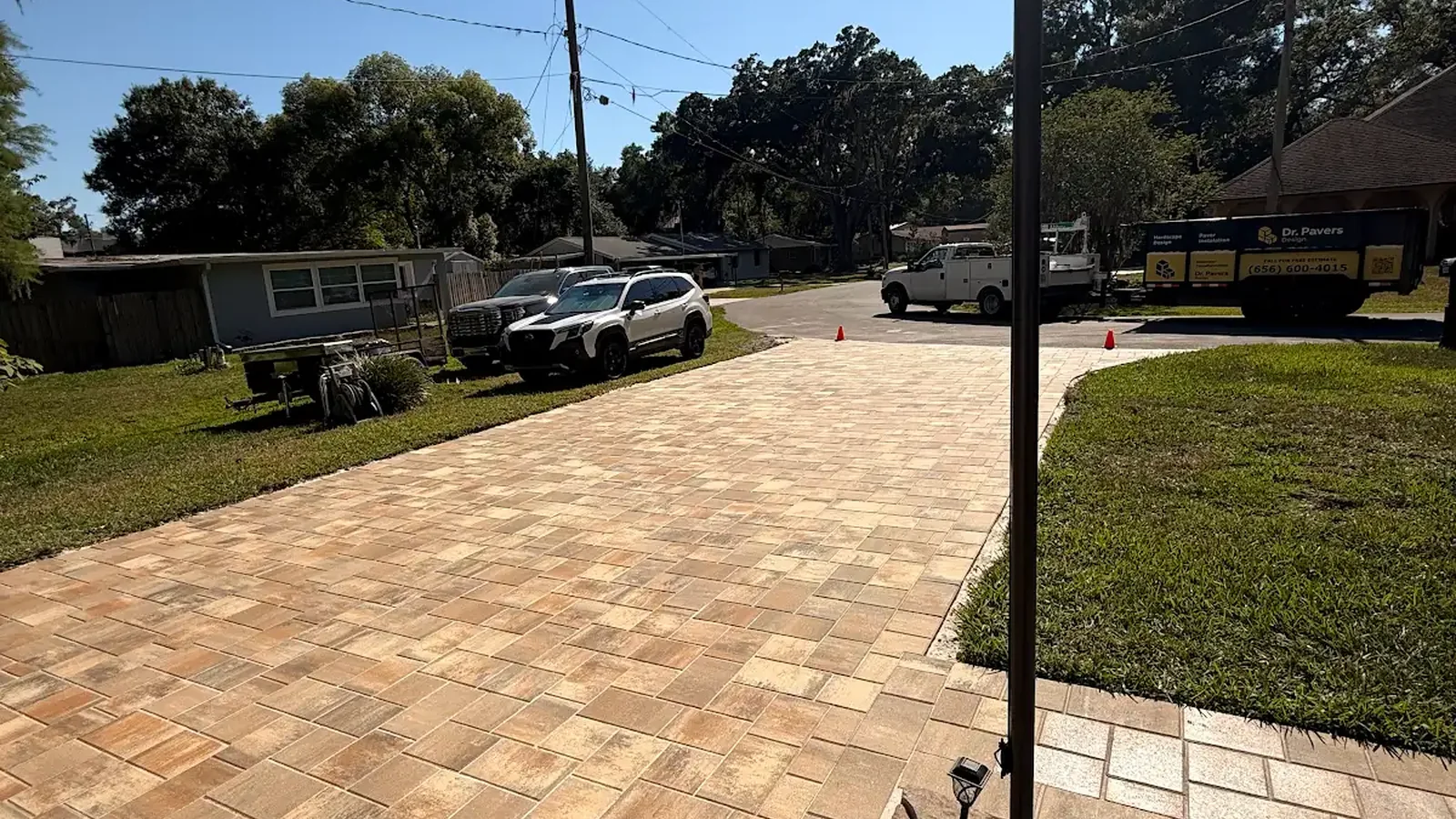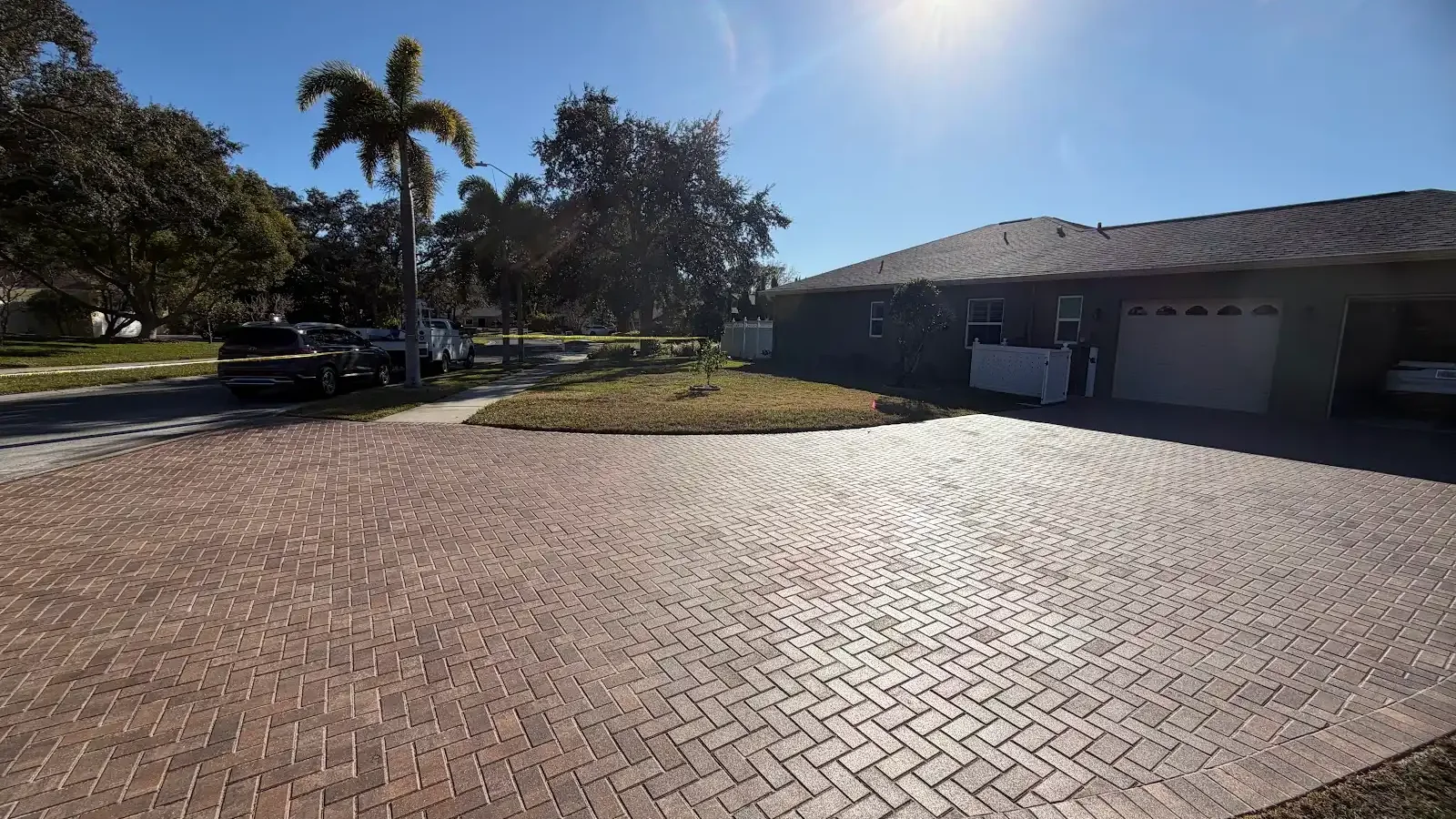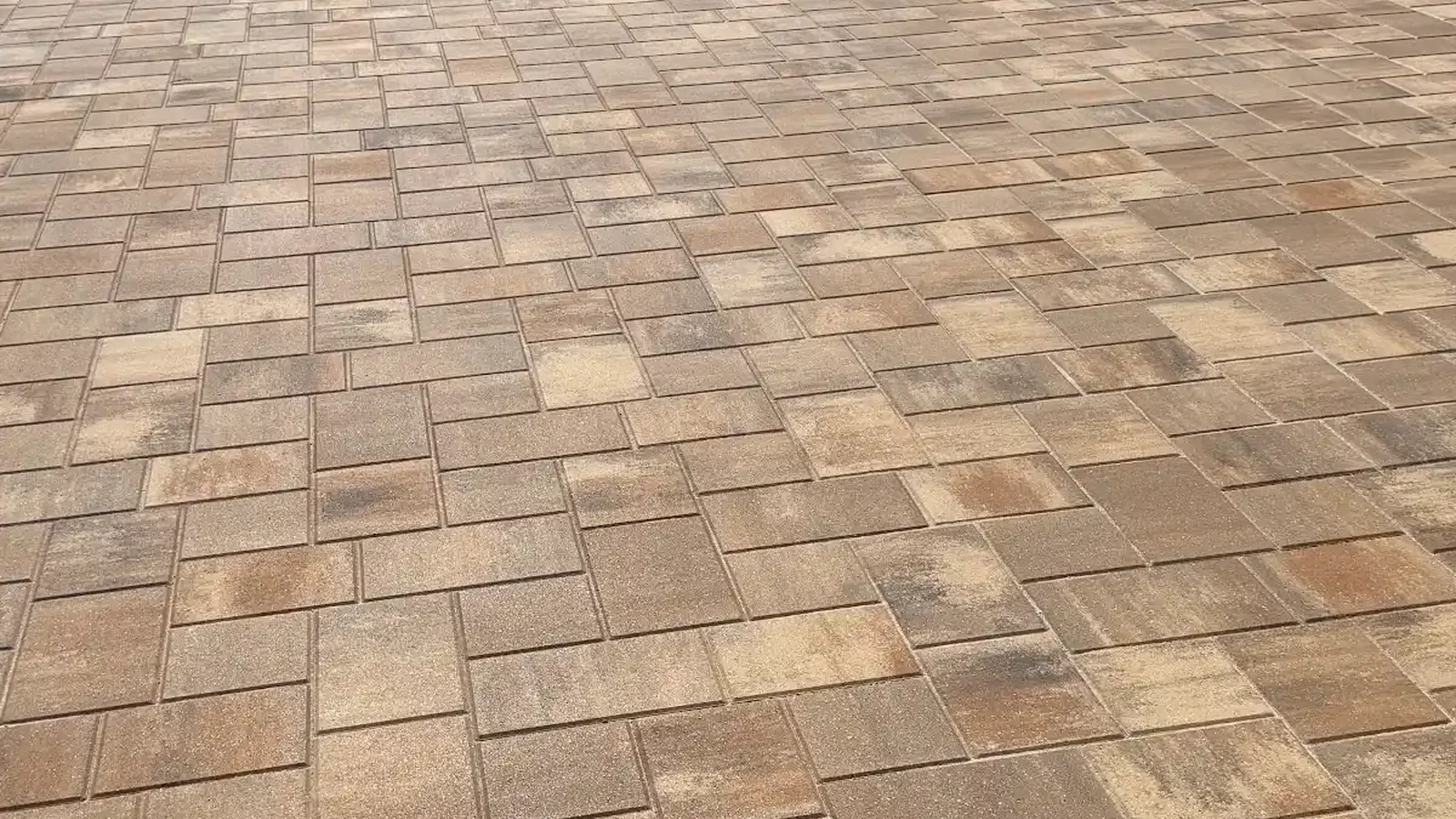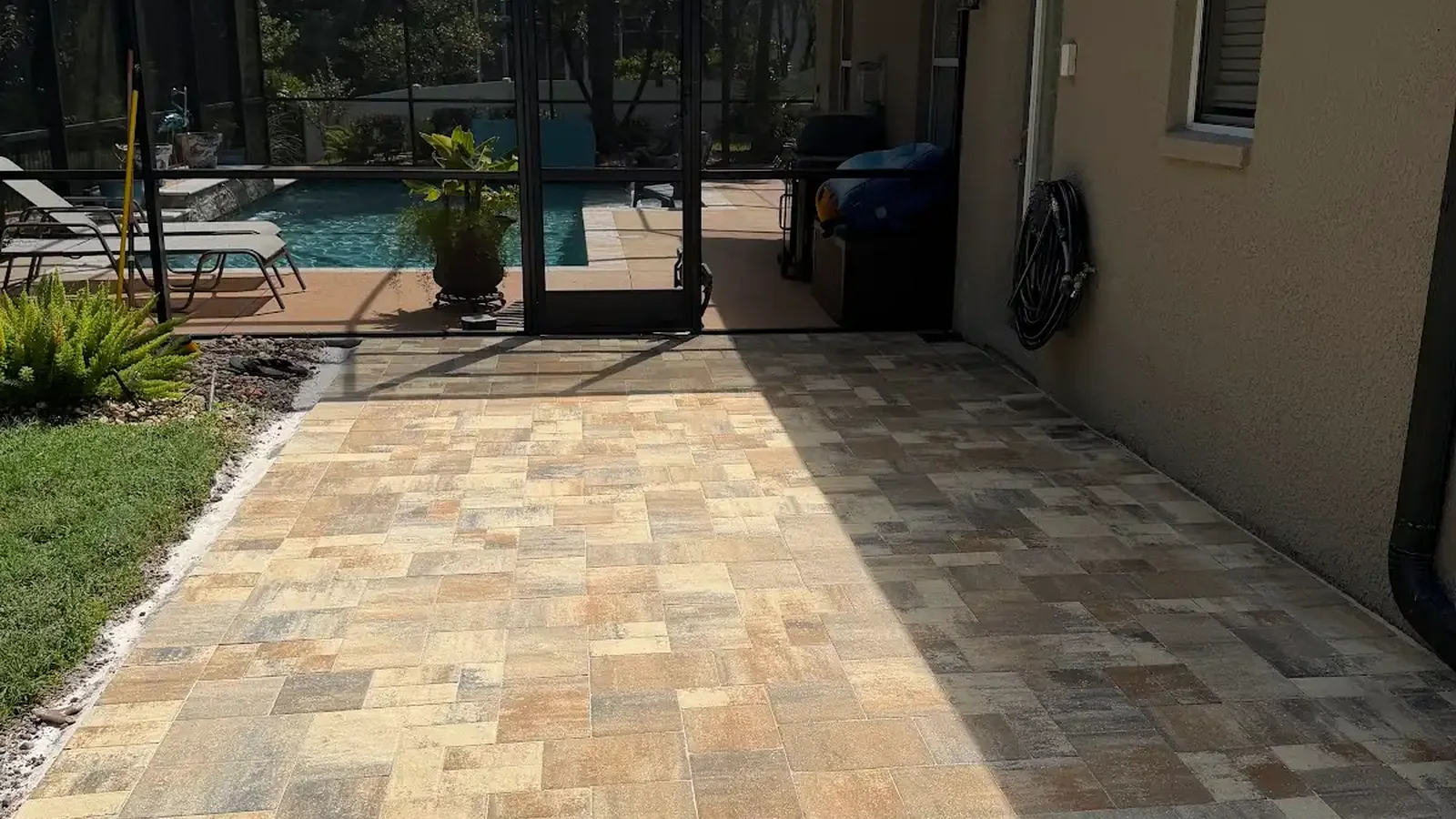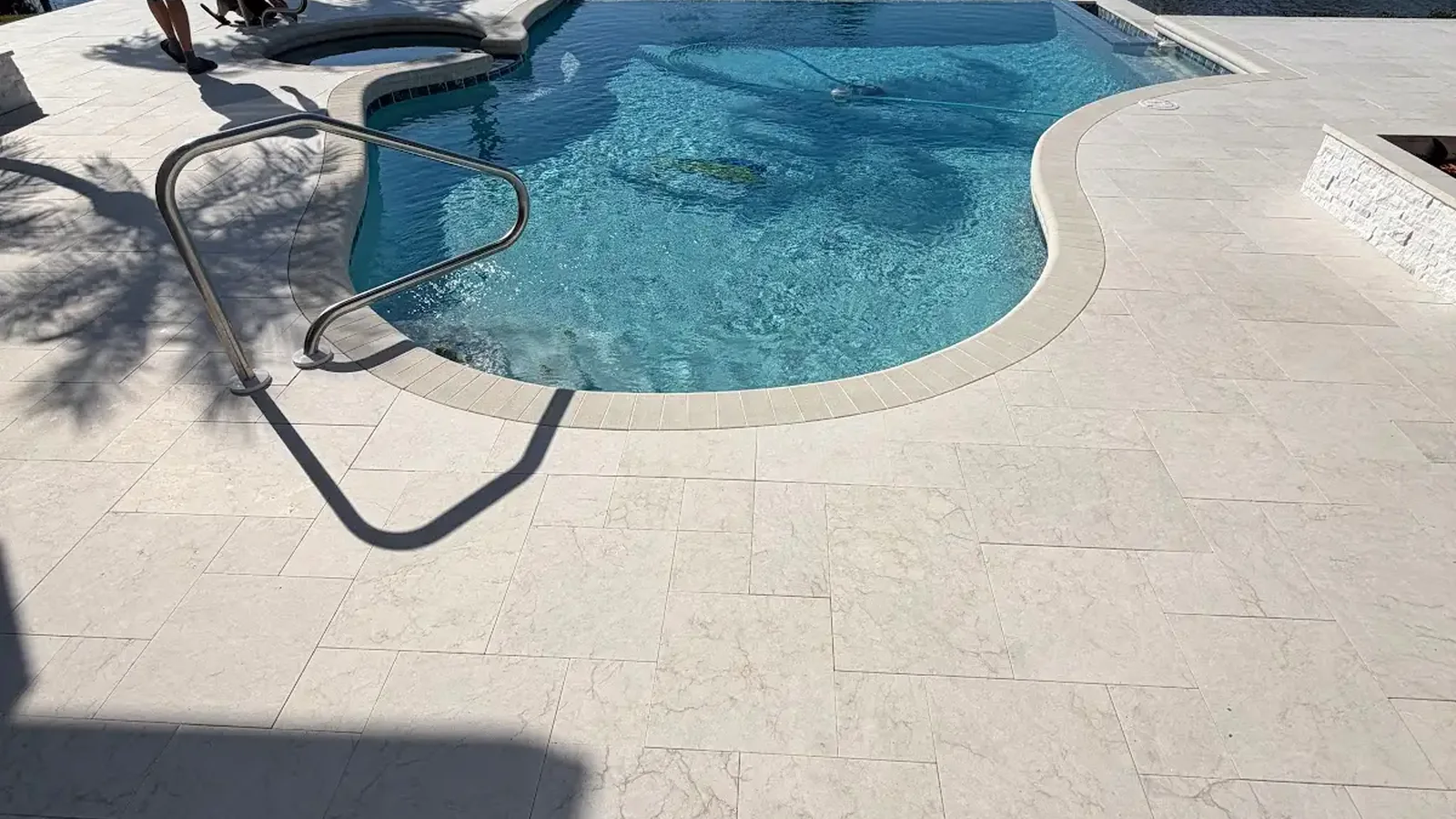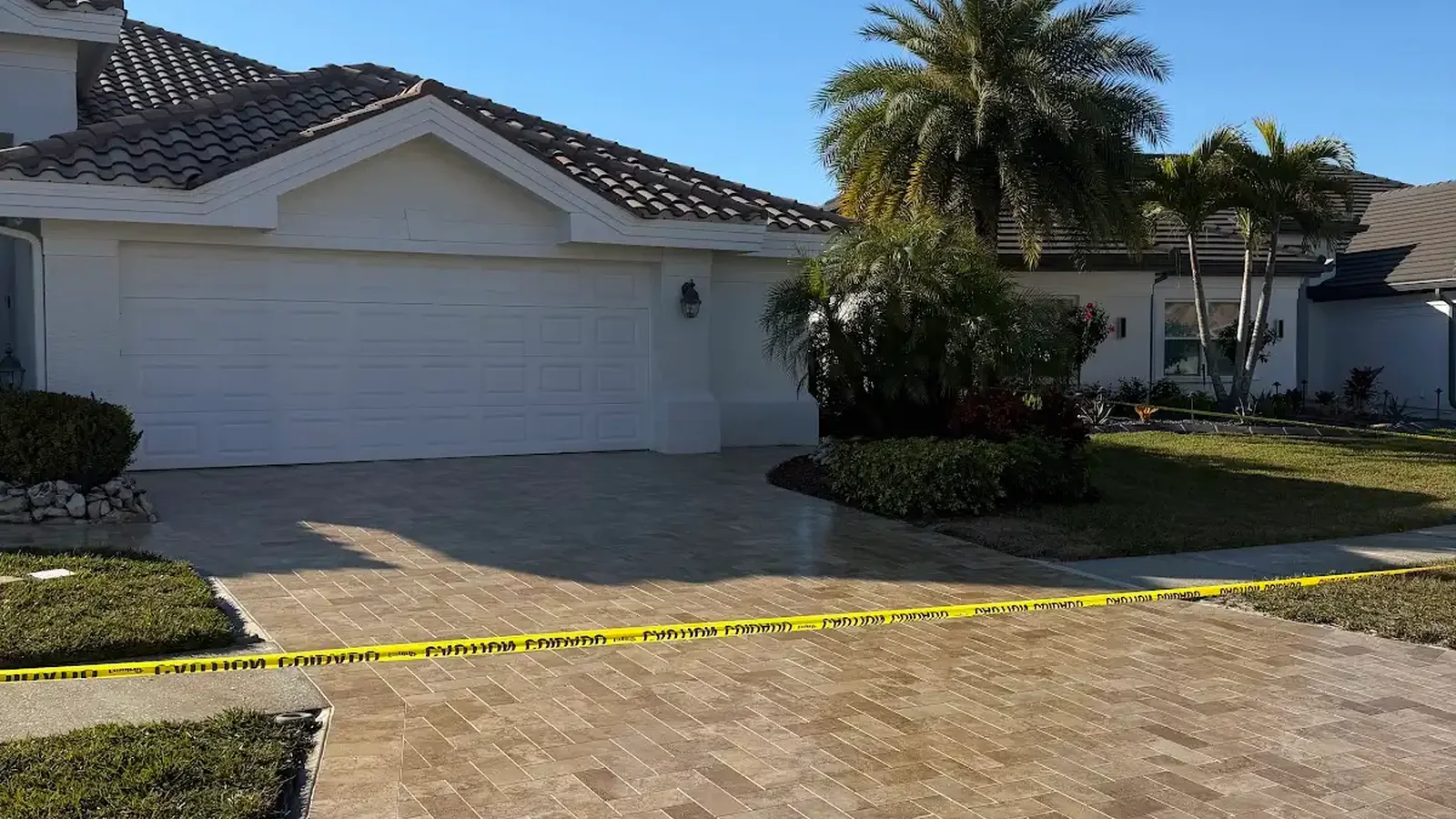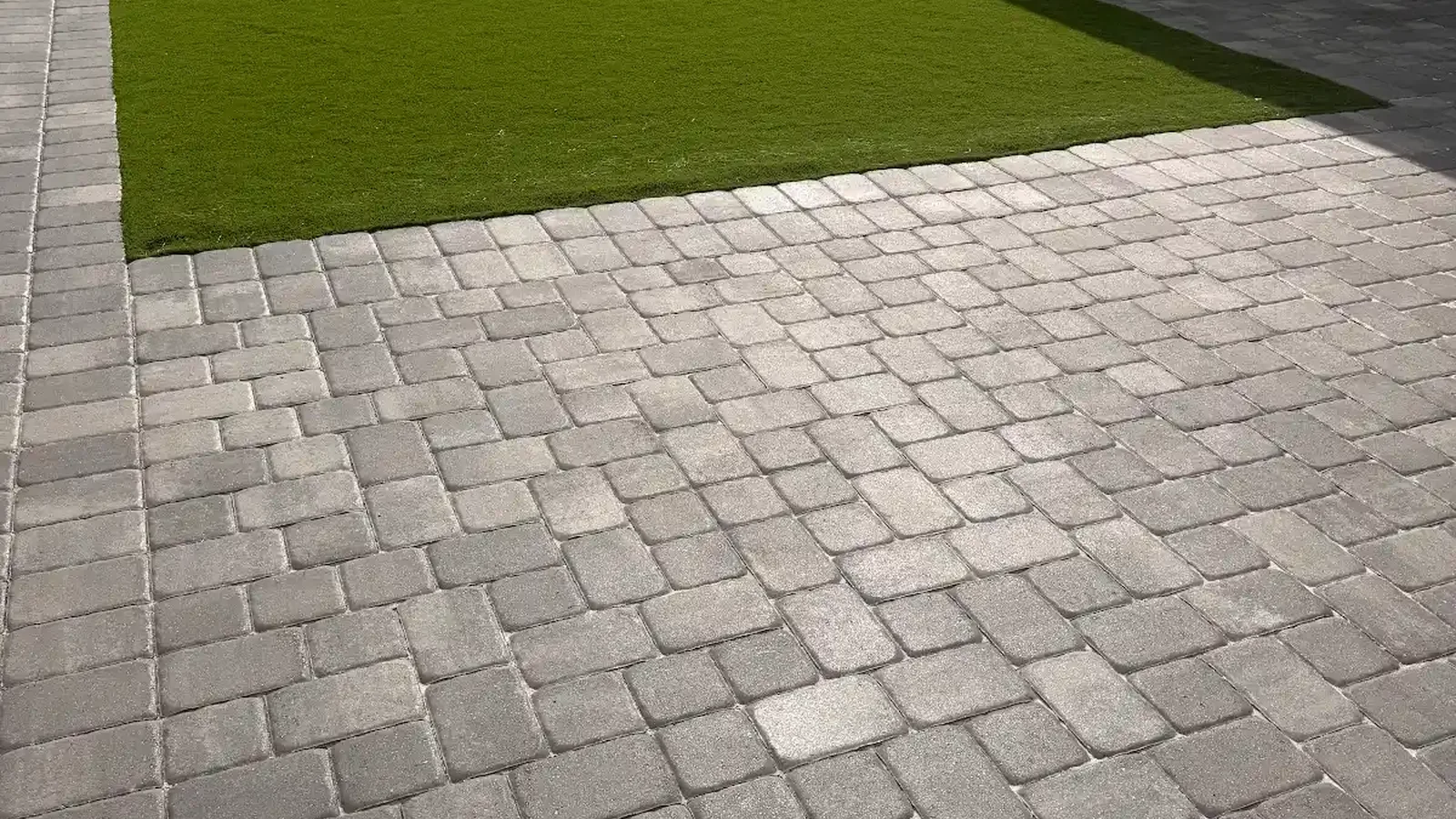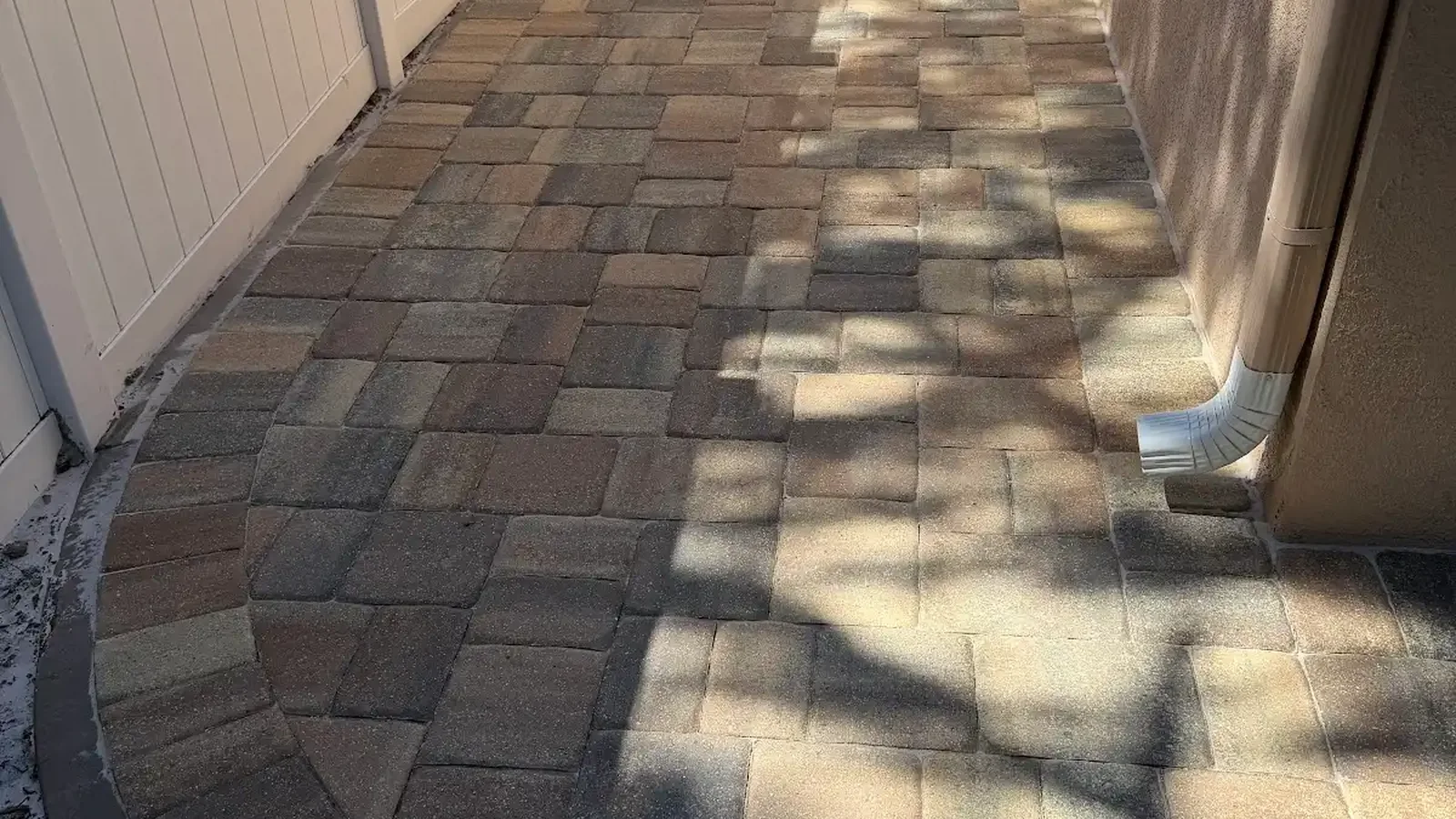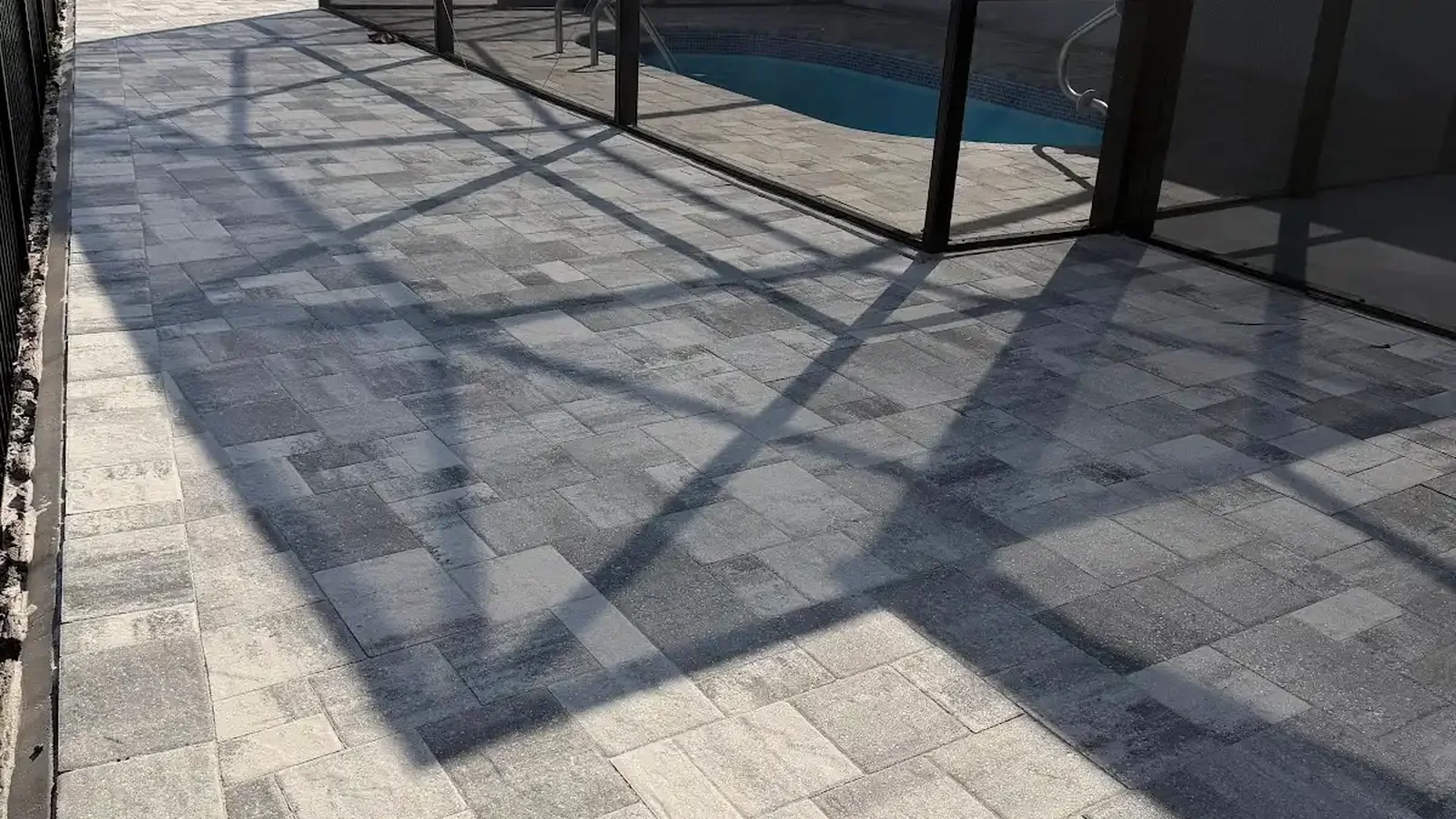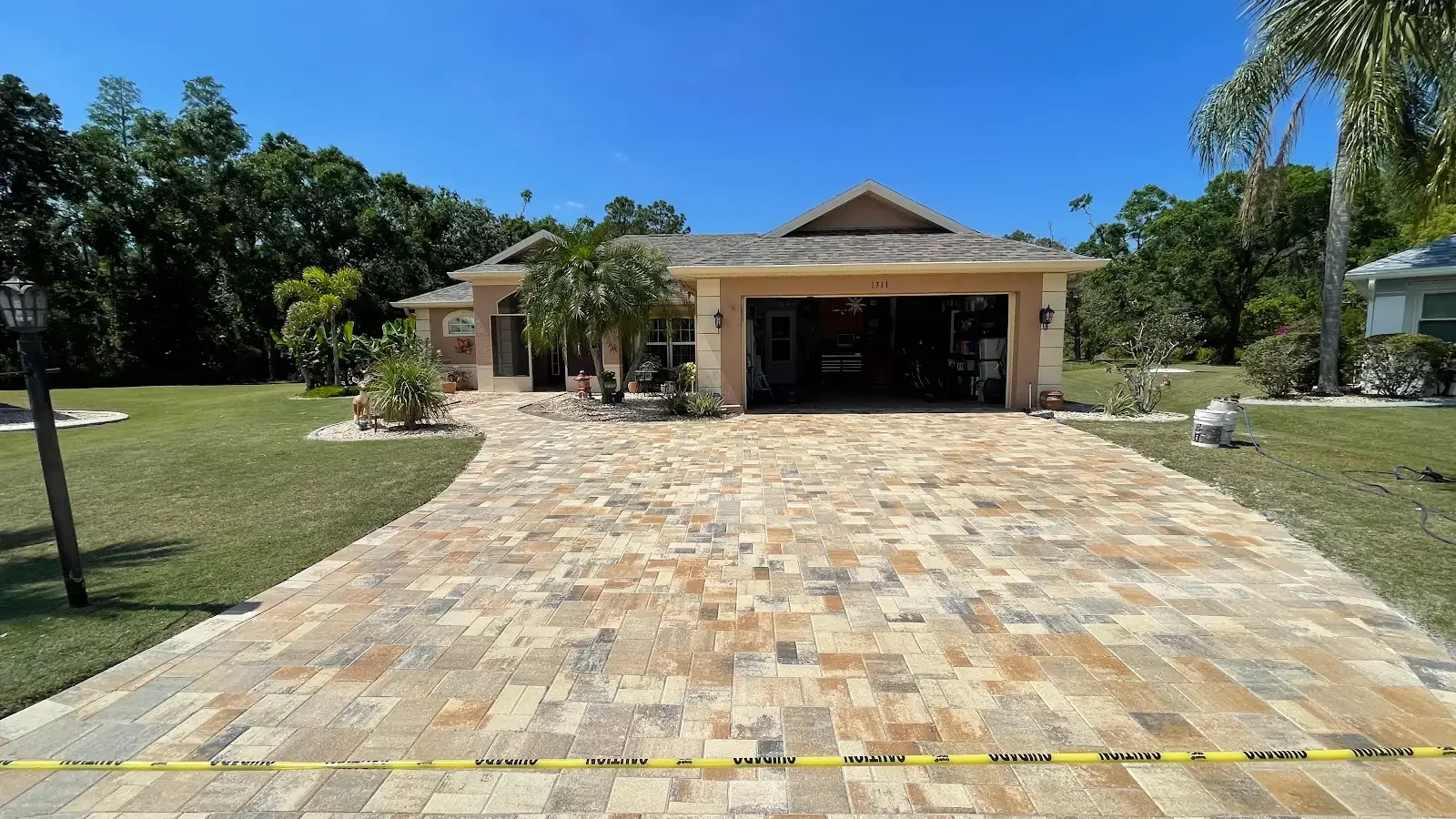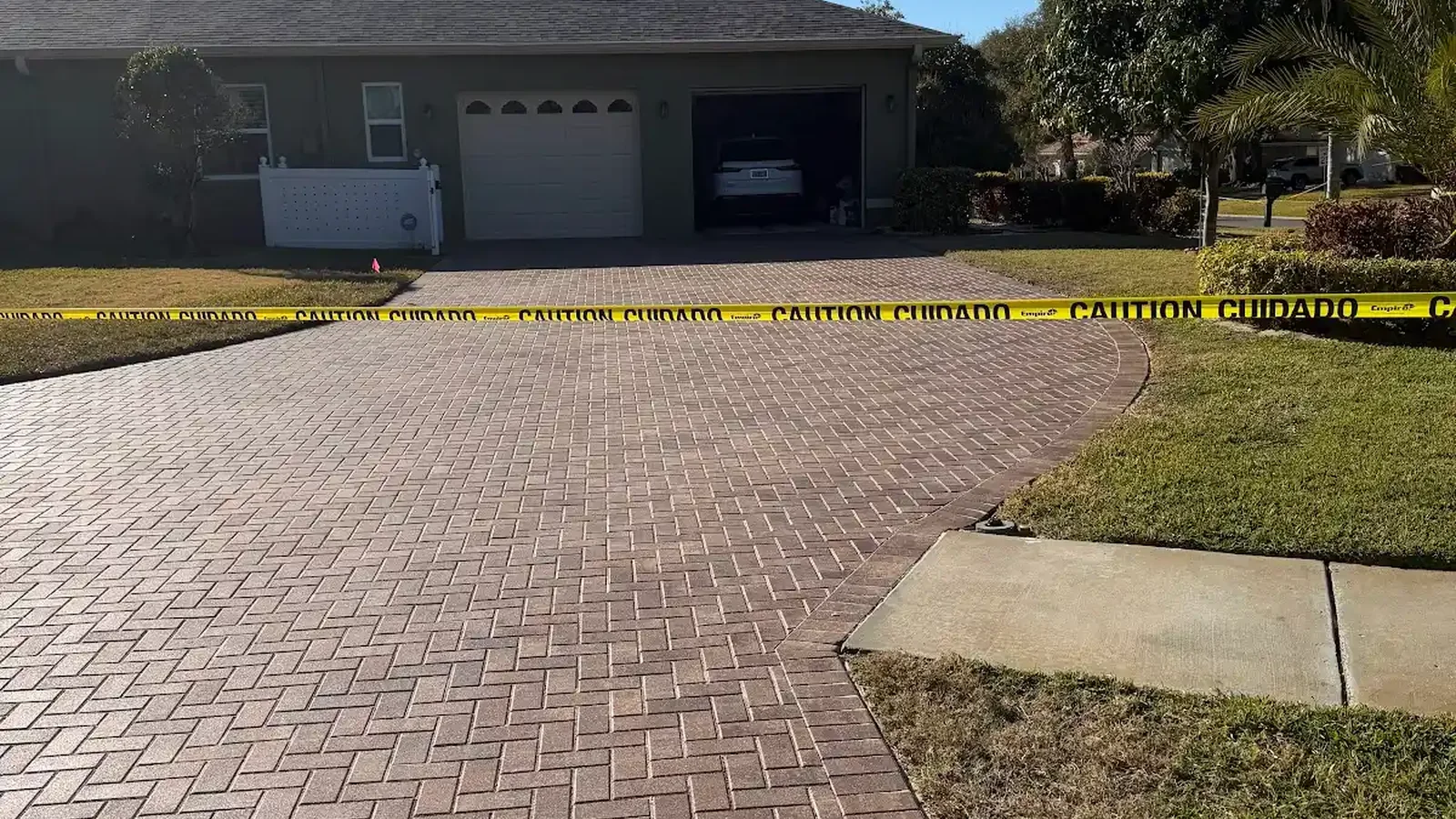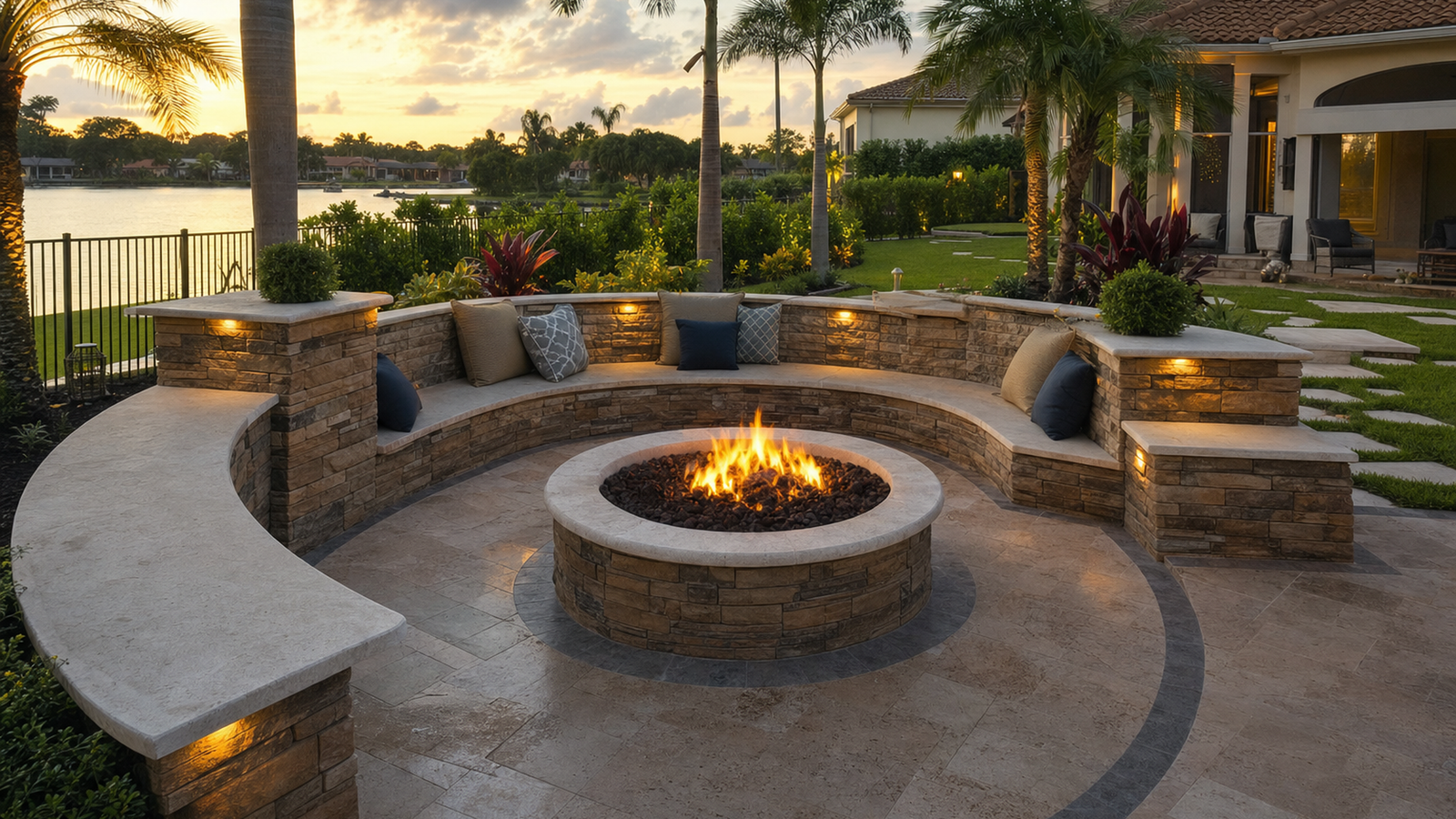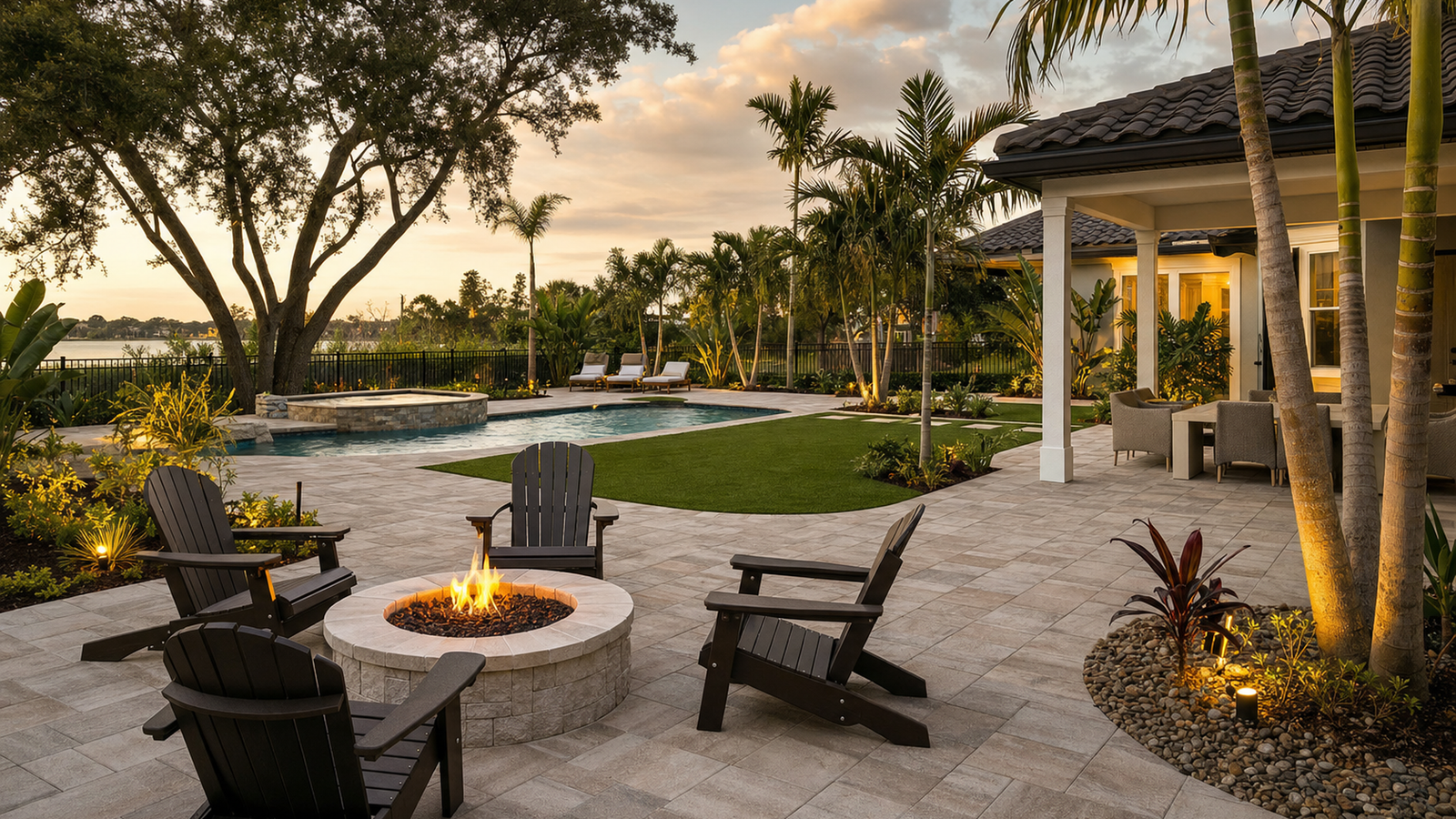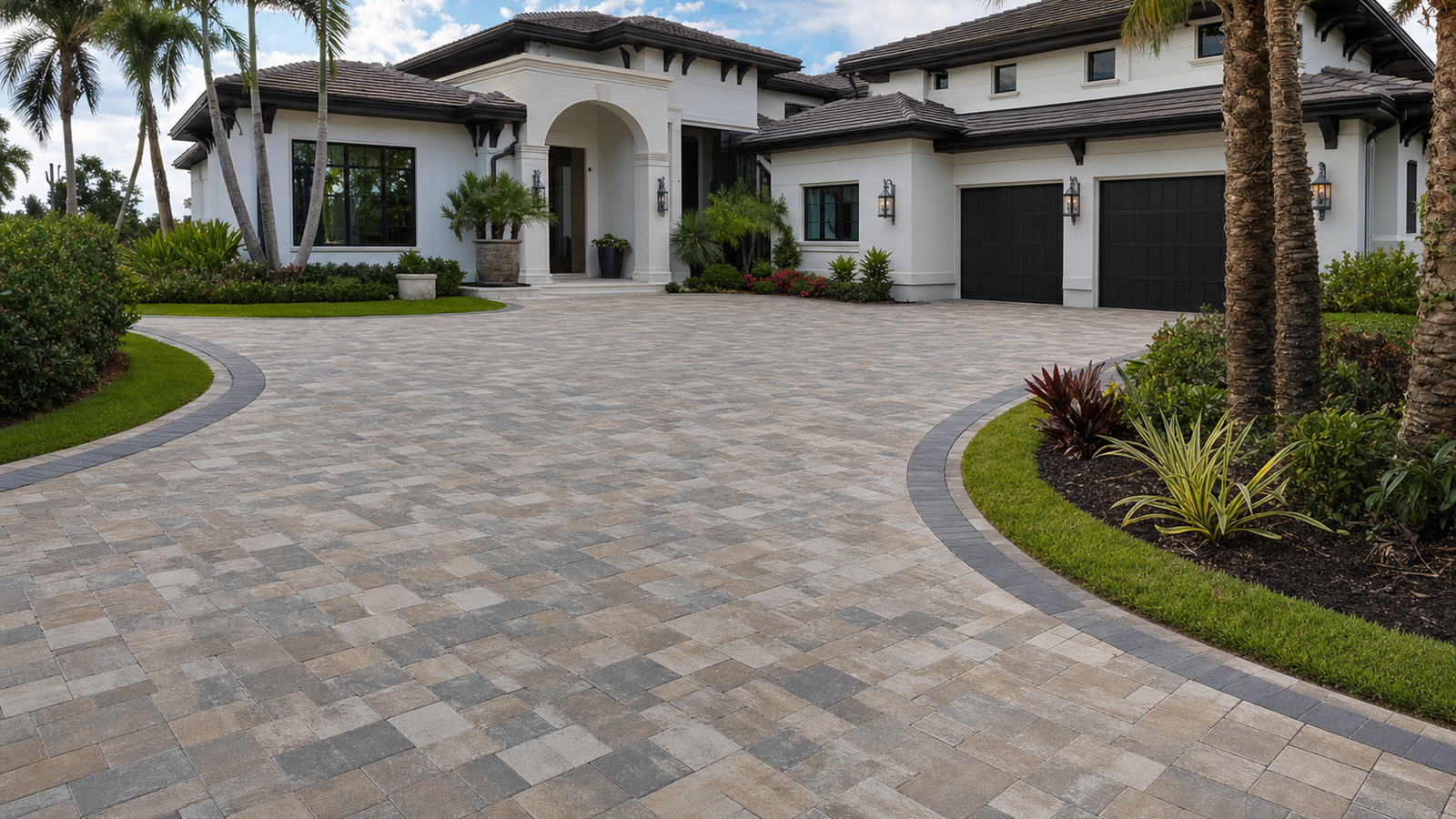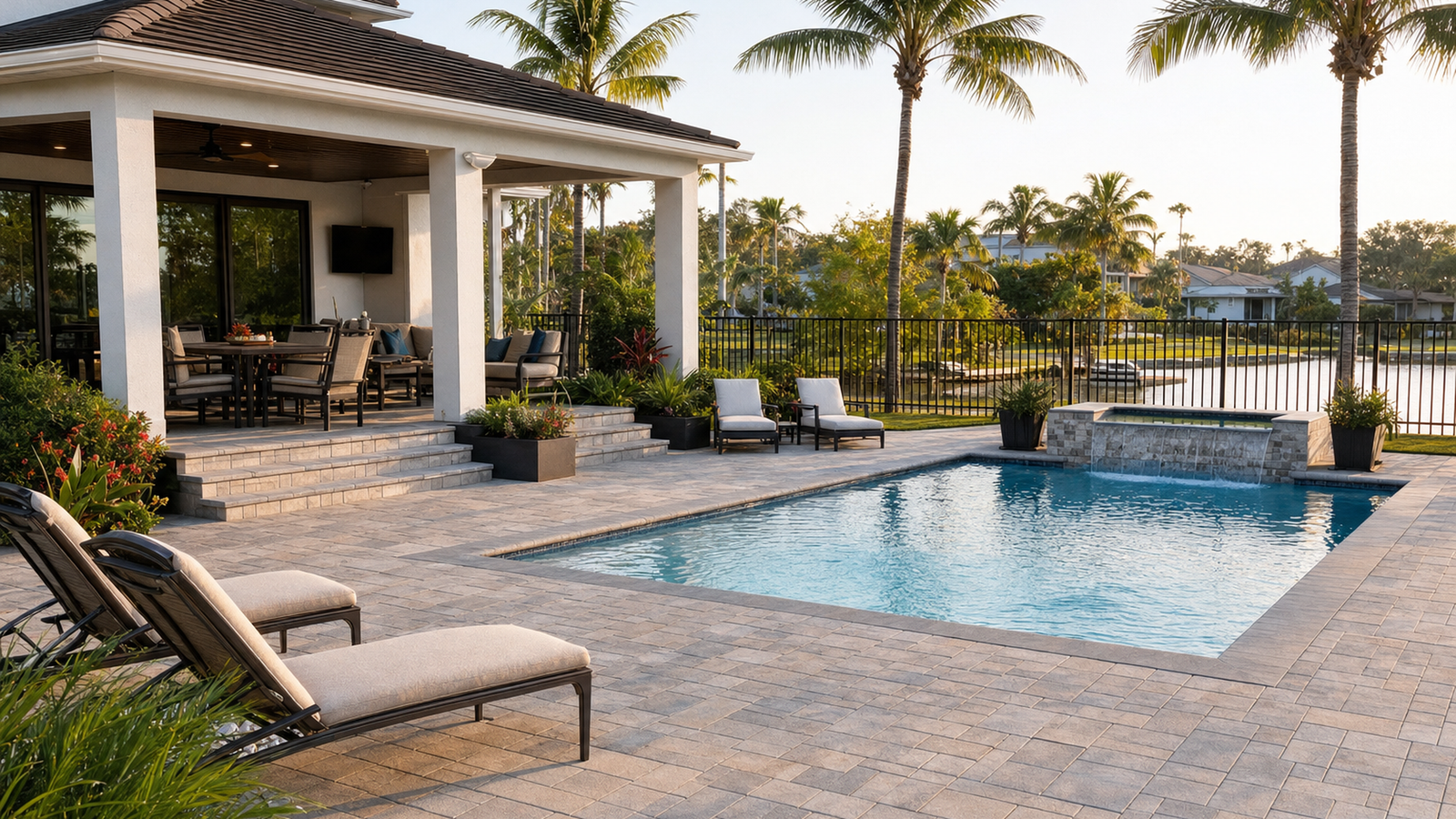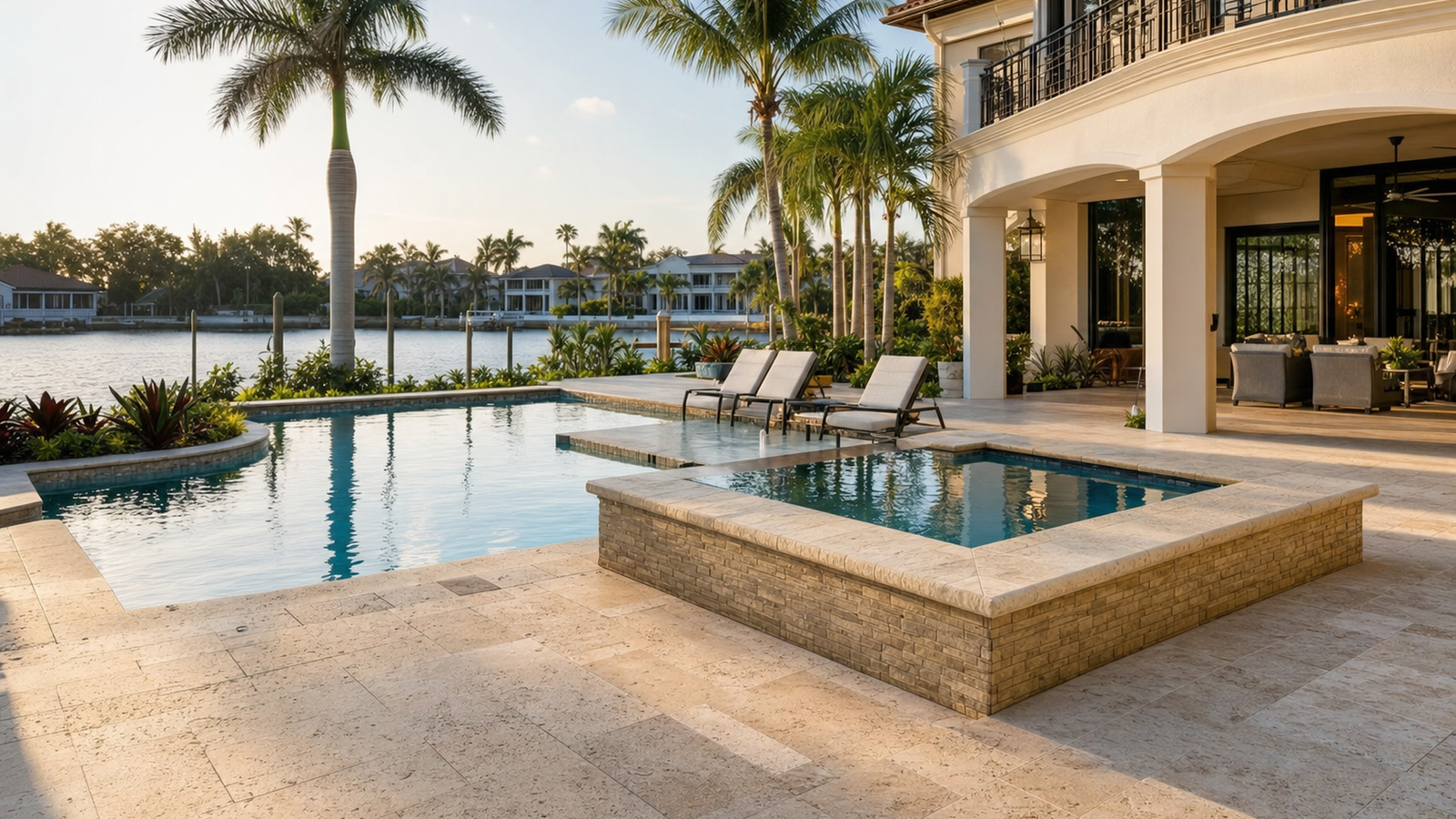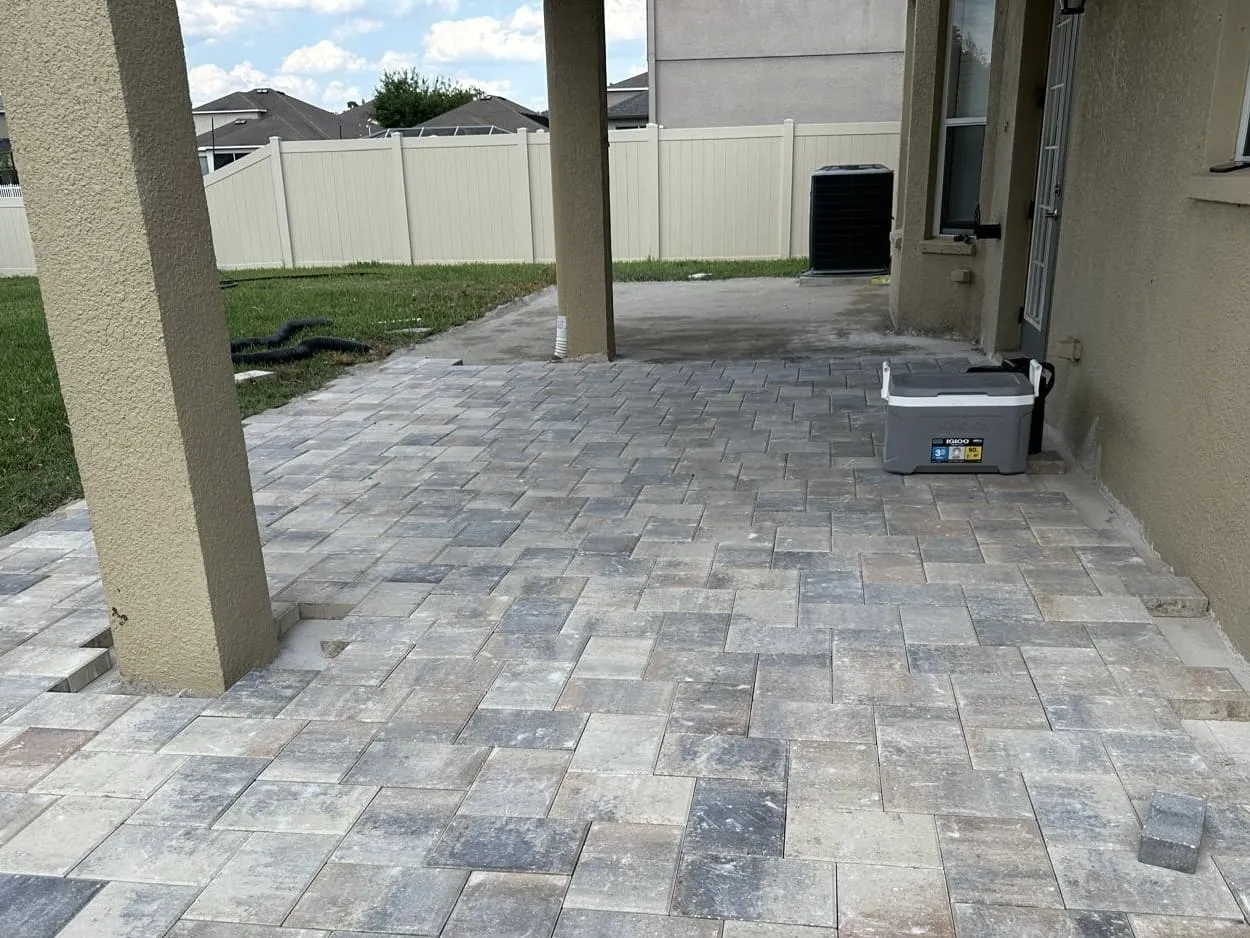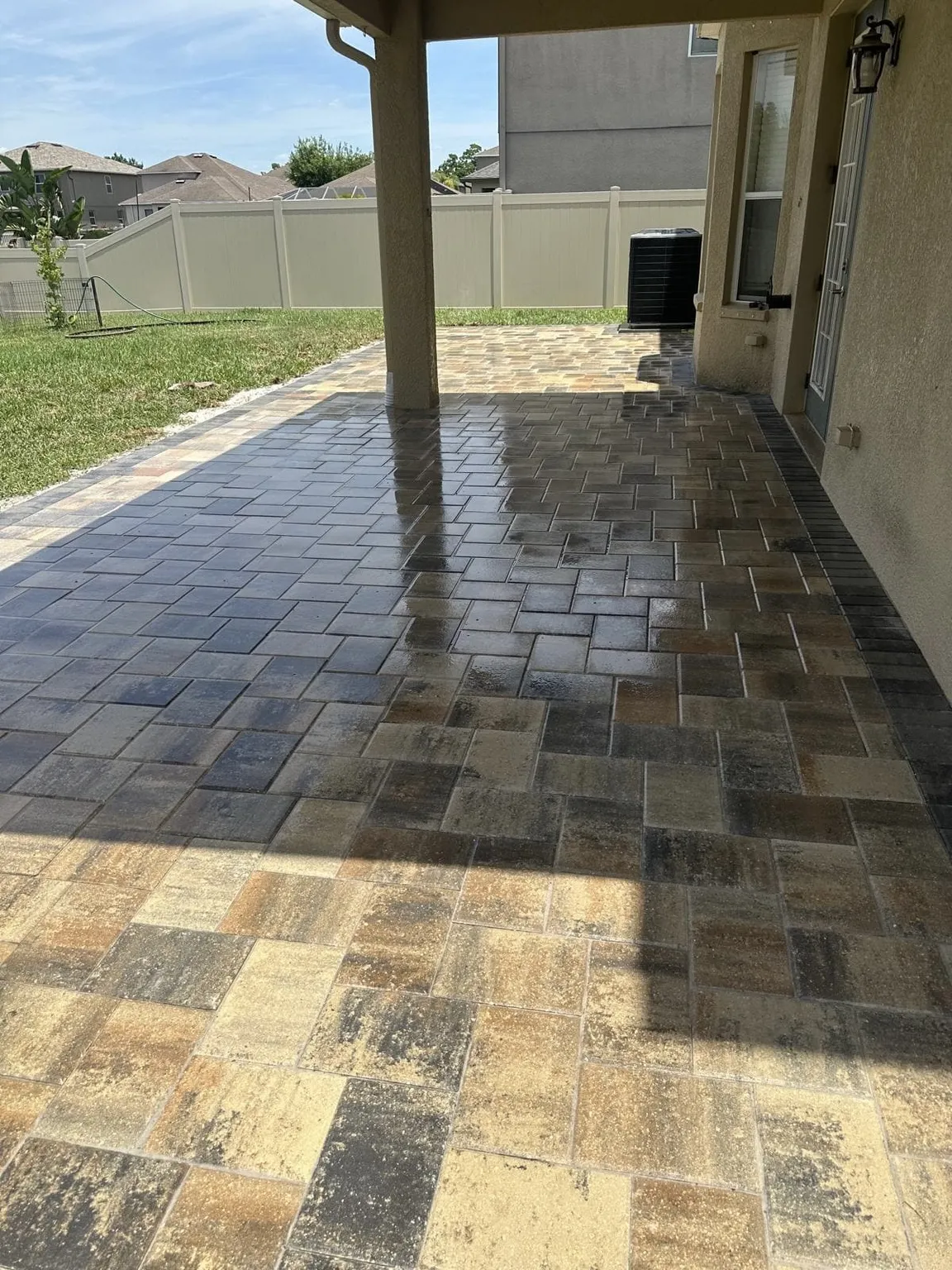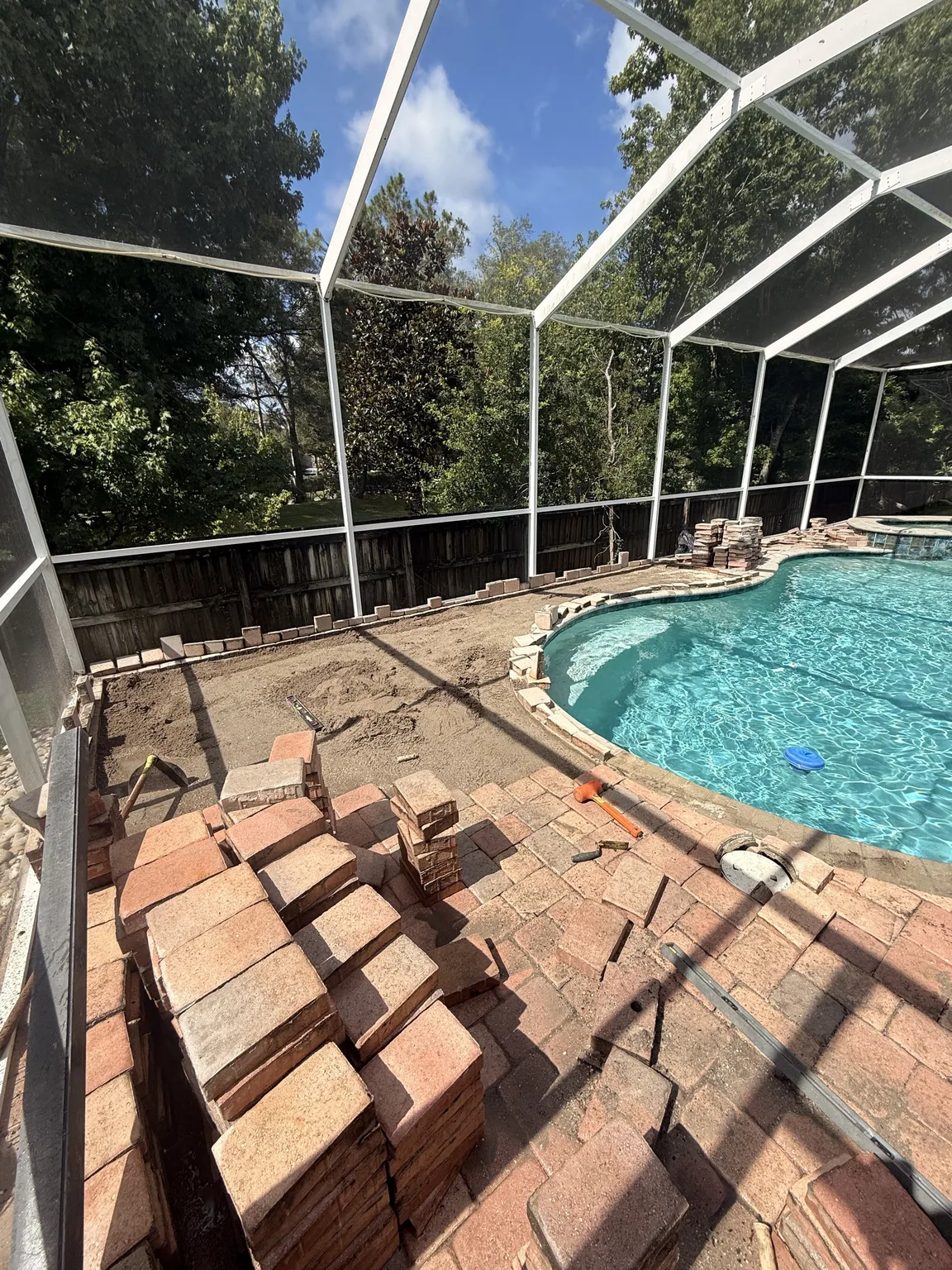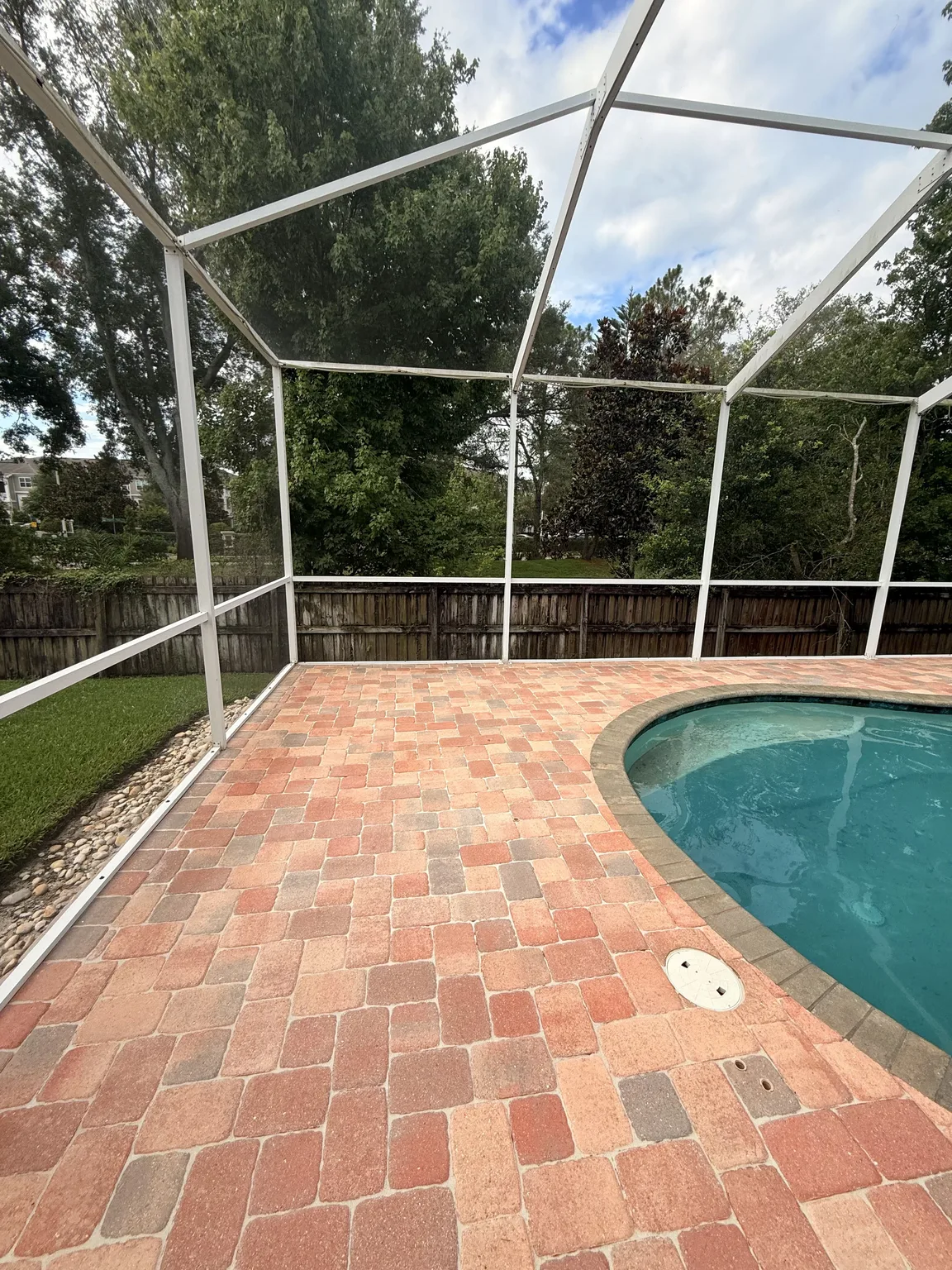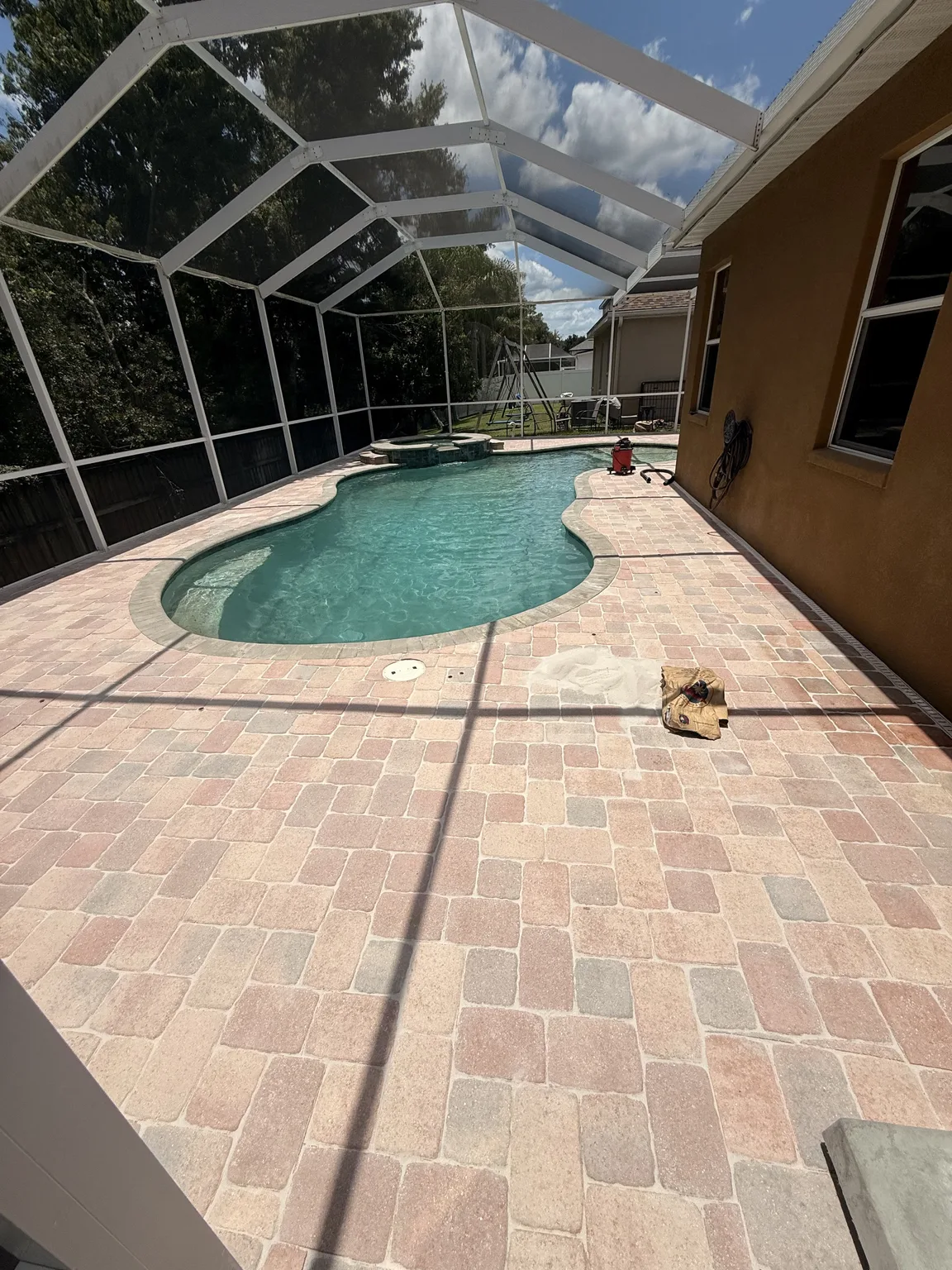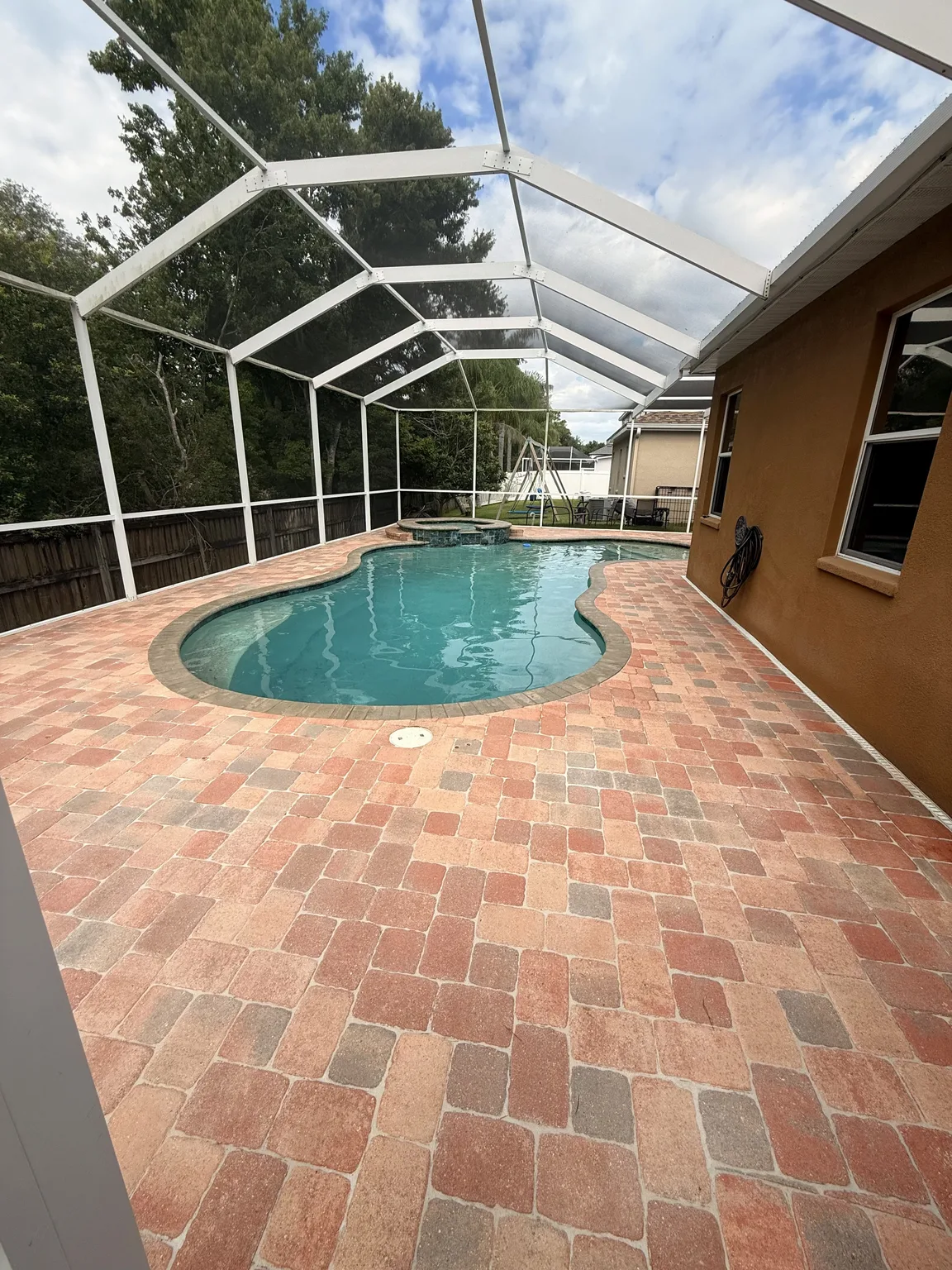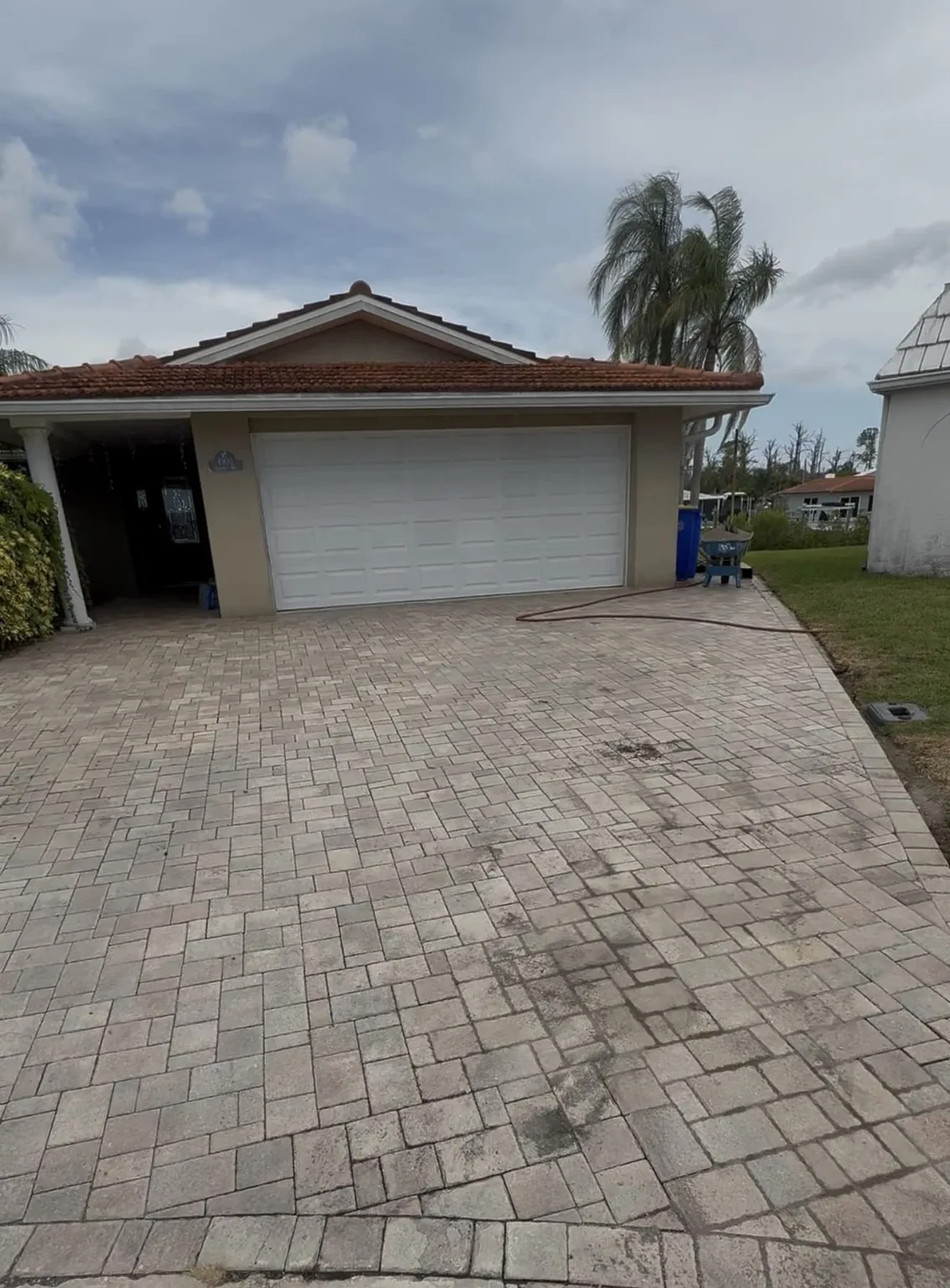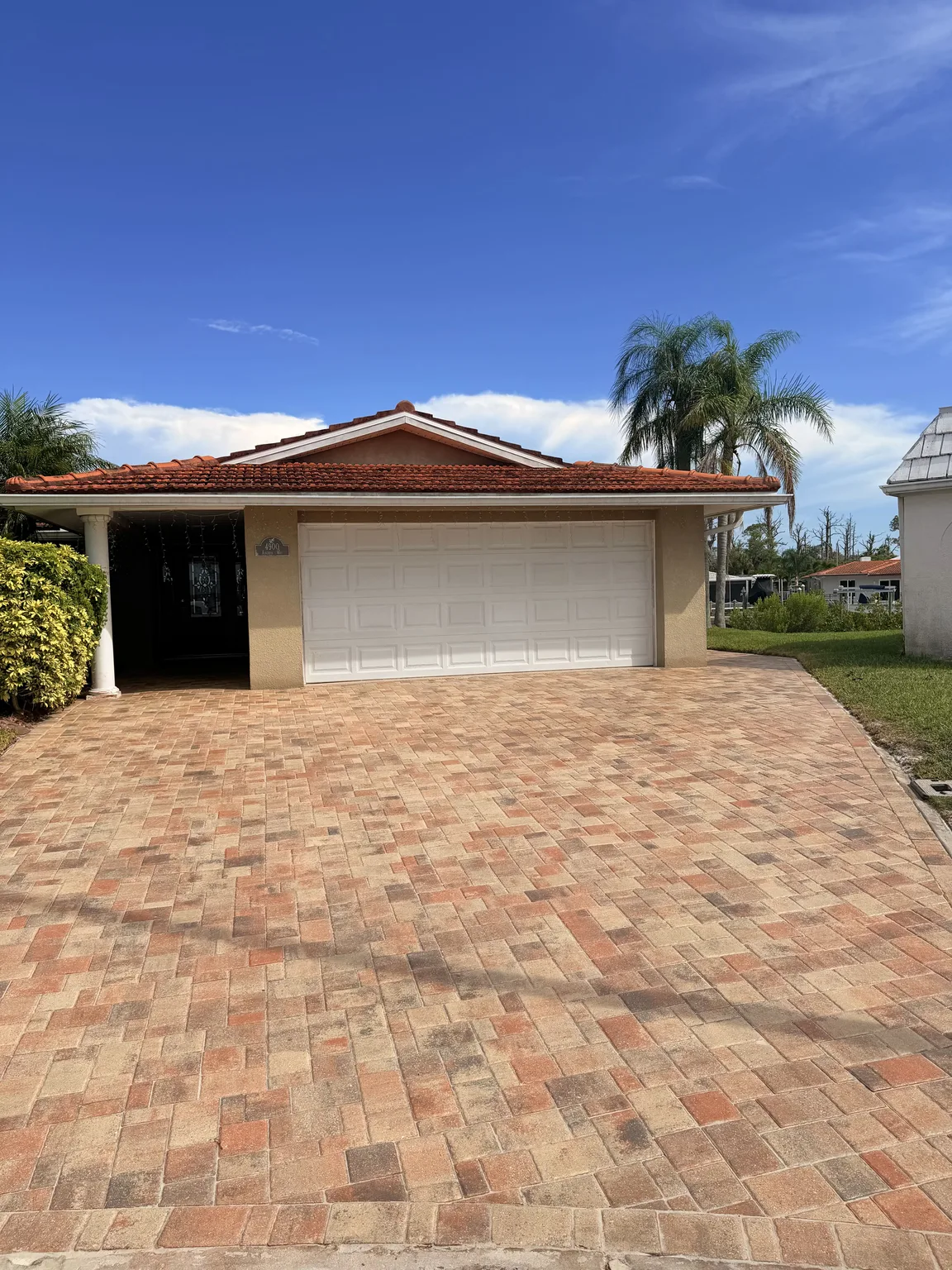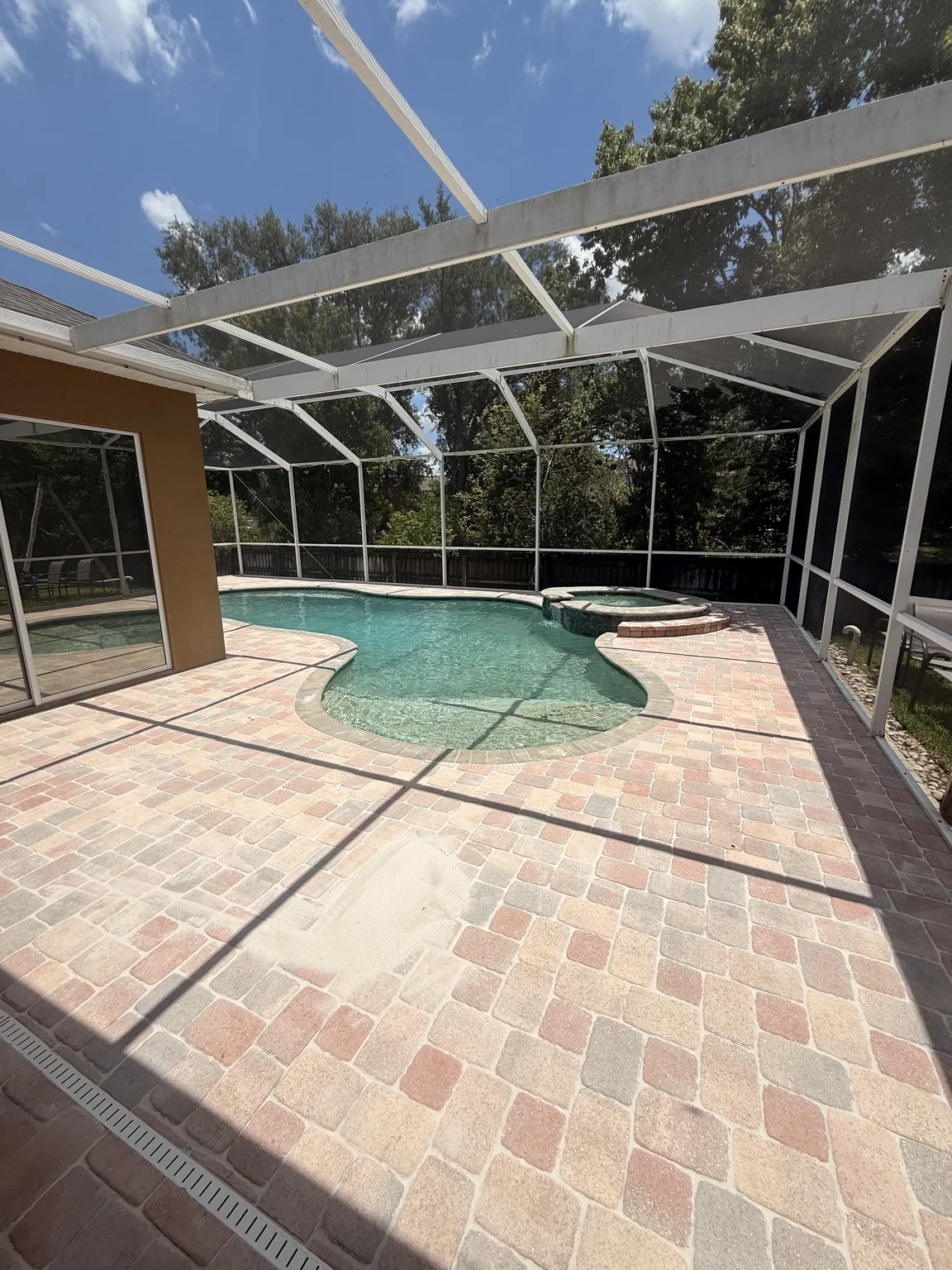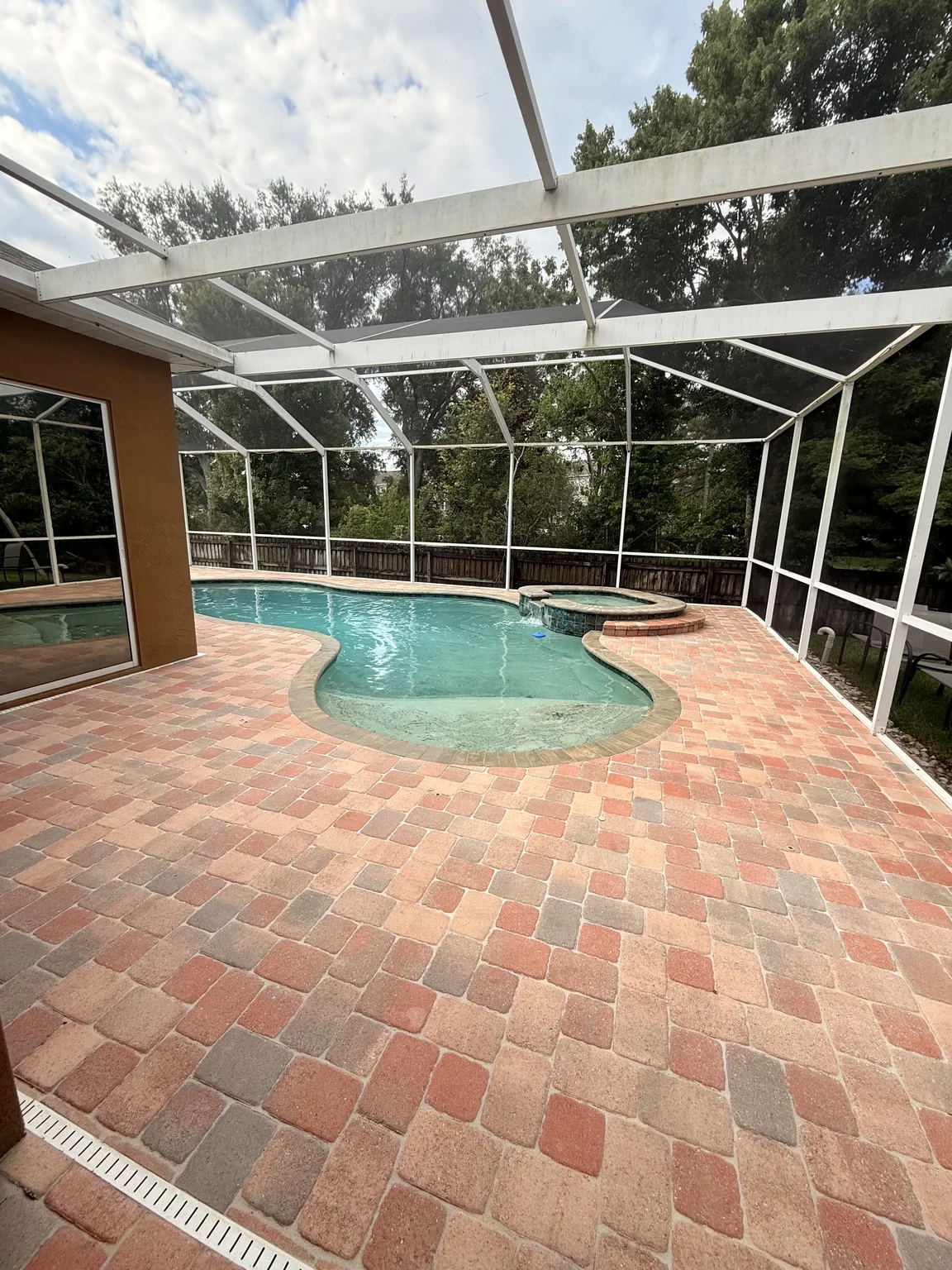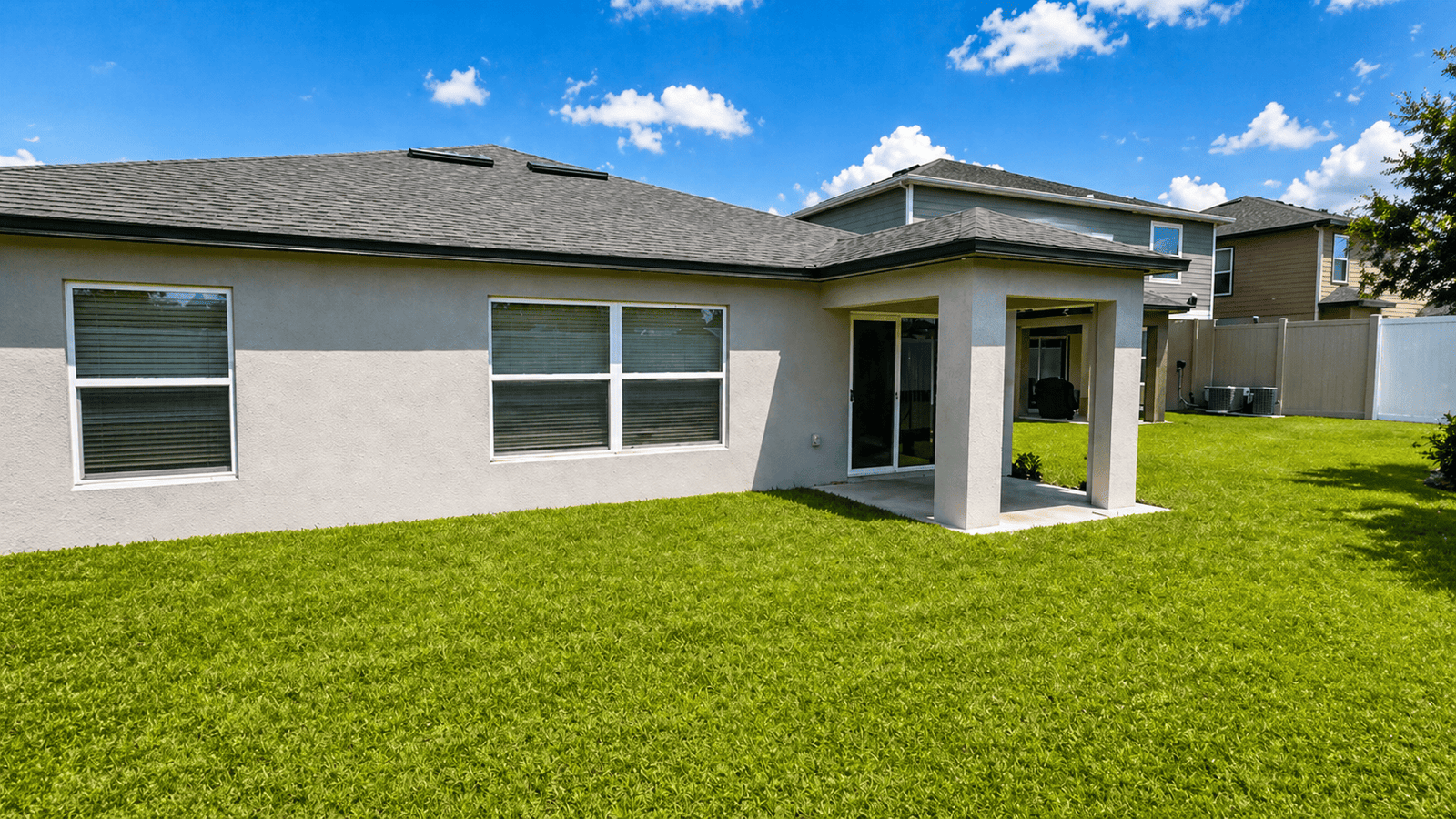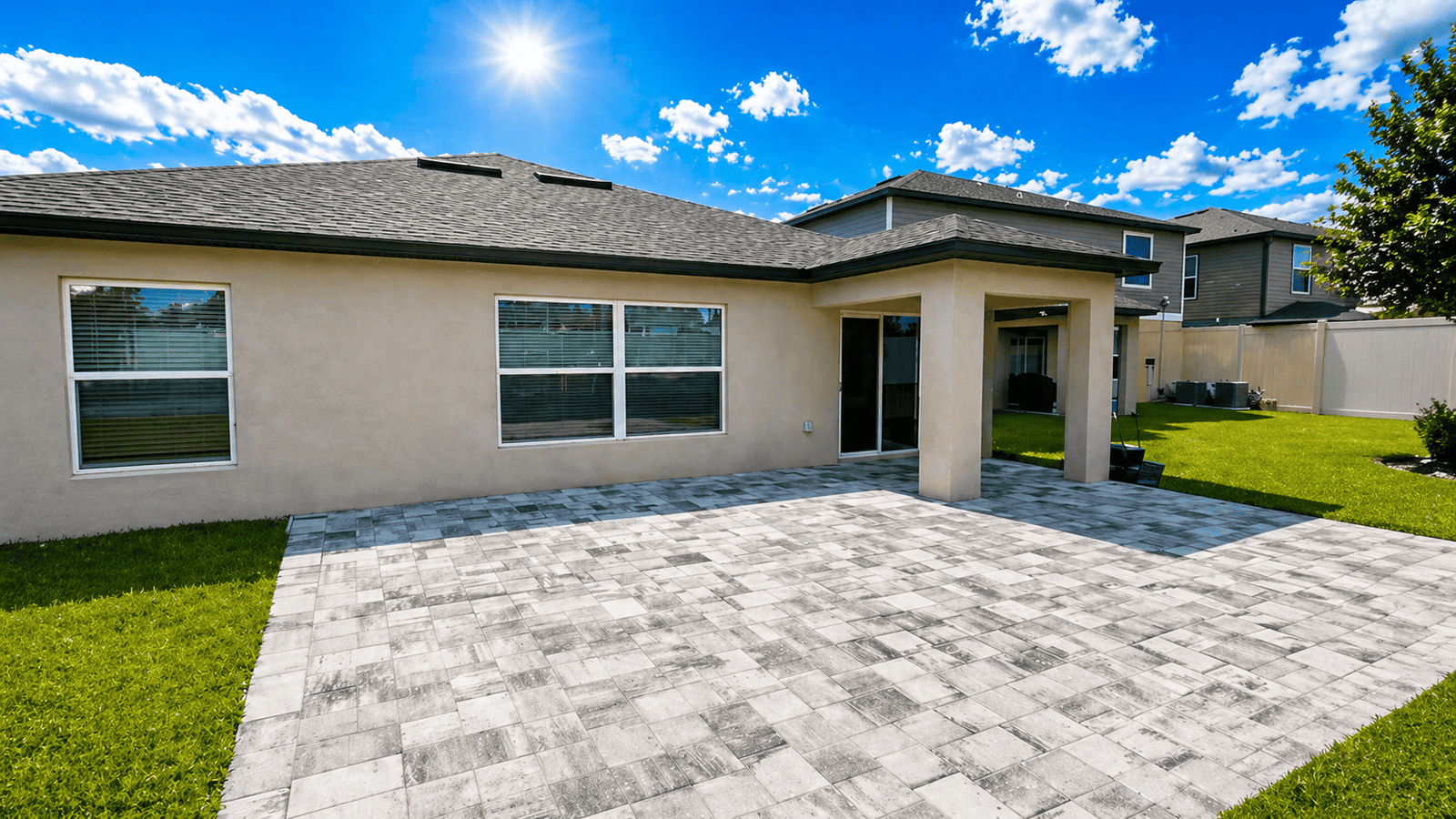
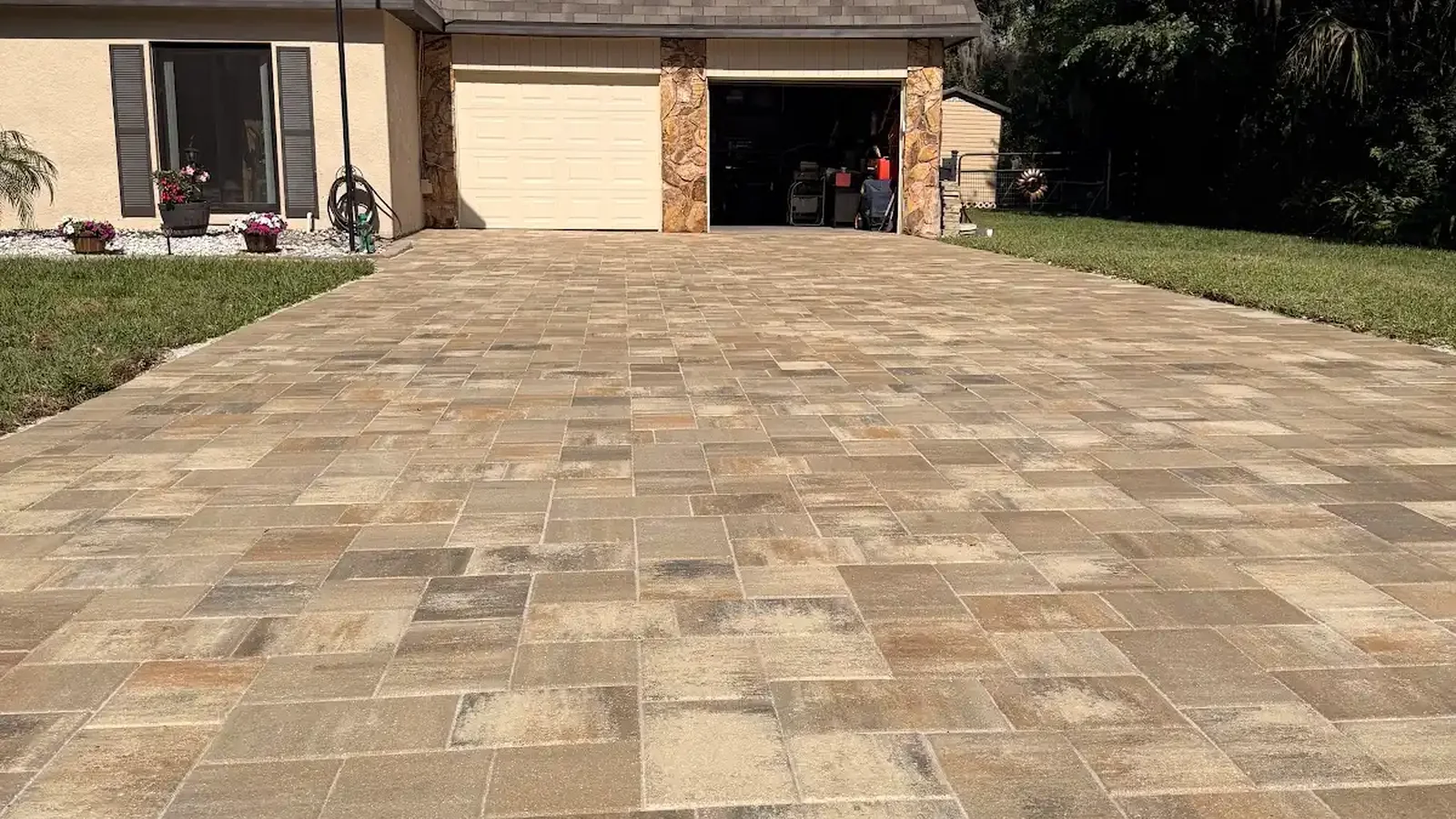
Concrete vs pavers is one of the first decisions many Florida homeowners face when planning a new driveway, patio, or pool deck. Both surfaces can work in Tampa Bay, but they age, repair, and look different over time. Because our heat, heavy rain, and tree roots are tough on hardscapes, you need to think beyond day-one appearance. You also want a surface you can live with if you later add utilities, expand a pool area, or redo landscaping. This guide walks through the real tradeoffs so you can match the material to your property and priorities.
Concrete vs Pavers: Quick Answer for Florida Homes
When you compare concrete vs pavers in Florida, neither option wins for every property. Instead, you trade a simpler slab install for the flexibility of a modular system. Plain or decorative concrete often takes less time to pour, and it can create a clean, modern look with fewer lines. However, it cracks as one piece, so repairs usually leave visible patches or require larger tear-out sections.
Interlocking concrete pavers usually cost more upfront to install, partly because of the base preparation and hand work. According to CMHA, they can offer strong lifecycle value because you can lift and reinstate individual units instead of patching an entire slab. That makes them practical for future underground work or spot repairs. However, they still need joint sand, occasional leveling, and other maintenance to look good.
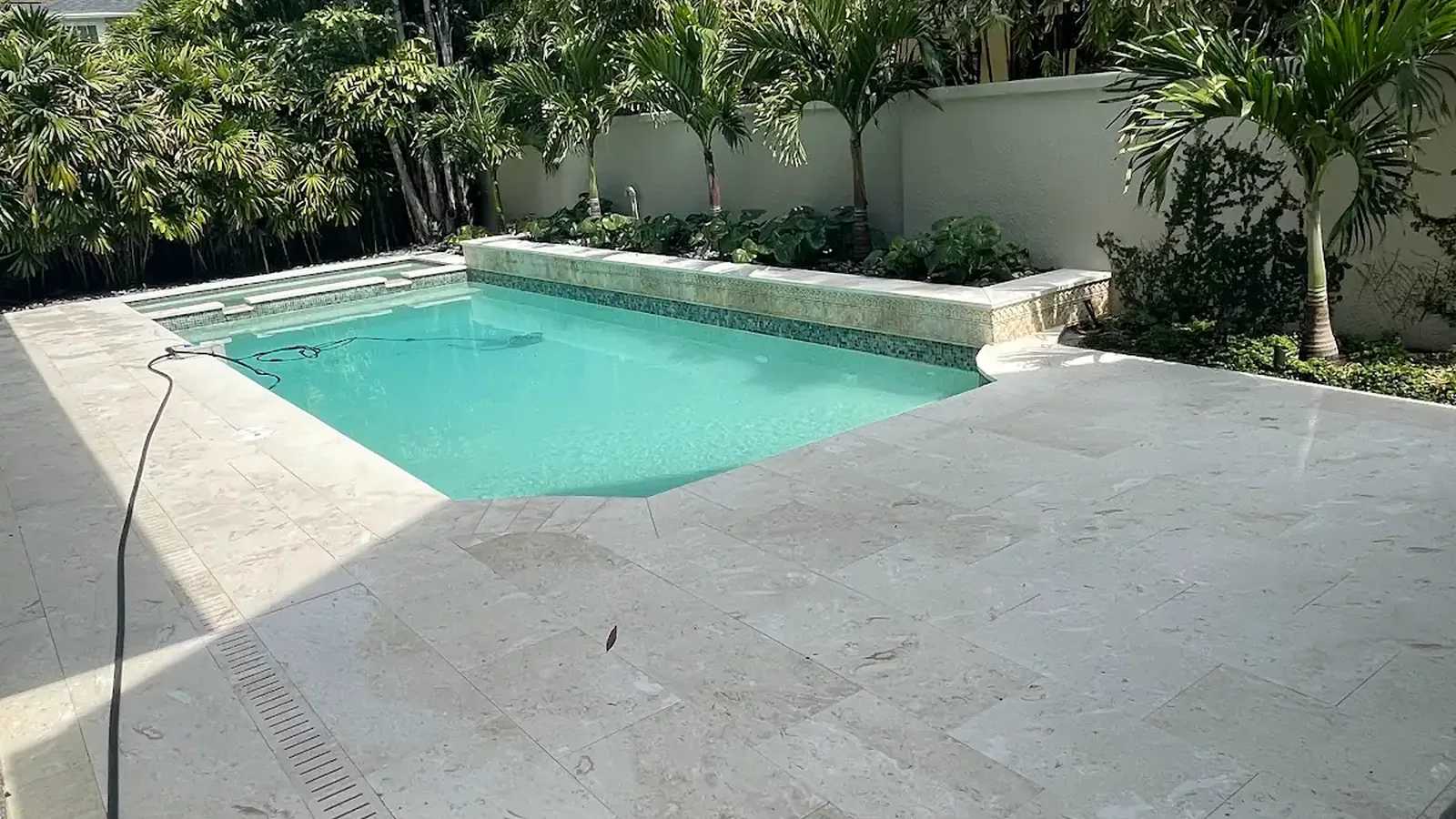
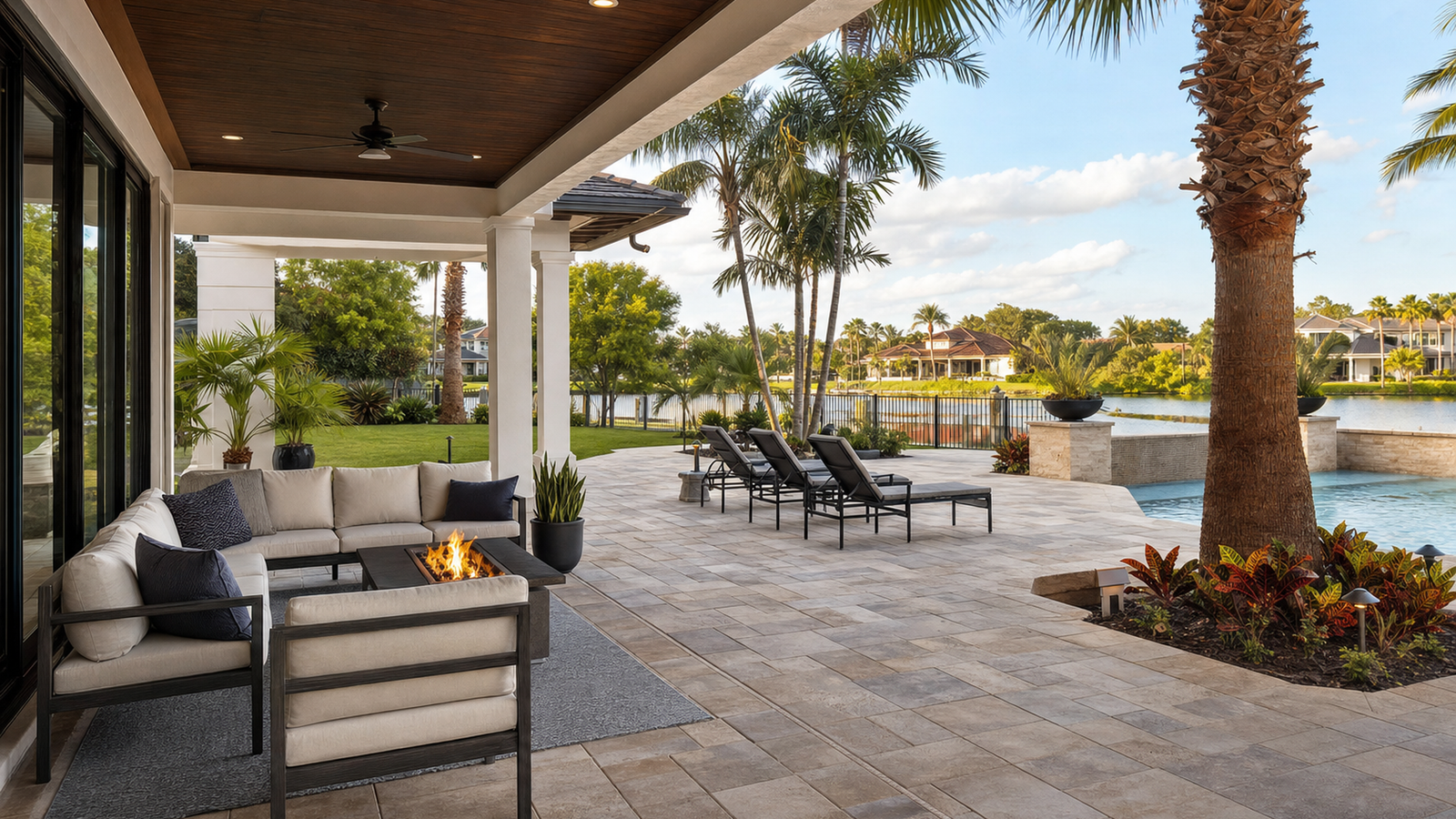
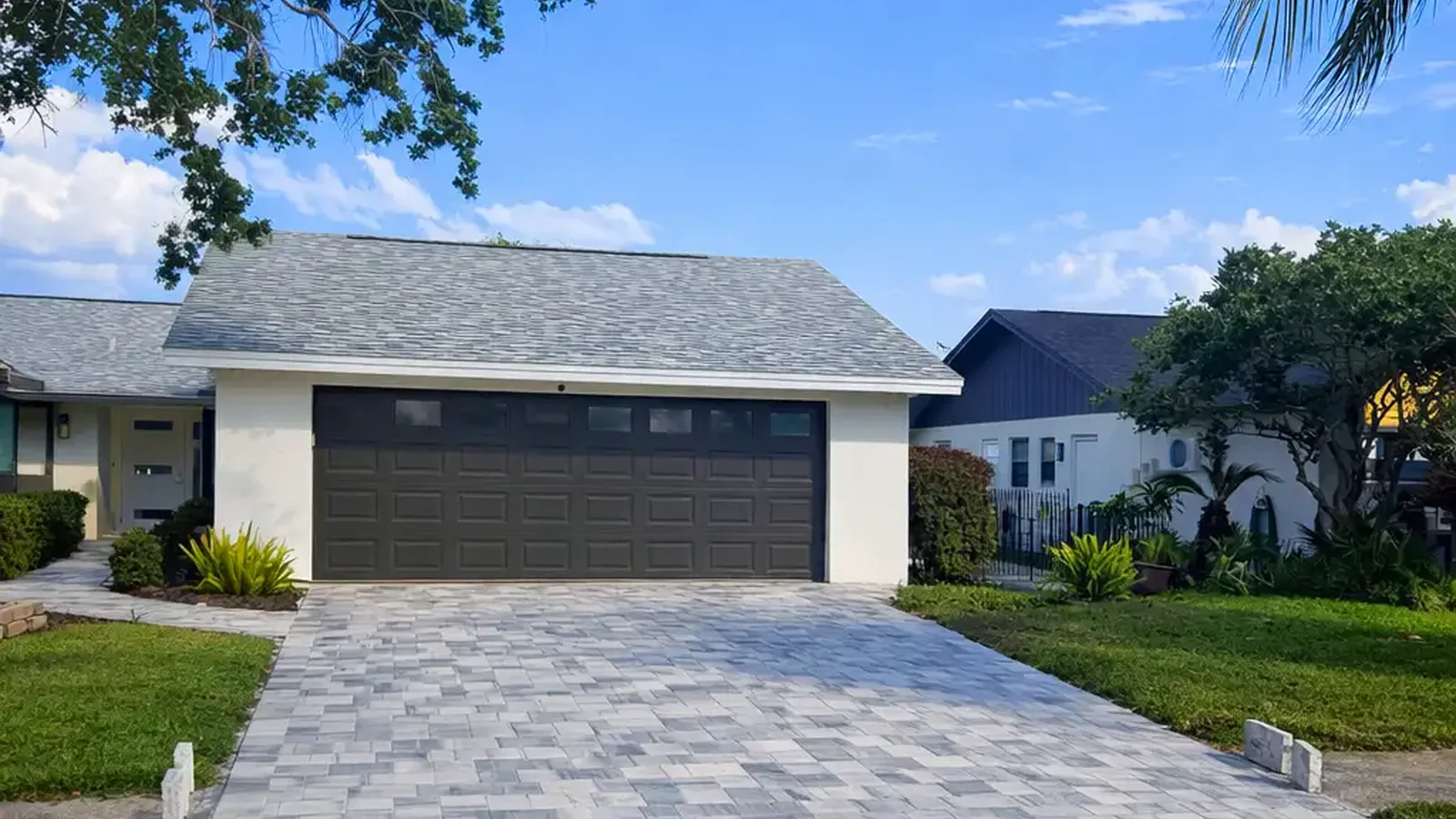
For hot pool decks and patios in places like Riverview or Palm Harbor, many owners prioritize cooler, textured pavers. For long, straight driveways or budget-driven projects, some prefer concrete, possibly with added texture for traction. The best choice depends on your sun exposure, soil, tree roots, water runoff, design goals, and how comfortable you are with long-term maintenance. A site visit helps clarify these factors before you commit.
How Concrete and Pavers Are Built and Perform
Concrete creates one monolithic slab. Installers usually compact the soil, add a base layer, set forms, place steel reinforcement when specified, and then pour and finish the concrete. Control joints attempt to manage cracking, but Florida soil movement, tree roots, and heavy vehicles can still cause random cracks. Once they appear, you cannot easily hide them, even with patching or overlays.
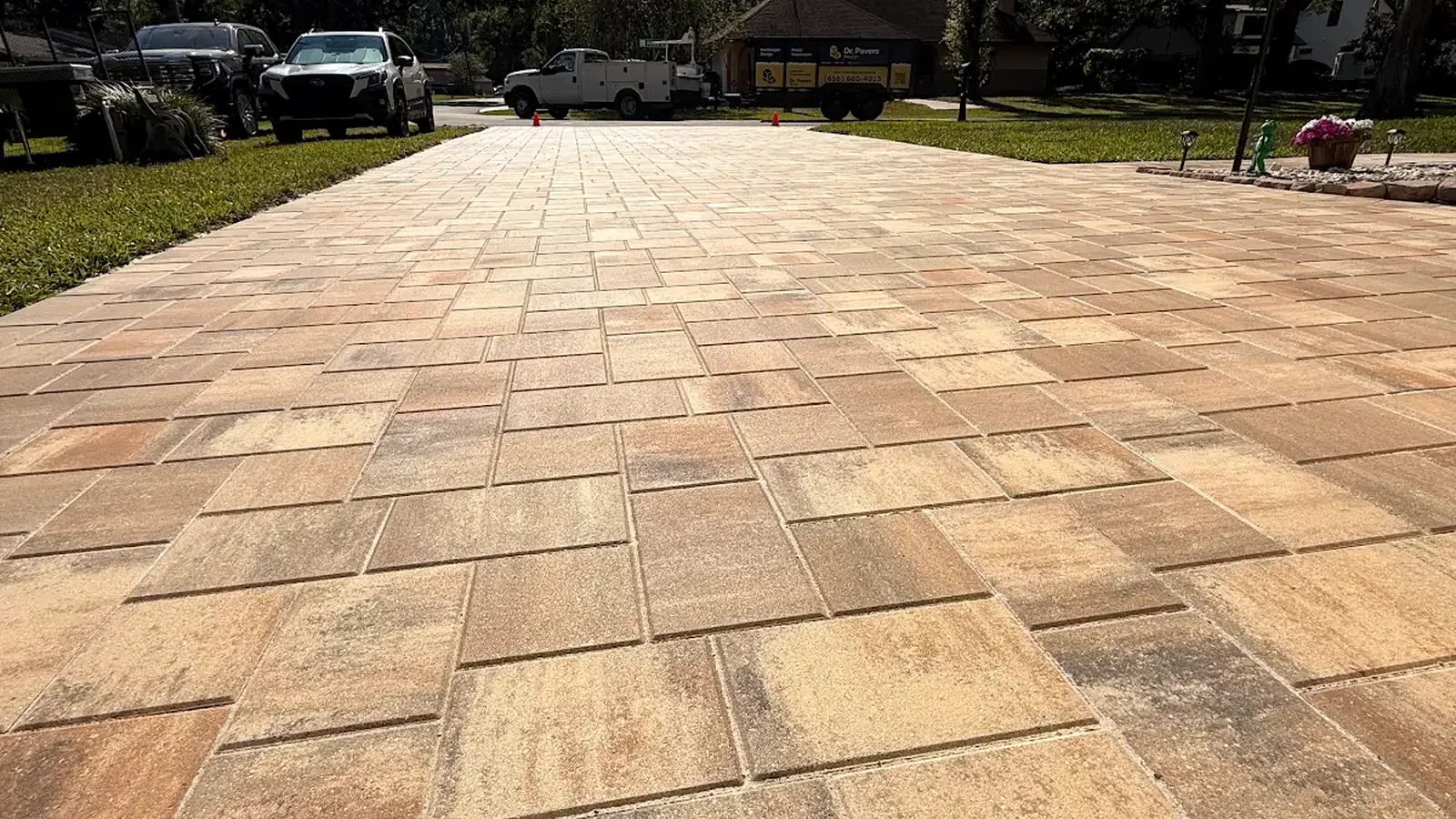
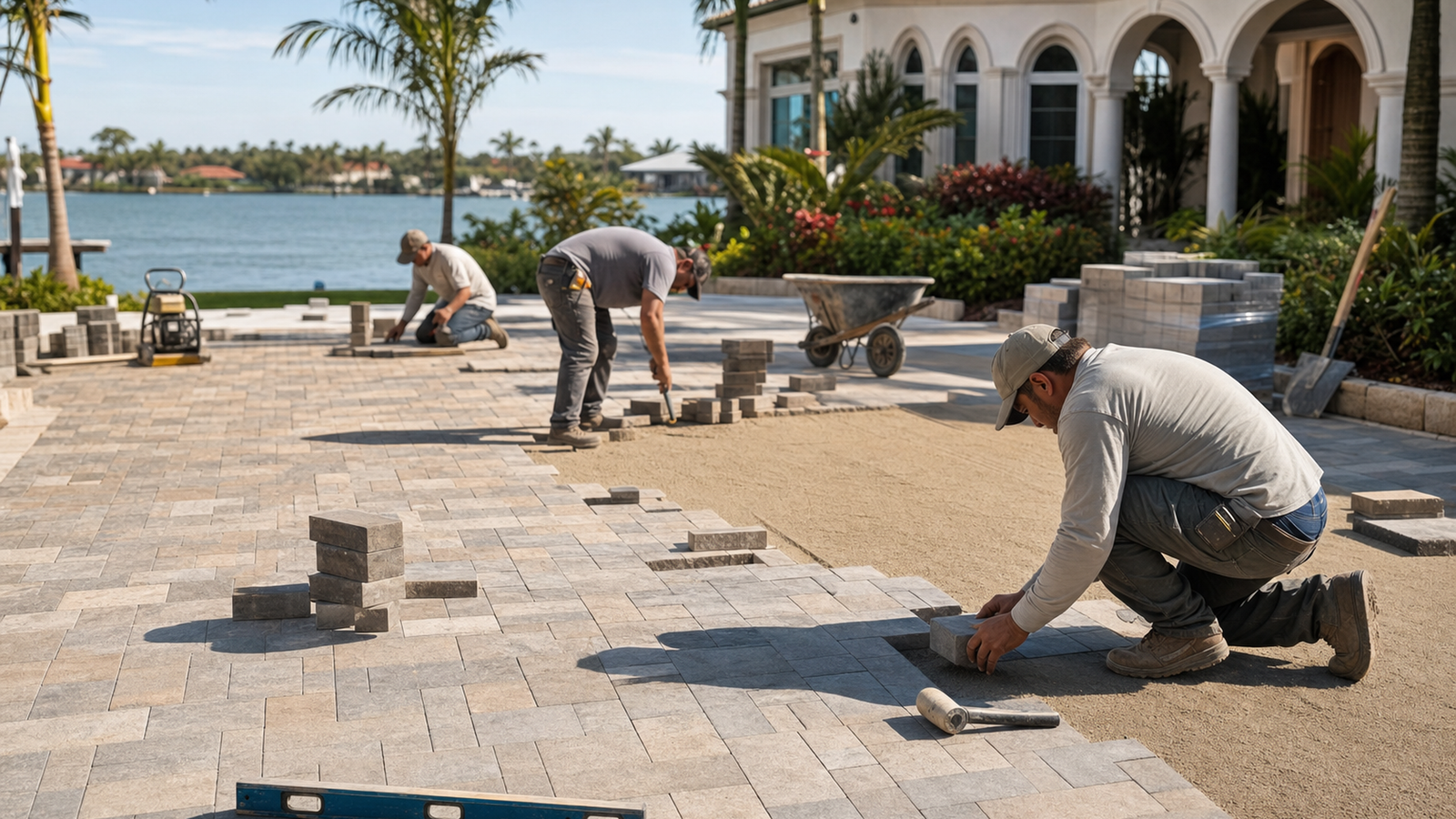
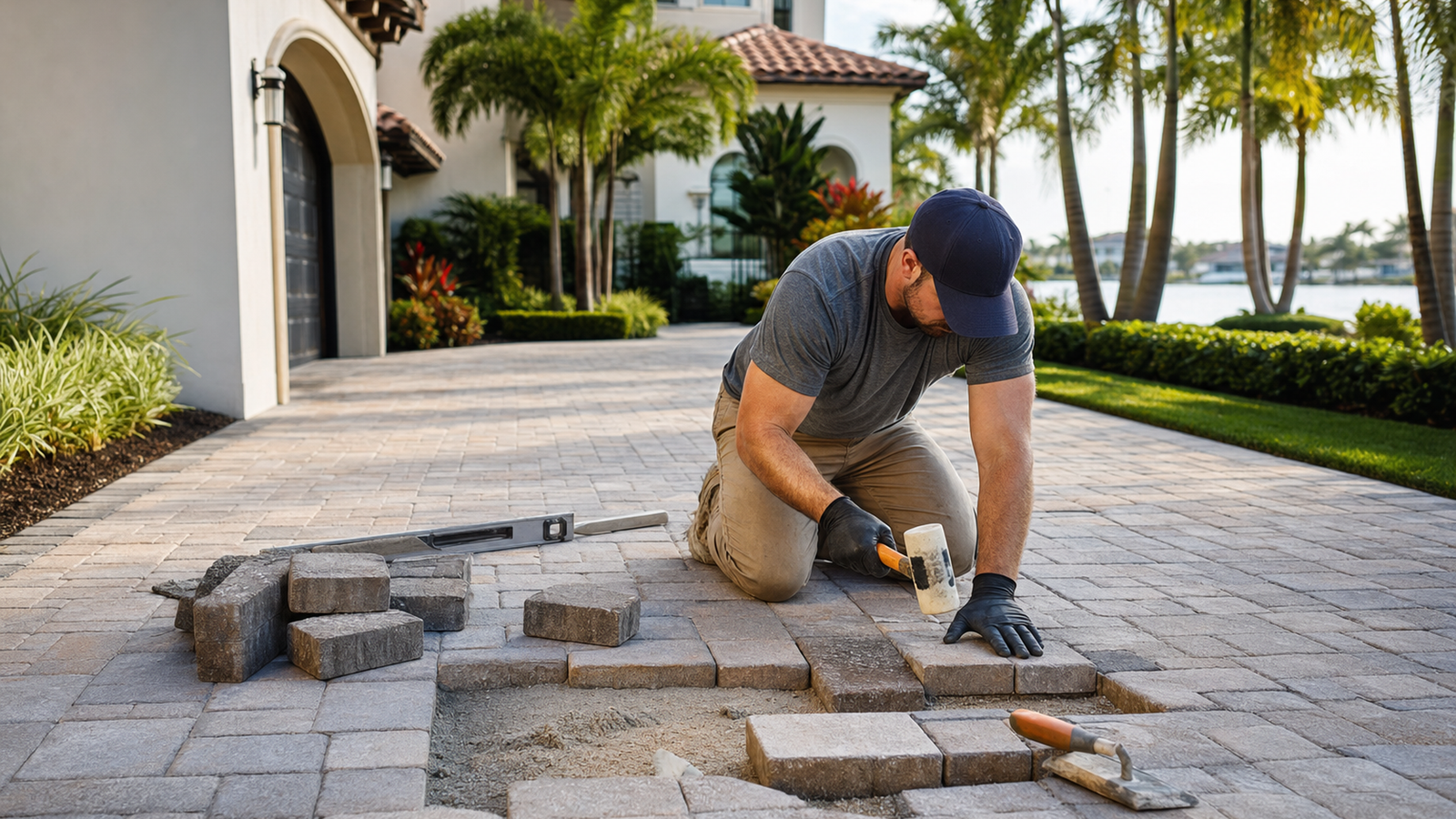
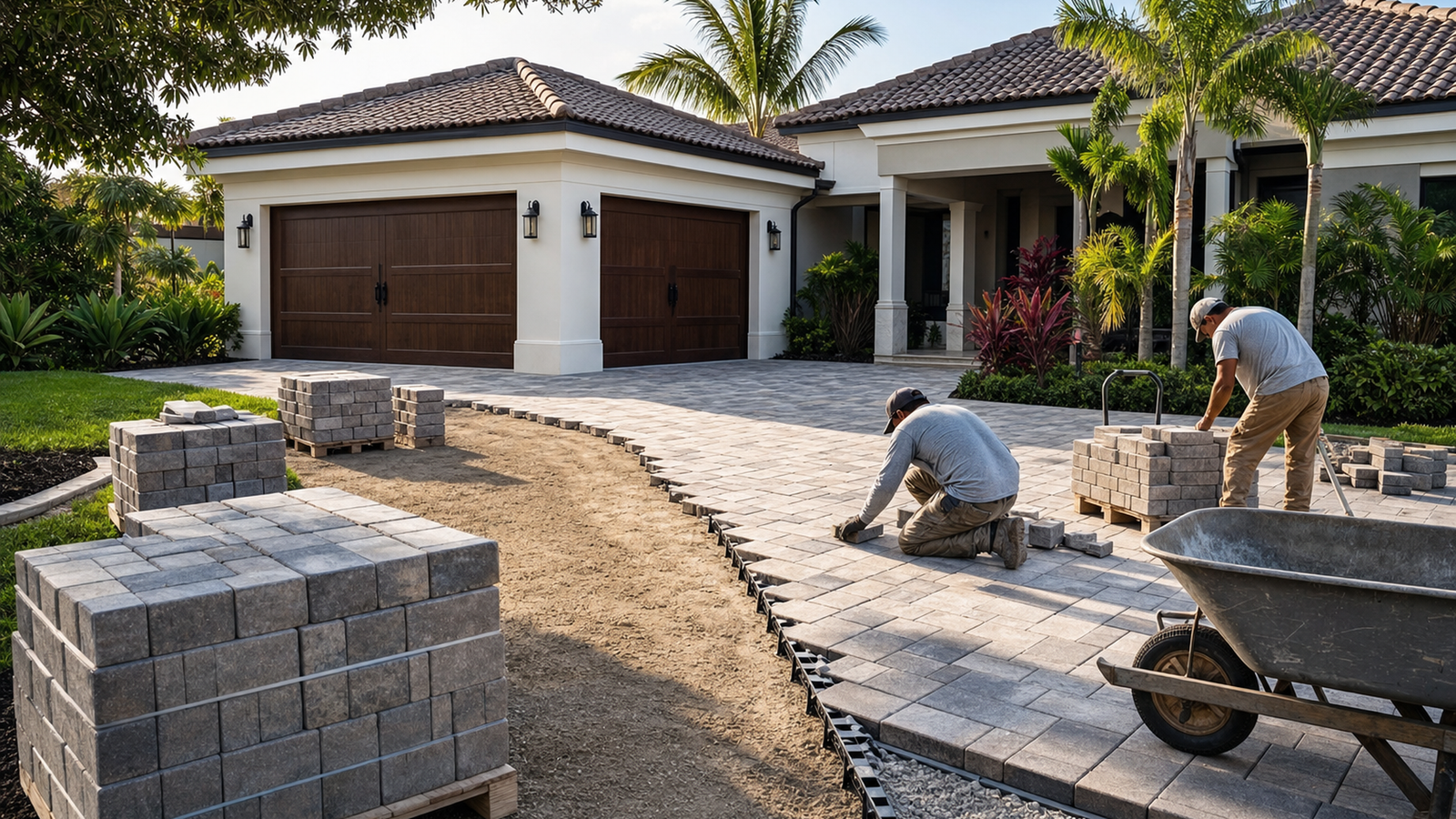
Paver systems use individual concrete units installed over a prepared base and bedding layer. Edge restraints and joint sand help lock the field together. The system allows small movements under load without one big crack. Individual units can settle if the base was not compacted well or if water washes out bedding sand, yet you can typically lift, adjust the base, and reinstall the same pavers.
Performance also differs on texture and traction. Broom-finished or textured concrete can provide decent grip when wet, but smooth or worn surfaces may become slick. Many pavers include built-in texture and joint lines that help with traction around pools and sloped driveways. To compare more material options beyond these basics, you can review the paver materials comparison guide from Dr Pavers Design for added context.
CMHA notes in its guidance on pavers versus concrete that modular systems shine over time because of that repairability. However, the actual lifespan of either surface in Tampa Bay depends heavily on base construction, proper slope for water runoff, and how you maintain the area. Good installation fundamentals matter at least as much as the material choice.
How to Decide What Fits Your Driveway, Patio, or Pool Deck
To choose between concrete and pavers for a driveway in Land O’ Lakes or a pool deck in Town ‘N’ Country, start with your priorities. Think about how you use the space, how much visual detail you enjoy, and how long you plan to stay in the home. Then look at the conditions on your property. Shade, trees, sunlight, and soil movement all influence which surface ages more gracefully.
Budget timing also matters. Concrete can sometimes offer a lower initial project cost. Interlocking pavers may require a bigger upfront investment, but they can reduce disruption later if you need repairs or utility access. If you expect to expand a patio or add features slowly, a modular surface can make phasing easier, because you can integrate new and old areas with fewer visible seams.
Property access and schedule play a role as well. Some projects in Wesley Chapel or Greater Carrollwood have tight side yards or limited equipment access, which can affect installation methods. Concrete often cures in place over several days before heavy use. Paver areas need careful compaction and finishing, yet you typically gain usable access sooner after installation. However, only a site evaluation can confirm realistic timeframes for your project.
- List your must-haves: traction, cooler surface, heavy-vehicle support, or a certain style.
- Note any concerns: tree roots, standing water, or previous cracking or settling.
- Decide how important easy future repairs and changes are to you.
- Schedule a professional to inspect soil, slopes, and existing concrete or pavers.
Repairability, Design Flexibility, and Future Changes
Repair strategy is one of the biggest differences in the concrete vs pavers debate. With concrete, common fixes include patching cracks, adding overlays, or replacing whole sections. Patches rarely match the original color or texture, especially on older slabs. Overlays can refresh the surface, but they still depend on the existing concrete and may not solve underlying movement or root issues.
Pavers handle repairs differently. If a section settles or utility work disturbs part of the driveway or patio, installers can lift the affected pavers, correct the base, and relay them. CMHA highlights this lift-and-reinstall benefit as a key lifecycle advantage. You still need a stable base and good edge restraints to make that possible, yet when done right, it can preserve the visual continuity of your space.
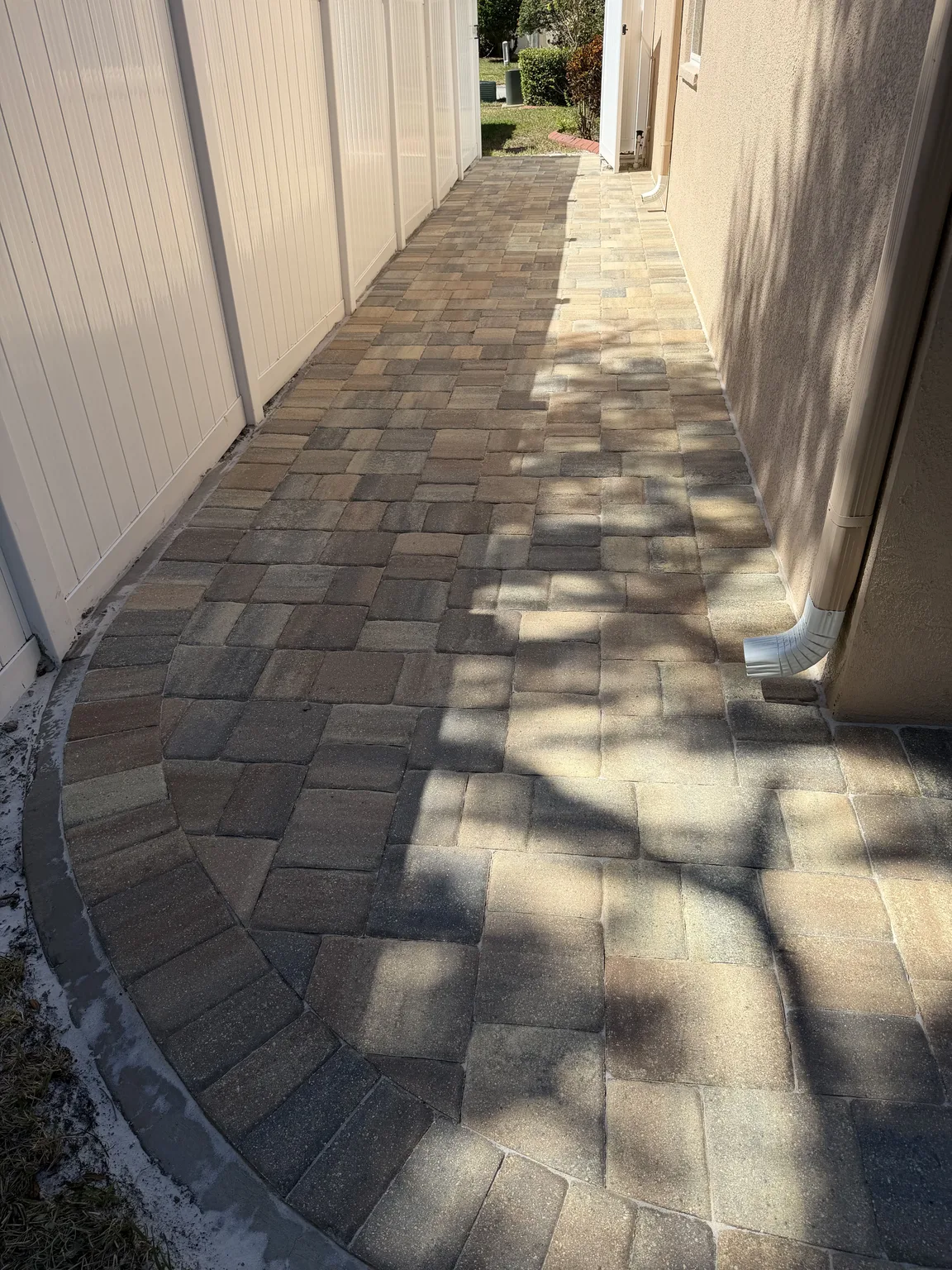
Design flexibility also favors modular systems. Pavers come in many colors, shapes, and laying patterns, which can define outdoor rooms, steps, borders, and insets. You can mix contrasting borders along a Ruskin pool deck or create a band across a Thonotosassa driveway without separate pours. Concrete can incorporate saw-cut patterns, color, and texture, but changes later usually mean cutting, breaking, and re-pouring visible sections.
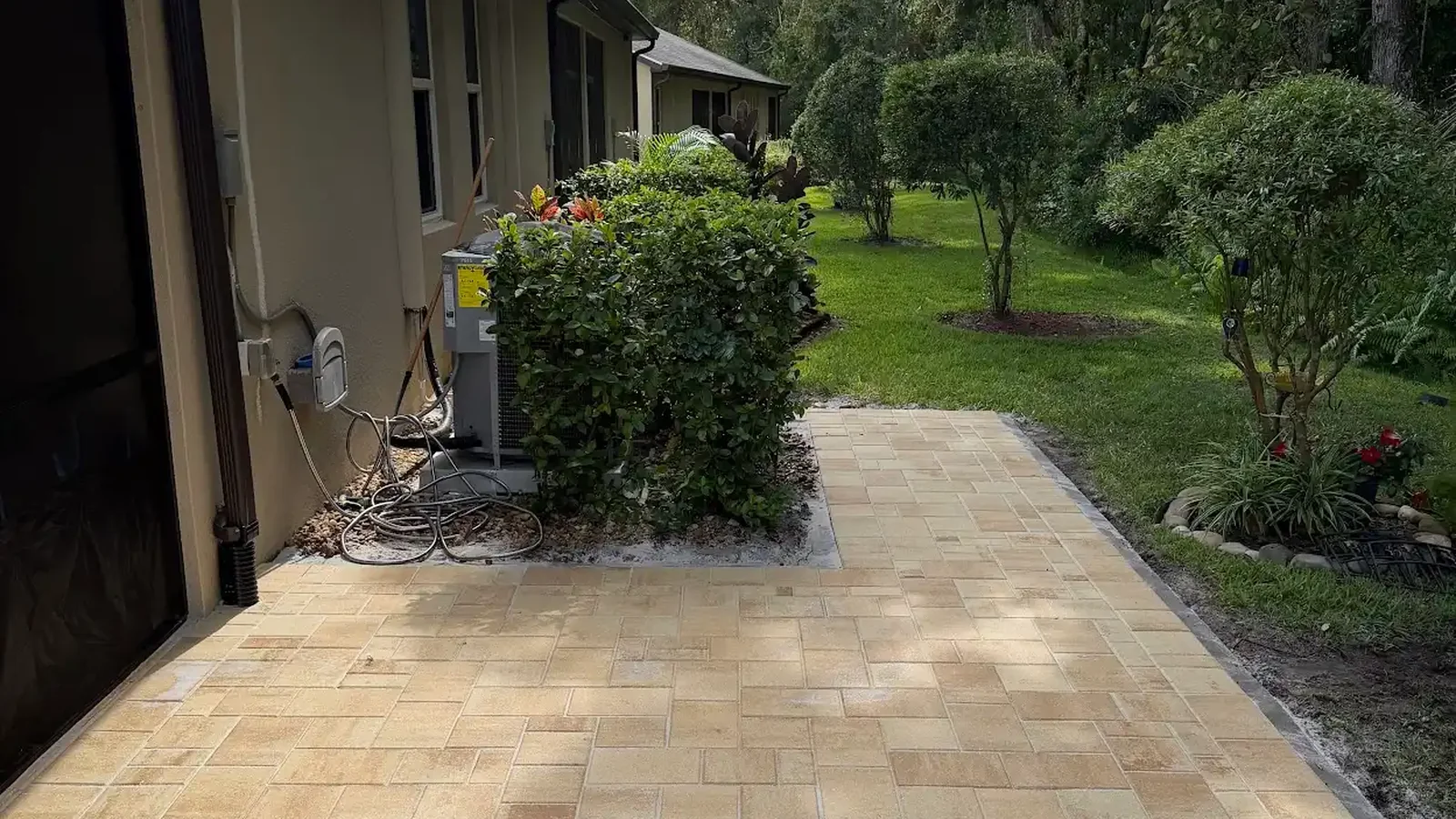
Future changes often include adding lighting, conduits, or new landscape features. Running new lines under a slab usually calls for precise cutting and patching. With pavers, contractors can open only the needed area, do the work, and reinstall the same units. In both cases, coordinate with a qualified electrician, plumber, or other trade professional for any utility or safety-related work before modifying your surface.
Florida Heat, Rain, and Roots: What They Mean for Your Surface
Florida climate puts extra stress on hardscapes. Sun exposure can heat up dense materials, while sudden storms test how well water sheds across your driveway or patio. Around pool decks in Seven Springs or Palm Harbor, many homeowners focus on how hot a surface feels under bare feet and how slick it becomes when wet. Texture, color, and joint lines all affect comfort and traction.
Concrete can absorb and radiate a lot of heat, especially in darker colors and large uninterrupted slabs. Light-colored finishes and certain textures may stay more comfortable, but exposure still matters. Pavers typically have more joints and varied textures, which can help break up heat and water films. However, darker pavers and dense units can still feel warm, so always compare samples on-site in the sun.
Rain and roots are another big Florida consideration. Both concrete and pavers need proper slope so water runs away from your home, pool, and structures. Poor grading can lead to ponding, erosion, or accelerated cracking and settling. Large tree roots can lift slabs or push against them. With pavers, lifted units can sometimes be adjusted after addressing root issues with a qualified arborist, but repeated interference may still require layout changes.
In areas with sandy or poorly compacted soils, a well-built base becomes critical. Inconsistent compaction under a concrete slab can lead to cracks and hollow spots. Under pavers, it can cause wave-like settling. For properties in low-lying parts of Tampa Bay or near water, ask your contractor how they handle base depth, compaction, and runoff planning as part of the overall hardscape project, not as a standalone service.
Common Concrete and Paver Mistakes to Avoid
Many long-term problems start before the first yard of concrete is poured or the first paver is set. One frequent mistake is overlooking soil conditions and assuming any compacted base will do. In Tampa Bay, fill soils, past construction debris, or old tree stumps can all cause future movement. Skipping a soil check or rushing compaction can shorten the life of both slabs and pavers.
Another mistake is treating water as an afterthought. If you only focus on the surface pattern and ignore slopes, you may see water backing toward your house, pool, or garage. Concrete with inadequate slope can hold shallow puddles that stain and weaken the surface. Paver joints can trap debris where water lingers. Discuss where runoff should go while you are still designing the layout.
Homeowners also sometimes underestimate maintenance. Concrete can require sealing, cleaning, and occasional crack filling, especially where irrigation overspray or vehicles leave stains. Pavers benefit from periodic joint sand checks, cleaning, and sealer where appropriate. Neglecting these tasks does not usually cause instant failure, but it can accelerate fading, staining, or shifting. Setting realistic expectations early helps you choose a surface you can care for consistently.
DIY repairs can create new issues if you use the wrong products or techniques. For example, rigid patch materials on a moving crack may pop back out. Over-aggressive pressure washing can damage the finish on concrete or scour joint sand from pavers. When in doubt, ask a qualified hardscape contractor what products and schedules make sense in our specific Florida environment.
When to Call a Hardscape Professional in Tampa Bay
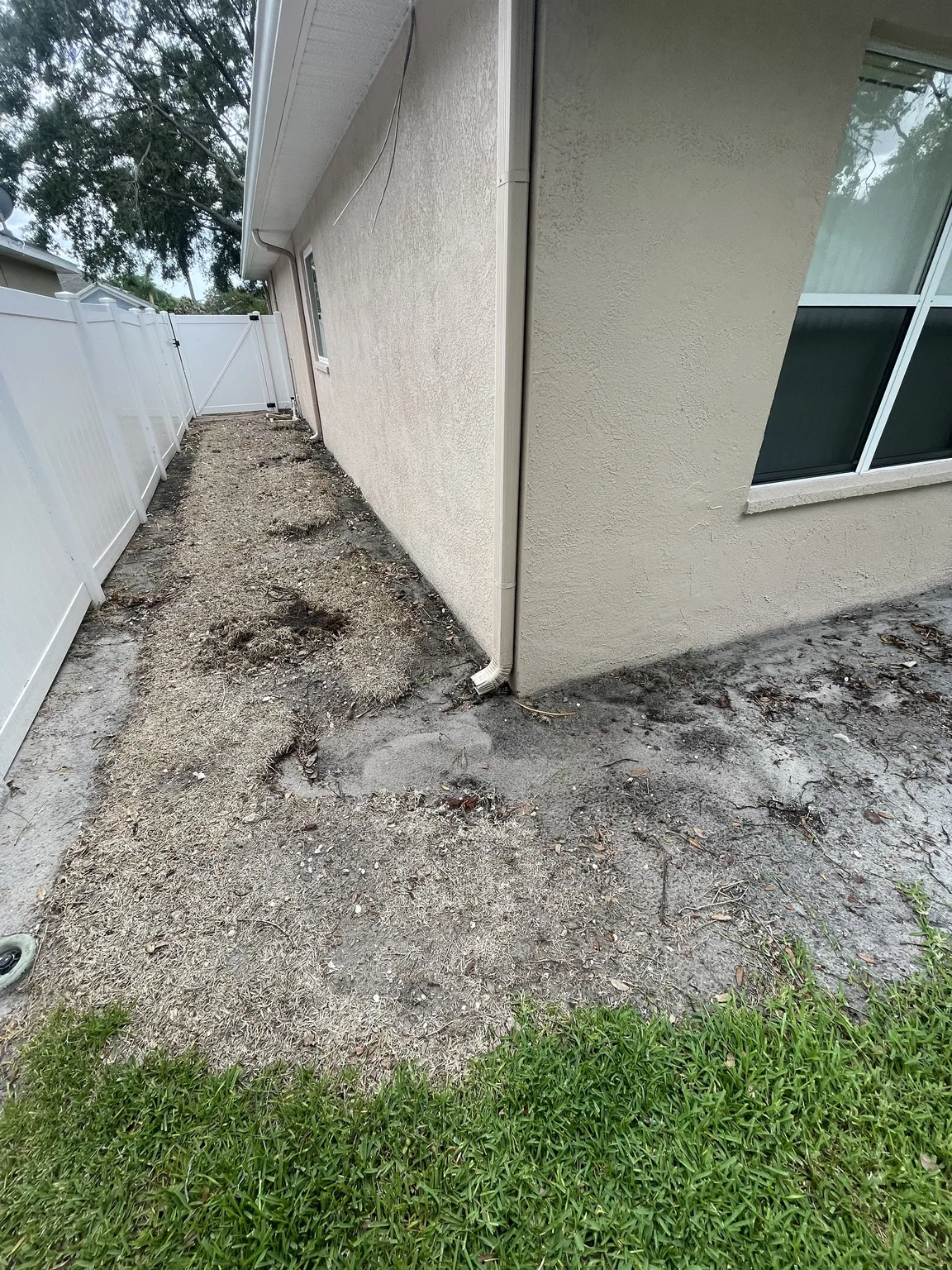
Some decisions about concrete and pavers go beyond what you can see at the surface. If your existing driveway or patio in Ruskin or Greater Carrollwood shows repeated cracking, pooling water, or significant settling, it helps to have a professional assess the cause. They can look at base thickness, joint layout, nearby trees, and adjacent structures. That information will shape whether concrete, pavers, or a hybrid approach makes more sense next time.
You should also involve a pro when changing how you use a space. Turning a light-use patio into a parking area or adding heavy planters can change load patterns. Pavers might need a different base design than a decorative slab, or vice versa. A contractor can coordinate with licensed engineers or other specialists when you add structures or make major grade changes that affect stability or water paths.
Permitting and codes vary by municipality and project type. Because rules can change and depend on details like size, location, and drainage impact, it is important to consult your local building department or a contractor familiar with your area. They can help you understand what reviews might apply without offering legal advice. When pools, retaining walls, or steps tie into your new surface, other trades or licensed professionals may also need to be involved.
A hardscape consultation is also useful if you plan to phase work over several years. A pro can help you map out how an initial concrete or paver project in Wesley Chapel or Land O’ Lakes could connect to future additions. That planning can reduce later demolition and keep patterns, elevations, and colors more consistent as your property evolves.
Side-by-Side Comparison of Concrete and Pavers
A simple comparison table can help you weigh which surface aligns better with your goals. Keep in mind that installation quality, base design, and maintenance change how every row performs in real life. Use this as a conversation starter with your contractor rather than a final verdict. Every Tampa Bay property, from Thonotosassa acreage to a compact Town ‘N’ Country lot, has unique details.
| Factor | Concrete Slab | Interlocking Pavers |
|---|---|---|
| Upfront scope & timeline | Often faster pour; curing time before heavy use. | More hand work; often usable soon after compaction and finishing. |
| Repairs over time | Patching or section replacement; color/texture match can be difficult. | Lift, adjust base, and relay same units when feasible. |
| Appearance options | Color, broom, stamped, or textured finishes. | Wide range of colors, shapes, and patterns. |
| Heat & comfort | Can feel hot; lighter colors and texture can help somewhat. | Joints and texture can improve comfort; dark tones still warm. |
| Traction when wet | Good with broom or texture; smooth finishes may be slippery. | Joint lines and textured faces offer strong grip in many patterns. |
| Roots & movement | Roots can lift or crack slab; repairs often show. | Localized lifting may be re-leveled after addressing cause. |
| Utility access | Cutting and patching required for most changes. | Targeted removal and reinstatement for many projects. |
| Maintenance | Cleaning, sealing, and crack care as needed. | Cleaning, joint sand care, and optional sealing. |
Use this comparison to rank what matters most to you, such as repairability, design options, or installation speed. Then discuss those rankings with a qualified contractor. They can add property-specific insights that no general chart can provide. Together, you can decide whether a slab, a paver system, or a combination will best support your long-term plans.
Concrete vs Pavers FAQ for Florida Homeowners
Which lasts longer in Florida, concrete or pavers?
Either surface can last many years in Florida when installed and maintained well. Longevity depends less on the label and more on base preparation, slope, load, and care. Pavers offer an advantage because you can repair localized settling or damage without redoing the entire area. Concrete can perform well, but cracks and patches often mark the point where owners decide to replace or resurface large sections.
Are pavers always better than concrete around pools?
Not always. Many homeowners like pavers around pools because joint lines and textures can help traction and break up heat, and you can lift and reset units if you later add features. However, a well-finished, light-colored textured concrete pool deck can also perform nicely. Your decision should factor in barefoot comfort, slip resistance, nearby trees, and how likely you are to change plumbing, lighting, or layouts in the future.
Is concrete or pavers better for driveways with heavy vehicles?
Both can handle heavy loads when designed correctly. A driveway in Land O’ Lakes or Wesley Chapel that sees work trucks or RVs may need a thicker slab and proper reinforcement or a thicker paver base with appropriate edge restraints. The right choice also depends on soil conditions and turning patterns. Discuss your heaviest expected load and parking habits with a contractor so they can size the base and surface accordingly.
How does maintenance differ between concrete vs pavers?
Concrete care often focuses on cleaning, stain management, and periodic sealing where appropriate. You may also fill small cracks or joints to slow water intrusion, although cosmetic results vary. Paver maintenance includes cleaning, monitoring joint sand, and maintaining edges. Some owners choose to seal for color depth or stain resistance. In both cases, gentle cleaning methods and the right products help avoid damaging the surface or finish.
Can I mix concrete and pavers in the same project?
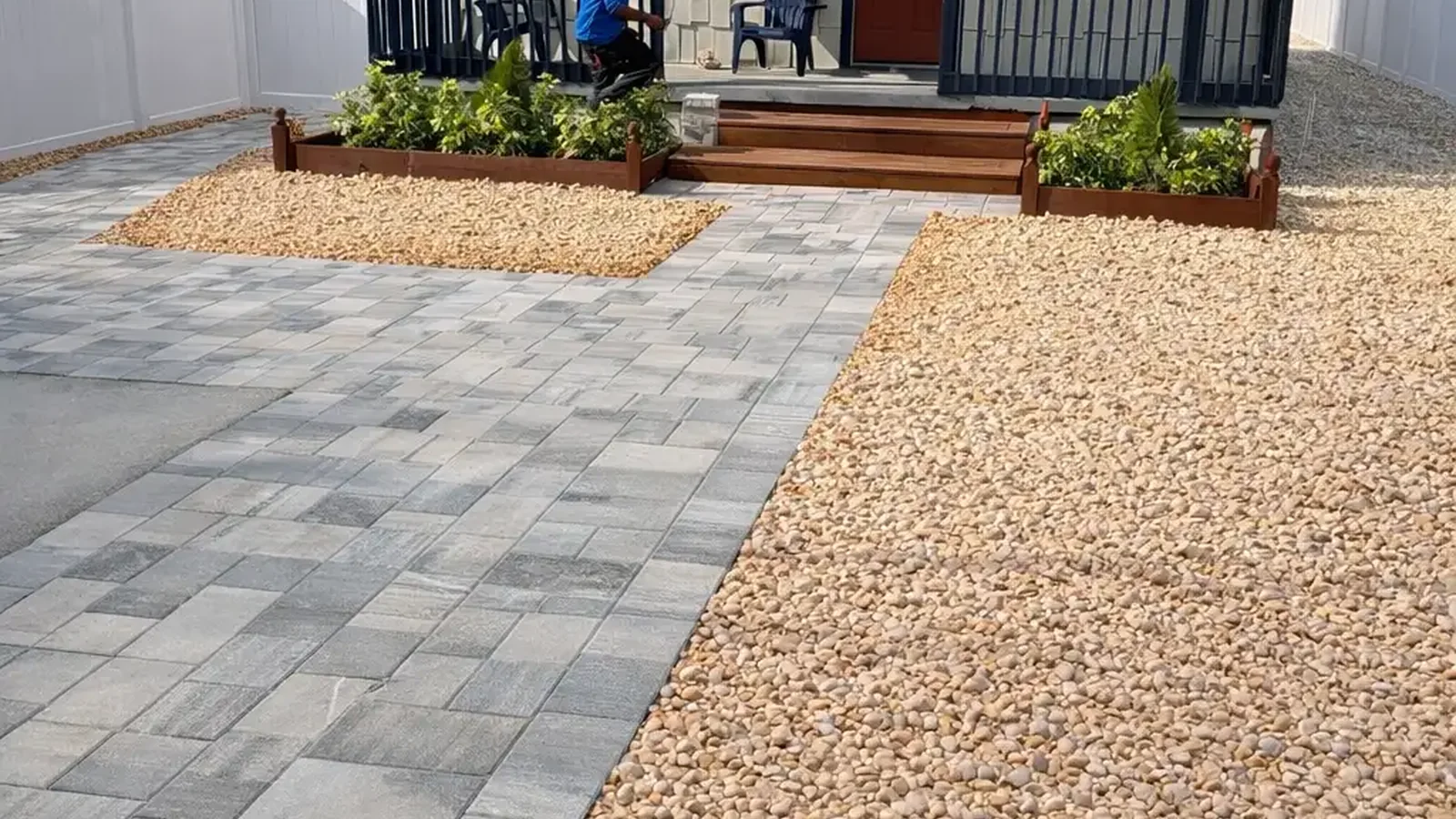
Yes, many Tampa Bay properties successfully combine both. For example, you might use a concrete slab for a garage approach and pavers for the front walk and entry, or a poured band with a paver field for visual contrast. The key is to plan elevations, transitions, and runoff together from the start. For more ideas on blending materials and patterns, you can explore Dr Pavers Design’s material comparison guides as a starting point and then fine-tune the design during a site visit.
If you are weighing concrete and pavers for a new driveway, patio, or pool deck in Tampa Bay, Dr Pavers Design can walk your property, review your goals, and explain how each option would perform on your specific site. You can browse recent projects, see client feedback in the testimonials, and get quick answers in the online FAQ. When you are ready to talk through ideas, call +1 (656) 600-4015, text the same number, email drpavers@outlook.com, or message via WhatsApp.
During a free consultation, you can discuss full design-and-build services, see how concrete and pavers might work together, and talk through timelines that fit your schedule. To get a feel for the team and finished spaces, follow Dr Pavers Design on Instagram and Facebook, and check the Tampa Bay location on Google Maps before your visit. A site meeting allows you to see samples in your own sun and shade, review slopes and roots together, and receive a tailored quote based on your property conditions and design choices.