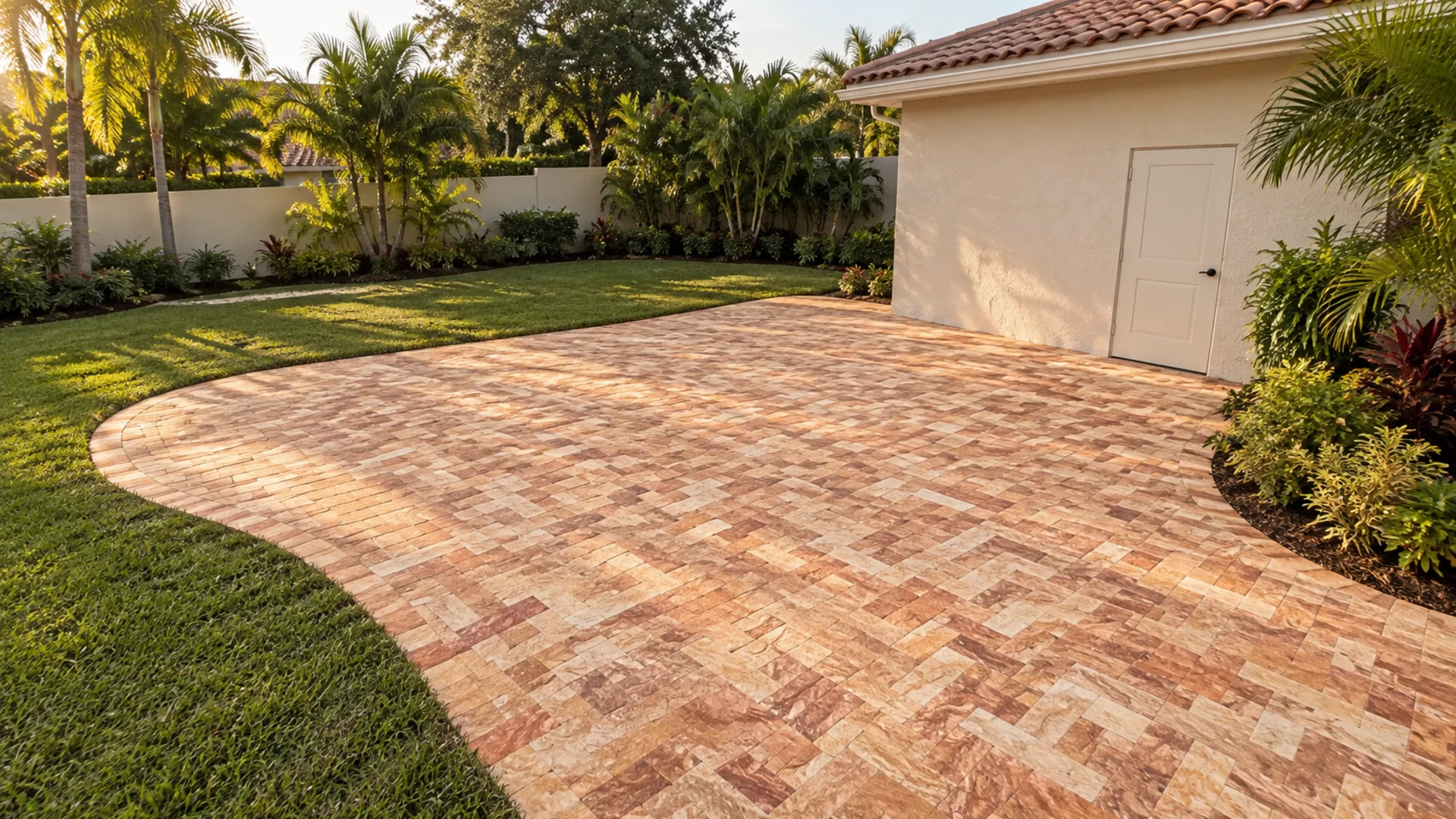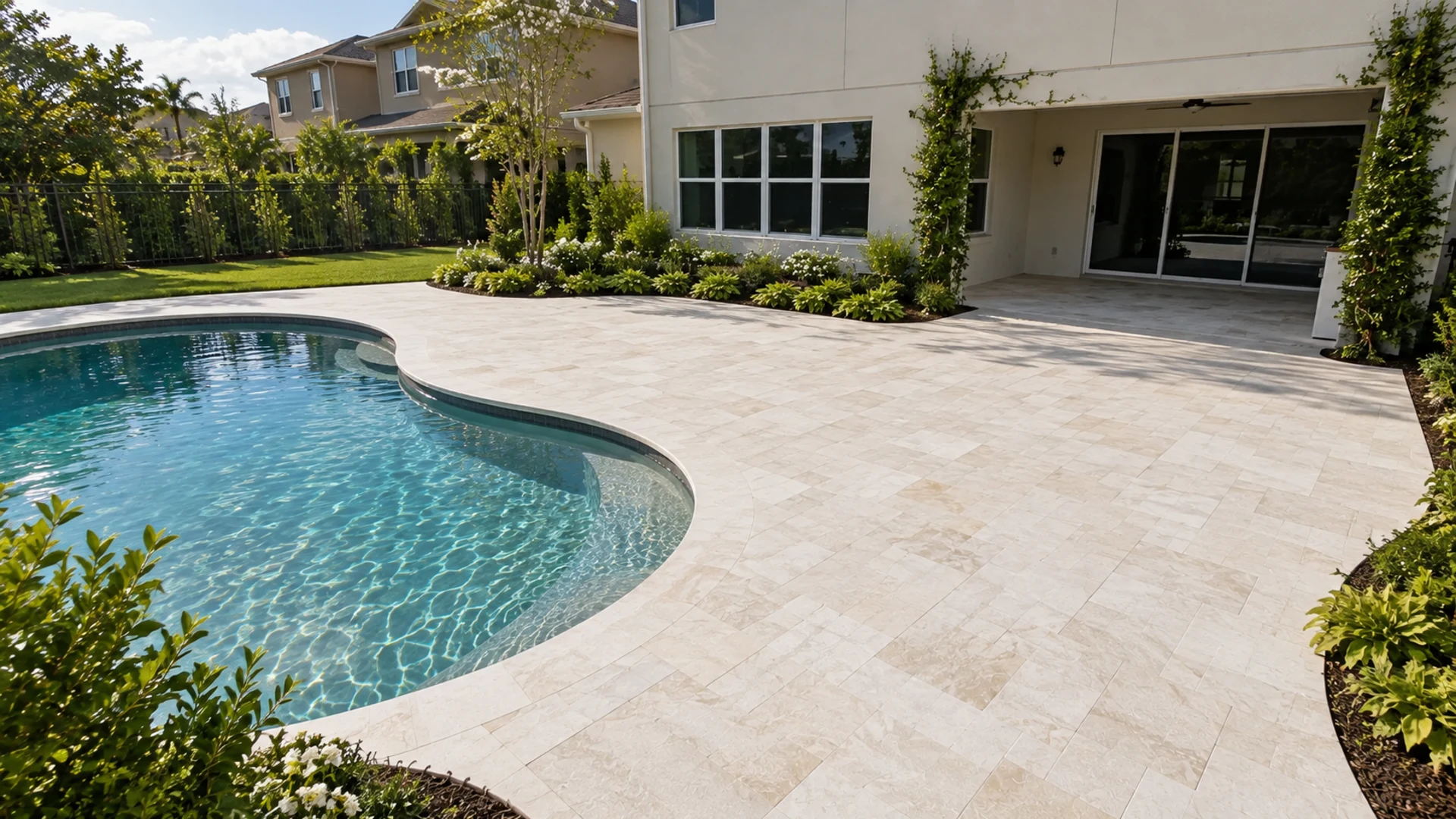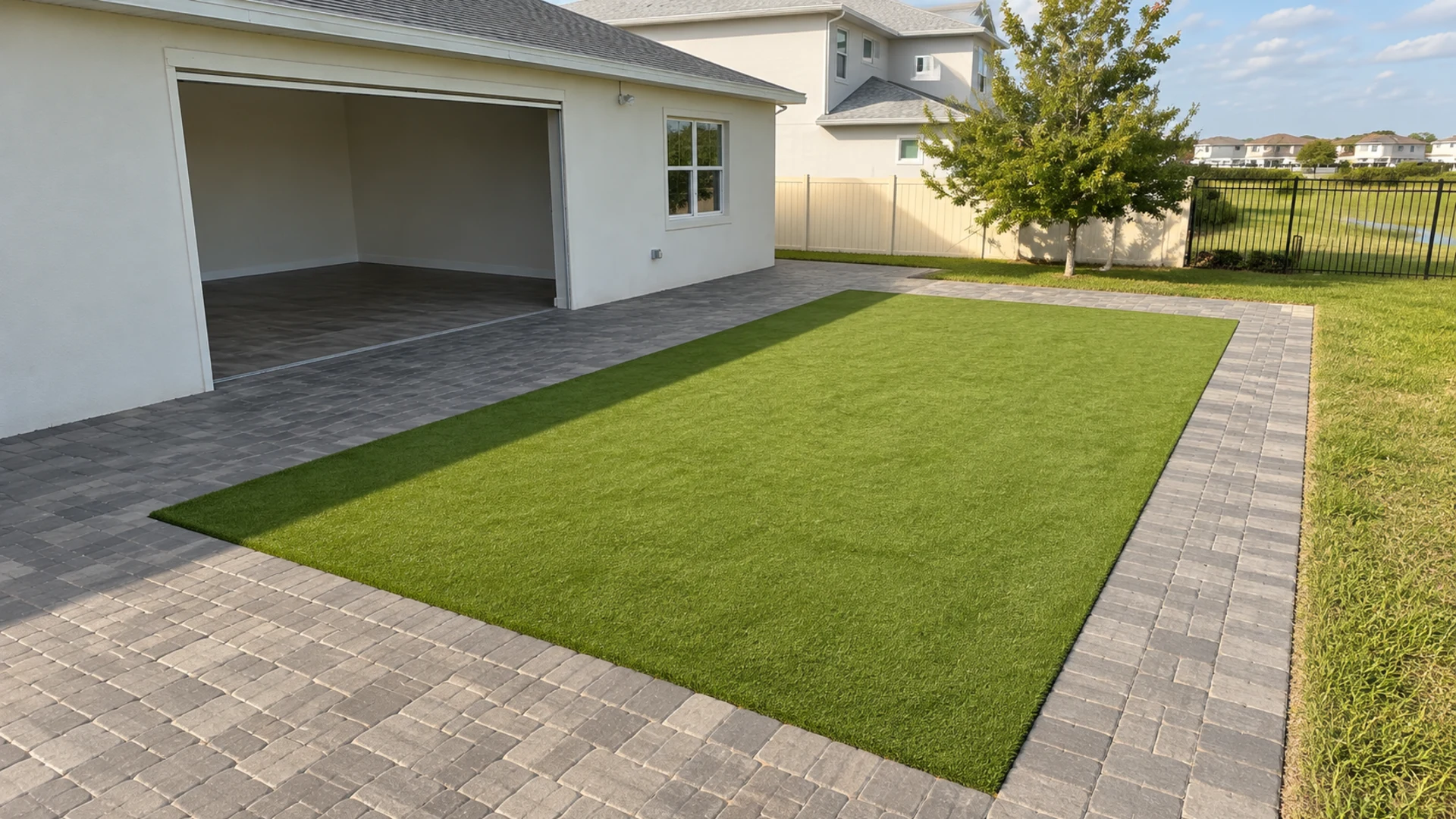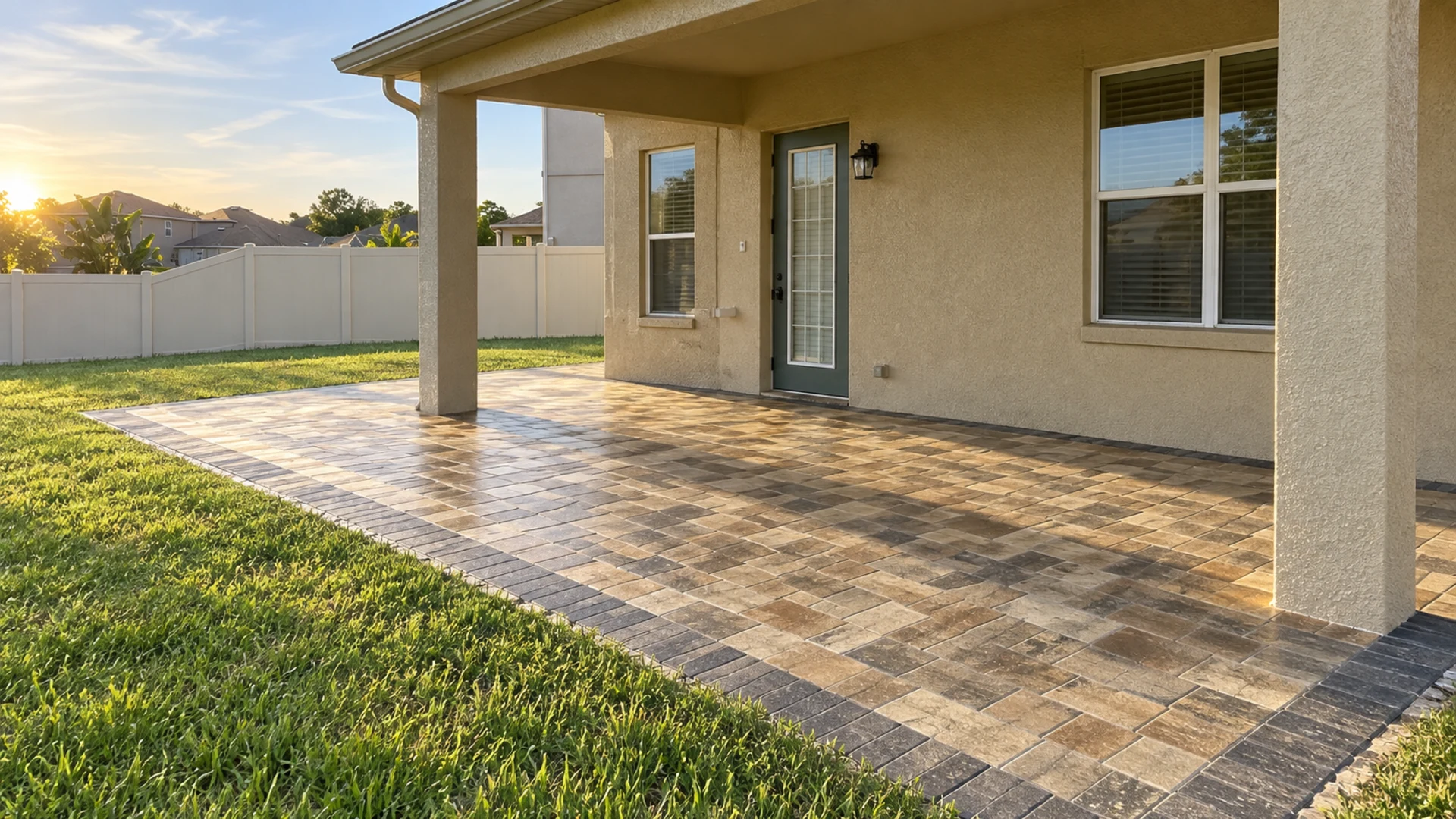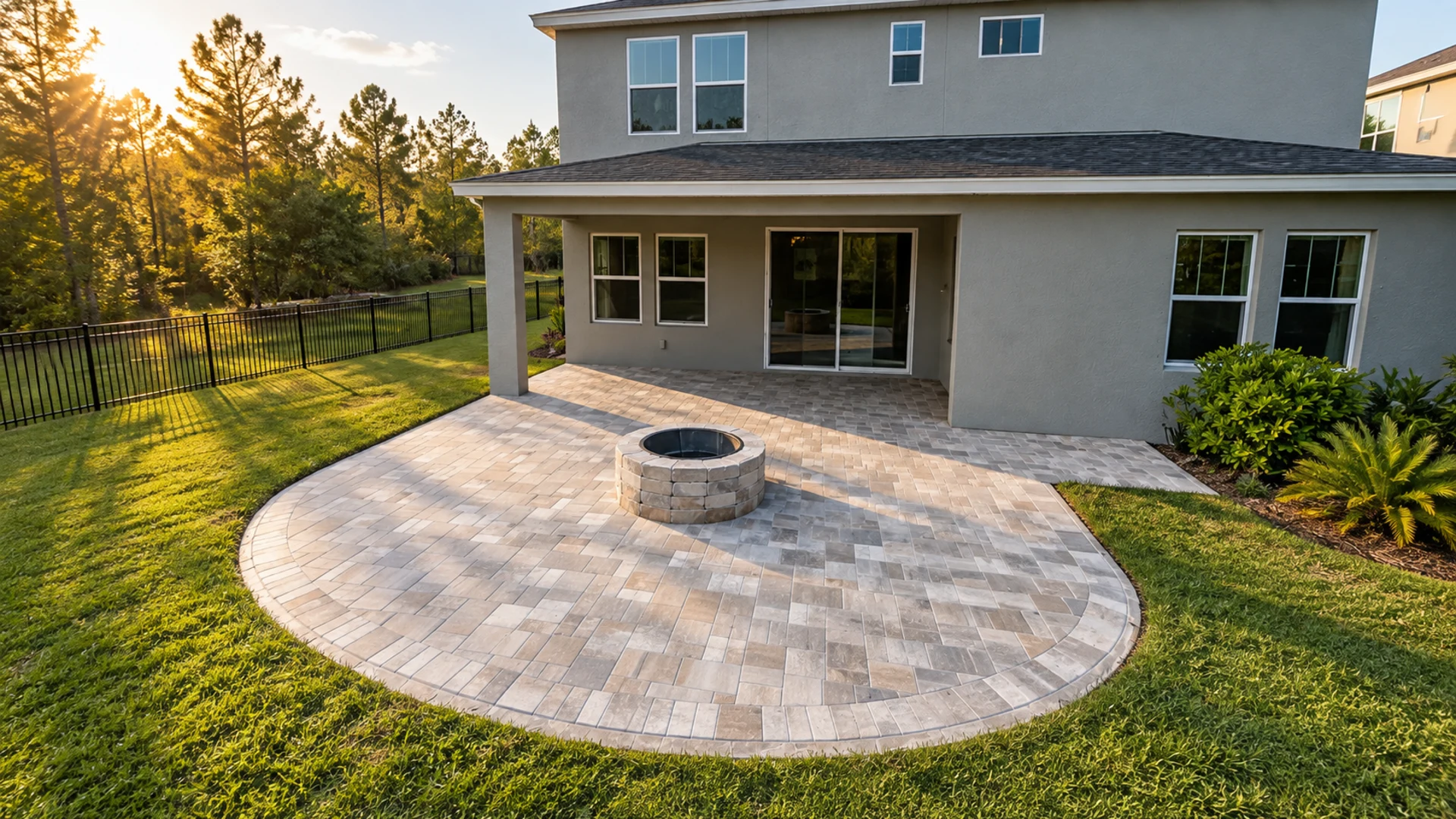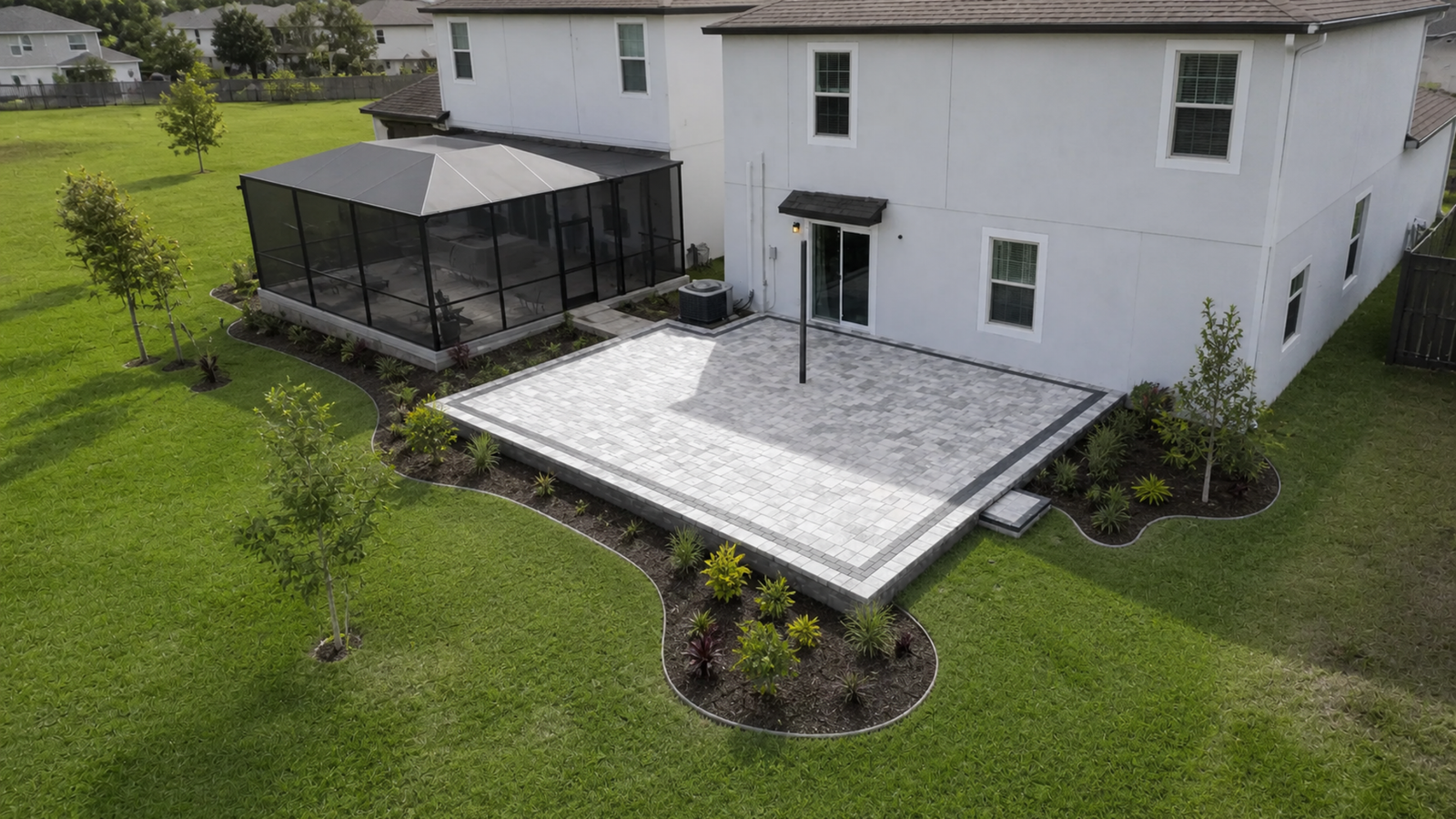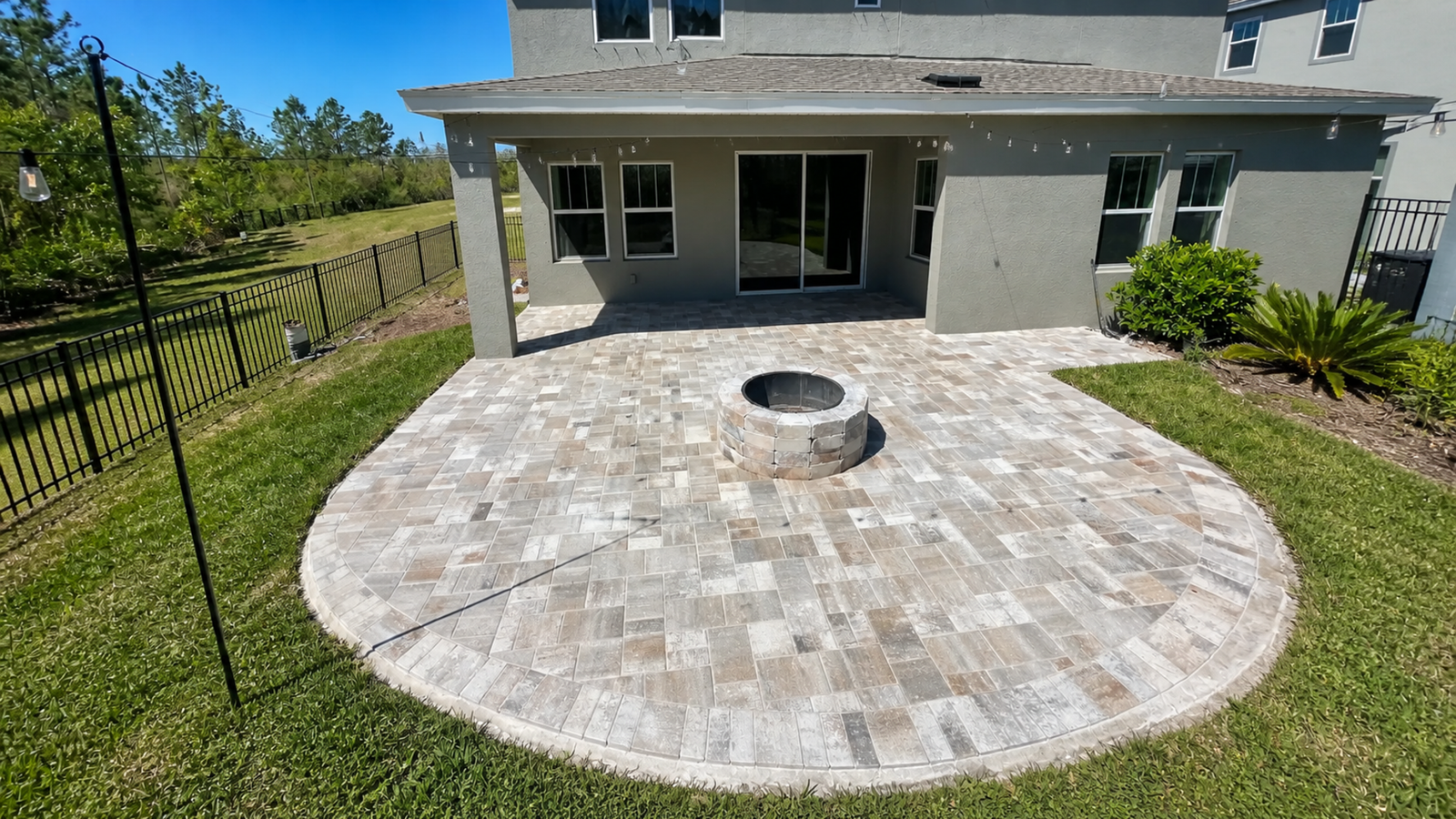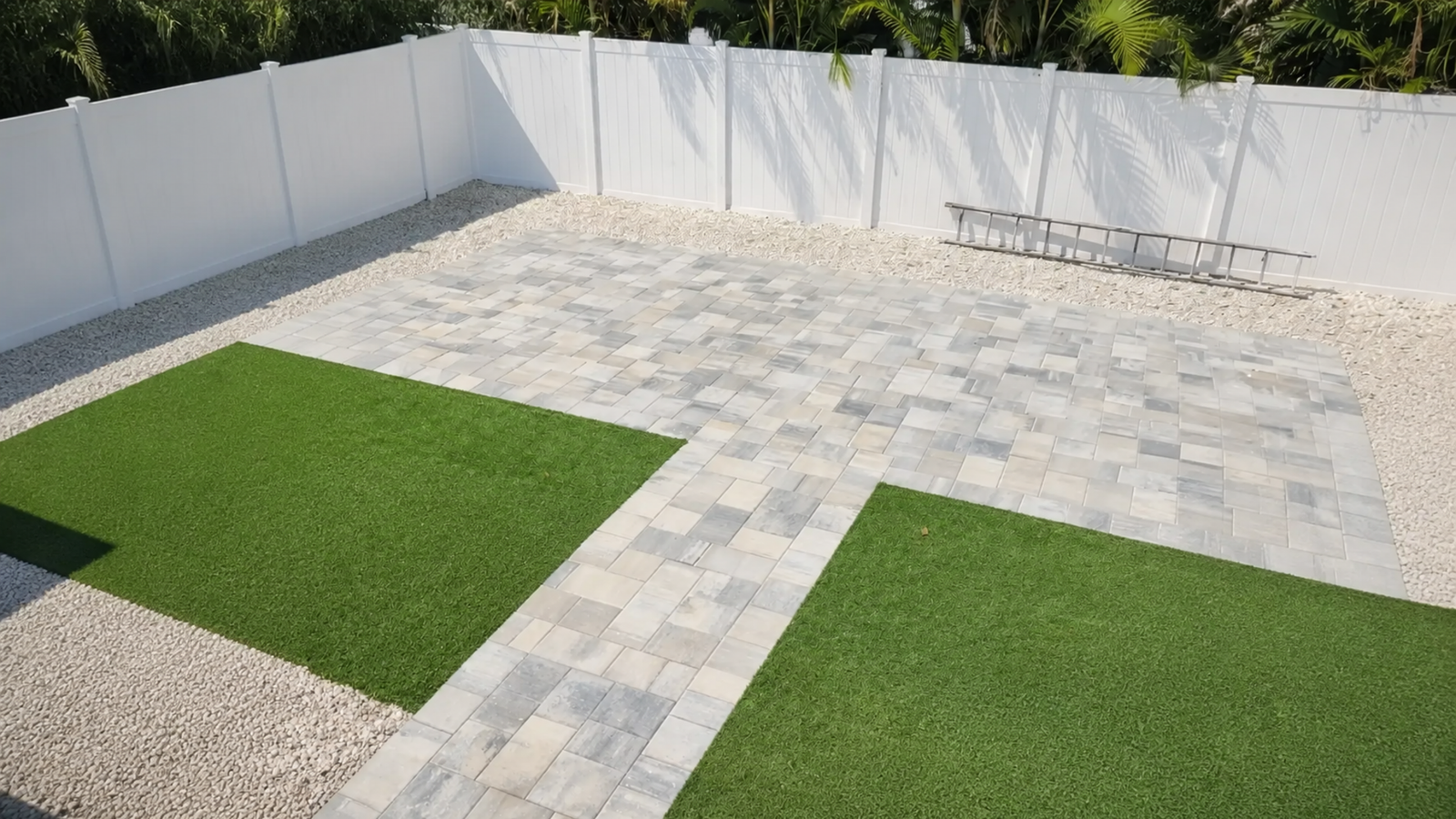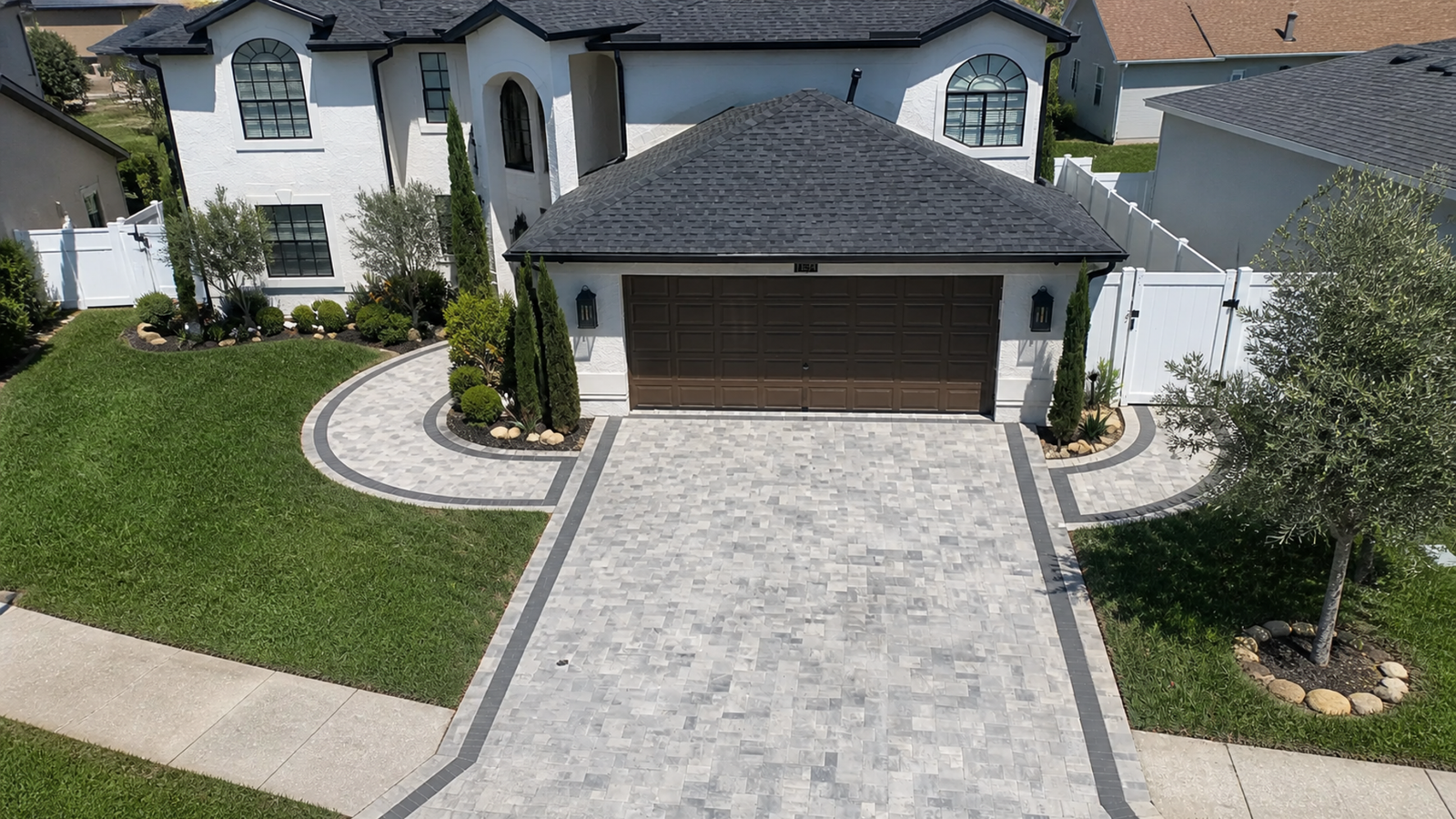
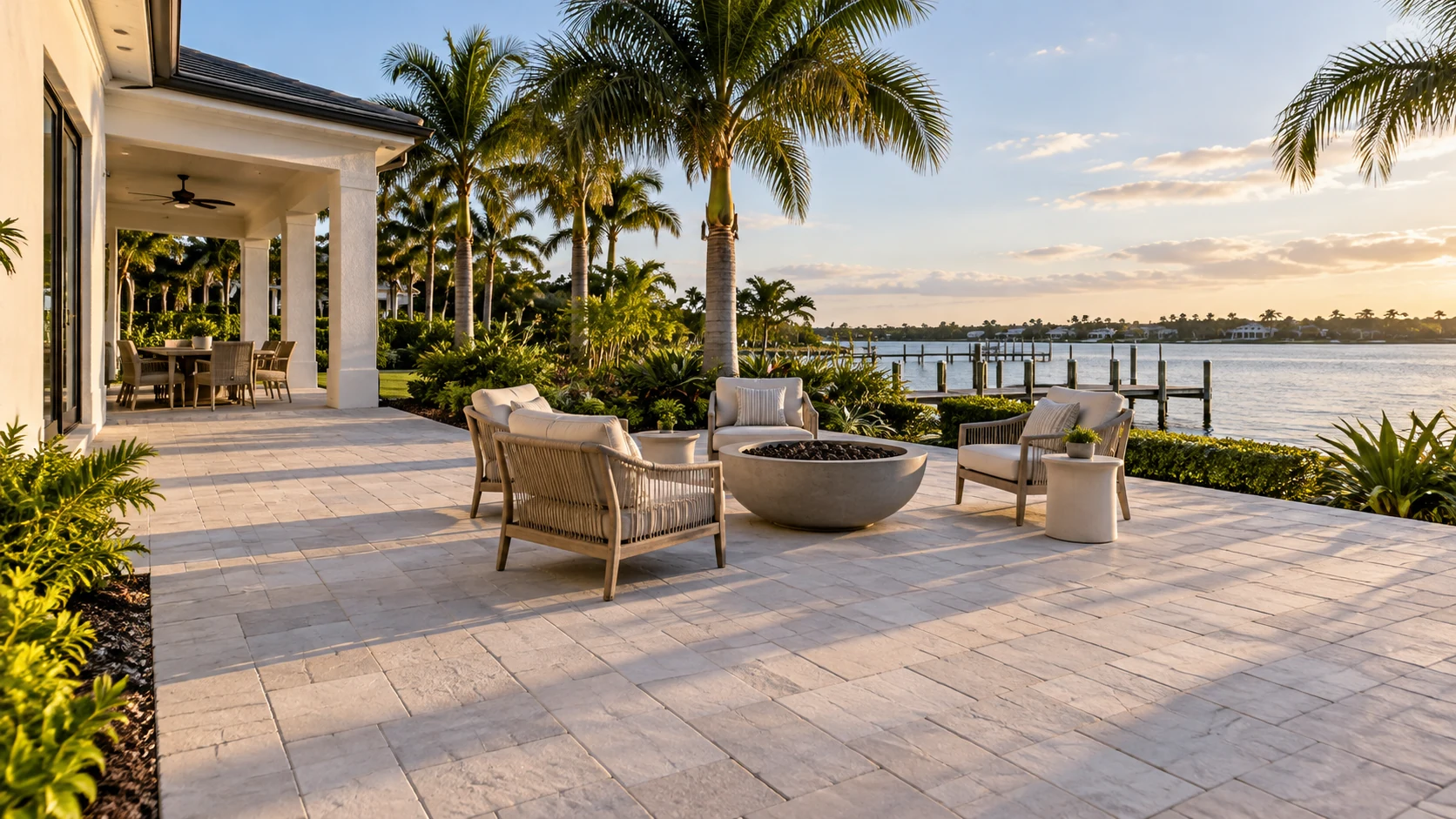
Fire pit fuel choices affect more than the look of a flame. They influence the product you select, the professionals you need, and the way the surrounding patio works. Therefore, decide on the fire feature before treating its footprint as a finished paving detail. A last-minute switch can introduce questions that the original patio proposal never addressed.
For a Tampa Bay homeowner, a useful consultation separates three decisions: the approved fire appliance, the fuel and utility work, and the surrounding outdoor surface. These decisions must coordinate, but they do not belong automatically to one trade. This guide helps you prepare that conversation without offering instructions for gas work, appliance installation, or fire operation.
Start with the experience you actually want
First, describe how you expect to use the space. You may want occasional evening gatherings, a permanent focal point, or a feature that remains visually quiet when not operating. Also, consider how often someone will handle setup, cleaning, and storage. Those habits matter when comparing different types of fire features.
Avoid choosing a fuel solely because a photograph looks appealing. The picture may omit service access, storage, overhead features, and nearby boundaries. Instead, use it to explain a design preference and ask what the actual property can support. A site review should come before promises about the final arrangement.
Tell the team about children, pets, routine walking routes, and any household accessibility needs. These details help frame the layout discussion. However, a blog cannot certify that a particular arrangement is safe or compliant. The selected product's instructions and the relevant professionals must guide the actual decisions.
Compare fire pit fuel choices with the product in view
Ask which specific appliance or listed system the proposal includes. A generic circle on a patio drawing does not establish the product's fuel, installation conditions, or required surroundings. Therefore, request its model information and current instructions before the surface layout becomes final.
Wood-burning, propane, and natural-gas features can involve different handling and service questions. However, do not assume any fuel makes the project maintenance-free or removes the need for review. Ask the supplier to explain the actual product, and have qualified specialists address fuel connections and other technical work.
Also, keep the appliance decision separate from decorative masonry. A custom-looking surround does not establish that the components inside it form an approved system. Ask who verifies compatibility and installation requirements. The finished appearance should follow the product and design decisions rather than substitute for them.
Make fire pit fuel choices before final patio approval
If the homeowner has not selected a product, show that decision as open on the plan. Do not approve a final layout while assuming every possible fire feature will fit the same spot. Instead, identify what information the patio contractor needs before completing the design.
Ask how a later product change would affect the work. It could require another layout review, specialist input, or a revised estimate. Therefore, document the approval sequence clearly. This prevents an attractive early concept from becoming an unsupported promise about a product no one has actually reviewed.
Bring the manufacturer's instructions into the design meeting
The product manual should inform the conversation about placement, surrounding materials, operation, and maintenance. Ask the supplier or qualified installer to identify the sections relevant to your site. Also, confirm that the document matches the exact product and fuel configuration under consideration.
Do not collect a clearance number from one website and apply it to every fire pit. Different products and authorities can create different requirements. Instead, ask the responsible professionals to explain the actual conditions for your project. Keep their answer with the approved product information.
If a design image conflicts with the instructions, resolve that conflict before construction. The answer should not depend on hiding a technical requirement behind furniture or landscaping. A coordinated design respects the feature's practical needs while creating the outdoor setting you want.
Confirm local requirements before committing to a location
Ask which local authority and property rules apply to the proposed feature. Location, product, fuel, and scope can affect that answer. Also, identify any community approval process that applies to your property. This article does not provide a universal permit decision for every Tampa Bay address.
The U.S. Fire Administration's outdoor fire guidance emphasizes separation from things that can burn and attentive use around children. Treat that as general fire-safety context. It does not replace the actual appliance instructions or the requirements that govern your project.
If the contractor needs specialist or authority confirmation, leave the decision pending until that information arrives. A calendar deadline should not turn an unresolved placement question into assumed approval. Ask what can proceed independently and what must wait for a qualified answer.
Give fuel work its own responsible professional
For a fuel connection, ask who performs the work and what qualifications the project requires. The paving proposal should not imply that surface installation automatically includes gas services. Instead, identify the responsible specialist and the information needed before the patio closes around the installation.
Keep utility capacity, routing, connections, testing, and any required approvals with the appropriate professionals. A homeowner can provide records and explain intended use, but should not design or alter those systems from internet advice. Also, ask who confirms readiness before the fire feature enters service.
If a portable fuel arrangement forms part of the chosen product, request the relevant storage and operating instructions from its supplier. Do not assume a decorative cabinet can conceal any container. The selected system and applicable requirements determine what the design must accommodate.
Coordinate the paving sequence with hidden work
Ask what needs to happen before the paver installation and what remains accessible afterward. Underground or concealed work can affect the sequence even when the finished patio looks simple. Therefore, show the responsible trades on one timeline rather than treating each estimate as an isolated job.
If excavation is necessary, ask the excavating contractor how utility locating and private line information enter the plan. Also, identify who documents the completed work before it becomes hidden. Those records support future service, but they do not replace any inspection or approval the project requires.
Agree on a handover point between specialists. The paver contractor should know what condition it is accepting and which parts remain outside its scope. Likewise, the appliance professional should understand the finished surface plan. A clear sequence reduces the risk that one trade must disturb another's completed work.
Review the patio as a route, not just a seating picture
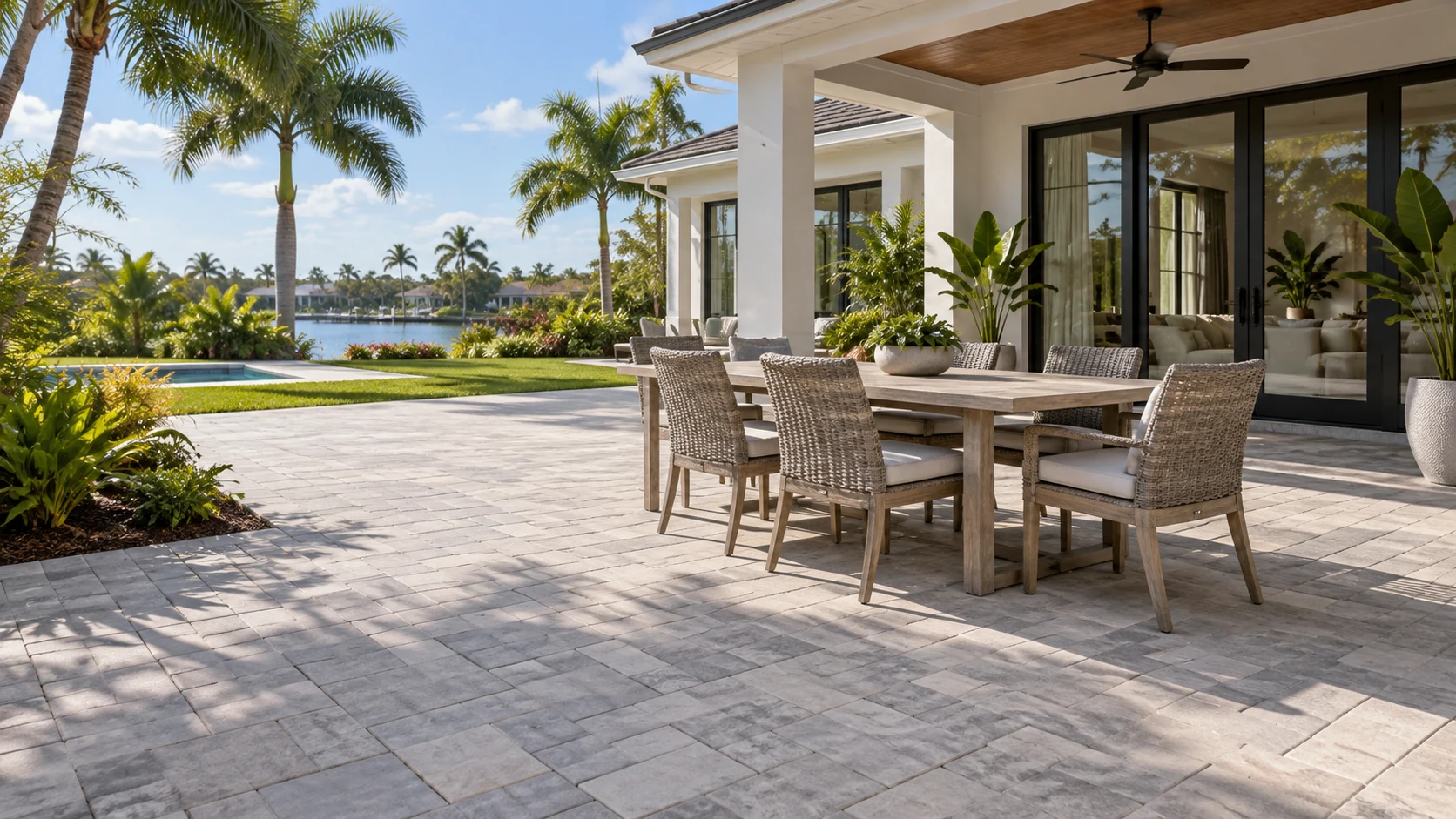
Draw the usual paths between the house, gate, dining area, and garden. Then add the proposed fire feature and furniture footprints. A layout that looks spacious from above may create an awkward everyday route. Therefore, review circulation before treating the seating arrangement as final.
Consider chairs both stored and in use. People pull them back, set down bags, and move between conversations. Also, identify where someone will stand while handling the appliance according to its instructions. These activities need discussion alongside the dimensions of the decorative surround.
Avoid describing the remaining path as accessible or compliant without the relevant review. Instead, explain the household's actual needs and ask the designer to address them. A clear brief supports a better plan than attaching a broad safety label to a photograph.
Keep overhead and neighboring features visible
Show roof edges, screens, pergolas, trees, fences, and nearby structures in the site review. They may not appear in a close photograph of the proposed fire pit area. However, they belong in the information the qualified professionals evaluate before approving a location.
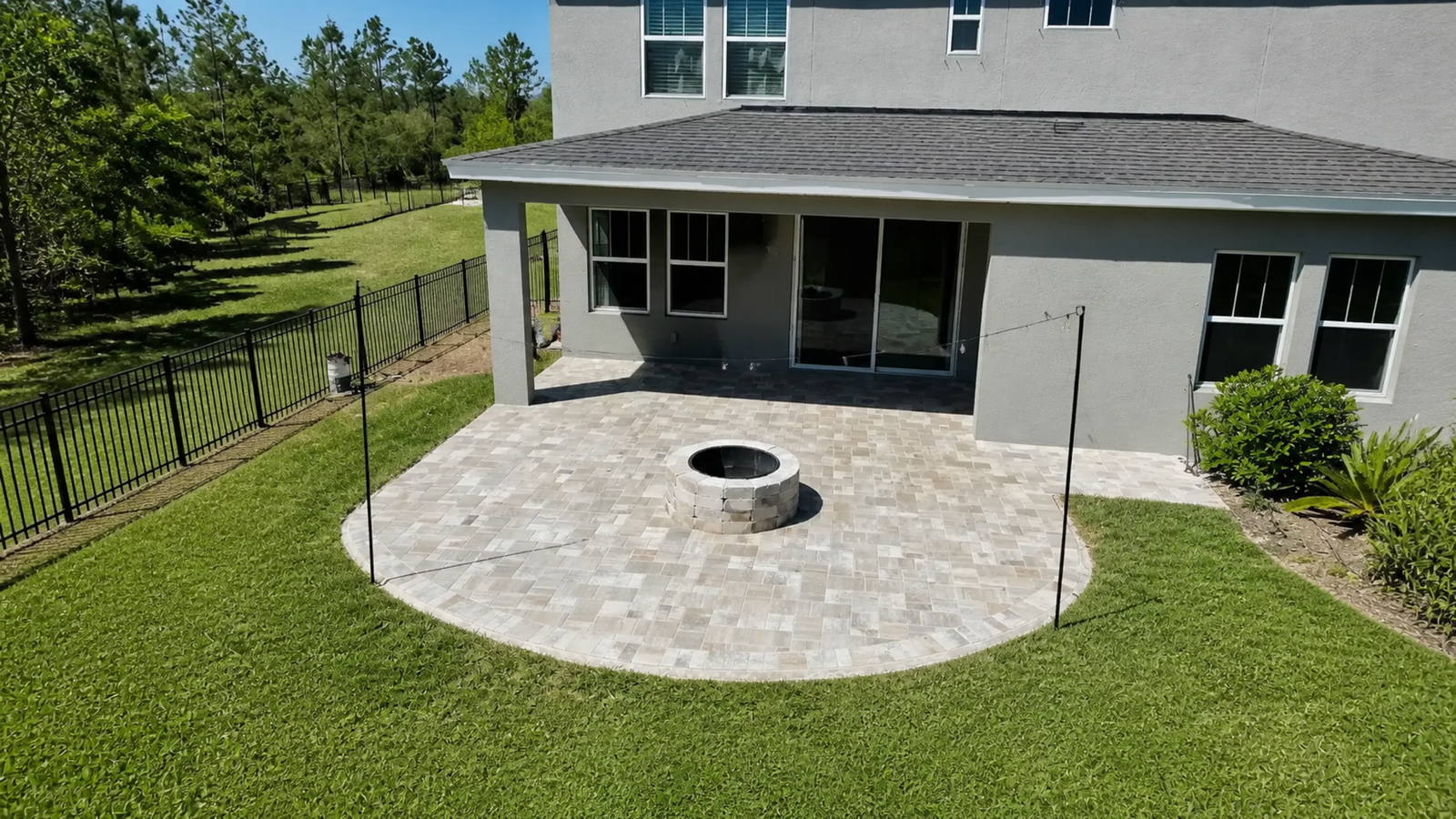
Do not assume that an open-looking patio roof makes a particular fire appliance suitable beneath it. Ask the product supplier and relevant specialists to address the actual configuration. Also, discuss neighboring property conditions where they affect planning. The design should work with the real site rather than a cropped inspiration image.
If landscaping will change later, include that intention now. A tree or screen added after the fire feature can change the surroundings that the original review considered. Therefore, preserve the approved layout and request another professional review before making a significant nearby change.
Ask how service access remains available
A permanent feature still needs access for the maintenance its system requires. Ask which panels, controls, components, and routes must remain available. Then show those areas on the patio and furniture plan. Decorative finishes should not conceal a service requirement that the installer expects to use.
Also, ask how a specialist would remove or replace a component in the future. That question can reveal a conflict before the surround and paving become complete. However, it does not mean the homeowner should open the appliance to test access. Let the responsible professional demonstrate or explain the approved arrangement.
Keep service contacts and product identifiers with the project records. If a question develops later, that information helps you reach the right company. A general landscape contractor and an appliance service specialist may handle different parts of the same outdoor feature.
Understand cleanup and storage before selecting a fuel
Ask the supplier what routine care the actual product requires after use. Different systems can create different tasks, and those tasks need a place in the household routine. Also, discuss storage for approved accessories and how they stay clear of ordinary walking routes.
Avoid choosing based on a claim that one fuel never creates mess or maintenance. Instead, compare the actual instructions and the effort you are willing to provide. The patio layout should support that routine without encouraging improvised handling or storage that conflicts with the product guidance.
If another company maintains the patio, tell it which feature will occupy the area. Cleaning products, equipment, and work timing may need coordination around the appliance. Ask both companies to define their boundaries before a routine maintenance visit becomes an unexpected service problem.
Compare estimates using the same scope
One proposal may include paving and a decorative surround, while another includes an appliance and specialist coordination. Those are not equivalent packages. Therefore, compare the task lists, product details, exclusions, and responsibility for approvals before comparing the total price.
Ask what happens if the selected appliance changes or the planned location does not pass review. A clear revision process is more useful than an unsupported assurance that everything will fit. Also, identify who approves additional work and when the contractor will provide a revised scope.
Keep optional appearance choices separate from required technical work. You may be able to simplify a finish without changing the product's installation needs. Conversely, a different fuel choice may create a broader change. Understanding that distinction supports a more realistic budget discussion without inventing a price range.
Use a coordinated handover before first use
At completion, ask the responsible professionals to explain the finished scope and any operating limitations. Collect the actual manuals, approval records where applicable, care instructions, and service contacts. Then confirm who answers an appliance question and who handles a paving concern.
Do not treat a finished patio photograph as evidence that the fire feature is ready for use. Readiness depends on the completed work and the appropriate professional confirmations. If something remains pending, keep it clearly identified and follow the responsible specialist's instructions.
Finally, preserve the approved layout for future changes. A new shade structure, furniture arrangement, or landscape feature may deserve another review. The records help later contractors understand the original decisions rather than assuming the open space around the feature has no purpose.
Choose a complete outdoor arrangement
Fire pit fuel choices work best when the product, specialists, paving, circulation, and maintenance fit one coordinated plan. Start with the way your household will use the space, then resolve technical questions through the appropriate professionals. Also, keep unresolved decisions visible before construction makes them harder to change.
Dr Pavers Design's outdoor services can help frame a conversation about the patio and surrounding hardscape. Bring the proposed appliance information and your site photographs. A defined project brief supports a useful consultation without assuming that a paving estimate automatically covers every fuel or appliance requirement.
For help turning these observations into a defined project, explore Dr Pavers Design's services, review completed projects, and bring your questions to the contact team. The FAQ and testimonials can also help you prepare for that conversation. Ask which parts of your request fall within the proposed service before approving work.
You can follow Instagram and Facebook for company updates, check Google reviews, or find the business on Google Maps. To discuss this topic, send your project details through WhatsApp, call +1 (656) 600-4015, or email drpavers@outlook.com. Contact Dr Pavers Design for a free consultation in Tampa Bay; scope, availability, and site conditions still need confirmation.