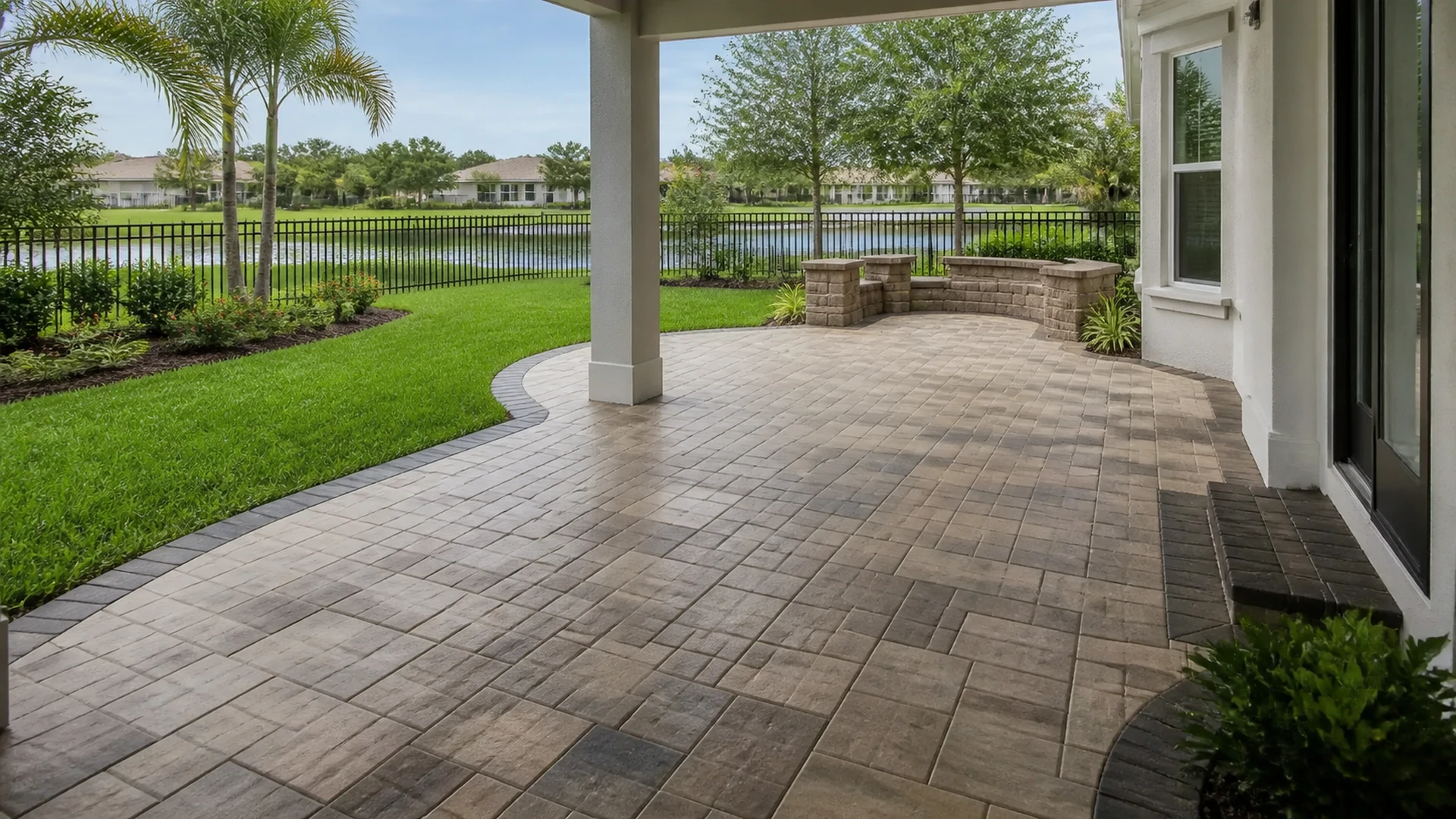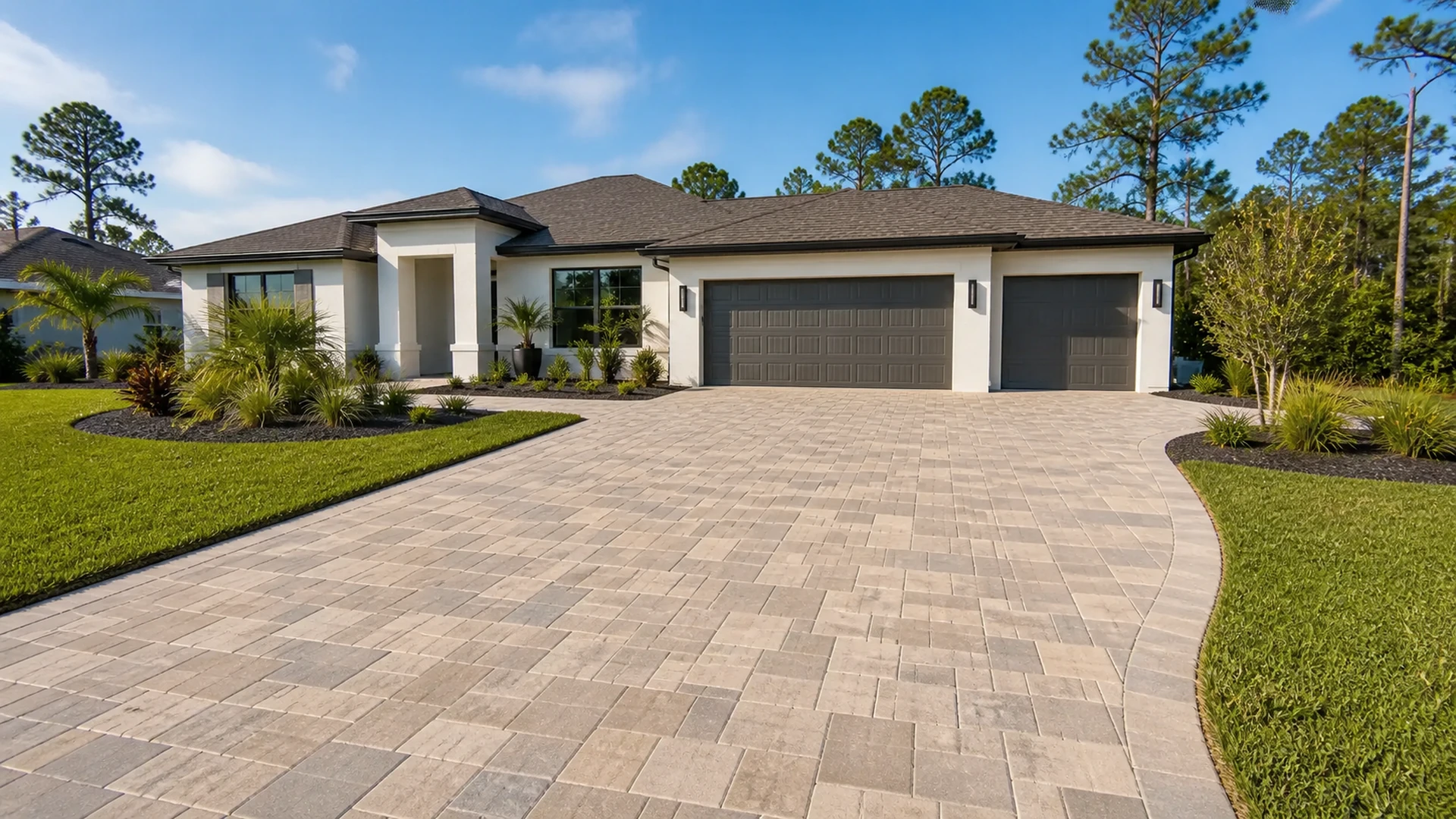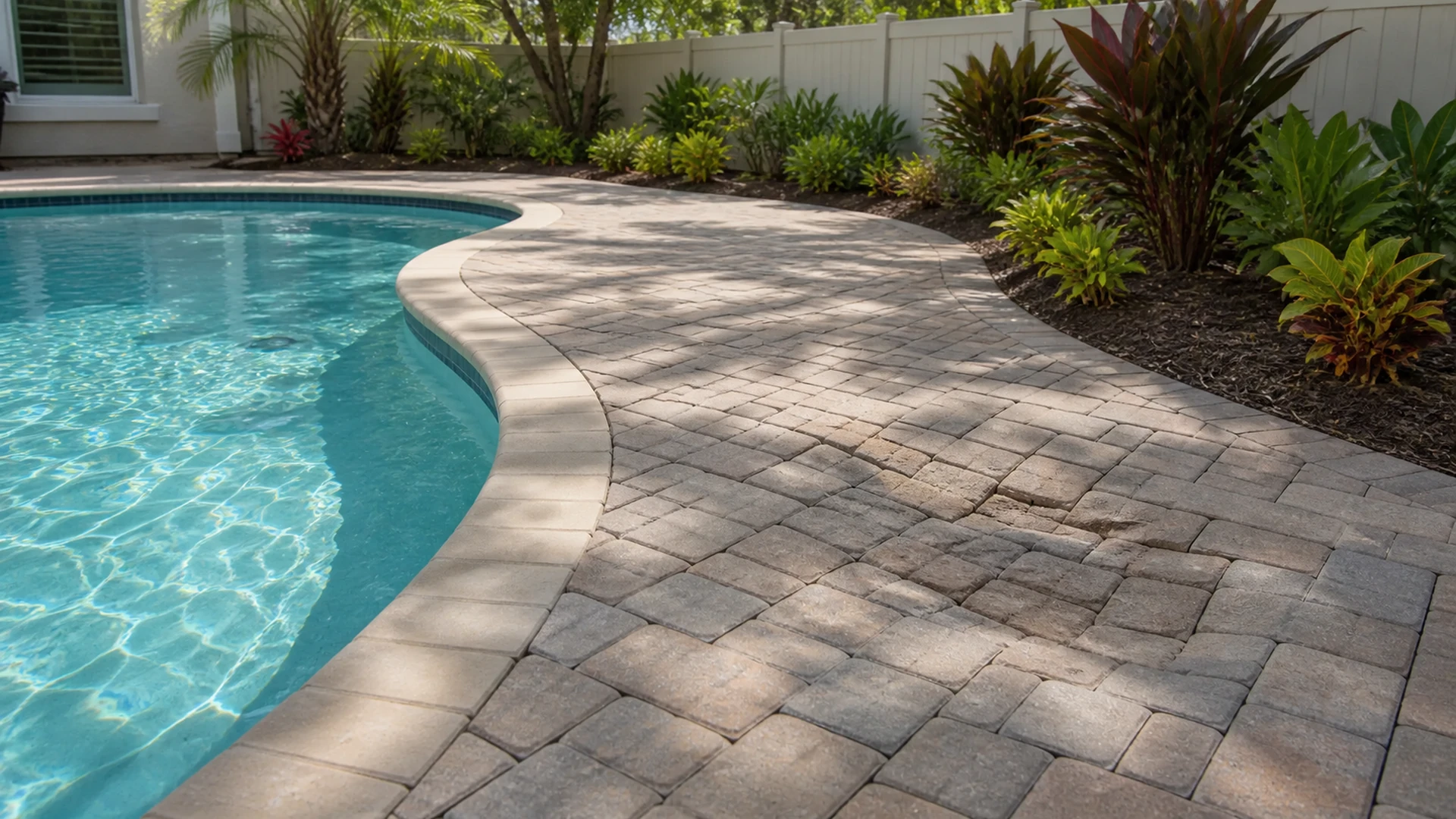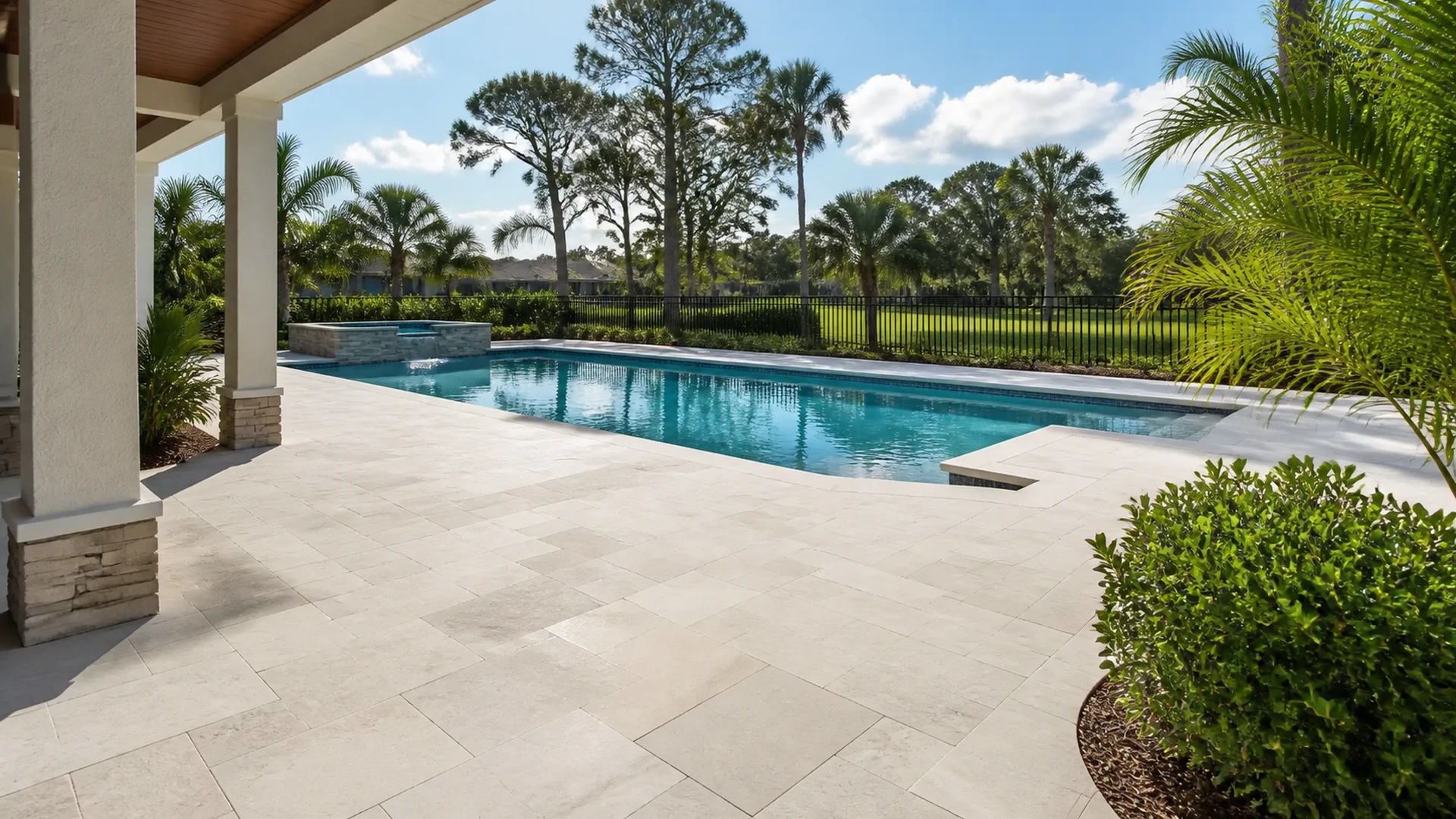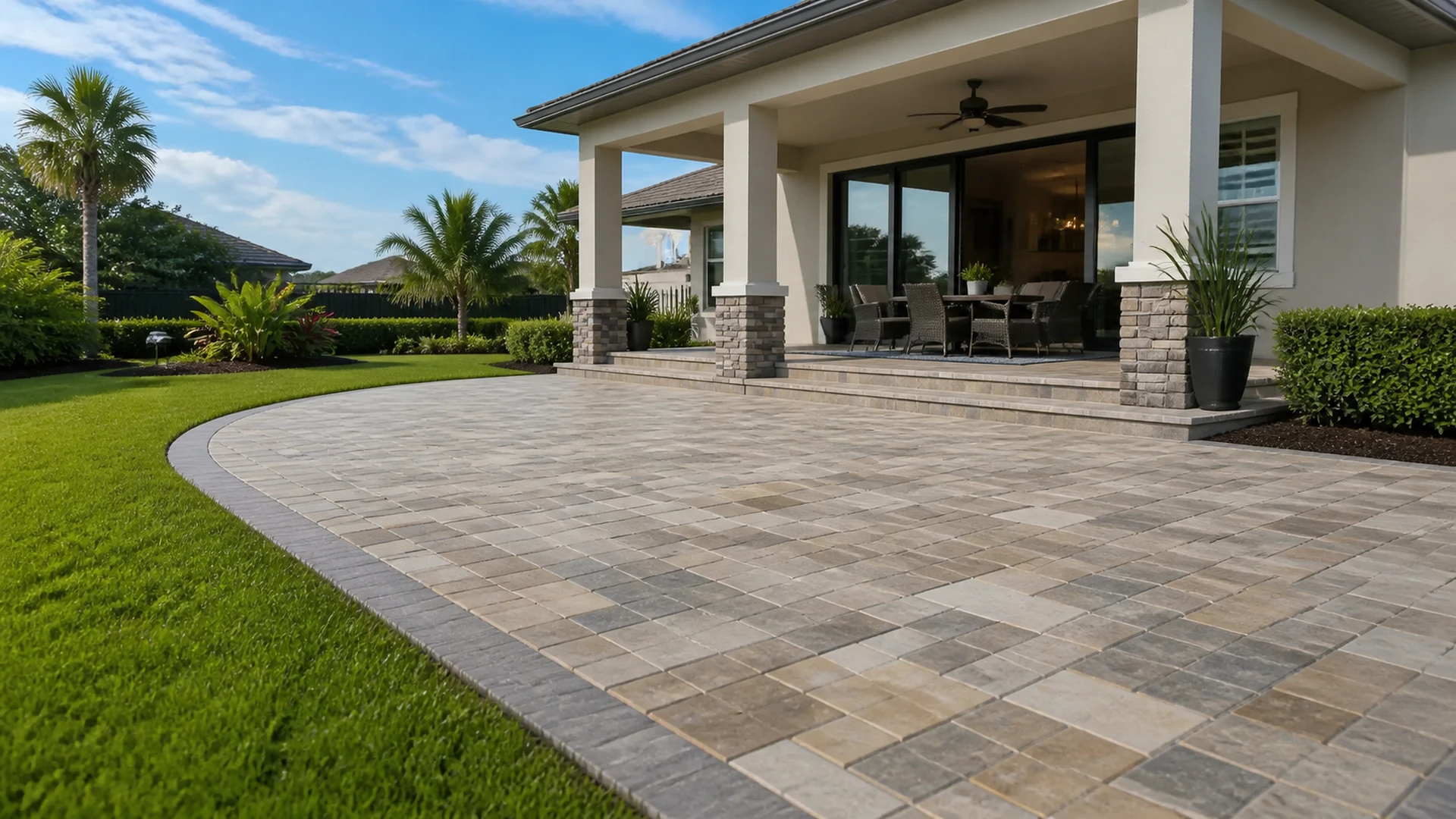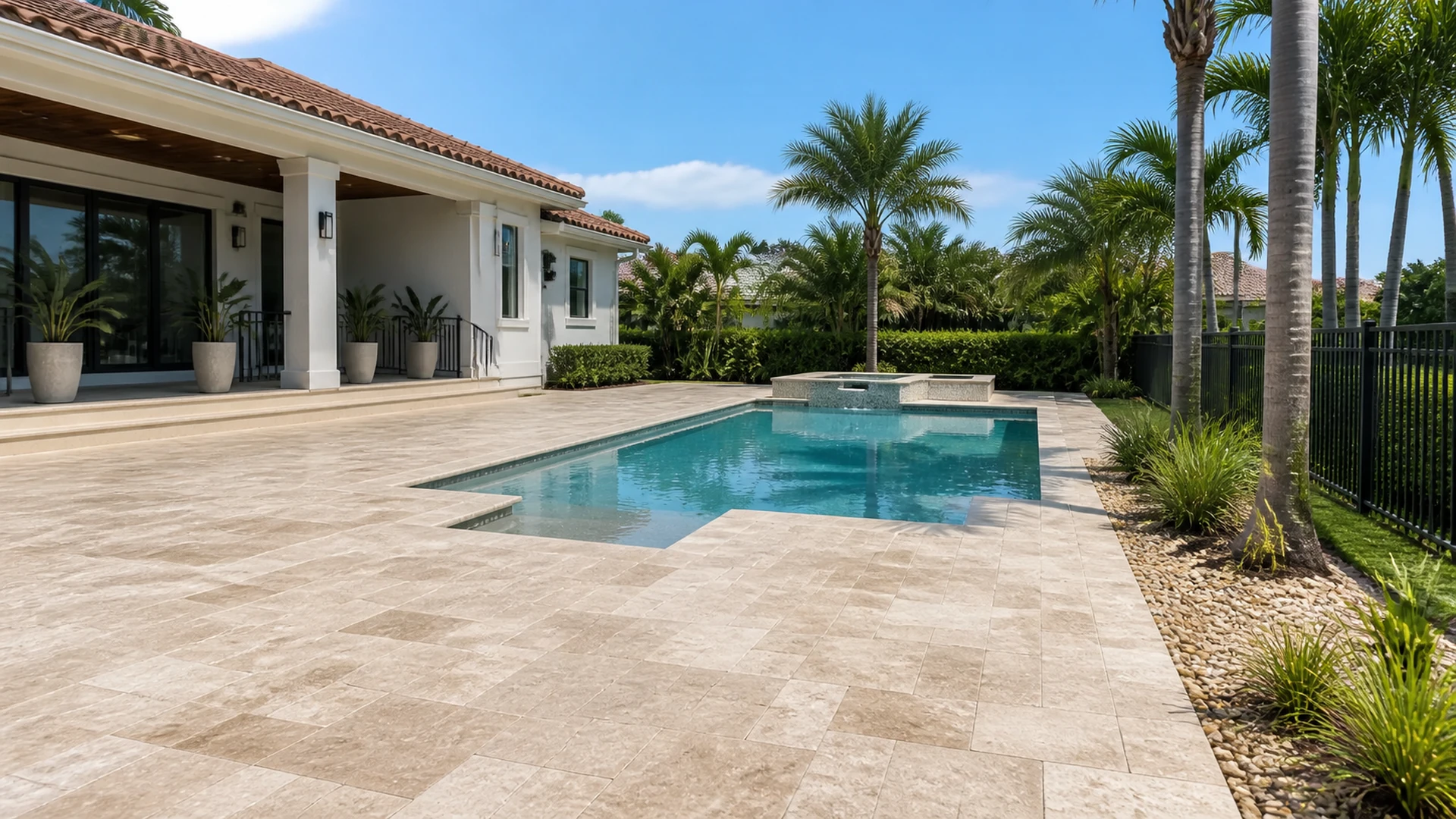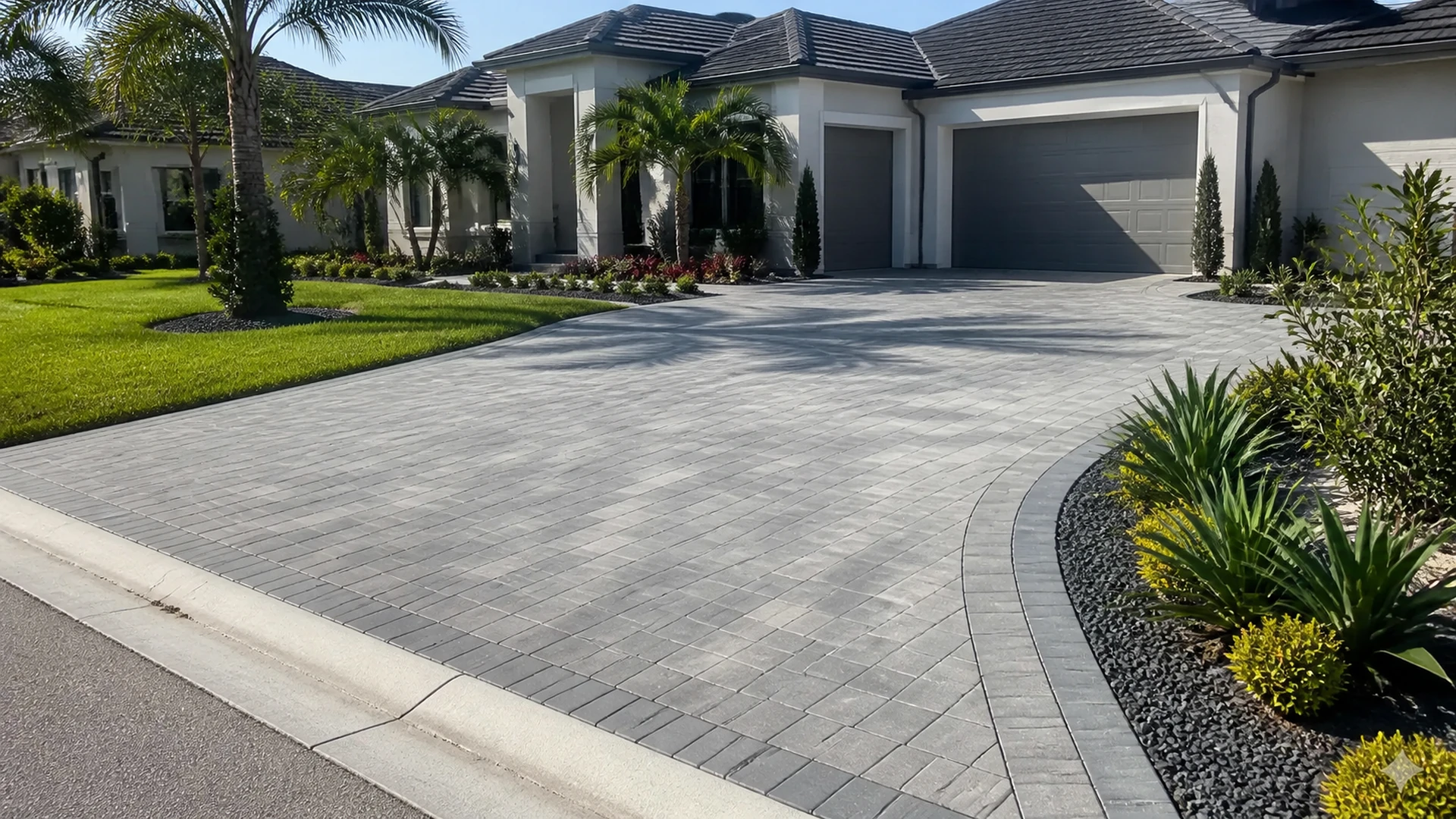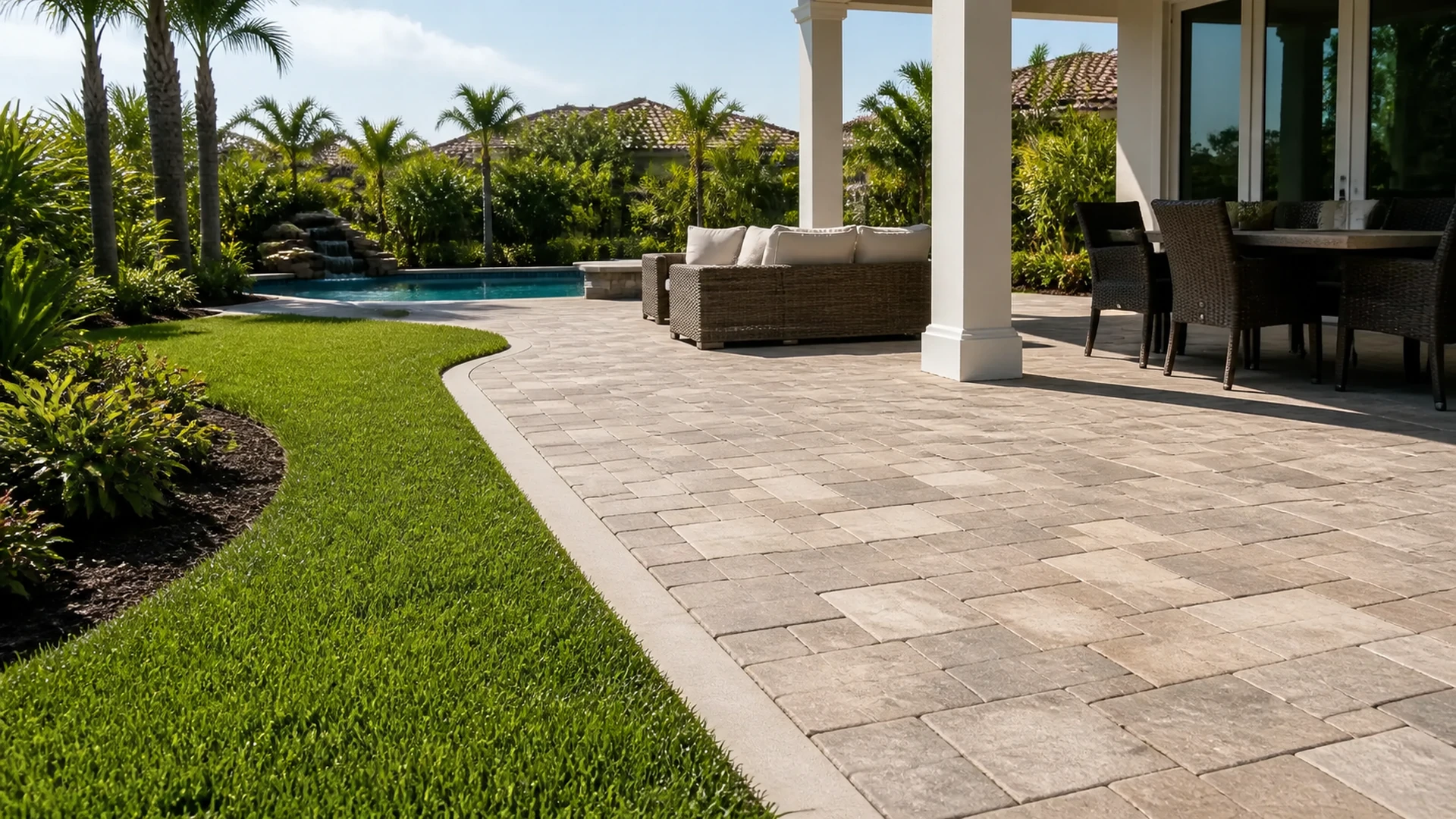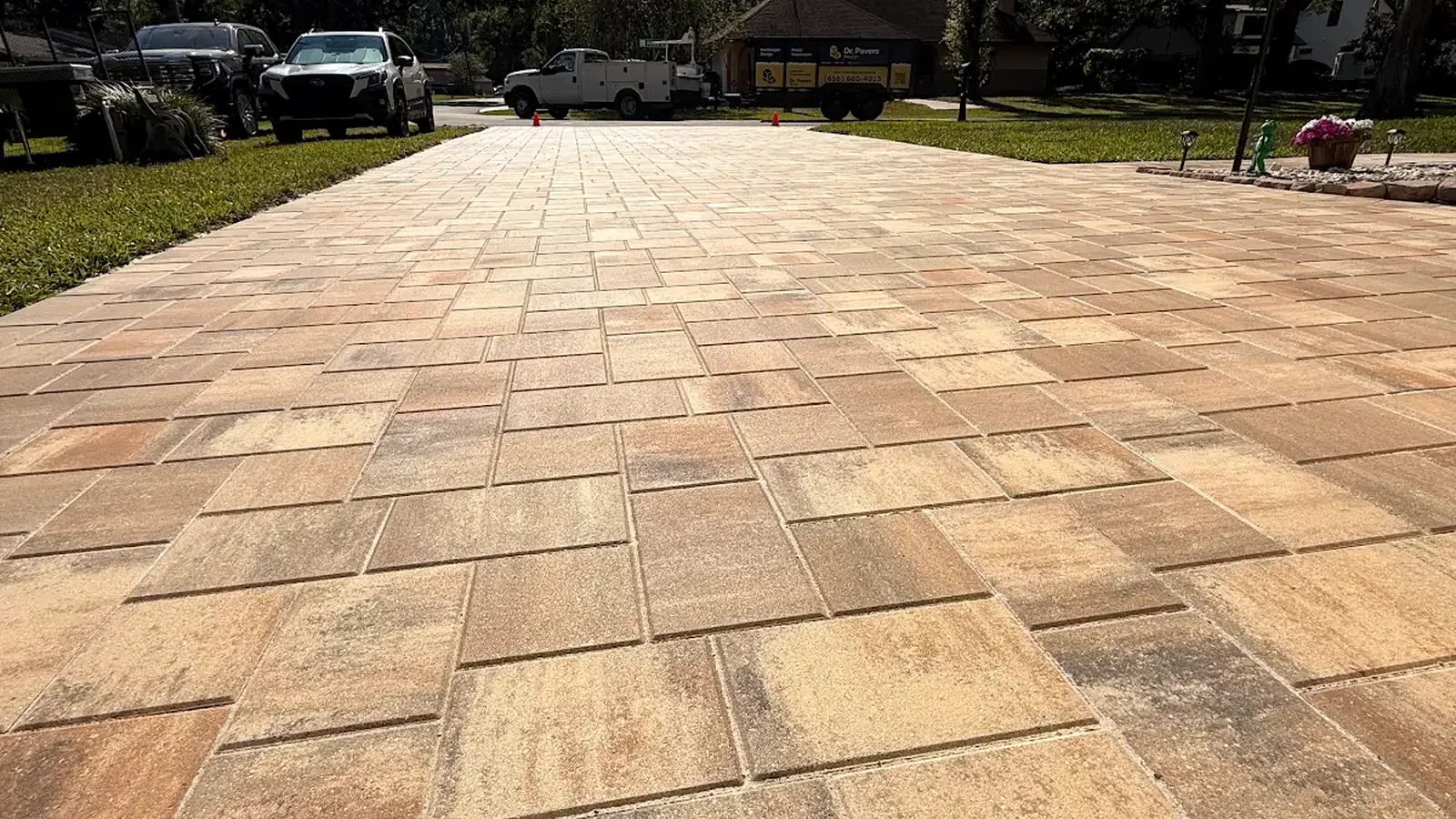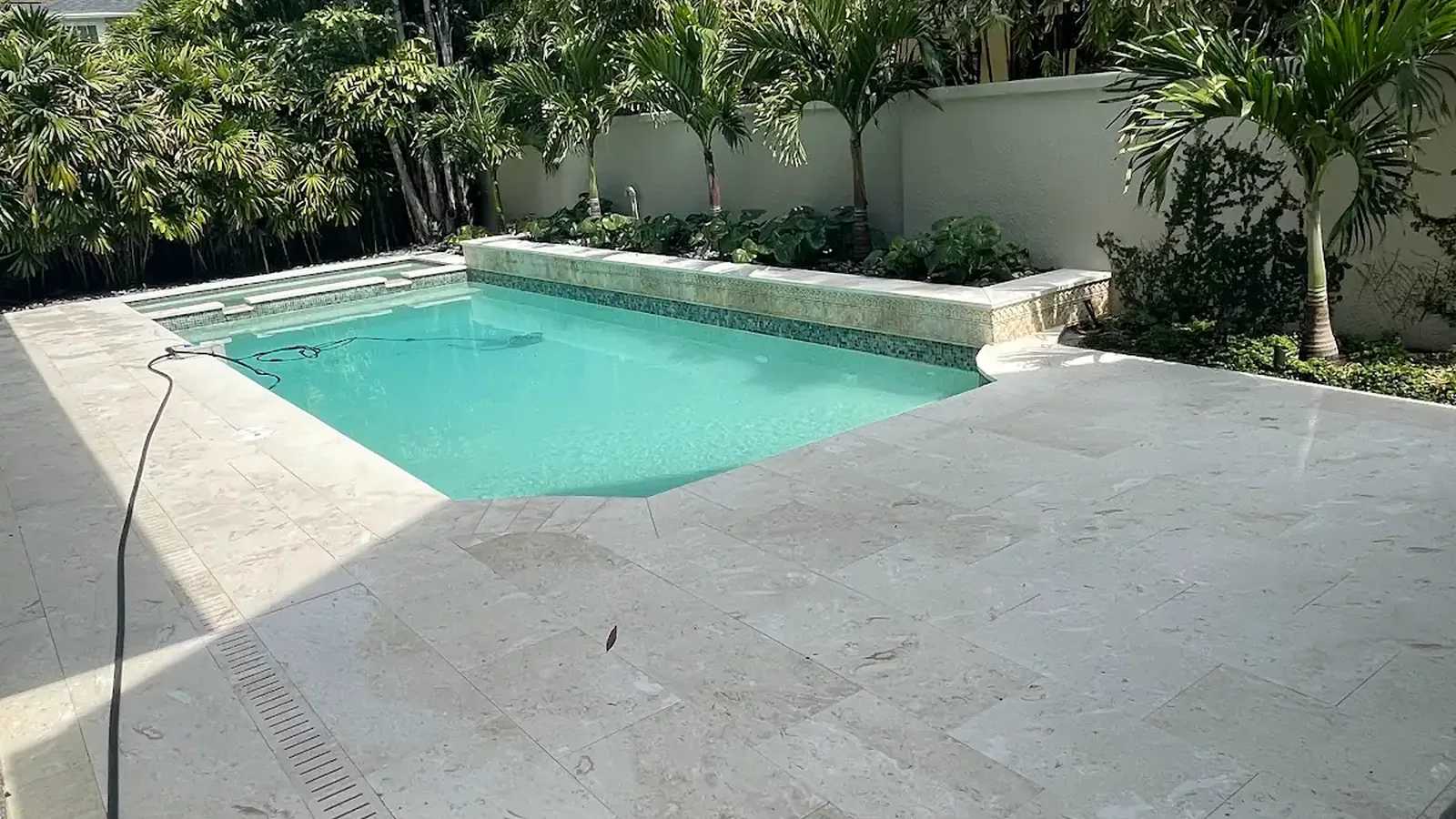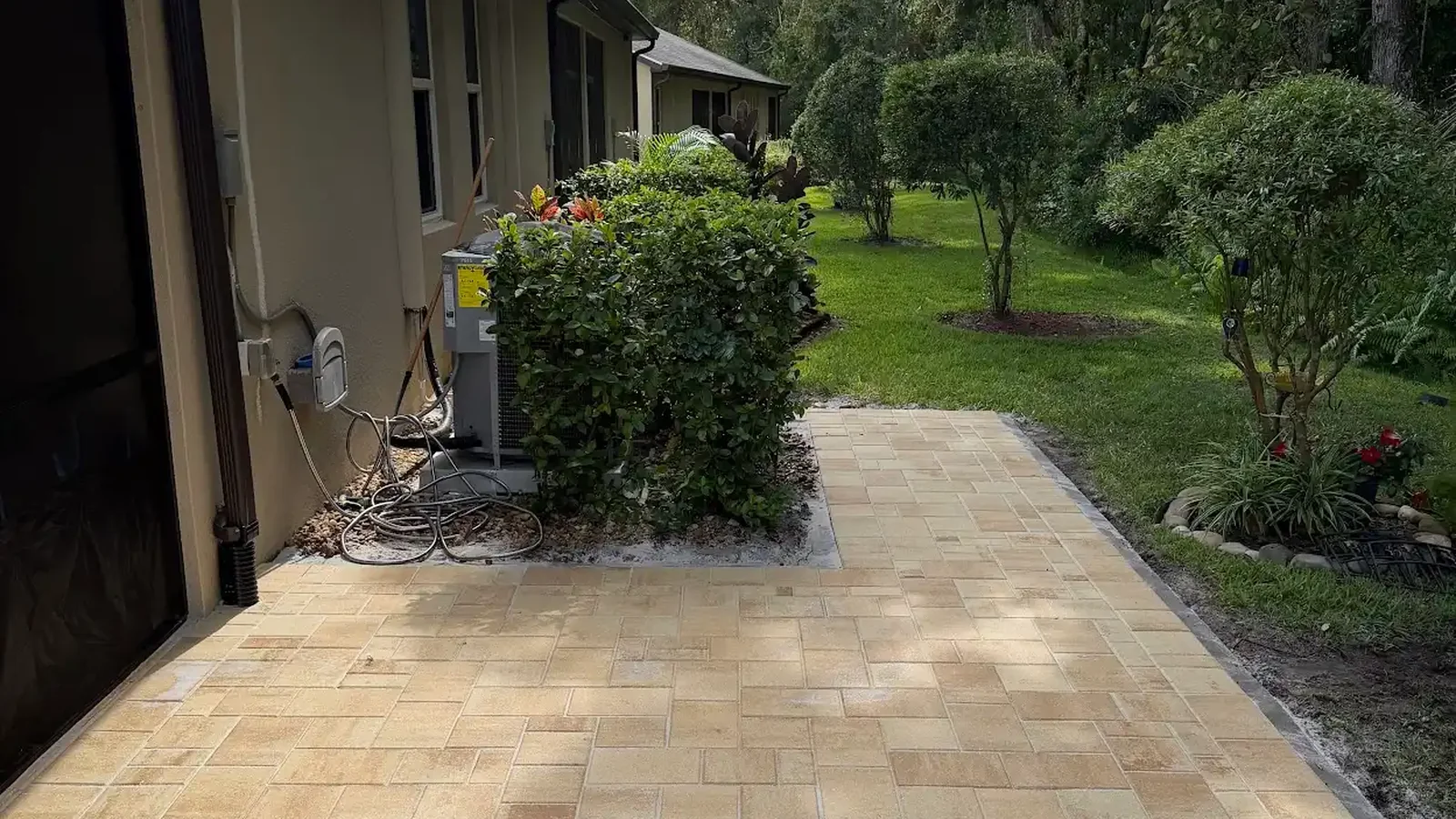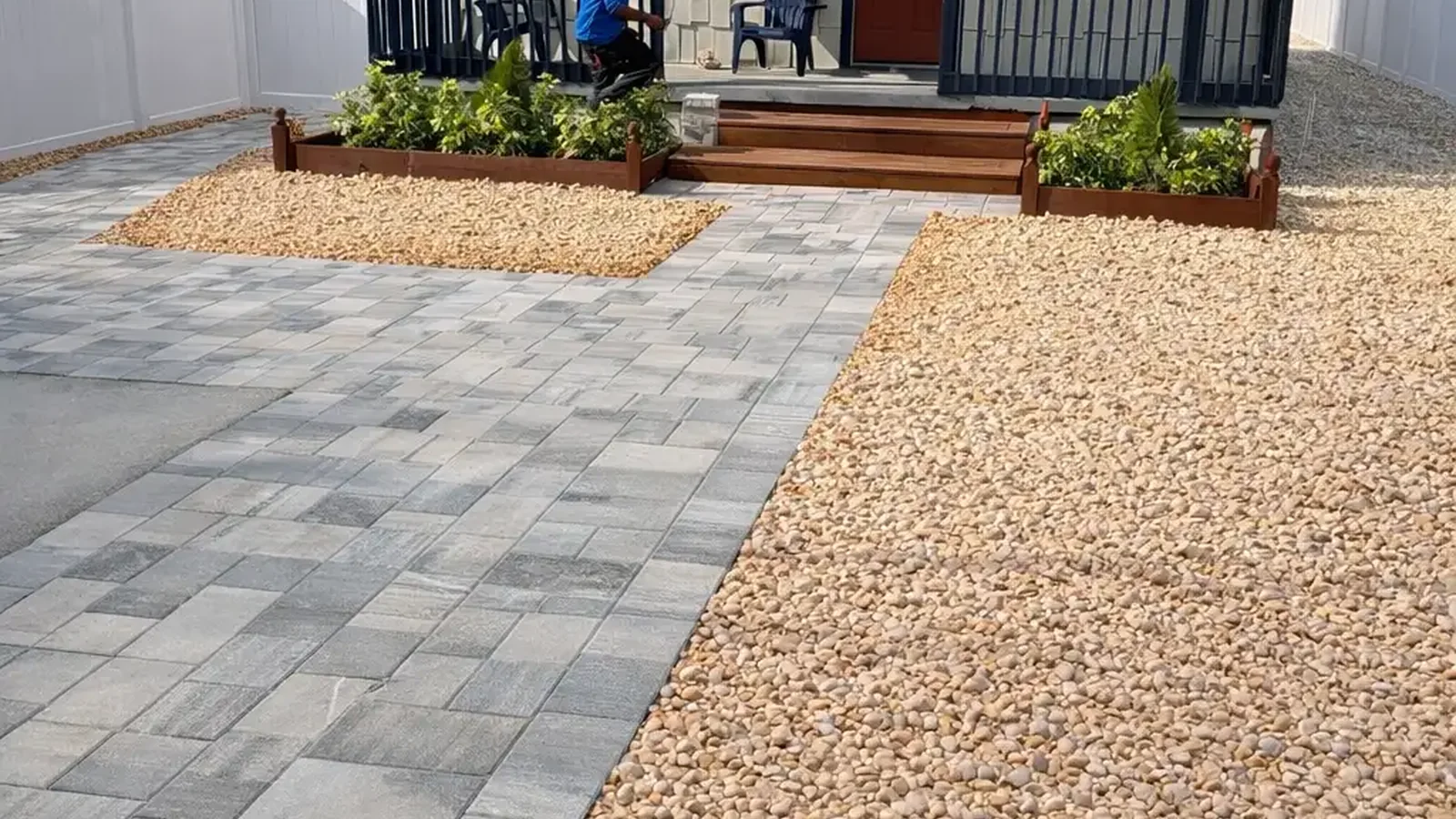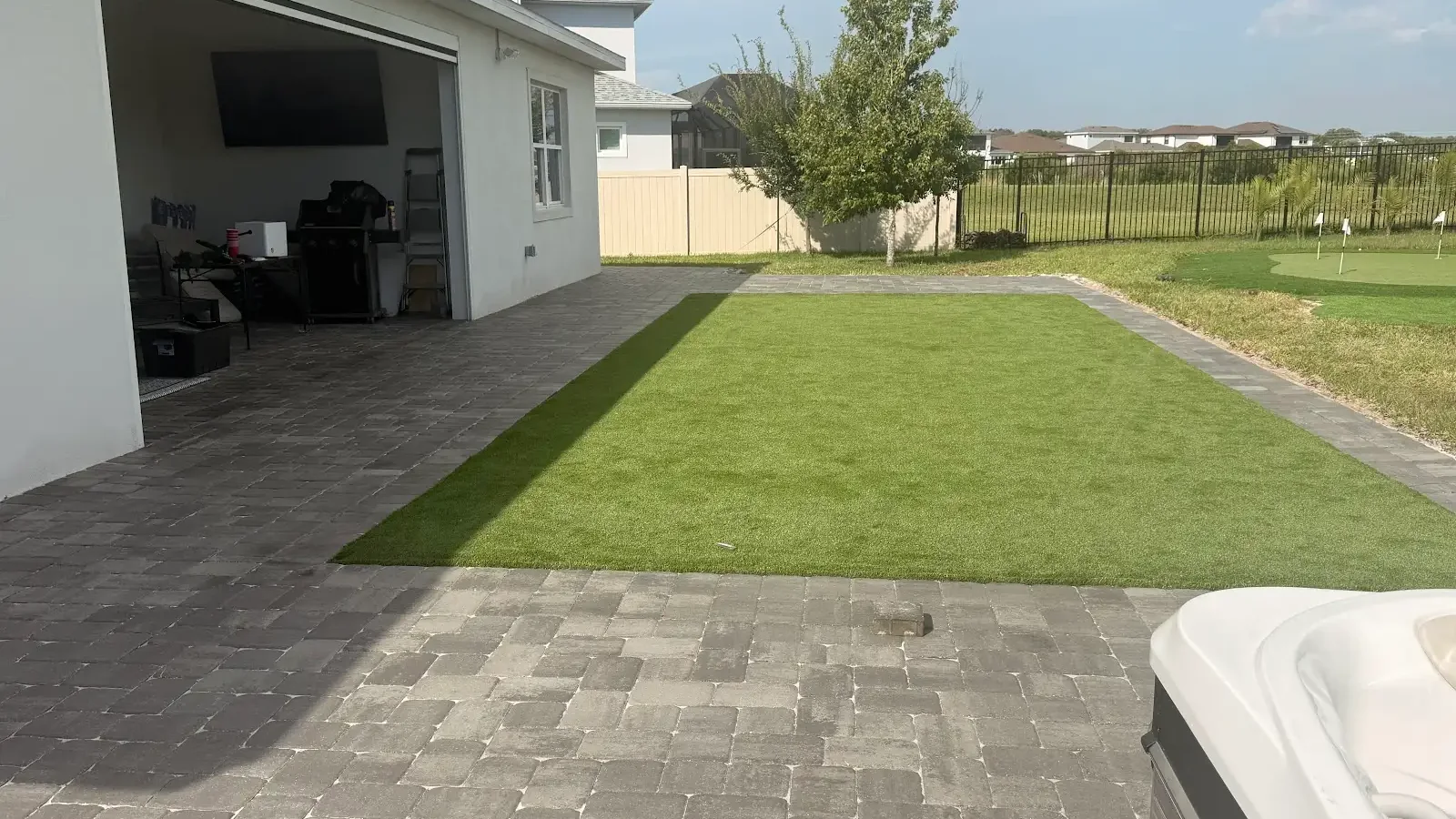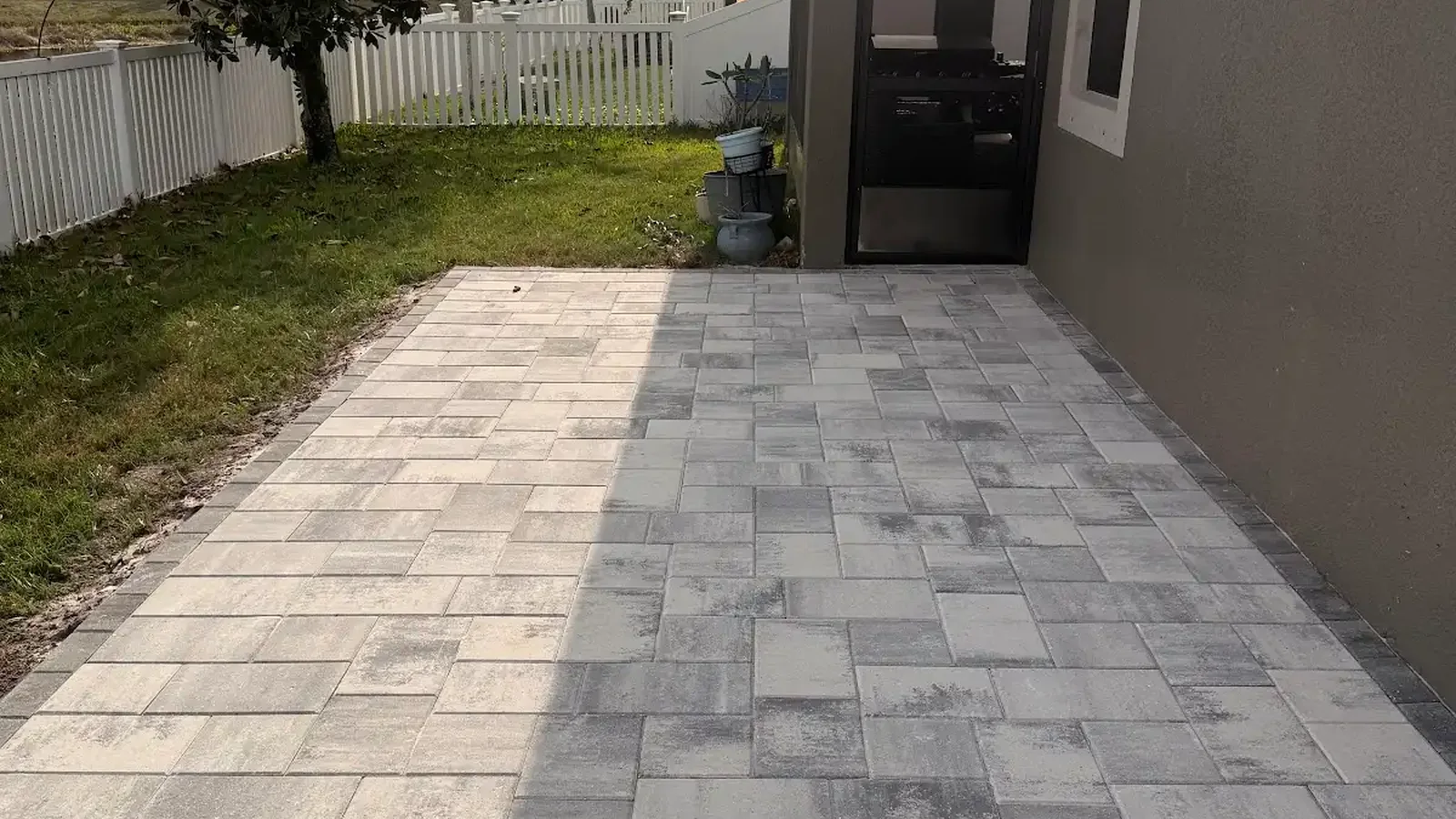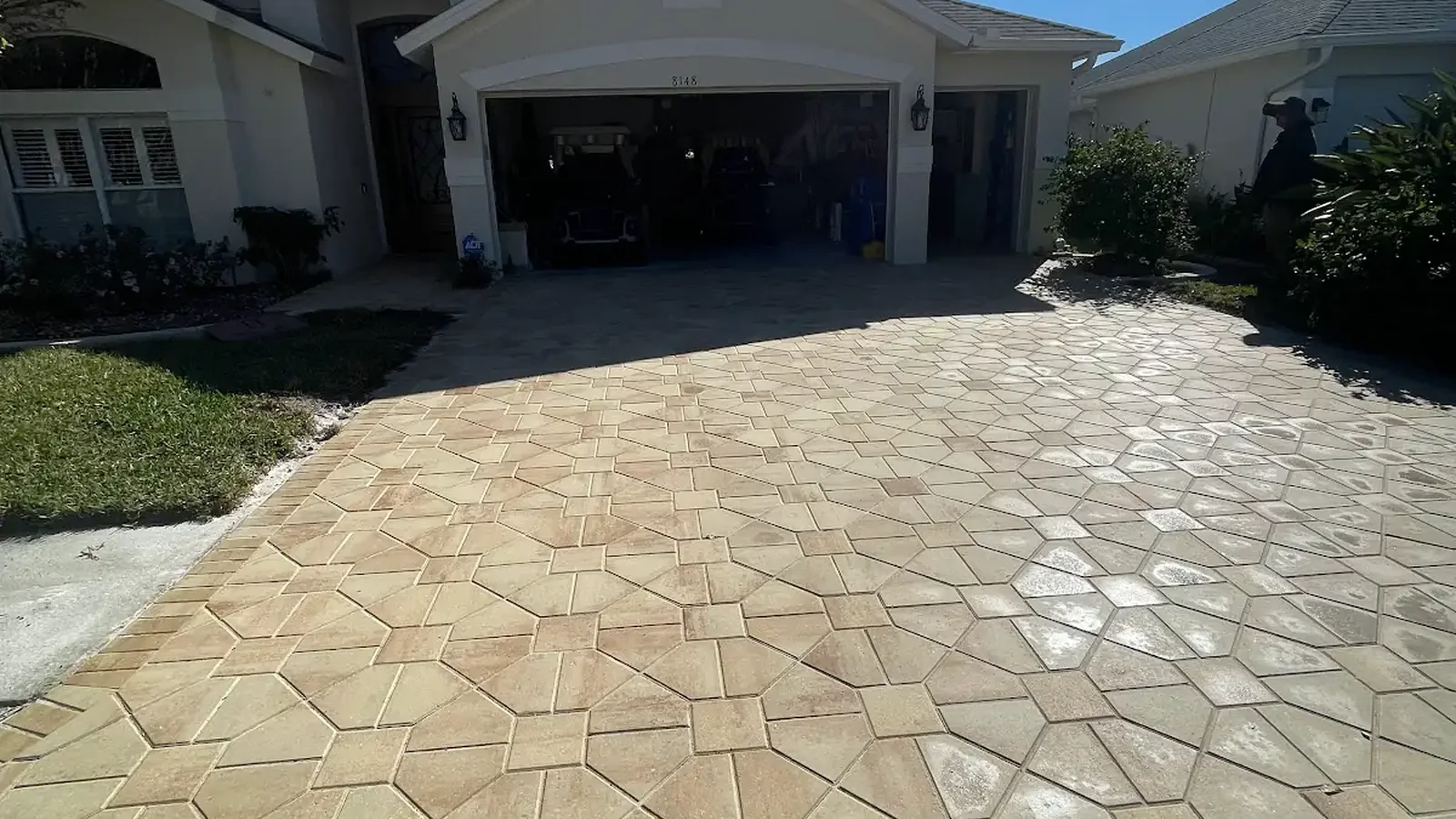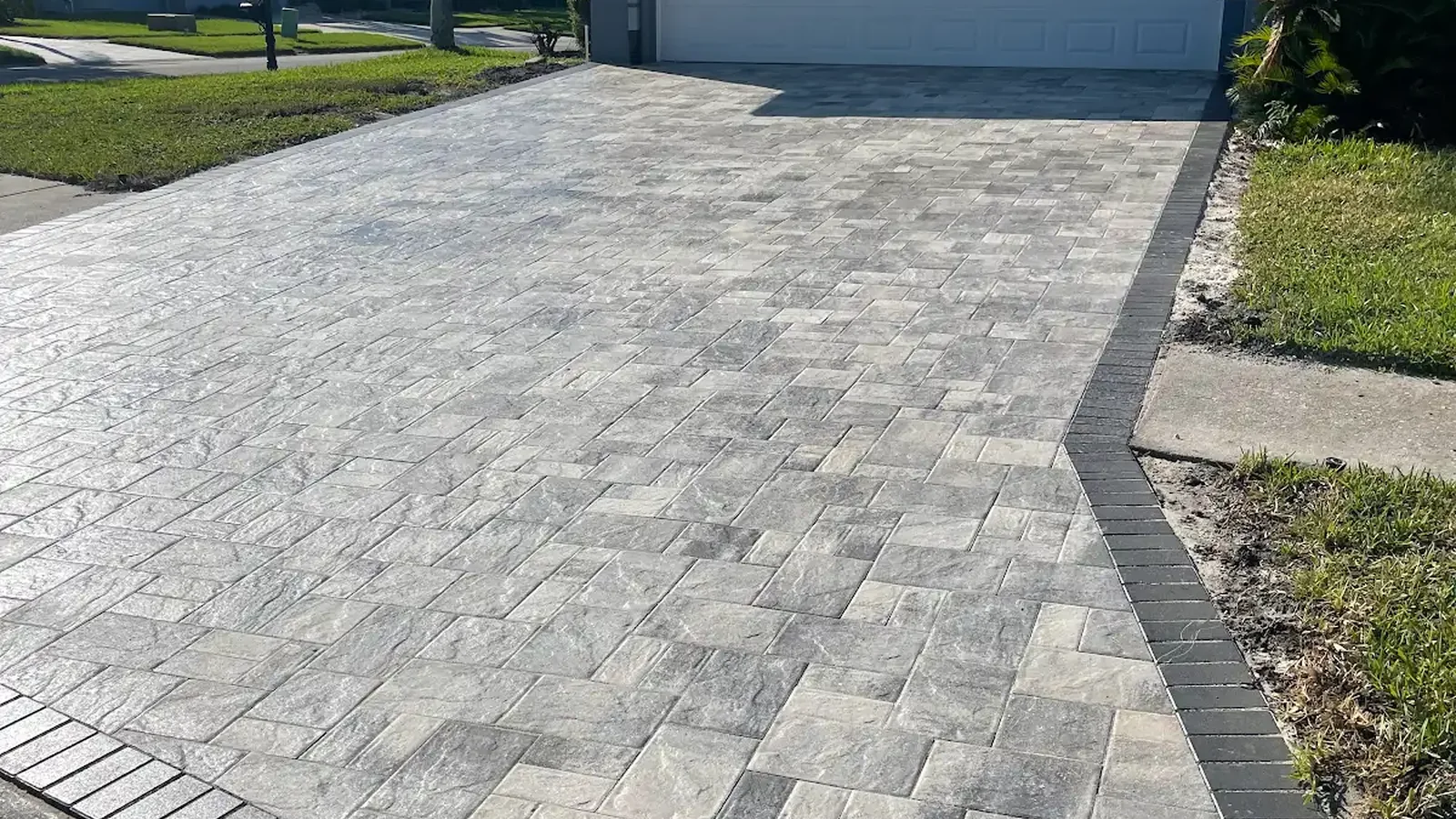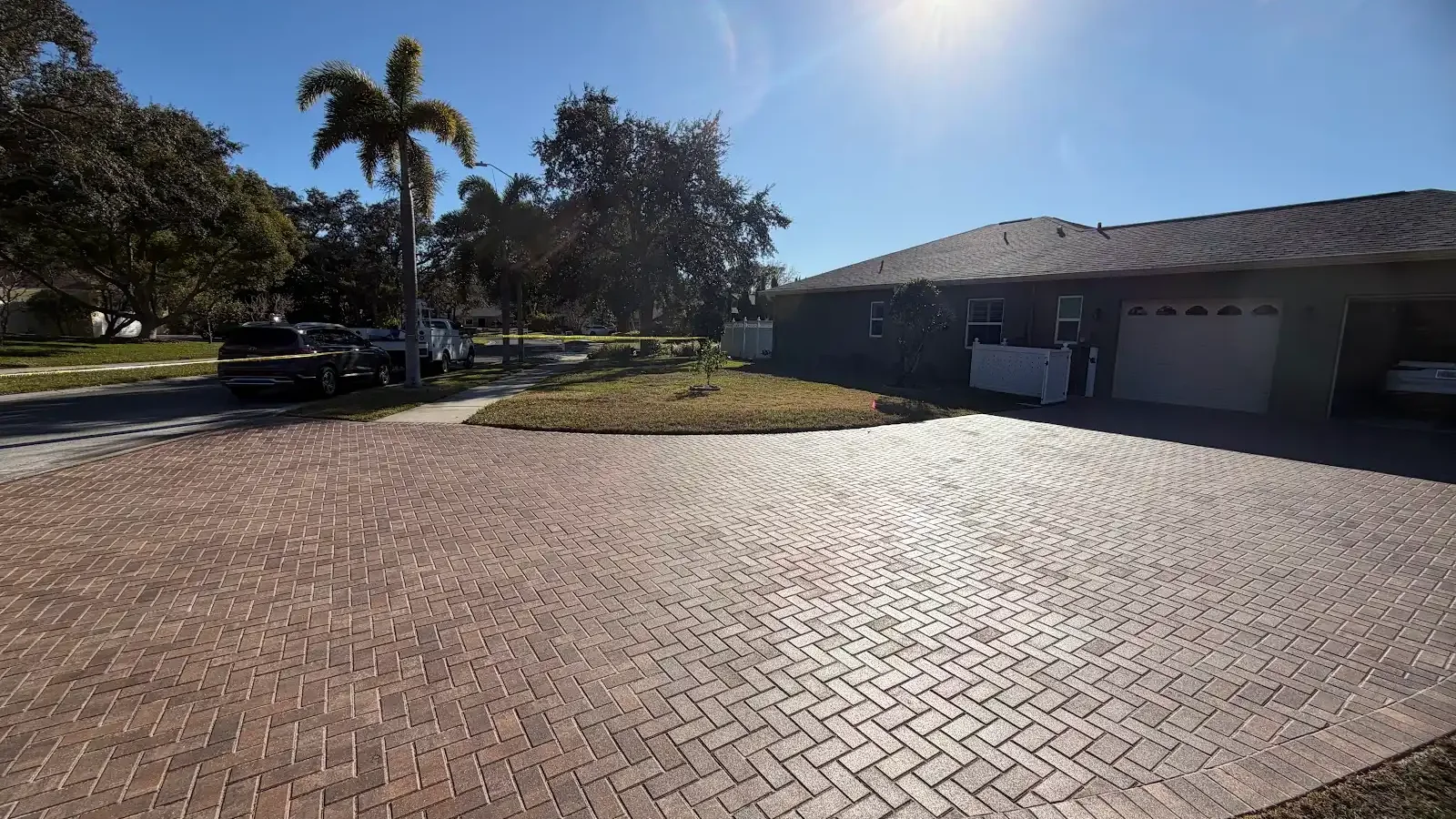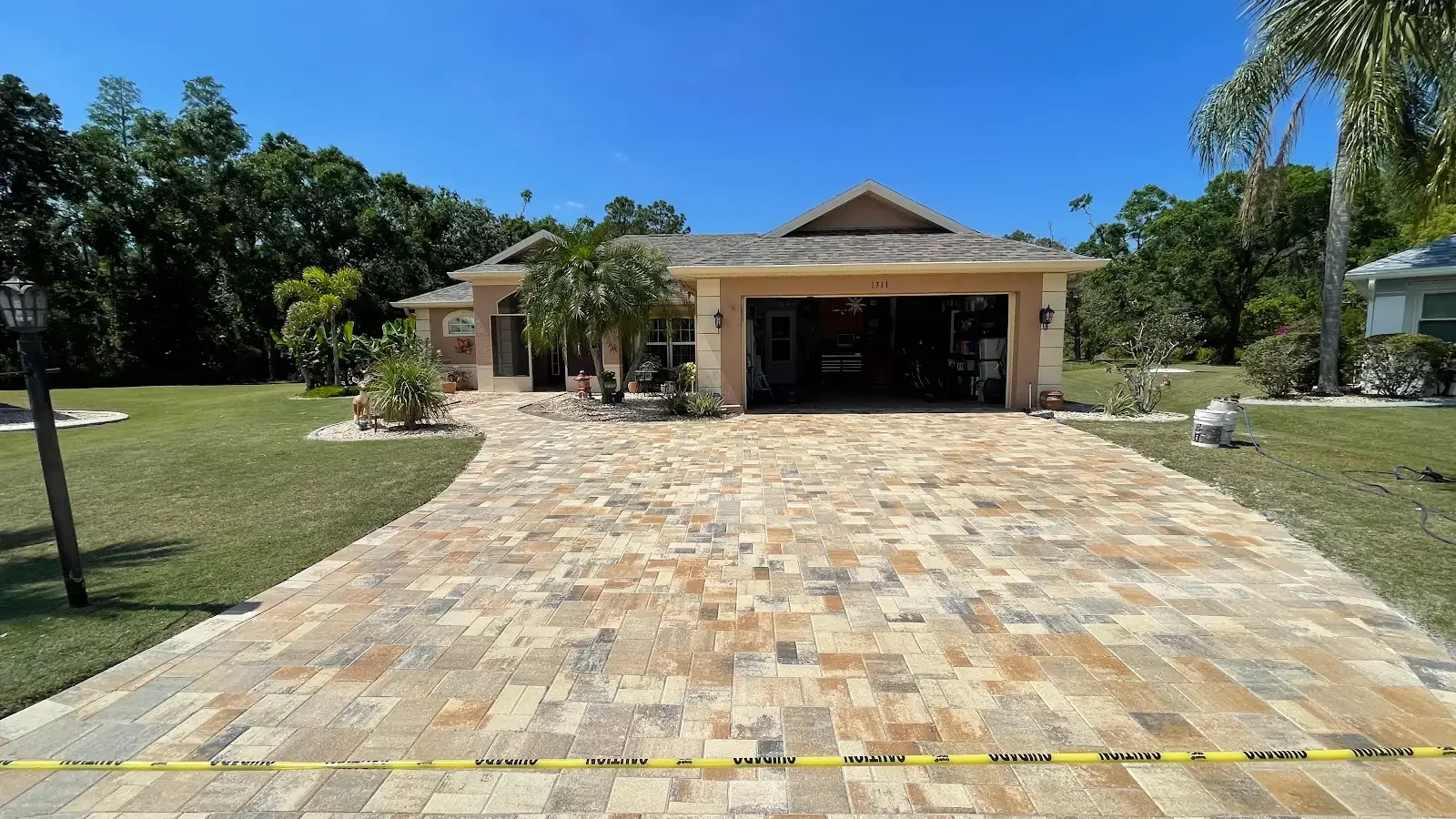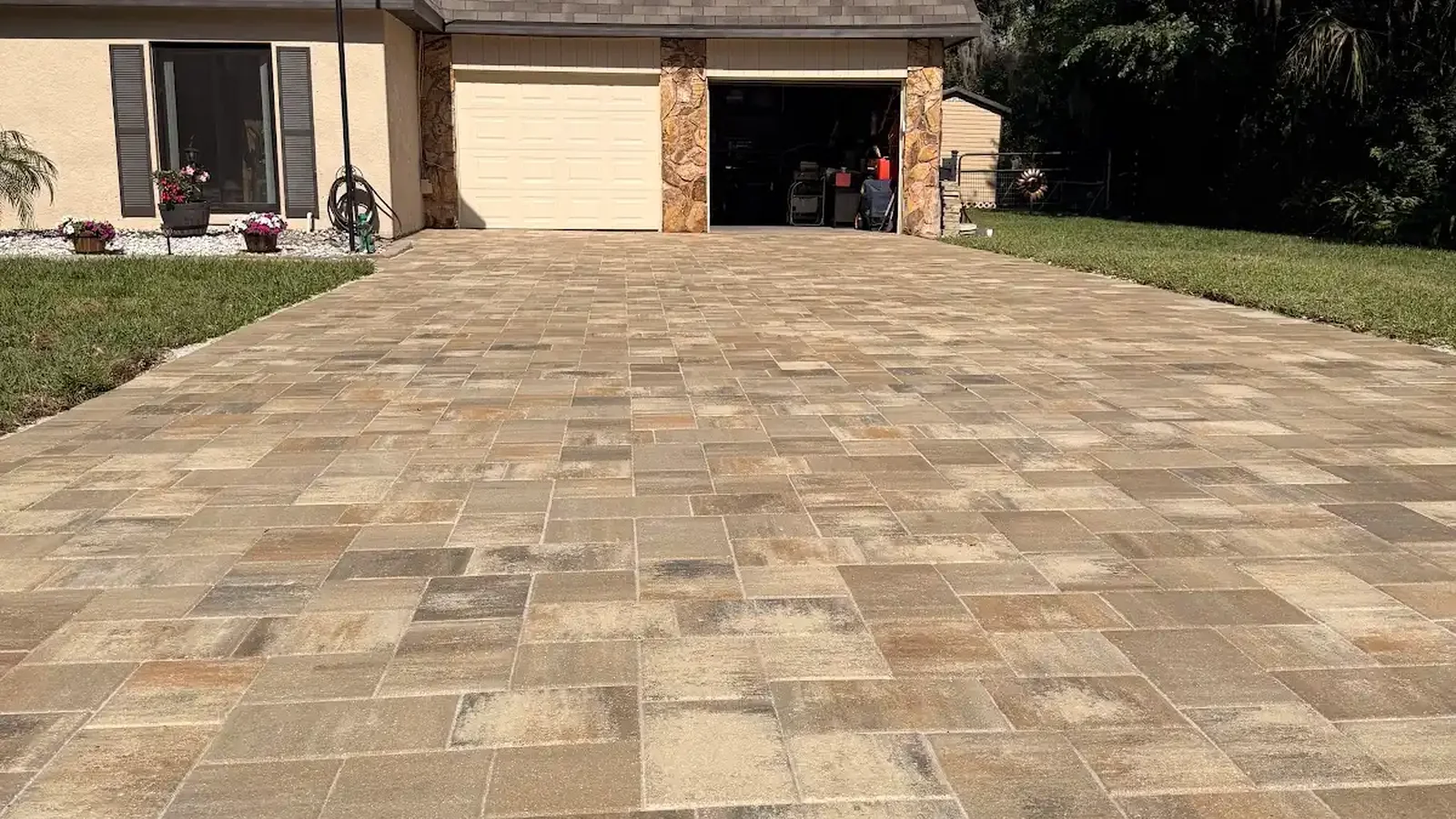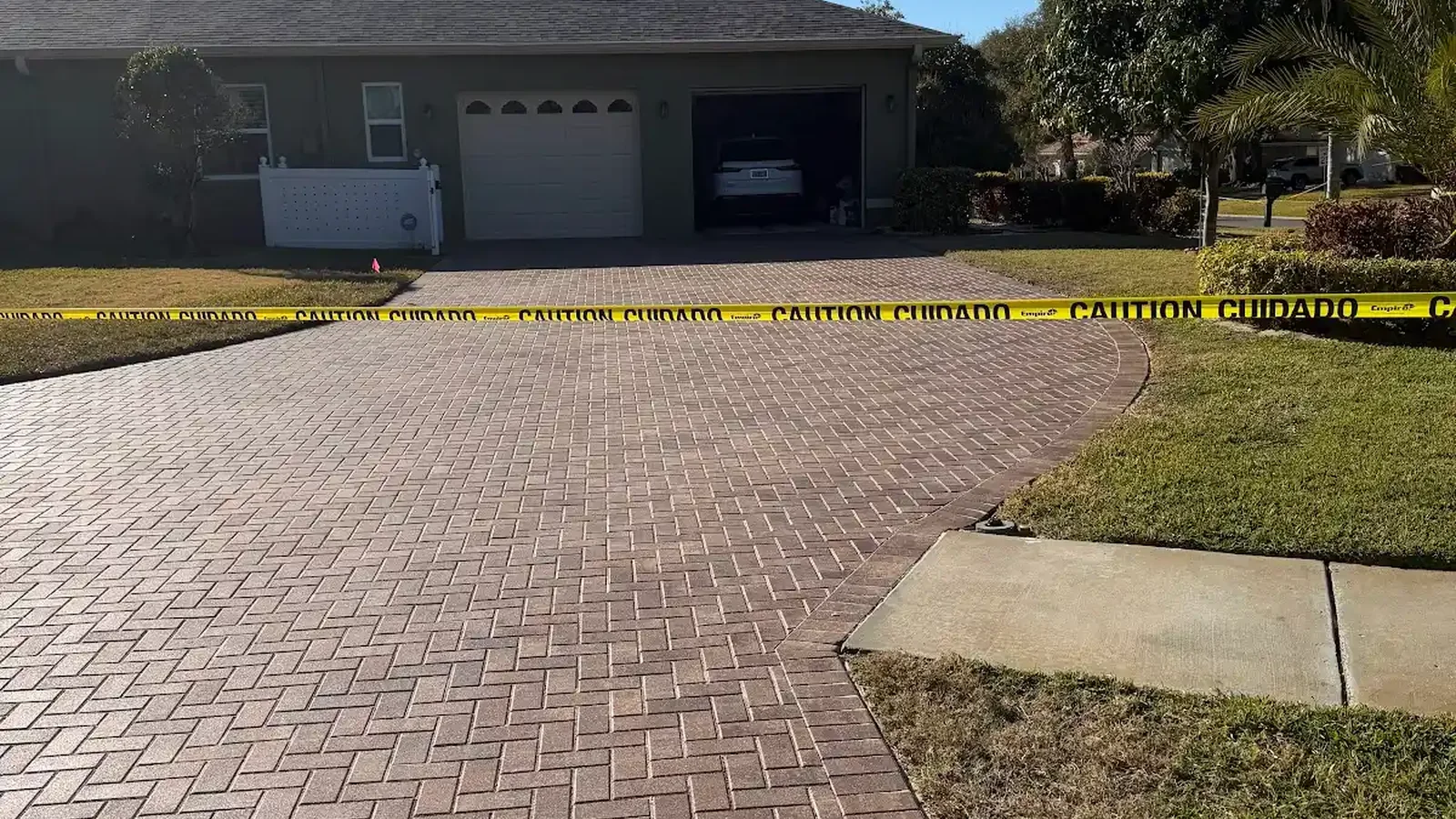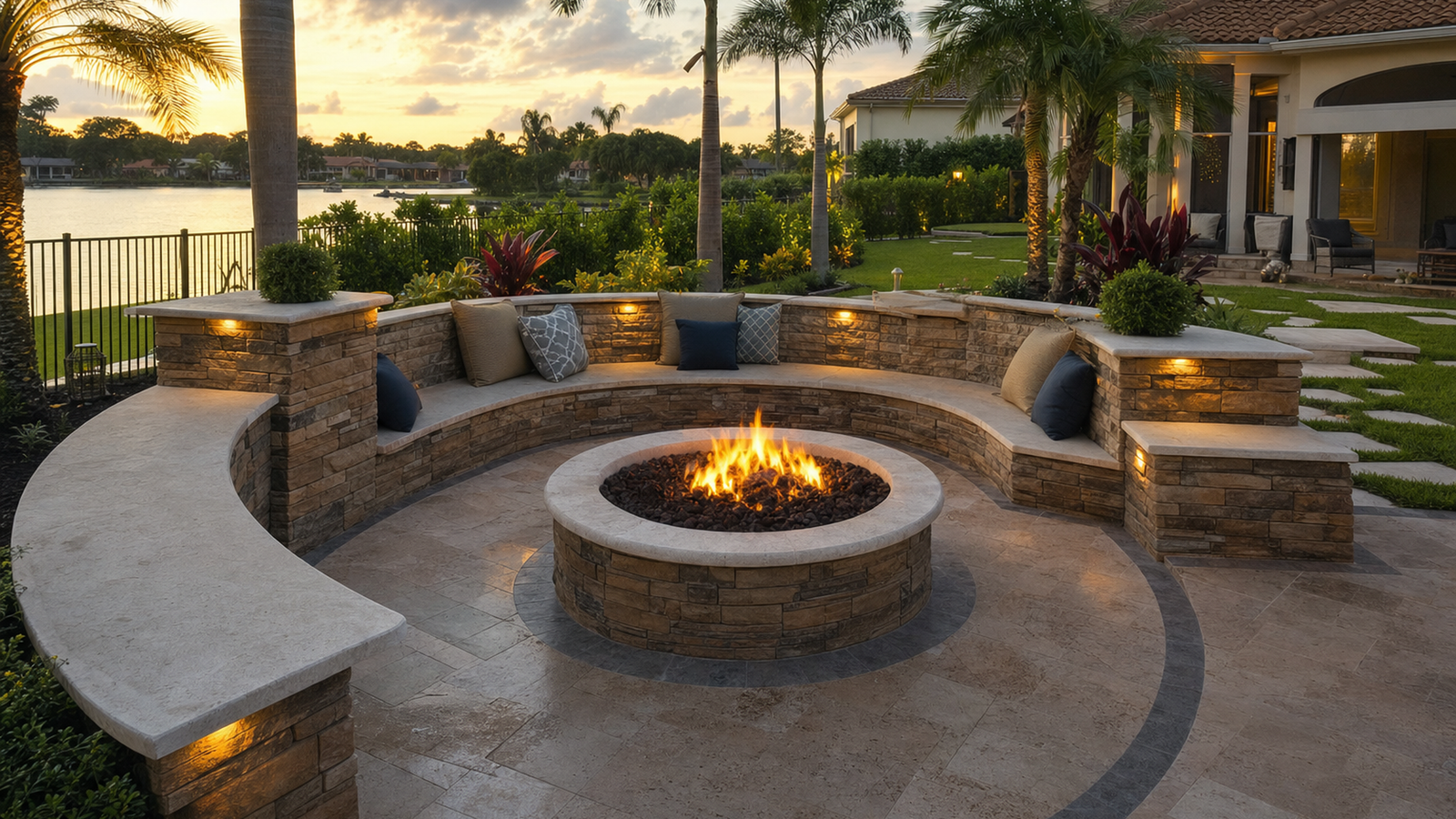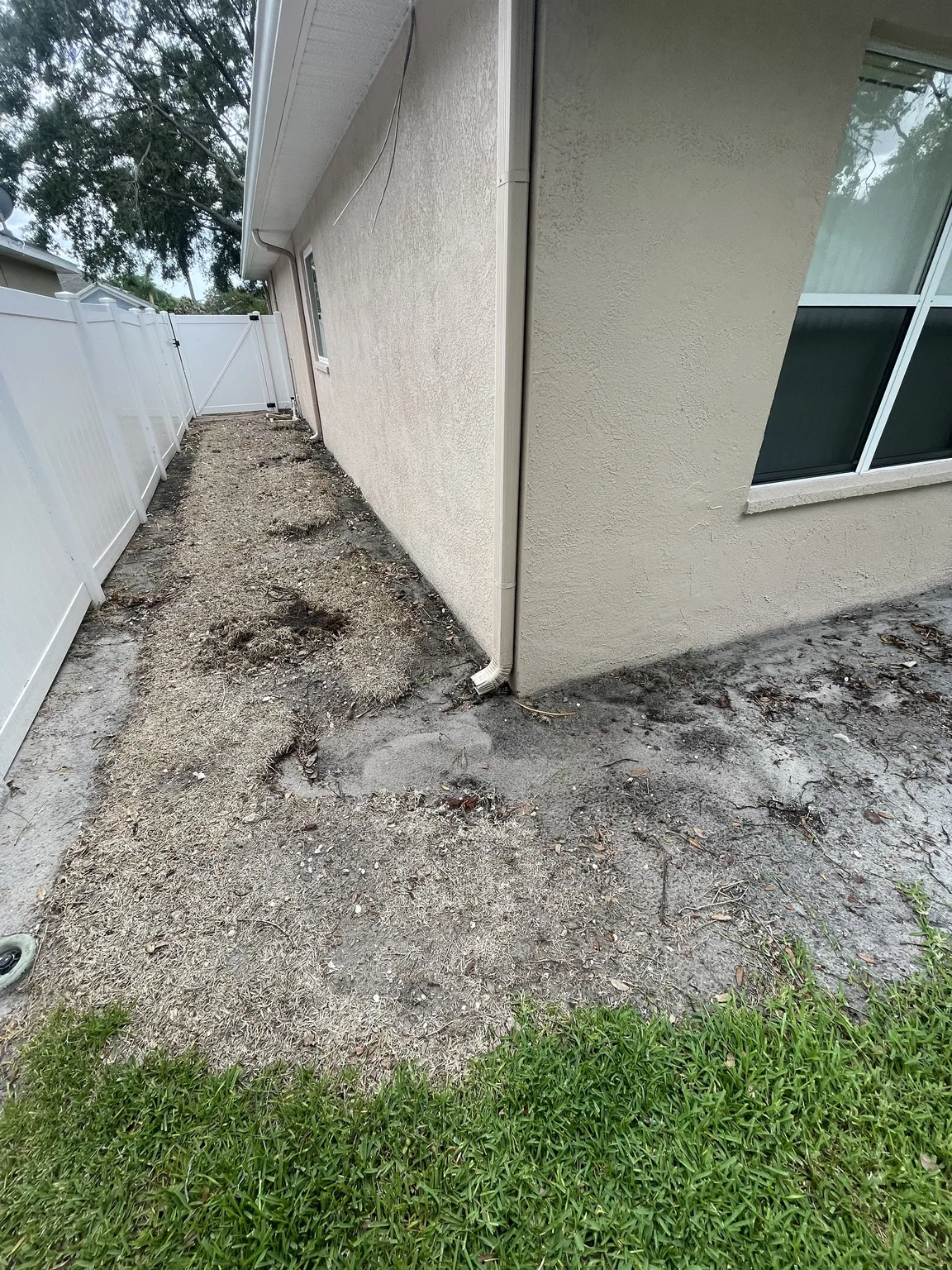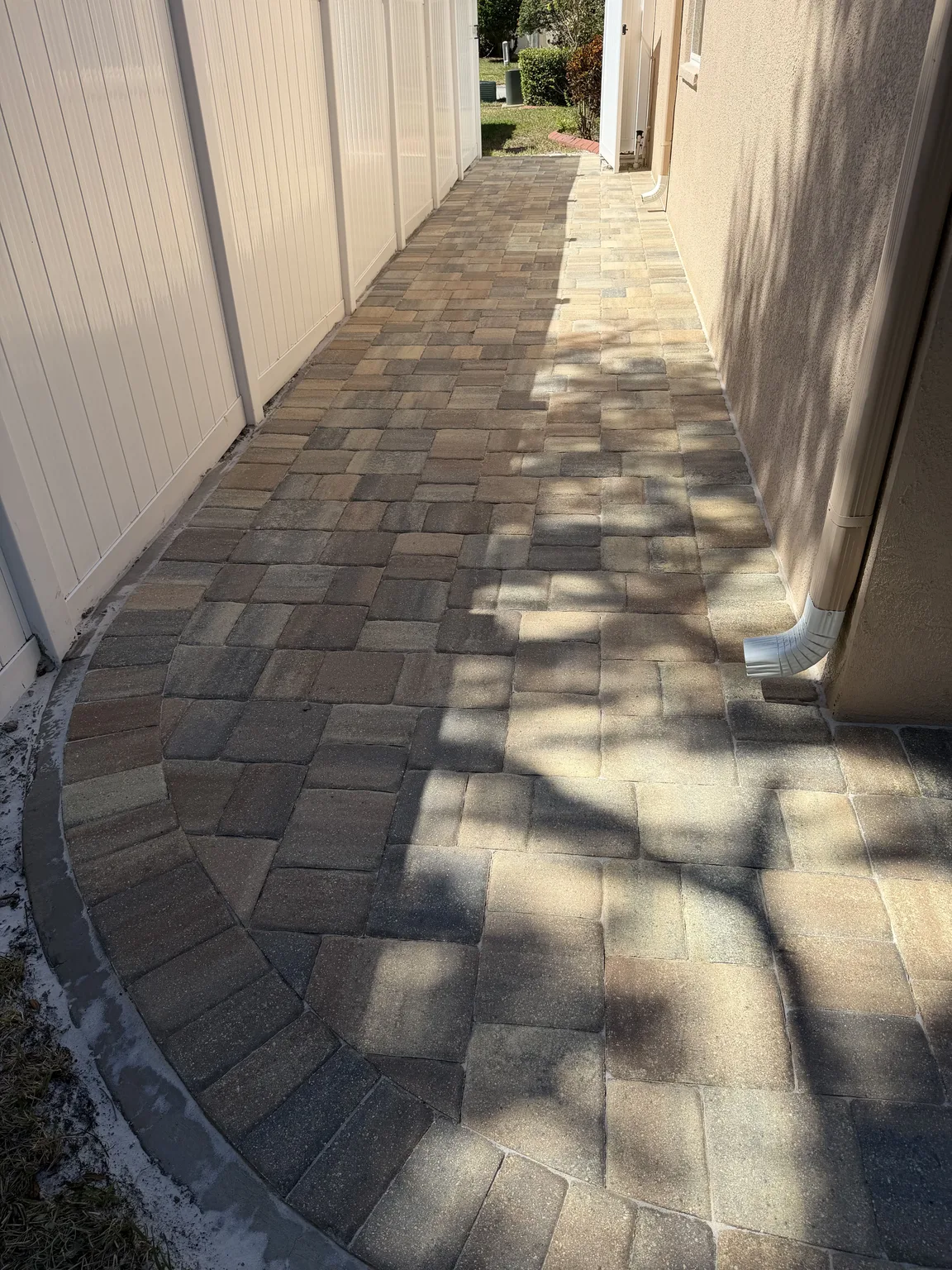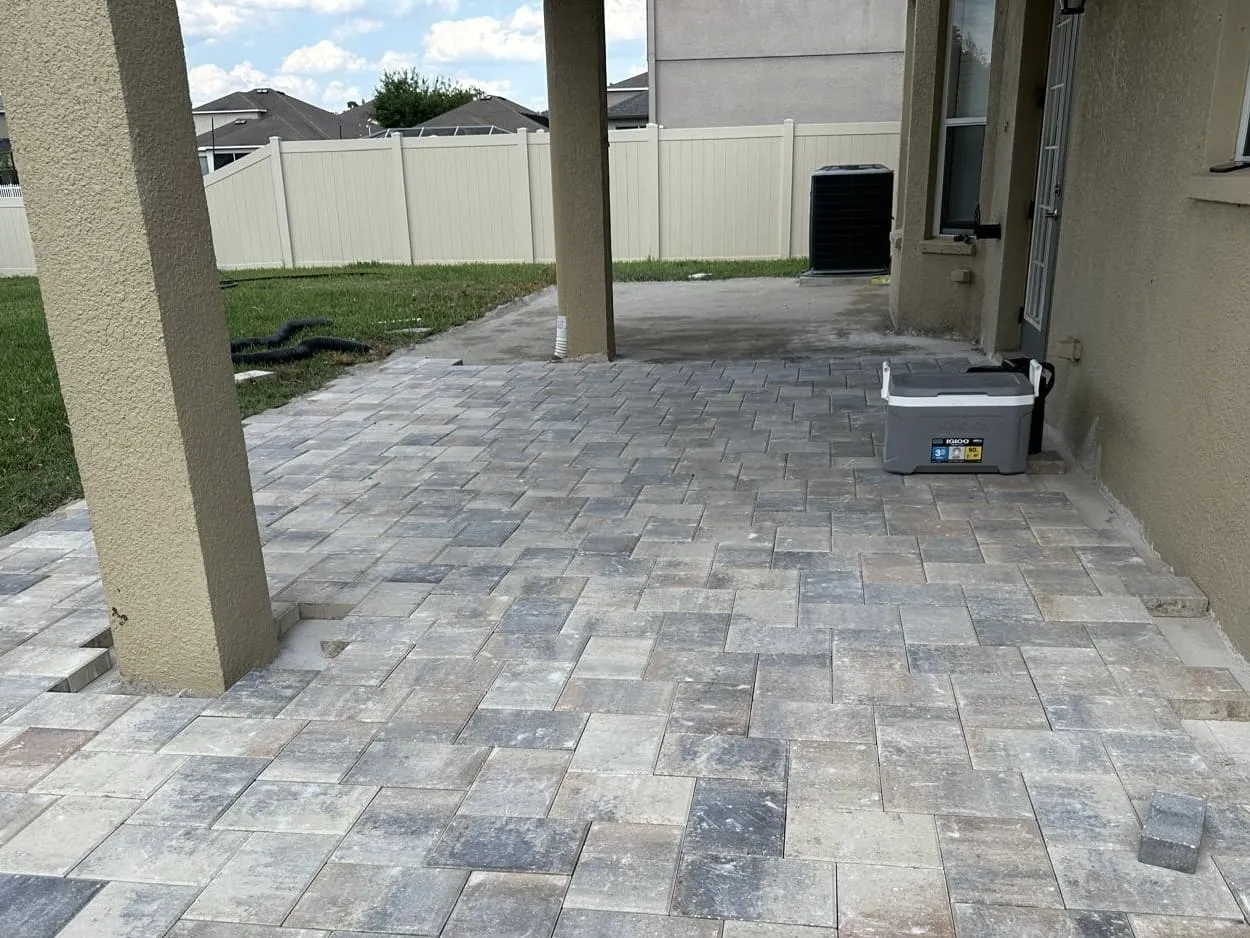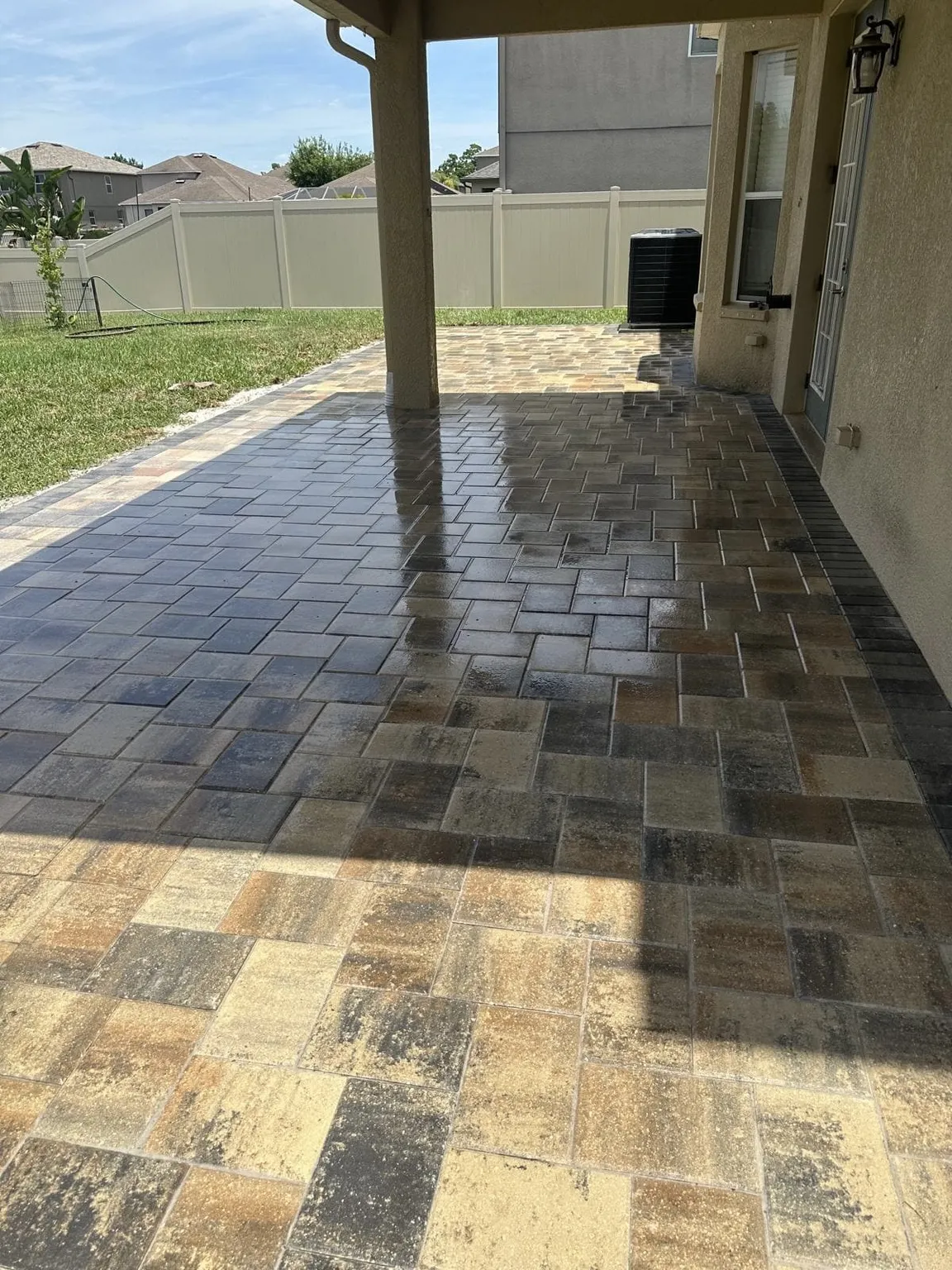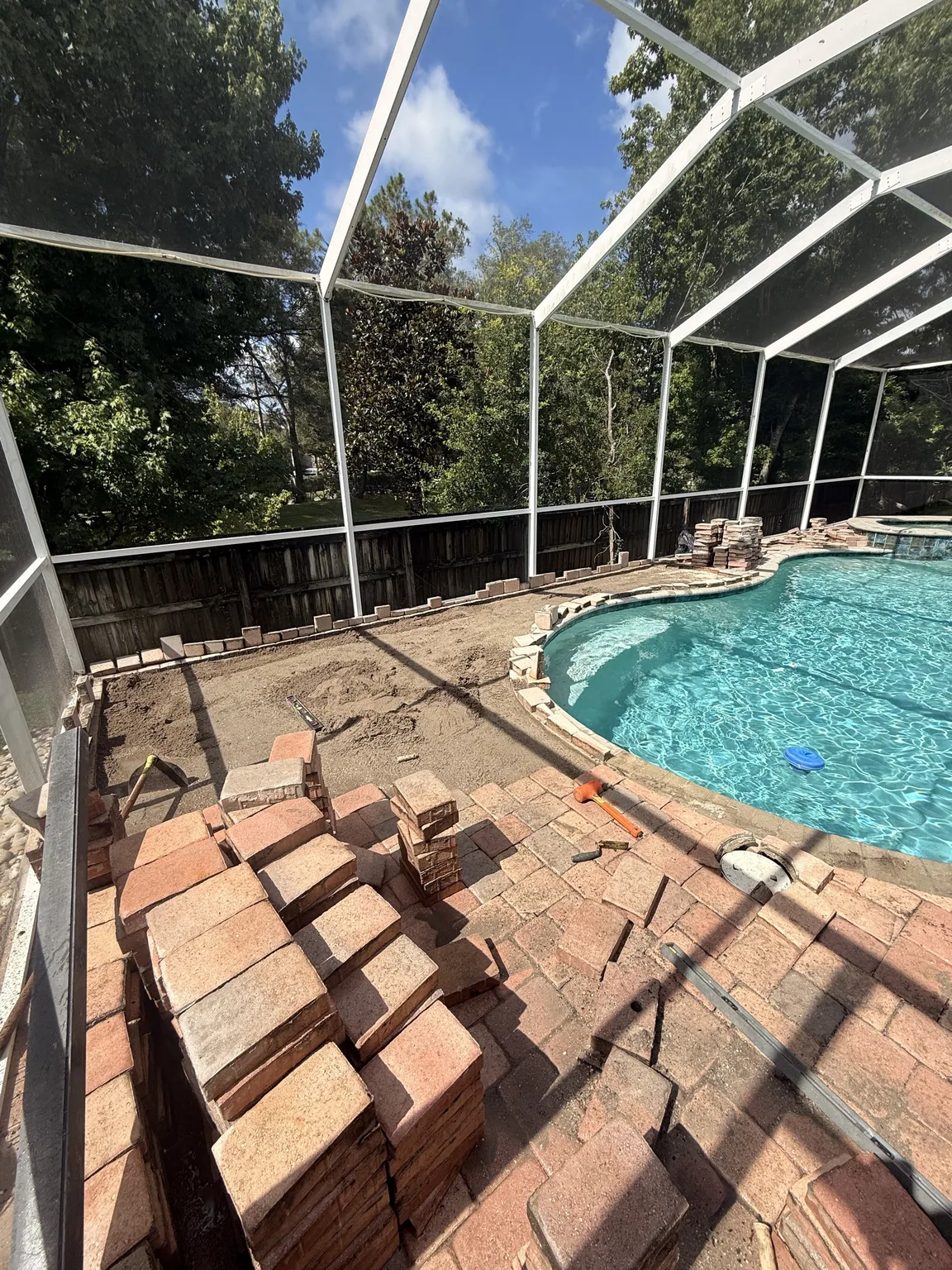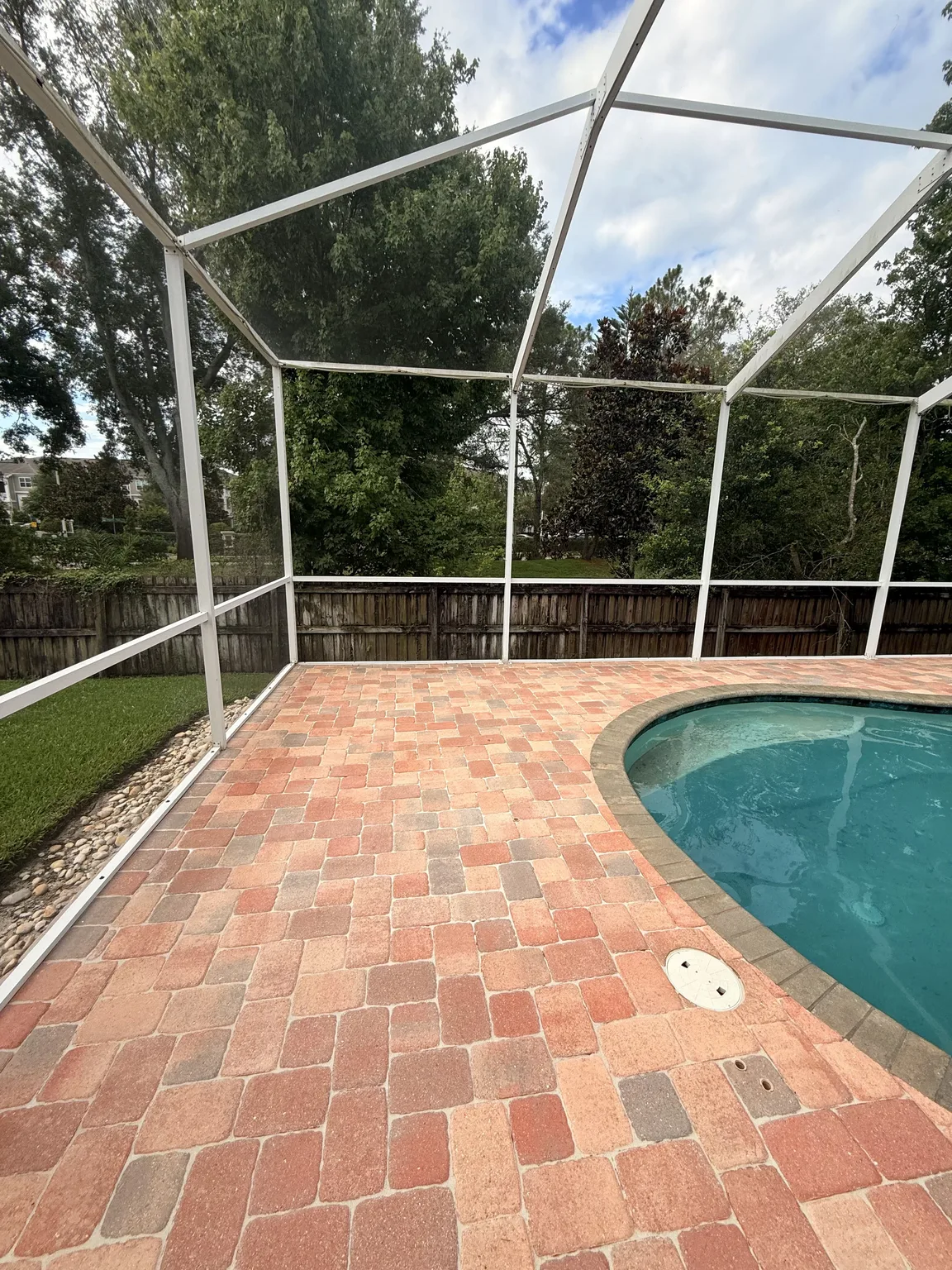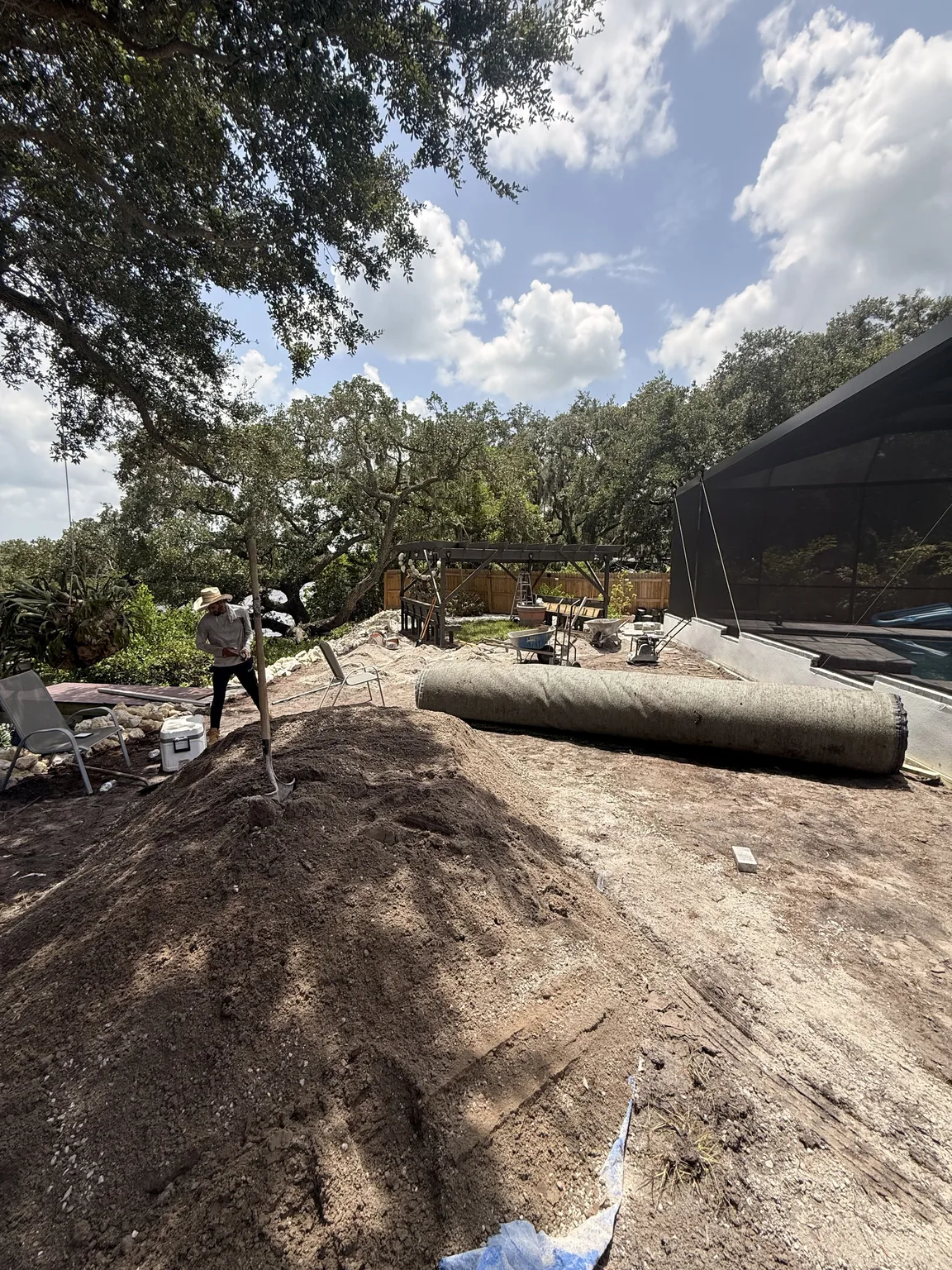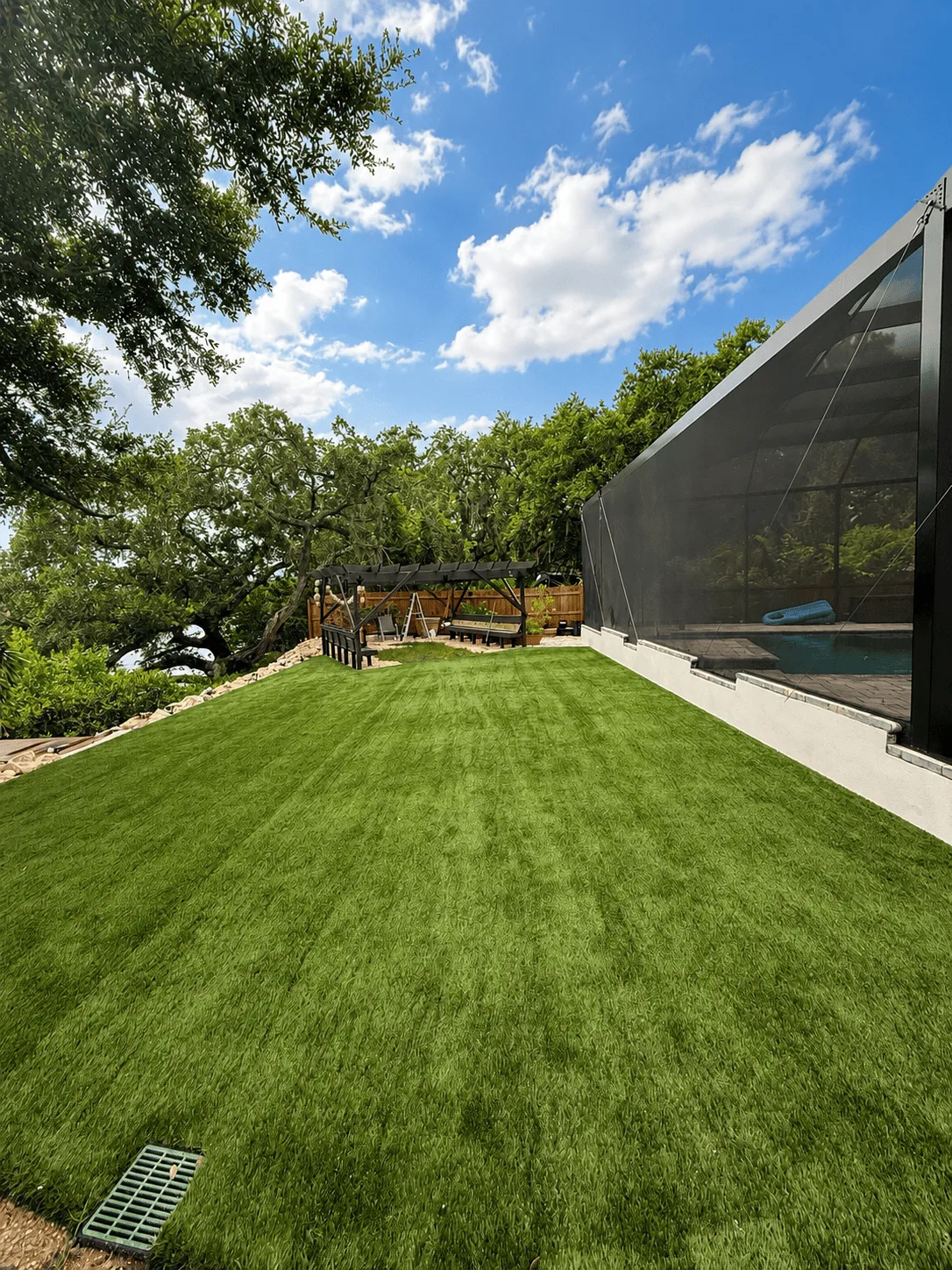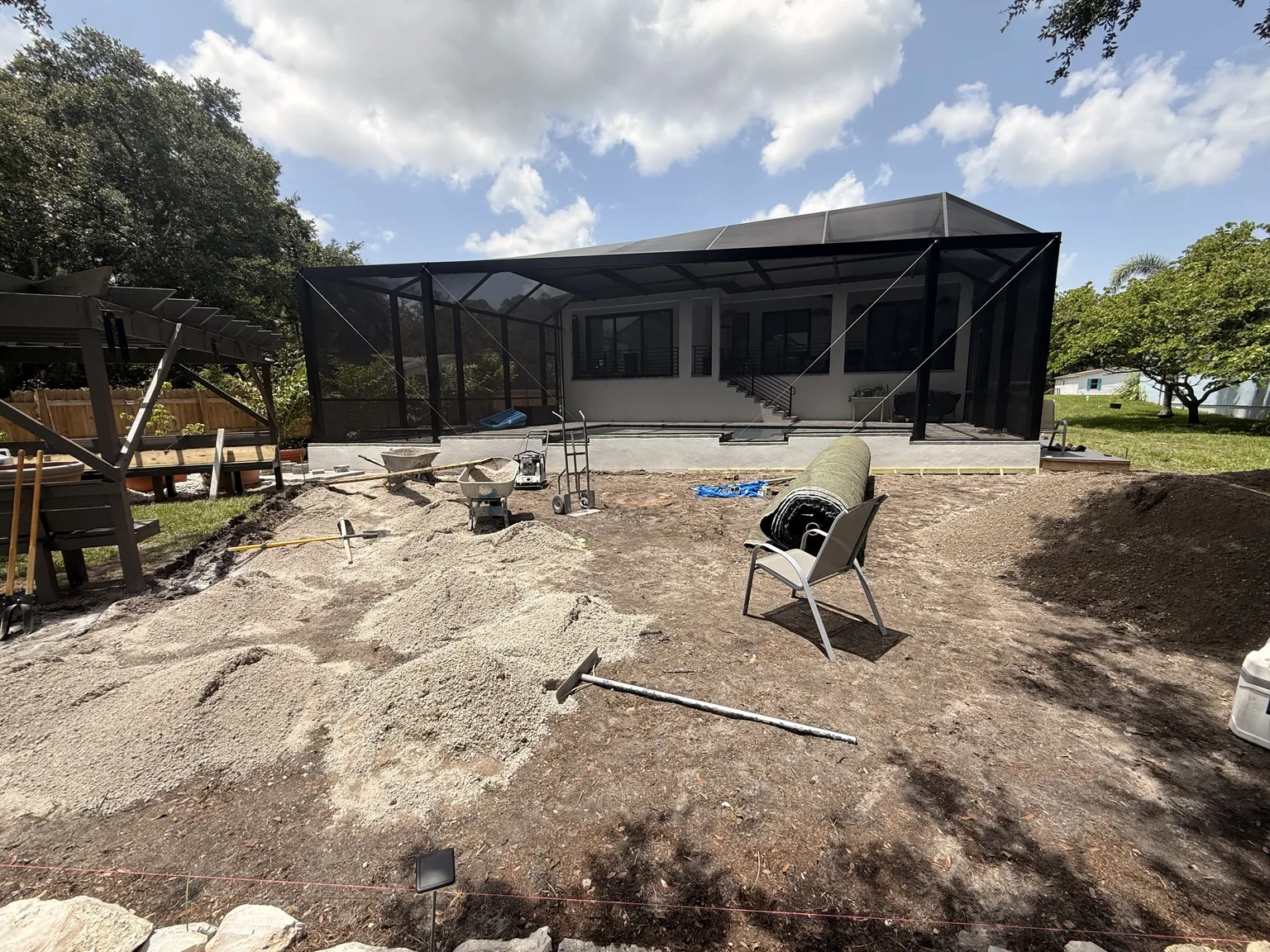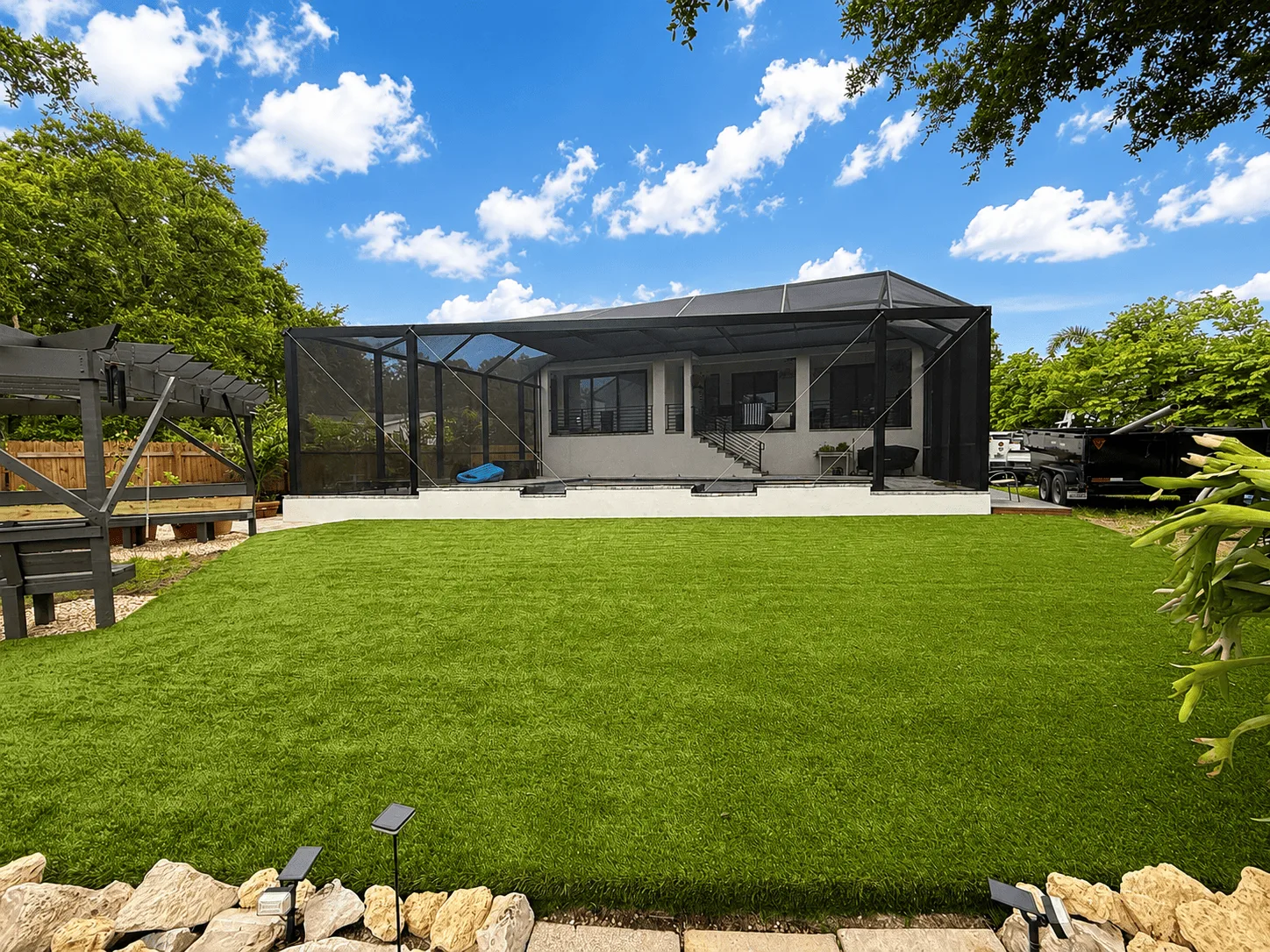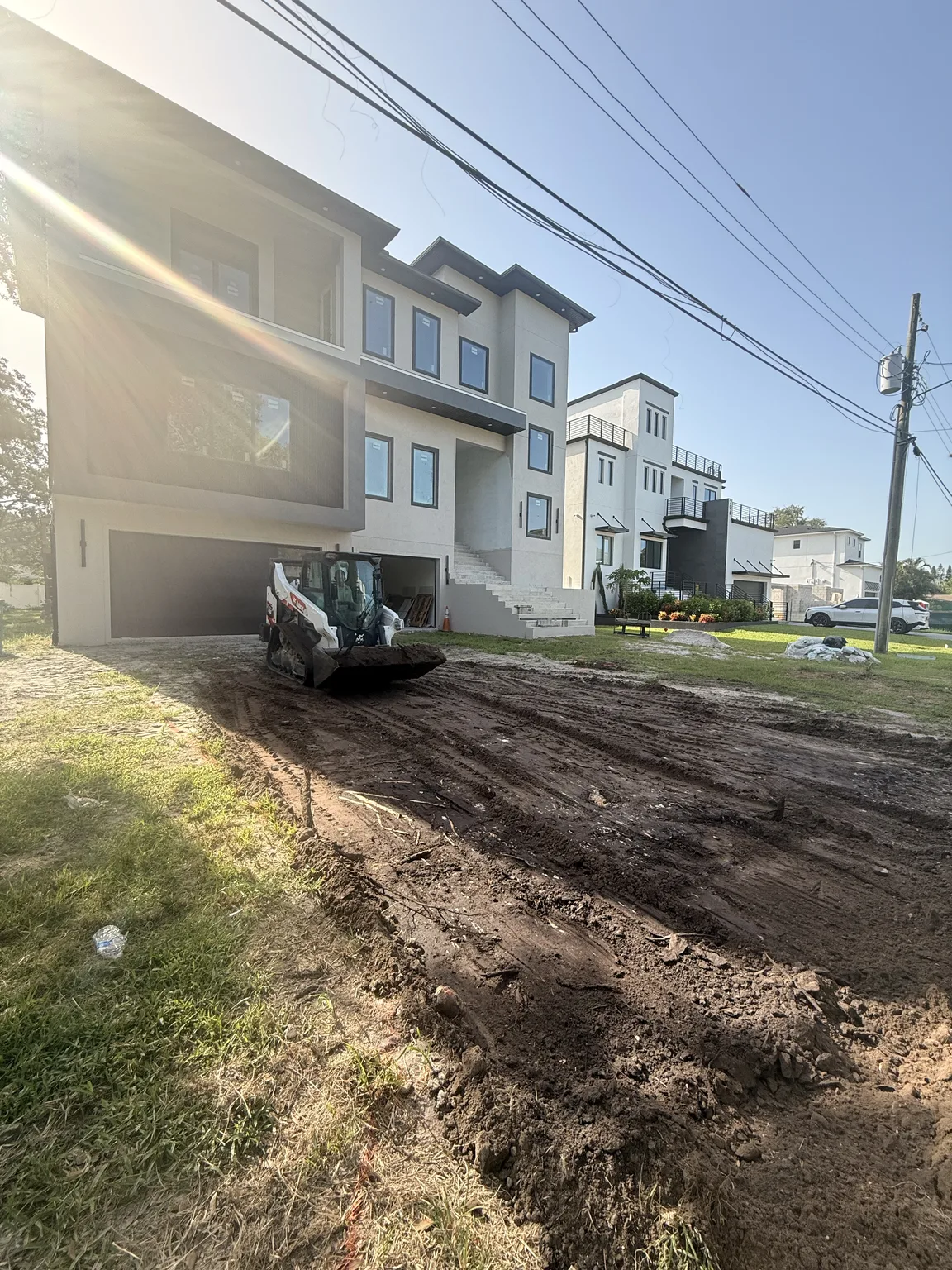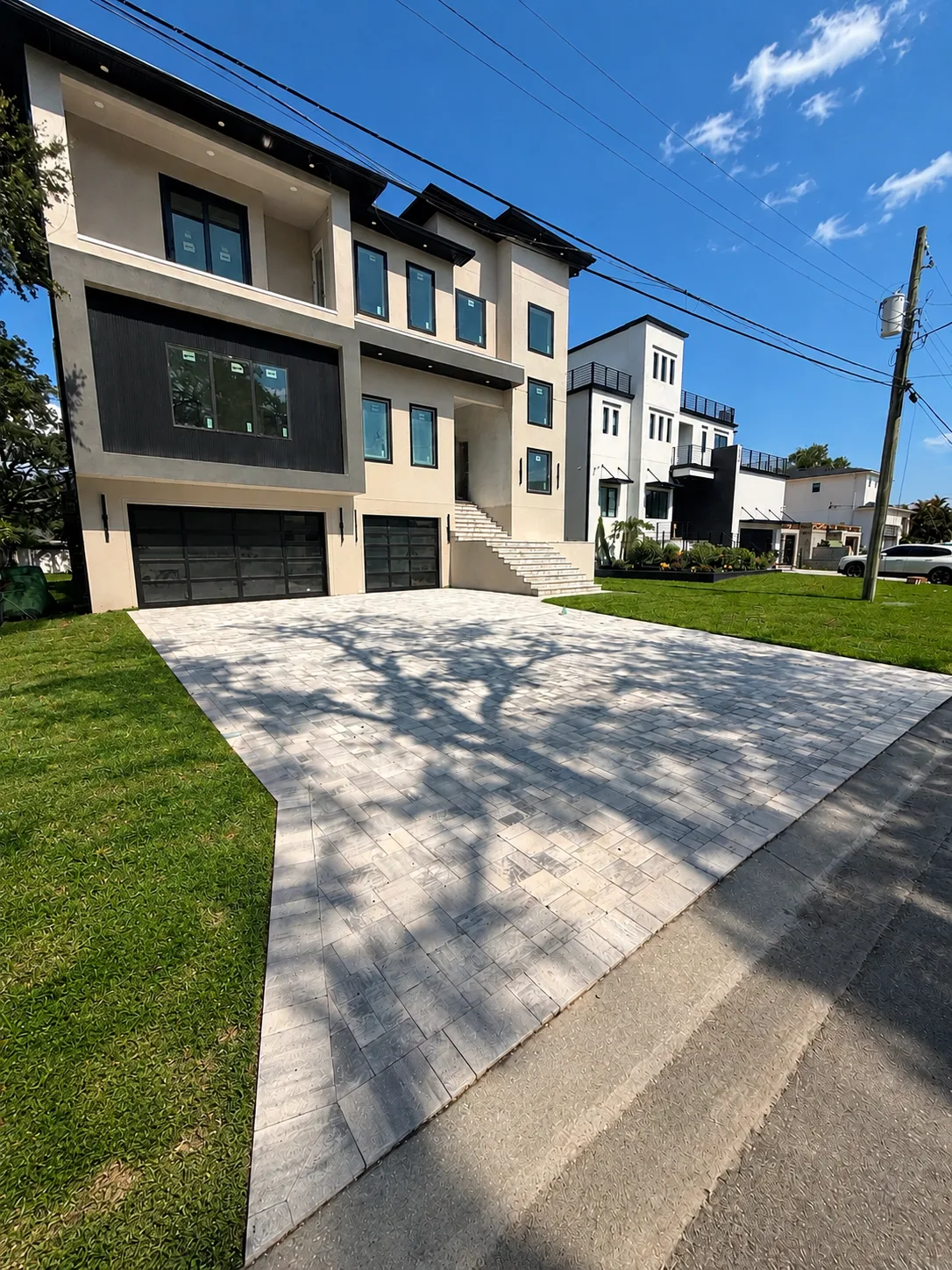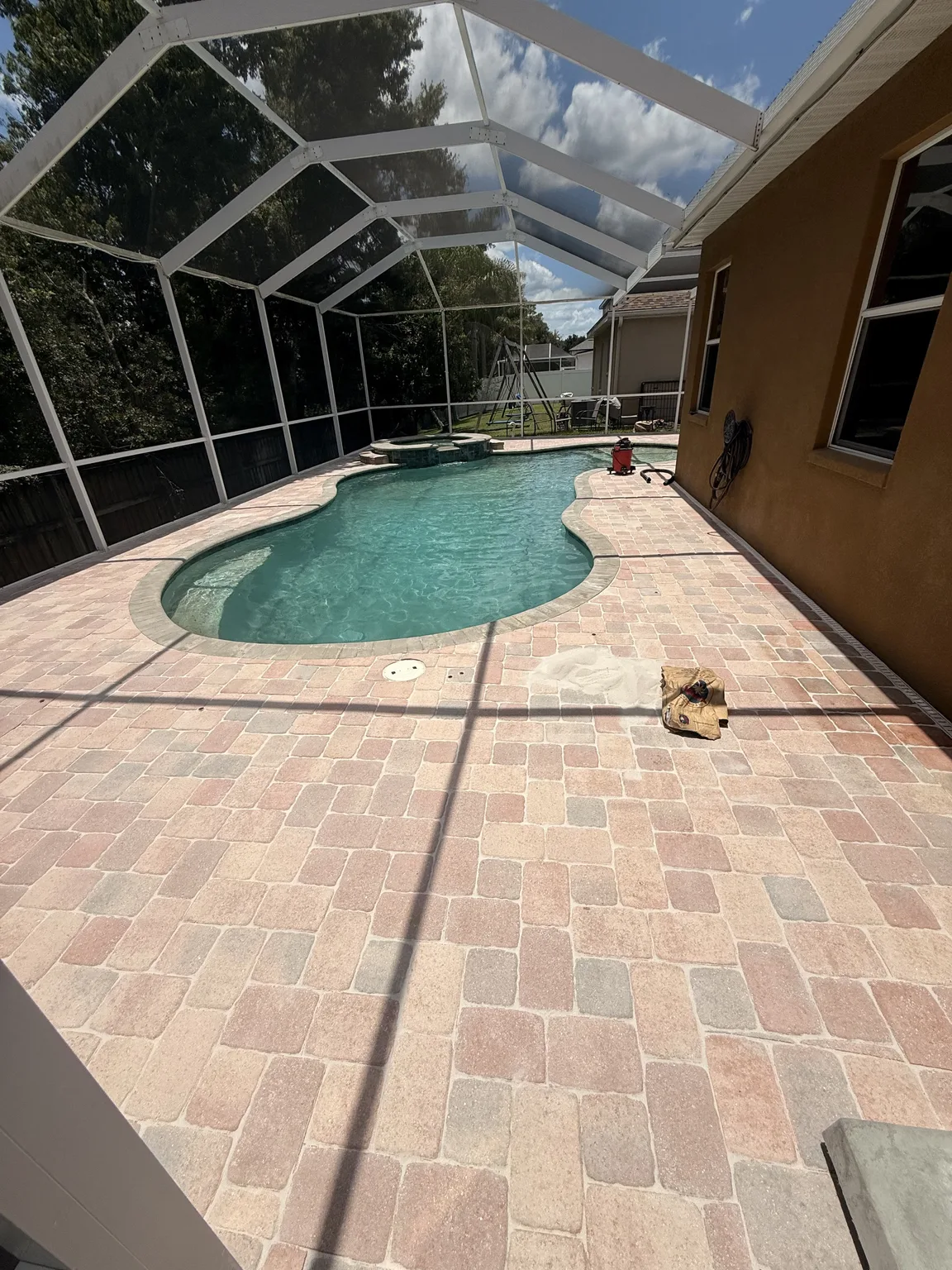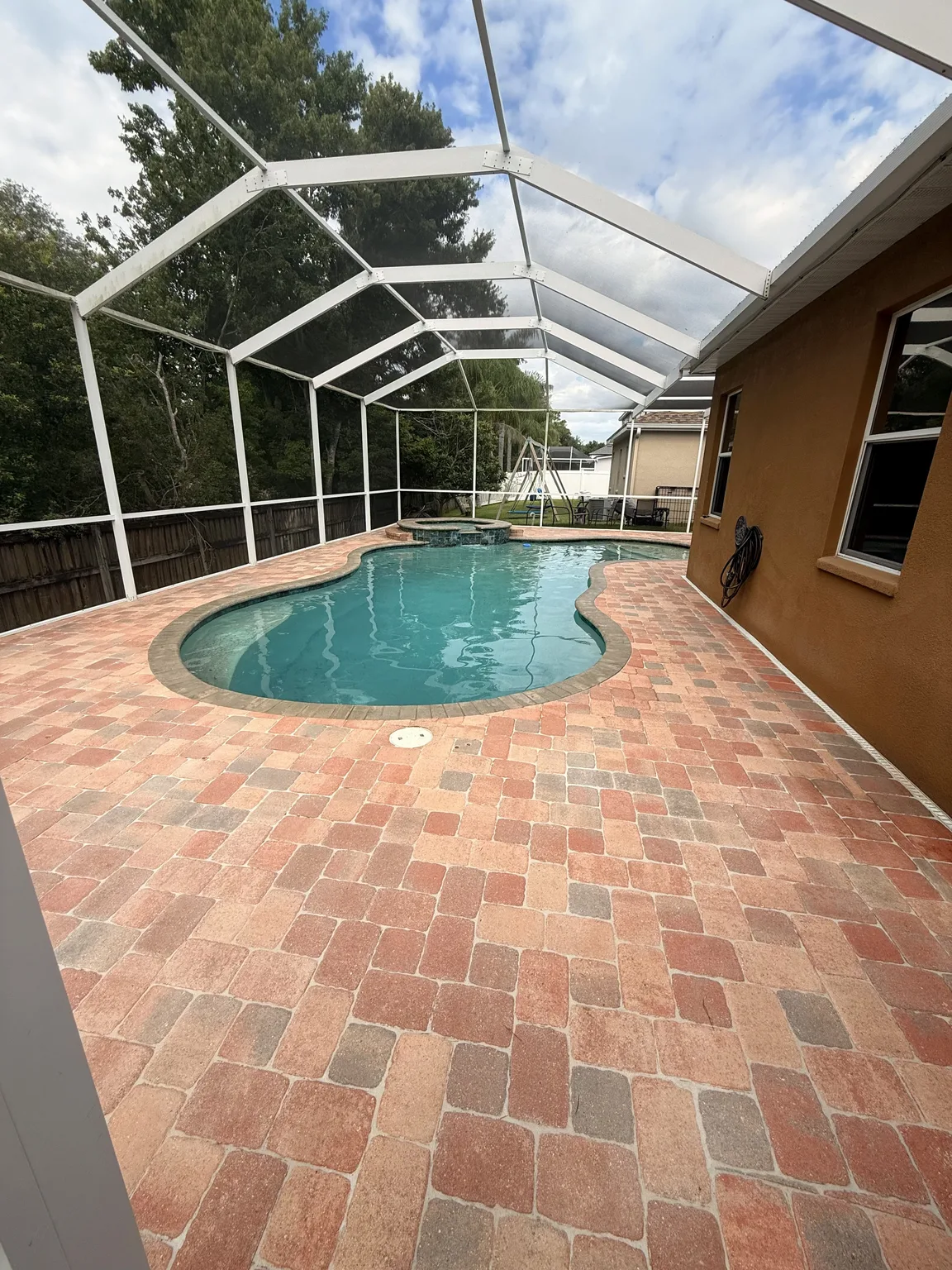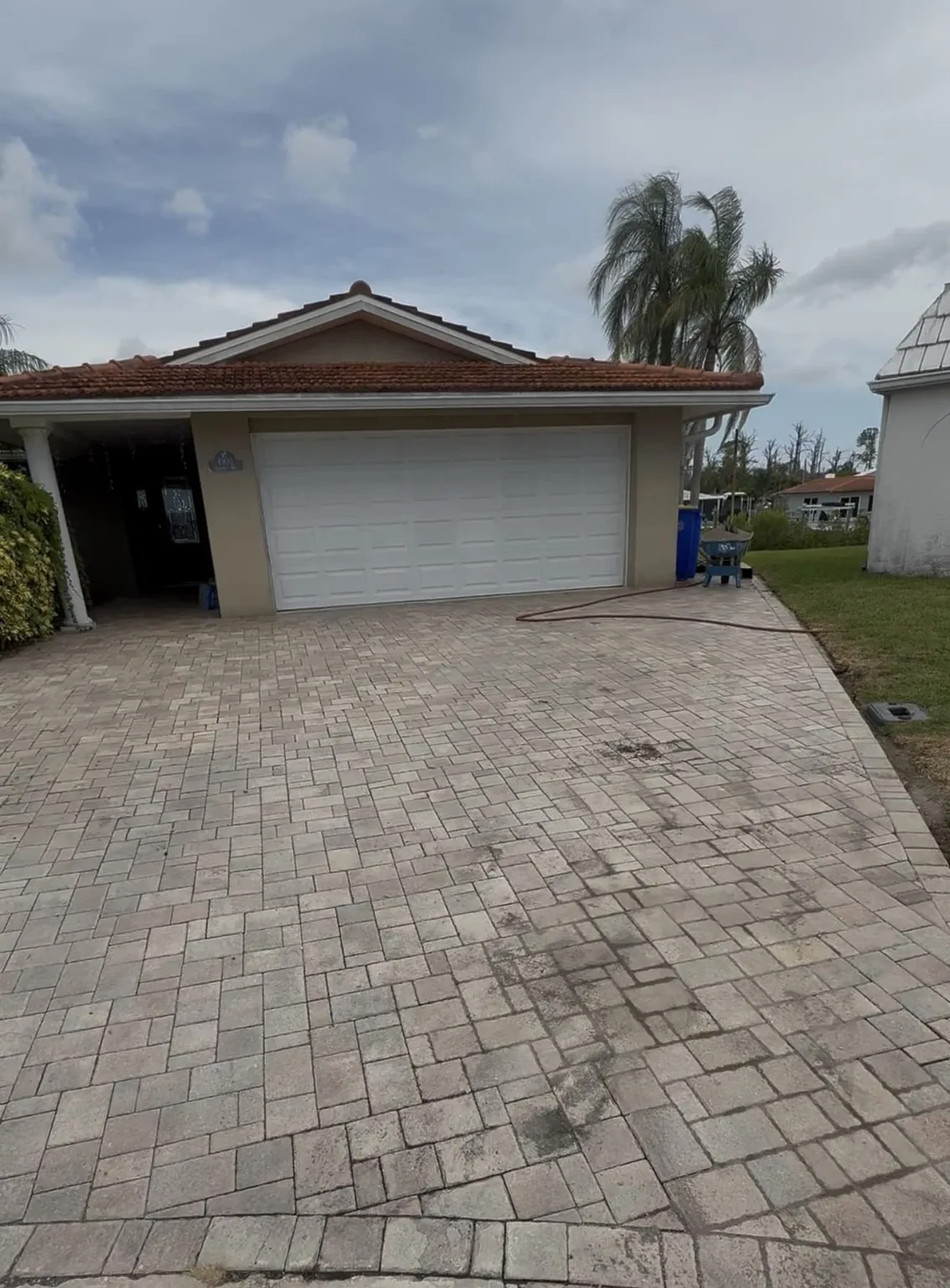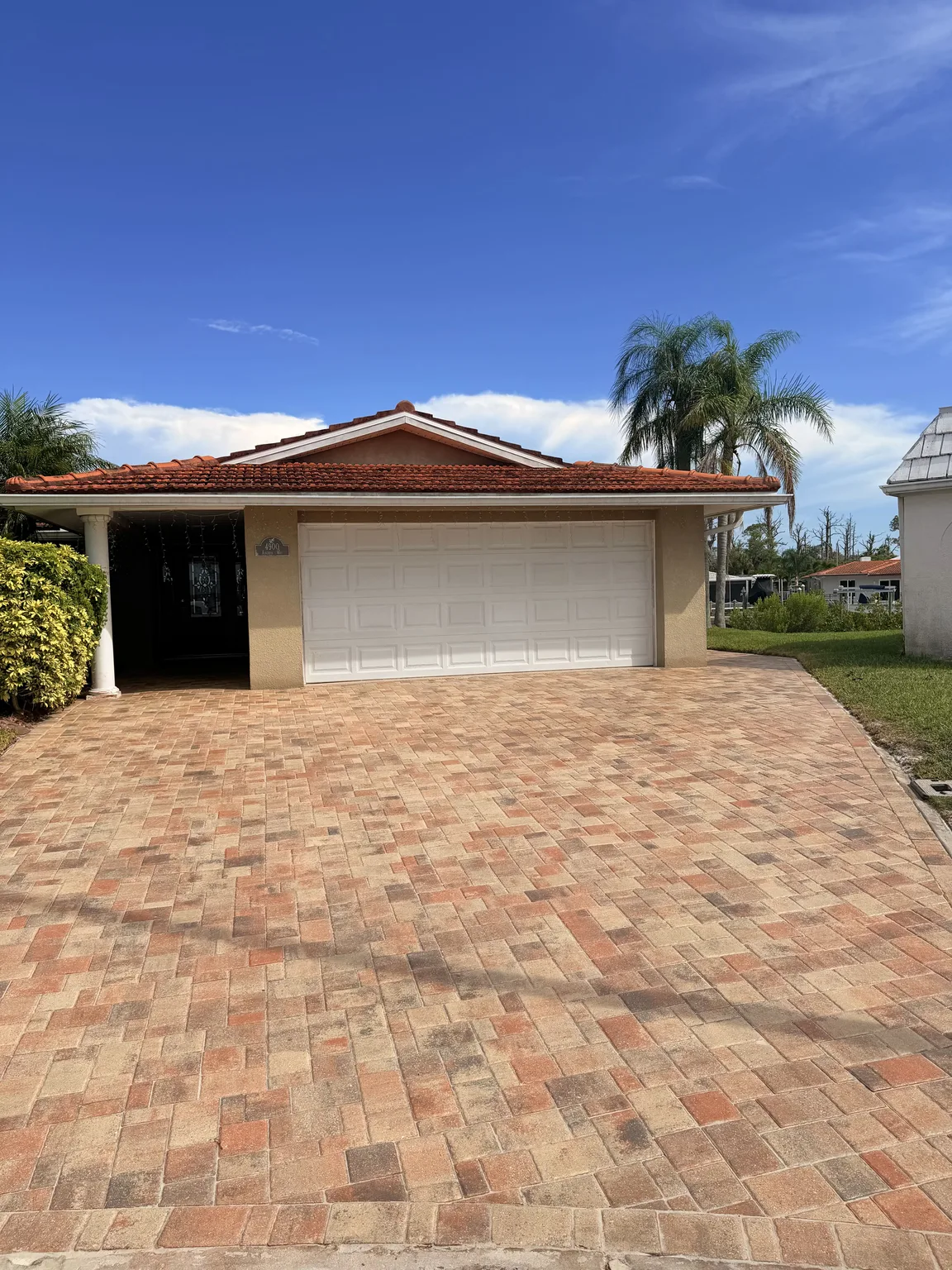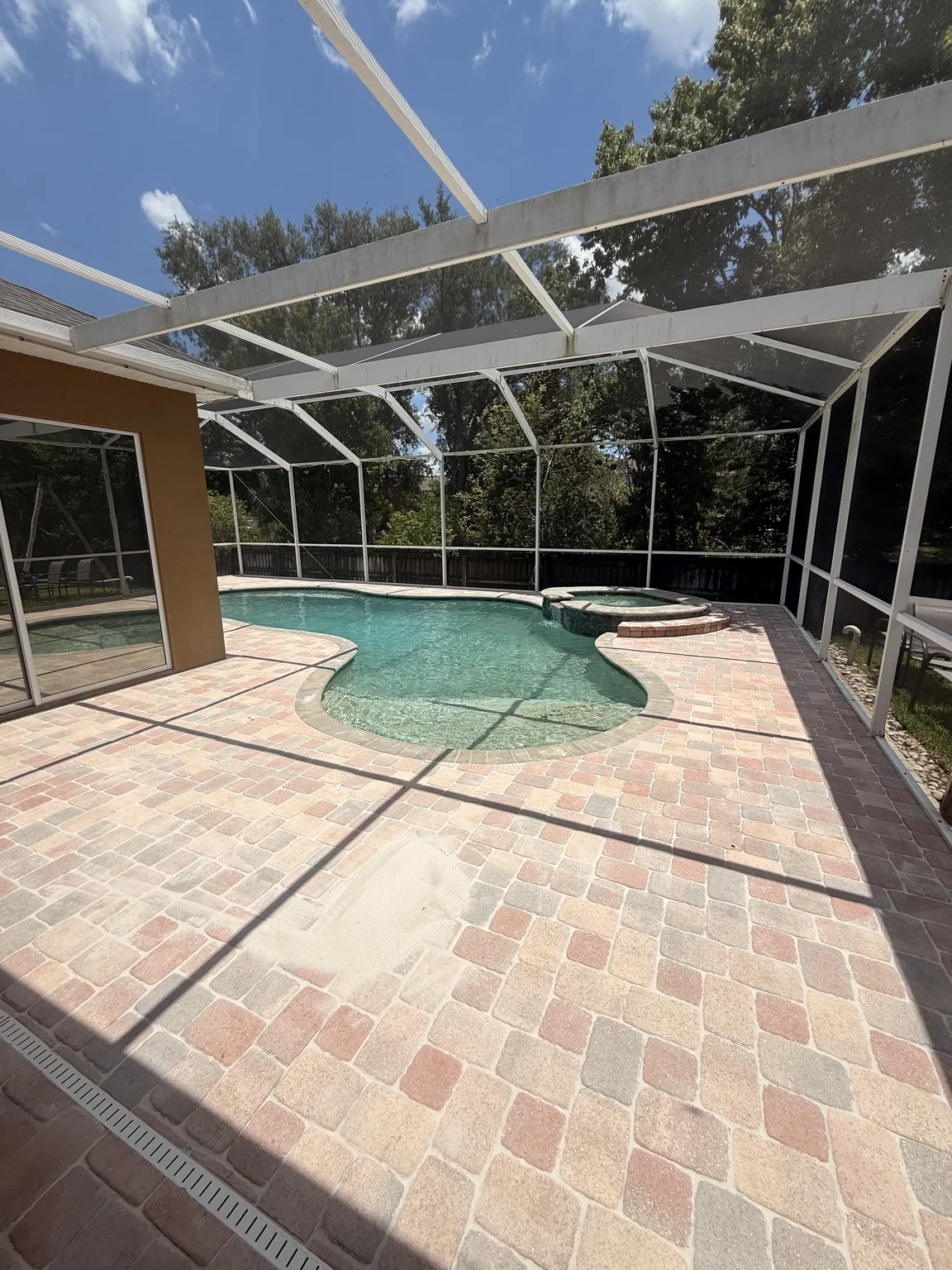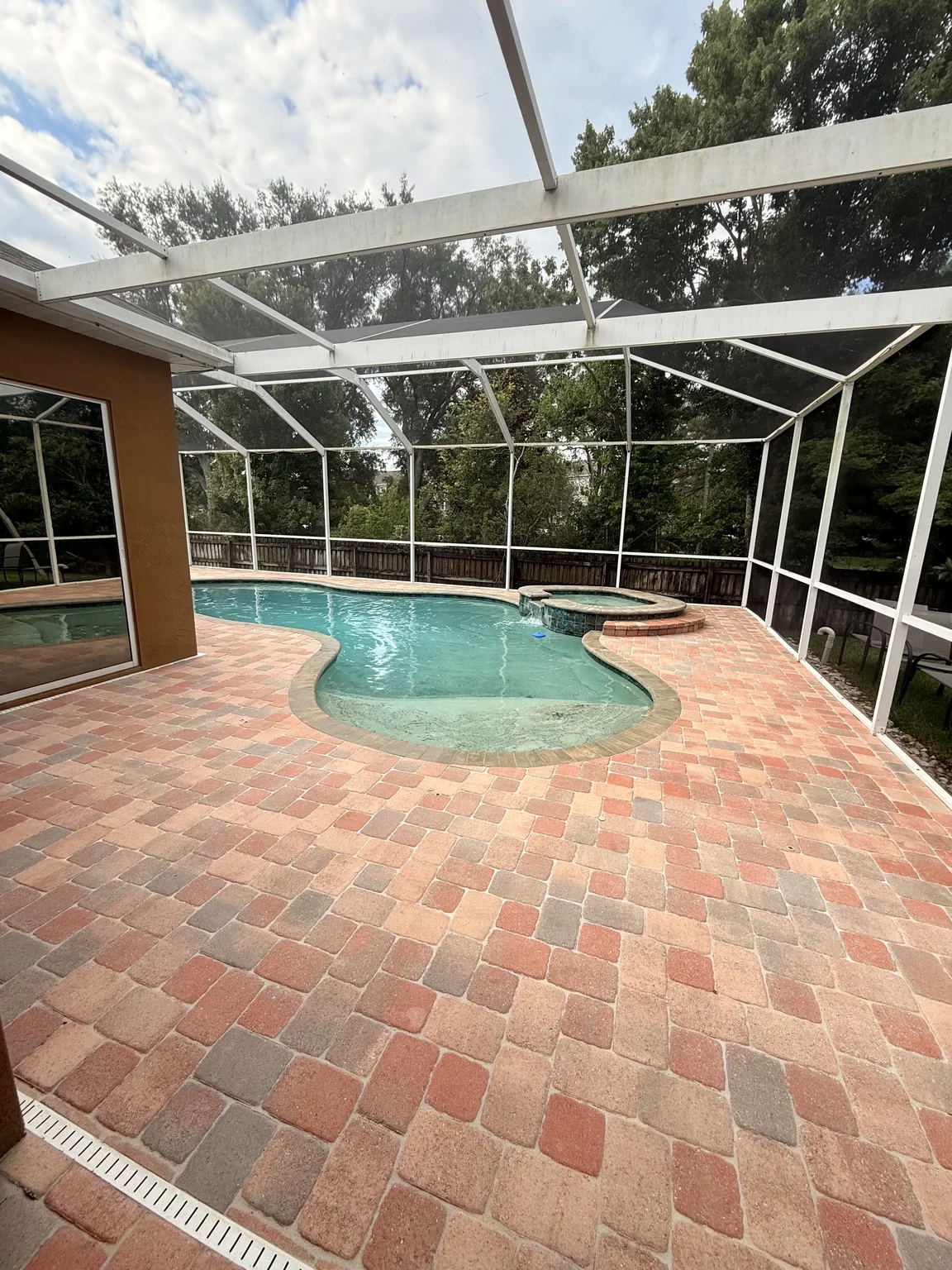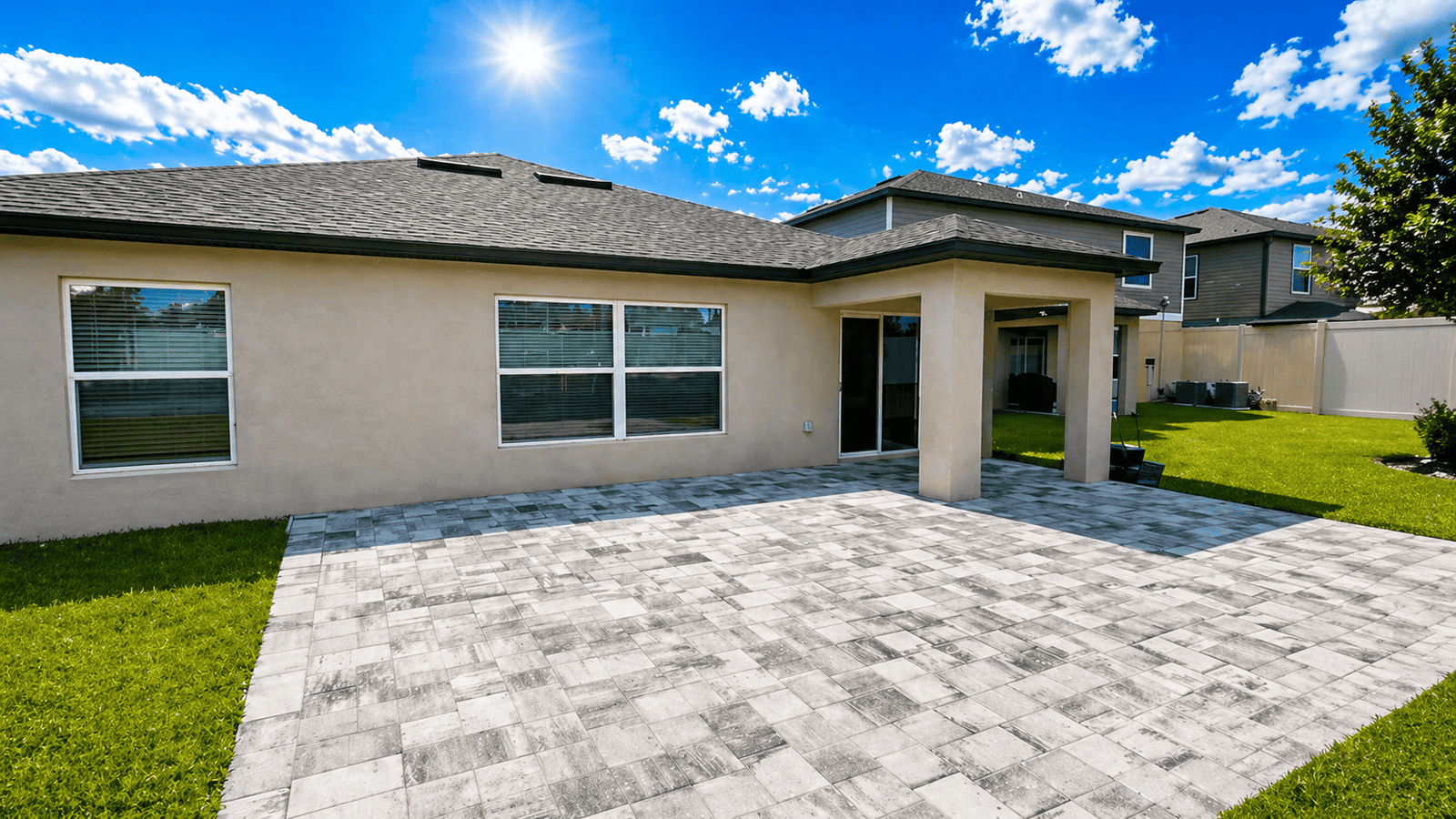
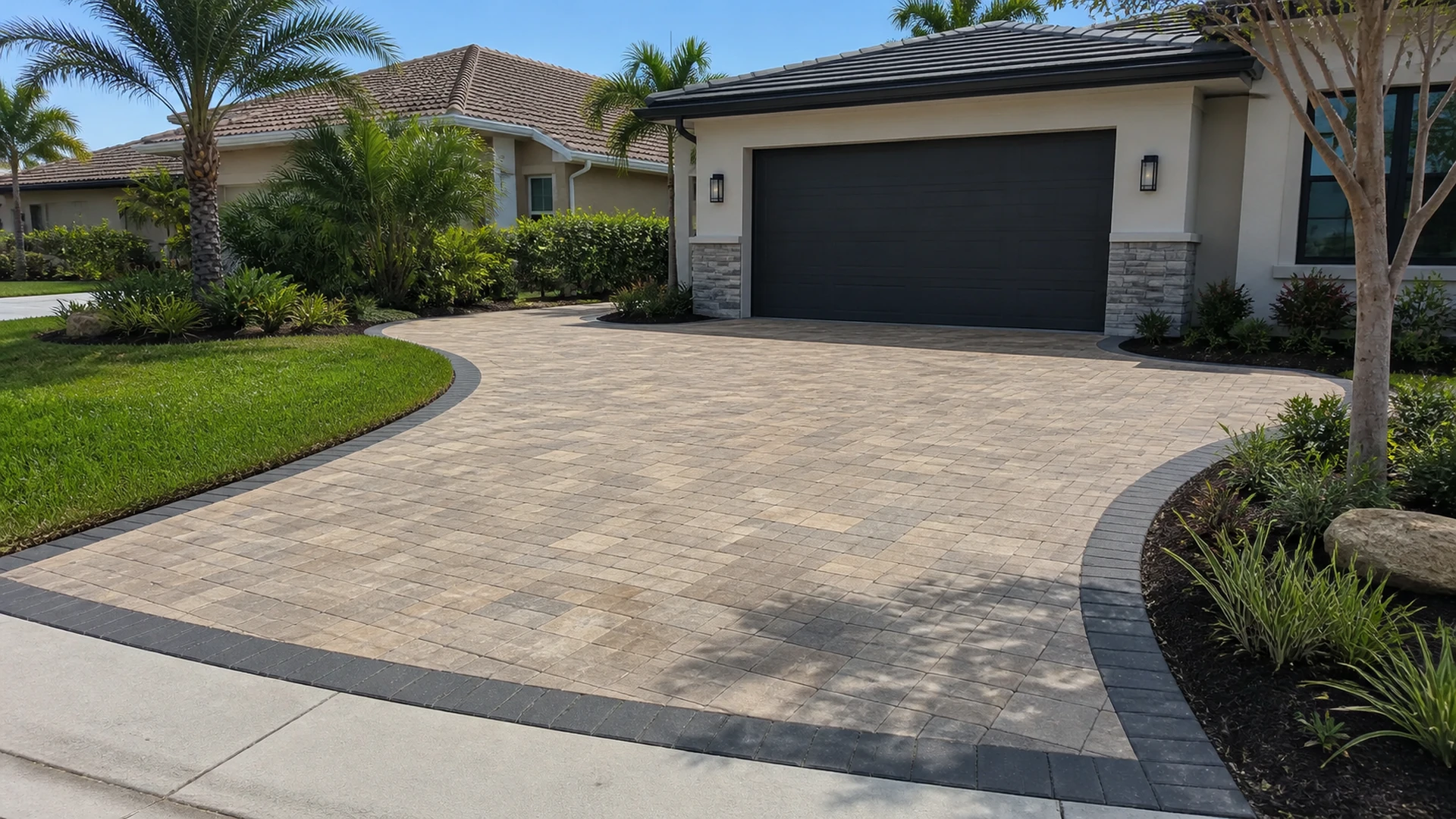
Soldier course paver border establishes a clear visual frame
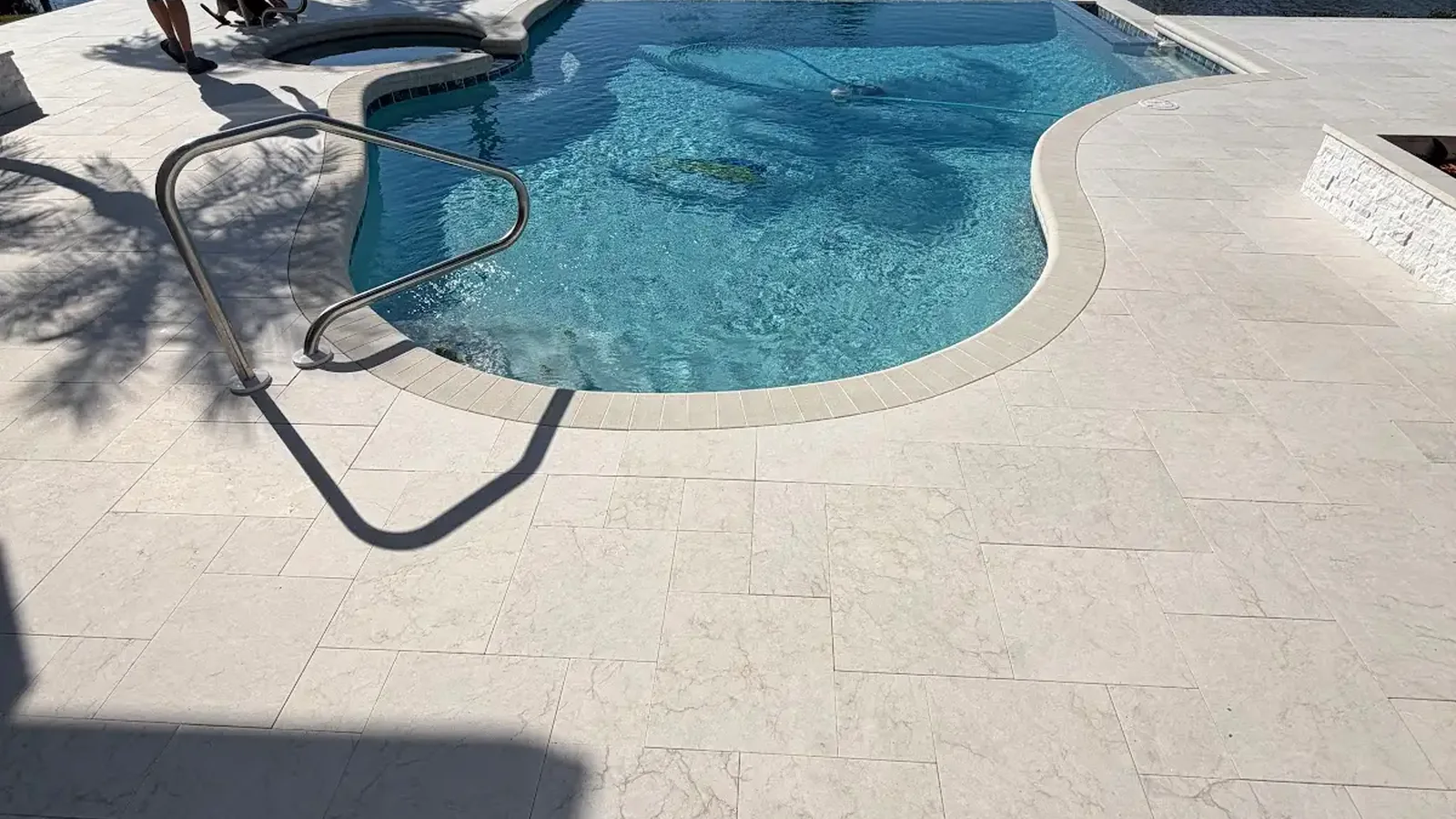
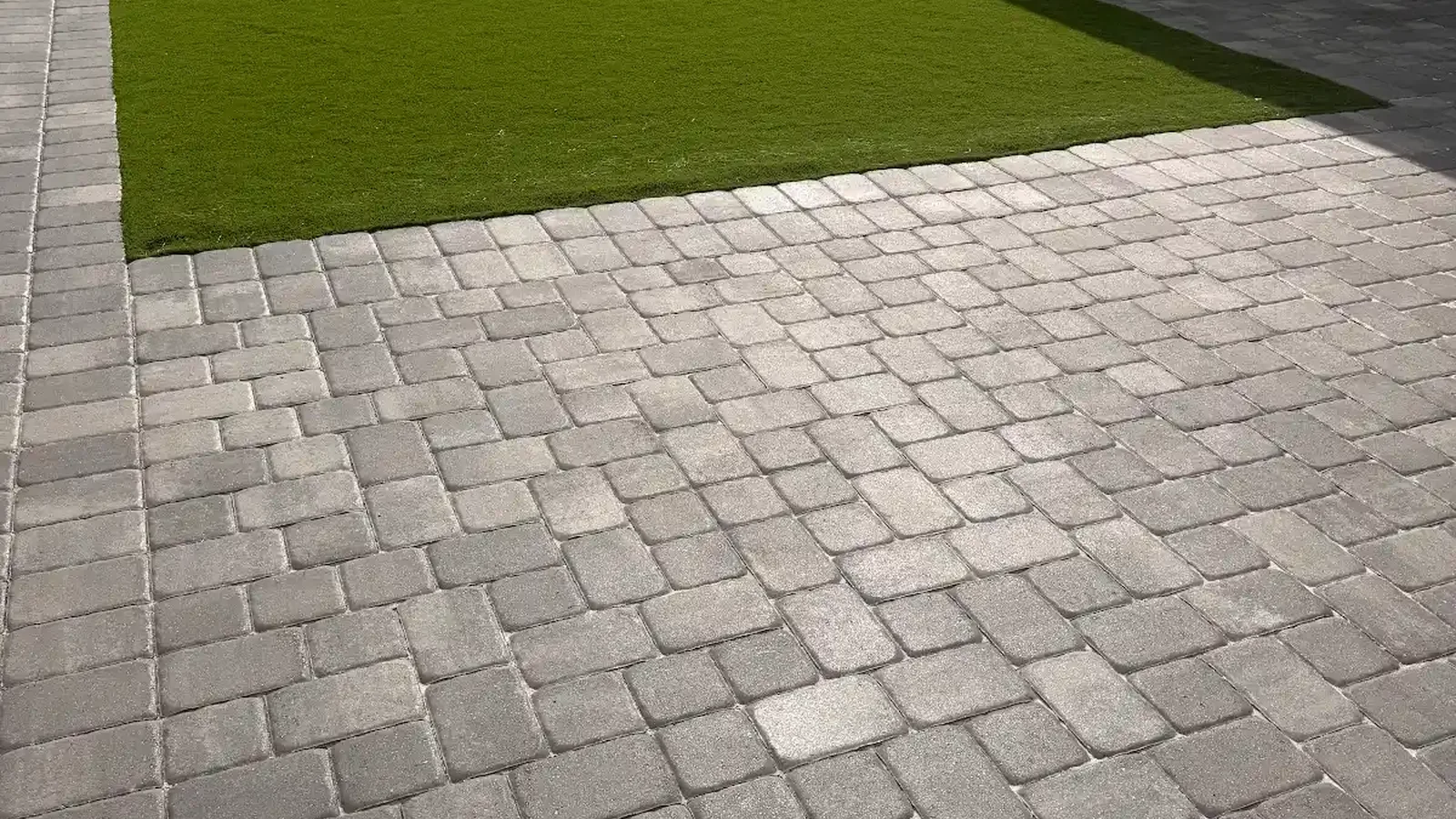
soldier course paver border places rectangular units side by side with their long direction pointing across the border width. Instead, As a result, the short ends create a steady rhythm along the edge of a driveway, patio, walkway, or pool deck.
The layout can separate a field pattern from planting or define a change in use. It can also give a broad paved area a finished perimeter. However, the effect depends on proportion and alignment rather than the name alone. In Tampa Bay projects, the border should connect entrances, curves, and outdoor rooms without adding visual clutter. Therefore, design it as part of the full paving plan from the beginning.
Reading the soldier course paver border rhythm
Ultimately, A soldier course paver border works because repeated joints guide the eye around the paved surface. On a straight driveway, that rhythm can emphasize length and create a clean approach.
Around a patio, it can hold several furniture zones inside one visual frame. Yet each turn, curve, and width change interrupts the sequence. Therefore, the designer should map where full units, cuts, and transitions will occur before installation. Consistent joint spacing matters, but forcing awkward slivers at a focal point is rarely attractive. In practice, start layout decisions at the most visible edges, doors, or centerlines and carry the pattern toward quieter termination areas.
Scale the border to the paved area
The width of a soldier course paver border should feel proportional to the field it surrounds. A single course often provides crisp definition without taking much room, while multiple courses create a stronger band. However, a bold border can visually narrow a small walkway or crowd a compact landing.
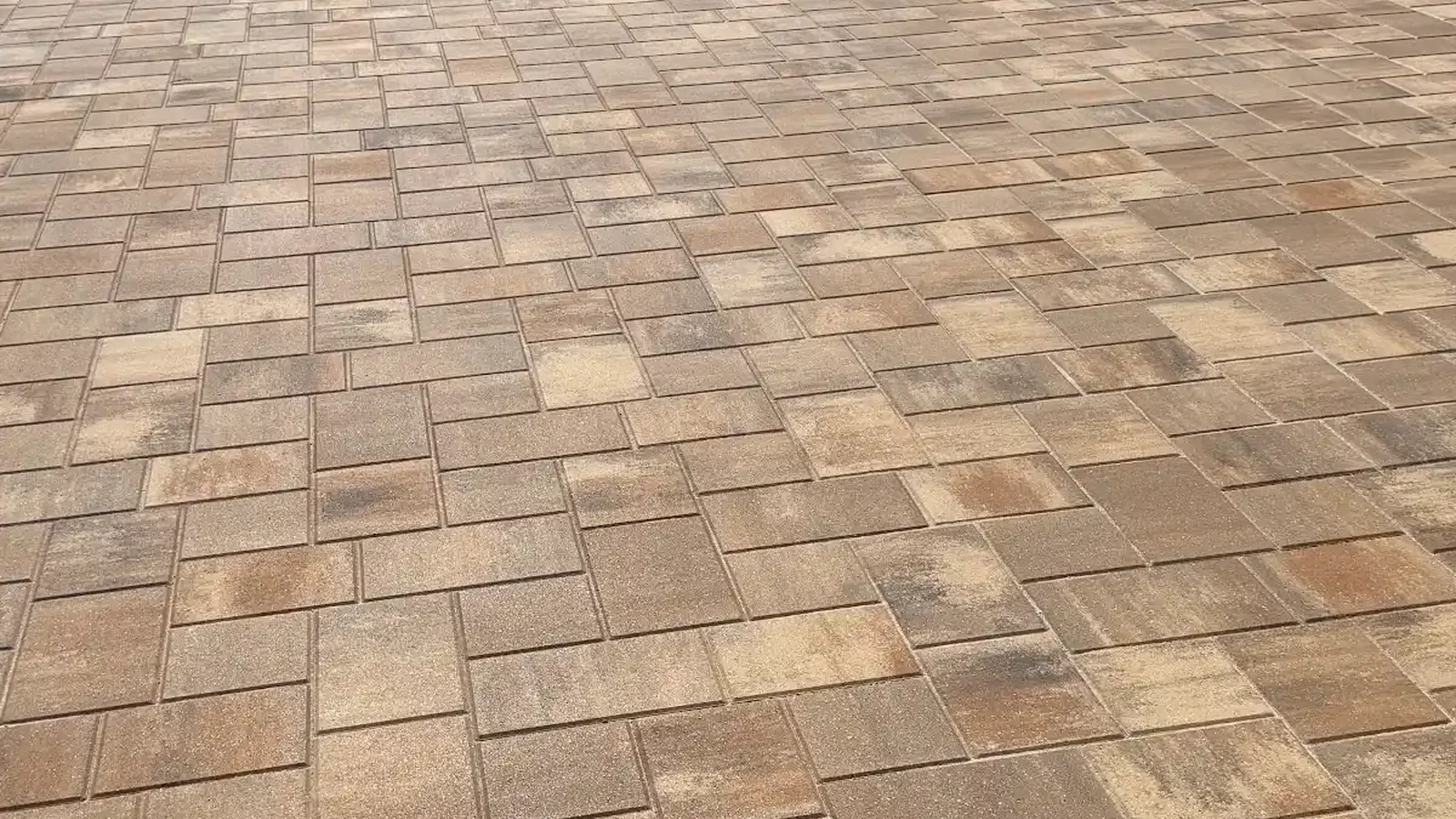
On a wide driveway, a very delicate edge may disappear from the main viewing distance. Therefore, review the design both close up and from the street. Mocking up several units beside the selected field paver helps. Also consider paver dimensions, because the same course orientation produces different widths and rhythms with different unit formats.
Choose contrast with restraint
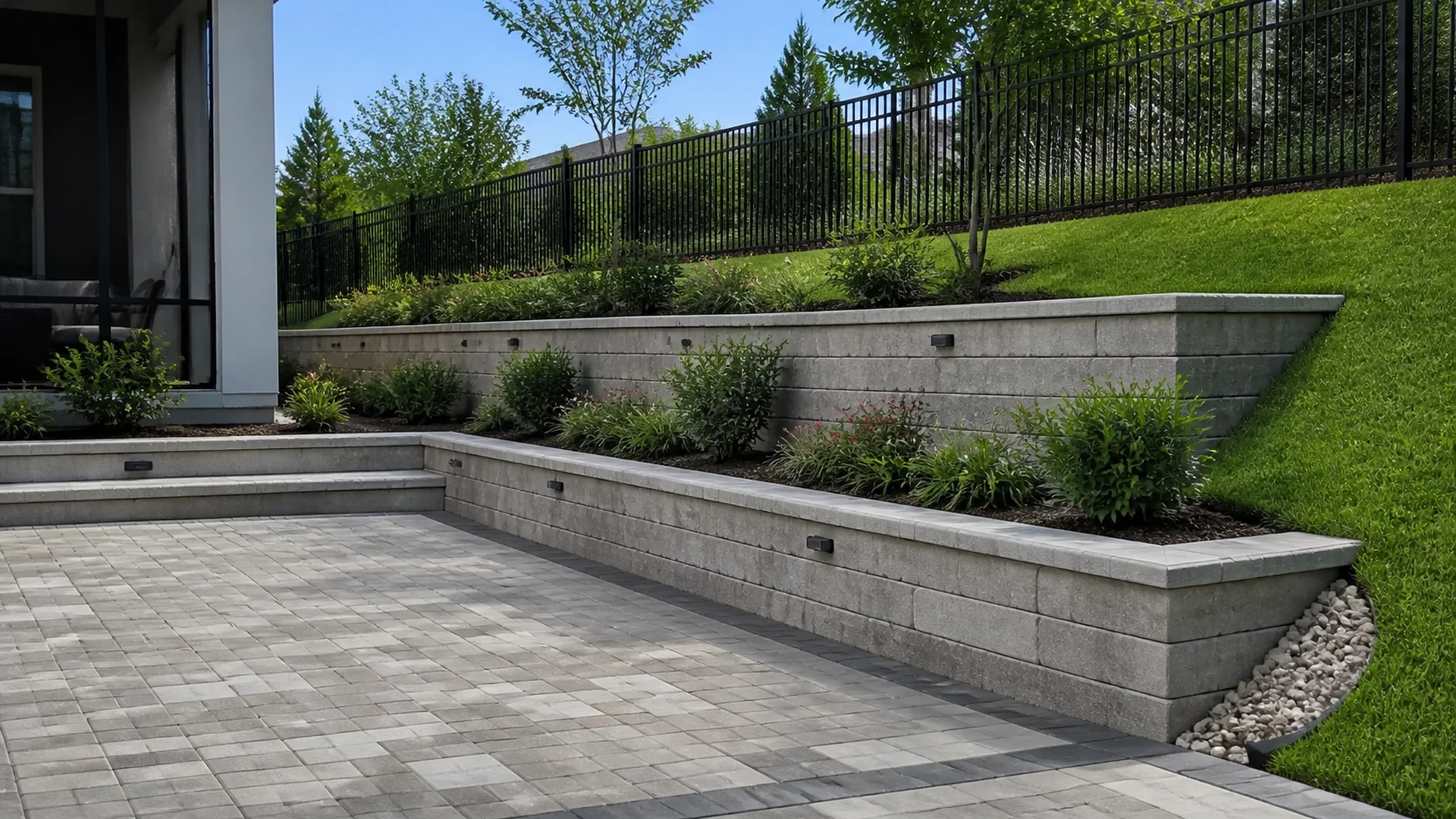
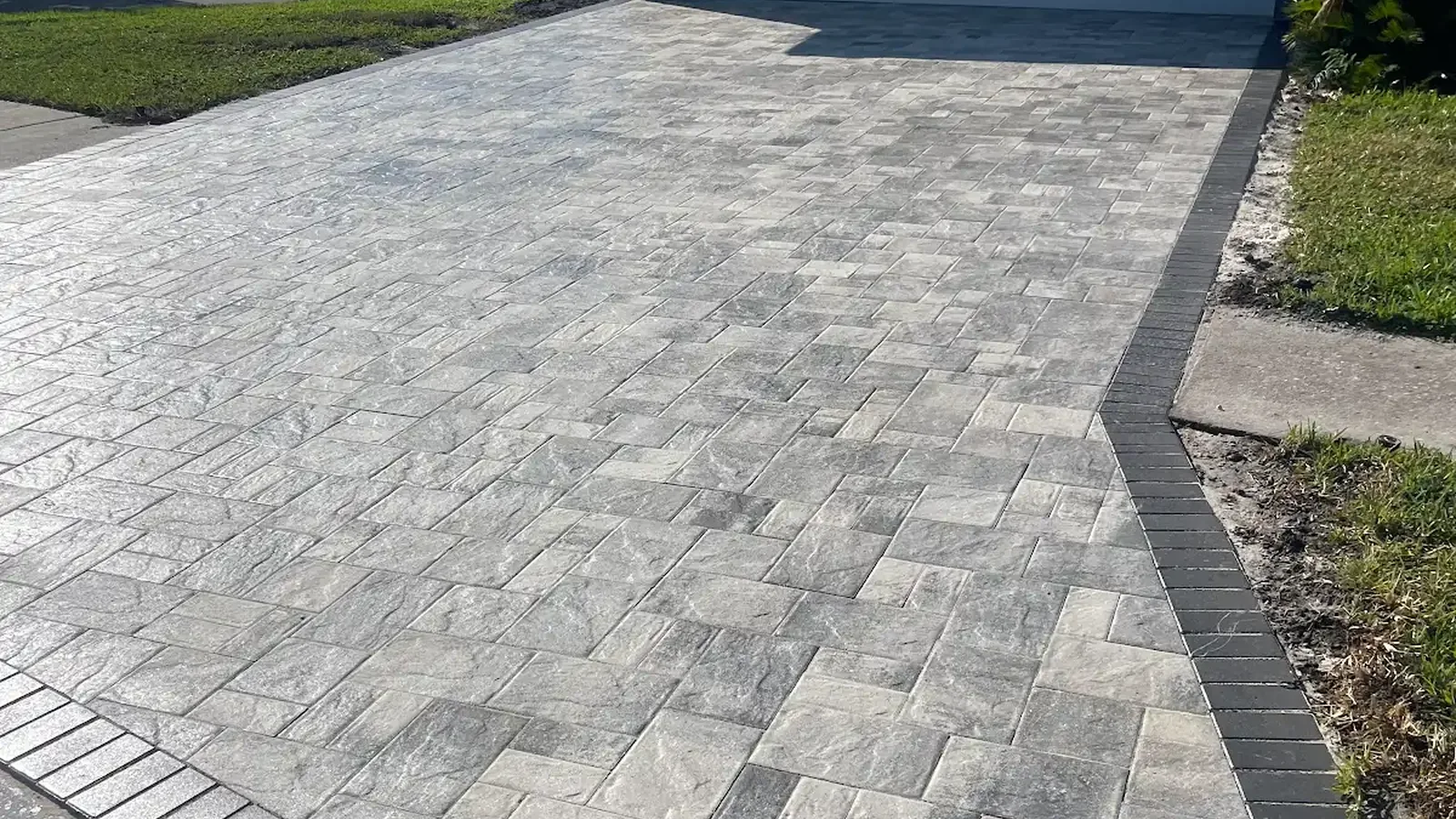
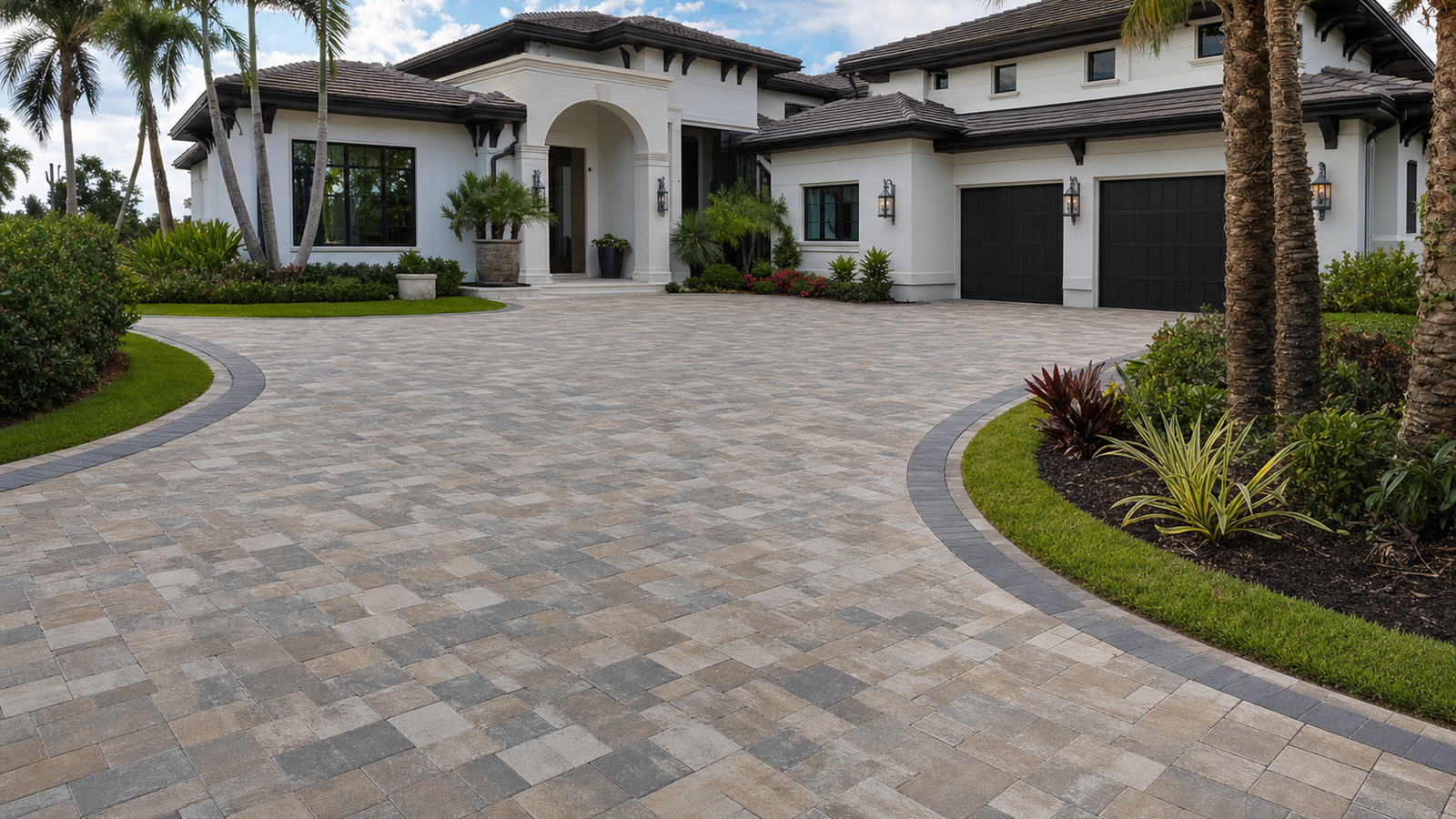
Additionally, Color contrast can make a soldier course paver border prominent, subtle, or nearly tonal. For example, a charcoal border can sharpen a light driveway, while a related mid-tone can provide definition without a hard outline.
Yet color is only one source of contrast. Texture, finish, unit size, and laying direction also separate the edge from the field. Therefore, avoid selecting a border from a small indoor sample alone. View full units beside the field blend in Florida daylight and near the home’s exterior finishes. A restrained combination often ages visually better because landscaping, vehicles, furniture, and seasonal light already add changing color to the scene.
Coordinate the frame with the house
A soldier course paver border should relate to roof tones, wall color, trim, stonework, and existing hardscape. It does not need to copy one finish exactly. Instead, it can repeat a dark accent, bridge two warm tones, or provide a quiet neutral edge.
For instance, a border that echoes window frames may connect the ground plane to the architecture. However, too many unrelated colors can divide the property into separate visual pieces. Therefore, build a small exterior palette before choosing the final blend. Include weathered materials, not just new samples, and check how irrigation, shade, and direct sun affect their appearance.
Let the field pattern and border work together
The field pattern inside a soldier course paver border creates the primary texture, while the border provides order at the perimeter. A running bond may meet the frame differently from a herringbone or modular layout. Therefore, joint alignment and cut planning deserve attention at every edge.
Moreover, Random narrow cuts can weaken the visual transition even when the border itself is straight. In addition, changes in field direction can mark a threshold or outdoor room when used deliberately. The installer should establish control lines that keep the interior pattern square to key architecture. A well-resolved meeting between field and frame looks calm because the geometry has been planned.
Use the border to organize outdoor rooms
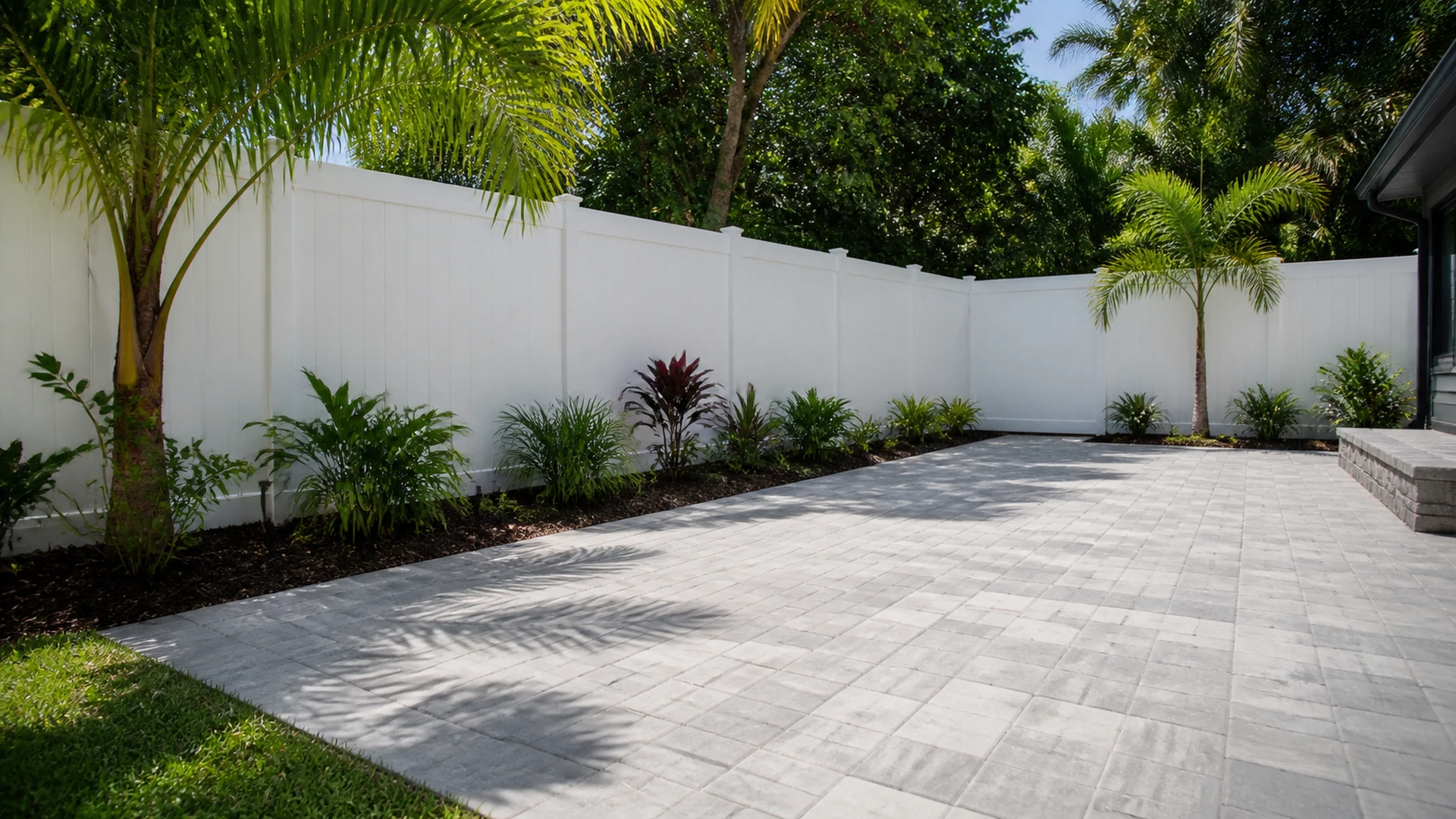
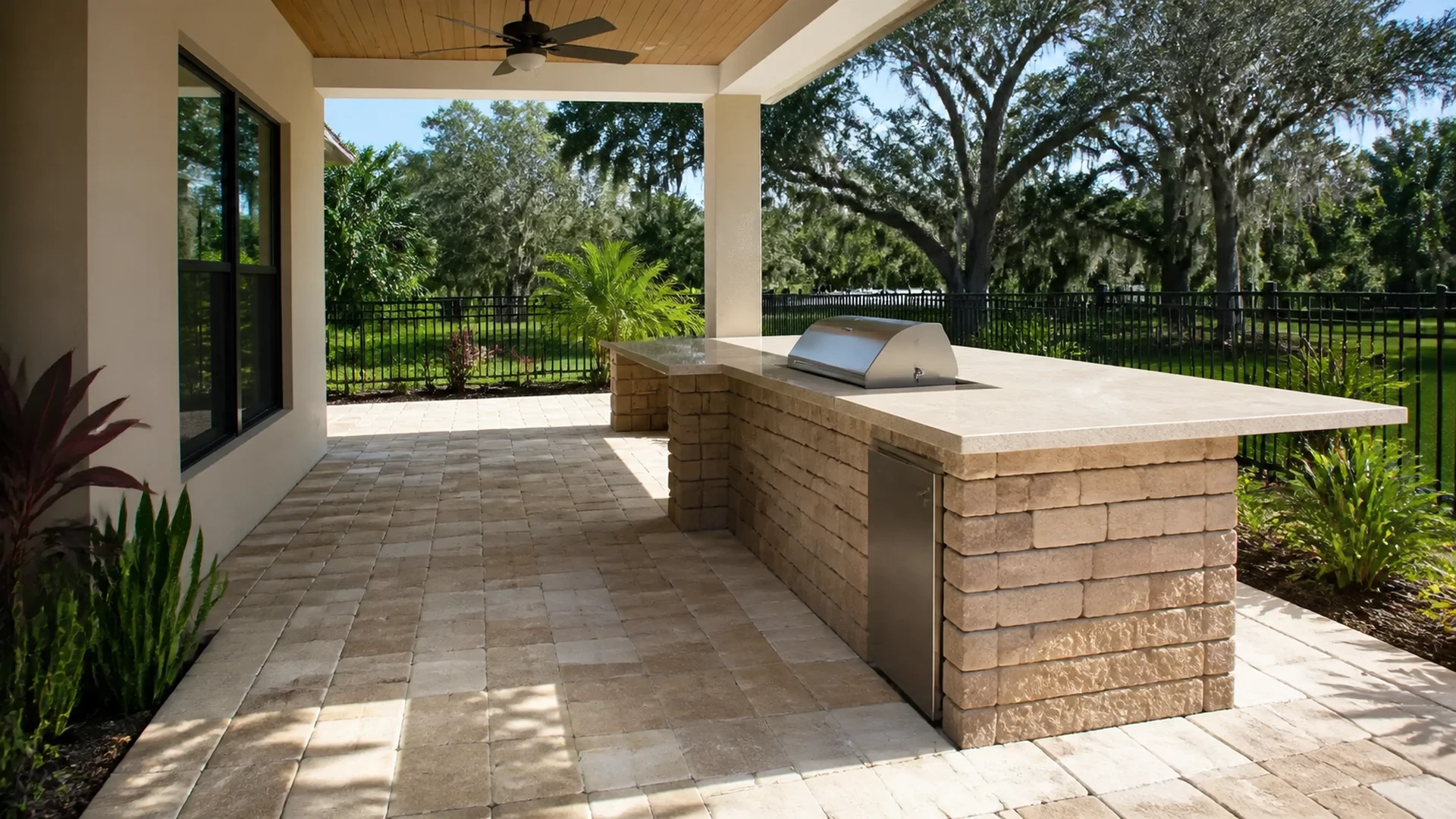
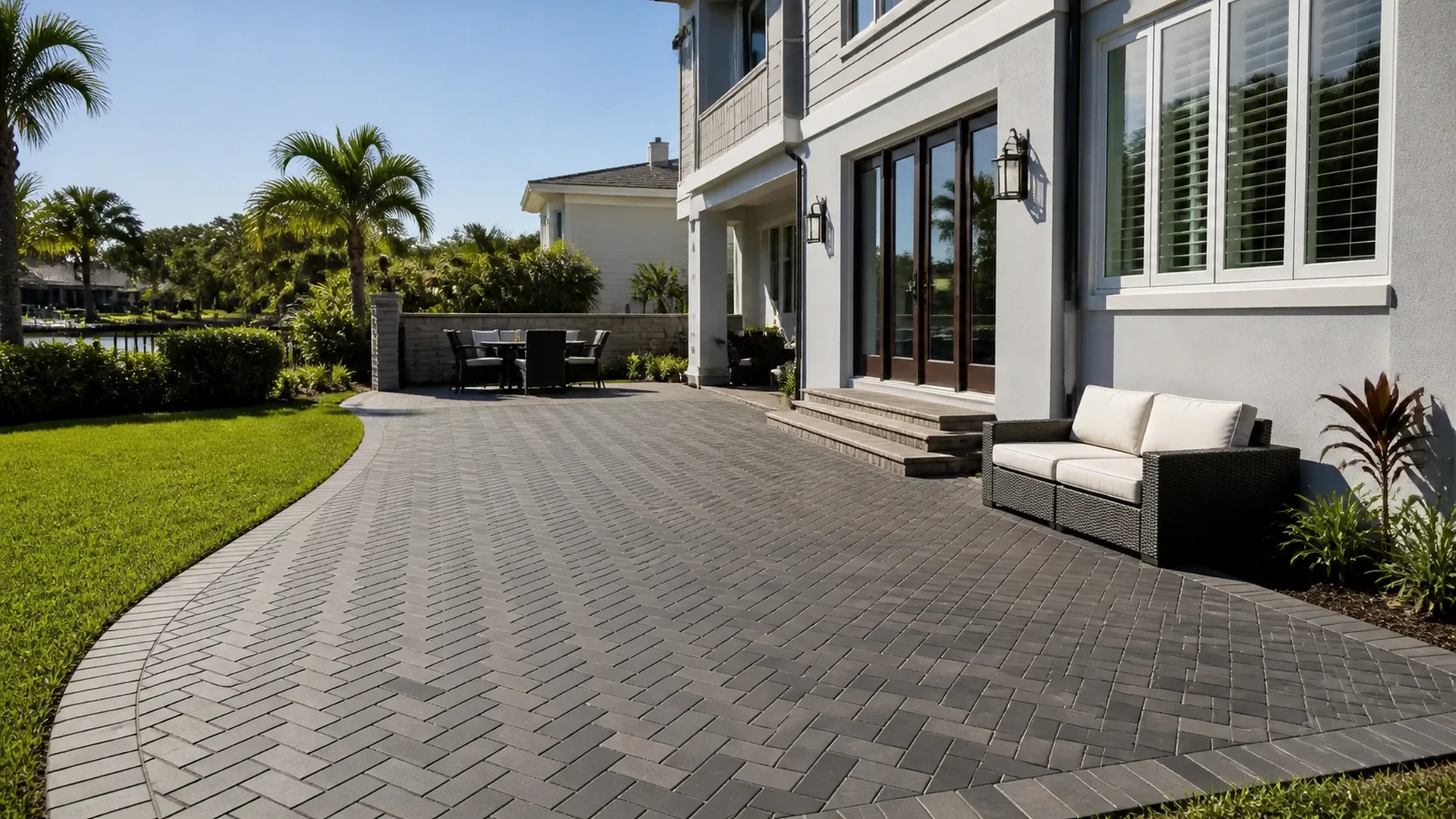
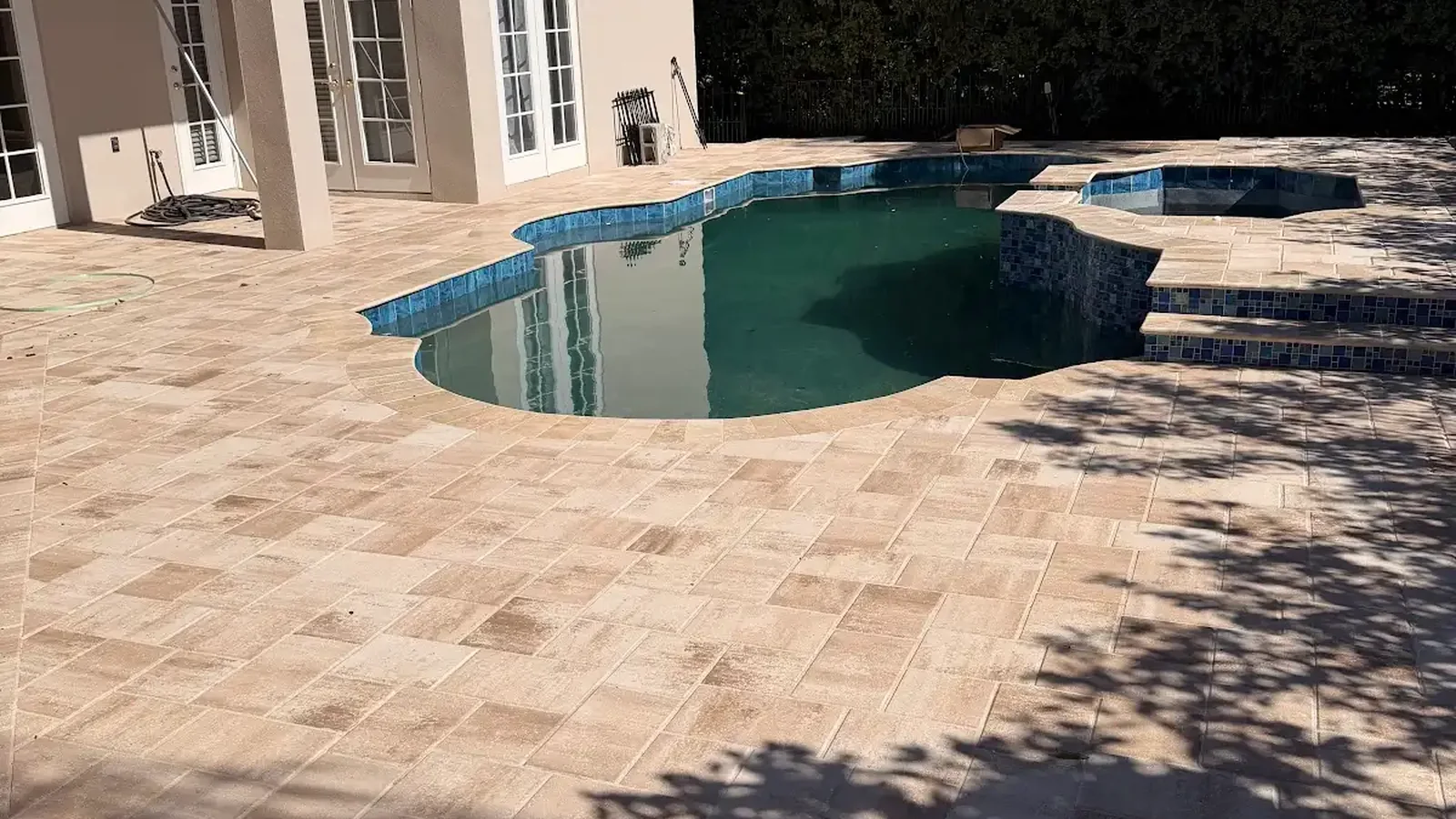
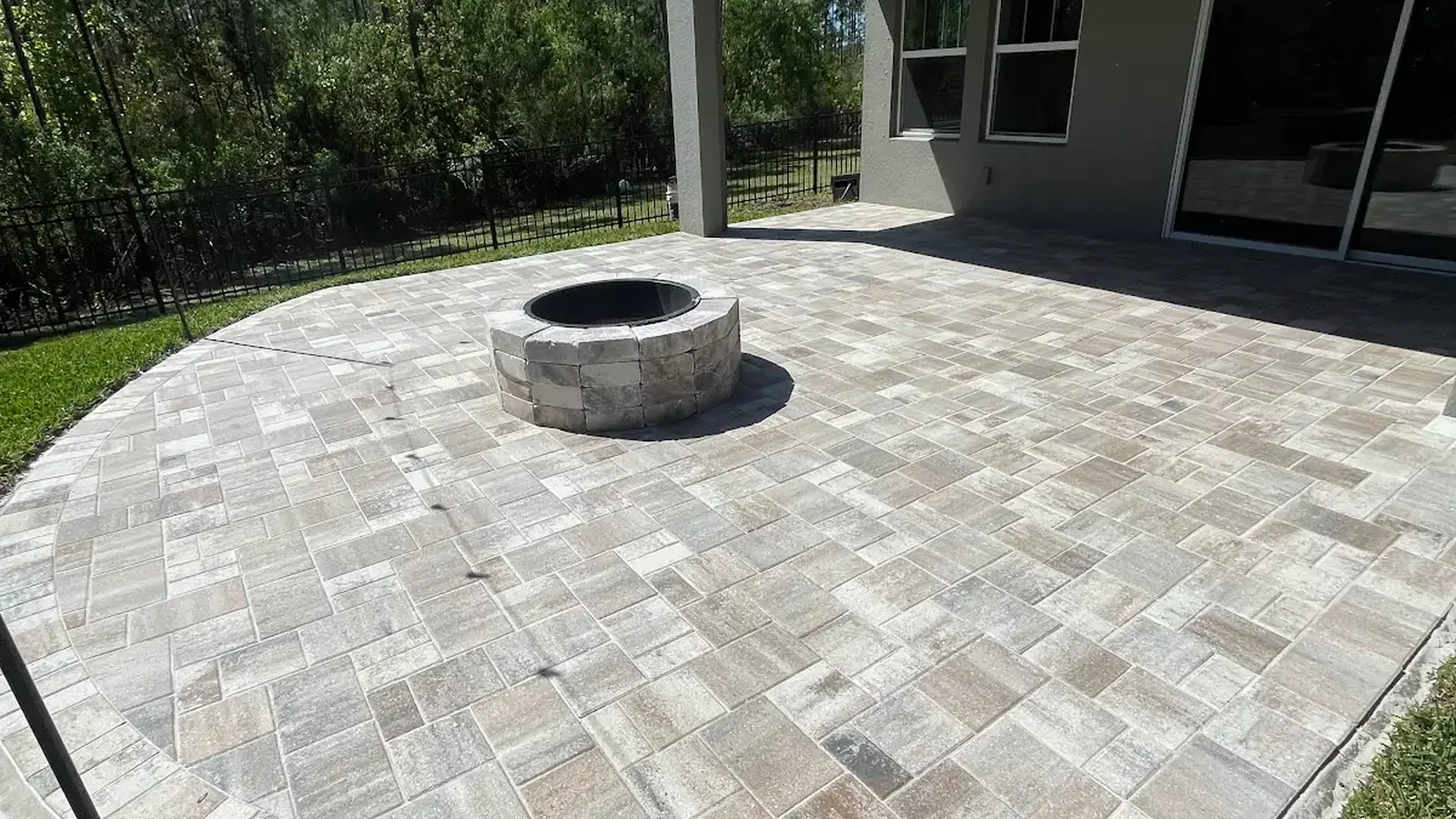
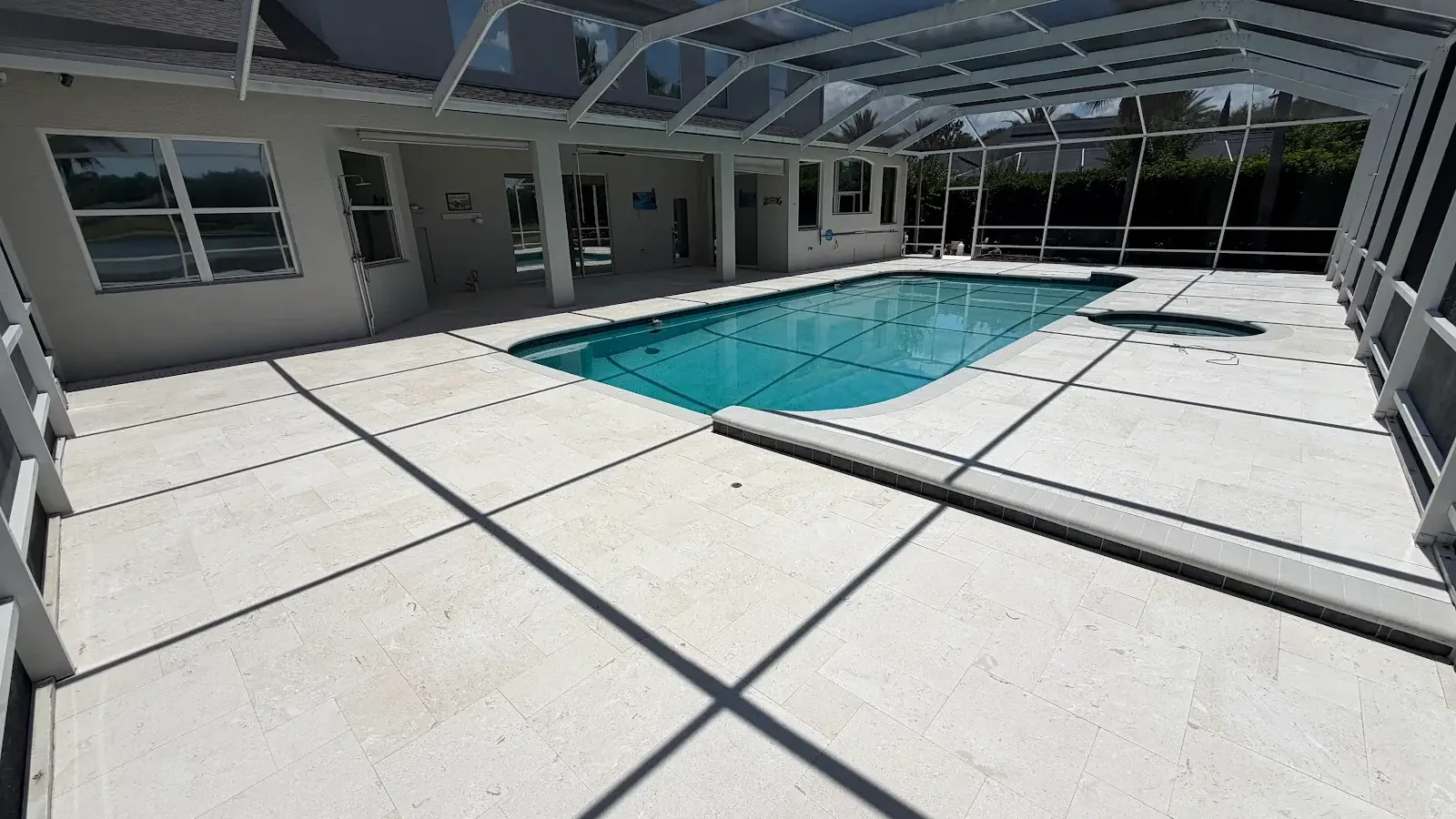
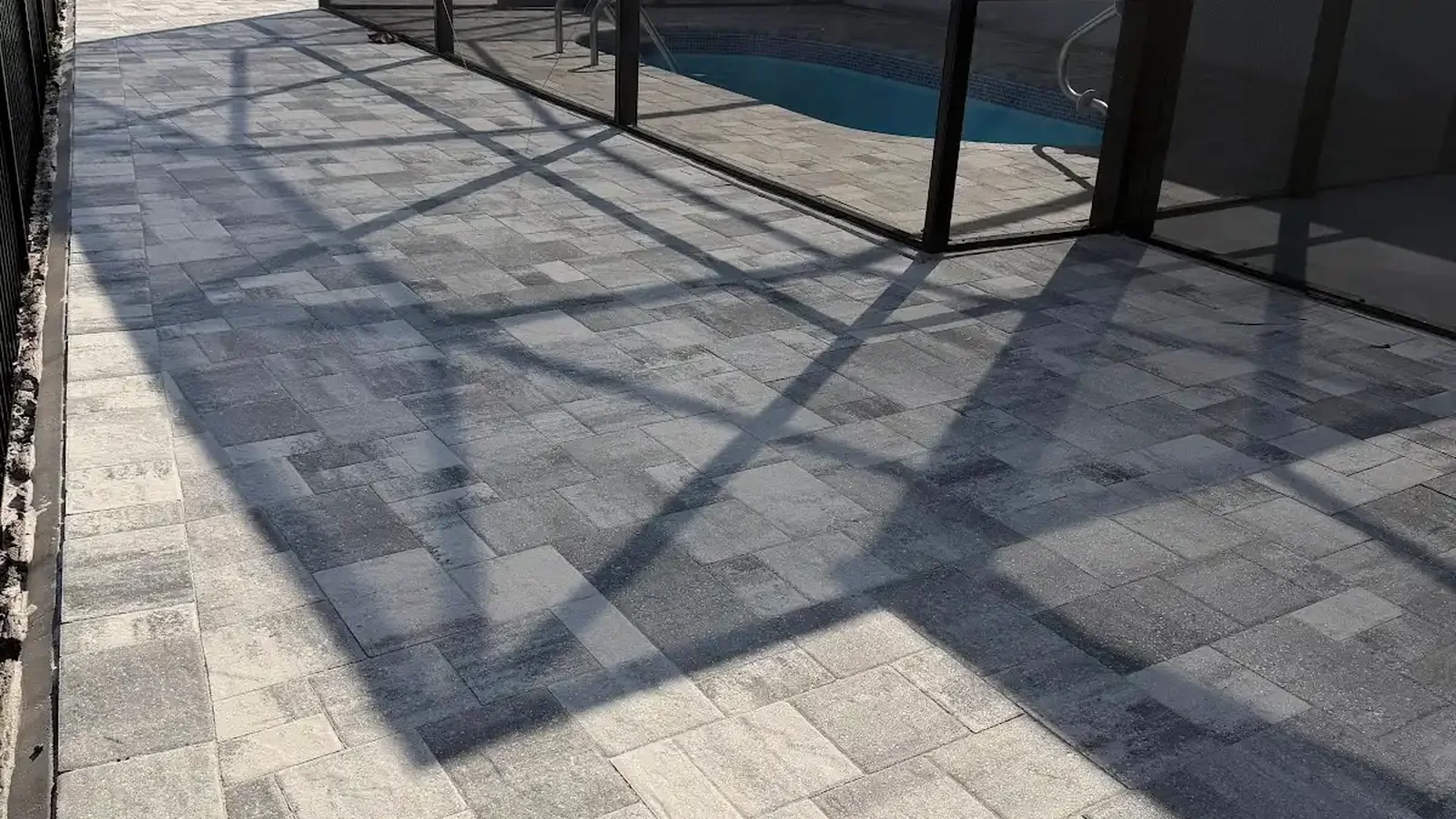
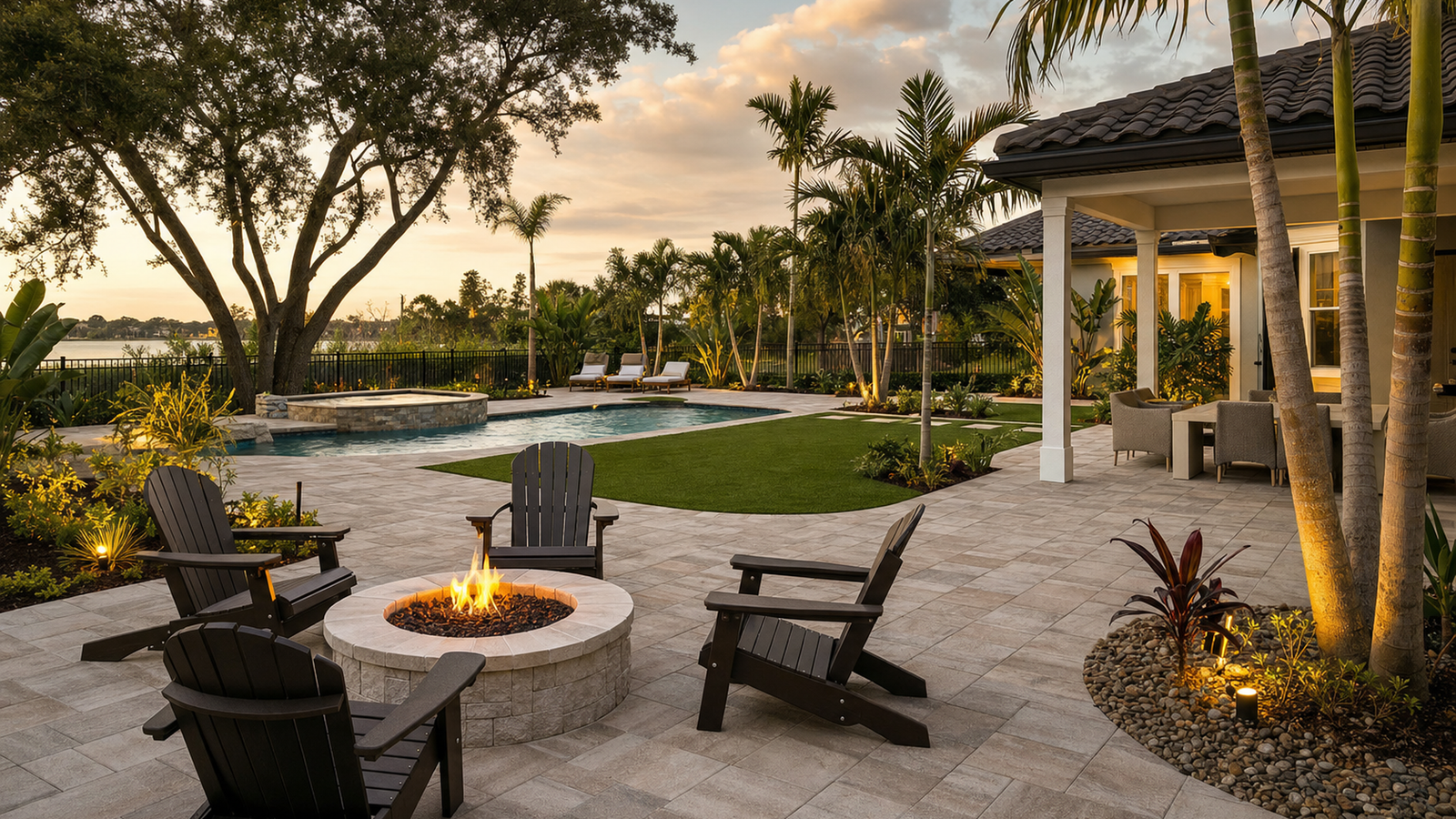
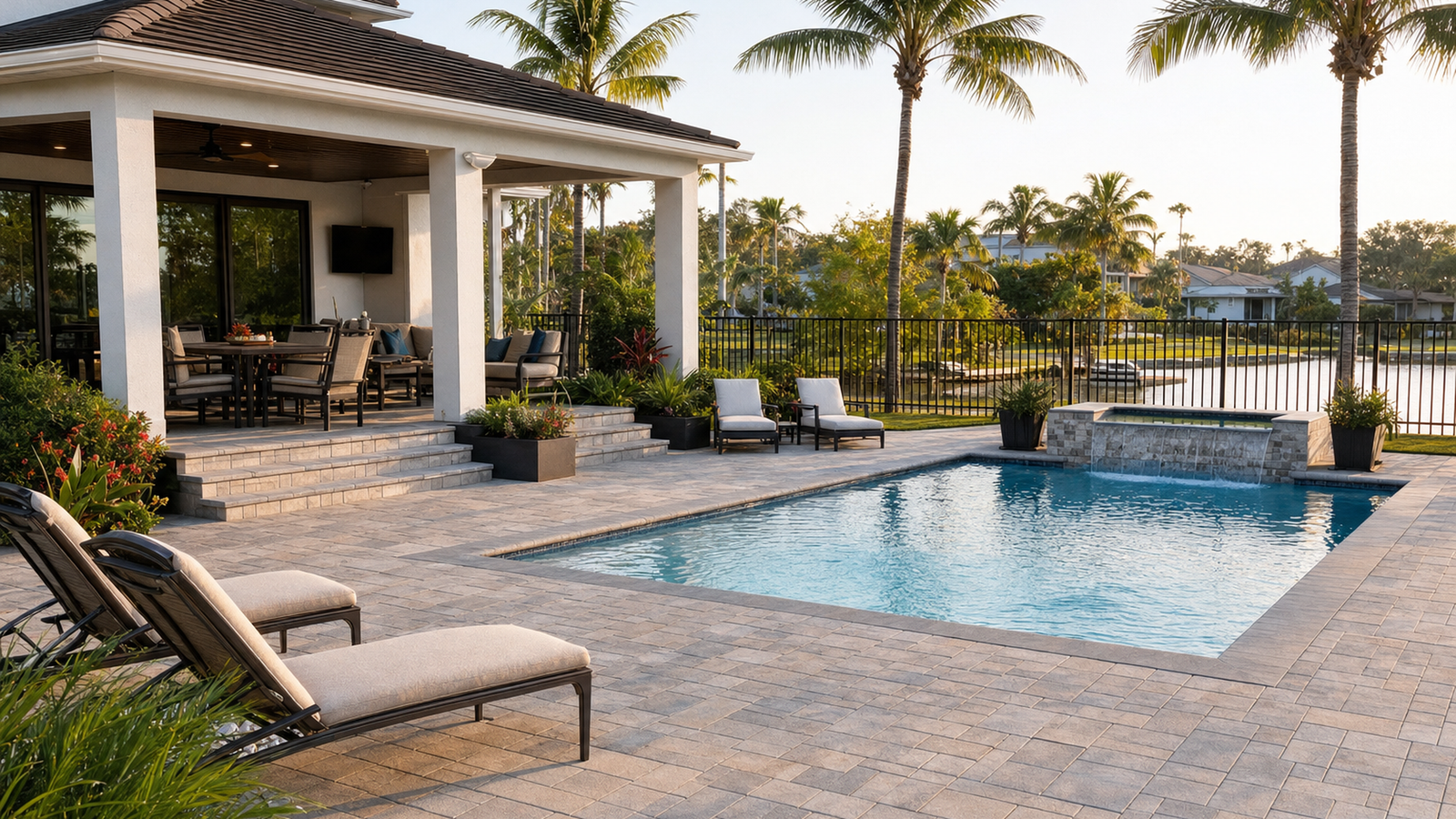
On a larger patio, a soldier course paver border can do more than trace the outer edge. It may outline a dining zone, mark a grill area, or connect a walkway to the main terrace. However, every internal band divides the surface visually, so too many frames can feel busy.
Therefore, use borders where they explain circulation or function. A simple outer course plus one purposeful transition often communicates more than a grid of decorative lines. Meanwhile, furniture dimensions should guide placement. A border running beneath table legs or cutting through a seating group may look arbitrary. Plan the paved composition with likely furniture positions before fixing internal geometry.
Driveway borders must handle real traffic
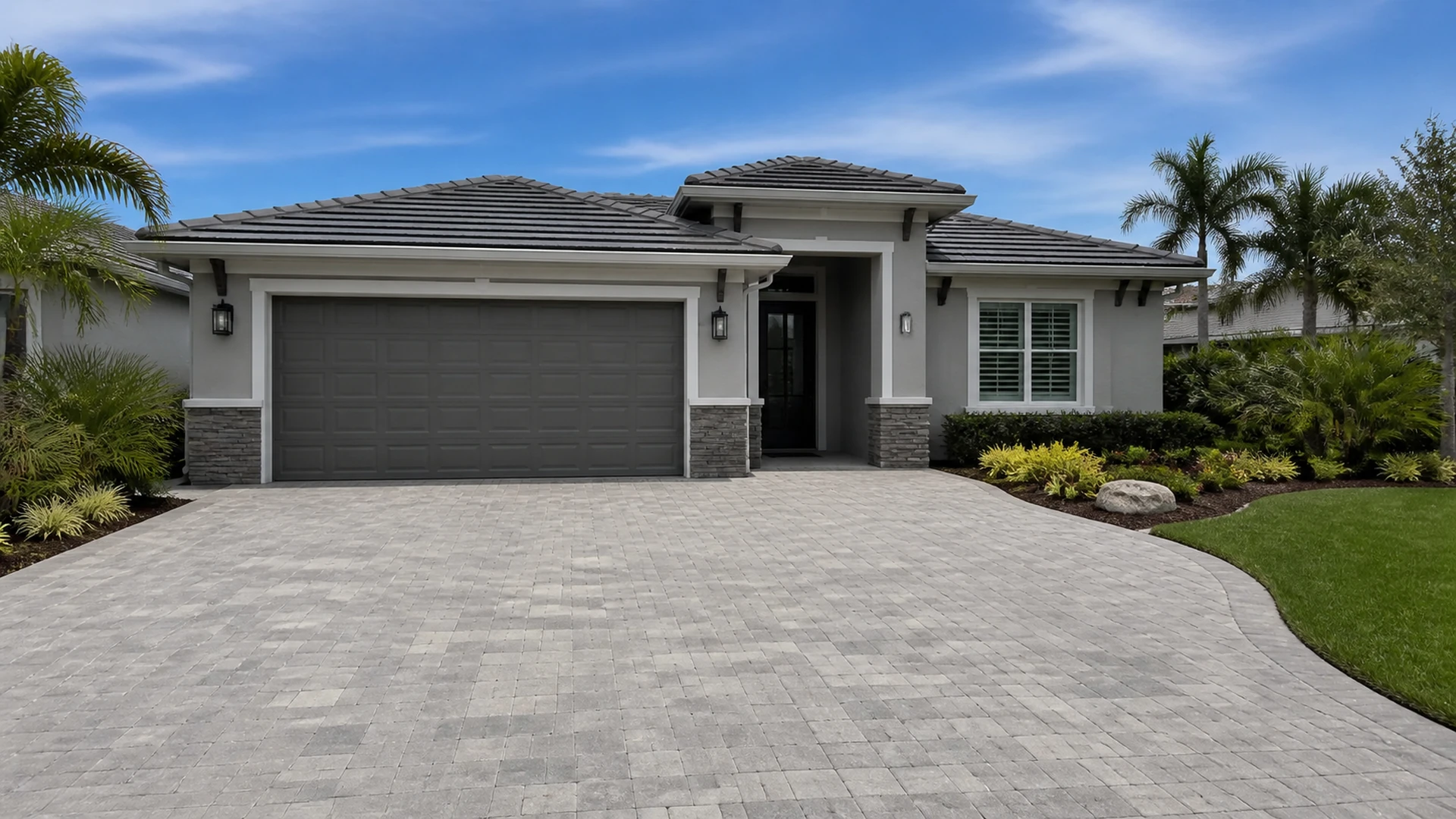
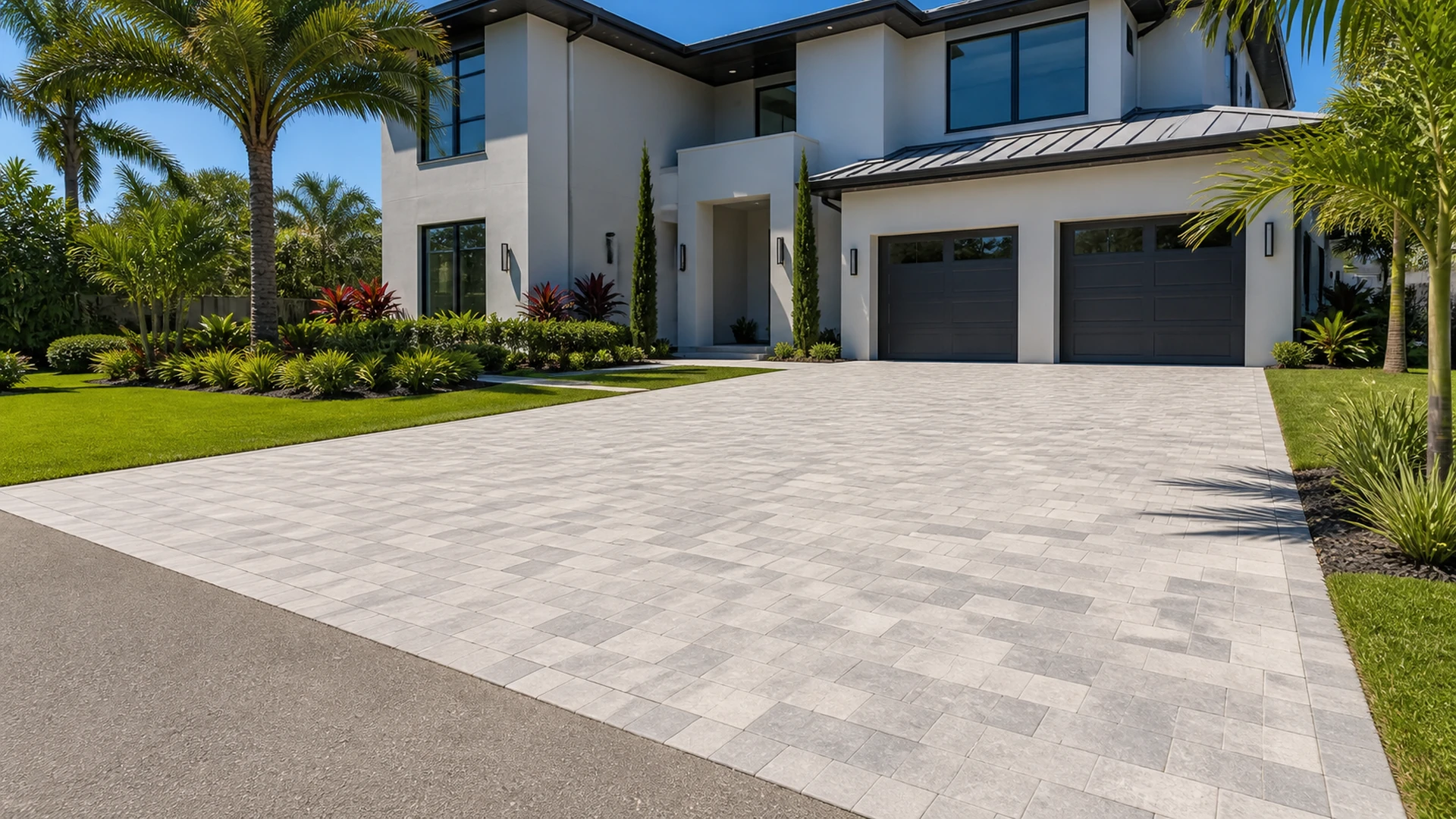
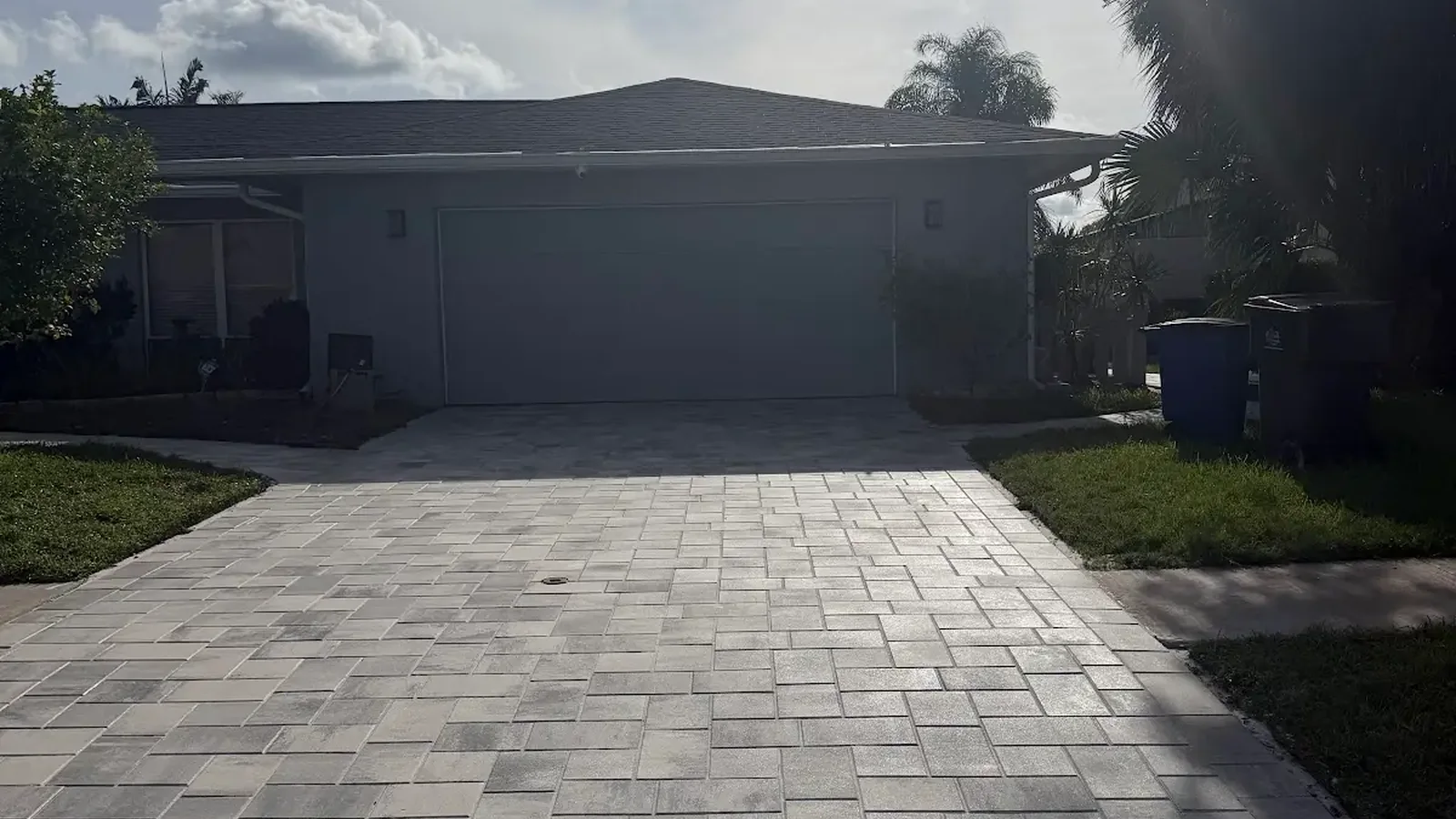
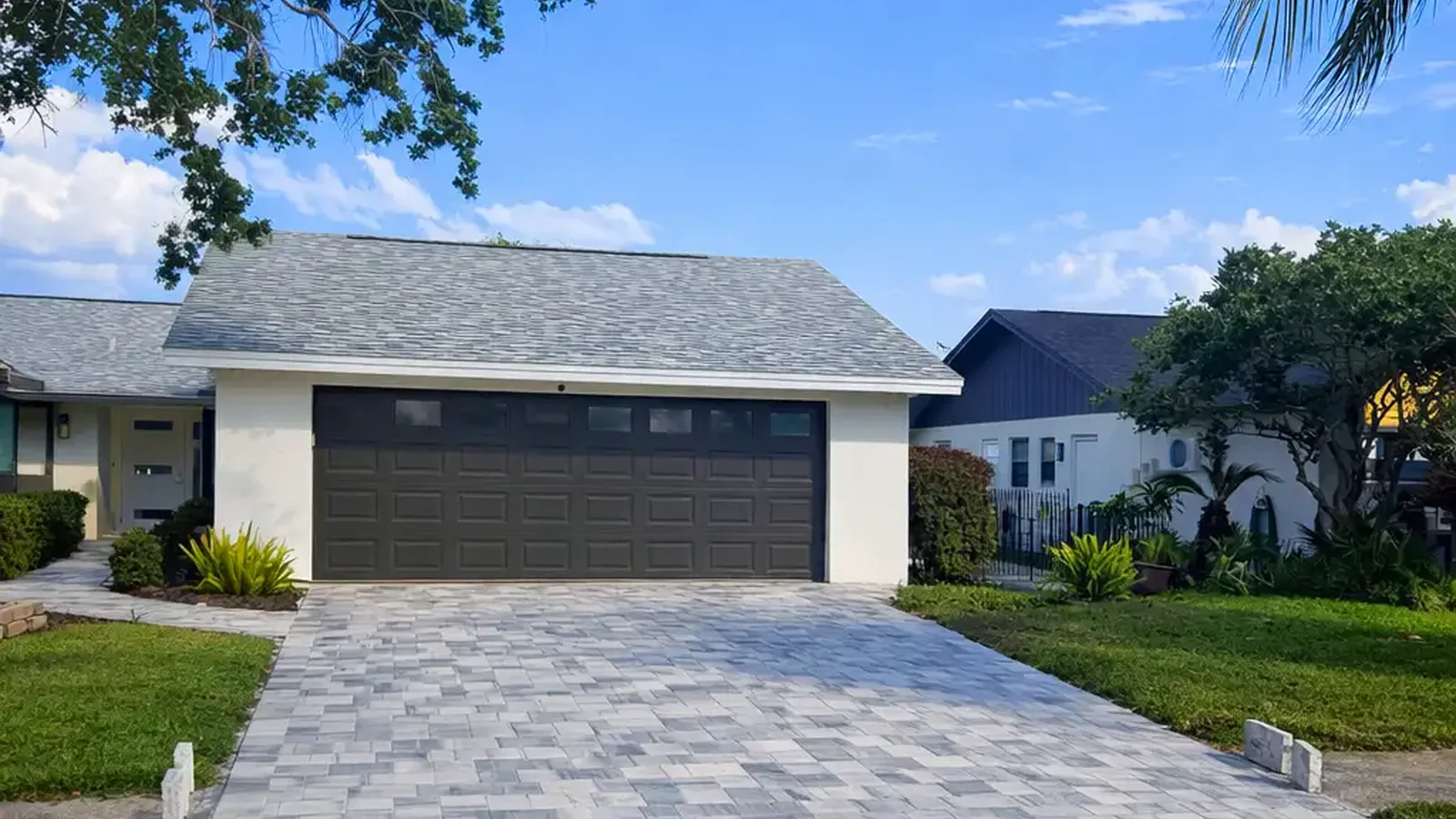
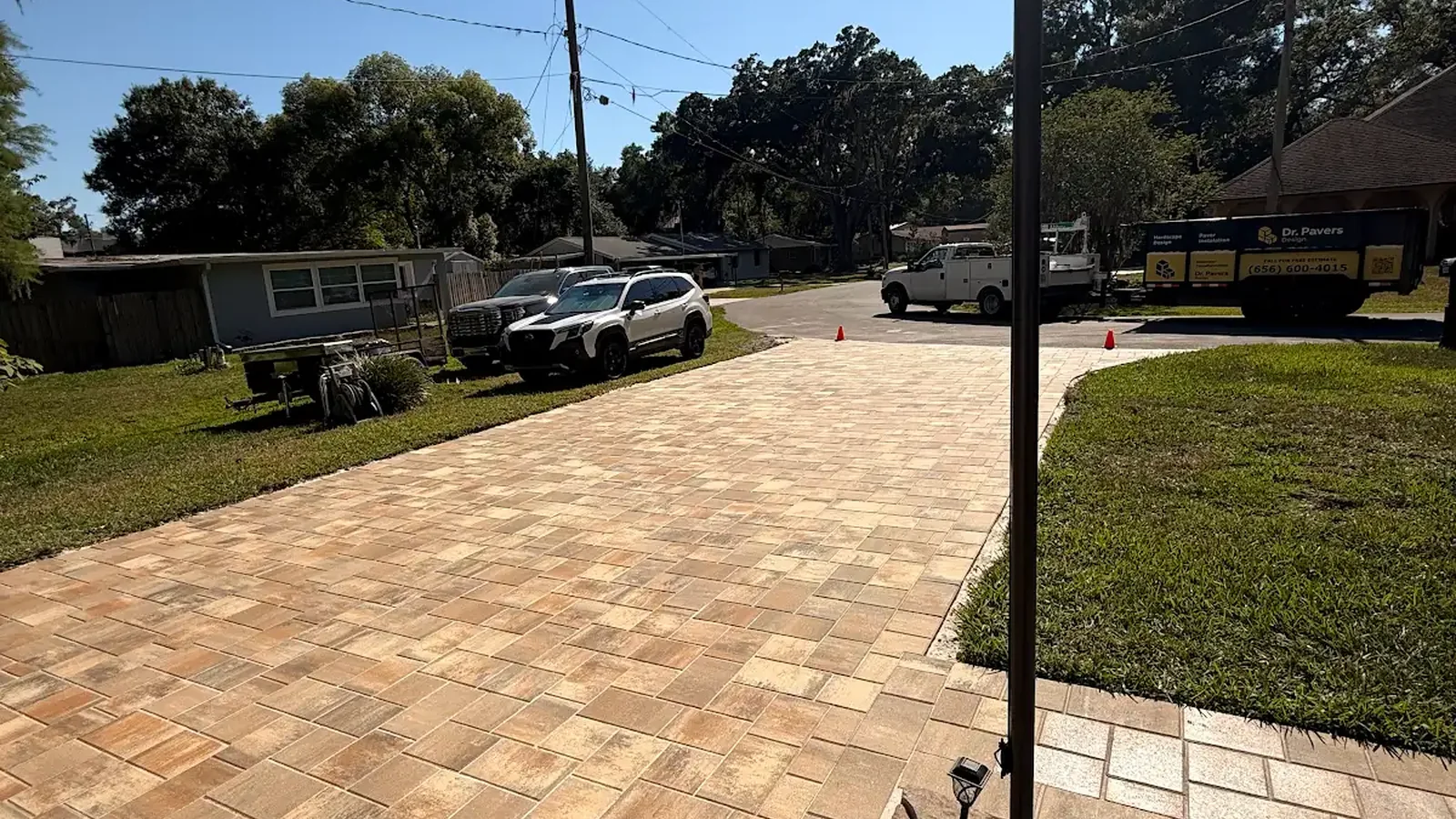
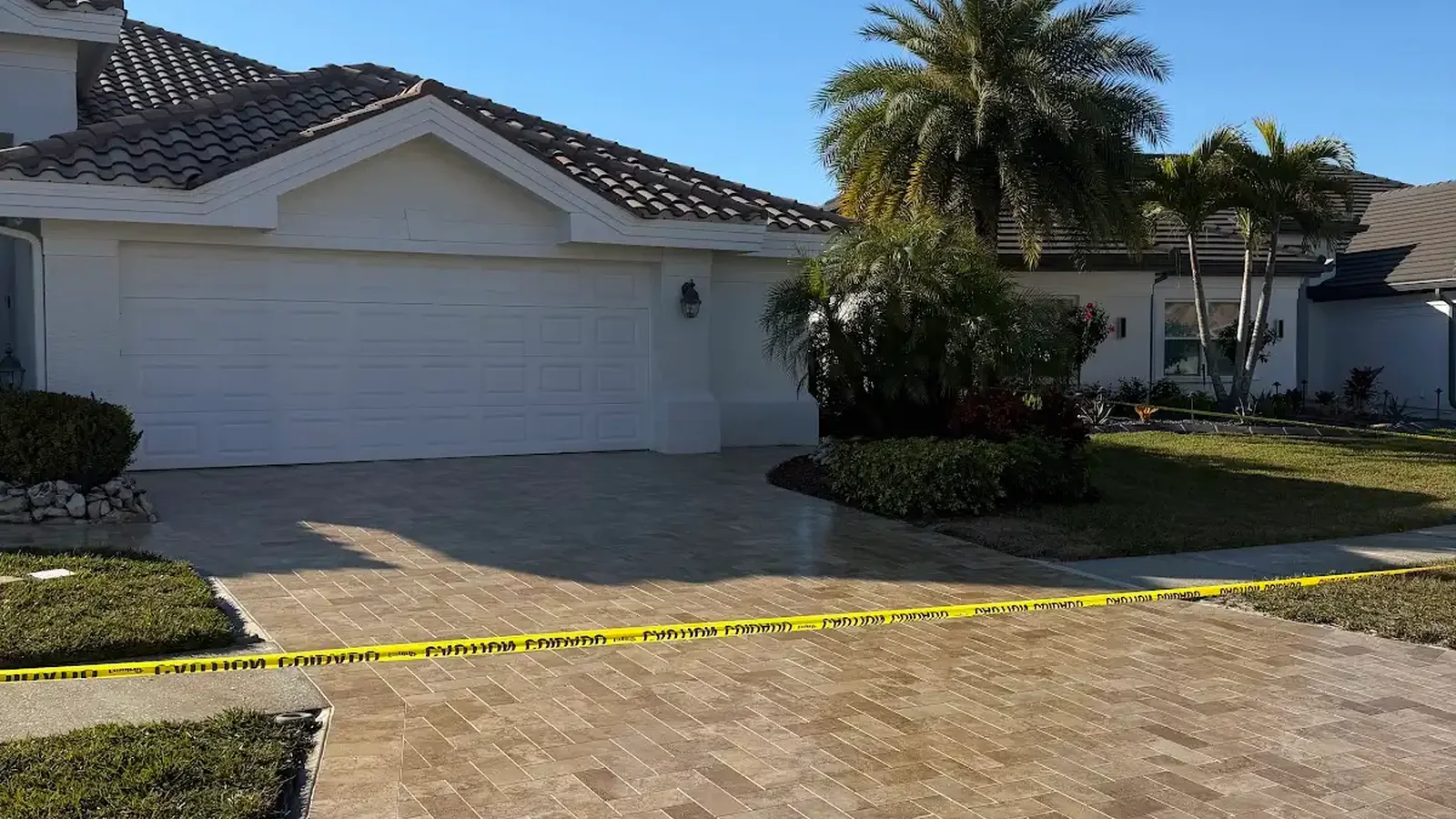
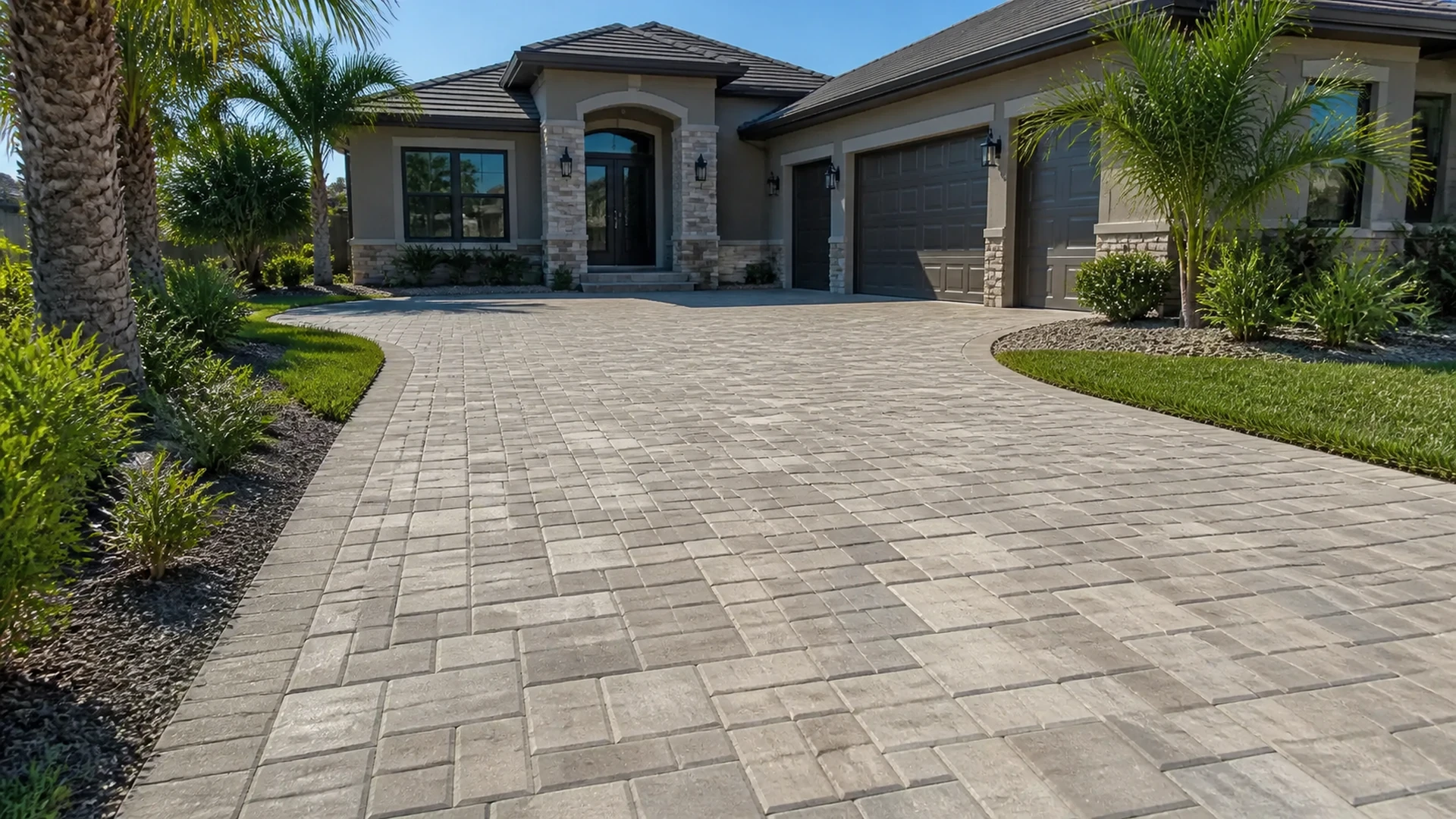
A driveway soldier course paver border is visible under daily turning, parking, and tire loading. Consequently, appearance must be supported by sound edge conditions and installation. The border should follow usable driveway width and avoid creating misleading lines near a tight turn.
At the garage, apron, or sidewalk connection, transitions need careful measurement. Therefore, trace common vehicle paths before adding decorative offsets. A sweeping visual line may look appealing on paper but create awkward cuts or conflict with functional clearance. Likewise, the design should respect existing drainage grades and adjacent surfaces. The frame succeeds when it looks intentional without compromising how vehicles enter and leave.
Patios benefit from clean thresholds
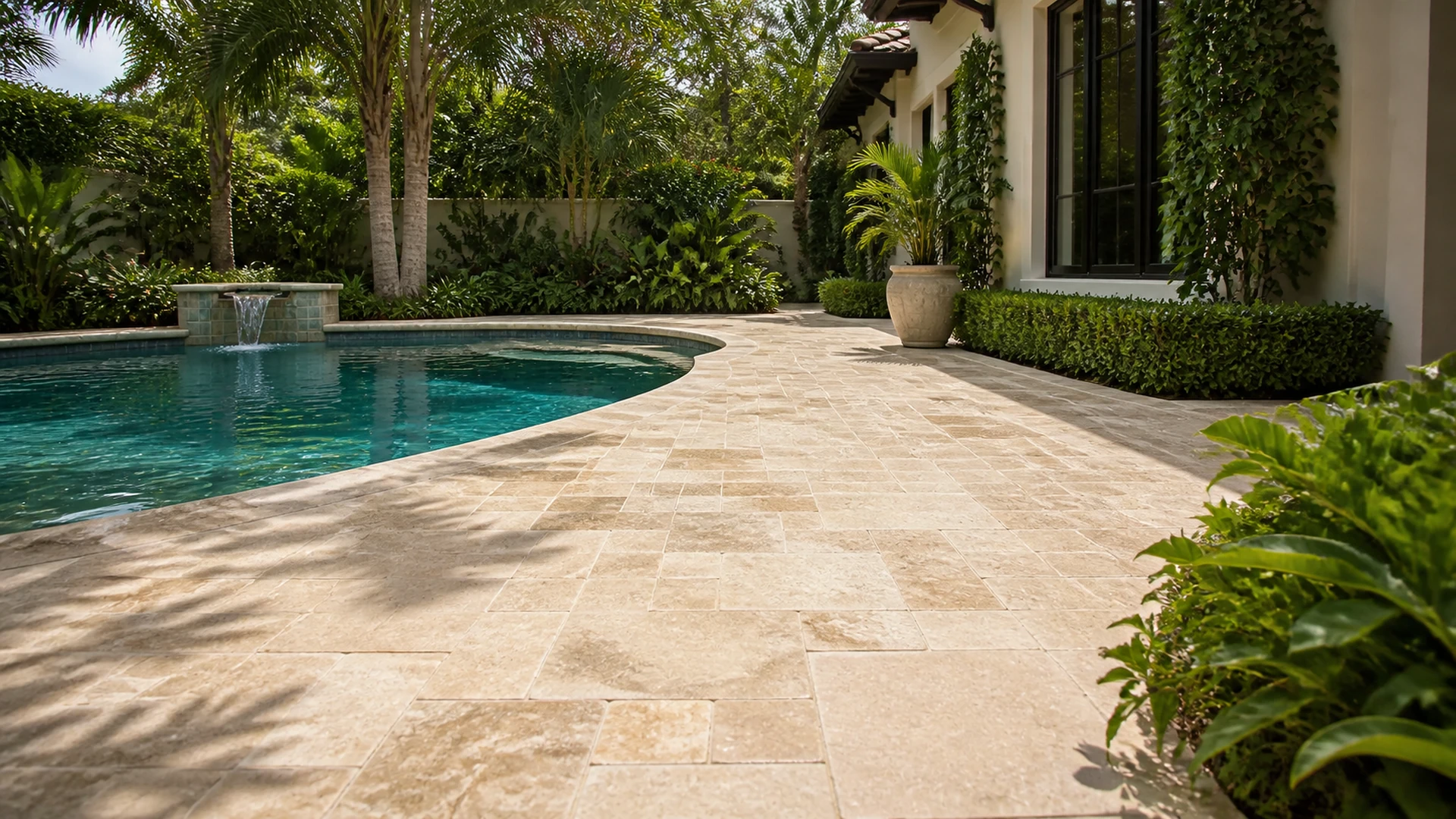
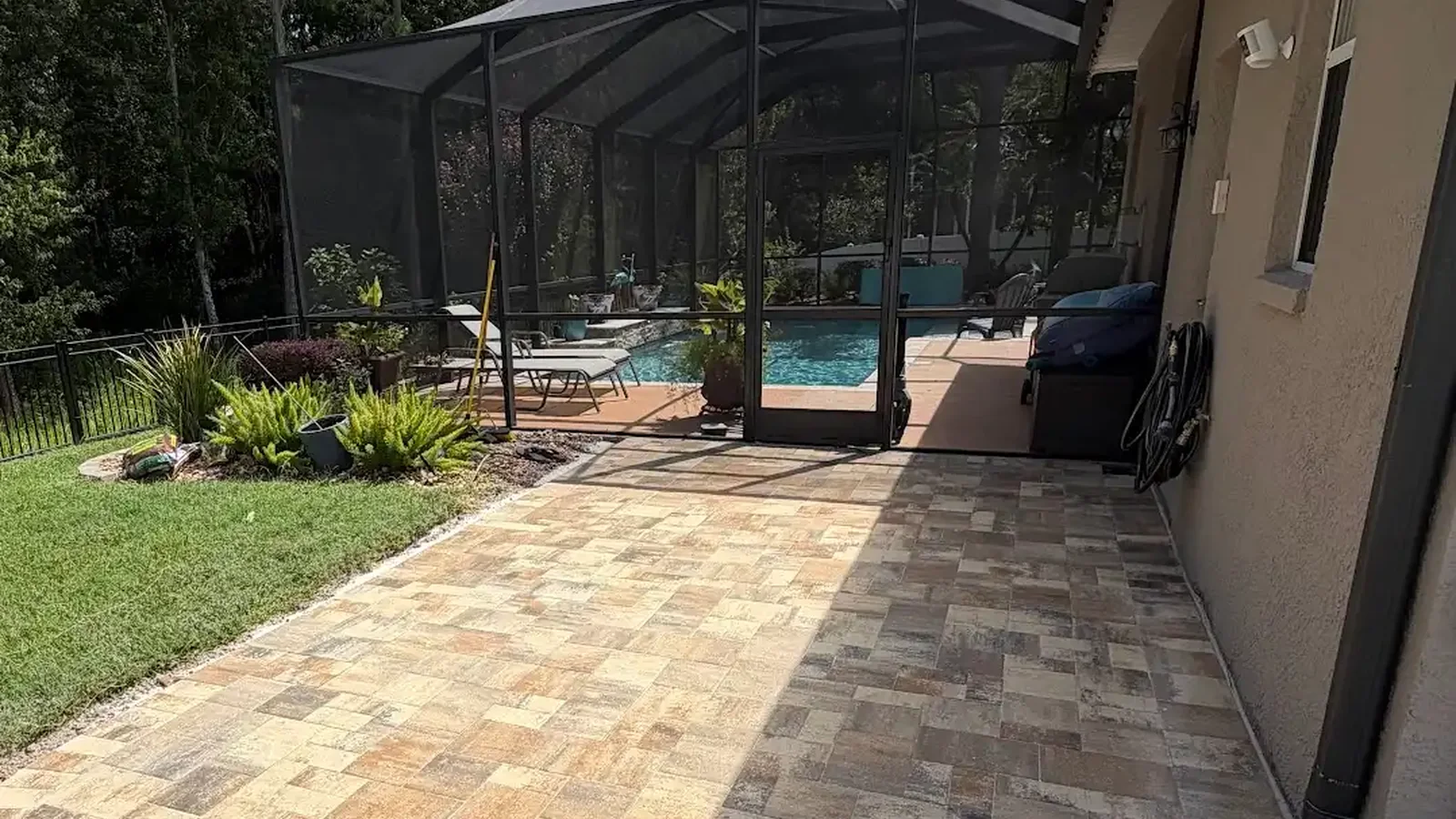
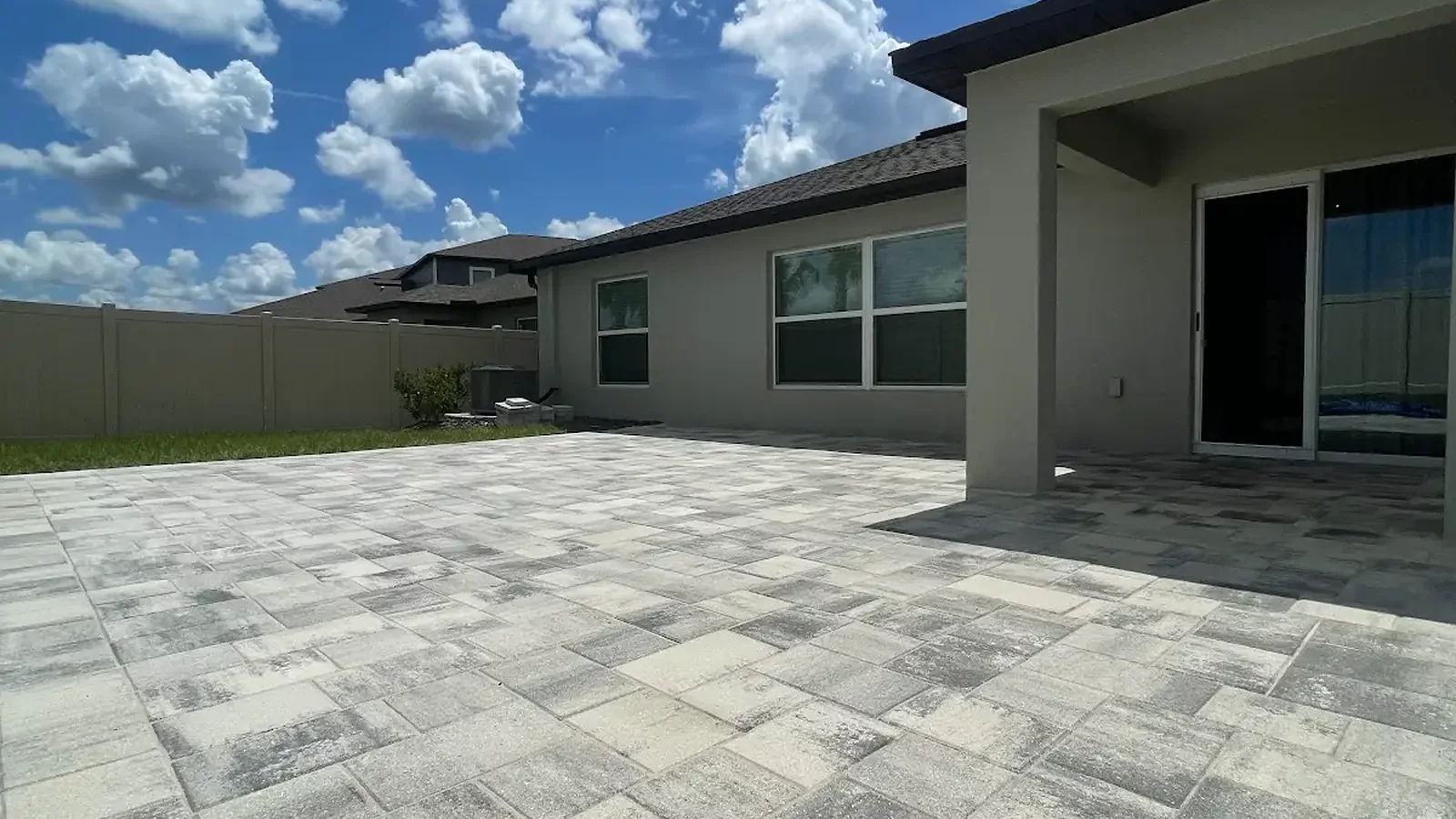
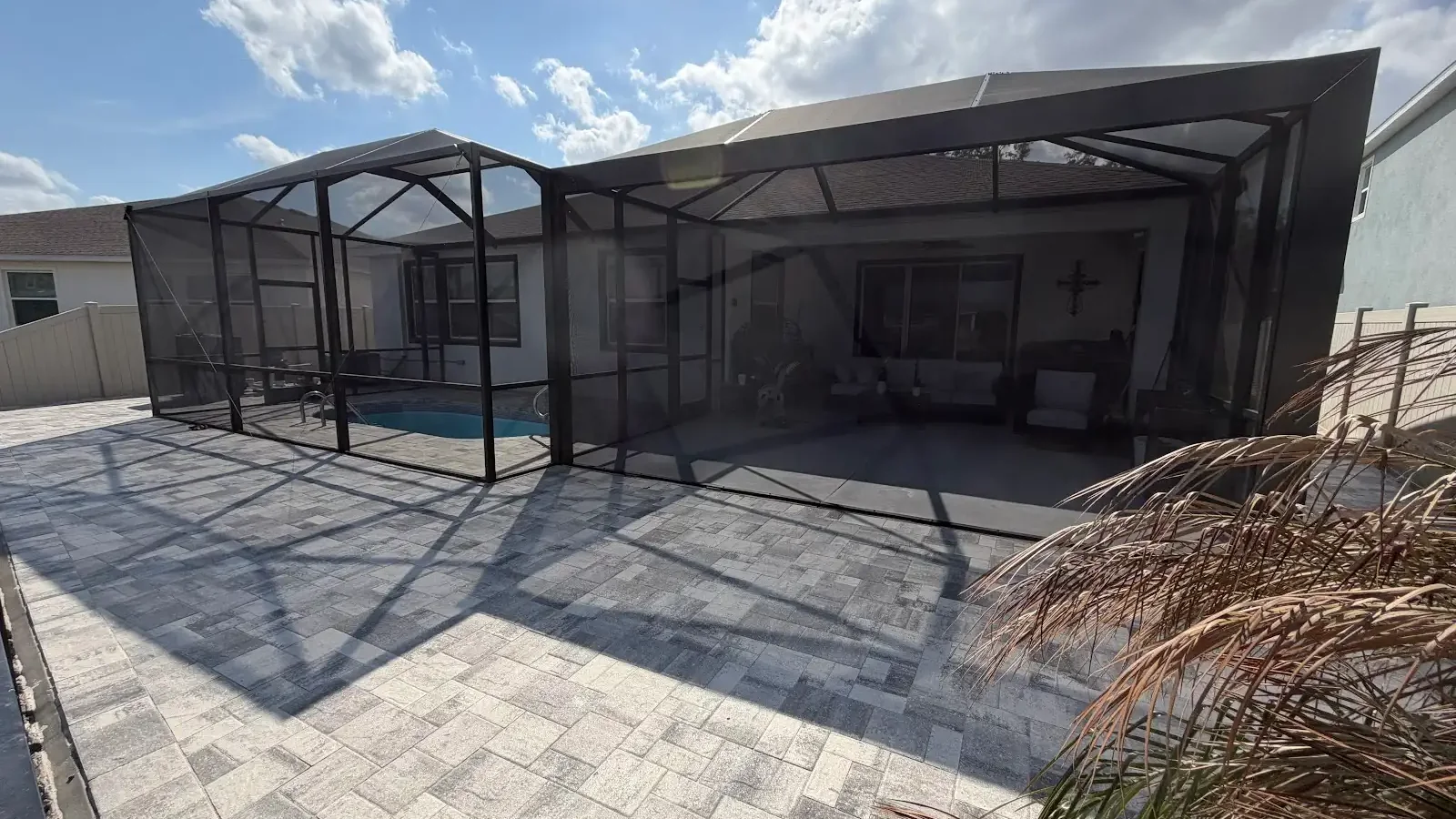
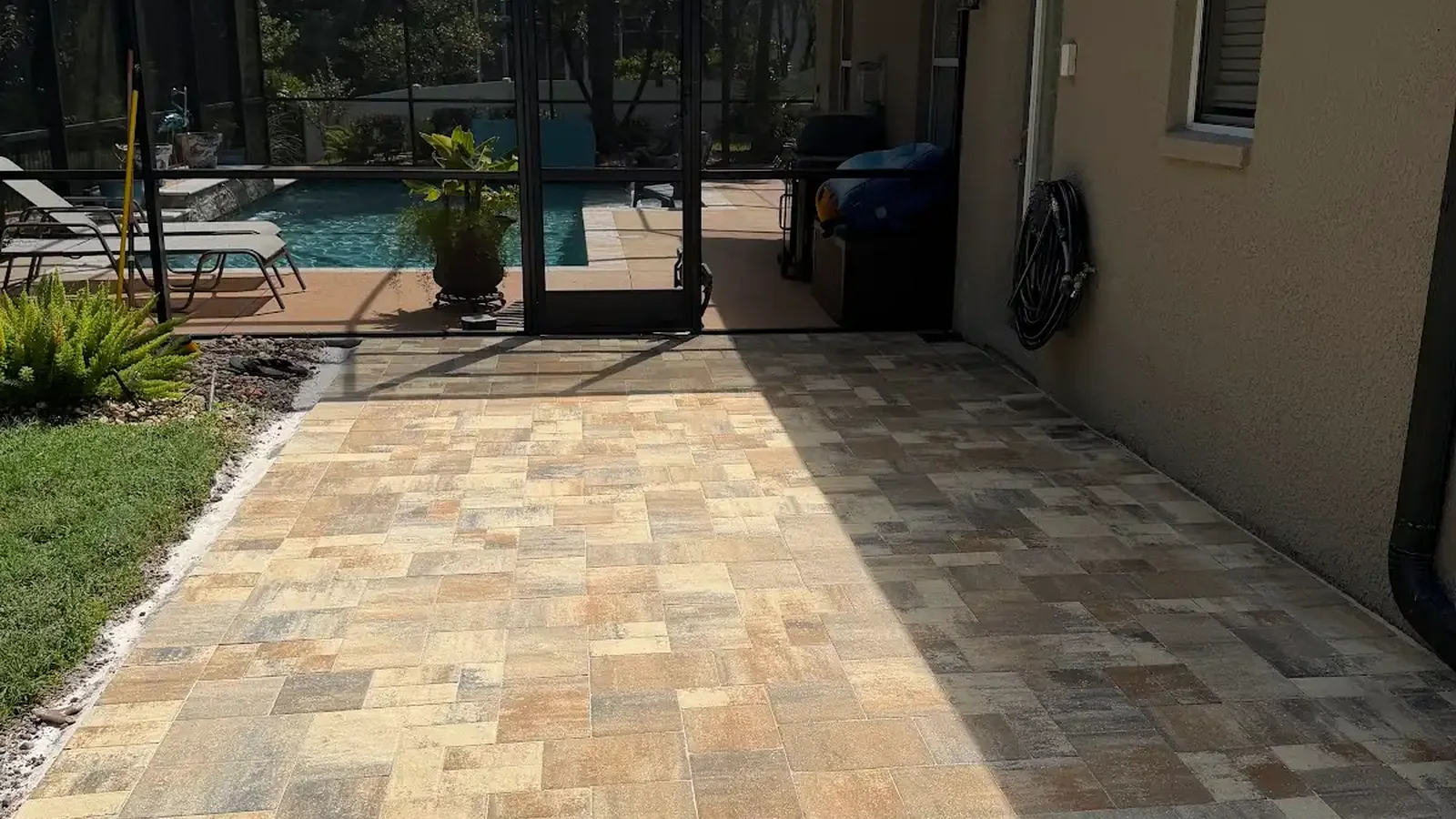
Afterward, For a patio, a soldier course paver border can clarify the transition from the house to the outdoor living area. It may align with a door opening, column, step, or screen enclosure line. As a result, the first view from inside feels connected to the paved geometry.
However, borders that miss architectural anchors by a small amount can make an otherwise careful layout appear off-center. Therefore, measure from finished walls and visible openings, not only from rough landscape edges. Where the patio expands around a corner, decide which line leads. A clear hierarchy helps the border turn naturally and keeps furniture zones from feeling squeezed by the perimeter.
Walkways need comfortable proportions
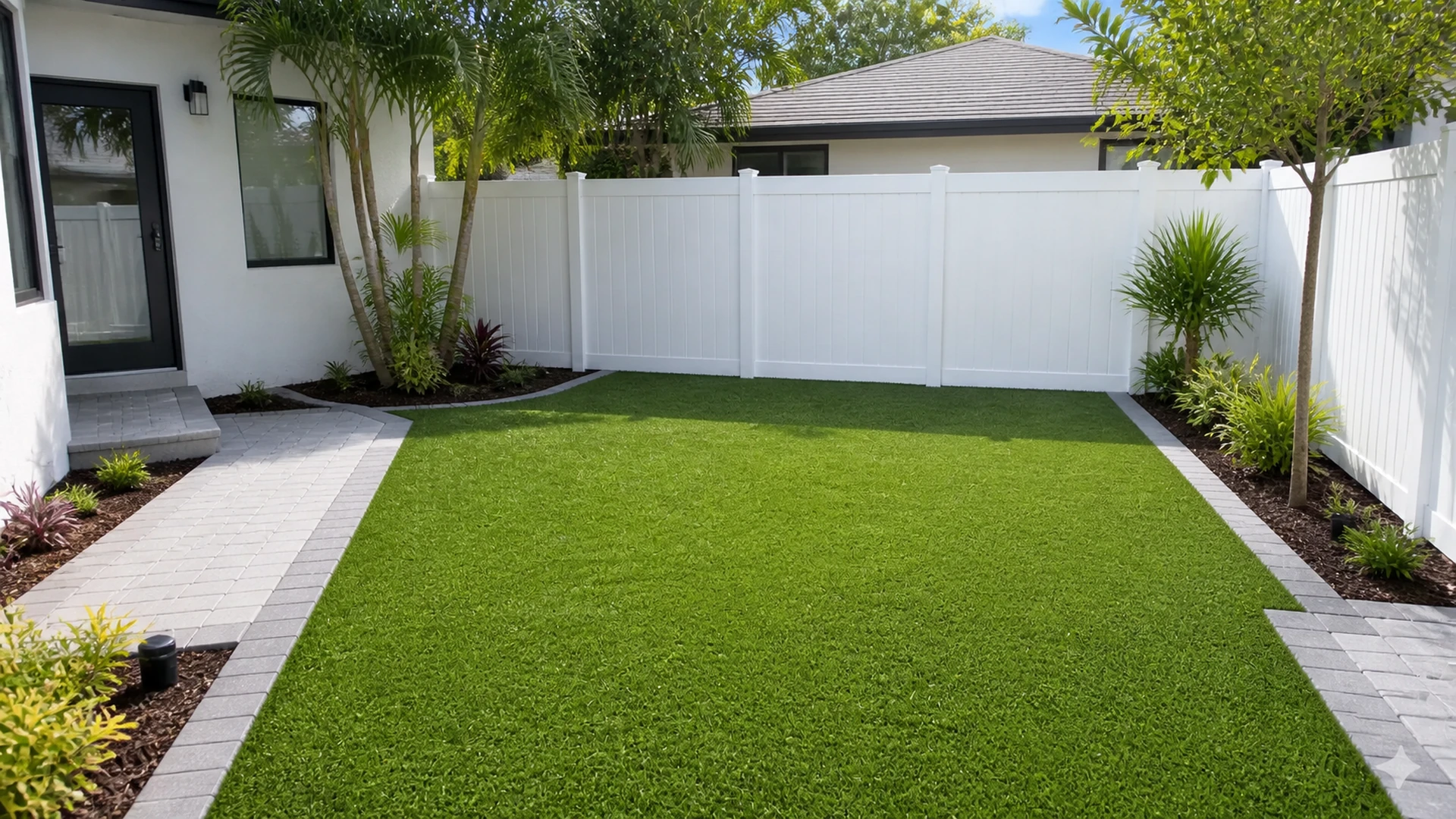
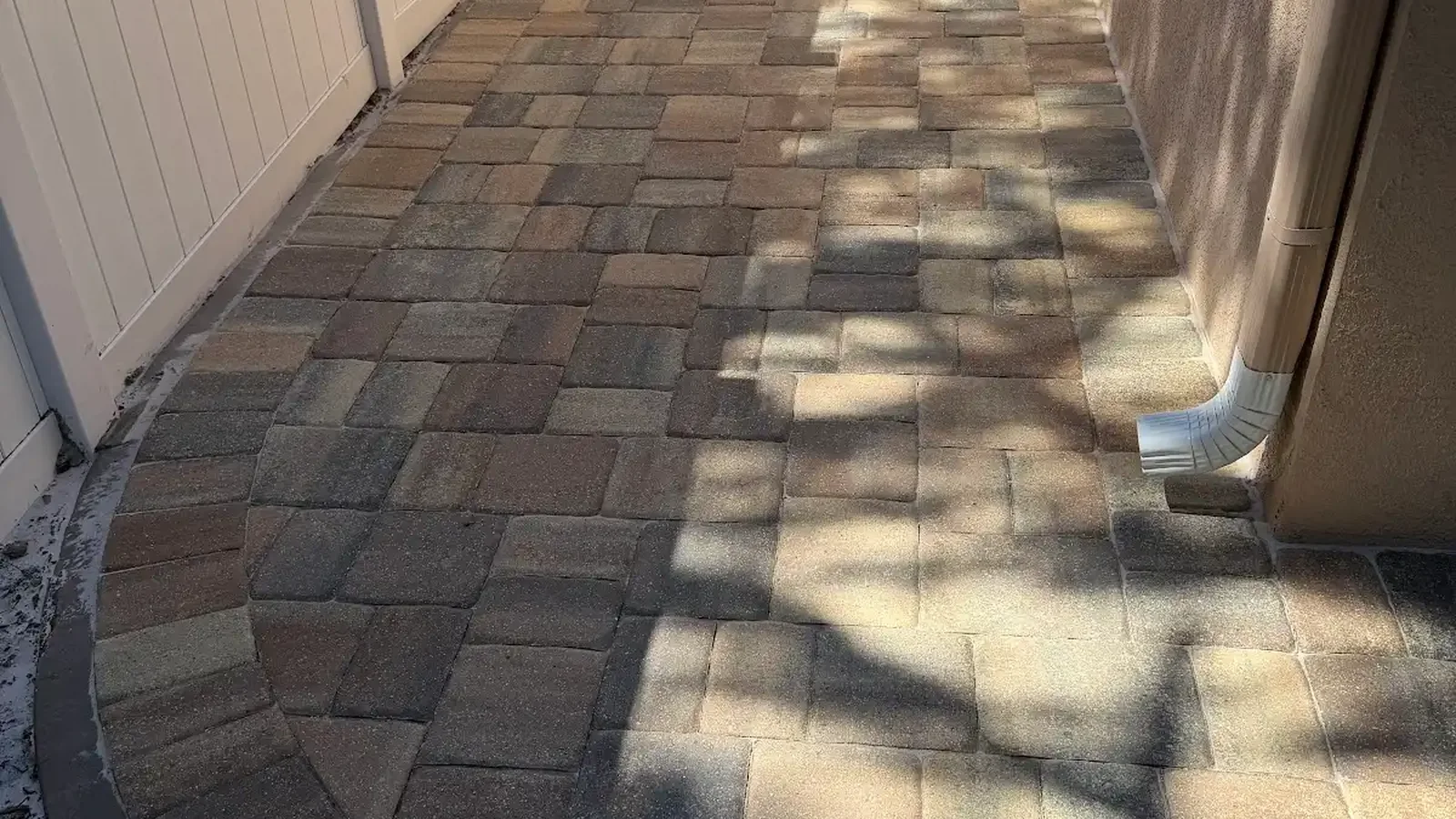
Additionally, Along a walkway, a soldier course paver border reduces the width available to the field, so dimensions must be planned together. If the path is already narrow, a high-contrast band on both sides can make it feel tighter. Conversely, a tonal border can define the edge without dominating the walking zone.
Therefore, set the finished path width first and test the remaining field module. This helps avoid thin center cuts or inconsistent joints. At intersections, the border may continue, stop, or form a threshold. Each choice communicates direction. A deliberate junction makes it easier to read the path from the driveway, gate, or patio.
Curves require a cut strategy
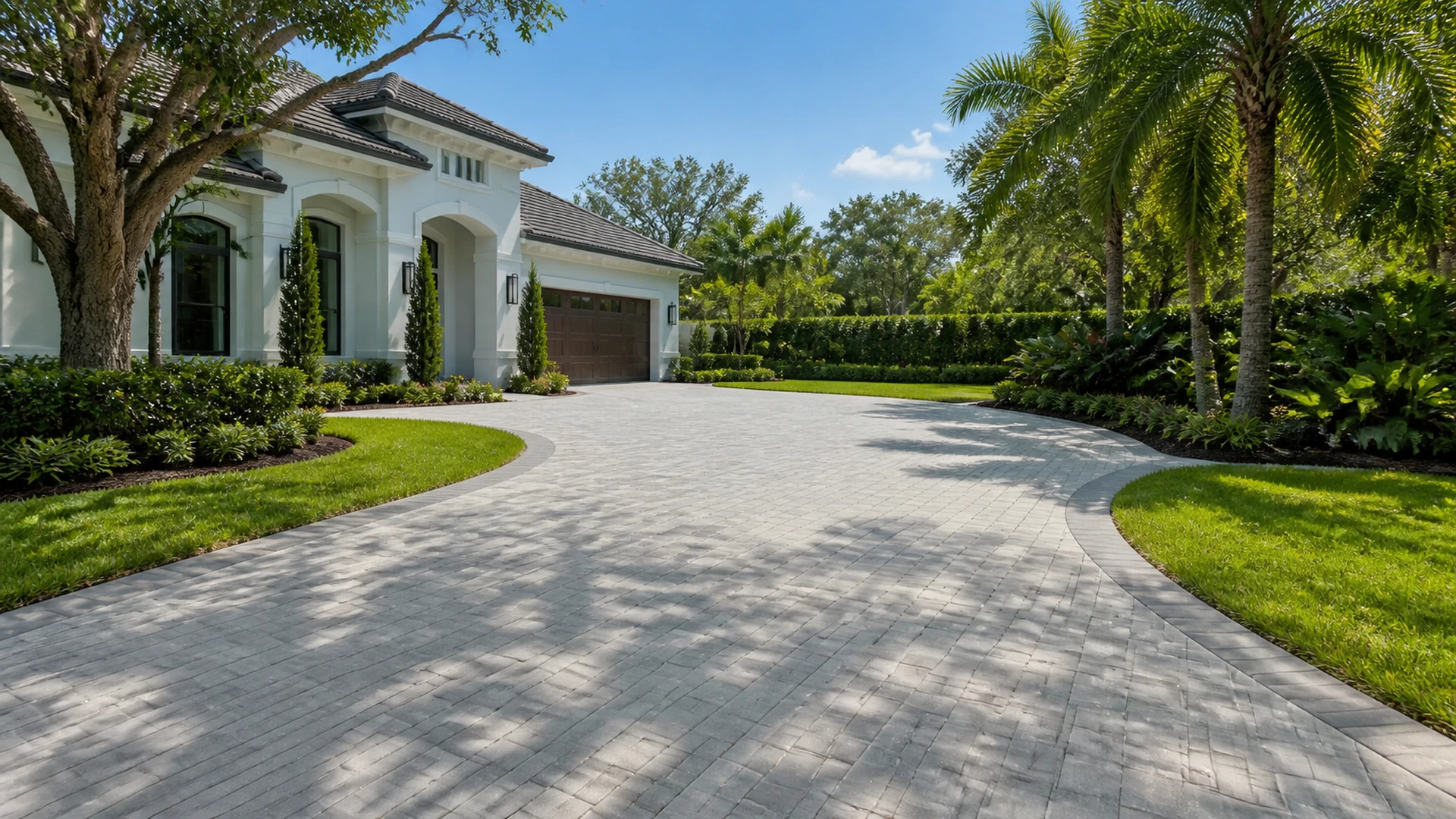
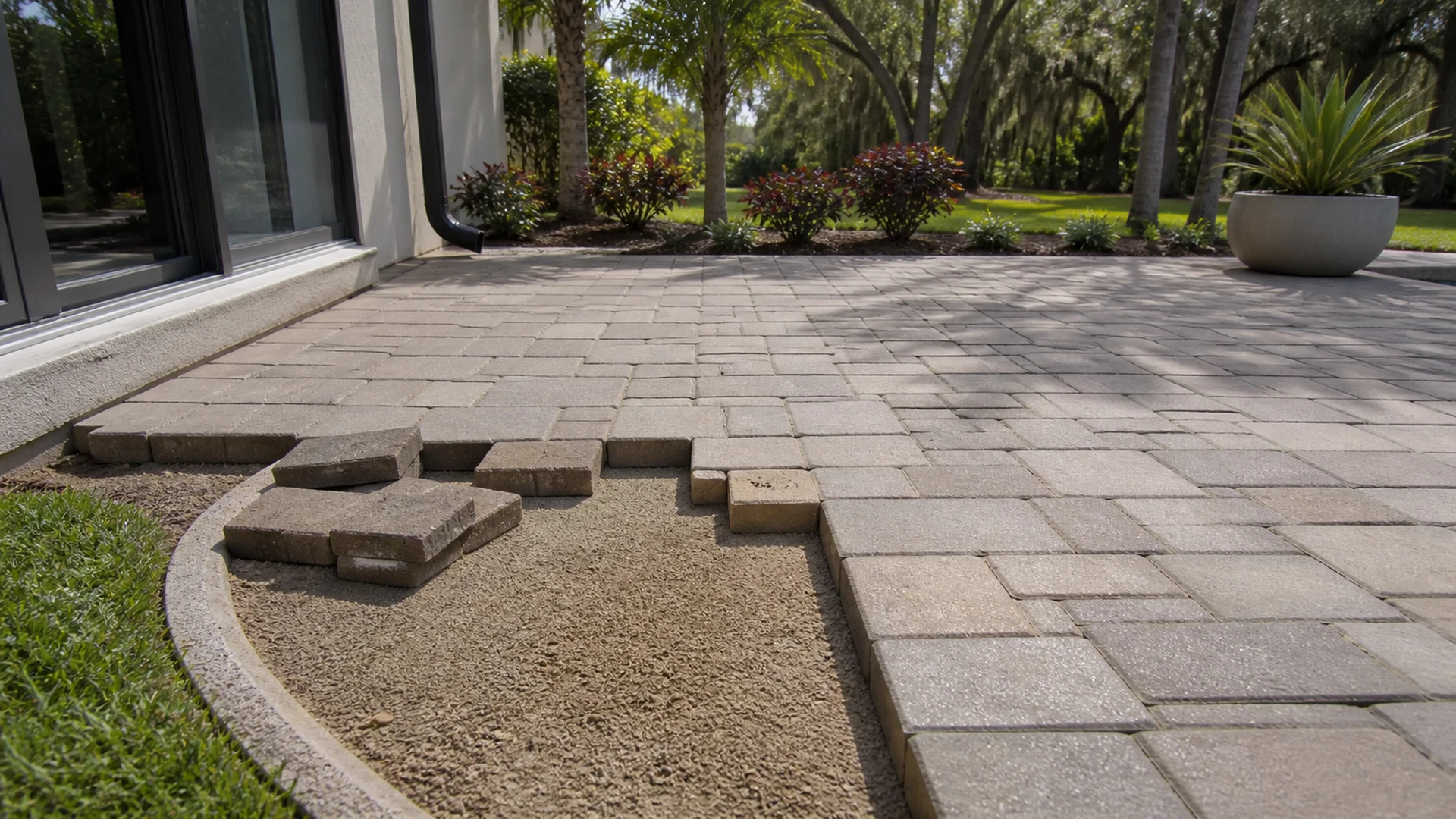
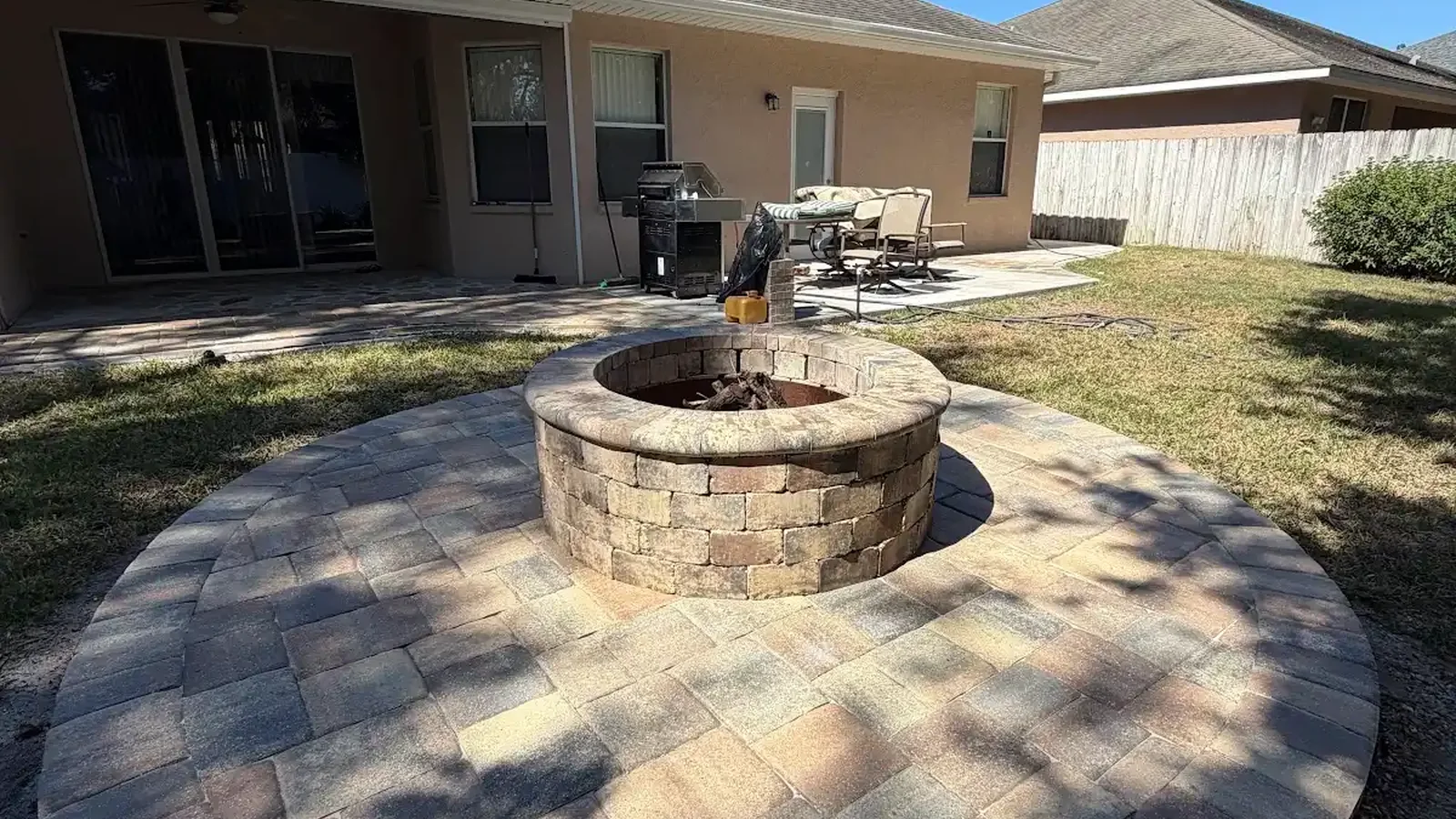
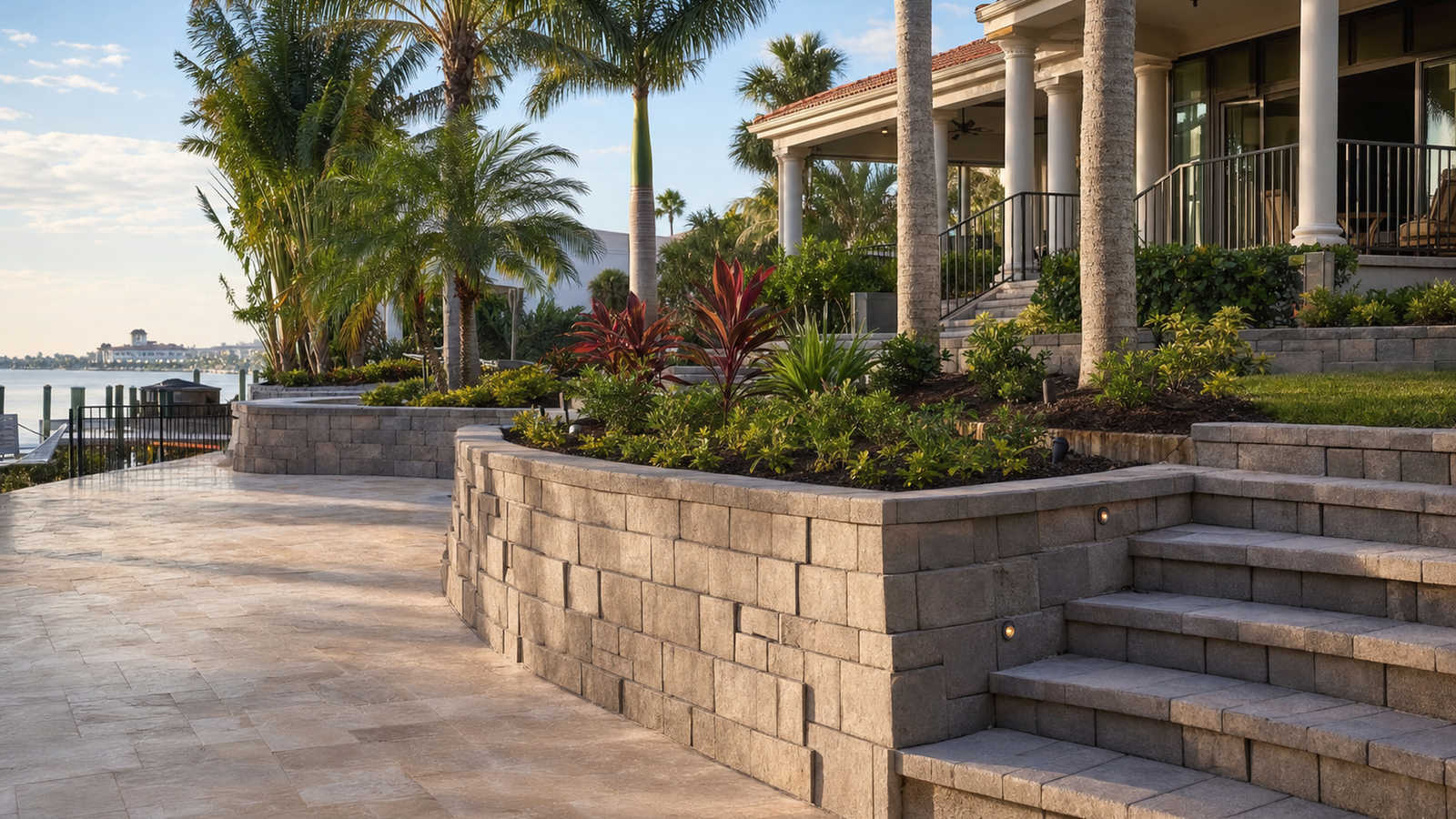
A curved soldier course paver border introduces tapered joints or shaped cuts because straight rectangular units must follow an arc. Gentle curves can often maintain a smooth visual flow, while tight radii demand more planning. However, simply widening joints around the outside of a curve may create an uneven fan.
Therefore, review unit size, radius, and acceptable cuts before setting the line. The most visible curve should receive the cleanest distribution. A contractor may adjust the arc slightly to improve repeatability without changing its purpose. Meanwhile, adjacent field cuts should support the curve rather than fight it. Good geometry makes the finished arc feel continuous from normal viewing distance.
Corners and terminations reveal craftsmanship
Consequently, Every soldier course paver border eventually turns, stops, or meets another material. Those moments attract attention because the regular rhythm changes. At a square corner, the design may use a deliberate meeting detail rather than an accidental overlap.
At a gate or step, the course can terminate on a clear line. Therefore, ask to see how corners, curves, drains, and utility covers will be handled. Small drawings or a dry layout can settle these choices before permanent work. In addition, avoid tiny isolated pieces at high-traffic edges when the layout can shift. A strong termination makes the entire border appear more considered.
Installation starts with a stable paving system
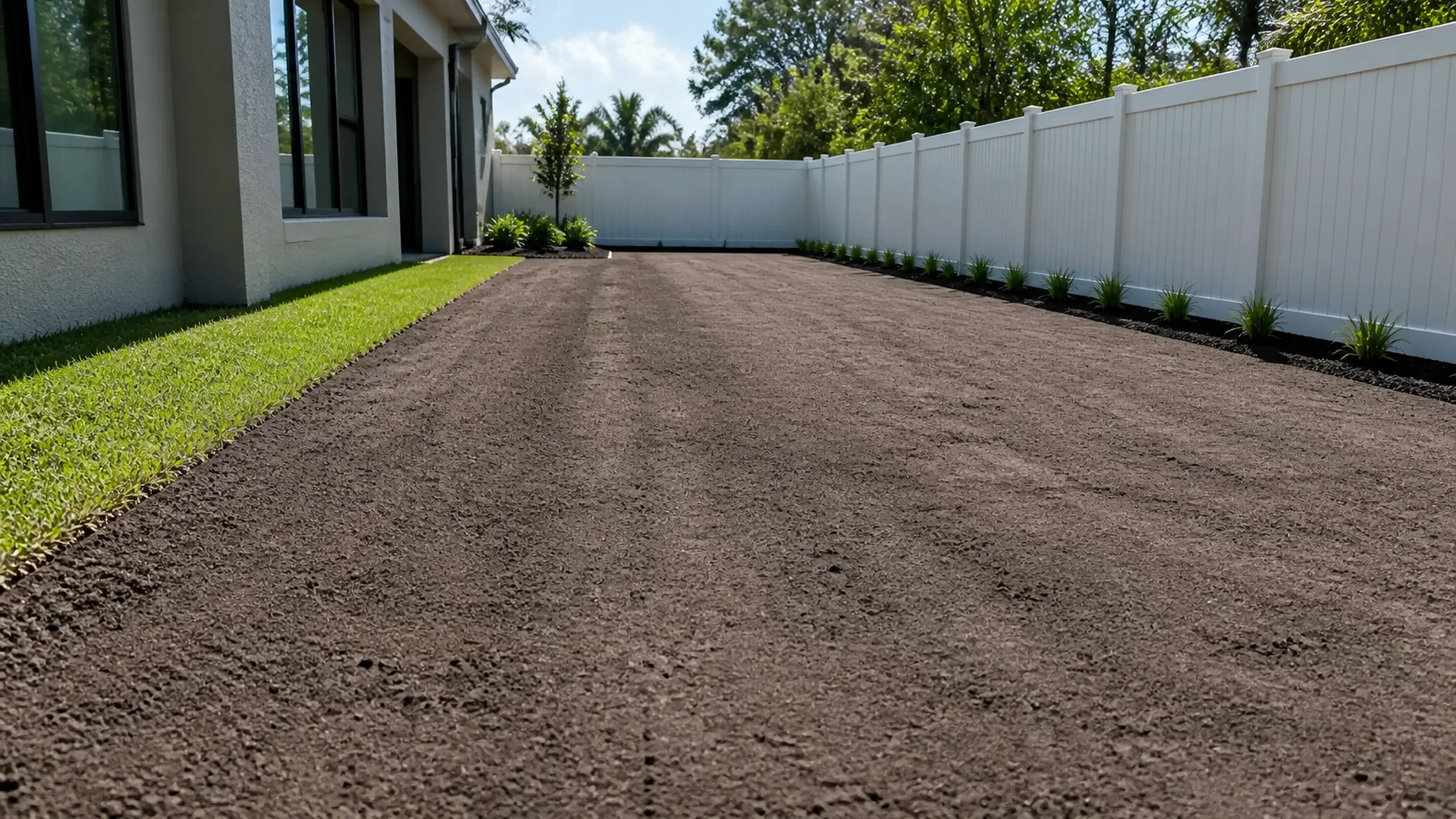
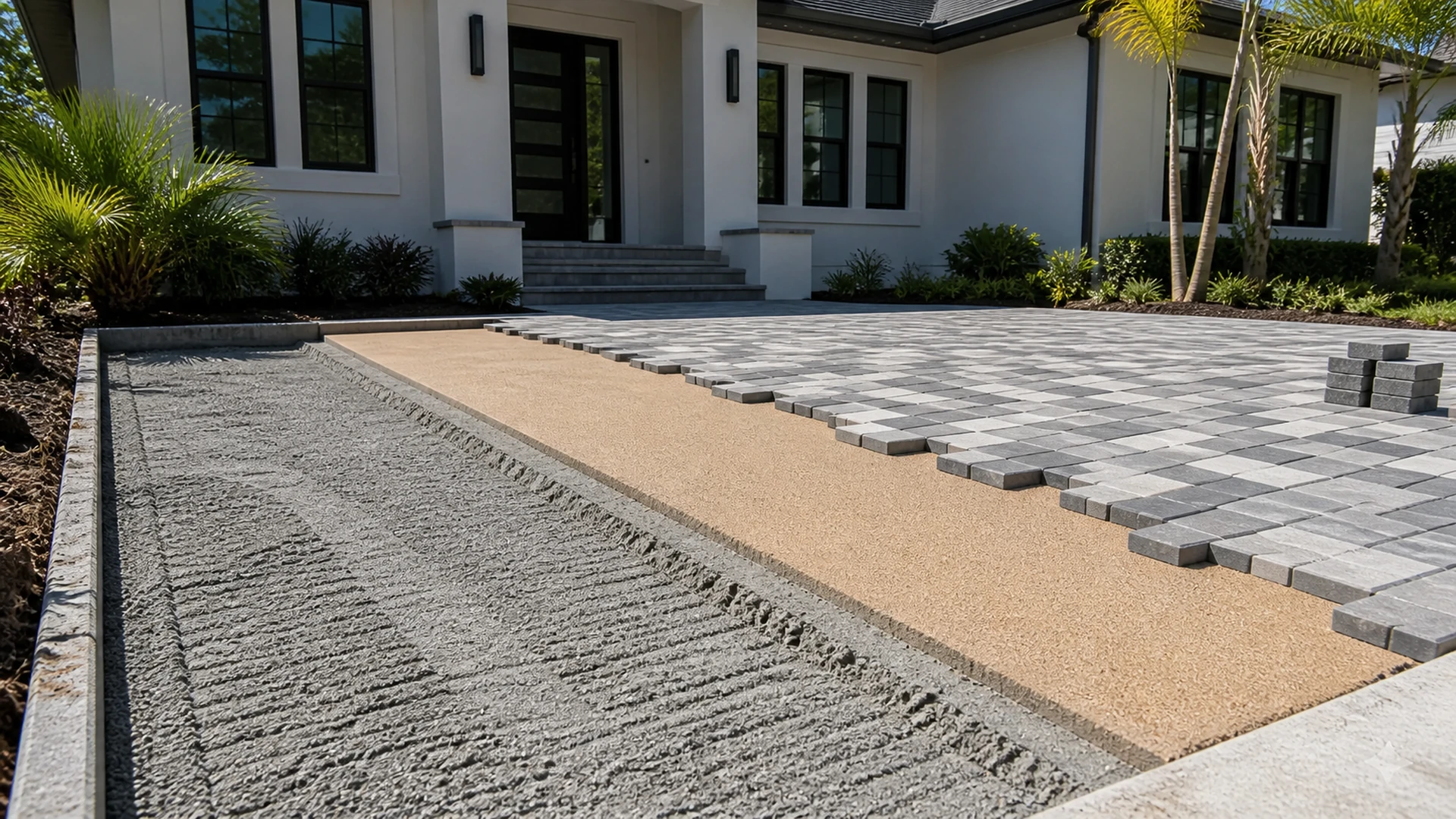
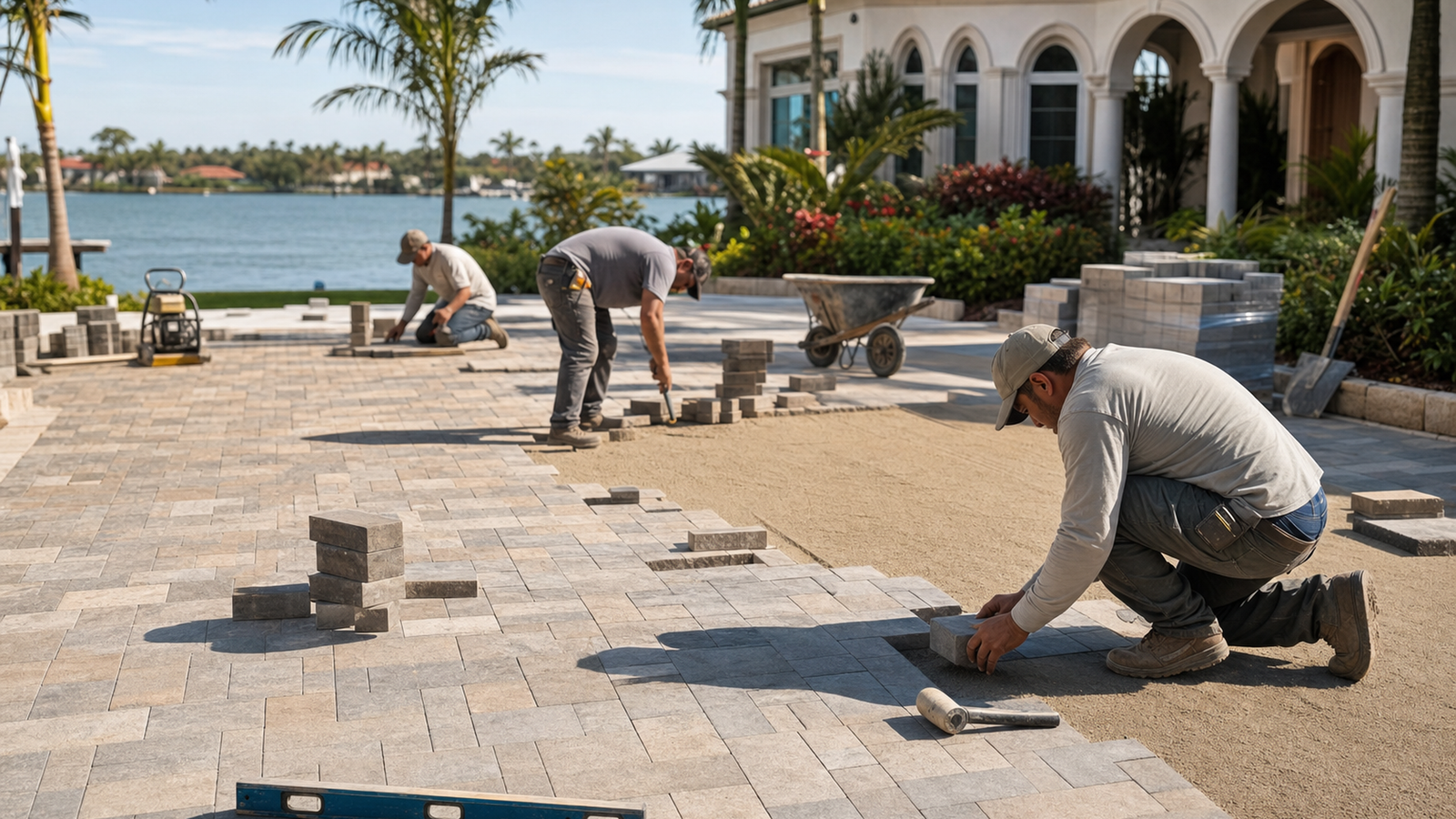
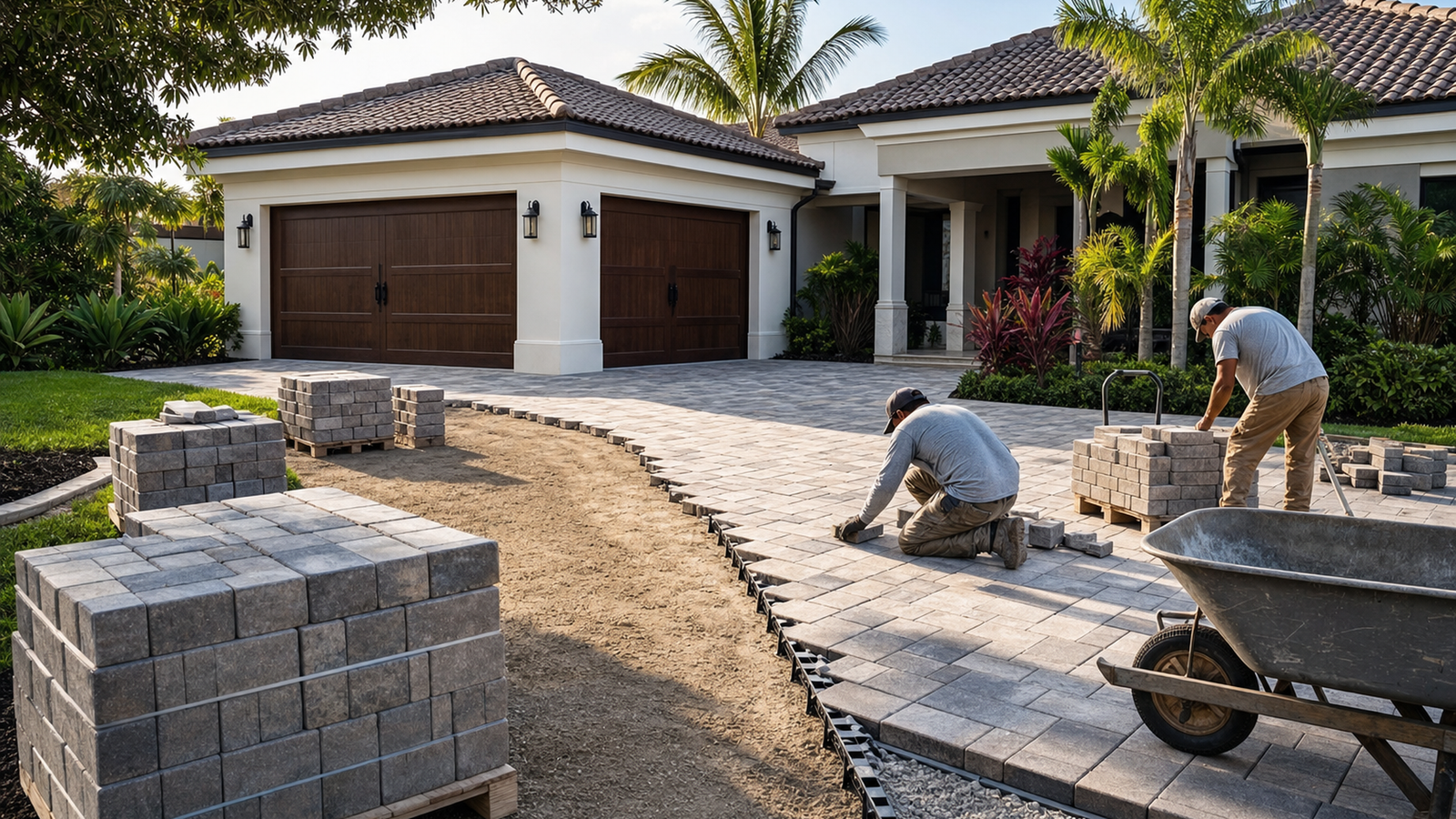
A soldier course paver border is not a substitute for proper excavation, base preparation, bedding, grading, compaction, and restraint. Instead, it is one component within the paved assembly.
Site conditions determine the appropriate construction details, so broad formulas should not replace an on-site evaluation. Therefore, the installer must prepare the border and field to work together at a consistent finished elevation. Uneven support can show as rocking units, settlement, or joint changes. In Tampa Bay, existing fill, roots, and previous construction may affect preparation. A durable visual frame begins below the surface, where homeowners cannot evaluate quality from color samples alone.
Edge restraint supports the perimeter
Ultimately, At an outside edge, a soldier course paver border needs suitable restraint so units remain aligned under use. The exact method depends on the application, adjacent material, soil, and system design. For example, a driveway edge experiences different forces from a garden-side patio.
Therefore, restraint should be selected and installed as part of the project scope, not added as an afterthought. It should also coordinate with finished grade and landscaping so exposed components do not distract from the design. Meanwhile, roots and irrigation work near the edge need careful planning. Preserving the border line requires support plus thoughtful treatment of the area immediately beside it.
Grades and surface flow remain functional priorities
Afterward, A soldier course paver border should follow the intended surface grades without forming an unintended lip. Although the color band looks decorative, its elevation affects comfort and movement across the surface.
Therefore, transitions at garages, walkways, pool areas, and adjacent pavement must be checked carefully. The border should not interrupt planned surface flow or create a place where debris routinely collects. On sloped areas, joint lines can make grade changes more noticeable, so smooth preparation matters. In addition, drains and existing water-management features should be incorporated visibly and cleanly. The border must support the paving design while allowing the site plan to function as intended.
Joint consistency completes the pattern
The joints around a soldier course paver border contribute to both appearance and system performance. Inconsistent spacing can make a straight course look wavy, especially when the border contrasts strongly with the field. Therefore, installers should control alignment while accommodating the dimensional characteristics of the selected units.
Joint material must also be compatible with the pavers and project conditions. It should be installed according to its instructions and only after the surface is ready. Meanwhile, future maintenance should avoid washing out or gouging joints. A border reads as a continuous frame when the units, spacing, cuts, and joint finish all support the same line.
Renovation requires careful tie-ins
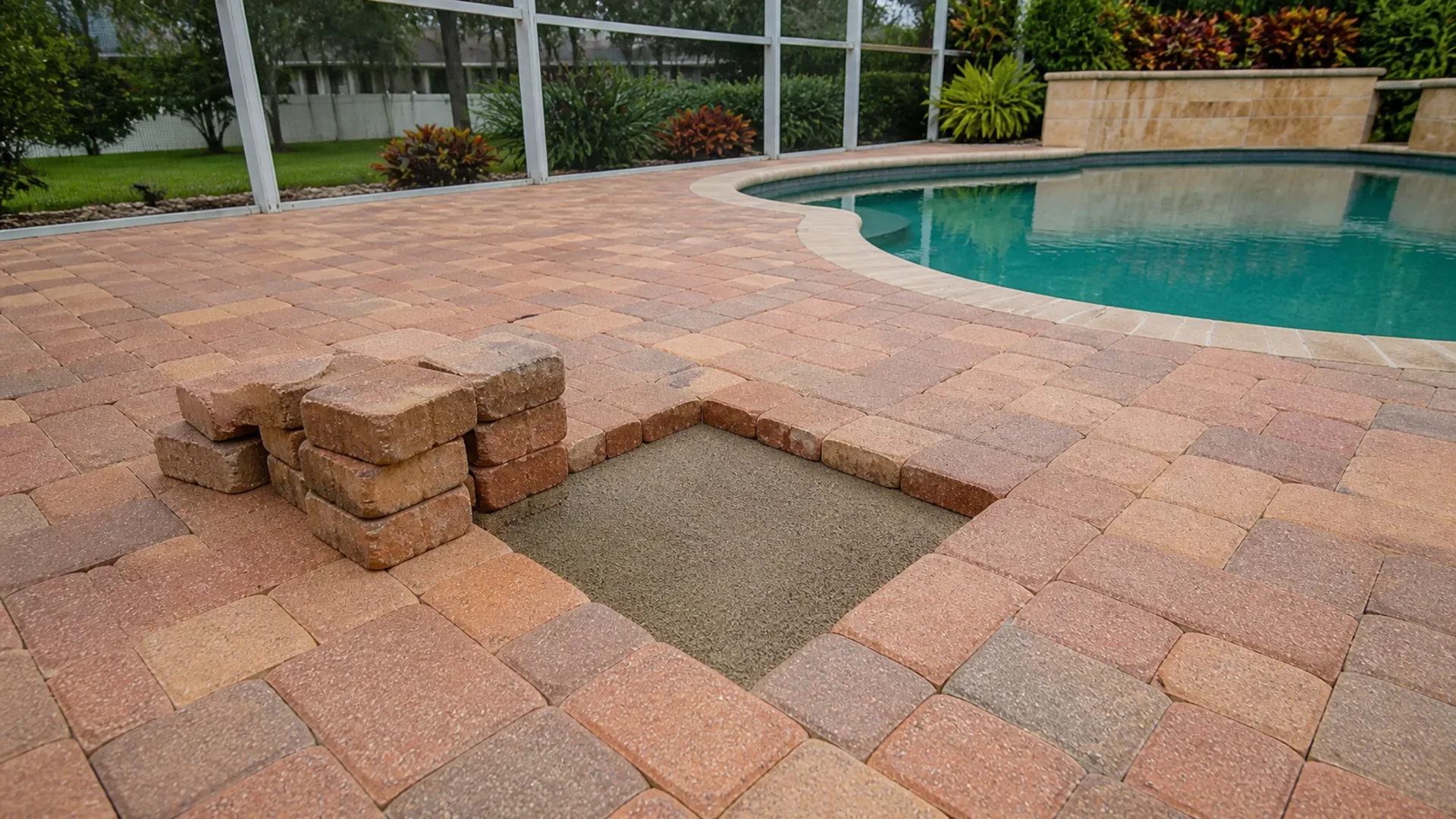
Adding a soldier course paver border to an existing paved area is different from designing one during new installation. Existing pavers may have weathered color, limited matching availability, settlement, or hidden edge conditions. Therefore, first inspect the base, perimeter, and salvageable units.
Meanwhile, Cutting back the field to insert a new course can change proportions and requires precise alignment. A contrasting border may solve an imperfect color match, although it will also draw attention to the edge. In practice, compare full dry samples against clean, dry existing pavers. Renovation succeeds when the new work acknowledges the current surface rather than pretending it was installed at the same time.
Maintenance should preserve the visual line
After installation, a soldier course paver border benefits from routine observation and compatible cleaning. Leaves, soil, and organic growth can soften the edge contrast, while joint loss can interrupt alignment. Therefore, sweep the perimeter and address isolated movement or loose joints before a larger section changes.
Moreover, Avoid aggressive spot cleaning that creates a bright strip beside a weathered field. If sealing is considered, test how both border and field colors respond because contrast may intensify. Likewise, protect the edge during nearby planting or irrigation repairs. Simple, even maintenance keeps the border functioning as a frame rather than becoming a record of unrelated patchwork.
Review the design at full scale before approval
Instead, Before approving a soldier course paver border, ask for a full-scale sample using the proposed field and border units. Then view it from doors, seating areas, the street, and vehicle approach.
Morning shade and afternoon sun may reveal different undertones. Therefore, check color, texture, course width, joint spacing, and the proposed corner detail together. Also review the installerÃÂÃÂÃÂâÃÂÃÂÃÂÃÂÃÂÃÂÃÂÃÂs plan for curves, transitions, restraints, and cuts. A short mockup can resolve questions that remain invisible in a small catalog image or digital rendering.
Connect inspiration to a buildable plan
Ultimately, A professional soldier course paver border begins with useful references and ends with site-specific dimensions. Browse the DR Pavers Design project gallery to identify combinations, then note what you like about proportion, contrast, and placement.
The Concrete Masonry and Hardscapes Association also provides industry information, although an installer must adapt details to the property and selected system. Therefore, bring photos to the consultation without expecting an exact copy. Architecture, grades, paver availability, and use patterns should shape the final design. Inspiration is most valuable when it helps explain the desired effect.
A final checklist keeps the frame intentional
Afterward, For a successful soldier course paver border, confirm the field pattern, border unit, color relationship, course width, starting points, corners, curves, terminations, grades, restraints, joints, and maintenance expectations. Next, verify that gates, doors, vehicles, furniture, and landscape edges still work comfortably with the layout.
Any unresolved junction should be discussed before installation reaches it. Therefore, treat the border as both a design line and a constructed edge. When proportion, geometry, and support agree, the course can organize the entire hardscape without overpowering it. That balance is what makes a simple repeated orientation feel purposeful across a Tampa Bay outdoor space.
Additionally, Finally, discuss a soldier course paver border on-site through the contact page. Then, read the FAQ, browse completed projects, review client testimonials, and explore all services. Also, follow DR Pavers Design on Instagram and Facebook, or check the map listing. Next, consult Google reviews or start a WhatsApp chat. Alternatively, call, text, or email the team.