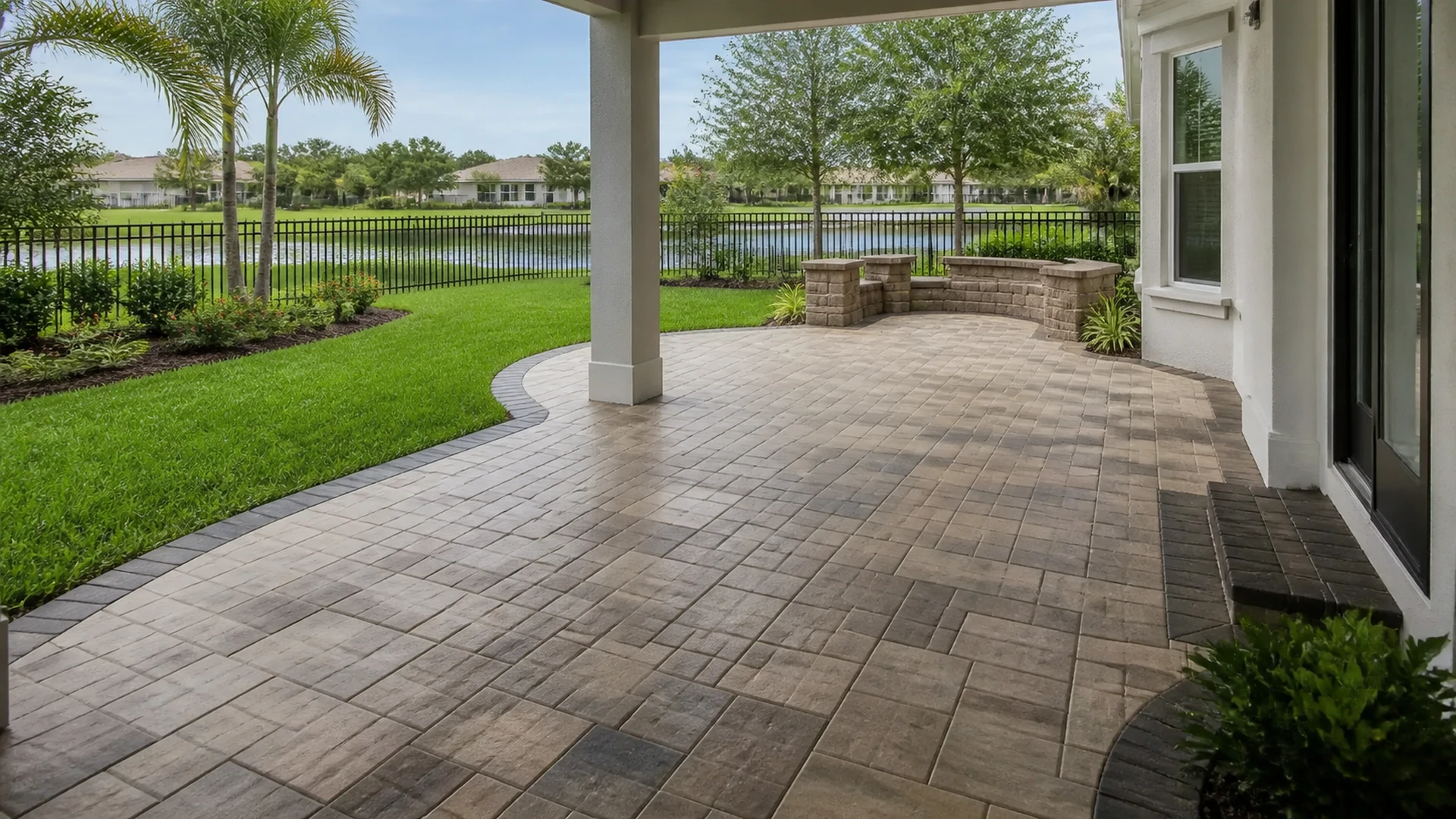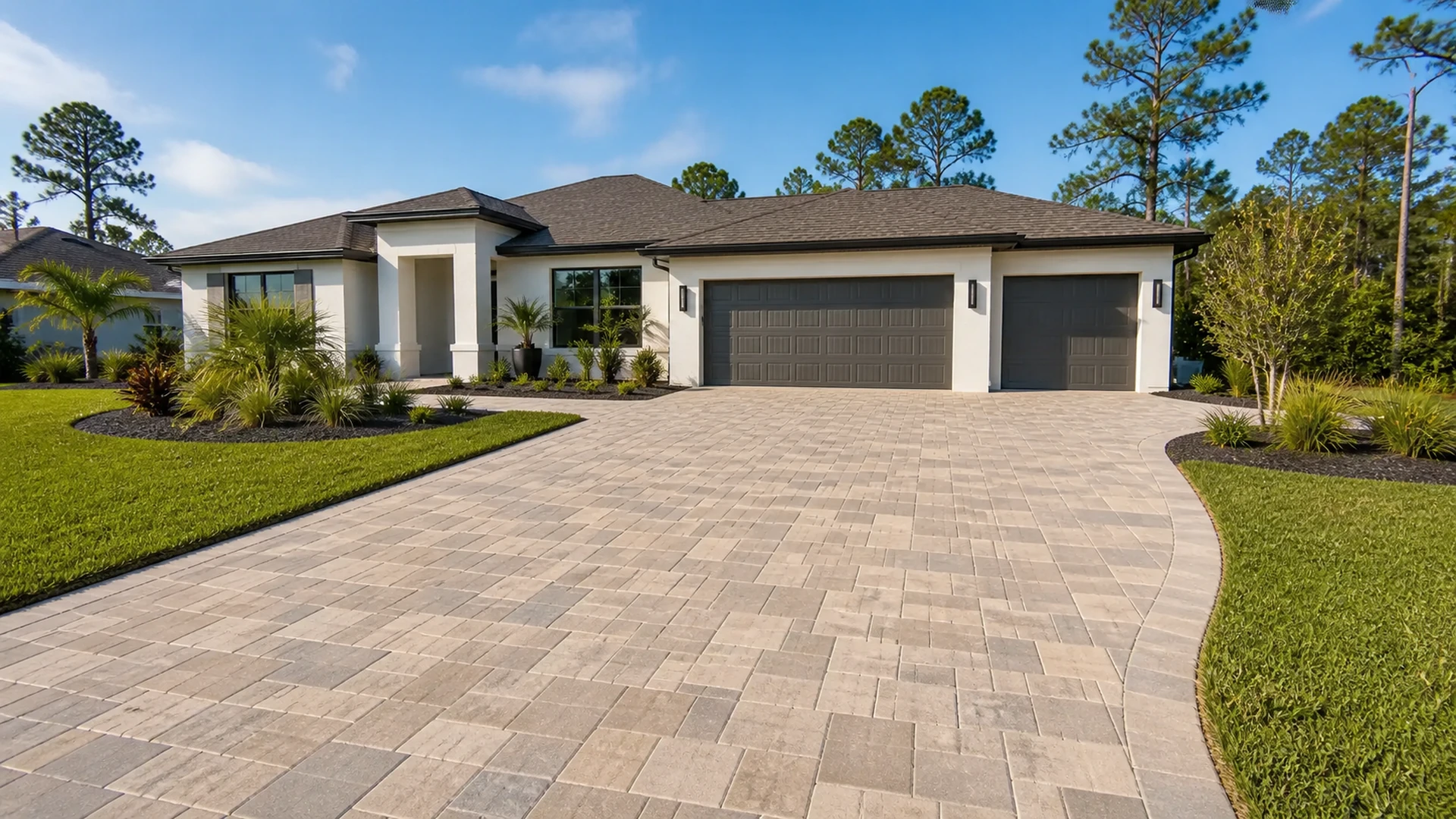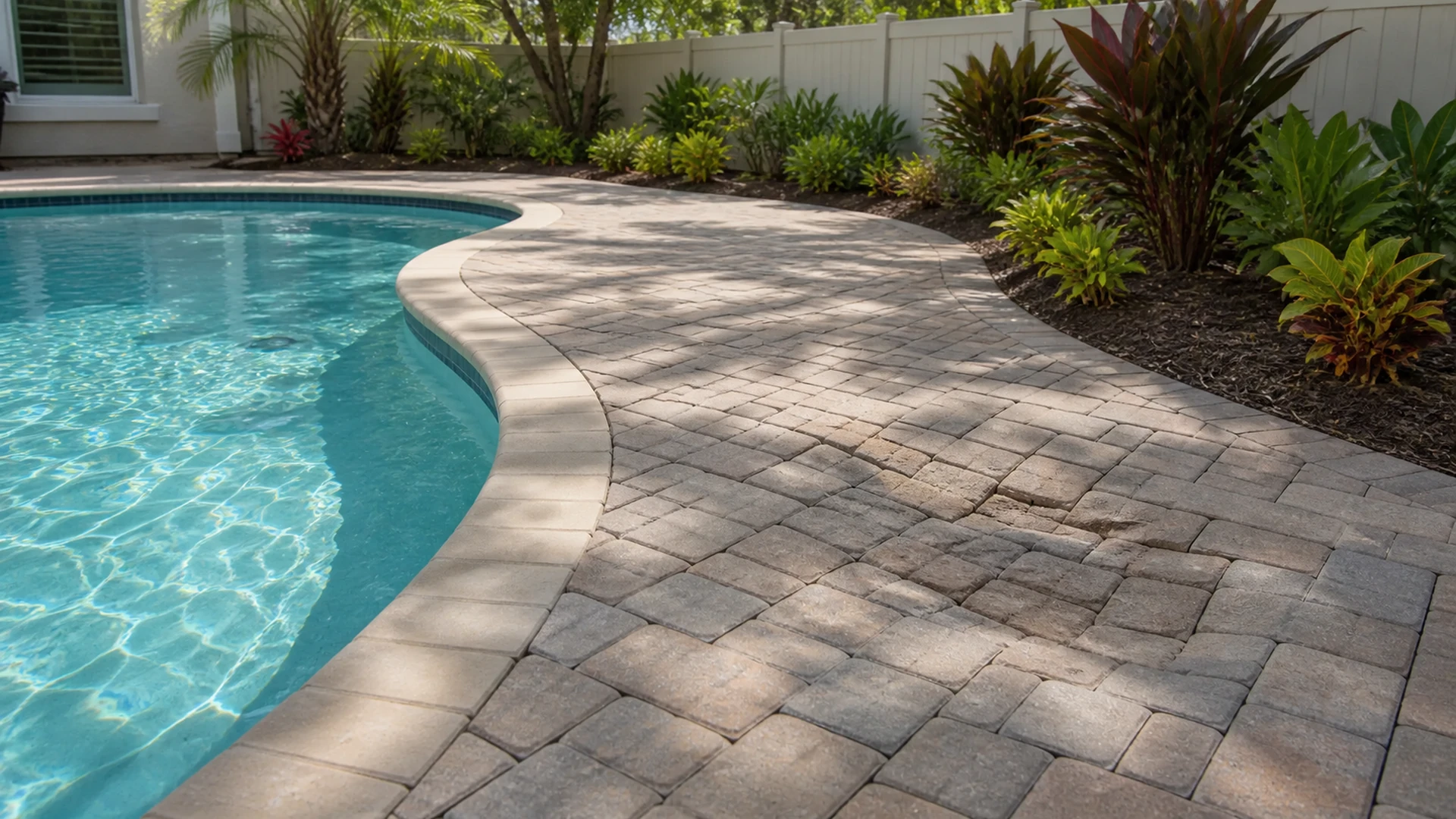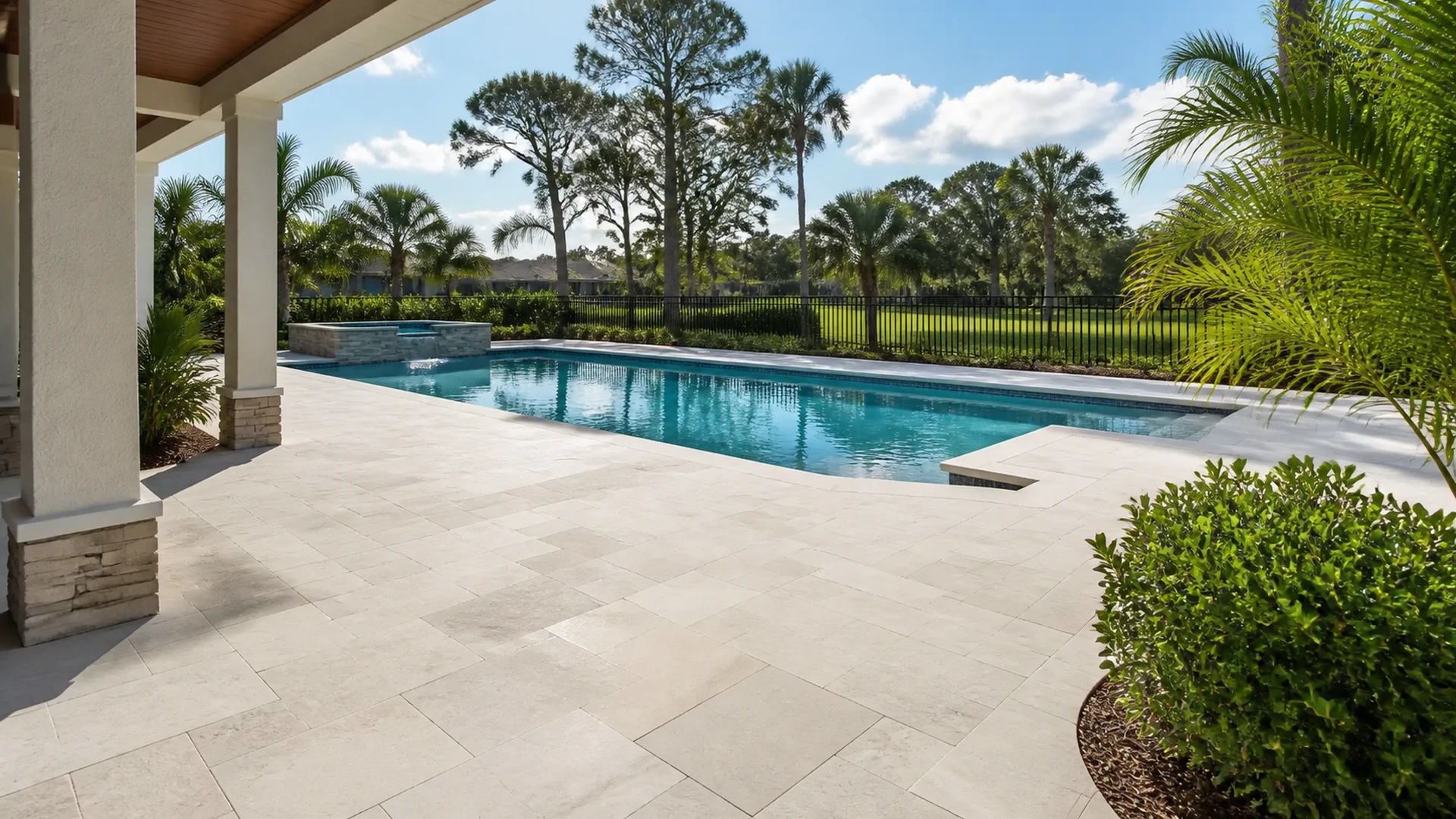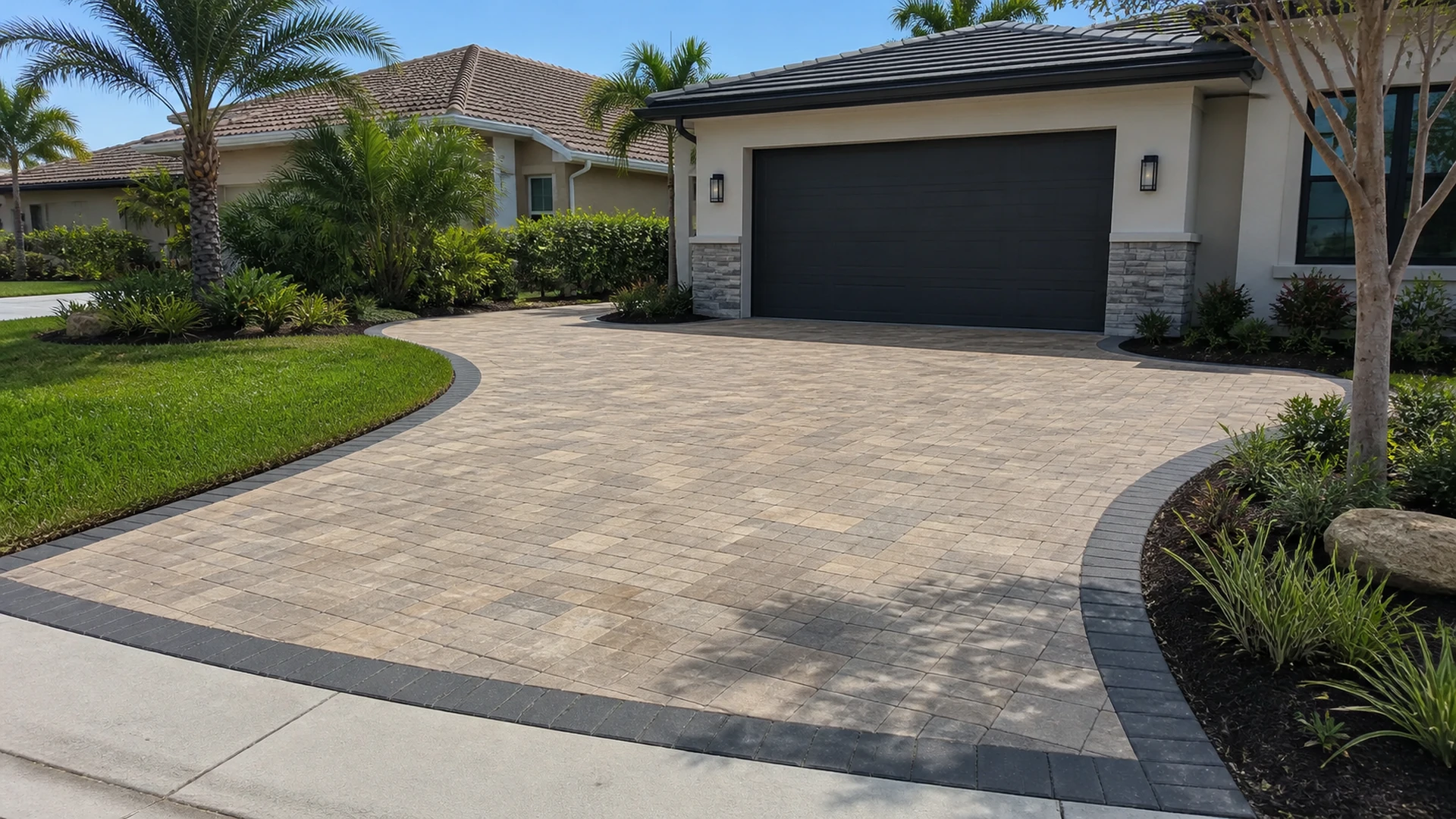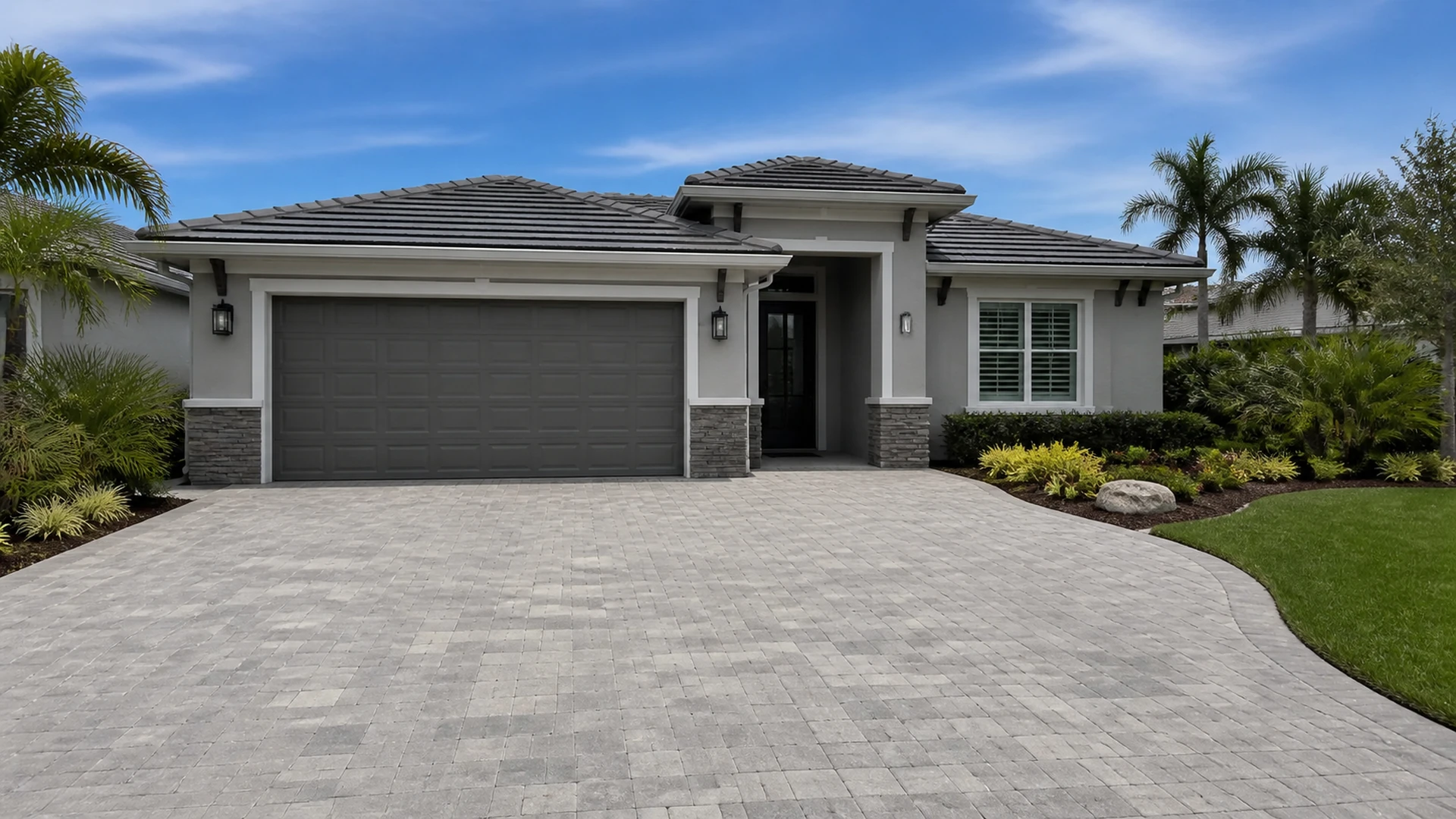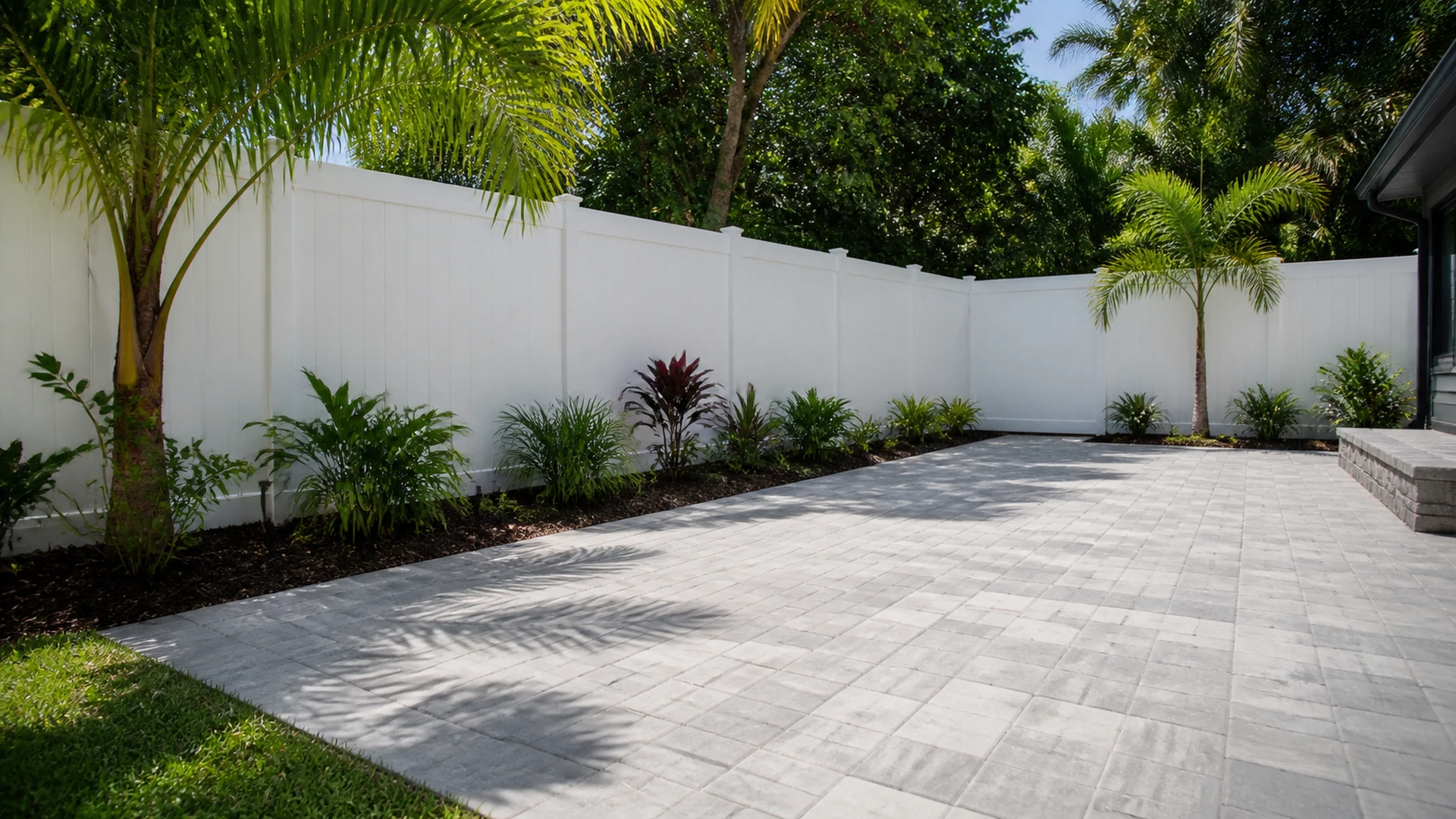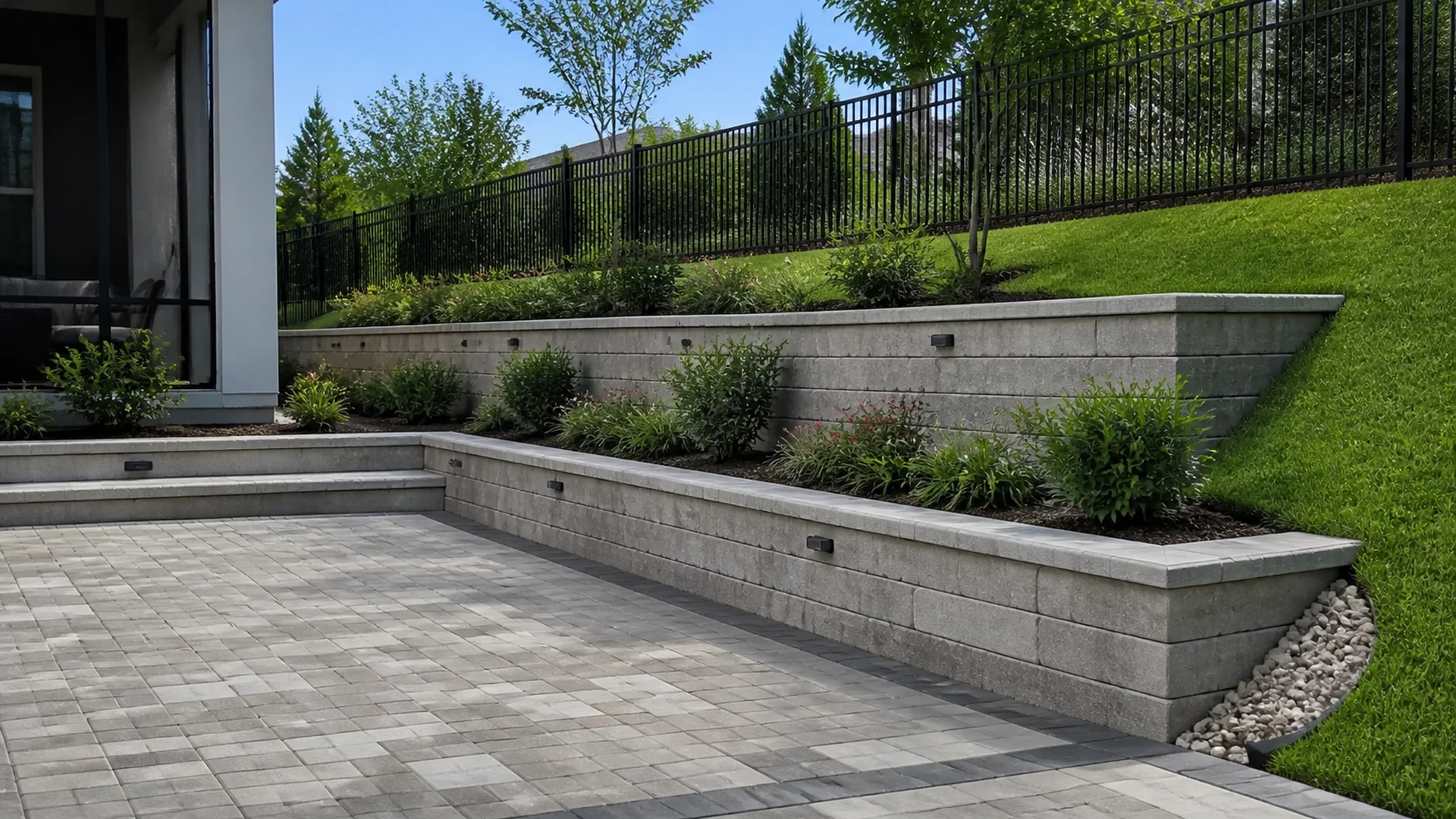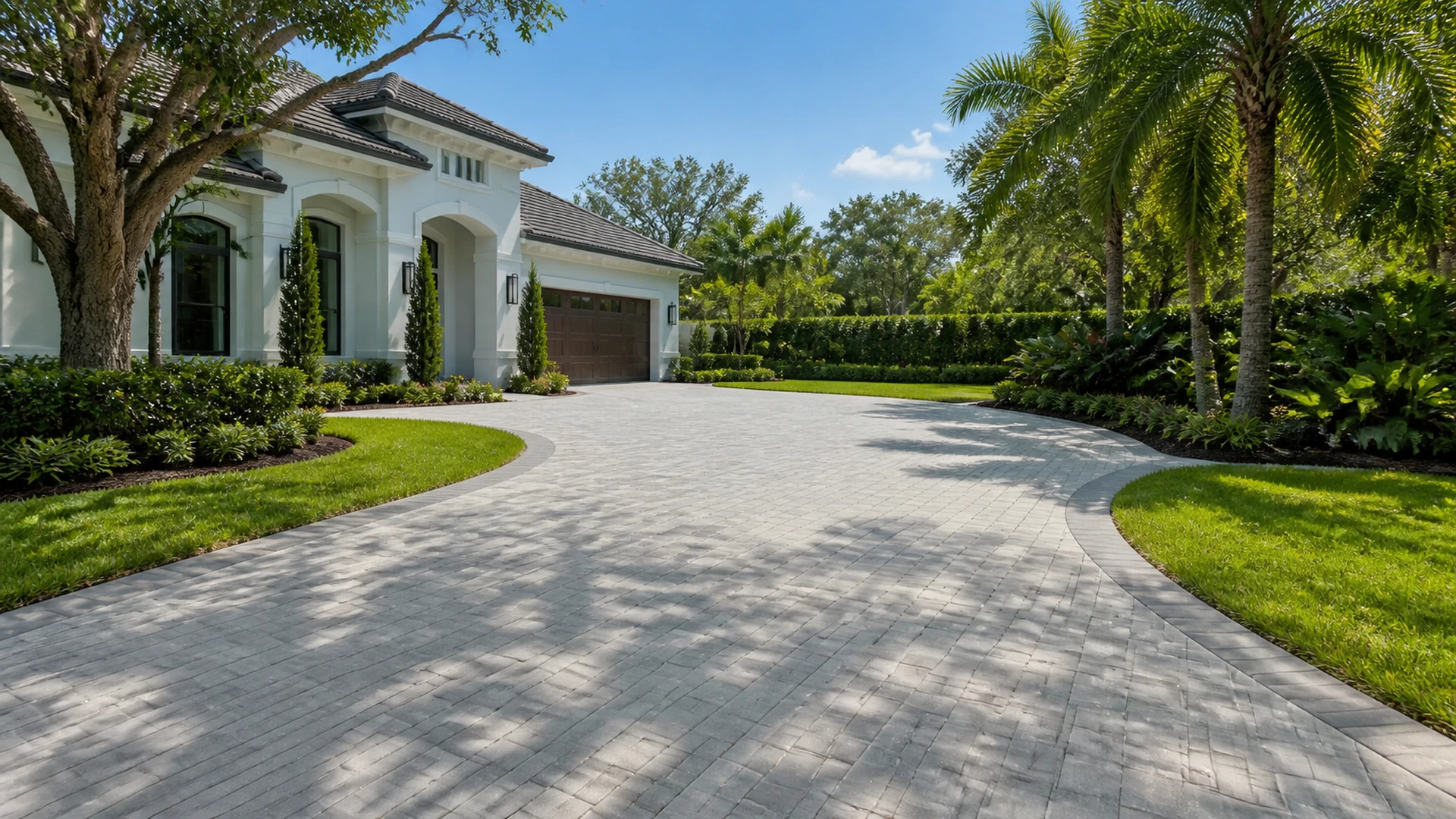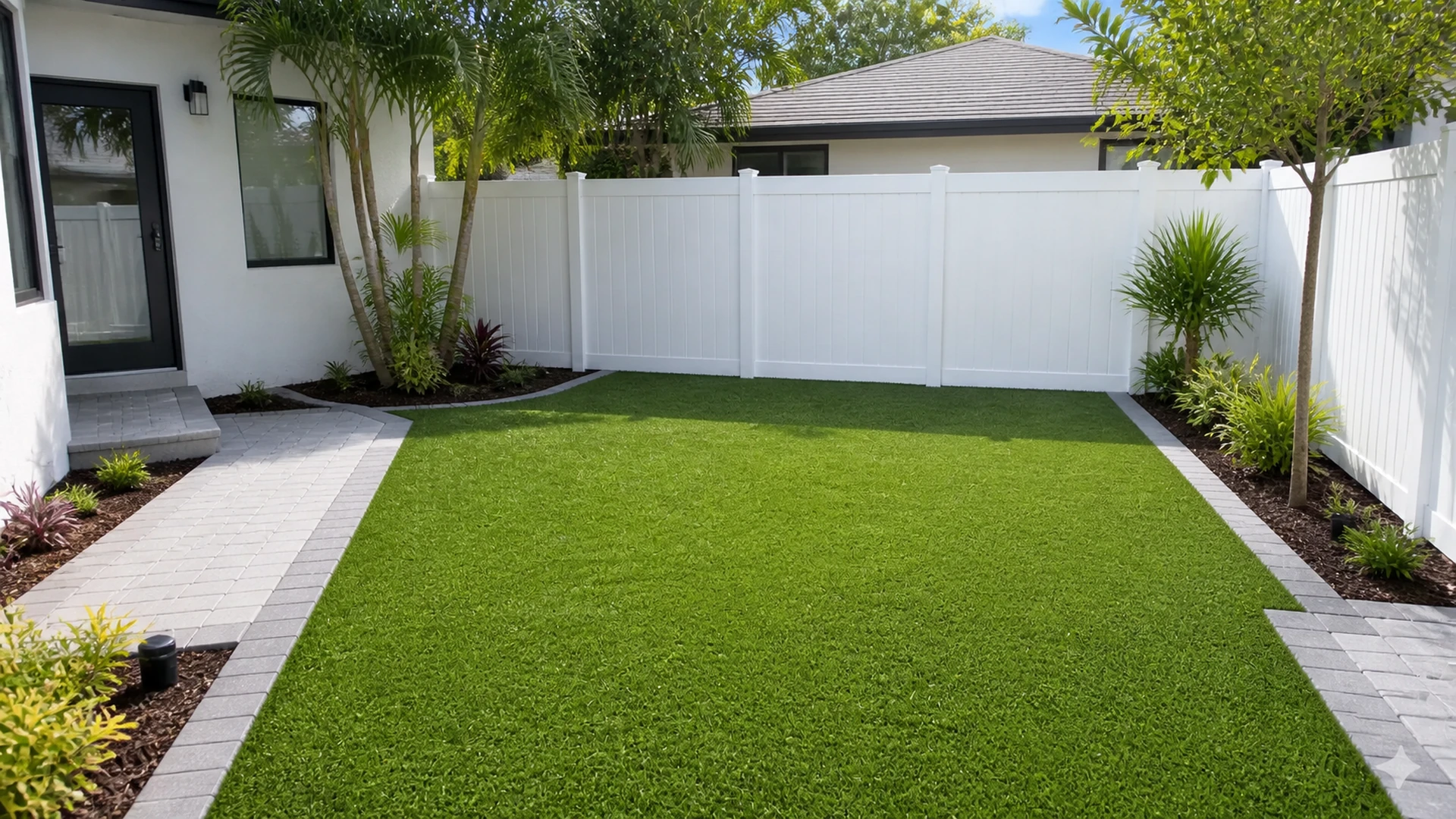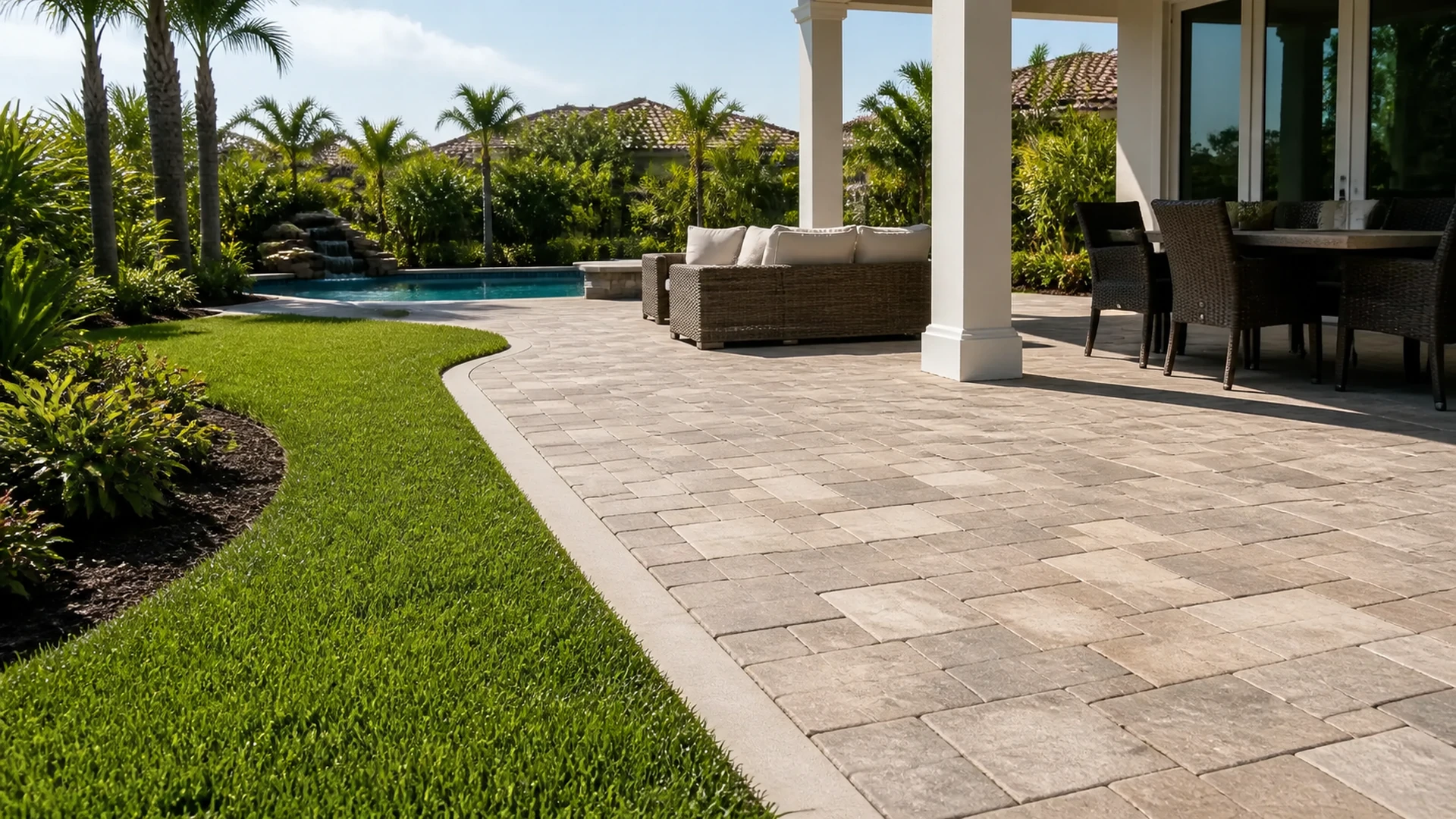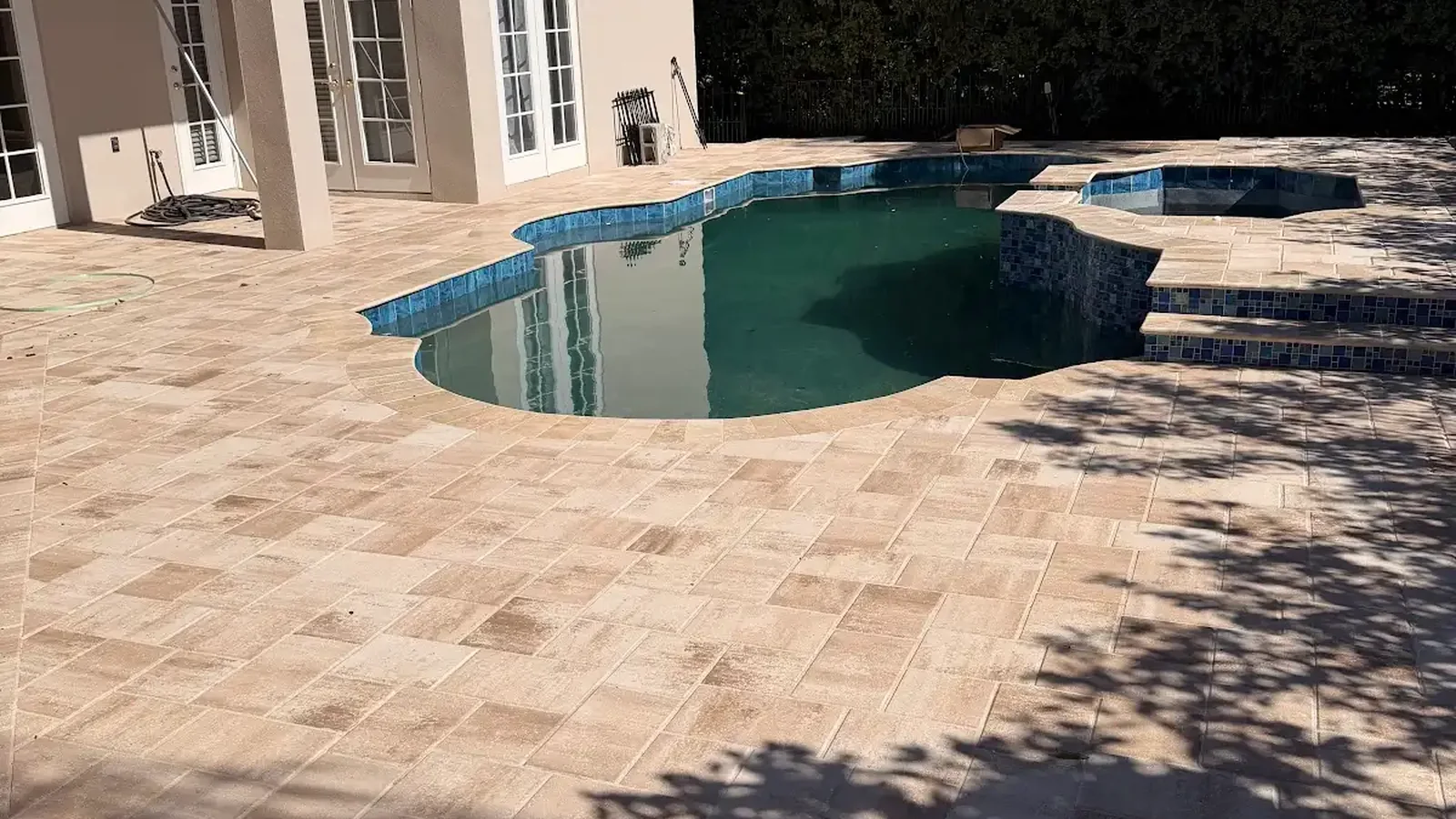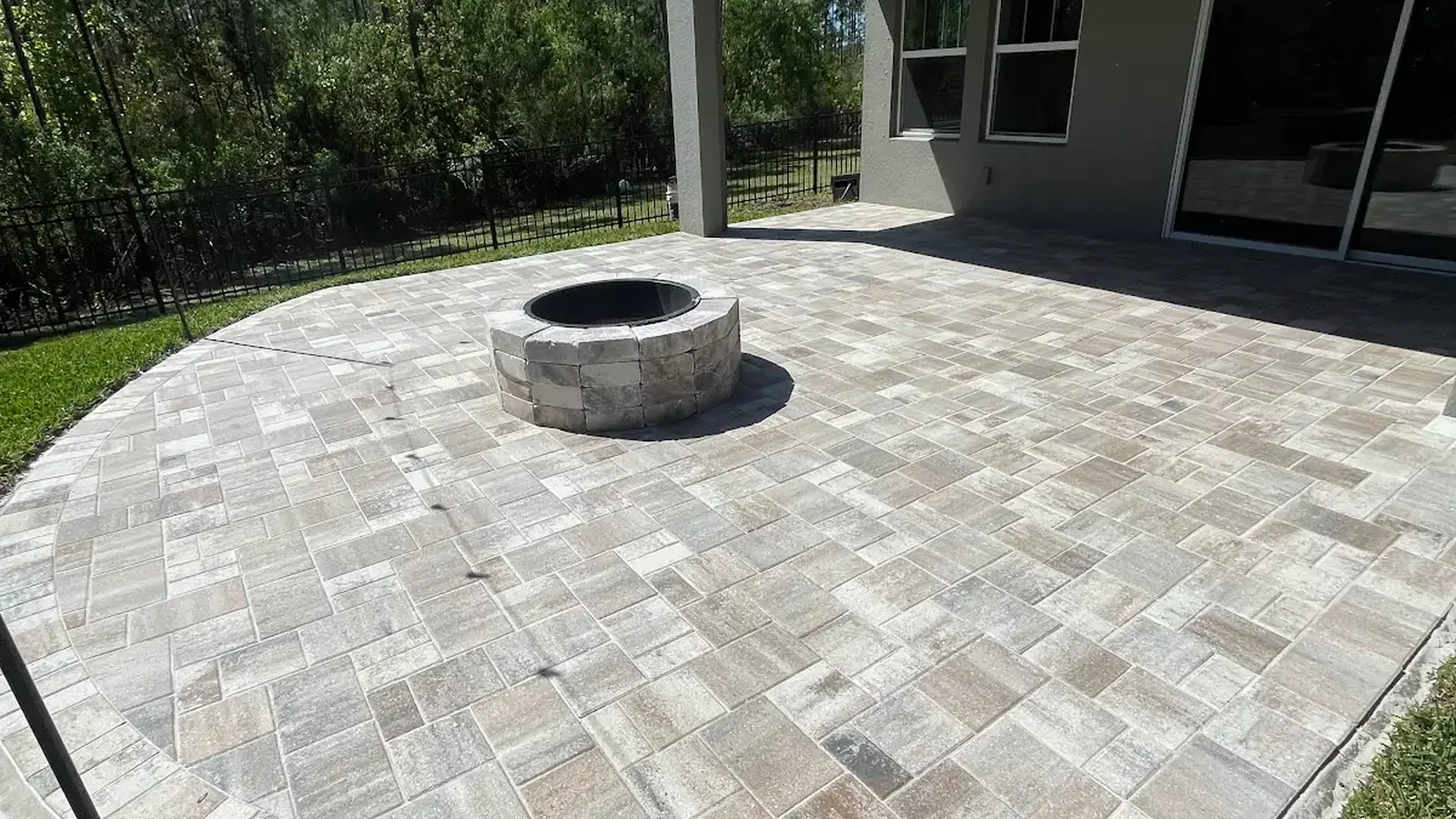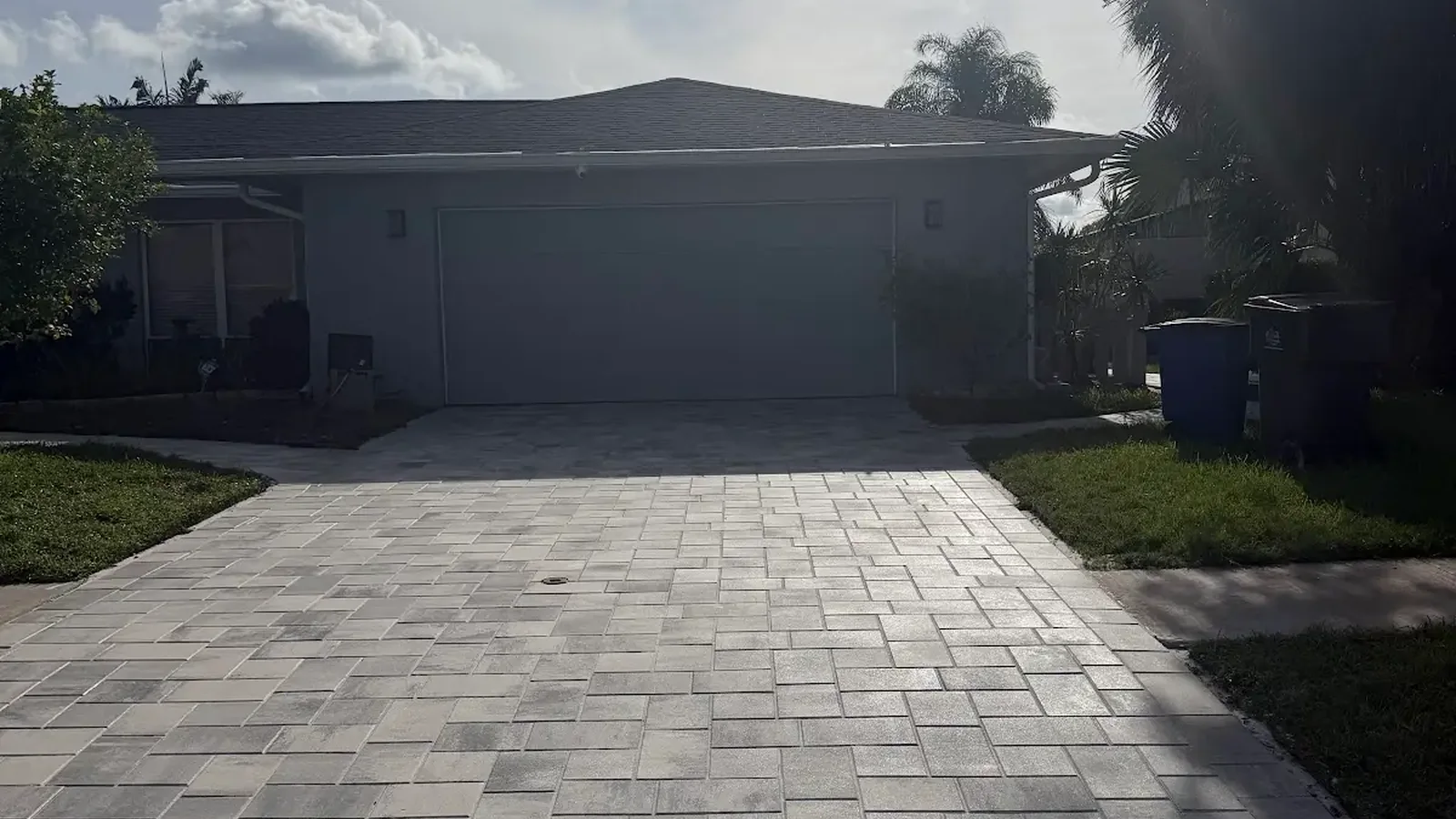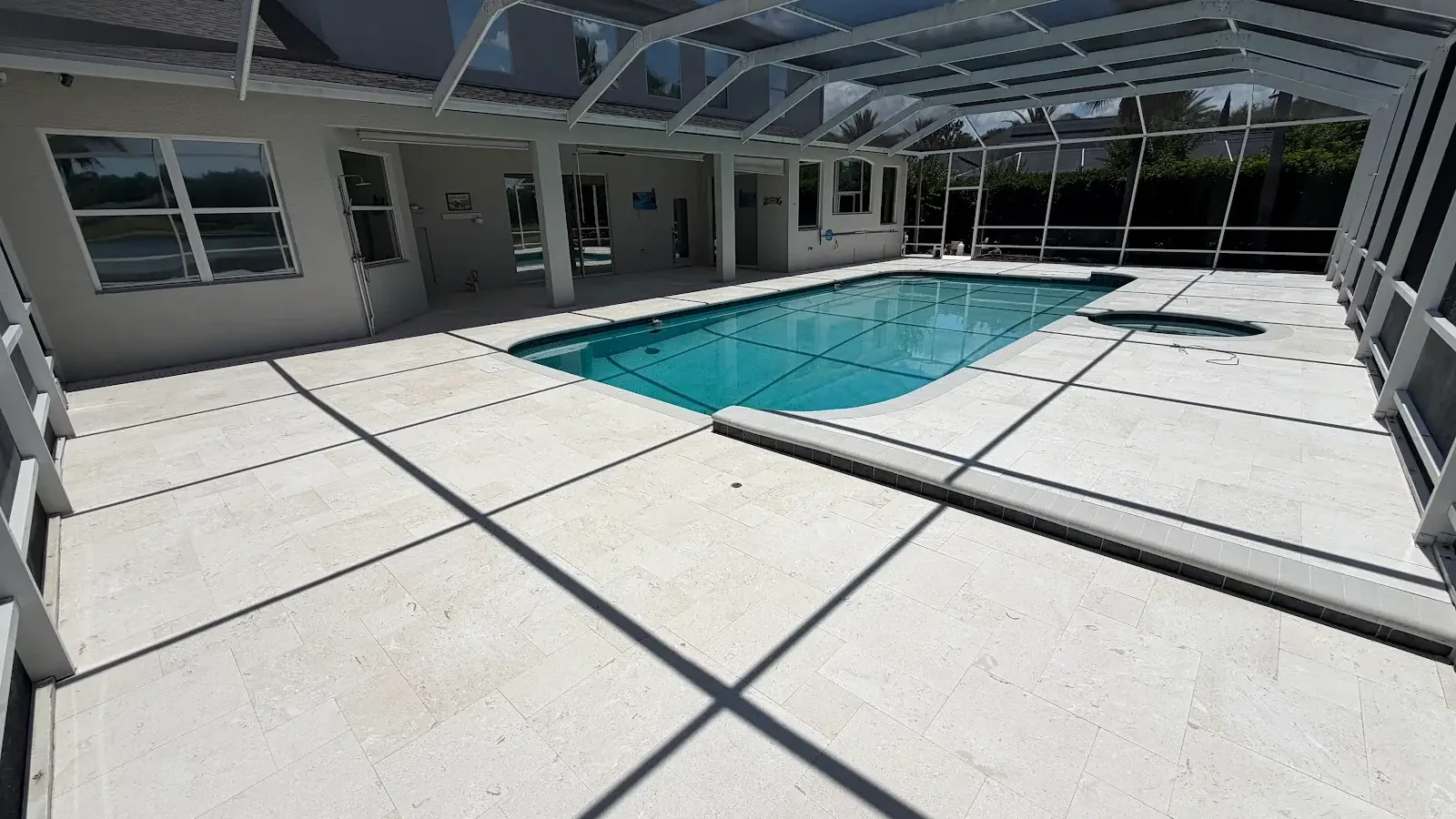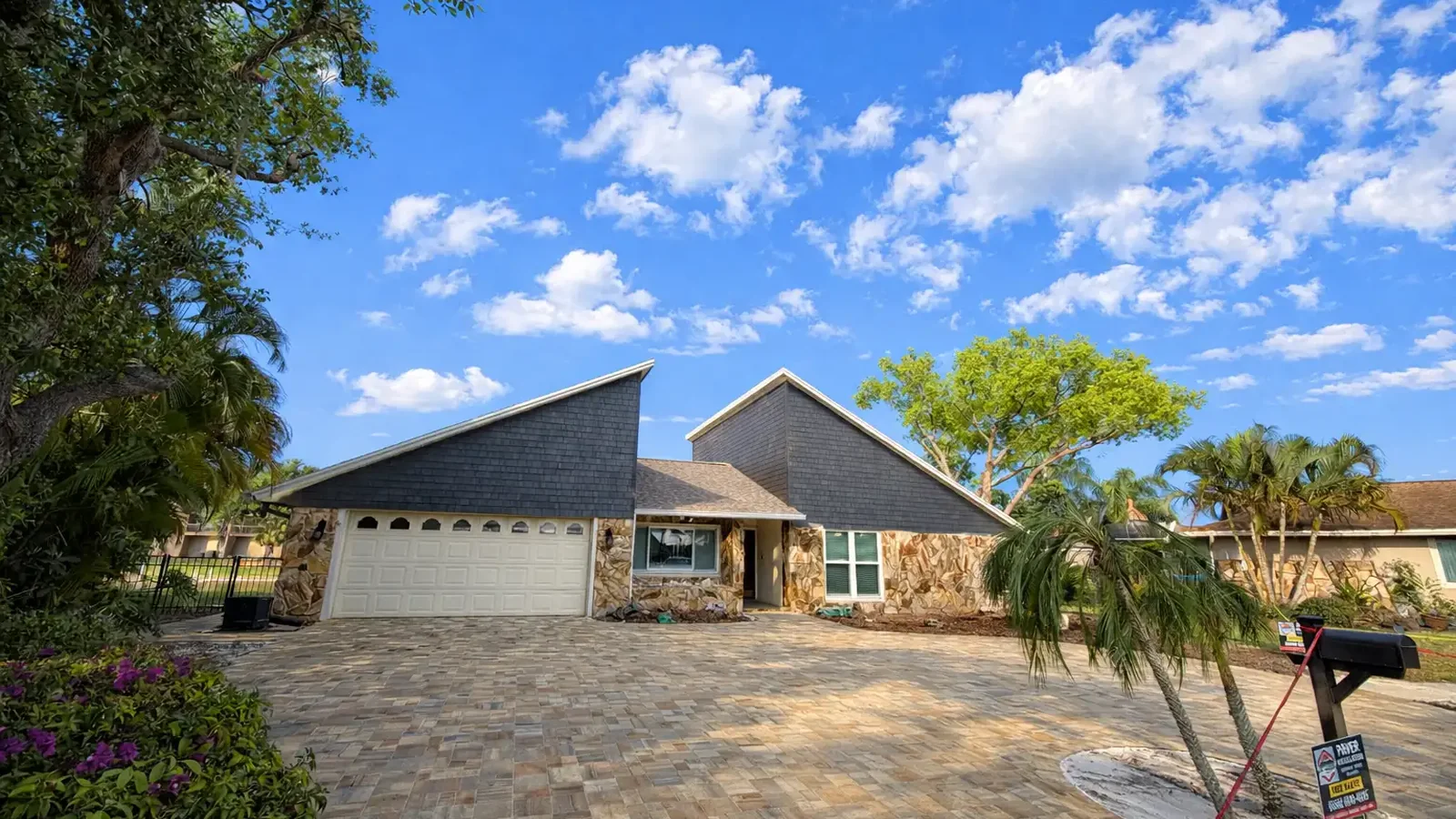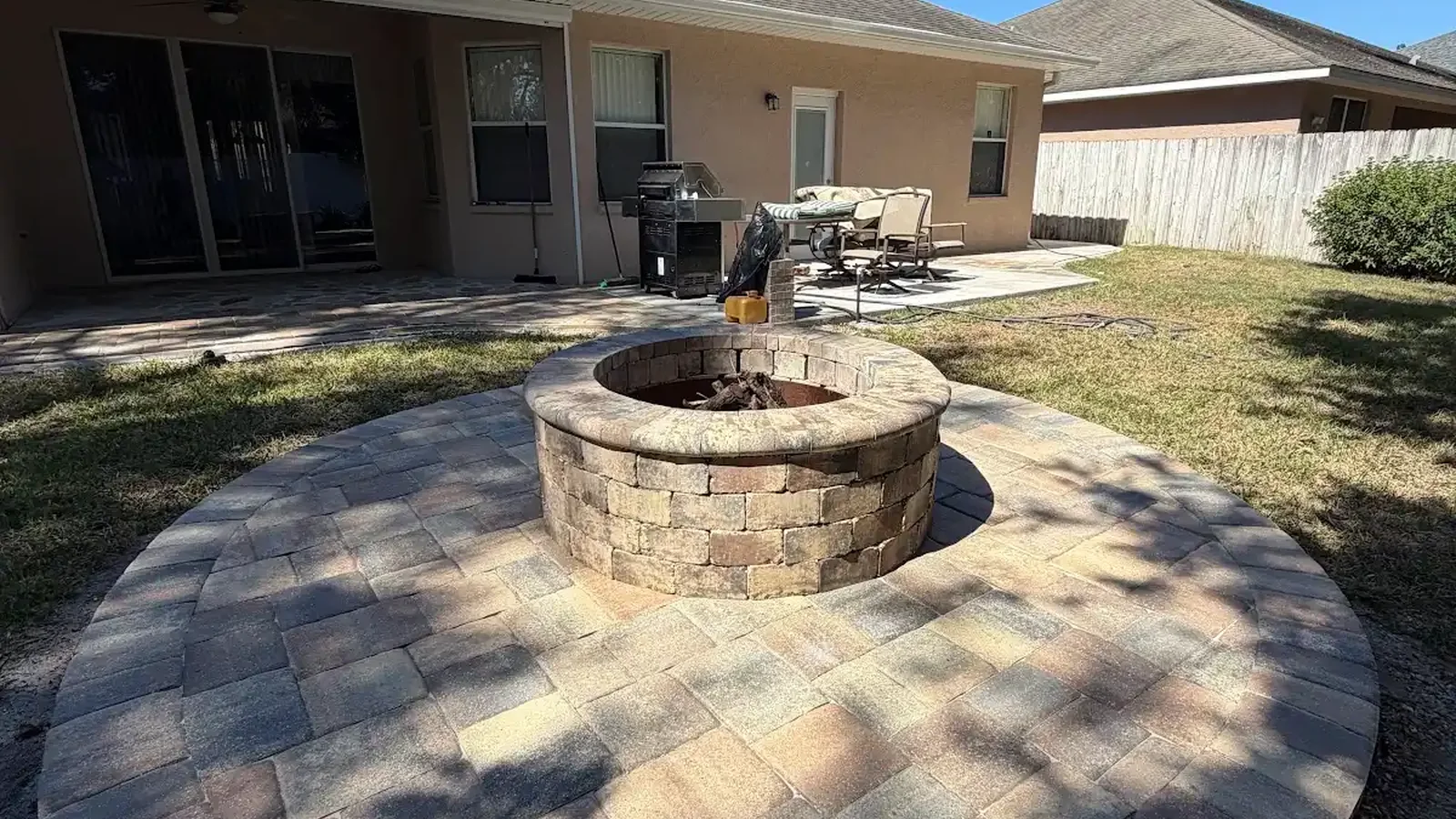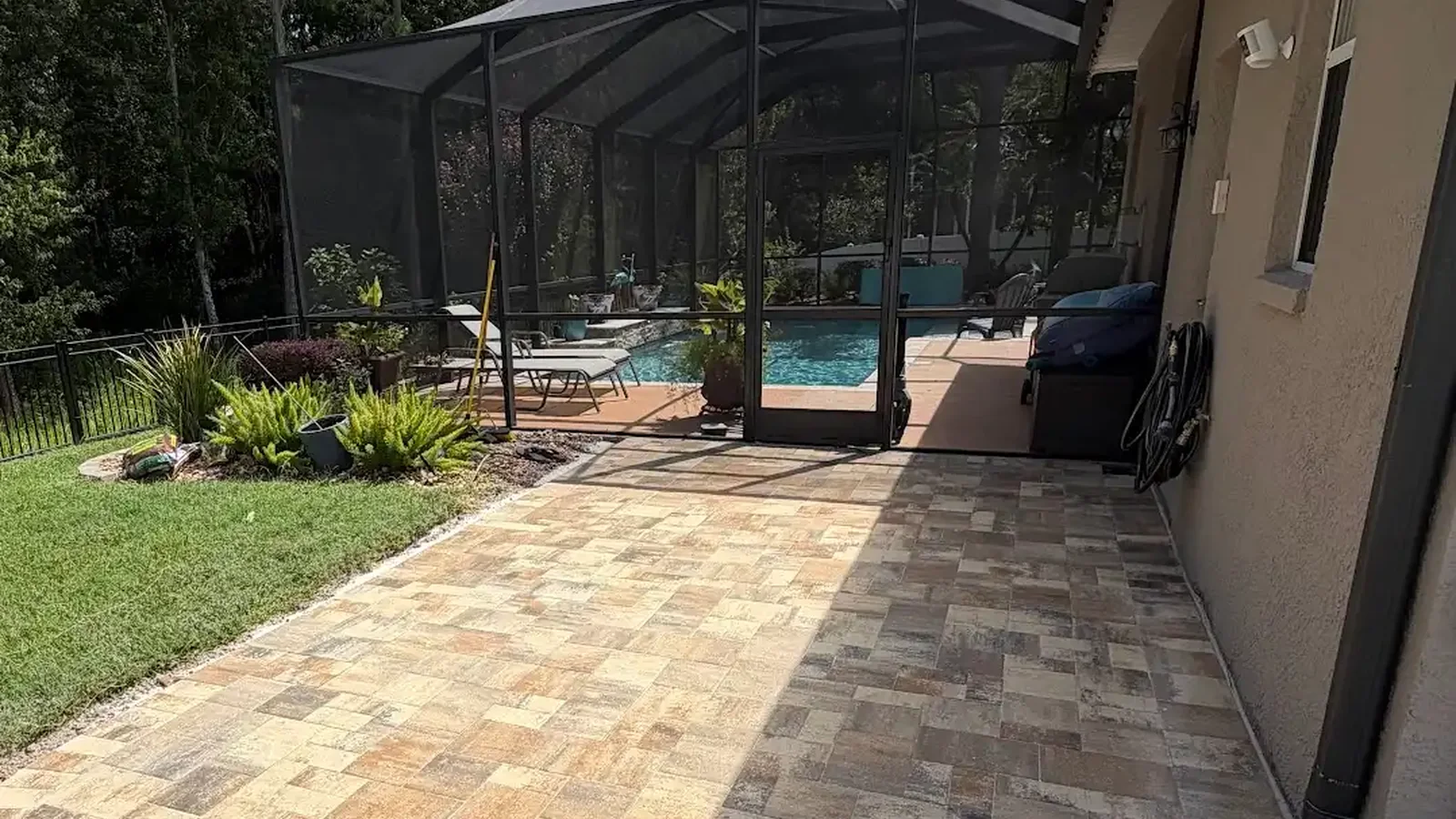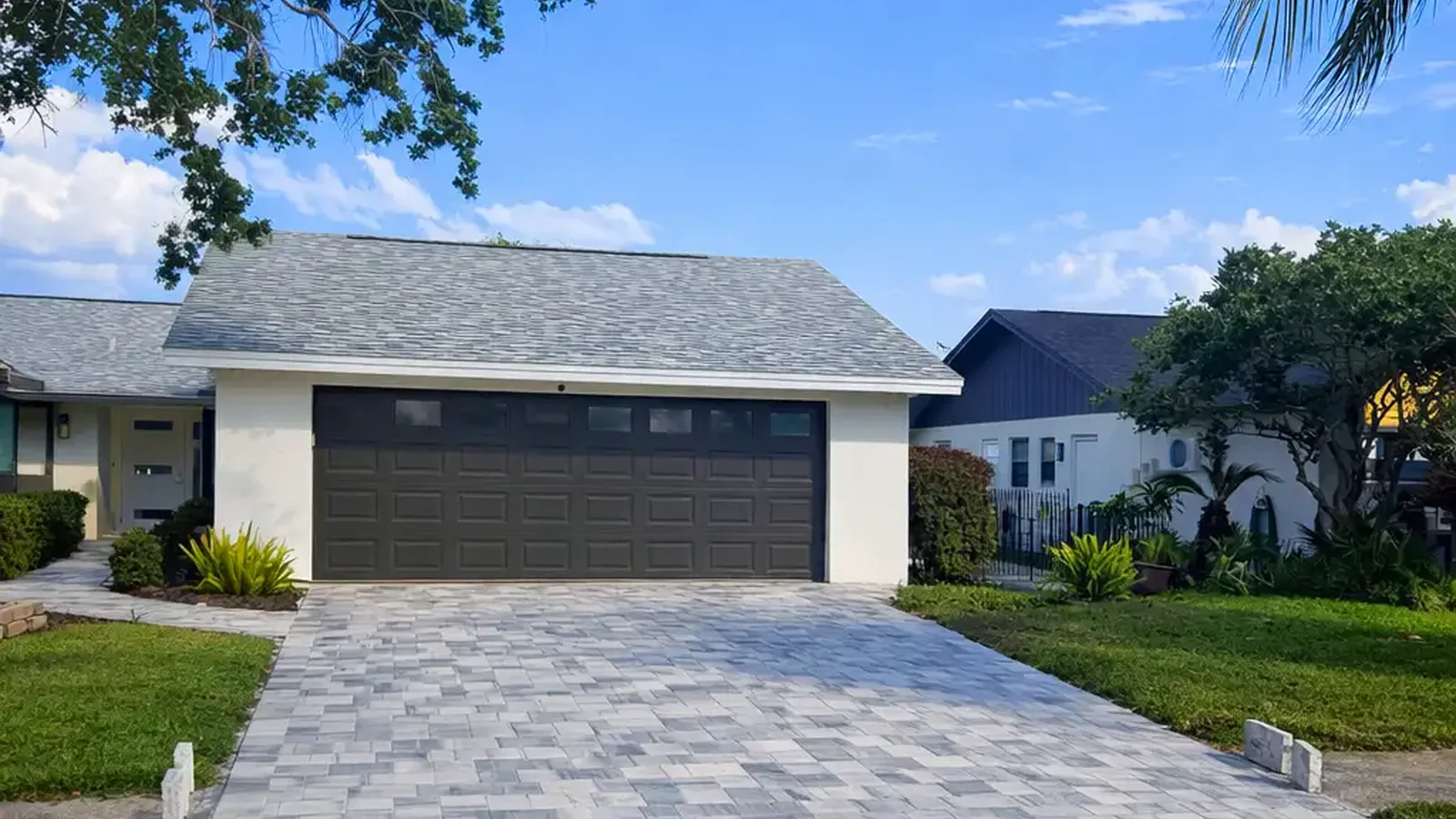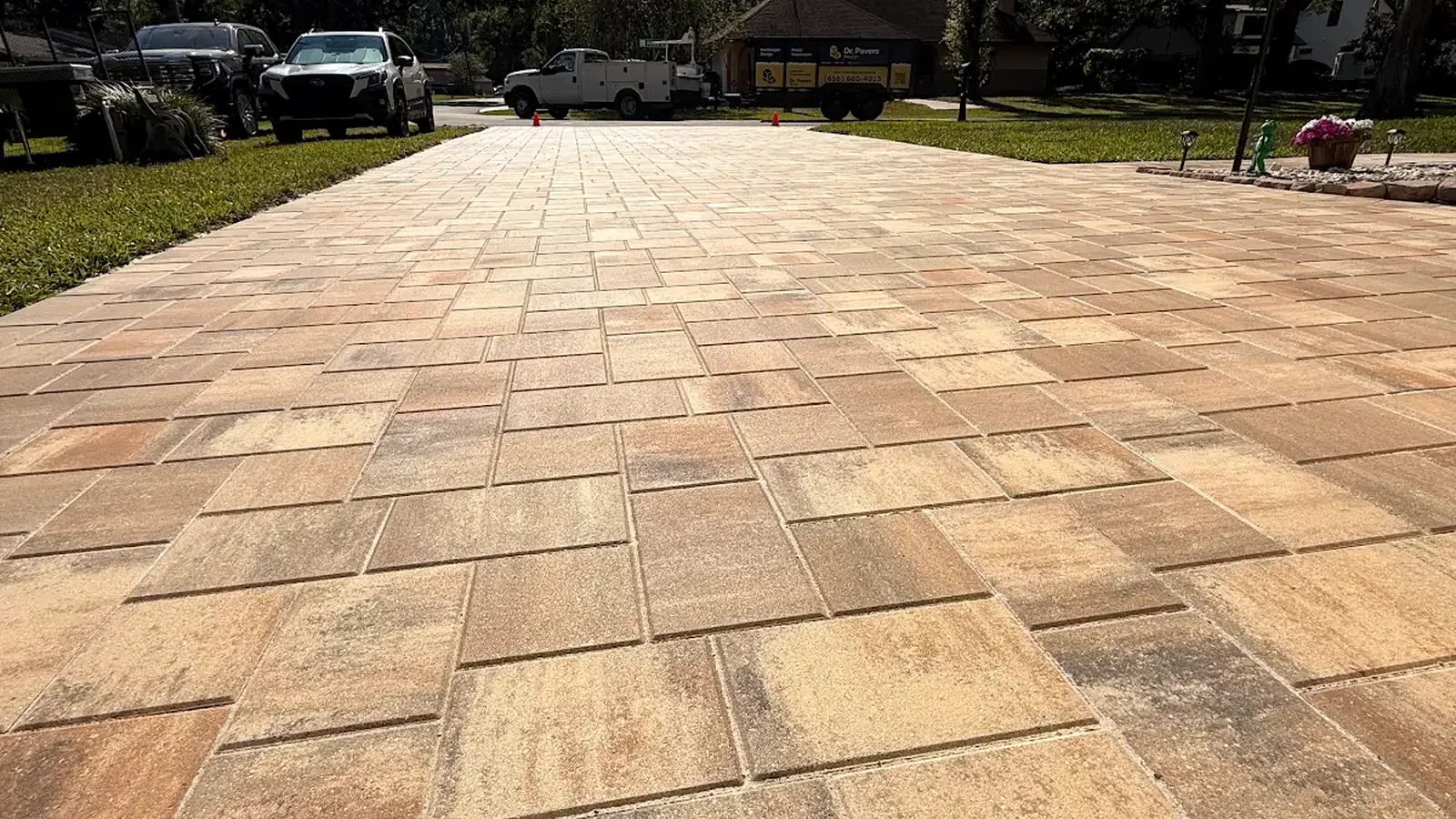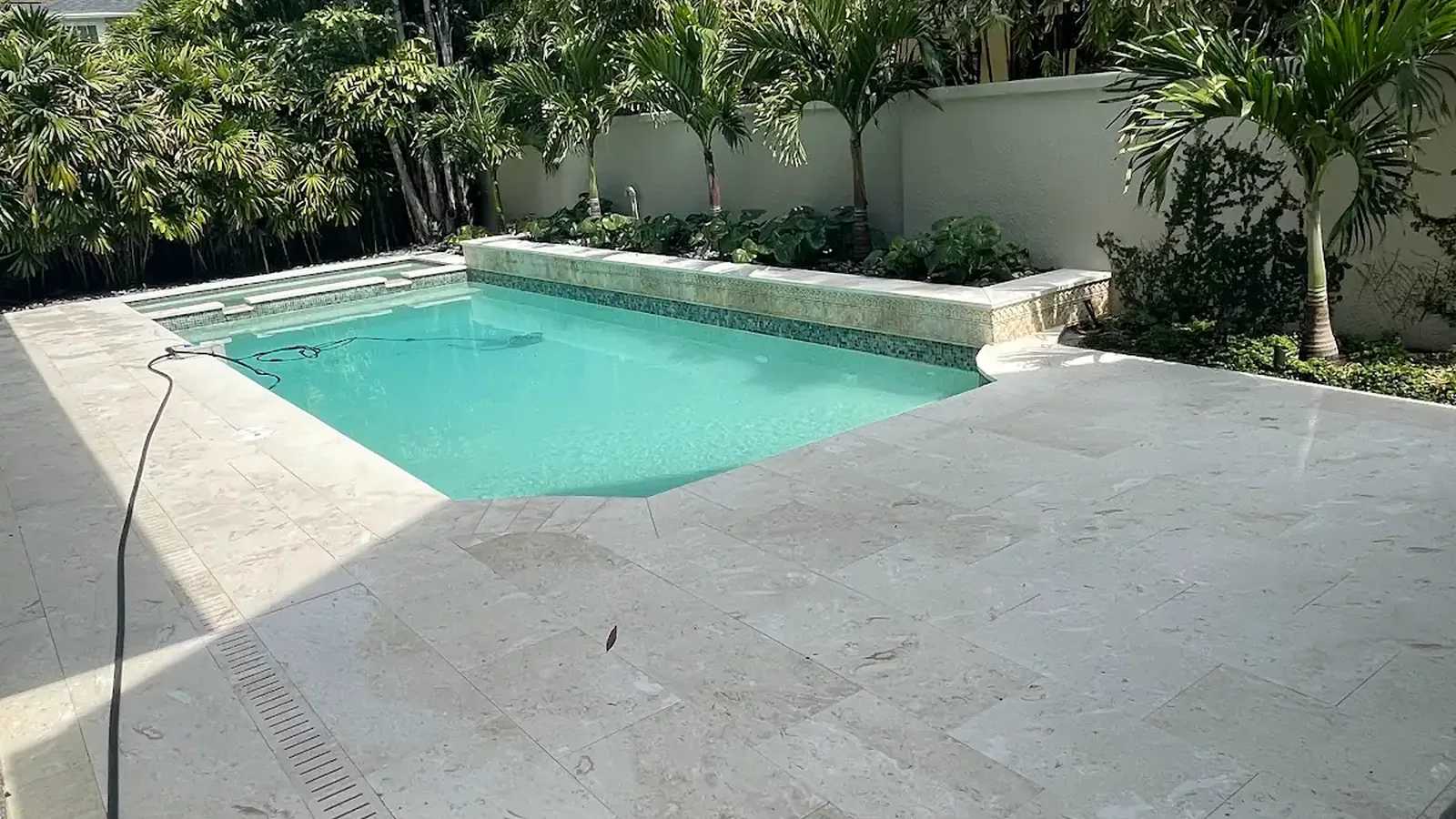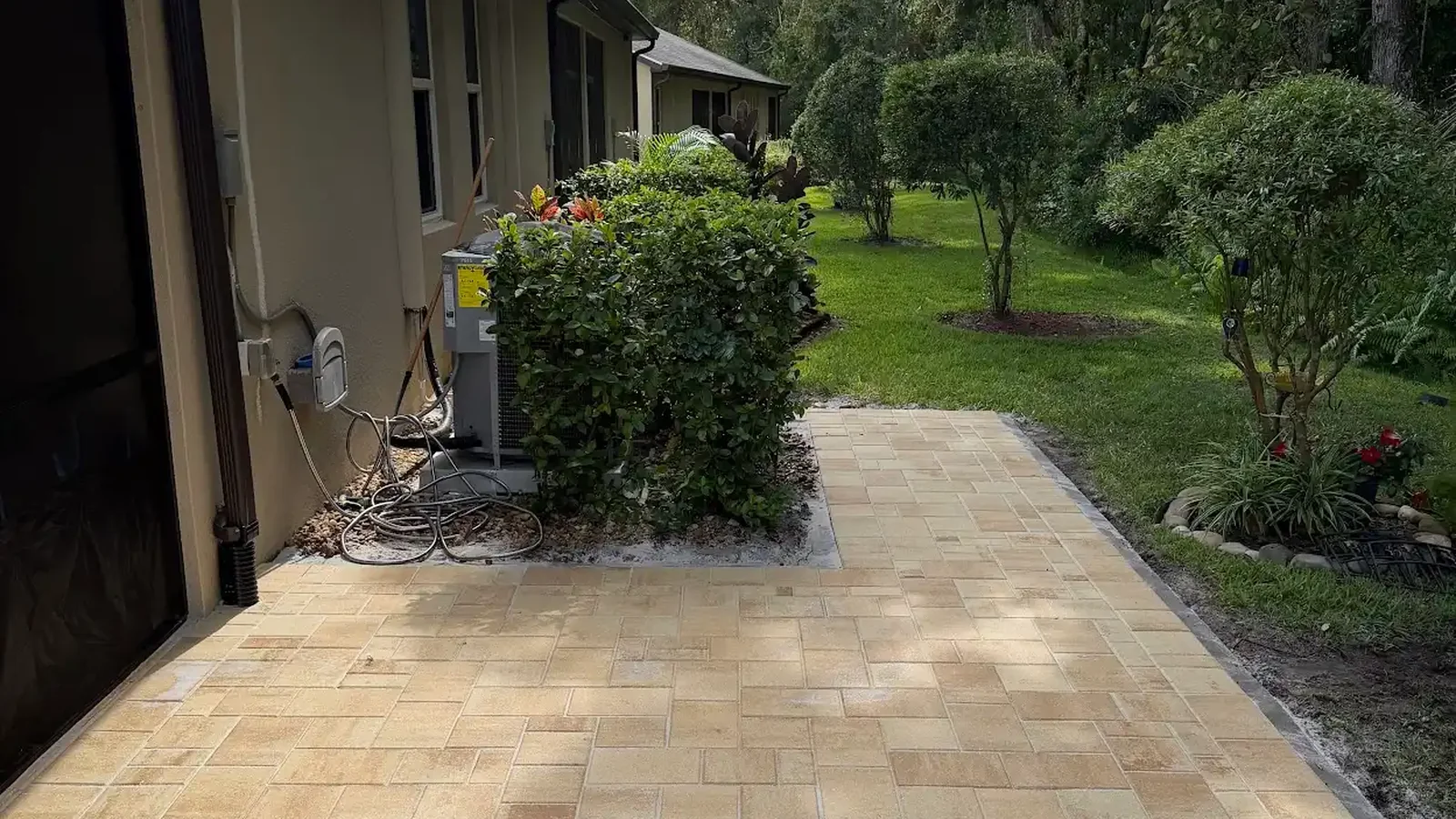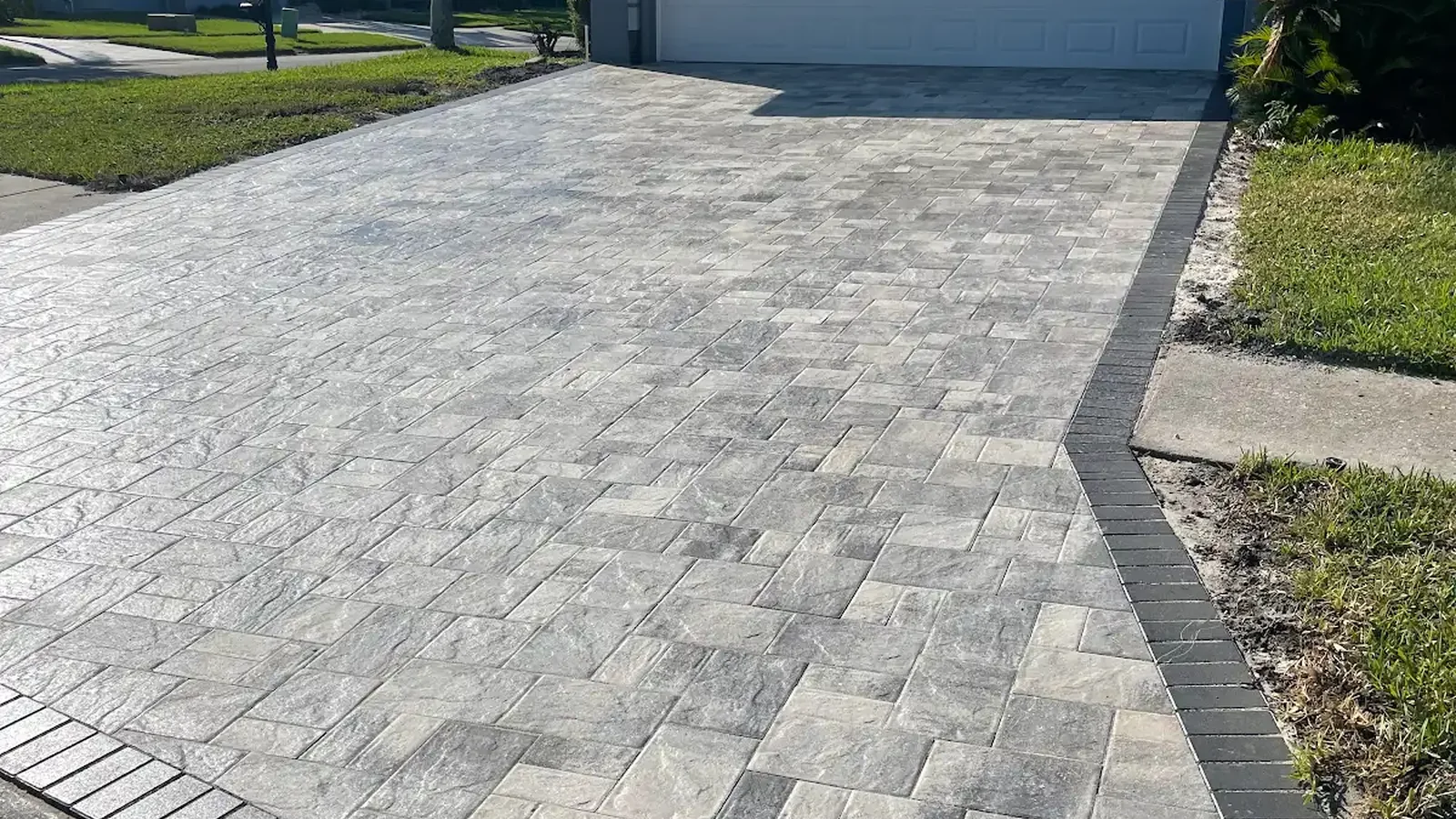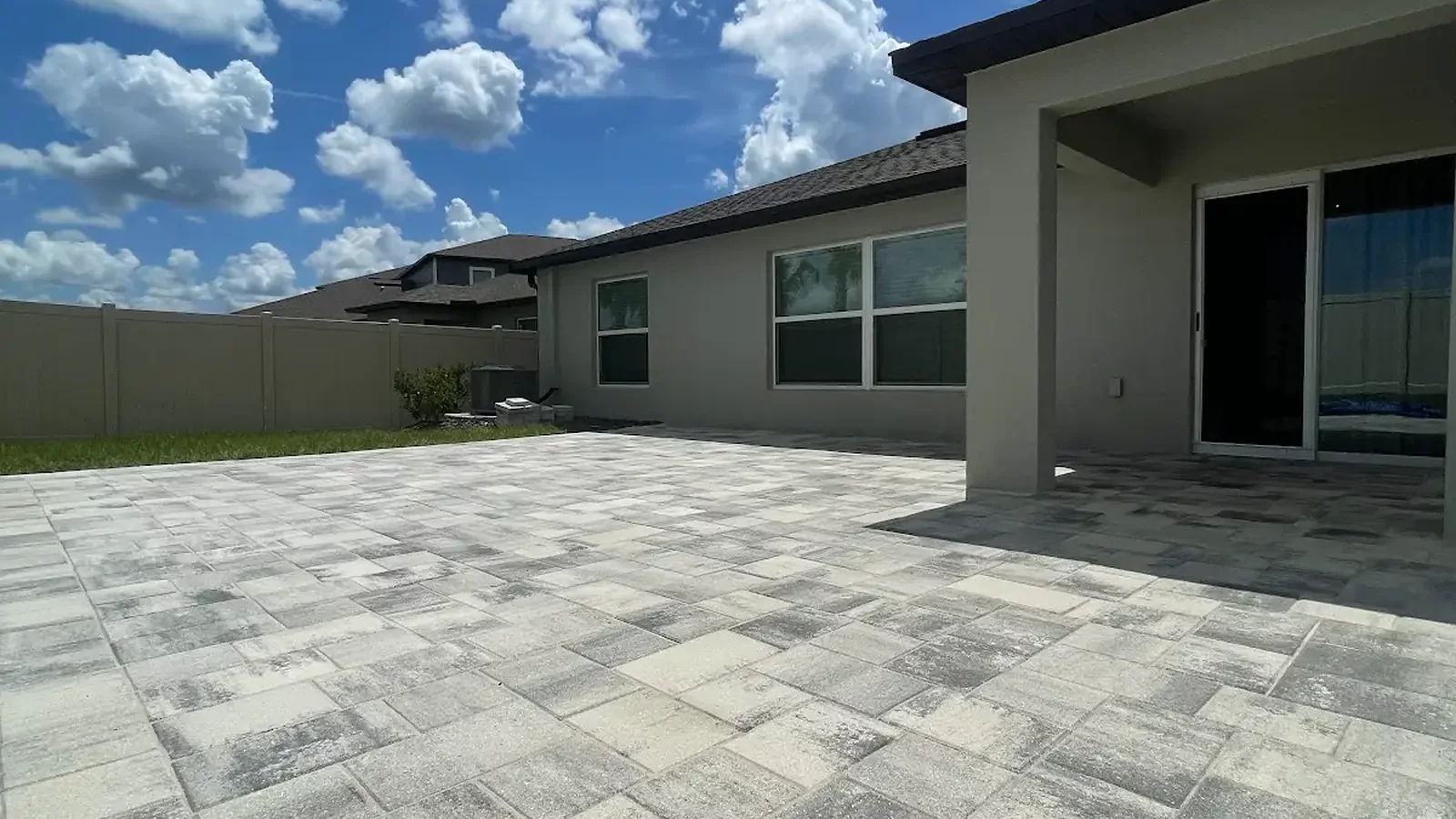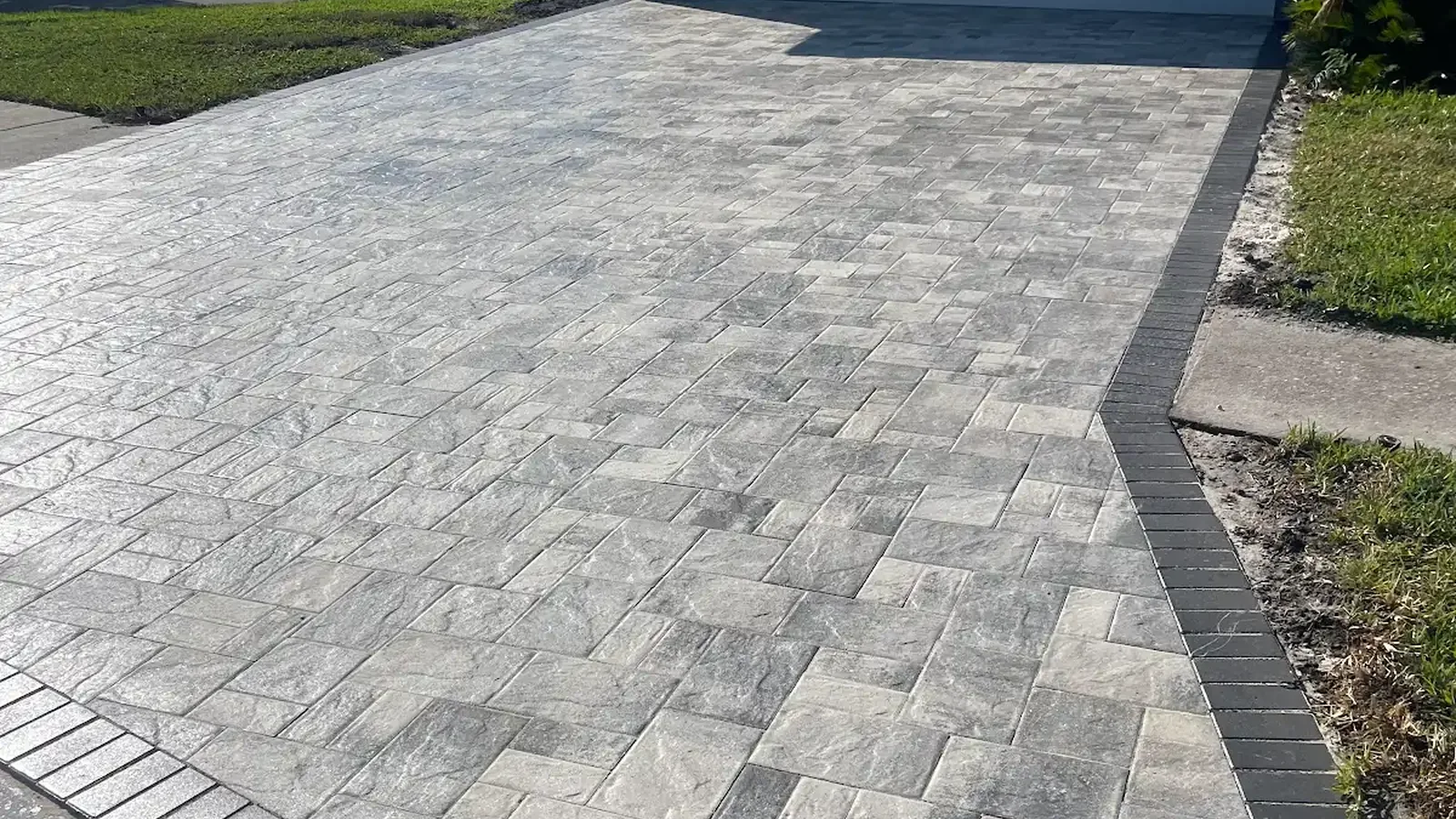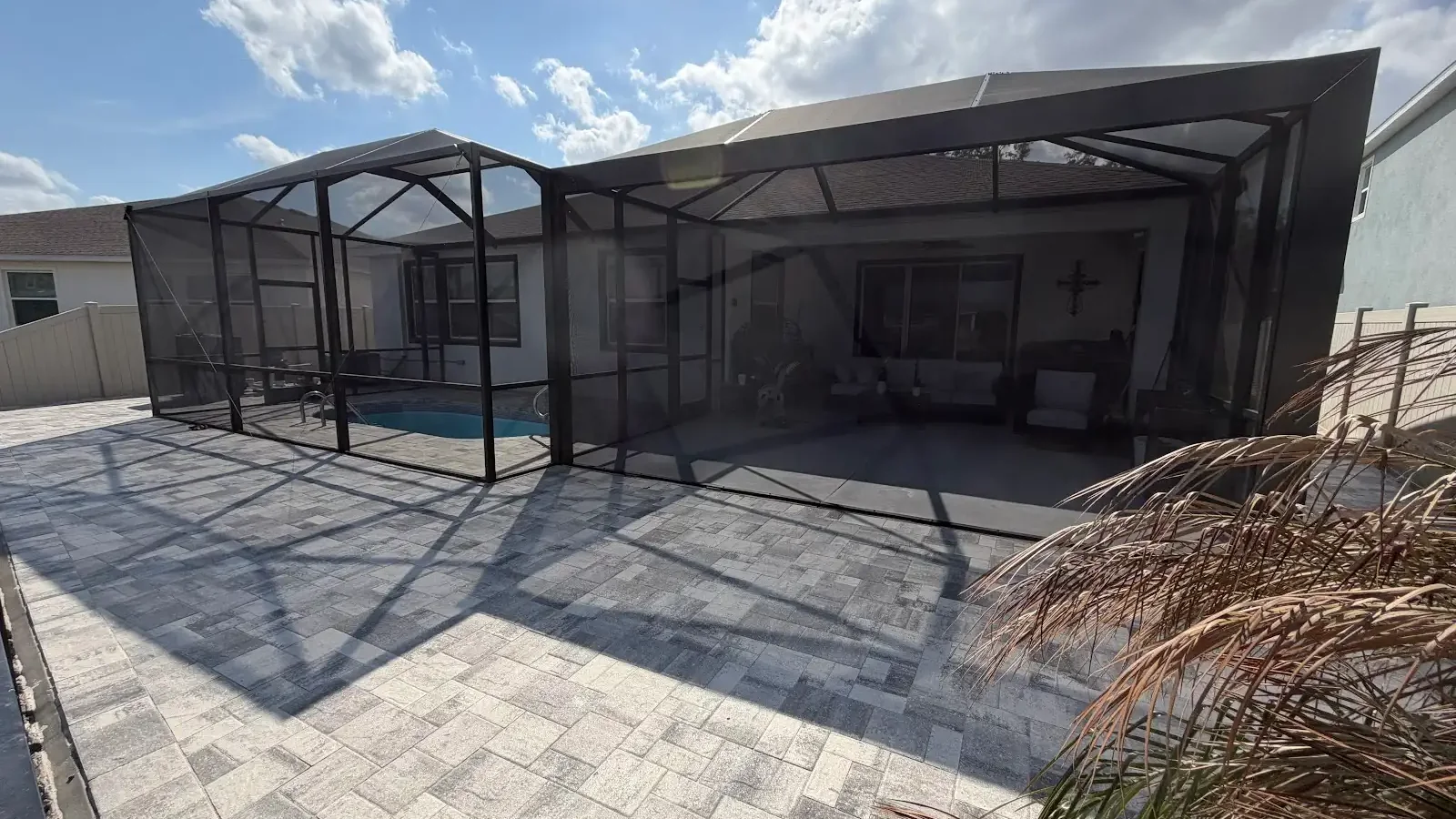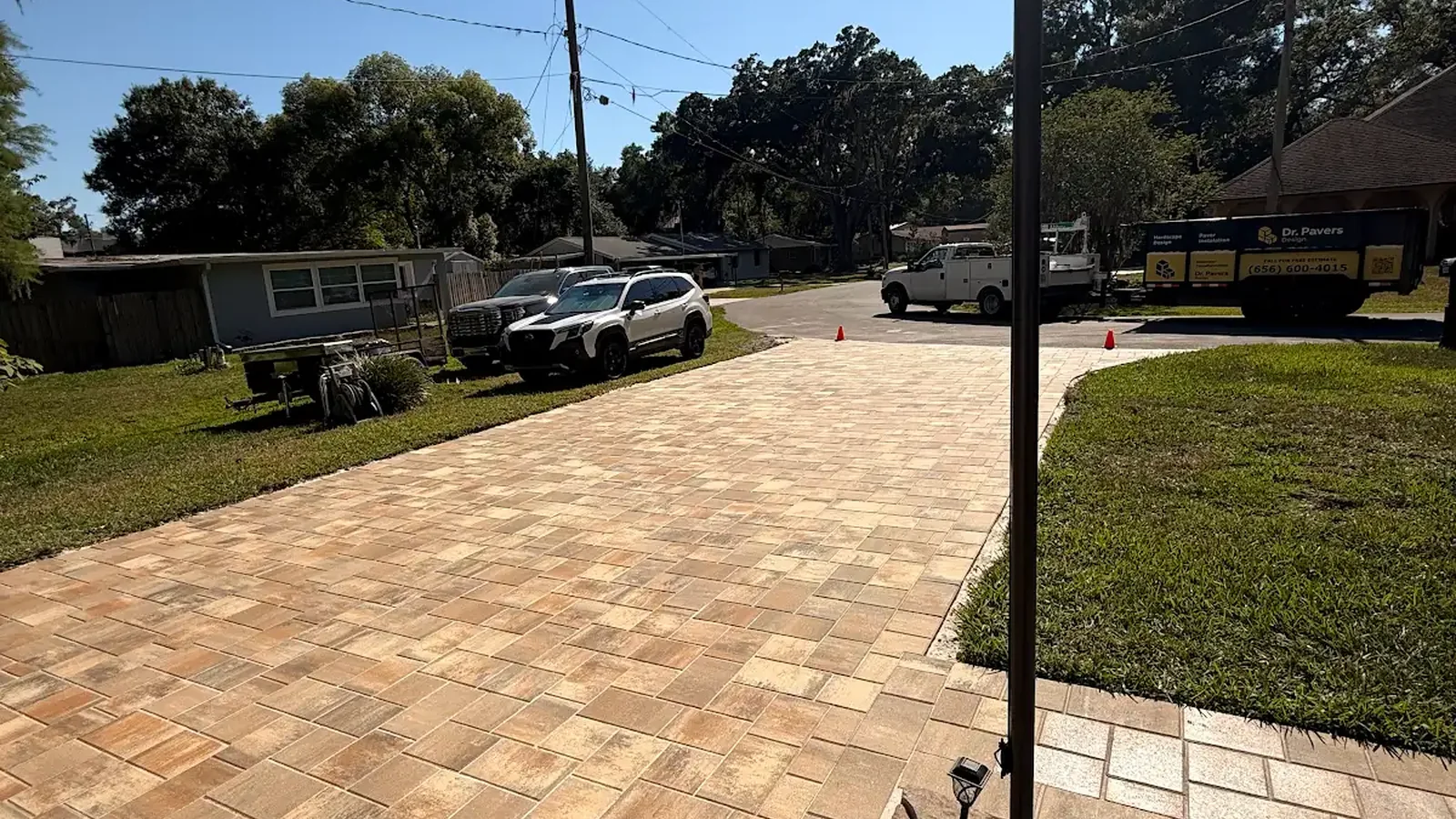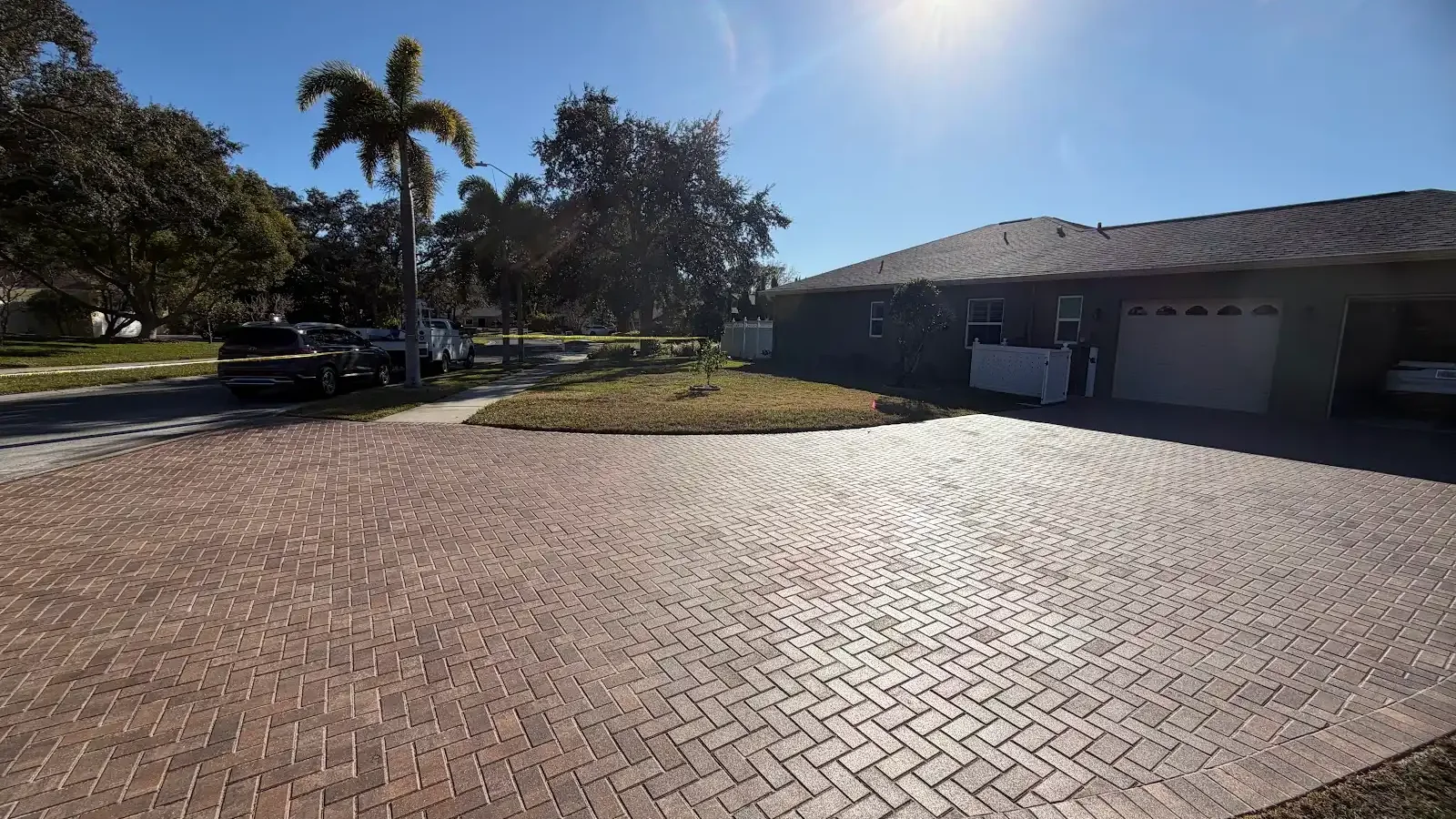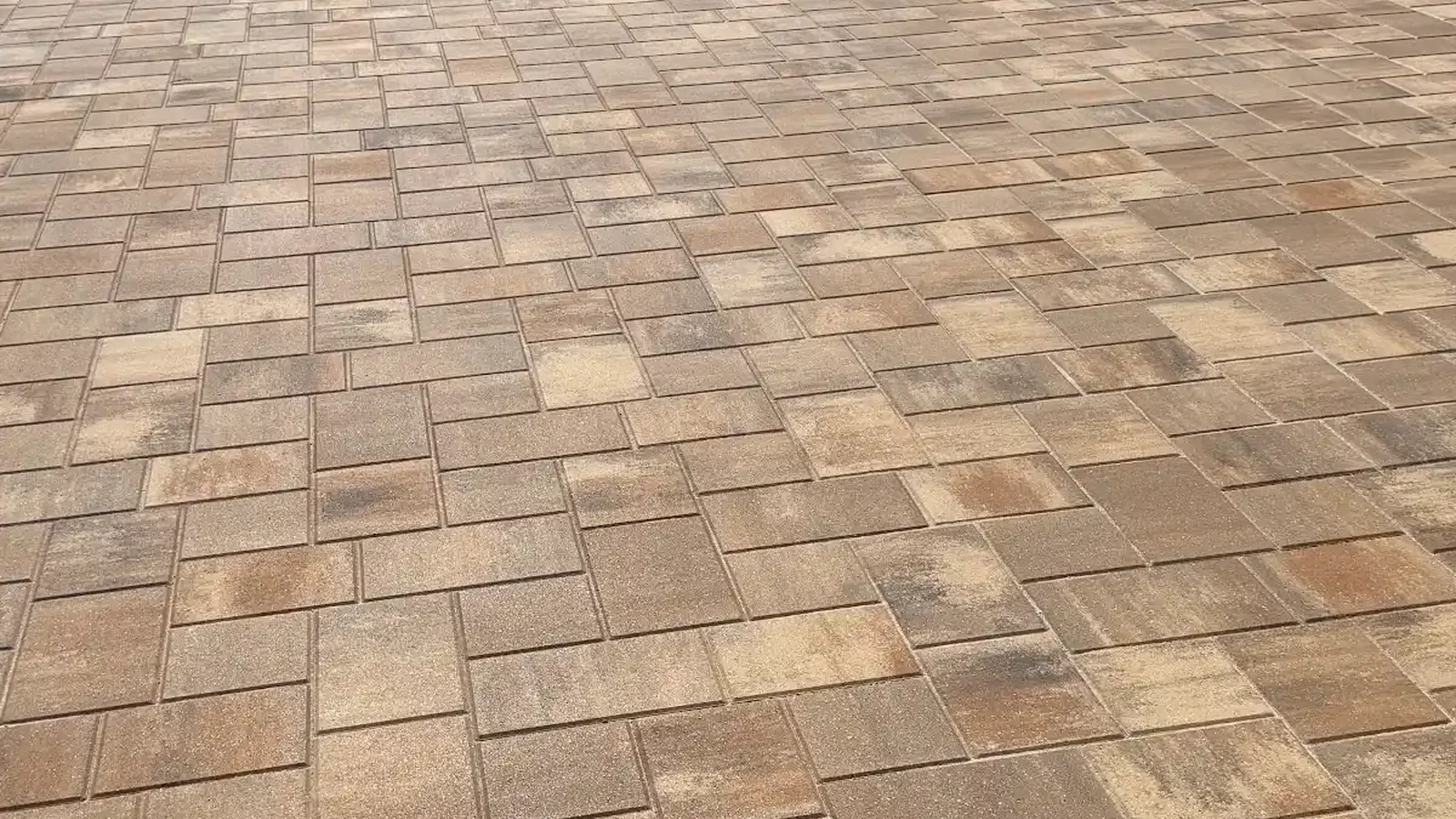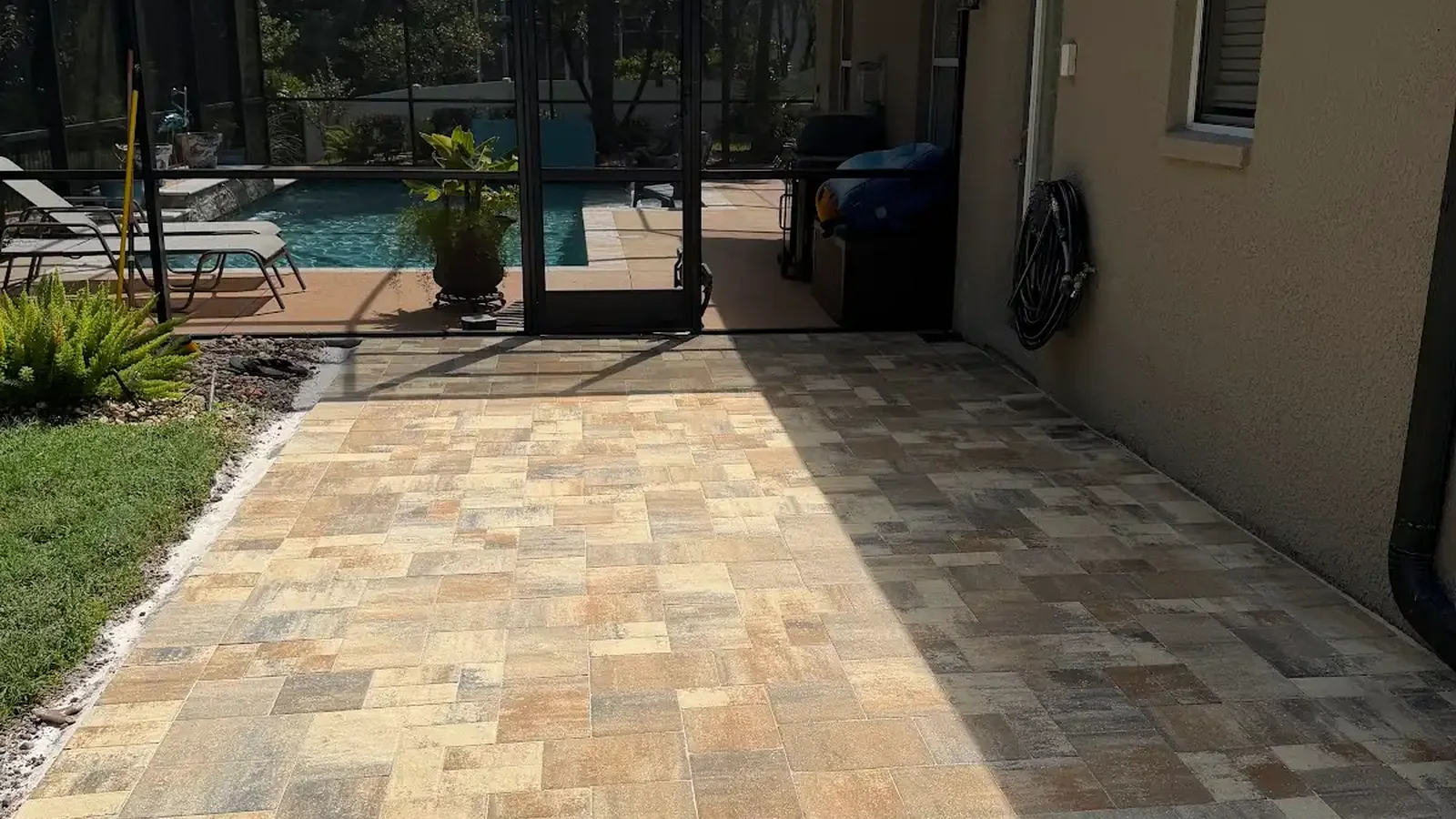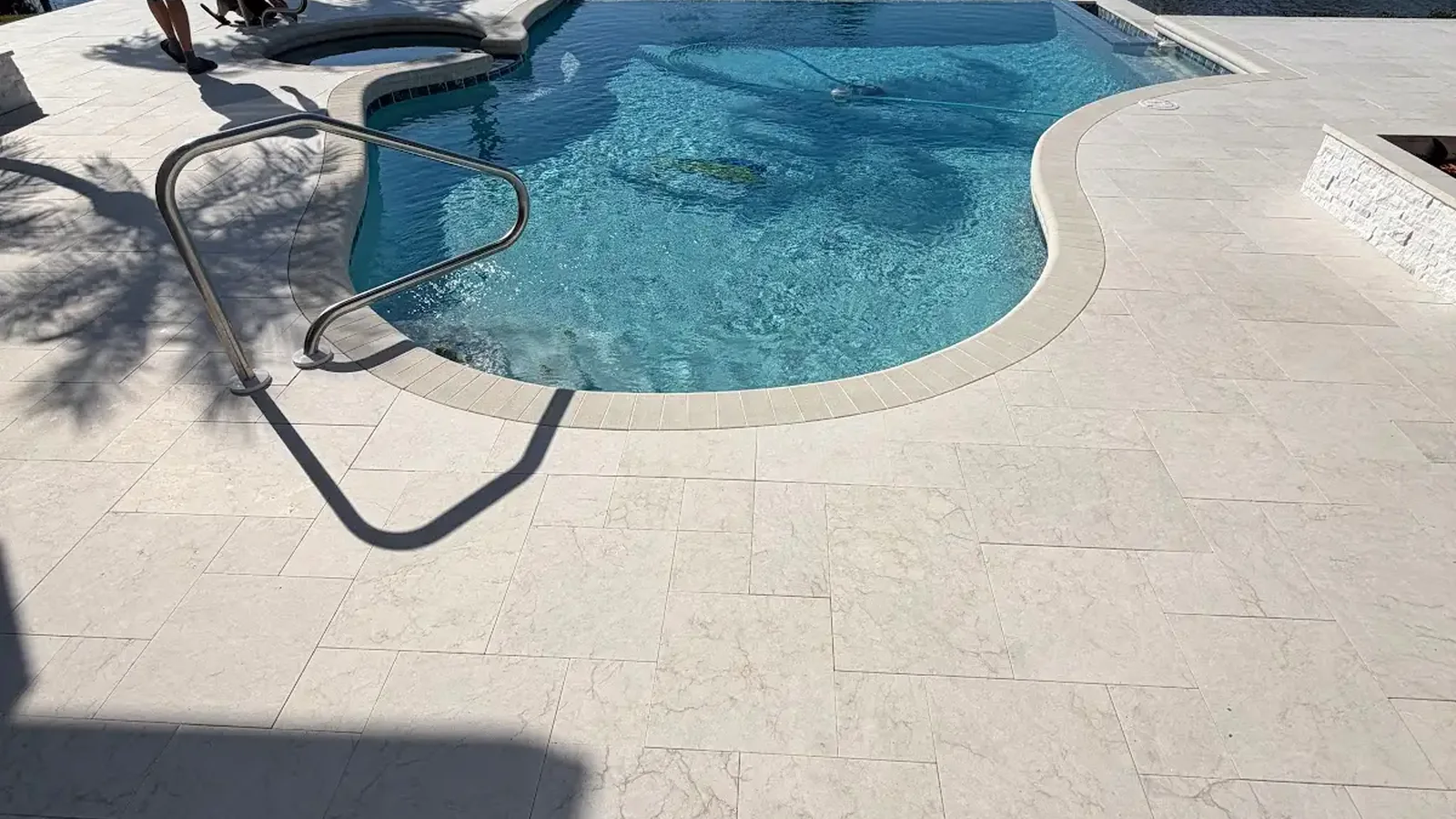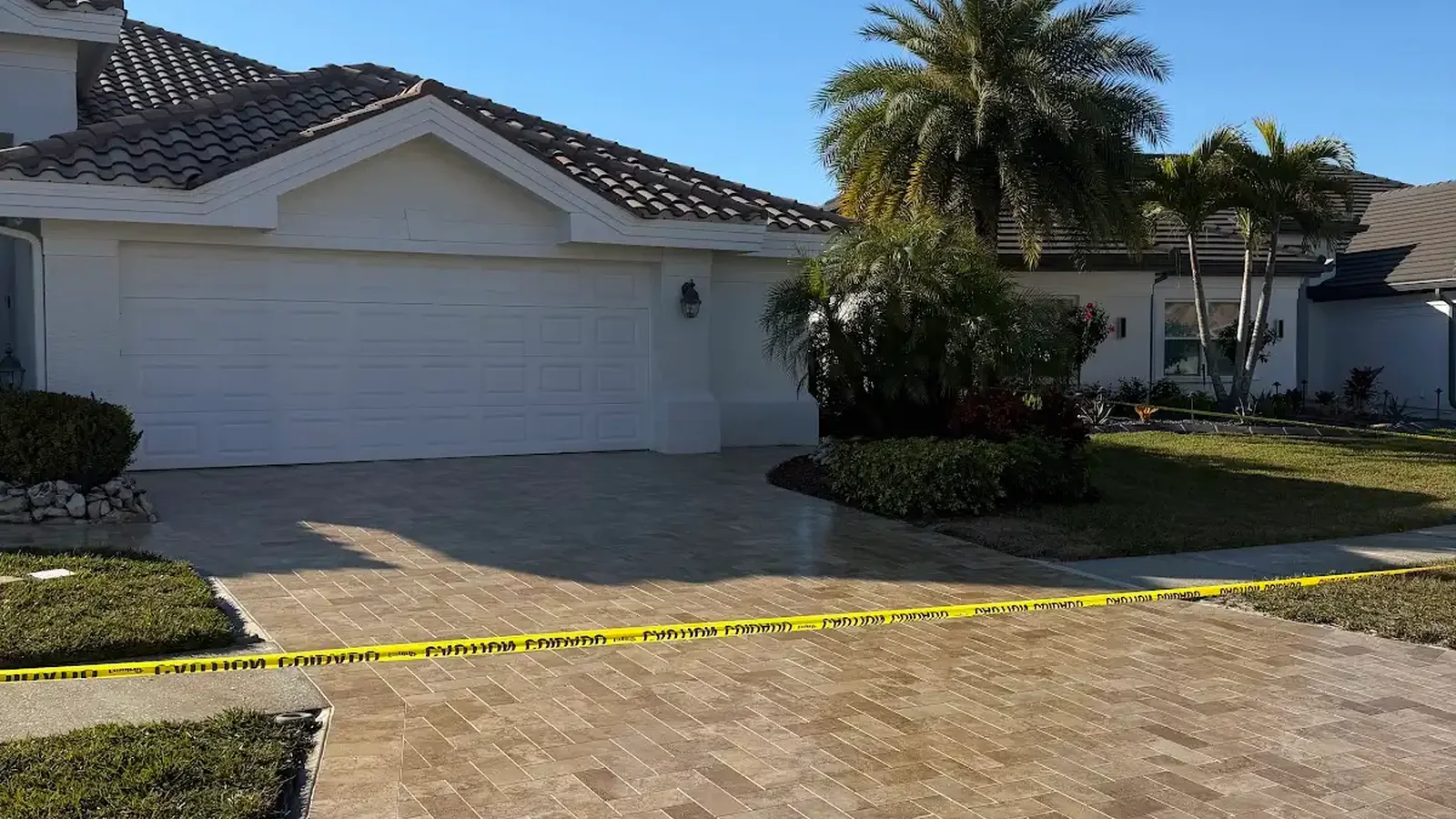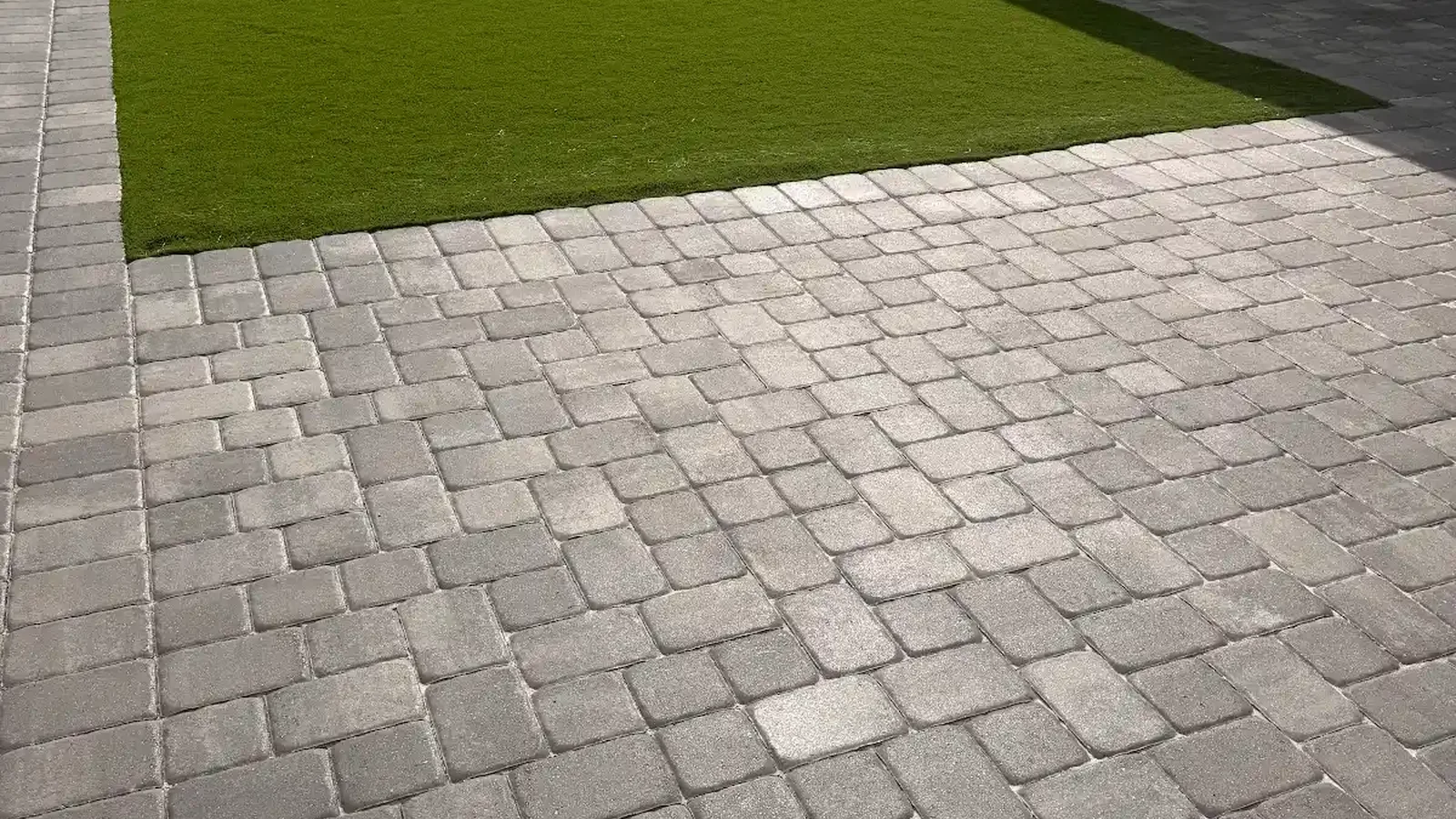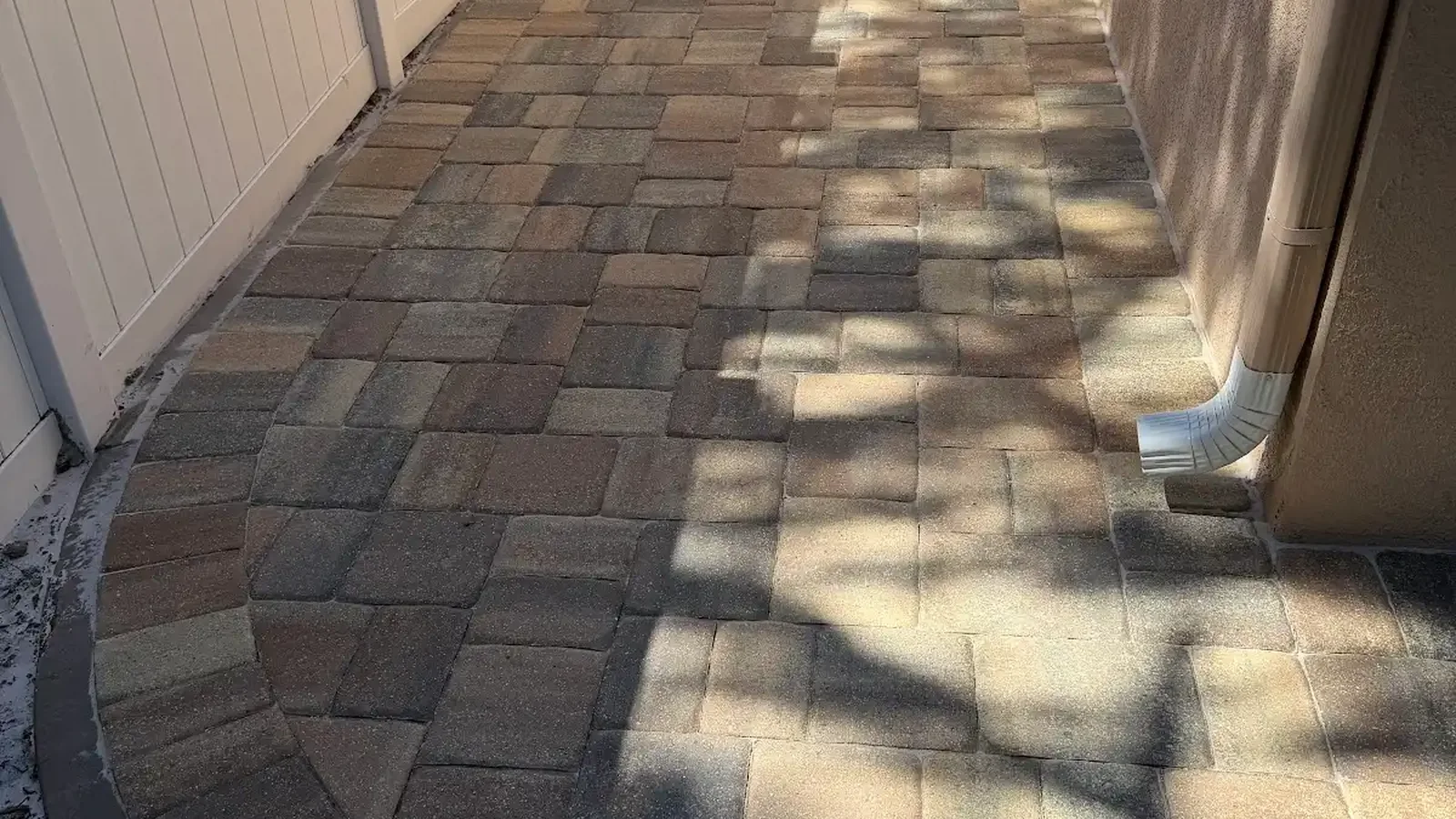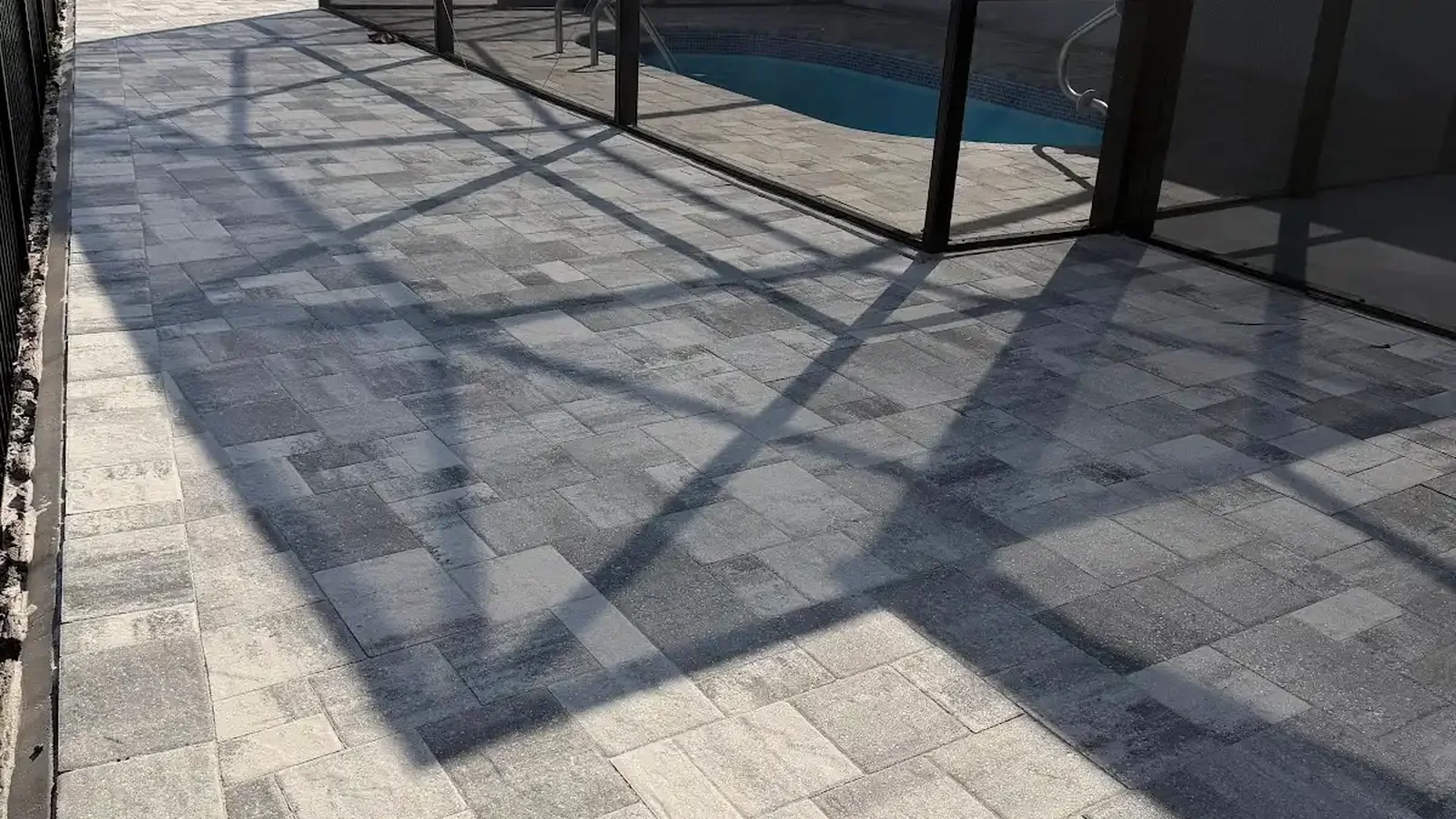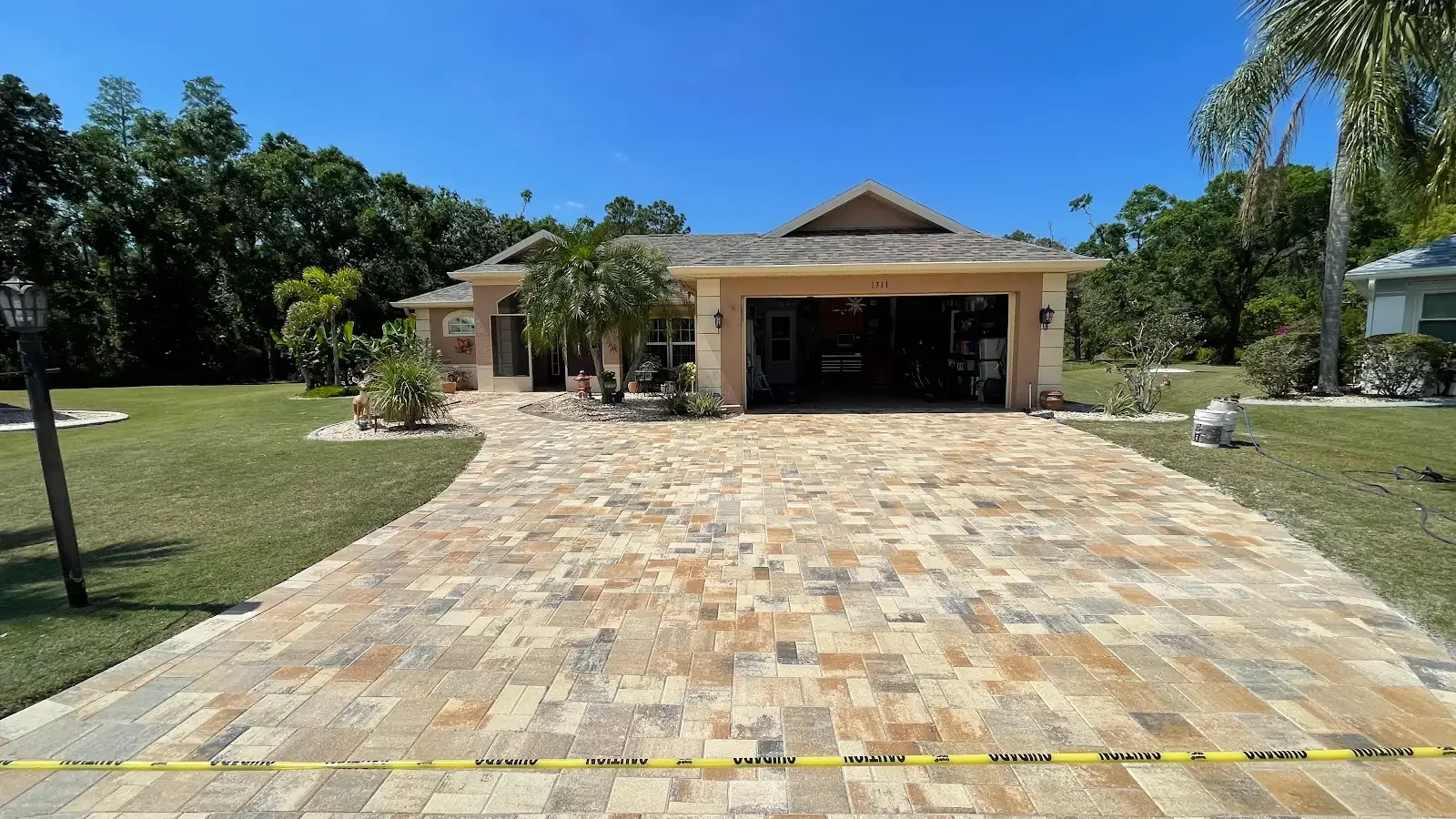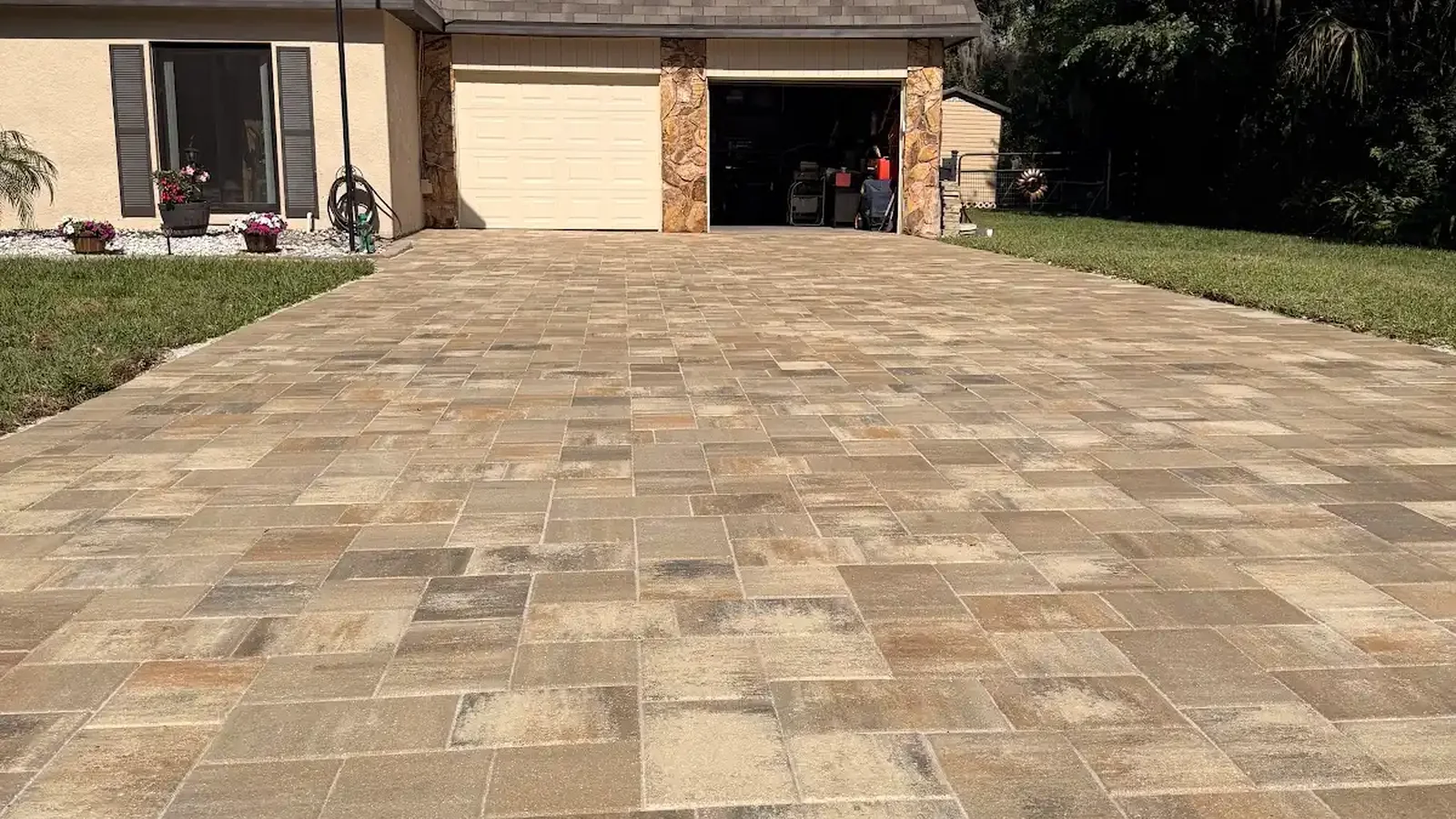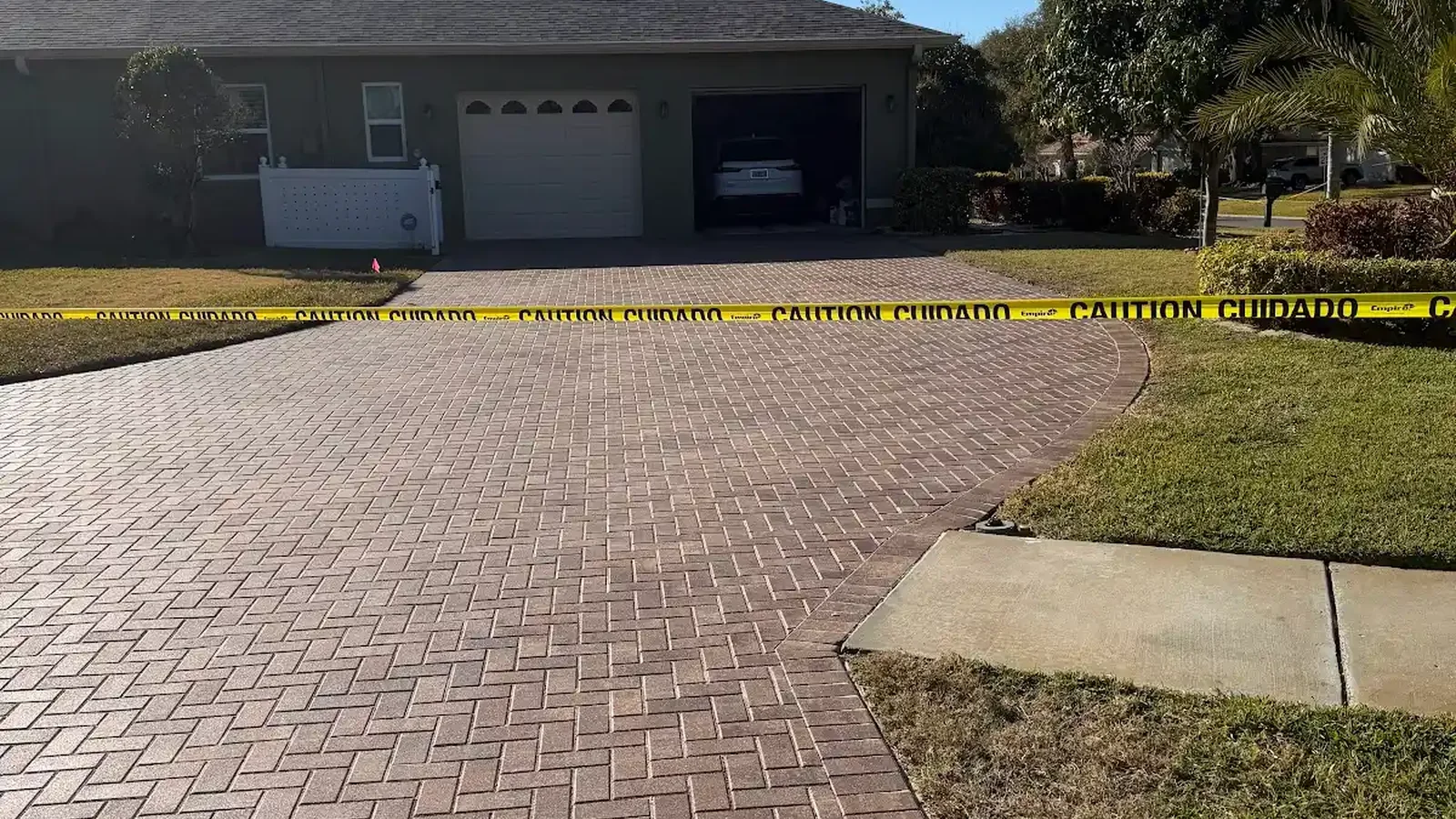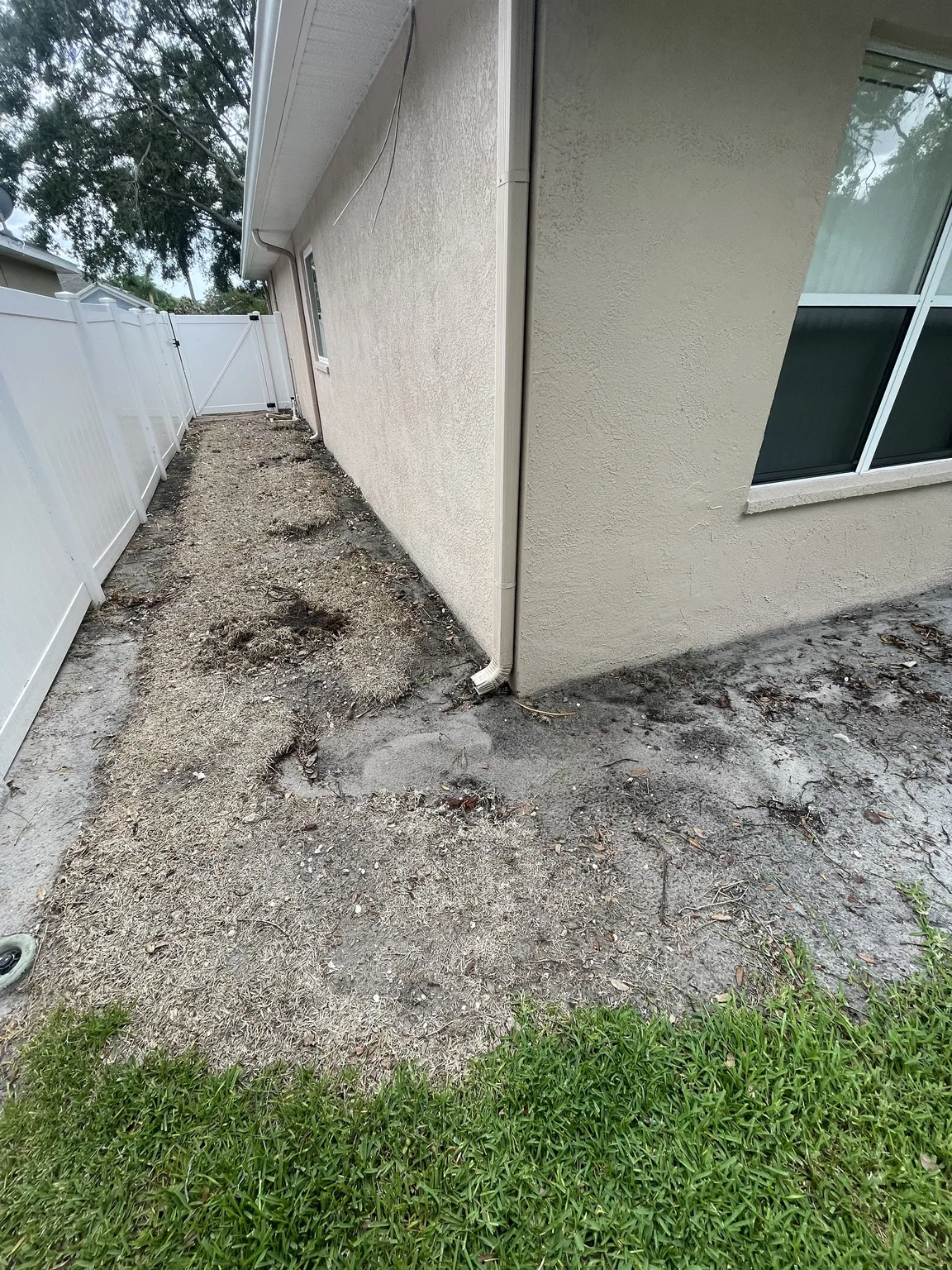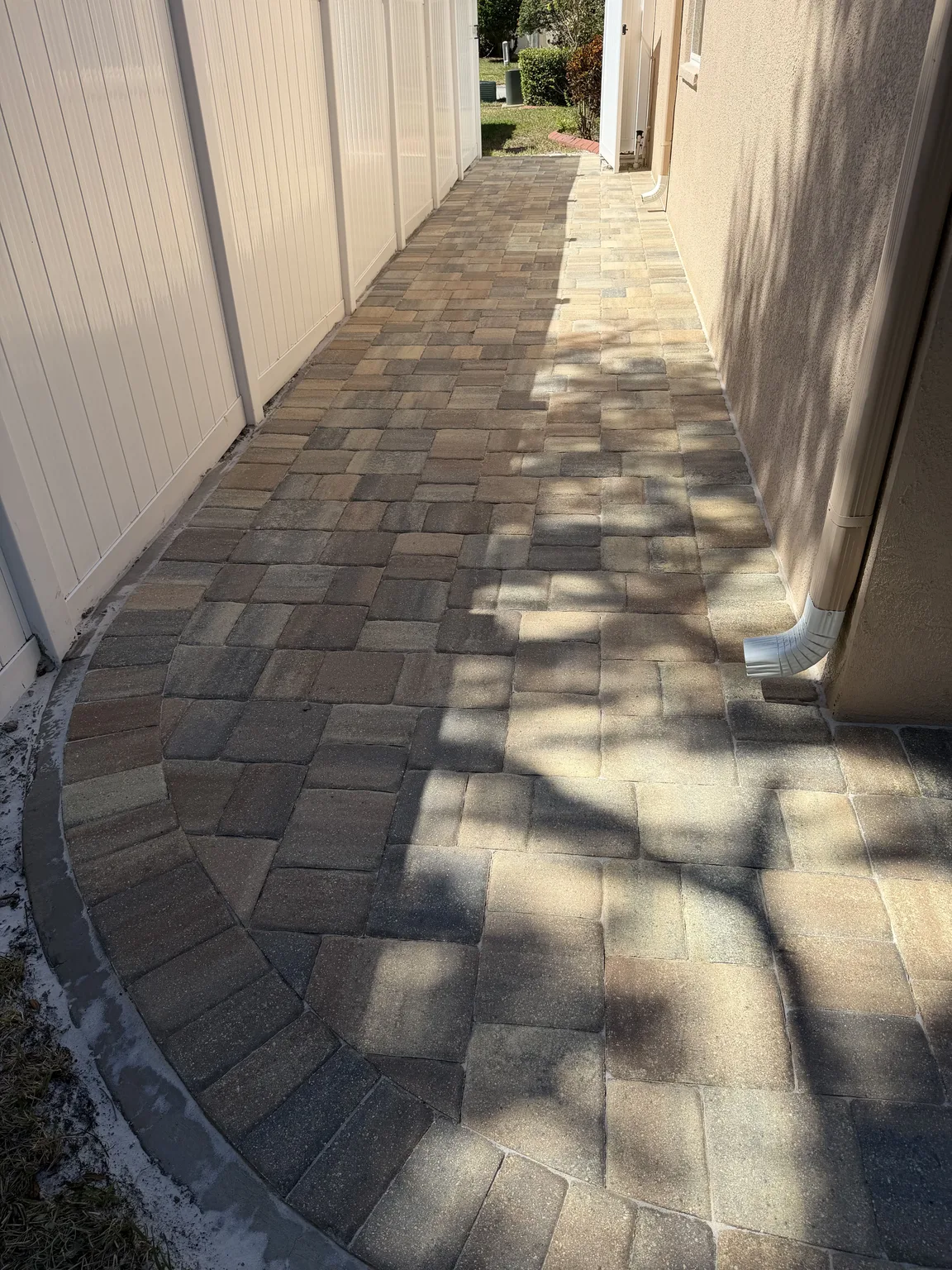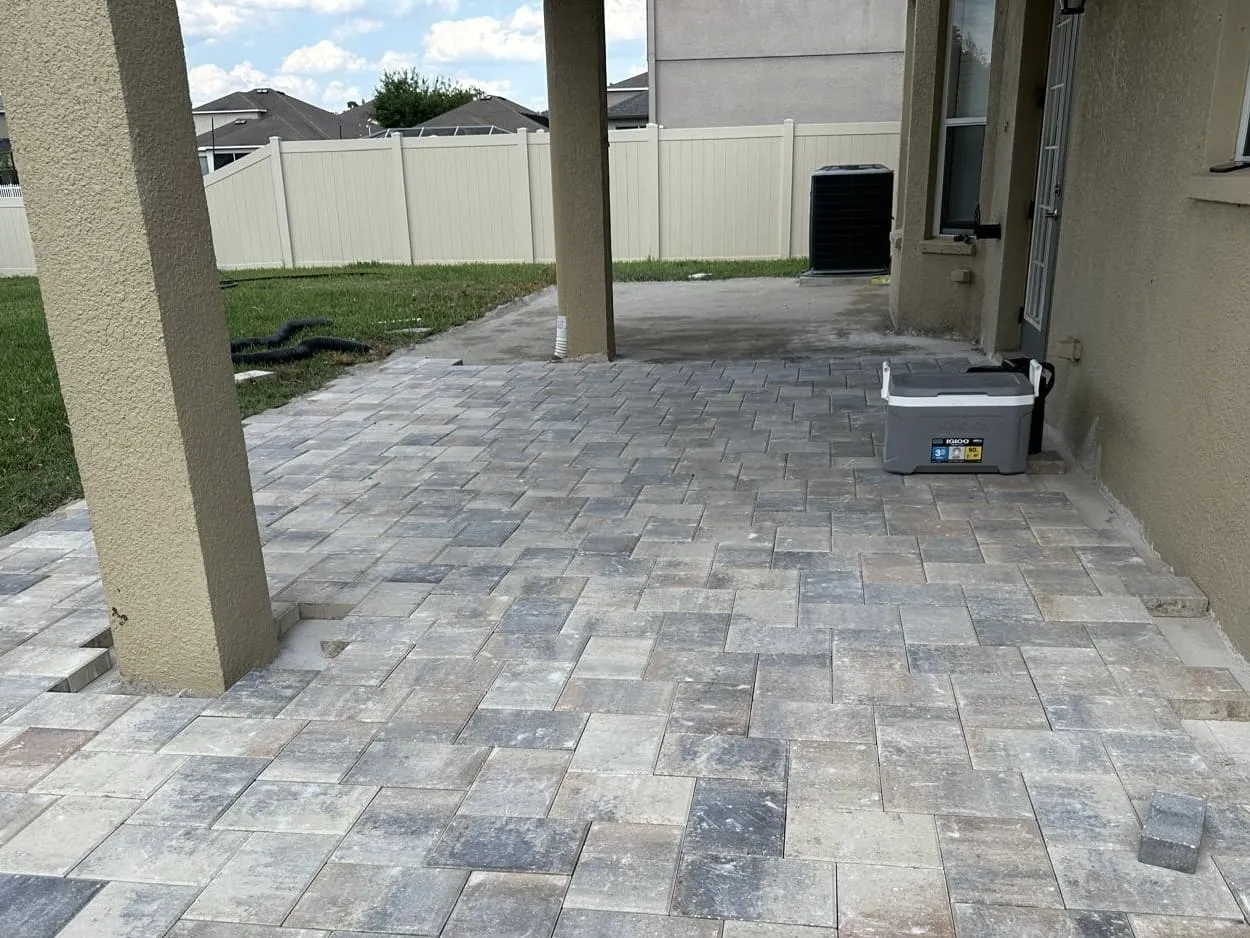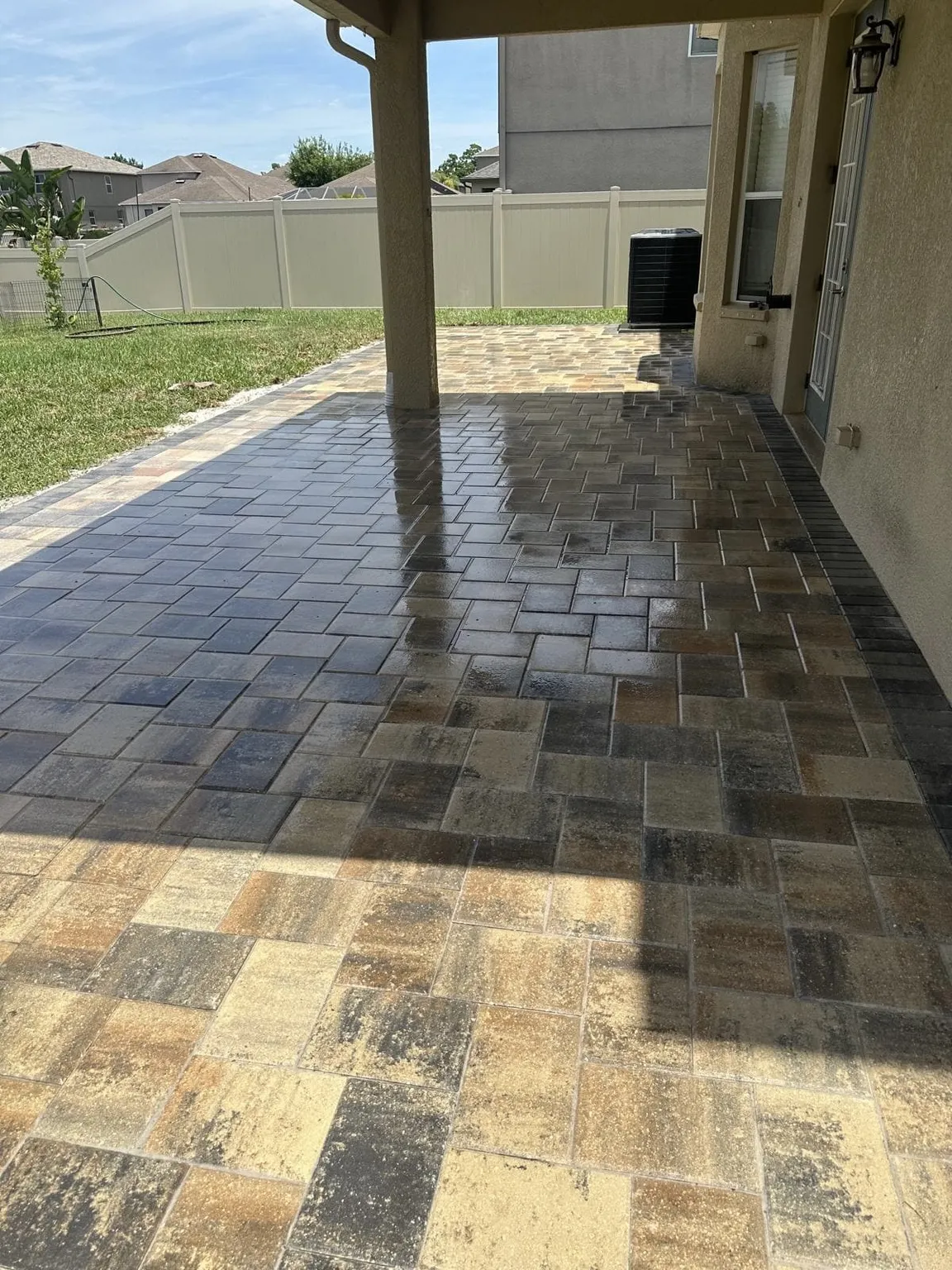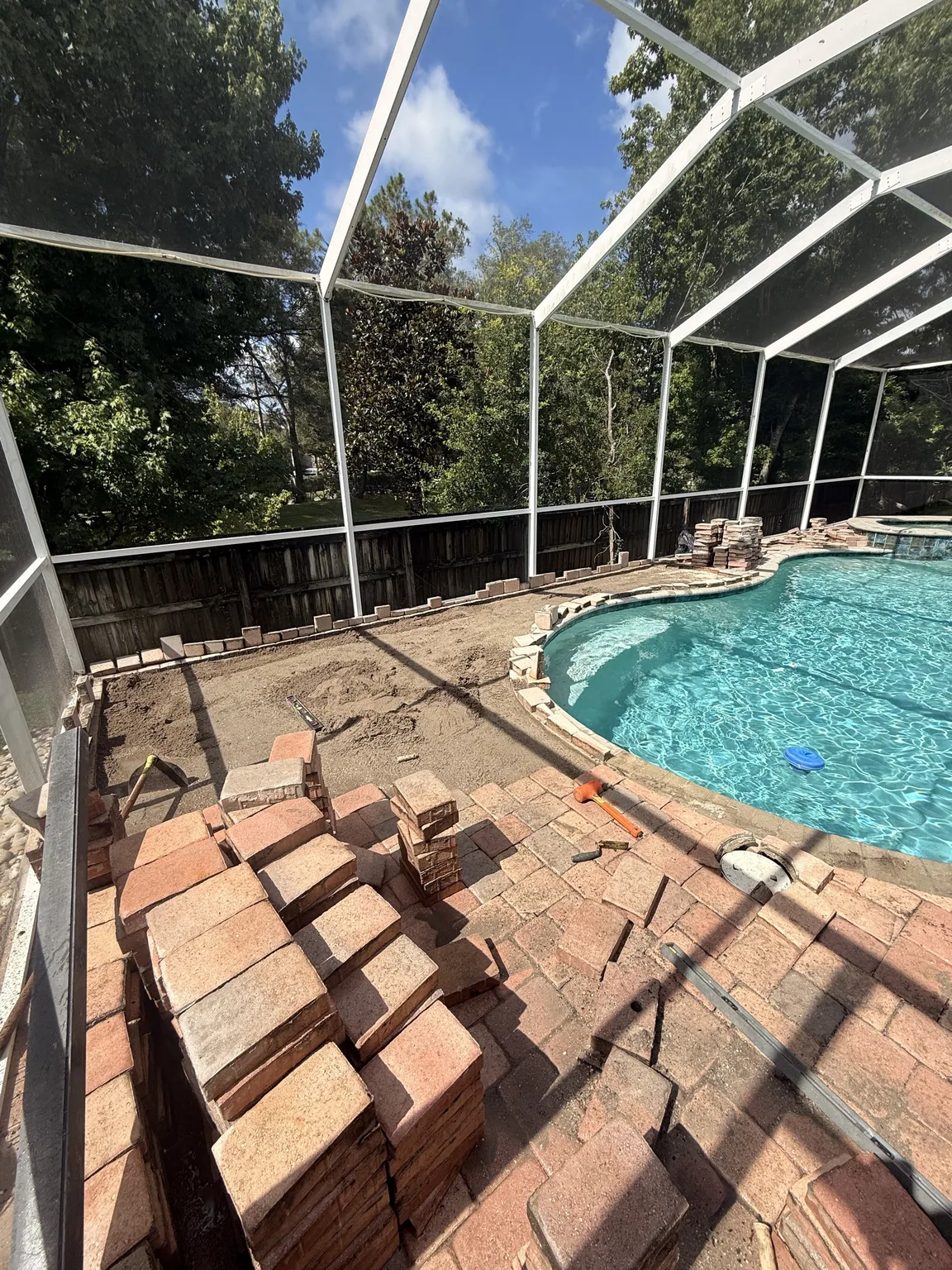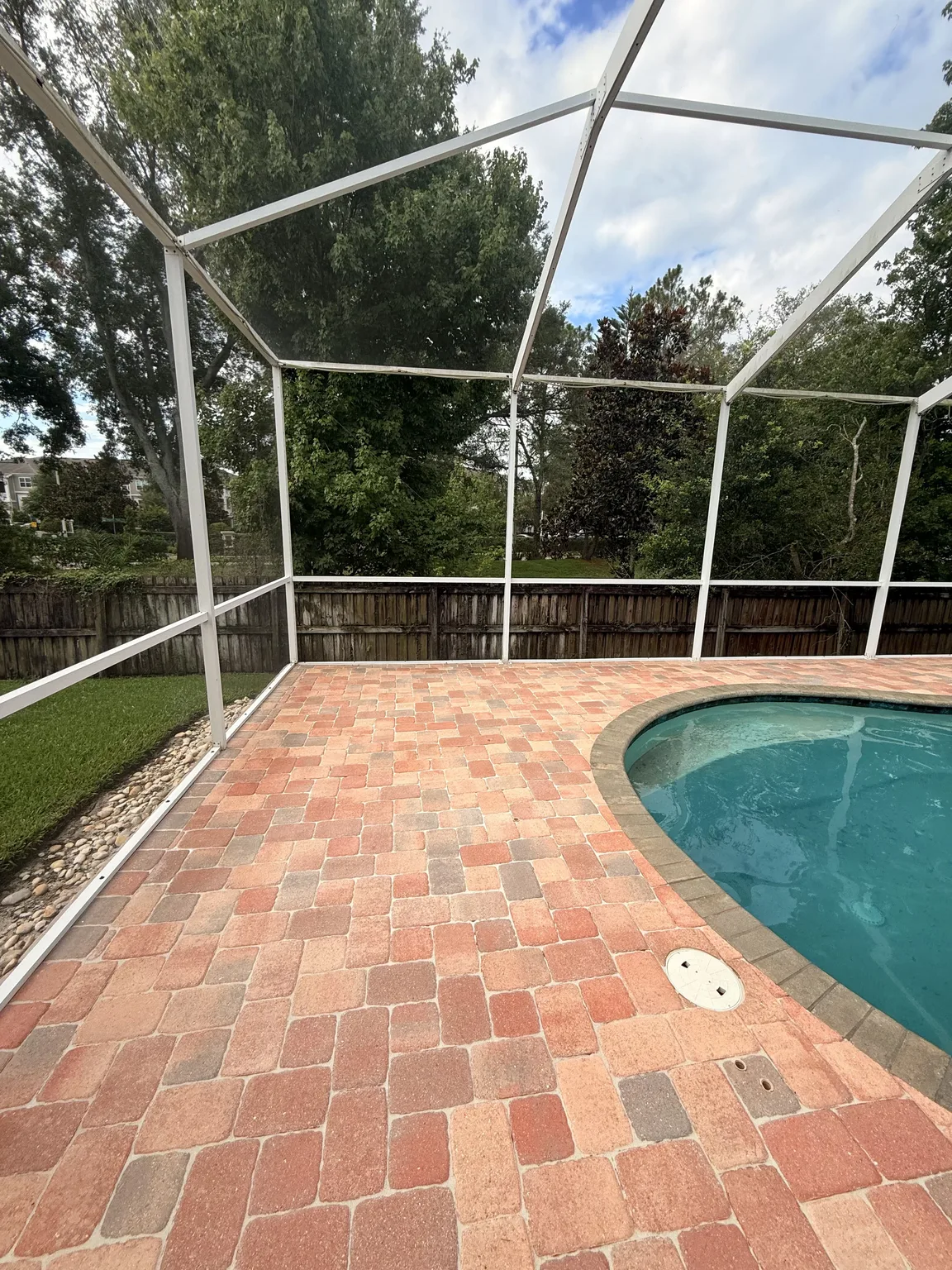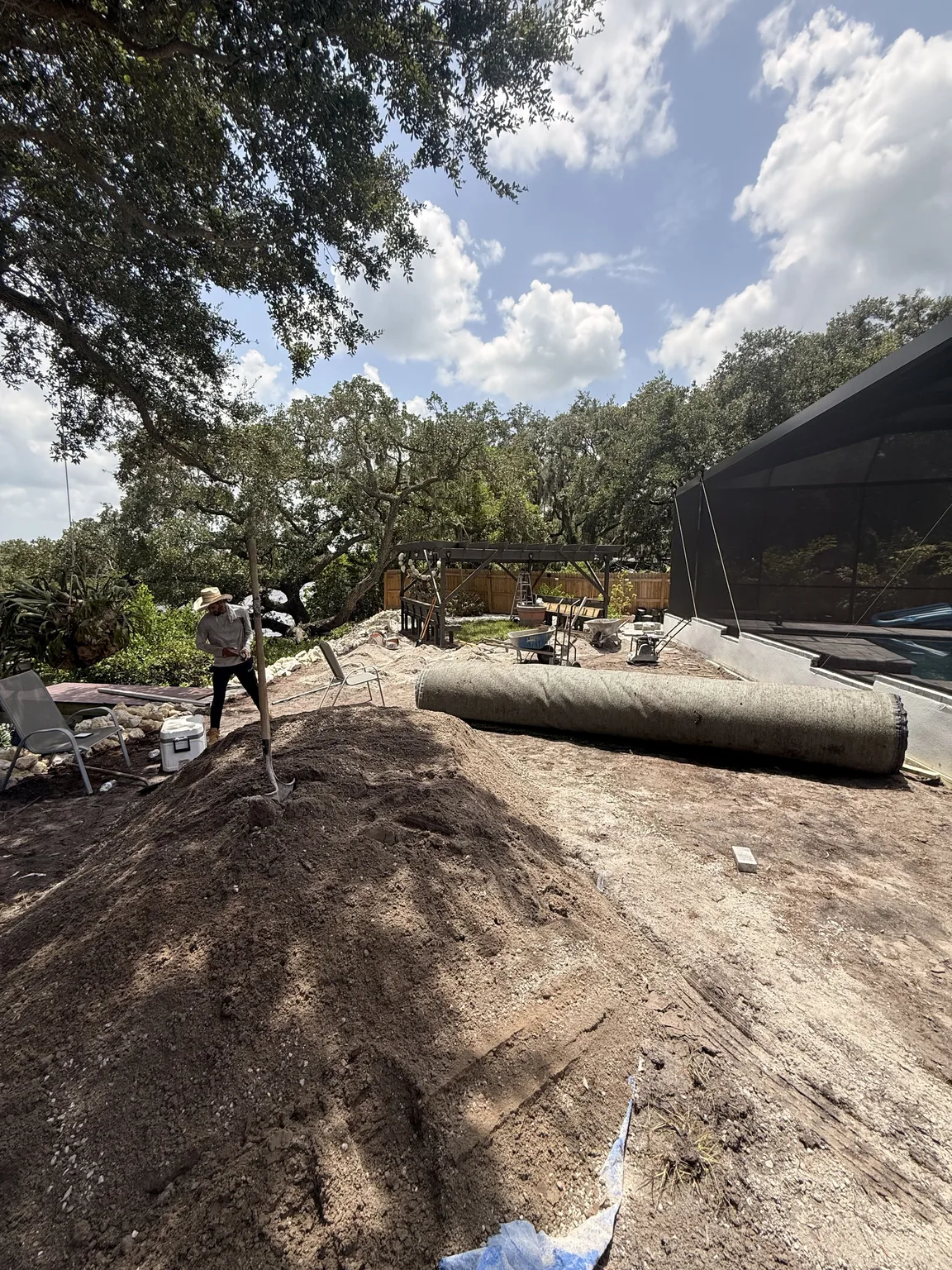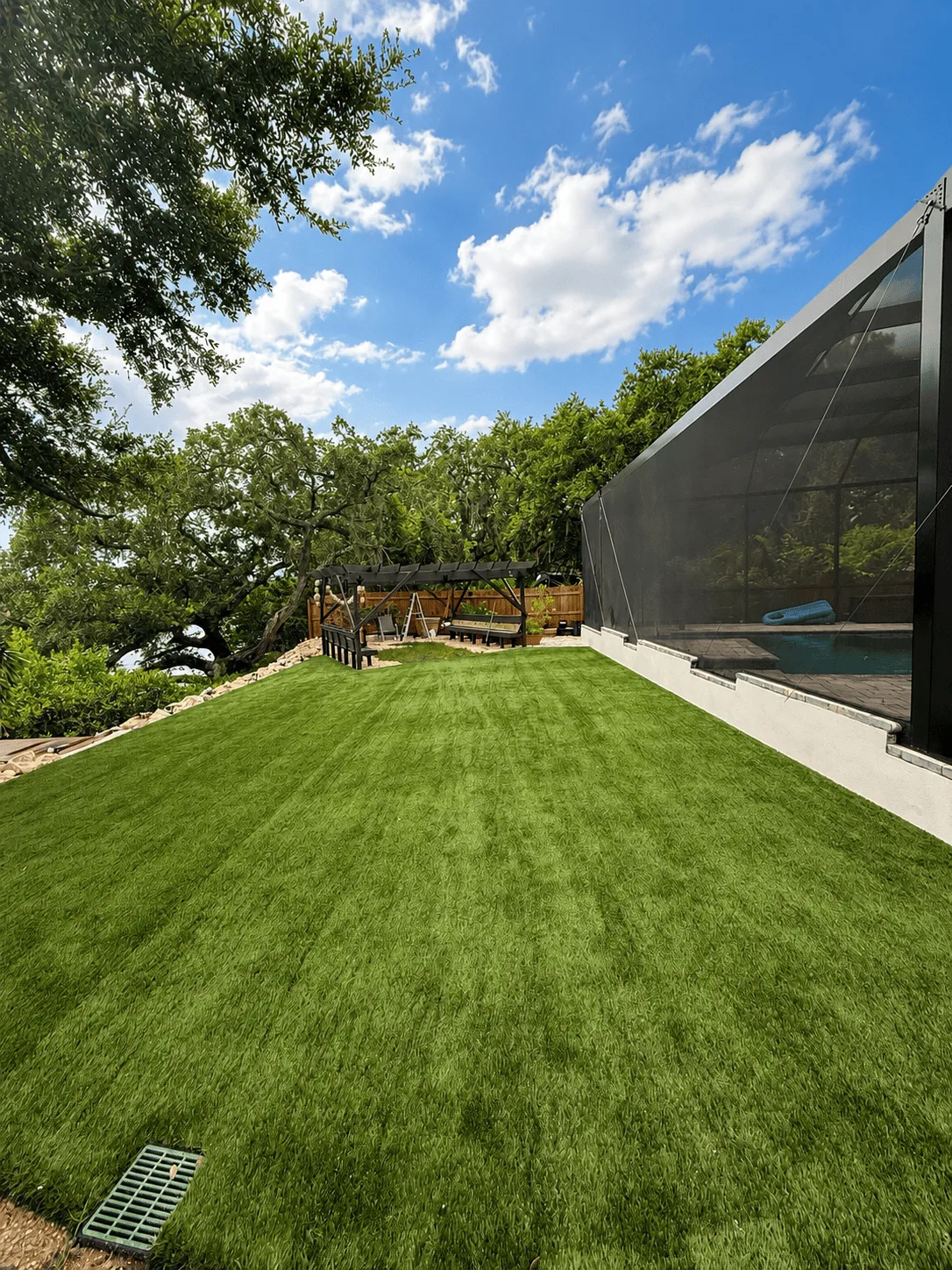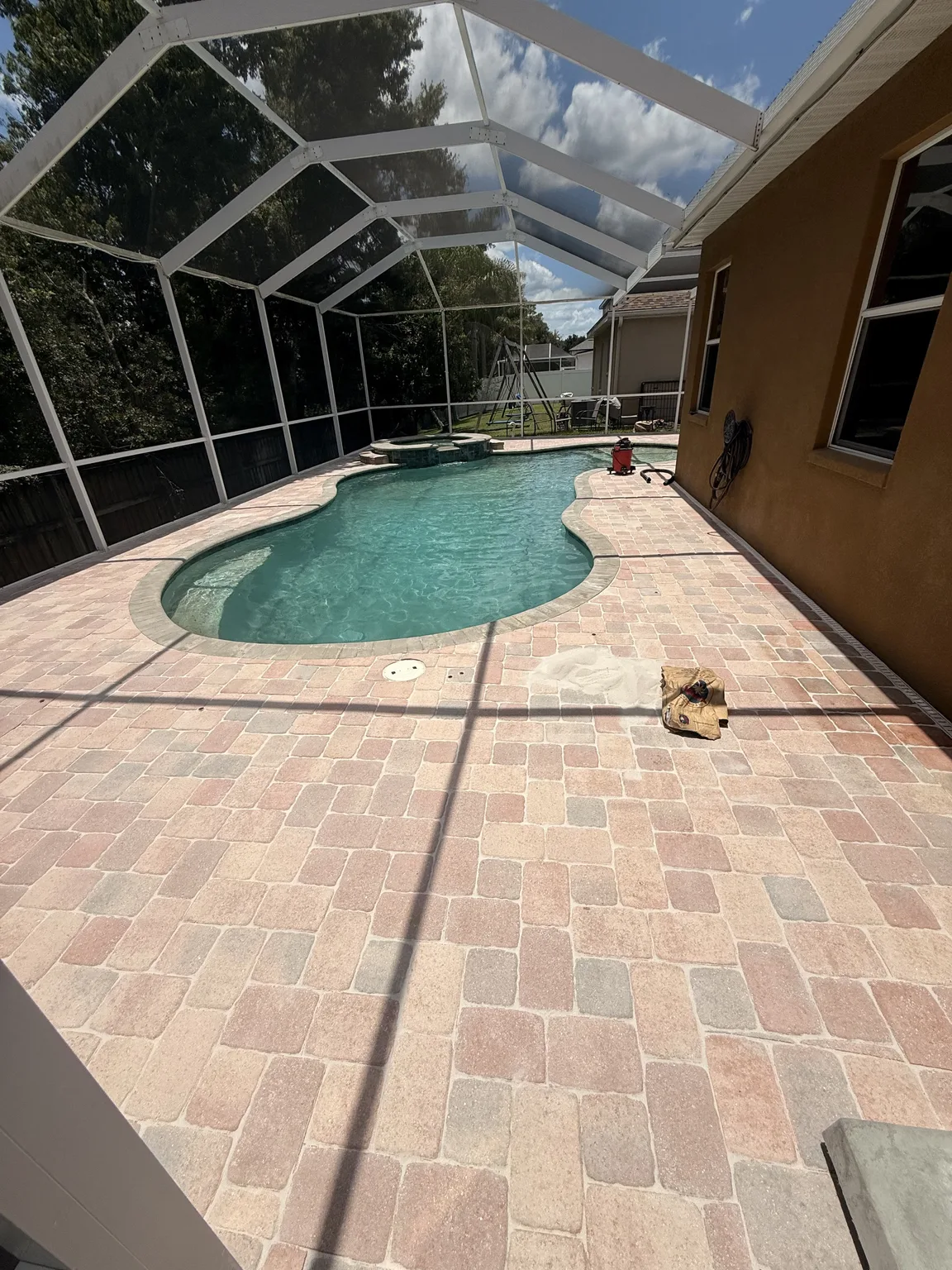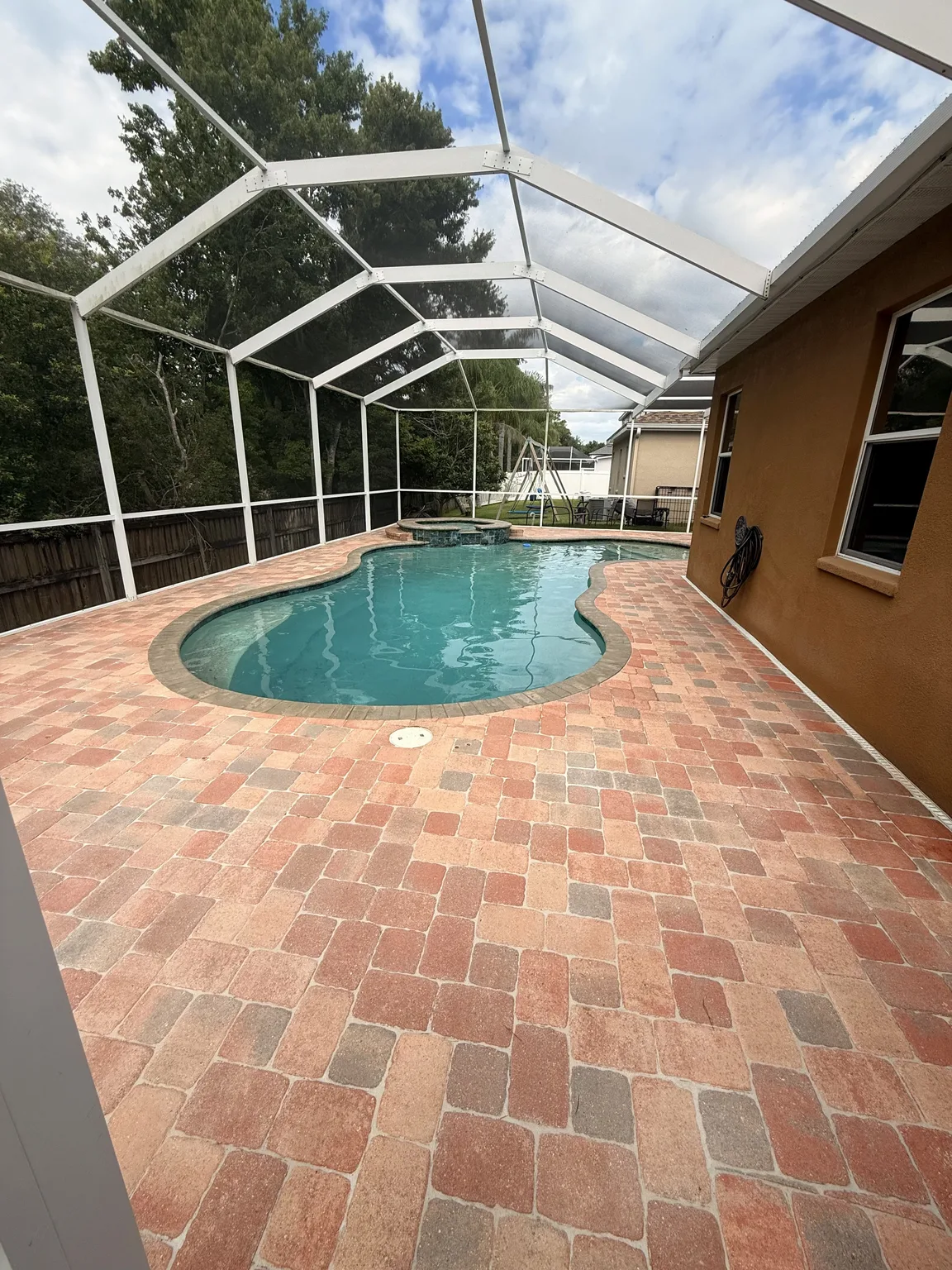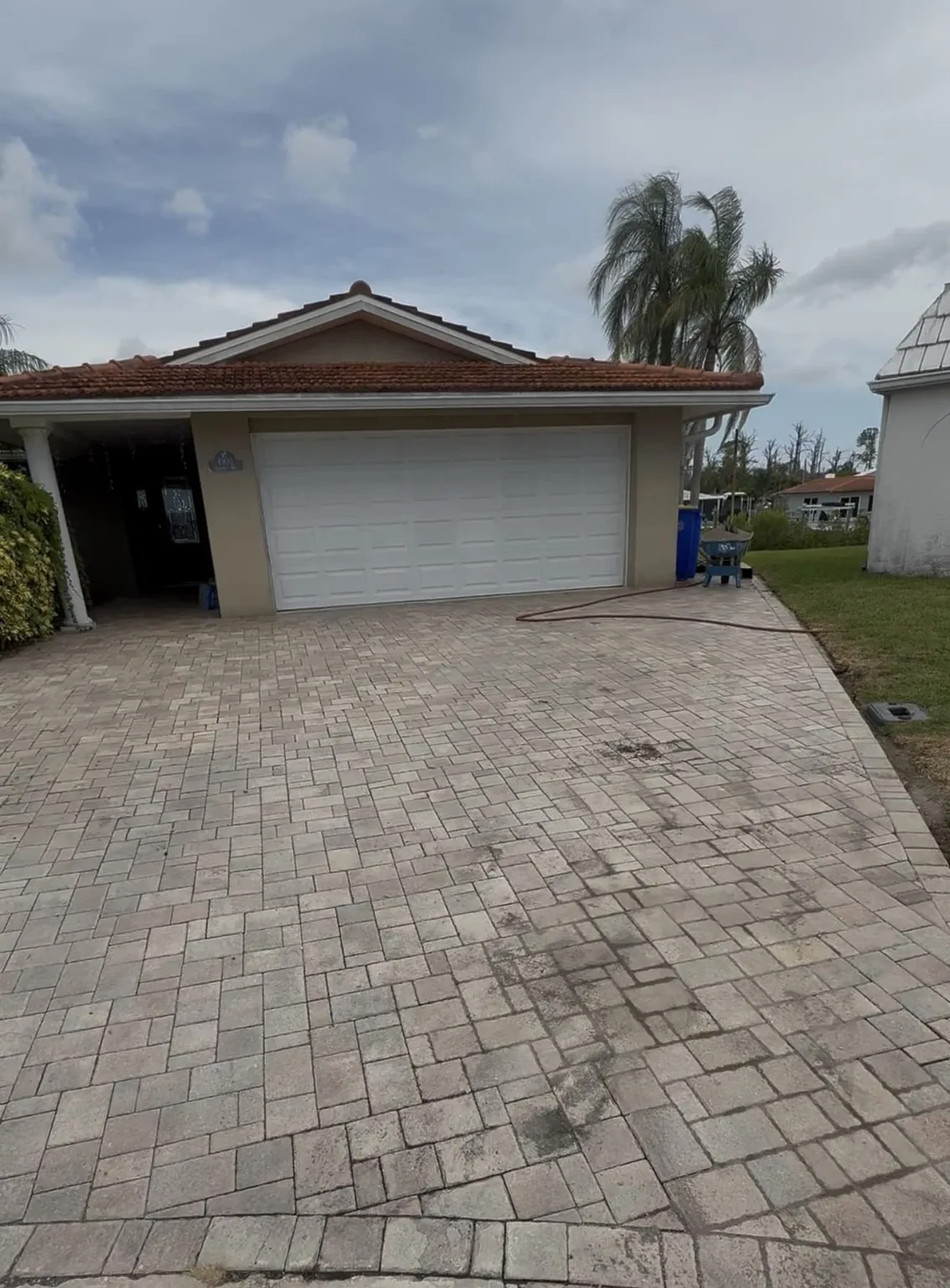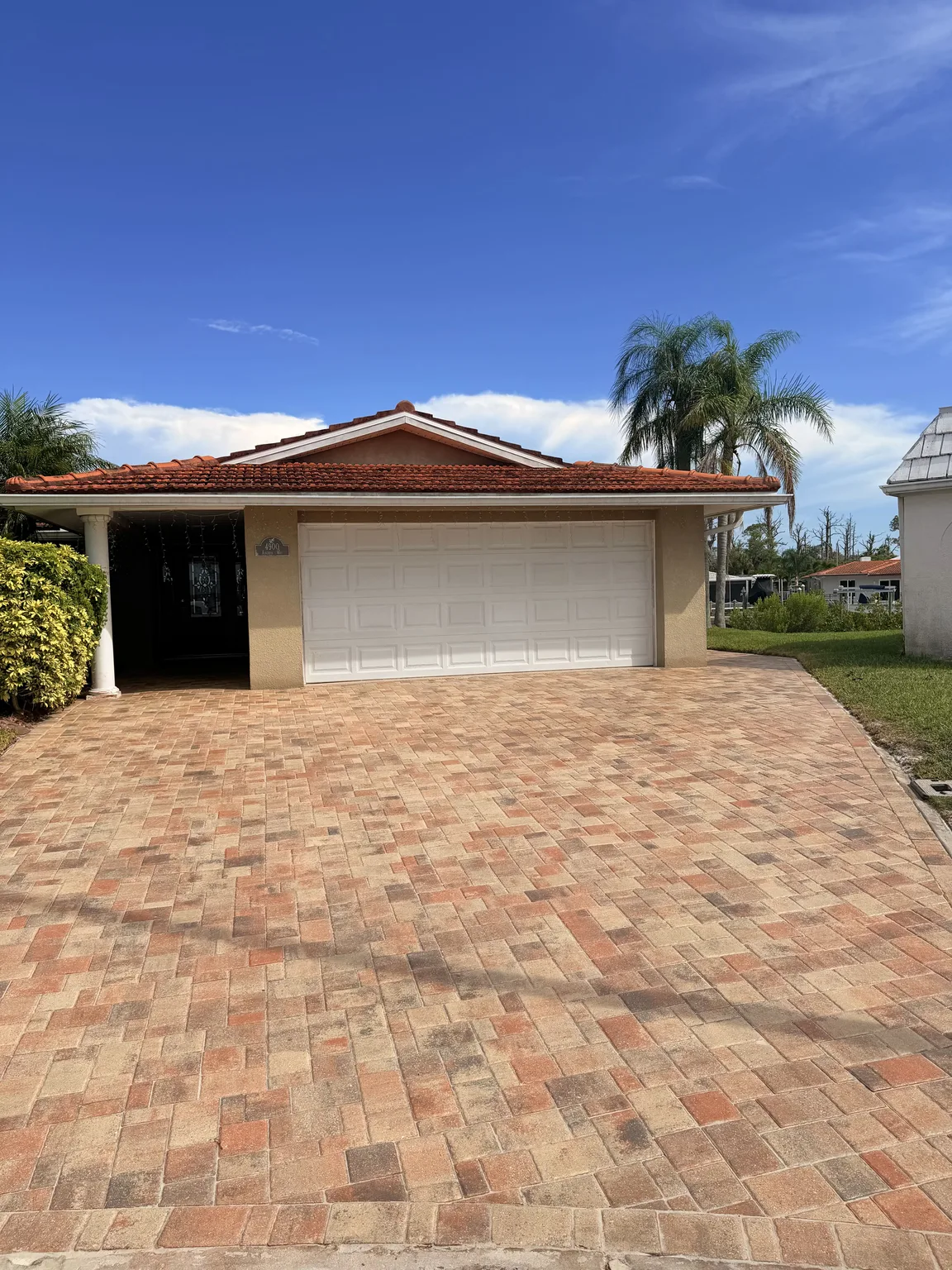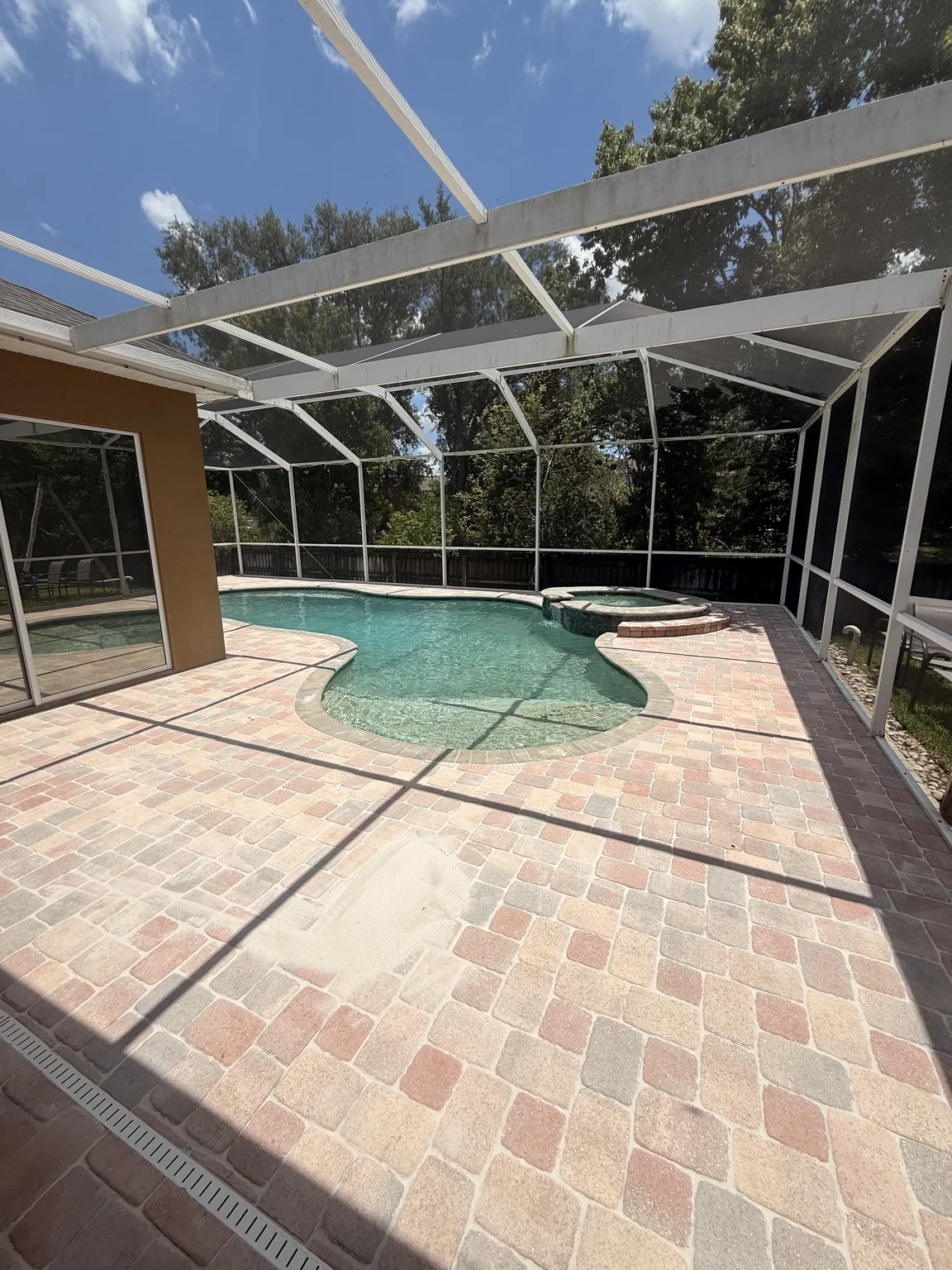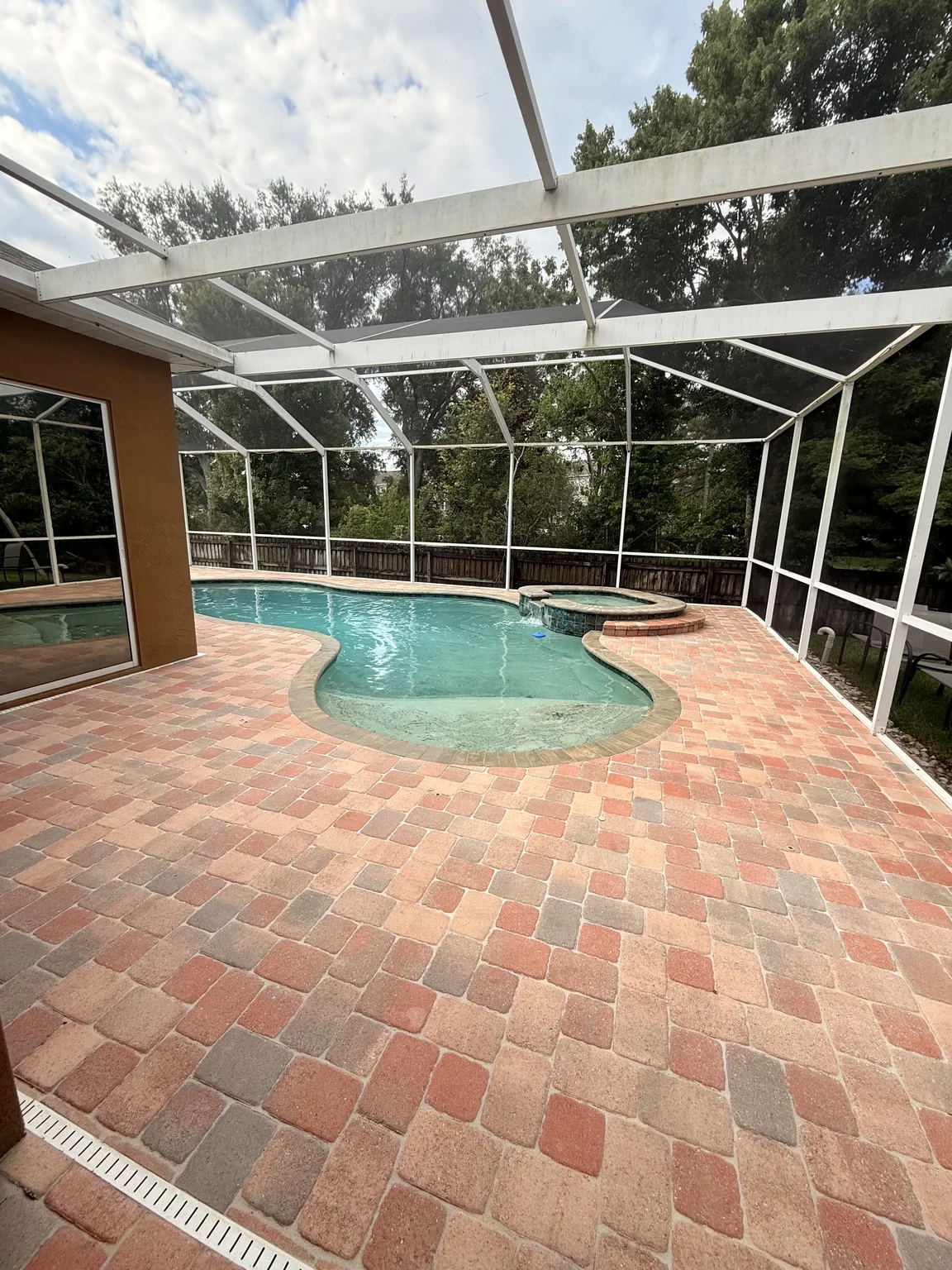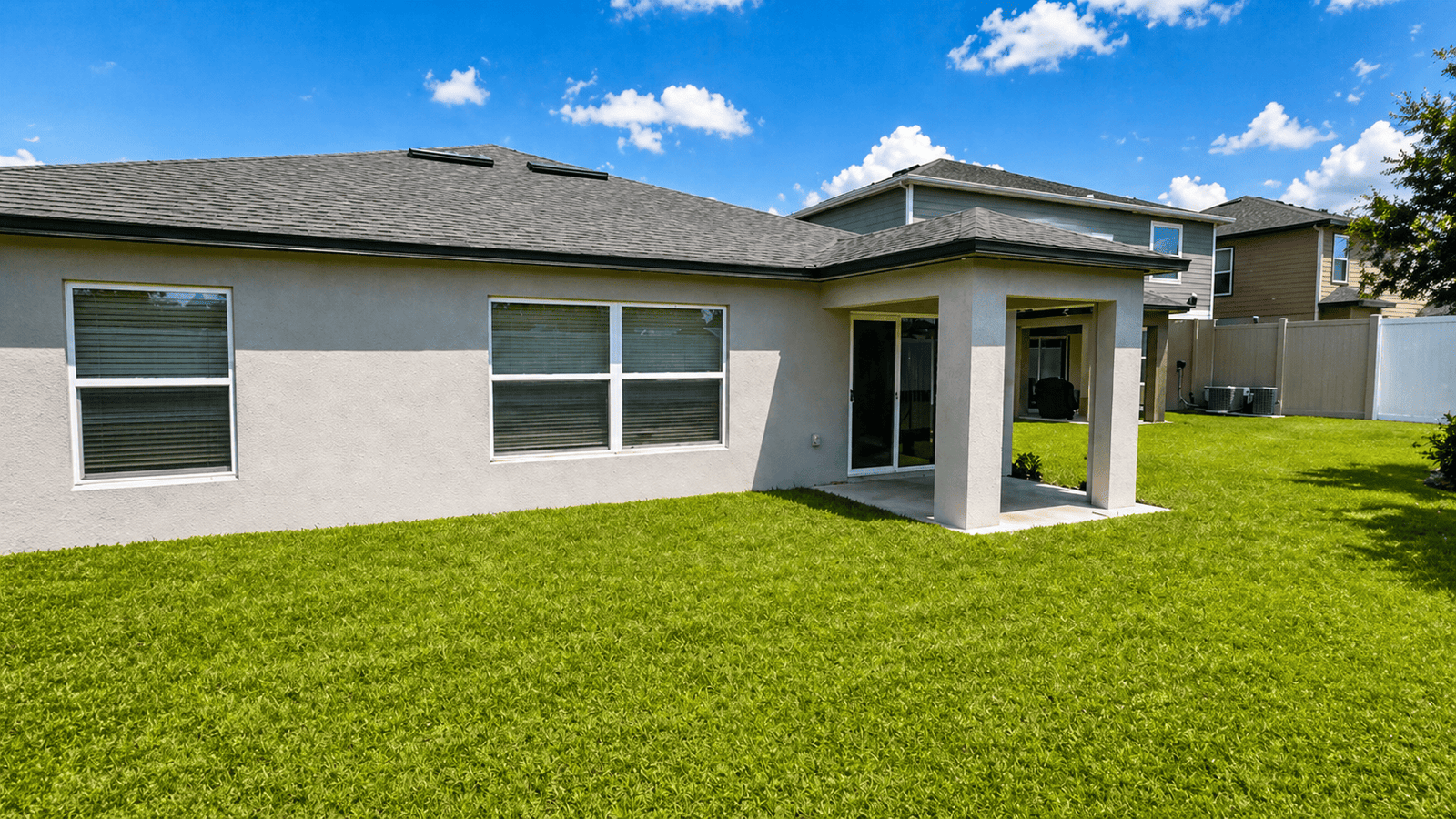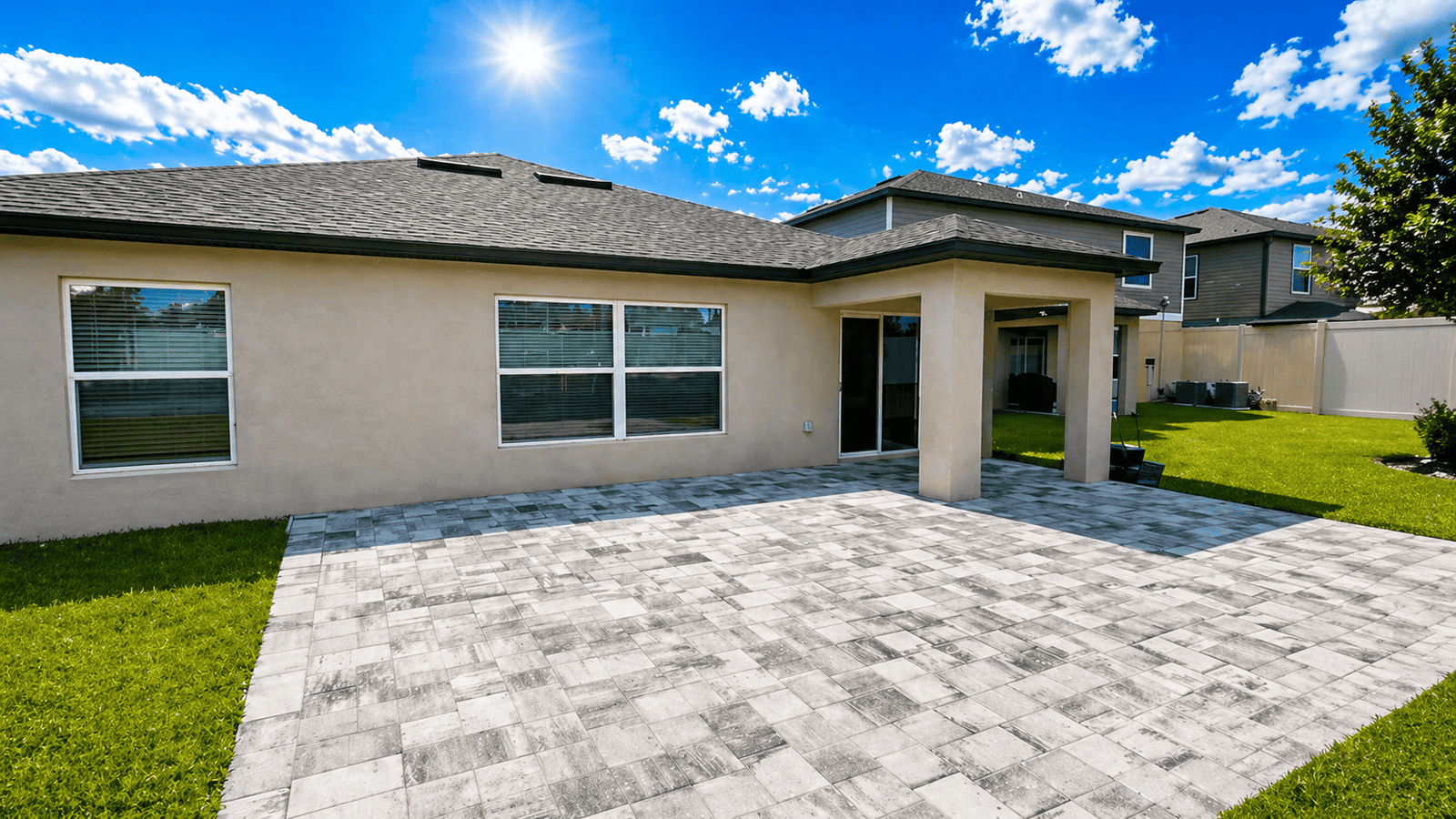
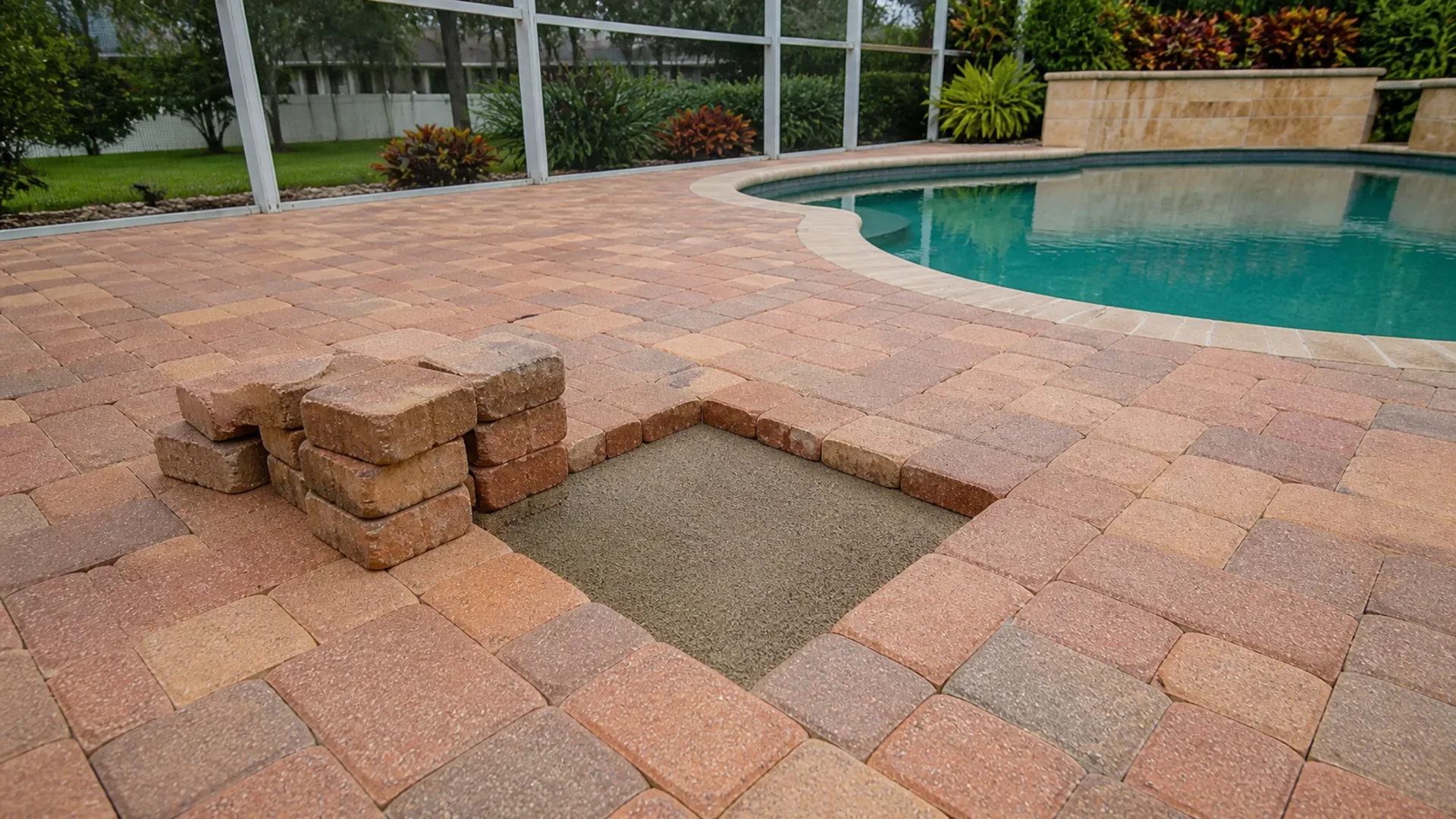
To fix uneven pavers correctly, begin by finding what moved beneath or beside the surface. A raised corner may look minor, yet it can catch shoes, wheels, and furniture. Meanwhile, a shallow dip can collect sand and leave the area uncomfortable underfoot. The visible paver is therefore only the starting point of a useful repair.
Florida conditions make that diagnosis especially important. Heavy rain, sandy soils, roots, traffic, and weak edge support can produce similar symptoms. However, each cause calls for a different response. A careful plan to fix uneven pavers protects the surrounding pattern instead of merely flattening one spot for a short time.
Why Florida paver surfaces lose their level
First, water can carry fine bedding material into small voids when runoff repeatedly crosses the same joint. The pavers above may then settle at different rates. In addition, roof discharge or irrigation can keep one section wetter than the rest. Contractors who fix uneven pavers should therefore inspect how water reaches and leaves the area.
Consequently, Compaction also matters because patios, walkways, pool decks, and driveways carry different loads. For example, a base that feels firm under foot traffic may respond differently near turning vehicle tires. Poorly supported borders can also let units spread outward. As a result, the center joints widen while pavers near the edge rotate or sink.
Roots create another pattern that homeowners often recognize as a ridge. However, cutting a root without understanding the tree can create a separate hazard. Heat, shade, and moisture can also affect nearby landscaping and soil conditions. Therefore, the safe way to fix uneven pavers may require coordination with a qualified tree professional before hardscape work begins.
Start with the cause, not the high corner
Before lifting anything, mark the full disturbed area and compare it with stable reference points. A straightedge helps reveal gradual settlement that eyesight can miss. Meanwhile, joint widths and edge alignment can show where the pattern began to move. This wider view helps a crew fix uneven pavers without creating a new low point beside the repair.
Next, note when the symptom appears most clearly. Standing water after rain suggests a different investigation from movement beside a mature tree. Likewise, rocking units may indicate missing joint material, an uneven bed, or both. Photos taken before and after rainfall can therefore give a contractor useful context during the site visit.
How to fix uneven pavers without masking the problem
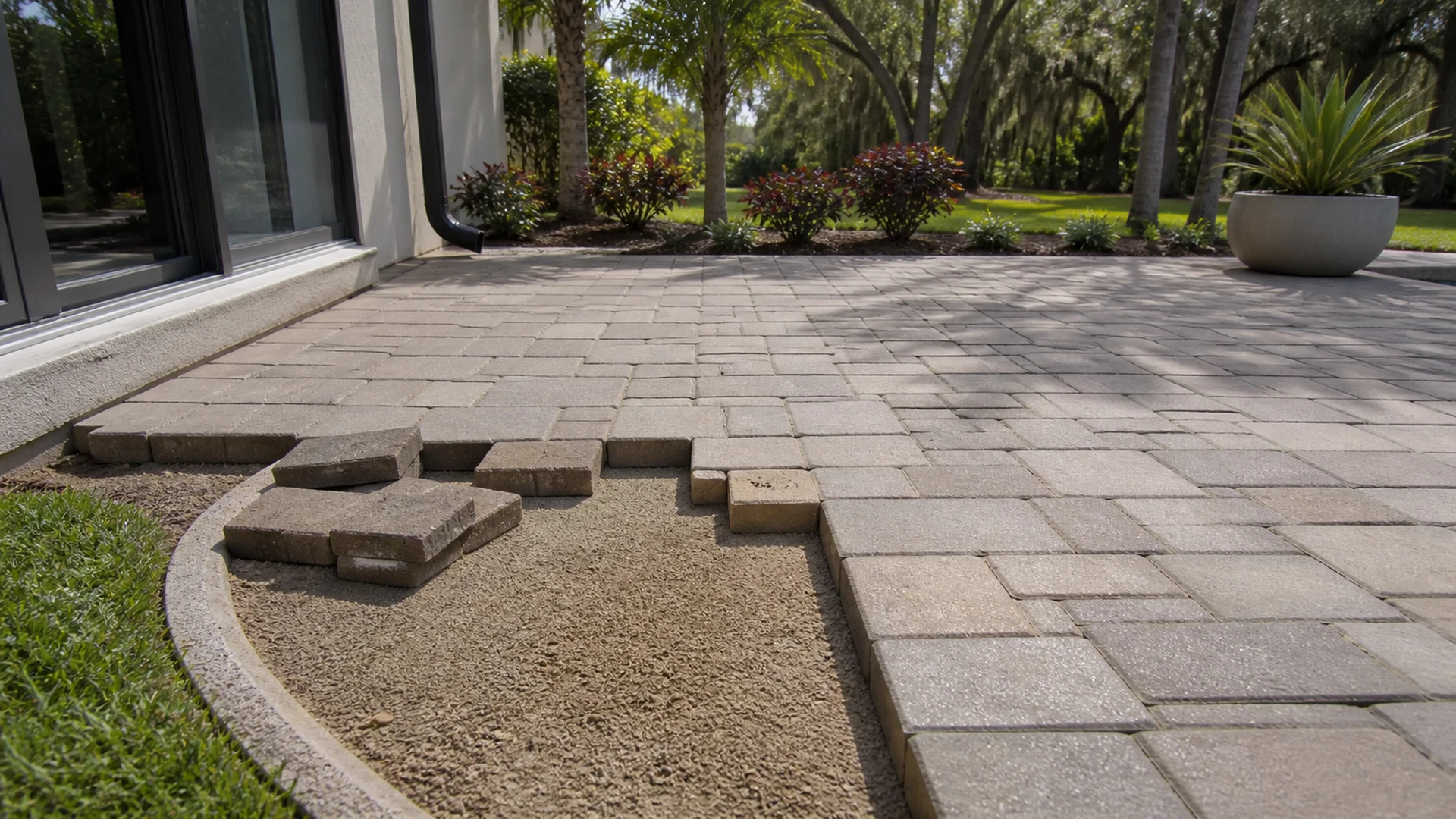
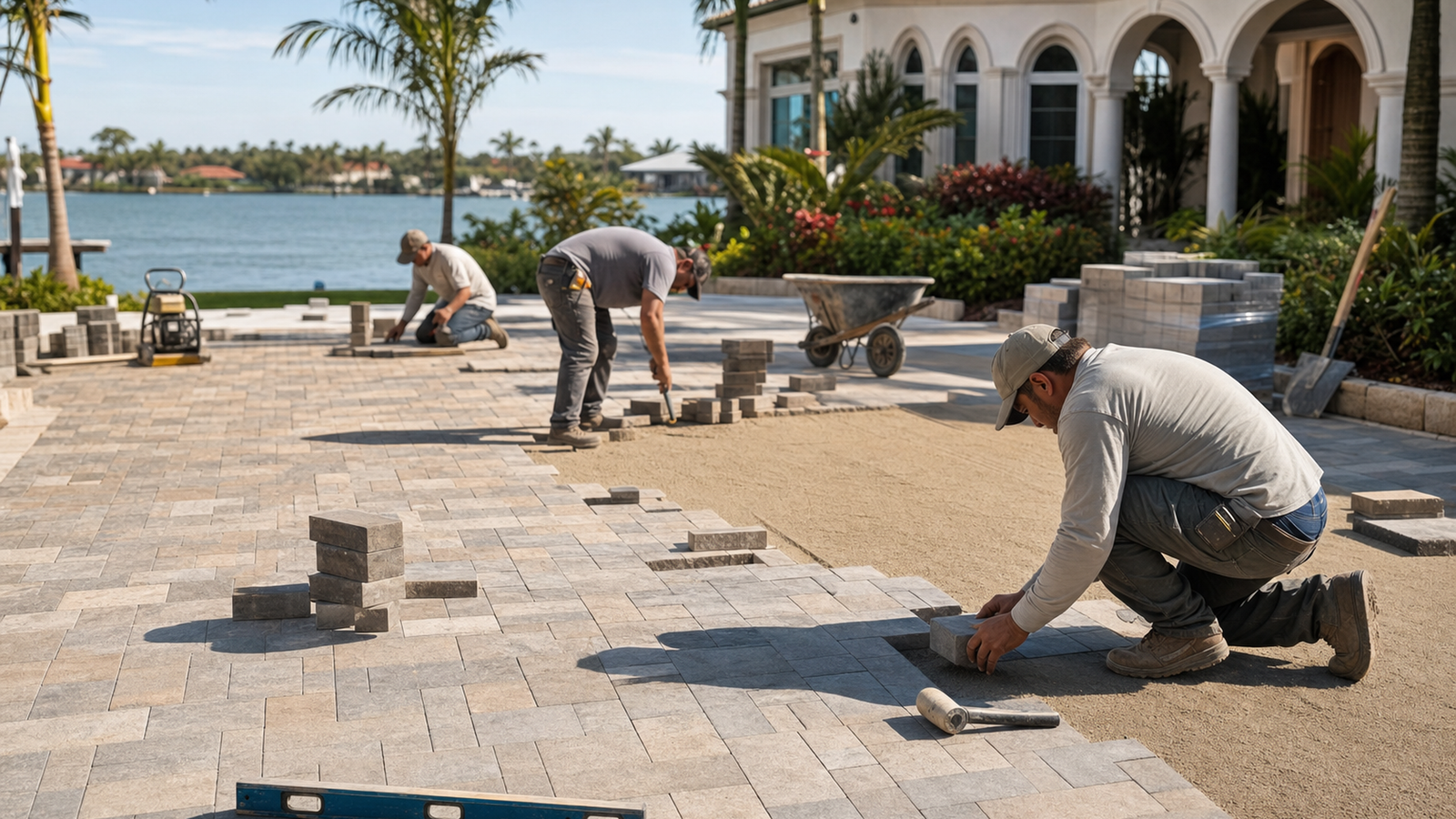
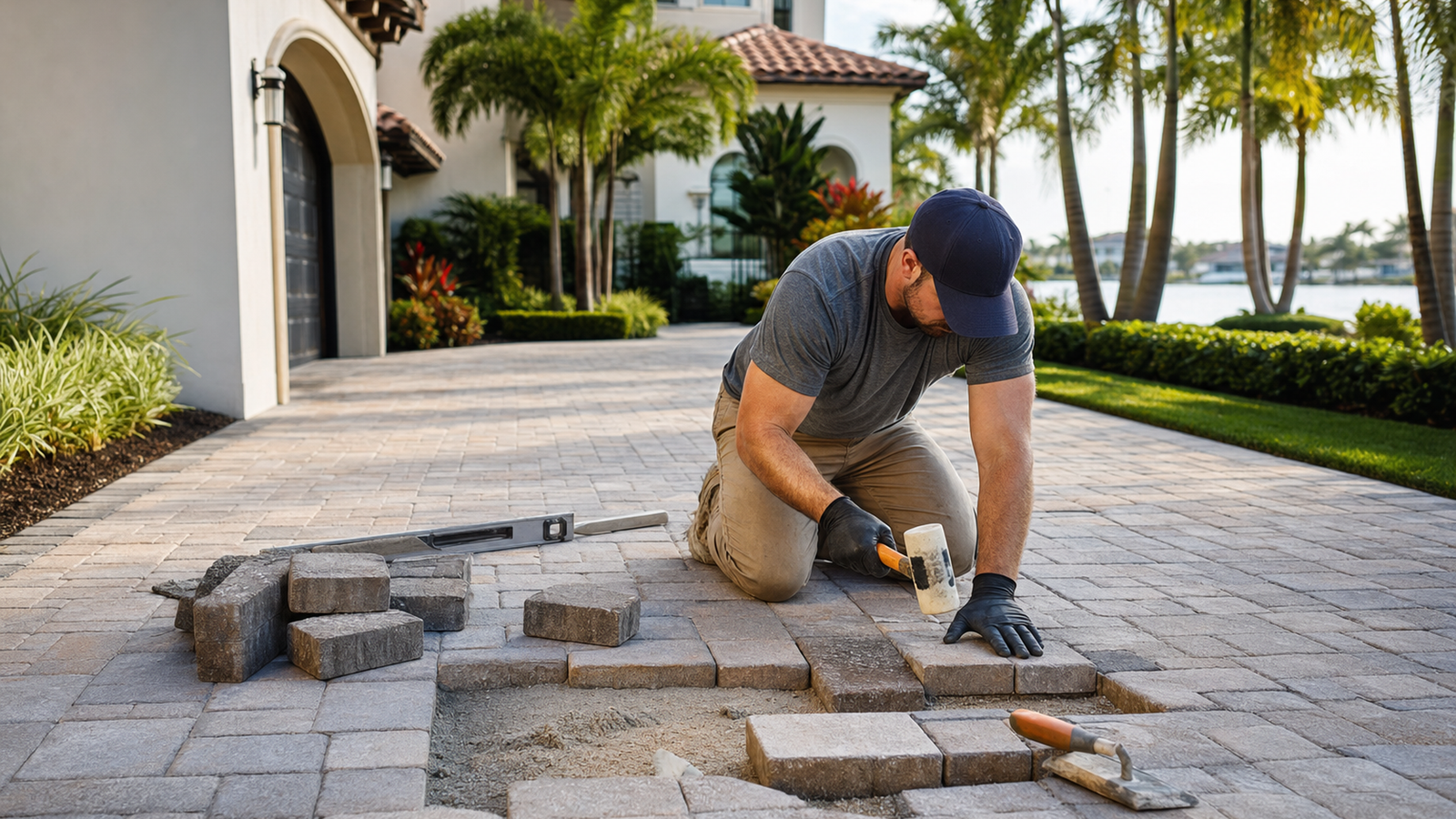
A durable repair usually starts by removing enough units to reach stable material around the affected section. However, the exact opening depends on the movement pattern and access. Pulling only the highest paver may leave neighboring units unsupported. To fix uneven pavers consistently, the repair zone should include the transition back to the sound surface.
Once opened, the contractor can inspect the bedding layer, base, edges, and nearby obstructions. Then, unsuitable loose material can be removed and the support rebuilt in controlled lifts where needed. Each layer must match the intended use of the surface. Consequently, a driveway repair may require a different scope from a lightly used garden path.
The existing pavers should be handled carefully because replacements can vary in color, texture, and dimensions. For instance, units exposed to years of Tampa Bay sun may not match new stock exactly. A crew may blend reusable pieces across the repair when appropriate. Therefore, planning to fix uneven pavers includes both structural work and a realistic discussion about appearance.
Rebuild the base and bedding in sequence
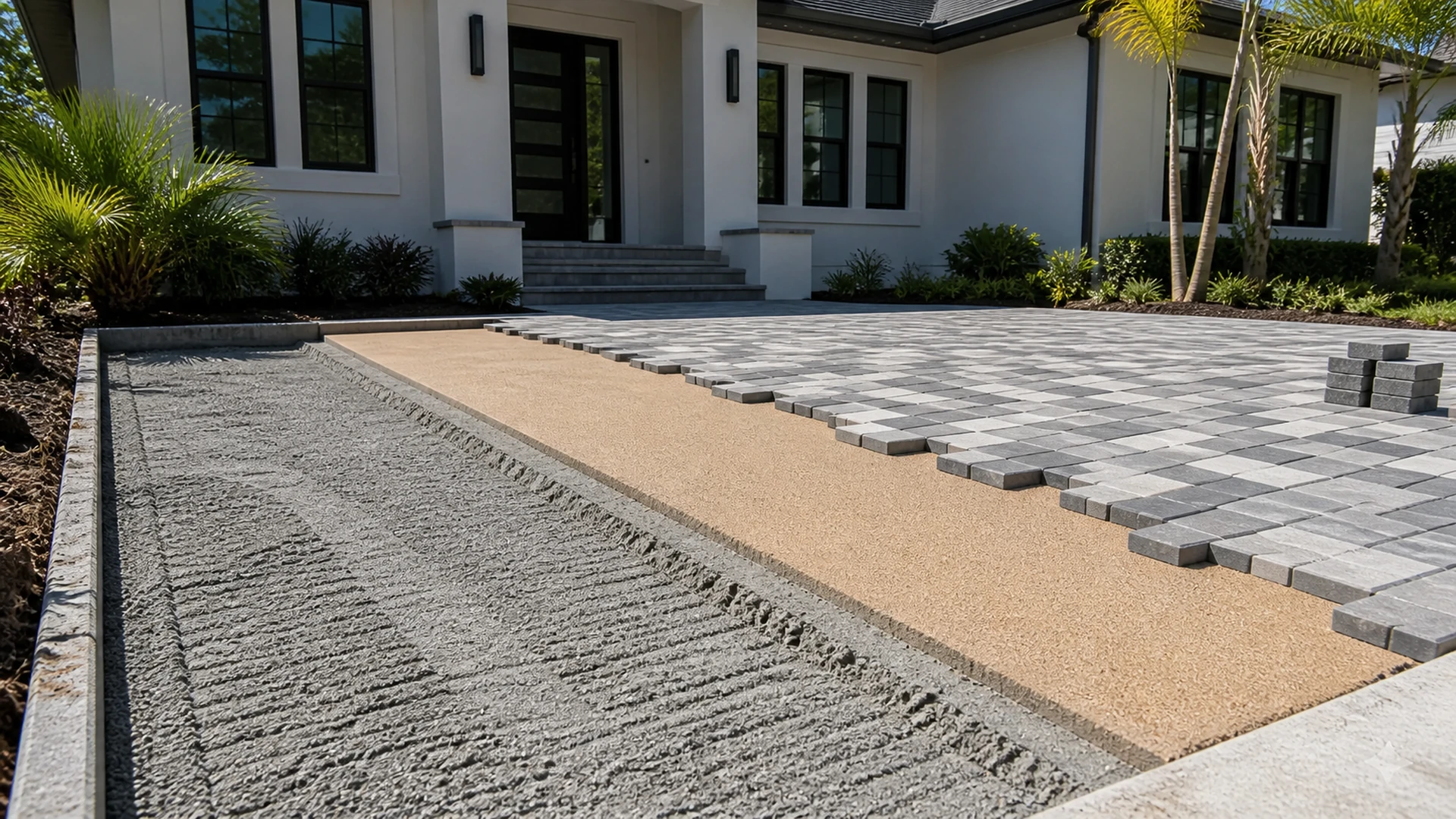
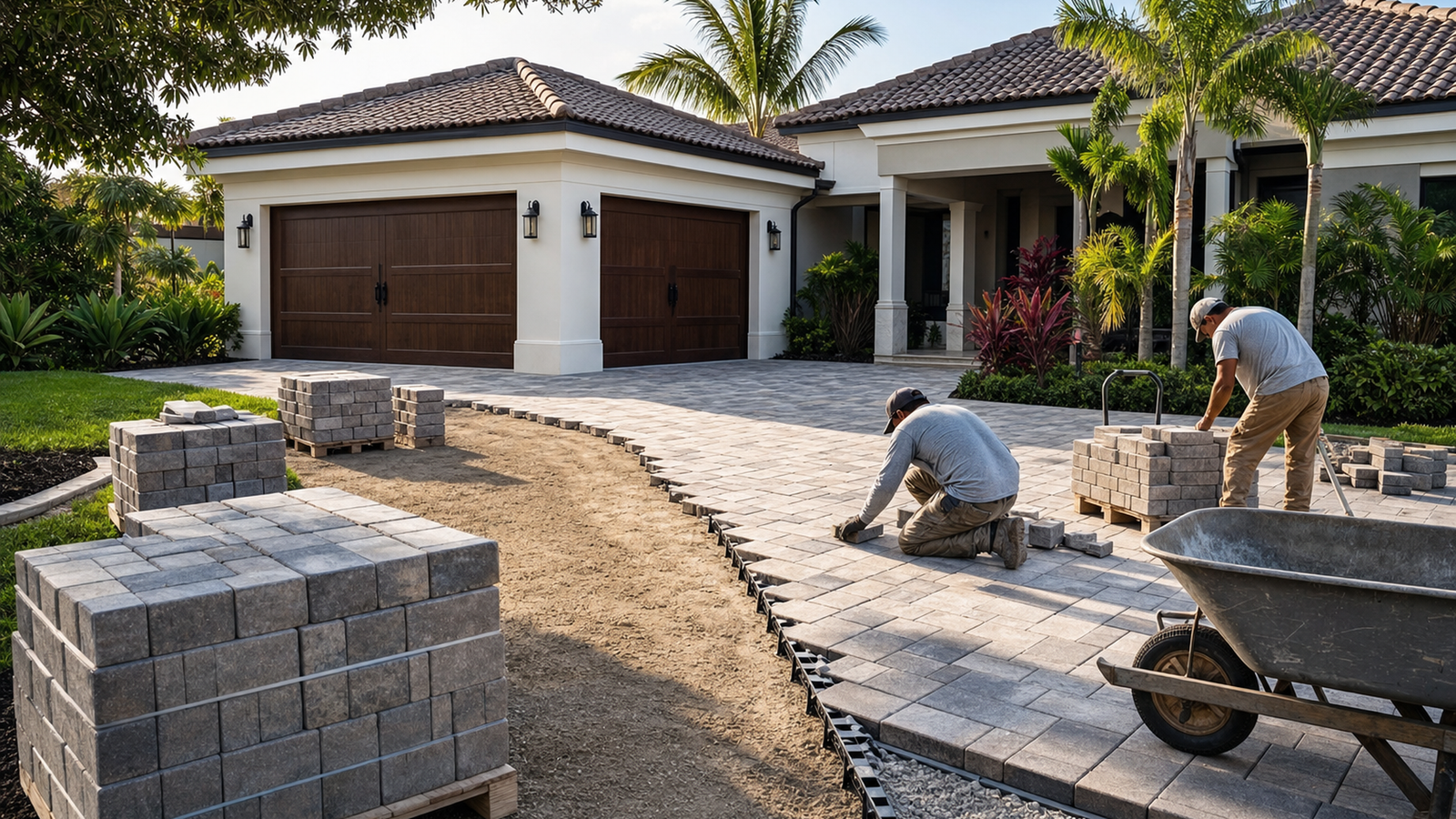
After the weak area is exposed, the base should feel stable rather than soft or pumping. However, adding bedding sand alone cannot correct a deeper base failure. The repaired foundation needs an even profile and suitable compaction before the setting layer returns. That sequence helps fix uneven pavers while preserving consistent support across their edges.
Additionally, The bedding layer then provides a uniform seat, not a place to bury large height differences. Next, each paver returns in the established pattern and orientation. Small adjustments are easier before joints are filled. As a result, the installer can check surface smoothness, drainage direction, and edge alignment before completing the repair.
Match the repair to the movement you see
A localized depression often calls for lifting a compact section and restoring the support below it. Still, the contractor should look for the water source or load that caused settlement. Simply adding sand may reproduce the same outline later. A sound plan to fix uneven pavers therefore connects the surface correction with the underlying cause.
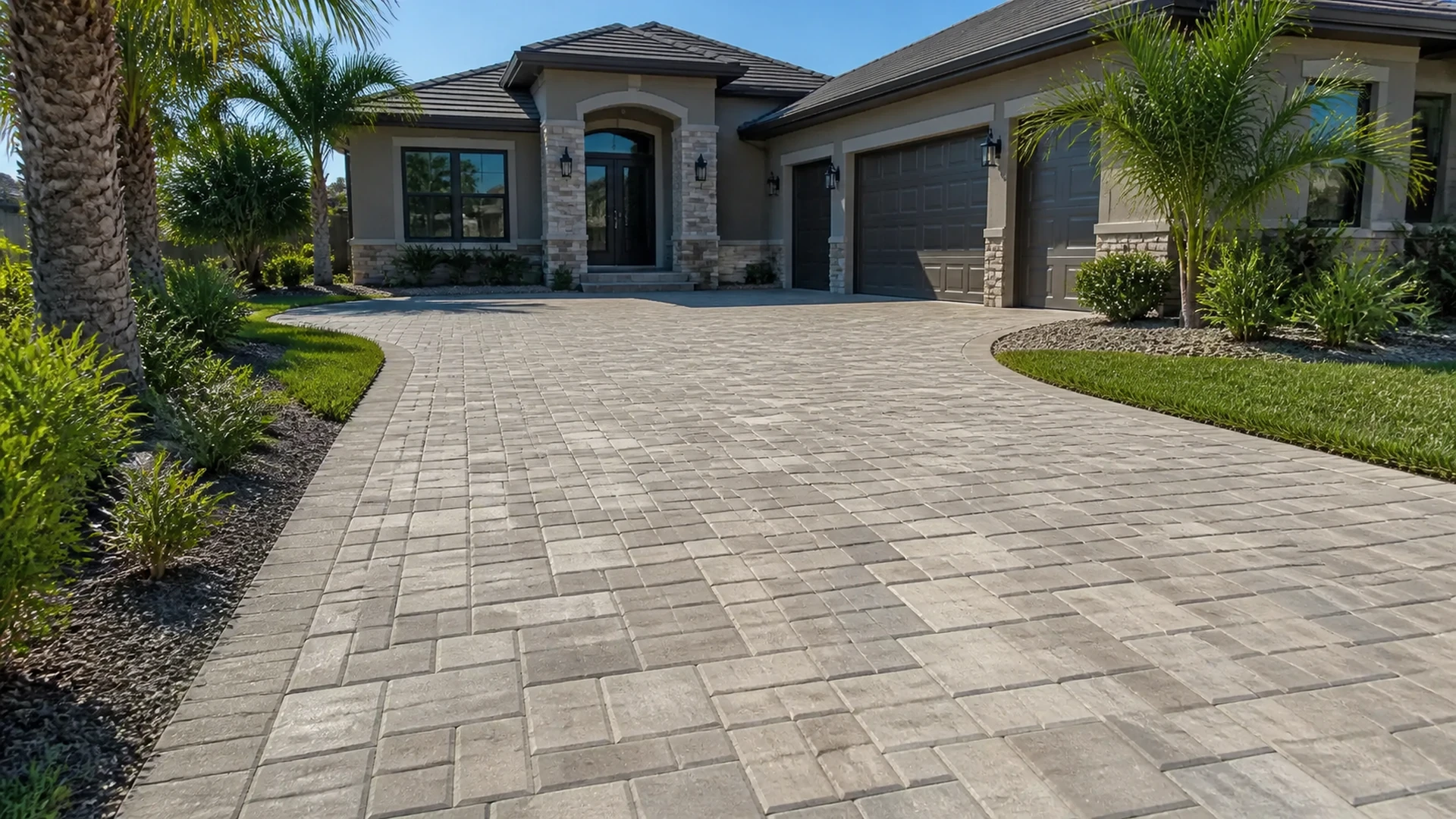
By contrast, a broad wave across a driveway can signal a larger base or edge issue. The affected area may extend beyond the most obvious tire path. Consequently, spot repairs should not be promised before the full field is checked. A larger opening can sometimes produce a cleaner transition and reduce isolated changes in pitch.
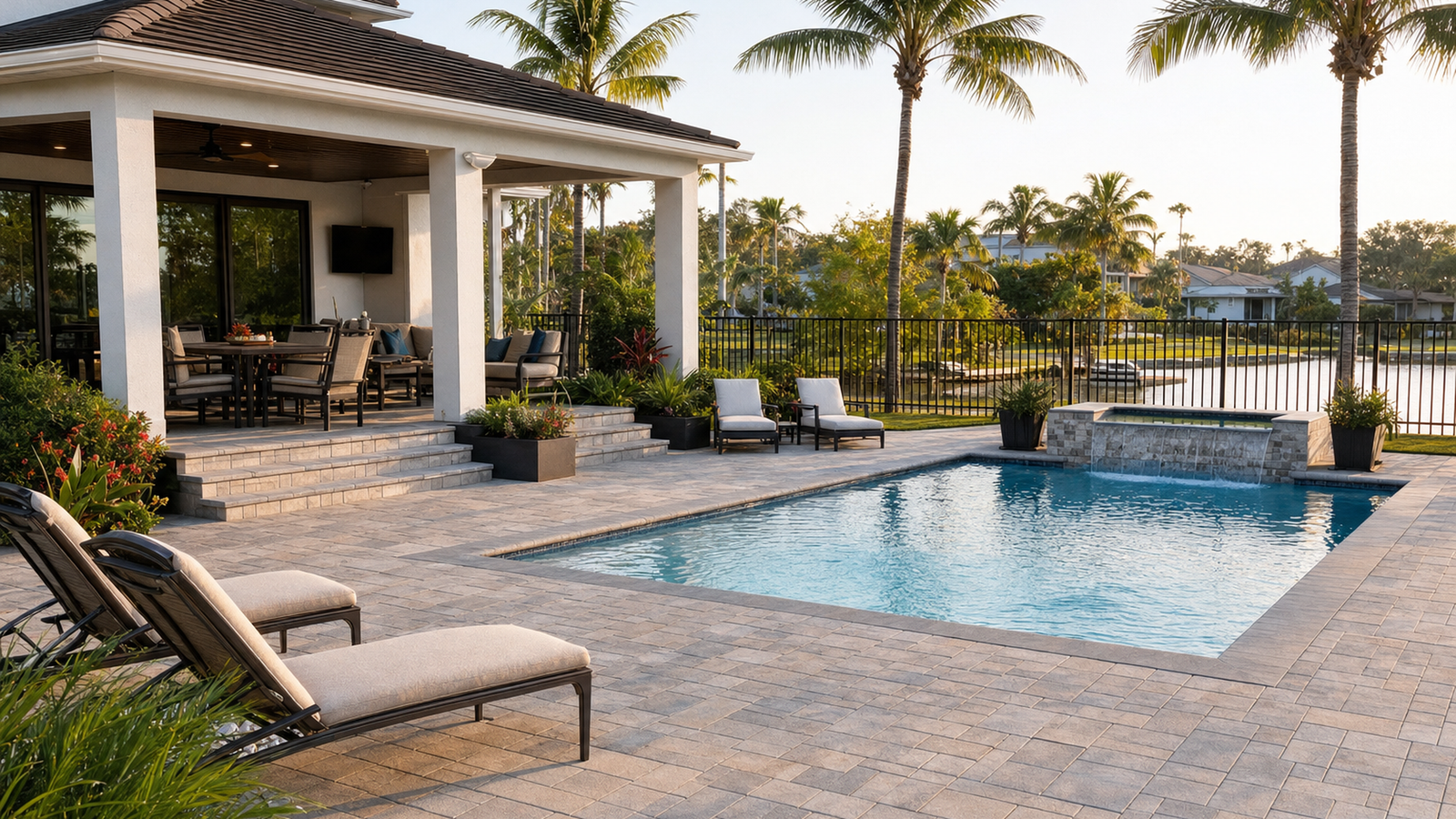
Raised pavers near utilities, steps, coping, or walls need extra care. For example, a repair must respect fixed elevations and avoid forcing water toward the house or pool. Clearances around covers and thresholds also matter. Therefore, crews who fix uneven pavers should measure these boundaries before deciding the finished height.
When professionals fix uneven pavers
Consequently, Professional help is especially useful when movement covers several connected areas or returns after a previous repair. In addition, vehicle surfaces and poolside transitions deserve careful evaluation because their use raises the consequences of poor leveling. Specialized lifting and compaction equipment can also improve control. The appropriate tools depend on access, material, and the condition beneath the pavers.
A contractor should explain what will be opened, reused, rebuilt, and monitored. Meanwhile, homeowners can ask how the proposed scope addresses water, edges, or roots. Clear exclusions are useful when another trade may be needed. This conversation makes a proposal to fix uneven pavers easier to compare on substance rather than on a single total.
Protect people and surrounding finishes during repair
Until work begins, mark a noticeable lip and keep movable furniture away from rocking units. However, improvised coatings or loose mats can introduce other trip points. A temporary route may be safer for guests and delivery workers. Homeowners should also keep children and pets clear once pavers are lifted and the base is exposed.
During the repair, nearby walls, coping, doors, and planted areas should remain protected. Dust and loose aggregate can travel beyond a small opening. Therefore, a tidy work zone matters even when the task is brief. A team prepared to fix uneven pavers should also plan how removed units and excavated material will be staged.
Restore edges and joints after leveling
Level units still need lateral support. Otherwise, traffic can push the pattern toward an unrestrained border. The contractor should therefore inspect the existing edge restraint and replace or reset failed sections as the scope requires. This step helps fix uneven pavers as a connected assembly rather than as separate blocks.
Nevertheless, Joint material also supports interlock when it is installed for the paver system and site conditions. First, joints should be clean enough to accept material to the required depth. Next, the surface should be finished according to the selected product and weather window. Guessing or mixing incompatible materials can complicate later maintenance.
Afterward, examine the repaired area from several directions and walk the transitions. However, appearance alone is not the only check. The pavers should feel stable, joints should look consistent, and borders should remain aligned. These observations provide a useful baseline for the first heavy rains after the work.
Why surface patches often disappoint
Mortar smears, fillers, or wedges placed beside a moving paver rarely address missing support below it. Moreover, a rigid patch can crack or make future removal harder. The color may also draw attention to the defect. To fix uneven pavers, access to the affected foundation is usually more informative than disguising the joint.
Pressure washing is not a leveling method either. In fact, aggressive cleaning can remove joint material and expose an already vulnerable bed. Cleaning may be part of broader maintenance, but it cannot rebuild a settled base. Therefore, separate stain concerns from movement concerns when planning the repair.
Plan around Tampa Bay weather and site access
However, Weather affects excavation, compaction, joint work, and cleanup. For that reason, a contractor may adjust the sequence when heavy rain threatens an open repair. Saturated materials can make conditions harder to judge. A sensible plan to fix uneven pavers includes a way to protect the exposed section if weather changes.
Access can shape the scope as much as the damaged area. For example, a narrow side yard may limit equipment and material movement. Pool enclosures, gates, and occupied driveways also affect staging. Consequently, photos and measurements of the route can improve planning before the crew arrives.
Scheduling should also account for how the surface is used. Meanwhile, residents may need another parking space or walking path until the area is ready. The contractor can explain when foot or vehicle traffic may resume. That practical detail reduces pressure to use a repaired section too soon.
Choose a repair scope you can understand
Consequently, A useful estimate identifies the location, approximate repair limits, and main work stages. In addition, it should clarify assumptions about reusable pavers and concealed conditions. No one can see every buried issue beforehand. Still, a transparent scope shows how the contractor intends to fix uneven pavers if the observed conditions match the plan.
Moreover, Ask what evidence would change the scope after opening the area. For instance, widespread soft base may require a different conversation than a shallow bedding correction. Also ask who handles roots, irrigation, or utility concerns when they are present. Defined responsibilities help prevent hurried decisions during an active repair.
Instead, Relevant project photos can reveal whether a contractor regularly works with similar surfaces and transitions. Likewise, reviews may show how the team communicates and protects occupied homes. Homeowners can explore DR Pavers Design’s paver repair service for local scope context. Industry education from the Concrete Masonry and Hardscapes Association can also support informed questions.
Check the repair after normal use returns
Once the surface is back in service, watch how it responds to traffic and rainfall. However, do not wait for a severe lip before reporting a concern. Early notes can distinguish new movement from normal changes in joint appearance. A photo from the same angle is particularly helpful after major storms.
Ultimately, Finally, direct roof discharge, irrigation, and heavy loads away from vulnerable edges when practical. Joint and border maintenance should remain part of routine observation. Although no outdoor surface is maintenance free, timely attention can limit how far movement spreads. That habit supports the work completed to fix uneven pavers and keeps future conversations specific.
Monitor the repaired area through ordinary seasons
Nevertheless, A same-day walkthrough confirms alignment, but longer observation adds another kind of evidence. First, photograph the border and repaired transitions from repeatable positions. Note the condition of joints and nearby soil. This baseline makes subtle change easier to discuss without relying on memory.
During the first strong rains, observe the area only when conditions are safe. Water should not reveal a new abrupt dip or carry adjacent soil into the joints. Therefore, report a recurring symptom with photos and timing. That information can help a contractor who needs to fix uneven pavers trace a site-specific influence.
By contrast, dry weather can expose widening joints or loose edge material that wet surfaces hide. Walk the perimeter and notice whether outer units stay aligned. However, avoid probing joints with tools or disturbing the restraint. Simple observation preserves the condition for a more useful inspection.
Keep later work from disturbing the repair
If irrigation work or landscaping occurs nearby, meanwhile, share the repair location with that crew. New trenches, stakes, or redirected water can change support beside the pavers. Keep a photo of concealed edges available when possible. Coordination reduces accidental damage after professionals fix uneven pavers and restore the border.
Seasonal notes do not need to become a complicated maintenance log. Instead, record only meaningful movement, unusual loads, storms, or work beside the surface. Compare the same reference points before requesting another visit. Accordingly, preserve those reference images. This concise history helps separate a new isolated concern from movement connected to the original repair.
When you are ready to discuss an uneven area, start with the contact page and review the FAQ. Next, compare completed projects and testimonials, then browse all services. Meanwhile, follow DR Pavers Design on Instagram and Facebook. Also open the map listing and read Google reviews. Finally, use WhatsApp, call, text, or email photos so the team can help you plan how to fix uneven pavers.